In recent months, From Balloons to Drones has highlighted and reviewed numerous books, both old and new, that deal with the Space Race, the moon landings, and the Apollo Program writ large. As the proliferation of printed materials continues to grow – not only as the moon landings themselves recede into memory but as there is an increase of ‘Apollo at 50’ printed materials – it becomes necessary to ask the question, what makes any new work different? What does a particular book tell us about the Apollo program or early space exploration that we do not already know? The answer, in this case, is a surprising amount and denotes that there are still new areas to research and historical stories to be told when dealing with early space exploration.
Chasing the Moon: The People, the Politics, and the Promise That Launched America into the Space Age is equal parts social history, cultural history, Cold War history, and political history. The authors state that the journey to the moon (p. x) ‘was a story of courage, adventure, and scientific exploration as well as an exercise in geopolitics.’ This is the long view of reaching the moon. Although the book is billed as ‘a companion to the American Experience film on PBS,’ it is also about the Russian, German, and British experience in the long narrative of the journey to the moon. This is one of the aspects that makes this book unique; it is not viewed either as a singular American accomplishment or as a struggle between the United States and the Soviet Union. While the entire space race could rightly be said to be both of those things, it is not only those things. Chasing the Moon brilliantly and adroitly links the global history of reaching for the stars, or – from the first rockets to the first footprints on Luna.
On 19 December 1972, the Apollo 17 crew returned to Earth following a successful 12-day mission. Apollo 17 marked the final crewed lunar landing mission. Here, Apollo 17 commander Eugene Cernan approaches the parked Lunar Roving Vehicle. NASA’s Marshall Space Flight Center designed, developed and managed the production of the Lunar Roving Vehicle that astronauts used to explore the Moon. (Source: NASA)
Within these pages are the origins stories and names that are familiar to the early days of rocketry: Konstantin Tsiolkovsky, Robert Goddard, and Hermann Oberth, but other familiar names have a role as well. The legendary Arthur C. Clarke’s appearance in these pages is a welcome addition and demonstrates how the melding of pure science and science-fiction enabled the latter to become science-fact, and how both helped advance the cause of the other. Fact and fiction advanced together thanks to their symbiotic relationship, which also helped in America’s understanding of space exploration at large.
Short of a full biography, Chasing the Moon does an admirable job of telling the good and the bad of ‘The Man Who Sold the Moon,’ Werner von Braun. Von Braun’s importance to the development of rocketry is intertwined with his Nazi past; neither is ignored here. His celebrity nearly eclipsed that of the ‘original 7.’ This was of course helped by his appearance on Walt Disney’s television show Disneyland, which helped promote not only Disney’s ‘Tomorrowland,’ but also the concepts and ideas of rocketry and space that von Braun was so passionate about (pp. 58-9). It was von Braun’s association with Disney (p. 60) that ‘bestowed an imprimatur of American Respectability on the former official of the Third Reich.
While the astronauts do not play second fiddle in this work, this is really the story of those actors who have not traditionally garnered as much attention as the Apollo crews themselves. Obviously the first several classes of NASA’s ‘exemplars of American masculinity, courage, resourcefulness, and intelligence’ appear here, but this work gives agency and voice to the ‘others’ who get their (over)due attention here. These include Julian Scheer, James Webb, and Frances ‘Poppy’ Northcutt, and it is their stories that make Chasing the Moon such a worthwhile endeavour (p. 77).
If there is a downside to this work, it is that several of the Apollo missions, including 7, 9, and 14-17, are mentioned only in passing, but the authors can be forgiven as this is not the story of the Apollo program or of moon exploration, which has more than been adequately covered elsewhere. This is the story of humanity’s journey to the moon. The authors state in the closing pages that ‘[T]he enduring meaning of the space race remains elusive half a century after it came to its end,’ but this work helps give meaning to the space race itself as both a jobs program and an imprimatur of achievement in the twentieth century (p. 301).
This book will appeal to anyone interested in humanity’s journey to the moon, but especially those who are looking for the longer view of that journey: one that traces the voyage from the dawn of rocketry to that small step for a man. This excellent works stands on its own and is destined to become a classic in its own right. Stone and Andres will surely join the likes of Andrew Chaikin, Alan Shepard, Deke Slayton, Jay Barbree, Charles Murray, and Catherine Cox.
Dr Brian Laslie is an Air Force Historian and currently the Deputy Command Historian at North American Aerospace Defense Command (NORAD) and United States Northern Command (USNORTHCOM). A 2001 graduate of The Citadel and a historian of air power studies, he received his PhD from Kansas State University in 2013. His first book The Air Force Way of War (2015) was selected for the Chief of Staff of the Air Force’s and the Royal Air Force’s Chief of the Air Staff professional reading lists. He is also the author of Architect of Air Power: General Laurence S. Kuter and the Birth of the US Air Force. He lives in Colorado Springs. He can be found on Twitter at @BrianLaslie.
Header Image: Fifty years ago on 20 July 1969, humanity stepped foot on another celestial body and into history. (Source: NASA)
This review follows on the heels of my review of In the Shadow of the Moon: A Challenging Journey to Tranquility, 1965-1969 and is about a book which itself is a follow-on to that work. Whether the press intended it, one might consider Into That Silent Sea: Trailblazers of the Space Era, 1961-1965, In the Shadow of the Moon: A Challenging Journey to Tranquility, 1965-1969, and Footprints in the Dust: The Epic Voyages of Apollo, 1969-1975 a three-volume set within the overarching series. You could also add in Bison Books’ great work Homesteading Space about the three Skylab missions, which always seem to be separated from their Apollo brethren.
Footprints in the Dust begins with a forward from the astronaut and Gemini 11/Apollo 12 member Richard Gordon. In it, he states that the Apollo Program was ‘a true epoch of the Space Age, a golden era of scientific endeavour, advancement, and incredible discovery’ (p. xxi). Interest in the past Apollo Program and the future of human-crewed spaceflight is undoubtedly on the rise in 2019 with the anniversaries of Apollos 9, 10, 11, and 12 all occurring this year and with NASA vowing a return to the moon in the (hopefully) not too distant future. Past is prologue as we look to the future and Footprints in the Dust is an excellent work to pick up this #Apollo50.
If Chaikin’s A Man on the Moon is the primus inter pares, in the Apollo history catalogue, then there must be a reason why Footprints in the Dust stands out, and indeed, this work goes beyond Chaikin’s 1967-1972 focus. It brings into more explicit context the Skylab and Apollo-Soyuz Test Project (ASTP) and it also (rightly) places these under the rubric of the Apollo program. The contributors are a diverse group of space enthusiasts and aficionados.
A drawing of a Soviet LK lander illustrating its components: 1) passive plate of the docking system, 2) attitude control nozzles, 3) orbital rendezvous window, 4) landing window (in a concave recess), 5) high-gain antennas, 6) solid-fuel “nesting” engines, 7) footpads, 8) omnidirectional antenna, 9) rendezvous radar, A) pressurized compartment, B) equipment compartment, C) hatch, D) batteries, E) engine and fuel tanks, G) ladder. (Source: Wikimedia)
There are some excellent highlights. The ability to put the Soviet space program in context with its American counterparts is something this book (and the entire Outward Odyssey series in general) does uniquely well. These ‘Soviet chapters’ demonstrate how the Soviet Union’s manned program continued to keep moving forward despite the dawning realisation they would never reach the lunar surface. Dominic Phelan’s ‘The Eagle and the Bear’ about exactly how the Soviets planned to pull off a lunar landing is especially illuminating. As is Colin Burgess’ ‘A Whole New Focus’ which presents the tragedy of the Soyuz II mission
On the American side, the Apollo 12 seems eternally wedged – and not just numerically – between Apollo 11 and 13. This chapter written by John Youskauskas is simply terrific. Philip Bakers’ ‘Science and a Little Golf’ about Alan Shepard’s triumphant return to space, Edgar Mitchell’s ESP attempts, and Stu Roosa’s struggles with his Hycon camera are all highlights. All members of Apollo 14 have departed this planet for the final time, and this chapter does each of them a great service. Although those familiar with Apollo 14’s moon EVAs will know this bit of information, will still find themselves hoping Mitchell and Shepard reach cone crater at last. Finally, Collin Burgess’ chapter ‘Beyond the Moon’ about Skylab and the cancelled Apollo 18-20 missions demonstrate what was gained through Skylab but lost on the lunar service, not just for science but for the crews who were never afforded their opportunity to put their footprints in the dust.
Two Apollo 17 crewmen ready a Lunar Roving Vehicle trainer following its deployment from a Lunar Module trainer in the Flight Crew Training Building at the Kennedy Space Center, Florida, c. September 1972. Taking part in the Apollo 17 training exercise were astronauts Eugene A. Cernan (right), commander; and Harrison H. ‘Jack’ Schmitt, lunar module pilot. (Source: NASA)
All that being said, some of the chapters suffer, not from anything the authors did wrong, but simply from coverage in other books and media, namely the Apollo 11 and Apollo 13 missions. In the books already written, it becomes increasingly difficult to separate the stories of Apollo 11,13, and to a lesser extent the later well-documented moon missions 15-17 into something genuinely new, but the authors in this book put in the effort to do so.
Readers of From Balloons to Drones will by now be familiar with the fabulous work of both the University Press of Florida and, in this case, the University Press of Nebraska’s great works on space exploration. In this, the 50th anniversary of the first moon landings, it is a fitting time to reflect on what was gained, and perhaps just as important, what was lost in the race to the moon and Footprints in the Dust: The Epic Voyages of Apollo, 1969-1975 does both exceedingly well. This is a superb work and well worth your time.
Dr Brian Laslie is an Air Force Historian and currently the Deputy Command Historian at North American Aerospace Defense Command (NORAD) and United States Northern Command (USNORTHCOM). A 2001 graduate of The Citadel and a historian of air power studies, he received his PhD from Kansas State University in 2013. His first book The Air Force Way of War (2015) was selected for the Chief of Staff of the Air Force’s and the Royal Air Force’s Chief of the Air Staff professional reading lists. His recently published Architect of Air Power: General Laurence S. Kuter and the Birth of the US Air Force. He lives in Colorado Springs. He can be found on Twitter at @BrianLaslie.
Header Image: Sitting in the life raft, during the Apollo 12 Pacific recovery, are the three mission astronauts; Alan L. Bean, pilot of the Lunar Module (LM), Intrepid; Richard Gordon, pilot of the Command Module (CM), Yankee Clipper; and Spacecraft Commander Charles Conrad. The second manned lunar landing mission, Apollo 12 launched from launch pad 39-A at Kennedy Space Center in Florida on 14 November 1969 via a Saturn V launch vehicle. The LM, Intrepid, landed astronauts Conrad and Bean on the lunar surface in what’s known as the Ocean of Storms, while astronaut Richard Gordon piloted the CM, Yankee Clipper, in a parking orbit around the Moon. Lunar soil activities included the deployment of the Apollo Lunar Surface Experiments Package, finding the unmanned Surveyor 3 that landed on the Moon on 19 April 19, 1967, and collecting 75 pounds (34 kilograms) of rock samples. Apollo 12 safely returned to Earth on November 24, 1969. (Source: NASA)
J.L. Pickering and John Bisney, Picturing Apollo 11: Rare Views and Undiscovered Moments. Gainesville, FL: University Press of Florida, 2019. Hbk. 264 pp.
A different type of book necessitates a different type of book review. Herein you will not find an author’s argument or a critique thereof since the book being discussed today is a collection of photographs and an excellent one at that. J.L. Pickering and John Bisney have brought us Picturing Apollo 11: Rare Views and Undiscovered Moments. As we approach the 50th anniversary of the first moon landing, there is sure to be a proliferation of all sorts of materials, merchandise, and collectables celebrating one of, if not the defining moment of the 20th Century and in what will undoubtedly be a crowded field, it will be difficult for printed works to stand out. Pickering and Bisney have accomplished just that, a unique look at the Apollo 11 mission through photographs: both official and candid – many of which have never been published before.
It is common practice for me that when a book arrives in my mailbox, I will take a few minutes and flip through it. It should be noted that when Picturing Apollo 11 arrived on my doorstep, I stopped what I was doing, sat down, and read the entire book (insert joke here about my ‘reading’ a picture book). However, this extremely well-done book did what few other works can do, it stopped me in my tracks. Divided into nine chapters, the book covers everything from the assembly of their Saturn V, training for the mission, all the way through the triumphant return home. Rather than review the book as you might typically find on the site, I have decided to highlight some of my favourite photographs from the book.
Astronaut and Lunar Module pilot Buzz Aldrin is pictured during the Apollo 11 extravehicular activity on the moon. He had just deployed the Early Apollo Scientific Experiments Package. In the foreground is the Passive Seismic Experiment Package; beyond it is the Laser Ranging Retro-Reflector (LR-3). (Source: NASA)
Any of the shots of the Saturn V rocket, Service Module, Command Module, or Lunar Module arriving at the Cape and being ‘processed’ and stacked are compelling. However, I found myself especially drawn to photos of the Command Module (CM) wrapped in the protective blue plastic covering (p. 51) – this was how Apollo Nine’s CM came to be known as ‘Gumdrop.’ If you have ever viewed one of the Apollo CMs in a museum setting – I am currently trying to see them all – you have only ever seen the scorched and burned relic after its re-entry. There is something inexplicably ‘technological’ when you view the CM as it was before being mounted on the Service Module; the newness and perfection of the CM in its original state are fascinating. It is also especially entertaining to see the many ‘Remove Before Flight’ banners hanging about the CM as if it has been decorated with red sprinkles in addition to its blue wrapping.
I also enjoyed many of the candid shots of Armstrong, Aldrin, and Collins during training (pp. 71-80) or visiting (pp. 82-8) the Apollo support sites around the country. Sixties fashion is on full display in these pages and as representative of the times as the astronaut’s moon suits! In this vein, there is an excellent shot of a group of the Apollo Astronauts at the US Navy Diving School in Key West, Florida; love the paisley shirt, Neil!
Military pilots love the T-38, and NASA used the versatile training aircraft to keep up the astronaut’s proficiencies, but also as a way for the astronauts to travel rapidly across the country from Texas to Florida, California, and Missouri. Here, there is an excellent shot of Armstrong and NASA’s Flight Crew Operations Director Deke Slayton (p. 95) strolling away from their parked T-38; while Armstrong looks conservative in his blue flight suit, Slayton looks every bit the fighter pilot and a bit more devil-may-care. Their personalities come forth in the photograph: Armstrong the Engineer, Slayton, the tough-as-nails director.
The pictures from all the moon landings are amazing, but as better equipment was sent up on later missions, those shots became increasingly more precise and crisper. Armstrong and Aldrin suffered from being the first in this regard, but modern photographic enhancement has brought the Apollo 11 shots into better relief. In this regard, my favourite photograph in the book is a shot of Aldrin and the American Flag (p. 193), where if you look close enough, you can clearly see Aldrin’s face inside the suit looking towards Armstrong. As you may know the pictures of Armstrong on the lunar surface are limited, but a great photograph of a relaxed looking Armstrong back inside the Eagle smiling after the EVA was completed sums up his feelings after landing and walking on the moon.
The Apollo 11 astronauts, left to right, Commander Neil A. Armstrong, Command Module Pilot Michael Collins and Lunar Module Pilot Edwin E. ‘Buzz’ Aldrin Jr., inside the Mobile Quarantine Facility aboard the USS Hornet, listen to President Richard M. Nixon on 24 July 1969 as he welcomes them back to Earth and congratulates them. (Source: NASA)
Picturing Apollo 11 is nothing short of a masterpiece. It is a truly unique work and a compelling collection of photographs that is sure to fire the imagination of those who remember the mission and those looking retrospectively at an event they were not around to see. As I closed the book, I again wondered, when will we return?
After you have ordered Picturing Apollo 11, I also highly encourage you to pick up a copy of Apollo VII-XVII a photographic journey through all the Apollo missions.
Dr Brian Laslie is an Air Force Historian and currently the Deputy Command Historian at North American Aerospace Defense Command (NORAD) and United States Northern Command (USNORTHCOM). A 2001 graduate of The Citadel and a historian of air power studies, he received his PhD from Kansas State University in 2013. His first book The Air Force Way of War (2015) was selected for the Chief of Staff of the Air Force’s and the Royal Air Force’s Chief of the Air Staff professional reading lists. His recently published Architect of Air Power: General Laurence S. Kuter and the Birth of the US Air Force. He lives in Colorado Springs. He can be found on Twitter at @BrianLaslie.
Header Image: On 1 March 1968, the Saturn S-IC-6 arrived at the Mississippi Test Facility – today’s NASA Stennis Space Center – from the Michoud Assembly Facility. The was the first stage section of the Saturn V rocket the took Apollo 11 into space. (Source: NASA)
Air Chief Marshal Sir Frederick Rosier with David Rosier, Be Bold. London: Grub Street, 2011. Hbk. 256pp.
Air Chief Marshal Sir Frederick Rosier had a long and distinguished career in the Royal Air Force (RAF). Granted a short service commission in 1935 (p. 19), he was the last Air Officer Commander-in-Chief (AOC-in-C) of RAF Fighter Command before it merged with Bomber Command in 1968 to form Strike Command. This autobiography, written with his son David who finished it after his father’s death in 1998 (p. 10), highlights many interesting facets of service in the RAF during two pivotal events in twentieth-century history; the Second World War and the Cold War. Concerning the former, this book gives us a view from a rising junior officer who served in both frontline and staff positions during the Second World War. Regarding the latter, we have a view of the Cold War and its threats from the perspective of an officer rising to senior command. As such, it illustrates many of the challenges and ambiguities associated with senior leadership.
The genres of autobiographies and memoirs and the associated field of biography remain an ever popular and vital element of military history. While it is often easy to criticise biographers of hagiography and autobiographers of viewing the past through the prism of hindsight, they do offer valuable insight to the past. Indeed, biographies and memoirs/autobiographies are arguably the most commercially viable method of making military history accessible to wider audiences. Additionally, biographies and memoirs/autobiographies are an essential source for historians seeking to understand the period they study. More specifically, with regards to the RAF, there are too few accounts either by or about senior officers who served during the Cold War period. Indeed, for officers who served during the Cold War, we are unlikely to see the type of voluminous personal papers that we see with such former senior officers as Marshal of the Royal Air Force Viscount Trenchard and Admiral of the Fleet Earl Mountbatten. As such, it has become more critical that the service experience of these men be recorded. In this vein, memoirs and autobiographies offer a useful adjunct to the historians’ toolkit as they, just like oral history, can offer a personal view on many of the events that we read about in official archival sources. Thus, Rosier’s account is much welcomed.
Most interesting for this reviewer is that Rosier’s career offers an insight into his career progression and leadership development in the RAF. Rosier’s career illustrated that it was possible for suitable short service officers to be granted a permanent commission. This had been Trenchard’s expectation when the short service scheme had been established. After the Second World War, and granted a permanent commission, Rosier followed the typical route to senior command with attendance at both the RAF Staff College in 1946 (pp.156-162) and the Imperial Defence College (IDC) in 1957 (pp. 208-214). Rosier also spent time as Directing Staff at the recently opened Joint Services Staff College between 1950-52 (pp. 186-190). However, his reminisce about his time as a student at the RAF Staff College highlights a fundamental problem with autobiographies; the issue of confusion. Rosier lamented (p. 156) that the inter-war course at the RAF Staff College had been two years. However, this is inaccurate as they were only a year. As such, we must always be careful about what an auto-biographer recollects.
Rosier’s posting from the Central Fighter Establishment (CFE), to Fighter Command as Group Captain – Plans in 1954 (pp. 200-1) also highlights the process of career management in the RAF. It highlights the influence that seniors officers had in determining someone’s career. Rosier related that he had expected a posting as Group Captain – Operations at Fighter Command. However, this had been changed to a posting to the Royal Aircraft Establishment. This was not to the liking of the AOC-in-C of Fighter Command, Air Marshal Sir Dermot Boyle, who managed to have that posting changed to that of Group Captain – Plans. This was an unexpected turn of events as Rosier had not served in a plans position up to this point in his career.
Nonetheless, it is clear that this posting was designed to give Rosier further experience of working with the other services and with allies; an essential prerequisite for senior command. Rosier recorded (p. 204) of this period as one ‘of broadening my education.’ What is more, this section of this autobiography, and that describing his time at the IDC, comes in a chapter entitled ‘Climbing to the Top.’ Indeed, after his time at Fighter Command as Group Captain – Plans, Rosier went on to be Director of Plans in the Air Ministry in 1958 after having spent time at the IDC. Again, at the Air Ministry, Rosier served under Boyle who by now was Chief of the Air Staff. Importantly, periods of service in staff positions were an essential marker in an officers rise to senior command primarily because this experience not only insured that individuals came into contact with those who could nurture and shape one’s career but also that it further developed ones understanding of the organisation that they would, potentially, one day lead.
In addition to this vital period of staff work, Rosier inter-weaved his career with significant periods as an operational fighter commander. This notably included time in North Africa during the Second World War where he was, alongside the future Air Chief Marshal Sir Kenneth Cross, a key fighter leader in the Western Desert Air Force (pp. 63-114). During this period, he was awarded the Distinguished Service Order. Indeed, except for his time at the Air Ministry and a period as Senior Air Staff Officer at Transport Command, Rosier’s career was very much tied to either fighter aircraft or Fighter Command more specifically.
Finally, and importantly, in the context of the Cold War Rosier also spent time working within the coalition system. Between 1948 and 1950 he served on an exchange tour with the recently formed United States Air Force that also included time at the US Armed Forces Staff College (pp. 171-85). Rosier also served with the Central Treaty Organisation and his final command was as the Deputy Commander-in-Chief of Allied Forces Central Europe.
In conclusion, this is a very valuable autobiography of a senior RAF officer. In addition to the critical facets discussed above this book provides an excellent insight into life in the RAF in both war and peace. It also provides some excellent insights into the important personalities of the period. For example, Rosier recalled his visit to the Soviet Union in 1956 while he was at Fighter Command. His most notable recollection (pp. 205-6) was an incident during an open-air reception at the Kremlin where both Nikolai Bulganin and Nikita Khrushchev got drunk and related in their respective speeches how much they disliked each other. This book is recommended to anyone with an interest in the RAF.
Dr Ross Mahoney is a contract Historian at the Departments of Veterans’ Affairs in Australia as well as the owner and Editor of From Balloons to Drones. He is a graduate of the University of Birmingham (MPhil and PhD) and the University of Wolverhampton (PGCE and BA). His research interests include the history of war in the twentieth and twenty-first centuries, air power and the history of air warfare, and the social and cultural history of armed forces. To date, he has published several chapters and articles, edited two books, and delivered papers on three continents. He is a member of the Royal Historical Society and a Vice-President of the Second World War Research Group. He can be found on Twitter at @airpowerhistory.
From Balloons to Dronesis seeking submissions for a series of articles that examines the varied use of air power during the conflict in Vietnam (1945-1975). Two thousand nineteen marks 50 years since the announcement of President Nixon’s policy of Vietnamization. This marked a significant turning point in a conflict that dated back to the end of the Second World War when France returned to Indochina to reclaim her colonial possessions. Throughout this long conflict in Vietnam – both during the French Indochina War and the Vietnam War – air power played a significant role. Themes to be explored might include, but are not limited to:
Roles | Operations | Strategy, Theory and Doctrine
Strategic and Operational Effect | Technological Developments
Organisation and Policy | Culture | Ethical and Moral Issues
National, International and Transnational Experiences
We are looking for articles of c. 2,500 words, though we will accept larger pieces and we reserve the right to publish them in parts. We welcome and encourage submissions from academics, policymakers, service personnel, and relevant professionals. We plan to begin running the series in May 2019, and it will continue for as long as we receive potential contributions.
Submissions should be submitted in Word format and emailed to the address below with ‘SUBMISSION – Air War Vietnam’ in the subject line. Also, please include a 50-100-word biography with your submission. References can be used, and please be careful to explain any jargon. However, if you are not sure if your idea fits our requirements, then please email us with ‘POTENTIAL SUBMISSION – Air War Vietnam’ in the subject line to discuss.
If you are interested in contributing, please email our editor, Dr Ross Mahoney, at airpowerstudies@gmail.com or via our contact page here.
Header Image: A USAF Douglas A-26C Invader loaned to France during the Indochina War. This aircraft was loaned to France from March 1952 to November 1955. (Source: Wikimedia)
Well, 2019 is finally upon us so here is to wish all our readers and contributors a Happy New Year. We hope to continue to deliver high-quality material throughout the next year, but we can only do this if we receive contributions. As such, if you are a postgraduate student, academic, policymaker, service personnel or a relevant professional involved in researching the subject of air power and you are interested in writing, then please get in contact.
If these books are an indication of what is coming in 2019, then we should be in for a good year regarding publications. Hopefully, many of these titles will be reviewed here on From Balloons to Drones.
Header Image: A Convair B-36B Peacemaker of the United States Air Force. (Source: National Museum of the US Air Force)
In case you missed it, the North American Aerospace Defense Command (NORAD) turned 60 this year. It was an easy thing to overlook. Most of the time when I mention that I work at NORAD, the first thing that comes to most people’s mind is that it is the organisation responsible for tracking Santa (and that is a job taken very seriously). However, the day to day focus on the command remains on the defence of the North American continent. It does so through three mission areas: aerospace warning, aerospace control and maritime warning. The most important concept to remember when discussing the history and operations of NORAD is that it is a binational command with shared responsibility between the United States and Canada.
Sixty years of shared defence
For more than sixty years now, Americans and Canadians have bi-nationally agreed to place the defence of the homeland in each other’s hands and entrust officers from both countries with commanding, directing, and controlling forces. To that end, Richard Goette’s new work Sovereignty and Command in Canada-US Continental Air Defence, 1940-1957, looks at the development of these relationships leading up to the creation of NORAD in September of 1957. Goette is an air power academic and Canadian air force historian as well as an Associate Professor in the Department of Defense Studies at the Canadian Forces College in Toronto, where he is Deputy Chair of the Department of Military Planning and Operations.
Looking back retrospectively, it is easy to believe that a close relationship between the two nations was a foregone conclusion; it seems difficult to imagine a world in which Canada and the US would not cooperate on matters of national defence. This was indeed not the case immediately following the First World War. One of the demonstrative statements in the book comes at the beginning of Chapter Three where Goette states that ‘[I]t was by no means preordained that Canada and the US would cooperate in the defense of North America.’ Both countries had active war plans for conflict with each other. As Goette shows, ‘[C]anadian military officials continued to consider the US a potential adversary and planned accordingly.’ Likewise, America’s war plan crimson dealt with a conflict against Canada as part of a likely larger fight against Great Britain (War Plan Red) (p. 71).
Air Marshal Charles Roy Slemon, Chief of the Air Staff , RCAF, 1953-1957, and the first Deputy Commander-in-Chief of NORAD.(Source: Candian Department of Defence)
Throughout the 1940s and 1950s, this planning against the border nations morphed into cooperation between the two nations and eventually into a unique agreement where the defence of the two nations was shared. Goette (p. 23) aims to demonstrate ‘how Canadian and American officers debated and negotiated doctrinal definitions of command and control as the basis of the Canada-US continental air defence relationship from 1940-1957.’ Thus, Goette’s work pairs nicely with Joseph T. Jockel’s Canada in NORAD 1957-2007: A History. The author’s thesis (p. 5) is that the struggle from the Canadian perspective ‘was not control but command: command over Canadian air defense forces was the actual “acid test of Canadian sovereignty.”’
Sovereignty
Goette’s work is about sovereignty, particularly the sovereignty of Canada. ‘Sovereignty is a complex and contested concept without a universally accepted definition.’ (p. 27) Both countries had to find common ground and move from common conceptions of defence (working within services) towards bilateral (and later binational) defence. Nineteen-forty saw the earliest discussions held between the two nations with the US seeking both ‘strategic direction’ and ‘command,’ over Canadian forces, a clear problem for Canadian sovereignty and command of their forces. The calculus changed by the summer of 1941 and the new cooperative plan (ABC-22) saw that ‘each nation would retain strategic direction and command of its forces, which effectively recognized national sovereignty.’ More importantly, the groundwork was accomplished allowing the two nations to begin effectively working together with the goal of continental defence in mind (p. 81, 83).
The Second World War found the two nations working effectively together, and establishing relationships and procedures used during the war bore fruit in its aftermath. The post-war Basic Security Plan (BSP) was a combined effort aimed at continental defence that Goette (p. 116) shows ‘was a watershed in the Canada-US defence relationship.’ Between the acceptance of the BSP in 1946 and 1953, other plans and agreements between the two nations, particularly as they concerned cross-border intercepts strengthened the relationship between the two governments, but more importantly between the militaries. As the Cold War progressed, it became increasingly evident that the solution would be in a combined headquarters where US and Canadian personnel could work alongside each other. The problem, especially from the Canadian perspective, remained the spectre of American officers commanding Canadian forces. Interestingly, the ‘solution was avoiding the term “command” and using the principle of operational control.’ Thus, in 1957 the North American Air Defense Command (NORAD) began operations. Headed by an American four-star with a Canadian three-star deputy, each officer held ‘operational control.’ Day-to-day operations and ‘operational control’ were held by the American Commander-in-Chief NORAD, but in his absence, the Canadian Lieutenant General held control over the American officers. Administrative matters, punishment, and other matters of command remained sovereign, i.e. national and service responsibilities. This unique command structure remains in place today (p. 177).
The SAGE ‘Blue Room’ at the NORAD Underground Complex at Canadian Forces Base North Bay, Ontario, c. 1972. (Source: Library and Archives Canada)
There is really nothing to critique here, Goette has successfully produced a deeply researched work that is the first significant study of the development of Canadian-US continental defense in the post-Second World War era and, as such, it will remain the go-to book for those looking to understand the origins of this unique relationship for the foreseeable future. Sovereignty and Command will quickly find a following in the fields of history and air power studies but will also find a wide readership in the fields of political science, civil-military relations, and international relations. If you have an interest in how the homeland is defended this is a must-read and demonstrates the unique Canadian-US relationship that has stood the test of time for more than 60 years and looks to easily double that as the unique, nay special, binational relationship continues to evolve into the future.
Dr Brian Laslie is an Air Force Historian and currently the Deputy Command Historian at North American Aerospace Defense Command (NORAD) and United States Northern Command (USNORTHCOM). He is also an Assistant Editor at From Balloons to Drones. A 2001 graduate of The Citadel and a historian of air power studies, he received his PhD from Kansas State University in 2013. His first book The Air Force Way of War (2015) was selected for the Chief of Staff of the Air Force’s and the Royal Air Force’s Chief of the Air Staff professional reading lists. His recently published Architect of Air Power: General Laurence S. Kuter and the Birth of the US Air Force. He lives in Colorado Springs. He can be found on Twitter at @BrianLaslie.
Header Image: A Royal Canadian Air Force Avro Canada CF-100 Canuck in flight with a Convair F-102 Delta Dagger, c. 1950s (Source: Royal Canadian Air Force)
If you would like to contribute to From Balloons to Drones, then visit our submissions page here to find out how.
In March 2018, Air University Press released a new edition of Colonel John Boyd’s A Discourse on Winning and Losing with a new introduction by Grant Hammond. On top of his heavy influence in designing the F-15 and F-16 fighters, Boyd was one of the most influential and often cited officers in the history of the US Air Force (USAF), but unlike most famous strategic thinkers, he published almost nothing. Thus, this new edition promises to be possibly the most widely disseminated and studied edition of Boyd’s intellectual output.
John Boyd during his service in Korea. (Source: Wikimedia)
Boyd is, however, a controversial figure. Among USAF officers, Boyd is either loved or hated. Hammond’s introduction refers to him as ‘legendary,’ ‘a great original thinker,’ and ‘a paragon of virtue – loved by many […] for his character and integrity.’[1] On the other hand, former fighter pilot and USAF Chief of Staff General Merrill McPeak summarised the opposing view: ‘Boyd is highly overrated […] In many respects he was a failed officer and even a failed human being.’[2] Boyd was the type of person who challenged authority and fought for what he believed. He was also the kind of person that was so profoundly insecure that he stalked food courts to hunt down and physically assault people whom he perceived had not shown him proper respect.[3] However, many younger officers have never even heard of Boyd nor are they familiar with his ideas or character. With the recent release of the new edition of his work, it is worth taking time to briefly summarise Boyd’s significant contributions and provide some context as to why he is both so praised and so controversial.
First, we must deal with the notion of Boyd as – according to Hammond – ‘a premier fighter pilot.’ Some have referred to Boyd as the greatest fighter pilot who ever lived, and many press outlets mistakenly refer to him as an ace. Although Boyd did fly F-86 Sabres during a brief tour in the Korean War, he does not have a single air-to-air kill to his credit. He never fired his gun in a combat situation. This is not necessarily an indictment of his skills. The reason is that in those years, the USAF tended to fly in formations in which only the lead element was cleared to fire, while the wingmen provided protection. Boyd only ever flew in a wingman position, and never got in an opportunity to fire at enemy MiG-15s. Later, Boyd became a flight instructor at the USAF Fighter Weapons School, and he wrote a manual on dogfighting tactics. His reputation as a fighter pilot was built on his time as an instructor, during which he displayed a penchant for defeating incoming students in simulated dogfights (developing his claim that he could always do so within forty seconds). Fans of Boyd laud him for this, although his detractors often wonder why an instructor defeating his students using an oft-repeated manoeuvre is noteworthy, much less a point worth bragging about.
Boyd’s first significant contribution to USAF thinking was ‘Energy Maneuverability Theory’ (EMT) in the early-to-mid 1960s. This was an application of the principles of thermodynamics to aircraft metrics. Up until that point, the most important metrics for evaluating fighter planes tended to be wing loading ratios, top speed, and acceleration. Many fighter pilots tried to argue that agility and manoeuvrability were more important in a dogfight, but although wing loading could provide a rough idea of how well a craft could turn, it fell far short of an accurate description of a plane’s manoeuvrability. Boyd’s EMT instead analysed how well an aircraft could change energy states – involving speed, acceleration, kinetic and potential energy – essentially giving a numerical value to how well a plane could manoeuvre under various conditions. Charting this value on a graph corresponding to speed and altitude will give a curve of the aircraft’s manoeuvring capability. This method gave fighter pilots a way to talk to engineers in their ‘language,’ and describe dogfighting in mathematical terms, which had a significant influence on aircraft design. Beginning in the late 1960s, EMT became a significant factor in designing and evaluating American aircraft.
This chart, a typical example of the types of charts Boyd produced, compares the agility of an F-4 Phantom II and a MiG-21, but specifically under conditions of a 5g turn. (Source: USAF Academy Department of Aeronautics)
Although Boyd appears to have come up with these ideas independently, he was not the first to do so. A decade earlier, in 1954, an aerodynamics engineer working for Douglas named Edward Rutowski had the same concept. Rutowski’s work did not apply to dogfighting, but to calculating fuel ranges of various types of aircraft.[4] However, the equations – and the charts – are almost the same as Boyd’s, who later admitted to copying the charts after denying it for years.[5] One element that Boyd did add, however, was overlaying the EMT curve for one aircraft on top of another, to show where one aircraft had an advantage in manoeuvrability. These comparisons, first done in the late 1960s, showed that Soviet aircraft of that time might have a distinct advantage in dogfighting compared to the American fighters of the day (which, in that period, were mostly interceptors, not traditional fighters). Thus, while not necessarily completely original, Boyd did more to popularise the EMT concept and apply it to fighter design and tactics training, which then became part of a push within the USAF to design aircraft that were more specialised for air-to-air combat.
Boyd had a hand in the design of those planes. The first major USAF project to design a dedicated air superiority fighter was the F-X program, which eventually resulted in the F-15 Eagle. Boyd was brought in partway through this project and attempted to influence the design toward being more dedicated for dogfighting. To Boyd, this meant making it as small as possible and gutting it of sophisticated technologies, especially radar. The more massive the radar dome in a fighter’s nose, the larger the entire plane needed to be. Making the radar as small as possible (or, as Boyd advocated, eliminating it), could make the plane smaller and lighter. Boyd managed to have a significant influence on the design of the F-15, but he did not get everything he wanted. The plane was significantly more extensive and more sophisticated than he advocated, so in disgust, he turned to another project.[6]
McDonnell Douglas F-15A (S/N 71-0280, the first F-15A prototype). Note the square wingtips and unnotched stabilator. (Source: Wikimedia)
Using a combination of subterfuge, connections with high-level decision-makers, stealing unauthorised time on USAF computers, and meeting with aircraft manufacturers in secret using coded language, Boyd pressured the Air Force to procure a smaller lightweight fighter. Boyd wrote the requirements for that plane, which happened to match almost identically the characteristics of a plane he had been secretly designing with General Dynamics’ Chief of Preliminary Design, Harry Hillaker. That plane eventually became the F-16 Fighting Falcon—his ideal true dedicated air-to-air dogfighter. However, Boyd was also disappointed by the modifications made to that aircraft. The USAF made it heavier and more sophisticated than he wanted, and so Boyd denounced it in disgust.[7] Indeed, although his vision for the F-16 was a pure dogfighter, the plane has rarely been used in air superiority missions by the USAF and has achieved zero air-to-air kills for the US.
An air-to-air right side view of a YF-16 aircraft and a YF-17 aircraft, side-by-side, armed with AIM-9 Sidewinder missiles, c.1972. (Source: Wikimedia)
After his retirement in 1975, Boyd went back to work in the Pentagon as an analyst, and it was during this time that he completed most of the intellectual output in the recently released new volume. This began with a short essay entitled ‘Destruction and Creation,’ which argued that societies and systems only really change when they are destroyed and recreated, rather than reformed from within. In 1976, Boyd received a NASA grant to study the differences in pilot behaviour between simulators and reality. Instead of focusing on that, Boyd produced a study titled ‘Fast Transients Brief,’ which consisted of carefully picked historical examples with which Boyd argued that victory in war was the result of being quick, unpredictable, and agile, with the goal of producing confusing in the enemy. This brief was essentially the first draft of what became a larger briefing called ‘Patterns of Conflict,’ which Boyd continually expanded to include more historical examples of his point. This briefing continued to grow, including more examples, until it became the final form under the new title ‘A Discourse on Winning and Losing.’ In this form, it was a fourteen-hour briefing split into two days. Boyd refused to shorten his briefings or to distribute summaries or slides to those who did not attend, insisting on being given the full amount of time, or nothing.[8]
Also embedded in these briefings was his evolving idea of the OODA loop, which stands for ‘observe, orient, decide, act.’ This was Boyd’s description of the process by which decisions are made at all levels from the tactical to the strategic. Boyd argued that all combatants in a conflict are going through that cycle, and whoever can complete repetitive OODA cycles more quickly will always be the victor. Fans of this theory tend to argue that this insight is revolutionary and secures Boyd’s place alongside thinkers such as Clausewitz or Sun Tzu. Others claim that this idea is very simplistic and offers very little in the way of insight or practical application. Interpreting and applying Boyd’s theory to subjects ranging from warfare to business has become something of a cottage industry. The OODA loop is still taught at US professional military education institutions. Love him, hate him, or merely indifferent, one cannot deny that Boyd has left a legacy and influence.
One final component of Boyd’s life that one must be aware of is his involvement in ‘The Reform Movement.’ During his time in the USAF, he and his followers who pushed for lightweight, dedicated air-to-air combat planes began referring to themselves as the ‘Fighter Mafia,’ and saw themselves at odds with the US government – to the point of depicting themselves as participating in a guerilla war against a government that they deemed as corrupt and ineffective. After Boyd’s retirement, this group morphed into what became known as ‘The Reform Movement’ and moved away from just fighter planes to becoming politically active on broader defence issues. This effort included a litany of journalists, military officers, and politicians who went as far as to form their congressional caucus, as well as non-governmental organisations with the goal of lobbying for particular policies.
The group wanted all US military hardware to be cheap and ‘simple.’ Simple in this context meant technologically unsophisticated relative to the mid-1970s. They argued for cancelling expensive ‘complex’ weapons such as the F-15 and the M-1 Abrams tank and replacing them with cheaper, ‘simple’ alternatives, such as relying on the older M-60 Patton tank or replacing F-15s and F-16s with swarms of F-5 Tigers. ‘The Reform Movement’ was more political than the ‘Fighter Mafia,’ and although the movement attracted some moderates and left-leaning individuals such as James Fallows (journalist for The Atlantic) and Senator Gary Hart (D-CO), it tended to skew conservative. Over time, it grew more conservative with the addition of politicians such as Nancy Kassebaum (R-KS), Newt Gingrich (R-GA), Dick Cheney (R-WY), and possibly its most prominent and active member (who coined the term ‘the Reformers’): self-proclaimed monarchist and white supremacist William Lind.[9] For this group, Boyd was seen as a messiah, and he was often discussed in religious terminology as a saviour preaching a new gospel.
Although this movement had an influential voice in the early 1980s, it had begun to stagnate by the end of that decade, and the 1991 Gulf War discredited many of their arguments.[10] However, despite that war demonstrating the effectiveness of all the weapons systems that the Reformers (and Boyd) had argued against, Boyd himself took sole credit for the success of that war. Boyd claimed he had been the actual author of the ground attack plan, which was not true, and that it would have been even more successful if his ideas had been implemented further.
Boyd is a complex figure, and his influence on the US military, especially the USAF, is impossible to deny. Although the bulk of his work has been floating around the internet for years, having a new edition of his work in an easily accessible and well-produced print edition is extremely useful and quite welcome.
Bibliographical Note
For more information on Boyd, the best place to start is most likely John Andreas Olsen’s 2016 article, ‘Boyd Revisited: A Great Mind with a Touch of Madness’ in Air Power History while the best examination of Boyd’s intellectual output is Frans Osinga’s Science, Strategy and War: The Strategic Theory of John Boyd (2007). Several authors further explore Boyd in Olsen’s edited work Airpower Reborn: The Strategic Concepts of John Warden and John Boyd (2015). A genuinely scholarly biography on Boyd’s life has yet to be written. Hammond’s brief biography, The Mind of War: John Boyd and American Security (2012) is a useful starting point but leans into praise for Boyd to a level that some readers might be uncomfortable with. Robert Coram’s popular biography Boyd: The Fighter Pilot Who Changed the Art of War (2002) has its uses but is little more than hagiography and should be read with a sceptical eye.
Dr Michael Hankins is Professor of Strategy at the USAF Air Command and Staff College eSchool, and and Assistant Editor at From Balloons to Drones. He is also a former Instructor of Military History at the US Air Force Academy. He earned his PhD from Kansas State University in 2018 with his dissertation, ‘The Cult of the Lightweight Fighter: Culture and Technology in the U.S. Air Force, 1964-1991.’ He completed his master’s thesis at the University of North Texas in 2013, titled “The Phantom Menace: The F-4 in Air-to-Air Combat in the Vietnam War.” He has a web page here and can be found on Twitter at @hankinstien.
Header Image: A USAF F-16 Fighting Falcon Block 40 aircraft after receiving fuel from a KC-135 Stratotanker aircraft during a mission over Iraq on 10 June 2008. (Source: Wikimedia)
If you would like to contribute to From Balloons to Drones, then visit our submissions page here to find out how.
[1] Grant Hammond, ‘Introduction to “A Discourse on Winning and Losing” in Colonel John Boyd, A Discourse on Winning and Losing, edited and compiled by Grant Hammond (Maxwell AFB, AL: Air University Press, 2018), pp. 1-2.
[3] See, for example, a story of Boyd seeking out a former colleague who had expressed doubt in Boyd’s ideas years before. Boyd put out his cigar on the man’s clothing, then began shoving him and shouting obscenities at him, all in public. Told in more detail in Robert Coram, Boyd: The Fighter Pilot Who Changed the Art of War (New York: Little, Brown, and Company, 2002), pp. 179-80.
[4] Edward S. Rutowski, ‘Energy Approach to the General Aircraft Performance Problem,’ Journal of the Aeronautical Sciences, 21 (1954), pp. 187-95.
[5] USAF Historical Research Agency, K239.0512-1066, John Boyd, Corona Ace Oral History Interview, 22 January 1977.
[6] For details on the development of the F-15, see Jacob Neufeld, The F-15 Eagle: Origins and Development, 1964-1972 (Washington DC: Office of Air Force History, 1974).
[7] On this issue, see: Grant Hammond, The Mind of War: John Boyd and American Security (Washington DC: Smithsonian Books, 2012).
[8] These briefings are most thoroughly explored in Frans Osinga, Science, Strategy and War: The Strategic Theory of John Boyd (New York: Routledge, 2007).
[9] For a brief summary of Lind’s extremism (he was known for keeping a portrait of fascist dictator Benito Mussolini in his office), see Bill Berkowitz, “Cultural Marxism’ Catching On,’Southern Poverty Law Center, 15 August 15, 2003. Lind’s radical right-wing viewpoints are evident from his voluminous writing as the former Director of the Center for Cultural Conservatism, and his many columns in a variety of conservative websites and magazines. His 2014 novel Victoria not only celebrates a violent militia movement overthrowing the American government but glorifies deportations and executions of non-whites and other minorities he deems undesirable, including Jews, Muslims, the LGBTQ community, and it favorably depicts the use of nuclear weapons against African-American populations.
[10] For a summary of ‘The Reform Movement,’ see: John Correll, ‘The Reformers,’ Air Force Magazine (February 2008), pp. 40-4. To see them discuss their ideas in their own words, see: James Fallows, National Defense (New York: Vintage, 1984) and James Burton, The Pentagon Wars: Reformers Challenge the Old Guard (Annapolis, MD: Naval Institute Press, 1993).
On 18 June 2018, President Donald J. Trump announced his intention to create a new branch of the United States armed forces. This new branch, the US Space Force, would be charged with controlling the nation’s military activities in space. The fact that the US would be involved in military activities in space in the first place should not be taken for granted. The US’ first military space policy was based on the principle that space ought to remain a ‘sanctuary’ from the sort of martial competition that was taking place on earth’s surface. Despite these peaceful beginnings, nearly every successive president has established a military space policy more aggressive than the last. The proposed establishment of the Space Force as a new branch of the US military represents the apex of this decades-long trend toward increased militarisation of space.[1]
President Eisenhower visiting the George C. Marshall Space Flight Centre in Huntsville, Alabama, 8 September 1960. (Source: NASA)
The US government’s first space policy was established during the presidency of Dwight Eisenhower. Eisenhower and the military saw the nation’s developing satellite program as a valuable tool in monitoring Soviet military concentrations and looked forward to developing the critical capacity of detecting hostile missile launches from space. The president’s views differed with military leaders in significant ways. While the military advocated the development of anti-satellite (ASAT) missile technology and other generally hostile technologies for use in space, Eisenhower was more interested in the scientific possibilities of the space program. Eisenhower established the National Aeronautics and Space Administration (NASA) on 29 July 1958, as a separate entity from the Department of Defense – one with a purely peaceful civilian mandate. Though he did green-light some early research into ASAT technology, the US never developed a functional ASAT capability during Eisenhower’s presidency.[2]
John F. Kennedy took the first steps toward a more militarised space policy by approving the full-scale development of the anti-satellite and anti-ballistic missile technologies first considered during Eisenhower’s tenure. Kennedy was concerned with the nuclear ‘missile gap’ that was said to be developing between the US and the Soviet Union and was alarmed by reports that the Soviets were seeking a capacity to place nuclear weapons in earth’s orbit. Ultimately, however, Kennedy chose not to increase tensions between the superpowers through military competition with the Soviets in space, but rather to seek a diplomatic agreement limiting or banning such hostile actions. Kennedy’s successor, Lyndon B. Johnson, brought about the successful culmination of these efforts with the signing of the United Nations’ Outer Space Treaty by the US and the Soviet Union in 1967. The terms of this treaty forbade the testing or positioning of nuclear weapons and other types of weapons of mass destruction in space, prohibited the construction of military installations or fortifications on the moon, and banned any military manoeuvres in earth’s orbit. The terms of the treaty stipulated that space would only be used for peaceful, scientific purposes.[3]
Richard Nixon’s presidency was not marked by significant changes in the US’ military space policy. Gerald Ford, however, set the US on a drastically new, and far more aggressive, course. During Ford’s presidency, a series of internal government review boards reported to the president that the US’ existing space policies were woefully insufficient to protect the nation’s important space assets from the threat of Soviet attack. Experts warned that deterrence was not enough. The US, they said, would need to develop not only substantial defences in space but would need to obtain potent offensive firepower as well. Ford acted on this advice by drafting a new military space policy. This policy declared that ‘the Soviets should not be allowed an exclusive sanctuary in space for critical military supporting satellites.’ The employment of non-nuclear anti-satellite technology, Ford declared, would enable the US to ‘selectively nullify certain militarily important Soviet space systems, should that become necessary.’ By the end of his presidency, Ford had put in place the US’ first outwardly aggressive military space policy, mandating that the nation obtain both offensive and defensive capabilities in space.[4]
Jimmy Carter followed in Ford’s footsteps by officially rescinding the US’ self-imposed prohibition on testing anti-satellite weaponry in space. In 1978 Carter promulgated a new space policy which affirmed the right of the US to ‘pursue activities in space in support of its right of self-defense.’ Regarding anti-satellite capability, Carter declared that the US would continue to seek a ‘verifiable ban’ on such technology but would continue its research and development ‘as a hedge against Soviet breakout.’ In other words, the Carter administration sought to obtain a ban on ASAT technology but was unwilling to let the US fall behind if the Soviets refused to cooperate or broke the terms of any prospective treaty.[5]
Project Excalibur was a proposed x-ray laser based anti-missile technology. It used a nuclear warhead surrounded by a number of metal rods that acted to focus the output of the explosion into narrow beams that would be aimed at nuclear missiles and their warheads. (Source: Wikimedia)
When Ronald Reagan assumed the presidency in 1981 the US upped-the-ante yet again. One of the most notable products of Reagan’s whole presidency was his famous Strategic Defense Initiative (SDI), known popularly as the ‘Star Wars’ program. The nature of SDI changed significantly over time but was a program designed to give the US the capacity to intercept and destroy a massive Soviet missile barrage en-route to the US or its allies using space-based weapons platforms. Though regarded by most now and many in his own time as wildly unrealistic given the technology of the day, Reagan’s intention of stationing military weapons in space capable of defeating Soviet attacks on earth was far beyond anything the US had been willing to attempt before. This technological program was coupled with Reagan’s stated unwillingness to continue negotiating with the Soviet Union over any form of disarmament which he believed would interfere with American prerogatives or American interests.[6]
Following the breakup of the Soviet Union in 1991 the ambitious nature of Reagan’s SDI program was scaled back under George H.W. Bush from a massive global missile shield to a smaller, regional defensive program capable of interdicting missiles in smaller numbers but with higher accuracy, reflecting the new realities of a post-Cold War world. Both H.W. Bush and Bill Clinton maintained the US’ stated willingness to both attack and defend military assets in outer space, but the post-Cold War world saw a marked decrease in the perceived importance of military space readiness. Bill Clinton was notable for his administration’s desire to open up the US’ space technology for the benefit of civil and commercial interests around the world. GPS, the global positioning system which serves as the basis of modern satellite-directed navigation, was initially a military asset unavailable to the public until Clinton opened access to the program in the 1990s.[7]
US Navy Ordnance handlers assemble Joint Direct Attack Munition (JDAM) bombs in the forward mess decks before putting them on elevators headed for aircraft on the flight deck aboard USS Constellation, c. 2003. JDAM’s are guidance kits that convert existing unguided bombs into precision-guided ‘smart’ munitions. The tail section contains an inertial navigational system and a global positioning system. JDAM improves the accuracy of unguided bombs in any weather condition. (Source: Wikimedia)
The advent of the Global War on Terror and the protracted conflicts in the Middle East has reinvigorated the government’s concern with space policy in recent years. George W. Bush took steps to limit the free access to GPS established by Bill Clinton claiming the nation’s enemies – whether conventional military, insurgent groups or terrorist organisations – could use GPS as a useful tool against US interests. Perhaps the most notable use of military satellite technology, however, has been the drone program. Satellite-enabled drone reconnaissance and bombing missions have been central to US military operations around the world since the 1990s and have only grown in importance. George W. Bush and Barack Obama each found space assets to be indispensable in the conduct of their military missions abroad and have each affirmed the importance of space in their iterations of national space policy.[8]
In his 2006 exposition of US space policy, George W. Bush declared:
In this new century, those who effectively utilize space will enjoy added prosperity and security and will hold a substantial advantage over those who do not. Freedom of action in space is as important to the United States as air power and sea power. In order to increase knowledge, discovery, economic prosperity, and to enhance the national security, the United States must have robust, effective, and efficient space capabilities.[9]
By declaring that space is just as crucial to the modern military as air power and sea power Bush seems to have prefigured the seminal development in US space policy that incumbent President Trump announced in 2018: the planned establishment of the US Space Force.
In the six decades between Eisenhower’s first military space policy and the space policy of Trump, the US has gone from a purely peaceful conception of space to a grudging acceptance of defensive militarisation to a modern policy in which an aggressive militarisation of space is regarded as essential to national defence. The elevation of space activities from auxiliary status to an independent branch of the armed forces not only solidifies the importance of space in the modern US military but represents the next logical step in a pattern of increasingly aggressive military space policy established since the earliest days of the US space program.
Bradley Galka obtained his Master of Arts degree in history from Kansas State University in 2017. He is currently pursuing a PhD at Kansas State. His research focuses on the relationship between politics and the military in the United States, particularly regarding fascism and the U.S. military during the inter-war period.
Header Image: The launch of the STS-74 mission aboard the space shuttle Atlantis from NASA’s Kennedy Space Center. (Source: NASA)
[2] Nelson Rockefeller, National Security Council, ‘US Scientific Satellite Program,’ NSC-5520, 20 May 1955; Dwight D. Eisenhower Presidential Library and Museum, Abilene, KS, S. DDE’s Papers as President, NSC Series, Box 9, 357th Meeting of the NSC, NAID#: 12093099, Everett Gleason, National Security Council, ‘US Objectives in Space Exploration and Science,’ March 1958; Eisenhower Presidential Library, DDE’s Papers as President, NSC Series, Box 9, 339th Meeting of the NSC, NAID#: 12093096, S. Everett Gleason, National Security Council, ‘Implications of Soviet Earth Satellite for US Security,’ 10 October 1957.
[3] George C. Marshall Institute, Presidential Decisions: NSC Documents from the Kennedy Administration National Security Council, ‘Certain Aspects of Missile and Space Programs,’ NSC-6108, 18 January 1961; George C. Marshall Institute, Presidential Decisions: NSC Documents from the Johnson Administration, Lyndon B. Johnson, ‘Cooperation with the USSR on Outer Space,’ NSAM-285, 3 March 1964; United Nations General Assembly, ‘Treaty on Principles Governing the Activities of States in the Exploration and Use of Outer Space, Including the Moon and Other Celestial Bodies, 27 January 27, 1967.
[4] George C. Marshall Institute, Presidential Decisions: NSC Documents from the Ford Administration, Brent Scowcroft, National Security Council, ‘Enhanced Survivability of Critical US Military and Intelligence Space Systems,’ National Security Decision Memorandum 333, 7 July 1976; George C. Marshall Institute, Presidential Decisions: NSC Documents from the Ford Administration, Brent Scowcroft, National Security Council, ‘US Anti-Satellite Capabilities,’ National Security Decision Memorandum 345, 18 January 1977.
[5] George C. Marshall Institute, Presidential Decisions: NSC Documents from the Carter Administration, Jimmy Carter, Presidential Review Memorandum – NSC 23, ‘A Coherent US Space Policy,’ 28 March 1977; George C. Marshall Institute, Presidential Decisions: NSC Documents from the Carter Administration, Jimmy Carter, Presidential Directive/NSC 33, ‘Arms Control for Anti-Satellite (ASAT) Systems,’ 10 March 1978; The Jimmy Carter Presidential Library and Museum, Atlanta, GA, Presidential Directives, Jimmy Carter, Presidential Directive/NSC-37, ‘National Space Policy,’ 11 May 1978, pp. 1-2.
[6] George C. Marshall Institute, Presidential Decisions: NSC Documents from the Reagan Administration, Ronald Reagan, National Security Decision Directive Number 42, ‘National Space Policy,’ 4 July 1982.
[8] George C. Marshall Institute, Presidential Decisions: NSC Documents from the George W. Bush Administration, George W. Bush, ‘US National Space Policy,’ 31 August 2006; George C. Marshall Institute, Presidential Decisions: NSC Documents from the Obama Administration, Barack Obama, ‘National Space Policy of the United States of America,’ 28 June 2010.
[9] George W. Bush, ‘US National Space Policy,’ 31 August 2006.
Editorial Note: In the second part of a two-part article, Dr Peter Layton explores the evolution of the armed unmanned aircraft from its first use in the Second World War through to the First Gulf War. The first part of this article can be found here.
In retrospect, during the Cold War, the dice were stacked against armed unmanned aircraft. Improving aircrew survivability in a major war – the primary requirement – involved operating in a very hostile, sophisticated air environment in the presence of extensive jamming that could defeat the data links necessary to control unmanned aircraft. Furthermore, the computers, aircraft systems and onboard sensors needed to make such an aircraft work were all big, cumbersome, unreliable and costly. Even when cost was not an issue as in the case of Advanced Airborne Reconnaissance System project of the late Cold War, the unmanned aircraft designs ended up being very large, technically challenging, of doubtful effectiveness and somewhat inflexible in operation.
In the 1990s the stars radically realigned to favour armed unmanned aircraft. In the early 1990s, armed violence erupted in Yugoslavia. The conflict was slow paced with a need for protracted surveillance rather than episodic reconnaissance, but none of the existing systems seemed quite right. Manned aircraft lacked persistence while satellites had predictable orbits and known overhead times, could not easily be repositioned to survey new areas and were impacted by bad weather. Meeting the new requirements driven by the wars in the Balkans was however eased somewhat by the air environment now being permissive with little threat from air defences. In the winter of 1992, the US Joint Staffs and the Office of the Secretary of Defense initiated a quick reaction program for a long-endurance unmanned aircraft. First flight came within six months of contract award, and a year later the General Atomics Predator unmanned aircraft was in operations over Bosnia.
Seemingly quick, the Predator’s rapid entry into service exploited some 15 years of DARPA experiments, trials, partial successes and utter failures. The overall airframe design was point-optimised for the particular mission with a slender fuselage with pusher configuration, long sailplane-like wings, inverted V-tails and a ventral rudder. The engine was a horizontally-opposed, liquid-cooled, four-stroke, geared piston engine with a minimal frontal area that offered high power at a moderate rpm, very low fuel consumption and very low vibration. The Vietnam-era unmanned jet aircraft saved weight by not being fitted with an undercarriage but were difficult to launch and recover. Predator’s used a tall, lightweight fixed undercarriage that gave considerable ground clearance. This design meant that the Predator had a maximum speed of only some 120kts, but they could loiter for almost a day flying at 70kts at an altitude of 12-15,000 ft. This performance was adequate – if not sparkling – for the new requirement for long persistence albeit useless for the earlier Cold War type missions where survivability was critical.
In design terms, the airframe and engine were skillful but somewhat primitive having more in common with the 1944 TDR-1 unmanned aircraft (see Part One here) than a 1990s military aircraft. The real innovations that addressed the big technological challenge – how to fly and operate an unmanned aircraft in combat for 24 hours or more without on-board humans – lay in the electronics. Computer advances now allowed dramatic increases in computing power, speed and reliability while communication advances connected the Predator literally to the world, changing everything.
Controllability was addressed using a purpose-built flight control computer more powerful than that used in the F-16 fighters of the time. This made the Predator stable in flight in all weathers and easy to control remotely especially during the problematic take-off and landing phases. Navigation was addressed using the satellite-based Global Positioning System (GPS). Earlier unmanned aircraft had significant navigation problems with Vietnam era aircraft often missing their planned target by some 10-12 kilometres. GPS was a real breakthrough that provided an off-board, ubiquitous, highly accurate navigation method. However, it was new communications technology that made armed unmanned aircraft practical.
Over its first few years of operational service, the Predator system took advantage of and was integrated into, the rapidly advancing online world. It broke away from being dependent on line of sight control with the fitment of high bandwidth satellite communication data links. This has made the armed unmanned aircraft both remarkably flexible and remarkably useful.
Remote Split Operations endowed remarkable flexibility. A small team at a forward airbase launched a Predator using a line-of-sight wireless link and then transferred control to operators located anywhere globally who used satellite communications links. These remote operators then flew the long-duration operational part of each sortie, changing crews throughout the mission as necessary. After the mission, the Predator was handed back to the small forward deployed team which landed the aircraft and turned it around for the next mission. This way of operating meant the forward team was small, requiring only very limited support and minimising the people and equipment needed to be deployed.
The second aspect – that of being remarkably useful – was made possible using modern communications technology that allowed data from the unmanned aircraft to be sent worldwide in near-real-time.
By the late 1990s, sensor technology had considerably advanced allowing relatively small high-quality daylight and night television systems to be made for an affordable cost. Moreover, these, when combined with a laser rangefinder and the onboard GPS navigation system, allowed an unmanned aircraft to now very accurately determine the location of the object being looked at. Such pictures and the position data though were of limited use if access to them had to wait for the aircraft’s return to base. Now with high-bandwidth satellite communication systems, full-motion video tagged with its accurate location could be sent to distant locations. Multiple users worldwide could access real-time imagery of events as they occurred.
The impact of this was that not just the aircrew controllers could see the video and make use of it. Now local land, sea and air commanders could have instant access to the imagery allowing more active command and control of assigned forces. High-level commanders and government ministers at home could also gain an appreciation of the tactical events unfolding. These live feeds from the world’s battlefield were compelling viewing; the term ‘Predator Porn’ was coined – you cannot take your eyes off it.
As importantly, imagery analysts and other exploitation specialists at locations worldwide could now bring their expert skills to bear to provide instantaneous advice on niche aspects to the complete command chain, including the operators controlling the Predator. The satellite communications links allowed many skilled people to be ‘onboard’ the unmanned aircraft flying in some distant theatre of operations, making its operations much more useful than a manned aircraft traditionally could be.
A US Air Force MQ-9 Reaper awaits maintenance 8 December 2016, at Creech Air Force Base. The MQ-1 Predator has provided many years of service, and the USAF is transitioning to the more capable MQ-9 exclusively and will retire the MQ-1 in 2018 to keep up with the continuously evolving battlespace environment. (Source: US Department of Defense)
The final technological piece in the armed unmanned aircraft jigsaw came together with the fitment of air-to-ground weapons. On operations in the Balkans in the 1990s, Predator’s provided imagery that was used to cue manned aircraft to essential targets, so they could deliver weapons on them. This worked well but sometimes the manned aircraft were not readily available and hours might elapse before they were overhead. This delay meant that hostile forces could group and attack civilians or friendly forces before defensive measures could be taken. To overcome this, lightweight, small-warhead Hellfire missiles were fitted to the Predators that could be fired by the remote aircrew controllers against time-urgent targets. The range of weapons that could be fitted greatly expanded in later Predator developments but the fundamental constraint of needing to be lightweight to allow the unmanned aircraft to fly long-duration missions remained. Manned aircraft were still necessary for the battlefield situations and targets that required large warhead weapons.
In the early part of the 21st Century, armed unmanned aircraft finally came of age. This occurred with the coming together of several factors. Firstly, in the operational circumstances of the time, the air environment was much less hostile allowing simple aircraft to survive and potentially undertake meaningful roles. Secondly, there was now a pressing operational need for persistent surveillance; a task manned aircraft were unable to meet. Thirdly, aircraft technology has sufficiently mature to allow an unmanned aircraft to be controllable, navigate successfully, carry suitable sensors and incorporate satellite communications equipment. Lastly, in the internet age, once a video stream was received anywhere, it could be sent worldwide to allow anybody with an authorised computer terminal to access and use it.
After more than half-century of development, the aircraft was the easy bit. It was the electronics onboard and overboard, the ground controlling equipment, the complex support base and the large numbers of skilled staff involved at every level that made the whole operation work. It was not surprising then that defence forces pivoted to talk less of unmanned aircraft and towards terminology such as Unmanned Air Systems. Predators and their ilk were a system of systems, mostly ground-based but with one element that flew.
Dr Peter Layton is a Visiting Fellow at the Griffith Asia Institute, Griffith University. His PhD is in grand strategy, and he has taught on this at the US National Defense University. He is the author of the book Grand Strategy.
Header Image: An MQ-1 Predator, armed with AGM-114 Hellfire missiles, on a combat mission over southern Afghanistan, c. 2008. (Source: Wikimedia)
If you would like to contribute to From Balloons to Drones, then visit our submissions page here to find out how.

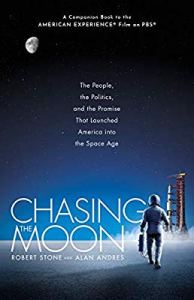


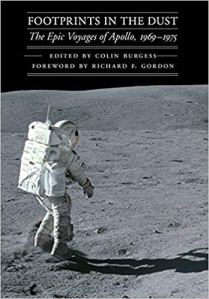


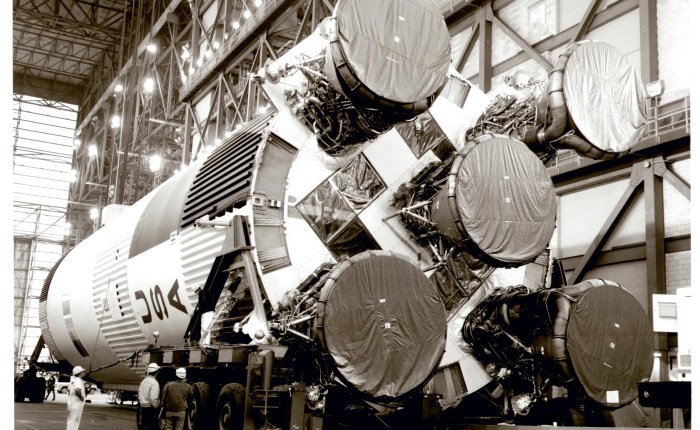

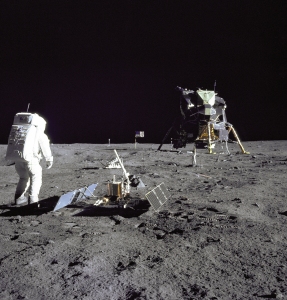
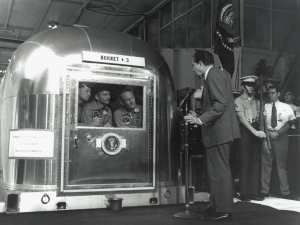
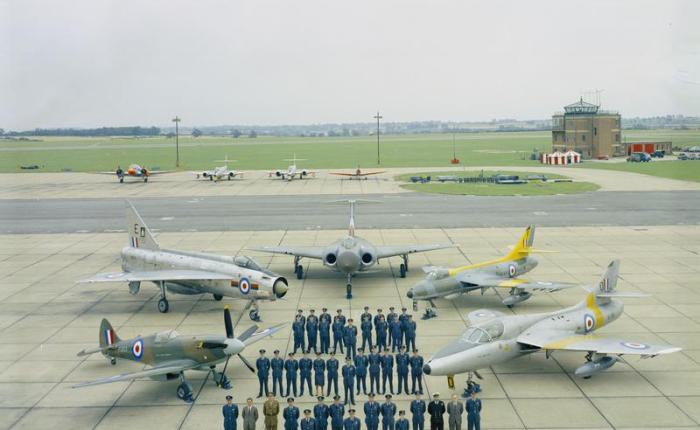

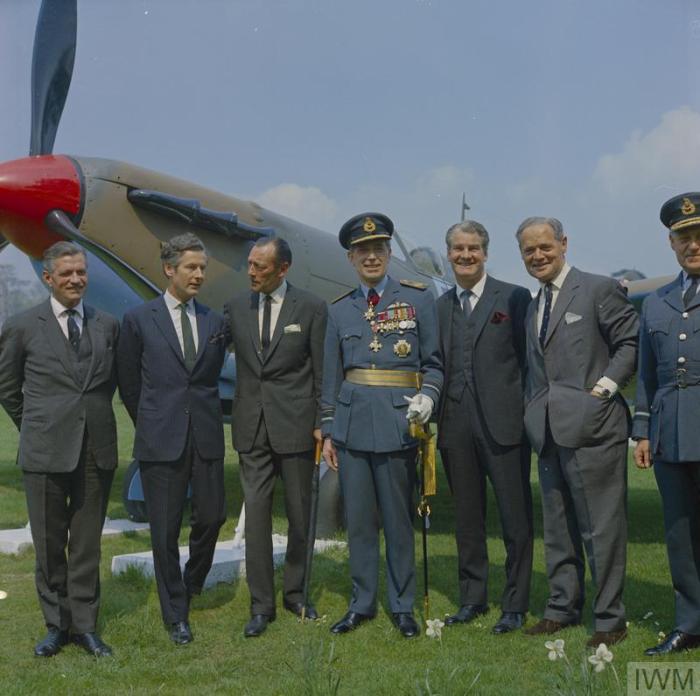

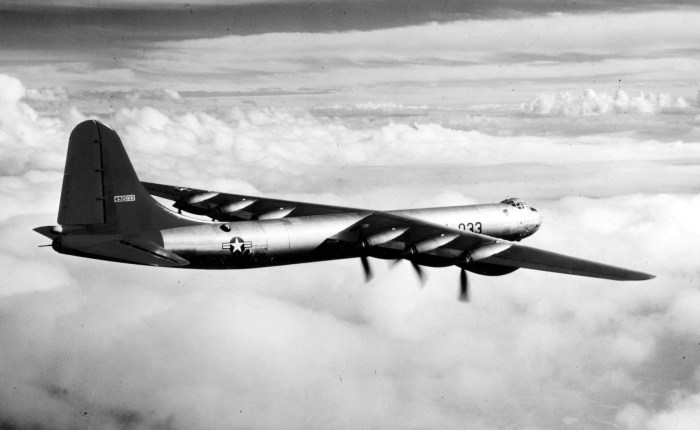



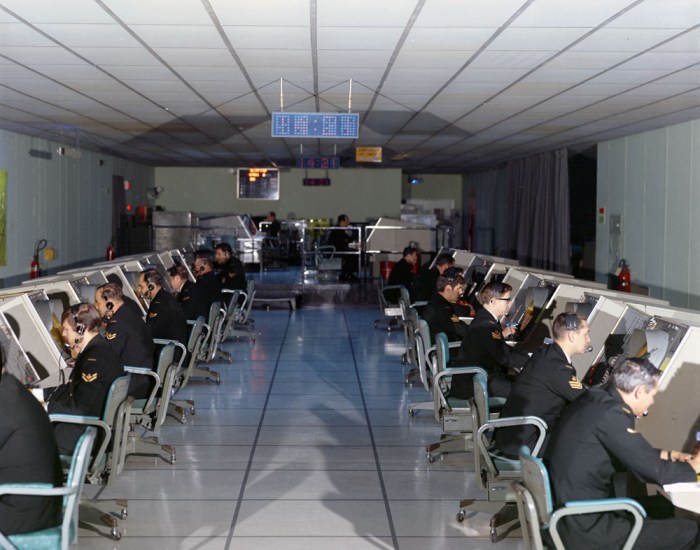


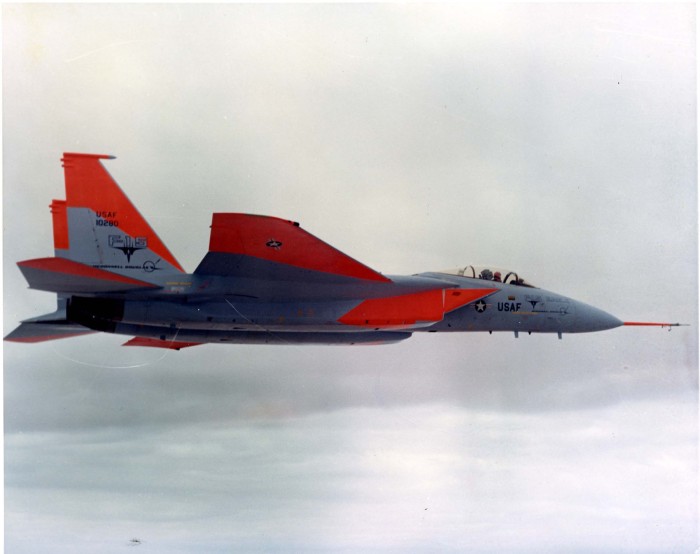

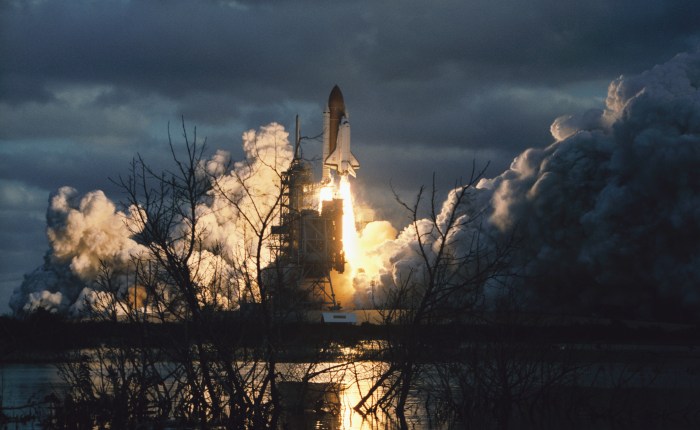
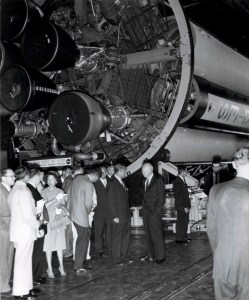
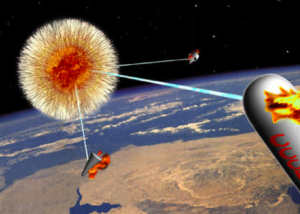
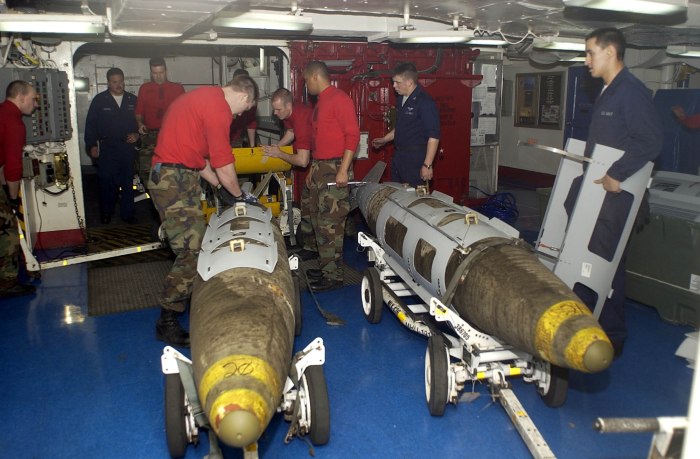
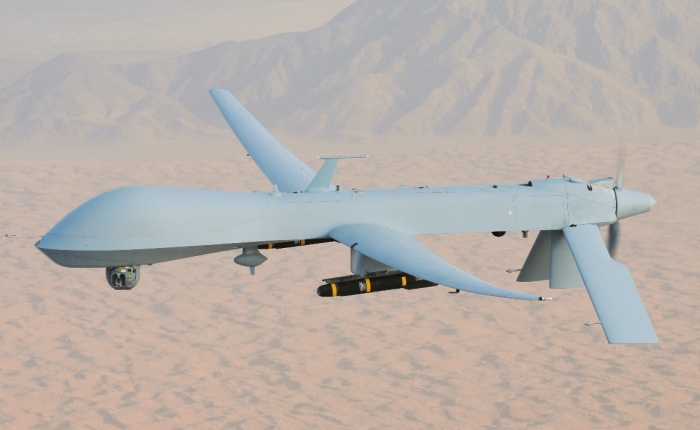
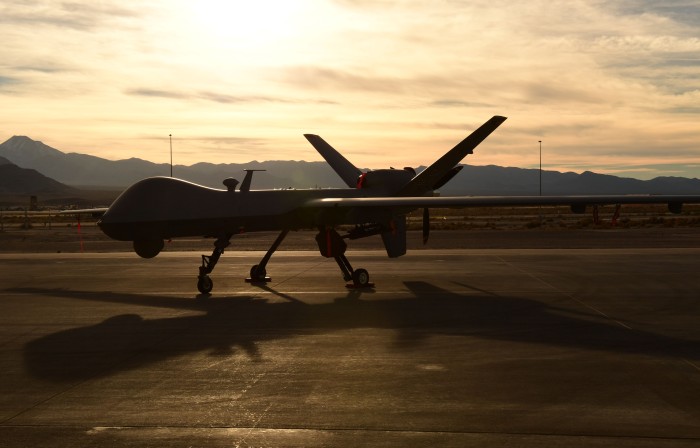
 From Balloons to Drones