Friday, 26 January, the long-awaited first and second episodes of Masters of the Air, based on the excellent eponymous book by Don Miller, premiered on Apple TV+. When I say long-awaited, rumours and articles have swirled around the series for over a decade, dating back to 2012.
I was lucky to see the first episode early last week as part of pre-screening at the US Air Force Academy. As From Balloons to Drones was created to discuss just such a series in the public realm, I wanted to provide a quick commentary with my thoughts from the first episode.
The oft-watched, oft-quoted, and something of related series that Masters of the Air will be inevitably compared to is 2001’s Band of Brothers. When Band of Brothers released on 09 September 2001 (yes, at its first showing on the evening of the ninth, the world was less than 48 hours away from the events of 11 September), 57 years had passed since the events of the show. Many unit members were still alive in their late seventies or early eighties. As most remember, each episode either began or ended with the veterans telling their stories. This is, sadly, impossible for Masters of the Air. I do ponder how Major Gale ‘Buck’ Cleven, Major John Egan, or Lieutenant Colonel Robert ‘Rosie’ Rosenthal might have reacted to having themselves portrayed in the series. These real-life men never lived to see themselves portrayed in film, another bitter reminder that the Second World War generation is all but gone now.
Bombs being dropped on enemy installations at Wessling, Germany by Boeing B-17 Flying Fortresses of the US 100th Bomb Group, 12 August 1943. (Source: US National Archives and Records Administration)
In my two viewings of episode one so far, two words continually play in my mind: Poignant and terrifying. Masters of the Air has succeeded where other more recent films have failed – at least for me – the actors portraying these real men (I cannot bring myself to refer to them as ‘characters’) do so without entering the realm of parody. The protagonists thus far, Buck and Bucky, seem like mid-twenties officers of the time, and I hope their character development continues in future episodes.
So far, the attention to detail seems well in hand. The men gearing up for the missions, the checklist, and the startup process for the Boeing B-17 Flying Fortresses is something too oft missed in other aerial films where pilots and crews hop in and zoom off to the wild blue yonder with nary a wave at the ground crews. The maintainers and mechanics also have their moments so far, and it is nice to see some recognition for the men who kept the planes in the air.
Obviously, the series uses CGI for the aerial battles but has used existing B-17s where possible. With only one episode down and knowing that the air battles are to increase in size with the number of aircraft and defenders, it has, thus far, demonstrated well the speed of attacking aircraft. Some critics have noted that the air battles are chaotic and difficult to follow. It is hard to tell who is who with the masks up and gear on, and the enemy fighters fly by in a blur with the gunners twisting to get off a few shots, but to my eye, there is realism here: the speed and chaos of air combat amongst the bomber crews is well done.
I cannot tell as of yet if Masters of the Air will live up to the hype, but as a historian, I have already found myself enjoying the series both for its storytelling and its accuracy. I also note that my air power colleagues have talked of little else this week and spent an inordinate amount of time talking to other interested parties, including media outlets (it’s a good time to be an air power historian). Knowing that the Tuskegee Airmen and Stalag Luft prison camps will be seen in future episodes only heightens my eagerness for more.
Thus far, I commend all parties involved in bringing the show to the screen. If this series inspires a younger generation to explore their past, ask questions about history, and look to learn more, it will have done its job.
Meanwhile, those of us already immersed in reading, researching, and publishing should use the series as a moment in time to explain what went on in the skies over Europe – and all over the world – during the Second World War: both the good and the bad, the glory and the horror, the rhetoric and the reality of the Masters of the Air.
Dr Brian Laslie is a US Air Force Historian and Command Historian at the United States Air Force Academy. Formerly he was the Deputy Command Historian at North American Aerospace Defense Command (NORAD) and United States Northern Command (USNORTHCOM). A 2001 graduate of The Citadel and a historian of air power studies, he received his Masters’ from Auburn University Montgomery in 2006 and his PhD from Kansas State University in 2013. He is the author of Air Power’s Lost Cause: The American Air Wars of Vietnam (2021), Architect of Air Power: General Laurence S. Kuter and the Birth of the US Air Force (2017) and The Air Force Way of War (2015). The latter book was selected for the Chief of Staff of the Air Force’s 2016 professional reading list and the 2017 RAF Chief of the Air Staff’s reading list. He can be found on Twitter at @BrianLaslie.
Header image: A formation of Boeing B-17 Flying Fortresses of the 100th Bomb Group flies over a blanket of clouds en route to their target at Warnemunde, Germany, 29 July 1943. The aircraft shown is the B-17 ‘Alice From Dallas’. Source: US National Archive and Records Administration)
Editorial Note: Led by Editor Dr Mike Hankins, From Balloons to Drones, produces a monthly podcast that provides an outlet for the presentation and evaluation of air power scholarship, the exploration of historical topics and ideas, and provides a way to reach out to both new scholars and the general public. You can find our Soundcloud channel here. You can also find our podcast on Apple Podcasts and Google Podcasts.
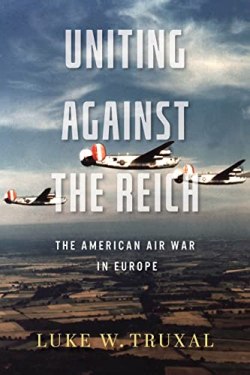
Dr Luke Truxal is the author of the new book Uniting Against the Reich: The American Air War in Europe from the University Press of Kentucky. In it, he traces how the structure of command over air forces in the Second World War created a mess of problems. Only late in 1943 and into 1944 did these command structures change, enabling air power to become more effective. In this interview, Truxal takes us into the dramatic relationships between leaders like Dwight Eisenhower, Carl Spaatz, and more, showing why, in positions of leadership, personality matters.
Dr Luke Truxal is an adjunct at Columbia State Community College in Tennessee. He completed his PhD in 2018 from the University of North Texas with his dissertation ‘Command Unity and the Air War Against Germany.’ His previous publications include ‘Bombing the Romanian Rail Network’ in the Spring 2018 issue of Air Power History. He also wrote ‘The Politics of Operational Planning: Ira Eaker and the Combined Bomber Offensive in 1943’ in the Journal of Military Aviation History. In addition, Truxal is researching the effectiveness of joint air operations between the Allied air forces in the Second World War. He can be reached on Twitter at @Luke_Truxal.
Header image: A formation of Boeing B-17F Flying Fortresses over Schweinfurt, Germany, on 17 August 1943. (Source: National Museum of the United States Air Force)
In 2024, From Balloons to Drones will run a series of articles that examines the role of air power during the defining year of the Second World War – 1944.
The year 1944 was the defining year of the Second World War. Events such as the fall of Rome, the invasion of France and the destruction of Germany’s Army Group Centre on the Eastern Front defined the war in Europe. In the Pacific and Southeast Asia, events such as the Battles of Imphal and Kohima and the Battle of the Philippine Sea marked important points in the war. In the strategic air war, the Combined Bomber Offensive in Europe peaked. At the same time, the Boeing B-29 Superfortress was introduced in the Far East and Pacific as the US increased its strategic air operations in this theatre of operations.
2024 marks the 80th Anniversary of the critical events of 1944. At all levels of war, air power played an essential role in the various battles and campaigns of 1944. As such, From Balloons to Drones is seeking submissions for articles examining the varied use of air power in 1944. Articles might, for example, explore the strategic air campaigns of 1944, the use of tactical air power, or the use of carrier-based air power. Possible themes to be explored might include, but are not limited to:
Strategy, Theory and Doctrine | Organisation and Policy | Roles Operations – Kinetic and Non-Kinetic | Tactics, Training and Procedures Strategic and Operational Effect | Technological Developments | Ethical and Moral Issues National, International and Transnational Experiences | Personal Experiences Memory and Memorialisation
We are looking for articles of between 500 to 4,000 words, but we will accept larger pieces and reserve the right to publish them in parts. Please visit our submissions page for more information on the types of articles published by From Balloons to Drones.
We plan to begin running the series in March 2024, and it will continue for as long as we receive potential contributions. We welcome and encourage submissions from academics, policymakers, service personnel, and relevant professionals.
Submissions should be submitted in Word format and emailed to the email address below with ‘SUBMISSION – Air Power and 1944 Revisited’ in the subject line. Also, please include a 50-100-word biography with your submission. Footnotes can be used, and please be careful to explain any jargon. If you are unsure if your idea fits our requirements, please email us with ‘POTENTIAL SUBMISSION – Air Power and 1944 Revisited’ in the subject line to discuss.
If you are interested in contributing, please email our Editor-in-Chief, Dr Ross Mahoney, at airpowerstudies@gmail.com or contact us via our contact page here.
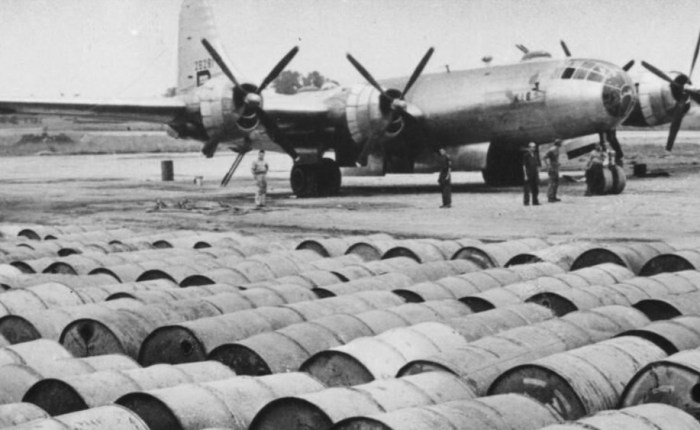
Header image: Rows of fuel tanks in front of a B-29 Superfortress of the 40th Bombardment Group assigned to the US Twentieth Air Force in China, c. 1944. (Source: Wikimedia)
Since the establishment of the National Advisory Committee for Aeronautics (NACA) in 1915, it had worked closely with the United States Navy. Not only had the US Navy partnered with NACA, but the creation of the latter was also a rider to the former’s funding bill.[1] This history of NACA has been overshadowed by its successor, the National Aeronautics and Space Administration (NASA), into which the former was absorbed in 1958. Thus, much of the critical work by NACA has been overlooked. Indeed, if NACA is remembered at all, it is for using wind tunnels in aeronautical research, but there was much more that it was responsible for. This article redresses this deficit by examining how NACA used water tanks in seaplanes’ aeronautical and hydronautical advancements after the First World War. It also highlights the people and agencies involved in the research and the means of conducting the research.
The United States Navy, Seaplanes, and the First World War
The US Navy, realising that aircraft would play a vital role in any future war, recognised that something had to be done to improve its readiness and improve its fleet of seaplanes The US Navy partnered with NACA to investigate and perform research on its aircraft, including seaplanes and flying boats. These planes would be critical in defence and coastal patrols. As a part of the first line of defence against German U-boats, the seaplanes would be a priority for the US Navy. The seaplane was considered a fixed-wing aircraft with a fuselage designed for floatation and containing a hull.[2] However, because it realised that aviation was still a technology in its infancy, the US Navy requested that NACA help make the naval seaplanes as efficient as possible. NACA, in supporting the tasking of the US Navy through its work on seaplanes, ensured a long and productive close bond with the Navy.
By the end of the First World War, the US Navy had several seaplanes with varying hulls, float types, and missions. These seaplanes operated from bases on shores because the US Navy did not have aircraft carriers or capital ships to launch such craft. The prevailing view then was that if the enemy were to attack, it would be by submarine, so it made sense to send patrols out from the shore to search for submarines. Several kinds of seaplanes were designed and used by the US Navy during the First World War. In 1919, Commander H.C. Richardson, the Superintending Constructor of Naval Aircraft for the US Naval Buffalo district in Buffalo, New York, who had also been Secretary to NACA’s main committee on formation in 1915, explained that:
[t]he principal work was done with two types of seaplanes, namely, the HS-2, the single-motored plane developed from the HS-1, and the H-16, a copy of an English seaplane.[3]
These two seaplanes were used because they were the most readily available. This shows how poorly the US Navy seaplane fleet was in 1919. However, according to Richardson:
The Navy Department fully appreciate[d] the desirability of experimenting to improve existing types and the development of new types of seaplanes and airplanes, directed to the solution of those problems which have arisen in the war and, more particularly, to the development of seaplanes or airplanes for operation with the fleet.[4]
Richardson was an active proponent of seaplanes for the US Navy. Therefore, because of the efforts of those such as Richardson, the US Navy was on track to update its seaplane fleet.
Unfortunately, the seaplanes of this period were unscientifically constructed. Their range was not that far, and their stability in flight left much to be desired. Actual aerodynamic testing was needed to ensure that any aircraft was worthy of combat and that the seaplanes were no exception. Richardson wrote in 1919 that:
[t]he problem confronting the Navy was largely determined at the time the United States entered the war [1917] by the fact that the operations of the German and Austrian fleets had been reduced principally to minor raids […] and the only real sea-going operations comprised the activity of submarines.[5]
This would be the primary mission of the seaplanes for many years: the patrol of waters in search of submarines. The submarines’ effect in the First and Second World Wars should not be taken lightly. The amount of cargo tonnage that could be destroyed by an undetected submarine could be immense.
Richardson’s 1919 article is crucial as he addressed the US Navy’s needs and how the seaplanes could aid it. His outline reads almost like a ‘wish list’ that NACA would eventually find itself working on. First, Richardson felt that performance, first and foremost, relied upon horsepower. He argued that:
[t]he performance in power flight is determined by the horsepower required and the horsepower available, and of course, the latter must always exceed the former or power flight is not attainable.[6]
Considering that Richardson wrote this in 1919, he seems to have firmly grasped the needs of seaplanes. However, the power plants of any aircraft currently were still in an age of infancy. As such, Richardson’s idea that seaplanes were reliant on horsepower was unfortunately ahead of the technology that would make the machines efficient.
Richardson also understood that lift was an essential component of flight. He explained that:
[t]he lift of an airplane surface and its resistance to advance are determined by the lift and drift factors, which vary with the type of section used and also with the angle of attack at which the surface is presented to the relative stream of air.[7]
The US Navy realised, however, as much as Richardson showed advanced thought on the subject, that the research involved was outside the Service’s scope. NACA, set up as an agency that was available to help government and civil agencies in aeronautics research, would be the agency to help the US Navy address the fundamental science of seaplane aeronautical research.
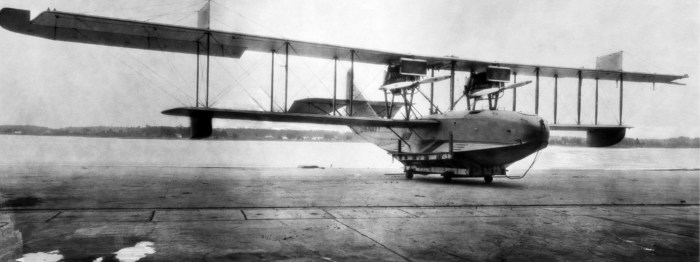
A Curtiss H-16 at the Langley Aeronautical Laboratory at Hampton, Virginia, c. 1929. (Source: Wikimedia)
The Importance of NACA’s Research
While often overshadowed by NASA, the work of NACA deserves examination because of the enormity of its contribution to aeronautics. As NASA historian James Schultz explained:
[t]hroughout its history, with research and applied engineering, the Center [Langley] has been responsible for some of the 20th century’s fundamental aeronautical and aerospace breakthroughs. The Nation’s first streamlined aircraft engine cowling was developed at Langley Laboratory […] the tricycle landing gear; techniques involving low drag-producing flush riveting; [and the] development of the sweptback wing.[8]
Similarly, historian Michael Gorn asserted:
[t]he proliferation of wind tunnels [about thirty had been built at Langley up to the 1950s] reflected the NACA’s true institutional identity: it concentrated on aeronautics.[9]
While Gorn is correct, NACA could not have focused solely on aerodynamics and prospered. Aerodynamics was just one piece of what NACA did. It was established to investigate all flight modes, and hydrodynamics was a crucial part of NACA’s work. While not as aerodynamically sophisticated as land planes, seaplanes and flying boats needed hydrodynamical studies to meet the needs of the US Navy. It is a mistake to overlook this field that so many within NACA worked on.
Once NACA started its research on hydrodynamics, it did so without any presumptions and began its research by looking at the fundamentals of the aircraft. George W. Gray, in his early history of NACA, explained this adeptly. He stated that:
[a] large part of the effort of the hydrodynamic staff at Langley has been expended upon the twin problems: trying to effect a seaplane body that will combine low water resistance with low air drag.[10]
Even before this, however, the question was whether seaplanes could even take flight. Then, again, the problem was that of power plants. As Gray pointed out, the studies:
[h]ad yielded some disappointing surprises: new designs that would not take off at the speeds planned or that would not lift the desired loads at any attainable take-off speed.[11]
With the water tanks of NACA, however, the guesswork was taken out of the equation. However, none of this would have been possible, at least in a reasonable amount of time, without some organisation to make it happen.
Langley and the Water Tanks
Langley, located at Hampton Virginia, was NACA’s research centre, established in 1917. It focused primarily on aeronautical research but would eventually be used to test space equipment such as the Apollo lunar module. However, the first ten years at Langley comprised only the testing of aeroplanes. There was no work at all done on seaplanes. To do this work, NACA had to have something other than a wind tunnel to test the seaplanes.[12]
The drag tank also called a tow tank, drag tunnel, or even the drag basin, was the solution to the research needed. Gray stated that:
[m]any of the studies in wind tunnels were applicable to seaplanes, and they in common with landplanes benefited from improvements in wings, propellers, engine cowlings, and other developments of the 1920s.[13]
The study variables were applicable, but these were still seaplanes, and there was a need to test them in water. Gray elaborated that NACA knew that it needed a better way to test the seaplanes:
[i]t was recognised that the airplane on the water has problems that are not shared by the airplane in the air or on the landing strip, and in 1929 the Committee in Washington decided to enlarge the organisation and equipment at Langley to provide for research in hydrodynamics.[14]
It was then that hydrodynamic research began at Langley.
Langley constructed two tanks: tank number one and tank number two. Tank number one became operational on 27 May 1931 for $649,000.[15] Its purpose was ‘to study the hydrodynamic resistance and other performance features of water-based aircraft.’[16] A vital design team member was Starr Truscott, who published numerous studies based on research from tank one. A few additions were made to the tank, including a new higher-speed (80-MPH) carriage (a rail that the aircraft being tested sits on) installed in 1936-1937 and a tank extension of 900 feet to 2,960 feet in 1936.[17] Eventually, the need for another tank would arise, leading to the construction of tank two.
Tank number two, operational on 18 December 1942, again had Truscott, along with John B. Parkinson and John R. Dawson, on the design team.[18] The basin was 1,800 feet long by 18 feet wide and 6 feet deep. It also had a 60-MPH carriage.[19] The express purpose of tank number two was ‘to test models of floats for seaplanes and hulls for flying boats by dragging them through seawater.’[20] According to Gray, the significance of tank two was that:
[r]esearchers experimented with radical departures from accepted hull design, trying to find the specifications for a seaplane body that would combine freedom from porpoising and skipping, low water resistance, and superior performance in the air. Out of these experiments came a novel design known as the hull with a planing tail.[21]
Every step in the building of the tanks, from the basin to the tires on the towing carriage, had to be carefully thought out to ensure the best product for research use. Truscott, one of the designers of both tanks, realised that using NACA tanks required certain necessary features solely for use with the seaplanes.[22]
Truscott related that the tank located at Langley was:
[o]f the Froude type; that is, the model which is being tested is towed through still water at successive constant speeds from a carriage spanning the tank. At each constant speed, the towing pull is measured, the trim and the rise, or change of draft, are recorded and, if the model is being towed at a fixed trim, the moment required to hold it there is measured and recorded.[23]
The tank itself was covered by an enclosure meant to protect it from the water itself (so that turbulent water after a test could settle more quickly), wind, and the weather, rather than to provide any comfort to the engineers.[24]
Pneumatic tires were installed and were ‘each driven by an independent electric motor through a single-reduction herringbone pinion and gear. The […] tires are high-speed bus or truck tires, with smooth treads.’[25] The carriage had to have the means to propel itself, which was achieved using ‘our electric motors propelling the car […] nominally of 75 horsepower, but for short periods they may be safely called upon to deliver 220 horsepower each.’[26] ‘Finally, the device used electrical braking to break the current for regenerative braking.’[27]
Given the construction of the tanks, much work had to come together to test seaplanes. Of course, the whole purpose was to test the seaplanes for fundamental problems that could inhibit the aircraft’s performance. Resistance, porpoising, skipping, and performance were why the tanks existed. Solutions to these problems were needed for a more efficient aircraft. NACA engineers sought to reduce resistance; the force encountered when a plane is in the air moving forward or a seaplane in water, to help with take-off and landing.
Porpoising, a dangerous event that often occurs in the water, is something that NACA was tasked to find a solution to. According to Kenneth Davidson and F. W. S. Locke, Jr., writing for the Stevens Institute of Technology in 1943:
[p]orpoising is a self-sustaining oscillatory motion in the vertical longitudinal plane [… ] and can originate in an instability of the uniform longitudinal motion in smooth water […] in the words of one test pilot, it is always unpleasant and it may be catastrophic.[28]
Essentially a seaplane will move up and down in the water out of control of the pilot. So it is easy to understand why the US Navy was interested in the dynamics of porpoising and what needed to be done to eliminate it. If left unchecked, not only could the seaplane not fly, but it could also be damaged, or worse yet, the pilot injured or killed.
Performance was made up of several things. Engine performance, aerodynamics, and propellers were factors in all aircraft, but with the seaplane, there was a demanding service life on the water. In addition, s were composed of thousands of rivets, so corrosion was a considerable fear. It could be disastrous if the corrosion worked through a rivet at the wrong time. The hull of the seaplane was another vital factor. The construction, what it was made of, the aerodynamics, and how to prevent porpoising and skipping of the aircraft were things that NACA still needed to work out.
With the tow tanks available, miniature models could be constructed of the hulls or floats of the seaplanes, put upon the carriage, and pulled at the desired speed. If the results did not achieve the desired results, costly mistakes could be prevented. This opened new doors for aeronautical research that paid huge dividends in the coming years. While NACA was still beginning its seaplane research, progress would come more rapidly with the tow tanks at hand.
Fundamental Research
In 1935, NACA found itself in a position to make future research easier. Engineer Antonio Eula performed tank tests on seventeen different hulls and floats.[29] Eula purposely picked a random number of floats that had been tested in the laboratory over the last few years. He did this because:
[i]t affords an opportunity to draw some general conclusions regarding seaplane floats of given weight, given wing structure, any given position of the center of gravity.[30]
Another reason is that not much data existed to make work easier for future engineers. His most important conclusion drawn from the tests was that ‘the best models have a maximum relative resistance not exceeding 20 percent of the total weight.’[31] Just that information itself was enough to help any future engineers working with the drag tanks to give them a starting point from which to work.
Along with porpoising, skipping continued to be a problem with seaplanes. During the Second World War, the problem of skipping was considered a significant enough problem that needed further research. In 1943, John B. Parkinson at NACA addressed the problem. He began by defining just what skipping was. He reported that ‘skipping is a form of instability encountered in water take-offs and landings, so-called because of the resemblance of the motions of the seaplane to those of a skipping stone.’[32] Rising out of the water before the seaplane achieved flight was hazardous. A plane entirely out of the pilot’s control can lead to injuries, if not death.
One of the critical problems with the testing up to this point was that scientific testing had not occurred. Parkinson explains that ‘investigations of skipping have been mainly qualitative and the data have been based on the impressions of pilots or observers.’[33] Using models and even full-size aircraft for testing, Parkinson established that instability caused most problems. Using measurements taken from the fore and aft of the step-in hull helped determine where the problem for each type of seaplane was located. Once that was established, the engineers could make the corrections. Of course, it could never eliminate all problems because any seaplane on the water is prone to unpredictable water. However, it did go far in helping establish methods to solve the skipping problems.
It was realised that the research had to be compiled to make it easier for future engineers to find the information they were looking for. So, in September 1945, engineers James M. Benson and Jerold M. Bidwell released a bibliography containing information about seaplanes.[34] In this bibliography, many details covering everything from conventional hulls and floats to floating and handling were written about in a way that compiled the common information in past reports. Not only would this make it easier for future researchers, but the bibliography also pointed out areas in which more work needed to be done. Examples such as this are one of the reasons that NACA was able to achieve the success that it had.
A US Navy Consolidated PB2Y-3R Coronado transport aircraft loads cargo at the Pan American Airways dock, Treasure Island, California in January 1943. (Source: Wikimedia)
NACA Water Tank Research and its Impact on Second World War Seaplanes
The Consolidated PB2Y Coronado is an example of how this research aided in Seaplane use during the war. In its original design, when fuelled for a long-range mission, this seaplane had a gross weight of 46,000 pounds of which 3,000 pounds was the payload. The US Navy wished to increase the payload.[35] Using models of the Coronado in Tank No. 1, the NACA changed the line of the step of the hull and installed ducts for ventilating the bottom area aft of the step. This increased the gross weight to 68,000 pounds, of which 12,000 pounds was payload. It’s stability was so assured that the plane, during its war service in the Pacific Islands was repeatedly used to make landings on dark nights when the seeing is poor, and the craft must descend on a steady glide path until water is touched, a more hazardous procedure than daylight landing.[36]
Conclusion
The success of NACA was based on hard work and dedication to research. Working alongside government agencies such as the US Navy and even civilian aircraft manufacturers, NACA helped the United States evolve from a country far behind Europe in aeronautical research to the world’s leader in aeronautical research. The research conducted on seaplanes, long overlooked, helped refine the seaplanes, and even today, seaplanes are still in use.
Jay C. Shaw graduated with a bachelor’s in history from Columbia College in Columbia, Missouri, in 2016. He began work on his PhD in History with the University of Missouri – Columbia in 2022. He retired in 2016 from the US Air Force as an Aerospace Ground Equipment Craftsman in support of both the C-130 Hercules and the B-1B Lancer airframes. He volunteered at the Army Engineer School History Office at Fort Leonard Wood for over a year, where he worked more than 350 hours proofing sources for a book on the history of the Army Engineer School.
Header image: Digging the channel for Tank No. 1. In the late 1920s, the NACA decided to investigate the aero/hydro dynamics of floats for seaplanes. A Hydrodynamics Branch was established in 1929 and a special towing basin was authorized in March of that same year. (Source: Wikimedia)
[2] While modern definitions of seaplanes, flying boats and float plane are more clearly defined. At the time NACA was formed, the language used was less clearly defined. As evidence by Richardson’s article cited beloew, it is clear that the types of aeroplanes discussed would, by modern defintion be considered flying boats. However, he refers to them as seaplanes.
[3] H. C. Richardson, ‘Airplane and Seaplane Engineering,’ SAE Transactions 14 (1919), p. 334.
[4] Richardson, ‘Airplane and Seaplane Engineering,’ p. 365.
[5] Richardson, ‘Airplane and Seaplane Engineering,’ pp. 333-4.
[6] Richardson, ‘Airplane and Seaplane Engineering,’ p. 338.
[7] Richardson, ‘Airplane and Seaplane Engineering,’ p. 338.
[8] James Schultz, Crafting Flight: Aircraft Pioneers and the Contributions of the Men and Women of NASA Langley Research Center (Washington, D.C.: National Aeronautics and Space Administration, 2003), p. 25.
[9] Michael H. Gorn, ‘The N.A.C.A. and its Military Patrons during the Golden Age of Aviation, 1915-1939,’ Air Power History 58, no. 2 (2011), p. 25.
[10] George W. Gray. Frontiers of Flight (New York: Knopf, 1948), p. 67.
[15] James, R. Hansen, Engineer in Charge: A History of the Langley Aeronautical Laboratory, 1917-1958 (Washington, D.C.: National Aeronautics and Space Administration, 1987), p. 450.
For those who study the history of the United States Air Force and its forebears, there is a noticeable gap in the historiography regarding biographies of Second World War air force commanders. There are several biographies for men such as General Carl Spaatz, General of the Air Force Henry H. Arnold, General James Doolittle, General Curtis LeMay, and even Major General Haywood Hansell. Yet, many other prominent commanders, staff officers, and theorists do not have their own biographies. However, this research note solely focuses on General Ira Eaker, who, in 1943, commanded what became the US Eighth Air Force, the Mediterranean Allied Air Forces in 1944 and was deputy Chief of the Air Staff for the United States Army Air Forces in 1945.
James Parton has largely written Eaker’s history in “Air Force Spoken Here”:General Ira Eaker and the Command of the Air. Parton’s biography is a strong defence of Eaker. In many cases, he has created much of the narrative that we accept regarding Eaker’s performance as a commander during the Second World War. However, there is one problem with Parton’s book; he was Eaker’s staff officer. Given this, Parton’s book jumps between biography and personal memoir in several places. For example, when writing about Eaker’s defence of daylight precision bombing at the Casablanca Conference in 1943, Parton slips into a personal memoir. In a paragraph, he describes the trip to Spaatz’s headquarters, the poker game he played with Eaker and Spaatz, and how he edited Eaker’s proposals for the Casablanca Conference.[1] It is unclear whether this can be classified as a biography since it is unclear if Parton is writing about himself or Eaker. Also, as a staff officer deeply devoted to Eaker, Parton may not be the general’s best or most objective biographer. Simply put, Eaker needs a new biography.
For those interested in writing a biography on Eaker, there are several places to start. First, Parton’s biography is a great place to get background information on Eaker, even if the analysis is sometimes questionable. Another series of sources that need to be examined are the books that Eaker published with Arnold before the Second World War. Arnold and Eaker wrote: Army Flyer, Winged Warfare, and This Flying Game.[2] These books lay out their vision for the future of air power and, in some cases, offer analysis of air campaigns during the Second World War before the entrance of the United States into the conflict. These books give some insight into Eaker as an air power theorist and precision bombing advocate before the war. Three major archives should be consulted for wartime records. First, the Library Congress has Ira Eaker’s papers. Speaking from personal experience, they are well-organised and easy to work through. Even better, several vital figures whom Eaker corresponded with also deposited their papers at the Library of Congress. Another archive to consult is the Air Force Historical Research Agency, where you can find records on the Eighth Air Force and Mediterranean Allied Air Forces. Finally, the National Archives and Records Administration has more records and correspondence.
Air Chief Marshal Sir Arthur Harris shakes hands with Lieutenant General Ira Eaker at a handover ceremony of a US Army Air Force airfield into RAF control, c. November 1943. (Source: IWM)
Research is not the problem with writing a biography on Eaker. He wrote a lot about air power before, during, and after the Second World War. There is much research readily available on Eaker. This is purely speculation, but the reason why there is not a biography on Eaker is most likely that it is a hard biography to write. Eaker is not a polarising figure. Biographers note that they either fall in love with or hate the person they are writing about. It is hard to do that with Eaker. He is a likeable person and, at times performs quite well as a commanding officer. Yet, he also makes several significant mistakes during the war as well. It is hard to write a book analysing an officer whom both deserves blame for the failures of the 1943 air offensives against Germany and, in the same breath, say he played a major role in the success of the air war in 1944 and 1945.
In conclusion, it is time to put the James Parton book on Eaker aside and write a new biography on Eaker to start a proper historical debate on his career. There is ample archival material available to sift through and analyse. The challenge will be how to assess his performance during the war. Here is a thought to possibly hang onto for those who might want to take up this project. Maybe the challenge of writing a biography about Eaker is that he is representative of the struggles that early American air commanders faced during the strategic bombing of Germany in 1942 and 1943. Eaker was testing new ideas in a new form of warfare and without ample resources as the commander of the Eighth Air Force. He made several errors in 1943 that was amplified by his lack of resources. Yet, with more resources and experience, his performance improved over time. In many ways, Eaker represents the struggles that many American officers faced during the air war against Germany.
Dr Luke Truxal is the Book Review Editor at From Balloons to Drones and an adjunct at Columbia State Community College in Tennessee. He completed his PhD in 2018 from the University of North Texas with his dissertation ‘Command Unity and the Air War Against Germany.’ His previous publications include ‘Bombing the Romanian Rail Network’ in the Spring 2018 issue of Air Power History. He also wrote ‘The Politics of Operational Planning: Ira Eaker and the Combined Bomber Offensive in 1943’ in the Journal of Military Aviation History. In addition, Truxal is researching the effectiveness of joint air operations between the Allied air forces in the Second World War.
Header image: Major General Ira C. Eaker presents an award to an enlisted man of the 479th Anti-Submarine Group during a ceremony at an air base in St Eval, United Kingdom, c. 1943. (Source: NARA)
[1] James Parton, “Air Force Spoken Here”: General Ira Eaker & the Command of the Air (Bethesda, MD: Adler & Adler Publishers Inc., 1986), p. 220.
[2] Henry H. Arnold and Ira C. Eaker, Army Flyer (New York: Harper & Brothers Publishers, 1942); Henry H. Arnold and Ira Eaker, Winged Warfare, (New York: Harper & Brothers Publishers, 1941); Henry H. Arnold and Ira Eaker, This Flying Game, (Ramsey, New Jersey: Funk and Wagnalls Company, 1938).
Editorial note: In this series, From Balloons to Drones highlights research resources available to researchers. Contributions range from discussions of research at various archival repositories to highlighting new publications. As part of this series, we are bringing you a monthly precis of recent articles and books published in air power history. This precis will not be exhaustive but will highlight new works published in the preceding month. Publication dates may vary around the globe and are based on those provided on the publisher’s websites. If you would like to contribute to the series, please contact our Editor-in-Chief, Dr Ross Mahoney, at airpowerstudies@gmail.com or via our contact page here.
Books
Krzysztof Dabrowski, Defending Rodinu – Volume 2: Build-up and Operational History of the Soviet Air Defence Force, 1960-1989 (Warwick: Helion and Company, 2023).
In the 1950s, the Soviets had managed to grow a major Air Defence Force (PVO) capable of covering the entire airspace of the Union of the Soviet Socialist Republics (USSR). The PVO was able to field interceptors and surface-to-air missiles to intercept even high-flying foreign reconnaissance aircraft. By the early 1960s, the Soviets managed to theoretically, seal their airspace to unwanted visitors. Nevertheless, multiple foreign intelligence agencies and air forces continued seeking to penetrate the airspace of the USSR by means ranging from non-steerable ‘spy blimps’, via strategic bombers, to high-speed tactical reconnaissance aircraft. This activity kept the PVO on constant alert so that time and again it reacted mercilessly, even to entirely innocent passenger airliners, causing several major international incidents.
Defending Rodinu Volume 2 provides the operational history of the Soviet PVO from the early 1960s until the late 1980s – a period of continuously escalating tensions of the Cold War. Using documentation and publications never before released in the English language and richly illustrated, it provides a comprehensive, single-source point of reference for historians and enthusiasts alike.
Mark Galeotti, Afghanistan, 1979–88: Soviet Air Power against the Mujahideen (Oxford: Osprey Publishing, 2023).
The Soviet Union’s invasion of Afghanistan was fought as much in the air as on the ground. From the high-level bombing raids that blasted rebel-held mountain valleys, to the Mi-24 helicopter gunships and Su-25 jets that accompanied every substantial army operation, Soviet control of the air was a crucial battlefield asset. Vital to every aspect of its operations, Mi-8 helicopters ferried supplies to remote mountain-top observation points and took the bodies of fallen soldiers on their last journey home in An12 ‘Black Tulips’.
But this was not a wholly one-sided conflict. Even before the Afghan rebels began to acquire man-portable surface-to-air missiles such as the controversial US ‘Stinger,’ they aggressively and imaginatively adapted. They learnt new techniques of camouflage and deception, set up ambushes against low-level attacks, and even launched daring raids on airbases to destroy aircraft on the ground.
Featuring information previously unknown in the West, such as the Soviets’ combat-testing of Yak-38 ‘Forger’ naval jump jets, Soviet-expert Mark Galeotti examines the rebel, Kabul government and the Soviet operation in Afghanistan, drawing deeply on Western and Russian sources, and including after-action analyses from the Soviet military. Using maps, battlescenes and detailed ‘Bird’s Eye Views’, he paints a comprehensive picture of the air war and describes how, arguably, it was Soviet air power that made the difference between defeat for Moscow and the subsequent stalemate that they decided to disengage from.
Daniel Haulman, Misconceptions about the Tuskegee Airmen: Refuting Myths about America’s First Black Military Pilots (Athens, GA: University of Georgia Press, 2023).
Once an obscure piece of World War II history, the Tuskegee Airmen are now among the most celebrated and documented aviators in military history. With this growth in popularity, however, have come a number of inaccurate stories and assumptions. Misconceptions about the Tuskegee Airmen refutes fifty-five of these myths, correcting the historical record while preserving the Airmen’s rightful reputation as excellent servicemen.
The myths examined include: the Tuskegee Airmen never losing a bomber to an enemy aircraft; that Lee Archer was an ace; that Roscoe Brown was the first American pilot to shoot down a German jet; that Charles McGee has the highest total combat missions flown; and that Daniel “Chappie” James was the leader of the “Freeman Field Mutiny.” Historian Daniel Haulman, an expert on the Airmen with many published books on the subject, conclusively disproves these misconceptions through primary documents like monthly histories, daily narrative mission reports, honor-awarding orders, and reports on missing crews, thereby proving that the Airmen were without equal, even without embellishments to their story.
Jeff Pedrina, Wallaby Airlines: Twelve months flying the Caribou in Vietnam (Newport, NSW: Big Sky Publishing, 2023).
Jeff Pedrina’s book provides a very personal and thoughtful account of his twelve month’s service in Vietnam with No 35 Squadron – ‘Wallaby Airlines’. While the story is primarily about the people, and the personalities, he encountered during his tour of duty in Vietnam, it is also the story of a remarkable aircraft, the de Havilland Canada DHC-4 Caribou – the first mass-produced short take-off and landing (STOL) aircraft of its size. For seven and a half years it was the backbone of the airlift effort in the highlands of Vietnam, and was operated by the Royal Australian Air Force until November 2009, forty-five years after it first entered RAAF service.
First into the theatre in 1964 and last out in 1972, the Caribou aircraft and its air and ground crews were the RAAF’s quiet achievers in Vietnam. In the course of seven and a half years, Wallaby Airlines achieved an excellent operational record and reputation as a tactical transport squadron. This book in its original format was first published in 2006, having been awarded Special Mention in the 2005 RAAF Heritage Awards. This new edition is intended to bring the experiences of Jeff Pedrina, and the exploits of the Wallaby Airlines and its venerable Caribou aircraft to life for a new generation of reader.
Usman Shabbir and Yawar Mazhar, Eagles of Destiny – Volume 1: Growth and Wars of the Pakistan Air Force, 1956-1971 (Warwick: Helion and Company, 2023).
Eagles of Destiny Volume 2 is a detailed account of the transformation of the Pakistan Air Force (PAF) with the help of the first US assistance program, and how its leadership utilised this opportunity to create a modern air force. It provides detailed coverage of the PAF’s participation in the 1965 Indo-Pakistani War, based on official documentation and material from private collections that were previously not available to the public. The story of the Pakistan Air Force during this period is concluded by the coverage of the first build-up with the Chinese support, against the backdrop of US sanctions, highlighting and discussing the challenges and response.
Finally, the book provides detailed coverage of PAF operations during the 1971 War with India, including several first-hand accounts by key officers. Between 1956 and 1971, the PAF inducted a number of new weapon systems, including US-made F-86 Sabres, French-made Mirages, and Chinese-made F-6s. These developments and PAF’s strategy are all discussed in great detail.
Richly illustrated, and almost entirely based on accounts never published before, Eagles of Destiny Volume 2 provides a unique insight from professionals who were either directly involved, or witnessed the affairs in question.
Established in 2016, From Balloons to Drones is an online scholarly platform that analyses and debates air power history (including aviation history), theory, and contemporary operations in their broadest sense, including space and cyber power. To date, we have published over 250 articles on various air power-related subjects.
Since its emergence at the start of the 20th Century, air power has increasingly become the preferred form of military power for many governments. However, the application and development of air power are controversial and often misunderstood. To remedy this, From Balloons to Drones seeks to provide analysis and debate about air power through the publication of articles, research notes, commentaries, book reviews, and historic book reviews – see below for a description of the range of articles published.
The study of air power is to be understood broadly, encompassing not only the history of air warfare, including social and cultural aspects, but also incorporating contributions from related fields, such as archaeology, international relations, strategic studies, law and ethics. Possible subjects to be explored might include, but are not limited to:
Strategy, Theory and Doctrine | Organisation and Policy | Roles
Operations – Kinetic and Non-Kinetic | Tactics, Training and Procedures
Strategic and Operational Effect | Technological Developments
Ethical and Moral Issues | National, International and Transnational Experiences
Personal Experiences | Culture | Memory and Memorialisation
From Balloons to Drones welcomes and encourages potential submissions from postgraduates, academics, and practitioners involved in researching the subject of air power.
A US Air Force Fairchild C-119B Flying Boxcar air-dropping supplies near Chungju, Korea, in 1951. (Source: Wikimedia)
We publish:
Scholarly Articles
From Balloons to Drones publishes informative, peer-reviewed articles on air power that range from historical pieces to the analysis of contemporary challenges. These well-researched articles aim to bridge the gap between specialist and non-specialist readers. They should be around c. 3,000 words, though From Balloons to Drones will accept longer pieces. We reserve the right to publish them in parts.
Air War Books
From Balloons to Drones publishes a series of review articles that examine the top ten books that have influenced writers on air power. See more here.
Commentaries
From Balloons to Drones publishes opinion pieces on recent news on either contemporary or historical subjects. These should be no longer than c.1,000 words.
Research Notes
From Balloons to Drones publishes research notes on contributors’ current research projects. These take the form of more informal pieces and can be discussions of a source or notes on a recent research theme. These should be c.500 to 1,000 words.
Book Reviews
From Balloons to Drones publishes regular book reviews that aim to be an accessible collection of appraisals of recent publications about air power. If you are a publisher interested in having your publication reviewed, please contact us at the email address below. See more here.
Historic Book Reviews
From Balloons to Drones publishes occasional historic book reviews that aim to be an accessible collection of appraisals of critical historic publications about air power history, theory, and practice. See more here.
Submissions should be submitted in Word format and emailed to the address below with ‘SUBMISSION’ in the subject line. Also, please include a 50-100-word biography with your submission. References can be used, and please be careful to explain any jargon. However, if you are unsure if your idea fits our requirements, please email us with ‘POTENTIAL SUBMISSION’ in the subject line to discuss.
If you are interested in contributing, please email our Editor-in-Chief, Dr Ross Mahoney, at airpowerstudies@gmail.com or via our contact page here.
Header image: A Panavia Tornado GR4 of No. IX(B) Squadron on a training sortie in preparation for deployment to Afghanistan, c. 2012. (Source: Wikimedia)
Editorial Note: Led by Editor Dr Mike Hankins, From Balloons to Drones produces a monthly podcast that provides an outlet for the presentation and evaluation of air power scholarship, the exploration of historical topics and ideas, and provides a way to reach out to both new scholars and the general public. You can find our Soundcloud channel here. You can also find our podcast on Apple Podcasts and Google Podcasts.
Our latest podcast discusses our favourite books of the year with Dr Ross Mahoney, Editor-in-Chief of From Balloons to Drones. Each of us discusses our top three reads of 2022, and we take a look forward at some topics we would really like to hear more about in the future.
Dr Ross Mahoney is an independent scholar specialising in the history of war, particularly concerning the use of air power and the history of air warfare. He is currently the Senior Historian within the City Architecture and Heritage Team at Brisbane City Council in Australia. He has over 15 years of experience in the heritage and education sectors in Australia and the United Kingdom. Between 2013 and 2017, he was the inaugural Historian at the Royal Air Force Museum in the UK. In Australia, he has worked as a Historian for the Department of Veterans’ Affairs and taught at the Strategic and Defence Studies Centre at The Australian National University based at the Australian War College. His research interests are focused on the history of war, specifically the history of air warfare, transport history, and urban history. To date, he has published several chapters and articles, edited two books, and delivered papers on three continents. He has a book review website here and can be found on Twitter at @airpowerhistory.
Header image: One of six FMA IA 58 Pucará’s destroyed on 15 May 1982 after a raid by the Special Air Service on Pebble Island during the Falklands War. (Source: Wikimedia)
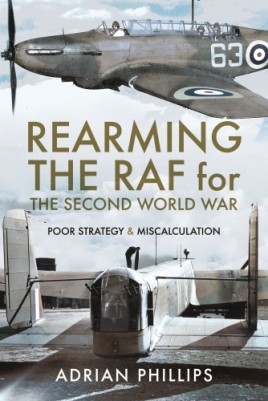
Adrian Phillips, Rearming the RAF for the Second World War: Poor Strategy and Miscalculation. Barnsley: Pen & Sword, 2022. Notes. Bibliography. Index. Hbk. xxvi + 350 pp.
Reviewed by Dr Matthew Powell
The history of the rearmament of the Royal Air Force (RAF), and the British aircraft industry in the inter-war period, more generally, has undergone a degree of revision over recent decades, mainly through the works of Sebastian Ritchie and David Edgerton. In this work, Adrian Phillips looks to challenge this new orthodoxy. Phillips seeks to show that the RAF adopted an incorrect way of conceptualising air warfare in the mid-to late-1930s. Phillips claims that the Air Ministry and the wider RAF incorrectly prioritised bombers over fighters when rearmament began in the 1930s. Phillips further contends that this prioritisation can be traced back to the theorising of Marshal of the Royal Air Force Lord Trenchard, the RAF’s Chief of the Air Staff in the 1920s. Despite dispelling several myths about RAF expansion in the inter-war period, Phillips does not provide an overly convincing case for several reasons.
The critical issue with Phillips’ book is that it suffers from a general lack of understanding of the wider historical context of the RAF’s development in this period. Despite a relatively extensive bibliography, it appears that many more recent works in this area have not been consulted. This illustrates a broader bias inherent in Phillips’ work, namely that the RAF was wrong in its thinking.
Several examples sufficiently highlight the problem of understanding present in this work. For instance, in seeking to rehabilitate the argument that the RAF took no interest in supporting the British army or developing its capabilities in this area, this has long been questioned by more recent studies showing the case to be far more complex and nuanced than Phillips is willing to give them credit for. Indeed, Phillips’ would have benefitted from a reading of the work of David Ian Hall or this author’s own research. The lack of engagement with such works suggests a wider lack of contextual knowledge of the inter-war period and the pressures the RAF faced regarding their survival as an independent Service.
Concerning issues related to aircraft development, an examination of the various works of Edgerton, would have aided in providing the wider context of the development of the British aircraft industry. This would allow for a greater understanding of the relationship between the Air Ministry and the aircraft industry to be explored within the book. This lack of understanding is a concern in a work of this length. For instance, the Air Ministry is criticised for its decision to continue authorising the production of obsolescent aircraft such as the Fairey Battle (p. 42). Phillips’ argument, however, does not consider the industrial problems of the British aircraft industry in enough depth to demonstrate the difficulties faced by the Air Ministry. For example, officials at the Air Ministry faced the difficult decision of whether to order aircraft from firms to retain labour and gain large-scale production experience or reduce the potential for losing skilled labour. If the latter option were chosen, the teething problems of ramping up production that had been experienced at the start of the rearmament drive would be experienced again.
Moreover, there also appears to be a further lack of specific understanding of the wider aircraft industry and the challenges the Air Ministry faced in getting aircraft through the design and development programme. This is used, again, as a stick with which to hit the Air Ministry, without taking the time to develop a more nuanced argument by considering the lead times from specifications being issued to the first production batch being delivered (p. 107). Aircraft that emerged from aircraft firms and went on to be household names during the Second World War were going through the design and development process at the time decisions were being made to expand the RAF and fall into the quantity versus quality argument that was had by those in the Air Ministry responsible for this area. Phillips is, however, correct in highlighting that this left Bomber Command with a significant capability gap from the start of the war in 1939 until the introduction of the four-engined Lancaster heavy bomber in 1941.
Combined with the issue of contextual understanding, Phillips’ work suffers from a degree of hindsight bias. Again, this bias is used to illustrate that the RAF were wrong. For example, the RAF and the wider Air Ministry are criticised for not realising the importance of the experiments being conducted by Robert Watson-Watt in developing a basic air defence system (pp. 30, 130-1). This feels like an overly harsh criticism given that the technology was being developed as decisions on arming the RAF were being made. Furthermore, a potential failure in this technology meant facing a similar problem to that of the First World War regarding advanced warning of incoming enemy aircraft.
Despite these criticisms, the chapters analysing the relationship between the wider government and the Air Ministry are the most engaging. They provide a real depth of understanding of the dynamics at play between the two. However, even here, there is a degree of reading history backwards and criticising the RAF on decisions where those looking after the event know what happened, but the protagonists do not.
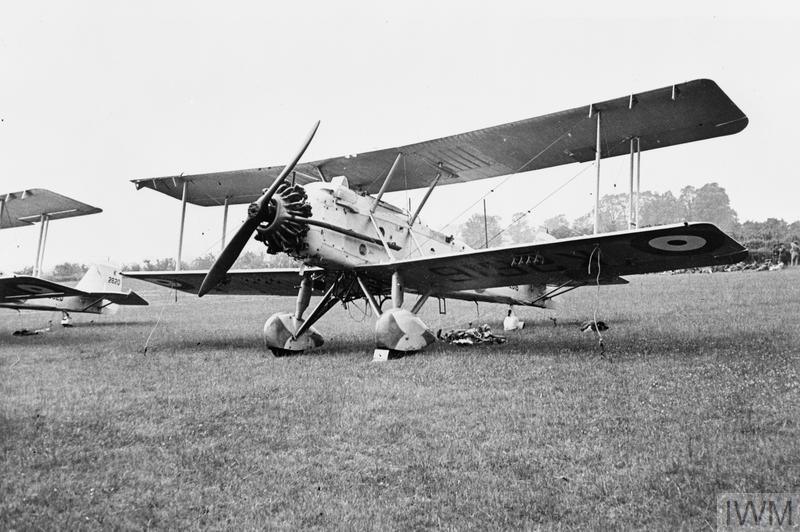
A Vickers Vildebeest I on display at King George V’s Jubilee Review at Mildenhall, July 1935. (Source: IWM)
As well as the areas identified above, several stylistic issues exist with the book’s structure and form. This makes gaining any momentum in the argument and analysis challenging to sustain. The book comprises 38 chapters, which, given the size of the work, means most are relatively short and jump around the topic area, thus making the overall argument and analysis challenging to follow. There is also a lack of analytical consistency tying each chapter together and a tendency to move around chronologically without setting the ideas being discussed in context, especially if they had been mentioned in previous chapters. This truncated style leaves an impression that a tighter structure would have helped with the flow of the argument and would have aided in making the links between developments clearer. In addition, a clearer statement of intent at the beginning of each chapter would have aided readers in understanding what the author wanted them to take away in terms of argument and viewpoint.
Critically, one of the significant issues with this work’s presentation is the lack of references within each chapter. Many statements lack supporting evidence (either primary or secondary), and quotes are also left unsupported. For example, chapter 2, which looks at the period when Sir Hugh Trenchard becomes Chief of the Air Staff for the second time, has only one reference, despite plentiful sources. Additionally, the primary evidence cited has been chosen to suit a particular pre-formed argument rather than the argument formed by the available evidence (of which the files in The National Archives alone are plentiful).
Overall, this attempt at post-revisionism largely fails in presenting a depth of analysis through the poor use of references and available evidence. It feels as if the author had their argument in mind before the research. The traditional bashing of the RAF of the inter-war period has yet to disappear from the annals of history.
Dr Matthew Powell is a Teaching Fellow at Portsmouth Business School at the Royal Air Force College, Cranwell. He holds a PhD in Modern History from the University of Birmingham. His first book The Development of British Tactical Air Power, 1940 1943: A History of Army Co-operation Command, was published by Palgrave Macmillan in 2016. He has published in War in History, The Journal of the Royal United Services Institute, Air and Space Power Review and the British Journal of Military History. His current research investigates the relationship between the Air Ministry and the British aircraft industry in the inter-war period.
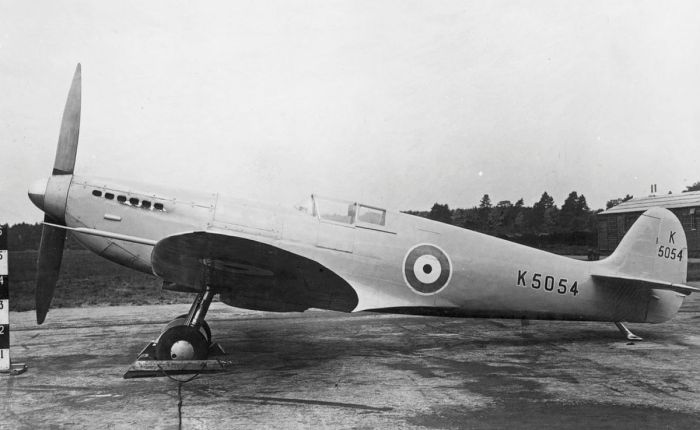
Header image: The prototype Supermarine Spitfire, K5054, c. 1936. (Source: Wikimedia)
James M. Scott, Black Snow: Curtis LeMay, the Firebombing of Tokyo, and the Road to the Atomic Bomb. W.W. Norton: New York, NY, 2022. Hbk. 420 pp.
Reviewed by Dr Brian Laslie
There will always be an inevitable struggle between popular historians writing for the general public and academic authors whose writing is often aimed at those working in the so-called ‘ivory tower’ of academia. However, the work of academic historians inform that of popular historians whose work reaches a wider audience of readers, some of whom are thus, in turn, inspired to become academics. This was certainly how I became interested in the profession of being a historian. Nevertheless, every so often, an author comes along who is that rarest of creatures: the unicorn, or that rare writer who blends academic credentials and methodology and the ability to spin a readable tale. James Scott is that unicorn with his new book, Black Snow: Curtis LeMay, the Firebombing of Tokyo, and the Road to the Atomic Bomb. Scott, a journalist and former Nieman Fellow at Harvard University, is the author of several best-selling history books, including Rampage: MacArthur, Yamashita, and the Battle of Manila and Target Tokyo: Jimmy Doolittle and the Raid That Avenged Pearl Harbor, which was a finalist for the Pulitzer Prize in history.
The history of America’s strategic bombing during the Second World War has recently been sensationalized with the publication of Malcolm Gladwell’s The Bomber Mafia (2021). However, Black Snow is, in reality, the Bomber Mafia book you have wanted to read. Indeed, if Gladwell’s book was an appetizer, then this is the main course and dessert. Scott more fully explores the background and motivations of Generals Haywood Hansell and Curtis LeMay and, given the length of Scott’s work, produces a much more coherent explanation of how and why each man acted in accordance with their desires to end the war. Black Snow, focusing on the experience of Japan’s civilian population on the ground, is also reminiscent of Stephen Bourque’s Beyond the Beach (2018) and Richard Overy’s The Bombers and the Bombed (2014). Each of these volumes provides well-needed reminders of the horrific suffering faced by those on the receiving end of bombings. Moreover, Scott is at his best when describing the situation on the ground from the perspective of the Japanese who lived through the bombing. To achieve that end, Scott interviewed 11 survivors and spent research time at archives in the United States and the Center for the Tokyo Air Raids and War Damage, the Kyoto Museum for World Peace, and other institutions in Japan.
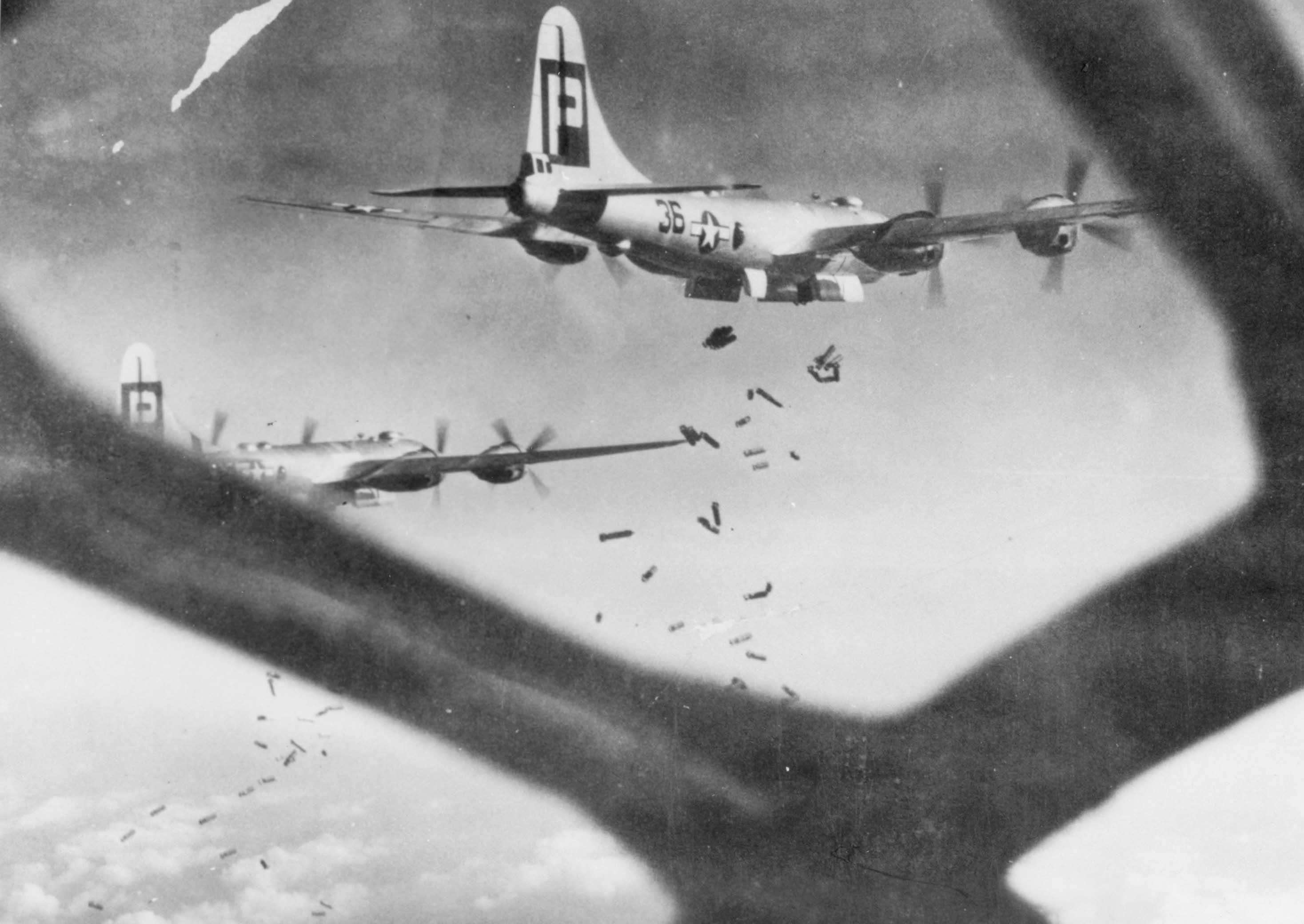
A cockpit view of two 39th Bomb Group B-29s out of North Field (Andersen) on a mission to Hiratsuka, Japan, 16 July 1945. (Source: Wikimedia)
While other books have focused on the strategic bombing campaigns against Japan, such as Herman S. Wolk’s Cataclysm (2010), Barrett Tillman’s Whirlwind (2010), Daniel Schwabe’s Burning Japan (2015), and Kenneth Werrell’s Blankets of Fire (1996), few have done as well as Scott has in presenting a comprehensive treatment. Once again, Scott’s focus on those on the ground is where this book truly adds to the conversation and the historical record. While the morality of the bombing of Japan is not the subject of this review, and there is, again, a wide literature on the subject, Scott’s ability to detail and compare the actions of some of Japan’s citizens against those wing commander – and future commander of the United States Air Force’s Strategic Air Command – Thomas Power is thought-provoking rather one is an expert in the field or coming to this area fresh. Power called the bombing of Japan ‘the greatest show on earth’ (p. 248).
Black Snow is geared towards a wide audience and not for the expert in the field. Given this, one area where the book may be seen to fall down to those with more detailed knowledge of the subject is in the book’s biographies of Generals Henry “Hap” Arnold (pp. 13-9) and LeMay (pp. 97-109). These are slightly overextended to someone who is not approaching the subject for the first time. However, this is really a minor critique.
Overall, Black Snow is a terrific addition to the historiography of the use of air power in the Pacific War of the Second World Ward. As mentioned, the work will appeal to both buffs and scholars alike, and both will find much to engage within these pages. Black Snow is a needed addition to the conversation of what air power can and cannot do, but more importantly, what air power can do when restraints are removed and why the United States must guard against unrestricted aerial warfare in future conflicts.
Dr Brian Laslie is a US Air Force Historian and is the Command Historian at the United States Air Force Academy. Formerly he was the Deputy Command Historian at North American Aerospace Defense Command (NORAD) and United States Northern Command (USNORTHCOM). A 2001 graduate of The Citadel and a historian of air power studies, he received his Masters’ from Auburn University Montgomery in 2006 and his PhD from Kansas State University in 2013. He is the author of Air Power’s Lost Cause: The American Air Wars of Vietnam (2021), Architect of Air Power: General Laurence S. Kuter and the Birth of the US Air Force (2017) and The Air Force Way of War (2015). The latter book was selected for the Chief of Staff of the Air Force’s 2016 professional reading list and the 2017 RAF Chief of the Air Staff’s reading list. He can be found on Twitter at @BrianLaslie.
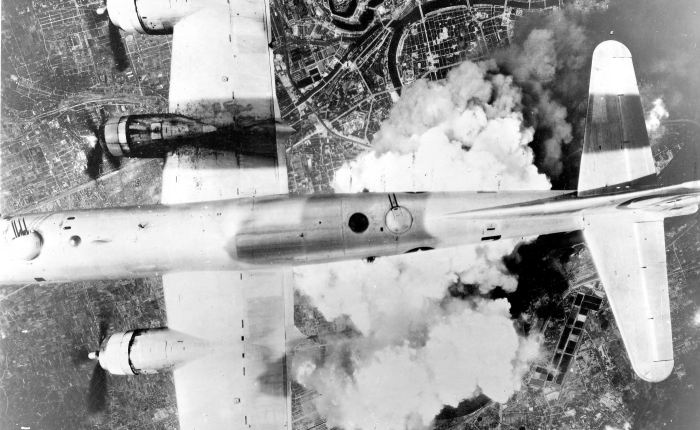
Header image: A Boeing B-29A Superfortress of the 6th Bombardment Group on a mission to Osaka, Japan, 1 June 1945. (Source: Wikimedia)






 From Balloons to Drones