#BookReview – Air Power’s Lost Cause: The American Air Wars of Vietnam

#BookReview – Air Power’s Lost Cause: The American Air Wars of Vietnam

Brian D. Laslie, Air Power’s Lost Cause: The American Air Wars of Vietnam. London: Rowman and Littlefield, 2021. Notes. Appendices. Bibliography. Hbk. xiii + 272 pp.

Reviewed by Dr Maria E. Burczynska

61L-j+UtOpL._AC_UF894,1000_QL80_

The Vietnam War, also known as the Second Indochina War, or as referred to in Vietnam – the American War is a topic widely covered in academic and popular literature. Among the various publications, Brian D. Laslie provides a unique perspective on the American air campaign in Vietnam. Published as a part of the War and Society series by Rowman and Littlefield, Laslie’s work is an attempt to produce a comprehensive and critical overview of the air war over Vietnam, Laos and Cambodia. To achieve that, Laslie posits three questions: was the disjointed and ineffective use of air power in Vietnam preventable? What should control of the air looked like? Finally, would a different command and control structure have made any difference to the potential outcome of the conflict? (p. 3)

The title, Air Power’s Lost Cause, already gives away the book’s leading theme. The concept of a ‘lost cause’ is most widely associated with the American Civil War of 1861 to 1865, regarding the Confederacy fighting a heroic and noble battle against all the odds, effectively losing the war. The creation and evolution of that myth as well as its influence on the American memory of the Civil War, has been widely discussed in the literature, for example, by Gary Gallagher and Alan T. Nolan in The Myth of the Lost Cause and Civil War History, or William C. Davis in The Cause Lost: Myths and Realities of the Confederacy. However, in a wider context, ‘lost cause’ is used to describe a pseudohistorical narrative justifying one’s loss on a battlefield and often leading to a belief that a conflict was doomed to failure, despite all the best, full of self-sacrifice efforts of those who fought for the cause.

Laslie invites the reader to explore the ‘lost cause’ concept in the context of the Vietnam War. What one could expect from such an invitation is, therefore, a typical ‘lost cause’ narrative: the United States fought a heroic, full of sacrifice-fight against communism but eventually lost due to several strategic and/or political mistakes which, if rectified, would have brought an opposite outcome to the conflict. When speaking of the American air power in Vietnam, the ‘lost cause’ narrative focuses predominantly on the persistent belief that more intense bombing earlier in the conflict, instead of the gradual escalation that characterised Operation Rolling Thunder, could have a decisive effect and change the outcome of the war and that the Operation Linebacker II (with the heavy bombing attacks it brought) was successful in bringing the North Vietnamese Government to the negotiating table and ended the conflict. Laslie debunks those myths. Conducting a detailed and comprehensive analysis of the various actions undertaken by US air power as well as discussing its limitations such as, for example, the difficulty in effectively countering guerrilla tactics, he provides a compelling argument that even with the technological superiority the air campaign in Vietnam was unable to impact the outcome of the war significantly.
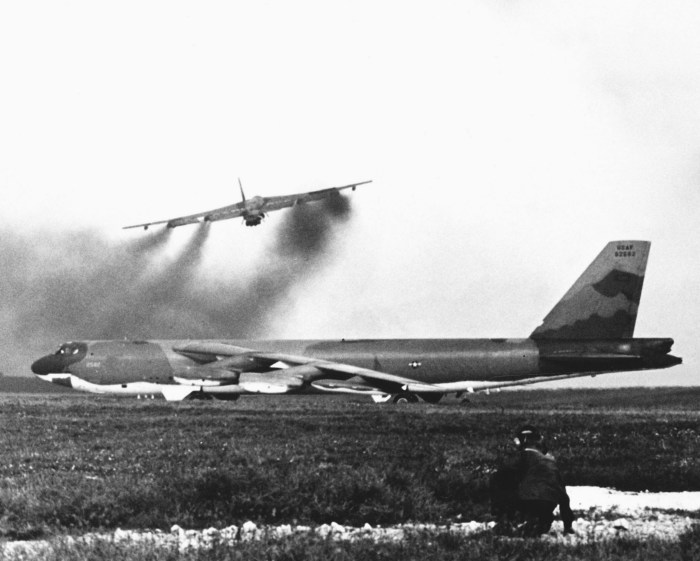
B-52Gs_at_Andersen_AFB_during_Linebacker_II_1972
A US Air Force Boeing B-52G Stratofortress from the 72nd Strategic Wing (Provisional) waits beside the runway at Andersen Air Force Base, Guam, as another B-52 takes off for a bombing mission over North Vietnam during Operation Linebacker II on 15 December 1972. (Source: Wikimedia)

While the ‘lost cause’ concept is the leading theme for the discussion, the book is structured to reflect Laslie’s other argument – the disjointed character of what is known, especially in Western literature, as the Vietnam War. The War is often perceived as one large conflict, whereas there was no overarching campaign (not to mention an overarching strategy) during the American involvement. Laslie steps back from this holistic approach and offers a different perspective suggesting that several air wars took place at the time over Vietnam, Laos and Cambodia. Therefore, in his book, he identifies and discusses the following ‘wars’: the air-to-ground war in North Vietnam, the air-to-air war in North Vietnam, the air-to-ground war in South Vietnam, the US Navy air-to-air and air-to-ground war in North and South Vietnam, and the secret air war over Laos and Cambodia and against the Ho ChiMinh Trail. By looking at several air wars rather than one, the reader is confronted with an incredibly detailed picture of the situation at the strategic, operational and tactical levels of war.

But looking at the individual air wars is not the only way Laslie is trying to offer a comprehensive view of American involvement in Southeast Asia’s air campaigns. He also successfully combines US Air Force and US Navy perspectives, often treated separately in the literature. Discussing the participation of different services implies that a recurring point in Laslie’s analysis is the interservice rivalry and the complete lack of cohesive command and control between the Army, Navy and Air Force or even within them. These are not novel ideas as these issues are well-known and well-researched in the broader literature on the war in Vietnam. However, Laslie analyses American involvement as a series of separate air wars with their distinctive circumstances and obstacles. This allows him to discuss how these hurdles dictated each campaign’s outcomes.. Changing the perspective and critically analysing the context, objectives and limitations of each of those separate air wars illustrates the level of complexity of the conflict in Vietnam. It also supports Laslie’s main argument on the US air power’s ‘lost cause’, meticulously explaining why the popular myth of heavier bombings being potentially more effective is simply not true.

With his background as the Command Historian at the United States Air Force Academy and drawing on an impressive range of primary and secondary sources, Laslie provides a well-researched piece on a subject that one would have thought nothing new could be added. It is undoubtedly a result of extensive archival research and the inclusion of the Contemporary Historical Examination of Current Operations Reports of Southeast Asia (1961–1975) (an impressive list of which has been included as Appendix B). As an American scholar, Laslie is well aware of the potential bias his project may be susceptible to. To avoid that, he is trying to provide a balanced approach by including the perspective of the North Vietnamese Air Force in the discussion. However, that has been possible to achieve only partially due to the limited number of Vietnamese sources available to non-Vietnamese scholars. Nevertheless, Laslie highlights an existing gap in the Western understanding of air campaigns during the Vietnam War and opens an important discussion on the need to investigate the North Vietnamese experience. Whereas it demonstrates the potential for further research, one should ask how feasible it is for an American scholar to access North Vietnamese archives and look at the official sources held there.

Laslie posits that ‘the point of this book is to add something new to the discussion of air power and the war in Southeast Asia’ (p. 4). He succeeded in achieving that goal. Air Power’s Lost Cause will certainly be of interest to military professionals and academics as well as members of a wider audience seeking to improve their understanding, firstly, of the history of the US involvement in Vietnam and, secondly, the complexity of air campaigns in that conflict.

Dr Maria E. Burczynska is a Lecturer in Air Power Studies at the Department of History, Politics and War Studies, University of Wolverhampton. She is involved in designing and delivering an online MA course on Air Power, Space Power and Cyber Warfare. She obtained her PhD from the University of Nottingham, where she worked on a project focused on European air power and its involvement in different forms of multinational cooperation. Her thesis, titled ‘The potential and limits of air power in contemporary multinational operations: the case of the UK, Polish and Swedish air forces,’ is making an essential contribution to the field of air power studies, which remains primarily dominated by the US case. The Royal Air Force Museum recognised her research’s significance, awarding her the Museum’s RAF Centenary PhD Bursary in Air Power Studies in April 2019. Maria’s research interests are in military and security studies in national and international dimensions. She is particularly interested in contemporary European air forces and their participation in multinational operations and initiatives and the influence of national culture on the military culture of individual air forces. She can be found on Twitter at @BurczynskaMaria.

Header image: A US Air Force North American F-100D Super Sabre fires a salvo of 2.75-inch rockets against an enemy position in South Vietnam in 1967. (Source: Wikimedia)

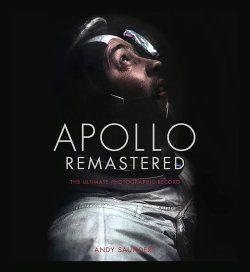
#BookReview – Apollo Remastered: The Ultimate Photographic Record

#BookReview – Apollo Remastered: The Ultimate Photographic Record

Andy Saunders, Apollo Remastered: The Ultimate Photographic Record. New York, NY: Black Dog and Leventhal Publishing. Hbk. 443 pp.

Reviewed by Dr Brian Laslie

810pJ1PyuxL._AC_UF1000,1000_QL80_

This review represents the fourth in a series of crewed space exploration photographic records. Previously, I have reviewed Picturing Apollo 11 (2019) and Picturing the Space Shuttle (2021), both out of the University Press of Florida and Photographing America’s First Astronauts (2023), out of Purdue University Press. All three of these books were authored by J.L. Pickering & John Bisney and represented something of a trilogy of books. The success of these books and others, including Apollo VII-XVII (2018) by authors Floris Heyne, Joel Meter, Simon Phillipson, and Delano Steenmeijer, demonstrate that there is a powerful attachment to both the early astronauts, photographs taken from space, and a seemingly never-ending desire to reflect on those who have slipped the surly bonds of Earth.

In Apollo Remastered, Andy Saunders, one of the foremost experts on NASA digital restoration, has combed through the NASA collection of 35,000 photographs. These pictures ‘securely stored in a freezer, to help maintain [their] condition’ have recently been ‘thawed, cleaned, and digitally scanned to an unprecedented resolution.’ (p. 1) Saunders presents the reader with a truly amazing collection of photographs, many never before seen, rendered in absolutely fantastic detail.

Each mission has a full-page layout showing the mission patch and covers the details, the crew, the mission and, most notably for this book, the photography. Yes, the photos are familiar but not found together in any other published collection. In each photograph, Saunders not only gives necessary explanatory details but also lists the photographer, the type of camera, the lens used to take the shot, and the NASA ID number, essentially ‘footnoting’ every photograph.

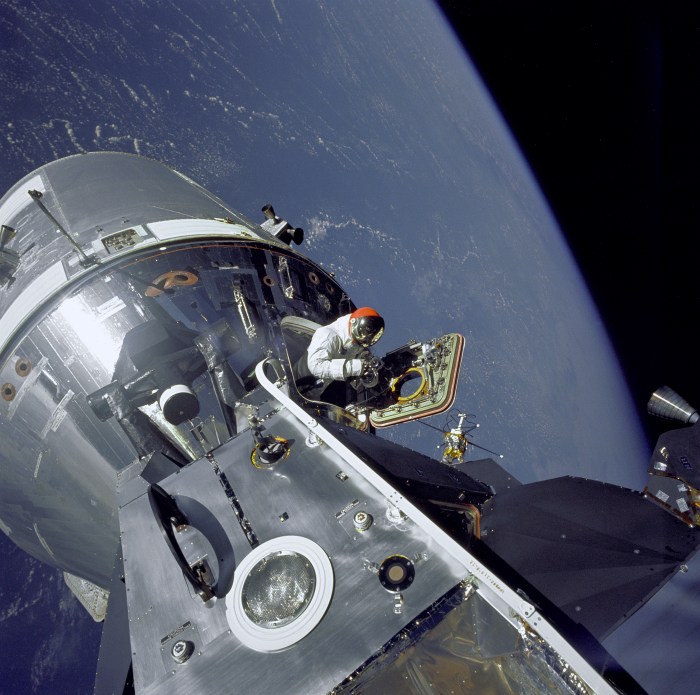
Gumdrop_Meets_Spider_-_GPN-2000-001100
Apollo 9 Command/Service Modules (CSM), nicknamed Gumdrop’ and Lunar Module (LM), nicknamed ‘Spider’, are shown docked together as Command Module pilot David R. Scott stands in the open hatch. Astronaut Russell L. Schweickart, Lunar Module pilot, took this photograph of Scott during his EVA as he stood on the porch outside the Lunar Module. (Source: Wikimedia)

Rather than a detailed description of the book, I have herein chosen to detail a few of the photographs from various Apollo missions that caused me to pause and reflect during my journey through  Apollo Remastered:

  • Apollo 7: A photo taken by Walter Cunningham showing the ‘whole Florida peninsula lit up by sunrays.’ (p. 47)
  • Apollo 8: It would be easy to state the best photo for this mission is the world-famous ‘Earthrise’ photograph taken by Astronaut Bill Anders and recreated in the HBO series From the Earth to the Moon, but instead, I found myself drawn to a two-page spread of the Sea of Fertility and the Goclenius Crater. (pp. 60-1)
  • Apollo 9: Another full-page spread (pp. 82-3) taken by lunar module pilot Rusty Schweickart. On the left of the photo, Earth takes up the entirety of the background, while the blackness of space is on the right. Command module pilot Dave Scott stands in the open hatch of the Command Module, the Service Module extending behind him toward Earth. From Schweikart’s position on the Lunar Module’s porch, one can make out its quad thrusters and one of the foot pads and Lunar surface contact sensors. However, what makes the photo all the more striking is a single dot in the blackness of space while the Moon, some 250,000 miles away, awaits.
  • Apollo 11: The most iconic mission of the Apollo program and the one fulfilling the first half of Kennedy’s desire ‘that this nation should commit itself to achieve the goal, before this decade is out, of landing a man on the moon and returning him safely to the earth.’ Picking one picture from this mission proved difficult. In the end, I believe the one my eyes looked at the longest was the photo Michael Collins captured of the returning lunar module carrying Armstrong and Aldrin with the Moon below and Earth in the background. As Saunders notes, Collins ‘is the only person alive, or has ever lived, who is not in the frame of this photograph.’ (p. 178)
  • Apollo 13: After the accident that ended any hope of landing on the Moon, a photograph shows Apollo 13 as it enters the shadow of the Moon, a photo with just a sliver of the Moon tantalizingly close as Saunders notes that Commander Jim Lovell ‘is the only person to visit the moon twice and not walk on its surface.’ (p. 217)

Obviously, there were hundreds of other photos in this wor. The book was an absolute pleasure to sit and go through each image page by page and reflect on the legacy of Apollo. This book makes the reader and myself contemplate what the moon landings meant then and our next journey from the Earth to the Moon.

This book is undoubtedly the most magnificent collection of Apollo photographs available for purchase. Those interested in the golden age of space flight will spend hours poring through this collection. However, as I looked through these photographs, now 50-60 years old, I pondered the next set of photos we would see in only another year. It was not lost on me that I began reading this book on the same day that NASA named which Astronauts would fly to the Moon on Artemis II, and I wondered what photographs that mission would give to posterity and us.

Dr Brian Laslie is an Air Force Historian and currently the Command Historian at the United States Air Force Academy. A 2001 graduate of The Citadel and a historian of air power studies, he received his PhD from Kansas State University in 2013. He is the author of  The Air Force Way of War, Architect of Air Power: General Laurence S. Kuter and the Birth of the US Air Force, and Air Power’s Lost Cause: The American Air Wars of Vietnam. He lives in Colorado Springs. He can be found on Twitter at @BrianLaslie.

Header image: ‘Earthrise’ is a photograph of Earth and some of the Moon’s surface taken from lunar orbit by astronaut William Anders on 24 December 1968, during the Apollo 8 mission. (Source: Wikimedia)
#BookReview – Photographing America’s First Astronauts: Project Mercury Through the Lens of Bill Taub

#BookReview – Photographing America’s First Astronauts: Project Mercury Through the Lens of Bill Taub

J.L. Pickering and John Bisney, Photographing America’s First Astronauts: Project Mercury Through the Lens of Bill Taub. West Lafayette, IN: Purdue University Press, 2023. Images. Bibliography. Hbk. 340 pp.

Reviewed by Dr Brian Laslie

9781612498560

In 2019, I wrote a book review for From Balloons to Drones, where I began the review by saying:

A different type of book necessitates a different type of book review. Herein you will not find an author’s argument or a critique thereof since the book being discussed today is a collection of photographs and an extremely fine one at that.

That particular review was for J.L. Pickering and John Bisney’s Picturing Apollo 11: Rare Views and Undiscovered Moments. I followed that specific review a few years later with the same author’s Picturing the Space Shuttle: The Early Years, another excellent collection of photographs and vignettes from the late 1970s and early 1980s.

Pickering and Bisney’s newest work, Photographing America’s First Astronauts: Project Mercury Through the Lens of Bill Taub, from Purdue University Press, claims to be the ‘most complete photographic account of Project Mercury ever published.’ With more than 600 photographs across 340 pages, it is hard to argue that they have not accomplished this. This is the sixth space-related photography book from Pickering and Bisney, which is clearly a life-long passion for both. Pickering has explored the photos of the US crewed space program for nearly 50 years, and journalist Bisney, a retired national news correspondent, covered the US space program for more than 30 years. Their combined 80+ years of experience is clearly demonstrated in how they choose their photos and, more importantly, in how they describe every image providing a photographic journey and an excellent history.

Project_Mercury-Mercury_Seven-Astronauts
The ‘Mercury Seven’ astronauts pose with an Atlas model in 1959. Front row, left to right: Gus Grissom, Scott Carpenter, Deke Slayton and Gordon Cooper. Back row: Alan Shepard, Wally Schirra and John Glenn. (Source: Wikimedia)
There can be little doubt that Project Apollo has garnered more photography books than Project Mercury or Project Gemini – Apollo Remastered: The Ultimate Photographic Record (2022) and Apollo: VII – XVII (2018) are two recent excellent examples. However, it is refreshing to see a new approach to a space photography book and the documentation of the Mercury 7 program. This book features the photography of William (Bill) Taub, NASA’s first staff photographer. Previously Taub served as a photographer for NASA’s predecessor organisation, the National Advisory Committee for Aeronautics. Taub travelled extensively with the Mercury astronauts. Taub followed the astronauts on many of their travels, capturing thousands of photographs of the Mercury 7 between 1959 and 1963. These photos are both official and candid from an individual who was truly a fly-on-the-wall of Project Mercury from start to finish.

Where many might claim to be publishing ‘never-before-seen images,’ in this case, it is true, as the authors gained access to Taub’s collection of photos, slides, and negatives after his passing. What they discovered and published is – without fear of hyperbole on my part – truly the greatest collection of photos of America’s first crewed space program and its famous seven members. Herein, each of the Mercury 7 get their own chapter, but the supporting cast is not ignored either, as the NASA leaders and support members also find themselves highlighted. Chapters one and two focus on the ‘Steps to Space’ and ‘The People of Mercury,’ (it was a great pleasure to see Astronaut Nurse Lieutenant Dee O’Hara highlighted). Chapters three through nine are dedicated to the originals themselves: Alan Shepard/Mercury-Redstone 3, Gus Grissom/Mercury-Redstone 4, John Glenn/Mercury-Atlas 6, Deke Slayton/Destiny Delayed, Scott Carpenter/Mercury-Atlas 7. Wally Schirra/Mercury-Atlas 8, and Gordon Cooper/Mercury-Atlas 9. Although a photographic record of the astronauts and Project Mercury, Pickering and Bisney also included many family photos as well continuing the tradition of the focus on the ones who remained on the ground and supported the astronauts the most: Louise Shepard, Betty Grissom, Annie Glenn, Marge Slayton, Rene Carpenter, Lo Schirra, and Trudy Cooper and their children.

Photographing America’s First Astronauts is another stunning success in a series of works that will undoubtedly be found on the bookshelf of everyone who loves the golden age of spaceflight. Since the authors have so adroitly covered the first astronauts, might this reviewer suggest a book on the NASA Astronaut Group 8 which included the first female and minority astronauts?

Dr Brian Laslie is an Air Force Historian and currently the Command Historian at the United States Air Force Academy. A 2001 graduate of The Citadel and a historian of air power studies, he received his PhD from Kansas State University in 2013. He is the author of  The Air Force Way of War, Architect of Air Power: General Laurence S. Kuter and the Birth of the US Air Force, and Air Power’s Lost Cause: The American Air Wars of Vietnam. He lives in Colorado Springs. He can be found on Twitter at @BrianLaslie.

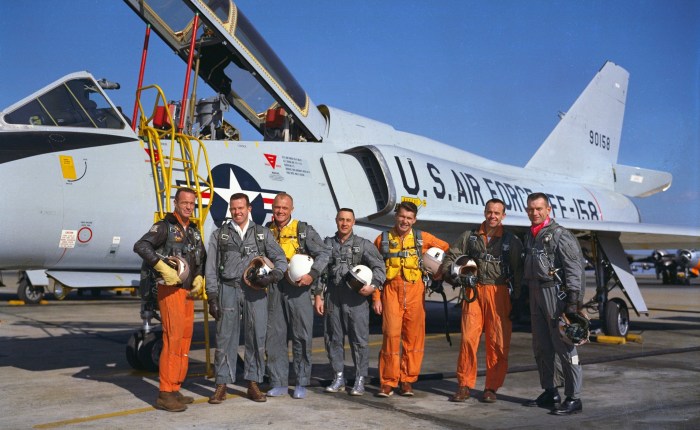
Header image: The Mercury Seven astronauts with a US Air Force Convair F-106B Delta Dart aircraft at Langley Air Force Base. From left to right: Scott Carpenter, Gordon Cooper, John Glenn, Gus Grissom, Wally Schirra, Alan Shepard and Deke Slayton, 26 January 1961. (Source: Wikimedia)
Call for Submissions – From Balloons to Drones

Call for Submissions – From Balloons to Drones

Established in 2016, From Balloons to Drones is an online scholarly platform that analyses and debates air power history (including aviation history), theory, and contemporary operations in their broadest sense, including space and cyber power. To date, we have published over 250 articles on various air power-related subjects.

Since its emergence at the start of the 20th Century, air power has increasingly become the preferred form of military power for many governments. However, the application and development of air power are controversial and often misunderstood. To remedy this, From Balloons to Drones seeks to provide analysis and debate about air power through the publication of articles, research notes, commentaries, book reviews, and historic book reviews – see below for a description of the range of articles published.

The study of air power is to be understood broadly, encompassing not only the history of air warfare, including social and cultural aspects, but also incorporating contributions from related fields, such as archaeology, international relations, strategic studies, law and ethics. Possible subjects to be explored might include, but are not limited to:

Strategy, Theory and Doctrine | Organisation and Policy | Roles

Operations – Kinetic and Non-Kinetic | Tactics, Training and Procedures

Strategic and Operational Effect | Technological Developments

Ethical and Moral Issues | National, International and Transnational Experiences

Personal Experiences | Culture | Memory and Memorialisation

From Balloons to Drones welcomes and encourages potential submissions from postgraduates, academics, and practitioners involved in researching the subject of air power.

C-119B_Flying_Boxcar_drops_supplies_near_Chungju_1951
A US Air Force Fairchild C-119B Flying Boxcar air-dropping supplies near Chungju, Korea, in 1951. (Source: Wikimedia)

We publish:

Scholarly Articles

From Balloons to Drones publishes informative, peer-reviewed articles on air power that range from historical pieces to the analysis of contemporary challenges. These well-researched articles aim to bridge the gap between specialist and non-specialist readers. They should be around c. 3,000 words, though From Balloons to Drones will accept longer pieces. We reserve the right to publish them in parts.

Air War Books

From Balloons to Drones publishes a series of review articles that examine the top ten books that have influenced writers on air power. See more here.

Commentaries

From Balloons to Drones publishes opinion pieces on recent news on either contemporary or historical subjects. These should be no longer than c.1,000 words.

Research Notes

From Balloons to Drones publishes research notes on contributors’ current research projects. These take the form of more informal pieces and can be discussions of a source or notes on a recent research theme. These should be c.500 to 1,000 words.

Book Reviews

From Balloons to Drones publishes regular book reviews that aim to be an accessible collection of appraisals of recent publications about air power. If you are a publisher interested in having your publication reviewed, please contact us at the email address below. See more here.

Historic Book Reviews

From Balloons to Drones publishes occasional historic book reviews that aim to be an accessible collection of appraisals of critical historic publications about air power history, theory, and practice. See more here.

Submissions should be submitted in Word format and emailed to the address below with ‘SUBMISSION’ in the subject line. Also, please include a 50-100-word biography with your submission. References can be used, and please be careful to explain any jargon. However, if you are unsure if your idea fits our requirements, please email us with ‘POTENTIAL SUBMISSION’ in the subject line to discuss.

If you are interested in contributing, please email our Editor-in-Chief, Dr Ross Mahoney, at airpowerstudies@gmail.com or via our contact page here.

Header image: A Panavia Tornado GR4 of No. IX(B) Squadron on a training sortie in preparation for deployment to Afghanistan, c. 2012. (Source: Wikimedia)
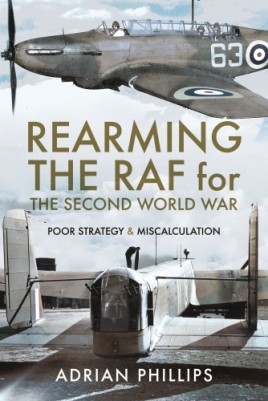
#BookReview – Rearming the RAF for the Second World War: Poor Strategy and Miscalculation

#BookReview – Rearming the RAF for the Second World War: Poor Strategy and Miscalculation

Adrian Phillips, Rearming the RAF for the Second World War: Poor Strategy and Miscalculation. Barnsley: Pen & Sword, 2022. Notes. Bibliography. Index. Hbk. xxvi + 350 pp.

Reviewed by Dr Matthew Powell

9781399006248_1

The history of the rearmament of the Royal Air Force (RAF), and the British aircraft industry in the inter-war period, more generally, has undergone a degree of revision over recent decades, mainly through the works of Sebastian Ritchie and David Edgerton. In this work, Adrian Phillips looks to challenge this new orthodoxy. Phillips seeks to show that the RAF adopted an incorrect way of conceptualising air warfare in the mid-to late-1930s. Phillips claims that the Air Ministry and the wider RAF incorrectly prioritised bombers over fighters when rearmament began in the 1930s. Phillips further contends that this prioritisation can be traced back to the theorising of Marshal of the Royal Air Force Lord Trenchard, the RAF’s Chief of the Air Staff in the 1920s. Despite dispelling several myths about RAF expansion in the inter-war period, Phillips does not provide an overly convincing case for several reasons.

The critical issue with Phillips’ book is that it suffers from a general lack of understanding of the wider historical context of the RAF’s development in this period. Despite a relatively extensive bibliography, it appears that many more recent works in this area have not been consulted. This illustrates a broader bias inherent in Phillips’ work, namely that the RAF was wrong in its thinking.

Several examples sufficiently highlight the problem of understanding present in this work. For instance, in seeking to rehabilitate the argument that the RAF took no interest in supporting the British army or developing its capabilities in this area, this has long been questioned by more recent studies showing the case to be far more complex and nuanced than Phillips is willing to give them credit for. Indeed, Phillips’ would have benefitted from a reading of the work of David Ian Hall or this author’s own research. The lack of engagement with such works suggests a wider lack of contextual knowledge of the inter-war period and the pressures the RAF faced regarding their survival as an independent Service.

Concerning issues related to aircraft development, an examination of the various works of Edgerton, would have aided in providing the wider context of the development of the British aircraft industry. This would allow for a greater understanding of the relationship between the Air Ministry and the aircraft industry to be explored within the book. This lack of understanding is a concern in a work of this length. For instance, the Air Ministry is criticised for its decision to continue authorising the production of obsolescent aircraft such as the Fairey Battle (p. 42). Phillips’ argument, however, does not consider the industrial problems of the British aircraft industry in enough depth to demonstrate the difficulties faced by the Air Ministry. For example, officials at the Air Ministry faced the difficult decision of whether to order aircraft from firms to retain labour and gain large-scale production experience or reduce the potential for losing skilled labour. If the latter option were chosen, the teething problems of ramping up production that had been experienced at the start of the rearmament drive would be experienced again.

Moreover, there also appears to be a further lack of specific understanding of the wider aircraft industry and the challenges the Air Ministry faced in getting aircraft through the design and development programme. This is used, again, as a stick with which to hit the Air Ministry, without taking the time to develop a more nuanced argument by considering the lead times from specifications being issued to the first production batch being delivered (p. 107). Aircraft that emerged from aircraft firms and went on to be household names during the Second World War were going through the design and development process at the time decisions were being made to expand the RAF and fall into the quantity versus quality argument that was had by those in the Air Ministry responsible for this area. Phillips is, however, correct in highlighting that this left Bomber Command with a significant capability gap from the start of the war in 1939 until the introduction of the four-engined Lancaster heavy bomber in 1941.

Combined with the issue of contextual understanding, Phillips’ work suffers from a degree of hindsight bias. Again, this bias is used to illustrate that the RAF were wrong. For example, the RAF and the wider Air Ministry are criticised for not realising the importance of the experiments being conducted by Robert Watson-Watt in developing a basic air defence system (pp. 30, 130-1). This feels like an overly harsh criticism given that the technology was being developed as decisions on arming the RAF were being made. Furthermore, a potential failure in this technology meant facing a similar problem to that of the First World War regarding advanced warning of incoming enemy aircraft.

Despite these criticisms, the chapters analysing the relationship between the wider government and the Air Ministry are the most engaging. They provide a real depth of understanding of the dynamics at play between the two. However, even here, there is a degree of reading history backwards and criticising the RAF on decisions where those looking after the event know what happened, but the protagonists do not.

Vildebest
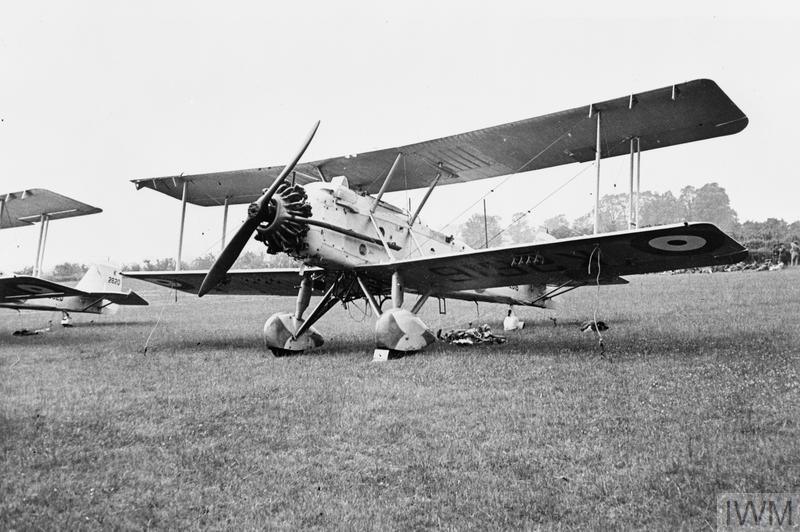
A Vickers Vildebeest I on display at King George V’s Jubilee Review at Mildenhall, July 1935. (Source: IWM)

As well as the areas identified above, several stylistic issues exist with the book’s structure and form. This makes gaining any momentum in the argument and analysis challenging to sustain. The book comprises 38 chapters, which, given the size of the work, means most are relatively short and jump around the topic area, thus making the overall argument and analysis challenging to follow. There is also a lack of analytical consistency tying each chapter together and a tendency to move around chronologically without setting the ideas being discussed in context, especially if they had been mentioned in previous chapters. This truncated style leaves an impression that a tighter structure would have helped with the flow of the argument and would have aided in making the links between developments clearer. In addition, a clearer statement of intent at the beginning of each chapter would have aided readers in understanding what the author wanted them to take away in terms of argument and viewpoint.

Critically, one of the significant issues with this work’s presentation is the lack of references within each chapter. Many statements lack supporting evidence (either primary or secondary), and quotes are also left unsupported. For example, chapter 2, which looks at the period when Sir Hugh Trenchard becomes Chief of the Air Staff for the second time, has only one reference, despite plentiful sources. Additionally, the primary evidence cited has been chosen to suit a particular pre-formed argument rather than the argument formed by the available evidence (of which the files in The National Archives alone are plentiful).

Overall, this attempt at post-revisionism largely fails in presenting a depth of analysis through the poor use of references and available evidence. It feels as if the author had their argument in mind before the research. The traditional bashing of the RAF of the inter-war period has yet to disappear from the annals of history.

Dr Matthew Powell is a Teaching Fellow at Portsmouth Business School at the Royal Air Force College, Cranwell. He holds a PhD in Modern History from the University of Birmingham. His first book The Development of British Tactical Air Power, 1940 1943: A History of Army Co-operation Command, was published by Palgrave Macmillan in 2016. He has published in War in History, The Journal of the Royal United Services Institute, Air and Space Power Review and the British Journal of Military History. His current research investigates the relationship between the Air Ministry and the British aircraft industry in the inter-war period.

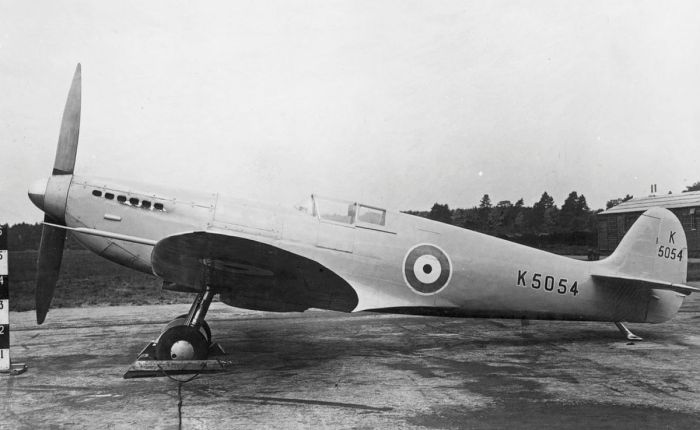
Header image: The prototype Supermarine Spitfire, K5054, c. 1936. (Source: Wikimedia)
#BookReview – Black Snow: Curtis LeMay, the Firebombing of Tokyo, and the Road to the Atomic Bomb

#BookReview – Black Snow: Curtis LeMay, the Firebombing of Tokyo, and the Road to the Atomic Bomb

James M. Scott, Black Snow: Curtis LeMay, the Firebombing of Tokyo, and the Road to the Atomic Bomb. W.W. Norton: New York, NY, 2022. Hbk. 420 pp.

Reviewed by Dr Brian Laslie

9781324002994

There will always be an inevitable struggle between popular historians writing for the general public and academic authors whose writing is often aimed at those working in the so-called ‘ivory tower’ of academia. However, the work of academic historians inform that of popular historians whose work reaches a wider audience of readers, some of whom are thus, in turn, inspired to become academics. This was certainly how I became interested in the profession of being a historian. Nevertheless, every so often, an author comes along who is that rarest of creatures: the unicorn, or that rare writer who blends academic credentials and methodology and the ability to spin a readable tale. James Scott is that unicorn with his new book, Black Snow: Curtis LeMay, the Firebombing of Tokyo, and the Road to the Atomic Bomb. Scott, a journalist and former Nieman Fellow at Harvard University, is the author of several best-selling history books, including Rampage: MacArthur, Yamashita, and the Battle of Manila and Target Tokyo: Jimmy Doolittle and the Raid That Avenged Pearl Harbor, which was a finalist for the Pulitzer Prize in history.

The history of America’s strategic bombing during the Second World War has recently been sensationalized with the publication of Malcolm Gladwell’s The Bomber Mafia (2021). However, Black Snow is, in reality, the Bomber Mafia book you have wanted to read. Indeed, if Gladwell’s book was an appetizer, then this is the main course and dessert. Scott more fully explores the background and motivations of Generals Haywood Hansell and Curtis LeMay and, given the length of Scott’s work, produces a much more coherent explanation of how and why each man acted in accordance with their desires to end the war. Black Snow, focusing on the experience of Japan’s civilian population on the ground, is also reminiscent of Stephen Bourque’s Beyond the Beach (2018) and Richard Overy’s The Bombers and the Bombed (2014). Each of these volumes provides well-needed reminders of the horrific suffering faced by those on the receiving end of bombings. Moreover, Scott is at his best when describing the situation on the ground from the perspective of the Japanese who lived through the bombing. To achieve that end, Scott interviewed 11 survivors and spent research time at archives in the United States and the Center for the Tokyo Air Raids and War Damage, the Kyoto Museum for World Peace, and other institutions in Japan.

39th_Bombardment_Group_B-29_bombing_to_Hiratsuka_19450716
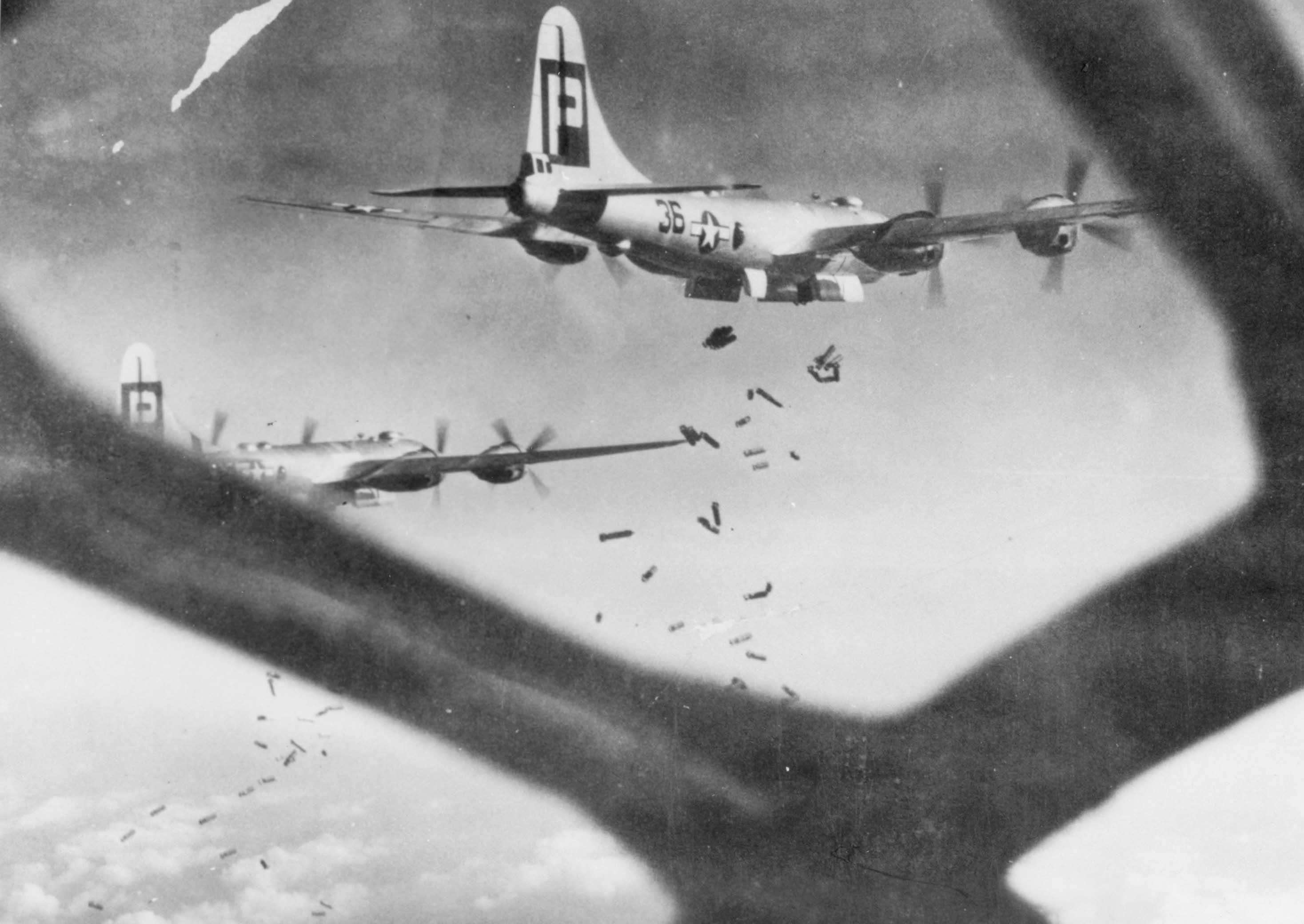
A cockpit view of two 39th Bomb Group B-29s out of North Field (Andersen) on a mission to Hiratsuka, Japan, 16 July 1945. (Source: Wikimedia)

While other books have focused on the strategic bombing campaigns against Japan, such as Herman S. Wolk’s Cataclysm (2010), Barrett Tillman’s Whirlwind (2010), Daniel Schwabe’s Burning Japan (2015), and Kenneth Werrell’s Blankets of Fire (1996), few have done as well as Scott has in presenting a comprehensive treatment. Once again, Scott’s focus on those on the ground is where this book truly adds to the conversation and the historical record. While the morality of the bombing of Japan is not the subject of this review, and there is, again, a wide literature on the subject, Scott’s ability to detail and compare the actions of some of Japan’s citizens against those wing commander – and future commander of the United States Air Force’s Strategic Air Command – Thomas Power is thought-provoking rather one is an expert in the field or coming to this area fresh. Power called the bombing of Japan ‘the greatest show on earth’ (p. 248).

Black Snow is geared towards a wide audience and not for the expert in the field. Given this, one area where the book may be seen to fall down to those with more detailed knowledge of the subject is in the book’s biographies of Generals Henry “Hap” Arnold (pp. 13-9) and LeMay (pp. 97-109). These are slightly overextended to someone who is not approaching the subject for the first time. However, this is really a minor critique.

Overall, Black Snow is a terrific addition to the historiography of the use of air power in the Pacific War of the Second World Ward. As mentioned, the work will appeal to both buffs and scholars alike, and both will find much to engage within these pages. Black Snow is a needed addition to the conversation of what air power can and cannot do, but more importantly, what air power can do when restraints are removed and why the United States must guard against unrestricted aerial warfare in future conflicts.

Dr Brian Laslie is a US Air Force Historian and is the Command Historian at the United States Air Force Academy. Formerly he was the Deputy Command Historian at North American Aerospace Defense Command (NORAD) and United States Northern Command (USNORTHCOM). A 2001 graduate of The Citadel and a historian of air power studies, he received his Masters’ from Auburn University Montgomery in 2006 and his PhD from Kansas State University in 2013. He is the author of Air Power’s Lost Cause: The American Air Wars of Vietnam (2021),  Architect of Air Power: General Laurence S. Kuter and the Birth of the US Air Force (2017) and The Air Force Way of War (2015). The latter book was selected for the Chief of Staff of the Air Force’s 2016 professional reading list and the 2017 RAF Chief of the Air Staff’s reading list. He can be found on Twitter at @BrianLaslie. 

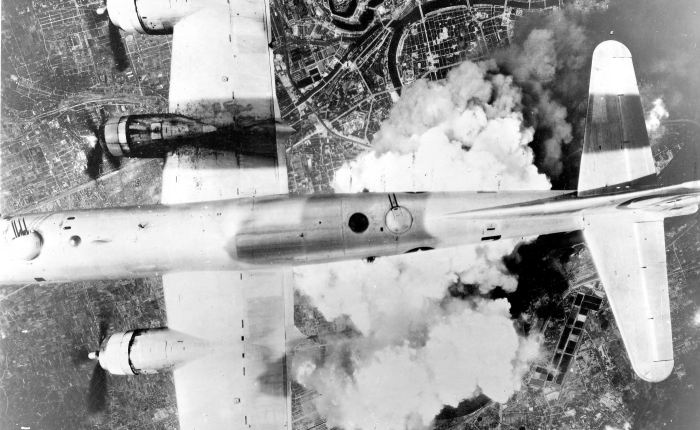
Header image: A Boeing B-29A Superfortress of the 6th Bombardment Group on a mission to Osaka, Japan, 1 June 1945. (Source: Wikimedia)

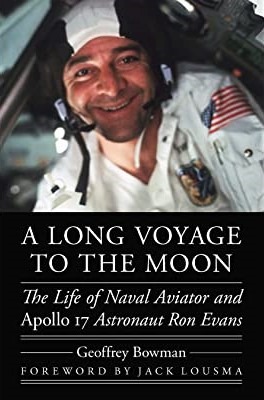
#BookReview – A Long Voyage to the Moon: The Life of Naval Aviator and Apollo 17 Astronaut Ron Evans

#BookReview – A Long Voyage to the Moon: The Life of Naval Aviator and Apollo 17 Astronaut Ron Evans

Geoffrey Bowman, A Long Voyage to the Moon: The Life of Naval Aviator and Apollo 17 Astronaut Ron Evans. Lincoln, NE: University Press of Nebraska, 2021. Foreword. Images. Sources. Hbk, 377 pp.

Reviewed by Dr Brian Laslie

57527249._UY400_SS400_

Ronald E. Evans is not a household name. Names such as Alan Shepard, Gus Grissom, and Neil Armstrong remain more or less recognisable to the wider society. Indeed, even later Apollo astronauts, such as Pete Conrad, Alan Bean, Jim Lovell, or John Young, might still trigger images or recognition to a particular generation or those interested in the history of space flight. However, Evans has been significantly overlooked. That is what being the last person to do something will get you: obscurity. Evans was a member of Apollo 17, the last crewed mission to the moon. As such, he was the last Command Module Pilot to fly as part of the Apollo program. Evans also holds several other auspicious accolades. He holds the record for the most time spent in lunar orbit; he was the last man to orbit the moon alone and was the last man to conduct a deep space extravehicular activity. Indeed, Evans was one of only three individuals to have ever done a deep space extravehicular activity. In addition, he remains one of only 24 individuals to ever journey beyond Earth’s orbit into deep space and travel to another celestial body.

After reading the above, it should be apparent that being the last person to do something does not mean your name should end in relative obscurity, placed in a footnote, or known only to those with a passion for all things space. The omission of an Evans biography has finally been corrected by author Geoffrey Bowman and his recent book A Long Voyage to the Moon: The Life of Naval Aviator and Apollo 17 Astronaut Ron Evans which comes out of the University Press of Nebraska stables as part of their absolutely stellar Outward Odyssey Series.

1280px-Apollo_17_crew
The prime crew for the Apollo 17 lunar landing mission: Commander, Eugene A. Cernan (seated), Command Module pilot Ronald E. Evans (standing on right), and Lunar Module pilot, Harrison H. Schmitt, 10 October 1972. The Apollo 17 Saturn V Moon rocket is in the background. (Source: Wikimedia)

Bowman successfully highlights the contributions of Evans to the US Navy as he flew missions over North Vietnam before his selection to NASA and his steady progression as a member of various support crews and backup Command Module Pilot on Apollo 14 before landing in a prime spot as the Command Module Pilot for Apollo 17. Moreover, Evans is unique among the Apollo astronauts as the only ‘moon man’ and Vietnam combat veteran. Throughout the narrative, Bowman pulls together the words and remembrances of Evans’ fellow astronauts and the astronaut wives. The use of the recollections of astronaut’s wives is something missing in older histories of the Apollo program. One of the primary contributors to Bowman’s research was a series of interviews with Evan’s wife Jan, and the author makes excellent use of her perspective throughout the narrative. That being said, when Bowman settles into Evan’s training for and flying Apollo, the author’s ability takes flight. Bowman proves he is much more comfortable with who Evans is and his contributions to the Apollo program.

Much like Evans himself, Bowman has worked doggedly to produce this history, and the author and press should be proud of the result. However, as a historian more bent toward academic endnotes, the lack of sourcing continues to be a problem in an otherwise magnificent series. While the Outward Odyssey series is the single best multi-volume series on the complete history of crewed spaceflight, it is sometimes frustrating not to know where a particular quote came from, but that is a relatively minor gripe. As I own all the books in this series, it has clearly not stopped me from continuing to purchase these books.

Ultimately, this work will appeal to those who simply cannot read enough about the history of crewed space flight. We should all be thankful that Bowman has written this book and shined a light on this historic aviator and space traveller.

Dr Brian Laslie is an Air Force Historian and currently the Command Historian at the United States Air Force Academy. A 2001 graduate of The Citadel and a historian of air and space power studies, he received his PhD from Kansas State University in 2013. His first book, The Air Force Way of War (2015), was selected for the Chief of Staff of the Air Force’s and the Royal Air Force’s Chief of the Air Staff professional reading lists. He is also the author of several books on air force and air power history. He lives in Colorado Springs. He can be found on Twitter at @BrianLaslie.

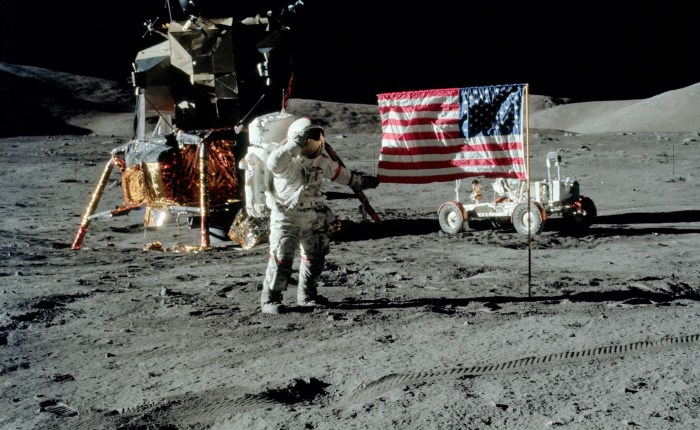
Header image:  Eugene Cernan on the Moon during the Apollo 17 mission, 12 December 1972. (Source: Wikimedia)

#BookReview – Korean Air War: Sabres, Migs and Meteors, 1950-53

#BookReview – Korean Air War: Sabres, Migs and Meteors, 1950-53

Michael Napier, Korean Air War: Sabres, Migs and Meteors, 1950-53. Oxford: Osprey Publishing, 2021. Images. Notes. Bibliography. Glossary. Appendices. Index. Hbk. 320pp.

Reviewed by Dr Ross Mahoney

41VxZr5jKnL

In the western world, the Korean War is often thought of as the forgotten war of the early Cold War. This was, at least from an American perspective, because ‘[l]ike the proverbial shrimp caught between two whales, the Korean War [was] trapped between World War II and the Vietnam War.’[1] Furthermore, from a British and French perspective, the war does not easily fit into national narratives surrounding their ‘retreat’ from empires in Southeast Asia, namely the Malayan Emergency and the French-Indochina War. The Korean War did, however, significantly impact the Cold War’s early course, particularly strengthening the recently established North Atlantic Treaty Organisation.

From the perspective of the application and development of air power, the Korean War was also significant. Specifically, it was the first time jet fighters met in combat. Furthermore, the war also saw a wide range of air power capabilities deployed over Korea, including discussions throughout the conflict about the potential delivery of nuclear weapons.[2] This has meant that, despite the unfortunate epithet of being a forgotten war, several important works, such as Conrad Crane’s American Airpower Strategy in Korea (2000), have appeared and examined the use of air power over the Korean peninsula.

Michael Napier, a retired Royal Air Force fast-jet pilot and author, comes into this mix with his 2021 volume, Korean Air War. In just over 300 pages, Napier systematically describes the course of the air war over Korea. The book, chronologically laid out, deals with the air war in seven chapters plus a retrospective to finish the volume. There are also two appendices included. The chapters follow the broad course of the main phases of the Korean War. For example, Chapter Three deals with the period of the offensive by United Nations (UN) forces between August and October 1950 (pp. 72-113). This is then followed up by a chapter that looks at the period of the Chinese offensives (pp. 114-55) against UN forces that forced them back to roughly the 38th Parallel. Within these chapters, Napier details the various uses of air power by both sides during the war. This includes the use of tactical and strategic air power as well as naval air power. Napier also does a good job of describing the coalition character of the air war for both sides. However, his attempt to highlight the British contribution can sometimes be overstated.

lossy-page1-3000px-U.S._Marines_of_the_First_Marine_Division_Reconnaissance_Company_make_the_first_helicopter_invasion_on_Hill_812,_to..._-_NARA_-_520805.tif
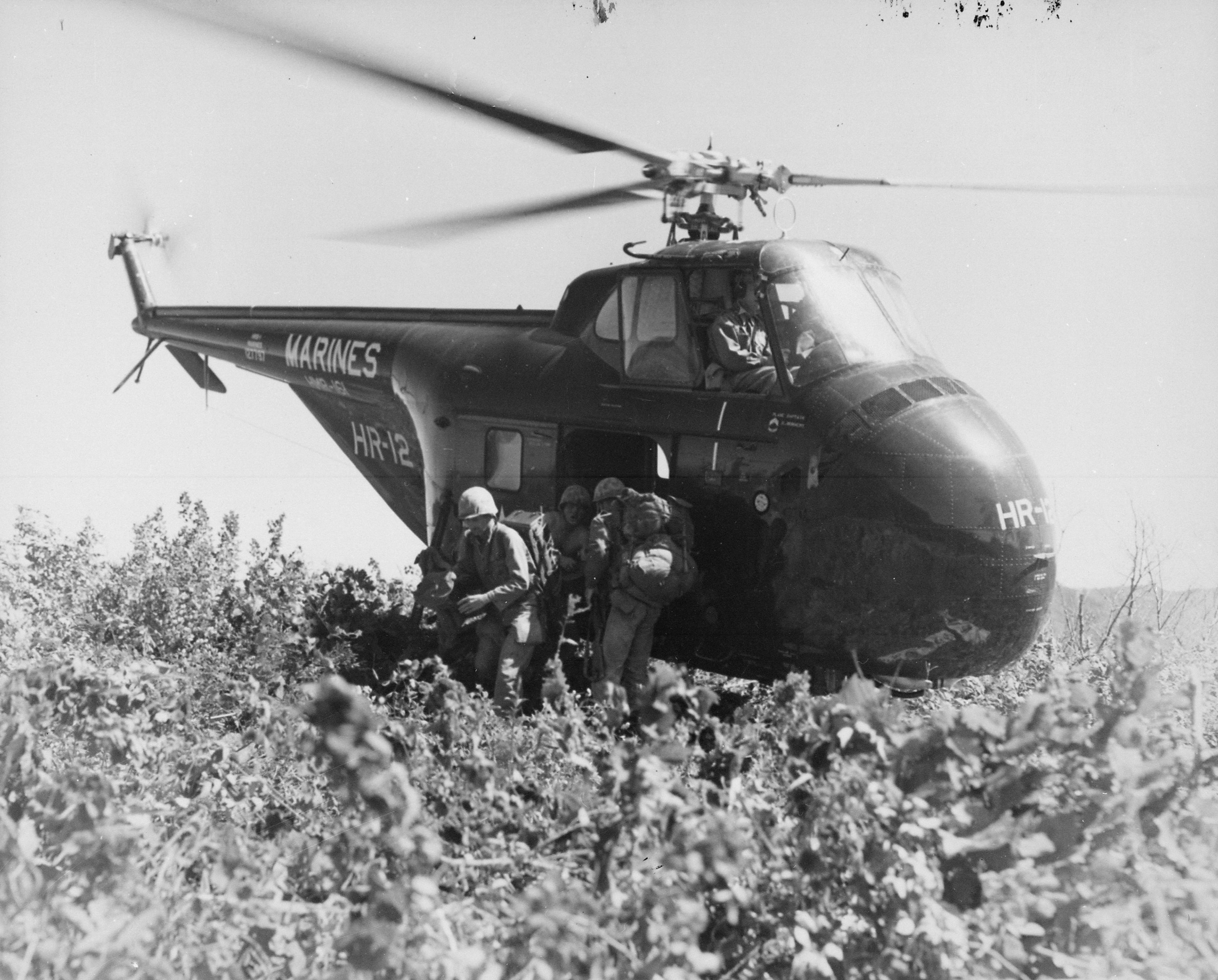
US Marines of the First Marine Division Reconnaissance Company make the first helicopter invasion on Hill 812, to relieve the Republic of Korea 8th Division, during the renewed fighting in Korea, 20 September 1951. (Source: Wikimedia)

While the book comprehensively deals with the air war over Korea, readers should not expect an academic examination of the use of air power between 1950 and 1953. That is not what this book is. However, this is not a criticism per se. Instead, the book has been written with a specific audience in mind – the general reader looking for an introduction to the subject. This is highlighted by Napier’s choice to examine the war chronologically (p. 6). This is a choice that makes it easier for the lay reader to understand what was a complex and contested operating environment. Ultimately, therefore, we end up with a very useful narrative of the course of the air war that introduces readers to the subject matter.

One area, however, where the book does fall down is in its use of sources. Regarding primary sources, Napier has overwhelmingly relied on files in British archival institutions, notably The National Archives and the Royal Air Force Museum. While perhaps a pragmatic decision given the author’s location and the character of this book as a popular account of the air war, it does, nonetheless, skew the author’s interpretation. Furthermore, at least from the perspective of UN forces deployed, most of the air power deployed in support of the war effort came from the US. As such, one would expect more attention to be given to the records produced by those forces involved. Finally, given the above issue, Napier relies on secondary sources to fill in the gaps despite arguing that published accounts of the air war over Korea were less than ‘objective’ (p. 6) in their analysis. However, it appears from the notes and bibliography that Napier did not consult important, more ‘objective’ works such as Crane’s noted above and others.[3] The use of such works would have further enriched Napier’s narrative

Overall, despite the above criticism, Napier has done an excellent job of writing a comprehensive introductory narrative to the air war over Korea. In particular, Napier does a good job of weaving together a narrative that tells the story of both sides of the air war over Korea. The book is lavishly supported by high-quality imagery and maps that help support the text.

Dr Ross Mahoney is the Editor-in-Chief of From Balloons to Drones and is an independent scholar specialising in air power and the history of air warfare. He is currently the Senior Historian within the City Architecture and Heritage Team at Brisbane City Council in Australia. He has over 15 years of experience within the heritage and education sectors in Australia and the United Kingdom. He was the inaugural Historian at the Royal Air Force Museum in the UK. In Australia, he has worked as a Historian for the Department of Veterans’ Affairs and taught at the Strategic and Defence Studies Centre at The Australian National University based at the Australian War College. His research interests are focused on military history, with a specific focus on the history of air warfare, transport history, and urban history. He has published several chapters and articles, edited two books, and delivered papers on three continents. He has a website here and can be found on Twitter at @airpowerhistory.

Header image: Four US Air Force North American F-86E Sabre fighters over Korea in November 1952. (Source: Wikimedia)

[1] Allan Millett, The War for Korea, 1945-1950: A House Burning (Lawrence, KS: University Press of Kansas, 2005), p. 1.

[2] Daniel Calingaert, ‘Nuclear weapons and the Korean War,’ Journal of Strategic Studies 11, no. 2 (1988), pp. 177-202.

[3] Other works of note not cited include: Eduard Mark, Aerial Interdiction: Air Power and the Land Battle in Three American Wars (Washington DC: Office of Air Force History, 1994); John Sherwood, Officers in Flight Suits: The Story of American Air Force Fighter Pilots in the Korean War (New York, NY: New York University Press, 1998); Jacob Neufeld, Coalition Air Warfare in the Korean War 1950–1953 (Washington DC: U.S. Air Force History and Museums Program, 2005); Roger Horky, ‘Clipping the Eagle’s Wings: The Limiting of the Korean Air War, 1950-1953’ (PhD Thesis, Texas A&M University, 2013).

#BookReview – An Officer, Not a Gentleman: The Inspirational Journey of a Pioneering Female Fighter Pilot

#BookReview – An Officer, Not a Gentleman: The Inspirational Journey of a Pioneering Female Fighter Pilot

Mandy Hickson, An Officer, Not a Gentleman: The Inspirational Journey of a Pioneering Female Fighter Pilot. London: Mandy Hickson, 2020. Images. Pbk. 294pp.

Reviewed by Mark Russell

41Z+qh7v8uL._AC_SY1000_

Women have long served in the Royal Air Force (RAF). Female service in the RAF began during the First World War when up to 25,000 women served until the Women’s Royal Air Force (WRAF), disbanded in 1918. Approximately 180,000 then served in the Women’s Auxiliary Air Force (WAAF) during the Second World War, followed by those who served in the re-formed WRAF, an administrative entity within the RAF from 1949. Finally, in 1994, the WRAF was merged into the RAF.  

Although 166 women flew during the Second World War as delivery and ferry pilots in the Air Transport Auxiliary, it was not until 1991 that women began to serve as pilots, a decision approved in 1989. The first female pilot was Flight Lieutenant Julie Ann Gibson, who re-trained from her existing career as an RAF engineer before flying Andovers with No. 32 Squadron from RAF Northolt in 1991. However, the issue of allowing women to fly fast jets still raised questions. Nonetheless, in December 1991, it was announced that women were cleared to fly in combat roles. However, it was not until August 1994 that Flight Lieutenant Jo Salter breached the ‘holy of holies,’ the fast jet pilot role, when she joined No. 617 Squadron at RAF Lossiemouth to fly the Tornado GR1B. She became the RAF’s first female fast jet pilot. As of 1 April 2019, there were 30 female fixed-wing pilots in the RAF, while as of July 2021, 15.1% of the RAF regulars were female. 

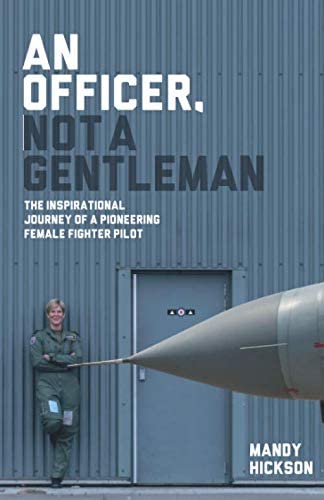
Mandy Hickson’s An Officer, Not a Gentleman, is the autobiography of only the second woman to fly the Tornado in the RAF. It documents her experience flying the Tornado and becoming an operational fast jet pilot. Some of what Hickson writes will also resonate with those working within large organisations that continue to grapple with issues of inclusion and equality. It must, however, be noted that the RAF of the 1990s comes out of Hickson’s recollections well – perhaps not as an organisation, but certainly in the attitudes of some of those individuals Hickson encountered during her service.

Hickson has said she did not feel like a pioneer: ‘no different to anyone else for being a woman’ (p. 161). The book describes Hickson’s life and her RAF career. Hickson’s description of her feelings. For example, Hickson describes her isolation on her first deployment to the Gulf in 2000 as the only female aircrew on the squadron (pp. 187-90). This type of insight sets this book apart from some of the more ‘traditional’ aircrew memoirs written by male aircrew. Indeed, to this reviewer’s knowledge; this is the first memoir written by a female RAF pilot.

Hickson’s story opens with her joining the Air Training Corps in 1986 before winning a Flying Scholarship and receiving her Private Pilot’s Licence (PPL) in August 1991 at 18. As one of the first female pilots in the RAF, Hickson inevitably faced challenges. For instance, being six feet tall at 16, she was too tall for the RAF height to weight charts and was told she needed to lose weight to obtain the Flying Scholarship, although her doctor noted that she was a healthy weight. Having cleared that hurdle and obtained her PPL, she went to the University of Birmingham, where she joined the University of Birmingham Air Squadron (UBAS) in late 1991. During this period, Hickson appears to have had no problem fitting into the flying and social life of the University Air Squadron (UAS), and she does not describe any times when she felt that being a woman created additional challenges for her or saw her discriminated against in any way. This may have been because she was, as she describes, ‘a bit of a tomboy’ (p. 1) and ‘a sports-mad teenager’ (p. 2). 

The next hurdle Hickson faced was at the start of her third year at university, when, to remain in the UAS, she needed to demonstrate a more concrete commitment to an RAF career. In December 1992, the UAS was told women could train as fast jet pilots, which triggered Hickson’s application to become aircrew. Having attended Officer and Aircrew Selection Centre, she failed the pilot aptitude tests despite having flown over 100 hours with the UAS. Instead, she was offered a career as an air traffic controller. The Officer Commanding of her UAS, Squadron Leader Karl Bufton, allowed her to continue flying with UBAS and arranged two separate check rides with instructors from the RAF’s Central Flying School both of whom rated her as above average as a pilot. He believed ‘the tests are wrong. I have a feeling they are not designed for women’ (p. 13). Hickson had the support she needed to continue. 

Hickson joined the RAF, and in November 1994, a month into her initial training at RAF College Cranwell, she was told that her request to transfer to the General Duties branch had been approved so that she could train as a pilot. ‘My grin stretched from ear to ear’ (p. 26). Later Hickson discovered that she ‘had been taken on as a test case to see how far I would get before I failed’ (p. 27). Discovering this when qualified as a fast jet pilot can only have made the achievement all the sweeter, but at the time, her feeling was: ‘They’d opened the door. I was ready to barge through it’ (p. 27). 

However, she soon came up against some of the less enlightened aspects of the RAF’s expectations of women. Most notably, Hickson describes her first performance appraisal with ‘Flight Lieutenant Beige’ as she nicknamed him. Hickson was told she should ‘be more feminine’ (p. x) and not buy two half pints of beer in the Mess at a time so she could drink pints – despite, as she puts it, having ‘spent three years at university doing exactly that’ (p. x). Hickson describes this experience as being ‘the first of many encounters with more senior officers who had a problem with women taking on new roles in the RAF’ (p. 38). Being six feet tall, extroverted, and athletic, one suspects that Hickson may have struggled to meet the RAF’s definition of ‘femininity’ (as being described as ‘Amazonian’ by Flight Lieutenant Beige indicates). However, it would be interesting to know more about the experience of other female officer candidates through this period, who may have been more ‘feminine’ and to understand the extent to which the culture at Cranwell has changed since the mid-1990s.    

There is evidence throughout the book of just how male-centric the RAF was at this point in its history. In addition to the requests that she be more ‘feminine’, there were also comments which she believes were ‘undoubtedly […] all meant in humour’ (p. 88) from instructors along the lines of ‘Off to apply your lippy, are you’ which Hickson says she had not noticed until fellow male course mates raised them with her, saying they felt it was wrong. Her coursemates raised these comments with the squadron commander, who immediately resolved this and apologised to her. The instructors who had been making these comments also apologised. Hickson reflects on this: ‘It’s shocking how I had normalized this behaviour to simply ‘get through’’’. This is another insight into how far the RAF had to go to make the most of female talent and invite work on where it is now in terms of its culture and ethos. 

A more positive story is how Hickson’s coursemates rallied around to teach her the mechanics of ‘battle turns’, leading to her instructor saying he had ‘never heard of a course coming together like that’ (p. 97). This is interesting on two levels: firstly, the willingness to help a female coursemate, suggesting) that the new generation was rather more enlightened than the organisation, and, secondly, with fast jet seats likely at a premium, one might have expected a more ‘dog eat dog’ attitude from Hickson’s fellow students – one person failing means more chance of a fast jet seat for the remaining students. The collegiate attitude is a tribute to her coursemates and, perhaps, to the supportive ethos that the training had inculcated to date. 

mandy-hickson_edited-1-1
Mandy Hickson stood in front of a Panavia Tornado.

Her lowest point career-wise came on her first two-month operational tour in Kuwait in 2000. She says, ‘I don’t think they had any empathy for how hard it was being the only woman’ (p. 187). During this tour, Hickson had issues with more senior squadron members, although when she later discussed it with one specific individual, he was unaware of the stress he had placed her under with his attitude (p. 196). ‘I was their first female pilot, and they weren’t used to it’ (p. 187), and they either consciously or unconsciously were not including her in squadron life, to the point that she felt ‘bullied’ and ‘marginalised’ to the point where she was confused about ‘who – and what – I was trying to be’ (p. 187) and considered handing in her resignation (p. 190). ‘Do I try to fit in […] or do I stand out?’ – another conundrum that, 20 years later, minorities continue to face despite inclusion programmes in many workplaces. ‘I was just trying to fit into the mould of junior fast jet pilot, regardless of gender’ (p.188) without the benefit of role models or (understandably) feeling able, as the most junior pilot on the squadron, to have any real impact on the definition of what a junior fast jet pilot was expected to be.

Hickson also got used to being assigned rooms on postings whose walls were covered in porn. She was not sure if this was how all rooms were or whether they had been prepared as a special welcome for her. However, Hisckon recalls that she took this in her stride, ripping the pictures down and throwing them into the corridor with a shout of ‘Porn’s up, boys’ (p. 175). While such interior decoration was considered acceptable, concerns over the impact women would have on the RAF’s prevailing culture are highlighted by Air-Vice Marshal Roger Austin, the Director-General Aircraft. In March 1989, a mere five years before Hickson arrived at Cranwell, Austin lamented on the coming day when the RAF would be ‘powdering its nose as it admire[d] Robert Redford and Tom Jones on the Flight Safety calendar.’[1]  Austin went on to become Commandant, RAF College Cranwell later in 1989. Culture continues to be a challenge for women in the military in the UK.

Being six feet tall, Hickson did not have some of the practical problems documented by other early female aircrews in terms of flying clothing not fitting and simply being the right size and shape for the aircraft. This had been a critical part of the debate about opening up fast jet cockpits for women, and it was a genuine issue. However, Hickson does document the consequences of the RAF not having thought through how to allow female aircrew to urinate while strapped into an ejector seat. The options available meant unstrapping from the seat, which was not an option when Hickson was policing the no-fly zone over Iraq, for example (p.194-195). Hickson being grounded due to a kidney infection that resulted from being unable to urinate in the air shows the need to think through these things. The solution on offer – a form of nappy – was described by Hickson as ‘awful’. Other female aircrew concurred, recalling that ‘they tried to avoid using them.’[2]  

Hickson left the RAF in 2009, having had two children in 2003 and 2004. She left in part because she was unable to be promoted under the RAF rules of the time, which required her to take another flying job to be promoted to Squadron Leader. In addition, she felt this was incompatible with having two children and a husband who was an airline pilot. ‘If you’re on a flying squadron, you’re on a flying squadron’ is how she puts it, and ‘You can’t just say “Oh sorry, I can’t do this bit today”’ (p.275). 

One recent reviewer of Hickson’ book in The Journal of the Royal Air Force Historical Society has suggested that it ‘is not a major work of moment.’ While one day we might view memoirs of female aircrew as being ‘seen as nothing remarkable’ as there no longer anything unusual about that experience, that day has still yet to be fully realised. Indeed, this book is a work of the moment because it is a pioneer’s story. While it has many elements of what one might call the ‘standard aircrew memoir’ that chronicles the path from air cadet to operational flying, it also provides many insights into the culture and ethos RAF of the time – the early post-Cold War period – and how the Service adapted to the introduction of female fast jet aircrew. In doing so, both Hickson and the RAF emerge well from the telling. A highly recommended book on many levels that may provide valuable insights to future historians, especially those interested in the RAF, military culture, and the role of gender in the military.

Mark Russell graduated with a 2:1 in History in 1985 and has worked in professional services ever since. He returned to academia in 2015 and graduated with an MA in Air Power: History, Theory and Evolution from the University of Birmingham in December 2017. Since then, while working in professional services, he has published articles and reviews in various publications, including the RAF’s Air and Space Power Review, the Journal of the Royal Air Force Historical Society, The Aviation Historian and From Balloons to Drones. Longer term, he is interested in organisational culture and how the coming of unmanned aircraft might impact on the culture of air forces. He is currently researching a possible article on Squadron Leader Freddy Lammer DFC and Bar.

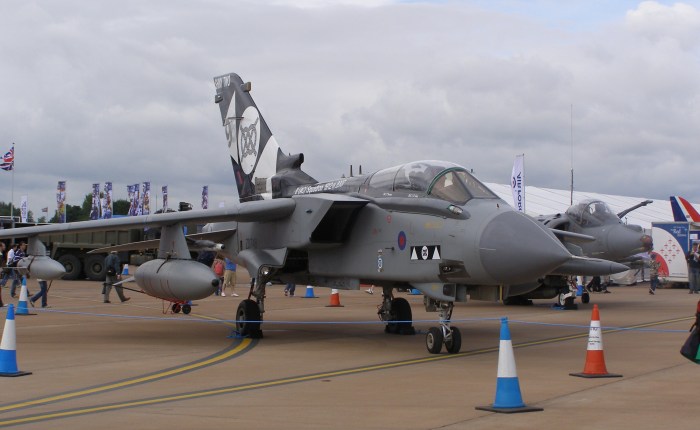
Header image: A Panavia Tornado GR4 in grey colour scheme and special markings for the 95th anniversary of No. 2 Squadron in 2007. This was the type flown by Hickson with No. 2 Squadron. (Source: Wikimedia)

[1] Kathleen Sherit, Flying Roles for Women in the RAF, Journal of the Royal Air Force Historical Society 63 (2016), p. 63.

[2] Kathleen Sherit, ‘The Integration of Women in the Royal Navy and Royal Air Force Post-World War II to the Mid 1990s’ (PhD Thesis, King’s College London, 2013), p. 235.

#BookReview – British Imperial Air Power: The Royal Air Forces and the Defense of Australia and New Zealand Between the World Wars

#BookReview – British Imperial Air Power: The Royal Air Forces and the Defense of Australia and New Zealand Between the World Wars

Alex M. Spencer, British Imperial Air Power: The Royal Air Forces and the Defense of Australia and New Zealand Between the World Wars. West Lafayette: Purdue University Press, 2020. Illustrations. Notes. Bibliography. Pbk. 307 pp.

Reviewed by Ashleigh Brown

519j3Rr4RvL._AC_SY1000_

The First World War was a catalyst for the development of aviation. At the outbreak of war in 1914, the British Army and Royal Navy air arms, the Royal Flying Corps (RFC) and Royal Naval Air Service (RNAS), acted purely as auxiliaries to the British Army and Royal Navy. By 1918, although still predominantly considered a support function for the other services, aviation had taken on an increased level of importance, as illustrated by establishing the independent Royal Air Force (RAF) on 1 April 1918. The importance of aviation and air power was not lost on the self-governing Dominions of the British Empire. Inspired by the experience of the Australian Flying Corps and the creation of the RAF, Australia began looking toward an independent air force during the closing stages of the First World War. This vision was soon realised with the creation of the Australian Air Force (RAAF) on 31 March 1921 (the ‘Royal’ prefix was added in May). New Zealand, the smaller dominion, was understandably slower during the interwar period. The New Zealand Permanent Air Force came into being on 14 June 1923 and grew slowly, much to the frustration of the United Kingdom (pp. 70-1). It is the experience of these two forces that Alex Spencer, a Curator at the Smithsonian National Air and Space Museum in the United States, discusses in his new book, British Imperial Air Power.

Focussing on the Australian and New Zealand experience, British Imperial Air Power, derived from Spencer’s 2009 PhD thesis from Auburn University, offers one of the few contributions about military aviation developments in the Pacific dominions during the interwar period. Although the Australian and New Zealand experience of air power during has been examined, the interwar period is decidedly less studied. This is unfortunate; a far more comprehensive understanding of the air war during the Second World War can be gained by understanding the many steps taken between the wars. The immense technological, tactical, and organisational developments made during this period, as a direct result of First World War experiences, undeniably affected how air power was used in the next war. As such, as well as being an essential contribution to the discussion over the development of air power in Australia and New Zealand specifically, Spencer’s work is more generally a vital contribution to air power history of the interwar period. Spencer takes a thematic approach to the topic, beginning with the imperial air defence schemes of 1918 and 1919, which leveraged the progress made in military aviation during the war (pp. 11-36). Other themes investigated include the Empire’s air defence, post-war air transport, airships, disarmament and eventual rearmament, and the final preparations for war.

Looking at the development of the air forces of Australia and New Zealand through the imperial lens, Spencer places the dominions within the context of the British Empire. This includes a discussion of the RAF’s own struggles, namely, its fight to remain an independent service and its battle for resources throughout the interwar period. Wider economic and political issues are also discussed, including the Great Depression and the Geneva disarmament discussions, which had the potential to make building and modernising air forces more difficult (pp. 173-94). Spencer’s analysis of the broader economic, political, and imperial context is valuable. The dominions’ air forces were not created and developed in a vacuum; external factors inevitably influenced them. Additionally, Australia and New Zealand faced problems in developing their air forces – including interservice rivalry, difficulty obtaining resources, and economic restrictions – which were not unique to these dominions. Rather, they were problems faced worldwide, not least in Britain itself. Therefore, the RAF’s imperial context and experience are valuable inclusions in Spencer’s work.

4148794
Two unidentified Royal Australian Air Force (RAAF) aircrew wearing flying clothing and standing in front of an Airco (de Havilland) DH9 two-seat light bomber. This is one of 29 DH9 models that the British government gave to the fledgling RAAF as an Imperial Gift to Australia in 1920. (Source: Asutalian War Memorial)

In addition to these broader considerations, Spencer discusses the emergence of a more immediate threat to Australia and New Zealand: Japan (p. 38). Given the dislocation of the Pacific dominions from Britain, it is not surprising that fears of attacks by Japan influenced their plans for local air defence (p. 149). Spencer also discusses the renewal of Britain’s alliance with Japan (the Anglo-Japanese Alliance), which occurred to the consternation of Australia and New Zealand (p. 52). This demonstrated some cracks that were beginning to form between Britain and the Pacific dominions. Britain appeared less interested in the Japanese threat, in some instances appearing to completely disregard it as a threat despite the concerns of the dominions. Spencer adds to this issue by discussing the movement away from complete dependence on Britain and forging a closer relationship with the United States as an ally. Under the assumption that the United States had a greater interest in the Pacific area than Britain, Australia increasingly aligned itself with America. Additionally, with supply issues in Britain inhibiting the RAAF’s ability to acquire aircraft, Australia turned to the United States for new aircraft (p. 207). Spencer’s discussion of this provides essential context for the close relationship between the United States and Australia, which was apparent from the Second World War.

Spencer takes his work a step further by incorporating civil aviation’s development in Britain and the dominions, albeit on a much smaller scale. Importantly, he links this to the concurrent development of military aviation (p. 86). This is rare; military and civil aviation are usually treated quite separately. As Spencer points out, however, they were not entirely separate efforts. In addition to proving the value of aircraft in a military capacity, the First World War also opened the door for the possibility of civil aviation. For Australia, both veterans of the air war propelled spheres of aviation. While some Australians – such as Richard Williams and Stanley Goble – continued in the military and were instrumental in the RAAF’s early years, others – including Hudson Fysh, Paul McGinness, and Charles Kingsford Smith – pursued careers in civil aviation upon returning home. Fysh and McGinness, along with Fergus McMaster, founded the Queensland and Northern Territory Aerial Services (QANTAS), while Smith completed a series of daring long-distance flights. With developments in military and civil aviation taking place parallel to one another during the interwar period, it is entirely appropriate to discuss the latter in Spencer’s work. Spencer explains that civil aviation of the era included mapping routes to connect Britain and the dominions, which was undoubtedly an important effort in terms of aerial defence (p. 249-50).

Spencer’s work is not without its problems. On a surface level, an unfortunate typographical error (Jan Smuts is incorrectly referred to as ‘Ian Smuts’) within the first 15 pages leaps out at the reader (p. 15). Additionally, large block quotes are frequently used, often becoming a distraction from the main text. In many cases, the author could have effectively summarised these and added little to no value by being quoted in full. More significantly, there is an uneven focus throughout the book: the bulk of Spencer’s analysis is dedicated to Australia, with New Zealand’s experience receiving less attention. This is understandable given the disparity in the size of the air forces and the advancements each made. However, Spencer should have explained this in the introduction to avoid the reader expecting to see an even comparative study of the two.

With these minor issues aside, Spencer presents a thoroughly researched and well-reasoned account of the formation of Australia and New Zealand’s air forces and the developments and challenges they faced during the lead-up to the Second World War. This includes archival research in Australia, New Zealand, the United Kingdom, and the United States, focusing on air ministry and air department records and political decisions. Importantly, this is placed within the context of the Empire and international events, providing a broader view of the various difficulties faced during the interwar period. As such, Spencer’s work is an important contribution to this underserved period in military history.

N.B. You can listen to an interview with Dr Alex Spencer about his book here.

Ashleigh Brown is a PhD candidate at the University of New South Wales, Canberra. Her thesis focuses on the creation and interwar development of the Royal Australian Air Force. Ashleigh is a researcher for the Official History of Australian Operations in Iraq & Afghanistan and Australian Peacekeeping Operations in East Timor, where her focus is Australia’s commitment to Afghanistan between 2005 and 2010. She is also an editor at From Balloons to Drones. Her research interests include the First World War, the interwar period, recent conflicts, air power, and military command. Ashleigh can be found on Twitter at @ash__brown.

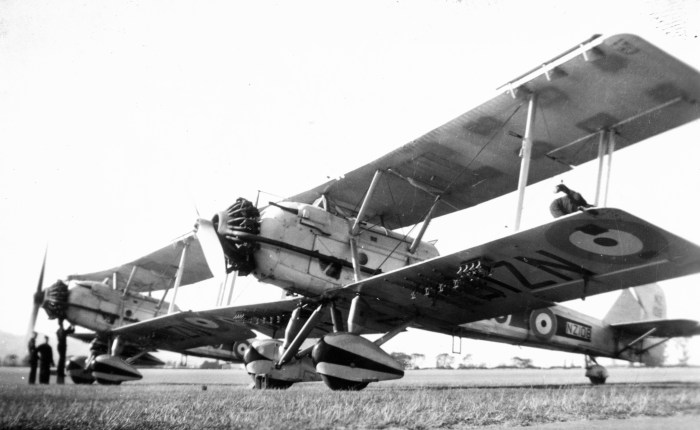
Header Image: A Line up of two Vickers Vildebeests of the Royal New Zealand Air Force at RNZAF Station Wigram in the late-1930s. Vildebeest NZ108 is in the foreground. The flashes on the fuselage and wheel spats are blue. (Source: Air Force Museum of New Zealand)