#Commentary #AirWarVietnam – President Nixon’s ‘Secret Plan’ to end the war in Vietnam

#Commentary #AirWarVietnam – President Nixon’s ‘Secret Plan’ to end the war in Vietnam

By Ralph Hitchens

I believe that before his election in 1968, President Richard M. Nixon had a plan to end the war in Vietnam on favourable terms. He implemented it in stages, starting with the withdrawal of US troops that began in 1969, followed by the rapprochement with the Peoples Republic of China in early 1972 and culminating with the repulse of North Vietnam’s 1972 ‘Easter Offensive’ and the Linebacker bombing campaigns against the North. I served in Southeast Asia during most of 1972 and had an opportunity to witness much of the successful implementation of the President’s strategy.

110330-F-DW547-027
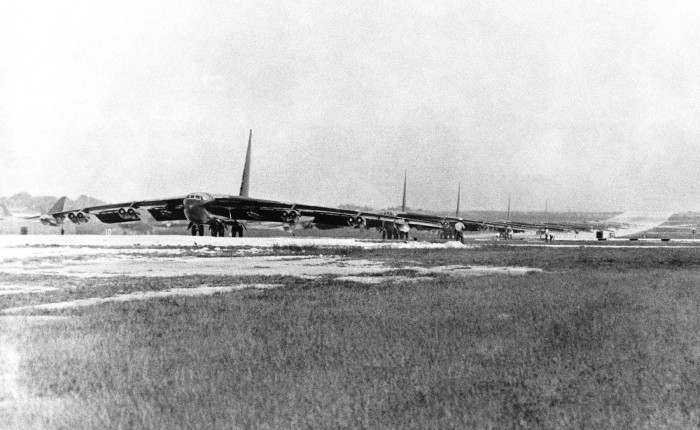
Even long-range bombers like the B-52 needed refueling to reach their targets and return to base on far-off Guam. Bombing operations such as ARC LIGHT and LINEBACKER depended heavily on air refueling. (Source: National Museum of the USAF)

During the presidential race of 1968, the notion that Nixon had a ‘secret plan’ to end the war surfaced in campaign rhetoric, although he never actually made such a claim. Early in the campaign, he told a hastily-convened group of newspaper editors that he had a two-phase ‘get out of the war’ plan, which included taking steps to ‘de-Americanize’ the Vietnam conflict, and also seek a summit meeting with Soviet leaders to gain their cooperation in ending the war. Decades later an article in the International Herald-Tribune also referenced Nixon’s ‘secret plan’ in passing, noting that it was not a term used by Nixon himself but something conjured up by a reporter on deadline, covering one of the candidate’s speeches in which he promised a quick victory in the war. The Richard Nixon Foundation and Presidential Library, on the other hand, seems to believe that the whole business about having a ‘secret plan’ to end the war was nothing more than an ‘urban myth’ with no basis. Still, the term ‘secret plan’ became lodged in the public consciousness during the 1968 presidential campaign and might have been a marginal factor in helping Richard Nixon win a very close election.

I heard about Nixon’s ‘secret plan’ sometime during that campaign, the first in which I was eligible to vote. I was then a second lieutenant in the Air Force, a supply officer stationed at Luke Air Force Base (AFB) outside Phoenix, Arizona. A recent college graduate, I was a political ‘wonk’ then and now. Since high school, I had considered myself a ‘Kennedy Democrat’ (pay any price, bear any burden) and supported the war in Vietnam – seeing it as ‘Korea redux,’ the Truman Doctrine in action. Moreover, while President Johnson’s transformative domestic policy accomplishments deserved respect, a wartime president he was not, and the Camelot holdovers from the Kennedy Administration were rapidly wearing out their welcome.[1]

Vietnam was hardly the centrepiece of American foreign policy during the Nixon administration. The president broke new ground in several areas:  pursuing strategic arms reduction with the USSR, dismantling the Bretton Woods framework while restructuring the financial underpinning of the US/European Alliance, and famously pursuing a rapprochement with the Peoples Republic of China. His domestic accomplishments were also remarkable. The British counterinsurgency expert Sir Robert Thompson, consulted by the president about Vietnam in 1969, remarked afterwards to a National Security Council (NSC) staff member that Nixon was in his opinion America’s first ‘professional president.’[2]

However, what of the ‘secret plan?’ I believe President Nixon had a three-part solution to the Vietnam conundrum:

  1. Vietnamization – the replacement of US ground forces with the Army of the Republic of Vietnam (ARVN), supplemented by increased logistic and advisory support from the US Army.
  2. Strategic isolation of the battlefield. This gradually became more feasible after the 1969 Sino-Soviet border conflict brought about a suspension of the USSR’s use of the Chinese railways to ship military supplies to North Vietnam. That conflict followed a long, prickly relationship between the People’s Republic of China (PRC) and the USSR throughout the 1960s, explored by a few scholars.[3] The USSR was North Vietnam’s primary source of military hardware and advisory support, and until 1969 about two-thirds of that military hardware was sent through China by rail, with a much smaller fraction arriving by sea at the port of Haiphong. Following President Nixon’s dramatic visit to China in February 1972, the PRC stepped up its longtime interference with Soviet resupply to North Vietnam, placing tight restrictions on overflights of Chinese territory. The resupply burden now rested primarily on Soviet cargo ships, and shortly after North Vietnam initiated the Easter Offensive in the spring of 1972, the US Navy mined the approaches to the port of Haiphong. It would take several months for the full impact of this ‘strategic isolation’ to be felt by the North Vietnamese armed forces. However, I believe it did have an impact by the time a cease-fire went into effect in November, and during the brief resumption of hostilities – the ‘Christmas bombing’ of Operation Linebacker II – at the end of the year.
  3. The final element in his plan was the application of US air power on a scale unprecedented since World War II, generating lavish close air support for ARVN troops in the South and being directly applied against North Vietnam during the Linebacker air campaigns.

There should be no confusion about this fact. It was American air power – Air Force, Naval and Marine Corps aviation units swiftly flowing in to reinforce the existing air order of battle in Southeast Asia – that blunted the 1972 Easter Offensive, giving President Nixon (and the American people) ‘peace with honor.’

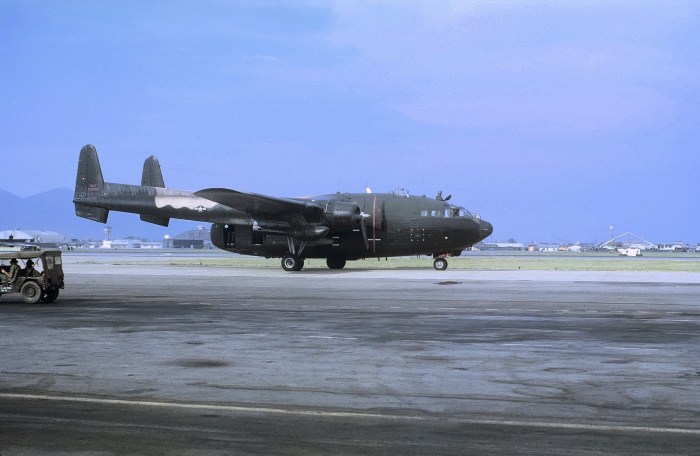
I was there to witness the decisive events of 1972. In 1969 I was fortuitously granted a vision waiver enabling me to enter pilot training the following year,[4] and after earning my wings I trained in the AC-119K fixed-wing gunship and served a combat tour in Southeast Asia from November 1971 to November 1972 – most of what was essentially the final year of the Vietnam War, so far as America was concerned.

AC-119K_(52-5889)_USAF_Taxiing_Da_Nang_AB,_South_Vietnam_1972fix.jpg
An AC-119K at Da Nang airbase in South Vietnam, c. 1972 (Source: Wikimedia)

During 1971 and into the early months of 1972 the withdrawal of American ground forces had accelerated, and the war seemed to have dropped off the front pages of our newspapers. By the time the North Vietnamese Army (NVA) launched the Easter Offensive at the end of March, only one US Army combat brigade remained in-country, deployed in northern I Corps around Danang, defending the invaluable seaport and airfield. The battle on the ground was thus left to the ARVN, which could not hold back the NVA on its own, and close air support from the South Vietnamese Air Force (VNAF) was wholly inadequate.[5]

At this point, the third element of Nixon’s plan was implemented with great resolve and determination. US air power in Southeast Asia was massively reinforced and succeeded in its twofold mission of supporting the ARVN and carefully, steadily disrupting the economic and military infrastructure of North Vietnam. In early 1972 there had been 14 USAF fighter-bomber squadrons deployed in-theatre, most of them in Thailand. Between the opening of the Easter Offensive and the end of 1972, no fewer than nine additional tactical fighter squadrons were transferred to Southeast Asia – seven from the continental United States and two from the Philippines and South Korea.[6] In the early years of the war the Strategic Air Command had kept four B-52 squadrons based on Guam to provide ‘Arc Light’ strikes in South Vietnam. After the NVA offensive began in the spring of 1972 four more squadrons were deployed to the western Pacific, eventually including two deployed to Thailand. The number of Arc Light strikes increased dramatically, and a few B-52 strikes were undertaken over North Vietnam soon after the US resumed bombing the North. The B-52s were famously used on a large scale during the final, brief Linebacker II campaign in December 1972.[7] For its part, the US Navy had been keeping one or two aircraft carriers on ‘Yankee Station’ in the South China Sea, and this was increased to four after the Easter Offensive began. A US Marine Corps air wing also deployed to Southeast Asia in the spring and summer of 1972, fielding six fighter-bomber squadrons based in South Vietnam and Thailand.

My own tour of duty in Southeast Asia came at the tail end of the ‘Commando Hunt’ operation against the Ho Chi Minh Trail in Laos. My fixed-wing gunship squadron was based at Nakhon Phanom Royal Thai Air Base in Thailand, with detachments at Danang and, later, at Bien Hoa in South Vietnam. Our primary mission was the interdiction of truck traffic on the Ho Chi Minh Trail in Laos and eastern Cambodia, although we occasionally provided close air support to the ARVN in the country. In mid-tour I was abruptly sent to MACV at Tan Son Nhut Airfield in Saigon, where I spent a couple of months working in ‘Blue Chip,’ the 7th Air Force command post. I was unhappy to miss out on flying missions, thereby losing any hope of accruing enough hours to upgrade to aircraft commander before boarding the ‘Freedom Bird.’ However, coordinating and redirecting gunship sorties during my 12-hour daily shift rarely kept me fully occupied, and I took full advantage of the birds-eye view I enjoyed of the American air war in Southeast Asia. Blue Chip was housed in an enormous auditorium, fronted by a vast map appended with extensive annotation and tabular data; all plotted on plexiglass by well-trained specialists moving discretely behind the display and writing backwards with grease pencils on the ‘big board.’

One episode from my Blue-Chip interlude stands out: an Arc Light tasking in support of the besieged ARVN forces in An Loc. This was an epic defensive battle lasting more than two months, with a reinforced ARVN infantry division holding out in this provincial capital only 90 miles north of Saigon. Three NVA divisions, supported by some VC battalions, surrounded the town on three sides. The one paved road coming up from the south, QL-13, was unusable during most of the battle, as was the airfield, but aerial resupply through parachute drops managed to keep the ARVN resupplied and in the fight. Frequent Arc Light strikes supplemented lavish close air support from fighter-bombers and fixed-wing gunships. One afternoon when I arrived for my shift, I saw a map of An Loc on one side the big board, the town enveloped on three sides by a huge array of overlapping Arc Light ‘boxes,’ each a rectangle measuring 1 x 3 kilometres into which three B-52s would drop 324 500-lb bombs. There must have been at least fifteen or twenty of these boxes.  The 7th Air Force Assistant Deputy Commander for Operations told the Battle Staff that this saturation bombing was intended to ‘relieve some of the pressure’ on the defenders – a bit of an understatement, I thought. It was aerial fire support on a truly staggering scale, and Arc Light strikes were important in other major battles during the Easter Offensive, such as Kontum (in II Corps) and Quang Tri (I Corps).

Davis 30
Captains Jim Boyd and Kim Pepperell land after one of the last Wild Weasel missions of the Vietnam War, 29 December 1972. (Source: National Museum of the USAF)

While all this was happening down south, the Linebacker air campaign was inflicting serious damage on military targets in North Vietnam. Technology certainly helped, as precision-guided munitions were now in the inventory. Suppression of enemy air defence (SEAD) was greatly improved by better tactics and new-generation anti-radiation missiles and associated systems. Linebacker, by and large, was strategic bombing ‘done right.’ Earl Tilford, a former Air Force intelligence officer and a thoughtful critic of air power, summarised this campaign:

Linebacker One, as it would soon be known, was the most successful aerial campaign of the Vietnam War. [. . .] It was successful because it took place under the aegis of an appropriate and viable strategy. Linebacker epitomized conventional air power used to stop a conventional invasion and, beyond that, it qualified as a “strategic” use of air power in that it compelled Hanoi’s politburo to negotiate seriously for the first time since peace talks started in 1968.[8]

Subsequent events are remembered all too well. The Watergate affair brought the Nixon administration to a premature end, and even before that sordid crisis had run its course, congressional intransigence and our collective national fatigue had effectively precluded a reengagement with American air power that President Nixon had famously promised the president of the Republic of Vietnam if Hanoi violated the terms of the Paris Accords. That ‘peace with honor’ would not long outlive the Nixon administration was surely seen by many as inevitable. Still: whatever we remember about the Vietnam War we ought to acknowledge that President Nixon did have a plan, ‘secret’ or not. He implemented that plan, and it worked.

Author’s Disclaimer: This essay reflects a deep dive into my own memory banks, supplemented by some confirmatory Internet searches. There is no doubt in my mind that President Richard M. Nixon had a plan to bring the war in Vietnam to a satisfactory conclusion. He implemented that plan, and for a fleeting moment in time we had ‘peace with honor’ before the Watergate crisis brought everything crashing down.

Ralph M. Hitchens, Lt. Col. USAFR (Ret.) is a graduate of Southern Illinois University and the National Defense Intelligence College. While on active duty he flew combat missions in Vietnam and VIP missions in the US and Europe. He worked as a corporate pilot before joining the government as a civilian analyst with Army Intelligence, attached to NSA. He subsequently moved to the Office of Intelligence at the U.S. Department of Energy, where he managed current intelligence analysis, drafted and contributed to National Intelligence Estimates, and served as Information Technology Program Manager. Retiring in 2004, he worked as a contractor in the DOE Office of Classification and other program offices. He regularly contributes book reviews to the Journal of Military History as well as other publications.

Header Image: B-52Ds from the Strategic Air Command line up for takeoff as they prepare for strikes over Hanoi and Haiphong, North Vietnam, during OPERATION LINEBACKER. (Source: National Museum of the USAF)

[1] David Halberstam’s The Best and the Brightest (1972) made a strong and lasting impression on me and countless others.

[2] I wish I could source this quotation better. I heard it in 1969 from my late father, Colonel Harold L. Hitchens, USAF. Then serving in the Air Staff Directorate of Plans, he had been told of Thompson’s remark by an acquaintance on the National Security Council. It was also quoted by Stewart Alsop in ‘Nixon and the Square Majority: Is the Fox a Lion?,’ The Atlantic (February 1972). It was also repeated in a Nixon Reelection Campaign televised ad in November 1972: ‘He is a completely professional president.’ Thompson himself certainly repeated his bon mot: ‘I think for the first time in a long time you have a professional President.’ Quoted in David Fitzgerald, ‘Sir Robert Thompson, Strategic Patience, and Nixon’s War in Vietnam,’ Journal of Strategic Studies, 37:6/7 (2014).

[3] For a good summary account of this festering rivalry see Christian Talley, ‘The Vietnam War as China’s Watershed,’ Vanderbilt Historical Review, (January 2016), pp. 42-8. Also, Stephen J. Morris, ‘The Soviet-Chinese-Vietnamese Triangle in the 1970s:  The View from Moscow,’ Working Paper No. 25 (Paul Nitze School of Advanced International Studies, Johns Hopkins University, 1999).

[4] The system worked, sometimes. A routine physical exam in 1969 showed that my vision had improved since college and was within the waiver limits for undergraduate pilot training (UPT). The bad news was that waivers were granted only to US Air Force Academy graduates. That was unfair, I believed, and I submitted a formal letter request through personnel channels to change the governing directive. Mirabile dictu, the directive was changed, and I was admitted to UPT as a ‘test case.’

[5] An incident I witnessed influenced this conclusion. On a rare daylight mission in April 1972, during the fighting near Kontum in II Corps, I saw a VNAF A-37 attack aircraft make two bomb runs against a VC heavy machine gun position, clearly visible atop a bare ridgeline; weather conditions were perfect. Both bombs missed, neither was close. The II Corps Senior Advisor, John Paul Vann (call sign Rogues Gallery) was loitering nearby in a helicopter and encouraged our AC-119K Stinger gunship to engage. The heavy machine-gun position was quickly silenced by our 20mm rounds; We suffered a .51 caliber hit in one of the tail booms. I further believe that the quality of VNAF pilots was questionable. Pilot training was a highly prestigious opportunity for young men of military age, and I suspect that merit took a back seat to family influence and political connections. My UPT class at Williams AFB, which graduated in June 1971, included one South Vietnamese pilot candidate. He was the exception that proved the rule. Despite speaking very poor English he passed through the year-long course at the same pace as the rest of us, and we were told by a senior instructor pilot that he was the very first Vietnamese officer to do so – prior VNAF trainees had taken as long as two years to complete the course.

[6] This included the wholesale redeployment of the 49th Tactical Fighter Wing (four F-4 squadrons) from Holloman AFB in New Mexico, across the Pacific Ocean to Thailand.

[7] The employment of so many B-52s in this 11-day operation undeniably generated some ‘shock and awe’ but losses were heavy, in large part due to unimaginative centralised mission planning at SAC Headquarters during the first few days – ingress routes, altitudes and formations saw little variance on the first three missions. Losses on the third day of the operation forced SAC planners to reconsider their assumptions. ‘Changes were made to operations and tactics. Gone were bomber streams seventy miles long with cells flying lockstep to those ahead of them. Gone too were 90 to 100 plane raids. World War II tactics did not work in the modern environment of SAM missiles, sophisticated ground radar, and MiG interceptors.’ See Gary Joyner, and Ashley E. Dean, ‘Operation Linebacker II: A Retrospective,’ Report of the LSU Shreveport Unit for the SAC Symposium, 2 December 2, 2017, p. 22.

[8] Earl H. Tilford, SETUP: What the Air Force Did in Vietnam and Why (Maxwell AFB:  Air University Press, 1991), p. 248.

Royal Air Force Shoulder Patches as a Propaganda Tool during the Second World War

Royal Air Force Shoulder Patches as a Propaganda Tool during the Second World War

By Liam Barnsdale

As a means of acknowledging its increasingly diverse composition, the Royal Air Force (RAF) introduced shoulder patches to its uniforms during the Second World War. These small pieces of cloth, varying widely in construction, not only identified the wearer’s nationality to the viewer, but highlighted the contributions of non-British personnel to the service, and thereby the international scale of the broader conflict. Although Commonwealth aviators had made significant contributions to the RAF’s numbers since its foundation, the service’s diversity was further compounded during the Second World War by an influx of exiled aviators from continental Europe and volunteers from neutral countries such as Ireland and the United States. While many occupied nations’ air arms retained their administrative independence from the RAF, all, save for the Free French, adopted the RAF’s uniform as their own.[1]

Shoulder Patch
A New Zealand shoulder patch on an RAF service dress. (Source: Author’s collection)

Many adapted their uniforms to reflect their original services by altering insignia, such as replacing the RAF’s ‘wings’ brevet with their own air forces’ brevets, or dying their uniforms a darker shade of blue, as Australian aviators did. Despite their differences, however, all adopted the RAF’s shoulder patches as a part of their varying insignia, sewing them just below the shoulder seams of their Service Dress uniform jackets, in a similar fashion to the British Army’s regimental insignia. Their introduction was often at the request of the RAF. Produced for all major nationality groups serving in the RAF, the patches presented the wearer’s original service, such as the Royal New Zealand Air Force (RNZAF), or home country either in full, or in acronym, stitched in light blue or white thread on dark blue or black cloth. Introduced at intermittent stages across the conflict’s duration, the patches came in a wide range of shapes and sizes, from single-line titles to the comparatively ostentatious insignia worn by American Eagle Squadron pilots. Regardless of their format, however, all patches made the wearer’s nationality abundantly clear.

Even in the case of the Eagle Squadron patch, omitting written reference to the United States, it nonetheless clearly communicated national identity through a large embroidered replication of the country’s national symbol. Despite their innocuous size, RAF personnel attached great sentimental value to their shoulder patches. Wing Commander ‘Johnnie’ Johnson, the British commander of Canadian No. 144 Wing from 1943 to 1945, was presented a pair by Leslie ‘Syd’ Ford, one of the Wing’s Squadron Leaders, after his first operation with the unit. Johnson recalled Ford stating that ‘the boys would like you to wear these. After all, we’re a Canadian wing and we’ve got to convert you.’[2] This action’s ‘deep significance’ to Johnson reflects the shoulder patches’ extended symbolism beyond that of personal identity, for Johnson was not Canadian, to one of inclusivity and group identity.[3]

media-18024
Squadron Leader William Taylor of No. 71 Squadron  RAF (Source: IWM)

Thanks to the Ministry of Information’s (MoI) interest in promoting international support for Britain, particularly before the United States’ entry into the conflict, RAF shoulder patches were frequently included in British domestic propaganda. Among the various media to feature them were newspaper articles, with international airmen serving in the RAF frequently promoted through photographs of specific individuals and their insignia. Exemplifying this is a small pictorial Times article on Squadron Leader William Taylor, ‘the fighting commanding officer of the new R.A.F. Fighter squadron with all American pilots’, in which Taylor is posed side-on to the camera, compelling the audience to notice and recognise his prominent Eagle Squadron patch.[4] Shoulder patches also appear in numerous MoI posters, one example being ‘King George VI Meets Pilots of Fighter Command’ from the ministry’s ‘For Freedom’ series, in which a New Zealand pilot, identifiable by his camera-facing shoulder patch, appears in the centre of the poster’s illustration.[5] In many cases, propagandised aviators appeared as anonymous members of a group, appearing only in close-up shots of their shoulder patches. The November 1943 British Movietone News newsreel story ‘Battle of Berlin – New Phase Opens’ exemplifies this phenomena, dedicating eight seconds of its length to a succession of shots showing the shoulders of a Canadian Air Bomber, an Australian Air Gunner, a New Zealand Navigator, and a Rhodesian Sergeant, each shot excluding the subjects’ faces.[6]

Other stories utilising aviators’ shoulder patches include those covering the influx of immigrant RAF personnel from Empire Air Training Scheme, often before their allocation to nationally-specific units. The October 1941 British Movietone newsreel story ‘King and Queen with Empire Airmen’ exemplifies this theme.[7] As its title suggests, the story, also covered by Pathé Gazette under the title ‘Their Majesties and Airmen from Overseas’, shows King George VI and Queen Elizabeth inspecting foreign RAF personnel newly-arrived in Britain.[8] Most of the segment’s one-minute length is dedicated to a sequence of shots focusing on selected personnel’s shoulder patches. Aviators from Canada, Singapore, South Africa, the USA, New Zealand and Rhodesia receive the camera’s attention in turn, with their identifying shoulder patches appearing in each shot’s centre, often, as in ‘Battle of Berlin’, at the expense of their owners’ faces.

Originally intended as a political concession to overseas governments’ requests for increased autonomy within the RAF, the shoulder patch’s frequent centre-stage appearances reveal that its symbolic value extended beyond its simple cloth constitution. By focusing solely on the unnamed aviators’ shoulder patches, both ‘Battle of Berlin – New Phase Opens’ and ‘King and Queen with Empire Airmen’ eschew all of their subjects’ characteristics save for their nationalities, depicting them as simply their nations’ de facto ambassadors. Commonwealth military historians such as Jeffrey Grey have criticised their nations’ ‘disastrous’ ‘surrender’ of aviators to the RAF under the Empire Air Training Scheme and the subsequent reduction of Commonwealth air arms to ‘training organisation[s] for the RAF’.[9] Similar disdain was voiced by Marshal of the Royal Air Force Sir Arthur Harris, who opined that:

[a]n ordinary mixed British crew from all parts of the British Isles […] is much better disciplined and certainly better educated than the average colonial and dominion crew.[10]

However, the frequent appearances of the commonwealth and overseas aviators and their national insignia in British domestic propaganda indicate that their value extended beyond strategy and aided significantly in the MoI’s emphasising of the international support for Britain’s war effort.

Liam Barnsdale has recently completed his Master of Arts thesis at Victoria University of Wellington in New Zealand. His thesis, titled ‘‘The sort of man’: Politics, Clothing and Characteristics in British Propaganda depictions of Royal Air Force Aviators, 1939-1945′, examines depictions of RAF personnel in multiple media during the Second World War, identifying and analysing the symbols and characteristics systematically used in these depictions.

Header Image: Airmen from all parts of the world who took part in the Dieppe Raid in front of the Hurricane ‘Urundi’ of No. 43 Squadron at RAF Tangmere, 20 August 1942. From left to right – Pilot Officer Andrzej Malarowski of No. 317 Polish Fighter Squadron, pilots from Australia, Gold Coast, Canada, USA and New Zealand. (Source: © IWM (HU 128191))

[1] Andrew Cormack, The Royal Air Force 1939-45 (London: Osprey Publishing, 1990), p. 19.

[2] Leslie Ford in J.E. Johnson, Wing Leader (London: The Reprint Society, 1958), p. 163.

[3] Johnson, Wing Leader.

[4] ‘Squadron-Leader W.E.G. Taylor’ in ‘The Prime Minister’s Son Enters Parliament,’ The Times, 9 October 1940, p. 6.

[5] Air Force Museum of New Zealand, Ref. No. 2017/131.7, ‘King George VI Meets Pilots of Fighter Command’, 1942-1945.

[6] ‘Battle of Berlin – New Phase Opens’, British Movietone News, 29 November 1943.

[7] ‘King and Queen With Empire Airmen’, British Movietone News, 30 October 1941.

[8] ‘Their Majesties and Airmen from Overseas’, Pathé, 30 October 1941.

[9] Jeffrey Grey, A Military History of Australia, Third Edition (Melbourne: Cambridge University Press, 2008), pp. 150-151.

[10] Arthur Harris, Bomber Offensive (London: Collins, 1947), p. 64.

#AirWarVietnam – Contested Skies: A Brief Guide to the Historiography of the Air War in Vietnam

#AirWarVietnam – Contested Skies: A Brief Guide to the Historiography of the Air War in Vietnam

By Dr Michael Hankins

Editorial Note: During 2019, From Balloons to Drones will be running a series of articles looking at various aspects of the air war over Vietnam from the French-Indochina War through to the end of the Vietnam War. To kick off this series, Assistant Editor, Dr Michael Hankins, provides a brief overview of the historiography of the air war. While not conclusive, it does give an idea of the critical strands present in the historiography and highlights where there are some important omissions such as a scholarly examination of air power during the French-Indochina War. If you would like to be a part of that discussion by submitting your work to the series, please email our editor, Dr Ross Mahoney, at airpowerstudies@gmail.com or via our contact page here. The official call for papers is here.

Here at From Balloons to Drones, we are launching a series of articles on the air war in Vietnam. This is no easy task, as writing about the Vietnam War is akin to strolling into a minefield: There is a good chance of causing an explosion. Historian Robert Citino stated it best:

Anyone who tries to draw conclusions from the Vietnam War will almost certainly anger the legions of Americans who have already made up their minds about it.[1]

In the U.S. especially, the debate over the war rages in both public and academic spheres regarding what happened and what it means for American society.[2] As the war in its entirety remains controversial, the sub-field on the air wars has developed its own debates and tropes. This article is intended as a quick guide to some of that literature as well as an introduction to a few of the broader arguments and issues that loom over the entire field. If there is any single takeaway from a survey of the literature of the Vietnam War (and its air components in particular), it is that the war remains contested but relevant, and there is plenty of work for scholars left to do in deepening our understanding of the conflict.

VNAF_A-1E_Skyraiders_at_Bien_Hoa_c1965
A Vietnamese Air Force student pilot and a USAF instructor sit side by side in a VNAF Douglas A-1E Skyraider taxing to the runway at Bien Hoa air base, Vietnam, c. 1965. (Source: Wikimedia)

General Histories

Because there is less of a standing consensus regarding the Vietnam War than in some other conflicts, finding an entry point can be difficult. Perhaps the most middle-of-the-road overview of the entire conflict (written primarily from the American perspective) is still George C. Herring’s America’s Longest War: The United States and Vietnam, 1950–1975 (1979). Originally written in 1979, it is now in its fifth edition (released in 2013) as Herring continually updated it to incorporate new scholarship. Another useful overview is Where the Domino Fell: America and Vietnam 1945-2010 (2014) by James Olson and Randy Roberts. This is the sixth edition of a book initially published in 1991 and constantly updated. The book is still mostly from the American perspective but delves a little bit deeper into some of the backgrounds to the conflict regarding French colonialism and the ideology of Ho Chi Minh, which itself is highly contested.[3] Olson and Roberts are more pointed in their argument that the war was unwinnable for the U.S.

For a more traditional operational look, Phillip Davidson’s Vietnam at War: The History, 1946-1975 (1988) is a valuable in-depth examination of both the French and American phases of the war. For a contrasting, but still, mostly operational look at the war, the works of Gregory Daddis are perhaps the best place to start. It is fair to say that Daddis is the current leader of the field when it comes to military histories of the Vietnam War. His trilogy of books is useful and wide-ranging. No Sure Victory: Measuring U.S. Army Effectiveness and Progress in the Vietnam War (2011) examines the ways that U.S. forces measured progress and success, which led them to make many faulty assumptions. Westmoreland’s War: Reassessing American Strategy in Vietnam (2014) and Withdrawal: Reassessing America’s Final Years in Vietnam (2017) each examine the American strategic and operational approaches in the first and second half of the conflict respectively.

What these books do not address as much are the pacification programs (also known as ‘the other war’) and a perspective internal to South Vietnam. Thankfully, more historians are entering the field and producing exciting work in these areas. Jessica Chapman’s Cauldron of Resistance: Ngo Dinh Diem, the United States, and 1950s Southern Vietnam (2013) are one of the most exciting new books in the field, examining the Ngo Dinh Diem regime and the three organisations internal to South Vietnam that resisted it the most. Andrew Gawthorpe’s To Build as Well as Destroy: American Nation Building in South Vietnam (2018) is probably the best look at pacification so far, although it proves to be a promising topic that shows much room to grow.

It is important to note that a book such as Olsen’s and Robert’s (and to some degree Daddis’) are responding to an earlier strain of works that argued the opposite. This argument was that the war was winnable, but that American leaders (mostly civilian political leadership and some military leaders) fundamentally misunderstood the war and for one reason or another, snatched defeat from the jaws of victory. Perhaps the most widely-read work that takes that argument is Harry Summers’ On Strategy: A Critical Analysis of the Vietnam War (1982), which analyses the war through a particular interpretation of Clausewitz. Most works that take this tack posit that America could have won the war earlier by going with a more all-out, aggressive military strategy.

The Air War(s)

That more aggression could have produced victory was certainly the belief of many U.S. Air Force leaders. For example, speaking to Air Force Academy cadets in 1986, General Curtis LeMay was asked whether the U.S. could have won the war. He responded: ‘In any two-week period you care to mention.’[4] Many books on the air war take a similar approach, such as On Yankee Station: The Naval Air War Over Vietnam (1987) by John Nichols and Barrett Tilman. This argument is especially common among oral histories and memoirs. There are a plethora of such books, particularly by pilots eager to share their ‘There I was…’ stories and many of these works are very useful. The best is Airpower in Three Wars: World War II, Korea, Vietnam (1978) from the Commander of 7th Air Force, General William Momyer (pronounced Moe-Mye-er). Other notable entries in this category include Ed Rasimus’ Palace Cobra: A Fighter Pilot in the Vietnam Air War (2006), Robin Olds’ Fighter Pilot: The Memoirs of Legendary Ace Robin Olds (2010), Ken Bell’s 100 Missions North: A Fighter Pilot’s Story of the Vietnam War (1993), and Robert Wilcox’s oral history of the Top Gun program, Scream of Eagles: The Creation of Top Gun and the U.S. Air Victory in Vietnam (1990), to name a few.

However, most of the literature from historians regarding the air campaigns have argued the opposite: that a more aggressive bombing approach earlier in the war was not feasible for a variety of reasons. One of the earliest books to push for this line of thinking is Mark Clodfelter’s The Limits of Air Power: The American Bombing of North Vietnam (1989). This book is, in this author’s opinion, still the most important book on the air war in Vietnam and one of the most important works in the field of air power history in general. Other works have made similar or related arguments but in more specific areas. Earl Tilford’s Crosswinds: The Air Force’s Setup in Vietnam (1993) looks at the years leading up to the war and argues that the Air Force’s structure and doctrine did not lend itself to the type of fighting in Vietnam.[5] For an operational look at the air campaigns through this lens, the most useful works are Jacob Van Staaveren’s Gradual Failure: The Air War over North Vietnam, 1965-1966 (2002) and Wayne Thompson’s To Hanoi and Back: The United States Air Force and North Vietnam, 1966-1973 (2000) each of which focuses on a distinct time frame. The Linebacker II campaign sometimes called the ‘11-day war’ or ‘the Christmas bombing’ can be contentious. The best operational account of it so far is Marshall Michel’s The Eleven Days of Christmas: America’s Last Vietnam Battle (2001), which blames Air Force leaders rather than political leaders for the mission’s problems.

Many of the more popular memoirs deal with air-to-air aspect, although such encounters were rare, as the North Vietnamese Air Force tended to average thirty to forty operational fighters at any given time (compared to the thousands of aircraft the U.S. had in-theatre). There are some broader examinations of the air-to-air aspect. The most comprehensive is Marshall Michel’s Clashes: Air Combat over North Vietnam, 1965-1972 (1997), although Craig Hannah’s brief Striving for Air Superiority: The Tactical Air Command in Vietnam (2001) is also useful.[6] Because the war featured an expansion of tactical air power, many works deal with a diversity of air power roles, one of the best entry points is Donald Mrozek’s Air Power and the Ground War in Vietnam: Ideas and Actions (1988). Part of the problem with the use of tactical air power in Vietnam was the confusing command structures and service rivalries. Ian Horwood’s Interservice Rivalry and Airpower in the Vietnam War (2006) is perhaps the best text examining that issue and is a useful general exploration of tactical airpower in the south.

B-52D_approaching_U-Tapao_1972
A U.S. Air Force Boeing B-52D Stratofortress aircraft coming in for a landing at U-Tapao air base, Thailand, after a mission over Vietnam, 30 October 1972. (Source: Wikimedia)

The problems that the US military experienced in Vietnam led to a long period of change afterwards, as the various services all raced to reform themselves not to repeat the perceived mistakes of the war. However, the services disagreed (with each other and within themselves) about what precisely the mistakes were and how to solve them. The period following the war, from the late 1970s until 1991, was essentially a second ‘interwar period,’ similar in some ways to the 1920s and 1930s. The degree to which the Vietnam War was used as an impetus for change in the air power realm has been covered in many works. There are so many volumes on this subject that they would require a separate article on their own, although some useful starting places include Brian Laslie’s The Air Force Way of War: U.S. Tactics and Training after Vietnam (2015), Mike Worden’s The Rise of the Fighter Generals: The Problem of Air Force Leadership, 1945–1982 (1998), and C.R. Anderegg’s Sierra Hotel: Flying Fighters in the Decade After Vietnam (2001). You can find a historic book review of this latter title here.

Although many of the works listed here are of high quality, there are some inherent limitations to the field. Most of them are limited to studying a specific geographical area or timeframe (or both), and there are fewer works that take a comprehensive look at the entirety of the air wars. Some such works are forthcoming, but there is more room for more books that take this wider approach. Most works are written by people who have some tie to the military. Many are veterans of the war or have served in the time since. Many more are civilian employees of the military (of which this author is one as well, so take my recommendations with a grain of salt of course). Many of the books listed here are from government or military presses. None of this is to imply that they are of lesser quality or that they have any particular biases (indeed, much of the material from Air University Press can be interpreted as critical of the Air Force), but it does mean that the perspectives given are limited. Further limiting our view of the war is the paucity of books written by women and people of colour. The majority (although not all) of the books in the field are from the perspective of men, predominantly white – a limitation that is hopefully in the process of being alleviated as new and diverse scholars continue to enter the field.

There is a reason to believe that the field of Vietnam War histories is on the verge of a turning point, as the previous generation who remembers the war as a part of their lives is starting to give way to a new generation that has no personal memory of the war. New sources and new perspectives are beginning to emerge, as new and old scholars alike develop not only new answers to questions but new questions. It is an exciting time to be a historian of this era.

Conclusion

There is an overwhelming number of works about the air wars in Vietnam. This brief survey, focusing on significant monographs, is not meant to be comprehensive, but merely a guide to some of the more influential works and themes. There are many wonderful and useful works not mentioned here, and that is not meant as a slight against any of them. For more, any serious student of the Vietnam War must become quickly aware of the work of Dr Edward Moïse. Not only are his own works useful reading, but his website contains quite possibly the largest bibliography of works on the Vietnam War, many of which are annotated and organised into searchable categories. This is an invaluable resource.

Despite the large size of the field, there is much work left to be done. While there are many memoirs and oral histories of various aspects of the war, we still need scholarly monographs on the air wars in Laos and Cambodia, on Air America (the CIA’s air effort), on the defoliation operations, and on-air mobility both in terms of troop movements and airlift of supplies and humanitarian efforts. Many of the works mentioned do discuss air power used by the Army and Marines, but more works focusing on these aspects are needed. Perhaps the two most significant gaps in the field are a good scholarly analysis of the use of air power during the French-Indochina War and a discussion of the perspective of the North Vietnamese Air Force. Chinese involvement in terms of providing pilot training and providing some actual pilots could also be examined in more depth. Of course, there is always room for new interpretations of ideas that have been previously discussed. Several excellent books do exist on these topics, but there is room for scholars to expand our knowledge and understanding. This is just a tip of the iceberg of some of the exciting work left to be done in the field.

The Vietnam War is a conflict that will continue to be controversial as those involved on all sides continue to grapple with its legacy. We here at From Balloons to Drones hope that the upcoming series of articles from a variety of perspectives can help move that discussion forward.

Dr Michael Hankins is Professor of Strategy at the USAF Air Command and Staff College eSchool, and former Instructor of Military History at the U.S. Air Force Academy. He earned his PhD from Kansas State University in 2018 with his dissertation, ‘The Cult of the Lightweight Fighter: Culture and Technology in the U.S. Air Force, 1964-1991.’ He completed his master’s thesis at the University of North Texas in 2013, titled “The Phantom Menace: The F-4 in Air-to-Air Combat in the Vietnam War.” He has a web page here and can be found on Twitter at @hankinstien.

Header Image: A USAF Douglas A-26C Invader loaned to France during the Indochina War. This aircraft was loaned to France from March 1952 to November 1955. (Source: Wikimedia)

[1] Robert M. Citino, Blitzkrieg to Desert Storm: The Evolution of Operational Warfare (Lawrence, KS: The University of Kansas Press, 2004), 254.

[2] For insightful studies of the memory of the Vietnam-American War, see Christian G. Appy, American Reckoning: The Vietnam War and Our National Identity (New York: Viking Press, 2015); Patrick Hagopian, The Vietnam War in American Memory Veterans, Memorials, and the Politics of Healing (Amherst, MA: University of Massachusetts Press, 2012); and Gregory Daddis, ‘The Importance of the Vietnam War’s Tet Offensive,’ War on the Rocks, 29 January 2018.

[3] Determining whether Ho Chi Minh was primarily a nationalist or a communist has been a major point of contention in the literature. Olsen and Roberts argue that he was in fact both, and that for him, those concepts cannot be separated.

[4] See Earl Tilford, ‘Linebacker II: The Christmas Bombing,’ The VVA Veteran, January/February 2014. This quote from LeMay is widely cited in many works.

[5] An earlier form of this book is available as a free download from AU Press under the title Setup: What the Air Force Did and Why.

[6] On the subject of air-to-air combat in Vietnam, see the author’s MA Thesis, ‘The Phantom Menace: The F-4 in Air Combat in Vietnam’ (MA Thesis, University of North Texas, 2013).

A Low-Cost Way to Defeat Adversaries? Israel and Air Power in the Second Lebanon War

A Low-Cost Way to Defeat Adversaries? Israel and Air Power in the Second Lebanon War

By Major Jared Larpenteur

At 9:05 am on 12 July 2006, Hezbollah initiated Operation TRUE PROMISE at the Lebanese-Israeli border. They kidnapped two Israel Defense Force (IDF) reserve soldiers and sparked the Second Lebanon War.[1] Israel restricted large ground operations and instead turned to the Israeli Air Force (IAF) to win the war for them. Over the next 34 days, the IAF carried out tens of thousands of sorties but failed to achieve the decisive result sought by Israel.

No stranger to conflict, Israel has fought for survival since the establishment of the country in 1948. From 1948 to modern day the IDF has undergone multiple transitions to keep its military in line with the modern battlefield. Some of these transitions came at the cost of extensive amounts of blood and treasure. Despite a relatively successful air campaign in the 2006 Second Lebanon War, Israel’s societal perspective led to paying a high cost to discover essential lessons regarding the importance of joint warfare on the modern battlefield.

Since 1982, the IAF had dominated the skies of the Middle East. However, by the 2006 Lebanon War, they had become accustomed to an uncontested environment and employment in the counter-insurgency environment. Leading up to the Second Lebanon War, two intifadas, the first from 1987-1993 and the second in 2000, drew the Israeli military away from high-intensity conflict.[2] The first intifada occurred in 1987 and made the IDF shift focus from manoeuvre warfare to riot control to handle massive civilian uprisings. The second intifada in 2000 saw more violent clashes including suicide bombings in Israeli territory resulting in over 135 Israelis killed.[3] The two intifadas prompted the IDF to transition to a more counter-insurgency approach to warfare but also degraded public opinion as the Israeli populace became war-weary. At the same time, Israel observed the United States use of a heavy air power approach during Kosovo in 1999 and the initial Iraq invasion in 2003 to help limit casualties.

Israel had developed an aversion to casualties but still faced instability within the region. According to Frans Osinga, Israeli military leaders came to see air power as ‘a low-cost way to defeat adversaries such as Hamas and Hezbollah.’[4] Adversaries like Hezbollah watched, adapted, and understood the power of the IAF. Hezbollah understood Israel’s transition and according to their leader believed ‘the Israeli Achilles heel was the society itself.’[5]  By 2006, Hezbollah planned for a future war with Israel under the assumption that Israel would rely on air power and limited ground forces to reduce the risk of casualties.

When Prime Minister Ehud Olmert, Chief of Staff General Dan Halutz (an IAF general), and Defense Minister Amir Peretz met shortly after the July 2006 abductions to discuss options their perspectives became apparent when they decided not to send a large ground force into Lebanon, but instead, rely on airstrikes and limited ground raids.[6] The resulting conversation led to Israel’s three political objectives: first, the release of the abducted soldiers to Israel unconditionally; second, stop the firing of missiles and rockets into Israel territory; lastly, enforce United Nations Resolution 1559, which pressured Lebanon to control Hezbollah, disarm militias, and secure its southern border.[7]

Fueling all fighters
An Israeli Air Force F-15I from No. 69 Squadron moves away after receiving fuel from a KC-135 Stratotanker over Nevada’s test and training ranges during Exercise RED FLAG 04-3 in 2004. (Source: Wikimedia)

On 12 July, mere hours after the war began, the IAF launched Operation SPECIFIC WEIGHT. This air campaign targeted Hezbollah’s rocket sites, runways at the Beirut Rafic Hariri International Airport, interdicted the Beirut-Damascus highway and attacked the al-Manar Television Station (a Hezbollah-operated media source).[8] General Halutz assumed that it would only take two or three days to achieve the objectives because of the effect of precision-guided munitions on specific targets. These specific targets carried the planning assumption that air strikes would damage Hezbollah, pressure the Lebanese government, resulting in the release of the captured soldiers, and strengthen Israel’s military deterrence.

Two days later, Israeli intelligence assessed the strikes as successful. This led the IDF General Staff to target the town of Dahiye, a southern Beirut suburb that housed Hezbollah’s headquarters. The General Staff believe that Dahiye would deliver a symbolic blow to Hezbollah represented the beginning of a change of focus. With the soldiers still unreturned, the strikes on Dahiye appeared to expand the war aims to cause damage and pain to Hezbollah.[9]

By the end of the war, the IAF had carried out 19,000 sorties, averaging 200 sorties a day. The IAF attacked around 7,000 targets to include Hezbollah command posts, bridges, traffic intersections, and rocket launchers. The IAF used 19,000 bombs and 2,000 missiles of which 35 per cent of the ammunition were precision-guided munitions. The IAF racked up more flight hours in the Second Lebanon War than during the Yom Kippur War.[10] Despite the air effort, Israel began to realise that the air campaign alone would not achieve their political objectives as Hezbollah continued to launch an average of 90-150 rockets into Israeli territory every day.[11]

On 12 July, shortly after the air campaign began and keeping with the limited ground force approach Israel deployed several special operation units to recover the two kidnapped soldiers instead of large manoeuvre force. However, the special operations units did not anticipate the resistance from Hezbollah, while the IAF remained primarily focused on its strategic objectives. The IAF never prioritised integration and support for the ground offensive. Major General Benjamin Gantz, commander of the IDF army headquarters, stated:

By exploiting the air war, we could have gotten in simultaneously in full force and taken over the entire area, cleansing it from within. But that would have required […] decisive ground-maneuver warfare, not the stage-by-stage operations that were ultimately executed.[12]

However, the IDF entered southern Lebanon under the assumption that the destruction of targets by the IAF placed significant effects on Hezbollah.

To circumvent the use of air power and draw the IDF into attritional warfare Hezbollah developed large bunker and trench systems in southern Lebanon that could protect its arsenal of 122mm Katyusha rockets from air strikes. Additionally, Hezbollah integrated bunker systems inside of villages, towns, and surrounding terrain to draw the IDF closer rendering air support useless. As stated by an IDF lieutenant in southern Lebanon, ‘[Hezbollah] have so many places to hide from the air strikes, so we have to send in the infantry. It can be dangerous.’[13] For example, the IDF found a bunker complex in southern Lebanon 40 meters underground covering an area of two kilometres, with firing positions, operation rooms, medical facilities, and air conditioning.[14]

As the reports of Hezbollah’s resistance flooded in, it became clear that Israel needed a more significant force to secure the established political objectives. In response, the IDF launched its first large-scale ground force on 17 July to seize Maroun al-Ras and was surprised by Hezbollah’s preparation and fighting skills. Despite the effort, Maroun al-Ras remained unsecured as Hezbollah successfully outmanoeuvred the IDF with integrated mortar, rocket, and anti-tank weapons.[15] The realisation that intelligence did not match the reality on the ground hit hard as the first of the IDF ground elements manoeuvred into southern Lebanon. With the limited ground approach, the IDF faced massive resistance from Hezbollah. One IDF officer stated, ‘We expected a tent and three Kalashnikovs, that was the intelligence we were given. Instead, we found a hydraulic steel door leading to a well-equipped network of tunnels.’[16]

With the reports of limited success, Olmert and Halutz decided to deploy the Israeli reserves on 21 July. Despite the call for the reserves, Halutz’s ground plan remained the same without a consolidated effort between the IAF and IDF to achieve military objectives that linked to national objectives. By 5 August, three weeks after the start of the war, the IDF had roughly 10,000 soldiers in Lebanon four miles from the border. By 8 August, Israel realised it had been pulled into what they wished to avoid, a large-scale ground operation with dozens of casualties.[17]

Despite the scale of air power involved, Operation SPECIFIC WEIGHT did not have the intended effect. It only impacted around seven per cent of Hezbollah’s military resources.[18] Hezbollah still maintained the ability to manoeuvre and fire rockets, the two captured IDF soldiers were never returned to Israel, and the Lebanese government had no more control over Hezbollah than they did at the start of the war on 12 July. What changed the war and resulted in some semblance of partial Israeli success was not the massive air campaign but the eventual ground offensive.

For the US Military, Operation SPECIFIC WEIGHT provides several stark and valuable lessons. First, air power alone cannot achieve decisive results. Air and ground forces must act together whether in counter-insurgency, large scale combat operations or as in 2006 when facing a hybrid threat. On the modern battlefield, the integration of air and ground elements become imperative for success to achieve military and political objectives.

Second, as air and ground power integrate the release authority for munitions should be delegated down to lower echelons. In the Second Lebanon War, the IDF General Staff held the release authority which created lag times in fires and medical evacuation procedures. These lag times directly led to friendly fire incidents and enhanced pressure from the enemy. For example, near the town of Bint J’beil, an IAF attack helicopter inadvertently fired on IDF ground forces during a firefight barely avoiding fratricide.[19] Additionally, Israel learned that integration of the air and ground domain requires extensive training. That training should entail calling for fire, air-ground coordination, and target acquisition.

Lastly, the use of air power in the targeting process should focus more on desired effects to achieve decisive results rather than the destruction of specific targets. In the targeting cycle, the IAF uses a quantitative approach that focuses on the destruction of specific targets, with the assumption that effects placed on the target will bring decisive results.[20] The US Air Force uses a qualitative effects-based concept which focuses on the desired effects rather than a specific target.[21] During the Second Lebanon War, the air campaign attacked specific targets such as bridges over the Latini River, known Hezbollah positions, TV stations, and Lebanese airfields, with the assumption that destroying these targets would have the intended effect of achieving decisive outcomes. However, once the ground forces arrived in southern Lebanon, it became apparent that destroying these targets did not have the desired effect.

Israel paid the price in blood and treasure to learn the hard lessons of integrating air power on a modern battlefield. The Second Lebanon War resulted in the death of 66 IDF soldier, $55 million in loss of infrastructure, and $443 million in loss of economic activity.[22] The Second Lebanon War shows the importance of understanding the effective use of air power and the need to integrate air power across all operating domains. Israel learned the cost of getting air power integration wrong in 2006. In 2019 the US must avoid such costly schooling.

Major Jared Larpenteur is an Infantry Officer in the United States Army and currently a student at the School for Advanced Military Studies (SAMS) at Fort Leavenworth, KS. He is a 2003 graduate of Louisiana State University with a BA in History and commissioned through the ROTC program. He has deployed to both Iraq and Afghanistan and has experience in mechanized and light airborne infantry units. He received his masters from Kansas State University in Adult Learning and Leadership. He can be found on twitter at @jlarpe1 or email at jlarpe1@gmail.com. Views are his own and not representative of DoD or the US Army.

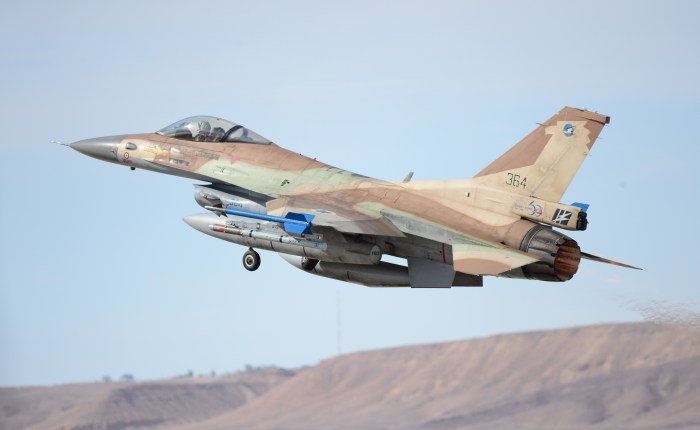
Header Image: An Israeli Air Force General Dynamics F-16C Barak of No. 110 Squadron departs on a mission during the ‘Blue Flag’ exercise on Ovda Air Force Base, Israel, on 27 November 2013. (Source: Wikimedia)

[1] Amos Harel and Avi Issacharoff, 34 Days: Israel, Hezbollah, and the War in Lebanon (New York: Palgrave Macmillan, 2008), pp. 12–3.

[2] Intifada translates as ‘shaking off’ meaning grassroots resistance across the Middle East, see: Bethan McKernan, ‘Intifada: What Is It and What Would a Thrid Palestinian Uprising Mean for Israel and the Middle East?,’ The Independent, 7 December 2017.

[3] Giora Eiland, ‘The IDF in the Second Intifada,’ Strategic Assessment, 13:3 (2010), p. 31.

[4] Frans Osinga, ‘Air Strike’ in John Andreas Olsen (ed.) Routledge Handbook of Air Power (New York: Routledge, 2018), p. 102.

[5] Cited in Scott C. Farquhar, Back to Basics: A Study of the Second Lebanon War and Operation Cast Lead (Fort Leavenworth, KS: Combat Studies Institute Press, 2009), p. 7.

[6] David E. Johnson, Hard Fighting: Israel in Lebanon and Gaza (Santa Monica, CA: RAND Corporation, 2011), p. 56.

[7] The United Nations Security Council, ‘United Nations Resolution 1559.’

[8] Harel and Issacharoff, 34 Days, p. 86.

[9] Ibid., p. 100.

[10] Johnson, Hard Fighting, p. 62.

[11] Ibid., p. 65.

[12] William M. Arkin, Divining Victory: Airpower in the 2006 Israel-Hezbollah War (Maxwell Air Force Base, AL: Air University Press, 2007), p. 133.

[13] Benjamin S. Lambeth, Air Operations in Israel’s War Against Hezbollah: Learning from Lebanon and Getting It Right in Gaza (Santa Monica, CA: RAND Corporation, 2011), p. 51.

[14] Arkin, Divining Victory, p. 21.

[15] Johnson, Hard Fighting, p. 68.

[16] Uzi Mahnaimi, ‘Humbling of the Supertroops Shatters Israeli Army Morale,’ The Times, 27 August 2006.

[17] Farquhar, Back to Basics, pp. 15-7.

[18] Ibid., p. 14.

[19] Lambeth, Air Operations in Israel’s War Against Hezbollah, p. 51.

[20] Johnson, Hard Fighting, p. 33.

[21] US Air Force, Air Force Doctrine Document No. 1, Air Force Basic Doctrine (Washington DC: Department of the Air Force, 2003), p. 18.

[22] Raphael S. Cohen et al., Lessons from Israel’s Wars in Gaza, Brief: Summary of From Cast Lead to Protective Edge (Santa Monica, CA: RAND Corporation, 2017), p. 8.

#BookReview – Footprints in the Dust: The Epic Voyages of Apollo, 1969-1975

#BookReview – Footprints in the Dust:  The Epic Voyages of Apollo, 1969-1975

By Dr Brian Laslie

Colin Burgess (ed.), Footprints in the Dust: The Epic Voyages of Apollo, 1969-1975. Lincoln, NE: University of Nebraska Press, 2010. Illustrations. Appendix. References. Index. Hbk. 480 pp.

51UhX1LpHWL._SX346_BO1,204,203,200_

This review follows on the heels of my review of In the Shadow of the Moon: A Challenging Journey to Tranquility, 1965-1969 and is about a book which itself is a follow-on to that work. Whether the press intended it, one might consider Into That Silent Sea: Trailblazers of the Space Era, 1961-1965, In the Shadow of the Moon: A Challenging Journey to Tranquility, 1965-1969, and Footprints in the Dust: The Epic Voyages of Apollo, 1969-1975 a three-volume set within the overarching series. You could also add in Bison Books’ great work Homesteading Space about the three Skylab missions, which always seem to be separated from their Apollo brethren.

Footprints in the Dust begins with a forward from the astronaut and Gemini 11/Apollo 12 member Richard Gordon. In it, he states that the Apollo Program was ‘a true epoch of the Space Age, a golden era of scientific endeavour, advancement, and incredible discovery’ (p. xxi). Interest in the past Apollo Program and the future of human-crewed spaceflight is undoubtedly on the rise in 2019 with the anniversaries of Apollos 9, 10, 11, and 12 all occurring this year and with NASA vowing a return to the moon in the (hopefully) not too distant future. Past is prologue as we look to the future and Footprints in the Dust is an excellent work to pick up this #Apollo50.

If Chaikin’s A Man on the Moon is the primus inter pares, in the Apollo history catalogue, then there must be a reason why Footprints in the Dust stands out, and indeed, this work goes beyond Chaikin’s 1967-1972 focus. It brings into more explicit context the Skylab and Apollo-Soyuz Test Project (ASTP) and it also (rightly) places these under the rubric of the Apollo program. The contributors are a diverse group of space enthusiasts and aficionados.

Soviet_lk_spacecraft_drawing_with_labels_and_some_colors
 A drawing of a Soviet LK lander illustrating its components: 1) passive plate of the docking system, 2) attitude control nozzles, 3) orbital rendezvous window, 4) landing window (in a concave recess), 5) high-gain antennas, 6) solid-fuel “nesting” engines, 7) footpads, 8) omnidirectional antenna, 9) rendezvous radar, A) pressurized compartment, B) equipment compartment, C) hatch, D) batteries, E) engine and fuel tanks, G) ladder. (Source: Wikimedia)

There are some excellent highlights. The ability to put the Soviet space program in context with its American counterparts is something this book (and the entire Outward Odyssey series in general) does uniquely well. These ‘Soviet chapters’ demonstrate how the Soviet Union’s manned program continued to keep moving forward despite the dawning realisation they would never reach the lunar surface. Dominic Phelan’s ‘The Eagle and the Bear’ about exactly how the Soviets planned to pull off a lunar landing is especially illuminating. As is Colin Burgess’ ‘A Whole New Focus’ which presents the tragedy of the Soyuz II mission

On the American side, the Apollo 12 seems eternally wedged – and not just numerically – between Apollo 11 and 13. This chapter written by John Youskauskas is simply terrific. Philip Bakers’ ‘Science and a Little Golf’ about Alan Shepard’s triumphant return to space, Edgar Mitchell’s ESP attempts, and Stu Roosa’s struggles with his Hycon camera are all highlights. All members of Apollo 14 have departed this planet for the final time, and this chapter does each of them a great service. Although those familiar with Apollo 14’s moon EVAs will know this bit of information, will still find themselves hoping Mitchell and Shepard reach cone crater at last. Finally, Collin Burgess’ chapter ‘Beyond the Moon’ about Skylab and the cancelled Apollo 18-20 missions demonstrate what was gained through Skylab but lost on the lunar service, not just for science but for the crews who were never afforded their opportunity to put their footprints in the dust.

S72-44423~orig
Two Apollo 17 crewmen ready a Lunar Roving Vehicle trainer following its deployment from a Lunar Module trainer in the Flight Crew Training Building at the Kennedy Space Center, Florida, c. September 1972. Taking part in the Apollo 17 training exercise were astronauts Eugene A. Cernan (right), commander; and Harrison H. ‘Jack’ Schmitt, lunar module pilot. (Source: NASA)

All that being said, some of the chapters suffer, not from anything the authors did wrong, but simply from coverage in other books and media, namely the Apollo 11 and Apollo 13 missions. In the books already written, it becomes increasingly difficult to separate the stories of Apollo 11,13, and to a lesser extent the later well-documented moon missions 15-17 into something genuinely new, but the authors in this book put in the effort to do so.

Readers of From Balloons to Drones will by now be familiar with the fabulous work of both the University Press of Florida and, in this case, the University Press of Nebraska’s great works on space exploration. In this, the 50th anniversary of the first moon landings, it is a fitting time to reflect on what was gained, and perhaps just as important, what was lost in the race to the moon and Footprints in the Dust: The Epic Voyages of Apollo, 1969-1975 does both exceedingly well. This is a superb work and well worth your time.

Dr Brian Laslie is an Air Force Historian and currently the Deputy Command Historian at North American Aerospace Defense Command (NORAD) and United States Northern Command (USNORTHCOM). A 2001 graduate of The Citadel and a historian of air power studies, he received his PhD from Kansas State University in 2013. His first book The Air Force Way of War (2015) was selected for the Chief of Staff of the Air Force’s and the Royal Air Force’s Chief of the Air Staff professional reading lists. His recently published Architect of Air Power: General Laurence S. Kuter and the Birth of the US Air Force.  He lives in Colorado Springs. He can be found on Twitter at @BrianLaslie.

Header Image: Sitting in the life raft, during the Apollo 12 Pacific recovery, are the three mission astronauts; Alan L. Bean, pilot of the Lunar Module (LM), Intrepid; Richard Gordon, pilot of the Command Module (CM), Yankee Clipper; and Spacecraft Commander Charles Conrad. The second manned lunar landing mission, Apollo 12 launched from launch pad 39-A at Kennedy Space Center in Florida on 14 November 1969 via a Saturn V launch vehicle. The LM, Intrepid, landed astronauts Conrad and Bean on the lunar surface in what’s known as the Ocean of Storms, while astronaut Richard Gordon piloted the CM, Yankee Clipper, in a parking orbit around the Moon. Lunar soil activities included the deployment of the Apollo Lunar Surface Experiments Package, finding the unmanned Surveyor 3 that landed on the Moon on 19 April 19, 1967, and collecting 75 pounds (34 kilograms) of rock samples. Apollo 12 safely returned to Earth on November 24, 1969. (Source: NASA)

#BookReview – Picturing Apollo 11: Rare Views and Undiscovered Moments

#BookReview – Picturing Apollo 11: Rare Views and Undiscovered Moments

J.L. Pickering and John Bisney, Picturing Apollo 11: Rare Views and Undiscovered Moments. Gainesville, FL: University Press of Florida, 2019. Hbk. 264 pp.

41iZNFIRCgL._SX372_BO1,204,203,200_

A different type of book necessitates a different type of book review. Herein you will not find an author’s argument or a critique thereof since the book being discussed today is a collection of photographs and an excellent one at that. J.L. Pickering and John Bisney have brought us Picturing Apollo 11: Rare Views and Undiscovered Moments. As we approach the 50th anniversary of the first moon landing, there is sure to be a proliferation of all sorts of materials, merchandise, and collectables celebrating one of, if not the defining moment of the 20th Century and in what will undoubtedly be a crowded field, it will be difficult for printed works to stand out. Pickering and Bisney have accomplished just that, a unique look at the Apollo 11 mission through photographs: both official and candid – many of which have never been published before.

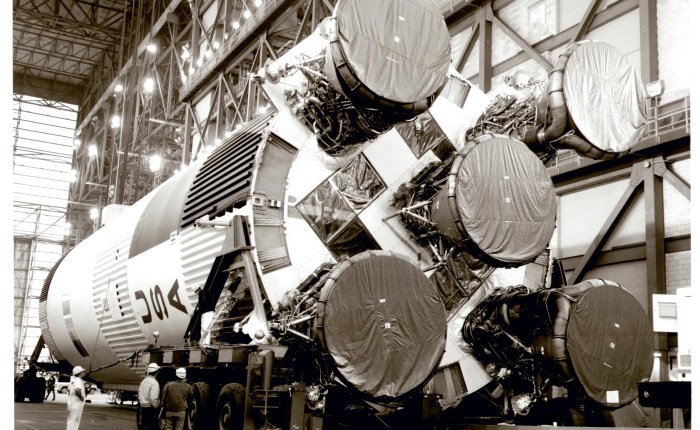
It is common practice for me that when a book arrives in my mailbox, I will take a few minutes and flip through it. It should be noted that when Picturing Apollo 11 arrived on my doorstep, I stopped what I was doing, sat down, and read the entire book (insert joke here about my ‘reading’ a picture book). However, this extremely well-done book did what few other works can do, it stopped me in my tracks. Divided into nine chapters, the book covers everything from the assembly of their Saturn V, training for the mission, all the way through the triumphant return home. Rather than review the book as you might typically find on the site, I have decided to highlight some of my favourite photographs from the book.

182627main_image_feature_872_ys_full
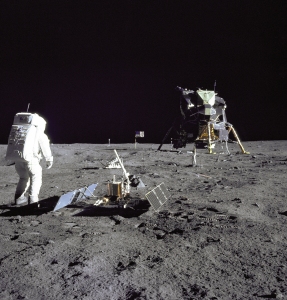
Astronaut and Lunar Module pilot Buzz Aldrin is pictured during the Apollo 11 extravehicular activity on the moon. He had just deployed the Early Apollo Scientific Experiments Package. In the foreground is the Passive Seismic Experiment Package; beyond it is the Laser Ranging Retro-Reflector (LR-3). (Source: NASA)

Any of the shots of the Saturn V rocket, Service Module, Command Module, or Lunar Module arriving at the Cape and being ‘processed’ and stacked are compelling. However, I found myself especially drawn to photos of the Command Module (CM) wrapped in the protective blue plastic covering (p. 51) – this was how Apollo Nine’s CM came to be known as ‘Gumdrop.’ If you have ever viewed one of the Apollo CMs in a museum setting – I am currently trying to see them all – you have only ever seen the scorched and burned relic after its re-entry. There is something inexplicably ‘technological’ when you view the CM as it was before being mounted on the Service Module; the newness and perfection of the CM in its original state are fascinating. It is also especially entertaining to see the many ‘Remove Before Flight’ banners hanging about the CM as if it has been decorated with red sprinkles in addition to its blue wrapping.

I also enjoyed many of the candid shots of Armstrong, Aldrin, and Collins during training (pp. 71-80) or visiting (pp. 82-8) the Apollo support sites around the country. Sixties fashion is on full display in these pages and as representative of the times as the astronaut’s moon suits!  In this vein, there is an excellent shot of a group of the Apollo Astronauts at the US Navy Diving School in Key West, Florida; love the paisley shirt, Neil!

Military pilots love the T-38, and NASA used the versatile training aircraft to keep up the astronaut’s proficiencies, but also as a way for the astronauts to travel rapidly across the country from Texas to Florida, California, and Missouri. Here, there is an excellent shot of Armstrong and NASA’s Flight Crew Operations Director Deke Slayton (p. 95) strolling away from their parked T-38; while Armstrong looks conservative in his blue flight suit, Slayton looks every bit the fighter pilot and a bit more devil-may-care. Their personalities come forth in the photograph: Armstrong the Engineer, Slayton, the tough-as-nails director.

The pictures from all the moon landings are amazing, but as better equipment was sent up on later missions, those shots became increasingly more precise and crisper. Armstrong and Aldrin suffered from being the first in this regard, but modern photographic enhancement has brought the Apollo 11 shots into better relief. In this regard, my favourite photograph in the book is a shot of Aldrin and the American Flag (p. 193), where if you look close enough, you can clearly see Aldrin’s face inside the suit looking towards Armstrong. As you may know the pictures of Armstrong on the lunar surface are limited, but a great photograph of a relaxed looking Armstrong back inside the Eagle smiling after the EVA was completed sums up his feelings after landing and walking on the moon.

ksc-69p-670
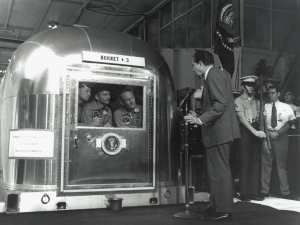
The Apollo 11 astronauts, left to right, Commander Neil A. Armstrong, Command Module Pilot Michael Collins and Lunar Module Pilot Edwin E. ‘Buzz’ Aldrin Jr., inside the Mobile Quarantine Facility aboard the USS Hornet, listen to President Richard M. Nixon on 24 July 1969 as he welcomes them back to Earth and congratulates them. (Source: NASA)

Picturing Apollo 11 is nothing short of a masterpiece. It is a truly unique work and a compelling collection of photographs that is sure to fire the imagination of those who remember the mission and those looking retrospectively at an event they were not around to see. As I closed the book, I again wondered, when will we return?

After you have ordered Picturing Apollo 11, I also highly encourage you to pick up a copy of Apollo VII-XVII a photographic journey through all the Apollo missions.

Dr Brian Laslie is an Air Force Historian and currently the Deputy Command Historian at North American Aerospace Defense Command (NORAD) and United States Northern Command (USNORTHCOM). A 2001 graduate of The Citadel and a historian of air power studies, he received his PhD from Kansas State University in 2013. His first book The Air Force Way of War (2015) was selected for the Chief of Staff of the Air Force’s and the Royal Air Force’s Chief of the Air Staff professional reading lists. His recently published Architect of Air Power: General Laurence S. Kuter and the Birth of the US Air Force.  He lives in Colorado Springs. He can be found on Twitter at @BrianLaslie.

Header Image: On 1 March 1968, the Saturn S-IC-6 arrived at the Mississippi Test Facility – today’s NASA Stennis Space Center – from the Michoud Assembly Facility. The was the first stage section of the Saturn V rocket the took Apollo 11 into space. (Source: NASA)

#BookReview – Be Bold

#BookReview – Be Bold

By Dr Ross Mahoney

Air Chief Marshal Sir Frederick Rosier with David Rosier, Be Bold. London: Grub Street, 2011. Hbk. 256pp.

5125bvndQHL._SX343_BO1,204,203,200_

Air Chief Marshal Sir Frederick Rosier had a long and distinguished career in the Royal Air Force (RAF). Granted a short service commission in 1935 (p. 19), he was the last Air Officer Commander-in-Chief (AOC-in-C) of RAF Fighter Command before it merged with Bomber Command in 1968 to form Strike Command. This autobiography, written with his son David who finished it after his father’s death in 1998 (p. 10), highlights many interesting facets of service in the RAF during two pivotal events in twentieth-century history; the Second World War and the Cold War. Concerning the former, this book gives us a view from a rising junior officer who served in both frontline and staff positions during the Second World War. Regarding the latter, we have a view of the Cold War and its threats from the perspective of an officer rising to senior command. As such, it illustrates many of the challenges and ambiguities associated with senior leadership.

The genres of autobiographies and memoirs and the associated field of biography remain an ever popular and vital element of military history. While it is often easy to criticise biographers of hagiography and autobiographers of viewing the past through the prism of hindsight, they do offer valuable insight to the past. Indeed, biographies and memoirs/autobiographies are arguably the most commercially viable method of making military history accessible to wider audiences. Additionally, biographies and memoirs/autobiographies are an essential source for historians seeking to understand the period they study. More specifically, with regards to the RAF, there are too few accounts either by or about senior officers who served during the Cold War period. Indeed, for officers who served during the Cold War, we are unlikely to see the type of voluminous personal papers that we see with such former senior officers as Marshal of the Royal Air Force Viscount Trenchard and Admiral of the Fleet Earl Mountbatten. As such, it has become more critical that the service experience of these men be recorded. In this vein, memoirs and autobiographies offer a useful adjunct to the historians’ toolkit as they, just like oral history, can offer a personal view on many of the events that we read about in official archival sources. Thus, Rosier’s account is much welcomed.

Most interesting for this reviewer is that Rosier’s career offers an insight into his career progression and leadership development in the RAF. Rosier’s career illustrated that it was possible for suitable short service officers to be granted a permanent commission. This had been Trenchard’s expectation when the short service scheme had been established. After the Second World War, and granted a permanent commission, Rosier followed the typical route to senior command with attendance at both the RAF Staff College in 1946 (pp.156-162) and the Imperial Defence College (IDC) in 1957 (pp. 208-214). Rosier also spent time as Directing Staff at the recently opened Joint Services Staff College between 1950-52 (pp. 186-190). However, his reminisce about his time as a student at the RAF Staff College highlights a fundamental problem with autobiographies; the issue of confusion. Rosier lamented (p. 156) that the inter-war course at the RAF Staff College had been two years. However, this is inaccurate as they were only a year. As such, we must always be careful about what an auto-biographer recollects.

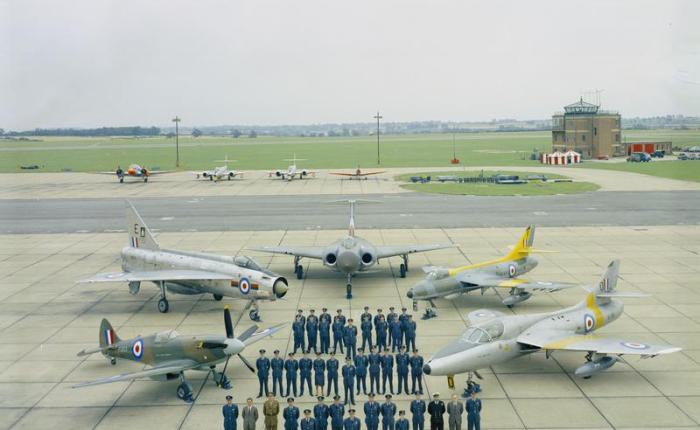
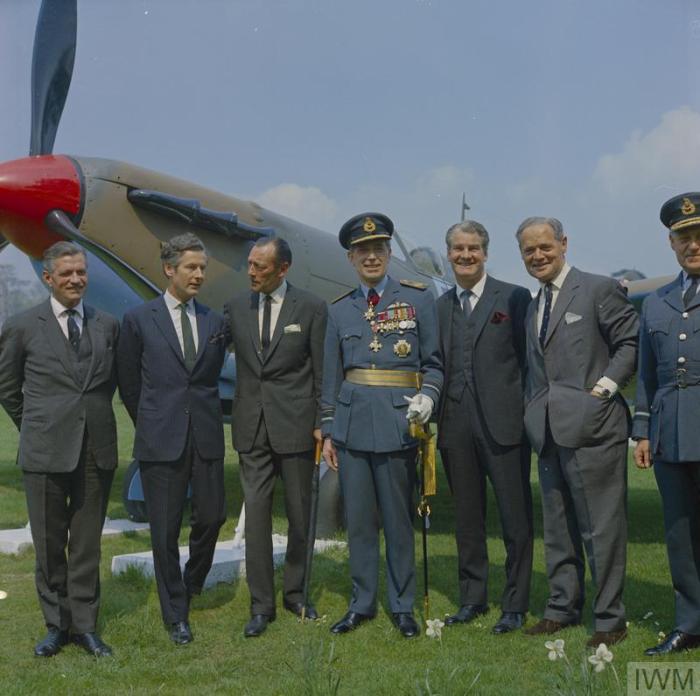
RAF-T 8374
At the parade to mark the disbanding of RAF Fighter Command held at RAF Bentley Priory on 30 April 1968, Air Marshal Sir Frederick Rosier KCB CBE DSO ADC, the last Air Officer Commander in Chief of the command stands with several of the most famous Second World War aces, from left to right: Air Vice Marshal ‘Johnny’ Johnson CBE DSO** DFC*, Group Captain P.W. Townsend CVO DSO DFC*, Wing Commander R.R.S. Tuck DSO DFC** DFC (US), Air Commodore A.C. Deere OBE DSO DFC* DFC (US) and Group Captain Sir Douglas Bader CBE DSO* DFC*. (Source: © Crown Copyright. IWM (RAF-T 8374))

Rosier’s posting from the Central Fighter Establishment (CFE), to Fighter Command as Group Captain – Plans in 1954 (pp. 200-1) also highlights the process of career management in the RAF. It highlights the influence that seniors officers had in determining someone’s career. Rosier related that he had expected a posting as Group Captain – Operations at Fighter Command. However, this had been changed to a posting to the Royal Aircraft Establishment. This was not to the liking of the AOC-in-C of Fighter Command, Air Marshal Sir Dermot Boyle, who managed to have that posting changed to that of Group Captain – Plans. This was an unexpected turn of events as Rosier had not served in a plans position up to this point in his career.

Nonetheless, it is clear that this posting was designed to give Rosier further experience of working with the other services and with allies; an essential prerequisite for senior command. Rosier recorded (p. 204) of this period as one ‘of broadening my education.’ What is more, this section of this autobiography, and that describing his time at the IDC, comes in a chapter entitled ‘Climbing to the Top.’ Indeed, after his time at Fighter Command as Group Captain – Plans, Rosier went on to be Director of Plans in the Air Ministry in 1958 after having spent time at the IDC. Again, at the Air Ministry, Rosier served under Boyle who by now was Chief of the Air Staff. Importantly, periods of service in staff positions were an essential marker in an officers rise to senior command primarily because this experience not only insured that individuals came into contact with those who could nurture and shape one’s career but also that it further developed ones understanding of the organisation that they would, potentially, one day lead.

In addition to this vital period of staff work, Rosier inter-weaved his career with significant periods as an operational fighter commander. This notably included time in North Africa during the Second World War where he was, alongside the future Air Chief Marshal Sir Kenneth Cross, a key fighter leader in the Western Desert Air Force (pp. 63-114). During this period, he was awarded the Distinguished Service Order. Indeed, except for his time at the Air Ministry and a period as Senior Air Staff Officer at Transport Command, Rosier’s career was very much tied to either fighter aircraft or Fighter Command more specifically.

Finally, and importantly, in the context of the Cold War Rosier also spent time working within the coalition system. Between 1948 and 1950 he served on an exchange tour with the recently formed United States Air Force that also included time at the US Armed Forces Staff College (pp. 171-85). Rosier also served with the Central Treaty Organisation and his final command was as the Deputy Commander-in-Chief of Allied Forces Central Europe.

In conclusion, this is a very valuable autobiography of a senior RAF officer. In addition to the critical facets discussed above this book provides an excellent insight into life in the RAF in both war and peace. It also provides some excellent insights into the important personalities of the period. For example, Rosier recalled his visit to the Soviet Union in 1956 while he was at Fighter Command. His most notable recollection (pp. 205-6) was an incident during an open-air reception at the Kremlin where both Nikolai Bulganin and Nikita Khrushchev got drunk and related in their respective speeches how much they disliked each other. This book is recommended to anyone with an interest in the RAF.

Dr Ross Mahoney is a contract Historian at the Departments of Veterans’ Affairs in Australia as well as the owner and Editor of From Balloons to Drones. He is a graduate of the University of Birmingham (MPhil and PhD) and the University of Wolverhampton (PGCE and BA). His research interests include the history of war in the twentieth and twenty-first centuries, air power and the history of air warfare, and the social and cultural history of armed forces. To date, he has published several chapters and articles, edited two books, and delivered papers on three continents. He is a member of the Royal Historical Society and a Vice-President of the Second World War Research Group. He can be found on Twitter at @airpowerhistory.

Header Image: Aircraft past and present of the Central Fighter Establishment at RAF West Raynham in October 1962, as the unit moved to RAF Binbrook in Lincolnshire. The aircraft pictured here represent the various aircraft used by the constituant organisations which merged to form the CFE. The aircraft are (left to right): Supermarine Spitfire (P5853) of the Central Fighter Establishment, English Electric Lightning F.1 (XM136) of the Air Fighting Development Squadron, Gloster Javelin, Hawker Hunter F.6 (XF515) and Hawker Hunter T.7 (XL595) both of Fighter Combat School. (Source: © IWM (RAF-T 3476))

#Editorial – New Book Series: Aviation and Air Power

#Editorial – New Book Series: Aviation and Air Power

By Dr Brian Laslie

Editorial Note: We are pleased to bring you the following exciting editorial from our Assistant Editor, Dr Brian Laslie. Brian brings us news about the new air power book series that he is editing for the University Press of Kentucky. This is a significant development and one we at From Balloons to Drones wholeheartedly support and encourage, though we are, of course biased. We will be reviewing the books from this series and due course, and we look forward to seeing what future releases come from this series.

If you have followed From Balloons to Drones for the past couple of years, you know that book reviews are one of our favourite things to do on the site. There are a lot of great presses out there doing new, innovative, and exciting work on the history of air power. University Press of Kansas recently released Flying Against Fate: Superstition and Allied Aircrews in World War II by S.P. MacKenzie and the Naval Institute Press continues to turn out quality work in various series most recently Winged Brothers, Flight Risk, and Admiral John S. McCain, all of which are staring at me from my ‘to be read’ bookshelf. You have probably also noticed the change in winds towards reviewing space-related themes here so a shout out to both the University Press of Florida and University of Nebraska Press, please go check out the great work by all these phenomenal academic presses who keep moving our knowledge of air and space power forward.

Biplanes at War

Also, if you have followed along with From Balloons to Drones or myself, you know that if I had to pick a favourite university press, it would be the University Press of Kentucky (UPK). I am, of course, biased as they published both of my books. So, I was honoured when UPK approached me last year to be the editor on a new series, ‘Aviation and Air Power Series.’ In the past year, I have been hard at work with the great staff at the press, and we already have some great projects in the pipeline. Our first two titles: Lectures of the Air Corps Tactical School and Biplanes at War just hit the shelves. Go order yourself some copies…

41sm64RGspL._SX331_BO1,204,203,200_

Last year, before the 2018 meeting of the Society of Military Historians I did some digging back through UPK’s backlist looking for some (more) books on aviation and air power. I also made some phone calls to staff and faculty members at the USAF Air Command and Staff College, the United States Military Academy and of course, up at the US Air Force Academy and a few other schools regarding UPK’s scholarship in the field of Military History, but particularly in aviation and air power.

To go through just a few of these titles you come up with, my first book, The Air Force Way of War: U.S. Tactics and Training After Vietnam which was selected for both the USAF Chief of Staff’s Reading List as well as the Royal Air Force’s Chief of the Air Staff’s reading list. This is an important point. Two senior air force leaders found enough merit in the book that they made it recommended reading to their services (trust me, I was surprised). It is also on the required reading list for all Air Force majors (and sister service officers) selected to attend the Air Command and Staff College. That means that 600 majors every year are exposed to this work (and I apologise to each and every one of them).

Some of the other air power books UPK published includes: Why Air Forces Fail: The Anatomy of Defeat edited by Robin Higham and Stephen J. Harris which was also on the USAF CSAF reading list in 2008. Being selected to a service chief’s reading list is no small feat. It not only increases sales but exposes the ideas in the work to an entire generation of military professionals. These books are always stocked at military post exchanges and can be found in every base library across the globe. That is an impactful scholarship.

I know that Robert Farley’s Grounded: The Case for Abolishing the Air Force was widely discussed in the highest circles of the US Air Force a few years ago. Expanding the Envelope: Flight Research at NACA and NASA by Michael Gorn was the winner of the 2004 Gardner-Lasser Aerospace History Literature Award given by the American Institute of Aeronautics and Astronautics. There is also Dan Herrington’s Berlin on the Brink: The Blockade, The Airlift, and the Early Cold War and Higham and Mark Parillo’s edited volume The Influence of Airpower Upon History: Statesmanship, Foreign Policy, and Diplomacy since 1903. This is all to say that UPK press military scholarship has a global presence and a global impact.

In this new series, each volume will bring together leading historians and emerging scholarship in the fields of military aviation and air power history. I wanted a broad-based look at aerial battles, air warfare, and campaigns from the First World War through modern air operations, but also wanted works on the heritage, technology, and culture particular to the air arm. I am currently looking for biographies of leading (and overlooked) figures. The series also seeks not only to cover the American Air Force, Army, and Naval aviation, but also other world powers and their approaches to the history and study of the air arm.

There is a straightforward reason for starting an entirely new series that focuses exclusively on air power and aviation. Over one-hundred years past the development of the aeroplane as a means of transportation and a domain of war and we still struggle to fit the aircraft contextually into the study of military history. What I hope to do with this series is broaden our understanding of air power and its contributions to conflict.

How would you like to join this list? Do you have an air power related manuscript that you’d like us to consider for publication? A worthy Master’s or Doctoral dissertation that you think might make a good manuscript? We are looking for new air power scholarship…

Dr Brian Laslie is an Air Force Historian and currently the Deputy Command Historian at North American Aerospace Defense Command (NORAD) and the United States Northern Command. A 2001 graduate of The Citadel and a historian of air power studies, he received his PhD from Kansas State University in 2013. His first book The Air Force Way of War (2015) was selected for the Chief of Staff of the Air Force’s and the Royal Air Force’s Chief of the Air Staff professional reading lists. His recently published Architect of Air Power: General Laurence S. Kuter and the Birth of the US Air Force. He lives in Colorado Springs. He can be found on Twitter at @BrianLaslie.

#BookReview – In the Shadow of the Moon: A Challenging Journey to Tranquility, 1965-1969

#BookReview – In the Shadow of the Moon: A Challenging Journey to Tranquility, 1965-1969

By Dr Brian Laslie

Francis French and Colin Burgess, In the Shadow of the Moon: A Challenging Journey to Tranquility, 1965-1969. Lincoln, NE: University of Nebraska Press, 2007. References. Pbk. 435 pp.

51bxE+w8lrL._SX331_BO1,204,203,200_

One great thing about making a mistake is that you sometimes discover an entirely unexplored avenue for examination. We recently posted our space reading list. After publication, I discovered I had inadvertently left out an entire series of books devoted to space exploration. This was the University of Nebraska Press’ series ‘Outward Odyssey:  A People’s History of Spaceflight.’ You can check out all of their titles here.

To that end, herein lies a book review, but also an overview of Nebraska Press’s ‘Outward Odyssey’ series. The overall series:

[p]rovides a popular history of spaceflight from the rocket scientists of the 1930s to today, focusing on the lives of astronauts, cosmonauts, technicians, scientists, and their families. These books place equal emphasis on the Soviets and the Americans and give priority to people over technology and nationalism.

Thus far every book in this series I have had the pleasure of reading is clear and accessible. Those who have studied space exploration for years and those approaching the topic for the first time will find much in these pages. While I believe academic presses are sometimes viewed as the publishing houses where academics publish their ‘esoteric’ studies, nothing could be further from the truth, especially concerning the ‘Outward Odyssey’ series. The entire assemblage of books is well worth your time and, as a collection, some of the best works written on spaceflight. Included in this series is one of my personal favourite of all astronaut biographies: Apollo Pilot: The Memoir of Astronaut Donn Eisele. These works also include exploration of space history not commonly covered including Skylab and the creation of the Payload Specialist Program for the Space Shuttle. Of the 19 books in the series, three merits special attention: Into that Silent Sea: Trailblazers of the Space Era, 1961-1965 (2007); In the Shadow of the Moon: A Challenging Journey to Tranquility, 1965-1969 (2007); Footprints in the Dust: The Epic Voyages of Apollo, 1969-1975 (2010). Today the focus is on the second book.

as11-40-5961hr
This photograph of the Lunar Module at Tranquility Base was taken by Neil Armstrong during the Apollo 11 mission, from the rim of Little West Crater on the lunar surface. Armstrong’s shadow and the shadow of the camera are visible in the foreground. This is the furthest distance from the lunar module traveled by either astronaut while on the moon. (Source: NASA)

In the Shadow of the Moon begins with an introduction from astronaut and Apollo 7 member Walt Cunningham. In it, he states (p. xii) that the space race was ‘a clash of cultures, systems of government, and a challenge to our way of life.’ However, this book is a much more personal account, eschewing the ideological backdrop, for a much more intimate portrait of Project Gemini and the early Apollo missions as well as the Soviet Vostok, Soyuz, and Voshkhod program and the men (and in the case of Valentina Tereshkova, woman) who flew them. This work takes the reader from the first Gemini mission through Apollo 11, the first (successful) lunar landing attempt. There are three aspects to this book that allows it stand out: the early focus on Gemini, its attention to the Russian space program, and finally its emphasis on the early Apollo the missions that tend to be overlooked in other works.

The attention on the Gemini missions opens the book up, and Gemini was fundamentally different from its Mercury predecessor. As an air power historian with a growing interest in space exploration, Gemini truly represents air power. Although astronautics and not aeronautics, the Gemini ships it can be justly said, could be flown. As Gus Grissom stated (p. 14) about the program Gemini, ‘was a machine I could maneuver.’ The personal accounts of the Gemini crew members, their struggles with rendezvous and docking, and EVAs are masterfully told. All the necessary building blocks needed to be able to conduct the Apollo missions were accomplished during this program, and French and Burgess tell the story well. As the authors’ note (p. 169) ‘the entire Gemini program of ten flights would be conducted before any Russian cosmonauts once again soared into the skies.’

Thus, it was something of a jolt when the focus moves from the American space program to the activities of the Soviet cosmonauts, but this is keeping in line with the overall purpose of the series, it reminds the reader of the two competing programs – and their ideologies – as they both progressed towards ‘winning’ the space race. This work, much like David Scott’s and Alexy Leonov’s Two Sides of the Moon brings into contrast and comparison the Soviet space program and the human side and losses that took place behind the iron curtain; it would be later that the astronauts and cosmonauts came to realize how similar they were and how much they shared in common.

Finally, the book turns towards the Apollo program and in-depth attention is given to Apollos 7, 8, 9, 10 and 11, essentially the ‘first half’ of the Apollo missions. While the moon landings probably have a more enduring place in American memory, none of that would be possible without the early Apollo flights. Especially appreciated here is the deeper dives into the virtually ignored Apollos 7 and 9. While other books are dealing with these missions (Cunningham and Eisele both have biographies or memoirs, and Cunningham’s routinely tops the list in this regard), In the Shadow of the Moon contextually links these missions together while at the same time allowing each to stand on its accomplishments. While even the Apollo 9 astronauts themselves recognise theirs (p. 329) was a ‘historically lesser known mission,’ this work does a magnificent job of being deeply personal while conveying just how vital these lesser-known Apollos were at putting the footprints in the dust on the moon, but that is a different review.

French and Burgess’s frequent use of long quotes derived from their interviews astronauts is really a high point of this work, and it is clear the astronauts know the authors are true professionals. If there is a (relatively) minor drawback to the book is its lack of source notes. While it reads smoothly, among the best of the books on NASA and space exploration, it does not provide an avenue from where any particular quote comes from. As a historian who routinely flips to the back of the book looking for source documentation, this was a bit of a distraction, but as a popular history, this really should not be held against French and Burgess. In the end, this is an extremely fine addition to the histories of manned exploration of space. Highly enjoyable, immensely readable, this work, while never eschewing the technological side of the Gemini and Apollo programs, is an extraordinarily intimate and personal history of the astronauts, cosmonauts and their families and it belongs on the shelves of anyone looking for the very finest scholarship on the first age of space exploration.

Dr Brian Laslie is an Air Force Historian and currently the Deputy Command Historian at North American Aerospace Defense Command (NORAD) and the United States Northern Command. A 2001 graduate of The Citadel and a historian of air power studies, he received his PhD from Kansas State University in 2013. His first book The Air Force Way of War (2015) was selected for the Chief of Staff of the Air Force’s and the Royal Air Force’s Chief of the Air Staff professional reading lists. His recently published Architect of Air Power: General Laurence S. Kuter and the Birth of the US Air Force. He lives in Colorado Springs. He can be found on Twitter at @BrianLaslie.

Header Image: On 4 December 1965, NASA launched Gemini VII. With this mission, NASA successfully completed its first rendezvous of two spacecraft. This photograph, taken by Gemini VII crewmembers Jim Lovell and Frank Borman, shows Gemini VI in orbit 160 miles (257 km) above Earth. (Source: NASA)

#ResearchNote – The RAF Staff College and ‘Learning’ from the French

#ResearchNote – The RAF Staff College and ‘Learning’ from the French

By Dr Ross Mahoney

Editorial note: Defence-in-Depth, the blog of King’s College London’s Defence Studies Department based at the Joint Services Command and Staff College and The Wavell Room have been running a series of interesting articles about military education. The author has read these articles with some interest given his interest in the education of air forces. This research note covers an interesting episode in the process of the establishment of the Royal Air Force (RAF) Staff College in the early 1920s.

The opening of the RAF Staff College at Andover in 1922 marked a crucial step in the early development of the RAF. Andover gave the RAF its own institution that provided higher education tailored towards the needs of the Service. However, many historians have been critical of Andover. For example, Tony Mason, the RAF’s first Director of Defence Studies, suggested that Andover ‘lamentably failed’ in providing a developed air power theory for the RAF while Vincent Orange argued that the Staff College served, ‘as a disseminating station for approved doctrine, seasoned by essays on riding, hunting and how to cope with the bazaars of Baghdad.’[1]

However, one aspect not often considered is how the RAF went about preparing for the Staff College’s formation. Key to this is the role played by its first Commandant, Air Commodore Robert Brooke-Popham who was adamant that the RAF should learn from the teaching methods used by both the British Army and Royal Navy at their Staff Colleges at Camberley and Greenwich.[2] Brooke-Popham was a pre-First World War graduate of Camberley, and it is clear that this educational experience played a role in how he approached his position as Commandant. More broadly, before the opening of Andover, it was to the Army and Royal Navy that the RAF looked to provide a staff college education for nurtured officers. Indeed, it is significant that, apart from Group Captain Robert Clark-Hall, the initial Directing Staff – Wing Commanders Philip Joubert de la Ferte, Wilfrid Freeman and C.H.K. Edmonds and Squadron Leader Bertine Sutton – were all graduates of Camberley or Greenwich. However, while the British experience of higher military education was a significant influence, it was not the only source of information.

LD 764
A half-length portrait of Air Marshal Sir Philip Joubert de la Ferté in uniform by James Gunn, c. 1940 (Source: © IWM (Art.IWM ART LD 764))

More interesting is that Brooke-Popham also considered whether anything could be learnt from the methods utilised by the French Army at the Écoles Supérieures de Guerre in Paris, which in the early 1920s was commanded by General Marie Debeney.[3] Before the opening of Andover, Brooke-Popham and Joubert visited Paris to examine French pedagogical methods, and the critical source concerning this visit comes in the latter’s 1952 autobiography The Fated Sky.[4] Joubert’s recollections provide an insight into the teaching methods at the Écoles Supérieures de Guerre. However, it is clear that he was not impressed with the quality of education present although, as he recalled, the Écoles Supérieures de Guerre was considered, ‘the centre of all military knowledge.’[5]

Joubert’s criticisms fell broadly into three categories. First, Joubert was critical of the lack of cooperation with the French Navy and their equivalent school for higher education. Second, instructors lacked familiarity with the students they were teaching. Finally, Joubert was not impressed with the formality of the lectures and lack of what in modern teaching is often referred to as ‘white space’ in the timetable to allow for reflections and questions.[6]

Joubert’s criticisms raise several interesting observations about the differences between the British and French militaries in this period. Notably, the lack of co-operation between the French Army and Navy at the staff college level maps to many of the problems that plagued the French military in the interwar period. Joubert recalled Debeney’s ‘look of blank amazement’ when asked about co-operation with his naval counterpart.[7] Conversely, while there were definite problems at the strategic level, the British military regularly co-operated via combined operations exercises at the staff colleges that Joubert himself described as ‘one of the most pleasant periods’ of his time at Camberley, which he attended in 1920.[8] This perhaps suggests something about Britain’s pragmatic military culture in this period. Individual service cultures certainly existed, but when co-operation was required, the British military appeared to be able to do this.

Furthermore, Joubert recalled of his time at Camberley that while heated discussions between students occurred, ‘it was always possible to come to an agreement over a round of pink gins in the Mess’ thus highlighting the importance of socialisation between the services as means of breeding understanding between them.[9] It also seems clear that Joubert’s perception of the lack of formality in British Staff Colleges bred a willingness to question accepted views while the French military maintained a ‘Maginot’ mentality for much of this period. However, even this must be understood within the context of differing service cultures. Joubert himself reflected on these differences when he wrote that:

Naval officers would discuss Naval affairs freely amongst themselves and before members of another service and would unhesitatingly attack any ideas which they thought themselves were wrong. But let an outsider in the audience offer a criticism and Naval ranks closed up solidly. The Army seldom, if ever, discussed their problems in the open. If they were asked for a statement of policy Field Service Regulations and Army Council Instructions were solemnly quoted. As for the Air Force, they would fight amongst themselves in private and in the open, and would quite ruthlessly disagree with their instructors before a mixed audience. Nothing was sacrosanct.[10]

The final criticism of the lack of ‘white space’ in the timetable is significant as this is considered a crucial element of the pedagogical process and differentiates higher education from training. The lack of this ‘white space’ in the French Staff College system suggested an unwillingness to allow French officers to think more broadly about their place within the profession of arms and the conduct of war more generally. This raises fundamental questions concerning leadership development within the French Army such as whether the French system was developing senior leaders or staff officers. Moreover, it is clear that the French system differed from the British with the existence of the Centre des Hautes Études; a war college, which existed to educate senior Colonels and Brigadiers.[11] A ‘war college’ was something the RAF lacked, and as such an exact comparison between the two systems is fraught with challenges.

While Joubert’s recollection should, as with any autobiography, be treated with some care, from the perspective of the provision and development of military education in the RAF they are useful. This is primarily because of Joubert’s affiliation with education in the RAF. As noted, he attended Camberley and was Directing Staff at Andover. However, he would also go on to be the first RAF member of the Directing Staff at the Imperial Defence College as well as going on to being Commandant at Andover in the early 1930s. As such, he was well placed to comment on such issues.

In conclusion, this episode shows that the RAF was willing to move outside of national confines to learn lessons for what was the world’s first air force Staff College. However, that the methods examined in France were not adopted also highlights issues related to how militaries perceive themselves. As Joubert himself noted, ‘[i]n the event we did not adopt […] the French Staff College methods [and] [w]e went our own perfectly normal and unspectacular British Way.’[12] This reflection says as much about the RAF and its culture as it does the perceived failings of the French system of higher military education. The final important point is that in looking to other Staff Colleges, whether in Britain or France, the RAF were looking to similar institutions with similar objectives – the education and nurturing of future senior leaders – but axiomatically these educational establishments were not similar. Putting aside national proclivities, the critical difference was the military service these institutions served. The Écoles Supérieures de Guerre served the French Army, not an air force, though of course at this time, the French air service formed part of the army. Similarly, Camberley and Greenwich served the British Army and Royal Navy respectively. As such, while the RAF could, and did learn from their counterparts, it still had specific service challenges that it would have to solve on its terms. Indeed, the focus of Brooke-Popham and Joubert’s visit to Paris was more on ‘how’ to teach rather than ‘what.’

Dr Ross Mahoney is a contract Historian at the Departments of Veterans’ Affairs in Australia as well as the owner and Editor of From Balloons to Drones. He is a graduate of the University of Birmingham (MPhil and PhD) and the University of Wolverhampton (PGCE and BA). His research interests include the history of war in the twentieth and twenty-first centuries, air power and the history of air warfare, and the social and cultural history of armed forces. To date, he has published several chapters and articles, edited two books, and delivered papers on three continents. He is a member of the Royal Historical Society and a Vice-President of the Second World War Research Group. He can be found on Twitter at @airpowerhistory.

Header image: The modern day Ecole Militaire, which previously housed the Écoles Supérieures de Guerre (Source: Wikimedia)

[1] Tony Mason, ‘British Air Power’ in John Andreas Olsen, Global Air Power (Washington D C: Potomac Books, 2011), pp. 26-27; Vincent Orange, Churchill and his Airmen: Relationships, Intrigue and Policy Making, 1914-1945 (London: Grub Street, 2013), p. 87.

[2] Air Chief Marshal Sir Robert Brooke-Popham, ‘The Formation of The Royal Air Force Staff College,’ The Hawk, 12 (1950), p. 19.

[3] For a British overview of the Écoles Supérieures de Guerre, see: ‘The “Ecole Superieure De Guerre,” Paris,’ Journal of the Royal United Services Institution, 70:477 (1925), pp. 1-7.

[4] Sir Philip Joubert de la Ferte, The Fated Sky: An Autobiography (London: Hutchinson, 1952), pp. 87-88. Joubert also recollected that Brooke-Popham also considered ‘Madam Montessori’s ideas.

[5] Ibid., pp. 87

[6] Ibid., pp. 87-88

[7] Ibid., p. 87.

[8] Ibid., p. 84.

[9] Ibid., p. 83.

[10] Ibid., p. 88.

[11] ‘The “Ecole Superieure De Guerre,” Paris,’ p. 1.

[12] Joubert, The Fated Sky, p. 88.