Editorial note: This article first appeared on the author’s website. It has been reproduced here with permission.
On 26 July 1950, No. 1 Squadron of the Royal Australian Air Force (RAAF) conducted its first operations in support of Operation FIREDOG, the British Commonwealth’s air operations against insurgents during the Malayan Emergency. The operation consisted of two missions. The first operation involved two GAF Lincolns (A73-36 and A73-31), which dropped 20 1,000-pound bombs from an altitude of 5,000 feet in the Kota Tinggi area. The attack was commanded by the commanding officer of No. 1 Squadron, Squadron Leader Len Williamson. The second mission saw another two Lincolns (A73-39 and A73-31) attack targets in the Yong Peng area. This time, the attack was a combination of dropping bombs (20 x 1000lb bombs) from 5,000 feet and strafing. The Operations Record Book for 26 July noted that the British Army reported the attack on Yong Pend had been successful, while the success of the raid on Kota Tinggi was yet to be reported.[1] These operations took place just 10 days after No. 1 Squadron arrived at RAF Tengah in Singapore on 17 July 1950.[2]
After several years of peaceful protest, on 16 June 1948, three European estate managers and two Asians were murdered in Malaya. This led to a declaration of emergency in Malaya, which resulted in a counterinsurgency against the Malayan Communist Party (MCP) and its military arm, the Malayan National Liberation Army (MNLA). The counterinsurgency officially ended in 1960; however, a second communist insurgency took place in Malaysia from the late 1960s to 1989. In 1950, the British launched the so-called Briggs Plan to deal with the insurgency. Named after the Director of Operations, General Sir Harold Briggs, the plan aimed to cut the MCP and MNLA from the populace by combining civil and military actions. In cutting the MCP and MNLA off from its primary source of supply, it was hoped to destroy ‘the terrorists and preventing a recurrence of their activities.’[3]
GAF Lincolns of No. 1 Squadron RAAF on the tarmac at RAF Tengah, c. November 1954 (Source: Australian War Memorial)
The use of air power in support of counterinsurgency operations during the Malayan Emergency came to be known as FIREDOG. It utilised both kinetic and non-kinetic forms of air power.[4] Primarily, air power was used to provide offensive air support, a variety of air transport roles and air reconnaissance. By 1954, offensive air support had been codified to include air strikes, harassing attacks, close support, air alert, and psychological warfare.[5] It was in the former role of offensive air support that No. 1 Squadron with the RAF Air Historical Branch narrative on FIREDOG noted that in this role, an ‘Australian medium bomber squadron bore the brunt of offensive operations from 1950 to 1958.’[6]
In June 1950, the RAAF’s first deployment to Malaya came in the form of No. 38 Squadron equipped with the Douglas C-47 Dakota. This came about because on 21 April 1950, the British Government requested Australian support in Malaya in the form of ‘air reinforcements.’ Specifically, the British sought a transport squadron, a ‘squadron or flight’ of Lincoln bombers and support for servicing aeroplanes either in Singapore ‘and/or’ Australia.[7] This led to a meeting of the Defence Committee on 27 April, which agreed with the idea that Australia might contribute a transport squadron and ‘small squadron’ of four Avro Lincolns to the air effort over Malaya.[8] The Chief of the Air Staff (CAS), Air Marshal George Jones, noted that the contribution of Lincolns could be increased to six at a later date. On 19 May, the Australian Government agreed to the dispatch of No. 38 Squadron but not the Lincolns.[9] At the end of May, the Prime Minister, Robert Menzies, announced the dispatch of No. 38 Squadron in Parliament and noted that ‘the winning of the “cold” war in Malaya is of vital importance to the security of Australia.’[10] In part, however, the reticence to dispatch Lincolns was due to Menzies’s scepticism about the efficacy of air power in this type of conflict.[11] The outbreak of the Korean War at the end of June 1950 shifted this perception.
On 27 June, the Australian Government finally resolved to deploy No. 1 Squadron to Malaya. As the Official Historian of Australia’s contribution to the Korean War, Robert O’Neill has written:
It is significant that Australia’s first military response to the outbreak of the Korean war was to undertake at once a commitment elsewhere [Malaya] of a kind which, until the outbreak of hostilities in Korea, it had been reluctant to accept.[12]
More recently, in 2017, Andrea Benvenuti wrote that the outbreak of the Korean War dispelled the Australian Government’s ‘last reservations’ over the deployment.[13] Further announcements by the Australian Government made the links between Korea and Malaya clear. They were seen as part of the same problem: communist aggression against the West. The British High Commission in Canberra recorded that the news of the deployment of No. 1 Squadron had been received with ‘great pleasure in London.’[14]
No. 1 Squadron received its orders on 28 June and began preparing for deployment by the start of July.[15] This included, for example, Williamson interviewing the ‘Immigration Department and Taxation Department officials’ about the clearances needed for personnel deploying to Malaya.[16] The squadron departed RAAF Station Amberley on 15 July, stopping at Darwin en route to RAF Tengah in Singapore, where it arrived on 16 July. [17] By October 1950, No. 1 Squadron was stationed alongside 60 Squadron RAF, equipped with the Supermarine Spitfire FMk18 and 45 and 84 Squadrons RAF equipped with the Bristol Brigand B1.
No. 1 Squadron increased in strength to eight Lincolns in 1951 and would stay in Malaya until 1958. As David Lee, in his history of the RAF in the Far East, wrote, the squadron had made ‘a great contribution to FIREDOG operations for almost eight years, and its departure from Tengah was viewed with much regret.’[18] During this time, in 1955, it would be assigned the newly established British Commonwealth Far East Strategic Reserve to which Australia would contribute one bomber and two fighter squadrons.[19] Also, during this time, as a mark of the growing importance of the RAAF’s contribution to the campaign in Malaya and Australia’s growing ‘strategic interests’ in the region, Air Vice-Marshal Frederick Scherger would be appointed Air Officer Commanding Air Headquarters Malaya for two years between 1953 and 1955.[20] Air Vice-Marshal Valston Hancock would also serve as AOC for several months in 1957 before AHQ Malaya was reduced to No. 224 Group. Hancock would continue to command No. 224 Group until mid-1959. Both Scherger and Hancock would go on to become CAS. The RAAF would also take over Butterworth air base from the RAF and operate permanent squadrons from there until 1988.[21] The RAAF continues to maintain a presence at Butterworth, underscoring the region’s importance to Australian security.
Dr Ross Mahoney is an independent scholar specialising in the history of war, with a particular focus on the use of air power and the history of air warfare. He is the Editor-in-Chief of From Balloons to Drones and currently the Senior Historian within the Heritage Policy team at Brisbane City Council in Australia. He has nearly 20 years of experience in the education, museum and heritage sectors in Australia and the United Kingdom, including serving as the inaugural Historian at the Royal Air Force Museum between 2013 and 2017. His other research interests are military leadership and command, military culture, and the history and development of professional military education. He also maintains an interest in transport history. He has published numerous articles, chapters and encyclopedia entries, edited two books, and delivered papers on three continents. His website is here.
Header image: A No. 1 Squadron RAAF crew in front of their GAF Lincoln after returning from a mission over Malaya, c. 1950. (Source: Australian War Memorial)
[1] National Archives of Australia (NAA), A9186, 2, No. 1 Squadron, Operations Record Book, 26 July 1950; ‘First Malayan Strike by RAAF,’ Daily Mirror, 27 July 1950, p. 6.
[2] ‘Planes Land at Singapore for Use in Malaya,’ Daily Mirror, 17 July 1950, p. 1.
[3] AP3410, The Malayan Emergency, 1948–1960 (London: Ministry of Defence, 1970), p. 16.
[4] The starting point for any analysis of the use of air power during the Malayan Emergency should be the RAF’s Air Historical Branch narrative: AP3410, The Malayan Emergency. This was later published as Malcolm R. Postgate, Operation Firedog: Air Support in the Malayan Emergency 1948–1960 (London: HMSO, 1992). Also see: Malcolm Postgate, ‘Operation Firedog: Air Support in the Malayan Emergency’ in Roger Miller (ed.), Seeing off the Bear: Anglo-American Cooperation during the Cold War (Washinton DC: United States Air Force History and Museums Program, 1995), pp. 181-90; David Jordan, ‘Countering Insurgency from the Air: The Postwar Lessons,’ Contemporary Security Policy 28, no. 1 (2007), pp. 96-111; Andrew Mumford, ‘Unnecessary or unsung? The utilisation of airpower in Britain’s colonial counterinsurgencies,’ Small Wars & Insurgencies 20, no. 3-4 (2009), pp. 638-44; Sebastian Ritche, The RAF, Small War and Insurgencies: Later Colonial Operations, 1945-1975 (London: Air Historical Branch, 2011), pp. 15-35; Roger Arditti, ‘The view from above: how the Royal Air Force provided a strategic vision for operational intelligence during the Malayan Emergency,’ Small Wars & Insurgencies 26, no. 5, (2015), pp. 764–789. For a view of Australian air power and the Malayan Emergency, see: Alan Stephens, Going Solo: The Royal Australian Air Force, 1946-1971 (Canberra, ACT: Australian Government Publishing Service, 1995), pp. 224-44; Mark Lax, Malayan Emergency and Indonesian Confrontation, 1950 to 1966 (Newport, NSW: Big Sky Publishing, 2021); Peter Hunter, ‘Australian air power strategy, technologies, and counter-insurgency in Malaya during the Cold War’ in Nicole Townsend, Kus Pandey, Jarrod Pendlebury (eds.), Australian Perspectives on Global Air and Space Power: Past, Present, Future (Abingdon: Routledge, 2023), pp. 46-60.
[5] Lax, Malayan Emergency and Indonesian Confrontation, p. 108.
[7] NAA, A1209, 1957/4513, Office of the British High Commissioner to the Prime Minister, 21 April 1950.
[8] NAA, A2031, 59/1950, Minutes of a Meeting by the Defence Committee, 27 April 1950; Lax, Malayan Emergency and Indonesian Confrontation, p. 74.
[9] NAA, A4638, SET 2, Minutes of the Meeting of Cabinet, p. 3.
[10] NAA, A1209, 1957/4513, Statement by the Prime Minister in the House of Representatives, 31 May 1950, p. 2.
[11] Lax, Malayan Emergency and Indonesian Confrontation, p. 74.
[12] Robert O’Neill, Australia in the Korean War, 1950-53 – Volume 1: Strategy and Diplomacy (Canberra, ACT: The Australian War Memorial and the Australian Government Publishing Service, 1981), p. 48.
[13] Andrea Benvenuti, Cold War and Decolonisation: Australia’s Policy Towards Britain’s End of Empire in Southeast Asia (Singapore: NUS Press, 2017), p. 20.
[14] NAA, A1209, 1957/4513, Office of the British High Commissioner to the Prime Minister, 1 July 1950.
[15] Lax, Malayan Emergency and Indonesian Confrontation, p. 111.
[16] NAA, A9186, 2, No. 1 Squadron, Operations Record Book, 4 July 1950.
[17] NAA, A9186, 2, No. 1 Squadron, Operations Record Book, 15/16 July 1950.
[18] David Lee, Eastwood: A History of the Royal Air Force in the Far East, 1945-1972 (London: Her Majesty’s Stationery Office, 1984), pp. 150-1.
[19] Tristan Moss, ‘Planning for war in Southeast Asia: The Far East Strategic Reserve, 1955–66’ in Peter Dean and Tristan Moss (eds), Fighting Australia’s Cold War: The Nexus of Strategy and Operations in a Multipolar Asia, 1945–1965 (Canberra, ACT: ANU Press, 2021), p. 99.
[20] NAA, A5954, 2293/1, Office of the High Commissioner to the Prime Minister’s Department, 10 May 1952.
[21] On life at RAAF Butterworth, see: Matthew Radcliffe, Kampong Australia: The RAAF at Butterworth (Sydney, NSW: NewSouth Publishing, 2017).
Editorial note: This article first appeared on the author’s website. It has been reproduced here with permission.
On 25 June 1950 local time, forces of the Democratic People’s Republic of Korea (North Korea) crossed the 38th Parallel and invaded the Republic of Korea (South Korea). Launching Operation Pokpung, North Korea quickly moved south and by 28 June had occupied the capital of South Korea, Seoul. In response to this act of aggression, on 25 June 1950, in New York, the United Nations passed Resolution 82, which condemned the invasion, called for a cessation of hostilities, and demanded the withdrawal of forces beyond the 38th Parallel. Failure to comply with the resolution led to the adoption of Resolution 83, which recommended that UN members provide military forces to support South Korea and restore peace.
Korea, after 35 years of occupation by the Japanese, was split into two zones of occupation in 1945. The Soviet Union occupied the north, while the United States occupied the south. While the intention had been to unify the Korean Peninsula, problems arose between the communist North and the nationalist South. The failure of the Communist Party (the Workers’ Party of North Korea) to participate in the 1948 elections, combined with the abstention of several South Korean politicians, led to the eventual development of two distinct systems of government.[1] After the communist victory in the Chinese Civil War in 1949 and after receiving tacit support from Joseph Stalin, North Korea prepared to invade South Korea.
Australia’s response to Resolution 83 was to support the UN. At this time, the Australian military was providing forces to the British Commonwealth Occupation Force (BCOF) in Japan. Shortly after the passage of Resolution 83, the Department of External Affairs received communications from the Americans regarding the support Australia was willing to provide.[2] Initially, the Royal Australian Navy vessels (RAN) HMAS Shoalhaven and Bataan (the latter en route to Japanese waters to relieve the former) were tasked with supporting the withdrawal of nationals from South Korea; however, by 29 June, they were tasked with assisting American operations.[3] In cabling this news to the Australian Ambassador to the United States, Norman Makin, the Minister for External Affairs, Percy Spender, noted the presence of No. 77 Squadron, Royal Australian Air Force (RAAF), in Japan. However, he stressed it represented ‘practically the whole of our effective operational fighter strength in Australia or elsewhere.’[4]
Group portrait of No. 77 Fighter Squadron, RAAF, 26 September 1948. Identified, left to right, back row: Warrant Officer (WO) Jim Flemming; WO W. Michelson; Flying Officer (FO) W. Horsman; WO M. Garroway; WO W. Rivers; Flight Lieutenant (Flt Lt) C.R. Noble; WO Fairweather; Flt Lt J. Grey; FO K. McLeod; WO B. Nichols; Flt Lt T. Murphy. Front row: FO W.O.K. Hewett; Flt Lt R. Hill; Flt Lt W. Ives; Flt Lt C. Butcher; Flt Lt S. Bradford; Squadron Leader F. Lawrenson; Flt J.I. Adams; Flt Lt G. Strout; Flt Lt K. Godfrey. (Source: Australian War Memorial)
No. 77 Squadron had deployed to Japan as part of BCOF in 1946 as part of No. 81 Wing. In 1948, it was transferred to Iwakuni Air Base in Yamaguchi Prefecture, on the island of Honshu. The squadron had been re-equipped after the end of the Second World War with the North American P-51D Mustang. By June 1950, No. 77 Squadron was amid preparations to return to Australia, it having been announced in April that the remaining Australian forces in Japan would be repatriated. However, events overtook these preparations.
On 29 June, the same day the Australian Government contributed the RAN to the war in Korea, the Supreme Commander of the Allied Powers in Japan, General Douglas MacArthur, requested No. 77 Squadron for operations over the Korean Peninsula. He had been informed by his principal air commander, Commander of the Far East Air Forces (FEAF), Lieutenant General George Stratemeyer, that he was in desperate need of long-range ground attack aircraft. As the Australian Official Historian of the Korean War, Robert O’Neill related, MacArthur had cabled the Commander of BCOF, Lieutenant General Sir Horace Robertson, to request the use of No. 77 Squadron. However, he had sent the message uncoded and not kept it from the entourage of reporters that he had taken with him on his tour of South Korea.[5] Stratemeyer embellished MacArthur’s position by heaping praise on No. 77 Squadron. While the praise was not unwarranted, it was clearly designed for effect. Indeed, Stratemeyer and his planners at FEAF had, in the words of the United States Air Force’s official history of air operations over Korea, ‘cast covetous glances’ at No 77 Squadron and its P-51 Mustangs.[6] MacArthur’s request for the deployment of No. 77 Squadron was widely reported in the Australian media alongside Stratemeyer’s praise for the unit before the Australian Government had a chance to respond.[7]
MacArthur’s request put the Australian Government in a challenging position. They still hoped to send No. 77 Squadron back to Australia, but alliance politics took centre stage, and by 30 June it was announced that the squadron would be committed to operations.[8] MacArthur had got his way. However, while No. 77 Squadron was committed to action, it operated from Iwakuni and would operate over Korea, but not be deployed to the peninsula. Moreover, due to poor weather, it would take several days for No. 77 Squadron to undertake its first sorties.
The North American P-51D Mustang aircraft A68-809, flown by Wing Commander Lou Spence DFC, when commanding No. 77 Squadron, RAAF, in Korea. Spence flew this aeroplane on 2 July when leading the second mission of the day. (Source: Australian War Memorial)
On 2 July, No. 77 Squadron undertook three sorties. The first was an ‘armed escort’ of four P-51s led by Squadron Leader Graham Strout for US Douglas C-47 Dakotas evacuating wounded soldiers from ‘Taijon’ (Daejeon) in Korea to Japan. One P-51 (A68-799) had to return to Iwakuni due to being unserviceable after take-off. The second sortie was a ‘close-armed escort’ mission led by the squadron commander, Wing Commander Lou Spence. The mission was to escort a group of US Douglas B-26 Invaders who attacked two bridges south of Seoul. One P-51 (A68-757) had to return due to unserviceability. The final mission saw six P-51s provide ‘armed escort’ to US Boeing B-29 Superfortresses who were attacking Yonpo airfield at Hamhung.[9] Despite the return of two aeroplanes to Iwakuni due to unserviceability, the sorties were relatively uneventful, despite several newspapers reporting that No. 77 Squadron downed one or two Yakovlev Yak-9 fighters.[10] No enemy aeroplanes were recorded as being encountered, and only in the two final sorties was any form of anti-aircraft fire encountered, though they caused no problem for the squadron. After a relatively inauspicious start, No. 77 Squadron would soon turn its attention to offensive operations, launching its first ‘armed attack’ with eight P-51s armed with rockets, attacking a convoy on a stretch of road between Heitaku and Suwon on 3 July. The attack claimed two locomotives, one truck, two staff cars, four other vehicles, and a bridge.[11]
The significance of No. 77 Squadron’s deployment over Korea came not in what the squadron physically achieved but in what its presence represented to alliance politics. The squadron’s first operations were widely reported both in Australia and abroad. In Australia, No. 77 Squadron’s first operation was reported in a typically functional manner, with many newspapers simply reporting on the character of the sorties. Nevertheless, some newspapers reported on the significance of the sorties in terms of Australian strategic policy, both foreign and domestic. For example, on 3 July, the Brisbane Telegraph noted that while the deployment of small-scale RAAF and RAN forces to support the effort in Korea was warranted to ‘honour Australian commitments to the United Nations’, any larger-scale deployment would need parliamentary agreement.[12] However, as an editorial in The Canberra Times reported, the rapid deployment highlighted ‘[t]wo extremes in the making of major decisions on policy have been illustrated by the reactions of the Government and of the Labour Party to the outbreak of hostilities in Korea.’[13] In short, the Australian Government acted quickly. At the same time, the Labor Party could ‘even comment on the situation until a meeting is held in Sydney next Wednesday [5 July], at which the policy will be decided.’[14] Perhaps unsurprisingly, it was reported that the Australian Communist Party had condemned the use of the RAAF, describing their deployment as a ‘scandal and a disgrace’ and demanding ‘the withdrawal of the R.A.A.F, from Korea.’[15]
More significantly, in the US, the rapid response of the Australian Government was noted. On 2 September, the Washington Evening Star reported on that ‘[t]he first combat mission of the Australians […] had a political significance. It made the air war a United Nations show […] No longer was the United States conducting any part of the Korean “police action” alone.’[16] That the term ‘political significance’ was used would not have been lost on readers, and a copy of this article was provided to the Department of External Affairs, as it aligned with Australian views on alliance politics.[17] Indeed, on 27 June, Makin had cabled Canberra to note that ‘the war had created a useful opportunity for putting to the State Department’ the creation of a ‘regional arrangement […] might help meet further crises.’[18] Thus, the failure to deploy No. 77 Squadron would have been inopportune and also demonstrated that, while a small contribution to the war effort, it had a significant political impact.
Thus ended the first day of operations for No. 77 Squadron over Korea. The squadron would deploy to Korea in October 1950 and eventually be re-equipped with the Gloster Meteor F.8. It would serve in Korea until October 1954, when it would transfer back to Japan and subsequently to Australia.
Dr Ross Mahoney is an independent scholar specialising in the history of war, with a particular focus on the use of air power and the history of air warfare. He is the Editor-in-Chief of From Balloons to Drones and currently the Senior Historian within the Heritage Policy team at Brisbane City Council in Australia. He has nearly 20 years of experience in the education, museum and heritage sectors in Australia and the United Kingdom, including serving as the inaugural Historian at the Royal Air Force Museum between 2013 and 2017. His other research interests are military leadership and command, military culture, and the history and development of professional military education. He also maintains an interest in transport history. He has published numerous articles, chapters and encyclopedia entries, edited two books, and delivered papers on three continents. His website is here.
Header image: North American P-51D Mustangs of 77 Squadron RAAF, lined up on the tarmac at Iwakuni air base, Japan, c. 1950. (Source: Australian War Memorial)
[1] This is an overly simplified description of the development of the two Koreas in the period after the Second World War. For more detail, see: Allan Millett, The War for Korea, 1945-1950: A House Burning (Lawrence, KS: University Press of Kansas, 2005).
[2] Robert O’Neill, Australia in the Korean War, 1950-53 – Volume 1: Strategy and Diplomacy (Canberra, ACT: The Australian War Memorial and the Australian Government Publishing Service, 1981), p. 49.
[3] National Archives of Australia (NAA), A1838, 3123/7/3/4 PART 1, Statement by the Prime Minister, 29 June 1950; ‘Australia Backs U.N.,’ The Herald, 29 June 1950, p. 1; ‘Australian Units for Korea, Ships and Planes,’ Lithgow Mercury, 29 June 1950, 2.
[4] O’Neill, Australia in the Korean War, 1950-53 – Volume 1, p. 51.
[5] O’Neill, Australia in the Korean War, 1950-53 – Volume 1, pp. 51-2. On the repercussions, or lack thereof, of MacArthur’s ‘leak,’ see: O’Neill, Australia in the Korean War, 1950-53 – Volume 1, p. 54. Cameron Forbes claimed MacArthur told Australian Roy Macartney, who was Chief of the AAP-Reuters office in Tokyo. See: Cameron Forbes, ‘Fighting in the Giants’ Playground: Australians in the Korean War’ in John Blaxland, Micheal Kelly and Liam Brewin Higgins (eds.), In from the Cold: Reflections on Australia’s Korean War (Canberra, ACT, ANU Press, 2020), p. 89. Macartney certainly filed a story that was picked up by several newspapers. For example, see: ‘Australian Fighters Sought by MacArthur,’ The Canberra Times, 30 June 1950, p. 1; ‘MacArthur Seeks Use of Australian Fighters in Korea,’ Border Morning Mail, 30 June 1950, p. 1; ‘MacArthur Wants Australian Fighter Planes,’ Daily Advertiser, 30 June 1950, p. 1. O’Neill noted the presence of Macartney of MacArthur’s aeroplane but does not explicitly note that the latter told the former that he wanted No. 77 Squadron. O’Neill, Australia in the Korean War, 1950-53 – Volume 1, p. 51.
[6] Robert Futrell, The United States Air Force in Korea, 1950-1953 (New York, NY: Duell, Sloan and Pearce, 1961), p. 64.
[7] “R.A.A.F. Fighters Sought for South Korea,’ The Sydney Morning Herald, 30 June 1950, p. 1; ‘RAAF asked to Fight with U.S.,’ Daily Mirror, 30 June 1950, p. 1; ‘MacArthur Back; Wants to Use R.A.A.F.,’ Illawarra Daily Mercury, 30 June 1950, p. 1; ‘Mac Arthur asks for the R.A.A.F.,’ The Courier-Mail, 30 June 1950, p. 1; “Wants R.A.A.F. for Korea,’ The Mercury, 30 June 1950, p. 1.
[8] NAA, A1838, 3123/7/3/4 PART 1, Statement by the Prime Minister, 30 June 1950.
[9] NAA, A9186, 103, Detail of Operations, No. 77 Squadron, Operations Record Book, 2 July 1950.
[10] ‘RAAF Mustangs Escort Bombers,’ The Herald, 3 July 1950, p. 3; ‘RAAF Mustangs in a Mission which downs a Red,’ The Daily News, 3 July 1950, p. 1.
[11] NAA, A9186, 103, Detail of Operations, No. 77 Squadron, Operations Record Book, 3 July 1950.
[12] ‘Emergency Call to Parlt.,’ Brisbane Telegraph, 3 July 1950, p. 2
[13] ‘Policies on Korea,’ The Canberra Times, 3 July 1950, p. 4.
[14] ‘Policies on Korea,’ The Canberra Times, 3 July 1950, p. 4.
[15] ‘Communists in Stoney Attack Prime Minister,’ The Canberra Times, 3 July 1950, p. 1.
[16] NAA, A1838, 3123/7/3/4 PART 1, Brooks McClure, ‘Aussies Make Quick Contribution to War,’ Washington Evening Star, 2 September 1950. McClure’s article also noted the importance of the deployment of RAN ships.
[17] NAA, A1838, 3123/7/3/4 PART 1, Memorandum to the Secretary, Department of External Affairs, 5 September 1950.
[18] O’Neill, Australia in the Korean War, 1950-53 – Volume 1, p. 53.
Editorial note: This article first appeared on the author’s website. It has been reproduced here with permission.
The Korean War is often described as the ‘Forgotten War’ due to it being sandwiched between the more commonly known Second World War and the Vietnam War. Furthermore, a debate persists over its character, with some referring to it as ‘police action.’ Despite this, the Korean War has received its fair share of examination by historians since the conflict ended. Arguably, the most comprehensive history in the English language is Allan Millett’s history of the conflict. So far, two volumes of The War for Korea (2005 and 2010) out of a projected three have been published, covering the period up to 1951. From an Australian perspective, the late Jeffrey Grey’s work on the role of British Commonwealth armies, The Commonwealth Armies and the Korean War (1988), remains a key work.
In addition to Grey’s work, the key source on Australia’s involvement in the Korean War remains the two-volume official history written by Robert O’Neill. Starting research in 1970, O’Neill’s two-volume history dealt with strategy and diplomacy in its first volume, while the second volume covered the combat operations of the military forces deployed, including the experience of the Royal Australian Air Force (RAAF). While the first volume has generally been praised, the second volume has been described by at least one critic as a ‘regimental history.[1] Indeed, with specific reference to the RAAF’s contribution, Glen St John Barclay questioned the validity of volume two, arguing ‘if one is not going to make even a passing reference to the aviators of the US Air Force and Navy who achieved total command of the skies for the United Nations Forces in Korea. This is Hamlet without the Prince of Denmark, indeed.’[2]
O’Neill’s appointment nevertheless marked a significant departure from previous official historians, who were journalists by background. Here, the Australian Government made a conscious decision to appoint an academic – O’Neill also served as the Head of the Australian National University’s Strategic and Defence Studies Centre at the time he researched and wrote the official history. Since O’Neill’s appointment, the subsequent official histories published in Australia have adopted a significantly more academic tone. Moreover, as Peter Edwards, the Official Historian of Australia’s involvement in Southeast Asian Conflicts, 1948-1975 has written, O’Neill ‘pioneered the coverage in official histories of the strategic and diplomatic policy-making that led Australian forces to be involved in conflicts, with the same precision and authority as had always been given to the experience of those forces.’ [3]
A South African Air Force North American F-86F Sabre from No. 2 Squadron at Tsuiki air base, Japan, in 1953. No. 2 Squadron SAAF was attached to the US Air Force 18th Fighter-Bomber Wing during the Korean War. (Source: Wikimedia)
Returning to air power, the historiography is generally dominated by accounts detailing the role of primarily the United States Air Force, with some attention paid to US naval air power and the role of US Marine Corps aviation. Key amongst these is Conrad Crane’s American Airpower Strategy in Korea (2000). Crane is critical of the USAF’s official history published by Robert Futrell in the 1960s, noting that The United States Air Force in Korea, 1950-1953 (1961) ‘emphasizes the success of air power in Korea and not the air force’s failure to learn enough from that ordeal.’[4] The role of naval aviation is dealt with in Richard Hallion’s 1986 work, The Naval Air War in Korea. Xiaoming Zhang’s 1998 article in The Journal of Military History and his 2002 book Red Wings over the Yalu remain the key works in the English language that examine the Chinese and Soviet use of air power over Korea.[5] Of interest is John Sherwood’s 1996 cultural history of US pilots during the Korean War, Officers in Flight Suits: The Story of American Air Force Fighter Pilots in the Korean War. In addition to these works, a useful general introduction to the subject can be found in Michael Napier’s 2021 history, Korean Air War.
Dealing with Australian air power, writing on the experience of the RAAF began even before the war had ended when George Odgers published Across the Parallel in 1952. Odgers had served as a public relations officer for the RAAF in Korea and had access to No. 77 Squadron that would have been hitherto unheard of for other writers of the time. The work was generally well received at the time of its publication, although it is now somewhat dated. Odgers would later write a biography of Wing Commander Richard Cresswell, Mr Double Seven (2008), who commanded No. 77 Squadron during 1951. Few personnel accounts of the RAAF’s involvement in the air war over Korea have been published. A notable exception is Colin King’s Luck is No Accident (2001).
Little was published on the RAAF’s operations in Korea until the arrival in 1994 of David Wilson’s Lion Over Korea. The RAAF’s role in Korea was discussed by Alan Stephens in the second volume of the Air Force’s official history, Going Solo, in 1995. Stephens’ work is arguably the most comprehensive treatment of the campaign, despite the experience in Korea warranting only a single chapter. The volume, however, situates the deployment in context and links it to other ongoing issues in the history of the RAAF at the time. Then, at the turn of the 21st Century, Doug Hurst published The Forgotten Few (2000) while more recently Owen Zupp has published an account of Australia’s contribution to the air war (2024).
Despite the lack of personal accounts and Hurst’s contention that the No. 77 Squadron represented a ‘forgotten few,’ there has been a surprising amount published for what was ostensibly a small contribution to the war effort. Nevertheless, there are problems. While it might be argued that much has been written about the RAAF’s contribution to the air war, their contribution can still be overlooked. For example, In from the Cold, a 2020 edited collection reflecting on Australia’s contribution to the Korean War, did not include a chapter on the RAAF. Based on a 2011 conference at the Australian War Memorial, the event featured chapters on the Australian Army and the Battle of Maryang San, as well as the four-month deployment of the Royal Australian Navy’s aircraft carrier, HMAS Sydney. However, the closest we see the RAAF discussed is in a chapter on coalition air operations by Richard Hallion.[6]
Additionally, apart from Stephens’ work, the cited works above primarily focus on the experience of No. 77 Squadron. Little attempt is made to link expertise back to the development and operations of the RAAF in Australia and other places such as Malaya. Indeed, any consideration of Australian air power strategy in this period cannot separate Korea from Malaya, as the two campaigns were clearly linked in the mind of the Australian government.[7]
Dr Ross Mahoney is an independent scholar specialising in the history of war, with a particular focus on the use of air power and the history of air warfare. He is the Editor-in-Chief of From Balloons to Drones and currently the Senior Historian within the Heritage Policy team at Brisbane City Council in Australia. He has nearly 20 years of experience in the education, museum and heritage sectors in Australia and the United Kingdom, including serving as the inaugural Historian at the Royal Air Force Museum between 2013 and 2017. His other research interests are military leadership and command, military culture, and the history and development of professional military education. He also maintains an interest in transport history. He has published numerous articles, chapters and encyclopedia entries, edited two books, and delivered papers on three continents. His website is here.
Header image: A United States Air Force North American F-86 Sabre parked alongside Gloster Meteor Mk8s on No. 77 Squadron of the Royal Australian Air Force at Iwakuni in Japan, June 195. (Source: Australian War Memorial)
[1] Glen St John Barcley, ‘Australian Historians and the Study of War, 1975-88,’ Australian Journal of Politics & History 41, no. 1 (1995), p. 241.
[2] Barclay, ‘Australian Historians and the Study of War,’ p. 241.
[3] Peter Edwards, ‘Robert O’Neill and the Australian Official War Histories: Policy and Diplomacy’ in Daniel Marston and Tamara Leahy (eds.), War, Strategy and History: Essays in Honour of Professor Robert O’Neill (Canberra, ACT: ANU Press, 2016), p. 71.
[4] Wayne Thompson, ‘Book Review – American Airpower Strategy in Korea, 1950-1953 by Conrad Crane,’ Journal of American History 87, no. 4 (2001), p. 1565.
[5] Xiaoming Zhang, ‘China and the Air War in Korea, 1950-1953,’ The Journal of Military History 62, no. 2, (1998), pp. 335–70.
[6] Richard Hallion, ‘The Air War in Korea: Coalition Air Power in the Context of Limited War’ in John Blaxland, Michael Kelly and Brewin Higgins (eds.), In from the Cold: Reflections of Australia’s Korean War (Canberra, ACT: ANU Press, 2020), p. 129, 141.
[7] Mark Lax, Malayan Emergency and Indonesian Confrontation, 1950 to 1966 (Newport, NSW: Big Sky Publishing, 2021), p. 75.
The United States Air Force (USAF) Colonel John R. Boyd’s most enduring idea is his Observation-Orientation-Decision-Action (OODA) loop theory. For example, Antulio J. Echevarria concluded that it ‘became the most memorable aspect of Boyd’s legacy.’[1] The basic idea is to move faster than the enemy through a four-stage cycle.[2] With a relative speed advantage, the victor seizes the initiative while the loser becomes paralysed by disorientation and panic.[3] The winner gets inside their adversary’s OODA loop, and, as Martin van Creveld explained, the loser is in a situation ‘comparable to that of a chess player who is allowed to make only one move for every two made by his opponent.’[4] Towards the end of his life, Boyd refined the OODA loop into a vastly more complex idea involving multiple feedback loops and different pathways between the four stages.[5] While the final version has had little influence, the same cannot be said of the earlier concept.
The OODA loop is applicable outside the military; as Frans P. B. Osinga explained, it ‘has spread like a meme beyond military organizations, infecting business consultants, psychiatrists, pedagogues, and sports instructors.’[6] Why did the OODA loop spread like a meme? What convinced so many that the idea had merit? As Michael W. Hankins explained, ‘something about Boyd’s expression of the OODA loop resonated with a certain audience in a powerful way.’[7] There is one prominent example that may explain this trend. In the early days of his Patterns of Conflict briefing, Boyd used his emerging, but not fully formed, OODA loop idea to explain the remarkable kill ratio F-86 Sabres achieved against MiG-15s during the Korean War (usually given as 10:1).
The example of Sabre versus MiG-15 combat in Korea was a decisive factor in the OODA loop spreading like a meme because it is usually the most prominent and compelling evidence provided in literature advocating the theory. The Korean War air combat example also benefitted from a certain mystique as it touched upon Boyd’s personal experience as an F-86 pilot during that conflict.
In my book The Blind Strategist: John Boyd and the American Art of War (2021), I claimed the OODA loop explained the remarkable 10:1 kill ratio and the air war in Korea.[8] However, I thank Hankins for correcting my error since ‘this “famous” ratio is almost certainly wrong’ and it ‘was more likely much lower, although still in the US’s favor.’[9] I did not realise that the 10:1 kill ratio had been convincingly debunked. Therefore, the relationship between air combat in Korea and the OODA loop must be reconsidered.
The Anomaly
The final Far East Air Forces report from the Korean War stated that ‘it is believed the ten to one victory ratio of the F-86 over the MiG-15 was gained by superior tactics, well-trained, experienced and aggressive pilots, and a superior armament and fire-control system.’[10] Nevertheless, that result seemed odd since both aircraft were roughly equal from a technical perspective and even when acknowledging superior American skill, the level of Sabre success seemed strangely high.
Three US Air Force North American F-86F Sabre fighters of the 51st Fighter Interceptor Wing over Korea, c. 1953. (Source: Wikimedia)
To Boyd, the 10:1 kill ratio was an intriguing anomaly since MiG-15s were faster and could operate at a higher ceiling and make tighter turns.[11] ‘The MiG,’ as he explained, ‘could out-climb, out-accelerate the F-86, throughout the entire envelope, accelerate quite a bit better. Its sustained turn was better, its instantaneous turn in some areas it was better, in other areas it wasn’t as good.’[12] Boyd also noted that the Sabre’s bubble canopy offered pilots superior observation while its hydraulic flight controls made it more responsive ‘just like power steering in a car’.[13] When all those factors were considered, both planes were roughly equal on paper, and a more even result should have occurred.[14] Although American pilots were generally better trained and had greater experience, Boyd did not consider that sufficient to explain the kill ratio.[15] According to Robert Coram in Boyd: The Fighter Pilot Who Changed the Art of War, ‘Boyd made a list of attributes of the MiG and the F-86. For days he went into frequent trances as he groped for the answer.’[16]
Boyd concluded that the F-86’s bubble canopy gave American pilots superior ‘observation’ and ‘orientation’. At the same time, its hydraulic flight controls allowed rapid transition from one manoeuvre to another, making it easier to translate a ‘decision’ into an ‘action’.[17] Therefore, Boyd concluded that American pilots completed OODA loops faster than communist pilots, who accordingly became disoriented and paralysed as they could not keep up. Before this insight, Sabre pilots knew that its bubble canopy and hydraulic flight controls gave them advantages.[18] However, Boyd uniquely explained that these advantages allowed F-86 pilots to achieve OODA loop domination. Superior observation resulted in faster orientation, and hydraulic flight controls resulted in quicker actions that collectively meant faster American OODA loops. In this way, Boyd explained the curious anomaly – or so it seemed at the time. However, with the benefit of hindsight, the anomaly is more convincingly resolved by lowering the inflated kill ratio.
The OODA Loop and the Kill Ratio
In 1977, in the USAF oral history, Boyd stated: ‘We had [an] 11 to 1 exchange rate of 86 over MiG-15; somewhere between 10 and 14 to one rounded off to 11 to 1 – very high.’[19] One year later, during a Patterns of Conflict briefing, he stated that the kill ratio was ‘11 to 1 or somewhere between 10 to 14.’[20] During that briefing, Boyd’s most prominent example of the effectiveness of the ‘observation-decision-action loop’ was Korean War air combat as he explained ‘observation’ concerning the Sabre’s bubble canopy and ‘decision-action’ through its hydraulic flight controls.[21] Therefore, the F-86 versus MiG-15 combat example would have influenced the audience’s mind.
James Fallows’ article ‘The Muscle-Bound Super Power’, published in Atlantic Monthly in 1979, argued that Boyd’s ‘observation-decision-action cycles’ explained why ‘F-86s had consistently gunned down Russian MiG-15s, even though the MiGs were “better” planes.’[22] That example of air combat was his article’s most prominent example of the OODA loop’s effectiveness. Two years later, in National Defense, Fallows insisted that ‘F-86s consistently destroyed the MiGs.’[23] No kill ratios were given in both cases, but his words ‘consistently gunned down’ and ‘consistently destroyed’ indicated a large margin of success.
Rodger Spiller from the United States Army’s Command and Staff College questioned Boyd’s analysis of the Korean air war in an unpublished critique in the early 1980s and sent a copy to Boyd. After Spiller explained that the ‘foundation of the OODA loop is to be found in the aerial combat of the Korean War between the MIG-15 and the F-86,’ he concluded:
The basic data that gave rise to the OODA loop hypothesis has never been openly challenged; however, there apparently is classified information that may call these conclusions to question. During our conversation, Boyd indicated that he was aware of this information, and he discounted the possibility of its adverse impact on his view.[24]
In response, Boyd commented, ‘No – OODA loop came from work and anomalies associated with evolution and flight tests of YF-16/17 [prototypes].’[25] Nevertheless, Boyd knew that people with access to classified information were questioning his ‘basic data’ regarding F-86 versus MiG-15 combat. By ‘basic data’ Spiller may have meant the kill ratio. Boyd did not challenge Spiller’s assessment concerning the ‘basic data,’ and he noted: ‘Information I was referring to were the U[niversity] of Chicago[’s] work on the Korean War.’[26]
Boyd may have meant a report written by John Wester titled ‘Effectiveness of the Gunsight,’ published by the University of Chicago’s Institute for Air Weapons Research in 1954.[27] The F-86E and F-86F variants included new radar-ranging A-1C(M) gunsights, and during the last six months of the war, many Sabre pilots credited the device with helping them shoot down MiG-15s. However, many other pilots considered the gunsight too complex and unreliable to be practical while adding useless extra weight. As Steven A. Fino explained, ‘we see clearly two narratives emerging: one of a “great machine” that incorporates cosmic technologies to simplify pilots’ tasks; the other of a “great pilot” who somehow triumphs in spite of the new and poorly designed machinery.’[28] As Boyd did not praise the gunsight in his briefing and since his Fighter Mafia and Reformers movements preferred simplicity over complex gadgets that reduced manoeuvrability, he almost certainly was in the latter category of sceptical pilots.[29]
Furthermore, Brigadier General Benjamin N. Bellis, head of the F-X project, Boyd ‘hated the complexity and sophistication of an on-board fire control system (radar)’ in the F-15 Eagle.[30] Therefore, it is likely that Boyd also opposed the A-1C(M) gunsight in Sabres. Although the gunsight was not fully automated, pilots who carefully studied its manual and took the time to learn how to incorporate it into their manual processes improved their efficiency in what Fino referred to as ‘a more effective human-machine system.’[31]
Boyd and Spiller may also have discussed Dennis Strawbridge and Nannette Kahn’s ‘Fighter Pilot Performance in Korea’ published in 1955 by the University of Chicago’s Institute for Air Weapons Research. Although this report noted the 10:1 kill ratio, it stressed that many MiG-15 kills were attributed to Sabre pilots who never opened fire, as enemy pilots had lost control and either crashed or bailed out.[32] Therefore, Boyd and Spiller may have discussed the pros and cons of the A-1C(M) gunsight or MiG-15 losses not involving Sabres opening fire. In any case, Boyd knew that Spiller was scrutinising his claims regarding air combat during the Korean War.
In 1985, Lieutenant Colonel Walter Kross, a USAF officer, challenged the kill ratio in Military Reform: The High-Tech Debate in Tactical Air Forces:
The F-86’s 10-to-1 kill ratio also should be examined more closely, say TACAIR [Tactical Air] Planners. In the first part of the war (June 1950–December 1952), when Russian “Honchos” flew with the North Korean MiGs, the kill ratio was only 4.9-to-1 in favour of the F-86. When the Russian pilots were pulled out in January 1953, the kill ratio soared to 20-to-1 in the last six months of the war.[33]
As Kross was a high-profile critic, Boyd probably knew that Kross and TACAIR were questioning the kill ratio. Nevertheless, they were voices in the wilderness, and commentators advocating the OODA loop theory continued to use the 10:1 kill ratio.
Boyd’s acolyte William S. Lind, in his 1985 Maneuver Warfare Handbook, gave the kill ratio as 10:1.[34] Lind repeated that figure a year later in America Can Win: The Case for Military Reform, a book he wrote with Senator Gary Hart.[35] In both books, just before the OODA loop is introduced, the air war in Korea is the most prominent example used to explain Boyd’s conflict theory, as expressed in Patterns of Conflict.
During the 1980s, Boyd stopped citing a kill ratio. For example, in a Patterns of Conflict briefing from the early-to-mid 1980s, he stated:
Now typically today many people or until very recently, people thought the MiG-15 was a more manoeuvrable airplane than the -86 […] I will dispel that myth. I will show you why and make it very compelling and convincing. For one thing we have a new frame of reference with which we can compare those aircraft. We have the OODA loop.[36]
Although Boyd did not cite a kill ratio, he implied that the Sabres achieved remarkable success against MiG-15s.[37] He similarly stated in a 1989 briefing that ‘in a sense the -86 was a better airplane, particularly if you examine them through the OODA loop.’[38] Boyd again implied that Sabres achieved an undefined high level of success without mentioning a kill ratio.[39] Boyd may have been aware that the 10:1 kill ratio was inaccurate. In any case, with the information available in his lifetime, he could not possibly have guessed how far the kill ratio would eventually decline. But before that correction occurred, the 10:1 kill ratio or words indicating remarkable success, continued to be used by others promoting the OODA loop.
In 1994, in The Art of Maneuver: Maneuver Warfare Theory and AirLand Battle, Robert Leonard stated that Boyd ‘had been investigating why American fighter pilots had been consistently able to best enemy pilots in dogfights [in Korea].’[40] F-86 versus MiG-15 combat is the only example he used when explaining the ‘Boyd cycle’.[41] After Boyd died in 1997, the close acolyte of Boyd and defence analyst Franklin C. Spinney, in his tribute ‘Genghis John’, cited the 10:1 kill ratio and air combat in Korea as the most prominent example supporting the ‘observation-decision-action cycle’.[42] In 2001, in The Mind of War: John Boyd and American Security, Grant Hammond similarly gave the kill ratio as 10:1, but it did fluctuate ‘wildly (from 4.9:1 when Russian pilots flew the MiGs to 20:1 in the last six months of the war after the Russian pilots were pulled out in January 1953).’[43]
Although Coram in Boyd questioned the 10:1 kill ratio, he had no basis to challenge it as ‘the ten to one kill ratio remains the number published in histories of Korea.’[44] In Certain to Win: The Strategy of John Boyd, Applied to Business, Chet Richards stated that the ‘Americans won ten air battles for every one they lost’ during the Korean War.[45] Osinga, in Science, Strategy and War: The Strategic Theory of John Boyd, agreed that ‘the kill ratio was 10:1 in favor of the F-86 during the Korean War.’[46] More recently, in 2018, Ian T. Brown noted in A New Conception of War: John Boyd, the U.S. Marines, and Maneuver Warfare that the ‘F-86 had regularly outperformed its MiG-15 counterpart.’[47] Although Brown did not cite a kill ratio, his words indicated an impressive margin of success. Brown also stressed the importance of Boyd’s F-86 versus MiG-15 combat analysis to his theory of conflict because ‘the contrast in performance between Soviet and American fighter aircraft resonated with him, and he would revisit it later as he developed his warfighting theory.’[48]
The kill ratio was also an essential consideration in Colin S. Gray’s endorsement of the OODA loop as a strategic concept in Modern Strategy:
As a fighter pilot and subsequent investigator of the reasons why USAF F-86 Sabre jets achieved such remarkably favourable kill ratios in combat against MiG-15s over North Korea (10 to 1), Boyd found in the OODA loop the essential logic of success in battle […] The OODA loop may appear too humble to merit categorization as grand theory, but that is what it is. It has an elegant simplicity, an extensive domain of applicability, and contains a high quality of insight about strategic essentials, such that its author merits honourable mention as an outstanding general theorist of strategy.[49]
Despite such statements, the famous kill ratio would dramatically deflate.
What was the actual Kill Ratio?
In Red Devils over the Yalu: A Chronicle of Soviet Aerial Operations in the Korean War 1950‑53, the Russian historian Igor Seidov disputed the 10:1 kill ratio. He noted the official USAF claim that of the 224 Sabres lost, only 110 were caused by enemy action before concluding: ‘Isn’t the figure for non-combat losses suspiciously high?’[50] Stuart Britton supported Seidov’s argument, explaining that ‘since the war, the number of USAF MiG-15 claims has been steadily revised downwards, while its admitted losses of F-86s have slowly increased.’[51] Similarly, in Red Wings Over the Yalu: China, the Soviet Union, and the Air War in Korea, the Chinese historian Xiaoming Zhang questioned the ‘astonishing 7:1 kill ratio’ and concluded that American histories tend to ignore or dismiss Chinese sources ‘because American analysts have a tendency to view the other side’s story through their own myths and values.’[52] In Sabres Over MiG Alley: The F-86 and the Battle for Air Superiority in Korea, Kenneth P. Werrell reduced the kill ratio to 8.2:1 but noted that in 1953, it was 13:1.[53]
Gun camera photo of a Mikoyan Gurevich MiG-15 being attacked by US Air Force North American F-86 Sabre over Korea in 1952-53, piloted by Captain Manuel ‘Pete’ Fernandez, 334th Fighter-Interceptor Squadron, 4th Fighter-Interceptor Wing. (Source: Wikimedia)
In F-86 Sabre vs MiG-15: Korea 1950-53, Douglas C. Dildy and Warren Thompson concluded that kills tend to be awarded based on political and propaganda needs, while logistics records tend to be more accurate given the necessity of documenting equipment losses.[54] They estimated ‘an overall “kill ratio” of 5.835 MiG-15s destroyed for each Sabre lost.’[55] However, they noted that the F-86s only achieved a 1.4:1 kill ratio against the elite Soviet 303rd and 324th Fighter Aviation Divisions. However, against other Soviet, Chinese, and North Korean MiG-15s, the Sabres achieved a 9.07:1 kill ratio – highlighting the importance of training and experience.[56]
Colonel Walter J. Boyne, a former USAF pilot and historian, frankly stated in his foreword to Thomas McKelvey Cleaver’s MiG Alley: The US Air Force in Korea, 1950-53: ‘Much of what has been recorded as “official history” of the Air Force in the Korean War is little more than recycled wartime propaganda.’[57] Cleaver agreed that the 10:1 kill ratio was ‘propaganda’ and concluded: ‘The “MiG kill” number became the measure of success for commanders of the USAF fighter units in Korea, like the “body count” in Vietnam. As a result, the numbers were increased by lowering the standards for measuring success.’[58] For example, he explained that ‘since any airplane that returned to base, no matter how badly damaged in combat and no matter that it never flew again, was not recorded as a “combat loss”.’[59] He added: ‘By 1952, gun camera film of aircraft not seen to go down, explode, disintegrate, or where the pilot ejected, was accepted as evidence of a “kill” regardless.’[60] Cleaver concluded that the overall kill ratio the Sabres achieved was somewhere between 1.1:1 and 1.5:1.[61] In Korean Air War: Sabres, MiGs and Meteors, 1950-53, Michael Napier agreed that the 10:1 kill ratio ‘does not stand up to scrutiny.’[62] The more recent scholarship cited above demonstrates that Sabre versus MiG-15 combat was attritional, with Sabre pilots achieving a slightly better overall result. However, the OODA loop model does not address many factors contributing to instances of Sabre success.
Beyond OODA Loops
At times, MiG-15s experienced instability at extremely high speeds that the Russians called valezhka, during which the aircraft would flip and go into a dangerous spin. Some Sabre pilots shooting at MiG-15s, experiencing valezhka, likely assumed that their bullets were responsible for the enemy’s demise.[63] The valezhka phenomenon probably explains many of the cases that Strawbridge and Kahn noted of Sabre kills not involving American pilots opening fire. In any case, MiG-15 losses caused by valezhka had nothing to do with OODA loops because they resulted from a design flaw, not communist pilots becoming disoriented or paralysed.
According to Seidov, almost half the MiG-15 losses experienced by the 97th and 190th Fighter Aviation Divisions occurred between January and August 1952 while the aircraft took off or landed.[64] Zhang also made a similar claim regarding MiG-15s taking off and landing, concluding: ‘Many Soviet pilots died before they had a real opportunity to engage their opponents.’[65] Although F-86 pilots could enter Chinese airspace during pursuits in 1952, many pilots exceeded the rules by ‘hawking’ the skies above airfields to swoop down and ambush vulnerable enemy aircraft during takeoffs and landings.[66] The Soviets even withdrew two MiG-15 regiments to rear airfields to provide combat air patrols over the forward airfields as protection against ‘hawking’.[67] As Napier explained, ‘hawking’ increased Sabre success, but ‘it is hardly indicative of the relative performance of aircraft and pilots in air combat.’[68] Therefore, ‘hawking’ had nothing to do with the moves and countermoves of OODA loop-like dogfights, with the loser experiencing psychological defeat.[69]
American pilots were generally more experienced than MiG-15 pilots.[70] However, another factor was Russian unit rotation rather than individual pilot rotation. In early 1952, the elite 324th and 303rd Fighter Aviation Divisions were replaced by the inexperienced 97th and 190th Divisions. The new pilots had to learn the hard way without the benefit of experienced veterans, dramatically reducing combat effectiveness.[71] Werrell also concluded that superior American equipment, such as the A-1C(M) gunsight, flight helmets and “g” suits, contributed to Sabre’s success.[72]
The secrecy of Soviet participation in the conflict prevented their pilots from crossing the coastline or approaching too close to the frontline due to the risk of capture.[73] Therefore, Russian pilots could not chase Sabres over the sea or too far south. ‘A great number of damaged US aircraft,’ Seidov explained, ‘taking advantage of this circumstance, escaped MiG pursuit by crossing the coastline out to sea, and if this restriction hadn’t been in place, then I’m sure the American combat losses would have increased sharply.’[74]
Boyd arrived in Korea on 27 March 1953, four months before the end of the war. Therefore, he had a personal experience that was quite different from earlier F-86 pilots who experienced a far deadlier attritional struggle, such as Captain Dick Becker in 1951:
There was no 14-to-1 kill ratio when I was there. The guys we flew against were good, and they were as committed as we were. Every fight that I was in was decided by the guy in the cockpit who was better able to take advantage of the moments presented by luck. The MiG-15 was a dangerous opponent. We were very evenly matched and I am certain that overall in that first year, we fought them to a draw.[75]
In March 1952, James Jabara, the highest-scoring Sabre ace, stated in a lecture to the Royal Air Force that, on average, one American jet was lost for every MiG-15 shot down.[76] Just before Boyd arrived, F-86 numbers dramatically increased, which helped the pilots gain air superiority.[77] Russian pilots had also become far less aggressive. Following Stalin’s death on 5 March 1953, ceasefire negotiations reopened, and the Soviets began withdrawing MiG-15s. According to MiG-15 ace Nikolay Ivanov, this resulted in the remaining pilots tending ‘to be evasive in their encounters with enemy airplanes to avoid casualties’ as ‘no one wanted to be the last to be killed in action.’[78] Boyd completed 29 missions, roughly one-third of the typical experience of 100 missions. Therefore, given his more limited exposure during a time of Sabre numerical superiority and low communist aggression, his subjective experience did not cause him to question the 10:1 kill ratio. If Boyd had flown 100 missions earlier with Becker or Jabara, he probably would have realised the kill ratio was propaganda. Consequently, he would have had no reason to investigate or explain an intriguing anomaly.
A Wider Lens
Although Napier rejected the 10:1 kill ratio, he decided against offering a corrected figure because doing so would perpetuate a distorted view of the air war as ‘a direct comparison between MiG-15 and F-86 is akin to comparing apples to pears.’[79] Therefore, he looked for a more holistic answer: ‘While the F-86 exclusively fought against the MiG-15, the MiG‑15 fought against the F-51, F-80, F-84, F-86, F-94, Corsair, Banshee, Panther, Skyknight, B-26 and B-29, thus any comparison of air-to-air kills must include these types.’[80] After evaluating the entire air war, Napier concluded ‘almost parity’ existed between United Nations Command and Soviet fighters, while success was greater against Chinese pilots.[81]
Boyd never truly placed himself in the minds of MiG-15 pilots. Therefore, he never considered what they were trying to achieve. Their mission was to defend airspace against air-to-ground strikes by intercepting bombers.[82] Hence, seeking combat with Sabres was not a priority; they could achieve their mission while avoiding Sabres. As Fino explained, ‘Despite the abundance of MiGs in the sky and their occasional bouts of aggressive, offensive action, most days the MiGs chose not to battle the Sabres.’[83]
The Korean War ended in a stalemate, and both sides can claim victory in the air based upon different criteria.[84] The Americans can insist that their pilots achieved air superiority and enemy aircraft, as Werrell pointed out, ‘did not venture far south of the Yalu River.’[85] On the other hand, MiG-15s disrupted bombing operations, as Cleaver concluded: ‘The Soviets sent their units to Manchuria for air defence, and their goal was to deny to the enemy the ability to bomb at will throughout North Korea, as had been the situation for the first nine months of the war. In this, they were successful.’[86]
Mao’s strategy in sending MiG-15s to Korea was not just to affect the outcome of the war – it was also a means of building the People’s Liberation Army Air Force (PLAAF) that would ‘gain live combat experience’ while noting that ‘there will be some losses in combat’.[87] In that way, the Chinese leadership, as Napier explained, ‘sacrificed short-term tactical success for longer-term strategic gain: by rotating all the MiG-15 units through the combat zone, they exposed the maximum number of pilots to combat flying.’[88] That policy allowed the PLAAF to grow from a small force of trainees in 1949 to a large jet-equipped force within four years.[89] Therefore, even when Chinese pilots lost tactically against the Sabres, they were winning strategically.
Conclusion
As is evident in key Boyd-related literature previously mentioned, belief in outstanding Sabre success against MiG-15s, usually quantified as the 10:1 kill ratio, was likely a critical factor in establishing the credibility of OODA loop theory in the minds of prominent commentators. Given the OODA loop’s influence in military and non-military contexts, the perception of outstanding Sabre success was probably a paramount factor in the theory spreading like a meme. However, the 10:1 kill ratio originated from wartime propaganda that was just as dubious as the infamous Vietnam War body count – a metric that Boyd despised.[90]
The myth of the 10:1 kill ratio did have an unintended positive benefit because it was used as a measure to assess air-to-air performance in the Vietnam War. For example, Hammond contrasted the kill ratios of Korea and Vietnam:
The loss ratios against both North Vietnamese and Soviet pilots were not good. In fact, they began at 1:1 in 1965 and overall were far less than the 10:1 ratio in Korea. From 1 April 1965 to 1 March 1968, despite some interludes of great success, the United States had an exchange ratio in air-to-air combat of 2.4:1. Why were U.S. planes and pilots performing so poorly?[91]
Osinga declared: ‘While loss ratios over Korea were 10:1, in the skies over Vietnam F-100, F-105 and F-4 aircraft scored dismal ratios of 1:1, sometimes peaking at 2.4:1.’[92] Of course, we now know that the Korea and Vietnam kill ratios were quite similar. However, the belief that American air-to-air performance had drastically declined resulted in active measures designed to improve performance to restore what was perceived to be lost. The USAF’s Red Flag exercises and the United States Navy’s Top Gun program improved pilot training and combat performance in this context. The post-Vietnam generation fighters – the F-15 Eagle, F-16 Falcon, F-14 Tomcat and F-18 Hornet – have all achieved outstanding success, gaining air superiority with genuinely lopsided kill ratios.[93]
The collapse of the 10:1 kill ratio’s credibility has implications for the OODA loop theory. If the model genuinely reflects the reality of air combat, why did Sabre pilots not achieve ‘decision cycle’ superiority and a lopsided kill ratio in Korea? Why did the F-86’s bubble canopy and hydraulic flight controls not translate into American pilots achieving decisively faster OODA loops? It is important to note that in the more recent histories, Werrell, Dildy, Thompson, Cleaver and Napier do not mention the OODA loop in their detailed studies of Sabre versus MiG-15 combat, which indicates the theory lacks utility in that context. Although the OODA loop is not an adequate model to explain F-86 versus MiG-15 air combat outcomes, it is nevertheless valuable despite its flaws. As Hankins explained: ‘Many fighter pilots, among others, continue to use the OODA loop as a useful tool.’[94] Therefore, as we reevaluate the OODA loop, we should not throw the baby out with the bathwater. However, we need a much wider analytical lens to ensure victory in the air.
Stephen Robinson is an officer in the Australian Army Reserve, currently serving in the Australian Army History Unit. He is the author of False Flags: Disguised German Raiders of World War II (2016), Panzer Commander Hermann Balck: Germany’s Master Tactician (2019), The Blind Strategist: John Boyd and the American Art of War (2021) and Eight Hundred Heroes: China’s Lost Battalion and the Fall of Shanghai (2022).
Header image: Four U.S. Air Force North American F-86E Sabre fighters over Korea in November 1952. Note that the first plane carries only a single drop tank. (Source: Wikimedia)
[1] Antulio J. Echevarria, War’s Logic: Strategic Thought and the American Way of War (Cambridge: Cambridge University Press, 2021), p. 177.
[3] John R. Boyd, ‘Organic Design for Command and Control’ and ‘The Strategic Game of ? and ?,’ in Grant T. Hammond (ed.), A Discourse on Winning and Losing (Maxwell AFB: Air University Press, 2018), pp. 224 and 302.
[4] Martin van Creveld, Air Power and Maneuver Warfare (Maxwell AFB: Air University Press, 1994), p. 3.
[5] Grant T. Hammond, ‘Appendix – The OODA Loop,’ in A Discourse on Winning and Losing, pp. 383-5.
[6] Frans P. B. Osinga, ‘The Enemy as a Complex Adaptive System: John Boyd and Airpower in the Postmodern Era’ in John Andreas Olsen (ed.), Airpower Reborn: The Strategic Concepts of John Warden and John Boyd (Annapolis, MD: Naval Institute Press, 2015), p. 50.
[7] Michael W. Hankins, Flying Camelot: The F-15, the F-16, and the Weaponization of Fighter Pilot Nostalgia (Ithaca, NY: Cornell University Press, 2021), p. 229.
[8] Stephen Robinson, The Blind Strategist: John Boyd and the American Art of War (Dunedin: Exisle Publishing, 2021), pp. 11 and 30.
[9] Email to author from Michael W. Hankins, 26 July 2023. Hankins also recommended that I read Xiaoming Zhang’s Red Wings over the Yalu: China, the Soviet Union, and the Air War in Korea (College Station, TX: Texas A&M University Press, 2002). I am incredibly grateful for this advice as it was the catalyst for this article. For further consideration regarding the kill ratio, the essential books to read also include Douglas C. Dildy and Warren Thompson’s F-86 Sabre vs MiG-15: Korea 1950-53 (Oxford: Osprey Publishing, 2012), Thomas McKelvey Cleaver’s MiG Alley: The US Air Force in Korea, 1950-53 (Oxford: Osprey Publishing, 2019) and Michael Napier’s Korean Air War: Sabres, MiGs and Meteors, 1950-53 (Oxford: Osprey Publishing, 2021).
[10] Quoted in Kenneth P. Werrell, ‘Aces and -86s: The Fight for Air Superiority during the Korean War,’ in Jacob Neufeld and George M. Watson, Jr. (eds.), Coalition Air Warfare in the Korean War 1950-1953 (Washington DC: US Air Force History and Museums Program, 2005), p. 62.
[11] Grant T. Hammond, The Mind of War: John Boyd and American Security (Washington DC: Smithsonian Books, 2001), pp. 65-6 and Frans P.B. Osinga, Science, Strategy and War: The Strategic Theory of John Boyd (Abingdon: Taylor and Francis, 2006), p. 21. Notably, the F-86F Sabre variant had considerable flight capability improvements over the earlier variants. Therefore, generalising Sabre flight characteristics without reference to specific variants is problematic. Dildy and Thompson, F-86 Sabre vs MiG-15, pp. 140-3.
[12] John R. Boyd, ‘Patterns of Conflict (Transcript),’ in Discourse on Winning and Losing, Marine Corps University, Quantico, 25 April/2 May/3 May 1989, p. 13.
[13] Boyd, ‘Patterns of Conflict (Transcript),’ p. 13.
[15] United States Air Force Historical Research Center, US Air Force Oral History Interview, K239.0512-1066, Colonel John R. Boyd, Corona Ace, 28 January 1977, p. 143.
[16] Robert Coram, Boyd: The Fighter Pilot Who Changed the Art of War (New York: Hachette, 2002), p. 255.
[17] John R. Boyd, ‘Patterns of Conflict (Delivered on 26 May 1978)’, in Proceedings of Seminar on Air Antitank Warfare, Battelle Columbus Laboratories, Columbus, 1978, pp. 7-8; Boyd, ‘Patterns of Conflict (Transcript) ’, pp. 13-4.
[18] The F-86E and F-86F variants had a new flight control system and hydraulics system without a manual backup, which made these models more responsive than the earlier and more common F-86A variant. Therefore, generalising Sabre agility is problematic as different Sabre variants had different hydraulic flight controls. Steven A. Fino, Tiger Check: Automating the US Air Force Fighter Pilot in Air-To-Air Combat, 1950-1980 (Baltimore, MD: Johns Hopkins University Press, 2017), pp. 84-5 and 533-4; Dildy and Thompson, F-86 Sabre vs MiG-15, pp. 35-6.
[19]U.S. Air Force Oral History Interview, p. 141.
[20] Boyd, ‘Patterns of Conflict (Delivered on 26 May 1978),’ p. 8.
[21] Boyd, ‘Patterns of Conflict (Delivered on 26 May 1978),’ pp. 6-8.
[23] James Fallows, National Defense (New York: Random House, 1981), p. 28.
[24] Quoted in Ian T. Brown, A New Conception of War: John Boyd, the U.S. Marines, and Maneuver Warfare (Quantico: Marine Corps University Press, 2018), p. 283.
[25] Quoted in Brown, A New Conception of War, p. 283.
[26] Quoted in Brown, A New Conception of War, p. 283.
[29] Hankins in Flying Camelot provided a comprehensive overview of the Fighter Mafia and Reformers movements and their opposition to ‘an overreliance on complex, expensive weapons.’ Hankins, Flying Camelot, p. 24.
[32] Michael W. Ford, Air-to-Air Combat Effectiveness of Single-Role and Multi-Role Fighter Forces (MA Thesis, US Army Command and General Staff College, 1984), pp. 51-2 and 121.
[33] Walter Kross, Military Reform: The High-Tech Debate in Tactical Air Forces (Washington DC: National Defence University Press, 1985), p. 97.
[34] William S. Lind, Maneuver Warfare Handbook (Boulder, CO: Westview Press, 1985), p. 4.
[35] Gary Hart and William S. Lind, America Can Win: The Case for Military Reform (Maryland: Adler and Adler, 1986), pp. 5-6.
[36] John R. Boyd, Patterns of Conflict Part 2. Ian Brown concluded that this version of ‘Patterns of Conflict’ available on YouTube dated from the early to mid-1980s: ‘Based on the sign in the background, this version of the brief dates to early-mid 1980s, when Rep. Jim Lightfoot would have been in office.’ Ian Brown, The John Boyd Primer, 25 September 2021.
[49] Colin S. Gray, Modern Strategy (Oxford: Oxford University Press, 1999), p. 91.
[50] Igor Seidov, Red Devils over the Yalu: A Chronicle of Soviet Aerial Operations in the Korean War 1950-53 (Solihull: Helion and Company, 2014), pp. 27-8.
[51] Stuart Britton, ‘Editor’s Note,’ in Seidov, Red Devils over the Yalu, p. 20.
[53] Kenneth P. Werrell, Sabres Over MiG Alley: The F-86 and the Battle for Air Superiority in Korea (Annapolis, MD: Naval Institute Press, 2005), p. 92.
[54] Dildy and Thompson, F-86 Sabre vs MiG-15, p .148.
[55] Dildy and Thompson, F-86 Sabre vs MiG-15, p. 152.
[56] Dildy and Thompson, F-86 Sabre vs MiG-15, p. 152.
[57] Walter J. Boyne, ‘Foreword,’ in Cleaver, MiG Alley, p. 8.
[61] Cleaver concluded: ‘The USAF policy of “fudging the figures” regarding combat losses makes it difficult to come to a firm number of actual victories versus losses. In fact, for the entire war, researchers now believe that the “victory total” favors the USAF by something between 1.3 and 1.5 to one.’ Cleaver, MiG Alley, p. 14. Cleaver also stated: ‘While the majority of MiG pilots who opposed the Sabres were less-experienced Chinese, a victory/loss ratio of 10:1 as claimed after the war by the US Air Force, which was uncontradicted by information from the other side for 40 years, is not realistic. Researchers believe the figure was between 1.1:1–1.3:1 in favor of the Sabres’. Cleaver, MiG Alley, p. 230.
[69] Osinga explained that Boyd perceived ‘air combat as a contest of moves and countermoves in time, a contest in which a repertoire of moves and the agility to transition from one to another quickly and accurately in regard [to] the opponent’s options was essential.’ Osinga, Science, Strategy and War, p. 28.
[90] Boyd condemned the Vietnam War ‘body count’: ‘They were thinking body count, attrition. That’s what they were thinking. I know exactly what they were thinking.’ Boyd, ‘Patterns of Conflict (Transcript),’ p. 43.
[93] F-15 Eagles have been credited with 104 ‘kills’ without suffering any aerial combat losses. John T. Correll, ‘The Reformers,’ Air Force Magazine (2008), p. 44. F-16 Falcons have tallied 72 ‘kills’ without any air-to-air losses. Michael Sanibel and Dick Smith, ‘Quest to Build a Better Fighter,’ Aviation History, Vol. 21 no. 3 (2011), pp. 48-53.
Michael Napier, Korean Air War: Sabres, Migs and Meteors, 1950-53. Oxford: Osprey Publishing, 2021. Images. Notes. Bibliography. Glossary. Appendices. Index. Hbk. 320pp.
Reviewed by Dr Ross Mahoney
In the western world, the Korean War is often thought of as the forgotten war of the early Cold War. This was, at least from an American perspective, because ‘[l]ike the proverbial shrimp caught between two whales, the Korean War [was] trapped between World War II and the Vietnam War.’[1] Furthermore, from a British and French perspective, the war does not easily fit into national narratives surrounding their ‘retreat’ from empires in Southeast Asia, namely the Malayan Emergency and the French-Indochina War. The Korean War did, however, significantly impact the Cold War’s early course, particularly strengthening the recently established North Atlantic Treaty Organisation.
From the perspective of the application and development of air power, the Korean War was also significant. Specifically, it was the first time jet fighters met in combat. Furthermore, the war also saw a wide range of air power capabilities deployed over Korea, including discussions throughout the conflict about the potential delivery of nuclear weapons.[2] This has meant that, despite the unfortunate epithet of being a forgotten war, several important works, such as Conrad Crane’s American Airpower Strategy in Korea (2000), have appeared and examined the use of air power over the Korean peninsula.
Michael Napier, a retired Royal Air Force fast-jet pilot and author, comes into this mix with his 2021 volume, Korean Air War. In just over 300 pages, Napier systematically describes the course of the air war over Korea. The book, chronologically laid out, deals with the air war in seven chapters plus a retrospective to finish the volume. There are also two appendices included. The chapters follow the broad course of the main phases of the Korean War. For example, Chapter Three deals with the period of the offensive by United Nations (UN) forces between August and October 1950 (pp. 72-113). This is then followed up by a chapter that looks at the period of the Chinese offensives (pp. 114-55) against UN forces that forced them back to roughly the 38th Parallel. Within these chapters, Napier details the various uses of air power by both sides during the war. This includes the use of tactical and strategic air power as well as naval air power. Napier also does a good job of describing the coalition character of the air war for both sides. However, his attempt to highlight the British contribution can sometimes be overstated.
US Marines of the First Marine Division Reconnaissance Company make the first helicopter invasion on Hill 812, to relieve the Republic of Korea 8th Division, during the renewed fighting in Korea, 20 September 1951. (Source: Wikimedia)
While the book comprehensively deals with the air war over Korea, readers should not expect an academic examination of the use of air power between 1950 and 1953. That is not what this book is. However, this is not a criticism per se. Instead, the book has been written with a specific audience in mind – the general reader looking for an introduction to the subject. This is highlighted by Napier’s choice to examine the war chronologically (p. 6). This is a choice that makes it easier for the lay reader to understand what was a complex and contested operating environment. Ultimately, therefore, we end up with a very useful narrative of the course of the air war that introduces readers to the subject matter.
One area, however, where the book does fall down is in its use of sources. Regarding primary sources, Napier has overwhelmingly relied on files in British archival institutions, notably The National Archives and the Royal Air Force Museum. While perhaps a pragmatic decision given the author’s location and the character of this book as a popular account of the air war, it does, nonetheless, skew the author’s interpretation. Furthermore, at least from the perspective of UN forces deployed, most of the air power deployed in support of the war effort came from the US. As such, one would expect more attention to be given to the records produced by those forces involved. Finally, given the above issue, Napier relies on secondary sources to fill in the gaps despite arguing that published accounts of the air war over Korea were less than ‘objective’ (p. 6) in their analysis. However, it appears from the notes and bibliography that Napier did not consult important, more ‘objective’ works such as Crane’s noted above and others.[3] The use of such works would have further enriched Napier’s narrative
Overall, despite the above criticism, Napier has done an excellent job of writing a comprehensive introductory narrative to the air war over Korea. In particular, Napier does a good job of weaving together a narrative that tells the story of both sides of the air war over Korea. The book is lavishly supported by high-quality imagery and maps that help support the text.
Dr Ross Mahoney is the Editor-in-Chief of From Balloons to Drones and is an independent scholar specialising in air power and the history of air warfare. He is currently the Senior Historian within the City Architecture and Heritage Team at Brisbane City Council in Australia. He has over 15 years of experience within the heritage and education sectors in Australia and the United Kingdom. He was the inaugural Historian at the Royal Air Force Museum in the UK. In Australia, he has worked as a Historian for the Department of Veterans’ Affairs and taught at the Strategic and Defence Studies Centre at The Australian National University based at the Australian War College. His research interests are focused on military history, with a specific focus on the history of air warfare, transport history, and urban history. He has published several chapters and articles, edited two books, and delivered papers on three continents. He has a website here and can be found on Twitter at @airpowerhistory.
Header image: Four US Air Force North American F-86E Sabre fighters over Korea in November 1952. (Source: Wikimedia)
[1] Allan Millett, The War for Korea, 1945-1950: A House Burning (Lawrence, KS: University Press of Kansas, 2005), p. 1.
[2] Daniel Calingaert, ‘Nuclear weapons and the Korean War,’ Journal of Strategic Studies 11, no. 2 (1988), pp. 177-202.
[3] Other works of note not cited include: Eduard Mark, Aerial Interdiction: Air Power and the Land Battle in Three American Wars (Washington DC: Office of Air Force History, 1994); John Sherwood, Officers in Flight Suits: The Story of American Air Force Fighter Pilots in the Korean War (New York, NY: New York University Press, 1998); Jacob Neufeld, Coalition Air Warfare in the Korean War 1950–1953 (Washington DC: U.S. Air Force History and Museums Program, 2005); Roger Horky, ‘Clipping the Eagle’s Wings: The Limiting of the Korean Air War, 1950-1953’ (PhD Thesis, Texas A&M University, 2013).
In 2022, From Balloons to Drones will run a series that examines air power in the naval and maritime spheres.
From the First World War onwards, the use of air power in naval and maritime spheres has become an essential element of military operations. Indeed, even by 1918, many of the roles associated with naval air power, such as carrier airstrikes, had emerged. Similarly, the development of maritime air power was well-developed by 1918. Moreover, as the world’s major navies recognised the importance of naval air power and commissioned aircraft carriers between the First and Second World Wars, further developments and debates emerged.
2022 marks several significant anniversaries in naval and maritime air power history. In 1922, the US Navy, which became the world’s major user of carrier-based air power, launched its first aircraft carrier, the USS Langley. 2022 also marks the 80th and 40th anniversaries of two significant examples of the effective application of naval and maritime air power, the Battle of Midway and the Falklands War, respectively. As such, From Balloons to Drones is seeking submissions for a series of articles that examine the varied use of air power in the maritime sphere, broadly defined. Articles might, for example, explore the development of carrier-based air power, the use of land-based air power in support of naval and maritime operations, or the use of air power in support of amphibious operations. Possible themes to be explored might include, but are not limited to:
Strategy, Theory and Doctrine| Organisation and Policy | Roles
Operations – Kinetic and Non-Kinetic | Tactics, Training and Procedures
Strategic and Operational Effect | Technological Developments | Ethical and Moral Issues
National, International and Transnational Experiences | Personal Experiences
Memory and Memorialisation
We are looking for articles of between 500 to 4,000 words, though we will accept larger pieces, and we reserve the right to publish them in parts. Please visit our submissions page for more information on the types of articles published by From Balloons to Drones
We plan to begin running the series in February 2022, and it will continue for as long as we receive potential contributions. We welcome and encourage submissions from academics, policymakers, service personnel, and relevant professionals. We also welcome submissions written from diverse academic disciplines.
Submissions should be submitted in Word format and emailed to the email address below with ‘SUBMISSION – Naval and Maritime Air Power Revisited’ in the subject line. Also, please include a 50-100-word biography with your submission. Footnotes can be used, and please be careful to explain any jargon. If you are not sure if your idea fits our requirements, then please email us with ‘POTENTIAL SUBMISSION – Naval and Maritime Air Power Revisited’ in the subject line to discuss.
If you are interested in contributing, please email our Editor-in-Chief, Dr Ross Mahoney, at airpowerstudies@gmail.com or contact us via our contact page here.
Header image: The Japanese aircraft carrier IJS Hiryu maneuvers to avoid bombs dropped by USAAF Boeing B-17E Flying Fortress bombers during the Battle of Midway on 4 June 1942. (Source: Wikimedia)
Editorial note: In this series, From Balloons to Drones highlights research resources available to researchers. Contributions range from discussions of research at various archival repositories to highlighting new publications. As part of this series, we are bringing you a monthly precis of recent articles and books published in air power history. This precis will not be exhaustive but will highlight new works published in the preceding month. Publication dates may vary around the globe and are based on those provided on the publisher’s websites. If you would like to contribute to the series, please contact our Editor-in-Chief, Dr Ross Mahoney, at airpowerstudies@gmail.com or via our contact page here.
The Koźle Basin in Poland was radically transformed by aerial bombardment during the Second World War. Today, the region has approximately 6000 well-preserved bomb craters with diameters ranging from 5–15m and depths often exceeding 2m. Combining remote-sensing data and fieldwork with historical accounts, this article analyses these craters, demonstrating that their varied morphologies derive from the weight of the bombs that created them, and on the type and moisture content of the soil on which the bombs fell. Based on their results, the authors issue a call for the official protection of the Koźle landscape, which has particular historical, educational and ecological value.
On 30 October 1961, the Union of Soviet Socialist Republics (USSR/Soviet Union) conducted a live test of the most powerful nuclear weapon ever created. Codenamed ‘Ivan’, and known in the West as the ‘Tsar Bomba’, the RDS-202 hydrogen bomb was detonated at the Sukhoy Nos cape of Severny Island, Novaya Zemla archipelago, in the Barents Sea.
The Tsar Bomba unleashed about 58 megatons of TNT, creating a 8-kilometre/5-mile-wide fireball and then a mushroom that peaked at an altitude of 95 kilometres (59 miles). The shockwave created by the RDS-202 eradicated a village 55 kilometres (34 miles) from ground zero, caused widespread damage to nature to a radius of dozens of kilometres further away, and created a heat wave felt as far as 270 kilometres (170 miles) distant. And still, this was just one of 45 tests of nuclear weapons conducted in the USSR in October 1961 alone.
Between 1949 and 1962, the Soviets set off 214 nuclear bombs in the open air. Dozens of these were released from aircraft operated by specialised test units. Equipped with the full range of bombers – from the Tupolev Tu-4, Tupolev Tu-16, to the gigantic Tu-95 – the units in question were staffed by men colloquially known as the ‘deaf-and-dumb’: people sworn to utmost secrecy, living and serving in isolation from the rest of the world. Frequently operating at the edge of the envelope of their specially modified machines while test-releasing weapons with unimaginable destructive potential, several of them only narrowly avoided catastrophe.
Richly illustrated with authentic photographs and custom-drawn colour profiles, Tsar Bomba is the story of the aircrews involved and their aircraft, all of which were carefully hidden not only by the Iron Curtain, but by a thick veil of secrecy for more than half a century.
“The Luftwaffe had to be used in a decisive way in the Battle of Britain as a means of conducting total air war. Its size, technical equipment and the means at its disposal precluded the Luftwaffe from fulfilling this mission.” Adolf Galland
How did the RAF beat the Luftwaffe during the Second World War? Was it actually the fact that they did not lose which later enabled them to claim victory – a victory that would have been impossible without the participation of the Americans from early 1943?
This groundbreaking study looks at the main campaigns in which the RAF – and later the Allies – faced the Luftwaffe. Critically acclaimed writer Ken Delve argues that by the latter part of 1942 the Luftwaffe was no longer a decisive strategic or even tactical weapon.
The Luftwaffe was remarkably resilient, but it was on a continual slide to ultimate destruction. Its demise is deconstructed according to defective strategic planning from the inception of the Luftwaffe; its failure to provide decisive results over Britain in 1940 and over the Mediterranean and Desert in 1941–1942; and its failure to defend the Reich and the occupied countries against the RAF and, later, combined Allied bomber offensive.
Delve studies numerous aspects to these failures, from equipment (aircraft and weapons) to tactics, leadership (political and military), logistics, morale and others.
Operation Deliberate Force describes the air war fought over the former Yugoslav Republic of Bosnia and Herzegovina in 1992-1995.
Based on extensive research and with the help of participants, the first part of this book provides a detailed reconstruction of the emergence of three local air forces in 1992; the emergence of the air force of the self-proclaimed Serbian Krajina in Croatia, the Croat Air Force, the Bosnian Muslim air force, and their combat operations in 1992-1995.
In reaction to the resulting air war, in 1992 the United Nations declared a no-fly zone over Bosnia and Herzegovina. Codenamed Operation Deny Flight, the resulting military operations culminated in the summer of 1995, when NATO launched Operation Deliberate Force against the Serbian forces – and which forms the centrepiece of this story.
Operation Deliberate Force was NATO’s first active military operation, yet to date it has only been covered from the Western point of view: this volume is the first authoritative account providing details and analysis from both sides – that of NATO and of the Serbs. For example, it remains essentially unknown that the local Serbian air force continued flying strikes almost a month after Operation Deliberate Force was over, as late as of mid-October 1995.
Untangling an exceptionally complex conflict, Operation Deliberate Force is illustrated with a blend of exclusive photography from local sources and from official sources in the West. As such it is a unique source of reference about the air war fought in the centre of Europe during the mid-1990s.
Air Battles over Hungary 1944-45 is dedicated to the fighting over Hungary during the course of the Debrecen (6 October – 27 October 1944) and Budapest (29 October 1944 – 13 February 1945) offensives, as well as the Balaton Defensive Operation (6 – 15 March 1945), which the Red Army carried out from autumn 1944 until the spring of 1945. The conduct of these operations preceded an attempt by the Regent of Budapest, Miklos Horthy, to pull his country out of the war. This attempt however was unsuccessful – Vice Admiral Horthy was replaced under Hitler’s orders by the pro-Nazi henchman Szalasi, after which fierce and desperate battles broke out both on the ground and in the air.
The Red Army Air Force enjoying numerical superiority, the quality of Soviet aircraft and high level of aircrew training having improved signifcantly by the time of the fighting. Conversely, it appeared there were almost no air aces left in the ranks of the Luftwaffe. Thus it appeared Soviet airmen would have no difficulty securing a victory. This, however, was not the case. Erich Hartmann, Hans-Ulrich Rudel, Gerhard Barkhorn, and many others fought here. Amongst the Hungarians the highest scoring ace, Dezso Szentgyorgyi, stood out, as did the outstanding Aladar de Heppes. Amongst their Soviet opponents were Kirill Yevstigneyev, Grigoriy Sivkov, Aleksandr Koldunov, Nikolai Skomorokhov, and Georgiy Beregovoy.
The fact that from time to time the aerial combat took place directly over Budapest – one of the most beautiful cities in Europe – could be considered a distinguishing feature of this fighting. Bristling with anti-aircraft artillery, Budapest was frequently subjected to bombing raids, and from the end of December to the beginning of January, certain areas in the Hungarian capital were transformed into improvised airfields and landing strips for German and Hungarian transport aircraft and gliders. Despite all the efforts to set up an air bridge, the German high command never succeeded in achieving this. This forced the besieged to attempt a breakout, after which the remaining garrison surrendered. The subsequent long drawn out battle near Lake Balaton ended in the ultimate defeat of the German troops, and their allies.
Often overlooked, the time is now right for a new account of the Korean War (1950-53) given recent political events and, in particular, the aerial aspect. With a paucity of major accounts that go beyond one side or aspect of the conflict, Michael Napier has written this meticulously-researched new volume. The war proved a technological watershed as the piston-engined aircraft of WW2 seceded to the jet aircraft of modern times, establishing tactics and doctrine that are still valid today.
This wide-ranging study covers the parts played by the forces of North Korea, China, the former Soviet Union, the US, the UK, Australia, Canada and South Africa in a volume rich with combat reports and first-person accounts. This lavishly illustrated hardback will appeal to aviation enthusiasts and those with a fascination for the Korean War as we enter the 70th anniversary of the conflict.
The series of sharp clashes between Ecuador and Peru of 1981 left the dispute between the two countries unresolved as there was still no definitive delimitation of the border. During the following years, both parties had to deal with a series of internal and external issues and, ultimately, these affected the planning and operational capabilities of their respective armed forces. While Peru underwent a severe economic crisis including hyperinflation caused by poor management of its economy, and a leftist insurgency, Ecuador underwent a transition from a centrally-controlled economy to a free market: in turn, it was one of countries in Latin America least affected by the precipitous fall in regional economic indices of the 1990s. These factors had an immediate impact upon the armed forces of both countries: they proved decisive for the development of their defensive and offensive planning, and would exercise direct influence upon the decisions taken by field commanders of both countries during the final, third war between Ecuador and Peru in 1995.
Drawing upon extensive research in the official archives from both the Fuerza Aérea del Ecuador and Fuerza Aérea del Perú (FAP), with documentation from multiple private sources in both countries, Air Wars Between Ecuador and Peru Volume 3 completes the history of the aerial operations launched by the forces of both nations in the brief – but also the most violent – engagement between these two countries.
By accessing details from both parties to the conflict, this volume avoids biased and one-sided coverage of the conflict, while providing detail of the military build-up, capabilities and intentions of both of the air forces involved, their training, planning, and the conduct of combat operations.
Illustrated by nearly 200 exclusive photographs, maps and 15 authentic colour profiles, Air Wars Between Ecuador and Peru Volume 3 provides the first authoritative account of the air warfare between Ecuador and Peru in early 1995.
Wolfgang W. E. Samuel, Colonel, US Air Force (Ret.), interweaves his story and that of his family with the larger history of World War II and the postwar world through a moving recollection and exploration of Fassberg, a small town in Germany few have heard of and fewer remember. Created in 1933 by the Hitler regime to train German aircrews, Fassberg hosted Samuel’s father in 1944–45 as an officer in the German air force. As fate and Germany’s collapse chased young Wolfgang, Fassberg later became his home as a postwar refugee, frightened, traumatized, hungry, and cold.
Built for war, Fassberg made its next mark as a harbinger of the new Cold War, serving as one of the operating bases for Allied aircraft during the Berlin Airlift in 1948. With the end of the Berlin Crisis, the airbase and town faced a dire future. When the Royal Air Force declared the airbase surplus to its needs, it also signed the place’s death warrant, yet increasing Cold War tensions salvaged both base and town. Fassberg transformed again, this time into a forward operating base for NATO aircraft, including a fighter flown by Samuel’s son.
Both personal revelation and world history, replete with tales from pilots, mechanics, and all those whose lives intersected there, Flights from Fassberg provides context to the Berlin Airlift and its strategic impact, the development of NATO, and the establishment of the West German nation. The little town built for war survived to serve as a refuge for a lasting peace.
Eagle pilot Rick “Kluso” Tollini’s life has embodied childhood dreams and the reality of what the American experience could produce. In his memoir, Call Sign KLUSO, Rick puts the fraught minutes above the Iraqi desert that made him an ace into the context of a full life; exploring how he came to be flying a F-15C in Desert Storm, and how that day became a pivotal moment in his life.
Rick’s first experience of flying was in a Piper PA-18 over 1960s’ California as a small boy, and his love of flying through his teenage years was fostered by his pilot father, eventually blossoming into a decision to join the Air Force as a pilot in his late twenties. Having trained to fly jets he was assigned to fly the F-15 Eagle with the “Dirty Dozen,” the 12th Tactical Fighter Squadron, at Kadena AB, Japan before returning Stateside to the 58th Tactical Fighter Squadron “The Gorillas.” Throughout training, Reagan’s fighter pilots expected to face the Soviet Union, but Rick’s first combat deployment was Desert Storm. He recounts the planning, the preparation, and the missions, the life of a fighter pilot in a combat zone and the reality of combat. Rick’s aerial victory was one of 16 accumulated by the Gorillas, the most by any squadron during Desert Storm.
Returning from the combat skies of Iraq, Rick continued a successful fulfilling Air Force career until, struggling to make sense of his life, he turned to Buddhism. His practice led him to leave the Air Force, to find a new vocation, and to finally come to terms with shooting down that MiG-25 Foxbat in the desert all those years before. Most importantly, he came to a deeper understanding of the importance of our shared humanity.
Editorial Note: 2021 marks the 30th anniversary of Operation DESERT STORM. To mark this anniversary, during 2021, From Balloons to Drones will be publishing a series of articles that examine various aspects of DESERT STORM’s air campaign. We will be publishing pieces throughout 2021, and if you would like to contribute to the series, please contact our Editor-in-Chief, Dr Ross Mahoney, at airpowerstudies@gmail.com or via our contact page here. The official call for submissions can be found here.
Over the coming weeks, From Balloons to Drones is pleased to be working in conjunction with the Mitchell Institute for Aerospace Studies to publish a series of articles on various aspects of the DESERT STORM air campaign. These articles were initially published as part of a Mitchell Institute of Aerospace Studies special report, Desert Storm: 30 Years Later – Lessons from the 1991 Air Campaign in the Persian Gulf War. You can download the report here.
In this latest instalment, we are pleased to present a piece by Colonel John Warden, USAF (Ret.) on the lessons learnt from the conduct of the air campaign during DESERT STORM. Warden is widely acknowledged as the main architect of the theory that underpinned the planning and conduct of the DESERT STORM air campaign.
The first Gulf War, also known as Desert Storm, reversed the successful Iraqi invasion of Kuwait, left Iraq functional but incapable of invading any of its neighbors, lasted 43 days, of which 38 were almost exclusively air operations, saw fewer than 150 American die of which about a half were as a result of enemy action, and cost the US taxpayer about 80 billion dollars. Other American wars since 1950 have been dramatically less satisfactory from the standpoint of results, time, and costs.
For many years prior to the Iraqi invasion of Kuwait on 2 August 1990, Central Command and its air component, 9th Air Force, had been developing plans and logistical capability for a contingency in the Persian Gulf area. As a result, by 1990 the United States had a network of air bases and logistics available in the region. The planning to this point, however, had assumed that the enemy would be the Soviets or perhaps the Iranians and the combat plans were almost entirely designed as defensive reactions to stop an incursion. Immediately after the Iraqi attack, however, President Bush declared, “This invasion will not stand.” The problem then became one of offense, as a successful defense of Saudi Arabia would not have fulfilled the President’s declaration.
On the 6th of August 1990, a small group of Air Staff officers assembled in the ‘Checkmate’ offices in the basement of the Pentagon to develop a plan to win a likely war against Iraq, which would ensure that ‘the aggression would not stand.’ The intention was to use airpower to achieve war success. Two days later, General Schwarzkopf telephoned the Air Force Vice Chief of Staff, General Mike Loh, to ask for help in building what he called a ‘strategic air campaign.’ The Vice Chief told him work was already underway and that the planners would visit him two days later to present the concept. General Schwarzkopf told the planners on 10 August that he was most pleased with the plan and that they should take it to the Chairman of the Joint Chiefs the following day, which they did. General Powell was generally supportive but directed that the other services be brought into the planning. That afternoon, Navy and Marine aviators came to Checkmate where they worked with Air Force officers to develop a full air campaign plan, which was to be presented to General Schwarzkopf the following Friday. After the Friday presentation, General Schwarzkopf asked the planners to take the plan to General Horner, who was the Joint Force Air Component Commander in Riyadh, Saudi Arabia. The plan delivered to General Horner became the basis of subsequent air operations and the underlying architecture for the war itself, to include the very brief ground attack at the end of the conflict. To the best of our knowledge, this became the first example of a war built around an air campaign as opposed to one built around a land or sea campaign.
The first Gulf War was successful by almost every measure and thus is worth emulating. To do so, however, planners, commanders, and political leaders should consider the lessons of this war for application to those of the future.
F-15E Strike Eagles from the 4th Tactical Fighter Wing are parked on a desert airfield during Operation DESERT SHIELD. (Source: Wikimedia)
Recognize what can and cannot be achieved with military force. President Bush said, “This aggression will not stand,” which framed the problem in a way suitable for military force. Military force can prevent an opponent from doing something such as invading, occupying, governing, or even surviving, but it cannot change fundamental philosophical, religious, or political views. In the case of the Gulf War, the objectives suggested to Generals Schwarzkopf and Powell and shortly thereafter presented to the President were straightforward and susceptible to achievement with military force: Iraq out of Kuwait; Iraq weapons of mass destruction programs broken; Iraq incapable of another strategic invasion for the foreseeable future, Iraq capable of defending itself against its neighbor, and Iraq not a basket case. Fortunately, the President did not allow these objectives to morph into political conversions, nation building, or any of the other non-military objectives that are difficult or impossible to realize.
Think about war as against an enemy as a system, not as a clash of military forces. In the weeks—and months—after the Iraqi invasion of Kuwait, many in the United States argued that the effort should be against the Iraqi army in Kuwait and that there should be no attack on Iraq itself. Doubtless, we could have defeated and perhaps even destroyed the army in Iraq without crossing into Iraq, but the cost would have been dramatically higher, and at the conclusion we would still have faced a potent and dangerous Iraq that could have quickly rebuilt its lost army. As it was, by attacking Iraq as a system to include attacks on its strategic centers of gravity, we were able to achieve long-lasting objectives at a very low cost. A force-on-force war in the Clausewitzian tradition would have been pointless.
Keep wars short. Many years ago, Sun Tzu wrote that ‘no country has ever benefitted from prolonged warfare’ and his words remain true today. The longer a war, the more expensive it is in terms of blood and treasure—for all the participants. In addition, the longer a war lasts, the more opportunity there is for things to go awry: enemies find new allies; enemies develop new weapons or tactics; domestic and world opinion shifts; and political support fades. In a 43-day war, there is little opportunity for adverse events. Wars can and must be planned to be short.
Attack the enemy in parallel. To keep wars short, it is almost imperative to attack relevant centers of gravity in parallel, which simply means bringing key parts of the enemy system under attack in very compressed time frames. A parallel attack that leads to strategic paralysis—and to operational paralysis—as it did in the Gulf War is almost impossible to withstand and precludes effective reaction. The idea is not to deal with a ‘thinking, reactive’ enemy, but to put the enemy into a position where reaction is simply not possible.
Develop coherent war options. In today’s American military world, planning is done by a joint committee composed of people from all the services with a mélange of experiences, biases, and agendas. One might think this was good, but it almost certainly precludes the examination of plans based on a unique set of capabilities. In the Gulf War, the architecture of the war flowed from a plan developed by airmen with the express idea that it was possible and desirable to fight and win the war with airpower. The theater commander had the opportunity to see an uncontaminated option that he could accept, reject, or modify. In this case, he chose to make minor modifications. With the current practice, however, he would never have heard the unadulterated option.
Identify the key force. Related to the idea of developing coherent war options is the concept of the ‘key force.’ In very broad terms, a war can be fought with air, land, or sea forces or some combination thereof. In a particular situation, however, it is quite likely that one of these forces will either be able to do the job on its own, or will be the most important force. It is also possible that each one will have a dominant role in a phase of the war or, in some cases, there will be separate air, land, and sea wars going on simultaneously in different geographic areas or realms. It is important to think carefully about the key force question and avoid the ‘jointness’ trap of thinking that all components must share equally in planning or participation.
Involve many people from across the government in the planning and in the execution. Starting immediately after General Schwarzkopf’s call to General Loh, there were far more people involved in the planning than would normally have been the case. It started with many Air Force people, expanded rapidly to include Navy, Marine, CIA, and DIA officers, and later included people from the White House, the Office of the Secretary of Defense, the State Department, most of the other national defense agencies, and civilian contractors. Having all of these agencies and people visiting Checkmate and participating at various points helped ensure that everyone knew what was going on and it also helped to avoid mistakes. As an example, Ambassador April Glaspie on a fall visit to Checkmate was able to tell us that a key Iraqi agency had recently changed locations—something that was not part of any database. Too often, we allow an obsession with security to interfere with smart planning. If our planning is not smart because we have prevented participation by the right people, security leaks become the least of our concerns.
Redesign the relations between the President and the Chiefs of Staff. Before the advent of the Goldwater–Nichols Defense Reorganization Act of 1986, all of the Chiefs of Staff were considered to be military advisors to the President and had access to him. In World War II, four senior officers had direct access to the President and gave him distinct options based on their expertise. The President then made the decisions that were his responsibility under the Constitution. Following Goldwater–Nichols, the Chairman became the chief advisor who was supposed to represent the views of the other Chiefs. Although this is theoretically possible, in reality it becomes extremely unlikely that a Chairman will adequately represent the views of a Chief he doesn’t like or with whom he disagrees. In the fall before the Gulf War, the President learned that there was disagreement among the Chiefs so he called a special meeting at Camp David to hear directly from each. This kind of a meeting should not depend on happenstance but should be institutionalized.
Technology is the real asymmetric advantage of the United States. Our ability to control the 3rd dimension and to do so with relative invulnerability allows us to control almost any opponent to an adequate degree. In the first Gulf War, our technological advantages in this realm were so overwhelming that they helped us to win quickly and inexpensively and without destroying Iraq in the process. Although we still have an advantage, it has eroded over the last quarter-century and no longer gives us the margin we previously enjoyed. Reversing this trend should have the highest national priority.
Plan to win. Planning to win means having a very clear, desirable objective that is attainable through military operations at an acceptable cost in an appropriately brief time period. It does not permit engaging in desultory operations that have little chance of being decisive or ending satisfactorily. A clear plan to win should be part of every war decision. Without such a plan, there should be no war.
In the first Gulf War, we were able to use lessons from the previous half-century of air warfare and to take advantage of technology translated into raw capability in that same time period. Using a new approach and new weapons, we won convincingly. For a variety of reasons, however, in most of our subsequent wars, we reverted to models that had failed us in Korea and in Vietnam. It is time to rethink and to put us back on the right strategic course.
Colonel John Warden, USAF (Ret.) is widely acknowledged as the main architect of the theory that underpinned the air campaign’s conduct during DESERT STORM. Warden graduated from the USAF Academy in 1965 with a BSc in National Security. He subsequently served as a pilot during the Vietnam War where he flew 266 combat missions. Warden graduated from Texas Tech University in 1975 with an MA in Political Science. Between 1985 and 1986, Warden attended the US National War College where he wrote The Air Campaign, which has been translated into at least seven languages. His command appointments included time as both Vice Commander and Commander, 36th Tactical Fighter Wing in Germany during the 1980s. After Bitburg, and at the time of DESERT STORM, Warden served as Deputy Director for Strategy, Doctrine, and Warfighting, Headquarters USAF. Warden retired from the USAF in 1995 after serving as Commandant of the Air Command and Staff College from 1992 to his retirement. Since retirement, he has been Chairman and Chief Executive Officer of Venturist, Inc.
Header Image: USAF F-16A, F-15C, F-15E aircraft flying over burning oil wells during DESERT STORM in 1991. (Source: Wikimedia)
What is air power? How do we study it? How do we use it? Do previous characterisations sufficiently capture the concept? Perhaps. This article contends that prior attempts to put meat on the bone towards a framework to study air power scholarship are insufficient.
Moreover, we must appreciate the richness of our inquiries if we – scholars and professionals, such as political scientists, historians, policymakers, practitioners and users – want to understand better the concept of air power to help answer important questions. These questions may be: how do civilian airline pilots and training schools contribute to a nation’s ‘air power?’ Can peacetime control of airspace access constitute a form of air power? To what extent does air information, such as weather, the electromagnetic environment, knowledge of space weather, constitute a form of air power? Furthermore, more, importantly, how do these questions and related concepts orient to each other. As such, this article argues that air power is the domain-agnostic admixture of personalities, outcomes, organisations, technologies, ideas and events to do or, that do, something in or for, the air.[1]
This definition is unique in that it explicitly and parsimoniously joins together the breadth of military and civilian endeavours. It highlights the ‘stickiness’ of related topics and contends that air power is not an inherently military pursuit, though its application almost always manifests as such. The definition provides more form to the general, varied ideas of military thinkers about essential elements of air power.[2] This article begins the discussion on the topic of how we structure air power studies across various academic fields and cordons a more robust dissection of the topic in future publications. Furthermore, this article details the constituent components of air power to clarify meaning. Then, it uses this perception of air power to explain its evolution throughout history. Finally, briefly, it discusses our current air power disposition to make sense of what component will drive innovation in the coming decades — organisations. So, how have we come to envisage this elusive thing we call air power?
Definition and Components of Air Power
In the Age of Airpower, Martin Van Creveld explored about 250 years of the concept. Among others, he highlighted the work of people with simple, yet elegant definitions of air power, such as that of Brigadier General William ‘Billy’ Mitchell who viewed it as doing ‘something in the air.’[3] Other writers such as Mark Clodfelter provided more angles: breaking the concept of air power into direct and indirect applications.[4] For Clodfelter, direct air power generally involves kinetic outcomes such as bombing and indirect presumes more non-kinetic capabilities, such as intelligence, surveillance and reconnaissance (ISR).
A scene from William ‘Billy’ Mitchell’s court-martial in 1925. (Wikimedia)
Meanwhile, organisations such as the US Air Force (USAF) define air power based on its organisational experience and conceptual refinement. The latest iteration of USAF Basic Doctrine defines the concept as ‘the ability to project military power or influence through the control and exploitation of air, space, and cyberspace to achieve strategic, operational, or tactical objectives.’[5] So, how do we break air power down for study?
While Mitchell’s definition is more parsimonious, adding a little complexity provides the explanatory muscle to how we think about air power and thus how we can consider the concept’s change over time. Foundationally, one should recognise that to do something in the air does not necessarily mean that the activity must originate in or from the air.[6] For instance, a ballistic missile launch originates from the land, traverses through the air and maybe space, and then strikes somewhere on land. This example demonstrates the potential of the agnosticism of the air domain. Furthermore, a more robust definition allows for careful, coordinated forecasting of future air power applications using clear and structured links within and across the subject’s elements. For instance, air power researchers studying C-17 humanitarian assistance capabilities may be linked to those studying procedurally based command and control organisations as well as those studying the political effects of humanitarian assistance to optimise future disaster response towards national priorities.
Conceiving of air power as an admixture of component concepts: each noteworthy, though not equal, in characterising the ability to do something in the air is vital for several reasons. One benefit is to have more structured research programs that allow thinkers to situate their contribution to the subject area. Another is to generalise debates on air power concepts that link military and civilian theory and application. A generalisation can help guard against what seems to be a tendency to overly militarise air power thought, evoking the coercive and persuasive elements of the concept. The benefits are similar to those of academic fields like history or political science though air power studies can best be described as an interdisciplinary subfield or topical field.
Importantly, to be useful, the components must be defined. First, personalities may be individuals or groups that have a profound impact on the development of the notion. For instance, Mitchell vocally and publicly advanced the idea of a separate US military service despite the misgivings of more senior leaders, including President Calvin Coolidge.[7] In part, the general’s 1925 court-martial resulted from agitation for a separate US air service. However, the spectacle thrust air power into America’s national dialogue. He challenged the US Army – then overseeing land-based air forces – stating that their leaders were negligent for not building an air service capable of national defence. Mitchell is credited by many as being the original maverick in pursuing an idea of independent military air power that was largely sidelined at the time. Mitchell’s persona, in part, catalysed the existence of organisations critical to the development of air power.
Mitchell’s calls for an independent air service bring us to the second component — organisations, which are administrative and operational systems that foster ideas, leverage people and exploit technologies towards some outcome. An exemplar is the USAF’s Strategic Air Command (SAC) under Major-General Curtis LeMay’s tutelage. SAC pursued the idea of ‘strategic’ air power, discussed later, towards its outcome of long-range conventional and nuclear bombing. SAC oversaw most of the US nuclear deterrent and development of bomber capabilities for the USAF. The organisation came to personify air power in the US and for much of the world during the Cold War.[8] Albeit an unfair approximation, civilians and military personnel alike were lent the idea of air power’s ability to render an outcome of total enemy devastation embodied by SAC’s long-range bombers and, later, ballistic missiles.[9]
In our context, outcomes are the effects, assessments and results by which military and civilian leaders come to associate air power. For instance, after the Second World War, both military and civilian leaders came to associate air power with the unconditional surrender of the enemy evoked by the use of nuclear weapons.[10] This idea created problems during the Korean and Vietnam Wars, where expectations outpaced the new reality of limited, non-nuclear warfare.[11] Limited warfare lends itself to more technical means — leaving technology to be the more tangible, driving component of air power.
As a component, technology includes all the capabilities, research, design, development and testing that allow practitioners to do things in the air. For instance, a significant component of the US’ advancements in stealth technology originated with the Skunk Works team under Kelly Johnson’s orchestration, among others.[12] The team’s research and design techniques led to advances like the SR-71 Blackbird and the F-117 Nighthawk.[13] These technologies, along with other capabilities-related advances, influenced expectations such as those discussed above: enabling the limited, non-nuclear warfare that became characteristic of vast swaths of America’s recent history.[14] However, while technology is sometimes the easiest to translate as an air power component, though not always easy to grasp, it is ideas that sometimes generate change.
An SR-71 taxing on the ramp with engines powered up, c. 1995. (Source: Wikimedia)
Doctrine, strategy, theories, policies and politics combine to form air power’s conceptual component. These ideas embody how personalities can use other components. Reciprocally, all the other components can help thinkers conceive of new ways to conceptualise air power. To demonstrate, during Operation EL DORADO CANYON, President Reagan and his national security team viewed air power as a punitive instrument of national security policy.[15] Existent technologies in the 1980s allowed Reagan’s response to state-sponsored terrorism with a long-range, airstrike on targets tailored to the perceived offence.[16] Reagan’s team shepherded the technology component in a way that had not yet been explored to its fullest. They updated strategic attack doctrine; tested theories of international relations; set new international policies; and ignited the politics of air-driven limited, military interventions.
Events like Op EL DORADO CANYON also constitutes the last element of air power. Our understanding of past campaigns, battles and historical milestones enables a fuller appreciation of air power and the possibility of modifying its future use. Unfortunately, these so-called understandings can sometimes lead to misapplications of history and, ultimately, to disaster.[17] For instance, the counterinsurgency in Iraq that began almost immediately after the invasion in 2003 required a different application of air power than previously practised, but it would take multiple Secretaries of Defense to enforce this understanding upon the military, as evidenced by the explosion of unmanned technologies among others.[18] The components of air power – personalities, organisations, outcomes, technologies, ideas and events – provide the critical infrastructure for the study of air power. We can use this infrastructure to help us understand various aspects of the topic, like what elements may be more important at various times in history. This understanding can help us orient ourselves in history relative to the seemingly dominant feature of our time so that those who study, and practice air power can best allocate resources, whether academically or practically.
Epochs of Air Power
In this section, this article now considers the prominence of the above elements as determinants of historical periods in air power’s evolution. A short walkthrough of air power’s epochal changes rooted in the above-defined elements illuminates current and the future application of air power. Geoffrey Barraclough, in An Introduction to Contemporary History, provided an idea about ‘spots and jumps’ that define historical periods and transitions.[19] He used the timeframe 1880-1960 to discuss the shift between modern and contemporary history based primarily on economic and geopolitical factors.[20] Using a similar conception of eras punctuated by ‘spots and jumps,’ rooted in the components of air power to characterise the shifts, this section divides the evolution of air power into five timeframes. Importantly, during shifts between the timeframes, changes in predominant component concepts of air power led to changes in our concept of air power.
Before 1783 – The Age of Imagination
Air power before 1783 can be viewed as an ‘Age of Imagination’ or ideas. There were no bounds except those imposed by humanity’s evolving understanding of terrestrial physics. Some of the earliest human records depict mystical flying or lobbing objects through the air as weapons. In their way, our ancestors from around the world gave us our first concept of air power. They conceived of divinity by drawing and storytelling of gods that could defy gravity unassisted, a fruitless pursuit for mere mortals that dates to Greek, Roman and Chinese mythology. While ancient and pre-industrial humans did not themselves defy gravity, humankind created things to help defend themselves, such as arrows and trebuchet missiles. These weapons are essential to the study of air power because the idea of projectiles travelling large distances to destroy an enemy finds its roots here. These weapons emerged over thousands of years, sometimes a crowning achievement of empires such as Persia and the Mongols. Nonetheless, the wild-eyed dreams of fantasy came to a relatively abrupt end in 1783 when the Montgolfiers floated their first balloon. The brothers’ flights began the period of the ‘Origins of Air Power.’
1783 to 1903 – The Origins of Air Power
Between 1783 and 1903, changes in the concept of air power resulted from slow changes in technologies. For instance, a new class of ‘aeronauts’ proliferated workable ballooning technologies that ended up in the hands of Napoleon Bonaparte, though his use is not the first use on the battlefield. He used available technologies when and where he could to enhance reconnaissance and direct artillery strikes. In 1798 Bonaparte used balloons to try to overawe the Egyptians in a campaign to subdue the Middle East and North Africa. After an unsuccessful display, Napoleon ordered the balloon unit’s disbandment. Undoubtedly a balloon would have come in handy in 1815 when Napoleon looked for Grouchy to spot and crush Blucher’s flanking movement at Waterloo.[21] Nearly a half-century later, professionals continued to struggle with the concept of air power: conceiving of it as an unproven, unpredictable and unusable conglomeration of technologies and techniques, such as gas-producing machines for balloons, telegraphs and airborne mapmaking. Such was Thaddeus Lowe’s disposition in bringing air power to fruition during the American Civil War.[22] Thus, it would be until the turn of the twentieth century.
1903 to 1945 – The Douhetian Epoch
From 1903 to 1945, ‘strategic’ air power and its offshoots was the idea that drove changes in the conception of air power as something more than an observational or auxiliary tool for ground forces. The idea of independent air power came to full fruition in August 1945 with the dropping of the atomic bomb over Hiroshima, Japan. To begin, in December 1903 the Wright Brothers brought heavier-than-air flight to reality. Driving the science of aeronautics were ideas like those refined by Giulio Douhet in the early part of the 20th century. Theorists like Douhet opined that wars could be won by striking at city centres from the air to break the will of a people, forcing them to surrender.[23] Douhet’s original Italian publication in 1921 would not get immediately translated into English; however, people like Hugh Trenchard, the first Royal Air Force commander, articulated similar thoughts and organised, trained and equipped his military forces towards those ends.[24] Sir Arthur ‘Bomber’ Harris would make use of Trenchard’s advancements during the Second World War over German cities such as Hamburg, Dresden and Berlin.[25] Though it would take the American military time to adopt the British model of indiscriminate bombing, this idea came to epitomise air power for the period.
Importantly, this was also the timeframe during which commercial air travel in lighter- and heavier-than-air vessels took root. Though the ‘golden’ age of commercial air travel would come later, concepts like air routes, navigating via beacons, airports and other ideas began to solidify. These concepts had both military and civilian applications and technologies that enabled further development of the idea of air assets used over long distances. However, the military would continue to dominate ideas about air power as a ‘strategic’ concept even as these ideas came into contact with a significant theoretical challenge: limited warfare in an age of potentially unlimited destruction from thermonuclear weapons.
US Air Force Lockheed F-80C Shooting Star fighter-bombers from the 8th Fighter-Bomber Squadron during the Korean War in 1950-51. The aircraft are equipped with ‘Misawa’ long-range tanks. (Wikimedia)
1945 to 2001 – The Era of Immaculate Effects
The next era, roughly spanning 1945 to 2001 is the maturation of strategic bombing extremes enabled by high technology. Militarily, the era is marked by the rise of a more immaculate, precise warfare with limited aims to mitigate aircrew losses, fulfil more specific international obligations and for operational efficiency among other goals. There was a change in the concept of air power because of what it was perceived to have achieved during the Second World War and the idea that the same outcome could be realised even in the face of more limited warfare.[26] By the beginning of this timeframe, the USAF sidelined more tactically-minded airmen like Pete Quesada to ensure adoption of strategic bombing as a vehicle to solidify the association with air power.[27] In part because of his prestige as a tactical aviation adherent, the ‘bomber generals’ defanged Quesada and the organisation he led, Tactical Air Command, after WWII.[28] There was no room for anyone but true believers in the strategic attack mindset, but this would change after the experiences of Korea and Vietnam in the 1950s, 60s and 70s. Only later in the period would Quesada’s tactical aviation and more precise attack legacy permeate military circles.[29]
In civilian aviation, technology-fueled huge leaps in air power. National airspace, global navigation capabilities and air-containerised freight were concepts that would hold vast military and civilian applications. It is during this time that military and civilian aircraft started to compete for airspace for things like training, exercises and navigating various corridors. Another critical advance was the widespread implementation of the instrument landing system that allowed commercial aircraft to land in increasing levels of degraded atmospheric conditions. Again, precision enabled by technology characterised this era.
2000 and Beyond – Flexible Niche
The most recent period begins at around the turn of the millennium. This is the epoch as ‘Flexible Niche’ because it involved the use of existing or new technologies for a variety of activities dependent on how organisations are positioned to leverage them. Beginning in the late 1980s, formalisation of the contemporary Air Operations Center (AOC) is an early indicator of the present epoch. This organisation enabled the focused air campaign during Operations INSTANT THUNDER and DESERT STORM that, in part, led to ultimate victory for coalition forces in 1991. It was no longer enough to think of air power as just a capability or bringing about the strategic defeat of an enemy via the limits of destructive power or achieving national objectives with as few civilian casualties as possible. The organisation became the template for how to leverage air power across a wide area and from multiple sources. A contemporary view of air power considers the construct of how and which organisations best leverage technologies, ideas and people towards a given outcome, which may be a military one. There are a variety of concepts that the United States military is exploring, including the Multi-Domain Operations Center and Defense Innovation Unit, in addition to the standup of a Space Force among other initiatives.
Civil aviation is undergoing a similar bout with organisations, especially in the United States, as the Federal Aviation Administration (FAA) grapples with how best to control airspace with the rise of unmanned technologies, especially in congested metropolitan areas. Should the FAA continue to hold all the cards or is the organisation in need of decentralisation of authorities to states and localities? Technologies may forestall the organisational decision, but this era’s solutions seem to be organisationally related rather than technically.
For the new century and beyond, it will not necessarily be which countries and industries have the best technologies or smartest people or best ideas that define the development of air power: it will be the organisations that can best leverage the other components that will determine how we conceive of air power. To summarise, again, air power is the domain-agnostic ability to do something in the air resulting from an admixture of personalities, outcomes, organisations, technologies, ideas and events. These components, at various times, represent reasons why our concept of air power changes over time.
Conclusion
The use of epochs allows us to generally discuss how components of air power drive thinking and successful pursuits of the concept over time, which is why it is useful to develop a unified framework for their study. Moreover, as opposed to the more traditional commentary of air power, linking military and civilian advancements in the same epoch demonstrates that air power is not an inherently military concept. This article serves as an overview of the start of a more robust discussion about the development of air power and a characterisation of what will likely temper that development for the 21st century — organisations. Future topics will involve civilian efforts to deal with drones and swarms, the importance of civil aviation and commercial space efforts in air power development, and the exploration of the idea that organisations will be the defining issue of this era.
Given all of this, air power is the domain-agnostic admixture of personalities, outcomes, organisations, technologies, ideas and events to do or, that do, something in or for, the air. Moreover, these components at various times have influenced significant shifts in our conception of air power over at least five critical epochs. Scholars and professionals must acknowledge the military and civilian dimensions of air power to live up to the concept’s full potential. Hence, to conclude, there is a need for a unified framework for the study of air power to promote the integration of military and civilian issues with the field.
Major Jaylan M. Haley is a career USAF Intelligence Officer. Currently, he is a student at the USAF School of Advanced Air and Space Power Studies at Air University. Over 14 years, he served in a variety of intelligence-related positions from the strategic to the tactical levels. During Operations ENDURING FREEDOM and INHERENT RESOLVE, he served as an Intelligence, Surveillance and Reconnaissance Liaison Officer to multiple US Army Divisions and US Marine Expeditionary Forces in both Afghanistan and Iraq. Most recently he was an Air University Fellow, serving as an Instructor in the Department of International Security at the USAF Air Command and Staff College. He is a PhD Candidate in the Kansas State University Security Studies program with research focused on leverage air power as a tool of national policy.
Header Image: A US Navy Grumman F-14A Tomcat intercepts a Soviet Tupolev Tu-95 ‘Bear D’ reconnaissance-bomber over the Pacific Ocean on 21 November 1984. The F-14 was assigned to fighter squadron VF-51 aboard the USS Carl Vinson and was deployed to the Western Pacific and the Indian Ocean from 18 October 1984 to 24 May 1985. (Source: Wikimedia)
[1] Domains include air, space, cyberspace (or electromagnetic), land and sea. Domain agnosticism disregards a specific domain towards the application of a specific concept. For instance, intelligence collection is domain agnostic. This means that intelligence collection can come from any of the domains-air, space, cyberspace, land or sea.
[2] ‘Strategic Implications for the Aerospace Nation’ in Philip Meilinger (ed.), Air War: Essays on Its Theory and Practice (Abingdon: Franck Cass, 2003), pp. 217-30.
[3] Martin Van Creveld, Martin, The Age of Airpower (New York: PublicAffairs, 2011), p. 71; William Mitchell, Winged Defense: The Development and Possibilities of Modern Air Power (New York: Dover Publications, 1988), p. xii.
[4] Mark Clodfelter, The Limits of Air Power: The American Bombing of North Vietnam (Lincoln, NE: University of Nebraska Press, 1989), p. 213.
[5] United States Air Force, Core Doctrine, Volume 1 – Basic Doctrine (Maxwell AFB, LeMay Doctrine Center, 2015).
[6] Robert Smith, ‘Maneuver at Lightspeed: Electromagnetic Spectrum as a Domain,’Over the Horizon: Multi-Domain Operations & Strategy, 5 November 2018. Importantly, the so-called warfighting domains of air, space, land, navy and now cyber – or perhaps more aptly electromagnetic – all interface with the air domain and provide a medium through which something can happen in the air.
[7] Douglas Waller, A Question of Loyalty (New York: HarperCollins Publishers, 2004), pp. 21-2.
[8] Donald Mrozek, Air Power & the Ground War in Vietnam (Virginia, VA: Pergamon-Brassey’s International Defense Publishers, 1989), pp. 14-5.
[9] Conrad Crane, American Airpower Strategy in Korea: 1950-1953 (Lawrence, KS: University Press of Kansas, 2000), pp. 16-22.
[17] Richard Neustadt and Ernest May, Thinking in Time: The Uses of History for Decision Makers (New York: The Free Press, 1986), p. xv, 233-4.
[18] Robert Gates, Duty: Memoirs of a Secretary at War (New York: Alfred Knopf, 2014), pp. 128-9; Donald Rumsfeld, Known and Unknown: A Memoir (New York, Penguin Group, 2011), p. 648.
[19] Barraclough’s ideas about history are not universally accepted in the field of history.
[20] Geoffrey Barraclough, An Introduction to Contemporary History (Baltimore, Penguin Books, 1964), p. 11.
[22] Stephen Poleski, The Balloonist: The Story of T.S.C. Lowe: Inventor, Scientist, Magician and Father of the U.S. Air Force, (Savannah, GA: Frederic Beil, 2007).
[23] Guido Douhet, Command of the Air (Pickle Partners Publishing, 2014), p. 21.
[24] Tami Davis Biddle, Rhetoric and Reality in Air Warfare: The Evolution of British and American Ideas About Strategic Bombing, 1914-1945 (Princeton: Princeton University Press, 2002), pp. 73-4, 79.
[25] Richard Overy, The Bombers and the Bombed: Allied Air War Over Europe, 1940-1945 (New York: Penguin Books, 2013), 58.
[26] Crane, American Airpower Strategy in Korea, p. 184.
[27] Brian Laslie, The Air Force Way of War: U.S. Tactics and Training After Vietnam (Lexington, KY:, The University Press of Kentucky, 2015), p. 34.
In March 2018, Air University Press released a new edition of Colonel John Boyd’s A Discourse on Winning and Losing with a new introduction by Grant Hammond. On top of his heavy influence in designing the F-15 and F-16 fighters, Boyd was one of the most influential and often cited officers in the history of the US Air Force (USAF), but unlike most famous strategic thinkers, he published almost nothing. Thus, this new edition promises to be possibly the most widely disseminated and studied edition of Boyd’s intellectual output.
John Boyd during his service in Korea. (Source: Wikimedia)
Boyd is, however, a controversial figure. Among USAF officers, Boyd is either loved or hated. Hammond’s introduction refers to him as ‘legendary,’ ‘a great original thinker,’ and ‘a paragon of virtue – loved by many […] for his character and integrity.’[1] On the other hand, former fighter pilot and USAF Chief of Staff General Merrill McPeak summarised the opposing view: ‘Boyd is highly overrated […] In many respects he was a failed officer and even a failed human being.’[2] Boyd was the type of person who challenged authority and fought for what he believed. He was also the kind of person that was so profoundly insecure that he stalked food courts to hunt down and physically assault people whom he perceived had not shown him proper respect.[3] However, many younger officers have never even heard of Boyd nor are they familiar with his ideas or character. With the recent release of the new edition of his work, it is worth taking time to briefly summarise Boyd’s significant contributions and provide some context as to why he is both so praised and so controversial.
First, we must deal with the notion of Boyd as – according to Hammond – ‘a premier fighter pilot.’ Some have referred to Boyd as the greatest fighter pilot who ever lived, and many press outlets mistakenly refer to him as an ace. Although Boyd did fly F-86 Sabres during a brief tour in the Korean War, he does not have a single air-to-air kill to his credit. He never fired his gun in a combat situation. This is not necessarily an indictment of his skills. The reason is that in those years, the USAF tended to fly in formations in which only the lead element was cleared to fire, while the wingmen provided protection. Boyd only ever flew in a wingman position, and never got in an opportunity to fire at enemy MiG-15s. Later, Boyd became a flight instructor at the USAF Fighter Weapons School, and he wrote a manual on dogfighting tactics. His reputation as a fighter pilot was built on his time as an instructor, during which he displayed a penchant for defeating incoming students in simulated dogfights (developing his claim that he could always do so within forty seconds). Fans of Boyd laud him for this, although his detractors often wonder why an instructor defeating his students using an oft-repeated manoeuvre is noteworthy, much less a point worth bragging about.
Boyd’s first significant contribution to USAF thinking was ‘Energy Maneuverability Theory’ (EMT) in the early-to-mid 1960s. This was an application of the principles of thermodynamics to aircraft metrics. Up until that point, the most important metrics for evaluating fighter planes tended to be wing loading ratios, top speed, and acceleration. Many fighter pilots tried to argue that agility and manoeuvrability were more important in a dogfight, but although wing loading could provide a rough idea of how well a craft could turn, it fell far short of an accurate description of a plane’s manoeuvrability. Boyd’s EMT instead analysed how well an aircraft could change energy states – involving speed, acceleration, kinetic and potential energy – essentially giving a numerical value to how well a plane could manoeuvre under various conditions. Charting this value on a graph corresponding to speed and altitude will give a curve of the aircraft’s manoeuvring capability. This method gave fighter pilots a way to talk to engineers in their ‘language,’ and describe dogfighting in mathematical terms, which had a significant influence on aircraft design. Beginning in the late 1960s, EMT became a significant factor in designing and evaluating American aircraft.
This chart, a typical example of the types of charts Boyd produced, compares the agility of an F-4 Phantom II and a MiG-21, but specifically under conditions of a 5g turn. (Source: USAF Academy Department of Aeronautics)
Although Boyd appears to have come up with these ideas independently, he was not the first to do so. A decade earlier, in 1954, an aerodynamics engineer working for Douglas named Edward Rutowski had the same concept. Rutowski’s work did not apply to dogfighting, but to calculating fuel ranges of various types of aircraft.[4] However, the equations – and the charts – are almost the same as Boyd’s, who later admitted to copying the charts after denying it for years.[5] One element that Boyd did add, however, was overlaying the EMT curve for one aircraft on top of another, to show where one aircraft had an advantage in manoeuvrability. These comparisons, first done in the late 1960s, showed that Soviet aircraft of that time might have a distinct advantage in dogfighting compared to the American fighters of the day (which, in that period, were mostly interceptors, not traditional fighters). Thus, while not necessarily completely original, Boyd did more to popularise the EMT concept and apply it to fighter design and tactics training, which then became part of a push within the USAF to design aircraft that were more specialised for air-to-air combat.
Boyd had a hand in the design of those planes. The first major USAF project to design a dedicated air superiority fighter was the F-X program, which eventually resulted in the F-15 Eagle. Boyd was brought in partway through this project and attempted to influence the design toward being more dedicated for dogfighting. To Boyd, this meant making it as small as possible and gutting it of sophisticated technologies, especially radar. The more massive the radar dome in a fighter’s nose, the larger the entire plane needed to be. Making the radar as small as possible (or, as Boyd advocated, eliminating it), could make the plane smaller and lighter. Boyd managed to have a significant influence on the design of the F-15, but he did not get everything he wanted. The plane was significantly more extensive and more sophisticated than he advocated, so in disgust, he turned to another project.[6]
McDonnell Douglas F-15A (S/N 71-0280, the first F-15A prototype). Note the square wingtips and unnotched stabilator. (Source: Wikimedia)
Using a combination of subterfuge, connections with high-level decision-makers, stealing unauthorised time on USAF computers, and meeting with aircraft manufacturers in secret using coded language, Boyd pressured the Air Force to procure a smaller lightweight fighter. Boyd wrote the requirements for that plane, which happened to match almost identically the characteristics of a plane he had been secretly designing with General Dynamics’ Chief of Preliminary Design, Harry Hillaker. That plane eventually became the F-16 Fighting Falcon—his ideal true dedicated air-to-air dogfighter. However, Boyd was also disappointed by the modifications made to that aircraft. The USAF made it heavier and more sophisticated than he wanted, and so Boyd denounced it in disgust.[7] Indeed, although his vision for the F-16 was a pure dogfighter, the plane has rarely been used in air superiority missions by the USAF and has achieved zero air-to-air kills for the US.
An air-to-air right side view of a YF-16 aircraft and a YF-17 aircraft, side-by-side, armed with AIM-9 Sidewinder missiles, c.1972. (Source: Wikimedia)
After his retirement in 1975, Boyd went back to work in the Pentagon as an analyst, and it was during this time that he completed most of the intellectual output in the recently released new volume. This began with a short essay entitled ‘Destruction and Creation,’ which argued that societies and systems only really change when they are destroyed and recreated, rather than reformed from within. In 1976, Boyd received a NASA grant to study the differences in pilot behaviour between simulators and reality. Instead of focusing on that, Boyd produced a study titled ‘Fast Transients Brief,’ which consisted of carefully picked historical examples with which Boyd argued that victory in war was the result of being quick, unpredictable, and agile, with the goal of producing confusing in the enemy. This brief was essentially the first draft of what became a larger briefing called ‘Patterns of Conflict,’ which Boyd continually expanded to include more historical examples of his point. This briefing continued to grow, including more examples, until it became the final form under the new title ‘A Discourse on Winning and Losing.’ In this form, it was a fourteen-hour briefing split into two days. Boyd refused to shorten his briefings or to distribute summaries or slides to those who did not attend, insisting on being given the full amount of time, or nothing.[8]
Also embedded in these briefings was his evolving idea of the OODA loop, which stands for ‘observe, orient, decide, act.’ This was Boyd’s description of the process by which decisions are made at all levels from the tactical to the strategic. Boyd argued that all combatants in a conflict are going through that cycle, and whoever can complete repetitive OODA cycles more quickly will always be the victor. Fans of this theory tend to argue that this insight is revolutionary and secures Boyd’s place alongside thinkers such as Clausewitz or Sun Tzu. Others claim that this idea is very simplistic and offers very little in the way of insight or practical application. Interpreting and applying Boyd’s theory to subjects ranging from warfare to business has become something of a cottage industry. The OODA loop is still taught at US professional military education institutions. Love him, hate him, or merely indifferent, one cannot deny that Boyd has left a legacy and influence.
One final component of Boyd’s life that one must be aware of is his involvement in ‘The Reform Movement.’ During his time in the USAF, he and his followers who pushed for lightweight, dedicated air-to-air combat planes began referring to themselves as the ‘Fighter Mafia,’ and saw themselves at odds with the US government – to the point of depicting themselves as participating in a guerilla war against a government that they deemed as corrupt and ineffective. After Boyd’s retirement, this group morphed into what became known as ‘The Reform Movement’ and moved away from just fighter planes to becoming politically active on broader defence issues. This effort included a litany of journalists, military officers, and politicians who went as far as to form their congressional caucus, as well as non-governmental organisations with the goal of lobbying for particular policies.
The group wanted all US military hardware to be cheap and ‘simple.’ Simple in this context meant technologically unsophisticated relative to the mid-1970s. They argued for cancelling expensive ‘complex’ weapons such as the F-15 and the M-1 Abrams tank and replacing them with cheaper, ‘simple’ alternatives, such as relying on the older M-60 Patton tank or replacing F-15s and F-16s with swarms of F-5 Tigers. ‘The Reform Movement’ was more political than the ‘Fighter Mafia,’ and although the movement attracted some moderates and left-leaning individuals such as James Fallows (journalist for The Atlantic) and Senator Gary Hart (D-CO), it tended to skew conservative. Over time, it grew more conservative with the addition of politicians such as Nancy Kassebaum (R-KS), Newt Gingrich (R-GA), Dick Cheney (R-WY), and possibly its most prominent and active member (who coined the term ‘the Reformers’): self-proclaimed monarchist and white supremacist William Lind.[9] For this group, Boyd was seen as a messiah, and he was often discussed in religious terminology as a saviour preaching a new gospel.
Although this movement had an influential voice in the early 1980s, it had begun to stagnate by the end of that decade, and the 1991 Gulf War discredited many of their arguments.[10] However, despite that war demonstrating the effectiveness of all the weapons systems that the Reformers (and Boyd) had argued against, Boyd himself took sole credit for the success of that war. Boyd claimed he had been the actual author of the ground attack plan, which was not true, and that it would have been even more successful if his ideas had been implemented further.
Boyd is a complex figure, and his influence on the US military, especially the USAF, is impossible to deny. Although the bulk of his work has been floating around the internet for years, having a new edition of his work in an easily accessible and well-produced print edition is extremely useful and quite welcome.
Bibliographical Note
For more information on Boyd, the best place to start is most likely John Andreas Olsen’s 2016 article, ‘Boyd Revisited: A Great Mind with a Touch of Madness’ in Air Power History while the best examination of Boyd’s intellectual output is Frans Osinga’s Science, Strategy and War: The Strategic Theory of John Boyd (2007). Several authors further explore Boyd in Olsen’s edited work Airpower Reborn: The Strategic Concepts of John Warden and John Boyd (2015). A genuinely scholarly biography on Boyd’s life has yet to be written. Hammond’s brief biography, The Mind of War: John Boyd and American Security (2012) is a useful starting point but leans into praise for Boyd to a level that some readers might be uncomfortable with. Robert Coram’s popular biography Boyd: The Fighter Pilot Who Changed the Art of War (2002) has its uses but is little more than hagiography and should be read with a sceptical eye.
Dr Michael Hankins is Professor of Strategy at the USAF Air Command and Staff College eSchool, and and Assistant Editor at From Balloons to Drones. He is also a former Instructor of Military History at the US Air Force Academy. He earned his PhD from Kansas State University in 2018 with his dissertation, ‘The Cult of the Lightweight Fighter: Culture and Technology in the U.S. Air Force, 1964-1991.’ He completed his master’s thesis at the University of North Texas in 2013, titled “The Phantom Menace: The F-4 in Air-to-Air Combat in the Vietnam War.” He has a web page here and can be found on Twitter at @hankinstien.
Header Image: A USAF F-16 Fighting Falcon Block 40 aircraft after receiving fuel from a KC-135 Stratotanker aircraft during a mission over Iraq on 10 June 2008. (Source: Wikimedia)
If you would like to contribute to From Balloons to Drones, then visit our submissions page here to find out how.
[1] Grant Hammond, ‘Introduction to “A Discourse on Winning and Losing” in Colonel John Boyd, A Discourse on Winning and Losing, edited and compiled by Grant Hammond (Maxwell AFB, AL: Air University Press, 2018), pp. 1-2.
[3] See, for example, a story of Boyd seeking out a former colleague who had expressed doubt in Boyd’s ideas years before. Boyd put out his cigar on the man’s clothing, then began shoving him and shouting obscenities at him, all in public. Told in more detail in Robert Coram, Boyd: The Fighter Pilot Who Changed the Art of War (New York: Little, Brown, and Company, 2002), pp. 179-80.
[4] Edward S. Rutowski, ‘Energy Approach to the General Aircraft Performance Problem,’ Journal of the Aeronautical Sciences, 21 (1954), pp. 187-95.
[5] USAF Historical Research Agency, K239.0512-1066, John Boyd, Corona Ace Oral History Interview, 22 January 1977.
[6] For details on the development of the F-15, see Jacob Neufeld, The F-15 Eagle: Origins and Development, 1964-1972 (Washington DC: Office of Air Force History, 1974).
[7] On this issue, see: Grant Hammond, The Mind of War: John Boyd and American Security (Washington DC: Smithsonian Books, 2012).
[8] These briefings are most thoroughly explored in Frans Osinga, Science, Strategy and War: The Strategic Theory of John Boyd (New York: Routledge, 2007).
[9] For a brief summary of Lind’s extremism (he was known for keeping a portrait of fascist dictator Benito Mussolini in his office), see Bill Berkowitz, “Cultural Marxism’ Catching On,’Southern Poverty Law Center, 15 August 15, 2003. Lind’s radical right-wing viewpoints are evident from his voluminous writing as the former Director of the Center for Cultural Conservatism, and his many columns in a variety of conservative websites and magazines. His 2014 novel Victoria not only celebrates a violent militia movement overthrowing the American government but glorifies deportations and executions of non-whites and other minorities he deems undesirable, including Jews, Muslims, the LGBTQ community, and it favorably depicts the use of nuclear weapons against African-American populations.
[10] For a summary of ‘The Reform Movement,’ see: John Correll, ‘The Reformers,’ Air Force Magazine (February 2008), pp. 40-4. To see them discuss their ideas in their own words, see: James Fallows, National Defense (New York: Vintage, 1984) and James Burton, The Pentagon Wars: Reformers Challenge the Old Guard (Annapolis, MD: Naval Institute Press, 1993).
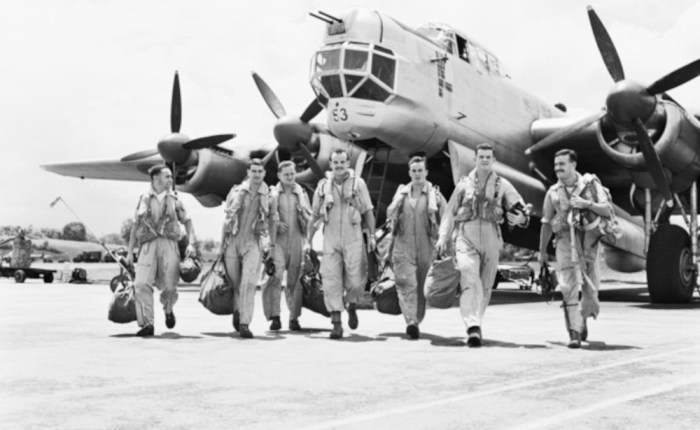
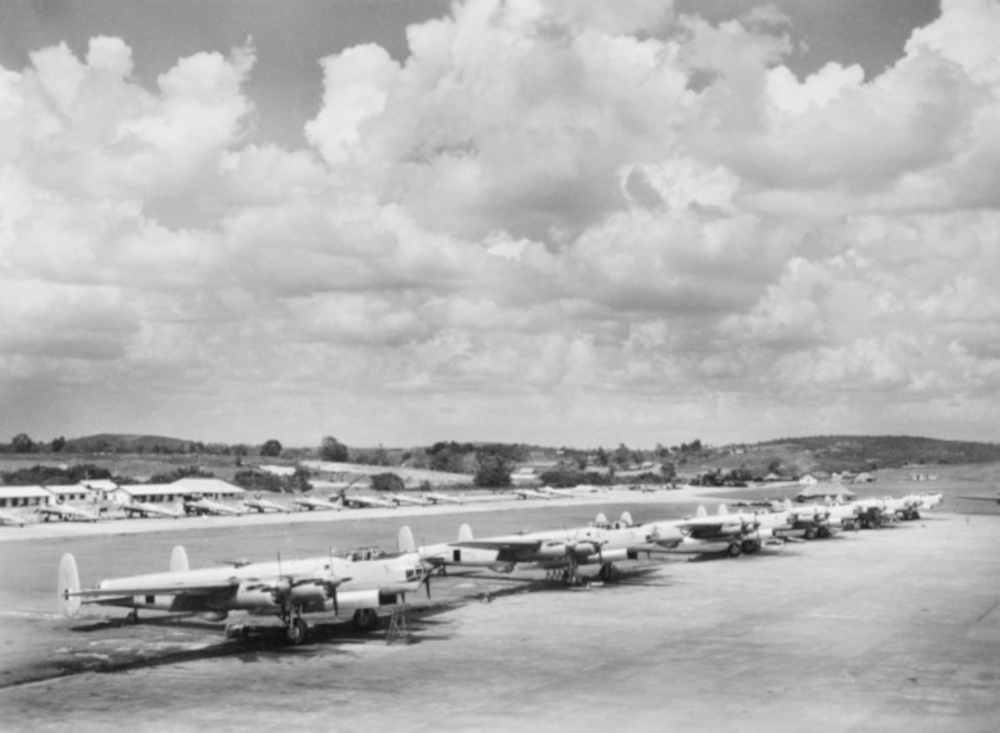
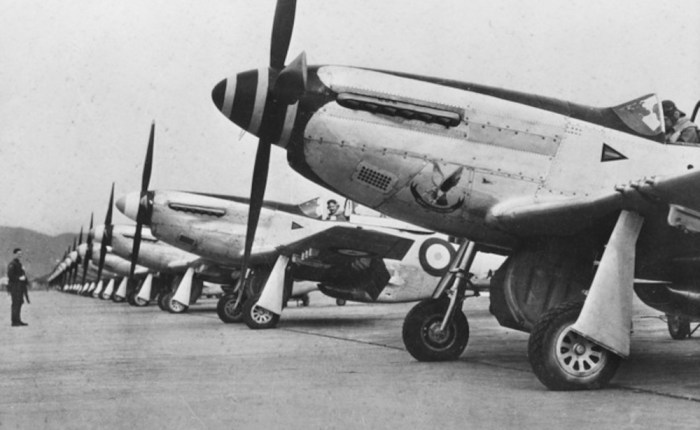
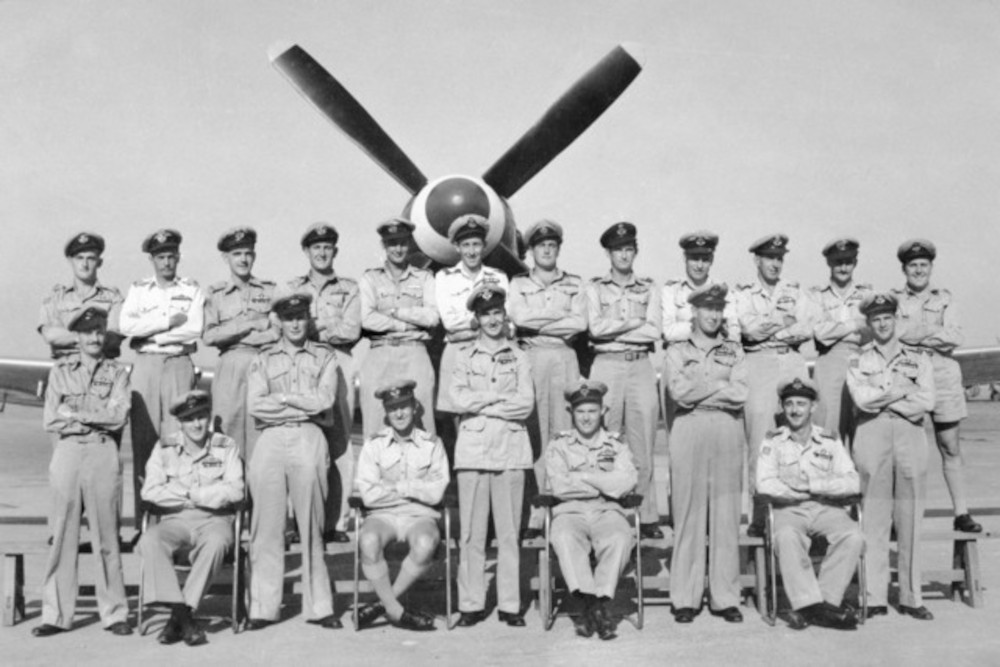
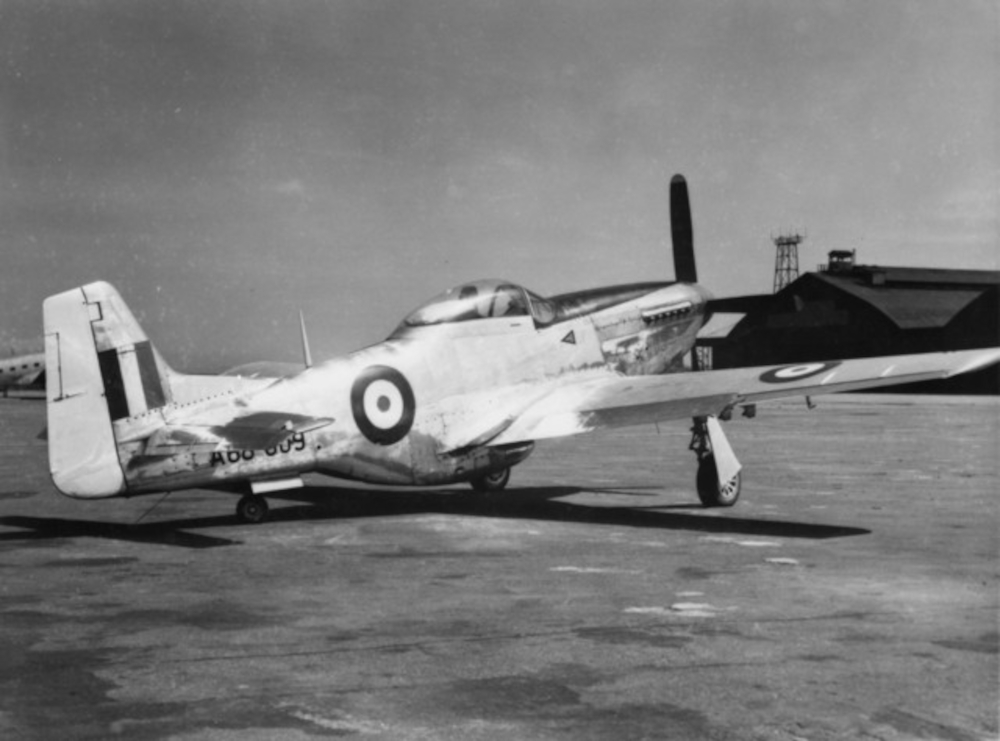
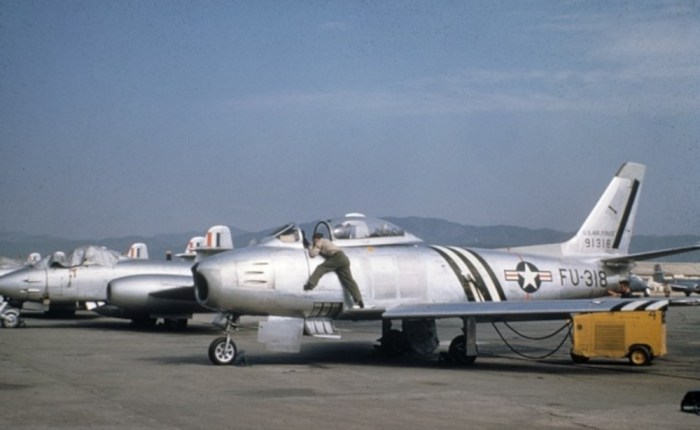
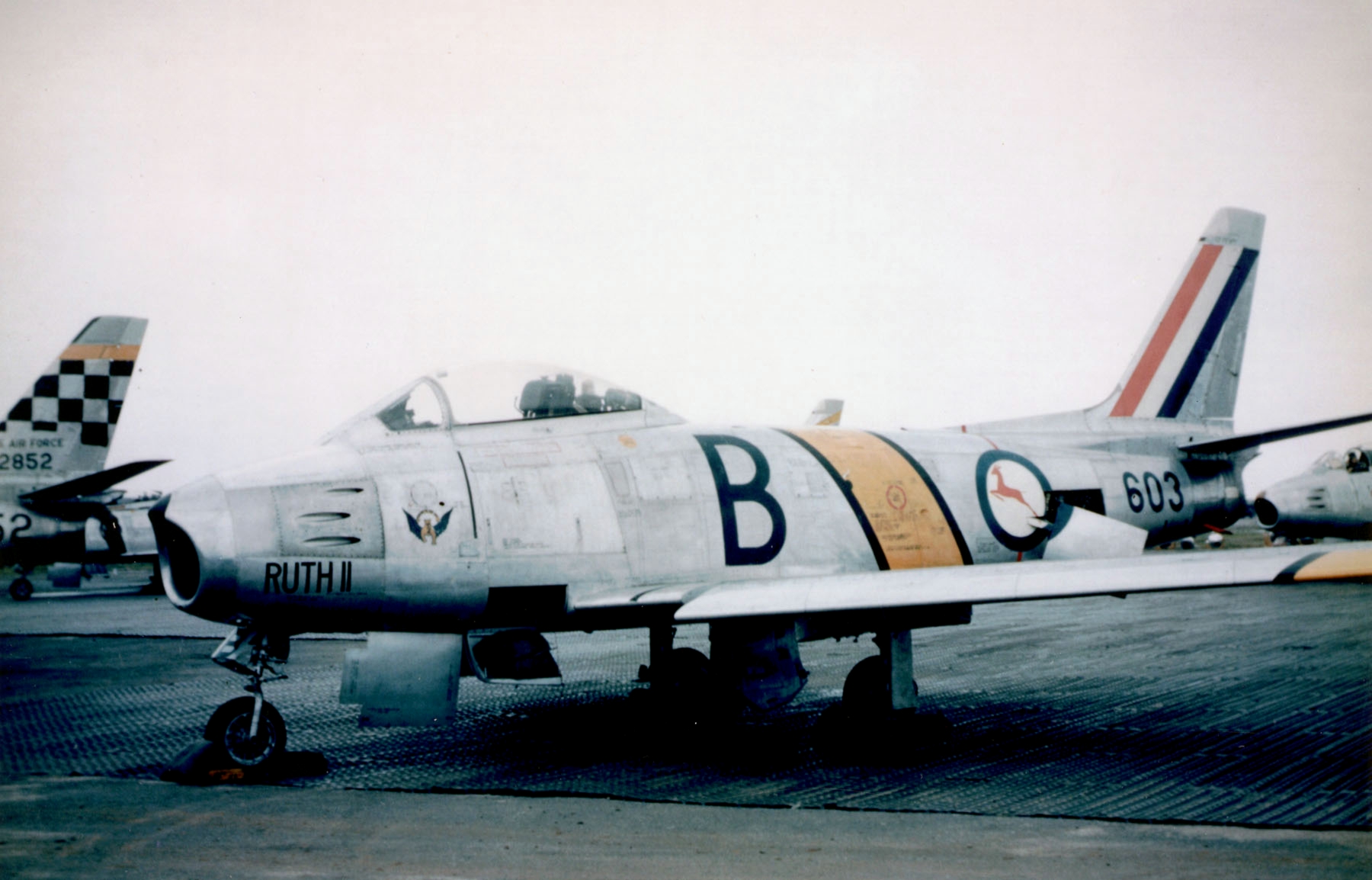
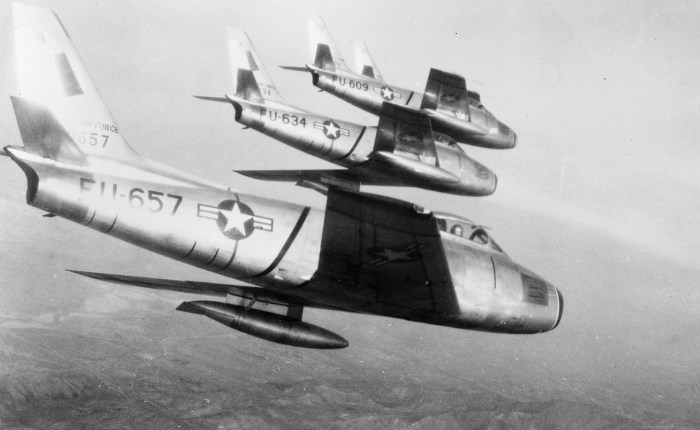
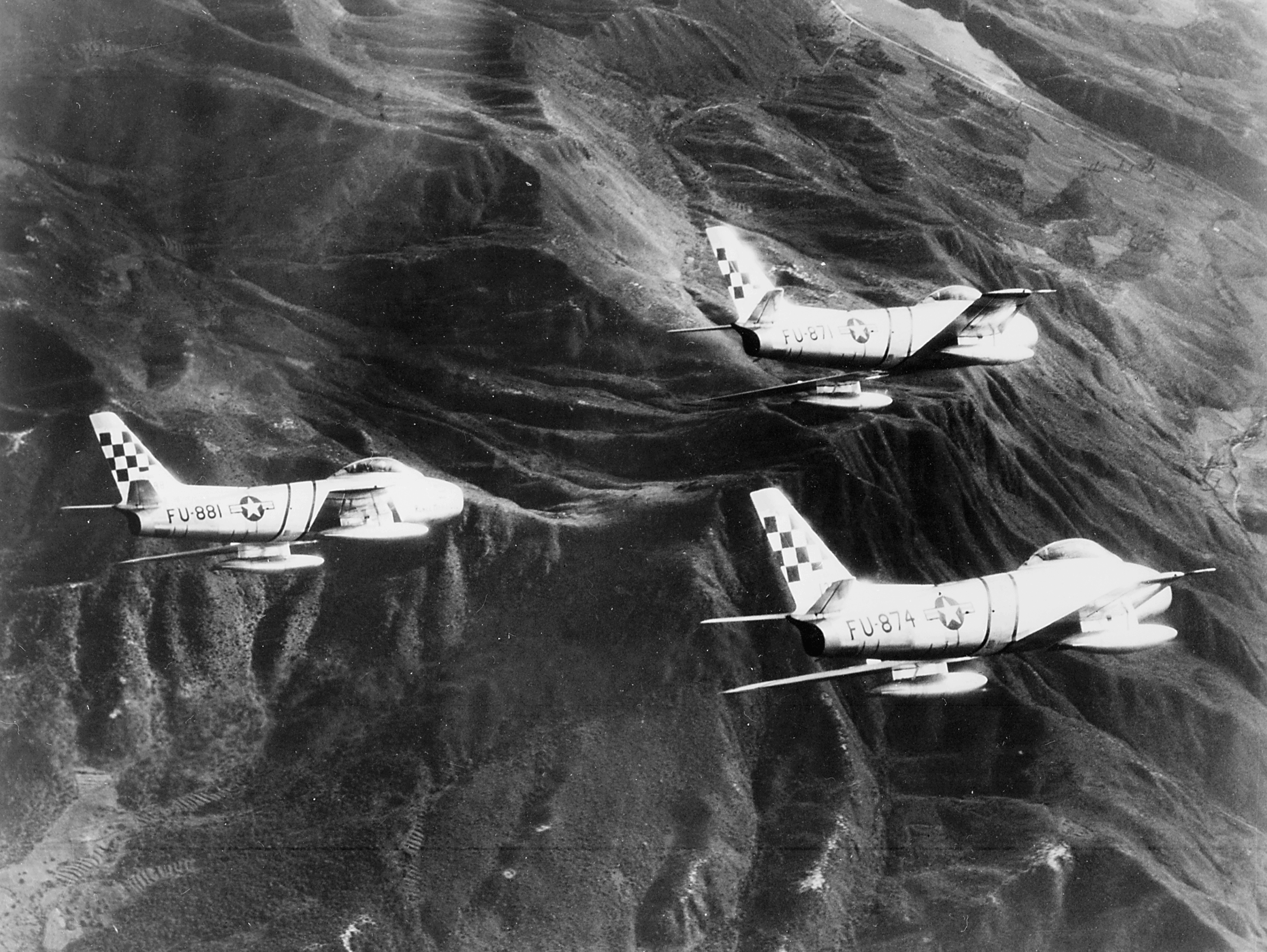
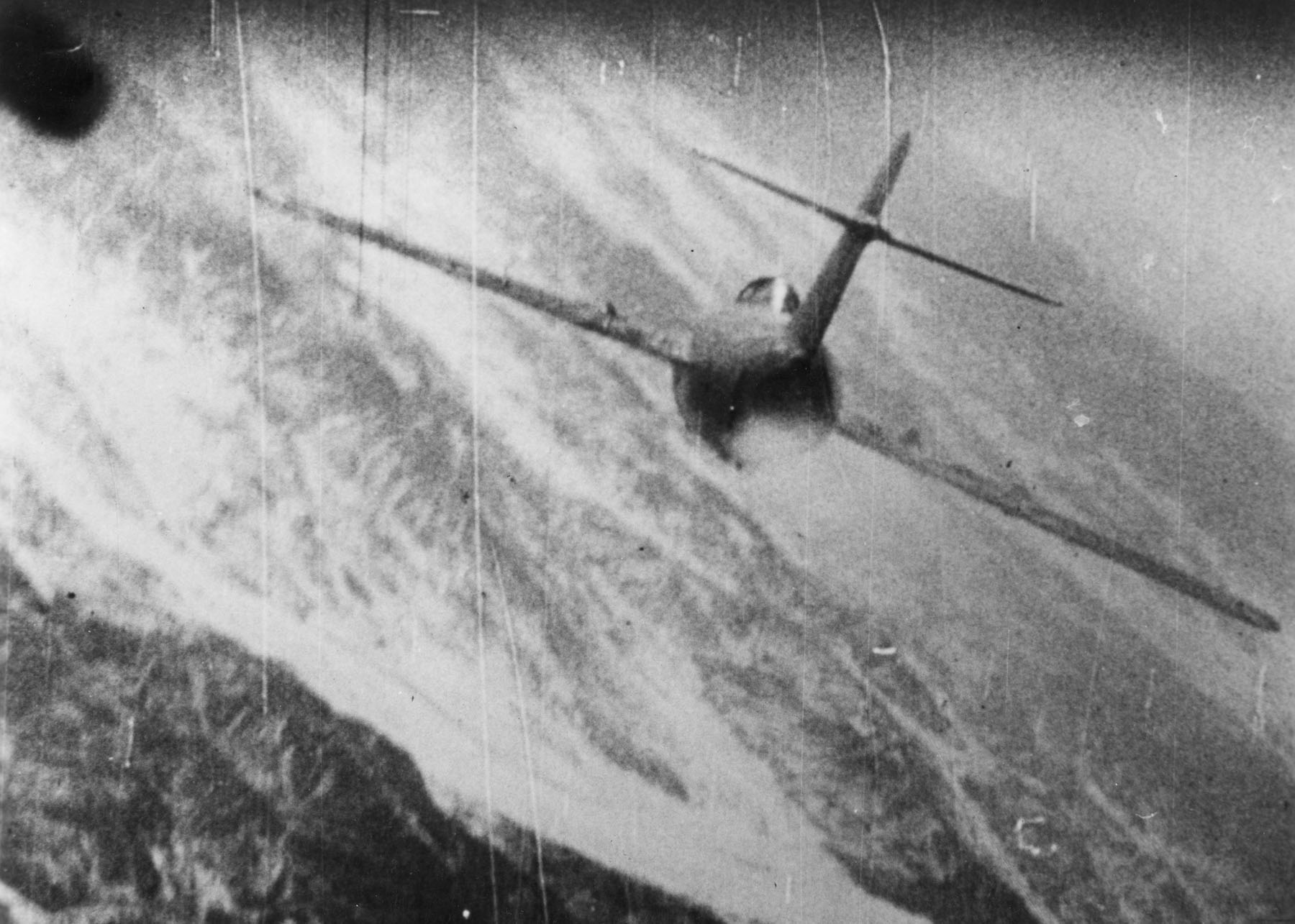


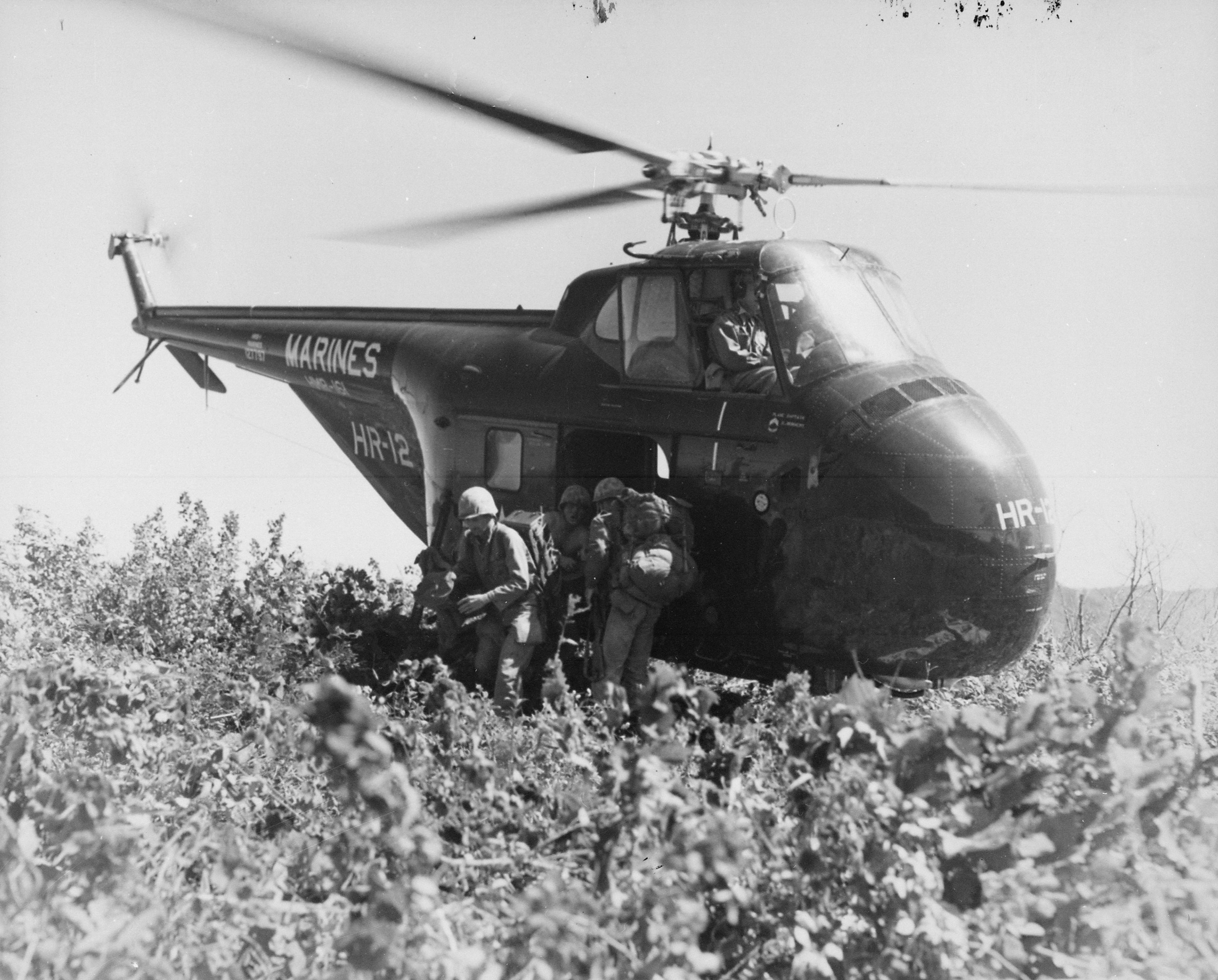
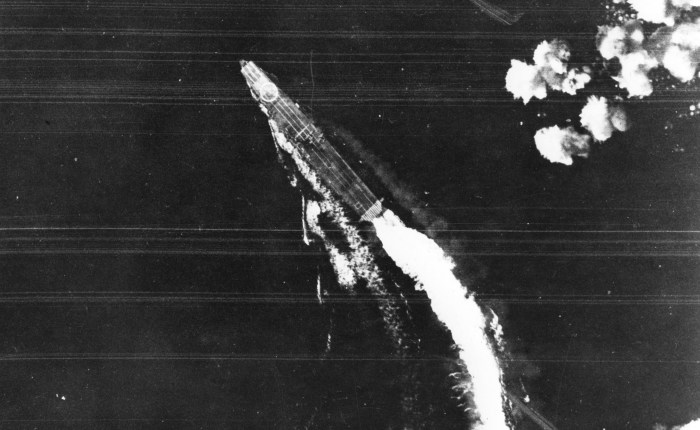

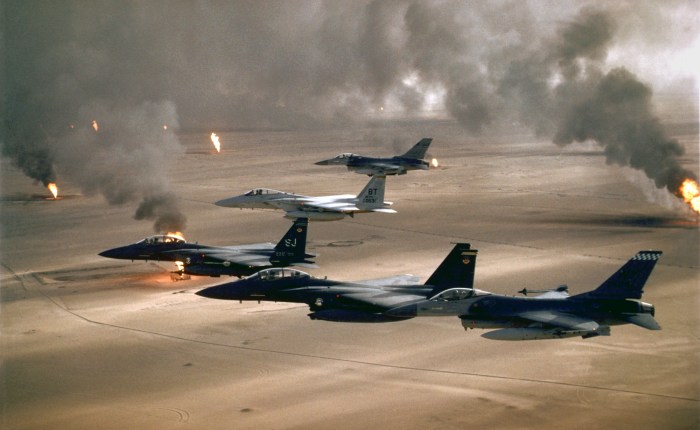


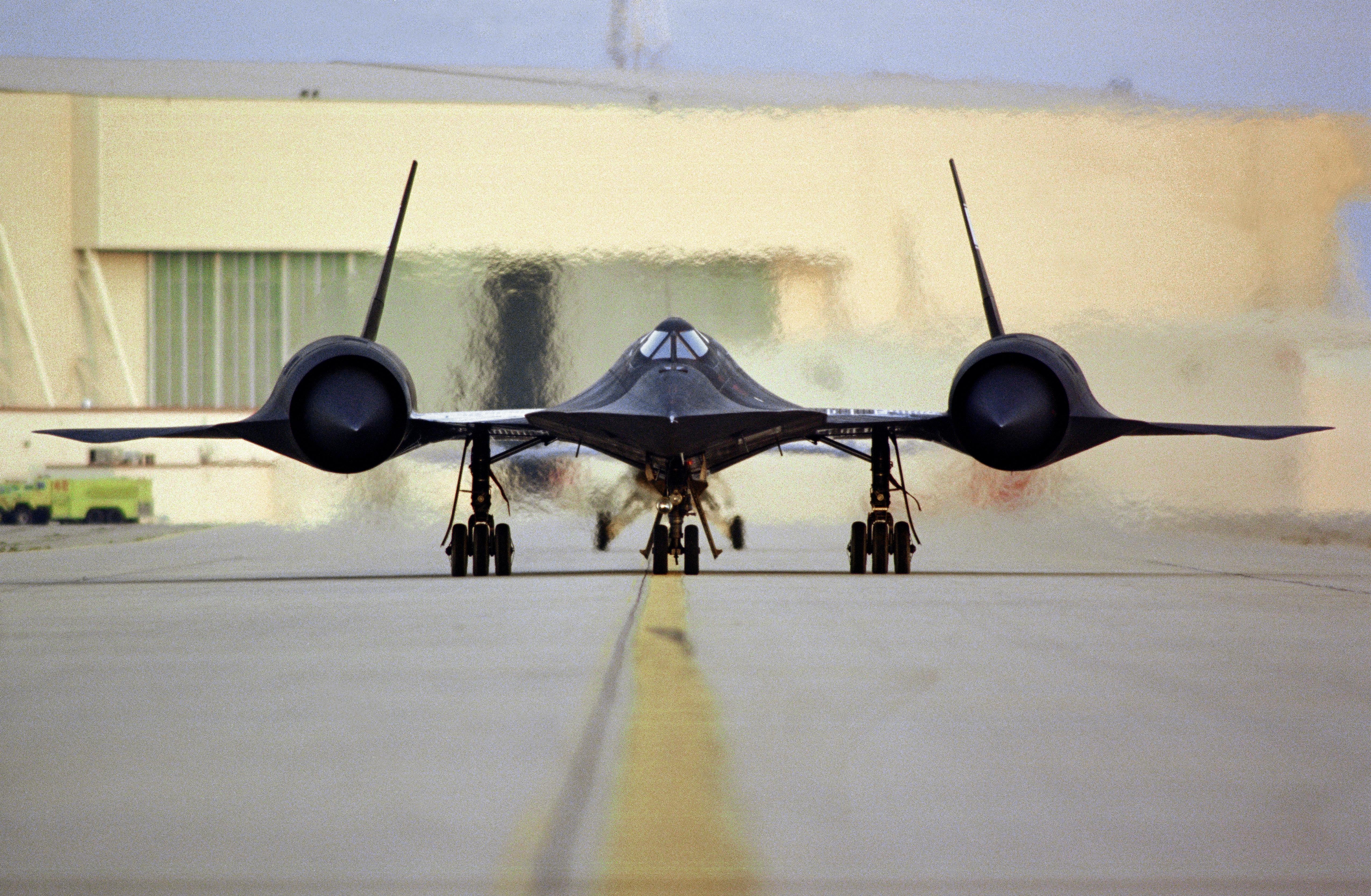


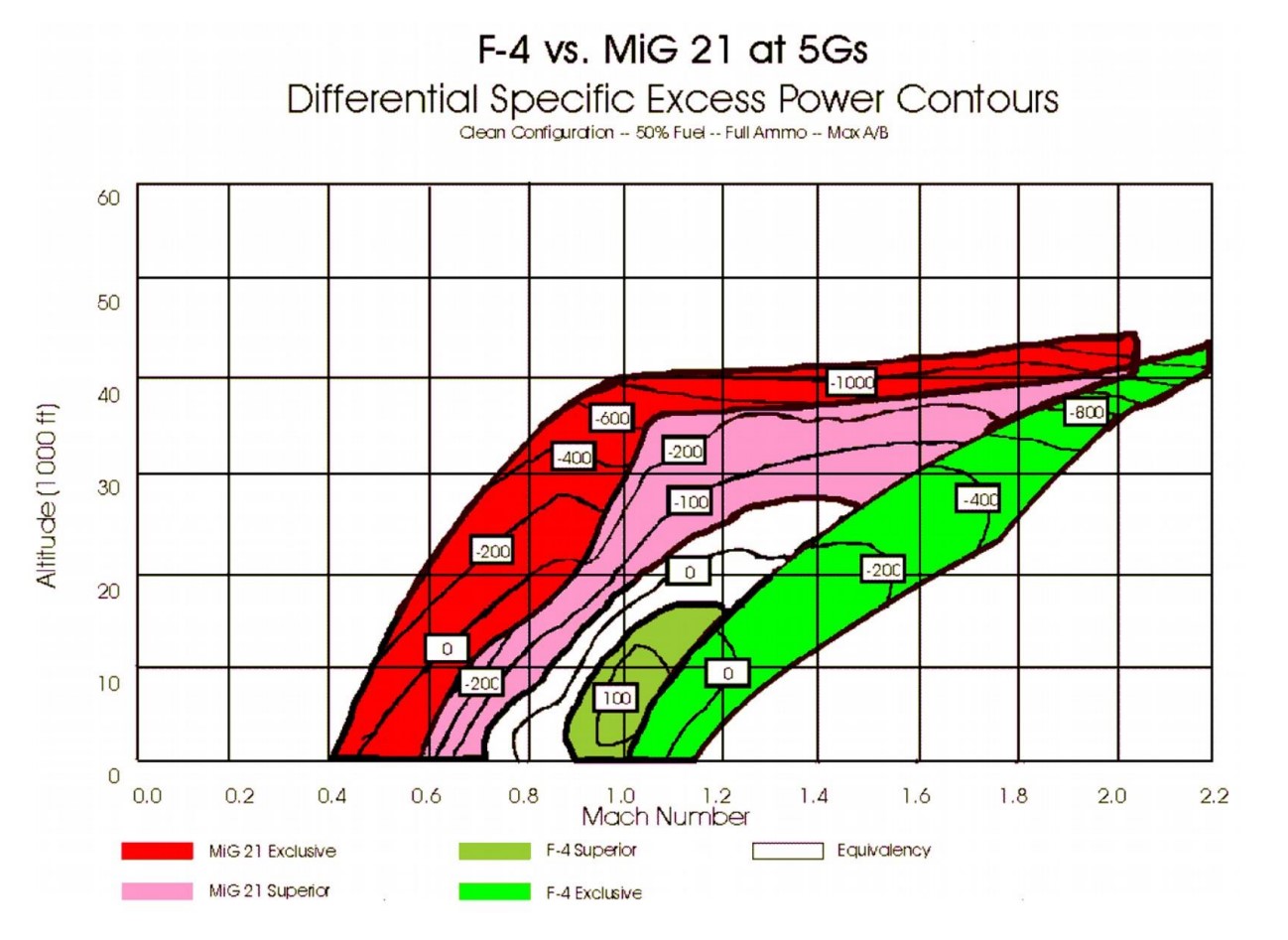

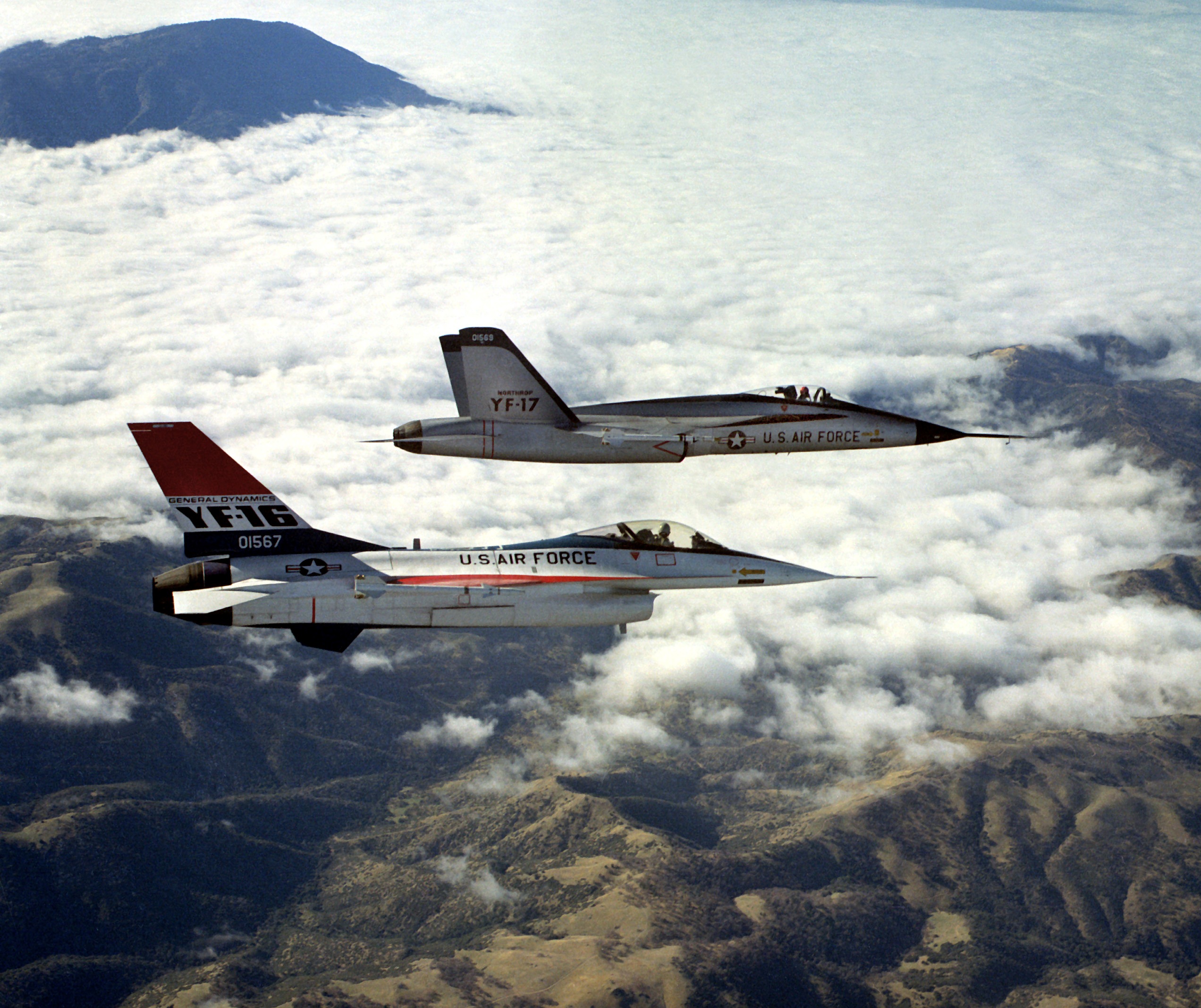
 From Balloons to Drones