#Editorial – What content would you like to see on the ‘From Balloons to Drones’ podcast?

#Editorial – What content would you like to see on the ‘From Balloons to Drones’ podcast?

In 2019, From Balloons to Drones established a podcast series that aimed to provide an outlet for the presentation and evaluation of air power scholarship, the exploration of historical topics and ideas, and a way to reach out to both new scholars and the general public. Since then we have published 47 interviews with various authors and discussed numerous topics.

As we continue to develop and grow, the time has come to ask our audience what you would like to hear on our podcast. All answers are welcome. If your answer is not in this list below simply select ‘Other’ and provide more details in the comments. We look forward to your feedback. In the meantime, you can find our podcast channel here on Soundcloud.

#ResearchResources – Air and Space Power Bibliography

#ResearchResources – Air and Space Power Bibliography

In the past few weeks, From Balloons to Drones launched a group ‘Air and Space Power Bibliography’ using the open-source reference management software Zotero. The bibliography aims to (slowly) catalogue works related to air power history, theory, and current operations in their broadest sense, including space power. The bibliography is hoped to be helpful to academics, students, and practitioners alike. Types of works included in the bibliography range from journal articles and books to scholarly online articles such as those published here at From Balloons to Drones. So far, we have added 250 titles, with more being added weekly.

As well as the central catalogue into which every resource is documented, the bibliography is split into 40 sub-catalogues. These sub-catalogues either relate to a time frame, country, or theme. After each work is added to the main catalogue, they are included in one of the 40 sub-catalogues that best represent the subject of that work. For example, Peter Gray’s The Leadership, Direction and Legitimacy of the RAF Bomber Offensive from Inception to 1945 (2012) is catalogued in the following sub-catalogues: ‘Interwar’ and ‘Second World War’ as its main chronological focus is those periods; ‘Air Power Leadership and Culture’ and ‘Legal and Ethical Aspects of Air Power’ as this is the main thematic focus of the book, and finally, ‘British Air Power’ as the book is focused on the Royal Air Force.

You can request to become a member of the group bibliography or follow it using an RSS feed.

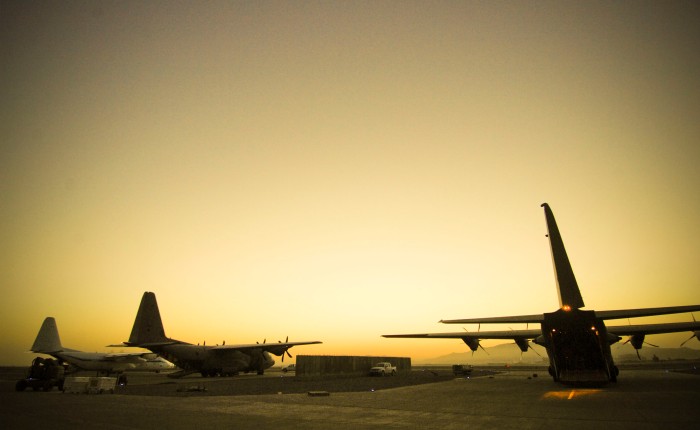
Header image:  Royal Air Force C-130J Hercules transport aircraft wait to airlift British soldiers from Kandahar Airfield, Afghanistan, 19 June 2009. (Source: Wikimedia)

Expressions of Interest – Social Media Editor, From Balloons to Drones

Expressions of Interest – Social Media Editor, From Balloons to Drones

Job title: Social Media Editor

Established in 2016, From Balloons to Drones has successfully developed into a well-regarded online scholarly platform dedicated to analysing and debating air power history, theory, and contemporary operations in their broadest sense, including space and cyber power. Our outputs include articles ranging from scholarly pieces to book reviews and a successful podcast series.

The role

To help us develop further, From Balloons to Drones is looking to recruit an emerging and passionate air power specialist to join our editorial team. This voluntary role’s primary purpose is to manage our social media presence on Twitter, Facebook, and LinkedIn. You will also be involved with the peer review of submissions and supporting the aims and objectives of From Balloons to Drones in other areas. Please note that this is an unpaid role.

What do we offer?

The From Balloons to Drones team comprises experienced and knowledgeable air power scholars and editors who will mentor, advise, and assist the successful applicant. In addition, this role will allow you to develop your editing skills and experience of engaging with the broader air power studies community. You can learn more about the From Balloons to Drones editorial team here.

Who are we looking for?

Are you passionate about the study of air power? Do you have experience in managing social media accounts? Are you interested in the contest of ideas? Do you want to be involved in publishing new and exciting research? Then this role is for you.

From Balloons to Drones welcomes and encourages applications for this new role from applicants working in a wide range of fields, including but not limited to military history, international relations, strategic studies, law, and archaeology. The role is open to postgraduates, academics, policymakers, service personnel and relevant professionals involved in researching the subject of air power.

From Balloons to Drones actively encourages and promotes diversity within the field of air power studies. We particularly encourage applications from those underrepresented within the air power studies community.

Job functions

  1. Contribute to managing our social media presence on Twitter, Facebook and LinkedIn.
  2. Contribute to the peer review of submissions.
  3. Contribute to building a core community of interest using social media that furthers the aims and objectives of From Balloons to Drones.
  4. Contribute to content creation for From Balloons to Drones across all platforms.
  5. Professionally represent From Balloons to Drones at conferences and other events.
  6. Undertake additional duties as required by the Editor-in-Chief.

Applications

To apply, contact Dr Ross Mahoney (airpowerstudies@gmail.com) with a copy of your CV and a brief cover letter (c. 500 words) explaining why you wish to join the team.

Closing date: 1 July 2023

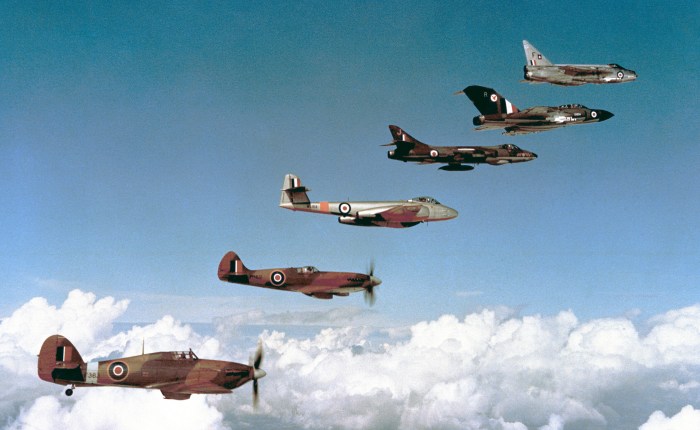
Header image: Pictured for the 20th Anniversary of the Battle of Britain in 1960 is a unique line-up of RAF fighters from the Battle of Britain to 1960. From bottom to top: Hawker Hurricane IIc, Supermarine Spitfire PR.XIX, Gloster Meteor F.8, Hawker Hunter FGA.9, Gloster Javelin FAW.9R and an English Electric Lightning F.1. (Source: Wikimedia)

Call for Submissions – From Balloons to Drones

FeaturedCall for Submissions – From Balloons to Drones

Established in 2016, From Balloons to Drones is an online scholarly platform that analyses and debates air power history (including aviation history), theory, and contemporary operations in their broadest sense, including space and cyber power. To date, we have published over 250 articles on various air power-related subjects.

Since its emergence at the start of the 20th Century, air power has increasingly become the preferred form of military power for many governments. However, the application and development of air power are controversial and often misunderstood. To remedy this, From Balloons to Drones seeks to provide analysis and debate about air power through the publication of articles, research notes, commentaries, book reviews, and historic book reviews – see below for a description of the range of articles published.

The study of air power is to be understood broadly, encompassing not only the history of air warfare, including social and cultural aspects, but also incorporating contributions from related fields, such as archaeology, international relations, strategic studies, law and ethics. Possible subjects to be explored might include, but are not limited to:

Strategy, Theory and Doctrine | Organisation and Policy | Roles

Operations – Kinetic and Non-Kinetic | Tactics, Training and Procedures

Strategic and Operational Effect | Technological Developments

Ethical and Moral Issues | National, International and Transnational Experiences

Personal Experiences | Culture | Memory and Memorialisation

From Balloons to Drones welcomes and encourages potential submissions from postgraduates, academics, and practitioners involved in researching the subject of air power.

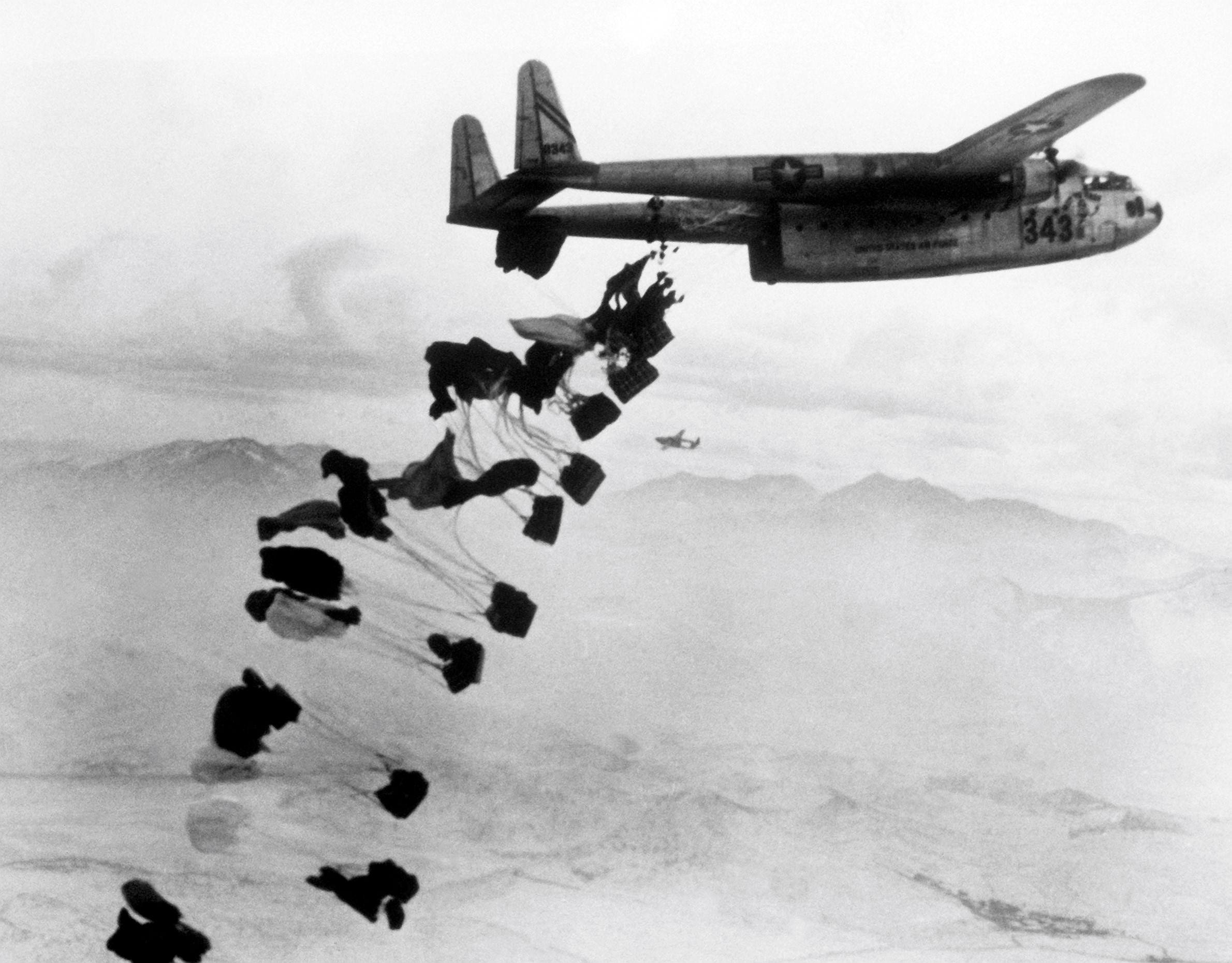
C-119B_Flying_Boxcar_drops_supplies_near_Chungju_1951
A US Air Force Fairchild C-119B Flying Boxcar air-dropping supplies near Chungju, Korea, in 1951. (Source: Wikimedia)

We publish:

Scholarly Articles

From Balloons to Drones publishes informative, peer-reviewed articles on air power that range from historical pieces to the analysis of contemporary challenges. These well-researched articles aim to bridge the gap between specialist and non-specialist readers. They should be around c. 3,000 words, though From Balloons to Drones will accept longer pieces. We reserve the right to publish them in parts.

Air War Books

From Balloons to Drones publishes a series of review articles that examine the top ten books that have influenced writers on air power. See more here.

Commentaries

From Balloons to Drones publishes opinion pieces on recent news on either contemporary or historical subjects. These should be no longer than c.1,000 words.

Research Notes

From Balloons to Drones publishes research notes on contributors’ current research projects. These take the form of more informal pieces and can be discussions of a source or notes on a recent research theme. These should be c.500 to 1,000 words.

Book Reviews

From Balloons to Drones publishes regular book reviews that aim to be an accessible collection of appraisals of recent publications about air power. If you are a publisher interested in having your publication reviewed, please contact us at the email address below. See more here.

Historic Book Reviews

From Balloons to Drones publishes occasional historic book reviews that aim to be an accessible collection of appraisals of critical historic publications about air power history, theory, and practice. See more here.

Submissions should be submitted in Word format and emailed to the address below with ‘SUBMISSION’ in the subject line. Also, please include a 50-100-word biography with your submission. References can be used, and please be careful to explain any jargon. However, if you are unsure if your idea fits our requirements, please email us with ‘POTENTIAL SUBMISSION’ in the subject line to discuss.

If you are interested in contributing, please email our Editor-in-Chief, Dr Ross Mahoney, at airpowerstudies@gmail.com or via our contact page here.

Header image: A Panavia Tornado GR4 of No. IX(B) Squadron on a training sortie in preparation for deployment to Afghanistan, c. 2012. (Source: Wikimedia)

#Podcast – The Origins of Air Power in the US: An Interview with Dr Laurence Burke II

#Podcast – The Origins of Air Power in the US: An Interview with Dr Laurence Burke II

Editorial Note: Led by Editor Dr Mike Hankins, From Balloons to Drones produces a monthly podcast that provides an outlet for the presentation and evaluation of air power scholarship, the exploration of historical topics and ideas, and provides a way to reach out to both new scholars and the general public. You can find our Soundcloud channel here. You can also find our podcast on Apple Podcasts and Google Podcasts.

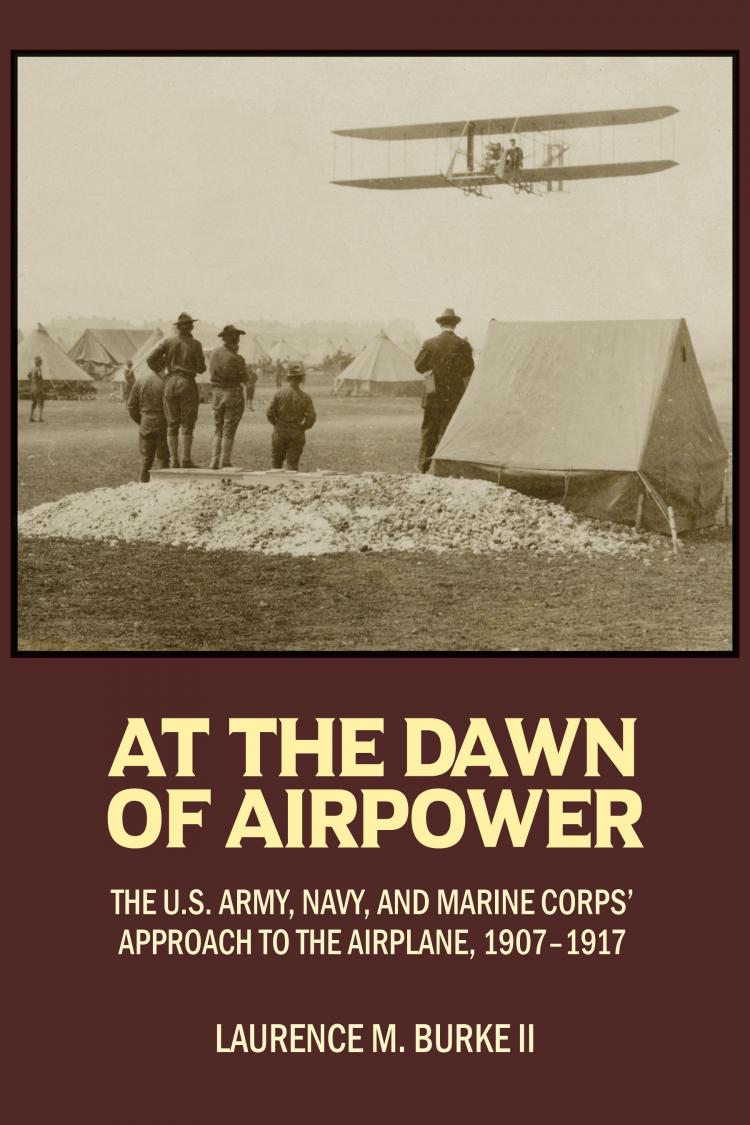
In our latest podcast, we interview Dr Laurence Burke II, the Aviation Curator at the National Museum of the Marine Corps. We ask how did the US get from the first flight of an aeroplane in 1903 to full-fledged military-capable aeroplanes in only short few years? Burke takes us through the people that made that journey happen. He explores the different approaches to the airplane made by the US Army, Navy, and Marines Corps, and why each of them went about exploring military aviation in a unique way.

9781682477298

Dr Laurence Burke is the Aviation Curator at the National Museum of the Marine Corps. He earned an undergraduate degree from Rensselaer Polytechnic Institute, a master’s in Museum Studies from George Washington University, and, in 2014, a PhD in History and Public Policy from Carnegie Mellon University. Since then, he has taught history at the United States Naval Academy as a post-doc and then was Curator of U.S. Naval Aviation at the National Air and Space Museum for several years before starting the job at Quantico.

Header image: A Wight Model A arrives at Fort Myer, Virginia aboard a wagon for testing by the US Army, attracting the attention of children and adults, 1 September 1908. (Source: Wikimedia)

From Balloons to Drones – An Update

From Balloons to Drones – An Update

Over six years ago, in June 2016, From Balloons to Drones was launched. From Balloons to Drones was established with the simple vision of providing an open access online scholarly platform for analysing and debating air power history, theory, and contemporary operations in their broadest sense, including space and cyber power. Since establishing From Balloons to Drones, we have published nearly 250 posts ranging from articles to book reviews. Overall, the site has received over 180,000 hits since 2016.

The past few years, however, have been challenging for all, personally and professionally. From our perspective, this has led us to publish material irregularly. However, all of that is about to change. With a renewed sense of purpose, From Balloons to Drones hopes to continue to deliver well-researched and rigorous articles, book reviews and other material, including our popular podcast series of interviews with leading air power specialists. One of our most popular features is our ever-expanding ‘Air Power Reading List.’ We continue to add volumes to this curated reading list as we review new books on air power and historic titles.

We still hold true to our original vision of providing an avenue for debate and discussion about air power. However, we are always on the lookout for new contributions from established researchers or new and emerging scholars within the air power studies community. If you are interested in contributing, visit our submissions page to learn how to contribute. All our articles are peer-reviewed by our team of highly qualified and experienced editors, and we will work with you to deliver your articles to a broad audience via our social media channels.

We hope you enjoy what we publish; however, we are always keen to hear your views on what we publish. If there is an area of research that needs to be given more coverage, please let us know either in the comments or on social media.

Thank you for taking the time to read this update, and we look forward to hearing from you in the future.

Header image: A Dassault Etendard IVP of the French Navy. (Source: Wikimedia)

From Balloons to Drones – 5 Years On

From Balloons to Drones – 5 Years On

By Dr Ross Mahoney

Five years ago, on 15 June 2016, From Balloons to Drones was launched. From Balloons to Drones was established with the simple vision of providing an open access online platform for the analysis and debate of air power history, theory, and contemporary operations in their broadest sense, including space and cyber power. Since establishing From Balloons to Drones, we have published 195 posts of various types ranging from articles to book reviews. More recently, in 2019, we started producing a popular podcast series with interviews with leading air power specialists. Overall, the site has received over 130,000 hits since 2016.

None of the above would have been achieved without the support of our editors, contributors, and readers. Personally, I am grateful to all the members of the From Balloons to Drones editorial team for their continuing hard work, especially as it is all done voluntarily. Indeed, when the site was established, it was run by one person, our Editor-in-Chief, Dr Ross Mahoney. However, over time, the editorial team has grown and evolved. In 2018, long-time contributors Dr Brian Laslie, Dr Michael Hankins, and Alex Fitzgerald-Black came onboard as editors. While Alex has moved on, we have continued to build and strengthen the editorial team with the addition of Victoria Taylor and Dr Luke Truxal to the team. As we look forward to the next five years of From Balloons to Drones, I am pleased to announce the addition of two new editors to the team: Dr Maria Burczynska and Ashleigh Brown. Maria is a Lecturer in Air Power Studies at the University of Wolverhampton in the UK, while Ashleigh, a PhD student at UNSW Canberra, is a researcher for the Official History of Australian Operations in Iraq & Afghanistan and Australian Peacekeeping Operations in East Timor. The addition of Maria and Ashleigh will help strengthen the team in several areas, and we are looking forward to what the future holds with them.

I am also grateful to all our contributors and readers. Without our contributors, there would be nothing to publish and, as such, no website. However, we are always on the lookout for new contributions either from established authors or from new and emerging scholars within the air power studies community. If you are interested in contributing, then visit our submissions page to find out how to contribute.

So, what about the future? More of the same but better. We still hold true to our original vision of providing an avenue for debate and discussion about air power. We will aim to continue to refine what we offer in terms of content and build on the success of the past five years. We have more articles, book reviews and podcasts in the pipeline. However, we are always keen to hear your views on what we publish. If there is an area of research that needs to be given more coverage, please let us know.

Finally, as a bit of fun to celebrate our fifth birthday, here are the top five most-read posts since our launch in 2016:

  1. Michael Hankins, ‘Inventing the Enemy: Colonel Toon and the Memory of Fighter Combat in Vietnam’
  2. Michael Hankins, ‘A Discourse on John Boyd: A Brief Summary of the US Air Force’s Most Controversial Pilot and Thinker’
  3. Liam Barnsdale, ‘Royal Air Force ‘wings’ Brevets in Second World War Propaganda’
  4. Justin Pyke, ‘Blinded by the Rising Sun? American Intelligence Assessments of Japanese Air Power, 1920-41: Part 1 – The 1920s’
  5. Jeff Schultz, ‘Supporting the Secret War: T-28s over Laos, 1964-1973 – Part 1: Training’

Header image: Pilatus PC-21A aircraft from No 4 Squadron based at RAAF Base Williamtown fly in formation on return from Sydney in support of an Air Force 2021 commemorative service held at the Anzac Memorial in Hyde Park. (Source: Australian Department of Defence)

Christmas #Airpower Reading List

Christmas #Airpower Reading List

By the From Balloons to Drones team

Merry Christmas and Happy Holidays from the team at From Balloons to Drones. It has been an excellent year for the advancement and study of air power, and it has been a remarkable year for the website as well. We added three co-editors to the site and surpassed our 50,000-hit mark!

As we enter the holiday season, we know that our readers either have some time off coming up or are looking for some recommendations to add to their holiday shopping lists. So, we thought it would be a good idea to have our editors put together a short list of their favourite books from our year of reading and reviewing. However, before we get onto the list here are the top five articles published by From Balloons to Drones during 2018:

  1. Michael Hankins, ‘Inventing the Enemy: Colonel Toon and the Memory of Fighter Combat in Vietnam’;
  2. Wing Commander André Adamson and Colonel Matthew Snyder, ‘The Challenges of Fifth-Generation Transformation’;
  3. Michael Hankins, ‘A Discourse on John Boyd: A Brief Summary of the US Air Force’s Most Controversial Pilot and Thinker’;
  4. Lieutenant Colonel Tyson Wetzel, ‘#HistoricBookReview – Sierra Hotel: Flying Fighters in the Decade After Vietnam’;
  5. Thomas Withington, ‘Bringing It All Back Home: How one sortie by the No. 1474 Flight RAF in December 1942 helped save the lives of countless aircrew.’

Now onto our Christmas air power reading list…

Dr Ross Mahoney
41IVdzZMc4L._SX331_BO1,204,203,200_

James Pugh, The Royal Flying Corps, the Western Front and the Control of the Air, 1914-1918 (Abingdon: Routledge, 2017). I must admit it has been a slow year for me reading wise and the titles here will be reviewed in the new year. However, onto my list and first up we have James Pugh’s excellent study of the Royal Flying Corps in the First World War and its understanding of the concept of control of the air. Control of the air remains a central tenant of modern air power thinking; however, the ideas surrounding this concept go back much further. In this study, Pugh provides an excellent analysis of the development of British thinking about control of the air with specific reference to the RFC and the war over the Western Front. It is a much-needed addition to the literature and worth a read.

Broken Wings

Stephen Renner, Broken Wings: The Hungarian Air Force, 1918-45 (Bloomington, IN: Indiana University Press, 2016). Ok, this one dates to 2016, but I have only just finished it after reading it on an off since it came out. However, this is an essential study for two reasons. First, small air forces tend to be overlooked in the literature concerning the early development of air power and secondly, there is little in English on-air forces from central and eastern Europe. As such, even for just these reasons, Renner’s book is a welcome addition to the literature. Furthermore, however, Renner provides an excellent study into the challenges faced by the Hungarians in this period, which makes for fascinating reading.
fearless_cvr4

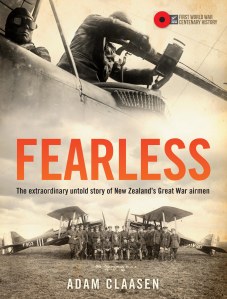
Adam Claasen, Fearless: The Extraordinary Untold Story of New Zealand’s Great War Airmen (Auckland: Massey University Press, 2017). The First World War centenary has seen many books published of which some are good and some not so good. Many of the works on air power have remained firmly camped in the ‘Knights of the Air’ trope that has become so common. Thankfully, however, we have also seen works such as Claasen’s work on New Zealand airmen appear. In this book, Claasen’s firmly places the experience of the around 850 New Zealanders who served in Britain’s air services within their imperial context. In this respect, Claasen’s follows on from the work of S.F. Wise on the Canadians and Michael Molkentin’s more recent work on Australia and is a welcome addition to our understanding of the imperial composition of Britain’s air services in the early twentieth century.

Runner-up:

Hanbook of Air Power

John Andreas Olsen (ed.), Routledge Handbook of Air Power (Abingdon: Routledge, 2018).  I reviewed this one here, so I shall not say too much more apart from to reiterate that if you are looking for a good introductory overview about air power, then this is an excellent addition to the library. Olsen has, as usual, brought together an outstanding line-up of scholars to consider critical issues related to air power.

Alexander Fitzgerald-Black

One in a thousand

Graham Broad, One in A Thousand: The Life and Death of Captain Eddie McKay, Royal Flying Corps (Toronto: University of Toronto Press, 2017). The First World War centenary is behind us, but it has left great historiographical additions for us to pour over. Graham Broad’s excellent microhistory of one of Canada’s first aces is three books in one. It is also a how-to book of best practices for historical research and analysis as well as an insightful commentary on the philosophy of history. You will enjoy the author’s engaging narrative as he traces Captain McKay’s life from the rugby pitch to the Wright Brothers School of Aviation, to his fleeting fame and eventual death in the contested and deadly skies above the Western Front. History teachers, especially at the senior undergraduate and graduate level, will also find the book an exceptional resource for training the minds of budding historians.

Beyond

Stephen Bourque, Beyond the Beach: The Allied War Against France (Annapolis, MD: Naval Institute Press, 2018). I picked up this book for two reasons. First, I was recently hired at the Juno Beach Centre, Canada’s Second World War Museum on the D-Day beaches. Second, with the upcoming 75th anniversary of the invasion of Normandy, it was about time that we had a detailed English-language study of the cost suffered by the French people in that great invasion. Readers will appreciate Bourque’s approach in dealing with General Dwight Eisenhower and his air commanders’ lines of action (effort). These targets included everything from airfields and ports to French towns or cities and the bridges, marshalling yards, and factories therein. As we move into this anniversary, it is important to remember that while the Allies were on the right side of history, 60,000 French civilians paid a dear price for their country’s freedom.
Gooderson

Ian Gooderson, Air Power at the Battlefront: Allied Close Air Support in Europe, 1943-1945 (London: Frank Cass, 1998). This one is not recent, but I was thrilled to discover that my university library owns a copy. I was struck by just how comprehensive Gooderson’s analysis is, and I found some of his evidence and conclusions comfortably surprising. For instance, although the Allied air forces assumed armed reconnaissance to be safer than close air support, the opposite was true. At the same time, air support was probably of greater value beyond the battlefront (greater opportunity comes with greater danger). The book also impressed upon me the importance of timing air strikes carefully and air power’s psychological effects, for better or worse.

Runner-up:
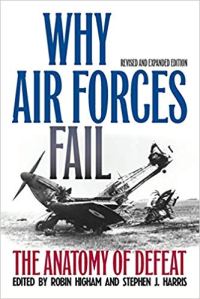
Why Air Forces Fail

Robin Higham and Stephen J. Harris (eds.), Why Air Forces Fail: The Anatomy of Defeat, Revised and Expanded Edition (Lexington, KT: University Press of Kentucky, 2016). This was one of the first scholarly history books I ever read as a high school student. Its engaging chapters about how various air forces across the decades have failed to meet their objectives offer complex answers to a simple question: why did they fail? Although, as Randall Wakelam noted, he had hoped for more from the new edition, though newcomers will find the book a valuable addition to any aviation history library.

Dr Mike Hankins

AlwaysMelvin Deaile, Always at War: Organizational Culture in Strategic Air Command, 1946-62 (Annapolis, MD: Naval Institute Press, 2018). This book is not only an excellent summary of the formative years of Strategic Air Command during the early Cold War, but Deaile gives us a close look at what it felt like to be there. What was the culture like? What was the daily life like for these pilots? What made SAC so unique and such a key component of American defence during the Cold War? Moreover, why is General Curtis LeMay such a big deal? This book gives excellent, substantive answers to all these questions.

Problem

Timothy P. Schultz, The Problem with Pilots: How Physicians, Engineers, and Airpower Enthusiasts Redefined Flight (Baltimore, MD: Johns Hopkins University Press, 2018). Flying is hard–much harder than we give it credit for today. The capabilities of modern aircraft all came with difficult times of dangerous experimentation in the fields of medicine, engineering, and technology. The human body was not made to fly, and the limiting factor on advanced aircraft designs has always been humans. How we solved those problems and made complicated, advanced aircraft possible is the fascinating story of this book about integrating man and machine in increasingly sophisticated ways.

51nxvKRLhkL._SX329_BO1,204,203,200_

Steven A. Fino, Tiger Check: Automating the US Air Force Fighter Pilot in Air-To-Air Combat, 1950-1980 (Baltimore, MD: John Hopkins University Press, 2017). Fighter pilots are a strange breed–they have a unique culture all their own. However, how does that culture evolve when it is faced with new technologies that threaten to automate tasks that fighter pilots hold dear? Former F-15 pilot Steve Fino explores just that in this incredible book. Examining the F-86 Sabre, the F-4 Phantom II, and the F-15 Eagle, Fino explores the evolving relationship between man and machine in the cockpit of jet-age fighter planes. You can find my review of this book here.

Runner-up:
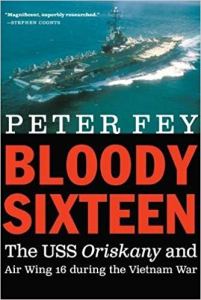
Bloody

Peter Fey, Bloody Sixteen: The USS Oriskany and Air Wing 16 during the Vietnam War (Lincoln, NE: Potomac Books, 2018). The USS Oriskany had the highest loss rates of any navy air unit in the Vietnam War. In addition to two massive fires, it was the boat from which Jim Stockdale and John McCain (among many others) became POWs for years. Peter Fey’s accessible, exciting narrative traces the Oriskany throughout its multiple tours and gives a palpable sense of what it was like to be on board and in the cockpit of the A-4 Skyhawks, F-8 Crusaders, and other planes the ship carried. The book is not perfect, but it is an engaging read especially aimed at a general audience.

Dr Brian Laslie

Origins of American Strategic Bombing Theory

Craig Morris, The Origins of American Strategic Bombing Theory (Annapolis, MD: Naval Institute Press, 2017). This book is ‘a twisting tale of individual efforts, organizational infighting, political priorities, and technological integration.’ It is also a book that places the development of American bombing theory firmly in the context of its time and rightly puts individuals into their proper place. Gone is the Billy Mitchell-centric view of air power development to be (rightly) replaced with an emphasis on Benjamin Foulois, Mason Patrick, William Sherman, Lord Tiverton, and others who worked tirelessly on the theories and doctrines of air power. In my opinion, the single best volume on American air power in the inter-war years.

aerial

Frank Ledwidge, Aerial Warfare: The Battle for the Skies (Oxford: Oxford University Press, 2018). I wrote about this book earlier in the year for The Strategy Bridge and called it ‘the single finest primer on air power covering every aspect from if you’ll excuse me, balloons to drones.’ I stand by that statement. This is the perfect primer for the history of air power. I cannot imagine someone interested in our profession not owning this book. I wish I had copies to serve as stocking stuffers…
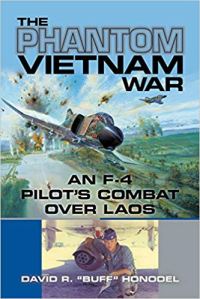
Phantom

David R. Honodel, The Phantom Vietnam War: An F-4 Pilot’s Combat over Laos (Denton, TX: University of North Texas Press, 2018). This is a ‘there I was’ and ‘shoot the watch’ book, but it is also an amazingly poignant and honest look about learning to survive in a war the American people were unaware was occurring. It is in the best of its class at conveying the transformation a person can take in the crucible of a forgotten war over the skies of Laos. ‘Buff’ Honodel passed away earlier this year, and as I count my blessings this year, one of them will be for a man like Buff.

Runner-up:
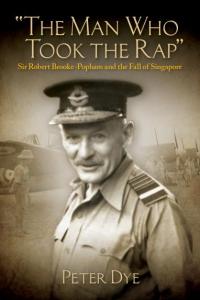
Brooke-Popham

Peter Dye, “The Man Who Took the Rap”: Sir Robert Brooke-Popham and the Fall of Singapore (Annapolis, MD: Naval Institute Press, 2018). This one landed on my desk rather late in the year but intrigued me almost immediately. As someone who has recently written a biography of a relatively unknown figure myself, I was excited to dive into this one, and it does not disappoint. As air power scholarship continues to expand, it has become an enjoyable pastime of mine to read about lesser-known, but equally important contributors to air power development. This book also fills a void for me in expanding my knowledge and understanding of other nation’s air power efforts.

As well as providing you with our Christmas reading list, we would like to recognise the various presses and our social media friends who have been hard at work this year publishing the books above and some not strictly related to air power, but would make great gifts such as Redefining the Modern Military, edited by Tyrell Mayfield and Nathan Finney, and The Colour of Time: A New History of the World, 1850-1960 by Marina Amaral.

Our favourite military and air power related presses include Naval Institute Press and University Press of Kentucky who keeps on adding some excellent titles to their lists. Keep a lookout to the site in 2019 as we embark on expanding our writing on space power and space exploration a lot of which will be coming from the NASA Office of History and the University Press of Florida.

Finally, we would like to thank our contributors and readers. Without them, this site would not exist so thank you. If you want to write for us, then find out how to contribute here.

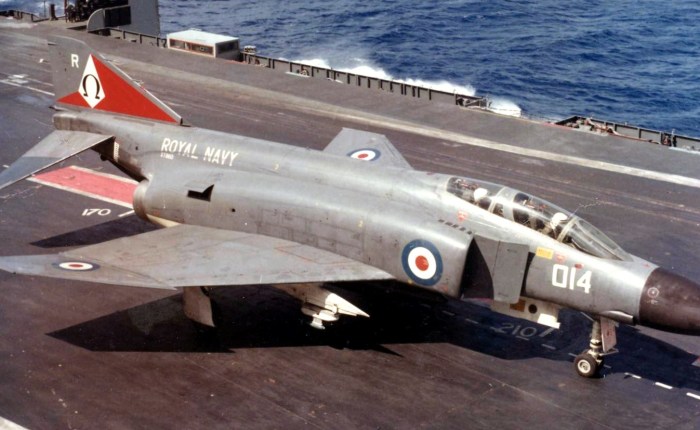
Header Image: A Royal Navy McDonnell Douglas Phantom FG.1 from 892 Naval Air Squadron aboard the aircraft carrier HMS Ark Royal (R09). (Source: Wikimedia)
Call for Contributors – From Balloons to Drones

Call for Contributors – From Balloons to Drones

Established in 2016, From Balloons to Drones is a scholarly online platform that provides analysis and debate about air power history, theory, and contemporary operations in their broadest sense including space and cyber power. Air power is to be understood broadly, encompassing not only the history of air warfare, including social and cultural aspects but also related fields such as archaeology, international relations, strategic studies, law and ethics.

Since its emergence, air power has increasingly become the preferred form of military power for many governments. However, the application and development of air power is controversial and often misunderstood. To remedy this, From Balloons to Drones seeks to provide analysis and debate about air power through the publication of articles, research notes, commentary, book reviews, and historic book reviews.

From Balloons to Drones welcomes and encourages potential submissions from postgraduates, academics, and practitioners involved in researching the subject of air power.

Submissions can take the following forms:

  • ArticlesFrom Balloons to Drones publishes informative articles on air power that range from historical pieces to the analysis of contemporary challenges. These well-researched articles should attempt to bridge a gap between the specialist and the non-specialist They should be around c.2,000 words, though From Balloons to Drones will accept larger pieces and we reserve the right to publish them in parts.
  • Air War BooksFrom Balloons to Drones publishes a series of review articles that examine the top ten books that have influenced writers on air power.
  • CommentariesFrom Balloons to Drones publishes opinion pieces on up-to-date news on either contemporary or historical subjects. These should be no longer than c.1,000 words.
  • Research NotesFrom Balloons to Drones publishes research notes related to contributor’s current research projects. These take the form of more informal pieces and can be a discussion of a source or a note on a recent research theme. These should be c.500 to 1,000 words.
  • Book ReviewsFrom Balloons to Drones publishes occasional book reviews that aim to be an accessible collection of appraisals of recent publications about air power.
  • Historic Book Reviews From Balloons to Drones publishes occasional historic book reviews that aim to be an accessible collection of open access appraisals of critical historic publications about air power history, theory, and practice.

Submissions should be submitted in Word format and emailed to the address below with ‘SUBMISSION’ in the subject line. Also, please include a 50-100-word biography with your submission. References can be used, and please be careful to explain any jargon. However, if you are not sure if your idea fits our requirements, then please email us with ‘POTENTIAL SUBMISSION’ in the subject line to discuss.

If you are interested in contributing, please email our editor, Dr Ross Mahoney, at airpowerstudies@gmail.com or visit our webpage here:- https://balloonstodrones.com/

#Editorial – From Balloons to Drones: Two Years On

#Editorial – From Balloons to Drones: Two Years On

By Dr Ross Mahoney

The other week I mentioned on Twitter that it had been two years since I had touted the idea of creating a group website dedicated to air power history, theory, and practice. While we might quibble about From Balloons to Drones date of birth, it was on 15 June 2016 that the first post announcing the creation of the site and calling for contributions was published. As such, it seems apropos to reflect on the past two years.

From Balloons to Drones started out with me as the only editor and we had a couple of dedicated contributors. I am pleased to say that three of those early dedicated contributors, Dr Brian Laslie, Dr Mike Hankins, and Alexander Fitzgerald-Black, have now come onboard as Assistant Editors. All our effort is, of course, done in addition to our other work away from the site. For example, recently, I moved to Australia from the UK and co-edited a special edition of the British Journal for Military History while Brian published his much-awaited book on General Laurence Kuter. Similarly, Alex published his first book on the air war over Sicily in 1943 while Mike completed his PhD on culture and technology in the United States Air Force (USAF) and has now moved to take up a position at the USAF Air Command and Staff College. Nonetheless, despite all these significant personnel and professional achievements, and with my Assistant Editors support, we continue to plan for the future and examine how we might grow the air power core community of interest.

As well as adding Brian, Mike, and Alex to the editorial team, From Balloons to Drones continues to grow regarding the number of contributors to the site; however, we are always looking to add new writers to the team. As such, if you are a postgraduate, academic, policymaker, member of the armed forces or a relevant professional involved in researching the subject of air power then take a moment and look at our submissions page to find out how you can get involved with the conversation.

RAF-T 3519
A pilot and his dog called ‘House’ (holding his master’s helmet in his mouth) walks away from a line of Gloster Javelin FAW.9s of No. 33 Squadron at RAF Middleton St George, c. 1962. (Source: © IWM (RAF-T 3519))

Statistics

What about statistics? Well, this is our ninety-fifth post, which, of course, means we are just five away from the magic century. Those 95 posts have consisted of articles, research notes, book reviews, commentaries, and the occasional editorial. We also started a new series of historic books reviews with the first one published here. All told, these posts, excluding this one, have totalled some 157,000 words, or roughly the equivalent of two monographs! We have published a wide variety of articles that have covered both historical and contemporary issues. The top five posts are:

  1. Major Tyson Wetzel, ‘Changing the USAF’s Aerial ‘Kill’ Criteria’;
  2. Justin Pyke, ‘Blinded by the Rising Sun? American Intelligence Assessments of Japanese Air Power, 1920-41: Part 1 – The 1920s’;
  3. Dr Michael Hankins, ‘Inventing the Enemy: Colonel Toon and the Memory of Fighter Combat in Vietnam’;
  4. Wing Commander André Adamson and Colonel Matthew Snyder, ‘The Challenges of Fifth-Generation Transformation’;
  5. Dr Jacob Stoil and Lieutenant Colonel Kyle C. Burley, ‘Arrows from the Ground – Or how an incident on 17 March 2017 may change the relationship between ground and air forces.’

We also worked on a great joint series of articles with our partners at The Central Blue. These articles supported a seminar that the Williams Foundation held in Canberra, Australia that looked at the requirements of high-intensity warfare in the 21st century. This was a great partnership and something we are happy to explore again in the future.

The Future

Speaking of the future, there is, of course, the question of what comes next. Well, hopefully, more of the same. We are keen to build on the high-standards we believe that we have set for ourselves. However, we can only do that with your help. So, get in touch and contribute!

As noted, we have started a new series of historic book reviews, and this is an area that we are keen to develop. The series aims to be an accessible collection of appraisals of critical historic publications about air power history, theory, and practice. Many books hold a specific place in the study of air power because of the ideas they introduced or the insights they provided about the institutions responsible for delivering air power capabilities. The reviews will cover several different types of texts from those works that developed air power ideas to crucial memoirs.

Our essential development for the near future is that we are launching a series of podcasts with authors of new air power related titles. This is a project that Mike is working on for us, and we are excited about the prospect of offering something stimulating and hearing from those working in the field of air power studies. We will be realising more information about these podcasts once we have more details.

Concluding Thoughts

Overall, myself, Brian, Mike, and Alex have made a concerted effort to develop closer ties not just between ourselves but between those interested in the subject of air power. We think we have done that, but we are always happy to hear any ideas that our readers might have for future developments. Finally, it is to you, our readers, and our contributors that we owe our greatest thanks. Without you, we would not exist. If you do not come and read the material that we publish, then there is little point in this endeavour. That you do come and read our ramblings is appreciated, and we hope you continue to do so for many years to come.

Dr Ross Mahoney is the Editor of From Balloons to Drones. He is an independent historian and defence specialist based in Australia. Between 2013 and 2017, he was the resident Historian at the Royal Air Force Museum, and he is a graduate of the University of Birmingham (MPhil and PhD) and the University of Wolverhampton (PGCE and BA). His research interests include the history of war in the twentieth and twenty-first centuries, air power and the history of air warfare, and the social and cultural history of armed forces. To date, he has published several chapters and articles, edited two books, and delivered papers on three continents. He is a member of the Royal Historical Society and an Assistant Director of the Second World War Research Group. He blogs at Thoughts on Military History, and can be found on Twitter at @airpowerhistory.

Header Image: Crews of Fleet Air Arm Barracudas and Corsairs leaving the operations room of HMS Formidable after handing in reports of a strike, c. August 1944. (Source: © IWM (A 25454))