By Lieutenant Colonel Daniel Jackson, PhD, USAF, and Major (ret) Wael al-Taki, LAF
2 August 2014: Hundreds of Islamic State and al-Nusra Front militants stormed Lebanese Army positions in the Bekaa Valley, fifty miles east-northeast of Beirut. Under relentless fire, Lebanese troops conducted a fighting withdrawal, calling frantically for reinforcements. Amid the chaos, the militants captured 36 soldiers, brutally executing at least four.
High overhead, 1st Lieutenant Wael al-Taki peered through the infrared camera on a Cessna 208B Grand Caravan – the same single-engine turboprop used by FedEx for rural package delivery. The Lebanese Air Force operated two such aircraft, both modified with surveillance gear. Only one, however, could carry a pair of AGM-114 Hellfire missiles – the same laser-guided missiles used by Apache attack helicopters and Predator and Reaper drones.
The Cessna required a crew of three: two pilots and a mission systems operator (MSO). Yet shortages of trained personnel forced al-Taki to act as both pilot and MSO, moving to the back of the aircraft after take-off to operate the mission systems while Lieutenant C.Y. took the controls.[1] A brigadier general from the operations staff took the other pilot’s seat, relaying strike approvals from the operations centre in Beirut.
Below, the militants surrounded a company of Lebanese troops, their withering fire wounding several soldiers, including the deputy commander. The Cessna banked toward the firefight. Al-Taki gripped the hand controller, aligning the crosshairs with the enemy fighters. He fired the laser designator. He had never fired a laser-guided missile before. In fact, no one in the Lebanese Air Force had ever fired one in combat. “I was just thinking of the guys down there, that someone should save them,” he later recounted. He stole a quick glance out the window as C.Y. jammed his thumb down on the firing button. With a flash, the Hellfire streaked off the launch rail – and into history.[2]
Lieutenant al-Taki’s Hellfire was the opening shot in Lebanon’s three-year air campaign against the Islamic State, culminating in Operation Fajr al-Jaroud, or ‘Dawn of the Hills,’ in August 2017. During that same period, Operation Inherent Resolve, the US-led coalition’s campaign in Iraq and Syria, hammered the Islamic State and other militant groups with over 24 thousand airstrikes from hundreds of the world’s most advanced warplanes, including fourth- and fifth-generation fighters, unmanned aerial vehicles (UAVs), and stealth bombers.[3] The Lebanese air campaign was exceedingly modest by comparison, yet it successfully rolled back the Islamic State’s western flank. Ultimately, Fajr al-Jaroud continued a pattern established over the previous two decades: modest US security assistance, combined with the ingenuity of Lebanese aviators, enabled the Lebanese Air Force to prevail under challenging battles against violent extremist groups.
Rebuilding the Lebanese Air Force
Founded in 1949, the Lebanese Air Force once operated modern jet aircraft, including the de Havilland Vampire, Hawker Hunter, and Dassault Mirage III. American assistance began during the Cold War, with the US Military Assistance Program delivering six Hawker Hunters in 1963. However, a brutal sectarian civil war from 1975 to 1990 left the air force in ruins, forcing the reconciled government to rebuild it from scratch.[4]
Lebanon occupies strategic – and treacherous – terrain, wedged between Syria and Israel. Though the civil war ended in 1990, Syrian troops continued to occupy much of the country’s north until 2005. Israel invaded four times between 1978 and 2024, occupying southern Lebanon from 1982 to 2000.
The US had straightforward goals for supporting the Lebanese Armed Forces (LAF) after the civil war: building a non-sectarian national military would strengthen national cohesion and counter the influence of sectarian militias like Hezbollah. ‘The LAF is a key institution of Lebanese statehood,’ declared US Ambassador Elizabeth Richards in 2016. ‘It is Lebanon’s sole legitimate defense force and an essential element in exerting the state’s authority throughout all of Lebanon’s territory.’[5]
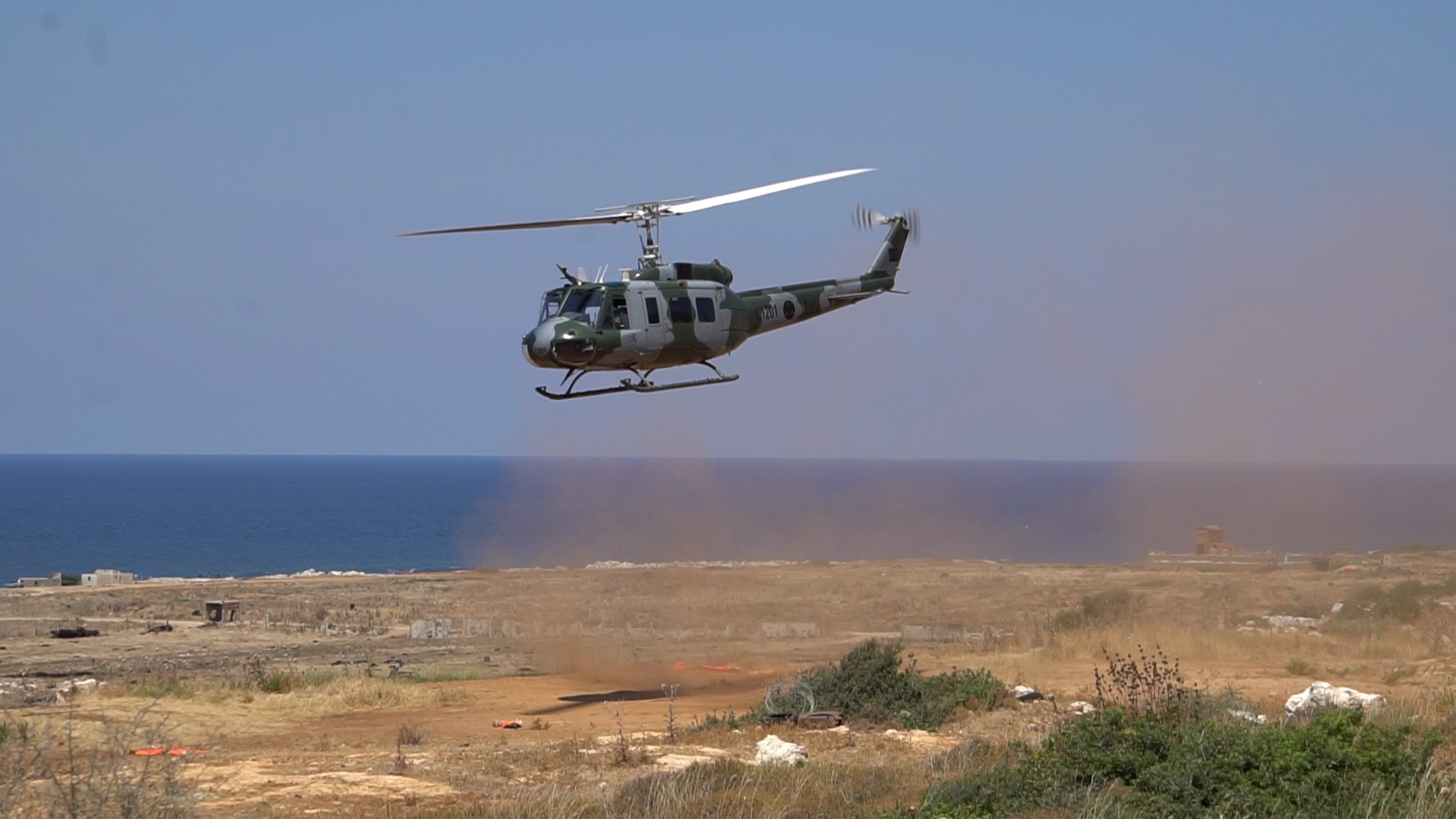
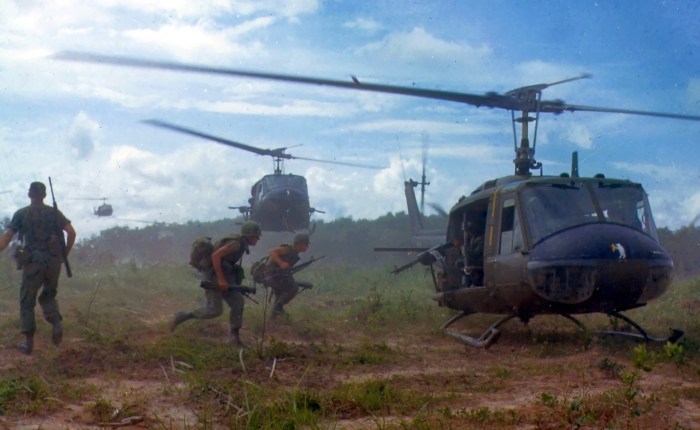
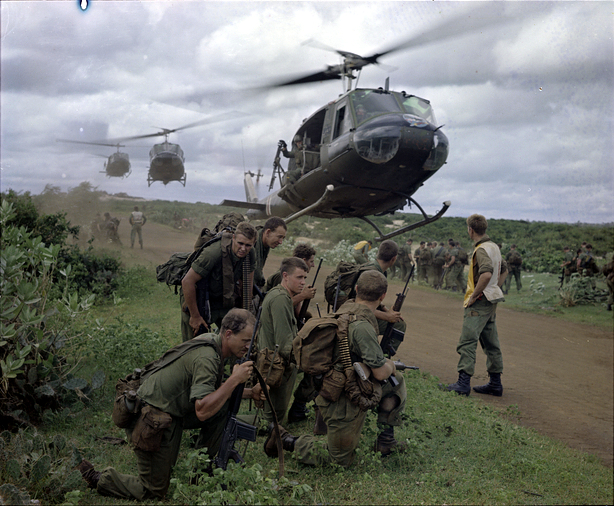
Between 1996 and 2001, Lebanon acquired 24 Bell UH-1H Huey helicopters from the US, most of which had been in storage since the end of the Vietnam War. Initially relying on pilots who had trained in the US in the 1980s, the Lebanese Air Force assigned 12 of the helicopters to the 11th Squadron at Beirut Air Base, eight to the 10th Squadron at Klayaat Air Base, 55 miles north-northeast of Beirut near the Syrian border, and four to the 14th Squadron at Rayak Air Base, in the Bekaa Valley, 30 miles east of Beirut. These simple utility helicopters became the backbone of the Lebanese Air Force – and its only combat aircraft – until 2007.[6]
The first battle for the rebuilt air force erupted on 31 December 2000, in the rural Dinniyeh region near Lebanon’s northern border with Syria. Approximately 150 militants from the al-Qaeda-aligned group Takfir wal-Hijra attacked a military checkpoint, killing four soldiers and capturing two. The LAF immediately launched an operation to rescue the captives and eliminate the militants.[7]
Brigadier General S.Y., then a major in the 11th Squadron, recalled first learning of the attack while at a New Year’s Eve party with his squadron in Beirut. The festivities had begun winding down at four o’clock in the morning when the commander of the air force suddenly burst in, his face pale. “Return to base immediately!” he ordered. The men thought he was joking—or drunk. Frustrated, he bellowed for them to obey his orders at once. “We learned the hard way that he meant business,” S.Y. said.[8]
Two hours later, the major lifted off from Beirut, leading four Hueys north along the Mediterranean coast to reinforce the 10th Squadron at Klayaat Air Base, closer to the scene of the action. Upon arrival, they found the base buzzing with activity: Two companies from Lebanon’s elite Ranger Regiment had already arrived, along with two mechanised infantry companies and an armoured platoon. The LAF planned to deploy the Rangers to assault the militants’ mountain stronghold, while the mechanised infantry and armour secured Klayaat.
The helicopter force split into an assault group of eight and a reserve group of two, the latter consisting of one aircraft for medical evacuation (MEDEVAC) and another equipped with two 7.62-millimetre door guns for armed reconnaissance. In the afternoon, two 14th Squadron Hueys arrived from Rayak to reinforce the reserve group.
At nine o’clock in the morning, with temperatures hovering just below freezing, the assault group launched for the target area. Situated 5,200 feet above sea level, the high-altitude landing zones limited each helicopter to carrying only seven Rangers with their heavy gear, instead of the usual eleven. “Navigation to the landing zones was the hardest part, as the air force still used primitive methods in those days,” recalled S.Y. “Our best navigational equipment were the terrain maps provided by the directorate of geographic affairs.”
The assault group split into two elements, each led by a 10th Squadron pilot familiar with the terrain. “We flew nap of the earth,” said S.Y., “using the deep valleys and low terrain features to remain hidden from enemy observation.” The first element landed to the south and southwest of the target, while the second landed to the north. The Hueys then returned to Klayaat for another load. In total, they lifted approximately 200 soldiers onto the battlefield. The rapid encirclement enabled by air power allowed the Rangers to crush the militants in just forty-eight hours. The Lebanese Army lost 11 soldiers killed in action, including one of the men taken captive during the initial checkpoint attack.[9]
The Lebanese Air Force Adapts
The Hueys played a significant role in the LAF’s next major battle a little over six years later. On 19 May 2007, four armed men from the Sunni militant group Fateh al-Islam robbed a bank in the town of Amyoun, thirty miles north-northeast of Beirut, making off with $125,000 in cash. Lebanese paramilitary police quickly identified the militants and tracked them to a house ten miles to the north in Tripoli. A firefight erupted, soon spreading to the nearby Nahr al-Bared Palestinian refugee camp, which served as Fateh al-Islam’s headquarters. Hundreds of militants stormed LAF military posts and checkpoints in the area, killing thirty-two soldiers, most of whom were asleep in their barracks. The LAF launched an all-out effort to secure Nahr al-Bared and neutralise the militants, leading to a nightmare scenario of urban combat amid the camp’s ramshackle buildings and narrow alleyways.[10]
The Lebanese Air Force initially restricted its support to MEDEVAC and overhead surveillance. However, just two months before the battle, Lebanon had acquired nine Aérospatiale SA.342L Gazelle light attack helicopters for the newly established 8th Squadron. Armed with 68-millimetre unguided rockets, HOT guided antitank missiles, and .50-calibre machine guns, the Gazelles provided Lebanese ground troops with close air support for the first time.
The urban assault bogged down around the militants’ final position, a veritable fortress of concrete rubble. The Gazelles’ light weapons proved ineffective. With casualties mounting, the Lebanese Air Force adapted by jury-rigging three of its Huey utility helicopters as bombers.
The Lebanese Air Force had a stockpile of 500- and 1,000-pound bombs left over from the 1960s. Mechanics cannibalised bomb shackles and pylons from scrapped Mirage fighter jets and attached them to a steering rod from a decommissioned navy ship. To evenly distribute the weight across the cabin floor, they mounted the rig on an armoured plate salvaged from an inoperative M-113 armoured personnel carrier. Each heli-bomber could carry a single 1,000-pound bomb slung between the landing skids or a 500-pound bomb on either side. Mechanics lengthened the landing skids to ensure sufficient ground clearance.
The heli-bombers went into action on 9 August 2007. Using civilian Garmin 295 handheld GPS units to pinpoint their release points, the crews dropped dozens of bombs, blasting a path for the ground troops. The innovative air support helped bring the battle to an end on 7 September.[11]
The siege of Nahr al-Bared proved a formative experience for the LAF, underscoring the need to modernise the air force with fixed-wing aircraft capable of providing intelligence, surveillance, and reconnaissance (ISR), target designation, strike coordination, and close air support. This set of requirements roughly aligned with what the US Air Force (USAF) defined as light attack armed reconnaissance (LAAR). The US government offered to assist in this effort, eager to prevent Lebanon from becoming another active battlefront in the Global War on Terrorism.[12]
In 2009, the USAF provided Lebanon with a Cessna 208B Grand Caravan, funded through grant aid. Orbital ATK (later acquired by Northrop Grumman) reconfigured the Caravan as an AC-208 Eliminator, equipping it with a Wescam MX-15 electro-optical/infrared camera system, a microwave broadcast system for real-time video transmission, a weapons-grade laser designator, an infrared laser pointer, a flare dispenser, and launch rails to carry an AGM-114 Hellfire missile under each wing. A second aircraft arrived on 6 November 2013, configured solely for reconnaissance and lacking missile rails. A third aircraft, featuring a more powerful engine and a digital glass cockpit, arrived on 19 December 2016. The Cessnas were assigned to the 4th Squadron at Beirut Air Base.[13]
The Lebanese Air Force still had a handful of senior fixed-wing pilots who had flown Mirages and Hunters. However, without a fixed-wing pilot training program, it sent young lieutenants abroad to Saudi Arabia, the United Arab Emirates, and the United States for flight training. Upon their return to Lebanon, they completed a short Cessna training course provided by Orbital ATK. According to US Ambassador Elizabeth Richard, these pilots built a solid reputation. “The LAF is recognized in the US for the quality of the officers and soldiers it sends to our training and education programs,” she said. “Lebanese students routinely finish at the top of their classes, earning ‘honor graduate’ recognition.”[14]
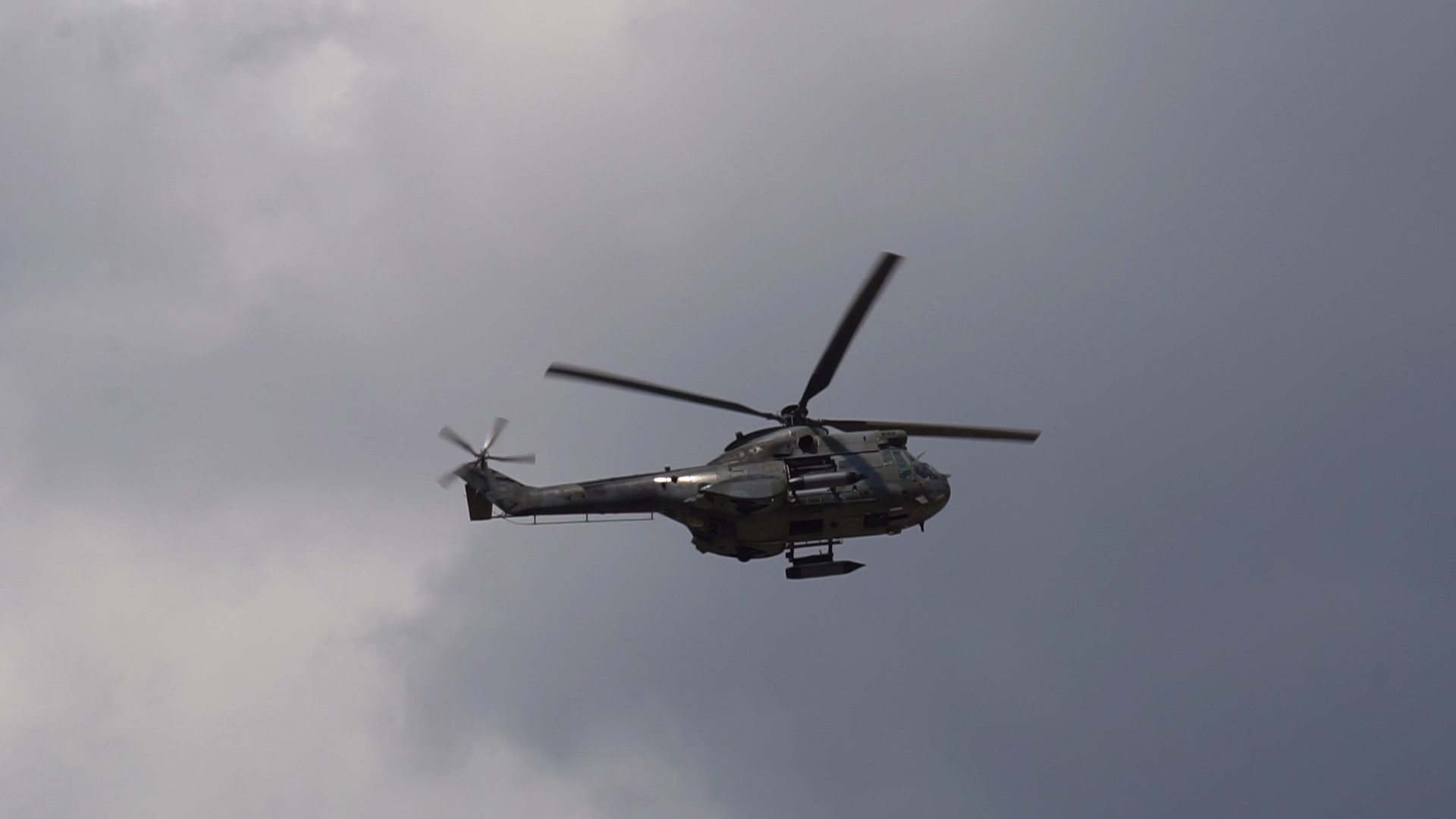
In addition to the grant aid, the US embassy facilitated $1.9 billion in foreign military sales (FMS) to Lebanon between 2014 and 2020, including the purchase of six RQ-11 Raven small, hand-launched UAVs and 1,000 Hellfire missiles – items paid for with Lebanon’s own funds.[15] The Lebanese Air Force also bolstered its rotary-wing fleet, acquiring 24 additional UH-1H Huey IIs from the US and nine Aérospatiale SA.330 Super Puma utility helicopters, license-built in Romania by Industria Aeronautica Romana. The Super Pumas were assigned to the 9th Squadron at Hamat Air Base, located 30 miles north of Beirut.[16]
The Long Campaign
These modest modernisation efforts took place as neighbouring Syria spiralled into chaos. Protests against dictator Bashar al-Assad escalated into civil war and eventually gave rise to the Islamic State. More than one million Syrian refugees poured across the border into Lebanon, with at least 137,000 settling in camps within the Baalbek-Hermel Governate, Lebanon’s northeastern-most region. The town of Arsal, perched above the Bekaa Valley on the slopes of the Qalamoun Mountains, had the highest concentration of Syrian refugees of any municipality in Lebanon, with 39,300 registered in four camps.[17] On 1 February 2013, a patrol from Strike Force, Lebanon’s elite counterterrorism regiment, came under attack while chasing a wanted terrorist near the outskirts of the town. The ambush killed Captain Pierre Bachaalani and 1st Sergeant Ibrahim Zahrman and wounded many others.[18]
The LAF found it increasingly challenging to operate near Arsal. Al-Nusra Front, al Qaeda’s Syrian affiliate, used the town as a base for smuggling men, weapons, and equipment into Syria. The group began expanding its reach into the Bekaa Valley through a relentless series of deadly suicide car bombings and mortar and rocket attacks. Meanwhile, the Islamic State took control of the mountainous region east of Ras Baalbek and al-Qaa.[19]
On 2 August 2014, al-Nusra Front launched an attack on the 8th Mechanized Infantry Brigade’s positions near Arsal. Over the next five days, roughly 700 militants from al-Nusra and the Islamic State joined the battle, resulting in the deaths of 19 soldiers, the wounding of 86, and the capture of 36. Special operations forces from the Ranger and Air Assault Regiments quickly deployed to reinforce the embattled Lebanese troops.[20]
Stationed 30 miles southeast at Rayak, the 8th Squadron launched its Gazelle attack helicopters to assist, relying on satellite imagery printed from Google Earth to orient themselves to the battlefield. The commander of the air wing at Rayak led the first mission, his helicopter armed with two .50-calibre machine guns. “When we arrived in the area, we did not know which military positions had fallen and the extent of the enemy’s penetration,” recalled his copilot, Captain M.B.[21]
Spotting a group of armed men, but unsure of their identity, the wing commander dove in for a closer look. Bullets from a Russian-built PK machine gun raked the helicopter. A round tore through the cockpit, destroying the collective lever and spearing through M.B.’s left hand. “I started bleeding, losing large amounts of blood,” he recounted. The wing commander took control of the helicopter and flew straight to the Dar al-Amal Hospital near Baalbek, where M.B. received emergency medical care. The wing commander then returned to Rayak, only to find that he could not shut down the engine. A bullet had damaged the fuel controls, forcing him to wait for the helicopter’s fuel tank to run dry before it finally shut down.[22]
Meanwhile, at Beirut Air Base, 1st Lieutenant C.Y., a Cessna pilot with the 4th Squadron, received an urgent call from base operations ordering him to prepare his aircraft and crew—himself as pilot, Lieutenant al-Taki as pilot and mission systems operator, and a brigadier general from the operations staff to coordinate with the operations center. “A few minutes later, we were ordered to take off, destined for the outskirts of Arsal,” he recalled. Lieutenant C.Y. was already well-acquainted with the area, having frequently surveilled it since the ambush on the Strike Force patrol the previous year. Yet amid the chaos of the mass attack, the fog of war had set in. “The attack on the military centers happened suddenly,” said C.Y. “We did not have all the information on the disposition of military forces, especially after several fell into the hands of the terrorists.”[23]
Establishing radio contact with the ground troops, C.Y. and his crew began scanning the battlefield through their camera, watching as militants overran one post after another. The defenders executed a fighting withdrawal, buying time until reinforcements could arrive. In the summer of 2014, the 4th Squadron had only two Cessna 208s, and the second aircraft had yet to be retrofitted to carry Hellfire missiles. That meant C.Y. and his crew were flying the only armed fixed-wing aircraft in the country. While the United States classified the AC-208 as an inexpensive armed tactical reconnaissance aircraft, for Lebanon, it was a strategic asset. It would take more than an hour to land, rearm, and return to the target area, so they had to carefully balance their ability to deliver aerial firepower with the need to maintain continuous ISR coverage. “Our plane was equipped with two Hellfire missiles,” said C.Y. “We were careful not to use them unless absolutely necessary.”[24]
That moment came when the militants encircled a company of Lebanese troops, wounding several with their relentless fire. “We saw through the surveillance camera a group of about ten armed men preparing to storm the center from the rear,” C.Y. recalled, “so we decided to intervene.” Watching the Cessna’s live video feed from the operations center, the LAF director of operations, along with the army and air force commanders, gave the green light for a strike. It would be the first precision airstrike in Lebanon’s history.
C.Y. recounted what happened next: “We turned toward the target and launched the first missile, which took fifty-eight seconds to reach its mark, striking with precision and inflicting heavy losses on the attacking force.” The militants retreated into a nearby house. Circling overhead, C.Y.’s crew waited for them to regroup before launching the second missile. “We deliberately waited for all the terrorists to enter the building before firing,” he explained. “The Hellfire missile is most effective in enclosed spaces – such as rooms, buildings, and fortifications – rather than open areas.”[25]
The missile streaked off the launch rail, and one minute and twenty seconds later, it slammed into the house. The cement walls collapsed, and the house erupted in flames, fuelled by secondary explosions from ammunition stored inside. No one emerged from the inferno. The airstrike reversed the tide of the battle, forcing the militants to withdraw from around the besieged company.[26]
The combat debut of the AC-208 in August 2014 marked the LAF’s first use of precision-guided munitions and the first real-time broadcast of battlefield surveillance video. Meanwhile, the Hueys and Super Pumas transported troops and flew MEDEVAC missions, while Raven UAVs and the Cessnas provided ISR, and Gazelles and the AC-208 delivered close air support. These efforts helped halt the militant advance, but the LAF could not yet push them back, and a three-year stalemate ensued. Of the 36 Lebanese soldiers captured in the battle, the militants executed four, released seven, and exchanged 16 for thirteen jailed militants in a prisoner swap. Nine remained unaccounted for, presumably still held by the Islamic State.[27]
According to Captain G.A., another Cessna pilot in the 4th Squadron, “Our squadron participated in continual military operations from 2014 to 2017. The unrelenting bombing over such a long period of time helped to exhaust and demoralize the militants, as well as to destroy their logistical capabilities and their command-and-control centers.” In addition to Hellfire strikes, the Cessna crews provided observation and adjustment for artillery fire. According to G.A., “The targets we attacked varied from command-and-control centers and logistical points […] to tunnels dug in the mountains […] bulldozers used in digging tunnels and fortifying fighting positions […] and on one occasion, we targeted an Army M-113 armored vehicle which the militants had captured.” While they typically struck preplanned targets, the crews also often searched for targets of opportunity.[28]
In the summer of 2016, the Lebanese Air Force launched its largest coordinated airstrike on militant positions – an operation they viewed as their own miniature version of Desert Storm’s high-tech ‘Instant Thunder’ air campaign. “The raid lasted for about forty minutes,” recalled Colonel A.M., who helped plan the operation. The Cessna fired the opening salvo, striking the first two of eight preplanned targets: an Islamic State field command headquarters and a house sheltering a high-value target. Both missiles hit with precision. “No one left the targeted buildings,” A.M. stated, “so we considered the casualties as confirmed.”[29]
Follow-on attacks targeted enemy infrastructure, including lodging, water tanks, ammunition dumps, and vehicle yards. To bolster the air force’s limited firepower, mechanics from the 9th Squadron modified a Super Puma into a heli-bomber – similar to the Huey bomber experiment nine years earlier. They rigged a pair of steel I-beams through the cabin and mounted bombs or rocket pods on either side, creating a makeshift but effective strike platform.[30]
After the initial Hellfire strikes, the Cessna used its infrared laser pointer to mark targets for the helicopters and served as a tactical air coordinator, sequencing their attacks. The Puma dropped two 250-kilogram bombs, followed by the Gazelles strafing militants fleeing the bombing with .50-calibre machine guns and 68-millimetre rockets. Once the helicopters cleared the area, the Cessna called in artillery fire to finish the job. Throughout the operation, the Cessna and Raven UAVs provided continuous surveillance of the target area.[31]
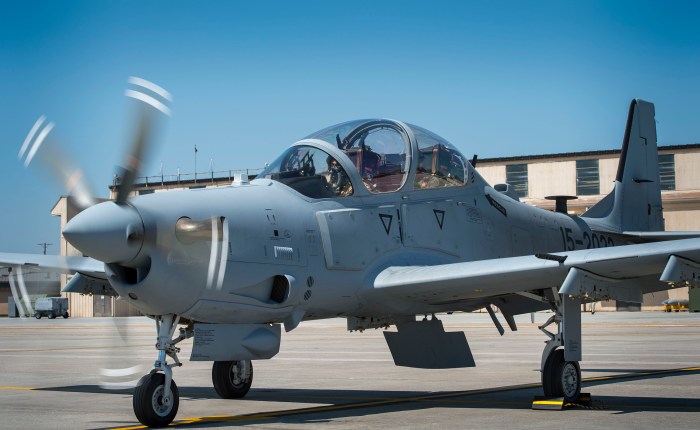
While the LAF managed to contain the Islamic State and al-Nusra incursions into the Bekaa Valley, military and political leaders collaborated with their American counterparts to secure new equipment and training for a decisive operation to expel them entirely. For the air force, this included six Embraer A-29B Super Tucano light attack aircraft, which would equip the newly formed 7th Squadron. The Lebanese Air Force identified twelve of its top pilots to train on the Super Tucano at Moody Air Force Base, Georgia, under the USAF’s 81st Fighter Squadron. The first group of pilots departed Lebanon in February 2017, with the first two A-29s scheduled for delivery in October and the remaining four the following June. USAF Special Operations Command also planned to deploy a team of combat aviation advisors to Lebanon in 2018.[32] Meanwhile, in January 2017, al-Nusra Front merged with four other militant groups to form Hayat Tahrir al-Sham (HTS), which dubiously claimed to have severed its ties with al-Qaeda.[33]
It remains a point of contention whether Lebanon’s ingrained political paralysis or a strategic decision to wait for new capabilities like the Super Tucanos delayed a decisive operation against the Islamic State. On 20 July 2017, the Iranian-backed Shia militia Hezbollah pre-empted the LAF by launching its own campaign to retake Arsal.[34]
For at least six years, Hezbollah had been deploying fighters to Syria as part of Iran’s efforts to bolster Bashar al-Assad’s dictatorial regime. A successful operation to expel HTS from Lebanon would not only serve Iran’s strategic interests but also undermine the LAF’s position as the nation’s principal security provider. From 21 to 24 July, Hezbollah seized more than 60 per cent of HTS-held territory, leading to a ceasefire on 27 July that allowed the remaining HTS fighters to withdraw into Syria. Hezbollah’s sophisticated propaganda apparatus flooded media channels with battlefield updates, maps, and footage highlighting combined arms operations involving infantry, artillery, and rockets. Press reports estimated that more than twenty Hezbollah fighters and 150 HTS militants were killed in the operation.[35]
The Lebanese government had no choice but to order an immediate offensive against the Islamic State positions north of Arsal – a far more challenging task given the rugged, defensible mountainous terrain – or risk appearing impotent compared to Hezbollah. The LAF assembled a frontline strength of 4,300 troops in the eastern Bekaa Valley, including the 6th Mechanized Infantry Brigade, the 1st Intervention Regiment, the Air Assault Regiment, one company from the 4th Intervention Regiment, and one company from the Moukafaha, a special operations unit under the Directorate of Military Intelligence. Another 4,250 personnel provided support, including elements of the 1st and 2nd Artillery Regiments with 36 155-millimetre howitzers.[36]
On 14 August 2017, the LAF initiated its opening manoeuvres, officially launching Operation Fajr al-Jaroud, or ‘Dawn of the Hills,’ on 19 August. That same day, Hezbollah and the Syrian Arab Army announced their own offensive on the Syrian side of the border, once again attempting to upstage the LAF. The simultaneous operations fuelled speculation of collusion between the LAF and Hezbollah. However, LAF leadership firmly denied such claims, emphasising that their only interaction with Hezbollah was limited to a deconfliction policy not unlike the one between US and Russian forces in Syria.[37]
Lebanese ground forces encountered improvised explosive devices (IEDs), fortified fighting positions, and suicide bombers, but years of sustained operations had already hollowed out the Islamic State’s defences. A steady barrage of air and artillery fire paved the way for the advancing troops. Over 11 days, the Lebanese Air Force flew 141 hours of combat missions. One of the seventy US military advisors in the country, observing the LAF’s coordinated use of ISR, precision air strikes, artillery, infantry, armour, and special operations forces, described the campaign as ‘twenty-first century maneuver warfare by a modern military.’[38]
Though delivery of the first two A-29s was still two months away, the 4th Squadron had received its third Cessna in December 2016, and all three aircraft were now configured to carry Hellfires. Additionally, the Lebanese Army fielded a game-changing new weapon it had received several years earlier from the Americans: M712 ‘Copperhead’ 155-millimetre laser-guided artillery rounds. Flying parallel to the gun-target line, the Cessna could use its laser designator to guide in round after round with deadly precision. During Fajr al-Jaroud, the Lebanese Army fired 130 Copperhead rounds, including a blistering thirty-three in just thirty minutes at the operation’s climax.[39]
The Islamic State’s position collapsed in mere days, shrinking to a pocket of just twenty square kilometres by 27 August – down from the 120 square kilometres it had occupied at the outset. However, the LAF never launched a final assault; with the operation proving a stunning success, an alarmed Hezbollah quickly intervened to negotiate a ceasefire, allowing the remaining Islamic State fighters to retreat into Syria in exchange for information on the nine LAF soldiers captured three years earlier. Though all nine had been killed, the deal allowed the LAF to recover their bodies. On 28 August, approximately four hundred Islamic State fighters and camp followers departed on buses for eastern Syria.[40]
Operation Fajr al-Jaroud killed more than 50 Islamic State fighters, at the cost of nine LAF soldiers killed and 100 wounded. For the first time since the civil war, the LAF successfully conducted a theatre-level joint operation, demonstrating its ability to effectively utilise US security assistance.[41] Yet, the success owed to more than just the two-week operation. “When the battle is discussed, many people marvel at the short period of time that it was limited to,” said Colonel A.M. “They do not realize that it came as a result of three years of continuous targeting that exhausted the terrorists’ infrastructure and killed many of them.”[42]
Conclusion
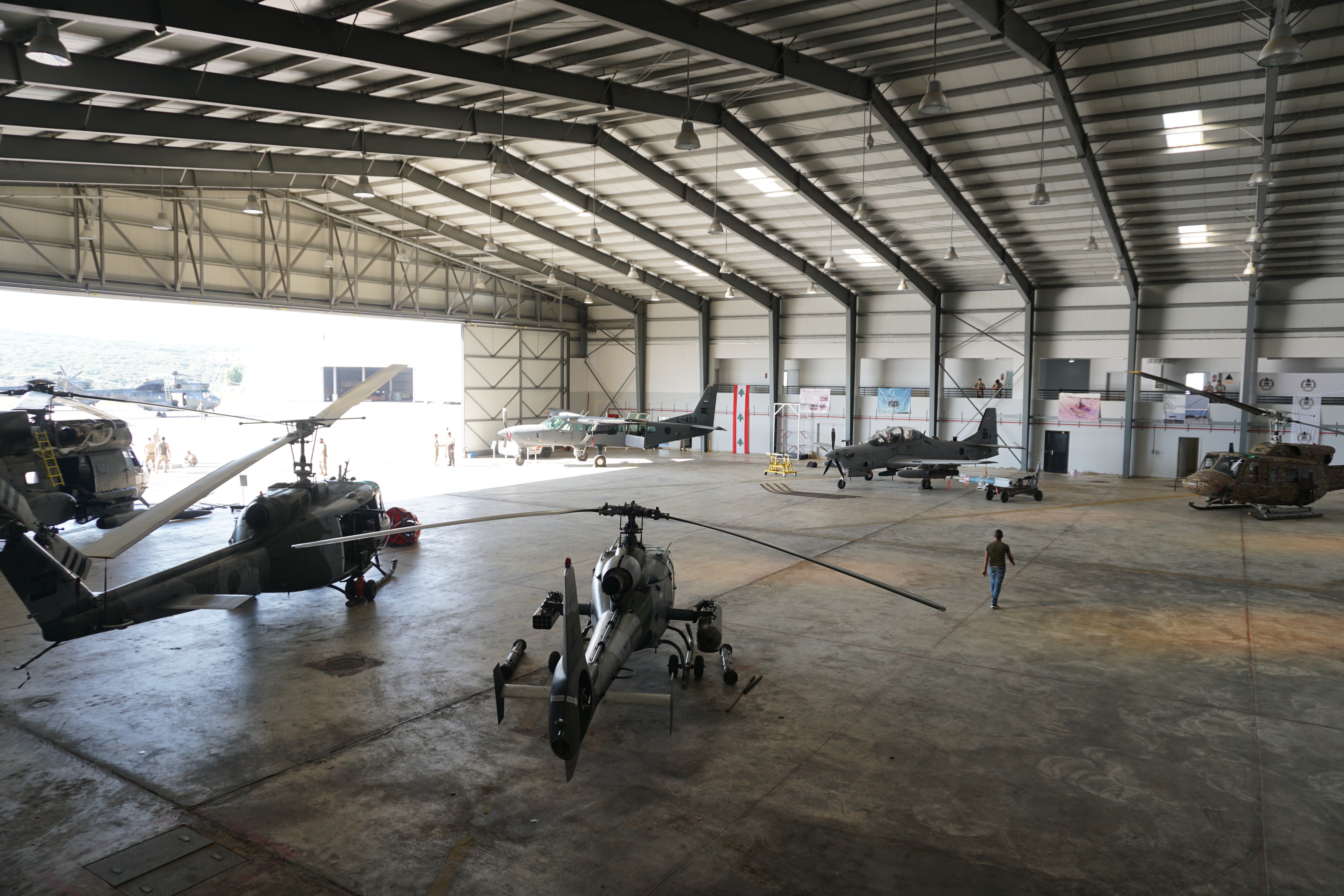
Hezbollah’s efforts to undermine and overshadow the LAF failed to erode its legitimacy as Lebanon’s principal source of security. The success of the joint operation against the Islamic State spoke for itself.[43] Despite limited resources, the Lebanese Air Force played a decisive role. From the Dinniyeh operation in 2000 to the heli-bombers over Nahr al-Bared in 2007 and the precision airstrikes in the Bekaa Valley from 2014 to 2017, Lebanese aviators found ways – often audacious improvisations – to mobilise air power against violent extremist organisations. What began as a force rebuilt around hand-me-down Hueys gradually evolved into a capable mix of helicopters, crewed fixed-wing aircraft, and UAVs performing ISR, light-attack, and mobility missions. This transformation depended on steady but limited US security assistance: surplus aircraft, grant-funded upgrades, foreign military sales, and training programs that produced a new generation of skilled aviators.
Yet US assistance alone cannot account for the LAF’s battlefield performance. At every stage, Lebanese officers, NCOs, and technicians adapted faster than their inventory changed. They welded together heli-bombers when they lacked aircraft capable of striking hardened urban positions. They mastered precision weapons that they had never fired in training. They built tactics around a single missile-toting Cessna, rationing its firepower while keeping it on station as the country’s only persistent ISR asset. They overcame shortages in personnel, spare parts, and navigational equipment through ingenuity, improvisation, and a deep sense of obligation to the soldiers fighting below.
By the time the Islamic State threatened Lebanon’s northeastern frontier, the Lebanese Air Force had become something unexpected: not a conventional air force in the American sense, but an adaptable, hybrid force optimised for Lebanon’s terrain, politics, and threats. Its air campaign from 2014 to 2017, though modest by comparison with the coalition’s industrial-scale air power in Operation Inherent Resolve, proved decisive along the Islamic State’s western flank, steadily degrading militant capabilities until Operation Fajr al-Jaroud finally drove them from Lebanese territory.
From its rebirth in the 1990s through its campaign against the Islamic State, the history of Lebanese air power demonstrates that modest US security assistance, when paired with Lebanese ingenuity, produced an outsized strategic effect. The Lebanese Air Force did not win battles because it possessed the most technologically advanced equipment, the largest fleet, or the most refined doctrine. It won because Lebanese aviators extracted maximum value from every aircraft, every munition, and every training opportunity. In doing so, they provided the Lebanese Army with the air support it needed to survive, adapt, and prevail against some of the most dangerous violent extremist groups in the world.
Lieutenant Colonel Daniel Jackson PhD is an Assistant Professor of History at the US Air Force Academy. He served as a U-28A instructor pilot, Combat Aviation Advisor, and Adaptive Precision Strike evaluator pilot in Air Force Special Operations Command, flying 236 combat missions and 125 combat support missions in support of Operations Inherent Resolve, Freedom Sentinel, Enduring Freedom, Enduring Freedom-Philippines, and Damiyan. He holds a PhD in history from the University of Wisconsin-Madison. He is the author of Fallen Tigers: The Fate of America’s Missing Airmen in China during World War II (2021).
Wael Nawaf al-Taki is the manager of Strategic Defense Solutions, Ltd. He served as Chief of the Lebanese Air Force Operations Room and as an A-29 Super Tucano instructor pilot and squadron commander. In addition to flying more than 200 hours in combat operations, he spearheaded organisational and tactical reforms that enhanced air-ground integration within the Lebanese Armed Forces.
Header image: A Lebanese Air Force student prepares to fly the Embraer A-29B Super Tucano for the first time at Moody Air Force Base, Georgia (Source: US Air Force)
[1] The names of most Lebanese military officers have been withheld for security reasons.
[2] Major Wael al-Taki, oral history interview by Daniel Jackson, February 27, 2025.
[3] Department of Defense, ‘Operation Inherent Resolve: Targeted Operations to Defeat ISIS,’ Operation Inherent Resolve, 9 August 2017.
[4] National Archives and Records Administration, Record Group 330, Military Assistance Program 1000 System Master File, 1986.
[5] US Embassy in Lebanon, ‘US Ambassador Delivers Cessna Aircraft to Lebanese Armed Forces,’ 19 December 2016,.
[6] Brigadier General S.Y., oral history interview by Wael al-Taki, 3 August 2022.
[7] Lebanese Armed Forces, Air Force Operations, Beirut, 2021.
[8] Brigadier General S.Y., oral history interview by Wael al-Taki.
[9] Ibid.
[10] Lebanese Armed Forces, Air Force Operations.
[11] Ibid.: Riad Kahwaji, ‘The victory – Lebanon developed helicopter bombers,’ Skyscraper City, 3 September 2007.
[12] Lebanese Armed Forces, Air Force Operations.
[13] Orbital ATK, Mission Systems Operators Manual: Lebanon Armed Caravan SN1239, 02TMAOP-002, Fort Worth, 2016; Stephen Trimble, ‘USAF orders 2nd Cessna Caravan for Lebanon,’ FlightGlobal, 18 January 2012.
[14] US Embassy in Lebanon, ‘The United States Delivers Four A-29 Super Tucano Aircraft to the LAF,’ 12 June 2018.
[15] Department of State, Bureau of Political-Military Affairs, ‘US Security Cooperation with Lebanon,’ Fact Sheet, 20 January 2025.
[16] Defense Security Cooperation Agency, ‘Lebanon – Huey II Helicopters,’ Transmittal No. 12-07, 20 July 2012; Defense Security Cooperation Agency, ‘Lebanon—Huey II Rotary Wing Aircraft and Support,’ Transmittal No. 14-20, 19 September 2014; Defense Security Cooperation Agency, ‘Lebanon—AGM-114 Hellfire II Missiles,’ Transmittal No. 15-29, 4 June 2015.
[17] Aram Nerguizian, The Lebanese Armed Forces, Hezbollah, and Military Legitimacy, Draft, (Washington, DC: Center for Strategic & International Studies, 2017), p. 9.
[18] Lebanese Armed Forces, Air Force Operations.
[19] Nicholas Blanford, ‘The Lebanese Armed Forces and Hezbollah’s Competing Summer Offensives Against Sunni Militants,’ CTC Sentinel 10, no. 8 (2007), p. 27.
[20] Nerguizian, The Lebanese Armed Forces, Hezbollah, and Military Legitimacy, p. 11.
[21] Captain M.B., oral history interview by Wael al-Taki, 6 August 2021.
[22] Ibid.
[23] Captain C.Y., oral history interview by Wael al-Taki, 6 August 2021.
[24] Ibid.
[25] Ibid.
[26] Ibid.
[27] Blanford, ‘The Lebanese Armed Forces and Hezbollah’s Competing Summer Offensives Against Sunni Militants,’ p. 27.
[28] Captain G.A., oral history interview by Wael al-Taki, 10 August 2021.
[29] Colonel A.M., oral history interview by Wael al-Taki, 10 August 2021.
[30] The author inspected this aircraft himself and spoke with the maintenance officer who oversaw the modifications while in Lebanon in 2020.
[31] Ibid.
[32] Defense Security Cooperation Office, ‘Lebanon—A-29 Super Tucano Aircraft,’ Transmittal No. 15-13, 9 June 2015; Sierra Nevada Corporation, ‘SNC, Embraer Complete Early Delivery of A-29 Super Tucano Aircraft to Lebanese Air Force for Close Air Support Role,’ Press Release, 12 June 2018.
[33] Thomas Joscelyn, ‘Al Qaeda and allies announce ‘new entity’ in Syria,’ Long War Journal, 28 January 2017
[34] Nerguizian, The Lebanese Armed Forces, Hezbollah, and Military Legitimacy, p. 15.
[35] Ibid., pp. 15-6.
[36] Ibid., p. 20, 22.
[37] Ibid., p. 16, 23.
[38] Ibid., p. 24.
[39] Lebanese Armed Forces, Air Force Operations.
[40] Blanford, ‘The Lebanese Armed Forces and Hezbollah’s Competing Summer Offensives Against Sunni Militants,’, p. 29.
[41] Nerguizian, The Lebanese Armed Forces, Hezbollah, and Military Legitimacy, p. 24, 27.
[42] Colonel A.M., oral history interview by Wael al-Taki, 10 August 2021.
[43] Nerguizian, The Lebanese Armed Forces, Hezbollah, and Military Legitimacy, p. 5.







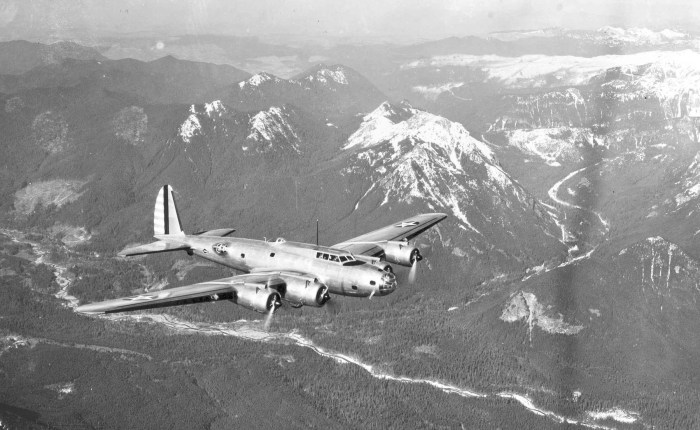

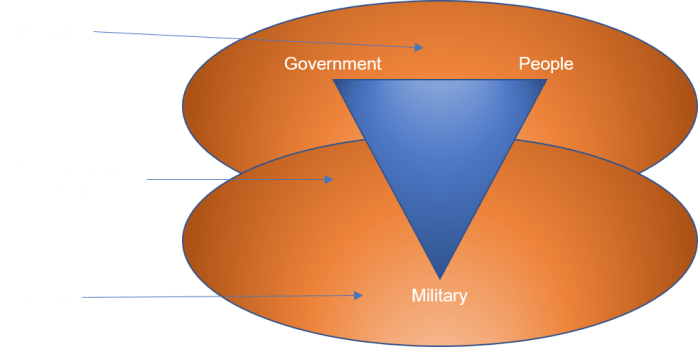
 By September of 1942, however, this vision underwent a substantial change in focus, as the emphasis shifted down the spectrum toward more tactical means. AWPD-42 prioritised the destruction of the Luftwaffe, albeit still attained primarily through industrial means in the form of attacks against aeroplane and engine factories. Regardless, such a change represented a significant change in thinking away from more general enablers such as electricity to war material itself that had a less immediate effect on society as a whole. Second, the US Army Air Forces needed to concentrate on submarine building yards, before finally turning its attention to transportation in order to sever the ‘vital link in the Germany military and industrial structure.’

 From Balloons to Drones