2026 marks the 10th Anniversary of the establishment of From Balloons to Drones. To mark this anniversary, From Balloons to Drones plans to publish a series of articles examining the state of air power studies.
In 2017, From Balloons to Drones published an article that asked the question ‘Wither Air Power Studies?.’ More recently, in a 2024 article on ‘Some Problems with Airpower History,’ Professor John Ferris reflected on the field of air power history, noting that ‘[d]espite its problems, airpower history is in the best state it has known. Just a few steps would bring it to the quality of naval history.’[1] Those steps are to recognise the problems associated with the field, embrace the comparative and transnational nature of airpower history, and welcome new voices to the field. These steps can be applied to a broader field of air power studies, not just air power history.
To mark the 10th Anniversary of the scholarly webzine, From Balloons to Drones is seeking submissions on the state of air power studies. Articles might, for example, explore the development of a subfield of air power studies (e.g., history, law, ethics) or its place in academia. Possible themes to be explored might include, but are not limited to:
History | Role in Professional Military Education | Place in Armed Forces
Place in Academia | Ethical and Moral Issues
National Experiences | International Experiences | Transnational Experiences
Personal Experiences | Memory and Memorialisation
We are looking for articles between 500 and 4,000 words, but we will accept longer pieces and reserve the right to publish them in parts. Please visit our submissions page for more information on the types of articles published by From Balloons to Drones.
We plan to begin running the series in early 2026, and it will continue for as long as we receive potential contributions. We welcome and encourage submissions from academics, policymakers, service personnel, and relevant professionals.
Submissions should be submitted in Word format and emailed to the email address below with ‘SUBMISSION – Wither Air Power Studies?’ in the subject line. Also, please include a 50-100-word biography with your submission. Footnotes are acceptable; please be careful to explain any jargon. If you are unsure if your idea fits our requirements, please email us with ‘POTENTIAL SUBMISSION – Wither Air Power Studies?’ in the subject line to discuss.
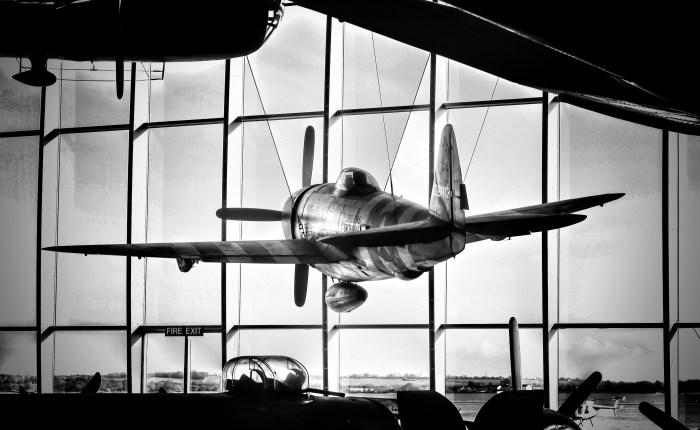
Header image: A Republic P-47D Thunderbolt on display at the American Air Museum at the Imperial War Museum at Duxford, UK. (Author’s Personal Collection)
[1] John Ferris, ‘Some Problems with Airpower History,’ Journal of Military and Strategic Studies 23, no. 1 (2024), p. 31.
“If we cannot get the F-35, we will evaluate other options.” “There is no way we will step back from the S-400s.” “If the promises given to us are not kept, we will not approve Sweden’s NATO membership.” These are just a few of President Recep Tayyip Erdoğan’s statements since Türkiye was removed from the F-35 Joint Strike Fighter programme in the summer of 2019, following Ankara’s decision to operationalise the Russian-made S-400 air defence system. However, despite years of bold rhetoric, Türkiye has yet to take meaningful steps toward modernising its ageing F-16 fleet, a gap that carries profound implications for regional competition and nearby conflicts. Despite setbacks over the past few years, Türkiye has gained significant visibility in the global security arena through its indigenously developed defence products. Its drones have played notable roles in conflicts in Nagorno-Karabakh, Ukraine, Syria and Libya, and were recently seen during the India-Pakistan border skirmishes. At the same time, Türkiye has expanded its defence exports to include light combat aircraft to Spain, corvettes to Pakistan and Malaysia, and various other complex systems. In parallel with these achievements, Türkiye launched its own fighter jet project, the Turkish Aerospace Industries KAAN, a fifth-generation, twin-engine stealth aircraft intended to become the future backbone of Turkish air defence. However, Ankara has acknowledged the challenges of developing a fully indigenous fighter jet. Beyond the immense financial burden and limited domestic technological expertise, political obstacles have also emerged. Most recently, Foreign Minister Hakan Fidan admitted that Türkiye has been having difficulty obtaining F110 engines from the United States, intended not only for prototypes but also for the first production batch of the KAAN.
Despite Türkiye’s long-standing ambition to build its own fighter aircraft, Turkish military planners have recognised since the late 1990s that the country would require an interim, or ‘gap,’ platform. As a result, Türkiye became one of the early participants in the Joint Strike Fighter (JSF) programme, which later produced the F-35 Lightning II. In return for its early commitment, Ankara was contracted to purchase more than 100 F-35s and became a strategic industrial partner in the programme. Knowledge transfer from the JSF also enabled domestic programmes such as TÜBİTAK SAGE’s Stand-Off Missile (SOM), now one of the most critical assets in Türkiye’s strategic inventory.
Türkiye’s selection of the F-35 programme was not a surprise. Since joining NATO, it has relied primarily on American-made aircraft for its air force. Although Türkiye has operated helicopters from France, cargo aircraft from Spain and drones from Israel, its combat fleet has always been built around US designs, including the F-84, F-86, F-101, F-4 and F-5. Today, Türkiye operates the second-largest F-16 fleet in the world after the United States.
Even amid political friction with Washington, Türkiye stayed committed to its American-made fighter fleet for their battlefield performance and long-established logistics. They also carried symbolic weight as reminders of Ankara’s Cold War alignment. During the US arms embargo on Türkiye between 1975 and 1978, imposed after Türkiye’s military intervention in Cyprus, Ankara continued operating US aircraft by sourcing spare parts from Libya and purchasing used F-104s from Italy. A similar moment of tension came in 2003, when Türkiye refused to allow the U.S. to use its territory for the war in Iraq. During this period, the Eurofighter Typhoon consortium reportedly offered Türkiye an equal partnership in the programme. Yet, despite the attractiveness of the offer, Turkish decision-makers remained committed to the F-35 programme.
Türkiye has long been the second-largest standing military force in NATO and has been regarded as a strategic partner of the United States since the Korean War. Nevertheless, the relationship between Ankara and Washington has frequently been marked by political tensions. However, these disputes did not significantly alter Türkiye’s major defence procurement decisions, particularly concerning fighter aircraft. In practice, and despite political rhetoric about diversifying suppliers, Türkiye consistently relied on US platforms. However, Ankara’s removal from the F-35 programme in 2019 may mark a significant turning point. Türkiye can no longer rely on a simple reset with Washington to modernise its ageing fleet, especially as the strategic environment grows more demanding.
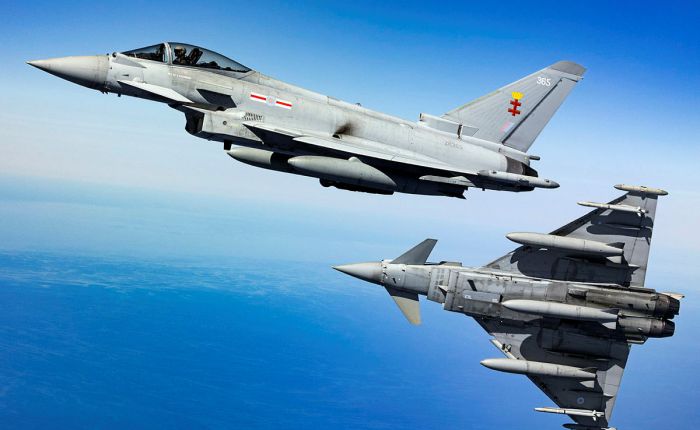
Since its removal, Türkiye has repeatedly signalled its desire to return to the F-35 programme. Turkish officials argued that the expulsion lacked legal basis, and President Erdoğan and his government suggested they were open to negotiating a resolution to the S-400 dispute. Meanwhile, Türkiye’s military establishment warned of a growing capability gap until the KAAN could enter service. Türkiye also expressed interest in acquiring new F-16s and modernisation kits as an interim solution, but the package has yet to be finalised. At the same time, the war in Ukraine, Israeli air operations in Syria and the region, and Greece’s modernisation of its air force have further accelerated Ankara’s search for a new fighter platform. These developments raise concerns about falling behind in the regional balance of air power and being unprepared for a potential spillover from nearby conflicts. As a result, for the first time in decades, Türkiye is actively pursuing a non-American fighter aircraft solution: the Eurofighter Typhoon.
Although Türkiye expressed formal interest in the Eurofighter a few years ago, the procurement process was blocked by Germany due to political disagreements. Following lengthy negotiations, the German government recently agreed to lift its objections, and a contract has now been signed. However, Türkiye now faces a delivery challenge. The most advanced version of the Eurofighter currently in production is Tranche 4, and the order backlog means new aircraft will not arrive before 2030. Because the Eurofighter is an entirely new platform for the Turkish Air Force, integrating it into doctrine, pilot training, and logistics will take significantly longer than adopting another US-made jet. To reduce the delay, President Erdoğan announced Türkiye’s intention to purchase used Eurofighters from Qatar and Oman alongside the 20 new Tranche 4 aircraft from the UK.
Ankara’s assertive pursuit of the Eurofighter highlights its growing concern over the balance of air power in its surrounding region. Despite significant advances in its drone fleet, including one-way attack drones and jet-powered unmanned systems, Türkiye understands that drones cannot fully replace conventional fighter jets in terms of deterrence and air superiority. Yet significant questions remain. Will Germany and other consortium members approve the transfer of Meteor long-range air-to-air missiles or Captor radar systems to Türkiye as well? Will Türkiye be permitted to integrate indigenous avionics and weapons into the Eurofighter? And how quickly can the Turkish Air Force develop the same level of operational proficiency it currently maintains with the F-16?
Ankara has now taken a decisive step away from decades of exclusive US fighter procurement. Whether the Eurofighter becomes a temporary gap-filler until the KAAN enters service, or the beginning of a long-term shift in Turkish defence strategy, remains to be seen. What is certain is that Turkish air power is at a strategic crossroads. Despite the uncertainties, the Eurofighter Typhoon remains the only available option to bridge the capability gap until the KAAN is operational or the F-35 dispute is resolved.
Ömer Ergün Özkan is a PhD candidate in the School of Public and International Affairs at the University of Cincinnati. His research examines military effectiveness, the impact of emerging technologies on defence procurement, and the strategic use of unmanned systems in modern warfare. He is also a Research Fellow at the Linda Hall Library in Kansas City, Missouri. He can be followed on X as @ErgnZkan.
Editorial Note: Led by Editor Dr Mike Hankins, From Balloons to Drones, produces a monthly podcast that provides an outlet for the presentation and evaluation of air power scholarship, the exploration of historical topics and ideas, and provides a way to reach out to both new scholars and the general public. You can find our Soundcloud channel here. You can also find our podcast on Apple Podcasts and Google Podcasts.
Join us as we look at what literary treasures await us in upcoming books on aerospace defence history. What are we excited about? What have we been reading? What have you been reading, and what are you excited about? Let us know!
Also covered: Star Wars, Antz vs. A Bug’s Life
Also, please read our editor-in-chief’s post on the same topic.
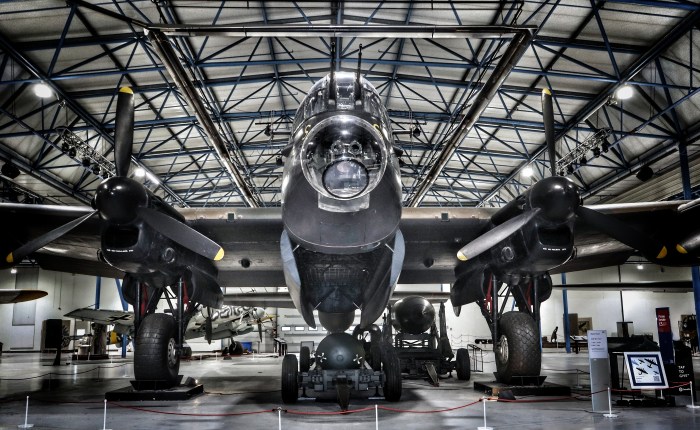
Header image: An Avro Lancaster at the RAF Museum in London (Source: Author’s Collection)
Editorial note: This piece was originally drafted not long after the passing of Air Vice-Marshal Mason. However, several personal reasons led to a delay in its publication.
On 12 November 2023, Air Vice-Marshal Professor R.A. Mason, one of the doyens of air power studies, sadly passed away. Known as Tony by most who knew him personally and professionally, Mason can be considered one of the fathers of air power studies in the UK. As I have argued elsewhere, Mason was arguably the critical British air power thinker of the late 20th Century. From being the Royal Air Force’s (RAF) first Director of Defence Studies (DDefS) to his writing and commentary work, Mason was consistently at the forefront of the field until the 2010s. Indeed, his consistent commitment to the field and the length of his career made him stand out. He was also generous with his time and knowledge and always happy to share material with those who shared his interests.
Mason joined the RAF in 1956 and entered the Education Branch. He gradually rose through the ranks in his branch and undertook various assignments, including attending King’s College London, the United States Air War College and the RAF Staff College. Eventually, in 1976, Mason was informed that he would be the RAF’s first DDefS. Mason took up the role at the start of 1977. The position of DDefS was established due to the perceived state of thinking on air power within the RAF and public awareness of the Service’s role. In a letter to Air Officer Commanding-in-Chief Support Command, Air Marshal Sir Reginald Harland, Chief of the Air Staff, Air Chief Marshal Sir Neil Cameron noted that the position was being established ‘to help provide a new stimulus to air power thinking’ throughout the RAF.[1] This point was also emphasised in the terms of reference for the DDefS post, as there was a need to ‘write on air power and defence issues,’ which was to be encouraged.[2]
The establishment of the post of DDefS at the RAF Staff College at Bracknell and Mason’s perceived suitability for the role caused some debate. While this is not the place to consider that debate, the view of Mason’s successor, Group Captain Timothy Garden, is worth noting. Garden, a pilot and later Air Marshal Baron Garden, noted in 1982 in Air Clues that a colleague had questioned why he would want to take over what was perceived by 1982 as an ‘admin branch’ role. Garden reflected that the most appropriately qualified person should essentially hold the post to achieve its aims and that it ‘should not be the prerogative of any branch.’[3] That Garden, as a pilot, viewed the post in such a way was as much down to Mason’s hard work in the role as it was to the importance of the RAF’s intellectual development.
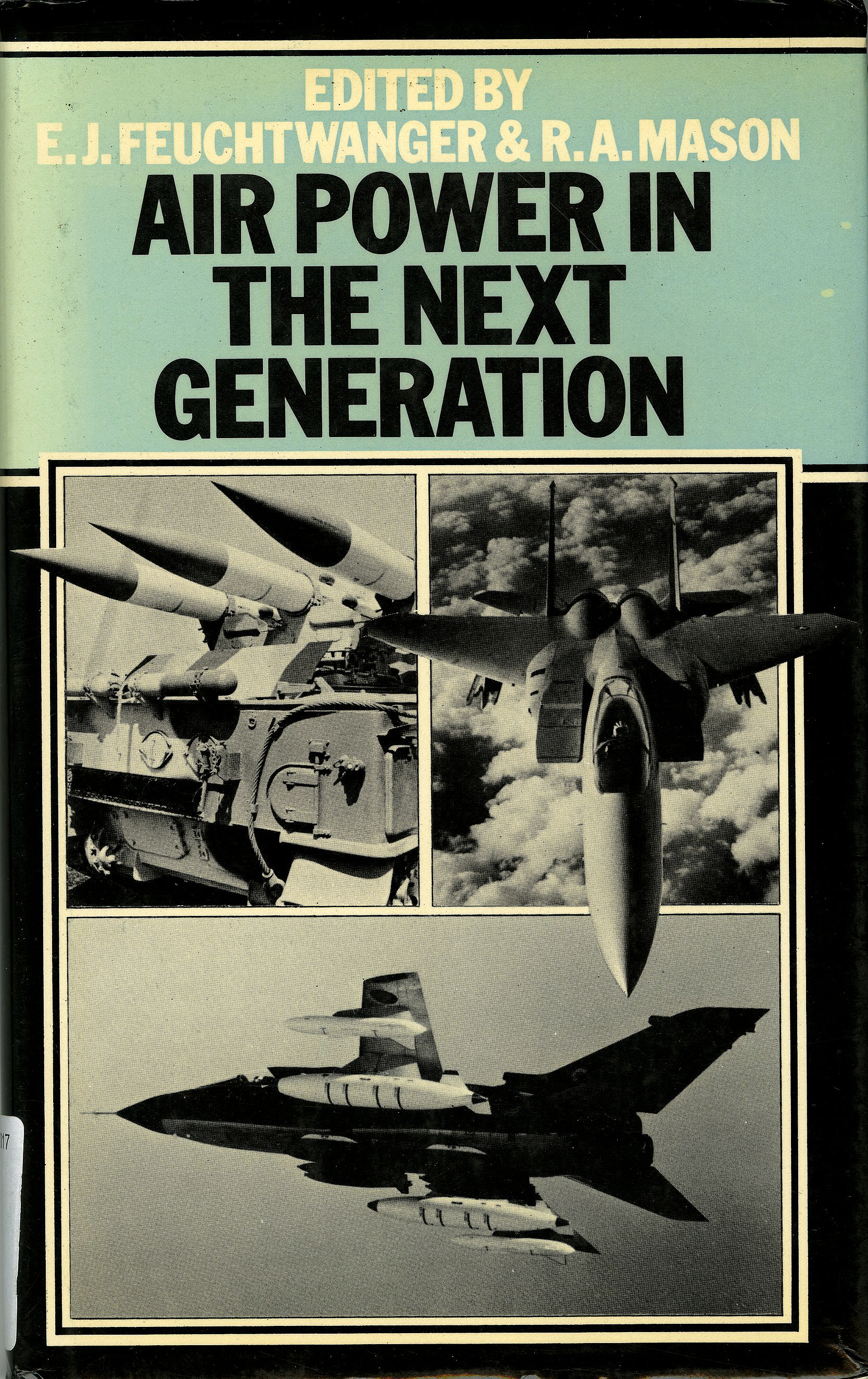
Mason nonetheless quickly sought to encourage discussion and debate and discussion about the role of air power within the service on taking up the role of DDefS. Despite the demise of the RAF Quarterly in 1977, Mason regularly contributed to Air Clues, which, up to the 1970s, had primarily been a technical publication for the RAF. In 1980, he established the Air Power Supplement to Air Clues, the spiritual ancestor to the RAF’s current professional flagship journal, Air and Space Power Review.[4] He also regularly contributed to other publications, such as The RUSI Journal. Perhaps his critical success in this period was organising an academic symposium in his first year in post. This symposium was entitled ‘Air Power in the Next Generation.’ It was well attended and laid the basis for similar endeavours by his successors. It was also published as Air Power in the Next Generation, co-edited with Edgar Feuchtwanger and published by The Macmillan Press in 1979. The book included contributions from the senior USAF, Luftwaffe, and Israeli officers, as well as civilian academics such as John Erickson. Much of Mason’s work started a process whereby his successors have continued to contribute to the collegiate intellectual development of the RAF through various schemes such as publications, conferences, and the management of defence fellowships.[5] Many former post-holders, such as Air Commodore (ret’d) Professor Peter Gray, are also notable for their contribution to developing British air power thinking through their engagement with academia after leaving the post of DDefS and the RAF.
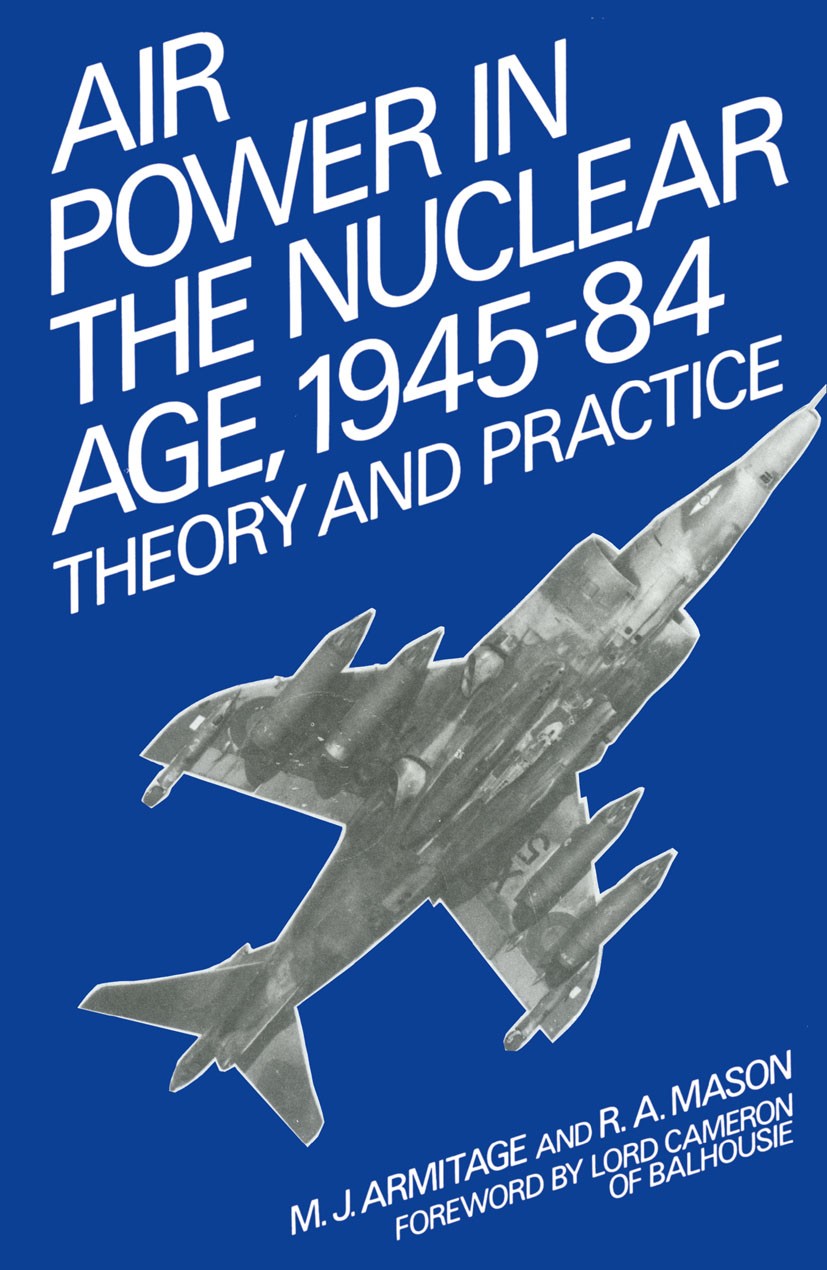
Mason’s contributions to air power studies continued after moving on from the DDefS role. In 1983, Mason published Air Power in the Nuclear Age in conjunction with Air Marshal Michael Armitage. This publication helped cement Mason’s position as a leading air power thinker. As Marshal of the Royal Air Force Lord Cameron noted in the foreword to the book, ‘[t]he joint authors of this book are advanced and enlightened thinkers about the doctrine of air power as a vital and perhaps the most important element of modern and future warfare.’[6] This view was not hyperbole. For example, in his 1984 overview of air power literature, historian Richard Hallion described the book as an ‘excellent survey’ of the development of air power during the Cold War.[7] The book was updated as a second edition in 1985. Mason’s other notable works in this period were the edited book War in the Third Dimension and the establishment of the Brassey’s Air Power: Aircraft, Weapons Systems and Technology Series. This latter series was interesting because it was explicitly directed at developing an awareness of air power amongst junior military personnel.
After retiring from the RAF in 1989, Mason moved into academia. He became the Leverhulme Air Power Research Director for the Foundation for International Security and took up a post as a Senior Research Fellow at the Centre for Studies in Security and Diplomacy at the University of Birmingham, where he was director. In 1996, he was made an Honorary Professor of Aerospace Policy at the University of Birmingham.
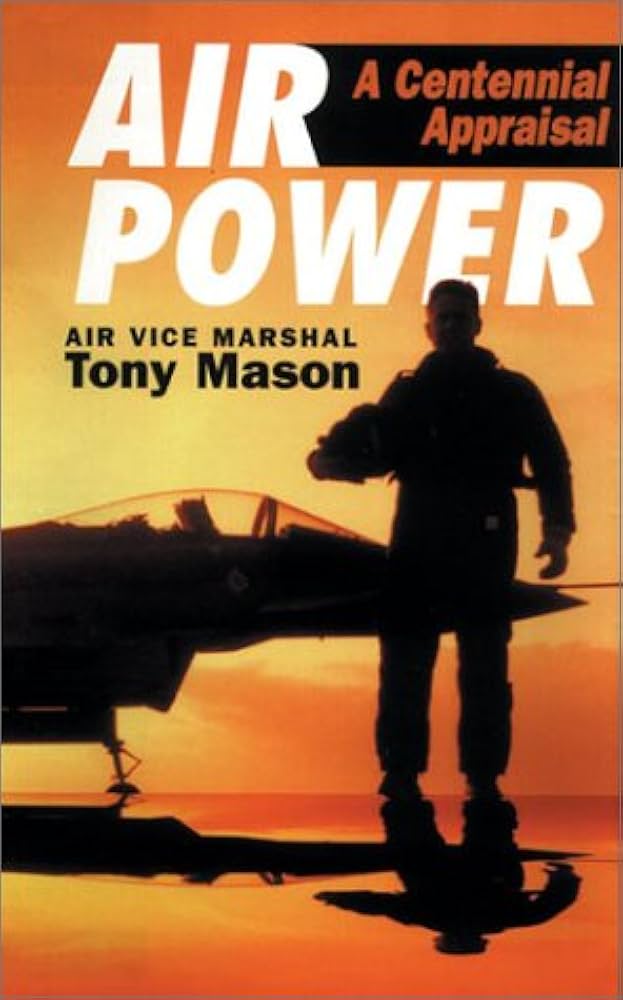
In 1994, Mason published what might be considered his magnum opus, Air Power: A Centennial Appraisal. This book confirmed Mason’s place as one of Britain’s leading air power thinkers. In this book, Mason examined the development of air power between 1989 and 1994. In doing so, he took a historical approach to examine how air power developed in the years up to this period. Mason then conceptualised the period 1989 to 1994, focusing on several key themes, such as the place of air power in arms control. Notably, he sought to contextualise much of the then-contemporary debate about the role of air power in the First Gulf War. Perhaps the most significant aspect of the book lay in Mason’s conceptualisation of what he called ‘differential air power.’[8] In short, Mason argued that while many nations shared ideas around the implementation of air power, only one in 1994 might be able to fully apply the advantages afforded by air power – the US. Using the idea of differential air power, Mason explored why the US stood out as a unique user of air power capabilities. These were important views for the time; however, while the book remains a significant contribution to air power studies, given factors such as the rise of China in the 21st Century and the distributed use of off-the-shelf technology such as drones, it remains to be seen whether his view remains applicable. Nevertheless, Mason concluded that:
One enduring concept underlay all air power thinking and all operations from the first day of the century to the last, and will continue to do so. Any nation intent on going to war to pursue an interest or defend a principle must first secure the air above it.[9]
Mason’s book was well received at publication and has become a commonly cited work. In his 1995 review in The RUSI Journal, Garden described the book as ‘excellent [and] thought-provoking.’[10] Thomas Keaney, who had worked on the Gulf War Air Power Survey, noted that the book made an ‘important contribution to any discussion on the future of airpower in the United States or elsewhere’ in a 1996 review for the US Joint Forces Quarterly.[11] However, historian Philip Sabin, reviewing the book in the Journal of Strategic Studies in 1995, offered a more tempered view. While recognising that the book had certain strengths, particularly Mason’s ‘balanced insights into many of the controversial issues regarding air power,’ Sabin also highlighted the challenge of reading a book that was ‘dense and difficult to follow without careful reading.’[12]
After the publication of Air Power, Mason continued to contribute to both the public’s and the RAF’s understanding of air power through his continued contribution to publications.[13] He also served as an expert member of the House of Commons Defence Committee in the early 2000s and helped inform British defence policy. He was also an inveterate media commentator and was often called to provide expert opinion. Mason’s contribution to air power studies was wide-ranging. While he had retired several years before his passing, his expertise will undoubtedly be sorely missed by many air power scholars for decades to come.
Dr Ross Mahoney is an independent scholar specialising in the history of war with particular reference to the use of air power and the history of air warfare. He is currently the Senior Historian within the Heritage Policy team at Brisbane City Council in Australia. He has nearly 20 years of experience in the education, museum and heritage sectors in Australia and the United Kingdom. Between 2013 and 2017, he was the inaugural Historian at the Royal Air Force Museum in the UK. In Australia, he has worked as a Historian for the Department of Veterans’ Affairs and taught at the Strategic and Defence Studies Centre at The Australian National University based at the Australian War College. His research interests are focused on the history of war, specifically on the history of air power and air warfare, military leadership and command, military culture, and the history and development of professional military education. He also maintains an interest in transport history. He has published numerous articles, chapters and encyclopedia entries, edited two books, and delivered papers on three continents. His website is here, and he can be found on Twitter at @airpowerhistory.
Header image: Ramslade House, the home of the RAF Staff College in Bracknell when Mason took up the role of Director of Defence Studies. (Source: Wikimedia)
[1] Author’s Personal Collection, Letter from the Chief of the Air Staff to AOC-in-C Support Command, 2 November 1976. I am grateful to the late Air Vice-Marshal Professor R.A. Mason for a copy of this and other documents linked to the establishment of the DDefS post.
[2] Author’s Personal Collection, Terms of Reference for Director of Defence Studies appended to a Letter from the Chief of the Air Staff to AOC-in-C Support Command, 2 November 1976, p. 1.
[3] Group Captain Timothy Garden, ‘Why don’t we forget Defence Studies and get on with the job?’ Air Clues 36, no 10 (1982), p. 364.
[4] Air Vice-Marshal Tony Mason, ‘Air Power Review’s Place in RAF History,’ Air Power Review 21, no. 1 (2018), p. 10.
[5] For a variety of publications produced under the guidance of DDefS, see: Andrew Lambert and Arthur C. Williamson (eds.), The Dynamics of Air Power (London: HMSO, 1996); Stuart Peach (ed.), Perspectives on Air Power: Air Power in its Wider Context (London: The Stationary Office: 1998); Peter W. Gray (ed.), Air Power 21: Challenges for the New Century (London: The Stationary Office, 2000); Peter W. Gray and Sebastian Cox (eds.), Air Power Leadership: Theory and Practice (London: The Stationary Office, 2002).
[6] Marshal of the Royal Air Force Lord Cameron, ‘Foreword’ in M’J’ Armitage and R.A. Mason, Air Power in the Nuclear Age: Theory and Practice, Second Edition (Basingstoke: The Macmillan Press, 1985), p. vii.
[7] Richard Hallion, The Literature of Aeronautics, Astronautics, and Air Power (Washington DC: Office of Air Force History, 1984), p. 36.
[8] Tony Mason, Air Power: A Centennial Appraisal (London: Brassey’s, 1994), pp. 235-278.
[10] Timothy Garden, ‘Book Reviews – Air Power: A Centennial Appraisal,’ The RUSI Journal 140, no. 3 (1995), p. 60.
[11] Thomas Keaney, ‘A Jubilee for Airmen: A Book Review,’ Joint Forces Quarterly 11 (1996), p. 134
[12] Philip Sabin, ‘Book Review – Air Power: A Centennial Appraisal,’ Journal of Strategic Studies 18, no. 4 (1995), pp. 141-2.
[13] For example, see: Tony Mason, ‘British Air Power’ in John Andreas Olsen (ed.), Global Air Power (Dulles, VA: Potomac Books, 2011), 7-62; R.A. Mason, ‘The Response to Uncertainty’ in John Andreas Olsen (ed.), European Air Power: Challenges and Opportunities (Dulles, VA: Potomac Books, 2014), pp. 215-30; Mason, ‘Air Power Review’s Place in RAF History,’ pp. 10-1.
Established in 2016, From Balloons to Drones has successfully developed into a well-regarded online scholarly platform dedicated to analysing and debating air power history, theory, and contemporary operations in their broadest sense, including space and cyber power. Our outputs include articles ranging from scholarly pieces to book reviews and a successful podcast series.
The role
To help us develop further, From Balloons to Drones is looking to recruit an emerging and passionate air power specialist to join our editorial team. This voluntary role’s primary purpose is to work with the editorial team to peer-review submissions while supporting the aims and objectives of From Balloons to Drones in other areas.
What do we offer?
The From Balloons to Drones team comprises experienced and knowledgeable air power scholars and editors who will mentor, advise, and assist the successful applicant. In addition, this role will allow you to develop your editing skills and experience of engaging with the broader air power studies community.
Who are we looking for?
Are you passionate about the study of air power and military aviation? Are you interested in the contest of ideas? Do you want to be involved in publishing new and exciting research? Then this role is for you.
From Balloons to Drones welcomes and encourages applications for this new role from applicants working in a wide range of fields, including but not limited to military history, international relations, strategic studies, law, and archaeology. The role is open to postgraduates, academics, policymakers, service personnel, and relevant professionals who are involved in researching the subject of air power and military aviation.
From Balloons to Drones actively encourages and promotes diversity within the field of air power studies. We particularly encourage applications from those underrepresented within the air power studies community.
Job functions
Contribute to the peer review of submissions.
Contribute to building a core community of interest using social media that furthers the aims and objectives of From Balloons to Drones.
Contribute to content creation for From Balloons to Drones across all platforms.
Professionally represent From Balloons to Drones at conferences and other events.
Undertake additional duties as required by the Editor-in-Chief.
Applications
To apply, contact Dr Ross Mahoney (airpowerstudies@gmail.com) with a copy of your CV and a brief cover letter (c. 500 words) explaining why you wish to join the team.
Closing date: 30 September 2024
You can learn more about the From Balloons to Drones editorial team here.
In 2019, From Balloons to Drones established a podcast series that aimed to provide an outlet for the presentation and evaluation of air power scholarship, the exploration of historical topics and ideas, and a way to reach out to both new scholars and the general public. Since then we have published 47 interviews with various authors and discussed numerous topics.
As we continue to develop and grow, the time has come to ask our audience what you would like to hear on our podcast. All answers are welcome. If your answer is not in this list below simply select ‘Other’ and provide more details in the comments. We look forward to your feedback. In the meantime, you can find our podcast channel here on Soundcloud.
For almost a decade, the US Air Force (USAF) has recognised the need for remotely piloted aircraft (RPA) aircrew to conduct ‘dwell.’ [1] Dwell is the Department of Defense (DoD) term for the time between deployments, typically used to restore unit cohesion, conduct training, and support servicemembers’ requirements. Operational experience and research showed that RPA squadrons, despite not physically leaving their home station during combat, also required time in dwell. However, the studies advocating RPA dwell focused on the benefits of time spent out of combat, with few authors studying combat performance. As a result, the studies missed a key point: continual combat operations, even with brief respites, force RPA squadrons and aircrew to divide their attention between traditional peacetime and wartime duties.
An unfocused squadron cannot mission plan with partners, fly operational missions, or conduct high-end training or rehearsals, leaving RPA squadrons persistently underperforming in combat. While RPA aircrew may reap some peacetime benefits from short dwell cycles, the RPA enterprise will only improve operations by adopting the same dwell model as the rest of the USAF.
A Brief History of RPA and Dwell
In 2015, the USAF conducted a wide-ranging study into the morale and retention problems in the RPA community, focusing on aircrew flying the MQ-1 Predator and MQ-9 Reaper. Known as the Culture and Process Improvement Program (CPIP), the study revealed that RPA morale was most affected by continuous combat operations, preventing time away for personal and professional reasons. Unbounded combat operations and the associated rotating work and sleep schedules damaged the health of RPA aircrew, dramatically increasing fatigue, alcohol usage, and medication compared to other USAF career fields.[2] Accepting the CPIP results, the USAF agreed to implement a combat-to-dwell cycle by 2024 for its RPA aircrew.[3]
The study’s mandate to focus on morale biased its recommendations. CPIP recommendations focused on improving aircrew welfare instead of operational performance, a conclusion that also affected follow-on civilian research. For example, a recent Government Accountability Office report on RPA staffing and dwell cited 21 articles; 17 were related to psychological health or well-being, while only one focused on operational effectiveness.[4] In both military and research circles, a consensus developed that aircrew needed a ‘break,’ causing leaders to eschew traditional dwell models and leave RPA aircrew with far too little time out of combat.
Traditional platforms have an established dwell model based on when a unit deploys. DoD policy sets a goal of a 1:3 deploy-to-dwell ratio; in other words, for every month a unit spends deployed, it should spend at least three months in dwell. The USAF expanded on DoD guidance with its Force Generation Model, which formalised a 24-month model with a maximum of 6 months in combat. RPA aircrew, who conduct combat missions from their home stations, fell into a grey area in both policies. The lack of specific guidance presented a problem in managing combat deployments for RPA aircrew.
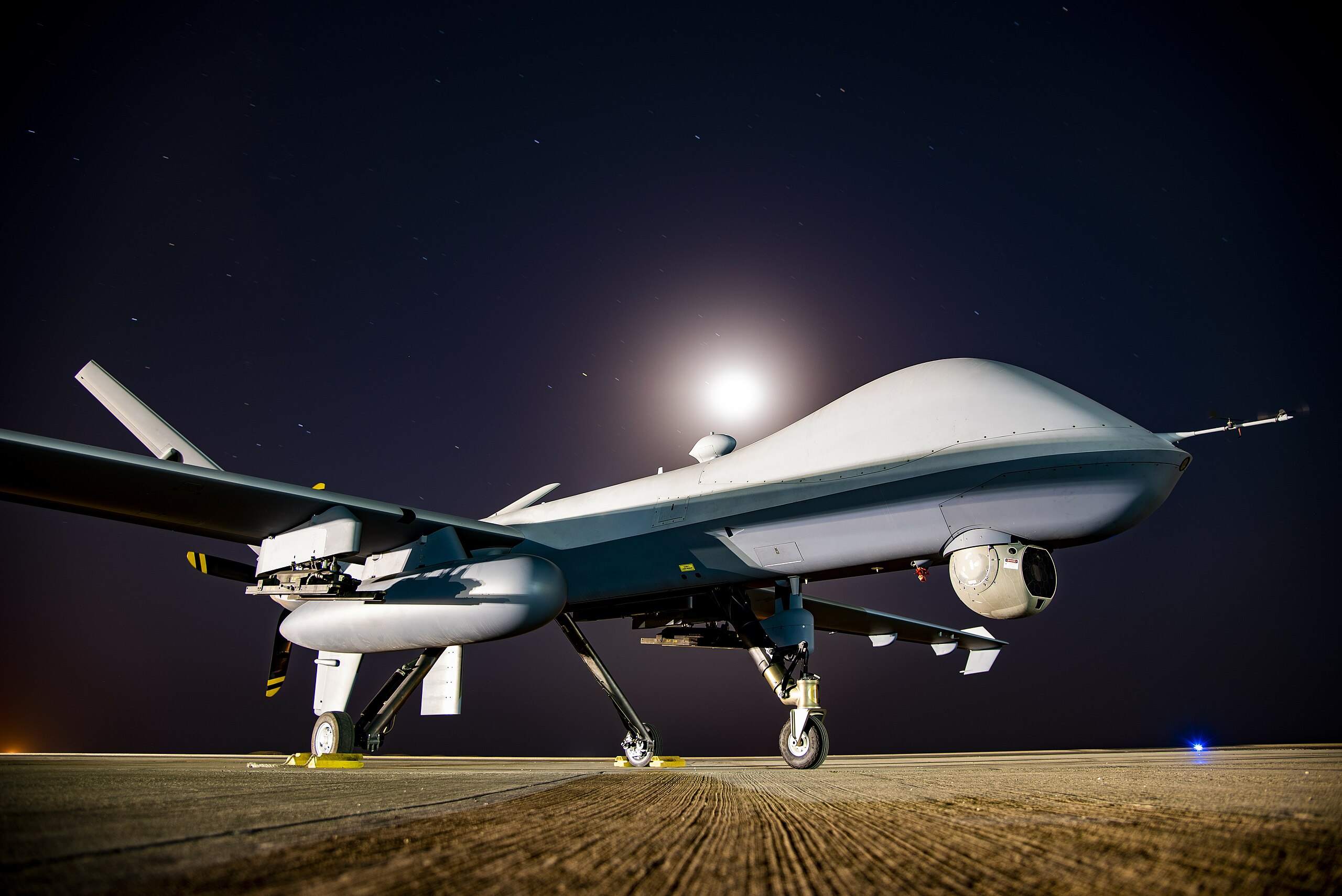
An MQ-9 Reaper sits on the 361st Expeditionary Attack Squadron flightline at an undisclosed location, 6 August 2022. The 361st Expeditionary Attack Squadron operates the aircraft in support of Operation INHERENT RESOLVE. (Source: Wikimedia)
Initial Implementation
On 1 October 2020, the 20th Attack Squadron at Whiteman Air Force Base entered a 60-day reconstitution period, the first-ever protected dwell time for an RPA unit. Colonel Timothy Monroe, the 25th Attack Group commander, wrote that dedicated time out of combat was a ‘paradigm shift’ that would ‘have a significant impact to an adversary’s calculus.’ He was quickly proven correct when the hard work of squadrons in reconstitution set up equally unprecedented MQ-9 deployments in Romania and Japan over the next three years. Even with a short amount of time in dwell, MQ-9 units executed a paradigm shift from counterterrorism in the Middle East and Africa to strategic competition in Europe and the Pacific.
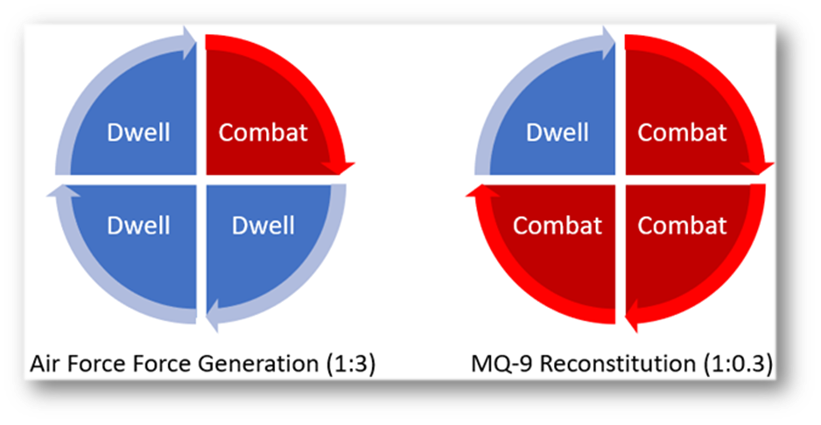
While the first MQ-9 dwell programs have shown impressive results, they have limited goals – rotating four squadrons implies a deploy-to-dwell ratio of 1:0.3, well below the DoD and USAF deploy-to-dwell goal of 1:3. A lower ratio means less training. Before a 6-month deployment, a fighter squadron receives a minimum of 18 months of training. An MQ-9 squadron starting the same 6-month deployment gets only two months of training – about one-tenth the time to complete similar training requirements. The unusually short training period also created new challenges and amplified existing structural problems in the RPA community.
Before initial dwell implementation, MQ-9 pilots and sensor operators completed mission qualification training and did not train again until they became instructors – one of the most underappreciated facts about RPA aircrew. Additionally, most mobility and big-wing aircraft have an aircraft commander that can debrief co-pilots, and most fighter aircraft has a flight lead that can debrief wingmen; MQ-9 aircrew have neither. When entering dwell, the lack of training experience and a senior/junior crew model forces squadrons to task their instructors to oversee every dwell sortie. As a result, MQ-9 instructor pilots and sensor operators are severely overtasked during dwell, leading to burnout, low morale, and poor training quality.
Depiction of deploy-to-dwell ratios (Source: Author)
Finding the Right Ratio
One barrier to decreasing MQ-9 deploy-to-dwell ratios is that dwell is normally justified in keeping US military members at home. DoD dwell policy explains a 1:3 deploy-to-dwell goal in part to ensure that servicemembers ‘do not spend extended periods of time away from their homeport, station, or base.’ MQ-9 aircrew never leave their base and return to their homes after each day of flying. Further, other communities (such as special operations forces) are chronically over-deployed. Even if studies continually demonstrate the need for RPA dwell, the lack of a physical departure from home stations challenges improved deploy-to-dwell ratios.
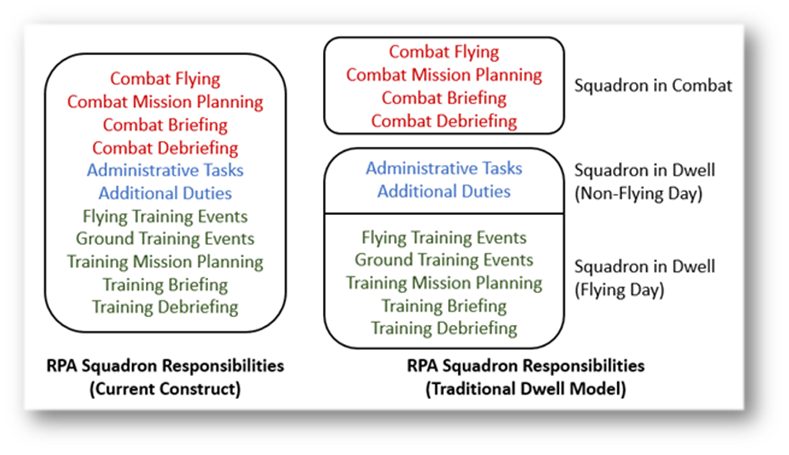
The requirement for traditional deploy-to-dwell ratios is evident in a day in the life of RPA aircrew. Today, pilots and sensor operators show up to work with many responsibilities. First, they fly for at least some portion of the day, conducting operational and combat missions globally. Second, they fulfil administrative responsibilities; all but the most junior aircrew have additional duties, from supervising airmen to administering annual evaluations to planning the squadron holiday party. Third, the aircrew accomplishes their training requirements. Because squadrons spend almost all their time in active operations, they must conduct basic combat training, training to make new instructors, and training on emerging tactics and technology while in combat. Fourth, the aircrew participates in mission planning, briefs, and debriefs internally and with outside agencies. To be clear, when RPA aircrew are flying, they do not do other work. Nevertheless, as soon as they leave the cockpit, their attention is pulled in three different directions.
Extensive research demonstrates the challenges of this type of multitasking. On the individual level, multitasking increases stress, decreases productivity, and increases the number of errors in completed work; one study demonstrated that multitasking functionally lowered workers’ IQ by ten percentage points.[5] Organisational multitasking, in which an organisation’s focus is split between multiple critical tasks, has similar effects. Research demonstrates that multitasking organisations deliver results slower, less consistently, and of lower quality than their focused counterparts.[6] The structure of RPA squadrons makes this problem more challenging; with a 24/7 mission, most of the squadron is divided into three shifts and rotating workweeks that prevent clear delineation of administrative, training, and combat duties. As a result, RPA squadron constructs that attempt to do all things at once are structured to underperform continually. Studies even demonstrate that RPA aircrew weigh their ‘deployed in-garrison status’ and ‘extra duties/administrative tasks’ (i.e., multitasking peacetime and wartime responsibilities) as higher operational stressors than combat and weapons employment.[7]
To return a squadron’s attention to its combat or operational mission, future RPA dwell programs must provide enough time out of combat to accomplish peacetime responsibilities. Before a manned squadron deploys, its members take the time to complete most training, administrative responsibilities, and professional requirements. RPA aircrew must do the same before beginning a ” deployment into operational flying. There is no data on how long this would take RPA aircrew, but it is reasonable to assume that it will be roughly the same as their manned counterparts.
With non-flying responsibilities accomplished outside combat missions, RPA squadrons could re-focus on combat operations. That same RPA pilot or sensor operator with four responsibilities in the legacy model would now have two: mission planning or execution. No key squadron personnel would conduct offsite development during high-priority operations. No pilots would be worrying about getting off shift in time to catch a flight to their wedding in four days.[8] In short, the RPA enterprise would flip its most important script: while combat operations are normal and training is abnormal today, the future must make training normal and combat a critical exception.
Depiction of RPA squadron responsibilities (Source: Author)
Conclusion – The Way Forward
Integrating RPA into a 1:3 deploy-to-dwell cycle faces serious but surmountable challenges. There are only three ways to improve a deploy-to-dwell cycle: create more squadrons, increasing the number of personnel out of combat; re-task (i.e., ‘redeploy’) some MQ-9 units from combat to training; or restructure squadrons to reduce overhead and free up personnel for training. Each of these three approaches poses its own challenges, as resources are limited, demand for MQ-9s is already more than the USAF can produce, and adjusting well-established personnel constructs carries risk. However, the idea that ‘risk is rarely mitigated, just transferred’ applies here. The RPA enterprise transfers risk to combat missions by not accepting risk in resourcing dwell.
Increasing time in dwell also increases the demand for training resources. More time in training means more flying hours at home, which requires more aircraft, cockpits, and (most importantly) maintainers. Even relatively banal problems like a chronic lack of desks and computers become acute when aircrew are in cockpits less and in offices more. The USAF is looking to save money in the MQ-9 program, but the relatively small costs of properly equipping its aircrew will pay returns in the long run.
Innovative solutions to resourcing dwell could be an entire article; the more critical starting point for the discussion is setting a requirement. As long as RPA aircrew are attempting to conduct missions while distracted by administrative responsibilities, if they are hampered by missing key personnel, and as long as they attempt to execute two important tasks simultaneously, they will not perform at the level expected of USAF aviators. The RPA enterprise must make another paradigm shift by integrating into the USAF dwell model, focusing on combat, and improving its performance just as the United States has faced its greatest strategic challenge since the end of the Cold War.
Major James ‘Hot’ Schmitt is a senior remote pilot in the United States Air Force with more than 2,500 combat and combat support hours in the MQ-1 and MQ-9. He has supported operations in Iraq, Syria, Afghanistan, and elsewhere, including a recent deployment as the Chief of Weapons and Tactics for Air Forces Central at Al Udeid Air Base, Qatar. He is a graduate of the US Air Force Weapons School and currently works on the Deputy Chief of Staff for Operations staff at Headquarters Air Force.
Header image: An General Atomics MQ-9 Reaper unmanned aerial vehicle flies a combat mission over southern Afghanistan. (Source: Wikimedia)
[1] RPA is the USAF term for large, medium-altitude uncrewed aerial systems, sometimes also referred to as UAS or drones, to emphasise the role of the remote crew flying the aircraft.
[5] Molly Russ and Derek Crews, ‘A Survey of Multitasking Behaviors in Organizations,’ International Journal of Human Resource Studies 4, no. 1 (2014), p. 139.
[6] Janice Alquizar, ‘Multitasking of Teachers in the Contemporary Settings: Boon or Bane?” (Dec 2018), p. 35.
[7] Wayne Chappelle et al., ‘Symptoms of Psychological Distress and Post-Traumatic Stress Disorder in United States Air Force “Drone” Operators,’ Military Medicine 179, no. 8 (2014), p. 67.
Established in 2016, From Balloons to Drones has successfully developed into a well-regarded online scholarly platform dedicated to analysing and debating air power history, theory, and contemporary operations in their broadest sense, including space and cyber power. Our outputs include articles ranging from scholarly pieces to book reviews and a successful podcast series.
The role
To help us develop further, From Balloons to Drones is looking to recruit an emerging and passionate air power specialist to join our editorial team. This voluntary role’s primary purpose is to manage our social media presence on Twitter, Facebook, and LinkedIn. You will also be involved with the peer review of submissions and supporting the aims and objectives of From Balloons to Drones in other areas. Please note that this is an unpaid role.
What do we offer?
The From Balloons to Drones team comprises experienced and knowledgeable air power scholars and editors who will mentor, advise, and assist the successful applicant. In addition, this role will allow you to develop your editing skills and experience of engaging with the broader air power studies community. You can learn more about the From Balloons to Drones editorial team here.
Who are we looking for?
Are you passionate about the study of air power? Do you have experience in managing social media accounts? Are you interested in the contest of ideas? Do you want to be involved in publishing new and exciting research? Then this role is for you.
From Balloons to Drones welcomes and encourages applications for this new role from applicants working in a wide range of fields, including but not limited to military history, international relations, strategic studies, law, and archaeology. The role is open to postgraduates, academics, policymakers, service personnel and relevant professionals involved in researching the subject of air power.
From Balloons to Drones actively encourages and promotes diversity within the field of air power studies. We particularly encourage applications from those underrepresented within the air power studies community.
Job functions
Contribute to managing our social media presence on Twitter, Facebook and LinkedIn.
Contribute to the peer review of submissions.
Contribute to building a core community of interest using social media that furthers the aims and objectives of From Balloons to Drones.
Contribute to content creation for From Balloons to Drones across all platforms.
Professionally represent From Balloons to Drones at conferences and other events.
Undertake additional duties as required by the Editor-in-Chief.
Applications
To apply, contact Dr Ross Mahoney (airpowerstudies@gmail.com) with a copy of your CV and a brief cover letter (c. 500 words) explaining why you wish to join the team.
Closing date: 1 July 2023
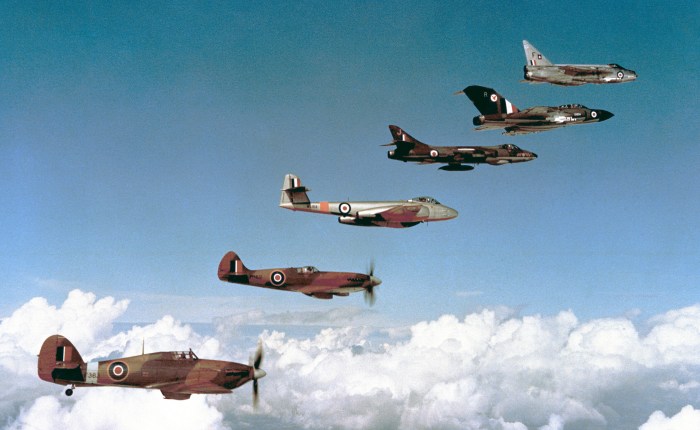
Header image:Pictured for the 20th Anniversary of the Battle of Britain in 1960 is a unique line-up of RAF fighters from the Battle of Britain to 1960. From bottom to top: Hawker Hurricane IIc, Supermarine Spitfire PR.XIX, Gloster Meteor F.8, Hawker Hunter FGA.9, Gloster Javelin FAW.9R and an English Electric Lightning F.1. (Source: Wikimedia)
Established in 2016, From Balloons to Drones is an online scholarly platform that analyses and debates air power history (including aviation history), theory, and contemporary operations in their broadest sense, including space and cyber power. To date, we have published over 250 articles on various air power-related subjects.
Since its emergence at the start of the 20th Century, air power has increasingly become the preferred form of military power for many governments. However, the application and development of air power are controversial and often misunderstood. To remedy this, From Balloons to Drones seeks to provide analysis and debate about air power through the publication of articles, research notes, commentaries, book reviews, and historic book reviews – see below for a description of the range of articles published.
The study of air power is to be understood broadly, encompassing not only the history of air warfare, including social and cultural aspects, but also incorporating contributions from related fields, such as archaeology, international relations, strategic studies, law and ethics. Possible subjects to be explored might include, but are not limited to:
Strategy, Theory and Doctrine | Organisation and Policy | Roles
Operations – Kinetic and Non-Kinetic | Tactics, Training and Procedures
Strategic and Operational Effect | Technological Developments
Ethical and Moral Issues | National, International and Transnational Experiences
Personal Experiences | Culture | Memory and Memorialisation
From Balloons to Drones welcomes and encourages potential submissions from postgraduates, academics, and practitioners involved in researching the subject of air power.
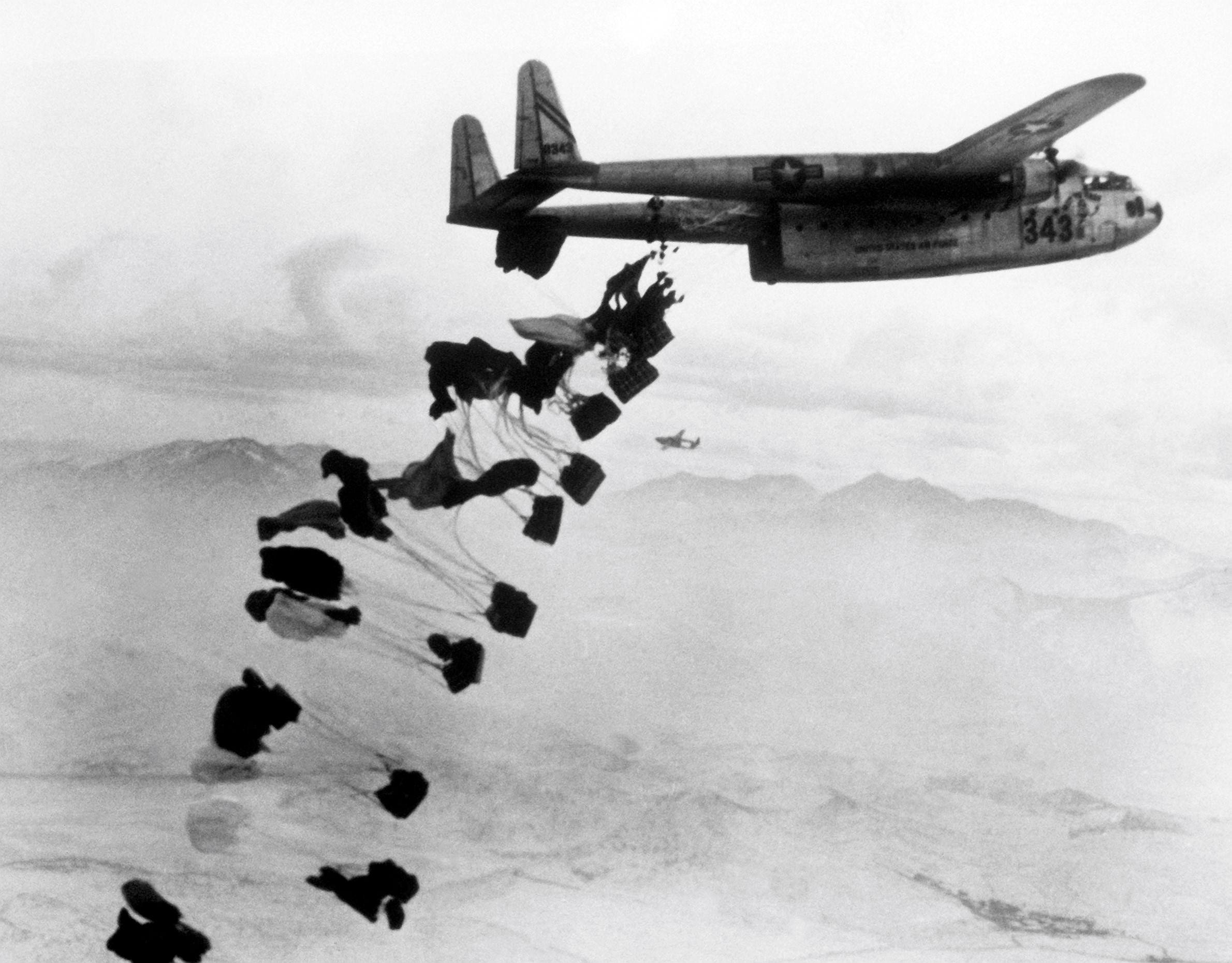
A US Air Force Fairchild C-119B Flying Boxcar air-dropping supplies near Chungju, Korea, in 1951. (Source: Wikimedia)
We publish:
Scholarly Articles
From Balloons to Drones publishes informative, peer-reviewed articles on air power that range from historical pieces to the analysis of contemporary challenges. These well-researched articles aim to bridge the gap between specialist and non-specialist readers. They should be around c. 3,000 words, though From Balloons to Drones will accept longer pieces. We reserve the right to publish them in parts.
Air War Books
From Balloons to Drones publishes a series of review articles that examine the top ten books that have influenced writers on air power. See more here.
Commentaries
From Balloons to Drones publishes opinion pieces on recent news on either contemporary or historical subjects. These should be no longer than c.1,000 words.
Research Notes
From Balloons to Drones publishes research notes on contributors’ current research projects. These take the form of more informal pieces and can be discussions of a source or notes on a recent research theme. These should be c.500 to 1,000 words.
Book Reviews
From Balloons to Drones publishes regular book reviews that aim to be an accessible collection of appraisals of recent publications about air power. If you are a publisher interested in having your publication reviewed, please contact us at the email address below. See more here.
Historic Book Reviews
From Balloons to Drones publishes occasional historic book reviews that aim to be an accessible collection of appraisals of critical historic publications about air power history, theory, and practice. See more here.
Submissions should be submitted in Word format and emailed to the address below with ‘SUBMISSION’ in the subject line. Also, please include a 50-100-word biography with your submission. References can be used, and please be careful to explain any jargon. However, if you are unsure if your idea fits our requirements, please email us with ‘POTENTIAL SUBMISSION’ in the subject line to discuss.
If you are interested in contributing, please email our Editor-in-Chief, Dr Ross Mahoney, at airpowerstudies@gmail.com or via our contact page here.
Header image: A Panavia Tornado GR4 of No. IX(B) Squadron on a training sortie in preparation for deployment to Afghanistan, c. 2012. (Source: Wikimedia)
Over six years ago, in June 2016, From Balloons to Drones was launched. From Balloons to Drones was established with the simple vision of providing an open access online scholarly platform for analysing and debating air power history, theory, and contemporary operations in their broadest sense, including space and cyber power. Since establishing From Balloons to Drones, we have published nearly 250 posts ranging from articles to book reviews. Overall, the site has received over 180,000 hits since 2016.
The past few years, however, have been challenging for all, personally and professionally. From our perspective, this has led us to publish material irregularly. However, all of that is about to change. With a renewed sense of purpose, From Balloons to Drones hopes to continue to deliver well-researched and rigorous articles, book reviews and other material, including our popular podcast series of interviews with leading air power specialists. One of our most popular features is our ever-expanding ‘Air Power Reading List.’ We continue to add volumes to this curated reading list as we review new books on air power and historic titles.
We still hold true to our original vision of providing an avenue for debate and discussion about air power. However, we are always on the lookout for new contributions from established researchers or new and emerging scholars within the air power studies community. If you are interested in contributing, visit our submissions page to learn how to contribute. All our articles are peer-reviewed by our team of highly qualified and experienced editors, and we will work with you to deliver your articles to a broad audience via our social media channels.
We hope you enjoy what we publish; however, we are always keen to hear your views on what we publish. If there is an area of research that needs to be given more coverage, please let us know either in the comments or on social media.
Thank you for taking the time to read this update, and we look forward to hearing from you in the future.
Header image: A Dassault Etendard IVP of the French Navy. (Source: Wikimedia)




 From Balloons to Drones