Clearing the Skies for the Red Army – Part 2: The Destruction of Luftflotte IV

Clearing the Skies for the Red Army – Part 2: The Destruction of Luftflotte IV

By Dr Luke Truxal

Editorial Note: In the conclusion of a two-part series on the contribution of US air power to the conduct of the Second Iași-Chișinău Offensive, Dr Luke Truxal examines the role of the US Fifteenth Air Force in the destruction of Luftflotte IV in the lead up to the launch of the Second Iași-Chișinău Offensive by the Red Army in August 1944. You can read the first part of this article here

On 6 June 1944, the same day that the Allies landed in Normandy to begin the liberation of western Europe, the US Fifteenth Air Force attacked Galati airfields. This represented a new phase of the air war over Romania, one where Luftflotte IV came under direct attack because of an American air superiority campaign. This article will contend that the American attacks against Luftflotte IV, at the request of the Soviets, contributed to the success of the Second Iași-Chișinău Offensive.

When American bombers flew from Soviet bases against Axis forces in Romania on 6 June 1944, it marked the first time in the war that they took off from behind Soviet lines to attack Axis targets. This mission was a part of Operation FRANTIC I, the first shuttle bombing missions from western Allied bases to Soviet bases. After leaving their bases in Ukraine, American bombers struck the primary Axis airfield in Romania at Galati. One hundred and four American B-17s and 42 P-51s of the Fifteenth Air Force attacked the German and Romanian air facilities at Galati. Fourteen Axis fighters along with another 25 spotted near the airfield engaged the strike force. During the ensuing air battle, American fighters accounted for six Axis fighters at the loss of two American fighters. The 104 B-17s dropped 155.3 tons of explosive bombs and 51.3 tons of incendiary bombs on the airfield and its facilities. Much of the buildings, hangers, and facilities at Galati were destroyed or damaged during the bombing. Of the 40 aircraft still on the ground during the attack, the Fifteenth Air Force destroyed eight and damaged 11.[1] FRANTIC I’s final mission was an attack on the Focsani airfield on 11 June and a return to the American airfields in Italy. Flying from the Soviet bases, 121 B-17s dropped 223.9 tons of bombs on the Focsani airfield escorted by 52 P-51s. The bombers struck the barracks and workshops along with additional facilities. The attacking force engaged 15 to 20 ME 109s and FW 190s over Focsani.[2]

FRE_008681
A P-51 Mustang nicknamed ‘Tempus Fugit’ of the 31st Fighter Group, Fifteenth Air Force in 1944. (Source: IWM (FRE 8681))

In another attempt to weaken Axis air power over Romania, the Americans executed Operation FRANTIC III, the first fighter sweep shuttle mission to the Soviet Union. According to the FRANTIC III plan on 11 July 1944, the purpose of the mission was to send 72 P-38s and 48 P-51s from the 306th Fighter Wing of the Fifteenth Air Force to execute counter-air operations from the American airfields located behind the Soviet lines in Ukraine. The three tactical objectives of FRANTIC III included: strafing of aircraft at Mielec, Poland; strafing of aircraft airfield and dive-bombing of the facilities at Lviv; strafing of targets that are identified through photo reconnaissance while in the Soviet Union.[3] At 7:45 AM on 22 July 1944, the 82nd and 31st Fighter Groups of the 306th Fighter Wing took off from their bases in Italy to attack the Romanian airfields near Zilistea and Buzau. When approaching the target, the American fighters dropped to an altitude of 5,000 feet. When they reached 4,000 feet, they passed several Axis aircraft flying near the airfield. The 82nd Fighter Group bypassed them to attack the airfields, while the 31st Fighter Group provided air cover. Once below 4,000 feet, Romanian anti-aircraft fire engaged the formations. The city of Ploesti began to deploy a smokescreen as they noticed the incoming American fighters. The 82nd Fighter Group attacked five airfields: Zilistea, Buzau, and three satellite fields. The 82nd Fighter Group destroyed 41 aeroplanes on the ground. Both the 82nd Fighter Group and 31st Fighter Group destroyed another 15 aeroplanes in the air at the loss of five P-38s. After the attack, the two groups reassembled and proceeded to their airbases located in Ukraine at Piryatin, Poltava, and Mirgorod.[4]

The next day the 306th Fighter Wing received orders to attack the German airfield at Mielec. One problem that the 306th Fighter Wing ran into was the fact that the Soviet offensive against German Army Group Center, codenamed Operation BAGRATION, had driven within 88 miles of the airfield, and there was concern that the Americans might accidentally strafe a Soviet ground formation. Additionally, poor weather delayed the attack until 25 July. By that time, the Soviet advance was 48 miles away from the airfield.[5] On 25 July, 36 P-38s and 36 P-51s of the 306th Fighter Wing attacked the airfield at Mielec, destroying anywhere from nine to 16 German aircraft on the ground. South of Mielec the fighters spotted a train and column of trucks which were also attacked destroying four locomotives and 14 trucks. On their way back to their bases in Ukraine, the fighter formation stumbled across a German bomber formation of 36 German JU-87 bombers without an escort. The American fighters engaged and destroyed 29 of the bombers. By the end of the day, the American fighters returned to their bases without suffering a loss.[6] The 26 July mission was a low-level fighter sweep of Ploesti and Bucharest and then a return to the Fifteenth Air Force bases in Italy. Poor weather forced the formation to divert to the Galati and Zilestea area. This led to an engagement with German fighters that resulted in 20 German fighters being shot down at the loss of two P-38s. [7]

The Red Army requested more follow up counter-air operations on the eve of the Second Iași-Chișinău Offensive. The Red Army General Staff sent a request to Deane’s counterpart in Moscow, Major General Robert L. Walsh, who oversaw all American air operations on the Eastern Front. Walsh sent an urgent message to the commander of the United States Strategic Air Forces in Europe, Lieutenant General Carl Spaatz, on 2 August. He wrote, ‘The Soviets requested that we concentrate our attacks on the following: enemy airdromes just south of the Iasi-Akkerman front.’ This included at least twelve airfields near the front lines. The Soviets provided a list, which Walsh transmitted directly to Spaatz. [8] The Americans had already carried out three fighter-bomber missions against German airfields in July.[9]

Operation Frantic
Russian officers chat with Colonel Barton, Commanding Officer of the 483rd Bomb Group, and Colonel Rice of the 2nd Bomb Group at Mirgorod. The girl in the center is an interpreter. (Source: National Museum of the USAF)

This request led to FRANTIC IV, the second all fighter shuttle mission of the war conducted by the 306th Fighter Wing. On 4 August, 45 P-38s of the 82nd Fighter Group took off to strafe the airfields around Focsani, while 45 P-51s of the 52nd Fighter Group provided air cover. The attack destroyed four Axis aircraft, three locomotives, and one tank car. Additionally, the P-38s strafed the hangers, buildings, and troop trains. Afterwards, the 306th Fighter Wing proceeded to Poltava. On 6 August, 30 P-51s and 30 P-38s of the 306th Fighter Wing took off from Poltava for the return fighter sweep. The 306th Fighter Wing destroyed 30 railway cars, 11 locomotives, four tank cars, and one aircraft at Cariova and Ploesti.[10]

After 2 June, the Luftwaffe’s sorties declined to 1,347 sorties.[11]  This data is also backed up by Fifteenth Air Force studies done after the fall of Romania of the air defences in the Ploesti and Bucharest area. The study estimated that in April 1944, Axis aircraft deployed around Bucharest and Ploesti numbered 200 to 255. Those numbers declined after the counter-air operations began. By May 1944, the number of Axis aircraft deployed to the area was anywhere between 125 to 145. In June, the numbers further decreased to 95 to 110 aircraft located in that same area. By August, Axis air power had declined in the Bucharest-Ploesti area to approximately 40 to 45 aircraft.[12] According to an American assessment of the decline, the Fifteenth Air Force concluded that the decline resulted from American counter-air operations and a redeployment of Luftwaffe forces to other theatres.[13] American counter-air operations and additional attacks against vital parts of Romania, significantly reduced Axis air power in the country during the summer of 1944. This, in part, explains part of the reason for the success of the Second Iași-Chișinău Offensive. Axis air power in the region had been, for the most part, eliminated.

In conclusion, the successful air superiority campaign against Axis air in Romania reveals a lot about the Allied offensives in Romania. First, the American Fifteenth Air Force played a pivotal role in the Second Iași-Chișinău Offensive by clearing the skies of Axis air power.  Next, this is an excellent example of successful joint operations. The Fifteenth Air Force worked in conjunction with the Red Army to attack targets of importance to the Soviet ground war in a timely fashion. Finally, from a historiography standpoint, more needs to be written about this subject. Preliminary research into these air operations indicates that American air operations in the Balkans were not confined strictly to attacking targets related to oil production.

Dr Luke Truxal is an adjunct at Columbia State Community College in Tennessee. He completed his PhD in 2018 from the University of North Texas with his dissertation ‘Command Unity and the Air War Against Germany.’ His previous publications include ‘Bombing the Romanian Rail Network,’ in the Spring 2018 issue of Air Power History. He has also written ‘The Politics of Operational Planning: Ira Eaker and the Combined Bomber Offensive in 1943’ in the Journal of Military Aviation History. Truxal is currently researching the effectiveness of joint air operations between the Allied air forces in the Second World War. He can be reached on Twitter at: @Luke_Truxal.

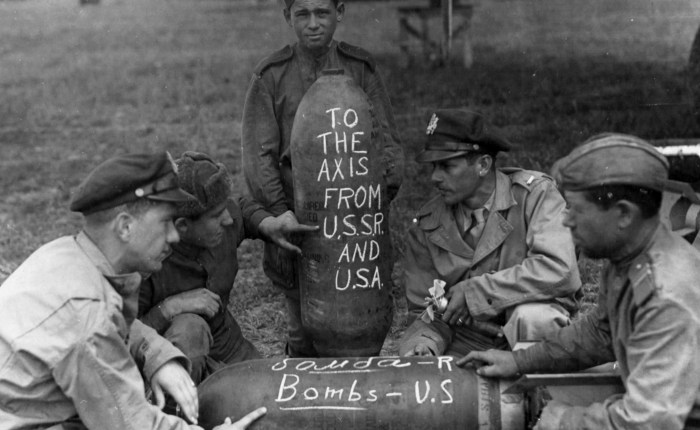
Header Image: American and Russian soldiers in 1944 during Operation FRANTIC. In the background is a B-17 Flying Fortress bomber and a C-47 Dakota transport aircraft. (Source: Wikimedia)

[1] United States Air Force Historical Research Agency (USAFHRA), Montgomery, AL, Call 622.430-6, Headquarters Eastern Air Command, ‘Eastern Command Narrative of Operations: 2nd Italy-Russia Shuttle Operation – 2 June 1944.’

[2] USAFHRA, Call 622.430-6, MASAF, “Excerpt-MASAF Intops Summary No. 325, 11 June: Foscani North Aerodrome Installations 5th Wing,” 11 June 1944.

[3] USAFHRA, Call 622.430-6, Headquarters Fifteenth Air Force, ‘Fifteenth Air Force Plan for Operation Frantic III,’ 11 July 1944.

[4] USAFHRA, Call 622.430-6, Headquarters 306th Fighter Wing, ‘Narrative Report of Frantic III Operation,’ 28 July 1944.

[5] Ibid.

[6] Ibid.

[7] Ibid.

[8] Library of Congress (LoC), Papers of General Carl Spaatz, Robert L. Walsh to Spaatz and Eaker, 2 August 1944.

[9] LoC, Spaatz Papers, George McDonald to Anderson (“Frantic”), 21 August 1944.

[10] USAFHRA, Call 622.430-6, 306th Fighter Wing, “INTOPS No. 381,” 7 August 1944.

[11] Hardesty and Ilya Grinberg, Red Phoenix Rising: The Soviet Air Force in World War II (Lawrence, KS: University of Kansas Press, 2012), p. 292

[12] Ike Skelton Combined Arms Research Library, Army Air Force Evaluation Board, ‘Army Air Force Evaluation Board Report VI: Ploesti,’ n.d., p. 21.

[13] Ibid, p. 19.
#AirWarBooks – Ashleigh Brown

#AirWarBooks – Ashleigh Brown

Editorial Note: In the next instalment of our Air War Books series, Ashleigh Brown discusses the ten books that have influenced and shaped her writing as an air power historian.

Our Editor-in-Chief, Dr Ross Mahoney asked me to contribute my top ten air war books – those that have influenced and shaped my own approach to the topic. Catching me in the midst of PhD research, this list clearly shows that my interest primarily centres on the First World War.

9781743312698

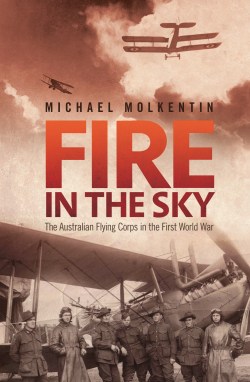
Michael Molkentin, Fire in the Sky: The Australian Flying Corps in the First World War (Crows Nest: Allen & Unwin, 2010). Michael Molkentin’s Fire in the Sky was the first military aviation book I ever read. In many ways, this book is responsible for moving my interest from the ground war to the air war, which ultimately led to my PhD research. In the first effort to revise Cutlack’s official history volume on the AFC, Molkentin presents a thoroughly researched and highly readable account of the efforts of Australians in the air during the First World War. Importantly, in doing so, Molkentin places the AFC in its rightful context within wider British air operations. This book, along with his centenary history volume, Australia and the War in the Air, is the authoritative account of the AFC

James Streckfuss, Eyes All Over: Aerial Reconnaissance in the First World War (Oxford: Casemate Publishers, 2016). Before the outbreak of the First World War, the predicted purpose of military aviation was reconnaissance. Accordingly, the focus in the opening years of war was reconnaissance, aerial combat being seen as necessary to ensure that this could be carried out uninhibited. Even with the creation of dedicated fighter squadrons, reconnaissance remained a core task for the air services throughout the war. James Streckfuss captures the importance of reconnaissance and details its progression by explaining early developments in Britain and the American perspective. This book expertly describes the intricacies and difficulties of carrying out aerial reconnaissance.

James Pugh, The Royal Flying Corps, the Western Front and the Control of the Air, 1914-1918 (New York: Routledge, 2017). The advantage found in having control of the air was recognised early in the First World War. The primary purpose of the RFC was to support ground forces through reconnaissance, photography, bombing missions, and artillery assistance; achieving superiority in the air was considered necessary to provide this support. James Pugh’s authoritative work discusses the development and application of air power over the Western Front, demonstrating the approach to obtaining and retaining aerial superiority (or control of the air). In doing so, Pugh rationally and expertly analyses the offensive policy (too often attributed solely to Hugh Trenchard), explaining how it was devised in conjunction with the French air services.

Malcolm Cooper, The Birth of Independent Air Power: British Air Policy in the First World War (London: Allen & Unwin, 1986). The high command of the RFC and RAF, and the political context of the air war, is complex, to say the least. Malcolm Cooper explains the various changes that took place at this level and details the development of the air war from this perspective. Cooper provides important context for understanding the execution of the air war, importantly contributing to the historiographical movement away from the view of First World War air power being exclusively a tactical concern.

Dennis Haslop, Early Naval Air Power: British and German Approaches (New York: Routledge, 2018). Dennis Haslop presents a comparative study of the Royal Naval Air Service and the Imperial German Naval Air Service, highlighting many striking similarities in the experiences of the two. This includes discussions of inter-service rivalry experienced by both the British and German air services and movements towards unification to create a single air service in each military. In other instances, discussions about the creation of the RAF from a naval perspective tend to present it as a hostile takeover of the RNAS rather than the amalgamation and unification of the two air services. Haslop avoids this, instead he presents a measured and factual account of this important part of Britain’s air power history. (N.B. You can read Ashleigh’s review of Haslop’s book here)

9780393357240

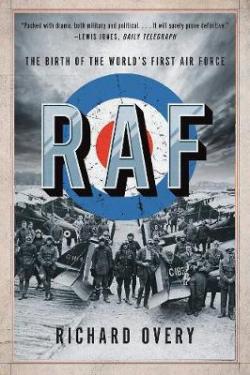
Richard Overy, RAF: The Birth of the World’s First Air Force (New York: Norton & Company, 2018). Richard Overy’s RAF provides an overview of Britain’s air war leading up to 1918, the events that led to the creation of the RAF, the process of achieving this, and the post-war struggle to keep it as a separate service. Although Overy does not engage with all the complexities of the air war in this relatively short book, he presents an excellent overview in the form of a very readable narrative.

Arthur Henry ‘Harry’ Cobby, High Adventure (Melbourne: Robertson & Mullens, 1943). In the years following the First World War, many pilots wrote memoirs detailing their war experience. Among those to do so was Australian pilot Arthur Henry – or Harry – Cobby. Cobby was the leading fighter ace of the AFC, boasting 29 victories during his time with No. 4 Squadron. In High Adventure, he presents a captivating account of his war in the air that I would recommend to anyone interested in how the AFC’s pilots fought the air war on a day-to-day basis.

Charles Rumney Samson, Fights and Flights: A Memoir of the Royal Naval Air Service in World War I (Nashville: The Battery Press, 1990). Continuing with the theme of memoirs, Air Commodore Charles Rumney Samson’s Fights and Flights details his experiences in positions of command in the RNAS. Among these was his involvement in the Gallipoli campaign, in which he led No. 3 Squadron RNAS which was responsible for reconnaissance over the Gallipoli peninsula and Dardanelles straits. Samson’s squadron operated over Gallipoli in the months leading up to the landing of ground forces, remained in support of the land campaign, and supported the eventual evacuation. Although only a portion of the book, this is an important account of the Gallipoli campaign from the air and captures the early contribution of the RNAS in the First World War.

Frederick Sykes, Aviation in Peace and War (London: E. Arnold & Co., 1922). Aviation in Peace and War details Frederick Sykes’ thoughts on the development and use of air power before, during, and after the First World War. Sykes discusses his pre-war thoughts on the potential use of aviation, the Military and Naval Wings of the RFC, technology and tactics, the offensive policy, and how he saw air power progressing after the war. Sykes is somewhat of a controversial character in the wartime RFC, particularly due to his strained relationship with David Henderson and Hugh Trenchard, and this book provides a valuable insight into his involvement in early British air power.

The-Bridge-to-Airpower

Peter Dye, The Bridge to Airpower: Logistic Support for Royal Flying Corps Operations on the Western Front, 1914-18 (Annapolis: Naval Institute Press, 2015). Peter Dye’s The Bridge to Airpower considers the evolution of First World War air power through a study of logistics on the Western Front. This thoroughly researched account allows for a greater understanding of the difficulties encountered in waging the air war, specifically due to problems sourcing airframes and aero-engines, both in sufficient amounts and of a high quality. Dye also discusses the changing logistic requirements in line with the changing nature of the air war and presents an impressive collection of statistics to show the evolution of British air power during the war.

Ashleigh Brown is the Social Media Editor at From Balloons to Drones and a PhD candidate at the University of New South Wales, Canberra. Her thesis focuses on aviation command in the British air arms during the First World War. It considers developments across the tactical, operational, and strategic levels of command, extending the learning curve theory to the air war. Ashleigh is a researcher for the Official History of Australian Operations in Iraq & Afghanistan and Australian Peacekeeping Operations in East Timor, where her focus is Australia’s commitment to Afghanistan between 2005 and 2010. Her research interests include the First World War, recent conflicts, air power, and military command. Ashleigh can be found on Twitter at: @ash__brown.

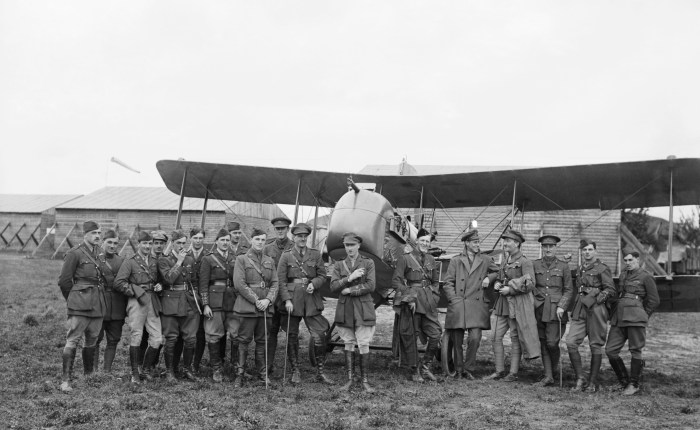
Header image: A group of pilots of No. 32 Squadron RFC at Beauval in 1916. Behind them is an Airco DH.2 biplane. (Source: Wikimedia)

#Podcast – The Fate of America’s Missing Airmen in China during World War II: An Interview with Daniel Jackson

#Podcast – The Fate of America’s Missing Airmen in China during World War II: An Interview with Daniel Jackson

Editorial Note: Led by our Editor Dr Mike Hankins, From Balloons to Drones produces a monthly podcast that provides an outlet for the presentation and evaluation of air power scholarship, the exploration of historical topics and ideas, and provides a way to reach out to both new scholars and the general public. You can find our Soundcloud channel here. You can also find our podcast on Apple Podcasts and Google Podcasts.

In our latest podcast, we interview Daniel Jackson about his latest book Fallen Tigers: The Fate of America’s Missing Airmen in China during World War II (2021). In this episode, Jackson discusses those American airmen who flew key missions in the China, Burma, India theatre during the Second World War. While discussing the exciting stories of these airmen and the various people who helped them on the ground, we reveal why a vastly higher percentage of them were able to survive and return home after being shot down, compared to other theatres. 

fallen-tigers

Daniel Jackson is an active duty pilot in the United States Air Force. He graduated from the US Air Force Academy in 2009 with a Bachelor’s Degree in Military History and a minor in Chinese Language. He earned his wings at Sheppard Air Force Base in February 2011 and completed a Master’s Degree in History from Sam Houston State University in 2017. He is the author of three books, including Fallen Tigers: The Fate of America’s Missing Airmen in China during World War II (2021). You can also see more of his work, including a database of downed air crews, oral histories, and more, at: www.forgottensquadron.com/

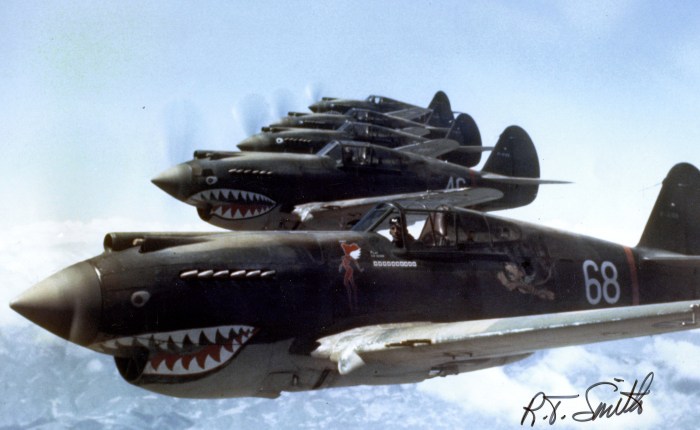
Header image: Hell’s Angels, the 3rd Squadron of the 1st American Volunteer Group “Flying Tigers” (Source: Wikimedia)

#ResearchResources – Recent Articles and Books (June 2021)

#ResearchResources – Recent Articles and Books (June 2021)

Editorial note: In this series, From Balloons to Drones highlights research resources available to researchers. Contributions range from discussions of research at various archival repositories to highlighting new publications. As part of this series, we are bringing you a monthly precis of recent articles and books published in air power history. This precis will not be exhaustive but will highlight new works published in the preceding month. Publication dates may vary around the globe and are based on those provided on the publisher’s websites. If you would like to contribute to the series, please contact our Editor-in-Chief, Dr Ross Mahoney, at airpowerstudies@gmail.com or via our contact page here.

Articles

Cynthia Buchanan, ‘Mexicans in World War II: America’s Ally of the Air,’ Air Power History 68, no. 2 (2021).  

No abstract available.

William Cahill, ‘Fly High, Fly Low: SAC Photographic Reconnaissance in Southeast Asia,’ Air Power History 68, no. 2 (2021). 

No abstract available.

Yin Cao, ‘The Last Hump: The Lahore Elementary Flying Training School, the Chinese Civil War, and the final days of the British Raj,’ Modern Asian Studies (2021). doi: 10.1017/S0026749X21000081.

This article centres on the evacuation of the Lahore Elementary Flying Training School, which was built in 1943 to train Chinese pilots and mechanics. It details the British and Chinese authorities’ concerns over the school and how the chaotic situation in India during the final days of the British Raj influenced its evacuation back to China. This article locates the story within the broad context of the British withdrawal from India and the Chinese Civil War, and it uses this case to uncover the links between the two most significant events in the history of modern India and China. In so doing, it puts forward an integrated framework for studying modern Indian and Chinese history.

Jonna Doolittle Hoppes, ‘Gene Deatrick: An Appreciation,’ Air Power History 68, no. 2 (2021).

No abstract available.

James Greenhalgh, ‘The Long Shadow of the Air War: Composure, Memory and the Renegotiation of Self in the Oral Testimonies of Bomber Command Veterans since 2015,’ Contemporary British History (2021), DOI: 10.1080/13619462.2021.1906654

The following article examines oral testimonies collected by the International Bomber Command Centre project since 2015. The study considers the challenges posed by post-war discourses that contest the morality of bombing and contemporary constructions of Britishness to Bomber Command veterans making account of their lives. The contested nature of bombing’s position within narratives of the Second World War creates a discursive environment where veterans struggle to assemble satisfying life stories. Despite using a set of similar narrative frameworks to counter questions concerning the morality or purpose of bombing, veterans found limited opportunities to demonstrate personal agency or achieve emotional composure. The interviews illustrate unresolved and challenging feelings stemming from a discourse that has proved inimical to creating satisfying selfhoods. In addition, the difficulty of integrating the story of Bomber Command into narratives of Britain’s wartime myth proved to be a source of considerable discomfort for the interviewees. In their attempts to situate themselves within longer trajectories of Britain and its military in the twenty-first century, the testimonies are thus revealing of the importance to Britain of its wartime past in forming current identities and the ongoing conflict in how Britishness should confront more complex versions of its history.

K.A. Grieco and J.W. Hutto, ‘Can Drones Coerce? The Effects of Remote Aerial Coercion in Counterterrorism,’ International Politics (2021). https://doi.org/10.1057/s41311-021-00320-5

Weary of costly on-the-ground military interventions, Western nations have increasingly turned to “Remote Warfare” to address the continued threat of terrorism. Despite the centrality of drone strikes to the practice of Remote Warfare, we still know relatively little about their effectiveness as instruments of coercion. This article offers a conceptual framework for assessing their coercive efficacy in counterterrorism. We argue that remote control drones are fundamentally different from traditional airpower, owing to changes in persistence, lethality, and relative risk. Critically, these technological characteristics produce weaker coercive effects than often assumed. While persistent surveillance combined with lethal, low-risk strikes renders armed drones highly effective at altering the cost–benefit calculations of terrorists, these same technological attributes cause them to be less effective at clear communication, credibility, and assurance—other key factors in coercion success. Overall, drone strikes are poor instruments of coercion in counterterrorism, underscoring some potential limitations of Remote Warfare.

Ron Gurantz, ‘Was Airpower “Misapplied” in the Vietnam War? Reassessing Signaling in Operation Rolling Thunder,’ Security Studies (2021). DOI: 10.1080/09636412.2021.1915585.

Operation Rolling Thunder’s failure has been widely blamed on the strategy of using force to send “signals.” It discredited the associated theory of coercion among a generation of military officers and scholars. In this paper I show that, whatever its other failures, Operation Rolling Thunder did successfully signal a threat. I rely on the latest research to demonstrate that Hanoi believed the bombing would eventually inflict massive destruction. I also show that Washington accurately ascribed the failure of the threat to North Vietnam’s resolve and continued the operation for reasons other than signaling. These findings show that Operation Rolling Thunder can be productively understood as an exercise in both signaling and countersignaling. Rather than discrediting the theory of coercion, these findings modify it. They show that failed threats can be informative and that coercive campaigns can become prolonged for reasons other than a lack of credibility.

Heather Hughes, ‘Memorializing RAF Bomber Command in the United Kingdom,’ Journal of War & Culture Studies (2021), DOI: 10.1080/17526272.2021.1938840

This article traces the ways in which RAF Bomber Command has been memorialized in the UK since the 1940s, focusing on those who have organized memorials and associated commemorations. Distinct phases can be identified. Until the 1970s, the Command was accorded a prominent role in official memorial and ceremonial activities. Veterans’ activities reflected this acknowledgement. From the 1980s, in the face of debates about the morality of area bombing of German cities, however, veterans’ organizations and families began to articulate the view that Bomber Command’s wartime contribution had been overlooked. In consequence, they embarked upon activities to revise official memory. This included distinctive forms of memorial activity on the part of veterans and the postmemory generation, including the widespread appearance of ‘small memorials’ and, in the twenty-first century, two large-scale memorial sites, in London and in Lincoln.

John A. Schell, ‘The SA-2 and U-2: Secrets Revealed,’ Air Power History 68, no. 2 (2021). 

No abstract available.

James Shelley, ‘The Germans and Air Power at Dieppe: The Raid and its Lessons from the ‘Other Side of the Hill,’ War in History (2021), DOI: 10.1177/0968344521995867

Despite the vast academic and popular interest in the Dieppe raid of 19 August 1942, there remains a curious oversight of the German side of the story. This contribution interrogates German sources in order to explore the Dieppe air battle and its consequences from the perspective of the German armed forces. The paper ultimately demonstrates that the Germans learnt much about the role of air power in coastal defence from their experiences at Dieppe, but that the implementation of those lessons was lacking.

Samuel Zilincik, ‘Technology is awesome, but so what?! Exploring the Relevance of Technologically Inspired Awe to the Construction of Military Theories,’ Journal of Strategic Studies (2021), DOI: 10.1080/01402390.2021.1923919.

Military theories are thoughts explaining how armed forces are to be used to achieve objectives. These thoughts are often influenced by emotions, yet the influence of emotions on military theory-crafting remains underexplored. This article fills the gap by exploring how awe influences military theorising. Awe is an emotion associated with the feeling of transcendence. Several military theorists felt that way about the technologies of air power, nuclear power and cyber power, respectively. Consequently, their theories became narrowly focused, technocentric and detached from the previous theories and military history. Understanding these tendencies can help improve military theorising in the future.

Books

Bojan Dimitrijevic and Jovica Draganić, Operation ALLIED FORCE: Air War over Serbia 1999 – Volume 1 (Warwick: Helion and Company, 2021).

On 24 March 1999, the North Atlantic Treaty Organisation (NATO) launched Operation Allied Force against Serbia.

Lasting 78 days, this was an unusual conflict fought at several levels. The campaign was fought at the negotiation tables, in the media, and via cyber warfare. In the air, NATO sought to destroy or at least minimise the capability of the Serbian forces, while on the ground the Serbian forces fought the Kosovo-Albanian insurgency. It had an unusual outcome, too: without NATO losing a single soldier in direct action, they still forced the Serbian authorities and armed forces to withdraw from Kosovo, which in 2008 then proclaimed its independence. In turn, the war inflicted serious human and material losses upon the Serbian’s and the air force was particularly devastated by air strikes on its facilities. Nevertheless, many within NATO subsequently concluded that the skies over Serbia were as dangerous on the last night of this conflict as they were on its first.

Largely based on cooperation with the joint commission of the Serbian Air Force and the U.S. Air Force in Europe (USAFE), Volume 1 of Operation Allied Force provides a detailed overview of NATO’s aerial campaign, including reconstructions of operations by ‘stealth’ aircraft such as the F-117A and B-2A, and the only loss of an F-117A in combat. Volume 1 of Operation Allied Force also offers a detailed reconstruction of the planning and conduct of combat operations by the Serbian Air Force and Air Defence (Ratno vazduhoplovstvo i protivvazdušna odbrana, RV i PVO) with a special emphasis on the attempts of its sole MiG-29 squadron and its surface to air missile batteries to challenge enemy strike packages.

Adrien Fontanellaz, Tom Cooper, and José Augusto Matos, War of Intervention in Angola – Volume 4: Angolan and Cuban Air Forces, 1985-1987 (Warwick: Helion and Company, 2021).

War of Intervention in Angola, Volume 4, continues the coverage of the operational history of the Angolan Air Force and Air Defence Force (FAPA/DAA) as told by Angolan and Cuban sources, in the period 1985-1987.

Many accounts of this conflict – better known in the West as the ‘Border War’ or the ‘Bush War’, as named by its South African participants – consider the operations of the FAPA/DAA barely worth commentary. At most, they mention a few air combats involving Mirage F.1 interceptors of the South African Air Force (SAAF) in 1987 and 1988, and perhaps a little about the activity of the FAPA/DAA’s MiG-23s. However, a closer study of Angolan and Cuban sources reveals an entirely different image of the air war over Angola in the 1980s: indeed, it reveals the extent to which the flow of the entire war was dictated by the availability – or the lack – of air power. These issues strongly influenced the planning and conduct of operations by the commanders of the Angolan and Cuban forces.

Based on extensive research with the help of Angolan and Cuban sources, War of Intervention in Angola, Volume 4, traces the Angolan and Cuban application of air power between 1985-1987 – during which it came of age – and the capabilities, intentions, and the combat operations of the air forces in support of the major ground operations Second Congress and Salute to October.

Alexander Howlett, The Development of British Naval Aviation, 1914–1918 (London: Routledge, 2021).

The Royal Naval Air Service (RNAS) revolutionized warfare at sea, on land, and in the air. This little-known naval aviation organization introduced and operationalized aircraft carrier strike, aerial anti-submarine warfare, strategic bombing, and the air defence of the British Isles more than 20 years before the outbreak of the Second World War. Traditionally marginalized in a literature dominated by the Royal Flying Corps and the Royal Air Force, the RNAS and its innovative practitioners, nevertheless, shaped the fundamentals of air power and contributed significantly to the Allied victory in the First World War. The Development of British Naval Aviation utilizes archival documents and newly published research to resurrect the legacy of the RNAS and demonstrate its central role in Britain’s war effort.

David Nicolle and Gabr Ali Gabr, Air Power and the Arab World, 1909-1955 – Volume 4: The First Arab Air Forces, 1918-1936 (Warwick: Helion and Company, 2021).

Volume 4 of Air Power and the Arab World, 1918-1936, continues the story of the men and machines of the first half century of military aviation in the Arab world.  The earliest of the Arab air forces to be established trace their histories back to the 1920s and 1930s when the overwhelming majority of Arab countries, and an even larger majority of the Arabic-speaking people, were ruled or dominated by four European powers.  This volume continues with the story of the period from 1918 to 1936.

The role, organisational structure and activities of the first Arab air forces are described based on decades of consistent research, newly available sources in Arabic and various European languages, and is richly illustrated with a wide range of authentic photography.  These air forces ranged from dreams which never got off the ground, to small forces which existed for a limited time then virtually disappeared, to forces which started very small then grew into something more significant. Even so, the successful air forces of Iraq and Egypt would only have a localised impact within the frontiers of their own states.

#BookReview – Across the Airless Wilds: The Lunar Rover and the Triumph of the Final Moon Landings

#BookReview – Across the Airless Wilds: The Lunar Rover and the Triumph of the Final Moon Landings

Earl Swift, Across the Airless Wilds: The Lunar Rover and the Triumph of the Final Moon Landings. New York, NY: Custom House, 2021. Illustrations. Notes. ARC. 365 pp.

Reviewed by Dr Brian Laslie

9780062986535

It is rare for the team at From Balloons to Drones to cover machines that run across the ground. After all, our name literally describes the history of aircraft. I feel somewhat sheepish, then, in covering a book that is essentially about a car, but here we are. That being said, in his new book Across the Airless Wilds: The Lunar Rover and the Triumph of the Final Moon Landings, author Earl Swift has produced an important, much needed, and excellent history of the lunar rover vehicle and its excursions on the final three Apollo missions. In addition, Swift has written the seminal history of the concept, design, and creation of perhaps the most unique automobile ever built.

Swift’s thesis is straightforward. As the author states:

It comes to this: Remembered or not, the nine days the final three missions spent on the moon were a fitting culmination to Apollo, and a half-century later remain the crowning achievement of America’s manned space program.

While the world remembers Neil Armstrong’s “One Small Step” and Apollo 13’s “Houston, We’ve had a problem here,” the visits, footprints, and rover tracks at Hadley–Apennine, Descartes Highlands, and Taurus–Littrow Valley are certainly less well-remembered. Even the individuals who took these steps, including Jim Irwin, Charlie Duke, and Harrison Schmitt, are not the easiest of names in the Apollo Program to recall. Of note, Irvin, Duke and Schmitt all authored excellent books later in life that are worth adding to your collection. Each of the commanders of these missions: Dave Scott, John Young, and Gene Cernan, Gemini and Apollo giants that they are, are oft-forgotten for those who do not read and study this particular section of space-exploration history. It is also worth mentioning that, although not covered in Swift’s account, the Command Module Pilots: Al Worden, Ken Mattingly, and Ron Evans spent the longest amount of time flying solo around the moon and conducting their own scientific experiments.

Swift divides his new work into seven different sections, more or less covering the principal characters, the ‘Practical Considerations’ of building a lunar automobile, which also details the various designs and concepts for lunar vehicles never produced – Oberth’s moon car is worth looking up – and two sections on building the rover. However, it is section six, ‘Across the Airless Wilds’ where Swift really shines. Here the book is strikingly similar to the ‘Outward Odyssey’ Series by the University of Nebraska Press. If you enjoyed these books on the Apollo program, Swift’s work is definitely one you will want to read. The final three Apollo missions (the ‘J’ missions) were the ultimate in scientific exploration. Swift’s account of the rover’s operations clearly demonstrates that much of the discoveries made during these missions were not possible were it not for the Lunar Rover.

There are some minor drawbacks to be found herein. Swift admits this is not an academic work. Since the version provided to From Balloons to Drones was an advanced reader’s copy, I cannot speak for his bibliography. Swift often breaks into the first-person perspective, and for a work of non-fiction, this can be slightly distracting. However, since these sections discuss Swift’s travels across the country to meet with the creators of the rover or visit the locations where it was tested, this is a relatively minor distraction.

Across the Airless Wilds is part history, part travelogue, but one hundred per cent terrific space history. Swift has written a book that provides unique, personal accounts and, at the same time, is deeply researched and throws fresh light onto a well-traversed subject.

Dr Brian Laslie is a US Air Force Historian and currently the Command Historian at the USAF Academy. A 2001 graduate of The Citadel and a historian of air power studies, he received his Masters’ from Auburn University Montgomery in 2006 and his PhD from Kansas State University in 2013. He is the author of three books with his most recent being Air Power’s Lost Cause: The American Air Wars of Vietnam (2021). His first book, The Air Force Way of War (2015) was selected for the Chief of Staff of the Air Force’s 2016 professional reading list and the 2017 RAF Chief of the Air Staff’s reading list. He can be found on Twitter at @BrianLaslie.

Header image: One of a series of images taken as a pan of the Apollo 15 landing site, taken by Commander Dave Scott, 1 August 1971. Featured is the Lunar Roving Vehicle at its final resting place after EVA-3. At the back is a rake used during the mission. Also note the red Bible atop the hand controller in the middle of the vehicle, placed there by Scott.

From Balloons to Drones – 5 Years On

From Balloons to Drones – 5 Years On

By Dr Ross Mahoney

Five years ago, on 15 June 2016, From Balloons to Drones was launched. From Balloons to Drones was established with the simple vision of providing an open access online platform for the analysis and debate of air power history, theory, and contemporary operations in their broadest sense, including space and cyber power. Since establishing From Balloons to Drones, we have published 195 posts of various types ranging from articles to book reviews. More recently, in 2019, we started producing a popular podcast series with interviews with leading air power specialists. Overall, the site has received over 130,000 hits since 2016.

None of the above would have been achieved without the support of our editors, contributors, and readers. Personally, I am grateful to all the members of the From Balloons to Drones editorial team for their continuing hard work, especially as it is all done voluntarily. Indeed, when the site was established, it was run by one person, our Editor-in-Chief, Dr Ross Mahoney. However, over time, the editorial team has grown and evolved. In 2018, long-time contributors Dr Brian Laslie, Dr Michael Hankins, and Alex Fitzgerald-Black came onboard as editors. While Alex has moved on, we have continued to build and strengthen the editorial team with the addition of Victoria Taylor and Dr Luke Truxal to the team. As we look forward to the next five years of From Balloons to Drones, I am pleased to announce the addition of two new editors to the team: Dr Maria Burczynska and Ashleigh Brown. Maria is a Lecturer in Air Power Studies at the University of Wolverhampton in the UK, while Ashleigh, a PhD student at UNSW Canberra, is a researcher for the Official History of Australian Operations in Iraq & Afghanistan and Australian Peacekeeping Operations in East Timor. The addition of Maria and Ashleigh will help strengthen the team in several areas, and we are looking forward to what the future holds with them.

I am also grateful to all our contributors and readers. Without our contributors, there would be nothing to publish and, as such, no website. However, we are always on the lookout for new contributions either from established authors or from new and emerging scholars within the air power studies community. If you are interested in contributing, then visit our submissions page to find out how to contribute.

So, what about the future? More of the same but better. We still hold true to our original vision of providing an avenue for debate and discussion about air power. We will aim to continue to refine what we offer in terms of content and build on the success of the past five years. We have more articles, book reviews and podcasts in the pipeline. However, we are always keen to hear your views on what we publish. If there is an area of research that needs to be given more coverage, please let us know.

Finally, as a bit of fun to celebrate our fifth birthday, here are the top five most-read posts since our launch in 2016:

  1. Michael Hankins, ‘Inventing the Enemy: Colonel Toon and the Memory of Fighter Combat in Vietnam’
  2. Michael Hankins, ‘A Discourse on John Boyd: A Brief Summary of the US Air Force’s Most Controversial Pilot and Thinker’
  3. Liam Barnsdale, ‘Royal Air Force ‘wings’ Brevets in Second World War Propaganda’
  4. Justin Pyke, ‘Blinded by the Rising Sun? American Intelligence Assessments of Japanese Air Power, 1920-41: Part 1 – The 1920s’
  5. Jeff Schultz, ‘Supporting the Secret War: T-28s over Laos, 1964-1973 – Part 1: Training’

Header image: Pilatus PC-21A aircraft from No 4 Squadron based at RAAF Base Williamtown fly in formation on return from Sydney in support of an Air Force 2021 commemorative service held at the Anzac Memorial in Hyde Park. (Source: Australian Department of Defence)

#Podcast – The Bomber Mafia: An Interview with Dr Micheal Hankins, Dr Brian Laslie, and Dr Luxe Truxal

#Podcast – The Bomber Mafia: An Interview with Dr Micheal Hankins, Dr Brian Laslie, and Dr Luxe Truxal

Editorial Note: Led by our Editor Dr Mike Hankins, From Balloons to Drones produces a monthly podcast that provides an outlet for the presentation and evaluation of air power scholarship, the exploration of historical topics and ideas, and provides a way to reach out to both new scholars and the general public. You can find our Soundcloud channel here. You can also find our podcast on Apple Podcasts and Google Podcasts.

The recent publication of Malcolm Gladwell’s The Bomber Mafia has generated much interest in the topic of strategic bombing during the Second World War. In our latest podcast episode, three of the editors at From Balloons to Drones, Dr Mike Hankins, Dr Brian Laslie, and Dr Luke Truxal, discuss the book and go beyond it to talk about various issues related to bombing during the Second World War.

Dr Michael Hankins is the Curator of US Air Force History at the Smithsonian National Air and Space Museum. He is a former Professor of Strategy at the USAF Air Command and Staff College eSchool, and former Instructor of Military History at the U.S. Air Force Academy. He earned his PhD from Kansas State University in 2018 with his dissertation, ‘The Cult of the Lightweight Fighter: Culture and Technology in the U.S. Air Force, 1964-1991.’ He completed his master’s thesis at the University of North Texas in 2013, titled ‘The Phantom Menace: The F-4 in Air-to-Air Combat in the Vietnam War.’ He has a web page here and can be found on Twitter at @hankinstien.

Dr Brian Laslie is a US Air Force Historian and currently the Command Historian at the USAF Academy. A 2001 graduate of The Citadel and a historian of air power studies, he received his Masters’ from Auburn University Montgomery in 2006 and his PhD from Kansas State University in 2013. He is the author of three books with his most recent being Air Power’s Lost Cause: The American Air Wars of Vietnam (2021). His first book, The Air Force Way of War (2015) was selected for the Chief of Staff of the Air Force’s 2016 professional reading list and the 2017 RAF Chief of the Air Staff’s reading list. He can be found on Twitter at @BrianLaslie.

Dr Luke Truxal is an adjunct at Columbia State Community College in Tennessee. He completed his PhD in 2018 from the University of North Texas with his dissertation ‘Command Unity and the Air War Against Germany.’ His previous publications include ‘Bombing the Romanian Rail Network,’ in the Spring 2018 issue of Air Power History. He has also written ‘The Politics of Operational Planning: Ira Eaker and the Combined Bomber Offensive in 1943’ in the Journal of Military Aviation History. Truxal is currently researching the effectiveness of joint air operations between the Allied air forces in the Second World War. He can be reached on Twitter at @Luke_Truxal.

Header image: Boeing B-29 Superfortresses drop bombs over Rangoon, Burma in 1945. The nearest aircraft is a B-29-25-BA of the 871st Bomb Squadron, 497th Bomb Group, 20th Air Force. (Source: Wikimedia)

#ResearchResources – Recent Articles and Books (April 2021)

#ResearchResources – Recent Articles and Books (April 2021)

Editorial note: In this series, From Balloons to Drones highlights research resources available to researchers. Contributions range from discussions of research at various archival repositories to highlighting new publications. As part of this series, we are bringing you a monthly precis of recent articles and books published in air power history. This precis will not be exhaustive but will highlight new works published in the preceding month. Publication dates may vary around the globe and are based on those provided on the publisher’s websites. If you would like to contribute to the series, please contact our Editor-in-Chief, Dr Ross Mahoney, at airpowerstudies@gmail.com or via our contact page here.

Articles

Jayson Altieri, ‘Minutemen and Roentgens: A History of Civil Air Patrol’s Aerial Radiolomcal Monitoring Program,’ Air Power History 68, no. 1 (Spring, 2021).

When one thinks of U.S. Air Force Cold War era aircraft, images of the Strategic Air Command’s B–52 Stratofortress, B–58 Hustler, and B–36 Peacemaker, made famous by classic Hollywood films like Dr. Strangelove, Fail Safe, and Strategic Bomber Command, usually come quickly to mind. What is less well known are the roles that smaller aircraft like the Cessna L-19/0-1 Bird Dog, Cessna 172/T-41 Mescalero, and Stinson L-5 Sentinel played in helping prepare and respond to a possible nuclear attack on the American homeland by actively measuring radioactivity levels in roentgens, mostly through the efforts of the volunteers of the U.S. Air Force’s Auxiliary, known as the Civil Air Patrol (CAP). While today, CAPs primary operational missions concentrate on inland air search and rescue, aerial disaster assessment, and flight training for the organization’s Cadet program, CAP’s earlier roles following the Second World War involved supporting the nation’s Civil Defense through Aerial Radiological Monitoring (ARM) and post-attack damage assessments of cities and key economic infrastructures. Founded on December 1,1941, with the help of American airpower proponent Gill Rob Wilson, Texas Oilman David Harold Byrd, and New York Mayor Fiorello H. LaGuardia, the latter in his capacity as the Director of the Office of Civilian Defense, the CAP was originally formed to help supplement American military operations as an Auxiliary of the United States Army Air Forces in the early stages of the Second World War. Early in the war, as part of America’s Civil Defense coordinated by the Council of National Defense, civilian non-combatant volunteers were asked to help supplement local governments and military commands based across the country with Air Raid Wardens, Auxiliary Firemen, Road Repair Crews, and Civil Air Patrols along the U.S. Atlantic and Gulf Coasts. Initially using privately owned aircraft and equipment and operating from local private and publicly owned airfields, CAP volunteers became known as the Flying Minutemen, performing a number of wartime missions include Antisubmarine patrols, border patrols, target towing, and messenger services. By the end of the war and with the formation of an independent U.S. Air Force, President Harry Truman, signed in 1946 the congressionally approved Public Law 79-476 establishing the CAP as both a Federally charted corporation and later in 1948, Public Law 557 making CAP the U.S. Air Force’s Auxiliary. By this time, both the United States and CAP were now engaged in another war, though involving less actual conflict, none-the-less still presented an existential threat to the nation-The Cold War.

Troy Hallsell, ‘Building Malstrom’s Minuteman Missile Fields in Central Montana. 1960-1963,’ Air Power History 68, no. 1 (Spring, 2021).

In September of 1960, the Air Force Association held its 14th annual convention at the San Francisco Civic Auditorium in San Francisco, California. This grand event demonstrated to the American public (and the world) the best aerial hardware the Air Force had to offer. On display was a Bell X-1B rocket plane, North American Aviation’s Hound Dog air-launched standoff missile, a Titan intercontinental ballistic missile (ICBM), and the Thor-Able missile that promised to reach the moon. While this display of weaponry sought to allay Americans’ fears about a supposed missile gap in favor of the Soviet Union (USSR), the Air Force’s unveiling of the Minuteman ICBM was the main attraction. On September 22, at 7:00 PM Gen Thomas D. White, the Chief of Staff of the Air Force, San Francisco mayor George Christopher, and NBC producer Roy Neal took to the podium to introduce the United States’ newest weapon system. As General White pushed a button, the “gleaming dummy missile rose to a vertical static display, where it would remain through the weekend.” Never underestimating the power of an image, White understood that the Air Force had to convince the American public to embrace the Minuteman as the “ultimate deterrent force.” The future of missiles depended on their good graces.

This study explores why the Air Force deployed the Minuteman to Malmstrom AFB in central Montana, how the United States Army Corps of Engineers (USACE) and Air Force built the weapon system’s infrastructure, and their experience bringing the first flight of missiles to alert during the Cuban Missile Crisis. The Cold War was an international political contest that pitted the west, led by the United States, against the east as represented by the USSR. The ICBM emerged as an integral weapon system in waging the Cold War. While the Air Force trotted out the Atlas and Titan ICBMs, the Minuteman became the weapon system of the future. The Air Force selected Malmstrom AFB in central Montana as home for the first Minuteman strategic missile wing. Shortly after construction began in 1962, the U.S. and USSR engaged in the Cuban Missile Crisis following the Soviet Union’s installation of intermediate-range ballistic missiles in Cuba. During this confrontation Strategic Air Command (SAC) ordered the 341st Strategic Missile Wing (341 SMW) to bring its first flight of Minuteman ICBMs to alert and entered into an unprecedented state of readiness. In the nuclear posturing that followed, the USSR agreed to remove its missiles from Cuba as long as the U.S. made some concessions of its own.

Phil Haun, ‘Foundation Bias: The Impact of the Air Corps Tactical School on United States Air Force Doctrine,’ Journal of Military History 85, no. 2 (April 2021).

For over seventy years, the continued belief in the efficacy of strategic bombing has dominated United States Air Force thinking in times of war and peace. In addition, the core principles of air power articulated by the Air Corps Tactical School continue to reside in USAF doctrine. Despite the outcomes of the Korean, Vietnam, Iraq, and Afghanistan wars, which have all demonstrated the effectiveness of joint operations and the limitations of strategic bombing, the ACTS tenets remain embedded in the very DNA of airmen and continue to influence how the United States Air Force views the modern air, space, and cyber domains.

Bryan Hunt, ‘Lost in Space: The Defeat of the V-2 and Post- War British Exploitation of German Long-Range Rocket Technology,’ Air Power History 68, no. 1 (Spring, 2021).

Battle of London is over … sort of

On the evening of September 7, 1944, Duncan Sandys MP (1908-1987), chair of the government rocket and flying bomb countermeasures ‘CROSSBOW committee, confidently announced that the Battle of London, comprising the V-l flying bomb attacks, was now over and that the public could now relax, and because of Allied advances through northern France, discounted the apocalyptic predictions of ‘rocket’ (ballistic missile) attacks. The fear of these attacks had caused the Home Secretary, Herbert Morrison (1888-1965), grave concern because of alarmist intelligence assessments of the size of warheads and predicted scale of attacks. Starting in August 1943, Bomber Command and the U.S. Eighth Air Force had bombed research sites in Poland and dropped 120,000 tons of bombs on the monumentally large reinforced-concrete ‘large sites’ and ‘rocket projector’ sites on the Cherbourg Peninsula in northern France and in Belgium that were believed to be crucial to the operational deployment of long-range rockets. Allied forces had now overrun the distinctive, curved assembly and launch ‘ski site’ buildings where V-l flying bombs had been launched at Britain. The Chiefs of Staff Committee also believed that all potential rocket launch sites were now in Allied hands.

However, a scant 24 hours later on September 8, 1944, a mysterious explosion occurred in Chiswick, west London, killing three people and injuring a further 20. A second similar explosion occurred a few seconds later in Epping, though with no casualties. Described officially as ‘gas leaks’, these explosions heralded the first ballistic missile attack on the United Kingdom. The weapon was the A4, a 46 ft/14 m high single-stage liquid-fuelled rocket carrying a one ton high-explosive warhead. The A4 – Aggregat (experimental) Bombardment Rocket and later renamed by the Nazi Propaganda Ministry and universally known as the V-2 (Vergeltungswaffen – vengeance or retaliatory weapon) – had been launched from a mobile position in The Hague, in the occupied Netherlands. It took just under five minutes to travel the 200-odd nautical miles to southern England. Although the British Government maintained the story of gas leaks for two months on security grounds, it was recognised across Whitehall that this was the commencement of a ballistic missile (code word: ‘BIGBEN) bombardment that had been expected – and feared – from late 1943s.

David Messenger, ‘Local Government, Passive Defense and Aerial Bombardment in Barcelona during the Spanish Civil War, 1936–9,’ Journal of Contemporary History, (April 2021). doi:10.1177/0022009421997898

The bombardment of civilians from the air was a regular feature of the Spanish Civil War from 1936 to 1939. It is estimated some 15,000 Spaniards died as a result of air bombings during the Civil War, most civilians, and 11,000 were victims of bombing from the Francoist side that rebelled against the Republican government, supported by German and Italian aviation that joined the rebellion against the Republic. In Catalonia alone, some 1062 municipalities experienced aerial bombardments by the Francoist side of the civil war. In cities across Spain, municipal and regional authorities developed detailed plans for civilian defense in response to these air campaigns. In Barcelona, the municipality created the Junta Local de Defensa Passiva de Barcelona, to build bomb shelters, warn the public of bombings, and educate them on how to protect themselves against aerial bombardment. They mobilized civilians around the concept of ‘passive defense.’ This proactive response by civilians and local government to what they recognized as a war targeting them is an important and under-studied aspect of the Spanish Civil War.

Cole Resnik, ‘Silent Saviors: Gliders for American Resupply Operations in Normandy, June 1944,’ Air Power History 68, no. 1 (Spring, 2021).

Historians devote much attention to the glider assault missions on D-Day morning, but resupply missions thereafter contributed more to the success of the airborne divisions and require a closer evaluation. While awaiting the construction of airstrips or the arrival of armored reinforcements following the initial invasion of Normandy, the artillery pieces and ammunition delivered by combat gliders helped outgunned paratroopers of the 82nd Airborne Division hold the surrounding area of Sainte-Mere-Eglise. Airborne commanders trusted gliders more than airdrops in the aftermath of D-Day because of their ability to deliver heavier equipment behind enemy lines in a precise, cohesive, and timely manner. In the morning hours of June 6, the 82nd dropped in and around Sainte-Mere-Eglise. The average paratrooper landed with an M1 Garand, an M1911 pistol, a knife, extra ammunition, three days of rations, a few explosives, and other personal gear if their leg bag remained attached after the jump. Some dropped with mortar tubes and bazookas, but these soldiers lacked the firepower necessary to compete with an armored enemy on a consistent basis. The British glider could fly with 7,380 pounds stuffed in its fuselage. That equaled twenty-five infantrymen with gear, four motorcycles complete with eight troops and equipment, or a one-ton supply trailer attached to a quarter-ton Jeep. The resupply mission, nicknamed “Elmira,” was simple: the 176 gliders hooked to C-47s would depart England, fly to the coast of France, and disconnect from their tow planes near the beaches at Normandy.

#Podcast – Pulp Vietnam: An Interview with Dr Gregory Daddis

#Podcast – Pulp Vietnam: An Interview with Dr Gregory Daddis

Editorial Note: Led by our Editor Dr Mike Hankins, From Balloons to Drones produces a monthly podcast that provides an outlet for the presentation and evaluation of air power scholarship, the exploration of historical topics and ideas, and provides a way to reach out to both new scholars and the general public. You can find our Soundcloud channel here. You can also find our podcast on Apple Podcasts and Google Podcasts.

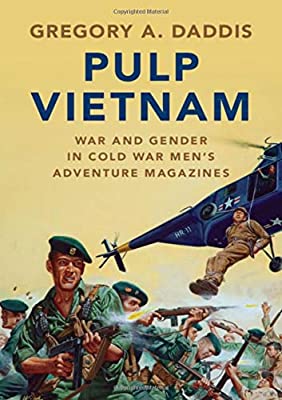
In the latest episode of our podcast series, we interview Dr Gregory Daddis about his latest book, Pulp Vietnam: War and Gender in Cold War Men’s Adventure Magazines (Cambridge University Press, 2021). Before and during the Vietnam War, some of the most popular magazines among those who served were pulp fiction men’s adventure magazines. In this interview, Daddis unpacks the relationship between fiction and reality, how we talk about wars and choose to remember them, and how constructions of gender really matter when we analyse war.

Dr Gregory A. Daddis is a Professor of History and the USS Midway Chair in Modern US Military History at San Diego State University. A retired US Army colonel, he has served in both Operations Desert Storm and Iraqi Freedom. He has authored four books, including Withdrawal: Reassessing America’s Final Years in Vietnam (2017).

Header image: Company E, 2/9 Marines, being re-supplied by a Sikorsky CH-34 during Operation Harvest Moon, 10 December 1965. (Source: Wikimedia)

#BookReview – The Royal Flying Corps, the Western Front and the Control of the Air, 1914-1918

#BookReview – The Royal Flying Corps, the Western Front and the Control of the Air, 1914-1918

James Pugh, The Royal Flying Corps, the Western Front and the Control of the Air, 1914-1918. Abingdon: Routledge, 2017. Figures. Charts. Bibliography. Index. Hbk. xviii + 190 pp.

Reviewed by Dr Heather Venable

41IVdzZMc4L._SX331_BO1,204,203,200_

The so-called Father of the Royal Air Force Lord Hugh Trenchard looms large in the historiography of air power, perhaps most infamously for his assertion – seemingly wrought out of thin air – that the moral effect of air power outweighed the material by a factor of twenty to one. To many students of air power, this statement epitomises how much the interwar pursuit of strategic bombardment rested on flights of fancy more than carefully reasoned analysis of the lessons of the First World War because airmen like Trenchard intended to have a moral effect on civilian populations in future wars.

By contrast, James Pugh’s The Royal Flying Corps, the Western Front and the Control of the Air, 1914-1918 pushes back at a significant portion of the historiography of First World War air power concerning the Royal Flying Corps (RFC). Unlike many other scholars, Pugh insists that before the First World War, British airmen anticipated how to use air power effectively and demonstrated creativity and flexibility in applying it during the war. Pugh’s revisionist approach depends on the compelling claim that historians have teleologically read aspects of the interwar period into the First World War experience. Pugh thus wants to rescue some airmen from unfair and overwrought reputations for dogmatism (p. 52). Perhaps most importantly, Pugh seeks to validate the RFC’s overwhelmingly offensive approach as fundamentally sound while showing change over time during the war concerning offensive air strategy. Pugh argues that the offensive approach taken by airmen primarily echoed that of the ground war. Moreover, airmen shifted from seeking decisiveness to pursuing attrition and pursued more sophisticated approaches to achieving control of the air during the First World War.

Q 4192
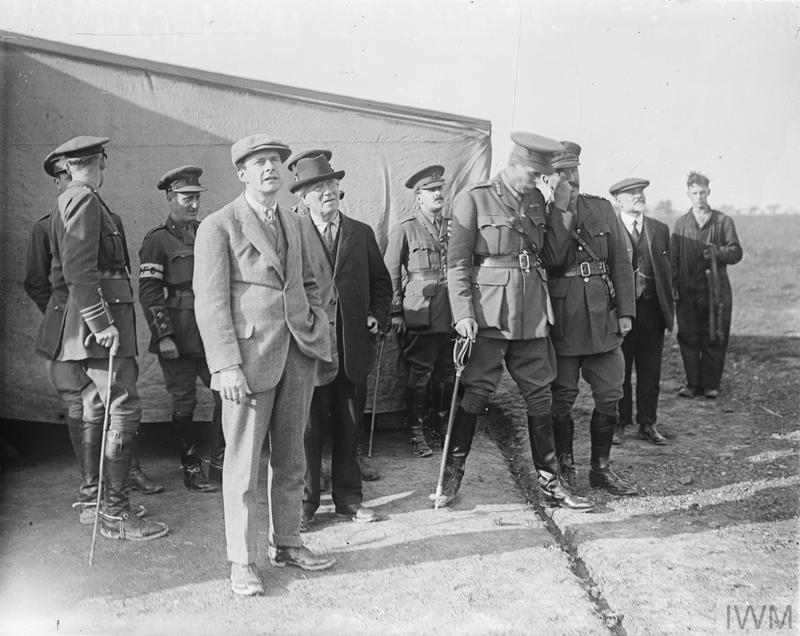
Prime Minister Herbert Asquith watches a squadron of aeroplanes returning to RFC Headquarters at Frevillers. With him is Major-General Hugh Trenchard, commander of the Royal Flying Corps. (Source: © IWM Q 4192)

Pugh’s first chapter establishes convincingly that airmen properly appreciated the importance of air superiority before the First World War. He also shows how vital missions, such as fostering battlefield communication and observing artillery fire, were anticipated before the First World War. However, limited technology and other factors impeded greater experimentation with these roles before the war (p. 33). These roles, moreover, reflected how aviators considered themselves to be part of the British Army. Their embrace of offensive thinking particularly reflected the powerful influence of British Army culture on the RFC. Pugh offers this helpful corrective in response to his belief that historians have traced the origins of airmen’s offensive proclivities too unilaterally to Trenchard (p. 14). Indeed, Pugh generally stresses the extent to which other airmen deserve more credit for developing air power thinking, continually deemphasising Trenchard (p. 51). In a similar vein, Pugh not only challenges widely held views on Trenchard’s emphasis on morale but also offers competing explanations for why the RFC stressed it so much. According to the author, the emphasis on diminishing an opponent’s morale owes much to the ‘fragility of aircraft’ (p. 24, 52). This point is not entirely convincing.

Still, Pugh argues that the RFC did not acquire ‘effective’ fighters until 1916, which were increasingly sent to the Western Front organised in squadrons responsible for different roles (p. 49). While awaiting improved aircraft, the RFC revised doctrine and improved organisational practices. When updated in 1915, RFC doctrine denoted reconnaissance as air power’s primary purpose, although it also increasingly recognised the requirement for ‘fight[ing]’ to obtain that information (p. 46), thereby placing more emphasis on controlling the air. Still, the RFC Training Manual diminished its emphasis on reconnaissance from 75 to 36% of the manual while increasing its coverage of artillery support most dramatically (p. 47).

‘Rules of the air – meeting another machine’. An air technical diagram of a Sopwith Dolphin and two Sopwith Camel biplanes meeting in the air and turn to the right. (Source: © IWM Q 67829)

The RFC’s views on how to control the air grew increasingly expansive, especially after learning valuable lessons about airpower employment at Verdun. Thus, the British now stressed seeking control of the air ‘far away’ from those aircraft providing direct support to the battlefield (p. 52) as well as reaffirming the importance of ‘maintaining an offensive posture’ (p. 56), which resulted in a theatre-wide emphasis as airmen sought to control the air in ‘breadth and depth’ (p. 81).

Pugh’s revisionist account largely depends on assuming the best about many of the airmen he describes, resulting in a somewhat Whiggish and rosy account of the RFC’s achievements in the First World War. Pugh valuably attempts to explode accepted thought in multiple areas. This approach is the work’s greatest benefit and failing. Regarding the extent to which airmen embraced an attrition-based strategy over the course of the war, for example, Pugh never fully makes an argument. Describing the phrase ‘relentless and incessant offensive’ as the ‘most profound evidence’ of this strategic shift ultimately falls short of proving one of the work’s key themes (p. 62). In a related vein, Pugh’s argument depends on separating out the rhetoric of airmen like Trenchard, who he claims made much of offensive air power for political reasons, meanwhile arguing that in actuality, airmen pursued an ‘increasingly nuanced and sophisticated approach to controlling the air’ (p. 71), such as using ‘concentrated and coordinated’ groups of fighters (p. 82). These contrasting interpretations cause the reader to wonder how Pugh determines when to accept evidence as rhetoric and when to accept it as representing airmen’s authentic thinking. These potential problems epitomise how Pugh is trying to do too much, such as when he mentions studies of First World War land power being importantly focused more systematically on ‘learning, transformation, or adaption’ yet preserves that approach for future airpower researchers (p. 91, 71). Using the methodology from some studies more systematically to explore British thinking about air control could offer more value.

Despite these critiques, all students of air power should read Pugh’s work for its argument-driven and revisionist analysis of the Royal Flying Corps. While adding significant complexity to widely accepted views of First World War airpower, Pugh ultimately concludes that the RFC’s offensive mindset represented the ‘most sensible course of action’ to pursue (p. 163). Even for those not necessarily interested in the RFC, his discussion of how to best employ air power will provide much of value to ponder for readers interested in any era of air power.

Dr Heather Venable is an Associate Professor in the Department of Airpower at the United States Air Force’s Air Command and Staff College. She received her PhD in Military History from Duke University. Venable’s first book, How the Few Became the Proud: Crafting the Marine Corps Mystique, 1874-1918, was published by Naval Institute Press in 2019.

Header image: A group of pilots of No. 32 Squadron RFC at Beauval in 1916. Behind them is an Airco DH.2 biplane. (Source: Wikimedia)