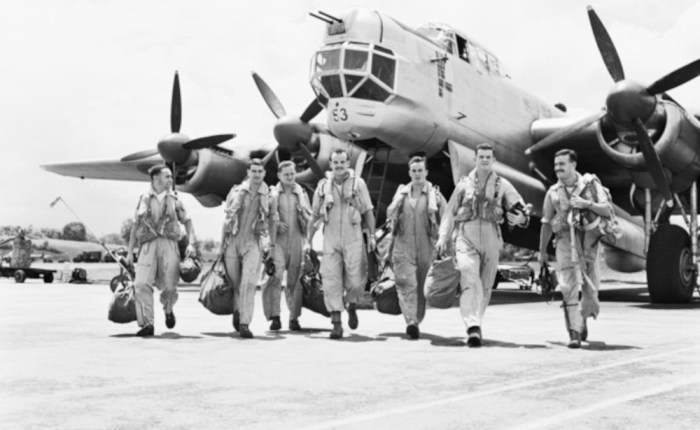
#ResearchNote – The Royal Australian Air Force Goes to War over Korea

#ResearchNote – The Royal Australian Air Force Goes to War over Korea

By Dr Ross Mahoney

Editorial note: This article first appeared on the author’s website. It has been reproduced here with permission.

On 25 June 1950 local time, forces of the Democratic People’s Republic of Korea (North Korea) crossed the 38th Parallel and invaded the Republic of Korea (South Korea). Launching Operation Pokpung, North Korea quickly moved south and by 28 June had occupied the capital of South Korea, Seoul. In response to this act of aggression, on 25 June 1950, in New York, the United Nations passed Resolution 82, which condemned the invasion, called for a cessation of hostilities, and demanded the withdrawal of forces beyond the 38th Parallel. Failure to comply with the resolution led to the adoption of Resolution 83, which recommended that UN members provide military forces to support South Korea and restore peace.

Korea, after 35 years of occupation by the Japanese, was split into two zones of occupation in 1945. The Soviet Union occupied the north, while the United States occupied the south. While the intention had been to unify the Korean Peninsula, problems arose between the communist North and the nationalist South. The failure of the Communist Party (the Workers’ Party of North Korea) to participate in the 1948 elections, combined with the abstention of several South Korean politicians, led to the eventual development of two distinct systems of government.[1] After the communist victory in the Chinese Civil War in 1949 and after receiving tacit support from Joseph Stalin, North Korea prepared to invade South Korea.

Australia’s response to Resolution 83 was to support the UN. At this time, the Australian military was providing forces to the British Commonwealth Occupation Force (BCOF) in Japan. Shortly after the passage of Resolution 83, the Department of External Affairs received communications from the Americans regarding the support Australia was willing to provide.[2] Initially, the Royal Australian Navy vessels (RAN) HMAS Shoalhaven and Bataan (the latter en route to Japanese waters to relieve the former) were tasked with supporting the withdrawal of nationals from South Korea; however, by 29 June, they were tasked with assisting American operations.[3] In cabling this news to the Australian Ambassador to the United States, Norman Makin, the Minister for External Affairs, Percy Spender, noted the presence of No. 77 Squadron, Royal Australian Air Force (RAAF), in Japan. However, he stressed it represented ‘practically the whole of our effective operational fighter strength in Australia or elsewhere.’[4]

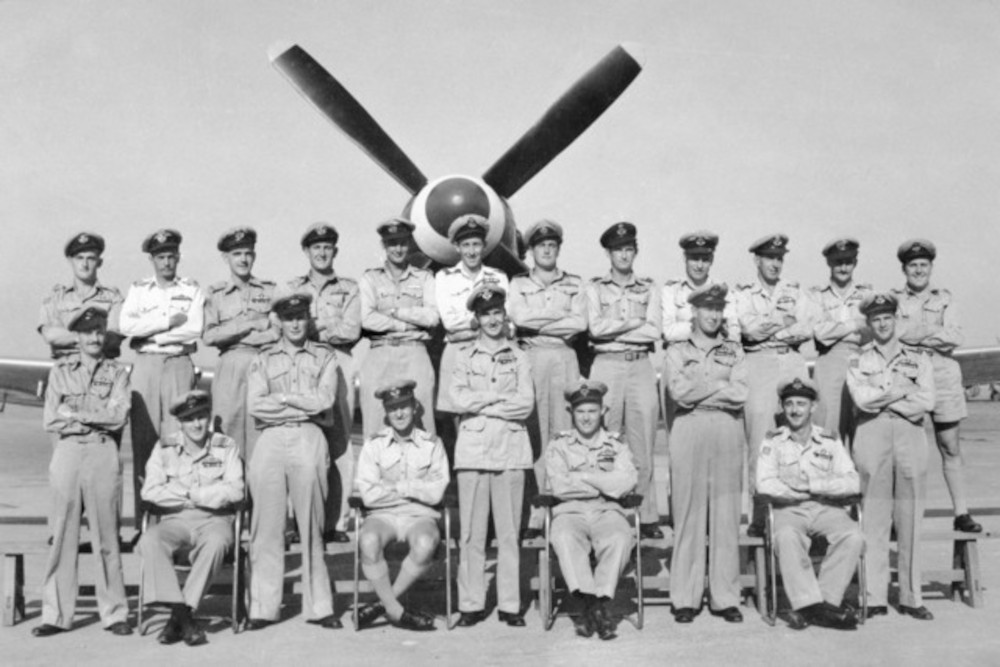
Group portrait of No. 77 Fighter Squadron, RAAF, 26 September 1948. Identified, left to right, back row: Warrant Officer (WO) Jim Flemming; WO W. Michelson; Flying Officer (FO) W. Horsman; WO M. Garroway; WO W. Rivers; Flight Lieutenant (Flt Lt) C.R. Noble; WO Fairweather; Flt Lt J. Grey; FO K. McLeod; WO B. Nichols; Flt Lt T. Murphy. Front row: FO W.O.K. Hewett; Flt Lt R. Hill; Flt Lt W. Ives; Flt Lt C. Butcher; Flt Lt S. Bradford; Squadron Leader F. Lawrenson; Flt J.I. Adams; Flt Lt G. Strout; Flt Lt K. Godfrey. (Source: Australian War Memorial)

No. 77 Squadron had deployed to Japan as part of BCOF in 1946 as part of No. 81 Wing. In 1948, it was transferred to Iwakuni Air Base in Yamaguchi Prefecture, on the island of Honshu. The squadron had been re-equipped after the end of the Second World War with the North American P-51D Mustang. By June 1950, No. 77 Squadron was amid preparations to return to Australia, it having been announced in April that the remaining Australian forces in Japan would be repatriated. However, events overtook these preparations. 

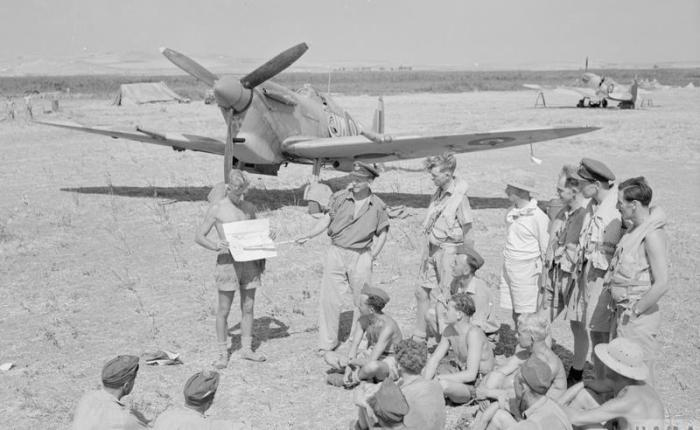
On 29 June, the same day the Australian Government contributed the RAN to the war in Korea, the Supreme Commander of the Allied Powers in Japan, General Douglas MacArthur, requested No. 77 Squadron for operations over the Korean Peninsula. He had been informed by his principal air commander, Commander of the Far East Air Forces (FEAF), Lieutenant General George Stratemeyer, that he was in desperate need of long-range ground attack aircraft. As the Australian Official Historian of the Korean War, Robert O’Neill related, MacArthur had cabled the Commander of BCOF, Lieutenant General Sir Horace Robertson, to request the use of No. 77 Squadron. However, he had sent the message uncoded and not kept it from the entourage of reporters that he had taken with him on his tour of South Korea.[5] Stratemeyer embellished MacArthur’s position by heaping praise on No. 77 Squadron. While the praise was not unwarranted, it was clearly designed for effect. Indeed, Stratemeyer and his planners at FEAF had, in the words of the United States Air Force’s official history of air operations over Korea, ‘cast covetous glances’ at No 77 Squadron and its P-51 Mustangs.[6] MacArthur’s request for the deployment of No. 77 Squadron was widely reported in the Australian media alongside Stratemeyer’s praise for the unit before the Australian Government had a chance to respond.[7]

MacArthur’s request put the Australian Government in a challenging position. They still hoped to send No. 77 Squadron back to Australia, but alliance politics took centre stage, and by 30 June it was announced that the squadron would be committed to operations.[8] MacArthur had got his way. However, while No. 77 Squadron was committed to action, it operated from Iwakuni and would operate over Korea, but not be deployed to the peninsula. Moreover, due to poor weather, it would take several days for No. 77 Squadron to undertake its first sorties.

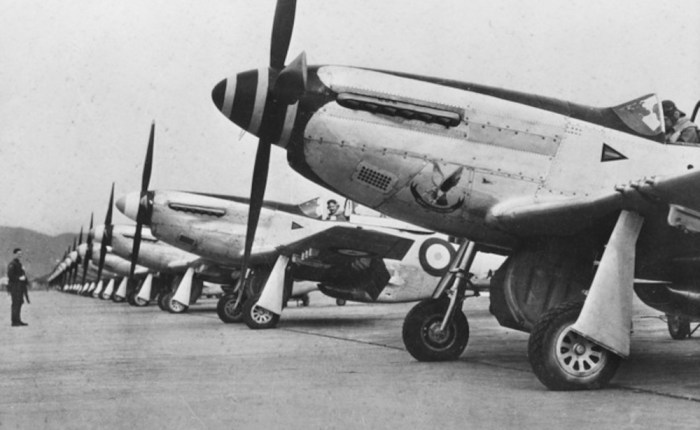
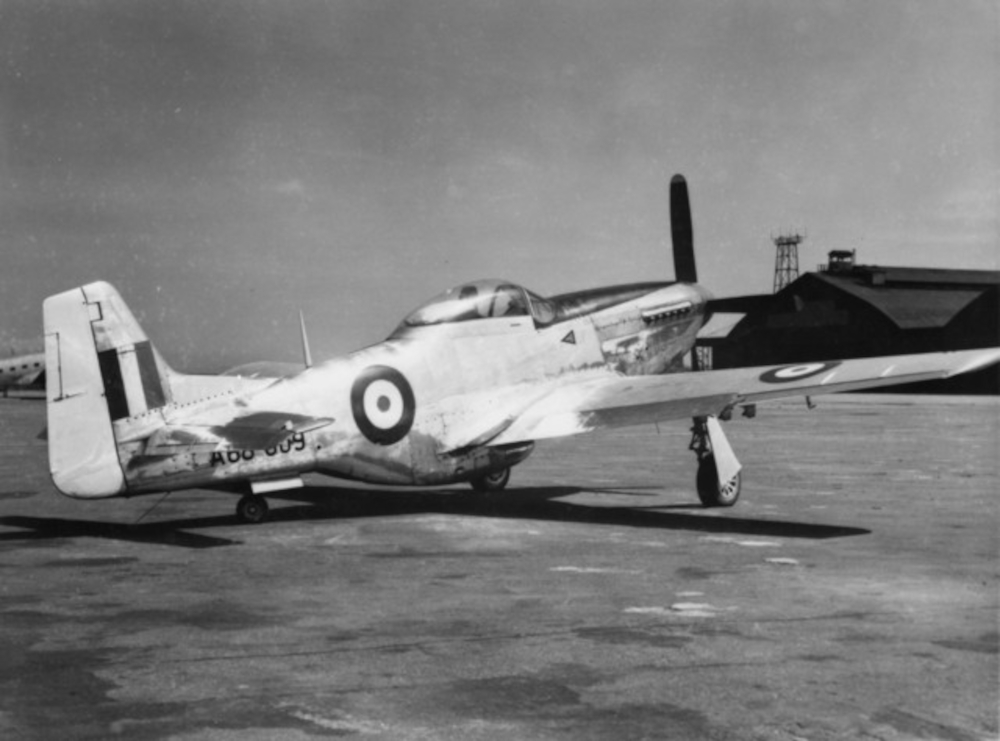
The North American P-51D Mustang aircraft A68-809, flown by Wing Commander Lou Spence DFC, when commanding No. 77 Squadron, RAAF, in Korea. Spence flew this aeroplane on 2 July when leading the second mission of the day. (Source: Australian War Memorial)

On 2 July, No. 77 Squadron undertook three sorties. The first was an ‘armed escort’ of four P-51s led by Squadron Leader Graham Strout for US Douglas C-47 Dakotas evacuating wounded soldiers from ‘Taijon’ (Daejeon) in Korea to Japan. One P-51 (A68-799) had to return to Iwakuni due to being unserviceable after take-off. The second sortie was a ‘close-armed escort’ mission led by the squadron commander, Wing Commander Lou Spence. The mission was to escort a group of US Douglas B-26 Invaders who attacked two bridges south of Seoul. One P-51 (A68-757) had to return due to unserviceability. The final mission saw six P-51s provide ‘armed escort’ to US Boeing B-29 Superfortresses who were attacking Yonpo airfield at Hamhung.[9] Despite the return of two aeroplanes to Iwakuni due to unserviceability, the sorties were relatively uneventful, despite several newspapers reporting that No. 77 Squadron downed one or two Yakovlev Yak-9 fighters.[10] No enemy aeroplanes were recorded as being encountered, and only in the two final sorties was any form of anti-aircraft fire encountered, though they caused no problem for the squadron. After a relatively inauspicious start, No. 77 Squadron would soon turn its attention to offensive operations, launching its first ‘armed attack’ with eight P-51s armed with rockets, attacking a convoy on a stretch of road between Heitaku and Suwon on 3 July. The attack claimed two locomotives, one truck, two staff cars, four other vehicles, and a bridge.[11]

The significance of No. 77 Squadron’s deployment over Korea came not in what the squadron physically achieved but in what its presence represented to alliance politics. The squadron’s first operations were widely reported both in Australia and abroad. In Australia, No. 77 Squadron’s first operation was reported in a typically functional manner, with many newspapers simply reporting on the character of the sorties. Nevertheless, some newspapers reported on the significance of the sorties in terms of Australian strategic policy, both foreign and domestic. For example, on 3 July, the Brisbane Telegraph noted that while the deployment of small-scale RAAF and RAN forces to support the effort in Korea was warranted to ‘honour Australian commitments to the United Nations’, any larger-scale deployment would need parliamentary agreement.[12] However, as an editorial in The Canberra Times reported, the rapid deployment highlighted ‘[t]wo extremes in the making of major decisions on policy have been illustrated by the reactions of the Government and of the Labour Party to the outbreak of hostilities in Korea.’[13] In short, the Australian Government acted quickly. At the same time, the Labor Party could ‘even comment on the situation until a meeting is held in Sydney next Wednesday [5 July], at which the policy will be decided.’[14] Perhaps unsurprisingly, it was reported that the Australian Communist Party had condemned the use of the RAAF, describing their deployment as a ‘scandal and a disgrace’ and demanding ‘the withdrawal of the R.A.A.F, from Korea.’[15]

More significantly, in the US, the rapid response of the Australian Government was noted. On 2 September, the Washington Evening Star reported on that ‘[t]he first combat mission of the Australians […] had a political significance. It made the air war a United Nations show […] No longer was the United States conducting any part of the Korean “police action” alone.’[16] That the term ‘political significance’ was used would not have been lost on readers, and a copy of this article was provided to the Department of External Affairs, as it aligned with Australian views on alliance politics.[17] Indeed, on 27 June, Makin had cabled Canberra to note that ‘the war had created a useful opportunity for putting to the State Department’ the creation of a ‘regional arrangement […] might help meet further crises.’[18] Thus, the failure to deploy No. 77 Squadron would have been inopportune and also demonstrated that, while a small contribution to the war effort, it had a significant political impact.

Thus ended the first day of operations for No. 77 Squadron over Korea. The squadron would deploy to Korea in October 1950 and eventually be re-equipped with the Gloster Meteor F.8. It would serve in Korea until October 1954, when it would transfer back to Japan and subsequently to Australia.

Dr Ross Mahoney is an independent scholar specialising in the history of war, with a particular focus on the use of air power and the history of air warfare. He is the Editor-in-Chief of From Balloons to Drones and currently the Senior Historian within the Heritage Policy team at Brisbane City Council in Australia. He has nearly 20 years of experience in the education, museum and heritage sectors in Australia and the United Kingdom, including serving as the inaugural Historian at the Royal Air Force Museum between 2013 and 2017. His other research interests are military leadership and command, military culture, and the history and development of professional military education. He also maintains an interest in transport history. He has published numerous articles, chapters and encyclopedia entries, edited two books, and delivered papers on three continents. His website is here.

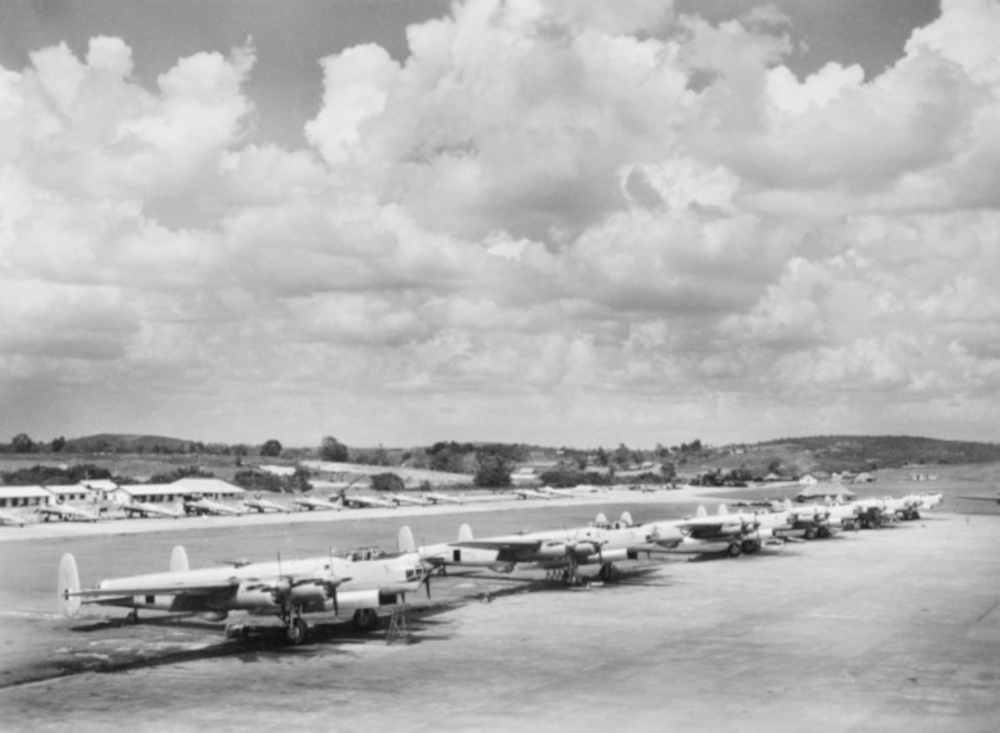
Header image: North American P-51D Mustangs of 77 Squadron RAAF, lined up on the tarmac at Iwakuni air base, Japan, c. 1950. (Source: Australian War Memorial)

[1] This is an overly simplified description of the development of the two Koreas in the period after the Second World War. For more detail, see: Allan Millett, The War for Korea, 1945-1950: A House Burning (Lawrence, KS: University Press of Kansas, 2005).

[2] Robert O’Neill, Australia in the Korean War, 1950-53 – Volume 1: Strategy and Diplomacy (Canberra, ACT: The Australian War Memorial and the Australian Government Publishing Service, 1981), p. 49.

[3] National Archives of Australia (NAA), A1838, 3123/7/3/4 PART 1, Statement by the Prime Minister, 29 June 1950; ‘Australia Backs U.N.,’ The Herald, 29 June 1950, p. 1; ‘Australian Units for Korea, Ships and Planes,’ Lithgow Mercury, 29 June 1950, 2.

[4] O’Neill, Australia in the Korean War, 1950-53 – Volume 1, p. 51.

[5] O’Neill, Australia in the Korean War, 1950-53 – Volume 1, pp. 51-2. On the repercussions, or lack thereof, of MacArthur’s ‘leak,’ see: O’Neill, Australia in the Korean War, 1950-53 – Volume 1, p. 54. Cameron Forbes claimed MacArthur told Australian Roy Macartney, who was Chief of the AAP-Reuters office in Tokyo. See: Cameron Forbes, ‘Fighting in the Giants’ Playground: Australians in the Korean War’ in John Blaxland, Micheal Kelly and Liam Brewin Higgins (eds.), In from the Cold: Reflections on Australia’s Korean War (Canberra, ACT, ANU Press, 2020), p. 89. Macartney certainly filed a story that was picked up by several newspapers. For example, see: ‘Australian Fighters Sought by MacArthur,’ The Canberra Times, 30 June 1950, p. 1; ‘MacArthur Seeks Use of Australian Fighters in Korea,’ Border Morning Mail, 30 June 1950, p. 1; ‘MacArthur Wants Australian Fighter Planes,’ Daily Advertiser, 30 June 1950, p. 1. O’Neill noted the presence of Macartney of MacArthur’s aeroplane but does not explicitly note that the latter told the former that he wanted No. 77 Squadron. O’Neill, Australia in the Korean War, 1950-53 – Volume 1, p. 51.

[6] Robert Futrell, The United States Air Force in Korea, 1950-1953 (New York, NY: Duell, Sloan and Pearce, 1961), p. 64.

[7] “R.A.A.F. Fighters Sought for South Korea,’ The Sydney Morning Herald, 30 June 1950, p. 1; ‘RAAF asked to Fight with U.S.,’ Daily Mirror, 30 June 1950, p. 1; ‘MacArthur Back; Wants to Use R.A.A.F.,’ Illawarra Daily Mercury, 30 June 1950, p. 1; ‘Mac Arthur asks for the R.A.A.F.,’ The Courier-Mail, 30 June 1950, p. 1; “Wants R.A.A.F. for Korea,’ The Mercury, 30 June 1950, p. 1.

[8] NAA, A1838, 3123/7/3/4 PART 1, Statement by the Prime Minister, 30 June 1950.

[9] NAA, A9186, 103, Detail of Operations, No. 77 Squadron, Operations Record Book, 2 July 1950.

[10] ‘RAAF Mustangs Escort Bombers,’ The Herald, 3 July 1950, p. 3; ‘RAAF Mustangs in a Mission which downs a Red,’ The Daily News, 3 July 1950, p. 1.

[11] NAA, A9186, 103, Detail of Operations, No. 77 Squadron, Operations Record Book, 3 July 1950.

[12] ‘Emergency Call to Parlt.,’ Brisbane Telegraph, 3 July 1950, p. 2

[13] ‘Policies on Korea,’ The Canberra Times, 3 July 1950, p. 4.

[14] ‘Policies on Korea,’ The Canberra Times, 3 July 1950, p. 4.

[15] ‘Communists in Stoney Attack Prime Minister,’ The Canberra Times, 3 July 1950, p. 1.

[16] NAA, A1838, 3123/7/3/4 PART 1, Brooks McClure, ‘Aussies Make Quick Contribution to War,’ Washington Evening Star, 2 September 1950. McClure’s article also noted the importance of the deployment of RAN ships.

[17] NAA, A1838, 3123/7/3/4 PART 1, Memorandum to the Secretary, Department of External Affairs, 5 September 1950.

[18] O’Neill, Australia in the Korean War, 1950-53 – Volume 1, p. 53.

#ResearchNote – The Forgotten Few: The Royal Australian Air Force and the Korean Air War – A Historiographical Note

#ResearchNote – The Forgotten Few: The Royal Australian Air Force and the Korean Air War – A Historiographical Note

By Dr Ross Mahoney

Editorial note: This article first appeared on the author’s website. It has been reproduced here with permission.

The Korean War is often described as the ‘Forgotten War’ due to it being sandwiched between the more commonly known Second World War and the Vietnam War. Furthermore, a debate persists over its character, with some referring to it as ‘police action.’ Despite this, the Korean War has received its fair share of examination by historians since the conflict ended. Arguably, the most comprehensive history in the English language is Allan Millett’s history of the conflict. So far, two volumes of The War for Korea (2005 and 2010) out of a projected three have been published, covering the period up to 1951. From an Australian perspective, the late Jeffrey Grey’s work on the role of British Commonwealth armies, The Commonwealth Armies and the Korean War (1988), remains a key work.

In addition to Grey’s work, the key source on Australia’s involvement in the Korean War remains the two-volume official history written by Robert O’Neill. Starting research in 1970, O’Neill’s two-volume history dealt with strategy and diplomacy in its first volume, while the second volume covered the combat operations of the military forces deployed, including the experience of the Royal Australian Air Force (RAAF). While the first volume has generally been praised, the second volume has been described by at least one critic as a ‘regimental history.[1] Indeed, with specific reference to the RAAF’s contribution, Glen St John Barclay questioned the validity of volume two, arguing ‘if one is not going to make even a passing reference to the aviators of the US Air Force and Navy who achieved total command of the skies for the United Nations Forces in Korea. This is Hamlet without the Prince of Denmark, indeed.’[2]

O’Neill’s appointment nevertheless marked a significant departure from previous official historians, who were journalists by background. Here, the Australian Government made a conscious decision to appoint an academic – O’Neill also served as the Head of the Australian National University’s Strategic and Defence Studies Centre at the time he researched and wrote the official history. Since O’Neill’s appointment, the subsequent official histories published in Australia have adopted a significantly more academic tone. Moreover, as Peter Edwards, the Official Historian of Australia’s involvement in Southeast Asian Conflicts, 1948-1975 has written, O’Neill ‘pioneered the coverage in official histories of the strategic and diplomatic policy-making that led Australian forces to be involved in conflicts, with the same precision and authority as had always been given to the experience of those forces.’ [3]

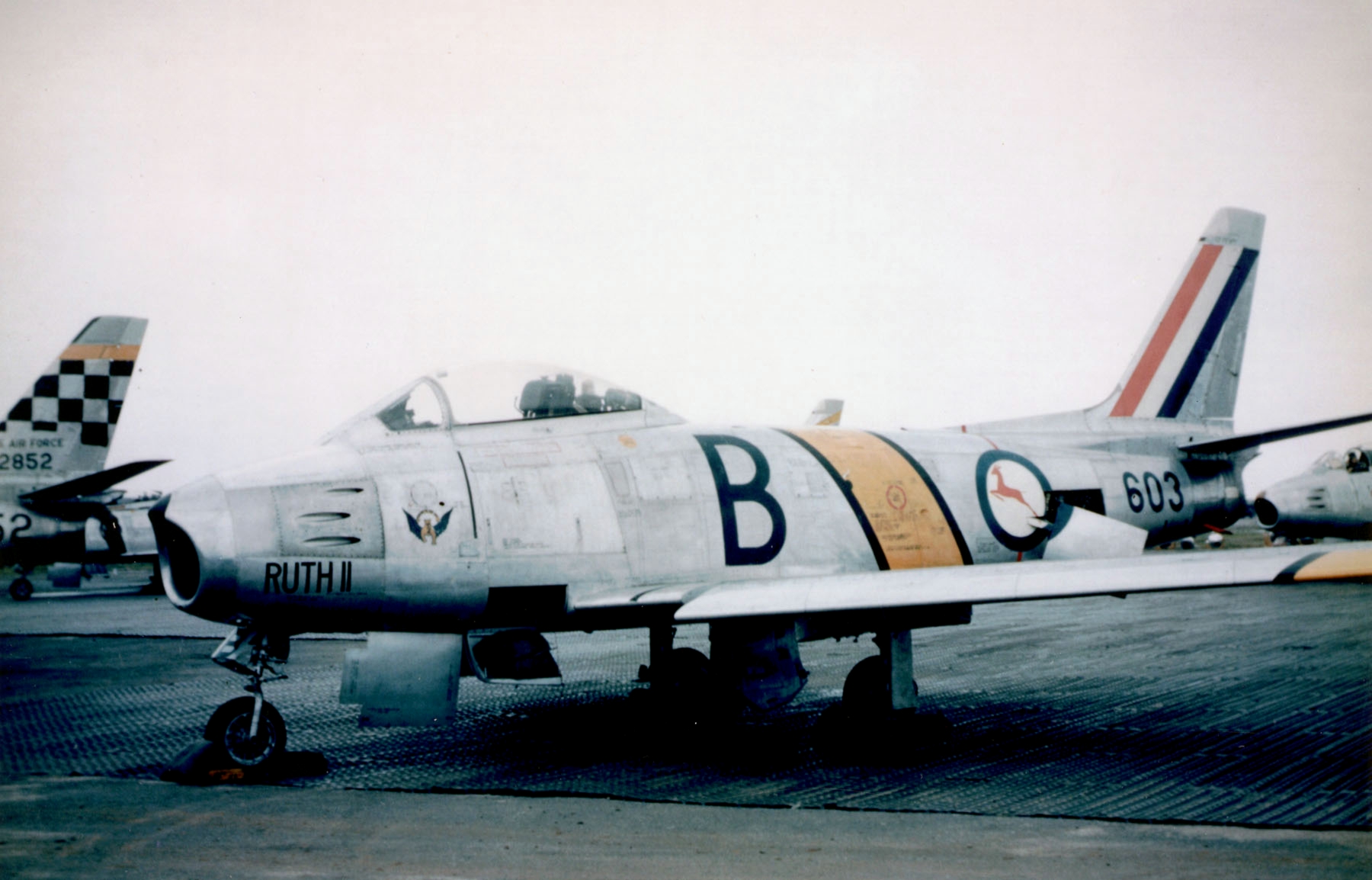
A South African Air Force North American F-86F Sabre from No. 2 Squadron at Tsuiki air base, Japan, in 1953. No. 2 Squadron SAAF was attached to the US Air Force 18th Fighter-Bomber Wing during the Korean War. (Source: Wikimedia)

Returning to air power, the historiography is generally dominated by accounts detailing the role of primarily the United States Air Force, with some attention paid to US naval air power and the role of US Marine Corps aviation. Key amongst these is Conrad Crane’s American Airpower Strategy in Korea (2000). Crane is critical of the USAF’s official history published by Robert Futrell in the 1960s, noting that The United States Air Force in Korea, 1950-1953 (1961) ‘emphasizes the success of air power in Korea and not the air force’s failure to learn enough from that ordeal.’[4] The role of naval aviation is dealt with in Richard Hallion’s 1986 work, The Naval Air War in Korea. Xiaoming Zhang’s 1998 article in The Journal of Military History and his 2002 book Red Wings over the Yalu remain the key works in the English language that examine the Chinese and Soviet use of air power over Korea.[5] Of interest is John Sherwood’s 1996 cultural history of US pilots during the Korean War, Officers in Flight Suits: The Story of American Air Force Fighter Pilots in the Korean War. In addition to these works, a useful general introduction to the subject can be found in Michael Napier’s 2021 history, Korean Air War.

Dealing with Australian air power, writing on the experience of the RAAF began even before the war had ended when George Odgers published Across the Parallel in 1952. Odgers had served as a public relations officer for the RAAF in Korea and had access to No. 77 Squadron that would have been hitherto unheard of for other writers of the time. The work was generally well received at the time of its publication, although it is now somewhat dated. Odgers would later write a biography of Wing Commander Richard Cresswell, Mr Double Seven (2008), who commanded No. 77 Squadron during 1951. Few personnel accounts of the RAAF’s involvement in the air war over Korea have been published. A notable exception is Colin King’s Luck is No Accident (2001).  

Little was published on the RAAF’s operations in Korea until the arrival in 1994 of David Wilson’s Lion Over Korea. The RAAF’s role in Korea was discussed by Alan Stephens in the second volume of the Air Force’s official history, Going Solo, in 1995. Stephens’ work is arguably the most comprehensive treatment of the campaign, despite the experience in Korea warranting only a single chapter. The volume, however, situates the deployment in context and links it to other ongoing issues in the history of the RAAF at the time. Then, at the turn of the 21st Century, Doug Hurst published The Forgotten Few (2000) while more recently Owen Zupp has published an account of Australia’s contribution to the air war (2024).

Despite the lack of personal accounts and Hurst’s contention that the No. 77 Squadron represented a ‘forgotten few,’ there has been a surprising amount published for what was ostensibly a small contribution to the war effort. Nevertheless, there are problems. While it might be argued that much has been written about the RAAF’s contribution to the air war, their contribution can still be overlooked. For example, In from the Cold, a 2020 edited collection reflecting on Australia’s contribution to the Korean War, did not include a chapter on the RAAF. Based on a 2011 conference at the Australian War Memorial, the event featured chapters on the Australian Army and the Battle of Maryang San, as well as the four-month deployment of the Royal Australian Navy’s aircraft carrier, HMAS Sydney. However, the closest we see the RAAF discussed is in a chapter on coalition air operations by Richard Hallion.[6]

Additionally, apart from Stephens’ work, the cited works above primarily focus on the experience of No. 77 Squadron. Little attempt is made to link expertise back to the development and operations of the RAAF in Australia and other places such as Malaya. Indeed, any consideration of Australian air power strategy in this period cannot separate Korea from Malaya, as the two campaigns were clearly linked in the mind of the Australian government.[7]

Dr Ross Mahoney is an independent scholar specialising in the history of war, with a particular focus on the use of air power and the history of air warfare. He is the Editor-in-Chief of From Balloons to Drones and currently the Senior Historian within the Heritage Policy team at Brisbane City Council in Australia. He has nearly 20 years of experience in the education, museum and heritage sectors in Australia and the United Kingdom, including serving as the inaugural Historian at the Royal Air Force Museum between 2013 and 2017. His other research interests are military leadership and command, military culture, and the history and development of professional military education. He also maintains an interest in transport history. He has published numerous articles, chapters and encyclopedia entries, edited two books, and delivered papers on three continents. His website is here.

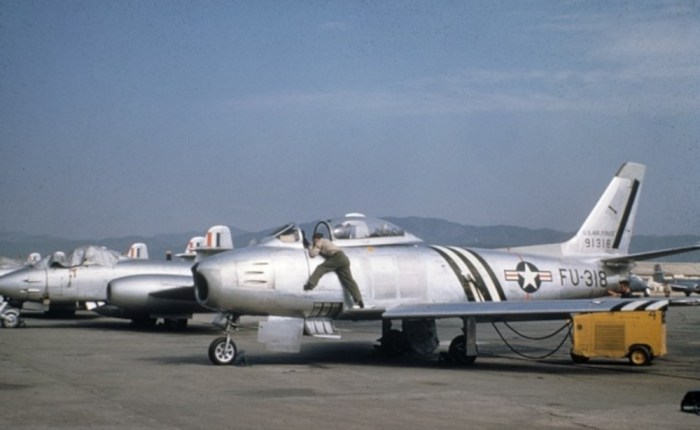
Header image: A United States Air Force North American F-86 Sabre parked alongside Gloster Meteor Mk8s on No. 77 Squadron of the Royal Australian Air Force at Iwakuni in Japan, June 195. (Source: Australian War Memorial)

[1] Glen St John Barcley, ‘Australian Historians and the Study of War, 1975-88,’ Australian Journal of Politics & History 41, no. 1 (1995), p. 241.

[2] Barclay, ‘Australian Historians and the Study of War,’ p. 241.

[3] Peter Edwards, ‘Robert O’Neill and the Australian Official War Histories: Policy and Diplomacy’ in Daniel Marston and Tamara Leahy (eds.), War, Strategy and History: Essays in Honour of Professor Robert O’Neill (Canberra, ACT: ANU Press, 2016), p. 71.

[4] Wayne Thompson, ‘Book Review – American Airpower Strategy in Korea, 1950-1953 by Conrad Crane,’ Journal of American History 87, no. 4 (2001), p. 1565.

[5] Xiaoming Zhang, ‘China and the Air War in Korea, 1950-1953,’ The Journal of Military History 62, no. 2, (1998), pp. 335–70.

[6] Richard Hallion, ‘The Air War in Korea: Coalition Air Power in the Context of Limited War’ in John Blaxland, Michael Kelly and Brewin Higgins (eds.), In from the Cold: Reflections of Australia’s Korean War (Canberra, ACT: ANU Press, 2020), p. 129, 141.

[7] Mark Lax, Malayan Emergency and Indonesian Confrontation, 1950 to 1966 (Newport, NSW: Big Sky Publishing, 2021), p. 75.

#ResearchNote – Orders of Precedence Matters…

#ResearchNote – Orders of Precedence Matters…

By Dr Ross Mahoney

Editorial note: This post originally appeared on the author’s website and is cross-posted here with permission.

In 1922, an interesting episode in the history of the Royal Australian Air Force (RAAF) began. In October 1922, the Secretary to the Department of Defence, Thomas Trumble, wrote to the Secretary of the Prime Minister’s Department, noting that as the RAAF constituted an independent service, Air Board and Air Force members should be afforded representation at official functions.[1] Its precedence was to come after the Australian Army. The Prime Minister’s Department’s reply was straightforward, noting that:

[a]rrangements will be made for the inclusion of representatives of the Air Force in connection with any general function to be held by the Commonwealth Government.[2]

Such a straightforward administrative request should have ended, but it did not. In 1924, the Governor-General sent a memorandum to the Prime Minister, Stanley Bruce, that ‘no precedence was accorded’ to the First Air Member at the inaugural dinner of the Lord Mayor of Melbourne that he recently attended.[3] It was suggested that to solve this issue, changes should be made to the Commonwealth Table of Precedence, namely paragraph 10.

While the changes suggested were eventually made, this episode highlights several issues related to the status of the RAAF and its emerging place in Australia’s defence establishment. First, the RAAF appeared to have a clear ally in the form of the Governor-General, Lord Forster. While Forster had not served in the military, he saw air power as important to Australia’s defence. In his memorandum to the Prime Minister, he wrote:

In view of the great and growing importance of the Air Service […] it would be desirable that the head of the Air Force should in future receive definite recognition on such occasions.[4]

Given the status of the Air Board in Australian defence planning, this is an interesting comment.[5]

Second, the issue that happened and had to be raised by Lord Forster illustrates the place of the RAAF in Australian thinking more broadly. Despite this issue being raised more than two years previously, nothing appears to have been enacted. Thus, it can be suggested that despite gaining its independence in 1921, Australian thinking had yet to adjust to the idea of an independent air force.[6] Thus, while orders of precedence may seem a curious relic to the modern audience, such things matter to the military cultures, especially to new organisations such as air forces. They are a status issue and illustrate to the broader public where an organisation might fit within the government’s thinking. By not giving the proper order of precedence to the RAAF, it could be argued that a clear message was being presented to the Australian body politic – independent air power did not matter. But was that so?

Dr Ross Mahoney is the Editor-in-Chief of From Balloons to Drones and an independent scholar specialising in the history of war with particular reference to the use of air power and the history of air warfare. He is currently the Senior Historian within the Heritage Policy team at Brisbane City Council in Australia. He has nearly 20 years of experience in the education, museum and heritage sectors in Australia and the United Kingdom. Between 2013 and 2017, he was the inaugural Historian at the Royal Air Force Museum in the UK. In Australia, he has worked as a Historian for the Department of Veterans’ Affairs and taught at the Strategic and Defence Studies Centre at The Australian National University based at the Australian War College. His research interests are focused on the history of war, specifically on the history of air power and air warfare, military leadership and command, military culture, and the history and development of professional military education. He also maintains an interest in transport history. He has published numerous articles, chapters and encyclopedia entries, edited two books, and delivered papers on three continents.

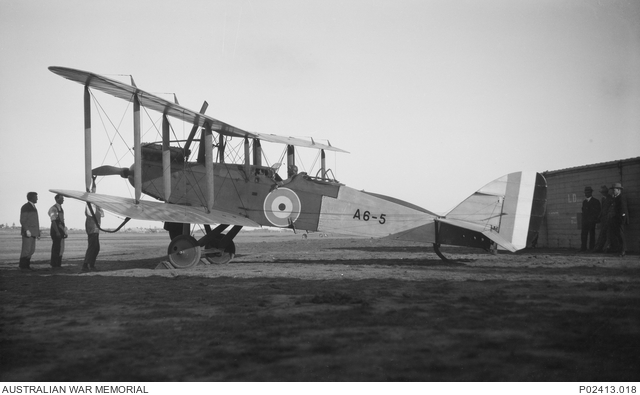
Header image: Port view of a RAAF De Havilland DH-9. This aeroplane was one of 128 gift aeroplanes presented by the British government to the newly formed RAAF, including thirty DH.9a (Source: Australian War Memorial)

[1] National Archives of Australia (NAA), A705, 4/1/35, Secretary, Department of Defence to the Secretary, Prime Minister’s Department, 14 October 1922.

[2] NAA, A705, 4/1/35, Secretary, Prime Minister’s Department to the Secretary, Department of Defence, 17 October 1922.

[3] NAA, A705, 4/1/35, Memorandum by the Governor-General to the Prime Minister, 11 November 1924.

[4] NAA, A705, 4/1/35, Memorandum by the Governor-General to the Prime Minister, 11 November 1924.

[5] John MacCarthy, Australia and Imperial Defence, 1918-39: A Study in Air and Sea Power (St Lucia, QLD: University of Queensland Press, 1976), p. 27.

[6] MacCarthy, Australia and Imperial Defence, pp. 34-43.

#ResearchNote – Top 10 Air Power History Books of this Generation

#ResearchNote – Top 10 Air Power History Books of this Generation

By Dr Ross Mahoney

Editorial note: This post was originally posted on my website and has been cross-posted here to generate further discussion. Minor editorial changes have been made to the post.

Ok, this post stems from a question I asked on BlueSky: ‘Who is the most significant air power historian of our generation? Discuss #airpowerhistory.’ The question stemmed from the call for contributors I posted last week and is related to my ongoing research into writing about air power. For the purpose here, ‘generation’ is to be considered to have been in the past 20-30 years. As such, the books listed here have been published since 1990.

In response, one poster asked me to list the top ten books I consider the most significant. I did a similar exercise for From Balloons to Drones back in 2017. The difference between the two lists is that the list produced in 2017 reflected those books that influenced and shaped my writing as an air power historian. In contrast, this list is more focused on those that I consider significant for their impact, though the list is still biased as I selected books from my library, and as such, they reflect my own research interests to some extent. I have also excluded edited books except for John Andreas Olsen and Philip Meilinger’s work for reasons I hope will be apparent. Other works, such as Tami Davis Biddle’s Rhetoric and Reality in Air Warfare (2002), would have made an expanded list. For an Air Power Reading list, visit the one from From Balloons to Drones.

Here is the list…

Tony Mason, Air Power: A Centennial Appraisal (London: Brassey’s, 1994). As I wrote here, Mason was one of the doyens of air power studies and undoubtedly crucial in developing the field in the UK. This work represented the culmination of his thinking, even though he would continue to write after its publication. He used history as a tool to explore the development of air power, and it is a significant volume and still requires reading to this day.

Philip Meilinger (ed.), The Paths of Heaven: The Evolution of Airpower Theory (Maxwell AFB, AL: Air University Press, 1997). One of the two edited works in this list. Written as a primer by the United States Air Force’s School of Advanced Airpower Studies faculty, this charts the evolution of air power theory and doctrine and is a necessary starting point for anyone researching the subject.

John Buckley, Air Power in the Age of Total War (London: UCL Press, 1999). Despite its age, this remains an excellent examination of the rise of air power in the first half of the 20th Century, and it is vital reading for anyone wanting an introduction to the subject.

Richard Hallion, Taking Flight: Inventing the Aerial Age from Antiquity through the First World War (Oxford: Oxford University Press, 2003). I could have selected any of Hallion’s work, for he is probably the United States’ preeminent air power historian. However, this book offers an excellent history of air power before the First World War.

John Andreas Olsen (ed.), A History of Air Warfare (Washington DC: Potomac Books, 2010). This edited book is listed for two reasons. One, Olsen is adept at bringing together leading air power scholars and any of his edited or single-authored books should be on your bookshelf. Second, the book is an excellent introduction to the use of air power in the major conflicts of the 20th and early 21st Centuries, written by leading experts such as Tony Mason, Richard Hallion, Richard Overy, John Morrow Jr, Alan Stephens, Benjamin Lambeth and Williamson Murray.

Richard Overy, The Bombing War: Europe, 1939-1945 (London: Allen Lane, 2013). The result of Overy’s voluminous research, this volume is required reading for anyone looking to understand the strategic bombing campaigns of the Second World War.

Thomas Hippler, Bombing the People: Giulio Douhet and the Foundations of Air-Power Strategy, 1884-1939 (Cambridge: Cambridge University Press, 2013). If one name is associated with the early development of air power thinking, it is the Italian Giulio Douhet. In this volume, Hippler does a thorough job of examining the evolution of Dohet’s strategic thought. It is necessary reading for anyone looking at the evolution of air power theory.

Peter Dye, The Bridge to Airpower: Logistics Support for the Royal Flying Corps on the Western Front, 1914-18 (Annapolis, MD: Naval Institute Press, 2015). This excellent work shows that air power history is not just about aeroplanes. Dye does a superb job of showing how logistics shaped the character of the air war over the Western Front and how the RFC/RAF’s system helped it prevail in 1918.

Phillips Payson O’Brien, How the War Was Won: Air-Sea Power and Allied Victory in World War II (Cambridge: Cambridge University Press, 2015). While not solely focused on air power, O’Brien’s work is essential in examining the role played by air power in conjunction with sea power in the Allied victory of the Second World War. The work challenges many preconceptions and should be required reading for anyone interested in the Second World War.

Peter Gray, Air Warfare: History, Theory and Practice (London: Bloomsbury, 2016). This book was the outgrowth of the old MA in Air Power run by Gray at the University of Birmingham. Gray gives an excellent overview of critical issues related to air power and is a necessary reading for those just getting into the subject.

What would you include? What would you remove?

Dr Ross Mahoney is an independent scholar specialising in the history of war with particular reference to the use of air power and the history of air warfare. He is currently the Senior Historian within the Heritage Policy team at Brisbane City Council in Australia. He has nearly 20 years of experience in the education, museum and heritage sectors in Australia and the United Kingdom. Between 2013 and 2017, he was the inaugural Historian at the Royal Air Force Museum in the UK. In Australia, he has worked as a Historian for the Department of Veterans’ Affairs and taught at the Strategic and Defence Studies Centre at The Australian National University based at the Australian War College. His research interests are focused on the history of war, specifically on the history of air power and air warfare, military leadership and command, military culture, and the history and development of professional military education. He also maintains an interest in transport history. He has published numerous articles, chapters and encyclopedia entries, edited two books, and delivered papers on three continents. His website is here, and he can be found on Twitter at @airpowerhistory.

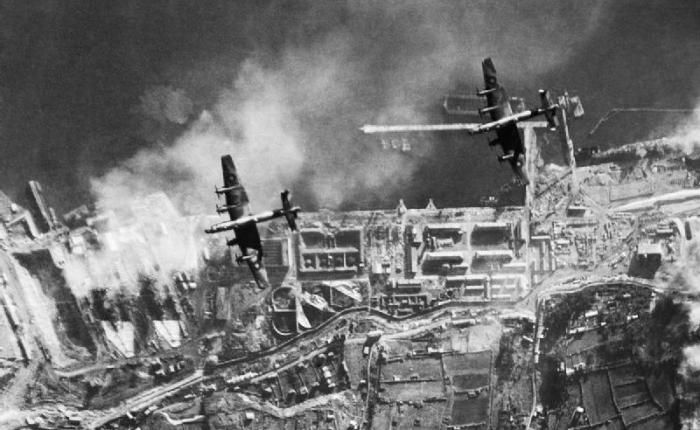
Header image: Vertical aerial photograph taken during a daylight attack on German warships docked at Brest, France. Two Handley Page Halifaxes of No. 35 Squadron RAF fly towards the dry docks in which the battlecruisers Scharnhorst and Gneisenau are berthed (right), and over which a smoke screen is rapidly spreading. (Source: Imperial War Museum)

#ResearchNote – Project Suntan: The Huge Hydrogen Aircraft That Might Have Blown Up Southern California

#ResearchNote – Project Suntan: The Huge Hydrogen Aircraft That Might Have Blown Up Southern California

By Dr Michael W. Hankins

I am fascinated by aircraft designs that ‘could have been.’ Maybe it’s just my nostalgia for childhood drawings of imaginary aeroplanes, but I love looking at the concept for the out-of-the-box ideas that never made it off the drawing board. Recently, I was researching at the beautiful Huntington Library archives, combing through the papers of Ben Rich, who ran Lockheed’s Advanced Development Projects division, ‘Skunk Works,’ between 1975 and 1990. ‘Skunk Works’ handled Lockheed’s top-secret programs, such as the U-2. I came across his files on the CL-400, also known as Project Suntan.[1] This had nothing to do with the project I was working on, but I found the files fascinating and wanted to share some of what I found here on From Balloons to Drones.

In 1955, most people dancing to Bill Haley’s new hit song ‘Rock Around the Clock’ had little idea that the Central Intelligence Agency and US Air Force had partnered with Lockheed to design a secret spy plane to fly 70,000 feet above the Soviet Union, the U-2. However, even as the U-2 began flying, Clarence ‘Kelly’ Johnson, then chief engineer at Lockheed’s Burbank, California plant, suspected that the U-2 would not last long – it was an effective aeroplane but vulnerable. Johnson wanted a follow-on to the U-2 that could fly even higher, further, and faster.

Lockheed turned to the advantages of high-energy fuels, specifically liquid hydrogen (LH). With a much greater energy density, hydrogen was more powerful (and hazardous). On paper, it seemed like an LH-powered aircraft could have everything Johnson needed: very long range, very high altitude, and supersonic speed. Rich led the project, working under Johnson at the ‘Skunk Works.’

Rich recalled, ‘between 1955-1958, [Lockheed] developed and built all the components and systems necessary for a liquid hydrogen-fueled airplane.’ Designing aircraft to use this unique fuel source presented major challenges. As Rich noted: ‘The hydrogen fueled airplane has very little flexibility in design configuration […] since fuel requirements dictate a long fuselage with attendant balancing and C.G. [center of gravity] travel limitations.’

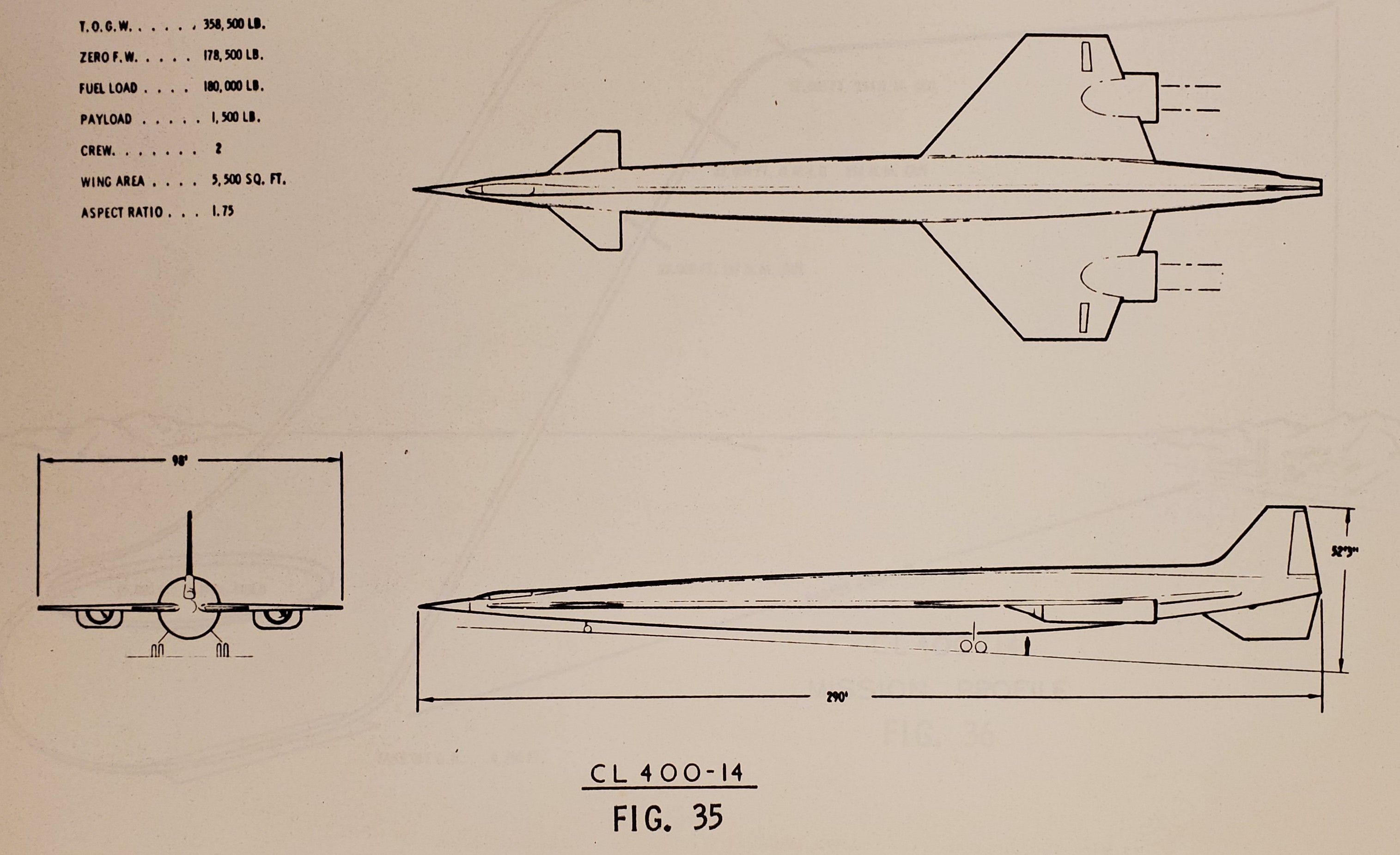
Nevertheless, the concept went through a series of iterations. The original CL-400 was a two-seat reconnaissance plane, 160 feet long with a 10-foot diameter. The wings resembled Lockheed’s F-104 Starfighter, and the plane’s vertical fin was retractable. It was designed to cruise at 99,500 feet, going Mach 2.5, for a maximum range of 2,200 nautical miles.

CL-400-14
An illustration showing the relative size comparison of the C-400-14 with a Boeing B-52 Stratofortress and a Lockheed Constellation (Source: The Huntington Library, California, Ben Rich Papers, Box 3, Folder 1, Projects – Engineering – CL-400)

That was just the beginning. Variant designs on the CL-400, Rich says, ‘were studied from the standpoint of achieving maximum range rather than maximum altitude.’ As evident from the accompanying series of plan drawings, the original CL-400 was near the size of the massive Boeing B-52 Stratofortress bomber, but increasing its range meant increasing the fuel capacity. So, the designs got bigger. Much, much bigger.

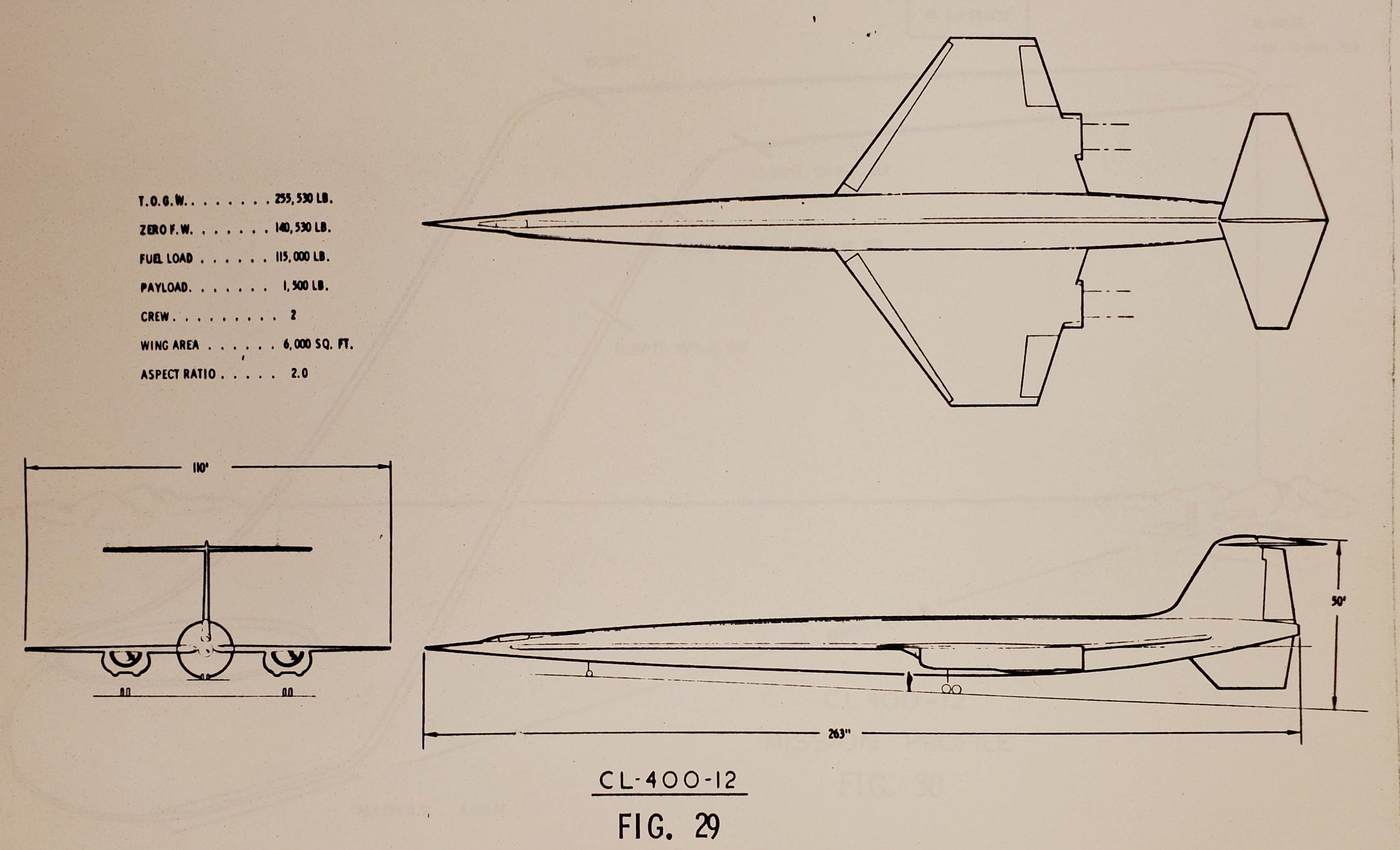
CL-400-12
Drawing of the CL-400-12. (Source: An illustration showing the relative size comparison of the C-400-14 with a Boeing B-52 Stratofortress and a Lockheed Constellation (Source: The Huntington Library, California, Ben Rich Papers, Box 3, Folder 1, Projects – Engineering – CL-400)

The CL-400-12 was more than double the size of a B-52 and designed for a 4,720 nautical mile range with four engines blasting it to Mach 2.5. Rich’s notes simply stated that ‘the aircraft size is quite large.’

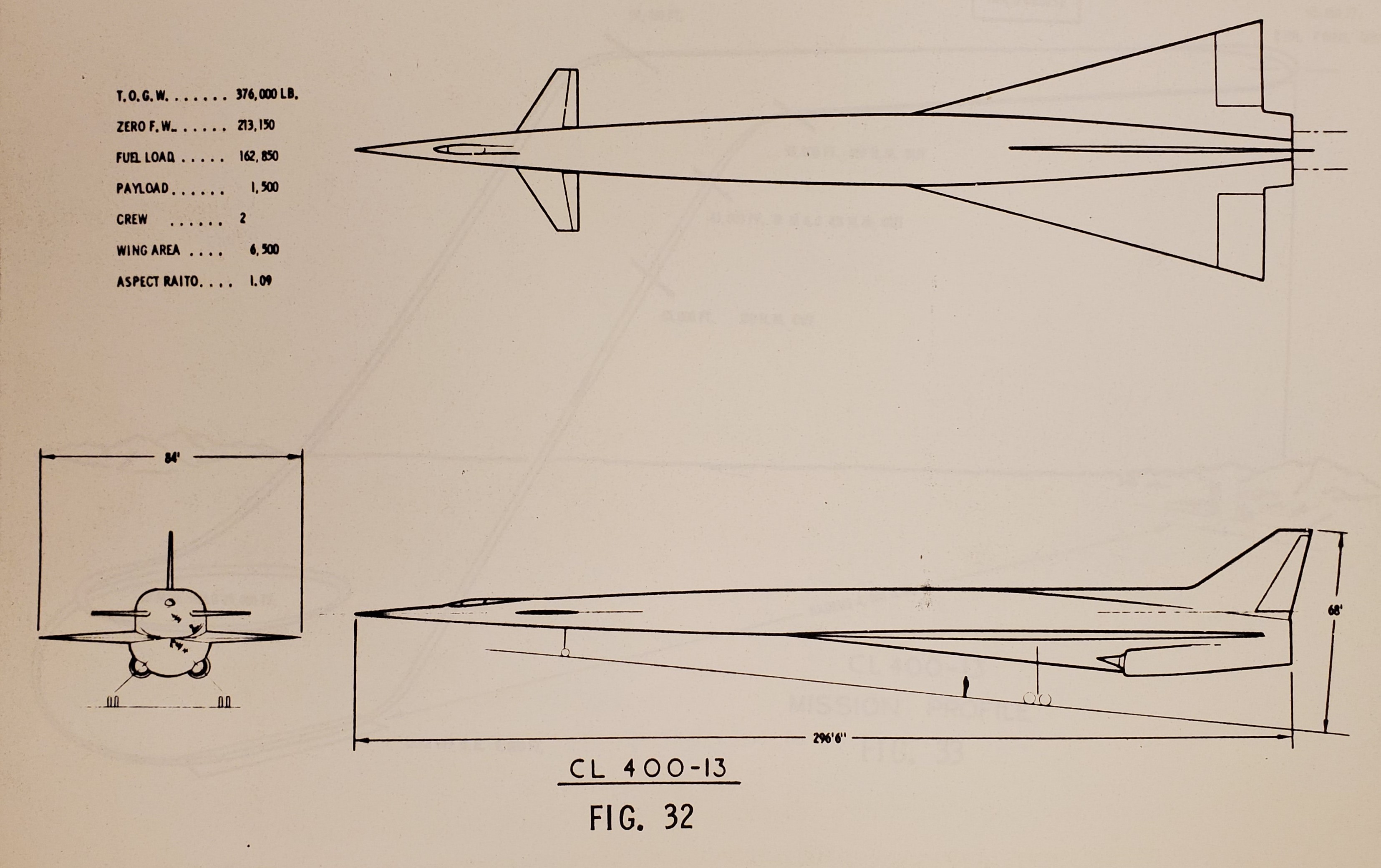
CL-400-13
Drawing of the CL-400-13. (Source: Drawing of the CL-400-12. (Source: An illustration showing the relative size comparison of the C-400-14 with a Boeing B-52 Stratofortress and a Lockheed Constellation (Source: The Huntington Library, California, Ben Rich Papers, Box 3, Folder 1, Projects – Engineering – CL-400)

The CL-400-13 took the idea even further with a cone-delta design and forward canards. The aeroplane was almost the length of one football field, with a gross take-off weight of 376,000 pounds. Nevertheless, it could cruise at Mach 4 for a total range of 9,000 nautical miles. The CL-400-14 was similar in size to the -13 but used four smaller engines instead of two big ones.

CL-400-14 1
Drawing of the CL-400-14 (Source: Drawing of the CL-400-13. (Source: Drawing of the CL-400-12. (Source: An illustration showing the relative size comparison of the C-400-14 with a Boeing B-52 Stratofortress and a Lockheed Constellation (Source: The Huntington Library, California, Ben Rich Papers, Box 3, Folder 1, Projects – Engineering – CL-400)

Hydrogen, as readers familiar with the Hindenburg disaster will attest, is also very dangerous. Lockheed had an approach to address the danger: try to cause a series of hydrogen explosions. Rich’s notes explained that ‘Numerous hydrogen ignition tests were made so as to get a feel for the damage potential in such an explosion, and it was found that the danger was not nearly as great as expected. Explosions were generally mild, and hydrogen fireball radiation was much less than that from a comparable kerosene fire.’ They tried to create an explosion 61 times, and only twice (when purposefully mixed with oxygen and ignited) did it cause ‘a bona fide explosion.’ Lockheed engineers were convinced LH could be handled safely – even more critically since the top-secret nature of the program meant that if there were an uncontrollable fire, they would not be able to call the fire department.[2]

Lockheed built a massive facility to test methods to produce, store, and transport the large quantities of liquid hydrogen necessary to operate a fleet of huge, LH-guzzling aeroplanes a few hundred yards away from the Burbank Municipal Airport. Dr Russell Scott, a leading expert on liquid hydrogen from the U.S. Bureau of Standards, visited the facility and said, ‘My God in heaven, you’re gonna to blow up Burbank.’[3] Ultimately, the logistical challenges of operating a fleet of LH aircraft proved insurmountable at the time. After examining the international basing requirements for the necessary fuel, Johnson gave up on the project. He called the Secretary of the Air Force, James Douglas, and said, ‘I’m afraid I’m building you a dog. My recommendation is that we cancel Suntan.’[4] Today, U-2s are still flying, and the Burbank site, which was once the home for testing and production of classic Lockheed aircraft, has been turned into a giant shopping complex featuring a Best Buy and Wal-Mart. In a way, maybe Burbank did blow up.

It is tempting to write off this story as a historical footnote, but the story of Suntan has three important takeaways: First, failure is important. Just because the project never went to production does not mean it was insignificant. With the aerospace industry currently looking into the potential use of hydrogen fuel, projects like this are still relevant. Second, failed designs still have a strong influence on those that succeed. Going through the process of designing these aircraft and thinking through potential solutions taught these engineers a lot. Many of the design elements first experimented with on the CL-400 went on to have a strong influence on the design of later aircraft – especially the A-12, the forerunner of the SR-71 Blackbird.

Finally, the CL-400 shows the importance and power of imagination. These planes might seem wild, but the effort shows that engineers could push themselves to think outside the box. This reveals the mindset underneath American Cold War aviation design – that it often gravitated to the massive or even outlandish, but it is also inspiring. I am not an aircraft designer, but I hope that in my own life and work, I am pushing myself to think beyond the boundaries of what I think might be possible, explore new ideas and see where they lead.

Dr Michael Hankins is the Curator for US Air Force, Navy, and Marine Corps post-World War II Aviation at the Smithsonian National Air and Space Museum and the author of Flying Camelot: The F-15, the F-16, and the Weaponization of Fighter Pilot Nostalgia (2021). In addition, he is a former Professor of Strategy at the USAF Air Command and Staff College eSchool, and a former Instructor of Military History at the US Air Force Academy. He earned his PhD in history from Kansas State University in 2018, and his master’s in history from the University of North Texas in 2013.

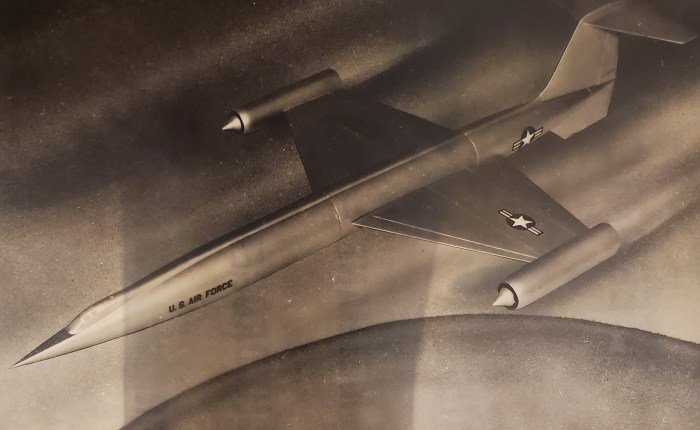
Header image: An artist’s impression of the CL-400 in flight. (Source: The Huntington Library, California, Ben Rich Papers, Box 3, Folder 1, Projects – Engineering – CL-400)

[1] Unless otherwise noted, all information, quotations, and images in this article are taken from: The Huntington Library, California, Ben Rich Papers, Box 3, Folder 1, Projects – Engineering – CL-400.

[2] John L. Sloop, Liquid Hydrogen as a Propulsion Fuel, 1945-1959 (Washington, DC: National Aeronautics and Space Administration, 1978), p. 149.

[3] Ben Rich and Leo Janos, Skunk Works: A Personal Memoir of My Years at Lockheed (New York: Little, Brown and Company, 1994), p. 173.

[4] Rich and Janos, Skunk Works, 177.

#ResearchNote – The Royal Australian Air Force and the historiography of the ‘air wars’ over Vietnam

#ResearchNote – The Royal Australian Air Force and the historiography of the ‘air wars’ over Vietnam

By Dr Ross Mahoney

In 1970, the United States Air Force’s (USAF) Contemporary Historical Examination of Current Operations (CHECO) project, which produced around 250 volumes on various subjects, published a volume on the air operations of the RAAF over Vietnam.[1] The volume on the RAAF was one of several that examined non-US subjects; other air forces analysed included the Republic of Vietnam Air Force, the Royal Thai Air Force, and the Republic of Korea Air Force. Notably, the report on the RAAF, authored by James T. Bear, described the Australian effort over Southeast Asia as producing a ‘fruitful association’ with the USAF.[2] However, while the Americans, through the extensive distribution of this report to various commands, were aware of the views espoused by Project CHECO, the RAAF was not, as they were not included on the distribution list. As a result, this issue is often ignored by those using this source when writing on Australian air operations over Vietnam. For example, in a recent 2019 article in Sabretache, the journal of the Military Historical Society of Australia, Justin Chadwick made much of Bear’s report by describing its contents. However, Chadwick failed to address the distribution issue or whether the RAAF was aware of the report’s contents.[3] Nonetheless, Bear’s report, and others covering subjects pertinent to Australian air operations over Vietnam, were used by Chris Coulthard-Clark when researching and writing his volume on the RAAF in Vietnam as part of ‘The Official History of Australia’s Involvement in Southeast Asian Conflicts, 1948-1975.’ Moreover, the report is a valuable starting point for any discussion about Australia’s place in the air wars over Vietnam and the impact of the conflict on the RAAF.

More recently, however, air power historians have begun to discuss the air war over Vietnam more nuancedly. For example, in his 2021 history of the air war over Vietnam, Air Power’s Lost Cause, Brian Laslie, building on the work of scholars such as Mark Clodfelter, argued that the US fought six separate air wars during the conflict.[4] These campaigns included the strategic air campaign against North Vietnam; the battle for air superiority over North Vietnam; the USAF’s air war over South Vietnam; the US Navy’s air war over North and South Vietnam; air operations over Laos and Cambodia; and the US Army’s air mobility operations. However, while this classification helps describe US air operations over Vietnam, in excluding the experience of other nations involved in these ‘air wars,’ historians fail to tell a cohesive story about the use of air power over Vietnam.

Australian_soldiers_unloading_rations_from_a_9_Squadron_helicopter_in_1967
Rations and supplies are unloaded from a UH-1B Iroquois helicopter of No. 9 Squadron RAAF, by troops of 7th Battalion, The Royal Australian Regiment, near the village of Long Dien during Operation Ulmarra, August 1967. (Source: Wikimedia)

Two reasons explain why historians fail to tell a cohesive story of air operations over Vietnam. First, from an American perspective, Vietnam is viewed as an inherently US war, especially regarding military operations. As Andrew Weist has remarked, ‘[r]emainders of the Vietnam War litter the cultural landscape of the United States.’[5] These reminders and the associated issues of ownership over the experience of the Vietnam War are often reinforced by popular accounts of the war, such as Ken Burns and Lynn Novick’s 2017 documentary The Vietnam War and debates related to America supposedly repeating the mistakes of Vietnam in its recent operations in Iraq and Afghanistan.[6] This has led historians to focus solely on the American experience and not to fully incorporate the story of those other nations that fought in the Vietnam War. Where they are included, their experience is often viewed as a sideshow to the main American effort. Indeed, as Bear’s CHECO report on the Australians noted, in the view of the USAF, ‘only Australia played a significant role in the air war.’[7]

The second reason concerns how the history of the RAAF in Vietnam has been written. This relates to the state of Australian military historiography and, from the perspective of the RAAF, how the Air Force’s narrative has shaped the latter’s account.[8] Apart from Coulthard-Clark’s 1995 official history, The RAAF in Vietnam: Australian Air Involvement in the Vietnam War 1962-1975, the literature on the RAAF’s service in Vietnam has primarily been the preserve of either the Air Force’s official histories or popular accounts, including veterans’ memoirs.[9] This situation mirrors concerns highlighted by John Ferris in 1998 when he reflected that most writers on air power history more broadly tend to be:

[t]he children of airmen, have been military personnel themselves, and have been employed at a historical office or service school in Canada, Germany, the United Kingdom, or the United States.[10]

This is undoubtedly the case with the history of the RAAF over Vietnam. Indeed, the RAAF has shaped the narrative surrounding the Air Force’s operations over Vietnam in two ways. First, the RAAF has published two official histories that span the Vietnam War period. The first, Going Solo, covered the period from 1945 to 1972 and was written by Alan Stephens, the former RAAF Historian. The second volume, Taking the Lead, written by Mark Lax, a RAAF Air Commodore, covers the period from 1972 to 1996. Neither book focuses singularly on Australian air operations over Vietnam. However, given the importance of the conflict to the RAAF, the war is integral to their analysis, particularly in Stephens’ volume. While both Stephens and Lax served in the RAAF and were academically trained historians, they were well placed to write these histories, thereby enhancing the value of these books. Nonetheless, as official histories, these works are often regarded as providing a definitive account of their subject. However, official histories are often the first rather than the last word on their topic.

The second way the RAAF has influenced the narrative of its operation over Vietnam is that the first book on Australian air operations during the conflict, Mission Vietnam, was commissioned by the Air Force. Research for Mission Vietnam, written by George Odgers, the Director of Public Relations in the Department of Air, began in 1971 before Australian air operations in Vietnam ended in 1972.[11] The book appeared in 1974, the year before the RAAF deployed Detachment ‘S’. As such, it does not comprehensively capture all RAAF operations associated with the Vietnam War. On publication, the RAAF News was convinced that Odgers’ volume would have ‘widespread appeal’ while one 1974 review in The Canberra Times described it as ‘essential reading.’[12] Illustrative of its importance in shaping the narrative, Mission Vietnam will be republished by the RAAF’s History and Heritage branch.

Beyond these volumes, discussions of RAAF operations over Vietnam have typically been left to popular accounts or memoirs, including those published under the auspicious of the Air Force’s Air and Space Power Centre and the History and Heritage Branch.[13] For example, Jeff Pedrina’s account Wallaby Airlines was initially published in 2006 by the Air Power Development Centre (as ASPC was then known). It was recently reissued in 2023 as part of the Australian Air Campaign Series (AACS) produced by the History and Heritage Branch.[14] Similarly, as part of the AACS, in 2022, the History and Heritage Branch published an abridged version of Air Vice-Marshal Reed’s autobiography, Invited to a War.[15] Reed had served in Vietnam, flying Phantoms on exchange with the USAF. Many of these works represent what has invariably been described as Australia’s ‘democratic’ approach to military history, which focuses on the experiences of veterans.[16] In this sense, every participant’s views and recollections are equal and should be heard. There are, however, exceptions to this democratic approach. For example, Steven Paget’s recent examination of the operations of No. 2 Squadron over Vietnam usefully places the challenges the RAAF faced in achieving interoperability with the USAF into context.[17]

Aircraft_revetments_at_Phan_Rang_Air_Base_with_No._2_Squadrons_Canberras
Aerial view of the aircraft revetments at Phan Rang airbase in July 1967. No. 2 Squadron RAAF Canberra bombers are parked in the bays located in the immediate foreground. (Source: Australian War Memorial)

Given much of the above, how would a more integrated and cohesive account of Vietnam’s air wars look? First, from an Australian perspective, we need to move away from focusing solely on the Australian experience of the Vietnam War. As Thomas Richardson argued, such perspectives distort our view of Australia’s ‘success or failure’ in Vietnam.[18] This applies equally to the RAAF and the Australian Army. Second, with regard to the broader picture of air operations over Vietnam, consideration of the experience of non-US units would help inform wider discussions on the character and challenges of coalition air operations in this period by considering issues such as cooperation and friction. While official and authorised accounts address some of these challenges, their aim of foregrounding the Australian experience through a functional approach to history, based on the RAAF’s roles, limits how far they can analyse these issues.[19]

Some indication of how to produce such a history can be gleaned from Paget’s work on No. 2 Squadron operations. Paget rightly noted that the experience of No. 2 Squadron highlighted issues in command and control, standardisation, tactics, training and procedures, and the sustainment of operations. However, these themes can be further analysed through additional examples of Australia’s experience in Vietnam. For example, the experience of RAAF officers on secondment as airborne Forward Air Controllers offers a valuable opportunity to understand how lessons are learnt and shared between air forces. Similarly, before the deployment of No. 2 Squadron, No. 35 Squadron was already fully integrated into the USAF command-and-control apparatus. Moreover, unlike No. 2 Squadron, No. 35 Squadron operated an aircraft type that the US would not deploy to South Vietnam until later in the war. However, it appears that the USAF did not take the opportunity to study the RAAF’s use of the Caribou, which raises questions about why this might have been.[20] As such, understanding the experience of No. 35 Squadron would further enrich our understanding of the air wars over Vietnam by exploring cultural issues that either help or retard the lessons learnt process. Finally, we must consider what the deployment of RAAF air assets to Vietnam contributed to the overall war effort, given that, for example, during February 1968, at the height of the Tet Offensive, the Air Force accounted for only around one per cent of all attack sorties flown.[21] This was undoubtedly a significant effort for the RAAF. Still, it highlights the problem of deploying only single unit types rather than a cohesive operational package comprising several squadrons of the same type. As such, within the context of wider coalition operations, we must further question why the RAAF deployed the force it did and how it sought to influence and shape ongoing operations.

Dr Ross Mahoney is the Editor-in-Chief of From Balloons to Drones. He is an independent scholar specialising in the history of war with particular reference to the use of air power and the history of air warfare. He is currently the Senior Historian within the City Architecture and Heritage Team at Brisbane City Council in Australia. He has nearly 20 years of experience in the education, museum and heritage sectors in Australia and the United Kingdom. Between 2013 and 2017, he was the inaugural Historian at the Royal Air Force Museum in the UK. In Australia, he has worked as a Historian for the Department of Veterans’ Affairs and taught at the Strategic and Defence Studies Centre at The Australian National University based at the Australian War College. His research interests are focused on the history of war, specifically on the history of air power and air warfare, military leadership and command, military culture, and the history and development of professional military education. He also maintains an interest in transport history. He has published numerous articles, chapters and encyclopedia entries, edited two books, and delivered papers on three continents. His website is here, and he can be found on Twitter at @airpowerhistory.

Header image: DHC-4 Caribous of the RAAF Transport Flight arrived in South Vietnam in 1964 to work with the South Vietnamese and U.S. Air Forces to transport soldiers and supplies to combat areas in South Vietnam. (Source: Wikimedia)

[1] James T. Bear, ‘The RAAF in SEA’ (CHECO Division, 1970); Warren A. Trest, ‘Projects CHECO and Corona Harvest: Keys to the Air Force’s Southeast Asia Memory Bank,’ Aerospace Historian 33, no. 2 (1986), pp. 114-20; Major Daniel Hoadley, ‘What Just Happened? A Historical Evaluation of Project CHECO’ (MA Thesis, USAF School of Advanced Air and Space Studies, 2013).

[2] Bear, ‘The RAAF in SEA,’ p. 1. During the Vietnam War, the RAAF contributed significantly to the Australian effort in the conflict. While some flights had taken place in South Vietnam by a Dakota of No. 2 Squadron’s transport flight in 1963, the first significant deployment of RAAF assets took place in 1964 when six DHC-4 Caribous of the recently formed RAAF Transport Flight Vietnam – later renumbered as No. 35 Squadron in 1966 – were deployed as part of Australia’s early efforts in supporting the war. After the deployment of No. 35 Squadron, the RAAF’s primary involvement took the form of No. 9 Squadron equipped with Bell UH-1B Iroquois helicopters and No. 2 Squadron with GAF Canberra bombers. Notably, 36 fighter pilots served as airborne Forward Air Controllers with the USAF’s 19th and 20th Tactical Air Support Squadrons flying Cessna O-1 Bird Dogs, Cessna O-2 Skymasters, and Rockwell OV-10 Broncos. Additionally, six RAAF pilots flew USAF McDonnell F-4 Phantoms during the war as part of the 12th Tactical Fighter Wing. There were also those units – Nos. 36 and 37 Squadron – who maintained a strategic air bridge between Australia and Vietnam, including aeromedical evacuation. Lockheed Neptune maritime patrol aircraft regularly patrolled the sea lines of communication between Australia and Vietnam, such as during Operation Trimdon in 1965.  In addition to the deployed squadrons, various elements of the RAAF provided valuable ground support, including airfield construction, air defence guards, and medical personnel. Officially, RAAF operations over Vietnam ended in February 1972 when the last Caribous of No. 35 Squadron left the country. However, in 1975, as South Vietnam finally fell, the RAAF deployed Detachment ‘S’ to Vietnam to withdraw Australian national and embassy staff and distribute Red Cross aid.

[3] Justin Chadwick, “Nothing to diminish their glamour’: Project CHECO and the RAAF,’ Sabretache 60, no. 4 (2019), pp. 23-34.

[4] Brian Laslie, Air Power’s Lost Cause: The American Air Wars of Vietnam (Lanham, MD: Roman and Littlefield, 2021), p. 2; Mark Clodfelter, ‘The Limits of Airpower or the Limits of Strategy: The Air Wars in Vietnam and Their Legacies,’ Joint Forces Quarterly 78 (2015), pp. 111-24.

[5] Andrew Weist, ‘Introduction’ in Andrew Weist (ed.), Rolling Thunder in a Gentle Land: The Vietnam War Revisited (Oxford: Osprey Publishing, 200), p. 16.

[6]  Andrew Gawthorpe, ‘Ken Burns, the Vietnam War, and the Purpose of History,’ Journal of Strategic Studies 43, no. 1 (2020), pp. 154-69.

[7] Bear, ‘The RAAF in SEA,’ p. 1.

[8] Jeffrey Grey, ‘Cuckoo in the Nest? Australian Military Historiography: The State of the Field,’ History Compass 6, no. 2 (2008), pp. 455-68.

[9] Chris Coulthard-Clark, The RAAF in Vietnam: Australian Air Involvement in the Vietnam War, 1962-1975 (Sydney, NSW: Allen & Unwin in association with the Australian War Memorial, 1995). For the RAAF’s official histories, see: Alan Stephens, Going Solo: The Royal Australian Air Force, 1946-1971 (Canberra, ACT: AGPS Press, 1995); Lax, Taking the Lead. For memoirs and autobiographies, for example, see: Gary Cooper and Robert Hillier, Sock it to ‘em Baby: Forward Air Controller in Vietnam (Crows Nest, NSW: Allen and Unwin, 2006); David Evans, Down to Earth: The Autobiography of Air Marshal David Evans, AC, DSO, AFC (Canberra, ACT: Air Power Development Centre, 2011).

[10] John R. Ferris, ‘Review Article – The Air Force Brats’ View of History: Recent Writing and the Royal Air Force, 1918–1960,’ The International History Review 20, no. 1 (1998), p. 119.

[11] George Odgers, Mission Vietnam: Royal Australian Air Force Operations, 1964-1972 (Canberra, ACT: Australian Government Publishing Service, 1974); ‘History of War,’ The Canberra Times, 18 June 1971, p. 1.

[12] ‘“Mission Vietnam” sure to have widespread appeal,’ RAAF News, 1 August 1974, p. 3; “Written the Way it Was in Vietnam Air War,’ The Canberra Times, 16 August 1974, p. 9.

[13] Examples of books published under the auspicious of the RAAF’s Air and Space Power Centre that discuss Vietnam include: John Bennett, Highest Traditions: The History of No. 2 Squadron RAAF (Canberra, ACT:  Australian Government Publishing Service, 1995); Graham O’Brien, Always There: A History of Air Force Combat Support (Canberra, ACT: Air Power Development Centre, 2009); Chris Clark, The RAAF at Long Tan (Canberra, ACT: 2010); Evans, Down to Earth; Bob Howe, Dreadful Lady over the Mekong Delta: An Analysis of RAAF Canberra Operations in the Vietnam War (Canberra, ACT: Air Power Development Centre, 2016). For an example of a book produced in conjunction with the History and Heritage Branch, see: Bob Grandin, Answering the Call: Life of a Helicopter Pilot in Vietnam and Beyond (Newport, NSW: Big Sky Publishing, 2019).

[14] Jeff Pedrina, Wallaby Airlines: Twelve Months Caribou Flying in Vietnam (Tuggeranong, ACT: Air Power Development Centre, 2006). Pedrina, Wallaby Airlines: Twelve Months flying the Caribou in Vietnam (Newport, NSW: Big Sky Publishing, 2022).

[15] Air Vice Marshal Alan Reed, Invited to a War (Newport, NSW: Big Sky Publishing, 2002).

[16]  Thomas Richardson, Destroy and Build: Pacification in Phuc Tuy, 1966-72 (Melbourne, VIC: Cambridge University Press, 2017), p. 5.

[17] Steven Paget, ‘Magpies and Eagles: Number 2 Squadron, Royal Australian Air Force, and the Experience of Coalition Warfare in Vietnam’ in Steven Paget (ed.), Allies in Air Power: A History of Multinational Air Operations (Lexington, KT: The University Press of Kentucky, 2021), pp. 142-67.

[18] Richardson, Destroy and Build, p. 6.

[19] Coulthard-Clark, The RAAF in Vietnam, pp. xii.

[20] Bear, ‘The RAAF in SEA,’ p. 30.

[21] Bernard Nalty, Air War over South Vietnam, 1968-1975 (Washington DC: United States Air Force History and Museum Program, 2000), p. 19.

#ResearchNote – Brassey’s Air Power: Aircraft, Weapons Systems and Technology Series

#ResearchNote – Brassey’s Air Power: Aircraft, Weapons Systems and Technology Series

By Dr Ross Mahoney

20230513_115224-01

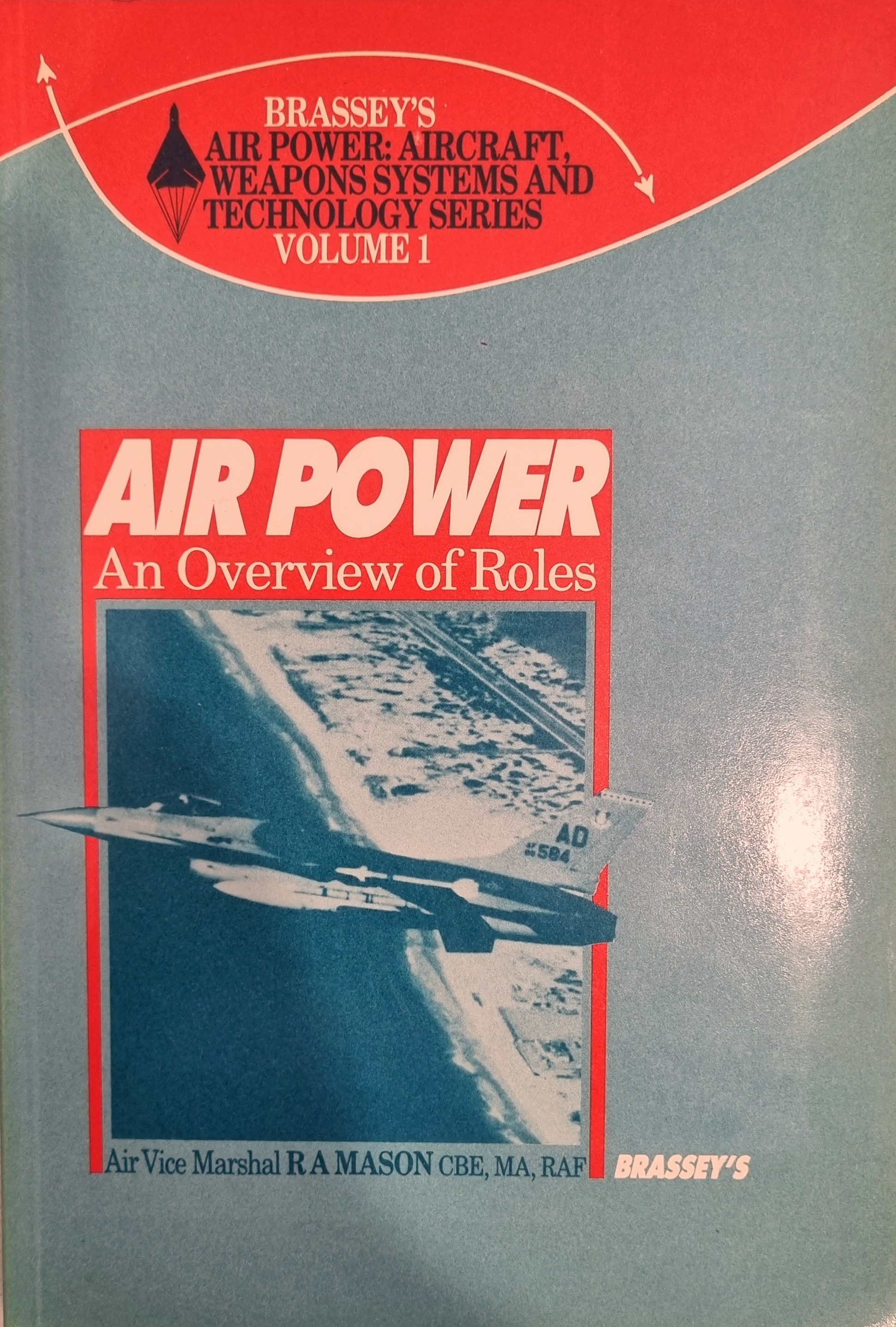
With an abiding interest in how air power has been presented and written about, I, like many others, am an inveterate buyer of second-hand books. I recently added to my library a volume entitled Air Power: An Overview of Roles by R.A. ‘Tony’ Mason, published in 1987. Mason is arguably the key British air power thinker of the late-20th Century. He was appointed the Royal Air Force’s (RAF) first Director of Defence Studies (DDefS) in 1977. Since then, he has widely commented on, lectured, and written about air power. When he wrote this book, Mason, an Air Vice-Marshal, served as Air Secretary.

The book formed part of a series published by Brassey’s Defence Publishers, consisting of 11 titles – see the list below. I have read several of these during my career, including Mason’s title. However, I had not realised several interesting aspects of this series until now. Namely, these volumes were written for a specific audience and authored by serving RAF officers.

Dealing with the first issue, the series outline in the book’s frontmatter noted that ‘[t]his new series […] is aimed at the international officer cadet or junior officer level.’ Thus, the series had a specific pedagogical aim in mind. The series was designed to provide the knowledge that new officers joining an air force needed regarding the use and development of air power. In the case of the RAF, it was clearly aimed at those attending the RAF College at Cranwell and junior officers undertaking staff education. It would be interesting to find out whether the books ended up on the reading lists for these institutions and whether they were used as part of the curriculum. More research…

This leads to the second interesting aspect of this series, namely that they were all written by serving RAF officers. Indeed, many, such as Mason, Armitage, Knight, and Walker, were officers holding Air Rank. As noted, Mason was an Air Vice-Marshal when writing this book – he retired at this rank. Sir Michael Armitage was an Air Chief Marshal, and at the time his book was published, he had been appointed Commandant of the Royal College of Defence Studies. Knight was an Air Chief Marshal at the time of publication, while John Walker was an Air Vice-Marshal – he retired as an Air Marshal. Moreover, many of these officers were regular writers on air power at the time. Aside from Mason’s own outputs, which included editing Air Power in the Next Generation (1979) and War in the Third Dimension (1986), Armitage had, by this time, co-written Air Power in the Nuclear Age (1983) with Mason. Similarly, Walker had edited a collection for the Royal United Services Institute entitled The Future of Air Power (1986), to which Armitage also contributed.

What is interesting about the choice of officers is that the views presented in these books constitute an RAF view of air power and its employment in the late-1980s and early-1990s despite the series being ostensibly aimed at an international market. More interesting is that, taken as a whole, these books can be considered a source of informal or implicit doctrine. In essence, this is a form of doctrine not codified in formal manuals and helps explore the changing debates surrounding the use of military force, in this case, air power. This is especially important given that when the first volumes of this series were published, the RAF did not have its own formal, explicit environmental capstone doctrine – it was using NATO doctrine to guide operations. Furthermore, the final edition of AP1300 was declared obsolete in the 1970s, and the first edition of AP3000 would not be published until 1990. As such, this series should not be separated from the broader context of the RAF’s re-engagement with formal doctrine.

Finally, the publication of this series, through its choice of authors, shows that despite operating in a doctrinal lacuna, the RAF of the 1980s was still a thinking organisation that thought about the role of air power in war. Critical in that process was the establishment of the DDefS position in 1977. Mason, both as DDefS and in subsequent roles, published works on air power that can be seen as informal doctrine. This started with Air Power and the Next Generation and continued through the 1980s and 1990s. Moreover, this form of publishing informal doctrine would be formalised in the 1990s when the Chief of the Air Staff, Air Chief Marshal Sir Michael Graydon, established the CAS Air Power Workshop, led by DDefS. Over time, the Air Power Workshop has published several significant edited volumes on air power that can be viewed as informal doctrine. The first publication from the Air Power Workshop was The Dynamics of Air Power (1996), edited by DDefS, Group Captain Andrew Lambert and Arthur Williamson. These publications were an essential adjunct to the RAF’s formal doctrine, AP3000. Indeed, the volumes published in the late-1990s under the auspicious of the Air Power Workshop were significant because of the time taken to publish the various editions of AP3000. Put simply, informal doctrine could discuss and debate issues that took time to filter into formal codified doctrine.

Given this, the various DDefS’ have invariably played an essential role in developing British air power thinking, both formal and informal, since the establishment of the post. Moreover, the personalities who have held this role have been influential in that process. While Mason is a prominent name to cite to highlight the role’s importance, it is possible to note several other officers who held the post of DDefS and have played a role in developing British air power thinking inside the RAF and externally within academia and the broader public. These have included Air Marshal (ret’d) Timothy Garden, Air Vice-Marshal (ret’d) Andrew Vallance, Air Commodore (ret’d) Andrew Lambert, Air Chief Marshal Sir Stuart Peach, Air Commodore (ret’d) Professor Peter Gray and Air Commodore (ret’d) Dr Neville Parton.

Brassey’s Air Power: Aircraft, Weapons Systems and Technology Series

  1. Mason, R.A., Air Power: An Overview of Roles (London: Brassey’s Defence Publishers, 1987).
  2. Walker, J.R., Air-to-ground Operations (London: Brassey’s Defence Publishers, 1987).
  3. Armitage, M.J., Unmanned Aircraft (London: Brassey’s Defence Publishers, 1988).
  4. Browne, J.P.R, and Thurbon, M. T., Electronic Warfare (London: Brassey’s Defence Publishers, 1998).
  5. Walker, J.R., Air Superiority Operations (London: Brassey’s Defence Publishers, 1989).
  6. Chapman, K., Military Air Transport Operations (London: Brassey’s Defence Publishers, 1989).
  7. Elsam, M.B., Air Defence (London: Brassey’s Defence Publishers, 1989).
  8. Knight, M., Strategic Offensive Air Operations (London: Brassey’s Defence Publishers, 1989).
  9. Oxlee, G.J., Aerospace Reconnaissance (London: Brassey’s, 1997).
  10. Dutton, L. et al., Military Space (London: Brassey’s Defence Publishers, 1990).
  11. Laite, B.C., Maritime Air Operations (London: Brassey’s Defence Publishers, 1991).

Dr Ross Mahoney is an independent scholar specialising in the history of war with particular reference to the use of air power and the history of air warfare. He is currently the Senior Historian within the City Architecture and Heritage Team at Brisbane City Council in Australia. He has over 15 years of experience in the heritage and education sectors in Australia and the United Kingdom. Between 2013 and 2017, he was the inaugural Historian at the Royal Air Force Museum in the UK. In Australia, he has worked as a Historian for the Department of Veterans’ Affairs and taught at the Strategic and Defence Studies Centre at The Australian National University based at the Australian War College. His research interests are focused on the history of war, specifically on the history of air warfare, transport history, and urban history. He has published several chapters and articles, edited two books, and delivered papers on three continents. His website is here, and he can be found on Twitter at @airpowerhistory.

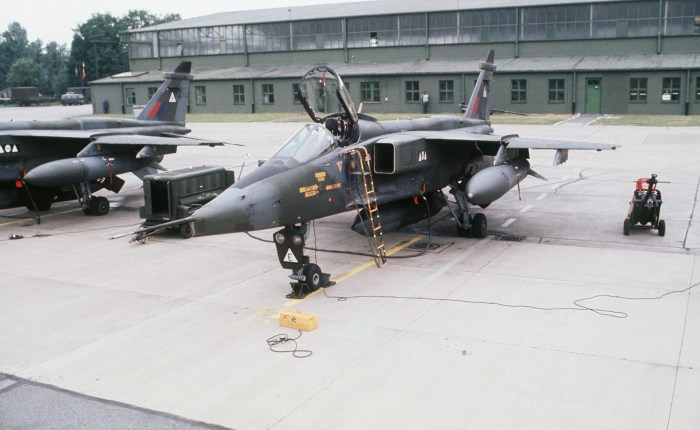
Header image: A Royal Air Force SEPECAT Jaguar GR1 of No. 2 Squadron RAF parked on the flight line during Tactical Air Meet ’78 at RAF Wildenrath, 15 May 1978. (Source: Wikimedia)

#ResearchNote – It is time for another Biography of Ira Eaker

#ResearchNote – It is time for another Biography of Ira Eaker

By Luke Truxal

For those who study the history of the United States Air Force and its forebears, there is a noticeable gap in the historiography regarding biographies of Second World War air force commanders. There are several biographies for men such as General Carl Spaatz, General of the Air Force Henry H. Arnold, General James Doolittle, General Curtis LeMay, and even Major General Haywood Hansell. Yet, many other prominent commanders, staff officers, and theorists do not have their own biographies. However, this research note solely focuses on General Ira Eaker, who, in 1943, commanded what became the US Eighth Air Force, the Mediterranean Allied Air Forces in 1944 and was deputy Chief of the Air Staff for the United States Army Air Forces in 1945.

md31091934332

James Parton has largely written Eaker’s history in “Air Force Spoken Here”: General Ira Eaker and the Command of the Air. Parton’s biography is a strong defence of Eaker. In many cases, he has created much of the narrative that we accept regarding Eaker’s performance as a commander during the Second World War. However, there is one problem with Parton’s book; he was Eaker’s staff officer. Given this, Parton’s book jumps between biography and personal memoir in several places. For example, when writing about Eaker’s defence of daylight precision bombing at the Casablanca Conference in 1943, Parton slips into a personal memoir. In a paragraph, he describes the trip to Spaatz’s headquarters, the poker game he played with Eaker and Spaatz, and how he edited Eaker’s proposals for the Casablanca Conference.[1] It is unclear whether this can be classified as a biography since it is unclear if Parton is writing about himself or Eaker. Also, as a staff officer deeply devoted to Eaker, Parton may not be the general’s best or most objective biographer. Simply put, Eaker needs a new biography.

For those interested in writing a biography on Eaker, there are several places to start. First, Parton’s biography is a great place to get background information on Eaker, even if the analysis is sometimes questionable. Another series of sources that need to be examined are the books that Eaker published with Arnold before the Second World War. Arnold and Eaker wrote: Army Flyer, Winged Warfare, and This Flying Game.[2] These books lay out their vision for the future of air power and, in some cases, offer analysis of air campaigns during the Second World War before the entrance of the United States into the conflict. These books give some insight into Eaker as an air power theorist and precision bombing advocate before the war. Three major archives should be consulted for wartime records. First, the Library Congress has Ira Eaker’s papers. Speaking from personal experience, they are well-organised and easy to work through. Even better, several vital figures whom Eaker corresponded with also deposited their papers at the Library of Congress. Another archive to consult is the Air Force Historical Research Agency, where you can find records on the Eighth Air Force and Mediterranean Allied Air Forces. Finally, the National Archives and Records Administration has more records and correspondence.

media-456676
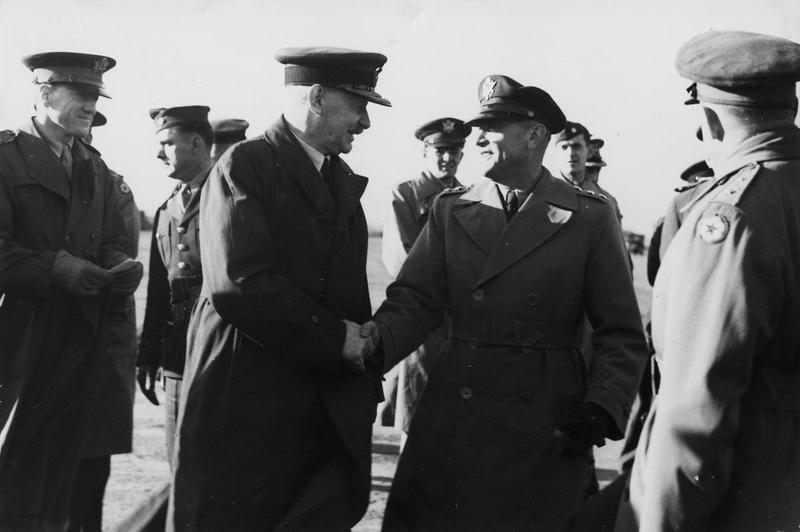
Air Chief Marshal Sir Arthur Harris shakes hands with Lieutenant General Ira Eaker at a handover ceremony of a US Army Air Force airfield into RAF control, c. November 1943. (Source: IWM)

Research is not the problem with writing a biography on Eaker. He wrote a lot about air power before, during, and after the Second World War. There is much research readily available on Eaker. This is purely speculation, but the reason why there is not a biography on Eaker is most likely that it is a hard biography to write. Eaker is not a polarising figure. Biographers note that they either fall in love with or hate the person they are writing about. It is hard to do that with Eaker. He is a likeable person and, at times performs quite well as a commanding officer. Yet, he also makes several significant mistakes during the war as well. It is hard to write a book analysing an officer whom both deserves blame for the failures of the 1943 air offensives against Germany and, in the same breath, say he played a major role in the success of the air war in 1944 and 1945.

In conclusion, it is time to put the James Parton book on Eaker aside and write a new biography on Eaker to start a proper historical debate on his career. There is ample archival material available to sift through and analyse. The challenge will be how to assess his performance during the war. Here is a thought to possibly hang onto for those who might want to take up this project. Maybe the challenge of writing a biography about Eaker is that he is representative of the struggles that early American air commanders faced during the strategic bombing of Germany in 1942 and 1943. Eaker was testing new ideas in a new form of warfare and without ample resources as the commander of the Eighth Air Force. He made several errors in 1943 that was amplified by his lack of resources. Yet, with more resources and experience, his performance improved over time. In many ways, Eaker represents the struggles that many American officers faced during the air war against Germany.

Dr Luke Truxal is the Book Review Editor at From Balloons to Drones and an adjunct at Columbia State Community College in Tennessee. He completed his PhD in 2018 from the University of North Texas with his dissertation ‘Command Unity and the Air War Against Germany.’ His previous publications include ‘Bombing the Romanian Rail Network’ in the Spring 2018 issue of Air Power History. He also wrote ‘The Politics of Operational Planning: Ira Eaker and the Combined Bomber Offensive in 1943’ in the Journal of Military Aviation History. In addition, Truxal is researching the effectiveness of joint air operations between the Allied air forces in the Second World War.

Header image: Major General Ira C. Eaker presents an award to an enlisted man of the 479th Anti-Submarine Group during a ceremony at an air base in St Eval, United Kingdom, c. 1943. (Source: NARA)

[1] James Parton, “Air Force Spoken Here”: General Ira Eaker & the Command of the Air (Bethesda, MD: Adler & Adler Publishers Inc., 1986), p. 220.

[2] Henry H. Arnold and Ira C. Eaker, Army Flyer (New York: Harper & Brothers Publishers, 1942); Henry H. Arnold and Ira Eaker, Winged Warfare, (New York: Harper & Brothers Publishers, 1941); Henry H. Arnold and Ira Eaker, This Flying Game, (Ramsey, New Jersey: Funk and Wagnalls Company, 1938).

Call for Submissions – From Balloons to Drones

FeaturedCall for Submissions – From Balloons to Drones

Established in 2016, From Balloons to Drones is an online scholarly platform that analyses and debates air power history (including aviation history), theory, and contemporary operations in their broadest sense, including space and cyber power. To date, we have published over 250 articles on various air power-related subjects.

Since its emergence at the start of the 20th Century, air power has increasingly become the preferred form of military power for many governments. However, the application and development of air power are controversial and often misunderstood. To remedy this, From Balloons to Drones seeks to provide analysis and debate about air power through the publication of articles, research notes, commentaries, book reviews, and historic book reviews – see below for a description of the range of articles published.

The study of air power is to be understood broadly, encompassing not only the history of air warfare, including social and cultural aspects, but also incorporating contributions from related fields, such as archaeology, international relations, strategic studies, law and ethics. Possible subjects to be explored might include, but are not limited to:

Strategy, Theory and Doctrine | Organisation and Policy | Roles

Operations – Kinetic and Non-Kinetic | Tactics, Training and Procedures

Strategic and Operational Effect | Technological Developments

Ethical and Moral Issues | National, International and Transnational Experiences

Personal Experiences | Culture | Memory and Memorialisation

From Balloons to Drones welcomes and encourages potential submissions from postgraduates, academics, and practitioners involved in researching the subject of air power.

C-119B_Flying_Boxcar_drops_supplies_near_Chungju_1951
A US Air Force Fairchild C-119B Flying Boxcar air-dropping supplies near Chungju, Korea, in 1951. (Source: Wikimedia)

We publish:

Scholarly Articles

From Balloons to Drones publishes informative, peer-reviewed articles on air power that range from historical pieces to the analysis of contemporary challenges. These well-researched articles aim to bridge the gap between specialist and non-specialist readers. They should be around c. 3,000 words, though From Balloons to Drones will accept longer pieces. We reserve the right to publish them in parts.

Air War Books

From Balloons to Drones publishes a series of review articles that examine the top ten books that have influenced writers on air power. See more here.

Commentaries

From Balloons to Drones publishes opinion pieces on recent news on either contemporary or historical subjects. These should be no longer than c.1,000 words.

Research Notes

From Balloons to Drones publishes research notes on contributors’ current research projects. These take the form of more informal pieces and can be discussions of a source or notes on a recent research theme. These should be c.500 to 1,000 words.

Book Reviews

From Balloons to Drones publishes regular book reviews that aim to be an accessible collection of appraisals of recent publications about air power. If you are a publisher interested in having your publication reviewed, please contact us at the email address below. See more here.

Historic Book Reviews

From Balloons to Drones publishes occasional historic book reviews that aim to be an accessible collection of appraisals of critical historic publications about air power history, theory, and practice. See more here.

Submissions should be submitted in Word format and emailed to the address below with ‘SUBMISSION’ in the subject line. Also, please include a 50-100-word biography with your submission. References can be used, and please be careful to explain any jargon. However, if you are unsure if your idea fits our requirements, please email us with ‘POTENTIAL SUBMISSION’ in the subject line to discuss.

If you are interested in contributing, please email our Editor-in-Chief, Dr Ross Mahoney, at airpowerstudies@gmail.com or via our contact page here.

Header image: A Panavia Tornado GR4 of No. IX(B) Squadron on a training sortie in preparation for deployment to Afghanistan, c. 2012. (Source: Wikimedia)

#ResearchNote – The RAF Staff College and ‘Learning’ from the French

#ResearchNote – The RAF Staff College and ‘Learning’ from the French

By Dr Ross Mahoney

Editorial note: Defence-in-Depth, the blog of King’s College London’s Defence Studies Department based at the Joint Services Command and Staff College and The Wavell Room have been running a series of interesting articles about military education. The author has read these articles with some interest given his interest in the education of air forces. This research note covers an interesting episode in the process of the establishment of the Royal Air Force (RAF) Staff College in the early 1920s.

The opening of the RAF Staff College at Andover in 1922 marked a crucial step in the early development of the RAF. Andover gave the RAF its own institution that provided higher education tailored towards the needs of the Service. However, many historians have been critical of Andover. For example, Tony Mason, the RAF’s first Director of Defence Studies, suggested that Andover ‘lamentably failed’ in providing a developed air power theory for the RAF while Vincent Orange argued that the Staff College served, ‘as a disseminating station for approved doctrine, seasoned by essays on riding, hunting and how to cope with the bazaars of Baghdad.’[1]

However, one aspect not often considered is how the RAF went about preparing for the Staff College’s formation. Key to this is the role played by its first Commandant, Air Commodore Robert Brooke-Popham who was adamant that the RAF should learn from the teaching methods used by both the British Army and Royal Navy at their Staff Colleges at Camberley and Greenwich.[2] Brooke-Popham was a pre-First World War graduate of Camberley, and it is clear that this educational experience played a role in how he approached his position as Commandant. More broadly, before the opening of Andover, it was to the Army and Royal Navy that the RAF looked to provide a staff college education for nurtured officers. Indeed, it is significant that, apart from Group Captain Robert Clark-Hall, the initial Directing Staff – Wing Commanders Philip Joubert de la Ferte, Wilfrid Freeman and C.H.K. Edmonds and Squadron Leader Bertine Sutton – were all graduates of Camberley or Greenwich. However, while the British experience of higher military education was a significant influence, it was not the only source of information.

LD 764
A half-length portrait of Air Marshal Sir Philip Joubert de la Ferté in uniform by James Gunn, c. 1940 (Source: © IWM (Art.IWM ART LD 764))

More interesting is that Brooke-Popham also considered whether anything could be learnt from the methods utilised by the French Army at the Écoles Supérieures de Guerre in Paris, which in the early 1920s was commanded by General Marie Debeney.[3] Before the opening of Andover, Brooke-Popham and Joubert visited Paris to examine French pedagogical methods, and the critical source concerning this visit comes in the latter’s 1952 autobiography The Fated Sky.[4] Joubert’s recollections provide an insight into the teaching methods at the Écoles Supérieures de Guerre. However, it is clear that he was not impressed with the quality of education present although, as he recalled, the Écoles Supérieures de Guerre was considered, ‘the centre of all military knowledge.’[5]

Joubert’s criticisms fell broadly into three categories. First, Joubert was critical of the lack of cooperation with the French Navy and their equivalent school for higher education. Second, instructors lacked familiarity with the students they were teaching. Finally, Joubert was not impressed with the formality of the lectures and lack of what in modern teaching is often referred to as ‘white space’ in the timetable to allow for reflections and questions.[6]

Joubert’s criticisms raise several interesting observations about the differences between the British and French militaries in this period. Notably, the lack of co-operation between the French Army and Navy at the staff college level maps to many of the problems that plagued the French military in the interwar period. Joubert recalled Debeney’s ‘look of blank amazement’ when asked about co-operation with his naval counterpart.[7] Conversely, while there were definite problems at the strategic level, the British military regularly co-operated via combined operations exercises at the staff colleges that Joubert himself described as ‘one of the most pleasant periods’ of his time at Camberley, which he attended in 1920.[8] This perhaps suggests something about Britain’s pragmatic military culture in this period. Individual service cultures certainly existed, but when co-operation was required, the British military appeared to be able to do this.

Furthermore, Joubert recalled of his time at Camberley that while heated discussions between students occurred, ‘it was always possible to come to an agreement over a round of pink gins in the Mess’ thus highlighting the importance of socialisation between the services as means of breeding understanding between them.[9] It also seems clear that Joubert’s perception of the lack of formality in British Staff Colleges bred a willingness to question accepted views while the French military maintained a ‘Maginot’ mentality for much of this period. However, even this must be understood within the context of differing service cultures. Joubert himself reflected on these differences when he wrote that:

Naval officers would discuss Naval affairs freely amongst themselves and before members of another service and would unhesitatingly attack any ideas which they thought themselves were wrong. But let an outsider in the audience offer a criticism and Naval ranks closed up solidly. The Army seldom, if ever, discussed their problems in the open. If they were asked for a statement of policy Field Service Regulations and Army Council Instructions were solemnly quoted. As for the Air Force, they would fight amongst themselves in private and in the open, and would quite ruthlessly disagree with their instructors before a mixed audience. Nothing was sacrosanct.[10]

The final criticism of the lack of ‘white space’ in the timetable is significant as this is considered a crucial element of the pedagogical process and differentiates higher education from training. The lack of this ‘white space’ in the French Staff College system suggested an unwillingness to allow French officers to think more broadly about their place within the profession of arms and the conduct of war more generally. This raises fundamental questions concerning leadership development within the French Army such as whether the French system was developing senior leaders or staff officers. Moreover, it is clear that the French system differed from the British with the existence of the Centre des Hautes Études; a war college, which existed to educate senior Colonels and Brigadiers.[11] A ‘war college’ was something the RAF lacked, and as such an exact comparison between the two systems is fraught with challenges.

While Joubert’s recollection should, as with any autobiography, be treated with some care, from the perspective of the provision and development of military education in the RAF they are useful. This is primarily because of Joubert’s affiliation with education in the RAF. As noted, he attended Camberley and was Directing Staff at Andover. However, he would also go on to be the first RAF member of the Directing Staff at the Imperial Defence College as well as going on to being Commandant at Andover in the early 1930s. As such, he was well placed to comment on such issues.

In conclusion, this episode shows that the RAF was willing to move outside of national confines to learn lessons for what was the world’s first air force Staff College. However, that the methods examined in France were not adopted also highlights issues related to how militaries perceive themselves. As Joubert himself noted, ‘[i]n the event we did not adopt […] the French Staff College methods [and] [w]e went our own perfectly normal and unspectacular British Way.’[12] This reflection says as much about the RAF and its culture as it does the perceived failings of the French system of higher military education. The final important point is that in looking to other Staff Colleges, whether in Britain or France, the RAF were looking to similar institutions with similar objectives – the education and nurturing of future senior leaders – but axiomatically these educational establishments were not similar. Putting aside national proclivities, the critical difference was the military service these institutions served. The Écoles Supérieures de Guerre served the French Army, not an air force, though of course at this time, the French air service formed part of the army. Similarly, Camberley and Greenwich served the British Army and Royal Navy respectively. As such, while the RAF could, and did learn from their counterparts, it still had specific service challenges that it would have to solve on its terms. Indeed, the focus of Brooke-Popham and Joubert’s visit to Paris was more on ‘how’ to teach rather than ‘what.’

Dr Ross Mahoney is a contract Historian at the Departments of Veterans’ Affairs in Australia as well as the owner and Editor of From Balloons to Drones. He is a graduate of the University of Birmingham (MPhil and PhD) and the University of Wolverhampton (PGCE and BA). His research interests include the history of war in the twentieth and twenty-first centuries, air power and the history of air warfare, and the social and cultural history of armed forces. To date, he has published several chapters and articles, edited two books, and delivered papers on three continents. He is a member of the Royal Historical Society and a Vice-President of the Second World War Research Group. He can be found on Twitter at @airpowerhistory.

Header image: The modern day Ecole Militaire, which previously housed the Écoles Supérieures de Guerre (Source: Wikimedia)

[1] Tony Mason, ‘British Air Power’ in John Andreas Olsen, Global Air Power (Washington D C: Potomac Books, 2011), pp. 26-27; Vincent Orange, Churchill and his Airmen: Relationships, Intrigue and Policy Making, 1914-1945 (London: Grub Street, 2013), p. 87.

[2] Air Chief Marshal Sir Robert Brooke-Popham, ‘The Formation of The Royal Air Force Staff College,’ The Hawk, 12 (1950), p. 19.

[3] For a British overview of the Écoles Supérieures de Guerre, see: ‘The “Ecole Superieure De Guerre,” Paris,’ Journal of the Royal United Services Institution, 70:477 (1925), pp. 1-7.

[4] Sir Philip Joubert de la Ferte, The Fated Sky: An Autobiography (London: Hutchinson, 1952), pp. 87-88. Joubert also recollected that Brooke-Popham also considered ‘Madam Montessori’s ideas.

[5] Ibid., pp. 87

[6] Ibid., pp. 87-88

[7] Ibid., p. 87.

[8] Ibid., p. 84.

[9] Ibid., p. 83.

[10] Ibid., p. 88.

[11] ‘The “Ecole Superieure De Guerre,” Paris,’ p. 1.

[12] Joubert, The Fated Sky, p. 88.