Wings over Lebanon: Local Ingenuity and American Assistance in the War against the Islamic State

Wings over Lebanon: Local Ingenuity and American Assistance in the War against the Islamic State

By Lieutenant Colonel Daniel Jackson, PhD, USAF, and Major (ret) Wael al-Taki, LAF

2 August 2014: Hundreds of Islamic State and al-Nusra Front militants stormed Lebanese Army positions in the Bekaa Valley, fifty miles east-northeast of Beirut. Under relentless fire, Lebanese troops conducted a fighting withdrawal, calling frantically for reinforcements. Amid the chaos, the militants captured 36 soldiers, brutally executing at least four.

High overhead, 1st Lieutenant Wael al-Taki peered through the infrared camera on a Cessna 208B Grand Caravan – the same single-engine turboprop used by FedEx for rural package delivery. The Lebanese Air Force operated two such aircraft, both modified with surveillance gear. Only one, however, could carry a pair of AGM-114 Hellfire missiles – the same laser-guided missiles used by Apache attack helicopters and Predator and Reaper drones.

The Cessna required a crew of three: two pilots and a mission systems operator (MSO). Yet shortages of trained personnel forced al-Taki to act as both pilot and MSO, moving to the back of the aircraft after take-off to operate the mission systems while Lieutenant C.Y. took the controls.[1] A brigadier general from the operations staff took the other pilot’s seat, relaying strike approvals from the operations centre in Beirut.

Below, the militants surrounded a company of Lebanese troops, their withering fire wounding several soldiers, including the deputy commander. The Cessna banked toward the firefight. Al-Taki gripped the hand controller, aligning the crosshairs with the enemy fighters. He fired the laser designator. He had never fired a laser-guided missile before. In fact, no one in the Lebanese Air Force had ever fired one in combat. “I was just thinking of the guys down there, that someone should save them,” he later recounted. He stole a quick glance out the window as C.Y. jammed his thumb down on the firing button. With a flash, the Hellfire streaked off the launch rail – and into history.[2]

Lieutenant al-Taki’s Hellfire was the opening shot in Lebanon’s three-year air campaign against the Islamic State, culminating in Operation Fajr al-Jaroud, or ‘Dawn of the Hills,’ in August 2017. During that same period, Operation Inherent Resolve, the US-led coalition’s campaign in Iraq and Syria, hammered the Islamic State and other militant groups with over 24 thousand airstrikes from hundreds of the world’s most advanced warplanes, including fourth- and fifth-generation fighters, unmanned aerial vehicles (UAVs), and stealth bombers.[3] The Lebanese air campaign was exceedingly modest by comparison, yet it successfully rolled back the Islamic State’s western flank. Ultimately, Fajr al-Jaroud continued a pattern established over the previous two decades: modest US security assistance, combined with the ingenuity of Lebanese aviators, enabled the Lebanese Air Force to prevail under challenging battles against violent extremist groups.
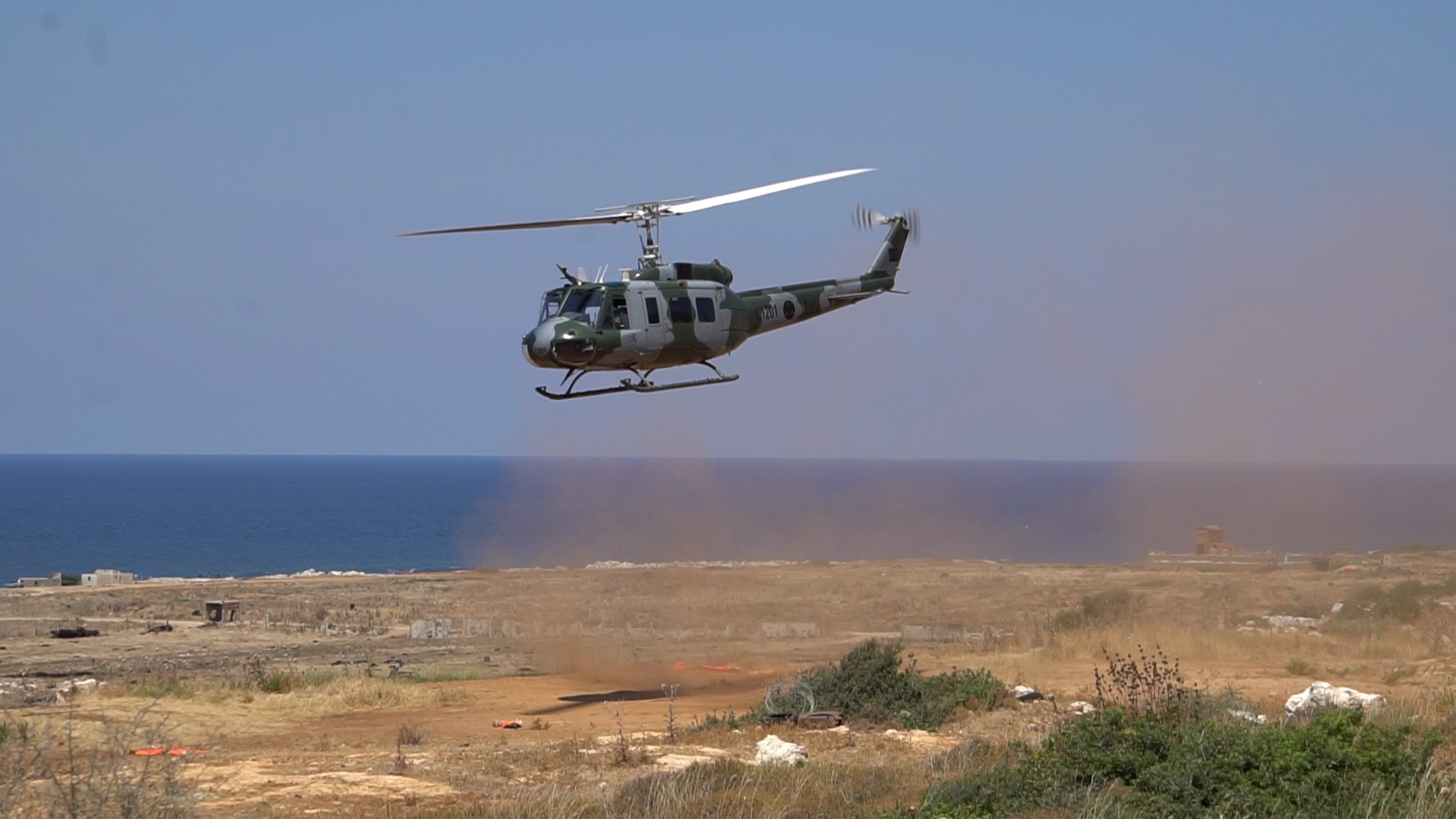
A Bell UH-1H Huey II from the 11th Squadron participates in an exercise on the Hannoush Range. (Source: Author)

Rebuilding the Lebanese Air Force

Founded in 1949, the Lebanese Air Force once operated modern jet aircraft, including the de Havilland Vampire, Hawker Hunter, and Dassault Mirage III. American assistance began during the Cold War, with the US Military Assistance Program delivering six Hawker Hunters in 1963. However, a brutal sectarian civil war from 1975 to 1990 left the air force in ruins, forcing the reconciled government to rebuild it from scratch.[4]

Lebanon occupies strategic – and treacherous – terrain, wedged between Syria and Israel. Though the civil war ended in 1990, Syrian troops continued to occupy much of the country’s north until 2005. Israel invaded four times between 1978 and 2024, occupying southern Lebanon from 1982 to 2000.

The US had straightforward goals for supporting the Lebanese Armed Forces (LAF) after the civil war: building a non-sectarian national military would strengthen national cohesion and counter the influence of sectarian militias like Hezbollah. ‘The LAF is a key institution of Lebanese statehood,’ declared US Ambassador Elizabeth Richards in 2016. ‘It is Lebanon’s sole legitimate defense force and an essential element in exerting the state’s authority throughout all of Lebanon’s territory.’[5]

Between 1996 and 2001, Lebanon acquired 24 Bell UH-1H Huey helicopters from the US, most of which had been in storage since the end of the Vietnam War. Initially relying on pilots who had trained in the US in the 1980s, the Lebanese Air Force assigned 12 of the helicopters to the 11th Squadron at Beirut Air Base, eight to the 10th Squadron at Klayaat Air Base, 55 miles north-northeast of Beirut near the Syrian border, and four to the 14th Squadron at Rayak Air Base, in the Bekaa Valley, 30 miles east of Beirut. These simple utility helicopters became the backbone of the Lebanese Air Force – and its only combat aircraft – until 2007.[6]

The first battle for the rebuilt air force erupted on 31 December 2000, in the rural Dinniyeh region near Lebanon’s northern border with Syria. Approximately 150 militants from the al-Qaeda-aligned group Takfir wal-Hijra attacked a military checkpoint, killing four soldiers and capturing two. The LAF immediately launched an operation to rescue the captives and eliminate the militants.[7]

Brigadier General S.Y., then a major in the 11th Squadron, recalled first learning of the attack while at a New Year’s Eve party with his squadron in Beirut. The festivities had begun winding down at four o’clock in the morning when the commander of the air force suddenly burst in, his face pale. “Return to base immediately!” he ordered. The men thought he was joking—or drunk. Frustrated, he bellowed for them to obey his orders at once. “We learned the hard way that he meant business,” S.Y. said.[8]

Two hours later, the major lifted off from Beirut, leading four Hueys north along the Mediterranean coast to reinforce the 10th Squadron at Klayaat Air Base, closer to the scene of the action. Upon arrival, they found the base buzzing with activity: Two companies from Lebanon’s elite Ranger Regiment had already arrived, along with two mechanised infantry companies and an armoured platoon. The LAF planned to deploy the Rangers to assault the militants’ mountain stronghold, while the mechanised infantry and armour secured Klayaat.

The helicopter force split into an assault group of eight and a reserve group of two, the latter consisting of one aircraft for medical evacuation (MEDEVAC) and another equipped with two 7.62-millimetre door guns for armed reconnaissance. In the afternoon, two 14th Squadron Hueys arrived from Rayak to reinforce the reserve group.

At nine o’clock in the morning, with temperatures hovering just below freezing, the assault group launched for the target area. Situated 5,200 feet above sea level, the high-altitude landing zones limited each helicopter to carrying only seven Rangers with their heavy gear, instead of the usual eleven. “Navigation to the landing zones was the hardest part, as the air force still used primitive methods in those days,” recalled S.Y. “Our best navigational equipment were the terrain maps provided by the directorate of geographic affairs.”

The assault group split into two elements, each led by a 10th Squadron pilot familiar with the terrain. “We flew nap of the earth,” said S.Y., “using the deep valleys and low terrain features to remain hidden from enemy observation.” The first element landed to the south and southwest of the target, while the second landed to the north. The Hueys then returned to Klayaat for another load. In total, they lifted approximately 200 soldiers onto the battlefield. The rapid encirclement enabled by air power allowed the Rangers to crush the militants in just forty-eight hours. The Lebanese Army lost 11 soldiers killed in action, including one of the men taken captive during the initial checkpoint attack.[9]

The Lebanese Air Force Adapts

The Hueys played a significant role in the LAF’s next major battle a little over six years later. On 19 May 2007, four armed men from the Sunni militant group Fateh al-Islam robbed a bank in the town of Amyoun, thirty miles north-northeast of Beirut, making off with $125,000 in cash. Lebanese paramilitary police quickly identified the militants and tracked them to a house ten miles to the north in Tripoli. A firefight erupted, soon spreading to the nearby Nahr al-Bared Palestinian refugee camp, which served as Fateh al-Islam’s headquarters. Hundreds of militants stormed LAF military posts and checkpoints in the area, killing thirty-two soldiers, most of whom were asleep in their barracks. The LAF launched an all-out effort to secure Nahr al-Bared and neutralise the militants, leading to a nightmare scenario of urban combat amid the camp’s ramshackle buildings and narrow alleyways.[10]

The Lebanese Air Force initially restricted its support to MEDEVAC and overhead surveillance. However, just two months before the battle, Lebanon had acquired nine Aérospatiale SA.342L Gazelle light attack helicopters for the newly established 8th Squadron. Armed with 68-millimetre unguided rockets, HOT guided antitank missiles, and .50-calibre machine guns, the Gazelles provided Lebanese ground troops with close air support for the first time.

The urban assault bogged down around the militants’ final position, a veritable fortress of concrete rubble. The Gazelles’ light weapons proved ineffective. With casualties mounting, the Lebanese Air Force adapted by jury-rigging three of its Huey utility helicopters as bombers.

The Lebanese Air Force had a stockpile of 500- and 1,000-pound bombs left over from the 1960s. Mechanics cannibalised bomb shackles and pylons from scrapped Mirage fighter jets and attached them to a steering rod from a decommissioned navy ship. To evenly distribute the weight across the cabin floor, they mounted the rig on an armoured plate salvaged from an inoperative M-113 armoured personnel carrier. Each heli-bomber could carry a single 1,000-pound bomb slung between the landing skids or a 500-pound bomb on either side. Mechanics lengthened the landing skids to ensure sufficient ground clearance.

The heli-bombers went into action on 9 August 2007. Using civilian Garmin 295 handheld GPS units to pinpoint their release points, the crews dropped dozens of bombs, blasting a path for the ground troops. The innovative air support helped bring the battle to an end on 7 September.[11]

The siege of Nahr al-Bared proved a formative experience for the LAF, underscoring the need to modernise the air force with fixed-wing aircraft capable of providing intelligence, surveillance, and reconnaissance (ISR), target designation, strike coordination, and close air support. This set of requirements roughly aligned with what the US Air Force (USAF) defined as light attack armed reconnaissance (LAAR). The US government offered to assist in this effort, eager to prevent Lebanon from becoming another active battlefront in the Global War on Terrorism.[12]

In 2009, the USAF provided Lebanon with a Cessna 208B Grand Caravan, funded through grant aid. Orbital ATK (later acquired by Northrop Grumman) reconfigured the Caravan as an AC-208 Eliminator, equipping it with a Wescam MX-15 electro-optical/infrared camera system, a microwave broadcast system for real-time video transmission, a weapons-grade laser designator, an infrared laser pointer, a flare dispenser, and launch rails to carry an AGM-114 Hellfire missile under each wing. A second aircraft arrived on 6 November 2013, configured solely for reconnaissance and lacking missile rails. A third aircraft, featuring a more powerful engine and a digital glass cockpit, arrived on 19 December 2016. The Cessnas were assigned to the 4th Squadron at Beirut Air Base.[13]

The Lebanese Air Force still had a handful of senior fixed-wing pilots who had flown Mirages and Hunters. However, without a fixed-wing pilot training program, it sent young lieutenants abroad to Saudi Arabia, the United Arab Emirates, and the United States for flight training. Upon their return to Lebanon, they completed a short Cessna training course provided by Orbital ATK. According to US Ambassador Elizabeth Richard, these pilots built a solid reputation. “The LAF is recognized in the US for the quality of the officers and soldiers it sends to our training and education programs,” she said. “Lebanese students routinely finish at the top of their classes, earning ‘honor graduate’ recognition.”[14]

In addition to the grant aid, the US embassy facilitated $1.9 billion in foreign military sales (FMS) to Lebanon between 2014 and 2020, including the purchase of six RQ-11 Raven small, hand-launched UAVs and 1,000 Hellfire missiles – items paid for with Lebanon’s own funds.[15] The Lebanese Air Force also bolstered its rotary-wing fleet, acquiring 24 additional UH-1H Huey IIs from the US and nine Aérospatiale SA.330 Super Puma utility helicopters, license-built in Romania by Industria Aeronautica Romana. The Super Pumas were assigned to the 9th Squadron at Hamat Air Base, located 30 miles north of Beirut.[16]
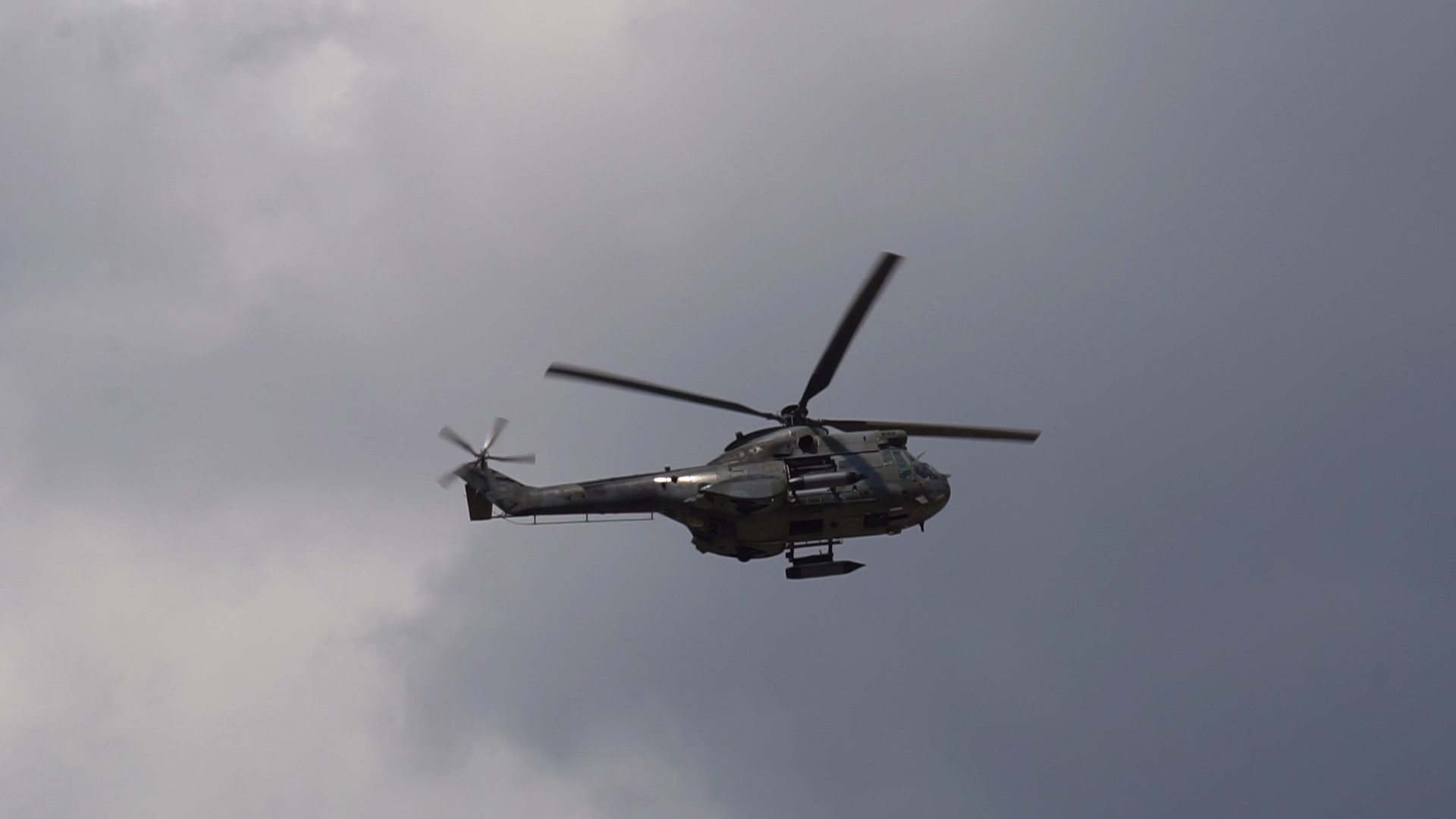
An Aérospatiale/IAR SA.330 Super Puma modified as a heli-bomber completes a rocket pass on the Hannoush Range. (Source: Author)

The Long Campaign

These modest modernisation efforts took place as neighbouring Syria spiralled into chaos. Protests against dictator Bashar al-Assad escalated into civil war and eventually gave rise to the Islamic State. More than one million Syrian refugees poured across the border into Lebanon, with at least 137,000 settling in camps within the Baalbek-Hermel Governate, Lebanon’s northeastern-most region. The town of Arsal, perched above the Bekaa Valley on the slopes of the Qalamoun Mountains, had the highest concentration of Syrian refugees of any municipality in Lebanon, with 39,300 registered in four camps.[17] On 1 February 2013, a patrol from Strike Force, Lebanon’s elite counterterrorism regiment, came under attack while chasing a wanted terrorist near the outskirts of the town. The ambush killed Captain Pierre Bachaalani and 1st Sergeant Ibrahim Zahrman and wounded many others.[18]

The LAF found it increasingly challenging to operate near Arsal. Al-Nusra Front, al Qaeda’s Syrian affiliate, used the town as a base for smuggling men, weapons, and equipment into Syria. The group began expanding its reach into the Bekaa Valley through a relentless series of deadly suicide car bombings and mortar and rocket attacks. Meanwhile, the Islamic State took control of the mountainous region east of Ras Baalbek and al-Qaa.[19]

On 2 August 2014, al-Nusra Front launched an attack on the 8th Mechanized Infantry Brigade’s positions near Arsal. Over the next five days, roughly 700 militants from al-Nusra and the Islamic State joined the battle, resulting in the deaths of 19 soldiers, the wounding of 86, and the capture of 36. Special operations forces from the Ranger and Air Assault Regiments quickly deployed to reinforce the embattled Lebanese troops.[20]

Stationed 30 miles southeast at Rayak, the 8th Squadron launched its Gazelle attack helicopters to assist, relying on satellite imagery printed from Google Earth to orient themselves to the battlefield. The commander of the air wing at Rayak led the first mission, his helicopter armed with two .50-calibre machine guns. “When we arrived in the area, we did not know which military positions had fallen and the extent of the enemy’s penetration,” recalled his copilot, Captain M.B.[21]

Spotting a group of armed men, but unsure of their identity, the wing commander dove in for a closer look. Bullets from a Russian-built PK machine gun raked the helicopter. A round tore through the cockpit, destroying the collective lever and spearing through M.B.’s left hand. “I started bleeding, losing large amounts of blood,” he recounted. The wing commander took control of the helicopter and flew straight to the Dar al-Amal Hospital near Baalbek, where M.B. received emergency medical care. The wing commander then returned to Rayak, only to find that he could not shut down the engine. A bullet had damaged the fuel controls, forcing him to wait for the helicopter’s fuel tank to run dry before it finally shut down.[22]

Meanwhile, at Beirut Air Base, 1st Lieutenant C.Y., a Cessna pilot with the 4th Squadron, received an urgent call from base operations ordering him to prepare his aircraft and crew—himself as pilot, Lieutenant al-Taki as pilot and mission systems operator, and a brigadier general from the operations staff to coordinate with the operations center. “A few minutes later, we were ordered to take off, destined for the outskirts of Arsal,” he recalled. Lieutenant C.Y. was already well-acquainted with the area, having frequently surveilled it since the ambush on the Strike Force patrol the previous year. Yet amid the chaos of the mass attack, the fog of war had set in. “The attack on the military centers happened suddenly,” said C.Y. “We did not have all the information on the disposition of military forces, especially after several fell into the hands of the terrorists.”[23]

Establishing radio contact with the ground troops, C.Y. and his crew began scanning the battlefield through their camera, watching as militants overran one post after another. The defenders executed a fighting withdrawal, buying time until reinforcements could arrive. In the summer of 2014, the 4th Squadron had only two Cessna 208s, and the second aircraft had yet to be retrofitted to carry Hellfire missiles. That meant C.Y. and his crew were flying the only armed fixed-wing aircraft in the country. While the United States classified the AC-208 as an inexpensive armed tactical reconnaissance aircraft, for Lebanon, it was a strategic asset. It would take more than an hour to land, rearm, and return to the target area, so they had to carefully balance their ability to deliver aerial firepower with the need to maintain continuous ISR coverage. “Our plane was equipped with two Hellfire missiles,” said C.Y. “We were careful not to use them unless absolutely necessary.”[24]

That moment came when the militants encircled a company of Lebanese troops, wounding several with their relentless fire. “We saw through the surveillance camera a group of about ten armed men preparing to storm the center from the rear,” C.Y. recalled, “so we decided to intervene.” Watching the Cessna’s live video feed from the operations center, the LAF director of operations, along with the army and air force commanders, gave the green light for a strike. It would be the first precision airstrike in Lebanon’s history.

C.Y. recounted what happened next: “We turned toward the target and launched the first missile, which took fifty-eight seconds to reach its mark, striking with precision and inflicting heavy losses on the attacking force.” The militants retreated into a nearby house. Circling overhead, C.Y.’s crew waited for them to regroup before launching the second missile. “We deliberately waited for all the terrorists to enter the building before firing,” he explained. “The Hellfire missile is most effective in enclosed spaces – such as rooms, buildings, and fortifications – rather than open areas.”[25]

The missile streaked off the launch rail, and one minute and twenty seconds later, it slammed into the house. The cement walls collapsed, and the house erupted in flames, fuelled by secondary explosions from ammunition stored inside. No one emerged from the inferno. The airstrike reversed the tide of the battle, forcing the militants to withdraw from around the besieged company.[26]

The combat debut of the AC-208 in August 2014 marked the LAF’s first use of precision-guided munitions and the first real-time broadcast of battlefield surveillance video. Meanwhile, the Hueys and Super Pumas transported troops and flew MEDEVAC missions, while Raven UAVs and the Cessnas provided ISR, and Gazelles and the AC-208 delivered close air support. These efforts helped halt the militant advance, but the LAF could not yet push them back, and a three-year stalemate ensued. Of the 36 Lebanese soldiers captured in the battle, the militants executed four, released seven, and exchanged 16 for thirteen jailed militants in a prisoner swap. Nine remained unaccounted for, presumably still held by the Islamic State.[27]

According to Captain G.A., another Cessna pilot in the 4th Squadron, “Our squadron participated in continual military operations from 2014 to 2017. The unrelenting bombing over such a long period of time helped to exhaust and demoralize the militants, as well as to destroy their logistical capabilities and their command-and-control centers.” In addition to Hellfire strikes, the Cessna crews provided observation and adjustment for artillery fire. According to G.A., “The targets we attacked varied from command-and-control centers and logistical points […] to tunnels dug in the mountains […] bulldozers used in digging tunnels and fortifying fighting positions […] and on one occasion, we targeted an Army M-113 armored vehicle which the militants had captured.” While they typically struck preplanned targets, the crews also often searched for targets of opportunity.[28]

In the summer of 2016, the Lebanese Air Force launched its largest coordinated airstrike on militant positions – an operation they viewed as their own miniature version of Desert Storm’s high-tech ‘Instant Thunder’ air campaign. “The raid lasted for about forty minutes,” recalled Colonel A.M., who helped plan the operation. The Cessna fired the opening salvo, striking the first two of eight preplanned targets: an Islamic State field command headquarters and a house sheltering a high-value target. Both missiles hit with precision. “No one left the targeted buildings,” A.M. stated, “so we considered the casualties as confirmed.”[29]

Follow-on attacks targeted enemy infrastructure, including lodging, water tanks, ammunition dumps, and vehicle yards. To bolster the air force’s limited firepower, mechanics from the 9th Squadron modified a Super Puma into a heli-bomber – similar to the Huey bomber experiment nine years earlier. They rigged a pair of steel I-beams through the cabin and mounted bombs or rocket pods on either side, creating a makeshift but effective strike platform.[30]

After the initial Hellfire strikes, the Cessna used its infrared laser pointer to mark targets for the helicopters and served as a tactical air coordinator, sequencing their attacks. The Puma dropped two 250-kilogram bombs, followed by the Gazelles strafing militants fleeing the bombing with .50-calibre machine guns and 68-millimetre rockets. Once the helicopters cleared the area, the Cessna called in artillery fire to finish the job. Throughout the operation, the Cessna and Raven UAVs provided continuous surveillance of the target area.[31]

While the LAF managed to contain the Islamic State and al-Nusra incursions into the Bekaa Valley, military and political leaders collaborated with their American counterparts to secure new equipment and training for a decisive operation to expel them entirely. For the air force, this included six Embraer A-29B Super Tucano light attack aircraft, which would equip the newly formed 7th Squadron. The Lebanese Air Force identified twelve of its top pilots to train on the Super Tucano at Moody Air Force Base, Georgia, under the USAF’s 81st Fighter Squadron. The first group of pilots departed Lebanon in February 2017, with the first two A-29s scheduled for delivery in October and the remaining four the following June. USAF Special Operations Command also planned to deploy a team of combat aviation advisors to Lebanon in 2018.[32] Meanwhile, in January 2017, al-Nusra Front merged with four other militant groups to form Hayat Tahrir al-Sham (HTS), which dubiously claimed to have severed its ties with al-Qaeda.[33]

It remains a point of contention whether Lebanon’s ingrained political paralysis or a strategic decision to wait for new capabilities like the Super Tucanos delayed a decisive operation against the Islamic State. On 20 July 2017, the Iranian-backed Shia militia Hezbollah pre-empted the LAF by launching its own campaign to retake Arsal.[34]

For at least six years, Hezbollah had been deploying fighters to Syria as part of Iran’s efforts to bolster Bashar al-Assad’s dictatorial regime. A successful operation to expel HTS from Lebanon would not only serve Iran’s strategic interests but also undermine the LAF’s position as the nation’s principal security provider. From 21 to 24 July, Hezbollah seized more than 60 per cent of HTS-held territory, leading to a ceasefire on 27 July that allowed the remaining HTS fighters to withdraw into Syria. Hezbollah’s sophisticated propaganda apparatus flooded media channels with battlefield updates, maps, and footage highlighting combined arms operations involving infantry, artillery, and rockets. Press reports estimated that more than twenty Hezbollah fighters and 150 HTS militants were killed in the operation.[35]

The Lebanese government had no choice but to order an immediate offensive against the Islamic State positions north of Arsal – a far more challenging task given the rugged, defensible mountainous terrain – or risk appearing impotent compared to Hezbollah. The LAF assembled a frontline strength of 4,300 troops in the eastern Bekaa Valley, including the 6th Mechanized Infantry Brigade, the 1st Intervention Regiment, the Air Assault Regiment, one company from the 4th Intervention Regiment, and one company from the Moukafaha, a special operations unit under the Directorate of Military Intelligence. Another 4,250 personnel provided support, including elements of the 1st and 2nd Artillery Regiments with 36 155-millimetre howitzers.[36]

On 14 August 2017, the LAF initiated its opening manoeuvres, officially launching Operation Fajr al-Jaroud, or ‘Dawn of the Hills,’ on 19 August. That same day, Hezbollah and the Syrian Arab Army announced their own offensive on the Syrian side of the border, once again attempting to upstage the LAF. The simultaneous operations fuelled speculation of collusion between the LAF and Hezbollah. However, LAF leadership firmly denied such claims, emphasising that their only interaction with Hezbollah was limited to a deconfliction policy not unlike the one between US and Russian forces in Syria.[37]

Lebanese ground forces encountered improvised explosive devices (IEDs), fortified fighting positions, and suicide bombers, but years of sustained operations had already hollowed out the Islamic State’s defences. A steady barrage of air and artillery fire paved the way for the advancing troops. Over 11 days, the Lebanese Air Force flew 141 hours of combat missions. One of the seventy US military advisors in the country, observing the LAF’s coordinated use of ISR, precision air strikes, artillery, infantry, armour, and special operations forces, described the campaign as ‘twenty-first century maneuver warfare by a modern military.’[38]

Though delivery of the first two A-29s was still two months away, the 4th Squadron had received its third Cessna in December 2016, and all three aircraft were now configured to carry Hellfires. Additionally, the Lebanese Army fielded a game-changing new weapon it had received several years earlier from the Americans: M712 ‘Copperhead’ 155-millimetre laser-guided artillery rounds. Flying parallel to the gun-target line, the Cessna could use its laser designator to guide in round after round with deadly precision. During Fajr al-Jaroud, the Lebanese Army fired 130 Copperhead rounds, including a blistering thirty-three in just thirty minutes at the operation’s climax.[39]

The Islamic State’s position collapsed in mere days, shrinking to a pocket of just twenty square kilometres by 27 August – down from the 120 square kilometres it had occupied at the outset. However, the LAF never launched a final assault; with the operation proving a stunning success, an alarmed Hezbollah quickly intervened to negotiate a ceasefire, allowing the remaining Islamic State fighters to retreat into Syria in exchange for information on the nine LAF soldiers captured three years earlier. Though all nine had been killed, the deal allowed the LAF to recover their bodies. On 28 August, approximately four hundred Islamic State fighters and camp followers departed on buses for eastern Syria.[40]

Operation Fajr al-Jaroud killed more than 50 Islamic State fighters, at the cost of nine LAF soldiers killed and 100 wounded. For the first time since the civil war, the LAF successfully conducted a theatre-level joint operation, demonstrating its ability to effectively utilise US security assistance.[41] Yet, the success owed to more than just the two-week operation. “When the battle is discussed, many people marvel at the short period of time that it was limited to,” said Colonel A.M. “They do not realize that it came as a result of three years of continuous targeting that exhausted the terrorists’ infrastructure and killed many of them.”[42]
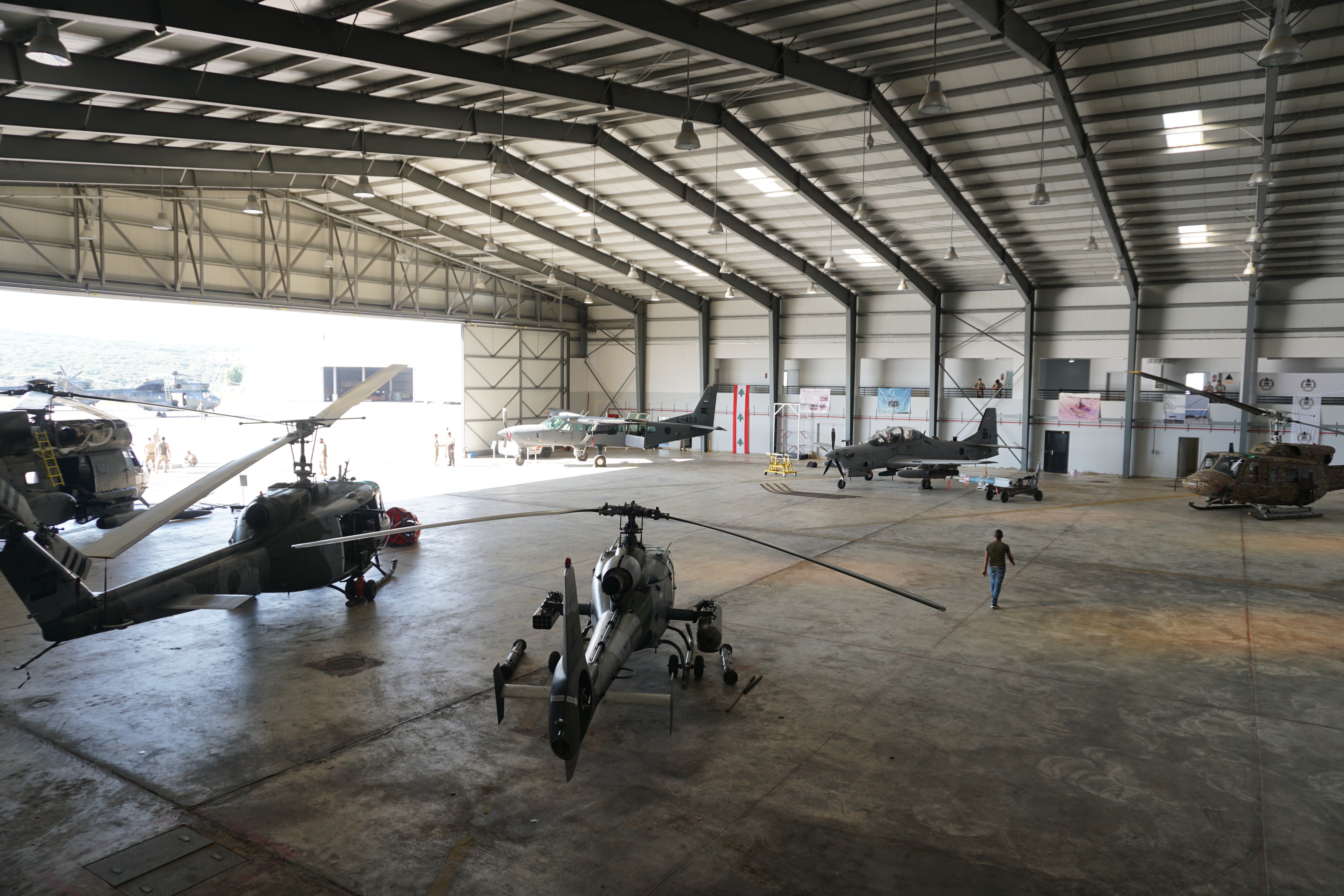
Lebanese Air Force aircraft in the hangar at Hamat Air Base, foreground, left to right: SA.330 Super Puma, UH-1H Huey II, SA.342L Gazelle; background, left to right: AC-208 Eliminator, A-29B Super Tucano, Bell 212. (Source: Author)

Conclusion

Hezbollah’s efforts to undermine and overshadow the LAF failed to erode its legitimacy as Lebanon’s principal source of security. The success of the joint operation against the Islamic State spoke for itself.[43] Despite limited resources, the Lebanese Air Force played a decisive role. From the Dinniyeh operation in 2000 to the heli-bombers over Nahr al-Bared in 2007 and the precision airstrikes in the Bekaa Valley from 2014 to 2017, Lebanese aviators found ways – often audacious improvisations – to mobilise air power against violent extremist organisations. What began as a force rebuilt around hand-me-down Hueys gradually evolved into a capable mix of helicopters, crewed fixed-wing aircraft, and UAVs performing ISR, light-attack, and mobility missions. This transformation depended on steady but limited US security assistance: surplus aircraft, grant-funded upgrades, foreign military sales, and training programs that produced a new generation of skilled aviators.

Yet US assistance alone cannot account for the LAF’s battlefield performance. At every stage, Lebanese officers, NCOs, and technicians adapted faster than their inventory changed. They welded together heli-bombers when they lacked aircraft capable of striking hardened urban positions. They mastered precision weapons that they had never fired in training. They built tactics around a single missile-toting Cessna, rationing its firepower while keeping it on station as the country’s only persistent ISR asset. They overcame shortages in personnel, spare parts, and navigational equipment through ingenuity, improvisation, and a deep sense of obligation to the soldiers fighting below.

By the time the Islamic State threatened Lebanon’s northeastern frontier, the Lebanese Air Force had become something unexpected: not a conventional air force in the American sense, but an adaptable, hybrid force optimised for Lebanon’s terrain, politics, and threats. Its air campaign from 2014 to 2017, though modest by comparison with the coalition’s industrial-scale air power in Operation Inherent Resolve, proved decisive along the Islamic State’s western flank, steadily degrading militant capabilities until Operation Fajr al-Jaroud finally drove them from Lebanese territory.

From its rebirth in the 1990s through its campaign against the Islamic State, the history of Lebanese air power demonstrates that modest US security assistance, when paired with Lebanese ingenuity, produced an outsized strategic effect. The Lebanese Air Force did not win battles because it possessed the most technologically advanced equipment, the largest fleet, or the most refined doctrine. It won because Lebanese aviators extracted maximum value from every aircraft, every munition, and every training opportunity. In doing so, they provided the Lebanese Army with the air support it needed to survive, adapt, and prevail against some of the most dangerous violent extremist groups in the world.

Lieutenant Colonel Daniel Jackson PhD is an Assistant Professor of History at the US Air Force Academy. He served as a U-28A instructor pilot, Combat Aviation Advisor, and Adaptive Precision Strike evaluator pilot in Air Force Special Operations Command, flying 236 combat missions and 125 combat support missions in support of Operations Inherent Resolve, Freedom Sentinel, Enduring Freedom, Enduring Freedom-Philippines, and Damiyan. He holds a PhD in history from the University of Wisconsin-Madison. He is the author of Fallen Tigers: The Fate of America’s Missing Airmen in China during World War II (2021).

Wael Nawaf al-Taki is the manager of Strategic Defense Solutions, Ltd. He served as Chief of the Lebanese Air Force Operations Room and as an A-29 Super Tucano instructor pilot and squadron commander. In addition to flying more than 200 hours in combat operations, he spearheaded organisational and tactical reforms that enhanced air-ground integration within the Lebanese Armed Forces.

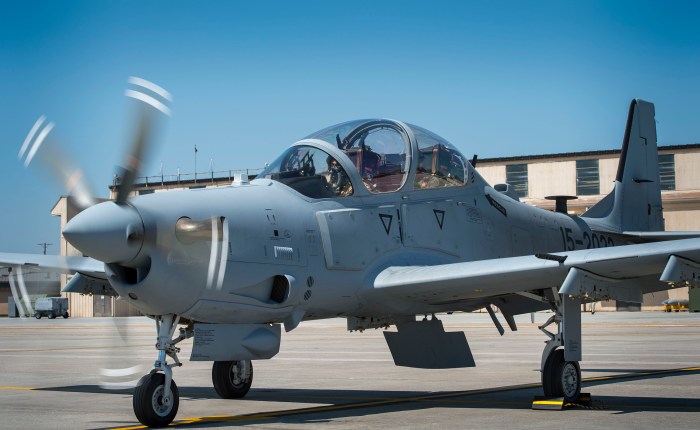
Header image: A Lebanese Air Force student prepares to fly the Embraer A-29B Super Tucano for the first time at Moody Air Force Base, Georgia (Source: US Air Force)

[1] The names of most Lebanese military officers have been withheld for security reasons.

[2] Major Wael al-Taki, oral history interview by Daniel Jackson, February 27, 2025.

[3] Department of Defense, ‘Operation Inherent Resolve: Targeted Operations to Defeat ISIS,’ Operation Inherent Resolve, 9 August 2017.

[4] National Archives and Records Administration, Record Group 330, Military Assistance Program 1000 System Master File, 1986.

[5] US Embassy in Lebanon, ‘US Ambassador Delivers Cessna Aircraft to Lebanese Armed Forces,’ 19 December 2016,.

[6] Brigadier General S.Y., oral history interview by Wael al-Taki, 3 August 2022.

[7] Lebanese Armed Forces, Air Force Operations, Beirut, 2021.

[8] Brigadier General S.Y., oral history interview by Wael al-Taki.

[9] Ibid.

[10] Lebanese Armed Forces, Air Force Operations.

[11] Ibid.: Riad Kahwaji, ‘The victory – Lebanon developed helicopter bombers,’ Skyscraper City, 3 September 2007.

[12] Lebanese Armed Forces, Air Force Operations.

[13] Orbital ATK, Mission Systems Operators Manual: Lebanon Armed Caravan SN1239, 02TMAOP-002, Fort Worth, 2016; Stephen Trimble, ‘USAF orders 2nd Cessna Caravan for Lebanon,’ FlightGlobal, 18 January 2012.

[14] US Embassy in Lebanon, ‘The United States Delivers Four A-29 Super Tucano Aircraft to the LAF,’ 12 June 2018.

[15] Department of State, Bureau of Political-Military Affairs, ‘US Security Cooperation with Lebanon,’ Fact Sheet, 20 January 2025.

[16] Defense Security Cooperation Agency, ‘Lebanon – Huey II Helicopters,’ Transmittal No. 12-07, 20 July 2012; Defense Security Cooperation Agency, ‘Lebanon—Huey II Rotary Wing Aircraft and Support,’ Transmittal No. 14-20, 19 September  2014; Defense Security Cooperation Agency, ‘Lebanon—AGM-114 Hellfire II Missiles,’ Transmittal No. 15-29, 4 June 2015.

[17] Aram Nerguizian, The Lebanese Armed Forces, Hezbollah, and Military Legitimacy, Draft, (Washington, DC: Center for Strategic & International Studies, 2017), p. 9.

[18] Lebanese Armed Forces, Air Force Operations.

[19] Nicholas Blanford, ‘The Lebanese Armed Forces and Hezbollah’s Competing Summer Offensives Against Sunni Militants,’ CTC Sentinel 10, no. 8 (2007), p. 27.

[20] Nerguizian, The Lebanese Armed Forces, Hezbollah, and Military Legitimacy, p. 11.

[21] Captain M.B., oral history interview by Wael al-Taki, 6 August 2021.

[22] Ibid.

[23] Captain C.Y., oral history interview by Wael al-Taki, 6 August 2021.

[24] Ibid.

[25] Ibid.

[26] Ibid.

[27] Blanford, ‘The Lebanese Armed Forces and Hezbollah’s Competing Summer Offensives Against Sunni Militants,’ p. 27.

[28] Captain G.A., oral history interview by Wael al-Taki, 10 August 2021.

[29] Colonel A.M., oral history interview by Wael al-Taki, 10 August 2021.

[30] The author inspected this aircraft himself and spoke with the maintenance officer who oversaw the modifications while in Lebanon in 2020.

[31] Ibid.

[32] Defense Security Cooperation Office, ‘Lebanon—A-29 Super Tucano Aircraft,’ Transmittal No. 15-13, 9 June 2015; Sierra Nevada Corporation, ‘SNC, Embraer Complete Early Delivery of A-29 Super Tucano Aircraft to Lebanese Air Force for Close Air Support Role,’ Press Release, 12 June 2018.

[33] Thomas Joscelyn, ‘Al Qaeda and allies announce ‘new entity’ in Syria,’ Long War Journal, 28 January 2017

[34] Nerguizian, The Lebanese Armed Forces, Hezbollah, and Military Legitimacy, p. 15.

[35] Ibid., pp. 15-6.

[36] Ibid., p. 20, 22.

[37] Ibid., p. 16, 23.

[38] Ibid., p. 24.

[39] Lebanese Armed Forces, Air Force Operations.

[40] Blanford, ‘The Lebanese Armed Forces and Hezbollah’s Competing Summer Offensives Against Sunni Militants,’, p. 29.

[41] Nerguizian, The Lebanese Armed Forces, Hezbollah, and Military Legitimacy, p. 24, 27.

[42] Colonel A.M., oral history interview by Wael al-Taki, 10 August 2021.

[43] Nerguizian, The Lebanese Armed Forces, Hezbollah, and Military Legitimacy, p. 5.

Air Vice-Marshal Professor R.A. ‘Tony’ Mason – A Reflection

Air Vice-Marshal Professor R.A. ‘Tony’ Mason – A Reflection

By Dr Ross Mahoney

Editorial note: This piece was originally drafted not long after the passing of Air Vice-Marshal Mason. However, several personal reasons led to a delay in its publication. 

On 12 November 2023, Air Vice-Marshal Professor R.A. Mason, one of the doyens of air power studies, sadly passed away. Known as Tony by most who knew him personally and professionally, Mason can be considered one of the fathers of air power studies in the UK. As I have argued elsewhere, Mason was arguably the critical British air power thinker of the late 20th Century. From being the Royal Air Force’s (RAF) first Director of Defence Studies (DDefS) to his writing and commentary work, Mason was consistently at the forefront of the field until the 2010s. Indeed, his consistent commitment to the field and the length of his career made him stand out. He was also generous with his time and knowledge and always happy to share material with those who shared his interests.

Mason joined the RAF in 1956 and entered the Education Branch. He gradually rose through the ranks in his branch and undertook various assignments, including attending King’s College London, the United States Air War College and the RAF Staff College. Eventually, in 1976, Mason was informed that he would be the RAF’s first DDefS. Mason took up the role at the start of 1977. The position of DDefS was established due to the perceived state of thinking on air power within the RAF and public awareness of the Service’s role. In a letter to Air Officer Commanding-in-Chief Support Command, Air Marshal Sir Reginald Harland, Chief of the Air Staff, Air Chief Marshal Sir Neil Cameron noted that the position was being established ‘to help provide a new stimulus to air power thinking’ throughout the RAF.[1] This point was also emphasised in the terms of reference for the DDefS post, as there was a need to ‘write on air power and defence issues,’ which was to be encouraged.[2]

The establishment of the post of DDefS at the RAF Staff College at Bracknell and Mason’s perceived suitability for the role caused some debate. While this is not the place to consider that debate, the view of Mason’s successor, Group Captain Timothy Garden, is worth noting. Garden, a pilot and later Air Marshal Baron Garden, noted in 1982 in Air Clues that a colleague had questioned why he would want to take over what was perceived by 1982 as an ‘admin branch’ role. Garden reflected that the most appropriately qualified person should essentially hold the post to achieve its aims and that it ‘should not be the prerogative of any branch.’[3] That Garden, as a pilot, viewed the post in such a way was as much down to Mason’s hard work in the role as it was to the importance of the RAF’s intellectual development.

0001

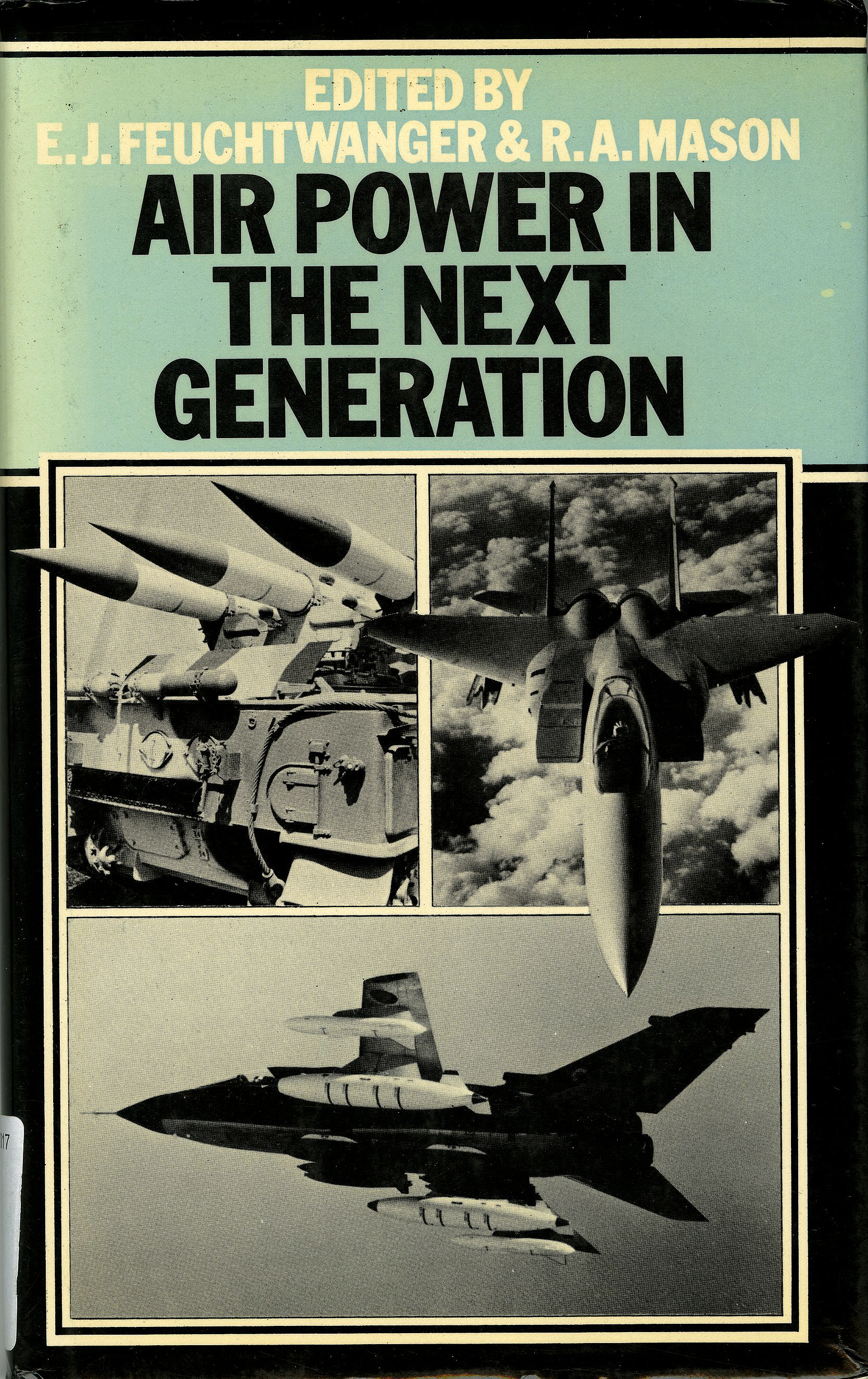
Mason nonetheless quickly sought to encourage discussion and debate and discussion about the role of air power within the service on taking up the role of DDefS. Despite the demise of the RAF Quarterly in 1977, Mason regularly contributed to Air Clues, which, up to the 1970s, had primarily been a technical publication for the RAF. In 1980, he established the Air Power Supplement to Air Clues, the spiritual ancestor to the RAF’s current professional flagship journal, Air and Space Power Review.[4] He also regularly contributed to other publications, such as The RUSI Journal. Perhaps his critical success in this period was organising an academic symposium in his first year in post. This symposium was entitled ‘Air Power in the Next Generation.’ It was well attended and laid the basis for similar endeavours by his successors. It was also published as Air Power in the Next Generation, co-edited with Edgar Feuchtwanger and published by The Macmillan Press in 1979. The book included contributions from the senior USAF, Luftwaffe, and Israeli officers, as well as civilian academics such as John Erickson. Much of Mason’s work started a process whereby his successors have continued to contribute to the collegiate intellectual development of the RAF through various schemes such as publications, conferences, and the management of defence fellowships.[5] Many former post-holders, such as Air Commodore (ret’d) Professor Peter Gray, are also notable for their contribution to developing British air power thinking through their engagement with academia after leaving the post of DDefS and the RAF.

978-1-349-17964-0

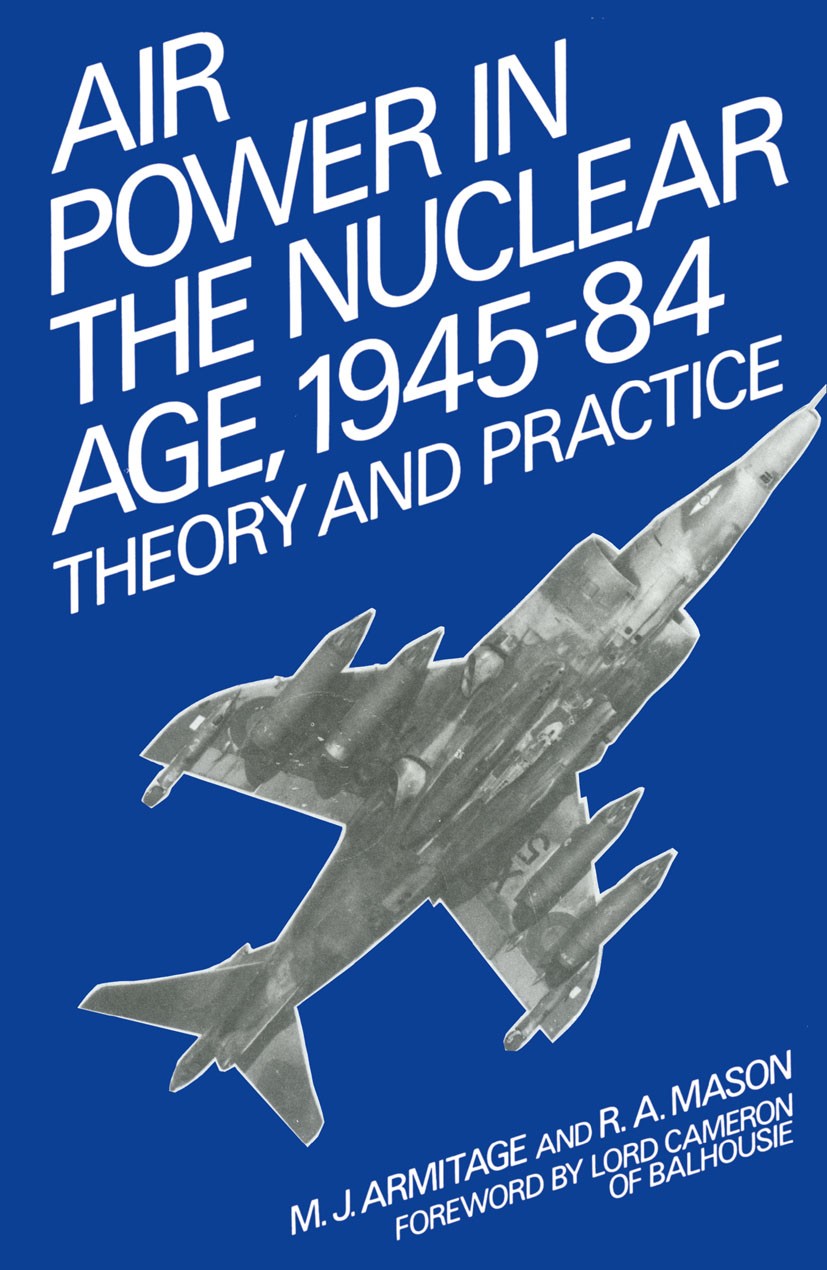
Mason’s contributions to air power studies continued after moving on from the DDefS role. In 1983, Mason published Air Power in the Nuclear Age in conjunction with Air Marshal Michael Armitage. This publication helped cement Mason’s position as a leading air power thinker. As Marshal of the Royal Air Force Lord Cameron noted in the foreword to the book, ‘[t]he joint authors of this book are advanced and enlightened thinkers about the doctrine of air power as a vital and perhaps the most important element of modern and future warfare.’[6] This view was not hyperbole. For example, in his 1984 overview of air power literature, historian Richard Hallion described the book as an ‘excellent survey’ of the development of air power during the Cold War.[7] The book was updated as a second edition in 1985. Mason’s other notable works in this period were the edited book War in the Third Dimension and the establishment of the Brassey’s Air Power: Aircraft, Weapons Systems and Technology Series. This latter series was interesting because it was explicitly directed at developing an awareness of air power amongst junior military personnel.

After retiring from the RAF in 1989, Mason moved into academia. He became the Leverhulme Air Power Research Director for the Foundation for International Security and took up a post as a Senior Research Fellow at the Centre for Studies in Security and Diplomacy at the University of Birmingham, where he was director. In 1996, he was made an Honorary Professor of Aerospace Policy at the University of Birmingham.

414K44MP5EL._AC_UF894,1000_QL80_

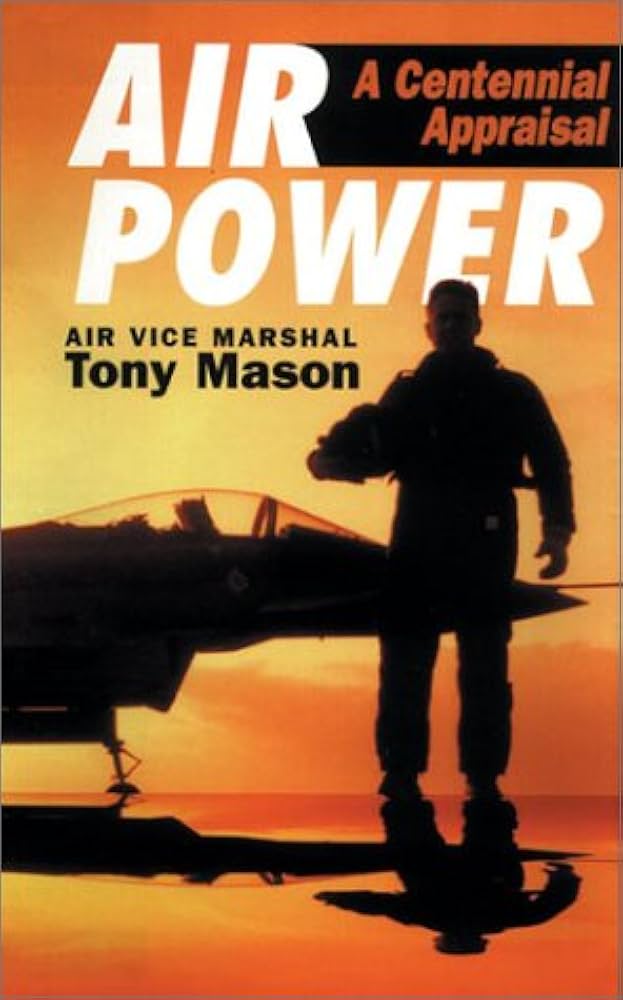
In 1994, Mason published what might be considered his magnum opus, Air Power: A Centennial Appraisal. This book confirmed Mason’s place as one of Britain’s leading air power thinkers. In this book, Mason examined the development of air power between 1989 and 1994. In doing so, he took a historical approach to examine how air power developed in the years up to this period. Mason then conceptualised the period 1989 to 1994, focusing on several key themes, such as the place of air power in arms control. Notably, he sought to contextualise much of the then-contemporary debate about the role of air power in the First Gulf War. Perhaps the most significant aspect of the book lay in Mason’s conceptualisation of what he called ‘differential air power.’[8] In short, Mason argued that while many nations shared ideas around the implementation of air power, only one in 1994 might be able to fully apply the advantages afforded by air power – the US. Using the idea of differential air power, Mason explored why the US stood out as a unique user of air power capabilities. These were important views for the time; however, while the book remains a significant contribution to air power studies, given factors such as the rise of China in the 21st Century and the distributed use of off-the-shelf technology such as drones, it remains to be seen whether his view remains applicable. Nevertheless, Mason concluded that:

One enduring concept underlay all air power thinking and all operations from the first day of the century to the last, and will continue to do so. Any nation intent on going to war to pursue an interest or defend a principle must first secure the air above it.[9]

Mason’s book was well received at publication and has become a commonly cited work. In his 1995 review in The RUSI Journal, Garden described the book as ‘excellent [and] thought-provoking.’[10] Thomas Keaney, who had worked on the Gulf War Air Power Survey, noted that the book made an ‘important contribution to any discussion on the future of airpower in the United States or elsewhere’ in a 1996 review for the US Joint Forces Quarterly.[11] However, historian Philip Sabin, reviewing the book in the Journal of Strategic Studies in 1995, offered a more tempered view. While recognising that the book had certain strengths, particularly Mason’s ‘balanced insights into many of the controversial issues regarding air power,’ Sabin also highlighted the challenge of reading a book that was ‘dense and difficult to follow without careful reading.’[12]

After the publication of Air Power, Mason continued to contribute to both the public’s and the RAF’s understanding of air power through his continued contribution to publications.[13] He also served as an expert member of the House of Commons Defence Committee in the early 2000s and helped inform British defence policy. He was also an inveterate media commentator and was often called to provide expert opinion. Mason’s contribution to air power studies was wide-ranging. While he had retired several years before his passing, his expertise will undoubtedly be sorely missed by many air power scholars for decades to come.

Dr Ross Mahoney is an independent scholar specialising in the history of war with particular reference to the use of air power and the history of air warfare. He is currently the Senior Historian within the Heritage Policy team at Brisbane City Council in Australia. He has nearly 20 years of experience in the education, museum and heritage sectors in Australia and the United Kingdom. Between 2013 and 2017, he was the inaugural Historian at the Royal Air Force Museum in the UK. In Australia, he has worked as a Historian for the Department of Veterans’ Affairs and taught at the Strategic and Defence Studies Centre at The Australian National University based at the Australian War College. His research interests are focused on the history of war, specifically on the history of air power and air warfare, military leadership and command, military culture, and the history and development of professional military education. He also maintains an interest in transport history. He has published numerous articles, chapters and encyclopedia entries, edited two books, and delivered papers on three continents. His website is here, and he can be found on Twitter at @airpowerhistory.

Header image: Ramslade House, the home of the RAF Staff College in Bracknell when Mason took up the role of Director of Defence Studies. (Source: Wikimedia)

[1] Author’s Personal Collection, Letter from the Chief of the Air Staff to AOC-in-C Support Command, 2 November 1976. I am grateful to the late Air Vice-Marshal Professor R.A. Mason for a copy of this and other documents linked to the establishment of the DDefS post.

[2] Author’s Personal Collection, Terms of Reference for Director of Defence Studies appended to a Letter from the Chief of the Air Staff to AOC-in-C Support Command, 2 November 1976, p. 1.

[3] Group Captain Timothy Garden, ‘Why don’t we forget Defence Studies and get on with the job?’ Air Clues 36, no 10 (1982), p. 364.

[4] Air Vice-Marshal Tony Mason, ‘Air Power Review’s Place in RAF History,’ Air Power Review 21, no. 1 (2018), p. 10.

[5] For a variety of publications produced under the guidance of DDefS, see: Andrew Lambert and Arthur C. Williamson (eds.), The Dynamics of Air Power (London: HMSO, 1996); Stuart Peach (ed.), Perspectives on Air Power: Air Power in its Wider Context (London: The Stationary Office: 1998); Peter W. Gray (ed.), Air Power 21: Challenges for the New Century (London: The Stationary Office, 2000); Peter W. Gray and Sebastian Cox (eds.), Air Power Leadership: Theory and Practice (London: The Stationary Office, 2002).

[6] Marshal of the Royal Air Force Lord Cameron, ‘Foreword’ in M’J’ Armitage and R.A. Mason, Air Power in the Nuclear Age: Theory and Practice, Second Edition (Basingstoke: The Macmillan Press, 1985), p. vii.

[7] Richard Hallion, The Literature of Aeronautics, Astronautics, and Air Power (Washington DC: Office of Air Force History, 1984), p. 36.

[8] Tony Mason, Air Power: A Centennial Appraisal (London: Brassey’s, 1994), pp. 235-278.

[9] Mason, Air Power, p. 278.

[10] Timothy Garden, ‘Book Reviews – Air Power: A Centennial Appraisal,’ The RUSI Journal 140, no. 3 (1995), p. 60.

[11] Thomas Keaney, ‘A Jubilee for Airmen: A Book Review,’ Joint Forces Quarterly 11 (1996), p. 134

[12] Philip Sabin, ‘Book Review – Air Power: A Centennial Appraisal,’ Journal of Strategic Studies 18, no. 4 (1995), pp. 141-2.

[13] For example, see: Tony Mason, ‘British Air Power’ in John Andreas Olsen (ed.), Global Air Power (Dulles, VA: Potomac Books, 2011), 7-62; R.A. Mason, ‘The Response to Uncertainty’ in John Andreas Olsen (ed.), European Air Power: Challenges and Opportunities (Dulles, VA: Potomac Books, 2014), pp. 215-30; Mason, ‘Air Power Review’s Place in RAF History,’ pp. 10-1.

#Podcast – “A Bridge to 21st Century Spaceships”: An Interview with Astronaut Tom Jones

#Podcast – “A Bridge to 21st Century Spaceships”: An Interview with Astronaut Tom Jones

Editorial Note: Led by Editor Dr Mike Hankins, From Balloons to Drones, produces a monthly podcast that provides an outlet for the presentation and evaluation of air power scholarship, the exploration of historical topics and ideas, and provides a way to reach out to both new scholars and the general public. You can find our Soundcloud channel here. You can also find our podcast on Apple Podcasts and Google Podcasts.

From Balloons to Drones is excited to be joined by veteran astronaut Tom Jones to talk about the history of the US Space Shuttle Program. Having flown in space on four shuttle missions, Jones shares not only his own perspective but also reflects on the entirety of the shuttle program based on the interviews and research that informed his new book, Space Shuttle Stories: Firsthand Astronaut Accounts from All 135 Missions (2023), from Smithsonian Books.

71eU0F+tHzL._AC_UF1000,1000_QL80_

Tom Jones is a veteran astronaut, planetary scientist, pilot, author, and speaker who completed four space shuttle missions and three spacewalks in helping build the International Space Station. Jones has authored six books, including Sky Walking: An Astronaut’s Memoir, and has written for aerospace magazines such as Air & Space Smithsonian, Aerospace America, Popular Mechanics, and The Planetary Report. A senior research scientist for IHMC, he appears regularly on television news as an expert commentator for space exploration and science stories.

Header image: Space Shuttle Atlantis takes flight on its STS-27 mission on 2 December 1988, utilising 375,000 pounds of thrust produced by its three main engines. The engines start in 3.9 seconds of ignition and go to static pump speeds of approximately 35,000 revolutions per minute during that time. (Source NASA)

#Podcast – “Women aren’t in combat but they’re being killed”: An Interview with Eileen Bjorkman

#Podcast – “Women aren’t in combat but they’re being killed”: An Interview with Eileen Bjorkman

Editorial Note: Led by Editor Dr Mike Hankins, From Balloons to Drones, produces a monthly podcast that provides an outlet for the presentation and evaluation of air power scholarship, the exploration of historical topics and ideas, and provides a way to reach out to both new scholars and the general public. You can find our Soundcloud channel here. You can also find our podcast on Apple Podcasts and Google Podcasts.

2023 marks the 30th anniversary of the announcement of the first female American combat fighter pilots. How did the US go from women not being allowed in military aeroplanes to having women combat pilots? Eileen Bjorkman (Colonel, USAF, ret’d) joins us to discuss these momentous changes. She is a former flight test engineer who has flown in aircraft like the F-4 Phantom and the F-16 Fighting Falcon, and she is the author of Fly Girls Revolt: The Story of the Women who Kicked Open the Door to Fly in Combat (2023), from Knox Press.

the-fly-girls-revolt-9781637585948_hr

Eileen Bjorkman is a retired US Air Force Colonel. She was a flight test engineer during her USAF career, flying more than 700 hours in twenty-five different types of military aircraft, including fighters such as the F-4 and F-16. She is also a civilian pilot and author of The Propeller Under the Bed (2017) and Unforgotten in the Gulf of Tonkin (2020).

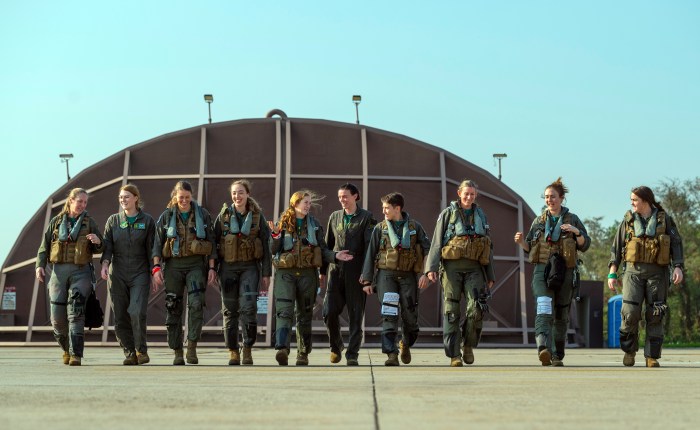
Header image: Female fighter pilots assigned to the 36th and 25th Fighter Squadrons join together before flying a historic all-female flight at Osan Air Base, South Korea, on 25 October 2021. The flight is the first time 10 female Airmen have planned, led and flown in a formation together while assigned to Osan AB. Eight pilots are A-10 Thunderbolt II pilots, and two are F-16 Fighting Falcon pilots. (Source: US Air Force)

#Podcast – “My Airplane is Plunging to the Ground!”: An Interview with Colonel Kim Campbell

#Podcast – “My Airplane is Plunging to the Ground!”: An Interview with Colonel Kim Campbell

Editorial Note: Led by Editor Dr Mike Hankins, From Balloons to Drones, produces a monthly podcast that provides an outlet for the presentation and evaluation of air power scholarship, the exploration of historical topics and ideas, and provides a way to reach out to both new scholars and the general public. You can find our Soundcloud channel here. You can also find our podcast on Apple Podcasts and Google Podcasts.

In our latest podcast, we interview Colonel Kim ‘Killer Chick’ Campbell, an A-10 Thunderbolt II pilot with over 100 combat missions. On one of her early missions, ground fire heavily damaged her plane. She tells us the harrowing story and how her flying experiences apply to other areas of life. For more detail, she has a new book: Flying in the Face of Fear: A Fighter Pilot’s Lessons on Leading with Courage, from Wiley Press.

71HHzu-N0TL._AC_UF894,1000_QL80_

Kim Campbell is a retired United States Air Force Colonel who served for over 24 years as a fighter pilot and senior military leader. She served as a group commander, responsible for 1,000 military and civilian personnel. She finished her career as the Director of the Center for Character and Leadership Development at the Air Force Academy. She flew over 100 combat missions and was awarded the Distinguished Flying Cross for Heroism after successfully recovering her battle-damaged aeroplane from an intense close air support mission. Since retiring from the Air Force, Kim has shared her inspirational story and lessons on leading with courage with business and corporate audiences worldwide as an executive coach and keynote speaker.

Header image: An aircraft maintenance crew of the Indiana Air National Guard perform a post-flight inspection on an A-10C Thunderbolt II during exercise Guardian Blitz at MacDill Air Force Base, 2 February 2023. (Source: Wikimedia)

Call for Submissions – From Balloons to Drones

FeaturedCall for Submissions – From Balloons to Drones

Established in 2016, From Balloons to Drones is an online scholarly platform that analyses and debates air power history (including aviation history), theory, and contemporary operations in their broadest sense, including space and cyber power. To date, we have published over 250 articles on various air power-related subjects.

Since its emergence at the start of the 20th Century, air power has increasingly become the preferred form of military power for many governments. However, the application and development of air power are controversial and often misunderstood. To remedy this, From Balloons to Drones seeks to provide analysis and debate about air power through the publication of articles, research notes, commentaries, book reviews, and historic book reviews – see below for a description of the range of articles published.

The study of air power is to be understood broadly, encompassing not only the history of air warfare, including social and cultural aspects, but also incorporating contributions from related fields, such as archaeology, international relations, strategic studies, law and ethics. Possible subjects to be explored might include, but are not limited to:

Strategy, Theory and Doctrine | Organisation and Policy | Roles

Operations – Kinetic and Non-Kinetic | Tactics, Training and Procedures

Strategic and Operational Effect | Technological Developments

Ethical and Moral Issues | National, International and Transnational Experiences

Personal Experiences | Culture | Memory and Memorialisation

From Balloons to Drones welcomes and encourages potential submissions from postgraduates, academics, and practitioners involved in researching the subject of air power.

C-119B_Flying_Boxcar_drops_supplies_near_Chungju_1951
A US Air Force Fairchild C-119B Flying Boxcar air-dropping supplies near Chungju, Korea, in 1951. (Source: Wikimedia)

We publish:

Scholarly Articles

From Balloons to Drones publishes informative, peer-reviewed articles on air power that range from historical pieces to the analysis of contemporary challenges. These well-researched articles aim to bridge the gap between specialist and non-specialist readers. They should be around c. 3,000 words, though From Balloons to Drones will accept longer pieces. We reserve the right to publish them in parts.

Air War Books

From Balloons to Drones publishes a series of review articles that examine the top ten books that have influenced writers on air power. See more here.

Commentaries

From Balloons to Drones publishes opinion pieces on recent news on either contemporary or historical subjects. These should be no longer than c.1,000 words.

Research Notes

From Balloons to Drones publishes research notes on contributors’ current research projects. These take the form of more informal pieces and can be discussions of a source or notes on a recent research theme. These should be c.500 to 1,000 words.

Book Reviews

From Balloons to Drones publishes regular book reviews that aim to be an accessible collection of appraisals of recent publications about air power. If you are a publisher interested in having your publication reviewed, please contact us at the email address below. See more here.

Historic Book Reviews

From Balloons to Drones publishes occasional historic book reviews that aim to be an accessible collection of appraisals of critical historic publications about air power history, theory, and practice. See more here.

Submissions should be submitted in Word format and emailed to the address below with ‘SUBMISSION’ in the subject line. Also, please include a 50-100-word biography with your submission. References can be used, and please be careful to explain any jargon. However, if you are unsure if your idea fits our requirements, please email us with ‘POTENTIAL SUBMISSION’ in the subject line to discuss.

If you are interested in contributing, please email our Editor-in-Chief, Dr Ross Mahoney, at airpowerstudies@gmail.com or via our contact page here.

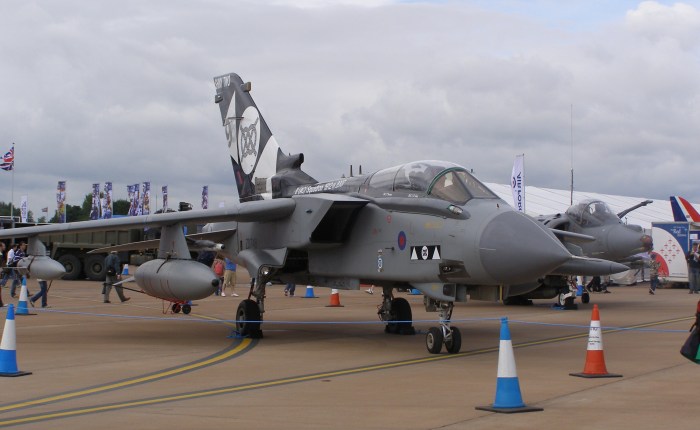
Header image: A Panavia Tornado GR4 of No. IX(B) Squadron on a training sortie in preparation for deployment to Afghanistan, c. 2012. (Source: Wikimedia)

#Podcast – The Unconventional Journey of General Larry Spencer: An Interview with General (ret’d) Larry O. Spencer

#Podcast – The Unconventional Journey of General Larry Spencer: An Interview with General (ret’d) Larry O. Spencer

Editorial Note: Led by our Editor Dr Mike Hankins, From Balloons to Drones produces a monthly podcast that provides an outlet for the presentation and evaluation of air power scholarship, the exploration of historical topics and ideas, and provides a way to reach out to both new scholars and the general public. You can find our Soundcloud channel here. You can also find our podcast on Apple Podcasts and Google Podcasts.

In our latest podcast, we are joined by General Larry O. Spencer, former Vice Chief of Staff of the U. S. Air Force. He recounts his journey from being raised in Southeast Washington, D. C. to enlisting in the U. S. Air Force and eventually rising through the ranks to become one of only nine African Americans to wear four stars. General Spencer’s background as a support officer in an organization that tends to favour pilots and aircrews brings a different lens through which to look at the USAF and the use of air power.

dark-horse

General (ret’d) Larry O. Spencer served as Vice Chief of Staff of the U.S. Air Force until his retirement in 2015. As VCSAF, he presided over the Air Staff and served as a member of the Joint Chiefs of Staff Requirements Oversight Council and Deputy Advisory Working Group. He assisted the Chief of Staff with organising, training, and equipping 664,000 active-duty, Guard, Reserve, and civilian forces serving in the United States and overseas. Spencer was born in Washington, D.C. He received his Bachelor of Science degree in industrial engineering technology from Southern Illinois University, Carbondale, and was commissioned through Officer Training School in 1980 as a distinguished graduate. Spencer has commanded a squadron, group and wing and was Vice Commander of the Oklahoma City Air Logistics Center. He was also the first Air Force officer to serve as Assistant Chief of Staff in the White House Military Office. In addition, he served as the Comptroller and then Director of Mission Support (A7) at a major command; and held positions within the Air Staff and Secretary of the Air Force. Before becoming VCSAF, Spencer was Director, Force Structure, Resources and Assessment, Joint Staff, the Pentagon, Washington, D.C.

Header image: General Larry O Spencer outside his family home in Washington DC, 30 July 2015 (Source: United States Air Force)

#BookReview – An Officer, Not a Gentleman: The Inspirational Journey of a Pioneering Female Fighter Pilot

#BookReview – An Officer, Not a Gentleman: The Inspirational Journey of a Pioneering Female Fighter Pilot

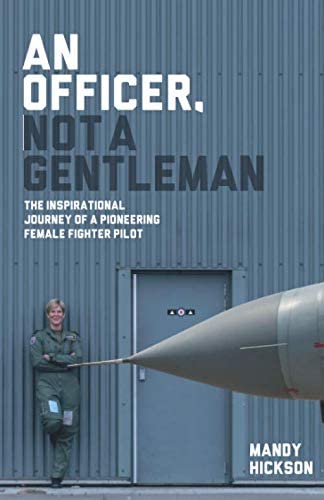
Mandy Hickson, An Officer, Not a Gentleman: The Inspirational Journey of a Pioneering Female Fighter Pilot. London: Mandy Hickson, 2020. Images. Pbk. 294pp.

Reviewed by Mark Russell

41Z+qh7v8uL._AC_SY1000_

Women have long served in the Royal Air Force (RAF). Female service in the RAF began during the First World War when up to 25,000 women served until the Women’s Royal Air Force (WRAF), disbanded in 1918. Approximately 180,000 then served in the Women’s Auxiliary Air Force (WAAF) during the Second World War, followed by those who served in the re-formed WRAF, an administrative entity within the RAF from 1949. Finally, in 1994, the WRAF was merged into the RAF.  

Although 166 women flew during the Second World War as delivery and ferry pilots in the Air Transport Auxiliary, it was not until 1991 that women began to serve as pilots, a decision approved in 1989. The first female pilot was Flight Lieutenant Julie Ann Gibson, who re-trained from her existing career as an RAF engineer before flying Andovers with No. 32 Squadron from RAF Northolt in 1991. However, the issue of allowing women to fly fast jets still raised questions. Nonetheless, in December 1991, it was announced that women were cleared to fly in combat roles. However, it was not until August 1994 that Flight Lieutenant Jo Salter breached the ‘holy of holies,’ the fast jet pilot role, when she joined No. 617 Squadron at RAF Lossiemouth to fly the Tornado GR1B. She became the RAF’s first female fast jet pilot. As of 1 April 2019, there were 30 female fixed-wing pilots in the RAF, while as of July 2021, 15.1% of the RAF regulars were female. 

Mandy Hickson’s An Officer, Not a Gentleman, is the autobiography of only the second woman to fly the Tornado in the RAF. It documents her experience flying the Tornado and becoming an operational fast jet pilot. Some of what Hickson writes will also resonate with those working within large organisations that continue to grapple with issues of inclusion and equality. It must, however, be noted that the RAF of the 1990s comes out of Hickson’s recollections well – perhaps not as an organisation, but certainly in the attitudes of some of those individuals Hickson encountered during her service.

Hickson has said she did not feel like a pioneer: ‘no different to anyone else for being a woman’ (p. 161). The book describes Hickson’s life and her RAF career. Hickson’s description of her feelings. For example, Hickson describes her isolation on her first deployment to the Gulf in 2000 as the only female aircrew on the squadron (pp. 187-90). This type of insight sets this book apart from some of the more ‘traditional’ aircrew memoirs written by male aircrew. Indeed, to this reviewer’s knowledge; this is the first memoir written by a female RAF pilot.

Hickson’s story opens with her joining the Air Training Corps in 1986 before winning a Flying Scholarship and receiving her Private Pilot’s Licence (PPL) in August 1991 at 18. As one of the first female pilots in the RAF, Hickson inevitably faced challenges. For instance, being six feet tall at 16, she was too tall for the RAF height to weight charts and was told she needed to lose weight to obtain the Flying Scholarship, although her doctor noted that she was a healthy weight. Having cleared that hurdle and obtained her PPL, she went to the University of Birmingham, where she joined the University of Birmingham Air Squadron (UBAS) in late 1991. During this period, Hickson appears to have had no problem fitting into the flying and social life of the University Air Squadron (UAS), and she does not describe any times when she felt that being a woman created additional challenges for her or saw her discriminated against in any way. This may have been because she was, as she describes, ‘a bit of a tomboy’ (p. 1) and ‘a sports-mad teenager’ (p. 2). 

The next hurdle Hickson faced was at the start of her third year at university, when, to remain in the UAS, she needed to demonstrate a more concrete commitment to an RAF career. In December 1992, the UAS was told women could train as fast jet pilots, which triggered Hickson’s application to become aircrew. Having attended Officer and Aircrew Selection Centre, she failed the pilot aptitude tests despite having flown over 100 hours with the UAS. Instead, she was offered a career as an air traffic controller. The Officer Commanding of her UAS, Squadron Leader Karl Bufton, allowed her to continue flying with UBAS and arranged two separate check rides with instructors from the RAF’s Central Flying School both of whom rated her as above average as a pilot. He believed ‘the tests are wrong. I have a feeling they are not designed for women’ (p. 13). Hickson had the support she needed to continue. 

Hickson joined the RAF, and in November 1994, a month into her initial training at RAF College Cranwell, she was told that her request to transfer to the General Duties branch had been approved so that she could train as a pilot. ‘My grin stretched from ear to ear’ (p. 26). Later Hickson discovered that she ‘had been taken on as a test case to see how far I would get before I failed’ (p. 27). Discovering this when qualified as a fast jet pilot can only have made the achievement all the sweeter, but at the time, her feeling was: ‘They’d opened the door. I was ready to barge through it’ (p. 27). 

However, she soon came up against some of the less enlightened aspects of the RAF’s expectations of women. Most notably, Hickson describes her first performance appraisal with ‘Flight Lieutenant Beige’ as she nicknamed him. Hickson was told she should ‘be more feminine’ (p. x) and not buy two half pints of beer in the Mess at a time so she could drink pints – despite, as she puts it, having ‘spent three years at university doing exactly that’ (p. x). Hickson describes this experience as being ‘the first of many encounters with more senior officers who had a problem with women taking on new roles in the RAF’ (p. 38). Being six feet tall, extroverted, and athletic, one suspects that Hickson may have struggled to meet the RAF’s definition of ‘femininity’ (as being described as ‘Amazonian’ by Flight Lieutenant Beige indicates). However, it would be interesting to know more about the experience of other female officer candidates through this period, who may have been more ‘feminine’ and to understand the extent to which the culture at Cranwell has changed since the mid-1990s.    

There is evidence throughout the book of just how male-centric the RAF was at this point in its history. In addition to the requests that she be more ‘feminine’, there were also comments which she believes were ‘undoubtedly […] all meant in humour’ (p. 88) from instructors along the lines of ‘Off to apply your lippy, are you’ which Hickson says she had not noticed until fellow male course mates raised them with her, saying they felt it was wrong. Her coursemates raised these comments with the squadron commander, who immediately resolved this and apologised to her. The instructors who had been making these comments also apologised. Hickson reflects on this: ‘It’s shocking how I had normalized this behaviour to simply ‘get through’’’. This is another insight into how far the RAF had to go to make the most of female talent and invite work on where it is now in terms of its culture and ethos. 

A more positive story is how Hickson’s coursemates rallied around to teach her the mechanics of ‘battle turns’, leading to her instructor saying he had ‘never heard of a course coming together like that’ (p. 97). This is interesting on two levels: firstly, the willingness to help a female coursemate, suggesting) that the new generation was rather more enlightened than the organisation, and, secondly, with fast jet seats likely at a premium, one might have expected a more ‘dog eat dog’ attitude from Hickson’s fellow students – one person failing means more chance of a fast jet seat for the remaining students. The collegiate attitude is a tribute to her coursemates and, perhaps, to the supportive ethos that the training had inculcated to date. 

mandy-hickson_edited-1-1
Mandy Hickson stood in front of a Panavia Tornado.

Her lowest point career-wise came on her first two-month operational tour in Kuwait in 2000. She says, ‘I don’t think they had any empathy for how hard it was being the only woman’ (p. 187). During this tour, Hickson had issues with more senior squadron members, although when she later discussed it with one specific individual, he was unaware of the stress he had placed her under with his attitude (p. 196). ‘I was their first female pilot, and they weren’t used to it’ (p. 187), and they either consciously or unconsciously were not including her in squadron life, to the point that she felt ‘bullied’ and ‘marginalised’ to the point where she was confused about ‘who – and what – I was trying to be’ (p. 187) and considered handing in her resignation (p. 190). ‘Do I try to fit in […] or do I stand out?’ – another conundrum that, 20 years later, minorities continue to face despite inclusion programmes in many workplaces. ‘I was just trying to fit into the mould of junior fast jet pilot, regardless of gender’ (p.188) without the benefit of role models or (understandably) feeling able, as the most junior pilot on the squadron, to have any real impact on the definition of what a junior fast jet pilot was expected to be.

Hickson also got used to being assigned rooms on postings whose walls were covered in porn. She was not sure if this was how all rooms were or whether they had been prepared as a special welcome for her. However, Hisckon recalls that she took this in her stride, ripping the pictures down and throwing them into the corridor with a shout of ‘Porn’s up, boys’ (p. 175). While such interior decoration was considered acceptable, concerns over the impact women would have on the RAF’s prevailing culture are highlighted by Air-Vice Marshal Roger Austin, the Director-General Aircraft. In March 1989, a mere five years before Hickson arrived at Cranwell, Austin lamented on the coming day when the RAF would be ‘powdering its nose as it admire[d] Robert Redford and Tom Jones on the Flight Safety calendar.’[1]  Austin went on to become Commandant, RAF College Cranwell later in 1989. Culture continues to be a challenge for women in the military in the UK.

Being six feet tall, Hickson did not have some of the practical problems documented by other early female aircrews in terms of flying clothing not fitting and simply being the right size and shape for the aircraft. This had been a critical part of the debate about opening up fast jet cockpits for women, and it was a genuine issue. However, Hickson does document the consequences of the RAF not having thought through how to allow female aircrew to urinate while strapped into an ejector seat. The options available meant unstrapping from the seat, which was not an option when Hickson was policing the no-fly zone over Iraq, for example (p.194-195). Hickson being grounded due to a kidney infection that resulted from being unable to urinate in the air shows the need to think through these things. The solution on offer – a form of nappy – was described by Hickson as ‘awful’. Other female aircrew concurred, recalling that ‘they tried to avoid using them.’[2]  

Hickson left the RAF in 2009, having had two children in 2003 and 2004. She left in part because she was unable to be promoted under the RAF rules of the time, which required her to take another flying job to be promoted to Squadron Leader. In addition, she felt this was incompatible with having two children and a husband who was an airline pilot. ‘If you’re on a flying squadron, you’re on a flying squadron’ is how she puts it, and ‘You can’t just say “Oh sorry, I can’t do this bit today”’ (p.275). 

One recent reviewer of Hickson’ book in The Journal of the Royal Air Force Historical Society has suggested that it ‘is not a major work of moment.’ While one day we might view memoirs of female aircrew as being ‘seen as nothing remarkable’ as there no longer anything unusual about that experience, that day has still yet to be fully realised. Indeed, this book is a work of the moment because it is a pioneer’s story. While it has many elements of what one might call the ‘standard aircrew memoir’ that chronicles the path from air cadet to operational flying, it also provides many insights into the culture and ethos RAF of the time – the early post-Cold War period – and how the Service adapted to the introduction of female fast jet aircrew. In doing so, both Hickson and the RAF emerge well from the telling. A highly recommended book on many levels that may provide valuable insights to future historians, especially those interested in the RAF, military culture, and the role of gender in the military.

Mark Russell graduated with a 2:1 in History in 1985 and has worked in professional services ever since. He returned to academia in 2015 and graduated with an MA in Air Power: History, Theory and Evolution from the University of Birmingham in December 2017. Since then, while working in professional services, he has published articles and reviews in various publications, including the RAF’s Air and Space Power Review, the Journal of the Royal Air Force Historical Society, The Aviation Historian and From Balloons to Drones. Longer term, he is interested in organisational culture and how the coming of unmanned aircraft might impact on the culture of air forces. He is currently researching a possible article on Squadron Leader Freddy Lammer DFC and Bar.

Header image: A Panavia Tornado GR4 in grey colour scheme and special markings for the 95th anniversary of No. 2 Squadron in 2007. This was the type flown by Hickson with No. 2 Squadron. (Source: Wikimedia)

[1] Kathleen Sherit, Flying Roles for Women in the RAF, Journal of the Royal Air Force Historical Society 63 (2016), p. 63.

[2] Kathleen Sherit, ‘The Integration of Women in the Royal Navy and Royal Air Force Post-World War II to the Mid 1990s’ (PhD Thesis, King’s College London, 2013), p. 235.

#Podcast – Through the Stratosphere in the U-2 and in Life: An Interview with Colonel (ret’d) Merryl Tengesdal

#Podcast – Through the Stratosphere in the U-2 and in Life: An Interview with Colonel (ret’d) Merryl Tengesdal

Editorial Note: Led by our Editor Dr Mike Hankins, From Balloons to Drones produces a monthly podcast that provides an outlet for the presentation and evaluation of air power scholarship, the exploration of historical topics and ideas, and provides a way to reach out to both new scholars and the general public. You can find our Soundcloud channel here. You can also find our podcast on Apple Podcasts and Google Podcasts.

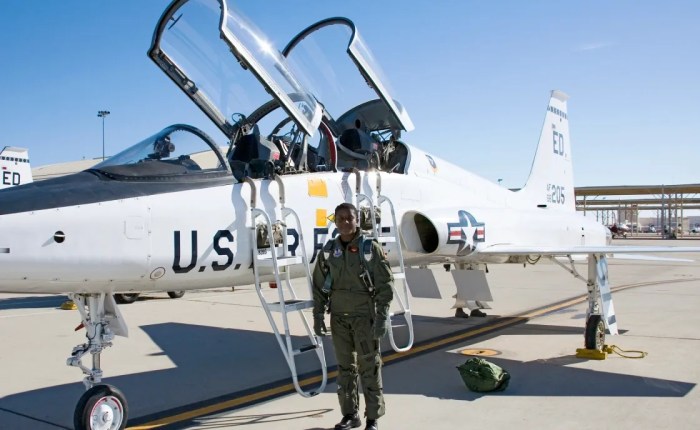
Colonel Merryl Tengesdal flew helicopters in the US Navy before transferring to the US Air Force to become the first (and so far, only) African American woman to fly the U-2. She tells us the fascinating story of her career, what it’s like to fly an aircraft on the edge of space, and drops some inspirational advice along the way.

59237285

Merryl Tengesdal, a military veteran, aviator, and commander who served in the United States Navy and the US Air Force, is an American retired career military officer who is the first and only African-American woman to fly the U-2 spy plane. Her final assignment before retirement was as Director of Inspections for The Air Force Inspector General from October 2015 through August 2017. Tengesdal is a veteran of the Iraq War and the War in Afghanistan.

Header image: Tengesdal stood in front of a USAF Northrop T-38 Talon. (Source: Tengesdal Website)

#ResearchResources – Recent Articles and Books (July 2021)

#ResearchResources – Recent Articles and Books (July 2021)

Editorial note: In this series, From Balloons to Drones highlights research resources available to researchers. Contributions range from discussions of research at various archival repositories to highlighting new publications. As part of this series, we are bringing you a monthly precis of recent articles and books published in air power history. This precis will not be exhaustive but will highlight new works published in the preceding month. Publication dates may vary around the globe and are based on those provided on the publisher’s websites. If you would like to contribute to the series, please contact our Editor-in-Chief, Dr Ross Mahoney, at airpowerstudies@gmail.com or via our contact page here.

Articles

Phil Haun, ‘Winged Victory: How the Great War Ended: The Evolution of Giulio Douhet’s Theory of Strategic Bombing,’ War in History (2021). doi:10.1177/09683445211027596.

A war’s conclusion can impact strategic thinking even when the outcome is misinterpreted or an outlier. For a century, Giulio Douhet in Command of the Air, 1921 and a 1926 revision, has been the prophet for the utilitarian morality of bombing cities to gain decisive victory. His earlier work, Winged Victory: How the Great War Ended, written in 1918, has been ignored where he argued for the interdiction of enemy lines of communication. His theory changes by how the Great War ends with the collapse of the German population’s will. Had it ended differently, he could have reached a different conclusion that could have impacted the development of air power theory in the twentieth century.

Colin Tucker, ‘The Effect of Aerial Bombardment on Insurgent Civilian Victimization,’ Security Studies (2021), DOI: 10.1080/09636412.2021.1951834

Little is known about how air strikes influence insurgent behavior toward civilians. This study provides evidence that air strikes against the Islamic State of Iraq and Syria (ISIS) by counterinsurgency forces were a contributing factor in its civilian victimization. I theorize that air strikes expanded the distribution of insurgent fatalities to include higher-echelon membership and, at the same time, imposed psychological impairments on its fighters. As a consequence, these changes relaxed restraints on civilian abuse at the organizational and individual levels. This theory is informed by interviews of ISIS defectors and translations of ISIS documents and tested through a statistical analysis of granular-level data on air strikes and one-sided violence during ISIS’s insurgency. These findings contribute to our knowledge of insurgent behavior and provide important policy implications in the use of air strikes as a counterinsurgency (COIN) tool.

Books

James Corum, Norway 1940: The Luftwaffe’s Scandinavian Blitzkrieg (Oxford: Osprey Publishing, 2021).

The Campaign for Norway in 1940 was a pivotal moment in modern warfare. It was the first modern joint campaign that featured not only ground and naval operations, but also airpower as an equal element of all operations. Indeed, Norway was the first campaign in history where air superiority, possessed by the Germans, was able to overcome the overwhelming naval superiority, possessed by the British. German success in Norway was not pre-ordained. At several times in the opening weeks of the campaign the Norwegian and Allied forces could have inflicted a major defeat on the Germans if their operations had been effectively supported. It was, in fact, the superior German use of their air force that gave the Germans the decisive margin of victory and ensured the failure of the Allied counteroffensive in central Norway in April and May of 1940.

The Norwegian campaign featured some firsts in the use of airpower including the first use of paratroops to seize key objectives and the first sinking of a major warship by dive bombers. All aspects of airpower played important roles in the campaign, from air reconnaissance to strategic bombing and ground-based air defenses. The British employed their Bomber Command in long-distance strikes to disrupt the German air and naval bases and the Germans used their bomber force to carry out long-range support of their ground forces. The German ability to transport large numbers of troops by air and the ability to supply their ground and air forces over great distances gave the Germans their first major campaign victory over the Western Allies.

Covering the first true joint campaign in warfare, this book provides a complete view of a compelling turning point in World War II. Featuring an analysis of the cooperation of ground, naval and air forces, this book is intended to appeal to a broad range of readers interested in World War II, and specifically to those interested in the role airpower played in the strategic and operational planning of the Campaign for Norway.

Bill Norton, 75 Years of the Isreali Air Force – Volume 3: Training, Combat Support, Special Operations, Naval Operations, and Air Defences, 1948-2023 (Warwick: Helion and Company, 2021).

The Israeli Air Force grew from humble beginnings to one of the largest and most experienced air combat teams in the world. This came through several major and minor wars with its Arab neighbors, almost continuous military actions short of war, and preparation for power-projection operations unusual for so small a nation. The 75-year history of the Israeli Air Force is, then, a fascinating study of a relatively small military organization working to meet shifting obligations under multiple impediments while being repeatedly tested in combat. Many factors over the decades shaped the air fighting capability, not the least being the demands of the evolving battlefield, uncertain funding, available weapons, and quality of personnel. Tactics and doctrine were, in turn, shaped by government policies, international pressures, and confronting adversaries likewise evolving. When the trials in war or combat short of war came, success was a measure in relevance of the service’s weapons, adequacy of training, and experience of personnel.

As a companion to Volumes 1 and 2 giving the chronological history of the Israeli Air Force, this third volume details special topics underscoring the service’s capability growth. These richly illustrated topics are flight training, photo reconnaissance, aerial refueling, electronic warfare, support of Special Forces, support of the Navy, and the Air Defence Forces. A summary of aircraft that served with the Israeli Air Force is provided, with a photograph of each type and major models. A summary of all IAF air-to-air “kills” is also included. 

Written at a time of historical changes for the air force, and the Israel Defense Forces as a whole, this volume informs understanding of the service emerging and operating in future years. Backed by official and unofficial histories published in the last 20 years, and the unprecedented openness in the past few decades, the author has worked to make this account more accurate and complete than those of the past. It also stands apart from many other books in performing this examination in a more dispassionate and critical manner, without the common hyperbole.

Harry Raffal, Air Power and the Evacuation of Dunkirk: The RAF and Luftwaffe During Operation Dynamo, 26 May – 4 June 1940 (Bloomsbury Publishing: London, 2021).

The evacuation of Dunkirk has been immortalised in books, prints and films, narrated as a story of an outnumbered, inexperienced RAF defeating the battle-hardened Luftwaffe and protecting the evacuation. This book revives the historiography by analysing the air operations during the evacuation. Raffal draws from German and English sources, many for the first time in the context of Operation DYNAMO, to argue that both sides suffered a defeat over Dunkirk. 

This work examines the resources and tactics of both sides during DYNAMO and challenges the traditional view that the Luftwaffe held the advantage. The success that the Luftwaffe achieved during DYNAMO, including halting daylight evacuations on 1 June, is evaluated and the supporting role of RAF Bomber and Coastal Command is explored in detail for the first time. Concluding that the RAF was not responsible for the Luftwaffe’s failure to prevent the evacuation, Raffal demonstrates that the reasons lay elsewhere.