“If we cannot get the F-35, we will evaluate other options.” “There is no way we will step back from the S-400s.” “If the promises given to us are not kept, we will not approve Sweden’s NATO membership.” These are just a few of President Recep Tayyip Erdoğan’s statements since Türkiye was removed from the F-35 Joint Strike Fighter programme in the summer of 2019, following Ankara’s decision to operationalise the Russian-made S-400 air defence system. However, despite years of bold rhetoric, Türkiye has yet to take meaningful steps toward modernising its ageing F-16 fleet, a gap that carries profound implications for regional competition and nearby conflicts. Despite setbacks over the past few years, Türkiye has gained significant visibility in the global security arena through its indigenously developed defence products. Its drones have played notable roles in conflicts in Nagorno-Karabakh, Ukraine, Syria and Libya, and were recently seen during the India-Pakistan border skirmishes. At the same time, Türkiye has expanded its defence exports to include light combat aircraft to Spain, corvettes to Pakistan and Malaysia, and various other complex systems. In parallel with these achievements, Türkiye launched its own fighter jet project, the Turkish Aerospace Industries KAAN, a fifth-generation, twin-engine stealth aircraft intended to become the future backbone of Turkish air defence. However, Ankara has acknowledged the challenges of developing a fully indigenous fighter jet. Beyond the immense financial burden and limited domestic technological expertise, political obstacles have also emerged. Most recently, Foreign Minister Hakan Fidan admitted that Türkiye has been having difficulty obtaining F110 engines from the United States, intended not only for prototypes but also for the first production batch of the KAAN.
Despite Türkiye’s long-standing ambition to build its own fighter aircraft, Turkish military planners have recognised since the late 1990s that the country would require an interim, or ‘gap,’ platform. As a result, Türkiye became one of the early participants in the Joint Strike Fighter (JSF) programme, which later produced the F-35 Lightning II. In return for its early commitment, Ankara was contracted to purchase more than 100 F-35s and became a strategic industrial partner in the programme. Knowledge transfer from the JSF also enabled domestic programmes such as TÜBİTAK SAGE’s Stand-Off Missile (SOM), now one of the most critical assets in Türkiye’s strategic inventory.
Türkiye’s selection of the F-35 programme was not a surprise. Since joining NATO, it has relied primarily on American-made aircraft for its air force. Although Türkiye has operated helicopters from France, cargo aircraft from Spain and drones from Israel, its combat fleet has always been built around US designs, including the F-84, F-86, F-101, F-4 and F-5. Today, Türkiye operates the second-largest F-16 fleet in the world after the United States.
Even amid political friction with Washington, Türkiye stayed committed to its American-made fighter fleet for their battlefield performance and long-established logistics. They also carried symbolic weight as reminders of Ankara’s Cold War alignment. During the US arms embargo on Türkiye between 1975 and 1978, imposed after Türkiye’s military intervention in Cyprus, Ankara continued operating US aircraft by sourcing spare parts from Libya and purchasing used F-104s from Italy. A similar moment of tension came in 2003, when Türkiye refused to allow the U.S. to use its territory for the war in Iraq. During this period, the Eurofighter Typhoon consortium reportedly offered Türkiye an equal partnership in the programme. Yet, despite the attractiveness of the offer, Turkish decision-makers remained committed to the F-35 programme.
Türkiye has long been the second-largest standing military force in NATO and has been regarded as a strategic partner of the United States since the Korean War. Nevertheless, the relationship between Ankara and Washington has frequently been marked by political tensions. However, these disputes did not significantly alter Türkiye’s major defence procurement decisions, particularly concerning fighter aircraft. In practice, and despite political rhetoric about diversifying suppliers, Türkiye consistently relied on US platforms. However, Ankara’s removal from the F-35 programme in 2019 may mark a significant turning point. Türkiye can no longer rely on a simple reset with Washington to modernise its ageing fleet, especially as the strategic environment grows more demanding.
Since its removal, Türkiye has repeatedly signalled its desire to return to the F-35 programme. Turkish officials argued that the expulsion lacked legal basis, and President Erdoğan and his government suggested they were open to negotiating a resolution to the S-400 dispute. Meanwhile, Türkiye’s military establishment warned of a growing capability gap until the KAAN could enter service. Türkiye also expressed interest in acquiring new F-16s and modernisation kits as an interim solution, but the package has yet to be finalised. At the same time, the war in Ukraine, Israeli air operations in Syria and the region, and Greece’s modernisation of its air force have further accelerated Ankara’s search for a new fighter platform. These developments raise concerns about falling behind in the regional balance of air power and being unprepared for a potential spillover from nearby conflicts. As a result, for the first time in decades, Türkiye is actively pursuing a non-American fighter aircraft solution: the Eurofighter Typhoon.
Although Türkiye expressed formal interest in the Eurofighter a few years ago, the procurement process was blocked by Germany due to political disagreements. Following lengthy negotiations, the German government recently agreed to lift its objections, and a contract has now been signed. However, Türkiye now faces a delivery challenge. The most advanced version of the Eurofighter currently in production is Tranche 4, and the order backlog means new aircraft will not arrive before 2030. Because the Eurofighter is an entirely new platform for the Turkish Air Force, integrating it into doctrine, pilot training, and logistics will take significantly longer than adopting another US-made jet. To reduce the delay, President Erdoğan announced Türkiye’s intention to purchase used Eurofighters from Qatar and Oman alongside the 20 new Tranche 4 aircraft from the UK.
Ankara’s assertive pursuit of the Eurofighter highlights its growing concern over the balance of air power in its surrounding region. Despite significant advances in its drone fleet, including one-way attack drones and jet-powered unmanned systems, Türkiye understands that drones cannot fully replace conventional fighter jets in terms of deterrence and air superiority. Yet significant questions remain. Will Germany and other consortium members approve the transfer of Meteor long-range air-to-air missiles or Captor radar systems to Türkiye as well? Will Türkiye be permitted to integrate indigenous avionics and weapons into the Eurofighter? And how quickly can the Turkish Air Force develop the same level of operational proficiency it currently maintains with the F-16?
Ankara has now taken a decisive step away from decades of exclusive US fighter procurement. Whether the Eurofighter becomes a temporary gap-filler until the KAAN enters service, or the beginning of a long-term shift in Turkish defence strategy, remains to be seen. What is certain is that Turkish air power is at a strategic crossroads. Despite the uncertainties, the Eurofighter Typhoon remains the only available option to bridge the capability gap until the KAAN is operational or the F-35 dispute is resolved.
Ömer Ergün Özkan is a PhD candidate in the School of Public and International Affairs at the University of Cincinnati. His research examines military effectiveness, the impact of emerging technologies on defence procurement, and the strategic use of unmanned systems in modern warfare. He is also a Research Fellow at the Linda Hall Library in Kansas City, Missouri. He can be followed on X as @ErgnZkan.
From the F-35 Lightning II to the F-15E Strike Eagles, even the most advanced aircraft are sitting ducks while they are on the ground. It should come as no surprise that the best way to defeat aircraft is to attack them when they cannot evade, fight back, or use any of their defensive measure – in other words, while they are not flying. This has been a truism throughout much of the history of air power. It led to the Japanese attacks on Hickam Field as part of the Pearl Harbor attack, the British Special Air Service (SAS) raid on Haggag el Qasaba, the Luftwaffe’sOperation Bodenplatte, and the Israeli success against the Egyptian Air Force in the 1967 War, among many others. In recent decades, the uncontested nature of US and Allied basing has allowed air forces to operate freely, launching sorties without significant risk to their home base and achieving dominance in the skies. Recent events have provided a stark reminder that, if the era of safe basing has not ended, it is rapidly drawing to a close.
Fire crews attempt to extinguish the last fires among burnt-out North American Mitchells of No. 139 Wing RAF at B58/Melsbroek, Belgium, after the major daylight attack on the airfield by Luftwaffe fighter-bombers (Operation BODENPLATTE). (Source: IWM (CL 1806))
The most important protection that the US and Allied bases have had was distance. Since the Second World War, air assets based in Western Europe and North America did not need to worry about aerial threats from adversaries in anything short of a great power (likely nuclear) war. In the post-Cold War world, this experience was further reinforced as the US and NATO adversaries of the period, such as Iraq and Serbia, lacked any real possibility of reaching homeland-based aircraft. While in Iraq and Afghanistan, air assets were forward deployed, the most rare and critical assets in the US inventory – many of which are no longer in production and would be exceedingly difficult to replace – including B-2s, B-1s, and RC-130s, stayed out of the enemy’s reach.
Individual terrorists might have been able to reach a base in the US or Europe, but robust homeland security infrastructure limited the extent to which these could have been coordinated. In addition, most domestically radicalised terrorists acted as lone wolves and, therefore, lacked the capability to cause significant damage to infrastructure and multiple platforms simultaneously. The lack of a real threat to home-based aircraft has been one of the unspoken advantages that uscore the US and NATO’s ability to achieve air superiority and global reach without incurring the expense of protecting their aircraft or critical aircraft infrastructure at home.
Three events from the last six months should serve as a stark wake-up call that the era of distance being the primary protection for critical assets may be coming to an end. In Operation Spider’s Web, the Ukrainian Security Service smuggled containers filled with short-range attack drones into Russia through commercial channels. They employed Russian civilian drivers who knew nothing of the nature of the cargo they carried to bring the containers to launch locations near Russian air bases, and Ukraine employed remote instructions to launch the attack.
The drone strikes caught the Russian airbases completely off guard, allowing Ukraine to target critical Russian assets in unprotected positions. The attack damaged or destroyed as many as 40 aircraft, including strategic bombers that formed part of Russia’s nuclear triad. Russia’s assumption that distance from the front and national air defence protected these assets was painfully shattered in the course of a single day.
During Operation Spider’s Web, an FPV drone targets a Tu-22 bomber at Belaya air base, 4 June 2025. (Source: Wikimedia)
This has not been the only instance of launching short-range attack drones at distant targets. As part of Operation ‘Am Kalavi,’ Israel smuggled precision-guided munitions (PGMs) into Iran and established both a small factory to build attack drones and a base from which to operate inside the country. This meant that in advance of the Israel Air Force (IAF) strikes in Iran, Israeli intelligence and special operations personnel on the ground could launch drones and PGMs to confuse and reduce Iran’s air defences, ballistic missiles, and command and control capabilities.
This Israeli operation differed from the Ukrainian one in both its methods of delivering weapons and the types of targets selected, yet the lesson is similar. The most critical assets required for the defence of the nation can now be targeted by air, regardless of their range, and national-level air defences are insufficient to keep a determined adversary at bay. It is easy to imagine the damage an adversary could inflict on the US force posture through attacks similar to those in Russia or Iran, targeting B-2s, B-52s, or even high-value, low-density assets like the RC-135 or the-be-deployed E-130J TACAMO fleet.
The presence of new aerial threats to aircraft based in the homeland does not negate new ways in which traditional threats might manifest. In June 2025, Palestine Action, at the time of writing, a proscribed terrorist group in the UK, infiltrated RAF Brize Norton and sabotaged two parked RAF Voyager Aircraft, the RAF’s sole type of tanker aircraft, which has been extensively supporting NATO’s Eastern Flank missions. The apparent targeting of the attack was based on misinformation or disinformation – that the Voyager Aircraft were being used in direct support of the Israeli military in its war with Iran.
There is no apparent evidence that this attack was organised or supported by a foreign adversary. Still, there is ample evidence that foreign adversaries have used social media to contact, organise, and perhaps even direct the actions of groups and individuals far from their borders in ways that were not available in previous decades. Adversaries will likely note the potential efficacy of using social media to spur domestic groups in the US or NATO countries to attack important air assets.
So, the threat landscape has changed. Distance is not the defence it once was. Now, aircraft at home – especially those that play singularly important strategic or operational roles now require a level of protection unseen in the US since the Second World War. There are two primary ways to achieve this: active protection measures and passive measures. Active measures include air and missile defences such as Centurion C-RAM and counter-drone electronic warfare or directed energy systems, which, to provide protection from surprise, must always be active as well as air patrols. This may potentially pose a particular challenge for basing in areas with congested civilian airspace.
The status and the quality of the active system are important, but so too is the density. There must be sufficient defensive systems at each airfield (and especially those with low-density assets) to prevent being overwhelmed in a strike or destroyed. There must also be enough to allow for maintenance without a serious reduction in defensive capability. Active defensive systems may also be vulnerable to electronic warfare and cyberattacks. These systems would also provide little aid in the case of a Brize Norton-style infiltration. This means that the active defences against aerial threats must be combined with robust ground security and patrols.
Passive defence measures mitigate the damage that either aerial attacks or infiltration can cause. The cornerstone of passive defence for airframes is hardening. While some NATO countries still have limited hardened shelters in the US and elsewhere, hardening would require not only a change in construction but a change in practice. Building hardened hangers (including top protection and/or perimeter and top netting) for critical assets would greatly complicate attacks by small, short-range UAVs by requiring them to carry a far larger explosive to breach the aircraft shelter. Such hangers, if locked down, would also raise the challenge for would-be infiltrators and give security forces greater time to respond. At the same time, their protection would only apply when aircraft are in shelters and not parked on outdoor ramps, as is often the case.
Alone, passive protection can do what active protection cannot. It provides protection twenty-four hours a day, seven days a week, from both air attacks and ground infiltration. Unlike active protection, many forms of passive protection are immune to electronic warfare and cyber-attacks. Passive protection does not interfere with any other airspace activities and, once completed, is less susceptible to degradation in capability caused by personnel shortages.
The advantages of hardening are why Norway has reopened its deeply buried aircraft facilities, and Switzerland never abandoned its facilities. The US and other NATO countries have built hardened aircraft shelters with top protection in the past, but ceased building them because the threat did not justify the cost of construction and challenges to aircraft maintenance in more confined spaces. As the operations in Iran and Russia, as well as the sabotage at RAF Brize Norton, make clear, the threat has changed.
In an ideal world, the US and NATO could still rely on the protection afforded by distance, but that is not the world of today. Failing that, the best possible way forward would be to combine active and passive defences to protect all critical assets, but this may prove unfeasible. While the solutions to the challenges posed may appear tactical, the implications of failing to implement new protection could be strategically catastrophic.
Whether the US and its Allies choose passive or active protection or a combination of both, the time has come to protect critical aircraft while they are on the ground so the Joint Force can count on them to be in the air. The US and its allies should take the opportunity to learn from the attacks on Iran and Russia and develop protection for their critical aircraft today or risk becoming a case study of regret in the future.
Dr Jacob Stoil is a military historian who is the US Army’s Research Professor of Middle East Security at the US Army Strategic Studies Institute. In this capacity, he advises the US Army and other organisations on Middle East policy, strategy, and lessons learned. Dr Stoil also serves as Chair of Applied History at the West Point Modern War Institute, Assistant Director of the Second World War Research Group (North America) and Trustee of the U.S. Commission on Military History. Jacob was a Senior Fellow of the 40th Infantry Urban Warfare Center and a co-founder of the International Working Group on Subterranean Warfare as well as an Associate Professor of Military History at the US Army School of Advanced Military Studies (SAMS). He has published multiple policy and academic articles, which can be found in publications such as the International Journal of Military History, Wavell Room, and Modern War Institute. He can be followed on X as @JacobStoil.
Header image: Preparation of two Saab JA 37 Viggen under Töreboda arches as part of the Bas 60 (Flygbassystem 60), which was an air base system developed and used by the Swedish Air Force during the Cold War. (Source: Wikimedia)
Starting on 19 October 2023, the Houthi attacks against international shipping and Israel have seen many air power firsts. In their very first attack, the Iranian-backed Houthis employed attack drones against maritime targets, which eventually led to the first instance of the German Navy shooting down enemy aviation since the Second World War. Even more significantly, Houthi ballistic missile attacks against Israel led to the first combat interception in space. However, as much as things have changed, the strategic problem the Houthis present and the air-centric means that the US has chosen to oppose it, has a long history in the Middle East and raises questions about the strategic limitations of air power.
The Houthis sit aside a strategically critical sea line of communication (SLOC). In peacetime, between 10-15% of global trade and around 30% of global container traffic flow through the Suez Canal and into the Houthi crosshairs. Should a great power war occur, the significance of the waters of Yemen will only increase. The SLOC through the Red Sea represents the fastest way to move resources at scale from Europe to a Pacific theatre of operations and an essential alternative to the Panama Canal for transiting from the eastern seaboard of the United States to the Indian Ocean and Southwestern Pacific. These two factors mean that the US can little afford the Houthis and their Iranian backers to maintain their at-will blockade of these critical waterways. This same logic led the British Empire to take and hold Aden and launch military campaigns in the Horn of Africa throughout the 19th and 20th centuries. Since the US is focusing its combat power on the Pacific and the European powers are most concerned with the threat to their borders, neither is looking for another long-term Middle Eastern entanglement, and so this is an unlikely approach. Instead, the Western allies have turned to an approach with a long history in the Middle East whenever an economy of force is desired – air power.
While by virtue of its strategic position and resources, the Middle East as a region is of critical importance to any modern state wishing to project power globally, most of its territory is not. Occupation is expensive and manpower intensive, and so since the 1920s, powers have attempted to ensure the security of their vital interests by following the mirage of strategic air power. In the Middle East, the basic idea has remained remarkably consistent. The strategic concept is that with air power, a country can conduct scalable punitive raids, which will either erode capability so a potential adversary cannot mount a significant threat, create deterrence by demonstrating the cost of threatening a strategically vital area, or finally weaken an adversary to the point a local rival can unseat them. In theory, this use of air power, a cross-domain version of the punitive expedition, allows countries to achieve and sustain their strategic objectives while not having to involve themselves in the costly and manpower-intensive business of occupying the hinterlands of the Middle East. The current US operations in Yemen appear to be the latest in this long history.
For decades, Israel pursued a similar policy known as ‘mowing the grass.’ In this mode of operation, whenever militant groups or adversaries escalated beyond a certain threshold, Israel would respond with an air campaign (supported at times by special operations and even limited ground forces). The purpose of these operations was to buy quiet. They did not attempt to change the fundamental dynamic that led to the escalation; instead, they tried to degrade enemy capabilities until the enemy (at least temporarily) no longer posed a credible threat and deter certain forms of future enemy operations. The air campaigns reduced the capabilities of Israel’s enemies. They forced them to spend resources on reconstitution. However, as is now abundantly clear, this did not stop Israel’s enemies from developing the capability to inflict significant harm, nor did it do anything to remove the motivation.
From their initial conception, these air-centric ‘mowing the grass’ operations acknowledged they could not achieve decisive results or a permanent effect. The strategic conditions meant it would always be worth it for the enemy to rebuild and try again. The damage might have been severe, but if it was in Iran’s interest to rebuild its capabilities, then the targeted groups like Hamas and Hezbollah would always be able to rebuild. Without large-scale ground operations and potentially long-term occupation, air power could only achieve a limited strategic effect within the larger geopolitical pressures shaping the Middle East.
The Houthis potentially find themselves in a similar situation to Hamas and Hezbollah facing the Israeli Air Force, which highlights one of the strategic limitations of air-centric campaigning. Turning maritime traffic away from the Red Sea SLOC requires minimal capability. If the Houthis present a credible threat and continue to target vessels, the maritime insurance market will keep many merchant vessels away. This lowers the level of capabilities to which the Houthis must rebuild to interdict the SLOC, as they only need enough to make maritime insurers nervous. The Houthis have also demonstrated to countries like China and Iran, who have been backing them, that they present a relatively low-cost option to complicating US global sealift – even during a time of war. Should the Houthis attack shipping during wartime, they would force the US either to divert precious naval and air power to tackle the challenge or slow global movement by avoiding the contested waters off Yemen. While devastating to the Houthis, the current air campaign is doing little to change either of these two realities. The Houthis’ strategic position is too important to their backers, the cost of closing the straits too low, and the ideology of the Houthis too absolute to be dissuaded by even the most effective air campaign alone.
There has been one recent exception to this pattern, which may provide a way forward for the US air campaign in Yemen. Since 7 October 2023, Israel launched an air campaign against the Assad government in Syria. The purpose of the campaign was not to remove Assad but to diminish the immediate risk Assad posed to Israel. Eventually, Israel added a covert operations campaign and ground offensive against Hezbollah, on whom Assad relied to keep his government in power. Taken together, this weakened the Syrian regime to the point that local Turkish-backed adversaries could overthrow it. Likewise, the Houthis have several regional enemies waiting in Yemen. The Houthis and their backers have managed to hold these enemies at bay. However, the severity of the US air campaign is such that it may hit a tipping point at which point the UAE and Saudi-backed forces in Yemen may take the opportunity to launch a ground offensive. If so, like Syria, it may be counted as a rare win for the strategic employment of air power in the Middle East, but only inasmuch as other forces on the ground are prepared to fight. If not, Yemen will prove a lesson that the Middle East has taught repeatedly – air power is useful, but by itself cannot change the strategic dynamics of the region.
Dr Jacob Stoil is a military historian who is the Research Professor of Middle East Security at the US Army Strategic Studies Institute, Chair of Applied History at the Modern War Institute, Senior Fellow of the 40th Infantry Urban Warfare Center, and Trustee of the U.S. Commission on Military History. He has worked extensively in the Middle East, including in support of Task Force Spartan. He has published multiple policy and academic articles, which can be found in publications such as the International Journal of Military History, Wavell Room, and Modern War Institute. He can be followed on X as @JacobStoil.
Header image: A US Navy F/A-18 fighter jet taking off at night before the 2024 Yemeni airstrikes, 12 January 2024. (Source: Wikimedia)
The Iranian HESA Saheed 136 suicide drone (unmanned aerial vehicle (UAV)) entered the war between Ukraine and Russia with undeniable effects. The influence of the same Iranian drones on Red Sea shipping in 2024 is equally undeniable, as Houthi militias utilised drones to threaten world shipping the same way they threatened Saudi Arabian defences in prior years. Russia has purchased thousands of Shahed 136 drones and received training for Shahed 136, HESA Ababil-3 and Raad drones through Iranian proxies and military forces in Syria.[1] Thus, Iran has quickly become a drone exporter and power broker, using regional proxies to provide lethal drone firepower to hard-pressed governments in East Africa. Iran now employs drones as a foreign policy tool to demonstrate its viability as a significant influence and a capable partner in the Middle East, Europe, and Africa. Iran’s efforts have undercut Western security guarantees and exploited the weakness of Ethiopian and Sudanese governments engaged in their internal efforts to defeat insurgent forces. The 2024 Nigerien junta’s rejection of United States forces currently hosted in Niger, and the likely denial of the critical drone airbases therein, allows Iran to attempt to influence an African state that has chosen to sever ties with the West. Looking at the situations in Ethiopia and Sudan can assist with understanding how Iranian drone capabilities, cost, and performance have earned Iran a place at the table.
Iranian drones offer hard-pressed states much-needed reconnaissance and attack capabilities with no questions about employment doctrine or human rights guarantees. Iranian drones also give potential customers access to various platforms at costs below that of most conventional aircraft. Although costs vary widely depending on the source, an Iranian Saheed 136 goes for between $20,000-$40,000. Multi-role drones like the Mohajer-6 also have lower prices than Western drones.[2] Iran’s goal is not to displace China, Turkey, and the United Arab Emirates as drone competitors in Ethiopia but to demonstrate its ability to compete successfully on the international stage and prove that its drones are effective options for potential international allies.[3] When Ethiopia needed drones in 2021, Iran could offer Ethiopia drones and munitions that helped defeat insurgents through precision strike and reconnaissance capabilities. However, Iranian assistance comes at a price for countries unwilling to risk extended diplomatic pressure. Despite being reported by Bellingcat at Semara airport in late 2021, by late 2023, Ethiopia’s two Iranian Mohajer-6 drones and their single ground control station (capable of controlling two drones at a time) were hard to find on overhead imagery. This is likely due to the drones and associated materials being pulled back under cover or into hangars until needed for operations. In contrast, Ethiopia’s Turkish and Chinese models have been seen in the open on the runways of at least two Ethiopian Air Force base runways. This may have been in whole or in part due to US protests to the UN about Iran’s violation of United Nations Security Council Resolution 2231 and the delivery of unmanned warplanes.[4] UN SCR 2231, although written as a diplomatic effort to find a solution to Iran’s nuclear issues, contains within the resolution Paragraph 6, Annex B that specifically enjoins all states to prevent ‘the transfer of arms or related material from Iran by their nationals or using their flag vessels or aircraft and whether or not originating in the territory of Iran.’ The transfer of drones falls within this set of restrictions. By transferring drones to Ethiopia, UNSCR 2231 was violated, with Iran and Ethiopia as knowing participants.
It is undeniable that Iran was willing to defy UN opposition to provide Ethiopia with drones; what is surprising is that Ethiopia chose to work with Iran despite being a US ally. Iran’s window of opportunity may have materialised partly due to the United States’ policy of not selling armed drones to allies without extensive vetting and Congressional approval.[5] In contrast, when Ethiopia’s military needed a rapid response and a technological solution to rebel threats, Turkey and China were already supplying to the African and Middle East markets. Although it is hard to gauge if Iran will be able to have the same influence that it had with Ethiopia in 2021, Iran could look to the situation in Sudan as another success in efforts to disrupt US regional goals and Western security assurances. As the United States attempts to counter drone proliferation, Iran displays technical and technological skills through its drone sales. Its drive for prestige and relevancy in the arms trade has been rewarded by the Russian and African adoption of Iranian drones to affect the sort of damage previously restricted to more conventional aircraft.[6]
Despite severing diplomatic relations with Iran in 2016, Sudan is interested in Iran’s assistance in combatting its main rival in the ongoing civil war, the Rapid Support Forces. Iran’s relationship with Sudan is evolving as Sudan’s government struggles against the rebel Rapid Support Forces, US sanctions, and a lack of international assistance. However, some countries, namely Iran and Turkey, have supplied Sudan with drones despite sanctions. In Sudan, as in Ethiopia, drones may be the factor that enables the government to contest and eventually defeat insurgents. The Sudanese government’s forces employ a variety of Iranian drones: the Ababil-3, Mohajer-2, Mohajer-4, and the latest Mohajer-6. These drones are part of Iran’s policy toolkit and have helped Iran maintain access and influence in Sudan despite Sudan becoming a signatory to the 2019 Abraham Accords, which included policies that were diametrically opposed to Iran’s stated interests.[7] Iranian interests in the region and globally can best be understood from a combination of Iranian policy goals: posturing Iran as an option to Western states for arms and technological assistance and providing an Islamic champion to former al-Bashir loyalists.[8]
Iran’s policy goals in Sudan include turning Sudan away from Saudi Arabia and UAE as part of Iran’s challenge to regional rivals.[9] Iran has exploited the Sudanese regime’s need for drone platforms, and news stories of alleged offers of additional drones and a helicopter carrier in exchange for a Port Sudan base cloud Iran’s history with Sudan. Iran can use drones to gain influence and restore Sudan as a partner in Iran’s ‘Axis of Resistance’ to the West.[10] The other obvious advantage of a Sudan-Iran alliance, from Iran’s perspective, is a scenario in which Iran could threaten Red Sea shipping and cause worldwide disruptions. An Iran-Sudan alliance would also sandwich Saudi Arabia between Sudan, Iran, and Yemen’s Houthi rebels. A Sudan-Iran diplomatic and defence alliance gives Sudan and Iran the tools to achieve their goals. Sudan’s Armed Forces-led government wants to extract concessions from the West, defeat the Rapid Support Forces, and establish itself as a drone power with the technological sophistication that implies. Iran continues to force the West to bleed resources to prevent a Sudan-Iran alliance from becoming a reality. The multiple threats to the Red Sea, combined with the ecological crisis that is challenging the Panama Canal’s shipping capacity, have great potential to cause Iran’s rivals severe economic and political embarrassment.
An Iranian HESA Ababil-3 drone. (Source: Wikimedia)
Iran has demonstrated their will to defy United Nations sanctions. It should be expected to do so in the future, especially if doing so will bring Iran revenue and influence with new diplomatic and defence partners. The recent coup in Niger demonstrates how Iran readily offered assistance and drones to the Nigerien junta despite ECOWAS (Economic Community of West African States) sanctions. Other African states have similarly courted in Iranian efforts to bust United Nations sanctions. Burkina Faso and Zimbabwe, for example, for gold exports.[11] Iran has a valuable negotiating tool in the form of its family of armed drones. Sources including CNBC, Voice of America, senior Iranian officials, and the Israeli Defence Minister Yoav Gallant claim Iran now has customers and interested countries (for example, Bolivia and Venezuela) across the world, with Iran claiming 22 interested countries and Israel as many as 50.[12] As of 2023, Venezuela manufactures armed Mohajer-2 surveillance drones and operates armed Mohajer-6 drones. Considering Iran’s support for terrorist organizations and their willingness to sell drones with little regard for the consequences, the risks of international disruptions grow with each country that adopts Iranian technology.[13] International sanctions have limited Iran’s ability to obtain and export parts for drones. Suppliers who provide clandestine support are thus complicit in Iran’s arms industry. Attempts to interdict drone deliveries to Iran’s allies have been ineffective because most users of Iranian drones choose to manufacture in-country or build drones from parts.[14] Drone sales have helped Iran gain partner states. Iran will take advantage of situations where Western partners have been rejected and ejected by their former regional allies or Western states have cut off diplomatic relations due to coups. Iranian influence across the Sahel will grow as states seek sources for drones, and states that have little to deter them will find Iranian drones to be an attractive combination of proven capability and low cost.
Iran is opportunistic, and the situation in Niger, where the regime has rejected the West and joined with the ECOWAS-spurning Association of Sahel States (AES), opens a new avenue for Iran to counter Western influence and gain new allies.[15] Niger is an attractive destination for Iranian influence because of Niger’s uranium deposits. Iran has been engaged in diplomatic exchanges with Niger, offering Niger an ally against the West as well as assistance in mitigating the effects of ECOWAS sanctions.[16] In April 2024, the news site Africa Intelligence reported that ‘Iran and Niger were negotiating for Niger to provide 300 tons of uranium yellowcake to Iran in exchange for drones and surface-to-air missiles.’[17] That alone would demonstrate the utility of Iranian drones as diplomatic bargaining tools. However, in March of 2024, Iran International News and the Wall Street Journal alleged that United States opposition to the trade was one reason for the Nigerien junta deciding to close the facility known as Airbase 201 in Agadez, Niger, a major drone base for counterterrorism operations in the Sahel.[18] Although the junta closed the airbase and ordered the United States to withdraw its drones, the decision was most likely driven by the need to demonstrate sovereignty and strength when the Nigerien junta was weak and under foreign pressure to change its policies. The developing ties with Russia and neighbouring junta-led states were also likely factors in the decision.[19] However, this development left a prime drone base in the hands of the Niger coup junta just as its relationships with Russia and Iran deepened. We can expect the Nigerien government to seek to take advantage of the $100 million facility at Agadez for new drones delivered by new security partners.
Niger still needs drones to patrol its vast territory and strike at terrorist groups. As Iran’s influence rises in Africa, so too may its drone presence in the service of governments where expediency is valued over human rights, transparency, and sustainability. Iranian drones are an effective policy tool, an asymmetric warfare solution scalable to many situations, and responsive to the needs of states and non-state actors. Iran’s drones will continue to create pockets of regional instability and serve Iran’s need for prestige, credibility, and allies for years to come unless countered by effective policies that neutralize Iran’s disregard for UN sanctions and undercutting of peace initiatives. The challenge for the US and its allies is not simply how to shoot down drones or where to direct diplomatic initiatives but to provide states with better options and to deny terrorists access to advanced systems. The United States is improving Counter-Unmanned Aerial Systems, but allies need assistance countering the whispers of a regime that offers advanced technology without warning of the inevitable repercussions.
Dr John Ringquist is a retired US Army Lieutenant Colonel, Africa Foreign Area Officer, and historian. He currently teaches at the Command and Staff School at the US Army Command and General Staff College. He has written about topics related to security, terrorism, and military history for various publications.
Header image: An Iranian HESA Ababil-3 UAV at an arms expo in Iran. (Source: Wikimedia)
Established in 2016, From Balloons to Drones is an online scholarly platform that analyses and debates air power history (including aviation history), theory, and contemporary operations in their broadest sense, including space and cyber power. To date, we have published over 250 articles on various air power-related subjects.
Since its emergence at the start of the 20th Century, air power has increasingly become the preferred form of military power for many governments. However, the application and development of air power are controversial and often misunderstood. To remedy this, From Balloons to Drones seeks to provide analysis and debate about air power through the publication of articles, research notes, commentaries, book reviews, and historic book reviews – see below for a description of the range of articles published.
The study of air power is to be understood broadly, encompassing not only the history of air warfare, including social and cultural aspects, but also incorporating contributions from related fields, such as archaeology, international relations, strategic studies, law and ethics. Possible subjects to be explored might include, but are not limited to:
Strategy, Theory and Doctrine | Organisation and Policy | Roles
Operations – Kinetic and Non-Kinetic | Tactics, Training and Procedures
Strategic and Operational Effect | Technological Developments
Ethical and Moral Issues | National, International and Transnational Experiences
Personal Experiences | Culture | Memory and Memorialisation
From Balloons to Drones welcomes and encourages potential submissions from postgraduates, academics, and practitioners involved in researching the subject of air power.
A US Air Force Fairchild C-119B Flying Boxcar air-dropping supplies near Chungju, Korea, in 1951. (Source: Wikimedia)
We publish:
Scholarly Articles
From Balloons to Drones publishes informative, peer-reviewed articles on air power that range from historical pieces to the analysis of contemporary challenges. These well-researched articles aim to bridge the gap between specialist and non-specialist readers. They should be around c. 3,000 words, though From Balloons to Drones will accept longer pieces. We reserve the right to publish them in parts.
Air War Books
From Balloons to Drones publishes a series of review articles that examine the top ten books that have influenced writers on air power. See more here.
Commentaries
From Balloons to Drones publishes opinion pieces on recent news on either contemporary or historical subjects. These should be no longer than c.1,000 words.
Research Notes
From Balloons to Drones publishes research notes on contributors’ current research projects. These take the form of more informal pieces and can be discussions of a source or notes on a recent research theme. These should be c.500 to 1,000 words.
Book Reviews
From Balloons to Drones publishes regular book reviews that aim to be an accessible collection of appraisals of recent publications about air power. If you are a publisher interested in having your publication reviewed, please contact us at the email address below. See more here.
Historic Book Reviews
From Balloons to Drones publishes occasional historic book reviews that aim to be an accessible collection of appraisals of critical historic publications about air power history, theory, and practice. See more here.
Submissions should be submitted in Word format and emailed to the address below with ‘SUBMISSION’ in the subject line. Also, please include a 50-100-word biography with your submission. References can be used, and please be careful to explain any jargon. However, if you are unsure if your idea fits our requirements, please email us with ‘POTENTIAL SUBMISSION’ in the subject line to discuss.
If you are interested in contributing, please email our Editor-in-Chief, Dr Ross Mahoney, at airpowerstudies@gmail.com or via our contact page here.
Header image: A Panavia Tornado GR4 of No. IX(B) Squadron on a training sortie in preparation for deployment to Afghanistan, c. 2012. (Source: Wikimedia)
Air superiority needs to be conceived as a political condition that begins in peacetime, not merely a wartime operational pursuit. Perceiving air superiority in this way will make connections to the ordinary peacetime conditions political actors like the United States seek, resulting in military strategy, targeting, and weapons acquisition more in tune with national policy. This commentary piece is an essay based on a comprehensive study on the relationship between military means and political ends. Typically, examinations of air superiority start with discussing airframes, basing, technology, and tactics. This proposal, however, begins with the issues of legitimacy and norms and suggests ways of achieving air superiority rooted in peacetime operations. It concludes that a mix of manned and unmanned fighter aircraft is the best means of achieving this national policy.
An Essential Condition
Airliners require airspace free of the threat of missiles, drones, and gunfire before they even consider flight. Conversely, military pilots prefer unimpeded airspace in which whatever fire an enemy can send their way is insufficient to cause more than an occasional loss through which they can fly their missions without substantial interference and complete their missions. If the stakes are high enough, aircrews will press forward despite losses to hostile fire. Those can increase to the point that only the most necessary missions will justify prohibitive losses.
Air superiority is the general term used to describe these varying grades of airspace control. The condition is normally conceived in operational and physical terms: is a sector of airspace permissive enough for operations to be completed without too many losses? How many aircraft can one lose before it becomes too difficult to dominate a sector of airspace? Can a military actor achieve air superiority by shooting down a number or a percentage of aircraft?
More abstractly, one can relate air superiority to achieving a military strategy. For instance, Great Britain did not achieve air superiority over south-eastern England in September 1940 when its shoot-downs of Luftwaffe aircraft reached an arbitrary threshold. Instead, Britain gained air superiority when Germany could no longer proceed with its agenda of invading the United Kingdom; inflicting losses was just an intermediate step for the Royal Air Force. As a result, the British achieved a favourable outcome even though losses to enemy aircraft continued.
A Function of Governance
One can best perceive of air superiority as a political act and consequence. Since the ultimate goal of politics is to decide who governs where, how, and under what terms, the most helpful way to conceive of air superiority is as a political act. A state should ask whether its norms, rules, power, and assumptions govern what happens in the air when determining the safety within the airspace in which its national interests lay. These concepts take us into the realm of sovereignty: who or what has ultimate authority. For example, the Soviet Union was not completely sovereign over its airspace in 1983 when it shot down the Korean airliner flight 007 because of standards of international behaviour. It had the capacity to shoot down intruding airliners, and it could have continued to shoot down airliners for some time without much exertion. Instead, Moscow found itself condemned for shooting down an aircraft that should not have been where it was in the first place because international norms had already labelled what the Soviets did as illegitimate. The Soviets had violated a norm that really did not need to be codified: you just do not shoot down civilian airliners full of people. Because international discourse had long since settled that issue, the Soviet Union was condemned for its action. Arguments such as, ‘It’s over our territory,’ or, ‘warnings are all over air navigational charts; they simply should not have been flying there,’ carried insufficient weight. Furthermore, the issue had already been decided years before the incident through international law and had nothing to do with aircraft capabilities or weapons loads. The Soviets did not recognise that air superiority was ultimately a political issue, not an issue of military power, and they did not have ultimate authority over the concept.
An F-15 Eagle banks left while an F/A-22 Raptor flies in formation en route to a training area off the coastline of Virginia, 5 April 2005. (Source: Wikimedia)
Formulation
Norms, discourse, legitimacy, and governance, should be the starting points for understanding air superiority; machines such as aircraft, surface-to-air missiles (SAMs), drones, or satellites are tools that may or may not ultimately determine the legitimacy or reality of airspace control. Furthermore, since military force is a subset of information warfare, political actors can largely determine the legitimacy of airspace control before a shooting war is even contemplated, thus predetermining a significant portion of the consequences of hostile actions before they are initiated. States already pursue these conditions by flying between China and Taiwan or over the Sea of Okhotsk. Because airforces – and more ideally, civilian airliners – normalise these flights by making them regularly, they have become legitimate. Because international rules are related to air superiority, both should be considered cohabitants on the same continuum, like radio waves and light waves on the electromagnetic spectrum.
The achievement of air superiority thus begins in peacetime with the establishment of what is legitimate behaviour. Therefore, China understands this and is trying to construct airspace sovereignty over the western Pacific Ocean with manufactured islands, agitation over centuries-old, discredited maps, and military power: air sovereignty constructivism, if you will. Of course, nearby actors such as Vietnam, Taiwan, and the Philippines, cannot give in lest they normalise China’s aggression, but they do not have sufficient power to resist militarily.
Although it forms a critical component of the response, resisting China’s aggression and preserving airspace freedom does not begin with building powerful air forces. Regional powers must perpetuate an ongoing narrative about what is legitimate in the airspace off the coasts of Asia. When they make violations of their airspace by Chinese military aircraft actions that are automatically condemned; for example, they will have contributed to a powerful foundation for air superiority. Grassroots rhetoric condemning Chinese production of runway cratering missiles, not to mention artificial islands, would further contribute to the discourse of air superiority. So, the first component of air superiority operations would be to create a norm of, ‘this is simply the way things are; this is what is appropriate.’ For instance, international airspace is accepted, and air defence identification zones extend only as far as radar coverage from one’s mainland (generally around 200 miles). When no one, or at most, only China, questions that assertion, those states will have added to the legitimacy of their own defensive military aggression if it is ever necessary. Nurturing this narrative does not carry prohibitive costs, but it requires constant attention and never ends.
This endeavour’s more deliberate components include international agreements, international organisations, multinational military exercises, and air sovereignty flights. Conducted as a diplomatic-information campaign, these activities can predetermine who will be the victim and who will be the aggressor if armed conflict erupts. Indeed, ensuring that one’s state achieves victim status and is not labelled the aggressor is the most critical goal in the discourse of air superiority. Victims have very liberal rights to self-defence during war, while aggressors may not have any rights. Therefore, possessing the legitimate right of self-defence when protecting airspace is critical and begins in peacetime. States should make maintaining that status an ongoing component of their grand strategy and ensure that illegitimate power is the only means available to actors like China and Russia.
Ultimately a determined aggressor will not care. International opprobrium, condemnation, and even new enemies who wage war against the aggressor state may not be enough to dissuade a political actor from taking what he wants by force. However, if the revisionist power wins that battle over airspace, it will find itself in a weakened condition for resisting the international opprobrium that would follow. Ideally, regional actors will possess enough military power to persuade an aggressor to not go to war in the first place or fight him to a standstill if war comes. The question of what the best hardware is for accomplishing that goal is one that states must answer the first time correctly.
Prior to Weapons Acquisition
The most important question surrounding the hardware of air superiority is not which machine will shoot down the most enemy aeroplanes or missiles. Instead, one should ask political questions addressing legitimacy, deterrence, which governs where and how, and gaining victim status. Covering those bases will function as force multipliers to the combat capabilities of one’s air and space forces. States should opt for a mix of capabilities—not for operational reasons or the ability to achieve high kill rates of invading aircraft and missiles, although necessary. Instead, the capabilities must further political goals. Air capabilities need to be able to deter, reaffirm legitimacy, confer aggressor status on the state that is attacking, and wreck the aggressor’s strategy. From there, one should construct a system of sufficient lethality to preserve or regain air superiority. Furthermore, an air force should pursue air superiority as a component of governance, not merely as a military operation.
Surface-to-air missiles may be the best starting point because they are inherently defensive. A PAC-III missile cannot attack China from South Korea or anywhere else, for that matter. SAMs are legitimate because they operate from within a country or one of its warships. They are not aggressive since they are defensive weapons. An enemy must attack them, often as the first step in an airstrike; thus, SAMs force the enemy into labelling himself the aggressor and your state the victim, giving the attacked country the power that comes to a victim in today’s discourse. But an air force can use up its SAMs quickly. Suppose the enemy still has offensive power after the defender fires off its last missiles. In that case, the defender will be in a precarious state, and victim status and the legitimacy of his cause may be so much rhetoric.
The SAM’s stablemate, antiaircraft artillery, can cause great destruction to an attacker. As inherently defensive weapons, they are legitimate and not a weapon of aggression. They need to be able to detect and hit enemy missiles and aircraft; however. Otherwise, their use conveys the image of mindless firing and panic. Since the geographic coverage of each piece is quite small, they are tertiary weapons.
Cyber weapons should be a component of air superiority hardware. Few things could be better than somehow switching off or wrecking enemy hardware from within, for instance, but to my knowledge, computer viruses do not yet cause circuit boards to melt themselves. A force struck down with computer viruses can clean out the malicious software, and even examine and exploit it for a counterattack. For that reason, cyber weapons are one-shot pieces of software. They can help defeat an enemy onslaught, but they can also help an enemy strengthen his network defence because the attack exposes a weakness.
Space-based weapons have the potential to dominate the airspace below, but they have problems when it comes to legitimacy, deterrence, and labelling. If a country flies a space laser over its enemy to protect international airspace, it does so intrusively, confusing the world audience as to who the aggressor is. Placing a satellite armed with defensive weapons could give the appearance of a constant offensive threat overhead. Damocles would not be a politically helpful label for an armed satellite.
An F-35C Lightning II assigned to the VFA-101 launched off the Nimitz-class aircraft carrier USS Abraham Lincoln (CVN 72) flight deck on 4 September 2017.
Weapons Have Differing Meanings
There is currently a rush to build unmanned aircraft that either function as remotely piloted vehicles or as autonomous aircraft flown by artificial intelligence. They are less expensive, there is no pilot to be killed or captured, and their swarms can overwhelm defences or attacking strike packages. Drones, however, can only extend firepower, not legitimacy. Squadrons of drones either convey the seriousness of large groups of appliances or the sinister capability of robots; fiction writing has already determined many of the meanings we attach to drones. It will be challenging for drones to be perceived solely as defensive and fully legitimate, and their deterrent effect may be less. One of the components of deterrence is forcing the enemy to attack and kill your people and your territory if they wish to attack. Thus, an enemy is less likely to attack an ICBM in a silo, for example, than a ballistic missile submarine; land-based ICBMs enhance deterrence. Furthermore, people, not machines, need to govern airspace. People are more legitimate than machines, and people, not machines, can be victimised. Drones can threaten, but unlike manned aircraft, they cannot coerce in a way that is seen as legitimate. Drones will be most effective in furthering a political narrative when retained as adjuncts – extra shooters – to manned aircraft.
Because of the politics of air superiority, its optics, the issue of legitimacy, the need to convey political will and commitment, and the different meanings attached to manned aircraft and autonomous aircraft, a great need remains for men and women to fly the aircraft and man the SAM sites that achieve air superiority. Skin in the game is necessary because an aggressor will be less inclined to shoot down a manned aircraft than a drone. The people of a country will be up in arms if one of their piloted aircraft is shot down during a crisis, but if one of their drones is shot down, how should they react when an armed appliance has been destroyed? Drones will provoke, but fighters with a human at the controls can deter, signal, provoke, defend, escort, and assert international norms. While drones can provide more tactical firepower, only manned fighters can function as political weapons. Indeed, fighter aircraft that cannot be used against surface targets unless they spend six months in a depot undergoing conversions may be in the national interest to a far greater degree than a multi-role aircraft. It may even be in the national interest to produce a follow-on to the F-22 that can only be used as an air-to-air weapon.
Air Superiority without Bombing China
A capability to achieve air superiority over eastern Europe or the western Pacific without needing to carry out bombardment missions against Chinese or Russian SAM sites or airbases is most attractive politically as well as militarily; an ability to dominate airspace with a mix of manned and unmanned fighter aircraft without the assistance of aircraft attacking targets on enemy territory gives several advantages to political leaders. First, such a capability remains a defensive, legitimate political act of governing airspace and defending airspace. Such aircraft cannot attack their adversaries and thus are less escalatory. They can complete the mission of air sovereignty over their own territory or within international airspace. Proposals of bombing Chinese or Russian airbases in defence of Taiwan or the Baltic states are asinine. When one is bombing Russian airbases, one is attacking Russia, a Russia with a nuclear arsenal. Airfield and SAM site attack strategies, operations, and capabilities were essential when deterring the Warsaw Pact during the Cold War. They may be a requirement against peer states when a geopolitical relationship is going down the tubes, but bombing Chinese or Russian airfields constitutes poor politics for the United States and its allies except in the most extreme circumstances. An offensive capability and strategy in defending friends along the Asian periphery will lead to a war that worsens conditions, rather than a settlement in which those areas are governed in ways that respect the sovereignty of smaller states and international law. An offensive-defensive strategy will erode the victim status regional actors can easily retain if they emphasise an airspace politics of live and let live.
Developing the best new aircraft, SAMS, and directed energy weapons for shooting down enemy aircraft and missiles must not be procurement’s starting point for maintaining air superiority over the western Pacific. Again, air superiority is a political act, a contest of who governs the western Pacific in this instance, and how. What characteristics will the machines employed to carry out that task needs with that goal in mind? Because of the lethality of SAMs, air-to-air missiles, cyber weapons, and guided ballistic missiles, aircraft must be excellent technologically, but not for the sake of fielding the most advanced technology. Because of the political goals of the United States and its allies, the weapons should be defensive. An F-22, for example, is ideal for this mission because it does not possess much of an air-to-ground bombardment capability. That trait is a political advantage because the capability, intentions, and rhetoric are all congruent with a policy goal of governance and air defence. Since F-22-type aircraft do not support a ground attack strategy well, they are politically ideal for preserving air superiority. Several wings of American and allied F-22s and Next Generation Air Dominance Fighters (NGADs) would have the ability to defeat Chinese assets. Since they do not have the range to penetrate deep into Chinese territory, they threaten China less and match the political rhetoric of the United States and its friends more. Most importantly, highly-capable fighter aircraft can achieve air superiority solely in international airspace – the ideal location for exerting air sovereignty.
Because of the political goals behind its existence, the NGAD should be designed as a single-purpose, air-to-air combat-only fighter with a person in the cockpit. It does not need the capability to penetrate deep into Chinese or Russian airspace to destroy surface targets because that capability will not match up with any of the United States’ political goals. Why should the United States and her friends must have the capability to destroy SAM sites and airfields on Russian or Chinese territory? For that reason, the NGADs should be forward deployed, not F-35s. Keep the offensive capabilities of F-35s away from our adversaries. That will support American rhetoric and strategy, and their transfer forward in a crisis will help diplomatic efforts if it ever comes to that.
Air defence NGADs should be the forward-deployed aircraft because they can survive airspace infested with long-range Chinese SAMs fired from warships and long-range fighter aircraft far better than variants of the F-15 or F/A-18. The most advanced legacy airframes – including those not yet manufactured like the F-15EX – would only function as SAM sponges in the western Pacific and have no business flying in this theatre unless Chinese air capabilities have significantly been diminished. Even though it is more survivable against SAMs than legacy aircraft, the F-35 is not ideal for this mission because its offensive capabilities run counter to the policy and narrative desirable for governing the airspace over the western Pacific. Furthermore, it is too slow to run down and destroy the fastest Chinese fighters; it cannot engage and disengage at will like an air superiority fighter needs to do. However, given the low numbers of extant F-22s, F-35s must participate in the air-to-air battle in this scenario for the next several years. Finally, the NGAD should be designed as an aircraft carrier-launched aircraft and then equip both the US Navy and the US Air Force. Aircraft designed for carrier operations can be flown from land bases, but aircraft designed for runway operations cannot stand the stresses of carrier catapult launches and arrested landings. The NGAD should not be multi-role, but it will be multi-service. Furthermore, if it does its job well, it will not need to carry bombs because peer adversaries will not continue offensive warfare if they have lost command of the air.
Policy Goals, Grand Strategy, Narratives, Military Strategy, then Weapons Acquisition
The way to determine what kind of new technology to acquire for deterrence and war is not to first pursue the most advanced technology conceivable. However, the military strategy that results from a defence review may require just that. States need first to decide what they want. What political world do they want to live in? How can they use force, diplomacy, acquisitions, deterrence, legitimacy, and narratives to reach that world without stumbling into a major war – or winning if war breaks out? Air superiority starts with political goals, not technology, doctrine, or operations. Such an approach will significantly improve the United States’ opportunities for maintaining an international order conducive to the ideals and interests of itself and its friends. The capabilities of its military hardware will then be congruent with its peaceful rhetoric.
Dr Michael E. Weaver is an Associate Professor of History at the USAF Air Command and Staff College. He has authored five air power articles and a book on the 28th Infantry Division. His second book, The Air War in Vietnam, is due out in the fall of 2022. Weaver received his doctorate from Temple University in 2002, where he studied under Russell Weigley.
DISCLAIMER: The views expressed herein are those of the author alone and do not reflect the views of the Department of Defense, the U. Air Force, or Air University.
Header image: An F-15EX Eagle II from the 40th Flight Test Squadron, 96th Test Wing out of Eglin Air Force Base, Florida, flies in formation during an aerial refuelling operation above the skies of Northern California, 14 May 2021. The Eagle II participated in the Northern Edge 21 exercise in Alaska earlier in May. (Source: Wikimedia)
In the light of the ongoing war in Ukraine and the support provided by other states, it seems like, for the past month, discussions (at least those air power-related) revolved around two topics: no-fly zones and the potential transfer of Polish MiG-29 fighter jets to the Ukrainian Air Force. While the potential consequences of the former have been analysed and commented on by several professionals, security analysts and researchers, the reasoning behind the decisions regarding Polish MiG-29s are less discussed. The coverage has been mainly limited to reporting the progress of the potential deal (or, more recently, calling it off) between Poland, the US and Ukraine. What would it mean then for Poland (and NATO) if those fighter jets were transferred to Ukraine, and why such a move is more complicated than it seems?
The MiG-29 saga can be traced back to EU foreign affairs chief Josep Borrell announcing on 27 February a €450m scheme to fund weapons for Ukraine, which would include providing fighter jets. These were supposed to be post-Soviet aircraft with which Ukrainian pilots are familiar. The following day Ukrainian authorities announced in a Tweet that the Ukrainian Air Force was to receive a total of 70 fighter planes from Poland (28 MiG-29), Slovakia (12 MiG-29) and Bulgaria (16 MiG-29 and 14 Su-25). At the same time, Borrell backtracked on his announcement and acknowledged that the potential transfer of those aircraft would have to be agreed upon bilaterally by individual states rather than sponsored by the EU. On Tuesday, these news reports were quickly denied by Slovakia and Bulgaria. Also, Polish President, Andrzej Duda, speaking alongside NATO Secretary-General Jens Stoltenberg at the Łask Air Base in Poland, clearly stated that Poland would not send their jets to Ukraine as that would suggest a military interference and NATO is not part of that conflict. Following a plea by Ukrainian President Volodymyr Zelensky to supply his country with more firepower, US Secretary of State Antony Blinken announced on Sunday, 6 March, that Poland has been given ‘the green light’ to provide the Ukrainian Air Force with MiG-29s and indicated the possibility that in turn the Polish Air Force could be supplied with new F-16s. On Tuesday, 8 March, the following statement was made by the Polish Minister of foreign affairs, Zbigniew Rau:
The authorities of the Republic of Poland, after consultations between the President and the Government, are ready to deploy – immediately and free of charge – all their MIG-29 jets to the Ramstein Air Base and place them at the disposal of the Government of the United States of America.
At the same time, Poland requests the United States to provide us with used aircraft with corresponding operational capabilities. Poland is ready to immediately establish the conditions of purchase of the planes.
The Polish Government also requests other NATO Allies – owners of MIG-29 jets – to act in the same vein.
The US rejected the proposal as ‘not tenable’ because it presents serious logistical challenges and ‘raises serious concerns for the entire NATO alliance.’ General Tod D. Wolters, Commander for the US European Command, later repeated that stance and added that such a move, while not increasing the effectiveness of the Ukrainian Air Force, could be seen as escalatory in the conflict with Russia. Also, German Chancellor Olaf Scholz opposed the proposal of transferring Polish MiGs via Ramstein, saying ‘we want to de-escalate the conflict, we want to see an end to this conflict.’ The argument of possible escalation the transfer could bring is dominant in the discussions around the topic. It also explains Poland’s motivation not to take the final decision unilaterally. As explained by President Duda in a joint press conference with the US Vice President Kamala Harris, as a NATO member, Poland cannot decide on an issue that could impact the security of the whole Alliance. Therefore they ‘wanted NATO as a whole to make a common decision so that Poland remains a credible member of NATO.’ A potential escalation of the conflict quite rightly dominates the discussion on the MiGs transfer, but what are the other ‘logistical challenges’ as mentioned by the US authorities that such a move would entail?
The MiG-29s currently possessed by the Polish Air Force is a remnant of its past. As a former Soviet bloc country, Poland had in its inventory mostly aircraft built either in the Soviet Union or under their licence, so, for example, the fighter fleet consisted of MiG-21, MiG-23, MiG-29, and Su-22, where only the latter two types had any modern combat capability. As a result of post-1990 modernisation conducted in the Polish Armed Forces, the former two types (MiG-21 and MiG-23) were withdrawn from service by 2004. As per MiG-29s, many of those purchased at the time by Poland was not a brand-new platform. In fact, ten jets were acquired from the Czech Republic in 1995, and an additional 22 were bought from Germany in 2003.[1] The latter ones were in a much worse condition than the others and required a major overhaul. As a result, only fourteen out of those 22 were operational in the Polish Air Force. In 2021, Poland had 28 MiG fighters.[2] One could ask how much difference would those aging platforms make if transferred to the Ukrainian Air Force? Ukrainian air fleet consists of post-Soviet platforms including, for example, MiG-29, Sukhoi-27, or Sukhoi-25. Therefore, transferring aircraft with which pilots are familiar makes perfect sense. Especially while there are still pilots who can fly them, as with every aircraft lost in a fight, an experienced pilot is lost. Also, since the start of the war, neither the Ukrainian side nor the Russian has secured air superiority, although both have suffered losses. As reported on the Oryx list of equipment losses, to date, the Ukrainian Air Force lost 12 fixed-wing aircraft while, on the Russian side, 16 fixed-wing platforms were destroyed and one damaged. Certainly, in such a situation, additional MiGs are needed to fill the emerging gap and ensure that Russia is still denied air superiority. However, would they be a game-changer as compared with the highly effective Ukrainian air defence? It has already been suggested to provide Ukraine with ground-based air defence systems as an alternative solution to transferring fighter jets – simpler logistically and less risky of conflict escalation.
A Ukrainian MiG-29 Fulcrum takes off from Starokostiantyniv Air Base on 9 October 2018 as part of the Clear Sky 2018 exercise. (Source: Wikimedia)
On a similar note, however, one could also ask what it would mean for Poland’s defence if these aircraft were to be transferred to the Ukrainian Air Force. Indeed, such a move would leave the Polish Air Force with a capability gap as MiGs are the only fighter jets in their fleet. The multi-role F-16s Poland also possesses could potentially take over that role. However, that would mean that the F-16s cannot perform other roles they are capable of, like engaging in air-to-ground missions. Therefore, transferring MiGs would weaken Poland’s (and NATO’s defence), leaving a capability gap that would need to be filled.
A solution to that, as it seems, could be the potential deal between Poland and the US, resulting in acquiring ‘aircraft with corresponding operational capabilities’ as suggested in the Ministerial statement. There are, however, certain logistical difficulties to such a move. Firstly, there is a backlog in the production of F-16s; therefore, immediate delivery of new aircraft to fill the gap is not an option. Secondly, to acquire new jets and fill the gap promptly, Poland would have to jump the queue as it would be not the only country waiting for those platforms, and, at the moment, priority has been given to Taiwan. Also, acquiring used aircraft would present similar difficulties as they will have to be replaced with new platforms to start with and then most likely undergo an overhaul before being sold. Therefore, it is not a quick nor easy solution.
Furthermore, purchasing aircraft to replace MiGs presents potential training and personnel challenges. Despite what type is being acquired, personnel (both pilots and ground crew) must be trained, and air bases need to be prepared. Moreover, as one could expect, training a fourth-generation fighter pilot is a lengthy and multi-level process.[3] For example, the first deployment of Polish F-16s happened in 2016 – ten years after they were bought by the Polish Air Force when four of the fighters joined Operation Inherent Resolve in Kuwait. Under special circumstances, like a developing conflict in a neighbouring country, it could be suspected that training could be sped up. However, this certainly cannot happen overnight and would still require time and resources. Also, a valid question remains about the personnel currently working with MiG-29s. They would need to be re-trained for a new platform type (whatever that would be). However, it is also quite possible that they may not qualify for that because of age. Therefore, one could ask whether it is a good moment to make them redundant and whether such a move would not further weaken Poland’s defence capability.
There are also technical issues that need to be addressed before the fighter jets are transferred. When Poland joined NATO in 1999, it meant a major military transformation, part of which was focused on increasing compatibility with the Alliance’s systems. That meant that the existing aircraft had to be fitted. For example, with equipment allowing for secure communication with the platforms belonging to other NATO members or equipment allowing for its correct identification as friend or foe. As Ukraine is not part of NATO, those systems would need to be removed. Furthermore, one should remember that as NATO aircraft, the avionics in Polish MiGs were re-scaled from metric to the imperial system. Moreover, that not only involved upgrading or re-scaling the equipment and creating a whole new mindset, so the personnel did not need to make calculations to operate in the air constantly. Therefore, before the fighters were to be transferred, their avionics would need to be re-scaled back to the metric system, or otherwise, it would cause a significant challenge for Ukrainian pilots if they had to make the calculations manually under war conditions.
Another issue is the logistics of the potential transfer itself. Since flying those MiGs from a NATO airbase, whether in Germany or Poland, has been ruled out, it is unclear how they would be delivered. One scenario mentioned using a non-aligned country as a middleman – a base where the re-painted Ramstein fighters could fly to and then continue their journey to Ukraine. Kosovo was suggested as one of the possible options that would rule out NATO or the EU’s direct participation in the transfer. Nevertheless, with Russia warning that the use of other countries’ airfields for basing Ukrainian military aviation with the subsequent use of force against Russia’s army can be regarded as the involvement of these states in an armed conflict,’ it seems that such a move would likely lead to an escalation of the ongoing war.
The potential transfer of Polish MiG-29s to the Ukrainian Air Force proves to be not as straightforward as the political rhetoric may paint it. Quite the opposite – it is a lengthy, costly, and complex process. Moreover, its potential consequences range from the escalation of the conflict through to the weakening Poland’s defence capability (as well as NATO’s eastern flank in a time of war taking place on its border) to the many logistical challenges. Therefore, the decision should not be taken unilaterally by one country but rather carefully considered by the whole Alliance, as the consequences it may bring will also need to be faced collectively by all its members.
Dr Maria E. Burczynska is a Lecturer in Air Power Studies at the Department of History, Politics and War Studies, University of Wolverhampton where she is involved in designing and delivering an online MA course on Air Power, Space Power and Cyber Warfare. She obtained her PhD from the University of Nottingham where she worked on a project focused on European air power and its involvement in different forms of multinational cooperation. Her thesis, titled ‘The potential and limits of air power in contemporary multinational operations: the case of the UK, Polish and Swedish air forces,’ is making an important contribution to the field of air power studies, which remains to date largely dominated by the US case. The significance of her research was recognised by the Royal Air Force Museum awarding her the Museum’s RAF Centenary PhD Bursary in Air Power Studies in April 2019. Maria’s research interests are in the broad area of military and security studies in both, the national and international dimension. She is particularly interested in contemporary European air forces and their participation in multinational operations and initiatives as well as the influence of national culture on the military culture of individual air forces. She can be found on Twitter at: @BurczynskaMaria.
Header image: A US Air Force General Dynamics F-16C from the 183rd Fighter Wing, Illinois Air National Guard, flies in formation with a Polish Mikoyan-Gurevich MiG-29A from the 1st Tactical Squadron over Krzesiny air base, Poland, on 15 June 2005. Both aircraft participated in exercise ‘Sentry White Falcon 05.’ (Source: Wikimedia)
The Fairey Swordfish flew just above the sea waves at about 30 feet while anti-aircraft artillery shells exploded around it, the sea waters splashing high due to the impact. The pilot, Lieutenant M.R. Maund, struggled to keep his plane steady to release his torpedo at an Italian battleship.[1] Maund flew a Swordfish biplane: one of the 20 Swordfish aircraft from HMS Illustrious that took part in the air attack on the Italian Navy’s (Regia Marina) battleship fleet in the harbour of Taranto on the night of 11-12 November 1940. The Italians had six battleships, 14 cruisers and 27 destroyers at Taranto.[2] During this night attack, the Swordfish aircraft dropped torpedoes and bombs and managed to sink a battleship (Conte di Cavour) while severely damaging two more (Caio Duilio and Littorio). Only two Swordfish aircraft were shot down. As a result of the attack, half of the Regia Marina’s capital ship fleet was disabled, giving the Royal Navy (RN) some tactical space and time to conduct its maritime operations in the Mediterranean.[3]
An aerial view showing the aftermath of the raid on Taranto in November 1940. (Source: Australian War Memorial)
More importantly, the Battle of Taranto signalled a change in naval power and the use of air power. It demonstrated the value of using aircraft to destroy an enemy’s fleet. The lessons of the Battle of Taranto were not lost on those who observed the effects of the operation. The Japanese Assistant Naval Attaché in Berlin visited Taranto and studied the raid. His findings then fed into the planning process for the massive surprise air raid against the US Navy at Pearl Harbor on 7 December 1941. The use of precision airstrikes against naval targets rendered the fleet-in-being strategy as a highly risky practice, and subsequent Second World War naval battles with air power serve to highlight this point.
The Swordfish aircraft, which was successfully used in the attack against Taranto, was an obsolete aircraft when the Second World War started. It was a fabric wire biplane first flown in 1934 and became operational in July 1936 with the Fleet Air Arm (FAA) of the Royal Air Force, which was later transferred to the control of the Royal Navy. It had a top speed of just 138 mph; a service ceiling of 10,890 feet; a range of 1,028 miles; and it could carry either a 1,600 lb torpedo or a 1,500 lb load of depth charges, mines or bombs.[4] For self-defence, it was armed with a .303 Vickers machine gun above its engine and another .303 Vickers machine gun operated by the rear gunner. It had a crew of three – a pilot, a navigator-observer, and a radioman-rear gunner – flying in an open cockpit. Due to its fabric skin-cover holding the aircraft together, it was nicknamed the ‘Stringbag.’
By the time of the outbreak of the Second World War, the Swordfish was slow and vulnerable to faster and more agile monoplane fighters. Nevertheless, the FAA used it as its primary torpedo and reconnaissance aircraft on the RN’s aircraft carriers during the war. However, its slow speed and crude design allowed it to fly slow and manoeuvre at low altitude. These qualities were crucial to victory at Taranto, when the Swordfish aircraft flew low, almost at sea wave height, enabling them to avoid Italian anti-aircraft artillery. The slow speed also allowed the Swordfish aircraft to fly around some barrage balloons and unleash their ordnance with accuracy. The fabric skin construction of the Swordfish also saved it from light cannon shells armed with contact fuses as the shells shot through the soft fabric.
The anti-battleship feat of the Swordfish was repeated when they took part in the hunt for the German Navy’s (Kriegsmarine) battleship, Bismarck. Swordfish aircraft from HMS Ark Royal launched a torpedo attack against Bismarck on 26 May 1941 and managed to destroy its port-side rudder. This caused the Bismarck to turn in circles.[5] The RN’s surface fleet eventually caught up with the Bismarck and sank it the next day. Ironically, the HMS Prince of Wales, which took part in the sinking of Bismarck, was sunk by Japanese air power on 10 December 1941 off the coast of eastern Malaya.
The Swordfish continued to be manufactured (2,391 were built) and used by the FAA until the end of the Second World War.[6] Despite its obsolescence at the start of the war, it doggedly flew on and even outlived some of its more modern contemporary aircraft. The Swordfish gained a solid reputation as the most successful British naval aircraft with the highest score of Axis ships sunk during the Second World War.[7] The rugged biplane was finally retired from active service in 1946.
The tactical lessons drawn from the experience of the Swordfish in the Second World War should not be lost on modern observers. Many modern countries are looking to procure the latest technologically superior combat aircraft to equip their air forces, at very expensive prices. For example, there are continued debates today on the viability for some air forces to acquire either the F-35 Lightning II or modernised versions of the F/A-18 Super Hornet or the F-16V Viper. Perhaps it might be prudent to understand that sometimes older platforms if used smartly and asymmetrically to offset their disadvantages, can yield some strategic utility as the humble Fairey Swordfish did during the Second World War. After all, it is not the machines that count, but the tactical effects yielding strategic utility that matter.
Dr Adam Leong Kok Wey is an Associate Professor in Strategic Studies, and the Deputy Director of Research in the Centre for Defence and International Security Studies (CDiSS) at the National Defence University of Malaysia. He has a PhD in Strategic Studies from the University of Reading and is the author of two books on military strategy and history, including Killing the Enemy! Assassination operations during World War II published by I.B. Tauris.
The 12 May 2019 tanker attacks off the United Arab Emirates coast in the Persian Gulf by suspected Iranian or Iran-backed saboteurs reminded us of the high-stakes Tanker War during the Iran-Iraq war (1980-1988).
An AM-39 Exocet on a Dassault Super-Étendard of the French Navy. (Source: Wikimedia)
During the Iran-Iraq War, from around 1984, merchant tankers sailing through the Persian Gulf were regularly targeted by both Iraqi and Iranian forces in the Tanker War. The Iraqis frequently used air power to target Iranian oil tankers and merchant ships in an attempt to wage economic warfare against Iran – a strategic move to strangle Iran’s economic lifeline. One of the primary aircraft used by the Iraqis to conduct anti-shipping operations was the Dassault Mirage F1, which was armed with Exocet missiles.
The Mirage F1 was the Dassault’s answer to several technological challenges faced by the famous delta-winged Mirage III. The Mirage III made its mark during the Six Day War when the Israelis used their Mirage IIIs successfully in their opening pre-emptive strikes against its Arab neighbours. The Mirage III, however, had inherent weaknesses – its delta wing meant that the Mirage III had to land with a high pitch at high speeds, often causing accidents with inexperienced pilots. It also required long airstrips for its take-off run and landing, making these large airfields easy to spot and vulnerable to enemy counter strikes. The Mirage IIIs were also unable to operate from robust forward air bases. The Mirage III, with its delta wings, was less agile at low altitude compared with other non-delta winged aircraft and had a short operational radius.
A Mirage F1BQ of the Iraqi Air Force. (Source: Wikimedia)
All these weaknesses were remedied in the new Mirage F1. The F1 featured a high mounted swept wing and a conventional tail design, dumping the use of delta wings. These changes enabled the F1 to carry 40 per cent more fuel, translating to a longer operational radius, a shorter take-off run and slower landing speed, and all-around better manoeuvrability. The F1 was armed with two DEFA 553 30-mm cannons with 135 rounds per gun with a typical intercept load of two Matra Super 530 and two R.550 Magic anti-aircraft missiles.
The Mirage F1 was a success with the French Air Force, which acquired and used it as their primary interceptor aircraft in the 1970s and 1980s. It was also exported to numerous countries including Spain, South Africa (where it saw combat as a strike aircraft), and Iraq.
The Iraqis acquired the Mirage F1 in the late 1970s, and its first F1s were delivered just in time to participate in the Iran-Iraq War. The Mirage F1s performed remarkably well in obtaining air superiority (shooting down the first Iranian F-14 Tomcat in a dogfight in November 1981), ground attack roles (both close air support and interdiction strikes) and anti-shipping missions. Armed with Exocet missiles, the Mirage F1 made its mark in conducting anti-shipping operations against Iranian-flagged oil tankers and merchant ships during the Tanker War.
The USS Stark listing to port after being struck by two Iraqi Exocet missiles. (Source: Wikimedia)
Mirage F1s attacked and damaged numerous oil tankers and conducted air raids against Iranian oil terminals at Kharg Island. Their use culminated in the attack on USS Stark (an Oliver Hazard Perry guided missile frigate) on 17 May 1987. The Stark was hit by two Exocets launched from an Iraqi Mirage F1. The attack damaged the Stark and killed 37 US sailors but did not sink it. The Iraqis claimed that the pilot had mistaken the frigate as an Iranian oil tanker.[1] Interestingly, recently, there have been questions raised regarding the type of aircraft that launched the attack.[2]
Iraqi Mirage F1s continued to operate during the First Gulf War. In a desperate attempt to hit back at the US-led coalition forces, two Mirage F1s armed with incendiary bombs took part in an air strike attempting to destroy the Saudi oil refinery in Abqaiq, but both were shot down by a Royal Saudi Air Force F-15.
A Mirage F1BQ of the Islamic Republic of Iran Air Force. (Source: Wikimedia)
Although the Mirage F1 has mostly been retired from service, limited numbers still serve in a few air forces today, ironically including Iran, which had confiscated 24 Iraqi Mirage F1s that were flown into Iran during the First Gulf War to prevent their destruction. The non-delta winged Mirage F1, although not as famous as the Mirage III, has given extraordinary service for its users and should be given better recognition than it deserves.
Dr Adam Leong Kok Wey is Associate Professor in Strategic Studies, and the Deputy Director of Research in the Centre for Defence and International Security Studies (CDISS) at the National Defence University of Malaysia. He has a PhD in strategic studies from the University of Reading and is the author of two books on military strategy and history including Killing the Enemy: Assassination operations during World War II (2015) published by IB Tauris.
Header Image: A US sailor scans for mines from the bow of the guided missile frigate USS Nicolas during an Operation Earnest Will convoy mission, in which tankers are led through the waters of the Persian Gulf by US warships, c. 1988. (Source: Wikimedia)
I believe that before his election in 1968, President Richard M. Nixon had a plan to end the war in Vietnam on favourable terms. He implemented it in stages, starting with the withdrawal of US troops that began in 1969, followed by the rapprochement with the Peoples Republic of China in early 1972 and culminating with the repulse of North Vietnam’s 1972 ‘Easter Offensive’ and the Linebacker bombing campaigns against the North. I served in Southeast Asia during most of 1972 and had an opportunity to witness much of the successful implementation of the President’s strategy.
Even long-range bombers like the B-52 needed refueling to reach their targets and return to base on far-off Guam. Bombing operations such as ARC LIGHT and LINEBACKER depended heavily on air refueling. (Source: National Museum of the USAF)
During the presidential race of 1968, the notion that Nixon had a ‘secret plan’ to end the war surfaced in campaign rhetoric, although he never actually made such a claim. Early in the campaign, he told a hastily-convened group of newspaper editors that he had a two-phase ‘get out of the war’ plan, which included taking steps to ‘de-Americanize’ the Vietnam conflict, and also seek a summit meeting with Soviet leaders to gain their cooperation in ending the war. Decades later an article in the International Herald-Tribune also referenced Nixon’s ‘secret plan’ in passing, noting that it was not a term used by Nixon himself but something conjured up by a reporter on deadline, covering one of the candidate’s speeches in which he promised a quick victory in the war. The Richard Nixon Foundation and Presidential Library, on the other hand, seems to believe that the whole business about having a ‘secret plan’ to end the war was nothing more than an ‘urban myth’ with no basis. Still, the term ‘secret plan’ became lodged in the public consciousness during the 1968 presidential campaign and might have been a marginal factor in helping Richard Nixon win a very close election.
I heard about Nixon’s ‘secret plan’ sometime during that campaign, the first in which I was eligible to vote. I was then a second lieutenant in the Air Force, a supply officer stationed at Luke Air Force Base (AFB) outside Phoenix, Arizona. A recent college graduate, I was a political ‘wonk’ then and now. Since high school, I had considered myself a ‘Kennedy Democrat’ (pay any price, bear any burden) and supported the war in Vietnam – seeing it as ‘Korea redux,’ the Truman Doctrine in action. Moreover, while President Johnson’s transformative domestic policy accomplishments deserved respect, a wartime president he was not, and the Camelot holdovers from the Kennedy Administration were rapidly wearing out their welcome.[1]
Vietnam was hardly the centrepiece of American foreign policy during the Nixon administration. The president broke new ground in several areas: pursuing strategic arms reduction with the USSR, dismantling the Bretton Woods framework while restructuring the financial underpinning of the US/European Alliance, and famously pursuing a rapprochement with the Peoples Republic of China. His domestic accomplishments were also remarkable. The British counterinsurgency expert Sir Robert Thompson, consulted by the president about Vietnam in 1969, remarked afterwards to a National Security Council (NSC) staff member that Nixon was in his opinion America’s first ‘professional president.’[2]
However, what of the ‘secret plan?’ I believe President Nixon had a three-part solution to the Vietnam conundrum:
Vietnamization – the replacement of US ground forces with the Army of the Republic of Vietnam (ARVN), supplemented by increased logistic and advisory support from the US Army.
Strategic isolation of the battlefield. This gradually became more feasible after the 1969 Sino-Soviet border conflict brought about a suspension of the USSR’s use of the Chinese railways to ship military supplies to North Vietnam. That conflict followed a long, prickly relationship between the People’s Republic of China (PRC) and the USSR throughout the 1960s, explored by a few scholars.[3] The USSR was North Vietnam’s primary source of military hardware and advisory support, and until 1969 about two-thirds of that military hardware was sent through China by rail, with a much smaller fraction arriving by sea at the port of Haiphong. Following President Nixon’s dramatic visit to China in February 1972, the PRC stepped up its longtime interference with Soviet resupply to North Vietnam, placing tight restrictions on overflights of Chinese territory. The resupply burden now rested primarily on Soviet cargo ships, and shortly after North Vietnam initiated the Easter Offensive in the spring of 1972, the US Navy mined the approaches to the port of Haiphong. It would take several months for the full impact of this ‘strategic isolation’ to be felt by the North Vietnamese armed forces. However, I believe it did have an impact by the time a cease-fire went into effect in November, and during the brief resumption of hostilities – the ‘Christmas bombing’ of Operation Linebacker II – at the end of the year.
The final element in his plan was the application of US air power on a scale unprecedented since World War II, generating lavish close air support for ARVN troops in the South and being directly applied against North Vietnam during the Linebacker air campaigns.
There should be no confusion about this fact. It was American air power – Air Force, Naval and Marine Corps aviation units swiftly flowing in to reinforce the existing air order of battle in Southeast Asia – that blunted the 1972 Easter Offensive, giving President Nixon (and the American people) ‘peace with honor.’
I was there to witness the decisive events of 1972. In 1969 I was fortuitously granted a vision waiver enabling me to enter pilot training the following year,[4] and after earning my wings I trained in the AC-119K fixed-wing gunship and served a combat tour in Southeast Asia from November 1971 to November 1972 – most of what was essentially the final year of the Vietnam War, so far as America was concerned.
An AC-119K at Da Nang airbase in South Vietnam, c. 1972 (Source: Wikimedia)
During 1971 and into the early months of 1972 the withdrawal of American ground forces had accelerated, and the war seemed to have dropped off the front pages of our newspapers. By the time the North Vietnamese Army (NVA) launched the Easter Offensive at the end of March, only one US Army combat brigade remained in-country, deployed in northern I Corps around Danang, defending the invaluable seaport and airfield. The battle on the ground was thus left to the ARVN, which could not hold back the NVA on its own, and close air support from the South Vietnamese Air Force (VNAF) was wholly inadequate.[5]
At this point, the third element of Nixon’s plan was implemented with great resolve and determination. US air power in Southeast Asia was massively reinforced and succeeded in its twofold mission of supporting the ARVN and carefully, steadily disrupting the economic and military infrastructure of North Vietnam. In early 1972 there had been 14 USAF fighter-bomber squadrons deployed in-theatre, most of them in Thailand. Between the opening of the Easter Offensive and the end of 1972, no fewer than nine additional tactical fighter squadrons were transferred to Southeast Asia – seven from the continental United States and two from the Philippines and South Korea.[6] In the early years of the war the Strategic Air Command had kept four B-52 squadrons based on Guam to provide ‘Arc Light’ strikes in South Vietnam. After the NVA offensive began in the spring of 1972 four more squadrons were deployed to the western Pacific, eventually including two deployed to Thailand. The number of Arc Light strikes increased dramatically, and a few B-52 strikes were undertaken over North Vietnam soon after the US resumed bombing the North. The B-52s were famously used on a large scale during the final, brief Linebacker II campaign in December 1972.[7] For its part, the US Navy had been keeping one or two aircraft carriers on ‘Yankee Station’ in the South China Sea, and this was increased to four after the Easter Offensive began. A US Marine Corps air wing also deployed to Southeast Asia in the spring and summer of 1972, fielding six fighter-bomber squadrons based in South Vietnam and Thailand.
My own tour of duty in Southeast Asia came at the tail end of the ‘Commando Hunt’ operation against the Ho Chi Minh Trail in Laos. My fixed-wing gunship squadron was based at Nakhon Phanom Royal Thai Air Base in Thailand, with detachments at Danang and, later, at Bien Hoa in South Vietnam. Our primary mission was the interdiction of truck traffic on the Ho Chi Minh Trail in Laos and eastern Cambodia, although we occasionally provided close air support to the ARVN in the country. In mid-tour I was abruptly sent to MACV at Tan Son Nhut Airfield in Saigon, where I spent a couple of months working in ‘Blue Chip,’ the 7th Air Force command post. I was unhappy to miss out on flying missions, thereby losing any hope of accruing enough hours to upgrade to aircraft commander before boarding the ‘Freedom Bird.’ However, coordinating and redirecting gunship sorties during my 12-hour daily shift rarely kept me fully occupied, and I took full advantage of the birds-eye view I enjoyed of the American air war in Southeast Asia. Blue Chip was housed in an enormous auditorium, fronted by a vast map appended with extensive annotation and tabular data; all plotted on plexiglass by well-trained specialists moving discretely behind the display and writing backwards with grease pencils on the ‘big board.’
One episode from my Blue-Chip interlude stands out: an Arc Light tasking in support of the besieged ARVN forces in An Loc. This was an epic defensive battle lasting more than two months, with a reinforced ARVN infantry division holding out in this provincial capital only 90 miles north of Saigon. Three NVA divisions, supported by some VC battalions, surrounded the town on three sides. The one paved road coming up from the south, QL-13, was unusable during most of the battle, as was the airfield, but aerial resupply through parachute drops managed to keep the ARVN resupplied and in the fight. Frequent Arc Light strikes supplemented lavish close air support from fighter-bombers and fixed-wing gunships. One afternoon when I arrived for my shift, I saw a map of An Loc on one side the big board, the town enveloped on three sides by a huge array of overlapping Arc Light ‘boxes,’ each a rectangle measuring 1 x 3 kilometres into which three B-52s would drop 324 500-lb bombs. There must have been at least fifteen or twenty of these boxes. The 7th Air Force Assistant Deputy Commander for Operations told the Battle Staff that this saturation bombing was intended to ‘relieve some of the pressure’ on the defenders – a bit of an understatement, I thought. It was aerial fire support on a truly staggering scale, and Arc Light strikes were important in other major battles during the Easter Offensive, such as Kontum (in II Corps) and Quang Tri (I Corps).
Captains Jim Boyd and Kim Pepperell land after one of the last Wild Weasel missions of the Vietnam War, 29 December 1972. (Source: National Museum of the USAF)
While all this was happening down south, the Linebacker air campaign was inflicting serious damage on military targets in North Vietnam. Technology certainly helped, as precision-guided munitions were now in the inventory. Suppression of enemy air defence (SEAD) was greatly improved by better tactics and new-generation anti-radiation missiles and associated systems. Linebacker, by and large, was strategic bombing ‘done right.’ Earl Tilford, a former Air Force intelligence officer and a thoughtful critic of air power, summarised this campaign:
Linebacker One, as it would soon be known, was the most successful aerial campaign of the Vietnam War. [. . .] It was successful because it took place under the aegis of an appropriate and viable strategy. Linebacker epitomized conventional air power used to stop a conventional invasion and, beyond that, it qualified as a “strategic” use of air power in that it compelled Hanoi’s politburo to negotiate seriously for the first time since peace talks started in 1968.[8]
Subsequent events are remembered all too well. The Watergate affair brought the Nixon administration to a premature end, and even before that sordid crisis had run its course, congressional intransigence and our collective national fatigue had effectively precluded a reengagement with American air power that President Nixon had famously promised the president of the Republic of Vietnam if Hanoi violated the terms of the Paris Accords. That ‘peace with honor’ would not long outlive the Nixon administration was surely seen by many as inevitable. Still: whatever we remember about the Vietnam War we ought to acknowledge that President Nixon did have a plan, ‘secret’ or not. He implemented that plan, and it worked.
Author’s Disclaimer: This essay reflects a deep dive into my own memory banks, supplemented by some confirmatory Internet searches. There is no doubt in my mind that President Richard M. Nixon had a plan to bring the war in Vietnam to a satisfactory conclusion. He implemented that plan, and for a fleeting moment in time we had ‘peace with honor’ before the Watergate crisis brought everything crashing down.
Ralph M. Hitchens, Lt. Col. USAFR (Ret.) is a graduate of Southern Illinois University and the National Defense Intelligence College. While on active duty he flew combat missions in Vietnam and VIP missions in the US and Europe. He worked as a corporate pilot before joining the government as a civilian analyst with Army Intelligence, attached to NSA. He subsequently moved to the Office of Intelligence at the U.S. Department of Energy, where he managed current intelligence analysis, drafted and contributed to National Intelligence Estimates, and served as Information Technology Program Manager. Retiring in 2004, he worked as a contractor in the DOE Office of Classification and other program offices. He regularly contributes book reviews to the Journal of Military History as well as other publications.
Header Image: B-52Ds from the Strategic Air Command line up for takeoff as they prepare for strikes over Hanoi and Haiphong, North Vietnam, during OPERATION LINEBACKER. (Source: National Museum of the USAF)
[1] David Halberstam’s The Best and the Brightest (1972) made a strong and lasting impression on me and countless others.
[2] I wish I could source this quotation better. I heard it in 1969 from my late father, Colonel Harold L. Hitchens, USAF. Then serving in the Air Staff Directorate of Plans, he had been told of Thompson’s remark by an acquaintance on the National Security Council. It was also quoted by Stewart Alsop in ‘Nixon and the Square Majority: Is the Fox a Lion?,’ The Atlantic (February 1972). It was also repeated in a Nixon Reelection Campaign televised ad in November 1972: ‘He is a completely professional president.’ Thompson himself certainly repeated his bon mot: ‘I think for the first time in a long time you have a professional President.’ Quoted in David Fitzgerald, ‘Sir Robert Thompson, Strategic Patience, and Nixon’s War in Vietnam,’ Journal of Strategic Studies, 37:6/7 (2014).
[3] For a good summary account of this festering rivalry see Christian Talley, ‘The Vietnam War as China’s Watershed,’ Vanderbilt Historical Review, (January 2016), pp. 42-8. Also, Stephen J. Morris, ‘The Soviet-Chinese-Vietnamese Triangle in the 1970s: The View from Moscow,’ Working Paper No. 25 (Paul Nitze School of Advanced International Studies, Johns Hopkins University, 1999).
[4] The system worked, sometimes. A routine physical exam in 1969 showed that my vision had improved since college and was within the waiver limits for undergraduate pilot training (UPT). The bad news was that waivers were granted only to US Air Force Academy graduates. That was unfair, I believed, and I submitted a formal letter request through personnel channels to change the governing directive. Mirabile dictu, the directive was changed, and I was admitted to UPT as a ‘test case.’
[5] An incident I witnessed influenced this conclusion. On a rare daylight mission in April 1972, during the fighting near Kontum in II Corps, I saw a VNAF A-37 attack aircraft make two bomb runs against a VC heavy machine gun position, clearly visible atop a bare ridgeline; weather conditions were perfect. Both bombs missed, neither was close. The II Corps Senior Advisor, John Paul Vann (call sign Rogues Gallery) was loitering nearby in a helicopter and encouraged our AC-119K Stinger gunship to engage. The heavy machine-gun position was quickly silenced by our 20mm rounds; We suffered a .51 caliber hit in one of the tail booms. I further believe that the quality of VNAF pilots was questionable. Pilot training was a highly prestigious opportunity for young men of military age, and I suspect that merit took a back seat to family influence and political connections. My UPT class at Williams AFB, which graduated in June 1971, included one South Vietnamese pilot candidate. He was the exception that proved the rule. Despite speaking very poor English he passed through the year-long course at the same pace as the rest of us, and we were told by a senior instructor pilot that he was the very first Vietnamese officer to do so – prior VNAF trainees had taken as long as two years to complete the course.
[6] This included the wholesale redeployment of the 49th Tactical Fighter Wing (four F-4 squadrons) from Holloman AFB in New Mexico, across the Pacific Ocean to Thailand.
[7] The employment of so many B-52s in this 11-day operation undeniably generated some ‘shock and awe’ but losses were heavy, in large part due to unimaginative centralised mission planning at SAC Headquarters during the first few days – ingress routes, altitudes and formations saw little variance on the first three missions. Losses on the third day of the operation forced SAC planners to reconsider their assumptions. ‘Changes were made to operations and tactics. Gone were bomber streams seventy miles long with cells flying lockstep to those ahead of them. Gone too were 90 to 100 plane raids. World War II tactics did not work in the modern environment of SAM missiles, sophisticated ground radar, and MiG interceptors.’ See Gary Joyner, and Ashley E. Dean, ‘Operation Linebacker II: A Retrospective,’ Report of the LSU Shreveport Unit for the SAC Symposium, 2 December 2, 2017, p. 22.
[8] Earl H. Tilford, SETUP: What the Air Force Did in Vietnam and Why (Maxwell AFB: Air University Press, 1991), p. 248.
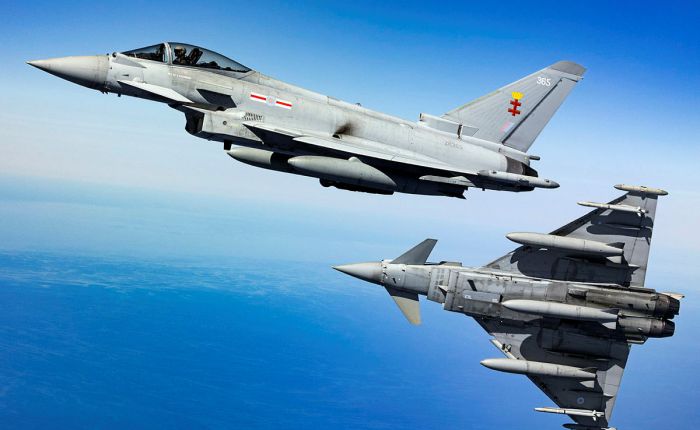
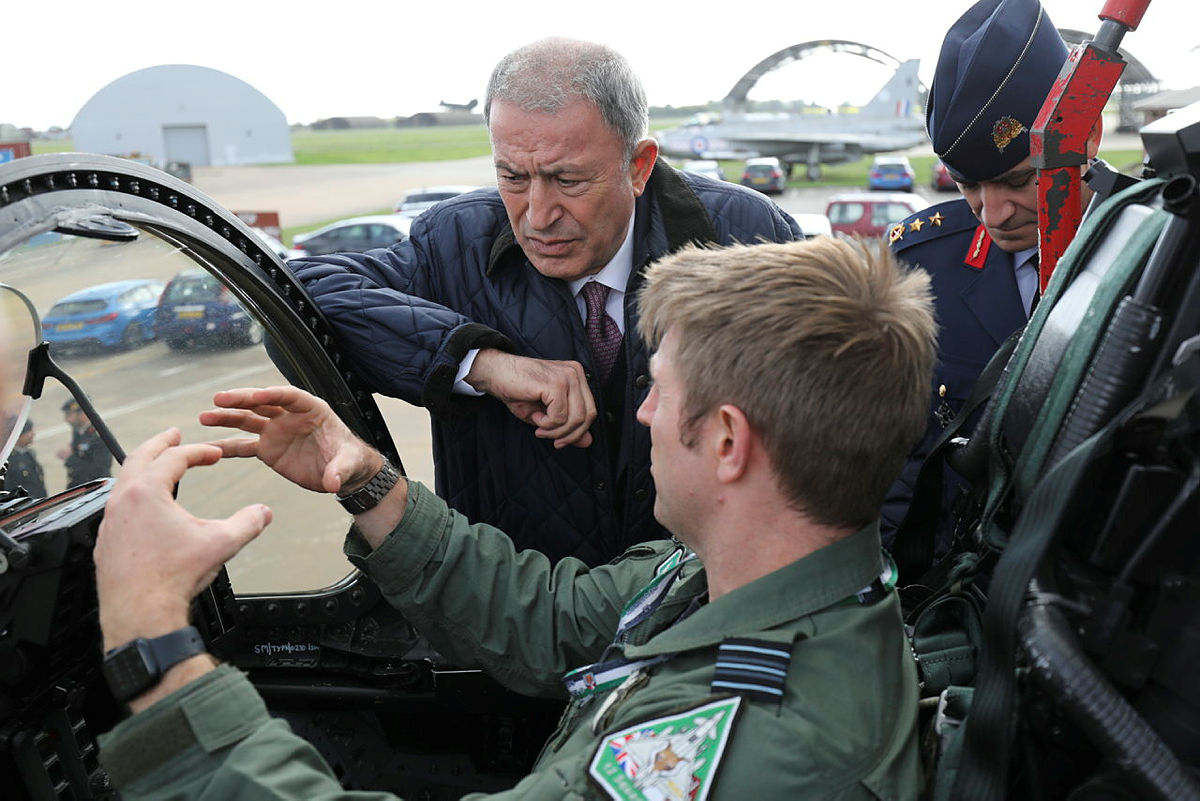
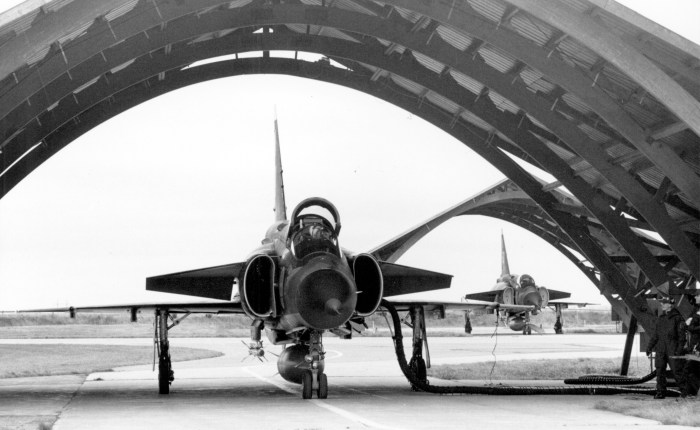
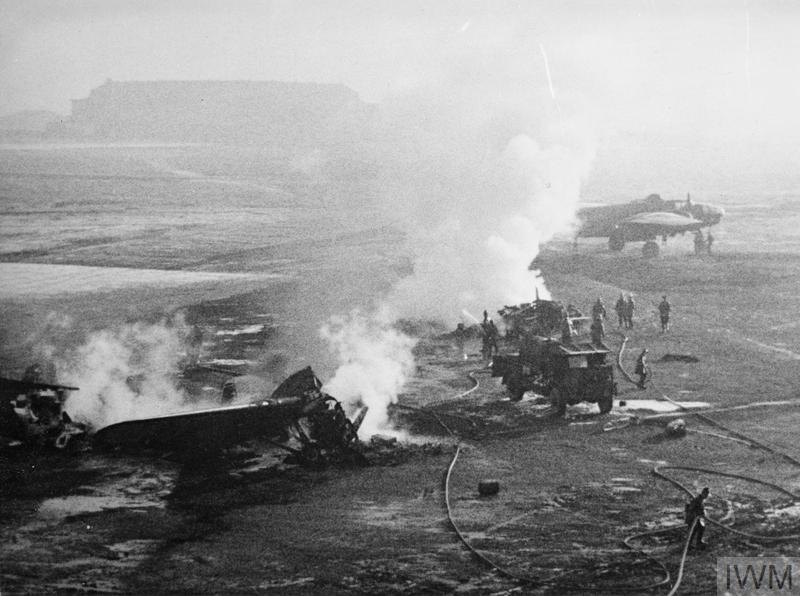
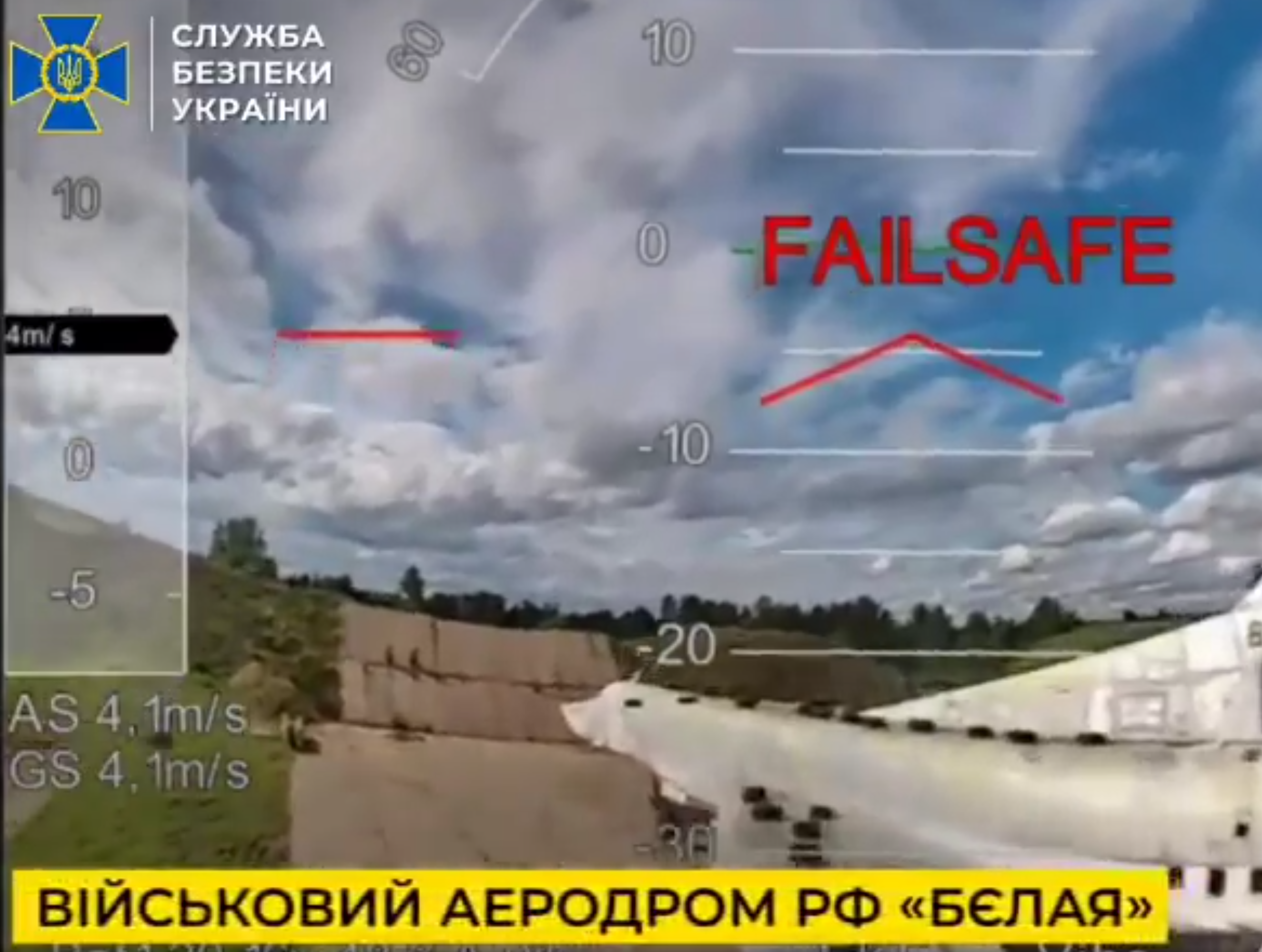
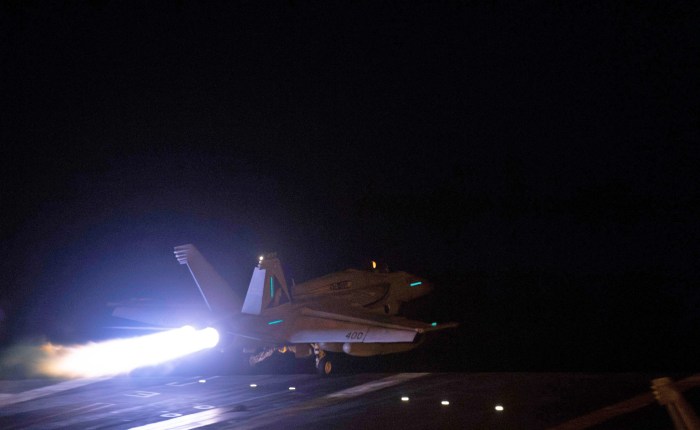
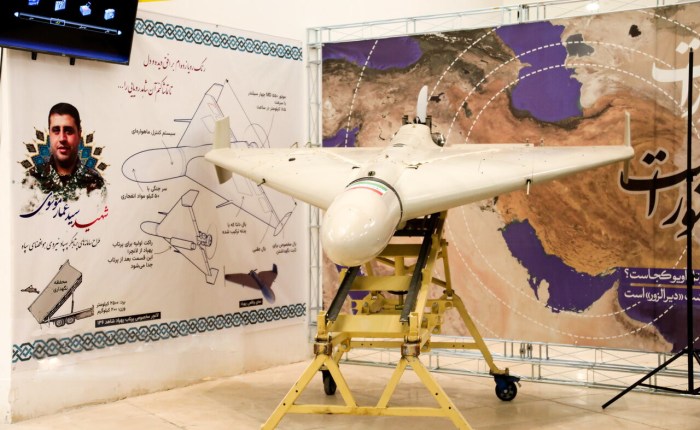


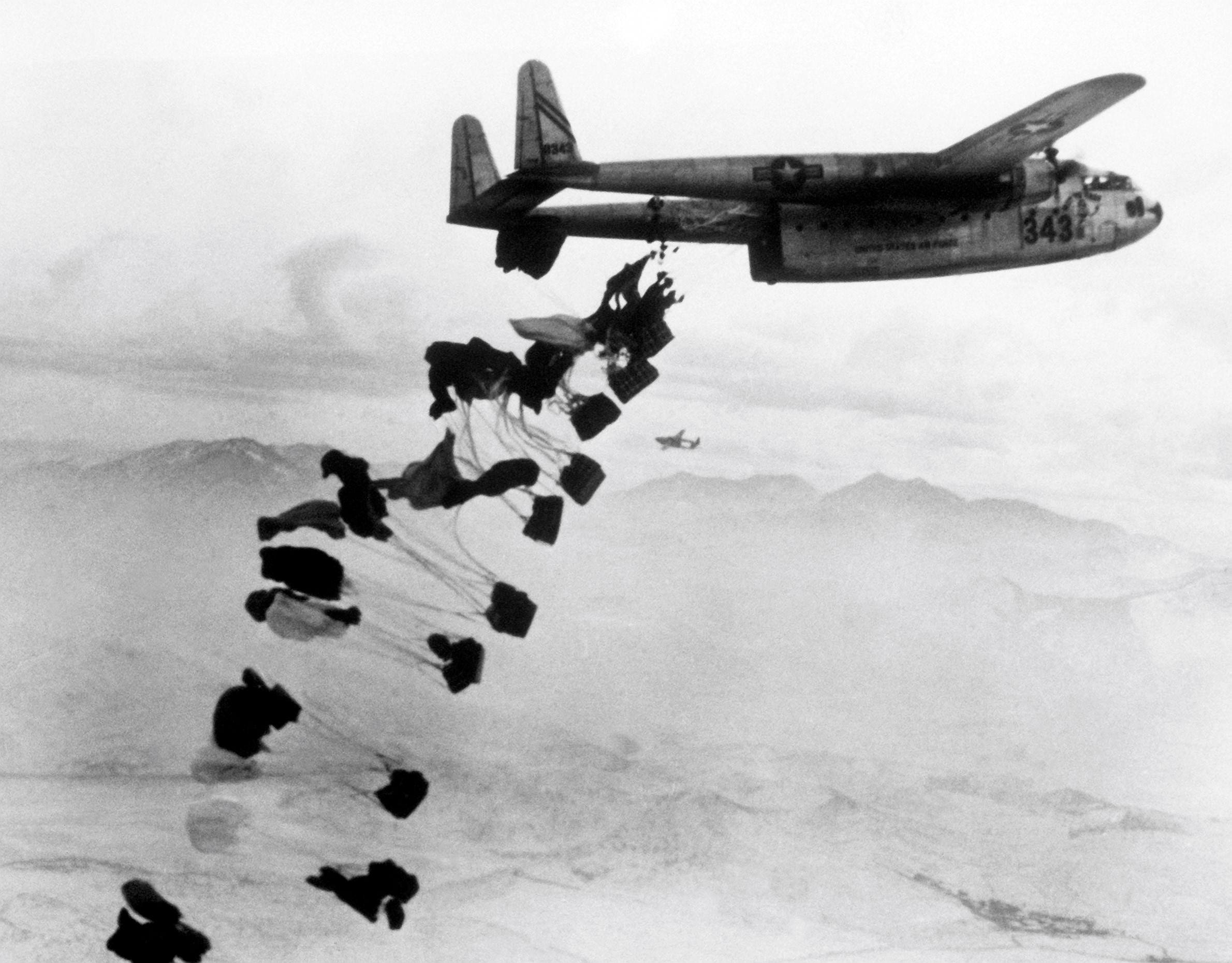

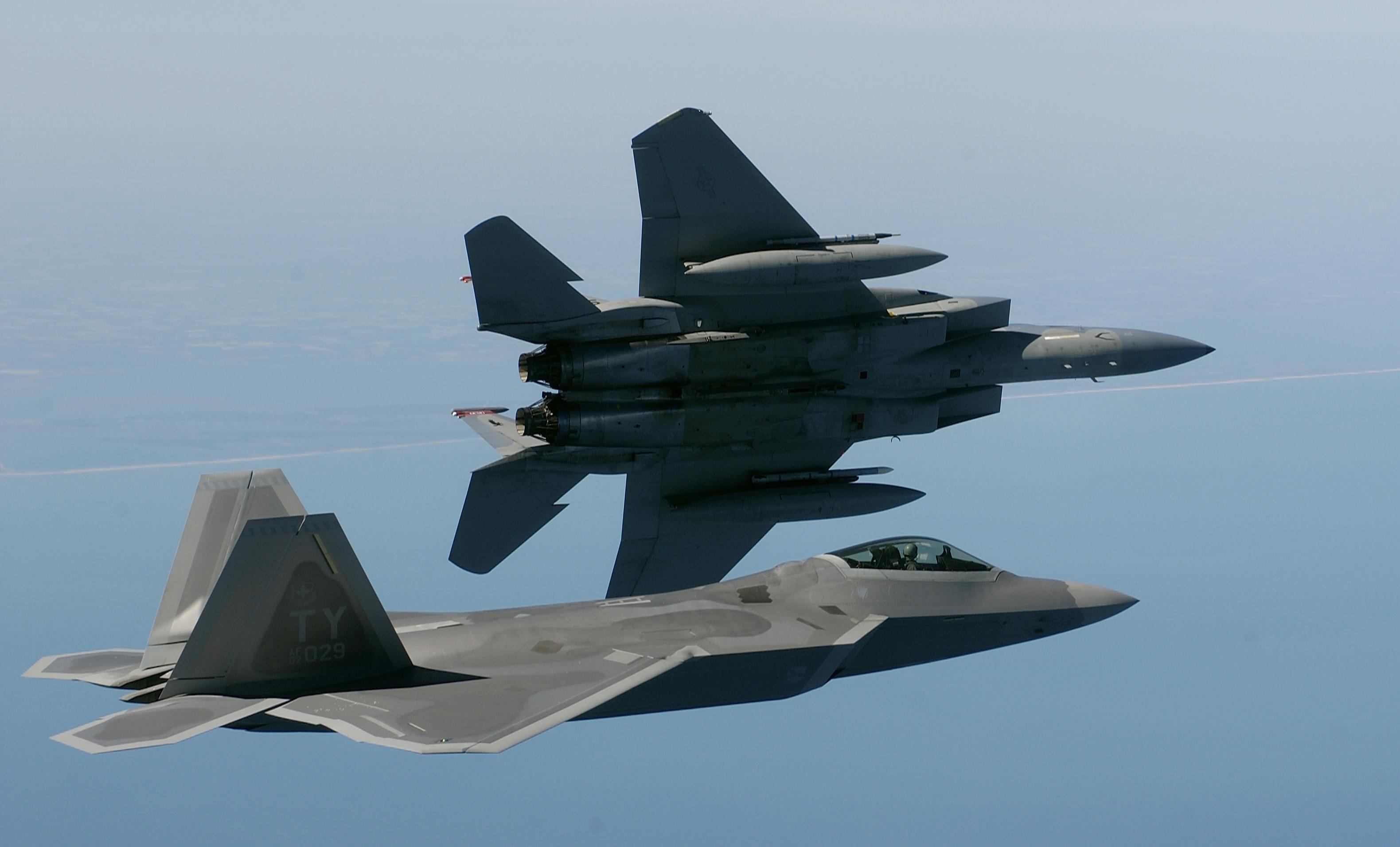


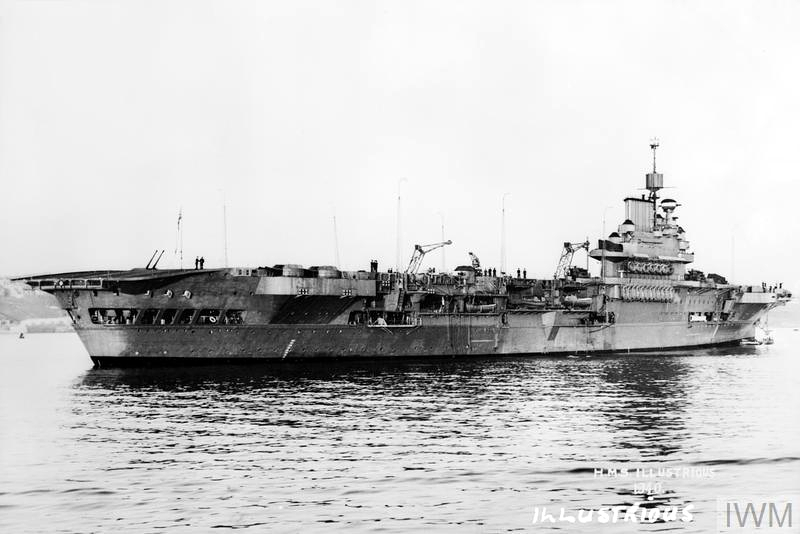




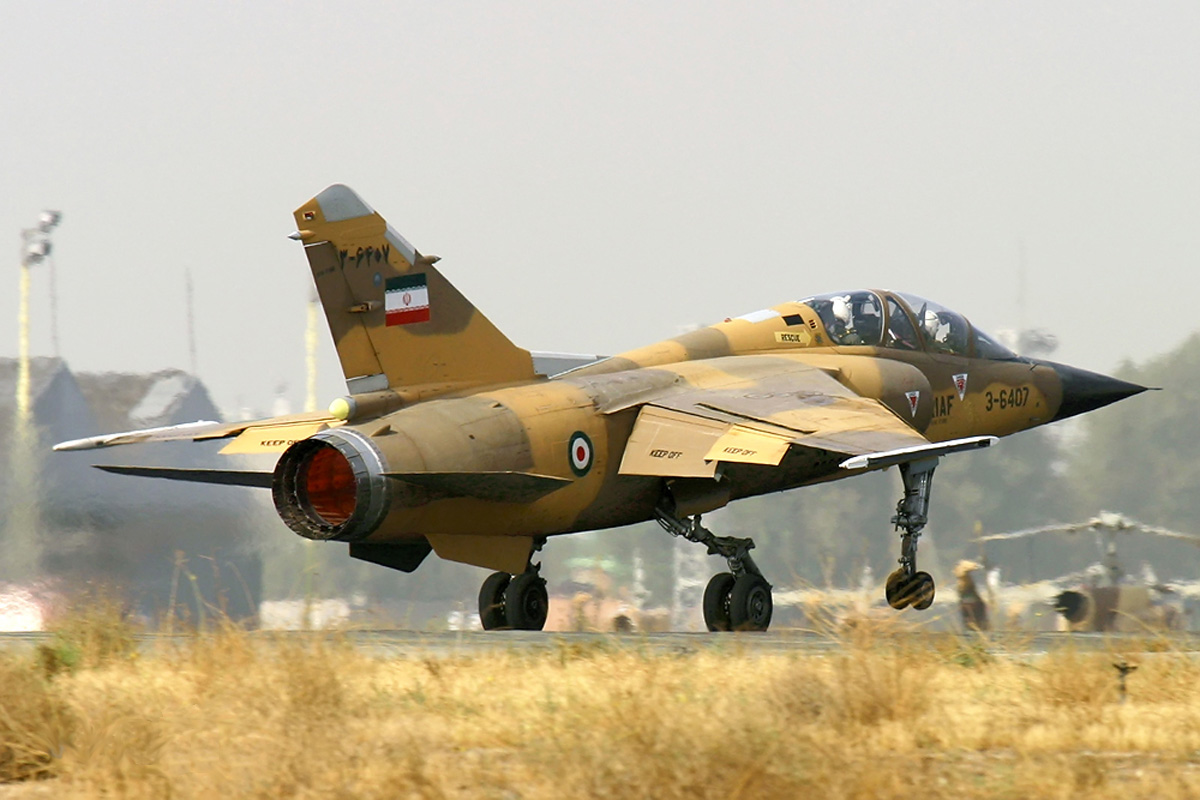
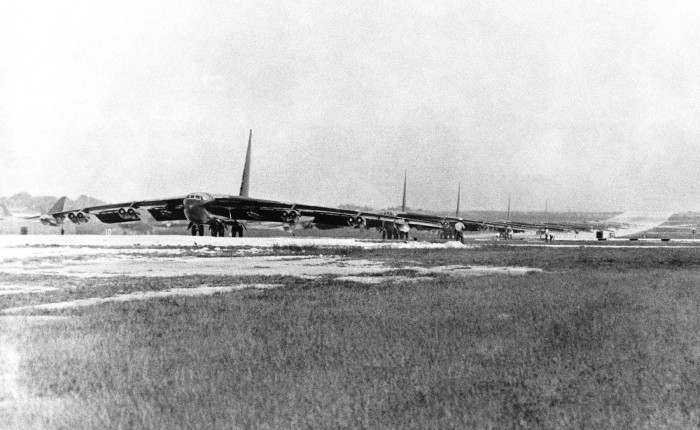

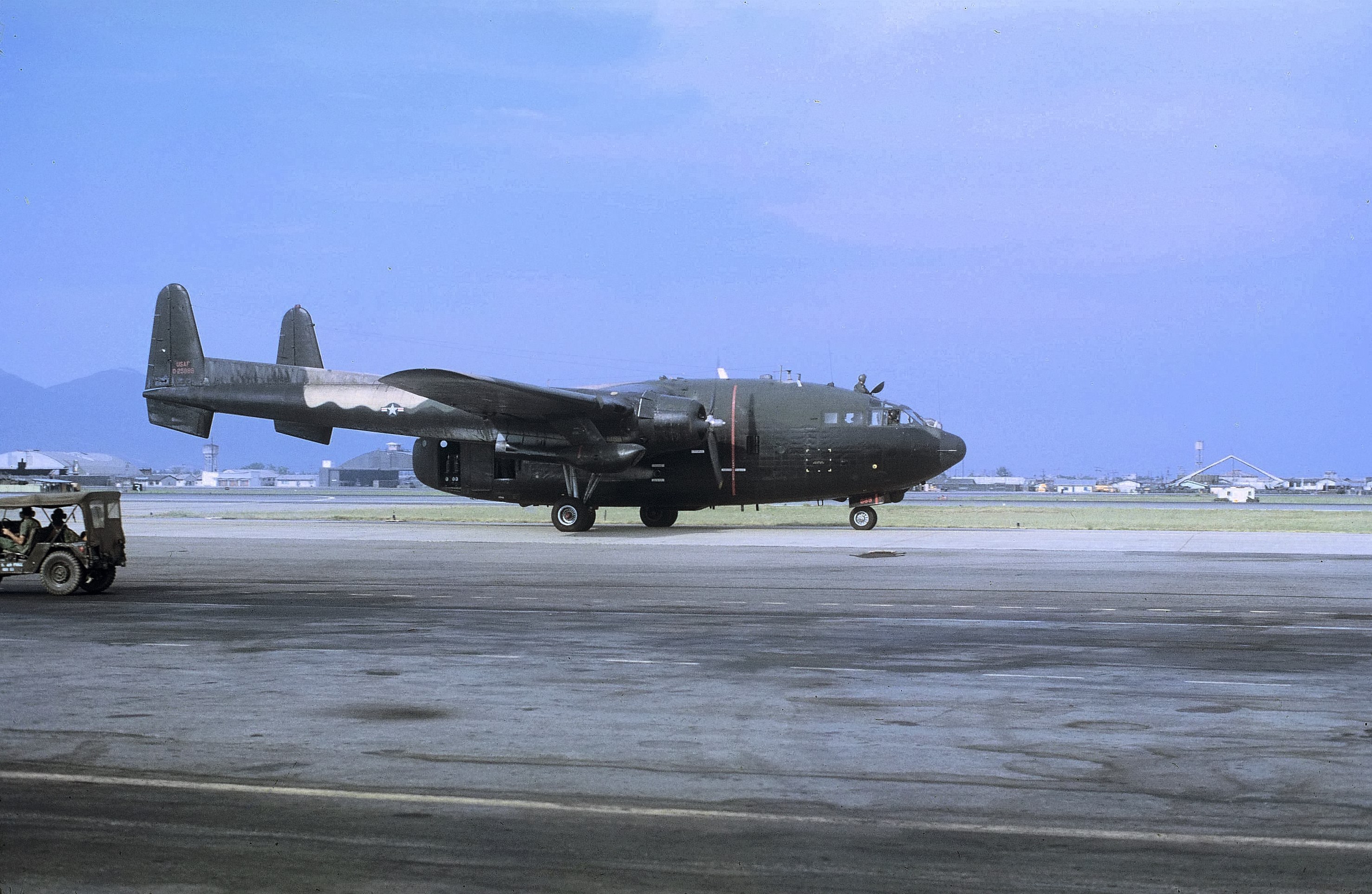

 From Balloons to Drones