Editorial Note: Led by Editor Dr Mike Hankins, From Balloons to Drones, produces a monthly podcast that provides an outlet for the presentation and evaluation of air power scholarship, the exploration of historical topics and ideas, and provides a way to reach out to both new scholars and the general public. You can find our Soundcloud channel here. You can also find our podcast on Apple Podcasts and Google Podcasts.
In 1972, the USS Kitty Hawk was conducting bombing raids against North Vietnam when violence broke out on the ship itself. Long-building racial tensions exploded into a series of assaults quickly labelled a race riot. Marv Truhe was one of the JAG lawyers assigned to defend the African American sailors charged in the incident. He tells the story of a series of racial injustices in his shocking new book, Against All Tides: The Untold Story of the USS Kitty Hawk Race Riot (2022). He joins us on the podcast to discuss the incident and its legacy for changes in race relations in the US Navy and the military.
Marv Truhe served as a Navy JAG lawyer and military judge during the Vietnam War. Following his military service, he was an Assistant Attorney General for South Dakota before entering private practice. He defended six of the Black sailors charged with rioting and assaults in the USS Kitty Hawk incident.
Header image: A US Navy McDdonnell F-4B Phantom II of VF-114 traps on board the aircraft carrier USS Kitty Hawk underway in the Western Pacific off the coast of North Vietnam in March 1969. Also visible on the flight deck is another F-4B of VF-114 as well as one from VF-213, a North American RA-5C Vigilante of RVAH-11, and an LTV A-7A Corsair II of VA-105. (Source: Wikimedia)
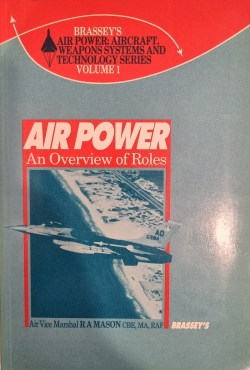
With an abiding interest in how air power has been presented and written about, I, like many others, am an inveterate buyer of second-hand books. I recently added to my library a volume entitled Air Power: An Overview of Roles by R.A. ‘Tony’ Mason, published in 1987. Mason is arguably the key British air power thinker of the late-20th Century. He was appointed the Royal Air Force’s (RAF) first Director of Defence Studies (DDefS) in 1977. Since then, he has widely commented on, lectured, and written about air power. When he wrote this book, Mason, an Air Vice-Marshal, served as Air Secretary.
The book formed part of a series published by Brassey’s Defence Publishers, consisting of 11 titles – see the list below. I have read several of these during my career, including Mason’s title. However, I had not realised several interesting aspects of this series until now. Namely, these volumes were written for a specific audience and authored by serving RAF officers.
Dealing with the first issue, the series outline in the book’s frontmatter noted that ‘[t]his new series […] is aimed at the international officer cadet or junior officer level.’ Thus, the series had a specific pedagogical aim in mind. The series was designed to provide the knowledge that new officers joining an air force needed regarding the use and development of air power. In the case of the RAF, it was clearly aimed at those attending the RAF College at Cranwell and junior officers undertaking staff education. It would be interesting to find out whether the books ended up on the reading lists for these institutions and whether they were used as part of the curriculum. More research…
This leads to the second interesting aspect of this series, namely that they were all written by serving RAF officers. Indeed, many, such as Mason, Armitage, Knight, and Walker, were officers holding Air Rank. As noted, Mason was an Air Vice-Marshal when writing this book – he retired at this rank. Sir Michael Armitage was an Air Chief Marshal, and at the time his book was published, he had been appointed Commandant of the Royal College of Defence Studies. Knight was an Air Chief Marshal at the time of publication, while John Walker was an Air Vice-Marshal – he retired as an Air Marshal. Moreover, many of these officers were regular writers on air power at the time. Aside from Mason’s own outputs, which included editing Air Power in the Next Generation (1979) and War in the Third Dimension (1986), Armitage had, by this time, co-written Air Power in the Nuclear Age (1983) with Mason. Similarly, Walker had edited a collection for the Royal United Services Institute entitled The Future of Air Power (1986), to which Armitage also contributed.
What is interesting about the choice of officers is that the views presented in these books constitute an RAF view of air power and its employment in the late-1980s and early-1990s despite the series being ostensibly aimed at an international market. More interesting is that, taken as a whole, these books can be considered a source of informal or implicit doctrine. In essence, this is a form of doctrine not codified in formal manuals and helps explore the changing debates surrounding the use of military force, in this case, air power. This is especially important given that when the first volumes of this series were published, the RAF did not have its own formal, explicit environmental capstone doctrine – it was using NATO doctrine to guide operations. Furthermore, the final edition of AP1300 was declared obsolete in the 1970s, and the first edition of AP3000 would not be published until 1990. As such, this series should not be separated from the broader context of the RAF’s re-engagement with formal doctrine.
Finally, the publication of this series, through its choice of authors, shows that despite operating in a doctrinal lacuna, the RAF of the 1980s was still a thinking organisation that thought about the role of air power in war. Critical in that process was the establishment of the DDefS position in 1977. Mason, both as DDefS and in subsequent roles, published works on air power that can be seen as informal doctrine. This started with Air Power and the Next Generation and continued through the 1980s and 1990s. Moreover, this form of publishing informal doctrine would be formalised in the 1990s when the Chief of the Air Staff, Air Chief Marshal Sir Michael Graydon, established the CAS Air Power Workshop, led by DDefS. Over time, the Air Power Workshop has published several significant edited volumes on air power that can be viewed as informal doctrine. The first publication from the Air Power Workshop was The Dynamics of Air Power (1996), edited by DDefS, Group Captain Andrew Lambert and Arthur Williamson. These publications were an essential adjunct to the RAF’s formal doctrine, AP3000. Indeed, the volumes published in the late-1990s under the auspicious of the Air Power Workshop were significant because of the time taken to publish the various editions of AP3000. Put simply, informal doctrine could discuss and debate issues that took time to filter into formal codified doctrine.
Given this, the various DDefS’ have invariably played an essential role in developing British air power thinking, both formal and informal, since the establishment of the post. Moreover, the personalities who have held this role have been influential in that process. While Mason is a prominent name to cite to highlight the role’s importance, it is possible to note several other officers who held the post of DDefS and have played a role in developing British air power thinking inside the RAF and externally within academia and the broader public. These have included Air Marshal (ret’d) Timothy Garden, Air Vice-Marshal (ret’d) Andrew Vallance, Air Commodore (ret’d) Andrew Lambert, Air Chief Marshal Sir Stuart Peach, Air Commodore (ret’d) Professor Peter Gray and Air Commodore (ret’d) Dr Neville Parton.
Brassey’s Air Power: Aircraft, Weapons Systems and Technology Series
Mason, R.A., Air Power: An Overview of Roles (London: Brassey’s Defence Publishers, 1987).
Dutton, L. et al., Military Space (London: Brassey’s Defence Publishers, 1990).
Laite, B.C., Maritime Air Operations (London: Brassey’s Defence Publishers, 1991).
Dr Ross Mahoney is an independent scholar specialising in the history of war with particular reference to the use of air power and the history of air warfare. He is currently the Senior Historian within the City Architecture and Heritage Team at Brisbane City Council in Australia. He has over 15 years of experience in the heritage and education sectors in Australia and the United Kingdom. Between 2013 and 2017, he was the inaugural Historian at the Royal Air Force Museum in the UK. In Australia, he has worked as a Historian for the Department of Veterans’ Affairs and taught at the Strategic and Defence Studies Centre at The Australian National University based at the Australian War College. His research interests are focused on the history of war, specifically on the history of air warfare, transport history, and urban history. He has published several chapters and articles, edited two books, and delivered papers on three continents. His website is here, and he can be found on Twitter at @airpowerhistory.
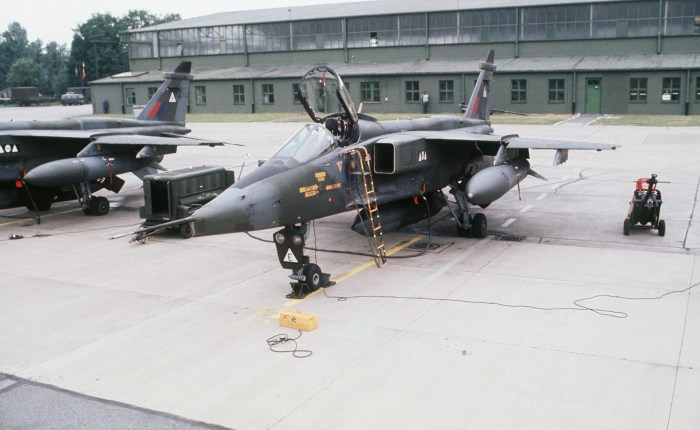
Header image: A Royal Air Force SEPECAT Jaguar GR1 of No. 2 Squadron RAF parked on the flight line during Tactical Air Meet ’78 at RAF Wildenrath, 15 May 1978. (Source: Wikimedia)
Brian D. Laslie, Air Power’s Lost Cause: The American Air Wars of Vietnam. London: Rowman and Littlefield, 2021. Notes. Appendices. Bibliography. Hbk. xiii + 272 pp.
Reviewed by Dr Maria E. Burczynska
The Vietnam War, also known as the Second Indochina War, or as referred to in Vietnam – the American War is a topic widely covered in academic and popular literature. Among the various publications, Brian D. Laslie provides a unique perspective on the American air campaign in Vietnam. Published as a part of the War and Society series by Rowman and Littlefield, Laslie’s work is an attempt to produce a comprehensive and critical overview of the air war over Vietnam, Laos and Cambodia. To achieve that, Laslie posits three questions: was the disjointed and ineffective use of air power in Vietnam preventable? What should control of the air looked like? Finally, would a different command and control structure have made any difference to the potential outcome of the conflict? (p. 3)
The title, Air Power’s Lost Cause, already gives away the book’s leading theme. The concept of a ‘lost cause’ is most widely associated with the American Civil War of 1861 to 1865, regarding the Confederacy fighting a heroic and noble battle against all the odds, effectively losing the war. The creation and evolution of that myth as well as its influence on the American memory of the Civil War, has been widely discussed in the literature, for example, by Gary Gallagher and Alan T. Nolan in The Myth of the Lost Cause and Civil War History, or William C. Davis in The Cause Lost: Myths and Realities of the Confederacy. However, in a wider context, ‘lost cause’ is used to describe a pseudohistorical narrative justifying one’s loss on a battlefield and often leading to a belief that a conflict was doomed to failure, despite all the best, full of self-sacrifice efforts of those who fought for the cause.
Laslie invites the reader to explore the ‘lost cause’ concept in the context of the Vietnam War. What one could expect from such an invitation is, therefore, a typical ‘lost cause’ narrative: the United States fought a heroic, full of sacrifice-fight against communism but eventually lost due to several strategic and/or political mistakes which, if rectified, would have brought an opposite outcome to the conflict. When speaking of the American air power in Vietnam, the ‘lost cause’ narrative focuses predominantly on the persistent belief that more intense bombing earlier in the conflict, instead of the gradual escalation that characterised Operation Rolling Thunder, could have a decisive effect and change the outcome of the war and that the Operation Linebacker II (with the heavy bombing attacks it brought) was successful in bringing the North Vietnamese Government to the negotiating table and ended the conflict. Laslie debunks those myths. Conducting a detailed and comprehensive analysis of the various actions undertaken by US air power as well as discussing its limitations such as, for example, the difficulty in effectively countering guerrilla tactics, he provides a compelling argument that even with the technological superiority the air campaign in Vietnam was unable to impact the outcome of the war significantly.
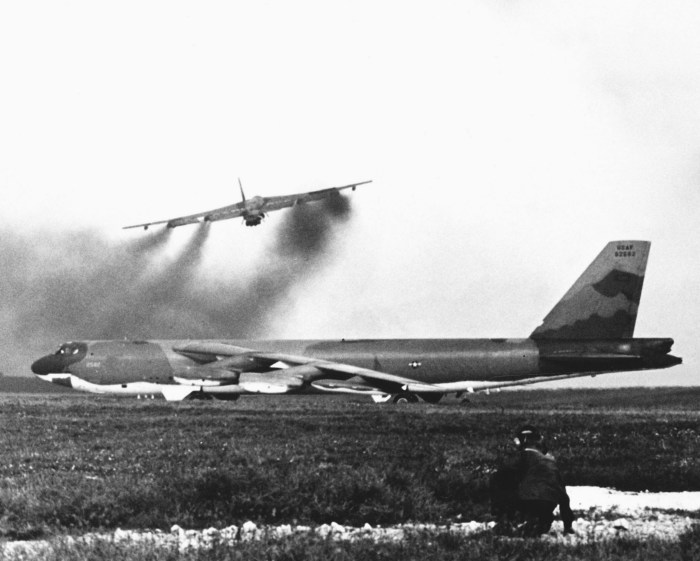
A US Air Force Boeing B-52G Stratofortress from the 72nd Strategic Wing (Provisional) waits beside the runway at Andersen Air Force Base, Guam, as another B-52 takes off for a bombing mission over North Vietnam during Operation Linebacker II on 15 December 1972. (Source: Wikimedia)
While the ‘lost cause’ concept is the leading theme for the discussion, the book is structured to reflect Laslie’s other argument – the disjointed character of what is known, especially in Western literature, as the Vietnam War. The War is often perceived as one large conflict, whereas there was no overarching campaign (not to mention an overarching strategy) during the American involvement. Laslie steps back from this holistic approach and offers a different perspective suggesting that several air wars took place at the time over Vietnam, Laos and Cambodia. Therefore, in his book, he identifies and discusses the following ‘wars’: the air-to-ground war in North Vietnam, the air-to-air war in North Vietnam, the air-to-ground war in South Vietnam, the US Navy air-to-air and air-to-ground war in North and South Vietnam, and the secret air war over Laos and Cambodia and against the Ho ChiMinh Trail. By looking at several air wars rather than one, the reader is confronted with an incredibly detailed picture of the situation at the strategic, operational and tactical levels of war.
But looking at the individual air wars is not the only way Laslie is trying to offer a comprehensive view of American involvement in Southeast Asia’s air campaigns. He also successfully combines US Air Force and US Navy perspectives, often treated separately in the literature. Discussing the participation of different services implies that a recurring point in Laslie’s analysis is the interservice rivalry and the complete lack of cohesive command and control between the Army, Navy and Air Force or even within them. These are not novel ideas as these issues are well-known and well-researched in the broader literature on the war in Vietnam. However, Laslie analyses American involvement as a series of separate air wars with their distinctive circumstances and obstacles. This allows him to discuss how these hurdles dictated each campaign’s outcomes.. Changing the perspective and critically analysing the context, objectives and limitations of each of those separate air wars illustrates the level of complexity of the conflict in Vietnam. It also supports Laslie’s main argument on the US air power’s ‘lost cause’, meticulously explaining why the popular myth of heavier bombings being potentially more effective is simply not true.
With his background as the Command Historian at the United States Air Force Academy and drawing on an impressive range of primary and secondary sources, Laslie provides a well-researched piece on a subject that one would have thought nothing new could be added. It is undoubtedly a result of extensive archival research and the inclusion of the Contemporary Historical Examination of Current Operations Reports of Southeast Asia (1961–1975) (an impressive list of which has been included as Appendix B). As an American scholar, Laslie is well aware of the potential bias his project may be susceptible to. To avoid that, he is trying to provide a balanced approach by including the perspective of the North Vietnamese Air Force in the discussion. However, that has been possible to achieve only partially due to the limited number of Vietnamese sources available to non-Vietnamese scholars. Nevertheless, Laslie highlights an existing gap in the Western understanding of air campaigns during the Vietnam War and opens an important discussion on the need to investigate the North Vietnamese experience. Whereas it demonstrates the potential for further research, one should ask how feasible it is for an American scholar to access North Vietnamese archives and look at the official sources held there.
Laslie posits that ‘the point of this book is to add something new to the discussion of air power and the war in Southeast Asia’ (p. 4). He succeeded in achieving that goal. Air Power’s Lost Cause will certainly be of interest to military professionals and academics as well as members of a wider audience seeking to improve their understanding, firstly, of the history of the US involvement in Vietnam and, secondly, the complexity of air campaigns in that conflict.
Dr Maria E. Burczynska is a Lecturer in Air Power Studies at the Department of History, Politics and War Studies, University of Wolverhampton. She is involved in designing and delivering an online MA course on Air Power, Space Power and Cyber Warfare. She obtained her PhD from the University of Nottingham, where she worked on a project focused on European air power and its involvement in different forms of multinational cooperation. Her thesis, titled ‘The potential and limits of air power in contemporary multinational operations: the case of the UK, Polish and Swedish air forces,’ is making an essential contribution to the field of air power studies, which remains primarily dominated by the US case. The Royal Air Force Museum recognised her research’s significance, awarding her the Museum’s RAF Centenary PhD Bursary in Air Power Studies in April 2019. Maria’s research interests are in military and security studies in national and international dimensions. She is particularly interested in contemporary European air forces and their participation in multinational operations and initiatives and the influence of national culture on the military culture of individual air forces. She can be found on Twitter at @BurczynskaMaria.
Header image: A US Air Force North American F-100D Super Sabre fires a salvo of 2.75-inch rockets against an enemy position in South Vietnam in 1967. (Source: Wikimedia)
Editorial Note: Led by Editor Dr Mike Hankins, From Balloons to Drones produces a monthly podcast that provides an outlet for the presentation and evaluation of air power scholarship, the exploration of historical topics and ideas, and provides a way to reach out to both new scholars and the general public. You can find our Soundcloud channel here. You can also find our podcast on Apple Podcasts and Google Podcasts.
Amidst the news of classified intelligence leaks, it’s a great time to look back at the US Air Force (USAF) Security Service – the USAF’s own intelligence agency that gathered critical intelligence throughout the Cold War. From using surveillance aircraft to spy on potential threats to helping fighter pilots shoot down MiGs over the skies of Vietnam, Philip Shackelford takes us through the story of this mysterious organization, as he details in his new book: Rise of the Mavericks from Naval Institute Press.
Philip C. Shackelford is the library director at South Arkansas Community College in El Dorado, Arkansas. He has served as President of the Arkansas Library Association and was named an Emerging Leader by the American Library Association in 2019. Shackelford’s academic focus is on communications intelligence in the U.S. Air Force. He is also interested in national security, strategy, intelligence, and organizational culture.
Header image: A Boeing RB-29 of the 31st Reconnaissance Squadron, somewhere over Korea, c. 1952. (Source: Wikimedia).
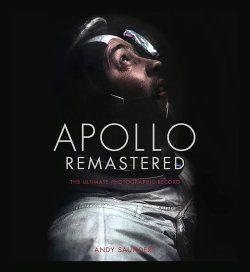
Andy Saunders, Apollo Remastered: The Ultimate Photographic Record. New York, NY: Black Dog and Leventhal Publishing. Hbk. 443 pp.
Reviewed by Dr Brian Laslie
This review represents the fourth in a series of crewed space exploration photographic records. Previously, I have reviewed Picturing Apollo 11(2019) and Picturing the Space Shuttle(2021), both out of the University Press of Florida and Photographing America’s First Astronauts(2023), out of Purdue University Press. All three of these books were authored by J.L. Pickering & John Bisney and represented something of a trilogy of books. The success of these books and others, including Apollo VII-XVII (2018) by authors Floris Heyne, Joel Meter, Simon Phillipson, and Delano Steenmeijer, demonstrate that there is a powerful attachment to both the early astronauts, photographs taken from space, and a seemingly never-ending desire to reflect on those who have slipped the surly bonds of Earth.
In Apollo Remastered, Andy Saunders, one of the foremost experts on NASA digital restoration, has combed through the NASA collection of 35,000 photographs. These pictures ‘securely stored in a freezer, to help maintain [their] condition’ have recently been ‘thawed, cleaned, and digitally scanned to an unprecedented resolution.’ (p. 1) Saunders presents the reader with a truly amazing collection of photographs, many never before seen, rendered in absolutely fantastic detail.
Each mission has a full-page layout showing the mission patch and covers the details, the crew, the mission and, most notably for this book, the photography. Yes, the photos are familiar but not found together in any other published collection. In each photograph, Saunders not only gives necessary explanatory details but also lists the photographer, the type of camera, the lens used to take the shot, and the NASA ID number, essentially ‘footnoting’ every photograph.
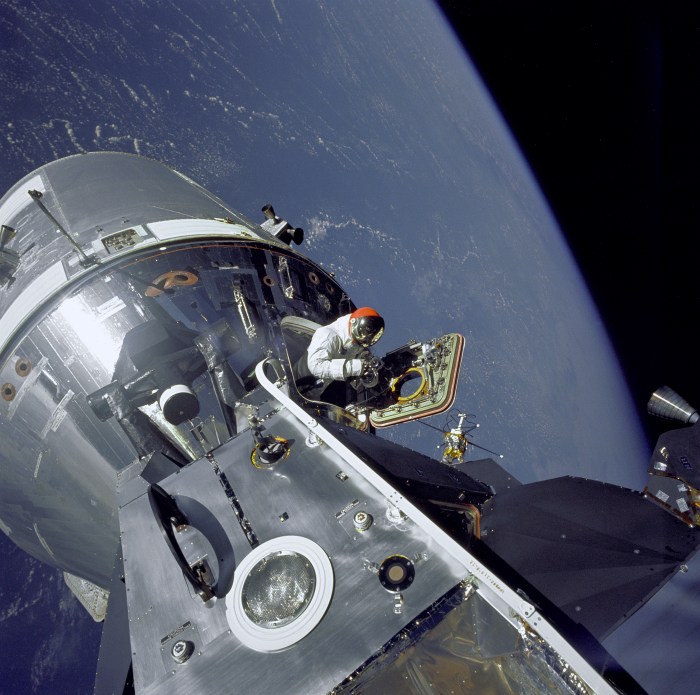
Apollo 9 Command/Service Modules (CSM), nicknamed Gumdrop’ and Lunar Module (LM), nicknamed ‘Spider’, are shown docked together as Command Module pilot David R. Scott stands in the open hatch. Astronaut Russell L. Schweickart, Lunar Module pilot, took this photograph of Scott during his EVA as he stood on the porch outside the Lunar Module. (Source: Wikimedia)
Rather than a detailed description of the book, I have herein chosen to detail a few of the photographs from various Apollo missions that caused me to pause and reflect during my journey through Apollo Remastered:
Apollo 7: A photo taken by Walter Cunningham showing the ‘whole Florida peninsula lit up by sunrays.’ (p. 47)
Apollo 8: It would be easy to state the best photo for this mission is the world-famous ‘Earthrise’ photograph taken by Astronaut Bill Anders and recreated in the HBO series From the Earth to the Moon, but instead, I found myself drawn to a two-page spread of the Sea of Fertility and the Goclenius Crater. (pp. 60-1)
Apollo 9: Another full-page spread (pp. 82-3) taken by lunar module pilot Rusty Schweickart. On the left of the photo, Earth takes up the entirety of the background, while the blackness of space is on the right. Command module pilot Dave Scott stands in the open hatch of the Command Module, the Service Module extending behind him toward Earth. From Schweikart’s position on the Lunar Module’s porch, one can make out its quad thrusters and one of the foot pads and Lunar surface contact sensors. However, what makes the photo all the more striking is a single dot in the blackness of space while the Moon, some 250,000 miles away, awaits.
Apollo 11: The most iconic mission of the Apollo program and the one fulfilling the first half of Kennedy’s desire ‘that this nation should commit itself to achieve the goal, before this decade is out, of landing a man on the moon and returning him safely to the earth.’ Picking one picture from this mission proved difficult. In the end, I believe the one my eyes looked at the longest was the photo Michael Collins captured of the returning lunar module carrying Armstrong and Aldrin with the Moon below and Earth in the background. As Saunders notes, Collins ‘is the only person alive, or has ever lived, who is not in the frame of this photograph.’ (p. 178)
Apollo 13: After the accident that ended any hope of landing on the Moon, a photograph shows Apollo 13 as it enters the shadow of the Moon, a photo with just a sliver of the Moon tantalizingly close as Saunders notes that Commander Jim Lovell ‘is the only person to visit the moon twice and not walk on its surface.’ (p. 217)
Obviously, there were hundreds of other photos in this wor. The book was an absolute pleasure to sit and go through each image page by page and reflect on the legacy of Apollo. This book makes the reader and myself contemplate what the moon landings meant then and our next journey from the Earth to the Moon.
This book is undoubtedly the most magnificent collection of Apollo photographs available for purchase. Those interested in the golden age of space flight will spend hours poring through this collection. However, as I looked through these photographs, now 50-60 years old, I pondered the next set of photos we would see in only another year. It was not lost on me that I began reading this book on the same day that NASA named which Astronauts would fly to the Moon on Artemis II, and I wondered what photographs that mission would give to posterity and us.
Header image: ‘Earthrise’ is a photograph of Earth and some of the Moon’s surface taken from lunar orbit by astronaut William Anders on 24 December 1968, during the Apollo 8 mission. (Source: Wikimedia)
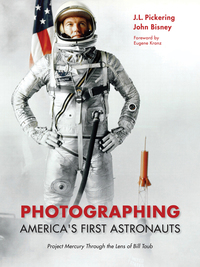
J.L. Pickering and John Bisney, Photographing America’s First Astronauts: Project Mercury Through the Lens of Bill Taub. West Lafayette, IN: Purdue University Press, 2023. Images. Bibliography. Hbk. 340 pp.
Reviewed by Dr Brian Laslie
In 2019, I wrote a book review for From Balloons to Drones, where I began the review by saying:
A different type of book necessitates a different type of book review. Herein you will not find an author’s argument or a critique thereof since the book being discussed today is a collection of photographs and an extremely fine one at that.
Pickering and Bisney’s newest work, Photographing America’s First Astronauts: Project Mercury Through the Lens of Bill Taub, from Purdue University Press, claims to be the ‘most complete photographic account of Project Mercury ever published.’ With more than 600 photographs across 340 pages, it is hard to argue that they have not accomplished this. This is the sixth space-related photography book from Pickering and Bisney, which is clearly a life-long passion for both. Pickering has explored the photos of the US crewed space program for nearly 50 years, and journalist Bisney, a retired national news correspondent, covered the US space program for more than 30 years. Their combined 80+ years of experience is clearly demonstrated in how they choose their photos and, more importantly, in how they describe every image providing a photographic journey and an excellent history.
The ‘Mercury Seven’ astronauts pose with an Atlas model in 1959. Front row, left to right: Gus Grissom, Scott Carpenter, Deke Slayton and Gordon Cooper. Back row: Alan Shepard, Wally Schirra and John Glenn. (Source: Wikimedia)
There can be little doubt that Project Apollo has garnered more photography books than Project Mercury or Project Gemini – Apollo Remastered: The Ultimate Photographic Record (2022) and Apollo: VII – XVII (2018) are two recent excellent examples. However, it is refreshing to see a new approach to a space photography book and the documentation of the Mercury 7 program. This book features the photography of William (Bill) Taub, NASA’s first staff photographer. Previously Taub served as a photographer for NASA’s predecessor organisation, the National Advisory Committee for Aeronautics. Taub travelled extensively with the Mercury astronauts. Taub followed the astronauts on many of their travels, capturing thousands of photographs of the Mercury 7 between 1959 and 1963. These photos are both official and candid from an individual who was truly a fly-on-the-wall of Project Mercury from start to finish.
Where many might claim to be publishing ‘never-before-seen images,’ in this case, it is true, as the authors gained access to Taub’s collection of photos, slides, and negatives after his passing. What they discovered and published is – without fear of hyperbole on my part – truly the greatest collection of photos of America’s first crewed space program and its famous seven members. Herein, each of the Mercury 7 get their own chapter, but the supporting cast is not ignored either, as the NASA leaders and support members also find themselves highlighted. Chapters one and two focus on the ‘Steps to Space’ and ‘The People of Mercury,’ (it was a great pleasure to see Astronaut Nurse Lieutenant Dee O’Hara highlighted). Chapters three through nine are dedicated to the originals themselves: Alan Shepard/Mercury-Redstone 3, Gus Grissom/Mercury-Redstone 4, John Glenn/Mercury-Atlas 6, Deke Slayton/Destiny Delayed, Scott Carpenter/Mercury-Atlas 7. Wally Schirra/Mercury-Atlas 8, and Gordon Cooper/Mercury-Atlas 9. Although a photographic record of the astronauts and Project Mercury, Pickering and Bisney also included many family photos as well continuing the tradition of the focus on the ones who remained on the ground and supported the astronauts the most: Louise Shepard, Betty Grissom, Annie Glenn, Marge Slayton, Rene Carpenter, Lo Schirra, and Trudy Cooper and their children.
Photographing America’s First Astronauts is another stunning success in a series of works that will undoubtedly be found on the bookshelf of everyone who loves the golden age of spaceflight. Since the authors have so adroitly covered the first astronauts, might this reviewer suggest a book on the NASA Astronaut Group 8 which included the first female and minority astronauts?
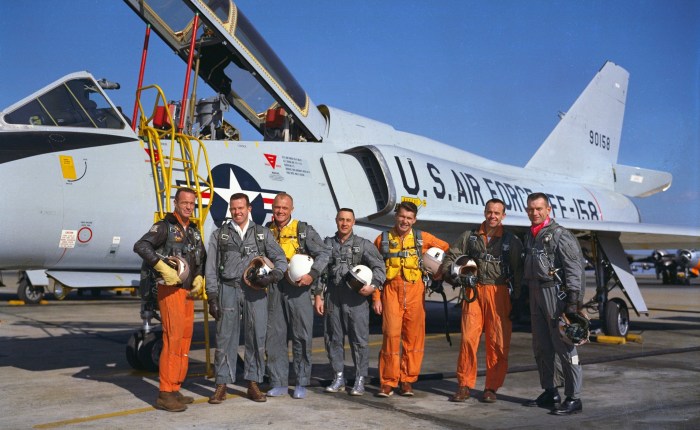
Header image: The Mercury Seven astronauts with a US Air Force Convair F-106B Delta Dart aircraft at Langley Air Force Base. From left to right: Scott Carpenter, Gordon Cooper, John Glenn, Gus Grissom, Wally Schirra, Alan Shepard and Deke Slayton, 26 January 1961. (Source: Wikimedia)
Editorial Note: Led by Editor Dr Mike Hankins, From Balloons to Drones produces a monthly podcast that provides an outlet for the presentation and evaluation of air power scholarship, the exploration of historical topics and ideas, and provides a way to reach out to both new scholars and the general public. You can find our Soundcloud channel here. You can also find our podcast on Apple Podcasts and Google Podcasts.
Our latest episode concerns the Grumann F-14 Tomcat and the McDonnell Douglas F-15 Eagle, two popular and historically significant aeroplanes. We arere joined by Dr Tal Tovy, senior lecturer at Bar-Ilan University in Israel and author of Tomcats and Eagles: The Development of the F-14 and F-15 in the Cold War (2022) from Naval Institute Press. Tovy gives us an up-close look at the motivation behind designing these aircraft and speaks to how the Israeli Air Force experience had a particular influence.
Dr Tal Tovy is a Senior Lecturer at Bar-Ilan University in Israel. He holds a PhD in history from the University of Haifa. A veteran of the Israel Defense Forces, Tovy has published extensively on various military history topics, including the influence of counterinsurgency theory upon American combat operations. His other fields of interest include Western military thought and U.S. military history. Tovy is the author of two previous books: The Changing Nature of Geostrategy 1900-2000: The Evolution of a New Paradigm and The Gulf of Tonkin: The United States and the Escalation in the Vietnam War.
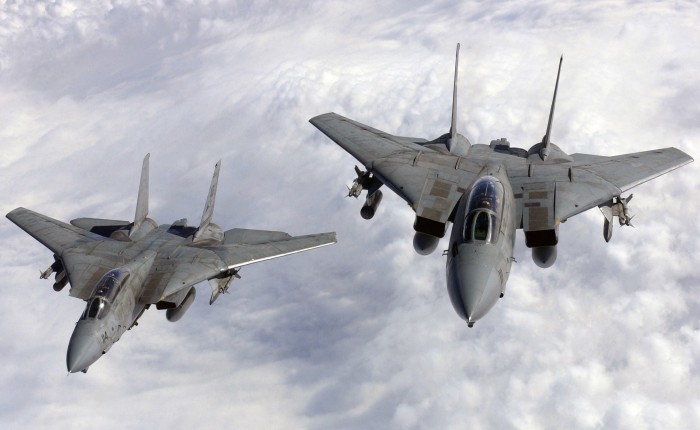
Header image: A pair of US Navy Grumman F-14A Tomcats from VF-211 in flight over Iraq in December 2003. VF-211 was assigned to Carrier Air Wing 1 aboard the aircraft carrier USS Enterprise for a deployment to the Mediterranean Sea and the Indian Ocean from 28 August 2003 to 29 February 2004. (Source: Wikimedia)
Since the establishment of the National Advisory Committee for Aeronautics (NACA) in 1915, it had worked closely with the United States Navy. Not only had the US Navy partnered with NACA, but the creation of the latter was also a rider to the former’s funding bill.[1] This history of NACA has been overshadowed by its successor, the National Aeronautics and Space Administration (NASA), into which the former was absorbed in 1958. Thus, much of the critical work by NACA has been overlooked. Indeed, if NACA is remembered at all, it is for using wind tunnels in aeronautical research, but there was much more that it was responsible for. This article redresses this deficit by examining how NACA used water tanks in seaplanes’ aeronautical and hydronautical advancements after the First World War. It also highlights the people and agencies involved in the research and the means of conducting the research.
The United States Navy, Seaplanes, and the First World War
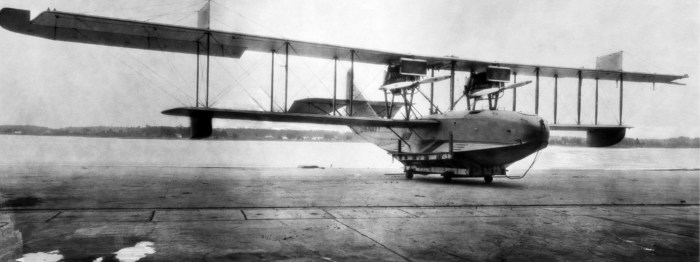
The US Navy, realising that aircraft would play a vital role in any future war, recognised that something had to be done to improve its readiness and improve its fleet of seaplanes The US Navy partnered with NACA to investigate and perform research on its aircraft, including seaplanes and flying boats. These planes would be critical in defence and coastal patrols. As a part of the first line of defence against German U-boats, the seaplanes would be a priority for the US Navy. The seaplane was considered a fixed-wing aircraft with a fuselage designed for floatation and containing a hull.[2] However, because it realised that aviation was still a technology in its infancy, the US Navy requested that NACA help make the naval seaplanes as efficient as possible. NACA, in supporting the tasking of the US Navy through its work on seaplanes, ensured a long and productive close bond with the Navy.
By the end of the First World War, the US Navy had several seaplanes with varying hulls, float types, and missions. These seaplanes operated from bases on shores because the US Navy did not have aircraft carriers or capital ships to launch such craft. The prevailing view then was that if the enemy were to attack, it would be by submarine, so it made sense to send patrols out from the shore to search for submarines. Several kinds of seaplanes were designed and used by the US Navy during the First World War. In 1919, Commander H.C. Richardson, the Superintending Constructor of Naval Aircraft for the US Naval Buffalo district in Buffalo, New York, who had also been Secretary to NACA’s main committee on formation in 1915, explained that:
[t]he principal work was done with two types of seaplanes, namely, the HS-2, the single-motored plane developed from the HS-1, and the H-16, a copy of an English seaplane.[3]
These two seaplanes were used because they were the most readily available. This shows how poorly the US Navy seaplane fleet was in 1919. However, according to Richardson:
The Navy Department fully appreciate[d] the desirability of experimenting to improve existing types and the development of new types of seaplanes and airplanes, directed to the solution of those problems which have arisen in the war and, more particularly, to the development of seaplanes or airplanes for operation with the fleet.[4]
Richardson was an active proponent of seaplanes for the US Navy. Therefore, because of the efforts of those such as Richardson, the US Navy was on track to update its seaplane fleet.
Unfortunately, the seaplanes of this period were unscientifically constructed. Their range was not that far, and their stability in flight left much to be desired. Actual aerodynamic testing was needed to ensure that any aircraft was worthy of combat and that the seaplanes were no exception. Richardson wrote in 1919 that:
[t]he problem confronting the Navy was largely determined at the time the United States entered the war [1917] by the fact that the operations of the German and Austrian fleets had been reduced principally to minor raids […] and the only real sea-going operations comprised the activity of submarines.[5]
This would be the primary mission of the seaplanes for many years: the patrol of waters in search of submarines. The submarines’ effect in the First and Second World Wars should not be taken lightly. The amount of cargo tonnage that could be destroyed by an undetected submarine could be immense.
Richardson’s 1919 article is crucial as he addressed the US Navy’s needs and how the seaplanes could aid it. His outline reads almost like a ‘wish list’ that NACA would eventually find itself working on. First, Richardson felt that performance, first and foremost, relied upon horsepower. He argued that:
[t]he performance in power flight is determined by the horsepower required and the horsepower available, and of course, the latter must always exceed the former or power flight is not attainable.[6]
Considering that Richardson wrote this in 1919, he seems to have firmly grasped the needs of seaplanes. However, the power plants of any aircraft currently were still in an age of infancy. As such, Richardson’s idea that seaplanes were reliant on horsepower was unfortunately ahead of the technology that would make the machines efficient.
Richardson also understood that lift was an essential component of flight. He explained that:
[t]he lift of an airplane surface and its resistance to advance are determined by the lift and drift factors, which vary with the type of section used and also with the angle of attack at which the surface is presented to the relative stream of air.[7]
The US Navy realised, however, as much as Richardson showed advanced thought on the subject, that the research involved was outside the Service’s scope. NACA, set up as an agency that was available to help government and civil agencies in aeronautics research, would be the agency to help the US Navy address the fundamental science of seaplane aeronautical research.
A Curtiss H-16 at the Langley Aeronautical Laboratory at Hampton, Virginia, c. 1929. (Source: Wikimedia)
The Importance of NACA’s Research
While often overshadowed by NASA, the work of NACA deserves examination because of the enormity of its contribution to aeronautics. As NASA historian James Schultz explained:
[t]hroughout its history, with research and applied engineering, the Center [Langley] has been responsible for some of the 20th century’s fundamental aeronautical and aerospace breakthroughs. The Nation’s first streamlined aircraft engine cowling was developed at Langley Laboratory […] the tricycle landing gear; techniques involving low drag-producing flush riveting; [and the] development of the sweptback wing.[8]
Similarly, historian Michael Gorn asserted:
[t]he proliferation of wind tunnels [about thirty had been built at Langley up to the 1950s] reflected the NACA’s true institutional identity: it concentrated on aeronautics.[9]
While Gorn is correct, NACA could not have focused solely on aerodynamics and prospered. Aerodynamics was just one piece of what NACA did. It was established to investigate all flight modes, and hydrodynamics was a crucial part of NACA’s work. While not as aerodynamically sophisticated as land planes, seaplanes and flying boats needed hydrodynamical studies to meet the needs of the US Navy. It is a mistake to overlook this field that so many within NACA worked on.
Once NACA started its research on hydrodynamics, it did so without any presumptions and began its research by looking at the fundamentals of the aircraft. George W. Gray, in his early history of NACA, explained this adeptly. He stated that:
[a] large part of the effort of the hydrodynamic staff at Langley has been expended upon the twin problems: trying to effect a seaplane body that will combine low water resistance with low air drag.[10]
Even before this, however, the question was whether seaplanes could even take flight. Then, again, the problem was that of power plants. As Gray pointed out, the studies:
[h]ad yielded some disappointing surprises: new designs that would not take off at the speeds planned or that would not lift the desired loads at any attainable take-off speed.[11]
With the water tanks of NACA, however, the guesswork was taken out of the equation. However, none of this would have been possible, at least in a reasonable amount of time, without some organisation to make it happen.
Langley and the Water Tanks
Langley, located at Hampton Virginia, was NACA’s research centre, established in 1917. It focused primarily on aeronautical research but would eventually be used to test space equipment such as the Apollo lunar module. However, the first ten years at Langley comprised only the testing of aeroplanes. There was no work at all done on seaplanes. To do this work, NACA had to have something other than a wind tunnel to test the seaplanes.[12]
The drag tank also called a tow tank, drag tunnel, or even the drag basin, was the solution to the research needed. Gray stated that:
[m]any of the studies in wind tunnels were applicable to seaplanes, and they in common with landplanes benefited from improvements in wings, propellers, engine cowlings, and other developments of the 1920s.[13]
The study variables were applicable, but these were still seaplanes, and there was a need to test them in water. Gray elaborated that NACA knew that it needed a better way to test the seaplanes:
[i]t was recognised that the airplane on the water has problems that are not shared by the airplane in the air or on the landing strip, and in 1929 the Committee in Washington decided to enlarge the organisation and equipment at Langley to provide for research in hydrodynamics.[14]
It was then that hydrodynamic research began at Langley.
Langley constructed two tanks: tank number one and tank number two. Tank number one became operational on 27 May 1931 for $649,000.[15] Its purpose was ‘to study the hydrodynamic resistance and other performance features of water-based aircraft.’[16] A vital design team member was Starr Truscott, who published numerous studies based on research from tank one. A few additions were made to the tank, including a new higher-speed (80-MPH) carriage (a rail that the aircraft being tested sits on) installed in 1936-1937 and a tank extension of 900 feet to 2,960 feet in 1936.[17] Eventually, the need for another tank would arise, leading to the construction of tank two.
Tank number two, operational on 18 December 1942, again had Truscott, along with John B. Parkinson and John R. Dawson, on the design team.[18] The basin was 1,800 feet long by 18 feet wide and 6 feet deep. It also had a 60-MPH carriage.[19] The express purpose of tank number two was ‘to test models of floats for seaplanes and hulls for flying boats by dragging them through seawater.’[20] According to Gray, the significance of tank two was that:
[r]esearchers experimented with radical departures from accepted hull design, trying to find the specifications for a seaplane body that would combine freedom from porpoising and skipping, low water resistance, and superior performance in the air. Out of these experiments came a novel design known as the hull with a planing tail.[21]
Every step in the building of the tanks, from the basin to the tires on the towing carriage, had to be carefully thought out to ensure the best product for research use. Truscott, one of the designers of both tanks, realised that using NACA tanks required certain necessary features solely for use with the seaplanes.[22]
Truscott related that the tank located at Langley was:
[o]f the Froude type; that is, the model which is being tested is towed through still water at successive constant speeds from a carriage spanning the tank. At each constant speed, the towing pull is measured, the trim and the rise, or change of draft, are recorded and, if the model is being towed at a fixed trim, the moment required to hold it there is measured and recorded.[23]
The tank itself was covered by an enclosure meant to protect it from the water itself (so that turbulent water after a test could settle more quickly), wind, and the weather, rather than to provide any comfort to the engineers.[24]
Pneumatic tires were installed and were ‘each driven by an independent electric motor through a single-reduction herringbone pinion and gear. The […] tires are high-speed bus or truck tires, with smooth treads.’[25] The carriage had to have the means to propel itself, which was achieved using ‘our electric motors propelling the car […] nominally of 75 horsepower, but for short periods they may be safely called upon to deliver 220 horsepower each.’[26] ‘Finally, the device used electrical braking to break the current for regenerative braking.’[27]
Given the construction of the tanks, much work had to come together to test seaplanes. Of course, the whole purpose was to test the seaplanes for fundamental problems that could inhibit the aircraft’s performance. Resistance, porpoising, skipping, and performance were why the tanks existed. Solutions to these problems were needed for a more efficient aircraft. NACA engineers sought to reduce resistance; the force encountered when a plane is in the air moving forward or a seaplane in water, to help with take-off and landing.
Porpoising, a dangerous event that often occurs in the water, is something that NACA was tasked to find a solution to. According to Kenneth Davidson and F. W. S. Locke, Jr., writing for the Stevens Institute of Technology in 1943:
[p]orpoising is a self-sustaining oscillatory motion in the vertical longitudinal plane [… ] and can originate in an instability of the uniform longitudinal motion in smooth water […] in the words of one test pilot, it is always unpleasant and it may be catastrophic.[28]
Essentially a seaplane will move up and down in the water out of control of the pilot. So it is easy to understand why the US Navy was interested in the dynamics of porpoising and what needed to be done to eliminate it. If left unchecked, not only could the seaplane not fly, but it could also be damaged, or worse yet, the pilot injured or killed.
Performance was made up of several things. Engine performance, aerodynamics, and propellers were factors in all aircraft, but with the seaplane, there was a demanding service life on the water. In addition, s were composed of thousands of rivets, so corrosion was a considerable fear. It could be disastrous if the corrosion worked through a rivet at the wrong time. The hull of the seaplane was another vital factor. The construction, what it was made of, the aerodynamics, and how to prevent porpoising and skipping of the aircraft were things that NACA still needed to work out.
With the tow tanks available, miniature models could be constructed of the hulls or floats of the seaplanes, put upon the carriage, and pulled at the desired speed. If the results did not achieve the desired results, costly mistakes could be prevented. This opened new doors for aeronautical research that paid huge dividends in the coming years. While NACA was still beginning its seaplane research, progress would come more rapidly with the tow tanks at hand.
Fundamental Research
In 1935, NACA found itself in a position to make future research easier. Engineer Antonio Eula performed tank tests on seventeen different hulls and floats.[29] Eula purposely picked a random number of floats that had been tested in the laboratory over the last few years. He did this because:
[i]t affords an opportunity to draw some general conclusions regarding seaplane floats of given weight, given wing structure, any given position of the center of gravity.[30]
Another reason is that not much data existed to make work easier for future engineers. His most important conclusion drawn from the tests was that ‘the best models have a maximum relative resistance not exceeding 20 percent of the total weight.’[31] Just that information itself was enough to help any future engineers working with the drag tanks to give them a starting point from which to work.
Along with porpoising, skipping continued to be a problem with seaplanes. During the Second World War, the problem of skipping was considered a significant enough problem that needed further research. In 1943, John B. Parkinson at NACA addressed the problem. He began by defining just what skipping was. He reported that ‘skipping is a form of instability encountered in water take-offs and landings, so-called because of the resemblance of the motions of the seaplane to those of a skipping stone.’[32] Rising out of the water before the seaplane achieved flight was hazardous. A plane entirely out of the pilot’s control can lead to injuries, if not death.
One of the critical problems with the testing up to this point was that scientific testing had not occurred. Parkinson explains that ‘investigations of skipping have been mainly qualitative and the data have been based on the impressions of pilots or observers.’[33] Using models and even full-size aircraft for testing, Parkinson established that instability caused most problems. Using measurements taken from the fore and aft of the step-in hull helped determine where the problem for each type of seaplane was located. Once that was established, the engineers could make the corrections. Of course, it could never eliminate all problems because any seaplane on the water is prone to unpredictable water. However, it did go far in helping establish methods to solve the skipping problems.
It was realised that the research had to be compiled to make it easier for future engineers to find the information they were looking for. So, in September 1945, engineers James M. Benson and Jerold M. Bidwell released a bibliography containing information about seaplanes.[34] In this bibliography, many details covering everything from conventional hulls and floats to floating and handling were written about in a way that compiled the common information in past reports. Not only would this make it easier for future researchers, but the bibliography also pointed out areas in which more work needed to be done. Examples such as this are one of the reasons that NACA was able to achieve the success that it had.
A US Navy Consolidated PB2Y-3R Coronado transport aircraft loads cargo at the Pan American Airways dock, Treasure Island, California in January 1943. (Source: Wikimedia)
NACA Water Tank Research and its Impact on Second World War Seaplanes
The Consolidated PB2Y Coronado is an example of how this research aided in Seaplane use during the war. In its original design, when fuelled for a long-range mission, this seaplane had a gross weight of 46,000 pounds of which 3,000 pounds was the payload. The US Navy wished to increase the payload.[35] Using models of the Coronado in Tank No. 1, the NACA changed the line of the step of the hull and installed ducts for ventilating the bottom area aft of the step. This increased the gross weight to 68,000 pounds, of which 12,000 pounds was payload. It’s stability was so assured that the plane, during its war service in the Pacific Islands was repeatedly used to make landings on dark nights when the seeing is poor, and the craft must descend on a steady glide path until water is touched, a more hazardous procedure than daylight landing.[36]
Conclusion
The success of NACA was based on hard work and dedication to research. Working alongside government agencies such as the US Navy and even civilian aircraft manufacturers, NACA helped the United States evolve from a country far behind Europe in aeronautical research to the world’s leader in aeronautical research. The research conducted on seaplanes, long overlooked, helped refine the seaplanes, and even today, seaplanes are still in use.
Jay C. Shaw graduated with a bachelor’s in history from Columbia College in Columbia, Missouri, in 2016. He began work on his PhD in History with the University of Missouri – Columbia in 2022. He retired in 2016 from the US Air Force as an Aerospace Ground Equipment Craftsman in support of both the C-130 Hercules and the B-1B Lancer airframes. He volunteered at the Army Engineer School History Office at Fort Leonard Wood for over a year, where he worked more than 350 hours proofing sources for a book on the history of the Army Engineer School.
Header image: Digging the channel for Tank No. 1. In the late 1920s, the NACA decided to investigate the aero/hydro dynamics of floats for seaplanes. A Hydrodynamics Branch was established in 1929 and a special towing basin was authorized in March of that same year. (Source: Wikimedia)
[2] While modern definitions of seaplanes, flying boats and float plane are more clearly defined. At the time NACA was formed, the language used was less clearly defined. As evidence by Richardson’s article cited beloew, it is clear that the types of aeroplanes discussed would, by modern defintion be considered flying boats. However, he refers to them as seaplanes.
[3] H. C. Richardson, ‘Airplane and Seaplane Engineering,’ SAE Transactions 14 (1919), p. 334.
[4] Richardson, ‘Airplane and Seaplane Engineering,’ p. 365.
[5] Richardson, ‘Airplane and Seaplane Engineering,’ pp. 333-4.
[6] Richardson, ‘Airplane and Seaplane Engineering,’ p. 338.
[7] Richardson, ‘Airplane and Seaplane Engineering,’ p. 338.
[8] James Schultz, Crafting Flight: Aircraft Pioneers and the Contributions of the Men and Women of NASA Langley Research Center (Washington, D.C.: National Aeronautics and Space Administration, 2003), p. 25.
[9] Michael H. Gorn, ‘The N.A.C.A. and its Military Patrons during the Golden Age of Aviation, 1915-1939,’ Air Power History 58, no. 2 (2011), p. 25.
[10] George W. Gray. Frontiers of Flight (New York: Knopf, 1948), p. 67.
[15] James, R. Hansen, Engineer in Charge: A History of the Langley Aeronautical Laboratory, 1917-1958 (Washington, D.C.: National Aeronautics and Space Administration, 1987), p. 450.
For those who study the history of the United States Air Force and its forebears, there is a noticeable gap in the historiography regarding biographies of Second World War air force commanders. There are several biographies for men such as General Carl Spaatz, General of the Air Force Henry H. Arnold, General James Doolittle, General Curtis LeMay, and even Major General Haywood Hansell. Yet, many other prominent commanders, staff officers, and theorists do not have their own biographies. However, this research note solely focuses on General Ira Eaker, who, in 1943, commanded what became the US Eighth Air Force, the Mediterranean Allied Air Forces in 1944 and was deputy Chief of the Air Staff for the United States Army Air Forces in 1945.
James Parton has largely written Eaker’s history in “Air Force Spoken Here”:General Ira Eaker and the Command of the Air. Parton’s biography is a strong defence of Eaker. In many cases, he has created much of the narrative that we accept regarding Eaker’s performance as a commander during the Second World War. However, there is one problem with Parton’s book; he was Eaker’s staff officer. Given this, Parton’s book jumps between biography and personal memoir in several places. For example, when writing about Eaker’s defence of daylight precision bombing at the Casablanca Conference in 1943, Parton slips into a personal memoir. In a paragraph, he describes the trip to Spaatz’s headquarters, the poker game he played with Eaker and Spaatz, and how he edited Eaker’s proposals for the Casablanca Conference.[1] It is unclear whether this can be classified as a biography since it is unclear if Parton is writing about himself or Eaker. Also, as a staff officer deeply devoted to Eaker, Parton may not be the general’s best or most objective biographer. Simply put, Eaker needs a new biography.
For those interested in writing a biography on Eaker, there are several places to start. First, Parton’s biography is a great place to get background information on Eaker, even if the analysis is sometimes questionable. Another series of sources that need to be examined are the books that Eaker published with Arnold before the Second World War. Arnold and Eaker wrote: Army Flyer, Winged Warfare, and This Flying Game.[2] These books lay out their vision for the future of air power and, in some cases, offer analysis of air campaigns during the Second World War before the entrance of the United States into the conflict. These books give some insight into Eaker as an air power theorist and precision bombing advocate before the war. Three major archives should be consulted for wartime records. First, the Library Congress has Ira Eaker’s papers. Speaking from personal experience, they are well-organised and easy to work through. Even better, several vital figures whom Eaker corresponded with also deposited their papers at the Library of Congress. Another archive to consult is the Air Force Historical Research Agency, where you can find records on the Eighth Air Force and Mediterranean Allied Air Forces. Finally, the National Archives and Records Administration has more records and correspondence.
Air Chief Marshal Sir Arthur Harris shakes hands with Lieutenant General Ira Eaker at a handover ceremony of a US Army Air Force airfield into RAF control, c. November 1943. (Source: IWM)
Research is not the problem with writing a biography on Eaker. He wrote a lot about air power before, during, and after the Second World War. There is much research readily available on Eaker. This is purely speculation, but the reason why there is not a biography on Eaker is most likely that it is a hard biography to write. Eaker is not a polarising figure. Biographers note that they either fall in love with or hate the person they are writing about. It is hard to do that with Eaker. He is a likeable person and, at times performs quite well as a commanding officer. Yet, he also makes several significant mistakes during the war as well. It is hard to write a book analysing an officer whom both deserves blame for the failures of the 1943 air offensives against Germany and, in the same breath, say he played a major role in the success of the air war in 1944 and 1945.
In conclusion, it is time to put the James Parton book on Eaker aside and write a new biography on Eaker to start a proper historical debate on his career. There is ample archival material available to sift through and analyse. The challenge will be how to assess his performance during the war. Here is a thought to possibly hang onto for those who might want to take up this project. Maybe the challenge of writing a biography about Eaker is that he is representative of the struggles that early American air commanders faced during the strategic bombing of Germany in 1942 and 1943. Eaker was testing new ideas in a new form of warfare and without ample resources as the commander of the Eighth Air Force. He made several errors in 1943 that was amplified by his lack of resources. Yet, with more resources and experience, his performance improved over time. In many ways, Eaker represents the struggles that many American officers faced during the air war against Germany.
Dr Luke Truxal is the Book Review Editor at From Balloons to Drones and an adjunct at Columbia State Community College in Tennessee. He completed his PhD in 2018 from the University of North Texas with his dissertation ‘Command Unity and the Air War Against Germany.’ His previous publications include ‘Bombing the Romanian Rail Network’ in the Spring 2018 issue of Air Power History. He also wrote ‘The Politics of Operational Planning: Ira Eaker and the Combined Bomber Offensive in 1943’ in the Journal of Military Aviation History. In addition, Truxal is researching the effectiveness of joint air operations between the Allied air forces in the Second World War.
Header image: Major General Ira C. Eaker presents an award to an enlisted man of the 479th Anti-Submarine Group during a ceremony at an air base in St Eval, United Kingdom, c. 1943. (Source: NARA)
[1] James Parton, “Air Force Spoken Here”: General Ira Eaker & the Command of the Air (Bethesda, MD: Adler & Adler Publishers Inc., 1986), p. 220.
[2] Henry H. Arnold and Ira C. Eaker, Army Flyer (New York: Harper & Brothers Publishers, 1942); Henry H. Arnold and Ira Eaker, Winged Warfare, (New York: Harper & Brothers Publishers, 1941); Henry H. Arnold and Ira Eaker, This Flying Game, (Ramsey, New Jersey: Funk and Wagnalls Company, 1938).
Editorial note: In this series, From Balloons to Drones highlights research resources available to researchers. Contributions range from discussions of research at various archival repositories to highlighting new publications. As part of this series, we are bringing you a monthly precis of recent articles and books published in air power history. This precis will not be exhaustive but will highlight new works published in the preceding month. Publication dates may vary around the globe and are based on those provided on the publisher’s websites. If you would like to contribute to the series, please contact our Editor-in-Chief, Dr Ross Mahoney, at airpowerstudies@gmail.com or via our contact page here.
Books
Krzysztof Dabrowski, Defending Rodinu – Volume 2: Build-up and Operational History of the Soviet Air Defence Force, 1960-1989 (Warwick: Helion and Company, 2023).
In the 1950s, the Soviets had managed to grow a major Air Defence Force (PVO) capable of covering the entire airspace of the Union of the Soviet Socialist Republics (USSR). The PVO was able to field interceptors and surface-to-air missiles to intercept even high-flying foreign reconnaissance aircraft. By the early 1960s, the Soviets managed to theoretically, seal their airspace to unwanted visitors. Nevertheless, multiple foreign intelligence agencies and air forces continued seeking to penetrate the airspace of the USSR by means ranging from non-steerable ‘spy blimps’, via strategic bombers, to high-speed tactical reconnaissance aircraft. This activity kept the PVO on constant alert so that time and again it reacted mercilessly, even to entirely innocent passenger airliners, causing several major international incidents.
Defending Rodinu Volume 2 provides the operational history of the Soviet PVO from the early 1960s until the late 1980s – a period of continuously escalating tensions of the Cold War. Using documentation and publications never before released in the English language and richly illustrated, it provides a comprehensive, single-source point of reference for historians and enthusiasts alike.
Mark Galeotti, Afghanistan, 1979–88: Soviet Air Power against the Mujahideen (Oxford: Osprey Publishing, 2023).
The Soviet Union’s invasion of Afghanistan was fought as much in the air as on the ground. From the high-level bombing raids that blasted rebel-held mountain valleys, to the Mi-24 helicopter gunships and Su-25 jets that accompanied every substantial army operation, Soviet control of the air was a crucial battlefield asset. Vital to every aspect of its operations, Mi-8 helicopters ferried supplies to remote mountain-top observation points and took the bodies of fallen soldiers on their last journey home in An12 ‘Black Tulips’.
But this was not a wholly one-sided conflict. Even before the Afghan rebels began to acquire man-portable surface-to-air missiles such as the controversial US ‘Stinger,’ they aggressively and imaginatively adapted. They learnt new techniques of camouflage and deception, set up ambushes against low-level attacks, and even launched daring raids on airbases to destroy aircraft on the ground.
Featuring information previously unknown in the West, such as the Soviets’ combat-testing of Yak-38 ‘Forger’ naval jump jets, Soviet-expert Mark Galeotti examines the rebel, Kabul government and the Soviet operation in Afghanistan, drawing deeply on Western and Russian sources, and including after-action analyses from the Soviet military. Using maps, battlescenes and detailed ‘Bird’s Eye Views’, he paints a comprehensive picture of the air war and describes how, arguably, it was Soviet air power that made the difference between defeat for Moscow and the subsequent stalemate that they decided to disengage from.
Daniel Haulman, Misconceptions about the Tuskegee Airmen: Refuting Myths about America’s First Black Military Pilots (Athens, GA: University of Georgia Press, 2023).
Once an obscure piece of World War II history, the Tuskegee Airmen are now among the most celebrated and documented aviators in military history. With this growth in popularity, however, have come a number of inaccurate stories and assumptions. Misconceptions about the Tuskegee Airmen refutes fifty-five of these myths, correcting the historical record while preserving the Airmen’s rightful reputation as excellent servicemen.
The myths examined include: the Tuskegee Airmen never losing a bomber to an enemy aircraft; that Lee Archer was an ace; that Roscoe Brown was the first American pilot to shoot down a German jet; that Charles McGee has the highest total combat missions flown; and that Daniel “Chappie” James was the leader of the “Freeman Field Mutiny.” Historian Daniel Haulman, an expert on the Airmen with many published books on the subject, conclusively disproves these misconceptions through primary documents like monthly histories, daily narrative mission reports, honor-awarding orders, and reports on missing crews, thereby proving that the Airmen were without equal, even without embellishments to their story.
Jeff Pedrina, Wallaby Airlines: Twelve months flying the Caribou in Vietnam (Newport, NSW: Big Sky Publishing, 2023).
Jeff Pedrina’s book provides a very personal and thoughtful account of his twelve month’s service in Vietnam with No 35 Squadron – ‘Wallaby Airlines’. While the story is primarily about the people, and the personalities, he encountered during his tour of duty in Vietnam, it is also the story of a remarkable aircraft, the de Havilland Canada DHC-4 Caribou – the first mass-produced short take-off and landing (STOL) aircraft of its size. For seven and a half years it was the backbone of the airlift effort in the highlands of Vietnam, and was operated by the Royal Australian Air Force until November 2009, forty-five years after it first entered RAAF service.
First into the theatre in 1964 and last out in 1972, the Caribou aircraft and its air and ground crews were the RAAF’s quiet achievers in Vietnam. In the course of seven and a half years, Wallaby Airlines achieved an excellent operational record and reputation as a tactical transport squadron. This book in its original format was first published in 2006, having been awarded Special Mention in the 2005 RAAF Heritage Awards. This new edition is intended to bring the experiences of Jeff Pedrina, and the exploits of the Wallaby Airlines and its venerable Caribou aircraft to life for a new generation of reader.
Usman Shabbir and Yawar Mazhar, Eagles of Destiny – Volume 1: Growth and Wars of the Pakistan Air Force, 1956-1971 (Warwick: Helion and Company, 2023).
Eagles of Destiny Volume 2 is a detailed account of the transformation of the Pakistan Air Force (PAF) with the help of the first US assistance program, and how its leadership utilised this opportunity to create a modern air force. It provides detailed coverage of the PAF’s participation in the 1965 Indo-Pakistani War, based on official documentation and material from private collections that were previously not available to the public. The story of the Pakistan Air Force during this period is concluded by the coverage of the first build-up with the Chinese support, against the backdrop of US sanctions, highlighting and discussing the challenges and response.
Finally, the book provides detailed coverage of PAF operations during the 1971 War with India, including several first-hand accounts by key officers. Between 1956 and 1971, the PAF inducted a number of new weapon systems, including US-made F-86 Sabres, French-made Mirages, and Chinese-made F-6s. These developments and PAF’s strategy are all discussed in great detail.
Richly illustrated, and almost entirely based on accounts never published before, Eagles of Destiny Volume 2 provides a unique insight from professionals who were either directly involved, or witnessed the affairs in question.











 From Balloons to Drones