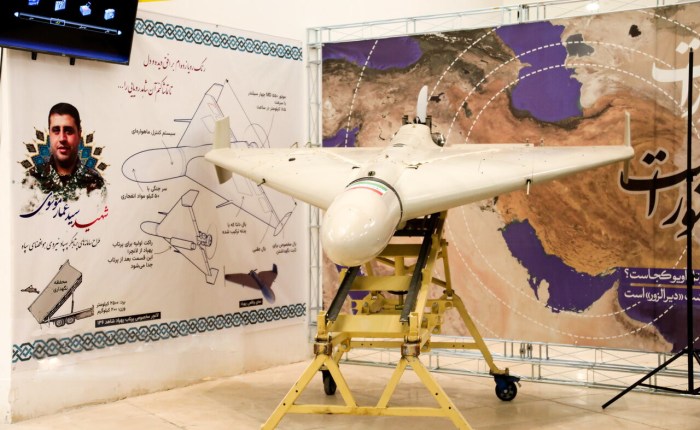
#Commentary – Iran’s Drone Sales Threaten Sahel and Red Sea Stability

#Commentary – Iran’s Drone Sales Threaten Sahel and Red Sea Stability

By Dr John Ringquist 

The Iranian HESA Saheed 136 suicide drone (unmanned aerial vehicle (UAV)) entered the war between Ukraine and Russia with undeniable effects. The influence of the same Iranian drones on Red Sea shipping in 2024 is equally undeniable, as Houthi militias utilised drones to threaten world shipping the same way they threatened Saudi Arabian defences in prior years. Russia has purchased thousands of Shahed 136 drones and received training for Shahed 136, HESA Ababil-3 and Raad drones through Iranian proxies and military forces in Syria.[1] Thus, Iran has quickly become a drone exporter and power broker, using regional proxies to provide lethal drone firepower to hard-pressed governments in East Africa. Iran now employs drones as a foreign policy tool to demonstrate its viability as a significant influence and a capable partner in the Middle East, Europe, and Africa. Iran’s efforts have undercut Western security guarantees and exploited the weakness of Ethiopian and Sudanese governments engaged in their internal efforts to defeat insurgent forces. The 2024 Nigerien junta’s rejection of United States forces currently hosted in Niger, and the likely denial of the critical drone airbases therein, allows Iran to attempt to influence an African state that has chosen to sever ties with the West. Looking at the situations in Ethiopia and Sudan can assist with understanding how Iranian drone capabilities, cost, and performance have earned Iran a place at the table.

Iranian drones offer hard-pressed states much-needed reconnaissance and attack capabilities with no questions about employment doctrine or human rights guarantees. Iranian drones also give potential customers access to various platforms at costs below that of most conventional aircraft. Although costs vary widely depending on the source, an Iranian Saheed 136 goes for between $20,000-$40,000. Multi-role drones like the Mohajer-6 also have lower prices than Western drones.[2] Iran’s goal is not to displace China, Turkey, and the United Arab Emirates as drone competitors in Ethiopia but to demonstrate its ability to compete successfully on the international stage and prove that its drones are effective options for potential international allies.[3] When Ethiopia needed drones in 2021, Iran could offer Ethiopia drones and munitions that helped defeat insurgents through precision strike and reconnaissance capabilities. However, Iranian assistance comes at a price for countries unwilling to risk extended diplomatic pressure. Despite being reported by Bellingcat at Semara airport in late 2021, by late 2023, Ethiopia’s two Iranian Mohajer-6 drones and their single ground control station (capable of controlling two drones at a time) were hard to find on overhead imagery. This is likely due to the drones and associated materials being pulled back under cover or into hangars until needed for operations. In contrast, Ethiopia’s Turkish and Chinese models have been seen in the open on the runways of at least two Ethiopian Air Force base runways. This may have been in whole or in part due to US protests to the UN about Iran’s violation of United Nations Security Council Resolution 2231 and the delivery of unmanned warplanes.[4] UN SCR 2231, although written as a diplomatic effort to find a solution to Iran’s nuclear issues, contains within the resolution Paragraph 6, Annex B that specifically enjoins all states to prevent ‘the transfer of arms or related material from Iran by their nationals or using their flag vessels or aircraft and whether or not originating in the territory of Iran.’ The transfer of drones falls within this set of restrictions. By transferring drones to Ethiopia, UNSCR 2231 was violated, with Iran and Ethiopia as knowing participants.

It is undeniable that Iran was willing to defy UN opposition to provide Ethiopia with drones; what is surprising is that Ethiopia chose to work with Iran despite being a US ally. Iran’s window of opportunity may have materialised partly due to the United States’ policy of not selling armed drones to allies without extensive vetting and Congressional approval.[5] In contrast, when Ethiopia’s military needed a rapid response and a technological solution to rebel threats, Turkey and China were already supplying to the African and Middle East markets. Although it is hard to gauge if Iran will be able to have the same influence that it had with Ethiopia in 2021, Iran could look to the situation in Sudan as another success in efforts to disrupt US regional goals and Western security assurances. As the United States attempts to counter drone proliferation, Iran displays technical and technological skills through its drone sales. Its drive for prestige and relevancy in the arms trade has been rewarded by the Russian and African adoption of Iranian drones to affect the sort of damage previously restricted to more conventional aircraft.[6]

Despite severing diplomatic relations with Iran in 2016, Sudan is interested in Iran’s assistance in combatting its main rival in the ongoing civil war, the Rapid Support Forces. Iran’s relationship with Sudan is evolving as Sudan’s government struggles against the rebel Rapid Support Forces, US sanctions, and a lack of international assistance. However, some countries, namely Iran and Turkey, have supplied Sudan with drones despite sanctions. In Sudan, as in Ethiopia, drones may be the factor that enables the government to contest and eventually defeat insurgents. The Sudanese government’s forces employ a variety of Iranian drones: the Ababil-3, Mohajer-2, Mohajer-4, and the latest Mohajer-6. These drones are part of Iran’s policy toolkit and have helped Iran maintain access and influence in Sudan despite Sudan becoming a signatory to the 2019 Abraham Accords, which included policies that were diametrically opposed to Iran’s stated interests.[7] Iranian interests in the region and globally can best be understood from a combination of Iranian policy goals: posturing Iran as an option to Western states for arms and technological assistance and providing an Islamic champion to former al-Bashir loyalists.[8]

Iran’s policy goals in Sudan include turning Sudan away from Saudi Arabia and UAE as part of Iran’s challenge to regional rivals.[9] Iran has exploited the Sudanese regime’s need for drone platforms, and news stories of alleged offers of additional drones and a helicopter carrier in exchange for a Port Sudan base cloud Iran’s history with Sudan. Iran can use drones to gain influence and restore Sudan as a partner in Iran’s ‘Axis of Resistance’ to the West.[10] The other obvious advantage of a Sudan-Iran alliance, from Iran’s perspective, is a scenario in which Iran could threaten Red Sea shipping and cause worldwide disruptions. An Iran-Sudan alliance would also sandwich Saudi Arabia between Sudan, Iran, and Yemen’s Houthi rebels. A Sudan-Iran diplomatic and defence alliance gives Sudan and Iran the tools to achieve their goals. Sudan’s Armed Forces-led government wants to extract concessions from the West, defeat the Rapid Support Forces, and establish itself as a drone power with the technological sophistication that implies. Iran continues to force the West to bleed resources to prevent a Sudan-Iran alliance from becoming a reality. The multiple threats to the Red Sea, combined with the ecological crisis that is challenging the Panama Canal’s shipping capacity, have great potential to cause Iran’s rivals severe economic and political embarrassment.

52-پهپاد_ایران-_ابابیل
An Iranian HESA Ababil-3 drone. (Source: Wikimedia)

Iran has demonstrated their will to defy United Nations sanctions. It should be expected to do so in the future, especially if doing so will bring Iran revenue and influence with new diplomatic and defence partners. The recent coup in Niger demonstrates how Iran readily offered assistance and drones to the Nigerien junta despite ECOWAS (Economic Community of West African States) sanctions. Other African states have similarly courted in Iranian efforts to bust United Nations sanctions. Burkina Faso and Zimbabwe, for example, for gold exports.[11] Iran has a valuable negotiating tool in the form of its family of armed drones. Sources including CNBC, Voice of America, senior Iranian officials, and the Israeli Defence Minister Yoav Gallant claim Iran now has customers and interested countries (for example, Bolivia and Venezuela) across the world, with Iran claiming 22 interested countries and Israel as many as 50.[12] As of 2023, Venezuela manufactures armed Mohajer-2 surveillance drones and operates armed Mohajer-6 drones. Considering Iran’s support for terrorist organizations and their willingness to sell drones with little regard for the consequences, the risks of international disruptions grow with each country that adopts Iranian technology.[13] International sanctions have limited Iran’s ability to obtain and export parts for drones. Suppliers who provide clandestine support are thus complicit in Iran’s arms industry. Attempts to interdict drone deliveries to Iran’s allies have been ineffective because most users of Iranian drones choose to manufacture in-country or build drones from parts.[14] Drone sales have helped Iran gain partner states. Iran will take advantage of situations where Western partners have been rejected and ejected by their former regional allies or Western states have cut off diplomatic relations due to coups. Iranian influence across the Sahel will grow as states seek sources for drones, and states that have little to deter them will find Iranian drones to be an attractive combination of proven capability and low cost.

Iran is opportunistic, and the situation in Niger, where the regime has rejected the West and joined with the ECOWAS-spurning Association of Sahel States (AES), opens a new avenue for Iran to counter Western influence and gain new allies.[15]  Niger is an attractive destination for Iranian influence because of Niger’s uranium deposits. Iran has been engaged in diplomatic exchanges with Niger, offering Niger an ally against the West as well as assistance in mitigating the effects of ECOWAS sanctions.[16] In April 2024, the news site Africa Intelligence reported that ‘Iran and Niger were negotiating for Niger to provide 300 tons of uranium yellowcake to Iran in exchange for drones and surface-to-air missiles.’[17] That alone would demonstrate the utility of Iranian drones as diplomatic bargaining tools. However, in March of 2024, Iran International News and the Wall Street Journal alleged that United States opposition to the trade was one reason for the Nigerien junta deciding to close the facility known as Airbase 201 in Agadez, Niger, a major drone base for counterterrorism operations in the Sahel.[18] Although the junta closed the airbase and ordered the United States to withdraw its drones, the decision was most likely driven by the need to demonstrate sovereignty and strength when the Nigerien junta was weak and under foreign pressure to change its policies. The developing ties with Russia and neighbouring junta-led states were also likely factors in the decision.[19] However, this development left a prime drone base in the hands of the Niger coup junta just as its relationships with Russia and Iran deepened. We can expect the Nigerien government to seek to take advantage of the $100 million facility at Agadez for new drones delivered by new security partners.

Niger still needs drones to patrol its vast territory and strike at terrorist groups. As Iran’s influence rises in Africa, so too may its drone presence in the service of governments where expediency is valued over human rights, transparency, and sustainability. Iranian drones are an effective policy tool, an asymmetric warfare solution scalable to many situations, and responsive to the needs of states and non-state actors. Iran’s drones will continue to create pockets of regional instability and serve Iran’s need for prestige, credibility, and allies for years to come unless countered by effective policies that neutralize Iran’s disregard for UN sanctions and undercutting of peace initiatives. The challenge for the US and its allies is not simply how to shoot down drones or where to direct diplomatic initiatives but to provide states with better options and to deny terrorists access to advanced systems. The United States is improving Counter-Unmanned Aerial Systems, but allies need assistance countering the whispers of a regime that offers advanced technology without warning of the inevitable repercussions.

Dr John Ringquist is a retired US Army Lieutenant Colonel, Africa Foreign Area Officer, and historian. He currently teaches at the Command and Staff School at the US Army Command and General Staff College. He has written about topics related to security, terrorism, and military history for various publications.

Header image: An Iranian HESA Ababil-3 UAV at an arms expo in Iran. (Source: Wikimedia)

[1] Oded Yaron, ‘Gold for Drones: Massive Leak Reveals the Iranian Sahed project in Russia,’ Haaretz, 21 February 2024.

[2] Danny Citrinowicz, ‘Iran is on its way to replacing Russia as a leading arms exporter: The US needs a strategy to counter this trend,’ The Atlantic Council, 2 February 2024.

[3] Federico Borsari, ‘Tools of influence: Drone proliferation in the Middle East and North Africa,’ European Council on Foreign Relations, 27 May 2022.

[4] Alex Gatopoulos, ‘How Armed Drones May Have Helped Turn the Tide in Ethiopia’s War,’ Al-Jazeera, 10 December 2021. Jeremy Binnie, ‘Ethiopia displays UAVs,’ Janes, 10 May 2023. Tefsa-alem Tekle, ‘U.S. says Iran supplied Ethiopia military drones for Tigray war,’ Sudan Tribune, 19 October 2022. ‘UN Resolution 2231 (2015) on Iran Nuclear Issue – Background.’  

[5] David A. Deptula ‘Anachronistic Export Policy Is Damaging the U.S. Drone Industry and National Security,’ Forbes, 9 June 2020.

[6]  Steven Feldstein ‘The Larger Geopolitical Shift Behind Iran’s Drone Sales to Russia,’ Carnegie Endowment for International Peace, 26 October 2022.

[7] ‘Sudan Seeks Iranian Drones Amid Growing Regional Tensions,’ Iran International, 12 March 2023.

[8] Giorgio Cafiero, ‘Iran’s Concerted Efforts to Secure a Foothold in Sudan,’ Gulf International Forum, 27 June 2024.

[9] Eric Lob, ‘Iran’s intervention in Sudan’s civil war advances its geopolitical goals − but not without risks,’ The Conversation, 28 May 2024.

[10] Wad Madani, ‘Reports About Iran’s Bid for Naval Base in Sudan Sparks Controversy,’ Asharq Al-Awsat, 4 March 2024; Jay Soloman, ‘Iran sending attack drones to Sudan’s military,’ Semafor, 29 February 2024.

[11] Liam Karr and Kitaneh Fitzpatrick. ‘Iran in Africa,’ Institute for the Study of War, 2 May 2024.

[12] Natasha Turak, ‘Iran’s drones could reach a new South American market as Bolivia expresses interest,’ CNBC, 31 July 2023; Michael Lupin, ‘Iran’s Apparent Supply of Combat Drones to Venezuela Highlights Terrorism Risks,’ VOA News, 2 March 2022; Agnes Helou, ‘Global interest in Iranian Drones Unlikely to Wane Despite Failed Attack on Israel,’ Breaking Defense, 24 April 2024.

[13] Garrett Nada, ‘Explainer: Iran’s Drone Exports Worldwide,’ Iran Primer, 12 June 2023.

[14] ‘US Sanctions Network Accused of Supplying Iran’s Drone Production,’ Al-Jazeera, 20 December 2023.

[15] ‘Military leaders of Niger, Mali and Burkina Faso rule out returning to the ECOWAS regional bloc,’ NBC News, 7 July 2024.

[16] ‘Turkey, Iran, and Morocco Joist for Influence in Africa’s Sahel,’ France24, 12 March 2024.

[17] ‘Sous l’œil de Washington, Téhéran négocie avec Niamey l’acquisition de 300 tonnes d’uranium,’ Africa Intelligence, 30 April 2024.

[18] ‘Niger Ends US Alliance Amid Accusations of Uranium Deal with Iran,’ Iran International, 18 March 2024; Michael R. Gordon, Gabriele Steinhauser, Laurence Norman, Michael M. Phillips, ‘Niger Termination of U.S. Military Ties Followed Accusation of Iran Uranium Deal,’ The Wall Street Journal, 17 March 2024.

[19] ‘Niger’s Junta Revokes Military Agreement with US,’ BBC, 17 March 2024.

Flipping the Script: How Getting Remotely Piloted Aircrew out of Combat Improves Operational Flying

Flipping the Script: How Getting Remotely Piloted Aircrew out of Combat Improves Operational Flying

By Major James Schmitt

For almost a decade, the US Air Force (USAF) has recognised the need for remotely piloted aircraft (RPA) aircrew to conduct ‘dwell.’ [1] Dwell is the Department of Defense (DoD) term for the time between deployments, typically used to restore unit cohesion, conduct training, and support servicemembers’ requirements. Operational experience and research showed that RPA squadrons, despite not physically leaving their home station during combat, also required time in dwell. However, the studies advocating RPA dwell focused on the benefits of time spent out of combat, with few authors studying combat performance. As a result, the studies missed a key point: continual combat operations, even with brief respites, force RPA squadrons and aircrew to divide their attention between traditional peacetime and wartime duties.

An unfocused squadron cannot mission plan with partners, fly operational missions, or conduct high-end training or rehearsals, leaving RPA squadrons persistently underperforming in combat. While RPA aircrew may reap some peacetime benefits from short dwell cycles, the RPA enterprise will only improve operations by adopting the same dwell model as the rest of the USAF.

A Brief History of RPA and Dwell

In 2015, the USAF conducted a wide-ranging study into the morale and retention problems in the RPA community, focusing on aircrew flying the MQ-1 Predator and MQ-9 Reaper. Known as the Culture and Process Improvement Program (CPIP), the study revealed that RPA morale was most affected by continuous combat operations, preventing time away for personal and professional reasons. Unbounded combat operations and the associated rotating work and sleep schedules damaged the health of RPA aircrew, dramatically increasing fatigue, alcohol usage, and medication compared to other USAF career fields.[2] Accepting the CPIP results, the USAF agreed to implement a combat-to-dwell cycle by 2024 for its RPA aircrew.[3]

The study’s mandate to focus on morale biased its recommendations. CPIP recommendations focused on improving aircrew welfare instead of operational performance, a conclusion that also affected follow-on civilian research. For example, a recent Government Accountability Office report on RPA staffing and dwell cited 21 articles; 17 were related to psychological health or well-being, while only one focused on operational effectiveness.[4] In both military and research circles, a consensus developed that aircrew needed a ‘break,’ causing leaders to eschew traditional dwell models and leave RPA aircrew with far too little time out of combat.

Traditional platforms have an established dwell model based on when a unit deploys. DoD policy sets a goal of a 1:3 deploy-to-dwell ratio; in other words, for every month a unit spends deployed, it should spend at least three months in dwell. The USAF expanded on DoD guidance with its Force Generation Model, which formalised a 24-month model with a maximum of 6 months in combat. RPA aircrew, who conduct combat missions from their home stations, fell into a grey area in both policies. The lack of specific guidance presented a problem in managing combat deployments for RPA aircrew.

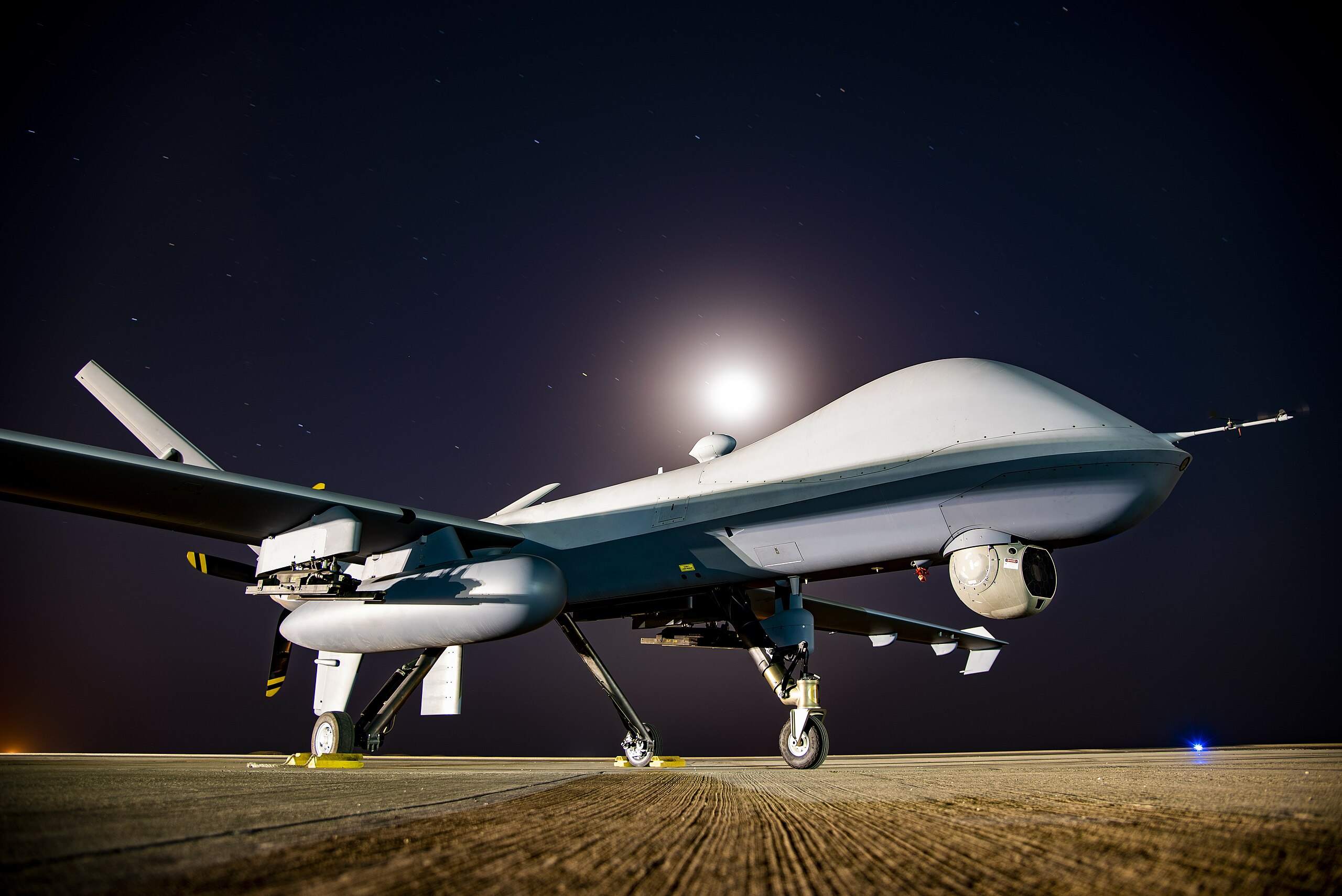
An_MQ-9_Reaper_sits_on_the_361_Expeditionary_Attack_Squadron_flightline_at_an_undisclosed_location,_Aug._6,_2022
An MQ-9 Reaper sits on the 361st Expeditionary Attack Squadron flightline at an undisclosed location, 6 August 2022. The 361st Expeditionary Attack Squadron operates the aircraft in support of Operation INHERENT RESOLVE. (Source: Wikimedia)

Initial Implementation

On 1 October 2020, the 20th Attack Squadron at Whiteman Air Force Base entered a 60-day reconstitution period, the first-ever protected dwell time for an RPA unit. Colonel Timothy Monroe, the 25th Attack Group commander, wrote that dedicated time out of combat was a ‘paradigm shift’ that would ‘have a significant impact to an adversary’s calculus.’ He was quickly proven correct when the hard work of squadrons in reconstitution set up equally unprecedented MQ-9 deployments in Romania and Japan over the next three years. Even with a short amount of time in dwell, MQ-9 units executed a paradigm shift from counterterrorism in the Middle East and Africa to strategic competition in Europe and the Pacific.

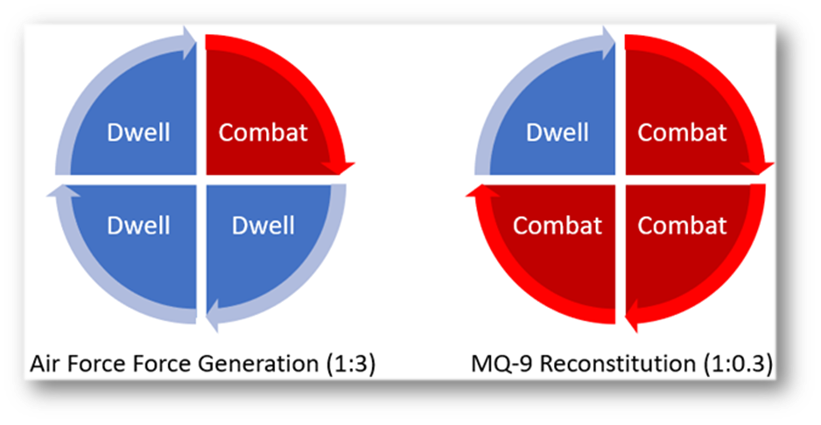
While the first MQ-9 dwell programs have shown impressive results, they have limited goals – rotating four squadrons implies a deploy-to-dwell ratio of 1:0.3, well below the DoD and USAF deploy-to-dwell goal of 1:3. A lower ratio means less training. Before a 6-month deployment, a fighter squadron receives a minimum of 18 months of training. An MQ-9 squadron starting the same 6-month deployment gets only two months of training – about one-tenth the time to complete similar training requirements. The unusually short training period also created new challenges and amplified existing structural problems in the RPA community.

Before initial dwell implementation, MQ-9 pilots and sensor operators completed mission qualification training and did not train again until they became instructors – one of the most underappreciated facts about RPA aircrew. Additionally, most mobility and big-wing aircraft have an aircraft commander that can debrief co-pilots, and most fighter aircraft has a flight lead that can debrief wingmen; MQ-9 aircrew have neither. When entering dwell, the lack of training experience and a senior/junior crew model forces squadrons to task their instructors to oversee every dwell sortie. As a result, MQ-9 instructor pilots and sensor operators are severely overtasked during dwell, leading to burnout, low morale, and poor training quality.

Flipping the Script 1
Depiction of deploy-to-dwell ratios (Source: Author)

Finding the Right Ratio

One barrier to decreasing MQ-9 deploy-to-dwell ratios is that dwell is normally justified in keeping US military members at home. DoD dwell policy explains a 1:3 deploy-to-dwell goal in part to ensure that servicemembers ‘do not spend extended periods of time away from their homeport, station, or base.’ MQ-9 aircrew never leave their base and return to their homes after each day of flying. Further, other communities (such as special operations forces) are chronically over-deployed. Even if studies continually demonstrate the need for RPA dwell, the lack of a physical departure from home stations challenges improved deploy-to-dwell ratios.

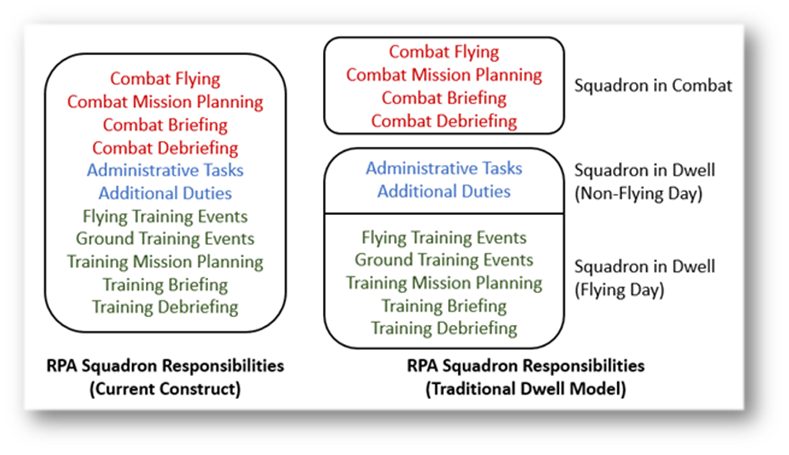
The requirement for traditional deploy-to-dwell ratios is evident in a day in the life of RPA aircrew. Today, pilots and sensor operators show up to work with many responsibilities. First, they fly for at least some portion of the day, conducting operational and combat missions globally. Second, they fulfil administrative responsibilities; all but the most junior aircrew have additional duties, from supervising airmen to administering annual evaluations to planning the squadron holiday party. Third, the aircrew accomplishes their training requirements. Because squadrons spend almost all their time in active operations, they must conduct basic combat training, training to make new instructors, and training on emerging tactics and technology while in combat. Fourth, the aircrew participates in mission planning, briefs, and debriefs internally and with outside agencies. To be clear, when RPA aircrew are flying, they do not do other work. Nevertheless, as soon as they leave the cockpit, their attention is pulled in three different directions.

Extensive research demonstrates the challenges of this type of multitasking. On the individual level, multitasking increases stress, decreases productivity, and increases the number of errors in completed work; one study demonstrated that multitasking functionally lowered workers’ IQ by ten percentage points.[5] Organisational multitasking, in which an organisation’s focus is split between multiple critical tasks, has similar effects. Research demonstrates that multitasking organisations deliver results slower, less consistently, and of lower quality than their focused counterparts.[6] The structure of RPA squadrons makes this problem more challenging; with a 24/7 mission, most of the squadron is divided into three shifts and rotating workweeks that prevent clear delineation of administrative, training, and combat duties. As a result, RPA squadron constructs that attempt to do all things at once are structured to underperform continually. Studies even demonstrate that RPA aircrew weigh their ‘deployed in-garrison status’ and ‘extra duties/administrative tasks’ (i.e., multitasking peacetime and wartime responsibilities) as higher operational stressors than combat and weapons employment.[7]

To return a squadron’s attention to its combat or operational mission, future RPA dwell programs must provide enough time out of combat to accomplish peacetime responsibilities. Before a manned squadron deploys, its members take the time to complete most training, administrative responsibilities, and professional requirements. RPA aircrew must do the same before beginning a ” deployment into operational flying. There is no data on how long this would take RPA aircrew, but it is reasonable to assume that it will be roughly the same as their manned counterparts.

With non-flying responsibilities accomplished outside combat missions, RPA squadrons could re-focus on combat operations. That same RPA pilot or sensor operator with four responsibilities in the legacy model would now have two: mission planning or execution. No key squadron personnel would conduct offsite development during high-priority operations. No pilots would be worrying about getting off shift in time to catch a flight to their wedding in four days.[8] In short, the RPA enterprise would flip its most important script: while combat operations are normal and training is abnormal today, the future must make training normal and combat a critical exception.

Flipping the Script 2
Depiction of RPA squadron responsibilities (Source: Author)

Conclusion – The Way Forward

Integrating RPA into a 1:3 deploy-to-dwell cycle faces serious but surmountable challenges. There are only three ways to improve a deploy-to-dwell cycle: create more squadrons, increasing the number of personnel out of combat; re-task (i.e., ‘redeploy’) some MQ-9 units from combat to training; or restructure squadrons to reduce overhead and free up personnel for training. Each of these three approaches poses its own challenges, as resources are limited, demand for MQ-9s is already more than the USAF can produce, and adjusting well-established personnel constructs carries risk. However, the idea that ‘risk is rarely mitigated, just transferred’ applies here. The RPA enterprise transfers risk to combat missions by not accepting risk in resourcing dwell.

Increasing time in dwell also increases the demand for training resources. More time in training means more flying hours at home, which requires more aircraft, cockpits, and (most importantly) maintainers. Even relatively banal problems like a chronic lack of desks and computers become acute when aircrew are in cockpits less and in offices more. The USAF is looking to save money in the MQ-9 program, but the relatively small costs of properly equipping its aircrew will pay returns in the long run.

Innovative solutions to resourcing dwell could be an entire article; the more critical starting point for the discussion is setting a requirement. As long as RPA aircrew are attempting to conduct missions while distracted by administrative responsibilities, if they are hampered by missing key personnel, and as long as they attempt to execute two important tasks simultaneously, they will not perform at the level expected of USAF aviators. The RPA enterprise must make another paradigm shift by integrating into the USAF dwell model, focusing on combat, and improving its performance just as the United States has faced its greatest strategic challenge since the end of the Cold War.

Major James ‘Hot’ Schmitt is a senior remote pilot in the United States Air Force with more than 2,500 combat and combat support hours in the MQ-1 and MQ-9. He has supported operations in Iraq, Syria, Afghanistan, and elsewhere, including a recent deployment as the Chief of Weapons and Tactics for Air Forces Central at Al Udeid Air Base, Qatar. He is a graduate of the US Air Force Weapons School and currently works on the Deputy Chief of Staff for Operations staff at Headquarters Air Force.

Header image: An General Atomics MQ-9 Reaper unmanned aerial vehicle flies a combat mission over southern Afghanistan. (Source: Wikimedia)

[1] RPA is the USAF term for large, medium-altitude uncrewed aerial systems, sometimes also referred to as UAS or drones, to emphasise the role of the remote crew flying the aircraft.

[2] Chappelle, Wayne et al., ‘Reassessment of Occupational Health Among U.S. Air Force Remotely Piloted Aircraft

(Drone) Operators,’ Final Report, Air Force Research Laboratory (April 2017), p. 36.

[3] United States Government Accountability Office, ‘UNMANNED AERIAL SYSTEMS: Air Force Should Take Additional Steps to Improve Aircrew Staffing and Support’ (June 2020), p. 2.

[4] GAO, UMANNED AERIAL SYSTEMS, pp. 49-52.

[5] Molly Russ and Derek Crews, ‘A Survey of Multitasking Behaviors in Organizations,’ International Journal of Human Resource Studies 4, no. 1 (2014), p. 139.

[6] Janice Alquizar, ‘Multitasking of Teachers in the Contemporary Settings: Boon or Bane?” (Dec 2018), p. 35.

[7] Wayne Chappelle et al., ‘Symptoms of Psychological Distress and Post-Traumatic Stress Disorder in United States Air Force “Drone” Operators,’ Military Medicine 179, no. 8 (2014), p. 67.

[8] Author’s unpleasant experience.

#BookReview – Drone War Vietnam

#BookReview – Drone War Vietnam

David Axe, Drone War Vietnam. Barnsley: Pen and Sword, 2021. Illustrations. Bibliography. Index. Hbk. viii + 166 pp.

Reviewed by Dr Roger Connor

9781526770264

The rapidly expanded use of military drones for surveillance and targeted strikes has generated greater interest in 20th Century military drone development and use over the past two decades. The most prolific antecedent to the General Atomics Predator was the US Air Force’s (USAF) Vietnam-era employment of Ryan 147 ‘Lightning Bug,’ a variant of the Firebee turbine-powered target drone developed in the late 1940s. In all, 3,435 Lightning Bug combat missions were flown over the South-East Asia combat by 1,106 of what today would be regarded as ‘attritable’ drones. Launched from a DC-130 mothership and recovered in flight after popping a parachute by CH-3 helicopters, these unconventional reconnaissance remotely piloted aircraft fit the traditional rationale for drones – the D’s: Dull, Dirty (nuclear), or Dangerous operations. Over North Vietnam, Lightning Bug flights freed RF-101 and other reconnaissance crews from particularly hazardous or politically sensitive missions, such as documenting air defence sites, especially S-75 (NATO designated SA-2) surface-to-air missile complexes. Some even performed propaganda leaflet drops. While the 147s flew unarmed in operations, considerable development occurred in equipping them with precision-guided ordnance, but the war ended before they were suitable for deployment.

David Axe, a self-described journalist, filmmaker, and blogger, has produced a slick-looking, if somewhat anemic, study of the Ryan Lightning Bugs. Organized into sixteen short chapters of roughly four-to-eight pages, each separated by photographic spreads, the first three chapters address the early history of the Lightning Bugs, framing them as a response to the challenge of the Soviet S-75 (SA-2) surface-to-air missile. Chapters four to fifteen document various episodes of operations of operations over North Vietnam with an emphasis on Ryan’s response to the challenges encountered. The final chapter documents Ryan’s next generation Model 154 drone.

DC-130_Hercules_taking_off_with_Firebee_drones_for_recon_mission_over_Vietnam
A US Air Force Lockheed DC-130A Hercules taking off on a mission in Southeast Asia, carrying two Ryan AQM-34 Firebee drones, c. 1969. Firebees flew reconnaissance missions using a pre-programmed guidance system or by remote control from the DC-130 crew. (Source: Wikimedia)

Drone War Vietnam attempts a survey of Lightning Bug operations while linking them with post-war strategic applications of remotely piloted aircraft and the broader narrative of drone development. The primary attraction for Axe’s narrative is that it is well-illustrated with images that do not appear in other works on the topic. Many of these photos originated with the Ryan archives, now in possession of the San Diego Air and Space Museum Archives. These include multiple perspectives of drone operators in DC-130 motherships and a Marine Corps CH-37 helicopter used in drone recovery operations that crashed in just such an attempt. As a visual record of this technological niche, Axe’s monograph is the best available in print.

Unfortunately, Axe’s narrative is disappointing. A significant factual error in the first two sentences of the introduction sets the tone (incorrectly describing the well-documented 2001 first strike made from an MQ-1). Casual errors such as Mutually Assured Destruction being described as having existed in 1950 also crop up. While these contextual errors are frustrating, fundamental errors on the topic are less forgivable. For instance, Axe notes, ‘[B]etween 1966 and the end of the Vietnam War, Army helicopters attempted 2,745 drone recoveries and completed 2,655 of them: a 96.7 per cent success rate’ (p. 90). This is a nice recitation of facts, except that almost exclusively USAF helicopters of the 350th Strategic Reconnaissance Squadron performed the duty – a critical fact that does not appear in the text. Axe’s writing style is accessible, but sometimes overly so with the use of incomplete sentences, for example, ‘[N]o opportunity to bait an S-75 battery’ (p. 80).

Axe’s understanding of the sweep of drone history is poor. He takes an American-centric focus, but even then, has ignored the broader historiography of remotely piloted aircraft development. Instead, he describes drone history as Kettering Bug begets Denny Radioplane begets Firebee. A quick look at H.R. Everett’s Unmanned Systems of World War II (2015) should have been enough to avoid such a flawed chronology. Meanwhile, the technical aspects inherent in the Lightning Bug’s achievements receive little attention, particularly concerning the challenges and limitations of operating and recovering the drones. Likewise, the incredible advances in inertial navigation that made autonomous flight in contested airspace possible pass with only a couple of sentences.

The text is not footnoted, and tellingly, neither Axe nor his editor understood the difference between primary and secondary sources as they are delineated in his bibliography, though almost nothing he includes there would be considered a primary source. Even obvious sources, like the Project CHECO report on Buffalo Hunter (the late war phase of Lightning Bug operations), easily obtainable online, are missing.

Most of Axe’s narrative is a retelling of William Wagner’s Lightning Bugs and other Reconnaissance Drones (1982). Wagner’s forty-year-old effort is the historian’s more thorough and polished option. Axe at least credits Wagner, a former Ryan Aeronautical executive, with much of his content, but this effort is a poor imitation of the original. Where Axe does improve on Wagner is in the contextual frame of drone operations, for which he adds a geopolitical frame of the various events and geographical operations. These are often over-simplistic, but they do succeed in making the book more accessible for an enthusiast audience interested in the hardware but with less understanding of the history and establishing a more well-rounded narrative. However, this contextual frame is often awkwardly executed in a way that does little to inform the application of drones, for example, a three-page chapter on the Gulf of Tonkin incident. The flip side is that Axe spends less than a third of the monograph on Lightning Bug operations in the Vietnam War. Instead, with Wagner as his primary source, he spends as much time on China overflights and ELINT (electronic intelligence) variants used to monitor North Korea as the far more substantive deployments over North Vietnam. Axe’s supposedly operational history thus primarily reflects a contractor perspective with very little of the service experience one might expect from this type of study.

These shortcomings become very apparent when examining a campaign like Linebacker II. As Wagner himself noted, Lightning Bug operations reached their peak during the operation. Axe’s telling of the story is almost exclusively in the frame of B-52 experience, which is a nice contextual detail, but adds nothing to the understanding of how or why remotely piloted aircraft were significant to the campaign.

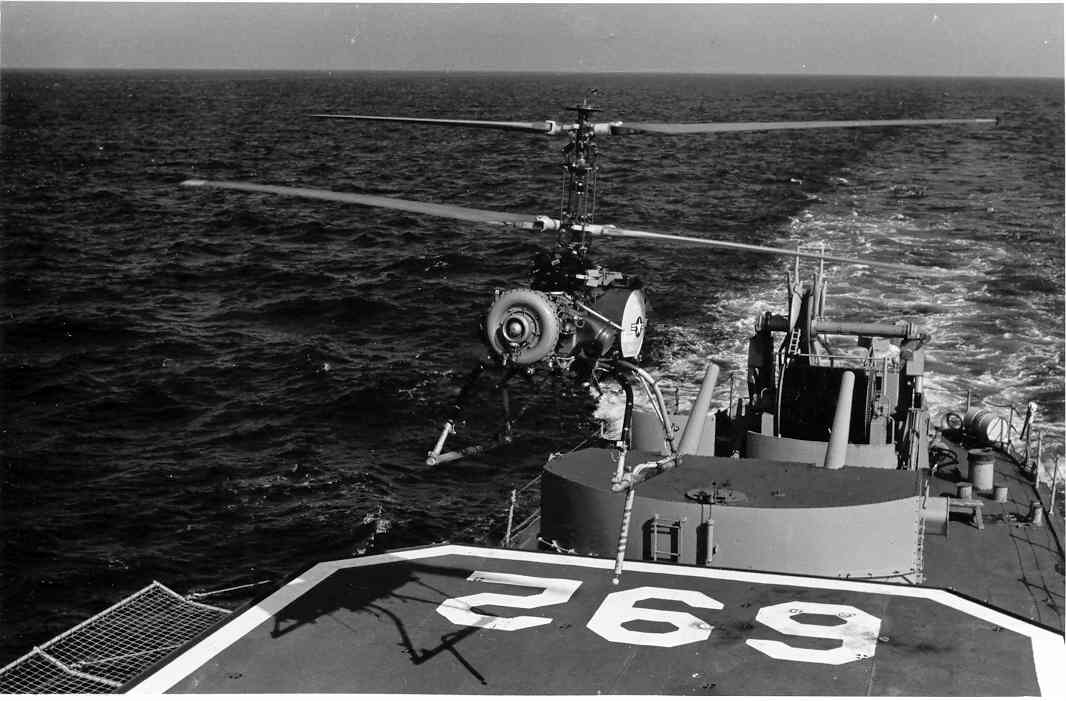
QH-50_DD-692_1967
A QH-50 DASH anti-submarine drone on board the destroyer USS Allen M. Sumner during a deployment to Vietnam. The photo was taken between April and June 1967. (Source: Wikimedia)

Axe pays some attention to remotely piloted adjuncts to the Lightning Bugs such as the Lockheed D-21 and Ryan 154 Compass Arrow, both focused on the Chinese nuclear program. The decision to include these is somewhat odd as they are outside of his Southeast Asian narrative. While the Compass Arrow has at least a corporate family tree associated with the Lightning Bugs, the D-21 has no operational or technical overlap. Meanwhile, Axe makes no mention of the other prominent drone programs employed in South-East Asia such as the QU-22 and the QH-50 drone helicopter. The QU-22 were droned Beechcraft Bonanzas used as communication relay platforms for the Igloo White ‘electronic fence’ of ground sensors on the Ho Chi Minh trail. The QH-50s were used primarily to spot naval gunfire. The QU-22 and QH-50 provide a useful frame for understanding the broader requirement for drone aircraft and the inherent limitations of the technology. It is this sort of assessment and analysis that is most notably absent. Instead, Axe is content to conclude that the legacy of the Lightning Bugs was to show that the Predator’s milestones weren’t new (p. 150). Nuanced quibbles about what was new with Predator aside (quite a lot, in fact), this rather obvious point could have also been made about drone aircraft in World War II. The 147 (along with QU-22s and QH-50s) demonstrated an emergent association between remotely piloted remotely piloted aircraft and the goal of risk reduction in limited war, which was something revolutionary, but the author did is not well versed enough in the topic to see it.

Besides Wagner, there is another useful study, which Axe neglected entirely, specifically Steve Miller’s nearly 700-page self-published The 99th Strategic Reconnaissance Squadron: The Air Force’s Story of Unmanned Reconnaissance in the Vietnam War (2017). Though Miller would have benefited greatly from an editor, it is a useful expansion on Wagner’s dated history, written by a Lightning Bug veteran and introduces a trove of primary source documentation, as well as a much-needed USAF operational perspective. He also brings in the QU-22 story. If Axe had focused more on veterans’ experiences like Miller, Drone War Vietnam might have been worth recommending. Instead, it is a pale shadow of Wagner’s better publication.

With the disappointments inherent in Axe’s monograph, one wonders what an effective revision of Wagner’s solid work might look like. However, Kevin Wright’s We Were Never There: CIA U-2 Operations Over Europe, the USSR and the Middle East, 1956-1960 (2021) gives an idea of what might be possible. Linking mission reports, operational context, supported by high-quality maps and graphics, he has developed a glossy enthusiast-style publication that meets scholarly standards of documentation while proving attractive and accessible for the aviation general-interest audience. A similar work on the Lightning Bugs would help both the scholarly study and enthusiast appreciation of remotely piloted and autonomous aircraft operations.

Dr Roger Connor curates several collections at the Smithsonian National Air and Space Museum, including remotely piloted and autonomous aircraft, vertical flight, Army ground force aviation, cockpit equipment, and aviation infrastructure. He earned his PhD from George Mason University in 2020 with his dissertation, ‘Rooftops to Rice Paddies: Helicopters, Aerial Utopianism, and the Creation of the National Security State.’

Header image: The US Air Force Ryan AQM-34L Firebee drone ‘Tom Cat’ of the 556th Reconnaissance Squadron flew 68 missions over North Vietnam before being shot down by anti-aircraft fire over Hanoi. (Source: Wikimedia)

#Podcast – The Drone Age: An Interview with Dr Michael Boyle

#Podcast – The Drone Age: An Interview with Dr Michael Boyle

Editorial Note: Led by our Editor Dr Mike Hankins, From Balloons to Drones produces a monthly podcast that provides an outlet for the presentation and evaluation of air power scholarship, the exploration of historical topics and ideas, and provides a way to reach out to both new scholars and the general public. You can find our Soundcloud channel here. You can also find our podcast on Apple Podcasts and Google Podcasts.

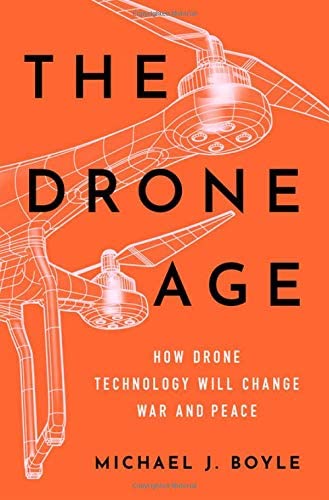
Unmanned Aerial Vehicle, or more commonly, Drones, have become increasingly key to contemporary warfare, even iconic. But are they really as revolutionary as they appear? Dr Michael Boyle joins us to discuss his recent book, The Drone Age: How Drone Technology Will Change War and Peace. He examines the drone phenomenon as it has currently affected global conflict, and how drones might shape the future.

51PMGO4y82L._AC_SY1000_

Dr Michael J. Boyle is an Associate Professor and Chair of Political Science at La Salle University. He is also a Senior Fellow at the Foreign Policy Research Institute (FPRI) in Philadelphia. His previous books include Violence after War: Explaining Instability in Post-Conflict StatesLegal and Ethical Implications of Drone Warfare, and Non-Western Responses to Terrorism.

Header image: A USAF MQ-9 Reaper remotely piloted aircraft flies above the smoky San Gabriel Mountains of southern California on its way to a fire mission in the northern part of the state, August 2020. (Source: US Department of Defense)

#ResearchResources – Recent Articles and Books (July 2021)

#ResearchResources – Recent Articles and Books (July 2021)

Editorial note: In this series, From Balloons to Drones highlights research resources available to researchers. Contributions range from discussions of research at various archival repositories to highlighting new publications. As part of this series, we are bringing you a monthly precis of recent articles and books published in air power history. This precis will not be exhaustive but will highlight new works published in the preceding month. Publication dates may vary around the globe and are based on those provided on the publisher’s websites. If you would like to contribute to the series, please contact our Editor-in-Chief, Dr Ross Mahoney, at airpowerstudies@gmail.com or via our contact page here.

Articles

Phil Haun, ‘Winged Victory: How the Great War Ended: The Evolution of Giulio Douhet’s Theory of Strategic Bombing,’ War in History (2021). doi:10.1177/09683445211027596.

A war’s conclusion can impact strategic thinking even when the outcome is misinterpreted or an outlier. For a century, Giulio Douhet in Command of the Air, 1921 and a 1926 revision, has been the prophet for the utilitarian morality of bombing cities to gain decisive victory. His earlier work, Winged Victory: How the Great War Ended, written in 1918, has been ignored where he argued for the interdiction of enemy lines of communication. His theory changes by how the Great War ends with the collapse of the German population’s will. Had it ended differently, he could have reached a different conclusion that could have impacted the development of air power theory in the twentieth century.

Colin Tucker, ‘The Effect of Aerial Bombardment on Insurgent Civilian Victimization,’ Security Studies (2021), DOI: 10.1080/09636412.2021.1951834

Little is known about how air strikes influence insurgent behavior toward civilians. This study provides evidence that air strikes against the Islamic State of Iraq and Syria (ISIS) by counterinsurgency forces were a contributing factor in its civilian victimization. I theorize that air strikes expanded the distribution of insurgent fatalities to include higher-echelon membership and, at the same time, imposed psychological impairments on its fighters. As a consequence, these changes relaxed restraints on civilian abuse at the organizational and individual levels. This theory is informed by interviews of ISIS defectors and translations of ISIS documents and tested through a statistical analysis of granular-level data on air strikes and one-sided violence during ISIS’s insurgency. These findings contribute to our knowledge of insurgent behavior and provide important policy implications in the use of air strikes as a counterinsurgency (COIN) tool.

Books

James Corum, Norway 1940: The Luftwaffe’s Scandinavian Blitzkrieg (Oxford: Osprey Publishing, 2021).

The Campaign for Norway in 1940 was a pivotal moment in modern warfare. It was the first modern joint campaign that featured not only ground and naval operations, but also airpower as an equal element of all operations. Indeed, Norway was the first campaign in history where air superiority, possessed by the Germans, was able to overcome the overwhelming naval superiority, possessed by the British. German success in Norway was not pre-ordained. At several times in the opening weeks of the campaign the Norwegian and Allied forces could have inflicted a major defeat on the Germans if their operations had been effectively supported. It was, in fact, the superior German use of their air force that gave the Germans the decisive margin of victory and ensured the failure of the Allied counteroffensive in central Norway in April and May of 1940.

The Norwegian campaign featured some firsts in the use of airpower including the first use of paratroops to seize key objectives and the first sinking of a major warship by dive bombers. All aspects of airpower played important roles in the campaign, from air reconnaissance to strategic bombing and ground-based air defenses. The British employed their Bomber Command in long-distance strikes to disrupt the German air and naval bases and the Germans used their bomber force to carry out long-range support of their ground forces. The German ability to transport large numbers of troops by air and the ability to supply their ground and air forces over great distances gave the Germans their first major campaign victory over the Western Allies.

Covering the first true joint campaign in warfare, this book provides a complete view of a compelling turning point in World War II. Featuring an analysis of the cooperation of ground, naval and air forces, this book is intended to appeal to a broad range of readers interested in World War II, and specifically to those interested in the role airpower played in the strategic and operational planning of the Campaign for Norway.

Bill Norton, 75 Years of the Isreali Air Force – Volume 3: Training, Combat Support, Special Operations, Naval Operations, and Air Defences, 1948-2023 (Warwick: Helion and Company, 2021).

The Israeli Air Force grew from humble beginnings to one of the largest and most experienced air combat teams in the world. This came through several major and minor wars with its Arab neighbors, almost continuous military actions short of war, and preparation for power-projection operations unusual for so small a nation. The 75-year history of the Israeli Air Force is, then, a fascinating study of a relatively small military organization working to meet shifting obligations under multiple impediments while being repeatedly tested in combat. Many factors over the decades shaped the air fighting capability, not the least being the demands of the evolving battlefield, uncertain funding, available weapons, and quality of personnel. Tactics and doctrine were, in turn, shaped by government policies, international pressures, and confronting adversaries likewise evolving. When the trials in war or combat short of war came, success was a measure in relevance of the service’s weapons, adequacy of training, and experience of personnel.

As a companion to Volumes 1 and 2 giving the chronological history of the Israeli Air Force, this third volume details special topics underscoring the service’s capability growth. These richly illustrated topics are flight training, photo reconnaissance, aerial refueling, electronic warfare, support of Special Forces, support of the Navy, and the Air Defence Forces. A summary of aircraft that served with the Israeli Air Force is provided, with a photograph of each type and major models. A summary of all IAF air-to-air “kills” is also included. 

Written at a time of historical changes for the air force, and the Israel Defense Forces as a whole, this volume informs understanding of the service emerging and operating in future years. Backed by official and unofficial histories published in the last 20 years, and the unprecedented openness in the past few decades, the author has worked to make this account more accurate and complete than those of the past. It also stands apart from many other books in performing this examination in a more dispassionate and critical manner, without the common hyperbole.

Harry Raffal, Air Power and the Evacuation of Dunkirk: The RAF and Luftwaffe During Operation Dynamo, 26 May – 4 June 1940 (Bloomsbury Publishing: London, 2021).

The evacuation of Dunkirk has been immortalised in books, prints and films, narrated as a story of an outnumbered, inexperienced RAF defeating the battle-hardened Luftwaffe and protecting the evacuation. This book revives the historiography by analysing the air operations during the evacuation. Raffal draws from German and English sources, many for the first time in the context of Operation DYNAMO, to argue that both sides suffered a defeat over Dunkirk. 

This work examines the resources and tactics of both sides during DYNAMO and challenges the traditional view that the Luftwaffe held the advantage. The success that the Luftwaffe achieved during DYNAMO, including halting daylight evacuations on 1 June, is evaluated and the supporting role of RAF Bomber and Coastal Command is explored in detail for the first time. Concluding that the RAF was not responsible for the Luftwaffe’s failure to prevent the evacuation, Raffal demonstrates that the reasons lay elsewhere.

#Commentary – The Threat of Commercially Available Drones

#Commentary – The Threat of Commercially Available Drones

By Harry Raffal

Following the disruption at Gatwick airport, it is unsurprising that the potential dangers and disruptions that private drones can cause have come sharply into focus. For many experts, the use of a small, readily available, and easily affordable drone to achieve the disruption witnessed at Gatwick was not unforeseen. Instead, there have been increasing warnings from security advisors, financial service experts and even the United States Secretary of Homeland Security, Kirstjen Nielsen, regarding the emerging risk exposures created by the recreational use of drones. The use of commercially available Drones to disrupt civil aviation has been one of the most apparent consequences of allowing the huge proliferation of these devices without ensuring there are relevant safeguards in place first. The prospect of a drone temporarily putting a major airport out of action was a threat which was predicted and reflected the lower end of warnings regarding ‘the potential for catastrophic damage.’ The question must surely be to ask why it has taken so long for this danger to be taken seriously by the government and aviation authorities.

There have been warning signs that drones while offering potentially enormous economic advantages, will be used by those with malign interests. In 2018 alone Drones have been involved in near-misses with RAF jets; caused low-level disruption at numerous airports; been used in an attempted attack on the Venezuelan President; they have also delayed and imperilled aircraft and helicopters involved in fire-fighting efforts. In Syria, the use of Commercially available drones by non-state forces is commonplace, and Kurdish forces released evidence of what they claimed was an ISIS Drone factory in July 2017.

The challenge of countering Drones without sufficient preparation is enormously difficult if the perpetrators are intent on causing disruption. During events at Gatwick, many observers may ask why such drones could not merely be shot down. It is difficult for those not familiar with military topics to immediately conceive that firing high-powered rifle bullets at a target can have potentially lethal collateral consequences if that target is missed – no small possibility when the target is a small, fast and agile Drone in flight. As the UK Security Minister, Ben Wallace stated following the disruption at Gatwick ‘the challenges of deploying military counter measures into a civilian environment, means there are no easy solutions.’

This is not to say that there are no devices capable of disabling Drones, there are. Point-and-shoot ‘drone killers’ exist. These ‘drone killers’ use software-defined radio to jam the specific frequency a drone is operating on causing them to crash. Alternatively, for more sophisticated models, such ‘drone killers’ can force drones to land on auto-pilot. Even minimal preparation at UK airports would have ensured the capacity to detect the frequency a drone was operating on, and the use of a higher-powered transmitter would have provided the capacity to deal with the threat from commercially available Drones which do not possess the capacity to ‘channel hop’. Elsewhere, some thought has been given to counter the dangers posed by commercially available Drones. However, until the three days of disruption at Gatwick, there had not been any systematic preparations or hardening of vulnerable targets in the UK.

The future development of micro- and nano-drones, and their potential use in the civil environment brings with it the possibility of further disruption and dangers. The recent regulations which among other things have set height restrictions and, from November 2019, will require users of devices heavier than 250g to register with the authorities provide limited protection against those intent on the criminal use of drones. What is required is forethought and preparation to ensure that we are not discussing, in the not-too-distant future, why authorities were unprepared to deal with ‘swarms’ of these devices.

Harry Raffal is the Historian at the Royal Air Force Museum and has recently completed his PhD thesis on the RAF and Luftwaffe during Operation DYNAMO, the evacuation of the Dunkirk in 1940 at the University of Hull. Harry has previously published research on the online development of the Ministry of Defence and British Armed Forces and presented papers at several conferences and events including the RAF Museum’s Trenchard lecture series, and the 2017 Research Infrastructure for the Study of Archived Web Materials conference. His research has been funded through bursaries and educational grants from the Royal Historical Society, the 2014 Big UK Domain Data for the Arts and Humanities research grant, the Princess Royal Trust, the University of Hull, the Sir Richard Stapley Trust and the RAF Museum PhD bursary.

Header Image: DJI Phantom 4 Pro/Pro+ quadcopter with camera. (Source: Wikimedia)

#BookReview – Cultural Politics of Targeted Killing: On Drones, Counter-Insurgency, and Violence

#BookReview – Cultural Politics of Targeted Killing: On Drones, Counter-Insurgency, and Violence

By the Reverend Dr (Wing Commander) David Richardson

Kyle Grayson, Cultural Politics of Targeted Killing: On Drones, Counter-Insurgency, and Violence. Abingdon: Routledge, 2016. Tables. References. Index. Hbk. 218 pp.

Cultural-Politics-of-Targeted-Killing-cover

One cannot venture very far in the field of contemporary air power studies without encountering remotely piloted air systems, which have become a central feature of western military operations. Their use has raised many questions regarding their ethical status, and the effects they may have both on the battlefield and in the control cabin. Kyle Grayson, Senior Lecturer in International Politics at Newcastle University, has taken a slightly different approach in this volume, looking more widely at the interaction between culture, technology, the economy, government, and geostrategic elements. The book is part of the ‘Interventions’ series, which aims to examine international issues through a range of disciplines including critical, post-structural, and postcolonial approaches; this is not simply a primer on the rights and wrongs of conducting war with remotely piloted aerial systems (RPAS) – or drones. Grayson’s focus is on what he describes as ‘targeted killing’, which he sees as a form of modern-day assassination from the air, an activity which has often been debated on the fringes of the western ethical tradition (p. 4). In writing the volume, he seeks to demonstrate how modern liberal societies have come to terms with targeted killing through culture, emphasising ‘the incorporation of disparate elements including the non-human, power-relations, plasticity and the importance of discourse’ (p. 199).

In his first chapter, Grayson’s approach is to examine the use of RPAS for targeted killing as primarily a cultural phenomenon, trying to understand how culture interacts with such practices in such a way that they can become ‘part of the common sense of security thinking’ (p. 200). His second chapter looks at the legal frameworks which maintain a distinction between assassination and targeted killing while expanding the legal scope of such operations. Chapter three looks at the ‘moral problematics and gender relations’ of assassination and targeted killing, arguing that the use of RPAS systems can help overcome some of the ‘narrative ambivalence’ that these relations involve (p. 201). Chapter four examines how technology alone does not explain the increased usage of RPAS. Rather, a much broader scope of ‘chaoplexic thinking, network centric imaginaries, and preferences for speed, maximising information flows, flexibility, delayered organisational forms, and automation’ help explain current trends to use such systems (p. 201). The fifth chapter focuses on what Grayson describes as the ‘aesthetic’ of killing, examining how those who authorise and those who participate in RPAS warfare experience what is taking place on their screens. In the last chapter, the author emphasises the effect that missile strikes have on the homes of those targeted, arguing that this ‘colonises places and seeks to disrupt their temporalities’ (p. 202).

Grayson concludes his work by elucidating six factors that arise from liberal political culture; issues involving the legitimacy of assassination/targeted killing, the influence of modern camera technology, the role of information technology networks, politics of gender, the use of the law, and representation of the other (pp. 202-6). In his final comments, he urges the need for modern liberal societies to continually evaluate their relationship with RPAS usage, and to critically reflect upon their political culture.

Reaper Remotely Piloted Air System
A Royal Air Force Reaper RPAS at Kandahar Airfield in Afghanistan, c. 2014. (Source: Defence Imagery, UK Ministry of Defence)

There is much in this book that is of great interest. For instance, Grayson very helpfully notices the importance of the contemporary market economy in world affairs, emphasising how much the private sector engages with defence. In Grayson’s analysis, ‘the continuing growth of the RPA industry is benefiting from a favourable constellation of politico-economic elements’ (p. 125). Alternatively, to put it another way, the unmanned aerial vehicle is an ideal fit for the current economic climate and the political ecosystem. It would have been fascinating to see even more of an interaction with current thinking on neoliberalism, such as the writing of Wendy Brown, on how the market economy has effects far beyond the market. Grayson’s observations on the ‘complex social assemblage of war’ are thought-provoking and could arguably have been pressed even further, on such subjects such as deskilling and delayering of the economy. Similarly, Grayson’s interaction with Guy Debord and the role of spectacle in society merited further attention (pp. 93-135).

Grayson’s book has the potential to ask real and meaningful questions about the use of RPAS in contemporary warfare. By offering an approach that goes beyond a basic ethical analysis, considering the wider role of culture and warfare, his work could offer real insights into the interface of weapons and worldviews. Thus, for example, his comment that ‘a disproportionate amount of applied innovation in forms of governmentality under liberalism has been directed at the margins within territory, or oriented towards its periphery […] [liberalism] has shown great brutality to those it identifies as being beyond reclamation’ (p. 206). Such considerations are worthy of serious debate and analysis, whether one agrees with Grayson’s premises or not. Many commentators such as Nicholas Carr and Neil Postman have commented on the highly visual nature of contemporary culture – Grayson’s focus on the ‘aesthetics’ of RPAS warfare has the potential to offer real insights in this field. However, a great deal of his writing is delivered in a style which, in generous terms, one would describe as technical. The general reader who wishes to avail of Grayson’s insights is obliged to hack, word by word, through a lexical jungle overgrown with the bon mots of social theory. Many of the terms such as ‘problematisation’ and ‘biopolitics’ are inadequately defined for the non-specialist, which means that reading the book can be a profoundly frustrating experience. This is unfortunate, as Grayson shows an ability to express himself clearly in portions of the book where social theory assumes a lesser role, such as when describing the interaction between the global market and the armed forces of western nations. In short, Grayson raises many useful questions, but this is a book for only the most determined reader.

The Reverend Dr (Wing Commander) David Richardson is a chaplain in the Royal Air Force, initially ordained into the Church of Ireland. A graduate of the universities of Edinburgh, Dublin, Belfast, and King’s College London, he has served on a variety of RAF stations. His operational experience includes tours across Afghanistan and Iraq.

Header Image: A Royal Air Force Reaper RPAS at Kandahar Airfield in Afghanistan, c. 2014. (Source: Defence Imagery, UK Ministry of Defence)

If you would like to contribute to From Balloons to Drones, then visit our submissions page here to find out how.

The Rise of Armed Unmanned Aircraft – Part Two

The Rise of Armed Unmanned Aircraft – Part Two

By Dr Peter Layton

Editorial Note: In the second part of a two-part article, Dr Peter Layton explores the evolution of the armed unmanned aircraft from its first use in the Second World War through to the First Gulf War. The first part of this article can be found here.

In retrospect, during the Cold War, the dice were stacked against armed unmanned aircraft.  Improving aircrew survivability in a major war – the primary requirement – involved operating in a very hostile, sophisticated air environment in the presence of extensive jamming that could defeat the data links necessary to control unmanned aircraft. Furthermore, the computers, aircraft systems and onboard sensors needed to make such an aircraft work were all big, cumbersome, unreliable and costly. Even when cost was not an issue as in the case of Advanced Airborne Reconnaissance System project of the late Cold War, the unmanned aircraft designs ended up being very large, technically challenging, of doubtful effectiveness and somewhat inflexible in operation.

In the 1990s the stars radically realigned to favour armed unmanned aircraft. In the early 1990s, armed violence erupted in Yugoslavia. The conflict was slow paced with a need for protracted surveillance rather than episodic reconnaissance, but none of the existing systems seemed quite right. Manned aircraft lacked persistence while satellites had predictable orbits and known overhead times, could not easily be repositioned to survey new areas and were impacted by bad weather. Meeting the new requirements driven by the wars in the Balkans was however eased somewhat by the air environment now being permissive with little threat from air defences. In the winter of 1992, the US Joint Staffs and the Office of the Secretary of Defense initiated a quick reaction program for a long-endurance unmanned aircraft. First flight came within six months of contract award, and a year later the General Atomics Predator unmanned aircraft was in operations over Bosnia.

Seemingly quick, the Predator’s rapid entry into service exploited some 15 years of DARPA experiments, trials, partial successes and utter failures. The overall airframe design was point-optimised for the particular mission with a slender fuselage with pusher configuration, long sailplane-like wings, inverted V-tails and a ventral rudder. The engine was a horizontally-opposed, liquid-cooled, four-stroke, geared piston engine with a minimal frontal area that offered high power at a moderate rpm, very low fuel consumption and very low vibration. The Vietnam-era unmanned jet aircraft saved weight by not being fitted with an undercarriage but were difficult to launch and recover. Predator’s used a tall, lightweight fixed undercarriage that gave considerable ground clearance.  This design meant that the Predator had a maximum speed of only some 120kts, but they could loiter for almost a day flying at 70kts at an altitude of 12-15,000 ft. This performance was adequate – if not sparkling – for the new requirement for long persistence albeit useless for the earlier Cold War type missions where survivability was critical.

In design terms, the airframe and engine were skillful but somewhat primitive having more in common with the 1944 TDR-1 unmanned aircraft (see Part One here) than a 1990s military aircraft. The real innovations that addressed the big technological challenge – how to fly and operate an unmanned aircraft in combat for 24 hours or more without on-board humans – lay in the electronics. Computer advances now allowed dramatic increases in computing power, speed and reliability while communication advances connected the Predator literally to the world, changing everything.

Controllability was addressed using a purpose-built flight control computer more powerful than that used in the F-16 fighters of the time. This made the Predator stable in flight in all weathers and easy to control remotely especially during the problematic take-off and landing phases. Navigation was addressed using the satellite-based Global Positioning System (GPS). Earlier unmanned aircraft had significant navigation problems with Vietnam era aircraft often missing their planned target by some 10-12 kilometres. GPS was a real breakthrough that provided an off-board, ubiquitous, highly accurate navigation method. However, it was new communications technology that made armed unmanned aircraft practical.

Over its first few years of operational service, the Predator system took advantage of and was integrated into, the rapidly advancing online world. It broke away from being dependent on line of sight control with the fitment of high bandwidth satellite communication data links. This has made the armed unmanned aircraft both remarkably flexible and remarkably useful.

Remote Split Operations endowed remarkable flexibility. A small team at a forward airbase launched a Predator using a line-of-sight wireless link and then transferred control to operators located anywhere globally who used satellite communications links. These remote operators then flew the long-duration operational part of each sortie, changing crews throughout the mission as necessary. After the mission, the Predator was handed back to the small forward deployed team which landed the aircraft and turned it around for the next mission. This way of operating meant the forward team was small, requiring only very limited support and minimising the people and equipment needed to be deployed.

The second aspect – that of being remarkably useful – was made possible using modern communications technology that allowed data from the unmanned aircraft to be sent worldwide in near-real-time.

By the late 1990s, sensor technology had considerably advanced allowing relatively small high-quality daylight and night television systems to be made for an affordable cost. Moreover, these, when combined with a laser rangefinder and the onboard GPS navigation system, allowed an unmanned aircraft to now very accurately determine the location of the object being looked at. Such pictures and the position data though were of limited use if access to them had to wait for the aircraft’s return to base. Now with high-bandwidth satellite communication systems, full-motion video tagged with its accurate location could be sent to distant locations. Multiple users worldwide could access real-time imagery of events as they occurred.

The impact of this was that not just the aircrew controllers could see the video and make use of it. Now local land, sea and air commanders could have instant access to the imagery allowing more active command and control of assigned forces. High-level commanders and government ministers at home could also gain an appreciation of the tactical events unfolding. These live feeds from the world’s battlefield were compelling viewing; the term ‘Predator Porn’ was coined – you cannot take your eyes off it.

As importantly, imagery analysts and other exploitation specialists at locations worldwide could now bring their expert skills to bear to provide instantaneous advice on niche aspects to the complete command chain, including the operators controlling the Predator. The satellite communications links allowed many skilled people to be ‘onboard’ the unmanned aircraft flying in some distant theatre of operations, making its operations much more useful than a manned aircraft traditionally could be.

161208-F-YX485-100
A US Air Force MQ-9 Reaper awaits maintenance 8 December 2016, at Creech Air Force Base. The MQ-1 Predator has provided many years of service, and the USAF is transitioning to the more capable MQ-9 exclusively and will retire the MQ-1 in 2018 to keep up with the continuously evolving battlespace environment. (Source: US Department of Defense)

The final technological piece in the armed unmanned aircraft jigsaw came together with the fitment of air-to-ground weapons. On operations in the Balkans in the 1990s, Predator’s provided imagery that was used to cue manned aircraft to essential targets, so they could deliver weapons on them. This worked well but sometimes the manned aircraft were not readily available and hours might elapse before they were overhead. This delay meant that hostile forces could group and attack civilians or friendly forces before defensive measures could be taken.  To overcome this, lightweight, small-warhead Hellfire missiles were fitted to the Predators that could be fired by the remote aircrew controllers against time-urgent targets. The range of weapons that could be fitted greatly expanded in later Predator developments but the fundamental constraint of needing to be lightweight to allow the unmanned aircraft to fly long-duration missions remained. Manned aircraft were still necessary for the battlefield situations and targets that required large warhead weapons.

In the early part of the 21st Century, armed unmanned aircraft finally came of age. This occurred with the coming together of several factors. Firstly, in the operational circumstances of the time, the air environment was much less hostile allowing simple aircraft to survive and potentially undertake meaningful roles. Secondly, there was now a pressing operational need for persistent surveillance; a task manned aircraft were unable to meet. Thirdly, aircraft technology has sufficiently mature to allow an unmanned aircraft to be controllable, navigate successfully, carry suitable sensors and incorporate satellite communications equipment. Lastly, in the internet age, once a video stream was received anywhere, it could be sent worldwide to allow anybody with an authorised computer terminal to access and use it.

After more than half-century of development, the aircraft was the easy bit. It was the electronics onboard and overboard, the ground controlling equipment, the complex support base and the large numbers of skilled staff involved at every level that made the whole operation work. It was not surprising then that defence forces pivoted to talk less of unmanned aircraft and towards terminology such as Unmanned Air Systems. Predators and their ilk were a system of systems, mostly ground-based but with one element that flew.

Dr Peter Layton is a Visiting Fellow at the Griffith Asia Institute, Griffith University. His PhD is in grand strategy, and he has taught on this at the US National Defense University. He is the author of the book Grand Strategy.

Header Image: An MQ-1 Predator, armed with AGM-114 Hellfire missiles, on a combat mission over southern Afghanistan, c. 2008. (Source: Wikimedia)

If you would like to contribute to From Balloons to Drones, then visit our submissions page here to find out how.

#Commentary – Going Back to the Future with Insurgent Air Power

#Commentary – Going Back to the Future with Insurgent Air Power

By Dr Jacob Stoil

From the British conception of air policing to the myriad of coalition air assets deployed as part Operation Inherent Resolve, counterinsurgents have enjoyed their ability to be the sole force in skies and the plethora of benefits that brings. Throughout late 20th and early 21st century, there have been rare instances where insurgents have tried to either contest this or at the very least exploit the air domain for their operations. These include the development and deployment of the ‘Air Tigers’ of the Liberation Tigers of Tamil and Eelam (LTTE) and the more recent use of small unmanned aerial vehicles (UAVs) and unmanned combat aerial vehicles (UCAVs) by a host of actors including ISIS and Hezbollah. LTTE’s attempts were largely ineffective, and ISIS’s small UAVs have been only deployed for tactical effects. Assumedly developing a counter to this ISIS threat will be part of the broader effort to deal with the UAV threat writ large. In Gaza, Hamas has developed something different and is going back in time technologically to exploit the hybrid space and launch an air campaign.

In late May 2018 Israeli security forces identified an explosive-laden UAV launched by one of the militant groups from the Gaza strip. In the same month, the Israeli Air Force (IAF) destroyed a Hamas base containing unmanned underwater vehicles. Both these capabilities while impressive represent an evolution of what combatants have already observed the world over. Militant groups increasingly have the capabilities to employ low-cost unmanned systems in a variety of domains. The interesting evolution out of Gaza strip is not the use of advanced technology by militant groups but a return to simple and cheap solutions.

Over the past month, militants in Gaza have launched numerous strikes using incendiary devices attached to kites and balloons. These devices come in several forms; some are kites released on to the wind current carrying flaming material and accelerant dangling from a rope. Others are helium balloons (or helium-filled condoms) with trailing flaming materials and accelerant. Although there are variations most of these carry metallic mesh pouches contacting burning oil-soaked rags or coal. These take advantage of the dry summer conditions in Southern Israel to spark fires out of proportion to the amount of accelerant. In addition to these, there are varieties with small impact based explosive devices attached and more recently explosive devices designed to litter the ground.

This is the past returning. During the Second World War, the Japanese military was unable to bomb the mainland US and turned to balloons with incendiary devices as an attempt at a solution. By 20 June 2018, 75 days of balloon and kite attacks had seen over 700 attacks which burned over 6,100 acres of primarily agricultural land causing millions of dollars of damage. For Israel damage to its agricultural sector presents a serious threat given the relatively small amount of arable and pasturable land.

Iron_Dome_Battery_Deployed_Near_Ashkelon
An Iron Dome battery at Ashkelon, c. 2011 (Source: Wikimedia)

The balloon and kite launched devices present significant challenges to the Israeli military (IDF). Due to their low signature, they are harder to detect than UCAVs. Unlike rockets and mortars, they do not follow a set trajectory making counter battery fire more difficult. They are cheap and therefore employing short-range air defence such as Iron Dome makes little sense. The helium-filled condoms which trail burning liquids or rags may only cost as much as the helium (condoms are distributed in Gaza by the Palestinian Authority and international NGOs) while Iron Dome costs near $100,000 per launch. Other forms of Counter Rocket Artillery and Mortar systems rely on a more prominent radar profile and are designed for point defence not protecting a whole broader.

The biggest challenge they pose may result from their place in the narrative domain. Often launched by teams including children, balloons and kites do not seem as threatening as other, more significant, more conventional types of attacks. Targeting those who launch them with lethal force would likely play poorly in the media and the international community overall. Unlike rockets and mortars, kites, and balloons – no matter the threat they may pose – are not often thought of within the panoply of tools of war. In this way, they are emblematic of an entire strategy – namely causing as much strategic threat as possible while remaining below the threshold of escalation. In his 1991 book The Transformation of War, Martin van Creveld identified the challenge this strategy poses to conventional state militaries stating: ‘Since fighting the weak is sordid by definition, over time the effect of such a struggle is to put the strong into an intolerable position.’[1] The kite and balloon attacks represent a new form of air power for insurgent groups which takes advantage of exactly this dynamic. As of now these attacks also provide a narrative victory to the militant groups allowing them to showcase in video and photo their ability to reach out and attack Israel. If the success of the balloon and kite attacks continues, we can safely assume they will spread. The more they are featured in regional media and militant media the more likely this is to happen.

So what options exist to counter this counter this new aerial threat? Thus far the IDF has looked to technological solutions deploying cheap commercial UAVs to bring down the kites and the balloons through physical contact. The Israeli public broadcaster Kan reported that this has had mixed results. The IDF has recently deployed a new system called Sky Spotter. The IDF employs this electro-optical system, to identify and provide an alert of incoming attacks mitigating the damage caused. Sky Spotter also serves to guide defenders to the incoming targets. There are plans to equip Sky Spotter with a laser system or to the ability to autonomously vector mini-UAVs. In the meantime, with an increase in the threat, some Israeli officials have suggested targeting those launching the attacks, and the IAF has begun firing warning strikes near those launching the attacks. As previously noted this tactic is rife with problems.

Another possible solution might be retaliating against targets and in doing so establishing deterrence. Although this might work in the unique operating environment of Gaza it is doubtful it would be as possible if another insurgency adopts this new use of air power globally. Just as lookouts may be more useful for identifying incoming attacks from balloons and kites than more high-tech radar, so too might defeating the threat requiring an examination of the past for inspiration. In the past, the best air defence consisted of layers of surface to air missiles (SAMs) and gun systems. These balloon and kite attacks exploit the intellectual and perhaps, even technical space, below the threshold for the employment of SAMs. Kites and balloons are vulnerable to gunfire and integrating rapid firing weapons aimed and operated by humans might provide a solution to this threat. Even this is not without problems as it potentially risks causing inadvertent casualties due to inaccuracy. Regardless, until a solution is found, it is likely insurgents will continue to exploit the air domain not only by developing drones but by evolving from drones to balloons.

Dr Jacob Stoil is an Assistant Professor of Military History at the US Army School of Advanced Military Studies where he serves as the author for the course ‘Anticipating the Future’. He is the Deputy Director of the Second World War Research Group for North America. Stoil holds a PhD from the University of Oxford, and an MA and BA from the Department of War Studies at King’s College London. He has research experience carrying out fieldwork in both Israel and the Horn of Africa. His most recent publications include Command and Irregular Indigenous Combat Forces in the Middle East and Africa’ in the Marine Corps University Journal, and ‘Martial Race and Indigenous Forces’ in Rob Johnson (ed.), The British Indian Army: Virtue and Necessity (2014). Additionally, he has authored analysis of contemporary operations and policy for the Journal of Military Operations, War on the Rocks, and From Balloons to Drones. Most recently he published an article on the spread of vehicle ramming attacks through West Point’s Modern War Institute and has a forthcoming in Le Vingtième Siècle article on indigenous forces in Palestine Mandate.

Header Image: A missile from an Israeli Iron Dome, launched during the Operation Pillar of Defense to intercept a missile coming from the Gaza strip, c. 2012. (Source: Wikimedia)

Disclaimer: The views presented here do not represent those of any contributors employer, funder, or government body.

If you would like to contribute to From Balloons to Drones, then visit our submissions page here to find out how.

[1] Martin van Creveld, The Transformation of War (New York: The Free Press, 1991), p. 176.

The Rise of Armed Unmanned Aircraft – Part One

The Rise of Armed Unmanned Aircraft – Part One

By Dr Peter Layton

Editorial Note: In the first part of a two-part article, Dr Peter Layton explores the evolution of the armed unmanned aircraft from its first use in the Second World War through to the First Gulf War.

In the Solomon Islands off Australia’s northern shores, on the 19 October 1944, a US Navy flown, Interstate Aircraft-built TDR-1 dropped a mix of ten 100lb and 500lb bombs against Japanese gun emplacements on Ballale Island.  This was the first operational armed unmanned aircraft attack in history.

The twin-engined unmanned aircraft involved was just one of some fifty sent into combat in late 1944 with Special Task Air Group One. The armed unmanned aircraft took off under radio control that was then transferred to accompanying manned TBM-1C Avenger control aircraft for the long transit to the target area. The control aircraft remained some 8-12 kilometres outside of the ground defences while using a data linked real-time video picture displayed on a cockpit mounted television screen for close-in guidance. Few of the Air Group personnel involved had even seen a television set before they joined the unit. Their feats would not be replicated until early in the 21st century.

In truth, while after 1944-armed unmanned aircraft continued to attract considerable interest and at times funding, the technology available was too immature. The crucial issue was to find technological solutions that could overcome the many problems arising from not having a person in the aircraft. Finding the right blend of complex technological solutions took several decades, but this was not enough to see armed unmanned aircraft fly again in combat. There had to be a compelling operational need only they could best meet.

Curiously enough, the next armed unmanned aircraft was again operated by the US Navy. In the 1950s, the US Navy was concerned that the Soviets were building submarines faster than it could build anti-submarine warfare (ASW) destroyers. The solution was to upgrade a large number of old Second World War vessels, but these were too small to operate manned ASW helicopters from. Soviet submarines of the time could fire on ASW destroyers at longer ranges than the destroyers could fire back. A helicopter that could drop homing torpedoes was necessary to allow them to engage first. The answer was the small QH-50 Drone Anti-Submarine Helicopter controlled by the ship’s crew through a line-of-sight data link and able to deliver two MK-44 ASW homing torpedoes where and when required. There were numerous problems and many crashes, but hundreds were built and saw service throughout the 1960s.

QH-50 enthusiasts consider the more pressing operational demands arising from the worsening Vietnam War prematurely killed the unmanned helicopter off, and in this, they may be right. In the second half of the 1960s, there was a significant air war almost daily over North Vietnam. Attacking US Air Force (USAF) and US Navy strike aircraft were pitched against a continually improving Soviet-equipped integrated air defence system featuring the latest SA-2 and SA-3 Surface-to-Air Missile systems. Bomb damage assessment was a real problem; bad weather and the heavy defences made manned aircraft reconnaissance problematic.

QH-50C_DD-692_1969
A QH-50C anti-submarine drone hovers over the destroyer USS Allen M. Sumner during a deployment to the Mediterranean Sea in 1969. (Source: Wikimedia)

The solution was a fast jet, unmanned aircraft and again hundreds were built, and thousands of sorties flown. These Ryan Lightning Bugs were launched from modified C-130 transport aircraft, flew pre-planned missions and were then recovered using a parachute that was caught in mid-air by a large helicopter. This was an inflexible and expensive way to do business that only fitted the oddities of the Vietnam air environment. With the war’s end in 1975, interest also faded albeit after some trials of armed unmanned aircraft carrying bombs and missiles.

The USAF’s focus shifted to the European Central front then characterised by strong air defences, long-range fighters, a harsh electromagnetic environment and extensive jamming. Launching and recovering unmanned aircraft using slow, vulnerable C-130 transports and CH-53 helicopters in such a hostile air environment looked both very unappealing and most probably operationally ineffective.

The need that drove TDR-1 development however remained. When attacking well-defended targets in a significant war, aircrew survivability was still a real concern. In the late 1970s, the aircrew losses in a new major European War looked as though they would be exceptionally heavy, but there would not be time to bring newly trained aircrews into service as in the Second World War: what should be done? Could armed unmanned aircraft meet the need? After much thought and numerous experiments, the answer adopted instead was to invest sizable funds into high performance manned aircraft equipped with stand-off precision-guided weapons that lowered the sortie numbers required to inflict the necessary damage, field a fleet of electronic warfare attack aircraft able to defeat hostile SAM systems and build secret stealth bombers, the F-117 fleet. This approach was stunningly validated in the short very successful air campaign of the 1991 Gulf War.

Unmanned aircraft lost out not because of aviator biases as some assume but because of their technological immaturity, their relative operational ineffectiveness and their prohibitive costs. Other systems were just plain better. Unmanned aircraft were left as a potential solution in search of a mission. However, the world was about to change.

Dr Peter Layton is a Visiting Fellow at the Griffith Asia Institute, Griffith University. His PhD is in grand strategy, and he has taught on this at the US National Defense University. He is the author of the book Grand Strategy.

Header Image: An Interstate TDR-1 at the National Museum of Naval Aviation, Pensacola, Florida. (Source: Wikimedia)

If you would like to contribute to From Balloons to Drones, then visit our submissions page here to find out how.