The other week I mentioned on Twitter that it had been two years since I had touted the idea of creating a group website dedicated to air power history, theory, and practice. While we might quibble about From Balloons to Dronesdate of birth, it was on 15 June 2016 that the first post announcing the creation of the site and calling for contributions was published. As such, it seems apropos to reflect on the past two years.
From Balloons to Drones started out with me as the only editor and we had a couple of dedicated contributors. I am pleased to say that three of those early dedicated contributors, Dr Brian Laslie, Dr Mike Hankins, and Alexander Fitzgerald-Black, have now come onboard as Assistant Editors. All our effort is, of course, done in addition to our other work away from the site. For example, recently, I moved to Australia from the UK and co-edited a special edition of the British Journal for Military History while Brian published his much-awaited book on General Laurence Kuter. Similarly, Alex published his first book on the air war over Sicily in 1943 while Mike completed his PhD on culture and technology in the United States Air Force (USAF) and has now moved to take up a position at the USAF Air Command and Staff College. Nonetheless, despite all these significant personnel and professional achievements, and with my Assistant Editors support, we continue to plan for the future and examine how we might grow the air power core community of interest.
As well as adding Brian, Mike, and Alex to the editorial team, From Balloons to Drones continues to grow regarding the number of contributors to the site; however, we are always looking to add new writers to the team. As such, if you are a postgraduate, academic, policymaker, member of the armed forces or a relevant professional involved in researching the subject of air power then take a moment and look at our submissions page to find out how you can get involved with the conversation.
What about statistics? Well, this is our ninety-fifth post, which, of course, means we are just five away from the magic century. Those 95 posts have consisted of articles, research notes, book reviews, commentaries, and the occasional editorial. We also started a new series of historic books reviews with the first one published here. All told, these posts, excluding this one, have totalled some 157,000 words, or roughly the equivalent of two monographs! We have published a wide variety of articles that have covered both historical and contemporary issues. The top five posts are:
We also worked on a great joint series of articles with our partners at The Central Blue. These articles supported a seminar that the Williams Foundation held in Canberra, Australia that looked at the requirements of high-intensity warfare in the 21st century. This was a great partnership and something we are happy to explore again in the future.
The Future
Speaking of the future, there is, of course, the question of what comes next. Well, hopefully, more of the same. We are keen to build on the high-standards we believe that we have set for ourselves. However, we can only do that with your help. So, get in touch and contribute!
As noted, we have started a new series of historic book reviews, and this is an area that we are keen to develop. The series aims to be an accessible collection of appraisals of critical historic publications about air power history, theory, and practice. Many books hold a specific place in the study of air power because of the ideas they introduced or the insights they provided about the institutions responsible for delivering air power capabilities. The reviews will cover several different types of texts from those works that developed air power ideas to crucial memoirs.
Our essential development for the near future is that we are launching a series of podcasts with authors of new air power related titles. This is a project that Mike is working on for us, and we are excited about the prospect of offering something stimulating and hearing from those working in the field of air power studies. We will be realising more information about these podcasts once we have more details.
Concluding Thoughts
Overall, myself, Brian, Mike, and Alex have made a concerted effort to develop closer ties not just between ourselves but between those interested in the subject of air power. We think we have done that, but we are always happy to hear any ideas that our readers might have for future developments. Finally, it is to you, our readers, and our contributors that we owe our greatest thanks. Without you, we would not exist. If you do not come and read the material that we publish, then there is little point in this endeavour. That you do come and read our ramblings is appreciated, and we hope you continue to do so for many years to come.
Dr Ross Mahoney is the Editor of From Balloons to Drones. He is an independent historian and defence specialist based in Australia. Between 2013 and 2017, he was the resident Historian at the Royal Air Force Museum, and he is a graduate of the University of Birmingham (MPhil and PhD) and the University of Wolverhampton (PGCE and BA). His research interests include the history of war in the twentieth and twenty-first centuries, air power and the history of air warfare, and the social and cultural history of armed forces. To date, he has published several chapters and articles, edited two books, and delivered papers on three continents. He is a member of the Royal Historical Society and an Assistant Director of the Second World War Research Group. He blogs at Thoughts on Military History, and can be found on Twitter at @airpowerhistory.
Editorial Note: This weekend, 12 May, the North American Aerospace Defense Command (NORAD), the Bi-National defense command between the United States and Canada (and yes, the same organization that tracks Santa every Christmas Eve) is celebrating its 60th Anniversary. As such, we here at From Balloons to Drones wanted to share a portion of the history of this unique organization. The following comes to you from the NORAD History Office and our Assistant Editor Dr Brian Laslie, who is also a historian at NORAD.
With the beginning of the Cold War, American defence experts and political leaders began planning and implementing a defensive air shield, which they believed was necessary to defend against a possible attack by long-range, manned Soviet bombers. By the time of its creation in 1947, as a separate service, it was widely acknowledged the Air Force would be the centre point of this defensive effort. Under the auspices of the Air Defense Command (ADC), first created in 1948, and reconstituted in 1951 at Ent Air Force Base (AFB), Colorado, subordinate US Air Force (USAF) commands were given responsibility to protect the various regions of the United States. By 1954, as concerns about Soviet capabilities became graver, a multi-service unified command was created, involving US Navy, US Army, and USAF units – the Continental Air Defense Command (CONAD). USAF leaders, most notably Generals Benjamin Chidlaw and Earle Partridge, guided the planning and programs during the mid-1950s. The USAF provided the interceptor aircraft and planned the upgrades needed over the years. The USAF also developed and operated the extensive early warning radar sites and systems which acted as ‘tripwire’ against air attack. The advance warning systems and communication requirements to provide the alert time needed, as well as command and control of forces, became primarily a USAF contribution, a trend which continued as the nation’s aerospace defence matured.
Four US Air Force Convair F-106A Delta Dart fighters from the 5th Fighter Interceptor Squadron, Minot AFB, fly over Mount Rushmore, on 27 July 1981. (Source: Wikimedia)
As USAF leaders developed plans and proposed warning system programs, they became convinced of the logical need for extended cooperation with America’s continental neighbour, Canada. US-Canada defence relationships extended back to the Second World War when the two nation’s leaders formally agreed on military cooperation as early as 1940 with the Ogdensburg Declaration. These ties were renewed in the late 1940s with further sharing of defence plans in light of increasing Soviet military capabilities and a growing trend of unstable international events, such as the emergence of a divided Europe and the Korean War.
Defence agreements between Canada and the United States in the early 1950s centred on the building of radar networks across the territory of Canada – the Mid- Canada Line (also known as the McGill Fence), the Pinetree Line, and the famous Dew Line. This cooperation led to a natural extension of talks regarding the possible integration and execution of air defence plans. The Royal Canadian Air Force (RCAF) and USAF exchanged liaison officers and met at critical conferences to discuss the potential of a shared air defence organisation. By 1957, the details had been worked out, and the top defence officials in each nation approved the formation of the NORAD, which was stood up on 12 September at Ent AFB, in Colorado Springs, Colorado, home of the US CONAD and its subordinates, including USAF ADC. General Earl Partridge, USAF, who was both the ADC and CONAD Commander, also became commander of NORAD, and the senior Canadian RCAF official, Air Marshal Roy Slemon, who had been the critical Canadian delegate in most of the cooperation talks, became deputy commander, NORAD. Nine months after the operational establishment of the command, on 12 May 1958, the two nations announced they had formalised the cooperative air defence arrangements as a government-to-government bilateral defence agreement that became known as the NORAD Agreement. The NORAD Agreement and its associated terms of reference provided the political connections which would make possible the longevity of the Canadian-US aerospace defence relationship into the future years. The NORAD Agreement, with its requirement for periodic review, ensured flexibility to adapt to a changing defence environment as would be evident by the events that would soon face the fledgeling command.
Within one year of its establishment, NORAD began the process of adapting its missions and functions to ‘a new and more dangerous threat.’ During the 1960s and 1970s, the USSR focused on creating intercontinental and sea-launched ballistic missiles and developed an anti-satellite capability. The northern radar-warning networks could, as one observer expressed it, ‘not only [be] outflanked but literally jumped over.’ In response, the USAF built a space-surveillance and missile-warning system to provide worldwide space detection and tracking and to classify activity and objects in space. When these systems became operational during the early 1960s, they came under the control of the NORAD.
In NORAD’s 60-year history, perhaps the most notable symbol of the command has been the Cheyenne Mountain Operations Center (CMOC), often referred to as simply ‘Cheyenne Mountain.’ This vast bunker complex, which became fully operational in 1966, sat more than 1,500 feet underground and consisted of 15 buildings, which comprised the central collection and coordination facility for NORAD’s global-sensor systems.
Entrance to Cheyenne Mountain Operations Center complex. (Source: Author)
Throughout the 1970s, the ballistic missile threat caused policymakers to reassess the effectiveness of the air defence system. This meant the potential demise of the arguments for enhanced traditional air defence and moved NORAD to focus on such challenges as an improved warning of missile and space attack, defence against the ICBM, and more significant protection and survival of command, control and communication networks and centres. This resulted in a reduction of the USAF interceptor forces and closure of various portions of the radar network. Modernization of air defence forces became a hard argument. Because of changes in US strategic policy, which had come to accept the concept of mutual vulnerability to ICBM attack, the need to spend about $1 billion a year on air defence was challenged. In 1974, Secretary of Defense James Schlesinger stated the primary mission of air defence was to ensure the sovereignty of airspace during peacetime. There followed further reductions in the size and capability of the air defence system. By the late 1970s, the remaining components – some 300 interceptors, 100 radars and eight control centres – had become obsolescent and uneconomical to operate.
Over the years, the evolving threat caused NORAD to expand its mission to include tactical warning and assessment of possible air, missile, or space attacks on North America. The 1975 NORAD Agreement acknowledged these extensions of the command’s mission. Consequently, the 1981 NORAD Agreement changed the command’s name from the North American ‘Air’ Defense Command to the North American ‘Aerospace’ Defense Command.
NORAD Commanders have even turned up in the funny pages! Here the NORAD commander, who bore a striking resemblance to actual NORAD commander General Laurence Kuter, briefs Steve Canyon (Source: Author)
The 1980s brought essential improvements for the aerospace defence mission. Again, NORAD demonstrated adaptability to meet these changes. In 1979, the US Congress ordered the USAF to create an air defense master plan (ADMP). The ADMP, modified and upgraded, became the US administration’s outline for air defence modernisation and the foundation for NORAD cost-sharing discussions between Canada and the United States. The modernization accords signed in 1985 called for the replacement of the DEW Line radar system with an improved arctic radar line called the North Warning System (NWS); the deployment of Over-the-Horizon Backscatter radar; greater use of USAF Airborne Warning and Control System (AWACS) aircraft; and the assignment of newer USAF aircraft, specifically F-15s, F-16s, and CF-18s, to NORAD.
The late 1980s witnessed another expansion of the NORAD mission. On 29 September 1988, President Ronald Reagan signed legislation that involved the US Department of Defense, and specifically NORAD, in the campaign against drug trafficking. The command’s role in this mission was to detect and track aircraft transporting drugs and then report them to law enforcement.
On 11 September 2001, terrorists hijacked four passenger airliners, two of which obliterated the World Trade Center, in New York City, while another shattered part of the Pentagon. One of the four aircraft crashed in Pennsylvania before hitting its target, apparently either the US Capitol or the White House. The event made it clear that attacks on the homeland would not necessarily come only from across the poles and oceans which buffered the North American continent.
In the immediate aftermath of the 9/11 attacks, NORAD began Operation NOBLE EAGLE. The purpose of this still-ongoing air patrol mission was to defend the United States against terrorist aggression originating from either within or outside the nation’s air borders. NOBLE EAGLE missions were executed primarily by the USAF First Air Force, a NORAD unit under the command of the Continental NORAD Region (CONR), located at Tyndall AFB, in Florida. By June 2006, NORAD had responded to more than 2,100 potential airborne threats in the continental United States, Canada, and Alaska, as well as flying more than 42,000 sorties with the support of USAF AWACS and air-to-air refuelling aircraft.
NOBLE EAGLE’s response has become institutionalised into daily plans and NORAD exercises through which the command ensures its capability to respond rapidly to airborne threats. USAF units of NORAD have also assumed the mission of the integrated air defence of the National Capital Region, providing ongoing protection for Washington, D.C. Also, as required, NORAD forces have played a critical role in air defence support for National Special Security Events, such as air protection for the NASA shuttle launches, G8 summit meetings, and even Superbowl football events.
In recognition of the changing threat environment of the post-9/11 world, the United States Department of Defense stood up, in October 2002, US Northern Command (USNORTHCOM) as a joint service command to execute the mission of homeland defense across all domains. With NORAD already executing the air defense mission of North America, it was a logical step to co-locate the headquarters of NORAD and USNORTHCOM in Colorado Springs, Colorado, and to retain a dual-hatted commander relationship between NORAD and the new US joint command.
As NORAD looked to the future, past threats re-emerged. In 2014, Russian long-range aviation and maritime activity reached levels not seen since the Cold War: more sorties, supported by more tankers, and more sophisticated linkages between air and maritime intelligence collection than ever before. This activity underscored an aggressive Russian military enjoying new prosperity, proficiency, and ever improving capabilities that had NORAD focused on the Russian Bear once more. NORAD’s three operational regions in Alaska, Canada, and the Continental United States, routinely responded to incursions by Russian long-range aviation aircraft entering the North American Air Defense Identification Zone (ADIZ) or the Canadian Air Defense Identification Zone (CADIZ).
As NORAD celebrates its 60th this weekend, we here at From Balloons to Drones send a very ‘Happy Anniversary’ to both America and Canada and to the Command itself for providing 60 plus years of aerospace warning, control, and defense to the Homeland. We know that you have the watch!
Dr Brian Laslie is a US Air Force Historian and currently the Deputy Command Historian at North American Aerospace Defense Command (NORAD) and United States Northern Command (USNORTHCOM). A 2001 graduate of The Citadel and a historian of air power studies, he received his Masters’ from Auburn University Montgomery in 2006 and his PhD from Kansas State University in 2013. He is the author of Architect of Air Power: General Laurence S. Kuter and the Birth of the US Air Force (2017) and The Air Force Way of War (2015). The latter book was selected for the Chief of Staff of the Air Force’s 2016 professional reading list and the 2017 RAF Chief of the Air Staff’s reading list. He can be found on Twitter at @BrianLaslie.
Header Image: A USAF F-22 Raptor of the 3rd Wing escorts a Russian Air Force Tu-95 Bear bomber near Nunivak Island, c. 2007. This was the first intercept of a Bear bomber for an F-22, which was alerted out of Joint Base Elmendorf-Richardson’s Combat Alert Center. (Source: US Department of Defense Images)
If you would like to contribute to From Balloons to Drones, then visit our submissions page here to find out how.
Editorial Note: Between February and April 2018, The Central Blue and From Balloons to Drones, will be publishing a series of articles that examine the requirements of high-intensity warfare in the 21st Century. These articles provide the intellectual underpinnings to a seminar on high-intensity warfare being held on 22 March by the Williams Foundation in Canberra, Australia. In this article, Dr Brian Laslie discusses the introduction of Exercise Red Flag by the United States Air Force (USAF) as a response to the Service’s experience of high-intensity warfare during the Vietnam War. This article illustrates the importance of realistic training scenarios as a critical tool in honing the preparation of air forces for the challenges they might meet in the future.
In November 1975, the USAF began an exercise designed to prepare its pilots to face the realities of combat in a simulated, and yet very realistic, training exercise.
Since that first exercise, the USAF has continued to train its pilots for air combat under the Red Flag banner. I recently travelled to discuss the exercise’s origins with a squadron preparing to head to the Nellis ranges in early 2018. The unit wanted me to discuss how Red Flag got started, but perhaps more importantly, why the exercise is the single most important military training event for USAF aircrews, sister service air components, and allied air forces, today.
No matter what statistical, empirical, or subjective measurement you use, the American experience in the Vietnam War was not a good one. This was no less true for the USAF than the other branches of the US military. Pilots and senior leaders were less than impressed with their results during combat. The most significant critique came from the line pilots who felt they went into combat ill-prepared to face the enemy. Issues such as how to attack surface-to-air missile (SAM) sites, what an incoming MiG might look like, how to fight that MiG once it was identified, and the proper altitude to get through anti-aircraft artillery (AAA) were not priorities for pilot preparation before the war. In addition to these threats, pilots had to contend with working with complex and sometimes unreliable radar and missile systems all while engaged in high-intensity, manoeuvring aerial combat. In short, American pilots were not properly trained for combat. After the Vietnam War ended, the USAF set about righting these problems through a massive overhaul of existing training paradigms. The changes made in the wake of the Vietnam War fundamentally altered the USAF’s way of war.
As the conflict in Vietnam progressed, the USAF commissioned a series of reports to study every aerial engagement with an enemy aircraft. The so-called Red Baron reports captured the problems in painful detail. Fighter aircraft had to contest with densely-packed SAM sites, enemy MiGs, and a very potent AAA threat. Although AAA was by far the most common cause of aircraft damage and loss, dealing with the SAMs and MiGs was perhaps more stressful as the latter, in particular, would seemingly come out of nowhere. One of the major findings from the reports was that American pilots often did not know enemy MiG aircraft were present until they fired. According to a later RAND study, MiGs were 100 times more likely to close to dogfighting proximity than initially anticipated. To deal with this MiG threat, US fighter pilots had only two options: engage or attempt to escape. If the American pilot did enter into a dogfight, odds were this was the first time he had ever fought against a dissimilar aircraft. An F-4 pilot, for example, might have trained against other F-4s, but he had never practised combat against anything resembling an enemy aircraft.
Since North Vietnamese pilots were known to fly using Soviet tactics, the USAF was forced to reconsider its approach. If USAF pilots fared so poorly against Soviet-trained pilots, how would they fare against the Soviets themselves? In 1972, the USAF took a step towards crafting a better answer to that question by creating dedicated Aggressor Squadrons, pilots trained specifically to emulate the Soviet style of aerial warfare. The mission of the newly created 64th and 65th Aggressor squadrons was to be a ‘professional adversary force conducting a program of intense dissimilar air combat training’ to teach Air Force pilots how to engage and destroy Soviet fighters. One fighter pilot said:
In 1972, when the Aggressors were formed, and DACT [Dissimilar Air Combat Training] became a word you could say openly the biggest deficiency we had in air-to-air capability was human performance. Our tactical BFM [Basic Fighter Maneuvers] skills were weak…by 1975 DACT and four Aggressor squadrons equipped with new F-5Es were the hottest game in town. Moreover, what did those Aggressors do? They taught BFM […] Even as Soviet tactics simulation quickly grew as an Aggressor mission, BFM was still the heart of every debriefing.
The Aggressor squadrons travelled from base to base and introduced fighter squadrons to combat with the Soviet Air Force. Aggressor pilots were often hand-picked for a specific skill set. After arriving at Nellis, they underwent an indoctrination process into the history, culture, and training of the Soviet fighter pilot. They also had the opportunity to get hands-on with Soviet equipment. When flying, Aggressors used Soviet tactics to an extent, typically to ‘the merge’ or the point where the fighters became locked in a visual, turning dogfight. At that point, the ‘gloves came off.’ The creation of the Aggressor squadrons was a significant step forward for American pilots, but it still was not enough. Since a USAF pilot in Vietnam had an exponentially better survival rate after completing ten combat missions, Pentagon planners needed a way to expose junior pilots to those first ten missions under safer conditions. Red Flag was the answer.
An F-16C Fighting Falcon from the 64th Aggressors Squadron banks off toward the Nevada Test and Training Range to participate in a training sortie during Red Flag 16-3, 19 July 2016. (Source: United States Air Force)
Red Flag was the creation of Lieutenant Colonel Richard ‘Moody’ Suter.[1] Although the ‘iron majors’ provided Red Flag with its intellectual underpinnings and conducted the brunt of the leg-work necessary to get the exercise started. Suter and the other action officers enjoyed great support from Tactical Air Command (TAC) and senior USAF leaders in the Pentagon. When Suter pitched Red Flag to TAC Commander General Robert Dixon, the General loved the idea at once and set about making it a reality. This was no small feat considering Dixon’s reputation for being tough on staff officers and his reputation as the ‘Tidewater Alligator.’ General George Brown, the Chief of Staff of the USAF (CSAF), enthusiastically supported the exercise as well and told Dixon to get it going. The following CSAF, General David Jones also supported the exercise. The Air Staff’s intelligence directorate created a new intelligence unit solely to support Red Flag and began work to move Soviet equipment, including MiG fighters, to Nellis to provide a ‘hands on’ approach to fighting Soviet machinery. Overall, this lightning-quick response led to the first Red Flag taking place only four months after Suter’s initial pitch to TAC.
Red Flag was designed to combine ‘good basic fighter skills’ with ‘realistic threat employment’ to enhance pilot proficiency and readiness for future combat operations. Red Flag I began in November 1975. The primary unit was the 49th Tactical Fighter Wing flying F-4s. Support elements included OV-10s, F-105s, and CH-53s. Red Flag II in early 1976 had increased support elements, and Red Flag III was larger still, seeing the first participation of the new F-15 and the first-night operations as participants flew nearly 1,000 sorties. These early Red Flags drew tremendous praise from participants and requests for more aggressors and more threats, so subsequent exercises increased in size and scope. By the late 1970s, units from the US Pacific Air Forces and the USAF in Europe were travelling to Nellis to take part.
Throughout the 1980s Red Flags became increasingly realistic and, by extension, more difficult for the participating aircrews. As technology advanced, so did the exercise. Gone were the days of tape-recording a mission, and in were the days of the Red Flag Mission Debriefing System, Air Combat Maneuvering Instrumentation, and Nellis Air Combat Training System. Allied nations began taking part as well, and by the end of the 1980s, more than 30 countries had flown in or observed a Red Flag, meaning foreign aircraft were just as likely to be seen in the skies over southern Nevada as American ones. Red Flag expansion continued through the during the 1980s. The April 86 Tactical Analysis Bulletin focused on improvement to existing training methods:
Acknowledging and defining the increased capabilities and advances in Soviet technology is the first step in improving our own training programs.
Even today, a typical Red Flag runs for two weeks with two ‘goes’ each day. Individual squadron briefs follow a mass brief before aircrew step to their aircraft. As the exercise goes on, the missions get progressively harder, forcing pilots and mission planners to work together to accomplish their objectives. Each Red Flag has a mix of fighter and bomber aircraft along with supporting electronic attack, aerial refuelling, airborne battle management, surveillance, and cargo aircraft. Sister service and foreign participation also occur on a regular basis, letting all experience the realities of air-to-air and air-to-ground combat across the joint and combined force. They learn the ‘golden rules’ of BFM lost before Vietnam: ‘lose sight, lose fight,’ manoeuvring in relation to the adversary, and nose position of their aircraft versus energy. They learn:
BFM is used by the pilot to place himself in a piece of sky from which he can launch lethal ordnance, or to keep from becoming a star on the side of somebody else’s jet.
From start to finish, Red Flag prepares pilots to conduct air operations as part of a larger force.
An Indian Air Force Sukhoi SU-30 during Red Flag 08-4 in 2008. (Source: Wikimedia)
Saddam Hussein’s invasion of Kuwait offered the perfect opportunity for USAF operators to employ the tactics and doctrine they had been perfecting for the previous decade and a half. Red Flag, Prized Eagle, and numerous other large force employment exercises had prepared American airmen well for the enemy they were going to face in combat, primarily on night one, of Operation Desert Storm. While technological marvels such as the F-117 had a direct impact on combat operations and an even larger one on the American media and public, it was the pilots in the multi-role fighters, bombers, and special operations aircraft who ensured air superiority and thus unhindered freedom of manoeuvre for the land component forces.
With an estimated 44 kills during Desert Storm, American pilots demonstrated they were unmatched when it came to aerial combat. The training changes employed by the USAF after Vietnam went a long way in allowing American pilots to engage and destroy the enemy even when their technology came up short or rules of engagement prohibited them from employing their weapons beyond visual range. As one American fighter pilot said of his time in Desert Storm,‘[T]he Red Flag experience prepared me for combat operations.’
Two dogfights, one from Vietnam and one from Desert Storm, capture the impact of Red Flag. In April 1965, a two-ship of F-4s engaged 4 MiG-17s in a protracted dogfight that ended in a ‘probable kill’ of one MiG-17. In total the F-4s attempted to fire six missiles: two did not guide, three motors did not fire, one hung on the rails, and a MiG successfully evaded the one missile that both fired and tracked. In a similar case, on 19 January 1991, two F-15s engaged two MiG-25s. One F-15 fired two AIM-7s and two AIM-9s, the other fired one AIM-9 and one AIM-7 for a total of six missiles, but, in this case, two confirmed kills. These two air engagements indicate that if technology and weapons were similar, then there must be another explanatory factor in success during Desert Storm. That factor was the training revolution. The link between training exercises and real-world events can be somewhat subjective, but numerous pilots interviewed said their participation at Red Flag was of fundamental importance as they entered combat. One MiG-killer of Desert Storm went so far as to say that the primary difference between himself and his opponent was that he had been in hundreds of dogfights at Red Flag.
USAF success continued throughout the 1990s in the skies over the Balkans where American pilots continued to show just how well their training prepared them to face the enemy. Even as this article is published, Red Flag 18-1 has recently finished. Beyond that, those trained at numerous Red Flag exercises are, even now, plying their trade in the skies over Syria and Iraq, performing close air support, combat air patrols, and interdiction missions. These men and women have a distinct training advantage not only over their current enemy but against any aerial or ground opponent they might face. Although created forty years ago this year, Red Flag remains enormously crucial in training aircrews for combat. Red Flag and the Aggressors still provide a realistic threat environment, and the exercise continues to expand with the inclusion of non-kinetic, cyber, and other threat replications. The most recent Red Flag went ‘virtual’ to increase the size and complexity of the threats faced by the flyers. Red Flag remains the single most complex and comprehensive training exercise in the world, and it provides a combat edge to participants that other countries simply cannot or do not replicate.
Dr Brian Laslie is a US Air Force Historian and currently the Deputy Command Historian at North American Aerospace Defense Command (NORAD) and United States Northern Command (USNORTHCOM). He is also an Assistant Editor of From Balloons to Drones. A 2001 graduate of The Citadel and a historian of air power studies, he received his Masters’ from Auburn University Montgomery in 2006 and his PhD from Kansas State University in 2013. He is the author of Architect of Air Power: General Laurence S. Kuter and the Birth of the US Air Force (2017) and The Air Force Way of War (2015). The latter book was selected for the Chief of Staff of the Air Force’s 2016 professional reading list and the 2017 RAF Chief of the Air Staff’s reading list. He can be found on Twitter at @BrianLaslie.
Header Image: An F-15C Eagle assigned to the Oregon Air National Guard’s 123rd Fighter Squadron approaches an in-flight refueling boom during Red Flag 18-1, 7 February 2018. Units from across the US along with members from the Royal Air Force and Royal Australian Air Force participated as Blue Forces in this year’s first Red Flag exercise.
[1] On the development of Red Flag, see: Brian D. Laslie, The Air Force Way of War: U.S. Tactics and Training after Vietnam (Lexington, KT: The University Press of Kentucky, 2015).
Twenty eighteen marks the start of the second full year of operations for From Balloons to Drones. With this, we are pleased to announce a significant change in our editorial line-up. Dr Brian Laslie, Mike Hankins and Alex Fitzgerald-Black have all agreed to become Assistant Editors of From Balloons to Drones. Brian, Mike, and Alex have been keen supporters of From Balloons to Drones since day one, and we are grateful to them for coming on board to add some depth to our operations. You can read their biographies here.
What does this mean for From Balloons to Drones? In short, it means we can come up with more ideas on how we might take the website forward. At the moment we are discussing several ideas which will hopefully see the light of day. One idea being discussed is a series of historic book reviews of crucial air power titles that will sit alongside our already established series of book reviews. We are coming up with a list of titles but if you think of a volume that is deserving of being reviewed then let us know.
Another project that we are currently working on is a collaborative series with The Central Blue, which is the blog of the Sir Richard Williams Foundation in Australia. This set of posts will focus on some of the challenges related to high-intensity warfare in the 21st century, and they will provide the intellectual underpinnings for a seminar being held in Canberra in March on this topic. Posts will start appearing in February and will be posted here and at The Central Blue simultaneously. If you are interested in contributing to this series, then get in contact.
Finally, we are always on the lookout for new contributors to the site as well as ideas for future articles. We encourage potential submissions from postgraduates, academics, policymakers, service personnel and relevant professionals involved in researching the subject of air power. More details can be found here. Also, do not forget that we can also be found on Facebook and Twitter.
Header Image: A French Air Force Mirage 2000C drops away from a United States Air Force KC-135R Stratotanker after refuelling during a combat air patrol mission while participating in Operation ALLIED FORCE, c. 1999. (Source: Wikimedia)
With Architect of Air Power Brian D. Laslie, Deputy Command Historian at NORAD and US Northern Command and an Adjunct Professor at the US Air Force Academy had two mutually supporting goals. The first is to offer readers a biography of General Laurence S. Kuter, one of the select few US Air Force (USAF) officers to serve the majority of his 35-year career as a general officer (the others were Generals Curtis LeMay, Lauris Norstad, and Hoyt Vandenberg). The second is to acknowledge that Kuter’s
[c]areer dovetailed with the rise of an adolescent air power and ended with a fully grown and mature air force capable of global monitoring and response. (p. xi)
In other words, Kuter was an architect of the USAF. Many of the modern USAF’s principles and methods owe their origins to his work.
The biography is organised chronologically, beginning with Kuter’s adolescence and time at West Point and ending with his service as a four-star general commanding the Pacific Air Forces (PACAF) and North American Air Defense Command (NORAD), retirement, and passing. Laslie has assembled an impressive array of sources to discuss Kuter’s life and career. He draws on Kuter’s incomplete autobiography, collections at the USAF Academy library (including Kuter’s papers and those of several his contemporaries), oral histories, diaries, and letters. One highlight of the book is how Laslie captures Kuter’s relationship with his high school sweetheart and wife, Ethel Kuter (née Lyddon). Ethel’s diary was slowly overtaken by references to Kuter beginning in 1922, and the pair wrote over 1,000 letters to each other during his time at West Point.
Laslie takes his readers on a mission to understand why so little has been written about Kuter. One reason is that Kuter did not make a name for himself with flying exploits or by leading air formations into battle. Kuter did not join the US Army Air Corps because of romantic visions of flight. Instead, he joined to be a better artillery officer. Only later did he become fully immersed in exploring a new kind of warfare – mainly at the operational rather than tactical level. In August 1941, Kuter became one of the authors of AWPD-1, the first comprehensive plan for winning the war against Germany through aerial bombardment. In the early months of America’s Second World War, Brigadier General Kuter (one of the youngest general officers in the US Army) was a go-between for General George C. Marshall and Lieutenant General Henry H. Arnold. He also had a significant hand in setting up the latter’s Air Staff as the US Army Air Forces achieved autonomy. Kuter made a name for himself with his organisational skills rather than his combat command ability.
Recognising this, Arnold sent Kuter to Europe in late 1942 to gather command experience. Kuter commanded the Eighth Air Force’s 1st Bombardment Wing under Brigadier General Ira Eaker. One of Eaker’s assistants, James Parton, later claimed that Eaker had fired Kuter for declining to fly on combat missions. Laslie has proven these accusations to be unquestionably false. In fact, while Eaker gave Kuter the worst performance reviews of his career, he also tried to retain Kuter’s services. Laslie believes Eaker did this to provide Kuter with more time to prove himself; he had served under Eaker for only five weeks.
This is another of the reasons for the lack of attention afforded Kuter. He never stayed in one place long enough to make a name for himself. Kuter’s next stop was North Africa. He would serve as the deputy to Air Marshal Sir Arthur Coningham, commander of the Northwest African Tactical Air Force. He served in this position for only four months, but he still made immense contributions to the war effort and the future of the US air power. Kuter’s brainchild was FLAX, a well-planned and executed operation to destroy the Axis air bridge between Sicily and Tunisia. He also learned how to implement a proper ground support system in the field. When he returned to Washington to work under Arnold his experiences in North Africa were codified in Field Manual 100-20. This document is considered both the air force’s ‘declaration of independence’ and the basis for the USAF’s tactical air power concepts to this day.
Kuter’s next command opportunity overseas was in the Pacific. Now a Major General, Kuter was quickly replaced in a reshuffling of officers following the defeat of Nazi Germany in May 1945. He then moved to Air Transport Command, where he supported General Douglas MacArthur’s buildup in Japan following the island nation’s surrender. After less than a month, Kuter once again returned to Washington. As Laslie notes, ‘as soon as [Kuter] established and organized the flow of men and material, he was pulled from the theater.’ (p. 122)
Another reason Laslie offers us for Kuter’s relative obscurity is the man’s level-headedness. People want to write about innovators and controversial figures, not respectable architects. Laslie makes this observation early in the book: ‘If the famous early aviators – men like Curtis LeMay and Jimmy Doolittle – were cowboys, then Kuter represented the first-generation lawman who came to town to impose order.’ (p. 18) One of the arduous tasks Kuter had to handle while working under Arnold in 1942 were the requests from various theatre commanders for more and better aircraft and properly trained crews. At the time, there just were not enough aircraft to train crews in the United States and supply US Army Air Forces in Europe, North Africa, and the Pacific. President Roosevelt had also promised the Royal Air Force a share of American aircraft production. This added strain was worth it since many British Commonwealth pilots already had combat experience. Although the theatre commanders could be quite forceful in their requests, Kuter never let it get the better of him, and his level-headedness set him apart from many of his contemporaries. Perhaps, therefore, when Arnold could not attend the Yalta Conference in February 1945, Kuter attended in his place. In doing so, Kuter jumped the queue in front of three-star generals.
Continental defense warning systems of the North America. (Source: Wikimedia)
Kuter’s Cold War career is equally fascinating. He never held or coveted the positions of Chief of Staff or Vice Chief of Staff of the USAF (perhaps another factor in his relative obscurity). His work establishing the USAF Academy and achieving accreditation for the Air University were architectural moves that produce new generations of air force officers that continue to mould the modern USAF. As a four-star general, Kuter commanded America’s aviation in the Pacific theatre, consolidating these forces under one command: PACAF. He also oversaw NORAD as it dealt with growing Soviet missile offensive capability in the late 1950s and early 1960s.
In his preface, Laslie notes the difficulty associated with writing biography suggesting that:
Historians must tread the perilous course of being objective while at the same time proclaiming why subject needs individual attention in the first place. (p. xi)
Laslie has played this balancing act marvellously. He pulls no punches, willingly calling out Kuter when his ideas or actions were wrong, especially his belief in strategic air bombardment as a war-winning approach. Laslie carefully provides the reader with enough context so that he or she may understand why Kuter made these errors. In fact, it is these very moments, so well captured by Laslie, that make Kuter and the history of the USAF such a fascinating subject.
Alexander Fitzgerald-Black has a Master of Arts in Military History from the University of New Brunswick and is a Master of Arts in Public History candidate at the University of Western Ontario. Alex’s first book, Eagles over Husky: The Allied Air Forces and the Sicilian Campaign, 14 May to 17 August 1943, will be published in early 2018. His research interests include air power in the Second World War, with a particular focus on the Mediterranean, and Canadian military history. He operates his blog at alexfitzblack.wordpress.com and can be reached on Twitter @AlexFitzBlack.
Header Image: Republic of Korea Air Force Lieutenant General Cho Won Kun flies with the 35th Fighter Squadron out of Kunsan Air Base, c. 2009. The 35th Fighter Squadron forms part of the 8th Operations Group of the 8th Fighter Wing. The 8th Fighter Wing is assigned to the Seventh Air Force, which reports to PACAF. (Source: Wikimedia)
In the most recent work to focus exclusively on air power combat operations, Colonel John Andreas Olsen of the Royal Norwegian Air Force and a visiting professor at the Swedish Defence University in Stockholm, presents a thoroughly researched, persuasive, and insightful work on the study of air power that ranges from large-scale state-on-state actions to the more abundant (some might say most likely) asymmetric fights of the late Twentieth and early Twenty-First Century. Olsen’s name should be more than familiar to anyone with a passing interest in the history of air power. He is the author/editor of numerous works including John Warden and the Renaissance of American Air Power, A History of Air Warfare, Airpower Reborn, Air Commanders, European Air Power, and Global Air Power. Aside from his prolific output, Olsen also has the ability to bring together the most respected names in air power studies to provide chapters in his edited works. The same is true for his latest book, Airpower Applied: U.S., NATO, and Israeli Combat Experience. The purpose of the book, as the title suggests, is to provide a valuation of the American, NATO, and Israeli combat experience from World War II to present campaigns. It is broken into five chapters that cover a total of twenty-nine separate air campaigns or operations. Olsen’s thesis is that ‘knowledge of operational history helps political leaders and military professionals to make better-informed decisions about the use of force.’ Thus, this work is not about ‘lessons learned’ as much as it is a learning tool used to provoke thought and create questions amongst professionals.
Richard Hallion provides the first chapter on ‘America as a Military Aerospace Nation: From Pearl Harbor to Desert Storm.’ Hallion admits that much of America’s advancement during the Cold War was owed to ‘emulation and innovation [rather] than to invention.’ That being said, American air power has moved to the forefront of technology, invention, innovation, and execution in the post-Vietnam era leading up to the dramatic successes of air power during the First Gulf War. Before this Hallion covers many previous aerial campaigns, whose success and failures led to the triumph of Operation DESERT STORM: The Second World War, the Berlin Airlift, Korea, Vietnam, ELDORADO CANYON and JUST CAUSE. Hallion’s contribution here is the best single chapter on the history of American air power from the Second World War to DESERT STORM. However, he, unfortunately, omits any discussion of the failings of Operation EAGLE CLAW, missing an opportunity to discuss the genesis of true air power jointness; this might be forgiven considering that most consider EAGLE CLAW a Special Forces operation with little to do with actual air power. Hallion also misses the mark on his discussion about the use of the F-117 in its combat debut during the operation in Panama. Hallion states ‘The F-117 strike at Rio Hato […] succeeded in stunning the PDF [Panamanian Defense Forces] defenders.’ This, however, is disputed by the Joint History Office’s report on operation JUST CAUSE which stated that ‘[D]espite radio broadcasts and the use of F-117As and other weapons to stun and intimidate them, most PDF units fought harder than expected before surrendering or fleeing.’[1]
Hallion’s belief in the efficacy of air power is apparent when he states that ‘In the gulf it took one bomb or one missile’ to destroy a target (p. 93). This is an oversimplification and poses a danger to those who would believe it. This view of air power as scalpel needs to be tempered. Bombs and missiles miss and many targets in Iraq had to be repeatedly attacked. There is an oft-repeated axiom that they are called missiles and not hittles for a reason. That being said, Hallion’s chapter represents a concise and persuasive argument detailing just why America has become the eminent air power nation in the Twentieth and Twenty-First Centuries and transitions nicely into the next chapter on air power since DESERT STORM.
A US Air Force B-2 Spirit stealth bomber refuels from a KC-135 Stratotanker on April 6, 1999, during an air strike mission in support of NATO Operation ALLIED FORCE. (Source: Wikimedia)
Benjamin Lambeth provides the second chapter on ‘American and NATO Airpower Applied: From Deny Flight to Inherent Resolve.’ Lambeth demonstrates that air power in ALLIED FORCE was a ‘textbook illustration of airpower in action not to “win a war” but rather to achieve a discrete and important campaign goal short of full-fledged war’ (p. 133). However, when looked at through Hallion’s view of ROLLING THUNDER as a ‘naïve intent,’ there arises an internal inconsistency in the application of air power to achieve limited ends, something that all scholars of air power still struggle to contend with (p. 53). It seems that when air power is used for a limited goal and ‘works,’ air power scholars tend to use it as a good example and when it is used towards a limited end and fails, i.e. ROLLING THUNDER, we use that as an example of why air power should not be used towards limited ends.
Lambeth goes one bridge too far in his admittedly unfinished assessment, of the role of air power in attacking ISIS in Operation INHERENT RESOLVE. Readers in 2017 have something Lambeth did not have when he penned his chapter in 2014/2015, namely three more years of data, which seem to finally indicate that the tide against ISIS has turned and that coalition air power with the support of Iraqi and other forces on the ground have driven ISIS out of the sanctuary cities of Raqqa, Sirte, and Mosul. These campaigns, as part of the most precise air campaign in history, and while limiting civilian casualties, took time. Ironically, nearly precisely the amount of time called for by government officials in 2014 that Lambeth decried in his chapter.
The book shifts its focus here away from the NATO and American experience to two chapters on Israeli Air Force (IAF) combat operations. First, Alan Stephens writes ‘Modeling Airpower: The Arab-Israeli Wars of the Twentieth Century’ detailing the First Arab-Israeli War to the First Lebanon War in 1982. Stephens provides balance by indicating upfront that these conflicts were not only about survival for the country of Israel but the displaced Palestinians as well. Focusing more on the air power side of the conflict, Stephens asks upfront, ‘Why were the Israelis so good and the Arabs so bad?’ The answer soon becomes clear, ‘airpower is very expensive’ (p. 274). Israel exploited an ‘educated workforce, rigorous standards, advanced technology and […] exemplary training’ (p. 276). Arab air forces did not, as history, economics, and culture hindered them.
Raphael Rudnik’s and Ephraim Segoli’s next chapter, ‘The Israeli Air Force and Asymmetric Conflicts, 1982-2014,’ looks at the myriad of smaller conflicts Israel has fought since 1982. The chapter also provides linkages to conflicts Lambeth discussed, thus linking the American, NATO, and Israeli conflicts into an overarching air power learning environment. In other words, those who execute air power struggle with the same problems. Namely, as Rudnik and Segoli stated when discussing Israeli air strikes against Hezbollah, ‘[T]he large gap between its [the IAF] improved assault capabilities and its ability to identify viable targets’ in conflicts where an expressed desire of governments is minimising civilian casualties against increasingly urban enemies (p. 294). This highlights the difficulties faced by the IAF and the USAF, namely the need to prepare for ‘traditional’ air force missions versus the asymmetric conflicts of the 21st Century.
A pair of U.S. Marine Corps AV-8B Harriers fly over Iraq at sunset during a mission in support of Operation IRAQ FREEDOM, c. 2004. (Source: Wikimedia)
Colonel John Warden provides a final chapter that looks at ‘The Airpower Profession.’ From a certain point of view, Warden still seems to be litigating his arguments from the First Gulf War by focusing not on fielded forces, but rather on parallel warfare against the five rings, which can also be found in his work, The Air Campaign. Warden also decries the ‘cult of jointness’ (p. 343) and believes that ‘surface officers have far less motivation to concern themselves with direct strategic effects than do air professionals’ (p. 346). Warden’s real value is added when he describes the many areas needed to be understood truly by air power professionals, but more importantly, the attendant ability to articulate the importance of air power. So, what does the education of an air power professional look like? Warden casts a wide net of topics worthy of study including classical and modern military history and strategy but also includes more nuanced fields including economics, secular and religious philosophy, fiction, marketing, and advertising.
Any disagreements this author might have over omissions or discrepancies with this work are relatively minor to the overall importance and continued relevance of this well-written, eloquently argued, and nuanced study of air power operations. If one aspect of air power becomes clear, it is that the U.S., NATO, and Israel have proven their ability in large-scale state-on-state conflict, but the ability to use air power in the asymmetric fight is still being argued, some might say conceived. What is needed is more discussion and a better understanding by those in the military and national security communities on the merits and limits of air power operations in what will only become a more contested environment in the future. From the integration of unmanned aerial vehicles to peer-on-peer conflict, aerial operations will only increase, and a deep understanding of what air power can and cannot provide can only be accomplished through continued works like Airpower Applied.
Dr Brian Laslie is an Air Force Historian and currently the Deputy Command Historian at North American Aerospace Defense Command (NORAD) and United States Northern Command (USNORTHCOM). A 2001 graduate of The Citadel and a historian of air power studies, he received his Masters’ from Auburn University Montgomery in 2006 and his PhD from Kansas State University in 2013. His first book The Air Force Way of War (2015) was selected for the Chief of Staff of the Air Force’s 2016 professional reading list. He lives in Colorado Springs. He can be found on Twitter at @BrianLaslie.
Header Image: A two-ship of Israeli Air Force F-16s from Ramon Air Base, Israel, head out to the Nevada Test and Training Range, July 17 during Red Flag Exercise 09-4, c. 2009. (Source: Wikimedia)
[1] Ronald H. Cole, Operation Just Cause: The Planning and Execution of Joint Operations in Panama, February 1988-January 1990 (Joint History Office, Office of the Chairman of the Joint Chiefs of Staff: Washington, D.C., 1995), p. 41
I started writing this post several months ago, but for various reasons, it lay dormant until a recent Twitter exchange began with Brian Laslie. Brian suggested that Mark Clodfelter’s The Limits of Air Power was the ‘foundation of modern air power studies.’ This immediately got my attention, and I queried this, which led to a fruitful exchange of views on the subject between several participants.
Not only a great book & the foundation for modern air power studies, but written by a great individual as well. https://t.co/deDxWdOwvi
The original source for this post came from comments I provided to the Second Sir James Rowland Seminar at the Australian Defence Force Academy, which is an initiative between UNSW Canberra and the Royal Australian Air Force’s Air Power Development Centre. Another source was a post by Nicholas Sarantakes with an update on the ongoing debate on the ‘decline’ of military history in academia. These sources originally got me thinking about the state of air power studies in the English-speaking worlds and the recent Twitter exchange brought that process to the fore again.
In my reply to Brian, I made the argument that in the UK, the mantle of ‘father’ of air power studies, in my opinion, belongs to Air Vice-Marshal Tony Mason who was the RAF’s first Director of Defence Studies (DDefS). To my mind, Tony generated the space for the subject both within the RAF and with external partners. There are, of course, other names we could put into this mix including Dr Noble Frankland, J.M. Spaight, Professor Phil Sabin and Professor Richard Overy, but I am unsure whether these writers ever created enough mass for the field to evolve. For example, while Overy wrote on air power issues early in his career, he then moved onto other subjects, though has more recently returned to the field. Conversely, through the creation of the DDefS post, the RAF has provided a platform for the development of air power studies in the UK. The position still exists, and there have been several notable holders of the post including Dr Peter Gray, who is now Senior Research Fellow in Air Power Studies at the University of Birmingham, and the current Chief of the Defence Staff, Air Chief Marshal Sir Stu Peach. Indeed, since moving to the University of Birmingham, Grey has helped generate a mass of air power scholars in the UK and beyond.
Despite my views on the origins of air power studies in the UK, some important issues came out of the discussion on Twitter. One is that while we might identify Clodfelter or Mason as defining the field in the US and UK respectively, this does not answer the question of whether there is someone who crosses national boundaries. One name that did spring to mind was John Andreas Olsen. However, as Travis Hallen, one of the editors over at The Central Blue, reflected, Olsen has been more productive in bringing together people to produce worthwhile edited volumes. Furthermore, as David Benson, a Professor at the USAF School of Advanced Air and Space Power Studies, noted these writers may have defined the field but should they define it today? David provided an interesting reflection on this issue in a number of Tweets, and while I do not agree with all of his points, his views on how we define the field are critical.
I think a more accurate description would be that the field was “defined” in the past, but what counted as defined has changed. Both…1/
Knowledge is not static and as such how we define the field of air power studies should not be fixed either. Indeed, David suggested that this might be the case with it being argued that the study of air power might not be keeping up with changes in the field of social science. Here lies one problem as this essentially suggests a social science view of the study of air power and raises the question of where the subject fits as a discipline? Is the study of air power a social science or is it interdisciplinary? Moreover, are we looking at air power from the perspective of how it is defined in doctrine or do we need to take a broader view that encompasses a wider remit and brings in other fields including history? I would suggest the latter.
Take, for example, myself, I am an air power specialist, but first and foremost I am a historian, though I admittedly make use of interdisciplinary methodologies. My views on air power, even when looking forward, is essentially historical in outlook. I believe that we cannot understand the future without first considering past challenges, but does this lead to a ‘classical’ analysis of air power? I do not think so. I would argue that my broader perspective allows me, hopefully, to push the field forward. In this, I agree with David’s view that is up to those of us currently working in the field to ‘push it from its origins into modernity as a scholarly field’. Another advantage of broadening the scope of air power studies is that by encompassing a more comprehensive approach that includes aspects such as the history of air warfare and the social and cultural analysis of the armed forces, then we can further understand how we develop the knowledge that defines the field. We should also add other disciplines into this comprehensive mix including ethics and law.
Despite much of this rambling and reflection the crux of the issue remains how we develop air power studies as a scholarly field? What are the mechanisms that can be used to develop and disseminate knowledge? For me, one of the key issues here is the insular character of the field. As John Ferris reflected in 1998, those studying air power are either:
[t]he children of airmen, have been military personnel themselves, and have been employed at a historical office or service school in Canada, Germany, the United Kingdom, or the United States.[1]
My reading of the situation is that not much has changed and broadly speaking those of us writing on air power are a homogenous group who come from similar backgrounds. Again, using myself as an example, I am the child of a soldier, my PhD supervisor was a retired one-star officer, and I work for an institution devoted to preserving the history of an air force. Therefore, I accept there will always be a degree of subjectivity in my work. As such, how do we break free from that mould to further develop our field?
Part of the answer, of course, lies in establishing networks beyond our traditional insular boundaries. How do we, for example, encourage the study of air power beyond military academies? How do we work with colleagues who might ask difficult questions that do not fit our subjective paradigms? We need to be willing to accept these challenges and be prepared to discuss these issues freely and openly rather than dismissing them.
Further to a conceptual and personal willingness to engage, which I suspect most of us are happy to do, there is the question of the mechanism for discussion. While online platforms, such as From Balloons to Drones, The Central Blue, The Strategy Bridge and War on the Rocks are useful for generating discussion, are there other ways of pushing and developing knowledge? Has the time come, for example, to establish an academic journal devoted to air power that moves us beyond the service sponsored journals?
I have no silver bullet to these questions and what I have written here is part of an ongoing reflection on the subject, and I welcome any further thoughts people have. Nevertheless, I do think the time has come for us to reflect on the field and start ‘push it from its origins’.
Dr Ross Mahoney is an independent historian and defence specialist based in Australia. Between 2013 and 2017, he was the resident Historian at the Royal Air Force Museum, and he is a graduate of the University of Birmingham (MPhil and PhD) and the University of Wolverhampton (PGCE and BA). His research interests include the history of war in the twentieth and twenty-first centuries, air power and the history of air warfare, and the social and cultural history of armed forces. To date, he has published several chapters and articles, edited two books, and delivered papers on three continents. He is a member of the Royal Historical Society and is an Assistant Director of the Second World War Research Group. He is a member of the Royal Historical Society and an Assistant Director of the Second World War Research Group. He blogs at Thoughts on Military History, and can be found on Twitter at @airpowerhistory.
Header Image: An RAF Atlas (A400-M) at night during Operation Mobility Guardian. (Source: MoD Defence Imagery)
[1] John R. Ferris, ‘Review Article – The Air Force Brats’ View of History: Recent Writing and the Royal Air Force, 1918–1960,’ The International History Review, 20:1 (1998), p. 119.
Editorial Note: In the first of a new series, Dr Brian Laslie, author of The Air Force Way of War, discusses the ten books that have influenced and shaped his writing as an air power historian.
The Editor of From Balloons to Drones, Dr Ross Mahoney, has been pestering those of us who contribute to this blog to put together a list of the most influential books we have read on the study of air power. I have always been of the opinion that I only have so many words I am capable of writing in a single day and have thus, avoided acquiescing to Ross’s request. Seriously, I am never going to get these two manuscripts done at this rate, but I finally decided that Ross is right (we were on a break) and that it is high time those of us who study air power history discuss the most influential books we’ve read on the history/study of air power (two words not one). So here is my top ten:
Bert Frandsen, Hat in the Ring: The Birth of American Air Power in the Great War(Washington D.C.: Smithsonian Institution Press, 2003). I read this book shortly before leaving active duty and heading to Kansas State for grad school, and it had a profound impact on what I wanted to study. Frandsen weaves together history, technology, and narrative into one of the finest works on the creation of America’s air service and air power.
Alexander P. de Seversky, Victory through Air Power (New York, NY: Simon & Schuster, 1942). Let us get something out of the way. Seversky and Hap Arnold hated each other, and I am not being hyperbolic. The two could not stand to be in the same room with each other, and when they were, it usually ended in a shouting match. Seversky’s book was Second World War aerial propaganda, but when Walt Disney read the book and decided to produce it as a feature film, Arnold was forced to stay mute on the subject. Seversky went on to write other air power books, but none as influential and long-lasting as this one.
Thomas E. Griffith, Jr,MacArthur’s Airman: General George C. Kenney and the War in the Southwest Pacific (Lawrence, KS: University Press of Kansas, 1998). In the age of the bomber mafia, Kenny marched to the tune of his own drum. Surely as Quesada and Chennault followed pursuit aviation, Kenny favoured attack. He was, perhaps, the most innovative airman of his generation and Griffith’s book demonstrates just how important Kenney was to MacArthur.
Thomas A. Hughes, Over Lord: General Pete Quesada and the Triumph of Tactical Air Power in World War II (New York, NY: The Free Press, 1995). I really have no doubt, and I doubt many would argue with me, that strategic bombardment garnered the lion’s share of attention both during and after the war. It would take Tactical Air Command until after the Vietnam war to rise to prominence over Strategic Air Command, but those seeds were planted in the Second World War by Pete Quesada and his tactical airmen in the European theatre.
Mark Clodfelter,The Limits of Air Power: The American Bombing of North Vietnam (New York, NY: The Free Press, 1989). The single most important book on air power to be published in the post-Vietnam era. It defined air power historians of a generation. More than a critique of strategic bombardment in Vietnam, it is a book that teaches you how to think about air power, what it can and what it cannot do.
Donald Miller, Masters of the Air: America’s Bomber Boys who Fought the Air War against Nazi Germany (New York, NY: Simon & Schuster, 2006). It is rare that I cannot put a book down, but the was the case with Miller’s work. The narrative is exceptional, the research superb, and the flow masterful. I consider it the single best book on air power in the Second World War.
Donald J. Mrozek, Air Power and the Ground War in Vietnam: Ideas and Actions (Maxwell, AL: Air University Press, 1988) and idem, The US Air Force after Vietnam: Postwar Challenges and Potential for Responses (Maxwell, AL: Air University Press, 1988). Yes, I am cheating by putting two books here, but they deserve to be here. Mrozek is an air power historian, but also a cultural and intellectual historian as well. He is difficult to read, but only because every sentence is crafted beautifully and is important. Mrozek conveys in a sentence, what others struggle to get out in several pages, myself included.
Steve Davies,Red Eagles: America’s Secret MiGs (Oxford: Osprey Publishing, 2008). A popular history, but this book is flat-out fun. Secret units, secret locations, and American fighter pilots learning how to outperform their Soviet counterparts in their own aircraft.
John Andreas Olsen (ed.), A History of Air Warfare (Dulles, VA: Potomac Books, 2010). Actually any of Olsen’s work could make this list; however, if you were going to use one book in the classroom to discuss the history of power, then this is the one. There is a reason; the Air Force Academy has every freshman read in their introduction to military history. From the First World War to the present and large scale combat to air power in smaller conflicts, Olsen’s edited work covers it all.
Diane Putney, Airpower Advantage: Planning the Gulf War Air Campaign(Washington D.C.: Air Force History and Museums Program, 2004). This book is what made me decide to write about Desert Storm. This book taught me that air power is so much richer than 1 v. 1 dogfights, that true command of the air comes from logistics, planning and execution.
To this list of ten, I could add hundreds more, but as I looked at my bookshelf these jumped out at me as having the most impact on my thinking during my time in grad school or shortly thereafter and helped solidify my thinking on what air power is and what it does (spoiler alert: it’s the ability to do something in the air. Thanks, Billy Mitchell!)
Dr Brian Laslie is an Air Force Historian and currently the Deputy Command Historian at North American Aerospace Defense Command (NORAD) and United States Northern Command (USNORTHCOM). A 2001 graduate of The Citadel and a historian of air power studies, he received his Masters’ from Auburn University Montgomery in 2006 and his PhD from Kansas State University in 2013. His first book The Air Force Way of War (2015) was selected for the Chief of Staff of the Air Force’s 2016 professional reading list. He lives in Colorado Springs. He can be found on Twitter at @BrianLaslie.
Header Image: McDonnell Douglas F-15A (S/N 71-0280, the first F-15A prototype). Note the square wingtips and unnotched stabilator. (Source: Wikimedia)
Now we have reached 2017, and that From Balloons to Drones has been up and running for around six months, it thought it would be worth posting our top five posts of 2016 based on views.
In second place is my research note on ‘Air Power and the Challenge of Professional Military Education’ that was based on my thoughts on an excellent conference at the Royal Military College of Canada in November. An important subject that I hope to return to in 2017.
In third is Brian Laslie’s commentary, ‘TheF-35 is here!’, which deals with some of the issues surrounding this program and the important role that training will play in developing the aircraft’s use.
In fourth, and timed in conjunction with the types eventually retirement for the United States Air Force, Mike Hankins provided a timely discussion of the development of the McDonnell F-4 Phantom II in his piece ‘Remembering the F-4 Phantom – Part 1: A Product of Its Time.’ The second part of this article can be found here.
Finally, but no means last, Alex Fitzgerald-Black’s research note ‘Operation HUSKY’s Air Battle by the Numbers’ provided a useful discussion of the importance of the air battles fought during the invasion of Sicily in 1943.
These are just a selection of the highlights of our half year in existence. We are keen to expand our list of contributors and if you are interested in writing about air power issues – both historical and contemporary – then you can find out how here. If you have any questions then please leave a comments here or emails us at airpowerstudies@gmail.com.
Header Image: A row of T-28s in Laos. (Source: USAF)
I was recently perusing an article by Robert Farley, author of Grounded: The Case for Abolishing the United States Air Force when I came across something that made me stop and pause. Now, before we go any further, I want to note that I consider Farley a colleague and friend of mine. We may disagree on certain roles and missions of air power, but we get along swimmingly, right Rob? Anyway, on to my pause. In his recent article ‘The Worst Fighter Aircraft of all time’ published on War is Boring, Farley stated that:
Tactical Air Command tried to resolve this problem by making itself as “strategic” as possible, focusing on interceptors that could catch and kill Soviet bombers, and also on fighters heavy enough to deliver nuclear weapons.
Farley is not entirely wrong, but he does miss one key – some might say pedantic – piece. Tactical Air Command (TAC) did build itself as a mini-Strategic Air Command (SAC), something I mentioned in my book, but it was the responsibility of Air Defense Command (ADC) to intercept Soviet bombers as they came across the North Pole.
It seems that this was more omission than a mistake, because ADC has, in a way, become the forgotten command. When Cold War air power in the United States is discussed, it focuses almost exclusively on TAC and SAC (what we might call Air Combat Command and Global Strike Command today, but that is a different argument).[1] When the Cold War kicked off, or gradually escalated as the case may be, the American military, and the newly minted United States Air Force (USAF), in particular, started planning for and developing a ‘defensive air shield,’ to be used to locate, track, target, and destroy the incoming Soviet bombers.[2] When USAF celebrated its Independence Day in September 1947, as a separate service, it was understood that the new service would take the lead in defending the homeland from aerial bombardment.
Thus enters ADC; its history predates USAF. The command was established in 1946, and it became a wholly separate and equal Major Command in 1951 at Ent Air Force Base, Colorado. Subordinate USAF units were divided into different regions, each with a section of the United States to protect.[3] In 1954, the other military services were brought into the fold, and a new a multi-service unified command was created: the Continental Air Defense Command (CONAD), but ADC continued to act as the Air Force arm of this new joint command, or what is known in 2016 as a Geographic Combatant Command (GCC). Included in the CONAD mix were Army Anti-Aircraft Command, and Naval Forces CONAD. The late 1950s also saw the United States and Canada working closely together in the realm of air defence of North America leading to the creation of the North American Air Defense Command (NORAD) in 1958. The two countries, united by the NORAD agreement, integrated their headquarters and operated together but both CONAD in the United States and the Royal Canadian Air Force Air Defense Command remained independent commands. The Commander-in-Chief of NORAD (CINCNORAD) was also the commander of CONAD.
Scramble by the 71st Fighter Interceptor Squadron c. 1960s (Source: United States Air Force)
USAF leaders, most notably Generals Benjamin Chidlaw and Earle Partridge, guided the planning and programs during the mid-1950s and were largely responsible for how the ADC operated. USAF provided the interceptor aircraft and planned the upgrades needed over the years. USAF also developed and operated the extensive early warning radar sites and systems which acted as ‘tripwire’ against air attack. In addition to the radar sites in Canada, the US Navy element, now Naval Forces NORAD, operated radars and picket ships on both the East and West coast. The complexity of the NORAD mission would eventually be controlled from inside the Cheyenne Mountain Air Force Station. In a theoretical scenario, Soviet bombers would be detected by one of the early warning lines or picket ships and the interceptors launched.
Map illustrating the coverage provided by NORAD in the 1960s (Source: United States Air Force)
These aircraft came in many forms, most notably the famed (infamous) Century Series: North American F-100 Super Sabre (more commonly called the Hun), Mcdonnell F-101 Voodoo, Convair F-102 Delta Dagger, Lockheed F-104 Starfighter, Republic F-105 Thunderchief (the Thud), and the Convair F-106 Delta Dart. This entire series of aircraft were a mix of Fighter-Bomber and interceptors. TAC used these aircraft (mainly in Europe) as nuclear delivery vehicles: the F-100, F-101, F-105, but it was ADC that used the F-101, F-102, F-104, and F-106 as interceptors to stop the Soviet bombers. They were designed to take-off and be guided by ground control to Soviet bombers, which they would engage and destroy by air-to-air missile or the air-to-air Genie nuclear missile to take out entire bomber streams.
Of course, no series of fighter intercepts was going to be perfect and the interceptor force was back dropped by a heavy integrated air defense system (IADS) from both USAF Bomarc missiles (fired in advance of the interceptors) and the re-designated Army Air Defense Command of Nike and Zeus surface-to-air missiles surrounding government and military sites throughout the United States. While we normally attribute IADS as a Soviet way of defence, it was used extensively throughout the United States in the 1950s and 1960s.
It is not surprising that on Farley’s list of best and worst aircraft, none of these interceptors (F-101, 102, 104, 106) is to be found; they are not really fighters and were never meant to dogfight. It is almost as if an entire generation of aircraft and a whole command have been relegated to the trivial pursuit section of history. If this interests you and you have got thirty minutes to waste, enjoy this Army Air Defense Command (ARADCOM) instructional video from 1961 and if you have not had your fill of Air Defense and Freedom, there is also 1963’s The Shield of Freedom. ADC, by then the Aerospace Defense Command, finally inactivated on March 31, 1980.[4]
Dr Brian Laslie is an Air Force Historian and currently the Deputy Command Historian at North American Aerospace Defense Command (NORAD) and United States Northern Command (USNORTHCOM). A 2001 graduate of The Citadel and a historian of air power studies, he received his Masters’ from Auburn University Montgomery in 2006 and his PhD from Kansas State University in 2013. His first book The Air Force Way of War (2015) was selected for the Chief of Staff of the Air Force’s 2016 professional reading list. He lives in Colorado Springs. He can be found on Twitter at @BrianLaslie.
Header Image: Convair F-106A Delta Dart firing a Douglas AIR-2 Genie missile (Source: United States Air Force)
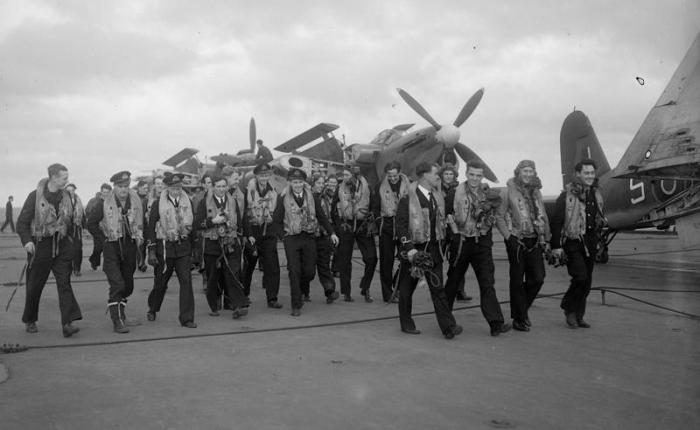

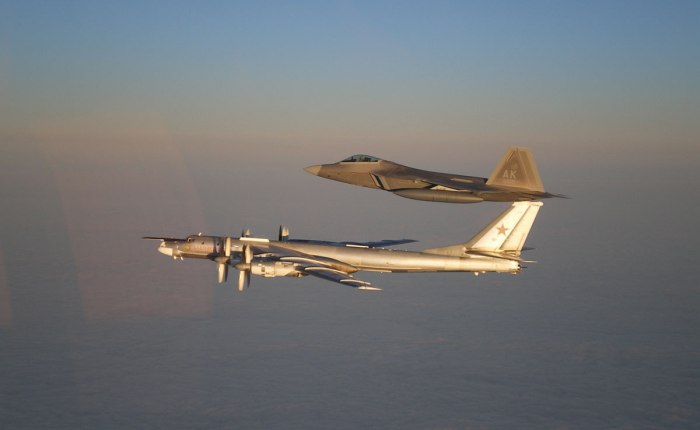


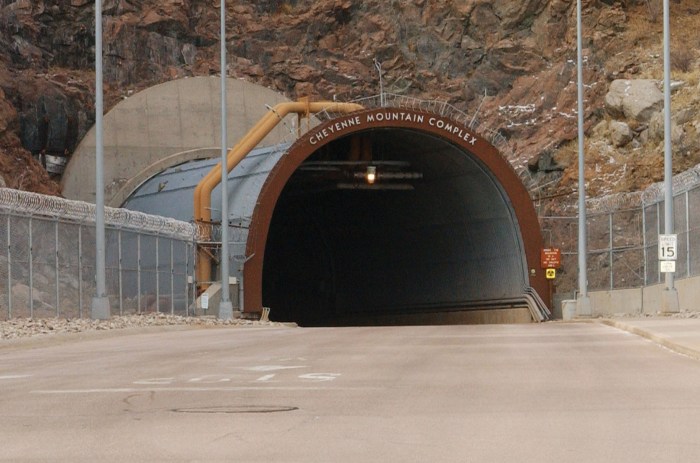


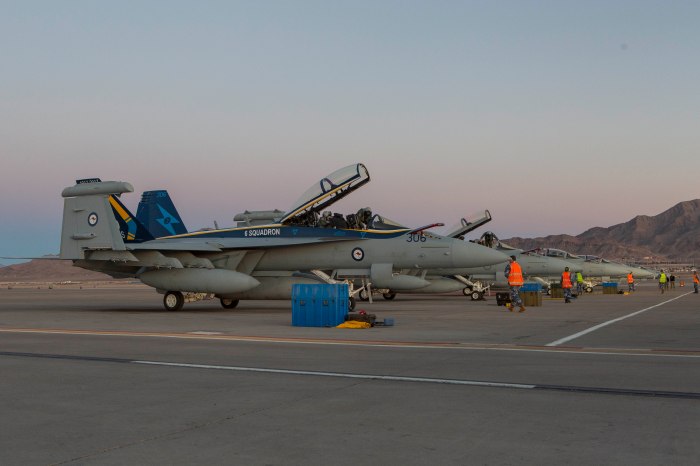
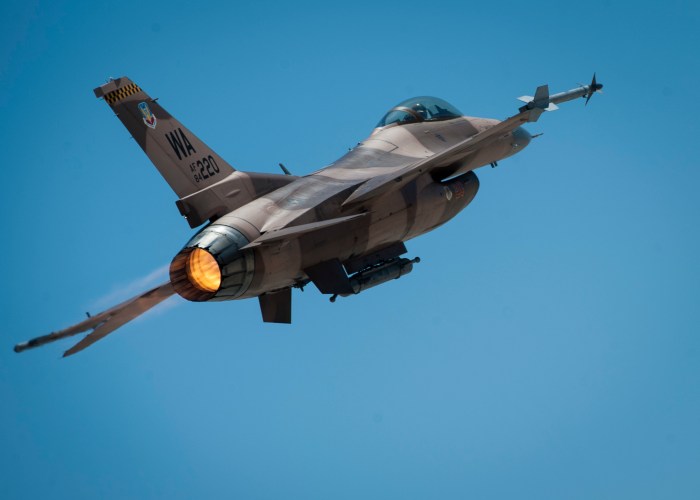




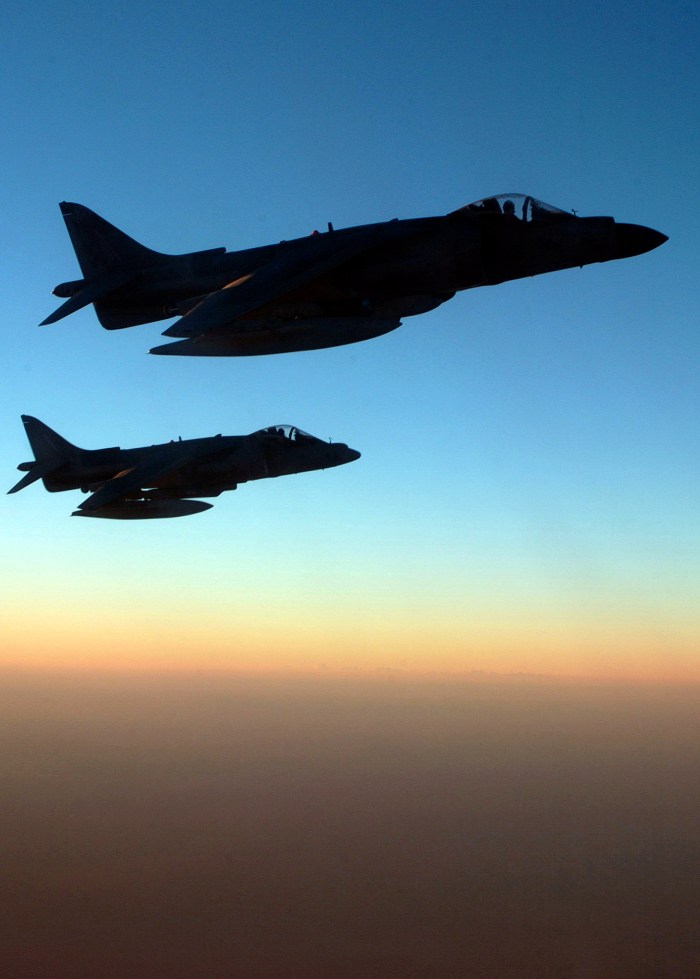
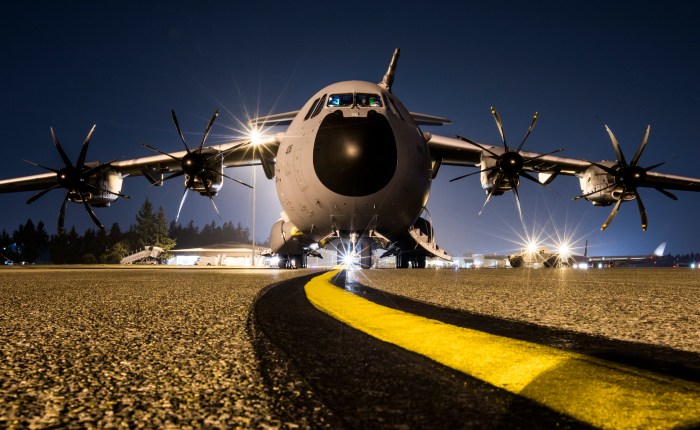
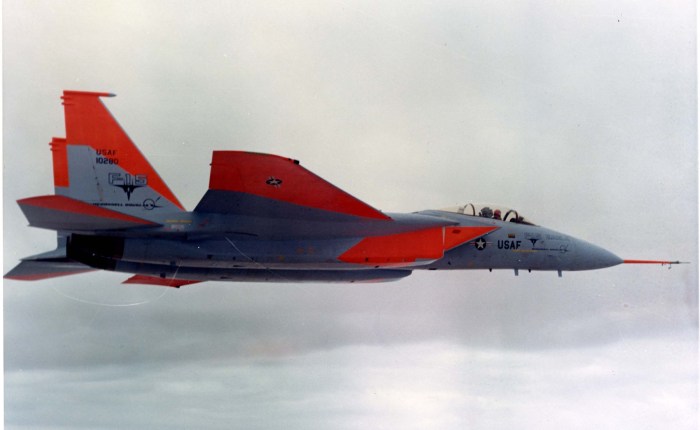
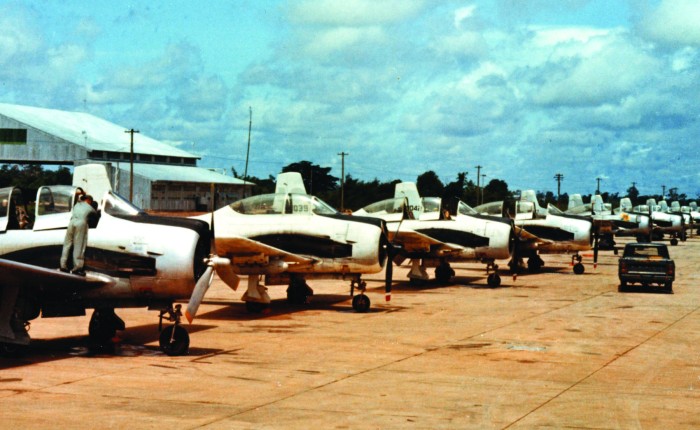

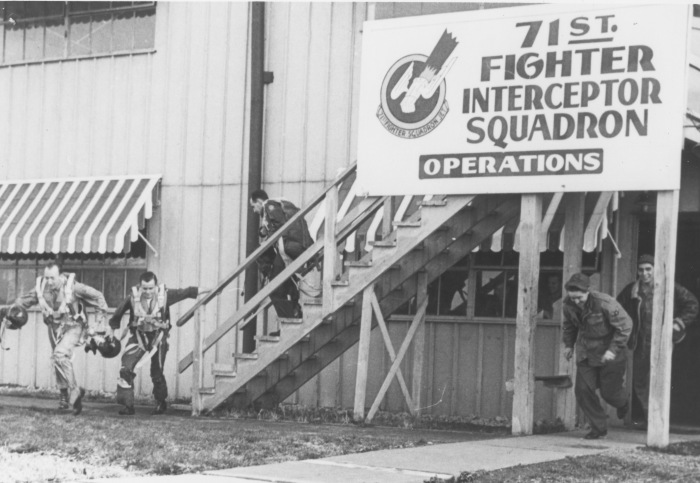
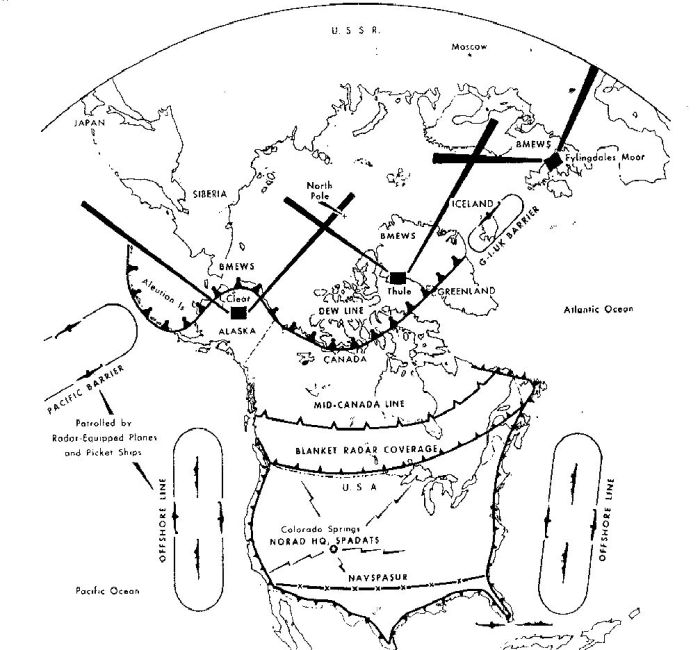
 From Balloons to Drones


.jpg)

.jpg)

