#ResearchNote – Wither Air Power Studies?

#ResearchNote – Wither Air Power Studies?

By Dr Ross Mahoney

I started writing this post several months ago, but for various reasons, it lay dormant until a recent Twitter exchange began with Brian Laslie. Brian suggested that Mark Clodfelter’s The Limits of Air Power was the ‘foundation of modern air power studies.’ This immediately got my attention, and I queried this, which led to a fruitful exchange of views on the subject between several participants.

The original source for this post came from comments I provided to the Second Sir James Rowland Seminar at the Australian Defence Force Academy, which is an initiative between UNSW Canberra and the Royal Australian Air Force’s Air Power Development Centre. Another source was a post by Nicholas Sarantakes with an update on the ongoing debate on the ‘decline’ of military history in academia. These sources originally got me thinking about the state of air power studies in the English-speaking worlds and the recent Twitter exchange brought that process to the fore again.

In my reply to Brian, I made the argument that in the UK, the mantle of ‘father’ of air power studies, in my opinion, belongs to Air Vice-Marshal Tony Mason who was the RAF’s first Director of Defence Studies (DDefS). To my mind, Tony generated the space for the subject both within the RAF and with external partners. There are, of course, other names we could put into this mix including Dr Noble Frankland, J.M. Spaight, Professor Phil Sabin and Professor Richard Overy, but I am unsure whether these writers ever created enough mass for the field to evolve. For example, while Overy wrote on air power issues early in his career, he then moved onto other subjects, though has more recently returned to the field. Conversely, through the creation of the DDefS post, the RAF has provided a platform for the development of air power studies in the UK. The position still exists, and there have been several notable holders of the post including Dr Peter Gray, who is now Senior Research Fellow in Air Power Studies at the University of Birmingham, and the current Chief of the Defence Staff, Air Chief Marshal Sir Stu Peach. Indeed, since moving to the University of Birmingham, Grey has helped generate a mass of air power scholars in the UK and beyond.

Despite my views on the origins of air power studies in the UK, some important issues came out of the discussion on Twitter. One is that while we might identify Clodfelter or Mason as defining the field in the US and UK respectively, this does not answer the question of whether there is someone who crosses national boundaries. One name that did spring to mind was John Andreas Olsen. However, as Travis Hallen, one of the editors over at The Central Blue, reflected, Olsen has been more productive in bringing together people to produce worthwhile edited volumes. Furthermore, as David Benson, a Professor at the USAF School of Advanced Air and Space Power Studies, noted these writers may have defined the field but should they define it today? David provided an interesting reflection on this issue in a number of Tweets, and while I do not agree with all of his points, his views on how we define the field are critical.

Knowledge is not static and as such how we define the field of air power studies should not be fixed either. Indeed, David suggested that this might be the case with it being argued that the study of air power might not be keeping up with changes in the field of social science. Here lies one problem as this essentially suggests a social science view of the study of air power and raises the question of where the subject fits as a discipline? Is the study of air power a social science or is it interdisciplinary? Moreover, are we looking at air power from the perspective of how it is defined in doctrine or do we need to take a broader view that encompasses a wider remit and brings in other fields including history? I would suggest the latter.

Take, for example, myself, I am an air power specialist, but first and foremost I am a historian, though I admittedly make use of interdisciplinary methodologies. My views on air power, even when looking forward, is essentially historical in outlook. I believe that we cannot understand the future without first considering past challenges, but does this lead to a ‘classical’ analysis of air power? I do not think so. I would argue that my broader perspective allows me, hopefully, to push the field forward. In this, I agree with David’s view that is up to those of us currently working in the field to ‘push it from its origins into modernity as a scholarly field’. Another advantage of broadening the scope of air power studies is that by encompassing a more comprehensive approach that includes aspects such as the history of air warfare and the social and cultural analysis of the armed forces, then we can further understand how we develop the knowledge that defines the field. We should also add other disciplines into this comprehensive mix including ethics and law.

Despite much of this rambling and reflection the crux of the issue remains how we develop air power studies as a scholarly field? What are the mechanisms that can be used to develop and disseminate knowledge? For me, one of the key issues here is the insular character of the field. As John Ferris reflected in 1998, those studying air power are either:

[t]he children of airmen, have been military personnel themselves, and have been employed at a historical office or service school in Canada, Germany, the United Kingdom, or the United States.[1]

My reading of the situation is that not much has changed and broadly speaking those of us writing on air power are a homogenous group who come from similar backgrounds. Again, using myself as an example, I am the child of a soldier, my PhD supervisor was a retired one-star officer, and I work for an institution devoted to preserving the history of an air force. Therefore, I accept there will always be a degree of subjectivity in my work. As such, how do we break free from that mould to further develop our field?

Part of the answer, of course, lies in establishing networks beyond our traditional insular boundaries. How do we, for example, encourage the study of air power beyond military academies? How do we work with colleagues who might ask difficult questions that do not fit our subjective paradigms? We need to be willing to accept these challenges and be prepared to discuss these issues freely and openly rather than dismissing them.

Further to a conceptual and personal willingness to engage, which I suspect most of us are happy to do, there is the question of the mechanism for discussion. While online platforms, such as From Balloons to Drones, The Central Blue, The Strategy Bridge and War on the Rocks are useful for generating discussion, are there other ways of pushing and developing knowledge? Has the time come, for example, to establish an academic journal devoted to air power that moves us beyond the service sponsored journals?

I have no silver bullet to these questions and what I have written here is part of an ongoing reflection on the subject, and I welcome any further thoughts people have. Nevertheless, I do think the time has come for us to reflect on the field and start ‘push it from its origins’.

Dr Ross Mahoney is an independent historian and defence specialist based in Australia. Between 2013 and 2017, he was the resident Historian at the Royal Air Force Museum, and he is a graduate of the University of Birmingham (MPhil and PhD) and the University of Wolverhampton (PGCE and BA). His research interests include the history of war in the twentieth and twenty-first centuries, air power and the history of air warfare, and the social and cultural history of armed forces. To date, he has published several chapters and articles, edited two books, and delivered papers on three continents. He is a member of the Royal Historical Society and is an Assistant Director of the Second World War Research Group. He is a member of the Royal Historical Society and an Assistant Director of the Second World War Research Group. He blogs at Thoughts on Military History, and can be found on Twitter at @airpowerhistory.

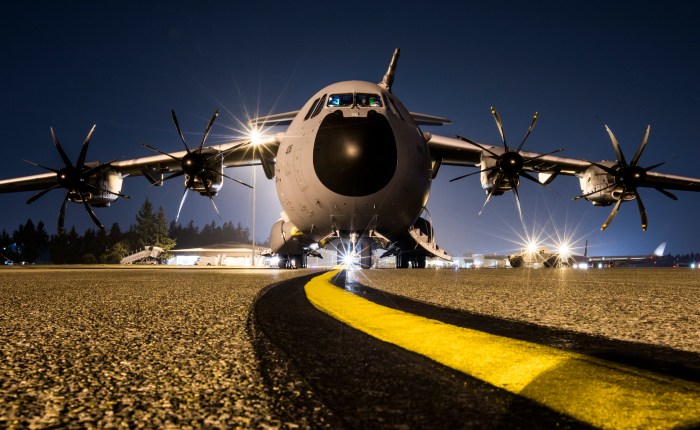
Header Image: An RAF Atlas (A400-M) at night during Operation Mobility Guardian. (Source: MoD Defence Imagery)

[1] John R. Ferris, ‘Review Article – The Air Force Brats’ View of History: Recent Writing and the Royal Air Force, 1918–1960,’ The International History Review, 20:1 (1998), p. 119.

Blinded by the Rising Sun? American Intelligence Assessments of Japanese Air Power, 1920-41: Part 3 – 1937-41

Blinded by the Rising Sun? American Intelligence Assessments of Japanese Air Power, 1920-41: Part 3 – 1937-41

By Justin Pyke

Editorial Note: In the final part of a three-part article, Justin Pyke examines American intelligence assessments of Japanese air power during the inter-war years. This final part examines issues between 1937 and the outbreak of war between America and Japan in 1941. Part one and two of this article can be found here and here.

Japan’s air services had successfully weaned themselves off of their foreign dependence by 1937. American intelligence assessments continued to identify the strategic and industrial weaknesses of Japanese air power accurately but became poor concerning technology and tactics. Japanese information security was tighter than it had ever been. Hence, American observers formed their conclusions through open sources and preconceived notions. When evidence emerged contradicting the prevailing view of Japan’s lack of technological innovation, they were ignored or explained away. Assessments of Japanese personnel began to swing toward a consistently negative view. These failures in assessing Japanese technology, tactics, and personnel from 1937-41 contributed to the defeats at the outset of the Pacific War.

Zero
A captured Mitsubishi ARM ‘Zero’ in flight, c. 1944 (Source: National Naval Aviation Museum)

The Americans had relied on access to Japanese air stations and factories to gain their information until the early 1930s. This avenue was closed with the start of the war in China. In place of the old sources, American observers came to rely extensively on open sources, like official Japanese press releases, supplemented with the precious little information that could be drawn from chance sightings of Japanese aircraft by Westerners.[1] A meaningful assessment of Japanese air power’s performance in China, or detailed technical information of a specific aircraft, would surface on occasion. The information gained from open sources at best-reiterated views that had been in place for almost two decades and at worst became more critical and inaccurate about Japanese capabilities.

American assessments of the Japanese aviation industry remained accurate, despite Japan’s turn towards tight information security. However, the preconception that Japan could not innovate technologically remained pervasive. A July 1937 report was typical. It acknowledged the advances made by the Japanese aviation industry, accurately identified the numerous weaknesses present, and stated that a ‘dearth of local inventive ability’ was a critical failure.[2] Another report referred to the numerous industrial weaknesses as a ‘cancer,’ and went on to claim that Japan continued to rely on copies of foreign aircraft, acquired either through production licenses or ‘outright mimicry.’[3] American assessments combined recognition of the real weaknesses of Japan’s aviation industry with the fiction that it still relied on the copying of foreign aircraft designs.

The American emphasis on Japanese industrial weakness was warranted. The continued shortage of machine tools, skilled labour, heavy equipment, and modern industrial techniques contributed to Japan’s lack of an aircraft reserve, slower rates of production, poor quality and quantity of spare parts, and the numerous other issues that undermined Japanese air power.[4] Greg Kennedy has emphasised this point when he stated that to view:

[tactical] success as demonstrative of the overall ability of Japan to manifest effective, modern air power is to misunderstand fundamentally the core attributes of air power.[5]

Ultimately, the weaknesses of Japanese industry identified by the Americans before the war worked to cripple the offensive capabilities of the Imperial Japanese Army Air Service (IJAAS) and Imperial Japanese Naval Air Service (IJNAS) during it.

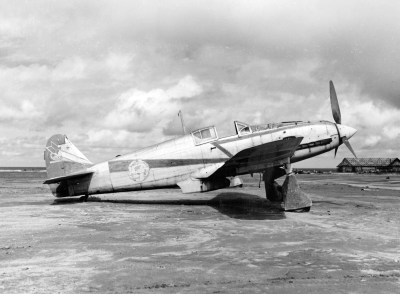
Ki-61_at_Fukuoka_in_1945
A Kawasaki Ki-61 ‘Tony’ of the 149th Shimbu Unit at Ashiya airfield in Fukuoka, Japan, c. 1945 (Source: Wikimedia)

The most egregious error in American reporting from mid-1937 onward concerned the preconception that Japan was incapable of designing its own aircraft. Exceptions to this trend did exist, but they were easily drowned out by the overwhelming number of reports that reiterated the same trope of Japanese unoriginality.[6] Fictional aircraft were given corresponding European designs that the Japanese supposedly had copied.[7] When the Americans received hard evidence of Japanese technological innovation, these indicators were ignored or misunderstood. Excellent American intelligence on the B5N Carrier Attack Bomber (‘Kate’) was not used as evidence that Japan had moved away from copying foreign designs.[8] The G3M was immediately assumed to be a copy of the German Junkers Ju-86, while another report stressed the bomber was a Heinkel design with Junkers’ ailerons. In fact, the superlative bomber was indigenous in origin.[9] Even when American observers disagreed on what the aircraft was a copy of, there was no doubt that it had to be a copy of something.

These preconceptions were all the more dangerous as Japan introduced new aircraft that it would use against the West in 1941. The most famous of these was the A6M Carrier Fighter (‘Zero’/‘Zeke’). Despite some accurate reporting on the aircraft, it remained largely unknown in Western aviation circles.[10] In one instance, the testimony of a captured Japanese bomber pilot caused confusion when he explained that the A6M was designed to dive on the enemy, then zoom upwards and prepare for another dive, but not to engage in extensive combat aerobatics. This reflected IJNAS fighter doctrine, which was similar to that of the Americans, rather than the true capabilities of the A6M. The Americans interpreted the testimony to mean the new fighter lacked manoeuvrability.[11] The underestimation of the A6M seems like a minor error when viewed in isolation. Indeed, American pilots quickly gained an understanding of the fighter from their first combat encounters.[12] However, it was only a symptom of a much broader issue. Evidence that the Japanese had achieved rough technological parity with the United States was belittled or ignored. Individual Japanese aircraft may have been better or worse than foreign counterparts for their intended roles, but American assessments assumed a clear and decisive technological advantage where none existed. Nor did Japanese technological innovation stop with the attack on Pearl Harbor. Both air services introduced aircraft, such as the Nakajima Ki-84 Fighter (Hayate/‘Frank’), that matched some of the best American designs throughout the war.[13] The problem was not that leading-edge Japanese aircraft designs were worse than their American counterparts, but that they never were able to replace their ageing predecessors in sufficient numbers to matter.

The Americans dismissed not just Japanese innovation, but its personnel and tactics. American views of Japanese personnel became increasingly negative after the start of the war in China. Assessments of Japanese factory workers and mechanics significantly reduced in frequency and classified reporting on aircrews indicated that they were of poor to mediocre quality.[14] American observers also continued to emphasize Japan’s lack of pilot reserves and training facilities.[15] Popular literature took a firm stand on Japanese personnel and often relied heavily on racism and national characteristics. One such work listed a number of Japanese racial defects, and summarised them as ‘daring but incompetent aviators.’[16] Classified sources never degraded into this kind of drivel, despite American intelligence shortcomings concerning Japanese tactics and technology.

Captured_Aichi_B7A2_on_ground
A captured Imperial Japanese Navy Aichi B7A2 ‘Grace’, c. 1945. This was one of many capable indigenous aircraft introduced by the Japanese air services during the Pacific War. (Source: Wikimedia)

Surprisingly little reporting discussed Japanese aerial performance in China, and reports that did provide a more balanced, and accurate, assessment of Japanese capabilities.[17] Occasionally, Chinese pilots were interviewed on their combat experience against the Japanese. One report from September 1940 concluded that dive bombing by the IJAAS and IJNAS was ‘very poor,’ while horizontal bombing had ‘improved tremendously.’ Discipline among IJNAS twin-engine bombers was rated ‘excellent,’ and the carrier air groups were given particularly high praise. The most important piece of information provided by Chinese pilots was that the Japanese sent fighter escorts with their bombers whenever possible.[18] However, given the mixed quality of the Republic of China Air Force, their views concerning Japanese capabilities were easily dismissed.[19]

The American underestimation of the Japanese air services’ personnel, tactics, and technology from 1937-41 contributed to, though by no means caused, the early defeats in the Pacific War. However, Japan’s inability to rectify the fundamental problems within its air services and aviation industry crippled its air power as the war progressed, just as American observers had predicted. The accurate assessment that Japan could not win a prolonged war of attrition in the air against the United States was what mattered most. However, the errors in assessing Japanese tactics and technology caused serious problems over the short term. In their haste to predict the setting of the Sun, the Americans failed to appreciate the danger of its rise.

Justin Pyke obtained his MA in Military and Intelligence History from the University of Calgary in 2016. His main research interests include the Asia-Pacific War, military and politics of Imperial Japan, and the development of air and naval power in the inter-war period. He can be found on Twitter at @CBI_PTO_History.

Header Image: A Mitsubishi A6M2 ‘Zero’/‘Zeke’ at the US National Advisory Committee for Aeronautics Langley Research Center, Virginia on 8 March 1943. On 4 June 1942, a Japanese task force launched a strike against Dutch Harbor, Alaska from the aircraft carriers Ryujo and Junyo. Petty Officer Tadayoshi Koga was flying an A6M2 from the Ryujo. On the way back to his carrier, he discovered of bullets had pierced his fuel tanks and he headed for an emergency landing on Akutan Island. However, the plane flipped over on its back during the landing, and Koga was killed. The A6M itself was only slightly damaged. A Japanese submarine failed to locate Koga or his plane, but five weeks later an American naval scouting party found the Japanese fighter. The A6M2 was salvaged and shipped back to the USA where it was repaired, and went through an exhaustive series of tests in order to gain information about its strengths and weaknesses. (Source: Wikimedia)

[1] A-1-m 15776, Dive Bombing in the Japanese Aviation, July 27, 1938, Naval Attaché Reports, 1886-1939, Box 68, RG 38, NA; Japanese Naval Activities in China, July 29, 1940, Naval Attaché Records, 1939-1941, 1940 File 59-124, RG 38, NA; Comments on Naval Aviation by Japanese Naval Aviators, August 23, 1941, Naval Attaché Records, 1939-1941, 1941 File 62, RG 38, NA.

[2] Expansion of Aircraft Manufacturing Industry, July 21, 1937, Selected Naval Attaché Reports Relating to the World Crisis, 1937-1943, Roll 2, RG 38, NA, p. 1.

[3] The Aircraft Industry in Japan, August 5, 1939, Naval Attaché Records, 1939-1941, 1939 File 165-233, RG 38, NA, pp. 1-2.

[4] Mark R. Peattie, Sunburst: The Rise of Japanese Naval Air Power, 1909-1941 (Annapolis: Naval Institute Press, 2001), p. 100; Erich Pauer, ‘Japan’s technical mobilization in the Second World War,’ in Erich Pauer (ed.), Japan’s War Economy (New York, NY: Routledge, 1999), pp. 54-5; Hagiwara Mitsuru, ‘The Japanese Air Campaigns in China, 1937-1945,’ in Mark Peattie, Edward Drea, and Hans Van de Ven (eds.), The Battle for China: Essays on the Military History of the Sino-Japanese War of 1937-1945 (Stanford, CA: Stanford University Press, 2011), p. 243; Jonathan B. Parshall and Anthony P. Tully, Shattered Sword: The Untold Story of the Battle of Midway (Washington D.C.: Potomac Books, 2005), p. 89; Eric M. Bergerud, Fire in the Sky: The Air War in the South Pacific (New York: Basic Books, 2009), p. 21, 46; Sakai Saburo, Martin Caidin, and Fred Saito, Samurai! (Annapolis: Naval Institute Press, 1991), p. 242.

[5] Greg Kennedy, ‘Anglo-American Strategic Relations and Intelligence Assessments of Japanese Air Power, 1934-1941,’ The Journal of Military History, 74:3 (2010), p. 772.

[6] William M. Leary, ‘Assessing the Japanese Threat: Air Intelligence Prior to Pearl Harbor,’ Aerospace Historian, 34:4 (1987), p. 274; 2085-947, The Capabilities of Japan in Military Aviation, June 23, 1939, US Military Intelligence Reports, Japan, 1918-1941, Reel 31, University Press of America, p. 1.

[7] Airplane Characteristics – Mitsubishi Type Zero Fighter, November 9, 1940, Naval Attaché Records, 1939-1941, 1940 File 125-202, RG 38, NA; New Dive Bomber in Production, August 2, 1940, Naval Attaché Records, 1939-1941, 1940 File 59-124, RG 38, NA.

[8] New Types of Aircraft, July 17, 1939, Naval Attaché Records, 1939-1941, 1939 File 89-164, RG 38, NA; Type 97 Torpedo-Bomber, November 16, 1939, Naval Attaché Records, 1939-1941, 1939 File 234-281, RG 38, NA; Specifications of Japanese Naval Bomber, Model 97, June 4, 1940, Naval Attaché Records, 1939-1941, 1940 File 59-124, RG 38, NA.

[9] Richard M. Bueschel, Mitsubishi/Nakajima G3M1/2/3 96 Rikko L3Y1/2 In Japanese Naval Air Service (Atglen: Schiffer Publishing, 1997), p. 20; Description of Navy Heavy Bomber, Type 96, July 26, 1939, Naval Attaché Records, 1939-1941, 1939 File 165-233, RG 38, NA; René J. Francillon, Japanese Aircraft of the Pacific War, Second Edition (London: Putnam Aeronautical Books, 1979), p. 350.

[10] Thomas G. Mahnken, Uncovering Ways of War: U.S. Intelligence and Foreign Military Innovation, 1918-1941 (Ithaca: Cornell University Press, 2002), pp. 79-80; Horikoshi Jiro, Eagles of Mitsubishi: The Story of the Zero Fighter, trans. Shojiro Shindo and Harold N. Wantiez (Seattle: University of Washington Press, 1981), p. 107.

[11] Leary, ‘Assessing the Japanese Threat,’ pp. 275-76; Horikoshi, Eagles of Mitsubishi, p. 85; John B. Lundstrom, The First Team: Pacific Naval Air Combat from Pearl Harbor to Midway (Annapolis: Naval Institute Press, 2005), p. 486; Roger Letourneau and Dennis Letourneau, Operation KE: The Cactus Air Force and the Japanese Withdrawal from Guadalcanal (Annapolis: Naval Institute Press, 2012), p. 13; Sakai et.al., Samurai, p. 83.

[12] John B. Lundstrom, The First Team and the Guadalcanal Campaign: Naval Fighter Combat from August to November 1942 (Annapolis: Naval Institute Press, 2005), pp. 535-36.

[13] See: Francillon, Japanese Aircraft of the Pacific War; Richard M. Bueschel, Nakajima Ki.84a/b Hayate in Japanese Army Air Force Service (Canterbury: Osprey Publishing, 1971).

[14] Notes on Japanese Naval Aviation, August 4, 1939, Naval Attaché Records, 1939-1941, 1939 File 165-233, RG 38, NA; Dropping of Aircraft Torpedoes by Japanese Naval Aircraft, September 26, 1939, Naval Attaché Records, 1939-1941, 1939 File 165-233, RG 38, NA; A-1-m 15776, Aerial Operations, August 2, 1940, Naval Attaché Reports, 1886-1939, Box 68, RG 38, NA; 2085-956, Handbook on the Air Services of Japan, September 27, 1940, US Military Intelligence Reports, Japan, 1918-1941, Reel 31, University Press of America, p. 36, 79.

[15] 2085-908, Military Aviation – General, July 29, 1937, US Military Intelligence Reports, Japan, 1918-1941, Reel 30, University Press of America, p. 3; W.D. Puleston, The Armed Forces of the Pacific: A Comparison of the Military and Naval Power of the United States and Japan (New Haven: Yale University Press, 1941), p. 231.

[16] Fletcher Pratt, Sea Power and Today’s War (New York: Harrison-Hilton Books, 1939), pp. 177-78.

[17] 2085-947, The Capabilities of Japan in Military Aviation, pp. 1-3.

[18] Comment on Japanese Air Force by Chinese Aviators, September 17, 1940, Naval Attaché Records, 1939-1941, 1940 File 125-202, RG 38, NA; Peattie, Sunburst, p. 110, 123.

[19] Peter Harmsen, Shanghai 1937: Stalingrad on the Yangtze (Havertown: Casemate Publishers, 2013), p. 30.

Blinded by the Rising Sun? American Intelligence Assessments of Japanese Air Power, 1920-41: Part 1 – The 1920s

Blinded by the Rising Sun? American Intelligence Assessments of Japanese Air Power, 1920-41: Part 1 – The 1920s

By Justin Pyke

Editorial Note: In the first of a three-part article, Justin Pyke examines American intelligence assessments of Japanese air power during the inter-war years. This first part examines issues in the 1920s.

In December 1941 Japan launched a campaign of rapid conquest against British, American, and Dutch possessions throughout the Asia-Pacific region. The Imperial Japanese Army Air Service (IJAAS) and Imperial Japanese Navy Air Service (IJNAS) proved critical to the success of these early campaigns. Although American authorities identified Japan as a primary rival after 1918 and focused most of their intelligence gathering efforts on the East Asian nation, they failed to appreciate the threat posed by Japanese air power in 1941. This failure was not as simplistic as the old historiography portrays.[1] Instead, intelligence assessments of Japanese air power passed through three distinct phases. During the 1920s, American observers maintained an accurate picture of Japanese capabilities. Japan was largely an open society, and its air services depended on Western assistance, meaning the Americans were able to track major developments. The early and mid-1930s was a transition period from the openness of the 1920s to the extreme secrecy that characterised the period from 1937 onward. With the start of the war in China, the Americans were almost completely in the dark regarding assessments of the Japanese air services’ technology, tactics, and personnel. One thing that remained consistent from 1920-41 was American observers accurately assessed the strategic and industrial limits of Japan’s air power. Success with these higher level assessments ultimately mattered more than the mistakes made assessing technology and tactics.

SempillMission
Captain Sempill showing a Gloster Sparrowhawk to Admiral Tōgō Heihachiro, 1921. (Source: Wikimedia)

Throughout the 1920s, Japan worked rapidly to catch up with the developments of Western powers in the field of military aviation. During this period, American intelligence assessments remained accurate at all levels, from personnel, tactics, and technology to industry and the scarcity of raw resources. American observers quickly identified Japan’s heavy reliance on foreign assistance and the weakness of its aviation industry, while the quality and quantity of Japanese aviation personnel and aircraft were carefully tracked. As throughout the entire inter-war period, the assessments primarily addressed Japan’s ability to wage a protracted war of attrition in the air, rather than to focus on tactical and technical capability.

The accuracy of American assessments in the 1920s was due in large part to openness within Japan. Letters were constantly exchanged between the American naval attaché and the Japanese Navy Ministry. The letters requested information about the IJNAS, such as its organisation, the numbers of available aircraft, and the number of existing and planned naval air stations. The Navy Ministry answered these letters in full.[2] The ease with which the naval attaché obtained large amounts of information through direct communication with the Navy Ministry was remarkable, but the openness of the Japanese was not limited to such communication. Tours of aircraft manufacturing facilities and air stations were also open and casual. The Americans were not rushed through important areas. The level of detail in an extensive report on Japanese aircraft factories from 1925 was typical and revealed lax Japanese information security. Minor technical details and factory layouts were abundantly described throughout the report, revealing the high level of access Americans had at the facilities. Japanese workmen and designers were extremely forthcoming when asked direct questions about their work.[3]

Japan’s reliance on foreign assistance allowed the Americans to keep pace with its technological and industrial advances. A report in 1924 stated that Japan always sought out the best foreign designed aircraft that it could purchase, and copied these models, along with the means to produce them. The air services were also modelled after what the Japanese thought was the most advanced foreign air forces.[4] For example, the IJNAS relied on British assistance regarding industrial practices, aviation technology, personnel training, and tactics.[5] The American naval attaché constantly emphasised the Japanese inability to design and build aircraft without extensive foreign aid. After inspecting the aircraft factories, he concluded that they had yet to produce any indigenously designed aircraft or engines ‘of any value whatsoever.’[6] A general summary from 1927 noted that all Japanese aircraft were of foreign design and that these aircraft were underpowered and inferior to contemporary American designs.[7] This claim was an overstatement, but the number of indigenous Japanese military designs remained very small throughout the 1920s.[8] The motif of Japanese unoriginality would persist through to the beginning of the Pacific War, long after it had ceased to be true. In the 1920s, however, Japan did seek to develop its air power by following in the footsteps of the world leaders.

The inferior production methods of Japan’s major aircraft manufacturers were also highlighted. One such report noted that most of the machine tools in the factories were of American manufacture and the machine shops themselves were crowded, which led to inefficiency within the production process. Production was prolonged, particularly when a factory was ordered to manufacture new types of aircraft. During this process, foreign workmen were always employed to ensure a smoother transition.[9] The Japanese aviation industry’s inability to rapidly turn existing factories over to produce new models of aircraft persisted into the Pacific War. It undermined Japan’s ability to keep pace both qualitatively and quantitatively with their Western foes. For example, the J2M Navy Interceptor Fighter (Raiden/‘Jack’) first flew nearly three months ahead of the F6F Hellcat prototype’s first flight. Despite this, the first production Hellcat was completed in the same month that the J2M had only just been accepted for serial production. Six months later only 14 J2Ms had been delivered at a time when Hellcats leapt off the American production lines.[10]

The opinion of Japanese personnel was generally low but remained balanced. A 1926 memorandum held Japanese airmen and officers in high regard, referring to them as ‘well disciplined.’ Most pilots were described as ‘good,’ while the work of the mechanics was deemed ‘most praiseworthy.’[11] The naval attaché’s assessments of Japanese pilots were more critical. One report concluded that the Japanese have a ‘fair ability’ as pilots, but rated them poorly in all around efficiency.[12] The British aviators who had trained the IJNAS in the early 1920s informed the Americans of their low opinion of Japanese personnel, and this view was shared by Colonel Jacques-Paul Faure, head of the French Military Aviation Mission to Japan that had trained the IJAAS’ pilots.[13] A major 1928 report on Japanese aviation viewed mechanics within the Japanese air services as poor, although civilians brought in to help the military were good.[14] Conspicuous by its absence was any notion of the inferiority of the Japanese race despite the criticism levelled against Japanese personnel.

FrenchMilitaryMissionToJapan
The French Military Mission to Japan, 1918-1919 (Source: Wikimedia)

A handful of reports did, however, attribute personnel deficiencies to the national characteristics, or national stereotypes, of the Japanese people. One assessment stated that:

[t]he Japanese is not a natural flyer and rarely loves flying for its own sake. Neither is he a natural mechanic, nor has he any tradition of trained mechanics behind him.[15]

While it is easy to dismiss this statement as racist or irrational, it did contain some truth. The Japanese air services had a chronic shortage of trained mechanics, partly because Japan was not a fully industrialised nation like the United States or Great Britain. The Japanese economy, despite massive leaps since the Meiji Restoration, continued to operate ‘with one foot in the nineteenth century.’[16] Once again, the quality of Japanese pilots was called into question, but the report concluded that if American pilots were considered ‘very good,’ the Japanese were rated ‘good.’[17] This statement made it clear that the Japanese were inferior to their western counterparts, but it was hardly irrational or unfair.

The most noteworthy weaknesses that the Americans identified regarding Japanese aviation personnel were the lack of pilot training and reserves. In an information bulletin detailing the Japanese Diet’s 1924 budget for naval aviation, the naval attaché noted that the IJNAS had no reserve personnel at all.[18] Another report stated that ‘there are three schools of aviation, but only one [sic] army flying training school,’ and went on to detail the number of pilots available to Japan.[19] The 1927 general summary of the Japanese air services questioned the flying experience of the officers, and described the flying seen in Japan as ‘characterized by timidity and one could not help but feel that dash and spirit were lacking.’ The report concluded that the IJAAS and IJNAS were at:

[a]n elementary stage of development. None of them are capable of combat with well developed aviation, considering factors other than equipment.[20]

Taken as a whole, American intelligence assessments of Japanese air power during the 1920s were highly accurate from the strategic and industrial spheres down to the tactical and technological level. Lax information security measures within Japan provided American observers with a remarkable level of freedom. American reports assessed the ability of Japan to fight a protracted war in the air, where aircraft production figures, industrial efficiency, innovative aircraft design, strong pilot training programs, and sizeable pilot reserves were critical to achieving success. The correct conclusion was Japan did not yet possess air power that could seriously threaten the Western powers, but this would begin to change in the 1930s.

Justin Pyke obtained his MA in Military and Intelligence History from the University of Calgary in 2016. His main research interests include the Asia-Pacific War, military and politics of Imperial Japan, and the development of air and naval power in the inter-war period. He can be found on Twitter at @CBI_PTO_History.

Header Image: A Nakajima A2N carrier borne fighter that first flew at the end of the 1920s. (Source: Wikimedia)

[1] For examples of the old view regarding American intelligence assessments of Japan, see: John W. Dower, War without Mercy: Race and Power in the Pacific War (New York: Pantheon Books, 1986); David Kahn, ‘United States Views of Germany and Japan in 1941,’ in Ernest R. May (ed.), Knowing One’s Enemies: Intelligence Assessment before the Two World Wars (Princeton: Princeton University Press, 1986).

[2] A-1-u 17242, Letter to Captain K. Terashima, I.J.N., January 27 1925, Naval Attaché Reports, 1886-1939, Box 142, Record Group [RG] 38, National Archives and Records Administration [NA], Washington, D.C.; A-1-u 17242, Information on Air Services, March 5 1926, Naval Attaché Reports, 1886-1939, Box 142, RG 38, NA; A-1-u 17242, Letter to Mr McClaran, February 10 1925, Naval Attaché Reports, 1886-1939, Box 142, RG 38, NA.

[3] A-1-u 17242, Visit to Aircraft Factories, May 15, 1925, Naval Attaché Reports, 1886-1939, Box 142, RG 38, NA.

[4] 2085-630, Extracts from Report of Inspection of United States Possessions in the Pacific and Java, Singapore, India, Siam, China, & Japan, October 24, 1924, US Military Intelligence Reports, Japan, 1918-1941, Reel 28, University Press of America, 1.

[5] Mark R. Peattie, Sunburst: The Rise of Japanese Naval Air Power, 1909-1941 (Annapolis: Naval Institute Press, 2001), pp. 17-20; Jonathan Parkinson, ‘HIJMS Wakamiya and the Early Development of Japanese Naval Air Power,’ The Mariner’s Mirror, 99:3 (2013), pp. 318-321. Also see: John Ferris, ‘A British ‘Unofficial’ Aviation Mission and Japanese Naval Developments, 1919-1929,’ Journal of Strategic Studies, 5:3 (1982), pp. 416-39.

[6] A-1-u 17242, Japanese Air Strength, May 5, 1925, Naval Attaché Reports, 1886-1939, Box 142, RG 38, NA, 3.

[7] 2085-663, General Summary Japanese Air Service, June 1, 1927, US Military Intelligence Reports, Japan, 1918-1941, Reel 28, University Press of America, 8.

[8] See: Robert C. Mikesh and Shorzoe Abe, Japanese Aircraft, 1910-1941 (Annapolis: Naval Institute Press, 1990).

[9] A-1-u 17242, Visit to Aircraft Factories, 1, 8.

[10] Fighter Combat Comparisons No. 1: Grumman F6F-5 Hellcat vs. Mitsubishi J2M3 Model 21 Raiden (‘Jack’) (Teaneck: Tacitus Publications, 1989), p. 13.

[11] 2085-647, Memorandum for Major Baldwin, September 30, 1926, US Military Intelligence Reports, Japan, 1918-1941, Reel 28, University Press of America, 3, 6.

[12] A-1-u 17242, Japanese Air Strength, 3.

[13] Thomas G. Mahnken, Uncovering Ways of War: U.S. Intelligence and Foreign Military Innovation, 1918-1941 (Ithaca: Cornell University Press, 2002), p. 73; A-1-u 17242, Aviation, July 21, 1925, Naval Attaché Reports, 1886-1939, Box 142, RG 38, NA, 3.

[14] 2085-784, Report of Major W. B. Duty, September 20, 1928, US Military Intelligence Reports, Japan, 1918-1941, Reel 29, University Press of America, 83.

[15] 2085-748, Japanese Aviation: Army, Navy, Civil, July 20, 1927, US Military Intelligence Reports, Japan, 1918-1941, Reel 29, University Press of America, 2.

[16] Eric M. Bergerud, Fire in the Sky: The Air War in the South Pacific (New York: Basic Books, 2009), p. 17.

[17] 2085-748, Japanese Aviation: Army, Navy, Civil, 2.

[18] A-1-u 17242, Data for Congressional Hearing; Additional Detailed Information on Air Services, February 9, 1925, Naval Attaché Reports, 1886-1939, Box 142, RG 38, NA, 2.

[19] 2085-719, Information as to Japanese Aviation, February 9, 1927, US Military Intelligence Reports, Japan, 1918-1941, Reel 28, University Press of America.

[20] 2085-663, General Summary Japanese Air Service, 3, 7.

#BookReview – Air Power in UN Operations: Wings for Peace

#BookReview – Air Power in UN Operations: Wings for Peace

By Dr Ross Mahoney

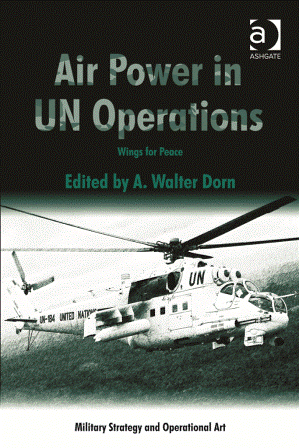
A. Walter Dorn (ed.), Air Power in UN Operations: Wings for Peace. Farnham: Ashgate, 2014. Figures. Tables. Notes. Index. Pbk. xxxv + 350 pp.

air-power-in-un-operations_cover_dorn_300x448_65k

The use of air power as a tool by state actors is a regular theme examined by historians and policy specialists alike. However, the use of air power by non-state actors, in particular, intergovernmental organisations, is a different matter, though depending on one’s perspective, the United Nations (UN) – the subject of this volume – can be viewed as either a state or non-state actor. In this volume, A. Walter Dorn, Professor of Defence Studies at the Royal Military College of Canada, has brought together an impressive line-up of scholars and practitioners to consider how the UN has used both kinetic and non-kinetic air power as a tool for peacekeeping operations. Indeed, the narrative of UN peacekeeping operations generates images of soldiers in blue helmets on the ground. However, as this book ably demonstrates, air power has been a vital element of UN operations since the creation of its first ‘Air Force’ in 1960.

First Phase Digital
A partial view of Luluabourg airport, showing some of the Swedish Saab J-29 jet planes which were placed at the disposition of the UN Force in the Congo (ONUC), c. 1961. Called ‘flying barrels’, the jets were manned by members of the Swedish Air Force, numbering some 40 pilots and maintenance officers.(Source: United Nations)

The book examines the use of air power by the UN since 1960 through to Operation UNIFIED PROTECTOR – the air operations over Libya by NATO in 2011, which enforced UN Security Council Resolutions 1970 and 1973. The book consists of 17 chapters split over six thematic areas: The UN’s First ‘Air Force’; Airlift; Aerial Surveillance; No-Fly Zones; Combat and evolving capabilities. The latter aspect looks at some of the challenges for the UN in the future. Indeed, by splitting the analysis into the themes mentioned above, Dorn et al. illustrate that UN air operations cover the broad spectrum of roles readily identifiable in modern air power doctrine: control of the air; attack; situational awareness and air mobility. It also ably illustrates the challenges and potential contradictions of ‘Ends’, ‘Ways’ and ‘Means’ in UN strategy and peacekeeping operations. As Dorn notes in his preface, ‘While peacekeeping is meant to de-escalate violence, it is sometimes necessary to use force to stop force.’ (p. xxvi). As such, to meet the ends desired by the UN – the cessation of violence between, states, groups or organisations – it is often necessary to utilise air power’s various capabilities to moderate and influence the behaviour of the parties involved. Therefore, air power offers a toolkit to try to support the enforcement of UN Resolutions. Indeed, as Robert C. Owen’s chapter on Operation DELIBERATE FORCE in 1995 (pp. 231-40) and Christian Anrig’s piece of Libya in 2011 (pp. 255-82) illustrate air power can be a useful tool in shaping behaviour. DELIBERATE FORCE ensured that the Bosnian Serbs complied with UN Resolutions and put the UN in a position to shape the Dayton Accords (p. 236). However, this, in itself, was only possible due to the technological changes, such as the emergence of Precision Guided Munitions, which allowed the multinational air forces involved in DELIBERATE FORCE to conduct a humanitarian war. Had the air forces involved been equipped with ‘dumb’ weapons then the diplomatic fallout from collateral damage would have, potentially, hindered the ends sought by the UN. Similarly, in 2011, air power offered the UN the means to apply military force to level ‘the playing field’ (p. 280) in defence of civilians during the Libyan Civil War. Furthermore, unlike in DELIBERATE FORCE, air power – as the means of applying military force – was the essential tool for both the UN and NATO because UN Security Council Resolution 1973 forbade the use of occupying forces in Libya. However, it should also be remembered that air power was not used in isolation and that it worked with naval forces and special operations teams to achieve the ends desired by the UN.

Importantly, this volume does not avoid discussing some of the challenges inherent in the application of air power by the UN. As with any forces it deploys, the UN is reliant on the support of its member nations to provide the ways and means to achieve its ends. At the time of publication (2014), the UN deployed around 200 to 300 aircraft to provide air support for peacekeeping missions (p. 283). Not only is relying on member states to willingly supply forces a risky strategy – but states tend only to support those missions viewed to be in its own interest – it is also costly as the UN pays for the use of lease of both military and civilian aviation assets to achieve its ends. Some of these challenges are considered in the final section of the book on ‘Evolving Capabilities’ (pp. 283-316).

drone in Bunia.jpeg
A United Nations unmanned aerial vehicle (UAV) at Bunia airport in the Democratic Republic of Congo. UAVs are used for surveillance purposes by the United Nations Organization Stabilization Mission in the Democratic Republic of the Congo. (Source: United Nations)

This fascinating book highlights the many challenges concerning the application of air power in the context of peacekeeping operations. It considers both some of the practical challenges of deploying air power into the theatre to the many diplomatic considerations that affect the use of air power as a policy tool for the UN. Clearly, air power is not always the answer; however, as part of a toolbox of political, diplomatic, economic and military means, air power can provide the ways to achieve the ends sought by the UN if applied correctly. Finally, it is worth reflecting that many of the lessons found in this book should not be considered as unique to the UN, but can also be applied to peace support operations undertaken by individual sovereign nations. Indeed, David Neil’s chapter of Unmanned Aerial Vehicles (pp. 147-64) highlights some of the regulatory challenges concerning their use, which are just as important to national air forces as they are for the UN.

This post first appeared at Thoughts on Military History.

Dr Ross Mahoney is an independent historian and defence specialist based in Australia. Between 2013 and 2017, he was the resident Historian at the Royal Air Force Museum, and he is a graduate of the University of Birmingham (MPhil and PhD) and the University of Wolverhampton (PGCE and BA). His research interests include the history of war in the twentieth and twenty-first centuries, air power and the history of air warfare, and the social and cultural history of armed forces. To date, he has published several chapters and articles, edited two books, and delivered papers on three continents. He is a member of the Royal Historical Society and is an Assistant Director of the Second World War Research Group. He is a member of the Royal Historical Society and an Assistant Director of the Second World War Research Group. He blogs at Thoughts on Military History, and can be found on Twitter at @airpowerhistory.

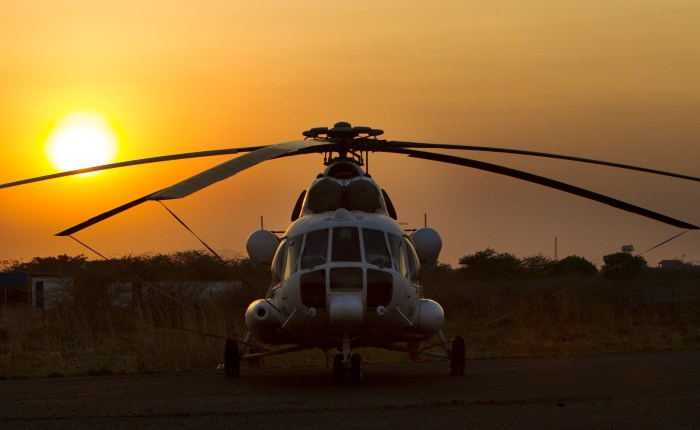
Header Image: A Mil Mi-8 helicopter of the United Nations Mission in South Sudan in Juba, c. 2013. (Source: United Nations)

#AirWarBooks – Dr Ross Mahoney

#AirWarBooks – Dr Ross Mahoney

By Dr Ross Mahoney

Editorial Note: In the second instalment of ‘Air War Books,’ the editor of From Balloons to Drones, Dr Ross Mahoney discusses the ten books that have influenced and shaped his writing as an air power historian.

As editor of From Balloons to Drones, I thought I should reflect on what are probably the ten key books that have influenced me in my study of air power. However, I make three provisos. First, I attacked this from the perspective of key authors rather than the books themselves per se. As such, I have selected titles that I have enjoyed to illustrate the importance of these writers. Second, I have left out official histories and narratives though these have been just as influential on my writing as other works. Finally, I have included some non-air power texts in here. At the end of the day, I am a historian and an interdisciplinary one at that, and it is only natural that non-air power specific books have influenced how I approach what and how I write.

John Buckley, Air Power in the Age of Total War (London: UCL Press, 1999). Ok, this entry and Peter Gray’s book below have as much to do with these individuals’ real influence on me and the importance of their books. John was my undergraduate tutor many years ago, and his influence was to start me on the track to where I am today. However, added to that, Air Power in the Age of Total War is an excellent examination of the rise of air power in the first half of the twentieth century and vital reading for anyone wanting an introduction to the subject.

Peter Gray, The Leadership, Direction and Legitimacy of the RAF Bomber Offensive from Inception to 1945 (London: Continuum, 2012). Peter’s influence on me was that he was my PhD supervisor, and I will forever be grateful for his guidance. In my opinion, Peter is currently the leading air power specialist in the UK and one of the foremost experts in the world. That expertise is clearly evident in this book. The strategic air offensive against Germany is well-trodden ground, but Peter found a fresh way to assess its conduct. As a result, in my opinion, it is required reading not just for people wanting to understand the bombing offensive during the Second World War but also issues such as the challenge of senior leadership and matters such as legitimacy and international law.

Tony Mason, History of the Royal Air Force Staff College, 1922-1972 (Bracknell, RAF Staff College, 1972). I could have chosen any of Mason’s work, but this one has specific resonance for my research. This was written before Mason became the RAF’s first Director of Defence Studies (DDefS) in 1977 and is not widely available as the RAF Staff College published it. Nevertheless, Mason was not wide of the mark with many of his comments about the Staff College, though it does need to be brought up to date.

Allan English, Understanding Military Culture: A Canadian Perspective (Kingston: McGill-Queen’s University Press, 2004). English, a retired Royal Canadian Air Force officer, is a noted historian of air power and has written an influential article on the RAF Staff College in the inter-war years. However, for me, his most important work is his study of Canadian military culture. As someone who specialises in the culture of air forces, this work is an essential primer on the subject of culture and its influence on the Canadian military.

John Slessor, Air Power and Armies (Oxford: Oxford University Press, 1936). Everyone needs to have a contemporary air power thinker on their list, and Slessor certainly fits that bill. Slessor is, perhaps, the closest the RAF came to having their own Clausewitz, though I remain to be convinced that the Service wanted a singular air power thinker. Instead I think the RAF collegiately developed officers with a broad view of air power, but that is another discussion. The importance of Air Power and Armies is that it really should put to rest the argument that the RAF was solely focused on strategic bombing. Yes, Slessor used a strategic conception of air power to inform his work, but he sought to understand how military aviation could influence the land battle. An essential piece of work and the recent 2009 edition by the University of Alabama Press contains an introduction by Philip Meilinger.

Arthur Gould Lee, No Parachute (London: Jarrolds, 1968). Everyone needs a memoir in their top ten, and there are a number of good works by air force personnel. Most are written by pilots, which says as much about the culture of air forces as anything else. Lee wrote several books dealing with various aspects of his service life, and each could find their way into this list. No Parachute is particularly useful for its appendices though the one on parachutes does need to be revised.

John Andreas Olsen, John Warden and the Renaissance of American Air Power (Dulles, VA: Potomac Books, 2007). As Brian Laslie mentioned in the first instalment of ‘Air War Books,’ I think we do need to include a work by Olsen. He is currently one of the key writers on air power, particularly about modern conflicts. His biography of Warden is fascinating and gives an excellent insight into this complex character. Perhaps what is more impressive, is that this was written while Warden is alive, which is never an easy task.

David French, Military Identities: The Regimental System, the British Army, and the British People c.1870-2000 (Oxford: Oxford University Press, 2005). French is one Britain’s leading military historians, and I wonder how he would do if he turned his interests towards the RAF. However, for me, his analysis of the British Army’s regimental system is fascinating and one of those works that all should read to develop an understanding of how military organisations operate. There is much to take away from this study, and for me, it has raised significant questions about issues such as identity with regards to squadrons in air forces.

Richard Overy, The Air War, 1939-1945 (London: Europa Publications, 1980). Overy remains not only one of the leading air power historians in the UK but also globally. The Air War continues to be one of the most influential titles concerning the role of air power during the Second World War. I could have quite easily has listed The Bombing War here, which is Overy’s most recent air power work. However, The Air War continues to be important, and while Overy’s views have developed over the years – like those of all historians – this work was written when air power history was a ‘Cinderella’ discipline. Thankfully, this is no longer the case, and the new edition of The Air War is useful for Overy’s overview of the field of air power history up to 2003.

John James, The Paladins: The Story of the RAF up to the Outbreak of World War II (London: Macdonald and Company, 1990). Given my focus on the culture and ethos of air forces, this was again, one of those works that I could not ignore reading as it is one of the few social histories of the RAF before the Second World War. James worked in operational research sections in various RAF Commands and brought that experience to the writing of the book. It is good but does need bringing up to date, and I dispute some of his views on how the RAF branch system evolved. Nevertheless, a work to read.

Well, that is my top ten; however, it would be easy to add more to the list. As noted, when Overy wrote The Air War, and Mason served as DDefS, the academic study of air power, certainly in the UK, was a Cinderella subject. Thankfully, that is no longer the case and the last ten years have seen a number of significant studies published, which point the way forward for the subject but that will be a post for another time.

Dr Ross Mahoney is an independent historian and defence specialist based in Australia. Between 2013 and 2017, he was the resident Historian at the Royal Air Force Museum, and he is a graduate of the University of Birmingham (MPhil and PhD) and the University of Wolverhampton (PGCE and BA). His research interests include the history of war in the twentieth and twenty-first centuries, air power and the history of air warfare, and the social and cultural history of armed forces. To date, he has published several chapters and articles, edited two books, and delivered papers on three continents. He is a member of the Royal Historical Society and is an Assistant Director of the Second World War Research Group. He is a member of the Royal Historical Society and an Assistant Director of the Second World War Research Group. He blogs at Thoughts on Military History, and can be found on Twitter at @airpowerhistory.

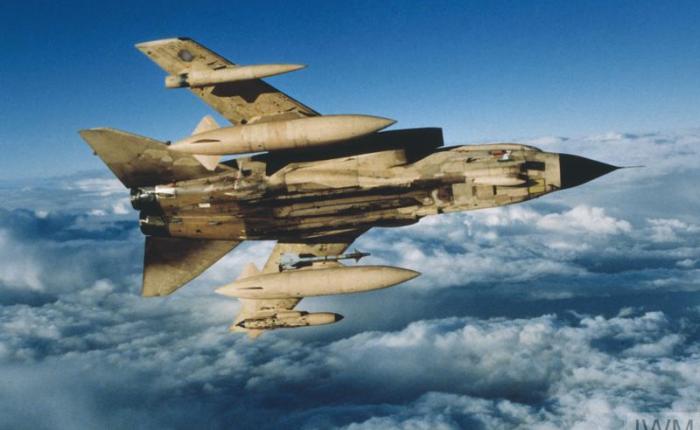
Header Image: A Tornado GR.1 in flight banks away from the camera and displays its underwing stores during the First Gulf War. Top to bottom the stores are a BOZ 107 chaff/flare dispenser, 500 gal fuel tanks, AIM-9 Sidewinder air-to-air missile and Marconi Sky Shadow ECM pod. (Source: © Crown copyright. IWM (GLF 707))

It is Time to Demystify the Effects of ‘Strategic Western Air Power’ – Part 2

It is Time to Demystify the Effects of ‘Strategic Western Air Power’ – Part 2

By Lieutenant-Colonel Dr Jyri Raitasalo

Editor’s Note: In this two-part article, Dr Jyri Raitasalo considers what he argues are the two fundamental fallacies concerning the application of strategic air power by Western states in the modern era. In the first part, he examined the challenge of the use of military forces as a tool for solving political problems. In this second part, he examines the issue of ‘no casualty warfare.’

Fallacy 2: No casualty warfare

The second fallacy in Western air power paradigm touches on the notion of precision engagement with almost zero civilian casualties and no collateral damage. This narrative was formed in the aftermath of the 1991 Gulf War and has been maturing and strengthening ever since.  Precision engagement has indeed become one of the game changers in warfare lately, but the Western narrative on pinpoint accuracy in warfare has become a strategic level hindrance to effective military operations.

The notion of no or little collateral damage developed into the Western air power paradigm little by little as political leaders since the early 1990s continuously decided to use military force actively for humanitarian purposes. It was a prerequisite that Western military operations do not cause civilian suffering or produce collateral damage in military operations (read: war) that are eventually humanitarian in nature. Focusing on the precise application of large-scale violence was thus a must for political purposes. It was needed for the legitimacy of these operations and to ‘sell’ these operations to domestic audiences within the Western world and internationally.

Combined Air and Space Operations Center
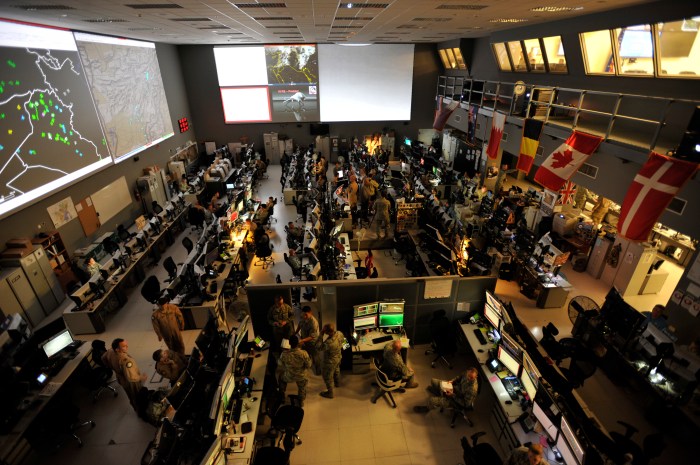
Combined Air and Space Operations Center at Al Udeid Air Base, Qatar, provides command and control of air power throughout Iraq, Syria, Afghanistan, and 17 other nations. The CAOC is comprised of a joint and Coalition team that executes day-to-day combined air and space operations and provides rapid reaction, positive control, coordination, and de-confliction of weapon systems. (Source: US Department of Defense via Wikimedia)

Also, as these humanitarian military missions had almost nothing to do with Western national interests or threats to Western states, it has been crystal clear from the start that force protection has been essential in these operations. Over time this has developed into a tradition of casualty-aversiveness, making Western soldiers ‘strategic assets’. Air power has facilitated safe military operations as practically all opponents during the post-Cold War era have had no functioning air forces of capable air defences. Relying on air power to fight humanitarian wars has been practically the only way that these operations have become possible in the first place. As President Bill Clinton explained: ‘I do not intend to put our troops in Kosovo to fight a war’. For the US the post-9/11 Global War on Terror changed this aversiveness to send troops to battle for a while.

What started as a way to ‘market’ humanitarian missions to voters and the general population has turned into a Western narrative on war, which accentuates the ability to strictly control the ‘dosing’ of violence in wars and being able to fight without civilian casualties and collateral damage. During the post-Cold War era, this guiding political principle and a semi-binding Western norm on warfare have led to Western militaries developing extremely expensive military systems to fight this ‘frictionless precision warfare’. This trend has been tremendously problematic for European states, as they in most cases do not have sufficient economic resources to develop their armed forces into credible military actors with even a modest number of usable high-tech military systems. When combining this trend with the post-Cold War era professionalisation of European militaries, most states in Europe today possess ‘Lilliputian militaries’ with little warfighting capability for large-scale conventional war against advanced state adversaries.

Final thoughts

Air power is important in warfare. Moreover, modern high-tech air forces can produce a decisive effect on the battlefield when used properly. ‘Unfortunately’ for some Western (mostly European) militaries, the post-Cold War era did not for more than 20 years pose any real military challenges that would have required sober analysis on what kind of missions the armed forces should be preparing against. Moreover, more importantly, as the existential threat evaporated quickly in the early 1990s, many Western political leaders filled the vacuum of security threats by turning their eyes towards out-of-area conflicts and stability throughout the globalising world.

In a cumulative 20-year long emergent process, Western states have become more and more interested in and reliant on applying air power actively in expeditionary operations because using military force throughout the international system has become possible. Political leader’s ‘trigger happiness’ in the West has increased during the post-Cold War era. On the tactical and operational levels of war, air power offers ‘easy solutions’ when there is the need to do something quickly and visibly – for example during large-scale atrocities committed by authoritarian leaders towards their citizen. On the strategic level, though, the results have been much more modest. Modern air power has not lifted the ‘fog of war’, nor has it produced many positive strategic results. Air power does not provide Western states with a ‘silver bullet’, nor has it changed the nature of war:  war is still a duel of wills, which means that adaptive enemies will do their utmost to destabilise Western strengths and lead in military capability development. This can be done at the tactical, operational or strategic levels.

990328-F-4728F-009
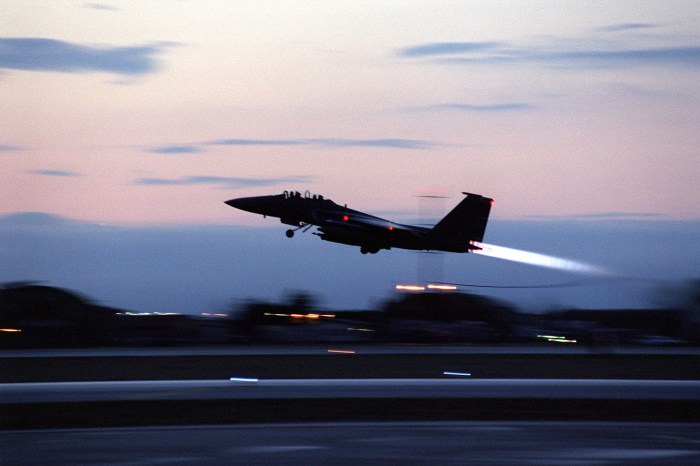
A USAF F-15E Strike Eagle takes off from Aviano Air Base, Italy, for an air strike mission in support of NATO Operation ALLIED FORCE on March 28, 1999. (Source: US Department of Defense via Wikimedia)

The use of large-scale military violence – waging war – needs to be taken seriously. Even if it is possible to cause pinpoint destruction and make targeted killings, one should remember that political problems can rarely be solved by killing all the opponents (from afar) or by punishing them severely. The active use of Western air power during the last 20 years has resulted in the lowering the threshold on the use of military force in the world. This could backfire in the future as China and Russia are increasing their military capabilities and great-power statuses.

Dr Jyri Raitasalo is a Lieutenant-Colonel in the Finnish military and a Senior Staff Officer at the Planning Unit (strategic planning) of the Finnish Ministry of Defence. He holds the title of Docent of strategy and security policy at the Finnish National Defence University.  During his latest assignments, he has served as the Commanding Officer of the Helsinki Air Defence Regiment (Armoured Brigade), Head Lecturer of Strategy at the Finnish National Defence University, ADC to the Chief of Defence and Staff Officer (strategic planning) in the Finnish Defence Command (J5). Jyri Raitasalo is a called member of the Royal Swedish Academy of War Sciences.

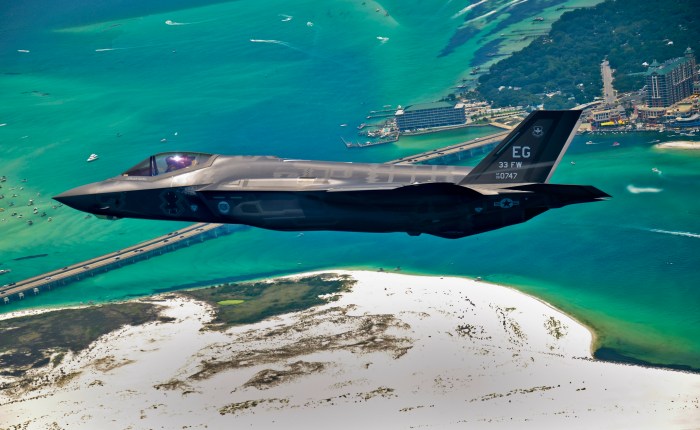
Header Image: The Department of Defense’s first U.S. Air Force F-35 Lightning II joint strike fighter (JSF) aircraft soars over Destin, before landing at its new home at Eglin Air Force Base, July 14, 2011. (Source: US Department of Defense via Wikimedia)

The Aero Club Which Never Was: Gentlemanly Aeronauts versus The New Breed

The Aero Club Which Never Was: Gentlemanly Aeronauts versus The New Breed

By Dr Michele Haapamaki

The accepted anecdote is that the Aero Club of Great Britain was imagined during a hot air balloon outing over the lush countryside of Kent in 1901. Its instigators were Frank Hedges Butler, officially a partner in his family wine merchant business but more of a gentleman adventurer, his daughter Vera Butler, and the young Hon. Charles Rolls – who would lend his name to the famous automotive company and become one of the first licensed pilots in Britain. The organisation they founded would serve as a sort of gentleman’s club for aviators and gained the patronage of the King in 1910 – thereafter referred to as the Royal Aero Club.

Besides establishing some of the first training fields for flyers, the Aero Club was the sole body tasked with granting pilot’s licenses prior to the First World War. All the men who would join the newly formed Royal Flying Corps or naval flight units first obtained this qualification at their own expense. In the postwar years, the Club was the political and social centre of British flying, hosting annual dinners for the winner of the King’s Cup Air Race. The heydey of the Aero Club is now identified with the apex of British aerial achievement in the interwar years. The early Club, however, invested little energy promoting new technical or scientific developments in the direction of heavier-than-air flight, instead of fulfilling its initial brief as a leisure and sport-oriented ballooning for gentleman amateurs. Hedges Butler seemed preoccupied with rural ballooning competitions and his hobby-horse idea of a volunteer Army Balloon Corps, which initially gained half-hearted endorsement by the War Office but was scuttled prior to the First World War.

large_0000002
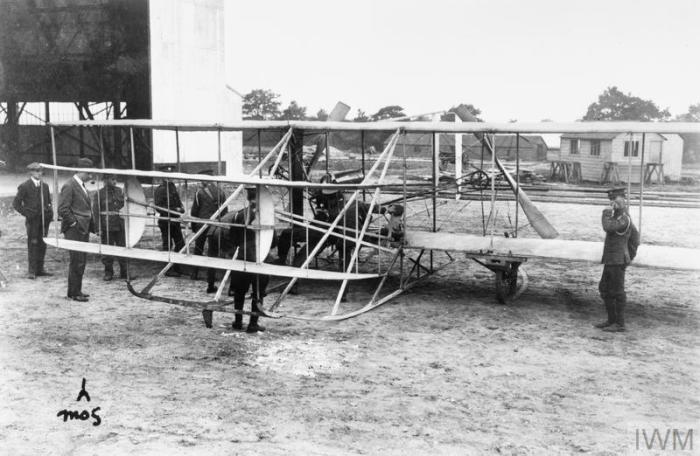
The Wright brothers aircraft at Farnborough being inspected by a small group of soldiers, c. 1910. (Source:  © IWM (RAE-O 615))

A little-known controversy over the Aero Club and a rival club which was never formed is a fascinating way to access larger questions about the development of heavier-than-air flight in early British aviation. Aviation historians will be familiar with the debate over whether ‘official’ Britain – be it government or quasi-official institutions – exhibited a characteristic, haphazard approach to the development of national aviation. Critics, both contemporary and historical, have argued that this lassitude allowed British ‘wings’ to fall behind other nations. Among other shortcomings, the British government may have been amateur in efforts to contact the Wright Brothers or probe their technology.[1] Hugh Driver, in his detailed history of early British military aviation, argued that the lengthy emphasis on ballooning by the Aero Club had ‘a material effect on the development of aviation generally’.[2]

Prior to the inception of the Hedges Butler Club, motor engineer and founder of the Automobile Club of Great Britain and Ireland, Frederick Simms, was the first to distribute a prospectus for an aeronautical club based on the existing French model. Its primary goal was directed towards the pursuit of heavier-than-air flight and in support of inventors. (Though it should be noted that at the time the French Aero Club also had an early emphasis on ballooning and dirigibles.) Simms was also a successful businessman who acquired rights to the UK manufacture of the internal combustion engine. He founded several eponymous companies, developing the magneto spark plug. As outlined by Driver, ‘Simms had the prior claim to found an aero club as such’.[3] Not only was he the founder of the Automobile Club in 1897, but he was also interested in heavier-than-air flying machines as early as 1896 – cooperating with Hiram Maxim’s attempt to build a steam-driven aeroplane.

His proposed group – the ‘Aero Club of Great Britain and Ireland’ – was intended as a spur to the development of ‘aerial navigation’. With characteristic enthusiasm, he claimed:

I am convinced that it only wants a Club or Society on modern lines to bring together the many British enthusiasts [to solve] this great problem.[4]

The Aeronautical Society, in existence since 1866, would have seemed – at least in theory – to fit the bill. However, it too was established as a ballooning Society and was in a somewhat moribund state at the turn of the century. At the time of Simms prospectus there indeed was a perceivable gap in organised enthusiasm for flight. After several acrimonious exchanges, Simms’ idea lost out to rival Aero Club. Simms and Hedges Butler were probably already acquainted, the latter having been appointed an honorary treasurer of the Automobile Club in 1898. It is therefore doubly unfortunate that the acrimony over the Club remained unresolved.

Class identity was one of the most salient characteristics of the Aero Club. In short, the emphasis was understood to be on the ‘club’ aspect of the name. It consciously modelled itself on the gentleman’s clubs of Pall Mall and St. James and acquired grand premises to match. Stanley Spencer, the aeronaut who piloted the three founders on the balloon outing when they conceived of the Club, was barred from membership due to his status as a ‘professional’. Many engineers, such as Simms, did not adapt readily to the image of an Aero Club man. He was an uneasy attendee at the first meeting of the Club on 3 December 1901 and was not placed on either the Organising or Balloon committees. The hierarchy and direction of the club were firmly established, ensuring that Simms was effectively sidelined from the new organisation, with the result that his prodigious energy (and those of like-minded men) for aeroplane flight was not utilised. To add insult to injury, Simms was asked for a £10 contribution to a balloon fund which he, understandably, refused.

Minutes of early Aero Club meetings, indeed, provide little indication of interests beyond ballooning. A certain Mr A. Verdon Roe was elected to membership in 1906, only for the name to be soon withdrawn. The Club did institute a ‘Technical Committee’ later that year with Charles Rolls, Simms, and John Moore-Brabazon as members. The latter was to become one of the best-known among the early generation of British aviators, though he learned more from time spent in Paris among French pioneers.

large_0000001
British Army Aircraft I during the first sustained flight. Cody began building the British Army Aircraft I in 1907 with the design similar to the kites and glider that he had successfully flown. Cody made the first sustained flight (lasting 27 seconds and for a distance of around 1390 feet) on the 16th October 1908. (Source: © IWM (RAE-O 995))

It is, however, one thing to make observations about the Aero Club and its early focus and yet another to conclude that they had any substantial impact on the larger course of British aircraft pioneering. There are substantial points to be made for a counterview. David Edgerton is well-known for his consistently presented case that the British aeronautical industry was thriving and well-supported in the Edwardian years and prior to the First World War.[5] Some evidence for this is the fact that the first flight on British soil, by the flamboyant American showman Samuel Cody, was in an army aircraft produced by the Balloon Factory at Farnborough.

Others have suggested that British aviation needed to take its own course in its own time, and in fact benefited from a lack of meddling from ‘boosters’ of different varieties. For the most part, no amount of progress was ever enough for some aviation buffs who tended to be of strong and unmoderated feeling; it could be argued that the hand-wringing was merely that. Aviation journalists, such as C.G. Grey of The Aeroplane, traded on histrionics over the fate of the British nation due to some aerial oversight or another by both government and, on occasion, private industry.

There is also the view that there was little of concrete import that an Aero Club could have produced in the pursuit of heavier-than-air flight in the early 1900s. Indeed, when it did become a reality on European soil with the 1908 demonstrations of the Wright brothers at Le Mans, France, the Club soon pursued these capabilities. They established one of the first aerodromes at the Isle of Sheppey, near the mouth of the Thames, and partnered with the Short Brothers – who brought characteristic British inventiveness to the manufacture and testing of new aircraft.

One conclusion we may reach is that discussion about the omissions of the organisations such as the Aero Club, both then and now, suffice to highlight the level of anxiety within British aviation circles – whether the basis for these worries was real or imagined. Was it inevitable that any such Club conceived during the Edwardian years would be (at least initially) unimaginative, snobbish, and genteel? Perhaps so. The episode of the duelling Clubs does provide an illuminating insight into the early world of British aviation, which the self-taught engineers and inventors were just on the cusp of breaking into. Those of the Hedges Butler ilk would soon be superseded by a new aviation elite which was, while not entirely a meritocracy, certainly closer to it than the sporting aeronauts would have imagined.

Dr Michele Haapamaki obtained her PhD from McMaster University (Hamilton, Canada) and is the author of The Coming of the Aerial War: Culture and the Fear of Airborne Attack in Inter-war Britain (I.B. Tauris, 2014). She is currently writing a book on culture and early British aviation. She Tweets @IdleHistorian.

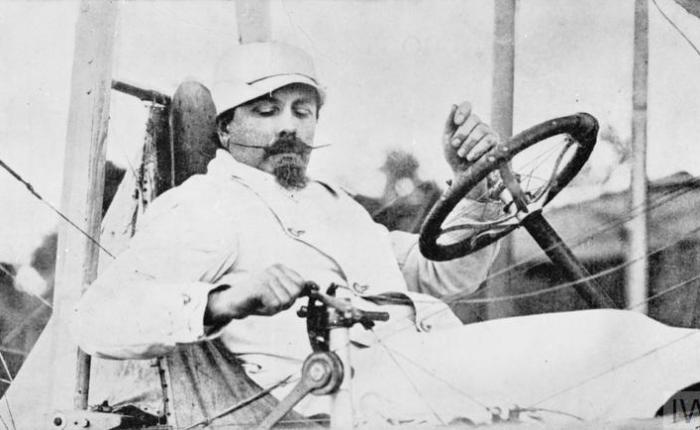
Header Image: A close-up of Cody in the cockpit of Cody aircraft mark IB. The cloth seat as opposed to a plough seat along with the control that Cody is moving differentiate this from the other marks of aircraft that Cody built. According to the caption, this was the aircraft that Cody intended to fly from London to Manchester in. Due to a mechanic failing to close a tap between the sump and the freshly filled oil tank the engine ceased up after fifteen minutes of flight. Fortunately, Cody was able to land safely. Shortly afterwards this aircraft was scrapped and Cody started work on a new one. (Source: © IWM (RAE-O 1075))

[1] See; Alfred Gollin, No Longer an Island: Britain and the Wright Brothers, 1902-1909 (Stanford: Stanford University Press, 1984) and The Impact of Air Power on the British People and their Government, 1909-14 (London: Macmillan Press, 1989)

[2] Hugh Driver, The Birth of Military Aviation: Britain, 1903-1914 (Woodbridge, Suffolk: The Boydell Press, 1997), p. 32.

[3] Ibid, p. 33.

[4] Ibid.

[5] David Edgerton, England and the Aeroplane: An Essay on a Militant and Technological Nation (Basingstoke, Hampshire: Macmillan, 1991).

Call for Submissions – From Balloons to Drones

Call for Submissions – From Balloons to Drones

Over the past two decades, airpower has become the “Western way of war” […] because it offers the prospect of military victory without large-scale destruction and loss of life. Airpower, however, cannot be decisive or even effective under all circumstances […] The utility of airpower is highly situational (emphasis added).

John Andreas Olsen[1]

From Balloons to Drones is an online platform that seeks to provide analysis and debate about air power history, theory, and contemporary operations in their broadest sense including space and cyber power.

Since its emergence during the First World War, air power has increasingly become the preferred form of military power for many governments. However, the application and development of air power are controversial and misunderstood. To remedy this, From Balloons to Drones is an online platform that seeks to provide analysis and debate about air power through the publication of articles, research notes, commentary and book reviews. From Balloons to Drones welcomes and encourages potential submissions from postgraduates, academics, and practitioners involved in researching the subject of air power.

Submissions can take the following forms:

  • ArticlesFrom Balloons to Drones publishes informative articles on air power that range from historical pieces to the analysis of contemporary challenges. These well-researched articles should attempt to bridge a gap between the specialist and non-specialist reader. They should be around c. 1,000 to 1,500 words, though From Balloons to Drones will accept larger pieces though we reserve the right to publish them in parts. References can be via footnotes and hyperlinks.
  • Air War BooksFrom Balloons to Drones publishes a series of review articles that examine the top ten books that have influenced writers on air power.
  • CommentariesFrom Balloons to Drones publishes opinion pieces on recent on a recent piece of news, either on a contemporary or historical subject. These are to be responses to such piece and should be no longer than c. 1,000 words.
  • Research NotesFrom Balloons to Drones publishes research notes related to contributor’s currents research projects. These take the form of more informal pieces and can be a discussion of a source or a note on a recent research theme. Unlike other pieces published by From Balloons to Drones, they can be written in the first person, though they can include references. These should be c. 500 to 1,000 words.
  • Book ReviewsFrom Balloons to Drones publishes occasional book reviews that aim to be an accessible collection of appraisals of recent publications about air power. If publishers are interested in having a publication reviewed then, please contact us via the email address below.

Submissions should be submitted in Word format. Also, please include a 50-100 word biography with your submission. However, if you are not sure if your piece fits our requirements, then please email us with the POTENTIAL SUBMISSION in the subject line. References can be used, and, given the readership of this site, please be careful to explain any jargon used.

If you are interested in contributing, please email us at airpowerstudies@gmail.com or use our contact page here.

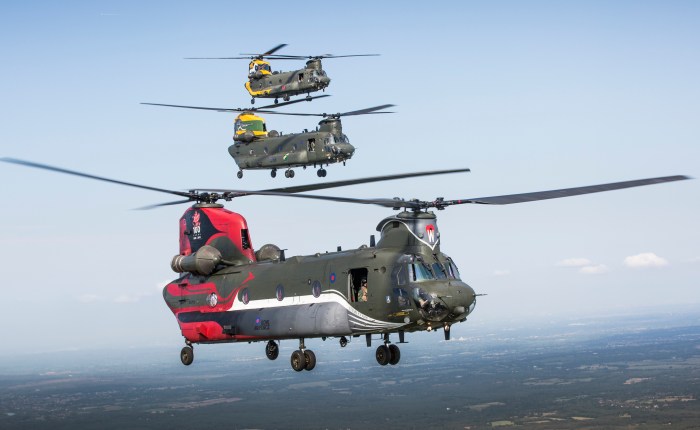
Header Image: Chinooks celebrate the 100th anniversaries of Nos. 18(B) and 27 Squadron from RAF Odiham and 28 Squadron from RAF Benson. (Source: Defence Imagery, Mod)

[1] John Andreas Olsen, ‘Introduction – Airpower and Strategy’ in John Andreas Olsen (ed.), Airpower Reborn: The Strategic Concepts of John Warden and John Boyd (Annapolis, MD: Naval Institute Press, 2015), p. 2.

#ResearchNote – A Different Kind of Shooting: A Photo-Recon Pilot’s Life in 1944

#ResearchNote – A Different Kind of Shooting: A Photo-Recon Pilot’s Life in 1944

By Mike Hankins

One of the lesser known large contributors to Allied victory in World War II was the role of aerial photographic reconnaissance. The allies relied on up-to-date photographs from the air. Flying these photo ‘recce’ missions could be every bit as harrowing as combat sorties. Recce planes flew over enemy territory with their guns removed and replaced with cameras. If they were attacked, pilots had no choice but to try and escape using only speed and manoeuvring, hoping to hide inside cloud cover or just to outrun the enemy. Up until the D-Day invasion, many of these missions were flown at extremely high speed and low altitude, as low as five to fifteen feet over the beaches of Normandy. Pilots likened these missions to throwing dice across a gambling table and called them ‘dicing’ missions. To get an in-the-cockpit view of what flying recce missions could be like, I am going to outline a brief period in the career of First Lieutenant George Adams, Jr., who joined the 30th Photographic Reconnaissance Squadron (PRS) in Toussus le Noble, France at the end of July 1944.

Adams flew the F-5, which was a Lockheed P-38 Lightning modified to take photos. The P-38 was not an uncontroversial plane, drawing mixed reviews from those that flew it. Ace fighter pilot Captain Jack Ilffey called it ‘a beautiful monster.’[1] Famed pilot Brigadier General Robin Olds, later noted for his contributions to air combat in the Vietnam War, first earned ace status in a P-38 in World War II. As he recalled,

I loved the P-38 but I got those kills in spite of the airplane, not because of it. […] The P-38 Lightning was too much airplane for a new kid and a full-time job for even a mature and experienced fighter pilot. Our enemies had difficulty defeating the P-38 but, as much as we gloried in it, we were defeating ourselves with this airplane.[2]

Although, from an air combat perspective, the P-38 was not nearly as effective as other fighter types, such as the North American P-51 Mustang, the Lightning’s high speed, long range, and sheer toughness allowed it to excel in the role of photo reconnaissance. Allied forces had learned early on that a group of F-5s together was easily spotted, so to reduce the likelihood of being seen, photo reconnaissance missions were often flown by single planes, unescorted and completely alone, usually deep over enemy territory.

2-Adams after landing in Mussidan, France
Adams after landing in Mussidan, France. (Source: Morse Special Collections, Kansas State University, Personal Papers of George Adams, Box 3)

Adams happened to arrive at a time when the 30th PRS was busier than it ever had been. The official unit history referred to August of 1944 as the ‘month of months.’ Ten August 1944 saw more missions take to the air than on D-Day itself. [3] For Adams, however, that month witnessed one of the defining moments of his career and very nearly cost him his life.

3-Adams welcomed in Mussidan
Adams welcomed in Mussidan. (Source: Morse Special Collections, Kansas State University, Personal Papers of George Adams, Box 3)

On 3 September, Adams was flying a reconnaissance mission over Belgium, when the weather took a turn for the worse. Due to extremely limited visibility, Adams flew far off course. With his fuel tanks almost empty, he had no choice but to land in the town of Mussidan in southwestern France. Luckily, just over one week previously on 25 August, the town had been liberated by the French Forces of the Interior (FFI). The townspeople welcomed him as a hero and gave him a place to stay at a nearby hotel for three days. The French resistance was able to purchase some German gasoline, and at the first sign of clear weather, on 6 September, Adams took off. After signalling his thanks by flying a few victory laps around the town, he headed back to Toussus le Noble.[4]

Adams’ ordeal was not over. The weather, which the 30th PRS unit historian called, ‘the airman’s most relentless foe,’ again proved troublesome for Adams on his flight back to base. After becoming lost in rough weather and losing all radio contact with his commanding officer, Major William Mitchell (not to be confused with the other Billy Mitchell, author of Winged Defense), Adams attempted to land in a field near Morannes and slammed his P-38 into a grove of trees. Adams himself was unharmed, but the aircraft was disabled. There was a military group at Morannes, and Adams stayed with them before travelling to an airstrip at Le Mans, about thirty miles away. Cooperating with intelligence services at Le Mans and the FFI, Adams tried to contact Major Mitchell but was unable to do so. The officials at Le Mans eventually brought Adams to Versailles on 8 September, where he was able to reconnect with the 30th PRS, and he returned to flying duty the next day.[5]

4-The wreckage of Adams' P-38 near Morannes
The wreckage of Adams’ P-38 near Morannes. (Source: Morse Special Collections, Kansas State University, Personal Papers of George Adams, Box 3)

Typically, the weather of the winter months limits photo recce missions. However, that was the least of the allies’ problems in December of 1944 as eight panzer divisions tore their way through the Ardennes forest, beginning what became known as the Battle of the Bulge. The 30th PRS joined the battle, providing valuable photographs to aid ground units. However, the weather again reared its head. Only five days before the end of the year were suitable for taking photos. The 30th managed to squeeze out 96 missions in those five days. Adams and his fellow pilots flew as much as possible, including flying multiple missions on Christmas Eve, Christmas day, and New Year’s Eve. The squadron set a record for a number of photographs processed: nine miles of film, consisting of 44,306 negatives that produced 153,579 prints.[6]

On New Year’s Day, 1945, ground forces requested an urgent, secretive mission to be flown over a particularly well-defended area of the German lines during the Battle of the Bulge. The nature of the photographs needed required a low-altitude approach of 2,000 feet, rendering the reconnaissance planes especially vulnerable to ground defences. Adams and six other pilots volunteered for the job. Four of them, including Adams, flew out twice. Despite the heavy risk and the intrusion of adverse weather conditions, the mission was a success, providing valuable intelligence to the front lines. The secretive nature of the mission prevented much discussion of it at the time, however, several months later, on 21 July 1945, Adams was awarded the Distinguished Flying Cross for flying his ‘unarmed photographic aircraft under circumstances entailing utmost courage and skill.’[7]

In the popular memory of World War II, we often tend to celebrate or romanticise the fighter pilots or bomber crews that engaged in seemingly heroic combat actions. However, Adams and his fellow recon pilots should not be forgotten. They took serious risks and made key contributions to the Allied victory in World War II.

Mike Hankins is a doctoral candidate at Kansas State University, where he teaches World History, the History of Airpower, and the History of Comic Books, and he is currently working on his dissertation, ‘Sources of Innovation: The Cultural and Technological Origins of Fourth Generation Fighter Aircraft, 1964-1991.’ He completed his master’s thesis at the University of North Texas in 2013, titled ‘The Phantom Menace: The F-4 in Air-to-Air Combat in the Vietnam War. He has a web page and can be found on Twitter at @hankinstien.

Header Image: Ground personnel of the 7th Photographic Reconnaissance Group fit cameras into a Lockheed F-5 Lightning before a long-range mission. Image by Staff Sergeant Robert Astrella, 7th Photographic Reconnaissance Group. (Source: ©IWM (FRE 5390))

[1]    Robert F. Dorr, ‘Why the P-38 Flunked in Europe,’ Aviation History 24 (May 2014), 22.

[2]    Ibid.

[3]    US Air Force Historical Research Agency (AFHRA), Maxwell AFB, 30th Photo Reconnaissance Squadron Unit History for the Month of August, 1944; Morse Special Collections, Kansas State University, Personal Papers of George Adams, Box 3, George Adams Pilot Information File, August 1944. Hereafter, the Adams Papers.

[4]    AFHRA, 30th Photo Reconnaissance Squadron Unit History for the Month of September, 1944; Testimony of Labattu de Montpon, as related in email from Mayor Stephane Triquart to Bruce Adams, 21 January 2016.

[5]    AFHRA, 30th Photo Reconnaissance Squadron Unit History for the Month of September, 1944.

[6]    Ibid.

[7]    AFHRA, Recflash, Vol. 2 No. 1, Highlight Missions, 2, attached to Historical Records and History of Headquarters 67th Tactical Reconnaissance Group, Month of January 1945; Morse Special Collections, Kansas State University, Adams Papers, Box 3, Quote from Distinguished Flying Cross award citation, General Orders 116, 27 June 1945.

Air Power and the Battle of the Bismarck Sea

Air Power and the Battle of the Bismarck Sea

By Dr Alan Stephens

This week marks the 74th anniversary of the Battle of the Bismarck Sea, arguably the most significant action fought by Australians during World War II.

Between December 1941 and April 1942, Imperial Japanese forces shocked Australians with their victories over the United States at Pearl Harbor and in the Philippines; and over the British Commonwealth in Malaya, Singapore, the Dutch East Indies and Rabaul. When enemy forces occupied northern New Guinea, an invasion of Australia, with its unthinkable consequences, seemed possible. However, supported by their American and British allies, Australia’s servicemen and women regrouped and fought back.

From mid-1942 onwards, Australian victories with American support at Milne Bay and Kokoda, and the triumph of American naval air power at Coral Sea and Midway weakened Japan’s hold on New Guinea. Further Allied successes on New Guinea’s northeast coast at Buna, Gona and Sanananda between November 1942 and January 1943 left the Japanese position substantially weakened.

Then, intercepted radio messages revealed that an enemy convoy would sail from Rabaul with reinforcements for the vital Japanese garrison at Lae on the northeast coast of New Guinea in late-February. This was likely to be Japan’s last throw of the dice in New Guinea. If the convoy were stopped, then so too would be the likelihood of an invasion of Australia

Allied Air Forces under the command of the American General George Kenney immediately began preparing for an all-out assault against the convoy. A critical factor was the brilliant plan largely conceived by the Royal Australian Air Force’s (RAAF) Group Captain William “Bull” Garing. Garing had already fought in Europe for two years with the RAAF’s No. 10 Squadron, and his experience of maritime warfare was to prove decisive.

nwa0471
Group Captain Garing RAAF (standing, right) hands over information to his successor Group Captain McLachlan, seated at the office desk, c. 1943. (Source: Australian War Memorial)

It was Garing who convinced General Kenney of the need for a massive, coordinated attack. Garing envisaged large numbers of aircraft striking the convoy from different directions and altitudes, with precise timing.

Initially, the allies would rely on reconnaissance aircraft to detect the convoy, which would then be attacked by long-range United States Army Air Force (USAAF) bombers. Once the convoy was within range of the allies’ potent anti-shipping aircraft – RAAF Beaufighters, Bostons and Beauforts, and American Mitchells and Bostons – a coordinated attack would be mounted from medium, low, and very low altitudes.

During the waiting period, crews practised their navigation and honed their formation flying, bombing, and gunnery skills.

Six thousand four hundred Japanese troops embarked at Rabaul between 23 and 27 February 1943, and the convoy of eight merchant ships and eight destroyers sailed just before midnight on the 28th, planning to arrive at Lae on 3 March. Air cover was provided by about 100 fighters flying out of bases in New Ireland, New Britain and New Guinea.

The enemy convoy initially was favoured by poor weather, which hampered Allied reconnaissance. It was not until mid-morning on 2 March that USAAF B-24 Liberators sighted the ships. General Kenney immediately launched eight B-17 Flying Fortress heavy bombers, followed shortly afterwards by another 20. The B-17s attacked from an altitude of 2000 metres with 450-kilogram demolition bombs. Later in the day, another strike was made by 11 B-17s whose crews reported that vessels were ‘burning and exploding […] smoking and burning amidships’ and ‘left sinking’.

By nightfall, the enemy was only hours from Lae, which meant that in the morning it would be within range of the entire allied strike force. If the coordinated attack were to succeed, the precise location of the convoy had to be known at daybreak; consequently, throughout the night, it was tracked by an RAAF Catalina from No. 11 Squadron, which occasionally dropped bombs and flares to keep the Japanese soldiers in a state of anxiety. Also during the night, eight RAAF Beaufort torpedo bombers from No. 100 Squadron took-off from Milne Bay to try to use the darkness to their advantage. The heavy frontal weather made navigation hazardous, and only two aircraft found the convoy. Neither scored a hit.

The moment the Allied Air Forces had been waiting for came on the morning of 3 March 1943, when the Japanese convoy rounded the Huon Peninsula. For much of the time the adverse weather had helped the enemy avoid detection, but now clear conditions favoured the allies. Over 90 aircraft took-off from Port Moresby and set heading for their rendezvous point. While the strike force was en route, RAAF Bostons from No. 22 Squadron bombed the enemy airfield at Lae.

550px-battle_of_the_bismark_sea

By 9:30 a.m. the AAF formations had assembled, and by 10:00 a.m. the Battle of the Bismarck Sea had begun.

The allies attacked in three waves and from three levels, only seconds apart. First, 13 USAAF B-17s bombed from medium altitude. In addition to the obvious objective of sinking ships, those attacks were intended to disperse the convoy by forcing vessels to break station to avoid being hit.

Second, 13 RAAF Beaufighters from No. 30 Squadron hit the enemy from very low level, lining up on their targets as the bombs from the B-17s were exploding. With four cannons in its nose and six machine guns in its wings, the Beaufighter was the most heavily armed fighter in the world. The Australians’ job was twofold: to suppress anti-aircraft fire, and to kill ships’ captains and officers on their bridges.

The Beaufighters initially approached at 150 metres above the sea in line astern formation. The pilots then descended even lower, to mast-level height, set full power on their engines, changed into line abreast formation, and approached their targets at 420 kilometres an hour.

It seems that some of the Japanese captains thought the Beaufighters were going to make a torpedo attack because they altered course to meet the Australians head-on, to present a smaller profile. Instead, they made themselves better targets for strafing. With a slight alteration of heading the Beaufighters were now in an ideal position to rake the ships from bow to stern, which they did, subjecting the enemy to a withering storm of cannon and machine gun fire.

127965
A Japanese transport on fire during the Battle of the Bismarck Sea. (Source: Australian War Memorial)

According to the official RAAF release:

[e]nemy crews were slain beside their guns, deck cargo burst into flame, superstructures toppled and burned.

With the convoy now dispersed and in disarray, the third wave of attackers was able to concentrate on sinking ships. Thirteen American B-25 Mitchells made a medium level bombing strike while, simultaneously, a mast-level attack was made by 12 specially modified Mitchells, known as ‘commerce destroyers’ because of their heavy armament. The commerce destroyers were devastating, claiming seventeen direct hits. Close behind the Mitchells, USAAF Bostons added more firepower.

Following the coordinated onslaught, Beaufighters, Mitchells and Bostons intermingled as they swept back and forth over the convoy, strafing and bombing. Within minutes of the opening shots, the battle had turned into a rout. At the end of the action:

[s]hips were listing and sinking, their superstructure smashed and blazing, and great clouds of dense black smoke [rose] into a sky where aircraft circled and dived over the confusion they had wrought among what, less than an hour earlier, had been an impressively orderly convoy.

Overhead the surface battle, 28 USAAF P-38 Lightning fighters provided air defence for the strike force. In their combat with the Zeros which were attempting to protect the convoy, three of the Lightnings were shot down, but in turn, the American pilots claimed 20 kills. Apart from those three P-38s, the only other allied aircraft lost was a single B-17, shot down by a Zero.

With their armament expended the allied aircraft returned to Port Moresby. However, there was to be no respite for the enemy. Throughout the afternoon the attacks continued. Again, B-17s struck from medium level, this time in cooperation with Mitchells and RAAF Bostons flying at very low level. (Incidentally, the Bostons were led by Squadron Leader Charles Learmonth, after whom the RAAF’s present-day base in north-west Australia is named.) At least 20 direct hits were claimed against the by-now devastated convoy.

That was the last of the coordinated attacks. The victory had been won. For the loss of a handful of aircraft, the Allied Air Forces had sunk twelve ships – all eight of the troop transports and four of the eight destroyers – and had killed more than 3,000 enemy soldiers.

The brilliantly conceived and executed operation had smashed Japanese hopes of regaining the initiative in New Guinea and had eliminated any possibility that Australia might be invaded. In the words of the supreme command of the Southwest Pacific Area, General Douglas MacArthur, the Battle of the Bismarck Sea was ‘the decisive aerial engagement’ of the war in the Southwest Pacific.

However, there was still a terrible yet essential finale to come. For several days after the battle, Allied aircrews patrolled the Huon Gulf, searching for and strafing barges and rafts crowded with survivors. It was grim and bloody work, but as one RAAF Beaufighter pilot said, every enemy soldier they prevented from getting ashore was one less for their Army colleagues to face. Moreover, after fifteen months of Japanese brutality, the great immorality, it seemed to them, would have been to have ignored the rights of their soldiers.

128159
A Japanese destroyer steaming astern while under attack by USAAF bombers during the Battle of the Bismarck Sea. (Source: Australian War Memorial)

Japanese media never mentioned the battle, but in a macabre footnote, two weeks later, Tokyo announced that in future all Japanese soldiers were to be taught to swim.

The Battle of the Bismarck Sea was a master-class in air power. The RAAF and the USAAF had smashed Japanese hopes of regaining the initiative in New Guinea; they had forced the enemy into a defensive posture from which ultimate victory was unlikely, and they had eliminated any possibility that Australia might be invaded.

This was arguably Australia’s most important victory in World War II.

This post first appeared at The Central Blue, the blog of the Sir Richard Williams Foundation.

Dr Alan Stephens is a Fellow of the Sir Richard Williams Foundation. He has been a senior lecturer at UNSW Canberra; a visiting fellow at ANU; a visiting fellow at UNSW Canberra; the RAAF historian; an advisor in federal parliament on foreign affairs and defence; and a pilot in the RAAF, where his experience included the command of an operational squadron and a tour in Vietnam. He has lectured internationally, and his publications have been translated into some twenty languages. He is a graduate of the University of New South Wales, the Australian National University, and the University of New England. Dr Stephens was awarded an OAM in 2008 for his contribution to Australian military history.

Header Image: During the Battle of the Bismarck Sea in which the Japanese suffered heavy losses while attempting to reinforce their garrison at Lae, a RAAF Beaufighter attacks a camouflaged Japanese transport. A burst is poured into the burning vessel. (Source: Australian War Memorial)