In case you missed it, the North American Aerospace Defense Command (NORAD) turned 60 this year. It was an easy thing to overlook. Most of the time when I mention that I work at NORAD, the first thing that comes to most people’s mind is that it is the organisation responsible for tracking Santa (and that is a job taken very seriously). However, the day to day focus on the command remains on the defence of the North American continent. It does so through three mission areas: aerospace warning, aerospace control and maritime warning. The most important concept to remember when discussing the history and operations of NORAD is that it is a binational command with shared responsibility between the United States and Canada.
Sixty years of shared defence
For more than sixty years now, Americans and Canadians have bi-nationally agreed to place the defence of the homeland in each other’s hands and entrust officers from both countries with commanding, directing, and controlling forces. To that end, Richard Goette’s new work Sovereignty and Command in Canada-US Continental Air Defence, 1940-1957, looks at the development of these relationships leading up to the creation of NORAD in September of 1957. Goette is an air power academic and Canadian air force historian as well as an Associate Professor in the Department of Defense Studies at the Canadian Forces College in Toronto, where he is Deputy Chair of the Department of Military Planning and Operations.
Looking back retrospectively, it is easy to believe that a close relationship between the two nations was a foregone conclusion; it seems difficult to imagine a world in which Canada and the US would not cooperate on matters of national defence. This was indeed not the case immediately following the First World War. One of the demonstrative statements in the book comes at the beginning of Chapter Three where Goette states that ‘[I]t was by no means preordained that Canada and the US would cooperate in the defense of North America.’ Both countries had active war plans for conflict with each other. As Goette shows, ‘[C]anadian military officials continued to consider the US a potential adversary and planned accordingly.’ Likewise, America’s war plan crimson dealt with a conflict against Canada as part of a likely larger fight against Great Britain (War Plan Red) (p. 71).
Air Marshal Charles Roy Slemon, Chief of the Air Staff , RCAF, 1953-1957, and the first Deputy Commander-in-Chief of NORAD.(Source: Candian Department of Defence)
Throughout the 1940s and 1950s, this planning against the border nations morphed into cooperation between the two nations and eventually into a unique agreement where the defence of the two nations was shared. Goette (p. 23) aims to demonstrate ‘how Canadian and American officers debated and negotiated doctrinal definitions of command and control as the basis of the Canada-US continental air defence relationship from 1940-1957.’ Thus, Goette’s work pairs nicely with Joseph T. Jockel’s Canada in NORAD 1957-2007: A History. The author’s thesis (p. 5) is that the struggle from the Canadian perspective ‘was not control but command: command over Canadian air defense forces was the actual “acid test of Canadian sovereignty.”’
Sovereignty
Goette’s work is about sovereignty, particularly the sovereignty of Canada. ‘Sovereignty is a complex and contested concept without a universally accepted definition.’ (p. 27) Both countries had to find common ground and move from common conceptions of defence (working within services) towards bilateral (and later binational) defence. Nineteen-forty saw the earliest discussions held between the two nations with the US seeking both ‘strategic direction’ and ‘command,’ over Canadian forces, a clear problem for Canadian sovereignty and command of their forces. The calculus changed by the summer of 1941 and the new cooperative plan (ABC-22) saw that ‘each nation would retain strategic direction and command of its forces, which effectively recognized national sovereignty.’ More importantly, the groundwork was accomplished allowing the two nations to begin effectively working together with the goal of continental defence in mind (p. 81, 83).
The Second World War found the two nations working effectively together, and establishing relationships and procedures used during the war bore fruit in its aftermath. The post-war Basic Security Plan (BSP) was a combined effort aimed at continental defence that Goette (p. 116) shows ‘was a watershed in the Canada-US defence relationship.’ Between the acceptance of the BSP in 1946 and 1953, other plans and agreements between the two nations, particularly as they concerned cross-border intercepts strengthened the relationship between the two governments, but more importantly between the militaries. As the Cold War progressed, it became increasingly evident that the solution would be in a combined headquarters where US and Canadian personnel could work alongside each other. The problem, especially from the Canadian perspective, remained the spectre of American officers commanding Canadian forces. Interestingly, the ‘solution was avoiding the term “command” and using the principle of operational control.’ Thus, in 1957 the North American Air Defense Command (NORAD) began operations. Headed by an American four-star with a Canadian three-star deputy, each officer held ‘operational control.’ Day-to-day operations and ‘operational control’ were held by the American Commander-in-Chief NORAD, but in his absence, the Canadian Lieutenant General held control over the American officers. Administrative matters, punishment, and other matters of command remained sovereign, i.e. national and service responsibilities. This unique command structure remains in place today (p. 177).
The SAGE ‘Blue Room’ at the NORAD Underground Complex at Canadian Forces Base North Bay, Ontario, c. 1972. (Source: Library and Archives Canada)
There is really nothing to critique here, Goette has successfully produced a deeply researched work that is the first significant study of the development of Canadian-US continental defense in the post-Second World War era and, as such, it will remain the go-to book for those looking to understand the origins of this unique relationship for the foreseeable future. Sovereignty and Command will quickly find a following in the fields of history and air power studies but will also find a wide readership in the fields of political science, civil-military relations, and international relations. If you have an interest in how the homeland is defended this is a must-read and demonstrates the unique Canadian-US relationship that has stood the test of time for more than 60 years and looks to easily double that as the unique, nay special, binational relationship continues to evolve into the future.
Dr Brian Laslie is an Air Force Historian and currently the Deputy Command Historian at North American Aerospace Defense Command (NORAD) and United States Northern Command (USNORTHCOM). He is also an Assistant Editor at From Balloons to Drones. A 2001 graduate of The Citadel and a historian of air power studies, he received his PhD from Kansas State University in 2013. His first book The Air Force Way of War (2015) was selected for the Chief of Staff of the Air Force’s and the Royal Air Force’s Chief of the Air Staff professional reading lists. His recently published Architect of Air Power: General Laurence S. Kuter and the Birth of the US Air Force. He lives in Colorado Springs. He can be found on Twitter at @BrianLaslie.
Header Image: A Royal Canadian Air Force Avro Canada CF-100 Canuck in flight with a Convair F-102 Delta Dagger, c. 1950s (Source: Royal Canadian Air Force)
If you would like to contribute to From Balloons to Drones, then visit our submissions page here to find out how.
Last week, From Balloons to Droneslaunched its own air power reading list. Many of the world’s air forces release an annual reading list that contains crucial volumes that those services believe its members should read as part of their professional development. Indeed, as the Royal Air Force’s Chief of the Air Staff, Air Chief Marshal Sir Stephen Hillier noted in the RAF’s recently launched 2018 reading list; ‘[R]eading, study and debate form a fundamental component of developing our collective intellectual capital.’[1]
However, the list we have published reflects the original aims of From Balloons to Drones. From Balloons to Drones was established as an online platform that seeks to provide analysis and debate about air power history, theory, and contemporary operations in their broadest sense including space and cyber power. While From Balloons to Drones has a place within the online ecosphere of the profession of arms network, this is not the websites primary purpose. From Balloons to Drones has always aspired to bridge the gap between several interested audiences ranging from civilian academics, interested lay readers as well the military. Given this broader aim, the reading list we published is representative of that goal.
Crucially, this curated bibliography is by no means comprehensive, and it is essential to make clear that this has been done on purpose. This is for two reasons. First, it is expected that the reading list will be organic and grow over time. This links to the second reason, which is the source of the titles on the list. The list has been curated from our ‘Air War Books’ series and published book reviews. As such, the list is representative of the choices made by those air power historians who have contributed to our ‘Air War Books’ series to date. Indeed, as several people noted on our Twitter feed, there is a lack of books on naval or maritime air power, and this obviously reflects the interests of the contributors who have so far contributed to the aforementioned series. Therefore, as more contributions are added to the ‘Air War Books’ series, then more titles will be added to the list where applicable. In a similar vein, as we publish more book reviews on essential new and historic air power titles, we will add these to the list.
At some point, we may cull the list, but for now, we hope that you enjoy the list and get something useful out of it.
Header Image: Forward air controllers in PC-9 aircraft fly in support of Exercise PITCH BLACK 2018. These aircraft are operated by the Royal Australian Air Force’s No. 4 Squadron. (Source: Australian Department of Defence)
[1] Air Chief Marshal Sir Stephen Hiller, ‘Foreword’ in CAS’ Reading List 2018 (Shrivenham: RAF Centre for Air Power Studies, 2018).
Editorial Note: In the fourth instalment of ‘Air War Books,’ Dr Randall Wakelam discusses the ten books that have influenced and shaped his writing as an air power historian. If you are interested in contributing to this series or From Balloons to Drones more generally, find out how here.
Since joining the Air Force more than 45 years ago, I have found that professional education for those working with air power has not been a forte of Canada’s Air Force. Much of what I have learned, I have done so out of curiosity and by selecting graduate courses and by doing graduate research that allowed me to satisfy my curiosity and develop a better understanding of air power. While I am critical of this circumstance in Canada I do not think it is unique; there are too many editorials, op-eds and notes from chiefs of service that attempt to get aviators to read if not write.
Having taught air power at the Canadian Forces College and now at an undergraduate and graduate level to officer cadets and civilian students, I continue to learn. In this teaching, I think I am comfortable with the notion that air power concepts introduced a century ago have now reached maturity regarding what air power effects can be applied and how. What is constantly in flux is the larger Geopolitical context of why and when one wants to apply air power effects.
The one other factor that I would want to bring into the formulation of this list is my desire to get inside the thinking processes of those who have developed air power concepts and then applied them. Thus, several the titles that you will see below are either biographies or studies of the human condition. In the case of biographies, I fully recognise that looking at the life stories of some of these actors comes with risks. Case studies of human and personnel questions are perhaps less risky but not without risk.
And now to the list, which is most certainly too short to do justice to the many other works that I have found important to me.
Philip Meilinger (ed.), The Paths of Heaven: The Evolution of Airpower Theory (Maxwell AFB, AL: Air University Press, 1997). This volume is without question the one work that I keep going back to. Admittedly written from a United States Air Force (USAF) perspective I have found the work balanced and useful in seeing the ‘long duree’ of air power thought and its application. I first read the book just after it came out but even now, twenty years later, do not find it particularly dated. Of great value is I.B. Holley’s summary and commentary. His criticism that the work ignores naval aviation serves as a caution to readers that while highly valuable the volume does have its limitations.
John Andreas Olsen (ed.), A History of Air Warfare (Washington D.C.: Potomac, 2010). This work fills the void of the last two decades since Paths of Heaven was published and provides readers with a different treatment of many of the same ideas and events presented in the former. For that reason, I think it provides a solid bookend to balance the USAF compendium. Also, the reader gets a good dose, perhaps too good of the air campaigns of the post-Cold War decades and three useful studies of current and future themes, most importantly small wars and space. The penultimate chapter, by Martin van Creveld, balances Holley’s commentary and leaves the reader with the ultimate question: has the age of air power come and gone?
Allan D. English, Understanding Military Culture: A Canadian Perspective (Montreal: McGill-Queen’s University Press, 2004). When I reviewed English’s book about a decade ago, I wrote that it was, for me at least, a volume that captured essential ideas about military culture, ideas that I might have benefited from even from my first days in uniform. In a relatively short but well-focused study, English laid out the elements of culture, looked at them through the lens of the USAF and then from the perspective of the Canadian air arm. At that time there was no the Royal Canadian Air Force (RCAF), as there had been up to the 1960s and as there is again today. The absences of that organisational title and the emotional trappings of an independent air service were all the more reason to read English’s book at the time. The comings and goings of organisations, from squadron to air forces that continue in all nations made and makes this work incredibly insightful.
Henry Probert, Bomber Harris: His Life & Times (Aylesbury: Greenhill Books, 2001). For a long time, I wanted to attempt to understand the thinking of Marshal of the Royal Air Force Sir Arthur Harris. Was he the wanton killer of German civilians that he was accused of being? How did he apparently hold the loyalty of his aviators? Probert’s study of the man gave me the answers that others did not. Bullheaded to the point of obstinacy – certainly more than not – but he did set out to apply the concepts and technology available to him to accomplish the task set for Bomber Command. Moreover, in this, we see not bombast alone but also a sharp intellect and a degree of flexibility and accommodation (that I would not have expected) and above all a desire to save the lives of his crews, or at least make their sacrifices count. Probert showed me Harris’ strengths and weaknesses, giving me a good picture of what any operational level leader might look like, warts and all.
Denis Richards, Portal of Hungerford (Tintern, MON: William Heinemann, 1977). If Harris is a good case study in operational level leadership, then Denis Richards biography of Marshal of the Royal Air Force Viscount Portal makes a good companion. Few of us will ever get to work at or even observe the work of senior air force leaders or to have exposure to the sorts of institutional level challenges they face, both within their service and across governments and coalitions. This book gives us that access, and it allows us to put the better-known struggles of the Royal Air Force (RAF) in its formative years into a more personal context where, as in the case of Harris, personal strengths and weaknesses – the human factor – contribute to success or precipitates failure.
Dewitt S. Copp, A Few Great Captains: The Men and Events That Shaped the Development of U.S. Air Power (McLean, VA: EPM Publications, 1989). This work has been my only deep dive into the USAF, and as I began to think more about culture, doctrines and effects, it seemed to be important to study not just one man or a few, but rather the birth and evolution of an air power community. I believe I found that in this work. It looks at the people and their professional growth, ideas, experiences, small ‘P’ politics and larger organisational conflicts.
John J. Zentner, The Art of Wing Leadership and Aircrew Morale in Combat, CADRE Paper no. 11 (Maxwell AFB, AL: Air University Press, 2001). This set of case studies looks at leadership in a flying organisation, arguably one of the hardest notions to explain to army and naval officers who generally lead within plain sight of their followers. Moreover, to be honest, how one leads in the air is often hard to describe, or at least it was before the recent decades of air operations, to aviators. Effective leadership should promote high morale, and Zentner posited that that strong morale is linked to aircrew control over the tactics they are to use in the air. During a period of relative global calm, he set out to test his concept in three case studies. He looked at two fighter leaders, one German and one American in the Second World War, and for a third case flows the leadership of a B-52 Wing Commander during the Vietnam War.
Allan D. English, The Cream of the Crop: Canadian Aircrew, 1939-1945 (Montreal: McGill Queen’s University Press, 1996). This work is focused on the personnel issues of the RAF and the RCAF, and thus we find an investigation into an aspect of air warfare every bit as important as technologies. English sets out to explore and comment on the impact of what today we recognise as post-traumatic stress disorder on Bomber Command aircrew. To do this he looks at the Royal Flying Corps experiences of recruiting and training during the First World War and how these, and societal cultural norms were adopted by the RAF and to a lesser extent the RCAF in the Second World War. He shows the significant difference in the policy adopted by the RCAF and how rehabilitation of stress casualties rather than their banishment could safeguard critical human resources.
Robin Higham and Steven J. Harris (eds.), Why Air Forces Fail: The Anatomy of Defeat (Lexington, KT: The University Press of Kentucky, 2006). Not every air campaign is a success and not every air service ensures the security of its home nation. In studying failures Higham and Harris edited volume expose us to valuable experiences of things gone wrong. More important than the various well researched and presented case studies is the introduction where the editors lay down a simple truth: ‘other things being equal’ the better air power ‘should’ prevail. They then go on to look at the range of ‘other things’ and here is the true value of the collection: the reader soon realises, or should, that there are almost countless factors in play that can cripple an air force, often long before a conflict begins. To codify these factors, Higham adapts Mahan’s characteristics of a maritime nation to identify where and how air power nations can and have failed.
Robert Grattan, The Origins of Air War: The Development of Military Air Strategy in World War I (London: IB Tauris, 2009). Grattan, an RAF navigator, turned business professor in his later years, presents a study of air arms in the First World War. He argues that the leaders, flyers and even politicians and industrialists had nothing to go on and so national air arms were sort of a ‘design build’ enterprise with rapid advancement through trial and error. He looks at aircraft, weapons, personnel and tactics studying the advancements of each in relation to the others. The use of the word ‘strategy’ in his title is a bit misleading; ‘air power concepts’ would more accurately describe his focus in my view.
Dr Randall Wakelam teaches military and air power history at the Royal Military College of Canada. After graduating from RMC in 1975 he flew helicopters for the Army, becoming CO of 408 Tactical Helicopter Squadron in 1991. Along the way, he also had staff appointments in aircraft procurement and language training policy. Since 1993 he has been an educator, first in uniform at the Canadian Forces College in Toronto and now at RMC. His research and publishing focus on air power and military education.
On 18 June 2018, President Donald J. Trump announced his intention to create a new branch of the United States armed forces. This new branch, the US Space Force, would be charged with controlling the nation’s military activities in space. The fact that the US would be involved in military activities in space in the first place should not be taken for granted. The US’ first military space policy was based on the principle that space ought to remain a ‘sanctuary’ from the sort of martial competition that was taking place on earth’s surface. Despite these peaceful beginnings, nearly every successive president has established a military space policy more aggressive than the last. The proposed establishment of the Space Force as a new branch of the US military represents the apex of this decades-long trend toward increased militarisation of space.[1]
President Eisenhower visiting the George C. Marshall Space Flight Centre in Huntsville, Alabama, 8 September 1960. (Source: NASA)
The US government’s first space policy was established during the presidency of Dwight Eisenhower. Eisenhower and the military saw the nation’s developing satellite program as a valuable tool in monitoring Soviet military concentrations and looked forward to developing the critical capacity of detecting hostile missile launches from space. The president’s views differed with military leaders in significant ways. While the military advocated the development of anti-satellite (ASAT) missile technology and other generally hostile technologies for use in space, Eisenhower was more interested in the scientific possibilities of the space program. Eisenhower established the National Aeronautics and Space Administration (NASA) on 29 July 1958, as a separate entity from the Department of Defense – one with a purely peaceful civilian mandate. Though he did green-light some early research into ASAT technology, the US never developed a functional ASAT capability during Eisenhower’s presidency.[2]
John F. Kennedy took the first steps toward a more militarised space policy by approving the full-scale development of the anti-satellite and anti-ballistic missile technologies first considered during Eisenhower’s tenure. Kennedy was concerned with the nuclear ‘missile gap’ that was said to be developing between the US and the Soviet Union and was alarmed by reports that the Soviets were seeking a capacity to place nuclear weapons in earth’s orbit. Ultimately, however, Kennedy chose not to increase tensions between the superpowers through military competition with the Soviets in space, but rather to seek a diplomatic agreement limiting or banning such hostile actions. Kennedy’s successor, Lyndon B. Johnson, brought about the successful culmination of these efforts with the signing of the United Nations’ Outer Space Treaty by the US and the Soviet Union in 1967. The terms of this treaty forbade the testing or positioning of nuclear weapons and other types of weapons of mass destruction in space, prohibited the construction of military installations or fortifications on the moon, and banned any military manoeuvres in earth’s orbit. The terms of the treaty stipulated that space would only be used for peaceful, scientific purposes.[3]
Richard Nixon’s presidency was not marked by significant changes in the US’ military space policy. Gerald Ford, however, set the US on a drastically new, and far more aggressive, course. During Ford’s presidency, a series of internal government review boards reported to the president that the US’ existing space policies were woefully insufficient to protect the nation’s important space assets from the threat of Soviet attack. Experts warned that deterrence was not enough. The US, they said, would need to develop not only substantial defences in space but would need to obtain potent offensive firepower as well. Ford acted on this advice by drafting a new military space policy. This policy declared that ‘the Soviets should not be allowed an exclusive sanctuary in space for critical military supporting satellites.’ The employment of non-nuclear anti-satellite technology, Ford declared, would enable the US to ‘selectively nullify certain militarily important Soviet space systems, should that become necessary.’ By the end of his presidency, Ford had put in place the US’ first outwardly aggressive military space policy, mandating that the nation obtain both offensive and defensive capabilities in space.[4]
Jimmy Carter followed in Ford’s footsteps by officially rescinding the US’ self-imposed prohibition on testing anti-satellite weaponry in space. In 1978 Carter promulgated a new space policy which affirmed the right of the US to ‘pursue activities in space in support of its right of self-defense.’ Regarding anti-satellite capability, Carter declared that the US would continue to seek a ‘verifiable ban’ on such technology but would continue its research and development ‘as a hedge against Soviet breakout.’ In other words, the Carter administration sought to obtain a ban on ASAT technology but was unwilling to let the US fall behind if the Soviets refused to cooperate or broke the terms of any prospective treaty.[5]
Project Excalibur was a proposed x-ray laser based anti-missile technology. It used a nuclear warhead surrounded by a number of metal rods that acted to focus the output of the explosion into narrow beams that would be aimed at nuclear missiles and their warheads. (Source: Wikimedia)
When Ronald Reagan assumed the presidency in 1981 the US upped-the-ante yet again. One of the most notable products of Reagan’s whole presidency was his famous Strategic Defense Initiative (SDI), known popularly as the ‘Star Wars’ program. The nature of SDI changed significantly over time but was a program designed to give the US the capacity to intercept and destroy a massive Soviet missile barrage en-route to the US or its allies using space-based weapons platforms. Though regarded by most now and many in his own time as wildly unrealistic given the technology of the day, Reagan’s intention of stationing military weapons in space capable of defeating Soviet attacks on earth was far beyond anything the US had been willing to attempt before. This technological program was coupled with Reagan’s stated unwillingness to continue negotiating with the Soviet Union over any form of disarmament which he believed would interfere with American prerogatives or American interests.[6]
Following the breakup of the Soviet Union in 1991 the ambitious nature of Reagan’s SDI program was scaled back under George H.W. Bush from a massive global missile shield to a smaller, regional defensive program capable of interdicting missiles in smaller numbers but with higher accuracy, reflecting the new realities of a post-Cold War world. Both H.W. Bush and Bill Clinton maintained the US’ stated willingness to both attack and defend military assets in outer space, but the post-Cold War world saw a marked decrease in the perceived importance of military space readiness. Bill Clinton was notable for his administration’s desire to open up the US’ space technology for the benefit of civil and commercial interests around the world. GPS, the global positioning system which serves as the basis of modern satellite-directed navigation, was initially a military asset unavailable to the public until Clinton opened access to the program in the 1990s.[7]
US Navy Ordnance handlers assemble Joint Direct Attack Munition (JDAM) bombs in the forward mess decks before putting them on elevators headed for aircraft on the flight deck aboard USS Constellation, c. 2003. JDAM’s are guidance kits that convert existing unguided bombs into precision-guided ‘smart’ munitions. The tail section contains an inertial navigational system and a global positioning system. JDAM improves the accuracy of unguided bombs in any weather condition. (Source: Wikimedia)
The advent of the Global War on Terror and the protracted conflicts in the Middle East has reinvigorated the government’s concern with space policy in recent years. George W. Bush took steps to limit the free access to GPS established by Bill Clinton claiming the nation’s enemies – whether conventional military, insurgent groups or terrorist organisations – could use GPS as a useful tool against US interests. Perhaps the most notable use of military satellite technology, however, has been the drone program. Satellite-enabled drone reconnaissance and bombing missions have been central to US military operations around the world since the 1990s and have only grown in importance. George W. Bush and Barack Obama each found space assets to be indispensable in the conduct of their military missions abroad and have each affirmed the importance of space in their iterations of national space policy.[8]
In his 2006 exposition of US space policy, George W. Bush declared:
In this new century, those who effectively utilize space will enjoy added prosperity and security and will hold a substantial advantage over those who do not. Freedom of action in space is as important to the United States as air power and sea power. In order to increase knowledge, discovery, economic prosperity, and to enhance the national security, the United States must have robust, effective, and efficient space capabilities.[9]
By declaring that space is just as crucial to the modern military as air power and sea power Bush seems to have prefigured the seminal development in US space policy that incumbent President Trump announced in 2018: the planned establishment of the US Space Force.
In the six decades between Eisenhower’s first military space policy and the space policy of Trump, the US has gone from a purely peaceful conception of space to a grudging acceptance of defensive militarisation to a modern policy in which an aggressive militarisation of space is regarded as essential to national defence. The elevation of space activities from auxiliary status to an independent branch of the armed forces not only solidifies the importance of space in the modern US military but represents the next logical step in a pattern of increasingly aggressive military space policy established since the earliest days of the US space program.
Bradley Galka obtained his Master of Arts degree in history from Kansas State University in 2017. He is currently pursuing a PhD at Kansas State. His research focuses on the relationship between politics and the military in the United States, particularly regarding fascism and the U.S. military during the inter-war period.
Header Image: The launch of the STS-74 mission aboard the space shuttle Atlantis from NASA’s Kennedy Space Center. (Source: NASA)
[2] Nelson Rockefeller, National Security Council, ‘US Scientific Satellite Program,’ NSC-5520, 20 May 1955; Dwight D. Eisenhower Presidential Library and Museum, Abilene, KS, S. DDE’s Papers as President, NSC Series, Box 9, 357th Meeting of the NSC, NAID#: 12093099, Everett Gleason, National Security Council, ‘US Objectives in Space Exploration and Science,’ March 1958; Eisenhower Presidential Library, DDE’s Papers as President, NSC Series, Box 9, 339th Meeting of the NSC, NAID#: 12093096, S. Everett Gleason, National Security Council, ‘Implications of Soviet Earth Satellite for US Security,’ 10 October 1957.
[3] George C. Marshall Institute, Presidential Decisions: NSC Documents from the Kennedy Administration National Security Council, ‘Certain Aspects of Missile and Space Programs,’ NSC-6108, 18 January 1961; George C. Marshall Institute, Presidential Decisions: NSC Documents from the Johnson Administration, Lyndon B. Johnson, ‘Cooperation with the USSR on Outer Space,’ NSAM-285, 3 March 1964; United Nations General Assembly, ‘Treaty on Principles Governing the Activities of States in the Exploration and Use of Outer Space, Including the Moon and Other Celestial Bodies, 27 January 27, 1967.
[4] George C. Marshall Institute, Presidential Decisions: NSC Documents from the Ford Administration, Brent Scowcroft, National Security Council, ‘Enhanced Survivability of Critical US Military and Intelligence Space Systems,’ National Security Decision Memorandum 333, 7 July 1976; George C. Marshall Institute, Presidential Decisions: NSC Documents from the Ford Administration, Brent Scowcroft, National Security Council, ‘US Anti-Satellite Capabilities,’ National Security Decision Memorandum 345, 18 January 1977.
[5] George C. Marshall Institute, Presidential Decisions: NSC Documents from the Carter Administration, Jimmy Carter, Presidential Review Memorandum – NSC 23, ‘A Coherent US Space Policy,’ 28 March 1977; George C. Marshall Institute, Presidential Decisions: NSC Documents from the Carter Administration, Jimmy Carter, Presidential Directive/NSC 33, ‘Arms Control for Anti-Satellite (ASAT) Systems,’ 10 March 1978; The Jimmy Carter Presidential Library and Museum, Atlanta, GA, Presidential Directives, Jimmy Carter, Presidential Directive/NSC-37, ‘National Space Policy,’ 11 May 1978, pp. 1-2.
[6] George C. Marshall Institute, Presidential Decisions: NSC Documents from the Reagan Administration, Ronald Reagan, National Security Decision Directive Number 42, ‘National Space Policy,’ 4 July 1982.
[8] George C. Marshall Institute, Presidential Decisions: NSC Documents from the George W. Bush Administration, George W. Bush, ‘US National Space Policy,’ 31 August 2006; George C. Marshall Institute, Presidential Decisions: NSC Documents from the Obama Administration, Barack Obama, ‘National Space Policy of the United States of America,’ 28 June 2010.
[9] George W. Bush, ‘US National Space Policy,’ 31 August 2006.
In June 1943 a staff officer with 1st Canadian Infantry Division examined planning documents for Operation Husky, the invasion of Sicily. The operation to begin the Allied assault on Festung Europa’s soft underbelly was just weeks away. During his preparations, the officer came across an air staff memorandum. It read:
Owing to the small size of Malta which limits the number of fighter squadrons which can be based there, and the distance from the beaches, it will not be possible to maintain standing patrols over the assault areas except for the first few hours after the battle starts.
The large number of Air Forces taking part in the operation […] will be employed in bombing and “sweeping” enemy airfields and communications in order to gain air supremacy and prevent Axis aircraft from interfering with our assault forces. It is probable, therefore, that few friendly aircraft will be seen by our forces on the beaches after the first few hours and the reason for this should be carefully explained to assaulting troops […] it should be made clear that, although few Allied aircraft are visible immediately over their heads, considerable air forces are, in fact, operating continually in support of them.[1]
The Canadian division was entering combat for the first time. However, it was to fight as part of British Eighth Army, famous for its victory at El Alamein under Lieutenant-General Bernard Montgomery. Years of fighting the Germans and Italians in the desert had allowed the Royal Air Force (RAF) to hone its support for land campaigns. Air Commodore Raymond Collishaw and Air Vice-Marshal Arthur Coningham put into practice an air support doctrine that privileged concentration of force.[2] The priority for an air force supporting the army (or navy) was to secure air superiority. The second was to disrupt the enemy movement of reinforcements and supplies behind the lines. Close air support of ground troops in combat with the enemy was third, much to many army commanders’ dismay.
Italy’s Aerodromes and Railways (Source: Dr Mike Bechthold)
Many (but not all) British Army commanders felt that this order was incorrect. Instead, they desired control of their own air force in support of ground operations and an air umbrella that would protect their advancing forces. The British Army had tried this approach and failed in the Western Desert. During the attempt to relieve Tobruk in Operation BATTLEAXE the British Army demanded that the RAF establish an air umbrella over the battlefield. Under Air Marshal Arthur Tedder, the RAF caved to the British Army’s requests, even though they believed this to be a highly inefficient use of resources. This decision ultimately contributed to BATTLEAXE’s failure.[3]
From then on, the RAF in the Mediterranean guarded against the tendency of army commanders to request for what senior airmen called ‘penny packets,’ smaller groups of aircraft assigned to a ground commander. They also endeavoured to convince their army counterparts that the RAF’s optimal use in support of ground forces was as long-range artillery. This explains why the Air Staff memorandum included in planning documents issued to the assault forces. Aircraft should be concentrated against Axis airfields, ports, transportation networks, or shipping beyond the reach of land or sea forces to stop or limit the enemy’s ability to interfere with the land operation. During Operation HUSKY, Air Chief Marshal Sir Arthur Tedder, commander of all Allied air forces, used his air forces effectively according to the priorities set out above.
This photograph provides an excellent visualisation of concentrated targets in Naples, Italy. Numbers 1 to 5, 7, and 8 indicate wrecked or damaged vessels at the docks, while numbers 6 and 9 indicate a grain elevator and airframe works respectively. The railway yard is immediately above the airframe works (Source: US Air Force photo 27493 AC)
I have discussed the air superiority and close air support functions in previous posts. The remainder of this article will focus on the role of interdiction strikes in support of the army and its purpose in Sicily.
Why were the Allies landing in Sicily? At the Casablanca Conference in early 1943 superior British staff work and arguments led to the decision to invade Sicily once the Allies secured North Africa. General George C. Marshall, America’s top soldier, argued for Operation ROUNDUP, a cross-Channel invasion from the United Kingdom in spring 1943. He felt that this was the best way to ease pressure on the Soviets in the east. Marshall’s British counterpart, General Sir Alan Brooke, had a different assessment. There were 42 German divisions in France, more than enough to contain whatever force the Anglo-Americans could get across the Channel in 1943.[4] The Eastern Front would benefit little from Marshall’s plan. However, what if the Allies knocked Italy out of the war in 1943? The Italians had some 54 divisions, 2,000 aircraft, and the still-formidable Italian navy.[5] If Italy surrendered, it was logical to expect that the Germans would replace these losses with their forces. Nazi Germany had already shown a willingness to send forces to the Mediterranean in a crisis. They had done it in the Balkans and the Western Desert in 1941 and Tunisia in late 1942. Forces defending southern Europe could not support operations on the Eastern Front. Nor could they stand watch on or behind the Atlantic Wall waiting for the inevitable cross-Channel invasion. This was the plan the Allied air forces supported.
As news filtered in about the success of Allied landings in Sicily (under temporary air umbrellas established by fighters based in Malta, Gozo, Pantelleria, and even Tunisia), Tedder was already looking ahead to future operations in support of the Allied strategy. He wrote to his superiors in London:
Should the next week’s operations go well, I have been considering possibility of staging really heavy blows at, say, three vital centres in Italy. The whole of the Liberator force on Naples before it has to stand off to train for Tidalwave, the whole B.17 force on Rome, and if possible Harris’s Lanchester force on another shuttle service attack on suitable targets in N. Italy. All attacks simultaneous. Feel moral effect of such operations might be vital, especially if attack by shuttle service included [sic].[6]
With the landing force firmly ensconced in Sicily, Tedder unleashed his strategic bombers in another round of attacks. He hoped that Italy – tired of three years of war, having suffered massive casualties at Stalingrad and Tunis, and with Allied forces on their doorstep – was ripe for capitulation. Allied bombers in North Africa targeted Naples and Rome in particular. Both were significant as transport hubs, but Rome had the added prestige of being an Axis capital.
The Allied air forces had already paralysed the Sicilian railway system; now their focus shifted to the mainland. Naples was southern Italy’s most important railway junction. From 15 to 18 July 1943 the city suffered bombardments from United States Army Air Force B-17s, B-25s, and B-26s by day and RAF Wellingtons by night. Some RAF Boston light bombers even acted as pathfinders for a force of American B-25s, operating at night. The raids targeted the city’s marshalling yards, war industries, and nearby aerodromes.[7] According to a report by Solly Zuckerman’s Bombing Survey Unit using evidence assembled after the Allies took the city in October, ‘Naples was wiped out as a railway centre after the July attacks.’[8]
On 19 July the skies darkened over Rome as a combined force of nearly 600 medium and heavy bombers struck railway yards, war industry, and aerodromes within or near the city. Realizing the enormous political ramifications of this raid, the American aircrews were thoroughly briefed. They were to avoid targeting the Vatican, and the raid was preceded by dropping leaflets to warn the local population of the pending attack. Despite these and other efforts to prevent civilian casualties the bombers still killed between 1,700 and 2,000 people.[9] The raids effected a 200-mile gap in the railway system from Rome to Naples for 48 hours and contributed to the wider campaign of paralysing the Italian railway system by destroying rolling stock, locomotives, and their repair facilities. The trains were no longer running on time in Italy.[10]
Wrecked rolling stock at the Littorio Rail Yards near Rome, Italy (Source: US Air Force photo B-62176 AC)
More importantly, the raid on Rome helped to drive the Italians out of the war. At the time of the raid, Benito Mussolini was meeting Adolf Hitler at Feltre in northern Italy. Mussolini’s task for this meeting was to secure his country’s removal from the war. He failed as an irate Hitler shouted him down, complaining about the failure of the Italians to provide adequate bases for the Luftwaffe and the resulting heavy losses the Germans had suffered defending Sicily.[11] Mussolini returned to Rome when he heard about the raid and less than a week later King Victor Emmanuel III replaced him with Marshal Pietro Badoglio. The new government set about contacting the Allies to sign a separate armistice, which they did on 3 September 1943.
Popular accounts feature Hitler’s response in the form of the operation to rescue Mussolini. What is more critical is Operation Achse. This was a plan for German forces to disarm Italian forces in Italy, the Balkans, and southern France in the event of an Italian defection or surrender. In addition to the four German divisions fighting in Sicily, a further ten were already on their way to Italy or had just arrived.[12] The German force in Italy would grow to nearly 25 divisions at the time of the invasion of Normandy.[13] Even without counting the German forces arrayed in southern France and against Tito’s Partisans in the Balkans, the Allied strategy set out at Casablanca had worked.
The Allied aims for Operation HUSKY were to open the central Mediterranean to Allied shipping, topple Italian fascism, force the Nazi high command to defend southern Europe on its own, and secure bases from which to continue the war in Italy. The American, British, and Canadian armies fighting in Sicily played their role in this mission with the support of the Northwest African Tactical Air Force, capturing the island by 17 August 1943. However, so too did the Strategic Air Force. Their raids on mainland Italian railway transport made Axis resupply efforts difficult and forced the enemy to use other less efficient methods to move their forces and supplies. This approach would later become the basis for the Transport Plan in support of Operation OVERLORD in 1944.[14] These same raids brought pressure on the Italian state to shed Fascism and change sides in the war. In this way, the strategic mission of the Allied soldiers and the Allied airmen (even those flying missions hundreds of miles away from the front) were one in the same.
Author’s note: As an aside, while the Allied air forces managed to paralyse the Sicilian and southern Italian railway systems in mid-1943, they were also unable to stop the Axis evacuation of Sicily in August. Should air commanders be held to account for failing to prevent the successful Axis evacuations across the Strait? I will save this topic for a future post, but you can always read Eagles over Husky to examine my answer.
Alexander Fitzgerald-Black is an Assistant Editor at From Balloons to Drones. He has a Master of Arts in Military History from the University of New Brunswick and is a Master of Arts in Public History candidate at the University of Western Ontario. Alex’s first book, Eagles over Husky: The Allied Air Forces and the Sicilian Campaign, 14 May to 17 August 1943, was published in early 2018. His research interests include air power in the Second World War, with a particular focus on the Mediterranean, and Canadian military history. He operates a blog at alexfitzblack.wordpress.com and can be reached on Twitter @AlexFitzBlack.
If you would like to contribute to From Balloons to Drones, then visit our submissions page here to find out how.
[1] Library and Archives Canada, R112-104-3 Kardex System, Vol. 10868, War Diaries Canadian Planning Staff Files, March to June 1943, Air Staff Memorandum.
[2] For a new interpretation that gives Collishaw proper credit for these developments, see: Mike Bechthold, Flying to Victory: Raymond Collishaw and the Western Desert Campaign, 1940-1941 (Norman, OK: University of Oklahoma Press, 2017), p. 4.
[4] Mike Peters, Glider Pilots in Sicily (Barnsley: Pen & Sword Books, 2012), p. 3.
[5] Douglas Porch, The Path to Victory: The Mediterranean Theater in World War II (New York, NY: Farrar, Straux and Giroux, 2004), p. 417.
[6] The National Archives (TNA), Kew, UK, AIR 20/3372, Cypher telegram from Air Chief Marshal Sir Arthur Tedder to Air Chief Marshal Sir Charles Portal, 10 July 1943. There had been earlier shuttle runs using Avro Manchester and Lancaster bomber aircraft. These runs were deemed logistically unsound and Bomber Command settled for attacking the industrial cities of northern Italy from bases in the United Kingdom.
[7] TNA, AIR 23/6325, Northwest African Air Force operation ‘Husky’ report, Part A: The Invasion and Conquest of Sicily, pp. 9-10.
[8] The Solly Zuckerman Archive, University of East Anglia, Bombing Survey Unit/6/7, Air Attacks on Raid and Road Communications, Appendix II, Part 3.1: Naples pp.98-99.
[9] Richard Overy, The Bombing War: Europe 1939-1945 (London: Penguin Books, 2014), p. 524.
[10] Alexander Fitzgerald-Black, Eagles over Husky: The Allied Air Forces and the Sicilian Campaign, 14 May to 17 August 1943 (Solihull: Helion & Company, 2018) pp. 112-6.
[11] Albert N. Garland & Howard McGraw Smyth, The United States Army in World War II: The Mediterranean Theater of Operations: Sicily and the Surrender of Italy (Washington, DC: Office of the Chief of Military History, 1965) p. 243.
[12] List compiled from Ibid., P. 248 and 293, and Helmut Heiber & David M. Glantz (eds.), Hitler and His Generals: Military Conferences 1942-1945 (New York, NY: Enigma Books, 2004).
I do not consider myself superstitious. Being a Historian is not a career field where one feels the need to be ‘lucky.’ That being said, I will admit to having more than a few sports shirts and hats that I consider lucky. I also admit to wearing a ‘rally cap’ from time to time, you know when I need the baseball gods to allow a game-winning hit. These instances, in reality, do not matter. I do not (nor should I) consider them life and death issues. However, I can think of instances where being superstitious seems completely warranted. S.P. MacKenzie’s new work Flying Against Fate: Superstition and Allied Aircrews in World War II is a concise and laser-focused study that delves into the steps taken by allied aircrews (British and American) to ensure their survival using methods that MacKenzie calls ‘magical thinking,’ what is recognised universally as superstition.
MacKenzie breaks his examination of aircrew superstition into asking for miracles (religion), Talismans and Mascots, Incantations and rituals, Jinxes and Jonahs, and Numbers and symbols. MacKenzie’s work goes a step further than many other works that look at the motivations of soldiers, sailors, airmen or marines. It is often said, aircrews and soldiers on the ground fought for each other, but what motivated them as individuals? What made them capable of climbing into their aircraft despite the overwhelming sense of fear or dread and the knowledge that the chance of death was weighted heavily against their survival? MacKenzie points to the belief that a ritual, charm, or item protected them from harm.
MacKenzie shows that between training accidents, accidents in theatre, and actual combat the chances for survival among allied aircrews was low.
In practice this meant tours in which statistically speaking, the chances of being killed, wounded, or taken prisoner usually exceeded those of emerging unscathed. (p. 6)
Over the course of hours flown or combat missions completed, ‘only 25 percent of heavy-bomber crewmen were emerging unscathed from their twenty-five mission combat tours.’ (p. 7) Though the number of tours increased throughout the war and with death so nearby, it was no wonder these men turned towards a power beyond their control. The logical fallacy of Post hoc ergo propter hoc (after this, therefore because of this) often played into the beginnings or creation of superstitious aspects of flying during the war. Perhaps a coin or photograph discovered in a pocket after a particularly harrowing mission or a gift of a lucky rabbit’s foot by a friend. It seems almost anything could take on special meaning to a flyer.
On the importance of religion, MacKenzie demonstrates that American crew members were more likely to attend either a service or speak with a religious figure than their British colleagues. Church attendance declined in England in the first half of the century (perhaps because of the impact of First World War) while it increased in America, but religious aspect aside both nation’s aircrews put plenty of stock in other aspects of ritual and talisman to ensure their safety. If not religion, then aircrews turned to items or rituals, anything they believed gave them against the death that was surely coming for them. Magical thinking was not limited to junior officers or line pilots. Towards the end of his work, MacKenzie also lists several very senior air commanders who each held their own superstitions. It seems rank or position provided no hindrance to the necessity of using magical thinking to protect one’s place on the Earth during the Second World War.
While MacKenzie adds that this magical thinking was not universal, it did play a role in many of the aircrew’s lives throughout the war. In the closing pages of Flying Against Fate, Mackenzie states:
The place of magical thinking in other professions where skill cannot fully substitute for luck – notably sports – continues to be subject to academic research and interpretation’ (p. 103).
Indeed, if there is a critique of this work, it is that the link between superstition and high-performance activities, war and sports should have been made earlier and with more emphasis. MacKenzie’s study partners well with Mark Wells’ Courage and Air Warfare.[1] MacKenzie also admits to looking only at British and American aircrews and a study that the role of magical thinking and superstition played in the Axis powers, or other allied nations would undoubtedly bring further clarity to the roles and actions of airmen during the Second World War writ large.
Although a relatively short work, MacKenzie has created an indispensable book for those interested in the motivations of allied aircrews who looked for any means necessary to ensure their survival. The author mastered telling his story in a concise and yet heavily researched material that prevents both sources and a heavy dose of first-person accounts. This appeals not only to those interested in aviation history or air power in the Second World War but those interested in the mechanisms used to cope through Total War. As such historians and those interested in the psychology of the military and professionalism in the force will find much to consider.
Dr Brian Laslie is an Assistant Editor at From Balloons to Drones. He is also a US Air Force Historian and currently the Deputy Command Historian at North American Aerospace Defense Command (NORAD) and United States Northern Command (USNORTHCOM). A 2001 graduate of The Citadel and a historian of air power studies, he received his Masters’ from Auburn University Montgomery in 2006 and his PhD from Kansas State University in 2013. He is the author of Architect of Air Power: General Laurence S. Kuter and the Birth of the US Air Force (2017) and The Air Force Way of War (2015). The latter book was selected for the Chief of Staff of the Air Force’s 2016 professional reading list and the 2017 RAF Chief of the Air Staff’s reading list. He can be found on Twitter at @BrianLaslie.
The other week I mentioned on Twitter that it had been two years since I had touted the idea of creating a group website dedicated to air power history, theory, and practice. While we might quibble about From Balloons to Dronesdate of birth, it was on 15 June 2016 that the first post announcing the creation of the site and calling for contributions was published. As such, it seems apropos to reflect on the past two years.
From Balloons to Drones started out with me as the only editor and we had a couple of dedicated contributors. I am pleased to say that three of those early dedicated contributors, Dr Brian Laslie, Dr Mike Hankins, and Alexander Fitzgerald-Black, have now come onboard as Assistant Editors. All our effort is, of course, done in addition to our other work away from the site. For example, recently, I moved to Australia from the UK and co-edited a special edition of the British Journal for Military History while Brian published his much-awaited book on General Laurence Kuter. Similarly, Alex published his first book on the air war over Sicily in 1943 while Mike completed his PhD on culture and technology in the United States Air Force (USAF) and has now moved to take up a position at the USAF Air Command and Staff College. Nonetheless, despite all these significant personnel and professional achievements, and with my Assistant Editors support, we continue to plan for the future and examine how we might grow the air power core community of interest.
As well as adding Brian, Mike, and Alex to the editorial team, From Balloons to Drones continues to grow regarding the number of contributors to the site; however, we are always looking to add new writers to the team. As such, if you are a postgraduate, academic, policymaker, member of the armed forces or a relevant professional involved in researching the subject of air power then take a moment and look at our submissions page to find out how you can get involved with the conversation.
What about statistics? Well, this is our ninety-fifth post, which, of course, means we are just five away from the magic century. Those 95 posts have consisted of articles, research notes, book reviews, commentaries, and the occasional editorial. We also started a new series of historic books reviews with the first one published here. All told, these posts, excluding this one, have totalled some 157,000 words, or roughly the equivalent of two monographs! We have published a wide variety of articles that have covered both historical and contemporary issues. The top five posts are:
We also worked on a great joint series of articles with our partners at The Central Blue. These articles supported a seminar that the Williams Foundation held in Canberra, Australia that looked at the requirements of high-intensity warfare in the 21st century. This was a great partnership and something we are happy to explore again in the future.
The Future
Speaking of the future, there is, of course, the question of what comes next. Well, hopefully, more of the same. We are keen to build on the high-standards we believe that we have set for ourselves. However, we can only do that with your help. So, get in touch and contribute!
As noted, we have started a new series of historic book reviews, and this is an area that we are keen to develop. The series aims to be an accessible collection of appraisals of critical historic publications about air power history, theory, and practice. Many books hold a specific place in the study of air power because of the ideas they introduced or the insights they provided about the institutions responsible for delivering air power capabilities. The reviews will cover several different types of texts from those works that developed air power ideas to crucial memoirs.
Our essential development for the near future is that we are launching a series of podcasts with authors of new air power related titles. This is a project that Mike is working on for us, and we are excited about the prospect of offering something stimulating and hearing from those working in the field of air power studies. We will be realising more information about these podcasts once we have more details.
Concluding Thoughts
Overall, myself, Brian, Mike, and Alex have made a concerted effort to develop closer ties not just between ourselves but between those interested in the subject of air power. We think we have done that, but we are always happy to hear any ideas that our readers might have for future developments. Finally, it is to you, our readers, and our contributors that we owe our greatest thanks. Without you, we would not exist. If you do not come and read the material that we publish, then there is little point in this endeavour. That you do come and read our ramblings is appreciated, and we hope you continue to do so for many years to come.
Dr Ross Mahoney is the Editor of From Balloons to Drones. He is an independent historian and defence specialist based in Australia. Between 2013 and 2017, he was the resident Historian at the Royal Air Force Museum, and he is a graduate of the University of Birmingham (MPhil and PhD) and the University of Wolverhampton (PGCE and BA). His research interests include the history of war in the twentieth and twenty-first centuries, air power and the history of air warfare, and the social and cultural history of armed forces. To date, he has published several chapters and articles, edited two books, and delivered papers on three continents. He is a member of the Royal Historical Society and an Assistant Director of the Second World War Research Group. He blogs at Thoughts on Military History, and can be found on Twitter at @airpowerhistory.
A recent post on the popular website The Aviation Geek Club told the story of what they called ‘the most epic 1 v 1 dogfight in the history of naval aviation.’[1] This is the story in which Lieutenants Randy ‘Duke’ Cunningham and William Driscoll, from among the first batch of graduates from the US Navy’s then-new Top Gun training program, shot down the number one North Vietnamese Air Force fighter ace, Colonel Toon, and became the first American aces of the war. Very little of that tale is true, but it makes for an exciting story, and this website is not the first to tell it. Although the details of these claims bear some scrutiny, the tale raises more interesting more significant questions about how and why legends like this form and grow over time.
Lieutenant Randy Cunningham (second from left) in a ceremony honouring him and Lieutenant William Driscoll (third from left), the US Navy’s only Vietnam War air ‘Aces’ in June 1972. On the left is John Warner, then Secretary of the Navy, and on the right is Admiral Elmo Zumwalt, then Chief of Naval Operations. (Source: Wikimedia)
Combat situations breed storytellers. Any stressful, exciting, death-inducing human endeavour does. Perhaps even more so among fighter pilots engaging in acrobatic dogfights at near (or above) the speed of sound, combat stories, as they are told and retold, heard and re-heard, become legendary. Especially enticing is the need to explain defeat or even a lack of decisive victory. During the Vietnam War, skilled North Vietnamese pilots shot down US aircraft in numbers that some Americans found embarrassing. The final official tally of air-to-air combat kills was 137 to 67, almost exactly 2:1 in favour of the US. This sounds like a victory to some. Indeed, General William Momyer, Commander US Seventh Air Force, saw it that way when he recalled later that winning by 2:1 was ‘an acceptable rate.’[2] However, it did not seem acceptable to those who drew historical comparisons. The US had fared better in previous wars, peaking in the Korean War, which saw US F-86 pilots defeating MiG-15s by a factor of more than 10:1.[3] By those standards, Vietnam felt like a massive step backwards.
Explaining the seeming backslide in combat performance was the official task of several investigations, from the US Air Force’s Red Baron Reports to the US Navy’s Ault Report. Pilots ranted about the poor performance of their planes, especially the F-4 Phantom’s thick black smoke trails that gave away its position to anyone caring to look up. Pilots scoffed at the lack of training in basic combat manoeuvring, much less dogfight training. They decried the fact that only ten percent of their missiles hit anything, and that their F-4s lacked the most basic instrument of air combat: a gun. Without a trigger to pull, many argued, how were they supposed to shoot anyone down?
Other pilots took to creating legends. What could explain the fact that so many US aircraft were getting shot out of the sky by an allegedly inferior, third-world country’s hand-me-down air force that only had a few dozen aeroplanes to its name? There must be an amazing, inexplicable, near-mythical, born-genius dogfighter on the enemy side.
Thus, was born the legend of Colonel Toon, AKA Colonel Tomb, AKA Nguyen Tomb.
Telling the Tale
As the legend goes, Toon was more than a double ace, with at least twelve kills to his name, maybe as high as 14, which was how many stars were allegedly painted on the side of his MiG. Toon displayed the typical fighter pilot personality characteristics of aggressiveness and independence. He utilised frequent head-on attacks and a ‘lone wolf’ style of engaging in which he refused to obey the orders of his ground controller and engaged F-4s in vertical manoeuvres, where his MiG was at an inherent disadvantage.[4] According to the typical story, as American pilots struggled, the US Navy’s Ault Report had led to the introduction of Top Gun: a graduate school for fighter pilots. The intensive training there gave US Navy aviators the skills to destroy MiGs wherever they found them. Moreover, allegedly, Top Gun graduates Cunningham and Driscoll used their newly found skills to shoot Toon out of the sky on 10 May, during a massive dogfight at the beginning of Operation Linebacker. Cunningham claimed this himself, and the story is still often repeated in popular outlets.[5]
There is just one problem: almost none of this is true. Top Gun, although undoubtedly useful, was, at the time, a tiny outfit that many leaders in the US Navy did not take seriously. The narrative of Top Gun as the saving grace of air-to-air combat also ignores all of the other useful changes instigated by the Ault Report, as well as other practices the US Navy was doing at the time. These included enhancements to their aircraft, upgraded missiles, the increased reliance on early warning radar systems that gave pilots situational awareness, and the increase in jamming of enemy communications that limited North Vietnamese situational awareness.[6] Besides that, Cunningham and Driscoll were not even Top Gun graduates. Moreover, what of Colonel Toon? He was simply not real. He did not exist.
North Vietnamese Air Force MiG-19 pilots of the 925th fighter squadron discussing tactics in 1971. (Source: National Museum of the United States Air Force)
Busting Myths
To unravel these tales, let’s start with Cunningham and Driscoll at Top Gun. The principal disputed aspect of the common claim hinges on the word ‘graduates.’ Cunningham and Driscoll had not been students at Top Gun, but they were involved with the school. Before the start of Operation Linebacker in 1972, Top Gun was in bad shape. It had struggled and fought to get access to aeroplanes to train in, and throughout 1971 most of the instructors assumed it was only a matter of time before the US Navy would shut the place down.[7] With limited student slots, selection for Top Gun was competitive. Only the top-performing pilots of select squadrons were picked, and Cunningham had simply not made the cut – twice. Cunningham’s roommate Jim McKinney, and later Steve Queen, both of whom were his colleagues in VF-96, were selected ahead of him. This was in part because they were viewed as more skilled, partially because Top Gun selection favoured career officers the US Navy could count on to stay in the service after the war, which did not, at that time, describe Cunningham. Also, as his skipper noted, Cunningham was simply immature. Top officers and those selected for the coveted Top Gun training needed to be more than just typical fighter jocks, they needed to be well-rounded officers capable of strong leadership. Cunningham’s commander did not see those qualities in him.[8] His fellow pilots noted the same lack of leadership. When Cunningham later pled guilty to taking millions of dollars in bribes as a congressman, those that served with him said they were ‘not necessarily surprised,’ because even when he was a pilot during the war, he had shown a remarkable lack of officership. Some noted that Cunningham was ‘a mind undistracted by complicated thoughts.’[9]
An autographed picture of Lieutenants Cunningham and Driscoll (Source: Randy Cunningham and Jeff Ethell, Fox Two: The Story of America’s First Ace in Vietnam (Mesa, AZ: Champlin Fighter Museum, 1984)
Just because Cunningham was passed over for Top Gun does not mean he was not participating in some way. In 1971, during his squadron’s turnaround period, Cunningham was assigned to temporary duty at Top Gun as a ‘gopher,’ mostly doing paperwork for the school. However, it gave him a chance to listen to some of the lessons and occasionally sit in the backseat of adversary aircraft. He spent much time with the Top Gun instructors, including Jim Laing, J.C. Smith, Dave Frost, and Jim Ruliffson. The squadron then went on leave for a month, during which time Cunningham’s new commanding officer, Early Winn, permitted him to run exercises in the squadron’s F-4 Phantoms since they would be sitting idle for that time. Cunningham used the opportunity to practice what he had learned from his informal lessons. Upon returning from leave, the whole squadron became the first to go through the new Fleet Adversary Program, which some described as ‘mini-Top Gun.’ Primarily the program was a short workshop that introduced some of the concepts that Top Gun explored in more detail. VF-96 ran the workshop twice before returning to Vietnam.[10]
The claim that Cunningham and Driscoll were Top Gun graduates, as is often repeated, is false, but it is easy to see why many might be confused about that. Indeed, in an ad hoc sense, the pair had some access to higher level training than others, including Top Gun instructors. The other claim; that the duo’s fifth kill was the legendary Toon – or that there even was a Toon – is much more dubious.
Part of the confusion comes from the insistence of US SIGINT (Signals Intelligence) by the National Security Agency (NSA) that Toon was real. Claiming to have cracked the North Vietnamese callsign system, the NSA, intercepting enemy communications, began keeping track of individual pilots. They especially singled-out a North Vietnamese MiG-21 ace pilot named Toon, based at Phuc Yen, who developed a reputation for aggressively disrupting B-52 raids. They referred to him as ‘The Red Baron of North Vietnam,’ or ‘an airborne outlaw in the image of a Wild West gunslinger,’ who, whenever he was spotted, ‘U.S. planes took up the chase like some sheriff’s posse of old.’ The NSA claimed that Momyer was ‘obsessed’ with destroying Toon.[11] This could be possible, although it is strange then, that Momyer does not mention Toon at all in his book on the subject.
Cunningham’s debriefing report from 10 May 1972 – in which he very carefully words his statement to give the reader the impression that he was a Top Gun student without stating that directly – has ‘The 5th Kill (Col. Tomb)’ typed in the margin. After describing the dogfight, he claimed:
Intelligence later revealed that this 17 driver was Colonel Tomb, the North Vietnamese ace credited with 13 U.S. aircraft.[12]
Cunningham did not identify who told him this, and his claim raises questions, as it seems to contradict the intelligence from the time. The NSA referred to this pilot as ‘Toon,’ not ‘Tomb,’ and did not identify him as a Colonel. The NSA also specified him as a MiG-21 pilot whereas the Cunningham kill was a -17. They also credited Toon with five kills, not the 13 that Cunningham referenced. Furthermore, the NSA report states that Toon was never defeated, and eventually was promoted out of combat flying and became a ground controller.[13] Cunningham might be telling the truth that some intelligence source, which he does not identify, told him that the -17 he killed was Tomb, but because his claims are so at odds with the NSA’s information on nearly every point, Cunningham’s story raises more questions than it answers.
A Mikoyan-Gurevich MiG-17F at the National Museum of the United States Air Force. (Source: National Museum of the United States Air Force)
However, the NSA could also be wrong. In fact, they probably are. Even though the NSA claimed Toon was real at the time, there is little evidence to verify this. Indeed, any ace pilots that North Vietnam had – and eventually they had fifteen that were confirmed by US sources, though Vietnamese records claim sixteen, which was triple the number of US aces – would be of immense propaganda and morale value for their cause. If Toon were real, he would likely have been celebrated as a national hero. When researchers and former pilots began talking to North Vietnamese veterans, any questions about Toon were met with confusion. There’s no record of a Toon or Tomb, which is not even a Vietnamese name. Some have claimed that ‘Toon’ was the result of SIGINT operators mishearing the name of Din Tonh, who was an effective pilot known for ‘lone wolf’ attacks. However, Tonh also flew the MiG-21, not the -17, and was not an ace, much less one with kills in the double digits.[14]
Historian Roger Boniface travelled to North Vietnam and conducted extensive interviews with former MiG pilots. His conclusion? Toon was merely an invented figment of American fighter pilots’ imagination, made up specifically to stroke their damaged egos. As he put it:
The existence of Colonel Toon in the mind of an American pilot may have provided a psychological comfort zone if a North Vietnamese pilot should out-fly him or, even worse, shoot him down.[15]
Nguyen Van Coc meeting Ho Chí Minh, N.D. (Source: Wikimedia)
The closest real pilot to fitting the description, however, was Nguyen Van Coc. He flew a MiG-21 with 14 ‘kill’ stars painted on the side. Vietnam officially credits Van Coc with nine kills of US aircraft, and the US has officially recognised six of them. Still, Van Coc cannot have been the ace-making kill for Cunningham and Driscoll, not only because he flew MiG-21s, but by 1968 he had already been pulled out of combat duty and made an instructor of new North Vietnamese pilots.[16]
Conclusion
Why does this controversy – and others like it – continue to plague the memory of the Vietnam War? Possibly because losing a war is psychologically devastating. This is evident simply in how divisive it is to call the American-Vietnam War a ‘loss’ for the US. Some are reluctant to do so in any terms, but no one can deny that the US did not achieve its strategic goal of creating a stable, independent, non-communist South Vietnamese state. Indeed, North Vietnam did achieve its goal of creating a unified communist state. However, the air-to-air war was not at all the make-or-break factor in any of that. The US did not fail in their goals because of the MiG force. Also, former war records aside, Momyer was not wrong to claim that a 2:1 kill ratio in air-to-air combat is still a victory, in at least a technical definition although the ability of MiGs to frequently interrupt bombing strikes was a more significant problem. Despite these clarifications, Vietnam felt like a loss even to many air combat pilots. Explaining that sense of loss, or even just a sense of a lack of decisive victory is difficult at best. Many pilots, and some historians and observers since, including Cunningham and Driscoll, found it easier to invent an enemy rather than must deal with those painful feelings head-on. This is not an isolated phenomenon. Nearly every war sees these types of inventions as a coping mechanism. Toon may not exist, but what he represents as a way of dealing with the psychological trauma of warfare, is all too real.
Dr Michael Hankins is an Assistant Editor at From Balloons to Drones and a Professor of Strategy at the USAF Air Command and Staff College eSchool. He is also a former Instructor of Military History at the US Air Force Academy. He earned his PhD from Kansas State University in 2018 with his dissertation, ‘The Cult of the Lightweight Fighter: Culture and Technology in the U.S. Air Force, 1964-1991.’ He completed his master’s thesis at the University of North Texas in 2013, titled “The Phantom Menace: The F-4 in Air-to-Air Combat in the Vietnam War.” He has a web page here and can be found on Twitter at @hankinstien.
Header Image: US Navy McDonnell Douglas F-4J Phantom II ‘Showtime 100,’ which was assigned to VF-96 of Carrier Air Wing 9 onboard USS Constellation Lieutenants Randy Cunningham and William Driscoll used this aircraft for their third, fourth, and fifth MiG-kills on 10 May 1972. (Source: Wikimedia)
If you would like to contribute to From Balloons to Drones, then visit our submissions page here to find out how.
[2] William W. Momyer, Air Power in Three Wars (Maxwell AFB, AL: Air University Press, 2003), p. 178.
[3] For example, see: Kenneth P. Werrell, Sabres Over MiG Alley: The F-86 and the Battle for Air Superiority in Korea (Annapolis, MD: Naval Institute Press, 2005).
[4] Roger Boniface, MiGs Over North Vietnam: The Vietnam People’s Air Force in Combat, 1965-75 (Mechanicsburg, PA: Stackpole Books, 2008), p. 59, 74.
[5] For Cunningham’s claim, see: Randy Cunningham and Jeff Ethell, Fox Two: The Story of America’s First Ace in Vietnam (Mesa, AZ: Champlin Fighter Museum, 1984), pp. 107-8.
[6] For a more in-depth look at some of these changes in both the US Navy and the USAF, see Michael Hankins, ‘The Teaball Solution: The Evolution of Air Combat Technology in Vietnam 1968-1972,’ Air Power History, 63 (2016), pp. 7-24.
[7] Robert Wilcox, Scream of Eagles (New York, NY: Pocket Star Books, 1990), pp. 203-6.
[12] US Air Force Academic Library, Lieutenant Randy Cunningham, ‘Naval Intelligence Debriefing of 10 May 1972 MiG Engagement by VF-96,’ 10 May 1972, pp. 5-6.
Editorial Note: This weekend, 12 May, the North American Aerospace Defense Command (NORAD), the Bi-National defense command between the United States and Canada (and yes, the same organization that tracks Santa every Christmas Eve) is celebrating its 60th Anniversary. As such, we here at From Balloons to Drones wanted to share a portion of the history of this unique organization. The following comes to you from the NORAD History Office and our Assistant Editor Dr Brian Laslie, who is also a historian at NORAD.
With the beginning of the Cold War, American defence experts and political leaders began planning and implementing a defensive air shield, which they believed was necessary to defend against a possible attack by long-range, manned Soviet bombers. By the time of its creation in 1947, as a separate service, it was widely acknowledged the Air Force would be the centre point of this defensive effort. Under the auspices of the Air Defense Command (ADC), first created in 1948, and reconstituted in 1951 at Ent Air Force Base (AFB), Colorado, subordinate US Air Force (USAF) commands were given responsibility to protect the various regions of the United States. By 1954, as concerns about Soviet capabilities became graver, a multi-service unified command was created, involving US Navy, US Army, and USAF units – the Continental Air Defense Command (CONAD). USAF leaders, most notably Generals Benjamin Chidlaw and Earle Partridge, guided the planning and programs during the mid-1950s. The USAF provided the interceptor aircraft and planned the upgrades needed over the years. The USAF also developed and operated the extensive early warning radar sites and systems which acted as ‘tripwire’ against air attack. The advance warning systems and communication requirements to provide the alert time needed, as well as command and control of forces, became primarily a USAF contribution, a trend which continued as the nation’s aerospace defence matured.
Four US Air Force Convair F-106A Delta Dart fighters from the 5th Fighter Interceptor Squadron, Minot AFB, fly over Mount Rushmore, on 27 July 1981. (Source: Wikimedia)
As USAF leaders developed plans and proposed warning system programs, they became convinced of the logical need for extended cooperation with America’s continental neighbour, Canada. US-Canada defence relationships extended back to the Second World War when the two nation’s leaders formally agreed on military cooperation as early as 1940 with the Ogdensburg Declaration. These ties were renewed in the late 1940s with further sharing of defence plans in light of increasing Soviet military capabilities and a growing trend of unstable international events, such as the emergence of a divided Europe and the Korean War.
Defence agreements between Canada and the United States in the early 1950s centred on the building of radar networks across the territory of Canada – the Mid- Canada Line (also known as the McGill Fence), the Pinetree Line, and the famous Dew Line. This cooperation led to a natural extension of talks regarding the possible integration and execution of air defence plans. The Royal Canadian Air Force (RCAF) and USAF exchanged liaison officers and met at critical conferences to discuss the potential of a shared air defence organisation. By 1957, the details had been worked out, and the top defence officials in each nation approved the formation of the NORAD, which was stood up on 12 September at Ent AFB, in Colorado Springs, Colorado, home of the US CONAD and its subordinates, including USAF ADC. General Earl Partridge, USAF, who was both the ADC and CONAD Commander, also became commander of NORAD, and the senior Canadian RCAF official, Air Marshal Roy Slemon, who had been the critical Canadian delegate in most of the cooperation talks, became deputy commander, NORAD. Nine months after the operational establishment of the command, on 12 May 1958, the two nations announced they had formalised the cooperative air defence arrangements as a government-to-government bilateral defence agreement that became known as the NORAD Agreement. The NORAD Agreement and its associated terms of reference provided the political connections which would make possible the longevity of the Canadian-US aerospace defence relationship into the future years. The NORAD Agreement, with its requirement for periodic review, ensured flexibility to adapt to a changing defence environment as would be evident by the events that would soon face the fledgeling command.
Within one year of its establishment, NORAD began the process of adapting its missions and functions to ‘a new and more dangerous threat.’ During the 1960s and 1970s, the USSR focused on creating intercontinental and sea-launched ballistic missiles and developed an anti-satellite capability. The northern radar-warning networks could, as one observer expressed it, ‘not only [be] outflanked but literally jumped over.’ In response, the USAF built a space-surveillance and missile-warning system to provide worldwide space detection and tracking and to classify activity and objects in space. When these systems became operational during the early 1960s, they came under the control of the NORAD.
In NORAD’s 60-year history, perhaps the most notable symbol of the command has been the Cheyenne Mountain Operations Center (CMOC), often referred to as simply ‘Cheyenne Mountain.’ This vast bunker complex, which became fully operational in 1966, sat more than 1,500 feet underground and consisted of 15 buildings, which comprised the central collection and coordination facility for NORAD’s global-sensor systems.
Entrance to Cheyenne Mountain Operations Center complex. (Source: Author)
Throughout the 1970s, the ballistic missile threat caused policymakers to reassess the effectiveness of the air defence system. This meant the potential demise of the arguments for enhanced traditional air defence and moved NORAD to focus on such challenges as an improved warning of missile and space attack, defence against the ICBM, and more significant protection and survival of command, control and communication networks and centres. This resulted in a reduction of the USAF interceptor forces and closure of various portions of the radar network. Modernization of air defence forces became a hard argument. Because of changes in US strategic policy, which had come to accept the concept of mutual vulnerability to ICBM attack, the need to spend about $1 billion a year on air defence was challenged. In 1974, Secretary of Defense James Schlesinger stated the primary mission of air defence was to ensure the sovereignty of airspace during peacetime. There followed further reductions in the size and capability of the air defence system. By the late 1970s, the remaining components – some 300 interceptors, 100 radars and eight control centres – had become obsolescent and uneconomical to operate.
Over the years, the evolving threat caused NORAD to expand its mission to include tactical warning and assessment of possible air, missile, or space attacks on North America. The 1975 NORAD Agreement acknowledged these extensions of the command’s mission. Consequently, the 1981 NORAD Agreement changed the command’s name from the North American ‘Air’ Defense Command to the North American ‘Aerospace’ Defense Command.
NORAD Commanders have even turned up in the funny pages! Here the NORAD commander, who bore a striking resemblance to actual NORAD commander General Laurence Kuter, briefs Steve Canyon (Source: Author)
The 1980s brought essential improvements for the aerospace defence mission. Again, NORAD demonstrated adaptability to meet these changes. In 1979, the US Congress ordered the USAF to create an air defense master plan (ADMP). The ADMP, modified and upgraded, became the US administration’s outline for air defence modernisation and the foundation for NORAD cost-sharing discussions between Canada and the United States. The modernization accords signed in 1985 called for the replacement of the DEW Line radar system with an improved arctic radar line called the North Warning System (NWS); the deployment of Over-the-Horizon Backscatter radar; greater use of USAF Airborne Warning and Control System (AWACS) aircraft; and the assignment of newer USAF aircraft, specifically F-15s, F-16s, and CF-18s, to NORAD.
The late 1980s witnessed another expansion of the NORAD mission. On 29 September 1988, President Ronald Reagan signed legislation that involved the US Department of Defense, and specifically NORAD, in the campaign against drug trafficking. The command’s role in this mission was to detect and track aircraft transporting drugs and then report them to law enforcement.
On 11 September 2001, terrorists hijacked four passenger airliners, two of which obliterated the World Trade Center, in New York City, while another shattered part of the Pentagon. One of the four aircraft crashed in Pennsylvania before hitting its target, apparently either the US Capitol or the White House. The event made it clear that attacks on the homeland would not necessarily come only from across the poles and oceans which buffered the North American continent.
In the immediate aftermath of the 9/11 attacks, NORAD began Operation NOBLE EAGLE. The purpose of this still-ongoing air patrol mission was to defend the United States against terrorist aggression originating from either within or outside the nation’s air borders. NOBLE EAGLE missions were executed primarily by the USAF First Air Force, a NORAD unit under the command of the Continental NORAD Region (CONR), located at Tyndall AFB, in Florida. By June 2006, NORAD had responded to more than 2,100 potential airborne threats in the continental United States, Canada, and Alaska, as well as flying more than 42,000 sorties with the support of USAF AWACS and air-to-air refuelling aircraft.
NOBLE EAGLE’s response has become institutionalised into daily plans and NORAD exercises through which the command ensures its capability to respond rapidly to airborne threats. USAF units of NORAD have also assumed the mission of the integrated air defence of the National Capital Region, providing ongoing protection for Washington, D.C. Also, as required, NORAD forces have played a critical role in air defence support for National Special Security Events, such as air protection for the NASA shuttle launches, G8 summit meetings, and even Superbowl football events.
In recognition of the changing threat environment of the post-9/11 world, the United States Department of Defense stood up, in October 2002, US Northern Command (USNORTHCOM) as a joint service command to execute the mission of homeland defense across all domains. With NORAD already executing the air defense mission of North America, it was a logical step to co-locate the headquarters of NORAD and USNORTHCOM in Colorado Springs, Colorado, and to retain a dual-hatted commander relationship between NORAD and the new US joint command.
As NORAD looked to the future, past threats re-emerged. In 2014, Russian long-range aviation and maritime activity reached levels not seen since the Cold War: more sorties, supported by more tankers, and more sophisticated linkages between air and maritime intelligence collection than ever before. This activity underscored an aggressive Russian military enjoying new prosperity, proficiency, and ever improving capabilities that had NORAD focused on the Russian Bear once more. NORAD’s three operational regions in Alaska, Canada, and the Continental United States, routinely responded to incursions by Russian long-range aviation aircraft entering the North American Air Defense Identification Zone (ADIZ) or the Canadian Air Defense Identification Zone (CADIZ).
As NORAD celebrates its 60th this weekend, we here at From Balloons to Drones send a very ‘Happy Anniversary’ to both America and Canada and to the Command itself for providing 60 plus years of aerospace warning, control, and defense to the Homeland. We know that you have the watch!
Dr Brian Laslie is a US Air Force Historian and currently the Deputy Command Historian at North American Aerospace Defense Command (NORAD) and United States Northern Command (USNORTHCOM). A 2001 graduate of The Citadel and a historian of air power studies, he received his Masters’ from Auburn University Montgomery in 2006 and his PhD from Kansas State University in 2013. He is the author of Architect of Air Power: General Laurence S. Kuter and the Birth of the US Air Force (2017) and The Air Force Way of War (2015). The latter book was selected for the Chief of Staff of the Air Force’s 2016 professional reading list and the 2017 RAF Chief of the Air Staff’s reading list. He can be found on Twitter at @BrianLaslie.
Header Image: A USAF F-22 Raptor of the 3rd Wing escorts a Russian Air Force Tu-95 Bear bomber near Nunivak Island, c. 2007. This was the first intercept of a Bear bomber for an F-22, which was alerted out of Joint Base Elmendorf-Richardson’s Combat Alert Center. (Source: US Department of Defense Images)
If you would like to contribute to From Balloons to Drones, then visit our submissions page here to find out how.
Last week, From Balloons to Drones published the first in a new series of Historic Book Reviews. This new series seeks to publish occasional historic book reviews that aim to be an accessible collection of open access appraisals of critical historic publications about air power history, theory, and practice. Many books, such as, but not limited to, those by authors such as Giulio Douhet, William Mitchell, Sir John Slessor and John Warden, hold a specific place in the study of air power because of the ideas they introduced or the insights they provided about the institutions responsible for delivering air power capabilities. The reviews will cover several different types of texts from those works that developed air power ideas to crucial memoirs. The reviews also seek to engage with a broader audience interested in the subject matter.
Given these aims, From Balloons to Dronesis seeking contributions from postgraduates, academics, policymakers, service personnel and relevant professionals to this new exciting series.
A copy of the review guidelines can be downloaded here, and we are happy to discuss possible texts that you may wish to review. You can contact us via our ‘Contact’ page here.
If you would like to contribute to From Balloons to Drones, then visit our submissions page here to find out how.
Header Image: Ground crew manhandle a Gloster Meteor F.3 of No. 616 Squadron Detachment at B58/Melsbroek, Belgium, on 6 February 1945. (Source: UK MoD Images)


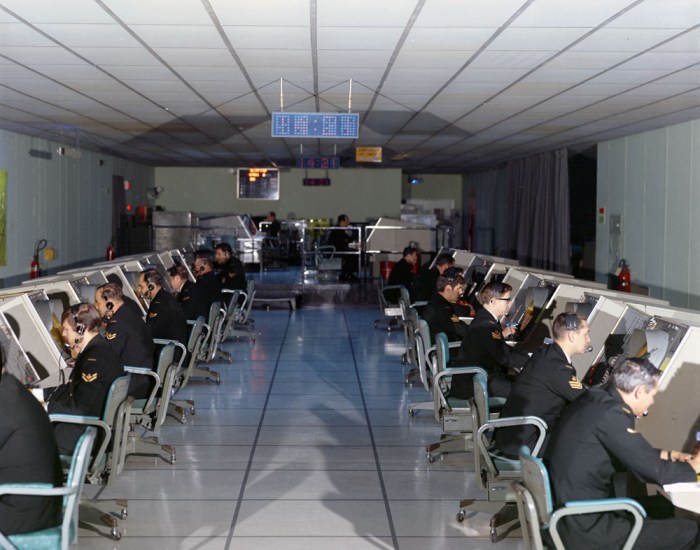


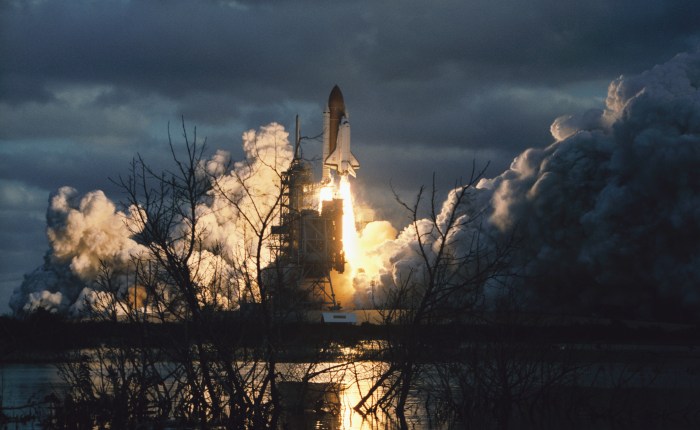
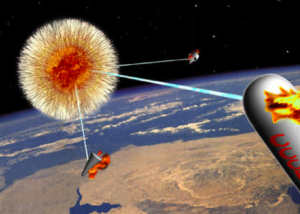
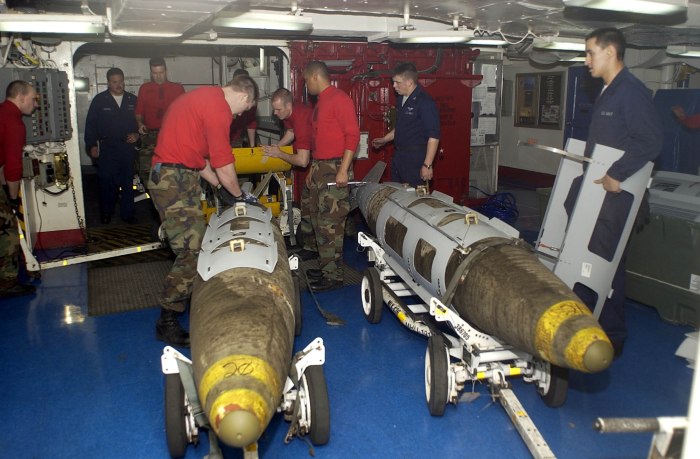


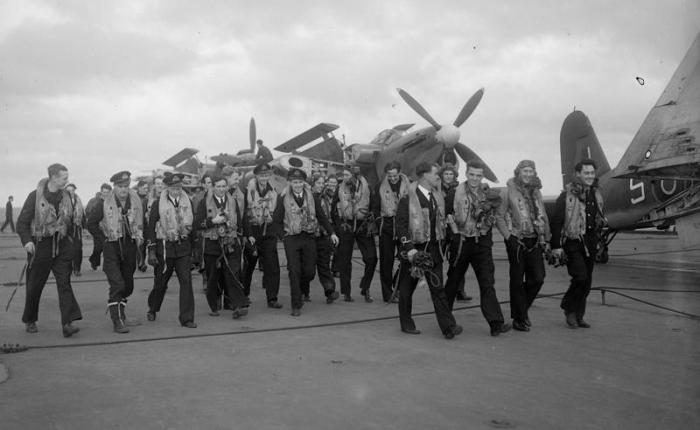


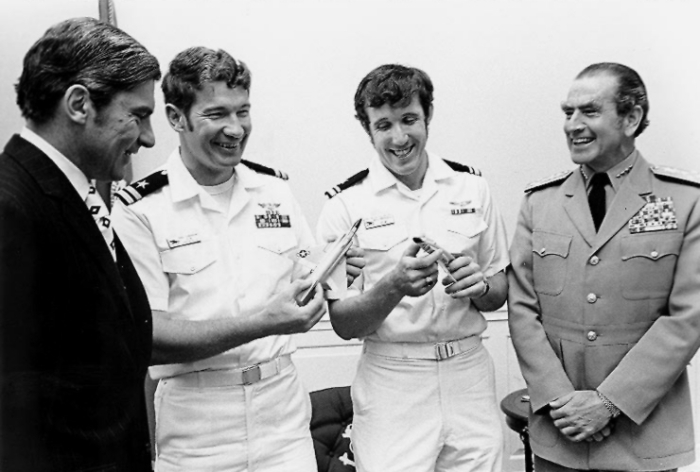
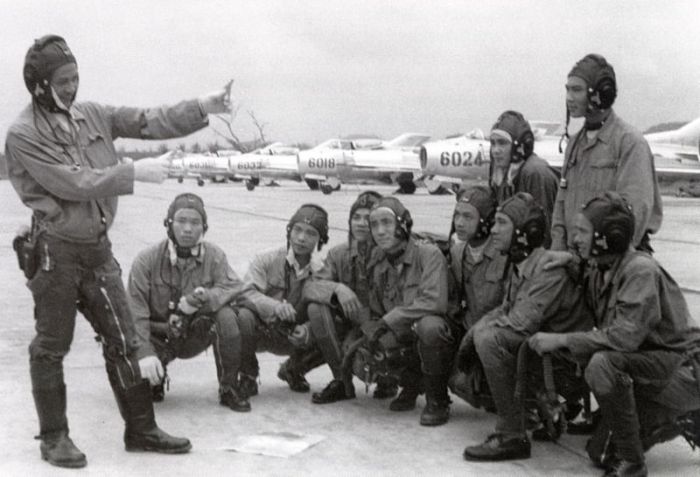
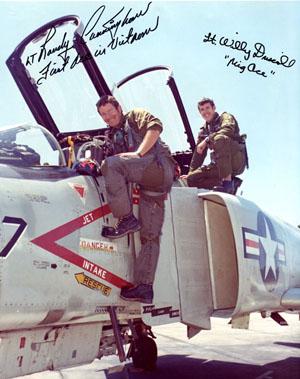
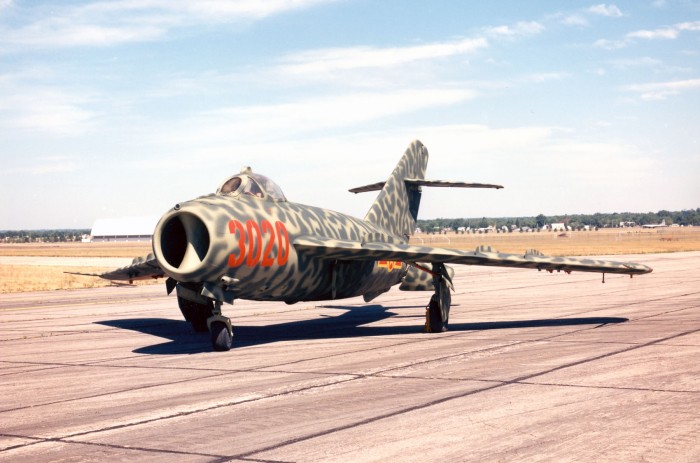

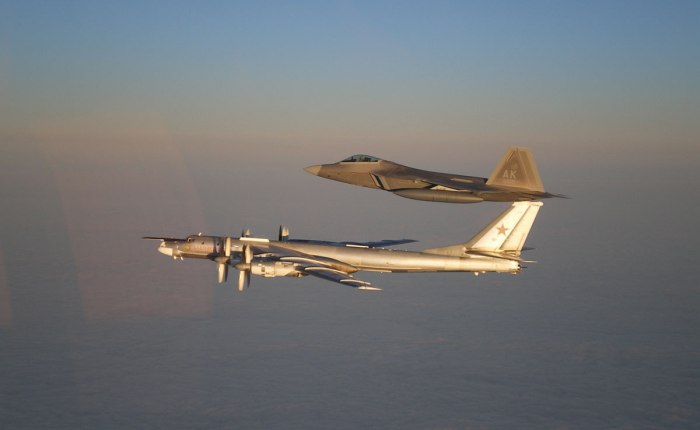
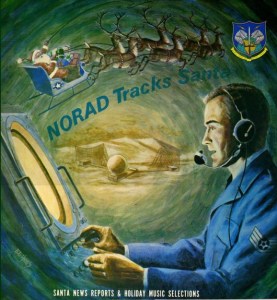


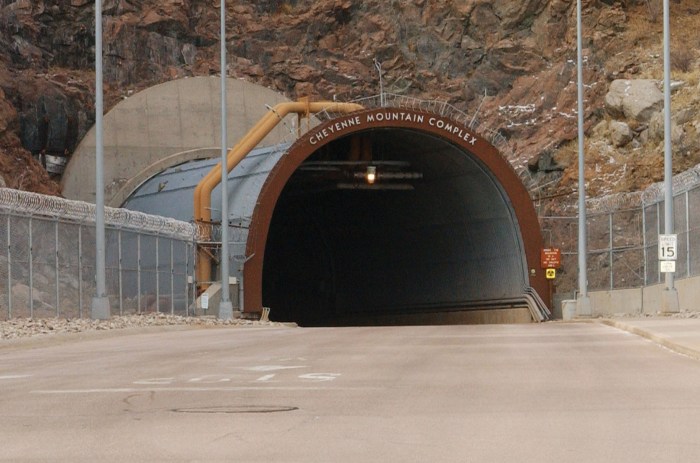


 From Balloons to Drones