#AirWarVietnam – Contested Skies: A Brief Guide to the Historiography of the Air War in Vietnam

#AirWarVietnam – Contested Skies: A Brief Guide to the Historiography of the Air War in Vietnam

By Dr Michael Hankins

Editorial Note: During 2019, From Balloons to Drones will be running a series of articles looking at various aspects of the air war over Vietnam from the French-Indochina War through to the end of the Vietnam War. To kick off this series, Assistant Editor, Dr Michael Hankins, provides a brief overview of the historiography of the air war. While not conclusive, it does give an idea of the critical strands present in the historiography and highlights where there are some important omissions such as a scholarly examination of air power during the French-Indochina War. If you would like to be a part of that discussion by submitting your work to the series, please email our editor, Dr Ross Mahoney, at airpowerstudies@gmail.com or via our contact page here. The official call for papers is here.

Here at From Balloons to Drones, we are launching a series of articles on the air war in Vietnam. This is no easy task, as writing about the Vietnam War is akin to strolling into a minefield: There is a good chance of causing an explosion. Historian Robert Citino stated it best:

Anyone who tries to draw conclusions from the Vietnam War will almost certainly anger the legions of Americans who have already made up their minds about it.[1]

In the U.S. especially, the debate over the war rages in both public and academic spheres regarding what happened and what it means for American society.[2] As the war in its entirety remains controversial, the sub-field on the air wars has developed its own debates and tropes. This article is intended as a quick guide to some of that literature as well as an introduction to a few of the broader arguments and issues that loom over the entire field. If there is any single takeaway from a survey of the literature of the Vietnam War (and its air components in particular), it is that the war remains contested but relevant, and there is plenty of work for scholars left to do in deepening our understanding of the conflict.

VNAF_A-1E_Skyraiders_at_Bien_Hoa_c1965
A Vietnamese Air Force student pilot and a USAF instructor sit side by side in a VNAF Douglas A-1E Skyraider taxing to the runway at Bien Hoa air base, Vietnam, c. 1965. (Source: Wikimedia)

General Histories

Because there is less of a standing consensus regarding the Vietnam War than in some other conflicts, finding an entry point can be difficult. Perhaps the most middle-of-the-road overview of the entire conflict (written primarily from the American perspective) is still George C. Herring’s America’s Longest War: The United States and Vietnam, 1950–1975 (1979). Originally written in 1979, it is now in its fifth edition (released in 2013) as Herring continually updated it to incorporate new scholarship. Another useful overview is Where the Domino Fell: America and Vietnam 1945-2010 (2014) by James Olson and Randy Roberts. This is the sixth edition of a book initially published in 1991 and constantly updated. The book is still mostly from the American perspective but delves a little bit deeper into some of the backgrounds to the conflict regarding French colonialism and the ideology of Ho Chi Minh, which itself is highly contested.[3] Olson and Roberts are more pointed in their argument that the war was unwinnable for the U.S.

For a more traditional operational look, Phillip Davidson’s Vietnam at War: The History, 1946-1975 (1988) is a valuable in-depth examination of both the French and American phases of the war. For a contrasting, but still, mostly operational look at the war, the works of Gregory Daddis are perhaps the best place to start. It is fair to say that Daddis is the current leader of the field when it comes to military histories of the Vietnam War. His trilogy of books is useful and wide-ranging. No Sure Victory: Measuring U.S. Army Effectiveness and Progress in the Vietnam War (2011) examines the ways that U.S. forces measured progress and success, which led them to make many faulty assumptions. Westmoreland’s War: Reassessing American Strategy in Vietnam (2014) and Withdrawal: Reassessing America’s Final Years in Vietnam (2017) each examine the American strategic and operational approaches in the first and second half of the conflict respectively.

What these books do not address as much are the pacification programs (also known as ‘the other war’) and a perspective internal to South Vietnam. Thankfully, more historians are entering the field and producing exciting work in these areas. Jessica Chapman’s Cauldron of Resistance: Ngo Dinh Diem, the United States, and 1950s Southern Vietnam (2013) are one of the most exciting new books in the field, examining the Ngo Dinh Diem regime and the three organisations internal to South Vietnam that resisted it the most. Andrew Gawthorpe’s To Build as Well as Destroy: American Nation Building in South Vietnam (2018) is probably the best look at pacification so far, although it proves to be a promising topic that shows much room to grow.

It is important to note that a book such as Olsen’s and Robert’s (and to some degree Daddis’) are responding to an earlier strain of works that argued the opposite. This argument was that the war was winnable, but that American leaders (mostly civilian political leadership and some military leaders) fundamentally misunderstood the war and for one reason or another, snatched defeat from the jaws of victory. Perhaps the most widely-read work that takes that argument is Harry Summers’ On Strategy: A Critical Analysis of the Vietnam War (1982), which analyses the war through a particular interpretation of Clausewitz. Most works that take this tack posit that America could have won the war earlier by going with a more all-out, aggressive military strategy.

The Air War(s)

That more aggression could have produced victory was certainly the belief of many U.S. Air Force leaders. For example, speaking to Air Force Academy cadets in 1986, General Curtis LeMay was asked whether the U.S. could have won the war. He responded: ‘In any two-week period you care to mention.’[4] Many books on the air war take a similar approach, such as On Yankee Station: The Naval Air War Over Vietnam (1987) by John Nichols and Barrett Tilman. This argument is especially common among oral histories and memoirs. There are a plethora of such books, particularly by pilots eager to share their ‘There I was…’ stories and many of these works are very useful. The best is Airpower in Three Wars: World War II, Korea, Vietnam (1978) from the Commander of 7th Air Force, General William Momyer (pronounced Moe-Mye-er). Other notable entries in this category include Ed Rasimus’ Palace Cobra: A Fighter Pilot in the Vietnam Air War (2006), Robin Olds’ Fighter Pilot: The Memoirs of Legendary Ace Robin Olds (2010), Ken Bell’s 100 Missions North: A Fighter Pilot’s Story of the Vietnam War (1993), and Robert Wilcox’s oral history of the Top Gun program, Scream of Eagles: The Creation of Top Gun and the U.S. Air Victory in Vietnam (1990), to name a few.

However, most of the literature from historians regarding the air campaigns have argued the opposite: that a more aggressive bombing approach earlier in the war was not feasible for a variety of reasons. One of the earliest books to push for this line of thinking is Mark Clodfelter’s The Limits of Air Power: The American Bombing of North Vietnam (1989). This book is, in this author’s opinion, still the most important book on the air war in Vietnam and one of the most important works in the field of air power history in general. Other works have made similar or related arguments but in more specific areas. Earl Tilford’s Crosswinds: The Air Force’s Setup in Vietnam (1993) looks at the years leading up to the war and argues that the Air Force’s structure and doctrine did not lend itself to the type of fighting in Vietnam.[5] For an operational look at the air campaigns through this lens, the most useful works are Jacob Van Staaveren’s Gradual Failure: The Air War over North Vietnam, 1965-1966 (2002) and Wayne Thompson’s To Hanoi and Back: The United States Air Force and North Vietnam, 1966-1973 (2000) each of which focuses on a distinct time frame. The Linebacker II campaign sometimes called the ‘11-day war’ or ‘the Christmas bombing’ can be contentious. The best operational account of it so far is Marshall Michel’s The Eleven Days of Christmas: America’s Last Vietnam Battle (2001), which blames Air Force leaders rather than political leaders for the mission’s problems.

Many of the more popular memoirs deal with air-to-air aspect, although such encounters were rare, as the North Vietnamese Air Force tended to average thirty to forty operational fighters at any given time (compared to the thousands of aircraft the U.S. had in-theatre). There are some broader examinations of the air-to-air aspect. The most comprehensive is Marshall Michel’s Clashes: Air Combat over North Vietnam, 1965-1972 (1997), although Craig Hannah’s brief Striving for Air Superiority: The Tactical Air Command in Vietnam (2001) is also useful.[6] Because the war featured an expansion of tactical air power, many works deal with a diversity of air power roles, one of the best entry points is Donald Mrozek’s Air Power and the Ground War in Vietnam: Ideas and Actions (1988). Part of the problem with the use of tactical air power in Vietnam was the confusing command structures and service rivalries. Ian Horwood’s Interservice Rivalry and Airpower in the Vietnam War (2006) is perhaps the best text examining that issue and is a useful general exploration of tactical airpower in the south.

B-52D_approaching_U-Tapao_1972
A U.S. Air Force Boeing B-52D Stratofortress aircraft coming in for a landing at U-Tapao air base, Thailand, after a mission over Vietnam, 30 October 1972. (Source: Wikimedia)

The problems that the US military experienced in Vietnam led to a long period of change afterwards, as the various services all raced to reform themselves not to repeat the perceived mistakes of the war. However, the services disagreed (with each other and within themselves) about what precisely the mistakes were and how to solve them. The period following the war, from the late 1970s until 1991, was essentially a second ‘interwar period,’ similar in some ways to the 1920s and 1930s. The degree to which the Vietnam War was used as an impetus for change in the air power realm has been covered in many works. There are so many volumes on this subject that they would require a separate article on their own, although some useful starting places include Brian Laslie’s The Air Force Way of War: U.S. Tactics and Training after Vietnam (2015), Mike Worden’s The Rise of the Fighter Generals: The Problem of Air Force Leadership, 1945–1982 (1998), and C.R. Anderegg’s Sierra Hotel: Flying Fighters in the Decade After Vietnam (2001). You can find a historic book review of this latter title here.

Although many of the works listed here are of high quality, there are some inherent limitations to the field. Most of them are limited to studying a specific geographical area or timeframe (or both), and there are fewer works that take a comprehensive look at the entirety of the air wars. Some such works are forthcoming, but there is more room for more books that take this wider approach. Most works are written by people who have some tie to the military. Many are veterans of the war or have served in the time since. Many more are civilian employees of the military (of which this author is one as well, so take my recommendations with a grain of salt of course). Many of the books listed here are from government or military presses. None of this is to imply that they are of lesser quality or that they have any particular biases (indeed, much of the material from Air University Press can be interpreted as critical of the Air Force), but it does mean that the perspectives given are limited. Further limiting our view of the war is the paucity of books written by women and people of colour. The majority (although not all) of the books in the field are from the perspective of men, predominantly white – a limitation that is hopefully in the process of being alleviated as new and diverse scholars continue to enter the field.

There is a reason to believe that the field of Vietnam War histories is on the verge of a turning point, as the previous generation who remembers the war as a part of their lives is starting to give way to a new generation that has no personal memory of the war. New sources and new perspectives are beginning to emerge, as new and old scholars alike develop not only new answers to questions but new questions. It is an exciting time to be a historian of this era.

Conclusion

There is an overwhelming number of works about the air wars in Vietnam. This brief survey, focusing on significant monographs, is not meant to be comprehensive, but merely a guide to some of the more influential works and themes. There are many wonderful and useful works not mentioned here, and that is not meant as a slight against any of them. For more, any serious student of the Vietnam War must become quickly aware of the work of Dr Edward Moïse. Not only are his own works useful reading, but his website contains quite possibly the largest bibliography of works on the Vietnam War, many of which are annotated and organised into searchable categories. This is an invaluable resource.

Despite the large size of the field, there is much work left to be done. While there are many memoirs and oral histories of various aspects of the war, we still need scholarly monographs on the air wars in Laos and Cambodia, on Air America (the CIA’s air effort), on the defoliation operations, and on-air mobility both in terms of troop movements and airlift of supplies and humanitarian efforts. Many of the works mentioned do discuss air power used by the Army and Marines, but more works focusing on these aspects are needed. Perhaps the two most significant gaps in the field are a good scholarly analysis of the use of air power during the French-Indochina War and a discussion of the perspective of the North Vietnamese Air Force. Chinese involvement in terms of providing pilot training and providing some actual pilots could also be examined in more depth. Of course, there is always room for new interpretations of ideas that have been previously discussed. Several excellent books do exist on these topics, but there is room for scholars to expand our knowledge and understanding. This is just a tip of the iceberg of some of the exciting work left to be done in the field.

The Vietnam War is a conflict that will continue to be controversial as those involved on all sides continue to grapple with its legacy. We here at From Balloons to Drones hope that the upcoming series of articles from a variety of perspectives can help move that discussion forward.

Dr Michael Hankins is Professor of Strategy at the USAF Air Command and Staff College eSchool, and former Instructor of Military History at the U.S. Air Force Academy. He earned his PhD from Kansas State University in 2018 with his dissertation, ‘The Cult of the Lightweight Fighter: Culture and Technology in the U.S. Air Force, 1964-1991.’ He completed his master’s thesis at the University of North Texas in 2013, titled “The Phantom Menace: The F-4 in Air-to-Air Combat in the Vietnam War.” He has a web page here and can be found on Twitter at @hankinstien.

Header Image: A USAF Douglas A-26C Invader loaned to France during the Indochina War. This aircraft was loaned to France from March 1952 to November 1955. (Source: Wikimedia)

[1] Robert M. Citino, Blitzkrieg to Desert Storm: The Evolution of Operational Warfare (Lawrence, KS: The University of Kansas Press, 2004), 254.

[2] For insightful studies of the memory of the Vietnam-American War, see Christian G. Appy, American Reckoning: The Vietnam War and Our National Identity (New York: Viking Press, 2015); Patrick Hagopian, The Vietnam War in American Memory Veterans, Memorials, and the Politics of Healing (Amherst, MA: University of Massachusetts Press, 2012); and Gregory Daddis, ‘The Importance of the Vietnam War’s Tet Offensive,’ War on the Rocks, 29 January 2018.

[3] Determining whether Ho Chi Minh was primarily a nationalist or a communist has been a major point of contention in the literature. Olsen and Roberts argue that he was in fact both, and that for him, those concepts cannot be separated.

[4] See Earl Tilford, ‘Linebacker II: The Christmas Bombing,’ The VVA Veteran, January/February 2014. This quote from LeMay is widely cited in many works.

[5] An earlier form of this book is available as a free download from AU Press under the title Setup: What the Air Force Did and Why.

[6] On the subject of air-to-air combat in Vietnam, see the author’s MA Thesis, ‘The Phantom Menace: The F-4 in Air Combat in Vietnam’ (MA Thesis, University of North Texas, 2013).
A Low-Cost Way to Defeat Adversaries? Israel and Air Power in the Second Lebanon War

A Low-Cost Way to Defeat Adversaries? Israel and Air Power in the Second Lebanon War

By Major Jared Larpenteur

At 9:05 am on 12 July 2006, Hezbollah initiated Operation TRUE PROMISE at the Lebanese-Israeli border. They kidnapped two Israel Defense Force (IDF) reserve soldiers and sparked the Second Lebanon War.[1] Israel restricted large ground operations and instead turned to the Israeli Air Force (IAF) to win the war for them. Over the next 34 days, the IAF carried out tens of thousands of sorties but failed to achieve the decisive result sought by Israel.

No stranger to conflict, Israel has fought for survival since the establishment of the country in 1948. From 1948 to modern day the IDF has undergone multiple transitions to keep its military in line with the modern battlefield. Some of these transitions came at the cost of extensive amounts of blood and treasure. Despite a relatively successful air campaign in the 2006 Second Lebanon War, Israel’s societal perspective led to paying a high cost to discover essential lessons regarding the importance of joint warfare on the modern battlefield.

Since 1982, the IAF had dominated the skies of the Middle East. However, by the 2006 Lebanon War, they had become accustomed to an uncontested environment and employment in the counter-insurgency environment. Leading up to the Second Lebanon War, two intifadas, the first from 1987-1993 and the second in 2000, drew the Israeli military away from high-intensity conflict.[2] The first intifada occurred in 1987 and made the IDF shift focus from manoeuvre warfare to riot control to handle massive civilian uprisings. The second intifada in 2000 saw more violent clashes including suicide bombings in Israeli territory resulting in over 135 Israelis killed.[3] The two intifadas prompted the IDF to transition to a more counter-insurgency approach to warfare but also degraded public opinion as the Israeli populace became war-weary. At the same time, Israel observed the United States use of a heavy air power approach during Kosovo in 1999 and the initial Iraq invasion in 2003 to help limit casualties.

Israel had developed an aversion to casualties but still faced instability within the region. According to Frans Osinga, Israeli military leaders came to see air power as ‘a low-cost way to defeat adversaries such as Hamas and Hezbollah.’[4] Adversaries like Hezbollah watched, adapted, and understood the power of the IAF. Hezbollah understood Israel’s transition and according to their leader believed ‘the Israeli Achilles heel was the society itself.’[5]  By 2006, Hezbollah planned for a future war with Israel under the assumption that Israel would rely on air power and limited ground forces to reduce the risk of casualties.

When Prime Minister Ehud Olmert, Chief of Staff General Dan Halutz (an IAF general), and Defense Minister Amir Peretz met shortly after the July 2006 abductions to discuss options their perspectives became apparent when they decided not to send a large ground force into Lebanon, but instead, rely on airstrikes and limited ground raids.[6] The resulting conversation led to Israel’s three political objectives: first, the release of the abducted soldiers to Israel unconditionally; second, stop the firing of missiles and rockets into Israel territory; lastly, enforce United Nations Resolution 1559, which pressured Lebanon to control Hezbollah, disarm militias, and secure its southern border.[7]

Fueling all fighters
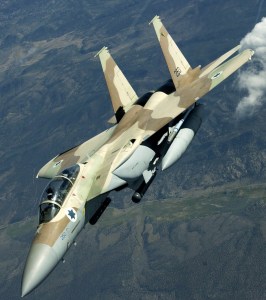
An Israeli Air Force F-15I from No. 69 Squadron moves away after receiving fuel from a KC-135 Stratotanker over Nevada’s test and training ranges during Exercise RED FLAG 04-3 in 2004. (Source: Wikimedia)

On 12 July, mere hours after the war began, the IAF launched Operation SPECIFIC WEIGHT. This air campaign targeted Hezbollah’s rocket sites, runways at the Beirut Rafic Hariri International Airport, interdicted the Beirut-Damascus highway and attacked the al-Manar Television Station (a Hezbollah-operated media source).[8] General Halutz assumed that it would only take two or three days to achieve the objectives because of the effect of precision-guided munitions on specific targets. These specific targets carried the planning assumption that air strikes would damage Hezbollah, pressure the Lebanese government, resulting in the release of the captured soldiers, and strengthen Israel’s military deterrence.

Two days later, Israeli intelligence assessed the strikes as successful. This led the IDF General Staff to target the town of Dahiye, a southern Beirut suburb that housed Hezbollah’s headquarters. The General Staff believe that Dahiye would deliver a symbolic blow to Hezbollah represented the beginning of a change of focus. With the soldiers still unreturned, the strikes on Dahiye appeared to expand the war aims to cause damage and pain to Hezbollah.[9]

By the end of the war, the IAF had carried out 19,000 sorties, averaging 200 sorties a day. The IAF attacked around 7,000 targets to include Hezbollah command posts, bridges, traffic intersections, and rocket launchers. The IAF used 19,000 bombs and 2,000 missiles of which 35 per cent of the ammunition were precision-guided munitions. The IAF racked up more flight hours in the Second Lebanon War than during the Yom Kippur War.[10] Despite the air effort, Israel began to realise that the air campaign alone would not achieve their political objectives as Hezbollah continued to launch an average of 90-150 rockets into Israeli territory every day.[11]

On 12 July, shortly after the air campaign began and keeping with the limited ground force approach Israel deployed several special operation units to recover the two kidnapped soldiers instead of large manoeuvre force. However, the special operations units did not anticipate the resistance from Hezbollah, while the IAF remained primarily focused on its strategic objectives. The IAF never prioritised integration and support for the ground offensive. Major General Benjamin Gantz, commander of the IDF army headquarters, stated:

By exploiting the air war, we could have gotten in simultaneously in full force and taken over the entire area, cleansing it from within. But that would have required […] decisive ground-maneuver warfare, not the stage-by-stage operations that were ultimately executed.[12]

However, the IDF entered southern Lebanon under the assumption that the destruction of targets by the IAF placed significant effects on Hezbollah.

To circumvent the use of air power and draw the IDF into attritional warfare Hezbollah developed large bunker and trench systems in southern Lebanon that could protect its arsenal of 122mm Katyusha rockets from air strikes. Additionally, Hezbollah integrated bunker systems inside of villages, towns, and surrounding terrain to draw the IDF closer rendering air support useless. As stated by an IDF lieutenant in southern Lebanon, ‘[Hezbollah] have so many places to hide from the air strikes, so we have to send in the infantry. It can be dangerous.’[13] For example, the IDF found a bunker complex in southern Lebanon 40 meters underground covering an area of two kilometres, with firing positions, operation rooms, medical facilities, and air conditioning.[14]

As the reports of Hezbollah’s resistance flooded in, it became clear that Israel needed a more significant force to secure the established political objectives. In response, the IDF launched its first large-scale ground force on 17 July to seize Maroun al-Ras and was surprised by Hezbollah’s preparation and fighting skills. Despite the effort, Maroun al-Ras remained unsecured as Hezbollah successfully outmanoeuvred the IDF with integrated mortar, rocket, and anti-tank weapons.[15] The realisation that intelligence did not match the reality on the ground hit hard as the first of the IDF ground elements manoeuvred into southern Lebanon. With the limited ground approach, the IDF faced massive resistance from Hezbollah. One IDF officer stated, ‘We expected a tent and three Kalashnikovs, that was the intelligence we were given. Instead, we found a hydraulic steel door leading to a well-equipped network of tunnels.’[16]

With the reports of limited success, Olmert and Halutz decided to deploy the Israeli reserves on 21 July. Despite the call for the reserves, Halutz’s ground plan remained the same without a consolidated effort between the IAF and IDF to achieve military objectives that linked to national objectives. By 5 August, three weeks after the start of the war, the IDF had roughly 10,000 soldiers in Lebanon four miles from the border. By 8 August, Israel realised it had been pulled into what they wished to avoid, a large-scale ground operation with dozens of casualties.[17]

Despite the scale of air power involved, Operation SPECIFIC WEIGHT did not have the intended effect. It only impacted around seven per cent of Hezbollah’s military resources.[18] Hezbollah still maintained the ability to manoeuvre and fire rockets, the two captured IDF soldiers were never returned to Israel, and the Lebanese government had no more control over Hezbollah than they did at the start of the war on 12 July. What changed the war and resulted in some semblance of partial Israeli success was not the massive air campaign but the eventual ground offensive.

For the US Military, Operation SPECIFIC WEIGHT provides several stark and valuable lessons. First, air power alone cannot achieve decisive results. Air and ground forces must act together whether in counter-insurgency, large scale combat operations or as in 2006 when facing a hybrid threat. On the modern battlefield, the integration of air and ground elements become imperative for success to achieve military and political objectives.

Second, as air and ground power integrate the release authority for munitions should be delegated down to lower echelons. In the Second Lebanon War, the IDF General Staff held the release authority which created lag times in fires and medical evacuation procedures. These lag times directly led to friendly fire incidents and enhanced pressure from the enemy. For example, near the town of Bint J’beil, an IAF attack helicopter inadvertently fired on IDF ground forces during a firefight barely avoiding fratricide.[19] Additionally, Israel learned that integration of the air and ground domain requires extensive training. That training should entail calling for fire, air-ground coordination, and target acquisition.

Lastly, the use of air power in the targeting process should focus more on desired effects to achieve decisive results rather than the destruction of specific targets. In the targeting cycle, the IAF uses a quantitative approach that focuses on the destruction of specific targets, with the assumption that effects placed on the target will bring decisive results.[20] The US Air Force uses a qualitative effects-based concept which focuses on the desired effects rather than a specific target.[21] During the Second Lebanon War, the air campaign attacked specific targets such as bridges over the Latini River, known Hezbollah positions, TV stations, and Lebanese airfields, with the assumption that destroying these targets would have the intended effect of achieving decisive outcomes. However, once the ground forces arrived in southern Lebanon, it became apparent that destroying these targets did not have the desired effect.

Israel paid the price in blood and treasure to learn the hard lessons of integrating air power on a modern battlefield. The Second Lebanon War resulted in the death of 66 IDF soldier, $55 million in loss of infrastructure, and $443 million in loss of economic activity.[22] The Second Lebanon War shows the importance of understanding the effective use of air power and the need to integrate air power across all operating domains. Israel learned the cost of getting air power integration wrong in 2006. In 2019 the US must avoid such costly schooling.

Major Jared Larpenteur is an Infantry Officer in the United States Army and currently a student at the School for Advanced Military Studies (SAMS) at Fort Leavenworth, KS. He is a 2003 graduate of Louisiana State University with a BA in History and commissioned through the ROTC program. He has deployed to both Iraq and Afghanistan and has experience in mechanized and light airborne infantry units. He received his masters from Kansas State University in Adult Learning and Leadership. He can be found on twitter at @jlarpe1 or email at jlarpe1@gmail.com. Views are his own and not representative of DoD or the US Army.

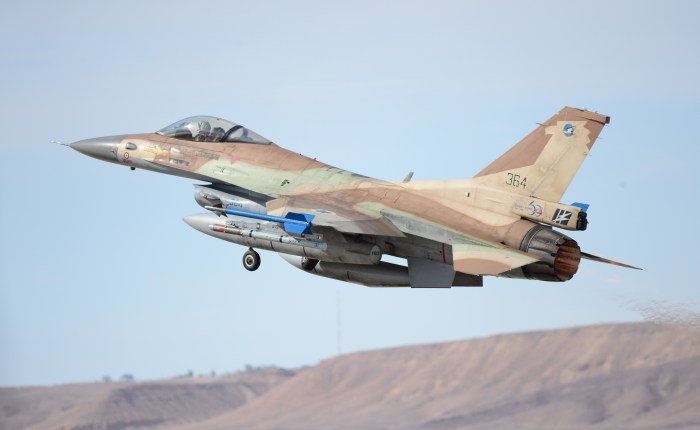
Header Image: An Israeli Air Force General Dynamics F-16C Barak of No. 110 Squadron departs on a mission during the ‘Blue Flag’ exercise on Ovda Air Force Base, Israel, on 27 November 2013. (Source: Wikimedia)

[1] Amos Harel and Avi Issacharoff, 34 Days: Israel, Hezbollah, and the War in Lebanon (New York: Palgrave Macmillan, 2008), pp. 12–3.

[2] Intifada translates as ‘shaking off’ meaning grassroots resistance across the Middle East, see: Bethan McKernan, ‘Intifada: What Is It and What Would a Thrid Palestinian Uprising Mean for Israel and the Middle East?,’ The Independent, 7 December 2017.

[3] Giora Eiland, ‘The IDF in the Second Intifada,’ Strategic Assessment, 13:3 (2010), p. 31.

[4] Frans Osinga, ‘Air Strike’ in John Andreas Olsen (ed.) Routledge Handbook of Air Power (New York: Routledge, 2018), p. 102.

[5] Cited in Scott C. Farquhar, Back to Basics: A Study of the Second Lebanon War and Operation Cast Lead (Fort Leavenworth, KS: Combat Studies Institute Press, 2009), p. 7.

[6] David E. Johnson, Hard Fighting: Israel in Lebanon and Gaza (Santa Monica, CA: RAND Corporation, 2011), p. 56.

[7] The United Nations Security Council, ‘United Nations Resolution 1559.’

[8] Harel and Issacharoff, 34 Days, p. 86.

[9] Ibid., p. 100.

[10] Johnson, Hard Fighting, p. 62.

[11] Ibid., p. 65.

[12] William M. Arkin, Divining Victory: Airpower in the 2006 Israel-Hezbollah War (Maxwell Air Force Base, AL: Air University Press, 2007), p. 133.

[13] Benjamin S. Lambeth, Air Operations in Israel’s War Against Hezbollah: Learning from Lebanon and Getting It Right in Gaza (Santa Monica, CA: RAND Corporation, 2011), p. 51.

[14] Arkin, Divining Victory, p. 21.

[15] Johnson, Hard Fighting, p. 68.

[16] Uzi Mahnaimi, ‘Humbling of the Supertroops Shatters Israeli Army Morale,’ The Times, 27 August 2006.

[17] Farquhar, Back to Basics, pp. 15-7.

[18] Ibid., p. 14.

[19] Lambeth, Air Operations in Israel’s War Against Hezbollah, p. 51.

[20] Johnson, Hard Fighting, p. 33.

[21] US Air Force, Air Force Doctrine Document No. 1, Air Force Basic Doctrine (Washington DC: Department of the Air Force, 2003), p. 18.

[22] Raphael S. Cohen et al., Lessons from Israel’s Wars in Gaza, Brief: Summary of From Cast Lead to Protective Edge (Santa Monica, CA: RAND Corporation, 2017), p. 8.

#Editorial – New Book Series: Aviation and Air Power

#Editorial – New Book Series: Aviation and Air Power

By Dr Brian Laslie

Editorial Note: We are pleased to bring you the following exciting editorial from our Assistant Editor, Dr Brian Laslie. Brian brings us news about the new air power book series that he is editing for the University Press of Kentucky. This is a significant development and one we at From Balloons to Drones wholeheartedly support and encourage, though we are, of course biased. We will be reviewing the books from this series and due course, and we look forward to seeing what future releases come from this series.

If you have followed From Balloons to Drones for the past couple of years, you know that book reviews are one of our favourite things to do on the site. There are a lot of great presses out there doing new, innovative, and exciting work on the history of air power. University Press of Kansas recently released Flying Against Fate: Superstition and Allied Aircrews in World War II by S.P. MacKenzie and the Naval Institute Press continues to turn out quality work in various series most recently Winged Brothers, Flight Risk, and Admiral John S. McCain, all of which are staring at me from my ‘to be read’ bookshelf. You have probably also noticed the change in winds towards reviewing space-related themes here so a shout out to both the University Press of Florida and University of Nebraska Press, please go check out the great work by all these phenomenal academic presses who keep moving our knowledge of air and space power forward.

Biplanes at War

Also, if you have followed along with From Balloons to Drones or myself, you know that if I had to pick a favourite university press, it would be the University Press of Kentucky (UPK). I am, of course, biased as they published both of my books. So, I was honoured when UPK approached me last year to be the editor on a new series, ‘Aviation and Air Power Series.’ In the past year, I have been hard at work with the great staff at the press, and we already have some great projects in the pipeline. Our first two titles: Lectures of the Air Corps Tactical School and Biplanes at War just hit the shelves. Go order yourself some copies…

41sm64RGspL._SX331_BO1,204,203,200_

Last year, before the 2018 meeting of the Society of Military Historians I did some digging back through UPK’s backlist looking for some (more) books on aviation and air power. I also made some phone calls to staff and faculty members at the USAF Air Command and Staff College, the United States Military Academy and of course, up at the US Air Force Academy and a few other schools regarding UPK’s scholarship in the field of Military History, but particularly in aviation and air power.

To go through just a few of these titles you come up with, my first book, The Air Force Way of War: U.S. Tactics and Training After Vietnam which was selected for both the USAF Chief of Staff’s Reading List as well as the Royal Air Force’s Chief of the Air Staff’s reading list. This is an important point. Two senior air force leaders found enough merit in the book that they made it recommended reading to their services (trust me, I was surprised). It is also on the required reading list for all Air Force majors (and sister service officers) selected to attend the Air Command and Staff College. That means that 600 majors every year are exposed to this work (and I apologise to each and every one of them).

Some of the other air power books UPK published includes: Why Air Forces Fail: The Anatomy of Defeat edited by Robin Higham and Stephen J. Harris which was also on the USAF CSAF reading list in 2008. Being selected to a service chief’s reading list is no small feat. It not only increases sales but exposes the ideas in the work to an entire generation of military professionals. These books are always stocked at military post exchanges and can be found in every base library across the globe. That is an impactful scholarship.

I know that Robert Farley’s Grounded: The Case for Abolishing the Air Force was widely discussed in the highest circles of the US Air Force a few years ago. Expanding the Envelope: Flight Research at NACA and NASA by Michael Gorn was the winner of the 2004 Gardner-Lasser Aerospace History Literature Award given by the American Institute of Aeronautics and Astronautics. There is also Dan Herrington’s Berlin on the Brink: The Blockade, The Airlift, and the Early Cold War and Higham and Mark Parillo’s edited volume The Influence of Airpower Upon History: Statesmanship, Foreign Policy, and Diplomacy since 1903. This is all to say that UPK press military scholarship has a global presence and a global impact.

In this new series, each volume will bring together leading historians and emerging scholarship in the fields of military aviation and air power history. I wanted a broad-based look at aerial battles, air warfare, and campaigns from the First World War through modern air operations, but also wanted works on the heritage, technology, and culture particular to the air arm. I am currently looking for biographies of leading (and overlooked) figures. The series also seeks not only to cover the American Air Force, Army, and Naval aviation, but also other world powers and their approaches to the history and study of the air arm.

There is a straightforward reason for starting an entirely new series that focuses exclusively on air power and aviation. Over one-hundred years past the development of the aeroplane as a means of transportation and a domain of war and we still struggle to fit the aircraft contextually into the study of military history. What I hope to do with this series is broaden our understanding of air power and its contributions to conflict.

How would you like to join this list? Do you have an air power related manuscript that you’d like us to consider for publication? A worthy Master’s or Doctoral dissertation that you think might make a good manuscript? We are looking for new air power scholarship…

Dr Brian Laslie is an Air Force Historian and currently the Deputy Command Historian at North American Aerospace Defense Command (NORAD) and the United States Northern Command. A 2001 graduate of The Citadel and a historian of air power studies, he received his PhD from Kansas State University in 2013. His first book The Air Force Way of War (2015) was selected for the Chief of Staff of the Air Force’s and the Royal Air Force’s Chief of the Air Staff professional reading lists. His recently published Architect of Air Power: General Laurence S. Kuter and the Birth of the US Air Force. He lives in Colorado Springs. He can be found on Twitter at @BrianLaslie.

Call for Submissions: Air War Vietnam

Call for Submissions: Air War Vietnam

From Balloons to Drones is seeking submissions for a series of articles that examines the varied use of air power during the conflict in Vietnam (1945-1975). Two thousand nineteen marks 50 years since the announcement of President Nixon’s policy of Vietnamization. This marked a significant turning point in a conflict that dated back to the end of the Second World War when France returned to Indochina to reclaim her colonial possessions. Throughout this long conflict in Vietnam – both during the French Indochina War and the Vietnam War – air power played a significant role. Themes to be explored might include, but are not limited to:

Roles | Operations | Strategy, Theory and Doctrine

Strategic and Operational Effect | Technological Developments

Organisation and Policy | Culture | Ethical and Moral Issues

National, International and Transnational Experiences

We are looking for articles of c. 2,500 words, though we will accept larger pieces and we reserve the right to publish them in parts. We welcome and encourage submissions from academics, policymakers, service personnel, and relevant professionals. We plan to begin running the series in May 2019, and it will continue for as long as we receive potential contributions.

Submissions should be submitted in Word format and emailed to the address below with ‘SUBMISSION – Air War Vietnam’ in the subject line. Also, please include a 50-100-word biography with your submission. References can be used, and please be careful to explain any jargon. However, if you are not sure if your idea fits our requirements, then please email us with ‘POTENTIAL SUBMISSION – Air War Vietnam’ in the subject line to discuss.

If you are interested in contributing, please email our editor, Dr Ross Mahoney, at airpowerstudies@gmail.com or via our contact page here.

Header Image: A USAF Douglas A-26C Invader loaned to France during the Indochina War. This aircraft was loaned to France from March 1952 to November 1955. (Source: Wikimedia)

Happy New Year and a Look Ahead

Happy New Year and a Look Ahead

By the From Balloons to Drones team

Well, 2019 is finally upon us so here is to wish all our readers and contributors a Happy New Year. We hope to continue to deliver high-quality material throughout the next year, but we can only do this if we receive contributions. As such, if you are a postgraduate student, academic, policymaker, service personnel or a relevant professional involved in researching the subject of air power and you are interested in writing, then please get in contact.

Biplanes at War

Regarding forthcoming titles, it seems as if the early part of 2019 is going to be focused on the US experience with some exciting titles being published. First up, the University of Kentucky Press is releasing the first two titles in their new ‘Aviation and Air Power’ that is edited by our very own Brian Laslie. The first titles are Wray Johnson’s Biplanes at War: US Marine Corps Aviation in the Small Wars Era, 1915-1934 and Lectures of the Air Corps Tactical School and American Strategic Bombing in World War II, which has been edited by Phil Haun.

Winning Armagedden

Next up, Naval Institute Press has another number of exciting titles coming up including William Trimble’s Admiral John S. McCain and the Triumph of Naval Air Power. Last year Naval Institute Press published Melvin Deaile’s study of the organisational culture of the USAF’s Strategic Air Command and this year they will be releasing Trevor Albertson’s Winning Armageddon: Curtis LeMay and Strategic Air Command, 1948–1957. The final title from Naval Institute Press, James Libbey’s Foundations of Russian Military Flight, 1885-1925, should be a welcome addition to the literature given the paucity of work on Russian air power in the early years of the twentieth century.

Harnessing

Several other publishers have some exciting titles on the cards including Bold Venture: The American Bombing of Japanese-Occupied Hong Kong, 1942–1945 by Steven Bailey and published by Potomac Books. Perhaps the most interesting looking title is Lori Henning’s forthcoming Harnessing the Airplane: American and British Cavalry Responses to a New Technology, 1903–1939 from the University of Oklahoma Press. This looks to be a fascinating account of how one arm of the army dealt with the rise of an innovative technology that threatened its core role.

If these books are an indication of what is coming in 2019, then we should be in for a good year regarding publications. Hopefully, many of these titles will be reviewed here on From Balloons to Drones.

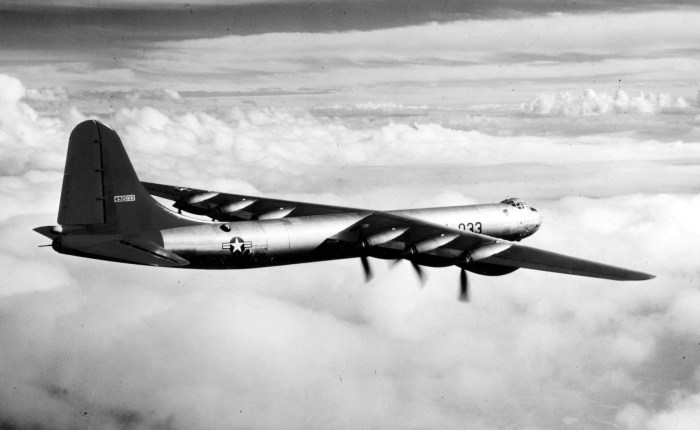
Header Image: A Convair B-36B Peacemaker of the United States Air Force. (Source: National Museum of the US Air Force)

Christmas #Airpower Reading List

Christmas #Airpower Reading List

By the From Balloons to Drones team

Merry Christmas and Happy Holidays from the team at From Balloons to Drones. It has been an excellent year for the advancement and study of air power, and it has been a remarkable year for the website as well. We added three co-editors to the site and surpassed our 50,000-hit mark!

As we enter the holiday season, we know that our readers either have some time off coming up or are looking for some recommendations to add to their holiday shopping lists. So, we thought it would be a good idea to have our editors put together a short list of their favourite books from our year of reading and reviewing. However, before we get onto the list here are the top five articles published by From Balloons to Drones during 2018:

  1. Michael Hankins, ‘Inventing the Enemy: Colonel Toon and the Memory of Fighter Combat in Vietnam’;
  2. Wing Commander André Adamson and Colonel Matthew Snyder, ‘The Challenges of Fifth-Generation Transformation’;
  3. Michael Hankins, ‘A Discourse on John Boyd: A Brief Summary of the US Air Force’s Most Controversial Pilot and Thinker’;
  4. Lieutenant Colonel Tyson Wetzel, ‘#HistoricBookReview – Sierra Hotel: Flying Fighters in the Decade After Vietnam’;
  5. Thomas Withington, ‘Bringing It All Back Home: How one sortie by the No. 1474 Flight RAF in December 1942 helped save the lives of countless aircrew.’

Now onto our Christmas air power reading list…

Dr Ross Mahoney

41IVdzZMc4L._SX331_BO1,204,203,200_

James Pugh, The Royal Flying Corps, the Western Front and the Control of the Air, 1914-1918 (Abingdon: Routledge, 2017). I must admit it has been a slow year for me reading wise and the titles here will be reviewed in the new year. However, onto my list and first up we have James Pugh’s excellent study of the Royal Flying Corps in the First World War and its understanding of the concept of control of the air. Control of the air remains a central tenant of modern air power thinking; however, the ideas surrounding this concept go back much further. In this study, Pugh provides an excellent analysis of the development of British thinking about control of the air with specific reference to the RFC and the war over the Western Front. It is a much-needed addition to the literature and worth a read.

Broken Wings

Stephen Renner, Broken Wings: The Hungarian Air Force, 1918-45 (Bloomington, IN: Indiana University Press, 2016). Ok, this one dates to 2016, but I have only just finished it after reading it on an off since it came out. However, this is an essential study for two reasons. First, small air forces tend to be overlooked in the literature concerning the early development of air power and secondly, there is little in English on-air forces from central and eastern Europe. As such, even for just these reasons, Renner’s book is a welcome addition to the literature. Furthermore, however, Renner provides an excellent study into the challenges faced by the Hungarians in this period, which makes for fascinating reading.

fearless_cvr4

Adam Claasen, Fearless: The Extraordinary Untold Story of New Zealand’s Great War Airmen (Auckland: Massey University Press, 2017). The First World War centenary has seen many books published of which some are good and some not so good. Many of the works on air power have remained firmly camped in the ‘Knights of the Air’ trope that has become so common. Thankfully, however, we have also seen works such as Claasen’s work on New Zealand airmen appear. In this book, Claasen’s firmly places the experience of the around 850 New Zealanders who served in Britain’s air services within their imperial context. In this respect, Claasen’s follows on from the work of S.F. Wise on the Canadians and Michael Molkentin’s more recent work on Australia and is a welcome addition to our understanding of the imperial composition of Britain’s air services in the early twentieth century.

Runner-up:

Hanbook of Air Power

John Andreas Olsen (ed.), Routledge Handbook of Air Power (Abingdon: Routledge, 2018).  I reviewed this one here, so I shall not say too much more apart from to reiterate that if you are looking for a good introductory overview about air power, then this is an excellent addition to the library. Olsen has, as usual, brought together an outstanding line-up of scholars to consider critical issues related to air power.

Alexander Fitzgerald-Black

One in a thousand

Graham Broad, One in A Thousand: The Life and Death of Captain Eddie McKay, Royal Flying Corps (Toronto: University of Toronto Press, 2017). The First World War centenary is behind us, but it has left great historiographical additions for us to pour over. Graham Broad’s excellent microhistory of one of Canada’s first aces is three books in one. It is also a how-to book of best practices for historical research and analysis as well as an insightful commentary on the philosophy of history. You will enjoy the author’s engaging narrative as he traces Captain McKay’s life from the rugby pitch to the Wright Brothers School of Aviation, to his fleeting fame and eventual death in the contested and deadly skies above the Western Front. History teachers, especially at the senior undergraduate and graduate level, will also find the book an exceptional resource for training the minds of budding historians.

Beyond

Stephen Bourque, Beyond the Beach: The Allied War Against France (Annapolis, MD: Naval Institute Press, 2018). I picked up this book for two reasons. First, I was recently hired at the Juno Beach Centre, Canada’s Second World War Museum on the D-Day beaches. Second, with the upcoming 75th anniversary of the invasion of Normandy, it was about time that we had a detailed English-language study of the cost suffered by the French people in that great invasion. Readers will appreciate Bourque’s approach in dealing with General Dwight Eisenhower and his air commanders’ lines of action (effort). These targets included everything from airfields and ports to French towns or cities and the bridges, marshalling yards, and factories therein. As we move into this anniversary, it is important to remember that while the Allies were on the right side of history, 60,000 French civilians paid a dear price for their country’s freedom.

Gooderson

Ian Gooderson, Air Power at the Battlefront: Allied Close Air Support in Europe, 1943-1945 (London: Frank Cass, 1998). This one is not recent, but I was thrilled to discover that my university library owns a copy. I was struck by just how comprehensive Gooderson’s analysis is, and I found some of his evidence and conclusions comfortably surprising. For instance, although the Allied air forces assumed armed reconnaissance to be safer than close air support, the opposite was true. At the same time, air support was probably of greater value beyond the battlefront (greater opportunity comes with greater danger). The book also impressed upon me the importance of timing air strikes carefully and air power’s psychological effects, for better or worse.

Runner-up:

Why Air Forces Fail

Robin Higham and Stephen J. Harris (eds.), Why Air Forces Fail: The Anatomy of Defeat, Revised and Expanded Edition (Lexington, KT: University Press of Kentucky, 2016). This was one of the first scholarly history books I ever read as a high school student. Its engaging chapters about how various air forces across the decades have failed to meet their objectives offer complex answers to a simple question: why did they fail? Although, as Randall Wakelam noted, he had hoped for more from the new edition, though newcomers will find the book a valuable addition to any aviation history library.

Dr Mike Hankins

AlwaysMelvin Deaile, Always at War: Organizational Culture in Strategic Air Command, 1946-62 (Annapolis, MD: Naval Institute Press, 2018). This book is not only an excellent summary of the formative years of Strategic Air Command during the early Cold War, but Deaile gives us a close look at what it felt like to be there. What was the culture like? What was the daily life like for these pilots? What made SAC so unique and such a key component of American defence during the Cold War? Moreover, why is General Curtis LeMay such a big deal? This book gives excellent, substantive answers to all these questions.

Problem

Timothy P. Schultz, The Problem with Pilots: How Physicians, Engineers, and Airpower Enthusiasts Redefined Flight (Baltimore, MD: Johns Hopkins University Press, 2018). Flying is hard–much harder than we give it credit for today. The capabilities of modern aircraft all came with difficult times of dangerous experimentation in the fields of medicine, engineering, and technology. The human body was not made to fly, and the limiting factor on advanced aircraft designs has always been humans. How we solved those problems and made complicated, advanced aircraft possible is the fascinating story of this book about integrating man and machine in increasingly sophisticated ways.

51nxvKRLhkL._SX329_BO1,204,203,200_

Steven A. Fino, Tiger Check: Automating the US Air Force Fighter Pilot in Air-To-Air Combat, 1950-1980 (Baltimore, MD: John Hopkins University Press, 2017). Fighter pilots are a strange breed–they have a unique culture all their own. However, how does that culture evolve when it is faced with new technologies that threaten to automate tasks that fighter pilots hold dear? Former F-15 pilot Steve Fino explores just that in this incredible book. Examining the F-86 Sabre, the F-4 Phantom II, and the F-15 Eagle, Fino explores the evolving relationship between man and machine in the cockpit of jet-age fighter planes. You can find my review of this book here.

Runner-up:

Bloody

Peter Fey, Bloody Sixteen: The USS Oriskany and Air Wing 16 during the Vietnam War (Lincoln, NE: Potomac Books, 2018). The USS Oriskany had the highest loss rates of any navy air unit in the Vietnam War. In addition to two massive fires, it was the boat from which Jim Stockdale and John McCain (among many others) became POWs for years. Peter Fey’s accessible, exciting narrative traces the Oriskany throughout its multiple tours and gives a palpable sense of what it was like to be on board and in the cockpit of the A-4 Skyhawks, F-8 Crusaders, and other planes the ship carried. The book is not perfect, but it is an engaging read especially aimed at a general audience.

Dr Brian Laslie

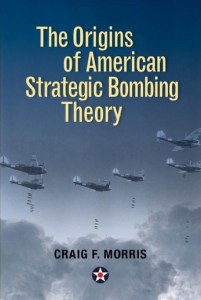
Origins of American Strategic Bombing Theory

Craig Morris, The Origins of American Strategic Bombing Theory (Annapolis, MD: Naval Institute Press, 2017). This book is ‘a twisting tale of individual efforts, organizational infighting, political priorities, and technological integration.’ It is also a book that places the development of American bombing theory firmly in the context of its time and rightly puts individuals into their proper place. Gone is the Billy Mitchell-centric view of air power development to be (rightly) replaced with an emphasis on Benjamin Foulois, Mason Patrick, William Sherman, Lord Tiverton, and others who worked tirelessly on the theories and doctrines of air power. In my opinion, the single best volume on American air power in the inter-war years.

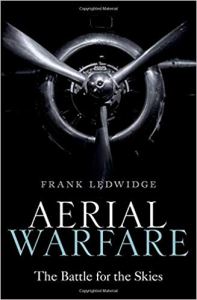
aerial

Frank Ledwidge, Aerial Warfare: The Battle for the Skies (Oxford: Oxford University Press, 2018). I wrote about this book earlier in the year for The Strategy Bridge and called it ‘the single finest primer on air power covering every aspect from if you’ll excuse me, balloons to drones.’ I stand by that statement. This is the perfect primer for the history of air power. I cannot imagine someone interested in our profession not owning this book. I wish I had copies to serve as stocking stuffers…

Phantom

David R. Honodel, The Phantom Vietnam War: An F-4 Pilot’s Combat over Laos (Denton, TX: University of North Texas Press, 2018). This is a ‘there I was’ and ‘shoot the watch’ book, but it is also an amazingly poignant and honest look about learning to survive in a war the American people were unaware was occurring. It is in the best of its class at conveying the transformation a person can take in the crucible of a forgotten war over the skies of Laos. ‘Buff’ Honodel passed away earlier this year, and as I count my blessings this year, one of them will be for a man like Buff.

Runner-up:

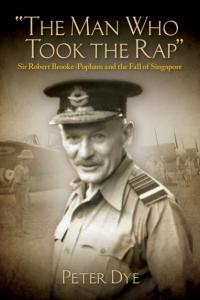
Brooke-Popham

Peter Dye, “The Man Who Took the Rap”: Sir Robert Brooke-Popham and the Fall of Singapore (Annapolis, MD: Naval Institute Press, 2018). This one landed on my desk rather late in the year but intrigued me almost immediately. As someone who has recently written a biography of a relatively unknown figure myself, I was excited to dive into this one, and it does not disappoint. As air power scholarship continues to expand, it has become an enjoyable pastime of mine to read about lesser-known, but equally important contributors to air power development. This book also fills a void for me in expanding my knowledge and understanding of other nation’s air power efforts.

As well as providing you with our Christmas reading list, we would like to recognise the various presses and our social media friends who have been hard at work this year publishing the books above and some not strictly related to air power, but would make great gifts such as Redefining the Modern Military, edited by Tyrell Mayfield and Nathan Finney, and The Colour of Time: A New History of the World, 1850-1960 by Marina Amaral.

Our favourite military and air power related presses include Naval Institute Press and University Press of Kentucky who keeps on adding some excellent titles to their lists. Keep a lookout to the site in 2019 as we embark on expanding our writing on space power and space exploration a lot of which will be coming from the NASA Office of History and the University Press of Florida.

Finally, we would like to thank our contributors and readers. Without them, this site would not exist so thank you. If you want to write for us, then find out how to contribute here.

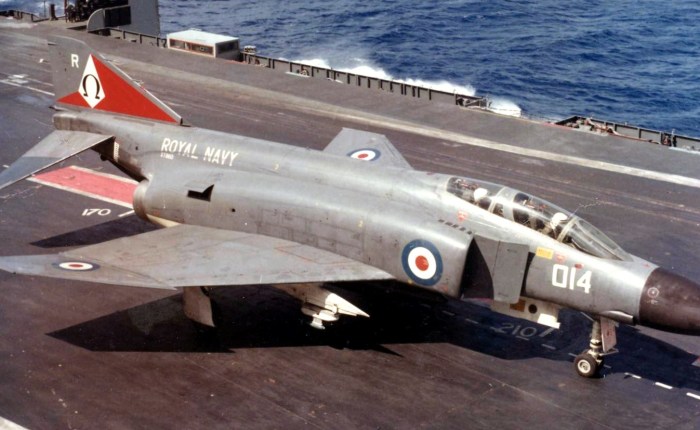
Header Image: A Royal Navy McDonnell Douglas Phantom FG.1 from 892 Naval Air Squadron aboard the aircraft carrier HMS Ark Royal (R09). (Source: Wikimedia)

#BookReview – Why Air Forces Fail: The Anatomy of Defeat

#BookReview – Why Air Forces Fail: The Anatomy of Defeat

By Dr Randall Wakelam

Robin Higham and Stephen J. Harris (eds.), Why Air Forces Fail: The Anatomy of Defeat, Revised and Expanded Edition. Lexington, KT: University Press of Kentucky, 2016. Images. Footnotes. Bibliography. Index. 454 pp.

Why Air Forces Fail

Editorial Note: In 2006, University Press of Kentucky published an edited volume that sought to examine the question of why air forces fail. Edited by the late Robin Higham and Stephen J. Harris, Why Air Forces Fail has become an essential volume as air power specialists seek to understand the reasons why some air forces are more successful than others. As one reviewer noted in the Journal of Military History regarding the first edition of this work, ‘one of the more interesting and better books on military aviation to appear in the last few years.’[1] As such, does this new edition add anything to the original volume?

When the first edition of Why Air Forces Fail was published in 2006, it immediately caught my attention. The title itself was intriguing for here was a work that was going to look not at why, or how, air forces succeed, but why air power at certain times and in certain places and circumstances has failed to deliver victory. Robin Higham was a greatly respected air power historian and had flown in the Royal Canadian Air Force (RCAF) in the Second World War, and Stephen Harris was and is the Director of History and Heritage for the Canadian Forces and had authored the Bomber Command section of the official history of the RCAF. It seemed that there were many good reasons in this Canadian reviewer’s mind for looking at the collection they had assembled.

PL 8096
A shot down Dornier ‘flying pencil.’ Two members of the German crew were killed, and two others were taken, prisoner. (Source: © IWM (PL 8096))

Higham’s introduction was particularly thought-provoking. He (1st Ed., p. 1) posited that ‘other things being equal’ it seemed that the best technology generally won. These other things included a series of complex factors which could however greatly impact the effectiveness of air power. Higham looked at and where necessary modified all of the factors upon which A.T. Mahan had conducted his analysis of sea power: national borders, a nation’s physical conformation, aircraft industry, size of the population, characteristics of the population, and nature of government. To these, he added:  location and sufficiency of air bases, the terrain being overflown during operations, capabilities of the aircraft and air weapons, and management of war decisions – ends, ways and means. Once these factors were explained to readers, Higham (1st Ed., p. 5) asked two central questions:

Did the loss of air superiority, if it ever existed, cause the collapse of the nation’s defenses?  And was that the sole cause [of the nation’s defeat]?

Higham drew his introduction to a close with an attempt to identify lessons or trends but did not attempt to present precise deductions. One had to turn to the conclusion of the collection for a summation of the editors’ thinking. There Higham and Harris posited that the simple presence of air assets does not, in fact, guarantee a victory. The last sentence (1st Ed., p. 354) of the book seems both appropriate and applicable to all nations and military services:

These [observations] suggest that the fall of an air force is the result of long-term failings, not an immediate failure ‘on the day’ by an air arm that is essentially ready for its allotted role.

Such was the first edition but what of this volume? Harris has related to me that Higham had negotiated the second edition, but that much of what he intended passed with him and as such there is little for those returning to the work to note that differs from the original. What the returning reader will find is two additional chapters, one by Harris dealing with RAF Bomber Command’s strategic operations against Germany. Harris focuses on the electronic warfare campaigns, including electronic countermeasures and electronic counter-countermeasures, waged by Bomber Command and by the Luftwaffe’s air defenders. This chapter shows that the RAF could not produce enough technicians to offset German capabilities. The second new chapter by Kenneth Werrell deals with the US services application of air power in the Vietnam conflict and how a range of factors prevented the American flying services from achieving the results sought by military and civilian leaders, particularly in the face of effective opposition. Other than these there is nothing new in the second edition other than two short commentaries on Harris’ and Werrell’s chapters. These remarks are added to the original conclusion along with two additional paragraphs commenting on the growing complexity of aircraft design and procurement in one case and the other the implicit failure of those involved in air power decisions to learn from history. Also, there is a very short, easily missed, dedication to Higham in the front piece of the volume. Why the publishers have taken this very understated approach to acknowledge Higham on the one hand, and the changes to the new edition on the other is baffling.

All this to say, I had hoped for more in this new edition. However, for those who have not read the first edition, this expanded version remains a valuable study of air power and of how and why it cannot guarantee success in conflict.

Dr Randall Wakelam teaches military and air power history at the Royal Military College of Canada. After graduating from RMC in 1975 he flew helicopters for the Army, becoming CO of 408 Tactical Helicopter Squadron in 1991. Along the way, he also had staff appointments in aircraft procurement and language training policy. Since 1993 he has been an educator, first in uniform at the Canadian Forces College in Toronto and now at RMC. His research and publishing focus on air power and military education.

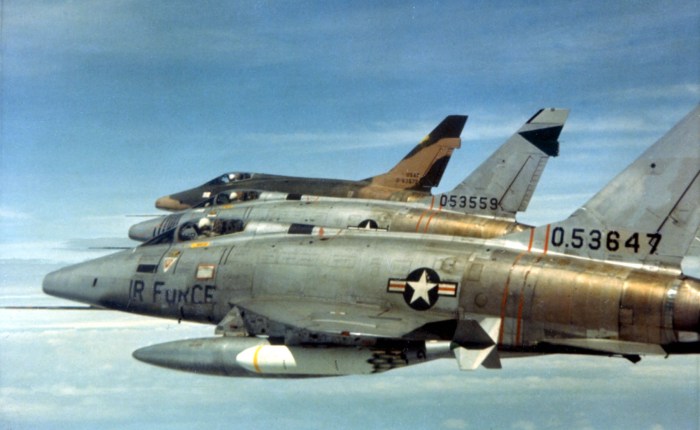
Header Image: F-100Ds of the 481st Tactical Fighter Squadron over South Vietnam in February 1966. Early F-100s were unpainted when they arrived in Southeast Asia like the foreground aircraft, but all eventually received camouflage paint like the aircraft in the back. (Source: National Museum of the US Air Force)

[1] Kenneth P. Werrell, ‘Book Review – Why Air Forces Fail,’ The Journal of Military History, 70:3 (2006), pp. 887-8.

#BookReview – Routledge Handbook of Air Power

#BookReview – Routledge Handbook of Air Power

By Dr Ross Mahoney

John Andreas Olsen (ed.), Routledge Handbook of Air Power. Abingdon: Routledge, 2018. References. Index. xix + 405 pp. Hbk.

Hanbook of Air Power

It is often challenging to name a single person who is a critical figure within any discipline. As I reflected here, this is also the case with air power studies if such a discipline exists. One individual who has made an indelible impact on air power studies over the past couple of decades is Colonel Professor John Andreas Olsen. As well as publishing several studies on Operation DESERT STORM and Colonel John Warden III, Olsen has successfully published a series of edited works that have focused on several aspects of air power. The importance of these works is that Olsen has been able to bring together leading scholars to write about critical themes concerning the use and development of air power. In this latest edited volume, Olsen has, once again, brought together a line-up of prominent scholars and military practitioners who are at the forefront of researching air power.

This book seeks to ‘improve knowledge of and insight into the phenomena of aerospace power.’ (p. 8) Indeed, as Olsen reflects, air power is more than just ‘aircraft, weapons systems and bombing.’ (p. 5) Recognising this, Olsen further notes that any analysis of air power must also encompass, though not limited to, issues such as ‘training, education, values, rules of engagement, leadership, adaptability, boldness in execution, and a range of other factors, tangible and non-tangible, that influence a military operation.’ (p. 5) It is around this broad definition that this book is designed. The book’s design reflects Sir Michael Howard’s sage words that military history, and by default military affairs in general, should be studied in breadth, depth, and context. As such, the book is split into five sections that in turn, deal with themes related to Howard’s advice. In providing a coherent pedagogical purpose to the book, Olsen has at least tried to provide some form and flow to the volume, which can often be a challenging prospect with any edited book.

The first section deals with the essence of air power and provides the breadth aspect for this volume. The section consists of six chapters dealing with air power anatomy, theory, history, high command, science and technology and ethics and international law. Each author is well placed to write their respective chapters, and each provides a useful overview of his subject. For example, Peter Gray provides an excellent strategic overview of the critical trajectory of air power history (pp. 70-80) while Philip Meilinger (pp. 35-45) discusses some of the essential themes evident in one hundred years or so of air power theory.

The second and third sections provide depth to this volume by exploring critical aspects related to the delivery and application of air power. It is in these sections where we see the greatest mix between academics and military practitioners in the volume. Of the 12 contributors to these sections, seven are currently serving officers ranging from a two-star officer, Air Vice-Marshal Richard Knighton of the Royal Air Force (RAF) through to two Wing Commanders from the Royal Australian Air Force, Travis Hallen and Chris McInnes.  The first section on delivering air power focuses on issues such as control of the air, command and control and logistics. It is good to see the latter included as it is clear, as Knighton concludes, that the logistical requirements of air power are not ‘well understood.’ (p. 151) The section on applying air power deals with the integration of air power with the other domains including space and cyber and each provides a good overview of the issues related to these topics.

Exercise Pitch Black 18
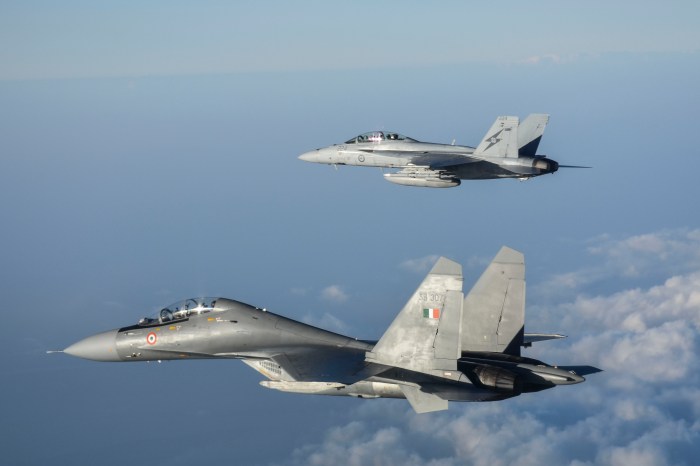
A Royal Australian Air Force F/A-18F Super Hornet from No. 1 Squadron (top) in formation with a SU-30MKI Flanker aircraft from the Indian Air Force during Exercise Pitch Black 18.(Source: Australian Department of Defence)

The final two sections provide the context to this volume by exploring issues related to the political-social-economic environment in which air power operates and a section on national case studies. The latter section includes some interesting selections including chapters on Indian, Pakistani, Brazilian and Japanese air power. Some might argue that chapters should have been included that dealt with, for example, the US, UK, and other European nations. However, this book needs to be read in conjunction with other edited volumes by Olsen, such as Global Air Power (2011) and European Air Power (2014) where you will find chapters dealing with these nations. As such, it makes a refreshing change to see other examples included in this volume. The section on the political-social-economic environment includes some exciting chapters dealing with the political effect of air power and coercive diplomacy. As Michael Clarke (p. 237) argues, air power is a potent weapon but needs to be used carefully to help achieve a political effect. Karl Mueller mirrored this view, who notes that ‘aerial bombing was not a panacea for preventing wars.’ (p. 252) Indeed, perhaps the critical criticism of air power thinkers has been their overestimation of the capability available to them as well as the place of military aviation within the toolbox of national power.

While there is much to praise in this work, there are no doubt some gaps that require some reflection. The first is a comment on authors, and this is not so much a direct criticism of the book but rather a comment on the state of the discipline at this moment in time. The book has been authored entirely by male academics or serving officers who, as already noted, are eminently qualified to write their various contributions. However, the lack of female contributors is disappointing especially as there are female academics and serving personnel writing about air power. Indeed, the issue of male dominance of the discipline is one we are well aware of here at From Balloons to Drones – all the editors and assistant editors are men. Indeed, at From Balloons to Drones we hope to continue to offer opportunities for all to contribute to the discussion about air power. Building on the above reflection is also the fact that each of the authors in this volume has some form of relationship with the military. They are either serving or retired officers, teaching or teaching within the professional military education (PME) ecosystem, or working for a think-tank associated with the military, such as RAND. If this sample of authors in this volume is indicative of the discipline, then the study of air power still struggles from the problem identified 20 years ago by John Ferris, who wrote that:

[those studying air power are either] the children of airmen, have been military personnel themselves, and have been employed at a historical office or service school in Canada, Germany, the United Kingdom, or the United States.[1]

If this remains the case, there remains an open question as to how we broaden out the discipline to avoid accusations such as the weaponisation of the past. Linked to this, of course, is the question of what a broader and more diverse perspective on air power would bring to the discipline.

Regarding content, several areas could have further strengthened this volume. For example, it is curious that Olsen’s view concerning what encompasses the study of air power begins with training and education; however, neither subject is present in this volume. Concerning education, its omission is even more curious given the focus on the so-called conceptual component in programmes such as the RAF’s Thinking to Win, Plan Jericho in Australia, and the Royal Canadian Air Force’s Airpower in Formation. Interestingly, and perhaps indicative of the perceived importance of this volume, there is a paperback version of this book that has been produced in conjunction with the RAF’s Centre for Air and Space Power Studies and includes the Thinking to Win logo. However, as Meilinger reflected in his chapter, ‘[N]eeded are airmen well grounded in all aspects of air warfare, including the theoretical.’ (p. 44) If this is the case, then it follows that the provision of high-quality air power education is critical, and a chapter on this subject would have been valuable. Other chapters that could have been included include the culture of air forces and leadership instead of Stephens’ (pp. 24-34) focus on high command. Indeed, it is often remarked that air forces are somehow different to army and navies in their outlook. If this is the case, then an examination of the culture of air forces and issues such as leadership would have further enriched this volume.

Overall, despite my criticisms above, this is an excellent and essential contribution to our understanding of air power. As noted, the pedagogic layout of the book helps give the volume purpose that leads the reader through many critical issues related to air power. As such, while the book’s primary market will undoubtedly be serving air force personnel involved in PME and training activities, there is enough in this volume that other interested readers will gain much from this collection.

[1] John R. Ferris, ‘Review Article – The Air Force Brats’ View of History: Recent Writing and the Royal Air Force, 1918–1960,’ The International History Review, 20:1 (1998), p. 119

Dr Ross Mahoney is the Editor of From Balloons to Drones and is an independent historian and defence specialist based in Australia. Between 2013 and 2017, he was the resident Historian at the Royal Air Force Museum, and he is a graduate of the University of Birmingham (MPhil and PhD) and the University of Wolverhampton (PGCE and BA). His research interests include the history of war in the twentieth and twenty-first centuries, air power and the history of air warfare, and armed forces’ social and cultural history. To date, he has published several chapters and articles, edited two books, and delivered papers on three continents. He is a member of the Royal Historical Society and an Assistant Director of the Second World War Research Group. He can be found on Twitter at @airpowerhistory.

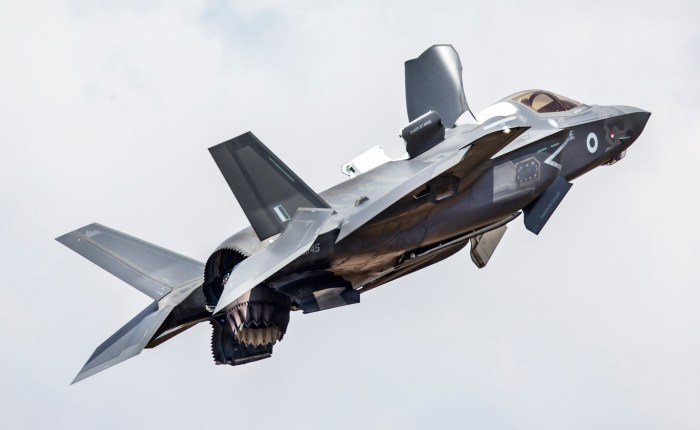
Header Image: An RAF F-35B Lightning from No. 617 Squadron stationed at RAF Marham. This aircraft is performing a hover manoeuvre during the Royal International Air Tattoo in 2018. (Source: UK MoD Defence Imagery)

The Role of History in Educating Air Power Strategists

The Role of History in Educating Air Power Strategists

By Dr Ross Mahoney

Editorial Note: On 19 September 2018, our editor, Dr Ross Mahoney delivered a paper on the subject of ‘The Role of History in Educating Air Power Strategists’ at a seminar organised by the Royal Australian Air Force’s (RAAF) Air Power Development Centre in Canberra. A precis of this paper was published in the Pathfinder bulletin issued by APDC, which can be found here. The Pathfinder series covers a range of issue from strategy, historical analyses, operations, administration, logistics, education and training, people, command and control, technology to name a few. Irrespective of the subject though, Pathfinders will always be focused on the relevance to air power; they are not intended to be just a narrative but deliver a measure of analysis. Apart from the addition of some minor changes to make this precis applicable to From Balloons to Drones as well as the inclusion of footnotes and further reading suggestions, this article appears as published in Pathfinder. We are grateful to APDC for permission to re-publish the piece, and the views in this article and the associated Pathfinder are not necessarily those of the RAAF.

‘[t]he study of military history lies at the foundation of all sound military conclusions and practice.’

Rear-Admiral A.T. Mahan, ‘The Naval War College,’ The North American Review, (1912)[1]

‘The word history carries two meanings […] It refers both to what actually happened in the past and to the representation of that past in the work of historians.’

John Tosh, The Pursuit of History, Third Edition, (1999)[2]

What is history? What is its relevance to an air power strategist? These are important questions; however, as Richard Muller, a senior member of the faculty at the US Air Force’s School of Advanced Air and Space Studies, reflected in 2016, ‘as a rule air forces have not embraced historical study to the same extent as have their army or navy counterparts.’[3] Nevertheless, in 1912, a year after an Italian aeroplane dropped the first ‘bomb’ over Libya, noted US naval historian and strategist Alfred Thayer Mahan reflected on the link between military history and ‘sound military conclusions.’ However, history does not provide clear lessons. Nevertheless, the study of the past does offer a lens through which to analyse, understand and reflect on the challenges currently faced by modern air forces.

Air Corps Tactical School
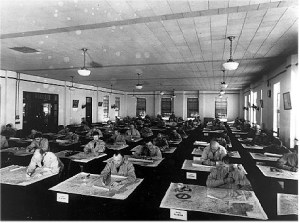
The Air Corps Tactical School (created as the Air Service Field Officers School in 1920) went beyond its mandate of training officers to also become an engine for air power theory development in the interwar period. (Source: US Air Force Air University)

This article considers some of the issues related to applied military history beginning with an outline of the purpose of history and the challenges of applying the past to the present. It also considers how air forces have used the study of the past as a tool for education while concluding with some tentative thoughts on how history can be used to educate strategists in the continuing challenge to achieve professional mastery.[4]

To start with, the term ‘education’ is used in this narrative in a broad context and incorporates both formal and informal learning. Similarly, the term ‘strategist’ is used in a collegiate manner and assumes that modern air forces seek personnel who are professional masters, well-versed in the core knowledge that underpins the application of air power.

As the British historian John Tosh reflected, the term history is ambiguous at best. Is history a collection of facts related to what has happened or is it the scholarly discussion and representation of the past? If the latter statement is accepted as being correct, then it can also be assumed that the interpretation of the past is an argument without an end. While a hackneyed observation, history is a dynamic field of study, one where historians continually re-examine evidence and reinterpret the past. Linked to this is the extent of historical information available to historians and, by default, strategists who seek to apply lessons from the past to the present. The archival records and evidence that underpin the interpretation of the past are normally incomplete. For example, the National Archives of Australia only preserves a small amount of the material generated by the Australian Government.

Moving beyond the above understanding of history, the field of military history can be split into three subfields: popular, academic, and applied history.[5] There is a degree of overlap between the latter two. The main criticism of applied military history is that it is a form of weaponising the past to cater for the present.[6] Underpinning this criticism is a view that those writing such history do so without sufficient understanding of the context in seeking to deduce lessons learnt. Unfortunately, this criticism is currently directed at academics working at institutions delivering professional military education. These institutions use history to illuminate and provide context to the ambiguous challenges that officers attending them are likely to confront in the future.

Historically, the criticism of weaponising the past does carry some weight, and therefore air power strategists could be criticised for the poor use of history to support their arguments. Indeed, as Sir Michael Howard, a distinguished military historian, noted in his 1961 lecture on ‘The Use and Abuse of Military History’:

[W]hen great [interwar] pioneers of air war…advocated striking at the homeland and at the morale of the enemy people…they were basing their conclusions on their interpretation of past wars’. (emphasis added)[7]

Warden

More recently, Colonel (retired) John Warden III’s book, The Air Campaign, has been criticised for his use of a selective reading of history to fit the theory being propounded in it.[8] Admittedly, Warden is not a historian. However, such selective use of history becomes problematic to the broader task of delivering professional education when such texts appear in, for example, Staff College reading lists where they can reinforce a narrow, and at times wrong, understanding of some of the officers they are meant to educate. Despite this criticism, it is clear that many air power thinkers have recognised the value of a broad reading of history. For example, in a 1921 article on ‘Strategy and Air Strategy,’ Group Captain John Chamier of the Royal Air Force reflected on the challenge of deducing appropriate principles for the use of air power given the brief history of air warfare till then. Nevertheless, Chamier recognised that ‘strategic principles are derived from the study of history’, and he recognised that examples from ‘naval and military strategy’ could provide the necessary framework for a discussion of ‘air strategy.’[9]

While history and the application of its lessons by air forces is fraught with challenges, its importance as a didactic tool for the military cannot be underestimated. Indeed, the study of history has been, and remains, an element of the curricula at educational establishments of most air forces. However, considered in a broad manner, the study of history has been unbalanced. For example, in the late-1940s and 1950s, history and related subjects featured little on the curriculum at the RAAF College. As Alan Stephens has noted, the RAAF of this period identified itself as a ‘narrow technocracy’ with knowledge of the Air Force’s core business to be deduced from its ‘technical components’ rather than a ‘study of its history and ideas.’[10]

To conclude, there are several areas where the contemporary study of history plays a key role in the education of air power theorists and strategists. Perhaps most important is that a deep and contextual study of history provides an important understanding for military personnel seeking to gain professional mastery of the profession of arms. Indeed, if it is accepted that the aim of learning is to develop the cognitive ability to understand and deal with ambiguity, rather than to provide clear-cut answers to current problems, then the study of history has a role to play.

The skills associated with historical analysis refines human cognitive areas such as the ability to make considered judgements. An important contributor to the effectiveness of this learning process has been the increasing civilianisation of the academic delivery at institutions catering to professional military education. At a practical level, the use of Staff Rides as a learning tool could also ensure that history could be used as a means to explore ideas outside of the confines of the traditional education environment. However, this process also has its own challenges.[11] In the final analysis, Lieutenant General Sir John Kiszely’s remark that the study of history needs to form an essential part of a ‘balanced diet’ of education for the military professional in order for them to develop the knowledge to be effective, rings completely true.[12]

Key Points

  1. Even though history may not provide clear lessons, the study of the past offers a lens through which to analyse, understand and reflect on the challenges currently faced by modern air forces;
  2. History could be considered a rather dynamic field of study, one where historians continually re-examine evidence and re-interpret the past;
  3. It is recognised that ‘strategic principles are derived from the study of history.’

Further Reading

  • Gray, Peter, ‘Why Study Military History?,’ Defence Studies, 5:1 (2005), pp. 151-64.
  • Muller, Richard R., ‘The Airpower Historian and the Education of Strategists’ in Bailey Jr., Richard J., Forsyth Jr., James W., and Yeisley, Mark O., (eds.), Strategy: Context and Adaptation from Archidamus to Airpower (Annapolis, MD: Naval Institute Press, 2016).
  • Murray, Williamson, and Sinnreich, Richard Hart (eds.), The Past as Prologue: The Importance of History to the Military Profession (Cambridge: Cambridge University Press, 2006).

Dr Ross Mahoney is the editor and owner of From Balloons to Drones as well as being an independent historian and defence specialist based in Australia. He is a graduate of the University of Birmingham (MPhil and PhD) and the University of Wolverhampton (PGCE and BA). His research interests include the history of war in the twentieth and twenty-first centuries, air power and the history of air warfare, and the social and cultural history of armed forces. To date, he has published several chapters and articles, edited two books, and delivered papers on three continents. He is an Assistant Director of the Second World War Research Group. He can be found on Twitter at @airpowerhistory.

Header Image: An Architect’s perspective drawing of the proposed RAF (Cadet) College at Cranwell. (Source: © IWM ((MOW) C 1081))

[1] Rear-Admiral A.T. Mahan, ‘The Naval War College,’ The North American Review, 196:680 (1912), p. 78.

[2] John Tosh, The Pursuit of History: Aims, Methods and New Directions in the Study of Modern History, Third Edition (Harlow: Pearson Education, 1999), p. viii.

[3] Richard R. Muller, ‘The Airpower Historian and the Education of Strategists’ in Richard J. Bailey Jr., James W. Forsyth Jr., and Mark O. Yeisley (eds.), Strategy: Context and Adaptation from Archidamus to Airpower (Annapolis, MD: Naval Institute Press, 2016), p. 113.

[4] On professional mastery in air forces, see: Sanu Kainikara, ‘Professional Mastery and Air Power Education,’ Working Paper, 33 (Canberra: RAAF Air Power Development Centre, 2011).

[5] John A. Lynn III, ‘Breaching the Walls of Academe: The Purposes, Problems, and Prospects of Military History,’ Academic Questions, 21:1 (2008), p. 20.

[6] Kim Wagner, ‘Seeing Like a Soldier: The Amritsar Massacre and the Politics of Military History,’ in Martin Thomas and Gareth Curless (eds), Decolonization and Conflict: Colonial Comparisons and Conflicts (Bloomsbury Academic, 2017), pp. 25-7.

[7] Michael Howard, ‘The Use and Abuse of Military History (lecture),’ Journal of the Royal United Service Institution, 107:625 (1962), p. 10.

[8] John Andreas Olsen, John Warden and the Renaissance of American Air Power (Washington DC: Potomac Books, 2007), pp. 78-9. Like Warden, Colonel John Boyd’s work ‘cherry-picked’ history ‘to provide illustrations and empirical validation for patterns he observed in combat.’ However, it should be recognised that Boyd was an airman who was a general strategist rather than an air power thinker per se, though his ideas do have applicability to the air domain. See: Frans Osinga, ‘The Enemy as a Complex Adaptive System: John Boyd and Airpower in the Postmodern Era’ in John Andreas Olsen (ed.), Airpower Reborn: The Strategic Concepts of John Warden and John Boyd (Annapolis, MD: Naval Institute Press, 2015), pp. 53-4.

[9] Group Captain J.A. Chamier, ‘Strategy and Air Strategy,’ Journal of the Royal United Service Institution, 66 (1921), p. 641.

[10] Alan Stephens, The Australian Centenary History of Defence: Volume II – The Royal Australian Air Force (Melbourne: Cambridge University Press, 2001), p. 188.

[11] On the challenges associated with staff rides, see: Brigadier R.A.M.S. Melvin British Army, ‘Contemporary Battlefield Tours and Staff Rides: A Military Practitioner’s View,’ Defence Studies, 5:1 (2005), pp. 59-80; Nick Lloyd, ‘Battlefield Tours and Staff Rides: A Useful Learning Experience?,’ Teaching in Higher Education, 14:2 (2009), pp. 175-84.

[12] John P. Kiszely, ‘The Relevance of History to the Military Profession: A British View’ in Williamson Murray and Richard Hart Sinnreich (eds.), The Past as Prologue: The Importance of History to the Military Profession (Cambridge: Cambridge University Press, 2006), p. 32.

Call for Contributors – From Balloons to Drones

Call for Contributors – From Balloons to Drones

Established in 2016, From Balloons to Drones is a scholarly online platform that provides analysis and debate about air power history, theory, and contemporary operations in their broadest sense including space and cyber power. Air power is to be understood broadly, encompassing not only the history of air warfare, including social and cultural aspects but also related fields such as archaeology, international relations, strategic studies, law and ethics.

Since its emergence, air power has increasingly become the preferred form of military power for many governments. However, the application and development of air power is controversial and often misunderstood. To remedy this, From Balloons to Drones seeks to provide analysis and debate about air power through the publication of articles, research notes, commentary, book reviews, and historic book reviews.

From Balloons to Drones welcomes and encourages potential submissions from postgraduates, academics, and practitioners involved in researching the subject of air power.

Submissions can take the following forms:

  • ArticlesFrom Balloons to Drones publishes informative articles on air power that range from historical pieces to the analysis of contemporary challenges. These well-researched articles should attempt to bridge a gap between the specialist and the non-specialist They should be around c.2,000 words, though From Balloons to Drones will accept larger pieces and we reserve the right to publish them in parts.
  • Air War BooksFrom Balloons to Drones publishes a series of review articles that examine the top ten books that have influenced writers on air power.
  • CommentariesFrom Balloons to Drones publishes opinion pieces on up-to-date news on either contemporary or historical subjects. These should be no longer than c.1,000 words.
  • Research NotesFrom Balloons to Drones publishes research notes related to contributor’s current research projects. These take the form of more informal pieces and can be a discussion of a source or a note on a recent research theme. These should be c.500 to 1,000 words.
  • Book ReviewsFrom Balloons to Drones publishes occasional book reviews that aim to be an accessible collection of appraisals of recent publications about air power.
  • Historic Book Reviews From Balloons to Drones publishes occasional historic book reviews that aim to be an accessible collection of open access appraisals of critical historic publications about air power history, theory, and practice.

Submissions should be submitted in Word format and emailed to the address below with ‘SUBMISSION’ in the subject line. Also, please include a 50-100-word biography with your submission. References can be used, and please be careful to explain any jargon. However, if you are not sure if your idea fits our requirements, then please email us with ‘POTENTIAL SUBMISSION’ in the subject line to discuss.

If you are interested in contributing, please email our editor, Dr Ross Mahoney, at airpowerstudies@gmail.com or visit our webpage here:- https://balloonstodrones.com/