2026 marks the 10th Anniversary of the establishment of From Balloons to Drones. To mark this anniversary, From Balloons to Drones plans to publish a series of articles examining the state of air power studies.
In 2017, From Balloons to Drones published an article that asked the question ‘Wither Air Power Studies?.’ More recently, in a 2024 article on ‘Some Problems with Airpower History,’ Professor John Ferris reflected on the field of air power history, noting that ‘[d]espite its problems, airpower history is in the best state it has known. Just a few steps would bring it to the quality of naval history.’[1] Those steps are to recognise the problems associated with the field, embrace the comparative and transnational nature of airpower history, and welcome new voices to the field. These steps can be applied to a broader field of air power studies, not just air power history.
To mark the 10th Anniversary of the scholarly webzine, From Balloons to Drones is seeking submissions on the state of air power studies. Articles might, for example, explore the development of a subfield of air power studies (e.g., history, law, ethics) or its place in academia. Possible themes to be explored might include, but are not limited to:
History | Role in Professional Military Education | Place in Armed Forces
Place in Academia | Ethical and Moral Issues
National Experiences | International Experiences | Transnational Experiences
Personal Experiences | Memory and Memorialisation
We are looking for articles between 500 and 4,000 words, but we will accept longer pieces and reserve the right to publish them in parts. Please visit our submissions page for more information on the types of articles published by From Balloons to Drones.
We plan to begin running the series in early 2026, and it will continue for as long as we receive potential contributions. We welcome and encourage submissions from academics, policymakers, service personnel, and relevant professionals.
Submissions should be submitted in Word format and emailed to the email address below with ‘SUBMISSION – Wither Air Power Studies?’ in the subject line. Also, please include a 50-100-word biography with your submission. Footnotes are acceptable; please be careful to explain any jargon. If you are unsure if your idea fits our requirements, please email us with ‘POTENTIAL SUBMISSION – Wither Air Power Studies?’ in the subject line to discuss.
Header image: A Republic P-47D Thunderbolt on display at the American Air Museum at the Imperial War Museum at Duxford, UK. (Author’s Personal Collection)
[1] John Ferris, ‘Some Problems with Airpower History,’ Journal of Military and Strategic Studies 23, no. 1 (2024), p. 31.
By Lieutenant Colonel Daniel Jackson, PhD, USAF, and Major (ret) Wael al-Taki, LAF
2 August 2014: Hundreds of Islamic State and al-Nusra Front militants stormed Lebanese Army positions in the Bekaa Valley, fifty miles east-northeast of Beirut. Under relentless fire, Lebanese troops conducted a fighting withdrawal, calling frantically for reinforcements. Amid the chaos, the militants captured 36 soldiers, brutally executing at least four.
High overhead, 1st Lieutenant Wael al-Taki peered through the infrared camera on a Cessna 208B Grand Caravan – the same single-engine turboprop used by FedEx for rural package delivery. The Lebanese Air Force operated two such aircraft, both modified with surveillance gear. Only one, however, could carry a pair of AGM-114 Hellfire missiles – the same laser-guided missiles used by Apache attack helicopters and Predator and Reaper drones.
The Cessna required a crew of three: two pilots and a mission systems operator (MSO). Yet shortages of trained personnel forced al-Taki to act as both pilot and MSO, moving to the back of the aircraft after take-off to operate the mission systems while Lieutenant C.Y. took the controls.[1] A brigadier general from the operations staff took the other pilot’s seat, relaying strike approvals from the operations centre in Beirut.
Below, the militants surrounded a company of Lebanese troops, their withering fire wounding several soldiers, including the deputy commander. The Cessna banked toward the firefight. Al-Taki gripped the hand controller, aligning the crosshairs with the enemy fighters. He fired the laser designator. He had never fired a laser-guided missile before. In fact, no one in the Lebanese Air Force had ever fired one in combat. “I was just thinking of the guys down there, that someone should save them,” he later recounted. He stole a quick glance out the window as C.Y. jammed his thumb down on the firing button. With a flash, the Hellfire streaked off the launch rail – and into history.[2]
Lieutenant al-Taki’s Hellfire was the opening shot in Lebanon’s three-year air campaign against the Islamic State, culminating in Operation Fajr al-Jaroud, or ‘Dawn of the Hills,’ in August 2017. During that same period, Operation Inherent Resolve, the US-led coalition’s campaign in Iraq and Syria, hammered the Islamic State and other militant groups with over 24 thousand airstrikes from hundreds of the world’s most advanced warplanes, including fourth- and fifth-generation fighters, unmanned aerial vehicles (UAVs), and stealth bombers.[3] The Lebanese air campaign was exceedingly modest by comparison, yet it successfully rolled back the Islamic State’s western flank. Ultimately, Fajr al-Jaroud continued a pattern established over the previous two decades: modest US security assistance, combined with the ingenuity of Lebanese aviators, enabled the Lebanese Air Force to prevail under challenging battles against violent extremist groups.
A Bell UH-1H Huey II from the 11th Squadron participates in an exercise on the Hannoush Range. (Source: Author)
Rebuilding the Lebanese Air Force
Founded in 1949, the Lebanese Air Force once operated modern jet aircraft, including the de Havilland Vampire, Hawker Hunter, and Dassault Mirage III. American assistance began during the Cold War, with the US Military Assistance Program delivering six Hawker Hunters in 1963. However, a brutal sectarian civil war from 1975 to 1990 left the air force in ruins, forcing the reconciled government to rebuild it from scratch.[4]
Lebanon occupies strategic – and treacherous – terrain, wedged between Syria and Israel. Though the civil war ended in 1990, Syrian troops continued to occupy much of the country’s north until 2005. Israel invaded four times between 1978 and 2024, occupying southern Lebanon from 1982 to 2000.
The US had straightforward goals for supporting the Lebanese Armed Forces (LAF) after the civil war: building a non-sectarian national military would strengthen national cohesion and counter the influence of sectarian militias like Hezbollah. ‘The LAF is a key institution of Lebanese statehood,’ declared US Ambassador Elizabeth Richards in 2016. ‘It is Lebanon’s sole legitimate defense force and an essential element in exerting the state’s authority throughout all of Lebanon’s territory.’[5]
Between 1996 and 2001, Lebanon acquired 24 Bell UH-1H Huey helicopters from the US, most of which had been in storage since the end of the Vietnam War. Initially relying on pilots who had trained in the US in the 1980s, the Lebanese Air Force assigned 12 of the helicopters to the 11th Squadron at Beirut Air Base, eight to the 10th Squadron at Klayaat Air Base, 55 miles north-northeast of Beirut near the Syrian border, and four to the 14th Squadron at Rayak Air Base, in the Bekaa Valley, 30 miles east of Beirut. These simple utility helicopters became the backbone of the Lebanese Air Force – and its only combat aircraft – until 2007.[6]
The first battle for the rebuilt air force erupted on 31 December 2000, in the rural Dinniyeh region near Lebanon’s northern border with Syria. Approximately 150 militants from the al-Qaeda-aligned group Takfir wal-Hijra attacked a military checkpoint, killing four soldiers and capturing two. The LAF immediately launched an operation to rescue the captives and eliminate the militants.[7]
Brigadier General S.Y., then a major in the 11th Squadron, recalled first learning of the attack while at a New Year’s Eve party with his squadron in Beirut. The festivities had begun winding down at four o’clock in the morning when the commander of the air force suddenly burst in, his face pale. “Return to base immediately!” he ordered. The men thought he was joking—or drunk. Frustrated, he bellowed for them to obey his orders at once. “We learned the hard way that he meant business,” S.Y. said.[8]
Two hours later, the major lifted off from Beirut, leading four Hueys north along the Mediterranean coast to reinforce the 10th Squadron at Klayaat Air Base, closer to the scene of the action. Upon arrival, they found the base buzzing with activity: Two companies from Lebanon’s elite Ranger Regiment had already arrived, along with two mechanised infantry companies and an armoured platoon. The LAF planned to deploy the Rangers to assault the militants’ mountain stronghold, while the mechanised infantry and armour secured Klayaat.
The helicopter force split into an assault group of eight and a reserve group of two, the latter consisting of one aircraft for medical evacuation (MEDEVAC) and another equipped with two 7.62-millimetre door guns for armed reconnaissance. In the afternoon, two 14th Squadron Hueys arrived from Rayak to reinforce the reserve group.
At nine o’clock in the morning, with temperatures hovering just below freezing, the assault group launched for the target area. Situated 5,200 feet above sea level, the high-altitude landing zones limited each helicopter to carrying only seven Rangers with their heavy gear, instead of the usual eleven. “Navigation to the landing zones was the hardest part, as the air force still used primitive methods in those days,” recalled S.Y. “Our best navigational equipment were the terrain maps provided by the directorate of geographic affairs.”
The assault group split into two elements, each led by a 10th Squadron pilot familiar with the terrain. “We flew nap of the earth,” said S.Y., “using the deep valleys and low terrain features to remain hidden from enemy observation.” The first element landed to the south and southwest of the target, while the second landed to the north. The Hueys then returned to Klayaat for another load. In total, they lifted approximately 200 soldiers onto the battlefield. The rapid encirclement enabled by air power allowed the Rangers to crush the militants in just forty-eight hours. The Lebanese Army lost 11 soldiers killed in action, including one of the men taken captive during the initial checkpoint attack.[9]
The Lebanese Air Force Adapts
The Hueys played a significant role in the LAF’s next major battle a little over six years later. On 19 May 2007, four armed men from the Sunni militant group Fateh al-Islam robbed a bank in the town of Amyoun, thirty miles north-northeast of Beirut, making off with $125,000 in cash. Lebanese paramilitary police quickly identified the militants and tracked them to a house ten miles to the north in Tripoli. A firefight erupted, soon spreading to the nearby Nahr al-Bared Palestinian refugee camp, which served as Fateh al-Islam’s headquarters. Hundreds of militants stormed LAF military posts and checkpoints in the area, killing thirty-two soldiers, most of whom were asleep in their barracks. The LAF launched an all-out effort to secure Nahr al-Bared and neutralise the militants, leading to a nightmare scenario of urban combat amid the camp’s ramshackle buildings and narrow alleyways.[10]
The Lebanese Air Force initially restricted its support to MEDEVAC and overhead surveillance. However, just two months before the battle, Lebanon had acquired nine Aérospatiale SA.342L Gazelle light attack helicopters for the newly established 8th Squadron. Armed with 68-millimetre unguided rockets, HOT guided antitank missiles, and .50-calibre machine guns, the Gazelles provided Lebanese ground troops with close air support for the first time.
The urban assault bogged down around the militants’ final position, a veritable fortress of concrete rubble. The Gazelles’ light weapons proved ineffective. With casualties mounting, the Lebanese Air Force adapted by jury-rigging three of its Huey utility helicopters as bombers.
The Lebanese Air Force had a stockpile of 500- and 1,000-pound bombs left over from the 1960s. Mechanics cannibalised bomb shackles and pylons from scrapped Mirage fighter jets and attached them to a steering rod from a decommissioned navy ship. To evenly distribute the weight across the cabin floor, they mounted the rig on an armoured plate salvaged from an inoperative M-113 armoured personnel carrier. Each heli-bomber could carry a single 1,000-pound bomb slung between the landing skids or a 500-pound bomb on either side. Mechanics lengthened the landing skids to ensure sufficient ground clearance.
The heli-bombers went into action on 9 August 2007. Using civilian Garmin 295 handheld GPS units to pinpoint their release points, the crews dropped dozens of bombs, blasting a path for the ground troops. The innovative air support helped bring the battle to an end on 7 September.[11]
The siege of Nahr al-Bared proved a formative experience for the LAF, underscoring the need to modernise the air force with fixed-wing aircraft capable of providing intelligence, surveillance, and reconnaissance (ISR), target designation, strike coordination, and close air support. This set of requirements roughly aligned with what the US Air Force (USAF) defined as light attack armed reconnaissance (LAAR). The US government offered to assist in this effort, eager to prevent Lebanon from becoming another active battlefront in the Global War on Terrorism.[12]
In 2009, the USAF provided Lebanon with a Cessna 208B Grand Caravan, funded through grant aid. Orbital ATK (later acquired by Northrop Grumman) reconfigured the Caravan as an AC-208 Eliminator, equipping it with a Wescam MX-15 electro-optical/infrared camera system, a microwave broadcast system for real-time video transmission, a weapons-grade laser designator, an infrared laser pointer, a flare dispenser, and launch rails to carry an AGM-114 Hellfire missile under each wing. A second aircraft arrived on 6 November 2013, configured solely for reconnaissance and lacking missile rails. A third aircraft, featuring a more powerful engine and a digital glass cockpit, arrived on 19 December 2016. The Cessnas were assigned to the 4th Squadron at Beirut Air Base.[13]
The Lebanese Air Force still had a handful of senior fixed-wing pilots who had flown Mirages and Hunters. However, without a fixed-wing pilot training program, it sent young lieutenants abroad to Saudi Arabia, the United Arab Emirates, and the United States for flight training. Upon their return to Lebanon, they completed a short Cessna training course provided by Orbital ATK. According to US Ambassador Elizabeth Richard, these pilots built a solid reputation. “The LAF is recognized in the US for the quality of the officers and soldiers it sends to our training and education programs,” she said. “Lebanese students routinely finish at the top of their classes, earning ‘honor graduate’ recognition.”[14]
In addition to the grant aid, the US embassy facilitated $1.9 billion in foreign military sales (FMS) to Lebanon between 2014 and 2020, including the purchase of six RQ-11 Raven small, hand-launched UAVs and 1,000 Hellfire missiles – items paid for with Lebanon’s own funds.[15] The Lebanese Air Force also bolstered its rotary-wing fleet, acquiring 24 additional UH-1H Huey IIs from the US and nine Aérospatiale SA.330 Super Puma utility helicopters, license-built in Romania by Industria Aeronautica Romana. The Super Pumas were assigned to the 9th Squadron at Hamat Air Base, located 30 miles north of Beirut.[16]
An Aérospatiale/IAR SA.330 Super Puma modified as a heli-bomber completes a rocket pass on the Hannoush Range. (Source: Author)
The Long Campaign
These modest modernisation efforts took place as neighbouring Syria spiralled into chaos. Protests against dictator Bashar al-Assad escalated into civil war and eventually gave rise to the Islamic State. More than one million Syrian refugees poured across the border into Lebanon, with at least 137,000 settling in camps within the Baalbek-Hermel Governate, Lebanon’s northeastern-most region. The town of Arsal, perched above the Bekaa Valley on the slopes of the Qalamoun Mountains, had the highest concentration of Syrian refugees of any municipality in Lebanon, with 39,300 registered in four camps.[17] On 1 February 2013, a patrol from Strike Force, Lebanon’s elite counterterrorism regiment, came under attack while chasing a wanted terrorist near the outskirts of the town. The ambush killed Captain Pierre Bachaalani and 1st Sergeant Ibrahim Zahrman and wounded many others.[18]
The LAF found it increasingly challenging to operate near Arsal. Al-Nusra Front, al Qaeda’s Syrian affiliate, used the town as a base for smuggling men, weapons, and equipment into Syria. The group began expanding its reach into the Bekaa Valley through a relentless series of deadly suicide car bombings and mortar and rocket attacks. Meanwhile, the Islamic State took control of the mountainous region east of Ras Baalbek and al-Qaa.[19]
On 2 August 2014, al-Nusra Front launched an attack on the 8th Mechanized Infantry Brigade’s positions near Arsal. Over the next five days, roughly 700 militants from al-Nusra and the Islamic State joined the battle, resulting in the deaths of 19 soldiers, the wounding of 86, and the capture of 36. Special operations forces from the Ranger and Air Assault Regiments quickly deployed to reinforce the embattled Lebanese troops.[20]
Stationed 30 miles southeast at Rayak, the 8th Squadron launched its Gazelle attack helicopters to assist, relying on satellite imagery printed from Google Earth to orient themselves to the battlefield. The commander of the air wing at Rayak led the first mission, his helicopter armed with two .50-calibre machine guns. “When we arrived in the area, we did not know which military positions had fallen and the extent of the enemy’s penetration,” recalled his copilot, Captain M.B.[21]
Spotting a group of armed men, but unsure of their identity, the wing commander dove in for a closer look. Bullets from a Russian-built PK machine gun raked the helicopter. A round tore through the cockpit, destroying the collective lever and spearing through M.B.’s left hand. “I started bleeding, losing large amounts of blood,” he recounted. The wing commander took control of the helicopter and flew straight to the Dar al-Amal Hospital near Baalbek, where M.B. received emergency medical care. The wing commander then returned to Rayak, only to find that he could not shut down the engine. A bullet had damaged the fuel controls, forcing him to wait for the helicopter’s fuel tank to run dry before it finally shut down.[22]
Meanwhile, at Beirut Air Base, 1st Lieutenant C.Y., a Cessna pilot with the 4th Squadron, received an urgent call from base operations ordering him to prepare his aircraft and crew—himself as pilot, Lieutenant al-Taki as pilot and mission systems operator, and a brigadier general from the operations staff to coordinate with the operations center. “A few minutes later, we were ordered to take off, destined for the outskirts of Arsal,” he recalled. Lieutenant C.Y. was already well-acquainted with the area, having frequently surveilled it since the ambush on the Strike Force patrol the previous year. Yet amid the chaos of the mass attack, the fog of war had set in. “The attack on the military centers happened suddenly,” said C.Y. “We did not have all the information on the disposition of military forces, especially after several fell into the hands of the terrorists.”[23]
Establishing radio contact with the ground troops, C.Y. and his crew began scanning the battlefield through their camera, watching as militants overran one post after another. The defenders executed a fighting withdrawal, buying time until reinforcements could arrive. In the summer of 2014, the 4th Squadron had only two Cessna 208s, and the second aircraft had yet to be retrofitted to carry Hellfire missiles. That meant C.Y. and his crew were flying the only armed fixed-wing aircraft in the country. While the United States classified the AC-208 as an inexpensive armed tactical reconnaissance aircraft, for Lebanon, it was a strategic asset. It would take more than an hour to land, rearm, and return to the target area, so they had to carefully balance their ability to deliver aerial firepower with the need to maintain continuous ISR coverage. “Our plane was equipped with two Hellfire missiles,” said C.Y. “We were careful not to use them unless absolutely necessary.”[24]
That moment came when the militants encircled a company of Lebanese troops, wounding several with their relentless fire. “We saw through the surveillance camera a group of about ten armed men preparing to storm the center from the rear,” C.Y. recalled, “so we decided to intervene.” Watching the Cessna’s live video feed from the operations center, the LAF director of operations, along with the army and air force commanders, gave the green light for a strike. It would be the first precision airstrike in Lebanon’s history.
C.Y. recounted what happened next: “We turned toward the target and launched the first missile, which took fifty-eight seconds to reach its mark, striking with precision and inflicting heavy losses on the attacking force.” The militants retreated into a nearby house. Circling overhead, C.Y.’s crew waited for them to regroup before launching the second missile. “We deliberately waited for all the terrorists to enter the building before firing,” he explained. “The Hellfire missile is most effective in enclosed spaces – such as rooms, buildings, and fortifications – rather than open areas.”[25]
The missile streaked off the launch rail, and one minute and twenty seconds later, it slammed into the house. The cement walls collapsed, and the house erupted in flames, fuelled by secondary explosions from ammunition stored inside. No one emerged from the inferno. The airstrike reversed the tide of the battle, forcing the militants to withdraw from around the besieged company.[26]
The combat debut of the AC-208 in August 2014 marked the LAF’s first use of precision-guided munitions and the first real-time broadcast of battlefield surveillance video. Meanwhile, the Hueys and Super Pumas transported troops and flew MEDEVAC missions, while Raven UAVs and the Cessnas provided ISR, and Gazelles and the AC-208 delivered close air support. These efforts helped halt the militant advance, but the LAF could not yet push them back, and a three-year stalemate ensued. Of the 36 Lebanese soldiers captured in the battle, the militants executed four, released seven, and exchanged 16 for thirteen jailed militants in a prisoner swap. Nine remained unaccounted for, presumably still held by the Islamic State.[27]
According to Captain G.A., another Cessna pilot in the 4th Squadron, “Our squadron participated in continual military operations from 2014 to 2017. The unrelenting bombing over such a long period of time helped to exhaust and demoralize the militants, as well as to destroy their logistical capabilities and their command-and-control centers.” In addition to Hellfire strikes, the Cessna crews provided observation and adjustment for artillery fire. According to G.A., “The targets we attacked varied from command-and-control centers and logistical points […] to tunnels dug in the mountains […] bulldozers used in digging tunnels and fortifying fighting positions […] and on one occasion, we targeted an Army M-113 armored vehicle which the militants had captured.” While they typically struck preplanned targets, the crews also often searched for targets of opportunity.[28]
In the summer of 2016, the Lebanese Air Force launched its largest coordinated airstrike on militant positions – an operation they viewed as their own miniature version of Desert Storm’s high-tech ‘Instant Thunder’ air campaign. “The raid lasted for about forty minutes,” recalled Colonel A.M., who helped plan the operation. The Cessna fired the opening salvo, striking the first two of eight preplanned targets: an Islamic State field command headquarters and a house sheltering a high-value target. Both missiles hit with precision. “No one left the targeted buildings,” A.M. stated, “so we considered the casualties as confirmed.”[29]
Follow-on attacks targeted enemy infrastructure, including lodging, water tanks, ammunition dumps, and vehicle yards. To bolster the air force’s limited firepower, mechanics from the 9th Squadron modified a Super Puma into a heli-bomber – similar to the Huey bomber experiment nine years earlier. They rigged a pair of steel I-beams through the cabin and mounted bombs or rocket pods on either side, creating a makeshift but effective strike platform.[30]
After the initial Hellfire strikes, the Cessna used its infrared laser pointer to mark targets for the helicopters and served as a tactical air coordinator, sequencing their attacks. The Puma dropped two 250-kilogram bombs, followed by the Gazelles strafing militants fleeing the bombing with .50-calibre machine guns and 68-millimetre rockets. Once the helicopters cleared the area, the Cessna called in artillery fire to finish the job. Throughout the operation, the Cessna and Raven UAVs provided continuous surveillance of the target area.[31]
While the LAF managed to contain the Islamic State and al-Nusra incursions into the Bekaa Valley, military and political leaders collaborated with their American counterparts to secure new equipment and training for a decisive operation to expel them entirely. For the air force, this included six Embraer A-29B Super Tucano light attack aircraft, which would equip the newly formed 7th Squadron. The Lebanese Air Force identified twelve of its top pilots to train on the Super Tucano at Moody Air Force Base, Georgia, under the USAF’s 81st Fighter Squadron. The first group of pilots departed Lebanon in February 2017, with the first two A-29s scheduled for delivery in October and the remaining four the following June. USAF Special Operations Command also planned to deploy a team of combat aviation advisors to Lebanon in 2018.[32] Meanwhile, in January 2017, al-Nusra Front merged with four other militant groups to form Hayat Tahrir al-Sham (HTS), which dubiously claimed to have severed its ties with al-Qaeda.[33]
It remains a point of contention whether Lebanon’s ingrained political paralysis or a strategic decision to wait for new capabilities like the Super Tucanos delayed a decisive operation against the Islamic State. On 20 July 2017, the Iranian-backed Shia militia Hezbollah pre-empted the LAF by launching its own campaign to retake Arsal.[34]
For at least six years, Hezbollah had been deploying fighters to Syria as part of Iran’s efforts to bolster Bashar al-Assad’s dictatorial regime. A successful operation to expel HTS from Lebanon would not only serve Iran’s strategic interests but also undermine the LAF’s position as the nation’s principal security provider. From 21 to 24 July, Hezbollah seized more than 60 per cent of HTS-held territory, leading to a ceasefire on 27 July that allowed the remaining HTS fighters to withdraw into Syria. Hezbollah’s sophisticated propaganda apparatus flooded media channels with battlefield updates, maps, and footage highlighting combined arms operations involving infantry, artillery, and rockets. Press reports estimated that more than twenty Hezbollah fighters and 150 HTS militants were killed in the operation.[35]
The Lebanese government had no choice but to order an immediate offensive against the Islamic State positions north of Arsal – a far more challenging task given the rugged, defensible mountainous terrain – or risk appearing impotent compared to Hezbollah. The LAF assembled a frontline strength of 4,300 troops in the eastern Bekaa Valley, including the 6th Mechanized Infantry Brigade, the 1st Intervention Regiment, the Air Assault Regiment, one company from the 4th Intervention Regiment, and one company from the Moukafaha, a special operations unit under the Directorate of Military Intelligence. Another 4,250 personnel provided support, including elements of the 1st and 2nd Artillery Regiments with 36 155-millimetre howitzers.[36]
On 14 August 2017, the LAF initiated its opening manoeuvres, officially launching Operation Fajr al-Jaroud, or ‘Dawn of the Hills,’ on 19 August. That same day, Hezbollah and the Syrian Arab Army announced their own offensive on the Syrian side of the border, once again attempting to upstage the LAF. The simultaneous operations fuelled speculation of collusion between the LAF and Hezbollah. However, LAF leadership firmly denied such claims, emphasising that their only interaction with Hezbollah was limited to a deconfliction policy not unlike the one between US and Russian forces in Syria.[37]
Lebanese ground forces encountered improvised explosive devices (IEDs), fortified fighting positions, and suicide bombers, but years of sustained operations had already hollowed out the Islamic State’s defences. A steady barrage of air and artillery fire paved the way for the advancing troops. Over 11 days, the Lebanese Air Force flew 141 hours of combat missions. One of the seventy US military advisors in the country, observing the LAF’s coordinated use of ISR, precision air strikes, artillery, infantry, armour, and special operations forces, described the campaign as ‘twenty-first century maneuver warfare by a modern military.’[38]
Though delivery of the first two A-29s was still two months away, the 4th Squadron had received its third Cessna in December 2016, and all three aircraft were now configured to carry Hellfires. Additionally, the Lebanese Army fielded a game-changing new weapon it had received several years earlier from the Americans: M712 ‘Copperhead’ 155-millimetre laser-guided artillery rounds. Flying parallel to the gun-target line, the Cessna could use its laser designator to guide in round after round with deadly precision. During Fajr al-Jaroud, the Lebanese Army fired 130 Copperhead rounds, including a blistering thirty-three in just thirty minutes at the operation’s climax.[39]
The Islamic State’s position collapsed in mere days, shrinking to a pocket of just twenty square kilometres by 27 August – down from the 120 square kilometres it had occupied at the outset. However, the LAF never launched a final assault; with the operation proving a stunning success, an alarmed Hezbollah quickly intervened to negotiate a ceasefire, allowing the remaining Islamic State fighters to retreat into Syria in exchange for information on the nine LAF soldiers captured three years earlier. Though all nine had been killed, the deal allowed the LAF to recover their bodies. On 28 August, approximately four hundred Islamic State fighters and camp followers departed on buses for eastern Syria.[40]
Operation Fajr al-Jaroud killed more than 50 Islamic State fighters, at the cost of nine LAF soldiers killed and 100 wounded. For the first time since the civil war, the LAF successfully conducted a theatre-level joint operation, demonstrating its ability to effectively utilise US security assistance.[41] Yet, the success owed to more than just the two-week operation. “When the battle is discussed, many people marvel at the short period of time that it was limited to,” said Colonel A.M. “They do not realize that it came as a result of three years of continuous targeting that exhausted the terrorists’ infrastructure and killed many of them.”[42]
Lebanese Air Force aircraft in the hangar at Hamat Air Base, foreground, left to right: SA.330 Super Puma, UH-1H Huey II, SA.342L Gazelle; background, left to right: AC-208 Eliminator, A-29B Super Tucano, Bell 212. (Source: Author)
Conclusion
Hezbollah’s efforts to undermine and overshadow the LAF failed to erode its legitimacy as Lebanon’s principal source of security. The success of the joint operation against the Islamic State spoke for itself.[43] Despite limited resources, the Lebanese Air Force played a decisive role. From the Dinniyeh operation in 2000 to the heli-bombers over Nahr al-Bared in 2007 and the precision airstrikes in the Bekaa Valley from 2014 to 2017, Lebanese aviators found ways – often audacious improvisations – to mobilise air power against violent extremist organisations. What began as a force rebuilt around hand-me-down Hueys gradually evolved into a capable mix of helicopters, crewed fixed-wing aircraft, and UAVs performing ISR, light-attack, and mobility missions. This transformation depended on steady but limited US security assistance: surplus aircraft, grant-funded upgrades, foreign military sales, and training programs that produced a new generation of skilled aviators.
Yet US assistance alone cannot account for the LAF’s battlefield performance. At every stage, Lebanese officers, NCOs, and technicians adapted faster than their inventory changed. They welded together heli-bombers when they lacked aircraft capable of striking hardened urban positions. They mastered precision weapons that they had never fired in training. They built tactics around a single missile-toting Cessna, rationing its firepower while keeping it on station as the country’s only persistent ISR asset. They overcame shortages in personnel, spare parts, and navigational equipment through ingenuity, improvisation, and a deep sense of obligation to the soldiers fighting below.
By the time the Islamic State threatened Lebanon’s northeastern frontier, the Lebanese Air Force had become something unexpected: not a conventional air force in the American sense, but an adaptable, hybrid force optimised for Lebanon’s terrain, politics, and threats. Its air campaign from 2014 to 2017, though modest by comparison with the coalition’s industrial-scale air power in Operation Inherent Resolve, proved decisive along the Islamic State’s western flank, steadily degrading militant capabilities until Operation Fajr al-Jaroud finally drove them from Lebanese territory.
From its rebirth in the 1990s through its campaign against the Islamic State, the history of Lebanese air power demonstrates that modest US security assistance, when paired with Lebanese ingenuity, produced an outsized strategic effect. The Lebanese Air Force did not win battles because it possessed the most technologically advanced equipment, the largest fleet, or the most refined doctrine. It won because Lebanese aviators extracted maximum value from every aircraft, every munition, and every training opportunity. In doing so, they provided the Lebanese Army with the air support it needed to survive, adapt, and prevail against some of the most dangerous violent extremist groups in the world.
Lieutenant Colonel Daniel Jackson PhD is an Assistant Professor of History at the US Air Force Academy. He served as a U-28A instructor pilot, Combat Aviation Advisor, and Adaptive Precision Strike evaluator pilot in Air Force Special Operations Command, flying 236 combat missions and 125 combat support missions in support of Operations Inherent Resolve, Freedom Sentinel, Enduring Freedom, Enduring Freedom-Philippines, and Damiyan. He holds a PhD in history from the University of Wisconsin-Madison. He is the author of Fallen Tigers: The Fate of America’s Missing Airmen in China during World War II (2021).
Wael Nawaf al-Taki is the manager of Strategic Defense Solutions, Ltd. He served as Chief of the Lebanese Air Force Operations Room and as an A-29 Super Tucano instructor pilot and squadron commander. In addition to flying more than 200 hours in combat operations, he spearheaded organisational and tactical reforms that enhanced air-ground integration within the Lebanese Armed Forces.
Header image: A Lebanese Air Force student prepares to fly the Embraer A-29B Super Tucano for the first time at Moody Air Force Base, Georgia (Source: US Air Force)
[1] The names of most Lebanese military officers have been withheld for security reasons.
[2] Major Wael al-Taki, oral history interview by Daniel Jackson, February 27, 2025.
[3] Department of Defense, ‘Operation Inherent Resolve: Targeted Operations to Defeat ISIS,’ Operation Inherent Resolve, 9 August 2017.
[4] National Archives and Records Administration, Record Group 330, Military Assistance Program 1000 System Master File, 1986.
[13] Orbital ATK, Mission Systems Operators Manual: Lebanon Armed Caravan SN1239, 02TMAOP-002, Fort Worth, 2016; Stephen Trimble, ‘USAF orders 2nd Cessna Caravan for Lebanon,’FlightGlobal, 18 January 2012.
[17] Aram Nerguizian, The Lebanese Armed Forces, Hezbollah, and Military Legitimacy, Draft, (Washington, DC: Center for Strategic & International Studies, 2017), p. 9.
Scott W. Palmer (ed.), Flight Culture and the Human Experience. College Station, TX: Texas A&M Press, 2025. Hbk Photos. Bibliography. Index. 248 pp.
Scott W. Palmer’s edited work, Flight Culture and the Human Experience from the Texas A&M Press, is a compilation of papers presented at the 55th Annual Walter Prescott Webb Lecture Series in 2021. Sadly, edited volumes and collections of this type are seeing a downward trend in publication across academia as university presses tighten their belts under increased budgetary constraints, and this work demonstrates what a blow that is to serious academic scholarship, particularly for those without a manuscript-length project.
The book itself is a ‘collection of essays on the modern social and historical implications of aviation,’ which ostensibly places it outside the purview of the classically trained military historian, but since ‘guns and trumpets’ has been slowly subsumed into the broader contours of ‘war and society,’ there is still much here for the historian who concerns themselves with military matters as it pertains to aviation and air power. Only three of the seven chapters relate specifically to military issues; these include Johanna Rustler’s ‘The British Air Mechanic at War and Aircraft Innovation, 1914-1918,’ Marc Dierikx’s ‘Civil Air Transport and the Colonial Context in the Interwar Period,’ and Michael W. Hankins’ ‘Selling the Fighter Pilot’s Dream Machines: The F-15 and F-16 in the Public Eye.’ However, military aspects of the ‘flight culture’ can be found throughout.
In an introduction provided by Caroline E. Tapp, Curator of Social and Cultural History at the Smithsonian National Air and Space Museum, she notes that ‘flight culture has become an intrinsic part of the human experience’ and an experience which ‘transcends geographic borders and historical timelines.’ (p. 1) Contrary to Joseph Corn’s magnificent book Winged Gospel (1983), which demonstrated an America-centric focus on aviation, the current work broadens that interpretation into a global one. People of all nations are affected by and interact with aviation and air travel, which, in turn, shapes national culture and identity. As Tapp also notes, thanks to the work of Roger Launius, the writings of New Aviation History/New Aerospace History have become a distinct field exploring the melding of technology, social, and other ‘inclusive investigations’ into a cohesive field of study (p. 4).
Patrick Luis Sullivan De Oliveira begins the work with ‘The Utopian Machine: Lighter-Than-Air Flight and Romantic Socialism in Nineteenth-Century France,’ a chapter focusing on Ernest Pétin, the French milliner who went on to design airships. However, the chapter’s strength lies in its demonstration of the relationship between European socialist thought and the belief in lighter-than-air flight. Flight, be it heavier or lighter than air, has always been used in political metaphors. In this case, utopian socialist ideals wrapped their conceptions around lighter-than-air flight. As the author quotes Victor Hugo, who ‘turned his attention upward and toward the future’ and the promises of a better 20th Century (p. 34). De Oliveira shows, through Hugo, that the airship ‘would finally bring to fruition the ideals of the French Revolution.’ (p. 36)
Marc Alsina’s ‘Gender, Race, and Heroic Aviation in Interwar Argentia, 1920-1940’ demonstrates how aviation helped create unique national identities. In Argentina, military and civilian aviators, both men and women, received acclaim that helped to ‘articulate a modern national identity’ (p. 70). Rénald Fortier’s chapter ‘“Detroyattaboy”: Michael Détroyat and the 1936 National Air Races,’ gives a brief biography of the French air racer and how his victories in the 1936 National Air Races in the United States engendered resentment amongst American flyers including Roscoe Turner who stated, ‘[i]t isn’t fair for any foreign pilot to come over here’. However, Turner was severely criticised for his ‘poor sportsmanship’ (p. 148, 150). Still, the chapter clearly demonstrates how foreign influencers catalysed change, in this case, in America.
Janet Bednarek’s ‘Chasing the Future: Why US Airports Seem Always Under Construction,’ while not meant to be humorous, certainly provides chances to chuckle as she addresses the American nationwide airport signage ‘pardon our progress’ as airports have struggled since the 1960s with keeping up to an insatiable demand for air travel in America (p 171). In short, the airports themselves could not keep up with the ever-increasing number of travellers. Besides the ticketed passengers themselves, pre-9-11 airport visitors, changes made after the September 11th attacks, Covid-19, and myriad other reasons have made creating an ‘airport of the future’ a nearly impossible task (p. 192). While we may look upon the pre-9/11 era as the halcyon days of air travel, Bednarek clearly shows that at no time since the 1960s air travel boom has an airport been able to keep up with demand and that our interpretation of well-dressed flight attendants, good food, and good drinks began and ended at the door to the aircraft.
As previously noted, only three chapters demonstrate a more military-focused bent. Of these, Rustler’s ‘The British Air Mechanic at War and Aircraft Innovation, 1914-1918’ is a breath of fresh air that focuses on the support arm to those who fly at the ‘pointy end of the spear.’ In much the same way that Apple TV’s Masters of the Air gave significant, if not equal, screentime to these air mechanics or what we today call ‘maintainers,’ Rustler’s chapter infuses the study of aviation with a much-needed focus on the lower-ranked enlisted men who have since 1914, ‘kept ‘em flying.’ However, more importantly, Rustler shows how the relationship between the mostly officer flyers and enlisted air crews developed into ‘mutual trust and respect that transcended social boundaries’ and ‘served as a guidepost for future social development and emancipation.’ (p. 63)
Dierikx’s ‘Civil Air Transport and the Colonial Context in the Interwar Period’ is not exclusively military, but the air power historian studying the interwar years should not miss it. It begins with a vignette by a Dutch cartographer, which Antoine de Saint-Exupéry could have written. In short, flying can often be viewed in ‘Hobbesian’ terms: short, brutish, and nasty. Again, while not a military chapter per se, it does demonstrate the lengths to which colonial powers went to develop viable air routes between the First and Second World Wars. Flying these routes as both crew and passenger required a certain, ‘panache,’ as governments, postal and mail services, corporations, businessmen, and other air travelers all fought against the unknown in an early globalisation movement that shrank our world, connected empires, and birthed a new form of traveler and all done under the assumption that ‘absolute national sovereignty should rule the air medium.’ (p. 130)
Hankins’ chapter is entitled ‘Selling the Fighter Pilot’s Dream Machines: The F-15 and F-16 in the Public Eye,’ although ‘Mad Men for the Military Industrial Complex’ would also have been an apt descriptor. While Hankins has already explored the developments of both the F-15 and F-16 and the fights between the ‘Fighter Mafia’/‘Reformers,’ in his book Flying Camelot (2021), this chapter shows how that fight played out in ads present in trade publications, magazines, and other venues that saw these roles of each aircraft morph over time. Hankins has become one of the leading post-Vietnam United States Air Force and air power scholars, and this chapter only enhances that reputation.
Overall, this book accomplishes what it sets out to do, namely, providing a ‘wider, more meaningful view of aviation history.’ (p. 4) This is an important book; it presents some of the latest and greatest aviation scholarship, and its sum is greater than its composite parts. This vital work will find a home on the shelf of everyone who considers themselves a serious scholar of air power and aviation history.
Dr Brian Laslie is a noted air power historian, having authored The Sundowners, Pegasus, and Little Butch: Carrier Air Group Eleven and the War in the Pacific, 1943-1945 (2025), Air Power’s Lost Cause: The American Air Wars of Vietnam (2021), Architect of Air Power: General Laurence S. Kuter and the Birth of the US Air Force (2017) and The Air Force Way of War (2015). The latter book was selected for the Chief of Staff of the Air Force’s 2016 professional reading list and the 2017 RAF Chief of the Air Staff’s reading list. US Air Force Historian and Command Historian at the United States Air Force Academy. Formerly, he was the Deputy Command Historian at the North American Aerospace Defense Command (NORAD) and United States Northern Command (USNORTHCOM). A 2001 graduate of The Citadel and a historian of air power studies, he received his Masters’ from Auburn University Montgomery in 2006 and his PhD from Kansas State University in 2013.
Header image: Three DHC-4 Caribou aircraft of No. 35 Squadron Royal Australian Air Force at Vung Tau air base, Vietnam, c. 1967-68. (Source: Australian War Memorial)
Kathy Wilson, Marshall’s Great Captain: Lieutenant General Frank M. Andrews and Air Power in the World Wars. Lexington, KY: University Press of Kentucky, 2024. Illustrations. Appendix. Notes. Bibliography. Index. Pbk. 273 pp.
Kathy Wilson highlights the career of a key player in US air power history in Marshall’s Great Captain: Lieutenant General Frank M. Andrews and Air Power in the World Wars. This is a much-needed and valuable contribution about a senior leader of the US Army Air Corps (USAAC) and the Army Air Forces (USAAF) – a leader who was a driving force behind American air power, yet not a well-known figure to our reading public. Who was the namesake of Andrews Air Force Base (now styled as Joint Base Andrews), located in Prince George’s County, Maryland, and currently the primary military airbase serving America’s capital city?
Wilson, an independent scholar and Writing Fellow for Norwich University, published Marshall’s Great Captain as part of the University Press of Kentucky’s Aviation and Airpower Series, edited by US Air Force Academy command historian Brian Laslie. Wilson’s narrative begins with Andrews’s time at West Point (Class of 1906) and ends with his untimely death due to an aircraft accident on 3 May 1943. The author correctly argues that the extant works on Second World War air power leadership gloss over Andrews’s career and fail to fully explain his significant contributions. Wilson rectifies this oversight with this thoroughly researched volume.
After a brief introduction and prologue, the latter teasing the reader with the circumstances of Andrews’s final flight and Consolidated B-24 crash, Chapter 1 succinctly covers the subject’s time at West Point and first 11 years in the US Army as a cavalry officer. A descendant of Confederate cavalry officers and related to two Tennessee governors, Andrews thrived as a young leader. In 1914, he married Jeanette ‘Johnnie’ Allen, daughter of a senior Army cavalry commander.
As Wilson explains in Chapter 2, Andrews transferred to the US Army Signal Corps’ Aviation Division, forerunner of the US Army Air Service and USAAC, in 1917 but did not see action overseas. His contributions during the First World War included staff duty in Washington, D.C., and command of Rockwell Field in southern California. By 1918, he was a 38-year-old temporary Lieutenant Colonel. In the early 1920s, he served in Germany in the Army of Occupation. A series of typical assignments followed, to include attendance at all three of the US Army’s professional schools: Air Corps Tactical School, Command and General Staff School, and Army War College. This chapter provides extensive context about US air power in the 1920s and early 1930s, including coverage of the Billy Mitchell trial, air-coastal defence experiments, and the Air Mail fiasco of 1934.
The next two chapters examine Andrews’s appointment to and service as Commanding General, General Headquarters (GHQ) Air Force, and the development of the Boeing B-17 bomber. Once again, Wilson provides extensive background, this time explaining the various boards and commissions investigating US air power, to include the Drum Board (1933) and the Baker Board (1934). In early 1935, US Army Chief of Staff General Douglas MacArthur appointed Andrews to serve as the first commander of GHQ Air Force. Comprising three under-resourced wings, the new GHQ Air Force was to serve as the Army’s air strike force, and here Andrews took charge of operations and training for the Air Corps. Wilson recounts his challenges stemming from a fragmented command structure in which the Chief of the Air Corps was responsible for supply, procurement, funding, assignments, and other supporting functions. At the same time, Army regional commanders exercised control over bases, maintenance, and court-martial authority. During his four years commanding GHQ Air Force, Andrews increased combat efficiency for USAAC, advocated for the long-range B-17 bomber, and, through air demonstrations and humanitarian flights, raised public awareness of the capabilities of US air power. He also established a solid relationship with a future mentor, then Brigadier General George Marshall, during the summer of 1938 by hosting the latter at GHQ and providing him with a personal tour of USAAC bases across the country. This visit paid dividends in two ways: it established a sense of trust between the two leaders, and it provided Marshall—then serving as the new Chief of Plans for the Army – with a solid understanding of air power’s roles, missions, and capabilities.
Boeing XB-17 (Model 299). (Source: Wikimedia)
Marshall became US Army Chief of Staff in September 1939 and appointed Andrews as the Assistant Chief of Staff, G-3, or chief of operations and training for the Army. Andrews was the first aviator to serve in this critical role for the Army, and, according to Wilson’s Chapter 5, it ‘was the most important and impactful assignment of Andrews’s career.’ (p. 105) Here, Andrews played an essential role in preparing the US Army for future combat in the Second World War, including establishing the Armored Force, improving training for the National Guard, setting up the Army’s emerging airborne infantry capability, and generally better integrating air units with Army operations. Chapter 6 then covers Andrews’ increased responsibilities first as commander of USAAC units in the Panama Canal Zone and then as overall US Army commander of the Caribbean Defense Command. These were important roles given American fears of potential Axis interference with the Panama Canal. Andrews demonstrated his expertise in reorganising forces, building and improving facilities, nurturing relationships with regional Allies, and most importantly, improving combat readiness.
Chapter 7 continues the Andrews story by describing the subject’s role as Commander, US Forces Middle East, starting in November 1942, and then as Commander, US Forces European Theater of Operations (ETO) beginning in February 1943. In these responsibilities, Andrews once again excelled at organising, training, and employing forces against the Axis. As ETO Commander, headquartered in London, he oversaw the rapid buildup of US Army ground units for Operation OVERLORD and the US 8th Air Force for the Combined Bomber Offensive; throughout, he maintained an excellent working relationship with his British counterparts.
In the final chapter, Wilson details the planned trip from London back to the United States via Iceland on 3 May 1943, which ended in a tragic crash due to poor weather. Her epilogue speculates – using the best available evidence – what next role Andrews may have taken on had he lived. Unfortunately, Andrews’ story ends too early.
Some key themes emerge throughout Wilson’s narrative. In mentioning the leadership style and personality of the gregarious and hard-charging USAAF Commanding General Henry ‘Hap’ Arnold, admiration of Andrews’s soft-spoken, gentlemanly demeanour is obvious. In all his roles, Andrews sought to educate superiors, peers, and subordinates about air power, not to antagonise them as other airmen sometimes did. Andrews’s relationship with George Marshall was important not only for the former’s rise through leadership positions but also for Marshall’s clear understanding of air power’s role in its various capacities. Finally, Wilson skilfully describes the technical development and acquisition processes of US aircraft, topics seldom mentioned in similar histories of this formative period for American air power.
This reviewer submits only one minor complaint about this study. Several verbatim quotes appearing throughout the volume are unattributed in the text, requiring the reader to flip to the note pages at the end of the book to determine the source. Many of these are lengthy. For example, page 115 presents an extensive excerpt on Marshall’s approach to selecting Army leaders, with no clues about the source. The endnote at the back of the book reveals that this was a quotation from a 1943 New York Tribune article by a staff writer.
Nevertheless, Wilson’s well-researched biography of Frank Andrews is a welcome addition to our understanding of air power leadership during the interwar years and the Second World War. Andrews was a key player, skilled in diplomacy yet laser-focused on organisation, training, and readiness. Airmen today have much to learn from Frank Andrews’ story.
Dr John J. Abbatiello earned his PhD from King’s College London’s War Studies program in 2004. After 18 years of faculty service at the US Air Force Academy’s Department of History and Center for Character and Leadership Development, he then served as the Training and Education Branch Chief for North American Aerospace Defense Command and US Northern Command. He is the author of Anti-Submarine Warfare in World War I: British Naval Aviation and the Defeat of the U-Boats (Routledge, 2006) and a chapter on Lewis Brereton in The Worst Military Leaders in History (Reaktion Books, 2022).
Header image: General Frank M. Andrews, theatre commander of US forces in the ETO, was responsible for directing the American strategic bombing campaign against Germany and for planning the land invasion of occupied western Europe, 1943. (Source: Wikimedia)
Richard Overy, Rain of Ruin: Tokyo, Hiroshima and the Surrender of Japan. London: Allen Lane, 2025. Hbk. Images. Notes. Further readings. Index. xiii + 206 pp.
The decision to use the atomic bomb in the Second World War is one of the most written-about episodes in modern military history. As Richard Overy (p. xi) identifies in this work:
[n]o single subject in the history of the United States war effort has prompted so much historical, political, and philosophical writing. No set of surviving records has been subjected to so much close forensic scrutiny.
Broadly speaking, debates over its use range from the argument that they were used to save American lives to the view that they were used to forestall Soviet ambition in the Far East and prevent the division of Japan. As exemplified by the controversy in 1994 surrounding the planned script for what became the ‘Enola Gay’ exhibition at the Smithsonian National Air and Space Museum in 1995, debates over how we interpret the decision to use the atomic bomb have been subject to intense scrutiny and disagreements. Into this milieu comes Overy, one of the world’s leading authorities on the history of the Second World War and an expert on the history of air power.
Overy had previously written the voluminous The Bombing War (2013), which dealt with debates surrounding bombing in the European theatre of war; however, in this volume, he turns his attention to the US strategic bombing campaign against Japan in 1945 and the decision to use the atomic bomb. In Rain of Ruin, Overy deals with three separate but indelibly linked areas, which form the core of the book’s key chapters. Indeed, each chapter provides the necessary context for the next. For example, in Chapter Two, Overy explores the reason why the US shifted from precision targeting to a strategy of indiscriminate firebombing from March 1945 onwards. As Overy notes, the US had abhorred British ‘area bombing’ techniques. However, they were willing to adopt similar methods in the Far East against Japan because of a shift in thinking about the use of incendiary raids influenced by the character of the war in the Far East, ‘the demonisation of the Japanese enemy, and the effort to define area targets as legitimate military-economic ones.’ (p.40). Furthermore, they were supported in this shift in strategy by appointing an officer, General Curtis LeMay, who showed no ‘compunction about bombing and killing civilians if it helped shorten the war’ (p. 22).
Following on from the shift in US air power strategy, Chapter Three deals with the development and decision to use the atomic bomb. Indeed, Overy highlights that in accepting the change in air power strategy, it became easier for the US to normalise the use of the atomic bombs. As he argued, the shift in strategy ‘prepared the way for the apotheosis of indiscriminate destruction in the two atomic attacks’ (p. 18). Moreover, Overy also adeptly illustrates the role that civilian scientists played in the development of the atomic bomb, arguing that ‘[w]ere it not for the maximum effort by a cohort of the world’s most distinguished physicists, the bomb would not have been ready by 1945’ (p.54). As such, it is essential to remember that the use of the atomic bombs was a whole-of-government affair that not only required a shift in US air power strategy but also the willingness of other stakeholders to buy into the project and their eventual use. This also included government officials in key decision-making roles and illustrates that military strategy, such as the decision to use the atomic bomb, does not develop in a vacuum.
Finally, in Chapter Four, Overy examines the reasons for the Japanese surrender in 1945 and the role that the dropping of the atomic bombs played in that decision. In doing so, Overy does an excellent job in comparing the various arguments related to Japan’s decision to surrender, most notably, the role played by the Soviet invasion of Manchuria that started between the dropping of the two atomic bombs. Indeed, as Overy illustrates, drawing on Japanese sources, the Japanese decision to surrender – the so-called ‘Sacred Decision’ – was complex and not readily accepted. For example, towards the end of August, a Japanese Kamikaze unit dropped propaganda leaflets over Tokyo, warning residents not to surrender and stating that the imperial rescript had been a false document (p. 126). Despite this, Overy makes clear that the decision to surrender was complex. Both conventional and atomic attacks on Japan played a role in the decision-making process, though whether they were decisive, as many have argued, remains open to question. Indeed, Japanese leaders viewed the atomic bombings simply as an ‘extension of LeMay’s campaign’ (p. 110).
Overall, Overy has, in the course of just 150 pages, placed the decision to use the atomic bomb in its essential context, the shift in US air power strategy that occurred in the Far East in 1945 and assessed their role in the Japanese decision to surrender. The book is supported by copious referencing to sources not just from the US but also from Britain and Japan. It is necessary reading for anyone interested in the decision to use the atomic bomb, how the Second World War ended, or US air power strategy. However, perhaps the greatest strength of Overy’s analysis is that he does not ‘judge the past’ but allows the evidence to tell its story and allows the reader to ‘understand it better on its own terms’ (p. xiii). In this, Overy has been successful.
Dr Ross Mahoney is an independent scholar specialising in the history of war, with a particular focus on the use of air power and the history of air warfare. He is the Editor-in-Chief of From Balloons to Drones and currently the Senior Historian within the Heritage Policy team at Brisbane City Council in Australia. He has nearly 20 years of experience in the education, museum, and heritage sectors in Australia and the United Kingdom, including serving as the inaugural Historian at the Royal Air Force Museum from 2013 to 2017. His other research interests are military leadership and command, military culture, and the history and development of professional military education. He also maintains an interest in transport history. He has published numerous articles, chapters and encyclopedia entries, edited two books, and delivered papers on three continents.
Header image: The Boeing B-29 Superfortress Enola Gay on Tinian just after the attack on Hiroshima on 6 August 1945. (Source: Wikimedia)
Editorial note: This article first appeared on the author’s website. It has been reproduced here with permission.
On 25 June 1950 local time, forces of the Democratic People’s Republic of Korea (North Korea) crossed the 38th Parallel and invaded the Republic of Korea (South Korea). Launching Operation Pokpung, North Korea quickly moved south and by 28 June had occupied the capital of South Korea, Seoul. In response to this act of aggression, on 25 June 1950, in New York, the United Nations passed Resolution 82, which condemned the invasion, called for a cessation of hostilities, and demanded the withdrawal of forces beyond the 38th Parallel. Failure to comply with the resolution led to the adoption of Resolution 83, which recommended that UN members provide military forces to support South Korea and restore peace.
Korea, after 35 years of occupation by the Japanese, was split into two zones of occupation in 1945. The Soviet Union occupied the north, while the United States occupied the south. While the intention had been to unify the Korean Peninsula, problems arose between the communist North and the nationalist South. The failure of the Communist Party (the Workers’ Party of North Korea) to participate in the 1948 elections, combined with the abstention of several South Korean politicians, led to the eventual development of two distinct systems of government.[1] After the communist victory in the Chinese Civil War in 1949 and after receiving tacit support from Joseph Stalin, North Korea prepared to invade South Korea.
Australia’s response to Resolution 83 was to support the UN. At this time, the Australian military was providing forces to the British Commonwealth Occupation Force (BCOF) in Japan. Shortly after the passage of Resolution 83, the Department of External Affairs received communications from the Americans regarding the support Australia was willing to provide.[2] Initially, the Royal Australian Navy vessels (RAN) HMAS Shoalhaven and Bataan (the latter en route to Japanese waters to relieve the former) were tasked with supporting the withdrawal of nationals from South Korea; however, by 29 June, they were tasked with assisting American operations.[3] In cabling this news to the Australian Ambassador to the United States, Norman Makin, the Minister for External Affairs, Percy Spender, noted the presence of No. 77 Squadron, Royal Australian Air Force (RAAF), in Japan. However, he stressed it represented ‘practically the whole of our effective operational fighter strength in Australia or elsewhere.’[4]
Group portrait of No. 77 Fighter Squadron, RAAF, 26 September 1948. Identified, left to right, back row: Warrant Officer (WO) Jim Flemming; WO W. Michelson; Flying Officer (FO) W. Horsman; WO M. Garroway; WO W. Rivers; Flight Lieutenant (Flt Lt) C.R. Noble; WO Fairweather; Flt Lt J. Grey; FO K. McLeod; WO B. Nichols; Flt Lt T. Murphy. Front row: FO W.O.K. Hewett; Flt Lt R. Hill; Flt Lt W. Ives; Flt Lt C. Butcher; Flt Lt S. Bradford; Squadron Leader F. Lawrenson; Flt J.I. Adams; Flt Lt G. Strout; Flt Lt K. Godfrey. (Source: Australian War Memorial)
No. 77 Squadron had deployed to Japan as part of BCOF in 1946 as part of No. 81 Wing. In 1948, it was transferred to Iwakuni Air Base in Yamaguchi Prefecture, on the island of Honshu. The squadron had been re-equipped after the end of the Second World War with the North American P-51D Mustang. By June 1950, No. 77 Squadron was amid preparations to return to Australia, it having been announced in April that the remaining Australian forces in Japan would be repatriated. However, events overtook these preparations.
On 29 June, the same day the Australian Government contributed the RAN to the war in Korea, the Supreme Commander of the Allied Powers in Japan, General Douglas MacArthur, requested No. 77 Squadron for operations over the Korean Peninsula. He had been informed by his principal air commander, Commander of the Far East Air Forces (FEAF), Lieutenant General George Stratemeyer, that he was in desperate need of long-range ground attack aircraft. As the Australian Official Historian of the Korean War, Robert O’Neill related, MacArthur had cabled the Commander of BCOF, Lieutenant General Sir Horace Robertson, to request the use of No. 77 Squadron. However, he had sent the message uncoded and not kept it from the entourage of reporters that he had taken with him on his tour of South Korea.[5] Stratemeyer embellished MacArthur’s position by heaping praise on No. 77 Squadron. While the praise was not unwarranted, it was clearly designed for effect. Indeed, Stratemeyer and his planners at FEAF had, in the words of the United States Air Force’s official history of air operations over Korea, ‘cast covetous glances’ at No 77 Squadron and its P-51 Mustangs.[6] MacArthur’s request for the deployment of No. 77 Squadron was widely reported in the Australian media alongside Stratemeyer’s praise for the unit before the Australian Government had a chance to respond.[7]
MacArthur’s request put the Australian Government in a challenging position. They still hoped to send No. 77 Squadron back to Australia, but alliance politics took centre stage, and by 30 June it was announced that the squadron would be committed to operations.[8] MacArthur had got his way. However, while No. 77 Squadron was committed to action, it operated from Iwakuni and would operate over Korea, but not be deployed to the peninsula. Moreover, due to poor weather, it would take several days for No. 77 Squadron to undertake its first sorties.
The North American P-51D Mustang aircraft A68-809, flown by Wing Commander Lou Spence DFC, when commanding No. 77 Squadron, RAAF, in Korea. Spence flew this aeroplane on 2 July when leading the second mission of the day. (Source: Australian War Memorial)
On 2 July, No. 77 Squadron undertook three sorties. The first was an ‘armed escort’ of four P-51s led by Squadron Leader Graham Strout for US Douglas C-47 Dakotas evacuating wounded soldiers from ‘Taijon’ (Daejeon) in Korea to Japan. One P-51 (A68-799) had to return to Iwakuni due to being unserviceable after take-off. The second sortie was a ‘close-armed escort’ mission led by the squadron commander, Wing Commander Lou Spence. The mission was to escort a group of US Douglas B-26 Invaders who attacked two bridges south of Seoul. One P-51 (A68-757) had to return due to unserviceability. The final mission saw six P-51s provide ‘armed escort’ to US Boeing B-29 Superfortresses who were attacking Yonpo airfield at Hamhung.[9] Despite the return of two aeroplanes to Iwakuni due to unserviceability, the sorties were relatively uneventful, despite several newspapers reporting that No. 77 Squadron downed one or two Yakovlev Yak-9 fighters.[10] No enemy aeroplanes were recorded as being encountered, and only in the two final sorties was any form of anti-aircraft fire encountered, though they caused no problem for the squadron. After a relatively inauspicious start, No. 77 Squadron would soon turn its attention to offensive operations, launching its first ‘armed attack’ with eight P-51s armed with rockets, attacking a convoy on a stretch of road between Heitaku and Suwon on 3 July. The attack claimed two locomotives, one truck, two staff cars, four other vehicles, and a bridge.[11]
The significance of No. 77 Squadron’s deployment over Korea came not in what the squadron physically achieved but in what its presence represented to alliance politics. The squadron’s first operations were widely reported both in Australia and abroad. In Australia, No. 77 Squadron’s first operation was reported in a typically functional manner, with many newspapers simply reporting on the character of the sorties. Nevertheless, some newspapers reported on the significance of the sorties in terms of Australian strategic policy, both foreign and domestic. For example, on 3 July, the Brisbane Telegraph noted that while the deployment of small-scale RAAF and RAN forces to support the effort in Korea was warranted to ‘honour Australian commitments to the United Nations’, any larger-scale deployment would need parliamentary agreement.[12] However, as an editorial in The Canberra Times reported, the rapid deployment highlighted ‘[t]wo extremes in the making of major decisions on policy have been illustrated by the reactions of the Government and of the Labour Party to the outbreak of hostilities in Korea.’[13] In short, the Australian Government acted quickly. At the same time, the Labor Party could ‘even comment on the situation until a meeting is held in Sydney next Wednesday [5 July], at which the policy will be decided.’[14] Perhaps unsurprisingly, it was reported that the Australian Communist Party had condemned the use of the RAAF, describing their deployment as a ‘scandal and a disgrace’ and demanding ‘the withdrawal of the R.A.A.F, from Korea.’[15]
More significantly, in the US, the rapid response of the Australian Government was noted. On 2 September, the Washington Evening Star reported on that ‘[t]he first combat mission of the Australians […] had a political significance. It made the air war a United Nations show […] No longer was the United States conducting any part of the Korean “police action” alone.’[16] That the term ‘political significance’ was used would not have been lost on readers, and a copy of this article was provided to the Department of External Affairs, as it aligned with Australian views on alliance politics.[17] Indeed, on 27 June, Makin had cabled Canberra to note that ‘the war had created a useful opportunity for putting to the State Department’ the creation of a ‘regional arrangement […] might help meet further crises.’[18] Thus, the failure to deploy No. 77 Squadron would have been inopportune and also demonstrated that, while a small contribution to the war effort, it had a significant political impact.
Thus ended the first day of operations for No. 77 Squadron over Korea. The squadron would deploy to Korea in October 1950 and eventually be re-equipped with the Gloster Meteor F.8. It would serve in Korea until October 1954, when it would transfer back to Japan and subsequently to Australia.
Dr Ross Mahoney is an independent scholar specialising in the history of war, with a particular focus on the use of air power and the history of air warfare. He is the Editor-in-Chief of From Balloons to Drones and currently the Senior Historian within the Heritage Policy team at Brisbane City Council in Australia. He has nearly 20 years of experience in the education, museum and heritage sectors in Australia and the United Kingdom, including serving as the inaugural Historian at the Royal Air Force Museum between 2013 and 2017. His other research interests are military leadership and command, military culture, and the history and development of professional military education. He also maintains an interest in transport history. He has published numerous articles, chapters and encyclopedia entries, edited two books, and delivered papers on three continents. His website is here.
Header image: North American P-51D Mustangs of 77 Squadron RAAF, lined up on the tarmac at Iwakuni air base, Japan, c. 1950. (Source: Australian War Memorial)
[1] This is an overly simplified description of the development of the two Koreas in the period after the Second World War. For more detail, see: Allan Millett, The War for Korea, 1945-1950: A House Burning (Lawrence, KS: University Press of Kansas, 2005).
[2] Robert O’Neill, Australia in the Korean War, 1950-53 – Volume 1: Strategy and Diplomacy (Canberra, ACT: The Australian War Memorial and the Australian Government Publishing Service, 1981), p. 49.
[3] National Archives of Australia (NAA), A1838, 3123/7/3/4 PART 1, Statement by the Prime Minister, 29 June 1950; ‘Australia Backs U.N.,’ The Herald, 29 June 1950, p. 1; ‘Australian Units for Korea, Ships and Planes,’ Lithgow Mercury, 29 June 1950, 2.
[4] O’Neill, Australia in the Korean War, 1950-53 – Volume 1, p. 51.
[5] O’Neill, Australia in the Korean War, 1950-53 – Volume 1, pp. 51-2. On the repercussions, or lack thereof, of MacArthur’s ‘leak,’ see: O’Neill, Australia in the Korean War, 1950-53 – Volume 1, p. 54. Cameron Forbes claimed MacArthur told Australian Roy Macartney, who was Chief of the AAP-Reuters office in Tokyo. See: Cameron Forbes, ‘Fighting in the Giants’ Playground: Australians in the Korean War’ in John Blaxland, Micheal Kelly and Liam Brewin Higgins (eds.), In from the Cold: Reflections on Australia’s Korean War (Canberra, ACT, ANU Press, 2020), p. 89. Macartney certainly filed a story that was picked up by several newspapers. For example, see: ‘Australian Fighters Sought by MacArthur,’ The Canberra Times, 30 June 1950, p. 1; ‘MacArthur Seeks Use of Australian Fighters in Korea,’ Border Morning Mail, 30 June 1950, p. 1; ‘MacArthur Wants Australian Fighter Planes,’ Daily Advertiser, 30 June 1950, p. 1. O’Neill noted the presence of Macartney of MacArthur’s aeroplane but does not explicitly note that the latter told the former that he wanted No. 77 Squadron. O’Neill, Australia in the Korean War, 1950-53 – Volume 1, p. 51.
[6] Robert Futrell, The United States Air Force in Korea, 1950-1953 (New York, NY: Duell, Sloan and Pearce, 1961), p. 64.
[7] “R.A.A.F. Fighters Sought for South Korea,’ The Sydney Morning Herald, 30 June 1950, p. 1; ‘RAAF asked to Fight with U.S.,’ Daily Mirror, 30 June 1950, p. 1; ‘MacArthur Back; Wants to Use R.A.A.F.,’ Illawarra Daily Mercury, 30 June 1950, p. 1; ‘Mac Arthur asks for the R.A.A.F.,’ The Courier-Mail, 30 June 1950, p. 1; “Wants R.A.A.F. for Korea,’ The Mercury, 30 June 1950, p. 1.
[8] NAA, A1838, 3123/7/3/4 PART 1, Statement by the Prime Minister, 30 June 1950.
[9] NAA, A9186, 103, Detail of Operations, No. 77 Squadron, Operations Record Book, 2 July 1950.
[10] ‘RAAF Mustangs Escort Bombers,’ The Herald, 3 July 1950, p. 3; ‘RAAF Mustangs in a Mission which downs a Red,’ The Daily News, 3 July 1950, p. 1.
[11] NAA, A9186, 103, Detail of Operations, No. 77 Squadron, Operations Record Book, 3 July 1950.
[12] ‘Emergency Call to Parlt.,’ Brisbane Telegraph, 3 July 1950, p. 2
[13] ‘Policies on Korea,’ The Canberra Times, 3 July 1950, p. 4.
[14] ‘Policies on Korea,’ The Canberra Times, 3 July 1950, p. 4.
[15] ‘Communists in Stoney Attack Prime Minister,’ The Canberra Times, 3 July 1950, p. 1.
[16] NAA, A1838, 3123/7/3/4 PART 1, Brooks McClure, ‘Aussies Make Quick Contribution to War,’ Washington Evening Star, 2 September 1950. McClure’s article also noted the importance of the deployment of RAN ships.
[17] NAA, A1838, 3123/7/3/4 PART 1, Memorandum to the Secretary, Department of External Affairs, 5 September 1950.
[18] O’Neill, Australia in the Korean War, 1950-53 – Volume 1, p. 53.
Marcus Gibson, The Greatest Force: How RAF Bomber Command became the No.1 factor in Britain’s total, destructive defeat of Nazi Germany. York: Marcus Gibson, 2025. Illustrations. Bibliographic Notes. xv + 537 pp.
Daniel Knowles, Reaping the Whirlwind: The Changing Perceptions of the Wartime Role of RAF Bomber Command. York: Barnthorn, 2025. Illustrations. Appendices. Bibliographic Notes. Index. 281 pp.
The history of RAF Bomber Command is a difficult heritage. Since the war itself, questions about area bombing have divided opinion, and today the bombing war is frequently remembered through the divisive, binary lenses of the ‘Dams or Dresden’.[1] Both books consider the public perception of the actions of RAF Bomber Command. However, while Reaping the Whirlwind examines the subject critically and objectively, The Greatest Force passionately argues for further recognition for Bomber Command. On his website, Gibson claims that the book aims to ‘fundamentally change our view, once and for all, of the immensity of their contribution.’[2]
In The Greatest Force, Gibson claims to answer the ‘outstanding questions’ (Rear cover) he has identified about RAF Bomber Command’s war, including why ‘Harris was right to bomb city centres’, how ‘Bomber Command became the No.1 factor in Britain’s total, destructive defeat of Nazi Germany’, and how the force ‘gave little-known but vital support to the Royal Navy against the U-boats and to Allied armies.’ He also maintains that the ‘book is the first-ever full analysis of the impact of RAF Bomber Command on Nazi Germany’. He claims that his research finally ‘dispels the many myths about Bomber Command’s true effectiveness,’ and proves that ‘it was the foremost military force in securing victory.’[3]The Greatest Force massively overpromises and underdelivers.
The book makes a couple of legitimate points, notably the importance of small industrial production to the Nazi war effort. However, it lacks proper evidence to support these ideas, and Gibson’s claims are largely unsubstantiated. The book fails to live up to the promise of the title, the blurb on the back cover, and its marketing. In the introduction, he back-pedals from the title’s claim, concluding ‘that the RAF’s bombing was the principal reason for Germany’s early military defeat in the West – a destructive force equalled in effectiveness only by the victories of the Red Army on the Eastern Front’. (p. xiv) More importantly, the questions he asks are not ‘outstanding’. For example, we already know that materiel was diverted from elsewhere to defend against Allied air power (p. 163).
He resolutely buys into the big man of history concept, citing Harris, Churchill, and his namesake with the dog, while making his disdain for Atlee very clear. (p. 470) His political stance and agenda are also revealed by phrases like ‘group think’ (p. 461) and ‘betrayal’ (p. 465, 469), as well as his wish for a column for Harris to rival that of Nelson. (p. 465) He tries so hard to clear the name of Bomber Command that he avoids the complexity of the subject and includes so much that is irrelevant. Rather than debunking certain myths about the role of Bomber Command, the book reinforces those on one side of the debate over the difficult heritage of the bombing war. His wish for a monumental column taller than that of Nelson firmly positions him in this. Gibson is a journalist with an axe to grind; he is not a historian.
The book is poorly referenced, many claims are unsupported, and the sources used are often cherry-picked without analysis. Most references are to the secondary literature, such as Adam Tooze’s Wages of Destruction (2006), rather than to the primary sources he claims to have used. The book overlooks the cultural context of the historiography he cites, as well as the nuances of working with veteran testimony 80 years after the events. One moment, he’s talking about Allied air power; the next, he is attributing all success solely to RAF Bomber Command (p. 159, 163).[4] Reading it made me realise that ‘yes and’ can be a negative comment.
Conversely, in Reaping the Whirlwind, Daniel Knowles acknowledges that the bomber has been in ‘the shadow of Fighter Command’ since Churchill’s speech about ‘the few’ in 1940, and like Gibson, argues that since the end of the war, Bomber Command has occasionally been regarded ‘with great distaste’ (p. 100). However, unlike Gibson, he traces how the ‘perceptions of, and attitudes to the role played by Bomber Command’ have fluctuated between 1945 and today, and he advances explanations for their changing favour (p. 5).[5]
Unlike Gibson, Knowles is historically minded, having a degree in History and Politics. The difference is highlighted in their approach to their subject. He critically examines the historiography, and how literature, film and TV, novels and comics, political discourse and contemporary events, the popular press, and even representations in school textbooks, have played their part in the construction of the popular memory of Bomber Command. He goes into some detail describing the capabilities of different bombsights, and navigation aids including Gee, H2S and Oboe, before he considers how the tactical differences between RAF and USAAF bombing policies have been remembered as area or precision bombing. In doing so, unlike Gibson, Knowles engages with the complexity and the nuance of evolving attitudes to the bombing war in the context of changing politics and worldwide events over the last eight decades.
Reaping the Whirlwind has a logical structure; it is well-referenced and includes 70 pages of appendices with transcripts of important primary sources, including the Butt Report and Churchill’s speeches and correspondence. I would argue that it is worth buying to have these sources accessible on a bookshelf. The book flounders a little by oversimplifying the discussion around censorship of films and the removal of statues (pp. 130-1), but the reader can forgive this and the occasional typo. Although he perhaps incongruously claims ‘little concern has been given to the aircrews of Bomber Command’, (p. 79) Knowles examines the decorations awarded to veterans, and comments that the issue of the Bomber Command Clasp in 2013 would not have occurred if ‘perceptions and attitudes of Bomber Command’s role within the Second World War had not changed’ (p. 97).
Knowles summarises the historiographical and current perspectives on the bombing war, whereas the thinking behind The Greatest Force remains rooted in the late 1990s or early 2000s. Although his book is half as long, Knowles is more effective than Gibson at arguing that the ‘hostility’ to Bomber Command’s position in public memory has been ‘unfair’. (p. 162) He concludes that while their role still divides opinion, perceptions have altered, and Bomber Command is now recognised by the memorials in London and by the International Bomber Command Centre in Lincoln. (p. 179)
Dr Dan Ellin is the archivist for the International Bomber Command Centre Digital Archive housed at the University of Lincoln. A Social and Cultural historian, his research examines the lives, emotions and medical treatment of the men and women who served with Bomber Command during the Second World War, and how the bombing war is remembered.
Header image: An Avro Lancaster MkIII of No. 103 Squadron at Elsham Wolds, Lincolnshire, early March 1943. As part of the publicity for ‘Wings For Victory Week’ (6-13 March), the station photographer was required to supply photographs of the men and machines of the squadron for inclusion in local newspapers. (Source: IWM (CH 8965))
[1] Mark Connelly Reaching for the Stars: A New History of Bomber Command in World War II (London: I.B. Tauris, 2001), p. 147.
[2] Marcus Gibson, ‘The Greatest Force – New Book by Marcus Gibson’ 2025. Accessed 15/08/2025 https://rafbook.co.uk/
[3] Marcus Gibson, ‘The Greatest Force – New Book by Marcus Gibson’ 2025. Accessed 15/08/2025 https://rafbook.co.uk/
Editorial note: This article first appeared on the author’s website. It has been reproduced here with permission.
The Korean War is often described as the ‘Forgotten War’ due to it being sandwiched between the more commonly known Second World War and the Vietnam War. Furthermore, a debate persists over its character, with some referring to it as ‘police action.’ Despite this, the Korean War has received its fair share of examination by historians since the conflict ended. Arguably, the most comprehensive history in the English language is Allan Millett’s history of the conflict. So far, two volumes of The War for Korea (2005 and 2010) out of a projected three have been published, covering the period up to 1951. From an Australian perspective, the late Jeffrey Grey’s work on the role of British Commonwealth armies, The Commonwealth Armies and the Korean War (1988), remains a key work.
In addition to Grey’s work, the key source on Australia’s involvement in the Korean War remains the two-volume official history written by Robert O’Neill. Starting research in 1970, O’Neill’s two-volume history dealt with strategy and diplomacy in its first volume, while the second volume covered the combat operations of the military forces deployed, including the experience of the Royal Australian Air Force (RAAF). While the first volume has generally been praised, the second volume has been described by at least one critic as a ‘regimental history.[1] Indeed, with specific reference to the RAAF’s contribution, Glen St John Barclay questioned the validity of volume two, arguing ‘if one is not going to make even a passing reference to the aviators of the US Air Force and Navy who achieved total command of the skies for the United Nations Forces in Korea. This is Hamlet without the Prince of Denmark, indeed.’[2]
O’Neill’s appointment nevertheless marked a significant departure from previous official historians, who were journalists by background. Here, the Australian Government made a conscious decision to appoint an academic – O’Neill also served as the Head of the Australian National University’s Strategic and Defence Studies Centre at the time he researched and wrote the official history. Since O’Neill’s appointment, the subsequent official histories published in Australia have adopted a significantly more academic tone. Moreover, as Peter Edwards, the Official Historian of Australia’s involvement in Southeast Asian Conflicts, 1948-1975 has written, O’Neill ‘pioneered the coverage in official histories of the strategic and diplomatic policy-making that led Australian forces to be involved in conflicts, with the same precision and authority as had always been given to the experience of those forces.’ [3]
A South African Air Force North American F-86F Sabre from No. 2 Squadron at Tsuiki air base, Japan, in 1953. No. 2 Squadron SAAF was attached to the US Air Force 18th Fighter-Bomber Wing during the Korean War. (Source: Wikimedia)
Returning to air power, the historiography is generally dominated by accounts detailing the role of primarily the United States Air Force, with some attention paid to US naval air power and the role of US Marine Corps aviation. Key amongst these is Conrad Crane’s American Airpower Strategy in Korea (2000). Crane is critical of the USAF’s official history published by Robert Futrell in the 1960s, noting that The United States Air Force in Korea, 1950-1953 (1961) ‘emphasizes the success of air power in Korea and not the air force’s failure to learn enough from that ordeal.’[4] The role of naval aviation is dealt with in Richard Hallion’s 1986 work, The Naval Air War in Korea. Xiaoming Zhang’s 1998 article in The Journal of Military History and his 2002 book Red Wings over the Yalu remain the key works in the English language that examine the Chinese and Soviet use of air power over Korea.[5] Of interest is John Sherwood’s 1996 cultural history of US pilots during the Korean War, Officers in Flight Suits: The Story of American Air Force Fighter Pilots in the Korean War. In addition to these works, a useful general introduction to the subject can be found in Michael Napier’s 2021 history, Korean Air War.
Dealing with Australian air power, writing on the experience of the RAAF began even before the war had ended when George Odgers published Across the Parallel in 1952. Odgers had served as a public relations officer for the RAAF in Korea and had access to No. 77 Squadron that would have been hitherto unheard of for other writers of the time. The work was generally well received at the time of its publication, although it is now somewhat dated. Odgers would later write a biography of Wing Commander Richard Cresswell, Mr Double Seven (2008), who commanded No. 77 Squadron during 1951. Few personnel accounts of the RAAF’s involvement in the air war over Korea have been published. A notable exception is Colin King’s Luck is No Accident (2001).
Little was published on the RAAF’s operations in Korea until the arrival in 1994 of David Wilson’s Lion Over Korea. The RAAF’s role in Korea was discussed by Alan Stephens in the second volume of the Air Force’s official history, Going Solo, in 1995. Stephens’ work is arguably the most comprehensive treatment of the campaign, despite the experience in Korea warranting only a single chapter. The volume, however, situates the deployment in context and links it to other ongoing issues in the history of the RAAF at the time. Then, at the turn of the 21st Century, Doug Hurst published The Forgotten Few (2000) while more recently Owen Zupp has published an account of Australia’s contribution to the air war (2024).
Despite the lack of personal accounts and Hurst’s contention that the No. 77 Squadron represented a ‘forgotten few,’ there has been a surprising amount published for what was ostensibly a small contribution to the war effort. Nevertheless, there are problems. While it might be argued that much has been written about the RAAF’s contribution to the air war, their contribution can still be overlooked. For example, In from the Cold, a 2020 edited collection reflecting on Australia’s contribution to the Korean War, did not include a chapter on the RAAF. Based on a 2011 conference at the Australian War Memorial, the event featured chapters on the Australian Army and the Battle of Maryang San, as well as the four-month deployment of the Royal Australian Navy’s aircraft carrier, HMAS Sydney. However, the closest we see the RAAF discussed is in a chapter on coalition air operations by Richard Hallion.[6]
Additionally, apart from Stephens’ work, the cited works above primarily focus on the experience of No. 77 Squadron. Little attempt is made to link expertise back to the development and operations of the RAAF in Australia and other places such as Malaya. Indeed, any consideration of Australian air power strategy in this period cannot separate Korea from Malaya, as the two campaigns were clearly linked in the mind of the Australian government.[7]
Dr Ross Mahoney is an independent scholar specialising in the history of war, with a particular focus on the use of air power and the history of air warfare. He is the Editor-in-Chief of From Balloons to Drones and currently the Senior Historian within the Heritage Policy team at Brisbane City Council in Australia. He has nearly 20 years of experience in the education, museum and heritage sectors in Australia and the United Kingdom, including serving as the inaugural Historian at the Royal Air Force Museum between 2013 and 2017. His other research interests are military leadership and command, military culture, and the history and development of professional military education. He also maintains an interest in transport history. He has published numerous articles, chapters and encyclopedia entries, edited two books, and delivered papers on three continents. His website is here.
Header image: A United States Air Force North American F-86 Sabre parked alongside Gloster Meteor Mk8s on No. 77 Squadron of the Royal Australian Air Force at Iwakuni in Japan, June 195. (Source: Australian War Memorial)
[1] Glen St John Barcley, ‘Australian Historians and the Study of War, 1975-88,’ Australian Journal of Politics & History 41, no. 1 (1995), p. 241.
[2] Barclay, ‘Australian Historians and the Study of War,’ p. 241.
[3] Peter Edwards, ‘Robert O’Neill and the Australian Official War Histories: Policy and Diplomacy’ in Daniel Marston and Tamara Leahy (eds.), War, Strategy and History: Essays in Honour of Professor Robert O’Neill (Canberra, ACT: ANU Press, 2016), p. 71.
[4] Wayne Thompson, ‘Book Review – American Airpower Strategy in Korea, 1950-1953 by Conrad Crane,’ Journal of American History 87, no. 4 (2001), p. 1565.
[5] Xiaoming Zhang, ‘China and the Air War in Korea, 1950-1953,’ The Journal of Military History 62, no. 2, (1998), pp. 335–70.
[6] Richard Hallion, ‘The Air War in Korea: Coalition Air Power in the Context of Limited War’ in John Blaxland, Michael Kelly and Brewin Higgins (eds.), In from the Cold: Reflections of Australia’s Korean War (Canberra, ACT: ANU Press, 2020), p. 129, 141.
[7] Mark Lax, Malayan Emergency and Indonesian Confrontation, 1950 to 1966 (Newport, NSW: Big Sky Publishing, 2021), p. 75.
By Lieutenant Colonel Michael H Taint, United States Air Force (Ret’d)
Editorial note: In this two-part article, Michael Taint re-evaluates the conduct of Colonel Edward Deeds in the management of the US Army’s First World War aircraft production program and the overall aeroplane production program itself. In this second part, he examines Deeds’ conduct and evaluates the management of aircraft in the United States during the First World War. The first part can be found here.
The first part of this article described the low state of readiness of American military air power as the country entered the First World War in 1917. Congress addressed this with an enormous $640M appropriation for a fleet of aircraft. However, the automobile industry, not the aviation industry, dominated the Government body overseeing aeroplane acquisitions, the Aircraft Production Board, specifically in the person of Edward A. Deeds, who was directly commissioned a full Colonel in the US Army Air Service and placed in charge of procurement.
Colonel Deeds and the Aircraft Procurement Program
The American aircraft production program began, as large initiatives often do, with boundless optimism. After all, at the beginning of the First World War, the American automotive industry was an industrial marvel, mass-producing approximately 1.5 million automobiles per year – this made the goal of 22,000 aircraft possible. Minutes taken at an early meeting of the Aircraft Production Board capture this sentiment perfectly: ‘If the automotive industry of this country can produce 100,000 automobile engines a month, as it now does, we can see no logical reason it cannot produce 3,000 aircraft engines per month.’[1] Colonel T. Milling of the US Army Air Service summed up this optimism when he stated that the ‘idea that has always seemed to exist in the United States, namely, that money can do anything.’[2]
Deeds’ US Army Air Service Equipment Division wasted no time awarding contracts to get the work underway. On 7 September 1917, just weeks after Deeds’ commissioning, the Dayton Wright Airplane Company, then in its sixth month of existence, received a cost-plus contract to build 4,000 De Havilland DH-9 (soon after modified to DH-4) light bombers. Curtiss Aircraft and Fischer Body (later to become part of General Motors) received contracts of equivalent size. In addition to the DH-4 contract, Dayton Wright was also issued a fixed price contract for 400 ‘Standard J’ training planes; altogether, Deeds’ Equipment Division issued almost $35,000,000 in contracts to his former company in Dayton.[3]
In 1920, in a report of the House of Representatives Select Committee on Aviation’s judgment on Deeds’ conduct is truly clear:
But the fact remains that from practically the inception of the Government’s aviation activity in connection with the war, and within the sphere of Colonel Deeds’s important if not commanding influence his former business associates were placed at once through Government contracts to a position where they had the assurance of very large profits upon a relatively small investment of their own money and in addition were able to secure generous salaries which they charged against the Government as part of the cost of manufacture. That Deeds, Kettering and Talbot continued to be on the most intimate and confidential footing in the prosecution of Government work by the Dayton-Wright Airplane Company is apparent from their correspondence.[4]
Particularly damning were two telegrams sent by Deeds to Henry Talbot, the business manager and co-founder of Dayton-Wright Airplane Company, in August and September 1917. In the first, Deeds tells Talbot that all confidential telegrams from his Government office will be addressed directly to Talbot, not the Dayton Wright Airplane Company (a highly irregular practice for Government correspondence that Deeds later defended as merely a convenience, then later a security measure). In the second, Deeds told Talbot that the Government was able to select a source without price competition, and that price would not be a determining factor. And if the price were not a determinant, the cost could be high:
For your personal information as coming from your local attorney. Judge Advocate General has ruled it legal for the Government to select one, contractor one, and the two a third [sic], as market appraisers of market value of plant at contract expiration.[5]
Deeds also gave Dayton Wright a tremendous advantage over other US aeroplane manufacturers – the only actual DH-4 aircraft in the country. The procurement strategy the Aircraft Procurement Board had endorsed was not to design an entirely new American aeroplane but ‘build to print’ from an existing, in this case British, design that had flown and proven reliable. Unfortunately, the British either lacked or failed to give the US a complete technical package of drawings and specifications for the DH-4. All the Americans had been a few top-level diagrams. Instead, in late July, an actual DH-4 was shipped to Washington, which American industry could reverse-engineer and copy. However, even that was incomplete, with missing armament and landing gear. These were parts that needed to illustrate how the whole system was constructed and worked together. Deeds, however, immediately had it shipped to Dayton Wright instead of keeping it at a Government location, where all industries would have equal access.[6] This gave Dayton Wright an enormous head start over the other contractors because they had sole access to the only artifact documenting the detailed design. Dayton Wright immediately began ‘reverse engineering’ detailed blueprints and drawings to enable mass production, and within three months, had hand-built a ‘duplicate’ (more accurately, an American version) equipped with a prototype new US-built Liberty engine. This was impressive initial progress, but mass production proved far more challenging.
As the fall of 1917 progressed into winter, the problems of creating a new American aviation industry became evident, as the much-ballyhooed deliveries of initial production aircraft failed to materialise. The problems began with the most fundamental issues – a lack of knowledge in the manufacturing process, and a supply chain of necessary materials. Though the automotive executives in charge, such as Deeds, had assumed that automobiles and aircraft were comparable in complexity, it was soon discovered that the aeroplanes, particularly the ones made in Europe, required far more ‘touch labor’ by craftsmen than the mass-produced automobile, built by general labour that typically only performed one function on the assembly line.[7] This lack of aviation production knowledge hindered the startup effort, but the American aviation industry eventually learned and adapted.
Material was also a significant issue. America had enormous timber resources, but only certain types of wood were suitable for constructing aeroplanes. Strong, light, and straight-grained beams long enough to form the wings and body of an aeroplane were required, and only spruce met those requirements. Eventually, the lumber industry learned to cut spruce trees for the correct finished piece, but early in the spruce program, as much as 5,000 feet of rough spruce was required for a single aircraft.[8] Labour troubles caused by the lumbering program’s crash erupted in the Pacific Northwest; in November 1917, the US Army Signal Corps created a Spruce Production Division, headed by Colonel Brice Disque, to resolve the issues and maintain a steady supply of high-quality spruce material.[9]
Another significant component of the aircraft was linen. At first, the US attempted to procure this material from the original De Havilland Company source, an Irish supplier, but they were unable to meet the demand. This forced the US Army Signal Corps to experiment and find an acceptable substitute, cotton, which they procured (15,000 bales worth) on the open market to provide to the aircraft manufacturers. Even special aviation varnish (‘dope’ in the vernacular of 1917) had to be developed by the US Army Signal Corps to support private production.[10]
These issues would surely have occurred regardless of who led the aircraft procurement program, but there were also problems internal to the Equipment Division. The scope and size of the aircraft production challenge in the First World War were precisely why men such as Deeds, with expertise in running large manufacturing enterprises, were brought into the US Army. Unfortunately, they failed to create an efficient organisation to administer the work. As a Congressional investigation report noted after the war:
The duty of providing an adequate organization for aircraft production was left to the Signal Corps. It is quite clear that this undertaking was beyond the competency of the Chief Signal Officer [General Squier], who had neither the training nor experience for such a large industrial enterprise, and those who were brought to the task in his department failed to produce an organization which was adapted to meet the exigency. (emphasis added)[11]
Specific issues identified were a lack of accountability, unclear lines of authority, and redundancy of effort. These issues, plus rising public criticism of the entire aircraft program, led to a change in the US Army Signal Corps’ organisational structure in February 1918. Deeds was relieved of his position as Chief of the Equipment Division and moved to the newly created position of ‘Senior Industrial Executive’, reporting directly to General Squier, with no apparent line authority. Nevertheless, Deeds continued to exert significant control over the aircraft program, according to the report of Charles Evans Hughes issued in October 1918 and discussed in more detail below.
Another set of issues was changes in the DH-4 configuration caused by American manufacturing. The most notable of these was the Liberty engine, one of the war’s most significant American production successes, in which Deeds played an important role. Unlike other technical aspects of American aircraft production, Deeds took a personal interest in the development of the new American engine. As Benedict Crowell recounted in his official report after the war:
Colonel Deeds had been the man of broad vision who […] determined that America could best make a contribution to the aviation program by producing her own engine […] persuaded Messrs. Hall and Vincent [two Signal Corps officers in the rank of major responsible for engine production] to forego further efforts on their individual developments and devote their combined skill and experience to the creation of an all-American engine.[12]
While there were good reasons to create the new American Liberty engine instead of attempting to adapt hand-crafted European engines to American factories, Deeds also had a very personal business interest in the Liberty. Each of the 20,000 Liberty engines used a Delco electronic ignition system and not the magneto ignition system used in Europe, so he profited from each engine sold. Deeds was careful not to sign the directive requiring the use of the Delco ignition, instead having his subordinate, Major Gray, sign it. However, as the Congressional investigation after the war found, ‘there is no satisfactory evidence that Colonel Deeds signed, prepared or directed the use of the Delco ignition, though it cannot be doubted that he desired the system to be used.’[13] Unfortunately, the change in a central aircraft subsystem such as this required a significant number of changes to other interfaces, resulting in further delays. These changes were particularly problematic as the Liberty engine evolved in many configurations.[14]
By November 1917, seven months into the war, the first significant block of DH-4 aircraft (154 planes) was supposed to be delivered; however, the total delivered was zero. The United States did not deliver its first batch of home-produced aircraft until February 1918, which consisted of only nine aircraft.[15] Critics from the small core of aviation experts and enthusiasts saw this as the natural outcome of their industry being overtaken by the ‘Detroit Conspiracy.’ Their criticisms soon found a most unusual voice.
John Gutzon Borglum: Sculptor and Aviation Enthusiast
John Gutzon Borglum, c. 1919. (Source: Wikimedia)
John Gutzon Borglum, a sculptor, was busy working on the Stone Mountain commemoration of Confederate Civil War leaders in Georgia when the US declared war in 1917 (after the war, he would take on the far more famous Mount Rushmore project). An early aviation enthusiast, Borglum was a founding member of the New York Aero Club and also witnessed the acceptance testing in 1908 of the first Wright Flyer bought by the US Army.[16] In 1913, prominent Daytonians, including Deeds, contacted Borglum about sculpting a memorial to the Wright brothers; however, he enormous Dayton flood that year made financing the project impossible. Deeds remembered Borglum, however, and commissioned the sculptor to do a bust of his son, who tragically died of illness. Borglum completed this composition and took things further, proposing an elaborate mausoleum for the entire Deeds family. Deeds never responded to this proposal, and this rejection was later cited as the cause of Borglum’s particular animus toward Deeds in the aeroplane procurement controversy.[17]
One thing was sure: in terms of temperament, Borglum was as far from Deeds as imaginable. Where Deeds was genial, low-key, and personable, Borglum was truculent, loud, and abrasive, truly over the top. Unafraid of making attacks on Deeds that were personal and sometimes outlandish, Borglum claimed that Deeds ‘real name’ was really ‘Dietz’ and that he had strong pro-German sympathies – a political hot-button in America in 1917. ‘Deeds powerful Teutonic personality seems to have completely hypnotised the trusting, scientific mind of General Squier, ’ posited Borglum, explaining how the aircraft program under a highly respected US Army officer had so underperformed expectations.[18] Overblown rhetoric aside, Borglum had suspicions about Deeds’ business motivations, which eventually proved well-founded. Convinced that the aircraft procurement plan led by Deeds was a scam, he handled it in typical Borglum style – he took it right to the top, writing the President of the United States’ secretary, Joseph Tumulty, and alleging gross mismanagement and waste in the aircraft program. After discussing with Secretary of War Newton Baker, Wilson wrote back on 2 January 1918. He gave Borglum carte blanche to investigate his allegations, including permission to visit various manufacturing plants, a War Department employee to act as Borglum’s assistant and an office in the War Department itself. Borglum attempted to interview the principals involved in the affair, including General Squier, but found them unresponsive.[19] Undeterred, on 21 January 1918, Borglum sent his report to Wilson with a letter stating that he had ‘been able to connect the broken links of a chain of dishonesty and disorder that runs through our production department.’[20] By now, Borglum was not the only voice of dissent. A report from the respected Aeronautical Society of America stated that the aircraft program was devised by ‘men who know next to nothing about the art of flying or the production of flying machines.’ Numerous newspapers throughout America in the next few months began calling for an investigation into the aeroplane program; typical of these is the St. Louis Star’s observation that ‘if things are wrong they must be righted and if they are not wrong then the men responsible must be cleared of odium’ and the Philadelphia North American’s ‘the American people are sick of false promises and alluring deceptions; what they want is battle-planes on the front.’[21]
Secretary of War Baker’s response to President Wilson on Borglum showed a clear understanding of the potential political volatility of the situation:
My general impression of Mr. Borglum’s report is that it contains no facts beyond those frankly admitted by Government departments with reference to delays […] The charges against Colonel Deeds are unsupported by evidence. Nevertheless, I consider it would be well, in view of the charges, to have a full examination of Colonel Deeds’ record made as a matter of justice to him and the Department.[22]
Whatever plans Baker had for an internal review were quickly superseded by actions by Congress and Wilson himself. Wilson backpedalled, sending Borglum a letter claiming he had not appointed him as an official investigator but merely as an interested citizen (though interested citizens are generally not provided a full-time War Department aid plus an office).[23]
Borglum was making the newspapers almost daily as he blew the whistle as loudly as possible. By early May 1918, both houses of Congress expressed outrage and demanded a full investigation. Senator Thomas of Colorado, on 9 May 1918, stated that the aeroplane manufacturers were responsible for ‘huge profiteering’ and wanted those contracts cancelled. However, the next day, the same Senator dropped a bombshell on the Senate floor, effectively ending Borglum’s role as an aircraft program critic. An affidavit from Mr. Kenyon W. Mix, Jr., whose father held the controlling interest in the Dodge Manufacturing Company, was presented to the Senate. It stated that Mix and another aeroplane engineer, who supposedly had ties to the British Embassy, Hugo C. Gibson, had met Borglum on a train trip (whether planned or accidental is unknown), and Gibson had told him that European designs, far superior to American ones, were available for manufacture. Borglum boasted of his close personal ties with President Wilson, ties that could readily lead to a fat aeroplane production contract. Mix, suspicious, then decided to raise the issue through appropriate channels – so he forwarded the concern to Aircraft Production Board chair Howard Coffin, who in turn shared it with other Board members, including Squier and Deeds. In turn, on 20 January 1918, they raised the issue with Vice President Marshall, who notified Secretary Baker; presumably, Baker passed this on to Senator Thomas.[24] The implication was clear – Borglum was doing precisely what he accused Deeds of doing – pursuing an aircraft procurement program profitable to himself. Having placed the affidavit before the Senate, Senator Thomas ended his floor time with the stark conclusion: ‘This shows Mr. Borglum’s criticism of the airplane program to be entirely without merit.’[25] Borglum, naturally, vehemently denied all this.
Of course, this testimony from Mix did not prove that Borglum’s criticism was without merit; it simply suggested that Borglum might be a hypocrite, attempting to do precisely what he accused Deeds of doing.[26] However, another possibility is revealed by a front-page story on 11 May 1918 in the Washington Herald:
Officials for the British Embassy and the British War Mission here state that no one in the name of Hugo C Gibson has been in the employ of the British Government in this country. It is believed that Mr. Borglum may have been the victim of a confidence man who sought membership in any corporation that might be formed and put forward false claims in order to win the confidence of the sculptor.[27]
Borglum’s response to the Senate was simple – ‘a frame up, deliberately planned.’[28] No one at the time (and for that matter, any historian later) appears to have taken that answer seriously, however. Borglum, utterly discredited, was effectively silenced. Certainly, powerful business interests and senior officers such as Deeds in the Equipment Division had strong motivations to stop Borglum. The Mix affidavit was never further scrutinised and Mix himself never called to testify. Borglum may have been personally silenced, but the calls for serious investigation had such momentum from Borglum’s polemics that they could not be stopped.
Charles Evans Hughes: Justice becomes Investigator
Charles Evans Hughes campaigning in Winona, Minnesota, on the Milwaukee Road’s Olympian, 10 August 1916. (Source: Wikimedia)
Former Associate Justice Charles Evans Hughes had lost a close election (23 electoral votes) to President Woodrow Wilson just the year before. In December 1917, he paid a courtesy call on his former rival at the White House. Hughes had come to Washington not to meet the President but to argue a case before the Supreme Court, the first time since he resigned from it to run for the White House. Hughes offered at that meeting – probably just a formality – to accept any wartime assignment that Wilson might wish. On 13 May 1918, just a few days after the Borglum debacle on the Senate floor, Wilson took Hughes up on the offer. Wilson believed that Hughes, a respected jurist and political opponent, would be able to make any necessary recommendations and remain above any charges of whitewashing. Wilson asked Hughes to investigate the growing political crisis of the army aircraft program, and Hughes immediately accepted.[29]
Though Wilson gave his former rival a free hand to look wherever he wished, he would do so under supervision from Attorney General Gregory or Solicitor General Frierson. One of these men always accompanied Hughes on every interview or fact-finding mission. Hughes picked Meier Steinbrink, an up-and-coming lawyer who was eventually elevated to the New York State Supreme Court, as his personal assistant. Together they investigated the entire aircraft program from mid-May until early November 1918, conducting all their interviews and actions in private to avoid creating another Borglum-like circus.[30]
Hughes’s first task was to uncover as many facts as possible about the actual aircraft production program – specifically, how many aircraft were built and shipped to Europe, how much money had been obligated and spent on domestic contracts, and how much had been obligated and paid on the Allies. Obtaining this data proved to be far more difficult than anticipated. It became the first indication that the entire aircraft production procurement bureaucracy lacked the proper centralised control necessary for effective decision-making. Hughes and Steinbrink eventually interviewed 280 witnesses, reviewed 17,000 pages of documentation, and visited contractor facilities in Dayton, Detroit, Buffalo, and New Brunswick. At each site visit, he examined the contractors’ financial records (cost-plus type contracts require all such data to be available to the Government) and facilities and interviewed key executives. In Dayton, these interviews included Deeds and Henry Talbot Jr., President of the Dayton Wright Airplane Company.[31]
During this visit, Hughes uncovered unmistakable evidence of Deeds’ illicit communications with his former company. From the information reviewed before their site visit and the evasive answers Talbot gave to specific questions from Hughes, both investigators suspected a secret back channel had been established. Steinbrink evaluated this idea.
While Hughes was plying the witness [Talbot Jr.] with questions, Steinbrink walked over to the plant’s filing room and told a clerk that Mr. Talbot would like to have the confidential file. The clerk yielded it without question, and the attorney [Steinbrink], opening it to “Deeds” and “Talbott”, found telegrams that established a confidential relationship between the two men after Deeds had taken charge of the aircraft production program for the Army.[32]
This would form a key part of the final 104-page report by Hughes, which was completed at the end of October and submitted to President Wilson through the Attorney General on 25 October. It was released publicly on 31 October 1918, just over two weeks before the Armistice.[33]
Hughes’ Report is impressively comprehensive and delves deeply into every issue that plagued the startup of the American aircraft industry, from the large numbers of Government actors and private firms involved down to the fine points of cutting the proper amounts of spruce and mahogany. Numbers and types of aircraft and aircraft engines built and delivered are tabulated, along with contract dollars obligated and spent, as well as the selection process for contractors. Hughes had discharged his duties well, untangling an overly complex procurement program in a few short months, despite neither he nor his assistant having any background in it.
The final report’s cover letter to the Attorney General mentions explicitly investigating ‘the activities relevant to Edward A. Deeds and his former business associates,’ noteworthy because Deeds is the only person called out by name in the cover letter.[34] Hughes intended to draw attention to Deeds, particularly senior administration officials who were likely only to read the cover letter. In addition to the unethical communications with Dayton Wright Airplane Company, the investigation uncovered other questionable conduct on Deeds’ part.
One of these was purchasing land for McCook Field, located just north of Dayton. Deeds had bought the land – after being advised by Wilbur Wright that it would make an ideal airfield. As Deeds he ‘importuned’ another US Army Air Service office to purchase the land; he no longer owned it but had sold it to his long-term business partner (and co-founder of Dayton Wright Airplane Company) Charles Kettering. Deeds also pressed for establishing other permanent facilities, such as Wilbur Wright Field in Dayton. Although he had no immediate business connection to this deal, it would surely be helpful in his post-war aviation business ventures.[35]
Hughes found still more irregularities in Deeds, such as a $104,000 payment to a Liberty engine contractor (the Packard Company) – even though no contract existed between the Government and Packard at the time.[36] On 21 February 1918, Deeds made a significant announcement through the War Department that the first ‘service’ (tactical combat) aircraft were finally on their way to France, an important milestone that the entire nation had anxiously awaited. Nothing had been shipped to France, only a handful of DH-4s to other airfields in America for testing; ‘Actual production in quantity did not begin until May.’[37] This revelation proved a severe embarrassment to the Wilson Administration, and Congressional inquiries grilled Secretary of War Newton Baker about this deception. Besides benefiting from insider Government information, executives of the Dayton Wright Airplane Company had charged exorbitant salaries since August 1, 1917, under the government’s cost-plus contracts. Deeds claimed he knew nothing about the wages (over $100,000 total) being received by some of his closest friends.[38]
Finally, in his single-page ‘General Conclusions and Recommendations, ’ Hughes blasted the US Army Signal Corps officers in charge (Squier and Deeds) for incompetence and mismanagement of the aircraft program, resulting in tremendous inefficiencies and waste. He also noted that the newly created Bureau of Aircraft Production, with entirely new leadership, had already rectified the significant problems reported. Concerning Deeds:
The evidence discloses conduct, which although of a reprehensible character, cannot be regarded as sufficient for charges under existing statutes […] The evidence against Colonel Edward A Deeds should be presented to the Secretary of War to the end that Colonel Deeds may be tried by court martial under Articles 95 and 96 of the Articles of War.[39]
The remaining points in the summary recommended criminal prosecutions for several other army officers (not named) who retained company commercial interests and suggested the Justice Department continue audits of the aircraft industry. Hughes was released from Government duty a few weeks later and never had more to say about the whole affair, resuming his distinguished career as a politician and jurist by serving as Secretary of State under the next President and eventually returning to the US Supreme Court. This time, as Chief Justice, in 1930.
Secretary of War Newton D. Baker and Court Martial
Secretary of War Newton D. Baker on 6 December 1918. (Source: Wikimedia)
News of the Hughes report appeared in the newspapers on 1 November 1918, and 10 days later, the Armistice was signed. American war planners who had expected the war to end only after a massive spring offensive planned for 1919 suddenly found themselves superfluous. Other residual tasks remained, along with negotiating the peace treaty and demobilising the army. One of these was the Deeds court martial.
With the Armistice, work stopped on all military production contracts almost immediately. The War Department undoubtedly wanted to put the embarrassing affair behind them as quickly as possible. Simply ignoring the Hughes Report was not an option – there was too much interest from both houses of Congress. Secretary of War Newton Baker decided to take the highly irregular step of not immediately court-martialing Deeds, instead having a board of review examine the allegations in the Hughes Report and determine whether a court-martial was required.
This move was itself highly irregular. Boards of Review served as the military equivalent of appellate courts. They review cases already decided in a lower court, and do not decide whether trials are necessary. Baker knew full well that there was plenty of evidence to warrant charges against Deeds, especially against the two Articles of War specified by Hughes, Article 95 (Conduct Becoming an Officer) and Article 96 (General Misconduct), which have unusually broad and extensive application.
The Board of Review, consisting of three-judge advocate officers selected by the army’s acting judge advocate general, examined the Hughes Report and took testimony from Deeds and his associates, allowing them to refute or clarify the issues Hughes raised. Neither Hughes nor Meier Steinbrink, his assistant, was ever called before the board or allowed to examine the testimony the review board heard. The army judge advocate’s report, released on 26 December 1918 (when it would garner the least attention, as Washington would be deserted after Christmas), decided that a court-martial was unnecessary. It found that the Deeds had not intended to deceive or defraud the Government and had released no confidential information.
The report begins with several glaring factual errors, most likely stemming from Deeds’ testimony, as they contradicted Hughes’ report. Deeds was selected for his Government position because he was ‘well known in the field of aircraft development’ and Dayton Wright Airplane Company was ‘taking over the Orville Wright Airplane Company.’[40] Deeds explained away the whole issue of direct private telegrams to his former company’s President, H. Talbot Jr, by claiming fear of German sympathisers who might gather confidential information. Had the board allowed cross-examination by Hughes, they would have learned that this was not standard operating procedure between the Army Equipment Board and contractors and only extended to Dayton Wright. As far as Deeds’ subsequent telegram to Talbot, providing key information about the Government’s aircraft procurement strategy, the board conceded Deeds’ assertion to Talbot to take the provided information as ‘coming from your local attorney’ was ‘difficult to understand’ but decided that since Deeds was not a lawyer and simply trying to expedite the award of Government contracts (that being true) it was acceptable.[41] They did not consider the information in the telegram, that a price competition was not required to award a contract, to be confidential to the government.[42] Had Hughes been present, he surely would have explained to the board that this information gave Dayton Wright carte blanche to charge the Government as much as it wished. What impressed the Board was that Deeds had sacrificed a large corporate salary (approximately $85,000 annually) to become a US Army officer and had been commended for his hard work by the Aircraft Production Board.[43]
Secretary of War Newton Baker released the Board’s results, with his concurrence, on 16 January 1919. The board, he claimed, ‘systematically examined all this evidence [the Hughes Report] and obtained all possible additional facts’ and was therefore superior to the Hughes Report in its conclusions.[44] Hughes had not been consulted or questioned by the Board, even once, on this overly complex procurement matter. The Board had not visited a single contractor facility anywhere, interviewed any other sources, or consulted any technical experts as Hughes did. Secretary Baker’s own ‘conclusion’ about what caused the Deeds scandal was not even consistent with the Board’s findings and has the distinct ring of a judgment made well before the board result:
This record undoubtedly shows that Colonel Deeds, absorbed in the activities of Aircraft Production, neglected to give personal attention to transactions involving his personal affairs, and this neglect on his part gave rise to appearances which required painstaking investigation in order to show their true character.[45]
And to make certain there was no mistaking Baker’s position on the matter, he ended with:
Inasmuch as Judge Hughes’ suggestion has been accomplished, I have directed that all records in this matter be filed in the War Department and the case be considered closed.[46]
With this, the War Department had finally put the last of the aircraft procurement scandal behind it. On 4 December 1918, President Wilson, following recommendations from Baker himself, issued full pardons to the other two army officers found by Hughes to have violated criminal statutes.[47]
Conclusion: Reassessing Deeds and the Aircraft Production Program
Readers of The Dayton Daily News opened their morning newspapers on 17 January 1919, to find the front-page story ‘ALL CHARGES VANISH UNDER LIGHT OF DAY’. The Board of Review had cleared entirely the Dee, and few locals seemed interested in a story with convoluted telegrams and company ownership details. Deeds soon received a deluge of telegrams from important Government officials such as the War Department’s Director of Munitions, Benedict Crowell, and industrialists like Henry Ford, congratulating him on the outstanding accomplishments of the aircraft production program. Feted in Dayton with banquets and other commemorations, including an ‘Ode to the Colonel’ written by his former military deputy, Deeds’ reputation suffered no lasting harm. To help ensure this, he had a July 1921 editorial from the popular business magazine The World’s Work entitled ‘The Vindication of Squier and Deeds, What Really Happened to the Billion Dollar Aircraft Appropriation’ reprinted in booklet form and distributed around the city.[48] Deeds were returned to senior management at Delco and NCR, and they continued to expand into new business ventures, such as creating a large conglomerate from various small sugar companies in Cuba. Upon his death, he bequeathed a historical park featuring a modern carillon tower that bears his name; the latter has become the de facto icon of Dayton.
Without question, Deeds made some significant contributions to the industry and the public. Still, his actual military conduct during the war is more accurately assessed by Borglum’s and Hughes’ criticisms than by Secretary of War Baker’s excuses. All the tributes he received after the war mention his extraordinary accomplishments as head of the aircraft production program – yet fail to mention any specifics other than the Liberty engine, which was indeed a resounding success. So, what precisely did Deeds do? He did not decide which aircraft types to build (that was the Bolling Commission’s responsibility) or design or innovate any technical aspects – his days as a design engineer were long over. His primary accomplishments in uniform seem to be awarding many aircraft production contracts in the fall of 1917 and developing an American internal combustion engine for these aircraft that is more amenable to mass production.
Neither of these accomplishments is especially impressive. Awarding contracts in 1917 was a simple matter –no research to determine the best industrial sources (no industry, after all), and no technical or cost proposals to evaluate and select. Deeds’ Equipment Division decided which companies should be given contracts and awarded them; even costs were ignored. One of the first contracts, worth $35,000,000, was awarded to Dayton Wright Airplane Company, which Deeds himself co-founded just a few months before to win new war contracts, a company that had never built a single aeroplane. Deeds never seem to have been considered, even for a moment, in recusing himself from that particular contract award on the apparent conflict of interest grounds. Not only did he not recuse himself, but he also sent a confidential telegram to his old company’s president, which, in effect, told them that price would not be a determinant, almost encouraging them to price-gouge the government. Favouritism for the Dayton Wright Airplane Company did not end there. There were no government plans to ensure that one sample DH-4 aircraft was equally available to all contractors; Deeds had it shipped to Dayton and kept it under his former company’s lock and key, giving them a huge schedule advantage over other manufacturers. Exorbitant salaries were allowed under Government contracts for his old company’s executives; salaries Deeds must have been aware of, as they were his closest personal associates. Much was made later of Deeds ‘divesting’ himself of company stock and salary, but the reality was this was small beer; Deeds was farsighted enough to realize that by building a large new aircraft enterprise – constructed almost entirely with Government funds with virtually no financial risk of his own – he would have yet another large salary stream to draw from when his year or two of military service was over. He returned to his friends in Dayton.
The Liberty engine program was one of the war’s great successes, and indeed, Deeds deserves credit here. Still, one must remember that by 1917, America had already built millions of internal combustion engines. The differences required for automotive and aviation applications were comparatively small. It was pretty evident that building a new engine for mass production was the better choice over replicating a European, handcrafted one. Even here, Deeds ensured his financial interest was addressed by requiring the Delco electronic ignition to be mandated for each Liberty, as opposed to the traditional aircraft magneto system.
Simply put, Edward Deeds always ensured the best interests of the United States, and his best interests coincided. And he never stopped. ‘Let us not in any way commercialise our experience [in the army] here. It is quite enough that we have been able to be of some service to our country without advertising the fact’ Deeds said in a speech in Dayton after the war – yet he insisted for the rest of his life on being called ‘Colonel Deeds.’[49]
Ethical issues aside, the larger question is Deeds’s role as head of the Equipment Division in the ‘failure’ of the American aircraft production program. Certainly, he played a critical role in creating unrealistic expectations with absurdly optimistic production schedules that the nascent American aircraft industry could not have met. Deeds compounded this mistake by making frequent and overly optimistic public statements throughout 1917, thereby reinforcing the false optimism. For example, an early production plan known as ’Production Plan II’ called for 16,500 tactical combat planes (DH-4s) to be delivered by 30 June 1918, to the front (to be powered by the new Liberty engine, which had not even been designed yet); actual numbers never came remotely close to this plan.[50]
The ‘failure’ was a plan by Deeds and the Equipment Division based on a false assumption – that building a tactical aeroplane was comparable to creating one of the million-plus automobiles rolling off the assembly lines in Detroit. The reality was that building an aeroplane was far more complex. The wood needed for the airframe had to be a continuous piece of spruce, obtainable only in the Pacific Northwest, and from lumberjacks currently on strike. Wings required a special linen spun only in Ireland. Even the varnish (‘dope’) needed for aeronautical use required special development. Tolerances for fitting parts in aircraft, which had to withstand wind and vibration forces unlike those in automobiles, required a far higher level of craftsmanship and attention to detail than the Detroit assembly lines. The ‘automobile crowd’ that ran the aircraft program was unaware of this when they began, a fact that no one disputed by the war’s end. All these challenges were overcome in time, but it took a precious amount of time. The American public and Congress asked in 1918 why reality lagged so far behind what was promised just six months earlier.
The American aircraft program in the First World War was far from a failure. Showing remarkable resilience and ingenuity, the new industry overcame a myriad of design and supply chain issues and, given a reasonable production curve, began producing combat aircraft in just over a year, just as the original Bolling Commission had expected when it recommended awarding the French the 5,875 aeroplanes contract the year before. During the war’s last three months, DH-4 production in America was 653 in September, 1,097 in October, and 1,036 in November.[51] Production year. Had the war continued into 1919 as expected, aircraft production may have been regarded as one of America’s significant contributions to the ultimate victory.
Lieutenant Colonel Michael Taint, United States Air Force (ret’d) is an independent historian. He retired after a 21-year military career in the US Air Force, which included tours of duty in missile and space operations, acquisition management and headquarters staff. He also spent 15 years in the defence industry as a project manager. He received a BA in History with a specialisation in Military History from Norwich University, an MA in Political Science from Wichita State University, and an MS in Computer Science from the University of Dayton.
Header image: US Army 166th Aero Squadron personnel standing in front of licence-produced Airco DH4s, November 1918. (Source: Wikimedia)
[1] Robert J. Neal, A Technical and Operational History of the Liberty Engine (North Branch, MN: Specialty Press, 2009), p. 73.
[2] John H. Morrow, The Great War in the Air: Military Aviation from 1909 to 1921 (Tuscaloosa, AL: University of Alabama Press, 2009), p. 268.
[3] United States House of Representatives, Hearings Before Subcommittee 1 (Aviation), Select Committee on Expenditures in the War Department, Volume 3 (Washington, DC: United States Government Printing Office, 1920), p. 3882.
[6] Isaac F. Marcosson, Colonel Deeds Industrial Builder (New York: Dodd, Mead and Company, 1947). p. 227.
[7] Neal, A Technical and Operational History of the Liberty Engine, p 77.
[8] Benedict Crowell, America’s Munitions 1917-1918: Report of Benedict Crowell, Director of Munitions (Washington, DC: US Government Printing Office, 1919), pp. 240-41. Improvements in logging reduced this to about a thousand feet.
[9]Ibid. The spruce industry in the Northwest was placed under military supervision for most of the war.
[26] However, Deeds’ proponents were quick to use this quotation to discredit not only Borglum but also any critic of Deeds and the aircraft program. See Deeds’ biographer Marcosson.
[27] ‘Senate Hears Army Critic Under Fire,’ The Washington Herald, 11 May 1918, p. 1.
[28] Waldrop, ‘Senate and Justice Department Investigating Aircraft Situation,’ p. 511.
[29] Merlo J. Pusey, Charles Evans Hughes, Volume I, (New York City: MacMillan and Co.,1951), pp. 374-75.
[30] Charles Evans Hughes, Autobiographical Notes, edited by Joseph S. Tulchin and David J Danelski (Cambridge, MA: Harvard University Press, 1973), p. 1190.
[31] Pusey, Charles Evans Hughes,Vol. I, pp.376-77.
[32]Ibid., p. 378. Biographer Pusey obtained this information from a personal interview with Steinbrink on 24 July 1947. These are the telegrams mentioned earlier discussing the Government’s internal contracting strategy.
[33]Hearings Before Subcommittee 1 (Aviation), Select Committee on Expenditures in the War Department, Vol 3. The Hughes Report is Exhibit J.
[34]Hearings Before Subcommittee 1 (Aviation), Select Committee on Expenditures in the War Department, Vol. 3, p. 3868.
[47] Neal, A Technical and Operational History of the Liberty Engine, p. 81.
[48] John K. Barnes, ‘The Vindication of Squier and Deeds, What Really Happened to the Billion Dollar Aircraft Appropriation,’ The World’s Work, July 1921.
[49] Marcosson, Colonel Deeds: Industrial Builder, p. 287.
[50] Neal, A Technical and Operational History of the Liberty Engine, p. 72.
John M. Slemp, Bomber Boys: WWII Flight Jacket Art. self-published: www.wwiibomberboys.com, 2024. Hbk. 371 pp.
At the National Museum of the United States Air Force in Dayton, Ohio, a glass case between the Second World War and Korean War exhibits displays artwork painted on the back of seventeen A-2 jackets. Each jacket is a work of art, and each has a story detailing the wearer’s unique identity. Sometimes, they contained simple unit insignia, or the number of missions flown, and other jackets had full murals of the aircraft, pin-ups, cartoon characters, or nose art from the aeroplane.
Bomber Boys: WWII Flight Jacket Art is a love story to these A-2 jackets when leather was the ‘ideal canvas’ (p. 16). At the same time, it is a book on cultural history, military history, military uniforms, and, to the extent that wearers of the jacket might get away with it, a social commentary on the units the American airmen served in. As the author John Slemp notes, the A-2 jackets became ‘mobile signposts reflecting the distinct mortal challenges every flyer faced’ (p. v.). Although the jackets were technically uniform items and, therefore, not to be altered, senior leaders turned a blind eye to many uniform modifications. Learning to ‘read’ these jackets might, to the uninitiated, be like attempting to read Mayan glyphs. However, Slemp deftly walks the reader through what each marking indicates and, thus, what the wearer conveyed to other members of his unit and others he (and it was always he) might come into contact with.
The jackets contained in this book represent a ‘cultural and historical significance’ (p. v.). The book’s highlight is obviously the jackets, photographed in high resolution, and each picture is beautifully displayed. Jimmy Stewart’s jacket is one of those appearing in the book (pp. 182-3), and the author also weaves in fighter squadrons.
An A-2 jacket of 1st Lieutenant ‘Eugene’ Greenwell, who served at Steeple Morden, Cambridgeshire with the US 357th Fighter Squadron, 355th Fighter Group. Later, he joined the newly formed 2nd Scouting Force (still based at Steeple Morden), a formation of fighter aircraft that were specially tasked with going forward in advance of the heavy bomber formations to visually check the all-important weather conditions en-route to the target area, diminishing the risk of bombers having to abort their missions due to heavy cloud. Although expressly forbidden to engage enemy forces because of their reconnaissance role, 2nd SF did account for several enemy aircraft. By their final mission of 25 April 1945, 2nd SF was credited with thirteen kills in the air, two ground, two probable and eight damaged. Among that total, Greenwell is confirmed as having destroyed the 355th Group’s first Me 262 jet fighter on the ground at Neuberg airfield on 23 February 1945. (Source: IWM (UNI 13858))
The book, written over the course of a decade, also includes numerous veteran vignettes; black and white photographs – similar to the Medal of Honor: Portraits of Valor book by Peter Collier (Author), Nick Del Calzo (Photographer) – give an aging human face to the stories. Slemp also includes other ‘artifacts’ in this work, including Captain Walter Thompson’s bomb tags and the cotter pins that armed the bomb: on each tag, he wrote the date, bombing location, and bomb load (pp. 94-5). A map with hand-drawn pictures and annotations for each flyer’s bombing missions, including one mission to ‘Big B’ Berlin (pp. 122-3).
While the book focuses primarily on the European Theater of Operations, Slemp does turn his attention to the Mediterranean and North African theatre and the China, Burma, and India theatre. Not forgotten, Slemp includes a small section on the Women Airforce Service Pilots (WASPs). Most of the women of the WASPs turned their A-2 jackets in, although Dawn Seymour kept hers, and its photograph clearly shows the Disney-designed Fifi gremlin emblem (p. 306).
As noted earlier, this book is a love letter to the American bomber jacket. Slemp clearly shows the American Airmen’s influence on the future of fashion as the bomber jacket became a symbol of American masculinity and impacted fashion writ large. The Beatles, Steve McQueen, Indiana Jones, and the 1990s rap trio Salt-N-Peppa all appear sporting various versions of the iconic jacket.
While the US$129.95 price tag will put some people off, the cost is certainly worth it. A blurb seems inarticulate for the gift that author and photographer John Slemp has given the historical community. The work is an absolute must-own for those with a passion for the history of the Second World War and historians of air power and American fashion. A superb cultural history of the American airman.
Dr Brian Laslie is a noted air power historian, having authored The Sundowners, Pegasus, and Little Butch: Carrier Air Group Eleven and the War in the Pacific, 1943-1945 (2025), Air Power’s Lost Cause: The American Air Wars of Vietnam (2021), Architect of Air Power: General Laurence S. Kuter and the Birth of the US Air Force (2017) and The Air Force Way of War (2015). The latter book was selected for the Chief of Staff of the Air Force’s 2016 professional reading list and the 2017 RAF Chief of the Air Staff’s reading list. US Air Force Historian and Command Historian at the United States Air Force Academy. Formerly, he was the Deputy Command Historian at the North American Aerospace Defense Command (NORAD) and United States Northern Command (USNORTHCOM). A 2001 graduate of The Citadel and a historian of air power studies, he received his Masters’ from Auburn University Montgomery in 2006 and his PhD from Kansas State University in 2013.
Header image: A ground crewman of the US 97th Bomb Group, 15th Air Force with the nose art of a Boeing B-17 Flying Fortress nicknamed ‘Superman.’ (Source: IWM (FRE 14013))
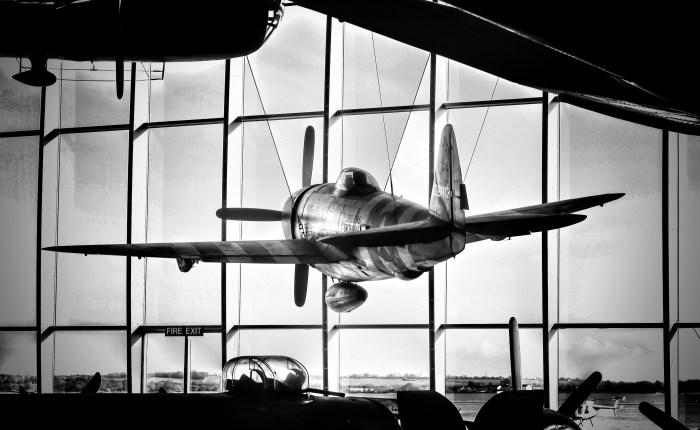
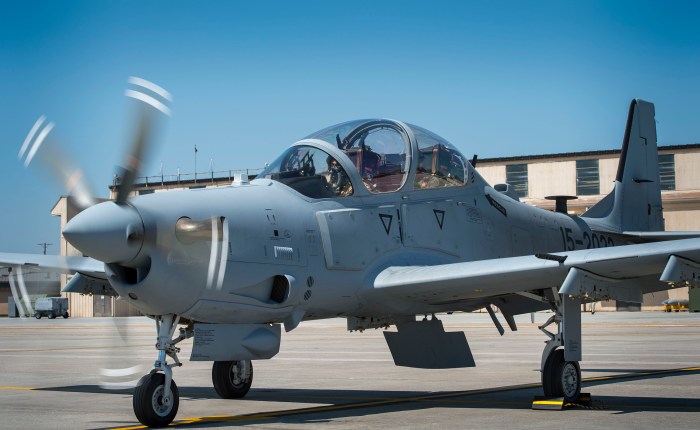
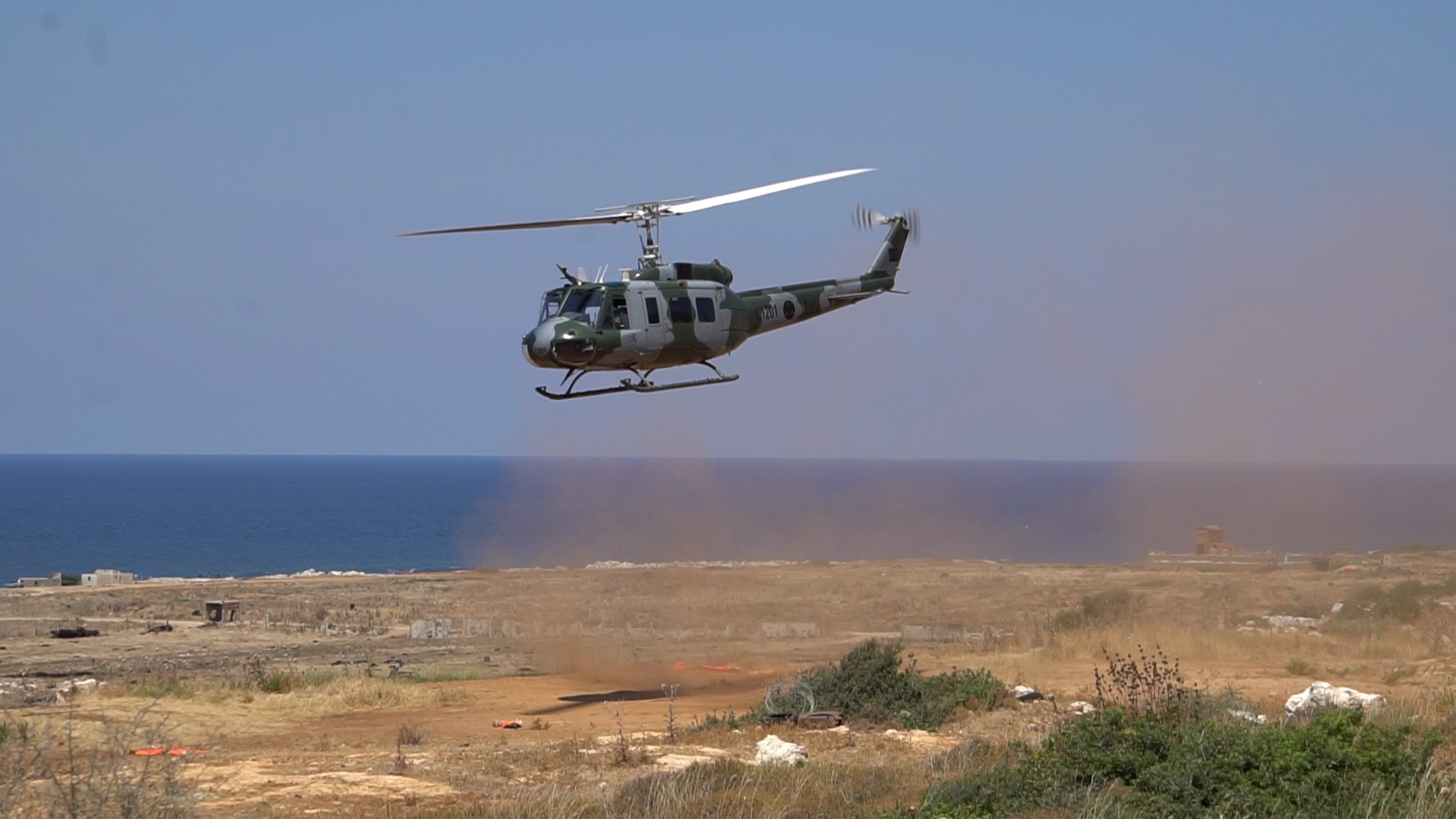
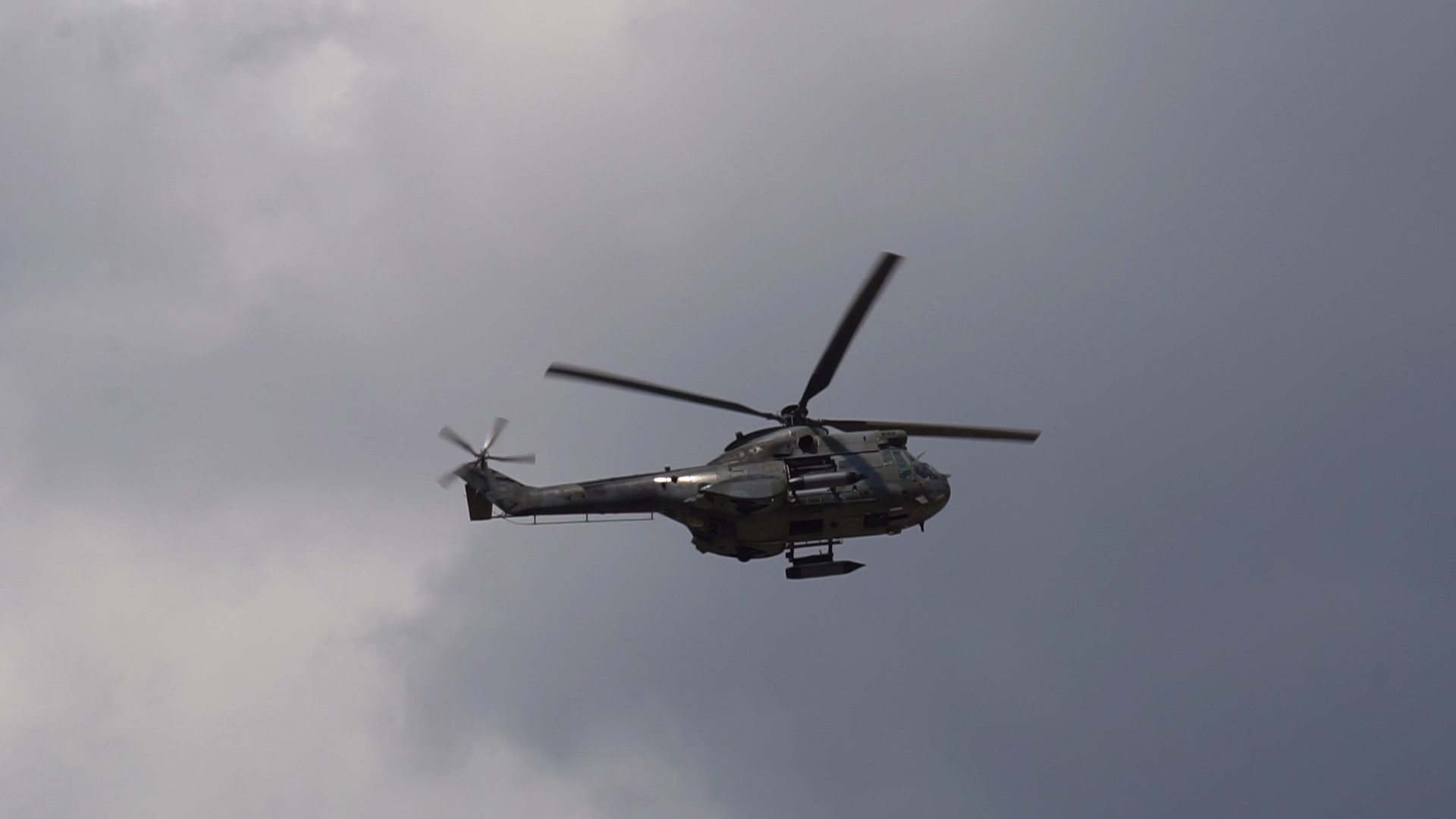
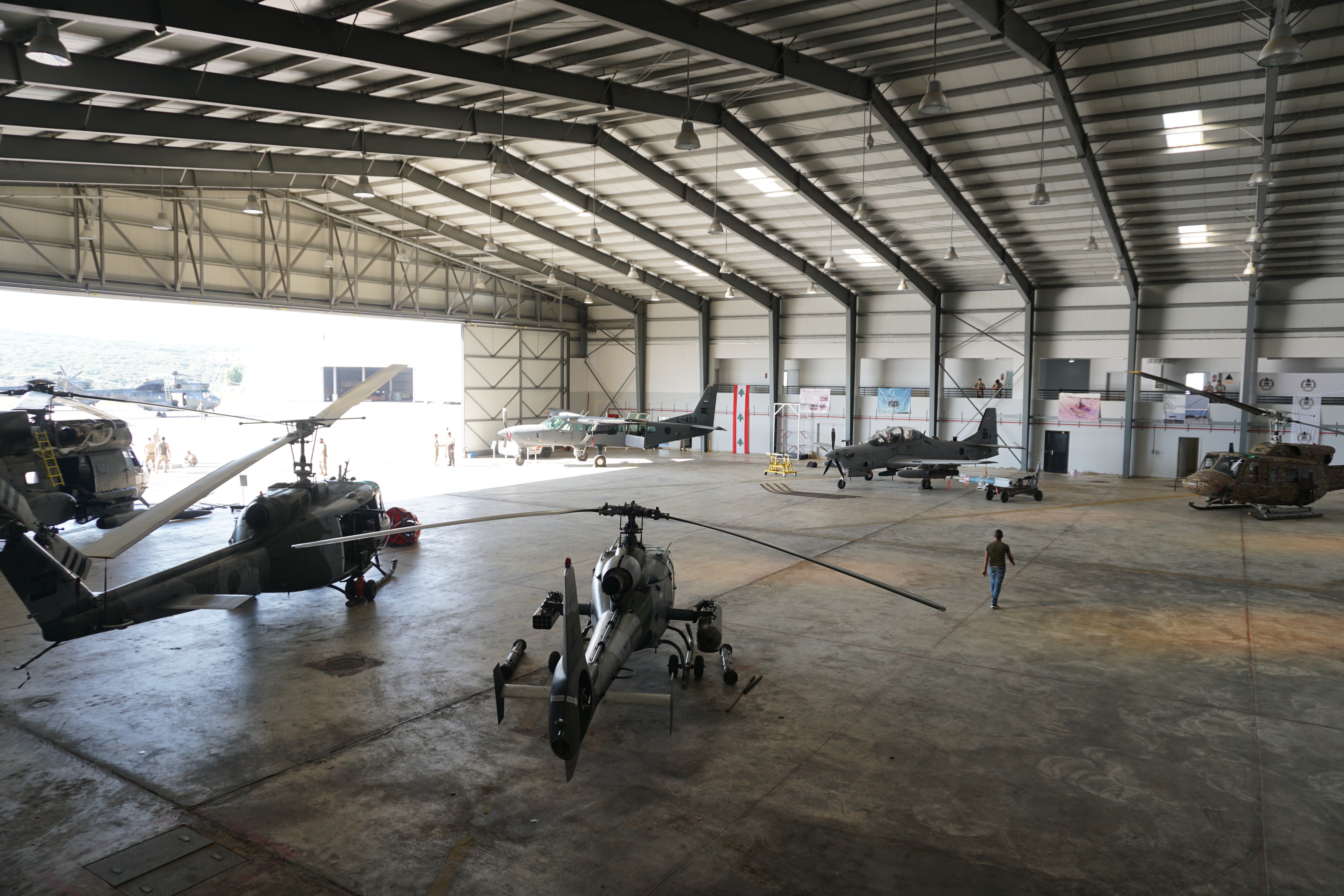
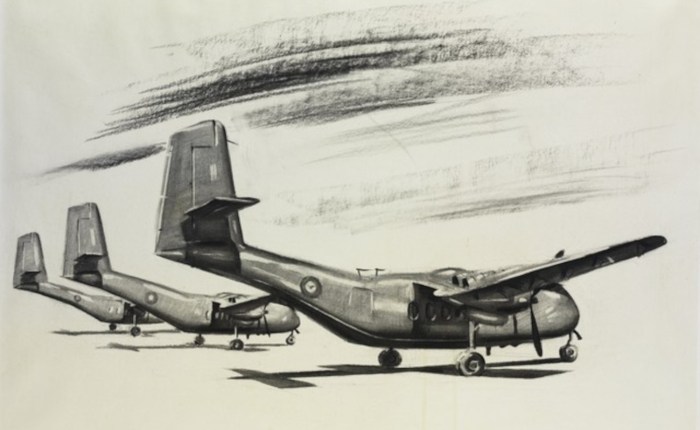
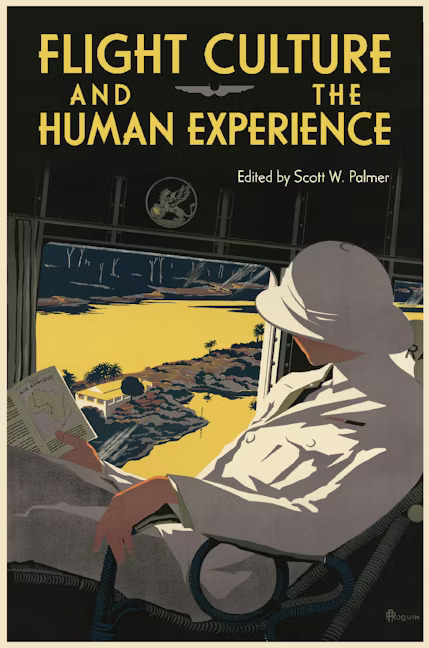

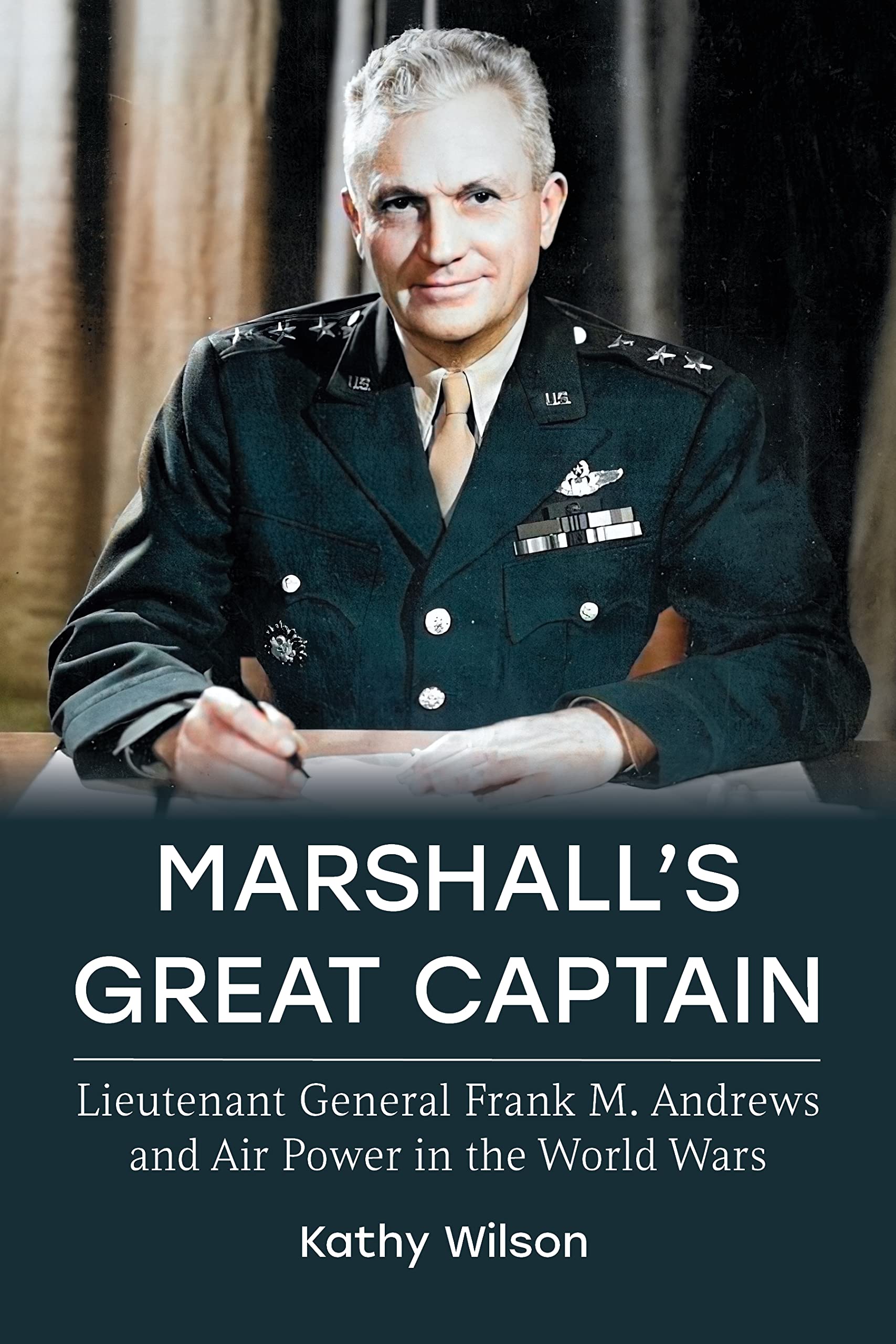
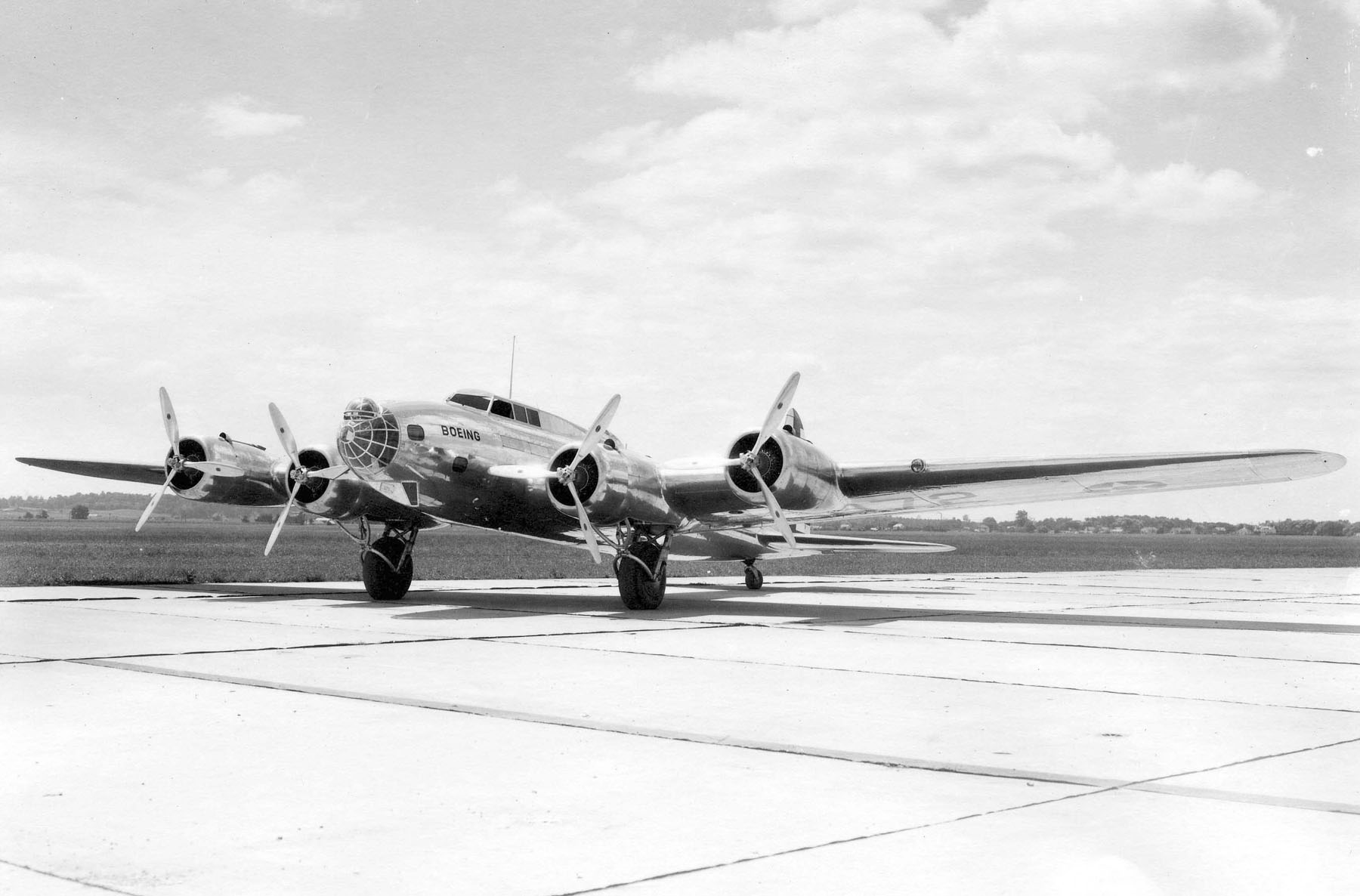
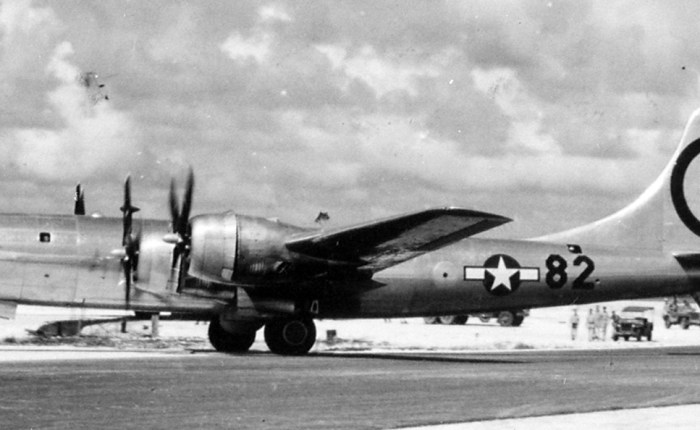
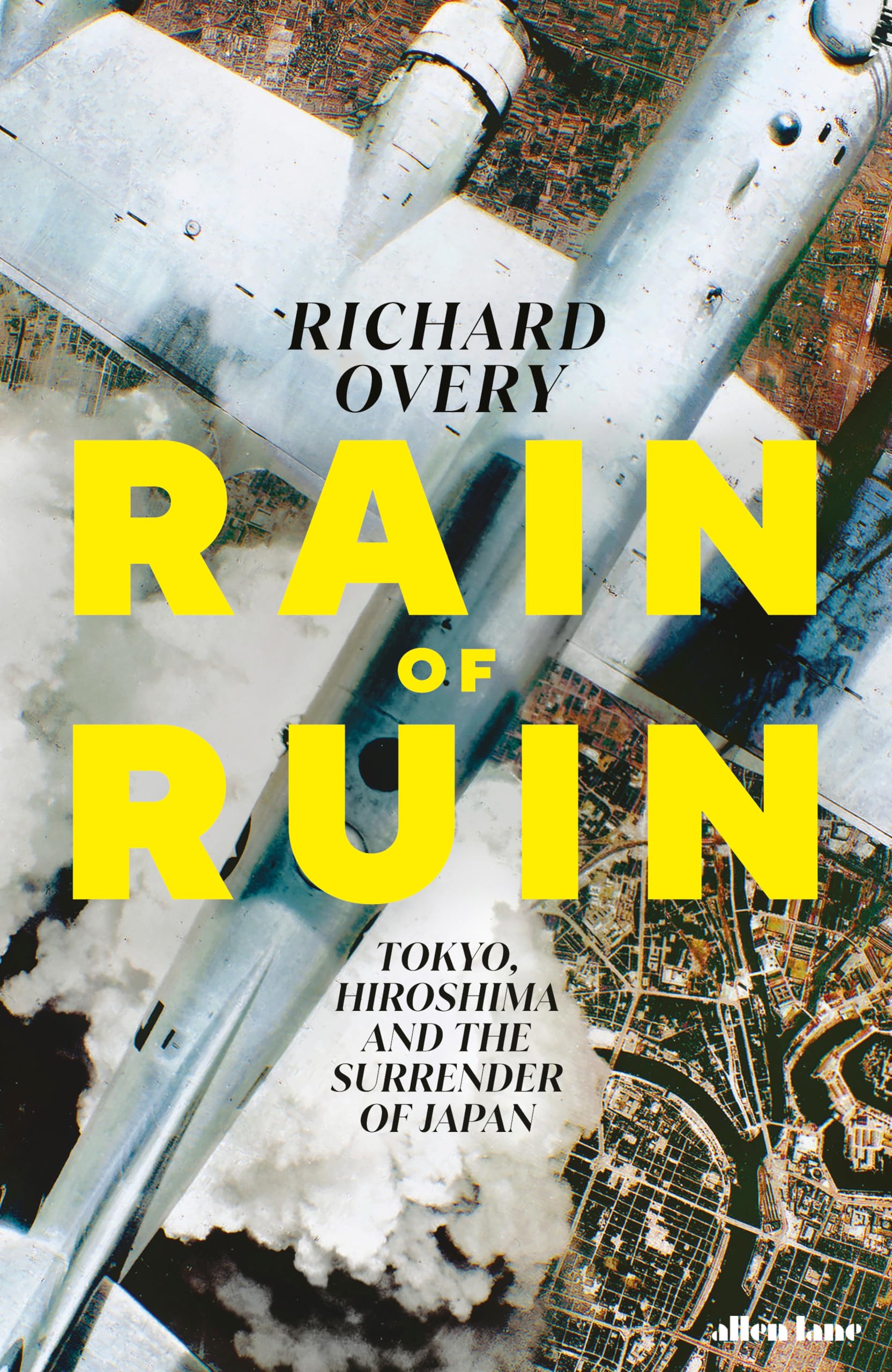
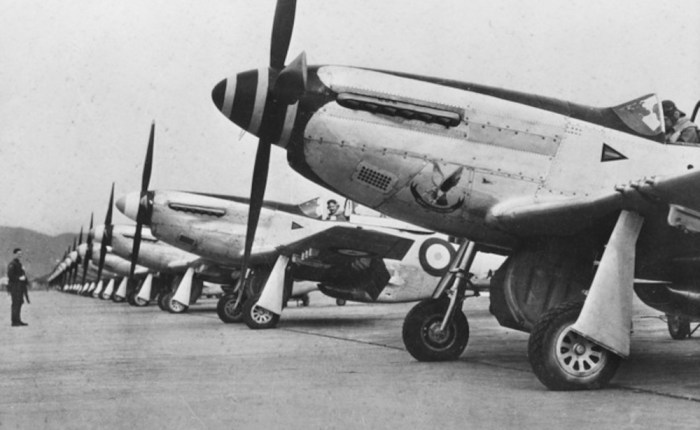
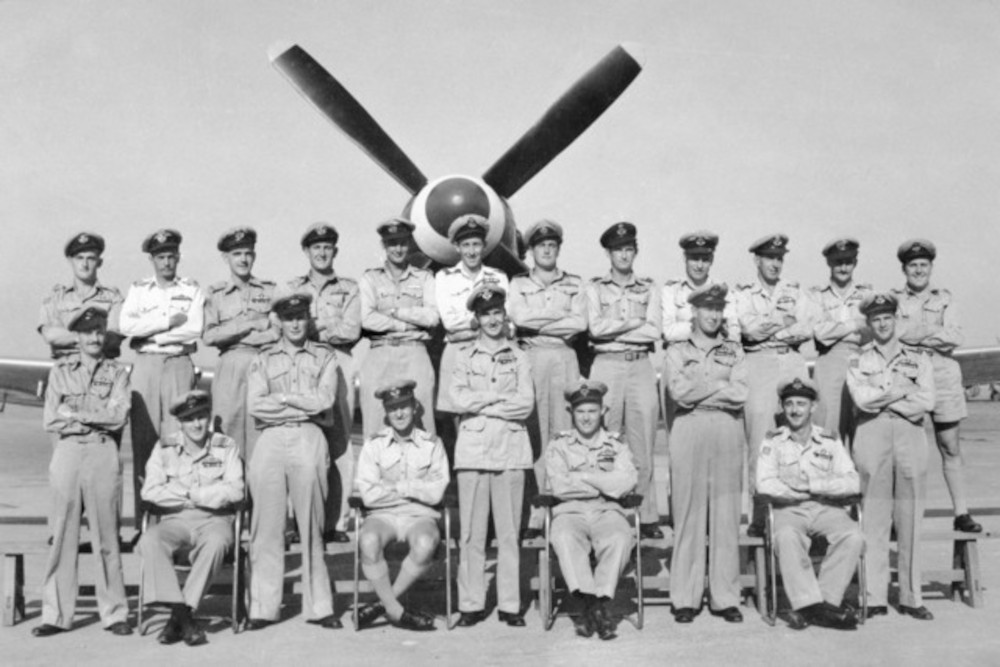
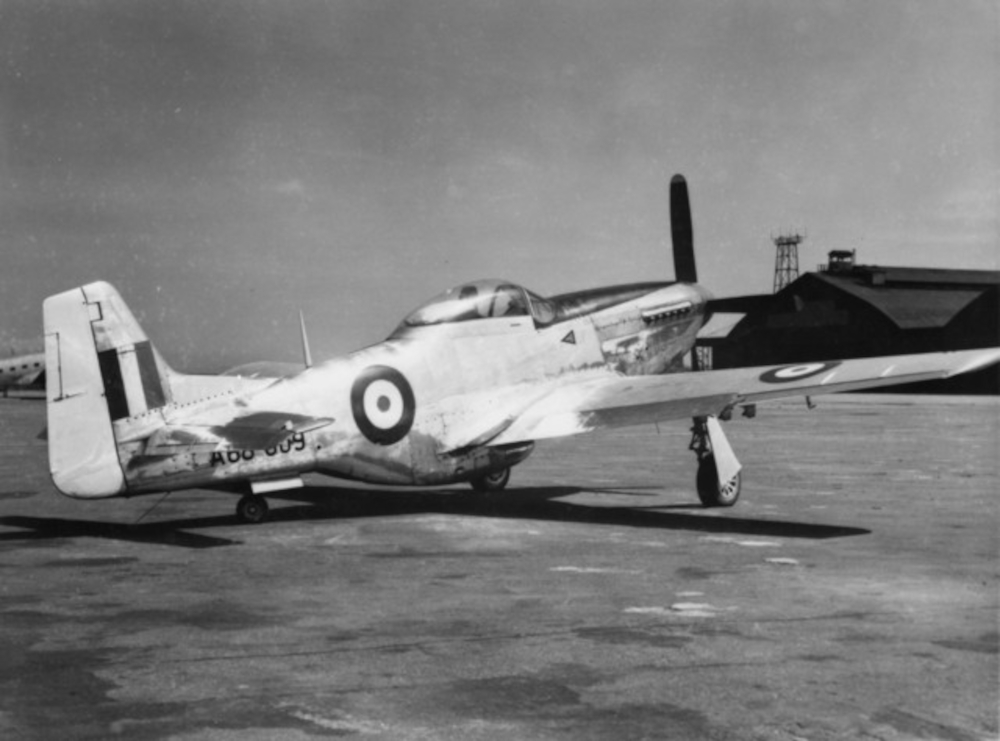

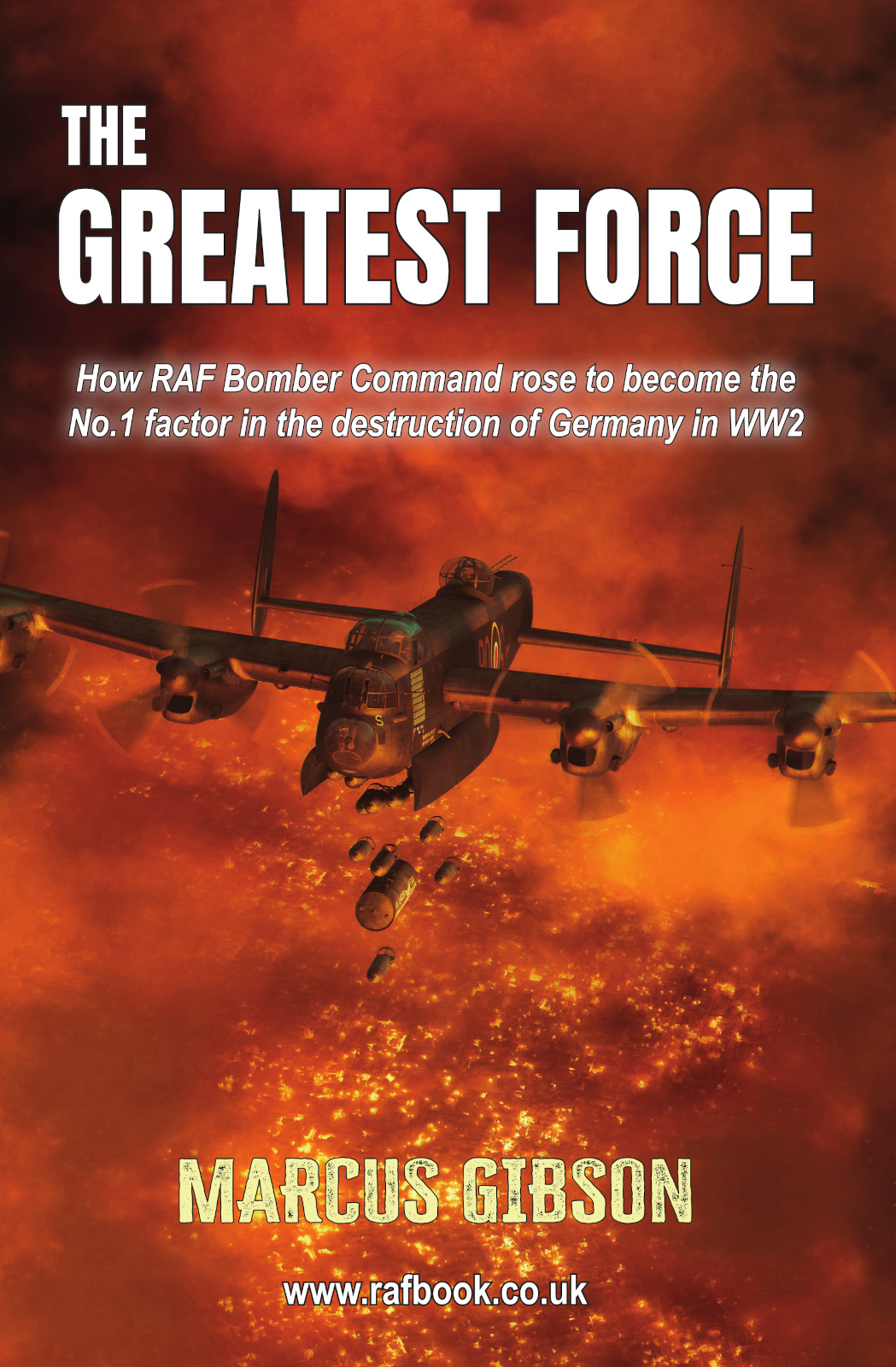
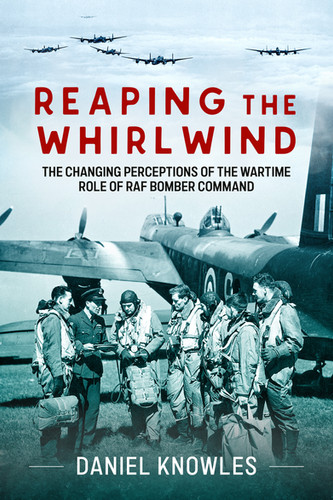
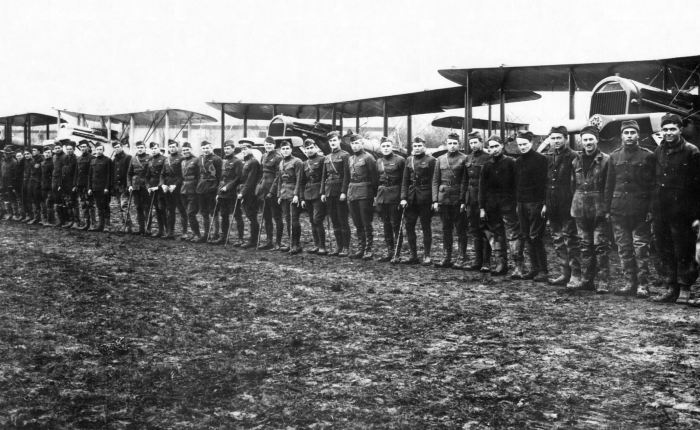


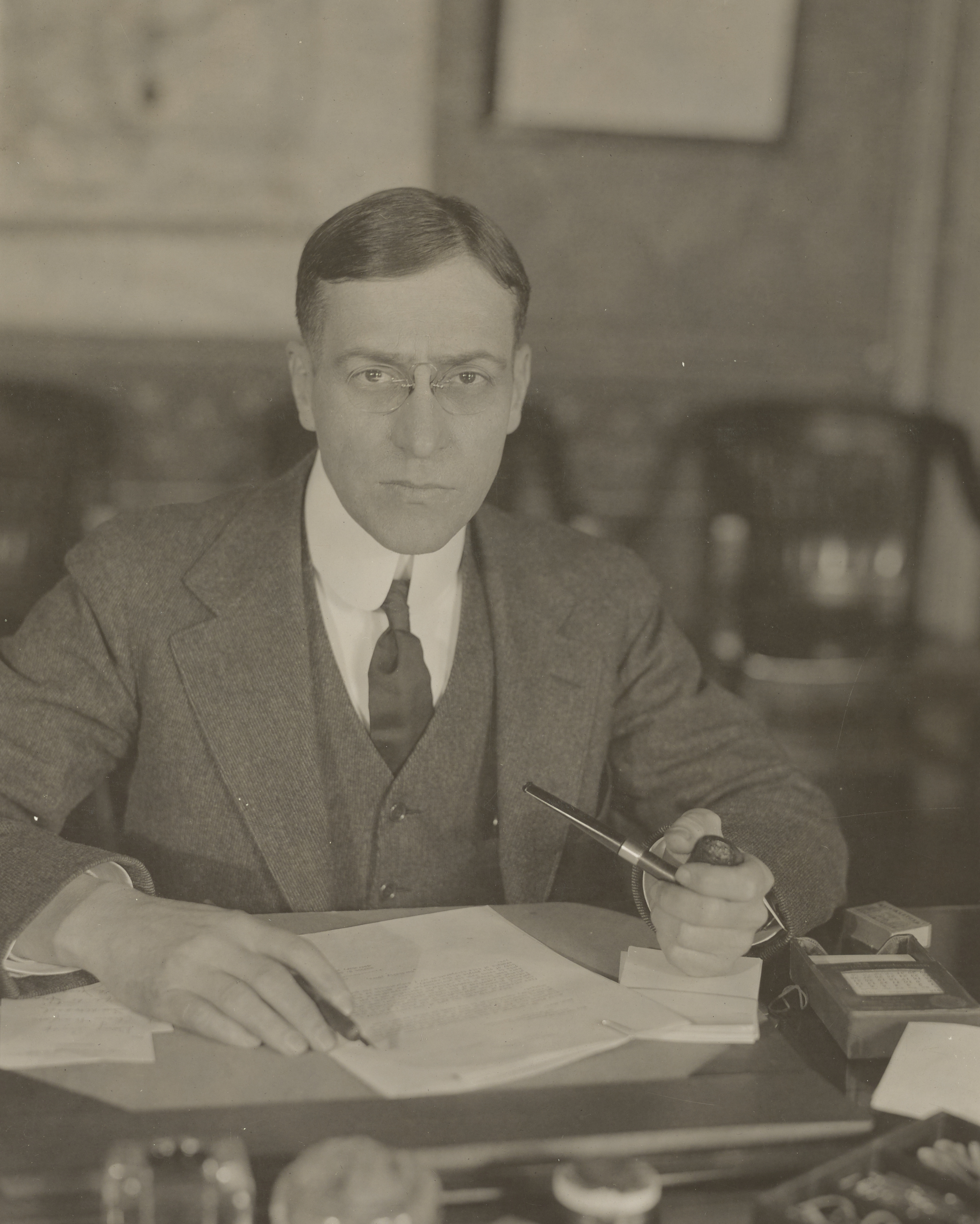

 From Balloons to Drones