Looking Back at Iraqi Air Defences during Operation DESERT STORM

Looking Back at Iraqi Air Defences during Operation DESERT STORM

By Colonel Mandeep Singh

Iraqi forces stormed into Kuwait on 2 August 1990 and, after a seven-month occupation of its southern neighbour, was defeated by the United States-led coalition forces consisting of troops from 39 countries. A five-week air offensive preceded the ground offensive on 24 February 1991 to put down the Iraqi air defences and prepare the battlefield for a ground offensive. The air war during DESERT STORM is generally considered a resounding success, with the Iraqi air defences failing to offer any significant opposition. Thomas Withington’s recent insightful article ‘Electric Avenue: Electronic Warfare and the battle against Iraq’s air defences during Operation Desert Storm’ is similar but misses out on some crucial aspects.

This article aims to offer a counter view to Withington’s and put the performance of Iraqi air defences in perspective. It also must be noted that Iraq had the sixth largest air force globally, with about 915 aircraft.[1] However, it put up only minimal opposition, and only the ground-based air defences (GBAD) offered any real resistance to the coalition air forces. This article thus focuses mainly on GBAD and discusses three fundamental issues. First, were Iraqi air defences as lethal and effective as projected before the war? Second, how effective were the suppression of enemy air defences (SEAD) operations conducted by the coalition air forces and did they achieve the stated goal(s)? Finally, how did the Iraqi air defences perform during the war?

The commonly held view is that the Iraqi air defences were lethal and ‘potentially ferocious.’[2] This was echoed in Withington’s article, who quoted the following from an official report by the US Department of Defence on DESERT STORM:

The multi-layered, redundant, computer-controlled air defence network around Baghdad was denser than that surrounding most Eastern European cities during the Cold War, and several orders of magnitude greater than that which had defended Hanoi during the later stages of the Vietnam War.

This claim about the lethality and ferocity of Iraqi air defences needs to be analysed to see if it has any merit. The Iraqi integrated air defence system (IADS) comprised a mix of Soviet and Western air defence systems. While the surface-to-air missiles (SAMs) were predominantly of Soviet origin, the heart of the IADS, called KARI, was built by the French defence contractor, Thomson-CSF. It was designed primarily to provide air defence against Israel and Iran and had a severe limitation: it could only manage 20 to 40 hostile aircraft. Iraq had over 500 radars located at about 100 sites, but the radar layout did not afford comprehensive coverage with a bias toward east and west. Most radars could not detect stealth aircraft barring the limited capability of the P-12 and P-18 radars and the six Chinese (Nanjing) low-frequency radars.[3]

Iraqi GBAD included SAM and anti-aircraft artillery (AAA) guns. The missiles included the Soviet SA-2, SA-3, SA-6 and SA-8 and the Franco-German Roland I/II missiles. With a range limitation of about 40km, even SA-2s and SA-3s cannot be considered strategic air defence systems, while the SA-8s and the Rolands were purely tactical SAM systems. The SA-6 was used for the tactical role and to fill gaps in the strategic SAM layout. The 58 SAM batteries notwithstanding, Iraq had no strategic SAM system, and with the available SAM batteries, it was capable of limited and thin air defence cover over its strategic targets.
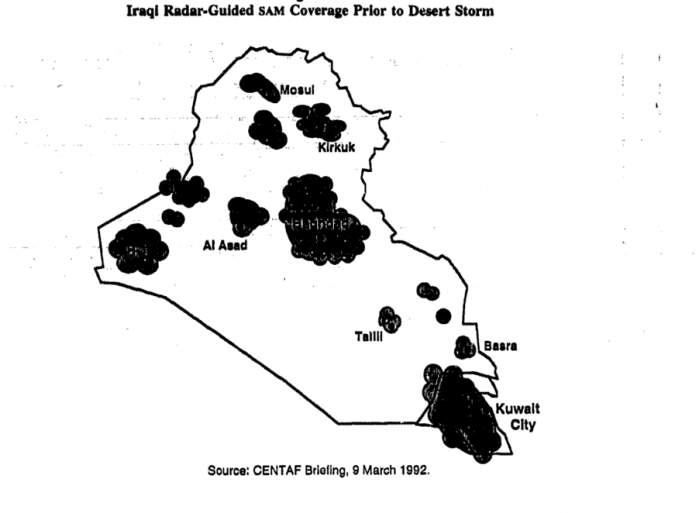
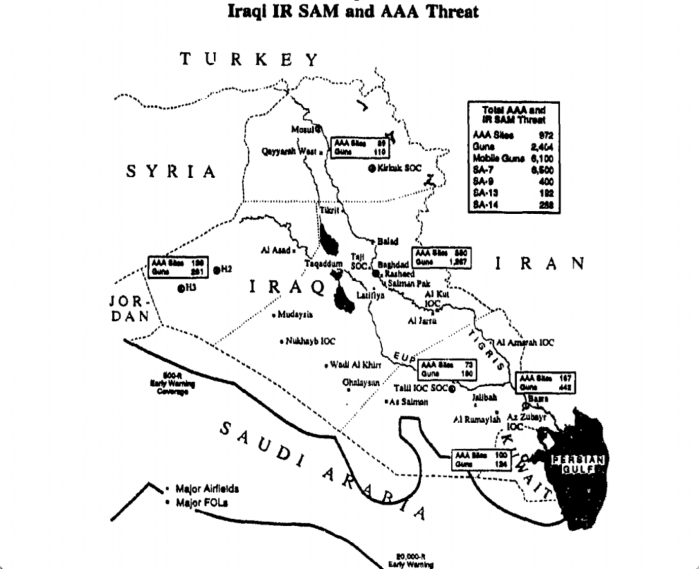
Sam Coverage
(Source: Barry Watts and Thomas Keaney ‘Effects and Effectiveness in Gulf War Air Power Survey – Volume II: Operations and Effects and Effectiveness (Washington DC: Department of the Air Force, 1993), p. 134.) 

With the country’s material assets widely dispersed; no attempt was made to defend all of them. Instead, the SAMs and AAA were concentrated on defending selected areas or sectors like Baghdad, Basra, the Scud-launching sites in western Iraq, and the northern oil fields only, with the defence of the capital given the foremost priority. With a concentration of the SAMs and AAA in select areas, Iraq had adopted a point defence system.

Fifty-eight SAM batteries, almost half the total 120 batteries, were deployed to defend Baghdad alone and 1,300 AA guns. The other areas with these missile systems were Basra with fifteen and Mosul/Kirkuk with sixteen batteries. In addition, the airfield complex of H-2/H-3 had 13 SAM batteries, and the Talil/Jalibah complex had three.[4]

Location SA-2 SA-3 SA-6 SA-8 Roland Total
Mosul/Kirkuk 1 12 0 1 2 16
H-2/H-3 1 0 6 0 6 13
Talil/Jalibah 1 0 0 0 2 3
Basrah 2 0 8 0 5 15
Baghdad 10 16 8 15 9 58
IR SAM
(Source: Williamson Murray, ‘Operations’ in Gulf War Air Power Survey – Volume II: Operations and Effects and Effectiveness (Washington DC: Department of the Air Force, 1993), p. 82.)

Even in Baghdad, the defence systems did not necessarily protect downtown Baghdad at a higher threat level than the rest of the overall metropolitan area, as the SAM sites were dispersed throughout the Baghdad area. The United States Air Force (USAF)’s claim that downtown Baghdad was where air defences are uniquely dense or severe was thus without merit.[5]

The SA-2s and SA-3s, being vintage missiles, were supplemented by the newer SA-6s with a battery deployed at essential sites. Although the presence of SA-6s at selected locations beefed up the air defences, it had an unintended effect that with the SA-6s moving back from the front-line units, the forward army units were left devoid of the most effective SAM in the inventory. The Iraqis captured several examples of the US HAWK missile system when they invaded Kuwait. The HAWK missile, with a comparable range, would have been an effective deterrent, but as the Iraqis did not have the technical expertise to operate it, it was never not used.[6] Another drawback of the Iraqi IADS was that the 8,000 or so anti-aircraft guns were reportedly not integrated with the overall air defence system and were designed to operate independently.[7]
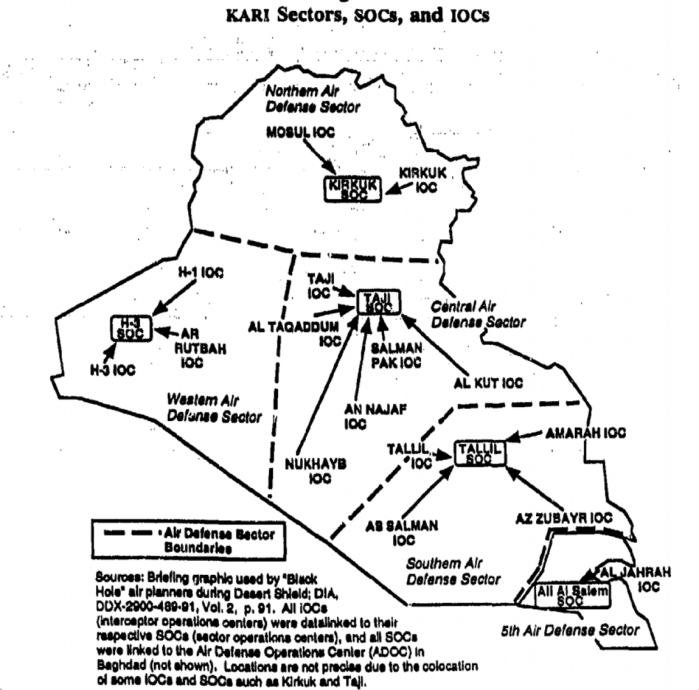
KARI
(Source: Barry Watts and Thomas Keaney ‘Effects and Effectiveness’ in Gulf War Air Power Survey – Volume II: Operations and Effects and Effectiveness (Washington DC: Department of the Air Force, 1993), p. 132.)

The air defence network was thus far from lethal and was not designed to work against a massive air assault as it was subjected to during DESERT STORM. Instead, it had limited capabilities and was optimised only to take on threats from two axes. These were from Iran to the east or from Israel to the west and did not cater for any significant threat from the south or the north. Notably, only the overall assessment of the Iraqi IADS by the US Navy’s Strike Projection Evaluation and Anti-Air Research (SPEAR) Department was more realistic than other claims as it stated that:

[t]he command elements of the Iraqi air defence organisation (the interceptor force, the IADF [Iraqi Air defence Force], as well as Army air defence) are unlikely to function well under the stress of a concerted air campaign.[8]

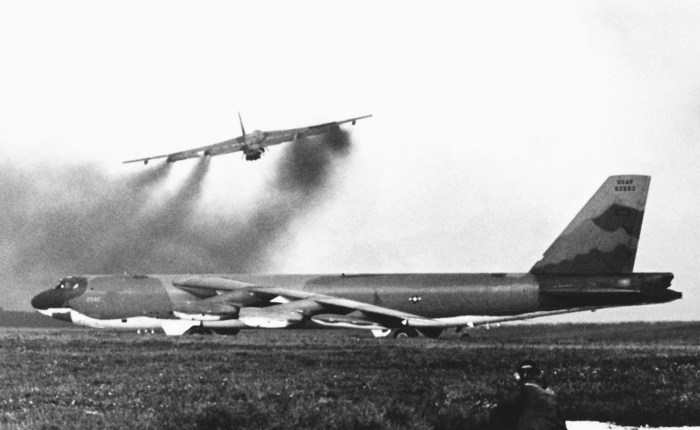
The coalition forces launched DESERT STORM at 2:38 on 17 January 1991 when Task Force Normandy struck the two Iraqi radars codenamed Nebraska and Oklahoma, firing 27 Hellfire missiles, 100 rockets and 4,000 rounds of 30mm ammunition. A corridor 30 kilometres wide was now available for the follow-on missions. Next were the eight USAF F-15E Strike Eagles that targeted the local air defence command and control centre, further degrading the network and facilitating the strike by the F-117s preceded by three EF-111 Ravens. Seventeen F-117s were tasked to deliver 27 laser-guided bombs on 15 Iraqi air defence system-related targets. Contrary to initial claims related to the effectiveness of the F-117, only nine of the 15 targets were hit, and eight remained operational even after the air strikes.[9] One of the main targets, Baghdad’s central air defence operations centre was not damaged and remained operational.[10] The F/A-18 Hornets armed with AGM-88 high-speed anti-radar missiles (HARMs) fared not much better as about half of the 75 HARMs fired hit their targets.[11]

The performance of Iraq’s air defence system was effective on Day 1 as they shot down six aircraft: all except one by GBAD. The AAA shot down two aircraft (one F-15 and a Royal Air Force (RAF) Tornado GR.1) while the SAMs claimed three. An Iraqi MiG-25 shot down one F/A-18.[12] GBAD damaged a dozen more aircraft.

The Coalition air forces lost three aircraft to ground fire over 2,250 sorties on Day 2 as one aircraft each was claimed by AAA (a US Navy A-6) and SAM (a US Marine Corps OV-10), while the cause of loss of an Italian Tornado GR.1 could not be ascertained.[13] The next day, several missions were called off due to bad weather though the strikes against Scud launchers continued during the day. The Iraqi SAMs shot down two United States F-16s over Baghdad and another F-15. The RAF and Royal Saudi Air Force each lost two Tornadoes, while a USAF F-4 crashed after being hit by AAA. The air operations on 20 January were scaled down due to continued bad weather, and with losses mounting, especially to AAA, the USAF imposed a minimum altitude to reduce attrition. The Iraqi air defences, for their part, shot down two Coalition aircraft; a United States Navy F-14, downed by an SA-2 and an RAF Tornado, besides damaging three more. The RAF lost a Tornado to ground fire, with a USAF F-15 also being hit by a SAM.

On 23 January, coalition air forces claimed to have destroyed 19 Iraqi aircraft thus far and achieved air superiority over Iraq. The losses to Iraqi air defences were 15 aircraft, and AAA and hand-held SAMs’ unexpected intensity of ground fire forced Coalition aircraft to adopt higher-altitude delivery tactics. During the second week, the Iraqi air defences could not put up any concerted opposition. It was not until 28 January that they claimed their next kill when a SAM shot down a US Marine Corps AV-8B, although several Coalition aircraft was hit by AAA fire. KARI was badly fragmented by the end of week two, and only three of 16 Intercept Operations Centres (IOCs) were reported to be fully operational. Coalition losses during week three were again relatively low, with only three aircraft (an A-10, an AC-130 and an A-6E) lost to Iraqi air defences. The following week, Iraqi air defences shot down only three Coalition aircraft – two AV-8Bs and a Saudi F-5E.

The radar-guided SAMs had been targeted repeatedly, but the Iraqis sparingly continued to launch them. In one such instance, an SA-3 shot down an RAF Tornado GR.1 on 14 February. The Iraqis managed to shoot down five aircraft during week five, including two A-10s on the same day (15 February) by SA-13s. This forced the restricted use of A-10s in high-threat areas. As the war entered its final phase with the Coalition aircraft attacking from lower altitudes, the losses went up with Iraqi air defences shooting down eight aircraft during this last week of the war: three AV-8Bs, one OV-10, one OA-10, one A-10, and two F-16s.[14] This marked the second-highest weekly loss rate since the beginning of the war.

During the ground offensive, Iraqi air defences did not fight as they folded up tamely against the coalition air forces. During the whole campaign, a total of 38 coalition aircraft were lost to Iraqi air defences. At the same time, a further 48 aircraft were damaged in combat, totalling 86 combat casualties. Most losses were to infra-red guided SAMs, which claimed 13 aircraft and damaged 15 more, while the radar-guided SAMs shot down ten aircraft and damaged four. AAA caused the lowest losses at nine aircraft, although it damaged 24 more. The remaining losses were to accidents or technical reasons, including, for example, electrical malfunction. Considering the ‘lost’ and ‘damaged’ aircraft, the maximum casualties were due to AAA as it claimed 33 aircraft (38 per cent of the total losses), with the infra-red guided SAMs accounting for 28 aircraft (31 per cent). Only 16 per cent of the casualties were attributed to radar-guided SAMs.

The low kill rate by the radar SAMs is attributable to several factors, the primary one being the SEAD missions conducted by Coalition air forces which forced the radar SAMs to shut down most of the operations. In addition, all the radar SAMs held by Iraq were vintage Soviet-era missiles that had been used in combat earlier – there were no new weapons, like the SA-6s in the Yom Kippur War, which could have posed difficulties for the Coalition air forces.
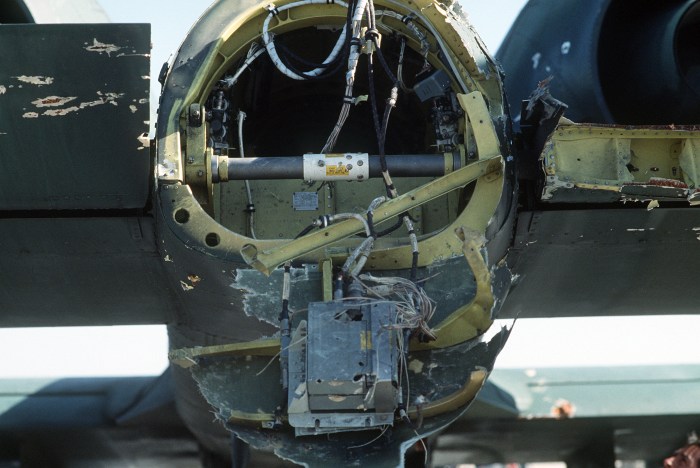
DESERT STORM
A close-up view of a damaged section of an A-10A Thunderbolt II of the 23rd Tactical Fighter Wing. The aircraft sustained damaged when an SA-16 missile exploded near it during Operation DESERT STORM, 15 February 1991. (Sorce: Wikimedia)

There was a significantly higher daily casualty rate in the first five days of the war, during which 31 aircraft casualties occurred (36 per cent of the total and an average of 6.2 per day), compared to the following 38 days, with a total of 55 more casualties (an average of 1.45 per day). Losses to radar-guided SAMs fell to nearly zero after day five, accounting for 29 per cent (nine out of 31) of total casualties by then. They accounted for just nine per cent (five out of 55) of all aircraft casualties in the remainder of the war. It is apparent, therefore, that by the end of day five of the air campaign, radar SAMs had mainly been eliminated as an effective threat to coalition aircraft. Moreover, in the first three days of the war, some aircraft (B-52s, A-6Es, GR-1s, and F-111Fs) attacked at very low altitudes, where they were more vulnerable to low-altitude defences. After the imposition of a minimum attack level of about 12,000 feet, the losses reduced, resulting in much less accuracy with unguided weapons.

Iraq managed to maintain a fair degree of air defence capability throughout the war. The primary reason for this was KARI, which expanded the responsibilities of various nodes and developed local back-up air-defence networks using different communication networks over combat phone lines and wire between multiple stations. These back-up networks could control local air defences, even when the communication to the central network was down. These back-up systems used ground observers passing information over voice and data channels for information on Coalition aircraft. Radars associated with the Roland or SA-8 would be used to gain information about the altitude of inbound aircraft. The radars would be brought online for short 15-second bursts to ensure survivability in a hostile environment. The SAMs were sometimes fired without using the target-tracking radars to prevent being targeted by the anti-radar missiles. Optical tracking mode was also used while firing the SAMs.

At the war’s end, Iraq’s air defence was far from finished. According to Anthony Cordesman of Washington’s Center for Strategic and International Studies, Iraq retained at least 380 Soviet-made surface-to-air missile launchers, about 80 French-made Roland units and ‘large numbers’ of portable Soviet-made anti-aircraft systems, not counting the hundreds of AA guns.[15] After initially claiming almost the complete destruction of the Iraqi air defence network, the claims were revised as the operations progressed. As USAF Colonel David Deptula, one of the architects of the air campaign, put it in 1996, ‘We didn’t go in there to eviscerate the whole network. The aim was to suppress their defences.’[16]

The Soviet reaction to the Gulf War was significant as the entire Iraqi IADS consisted of Soviet SAMs. In an understatement, Marshal Dmitri Yazov, the Soviet Minister of Defence, admitted that Iraq’s air defences ‘failed in most cases.’[17] Commenting on the initial attack on the IADS, Lieutenant General V. Gorbachev, Dean of the faculty at the General Staff Academy, opined that:

‘The Iraqi air defence system was paralysed by powerful electronic warfare devices. Command and control of troops was overwhelmed in the first few minutes.’[18]

Gorbachev also added:

[a]s far as Soviet equipment is concerned, it is not so much a problem, I think, as the people operating it. Iraqi military professionalism is not, as we can see, up to the mark.’[19]

Reinforcing this view, the Soviets believed that, as the air defence systems employed by the Iraqis were able to down most types of Coalition aircraft used, it suggested that the problem was more one of staffing than technology. It also reinforced an emerging view that modern wars demand well-trained professional soldiers to man and maintain it, not a large conscript army.[20]

After DESERT STORM, Iraq’s air defence system continued to harass the Coalition aircraft, defying the restrictions imposed by the no-fly zone. During Operation DESERT FOX, Iraq engaged Coalition aircraft more than 1,000 times over three years and fired nearly 60 SAMs.[21] The Iraqis even fired unguided rockets at the aircraft to harass them. The Iraqi IADS remained operational throughout and was never ‘put down.’

The Iraqi IADS had limited capabilities and was not as lethal or effective as initially projected; however, its capabilities had been exaggerated in most of the assessments conducted before DESERT STORM. Considering its limited capabilities against a modern air force, aggravated by poor training standards, it performed reasonably well and inflicted a fair amount of attrition. On the other hand, the SEAD operations by coalition air forces were not as effective as claimed during the operations. Even as the surveillance network and radar-guided SAMs were suppressed, the Iraqi IADS continued to function, albeit with reduced efficiency and continued to attrite. It must be remembered that GBAD cannot be suppressed entirely and will continue to inflict losses. It was so during DESERT STORM and will remain so in future conflicts.

Colonel Mandeep Singh, a veteran air defence gunner, has a Masters in Defence and Strategic Studies. He has contributed several articles on air power and air defence for specialist journals. His books include Air Defence Artillery in Combat, 1972 to the Present: The Age of the Surface-to-Air Missiles (2020) published by Air World.

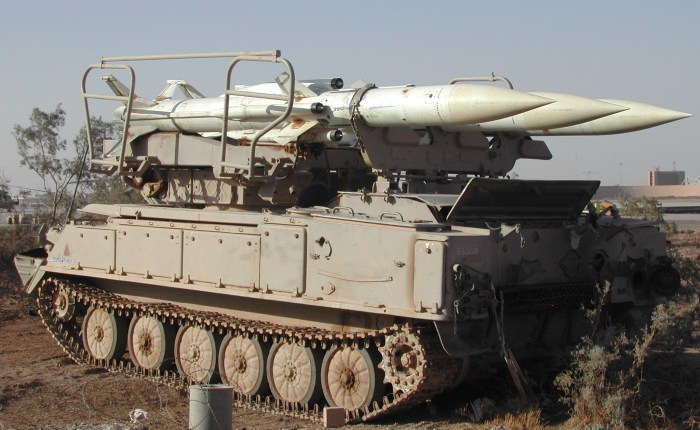
Header image: An Iraqi SA-6 Gainful low-to-medium altitude surface-to-air-missiles on its transporter-erector-launcher. This system was captured by US forces in 2006; however, during the first Gulf War, Iraq operated a number of these systems. (Source: Wikimedia)

[1] The Iraqi Air Force had a mix of combat aircraft, ranging from 190 advanced Mirages, MiG-25s, MiG-29s, and Su-24s to about 300 moderate-quality MiG-23s, Su-7s, Su-25s, Tu-16s and Tu-22s. Most of the air force however comprised of older aircraft like the MiG-17s and MiG-21s.

[2] ‘Conduct of the Persian Gulf War,’ Final Report to the Congress (Washington, DC : Dept. of Defense, 1992), p. 15.

[3] The P-18 radar, which uses metre-length waves in the Very High Frequency (VHF) bandwidth, can detect targets at a greater range than centimetre or millimetre wave radar which stealth aircraft are optimised against. It was a P-18 radar of the Yugoslav Army that detected an F-117 Nighthawk during the Kosovo air war, which led to its shooting down by an SA-3 missile. Similarly, P-12 radar also operates in VHF and can detect stealth aircraft. Kenneth Werrell, in his book Archie to SAM, mentions that Iraq had low-frequency radars though this is not mentioned by any other source. See, Kenneth Werrell, Archie to SAM: A Short Operational History of Ground-Based Air Defense, second edition (Maxwell, AL: Air University Press, 2005), p. 218. Michael Gordon and Bernard Trainor, The Generals’ War: The Inside Story of the Conflict in the Gulf (New York: Little Brown, 1995), p. 105; Williamson Murray, ‘Operations’ in Gulf War Air Power Survey – Volume II: Operations and Effects and Effectiveness (Washington DC: Department of the Air Force, 1993), pp. 77-82.

[4] Iraq had 7,000 SAM and 6,000 AA Guns with the Republican Guard had its own air defence System with about 3,000 AA Guns and 60 SAM Batteries. See: Anthony Tucker-Jones, The Gulf War: Operation Desert Storm 1990-1991 (Barnsley: Pen & Sword Books, 2014), p. 40.

[5] United States Air Force, ‘Reaching Globally, Reaching Powerfully: The United States Air Forces in the Gulf War’ (United States Air Force, 1991), p. 5.

[6] Richard Blanchfield et al, Part I – Weapons, Tactics, and Training’ in Gulf War Air Power Survey – Volume IV: Weapons, Tactics, and Training and Space Operations, directed by Eliot Cohen (Washington DC: Department of the Air Force, 1993), p. 15.

[7] Tucker-Jones, The Gulf War, p. 40.

[8] ‘Iraqi Threat to U.S. Forces,’ Naval Intelligence Command, Navy Operational Intelligence Center, SPEAR Department, December 1990, p. 3-14.

[9] ‘Operation Desert Storm: Evaluation of the Air Campaign’ (Washington DC: General Accounting Office, 1997), p. 137.

[10] ‘Operation Desert Storm: Evaluation of the Air Campaign,’ p. 137.

[11] Jim Corrigan, Desert Storm Air War: The Aerial Campaign against Saddam’s Iraq in the 1991 (Guilford, CT: Stackpole Books, 2017), p. 59.

[12] Lon Nordeen, Air Warfare in the Missile Age, second edition (Washington DC: Smithsonian Institution, 2010), pp. 413-4.

[13] James P. Coyne, Air Power in the Gulf (Arlington, VA: Air Force Association, 1992), pp. 67-71.

[14] ‘Conduct of the Persian Gulf War: Final Report to Congress, April 1992,’ (Washington, DC: Dept. of Defense, 1992), p. 197.

[15] Bradley Graham, ‘Gulf War left Iraqi Air Defence Beaten, Not Bowed,’ Washington Post, 6 September 1996.

[16] Graham, ‘Gulf War left Iraqi Air Defence Beaten, Not Bowed.’

[17] Quoted in ‘Outgunned Weaponry is Under Fire in Kremlin,’ The Irish Independent, 2 March 1991, p. 6. See also Alexander Velovich, ‘USSR Demands Post-Gulf Air Defense Review,’ Flight International, 13-19 March 1991, p. 5.

[18] Benjamin S. Lambeth, ‘Desert Storm and Its Meaning: The View from Moscow,’ A RAND Report (Santa Monica, CA: RAND Corporation, 1992), p. 23.

[19] Lambeth, ‘Desert Storm and Its Meaning,’ pp. 23-4, fn. 10.

[20] Daniel Sneider, ‘Soviets Assess Their Arsenal After Iraq’s Defeat in Gulf,’ The Christian Science Monitor, 8 March, 1991, p. 1.

[21] Tucker-Jones, The Gulf War, p. 201.

#Podcast – The Unconventional Journey of General Larry Spencer: An Interview with General (ret’d) Larry O. Spencer

#Podcast – The Unconventional Journey of General Larry Spencer: An Interview with General (ret’d) Larry O. Spencer

Editorial Note: Led by our Editor Dr Mike Hankins, From Balloons to Drones produces a monthly podcast that provides an outlet for the presentation and evaluation of air power scholarship, the exploration of historical topics and ideas, and provides a way to reach out to both new scholars and the general public. You can find our Soundcloud channel here. You can also find our podcast on Apple Podcasts and Google Podcasts.

In our latest podcast, we are joined by General Larry O. Spencer, former Vice Chief of Staff of the U. S. Air Force. He recounts his journey from being raised in Southeast Washington, D. C. to enlisting in the U. S. Air Force and eventually rising through the ranks to become one of only nine African Americans to wear four stars. General Spencer’s background as a support officer in an organization that tends to favour pilots and aircrews brings a different lens through which to look at the USAF and the use of air power.

dark-horse

General (ret’d) Larry O. Spencer served as Vice Chief of Staff of the U.S. Air Force until his retirement in 2015. As VCSAF, he presided over the Air Staff and served as a member of the Joint Chiefs of Staff Requirements Oversight Council and Deputy Advisory Working Group. He assisted the Chief of Staff with organising, training, and equipping 664,000 active-duty, Guard, Reserve, and civilian forces serving in the United States and overseas. Spencer was born in Washington, D.C. He received his Bachelor of Science degree in industrial engineering technology from Southern Illinois University, Carbondale, and was commissioned through Officer Training School in 1980 as a distinguished graduate. Spencer has commanded a squadron, group and wing and was Vice Commander of the Oklahoma City Air Logistics Center. He was also the first Air Force officer to serve as Assistant Chief of Staff in the White House Military Office. In addition, he served as the Comptroller and then Director of Mission Support (A7) at a major command; and held positions within the Air Staff and Secretary of the Air Force. Before becoming VCSAF, Spencer was Director, Force Structure, Resources and Assessment, Joint Staff, the Pentagon, Washington, D.C.

Header image: General Larry O Spencer outside his family home in Washington DC, 30 July 2015 (Source: United States Air Force)

From Balloons to Drones – An Update

From Balloons to Drones – An Update

Over six years ago, in June 2016, From Balloons to Drones was launched. From Balloons to Drones was established with the simple vision of providing an open access online scholarly platform for analysing and debating air power history, theory, and contemporary operations in their broadest sense, including space and cyber power. Since establishing From Balloons to Drones, we have published nearly 250 posts ranging from articles to book reviews. Overall, the site has received over 180,000 hits since 2016.

The past few years, however, have been challenging for all, personally and professionally. From our perspective, this has led us to publish material irregularly. However, all of that is about to change. With a renewed sense of purpose, From Balloons to Drones hopes to continue to deliver well-researched and rigorous articles, book reviews and other material, including our popular podcast series of interviews with leading air power specialists. One of our most popular features is our ever-expanding ‘Air Power Reading List.’ We continue to add volumes to this curated reading list as we review new books on air power and historic titles.

We still hold true to our original vision of providing an avenue for debate and discussion about air power. However, we are always on the lookout for new contributions from established researchers or new and emerging scholars within the air power studies community. If you are interested in contributing, visit our submissions page to learn how to contribute. All our articles are peer-reviewed by our team of highly qualified and experienced editors, and we will work with you to deliver your articles to a broad audience via our social media channels.

We hope you enjoy what we publish; however, we are always keen to hear your views on what we publish. If there is an area of research that needs to be given more coverage, please let us know either in the comments or on social media.

Thank you for taking the time to read this update, and we look forward to hearing from you in the future.

Header image: A Dassault Etendard IVP of the French Navy. (Source: Wikimedia)

#BookReview – Korean Air War: Sabres, Migs and Meteors, 1950-53

#BookReview – Korean Air War: Sabres, Migs and Meteors, 1950-53

Michael Napier, Korean Air War: Sabres, Migs and Meteors, 1950-53. Oxford: Osprey Publishing, 2021. Images. Notes. Bibliography. Glossary. Appendices. Index. Hbk. 320pp.

Reviewed by Dr Ross Mahoney

41VxZr5jKnL

In the western world, the Korean War is often thought of as the forgotten war of the early Cold War. This was, at least from an American perspective, because ‘[l]ike the proverbial shrimp caught between two whales, the Korean War [was] trapped between World War II and the Vietnam War.’[1] Furthermore, from a British and French perspective, the war does not easily fit into national narratives surrounding their ‘retreat’ from empires in Southeast Asia, namely the Malayan Emergency and the French-Indochina War. The Korean War did, however, significantly impact the Cold War’s early course, particularly strengthening the recently established North Atlantic Treaty Organisation.

From the perspective of the application and development of air power, the Korean War was also significant. Specifically, it was the first time jet fighters met in combat. Furthermore, the war also saw a wide range of air power capabilities deployed over Korea, including discussions throughout the conflict about the potential delivery of nuclear weapons.[2] This has meant that, despite the unfortunate epithet of being a forgotten war, several important works, such as Conrad Crane’s American Airpower Strategy in Korea (2000), have appeared and examined the use of air power over the Korean peninsula.

Michael Napier, a retired Royal Air Force fast-jet pilot and author, comes into this mix with his 2021 volume, Korean Air War. In just over 300 pages, Napier systematically describes the course of the air war over Korea. The book, chronologically laid out, deals with the air war in seven chapters plus a retrospective to finish the volume. There are also two appendices included. The chapters follow the broad course of the main phases of the Korean War. For example, Chapter Three deals with the period of the offensive by United Nations (UN) forces between August and October 1950 (pp. 72-113). This is then followed up by a chapter that looks at the period of the Chinese offensives (pp. 114-55) against UN forces that forced them back to roughly the 38th Parallel. Within these chapters, Napier details the various uses of air power by both sides during the war. This includes the use of tactical and strategic air power as well as naval air power. Napier also does a good job of describing the coalition character of the air war for both sides. However, his attempt to highlight the British contribution can sometimes be overstated.

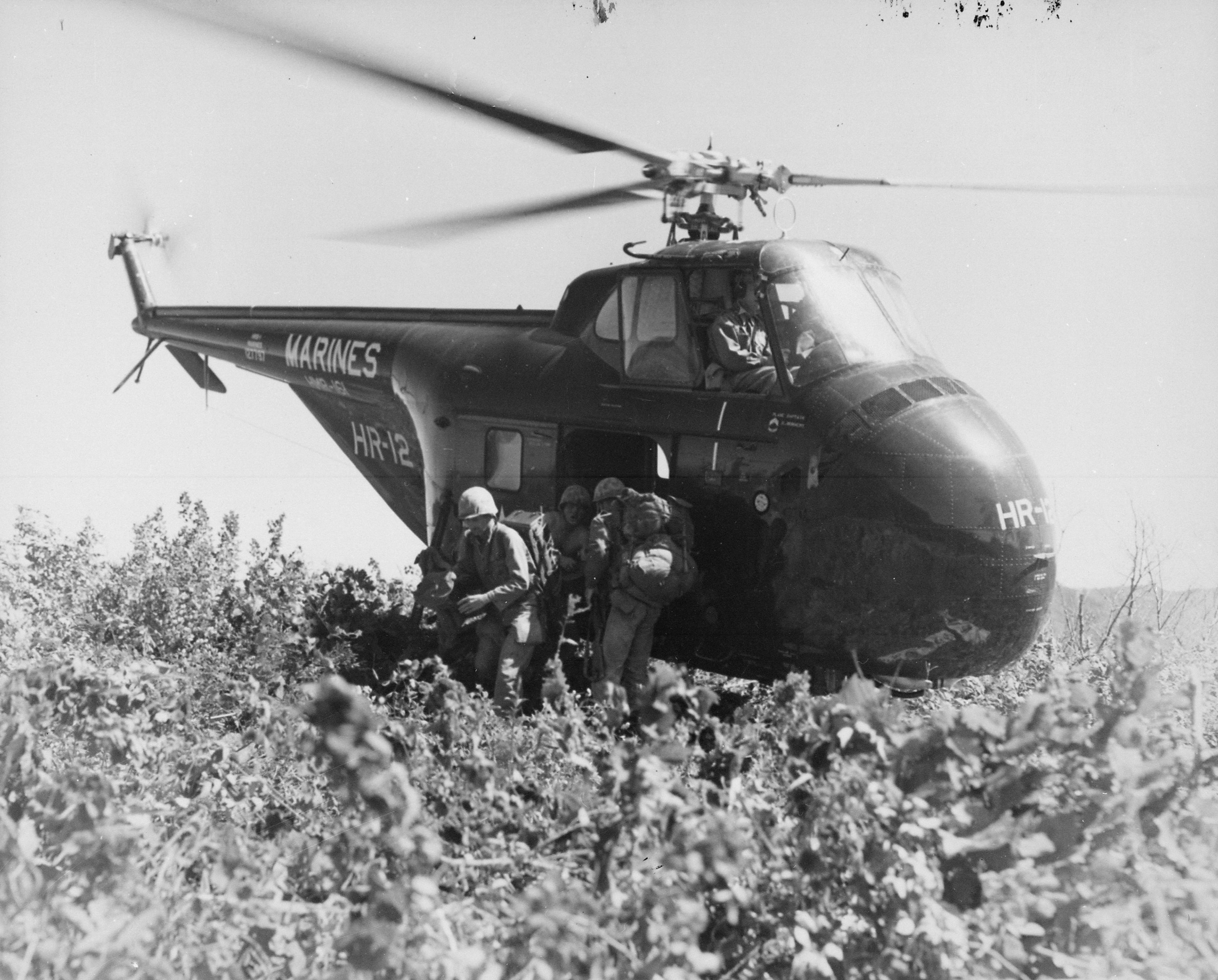
lossy-page1-3000px-U.S._Marines_of_the_First_Marine_Division_Reconnaissance_Company_make_the_first_helicopter_invasion_on_Hill_812,_to..._-_NARA_-_520805.tif
US Marines of the First Marine Division Reconnaissance Company make the first helicopter invasion on Hill 812, to relieve the Republic of Korea 8th Division, during the renewed fighting in Korea, 20 September 1951. (Source: Wikimedia)

While the book comprehensively deals with the air war over Korea, readers should not expect an academic examination of the use of air power between 1950 and 1953. That is not what this book is. However, this is not a criticism per se. Instead, the book has been written with a specific audience in mind – the general reader looking for an introduction to the subject. This is highlighted by Napier’s choice to examine the war chronologically (p. 6). This is a choice that makes it easier for the lay reader to understand what was a complex and contested operating environment. Ultimately, therefore, we end up with a very useful narrative of the course of the air war that introduces readers to the subject matter.

One area, however, where the book does fall down is in its use of sources. Regarding primary sources, Napier has overwhelmingly relied on files in British archival institutions, notably The National Archives and the Royal Air Force Museum. While perhaps a pragmatic decision given the author’s location and the character of this book as a popular account of the air war, it does, nonetheless, skew the author’s interpretation. Furthermore, at least from the perspective of UN forces deployed, most of the air power deployed in support of the war effort came from the US. As such, one would expect more attention to be given to the records produced by those forces involved. Finally, given the above issue, Napier relies on secondary sources to fill in the gaps despite arguing that published accounts of the air war over Korea were less than ‘objective’ (p. 6) in their analysis. However, it appears from the notes and bibliography that Napier did not consult important, more ‘objective’ works such as Crane’s noted above and others.[3] The use of such works would have further enriched Napier’s narrative

Overall, despite the above criticism, Napier has done an excellent job of writing a comprehensive introductory narrative to the air war over Korea. In particular, Napier does a good job of weaving together a narrative that tells the story of both sides of the air war over Korea. The book is lavishly supported by high-quality imagery and maps that help support the text.

Dr Ross Mahoney is the Editor-in-Chief of From Balloons to Drones and is an independent scholar specialising in air power and the history of air warfare. He is currently the Senior Historian within the City Architecture and Heritage Team at Brisbane City Council in Australia. He has over 15 years of experience within the heritage and education sectors in Australia and the United Kingdom. He was the inaugural Historian at the Royal Air Force Museum in the UK. In Australia, he has worked as a Historian for the Department of Veterans’ Affairs and taught at the Strategic and Defence Studies Centre at The Australian National University based at the Australian War College. His research interests are focused on military history, with a specific focus on the history of air warfare, transport history, and urban history. He has published several chapters and articles, edited two books, and delivered papers on three continents. He has a website here and can be found on Twitter at @airpowerhistory.

Header image: Four US Air Force North American F-86E Sabre fighters over Korea in November 1952. (Source: Wikimedia)

[1] Allan Millett, The War for Korea, 1945-1950: A House Burning (Lawrence, KS: University Press of Kansas, 2005), p. 1.

[2] Daniel Calingaert, ‘Nuclear weapons and the Korean War,’ Journal of Strategic Studies 11, no. 2 (1988), pp. 177-202.

[3] Other works of note not cited include: Eduard Mark, Aerial Interdiction: Air Power and the Land Battle in Three American Wars (Washington DC: Office of Air Force History, 1994); John Sherwood, Officers in Flight Suits: The Story of American Air Force Fighter Pilots in the Korean War (New York, NY: New York University Press, 1998); Jacob Neufeld, Coalition Air Warfare in the Korean War 1950–1953 (Washington DC: U.S. Air Force History and Museums Program, 2005); Roger Horky, ‘Clipping the Eagle’s Wings: The Limiting of the Korean Air War, 1950-1953’ (PhD Thesis, Texas A&M University, 2013).

#Podcast – The True Origins of the Cold War: An Interview with Dr John Curatola

#Podcast – The True Origins of the Cold War: An Interview with Dr John Curatola

Editorial Note: Led by our Editor Dr Mike Hankins, From Balloons to Drones produces a monthly podcast that provides an outlet for the presentation and evaluation of air power scholarship, the exploration of historical topics and ideas, and provides a way to reach out to both new scholars and the general public. You can find our Soundcloud channel here. You can also find our podcast on Apple Podcasts and Google Podcasts.

In the years after the Second World War, the US shifted its strategy to one focused on air power and delivery of nuclear weapons–but why and how did this happen? Dr John Curatola, the Military Historian for the Center for War and Democracy at the National World War II Museum, takes us through the fierce rivalry between the US Air Force and Navy, the scandalous ‘Revolt of the Admirals,’ and the development of thermonuclear weapons. 

9781682476208

Dr John Curatola is the Military Historian for the Center for War and Democracy at the National World War II Museum. He was formerly a Professor of Military History at the US Army School of Advanced Military Studies at Fort Leavenworth, Kansas. Curatola is a retired Marine Officer of 22 years with a Doctorate from the University of Kansas. In addition to his published works, he has lectured extensively on airpower and early Cold War topics at the National Archives, C-SPAN, and international venues. His latest book is Autumn of Our Discontent: Fall 1949 and the Crises in American National Security (2022).

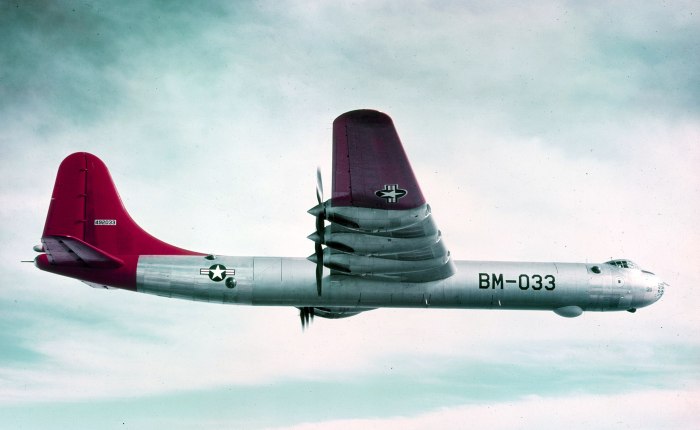
Header image: A US Air Force Convair B-36B Peacemaker of the 7th Bombardment Wing in flight, in 1949. (Source: Wikimedia)

#BookReview – An Officer, Not a Gentleman: The Inspirational Journey of a Pioneering Female Fighter Pilot

#BookReview – An Officer, Not a Gentleman: The Inspirational Journey of a Pioneering Female Fighter Pilot

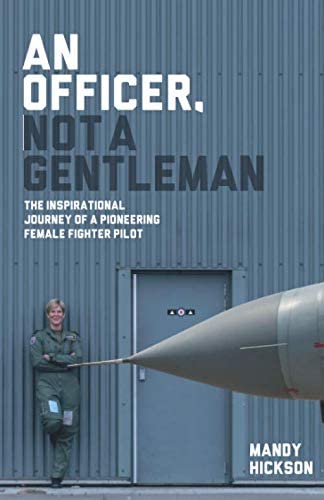
Mandy Hickson, An Officer, Not a Gentleman: The Inspirational Journey of a Pioneering Female Fighter Pilot. London: Mandy Hickson, 2020. Images. Pbk. 294pp.

Reviewed by Mark Russell

41Z+qh7v8uL._AC_SY1000_

Women have long served in the Royal Air Force (RAF). Female service in the RAF began during the First World War when up to 25,000 women served until the Women’s Royal Air Force (WRAF), disbanded in 1918. Approximately 180,000 then served in the Women’s Auxiliary Air Force (WAAF) during the Second World War, followed by those who served in the re-formed WRAF, an administrative entity within the RAF from 1949. Finally, in 1994, the WRAF was merged into the RAF.  

Although 166 women flew during the Second World War as delivery and ferry pilots in the Air Transport Auxiliary, it was not until 1991 that women began to serve as pilots, a decision approved in 1989. The first female pilot was Flight Lieutenant Julie Ann Gibson, who re-trained from her existing career as an RAF engineer before flying Andovers with No. 32 Squadron from RAF Northolt in 1991. However, the issue of allowing women to fly fast jets still raised questions. Nonetheless, in December 1991, it was announced that women were cleared to fly in combat roles. However, it was not until August 1994 that Flight Lieutenant Jo Salter breached the ‘holy of holies,’ the fast jet pilot role, when she joined No. 617 Squadron at RAF Lossiemouth to fly the Tornado GR1B. She became the RAF’s first female fast jet pilot. As of 1 April 2019, there were 30 female fixed-wing pilots in the RAF, while as of July 2021, 15.1% of the RAF regulars were female. 

Mandy Hickson’s An Officer, Not a Gentleman, is the autobiography of only the second woman to fly the Tornado in the RAF. It documents her experience flying the Tornado and becoming an operational fast jet pilot. Some of what Hickson writes will also resonate with those working within large organisations that continue to grapple with issues of inclusion and equality. It must, however, be noted that the RAF of the 1990s comes out of Hickson’s recollections well – perhaps not as an organisation, but certainly in the attitudes of some of those individuals Hickson encountered during her service.

Hickson has said she did not feel like a pioneer: ‘no different to anyone else for being a woman’ (p. 161). The book describes Hickson’s life and her RAF career. Hickson’s description of her feelings. For example, Hickson describes her isolation on her first deployment to the Gulf in 2000 as the only female aircrew on the squadron (pp. 187-90). This type of insight sets this book apart from some of the more ‘traditional’ aircrew memoirs written by male aircrew. Indeed, to this reviewer’s knowledge; this is the first memoir written by a female RAF pilot.

Hickson’s story opens with her joining the Air Training Corps in 1986 before winning a Flying Scholarship and receiving her Private Pilot’s Licence (PPL) in August 1991 at 18. As one of the first female pilots in the RAF, Hickson inevitably faced challenges. For instance, being six feet tall at 16, she was too tall for the RAF height to weight charts and was told she needed to lose weight to obtain the Flying Scholarship, although her doctor noted that she was a healthy weight. Having cleared that hurdle and obtained her PPL, she went to the University of Birmingham, where she joined the University of Birmingham Air Squadron (UBAS) in late 1991. During this period, Hickson appears to have had no problem fitting into the flying and social life of the University Air Squadron (UAS), and she does not describe any times when she felt that being a woman created additional challenges for her or saw her discriminated against in any way. This may have been because she was, as she describes, ‘a bit of a tomboy’ (p. 1) and ‘a sports-mad teenager’ (p. 2). 

The next hurdle Hickson faced was at the start of her third year at university, when, to remain in the UAS, she needed to demonstrate a more concrete commitment to an RAF career. In December 1992, the UAS was told women could train as fast jet pilots, which triggered Hickson’s application to become aircrew. Having attended Officer and Aircrew Selection Centre, she failed the pilot aptitude tests despite having flown over 100 hours with the UAS. Instead, she was offered a career as an air traffic controller. The Officer Commanding of her UAS, Squadron Leader Karl Bufton, allowed her to continue flying with UBAS and arranged two separate check rides with instructors from the RAF’s Central Flying School both of whom rated her as above average as a pilot. He believed ‘the tests are wrong. I have a feeling they are not designed for women’ (p. 13). Hickson had the support she needed to continue. 

Hickson joined the RAF, and in November 1994, a month into her initial training at RAF College Cranwell, she was told that her request to transfer to the General Duties branch had been approved so that she could train as a pilot. ‘My grin stretched from ear to ear’ (p. 26). Later Hickson discovered that she ‘had been taken on as a test case to see how far I would get before I failed’ (p. 27). Discovering this when qualified as a fast jet pilot can only have made the achievement all the sweeter, but at the time, her feeling was: ‘They’d opened the door. I was ready to barge through it’ (p. 27). 

However, she soon came up against some of the less enlightened aspects of the RAF’s expectations of women. Most notably, Hickson describes her first performance appraisal with ‘Flight Lieutenant Beige’ as she nicknamed him. Hickson was told she should ‘be more feminine’ (p. x) and not buy two half pints of beer in the Mess at a time so she could drink pints – despite, as she puts it, having ‘spent three years at university doing exactly that’ (p. x). Hickson describes this experience as being ‘the first of many encounters with more senior officers who had a problem with women taking on new roles in the RAF’ (p. 38). Being six feet tall, extroverted, and athletic, one suspects that Hickson may have struggled to meet the RAF’s definition of ‘femininity’ (as being described as ‘Amazonian’ by Flight Lieutenant Beige indicates). However, it would be interesting to know more about the experience of other female officer candidates through this period, who may have been more ‘feminine’ and to understand the extent to which the culture at Cranwell has changed since the mid-1990s.    

There is evidence throughout the book of just how male-centric the RAF was at this point in its history. In addition to the requests that she be more ‘feminine’, there were also comments which she believes were ‘undoubtedly […] all meant in humour’ (p. 88) from instructors along the lines of ‘Off to apply your lippy, are you’ which Hickson says she had not noticed until fellow male course mates raised them with her, saying they felt it was wrong. Her coursemates raised these comments with the squadron commander, who immediately resolved this and apologised to her. The instructors who had been making these comments also apologised. Hickson reflects on this: ‘It’s shocking how I had normalized this behaviour to simply ‘get through’’’. This is another insight into how far the RAF had to go to make the most of female talent and invite work on where it is now in terms of its culture and ethos. 

A more positive story is how Hickson’s coursemates rallied around to teach her the mechanics of ‘battle turns’, leading to her instructor saying he had ‘never heard of a course coming together like that’ (p. 97). This is interesting on two levels: firstly, the willingness to help a female coursemate, suggesting) that the new generation was rather more enlightened than the organisation, and, secondly, with fast jet seats likely at a premium, one might have expected a more ‘dog eat dog’ attitude from Hickson’s fellow students – one person failing means more chance of a fast jet seat for the remaining students. The collegiate attitude is a tribute to her coursemates and, perhaps, to the supportive ethos that the training had inculcated to date. 

mandy-hickson_edited-1-1
Mandy Hickson stood in front of a Panavia Tornado.

Her lowest point career-wise came on her first two-month operational tour in Kuwait in 2000. She says, ‘I don’t think they had any empathy for how hard it was being the only woman’ (p. 187). During this tour, Hickson had issues with more senior squadron members, although when she later discussed it with one specific individual, he was unaware of the stress he had placed her under with his attitude (p. 196). ‘I was their first female pilot, and they weren’t used to it’ (p. 187), and they either consciously or unconsciously were not including her in squadron life, to the point that she felt ‘bullied’ and ‘marginalised’ to the point where she was confused about ‘who – and what – I was trying to be’ (p. 187) and considered handing in her resignation (p. 190). ‘Do I try to fit in […] or do I stand out?’ – another conundrum that, 20 years later, minorities continue to face despite inclusion programmes in many workplaces. ‘I was just trying to fit into the mould of junior fast jet pilot, regardless of gender’ (p.188) without the benefit of role models or (understandably) feeling able, as the most junior pilot on the squadron, to have any real impact on the definition of what a junior fast jet pilot was expected to be.

Hickson also got used to being assigned rooms on postings whose walls were covered in porn. She was not sure if this was how all rooms were or whether they had been prepared as a special welcome for her. However, Hisckon recalls that she took this in her stride, ripping the pictures down and throwing them into the corridor with a shout of ‘Porn’s up, boys’ (p. 175). While such interior decoration was considered acceptable, concerns over the impact women would have on the RAF’s prevailing culture are highlighted by Air-Vice Marshal Roger Austin, the Director-General Aircraft. In March 1989, a mere five years before Hickson arrived at Cranwell, Austin lamented on the coming day when the RAF would be ‘powdering its nose as it admire[d] Robert Redford and Tom Jones on the Flight Safety calendar.’[1]  Austin went on to become Commandant, RAF College Cranwell later in 1989. Culture continues to be a challenge for women in the military in the UK.

Being six feet tall, Hickson did not have some of the practical problems documented by other early female aircrews in terms of flying clothing not fitting and simply being the right size and shape for the aircraft. This had been a critical part of the debate about opening up fast jet cockpits for women, and it was a genuine issue. However, Hickson does document the consequences of the RAF not having thought through how to allow female aircrew to urinate while strapped into an ejector seat. The options available meant unstrapping from the seat, which was not an option when Hickson was policing the no-fly zone over Iraq, for example (p.194-195). Hickson being grounded due to a kidney infection that resulted from being unable to urinate in the air shows the need to think through these things. The solution on offer – a form of nappy – was described by Hickson as ‘awful’. Other female aircrew concurred, recalling that ‘they tried to avoid using them.’[2]  

Hickson left the RAF in 2009, having had two children in 2003 and 2004. She left in part because she was unable to be promoted under the RAF rules of the time, which required her to take another flying job to be promoted to Squadron Leader. In addition, she felt this was incompatible with having two children and a husband who was an airline pilot. ‘If you’re on a flying squadron, you’re on a flying squadron’ is how she puts it, and ‘You can’t just say “Oh sorry, I can’t do this bit today”’ (p.275). 

One recent reviewer of Hickson’ book in The Journal of the Royal Air Force Historical Society has suggested that it ‘is not a major work of moment.’ While one day we might view memoirs of female aircrew as being ‘seen as nothing remarkable’ as there no longer anything unusual about that experience, that day has still yet to be fully realised. Indeed, this book is a work of the moment because it is a pioneer’s story. While it has many elements of what one might call the ‘standard aircrew memoir’ that chronicles the path from air cadet to operational flying, it also provides many insights into the culture and ethos RAF of the time – the early post-Cold War period – and how the Service adapted to the introduction of female fast jet aircrew. In doing so, both Hickson and the RAF emerge well from the telling. A highly recommended book on many levels that may provide valuable insights to future historians, especially those interested in the RAF, military culture, and the role of gender in the military.

Mark Russell graduated with a 2:1 in History in 1985 and has worked in professional services ever since. He returned to academia in 2015 and graduated with an MA in Air Power: History, Theory and Evolution from the University of Birmingham in December 2017. Since then, while working in professional services, he has published articles and reviews in various publications, including the RAF’s Air and Space Power Review, the Journal of the Royal Air Force Historical Society, The Aviation Historian and From Balloons to Drones. Longer term, he is interested in organisational culture and how the coming of unmanned aircraft might impact on the culture of air forces. He is currently researching a possible article on Squadron Leader Freddy Lammer DFC and Bar.

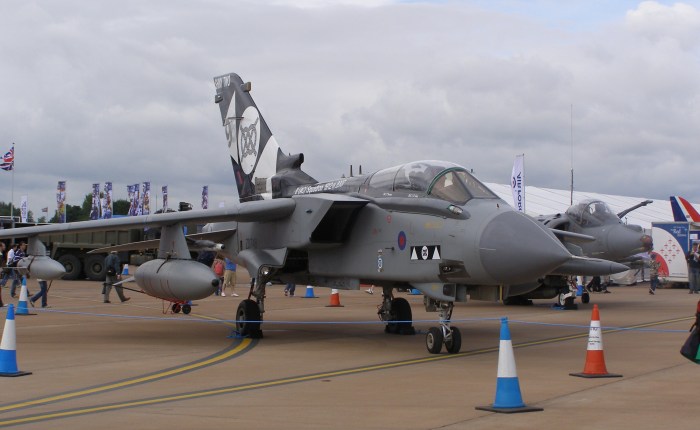
Header image: A Panavia Tornado GR4 in grey colour scheme and special markings for the 95th anniversary of No. 2 Squadron in 2007. This was the type flown by Hickson with No. 2 Squadron. (Source: Wikimedia)

[1] Kathleen Sherit, Flying Roles for Women in the RAF, Journal of the Royal Air Force Historical Society 63 (2016), p. 63.

[2] Kathleen Sherit, ‘The Integration of Women in the Royal Navy and Royal Air Force Post-World War II to the Mid 1990s’ (PhD Thesis, King’s College London, 2013), p. 235.

#Podcast – Air Combat in the Gulf War: An Interview with Rick Tollini

#Podcast – Air Combat in the Gulf War: An Interview with Rick Tollini

Editorial Note: Led by our Editor Dr Mike Hankins, From Balloons to Drones produces a monthly podcast that provides an outlet for the presentation and evaluation of air power scholarship, the exploration of historical topics and ideas, and provides a way to reach out to both new scholars and the general public. You can find our Soundcloud channel here. You can also find our podcast on Apple Podcasts and Google Podcasts.

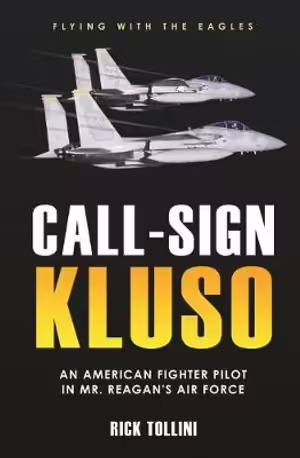
In our latest episode, we interview F-15 pilot and MiG-killer Rick Tollini. We discuss his new book, Call-Sign Kluso and he tells us all about the harrowing missions flown in the opening of the 1991 Gulf War. 

call-sign-kluso

Rick Tollini, call-sign Kluso, is a freelance writer, live performer, former United States Air Force F-15C Fighter Weapons Officer, and current F-15C flight simulator contract instructor pilot. Tollini is recognised as an expert in the field of air superiority operations and tactics. He has also worked as a feature writer for Pacific Star and Stripes weekly journal, CNN Travel contributor, and has recorded and published over 30 original songs.

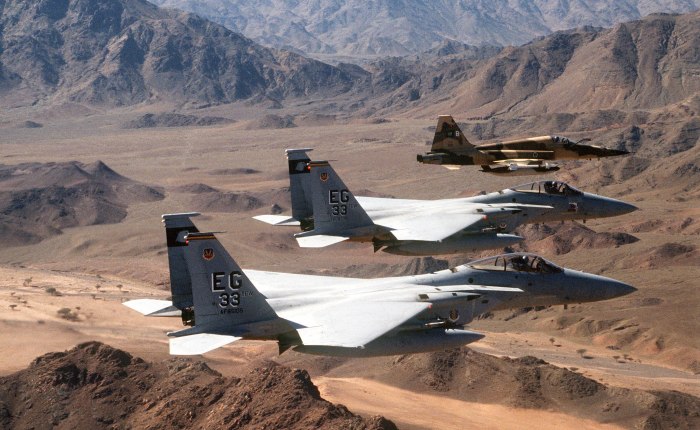
Header image: An air-to-air view of two US Air Force F-15C  Eagles of the 33rd Tactical Fighter Wing and a Royal Saudi Air Force F-5E Tiger II fighter aircraft during a mission in support of Operation Desert Storm. (Source: Wikimedia).

#ResearchResources – Recent Articles and Books

#ResearchResources – Recent Articles and Books

Editorial note: In this series, From Balloons to Drones highlights research resources available to researchers. Contributions range from discussions of research at various archival repositories to highlighting new publications. As part of this series, we are bringing you a monthly precis of recent articles and books published in air power history. This precis will not be exhaustive but will highlight new works published in the preceding month. Publication dates may vary around the globe and are based on those provided on the publisher’s websites. If you would like to contribute to the series, please contact our Editor-in-Chief, Dr Ross Mahoney, at airpowerstudies@gmail.com or via our contact page here.

Articles

Kristen Alexander and Kate Ariotti, ‘Mourning the Dead of the Great Escape: POWs, Grief, and the Memorial Vault of Stalag Luft III,’ Journal of War & Culture Studies (2022), DOI: 10.1080/17526272.2022.2097774.

In March 1944 seventy-six Allied prisoners of war escaped from Stalag Luft III. Nearly all were recaptured; fifty were later shot. This article examines what happened in the period between recapture and the interment of the dead prisoners’ cremated remains at Stalag Luft III. It positions what came to be known as ‘the Great Escape’ as an event of deep emotional resonance for those who grieved and reveals the dual narrative they constructed to make sense of their comrades’ deaths. In discussing the iconography of the vault constructed by the camp community to house the dead POWs’ ashes, this article also suggests a dissonance in meaning between that arising from personal, familial grief and the Imperial War Graves Commission’s standardised memorial practice. Focusing on the Great Escape’s immediate aftermath from the perspective of the POWs themselves provides a more nuanced understanding of the emotional impact of this infamous event.

Susan Allen, Sam Bell and Carla Machain, ‘Air Power, International Organizations, and Civilian Casualties in Afghanistan,’ Armed Forces & Society (2022), doi:10.1177/0095327X221100780.

Can the presence of international organizations reduce civilian deaths caused by aerial bombing? This commentary examines this question in the specific context of the U.S.-led war in Afghanistan. We evaluate this based on interviews conducted with members of international organizations that were present in Afghanistan during the conflict, existing intergovernmental organizations, nongovernmental organizations, and government reports, and with quantitative data on civilian casualties between 2008 and 2013. We conclude that there is tentative evidence from Afghanistan that international organizations can in fact reduce the severity of civilian killings that result from the use of air power. However, there is much need for greater data sharing to more fully answer this important question.

Derek Lutterbeck, ‘Airpower and Migration Control,’ Geopolitics (2022), DOI: 10.1080/14650045.2022.2094776.

Migration scholarship has thus far largely neglected the role of aircraft in both (irregular) migration and state policies aimed at controlling migration. Drawing inspiration from the field of strategic studies, where ‘airpower’ has been a key theoretical concept, this article explores the role of aerial assets in states’ migration control efforts. The article discusses three main dimensions of the use of airpower in controlling migration: the increasing resort to aircraft for border enforcement purposes – or what can be referred to as ‘vertical border policing’ –, states’ tight monitoring of the aerial migration infrastructure, and the use of aircraft in migrant return operations. As a core element of state power, it is airpower’s key features of reach, speed and height which have made it a particularly useful migration control instrument.

Priya Mirza “Sovereignty of the air’: The Indian princely states, the British Empire and carving out of air-space (1911–1933),’ History and Technology (2022), DOI: 10.1080/07341512.2022.2079370.

Who owns the skies? Under British colonialism, the ownership of the skies of India was a contested matter. The onset of aviation presented a challenge to the territorial understanding between the British and semi-sovereign Indian princes, Paramountcy (1858–1947). Technology itself was a tricky area: roadways, railways, telegraphs, and the wireless were nibbling away at the sovereign spheres which Paramountcy had put in place. This paper looks at the history of aviation in princely India, from aviation enthusiasts such as the rulers of Kapurthala, Jodhpur and Bikaner to subversive princes like the Maharaja of Patiala who worked towards a military air force. The paper tracks the three stages of the journey of aviation in princely India, from individual consumption, to the historical context of World War One which aided its access and usage, and finally, the collective princely legal assertion over the vertical air above them in the position, ‘sovereignty of air’. The government’s civil aviation policy in India remained ambiguous about the princes’ rights over the air till 1931 when their sovereignty of the sky was finally recognised. The paper focuses on the Indian princes varied engagement with aviation, modernity and their space in the world.

Ayodeji Olukoju ‘Creating ‘an air sense:’ Governor Hugh Clifford and the beginnings of civil aviation in Nigeria, 1919-1920,’ African Identities (2022), DOI: 10.1080/14725843.2022.2096566.

This paper focuses on the neglected subject of the beginnings of civil aviation in Nigeria in the aftermath of World War I. Until now, the literature on civil aviation in British colonial Africa had focused largely on Kenya, Central and South Africa and on post-World War II West Africa. This paper, relying on previously unexploited archival material, examines policy debates and options considered by the Colonial Office, the Air Ministry and the Nigerian colonial government. The unique, pioneering aviation drive of Nigeria’s Governor Hugh Clifford took place in the context of immediate post-World War I dynamics: economic vicissitudes, Anglo-French rivalry in West Africa and the policy interface between London and the colonies. This paper demonstrates that aviation development in Nigeria had roots in the early 1920s, and that the initiative was not a metropolitan monopoly, thereby illustrating the extent of colonial gubernatorial autonomy vis-à-vis London.

S. Seyer, ‘An Industry Worth Protecting? The Manufacturers Aircraft Association’s Struggle against the British Surplus, 1919–1922,’ Journal of Policy History 34, no. 3 (2022), pp. 403-39.

The American aircraft industry’s important role in the economic, military, and cultural expansion of the United States over the past one hundred years has been well documented by historians. But America’s twentieth century aerial dominance was not preordained. After World War I, the nascent American aircraft industry faced a concerted British effort to dump thousands of war surplus machines on the U.S. market. With aircraft outside of the nation’s tariff regime, members of the Manufacturers Aircraft Association turned to Congress for emergency protections in the face of what they considered an existential threat. Despite efforts to equate a strong industrial base for aviation with the national defense, aircraft antidumping legislation became mired in partisan debates over tariff policy and accusations of wartime corruption. In the absence of relief from Congress, the Wright patent served as a barrier against the importation of foreign surplus machines.

Ameya Tripathi, ‘Bombing Cultural Heritage: Nancy Cunard, Art Humanitarianism, and Primitivist Wars in Morocco, Ethiopia, and Spain,’ Modernist Cultures 17, no. 2 (2022), pp. 191-220.

This article examines Nancy Cunard’s later writing on Spain as a direct legacy of her previous projects as a modernist poet, publisher and black rights activist. Cunard was a rare analyst of the links between total war, colonial counter-insurgency, and cultural destruction. Noting the desire of both the air power theorist and art collector to stereotype peoples, from Morocco to Ethiopia to Spain, as ‘primitive’, the article brings original archival materials from Cunard’s notes into dialogue with her journalism, and published and unpublished poetry, to examine how she reclaimed and repurposed primitivism. Her poems devise a metonymic and palimpsestic literary geopolitics, juxtaposing fragments from ancient cultures atop one another to argue, simultaneously, for Spain’s essential dignity as both a primitive and a civilised nation. Cunard reconciles Spain’s liminal status, between Africa and Europe, to argue for Spain’s art, and people, as part of a syncretic, universal human cultural heritage, anticipating the art humanitarianism of organisations such as UNESCO.

Books

Stephen Bourque, D-Day 1944: The Deadly Failure of Allied Heavy Bombing on June 6 (Osprey: Osprey Publishing, 2022).

D-Day is one of the most written-about events in military history. One aspect of the invasion, however, continues to be ignored: the massive pre-assault bombardment by the Allied Expeditionary Air Force (AEAF), reinforced by RAF Bomber Command and the US Eighth Air Force on June 6 which sought to neutralize the German defenses along the Atlantic Wall. Unfortunately, this failed series of attacks resulted in death or injury to hundreds of soldiers, and killed many French civilians.

Despite an initial successful attack performed by the Allied forces, the most crucial phase of the operation, which was the assault from the Eighth Air Force against the defenses along the Calvados coast, was disastrous. The bombers missed almost all of their targets, inflicting little damage to the German defenses, which resulted in a high number of casualties among the Allied infantry. The primary cause of this failure was that planners at Eighth Air Force Headquarters had changed aircraft drop times at the last moment, to prevent casualties amongst the landing forces, without notifying either Eisenhower or Doolittle.

This book examines this generally overlooked event in detail, answering several fundamental questions: What was the AEAF supposed to accomplish along the Atlantic Wall on D-Day and why did it not achieve its bombardment objectives? Offering a new perspective on a little-known air campaign, it is packed with illustrations, maps and diagrams exploring in detail the features and ramifications of this mission.

Laurence Burke II, At the Dawn of Airpower: The U.S. Army, Navy and Marine Corps’ Approach to the Airplane 1907–1917 (Annapolis, MD: Naval Institute Press, 2022).

At the Dawn of Airpower: The U.S. Army, Navy, and Marine Corps’ Approach to the Airplane, 1907-1917 examines the development of aviation in the U.S. Army, Navy, and Marine Corps from their first official steps into aviation up to the United States’ declaration of war against Germany in April, 1917. Burke explains why each of the services wanted airplanes and show how they developed their respective air arms and the doctrine that guided them.   His narrative follows aviation developments closely, delving deep into the official and personal papers of those involved and teasing out the ideas and intents of the early pioneers who drove military aviation   Burke also closely examines the consequences of both accidental and conscious decisions on the development of the nascent aviation arms.  

Certainly, the slow advancement of the technology of the airplane itself in the United States (compared to Europe) in this period affected the creation of doctrine in this period.  Likewise, notions that the war that broke out in 1914 was strictly a European concern, reinforced by President Woodrow Wilson’s intentions to keep the United States out of that war, meant that the U.S. military had no incentive to “keep up” with European military aviation.  Ultimately, however, he concludes that it was the respective services’ inability to create a strong, durable network connecting those flying the airplanes regularly (technology advocates) with the senior officers exercising control over their budget and organization (technology patrons) that hindered military aviation during this period.

Jim Leeke, Turtle and the Dreamboat: The Cold War Flights That Forever Changed the Course of Global Aviation (Dulles, VA: Potomac Books, 2022).

The Turtle and the Dreamboat is the first detailed account of the race for long-distance flight records between the U.S. Army and U.S. Navy less than fourteen months after World War II. The flights were risky and unprecedented. Each service intended to demonstrate its offensive capabilities during the new nuclear age, a time when America was realigning its military structure and preparing to create a new armed service – the United States Air Force.

The first week of October 1946 saw the conclusion of both record-breaking, nonstop flights by the military fliers. The first aircraft, a two-engine U.S. Navy P2V Neptune patrol plane nicknamed the Truculent Turtle, flew more than eleven thousand miles from Perth, Western Australia, to Columbus, Ohio. The Turtle carried four war-honed pilots and a young kangaroo as a passenger. The second plane, a four-engine U.S. Army B-29 Superfortress bomber dubbed the Pacusan Dreamboat, flew nearly ten thousand miles from Honolulu to Cairo via the Arctic. Although presented as a friendly rivalry, the two flights were anything but collegial. These military missions were meant to capture public opinion and establish aviation leadership within the coming Department of Defense.

Both audacious flights above oceans, deserts, mountains, and icecaps helped to shape the future of worldwide commercial aviation, greatly reducing the length and costs of international routes. Jim Leeke provides an account of the remarkable and record-breaking flights that forever changed aviation.

Micheal Napier, Flashpoints: Air Warfare in the Cold War (Oxford: Osprey Publishing, 2022).

The Cold War years were a period of unprecedented peace in Europe, yet they also saw a number of localised but nonetheless very intense wars throughout the wider world in which air power played a vital role. Flashpoints describes eight of these Cold War conflicts: the Suez Crisis of 1956, the Congo Crisis of 1960-65, the Indo-Pakistan Wars of 1965 and 1971, the Arab-Israeli Wars of 1967 and 1973, the Falklands War of 1982 and the Iran-Iraq War of 1980-88. In all of them both sides had a credible air force equipped with modern types, and air power shaped the final outcome.

Acclaimed aviation historian Michael Napier details the wide range of aircraft types used and the development of tactics over the period. The postwar years saw a revolution in aviation technology and design, particularly in the fields of missile development and electronic warfare, and these conflicts saw some of the most modern technology that the NATO and Warsaw Pact forces deployed, alongside some relatively obscure aircraft types such as the Westland Wyvern and the Folland Gnat.

Highly illustrated, with over 240 images and maps, Flashpoints is an authoritative account of the most important air wars of the Cold War.

David Nicolle and Gabr Ali Gabr, Air Power and the Arab World – Volume 6: World in Crisis, 1936-March 1941 (Warwick: Helion and Company, 2022).

Volume 6 of the Air Power and the Arab World mini-series continues the story of the men and machines of the first half century of military aviation in the Arab world. These years saw the Arab countries and their military forces caught up in the events of the Second World War.

For those Arab nations which had some degree of independence, the resulting political, cultural and economic strains had a profound impact upon their military forces. In Egypt the Army generally remained quiet, continuing with its often unglamorous and little appreciated duties. Within the Royal Egyptian Air Force (REAF), however, there were a significant number of men who wanted to take action in expectation of what they, and many around the world, expected to be the defeat of the British Empire.

The result was division, widespread mistrust, humiliation, and for a while the grounding of the entire REAF. In Iraq the strains of the early war years sowed the seeds of a yet to come direct armed confrontation with the British.

Volume 6 of Air Power and the Arab World then looks at the first efforts to revive both the REAF and the Royal Iraqi Air Force (RIrAF), along with events in the air and on the ground elsewhere in the Arab world from 1939 until March 1941.

This volume is illustrated throughout with photographs of the REAF, RIrAF and RAF and a selection of specially commissioned colour artworks.

Adrian Phillips, Rearming the RAF for the Second World War: Poor Strategy and Miscalculation (Barnsley: Pen and Sword, 2022).

When the RAF rearmed to meet the growing threat from Nazi Germany’s remorseless expansion in the late 1930s, it faced immense challenges. It had to manage a huge increase in size as well as mastering rapid advances in aviation technology. To protect Britain from attack, the RAF’s commanders had to choose the right strategy and the right balance in its forces. The choices had to be made in peacetime with no guidance from combat experience. These visions then had to be translated into practical reality. A shifting cast of government ministers, civil servants and industrialists with their own financial, political and military agendas brought further dynamics into play. The RAF’s readiness for war was crucial to Britain’s ability to respond to Nazi aggression before war broke out and when it did, the RAF’s rearmament was put to the acid test of battle. Adrian Phillips uses the penetrating grasp of how top level decisions are made that he honed in his inside accounts of the abdication crisis and appeasement, to dissect the process which shaped the RAF of 1940. He looks beyond the familiar legends of the Battle of Britain and explores in depth the successes and failures of a vital element in British preparations for war.

John Quaife, Battle of the Atlantic: Royal Australian Air Force in Coastal Command 1939-1945 (Newport, NSW: Big Sky Publishing, 2022).

At the outbreak of World War II, somewhat by accident — and just as the first shots of the war were fired — young Australian airmen from the Royal Australian Air Force were engaged in operations that would become known collectively as the Battle of the Atlantic. Arguably lesser-known than air campaigns in other theatres, large numbers of Australians who volunteered for service with Royal Australian Air Force, found themselves fighting in this battle. Australians were there at the outbreak and many would go on to fly some of the final missions of the war in Europe.

This book captures some of the experiences of the Royal Australian Air Force members who served with Coastal Command and, through the weight of numbers alone, stories of the Sunderland squadrons and the Battle of the Atlantic dominate the narrative. Being critical to Britain’s survival, the battle also dominated Coastal Command throughout the war but Australians served in a surprising variety of other roles. The nature of many of those tasks demanded persistence that could only be achieved by large numbers of young men and women being prepared to ‘do what it took’ to get a tedious and unrewarding job done. Over 400 did not come home.

Steven Zaloga, The Oil Campaign 1944–45: Draining the Wehrmacht’s Lifeblood (Oxford: OIsprey Publishing, 2022).

With retreating German forces losing their oilfields on the Eastern Front, Germany was reliant on its own facilities, particularly for producing synthetic oil from coal. However, these were within range of the increasingly mighty Allied air forces. In 1944 the head of the US Strategic Air Forces, General Carl Spaatz was intent on a new campaign that aimed to cripple the German war machine by depriving it of fuel.

The USAAF’s Oil Campaign built up momentum during the summer of 1944 and targeted these refineries and plants with its daylight heavy bombers. Decrypted German communications made it clear that the Oil Campaign was having an effect against the Wehrmacht. Fuel shortages in the autumn of 1944 forced the Luftwaffe to ground most of its combat units except for fighters involved in the defense of the Reich. Fuel shortages also forced the Kriegsmarine to place most of its warships in harbor except for the U-boats and greatly hampered German army campaigns such as the Battle of the Bulge in December 1944-45.

This fascinating book packed with key photos and illustrations examines the controversies and debates over the focus of the US bombing campaign in the final year of the war, and the impact it had on the war effort overall.

#Podcast – Women Naval Aviators: An Interview with Beverly Weintraub

#Podcast – Women Naval Aviators: An Interview with Beverly Weintraub

Editorial Note: Led by our Editor Dr Mike Hankins, From Balloons to Drones produces a monthly podcast that provides an outlet for the presentation and evaluation of air power scholarship, the exploration of historical topics and ideas, and provides a way to reach out to both new scholars and the general public. You can find our Soundcloud channel here. You can also find our podcast on Apple Podcasts and Google Podcasts.

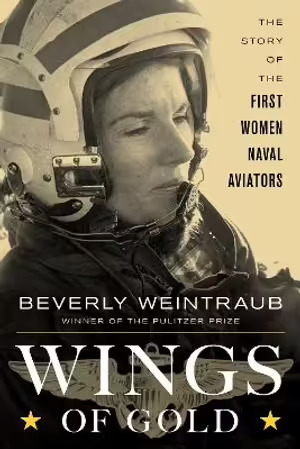
After the Second World War, women were not allowed to fly in military aviation roles in the US. That began to change in the 1970s. Pulitzer Prize-winning journalist Beverly Weintraub tells us about the story of six women US Naval aviators from her book: Wings of Gold: The Story of the First Women Naval Aviators from Lyons Press.

Beverly Weintraub is a Pulitzer Prize-winning journalist whose coverage of aviation, education and social services has appeared in the New York Daily News and the Washington Post. She served for 10 years on the Daily News Editorial Board, winning the Pulitzer with several colleagues for editorials examining the illnesses afflicting 9/11 first responders. She is currently executive editor at The 74, a K-12 education news site. An instrument-rated private pilot, Weintraub is a member of the Ninety-Nines, International Organization of Women Pilots; serves on the board of directors of the Air Race Classic, the annual all-women cross-country aeroplane race; and is a five-time ARC racer.

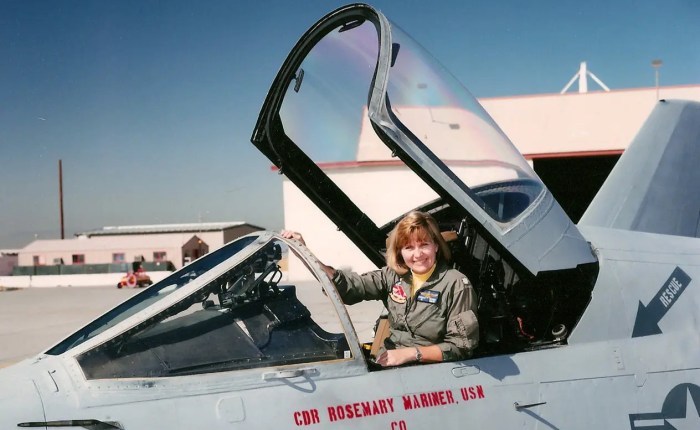
Header image: Captain Rosemary Mariner, the commander of VAQ-34 in the early 1990s. (Source: US Naval History and Heritage Command)

#HistoricBookReview – Clashes: Air Combat Over North Vietnam, 1965-1972

#HistoricBookReview – Clashes: Air Combat Over North Vietnam, 1965-1972

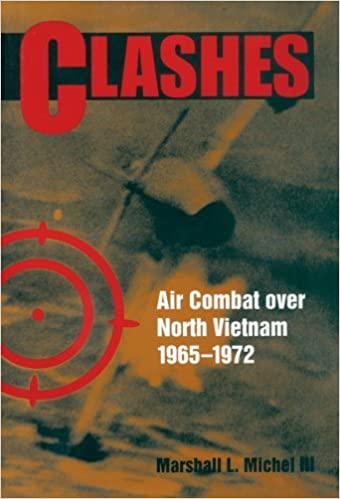
Marshall L. Michel III, Clashes: Air Combat Over North Vietnam, 1965-1972. Annapolis, MD: Naval Institute Press, 1997. Appendices. Endnotes. Index. 340 pp.

Reviewed by Dr James Young

51YBhdWpj9L._SX338_BO1,204,203,200_

As indicated by the title, Marshall Michel’s Clashes is a chronological examination of the air war over North Vietnam. At the time of its publication in 1997, Clashes was the first comprehensive treatment of the conflict to take advantage of North Vietnamese sources. Unlike most of his predecessors, Michel consciously avoided basing his main argument on the political issues surrounding Operations ROLLING THUNDER and LINEBACKER. These political issues include targeting choices by the White House, bombing halts, and rules of engagement enforced by US Navy (USN) and the United States Air Force (USAF) Pacific Air Forces (PACAF). Instead, Michel focuses on the ‘military significance [USAF’s and USN’s bombing campaigns had] in the larger context of the Cold War and possible U.S.-Soviet military confrontation,’ as ‘this was the one area of the Vietnam War that had military significance in the global balance of power.’ (p. 1) Within this framework, Michel posits that the twin campaigns were a ‘test of American air combat performance,’ (p. 1) and then proceeds to explain how the USAF and USN largely failed the exam.

Michel’s organisation is simple, with Clashes divided into two chronological sections. The first of these begins with a discussion of air combat in general, the two American services’ thoughts on fighter doctrine, and how the USN and USAF evaluated these theories in a series of rigorously controlled exercises. Michel takes great pains to point out that these exercises, conducted in the clear skies and low humidity of the western United States, led to a misplaced faith in American technological superiority as the war began. After this introduction, Clashes transitions to the initial campaign against North Vietnam. After a cursory discussion of operational goals, Michel starts with the initial USN air raids and the gradual escalation that became ROLLING THUNDER. Clashes highlights the friction that emerged from both services’ aircrew rotation policies, internal and external service rivalries, a harsh climate and, most importantly, a rapidly evolving and uncooperative enemy. By the end of Part I, Clashes makes two things clear. First, the North Vietnamese proved to be far more capable opponents than the American forces expected, with their Integrated Air Defence System (IADS) arguably the deadliest of its kind in the entire world. Second, it became clear that the USAF/USN’s already inadequate conventional capabilities had worsened throughout ROLLING THUNDER.

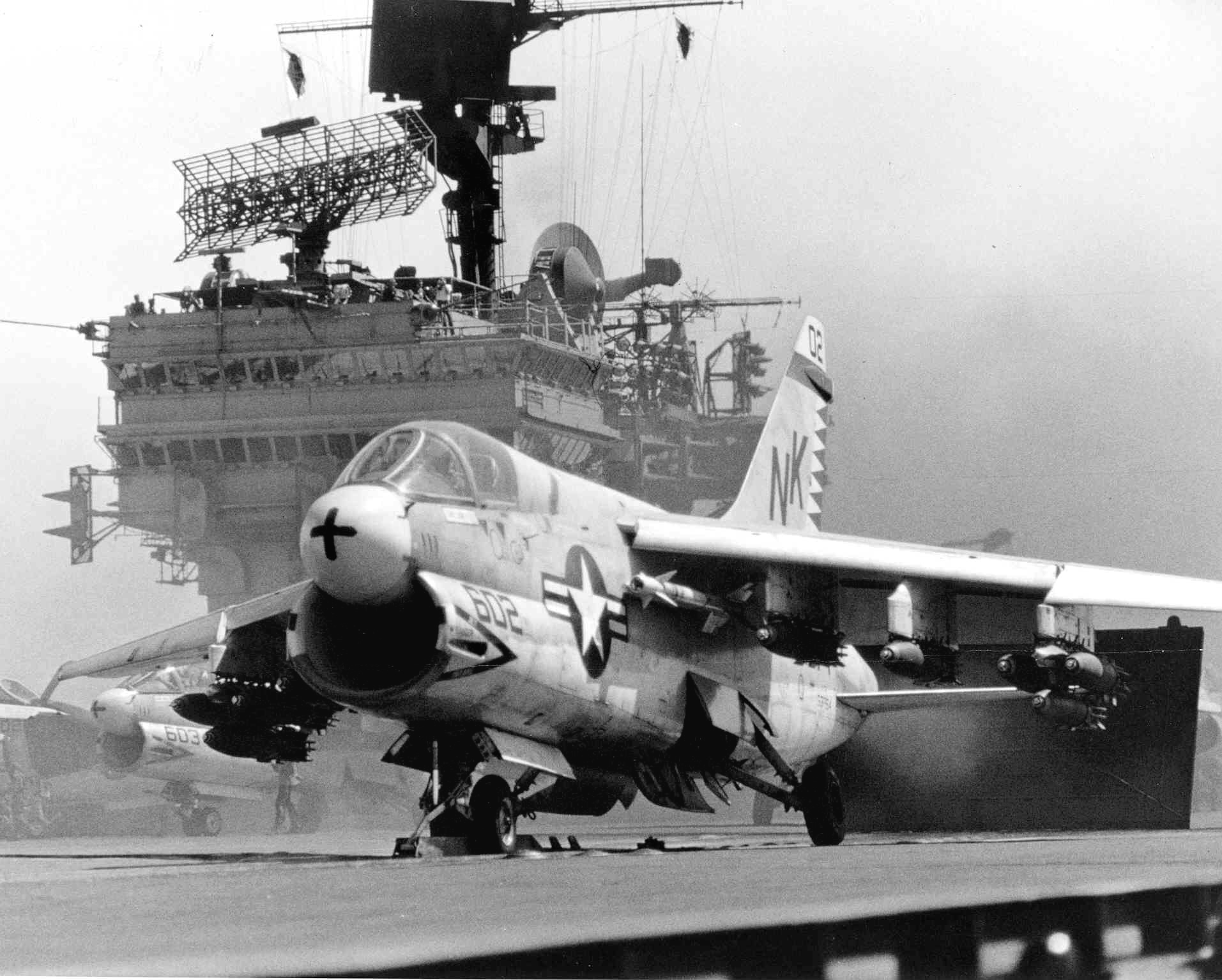
A-7A_Corsair_II_of_VA-27_about_to_launch_from_USS_Constellation_(CVA-64)_in_the_Gulf_of_Tonkin_on_27_August_1968_(NNAM.1996.253.7075.035)
A US Navy Vought A-7A Corsair II from VA-27 prepares to be catapulted off the flight deck of the aircraft carrier USS Constellation (CVA-64) in the Gulf of Tonkin on 27 August 1968. It is armed with Mark 82 227 kg Snakeye bombs and AIM-9B Sidewinder missiles. VA-27 was assigned to Attack Carrier Air Wing 14 aboard the Constellation for a deployment to Vietnam from 29 May 1968 to 31 January 1969. (Source: Wikimedia)

Having presented the reader with this sobering assessment, Michel begins Part 2 by stating, ‘[t]he judgments about air-to-air combat during Rolling Thunder were a Rorschach test for the U.S. Air Force and Navy.’ (p. 181) The USAF’s leadership had a ‘clear lack of interest in improving its air training’ (p. 185) for several disparate reasons. In contrast, the USN’s admirals ensured that its crews were ‘prepared for the new round of air combat anywhere in the world’ (p. 188) by both enforcing new doctrine and modifying existing equipment. Michel manages to deftly interweave both services’ advances using simple yet accurate language concerning ordnance, electronics, and airframes. Finally, unlike other works before it, Clashes concludes Part II’s introductory chapter with a discussion of the North Vietnamese Air Force’s (NVAF’s) contemporaneous improvement in doctrine, equipment, and training. In this manner, Michel sets the table for the remainder of Part II by ensuring the reader understands why Operations LINEBACKER I and II are not simple continuations of ROLLING THUNDER. As with Part I, Michel’s writing ability stands out as he discusses how the USAF and USN engaged the NV-IADS. Only a prohibitive amount of resources prevented steep losses among strike aircraft for the USAF (p. 242-6). In contrast, the USN’s emphasis on the Top Gun program, missile improvements, and strike doctrine resulted in ‘MiGs concentat[ing] almost exclusively on Air Force sorties’ (p. 277) due to heavy losses. By drawing this stark contrast, Michel both explicitly condemns USAF leadership for their choices from 1968-1972. He implicitly proves his thesis by establishing a connection between difficulties in Southeast Asia being indicative of the USAF’s conventional capabilities in a broader Cold War sense.

Although subsequent books, such as Craig C. Hanna’s Striving for Air Superiority (2002) and Wayne Thompson’s To Hanoi and Back (2000) have taken advantage of more recently declassified documents, Clashes remains a work of tremendous value for anyone interested in post-Second World War air combat. Michel’s reliance on official USAF and USN primary documents, such as Project CHECO, the USAF’s Red Baron report, and the USN’s Ault Report, erases much of the ideological clutter affecting previous works that dealt with the war. When coupled with his skilful prose, the overall result is a balanced, informative account that is quite accessible. Clashes’ continued relevance would make it equally at home in a public library, a professional military course, or an undergraduate Vietnam course. Even beyond these uses, it remains an excellent cautionary tale of what can occur when an air service fails to rigorously test, train, and exercise its doctrine before entering a conflict. It is highly recommended for anyone interested in Cold War military history for all these reasons.

Dr James Young is an air power historian, aviation enthusiast and military analyst. His writing credits include the USNI’s 2016 Cyberwarfare Essay Contest, articles in ArmorThe Journal of Military History, Marine Corps University Press Expeditions, and USNI Proceedings. In addition to his historical work and the critically acclaimed Usurper’s War-series, he has collaborated with bestselling authors Sarah Hoyt, S.M. Stirling, and David Weber.

Header Image: A US Air Force Boeing B-52G Stratofortress from the 72nd Strategic Wing (Provisional) waits beside the runway at Andersen Air Force Base, Guam, as another B-52 takes off for a bombing mission over North Vietnam during Operation LINEBACKER II on 15 December 1972. (Source: Wikimedia)