#ResearchNote – Wither Air Power Studies?

#ResearchNote – Wither Air Power Studies?

By Dr Ross Mahoney

I started writing this post several months ago, but for various reasons, it lay dormant until a recent Twitter exchange began with Brian Laslie. Brian suggested that Mark Clodfelter’s The Limits of Air Power was the ‘foundation of modern air power studies.’ This immediately got my attention, and I queried this, which led to a fruitful exchange of views on the subject between several participants.

The original source for this post came from comments I provided to the Second Sir James Rowland Seminar at the Australian Defence Force Academy, which is an initiative between UNSW Canberra and the Royal Australian Air Force’s Air Power Development Centre. Another source was a post by Nicholas Sarantakes with an update on the ongoing debate on the ‘decline’ of military history in academia. These sources originally got me thinking about the state of air power studies in the English-speaking worlds and the recent Twitter exchange brought that process to the fore again.

In my reply to Brian, I made the argument that in the UK, the mantle of ‘father’ of air power studies, in my opinion, belongs to Air Vice-Marshal Tony Mason who was the RAF’s first Director of Defence Studies (DDefS). To my mind, Tony generated the space for the subject both within the RAF and with external partners. There are, of course, other names we could put into this mix including Dr Noble Frankland, J.M. Spaight, Professor Phil Sabin and Professor Richard Overy, but I am unsure whether these writers ever created enough mass for the field to evolve. For example, while Overy wrote on air power issues early in his career, he then moved onto other subjects, though has more recently returned to the field. Conversely, through the creation of the DDefS post, the RAF has provided a platform for the development of air power studies in the UK. The position still exists, and there have been several notable holders of the post including Dr Peter Gray, who is now Senior Research Fellow in Air Power Studies at the University of Birmingham, and the current Chief of the Defence Staff, Air Chief Marshal Sir Stu Peach. Indeed, since moving to the University of Birmingham, Grey has helped generate a mass of air power scholars in the UK and beyond.

Despite my views on the origins of air power studies in the UK, some important issues came out of the discussion on Twitter. One is that while we might identify Clodfelter or Mason as defining the field in the US and UK respectively, this does not answer the question of whether there is someone who crosses national boundaries. One name that did spring to mind was John Andreas Olsen. However, as Travis Hallen, one of the editors over at The Central Blue, reflected, Olsen has been more productive in bringing together people to produce worthwhile edited volumes. Furthermore, as David Benson, a Professor at the USAF School of Advanced Air and Space Power Studies, noted these writers may have defined the field but should they define it today? David provided an interesting reflection on this issue in a number of Tweets, and while I do not agree with all of his points, his views on how we define the field are critical.

Knowledge is not static and as such how we define the field of air power studies should not be fixed either. Indeed, David suggested that this might be the case with it being argued that the study of air power might not be keeping up with changes in the field of social science. Here lies one problem as this essentially suggests a social science view of the study of air power and raises the question of where the subject fits as a discipline? Is the study of air power a social science or is it interdisciplinary? Moreover, are we looking at air power from the perspective of how it is defined in doctrine or do we need to take a broader view that encompasses a wider remit and brings in other fields including history? I would suggest the latter.

Take, for example, myself, I am an air power specialist, but first and foremost I am a historian, though I admittedly make use of interdisciplinary methodologies. My views on air power, even when looking forward, is essentially historical in outlook. I believe that we cannot understand the future without first considering past challenges, but does this lead to a ‘classical’ analysis of air power? I do not think so. I would argue that my broader perspective allows me, hopefully, to push the field forward. In this, I agree with David’s view that is up to those of us currently working in the field to ‘push it from its origins into modernity as a scholarly field’. Another advantage of broadening the scope of air power studies is that by encompassing a more comprehensive approach that includes aspects such as the history of air warfare and the social and cultural analysis of the armed forces, then we can further understand how we develop the knowledge that defines the field. We should also add other disciplines into this comprehensive mix including ethics and law.

Despite much of this rambling and reflection the crux of the issue remains how we develop air power studies as a scholarly field? What are the mechanisms that can be used to develop and disseminate knowledge? For me, one of the key issues here is the insular character of the field. As John Ferris reflected in 1998, those studying air power are either:

[t]he children of airmen, have been military personnel themselves, and have been employed at a historical office or service school in Canada, Germany, the United Kingdom, or the United States.[1]

My reading of the situation is that not much has changed and broadly speaking those of us writing on air power are a homogenous group who come from similar backgrounds. Again, using myself as an example, I am the child of a soldier, my PhD supervisor was a retired one-star officer, and I work for an institution devoted to preserving the history of an air force. Therefore, I accept there will always be a degree of subjectivity in my work. As such, how do we break free from that mould to further develop our field?

Part of the answer, of course, lies in establishing networks beyond our traditional insular boundaries. How do we, for example, encourage the study of air power beyond military academies? How do we work with colleagues who might ask difficult questions that do not fit our subjective paradigms? We need to be willing to accept these challenges and be prepared to discuss these issues freely and openly rather than dismissing them.

Further to a conceptual and personal willingness to engage, which I suspect most of us are happy to do, there is the question of the mechanism for discussion. While online platforms, such as From Balloons to Drones, The Central Blue, The Strategy Bridge and War on the Rocks are useful for generating discussion, are there other ways of pushing and developing knowledge? Has the time come, for example, to establish an academic journal devoted to air power that moves us beyond the service sponsored journals?

I have no silver bullet to these questions and what I have written here is part of an ongoing reflection on the subject, and I welcome any further thoughts people have. Nevertheless, I do think the time has come for us to reflect on the field and start ‘push it from its origins’.

Dr Ross Mahoney is an independent historian and defence specialist based in Australia. Between 2013 and 2017, he was the resident Historian at the Royal Air Force Museum, and he is a graduate of the University of Birmingham (MPhil and PhD) and the University of Wolverhampton (PGCE and BA). His research interests include the history of war in the twentieth and twenty-first centuries, air power and the history of air warfare, and the social and cultural history of armed forces. To date, he has published several chapters and articles, edited two books, and delivered papers on three continents. He is a member of the Royal Historical Society and is an Assistant Director of the Second World War Research Group. He is a member of the Royal Historical Society and an Assistant Director of the Second World War Research Group. He blogs at Thoughts on Military History, and can be found on Twitter at @airpowerhistory.

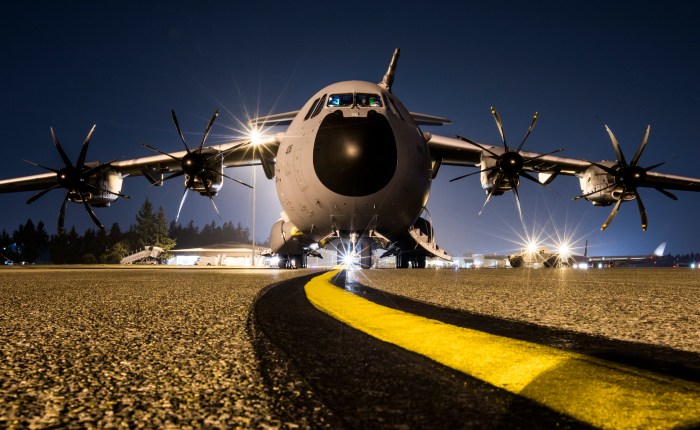
Header Image: An RAF Atlas (A400-M) at night during Operation Mobility Guardian. (Source: MoD Defence Imagery)

[1] John R. Ferris, ‘Review Article – The Air Force Brats’ View of History: Recent Writing and the Royal Air Force, 1918–1960,’ The International History Review, 20:1 (1998), p. 119.

Blinded by the Rising Sun? American Intelligence Assessments of Japanese Air Power, 1920-41: Part 3 – 1937-41

Blinded by the Rising Sun? American Intelligence Assessments of Japanese Air Power, 1920-41: Part 3 – 1937-41

By Justin Pyke

Editorial Note: In the final part of a three-part article, Justin Pyke examines American intelligence assessments of Japanese air power during the inter-war years. This final part examines issues between 1937 and the outbreak of war between America and Japan in 1941. Part one and two of this article can be found here and here.

Japan’s air services had successfully weaned themselves off of their foreign dependence by 1937. American intelligence assessments continued to identify the strategic and industrial weaknesses of Japanese air power accurately but became poor concerning technology and tactics. Japanese information security was tighter than it had ever been. Hence, American observers formed their conclusions through open sources and preconceived notions. When evidence emerged contradicting the prevailing view of Japan’s lack of technological innovation, they were ignored or explained away. Assessments of Japanese personnel began to swing toward a consistently negative view. These failures in assessing Japanese technology, tactics, and personnel from 1937-41 contributed to the defeats at the outset of the Pacific War.

Zero
A captured Mitsubishi ARM ‘Zero’ in flight, c. 1944 (Source: National Naval Aviation Museum)

The Americans had relied on access to Japanese air stations and factories to gain their information until the early 1930s. This avenue was closed with the start of the war in China. In place of the old sources, American observers came to rely extensively on open sources, like official Japanese press releases, supplemented with the precious little information that could be drawn from chance sightings of Japanese aircraft by Westerners.[1] A meaningful assessment of Japanese air power’s performance in China, or detailed technical information of a specific aircraft, would surface on occasion. The information gained from open sources at best-reiterated views that had been in place for almost two decades and at worst became more critical and inaccurate about Japanese capabilities.

American assessments of the Japanese aviation industry remained accurate, despite Japan’s turn towards tight information security. However, the preconception that Japan could not innovate technologically remained pervasive. A July 1937 report was typical. It acknowledged the advances made by the Japanese aviation industry, accurately identified the numerous weaknesses present, and stated that a ‘dearth of local inventive ability’ was a critical failure.[2] Another report referred to the numerous industrial weaknesses as a ‘cancer,’ and went on to claim that Japan continued to rely on copies of foreign aircraft, acquired either through production licenses or ‘outright mimicry.’[3] American assessments combined recognition of the real weaknesses of Japan’s aviation industry with the fiction that it still relied on the copying of foreign aircraft designs.

The American emphasis on Japanese industrial weakness was warranted. The continued shortage of machine tools, skilled labour, heavy equipment, and modern industrial techniques contributed to Japan’s lack of an aircraft reserve, slower rates of production, poor quality and quantity of spare parts, and the numerous other issues that undermined Japanese air power.[4] Greg Kennedy has emphasised this point when he stated that to view:

[tactical] success as demonstrative of the overall ability of Japan to manifest effective, modern air power is to misunderstand fundamentally the core attributes of air power.[5]

Ultimately, the weaknesses of Japanese industry identified by the Americans before the war worked to cripple the offensive capabilities of the Imperial Japanese Army Air Service (IJAAS) and Imperial Japanese Naval Air Service (IJNAS) during it.

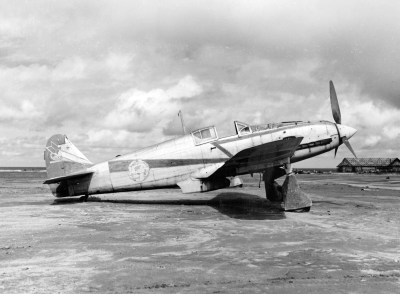
Ki-61_at_Fukuoka_in_1945
A Kawasaki Ki-61 ‘Tony’ of the 149th Shimbu Unit at Ashiya airfield in Fukuoka, Japan, c. 1945 (Source: Wikimedia)

The most egregious error in American reporting from mid-1937 onward concerned the preconception that Japan was incapable of designing its own aircraft. Exceptions to this trend did exist, but they were easily drowned out by the overwhelming number of reports that reiterated the same trope of Japanese unoriginality.[6] Fictional aircraft were given corresponding European designs that the Japanese supposedly had copied.[7] When the Americans received hard evidence of Japanese technological innovation, these indicators were ignored or misunderstood. Excellent American intelligence on the B5N Carrier Attack Bomber (‘Kate’) was not used as evidence that Japan had moved away from copying foreign designs.[8] The G3M was immediately assumed to be a copy of the German Junkers Ju-86, while another report stressed the bomber was a Heinkel design with Junkers’ ailerons. In fact, the superlative bomber was indigenous in origin.[9] Even when American observers disagreed on what the aircraft was a copy of, there was no doubt that it had to be a copy of something.

These preconceptions were all the more dangerous as Japan introduced new aircraft that it would use against the West in 1941. The most famous of these was the A6M Carrier Fighter (‘Zero’/‘Zeke’). Despite some accurate reporting on the aircraft, it remained largely unknown in Western aviation circles.[10] In one instance, the testimony of a captured Japanese bomber pilot caused confusion when he explained that the A6M was designed to dive on the enemy, then zoom upwards and prepare for another dive, but not to engage in extensive combat aerobatics. This reflected IJNAS fighter doctrine, which was similar to that of the Americans, rather than the true capabilities of the A6M. The Americans interpreted the testimony to mean the new fighter lacked manoeuvrability.[11] The underestimation of the A6M seems like a minor error when viewed in isolation. Indeed, American pilots quickly gained an understanding of the fighter from their first combat encounters.[12] However, it was only a symptom of a much broader issue. Evidence that the Japanese had achieved rough technological parity with the United States was belittled or ignored. Individual Japanese aircraft may have been better or worse than foreign counterparts for their intended roles, but American assessments assumed a clear and decisive technological advantage where none existed. Nor did Japanese technological innovation stop with the attack on Pearl Harbor. Both air services introduced aircraft, such as the Nakajima Ki-84 Fighter (Hayate/‘Frank’), that matched some of the best American designs throughout the war.[13] The problem was not that leading-edge Japanese aircraft designs were worse than their American counterparts, but that they never were able to replace their ageing predecessors in sufficient numbers to matter.

The Americans dismissed not just Japanese innovation, but its personnel and tactics. American views of Japanese personnel became increasingly negative after the start of the war in China. Assessments of Japanese factory workers and mechanics significantly reduced in frequency and classified reporting on aircrews indicated that they were of poor to mediocre quality.[14] American observers also continued to emphasize Japan’s lack of pilot reserves and training facilities.[15] Popular literature took a firm stand on Japanese personnel and often relied heavily on racism and national characteristics. One such work listed a number of Japanese racial defects, and summarised them as ‘daring but incompetent aviators.’[16] Classified sources never degraded into this kind of drivel, despite American intelligence shortcomings concerning Japanese tactics and technology.

Captured_Aichi_B7A2_on_ground
A captured Imperial Japanese Navy Aichi B7A2 ‘Grace’, c. 1945. This was one of many capable indigenous aircraft introduced by the Japanese air services during the Pacific War. (Source: Wikimedia)

Surprisingly little reporting discussed Japanese aerial performance in China, and reports that did provide a more balanced, and accurate, assessment of Japanese capabilities.[17] Occasionally, Chinese pilots were interviewed on their combat experience against the Japanese. One report from September 1940 concluded that dive bombing by the IJAAS and IJNAS was ‘very poor,’ while horizontal bombing had ‘improved tremendously.’ Discipline among IJNAS twin-engine bombers was rated ‘excellent,’ and the carrier air groups were given particularly high praise. The most important piece of information provided by Chinese pilots was that the Japanese sent fighter escorts with their bombers whenever possible.[18] However, given the mixed quality of the Republic of China Air Force, their views concerning Japanese capabilities were easily dismissed.[19]

The American underestimation of the Japanese air services’ personnel, tactics, and technology from 1937-41 contributed to, though by no means caused, the early defeats in the Pacific War. However, Japan’s inability to rectify the fundamental problems within its air services and aviation industry crippled its air power as the war progressed, just as American observers had predicted. The accurate assessment that Japan could not win a prolonged war of attrition in the air against the United States was what mattered most. However, the errors in assessing Japanese tactics and technology caused serious problems over the short term. In their haste to predict the setting of the Sun, the Americans failed to appreciate the danger of its rise.

Justin Pyke obtained his MA in Military and Intelligence History from the University of Calgary in 2016. His main research interests include the Asia-Pacific War, military and politics of Imperial Japan, and the development of air and naval power in the inter-war period. He can be found on Twitter at @CBI_PTO_History.

Header Image: A Mitsubishi A6M2 ‘Zero’/‘Zeke’ at the US National Advisory Committee for Aeronautics Langley Research Center, Virginia on 8 March 1943. On 4 June 1942, a Japanese task force launched a strike against Dutch Harbor, Alaska from the aircraft carriers Ryujo and Junyo. Petty Officer Tadayoshi Koga was flying an A6M2 from the Ryujo. On the way back to his carrier, he discovered of bullets had pierced his fuel tanks and he headed for an emergency landing on Akutan Island. However, the plane flipped over on its back during the landing, and Koga was killed. The A6M itself was only slightly damaged. A Japanese submarine failed to locate Koga or his plane, but five weeks later an American naval scouting party found the Japanese fighter. The A6M2 was salvaged and shipped back to the USA where it was repaired, and went through an exhaustive series of tests in order to gain information about its strengths and weaknesses. (Source: Wikimedia)

[1] A-1-m 15776, Dive Bombing in the Japanese Aviation, July 27, 1938, Naval Attaché Reports, 1886-1939, Box 68, RG 38, NA; Japanese Naval Activities in China, July 29, 1940, Naval Attaché Records, 1939-1941, 1940 File 59-124, RG 38, NA; Comments on Naval Aviation by Japanese Naval Aviators, August 23, 1941, Naval Attaché Records, 1939-1941, 1941 File 62, RG 38, NA.

[2] Expansion of Aircraft Manufacturing Industry, July 21, 1937, Selected Naval Attaché Reports Relating to the World Crisis, 1937-1943, Roll 2, RG 38, NA, p. 1.

[3] The Aircraft Industry in Japan, August 5, 1939, Naval Attaché Records, 1939-1941, 1939 File 165-233, RG 38, NA, pp. 1-2.

[4] Mark R. Peattie, Sunburst: The Rise of Japanese Naval Air Power, 1909-1941 (Annapolis: Naval Institute Press, 2001), p. 100; Erich Pauer, ‘Japan’s technical mobilization in the Second World War,’ in Erich Pauer (ed.), Japan’s War Economy (New York, NY: Routledge, 1999), pp. 54-5; Hagiwara Mitsuru, ‘The Japanese Air Campaigns in China, 1937-1945,’ in Mark Peattie, Edward Drea, and Hans Van de Ven (eds.), The Battle for China: Essays on the Military History of the Sino-Japanese War of 1937-1945 (Stanford, CA: Stanford University Press, 2011), p. 243; Jonathan B. Parshall and Anthony P. Tully, Shattered Sword: The Untold Story of the Battle of Midway (Washington D.C.: Potomac Books, 2005), p. 89; Eric M. Bergerud, Fire in the Sky: The Air War in the South Pacific (New York: Basic Books, 2009), p. 21, 46; Sakai Saburo, Martin Caidin, and Fred Saito, Samurai! (Annapolis: Naval Institute Press, 1991), p. 242.

[5] Greg Kennedy, ‘Anglo-American Strategic Relations and Intelligence Assessments of Japanese Air Power, 1934-1941,’ The Journal of Military History, 74:3 (2010), p. 772.

[6] William M. Leary, ‘Assessing the Japanese Threat: Air Intelligence Prior to Pearl Harbor,’ Aerospace Historian, 34:4 (1987), p. 274; 2085-947, The Capabilities of Japan in Military Aviation, June 23, 1939, US Military Intelligence Reports, Japan, 1918-1941, Reel 31, University Press of America, p. 1.

[7] Airplane Characteristics – Mitsubishi Type Zero Fighter, November 9, 1940, Naval Attaché Records, 1939-1941, 1940 File 125-202, RG 38, NA; New Dive Bomber in Production, August 2, 1940, Naval Attaché Records, 1939-1941, 1940 File 59-124, RG 38, NA.

[8] New Types of Aircraft, July 17, 1939, Naval Attaché Records, 1939-1941, 1939 File 89-164, RG 38, NA; Type 97 Torpedo-Bomber, November 16, 1939, Naval Attaché Records, 1939-1941, 1939 File 234-281, RG 38, NA; Specifications of Japanese Naval Bomber, Model 97, June 4, 1940, Naval Attaché Records, 1939-1941, 1940 File 59-124, RG 38, NA.

[9] Richard M. Bueschel, Mitsubishi/Nakajima G3M1/2/3 96 Rikko L3Y1/2 In Japanese Naval Air Service (Atglen: Schiffer Publishing, 1997), p. 20; Description of Navy Heavy Bomber, Type 96, July 26, 1939, Naval Attaché Records, 1939-1941, 1939 File 165-233, RG 38, NA; René J. Francillon, Japanese Aircraft of the Pacific War, Second Edition (London: Putnam Aeronautical Books, 1979), p. 350.

[10] Thomas G. Mahnken, Uncovering Ways of War: U.S. Intelligence and Foreign Military Innovation, 1918-1941 (Ithaca: Cornell University Press, 2002), pp. 79-80; Horikoshi Jiro, Eagles of Mitsubishi: The Story of the Zero Fighter, trans. Shojiro Shindo and Harold N. Wantiez (Seattle: University of Washington Press, 1981), p. 107.

[11] Leary, ‘Assessing the Japanese Threat,’ pp. 275-76; Horikoshi, Eagles of Mitsubishi, p. 85; John B. Lundstrom, The First Team: Pacific Naval Air Combat from Pearl Harbor to Midway (Annapolis: Naval Institute Press, 2005), p. 486; Roger Letourneau and Dennis Letourneau, Operation KE: The Cactus Air Force and the Japanese Withdrawal from Guadalcanal (Annapolis: Naval Institute Press, 2012), p. 13; Sakai et.al., Samurai, p. 83.

[12] John B. Lundstrom, The First Team and the Guadalcanal Campaign: Naval Fighter Combat from August to November 1942 (Annapolis: Naval Institute Press, 2005), pp. 535-36.

[13] See: Francillon, Japanese Aircraft of the Pacific War; Richard M. Bueschel, Nakajima Ki.84a/b Hayate in Japanese Army Air Force Service (Canterbury: Osprey Publishing, 1971).

[14] Notes on Japanese Naval Aviation, August 4, 1939, Naval Attaché Records, 1939-1941, 1939 File 165-233, RG 38, NA; Dropping of Aircraft Torpedoes by Japanese Naval Aircraft, September 26, 1939, Naval Attaché Records, 1939-1941, 1939 File 165-233, RG 38, NA; A-1-m 15776, Aerial Operations, August 2, 1940, Naval Attaché Reports, 1886-1939, Box 68, RG 38, NA; 2085-956, Handbook on the Air Services of Japan, September 27, 1940, US Military Intelligence Reports, Japan, 1918-1941, Reel 31, University Press of America, p. 36, 79.

[15] 2085-908, Military Aviation – General, July 29, 1937, US Military Intelligence Reports, Japan, 1918-1941, Reel 30, University Press of America, p. 3; W.D. Puleston, The Armed Forces of the Pacific: A Comparison of the Military and Naval Power of the United States and Japan (New Haven: Yale University Press, 1941), p. 231.

[16] Fletcher Pratt, Sea Power and Today’s War (New York: Harrison-Hilton Books, 1939), pp. 177-78.

[17] 2085-947, The Capabilities of Japan in Military Aviation, pp. 1-3.

[18] Comment on Japanese Air Force by Chinese Aviators, September 17, 1940, Naval Attaché Records, 1939-1941, 1940 File 125-202, RG 38, NA; Peattie, Sunburst, p. 110, 123.

[19] Peter Harmsen, Shanghai 1937: Stalingrad on the Yangtze (Havertown: Casemate Publishers, 2013), p. 30.

Blinded by the Rising Sun? American Intelligence Assessments of Japanese Air Power, 1920-41: Part 2 – 1930-1937

Blinded by the Rising Sun? American Intelligence Assessments of Japanese Air Power, 1920-41: Part 2 – 1930-1937

By Justin Pyke

Editorial Note: In the second part of a three-part article, Justin Pyke examines American intelligence assessments of Japanese air power during the inter-war years. This second part examines issues between 1930 and 1937. Part one of this article can be found here.

The early and mid-1930s brought with them a fundamental change in the trajectory of the Japanese air services. Their dependence on foreign technology and assistance began to decrease at the same time American intelligence assessments began to drop noticeably in overall quality. This decline stemmed partly from the dramatic improvement of Japanese information security and the increasing influence of preconceived notions of Japanese unoriginality. Observations concerning the Japanese aviation industry and the broad strategic value of air power remained consistent and accurate, while opinions of Japanese personnel became increasingly contradictory.

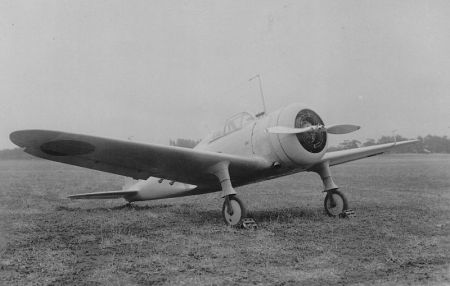
Nakajima_Ki-27_at_Hamamatsu
A Nakajima Ki-27 ‘Nate’ fighter aircraft. (Source: Wikimedia)

Western observers were forced to rely increasingly on open sources in place of the informative avenues that they had used previously. The Japanese press reported generally on the air services, and the frequency of reports that paraphrased such news stories gradually increased and replaced the detailed assessments derived from other sources.[1] The amount of information gathered through tours of air stations declined dramatically from 1930-37.[2] Additionally, Western aviation experts and military officers were treated increasingly like spies.[3] The Americans still were able to gather much intelligence regarding strategic and industrial issues, but nothing provided the kind of detailed tactical and technical information that they had grown accustomed to having during the 1920s.

The assessments that came out of Japan from 1930 to mid-1937 continued to accurately track the rapid expansion of the air services, along with the problems that constantly plagued the aviation industry. A June 1930 report contained comprehensive details concerning aircraft production across the dozens of factories that had sprung up in the country. For example, the Kawasaki Dockyard Company in Kobe possessed approximately 200 machine tools in its aircraft and engine factory, almost all of American manufacture.[4] The Japanese had relied heavily on the importation of foreign machine tools during the 1920s and did so even more as the industry expanded. Despite the continuing weakness of the Japanese aviation industry, the author of another report was surprised at the ‘remarkable strides’ that the Japanese Army (IJA) and Navy (IJN) had taken during the previous year, both in quality and quantity of production.[5] Strategy drove these strides. The IJN wished to use air power to overcome the disadvantage in the surface fleet institutionalised by the Washington and London naval arms limitation treaties, and the Imperial Japanese Army Air Service would undergo a similar expansion following the annexation of Manchuria and the 1932 Shanghai Incident.[6]

Foreign observers closely followed Japan’s increased efforts to expand the air services. In 1934, the Soviet State Military Publishing Bureau published a book on the Japanese air services written by D. Streshnevsky.[7] His views on the quality of Japanese industry roughly coincided with those of the Americans. The book listed all the aviation-related factories in Japan and noted that almost every single one had been enlarged, reconstructed, or both. Despite these strides, the aviation industry still depended on imports. Fuel was the most critical shortage, due to Japan’s complete lack of indigenous sources.[8] Such discussions of strategic resources and industrial capability were a staple of intelligence assessments of Japanese aviation, justifiably.[9] In 1936, the American military attaché provided an excellent summary of the strategic and industrial elements of Japanese air power. He noted aircraft manufacturing, which already struggled with a lack of skilled workers, would be hindered even more after the outbreak of hostilities due to the need for expanded production while making use of the same limited pool of the workforce. Additionally, factories could easily be deprived of the raw materials needed to manufacture aircraft of quality and quantity.[10] Another report noted the slow rate of aircraft production meant that Japan was unable to maintain a sufficient aircraft reserve:

planes designated as ‘reserve planes’ are used as much as those in service, and the number may vary from none at all to a disproportionate percentage, especially where units are being equipped with new models.[11]

Overall, reports stressed that Japanese industrial practices were rapidly improving, but still struggled with many inherent weaknesses, such as a reliance on foreign techniques and a shortage of skilled labour, raw resources, and machine tools.

G3M_Type_96_Attack_Bomber_Nell_G3M-24s
An Imperial Japanese Navy’s G3M from Kisarazu Air Group over Sun Yat-sen Mausoleum, Nanking, 1938. This bomber entered service in 1936. (Source: Wikimedia)

Appraisals of Japanese technological progress began to slip in quality during the early and mid-1930s. The preconception that the Japanese were incapable of extensive technical innovation in aviation, which had been true during the 1920s, began to mask the Japanese progress in the area from the early 1930s. It is telling that the translation of Streshnevsky’s work was the only report from the American naval attaché’s office that emphasised Japan’s growing inventive capabilities.[12] Mr Parker of the Bristol Company expressed the typical Western view when he described the Japanese as ‘notorious copyists.’[13] Instead, by 1930 the Japanese were modifying foreign designs to fit their own needs rather than simply copying them wholesale, and an increasing number of designs were entirely of Japanese origin. Several capable indigenous aircraft were designed or entered service from 1933-37, such as the G3M Land-Based Attack Aircraft (‘Nell’), and combined to bring the Japanese air services up to rough technological parity with the West by the late 1930s.[14] By the outbreak of the Second Sino-Japanese War in July 1937, the Japanese had achieved independence in the field of aviation design and manufacturing, something that went unnoticed by American observers.

American assessments of the quality of Japanese pilots, mechanics, and workers were increasingly varied and contradictory. Philip G. Lucas of the Hawker Company stated that the Japanese were ‘competent’ pilots who should not be underrated, implying that the common views held in the United States and Great Britain were inaccurate.[15] Parker and Mr Burgoine of the Bristol Company both agreed that the Japanese were ‘excellent’ fliers, but exhibited a lack of initiative and originality in their flights.[16] Two foreign air force pilots, one British and one German, were given increasingly rare opportunities to witness Japanese pilots in flight while they toured IJA and IJN air stations in early 1935. They both concluded the Japanese were ‘good’ pilots, but the Englishman noted that the Japanese were more ‘conservative’ in their manoeuvring.[17] Streshnevsky’s analysis of Japanese air performance over Shanghai in 1932 left a poor impression. Japanese bombing was ineffectual because of poorly trained pilots and insufficient bomb loads.[18] While reports on aircrew quality were contradictory, American observers continued to accurately note that Japan lacked the depth of aircrew reserves to keep up with the rate of attrition in a high-intensity air war.[19]

Americans assessed Japanese mechanics and workers much as they did their flying compatriots. Mr R. Moffett of the Wright Aeronautical Corporation condemned all the Japanese engineers, mechanics, and workers with whom he worked. Engine mechanics, ‘lamentably poor’ when tasked with correcting minor difficulties with auxiliary equipment, had to be shown the exact detailed procedure to follow. Enlisted men appeared ‘stupid.’ Moffett concluded that the Japanese ‘are striving far beyond their capabilities in the engine field.’[20] Other Western aviation representatives had kinder words for Japanese personnel. Lucas described the Japanese mechanics whom he met as ‘extremely intelligent’ and rated the overall quality of Imperial Japanese Navy Air Service maintenance personnel as ‘very high.’[21] Burgoine and Parker believed that the Japanese could learn rapidly through experience, and thought the mechanics in the aviation industry well-trained and ‘excellent,’ but lacking experience with machine tools.[22]

The American intelligence assessments of Japanese air power from 1930 to mid-1937 remained excellent regarding industrial and strategic issues but were noticeably less accurate regarding technology and tactics. Japanese military aviation had been an open door for intelligence gathering in the 1920s, but the opening gradually narrowed through the early 1930s and slammed shut with the start of the war in China in 1937. The preconception of Japanese unoriginality, particularly regarding aircraft design, became increasingly influential during the 1930s at a time when Japan was moving away from its foreign dependence. Meanwhile, the opinions concerning the quality of Japanese air and ground crews were diverse, varying wildly from praise to derision and everything in between. The lack of a clear and consistent snapshot of Japanese personnel became a major problem in the late 1930s, as did the assumption that the Japanese could not innovate in the aviation sphere.

Justin Pyke obtained his MA in Military and Intelligence History from the University of Calgary in 2016. His main research interests include the Asia-Pacific War, military and politics of Imperial Japan, and the development of air and naval power in the inter-war period. He can be found on Twitter at @CBI_PTO_History.

Header Image: Nakajima Ki-27 at Nomonhan during the Battle of Khalkhin Gol, c. 1939. This indigenous IJAAS fighter entered service in 1937. (Source: Wikimedia)

[1] E-8-a 21984, Japanese Army desires for Unification of Army-Navy Air Service Opposed by Navy, March 20, 1936, Naval Attaché Reports, 1886-1939, Box 732, RG 38, NA.

[2] A-1-l 19973, Tateyama Naval Air Station, December 4 1930, Naval Attaché Reports, 1886-1939, Box 64, RG 38, NA; A-1-l 19973, Tateyama Naval Air Station, January 30 1932, Naval Attaché Reports, 1886-1939, Box 64, RG 38, NA; A-1-l 19973, Tateyama Naval Air Station, December 4 1933, Naval Attaché Reports, 1886-1939, Box 64, RG 38, NA; A-1-l 19973, Tateyama Naval Air Station, December 31 1935, Naval Attaché Reports, 1886-1939, Box 64, RG 38, NA; A-1-l 19973, Tateyama Naval Air Station, December 24 1936, Naval Attaché Reports, 1886-1939, Box 64, RG 38, NA.

[3] 2085-810, Military Aviation – General: Attachment of British Officer to the 4th Air Regt., February 10 1937, US Military Intelligence Reports, Japan, 1918-1941, Reel 29, University Press of America, p. 2, 15; A-1-a 21684, British Estimate of Japanese Aviation, Continued, May 1 1935, Naval Attaché Reports, 1886-1939, Box 10, RG 38, NA, 1; A-1-a 21684, British Estimate of Japanese Aviation, February 11 1935, Naval Attaché Reports, 1886-1939, Box 10, RG 38, NA, p. 2; A-1-a 21684,Visit to Japan of Mr Victor E. Bertrandias of the Douglas Aircraft Company, February 16 1937, Naval Attaché Reports, 1886-1939, Box 10, RG 38, NA, pp. 1-2.

[4] 2085-680, Aircraft Factories, June 8, 1930, US Military Intelligence Reports, Japan, 1918-1941, Reel 28, University Press of America, p. 4.

[5] 2085-844, Aircraft Building of the Army & Navy during 1931, March 6, 1932, US Military Intelligence Reports, Japan, 1918-1941, Reel 29, University Press of America, p. 1.

[6] Mark R. Peattie, Sunburst: The Rise of Japanese Naval Air Power, 1909-1941 (Annapolis: Naval Institute Press, 2001), p. 27; Yoichi Hirama, ‘Japanese Naval Preparations for World War II,’ Naval War College Review, 44:2 (1991), p. 69; René J. Francillon, Japanese Aircraft of the Pacific War, Second Edition (London: Putnam Aeronautical Books, 1979), p. 31. For further details on the interwar naval arms limitation treaties, see: Erik Goldstein and John H. Maurer (eds.), The Washington Naval Conference, 1921-22: Naval Rivalry, East Asian Stability and the Road to Pearl Harbor (London: Frank Cass, 1994); John H. Maurer and Christopher M. Bell (eds.), At the Crossroads between Peace and War: The London Naval Conference of 1930 (Annapolis: Naval Institute Press, 2014).

[7] A-1-a 21973, Development of the Japanese Air Fleet, March 5, 1936, Naval Attaché Reports, 1886-1939, Box 10, RG 38, NA; A-1-a 21973, Japanese Naval Aviation, June 1, 1936, Naval Attaché Reports, 1886-1939, Box 10, RG 38, NA.

[8] A-1-a 21973, Development of the Japanese Air Fleet, 6-12.

[9] A-1-a 21684, British Estimate of Japanese Aviation; A-1-a 21684, British Estimate of Japanese Aviation, Continued; 2085-812, Aircraft Production – Non-Governmental. Mitsubishi Heavy Industries Company, Ltd. Nagoya Aircraft Works, June 7, 1937, US Military Intelligence Reports, Japan, 1918-1941, Reel 29, University Press of America; 2085-885, Air Information, April 28, 1934, US Military Intelligence Reports, Japan, 1918-1941, Reel 29, University Press of America; 2085-687, Reply to Evaluation of Reports, October 23, 1936, US Military Intelligence Reports, Japan, 1918-1941, Reel 28, University Press of America.

[10] 2085-687, Reply to Evaluation of Reports, October 23, 1936, US Military Intelligence Reports, Japan, 1918-1941, Reel 28, University Press of America, p. 1.

[11] 2085-810, Military Aviation – General, p. 1.

[12] A-1-a 21973, Japanese Naval Aviation, p. 5.

[13] A-1-a 21684, British Estimate of Japanese Aviation, p. 4.

[14] Mikesh and Abe, Japanese Aircraft, p. 45; Peattie, Sunburst, p. 86, 89. Also see: Francillon, Japanese Aircraft of the Pacific War.

[15] A-1-a 21684, British Estimate of Japanese Aviation, Continued, p. 2.

[16] A-1-a 21684, British Estimate of Japanese Aviation, p. 4.

[17] A-1-a 21684, Foreign Opinions Regarding Japanese Naval and Military Aviation, February 21, 1935, Naval Attaché Reports, 1886-1939, Box 10, RG 38, NA.

[18] A-1-m 15776, Fighting Experience of the Japanese Military Air Forces, March 17, 1936, Naval Attaché Reports, 1886-1939, Box 68, RG 38, NA, 6.

[19] 2085-687, Reply to Evaluation of Reports, p. 2.

[20] A-1-a 21684, Visit to Japan of American Aircraft Representative, p. 1.

[21] A-1-a 21684, British Estimate of Japanese Aviation, Continued, pp. 1-2.

[22] A-1-a 21684, British Estimate of Japanese Aviation, p. 4.

#ReviewArticle – Air Power in Technicolour

#ReviewArticle – Air Power in Technicolour

By Dr Ross Mahoney

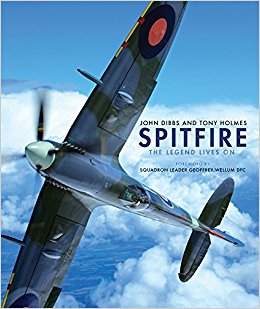
John Dibbs and Tony Holmes, Spitfire: The Legend Lives On. Oxford: Osprey Publishing, 2016. Foreword. Images. Appendices. Bibliography. Index. Hbk. 224 pp.

John Dibbs, Tony Holmes and Gordon Riley, Hurricane: Hawker’s Fighter Legend. Oxford: Osprey Publishing, 2017. Foreword. Images. Appendix. Bibliography. Index. Hbk. 256 pp.

John Dibbs, Kent Ramsey and Lieutenant Colonel Robert Renner, Storm of Eagles: The Greatest Aviation Photographs of World War II. Oxford: Osprey Publishing, 2017. Foreword. Images. Index. Hbk. 248 pp.

Spitfire

We have all been there have we not? You are standing in the bookshop looking at ‘serious’ history books, and then it happens, your eyes are drawn to a big shiny book, usually on the bottom shelf. You cannot help yourself; you are drawn to it and pick it up and fawn at the pictures, usually glossy. Whether you buy it is irrelevant; there is something that always draws you to such books. Whether it is the subject matter or the high-quality photography, it happens. This is what coffee table books are designed to do. They are designed to bring you ‘in’ with description and dazzling images.

Hurricane

These three books from Osprey Publishing are very well-produced examples of the coffee table book genre that will tempt you with their wares. Two of the books, Spitfire and Hurricane complement each other as their subject matter is the two fighters that exemplify the Royal Air Force’s contribution to the Second World War. The third book, Storm of Eagles, is a collection of period photographs from the Second World War that has been produced with the support of the National Museum of World War II Aviation in Colorado Springs. Both Spitfire and Hurricane follow a similar layout and provide descriptions of different versions of their respective aircraft or a campaign in which they were involved. For example, in Spitfire, there is a chapter on the Rolls-Royce Griffon engined Spitfire (pp. 113-44) while Hurricane includes a section on the Malta campaign (pp. 142-55). Each chapter also includes a discussion of relevant restored examples of the aircraft, which provide a framework for the narrative. This narrative is ably supported by a mix of John Dibbs’ high-quality modern images of restored aircraft alongside some great archive pictures. A valuable addition to these books are their respective forewords written by veterans who flew the aircraft, and in Hurricane, this is provided by Wing Commander Tom Neil while Squadron Leader Geoffrey Wellum provided the introduction for Spitfire. This helps round the books off by offering some useful personal views of the aircraft and associated issues such as motivation. As Neil reflected:

Flight is wonderful, flight in a machine you love is simply magical, and these photographs offer a sense of that (p. 14).

Sorm of Eagles

Unlike the first two books, Storm of Eagles is broader in scope and not focused on a single aircraft type. Rather, split geographically into theatres of operations with images used to illustrate air power in these geographic areas, this book presents an excellent mix of pictures not just of aircraft but also of the experience of air warfare and service with air forces. While images of the American experience predominate, there are photographs included from all the major combatants of the Second World War, thus, highlighting the transnational experience of air warfare during this conflict. Indeed, from my perspective, this book and the selection of photographs used, highlights how under utilised images can be as a source when it comes to understanding the experience of war. For example, the image of Major Robert S. Johnson (p. 81), a United States Army Air Force (USAAF) ace with 27 victories on the P-47 Thunderbolt, at the Republic factory at Farmingdale, Long Island illustrates several salient themes concerning the Second World War. First, this image highlights the role of propaganda in war as Johnson had been ordered home for a War Bond tour. Such tours put the USAAF in as positive a light as possible and helped explain the necessity for war production. Second, in being an act of propaganda, it highlights the relationship between the home front and front-line and the need to ensure workers understood the impact their work had on the war effort by creating a bond between ‘workers’ and ‘fighters’. In short, such propaganda activities were an important aspect of civil-military relations and images such as this further our understanding of these deeds. Third, the photo also shows the celebrity of the pilot as a fundamental aspect of air force ethos. Ultimately, understanding factors such as those noted above are critical to our understanding of the Second World War and photographs are a source that historians should not ignore.

To conclude, and to come back to my rather flippant introduction, these are lovely looking books; however, do they add anything to how we think about war generally and air power in particular? For me, the simple answer is yes. First, at one level, there is information that can be garnered from such books in particular through sections such as the forewords, which typically tend to be written by veterans. These give a useful insight into how those who operated and flew these aircraft think and feel about them. Also, as already noted with Storm of Eagles, some of the images presented are relevant sources in themselves and need to be utilised more fully where possible concerning what they add to our corpus of knowledge on the experience of war. Second, and simply put, books such as those under review here, are a popular genre as any visit to a major bookshop chain will attest. If, as historians, we are to understand the phenomenon of war, then we have to not only comprehend either the cultural resonance of conflict, or the physical act itself, but also the linkages between these two ends of the same lens. It is clear that such books, which tend to focus on the conduct of war, provide a means through which to appreciate the cultural resonance of conflict and as such provide a broader understanding of the phenomenon of war. This, ultimately, will further enrich our knowledge of the past.

Dr Ross Mahoney is an independent historian and defence specialist based in Australia. Between 2013 and 2017, he was the resident Historian at the Royal Air Force Museum, and he is a graduate of the University of Birmingham (MPhil and PhD) and the University of Wolverhampton (PGCE and BA). His research interests include the history of war in the twentieth and twenty-first centuries, air power and the history of air warfare, and the social and cultural history of armed forces. To date, he has published several chapters and articles, edited two books, and delivered papers on three continents. He is a member of the Royal Historical Society and is an Assistant Director of the Second World War Research Group. He is a member of the Royal Historical Society and an Assistant Director of the Second World War Research Group. He blogs at Thoughts on Military History, and can be found on Twitter at @airpowerhistory.

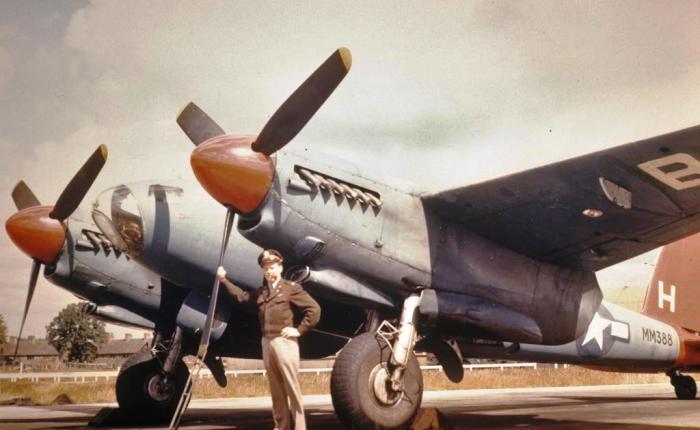
Header Image: An airman of the 654th Bombardment Squadron, 25th Bombardment Group, USAAF, poses with de Havilland DH98 Mosquito PR Mk XVI “H” MM388. (Source: © IWM (UPL 6940))

Blinded by the Rising Sun? American Intelligence Assessments of Japanese Air Power, 1920-41: Part 1 – The 1920s

Blinded by the Rising Sun? American Intelligence Assessments of Japanese Air Power, 1920-41: Part 1 – The 1920s

By Justin Pyke

Editorial Note: In the first of a three-part article, Justin Pyke examines American intelligence assessments of Japanese air power during the inter-war years. This first part examines issues in the 1920s.

In December 1941 Japan launched a campaign of rapid conquest against British, American, and Dutch possessions throughout the Asia-Pacific region. The Imperial Japanese Army Air Service (IJAAS) and Imperial Japanese Navy Air Service (IJNAS) proved critical to the success of these early campaigns. Although American authorities identified Japan as a primary rival after 1918 and focused most of their intelligence gathering efforts on the East Asian nation, they failed to appreciate the threat posed by Japanese air power in 1941. This failure was not as simplistic as the old historiography portrays.[1] Instead, intelligence assessments of Japanese air power passed through three distinct phases. During the 1920s, American observers maintained an accurate picture of Japanese capabilities. Japan was largely an open society, and its air services depended on Western assistance, meaning the Americans were able to track major developments. The early and mid-1930s was a transition period from the openness of the 1920s to the extreme secrecy that characterised the period from 1937 onward. With the start of the war in China, the Americans were almost completely in the dark regarding assessments of the Japanese air services’ technology, tactics, and personnel. One thing that remained consistent from 1920-41 was American observers accurately assessed the strategic and industrial limits of Japan’s air power. Success with these higher level assessments ultimately mattered more than the mistakes made assessing technology and tactics.

SempillMission
Captain Sempill showing a Gloster Sparrowhawk to Admiral Tōgō Heihachiro, 1921. (Source: Wikimedia)

Throughout the 1920s, Japan worked rapidly to catch up with the developments of Western powers in the field of military aviation. During this period, American intelligence assessments remained accurate at all levels, from personnel, tactics, and technology to industry and the scarcity of raw resources. American observers quickly identified Japan’s heavy reliance on foreign assistance and the weakness of its aviation industry, while the quality and quantity of Japanese aviation personnel and aircraft were carefully tracked. As throughout the entire inter-war period, the assessments primarily addressed Japan’s ability to wage a protracted war of attrition in the air, rather than to focus on tactical and technical capability.

The accuracy of American assessments in the 1920s was due in large part to openness within Japan. Letters were constantly exchanged between the American naval attaché and the Japanese Navy Ministry. The letters requested information about the IJNAS, such as its organisation, the numbers of available aircraft, and the number of existing and planned naval air stations. The Navy Ministry answered these letters in full.[2] The ease with which the naval attaché obtained large amounts of information through direct communication with the Navy Ministry was remarkable, but the openness of the Japanese was not limited to such communication. Tours of aircraft manufacturing facilities and air stations were also open and casual. The Americans were not rushed through important areas. The level of detail in an extensive report on Japanese aircraft factories from 1925 was typical and revealed lax Japanese information security. Minor technical details and factory layouts were abundantly described throughout the report, revealing the high level of access Americans had at the facilities. Japanese workmen and designers were extremely forthcoming when asked direct questions about their work.[3]

Japan’s reliance on foreign assistance allowed the Americans to keep pace with its technological and industrial advances. A report in 1924 stated that Japan always sought out the best foreign designed aircraft that it could purchase, and copied these models, along with the means to produce them. The air services were also modelled after what the Japanese thought was the most advanced foreign air forces.[4] For example, the IJNAS relied on British assistance regarding industrial practices, aviation technology, personnel training, and tactics.[5] The American naval attaché constantly emphasised the Japanese inability to design and build aircraft without extensive foreign aid. After inspecting the aircraft factories, he concluded that they had yet to produce any indigenously designed aircraft or engines ‘of any value whatsoever.’[6] A general summary from 1927 noted that all Japanese aircraft were of foreign design and that these aircraft were underpowered and inferior to contemporary American designs.[7] This claim was an overstatement, but the number of indigenous Japanese military designs remained very small throughout the 1920s.[8] The motif of Japanese unoriginality would persist through to the beginning of the Pacific War, long after it had ceased to be true. In the 1920s, however, Japan did seek to develop its air power by following in the footsteps of the world leaders.

The inferior production methods of Japan’s major aircraft manufacturers were also highlighted. One such report noted that most of the machine tools in the factories were of American manufacture and the machine shops themselves were crowded, which led to inefficiency within the production process. Production was prolonged, particularly when a factory was ordered to manufacture new types of aircraft. During this process, foreign workmen were always employed to ensure a smoother transition.[9] The Japanese aviation industry’s inability to rapidly turn existing factories over to produce new models of aircraft persisted into the Pacific War. It undermined Japan’s ability to keep pace both qualitatively and quantitatively with their Western foes. For example, the J2M Navy Interceptor Fighter (Raiden/‘Jack’) first flew nearly three months ahead of the F6F Hellcat prototype’s first flight. Despite this, the first production Hellcat was completed in the same month that the J2M had only just been accepted for serial production. Six months later only 14 J2Ms had been delivered at a time when Hellcats leapt off the American production lines.[10]

The opinion of Japanese personnel was generally low but remained balanced. A 1926 memorandum held Japanese airmen and officers in high regard, referring to them as ‘well disciplined.’ Most pilots were described as ‘good,’ while the work of the mechanics was deemed ‘most praiseworthy.’[11] The naval attaché’s assessments of Japanese pilots were more critical. One report concluded that the Japanese have a ‘fair ability’ as pilots, but rated them poorly in all around efficiency.[12] The British aviators who had trained the IJNAS in the early 1920s informed the Americans of their low opinion of Japanese personnel, and this view was shared by Colonel Jacques-Paul Faure, head of the French Military Aviation Mission to Japan that had trained the IJAAS’ pilots.[13] A major 1928 report on Japanese aviation viewed mechanics within the Japanese air services as poor, although civilians brought in to help the military were good.[14] Conspicuous by its absence was any notion of the inferiority of the Japanese race despite the criticism levelled against Japanese personnel.

FrenchMilitaryMissionToJapan
The French Military Mission to Japan, 1918-1919 (Source: Wikimedia)

A handful of reports did, however, attribute personnel deficiencies to the national characteristics, or national stereotypes, of the Japanese people. One assessment stated that:

[t]he Japanese is not a natural flyer and rarely loves flying for its own sake. Neither is he a natural mechanic, nor has he any tradition of trained mechanics behind him.[15]

While it is easy to dismiss this statement as racist or irrational, it did contain some truth. The Japanese air services had a chronic shortage of trained mechanics, partly because Japan was not a fully industrialised nation like the United States or Great Britain. The Japanese economy, despite massive leaps since the Meiji Restoration, continued to operate ‘with one foot in the nineteenth century.’[16] Once again, the quality of Japanese pilots was called into question, but the report concluded that if American pilots were considered ‘very good,’ the Japanese were rated ‘good.’[17] This statement made it clear that the Japanese were inferior to their western counterparts, but it was hardly irrational or unfair.

The most noteworthy weaknesses that the Americans identified regarding Japanese aviation personnel were the lack of pilot training and reserves. In an information bulletin detailing the Japanese Diet’s 1924 budget for naval aviation, the naval attaché noted that the IJNAS had no reserve personnel at all.[18] Another report stated that ‘there are three schools of aviation, but only one [sic] army flying training school,’ and went on to detail the number of pilots available to Japan.[19] The 1927 general summary of the Japanese air services questioned the flying experience of the officers, and described the flying seen in Japan as ‘characterized by timidity and one could not help but feel that dash and spirit were lacking.’ The report concluded that the IJAAS and IJNAS were at:

[a]n elementary stage of development. None of them are capable of combat with well developed aviation, considering factors other than equipment.[20]

Taken as a whole, American intelligence assessments of Japanese air power during the 1920s were highly accurate from the strategic and industrial spheres down to the tactical and technological level. Lax information security measures within Japan provided American observers with a remarkable level of freedom. American reports assessed the ability of Japan to fight a protracted war in the air, where aircraft production figures, industrial efficiency, innovative aircraft design, strong pilot training programs, and sizeable pilot reserves were critical to achieving success. The correct conclusion was Japan did not yet possess air power that could seriously threaten the Western powers, but this would begin to change in the 1930s.

Justin Pyke obtained his MA in Military and Intelligence History from the University of Calgary in 2016. His main research interests include the Asia-Pacific War, military and politics of Imperial Japan, and the development of air and naval power in the inter-war period. He can be found on Twitter at @CBI_PTO_History.

Header Image: A Nakajima A2N carrier borne fighter that first flew at the end of the 1920s. (Source: Wikimedia)

[1] For examples of the old view regarding American intelligence assessments of Japan, see: John W. Dower, War without Mercy: Race and Power in the Pacific War (New York: Pantheon Books, 1986); David Kahn, ‘United States Views of Germany and Japan in 1941,’ in Ernest R. May (ed.), Knowing One’s Enemies: Intelligence Assessment before the Two World Wars (Princeton: Princeton University Press, 1986).

[2] A-1-u 17242, Letter to Captain K. Terashima, I.J.N., January 27 1925, Naval Attaché Reports, 1886-1939, Box 142, Record Group [RG] 38, National Archives and Records Administration [NA], Washington, D.C.; A-1-u 17242, Information on Air Services, March 5 1926, Naval Attaché Reports, 1886-1939, Box 142, RG 38, NA; A-1-u 17242, Letter to Mr McClaran, February 10 1925, Naval Attaché Reports, 1886-1939, Box 142, RG 38, NA.

[3] A-1-u 17242, Visit to Aircraft Factories, May 15, 1925, Naval Attaché Reports, 1886-1939, Box 142, RG 38, NA.

[4] 2085-630, Extracts from Report of Inspection of United States Possessions in the Pacific and Java, Singapore, India, Siam, China, & Japan, October 24, 1924, US Military Intelligence Reports, Japan, 1918-1941, Reel 28, University Press of America, 1.

[5] Mark R. Peattie, Sunburst: The Rise of Japanese Naval Air Power, 1909-1941 (Annapolis: Naval Institute Press, 2001), pp. 17-20; Jonathan Parkinson, ‘HIJMS Wakamiya and the Early Development of Japanese Naval Air Power,’ The Mariner’s Mirror, 99:3 (2013), pp. 318-321. Also see: John Ferris, ‘A British ‘Unofficial’ Aviation Mission and Japanese Naval Developments, 1919-1929,’ Journal of Strategic Studies, 5:3 (1982), pp. 416-39.

[6] A-1-u 17242, Japanese Air Strength, May 5, 1925, Naval Attaché Reports, 1886-1939, Box 142, RG 38, NA, 3.

[7] 2085-663, General Summary Japanese Air Service, June 1, 1927, US Military Intelligence Reports, Japan, 1918-1941, Reel 28, University Press of America, 8.

[8] See: Robert C. Mikesh and Shorzoe Abe, Japanese Aircraft, 1910-1941 (Annapolis: Naval Institute Press, 1990).

[9] A-1-u 17242, Visit to Aircraft Factories, 1, 8.

[10] Fighter Combat Comparisons No. 1: Grumman F6F-5 Hellcat vs. Mitsubishi J2M3 Model 21 Raiden (‘Jack’) (Teaneck: Tacitus Publications, 1989), p. 13.

[11] 2085-647, Memorandum for Major Baldwin, September 30, 1926, US Military Intelligence Reports, Japan, 1918-1941, Reel 28, University Press of America, 3, 6.

[12] A-1-u 17242, Japanese Air Strength, 3.

[13] Thomas G. Mahnken, Uncovering Ways of War: U.S. Intelligence and Foreign Military Innovation, 1918-1941 (Ithaca: Cornell University Press, 2002), p. 73; A-1-u 17242, Aviation, July 21, 1925, Naval Attaché Reports, 1886-1939, Box 142, RG 38, NA, 3.

[14] 2085-784, Report of Major W. B. Duty, September 20, 1928, US Military Intelligence Reports, Japan, 1918-1941, Reel 29, University Press of America, 83.

[15] 2085-748, Japanese Aviation: Army, Navy, Civil, July 20, 1927, US Military Intelligence Reports, Japan, 1918-1941, Reel 29, University Press of America, 2.

[16] Eric M. Bergerud, Fire in the Sky: The Air War in the South Pacific (New York: Basic Books, 2009), p. 17.

[17] 2085-748, Japanese Aviation: Army, Navy, Civil, 2.

[18] A-1-u 17242, Data for Congressional Hearing; Additional Detailed Information on Air Services, February 9, 1925, Naval Attaché Reports, 1886-1939, Box 142, RG 38, NA, 2.

[19] 2085-719, Information as to Japanese Aviation, February 9, 1927, US Military Intelligence Reports, Japan, 1918-1941, Reel 28, University Press of America.

[20] 2085-663, General Summary Japanese Air Service, 3, 7.

#AirWarBooks – Dr Michael Molkentin

#AirWarBooks – Dr Michael Molkentin

By Dr Michael Molkentin

Editorial Note: In the third instalment of ‘Air War Books,’ Dr Michael Molkentin discusses the ten books that have influenced and shaped his writing as an air power historian. If you are interested in contributing to this series or From Balloons to Drones more generally, find out how here.

After I wrote to Dr Ross Mahoney enthusiastically agreeing with several of his choices (always a bad idea!) and suggesting a few others, he promptly invited me to contribute my own ‘Top 10’. I had been saying I would write something for Balloons to Drones for a while and so now he had me cornered. What follows is a list of titles that have had a significant impact on the way I research and write aviation and air power history. As these titles clearly indicate, my area of interest primarily concerns the pre-Second World War period (military and civil) and the people and ideas, rather than the technology, of aviation. 

Denis Winter, The First of the Few: Fighter Pilots of the First World War (London: Allen Lane, 1982). Denis, unfortunately, went on to write a scandalously bad book on Haig that damaged his reputation as a historian. But before that, he produced a couple of genuinely very good ‘face of battle’ type histories of British servicemen in the Great War (the other being Death’s Men). I found The First of the Few in my high school library and later used it as a model for writing my honours thesis on Australian airmen in the Great War. It is a bit dated, relies almost entirely on published accounts and some of Winter’s statistics do not stand up to scrutiny. But it is what got me interested in the subject and stands as the best personal experience study of British airmen in the Great War. I had the pleasure of meeting Denis in Canberra in 2004. He was a kind and gracious man and, when I showed him my work, he encouraged me to keep writing.

Richard P. Hallion, Taking Flight: Inventing the Aerial Age, from Antiquity Through the First World War (New York: Oxford University Press, 2003). I might have included any of Richard’s numerous books on air power (Strike from the Sky, his history of ground attack is a close second) but this has probably been most useful and influential in my work. It is a model of highly readable, yet meticulously researched history. It is international in scope and provides some valuable analysis of the complex ways in which aviation emerged as a practical reality, in various parts of the world, before 1914.

S.F. Wise, The Official History of the Royal Canadian Air Force, Volume 1: Canadian Airmen and the First World War (Toronto: University of Toronto Press, 1980). Wise’s first volume of the Royal Canadian Air Force’s official history is, in my view, the best single volume history of British air power in the Great War. The ubiquity of Canadians in the British flying services (over 20,000 served) means that Wise needed to cover all aspects of air power in the conflict – maritime aviation, strategic bombing and home defence, army cooperation and even some brief surveys of the RFC/RAF in secondary theatres. While some of his conclusions about the conduct of the war on the Western Front have dated, in the main his conclusions stand and are thoroughly grounded in archival sources. My PhD thesis and the book that followed it used Wise’s book as a model to examine Australia’s part in the air war from political, strategic, operational and tactical perspectives.

E.R. Hooton, War over the Trenches: Air Power and the Western Front Campaigns 1916-1918 (Hersham: Midland Publishing, 2010). I have mixed feelings about his book. On the one hand, it makes a significant contribution to our understanding of air power on the Western Front by conducting a multi-force (French, German and British) analysis at the operational level- something nobody had previously attempted. Whereas previous studies of the subject have focused on the tactical level, Hooton uses a mass of statistical data (sorties flown, ordnance expended, losses, serviceability, etc.) to provide a much broader picture of how air power influenced the conflict and how its use evolved between 1916 and 1918. Unfortunately, the book is poorly written and (in the first edition at least) so badly type set that some of the data tables are almost unreadable. It is such an important contribution to the field: I only hope the publisher has the good sense to reissue a revised edition or that an aspiring PhD candidate will take his approach further.

John Buckley, Air Power in the Age of Total War (London: UCL Press, 1999). I am going to go with Ross here and say that, among the many air power surveys out there, this one is the best. It is clear, concise and, essentially for a book like this, gets the balance right between ideas and details. Giving his narrative cohesion is a compelling, convincing and delightfully ironic thesis: that total war first enabled air power but then, following the onset of the nuclear age, limited its functions.

Philip S. Meilinger, The Paths of Heaven: The Evolution of Airpower Theory (Maxwell AFB, AL: Air University Press, 1977). Besides Buckley, the other book I recommend students starting out in the field is Meilinger’s survey of air power thinking. It is a straightforward, textbook approach devoting a chapter to each of the twentieth century’s most influential air power theorists. It is not exactly a page turner but is absolutely essential reading for students of air power and a useful reference work to have within arm’s reach when writing.

Malcolm Cooper, The Birth of Independent Air Power: British Air Policy in the First World War (London: Allen and Unwin, 1986). Malcolm was one of the first scholars to use the Air Ministry’s declassified files after their transfer to the British National Archives (then the PRO) during his PhD candidature during the 1970s. Whereas accounts of British air power’s early days had, until then, been overwhelmingly focused at the tactical level (individual pilots, squadrons, Biggles, etc.), The Birth of Independent Air Power focuses on the topic at the political and policy-making levels. I do not agree with Malcolm’s conclusion that the Army’s use of air power was wasteful and unimaginative (neither does James Pugh in his excellent new book which provides a good update on aspects of Cooper) but much of what he says was vital in adding political context to the operational history of British air power from 1914 to 1918.

Alfred Gollin, The Impact of Air Power on the British People and their Government (Stanford, CA: Stanford University Press, 1989). I would give this to students not even interested in air power as a somewhat rare example of an academic historian writing in a clear, engaging style. Honestly, it reads like a novel but still manages to seamlessly incorporate excellent analysis. Gollin was an enormously talented historian and a shining example to those of us who actually want our work to have a readership beyond the academy and services.

John A. Lynn, Battle: A History of Combat and Culture (Boulder, CO: Westview Press, 2003). Lynn does not really deal with aviation or air power explicitly, but his approach to explaining warfare through the prism of culture is both novel and enlightening. In case study chapters ranging from Ancient Greek warfare to modern Islamic terrorism, Lynn demonstrates convincingly that we cannot properly understand military operations without considering the cultures that conceive and wage them.

Ian Mackersey, Smithy: The Life of Sir Charles Kingsford Smith (London: Little Brown, 1998). This is not only the best of the many biographies of Kingsford Smith; it is the best example of historical biography I have come across. Through impressively dogged detective work, Mackersey managed to track down a number of people who had known Kingsford Smith before his death six decades earlier. From them, he got oral history and private papers that shed light on hitherto unknown or mythologised aspects of his subject’s life. Ian wrote a page turner too: it is engaging, absorbing history. Ian, who sadly died a couple of years ago, was also a gentleman. When I was writing my book on the 1928 trans-Pacific flight, he generously shared manuscript material he had gathered from private collections in the US when researching his book.

Dr Michael Molkentin is an adjunct lecturer at the University of New South Wales and a teacher at Shellharbour Anglican College. He has a first-class Honours degree from the University of Wollongong and a PhD in History from the University of New South Wales. In 2014, the Australian War Memorial awarded Michael’s doctoral research the Bryan Gandevia Prize for Australian Military History. He specialises in the history of armed conflict with an emphasis on warfare in the British world and the development of air power. Michael has written three books, the most recent being Australia and the War in the Air (OUP, 2014).

Header Image: An RE8 of No 69 (later No 3) Squadron, Australian Flying Corps preparing to set out on a night bombing operation from Savy near Arras, 22 October 1917. (Source: © IWM (E(AUS) 1178))

#BookReview – Air Power in UN Operations: Wings for Peace

#BookReview – Air Power in UN Operations: Wings for Peace

By Dr Ross Mahoney

A. Walter Dorn (ed.), Air Power in UN Operations: Wings for Peace. Farnham: Ashgate, 2014. Figures. Tables. Notes. Index. Pbk. xxxv + 350 pp.

air-power-in-un-operations_cover_dorn_300x448_65k

The use of air power as a tool by state actors is a regular theme examined by historians and policy specialists alike. However, the use of air power by non-state actors, in particular, intergovernmental organisations, is a different matter, though depending on one’s perspective, the United Nations (UN) – the subject of this volume – can be viewed as either a state or non-state actor. In this volume, A. Walter Dorn, Professor of Defence Studies at the Royal Military College of Canada, has brought together an impressive line-up of scholars and practitioners to consider how the UN has used both kinetic and non-kinetic air power as a tool for peacekeeping operations. Indeed, the narrative of UN peacekeeping operations generates images of soldiers in blue helmets on the ground. However, as this book ably demonstrates, air power has been a vital element of UN operations since the creation of its first ‘Air Force’ in 1960.

First Phase Digital
A partial view of Luluabourg airport, showing some of the Swedish Saab J-29 jet planes which were placed at the disposition of the UN Force in the Congo (ONUC), c. 1961. Called ‘flying barrels’, the jets were manned by members of the Swedish Air Force, numbering some 40 pilots and maintenance officers.(Source: United Nations)

The book examines the use of air power by the UN since 1960 through to Operation UNIFIED PROTECTOR – the air operations over Libya by NATO in 2011, which enforced UN Security Council Resolutions 1970 and 1973. The book consists of 17 chapters split over six thematic areas: The UN’s First ‘Air Force’; Airlift; Aerial Surveillance; No-Fly Zones; Combat and evolving capabilities. The latter aspect looks at some of the challenges for the UN in the future. Indeed, by splitting the analysis into the themes mentioned above, Dorn et al. illustrate that UN air operations cover the broad spectrum of roles readily identifiable in modern air power doctrine: control of the air; attack; situational awareness and air mobility. It also ably illustrates the challenges and potential contradictions of ‘Ends’, ‘Ways’ and ‘Means’ in UN strategy and peacekeeping operations. As Dorn notes in his preface, ‘While peacekeeping is meant to de-escalate violence, it is sometimes necessary to use force to stop force.’ (p. xxvi). As such, to meet the ends desired by the UN – the cessation of violence between, states, groups or organisations – it is often necessary to utilise air power’s various capabilities to moderate and influence the behaviour of the parties involved. Therefore, air power offers a toolkit to try to support the enforcement of UN Resolutions. Indeed, as Robert C. Owen’s chapter on Operation DELIBERATE FORCE in 1995 (pp. 231-40) and Christian Anrig’s piece of Libya in 2011 (pp. 255-82) illustrate air power can be a useful tool in shaping behaviour. DELIBERATE FORCE ensured that the Bosnian Serbs complied with UN Resolutions and put the UN in a position to shape the Dayton Accords (p. 236). However, this, in itself, was only possible due to the technological changes, such as the emergence of Precision Guided Munitions, which allowed the multinational air forces involved in DELIBERATE FORCE to conduct a humanitarian war. Had the air forces involved been equipped with ‘dumb’ weapons then the diplomatic fallout from collateral damage would have, potentially, hindered the ends sought by the UN. Similarly, in 2011, air power offered the UN the means to apply military force to level ‘the playing field’ (p. 280) in defence of civilians during the Libyan Civil War. Furthermore, unlike in DELIBERATE FORCE, air power – as the means of applying military force – was the essential tool for both the UN and NATO because UN Security Council Resolution 1973 forbade the use of occupying forces in Libya. However, it should also be remembered that air power was not used in isolation and that it worked with naval forces and special operations teams to achieve the ends desired by the UN.

Importantly, this volume does not avoid discussing some of the challenges inherent in the application of air power by the UN. As with any forces it deploys, the UN is reliant on the support of its member nations to provide the ways and means to achieve its ends. At the time of publication (2014), the UN deployed around 200 to 300 aircraft to provide air support for peacekeeping missions (p. 283). Not only is relying on member states to willingly supply forces a risky strategy – but states tend only to support those missions viewed to be in its own interest – it is also costly as the UN pays for the use of lease of both military and civilian aviation assets to achieve its ends. Some of these challenges are considered in the final section of the book on ‘Evolving Capabilities’ (pp. 283-316).

drone in Bunia.jpeg
A United Nations unmanned aerial vehicle (UAV) at Bunia airport in the Democratic Republic of Congo. UAVs are used for surveillance purposes by the United Nations Organization Stabilization Mission in the Democratic Republic of the Congo. (Source: United Nations)

This fascinating book highlights the many challenges concerning the application of air power in the context of peacekeeping operations. It considers both some of the practical challenges of deploying air power into the theatre to the many diplomatic considerations that affect the use of air power as a policy tool for the UN. Clearly, air power is not always the answer; however, as part of a toolbox of political, diplomatic, economic and military means, air power can provide the ways to achieve the ends sought by the UN if applied correctly. Finally, it is worth reflecting that many of the lessons found in this book should not be considered as unique to the UN, but can also be applied to peace support operations undertaken by individual sovereign nations. Indeed, David Neil’s chapter of Unmanned Aerial Vehicles (pp. 147-64) highlights some of the regulatory challenges concerning their use, which are just as important to national air forces as they are for the UN.

This post first appeared at Thoughts on Military History.

Dr Ross Mahoney is an independent historian and defence specialist based in Australia. Between 2013 and 2017, he was the resident Historian at the Royal Air Force Museum, and he is a graduate of the University of Birmingham (MPhil and PhD) and the University of Wolverhampton (PGCE and BA). His research interests include the history of war in the twentieth and twenty-first centuries, air power and the history of air warfare, and the social and cultural history of armed forces. To date, he has published several chapters and articles, edited two books, and delivered papers on three continents. He is a member of the Royal Historical Society and is an Assistant Director of the Second World War Research Group. He is a member of the Royal Historical Society and an Assistant Director of the Second World War Research Group. He blogs at Thoughts on Military History, and can be found on Twitter at @airpowerhistory.

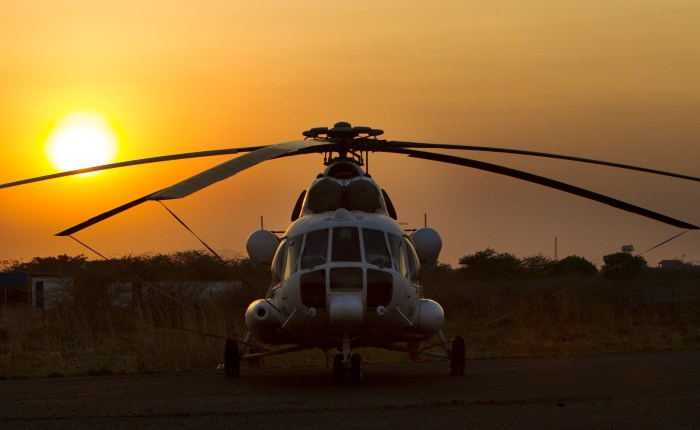
Header Image: A Mil Mi-8 helicopter of the United Nations Mission in South Sudan in Juba, c. 2013. (Source: United Nations)

From Balloons to Drones – One Year On

From Balloons to Drones – One Year On

By Dr Ross Mahoney

It has just been over a year since From Balloons to Drones was established as a platform for the discussion of air power broadly defined. Since our first post, we have published 40 pieces on a variety of subjects ranging from the historical to the contemporary. We have had articles dealing with issues related to the efficacy of air power, the topic of military education and the future of air power. We have also recently started a new series, Air War Books, that explores the books that have influenced air power writers. Contributors have come from around the globe including contributions from Finland and Australia. I am grateful to those who have contributed to the site. Without them, there would not be much here. However, most of all, we have received regular traffic from people interested in reading what we have written, and for that we are grateful.

Just as a bit of fun, here are the top five posts by views:

  1. ‘Changing the USAF’s Aerial ‘Kill’ Criteria’ by Major Tyson Wetzel;
  2. ‘Arrows from the Ground – Or how an incident on 17 March 2017 may change the relationship between ground and air forces’ by Dr Jacob Stoil and Lieutenant Colonel Kyle C. Burley;
  3. ‘Commentary – The RAF and the F-117’ by Dr Ross Mahoney;
  4. ‘Supporting the Secret War: T-28s over Laos, 1964-1973 – Part 1: Training’ by Jeff Schultz;
  5. ‘‘Integrating’ the Italian Air Force after the Armistice’ by Dr Ross Mahoney.

These are just a selection of the articles that have appeared over the past year, and we look forward to adding regular content as we continue to develop. To do this, we need to expand our list of contributors continually and if you are interested in writing about air power issues – both historical and contemporary – then you can find out how here. If you have any questions, then please leave a comment here or emails us at airpowerstudies@gmail.com.

Header Image: English Electric Lightnings of No. 56 Squadron RAF during an Armament Practice Camp at Akrotiri, c.1963. In the foreground, a technician is preparing a Firestreak missile for loading. (Source: Defence Imagery MoD)

#AirWarBooks – Dr Ross Mahoney

#AirWarBooks – Dr Ross Mahoney

By Dr Ross Mahoney

Editorial Note: In the second instalment of ‘Air War Books,’ the editor of From Balloons to Drones, Dr Ross Mahoney discusses the ten books that have influenced and shaped his writing as an air power historian.

As editor of From Balloons to Drones, I thought I should reflect on what are probably the ten key books that have influenced me in my study of air power. However, I make three provisos. First, I attacked this from the perspective of key authors rather than the books themselves per se. As such, I have selected titles that I have enjoyed to illustrate the importance of these writers. Second, I have left out official histories and narratives though these have been just as influential on my writing as other works. Finally, I have included some non-air power texts in here. At the end of the day, I am a historian and an interdisciplinary one at that, and it is only natural that non-air power specific books have influenced how I approach what and how I write.

John Buckley, Air Power in the Age of Total War (London: UCL Press, 1999). Ok, this entry and Peter Gray’s book below have as much to do with these individuals’ real influence on me and the importance of their books. John was my undergraduate tutor many years ago, and his influence was to start me on the track to where I am today. However, added to that, Air Power in the Age of Total War is an excellent examination of the rise of air power in the first half of the twentieth century and vital reading for anyone wanting an introduction to the subject.

Peter Gray, The Leadership, Direction and Legitimacy of the RAF Bomber Offensive from Inception to 1945 (London: Continuum, 2012). Peter’s influence on me was that he was my PhD supervisor, and I will forever be grateful for his guidance. In my opinion, Peter is currently the leading air power specialist in the UK and one of the foremost experts in the world. That expertise is clearly evident in this book. The strategic air offensive against Germany is well-trodden ground, but Peter found a fresh way to assess its conduct. As a result, in my opinion, it is required reading not just for people wanting to understand the bombing offensive during the Second World War but also issues such as the challenge of senior leadership and matters such as legitimacy and international law.

Tony Mason, History of the Royal Air Force Staff College, 1922-1972 (Bracknell, RAF Staff College, 1972). I could have chosen any of Mason’s work, but this one has specific resonance for my research. This was written before Mason became the RAF’s first Director of Defence Studies (DDefS) in 1977 and is not widely available as the RAF Staff College published it. Nevertheless, Mason was not wide of the mark with many of his comments about the Staff College, though it does need to be brought up to date.

Allan English, Understanding Military Culture: A Canadian Perspective (Kingston: McGill-Queen’s University Press, 2004). English, a retired Royal Canadian Air Force officer, is a noted historian of air power and has written an influential article on the RAF Staff College in the inter-war years. However, for me, his most important work is his study of Canadian military culture. As someone who specialises in the culture of air forces, this work is an essential primer on the subject of culture and its influence on the Canadian military.

John Slessor, Air Power and Armies (Oxford: Oxford University Press, 1936). Everyone needs to have a contemporary air power thinker on their list, and Slessor certainly fits that bill. Slessor is, perhaps, the closest the RAF came to having their own Clausewitz, though I remain to be convinced that the Service wanted a singular air power thinker. Instead I think the RAF collegiately developed officers with a broad view of air power, but that is another discussion. The importance of Air Power and Armies is that it really should put to rest the argument that the RAF was solely focused on strategic bombing. Yes, Slessor used a strategic conception of air power to inform his work, but he sought to understand how military aviation could influence the land battle. An essential piece of work and the recent 2009 edition by the University of Alabama Press contains an introduction by Philip Meilinger.

Arthur Gould Lee, No Parachute (London: Jarrolds, 1968). Everyone needs a memoir in their top ten, and there are a number of good works by air force personnel. Most are written by pilots, which says as much about the culture of air forces as anything else. Lee wrote several books dealing with various aspects of his service life, and each could find their way into this list. No Parachute is particularly useful for its appendices though the one on parachutes does need to be revised.

John Andreas Olsen, John Warden and the Renaissance of American Air Power (Dulles, VA: Potomac Books, 2007). As Brian Laslie mentioned in the first instalment of ‘Air War Books,’ I think we do need to include a work by Olsen. He is currently one of the key writers on air power, particularly about modern conflicts. His biography of Warden is fascinating and gives an excellent insight into this complex character. Perhaps what is more impressive, is that this was written while Warden is alive, which is never an easy task.

David French, Military Identities: The Regimental System, the British Army, and the British People c.1870-2000 (Oxford: Oxford University Press, 2005). French is one Britain’s leading military historians, and I wonder how he would do if he turned his interests towards the RAF. However, for me, his analysis of the British Army’s regimental system is fascinating and one of those works that all should read to develop an understanding of how military organisations operate. There is much to take away from this study, and for me, it has raised significant questions about issues such as identity with regards to squadrons in air forces.

Richard Overy, The Air War, 1939-1945 (London: Europa Publications, 1980). Overy remains not only one of the leading air power historians in the UK but also globally. The Air War continues to be one of the most influential titles concerning the role of air power during the Second World War. I could have quite easily has listed The Bombing War here, which is Overy’s most recent air power work. However, The Air War continues to be important, and while Overy’s views have developed over the years – like those of all historians – this work was written when air power history was a ‘Cinderella’ discipline. Thankfully, this is no longer the case, and the new edition of The Air War is useful for Overy’s overview of the field of air power history up to 2003.

John James, The Paladins: The Story of the RAF up to the Outbreak of World War II (London: Macdonald and Company, 1990). Given my focus on the culture and ethos of air forces, this was again, one of those works that I could not ignore reading as it is one of the few social histories of the RAF before the Second World War. James worked in operational research sections in various RAF Commands and brought that experience to the writing of the book. It is good but does need bringing up to date, and I dispute some of his views on how the RAF branch system evolved. Nevertheless, a work to read.

Well, that is my top ten; however, it would be easy to add more to the list. As noted, when Overy wrote The Air War, and Mason served as DDefS, the academic study of air power, certainly in the UK, was a Cinderella subject. Thankfully, that is no longer the case and the last ten years have seen a number of significant studies published, which point the way forward for the subject but that will be a post for another time.

Dr Ross Mahoney is an independent historian and defence specialist based in Australia. Between 2013 and 2017, he was the resident Historian at the Royal Air Force Museum, and he is a graduate of the University of Birmingham (MPhil and PhD) and the University of Wolverhampton (PGCE and BA). His research interests include the history of war in the twentieth and twenty-first centuries, air power and the history of air warfare, and the social and cultural history of armed forces. To date, he has published several chapters and articles, edited two books, and delivered papers on three continents. He is a member of the Royal Historical Society and is an Assistant Director of the Second World War Research Group. He is a member of the Royal Historical Society and an Assistant Director of the Second World War Research Group. He blogs at Thoughts on Military History, and can be found on Twitter at @airpowerhistory.

Header Image: A Tornado GR.1 in flight banks away from the camera and displays its underwing stores during the First Gulf War. Top to bottom the stores are a BOZ 107 chaff/flare dispenser, 500 gal fuel tanks, AIM-9 Sidewinder air-to-air missile and Marconi Sky Shadow ECM pod. (Source: © Crown copyright. IWM (GLF 707))

It is Time to Demystify the Effects of ‘Strategic Western Air Power’ – Part 2

It is Time to Demystify the Effects of ‘Strategic Western Air Power’ – Part 2

By Lieutenant-Colonel Dr Jyri Raitasalo

Editor’s Note: In this two-part article, Dr Jyri Raitasalo considers what he argues are the two fundamental fallacies concerning the application of strategic air power by Western states in the modern era. In the first part, he examined the challenge of the use of military forces as a tool for solving political problems. In this second part, he examines the issue of ‘no casualty warfare.’

Fallacy 2: No casualty warfare

The second fallacy in Western air power paradigm touches on the notion of precision engagement with almost zero civilian casualties and no collateral damage. This narrative was formed in the aftermath of the 1991 Gulf War and has been maturing and strengthening ever since.  Precision engagement has indeed become one of the game changers in warfare lately, but the Western narrative on pinpoint accuracy in warfare has become a strategic level hindrance to effective military operations.

The notion of no or little collateral damage developed into the Western air power paradigm little by little as political leaders since the early 1990s continuously decided to use military force actively for humanitarian purposes. It was a prerequisite that Western military operations do not cause civilian suffering or produce collateral damage in military operations (read: war) that are eventually humanitarian in nature. Focusing on the precise application of large-scale violence was thus a must for political purposes. It was needed for the legitimacy of these operations and to ‘sell’ these operations to domestic audiences within the Western world and internationally.

Combined Air and Space Operations Center
Combined Air and Space Operations Center at Al Udeid Air Base, Qatar, provides command and control of air power throughout Iraq, Syria, Afghanistan, and 17 other nations. The CAOC is comprised of a joint and Coalition team that executes day-to-day combined air and space operations and provides rapid reaction, positive control, coordination, and de-confliction of weapon systems. (Source: US Department of Defense via Wikimedia)

Also, as these humanitarian military missions had almost nothing to do with Western national interests or threats to Western states, it has been crystal clear from the start that force protection has been essential in these operations. Over time this has developed into a tradition of casualty-aversiveness, making Western soldiers ‘strategic assets’. Air power has facilitated safe military operations as practically all opponents during the post-Cold War era have had no functioning air forces of capable air defences. Relying on air power to fight humanitarian wars has been practically the only way that these operations have become possible in the first place. As President Bill Clinton explained: ‘I do not intend to put our troops in Kosovo to fight a war’. For the US the post-9/11 Global War on Terror changed this aversiveness to send troops to battle for a while.

What started as a way to ‘market’ humanitarian missions to voters and the general population has turned into a Western narrative on war, which accentuates the ability to strictly control the ‘dosing’ of violence in wars and being able to fight without civilian casualties and collateral damage. During the post-Cold War era, this guiding political principle and a semi-binding Western norm on warfare have led to Western militaries developing extremely expensive military systems to fight this ‘frictionless precision warfare’. This trend has been tremendously problematic for European states, as they in most cases do not have sufficient economic resources to develop their armed forces into credible military actors with even a modest number of usable high-tech military systems. When combining this trend with the post-Cold War era professionalisation of European militaries, most states in Europe today possess ‘Lilliputian militaries’ with little warfighting capability for large-scale conventional war against advanced state adversaries.

Final thoughts

Air power is important in warfare. Moreover, modern high-tech air forces can produce a decisive effect on the battlefield when used properly. ‘Unfortunately’ for some Western (mostly European) militaries, the post-Cold War era did not for more than 20 years pose any real military challenges that would have required sober analysis on what kind of missions the armed forces should be preparing against. Moreover, more importantly, as the existential threat evaporated quickly in the early 1990s, many Western political leaders filled the vacuum of security threats by turning their eyes towards out-of-area conflicts and stability throughout the globalising world.

In a cumulative 20-year long emergent process, Western states have become more and more interested in and reliant on applying air power actively in expeditionary operations because using military force throughout the international system has become possible. Political leader’s ‘trigger happiness’ in the West has increased during the post-Cold War era. On the tactical and operational levels of war, air power offers ‘easy solutions’ when there is the need to do something quickly and visibly – for example during large-scale atrocities committed by authoritarian leaders towards their citizen. On the strategic level, though, the results have been much more modest. Modern air power has not lifted the ‘fog of war’, nor has it produced many positive strategic results. Air power does not provide Western states with a ‘silver bullet’, nor has it changed the nature of war:  war is still a duel of wills, which means that adaptive enemies will do their utmost to destabilise Western strengths and lead in military capability development. This can be done at the tactical, operational or strategic levels.

990328-F-4728F-009
A USAF F-15E Strike Eagle takes off from Aviano Air Base, Italy, for an air strike mission in support of NATO Operation ALLIED FORCE on March 28, 1999. (Source: US Department of Defense via Wikimedia)

The use of large-scale military violence – waging war – needs to be taken seriously. Even if it is possible to cause pinpoint destruction and make targeted killings, one should remember that political problems can rarely be solved by killing all the opponents (from afar) or by punishing them severely. The active use of Western air power during the last 20 years has resulted in the lowering the threshold on the use of military force in the world. This could backfire in the future as China and Russia are increasing their military capabilities and great-power statuses.

Dr Jyri Raitasalo is a Lieutenant-Colonel in the Finnish military and a Senior Staff Officer at the Planning Unit (strategic planning) of the Finnish Ministry of Defence. He holds the title of Docent of strategy and security policy at the Finnish National Defence University.  During his latest assignments, he has served as the Commanding Officer of the Helsinki Air Defence Regiment (Armoured Brigade), Head Lecturer of Strategy at the Finnish National Defence University, ADC to the Chief of Defence and Staff Officer (strategic planning) in the Finnish Defence Command (J5). Jyri Raitasalo is a called member of the Royal Swedish Academy of War Sciences.

Header Image: The Department of Defense’s first U.S. Air Force F-35 Lightning II joint strike fighter (JSF) aircraft soars over Destin, before landing at its new home at Eglin Air Force Base, July 14, 2011. (Source: US Department of Defense via Wikimedia)