It is Time to Demystify the Effects of ‘Strategic Western Air Power’ – Part 2

It is Time to Demystify the Effects of ‘Strategic Western Air Power’ – Part 2

By Lieutenant-Colonel Dr Jyri Raitasalo

Editor’s Note: In this two-part article, Dr Jyri Raitasalo considers what he argues are the two fundamental fallacies concerning the application of strategic air power by Western states in the modern era. In the first part, he examined the challenge of the use of military forces as a tool for solving political problems. In this second part, he examines the issue of ‘no casualty warfare.’

Fallacy 2: No casualty warfare

The second fallacy in Western air power paradigm touches on the notion of precision engagement with almost zero civilian casualties and no collateral damage. This narrative was formed in the aftermath of the 1991 Gulf War and has been maturing and strengthening ever since.  Precision engagement has indeed become one of the game changers in warfare lately, but the Western narrative on pinpoint accuracy in warfare has become a strategic level hindrance to effective military operations.

The notion of no or little collateral damage developed into the Western air power paradigm little by little as political leaders since the early 1990s continuously decided to use military force actively for humanitarian purposes. It was a prerequisite that Western military operations do not cause civilian suffering or produce collateral damage in military operations (read: war) that are eventually humanitarian in nature. Focusing on the precise application of large-scale violence was thus a must for political purposes. It was needed for the legitimacy of these operations and to ‘sell’ these operations to domestic audiences within the Western world and internationally.

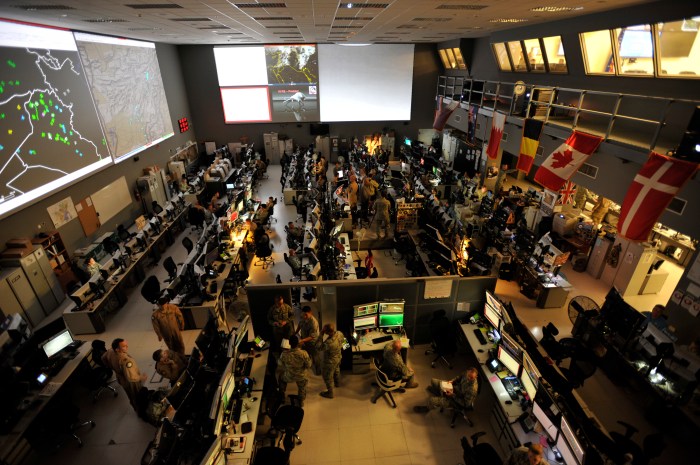
Combined Air and Space Operations Center
Combined Air and Space Operations Center at Al Udeid Air Base, Qatar, provides command and control of air power throughout Iraq, Syria, Afghanistan, and 17 other nations. The CAOC is comprised of a joint and Coalition team that executes day-to-day combined air and space operations and provides rapid reaction, positive control, coordination, and de-confliction of weapon systems. (Source: US Department of Defense via Wikimedia)

Also, as these humanitarian military missions had almost nothing to do with Western national interests or threats to Western states, it has been crystal clear from the start that force protection has been essential in these operations. Over time this has developed into a tradition of casualty-aversiveness, making Western soldiers ‘strategic assets’. Air power has facilitated safe military operations as practically all opponents during the post-Cold War era have had no functioning air forces of capable air defences. Relying on air power to fight humanitarian wars has been practically the only way that these operations have become possible in the first place. As President Bill Clinton explained: ‘I do not intend to put our troops in Kosovo to fight a war’. For the US the post-9/11 Global War on Terror changed this aversiveness to send troops to battle for a while.

What started as a way to ‘market’ humanitarian missions to voters and the general population has turned into a Western narrative on war, which accentuates the ability to strictly control the ‘dosing’ of violence in wars and being able to fight without civilian casualties and collateral damage. During the post-Cold War era, this guiding political principle and a semi-binding Western norm on warfare have led to Western militaries developing extremely expensive military systems to fight this ‘frictionless precision warfare’. This trend has been tremendously problematic for European states, as they in most cases do not have sufficient economic resources to develop their armed forces into credible military actors with even a modest number of usable high-tech military systems. When combining this trend with the post-Cold War era professionalisation of European militaries, most states in Europe today possess ‘Lilliputian militaries’ with little warfighting capability for large-scale conventional war against advanced state adversaries.

Final thoughts

Air power is important in warfare. Moreover, modern high-tech air forces can produce a decisive effect on the battlefield when used properly. ‘Unfortunately’ for some Western (mostly European) militaries, the post-Cold War era did not for more than 20 years pose any real military challenges that would have required sober analysis on what kind of missions the armed forces should be preparing against. Moreover, more importantly, as the existential threat evaporated quickly in the early 1990s, many Western political leaders filled the vacuum of security threats by turning their eyes towards out-of-area conflicts and stability throughout the globalising world.

In a cumulative 20-year long emergent process, Western states have become more and more interested in and reliant on applying air power actively in expeditionary operations because using military force throughout the international system has become possible. Political leader’s ‘trigger happiness’ in the West has increased during the post-Cold War era. On the tactical and operational levels of war, air power offers ‘easy solutions’ when there is the need to do something quickly and visibly – for example during large-scale atrocities committed by authoritarian leaders towards their citizen. On the strategic level, though, the results have been much more modest. Modern air power has not lifted the ‘fog of war’, nor has it produced many positive strategic results. Air power does not provide Western states with a ‘silver bullet’, nor has it changed the nature of war:  war is still a duel of wills, which means that adaptive enemies will do their utmost to destabilise Western strengths and lead in military capability development. This can be done at the tactical, operational or strategic levels.

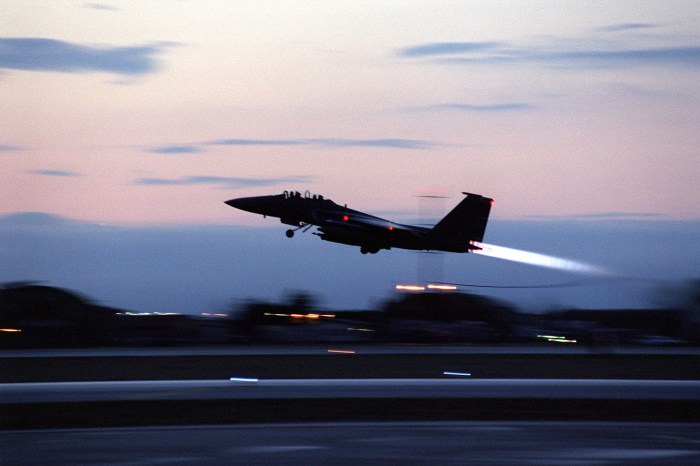
990328-F-4728F-009
A USAF F-15E Strike Eagle takes off from Aviano Air Base, Italy, for an air strike mission in support of NATO Operation ALLIED FORCE on March 28, 1999. (Source: US Department of Defense via Wikimedia)

The use of large-scale military violence – waging war – needs to be taken seriously. Even if it is possible to cause pinpoint destruction and make targeted killings, one should remember that political problems can rarely be solved by killing all the opponents (from afar) or by punishing them severely. The active use of Western air power during the last 20 years has resulted in the lowering the threshold on the use of military force in the world. This could backfire in the future as China and Russia are increasing their military capabilities and great-power statuses.

Dr Jyri Raitasalo is a Lieutenant-Colonel in the Finnish military and a Senior Staff Officer at the Planning Unit (strategic planning) of the Finnish Ministry of Defence. He holds the title of Docent of strategy and security policy at the Finnish National Defence University.  During his latest assignments, he has served as the Commanding Officer of the Helsinki Air Defence Regiment (Armoured Brigade), Head Lecturer of Strategy at the Finnish National Defence University, ADC to the Chief of Defence and Staff Officer (strategic planning) in the Finnish Defence Command (J5). Jyri Raitasalo is a called member of the Royal Swedish Academy of War Sciences.

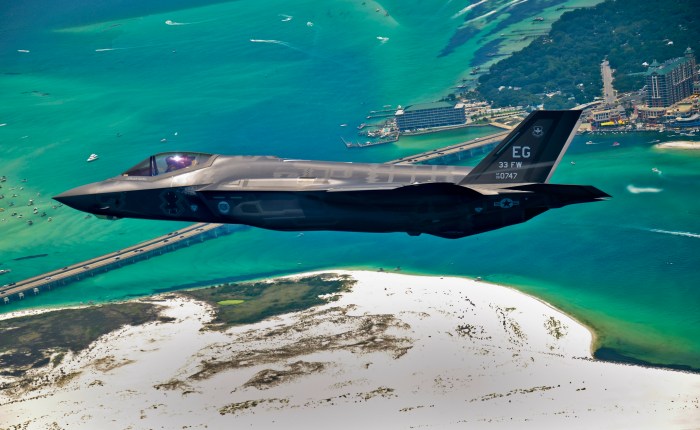
Header Image: The Department of Defense’s first U.S. Air Force F-35 Lightning II joint strike fighter (JSF) aircraft soars over Destin, before landing at its new home at Eglin Air Force Base, July 14, 2011. (Source: US Department of Defense via Wikimedia)

#AirWarBooks – Dr Brian Laslie

#AirWarBooks – Dr Brian Laslie

By Dr Brian Laslie

Editorial Note: In the first of a new series, Dr Brian Laslie, author of The Air Force Way of War, discusses the ten books that have influenced and shaped his writing as an air power historian.

The Editor of From Balloons to Drones, Dr Ross Mahoney, has been pestering those of us who contribute to this blog to put together a list of the most influential books we have read on the study of air power. I have always been of the opinion that I only have so many words I am capable of writing in a single day and have thus, avoided acquiescing to Ross’s request. Seriously, I am never going to get these two manuscripts done at this rate, but I finally decided that Ross is right (we were on a break) and that it is high time those of us who study air power history discuss the most influential books we’ve read on the history/study of air power (two words not one). So here is my top ten:

Bert Frandsen, Hat in the Ring: The Birth of American Air Power in the Great War (Washington D.C.: Smithsonian Institution Press, 2003). I read this book shortly before leaving active duty and heading to Kansas State for grad school, and it had a profound impact on what I wanted to study. Frandsen weaves together history, technology, and narrative into one of the finest works on the creation of America’s air service and air power.

Alexander P. de Seversky, Victory through Air Power (New York, NY: Simon & Schuster, 1942). Let us get something out of the way. Seversky and Hap Arnold hated each other, and I am not being hyperbolic. The two could not stand to be in the same room with each other, and when they were, it usually ended in a shouting match. Seversky’s book was Second World War aerial propaganda, but when Walt Disney read the book and decided to produce it as a feature film, Arnold was forced to stay mute on the subject. Seversky went on to write other air power books, but none as influential and long-lasting as this one.

Thomas E. Griffith, Jr, MacArthur’s Airman: General George C. Kenney and the War in the Southwest Pacific (Lawrence, KS: University Press of Kansas, 1998). In the age of the bomber mafia, Kenny marched to the tune of his own drum. Surely as Quesada and Chennault followed pursuit aviation, Kenny favoured attack. He was, perhaps, the most innovative airman of his generation and Griffith’s book demonstrates just how important Kenney was to MacArthur.

Thomas A. Hughes, Over Lord: General Pete Quesada and the Triumph of Tactical Air Power in World War II (New York, NY: The Free Press, 1995). I really have no doubt, and I doubt many would argue with me, that strategic bombardment garnered the lion’s share of attention both during and after the war. It would take Tactical Air Command until after the Vietnam war to rise to prominence over Strategic Air Command, but those seeds were planted in the Second World War by Pete Quesada and his tactical airmen in the European theatre.

Mark Clodfelter, The Limits of Air Power: The American Bombing of North Vietnam (New York, NY: The Free Press, 1989). The single most important book on air power to be published in the post-Vietnam era. It defined air power historians of a generation. More than a critique of strategic bombardment in Vietnam, it is a book that teaches you how to think about air power, what it can and what it cannot do.

Donald Miller, Masters of the Air: America’s Bomber Boys who Fought the Air War against Nazi Germany (New York, NY: Simon & Schuster, 2006). It is rare that I cannot put a book down, but the was the case with Miller’s work. The narrative is exceptional, the research superb, and the flow masterful. I consider it the single best book on air power in the Second World War.

Donald J. Mrozek, Air Power and the Ground War in Vietnam: Ideas and Actions (Maxwell, AL: Air University Press, 1988) and idem, The US Air Force after Vietnam: Postwar Challenges and Potential for Responses (Maxwell, AL: Air University Press, 1988). Yes, I am cheating by putting two books here, but they deserve to be here. Mrozek is an air power historian, but also a cultural and intellectual historian as well. He is difficult to read, but only because every sentence is crafted beautifully and is important. Mrozek conveys in a sentence, what others struggle to get out in several pages, myself included.

Steve Davies, Red Eagles: America’s Secret MiGs (Oxford: Osprey Publishing, 2008). A popular history, but this book is flat-out fun. Secret units, secret locations, and American fighter pilots learning how to outperform their Soviet counterparts in their own aircraft.

John Andreas Olsen (ed.), A History of Air Warfare (Dulles, VA: Potomac Books, 2010). Actually any of Olsen’s work could make this list; however, if you were going to use one book in the classroom to discuss the history of power, then this is the one. There is a reason; the Air Force Academy has every freshman read in their introduction to military history. From the First World War to the present and large scale combat to air power in smaller conflicts, Olsen’s edited work covers it all.

Diane Putney, Airpower Advantage: Planning the Gulf War Air Campaign (Washington D.C.: Air Force History and Museums Program, 2004). This book is what made me decide to write about Desert Storm. This book taught me that air power is so much richer than 1 v. 1 dogfights, that true command of the air comes from logistics, planning and execution.

To this list of ten, I could add hundreds more, but as I looked at my bookshelf these jumped out at me as having the most impact on my thinking during my time in grad school or shortly thereafter and helped solidify my thinking on what air power is and what it does (spoiler alert: it’s the ability to do something in the air. Thanks, Billy Mitchell!)

By the way, several of these books you can order or download for free from either the Air University Press of the Air Force Historical Studies Office. FREE BOOKS: http://www.au.af.mil/au/aupress/ and http://www.afhistory.af.mil/Books/Titles/

Dr Brian Laslie is an Air Force Historian and currently the Deputy Command Historian at North American Aerospace Defense Command (NORAD) and United States Northern Command (USNORTHCOM). A 2001 graduate of The Citadel and a historian of air power studies, he received his Masters’ from Auburn University Montgomery in 2006 and his PhD from Kansas State University in 2013. His first book The Air Force Way of War (2015) was selected for the Chief of Staff of the Air Force’s 2016 professional reading list. He lives in Colorado Springs. He can be found on Twitter at @BrianLaslie.

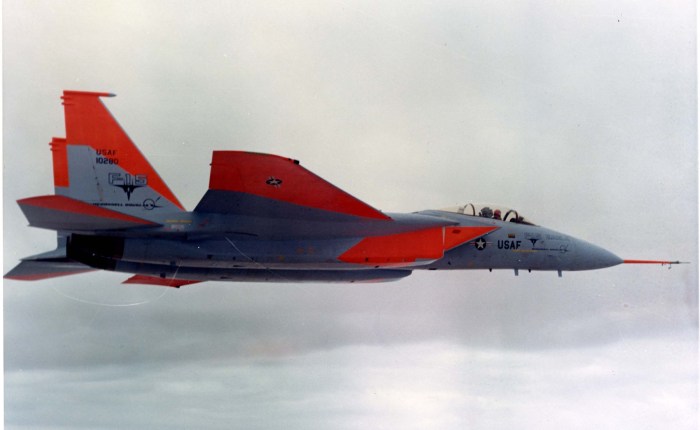
Header Image: McDonnell Douglas F-15A (S/N 71-0280, the first F-15A prototype). Note the square wingtips and unnotched stabilator. (Source: Wikimedia)

It is Time to Demystify the Effects of ‘Strategic Western Air Power’ – Part 1

It is Time to Demystify the Effects of ‘Strategic Western Air Power’ – Part 1

By Lieutenant-Colonel Dr Jyri Raitasalo

Editor’s Note: In this two-part article, Dr Jyri Raitasalo considers what he argues are the two fundamental fallacies concerning the application of strategic air power by Western states in the modern era. In this first part, he considers the challenge of the use of military forces as a tool for solving political problems. The second part of this article can be found here.

Ever since the 1991 Gulf War, the Western strategic discourse on air power has accentuated the role of high-tech precision-guided weapons together with good situational awareness and reliable command and control systems in solving modern conflicts. After the lessons learned from Operation DESERT STORM were drawn, one of the main tenets of western strategic thinking has been the (over-)reliance on the possibilities to solve political conflicts with modern weaponry – from the air. This notion did not emerge out of thin air. It was one answer to the many demands that Western statesmen – first and foremost among them the President of the United States – made immediately after the Cold War had ended. Since the early 1990s, the international security environment developed positively – at least from the western states’ perspective. However, the world was still infected with many low-level threats that rose in significance simultaneously as the Soviet threat evaporated.

The so-called Revolution in Military Affairs (RMA) has been expected to deliver positive outcomes to political crises with little risk to Western soldiers or national interests – whether in Bosnia (1995), Kosovo (1999), Afghanistan (2001), Iraq (2003) or Libya (2011). Many western ‘wars of choice’ – under the headings of ‘humanitarian interventions’, ‘military crisis management operations’ or ‘expeditionary missions’ have been made possible – and in some cases necessary – by the demands of the contemporary 24/7 media, high-tech ‘revolutionary’ warfighting capabilities and the fading of the existential threat posed by the Soviet Union.

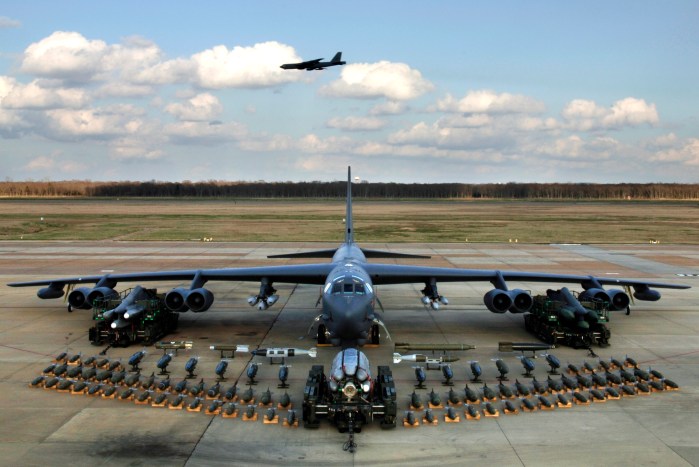
Display of might
A US Air Force Boeing B-52H Stratofortress of the 2d Bomb Wing static display with weapons, at Barksdale Air Force Base, Louisiana, in 2006. (Source: Wikimedia)

During the 25 years of the post-Cold War era, Western air power ‘theory’ – based on the expectations of Western political leaders – has entertained the notion of strategic success in war just by deploying air assets against chosen adversaries. During this time we have witnessed the mystification of air power – the new ‘silver bullet’ – to epic proportions in a way that practical results from recent wars lend little support. Analysing recent western air wars from Bosnia (1995) to Libya (2011) one can easily detect that none of them has proved to be strategic successes for the west. Thus the ‘brand’ of contemporary Western air power is better than its actual track record. None of the often mentioned ‘successes’ have facilitated long-term positive outcomes.

The contemporary Western air war paradigm is based on two fallacies: the idea that high-tech military capabilities facilitate easy solving of political problems and the notion of almost casualty-free warfighting. Both of these should be subjected to strict scrutiny. It should be noted that it is not the militaries’ fault that political leaders have expressed repeated demands to the use of military force that are beyond the boundaries that existing military capabilities can deliver. However, to facilitate better strategies in the future, these fallacies will be elaborated next.

Fallacy 1: The use of military force is an effective tool to solve political problems

It is good to acknowledge that the number of armed conflicts – and the average number of people killed in these conflicts – has decreased during the post-Cold War era. As the Human Security Report Project noted in 2014, we have witnessed:

the rapid decline in international wars (anti-colonial wars are included in this category) over the past 60 odd years. The average number of international wars being fought every year per decade shrinks dramatically – from over six in the 1950s to less than one in the 2000s. […] From the early 1990s to the present day, overall conflict numbers have dropped by some 40 percent, while the deadliest conflicts, those that kill at least 1,000 people a year, have declined by more than half.

Despite the positive trend in warfare since the end of the Cold War, there have been many brutal cases where large-scale human suffering and damaged infrastructure have caused concern within the western security community. First of these instances was ‘born’ out of the result of the 1991 Gulf War: the predicament that the Kurds (in the north) and the Shia population (in the south) faced after Saddam Hussein was defeated – but remained in power. Moreover, many others have followed: from Somalia to Haiti, and from Timor-Leste to Kosovo.

The humanitarian suffering brought to our living rooms by the 24/7 media – and later by social media, smartphones and tablets – has become a new factor influencing western decisions in the use of military force in the world. Although most of the (air) wars that the West has waged during the post-Cold War era have almost nothing to do with Western national security directly, there has been the need to do something to ease humanitarian conditions and suffering around the world in the many crises that have been ongoing – from Iraq to Somalia and Haiti to Libya. Thus, the western approach to ‘humanitarian interventions’ and the ‘Responsibility to Protect’ (R2P) emerged to fill in the void that the end of the Cold War caused within the western threat perceptions.

Facing no existential threats, for the past 25 years, Western states have had the luxury of focusing on crises around the world where large masses of people have been violently oppressed. Moreover, the tools of the ongoing RMA – precision air strikes as the forerunner – seemed to propose a possibility to manage these humanitarian crises with little cost – in either blood or treasure. As was noted after the Gulf War:

A significant part of that edge [US’s edge versus Iraq] can be attributed to the revolutionary new military technology used by U.S. forces for the first time in Gulf War.

In other words, the lessons learned from the Gulf War – where Saddam Hussein’s big Army was easily defeated on the battlefield – have influenced the way that Western political leaders have been trying to solve violent political crises out-of-area.

However, the problem lies exactly here: the complex, violent crises around the world cannot be solved by precision bombing or by killing the ‘bad guys’. The politicisation of ethnicity and religion, the criminal elements involved and the contradictory political goals of multiple adversaries in most of the contemporary violent crises mean that externally imposed military solutions will not work. As has been noted in connection with the 2001 US-launched Global War on Terror, it is hard to kill enough terrorists without at the same time facilitating additional terrorist recruiting and providing additional PR for the terrorist cause.

It is understandable that political leaders resort to the use of military force relying on advanced weaponry to solve nasty crises around the world. The humane instincts of Western strategic decision-makers are understandable and praiseworthy. However, the sad part is that strategically, the use of military force has not been able to bring about political reconciliation or stability into ongoing conflict zones. On the contrary, the first ‘RMA air-war’ in history – the 1991 Gulf War – produced a political stalemate that resulted in a war of attrition against Iraq between 1991-2003. This attrition warfare manifested itself through the enforcement of no-fly zones and punitive air strikes against Iraq every time Saddam’s troops violated the rules imposed on them.

Even though the first Gulf War did not bring a politically favourable outcome vis-à-vis Iraq, the lessons drawn from that campaign at the operational level influenced how air power was used in Bosnia and Kosovo during the 1990s. The two air wars in Europe – in Bosnia 1995 and over Serbia in 1999 – have not till today produced lasting strategic outcomes that would be favourable to western states. Both are practically failed states, which can take a turn for the worse at any time. Also, in today’s tense international environment, the very unstable situation in Bosnia and Kosovo provide ample opportunities for Russia to manipulate the West.

It is noteworthy that immediately after the Kosovo air war, the US Secretary of Defense William Cohen noted that:

[…] what we were able to achieve through this [Kosovo] campaign reminds all of us that the revolution in military affairs is fundamentally changing the way in which we fight. […] In Operation Desert Storm, […], there were only a handful of sophisticated aircraft that could carry precision-guided munitions, […] In Kosovo, nearly all of our fighters could deliver these devastating weapons.

Cohen’s remarks are spot on when looked from tactical or operational perspectives. On the strategic level, however, the effects of “devastating weapons” do not automatically turn into political objectives.

To be fair, it must be noted that air power was eventually able to stop ethnic violence in the former Yugoslavia, but whether the level of violence increased because of the air wars or not, is still debatable. In any case, both Bosnia and Kosovo have shed light also on the negative impact of western air power:  the mere existence of highly capable western (read: US) Air Forces – together with the global 24/7 media – facilitated the increase of violence both in Bosnia and Kosovo as the West was lured into these crises by attacks on the ground that aimed to escalate the conflict – not to end it. The Western humanitarian intervention approach was in its formative years, and the belligerents on the ground in Bosnia and Kosovo knew how to take advantage of it. After the terrible case of the Rwandan genocide in 1994, it was easy to exploit the willingness of the West to do more – even by escalating ethnic cleansing to draw the West into the conflict.

The second round of large-scale air warfare against Iraq took place through a campaign of ‘shock and awe’ in 2003. It was accompanied and followed by mechanised thrusts to destroy Saddam’s Army, a task that the United States and its allies succeeded to do. However, this operational success was not followed by the fulfilment of strategic goals. Air power was not able to solve the post-Saddam political crisis in Iraq – a fate also shared by the Army and the Marine Corps throughout the subsequent counter-insurgency (CI) operation, which resulted in the withdrawal of US troops after years of fighting and thousands of casualties. The breaking up of Iraq’s state structures, administrative routines and security forces also facilitated the birth of ISIL and the increase of violence and instability in the region. In all, the 2003 war in Iraq – and the chaos that has followed – has proved to be a strategic mistake of massive scale. The possibilities of quick high-tech warfare against much weaker traditional conventional army lured the US into a process that eventually became uncontrollable. This is the true essence of war – that competitive advantage in one sphere of war-fighting (e.g. technology) can be mitigated or even nullified by another (e.g. tactical asymmetry). There are no ‘silver bullets’ – at least not for long.

RAF Tornado GR4 Aircarft During Operation Ellamy
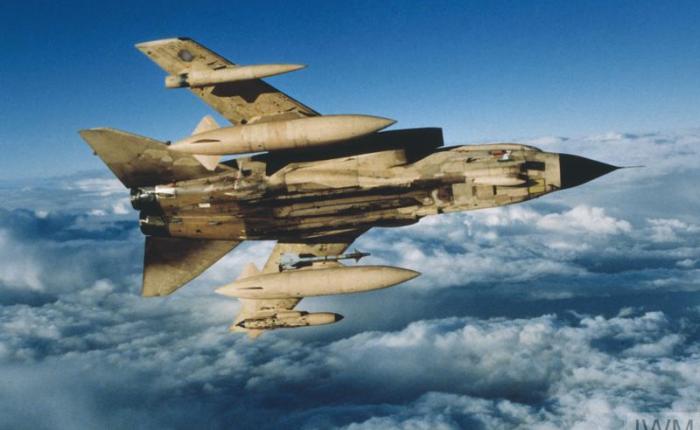
Two fully armed RAF Tornados from RAF Marham transit the Mediterranean Sea en-route to Libya as part of the UK’s Operation ELLAMY to enforce the UN no-fly zone in March 2011. (Source: Defence Imagery, MoD)

Finally, the air war against Muammar Gaddafi’s Libya in 2011 – NATO operation Unified Protector – helped to set in motion a crisis that will influence European security for years to come – negatively, not to mention the additional suffering to ordinary Libyans. Today Libya is a failed state with multiple armed forces fighting over power and economic benefits. Also, Libya has become one of the bases for extremist terrorism. Operation Unified Protector showed the might of advanced air power by destroying the Gaddafi regime, but the strategic consequences of the operation will haunt the West – and Europe particularly – for years to come.

Dr Jyri Raitasalo is a Lieutenant-Colonel in the Finnish military and a Senior Staff Officer at the Planning Unit (strategic planning) of the Finnish Ministry of Defence. He holds the title of Docent of strategy and security policy at the Finnish National Defence University.  During his latest assignments, he has served as the Commanding Officer of the Helsinki Air Defence Regiment (Armoured Brigade), Head Lecturer of Strategy at the Finnish National Defence University, ADC to the Chief of Defence and Staff Officer (strategic planning) in the Finnish Defence Command (J5). Jyri Raitasalo is a called member of the Royal Swedish Academy of War Sciences.

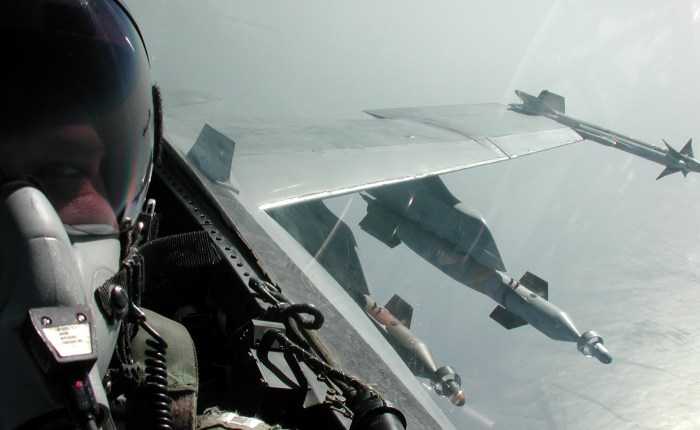
Header Image: An F/A-18 Hornet of VFA-94 carrying out operations in support of Operation Enduring Freedom in 2001. Visible on the wing are two 500-pound Laser Guided Bomb Units (GBU-12) (left), and an AIM-9 Sidewinder air-to-air missile. (Source: Wikimedia)

#BookReview – Flying to Victory: Raymond Collishaw and the Western Desert Campaign, 1940-1941

#BookReview – Flying to Victory: Raymond Collishaw and the Western Desert Campaign, 1940-1941

By Alexander Fitzgerald-Black

Mike Bechthold, Flying to Victory: Raymond Collishaw and the Western Desert Campaign, 1940-1941. Norman, OK: University of Oklahoma Press, 2017. Illustrations. Maps. Notes. Bibliography. Hbk. 296 pp.

51hiab19kxl-_sx329_bo1204203200_

The Second World War saw the formation of many famous Allied air forces. The Flying Tigers, the Cactus Air Force, The Mighty Eighth, RAF Bomber Command, and RAF Fighter Command are among the best known. In the Mediterranean, perhaps none was more famous than the Western Desert Air Force (WDAF). This is the tactical air force that helped Lieutenant-General Bernard Montgomery’s British Eighth Army defeat Field Marshal Erwin Rommel at El Alamein in 1942. The victory was the result of an effective combination of air and land power according to an air support doctrine developed by Air Vice-Marshal Arthur Coningham.

Coningham owes more to his predecessor, Air Vice-Marshal Raymond Collishaw than historians have realised. Collishaw commanded No. 202 Group – and later No. 204 Group, which would later become the WDAF – between the opening of the war in the desert and November 1941. In that time, Collishaw’s command achieved much success, demonstrating the features of tactical air doctrine later associated with his successor. Mike Bechthold’s new monograph, Flying to Victory, offers us a new layer for understanding the development of Allied air support during the Second World War.

Raymond Collishaw was a native of Nanaimo, British Columbia, Canada. During the First World War, Collishaw became one of the Empire’s leading flying aces, destroying 61 enemy aircraft and eight observation balloons with Royal Naval Air Service and Royal Air Force squadrons. Authors often celebrate his air-fighting prowess. In fact, some historians have gone as far as to say that his aggressive spirit made him ill-suited for commanding air forces at the end of tenuous supply lines. In Flying to Victory, Bechthold defuses these arguments.

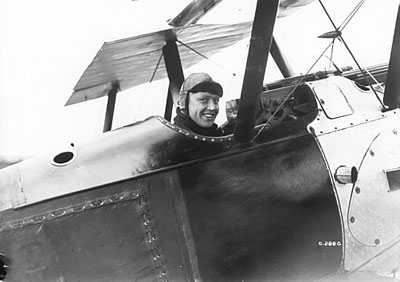
colishaw
Squadron Commander Raymond Collishaw in Sopwith F1 Camel aircraft, Allonville, France, 1918. (Source: Wikimedia)

Collishaw’s experience with close army support missions during the 100 Days campaign at the end of the First World War taught him how wasteful these operations could be. He came out of the war believing that only emergencies – such as the Kaiser’s spring offensive in 1918 – warranted a heavy close air support focus. This and his experiences commanding various air units during Britain’s interwar conflicts served to prepare Collishaw for command in the Western Desert. He was well-suited to command operations at the end of a tenuous supply line while working jointly with army and naval commanders.

Collishaw first demonstrated the difference that an effective air support doctrine could make during early fighting in the desert and Operation COMPASS. In 1940-41, No. 202 Group faced an Italian Royal Air Force (IRAF) with superior numbers and quality of aircraft. Collishaw’s command achieved air superiority despite these disadvantages. While the IRAF squandered its superior resources by focusing on providing defensive screens for the Italian Army, Collishaw directed his forces to focus on disrupting and destroying IRAF aircraft and infrastructure. With air superiority secured, Collishaw’s forces focused on impeding the Italian logistical network and applying close-support attacks at the army’s request in special circumstances. Alongside Lieutenant-General Richard O’Conner’s Western Desert Force, the British offensive drove the Italians out of Egypt and Cyrenaica, completely destroying the Italian Tenth Army in the process.

large_0000003
Air Commodore Raymond Collishaw, the Air Officer Commanding No. 202 Group, surveys the ruined buildings on the airfield at El Adem, Libya, following its capture on 5 January 1941 during the advance on Tobruk. (Source: © IWM (CM 399))

Although Operation COMPASS was a model of cooperation between the army and air force, this model would soon be forgotten amid British retreats in the Western Desert, Greece, and Crete in spring 1941. The Germans had joined their Italian allies in the Mediterranean war. During Operation BREVITY, an attempt to relieve the besieged garrison at Tobruk, Collishaw commanded No. 204 Group (which had absorbed No. 202 Group in April 1941). He once again proved the usefulness of interdiction operations, though army commanders were disappointed that the RAF considered attacks on tanks on the battlefield to be impracticable. His forces immobilised counterattacking German units at critical junctures that saved army units, though the overall operation failed to relieve Tobruk.

The overall failures of BREVITY and Crete put the air force in a tough position. The Royal Navy had lost many ships to Axis air attacks during the evacuation of Crete. During Operation BATTLEAXE, another attempt to relieve Tobruk, the army demanded that the RAF establish an air umbrella over the battlefield. Air Marshal Arthur Tedder, Collishaw’s immediate superior, made a calculated move. With Air Chief Marshal Charles Portal’s blessing, he ordered Collishaw to accede to the army’s requests. This way, the RAF could avoid blame for failing to cooperate with the army even though this was a misemployment of resources that ultimately contributed to BATTLEAXE’s failure.

BATTLEAXE effectively settled the debate over tactical air power raging between the RAF and army early in the war. Before BATTLEAXE, Prime Minister Winston Churchill endorsed the army’s view of air support. After BATTLEAXE, he fully endorsed the RAF’s view. Churchill accepted that attacks on enemy airbases, ports, and lines of communication were more effective even though the army would not be afforded the comforting sight of friendly aircraft overhead. The result was “The Middle East (Army and RAF) Directive on Direct Air Support”, a document that marked the beginning of designing the war-winning air support system the Allies would continue to develop in 1942. This document reflected the operations and exercises that Raymond Collishaw commanded. Tedder and Coningham went on to refine and improve this system.

Air Marshal Tedder, the conduit for Collishaw’s early application of winning air support doctrine to Portal and Churchill, replaced Collishaw with Coningham in November 1941. Promoted from air commodore to air vice-marshal, Collishaw commanded No. 14 Group defending Scapa Flow, Scotland until July 1943, when the RAF involuntarily retired him. Bechthold’s evidence suggests that Tedder held a bias against Collishaw. Largely ignoring the results he achieved in the desert, Tedder and historians since have assessed Collishaw as incapable of running a larger command organisation and delegating responsibility to his staff. Bechthold encourages us to avoid this speculative analysis of potential and instead focus on his war record. The result is an excellent profile of a man and – as it turns out – a largely misunderstood air campaign in the first year of warfare in the Western Desert.

This post first appeared at Fighter-Bomber’s Blog.

Alexander Fitzgerald-Black completed his MA thesis, ‘Eagles over Husky: The Allied Air Forces and the Sicilian Campaign, 14 May to 17 August 1943,’ with The Gregg Centre for the Study of War and Society, University of New Brunswick in 2014. He is in the process of turning this work into a manuscript for publication with Helion & Company. Alex lives with his wife in Moncton, Canada. He operates his own blog at alexfitzblack.wordpress.com and can be reached on Twitter @AlexFitzBlack.

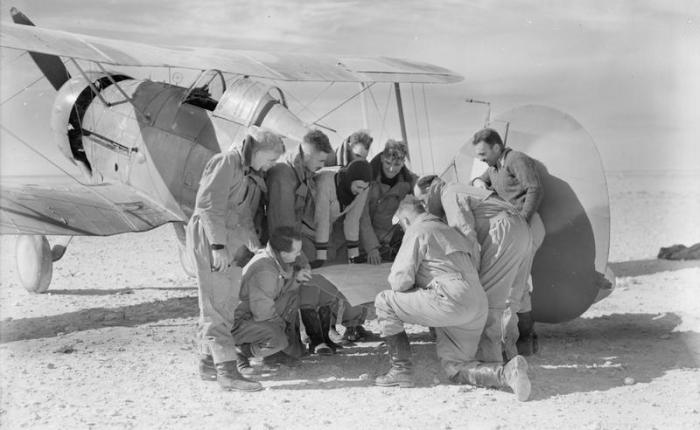
Header Image: Pilots of No. 3 Squadron RAAF study a map on the tailplane of one of their Gloster Gladiators at their landing ground near Sollum, Egypt, before an operation over Bardia during the closing stages of Operation COMPASS. Left to right: Flying Officers J.R. Perrin, J. McD Davidson (squatting), W.S. Arthur and P. St G. Turnbull, Flight Lieutenants G.H. Steege and A.C. Rawlinson, Flying Officer V. East, (unknown), Squadron Leader I.D. McLachlan (Commanding Officer) and Flying Officer A.H. Boyd. (Source: © IWM (CM 355))

The Aero Club Which Never Was: Gentlemanly Aeronauts versus The New Breed

The Aero Club Which Never Was: Gentlemanly Aeronauts versus The New Breed

By Dr Michele Haapamaki

The accepted anecdote is that the Aero Club of Great Britain was imagined during a hot air balloon outing over the lush countryside of Kent in 1901. Its instigators were Frank Hedges Butler, officially a partner in his family wine merchant business but more of a gentleman adventurer, his daughter Vera Butler, and the young Hon. Charles Rolls – who would lend his name to the famous automotive company and become one of the first licensed pilots in Britain. The organisation they founded would serve as a sort of gentleman’s club for aviators and gained the patronage of the King in 1910 – thereafter referred to as the Royal Aero Club.

Besides establishing some of the first training fields for flyers, the Aero Club was the sole body tasked with granting pilot’s licenses prior to the First World War. All the men who would join the newly formed Royal Flying Corps or naval flight units first obtained this qualification at their own expense. In the postwar years, the Club was the political and social centre of British flying, hosting annual dinners for the winner of the King’s Cup Air Race. The heydey of the Aero Club is now identified with the apex of British aerial achievement in the interwar years. The early Club, however, invested little energy promoting new technical or scientific developments in the direction of heavier-than-air flight, instead of fulfilling its initial brief as a leisure and sport-oriented ballooning for gentleman amateurs. Hedges Butler seemed preoccupied with rural ballooning competitions and his hobby-horse idea of a volunteer Army Balloon Corps, which initially gained half-hearted endorsement by the War Office but was scuttled prior to the First World War.

large_0000002
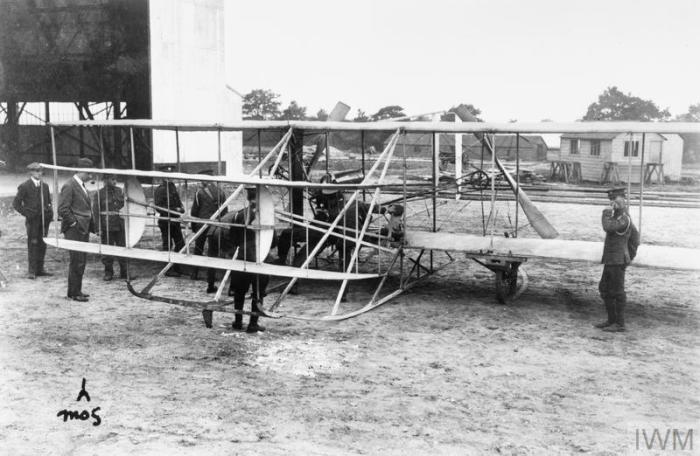
The Wright brothers aircraft at Farnborough being inspected by a small group of soldiers, c. 1910. (Source:  © IWM (RAE-O 615))

A little-known controversy over the Aero Club and a rival club which was never formed is a fascinating way to access larger questions about the development of heavier-than-air flight in early British aviation. Aviation historians will be familiar with the debate over whether ‘official’ Britain – be it government or quasi-official institutions – exhibited a characteristic, haphazard approach to the development of national aviation. Critics, both contemporary and historical, have argued that this lassitude allowed British ‘wings’ to fall behind other nations. Among other shortcomings, the British government may have been amateur in efforts to contact the Wright Brothers or probe their technology.[1] Hugh Driver, in his detailed history of early British military aviation, argued that the lengthy emphasis on ballooning by the Aero Club had ‘a material effect on the development of aviation generally’.[2]

Prior to the inception of the Hedges Butler Club, motor engineer and founder of the Automobile Club of Great Britain and Ireland, Frederick Simms, was the first to distribute a prospectus for an aeronautical club based on the existing French model. Its primary goal was directed towards the pursuit of heavier-than-air flight and in support of inventors. (Though it should be noted that at the time the French Aero Club also had an early emphasis on ballooning and dirigibles.) Simms was also a successful businessman who acquired rights to the UK manufacture of the internal combustion engine. He founded several eponymous companies, developing the magneto spark plug. As outlined by Driver, ‘Simms had the prior claim to found an aero club as such’.[3] Not only was he the founder of the Automobile Club in 1897, but he was also interested in heavier-than-air flying machines as early as 1896 – cooperating with Hiram Maxim’s attempt to build a steam-driven aeroplane.

His proposed group – the ‘Aero Club of Great Britain and Ireland’ – was intended as a spur to the development of ‘aerial navigation’. With characteristic enthusiasm, he claimed:

I am convinced that it only wants a Club or Society on modern lines to bring together the many British enthusiasts [to solve] this great problem.[4]

The Aeronautical Society, in existence since 1866, would have seemed – at least in theory – to fit the bill. However, it too was established as a ballooning Society and was in a somewhat moribund state at the turn of the century. At the time of Simms prospectus there indeed was a perceivable gap in organised enthusiasm for flight. After several acrimonious exchanges, Simms’ idea lost out to rival Aero Club. Simms and Hedges Butler were probably already acquainted, the latter having been appointed an honorary treasurer of the Automobile Club in 1898. It is therefore doubly unfortunate that the acrimony over the Club remained unresolved.

Class identity was one of the most salient characteristics of the Aero Club. In short, the emphasis was understood to be on the ‘club’ aspect of the name. It consciously modelled itself on the gentleman’s clubs of Pall Mall and St. James and acquired grand premises to match. Stanley Spencer, the aeronaut who piloted the three founders on the balloon outing when they conceived of the Club, was barred from membership due to his status as a ‘professional’. Many engineers, such as Simms, did not adapt readily to the image of an Aero Club man. He was an uneasy attendee at the first meeting of the Club on 3 December 1901 and was not placed on either the Organising or Balloon committees. The hierarchy and direction of the club were firmly established, ensuring that Simms was effectively sidelined from the new organisation, with the result that his prodigious energy (and those of like-minded men) for aeroplane flight was not utilised. To add insult to injury, Simms was asked for a £10 contribution to a balloon fund which he, understandably, refused.

Minutes of early Aero Club meetings, indeed, provide little indication of interests beyond ballooning. A certain Mr A. Verdon Roe was elected to membership in 1906, only for the name to be soon withdrawn. The Club did institute a ‘Technical Committee’ later that year with Charles Rolls, Simms, and John Moore-Brabazon as members. The latter was to become one of the best-known among the early generation of British aviators, though he learned more from time spent in Paris among French pioneers.

large_0000001
British Army Aircraft I during the first sustained flight. Cody began building the British Army Aircraft I in 1907 with the design similar to the kites and glider that he had successfully flown. Cody made the first sustained flight (lasting 27 seconds and for a distance of around 1390 feet) on the 16th October 1908. (Source: © IWM (RAE-O 995))

It is, however, one thing to make observations about the Aero Club and its early focus and yet another to conclude that they had any substantial impact on the larger course of British aircraft pioneering. There are substantial points to be made for a counterview. David Edgerton is well-known for his consistently presented case that the British aeronautical industry was thriving and well-supported in the Edwardian years and prior to the First World War.[5] Some evidence for this is the fact that the first flight on British soil, by the flamboyant American showman Samuel Cody, was in an army aircraft produced by the Balloon Factory at Farnborough.

Others have suggested that British aviation needed to take its own course in its own time, and in fact benefited from a lack of meddling from ‘boosters’ of different varieties. For the most part, no amount of progress was ever enough for some aviation buffs who tended to be of strong and unmoderated feeling; it could be argued that the hand-wringing was merely that. Aviation journalists, such as C.G. Grey of The Aeroplane, traded on histrionics over the fate of the British nation due to some aerial oversight or another by both government and, on occasion, private industry.

There is also the view that there was little of concrete import that an Aero Club could have produced in the pursuit of heavier-than-air flight in the early 1900s. Indeed, when it did become a reality on European soil with the 1908 demonstrations of the Wright brothers at Le Mans, France, the Club soon pursued these capabilities. They established one of the first aerodromes at the Isle of Sheppey, near the mouth of the Thames, and partnered with the Short Brothers – who brought characteristic British inventiveness to the manufacture and testing of new aircraft.

One conclusion we may reach is that discussion about the omissions of the organisations such as the Aero Club, both then and now, suffice to highlight the level of anxiety within British aviation circles – whether the basis for these worries was real or imagined. Was it inevitable that any such Club conceived during the Edwardian years would be (at least initially) unimaginative, snobbish, and genteel? Perhaps so. The episode of the duelling Clubs does provide an illuminating insight into the early world of British aviation, which the self-taught engineers and inventors were just on the cusp of breaking into. Those of the Hedges Butler ilk would soon be superseded by a new aviation elite which was, while not entirely a meritocracy, certainly closer to it than the sporting aeronauts would have imagined.

Dr Michele Haapamaki obtained her PhD from McMaster University (Hamilton, Canada) and is the author of The Coming of the Aerial War: Culture and the Fear of Airborne Attack in Inter-war Britain (I.B. Tauris, 2014). She is currently writing a book on culture and early British aviation. She Tweets @IdleHistorian.

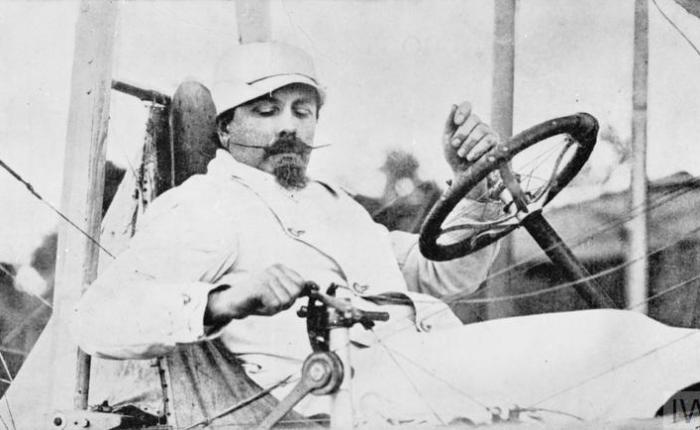
Header Image: A close-up of Cody in the cockpit of Cody aircraft mark IB. The cloth seat as opposed to a plough seat along with the control that Cody is moving differentiate this from the other marks of aircraft that Cody built. According to the caption, this was the aircraft that Cody intended to fly from London to Manchester in. Due to a mechanic failing to close a tap between the sump and the freshly filled oil tank the engine ceased up after fifteen minutes of flight. Fortunately, Cody was able to land safely. Shortly afterwards this aircraft was scrapped and Cody started work on a new one. (Source: © IWM (RAE-O 1075))

[1] See; Alfred Gollin, No Longer an Island: Britain and the Wright Brothers, 1902-1909 (Stanford: Stanford University Press, 1984) and The Impact of Air Power on the British People and their Government, 1909-14 (London: Macmillan Press, 1989)

[2] Hugh Driver, The Birth of Military Aviation: Britain, 1903-1914 (Woodbridge, Suffolk: The Boydell Press, 1997), p. 32.

[3] Ibid, p. 33.

[4] Ibid.

[5] David Edgerton, England and the Aeroplane: An Essay on a Militant and Technological Nation (Basingstoke, Hampshire: Macmillan, 1991).

Arrows from the Ground – Or how an incident on 17 March 2017 may change the relationship between ground and air forces

Arrows from the Ground – Or how an incident on 17 March 2017 may change the relationship between ground and air forces

By Dr Jacob Stoil and Lieutenant Colonel Kyle C. Burley

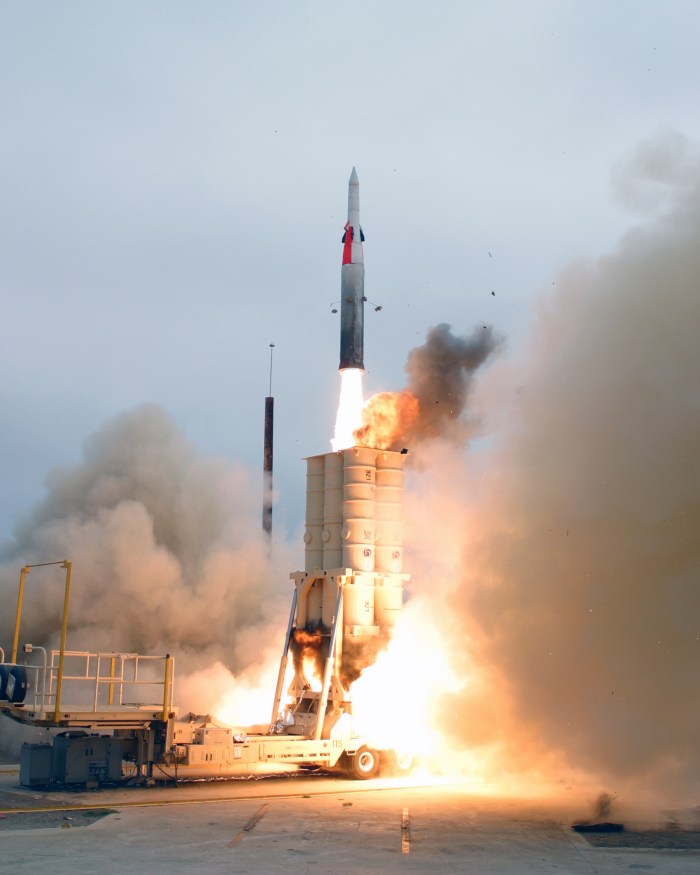
On 17 March 2017, Israel launched the Arrow missile interceptor for the first time, and a new dimension was added to the relationship between the air and ground forces. This was the first operational employment of the Arrow system but that it is not the wholly new aspect of this incident. What was special was the type of target the Arrow engaged. The Arrow was designed to intercept incoming ballistic missiles at high altitudes. In this case, the missiles it intercepted were SA-5 Surface-to-Air missiles (SAMs) targeted at Israeli strike aircraft. This event, whether a one-off or part of a new doctrine, shows a way forward for the integration of ground and air forces in which the ground forces can help provide a reciprocal umbrella to their colleagues in the air.

040729-N-8229-001
Arrow 2 launched on 29 July 2004, at the Naval Air Station Point Mugu Missile Test Center (Source: Wikimedia)

Attempting to disable and destroy SAMs is not new.  It is a critical mission for which air forces around the world train and which they regularly undertake. The coordination of ground and air systems in the most general sense is by no means a new phenomenon. As early as the Second World War, the German military integrated their ground-based flak defences with their fighter aircraft to create integrated zones of operations through designating flak boxes. At times, such as during the 1973 War, ground forces have been used to punch a hole through SAM umbrellas to allow the air force to conduct strike operations.

In all of these cases, the fundamental relationship between air and ground forces has remained consistent. The air forces have the ability to intervene in the ground domain and provide an umbrella for the ground forces, supporting them and protecting them from threats. So what changed on 17 March? Ground forces demonstrated their ability to enter the aerial domain and provide an umbrella covering the air force and protecting them from harm.

The Israeli use of ground-based missiles to provide screening fires for manned strike aircraft has opened a window for the exploration of new concepts.  The soon to be released US Army ‘FM 3-0 Operations’ manual anticipates the future possibilities of land forces as enablers for air and maritime forces. This is a break from the previous doctrine, which only envisioned that air and sea forces would act as enablers for land combat.  Extrapolating from the Israeli case provides a vision of the possibility of US Army forces using ground-based air-defense missile systems such as Patriot and Terminal High Altitude Air Defense (THAAD) for a SAM interdiction capability.  Forward deployed batteries could provide this covering fire along ingress and egress routes of strike aircraft where the Threat Integrated Air Defense Systems (IADS) is still capable or of an unknown status.  Sea-based forces such as Guided Missile Cruisers might also provide this type of coverage.

It is possible to push this vision further in considering the possibilities of ground or sea-launched Unmanned Aerial Systems (UAS). Envision a weapon that has to loiter and hypersonic propulsion which could target ground based IADS launchers, radar, and SAMs in-flight.  Such systems would no longer be dependent upon ground basing within direct fire range and the flight time of a Patriot or THAAD type battery. They could loiter, or even swarm to cover friendly air-breathing and manned mission aircraft in a contested area.

patriot_missile_launch_b
MIM-104 Patriot surface-to-air missile system. (Source: Wikimedia)

Each year, the US Army School of Advanced Military Studies (SAMS) conducts a planning exercise using a Joint Forcible Entry scenario.  In such a scenario, students must plan for the entry of US forces into a hostile environment against armed opposition. Students learn about the need to destroy hostile IADS capability before risking a single airlifter either to conduct an airborne assault or establish an Aerial Port of Debarkation (APOD).  Operations to remove the IAD threat can be time-consuming. Since the action on 17 March, it is now possible to imagine a US force conducting a Joint Forcible Entry within hours of deployment alert because the US no longer has to conduct a prolonged “IADS takedown” phase within the air campaign. A covering force of counter-IADS UASs could protect the strike and air assault forces through an array of tactics such as escort, prepositioning swarm, or forward sense and attack.  Using such a capability could radically redefine the approach to forcible entry and enhance the ability of airborne inserted ground forces as a US flexible deterrent option.

Whatever the future holds, the 17 March incident demonstrated the ability of missile defence technology to provide cover for aircraft engaged in strike operations. No more does dealing with SAMs need to be solely the role of the air force: ground forces can provide cover.  In doing so, this sets up a new dynamic of reciprocity in which air forces provide cover to ground forces, which in turn protect air forces. As missile defence technology such as that employed by Israel proliferates, this has the potential to revolutionise the way SAM threats are negated and alter the relationship between air and ground forces and give new meaning to ‘joint operations’.

Kyle C. Burley is a US Army Lieutenant Colonel and the Deputy Exercise Director for the US Army School of Advanced Military Studies (SAMS) at Fort Leavenworth, Kansas.  As the SAMS Simulations Officer he prepares, resources, and provides control for SAMS’ robust military planning exercise program.  Before assignment at SAMS, LTC Burley served as the US Third Army’s G7 (Forward) & Joint Readiness Exercise Team Chief.  He has also served in an array of Armor, Cavalry, as well headquarters staff positions from Division to OSD levels during his 24 years of service.  Kyle is a lifelong student of military history and a “Master” High Power rifle competitor.

Dr Jacob Stoil is a military historian and currently Assistant Professor of Military History at the US Army School of Advanced Military Studies. He received his doctorate in history from University of Oxford. He holds a BA in War Studies, as well as an MA in History of Warfare from the Department of War Studies, at King’s College London. He has published on indigenous force cooperation, the Second World War, and the Israeli military. Dr Stoil is the co-director of The Second World War Research Group (North America). He can be reached on Twitter at @JacobStoil.

The opinions and conclusions expressed herein are those of the authors and do not necessarily represent the views of the U.S. Army Command and General Staff College or any other government agency. (References to this study should include the foregoing statement.)

Header Image: A Terminal High Altitude Area Defense interceptor being fired during an exercise in 2013 (Source: Wikimedia)

Call for Submissions – From Balloons to Drones

Call for Submissions – From Balloons to Drones

Over the past two decades, airpower has become the “Western way of war” […] because it offers the prospect of military victory without large-scale destruction and loss of life. Airpower, however, cannot be decisive or even effective under all circumstances […] The utility of airpower is highly situational (emphasis added).

John Andreas Olsen[1]

From Balloons to Drones is an online platform that seeks to provide analysis and debate about air power history, theory, and contemporary operations in their broadest sense including space and cyber power.

Since its emergence during the First World War, air power has increasingly become the preferred form of military power for many governments. However, the application and development of air power are controversial and misunderstood. To remedy this, From Balloons to Drones is an online platform that seeks to provide analysis and debate about air power through the publication of articles, research notes, commentary and book reviews. From Balloons to Drones welcomes and encourages potential submissions from postgraduates, academics, and practitioners involved in researching the subject of air power.

Submissions can take the following forms:

  • ArticlesFrom Balloons to Drones publishes informative articles on air power that range from historical pieces to the analysis of contemporary challenges. These well-researched articles should attempt to bridge a gap between the specialist and non-specialist reader. They should be around c. 1,000 to 1,500 words, though From Balloons to Drones will accept larger pieces though we reserve the right to publish them in parts. References can be via footnotes and hyperlinks.
  • Air War BooksFrom Balloons to Drones publishes a series of review articles that examine the top ten books that have influenced writers on air power.
  • CommentariesFrom Balloons to Drones publishes opinion pieces on recent on a recent piece of news, either on a contemporary or historical subject. These are to be responses to such piece and should be no longer than c. 1,000 words.
  • Research NotesFrom Balloons to Drones publishes research notes related to contributor’s currents research projects. These take the form of more informal pieces and can be a discussion of a source or a note on a recent research theme. Unlike other pieces published by From Balloons to Drones, they can be written in the first person, though they can include references. These should be c. 500 to 1,000 words.
  • Book ReviewsFrom Balloons to Drones publishes occasional book reviews that aim to be an accessible collection of appraisals of recent publications about air power. If publishers are interested in having a publication reviewed then, please contact us via the email address below.

Submissions should be submitted in Word format. Also, please include a 50-100 word biography with your submission. However, if you are not sure if your piece fits our requirements, then please email us with the POTENTIAL SUBMISSION in the subject line. References can be used, and, given the readership of this site, please be careful to explain any jargon used.

If you are interested in contributing, please email us at airpowerstudies@gmail.com or use our contact page here.

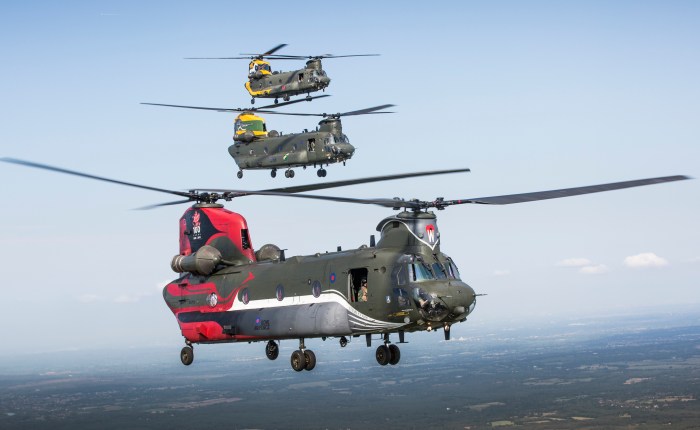
Header Image: Chinooks celebrate the 100th anniversaries of Nos. 18(B) and 27 Squadron from RAF Odiham and 28 Squadron from RAF Benson. (Source: Defence Imagery, Mod)

[1] John Andreas Olsen, ‘Introduction – Airpower and Strategy’ in John Andreas Olsen (ed.), Airpower Reborn: The Strategic Concepts of John Warden and John Boyd (Annapolis, MD: Naval Institute Press, 2015), p. 2.

#ResearchNote – A Different Kind of Shooting: A Photo-Recon Pilot’s Life in 1944

#ResearchNote – A Different Kind of Shooting: A Photo-Recon Pilot’s Life in 1944

By Mike Hankins

One of the lesser known large contributors to Allied victory in World War II was the role of aerial photographic reconnaissance. The allies relied on up-to-date photographs from the air. Flying these photo ‘recce’ missions could be every bit as harrowing as combat sorties. Recce planes flew over enemy territory with their guns removed and replaced with cameras. If they were attacked, pilots had no choice but to try and escape using only speed and manoeuvring, hoping to hide inside cloud cover or just to outrun the enemy. Up until the D-Day invasion, many of these missions were flown at extremely high speed and low altitude, as low as five to fifteen feet over the beaches of Normandy. Pilots likened these missions to throwing dice across a gambling table and called them ‘dicing’ missions. To get an in-the-cockpit view of what flying recce missions could be like, I am going to outline a brief period in the career of First Lieutenant George Adams, Jr., who joined the 30th Photographic Reconnaissance Squadron (PRS) in Toussus le Noble, France at the end of July 1944.

Adams flew the F-5, which was a Lockheed P-38 Lightning modified to take photos. The P-38 was not an uncontroversial plane, drawing mixed reviews from those that flew it. Ace fighter pilot Captain Jack Ilffey called it ‘a beautiful monster.’[1] Famed pilot Brigadier General Robin Olds, later noted for his contributions to air combat in the Vietnam War, first earned ace status in a P-38 in World War II. As he recalled,

I loved the P-38 but I got those kills in spite of the airplane, not because of it. […] The P-38 Lightning was too much airplane for a new kid and a full-time job for even a mature and experienced fighter pilot. Our enemies had difficulty defeating the P-38 but, as much as we gloried in it, we were defeating ourselves with this airplane.[2]

Although, from an air combat perspective, the P-38 was not nearly as effective as other fighter types, such as the North American P-51 Mustang, the Lightning’s high speed, long range, and sheer toughness allowed it to excel in the role of photo reconnaissance. Allied forces had learned early on that a group of F-5s together was easily spotted, so to reduce the likelihood of being seen, photo reconnaissance missions were often flown by single planes, unescorted and completely alone, usually deep over enemy territory.

2-Adams after landing in Mussidan, France
Adams after landing in Mussidan, France. (Source: Morse Special Collections, Kansas State University, Personal Papers of George Adams, Box 3)

Adams happened to arrive at a time when the 30th PRS was busier than it ever had been. The official unit history referred to August of 1944 as the ‘month of months.’ Ten August 1944 saw more missions take to the air than on D-Day itself. [3] For Adams, however, that month witnessed one of the defining moments of his career and very nearly cost him his life.

3-Adams welcomed in Mussidan
Adams welcomed in Mussidan. (Source: Morse Special Collections, Kansas State University, Personal Papers of George Adams, Box 3)

On 3 September, Adams was flying a reconnaissance mission over Belgium, when the weather took a turn for the worse. Due to extremely limited visibility, Adams flew far off course. With his fuel tanks almost empty, he had no choice but to land in the town of Mussidan in southwestern France. Luckily, just over one week previously on 25 August, the town had been liberated by the French Forces of the Interior (FFI). The townspeople welcomed him as a hero and gave him a place to stay at a nearby hotel for three days. The French resistance was able to purchase some German gasoline, and at the first sign of clear weather, on 6 September, Adams took off. After signalling his thanks by flying a few victory laps around the town, he headed back to Toussus le Noble.[4]

Adams’ ordeal was not over. The weather, which the 30th PRS unit historian called, ‘the airman’s most relentless foe,’ again proved troublesome for Adams on his flight back to base. After becoming lost in rough weather and losing all radio contact with his commanding officer, Major William Mitchell (not to be confused with the other Billy Mitchell, author of Winged Defense), Adams attempted to land in a field near Morannes and slammed his P-38 into a grove of trees. Adams himself was unharmed, but the aircraft was disabled. There was a military group at Morannes, and Adams stayed with them before travelling to an airstrip at Le Mans, about thirty miles away. Cooperating with intelligence services at Le Mans and the FFI, Adams tried to contact Major Mitchell but was unable to do so. The officials at Le Mans eventually brought Adams to Versailles on 8 September, where he was able to reconnect with the 30th PRS, and he returned to flying duty the next day.[5]

4-The wreckage of Adams' P-38 near Morannes
The wreckage of Adams’ P-38 near Morannes. (Source: Morse Special Collections, Kansas State University, Personal Papers of George Adams, Box 3)

Typically, the weather of the winter months limits photo recce missions. However, that was the least of the allies’ problems in December of 1944 as eight panzer divisions tore their way through the Ardennes forest, beginning what became known as the Battle of the Bulge. The 30th PRS joined the battle, providing valuable photographs to aid ground units. However, the weather again reared its head. Only five days before the end of the year were suitable for taking photos. The 30th managed to squeeze out 96 missions in those five days. Adams and his fellow pilots flew as much as possible, including flying multiple missions on Christmas Eve, Christmas day, and New Year’s Eve. The squadron set a record for a number of photographs processed: nine miles of film, consisting of 44,306 negatives that produced 153,579 prints.[6]

On New Year’s Day, 1945, ground forces requested an urgent, secretive mission to be flown over a particularly well-defended area of the German lines during the Battle of the Bulge. The nature of the photographs needed required a low-altitude approach of 2,000 feet, rendering the reconnaissance planes especially vulnerable to ground defences. Adams and six other pilots volunteered for the job. Four of them, including Adams, flew out twice. Despite the heavy risk and the intrusion of adverse weather conditions, the mission was a success, providing valuable intelligence to the front lines. The secretive nature of the mission prevented much discussion of it at the time, however, several months later, on 21 July 1945, Adams was awarded the Distinguished Flying Cross for flying his ‘unarmed photographic aircraft under circumstances entailing utmost courage and skill.’[7]

In the popular memory of World War II, we often tend to celebrate or romanticise the fighter pilots or bomber crews that engaged in seemingly heroic combat actions. However, Adams and his fellow recon pilots should not be forgotten. They took serious risks and made key contributions to the Allied victory in World War II.

Mike Hankins is a doctoral candidate at Kansas State University, where he teaches World History, the History of Airpower, and the History of Comic Books, and he is currently working on his dissertation, ‘Sources of Innovation: The Cultural and Technological Origins of Fourth Generation Fighter Aircraft, 1964-1991.’ He completed his master’s thesis at the University of North Texas in 2013, titled ‘The Phantom Menace: The F-4 in Air-to-Air Combat in the Vietnam War. He has a web page and can be found on Twitter at @hankinstien.

Header Image: Ground personnel of the 7th Photographic Reconnaissance Group fit cameras into a Lockheed F-5 Lightning before a long-range mission. Image by Staff Sergeant Robert Astrella, 7th Photographic Reconnaissance Group. (Source: ©IWM (FRE 5390))

[1]    Robert F. Dorr, ‘Why the P-38 Flunked in Europe,’ Aviation History 24 (May 2014), 22.

[2]    Ibid.

[3]    US Air Force Historical Research Agency (AFHRA), Maxwell AFB, 30th Photo Reconnaissance Squadron Unit History for the Month of August, 1944; Morse Special Collections, Kansas State University, Personal Papers of George Adams, Box 3, George Adams Pilot Information File, August 1944. Hereafter, the Adams Papers.

[4]    AFHRA, 30th Photo Reconnaissance Squadron Unit History for the Month of September, 1944; Testimony of Labattu de Montpon, as related in email from Mayor Stephane Triquart to Bruce Adams, 21 January 2016.

[5]    AFHRA, 30th Photo Reconnaissance Squadron Unit History for the Month of September, 1944.

[6]    Ibid.

[7]    AFHRA, Recflash, Vol. 2 No. 1, Highlight Missions, 2, attached to Historical Records and History of Headquarters 67th Tactical Reconnaissance Group, Month of January 1945; Morse Special Collections, Kansas State University, Adams Papers, Box 3, Quote from Distinguished Flying Cross award citation, General Orders 116, 27 June 1945.

Air Power and the Battle of the Bismarck Sea

Air Power and the Battle of the Bismarck Sea

By Dr Alan Stephens

This week marks the 74th anniversary of the Battle of the Bismarck Sea, arguably the most significant action fought by Australians during World War II.

Between December 1941 and April 1942, Imperial Japanese forces shocked Australians with their victories over the United States at Pearl Harbor and in the Philippines; and over the British Commonwealth in Malaya, Singapore, the Dutch East Indies and Rabaul. When enemy forces occupied northern New Guinea, an invasion of Australia, with its unthinkable consequences, seemed possible. However, supported by their American and British allies, Australia’s servicemen and women regrouped and fought back.

From mid-1942 onwards, Australian victories with American support at Milne Bay and Kokoda, and the triumph of American naval air power at Coral Sea and Midway weakened Japan’s hold on New Guinea. Further Allied successes on New Guinea’s northeast coast at Buna, Gona and Sanananda between November 1942 and January 1943 left the Japanese position substantially weakened.

Then, intercepted radio messages revealed that an enemy convoy would sail from Rabaul with reinforcements for the vital Japanese garrison at Lae on the northeast coast of New Guinea in late-February. This was likely to be Japan’s last throw of the dice in New Guinea. If the convoy were stopped, then so too would be the likelihood of an invasion of Australia

Allied Air Forces under the command of the American General George Kenney immediately began preparing for an all-out assault against the convoy. A critical factor was the brilliant plan largely conceived by the Royal Australian Air Force’s (RAAF) Group Captain William “Bull” Garing. Garing had already fought in Europe for two years with the RAAF’s No. 10 Squadron, and his experience of maritime warfare was to prove decisive.

nwa0471
Group Captain Garing RAAF (standing, right) hands over information to his successor Group Captain McLachlan, seated at the office desk, c. 1943. (Source: Australian War Memorial)

It was Garing who convinced General Kenney of the need for a massive, coordinated attack. Garing envisaged large numbers of aircraft striking the convoy from different directions and altitudes, with precise timing.

Initially, the allies would rely on reconnaissance aircraft to detect the convoy, which would then be attacked by long-range United States Army Air Force (USAAF) bombers. Once the convoy was within range of the allies’ potent anti-shipping aircraft – RAAF Beaufighters, Bostons and Beauforts, and American Mitchells and Bostons – a coordinated attack would be mounted from medium, low, and very low altitudes.

During the waiting period, crews practised their navigation and honed their formation flying, bombing, and gunnery skills.

Six thousand four hundred Japanese troops embarked at Rabaul between 23 and 27 February 1943, and the convoy of eight merchant ships and eight destroyers sailed just before midnight on the 28th, planning to arrive at Lae on 3 March. Air cover was provided by about 100 fighters flying out of bases in New Ireland, New Britain and New Guinea.

The enemy convoy initially was favoured by poor weather, which hampered Allied reconnaissance. It was not until mid-morning on 2 March that USAAF B-24 Liberators sighted the ships. General Kenney immediately launched eight B-17 Flying Fortress heavy bombers, followed shortly afterwards by another 20. The B-17s attacked from an altitude of 2000 metres with 450-kilogram demolition bombs. Later in the day, another strike was made by 11 B-17s whose crews reported that vessels were ‘burning and exploding […] smoking and burning amidships’ and ‘left sinking’.

By nightfall, the enemy was only hours from Lae, which meant that in the morning it would be within range of the entire allied strike force. If the coordinated attack were to succeed, the precise location of the convoy had to be known at daybreak; consequently, throughout the night, it was tracked by an RAAF Catalina from No. 11 Squadron, which occasionally dropped bombs and flares to keep the Japanese soldiers in a state of anxiety. Also during the night, eight RAAF Beaufort torpedo bombers from No. 100 Squadron took-off from Milne Bay to try to use the darkness to their advantage. The heavy frontal weather made navigation hazardous, and only two aircraft found the convoy. Neither scored a hit.

The moment the Allied Air Forces had been waiting for came on the morning of 3 March 1943, when the Japanese convoy rounded the Huon Peninsula. For much of the time the adverse weather had helped the enemy avoid detection, but now clear conditions favoured the allies. Over 90 aircraft took-off from Port Moresby and set heading for their rendezvous point. While the strike force was en route, RAAF Bostons from No. 22 Squadron bombed the enemy airfield at Lae.

550px-battle_of_the_bismark_sea

By 9:30 a.m. the AAF formations had assembled, and by 10:00 a.m. the Battle of the Bismarck Sea had begun.

The allies attacked in three waves and from three levels, only seconds apart. First, 13 USAAF B-17s bombed from medium altitude. In addition to the obvious objective of sinking ships, those attacks were intended to disperse the convoy by forcing vessels to break station to avoid being hit.

Second, 13 RAAF Beaufighters from No. 30 Squadron hit the enemy from very low level, lining up on their targets as the bombs from the B-17s were exploding. With four cannons in its nose and six machine guns in its wings, the Beaufighter was the most heavily armed fighter in the world. The Australians’ job was twofold: to suppress anti-aircraft fire, and to kill ships’ captains and officers on their bridges.

The Beaufighters initially approached at 150 metres above the sea in line astern formation. The pilots then descended even lower, to mast-level height, set full power on their engines, changed into line abreast formation, and approached their targets at 420 kilometres an hour.

It seems that some of the Japanese captains thought the Beaufighters were going to make a torpedo attack because they altered course to meet the Australians head-on, to present a smaller profile. Instead, they made themselves better targets for strafing. With a slight alteration of heading the Beaufighters were now in an ideal position to rake the ships from bow to stern, which they did, subjecting the enemy to a withering storm of cannon and machine gun fire.

127965
A Japanese transport on fire during the Battle of the Bismarck Sea. (Source: Australian War Memorial)

According to the official RAAF release:

[e]nemy crews were slain beside their guns, deck cargo burst into flame, superstructures toppled and burned.

With the convoy now dispersed and in disarray, the third wave of attackers was able to concentrate on sinking ships. Thirteen American B-25 Mitchells made a medium level bombing strike while, simultaneously, a mast-level attack was made by 12 specially modified Mitchells, known as ‘commerce destroyers’ because of their heavy armament. The commerce destroyers were devastating, claiming seventeen direct hits. Close behind the Mitchells, USAAF Bostons added more firepower.

Following the coordinated onslaught, Beaufighters, Mitchells and Bostons intermingled as they swept back and forth over the convoy, strafing and bombing. Within minutes of the opening shots, the battle had turned into a rout. At the end of the action:

[s]hips were listing and sinking, their superstructure smashed and blazing, and great clouds of dense black smoke [rose] into a sky where aircraft circled and dived over the confusion they had wrought among what, less than an hour earlier, had been an impressively orderly convoy.

Overhead the surface battle, 28 USAAF P-38 Lightning fighters provided air defence for the strike force. In their combat with the Zeros which were attempting to protect the convoy, three of the Lightnings were shot down, but in turn, the American pilots claimed 20 kills. Apart from those three P-38s, the only other allied aircraft lost was a single B-17, shot down by a Zero.

With their armament expended the allied aircraft returned to Port Moresby. However, there was to be no respite for the enemy. Throughout the afternoon the attacks continued. Again, B-17s struck from medium level, this time in cooperation with Mitchells and RAAF Bostons flying at very low level. (Incidentally, the Bostons were led by Squadron Leader Charles Learmonth, after whom the RAAF’s present-day base in north-west Australia is named.) At least 20 direct hits were claimed against the by-now devastated convoy.

That was the last of the coordinated attacks. The victory had been won. For the loss of a handful of aircraft, the Allied Air Forces had sunk twelve ships – all eight of the troop transports and four of the eight destroyers – and had killed more than 3,000 enemy soldiers.

The brilliantly conceived and executed operation had smashed Japanese hopes of regaining the initiative in New Guinea and had eliminated any possibility that Australia might be invaded. In the words of the supreme command of the Southwest Pacific Area, General Douglas MacArthur, the Battle of the Bismarck Sea was ‘the decisive aerial engagement’ of the war in the Southwest Pacific.

However, there was still a terrible yet essential finale to come. For several days after the battle, Allied aircrews patrolled the Huon Gulf, searching for and strafing barges and rafts crowded with survivors. It was grim and bloody work, but as one RAAF Beaufighter pilot said, every enemy soldier they prevented from getting ashore was one less for their Army colleagues to face. Moreover, after fifteen months of Japanese brutality, the great immorality, it seemed to them, would have been to have ignored the rights of their soldiers.

128159
A Japanese destroyer steaming astern while under attack by USAAF bombers during the Battle of the Bismarck Sea. (Source: Australian War Memorial)

Japanese media never mentioned the battle, but in a macabre footnote, two weeks later, Tokyo announced that in future all Japanese soldiers were to be taught to swim.

The Battle of the Bismarck Sea was a master-class in air power. The RAAF and the USAAF had smashed Japanese hopes of regaining the initiative in New Guinea; they had forced the enemy into a defensive posture from which ultimate victory was unlikely, and they had eliminated any possibility that Australia might be invaded.

This was arguably Australia’s most important victory in World War II.

This post first appeared at The Central Blue, the blog of the Sir Richard Williams Foundation.

Dr Alan Stephens is a Fellow of the Sir Richard Williams Foundation. He has been a senior lecturer at UNSW Canberra; a visiting fellow at ANU; a visiting fellow at UNSW Canberra; the RAAF historian; an advisor in federal parliament on foreign affairs and defence; and a pilot in the RAAF, where his experience included the command of an operational squadron and a tour in Vietnam. He has lectured internationally, and his publications have been translated into some twenty languages. He is a graduate of the University of New South Wales, the Australian National University, and the University of New England. Dr Stephens was awarded an OAM in 2008 for his contribution to Australian military history.

Header Image: During the Battle of the Bismarck Sea in which the Japanese suffered heavy losses while attempting to reinforce their garrison at Lae, a RAAF Beaufighter attacks a camouflaged Japanese transport. A burst is poured into the burning vessel. (Source: Australian War Memorial)

#Commentary – Design and Defence Acquisition: The Missing Piece of the Jigsaw

#Commentary – Design and Defence Acquisition: The Missing Piece of the Jigsaw

By Dr Michael Pryce

Reports in the Sunday Times and other newspapers this weekend have highlighted a number of familiar issues in defence acquisition. Tales of gold-plated requirements, service chiefs ‘gaming’ the system to get preferred projects funded, and delays are familiar ones stretching back over decades.

While some of these issues raised in the press reflect aspects of reality, a vital part of the story is missing. This is the withering away of the vital ability of the services and industry to work together on a project using the language of design. This stretches back to the mid-1980s, when Michael Heseltine brought an industrial figure, Peter Levene, into the Ministry of Defence to head its procurement division. This was seen as a radical challenge to the defence establishment at the time, in line with the Thatcher government’s policy of bringing entrepreneurs from the private sector into government to gain efficiency savings.

There is a history of private business people attempting to shake up defence acquisition. In the 1960s, the Kennedy administration brought Robert McNamara in from the Ford Motor Company as United States Secretary of Defense. In the 1970s and 1980s, David Packard, of Hewlett-Packard fame, was similarly used to introduce private sector practices to the US Department of Defense’s acquisition projects.

This approach has a mixed track record on both sides of the Atlantic. The introduction of competition and a reduction in single-service projects saw some benefits in the US and the UK. However, the introduction of taut, arms-length contracts and competition broke the links that allowed design teams in industry to speak openly to the military requirements writers. Allied to the privatisation of the state-run research establishments, which provided advice and assessment on requirements and designs, this led to a lack of communication across the acquisition process. A taut contract is no replacement for informed dialogue.

The British Aerospace Harrier is used by the RAF in the close air support role.
A British Aerospace Harrier GR7 as used by the RAF. (Source: Defence Imagery, MoD)

A good example of how this dialogue leads to success is the Harrier ‘jump jet’, a highly risky technical concept. Starting as a private design by industry in the 1950s, it was refined with support from the research establishments before it was adopted for service by the UK and US armed forces. Flying prototypes before a final requirement was written meant that when it entered service, the project was on time, on cost and met almost all specifications; one small shortfall in manoeuvrability was discussed as not worth the cost to fix. The success of the Harrier in the Falklands in 1982 showed that this was the right decision. The shared language of design, spoken openly between MOD and industry, led to the Harrier’s success.

Pictured is the first of the UK’s F-35B Lightning II jets to be flown to the UK.
The first of the UK’s F-35B Lightning II jets to be flown to the UK in 2016. (Source: Defence Imagery, MoD) 

In 1985, the Harrier’s original designer, Ralph Hooper, retired, the same year that the Levene reforms started to end the ability of designers to develop new projects while talking openly to requirements writers and technical experts. Instead, a contract that defines roles and responsibilities is expected to lead to success. However, it is hard to see any examples of this working in the years since – for example, the Harrier’s successor, the F-35B Lightning II, has yet to replicate its record of delivery on time or cost.

Ralph Hooper originated the Harrier design out of a sense of idle interest. The project was, as he says, the product of a lot of people. The first contract for the aircraft came when the prototypes were being built, having proceeded with a ‘nod and a wink’ from the government. The trust engendered by having all those involved in designing a complex system in industry, the services and the government able to discuss design openly are a continuing need for successful defence acquisition. That we no longer do this, due to competition and contracts, lies at the heart of the issues reported in the press over many years, not just one weekend.

This post first appeared on the Cranfield University Blog.

Dr Michael Pryce is a Lecturer in Defence Acquisition at Cranfield University. He leads the Low Cost by Design research network that explores the role of good design in defence acquisition.

Header Image: Harriers from Joint Force Harrier lined up following a ceremony to mark the retirement of the famous aircraft after 41 years of service. (Source: Defence Imagery, MoD)