OODA Loop or Coffee Break? Erich Hartmann and the Forgotten German ‘Decision Cycle’

OODA Loop or Coffee Break? Erich Hartmann and the Forgotten German ‘Decision Cycle’

By Stephen Robinson

There was not too much dogfighting for us. It requires a large area and is absolutely defensive.[1]

Erich Hartmann

Colonel John R. Boyd flew F-86 Sabres during the Korean War and later theorised the Observation-Orientation-Decision-Action (OODA) loop, initially focused on air-to-air combat. At first, Boyd considered the tactical requirements of test flight dogfights between the YF-16 and YF-17 prototypes in 1974 before analysing Sabre and MiG-15 combat in Korea. He expressed the basic idea of the OODA loop in a United States Air Force (USAF) oral history in 1977, although it was not fully formed with its familiar four stages.[2] However, it is not commonly known that another F-86 pilot had theorised a four-stage air-to-air combat ‘decision cycle’ in the 1940s – Luftwaffe pilot Erich Hartmann.

FRE_015069
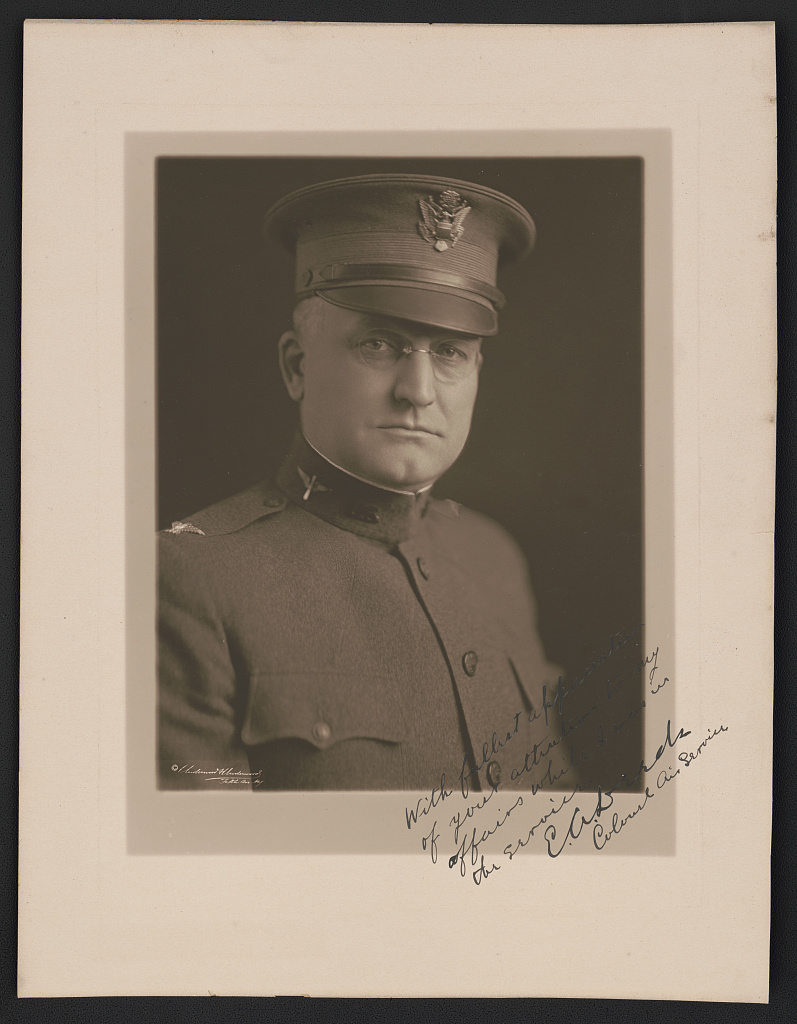
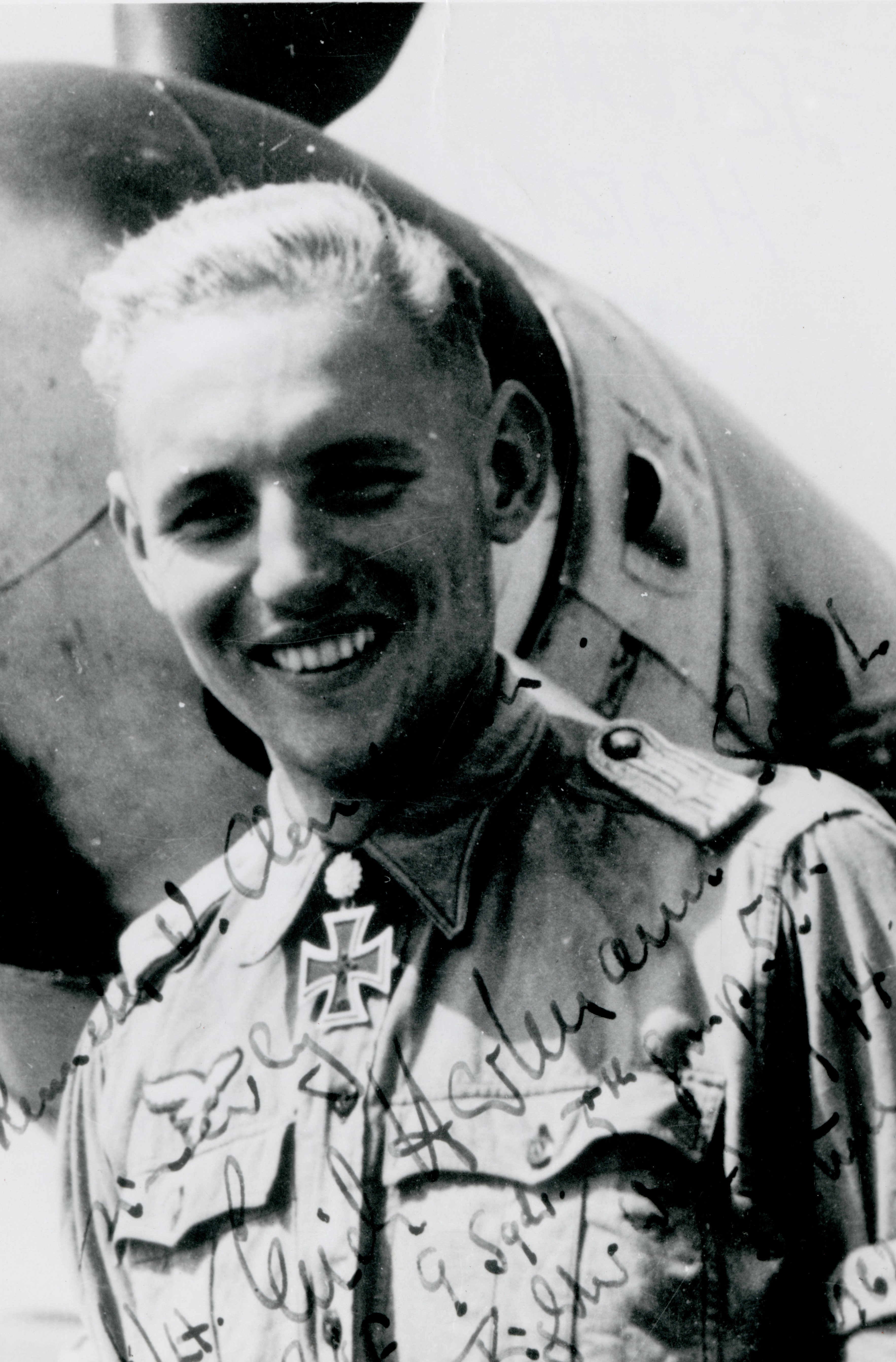
A signed copy of a photo of Erich Hartmann during the Second World War. (Source: Imperial War Museum)

During the Second World War, Hartmann flew 1,404 combat missions, participated in 825 air-to-air engagements and became history’s highest-scoring ace with 352 official kills, mainly over the Eastern Front.[3] During the Cold War, he later commanded West Germany’s first Sabre wing Jagdgeschwader 71 ‘Richthofen.’[4] Hartmann theorised the ‘Coffee Break’ concept, abbreviated as See-Decide-Attack-Break (SDAB). Writets Trevor J. Constable and Raymond F. Toliver articulated the idea in their bestseller The Blond Knight of Germany (1970), the first Hartmann biography, almost half a decade before the OODA loop emerged. Although their book romanticises the German military and fails to address Hartmann’s relationship with National Socialism adequately, it accurately depicts air combat tactics. In contrast, historian Erik Schmidt’s Black Tulip: The Life and Myth of Erich Hartmann, the World’s Top Fighter Ace (2020) thoroughly examines Hartmann’s role in the Third Reich and his fighter pilot career, which makes his book essential reading.

Hartmann and Boyd, in addition to flying Sabres and developing ‘decision cycles’, had much else in common. They were both aggressive fighter pilots with maverick independent streaks who declared war on their hierarchy late in their careers. Hartmann rebelled by opposing the F-104 Starfighter, which he considered unsafe, while Boyd went outside his chain of command to develop the unwanted Lightweight Fighter project.[5] Both men also retired as colonels in the 1970s.

At first glance, the SDAB cycle and the OODA loop are hard to distinguish. As John Stillion expressed: ‘Hartmann’s air combat procedure is strikingly similar to USAF Colonel John Boyd’s famous Observe, Orient, Decide, Act, or “OODA” loop.’[6] However, there is a critical difference. In an air combat context, the OODA loop is about winning dogfights, while the SDAB cycle is all about avoiding them. Additionally, Boyd’s OODA loop theory evolved from air combat to include land combat and then conflict in general before becoming a cognitive model explaining the mind’s relationship with reality. Hartmann’s method, as Schmidt concluded, is not ‘really a dogfighting strategy per se. It was more of an anti-dogfighting strategy.’[7]

Take a Coffee Break

Hartmann enlisted in the Luftwaffe in 1940 and joined Jagdgeschwader 52 in October 1942, flying Messerschmitt Bf 109 fighters. He initially became a wingman for Edmund Rossmann, who mentored the novice pilot. Rossmann had already been credited with over 80 kills, giving his advice considerable merit.[8] Hartmann learned that Rossmann had a wounded arm that prevented him from flying highly manoeuvrable dogfights, but he compensated for this injury by developing a specific tactic. After spotting the enemy, Rossmann patiently assessed the situation before deciding whether to attack. If he decided that surprise could be achieved, he would attack, which differed from the standard practice of immediately attacking a seen enemy.[9] Hartmann later reflected that Rossmann ‘taught me the basic technique of the surprise attack, without which I am convinced I would have become just another dogfighter.’[10] What Rossmann did out of necessity, Hartmann would soon do out of choice.

Hartmann scored his first aerial victory on 5 November 1942 by shooting down an Il-2 Sturmovik. However, shrapnel from the kill damaged his engine, forcing him to crash. While recovering in the hospital, Hartmann began to formulate his conception of air combat after reflecting that he should have approached closer before opening fire and disengaged quicker to prevent shrapnel from hitting his engine. Hartmann later recalled: ‘I learned two things that day: Get in close and shoot, and break away immediately after scoring the kill.’[11] Hartmann later formulated his trademark method, as Constable and Raymond explained:

The magical four steps were: “See – Decide – Attack – Reverse, or ‘Coffee Break’.” In lay terms, spot the enemy, decide if he can be attacked and surprised, attack him and break away immediately after striking; or if he spots you before you strike, take a “coffee break” – wait – pull off the enemy and don’t get into a turning battle with a foe who knows you are there.[12]

In a USAF interview in 1985, Hartmann was asked, “How did you develop your tactics of See, Decide, Attack, Reverse, or Coffee Break?” He answered:

I developed my tactics by watching my leader. My first leader, MSgt Eduard Rossmann, was always cautious. He said he didn’t like to pull a lot of Gs because of a bad shrapnel wound in his arm. He would look over each fight and decide if he would enter. When he did enter, it was always straight through – no turns – and he usually came home with a kill. My next leader, Sgt Hans Dammers, liked to turn and fly in the circus. The next man, 1st Lt Josef Swernemann was somewhere in between the two. He would be patient for a while, but then would get into a turning fight when he got frustrated. This is when I realized you must fight with your head, not your muscle.[13]

Hartmann rejected dogfighting as he considered it pointless and risky: ‘I also decided against aerial acrobatics, against what traditional pilots would call dog-fighting […] Acrobatics are a waste of time and therefore dangerous.’[14] Hartmann would always try to break contact after a pass before deciding if another pass was warranted and, as Constable and Raymond explained, ‘[e]ach pass was a repetition of the “See – Decide – Attack – Break” cycle.’[15]

Hartmann’s method was essentially hit-and-run tactics. As social scientists C. Hind and A. Nicolaides explained: ‘Hartmann became the ultimate and leading exponent of the stalk-and-ambush tactics, and he favoured the tactic of ambushing enemy aircraft and firing at them from very close range, about 20 m, rather than becoming involved in challenging and unnecessary dogfights.’[16]

The SDAB cycle is usually only mentioned in popular military aviation histories and is rarely referred to in scholarship. Edward E. Eddowes, who worked at the Air Force Human Resources Laboratory, submitted a paper to the First Symposium on Aviation Psychology in 1981. He declared: ‘Each engagement involves repetitions of the see, decide, attack, break discrimination-decision sequence. Like many of his predatory predecessors, Hartmann found turning contests hazardous and avoided them.’[17]

In another example, Captain James H. Patton, Jr., a retired naval officer, in his article ‘Stealth is a Zero-Sum Game: A Submariner’s View of the Advanced Tactical Fighter’ considered the SDAB cycle in 1991:

Top Gun instructors interpreted that terse guidance – based on interviews with Hartmann – to mean that a pilot should attempt to detect without being detected, judge whether he can attack covertly, close to a point that would almost assure a kill, and then disengage rapidly to repeat the process, rather than hang around in what submariners call a melee, and fighter pilots term the visual fur ball.[18]

Mikel D. Petty and Salvador E. Barbosa conducted an interesting air simulation experiment. They noted that USAF instructors supervise trainees undergoing virtual simulation-based training.[19] However, given the limited availability of instructors, they devised a means of testing a self-study-based training approach through simulation by following the progress of one test subject over eight years. The virtual pilot flew 2,950 missions in 138 campaigns using seven types of aircraft set in Europe in 1943-45 using Microsoft Combat Flight Simulator 3 (CFS3). The experiment required the subject to read air combat literature before applying the described tactics in the simulation. The study material included The Blond Knight of Germany, which outlined the SDAB cycle.[20] Petty and Barbosa confirmed the effectiveness of the SDAB cycle as ‘maneuvers and tactics described as effective in WWII air combat in the literature, e.g., those in Franks (1998) and Toliver and Constable (1970), were found by the subject to be very effective in CFS3 as well, if performed correctly.’[21]

The SDAB cycle has limitations, and Schmidt correctly concluded that it was well-suited to the Eastern Front but had less utility in Western Europe: ‘Hartmann’s Soviet enemies were, generally, less capable than the British and American pilots on the Western Front, which meant not only that they were easier to shoot down, but also that they were easier to evade and disengage from if the odds weren’t right.’[22] Therefore, applying SDAB cycles consistently in practice is impossible, and some dogfighting is inevitable, making the OODA loop relevant.

The OODA Loop

Boyd was familiar with Hartmann and mentioned him once in the 1977 USAF oral history stating that ‘[A]nd so, in that sense, a guy like Hartmann or a guy like Bong [Maj Richard I.] and some of these other good American aces – I could name others from other countries – they kind of knew they were going to win anyway. Maybe not in the beginning, but they built up that certain confidence and they had the desire.’[23] However, it is unclear if he read The Blond Knight of Germany or other references to the SDAB cycle, so we do not know if Hartmann influenced the OODA loop.[24] In any case, both models are opposites, so there is no suggestion of plagiarism. The basic idea of the OODA loop is to move faster than the enemy through a four-stage cycle, as military analyst Franklin C. Spinney, a close acolyte of Boyd, explained:

He [Boyd] thought that any conflict could be viewed as a duel wherein each adversary observes (O) his opponent’s actions, orients (O) himself to the unfolding situation, decides (D) on the most appropriate response or countermove, then acts (A). The competitor who moves through this OODA-loop cycle the fastest gains an inestimable advantage by disrupting his enemy’s ability to respond effectively.[25]

The victor, moving faster, seizes the initiative while the loser becomes paralysed by disorientation and panic.[26] The winner gets inside the loser’s OODA loop, which allows the pilot to manoeuvre into a winning firing position during a dogfight.[27] The OODA loop requires both pilots to dogfight long enough and complete enough loops for the winner to gain a relative speed advantage, which begins to sow disorientation and panic in the loser’s mind. More specifically, the pilots must complete enough OODA loops for the winner’s relative speed advantage to result in an action that changes the overall situation.[28] When this occurs, the loser’s actions, based upon the superseded earlier situation, fail to achieve the intended result, and they become confused as negative feedback overloads their brain. A pilot simply shooting down an enemy Hartmann-style before a clash of opposing OODA loops can occur is not applying Boyd’s model. If the OODA loop involved surprise and winning before the opponent reacts, there would be nothing original about the idea or way to distinguish it from the earlier SDAB cycle meaningfully.

The key difference between Hartmann and Boyd is that the SDAB cycle avoids dogfighting while the OODA loop requires dogfighting. Boyd was fixated on dogfighting as Frans P.B. Osinga explained: ‘[H]e [Boyd] developed the ability to see air combat as a contest of moves and countermoves in time, a contest in which a repertoire of moves and the agility to transition from one to another quickly and accurately in regard [to] the opponent’s options was essential.’[29]

Boyd’s manual Aerial Attack Study (1964), first published in 1960, explained all possible dogfighting manoeuvres without prescribed solutions.[30] Osinga concluded that Boyd ‘wanted to show people various moves and countermoves, and the logic of its dynamic.’[31] Aerial Attack Study reads like a chess strategy book. It is undoubtedly valuable, as Grant Hammond explained: ‘[M]any a fighter pilot, whether he knows it or not, owes his life to Boyd and the development of the tactics and manoeuvres explained in that manual.’[32] Former students who fought in Vietnam credit Boyd’s teaching for getting them out of danger. For example, on 4 April 1965, Major Vernon M. Kulla engaged North Vietnamese MiG-17s while flying an F-105 Thunderchief. Before the MiG-17 could open fire, Kulla successfully conducted a snap roll that he learned from Boyd, forcing the communist pilot to overshoot.[33] Therefore, Boyd certainly taught useful air-to-air tactical skills.

Despite Boyd’s obsession with dogfighting, it is rarer than many assume. Historically speaking, in most cases, victory goes to the pilot, who spots the enemy first and wins before the opponent can react. As Barry D. Watts explained:

To start with historical combat data, combat experience going at least back to World War II suggests that surprise in the form of the unseen attacker has been pivotal in three-quarters or more of the kills. For example, P-38 pilot Lieutenant Colonel Mark Hubbard stressed that, in his experience over northern Europe with the U.S. Eighth Air Force, “90% of all fighters shot down never saw the guy who hit them.” Similarly, the German Me-109 pilot Erich Hartmann […] has stated that he was “sure that eighty percent” of his kills “never knew he was there before he opened fire.”[34]

This trend continued during the Vietnam War from April 1965 to January 1973, as approximately 80 per cent of personnel shot down from both sides never saw the other aircraft or had insufficient time to make a countermove.[35] Accordingly, Watts concluded: ‘[W]hat historical air combat experience reveals, therefore, is that upwards of 80 per cent of the time, those shot down were unaware that they were under attack until they either were hit or did not have time to react.’[36]

Most air-to-air kills did not involve dogfighting and, consequently, clashes of opposing OODA loops involving sequences of moves and countermoves. Most air-to-air engagements end before the loser has time to act. Even when dogfighting occurs, it can be over in seconds, as Schmidt explained:

Amazingly, the whole dance of a dogfight could take place over the course of just a few seconds. The famed American pilot Robin Olds, who flew P-38s and P-51s in World War II and F-4 Phantoms in Vietnam, said: “Usually in the first five seconds of a dogfight, somebody dies. Somebody goes down. You want to make sure it’s the other guy.”[37]

Therefore, the OODA loop is not always applicable in dogfights because other factors often decide the outcome before the winner’s faster speed can generate negative feedback in the loser’s mind, which is a more gradual process involving moves and countermoves.

Boyd, without intending to, contradicted the essence of the OODA loop by expressing a sentiment identical to the SDAB cycle:

So that’s why he [the fighter pilot] wants to pick and choose engagement opportunities. He wants to get in, get out, get in, and get out. Why does he want to do that? Because it’s not just one-to-one air-to-air combat up here. It’s what the pilots like to say, many-upon-many. In other words, if you’re working over one guy, somebody else is going come in and blindside you. So you want to spend as little time with a guy as possible. You need to get in, gun him, and get the hell out.[38]

Ironically, Boyd preferred the hit-and-run essence of the SDAB cycle, as picking and choosing engagement opportunities and cycles of getting in and out to avoid danger sounds just like Hartmann. Therefore, engaging in an elongated OODA loop duel with another pilot is inherently risky due to the possible presence of other enemy fighters. However, there is still a critical difference as Boyd believed that the best way to break contact was by conducting a ‘fast transient’ – a rapid transition from one manoeuvre to another that allows a pilot to kill before quickly disengaging.[39] However, a pilot can only conduct a ‘fast transient’ if they are already in a dogfight. Hartmann instead preferred to dive at an unsuspecting enemy using superior speed in a single pass and then to use the momentum gained to break contact without any acrobatics, dogfighting or ‘fast transients’.

Boyd also stressed: ‘[T]hink of it in space and time. In space, you’re trying to stay inside his manoeuvre; in time, you want to do it over a very short period of time, otherwise you’re going to become vulnerable to somebody else.’[40] Therefore, Boyd advocated elongated OODA loop duels to gradually generate negative feedback while inconsistently wanting to restrict engagements to minimal periods due to the risk of other enemy fighters. Ultimately, Boyd failed to reconcile the need to rapidly break contact after an attack to avoid danger with the time required for enough OODA loop cycles to generate disorientation and panic in the loser’s mind.

Aces and Iteration

The key advantage of the SDAB cycle is that it minimises risk. However, a pilot intending a surgical hit-and-run strike may inadvertently find themselves in a dogfight, and then the logic of the OODA loop might become paramount. Nevertheless, engaging in an OODA loop contest inherently makes one vulnerable. As Jim Storr explained: ‘[T]here is considerable advantage in reacting faster than one’s opponent, but the OODA Loop does not adequately describe the process. It places undue emphasis on iteration instead of tactically decisive action.’[41] After attacking, Hartmann would break contact to prevent iteration and only committed to further passes in favourable conditions. The avoidance of iteration is also evident in the tactical methods of other aces, and Storr stressed that ‘biographies of aces […] show almost no trace of iterative behaviour in combat.’[42] Hartmann’s tactics worked because he avoided dogfighting. As Storr similarly expressed:

Critically, aces scarcely ever dogfight. They usually destroy enemy aircraft with a single pass, and expend very little ammunition per aircraft shot down. Their effectiveness centres on rapid, decisive decision and action. It is based on superlative, largely intuitive, situational awareness. Aces do display some significant characteristics – their eyesight is usually exceptional and their shooting phenomenal. They also have catlike reactions. However, expert fighter combat is fundamentally not iterative. It is sudden, dramatic and decisive.[43]

Boyd valued manoeuvrability over speed, while Hartmann preferred speed over manoeuvrability. Neither is right or wrong, and there is undoubtedly a degree of pilot preference. Hartmann’s approach was only made possible by exceptional eyesight, which allowed him to apply successful SDAB cycles consistently. Understandably, pilots with poorer eyesight might prefer manoeuvrability. After all, most pilots never become aces, so there is value in applying lessons from both Hartmann and Boyd’s approaches.

Conclusion

Boyd advocated getting inside the enemy’s OODA loop to disrupt their decision-making process and force them to make defeat-inducing inappropriate actions. In contrast, Hartmann had no intention of getting inside the enemy’s ‘decision cycle’. He usually won before the enemy knew of his presence or had time to act. There is no need to disrupt the enemy’s decision-making process if they have no time or opportunity to make decisions, and in such circumstances, the OODA loop is redundant. As such, Boyd neglected the importance of who spots who first and the corresponding likelihood that most engagements will be decided before sequences of moves and countermoves can occur.

Of course, manoeuvrable dogfighting cannot always be avoided, so the OODA loop certainly has merit. For example, an F-35 Lightning II would ideally only shoot down unsuspecting enemy fighters with long-range missiles beyond visual range. However, it is armed with 25mm cannons just in case dogfighting occurs. Nevertheless, air-to-air engagements have declined since the Vietnam War, while situational awareness has dramatically increased due to improved radar and airborne early warning and control (AEW&C) platforms. Therefore, the ratio of air-to-air kills occurring beyond visual range will likely continue to increase. Consequently, the future of OODA loop-style dogfighting is uncertain but becoming increasingly rare. At the same time, the core of Hartmann’s method remains valid. Pilots can now ‘see’ at great range with radar and ‘decide’ whether to ‘attack’ with the assistance of AEW&C. However, there may be no need for a clean ‘break’ since pilots no longer must get close thanks to long-range missiles.

The OODA loop depicts air-to-air combat as a duel between two minds going through cycles in which both pilots have a ‘sporting chance’, which reflects the ‘Knights of the Air’ myth from the First World War.[44] In contrast, Hartmann was like a sniper, describing his preferred tactic as ‘[C]oming out of the sun and getting close; dog-fighting was a waste of time. The hit and run with the element of surprise served me well, as with most of the high scoring pilots.’[45] Boyd, in contrast, is like a chess enthusiast who loves the moves and countermoves of the game. However, OODA loop-like dogfights only occur in a minority of air-to-air encounters. Therefore, Boyd’s model only has limited utility in air combat.

The SDAB cycle demonstrates that the OODA loop is not the only ‘decision cycle’. Despite its impeccable origins in combat experience, Hartmann’s tactical method is not well-known today partly because he never transformed the SDAB cycle into a general theory of conflict. In contrast, Boyd considered the more abstract OODA loop to be a universal guide to military success, applicable beyond the air domain at all levels of conflict. Boyd also believed that the OODA loop explained any competitive endeavour – such as politics, business, and sports – as well as human cognitive processes and behaviour in general. As Osinga explained concerning Boyd’s final version of the OODA loop: ‘[I]t is a model of individual and organizational-level learning and adaptation processes, or – to use Boyd’s own terms – a meta-paradigm of mind and universe, a dialectic engine, an inductive-deductive engine of progress, a paradigm for survival and growth, and a theory of intellectual evolution.’[46] Hartmann never transformed his straightforward air-to-air tactic into something grander. Another reason the SDAB cycle is not well-known is that Hartmann did not devote his retirement to promoting the concept: ‘I instructed and flew at a few air clubs, and flew in an aerobatics team with Dolfo Galland. Later I just decided to relax and enjoy life.’[47] In contrast, Boyd spent much of his retirement expanding, refining and disseminating his theories, including the OODA loop.

Boyd considered the OODA loop a universal and unchangeable fact of life – we have OODA loops whether we like it or not, and that is the model that best explains our relationship with reality.[48] Therefore, Boyd became imprisoned by totalising thinking while Hartmann didn’t, primarily because he never overanalysed his model. The SDAB cycle was an artificial way of thinking based on experience and circumstance. Hartmann demonstrates that we can manufacture our own ‘decision cycles’ through trial and error, tailoring them to meet specific needs and requirements. He also reminds us that ‘decision cycles’ do not have to be grand cognitive models. Above all, we are free to choose and experiment as Hartmann did. Numerous ‘decision cycles’ can coexist with different strengths and weaknesses. Therefore, it makes no sense to select one model for every situation.

Although the OODA loop (dogfighting) and the SDAB cycle (anti-dogfighting) are opposites, they can be complementary when synthesized. The OODA loop and the SDAB cycle become the opposite ends of a broad spectrum of options between those extremes. Most pilots probably operate somewhere between those two poles, taking their talents, aircraft characteristics, and specific circumstances into account. Boyd would favour synthesising the OODA loop and the SDAB cycle because doing so precisely aligns with the dialectical logic he expressed in his enlightening article Destruction and Creation (1976).[49] He also championed synthesis through his snowmobile allegory in his remarkable briefing, The Strategic Game of ? and ?.[50] The allegory is a thought experiment involving the image of a skier, a motorboat, a bicycle and a toy tractor. All these concepts can be broken down into sub-components through a destructive process, resulting in skis, motorboat engines, bicycle handlebars and rubber treads. These useful sub-components from different origins can then be reassembled into something new through a creative process, resulting in a new concept – a snowmobile. Boyd never stated that his ideas are exempt from the dialectical logic of destruction and creation. Therefore, subjecting the OODA loop to destruction and creation is inherently positive and can offer new insights into air combat.

Stephen Robinson is an officer in the Australian Army Reserve currently serving in the Australian Army History Unit. He is the author of False Flags: Disguised German Raiders of World War II (2016), Panzer Commander Hermann Balck: Germany’s Master Tactician (2019), The Blind Strategist: John Boyd and the American Art of War (2021) and Eight Hundred Heroes: China’s Lost Battalion and the Fall of Shanghai (2022).

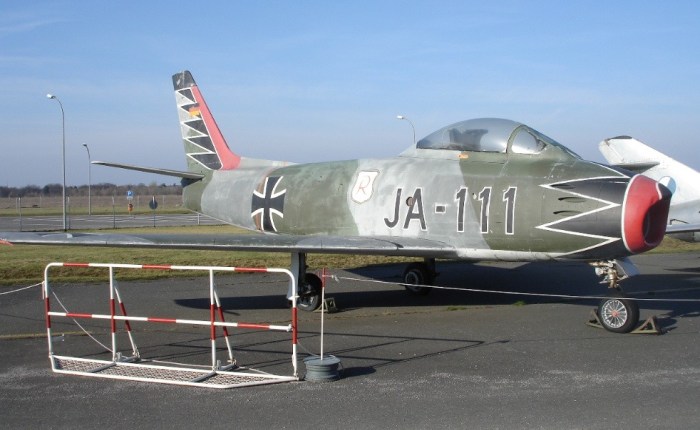
Header image: A Canadair Sabre at the Militärhistorisches Museum der Bundeswehr – Flugplatz Berlin-Gatow in Hartmann markings from when he commanded JG71, c. 2007 (Source: Wikimedia)

[1] Quoted in Edward H. Sims, Fighter Tactics and Strategy 1914-1970 (New York: Harper and Row, 1972), p. 208.

[2] Boyd referred to the ‘observation-decision-action time scale’ in the interview, which is not yet the familiar OODA loop since it lacks the orientation stage. United States Air Force Historical Research Center, U.S. Air Force Oral History Interview, K239.0512-1066, Colonel John R. Boyd, Corona Ace, 28 January 1977, p. 132.

[3] Erik Schmidt, Black Tulip: The Life and Myth of Erich Hartmann, the World’s Top Fighter Ace (Philadelphia, PA: Casemate Publishers, 2020), p. xiii.

[4] Schmidt, Black Tulip, p. 130.

[5] Schmidt, Black Tulip, p. 134; Robert Coram, Boyd: The Fighter Pilot Who Changed the Art of War (New York: Hachette Book Group, 2002), p. 244.

[6] John Stillion, Trends in Air-to-Air Combat: Implications for Future Air Superiority (Washington DC: Center for Strategic and Budgetary Assessments, 2015), p. 6.

[7] Schmidt, Black Tulip, p. 64.

[8] Philip Kaplan, Fighter Aces of the Luftwaffe in World War II (Barnsley: Pen and Sword Books, 2007), p. 192.

[9] Trevor J. Constable and Raymond F. Toliver, The Blond Knight of Germany (New York: Ballantine Books, New York, 1970), pp. 43-4.

[10] Quoted in Kaplan, Fighter Aces of the Luftwaffe in World War II, p. 195.

[11] Colin D. Heaton, ‘Final Thoughts of the Blond Knight,’ World War II 17, no. 3 (2002), p. 33.

[12] Constable and Toliver, The Blond Knight of Germany, p. 55.

[13] Rich Martindell and Bill Mims, ‘An Interview with Erich Hartmann, the Ace of Aces,’ in Tac Attack (Washington DC: Department of the Air Force, 1985), p. 23.

[14] Quoted in William Tuohy, ‘German Pilot Reported 352 Kills Hope of Top WWII Flier: No Need for New Air Aces,’ Los Angeles Times, 3 January 1986.

[15] Constable and Toliver, The Blond Knight of Germany, p. 86.

[16] C. Hind and A. Nicolaides, ‘Ace of Aces: Erich Hartmann the Blond Knight of Germany,’ Open Journal of Social Sciences 8 (2020), pp. 388-9.

[17] Edward E. Eddowes, ‘Measuring Pilot Air Combat Maneuvering Performance’ in First Symposium on Aviation Psychology (The Ohio State University Columbus: The Aviation Psychology Laboratory, 1981), p. 340.

[18] James H. Patton, Jr., ‘Stealth is a Zero-Sum Game: A Submariner’s View of the Advanced Tactical Fighter,’ Airpower Journal 5, no. 1 (1991), p. 7.

[19] Mikel D. Petty and Salvador E. Barbosa, ‘Improving Air Combat Maneuvering Skills Through Self-Study and Simulation-Based Practice,’ Simulation & Gaming 47, no. 1 (2016), p. 105.

[20] Petty and Barbosa, ‘Improving Air Combat Maneuvering Skills,’ p. 111.

[21] Petty and Barbosa, ‘Improving Air Combat Maneuvering Skills,’ p. 123.

[22] Schmidt, Black Tulip, p. 64.

[23] U.S. Air Force Oral History Interview, p. 240.

[24] In addition to The Blond Knight of Germany, Boyd may have read Edward H. Sims’ Fighter Tactics and Strategy 1940-1970 (1972), which also explained the SDAB cycle before the OODA loop emerged. Sims, Fighter Tactics and Strategy, 204-5

[25] Franklin C. Spinney, ‘Genghis John,’ Proceedings 123 (1997).

[26] Boyd advised in ‘Organic Design for Command and Control’ to operate inside enemy OODA loops ‘to enmesh adversary in a world of uncertainty, doubt, mistrust, confusion, disorder, fear, panic chaos.” Boyd also added in ‘The Strategic Game of ? and ?’: “Operating inside their OODA loops will accomplish just this by disorienting or twisting their mental images so that they can neither appreciate nor cope with what’s really going on.’ John R. Boyd, ‘Organic Design for Command and Control’ and ‘The Strategic Game of ? and ?,’ in Grant T. Hammond (ed), A Discourse on Winning and Losing (Maxwell AFB: Air University Press, 2018), p. 224 and 302.

[27] Boyd, towards the end of his life, refined the OODA loop into a vastly more complex idea involving multiple feedback loops and different relationships and pathways between the four stages. However, the idea of getting inside the enemy’s OODA loop and gaining a relative speed advance is evident in the earlier basic OODA loop and the final complex OODA loop. This key idea remained constant during the OODA loop’s evolution. Therefore, when referring to the OODA loop in this article, all versions of the OODA loop are referred to unless otherwise specified.

[28] U.S. Air Force Oral History Interview, p. 134.

[29] Frans P.B. Osinga, Science, Strategy and War: The Strategic Theory of John Boyd (New York: Routledge, 2006), p. 28.

[30] John R. Boyd, Aerial Attack Study, 50-10-6C, 1964.

[31] Osinga, Science, Strategy and War, p. 22.

[32] Grant Hammond, The Mind of War: John Boyd and American Security (Washington DC: Smithsonian Books, 2001), p. 80.

[33] Thomas McKelvey Cleaver, Going Downtown: The US Air Force over Vietnam, Laos and Cambodia, 1961-75 (Oxford: Osprey Publishing, 2022), p. 102.

[34] Barry D. Watts, Doctrine, Technology, and War, Air & Space Doctrinal Symposium Maxwell AFB, Montgomery, Alabama 30 April-1 May 1996.

[35] Watts, Doctrine, Technology, and War.

[36] Watts, Doctrine, Technology, and War.

[37] Schmidt, Black Tulip, p. 69.

[38] John R. Boyd, ‘Patterns of Conflict (Transcript),’ in Discourse on Winning and Losing, Marine Corps University, Quantico, 25 April, 2 May, 3 May 1989, p. 10.

[39] Boyd, ‘Patterns of Conflict (Transcript),’ p. 10.

[40] Boyd, ‘Patterns of Conflict (Transcript),’ p. 10.

[41] Jim Storr, The Human Face of War (London: Bloomsbury Publishing 2009), p. 13.

[42] Storr, The Human Face of War, p. 13.

[43] Storr, The Human Face of War, p. 13.

[44] For a comprehensive analysis of Boyd’s relationship with the ‘Knights of the Air’ myth, see Michael W. Hankins, Flying Camelot: The F-15, the F-16, and the Weaponization of Fighter Pilot Nostalgia (Ithaca, NY: Cornell University Press, 2021).

[45] Heaton, ‘Final Thoughts of the Blond Knight,’ p. 33.

[46] Frans P. B. Osinga, ‘The Enemy as a Complex Adaptive System: John Boyd and Airpower in the Postmodern Era,’ in John Andreas Olsen (ed.), Airpower Reborn: The Strategic Concepts of John Warden and John Boyd (Annapolis, MD: Naval Institute Press, 2015), p. 74.

[47] Heaton, ‘Final Thoughts of the Blond Knight,’ p. 85.

[48] Boyd explained in Patterns of Conflict: ‘It doesn’t make any difference whether you’re a Russian, you’re an Englishman, an American, Chinese or what. You have to observe what the hell’s going on here. Then you have to, as a result of that, looking at the world, you generate images, views, and impressions in your mind. That’s what you call orientation. Then as a result of those images, views, and impressions, you’re going have to make a selection, what you’re going to do or what you’re going to do, that’s a decision. And then you’re going to have to implement or take the action.’ Boyd, ‘Patterns of Conflict (Transcript),’ p. 11.

[49] John R. Boyd, Destruction and Creation (Paper), 3 September 1976, pp. 2-3.

[50] Boyd, ‘The Strategic Game of ? And ?,’ pp. 261-5.

#ResearchNote – Orders of Precedence Matters…

#ResearchNote – Orders of Precedence Matters…

By Dr Ross Mahoney

Editorial note: This post originally appeared on the author’s website and is cross-posted here with permission.

In 1922, an interesting episode in the history of the Royal Australian Air Force (RAAF) began. In October 1922, the Secretary to the Department of Defence, Thomas Trumble, wrote to the Secretary of the Prime Minister’s Department, noting that as the RAAF constituted an independent service, Air Board and Air Force members should be afforded representation at official functions.[1] Its precedence was to come after the Australian Army. The Prime Minister’s Department’s reply was straightforward, noting that:

[a]rrangements will be made for the inclusion of representatives of the Air Force in connection with any general function to be held by the Commonwealth Government.[2]

Such a straightforward administrative request should have ended, but it did not. In 1924, the Governor-General sent a memorandum to the Prime Minister, Stanley Bruce, that ‘no precedence was accorded’ to the First Air Member at the inaugural dinner of the Lord Mayor of Melbourne that he recently attended.[3] It was suggested that to solve this issue, changes should be made to the Commonwealth Table of Precedence, namely paragraph 10.

While the changes suggested were eventually made, this episode highlights several issues related to the status of the RAAF and its emerging place in Australia’s defence establishment. First, the RAAF appeared to have a clear ally in the form of the Governor-General, Lord Forster. While Forster had not served in the military, he saw air power as important to Australia’s defence. In his memorandum to the Prime Minister, he wrote:

In view of the great and growing importance of the Air Service […] it would be desirable that the head of the Air Force should in future receive definite recognition on such occasions.[4]

Given the status of the Air Board in Australian defence planning, this is an interesting comment.[5]

Second, the issue that happened and had to be raised by Lord Forster illustrates the place of the RAAF in Australian thinking more broadly. Despite this issue being raised more than two years previously, nothing appears to have been enacted. Thus, it can be suggested that despite gaining its independence in 1921, Australian thinking had yet to adjust to the idea of an independent air force.[6] Thus, while orders of precedence may seem a curious relic to the modern audience, such things matter to the military cultures, especially to new organisations such as air forces. They are a status issue and illustrate to the broader public where an organisation might fit within the government’s thinking. By not giving the proper order of precedence to the RAAF, it could be argued that a clear message was being presented to the Australian body politic – independent air power did not matter. But was that so?

Dr Ross Mahoney is the Editor-in-Chief of From Balloons to Drones and an independent scholar specialising in the history of war with particular reference to the use of air power and the history of air warfare. He is currently the Senior Historian within the Heritage Policy team at Brisbane City Council in Australia. He has nearly 20 years of experience in the education, museum and heritage sectors in Australia and the United Kingdom. Between 2013 and 2017, he was the inaugural Historian at the Royal Air Force Museum in the UK. In Australia, he has worked as a Historian for the Department of Veterans’ Affairs and taught at the Strategic and Defence Studies Centre at The Australian National University based at the Australian War College. His research interests are focused on the history of war, specifically on the history of air power and air warfare, military leadership and command, military culture, and the history and development of professional military education. He also maintains an interest in transport history. He has published numerous articles, chapters and encyclopedia entries, edited two books, and delivered papers on three continents.

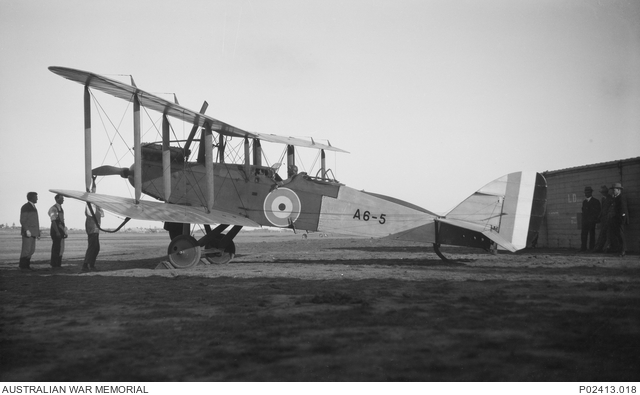
Header image: Port view of a RAAF De Havilland DH-9. This aeroplane was one of 128 gift aeroplanes presented by the British government to the newly formed RAAF, including thirty DH.9a (Source: Australian War Memorial)

[1] National Archives of Australia (NAA), A705, 4/1/35, Secretary, Department of Defence to the Secretary, Prime Minister’s Department, 14 October 1922.

[2] NAA, A705, 4/1/35, Secretary, Prime Minister’s Department to the Secretary, Department of Defence, 17 October 1922.

[3] NAA, A705, 4/1/35, Memorandum by the Governor-General to the Prime Minister, 11 November 1924.

[4] NAA, A705, 4/1/35, Memorandum by the Governor-General to the Prime Minister, 11 November 1924.

[5] John MacCarthy, Australia and Imperial Defence, 1918-39: A Study in Air and Sea Power (St Lucia, QLD: University of Queensland Press, 1976), p. 27.

[6] MacCarthy, Australia and Imperial Defence, pp. 34-43.

#ResearchNote – Top 10 Air Power History Books of this Generation

#ResearchNote – Top 10 Air Power History Books of this Generation

By Dr Ross Mahoney

Editorial note: This post was originally posted on my website and has been cross-posted here to generate further discussion. Minor editorial changes have been made to the post.

Ok, this post stems from a question I asked on BlueSky: ‘Who is the most significant air power historian of our generation? Discuss #airpowerhistory.’ The question stemmed from the call for contributors I posted last week and is related to my ongoing research into writing about air power. For the purpose here, ‘generation’ is to be considered to have been in the past 20-30 years. As such, the books listed here have been published since 1990.

In response, one poster asked me to list the top ten books I consider the most significant. I did a similar exercise for From Balloons to Drones back in 2017. The difference between the two lists is that the list produced in 2017 reflected those books that influenced and shaped my writing as an air power historian. In contrast, this list is more focused on those that I consider significant for their impact, though the list is still biased as I selected books from my library, and as such, they reflect my own research interests to some extent. I have also excluded edited books except for John Andreas Olsen and Philip Meilinger’s work for reasons I hope will be apparent. Other works, such as Tami Davis Biddle’s Rhetoric and Reality in Air Warfare (2002), would have made an expanded list. For an Air Power Reading list, visit the one from From Balloons to Drones.

Here is the list…

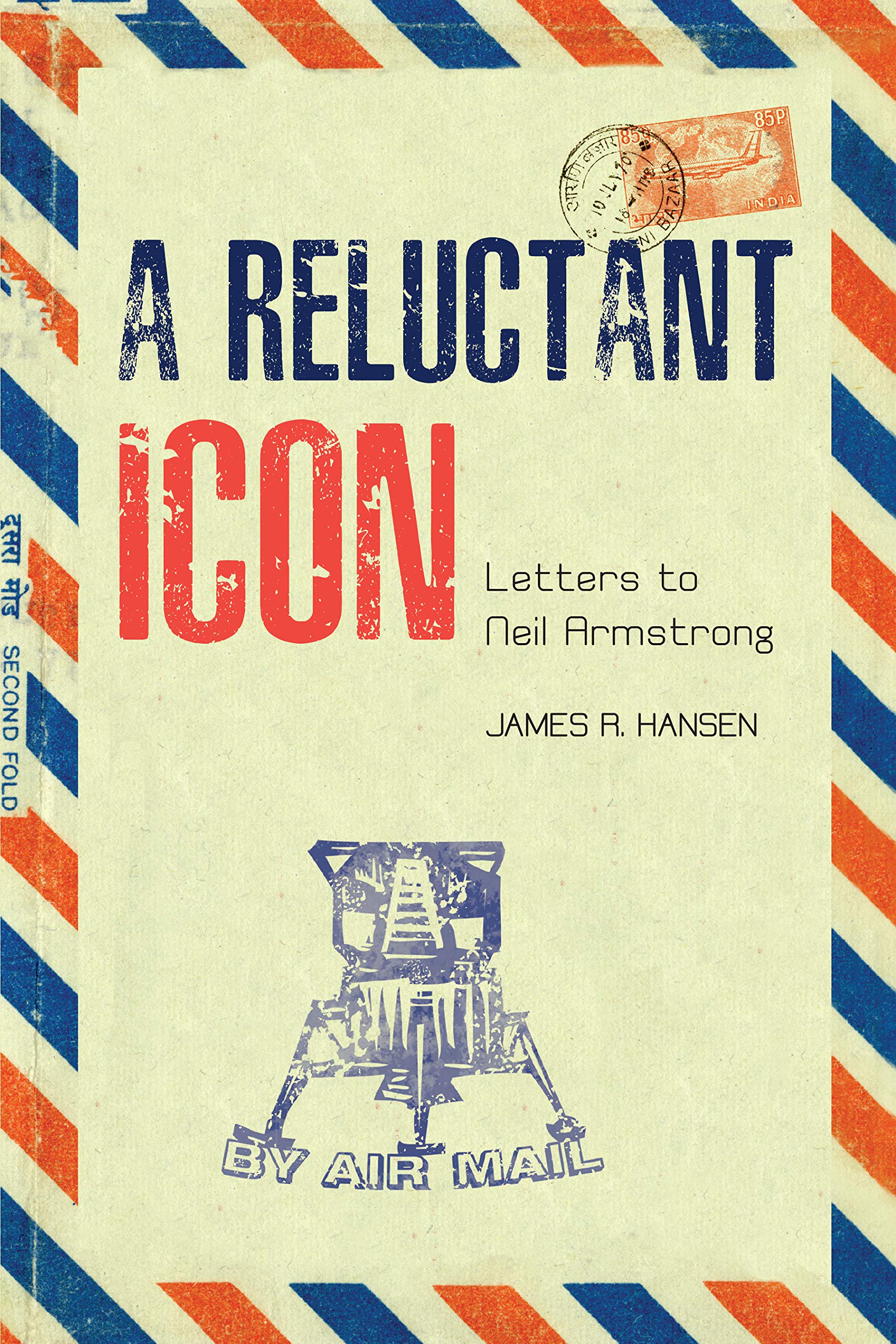
Tony Mason, Air Power: A Centennial Appraisal (London: Brassey’s, 1994). As I wrote here, Mason was one of the doyens of air power studies and undoubtedly crucial in developing the field in the UK. This work represented the culmination of his thinking, even though he would continue to write after its publication. He used history as a tool to explore the development of air power, and it is a significant volume and still requires reading to this day.

Philip Meilinger (ed.), The Paths of Heaven: The Evolution of Airpower Theory (Maxwell AFB, AL: Air University Press, 1997). One of the two edited works in this list. Written as a primer by the United States Air Force’s School of Advanced Airpower Studies faculty, this charts the evolution of air power theory and doctrine and is a necessary starting point for anyone researching the subject.

John Buckley, Air Power in the Age of Total War (London: UCL Press, 1999). Despite its age, this remains an excellent examination of the rise of air power in the first half of the 20th Century, and it is vital reading for anyone wanting an introduction to the subject.

Richard Hallion, Taking Flight: Inventing the Aerial Age from Antiquity through the First World War (Oxford: Oxford University Press, 2003). I could have selected any of Hallion’s work, for he is probably the United States’ preeminent air power historian. However, this book offers an excellent history of air power before the First World War.

John Andreas Olsen (ed.), A History of Air Warfare (Washington DC: Potomac Books, 2010). This edited book is listed for two reasons. One, Olsen is adept at bringing together leading air power scholars and any of his edited or single-authored books should be on your bookshelf. Second, the book is an excellent introduction to the use of air power in the major conflicts of the 20th and early 21st Centuries, written by leading experts such as Tony Mason, Richard Hallion, Richard Overy, John Morrow Jr, Alan Stephens, Benjamin Lambeth and Williamson Murray.

Richard Overy, The Bombing War: Europe, 1939-1945 (London: Allen Lane, 2013). The result of Overy’s voluminous research, this volume is required reading for anyone looking to understand the strategic bombing campaigns of the Second World War.

Thomas Hippler, Bombing the People: Giulio Douhet and the Foundations of Air-Power Strategy, 1884-1939 (Cambridge: Cambridge University Press, 2013). If one name is associated with the early development of air power thinking, it is the Italian Giulio Douhet. In this volume, Hippler does a thorough job of examining the evolution of Dohet’s strategic thought. It is necessary reading for anyone looking at the evolution of air power theory.

Peter Dye, The Bridge to Airpower: Logistics Support for the Royal Flying Corps on the Western Front, 1914-18 (Annapolis, MD: Naval Institute Press, 2015). This excellent work shows that air power history is not just about aeroplanes. Dye does a superb job of showing how logistics shaped the character of the air war over the Western Front and how the RFC/RAF’s system helped it prevail in 1918.

Phillips Payson O’Brien, How the War Was Won: Air-Sea Power and Allied Victory in World War II (Cambridge: Cambridge University Press, 2015). While not solely focused on air power, O’Brien’s work is essential in examining the role played by air power in conjunction with sea power in the Allied victory of the Second World War. The work challenges many preconceptions and should be required reading for anyone interested in the Second World War.

Peter Gray, Air Warfare: History, Theory and Practice (London: Bloomsbury, 2016). This book was the outgrowth of the old MA in Air Power run by Gray at the University of Birmingham. Gray gives an excellent overview of critical issues related to air power and is a necessary reading for those just getting into the subject.

What would you include? What would you remove?

Dr Ross Mahoney is an independent scholar specialising in the history of war with particular reference to the use of air power and the history of air warfare. He is currently the Senior Historian within the Heritage Policy team at Brisbane City Council in Australia. He has nearly 20 years of experience in the education, museum and heritage sectors in Australia and the United Kingdom. Between 2013 and 2017, he was the inaugural Historian at the Royal Air Force Museum in the UK. In Australia, he has worked as a Historian for the Department of Veterans’ Affairs and taught at the Strategic and Defence Studies Centre at The Australian National University based at the Australian War College. His research interests are focused on the history of war, specifically on the history of air power and air warfare, military leadership and command, military culture, and the history and development of professional military education. He also maintains an interest in transport history. He has published numerous articles, chapters and encyclopedia entries, edited two books, and delivered papers on three continents. His website is here, and he can be found on Twitter at @airpowerhistory.

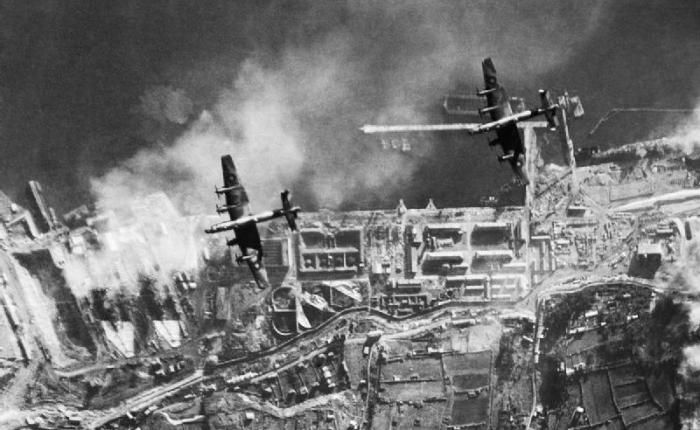
Header image: Vertical aerial photograph taken during a daylight attack on German warships docked at Brest, France. Two Handley Page Halifaxes of No. 35 Squadron RAF fly towards the dry docks in which the battlecruisers Scharnhorst and Gneisenau are berthed (right), and over which a smoke screen is rapidly spreading. (Source: Imperial War Museum)

#Podcast – 50th Episode Celebration: An Interview with Dr Mike Hankins and Dr Brian Laslie

#Podcast – 50th Episode Celebration: An Interview with Dr Mike Hankins and Dr Brian Laslie

Editorial Note: Led by Editor Dr Mike Hankins, From Balloons to Drones, produces a monthly podcast that provides an outlet for the presentation and evaluation of air power scholarship, the exploration of historical topics and ideas, and provides a way to reach out to both new scholars and the general public. You can find our Soundcloud channel here. You can also find our podcast on Apple Podcasts and Google Podcasts.

In our 50th episode, Dr Mike Hankins and Dr Brian Laslie review the first 50 episodes of the From Balloons to Drones podcast, revisit our favourites, and consider where we’re headed in the future!

Dr Michael Hankins is the Curator for US Air Force, Navy, and Marine Corps post-World War II Aviation at the Smithsonian National Air and Space Museum and the author of Flying Camelot: The F-15, the F-16, and the Weaponization of Fighter Pilot Nostalgia (2021). In addition, he is a former Professor of Strategy at the USAF Air Command and Staff College eSchool, and a former Instructor of Military History at the US Air Force Academy. He earned his PhD in history from Kansas State University in 2018 and his master’s from the University of North Texas in 2013. He has a web page here.

Dr Brian Laslie is a US Air Force Historian and Command Historian at the United States Air Force Academy. Formerly, he was the Deputy Command Historian at the North American Aerospace Defense Command (NORAD) and United States Northern Command (USNORTHCOM). A 2001 graduate of The Citadel and a historian of air power studies, he received his Masters’ from Auburn University Montgomery in 2006 and his PhD from Kansas State University in 2013. He is the author of Air Power’s Lost Cause: The American Air Wars of Vietnam (2021),  Architect of Air Power: General Laurence S. Kuter and the Birth of the US Air Force (2017) and The Air Force Way of War (2015). The latter book was selected for the Chief of Staff of the Air Force’s 2016 professional reading list and the 2017 RAF Chief of the Air Staff’s reading list. He can be found on Twitter at @BrianLaslie. 

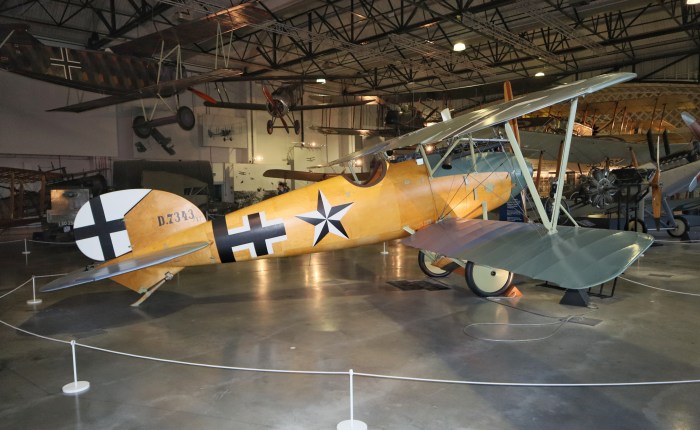
Header image: A replica Albatros DVa at the Royal Air Force Museum at Hendon (Source: Author’s Collection)

Air Vice-Marshal Professor R.A. ‘Tony’ Mason – A Reflection

Air Vice-Marshal Professor R.A. ‘Tony’ Mason – A Reflection

By Dr Ross Mahoney

Editorial note: This piece was originally drafted not long after the passing of Air Vice-Marshal Mason. However, several personal reasons led to a delay in its publication. 

On 12 November 2023, Air Vice-Marshal Professor R.A. Mason, one of the doyens of air power studies, sadly passed away. Known as Tony by most who knew him personally and professionally, Mason can be considered one of the fathers of air power studies in the UK. As I have argued elsewhere, Mason was arguably the critical British air power thinker of the late 20th Century. From being the Royal Air Force’s (RAF) first Director of Defence Studies (DDefS) to his writing and commentary work, Mason was consistently at the forefront of the field until the 2010s. Indeed, his consistent commitment to the field and the length of his career made him stand out. He was also generous with his time and knowledge and always happy to share material with those who shared his interests.

Mason joined the RAF in 1956 and entered the Education Branch. He gradually rose through the ranks in his branch and undertook various assignments, including attending King’s College London, the United States Air War College and the RAF Staff College. Eventually, in 1976, Mason was informed that he would be the RAF’s first DDefS. Mason took up the role at the start of 1977. The position of DDefS was established due to the perceived state of thinking on air power within the RAF and public awareness of the Service’s role. In a letter to Air Officer Commanding-in-Chief Support Command, Air Marshal Sir Reginald Harland, Chief of the Air Staff, Air Chief Marshal Sir Neil Cameron noted that the position was being established ‘to help provide a new stimulus to air power thinking’ throughout the RAF.[1] This point was also emphasised in the terms of reference for the DDefS post, as there was a need to ‘write on air power and defence issues,’ which was to be encouraged.[2]

The establishment of the post of DDefS at the RAF Staff College at Bracknell and Mason’s perceived suitability for the role caused some debate. While this is not the place to consider that debate, the view of Mason’s successor, Group Captain Timothy Garden, is worth noting. Garden, a pilot and later Air Marshal Baron Garden, noted in 1982 in Air Clues that a colleague had questioned why he would want to take over what was perceived by 1982 as an ‘admin branch’ role. Garden reflected that the most appropriately qualified person should essentially hold the post to achieve its aims and that it ‘should not be the prerogative of any branch.’[3] That Garden, as a pilot, viewed the post in such a way was as much down to Mason’s hard work in the role as it was to the importance of the RAF’s intellectual development.

0001

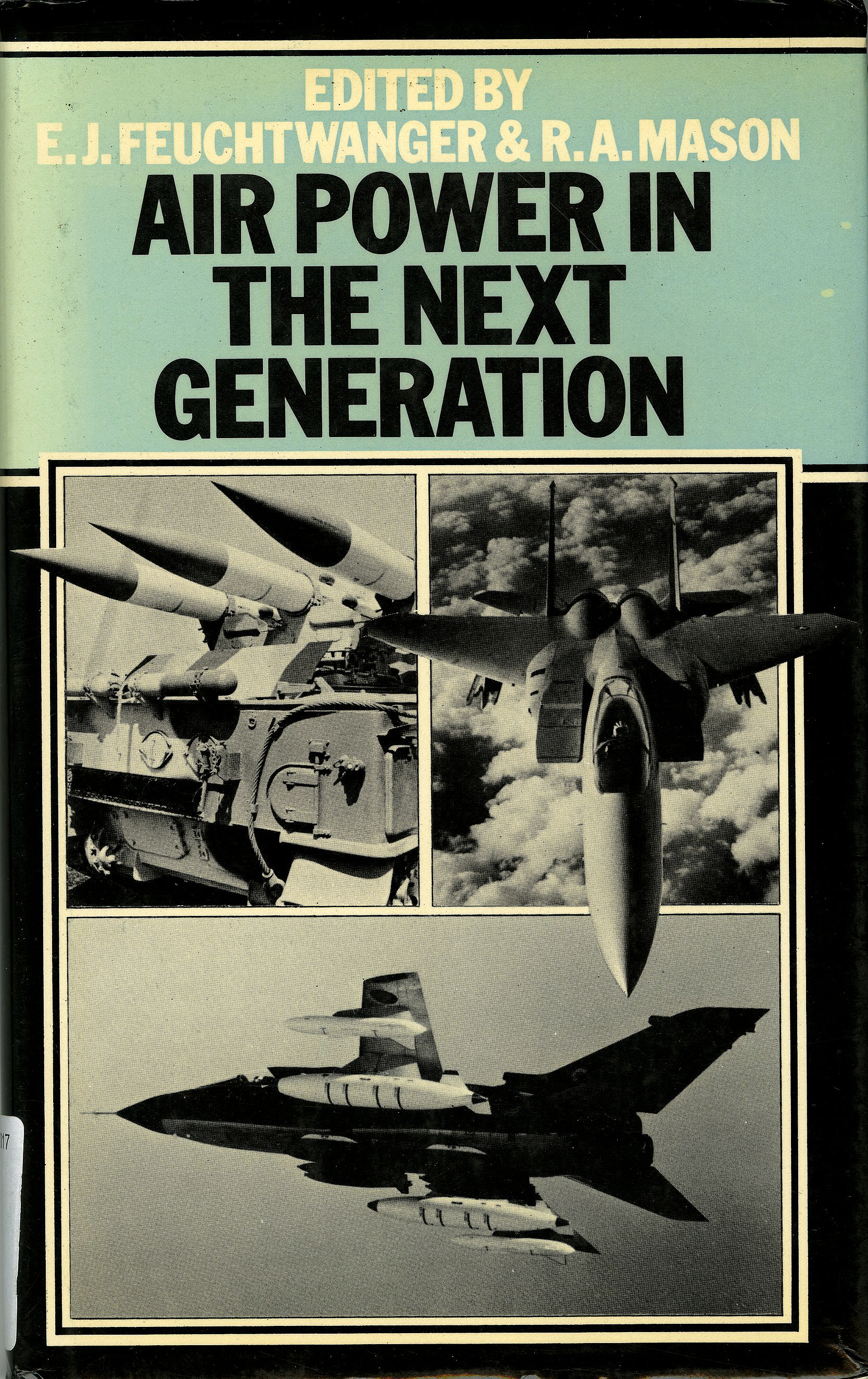
Mason nonetheless quickly sought to encourage discussion and debate and discussion about the role of air power within the service on taking up the role of DDefS. Despite the demise of the RAF Quarterly in 1977, Mason regularly contributed to Air Clues, which, up to the 1970s, had primarily been a technical publication for the RAF. In 1980, he established the Air Power Supplement to Air Clues, the spiritual ancestor to the RAF’s current professional flagship journal, Air and Space Power Review.[4] He also regularly contributed to other publications, such as The RUSI Journal. Perhaps his critical success in this period was organising an academic symposium in his first year in post. This symposium was entitled ‘Air Power in the Next Generation.’ It was well attended and laid the basis for similar endeavours by his successors. It was also published as Air Power in the Next Generation, co-edited with Edgar Feuchtwanger and published by The Macmillan Press in 1979. The book included contributions from the senior USAF, Luftwaffe, and Israeli officers, as well as civilian academics such as John Erickson. Much of Mason’s work started a process whereby his successors have continued to contribute to the collegiate intellectual development of the RAF through various schemes such as publications, conferences, and the management of defence fellowships.[5] Many former post-holders, such as Air Commodore (ret’d) Professor Peter Gray, are also notable for their contribution to developing British air power thinking through their engagement with academia after leaving the post of DDefS and the RAF.

978-1-349-17964-0

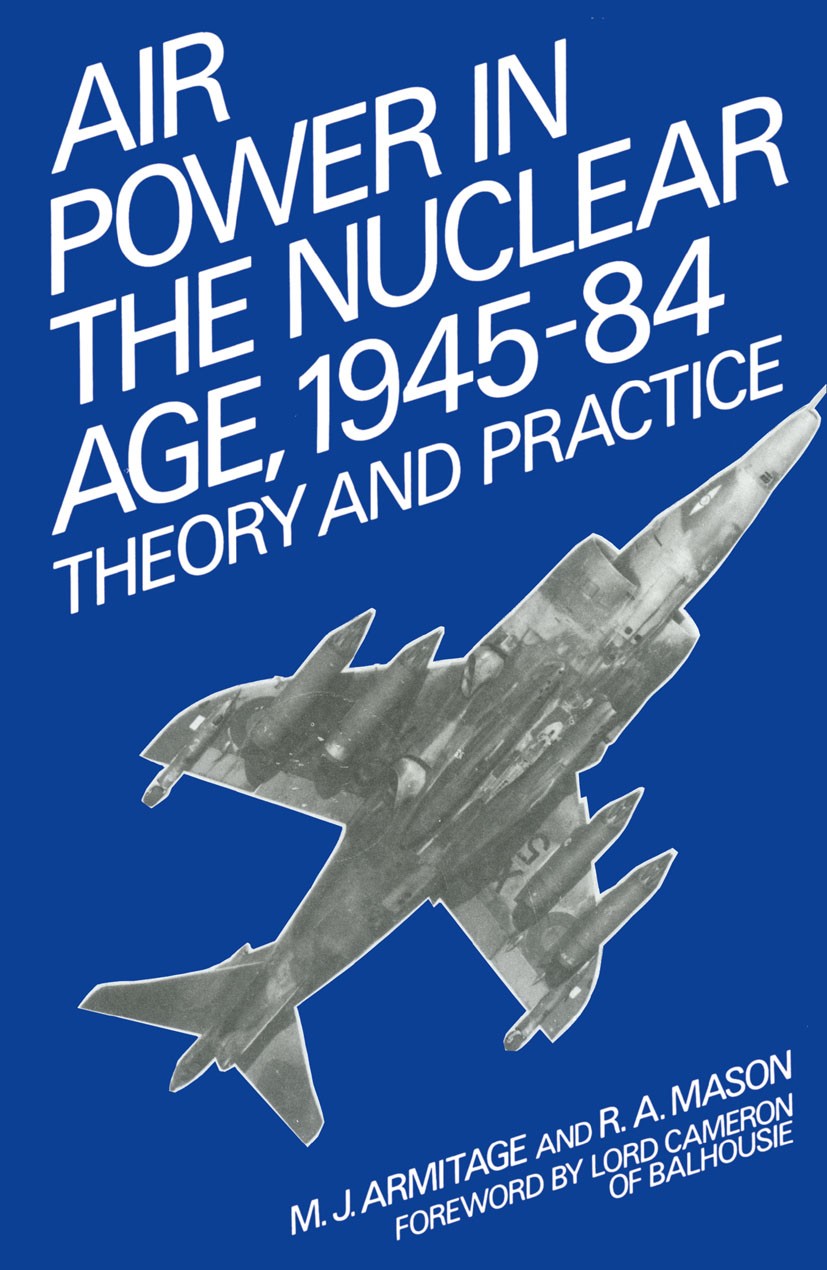
Mason’s contributions to air power studies continued after moving on from the DDefS role. In 1983, Mason published Air Power in the Nuclear Age in conjunction with Air Marshal Michael Armitage. This publication helped cement Mason’s position as a leading air power thinker. As Marshal of the Royal Air Force Lord Cameron noted in the foreword to the book, ‘[t]he joint authors of this book are advanced and enlightened thinkers about the doctrine of air power as a vital and perhaps the most important element of modern and future warfare.’[6] This view was not hyperbole. For example, in his 1984 overview of air power literature, historian Richard Hallion described the book as an ‘excellent survey’ of the development of air power during the Cold War.[7] The book was updated as a second edition in 1985. Mason’s other notable works in this period were the edited book War in the Third Dimension and the establishment of the Brassey’s Air Power: Aircraft, Weapons Systems and Technology Series. This latter series was interesting because it was explicitly directed at developing an awareness of air power amongst junior military personnel.

After retiring from the RAF in 1989, Mason moved into academia. He became the Leverhulme Air Power Research Director for the Foundation for International Security and took up a post as a Senior Research Fellow at the Centre for Studies in Security and Diplomacy at the University of Birmingham, where he was director. In 1996, he was made an Honorary Professor of Aerospace Policy at the University of Birmingham.

414K44MP5EL._AC_UF894,1000_QL80_

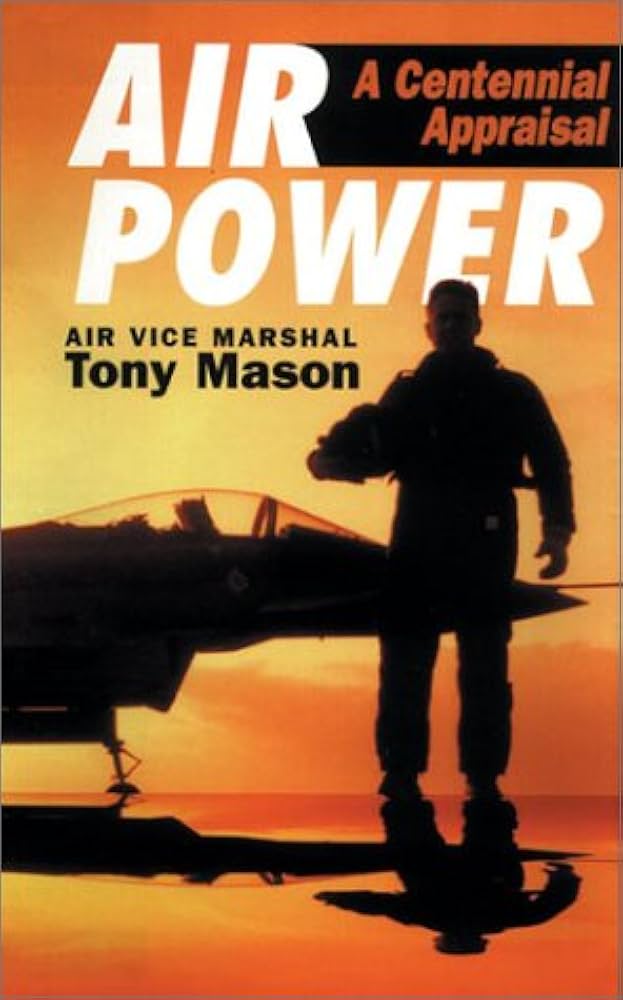
In 1994, Mason published what might be considered his magnum opus, Air Power: A Centennial Appraisal. This book confirmed Mason’s place as one of Britain’s leading air power thinkers. In this book, Mason examined the development of air power between 1989 and 1994. In doing so, he took a historical approach to examine how air power developed in the years up to this period. Mason then conceptualised the period 1989 to 1994, focusing on several key themes, such as the place of air power in arms control. Notably, he sought to contextualise much of the then-contemporary debate about the role of air power in the First Gulf War. Perhaps the most significant aspect of the book lay in Mason’s conceptualisation of what he called ‘differential air power.’[8] In short, Mason argued that while many nations shared ideas around the implementation of air power, only one in 1994 might be able to fully apply the advantages afforded by air power – the US. Using the idea of differential air power, Mason explored why the US stood out as a unique user of air power capabilities. These were important views for the time; however, while the book remains a significant contribution to air power studies, given factors such as the rise of China in the 21st Century and the distributed use of off-the-shelf technology such as drones, it remains to be seen whether his view remains applicable. Nevertheless, Mason concluded that:

One enduring concept underlay all air power thinking and all operations from the first day of the century to the last, and will continue to do so. Any nation intent on going to war to pursue an interest or defend a principle must first secure the air above it.[9]

Mason’s book was well received at publication and has become a commonly cited work. In his 1995 review in The RUSI Journal, Garden described the book as ‘excellent [and] thought-provoking.’[10] Thomas Keaney, who had worked on the Gulf War Air Power Survey, noted that the book made an ‘important contribution to any discussion on the future of airpower in the United States or elsewhere’ in a 1996 review for the US Joint Forces Quarterly.[11] However, historian Philip Sabin, reviewing the book in the Journal of Strategic Studies in 1995, offered a more tempered view. While recognising that the book had certain strengths, particularly Mason’s ‘balanced insights into many of the controversial issues regarding air power,’ Sabin also highlighted the challenge of reading a book that was ‘dense and difficult to follow without careful reading.’[12]

After the publication of Air Power, Mason continued to contribute to both the public’s and the RAF’s understanding of air power through his continued contribution to publications.[13] He also served as an expert member of the House of Commons Defence Committee in the early 2000s and helped inform British defence policy. He was also an inveterate media commentator and was often called to provide expert opinion. Mason’s contribution to air power studies was wide-ranging. While he had retired several years before his passing, his expertise will undoubtedly be sorely missed by many air power scholars for decades to come.

Dr Ross Mahoney is an independent scholar specialising in the history of war with particular reference to the use of air power and the history of air warfare. He is currently the Senior Historian within the Heritage Policy team at Brisbane City Council in Australia. He has nearly 20 years of experience in the education, museum and heritage sectors in Australia and the United Kingdom. Between 2013 and 2017, he was the inaugural Historian at the Royal Air Force Museum in the UK. In Australia, he has worked as a Historian for the Department of Veterans’ Affairs and taught at the Strategic and Defence Studies Centre at The Australian National University based at the Australian War College. His research interests are focused on the history of war, specifically on the history of air power and air warfare, military leadership and command, military culture, and the history and development of professional military education. He also maintains an interest in transport history. He has published numerous articles, chapters and encyclopedia entries, edited two books, and delivered papers on three continents. His website is here, and he can be found on Twitter at @airpowerhistory.

Header image: Ramslade House, the home of the RAF Staff College in Bracknell when Mason took up the role of Director of Defence Studies. (Source: Wikimedia)

[1] Author’s Personal Collection, Letter from the Chief of the Air Staff to AOC-in-C Support Command, 2 November 1976. I am grateful to the late Air Vice-Marshal Professor R.A. Mason for a copy of this and other documents linked to the establishment of the DDefS post.

[2] Author’s Personal Collection, Terms of Reference for Director of Defence Studies appended to a Letter from the Chief of the Air Staff to AOC-in-C Support Command, 2 November 1976, p. 1.

[3] Group Captain Timothy Garden, ‘Why don’t we forget Defence Studies and get on with the job?’ Air Clues 36, no 10 (1982), p. 364.

[4] Air Vice-Marshal Tony Mason, ‘Air Power Review’s Place in RAF History,’ Air Power Review 21, no. 1 (2018), p. 10.

[5] For a variety of publications produced under the guidance of DDefS, see: Andrew Lambert and Arthur C. Williamson (eds.), The Dynamics of Air Power (London: HMSO, 1996); Stuart Peach (ed.), Perspectives on Air Power: Air Power in its Wider Context (London: The Stationary Office: 1998); Peter W. Gray (ed.), Air Power 21: Challenges for the New Century (London: The Stationary Office, 2000); Peter W. Gray and Sebastian Cox (eds.), Air Power Leadership: Theory and Practice (London: The Stationary Office, 2002).

[6] Marshal of the Royal Air Force Lord Cameron, ‘Foreword’ in M’J’ Armitage and R.A. Mason, Air Power in the Nuclear Age: Theory and Practice, Second Edition (Basingstoke: The Macmillan Press, 1985), p. vii.

[7] Richard Hallion, The Literature of Aeronautics, Astronautics, and Air Power (Washington DC: Office of Air Force History, 1984), p. 36.

[8] Tony Mason, Air Power: A Centennial Appraisal (London: Brassey’s, 1994), pp. 235-278.

[9] Mason, Air Power, p. 278.

[10] Timothy Garden, ‘Book Reviews – Air Power: A Centennial Appraisal,’ The RUSI Journal 140, no. 3 (1995), p. 60.

[11] Thomas Keaney, ‘A Jubilee for Airmen: A Book Review,’ Joint Forces Quarterly 11 (1996), p. 134

[12] Philip Sabin, ‘Book Review – Air Power: A Centennial Appraisal,’ Journal of Strategic Studies 18, no. 4 (1995), pp. 141-2.

[13] For example, see: Tony Mason, ‘British Air Power’ in John Andreas Olsen (ed.), Global Air Power (Dulles, VA: Potomac Books, 2011), 7-62; R.A. Mason, ‘The Response to Uncertainty’ in John Andreas Olsen (ed.), European Air Power: Challenges and Opportunities (Dulles, VA: Potomac Books, 2014), pp. 215-30; Mason, ‘Air Power Review’s Place in RAF History,’ pp. 10-1.

#1944Revisited – Locating Japanese Radars: The First Dedicated Radar Countermeasures Units in the US Navy

#1944Revisited – Locating Japanese Radars: The First Dedicated Radar Countermeasures Units in the US Navy

By Thomas Wildenberg

Editor’s note: In 2024, From Balloons to Drones will publish a series of articles that seek to provide a new perspective on the air war in 1944. If you are interested in contributing, please see our call for submissions here.

The US Navy was unprepared for electronic warfare when the Second World War started. After the US Marines landed on Guadalcanal in August 1942, they were surprised to discover the presence of a Japanese early warning radar, something the US Navy was unaware of. Although several radar countermeasures (primarily radar receivers designed to detect enemy radars) were quickly devised by the Naval Research Laboratory, little or no provision was made for installing the gear in the US Navy’s aeroplanes. It was done on an ad hoc basis. It took two years of trial and error before the US Navy realised that to conduct radar countermeasures (RCM) effectively, it needed aeroplanes specifically outfitted for this purpose with crews that were trained in the use of the latest equipment. This article explores that experience of learning. Once this was achieved, the US Navy could locate and plot the enemy’s early warning radars. This enabled attacking aeroplanes to avoid them, thus reducing the likelihood of their interception from Japanese fighters. Though the equipment supplied to these aeroplanes was never intended for use in air-to-air encounters (radar-equipped night fighters had their own specialised equipment), the well-equipped, well-trained crews of the RCM Consolidated PB4Y-1 Liberators that began arriving in the Pacific towards the end of 1944 discovered that they could use their RCM receivers to guide them to enemy aeroplanes also equipped with radar allowing it to be intercepted and shot down.[1]

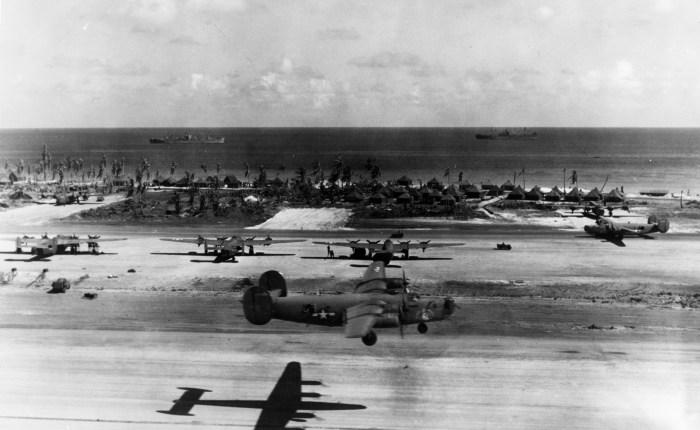
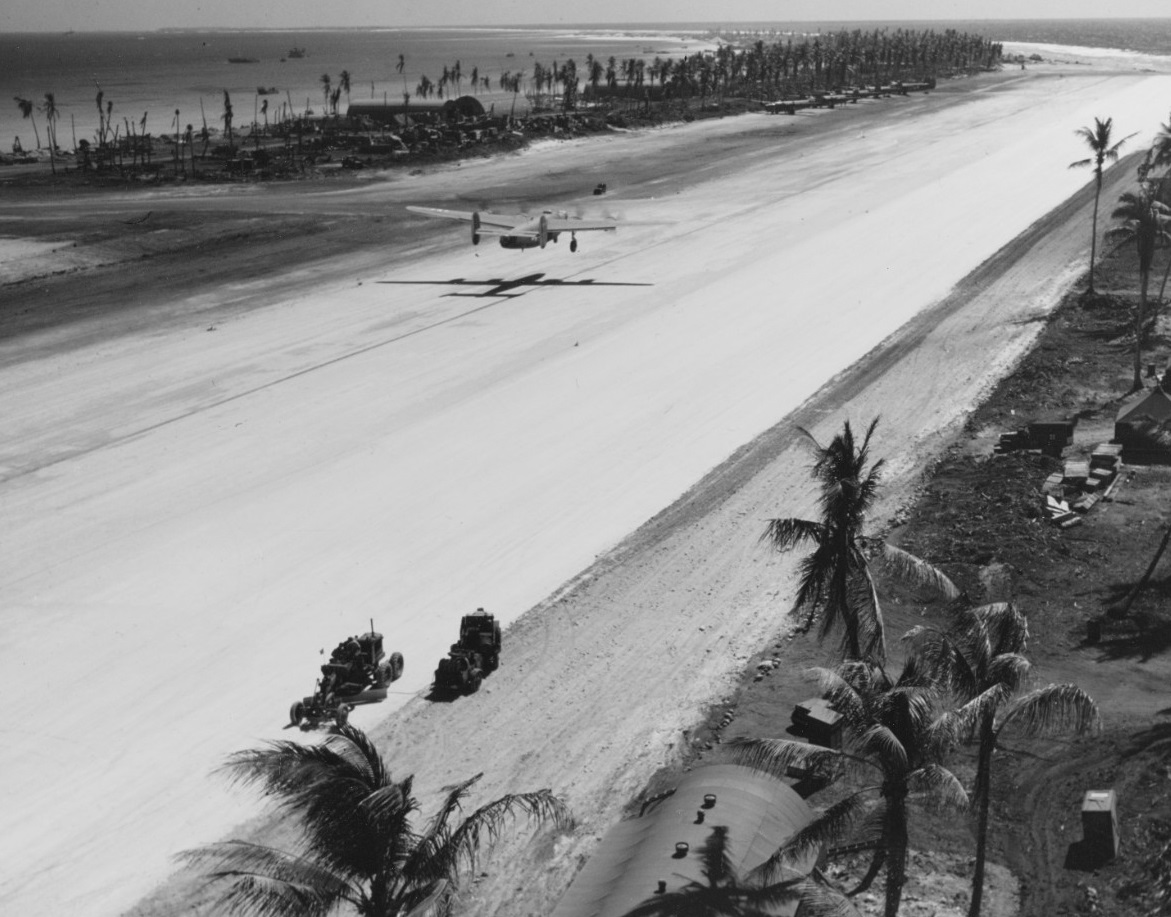
Consolidated_PB4Y-1_Liberator_takes_off_from_Eniwetok_Airfield_on_16_April_1944_(80-G-K-1690)
A US Navy Consolidated PB4Y-1 Liberator patrol bomber taking off from Eniwetok Airfield (Stickell Field), 16 April 1944. (Source: Wikimedia)

VP-104 and Learning Lessons

In the spring of 1943, Lieutenant Lawrence Heron, one of several newly trained naval officers in the use and maintenance of the ARC-1 radar receiver (the primary RCM equipment available at that time), was sent to Guadalcanal and assigned to join VP-104 operating PB4Y-1 Liberators out of Carney Field (also known as Bomber 2). When Heron arrived in Guadalcanal, none of the PB4Y-1s were equipped with any RCM equipment. He had to figure out how to install the only radar receiver to transfer it from aeroplane to aeroplane. He solved this problem by mounting the ARC-1 receiver (the US Navy version of the US Army SCR-587) and its power supply on pieces of sawn plywood sized to fit through the aeroplane hatches. These were fastened to a table in the aeroplane interior, and a power cable was connected to the electric power system. He flew twenty missions to such places as Truk, Kapingamarangi in the Caroline Islands, and Rabaul – the latter particularly harrowing as it was so heavily defended.[2]

Forming Field Unit No. 3

By April 1944, it was clear to the leadership in the Southwest Pacific Command that permanently modified aeroplanes, such as the US Army Air Force’s Ferrets (modified aeroplanes such as the Boeing B-17 Flying Fortress and Consolidated B-24 Liberator) flown by crews to intercept radar signals, were far more effective in finding enemy radars than the makeshift radar receiver installations on US Navy bomber and reconnaissance aeroplanes operated by ‘gypsy’ crewman like Heron and his predecessors in Cast Mike 1 (the first US Navy RCM unit deployed to the Pacific Theatre in September 1942). Recognising this shortcoming, the Command’s headquarters was directed to form a dedicated airborne US Navy RCM unit. Lieutenant Heron was sent to the seaplane base at Palm Island near Townsville, Australia, with orders to establish and command Field Unit No. 3, a US Navy RCM unit using two PBYs specifically modified for this purpose.[3]

After arriving in Palm Island, Heron had no difficulty installing the ARC-1 receivers, but no direction-finding antennae were available. He solved the problem by having his men make their own from aluminium tubing. They melted the insulation from spare coaxial for the mount, machining it after it had hardened. The rotating antenna was mounted in the bottom of the flying boat’s fuselage behind the rear tunnel gun hatch and had to be attached after the aeroplane was airborne. As Heron recalled:

I would go back to the tunnel hatch of the aircraft – I wouldn’t ask an enlisted man to do it – and put on a safety belt fastened with a steel cable to the frame of the aircraft, then, with one of the enlisted men holding my feet, I would hang out the bottom of the airplane and fasten the antenna with wing nuts on the bottom of the fuselage. There were lots of occasions when I dropped wing nuts into the water 700 or 1,000 feet below. It wasn’t very pleasant […] Once the antenna was in place, somebody had to sit over the open tunnel hatch and operate the handle which rotated the dipole, using the interphone to coordinate with the RCM operator to get bearing information.[4]

When the modifications to Heron’s PBYs were complete, he took the unit to New Guinea and began flying RCM missions from seaplane bases at Port Moresby and the Samarai Islands. Although the jury-rigged direction-finding antenna gave satisfactory results, installing it was an extremely hazardous operation. During one flight, Heron’s aeroplane came under friendly ground fire. As the pilot maneuvered wildly to avoid being hit, Heron was thrown out of the hatch and back again several times. “If it hadn’t been for the steel safety cable,” he said, “I would probably be somewhere at the bottom of the ocean.”[5]

As the US Navy’s island-hopping campaign advanced toward Japan, RCM operations (today called electronic intelligence or ELINT) were organised from newly established bases on the captured islands. When Enewetak Atoll was secured on 20 February 1944, control of the Marshall Islands, which had been in Japanese hands since 1914, passed to the United States. Within a week, engineers from the US Army’s 110th Battalion were hard at work constructing a bomber airstrip, later named Stickel Field. When completed in March, it had a 400-foot-wide, 6,800-foot-long runway with two taxiways, facilities for major engine overhaul, and Quonset huts for housing personnel.

VPB-116 and Operations in the South Pacific

On 7 July 1944, PB4Y-1 Liberators of VPB-116, under the command of Commander Donald G. Gumz, began arriving on Enewetak. At least three of the planes in the squadron were equipped with specialised radar receivers and search radar. However, they were not equipped with the new APR-5 receiver, which would have greatly simplified the task of locating enemy radars. The squadron commenced operational patrols and sector searches on 12 July and was conducting missions against Truk, Japan’s main naval base in the South Pacific, by the first week in August. By then, the US Navy was aware of the shore-based air-search radars the Imperial Japanese Navy deployed. It had developed techniques for locating them with RCM aeroplanes to minimise their effectiveness. Although Truk had been pounded in February, its airfields continued to be a threat to US forces in the area, so bombings of the atoll continued. To ensure the attacking forces’ safety, the US Navy air force commander in the forward area asked Gumz to attempt to pinpoint the location of the Japanese radar equipment on Truk. Unbeknownst to Gumz or the higher authorities in the US Navy, there were no less than nine enemy air-search radars installed at various locations around the atoll.[6]

Gumz quickly discovered that getting a bearing on the Japanese radar transmissions operating below or just above the 100 MHz minimum range of the ARC-1 receiver was very difficult. To locate the radars, Gumz produced a plan to search for holes in the enemy’s radar screen using three RCM planes simultaneously running concentric circles around Truk lagoon at different altitudes. It took six-night sorties and a low-level morning strike on shipping to locate the radar source on Moen Island and the radar shadows created by certain islands. The information gained during this and other ELINT flights in the area allowed for follow-on raids to be planned so that the Japanese radars would provide minimum warning of the attacking forces’ approach.

An Air-to-Air Engagement

On 1 November 1944, one of the most remarkable air-to-air engagements of the Second World War occurred between an RCM PB4Y-1 under the command of Lieutenant Guy Thompson and a Japanese Kawanishi H8K Emily flying boat. It was also the first time in the history of electronic warfare that ELINT was used to locate and identify an enemy aeroplane so that it could be engaged and shot down by the sensing aeroplane.

Thompson took off that morning from Stickel Field on a mission to escort the submarine USS Salmon (SS-182), which could not submerge after severe damage and was making its way to Saipan. Tompson’s PB4Y-1 was equipped with an APS-15 search radar, which replaced the bottom gun turret, and the newest radar receivers and analysers, including the APR-5 radar receiver that picked up signals in the S-band used by search and early warning radars. On the way to the estimated location of the Salmon, at approximately 1100 hours, Aviation Chief Radio Technician W.T. Kane, monitoring the RCM gear, intercepted an enemy radar transmission that he estimated to be 75 to 90 miles away. The signal received on his instruments indicated that the emissions were not coming from a rotating antenna, as used in ground-based early warning radars, indicating that it was coming from another aeroplane.[7]

As the PB4Y-1 headed towards the emission source, Aviation Chief Radioman E.F. Bryant, operating the APS-15 radar, began searching for the enemy aeroplane. Thirty minutes after the initial contact, the radar screen revealed a contact nine-and-a-half miles distant at 1:30 o’clock low. As Bryant reported the contact, another crew member called out a visual sighting. Thompson let the Japanese plane pass to starboard before initiating a 180-degree turn to come in behind the flying boat, nosed over into a glide to pick up speed, and began closing the gap to the enemy plane below him. To catch the enemy plane, which had picked up speed, “Thompson put on more power and went into a steeper dive, building his sped up to 299 mph and closing to a point 2,000 feet behind and 500 feet above the Emily.” Thompson’s bow turret gunner immediately opened fire, initiating a dogfight that saw both flying boats wildly manoeuvring as Thompson fought to bring all the PB4Y-1’s guns to bear. At the same time, the enemy tried to evade. To gain speed, both aeroplanes dropped their depth bombs. Thompson’s gunners rake the Emily from point plane range, setting both engines on fire. Moments later, its starboard wing float hit the water, tearing off the wing and sending the flying boat cartwheeling into the ocean.[8]

Conclusion

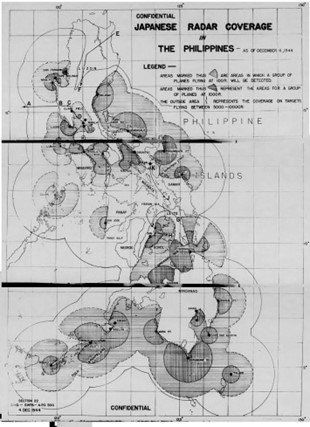
As the US Navy advanced across the Pacific, new radar countermeasures units arrived in the theatre, providing detailed maps showing the location of all the Japanese radars, such as the one below.

Radar map
Japanese radar coverage of the Philippines (Source: Author’s Collection)

This information allowed attacking raids to follow flight plans that would provide a minimum warning to the Japanese. By the end of the Second World War, 18 land-based US Navy patrol squadrons had been modified to carry improved radar receivers and one of the three airborne jammers the Radar Research Laboratory developed.[9] These units were built upon the experience and lessons learned by Heron and Gumz in 1943 and 1944.

Thomas Wildenberg is an award-winning scholar with special interests in aviators, naval aviation, and technological innovation in the military. He is the author of several books on various naval topics and biographies of Joseph Mason Reeves, Billy Mitchell, and Charles Stark Draper.

Header image: A US Navy Consolidated PB4Y-1 Liberator patrol bomber taking off from Eniwetok Airfield (Stickell Field), 13 April 1944. The photo was taken from the top of the observation tower. (Source: Wikimedia)

[1] For more on this topic see: Thomas Wildenberg, Fighting in the Electromagnetic Spectrum: U.S. Navy and Marine Corps Electronic Warfare Aircraft, Operations, and Equipment (Annapolis, MD: Naval Institute Press, 2023), pp. 9-19.

[2] Alfred W. Price, The History of U.S. Electronic Warfare – Volume I: The Years of Innovation—Beginnings to 1946 (Arlington, VA: Association of Old Crows, 1984), pp. 137-8; Craig A. Bellamy, ‘The Beginnings of the Secret Australian Radar Countermeasures Unit During the Pacific War’ (PhD Thesis, Charles Darwin University, 2020), p. 192.

[3] Price, The History of U.S. Electronic Warfare – Volume I, p. 138.

[4] Lawrence Heron, cited by Price, The History of U.S. Electronic Warfare – Volume I, pp. 145-7.

[5] Price, The History of U.S. Electronic Warfare – Volume I, p. 147.

[6] Michel D. Roberts, Dictionary of American Naval Squadrons – Volume I: The History of VA, VAH, VAK, VAL, VAP and VFA Squadrons (Washington DC: Naval Historical Center, 1995), p. 623; Price, The History of U.S. Electronic Warfare – Volume I, p. 144.

[7] Edward M. Young, H6K “Mavis”/H8K “Emily VS PB4Y-1/2 Liberator/Privateer Pacific Theater 1943-45 (London: Osprey Publishing, 2023).

[8] Young, H6K “Mavis”/H8K “Emily VS PB4Y-1/2 Liberator/Privateer Pacific Theater 1943-45.

[9] Thomas Wildenberg, ‘Fighting in the Electromagnetic Spectrum: U.S. Navy and Marine Corps Electronic Warfare Aircraft, Missions, and Equipment,’ lecture given at the Johns Hopkins Applied Physics Laboratory, 14 June 2024.

#Podcast – “A Dizzy Idea” – The Airplanes that Didn’t Make It: An Interview with Dr Kenneth P. Werrell

#Podcast – “A Dizzy Idea” – The Airplanes that Didn’t Make It: An Interview with Dr Kenneth P. Werrell

Editorial Note: Led by Editor Dr Mike Hankins, From Balloons to Drones, produces a monthly podcast that provides an outlet for the presentation and evaluation of air power scholarship, the exploration of historical topics and ideas, and provides a way to reach out to both new scholars and the general public. You can find our Soundcloud channel here. You can also find our podcast on Apple Podcasts and Google Podcasts.

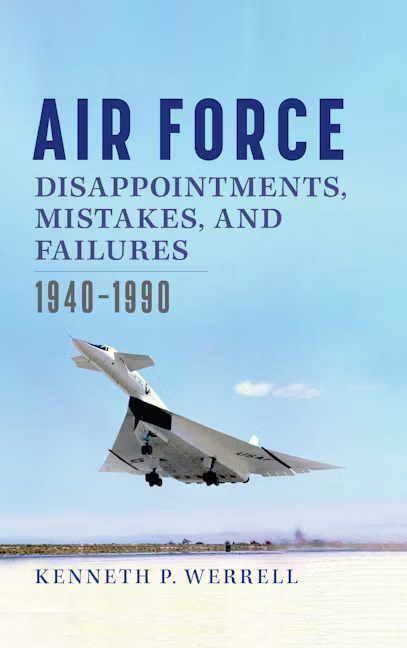
For every military aircraft that takes to the skies, many others never get off the drawing board or make it into full production. Renowned and prolific aviation historian Kenneth P. Werrell talks to us in his new book, Air Force Disappointments, Mistakes, and Failures, 1940-1990, about some of these projects and why some aeroplanes never seem to take off.

9781648431296

Dr Kenneth P. Werrell is the author of Death from the Heavens: A History of Strategic Bombing, Sabres over MIG Alley: The F-86 and the Battle for Air Superiority over Korea, Chasing the Silver Bullet: US Air Force Weapons Development from Vietnam to Desert Storm, Blankets of Fire: U.S. Bombers Over Japan During World War II, and other books.

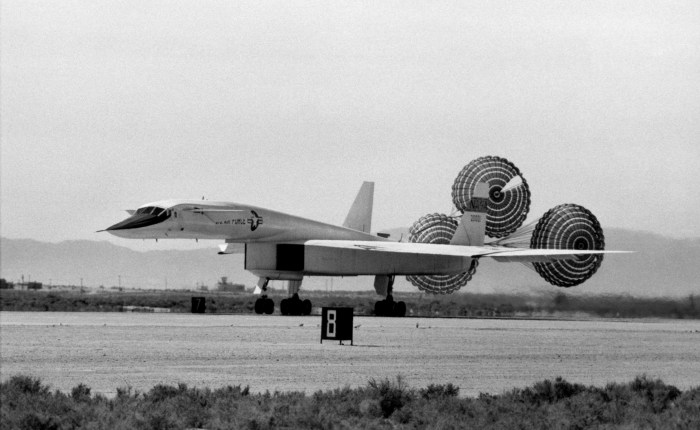
Header image: A North American XB-70A Valkyrie rolling out after landing, employing drag chutes to slow down. In the photo, the outer wing panels are slightly raised. The panels were lowered to improve stability when the XB-70 was flying at high speed. (Source: Wikimedia)

#Commentary – Iran’s Drone Sales Threaten Sahel and Red Sea Stability

#Commentary – Iran’s Drone Sales Threaten Sahel and Red Sea Stability

By Dr John Ringquist 

The Iranian HESA Saheed 136 suicide drone (unmanned aerial vehicle (UAV)) entered the war between Ukraine and Russia with undeniable effects. The influence of the same Iranian drones on Red Sea shipping in 2024 is equally undeniable, as Houthi militias utilised drones to threaten world shipping the same way they threatened Saudi Arabian defences in prior years. Russia has purchased thousands of Shahed 136 drones and received training for Shahed 136, HESA Ababil-3 and Raad drones through Iranian proxies and military forces in Syria.[1] Thus, Iran has quickly become a drone exporter and power broker, using regional proxies to provide lethal drone firepower to hard-pressed governments in East Africa. Iran now employs drones as a foreign policy tool to demonstrate its viability as a significant influence and a capable partner in the Middle East, Europe, and Africa. Iran’s efforts have undercut Western security guarantees and exploited the weakness of Ethiopian and Sudanese governments engaged in their internal efforts to defeat insurgent forces. The 2024 Nigerien junta’s rejection of United States forces currently hosted in Niger, and the likely denial of the critical drone airbases therein, allows Iran to attempt to influence an African state that has chosen to sever ties with the West. Looking at the situations in Ethiopia and Sudan can assist with understanding how Iranian drone capabilities, cost, and performance have earned Iran a place at the table.

Iranian drones offer hard-pressed states much-needed reconnaissance and attack capabilities with no questions about employment doctrine or human rights guarantees. Iranian drones also give potential customers access to various platforms at costs below that of most conventional aircraft. Although costs vary widely depending on the source, an Iranian Saheed 136 goes for between $20,000-$40,000. Multi-role drones like the Mohajer-6 also have lower prices than Western drones.[2] Iran’s goal is not to displace China, Turkey, and the United Arab Emirates as drone competitors in Ethiopia but to demonstrate its ability to compete successfully on the international stage and prove that its drones are effective options for potential international allies.[3] When Ethiopia needed drones in 2021, Iran could offer Ethiopia drones and munitions that helped defeat insurgents through precision strike and reconnaissance capabilities. However, Iranian assistance comes at a price for countries unwilling to risk extended diplomatic pressure. Despite being reported by Bellingcat at Semara airport in late 2021, by late 2023, Ethiopia’s two Iranian Mohajer-6 drones and their single ground control station (capable of controlling two drones at a time) were hard to find on overhead imagery. This is likely due to the drones and associated materials being pulled back under cover or into hangars until needed for operations. In contrast, Ethiopia’s Turkish and Chinese models have been seen in the open on the runways of at least two Ethiopian Air Force base runways. This may have been in whole or in part due to US protests to the UN about Iran’s violation of United Nations Security Council Resolution 2231 and the delivery of unmanned warplanes.[4] UN SCR 2231, although written as a diplomatic effort to find a solution to Iran’s nuclear issues, contains within the resolution Paragraph 6, Annex B that specifically enjoins all states to prevent ‘the transfer of arms or related material from Iran by their nationals or using their flag vessels or aircraft and whether or not originating in the territory of Iran.’ The transfer of drones falls within this set of restrictions. By transferring drones to Ethiopia, UNSCR 2231 was violated, with Iran and Ethiopia as knowing participants.

It is undeniable that Iran was willing to defy UN opposition to provide Ethiopia with drones; what is surprising is that Ethiopia chose to work with Iran despite being a US ally. Iran’s window of opportunity may have materialised partly due to the United States’ policy of not selling armed drones to allies without extensive vetting and Congressional approval.[5] In contrast, when Ethiopia’s military needed a rapid response and a technological solution to rebel threats, Turkey and China were already supplying to the African and Middle East markets. Although it is hard to gauge if Iran will be able to have the same influence that it had with Ethiopia in 2021, Iran could look to the situation in Sudan as another success in efforts to disrupt US regional goals and Western security assurances. As the United States attempts to counter drone proliferation, Iran displays technical and technological skills through its drone sales. Its drive for prestige and relevancy in the arms trade has been rewarded by the Russian and African adoption of Iranian drones to affect the sort of damage previously restricted to more conventional aircraft.[6]

Despite severing diplomatic relations with Iran in 2016, Sudan is interested in Iran’s assistance in combatting its main rival in the ongoing civil war, the Rapid Support Forces. Iran’s relationship with Sudan is evolving as Sudan’s government struggles against the rebel Rapid Support Forces, US sanctions, and a lack of international assistance. However, some countries, namely Iran and Turkey, have supplied Sudan with drones despite sanctions. In Sudan, as in Ethiopia, drones may be the factor that enables the government to contest and eventually defeat insurgents. The Sudanese government’s forces employ a variety of Iranian drones: the Ababil-3, Mohajer-2, Mohajer-4, and the latest Mohajer-6. These drones are part of Iran’s policy toolkit and have helped Iran maintain access and influence in Sudan despite Sudan becoming a signatory to the 2019 Abraham Accords, which included policies that were diametrically opposed to Iran’s stated interests.[7] Iranian interests in the region and globally can best be understood from a combination of Iranian policy goals: posturing Iran as an option to Western states for arms and technological assistance and providing an Islamic champion to former al-Bashir loyalists.[8]

Iran’s policy goals in Sudan include turning Sudan away from Saudi Arabia and UAE as part of Iran’s challenge to regional rivals.[9] Iran has exploited the Sudanese regime’s need for drone platforms, and news stories of alleged offers of additional drones and a helicopter carrier in exchange for a Port Sudan base cloud Iran’s history with Sudan. Iran can use drones to gain influence and restore Sudan as a partner in Iran’s ‘Axis of Resistance’ to the West.[10] The other obvious advantage of a Sudan-Iran alliance, from Iran’s perspective, is a scenario in which Iran could threaten Red Sea shipping and cause worldwide disruptions. An Iran-Sudan alliance would also sandwich Saudi Arabia between Sudan, Iran, and Yemen’s Houthi rebels. A Sudan-Iran diplomatic and defence alliance gives Sudan and Iran the tools to achieve their goals. Sudan’s Armed Forces-led government wants to extract concessions from the West, defeat the Rapid Support Forces, and establish itself as a drone power with the technological sophistication that implies. Iran continues to force the West to bleed resources to prevent a Sudan-Iran alliance from becoming a reality. The multiple threats to the Red Sea, combined with the ecological crisis that is challenging the Panama Canal’s shipping capacity, have great potential to cause Iran’s rivals severe economic and political embarrassment.

52-پهپاد_ایران-_ابابیل
An Iranian HESA Ababil-3 drone. (Source: Wikimedia)

Iran has demonstrated their will to defy United Nations sanctions. It should be expected to do so in the future, especially if doing so will bring Iran revenue and influence with new diplomatic and defence partners. The recent coup in Niger demonstrates how Iran readily offered assistance and drones to the Nigerien junta despite ECOWAS (Economic Community of West African States) sanctions. Other African states have similarly courted in Iranian efforts to bust United Nations sanctions. Burkina Faso and Zimbabwe, for example, for gold exports.[11] Iran has a valuable negotiating tool in the form of its family of armed drones. Sources including CNBC, Voice of America, senior Iranian officials, and the Israeli Defence Minister Yoav Gallant claim Iran now has customers and interested countries (for example, Bolivia and Venezuela) across the world, with Iran claiming 22 interested countries and Israel as many as 50.[12] As of 2023, Venezuela manufactures armed Mohajer-2 surveillance drones and operates armed Mohajer-6 drones. Considering Iran’s support for terrorist organizations and their willingness to sell drones with little regard for the consequences, the risks of international disruptions grow with each country that adopts Iranian technology.[13] International sanctions have limited Iran’s ability to obtain and export parts for drones. Suppliers who provide clandestine support are thus complicit in Iran’s arms industry. Attempts to interdict drone deliveries to Iran’s allies have been ineffective because most users of Iranian drones choose to manufacture in-country or build drones from parts.[14] Drone sales have helped Iran gain partner states. Iran will take advantage of situations where Western partners have been rejected and ejected by their former regional allies or Western states have cut off diplomatic relations due to coups. Iranian influence across the Sahel will grow as states seek sources for drones, and states that have little to deter them will find Iranian drones to be an attractive combination of proven capability and low cost.

Iran is opportunistic, and the situation in Niger, where the regime has rejected the West and joined with the ECOWAS-spurning Association of Sahel States (AES), opens a new avenue for Iran to counter Western influence and gain new allies.[15]  Niger is an attractive destination for Iranian influence because of Niger’s uranium deposits. Iran has been engaged in diplomatic exchanges with Niger, offering Niger an ally against the West as well as assistance in mitigating the effects of ECOWAS sanctions.[16] In April 2024, the news site Africa Intelligence reported that ‘Iran and Niger were negotiating for Niger to provide 300 tons of uranium yellowcake to Iran in exchange for drones and surface-to-air missiles.’[17] That alone would demonstrate the utility of Iranian drones as diplomatic bargaining tools. However, in March of 2024, Iran International News and the Wall Street Journal alleged that United States opposition to the trade was one reason for the Nigerien junta deciding to close the facility known as Airbase 201 in Agadez, Niger, a major drone base for counterterrorism operations in the Sahel.[18] Although the junta closed the airbase and ordered the United States to withdraw its drones, the decision was most likely driven by the need to demonstrate sovereignty and strength when the Nigerien junta was weak and under foreign pressure to change its policies. The developing ties with Russia and neighbouring junta-led states were also likely factors in the decision.[19] However, this development left a prime drone base in the hands of the Niger coup junta just as its relationships with Russia and Iran deepened. We can expect the Nigerien government to seek to take advantage of the $100 million facility at Agadez for new drones delivered by new security partners.

Niger still needs drones to patrol its vast territory and strike at terrorist groups. As Iran’s influence rises in Africa, so too may its drone presence in the service of governments where expediency is valued over human rights, transparency, and sustainability. Iranian drones are an effective policy tool, an asymmetric warfare solution scalable to many situations, and responsive to the needs of states and non-state actors. Iran’s drones will continue to create pockets of regional instability and serve Iran’s need for prestige, credibility, and allies for years to come unless countered by effective policies that neutralize Iran’s disregard for UN sanctions and undercutting of peace initiatives. The challenge for the US and its allies is not simply how to shoot down drones or where to direct diplomatic initiatives but to provide states with better options and to deny terrorists access to advanced systems. The United States is improving Counter-Unmanned Aerial Systems, but allies need assistance countering the whispers of a regime that offers advanced technology without warning of the inevitable repercussions.

Dr John Ringquist is a retired US Army Lieutenant Colonel, Africa Foreign Area Officer, and historian. He currently teaches at the Command and Staff School at the US Army Command and General Staff College. He has written about topics related to security, terrorism, and military history for various publications.

Header image: An Iranian HESA Ababil-3 UAV at an arms expo in Iran. (Source: Wikimedia)

[1] Oded Yaron, ‘Gold for Drones: Massive Leak Reveals the Iranian Sahed project in Russia,’ Haaretz, 21 February 2024.

[2] Danny Citrinowicz, ‘Iran is on its way to replacing Russia as a leading arms exporter: The US needs a strategy to counter this trend,’ The Atlantic Council, 2 February 2024.

[3] Federico Borsari, ‘Tools of influence: Drone proliferation in the Middle East and North Africa,’ European Council on Foreign Relations, 27 May 2022.

[4] Alex Gatopoulos, ‘How Armed Drones May Have Helped Turn the Tide in Ethiopia’s War,’ Al-Jazeera, 10 December 2021. Jeremy Binnie, ‘Ethiopia displays UAVs,’ Janes, 10 May 2023. Tefsa-alem Tekle, ‘U.S. says Iran supplied Ethiopia military drones for Tigray war,’ Sudan Tribune, 19 October 2022. ‘UN Resolution 2231 (2015) on Iran Nuclear Issue – Background.’  

[5] David A. Deptula ‘Anachronistic Export Policy Is Damaging the U.S. Drone Industry and National Security,’ Forbes, 9 June 2020.

[6]  Steven Feldstein ‘The Larger Geopolitical Shift Behind Iran’s Drone Sales to Russia,’ Carnegie Endowment for International Peace, 26 October 2022.

[7] ‘Sudan Seeks Iranian Drones Amid Growing Regional Tensions,’ Iran International, 12 March 2023.

[8] Giorgio Cafiero, ‘Iran’s Concerted Efforts to Secure a Foothold in Sudan,’ Gulf International Forum, 27 June 2024.

[9] Eric Lob, ‘Iran’s intervention in Sudan’s civil war advances its geopolitical goals − but not without risks,’ The Conversation, 28 May 2024.

[10] Wad Madani, ‘Reports About Iran’s Bid for Naval Base in Sudan Sparks Controversy,’ Asharq Al-Awsat, 4 March 2024; Jay Soloman, ‘Iran sending attack drones to Sudan’s military,’ Semafor, 29 February 2024.

[11] Liam Karr and Kitaneh Fitzpatrick. ‘Iran in Africa,’ Institute for the Study of War, 2 May 2024.

[12] Natasha Turak, ‘Iran’s drones could reach a new South American market as Bolivia expresses interest,’ CNBC, 31 July 2023; Michael Lupin, ‘Iran’s Apparent Supply of Combat Drones to Venezuela Highlights Terrorism Risks,’ VOA News, 2 March 2022; Agnes Helou, ‘Global interest in Iranian Drones Unlikely to Wane Despite Failed Attack on Israel,’ Breaking Defense, 24 April 2024.

[13] Garrett Nada, ‘Explainer: Iran’s Drone Exports Worldwide,’ Iran Primer, 12 June 2023.

[14] ‘US Sanctions Network Accused of Supplying Iran’s Drone Production,’ Al-Jazeera, 20 December 2023.

[15] ‘Military leaders of Niger, Mali and Burkina Faso rule out returning to the ECOWAS regional bloc,’ NBC News, 7 July 2024.

[16] ‘Turkey, Iran, and Morocco Joist for Influence in Africa’s Sahel,’ France24, 12 March 2024.

[17] ‘Sous l’œil de Washington, Téhéran négocie avec Niamey l’acquisition de 300 tonnes d’uranium,’ Africa Intelligence, 30 April 2024.

[18] ‘Niger Ends US Alliance Amid Accusations of Uranium Deal with Iran,’ Iran International, 18 March 2024; Michael R. Gordon, Gabriele Steinhauser, Laurence Norman, Michael M. Phillips, ‘Niger Termination of U.S. Military Ties Followed Accusation of Iran Uranium Deal,’ The Wall Street Journal, 17 March 2024.

[19] ‘Niger’s Junta Revokes Military Agreement with US,’ BBC, 17 March 2024.

Expression of Interest – Editor, From Balloons to Drones

Expression of Interest – Editor, From Balloons to Drones

Job title: Editor

Established in 2016, From Balloons to Drones has successfully developed into a well-regarded online scholarly platform dedicated to analysing and debating air power history, theory, and contemporary operations in their broadest sense, including space and cyber power. Our outputs include articles ranging from scholarly pieces to book reviews and a successful podcast series.

The role
To help us develop further, From Balloons to Drones is looking to recruit an emerging and passionate air power specialist to join our editorial team. This voluntary role’s primary purpose is to work with the editorial team to peer-review submissions while supporting the aims and objectives of From Balloons to Drones in other areas.

What do we offer?
The From Balloons to Drones team comprises experienced and knowledgeable air power scholars and editors who will mentor, advise, and assist the successful applicant. In addition, this role will allow you to develop your editing skills and experience of engaging with the broader air power studies community.

Who are we looking for?
Are you passionate about the study of air power and military aviation? Are you interested in the contest of ideas? Do you want to be involved in publishing new and exciting research? Then this role is for you.

From Balloons to Drones welcomes and encourages applications for this new role from applicants working in a wide range of fields, including but not limited to military history, international relations, strategic studies, law, and archaeology. The role is open to postgraduates, academics, policymakers, service personnel, and relevant professionals who are involved in researching the subject of air power and military aviation.

From Balloons to Drones actively encourages and promotes diversity within the field of air power studies. We particularly encourage applications from those underrepresented within the air power studies community.

Job functions

  1. Contribute to the peer review of submissions.
  2. Contribute to building a core community of interest using social media that furthers the aims and objectives of From Balloons to Drones.
  3. Contribute to content creation for From Balloons to Drones across all platforms.
  4. Professionally represent From Balloons to Drones at conferences and other events.
  5. Undertake additional duties as required by the Editor-in-Chief.

Applications
To apply, contact Dr Ross Mahoney (airpowerstudies@gmail.com) with a copy of your CV and a brief cover letter (c. 500 words) explaining why you wish to join the team.

Closing date: 30 September 2024

You can learn more about the From Balloons to Drones editorial team here.

#Podcast – “Keep ‘Em Flying!”: An Interview with Dr Stan Fisher

#Podcast – “Keep ‘Em Flying!”: An Interview with Dr Stan Fisher

Editorial Note: Led by Editor Dr Mike Hankins, From Balloons to Drones, produces a monthly podcast that provides an outlet for the presentation and evaluation of air power scholarship, the exploration of historical topics and ideas, and provides a way to reach out to both new scholars and the general public. You can find our Soundcloud channel here. You can also find our podcast on Apple Podcasts and Google Podcasts.

The Pacific Theater of the Second World War was massive and had vast numbers of ships and aeroplanes. Keeping a force like that operational and effective takes tremendous work behind the scenes. In our latest episode, Dr Stan Fisher takes us through his new book, Sustaining the Carrier War: The Deployment of U.S. Naval Air Power to the Pacific, to show the often overlooked people behind the scenes: the mechanics and maintainers who kept the planes working and kept the carriers able to keep air power in the air in the war against Japan.

Version 1.0.0

Dr Stan Fisher, a commander in the U.S. Navy, is an assistant professor of naval and American history at the United States Naval Academy.  Before transitioning to the classroom, he accumulated over 2,500 flight hours as a US Navy pilot, mainly in SH-60B & MH-60R Seahawk helicopters. He earned a commission through the Naval Reserve Officer Training Corps in 1997 and has multiple deployments on frigates, cruisers, and aircraft carriers. Fisher has also served as a weapons and tactics instructor, squadron maintenance officer, and operational test director. Additionally, he has completed tours of duty in engineering and acquisitions at the Naval Air Systems Command.  He is a past recipient of the Samuel Eliot Morison Naval History Scholarship and earned his PhD from the University of Maryland.

Header image: USS Intrepid (CV-11) operating in the Philippine Sea in November 1944. Note the Grumann F6F Hellcat fighter parked on an outrigger forward of her island. (Source: NH 97468, US Naval History and Heritage Command)