Michael Napier, Korean Air War: Sabres, Migs and Meteors, 1950-53. Oxford: Osprey Publishing, 2021. Images. Notes. Bibliography. Glossary. Appendices. Index. Hbk. 320pp.
Reviewed by Dr Ross Mahoney
In the western world, the Korean War is often thought of as the forgotten war of the early Cold War. This was, at least from an American perspective, because ‘[l]ike the proverbial shrimp caught between two whales, the Korean War [was] trapped between World War II and the Vietnam War.’[1] Furthermore, from a British and French perspective, the war does not easily fit into national narratives surrounding their ‘retreat’ from empires in Southeast Asia, namely the Malayan Emergency and the French-Indochina War. The Korean War did, however, significantly impact the Cold War’s early course, particularly strengthening the recently established North Atlantic Treaty Organisation.
From the perspective of the application and development of air power, the Korean War was also significant. Specifically, it was the first time jet fighters met in combat. Furthermore, the war also saw a wide range of air power capabilities deployed over Korea, including discussions throughout the conflict about the potential delivery of nuclear weapons.[2] This has meant that, despite the unfortunate epithet of being a forgotten war, several important works, such as Conrad Crane’s American Airpower Strategy in Korea (2000), have appeared and examined the use of air power over the Korean peninsula.
Michael Napier, a retired Royal Air Force fast-jet pilot and author, comes into this mix with his 2021 volume, Korean Air War. In just over 300 pages, Napier systematically describes the course of the air war over Korea. The book, chronologically laid out, deals with the air war in seven chapters plus a retrospective to finish the volume. There are also two appendices included. The chapters follow the broad course of the main phases of the Korean War. For example, Chapter Three deals with the period of the offensive by United Nations (UN) forces between August and October 1950 (pp. 72-113). This is then followed up by a chapter that looks at the period of the Chinese offensives (pp. 114-55) against UN forces that forced them back to roughly the 38th Parallel. Within these chapters, Napier details the various uses of air power by both sides during the war. This includes the use of tactical and strategic air power as well as naval air power. Napier also does a good job of describing the coalition character of the air war for both sides. However, his attempt to highlight the British contribution can sometimes be overstated.
US Marines of the First Marine Division Reconnaissance Company make the first helicopter invasion on Hill 812, to relieve the Republic of Korea 8th Division, during the renewed fighting in Korea, 20 September 1951. (Source: Wikimedia)
While the book comprehensively deals with the air war over Korea, readers should not expect an academic examination of the use of air power between 1950 and 1953. That is not what this book is. However, this is not a criticism per se. Instead, the book has been written with a specific audience in mind – the general reader looking for an introduction to the subject. This is highlighted by Napier’s choice to examine the war chronologically (p. 6). This is a choice that makes it easier for the lay reader to understand what was a complex and contested operating environment. Ultimately, therefore, we end up with a very useful narrative of the course of the air war that introduces readers to the subject matter.
One area, however, where the book does fall down is in its use of sources. Regarding primary sources, Napier has overwhelmingly relied on files in British archival institutions, notably The National Archives and the Royal Air Force Museum. While perhaps a pragmatic decision given the author’s location and the character of this book as a popular account of the air war, it does, nonetheless, skew the author’s interpretation. Furthermore, at least from the perspective of UN forces deployed, most of the air power deployed in support of the war effort came from the US. As such, one would expect more attention to be given to the records produced by those forces involved. Finally, given the above issue, Napier relies on secondary sources to fill in the gaps despite arguing that published accounts of the air war over Korea were less than ‘objective’ (p. 6) in their analysis. However, it appears from the notes and bibliography that Napier did not consult important, more ‘objective’ works such as Crane’s noted above and others.[3] The use of such works would have further enriched Napier’s narrative
Overall, despite the above criticism, Napier has done an excellent job of writing a comprehensive introductory narrative to the air war over Korea. In particular, Napier does a good job of weaving together a narrative that tells the story of both sides of the air war over Korea. The book is lavishly supported by high-quality imagery and maps that help support the text.
Dr Ross Mahoney is the Editor-in-Chief of From Balloons to Drones and is an independent scholar specialising in air power and the history of air warfare. He is currently the Senior Historian within the City Architecture and Heritage Team at Brisbane City Council in Australia. He has over 15 years of experience within the heritage and education sectors in Australia and the United Kingdom. He was the inaugural Historian at the Royal Air Force Museum in the UK. In Australia, he has worked as a Historian for the Department of Veterans’ Affairs and taught at the Strategic and Defence Studies Centre at The Australian National University based at the Australian War College. His research interests are focused on military history, with a specific focus on the history of air warfare, transport history, and urban history. He has published several chapters and articles, edited two books, and delivered papers on three continents. He has a website here and can be found on Twitter at @airpowerhistory.
Header image: Four US Air Force North American F-86E Sabre fighters over Korea in November 1952. (Source: Wikimedia)
[1] Allan Millett, The War for Korea, 1945-1950: A House Burning (Lawrence, KS: University Press of Kansas, 2005), p. 1.
[2] Daniel Calingaert, ‘Nuclear weapons and the Korean War,’ Journal of Strategic Studies 11, no. 2 (1988), pp. 177-202.
[3] Other works of note not cited include: Eduard Mark, Aerial Interdiction: Air Power and the Land Battle in Three American Wars (Washington DC: Office of Air Force History, 1994); John Sherwood, Officers in Flight Suits: The Story of American Air Force Fighter Pilots in the Korean War (New York, NY: New York University Press, 1998); Jacob Neufeld, Coalition Air Warfare in the Korean War 1950–1953 (Washington DC: U.S. Air Force History and Museums Program, 2005); Roger Horky, ‘Clipping the Eagle’s Wings: The Limiting of the Korean Air War, 1950-1953’ (PhD Thesis, Texas A&M University, 2013).
Editorial Note: Led by our Editor Dr Mike Hankins, From Balloons to Drones produces a monthly podcast that provides an outlet for the presentation and evaluation of air power scholarship, the exploration of historical topics and ideas, and provides a way to reach out to both new scholars and the general public. You can find our Soundcloud channel here. You can also find our podcast on Apple Podcasts and Google Podcasts.
In the years after the Second World War, the US shifted its strategy to one focused on air power and delivery of nuclear weapons–but why and how did this happen? Dr John Curatola, the Military Historian for the Center for War and Democracy at the National World War II Museum, takes us through the fierce rivalry between the US Air Force and Navy, the scandalous ‘Revolt of the Admirals,’ and the development of thermonuclear weapons.
Dr John Curatola is the Military Historian for the Center for War and Democracy at the National World War II Museum. He was formerly a Professor of Military History at the US Army School of Advanced Military Studies at Fort Leavenworth, Kansas. Curatola is a retired Marine Officer of 22 years with a Doctorate from the University of Kansas. In addition to his published works, he has lectured extensively on airpower and early Cold War topics at the National Archives, C-SPAN, and international venues. His latest book is Autumn of Our Discontent: Fall 1949 and the Crises in American National Security (2022).
Header image: A US Air Force Convair B-36B Peacemaker of the 7th Bombardment Wing in flight, in 1949. (Source: Wikimedia)
Editorial Note: Led by our Editor Dr Mike Hankins, From Balloons to Drones produces a monthly podcast that provides an outlet for the presentation and evaluation of air power scholarship, the exploration of historical topics and ideas, and provides a way to reach out to both new scholars and the general public. You can find our Soundcloud channel here. You can also find our podcast on Apple Podcasts and Google Podcasts.
After the Second World War, women were not allowed to fly in military aviation roles in the US. That began to change in the 1970s. Pulitzer Prize-winning journalist Beverly Weintraub tells us about the story of six women US Naval aviators from her book: Wings of Gold: The Story of the First Women Naval Aviators from Lyons Press.
Beverly Weintraub is a Pulitzer Prize-winning journalist whose coverage of aviation, education and social services has appeared in the New York Daily News and the Washington Post. She served for 10 years on the Daily News Editorial Board, winning the Pulitzer with several colleagues for editorials examining the illnesses afflicting 9/11 first responders. She is currently executive editor at The 74, a K-12 education news site. An instrument-rated private pilot, Weintraub is a member of the Ninety-Nines, International Organization of Women Pilots; serves on the board of directors of the Air Race Classic, the annual all-women cross-country aeroplane race; and is a five-time ARC racer.
Header image: Captain Rosemary Mariner, the commander of VAQ-34 in the early 1990s. (Source: US Naval History and Heritage Command)
Marshall L. Michel III, Clashes: Air Combat Over North Vietnam, 1965-1972. Annapolis, MD: Naval Institute Press, 1997. Appendices. Endnotes. Index. 340 pp.
Reviewed by Dr James Young
As indicated by the title, Marshall Michel’s Clashes is a chronological examination of the air war over North Vietnam. At the time of its publication in 1997, Clashes was the first comprehensive treatment of the conflict to take advantage of North Vietnamese sources. Unlike most of his predecessors, Michel consciously avoided basing his main argument on the political issues surrounding Operations ROLLING THUNDER and LINEBACKER. These political issues include targeting choices by the White House, bombing halts, and rules of engagement enforced by US Navy (USN) and the United States Air Force (USAF) Pacific Air Forces (PACAF). Instead, Michel focuses on the ‘military significance [USAF’s and USN’s bombing campaigns had] in the larger context of the Cold War and possible U.S.-Soviet military confrontation,’ as ‘this was the one area of the Vietnam War that had military significance in the global balance of power.’ (p. 1) Within this framework, Michel posits that the twin campaigns were a ‘test of American air combat performance,’ (p. 1) and then proceeds to explain how the USAF and USN largely failed the exam.
Michel’s organisation is simple, with Clashes divided into two chronological sections. The first of these begins with a discussion of air combat in general, the two American services’ thoughts on fighter doctrine, and how the USN and USAF evaluated these theories in a series of rigorously controlled exercises. Michel takes great pains to point out that these exercises, conducted in the clear skies and low humidity of the western United States, led to a misplaced faith in American technological superiority as the war began. After this introduction, Clashes transitions to the initial campaign against North Vietnam. After a cursory discussion of operational goals, Michel starts with the initial USN air raids and the gradual escalation that became ROLLING THUNDER. Clashes highlights the friction that emerged from both services’ aircrew rotation policies, internal and external service rivalries, a harsh climate and, most importantly, a rapidly evolving and uncooperative enemy. By the end of Part I, Clashes makes two things clear. First, the North Vietnamese proved to be far more capable opponents than the American forces expected, with their Integrated Air Defence System (IADS) arguably the deadliest of its kind in the entire world. Second, it became clear that the USAF/USN’s already inadequate conventional capabilities had worsened throughout ROLLING THUNDER.
A US Navy Vought A-7A Corsair II from VA-27 prepares to be catapulted off the flight deck of the aircraft carrier USS Constellation (CVA-64) in the Gulf of Tonkin on 27 August 1968. It is armed with Mark 82 227 kg Snakeye bombs and AIM-9B Sidewinder missiles. VA-27 was assigned to Attack Carrier Air Wing 14 aboard the Constellation for a deployment to Vietnam from 29 May 1968 to 31 January 1969. (Source: Wikimedia)
Having presented the reader with this sobering assessment, Michel begins Part 2 by stating, ‘[t]he judgments about air-to-air combat during Rolling Thunder were a Rorschach test for the U.S. Air Force and Navy.’ (p. 181) The USAF’s leadership had a ‘clear lack of interest in improving its air training’ (p. 185) for several disparate reasons. In contrast, the USN’s admirals ensured that its crews were ‘prepared for the new round of air combat anywhere in the world’ (p. 188) by both enforcing new doctrine and modifying existing equipment. Michel manages to deftly interweave both services’ advances using simple yet accurate language concerning ordnance, electronics, and airframes. Finally, unlike other works before it, Clashes concludes Part II’s introductory chapter with a discussion of the North Vietnamese Air Force’s (NVAF’s) contemporaneous improvement in doctrine, equipment, and training. In this manner, Michel sets the table for the remainder of Part II by ensuring the reader understands why Operations LINEBACKER I and II are not simple continuations of ROLLING THUNDER. As with Part I, Michel’s writing ability stands out as he discusses how the USAF and USN engaged the NV-IADS. Only a prohibitive amount of resources prevented steep losses among strike aircraft for the USAF (p. 242-6). In contrast, the USN’s emphasis on the Top Gun program, missile improvements, and strike doctrine resulted in ‘MiGs concentat[ing] almost exclusively on Air Force sorties’ (p. 277) due to heavy losses. By drawing this stark contrast, Michel both explicitly condemns USAF leadership for their choices from 1968-1972. He implicitly proves his thesis by establishing a connection between difficulties in Southeast Asia being indicative of the USAF’s conventional capabilities in a broader Cold War sense.
Although subsequent books, such as Craig C. Hanna’s Striving for Air Superiority (2002) and Wayne Thompson’s To Hanoi and Back (2000) have taken advantage of more recently declassified documents, Clashes remains a work of tremendous value for anyone interested in post-Second World War air combat. Michel’s reliance on official USAF and USN primary documents, such as Project CHECO, the USAF’s Red Baron report, and the USN’s Ault Report, erases much of the ideological clutter affecting previous works that dealt with the war. When coupled with his skilful prose, the overall result is a balanced, informative account that is quite accessible. Clashes’ continued relevance would make it equally at home in a public library, a professional military course, or an undergraduate Vietnam course. Even beyond these uses, it remains an excellent cautionary tale of what can occur when an air service fails to rigorously test, train, and exercise its doctrine before entering a conflict. It is highly recommended for anyone interested in Cold War military history for all these reasons.
Dr James Young is an air power historian, aviation enthusiast and military analyst. His writing credits include the USNI’s 2016 Cyberwarfare Essay Contest, articles in Armor, The Journal of Military History, Marine Corps University Press Expeditions, and USNI Proceedings. In addition to his historical work and the critically acclaimed Usurper’s War-series, he has collaborated with bestselling authors Sarah Hoyt, S.M. Stirling, and David Weber.
Header Image: A US Air Force Boeing B-52G Stratofortress from the 72nd Strategic Wing (Provisional) waits beside the runway at Andersen Air Force Base, Guam, as another B-52 takes off for a bombing mission over North Vietnam during Operation LINEBACKER II on 15 December 1972. (Source: Wikimedia)
Air superiority needs to be conceived as a political condition that begins in peacetime, not merely a wartime operational pursuit. Perceiving air superiority in this way will make connections to the ordinary peacetime conditions political actors like the United States seek, resulting in military strategy, targeting, and weapons acquisition more in tune with national policy. This commentary piece is an essay based on a comprehensive study on the relationship between military means and political ends. Typically, examinations of air superiority start with discussing airframes, basing, technology, and tactics. This proposal, however, begins with the issues of legitimacy and norms and suggests ways of achieving air superiority rooted in peacetime operations. It concludes that a mix of manned and unmanned fighter aircraft is the best means of achieving this national policy.
An Essential Condition
Airliners require airspace free of the threat of missiles, drones, and gunfire before they even consider flight. Conversely, military pilots prefer unimpeded airspace in which whatever fire an enemy can send their way is insufficient to cause more than an occasional loss through which they can fly their missions without substantial interference and complete their missions. If the stakes are high enough, aircrews will press forward despite losses to hostile fire. Those can increase to the point that only the most necessary missions will justify prohibitive losses.
Air superiority is the general term used to describe these varying grades of airspace control. The condition is normally conceived in operational and physical terms: is a sector of airspace permissive enough for operations to be completed without too many losses? How many aircraft can one lose before it becomes too difficult to dominate a sector of airspace? Can a military actor achieve air superiority by shooting down a number or a percentage of aircraft?
More abstractly, one can relate air superiority to achieving a military strategy. For instance, Great Britain did not achieve air superiority over south-eastern England in September 1940 when its shoot-downs of Luftwaffe aircraft reached an arbitrary threshold. Instead, Britain gained air superiority when Germany could no longer proceed with its agenda of invading the United Kingdom; inflicting losses was just an intermediate step for the Royal Air Force. As a result, the British achieved a favourable outcome even though losses to enemy aircraft continued.
A Function of Governance
One can best perceive of air superiority as a political act and consequence. Since the ultimate goal of politics is to decide who governs where, how, and under what terms, the most helpful way to conceive of air superiority is as a political act. A state should ask whether its norms, rules, power, and assumptions govern what happens in the air when determining the safety within the airspace in which its national interests lay. These concepts take us into the realm of sovereignty: who or what has ultimate authority. For example, the Soviet Union was not completely sovereign over its airspace in 1983 when it shot down the Korean airliner flight 007 because of standards of international behaviour. It had the capacity to shoot down intruding airliners, and it could have continued to shoot down airliners for some time without much exertion. Instead, Moscow found itself condemned for shooting down an aircraft that should not have been where it was in the first place because international norms had already labelled what the Soviets did as illegitimate. The Soviets had violated a norm that really did not need to be codified: you just do not shoot down civilian airliners full of people. Because international discourse had long since settled that issue, the Soviet Union was condemned for its action. Arguments such as, ‘It’s over our territory,’ or, ‘warnings are all over air navigational charts; they simply should not have been flying there,’ carried insufficient weight. Furthermore, the issue had already been decided years before the incident through international law and had nothing to do with aircraft capabilities or weapons loads. The Soviets did not recognise that air superiority was ultimately a political issue, not an issue of military power, and they did not have ultimate authority over the concept.
An F-15 Eagle banks left while an F/A-22 Raptor flies in formation en route to a training area off the coastline of Virginia, 5 April 2005. (Source: Wikimedia)
Formulation
Norms, discourse, legitimacy, and governance, should be the starting points for understanding air superiority; machines such as aircraft, surface-to-air missiles (SAMs), drones, or satellites are tools that may or may not ultimately determine the legitimacy or reality of airspace control. Furthermore, since military force is a subset of information warfare, political actors can largely determine the legitimacy of airspace control before a shooting war is even contemplated, thus predetermining a significant portion of the consequences of hostile actions before they are initiated. States already pursue these conditions by flying between China and Taiwan or over the Sea of Okhotsk. Because airforces – and more ideally, civilian airliners – normalise these flights by making them regularly, they have become legitimate. Because international rules are related to air superiority, both should be considered cohabitants on the same continuum, like radio waves and light waves on the electromagnetic spectrum.
The achievement of air superiority thus begins in peacetime with the establishment of what is legitimate behaviour. Therefore, China understands this and is trying to construct airspace sovereignty over the western Pacific Ocean with manufactured islands, agitation over centuries-old, discredited maps, and military power: air sovereignty constructivism, if you will. Of course, nearby actors such as Vietnam, Taiwan, and the Philippines, cannot give in lest they normalise China’s aggression, but they do not have sufficient power to resist militarily.
Although it forms a critical component of the response, resisting China’s aggression and preserving airspace freedom does not begin with building powerful air forces. Regional powers must perpetuate an ongoing narrative about what is legitimate in the airspace off the coasts of Asia. When they make violations of their airspace by Chinese military aircraft actions that are automatically condemned; for example, they will have contributed to a powerful foundation for air superiority. Grassroots rhetoric condemning Chinese production of runway cratering missiles, not to mention artificial islands, would further contribute to the discourse of air superiority. So, the first component of air superiority operations would be to create a norm of, ‘this is simply the way things are; this is what is appropriate.’ For instance, international airspace is accepted, and air defence identification zones extend only as far as radar coverage from one’s mainland (generally around 200 miles). When no one, or at most, only China, questions that assertion, those states will have added to the legitimacy of their own defensive military aggression if it is ever necessary. Nurturing this narrative does not carry prohibitive costs, but it requires constant attention and never ends.
This endeavour’s more deliberate components include international agreements, international organisations, multinational military exercises, and air sovereignty flights. Conducted as a diplomatic-information campaign, these activities can predetermine who will be the victim and who will be the aggressor if armed conflict erupts. Indeed, ensuring that one’s state achieves victim status and is not labelled the aggressor is the most critical goal in the discourse of air superiority. Victims have very liberal rights to self-defence during war, while aggressors may not have any rights. Therefore, possessing the legitimate right of self-defence when protecting airspace is critical and begins in peacetime. States should make maintaining that status an ongoing component of their grand strategy and ensure that illegitimate power is the only means available to actors like China and Russia.
Ultimately a determined aggressor will not care. International opprobrium, condemnation, and even new enemies who wage war against the aggressor state may not be enough to dissuade a political actor from taking what he wants by force. However, if the revisionist power wins that battle over airspace, it will find itself in a weakened condition for resisting the international opprobrium that would follow. Ideally, regional actors will possess enough military power to persuade an aggressor to not go to war in the first place or fight him to a standstill if war comes. The question of what the best hardware is for accomplishing that goal is one that states must answer the first time correctly.
Prior to Weapons Acquisition
The most important question surrounding the hardware of air superiority is not which machine will shoot down the most enemy aeroplanes or missiles. Instead, one should ask political questions addressing legitimacy, deterrence, which governs where and how, and gaining victim status. Covering those bases will function as force multipliers to the combat capabilities of one’s air and space forces. States should opt for a mix of capabilities—not for operational reasons or the ability to achieve high kill rates of invading aircraft and missiles, although necessary. Instead, the capabilities must further political goals. Air capabilities need to be able to deter, reaffirm legitimacy, confer aggressor status on the state that is attacking, and wreck the aggressor’s strategy. From there, one should construct a system of sufficient lethality to preserve or regain air superiority. Furthermore, an air force should pursue air superiority as a component of governance, not merely as a military operation.
Surface-to-air missiles may be the best starting point because they are inherently defensive. A PAC-III missile cannot attack China from South Korea or anywhere else, for that matter. SAMs are legitimate because they operate from within a country or one of its warships. They are not aggressive since they are defensive weapons. An enemy must attack them, often as the first step in an airstrike; thus, SAMs force the enemy into labelling himself the aggressor and your state the victim, giving the attacked country the power that comes to a victim in today’s discourse. But an air force can use up its SAMs quickly. Suppose the enemy still has offensive power after the defender fires off its last missiles. In that case, the defender will be in a precarious state, and victim status and the legitimacy of his cause may be so much rhetoric.
The SAM’s stablemate, antiaircraft artillery, can cause great destruction to an attacker. As inherently defensive weapons, they are legitimate and not a weapon of aggression. They need to be able to detect and hit enemy missiles and aircraft; however. Otherwise, their use conveys the image of mindless firing and panic. Since the geographic coverage of each piece is quite small, they are tertiary weapons.
Cyber weapons should be a component of air superiority hardware. Few things could be better than somehow switching off or wrecking enemy hardware from within, for instance, but to my knowledge, computer viruses do not yet cause circuit boards to melt themselves. A force struck down with computer viruses can clean out the malicious software, and even examine and exploit it for a counterattack. For that reason, cyber weapons are one-shot pieces of software. They can help defeat an enemy onslaught, but they can also help an enemy strengthen his network defence because the attack exposes a weakness.
Space-based weapons have the potential to dominate the airspace below, but they have problems when it comes to legitimacy, deterrence, and labelling. If a country flies a space laser over its enemy to protect international airspace, it does so intrusively, confusing the world audience as to who the aggressor is. Placing a satellite armed with defensive weapons could give the appearance of a constant offensive threat overhead. Damocles would not be a politically helpful label for an armed satellite.
An F-35C Lightning II assigned to the VFA-101 launched off the Nimitz-class aircraft carrier USS Abraham Lincoln (CVN 72) flight deck on 4 September 2017.
Weapons Have Differing Meanings
There is currently a rush to build unmanned aircraft that either function as remotely piloted vehicles or as autonomous aircraft flown by artificial intelligence. They are less expensive, there is no pilot to be killed or captured, and their swarms can overwhelm defences or attacking strike packages. Drones, however, can only extend firepower, not legitimacy. Squadrons of drones either convey the seriousness of large groups of appliances or the sinister capability of robots; fiction writing has already determined many of the meanings we attach to drones. It will be challenging for drones to be perceived solely as defensive and fully legitimate, and their deterrent effect may be less. One of the components of deterrence is forcing the enemy to attack and kill your people and your territory if they wish to attack. Thus, an enemy is less likely to attack an ICBM in a silo, for example, than a ballistic missile submarine; land-based ICBMs enhance deterrence. Furthermore, people, not machines, need to govern airspace. People are more legitimate than machines, and people, not machines, can be victimised. Drones can threaten, but unlike manned aircraft, they cannot coerce in a way that is seen as legitimate. Drones will be most effective in furthering a political narrative when retained as adjuncts – extra shooters – to manned aircraft.
Because of the politics of air superiority, its optics, the issue of legitimacy, the need to convey political will and commitment, and the different meanings attached to manned aircraft and autonomous aircraft, a great need remains for men and women to fly the aircraft and man the SAM sites that achieve air superiority. Skin in the game is necessary because an aggressor will be less inclined to shoot down a manned aircraft than a drone. The people of a country will be up in arms if one of their piloted aircraft is shot down during a crisis, but if one of their drones is shot down, how should they react when an armed appliance has been destroyed? Drones will provoke, but fighters with a human at the controls can deter, signal, provoke, defend, escort, and assert international norms. While drones can provide more tactical firepower, only manned fighters can function as political weapons. Indeed, fighter aircraft that cannot be used against surface targets unless they spend six months in a depot undergoing conversions may be in the national interest to a far greater degree than a multi-role aircraft. It may even be in the national interest to produce a follow-on to the F-22 that can only be used as an air-to-air weapon.
Air Superiority without Bombing China
A capability to achieve air superiority over eastern Europe or the western Pacific without needing to carry out bombardment missions against Chinese or Russian SAM sites or airbases is most attractive politically as well as militarily; an ability to dominate airspace with a mix of manned and unmanned fighter aircraft without the assistance of aircraft attacking targets on enemy territory gives several advantages to political leaders. First, such a capability remains a defensive, legitimate political act of governing airspace and defending airspace. Such aircraft cannot attack their adversaries and thus are less escalatory. They can complete the mission of air sovereignty over their own territory or within international airspace. Proposals of bombing Chinese or Russian airbases in defence of Taiwan or the Baltic states are asinine. When one is bombing Russian airbases, one is attacking Russia, a Russia with a nuclear arsenal. Airfield and SAM site attack strategies, operations, and capabilities were essential when deterring the Warsaw Pact during the Cold War. They may be a requirement against peer states when a geopolitical relationship is going down the tubes, but bombing Chinese or Russian airfields constitutes poor politics for the United States and its allies except in the most extreme circumstances. An offensive capability and strategy in defending friends along the Asian periphery will lead to a war that worsens conditions, rather than a settlement in which those areas are governed in ways that respect the sovereignty of smaller states and international law. An offensive-defensive strategy will erode the victim status regional actors can easily retain if they emphasise an airspace politics of live and let live.
Developing the best new aircraft, SAMS, and directed energy weapons for shooting down enemy aircraft and missiles must not be procurement’s starting point for maintaining air superiority over the western Pacific. Again, air superiority is a political act, a contest of who governs the western Pacific in this instance, and how. What characteristics will the machines employed to carry out that task needs with that goal in mind? Because of the lethality of SAMs, air-to-air missiles, cyber weapons, and guided ballistic missiles, aircraft must be excellent technologically, but not for the sake of fielding the most advanced technology. Because of the political goals of the United States and its allies, the weapons should be defensive. An F-22, for example, is ideal for this mission because it does not possess much of an air-to-ground bombardment capability. That trait is a political advantage because the capability, intentions, and rhetoric are all congruent with a policy goal of governance and air defence. Since F-22-type aircraft do not support a ground attack strategy well, they are politically ideal for preserving air superiority. Several wings of American and allied F-22s and Next Generation Air Dominance Fighters (NGADs) would have the ability to defeat Chinese assets. Since they do not have the range to penetrate deep into Chinese territory, they threaten China less and match the political rhetoric of the United States and its friends more. Most importantly, highly-capable fighter aircraft can achieve air superiority solely in international airspace – the ideal location for exerting air sovereignty.
Because of the political goals behind its existence, the NGAD should be designed as a single-purpose, air-to-air combat-only fighter with a person in the cockpit. It does not need the capability to penetrate deep into Chinese or Russian airspace to destroy surface targets because that capability will not match up with any of the United States’ political goals. Why should the United States and her friends must have the capability to destroy SAM sites and airfields on Russian or Chinese territory? For that reason, the NGADs should be forward deployed, not F-35s. Keep the offensive capabilities of F-35s away from our adversaries. That will support American rhetoric and strategy, and their transfer forward in a crisis will help diplomatic efforts if it ever comes to that.
Air defence NGADs should be the forward-deployed aircraft because they can survive airspace infested with long-range Chinese SAMs fired from warships and long-range fighter aircraft far better than variants of the F-15 or F/A-18. The most advanced legacy airframes – including those not yet manufactured like the F-15EX – would only function as SAM sponges in the western Pacific and have no business flying in this theatre unless Chinese air capabilities have significantly been diminished. Even though it is more survivable against SAMs than legacy aircraft, the F-35 is not ideal for this mission because its offensive capabilities run counter to the policy and narrative desirable for governing the airspace over the western Pacific. Furthermore, it is too slow to run down and destroy the fastest Chinese fighters; it cannot engage and disengage at will like an air superiority fighter needs to do. However, given the low numbers of extant F-22s, F-35s must participate in the air-to-air battle in this scenario for the next several years. Finally, the NGAD should be designed as an aircraft carrier-launched aircraft and then equip both the US Navy and the US Air Force. Aircraft designed for carrier operations can be flown from land bases, but aircraft designed for runway operations cannot stand the stresses of carrier catapult launches and arrested landings. The NGAD should not be multi-role, but it will be multi-service. Furthermore, if it does its job well, it will not need to carry bombs because peer adversaries will not continue offensive warfare if they have lost command of the air.
Policy Goals, Grand Strategy, Narratives, Military Strategy, then Weapons Acquisition
The way to determine what kind of new technology to acquire for deterrence and war is not to first pursue the most advanced technology conceivable. However, the military strategy that results from a defence review may require just that. States need first to decide what they want. What political world do they want to live in? How can they use force, diplomacy, acquisitions, deterrence, legitimacy, and narratives to reach that world without stumbling into a major war – or winning if war breaks out? Air superiority starts with political goals, not technology, doctrine, or operations. Such an approach will significantly improve the United States’ opportunities for maintaining an international order conducive to the ideals and interests of itself and its friends. The capabilities of its military hardware will then be congruent with its peaceful rhetoric.
Dr Michael E. Weaver is an Associate Professor of History at the USAF Air Command and Staff College. He has authored five air power articles and a book on the 28th Infantry Division. His second book, The Air War in Vietnam, is due out in the fall of 2022. Weaver received his doctorate from Temple University in 2002, where he studied under Russell Weigley.
DISCLAIMER: The views expressed herein are those of the author alone and do not reflect the views of the Department of Defense, the U. Air Force, or Air University.
Header image: An F-15EX Eagle II from the 40th Flight Test Squadron, 96th Test Wing out of Eglin Air Force Base, Florida, flies in formation during an aerial refuelling operation above the skies of Northern California, 14 May 2021. The Eagle II participated in the Northern Edge 21 exercise in Alaska earlier in May. (Source: Wikimedia)
Editorial Note: Led by our Editor Dr Mike Hankins, From Balloons to Drones produces a monthly podcast that provides an outlet for the presentation and evaluation of air power scholarship, the exploration of historical topics and ideas, and provides a way to reach out to both new scholars and the general public. You can find our Soundcloud channel here. You can also find our podcast on Apple Podcasts and Google Podcasts.
Colonel Merryl Tengesdal flew helicopters in the US Navy before transferring to the US Air Force to become the first (and so far, only) African American woman to fly the U-2. She tells us the fascinating story of her career, what it’s like to fly an aircraft on the edge of space, and drops some inspirational advice along the way.
Merryl Tengesdal, a military veteran, aviator, and commander who served in the United States Navy and the US Air Force, is an American retired career military officer who is the first and only African-American woman to fly the U-2 spy plane. Her final assignment before retirement was as Director of Inspections for The Air Force Inspector General from October 2015 through August 2017. Tengesdal is a veteran of the Iraq War and the War in Afghanistan.
Header image: Tengesdal stood in front of a USAF Northrop T-38 Talon. (Source: Tengesdal Website)
T.D. Barnes, CIA Station D: Area 51 – The Complete Illustrated History of the CIA’s Station D at Area 51. Danbury, CT: Begell House, 2021. Photographs. Appendices. Bibliography. Index. 590 pp. HBK.
Reviewed by Dr Michael W. Hankins
Area 51 has long been a source of fascination, intrigue, and conspiracy theories. It has also inspired popular culture from television and film to 2019’s widely publicised (but barely attended) Facebook-based attempt to ‘storm the site. However, those familiar with the military aviation world have long known that Area 51 is little more than a US Air Force (USAF) (formerly Central Intelligence Agency, CIA) facility where experimental aircraft are tested. This includes everything from the U-2 spy plane to the F-117 stealth fighter. T.D. Barnes, who worked with the CIA during its formative years at Area 51, attempts to set the record straight with this new book covering the CIA’s activities in the Nevada desert during the early and mid-Cold War. The result is a profoundly informative work that reveals new stories and will please enthusiasts. Still, the size of the book and its challenging organisation might be overwhelming for casual readers.
From the early origins of Station D, which only much later became known as Area 51, Barnes traces the major CIA aviation programs based there. These include the U-2, the A-12 (and associated Blackbird ‘family’ aircraft of the YF-12, SR-71, and M-21), and the MiG exploitation programs that evaluated and flew captured Soviet aircraft. Some side projects associated with these significant programs are explored as well, most notably Project PALLADIUM, which provided valuable intelligence on Soviet radar capabilities. The details of these programs will already be known to many readers. For example, the Blackbird family programs are well documented by works such as Paul Crickmore’s Lockheed Blackbird: Beyond the Secret Missions (revised edition, 2016) or Richard Graham’s The Complete Book of the SR-71 Blackbird (2015). However, Barnes’ work reveals fascinating new details about even these well-covered topics. Barnes presents both familiar and new stories from the perspective of the CIA rather than from the USAF or industry contractors. The Palladium program is particularly interesting, involving complicated, world-ranging plots to send fake signals in the direction of the Soviet Union to see what their radars could detect. Barnes does a good job of tracing the story from field teams collecting information to how information was analysed and used in technological and strategic decision-making at the highest levels.
A scale model of an A-12 prepared for radar cross section measurements at ‘Area 51,’ c. 1959. (Source: Wikimedia)
This fresh perspective is also wide-ranging. At times, Barnes zooms out to discuss broad historical topics and focuses on minute details of a particular program. As a result, readers will find a wealth of immense detail, as well as many photographs, some of which have not been published before (although some of the photos are of low resolution and appear pixelated on the page). Although technology is often at the centre of these stories, Barnes also sheds interesting light on the institutional histories; seeing the organisational evolution and institutional rivalries from the CIA’s perspective is an interesting and welcome lens on this material. For example, Barnes traces the various tensions between the CIA and the USAF, from high command to individual personnel.
The individual level is where the book really shines. Barnes gives a true, ‘on the ground’ account of many of these programs, not only showing how the CIA’s efforts affected the Cold War, but depicting what it felt like to live there, to work there, and the realities of day-to-day life inside a top-secret facility working on advanced, world-changing programs. The Blackbirds may have been top-of-the-line, sleek, space-age aircraft. Still, Barnes contrasts that with stories about the trouble getting clearances and badges, the type of housing available on the station, the type of bars that employees frequented, and the games with which personnel and pilots amused themselves. Whether he is telling a detailed technological history or something personal, the focus is on the details of these stories – there is no large historical analysis, nor a broad historical argument made in this book.
A MiG-21F-13 flown by United States Navy and Air Force Systems Command during HAVE DOUGHNUT in 1968. (Source: Wikimedia).
As interesting as the material is, some readers have a few barriers to entry. The first is the whopping price tag of US$149. Although this cost might be too high for some readers, it is worth noting the amount of material one gets for the price. The book is heavy and massive, almost unwieldy. It contains nearly 600 oversized, double-columned pages, each of which is almost twice the dimensions of a typical print book. In terms of word count, this is probably about three typical books’ worth of material, which might help to justify the cost for some readers.Historians looking for a thesis will not find one, as the work does not seek to make a historical argument. Instead, it is focused on detailed accounts of individual stories. Furthermore, although the book is packed with detail, the immense amount of material might be difficult for some readers to navigate. In addition, it is written in a meandering style, which is sometimes charming, but at other times leads to repetition. In some cases, stories are told and retold, sometimes more than once. Usually, the retellings of stories contain slightly different emphases, but periodically sentences are repeated verbatim, and in some cases, photographs are reused. There are no footnotes and only a brief bibliography. Except for a few instances where a document is referenced directly in the text, readers may have trouble finding sources for information or quotes.
In conclusion, enthusiasts of the U-2, A-12/SR-71, and captured MiG programs will likely find much to like about this book, including newly discovered details and fresh images from a new perspective. Although it is a bit less accessible to casual readers, researchers will find plenty to pore over here.
Dr Michael Hankins is the Curator for US Air Force, Navy, and Marine Corps post-World War II Aviation at the Smithsonian National Air and Space Museum and the author of Flying Camelot: The F-15, the F-16, and the Weaponisation of Fighter Pilot Nostalgia (2021). He is also the Podcast Editor at From Balloons to Drones. He is a former Professor of Strategy at the USAF Air Command and Staff College eSchool, and former Instructor of Military History at the US Air Force Academy. He earned his PhD in history from Kansas State University in 2018 and his master’s in history from the University of North Texas in 2013. He has a web page here and can be found on Twitter at @hankinstien.
Header image: A Lockheed M-21 carrying Lockheed D-21 drone in flight. (Source: Wikimedia)
Editorial note: In this series, From Balloons to Drones highlights research resources available to researchers. Contributions range from discussions of research at various archival repositories to highlighting new publications. As part of this series, we are bringing you a monthly precis of recent articles and books published in air power history. This precis will not be exhaustive but will highlight new works published in the preceding month. Publication dates may vary around the globe and are based on those provided on the publisher’s websites. If you would like to contribute to the series, please contact our Editor-in-Chief, Dr Ross Mahoney, at airpowerstudies@gmail.com or via our contact page here.
Articles
M. Abbott and J. Bamforth, ‘Determining the reasons for the failure of British aircraft manufacturers to invest in Australia’s industry, 1934–1941,’ Australian Economic History Review (2021). https://doi.org/10.1111/aehr.12235
The aim of the article is to identify the factors that prevented British aircraft manufacturers from investing in Australia in the second half of the 1930s, a period when rearmament was creating demand for aircraft. The article looks at several unsuccessful proposals by British manufacturers to establish factories in Australia to build aircraft in the late 1930s, with additional attention being given to one proposal in particular. There is evidence that the Australian Government favoured the creation of an Australian-owned industry building aircraft under licence to foreign manufacturers, and it was this factor that largely deterred British investors.
Marc J. Alsina, ‘Aviation for the People: Class and State Aviation in Perón’s “New Argentina,” 1946–55,’ Technology and Culture 63, no. 1 (2022).
This article investigates the culture and politics of aviation in mid-twentieth-century Argentina under Juan D. Perón’s populist government. For enthusiasts around the world, aviation seemed poised for the long-prophesized “Air Age” transformations. Most emphasized the middle-class or elite nature of this quintessentially modern industry and its customers. Recent aviation scholarship in Europe and the United States has thus focused on affluent passengers or aircraft owners as the consumers of aviation technology. But this article reveals that Peronist Argentina implemented a massive political aviation program aimed at elevating socioeconomic conditions for the working classes. State media show that the authorities harnessed aviation as a technopolitical tool to both represent and enact their vision for a “New Argentina” by providing “dignified” work for the lower classes.
Xiaoming Zhang, ‘High-Altitude Duel: The CIA’s U-2 Spy Plane Overflights and China’s Air Defense Force, 1961-1968,’ Journal of Military History 86, no. 1 (2022).
During the 1960s, the U.S. Central Intelligence Agency’s U-2 spy planes, piloted by Chinese Nationalist airmen from Taiwan, flew routinely over the Chinese mainland monitoring the Chinese nuclear weapons program; the overflights also demonstrated Beijing’s military weakness and inability to control its airspace. In spite of having only a few Soviet-made surface-to-air missile systems, the People’s Liberation Army Air Force was convinced that human factors, especially agility in strategy, operations, and tactics, could overcome a superior enemy. Although much remains secret, sources now available provide new insights into this secret Cold War history. Moreover, as the Chinese claimed themselves, these experiences remain valuable for China’s military response to war.
Books
Kevin Wright, We Were Never There – Volume 2: CIA U-2 Asia and Worldwide Operations 1957-1974 (Warwick: Helion and Company, 2022).
Devised by Kelly Johnson and operated by the CIA from 1956-74, the U-2 is the world’s most famous ‘spyplane.’ It flew at unprecedented altitudes and carried the most sophisticated sensors available, all in the greatest secrecy.
The second volume of We Were Never There concentrates on the period of operational missions mainly across Asia from 1957-74. The book utilises a large number of declassified documents to explore some of the remaining secrets of these missions.
The book starts by looking at some of the missions conducted by the CIA’s Detachment ‘C’ U-2s against key targets in the Soviet Far East up to Mayday 1960. It moves on to explore in detail the overflights of the Peoples Republic of China by Nationalist Chinese pilots in conjunction with the CIA. In particular, the study of Project TACKLE looks at efforts to gain intelligence on the PRC’s expansive nuclear programme from the early 1960s. This is supplemented with details of Taiwanese/CIA operations against North Korea and its Yongbon nuclear reactor. It presents target images and reveals detailed routes for many of these overflights that have not been publicly seen before.
Whilst the USAF took the lead in operations against Cuba, the book explores the earlier CIA missions against Cuba during the Bay of Pigs landings and the missile crisis. Another chapter explores the efforts to equip the U-2 for operations from US Navy aircraft carriers. Detachment G, based at Edwards AFB, had a worldwide contingency role, able to quickly deploy anywhere in the world. It undertook missions targets in Tibet, the PRC, Vietnam, Cambodia, Laos, British Guiana, Venezuela and elsewhere.
A section of the book examines the development of the U-2R, a major update of the original aircraft, making it larger and much more capable. Its handling characteristics and comparisons with the U-2C are explored with the help of interviews with two former USAF U-2 pilots who flew both models of the aircraft.
The final chapter looks at the return of the U-2 to Europe, in particular the UK, for training missions from the late 1960s. It covers details on operations over the middle east monitoring ceasefire arrangements between Israel and its neighbours in 1970 and 1973. It ends with the phasing out of Agency U-2 operations, the closure of projects TACKLE and JACKSON and an evaluation of the U-2’s contribution to aerial intelligence collection.
Bill Yenne, America’s Few: Marine Aces of the South Pacific (Oxford: Osprey Publishing, 2022).
America’s Few delves into the history of US Marine Corps aviation in World War II, following the feats of the Corps’ top-scoring aces in the skies over Guadalcanal. Marine Corps aviation began in 1915, functioning as a self-contained expeditionary force. During the interwar period, the support of USMC amphibious operations became a key element of Marine aviation doctrine, and the small force gradually grew. But in December 1941 came the rude awakening. Within hours of Pearl Harbor, heroic Marine aviators were battling the Japanese over Wake Island.
In the South Pacific, the aviators of the US Marine Corps came out of the shadows to establish themselves as an air force second to none. In the summer of 1942, when Allied airpower was cobbled together into a single unified entity – nicknamed ‘the Cactus Air Force’ – Marine Aviation dominated, and a Marine, Major General Roy Geiger, was its commander. Of the twelve Allied fighter squadrons that were part of the Cactus Air Force, eight were USMC squadrons. It was over Guadalcanal that Joe Foss emerged as a symbol of Marine aviation. As commander of VMF-121, he organized a group of fighter pilots that downed 72 enemy aircraft; Foss himself reached a score of 26. Pappy Boyington, meanwhile, had become a Marine aviator in 1935. Best known as the commander of VMF-214, he came into his own in late 1943 and eventually matched Foss’s aerial victory score.
Through the parallel stories of these two top-scoring fighter aces, as well as many other Marine aces, such as Ken Walsh (21 victories), Don Aldrich (20), John L. Smith (19), Wilbur Thomas (18.5), and Marion Carl (18.5), many of whom received the Medal of Honor, acclaimed aviation historian Bill Yenne examines the development of US Marine Corps aviation in the South Pacific.
In January 1991, a US-led coalition launched Operation DESERT STORM to evict Iraq from Kuwait, which the former had invaded six months earlier. DESERT STORM was a combined operation involving a major air campaign. At the time, Iraq had one of the world’s most sophisticated air defence systems. The radars and communications necessary to spot hostile aircraft and coordinate their engagement were integral to this. As a result, the coalition correctly determined that the air campaign would only succeed by establishing air superiority and supremacy. This would be achieved through an Offensive Counter Air (OCA) campaign against the Iraqi Air Force (IQAF). A crucial part of this was an electronic war waged against Iraqi air defence radars and communications. This article explains the extent to which Iraq’s air defences threatened coalition air power, how the electronic war against these air defences was fought and why they were not able to overcome the coalition’s electromagnetic supremacy.
When Operation DESERT STORM began on the morning of 17 January 1991, Iraq possessed one of the world’s most fearsome Integrated Air Defence Systems (IADS). At 02:38, its demise began. Task Force Normandy, an armada of US Army AH-64A Apache gunships and US Air Force (USAF) MH-53J Pave Low helicopters attacked a group of IQAF radars. These were positioned a few miles behind the midpoint of the Saudi-Iraqi border within the Iraqi 1st Air Defence Sector’s area of responsibility. The radars consisted of P-18 Very High Frequency (VHF), P-15 Ultra High Frequency (UHF) and P-15M2 UHF ground-based air surveillance radars.[1] This attack left a large swathe of Iraq’s southwest airspace without radar coverage. As a result, Iraq’s IADS failed to detect waves of incoming aircraft tasked with hitting strategic targets. These planes followed USAF F-117A Nighthawk ground-attack aircraft which had slipped through Iraqi radar coverage earlier to hit targets in Baghdad.
…The Story so Far: From Vietnam to DESERT STORM
The United States had learned about well-operated air defences the hard way during the Vietnam War. Vietnam’s air war saw the United States lose over 3,300 fixed-wing aircraft across all services. Rotary-wing and uninhabited aerial vehicle losses pushed this figure to over 10,000.[2] In addition, the North Vietnamese IADS, consisting of Anti-Aircraft Artillery (AAA) and SA-2 high-altitude Surface-to-Air Missiles (SAMs), reaped a grim toll on American aircraft. The experience led to the development of the USAF’s Wild Weasel concept.
Republic F-105G ‘Wild Weasel’ in flight on 5 May 1970. External stores include QRC-380 blisters, AGM-45 Shrike and AGM-78B Standard Anti-Radiation Missile. (Source: Wikimedia)
First seeing service in the summer of 1965, customised F-105F Thunderchief fighters outfitted with radar detectors, listened for transmissions from an SA-2’s accompanying radar. The purpose of locating the accompanying radar was that it helped locate the associated SAM battery. The aircraft would then attack the radar, initially with gunfire and rockets and later with specialist Anti-Radar Missiles (ARMs). These attacks destroyed the radar site and blinded the SAM site, thus reducing the threat to incoming attack aircraft. These aircraft were eventually upgraded to F-105G standard. The Wild Weasel concept was progressively honed during and after the Vietnam War with ever-more capable radar sensors, ordnance, and platforms. When the USAF deployed to Saudi Arabia in 1990, the Wild Weasels used F-4G Phantom-II jets with sophisticated radar-hunting equipment and AGM-88 high-speed anti-radar missiles.
The skies over Southeast Asia gave the US armed forces, and their North Atlantic Treaty Organisation (NATO) allies a taste of the potency of Soviet and Warsaw Pact air defences as they had for the Israeli Air Force during the Six-Day War of 1967 and the Yom Kippur War of 1973. No sooner had the last US units left Vietnam than the so-called ‘New Cold War’ began to unfold. Both NATO and the Warsaw Pact prepared for a confrontation that might engulf East and West Germany. Part of the Warsaw Pact’s role was to ensure that air approaches into the European USSR were heavily defended. This required robust IADSs of fighter defences and an umbrella of short-range/low-altitude, medium-range/medium-altitude SAM systems covering the altitudes NATO aircraft were likely to use. This SAM umbrella protected everything from dismounted troops on the front line pushing through the Fulda Gap on the Inner German Border to strategic politico-military leadership targets in the Soviet Union.
The Wild Weasel units were not the only assets involved in degrading Soviet air defences. Also important were SIGINT (signals intelligence) platforms, such as the USAF’s RC-135U Combat Sent ELINT (Electronic Intelligence) gathering aircraft. These aircraft allowed NATO to develop an understanding of where the radars supporting Soviet and Warsaw Pact air defences were situated. Understanding where the radars were located allowed NATO to build up an electronic order of battle of the ground-based air surveillance radars and Fire Control/Ground-Controlled Interception (FC/GCI) radars the air defences depended upon to detect and engage targets with SAMs or fighters. Many aircraft configured to collect SIGINT and prosecute Soviet/Warsaw Pact air defences were the same that deployed to the Persian Gulf. After arriving, they soon discovered similar defences to those on the eastern side of the Inner German Border.
KARI: Defending Iraqi Airspace
The US Department of Defence’s official report on DESERT STORM did not mince its words regarding the potential ferocity of Iraq’s IADS:
The multi-layered, redundant, computer-controlled air defence network around Baghdad was denser than that surrounding most Eastern European cities during the Cold War, and several orders of magnitude greater than that which had defended Hanoi during the later stages of the Vietnam War.[3]
The components of Iraq’s air defence system were sourced from the USSR and France. In the wake of the 17 July Revolution in 1968, which brought the Iraqi affiliate of the Arab Socialist Ba’ath Party to power, France steadily deepened its relationship with Iraq. As a result, France sold some of its finest materiel to Iraq during the 1970s and 1980s. For Iraq’s President Saddam Hussein, who had seized power in July 1979, this was ideal.
With tensions growing between Iraq and Iran, the Iraqi armed forces needed as much support as the regime could muster. They were not disappointed. Paris supplied Roland Short-Range Air Defence (SHORAD) SAM batteries. The Soviet Union, meanwhile, furnished Iraq with SA-2 batteries, SA-3 medium-range/medium-altitude, SA-6A low/medium-altitude/medium-range, SA-8, and SA-9 SHORAD SAM batteries. Additional SHORAD coverage was provided by a plethora of ZSU-23-4 and ZSU-57-2 AAA systems and SA-13 Man-Portable Air Defence Systems (MANPADS). The SAMs were mainly to protect Iraqi strategic targets. Divisions of the elite Republican Guard also had some organic SA-6 and Roland units. AAA was used for corps and division air defence, along with the point defence of strategic targets. These units would also have MANPADS coverage, some SA-8s and Rolands. These provided air defence coverage over the manoeuvre force.[4]
These air defences received targeting information from Chinese-supplied Type-408C VHF ground-based air surveillance radars with a range of 324 nautical miles/nm (600 kilometres/km). Iraq received five of these radars between 1986 and 1988. France also supplied six TRS-2215/2230 S-band ground-based air surveillance radars between 1984 and 1985. These had a range of 335nm (620km).[5] Iraq supplemented these with five French TRS-2206 Volex ground-based air surveillance radars transmitting on an unknown waveband with a range of 145nm (268.5km). The Soviet Union also supplied several ground-based air surveillance and height-finding radars for use with Iraq’s SAM batteries and independently. These included six P-12 and five P-14 VHF ground-based air surveillance radars with ranges of 135nm (250km) and 216nm (400km), respectively, plus ten P-40 radars with a 200nm (370km) range and five PRV-9 height-finding radars with a 162nm (300km) range.[6]
The IQAF’s radars, fighters, airbases, SAM batteries and supporting infrastructure that provided operational/strategic level air defence were networked using the French-supplied KARI Command and Control system.[7] The nerve centre of the IADS was the Air Defence Operations Centre in downtown Baghdad. This was responsible for Iraq’s operational/strategic air defence, particularly industrial and political installations.
Iraq’s airspace was segmented into four sectors (see figure 1).[8] Each was commanded from a Sector Operations Centre. Subordinate to the Sector Operations Centres were the Intercept Operations Centres. The Intercept Operations Centres would control a segment of airspace in a specific sector using organic radars. Their radar pictures would be sent to the Sector Operations Centre. There they would be fused together creating a Recognised Air Picture (RAP) of the sector and its air approaches. The recognised air picture was sent up the chain of command to the Air Defence Operations Centre using standard radio, telephone, and fibre optic links. A ‘Super RAP’ of Iraq’s airspace and approaches was created at the Air Defence Operations Centre. KARI used several means of communication to provide redundancy. If radio communications were jammed, communications with the Air Defence Operations Centre could be preserved using telephone and fibre optic lines. If telephone exchanges and fibre optic nodes were hit, radio communications could be used.
Figure 1 – Iraqi Air Defence Sectors, Sector Operations Centres, and Intercept Operations Centres
Cooking up a Storm
Coalition air planners had two critical Iraqi threats to contest in the bid to achieve air superiority and air supremacy; the Iraqi IADS and deployed Ground-Based Air Defences (GBAD) protecting the Iraqi Army and Republican Guard units. The IADS/GBAD had to be degraded to the point where they would effectively be useless if coalition aircraft enjoyed relative freedom in the skies above the Kuwait Theatre of Operations. Electronic Warfare (EW) was intrinsic to this effort. The IADS and GBAD relied on air surveillance, battle management and weapons control.[9] Air surveillance was dependent on radar, battle management was dependent on communications, and both depended on the electromagnetic spectrum.
The concept of operations for coalition electronic warfare to support the air campaign was to attack the two electronic elements of the IADS/GBAD, namely radar and radio communications, without which situational awareness and command and control would be badly degraded if not neutralised altogether. Alongside electronic warfare, kinetic attacks on radars were made using anti-radiation missiles and against key nodes and targets in the IADS using conventional ordnance. Following Kuwait’s occupation, the coalition’s immediate task was to build an electronic order of battle of the radars and communications intrinsic to the IADS and GBAD. Space and airborne assets were instrumental to this effort. Although much information regarding the specifics of the US Central Intelligence Agency/National Reconnaissance Office Magnum SIGINT satellite constellation remains classified, they were almost certainly employed to collect raw signals intelligence germane to the IADS/GBAD. This would have been analysed at facilities in the US before being disseminated to allies.[10]
SIGINT collection followed a hierarchical approach. The Magnum satellites made a ‘broad brush’ collection of Iraqi electromagnetic emissions, discerning potential signals of interest from radars or communications from the prevailing electromagnetic noise generated by the country.[11] Further investigation of these signals of interest would be done using airborne SIGINT assets.[12] For example, the USAF based two RC-135Us at King Khalid International Airport, Riyadh, Saudi Arabia.[13] These jets flew close to Iraq’s borders to ‘hoover up’ as much ELINT as possible.[14] This served two purposes. First, the collection of ELINT allowed the coalition to determine which radars were used by Iraq’s IADS/GBAD and where they were located. This allowed potential gaps or more weakly defended areas in Iraqi air defence coverage to be identified. Second, regular ELINT collection allowed SIGINT experts to determine the pattern of electromagnetic life. This would have helped answer pertinent questions about whether Iraqi SA-2 batteries switched their radars off every evening or every weekend. By identifying geographical or temporal gaps in radar coverage, coalition planners could take advantage of weak coverage.
American SIGINT aircraft were joined by Royal Air Force Nimrod RMk.1s flying from Seeb airbase in Oman, and Armée de l’Air (French Air Force) C-160G Gabriel and DC-8F Sarigue SIGINT planes based at King Khalid International Airport. However, the Iraqis knew they were being watched. Iraqi air defenders had correctly deduced that coalition SIGINT efforts would extract as much usable SIGINT as possible. As a result, they tried to keep their radar and radio use to a minimum while coalition warplanes relentlessly probed Iraqi air defences to tempt radar activation and communications traffic for collection by SIGINT aircraft hanging back from the fighters.[15]
Support was also provided by the US Navy’s Operational Intelligence Centre’s Strike Projection Evaluation and Anti-Air Research team, better known as SPEAR. This unit helped build a comprehensive order-of-battle of the Iraqi IADS/GBAD.[16] In cooperation with the USAF and national US intelligence agencies, SPEAR identified key nodes in the Iraqi IADS that would badly degrade its efficacy if destroyed.[17] In addition, the process helped draft simulation programmes that built an increasingly detailed model of the Iraqi IADS/GBAD system. These programmes were continually updated as new intelligence arrived, allowing analysts to perform ever-more detailed replications of the expected potency of Iraqi air defences.[18]
An RC-135V/W Rivet Joint from the 9th Strategic Reconnaissance Wing approaches a KC-135 Stratotanker from the 1700th Air Refueling Squadron Provisional during Operation DESERT SHIELD. (Source: Wikimedia)
Alongside the RC-135Us discussed above, USAF RC-135V/W Rivet Joint and US Navy EP-3E Aries planes primarily collected Communications Intelligence (COMINT) on Iraq’s IADS/GBAD. Although the Rivet Joints were primarily configured to collect COMINT from radios and telecommunications transmitting on V/UHF wavebands of 30 megahertz to three gigahertz, these frequencies were also used by several Iraqi early warning and ground-based air surveillance radars. This allowed the Rivet Joints to assist their Combat Sent counterparts in gathering ELINT.[19]
Determining Iraq’s electronic order of battle allowed the radars to be attacked kinetically by USAF F-4G Wild Weasels using the AGM-88B/C missiles. Radars were also engaged electronically by USAF EF-111A Raven EW aircraft. Likewise, radio communications were attacked electronically with USAF EC-130H Compass Call planes. However, the USAF was not the only custodian of the suppression of enemy air defence mission. The US Navy was an avid user of the AGM-88 and, together with the US Marine Corps (USMC), flew EA-6B Prowlers. These jets could electronically and kinetically target hostile radars and gather ELINT.
Now in the streets, there is violence
‘The attack on the Iraqi electronic order of battle affected every aspect of the air supremacy operation,’ noted the official record of Operation DESERT STORM.[20] The initial focus of the electronic warfare battle was to destroy critical radars and communications nodes in the Iraqi IADS to paralyse the air defence network at strategic and operational levels.[21] At the tactical level, deployed SAM systems were then attacked with anti-radiation missiles when they illuminated coalition aircraft. This was done by patrolling F-4Gs and EA-6Bs, waiting for these radars to be activated or having the same aircraft and other anti-radiation missile-armed warplanes, such as the Royal Air Force’s Tornado GR.1 ground attack aircraft with their ALARMs (Air-Launched Anti-Radiation Missiles) accompany strike packages of aircraft. This had the dual purpose of helping keep these aircraft safe and continually attritting the kinetic elements of Iraq’s air defence.[22]
As noted earlier in this article, plans for attacking Iraq’s IADS/GBAD system became a reality in the early morning of 17 January. While Task Force Normandy laid waste to Iraqi radars, F-117As hit the Sector Operations Centres and Intercept Operations Centres in the 1st and 2nd Air Defence Sectors.[23] The actions of the Nighthawks and Task Force Normandy opened gaps in southern and western Iraqi radar coverage and air defence command and control network, which was then exploited.[24] Stealthy and non-stealth aircraft alike ingressed into Iraqi airspace to reach their strategic targets with electronic attack assistance provided by EF-111As and EA-6Bs. These platforms effectively jammed Iraqi early warning/ground-based air surveillance radars transmitting on V/UHF frequencies and FC/GCI radars transmitting in higher wavebands.[25] Typically, the EF-111As and EA-6Bs flew jamming orbits to protect air operations in a particular segment of the Kuwait Theatre of Operations. For example, USAF EF-111As flew orbits in western Iraq, providing jamming support to strikes in that part of the country, performing similar missions in the vicinity of Baghdad.[26] The EF-111As and EA-6Bs also relayed near-real-time updates on the Iraqi Electronic Order of Battle in their locale using radio and tactical datalink networks. Air campaign planners then adjust the air campaign’s electronic dimension accordingly.[27]
EA-6B Prowlers of VAQ-130 refuelled by a KC-135 Stratotanker en-route to an attack during Operation DESERT STORM. (Source: NARA)
With one part of its radars destroyed and jamming afflicting the others, coalition aircraft headed into Iraq, clearing a path through the IADS, and hitting IADS targets with anti-radiation missiles and air-to-ground ordnance.[28] As well as hitting these targets, BGM-109 cruise missiles hit transformer yards dispersing carbon fibre filaments. This caused short circuits in the power supply.[29] Air defence facilities without backup power went offline. Even those with generators would still see their systems shut down before being reactivated, costing valuable time.[30]
Influenced by Israeli Air Force operations over the Bekaa Valley in Lebanon close to that country’s border with Syria in June 1982, another tactic used by the coalition was the use of USAF launched BQM-74C Chukar drones to mimic coalition combat aircraft ingressing Iraq’s 1st Air Defence Sector. The intention was for Iraqi air defenders to illuminate the drones and engage them. This allowed anti-radiation missile-equipped aircraft to determine the position of SAM batteries engaging the drones and attack their radars. The US Navy performed similar missions with their ADM-141A/B Tactical Air-Launched Decoys This was an effective tactic as it not only revealed the location of Iraqi SAM batteries, but it forced them to expend missiles.[31]
The Continuing Campaign
Initial overtures in the air defence suppression campaign were aimed at attritting Iraqi long and medium-range/high and medium-altitude SAM systems to help sanitise the airspace for following coalition strikes.[32] Typically, AAA would be effective up to altitudes of circa 15,000 feet/ft (4,572 metres/m), with Iraqi SAM batteries effective up to circa 40,000ft (12,192m).[33] The controlled kinetic and electronic violence unleashed against the Iraqi IADS/GBAD during the first 24 hours of the war was palpable. The official record notes that almost 48 targets, including an array of air defence aim points, were hit: ‘This was not a gradual rolling back of the Iraqi air defence system. The nearly simultaneous suppression of so many vital centres helped cripple Iraq’s air defence system.’[34] This inflicted a level of damage from which the Iraqi IADS/GBAD could not recover.
As the campaign unfolded Iraqi air defenders learnt that activating their radar invited an AGM-88 or ALARM attack. By the end of the first week of combat operations, the Iraqis realised that a significant dimension of the coalition air campaign focused on destroying their air defences.[35] SAMs would still be fired ballistically in the hope of a lucky strike, but sans radar, SAM capabilities were severely degraded. Switching off the radars did not stop the attacks. AAA or SAM sites that kept their radars switched off were engaged with conventional air-to-ground ordnance.[36] Life was increasingly unpleasant for Iraqi air defenders who realised that switching off their radars did not stop the attacks. One can only imagine the demoralisation this must have caused.
Assessment
Benjamin Lambeth correctly asserted that DESERT STORM exemplified the decisive migration of electronic countermeasures and EW in general ‘from a supporting role to a direct combat role.’[37] Quite simply, without EW, the coalition would not have succeeded in degrading the Iraqi IADS/GBAD to a point where it could no longer meaningfully challenge coalition air power in such a short space of time. One of the major successes of the electronic warfare aspect of the air campaign was its dislocation of Iraqi IADS/GBAD command and control. Despite the technological sophistication of KARI, it could not mitigate the hierarchical nature of Iraqi air defence doctrine. The Intercept Operations Centres struggled to operate when their Sector Operations Centre and the Air Defence Operations Centre was neutralised.[38] There appeared to be little redundancy within KARI by which these centres could assume the responsibilities of their destroyed or badly degraded counterparts. For instance, the Air Defence Operations Centre was destroyed as a priority target at the start of the air campaign. It does not appear that Iraqi air defenders could rapidly replicate Air Defence Operations Centre functions at either a back-up facility or at one of the Sector Operations Centres. Likewise, when Sector Operations Centres were taken out of the fight, their functions were not immediately assumed by Intercept Operations Centres in their area of responsibility or adjacent sectors.
While KARI was a sophisticated system, Iraq possessed radars and SAM systems already known to the US and its allies on the eve of DESERT STORM. The US had encountered similar SAM systems in the skies over Vietnam and during Operation Eldorado Canyon in 1986 when the US attacked strategic targets in Libya in retaliation for the sponsorship of political violence by its leader Colonel Muammar Gaddafi. Likewise, Israel had faced similar defences during numerous conflicts with its neighbours. Although Israel remained outside the US-led coalition, it is all but certain that intelligence germane to Iraq’s air defence systems would have been made available to the US.[39] The French are also thought to have shared intelligence regarding Iraq’s Roland and KARI systems in a similar fashion.[40] Egypt, an avid user of Soviet-supplied air defence equipment and member of the US-led coalition, was also believed to have been furnished the latter with intelligence.[41] Some of Iraq’s air defence equipment may have lacked Electronic Counter-Countermeasure (EECM) protection to exacerbate matters. Some of Iraq’s radars, notably early versions of the SNR-75 S-band and C-band 65nm (120km) to 75nm (140km) range fire control radars accompanying the SA-2 batteries may not have been fitted with ECCM.[42]
Once the war commenced, the Iraqis fell for the US ruse of using drones to seduce radars into revealing themselves, only to receive an ARM for their trouble. A glance at the history books would have revealed that given the success the Israeli Air Force had enjoyed using this tactic a decade previously, there was every chance the coalition may follow suit. This tactic was recently revisited during the 2020 conflict between Azerbaijan and Armenia. The Azeri armed forces skilfully exploited Uninhabited Aerial Vehicles (UAVs). UAVs were used to tempt Armenian GBADs to activate their radars. By activating the radars their location could be determined, and the GBADs then struck with suicide UAVs equipped with explosives.
Furthermore, Iraq’s air defence doctrine lacked flexibility. Indeed, it has been argued that Iraq’s air command and control writ large during the preceding Iran-Iraq War was characterised by over-centralisation and rigid planning.[43] This may have resulted from two factors; the authoritarian nature of Saddam Hussein’s regime and the procurement of Soviet materiel not only for air defence but across the Iraqi armed forces with a similar acquisition of Soviet doctrine not known for its flexibility.[44] There are significant questions to ask regarding the degree to which subordinates in the IADS believed they had latitude and blessing for individual initiative in the tactical battle. Similar questions apply to higher echelons. Did operational commanders in the air force and air defence force feel emboldened to take decisions as the battle unfolded? Saddam Hussein presided over a totalitarian state where insubordination, real or perceived, could be punished harshly. This raises the question as to whether the fear of taking the wrong decision paralysed decision-making. The result being that the Iraqi IADS lost the initiative in the coalition’s electronic battle. An initiative it never recovered. The net result of a lack of doctrinal flexibility, and against the backdrop of Saddam Hussein’s regime, meant that Iraq’s air defences did not respond and adjust to the electronic battle. Tactical and operational flexibility did not extend beyond radar operators switching off their systems to avoid an attack by an ARM.
However, the coalition’s success was underpinned by a vitally important factor, the luxury of time. DESERT STORM was not a ‘come as you are’ war. The US and its allies had 168 days between Iraq’s invasion of Kuwait and the commencement of the air campaign to plan the electromagnetic scheme of manoeuvre that supporting the air war.
DESERT STORM underlined a truism in air power: Air superiority as a prerequisite for air supremacy must be achieved over an opponent as early as possible. OCA was central to this effort. Electromagnetic superiority and supremacy are central to OCA. One must ensure one can manoeuvre in the spectrum with minimal interference from one’s adversary while denying their adversary use of the spectrum. Working towards electromagnetic superiority and supremacy reduces red force access to the spectrum, denying its use for situational awareness and command and control. Denying Iraqi air defenders’ situational awareness and command and control blunted the efficacy of the kinetic elements of Iraq’s IADS/GBAD, which were then attritted using ARMs and conventional ordnance.
DESERT STORM ended on 28 February. Electronic warfare was intrinsic to the air campaign’s success. Iraq’s IADS and GBAD were prevented from meaningfully interfering with the coalition’s actions. However, this was not the end of the story. The US and the UK would continue to confront the rump of Iraq’s air defences for several years to come until the final showdown with Saddam Hussein’s regime in 2003.
Dr Thomas Withington specialises in contemporary and historical electronic warfare, radar, and military communications, and has written numerous articles on these subjects for a range of general and specialist publications. He holds a PhD from the University of Birmingham.
Header image: EF-111A Raven aircraft prepare to take off on a mission during Operation Desert Shield. (Source: Wikimedia)
[1] C. Kopp, ‘Operation Desert Storm: The Electronic Battle, Part-2’ @http://www.ausairpower.net/Analysis-ODS-EW.
[2] J. Schlight, A War Too Long: The USAF in Southeast Asia 1961-1975 (Washington DC: Air Force History and Museum Programme, 1996), p. 103.
[3]Conduct of the Persian Gulf War: Final Report to Congress, (Alexandria, VA: US Department of Defence, 1992), p. 15.
[9] P.W. Mattes, ‘Systems of Systems: What, exactly, is an Integrated Air Defense System?’, The Mitchell Forum No.26, (Arlington VA: The Mitchell Institute, June 2019), p. 3.
[10] Confidential interview with US electronic intelligence expert, 17/3/21.
Editorial note: In this series, From Balloons to Drones highlights research resources available to researchers. Contributions range from discussions of research at various archival repositories to highlighting new publications. As part of this series, we are bringing you a monthly precis of recent articles and books published in air power history. This precis will not be exhaustive but will highlight new works published in the preceding month. Publication dates may vary around the globe and are based on those provided on the publisher’s websites. If you would like to contribute to the series, please contact our Editor-in-Chief, Dr Ross Mahoney, at airpowerstudies@gmail.com or via our contact page here.
Articles
Donald Bishop and Erik R. Limpaecher, ‘Looking Bakc from the Age of ISR: US Observation Balloons in the First World War,’ Air Power History 68, no. 3 (2021).
No abstract provided.
Patrick Luiz Sullivan De Oliveira, ‘Transforming a Brazilian aeronaut into a French hero: Celebrity, spectacle, and technological cosmopolitanism in the turn-of-the-century Atlantic,’ Past & Present (2021). https://doi.org/10.1093/pastj/gtab011
This article explains how the Brazilian Alberto Santos-Dumont, who at the turn of the twentieth century became the first global celebrity aeronaut, operated as a symbol of ‘technological cosmopolitanism’ — a world view that ostensibly promoted a vision of global unity through technology-enabled exchanges while simultaneously reproducing a core-periphery imagined geography that threatened to erase marginalized populations. Technological cosmopolitanism fitted snugly within the rubric of the Third Republic’s aspiring universalism, which assumed that France offered a model to be emulated around the world, but it was not hegemonic. If for the French appropriating Santos-Dumont meant safeguarding France’s leadership in aeronautics and assuaging their claims of universality, for Brazilians the elision was marked by ambiguity. Brazil’s First Republic hungered for heroes, and authorities saw Santos-Dumont as a symbol of modernity that showed that its place in world history was more than peripheral, even though that very vision was shaped by a Paris-centric world view. But marginalized Afro-Brazilians also found ways to appropriate a white ‘Frenchified’ Brazilian and reimagine their place in a cosmopolitan order. Technological cosmopolitanism evoked a world united by transportation, communication and exchange, but imagining who got to construct and partake in that community was a process continuously marked by erasures and reinsertions.
A. Garcia, ‘The South African Air Force in Korea: an evaluation of 2 Squadron’s first combat engagement, 19 November until 2 December 1950,’ Historia 66, no. 2 (2021).
South African participation in the Korean War (1950–1953) in direct support of an international military offensive led by the United States of America demonstrated the National Party administration’s commitment to opposing Communism. This article details how the deployment of South African Air Force 2 Squadron achieved the strategic objectives of the South African government in supporting the anti-communist United States-led United Nations coalition in the Korean War. It evaluates the performance of South Africa’s Air Force in their first operational test since the Second World War. The combat operations discussed under the scope of this article include the first tactical engagement of 2 Squadron in support of the initial advance (19 November to 21 December) 1950 and then later, the retreat of the United Nations force.
William Head, ‘The Berlin Airlift: First Test of the U.S. Air Force,’ Air Power History 68, no. 3 (2021).
This article examines the development of precision guided munitions (PGMs) from the earliest proto-PGMs of the late 18th century to the miniaturised, semi-autonomous forms in present service. N R Jenzen-Jones and Jack Shanley trace the history of these revolutionary weapons and examine how their battlefield roles and real-world use cases have evolved over time.
T.B. Kwan, ‘“The effects of our bombing efforts”: Allied Strategic Bombing of the Japanese Occupied Territories during World War II,’ Air Power History 68, no. 3 (2021).
No abstract provided.
Wyatt Lake, ‘Origins of American Close Air Support,’ Air Power History 68, no. 3 (2021).
No abstract provided.
John G. Terino Jr., ‘Cultivating Future Airpower Strategists: On “Developing Twenty-First-Century Airpower Strategists”,’ Strategic Studies Quarterly 15, no. 4 (2021).
In 2008, Major General R. Michael Worden forecast specific challenges for airpower strategists including emerging technology, transnational terrorist organizations, an explosion of information power, budgets, and resourcing. His predictions have borne out in what the Air Force faces today, and Air University is responding, providing the next generation of airpower strategists.
Joseph B. Piroch and Daniel A. Connelly, ‘Six Steps to the Effective Use of Airpower: On “The Drawdown Asymmetry: Why Ground Forces Will Depart Iraq but Air Forces Will Stay”,’ Strategic Studies Quarterly 15, no. 4 (2021).
Then-Lieutenant Colonel Clinton S. Hinote’s 2008 analysis of the Iraq drawdown and the continued role of airpower in that conflict serves as a foundation for six steps to the effective use of airpower today.
Thomas Wildenberg, ‘Col. Thomas L Thurlow and the Development of the A-10 Sextant,’ Air Power History 68, no. 3 (2021).
No abstract provided.
Books
Phil Haun, Colin Jackson, and Tim Schultz (eds.), Air Power in the Age of Primacy: Air Warfare since the Cold War (Cambridge: Cambridge University Press, 2021).
Since the end of the Cold War the United States and other major powers have wielded their air forces against much weaker state and non-state actors. In this age of primacy, air wars have been contests between unequals and characterized by asymmetries of power, interest, and technology. This volume examines ten contemporary wars where air power played a major and at times decisive role. Its chapters explore the evolving use of unmanned aircraft against global terrorist organizations as well as more conventional air conflicts in Bosnia, Kosovo, Afghanistan, Iraq, Lebanon, Libya, Yemen, Syria, and against ISIS. Air superiority could be assumed in this unique and brief period where the international system was largely absent great power competition. However, the reliable and unchallenged employment of a spectrum of manned and unmanned technologies permitted in the age of primacy may not prove effective in future conflicts.
Mark Lardas, Truk 1944–45: The Destruction of Japan’s Central Pacific Bastion (Oxford: Osprey Publishing, 2021).
A fully illustrated history of how the US Navy destroyed Truk, the greatest Japanese naval and air base in the Pacific, with Operation Hailstone, and how B-29 units and the carriers of the British Pacific Fleet kept the base suppressed until VJ-Day.
In early 1944, the island base of Truk was a Japanese Pearl Harbor; a powerful naval and air base that needed to be neutralized before the Allies could fight their way any further towards Tokyo. But Truk was also the most heavily defended naval base outside the Japanese Home Islands and an Allied invasion would be costly. Long-range bombing against Truk intact would be a massacre so a plan was conceived to neutralize it through a series of massive naval raids led by the growing US carrier fleet. Operation Hailstone was one of the most famous operations ever undertaken by American carriers in the Pacific.
This book examines the rise and fall of Truk as a Japanese bastion and explains how in two huge raids, American carrier-based aircraft reduced it to irrelevance. Also covered is the little-known story of how the USAAF used the ravaged base as a live-fire training ground for its new B-29s — whose bombing raids ensured Truk could not be reactivated by the Japanese. The pressure on Truk was kept up right through 1945 when it was also used as a target for the 509th Composite Squadron to practise dropping atomic bombs and by the British Pacific Fleet to hone its pilots’ combat skills prior to the invasion of Japan.
David Nicolle and Gabr Ali Gabr, Air Power and the Arab World – Volume 5: The Arab Air Forces and the Road to War 1936-1939 (Warwick: Helion and Company, 2021).
The years immediately prior to the outbreak of the Second World War saw the earliest and the more recently established Arab Air Forces attempting to play a role on the regional if not yet on the world stage for the first time. It was a period when those Arab states which had real or merely theoretical independence were more or less allied with European countries that were gearing up to face the growing Fascist and Nazi threats. Unfortunately, these anti-Fascist and anti-Nazi countries were themselves the imperial powers, France and the United Kingdom, which were still seeking to maintain their domination of the greater part of the Arab World. To say that this complicated the situation, and strained the loyalties of the men of the newly emergent Arab air forces would be an understatement.
Volume 5 of the Air Power and the Arab World series, therefore, seeks to shed light on a difficult and widely misunderstood time. It draws upon decades of research, including previously unpublished interviews with men now dead, archive sources than have never before been translated into a European language, and material which, though available in obscure Arabic publications, has been almost entirely neglected by aviation historians.
This volume is richly illustrated with specially commissioned colour artworks illustrating the aircraft flown by the air forces in the Arab world during this dynamic period of time.


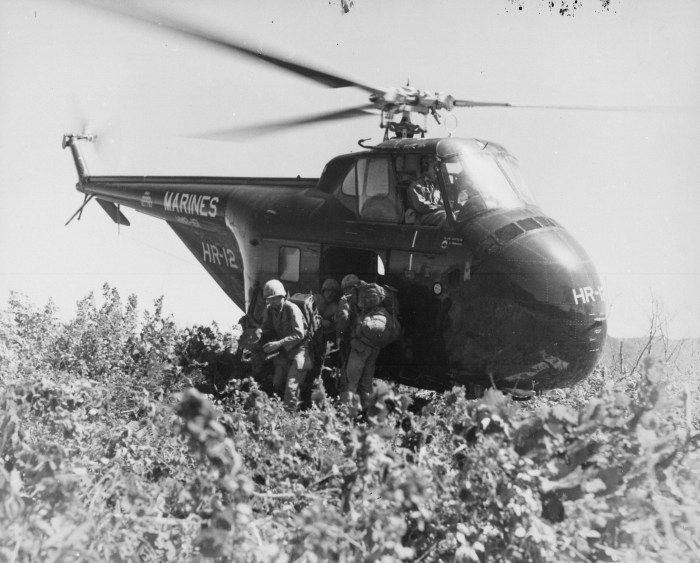
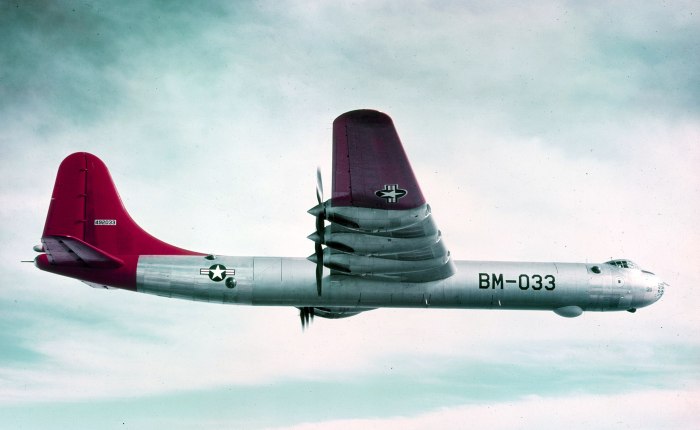

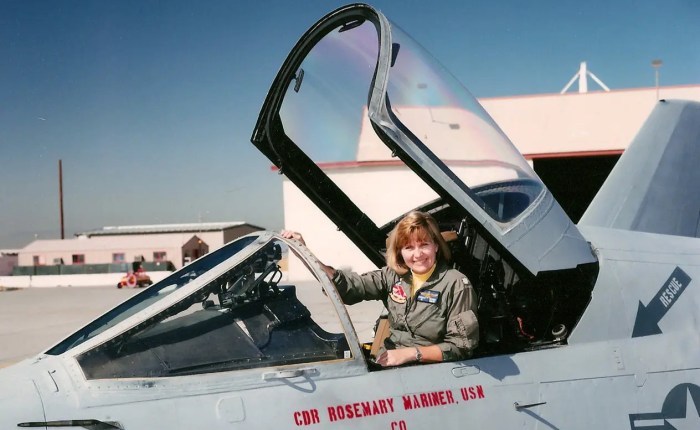
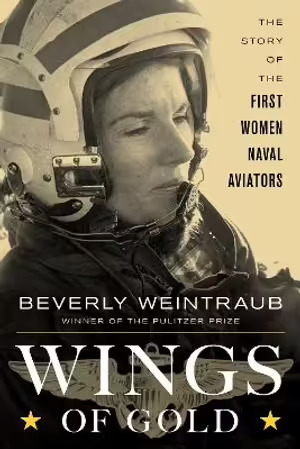
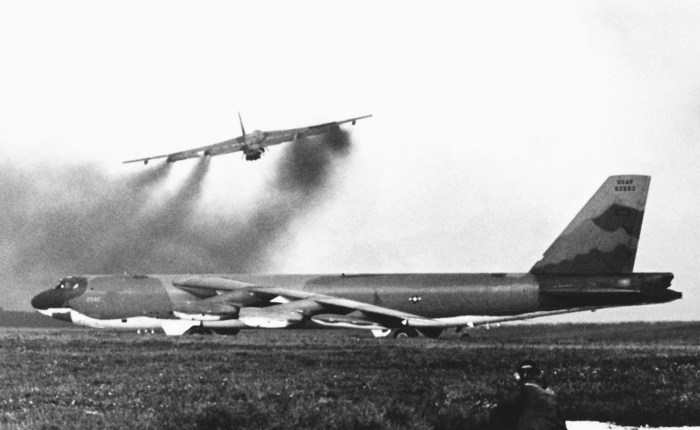
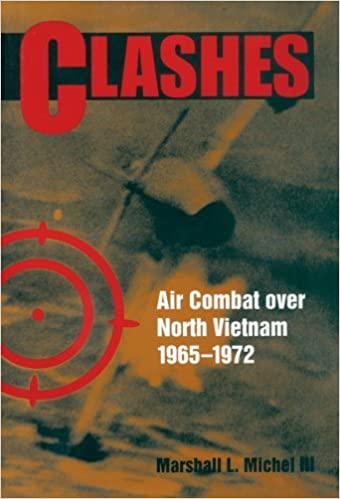
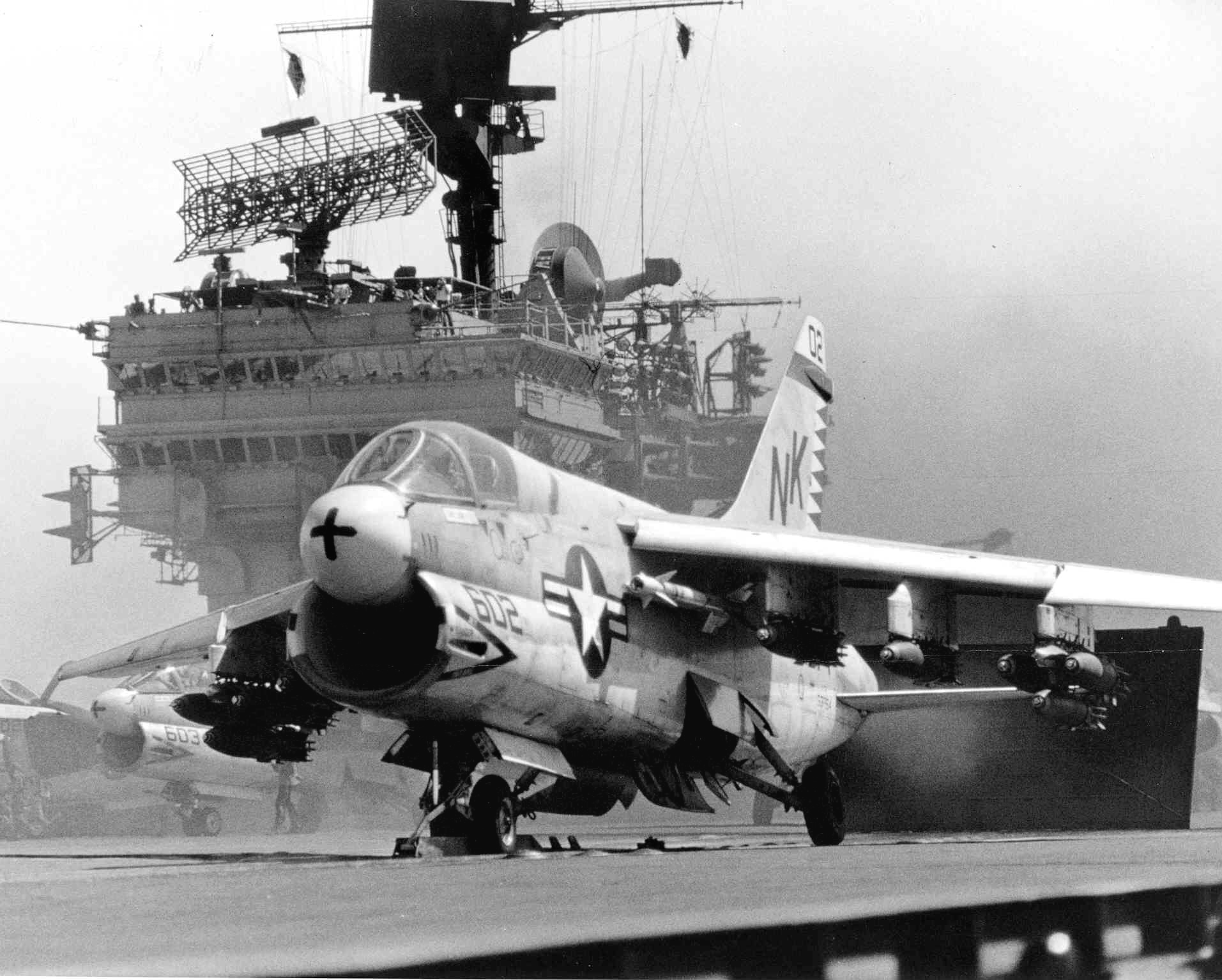

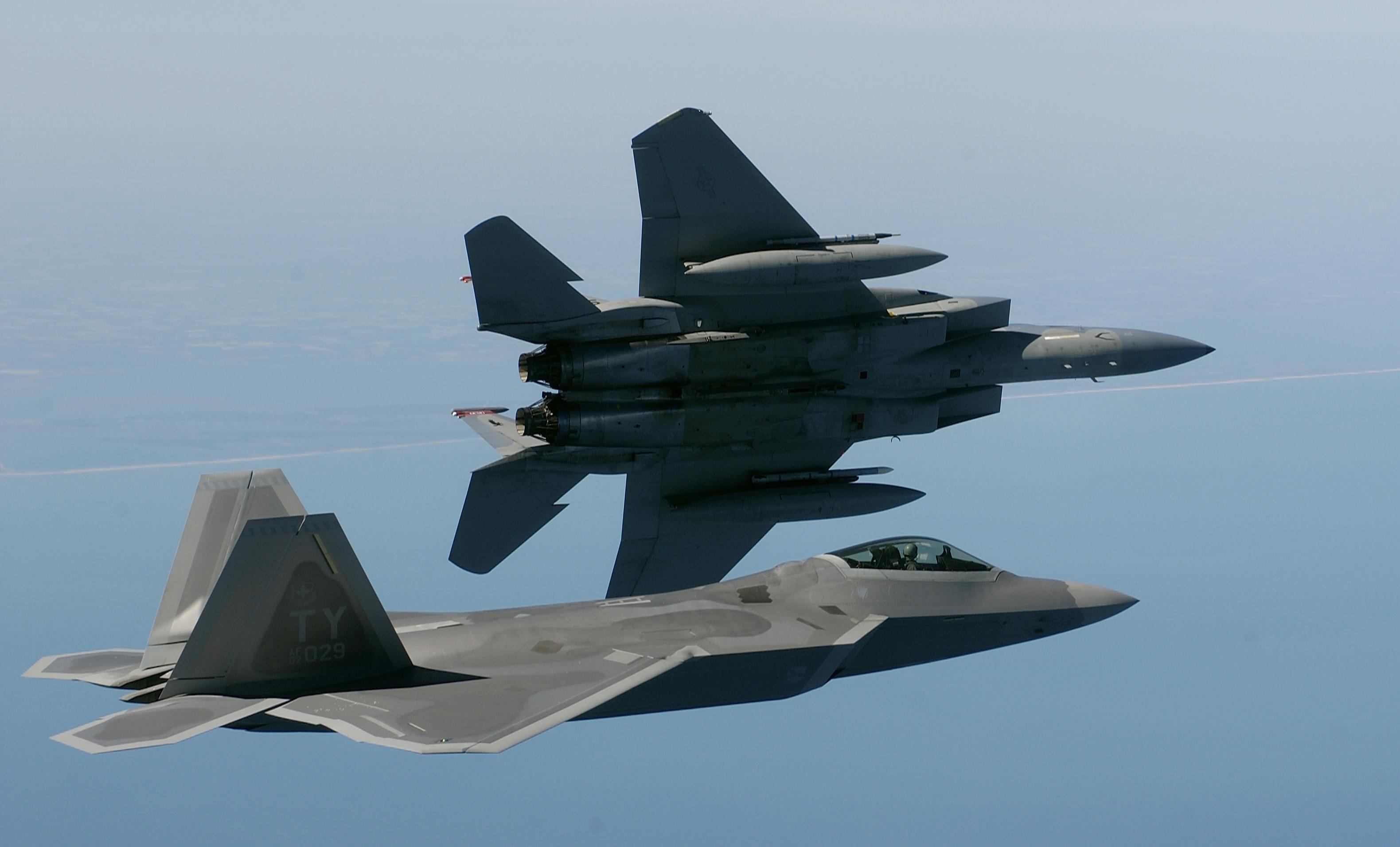

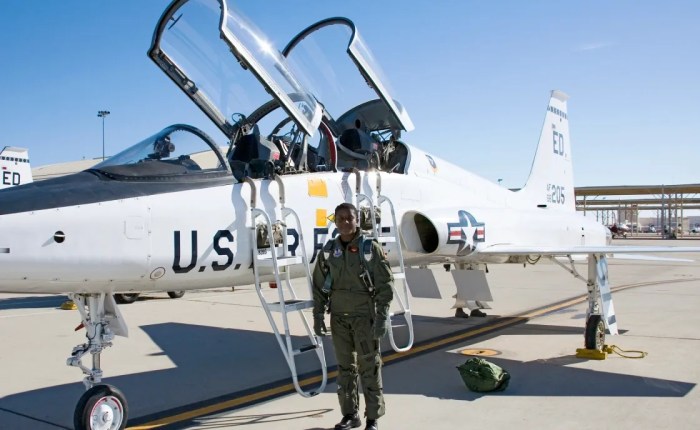

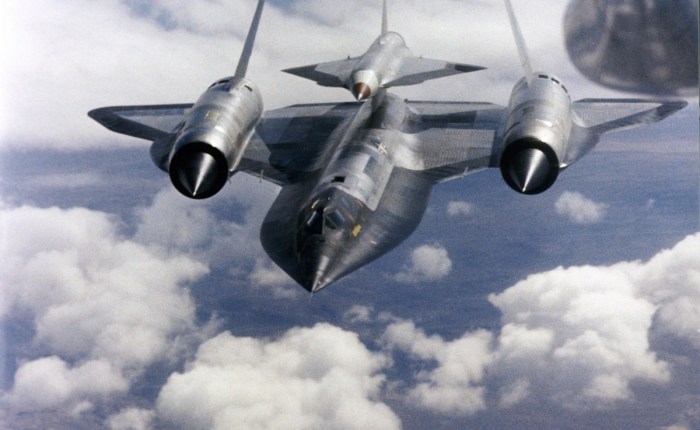

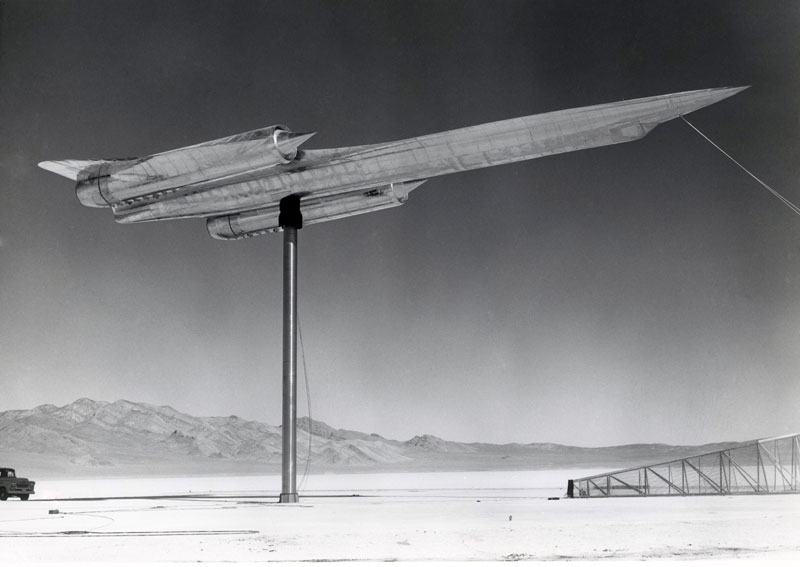


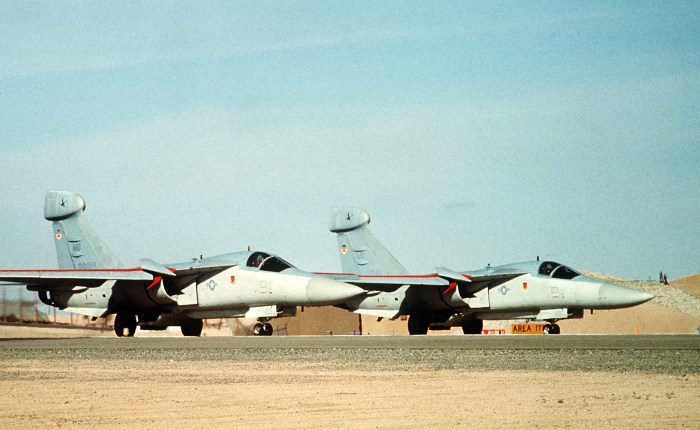
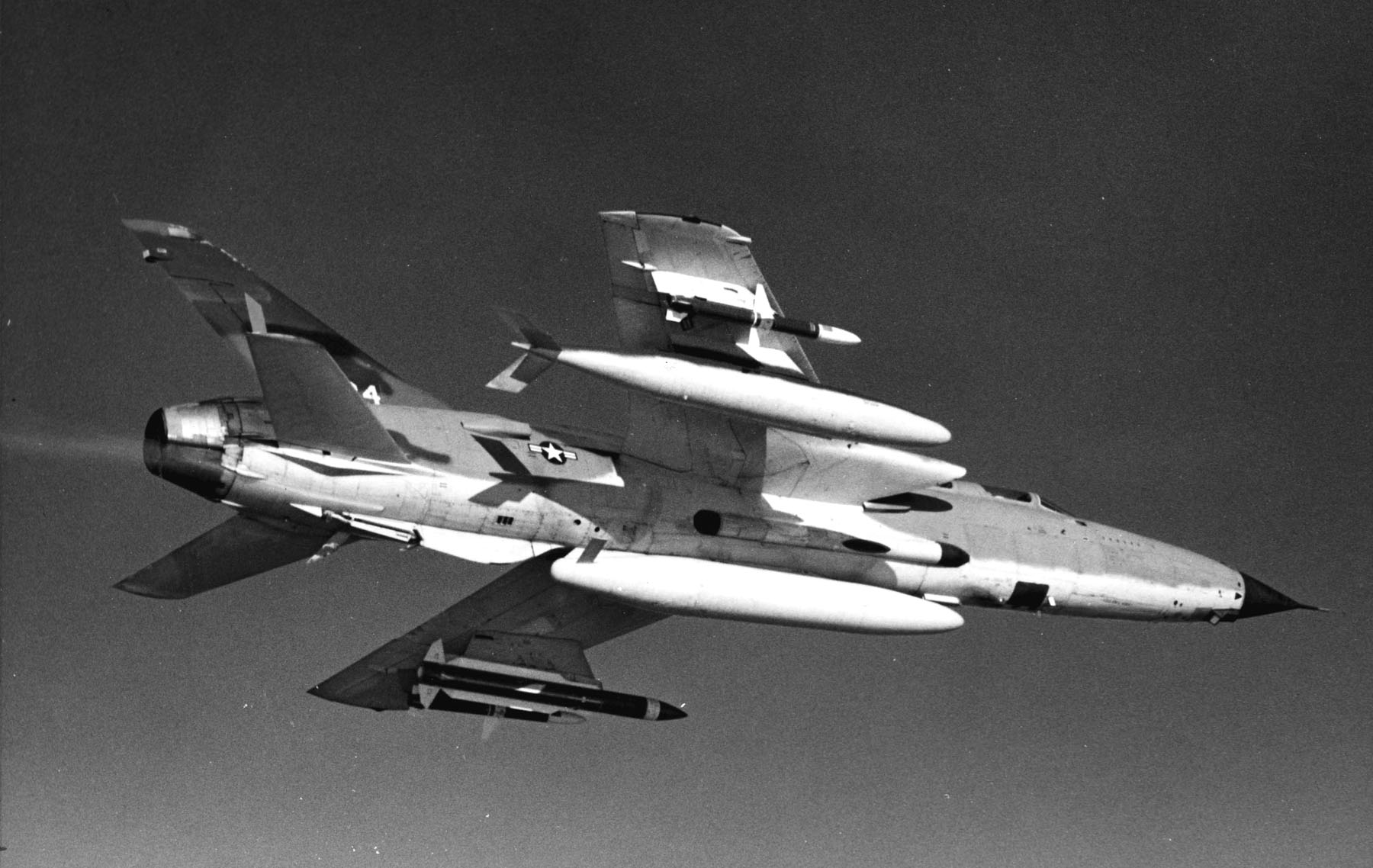


 From Balloons to Drones