Wings over Lebanon: Local Ingenuity and American Assistance in the War against the Islamic State

Wings over Lebanon: Local Ingenuity and American Assistance in the War against the Islamic State

By Lieutenant Colonel Daniel Jackson, PhD, USAF, and Major (ret) Wael al-Taki, LAF

2 August 2014: Hundreds of Islamic State and al-Nusra Front militants stormed Lebanese Army positions in the Bekaa Valley, fifty miles east-northeast of Beirut. Under relentless fire, Lebanese troops conducted a fighting withdrawal, calling frantically for reinforcements. Amid the chaos, the militants captured 36 soldiers, brutally executing at least four.

High overhead, 1st Lieutenant Wael al-Taki peered through the infrared camera on a Cessna 208B Grand Caravan – the same single-engine turboprop used by FedEx for rural package delivery. The Lebanese Air Force operated two such aircraft, both modified with surveillance gear. Only one, however, could carry a pair of AGM-114 Hellfire missiles – the same laser-guided missiles used by Apache attack helicopters and Predator and Reaper drones.

The Cessna required a crew of three: two pilots and a mission systems operator (MSO). Yet shortages of trained personnel forced al-Taki to act as both pilot and MSO, moving to the back of the aircraft after take-off to operate the mission systems while Lieutenant C.Y. took the controls.[1] A brigadier general from the operations staff took the other pilot’s seat, relaying strike approvals from the operations centre in Beirut.

Below, the militants surrounded a company of Lebanese troops, their withering fire wounding several soldiers, including the deputy commander. The Cessna banked toward the firefight. Al-Taki gripped the hand controller, aligning the crosshairs with the enemy fighters. He fired the laser designator. He had never fired a laser-guided missile before. In fact, no one in the Lebanese Air Force had ever fired one in combat. “I was just thinking of the guys down there, that someone should save them,” he later recounted. He stole a quick glance out the window as C.Y. jammed his thumb down on the firing button. With a flash, the Hellfire streaked off the launch rail – and into history.[2]

Lieutenant al-Taki’s Hellfire was the opening shot in Lebanon’s three-year air campaign against the Islamic State, culminating in Operation Fajr al-Jaroud, or ‘Dawn of the Hills,’ in August 2017. During that same period, Operation Inherent Resolve, the US-led coalition’s campaign in Iraq and Syria, hammered the Islamic State and other militant groups with over 24 thousand airstrikes from hundreds of the world’s most advanced warplanes, including fourth- and fifth-generation fighters, unmanned aerial vehicles (UAVs), and stealth bombers.[3] The Lebanese air campaign was exceedingly modest by comparison, yet it successfully rolled back the Islamic State’s western flank. Ultimately, Fajr al-Jaroud continued a pattern established over the previous two decades: modest US security assistance, combined with the ingenuity of Lebanese aviators, enabled the Lebanese Air Force to prevail under challenging battles against violent extremist groups.
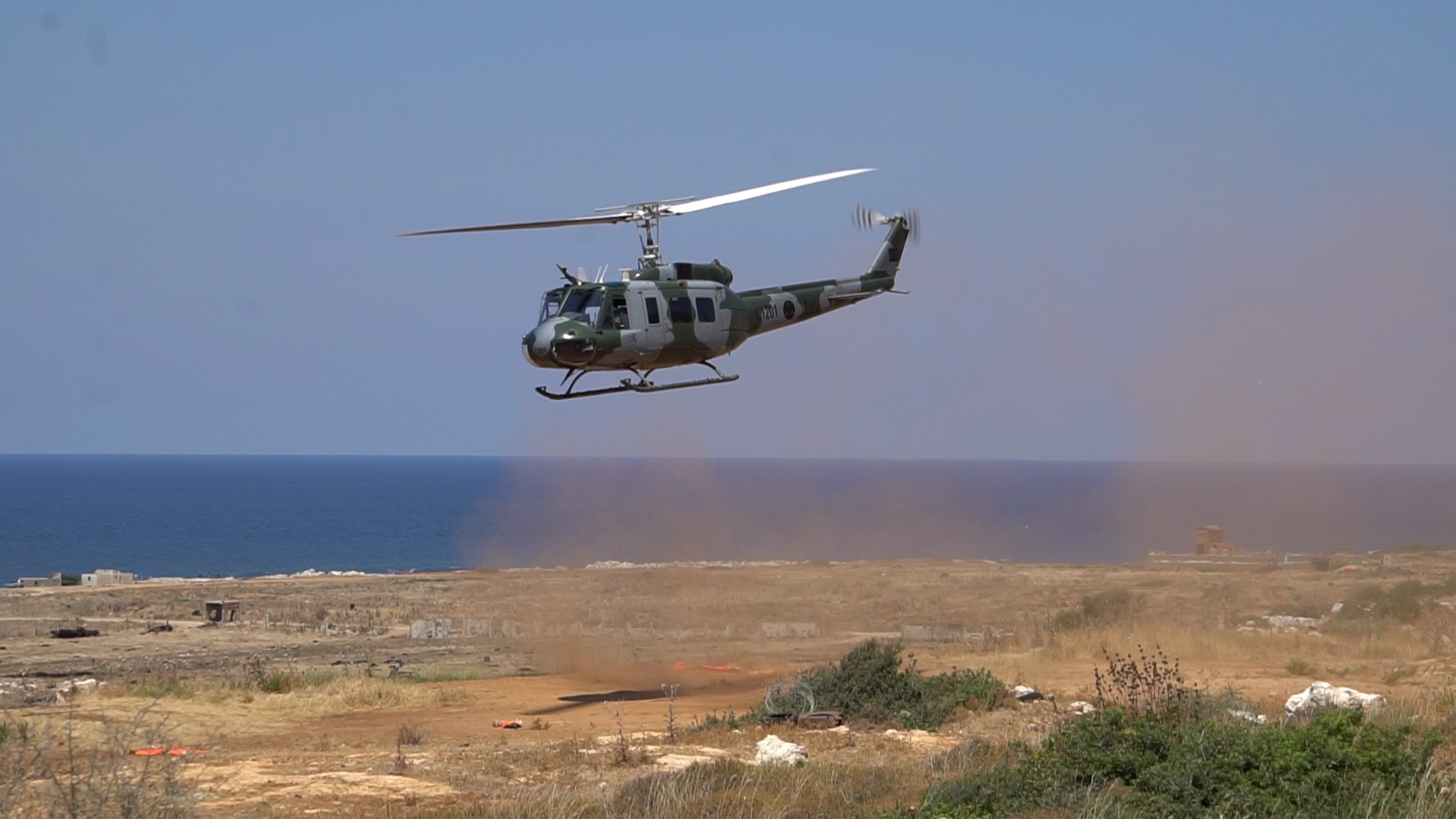
A Bell UH-1H Huey II from the 11th Squadron participates in an exercise on the Hannoush Range. (Source: Author)

Rebuilding the Lebanese Air Force

Founded in 1949, the Lebanese Air Force once operated modern jet aircraft, including the de Havilland Vampire, Hawker Hunter, and Dassault Mirage III. American assistance began during the Cold War, with the US Military Assistance Program delivering six Hawker Hunters in 1963. However, a brutal sectarian civil war from 1975 to 1990 left the air force in ruins, forcing the reconciled government to rebuild it from scratch.[4]

Lebanon occupies strategic – and treacherous – terrain, wedged between Syria and Israel. Though the civil war ended in 1990, Syrian troops continued to occupy much of the country’s north until 2005. Israel invaded four times between 1978 and 2024, occupying southern Lebanon from 1982 to 2000.

The US had straightforward goals for supporting the Lebanese Armed Forces (LAF) after the civil war: building a non-sectarian national military would strengthen national cohesion and counter the influence of sectarian militias like Hezbollah. ‘The LAF is a key institution of Lebanese statehood,’ declared US Ambassador Elizabeth Richards in 2016. ‘It is Lebanon’s sole legitimate defense force and an essential element in exerting the state’s authority throughout all of Lebanon’s territory.’[5]

Between 1996 and 2001, Lebanon acquired 24 Bell UH-1H Huey helicopters from the US, most of which had been in storage since the end of the Vietnam War. Initially relying on pilots who had trained in the US in the 1980s, the Lebanese Air Force assigned 12 of the helicopters to the 11th Squadron at Beirut Air Base, eight to the 10th Squadron at Klayaat Air Base, 55 miles north-northeast of Beirut near the Syrian border, and four to the 14th Squadron at Rayak Air Base, in the Bekaa Valley, 30 miles east of Beirut. These simple utility helicopters became the backbone of the Lebanese Air Force – and its only combat aircraft – until 2007.[6]

The first battle for the rebuilt air force erupted on 31 December 2000, in the rural Dinniyeh region near Lebanon’s northern border with Syria. Approximately 150 militants from the al-Qaeda-aligned group Takfir wal-Hijra attacked a military checkpoint, killing four soldiers and capturing two. The LAF immediately launched an operation to rescue the captives and eliminate the militants.[7]

Brigadier General S.Y., then a major in the 11th Squadron, recalled first learning of the attack while at a New Year’s Eve party with his squadron in Beirut. The festivities had begun winding down at four o’clock in the morning when the commander of the air force suddenly burst in, his face pale. “Return to base immediately!” he ordered. The men thought he was joking—or drunk. Frustrated, he bellowed for them to obey his orders at once. “We learned the hard way that he meant business,” S.Y. said.[8]

Two hours later, the major lifted off from Beirut, leading four Hueys north along the Mediterranean coast to reinforce the 10th Squadron at Klayaat Air Base, closer to the scene of the action. Upon arrival, they found the base buzzing with activity: Two companies from Lebanon’s elite Ranger Regiment had already arrived, along with two mechanised infantry companies and an armoured platoon. The LAF planned to deploy the Rangers to assault the militants’ mountain stronghold, while the mechanised infantry and armour secured Klayaat.

The helicopter force split into an assault group of eight and a reserve group of two, the latter consisting of one aircraft for medical evacuation (MEDEVAC) and another equipped with two 7.62-millimetre door guns for armed reconnaissance. In the afternoon, two 14th Squadron Hueys arrived from Rayak to reinforce the reserve group.

At nine o’clock in the morning, with temperatures hovering just below freezing, the assault group launched for the target area. Situated 5,200 feet above sea level, the high-altitude landing zones limited each helicopter to carrying only seven Rangers with their heavy gear, instead of the usual eleven. “Navigation to the landing zones was the hardest part, as the air force still used primitive methods in those days,” recalled S.Y. “Our best navigational equipment were the terrain maps provided by the directorate of geographic affairs.”

The assault group split into two elements, each led by a 10th Squadron pilot familiar with the terrain. “We flew nap of the earth,” said S.Y., “using the deep valleys and low terrain features to remain hidden from enemy observation.” The first element landed to the south and southwest of the target, while the second landed to the north. The Hueys then returned to Klayaat for another load. In total, they lifted approximately 200 soldiers onto the battlefield. The rapid encirclement enabled by air power allowed the Rangers to crush the militants in just forty-eight hours. The Lebanese Army lost 11 soldiers killed in action, including one of the men taken captive during the initial checkpoint attack.[9]

The Lebanese Air Force Adapts

The Hueys played a significant role in the LAF’s next major battle a little over six years later. On 19 May 2007, four armed men from the Sunni militant group Fateh al-Islam robbed a bank in the town of Amyoun, thirty miles north-northeast of Beirut, making off with $125,000 in cash. Lebanese paramilitary police quickly identified the militants and tracked them to a house ten miles to the north in Tripoli. A firefight erupted, soon spreading to the nearby Nahr al-Bared Palestinian refugee camp, which served as Fateh al-Islam’s headquarters. Hundreds of militants stormed LAF military posts and checkpoints in the area, killing thirty-two soldiers, most of whom were asleep in their barracks. The LAF launched an all-out effort to secure Nahr al-Bared and neutralise the militants, leading to a nightmare scenario of urban combat amid the camp’s ramshackle buildings and narrow alleyways.[10]

The Lebanese Air Force initially restricted its support to MEDEVAC and overhead surveillance. However, just two months before the battle, Lebanon had acquired nine Aérospatiale SA.342L Gazelle light attack helicopters for the newly established 8th Squadron. Armed with 68-millimetre unguided rockets, HOT guided antitank missiles, and .50-calibre machine guns, the Gazelles provided Lebanese ground troops with close air support for the first time.

The urban assault bogged down around the militants’ final position, a veritable fortress of concrete rubble. The Gazelles’ light weapons proved ineffective. With casualties mounting, the Lebanese Air Force adapted by jury-rigging three of its Huey utility helicopters as bombers.

The Lebanese Air Force had a stockpile of 500- and 1,000-pound bombs left over from the 1960s. Mechanics cannibalised bomb shackles and pylons from scrapped Mirage fighter jets and attached them to a steering rod from a decommissioned navy ship. To evenly distribute the weight across the cabin floor, they mounted the rig on an armoured plate salvaged from an inoperative M-113 armoured personnel carrier. Each heli-bomber could carry a single 1,000-pound bomb slung between the landing skids or a 500-pound bomb on either side. Mechanics lengthened the landing skids to ensure sufficient ground clearance.

The heli-bombers went into action on 9 August 2007. Using civilian Garmin 295 handheld GPS units to pinpoint their release points, the crews dropped dozens of bombs, blasting a path for the ground troops. The innovative air support helped bring the battle to an end on 7 September.[11]

The siege of Nahr al-Bared proved a formative experience for the LAF, underscoring the need to modernise the air force with fixed-wing aircraft capable of providing intelligence, surveillance, and reconnaissance (ISR), target designation, strike coordination, and close air support. This set of requirements roughly aligned with what the US Air Force (USAF) defined as light attack armed reconnaissance (LAAR). The US government offered to assist in this effort, eager to prevent Lebanon from becoming another active battlefront in the Global War on Terrorism.[12]

In 2009, the USAF provided Lebanon with a Cessna 208B Grand Caravan, funded through grant aid. Orbital ATK (later acquired by Northrop Grumman) reconfigured the Caravan as an AC-208 Eliminator, equipping it with a Wescam MX-15 electro-optical/infrared camera system, a microwave broadcast system for real-time video transmission, a weapons-grade laser designator, an infrared laser pointer, a flare dispenser, and launch rails to carry an AGM-114 Hellfire missile under each wing. A second aircraft arrived on 6 November 2013, configured solely for reconnaissance and lacking missile rails. A third aircraft, featuring a more powerful engine and a digital glass cockpit, arrived on 19 December 2016. The Cessnas were assigned to the 4th Squadron at Beirut Air Base.[13]

The Lebanese Air Force still had a handful of senior fixed-wing pilots who had flown Mirages and Hunters. However, without a fixed-wing pilot training program, it sent young lieutenants abroad to Saudi Arabia, the United Arab Emirates, and the United States for flight training. Upon their return to Lebanon, they completed a short Cessna training course provided by Orbital ATK. According to US Ambassador Elizabeth Richard, these pilots built a solid reputation. “The LAF is recognized in the US for the quality of the officers and soldiers it sends to our training and education programs,” she said. “Lebanese students routinely finish at the top of their classes, earning ‘honor graduate’ recognition.”[14]

In addition to the grant aid, the US embassy facilitated $1.9 billion in foreign military sales (FMS) to Lebanon between 2014 and 2020, including the purchase of six RQ-11 Raven small, hand-launched UAVs and 1,000 Hellfire missiles – items paid for with Lebanon’s own funds.[15] The Lebanese Air Force also bolstered its rotary-wing fleet, acquiring 24 additional UH-1H Huey IIs from the US and nine Aérospatiale SA.330 Super Puma utility helicopters, license-built in Romania by Industria Aeronautica Romana. The Super Pumas were assigned to the 9th Squadron at Hamat Air Base, located 30 miles north of Beirut.[16]
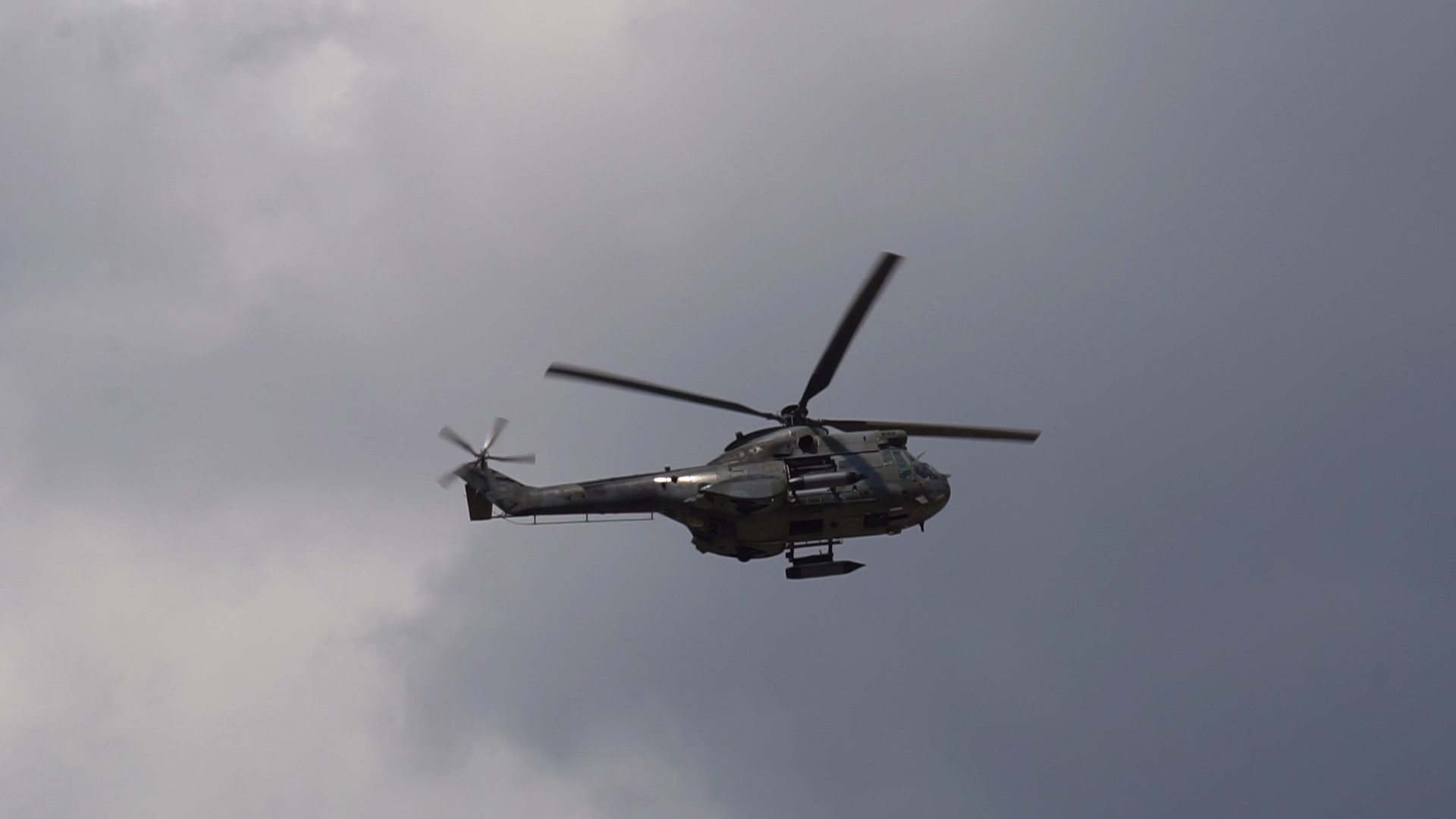
An Aérospatiale/IAR SA.330 Super Puma modified as a heli-bomber completes a rocket pass on the Hannoush Range. (Source: Author)

The Long Campaign

These modest modernisation efforts took place as neighbouring Syria spiralled into chaos. Protests against dictator Bashar al-Assad escalated into civil war and eventually gave rise to the Islamic State. More than one million Syrian refugees poured across the border into Lebanon, with at least 137,000 settling in camps within the Baalbek-Hermel Governate, Lebanon’s northeastern-most region. The town of Arsal, perched above the Bekaa Valley on the slopes of the Qalamoun Mountains, had the highest concentration of Syrian refugees of any municipality in Lebanon, with 39,300 registered in four camps.[17] On 1 February 2013, a patrol from Strike Force, Lebanon’s elite counterterrorism regiment, came under attack while chasing a wanted terrorist near the outskirts of the town. The ambush killed Captain Pierre Bachaalani and 1st Sergeant Ibrahim Zahrman and wounded many others.[18]

The LAF found it increasingly challenging to operate near Arsal. Al-Nusra Front, al Qaeda’s Syrian affiliate, used the town as a base for smuggling men, weapons, and equipment into Syria. The group began expanding its reach into the Bekaa Valley through a relentless series of deadly suicide car bombings and mortar and rocket attacks. Meanwhile, the Islamic State took control of the mountainous region east of Ras Baalbek and al-Qaa.[19]

On 2 August 2014, al-Nusra Front launched an attack on the 8th Mechanized Infantry Brigade’s positions near Arsal. Over the next five days, roughly 700 militants from al-Nusra and the Islamic State joined the battle, resulting in the deaths of 19 soldiers, the wounding of 86, and the capture of 36. Special operations forces from the Ranger and Air Assault Regiments quickly deployed to reinforce the embattled Lebanese troops.[20]

Stationed 30 miles southeast at Rayak, the 8th Squadron launched its Gazelle attack helicopters to assist, relying on satellite imagery printed from Google Earth to orient themselves to the battlefield. The commander of the air wing at Rayak led the first mission, his helicopter armed with two .50-calibre machine guns. “When we arrived in the area, we did not know which military positions had fallen and the extent of the enemy’s penetration,” recalled his copilot, Captain M.B.[21]

Spotting a group of armed men, but unsure of their identity, the wing commander dove in for a closer look. Bullets from a Russian-built PK machine gun raked the helicopter. A round tore through the cockpit, destroying the collective lever and spearing through M.B.’s left hand. “I started bleeding, losing large amounts of blood,” he recounted. The wing commander took control of the helicopter and flew straight to the Dar al-Amal Hospital near Baalbek, where M.B. received emergency medical care. The wing commander then returned to Rayak, only to find that he could not shut down the engine. A bullet had damaged the fuel controls, forcing him to wait for the helicopter’s fuel tank to run dry before it finally shut down.[22]

Meanwhile, at Beirut Air Base, 1st Lieutenant C.Y., a Cessna pilot with the 4th Squadron, received an urgent call from base operations ordering him to prepare his aircraft and crew—himself as pilot, Lieutenant al-Taki as pilot and mission systems operator, and a brigadier general from the operations staff to coordinate with the operations center. “A few minutes later, we were ordered to take off, destined for the outskirts of Arsal,” he recalled. Lieutenant C.Y. was already well-acquainted with the area, having frequently surveilled it since the ambush on the Strike Force patrol the previous year. Yet amid the chaos of the mass attack, the fog of war had set in. “The attack on the military centers happened suddenly,” said C.Y. “We did not have all the information on the disposition of military forces, especially after several fell into the hands of the terrorists.”[23]

Establishing radio contact with the ground troops, C.Y. and his crew began scanning the battlefield through their camera, watching as militants overran one post after another. The defenders executed a fighting withdrawal, buying time until reinforcements could arrive. In the summer of 2014, the 4th Squadron had only two Cessna 208s, and the second aircraft had yet to be retrofitted to carry Hellfire missiles. That meant C.Y. and his crew were flying the only armed fixed-wing aircraft in the country. While the United States classified the AC-208 as an inexpensive armed tactical reconnaissance aircraft, for Lebanon, it was a strategic asset. It would take more than an hour to land, rearm, and return to the target area, so they had to carefully balance their ability to deliver aerial firepower with the need to maintain continuous ISR coverage. “Our plane was equipped with two Hellfire missiles,” said C.Y. “We were careful not to use them unless absolutely necessary.”[24]

That moment came when the militants encircled a company of Lebanese troops, wounding several with their relentless fire. “We saw through the surveillance camera a group of about ten armed men preparing to storm the center from the rear,” C.Y. recalled, “so we decided to intervene.” Watching the Cessna’s live video feed from the operations center, the LAF director of operations, along with the army and air force commanders, gave the green light for a strike. It would be the first precision airstrike in Lebanon’s history.

C.Y. recounted what happened next: “We turned toward the target and launched the first missile, which took fifty-eight seconds to reach its mark, striking with precision and inflicting heavy losses on the attacking force.” The militants retreated into a nearby house. Circling overhead, C.Y.’s crew waited for them to regroup before launching the second missile. “We deliberately waited for all the terrorists to enter the building before firing,” he explained. “The Hellfire missile is most effective in enclosed spaces – such as rooms, buildings, and fortifications – rather than open areas.”[25]

The missile streaked off the launch rail, and one minute and twenty seconds later, it slammed into the house. The cement walls collapsed, and the house erupted in flames, fuelled by secondary explosions from ammunition stored inside. No one emerged from the inferno. The airstrike reversed the tide of the battle, forcing the militants to withdraw from around the besieged company.[26]

The combat debut of the AC-208 in August 2014 marked the LAF’s first use of precision-guided munitions and the first real-time broadcast of battlefield surveillance video. Meanwhile, the Hueys and Super Pumas transported troops and flew MEDEVAC missions, while Raven UAVs and the Cessnas provided ISR, and Gazelles and the AC-208 delivered close air support. These efforts helped halt the militant advance, but the LAF could not yet push them back, and a three-year stalemate ensued. Of the 36 Lebanese soldiers captured in the battle, the militants executed four, released seven, and exchanged 16 for thirteen jailed militants in a prisoner swap. Nine remained unaccounted for, presumably still held by the Islamic State.[27]

According to Captain G.A., another Cessna pilot in the 4th Squadron, “Our squadron participated in continual military operations from 2014 to 2017. The unrelenting bombing over such a long period of time helped to exhaust and demoralize the militants, as well as to destroy their logistical capabilities and their command-and-control centers.” In addition to Hellfire strikes, the Cessna crews provided observation and adjustment for artillery fire. According to G.A., “The targets we attacked varied from command-and-control centers and logistical points […] to tunnels dug in the mountains […] bulldozers used in digging tunnels and fortifying fighting positions […] and on one occasion, we targeted an Army M-113 armored vehicle which the militants had captured.” While they typically struck preplanned targets, the crews also often searched for targets of opportunity.[28]

In the summer of 2016, the Lebanese Air Force launched its largest coordinated airstrike on militant positions – an operation they viewed as their own miniature version of Desert Storm’s high-tech ‘Instant Thunder’ air campaign. “The raid lasted for about forty minutes,” recalled Colonel A.M., who helped plan the operation. The Cessna fired the opening salvo, striking the first two of eight preplanned targets: an Islamic State field command headquarters and a house sheltering a high-value target. Both missiles hit with precision. “No one left the targeted buildings,” A.M. stated, “so we considered the casualties as confirmed.”[29]

Follow-on attacks targeted enemy infrastructure, including lodging, water tanks, ammunition dumps, and vehicle yards. To bolster the air force’s limited firepower, mechanics from the 9th Squadron modified a Super Puma into a heli-bomber – similar to the Huey bomber experiment nine years earlier. They rigged a pair of steel I-beams through the cabin and mounted bombs or rocket pods on either side, creating a makeshift but effective strike platform.[30]

After the initial Hellfire strikes, the Cessna used its infrared laser pointer to mark targets for the helicopters and served as a tactical air coordinator, sequencing their attacks. The Puma dropped two 250-kilogram bombs, followed by the Gazelles strafing militants fleeing the bombing with .50-calibre machine guns and 68-millimetre rockets. Once the helicopters cleared the area, the Cessna called in artillery fire to finish the job. Throughout the operation, the Cessna and Raven UAVs provided continuous surveillance of the target area.[31]

While the LAF managed to contain the Islamic State and al-Nusra incursions into the Bekaa Valley, military and political leaders collaborated with their American counterparts to secure new equipment and training for a decisive operation to expel them entirely. For the air force, this included six Embraer A-29B Super Tucano light attack aircraft, which would equip the newly formed 7th Squadron. The Lebanese Air Force identified twelve of its top pilots to train on the Super Tucano at Moody Air Force Base, Georgia, under the USAF’s 81st Fighter Squadron. The first group of pilots departed Lebanon in February 2017, with the first two A-29s scheduled for delivery in October and the remaining four the following June. USAF Special Operations Command also planned to deploy a team of combat aviation advisors to Lebanon in 2018.[32] Meanwhile, in January 2017, al-Nusra Front merged with four other militant groups to form Hayat Tahrir al-Sham (HTS), which dubiously claimed to have severed its ties with al-Qaeda.[33]

It remains a point of contention whether Lebanon’s ingrained political paralysis or a strategic decision to wait for new capabilities like the Super Tucanos delayed a decisive operation against the Islamic State. On 20 July 2017, the Iranian-backed Shia militia Hezbollah pre-empted the LAF by launching its own campaign to retake Arsal.[34]

For at least six years, Hezbollah had been deploying fighters to Syria as part of Iran’s efforts to bolster Bashar al-Assad’s dictatorial regime. A successful operation to expel HTS from Lebanon would not only serve Iran’s strategic interests but also undermine the LAF’s position as the nation’s principal security provider. From 21 to 24 July, Hezbollah seized more than 60 per cent of HTS-held territory, leading to a ceasefire on 27 July that allowed the remaining HTS fighters to withdraw into Syria. Hezbollah’s sophisticated propaganda apparatus flooded media channels with battlefield updates, maps, and footage highlighting combined arms operations involving infantry, artillery, and rockets. Press reports estimated that more than twenty Hezbollah fighters and 150 HTS militants were killed in the operation.[35]

The Lebanese government had no choice but to order an immediate offensive against the Islamic State positions north of Arsal – a far more challenging task given the rugged, defensible mountainous terrain – or risk appearing impotent compared to Hezbollah. The LAF assembled a frontline strength of 4,300 troops in the eastern Bekaa Valley, including the 6th Mechanized Infantry Brigade, the 1st Intervention Regiment, the Air Assault Regiment, one company from the 4th Intervention Regiment, and one company from the Moukafaha, a special operations unit under the Directorate of Military Intelligence. Another 4,250 personnel provided support, including elements of the 1st and 2nd Artillery Regiments with 36 155-millimetre howitzers.[36]

On 14 August 2017, the LAF initiated its opening manoeuvres, officially launching Operation Fajr al-Jaroud, or ‘Dawn of the Hills,’ on 19 August. That same day, Hezbollah and the Syrian Arab Army announced their own offensive on the Syrian side of the border, once again attempting to upstage the LAF. The simultaneous operations fuelled speculation of collusion between the LAF and Hezbollah. However, LAF leadership firmly denied such claims, emphasising that their only interaction with Hezbollah was limited to a deconfliction policy not unlike the one between US and Russian forces in Syria.[37]

Lebanese ground forces encountered improvised explosive devices (IEDs), fortified fighting positions, and suicide bombers, but years of sustained operations had already hollowed out the Islamic State’s defences. A steady barrage of air and artillery fire paved the way for the advancing troops. Over 11 days, the Lebanese Air Force flew 141 hours of combat missions. One of the seventy US military advisors in the country, observing the LAF’s coordinated use of ISR, precision air strikes, artillery, infantry, armour, and special operations forces, described the campaign as ‘twenty-first century maneuver warfare by a modern military.’[38]

Though delivery of the first two A-29s was still two months away, the 4th Squadron had received its third Cessna in December 2016, and all three aircraft were now configured to carry Hellfires. Additionally, the Lebanese Army fielded a game-changing new weapon it had received several years earlier from the Americans: M712 ‘Copperhead’ 155-millimetre laser-guided artillery rounds. Flying parallel to the gun-target line, the Cessna could use its laser designator to guide in round after round with deadly precision. During Fajr al-Jaroud, the Lebanese Army fired 130 Copperhead rounds, including a blistering thirty-three in just thirty minutes at the operation’s climax.[39]

The Islamic State’s position collapsed in mere days, shrinking to a pocket of just twenty square kilometres by 27 August – down from the 120 square kilometres it had occupied at the outset. However, the LAF never launched a final assault; with the operation proving a stunning success, an alarmed Hezbollah quickly intervened to negotiate a ceasefire, allowing the remaining Islamic State fighters to retreat into Syria in exchange for information on the nine LAF soldiers captured three years earlier. Though all nine had been killed, the deal allowed the LAF to recover their bodies. On 28 August, approximately four hundred Islamic State fighters and camp followers departed on buses for eastern Syria.[40]

Operation Fajr al-Jaroud killed more than 50 Islamic State fighters, at the cost of nine LAF soldiers killed and 100 wounded. For the first time since the civil war, the LAF successfully conducted a theatre-level joint operation, demonstrating its ability to effectively utilise US security assistance.[41] Yet, the success owed to more than just the two-week operation. “When the battle is discussed, many people marvel at the short period of time that it was limited to,” said Colonel A.M. “They do not realize that it came as a result of three years of continuous targeting that exhausted the terrorists’ infrastructure and killed many of them.”[42]
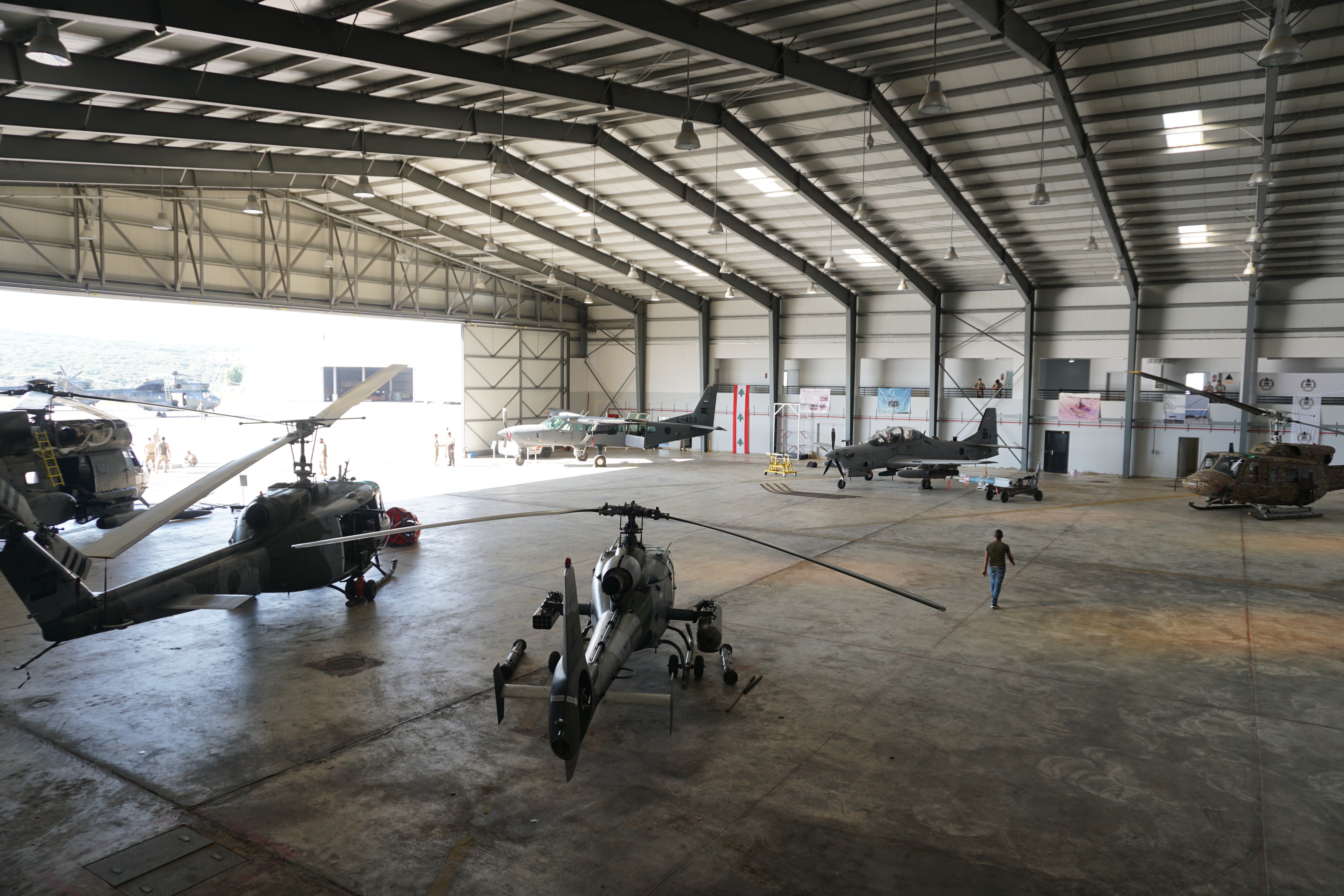
Lebanese Air Force aircraft in the hangar at Hamat Air Base, foreground, left to right: SA.330 Super Puma, UH-1H Huey II, SA.342L Gazelle; background, left to right: AC-208 Eliminator, A-29B Super Tucano, Bell 212. (Source: Author)

Conclusion

Hezbollah’s efforts to undermine and overshadow the LAF failed to erode its legitimacy as Lebanon’s principal source of security. The success of the joint operation against the Islamic State spoke for itself.[43] Despite limited resources, the Lebanese Air Force played a decisive role. From the Dinniyeh operation in 2000 to the heli-bombers over Nahr al-Bared in 2007 and the precision airstrikes in the Bekaa Valley from 2014 to 2017, Lebanese aviators found ways – often audacious improvisations – to mobilise air power against violent extremist organisations. What began as a force rebuilt around hand-me-down Hueys gradually evolved into a capable mix of helicopters, crewed fixed-wing aircraft, and UAVs performing ISR, light-attack, and mobility missions. This transformation depended on steady but limited US security assistance: surplus aircraft, grant-funded upgrades, foreign military sales, and training programs that produced a new generation of skilled aviators.

Yet US assistance alone cannot account for the LAF’s battlefield performance. At every stage, Lebanese officers, NCOs, and technicians adapted faster than their inventory changed. They welded together heli-bombers when they lacked aircraft capable of striking hardened urban positions. They mastered precision weapons that they had never fired in training. They built tactics around a single missile-toting Cessna, rationing its firepower while keeping it on station as the country’s only persistent ISR asset. They overcame shortages in personnel, spare parts, and navigational equipment through ingenuity, improvisation, and a deep sense of obligation to the soldiers fighting below.

By the time the Islamic State threatened Lebanon’s northeastern frontier, the Lebanese Air Force had become something unexpected: not a conventional air force in the American sense, but an adaptable, hybrid force optimised for Lebanon’s terrain, politics, and threats. Its air campaign from 2014 to 2017, though modest by comparison with the coalition’s industrial-scale air power in Operation Inherent Resolve, proved decisive along the Islamic State’s western flank, steadily degrading militant capabilities until Operation Fajr al-Jaroud finally drove them from Lebanese territory.

From its rebirth in the 1990s through its campaign against the Islamic State, the history of Lebanese air power demonstrates that modest US security assistance, when paired with Lebanese ingenuity, produced an outsized strategic effect. The Lebanese Air Force did not win battles because it possessed the most technologically advanced equipment, the largest fleet, or the most refined doctrine. It won because Lebanese aviators extracted maximum value from every aircraft, every munition, and every training opportunity. In doing so, they provided the Lebanese Army with the air support it needed to survive, adapt, and prevail against some of the most dangerous violent extremist groups in the world.

Lieutenant Colonel Daniel Jackson PhD is an Assistant Professor of History at the US Air Force Academy. He served as a U-28A instructor pilot, Combat Aviation Advisor, and Adaptive Precision Strike evaluator pilot in Air Force Special Operations Command, flying 236 combat missions and 125 combat support missions in support of Operations Inherent Resolve, Freedom Sentinel, Enduring Freedom, Enduring Freedom-Philippines, and Damiyan. He holds a PhD in history from the University of Wisconsin-Madison. He is the author of Fallen Tigers: The Fate of America’s Missing Airmen in China during World War II (2021).

Wael Nawaf al-Taki is the manager of Strategic Defense Solutions, Ltd. He served as Chief of the Lebanese Air Force Operations Room and as an A-29 Super Tucano instructor pilot and squadron commander. In addition to flying more than 200 hours in combat operations, he spearheaded organisational and tactical reforms that enhanced air-ground integration within the Lebanese Armed Forces.

Header image: A Lebanese Air Force student prepares to fly the Embraer A-29B Super Tucano for the first time at Moody Air Force Base, Georgia (Source: US Air Force)

[1] The names of most Lebanese military officers have been withheld for security reasons.

[2] Major Wael al-Taki, oral history interview by Daniel Jackson, February 27, 2025.

[3] Department of Defense, ‘Operation Inherent Resolve: Targeted Operations to Defeat ISIS,’ Operation Inherent Resolve, 9 August 2017.

[4] National Archives and Records Administration, Record Group 330, Military Assistance Program 1000 System Master File, 1986.

[5] US Embassy in Lebanon, ‘US Ambassador Delivers Cessna Aircraft to Lebanese Armed Forces,’ 19 December 2016,.

[6] Brigadier General S.Y., oral history interview by Wael al-Taki, 3 August 2022.

[7] Lebanese Armed Forces, Air Force Operations, Beirut, 2021.

[8] Brigadier General S.Y., oral history interview by Wael al-Taki.

[9] Ibid.

[10] Lebanese Armed Forces, Air Force Operations.

[11] Ibid.: Riad Kahwaji, ‘The victory – Lebanon developed helicopter bombers,’ Skyscraper City, 3 September 2007.

[12] Lebanese Armed Forces, Air Force Operations.

[13] Orbital ATK, Mission Systems Operators Manual: Lebanon Armed Caravan SN1239, 02TMAOP-002, Fort Worth, 2016; Stephen Trimble, ‘USAF orders 2nd Cessna Caravan for Lebanon,’ FlightGlobal, 18 January 2012.

[14] US Embassy in Lebanon, ‘The United States Delivers Four A-29 Super Tucano Aircraft to the LAF,’ 12 June 2018.

[15] Department of State, Bureau of Political-Military Affairs, ‘US Security Cooperation with Lebanon,’ Fact Sheet, 20 January 2025.

[16] Defense Security Cooperation Agency, ‘Lebanon – Huey II Helicopters,’ Transmittal No. 12-07, 20 July 2012; Defense Security Cooperation Agency, ‘Lebanon—Huey II Rotary Wing Aircraft and Support,’ Transmittal No. 14-20, 19 September  2014; Defense Security Cooperation Agency, ‘Lebanon—AGM-114 Hellfire II Missiles,’ Transmittal No. 15-29, 4 June 2015.

[17] Aram Nerguizian, The Lebanese Armed Forces, Hezbollah, and Military Legitimacy, Draft, (Washington, DC: Center for Strategic & International Studies, 2017), p. 9.

[18] Lebanese Armed Forces, Air Force Operations.

[19] Nicholas Blanford, ‘The Lebanese Armed Forces and Hezbollah’s Competing Summer Offensives Against Sunni Militants,’ CTC Sentinel 10, no. 8 (2007), p. 27.

[20] Nerguizian, The Lebanese Armed Forces, Hezbollah, and Military Legitimacy, p. 11.

[21] Captain M.B., oral history interview by Wael al-Taki, 6 August 2021.

[22] Ibid.

[23] Captain C.Y., oral history interview by Wael al-Taki, 6 August 2021.

[24] Ibid.

[25] Ibid.

[26] Ibid.

[27] Blanford, ‘The Lebanese Armed Forces and Hezbollah’s Competing Summer Offensives Against Sunni Militants,’ p. 27.

[28] Captain G.A., oral history interview by Wael al-Taki, 10 August 2021.

[29] Colonel A.M., oral history interview by Wael al-Taki, 10 August 2021.

[30] The author inspected this aircraft himself and spoke with the maintenance officer who oversaw the modifications while in Lebanon in 2020.

[31] Ibid.

[32] Defense Security Cooperation Office, ‘Lebanon—A-29 Super Tucano Aircraft,’ Transmittal No. 15-13, 9 June 2015; Sierra Nevada Corporation, ‘SNC, Embraer Complete Early Delivery of A-29 Super Tucano Aircraft to Lebanese Air Force for Close Air Support Role,’ Press Release, 12 June 2018.

[33] Thomas Joscelyn, ‘Al Qaeda and allies announce ‘new entity’ in Syria,’ Long War Journal, 28 January 2017

[34] Nerguizian, The Lebanese Armed Forces, Hezbollah, and Military Legitimacy, p. 15.

[35] Ibid., pp. 15-6.

[36] Ibid., p. 20, 22.

[37] Ibid., p. 16, 23.

[38] Ibid., p. 24.

[39] Lebanese Armed Forces, Air Force Operations.

[40] Blanford, ‘The Lebanese Armed Forces and Hezbollah’s Competing Summer Offensives Against Sunni Militants,’, p. 29.

[41] Nerguizian, The Lebanese Armed Forces, Hezbollah, and Military Legitimacy, p. 24, 27.

[42] Colonel A.M., oral history interview by Wael al-Taki, 10 August 2021.

[43] Nerguizian, The Lebanese Armed Forces, Hezbollah, and Military Legitimacy, p. 5.
#Commentary – Filling the Fighter Gap: Türkiye Turns to the Eurofighter After the F-35 Fallout

#Commentary – Filling the Fighter Gap: Türkiye Turns to the Eurofighter After the F-35 Fallout

By Ömer Ergün Özkan

If we cannot get the F-35, we will evaluate other options.” “There is no way we will step back from the S-400s.” “If the promises given to us are not kept, we will not approve Sweden’s NATO membership.” These are just a few of President Recep Tayyip Erdoğan’s statements since Türkiye was removed from the F-35 Joint Strike Fighter programme in the summer of 2019, following Ankara’s decision to operationalise the Russian-made S-400 air defence system. However, despite years of bold rhetoric, Türkiye has yet to take meaningful steps toward modernising its ageing F-16 fleet, a gap that carries profound implications for regional competition and nearby conflicts. Despite setbacks over the past few years, Türkiye has gained significant visibility in the global security arena through its indigenously developed defence products. Its drones have played notable roles in conflicts in Nagorno-Karabakh, Ukraine, Syria and Libya, and were recently seen during the India-Pakistan border skirmishes. At the same time, Türkiye has expanded its defence exports to include light combat aircraft to Spain, corvettes to Pakistan and Malaysia, and various other complex systems. In parallel with these achievements, Türkiye launched its own fighter jet project, the Turkish Aerospace Industries KAAN, a fifth-generation, twin-engine stealth aircraft intended to become the future backbone of Turkish air defence. However, Ankara has acknowledged the challenges of developing a fully indigenous fighter jet. Beyond the immense financial burden and limited domestic technological expertise, political obstacles have also emerged. Most recently, Foreign Minister Hakan Fidan admitted that Türkiye has been having difficulty obtaining F110 engines from the United States, intended not only for prototypes but also for the first production batch of the KAAN.

Despite Türkiye’s long-standing ambition to build its own fighter aircraft, Turkish military planners have recognised since the late 1990s that the country would require an interim, or ‘gap,’ platform. As a result, Türkiye became one of the early participants in the Joint Strike Fighter (JSF) programme, which later produced the F-35 Lightning II. In return for its early commitment, Ankara was contracted to purchase more than 100 F-35s and became a strategic industrial partner in the programme. Knowledge transfer from the JSF also enabled domestic programmes such as TÜBİTAK SAGE’s Stand-Off Missile (SOM), now one of the most critical assets in Türkiye’s strategic inventory.

Türkiye’s selection of the F-35 programme was not a surprise. Since joining NATO, it has relied primarily on American-made aircraft for its air force. Although Türkiye has operated helicopters from France, cargo aircraft from Spain and drones from Israel, its combat fleet has always been built around US designs, including the F-84, F-86, F-101, F-4 and F-5. Today, Türkiye operates the second-largest F-16 fleet in the world after the United States.

Even amid political friction with Washington, Türkiye stayed committed to its American-made fighter fleet for their battlefield performance and long-established logistics. They also carried symbolic weight as reminders of Ankara’s Cold War alignment. During the US arms embargo on Türkiye between 1975 and 1978, imposed after Türkiye’s military intervention in Cyprus, Ankara continued operating US aircraft by sourcing spare parts from Libya and purchasing used F-104s from Italy. A similar moment of tension came in 2003, when Türkiye refused to allow the U.S. to use its territory for the war in Iraq. During this period, the Eurofighter Typhoon consortium reportedly offered Türkiye an equal partnership in the programme. Yet, despite the attractiveness of the offer, Turkish decision-makers remained committed to the F-35 programme.

Türkiye has long been the second-largest standing military force in NATO and has been regarded as a strategic partner of the United States since the Korean War. Nevertheless, the relationship between Ankara and Washington has frequently been marked by political tensions. However, these disputes did not significantly alter Türkiye’s major defence procurement decisions, particularly concerning fighter aircraft. In practice, and despite political rhetoric about diversifying suppliers, Türkiye consistently relied on US platforms. However, Ankara’s removal from the F-35 programme in 2019 may mark a significant turning point. Türkiye can no longer rely on a simple reset with Washington to modernise its ageing fleet, especially as the strategic environment grows more demanding.

Since its removal, Türkiye has repeatedly signalled its desire to return to the F-35 programme. Turkish officials argued that the expulsion lacked legal basis, and President Erdoğan and his government suggested they were open to negotiating a resolution to the S-400 dispute. Meanwhile, Türkiye’s military establishment warned of a growing capability gap until the KAAN could enter service. Türkiye also expressed interest in acquiring new F-16s and modernisation kits as an interim solution, but the package has yet to be finalised. At the same time, the war in Ukraine, Israeli air operations in Syria and the region, and Greece’s modernisation of its air force have further accelerated Ankara’s search for a new fighter platform. These developments raise concerns about falling behind in the regional balance of air power and being unprepared for a potential spillover from nearby conflicts. As a result, for the first time in decades, Türkiye is actively pursuing a non-American fighter aircraft solution: the Eurofighter Typhoon.

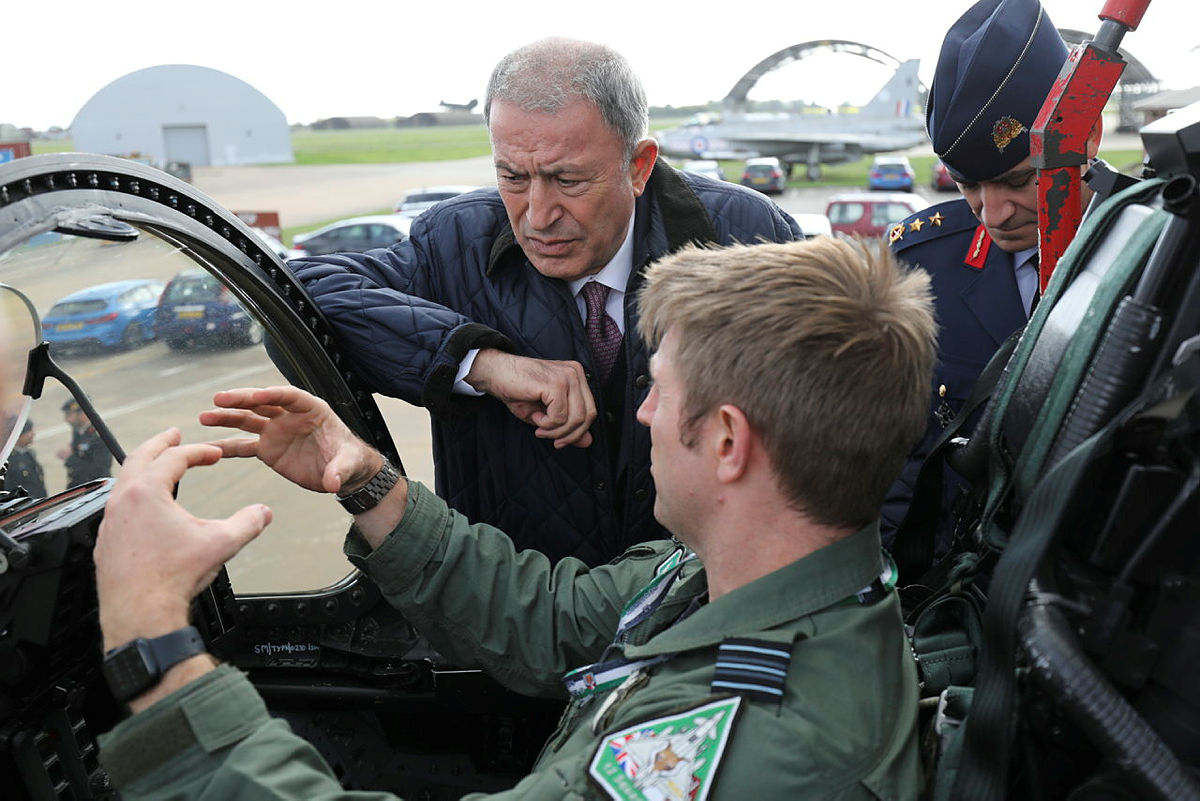
Image of the Turkish Defence Minister Hulusi Akar, seen here at Royal Air Force Coningsby today (06/10/2022). The Defence Secretary Ben Wallace hosted a visit for the Turkish Defence Minister to view RAF Typhoon jets based at RAF Coningsby, 6 October 2022. (Source: UK MOD © Crown copyright 2022)

Although Türkiye expressed formal interest in the Eurofighter a few years ago, the procurement process was blocked by Germany due to political disagreements. Following lengthy negotiations, the German government recently agreed to lift its objections, and a contract has now been signed. However, Türkiye now faces a delivery challenge. The most advanced version of the Eurofighter currently in production is Tranche 4, and the order backlog means new aircraft will not arrive before 2030. Because the Eurofighter is an entirely new platform for the Turkish Air Force, integrating it into doctrine, pilot training, and logistics will take significantly longer than adopting another US-made jet. To reduce the delay, President Erdoğan announced Türkiye’s intention to purchase used Eurofighters from Qatar and Oman alongside the 20 new Tranche 4 aircraft from the UK.

Ankara’s assertive pursuit of the Eurofighter highlights its growing concern over the balance of air power in its surrounding region. Despite significant advances in its drone fleet, including one-way attack drones and jet-powered unmanned systems, Türkiye understands that drones cannot fully replace conventional fighter jets in terms of deterrence and air superiority. Yet significant questions remain. Will Germany and other consortium members approve the transfer of Meteor long-range air-to-air missiles or Captor radar systems to Türkiye as well? Will Türkiye be permitted to integrate indigenous avionics and weapons into the Eurofighter? And how quickly can the Turkish Air Force develop the same level of operational proficiency it currently maintains with the F-16?

Ankara has now taken a decisive step away from decades of exclusive US fighter procurement. Whether the Eurofighter becomes a temporary gap-filler until the KAAN enters service, or the beginning of a long-term shift in Turkish defence strategy, remains to be seen. What is certain is that Turkish air power is at a strategic crossroads. Despite the uncertainties, the Eurofighter Typhoon remains the only available option to bridge the capability gap until the KAAN is operational or the F-35 dispute is resolved.

Ömer Ergün Özkan is a PhD candidate in the School of Public and International Affairs at the University of Cincinnati. His research examines military effectiveness, the impact of emerging technologies on defence procurement, and the strategic use of unmanned systems in modern warfare. He is also a Research Fellow at the Linda Hall Library in Kansas City, Missouri. He can be followed on X as @ErgnZkan.

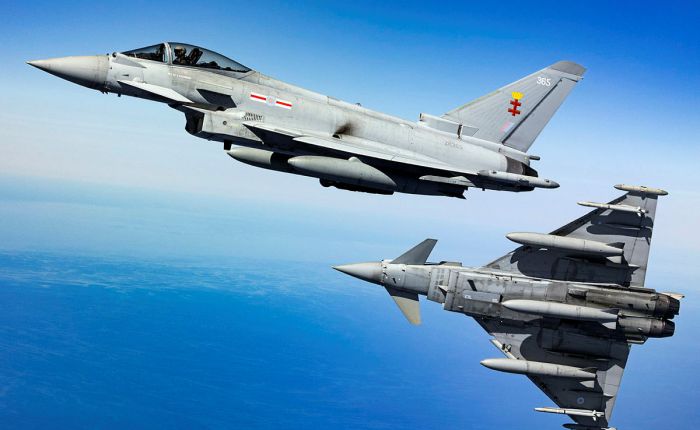
Header image: Typhoon FGR.Mk 4 and T.3 of No. 41 (Test and Evaluation) Squadron flying during Exercise FORMIDABLE SHIELD, 16 May 2025. During Exercise FORMIDABLE SHIELD, No. 41 Squadron worked with Royal Navy and NATO ships and developed winning tactics to enhance the NATO defence against ballistic missiles. (Source: UK MOD © Crown copyright 2025)

#Commentary – Strategic Air Power in Yemen: A Cross-Domain Solution or Just Mowing the Grass

#Commentary – Strategic Air Power in Yemen: A Cross-Domain Solution or Just Mowing the Grass

By Dr Jacob Stoil

Starting on 19 October 2023, the Houthi attacks against international shipping and Israel have seen many air power firsts. In their very first attack, the Iranian-backed Houthis employed attack drones against maritime targets, which eventually led to the first instance of the German Navy shooting down enemy aviation since the Second World War. Even more significantly, Houthi ballistic missile attacks against Israel led to the first combat interception in space. However, as much as things have changed, the strategic problem the Houthis present and the air-centric means that the US has chosen to oppose it, has a long history in the Middle East and raises questions about the strategic limitations of air power.

The Houthis sit aside a strategically critical sea line of communication (SLOC). In peacetime, between 10-15% of global trade and around 30% of global container traffic flow through the Suez Canal and into the Houthi crosshairs. Should a great power war occur, the significance of the waters of Yemen will only increase. The SLOC through the Red Sea represents the fastest way to move resources at scale from Europe to a Pacific theatre of operations and an essential alternative to the Panama Canal for transiting from the eastern seaboard of the United States to the Indian Ocean and Southwestern Pacific. These two factors mean that the US can little afford the Houthis and their Iranian backers to maintain their at-will blockade of these critical waterways. This same logic led the British Empire to take and hold Aden and launch military campaigns in the Horn of Africa throughout the 19th and 20th centuries. Since the US is focusing its combat power on the Pacific and the European powers are most concerned with the threat to their borders, neither is looking for another long-term Middle Eastern entanglement, and so this is an unlikely approach. Instead, the Western allies have turned to an approach with a long history in the Middle East whenever an economy of force is desired – air power.

While by virtue of its strategic position and resources, the Middle East as a region is of critical importance to any modern state wishing to project power globally, most of its territory is not. Occupation is expensive and manpower intensive, and so since the 1920s, powers have attempted to ensure the security of their vital interests by following the mirage of strategic air power. In the Middle East, the basic idea has remained remarkably consistent. The strategic concept is that with air power, a country can conduct scalable punitive raids, which will either erode capability so a potential adversary cannot mount a significant threat, create deterrence by demonstrating the cost of threatening a strategically vital area, or finally weaken an adversary to the point a local rival can unseat them. In theory, this use of air power, a cross-domain version of the punitive expedition, allows countries to achieve and sustain their strategic objectives while not having to involve themselves in the costly and manpower-intensive business of occupying the hinterlands of the Middle East. The current US operations in Yemen appear to be the latest in this long history.

For decades, Israel pursued a similar policy known as ‘mowing the grass.’ In this mode of operation, whenever militant groups or adversaries escalated beyond a certain threshold, Israel would respond with an air campaign (supported at times by special operations and even limited ground forces). The purpose of these operations was to buy quiet. They did not attempt to change the fundamental dynamic that led to the escalation; instead, they tried to degrade enemy capabilities until the enemy (at least temporarily) no longer posed a credible threat and deter certain forms of future enemy operations. The air campaigns reduced the capabilities of Israel’s enemies. They forced them to spend resources on reconstitution. However, as is now abundantly clear, this did not stop Israel’s enemies from developing the capability to inflict significant harm, nor did it do anything to remove the motivation.

From their initial conception, these air-centric ‘mowing the grass’ operations acknowledged they could not achieve decisive results or a permanent effect. The strategic conditions meant it would always be worth it for the enemy to rebuild and try again. The damage might have been severe, but if it was in Iran’s interest to rebuild its capabilities, then the targeted groups like Hamas and Hezbollah would always be able to rebuild. Without large-scale ground operations and potentially long-term occupation, air power could only achieve a limited strategic effect within the larger geopolitical pressures shaping the Middle East.

The Houthis potentially find themselves in a similar situation to Hamas and Hezbollah facing the Israeli Air Force, which highlights one of the strategic limitations of air-centric campaigning. Turning maritime traffic away from the Red Sea SLOC requires minimal capability. If the Houthis present a credible threat and continue to target vessels, the maritime insurance market will keep many merchant vessels away. This lowers the level of capabilities to which the Houthis must rebuild to interdict the SLOC, as they only need enough to make maritime insurers nervous. The Houthis have also demonstrated to countries like China and Iran, who have been backing them, that they present a relatively low-cost option to complicating US global sealift – even during a time of war. Should the Houthis attack shipping during wartime, they would force the US either to divert precious naval and air power to tackle the challenge or slow global movement by avoiding the contested waters off Yemen. While devastating to the Houthis, the current air campaign is doing little to change either of these two realities. The Houthis’ strategic position is too important to their backers, the cost of closing the straits too low, and the ideology of the Houthis too absolute to be dissuaded by even the most effective air campaign alone.

There has been one recent exception to this pattern, which may provide a way forward for the US air campaign in Yemen. Since 7 October 2023, Israel launched an air campaign against the Assad government in Syria. The purpose of the campaign was not to remove Assad but to diminish the immediate risk Assad posed to Israel. Eventually, Israel added a covert operations campaign and ground offensive against Hezbollah, on whom Assad relied to keep his government in power. Taken together, this weakened the Syrian regime to the point that local Turkish-backed adversaries could overthrow it. Likewise, the Houthis have several regional enemies waiting in Yemen. The Houthis and their backers have managed to hold these enemies at bay. However, the severity of the US air campaign is such that it may hit a tipping point at which point the UAE and Saudi-backed forces in Yemen may take the opportunity to launch a ground offensive. If so, like Syria, it may be counted as a rare win for the strategic employment of air power in the Middle East, but only inasmuch as other forces on the ground are prepared to fight. If not, Yemen will prove a lesson that the Middle East has taught repeatedly – air power is useful, but by itself cannot change the strategic dynamics of the region.

Dr Jacob Stoil is a military historian who is the Research Professor of Middle East Security at the US Army Strategic Studies Institute, Chair of Applied History at the Modern War Institute, Senior Fellow of the 40th Infantry Urban Warfare Center, and Trustee of the U.S. Commission on Military History. He has worked extensively in the Middle East, including in support of Task Force Spartan. He has published multiple policy and academic articles, which can be found in publications such as the International Journal of Military History, Wavell Room, and Modern War Institute. He can be followed on X as @JacobStoil

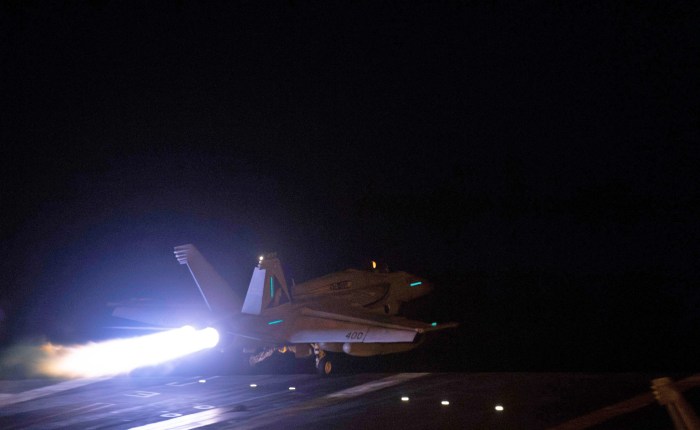
Header image: A US Navy F/A-18 fighter jet taking off at night before the 2024 Yemeni airstrikes, 12 January 2024. (Source: Wikimedia)

#Podcast – “There is a Holy Trinity of US Air Force History”: An Interview with Dr Brian Laslie

#Podcast – “There is a Holy Trinity of US Air Force History”: An Interview with Dr Brian Laslie

Editorial Note: Led by Editor Dr Mike Hankins, From Balloons to Drones, produces a monthly podcast that provides an outlet for the presentation and evaluation of air power scholarship, the exploration of historical topics and ideas, and provides a way to reach out to both new scholars and the general public. You can find our Soundcloud channel here. You can also find our podcast on Apple Podcasts and Google Podcasts.

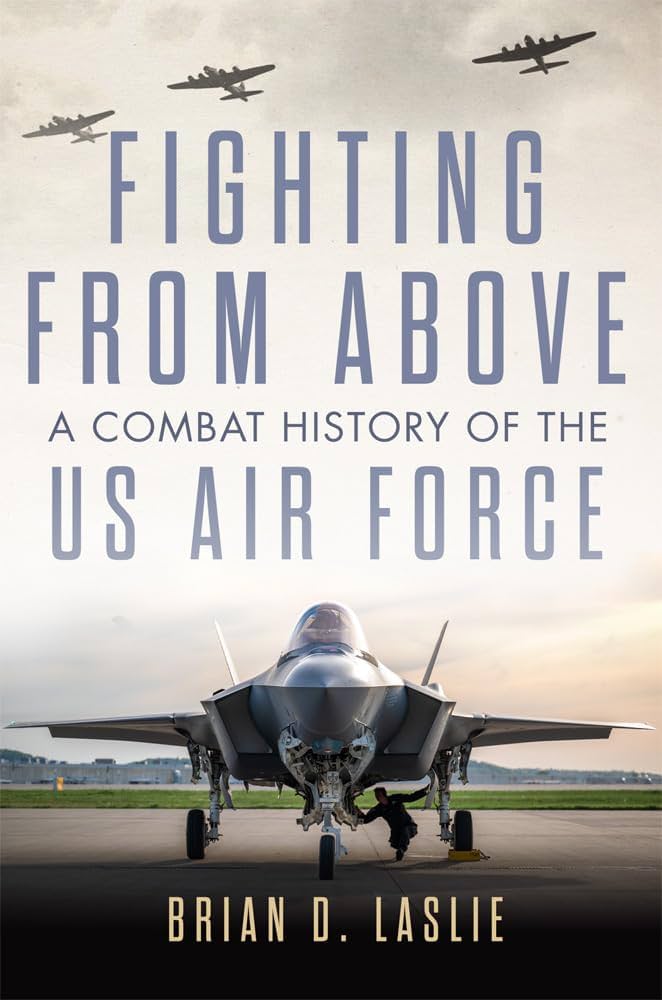
In our latest podcast, we put our co-host and editor, Dr Brian Laslie, in the hot seat to discuss his newest book, Fighting from Above: A Combat History of the US Air Force, from the University of Oklahoma Press. He discusses the earliest days of American air power up through the present and looks into the future.

51HT2sVpfiL._AC_UF1000,1000_QL80_

Dr Brian Laslie is a US Air Force Historian and Command Historian at the United States Air Force Academy. Formerly, he was the Deputy Command Historian at the North American Aerospace Defense Command (NORAD) and United States Northern Command (USNORTHCOM). A 2001 graduate of The Citadel and a historian of air power studies, he received his Masters’ from Auburn University Montgomery in 2006 and his PhD from Kansas State University in 2013. He is the author of Air Power’s Lost Cause: The American Air Wars of Vietnam (2021),  Architect of Air Power: General Laurence S. Kuter and the Birth of the US Air Force (2017) and The Air Force Way of War (2015). The latter book was selected for the Chief of Staff of the Air Force’s 2016 professional reading list and the 2017 RAF Chief of the Air Staff’s reading list. He can be found on Twitter at @BrianLaslie.

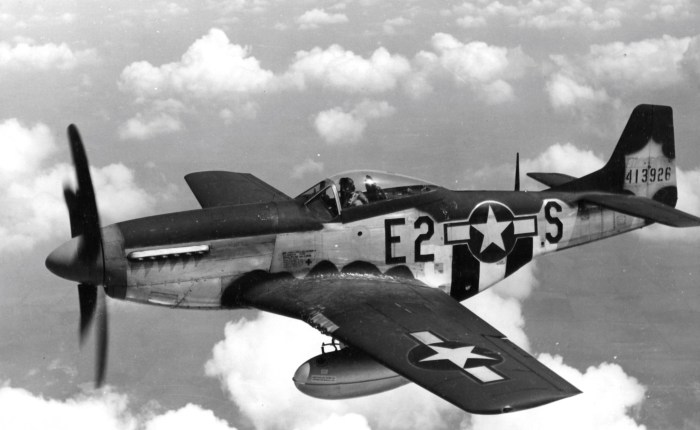
Header image: A North American P-51 Mustang of the United States Army Air Force over France, c. 1944. (Source: US National Archives and Records Administration)

#Podcast – The Unconventional Journey of General Larry Spencer: An Interview with General (ret’d) Larry O. Spencer

#Podcast – The Unconventional Journey of General Larry Spencer: An Interview with General (ret’d) Larry O. Spencer

Editorial Note: Led by our Editor Dr Mike Hankins, From Balloons to Drones produces a monthly podcast that provides an outlet for the presentation and evaluation of air power scholarship, the exploration of historical topics and ideas, and provides a way to reach out to both new scholars and the general public. You can find our Soundcloud channel here. You can also find our podcast on Apple Podcasts and Google Podcasts.

In our latest podcast, we are joined by General Larry O. Spencer, former Vice Chief of Staff of the U. S. Air Force. He recounts his journey from being raised in Southeast Washington, D. C. to enlisting in the U. S. Air Force and eventually rising through the ranks to become one of only nine African Americans to wear four stars. General Spencer’s background as a support officer in an organization that tends to favour pilots and aircrews brings a different lens through which to look at the USAF and the use of air power.

dark-horse

General (ret’d) Larry O. Spencer served as Vice Chief of Staff of the U.S. Air Force until his retirement in 2015. As VCSAF, he presided over the Air Staff and served as a member of the Joint Chiefs of Staff Requirements Oversight Council and Deputy Advisory Working Group. He assisted the Chief of Staff with organising, training, and equipping 664,000 active-duty, Guard, Reserve, and civilian forces serving in the United States and overseas. Spencer was born in Washington, D.C. He received his Bachelor of Science degree in industrial engineering technology from Southern Illinois University, Carbondale, and was commissioned through Officer Training School in 1980 as a distinguished graduate. Spencer has commanded a squadron, group and wing and was Vice Commander of the Oklahoma City Air Logistics Center. He was also the first Air Force officer to serve as Assistant Chief of Staff in the White House Military Office. In addition, he served as the Comptroller and then Director of Mission Support (A7) at a major command; and held positions within the Air Staff and Secretary of the Air Force. Before becoming VCSAF, Spencer was Director, Force Structure, Resources and Assessment, Joint Staff, the Pentagon, Washington, D.C.

Header image: General Larry O Spencer outside his family home in Washington DC, 30 July 2015 (Source: United States Air Force)

#Commentary – Air Superiority as a Political Activity

#Commentary – Air Superiority as a Political Activity

By Dr Michael E. Weaver

Air superiority needs to be conceived as a political condition that begins in peacetime, not merely a wartime operational pursuit. Perceiving air superiority in this way will make connections to the ordinary peacetime conditions political actors like the United States seek, resulting in military strategy, targeting, and weapons acquisition more in tune with national policy. This commentary piece is an essay based on a comprehensive study on the relationship between military means and political ends. Typically, examinations of air superiority start with discussing airframes, basing, technology, and tactics. This proposal, however, begins with the issues of legitimacy and norms and suggests ways of achieving air superiority rooted in peacetime operations. It concludes that a mix of manned and unmanned fighter aircraft is the best means of achieving this national policy.

An Essential Condition
Airliners require airspace free of the threat of missiles, drones, and gunfire before they even consider flight. Conversely, military pilots prefer unimpeded airspace in which whatever fire an enemy can send their way is insufficient to cause more than an occasional loss through which they can fly their missions without substantial interference and complete their missions. If the stakes are high enough, aircrews will press forward despite losses to hostile fire. Those can increase to the point that only the most necessary missions will justify prohibitive losses.

Air superiority is the general term used to describe these varying grades of airspace control. The condition is normally conceived in operational and physical terms: is a sector of airspace permissive enough for operations to be completed without too many losses? How many aircraft can one lose before it becomes too difficult to dominate a sector of airspace? Can a military actor achieve air superiority by shooting down a number or a percentage of aircraft?

More abstractly, one can relate air superiority to achieving a military strategy. For instance, Great Britain did not achieve air superiority over south-eastern England in September 1940 when its shoot-downs of Luftwaffe aircraft reached an arbitrary threshold. Instead, Britain gained air superiority when Germany could no longer proceed with its agenda of invading the United Kingdom; inflicting losses was just an intermediate step for the Royal Air Force. As a result, the British achieved a favourable outcome even though losses to enemy aircraft continued.

A Function of Governance
One can best perceive of air superiority as a political act and consequence. Since the ultimate goal of politics is to decide who governs where, how, and under what terms, the most helpful way to conceive of air superiority is as a political act. A state should ask whether its norms, rules, power, and assumptions govern what happens in the air when determining the safety within the airspace in which its national interests lay. These concepts take us into the realm of sovereignty: who or what has ultimate authority. For example, the Soviet Union was not completely sovereign over its airspace in 1983 when it shot down the Korean airliner flight 007 because of standards of international behaviour. It had the capacity to shoot down intruding airliners, and it could have continued to shoot down airliners for some time without much exertion. Instead, Moscow found itself condemned for shooting down an aircraft that should not have been where it was in the first place because international norms had already labelled what the Soviets did as illegitimate. The Soviets had violated a norm that really did not need to be codified: you just do not shoot down civilian airliners full of people. Because international discourse had long since settled that issue, the Soviet Union was condemned for its action. Arguments such as, ‘It’s over our territory,’ or, ‘warnings are all over air navigational charts; they simply should not have been flying there,’ carried insufficient weight. Furthermore, the issue had already been decided years before the incident through international law and had nothing to do with aircraft capabilities or weapons loads. The Soviets did not recognise that air superiority was ultimately a political issue, not an issue of military power, and they did not have ultimate authority over the concept.

Bird of a feather ...
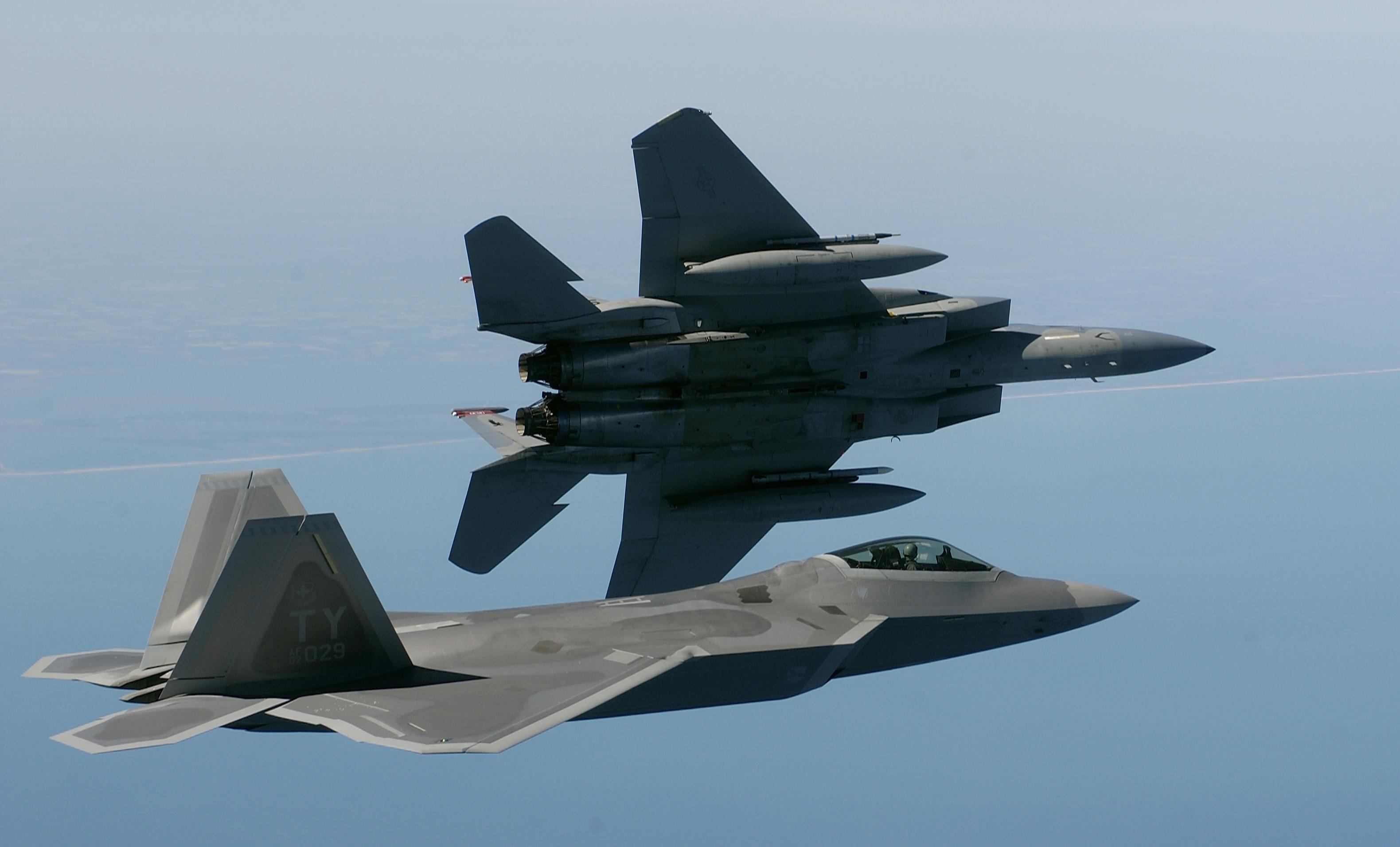
An F-15 Eagle banks left while an F/A-22 Raptor flies in formation en route to a training area off the coastline of Virginia, 5 April 2005. (Source: Wikimedia)

Formulation
Norms, discourse, legitimacy, and governance, should be the starting points for understanding air superiority; machines such as aircraft, surface-to-air missiles (SAMs), drones, or satellites are tools that may or may not ultimately determine the legitimacy or reality of airspace control. Furthermore, since military force is a subset of information warfare, political actors can largely determine the legitimacy of airspace control before a shooting war is even contemplated, thus predetermining a significant portion of the consequences of hostile actions before they are initiated. States already pursue these conditions by flying between China and Taiwan or over the Sea of Okhotsk. Because airforces – and more ideally, civilian airliners – normalise these flights by making them regularly, they have become legitimate. Because international rules are related to air superiority, both should be considered cohabitants on the same continuum, like radio waves and light waves on the electromagnetic spectrum.

The achievement of air superiority thus begins in peacetime with the establishment of what is legitimate behaviour. Therefore, China understands this and is trying to construct airspace sovereignty over the western Pacific Ocean with manufactured islands, agitation over centuries-old, discredited maps, and military power: air sovereignty constructivism, if you will. Of course, nearby actors such as Vietnam, Taiwan, and the Philippines, cannot give in lest they normalise China’s aggression, but they do not have sufficient power to resist militarily.

Although it forms a critical component of the response, resisting China’s aggression and preserving airspace freedom does not begin with building powerful air forces. Regional powers must perpetuate an ongoing narrative about what is legitimate in the airspace off the coasts of Asia. When they make violations of their airspace by Chinese military aircraft actions that are automatically condemned; for example, they will have contributed to a powerful foundation for air superiority. Grassroots rhetoric condemning Chinese production of runway cratering missiles, not to mention artificial islands, would further contribute to the discourse of air superiority. So, the first component of air superiority operations would be to create a norm of, ‘this is simply the way things are; this is what is appropriate.’ For instance, international airspace is accepted, and air defence identification zones extend only as far as radar coverage from one’s mainland (generally around 200 miles). When no one, or at most, only China, questions that assertion, those states will have added to the legitimacy of their own defensive military aggression if it is ever necessary. Nurturing this narrative does not carry prohibitive costs, but it requires constant attention and never ends.

This endeavour’s more deliberate components include international agreements, international organisations, multinational military exercises, and air sovereignty flights. Conducted as a diplomatic-information campaign, these activities can predetermine who will be the victim and who will be the aggressor if armed conflict erupts. Indeed, ensuring that one’s state achieves victim status and is not labelled the aggressor is the most critical goal in the discourse of air superiority. Victims have very liberal rights to self-defence during war, while aggressors may not have any rights. Therefore, possessing the legitimate right of self-defence when protecting airspace is critical and begins in peacetime. States should make maintaining that status an ongoing component of their grand strategy and ensure that illegitimate power is the only means available to actors like China and Russia.

Ultimately a determined aggressor will not care. International opprobrium, condemnation, and even new enemies who wage war against the aggressor state may not be enough to dissuade a political actor from taking what he wants by force. However, if the revisionist power wins that battle over airspace, it will find itself in a weakened condition for resisting the international opprobrium that would follow. Ideally, regional actors will possess enough military power to persuade an aggressor to not go to war in the first place or fight him to a standstill if war comes. The question of what the best hardware is for accomplishing that goal is one that states must answer the first time correctly.

Prior to Weapons Acquisition
The most important question surrounding the hardware of air superiority is not which machine will shoot down the most enemy aeroplanes or missiles. Instead, one should ask political questions addressing legitimacy, deterrence, which governs where and how, and gaining victim status. Covering those bases will function as force multipliers to the combat capabilities of one’s air and space forces. States should opt for a mix of capabilities—not for operational reasons or the ability to achieve high kill rates of invading aircraft and missiles, although necessary. Instead, the capabilities must further political goals. Air capabilities need to be able to deter, reaffirm legitimacy, confer aggressor status on the state that is attacking, and wreck the aggressor’s strategy. From there, one should construct a system of sufficient lethality to preserve or regain air superiority. Furthermore, an air force should pursue air superiority as a component of governance, not merely as a military operation.

Surface-to-air missiles may be the best starting point because they are inherently defensive. A PAC-III missile cannot attack China from South Korea or anywhere else, for that matter. SAMs are legitimate because they operate from within a country or one of its warships. They are not aggressive since they are defensive weapons. An enemy must attack them, often as the first step in an airstrike; thus, SAMs force the enemy into labelling himself the aggressor and your state the victim, giving the attacked country the power that comes to a victim in today’s discourse. But an air force can use up its SAMs quickly. Suppose the enemy still has offensive power after the defender fires off its last missiles. In that case, the defender will be in a precarious state, and victim status and the legitimacy of his cause may be so much rhetoric.

The SAM’s stablemate, antiaircraft artillery, can cause great destruction to an attacker. As inherently defensive weapons, they are legitimate and not a weapon of aggression. They need to be able to detect and hit enemy missiles and aircraft; however. Otherwise, their use conveys the image of mindless firing and panic. Since the geographic coverage of each piece is quite small, they are tertiary weapons.

Cyber weapons should be a component of air superiority hardware. Few things could be better than somehow switching off or wrecking enemy hardware from within, for instance, but to my knowledge, computer viruses do not yet cause circuit boards to melt themselves. A force struck down with computer viruses can clean out the malicious software, and even examine and exploit it for a counterattack. For that reason, cyber weapons are one-shot pieces of software. They can help defeat an enemy onslaught, but they can also help an enemy strengthen his network defence because the attack exposes a weakness.

Space-based weapons have the potential to dominate the airspace below, but they have problems when it comes to legitimacy, deterrence, and labelling. If a country flies a space laser over its enemy to protect international airspace, it does so intrusively, confusing the world audience as to who the aggressor is. Placing a satellite armed with defensive weapons could give the appearance of a constant offensive threat overhead. Damocles would not be a politically helpful label for an armed satellite.

An F-35C Lightning II assigned to the VFA-101 launched off the Nimitz-class aircraft carrier USS Abraham Lincoln (CVN 72) flight deck on 4 September 2017.

Weapons Have Differing Meanings
There is currently a rush to build unmanned aircraft that either function as remotely piloted vehicles or as autonomous aircraft flown by artificial intelligence. They are less expensive, there is no pilot to be killed or captured, and their swarms can overwhelm defences or attacking strike packages. Drones, however, can only extend firepower, not legitimacy. Squadrons of drones either convey the seriousness of large groups of appliances or the sinister capability of robots; fiction writing has already determined many of the meanings we attach to drones. It will be challenging for drones to be perceived solely as defensive and fully legitimate, and their deterrent effect may be less. One of the components of deterrence is forcing the enemy to attack and kill your people and your territory if they wish to attack. Thus, an enemy is less likely to attack an ICBM in a silo, for example, than a ballistic missile submarine; land-based ICBMs enhance deterrence. Furthermore, people, not machines, need to govern airspace. People are more legitimate than machines, and people, not machines, can be victimised. Drones can threaten, but unlike manned aircraft, they cannot coerce in a way that is seen as legitimate. Drones will be most effective in furthering a political narrative when retained as adjuncts – extra shooters – to manned aircraft.

Because of the politics of air superiority, its optics, the issue of legitimacy, the need to convey political will and commitment, and the different meanings attached to manned aircraft and autonomous aircraft, a great need remains for men and women to fly the aircraft and man the SAM sites that achieve air superiority. Skin in the game is necessary because an aggressor will be less inclined to shoot down a manned aircraft than a drone. The people of a country will be up in arms if one of their piloted aircraft is shot down during a crisis, but if one of their drones is shot down, how should they react when an armed appliance has been destroyed? Drones will provoke, but fighters with a human at the controls can deter, signal, provoke, defend, escort, and assert international norms. While drones can provide more tactical firepower, only manned fighters can function as political weapons. Indeed, fighter aircraft that cannot be used against surface targets unless they spend six months in a depot undergoing conversions may be in the national interest to a far greater degree than a multi-role aircraft. It may even be in the national interest to produce a follow-on to the F-22 that can only be used as an air-to-air weapon.

Air Superiority without Bombing China
A capability to achieve air superiority over eastern Europe or the western Pacific without needing to carry out bombardment missions against Chinese or Russian SAM sites or airbases is most attractive politically as well as militarily; an ability to dominate airspace with a mix of manned and unmanned fighter aircraft without the assistance of aircraft attacking targets on enemy territory gives several advantages to political leaders. First, such a capability remains a defensive, legitimate political act of governing airspace and defending airspace. Such aircraft cannot attack their adversaries and thus are less escalatory. They can complete the mission of air sovereignty over their own territory or within international airspace. Proposals of bombing Chinese or Russian airbases in defence of Taiwan or the Baltic states are asinine. When one is bombing Russian airbases, one is attacking Russia, a Russia with a nuclear arsenal. Airfield and SAM site attack strategies, operations, and capabilities were essential when deterring the Warsaw Pact during the Cold War. They may be a requirement against peer states when a geopolitical relationship is going down the tubes, but bombing Chinese or Russian airfields constitutes poor politics for the United States and its allies except in the most extreme circumstances. An offensive capability and strategy in defending friends along the Asian periphery will lead to a war that worsens conditions, rather than a settlement in which those areas are governed in ways that respect the sovereignty of smaller states and international law. An offensive-defensive strategy will erode the victim status regional actors can easily retain if they emphasise an airspace politics of live and let live.

Developing the best new aircraft, SAMS, and directed energy weapons for shooting down enemy aircraft and missiles must not be procurement’s starting point for maintaining air superiority over the western Pacific. Again, air superiority is a political act, a contest of who governs the western Pacific in this instance, and how. What characteristics will the machines employed to carry out that task needs with that goal in mind? Because of the lethality of SAMs, air-to-air missiles, cyber weapons, and guided ballistic missiles, aircraft must be excellent technologically, but not for the sake of fielding the most advanced technology. Because of the political goals of the United States and its allies, the weapons should be defensive. An F-22, for example, is ideal for this mission because it does not possess much of an air-to-ground bombardment capability. That trait is a political advantage because the capability, intentions, and rhetoric are all congruent with a policy goal of governance and air defence. Since F-22-type aircraft do not support a ground attack strategy well, they are politically ideal for preserving air superiority. Several wings of American and allied F-22s and Next Generation Air Dominance Fighters (NGADs) would have the ability to defeat Chinese assets. Since they do not have the range to penetrate deep into Chinese territory, they threaten China less and match the political rhetoric of the United States and its friends more. Most importantly, highly-capable fighter aircraft can achieve air superiority solely in international airspace – the ideal location for exerting air sovereignty.

Because of the political goals behind its existence, the NGAD should be designed as a single-purpose, air-to-air combat-only fighter with a person in the cockpit. It does not need the capability to penetrate deep into Chinese or Russian airspace to destroy surface targets because that capability will not match up with any of the United States’ political goals. Why should the United States and her friends must have the capability to destroy SAM sites and airfields on Russian or Chinese territory? For that reason, the NGADs should be forward deployed, not F-35s. Keep the offensive capabilities of F-35s away from our adversaries. That will support American rhetoric and strategy, and their transfer forward in a crisis will help diplomatic efforts if it ever comes to that.

Air defence NGADs should be the forward-deployed aircraft because they can survive airspace infested with long-range Chinese SAMs fired from warships and long-range fighter aircraft far better than variants of the F-15 or F/A-18. The most advanced legacy airframes – including those not yet manufactured like the F-15EX – would only function as SAM sponges in the western Pacific and have no business flying in this theatre unless Chinese air capabilities have significantly been diminished. Even though it is more survivable against SAMs than legacy aircraft, the F-35 is not ideal for this mission because its offensive capabilities run counter to the policy and narrative desirable for governing the airspace over the western Pacific. Furthermore, it is too slow to run down and destroy the fastest Chinese fighters; it cannot engage and disengage at will like an air superiority fighter needs to do. However, given the low numbers of extant F-22s, F-35s must participate in the air-to-air battle in this scenario for the next several years. Finally, the NGAD should be designed as an aircraft carrier-launched aircraft and then equip both the US Navy and the US Air Force. Aircraft designed for carrier operations can be flown from land bases, but aircraft designed for runway operations cannot stand the stresses of carrier catapult launches and arrested landings. The NGAD should not be multi-role, but it will be multi-service. Furthermore, if it does its job well, it will not need to carry bombs because peer adversaries will not continue offensive warfare if they have lost command of the air.

Policy Goals, Grand Strategy, Narratives, Military Strategy, then Weapons Acquisition
The way to determine what kind of new technology to acquire for deterrence and war is not to first pursue the most advanced technology conceivable. However, the military strategy that results from a defence review may require just that. States need first to decide what they want. What political world do they want to live in? How can they use force, diplomacy, acquisitions, deterrence, legitimacy, and narratives to reach that world without stumbling into a major war – or winning if war breaks out? Air superiority starts with political goals, not technology, doctrine, or operations. Such an approach will significantly improve the United States’ opportunities for maintaining an international order conducive to the ideals and interests of itself and its friends. The capabilities of its military hardware will then be congruent with its peaceful rhetoric.

Dr Michael E. Weaver is an Associate Professor of History at the USAF Air Command and Staff College. He has authored five air power articles and a book on the 28th Infantry Division. His second book, The Air War in Vietnam, is due out in the fall of 2022. Weaver received his doctorate from Temple University in 2002, where he studied under Russell Weigley.

DISCLAIMER: The views expressed herein are those of the author alone and do not reflect the views of the Department of Defense, the U. Air Force, or Air University. 

Header image: An F-15EX Eagle II from the 40th Flight Test Squadron, 96th Test Wing out of Eglin Air Force Base, Florida, flies in formation during an aerial refuelling operation above the skies of Northern California, 14 May 2021. The Eagle II participated in the Northern Edge 21 exercise in Alaska earlier in May. (Source: Wikimedia)

Call for Submissions: Naval and Maritime Air Power Revisited

Call for Submissions: Naval and Maritime Air Power Revisited

In 2022, From Balloons to Drones will run a series that examines air power in the naval and maritime spheres.

From the First World War onwards, the use of air power in naval and maritime spheres has become an essential element of military operations. Indeed, even by 1918, many of the roles associated with naval air power, such as carrier airstrikes, had emerged. Similarly, the development of maritime air power was well-developed by 1918. Moreover, as the world’s major navies recognised the importance of naval air power and commissioned aircraft carriers between the First and Second World Wars, further developments and debates emerged.

2022 marks several significant anniversaries in naval and maritime air power history. In 1922, the US Navy, which became the world’s major user of carrier-based air power, launched its first aircraft carrier, the USS Langley. 2022 also marks the 80th and 40th anniversaries of two significant examples of the effective application of naval and maritime air power, the Battle of Midway and the Falklands War, respectively. As such, From Balloons to Drones is seeking submissions for a series of articles that examine the varied use of air power in the maritime sphere, broadly defined. Articles might, for example, explore the development of carrier-based air power, the use of land-based air power in support of naval and maritime operations, or the use of air power in support of amphibious operations. Possible themes to be explored might include, but are not limited to:

Strategy, Theory and Doctrine | Organisation and Policy | Roles

Operations – Kinetic and Non-Kinetic | Tactics, Training and Procedures

Strategic and Operational Effect | Technological Developments | Ethical and Moral Issues

National, International and Transnational Experiences | Personal Experiences

Memory and Memorialisation

We are looking for articles of between 500 to 4,000 words, though we will accept larger pieces, and we reserve the right to publish them in parts. Please visit our submissions page for more information on the types of articles published by From Balloons to Drones

We plan to begin running the series in February 2022, and it will continue for as long as we receive potential contributions. We welcome and encourage submissions from academics, policymakers, service personnel, and relevant professionals. We also welcome submissions written from diverse academic disciplines.

Submissions should be submitted in Word format and emailed to the email address below with ‘SUBMISSION – Naval and Maritime Air Power Revisited’ in the subject line. Also, please include a 50-100-word biography with your submission. Footnotes can be used, and please be careful to explain any jargon. If you are not sure if your idea fits our requirements, then please email us with ‘POTENTIAL SUBMISSION – Naval and Maritime Air Power Revisited’ in the subject line to discuss.

If you are interested in contributing, please email our Editor-in-Chief, Dr Ross Mahoney, at airpowerstudies@gmail.com or contact us via our contact page here.

Header image: The Japanese aircraft carrier IJS Hiryu maneuvers to avoid bombs dropped by USAAF Boeing B-17E Flying Fortress bombers during the Battle of Midway on 4 June 1942. (Source: Wikimedia)

#Podcast – The Drone Age: An Interview with Dr Michael Boyle

#Podcast – The Drone Age: An Interview with Dr Michael Boyle

Editorial Note: Led by our Editor Dr Mike Hankins, From Balloons to Drones produces a monthly podcast that provides an outlet for the presentation and evaluation of air power scholarship, the exploration of historical topics and ideas, and provides a way to reach out to both new scholars and the general public. You can find our Soundcloud channel here. You can also find our podcast on Apple Podcasts and Google Podcasts.

Unmanned Aerial Vehicle, or more commonly, Drones, have become increasingly key to contemporary warfare, even iconic. But are they really as revolutionary as they appear? Dr Michael Boyle joins us to discuss his recent book, The Drone Age: How Drone Technology Will Change War and Peace. He examines the drone phenomenon as it has currently affected global conflict, and how drones might shape the future.

51PMGO4y82L._AC_SY1000_

Dr Michael J. Boyle is an Associate Professor and Chair of Political Science at La Salle University. He is also a Senior Fellow at the Foreign Policy Research Institute (FPRI) in Philadelphia. His previous books include Violence after War: Explaining Instability in Post-Conflict StatesLegal and Ethical Implications of Drone Warfare, and Non-Western Responses to Terrorism.

Header image: A USAF MQ-9 Reaper remotely piloted aircraft flies above the smoky San Gabriel Mountains of southern California on its way to a fire mission in the northern part of the state, August 2020. (Source: US Department of Defense)

#BookReview – Airpower in the War against ISIS

#BookReview – Airpower in the War against ISIS

Benjamin S. Lambeth, Airpower in the War against ISIS. Annapolis, MD: Naval Institute Press, 2021. Maps. Tables. Images. Notes. Bibliography. Hbk. 305 pp.

Reviewed by Richard Shimooka

41DGU7jfIIL

In the study of contemporary air power operations, Benjamin Lambeth has primarily led the field for over 40 years. A long-time RAND Corporation political scientist and now a non-resident fellow at the Center for Strategic and Budgetary Assessments, Lambeth has written numerous books that have provided deep insight into modern operations and issues. A key example of Lambeth’s work was his in-depth dissection of the 1999 effort to liberate Kosovo from Serbian control, NATO’s Air War for Kosovo (2001).

Continuing in the comprehensive manner of his previous work, in Airpower in the War against ISIS, Lambeth reflects on the five-year campaign against Daesh in Syria and Western Iraq between 2014 and 2019. This book joins recent works that have examined this subject area, including the recent RAND study The Air War Against the Islamic State: The Role of Airpower in Operation Inherent Resolve (2021). Although Lambeth covers the same subject matter, he provides a more argumentative perspective on the conduct of the air war against ISIS. In addition, Lambeth’s book includes a deep level of detail surrounding the issues faced by the allied planners and practitioners, based on interviews with many personnel directly responsible for the strategy, planning and execution of the campaign. However, while Lambeth uses these interviews in conjunction with a variety of published works, the analysis in this book, which is derived from the aforementioned sources, fails to live up to the standards of his previous work. Indeed, blurs the debate on this topic rather than illuminate it.

Lambeth’s scope complicates the book’s analysis. He frequently questions the political and strategic decision-making emanating from the White House, Pentagon and U.S. Central Command (CENTCOM). Lambeth then draws a straight line from these strategic decisions to air power practitioners’ operational and tactical issues in the field. A core theme, for example, is that President Barack Obama was too hesitant to intervene in the initial phase of ISIS’s growth. In Lambeth’s view early intervention could have forestalled the growth of the nascent movement. He identifies this ‘unproductive gradualism’ as a misuse of air power that greatly hindered its use and utility until the late stages of the campaign. In making this argument, Lambeth compares the application of air power in the war against ISIS to the equally unsuccessful Rolling Thunder campaign during the Vietnam War in the 1960s (p. 11). Moreover, Lambeth argues that the U.S. administration’s approach to military operations was too restrictive in its employment of air power and too beholden to the requirement to prevent civilian casualties, so much so that military operations became paralysed.

Refueling the Fight Against ISIS
Two F-22 Raptors fly in formation behind a KC-135 Stratotanker from the 340th Expeditionary Air Refuelling Squadron during a Combined Joint Task Force-Operation Inherent Resolve mission over Iraq, 11 April 2017. (Source: Wikimedia)

The persuasiveness of Lambeth’s argument is weakened, however, by the book’s superficial treatment of the political and strategic decision-making process. Rather than considering how and why U.S. leaders made their decisions, Lambeth depicts them as simple orders, without examining the trade-offs inherent in the policy-making process that guide their creation. As a result, the book is more comfortable critiquing the policy without examining its connection to the broader grand strategy objectives of the United States. This is unfortunate, as there is no shortage of material available on the Obama administration’s political decision-making surrounding ISIS. That administration did not believe that ISIS was an existential threat, and the White House sought to limit the U.S.’ involvement in the conflict. The book could have benefitted from a richer discussion about managing engagement in this case as part of a proper critique of Obama’s grand strategy approach, thereby providing a better understanding of the strengths and shortcomings of limited engagement in a conflict.

A key component of Lambeth’s argument concerns the proper role of air power in modern conflicts. Chapter Two presents a review of air power’s employment and theory in the post-Cold War period, critically analysing the operational usage and broader political and strategic dynamics. This is one of the book’s best sections, and a useful reference work on modern air power thinking. Based on this chapter, Lambeth advises against the subordination of air power to ground forces when it comes to counterinsurgency operations, arguing that such an approach corroded the institutional knowledge and capacity to fully exploit the capabilities of air power between 2001 and 2011 (p. 39). Moreover, the book emphasises how institutional set-up and broader policy decisions made by then U.S. Secretary of Defense Robert Gates diminished the U.S. Air Force’s stature and influence in military operations over Syria and Iraq (p. 32).

These observations tie into a broader critique of the flawed initial perceptions of ISIS as primarily a counterinsurgency threat rather than an embryonic state entity. This improper framing of the organisation, according to Lambeth, contributed to a far less effective employment of air power against the Islamic State (p. 199). This is an interesting observation made by several interviewees within the book, which can be viewed as part of the ongoing debate concerning whether air power has unique capabilities and how to utilise it in a battlefield properly. While Lambeth does not directly engage in this area of theoretical discussion, the book’s essential thrust suggests that air power’s unique characteristics have been constantly misapplied over the past two decades. This argument may have increasing relevance as the United States disengages from stability operations in the Middle East and Afghanistan to counter near-peer threats such as China and Russia.

It is within this context that Lambeth provides detailed critiques regarding excessive civilian casualties. For example, at one point Lambeth quotes an article by David French in support of his views. An Iraq War veteran and practising attorney, French details what he believes are the consequences of the civilian casualties:

It’s time to consider the true cost of America’s self-imposed constraints [American combatants] don’t just comply with the law of war. They go beyond the requirement of the LOAC [Law of Armed Combat] to impose additional and legally unnecessary restrictions on the use of military force. Rules of engagement [in their most suffocating form] represent true war-by-wonk, in which a deadly brew of lawyers, politicians, soldiers, and social scientists endeavor to fine-tune the use of military force to somehow kill the enemy while ‘winning over’ the local population, even as the local population is in the direct line of fire. (p. 190)

This quote lays bare the disconnect between Lambeth’s analysis and the Obama administration’s perspectives, the latter of whom were focused on winning over the population and preserving domestic support. Consequently, Lambeth presents a caricature of their views and arguments to push forward his preferred approach that would loosen up the rules of engagement to permit greater civilian casualties. Ironically, this resembles the type of military thinking of which the Obama administration seemed most wary of when responding to the challenge of ISIS and led them to seek an alternative strategy.

SAVX7602-1
A Sukhoi Su-24 of the Russian Air Force taking off from Khmeimim air base in Syria during Russia’s intervention in the Syrian Civil War. (Source: Ministry of Defence of the Russian Federation)

Nowhere are the book’s contradictions more evident than in its treatment of Russia’s role in the conflict. Moscow’s 2015 intervention was one of the turning points in the war and helped to reverse the declining fortunes of Syria’s Bashar Al-Assad government in its fight against ISIS. Russia’s application of air power played a critical role in halting ISIS’s advances into government-held terrain, and then supported a counter push that crippled the nascent state’s war-making capability. Yet, at the same time, the effort was highly controversial in its use of indiscriminate aerial bombing over civilian targets.

Despite its important role in bringing the conflict to its conclusion, Lambeth’s book is largely devoid of any discussion of Moscow’s actual contribution to the outcome. Instead, it offers a highly questionable account of its motivations for intervening:

Eyeing the lucrative opportunity that must have seemed all but irresistible for such a brazen move enabled by President Obama’s failure to honor his ostentatiously declared “red line” after Assad ignored it and used chemical weapons against his own people, Russia’s President Putin no doubt saw a ripe occasion for the first time since 1972 to establish a new, and this time potentially enduring, Russian foothold in the Middle East after the Soviet Union had been rudely ejected from the region by a brilliant stroke of diplomatic force majeure orchestrated behind the scenes by Secretary of State Henry Kissinger and executed by Egypt’s president, Anwar Sadat. (p.151)

This account is inaccurate, and Lambeth even cites sources that refute it, such as Sanu Kainikara’s excellent overview, In the Bear’s Shadow: Russian Intervention in Syria (2018). Syria has remained Moscow’s closest Arab state since the 1970s, as evidenced by the large Russian naval base at Tartus on its northern coast. Moreover, ISIS and its affiliates also posed a direct terrorist threat towards Russian security, such as in the Caucasus region, which provided additional motivation for an intervention. The rest of the chapter includes almost no mention of Russia’s actual military role in the conflict but rather is devoted to detailing its indiscriminate attacks that caused civilian casualties and how Russia’s presence was a nuisance for the Allied prosecution of the conflict. The chapter reinforces the overall problem of the book’s one-sided portrayal of the political and military strategy surrounding the effort, which brings into question many of the book’s other observations and conclusions.

Overall, Airpower against ISIS is a mixed effort. It offers an extremely detailed portrait of the operational and tactical issues surrounding contemporary western air power operations. It provides critical insight into the challenges of undertaking a campaign of this type, that should be read by anyone with a professional or private interest in the field. However, its flawed treatment of the political and strategic considerations limits its value overall and thus needs to be read critically and in conjunction with other works to extract its full value.

Richard Shimooka is a Senior Fellow at the Macdonald-Laurier Institute in Ottawa, Canada. He was a Senior Fellow at the Defence Management Studies Programme at Queen’s University from 2007–2012, and a Research Fellow at the Conference of Defence Associations Institute from 2012-2017. Richard works’ cover a diverse array of topics, including Canadian and American foreign and defence policy, modern air power and defence procurement.

Header image: Two United States Navy F/A-18 Super Hornet aircraft fly over Iraq, 3 March 2016 as part of Operation INHERENT RESOLVE. (Source: Wikimedia)

#BookReview – Armageddon and OKRA: Australia’s air operations in the Middle East a century apart

#BookReview – Armageddon and OKRA: Australia’s air operations in the Middle East a century apart

Reviewed by Dr Peter Layton

Lewis Frederickson, Armageddon and OKRA: Australia’s Air Operations in the Middle East a Century Apart. Newport, NSW: Big Sky Publishing, 2020. Tables. Illustrations. Bibliography, Index. Pbk. 231 pp.

Armageddon and OKRA is the first in a planned series about the Royal Australian Air Force’s (RAAF) air campaigns being compiled as part of the RAAF’s 100th-anniversary celebrations. The RAAF’s Chief of Air Force (CAF) intends for the series’ works to be ‘readable, well-illustrated, educative and enduring’ (p. 3). In the main, Armageddon and OKRA ably meets these ambitions.

The book though carries additional burdens in aiming not just to market the RAAF to the Australian public but also to contribute to the Air Force’s professional military education and be of interest to serious academic researchers. It would be difficult for any work to satisfy such a diverse audience completely. Given this split, this review discusses Armageddon and OKRA from both a reader’s viewpoint and a military organisational perspective.

Armageddon and OKRA is split into two main parts. Part one examines Australian air power during the First World War in the Middle East between 1915 and 1919. The principal focus is on the operations of No.1 Squadron of the Australian Flying Corps (AFC) during the British capture of Palestine and Syria from the Ottoman Turks in 1917-1918. ‘Armageddon’ in the title refers to the Battle of Megiddo in late September 1918 in which the No. 1 Squadron fought. This English language word comes from the Ancient Greek name for Mount Megiddo, subsequently used in the Christian Bible’s Old Testament.

Part two then moves forward a hundred years to 2014-2018 and the US-led coalition operations to support the Iraqi Government to defeat Islamic State (ISIS). Part two’s principal focus is the small RAAF Air Task Group deployed for this task as part of the larger Australian Defence Force’s Operation OKRA, and which involved (amongst others) No.1 Squadron again. This is a rather elegant symmetry that perhaps was not made as much use of as could have been.

The involvement of the RAAF and its predecessor, the AFC in these two periods was at the tactical level of war and accordingly, the book’s main focus centres around squadron operations. Part one provides a comprehensive overview that nicely relates the tactical to the strategic level, the air activities undertaken, the various aircraft Australian’s were trained on and flew in operations, maintenance aspects and the air-to-air and air-to-ground weapons used. In this part, No.1 Squadron’s use of the Bristol F.2b Fighter in 1918 features prominently, including the destruction of a large Turkish ground force that the unit trapped in the Wadi Fara gorge. Also notable is the attention paid to including the opposing German squadrons, particularly FA300, and how they impacted No.1 Squadron. Wars involve two sides, however; many histories overlook this interdependence.

No. 1 Squadron, Australian Flying Corps next to their Bristol FB1 fighters, at Mejdel. The officer in the foreground (with stick) is Lieutenant-Colonel R. Williams, D.S.O., commanding. (Source: Australian War Memorial)

Part two is somewhat different. Early on, there is a detailed examination of the command-and-control arrangements for OKRA. The naming protocols are quite arcane for the casual reader, not unsurprisingly as their origin lies in the demands of automated messaging systems not in easy human comprehension. This then moves into several short chapters that discuss the daily air operations as seen at the squadron-level by OKRA’s deployed air units. These units flew the F/A-18 ‘Classic’ Hornet fighter/bomber, the F/A-18F Super Hornet fighter/bomber, the E-7A Wedgetail airborne warning and control aircraft and the KC-30A air-to-air refuelling tanker.

By the time the reader reaches these final chapters, it is apparent that CAF’s aims to be ‘readable, well-illustrated, educative and enduring’ has been achieved. In Australia, the book is keenly priced while its excellent line drawings of aircraft and numerous photographs add to the overall appeal. Some may argue over ‘enduring,’ however, the second part of the book offers a level of detail of the RAAF’s part in OKRA that is presently unequalled. In particular, future historians of these air operations will value this book because it gives the reader an insight into the rhythm and grind of daily squadron life during operations.

On the other hand, in meeting CAF’s other dictum, the book falls a bit short for the professional or academic reader. It is not – nor was intended to be – a critical analysis of the RAAF’s air operations in these two periods. The book dwells on the positives and only rarely and rather briefly notes any possible negatives. There are also reoccurring lapses into hagiography. Of the two parts of the book, the second is the most impacted. There is room left for a definitive, comprehensive history of the RAAF during OKRA.

In thinking about future works, the elegant symmetry of parts one and two was noted earlier. In reading the book, the more critical reader might like to assess the similarities and differences between No.1 Squadron operating as part of the British Empire and then 100 years operating as part of the American ‘empire’. In the First World War, No. 1 Squadron and Australians were more broadly considered part of the British Empire; they were simply English people born offshore. It is unsurprising the future Air Marshal Sir Richard Williams, later the ‘father of the RAAF,’ ended the war commanding in battle the Royal Air Force’s 40 Wing, which was overwhelming a British entity.

During OKRA, there is a much greater separation between the Americans and their foreign air force partners; the later provide tactical level forces to use as the US determines. However, through its astute alliance management process, the American empire has shaped foreign air forces to be fully and immediately interoperable with US forces regarding doctrine, equipment, support, and training. In contrast, in the British Empire’s war, Australia provided people to Britain who needed to be trained, equipped and, later in battle, logistically supported. For Australian’s, the British Empire was more collegiate, but the modern-day American one is arguably shrewder. Armageddon and Okra’s author, Lewis Frederickson, has written a fine, relevant analysis on Australia’s First World War experience for those wishing to explore such issues further.[1]

Two KC-30A Multi Role Tanker Transport aircraft sit together at the main air operating base in the Middle East Region on Operation OKRA. (Source: ADF)

Finally, it is worth discussing the book from a military organisational perspective. The book’s forward sets out CAF’s intentions for the series. These are not just laudable but noteworthy in breaking from the last 20 years of RAAF development. In these earlier periods, RAAF and other Australian Service chiefs stressed teamwork, and especially loyalty, over critical thinking.[2] This is a recognised problem for small professional military forces which lack the scale to be able to be ‘broad churches’ that can include disruptors.[3] In this series, and in his new Air Force Strategy, CAF now appears interested in setting off down this path.[4] If so, later books will need to be more analytical, including engaging in constructive criticism. It is uncertain if this will be possible or acceptable.

Armageddon and Okra is an excellent value read that makes a useful contribution to RAAF history. It is particularly important and valuable in breaking new ground on the RAAF’s participation in OKRA against ISIS. Overall Armageddon and Okra will be of interest to the general public, military enthusiasts and undergraduates undertaking strategic studies courses.

Dr Peter Layton is a Visiting Fellow at the Griffith Asia Institute, Griffith University and a RUSI (UK) Associate Fellow. His PhD is in grand strategy, and he has taught on this at the US National Defense University. Author of the book Grand Strategy, his posts, articles and papers may be read here. He was also once a navigator on No.1 Squadron RAAF flying F-111Cs.

Header Image: Centenary tail art on a  F/A-18F Super Hornet of No. 1 Squadron RAAF at the main air operating base in the Middle East Region during Operatyion OKRA. (Source: ADF)

[1] Lewis Frederickson, ‘The Development of Australian Infantry on the Western Front 1916-1918: An Imperial model of training, tactics and technology’ (PhD Thesis, UNSW Canberra, 2015)

[2] Peter Layton, ‘Does Australia need thinking ANZACs?,’ The Strategist,, 27 February 2014.

[3] Peter Roberts and Tony King, ‘Is the Era of Manoeuvre Warfare Dead?,’ Western Way of War: Episode 30, London: RUSI, 24 December 2020.

[4] Royal Australian Air Force, Air Force Strategy (Canberra: Department of Defence, 2020).