#ResearchNote – Project Suntan: The Huge Hydrogen Aircraft That Might Have Blown Up Southern California

#ResearchNote – Project Suntan: The Huge Hydrogen Aircraft That Might Have Blown Up Southern California

By Dr Michael W. Hankins

I am fascinated by aircraft designs that ‘could have been.’ Maybe it’s just my nostalgia for childhood drawings of imaginary aeroplanes, but I love looking at the concept for the out-of-the-box ideas that never made it off the drawing board. Recently, I was researching at the beautiful Huntington Library archives, combing through the papers of Ben Rich, who ran Lockheed’s Advanced Development Projects division, ‘Skunk Works,’ between 1975 and 1990. ‘Skunk Works’ handled Lockheed’s top-secret programs, such as the U-2. I came across his files on the CL-400, also known as Project Suntan.[1] This had nothing to do with the project I was working on, but I found the files fascinating and wanted to share some of what I found here on From Balloons to Drones.

In 1955, most people dancing to Bill Haley’s new hit song ‘Rock Around the Clock’ had little idea that the Central Intelligence Agency and US Air Force had partnered with Lockheed to design a secret spy plane to fly 70,000 feet above the Soviet Union, the U-2. However, even as the U-2 began flying, Clarence ‘Kelly’ Johnson, then chief engineer at Lockheed’s Burbank, California plant, suspected that the U-2 would not last long – it was an effective aeroplane but vulnerable. Johnson wanted a follow-on to the U-2 that could fly even higher, further, and faster.

Lockheed turned to the advantages of high-energy fuels, specifically liquid hydrogen (LH). With a much greater energy density, hydrogen was more powerful (and hazardous). On paper, it seemed like an LH-powered aircraft could have everything Johnson needed: very long range, very high altitude, and supersonic speed. Rich led the project, working under Johnson at the ‘Skunk Works.’

Rich recalled, ‘between 1955-1958, [Lockheed] developed and built all the components and systems necessary for a liquid hydrogen-fueled airplane.’ Designing aircraft to use this unique fuel source presented major challenges. As Rich noted: ‘The hydrogen fueled airplane has very little flexibility in design configuration […] since fuel requirements dictate a long fuselage with attendant balancing and C.G. [center of gravity] travel limitations.’

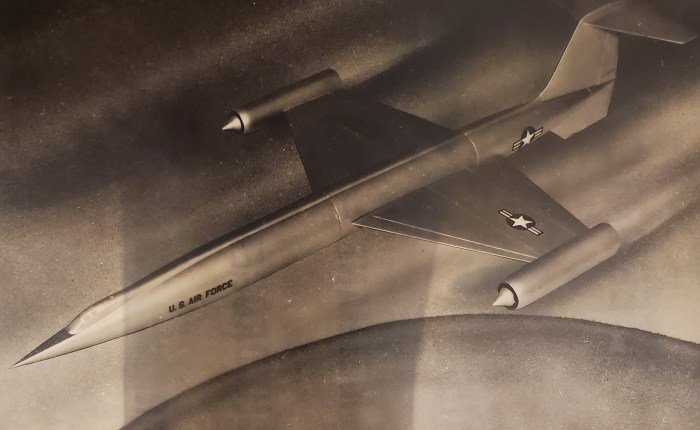
Nevertheless, the concept went through a series of iterations. The original CL-400 was a two-seat reconnaissance plane, 160 feet long with a 10-foot diameter. The wings resembled Lockheed’s F-104 Starfighter, and the plane’s vertical fin was retractable. It was designed to cruise at 99,500 feet, going Mach 2.5, for a maximum range of 2,200 nautical miles.

CL-400-14
An illustration showing the relative size comparison of the C-400-14 with a Boeing B-52 Stratofortress and a Lockheed Constellation (Source: The Huntington Library, California, Ben Rich Papers, Box 3, Folder 1, Projects – Engineering – CL-400)

That was just the beginning. Variant designs on the CL-400, Rich says, ‘were studied from the standpoint of achieving maximum range rather than maximum altitude.’ As evident from the accompanying series of plan drawings, the original CL-400 was near the size of the massive Boeing B-52 Stratofortress bomber, but increasing its range meant increasing the fuel capacity. So, the designs got bigger. Much, much bigger.
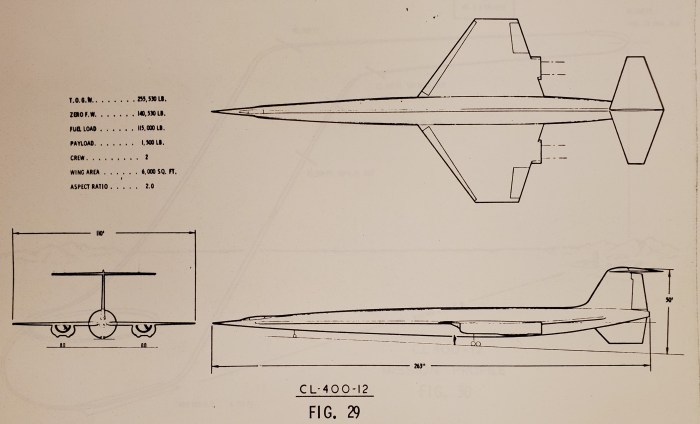
CL-400-12
Drawing of the CL-400-12. (Source: An illustration showing the relative size comparison of the C-400-14 with a Boeing B-52 Stratofortress and a Lockheed Constellation (Source: The Huntington Library, California, Ben Rich Papers, Box 3, Folder 1, Projects – Engineering – CL-400)

The CL-400-12 was more than double the size of a B-52 and designed for a 4,720 nautical mile range with four engines blasting it to Mach 2.5. Rich’s notes simply stated that ‘the aircraft size is quite large.’
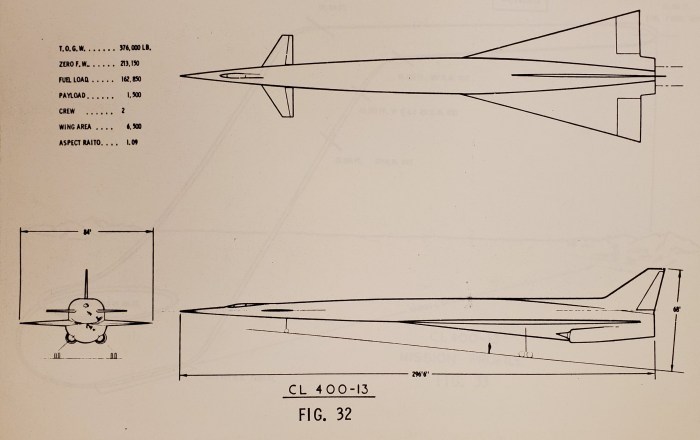
CL-400-13
Drawing of the CL-400-13. (Source: Drawing of the CL-400-12. (Source: An illustration showing the relative size comparison of the C-400-14 with a Boeing B-52 Stratofortress and a Lockheed Constellation (Source: The Huntington Library, California, Ben Rich Papers, Box 3, Folder 1, Projects – Engineering – CL-400)

The CL-400-13 took the idea even further with a cone-delta design and forward canards. The aeroplane was almost the length of one football field, with a gross take-off weight of 376,000 pounds. Nevertheless, it could cruise at Mach 4 for a total range of 9,000 nautical miles. The CL-400-14 was similar in size to the -13 but used four smaller engines instead of two big ones.

CL-400-14 1
Drawing of the CL-400-14 (Source: Drawing of the CL-400-13. (Source: Drawing of the CL-400-12. (Source: An illustration showing the relative size comparison of the C-400-14 with a Boeing B-52 Stratofortress and a Lockheed Constellation (Source: The Huntington Library, California, Ben Rich Papers, Box 3, Folder 1, Projects – Engineering – CL-400)

Hydrogen, as readers familiar with the Hindenburg disaster will attest, is also very dangerous. Lockheed had an approach to address the danger: try to cause a series of hydrogen explosions. Rich’s notes explained that ‘Numerous hydrogen ignition tests were made so as to get a feel for the damage potential in such an explosion, and it was found that the danger was not nearly as great as expected. Explosions were generally mild, and hydrogen fireball radiation was much less than that from a comparable kerosene fire.’ They tried to create an explosion 61 times, and only twice (when purposefully mixed with oxygen and ignited) did it cause ‘a bona fide explosion.’ Lockheed engineers were convinced LH could be handled safely – even more critically since the top-secret nature of the program meant that if there were an uncontrollable fire, they would not be able to call the fire department.[2]

Lockheed built a massive facility to test methods to produce, store, and transport the large quantities of liquid hydrogen necessary to operate a fleet of huge, LH-guzzling aeroplanes a few hundred yards away from the Burbank Municipal Airport. Dr Russell Scott, a leading expert on liquid hydrogen from the U.S. Bureau of Standards, visited the facility and said, ‘My God in heaven, you’re gonna to blow up Burbank.’[3] Ultimately, the logistical challenges of operating a fleet of LH aircraft proved insurmountable at the time. After examining the international basing requirements for the necessary fuel, Johnson gave up on the project. He called the Secretary of the Air Force, James Douglas, and said, ‘I’m afraid I’m building you a dog. My recommendation is that we cancel Suntan.’[4] Today, U-2s are still flying, and the Burbank site, which was once the home for testing and production of classic Lockheed aircraft, has been turned into a giant shopping complex featuring a Best Buy and Wal-Mart. In a way, maybe Burbank did blow up.

It is tempting to write off this story as a historical footnote, but the story of Suntan has three important takeaways: First, failure is important. Just because the project never went to production does not mean it was insignificant. With the aerospace industry currently looking into the potential use of hydrogen fuel, projects like this are still relevant. Second, failed designs still have a strong influence on those that succeed. Going through the process of designing these aircraft and thinking through potential solutions taught these engineers a lot. Many of the design elements first experimented with on the CL-400 went on to have a strong influence on the design of later aircraft – especially the A-12, the forerunner of the SR-71 Blackbird.

Finally, the CL-400 shows the importance and power of imagination. These planes might seem wild, but the effort shows that engineers could push themselves to think outside the box. This reveals the mindset underneath American Cold War aviation design – that it often gravitated to the massive or even outlandish, but it is also inspiring. I am not an aircraft designer, but I hope that in my own life and work, I am pushing myself to think beyond the boundaries of what I think might be possible, explore new ideas and see where they lead.

Dr Michael Hankins is the Curator for US Air Force, Navy, and Marine Corps post-World War II Aviation at the Smithsonian National Air and Space Museum and the author of Flying Camelot: The F-15, the F-16, and the Weaponization of Fighter Pilot Nostalgia (2021). In addition, he is a former Professor of Strategy at the USAF Air Command and Staff College eSchool, and a former Instructor of Military History at the US Air Force Academy. He earned his PhD in history from Kansas State University in 2018, and his master’s in history from the University of North Texas in 2013.

Header image: An artist’s impression of the CL-400 in flight. (Source: The Huntington Library, California, Ben Rich Papers, Box 3, Folder 1, Projects – Engineering – CL-400)

[1] Unless otherwise noted, all information, quotations, and images in this article are taken from: The Huntington Library, California, Ben Rich Papers, Box 3, Folder 1, Projects – Engineering – CL-400.

[2] John L. Sloop, Liquid Hydrogen as a Propulsion Fuel, 1945-1959 (Washington, DC: National Aeronautics and Space Administration, 1978), p. 149.

[3] Ben Rich and Leo Janos, Skunk Works: A Personal Memoir of My Years at Lockheed (New York: Little, Brown and Company, 1994), p. 173.

[4] Rich and Janos, Skunk Works, 177.
#Podcast – Origins of the F-14 Tomcat and F-15 Eagle: An Interview with Dr Tal Tovy

#Podcast – Origins of the F-14 Tomcat and F-15 Eagle: An Interview with Dr Tal Tovy

Editorial Note: Led by Editor Dr Mike Hankins, From Balloons to Drones produces a monthly podcast that provides an outlet for the presentation and evaluation of air power scholarship, the exploration of historical topics and ideas, and provides a way to reach out to both new scholars and the general public. You can find our Soundcloud channel here. You can also find our podcast on Apple Podcasts and Google Podcasts.

Our latest episode concerns the Grumann F-14 Tomcat and the McDonnell Douglas F-15 Eagle, two popular and historically significant aeroplanes. We arere joined by Dr Tal Tovy, senior lecturer at Bar-Ilan University in Israel and author of Tomcats and Eagles: The Development of the F-14 and F-15 in the Cold War (2022) from Naval Institute Press. Tovy gives us an up-close look at the motivation behind designing these aircraft and speaks to how the Israeli Air Force experience had a particular influence.

9781612519104

Dr Tal Tovy is a Senior Lecturer at Bar-Ilan University in Israel. He holds a PhD in history from the University of Haifa. A veteran of the Israel Defense Forces, Tovy has published extensively on various military history topics, including the influence of counterinsurgency theory upon American combat operations. His other fields of interest include Western military thought and U.S. military history. Tovy is the author of two previous books: The Changing Nature of Geostrategy 1900-2000: The Evolution of a New Paradigm and The Gulf of Tonkin: The United States and the Escalation in the Vietnam War. 

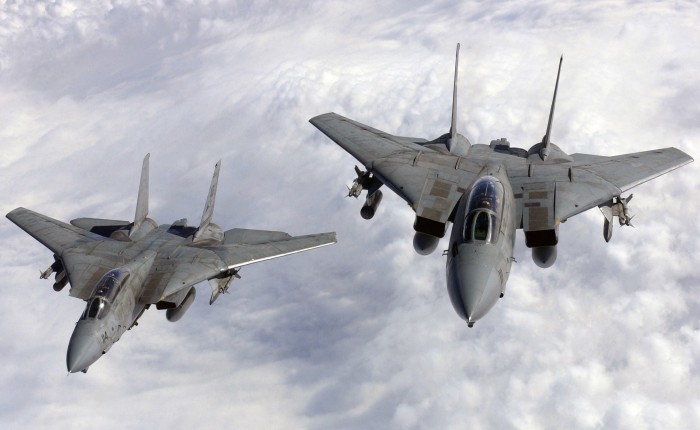
Header image: A pair of US Navy Grumman F-14A Tomcats from  VF-211  in flight over Iraq in December 2003. VF-211 was assigned to Carrier Air Wing 1 aboard the aircraft carrier USS Enterprise for a deployment to the Mediterranean Sea and the Indian Ocean from 28 August 2003 to 29 February 2004. (Source: Wikimedia)

#BookReview – Lavi: The United States, Israel and the Controversial Fighter Jet

#BookReview – Lavi: The United States, Israel and the Controversial Fighter Jet

John W. Golan, Lavi: The United States, Israel and the Controversial Fighter Jet. Lincoln NE: Potomac Books, 2016. Index. Maps. Figures. Tables. Images. Appendices. HBK. 416 pp.

Reviewed by Richard Shimooka

lavi

John Golan’s Lavi is a unique and welcome contribution to the field as the history of defence procurement, in general, remains a somewhat esoteric research area. Golan’s work focuses on the Israeli designed Lavi, a purpose-built close air support aircraft designed to replace the venerable Douglas A-4 Skyhawk in the Israeli Armed Forces (IAF) service. It had a short, bright life before the project reached an ignominious conclusion with a high stakes Israeli government cabinet meeting. Golan’s book chronicles the project’s history, drawing from a wide variety of primary sources, including documentation, interviews, and secondary sources. He effectively conveys Israel’s unique security environment and the need for a strong indigenous industrial base, which helped guide the programme’s development.

Golan’s unique background as an aviation engineer infuses his work with a different perspective than other accounts. He sews together many of the programme’s technical aspects with the project’s political, diplomatic, programme management, and doctrinal dimensions. That synthesis is rare in many accounts, which examine one or two areas and only make perfunctory acknowledgements of other areas. Lavi avoids that trap and is one of the most comprehensive treatments of a recent procurement project. The book starts by exploring the strategic and doctrinal history of the IAF that led to the project and the development of the country’s aviation industry that enabled its creation. A crucial part of these sections is how Golan highlights the experiences of various personnel, such as Benjamin Peled (p. 24) and Ezer Weizman (p. 37), who both played important roles during the Lavi’s gestation. The book then moves onto the programme’s project management, political, and technical dimensions, tracing its development until its demise. The book’s last third covers some of the post-cancellation fallout and effects.

One part of the book bears special mention: the appendixes. While most authors use them to elucidate topics not adequately addressed in the text, Golan adds nearly 100 pages covering various aspects of fighter design, performance, construction, and industrial considerations. No such comparable study exists that collects all these considerations in one place. It is the icing on top of the author’s already excellent book.

However, the account has a few shortcomings. The most apparent is how Golan addresses the factors and decision-making that led to the programme’s collapse. The book catalogues the wide array of factors that led to its cancellation, such as the desperate state of Israeli public finances in the late 1980s. However, the book largely relegates them as contributing factors throughout its narrative. Golan reserves much of the blame surrounding the programme’s collapse to US Secretary of Defense, Caspar Weinberger. In particular, the secretary’s anti-Israeli perspective and dogged bureaucratic approach are noted as being particularly effective at convincing already reticent Israeli authorities to cancel the programme.  Golan prioritises Weinberger’s agency over all other actors and seems to give his role the preponderance of blame for the outcome.

While Weinberger undoubtedly played an obstructionist role, the Israeli government was not the only one to encounter his department’s intransigence towards multinational fighter projects. For example, the development of the Japanese Mitsubishi F-2 programme experienced similar levels of strife. Thus, any multinational programme would encounter political hurdles within the United States.

Nevertheless, Golan’s focus on the political and diplomatic aspects of the programme’s cancellation slightly underplays some of the other dynamics that affected the outcome. One is the economic and industrial trends that affected all western fighter development programmes during the latter half of the Cold War. The number of Western fighter manufacturers started to decline between the 1960s to 1980s, largely due to the rising cost of developing and producing fighters, which far outpaced normal inflation.

In isolation, Israel might have been able to absorb these cost increases. However, the fiscal realities of the state were dire, as Golan described:

At the time that Israel’s National Unity Government took office, the nation was undergoing an economic earthquake. Decades of extended defense budgets had taken their toll. Defense expenditures had always been a leading element in Israel’s national budget. In the aftermath of the 1973 war, however, Israeli defense expenditures had skyrocketed – consuming an average of 24 percent of Israel’s gross domestic product during the decade that followed. In comparison, the United States – even at the height of the war in Vietnam – devoted less than 10 percent of its GDP toward defense. The burden on Israel’s economy was unbearable, driving budget deficits and inflation to unprecedented levels. (p. 101)

Golan’s characterises the factors pertaining to the Lavi’s demise as chess pieces employed by Weinberger and his staff to cancel the fighter. However, given these desperate economic realities, it is difficult to see how the programme would continue even after the fateful cancellation of the fighter on August 31, 1987. Already there was significant support for either cancelling or curtailing Lavi purchases within the Israeli cabinet. If purchases were reduced, this would create a phenomenon known as a death spiral, where decreasing lot purchases result in higher unit costs, often leading to further reductions.

Another significant dynamic unexplored in the book is the major, ongoing doctrinal shift in the close-air support mission. Golan’s work is effusive in its praise for the Israeli fighter, often pointing out its ability to undertake this mission. However, the book fails to cover the changing threat landscape, which would pose significant challenges for the aircraft’s viability in its assigned mission.

It should be noted that these are relatively minor issues in an otherwise excellent book. Very few accounts have synthesised such a disparate but relevant array of facts to create an authoritative account of the programme. Golan’s weighting of these factors may invite some critique and debate, but that should by no means discourage anyone from reading this outstanding work.

Richard Shimooka is a Senior Fellow at the Macdonald-Laurier Institute in Ottawa, Canada. He was a Senior Fellow at the Defence Management Studies Programme at Queen’s University from 2007–2012, and a Research Fellow at the Conference of Defence Associations Institute from 2012-2017. Richard works’ cover a diverse array of topics, including Canadian and American foreign and defence policy, modern air power and defence procurement.

Header image: IAI Lavi B-2 prototype at Muzeyon Heyl ha-Avir, Hatzerim, Israel. 2006. (Source: Wikimedia)

Who Ruined the F-16? The Fighter Mafia’s Battle against the United States Air Force

Who Ruined the F-16? The Fighter Mafia’s Battle against the United States Air Force

By Dr Michael W. Hankins

Editorial note: This article is adapted from an excerpt from Flying Camelot: The F-15, the F16, and the Weaponization of Fighter Pilot Nostalgia, by Michael W. Hankins. Copyright (c) 2021 by Michael Wayne Hankins and Smithsonian Institution. Used by permission of the publisher, Cornell University Press.

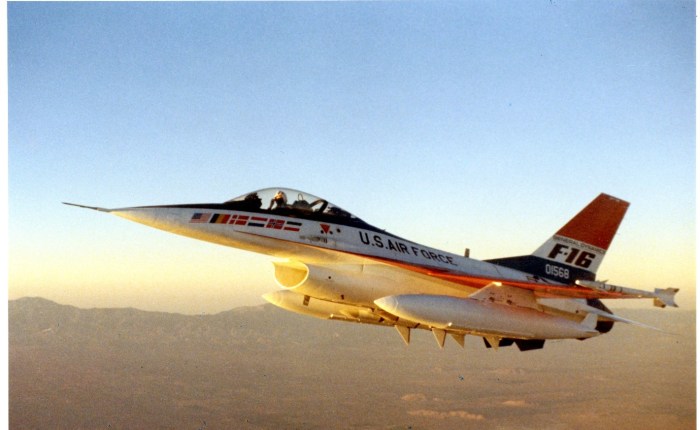
On January 20, 1974, test pilot Phil Oestricher began a high-speed taxi test of the General Dynamics YF-16 prototype. When the plane went into an oscillating roll that slammed the left-wing into the ground, he decided it was safer to just take off for what became the aircraft’s first flight. The YF-16 was a passion project for many people across the aerospace defense community, especially a group known as the ‘Fighter Mafia,’ led by US Air Force (USAF) Colonel John Boyd. The group also included General Dynamics engineer Harry Hillaker, analyst Pierre Sprey, fighter pilot Everest Riccioni, analyst Thomas Christie, among many others. The YF-16 was the realization of their dream of a lightweight, ultra-specialized dogfighter – what Oestricher called ‘a pure air-to-air fighter airplane […] the Camelot of aeronautical engineering.’[1]

Yet, when USAF began the process of turning the YF-16 into the production model F-16A Fighting Falcon, the Fighter Mafia became bitterly opposed to the process. Their extreme frustration with the changes to the airplane set the stage for later debates as the group expanded and morphed into the Defense Reform Movement.

YF-16_and_YF-17_in_flight
An air-to-air right side view of a YF-16 aircraft and a YF-17 aircraft, side-by-side, armed with AIM-9 Sidewinder missiles. (Source: Wikimedia)

After winning a flyoff competition in January 1975 against Northrop’s YF-17 Cobra, the F-16 design went to the Configuration Control Committee, headed by former fighter pilot General Alton Slay, to produce an operational version of the plane. The Fighter Mafia nicknamed this group the ‘Add-On Committee,’ assuming Slay’s role was to exact the Air Force’s revenge by making sure the F-16 did not threaten the F-15 Eagle program. That meant turning the Fighting Falcon into a multi-role craft emphasizing ground attack.[2]

Christie, and his subordinate Robert J. Croteau, tried to stop this process before it started with a memo to Leonard Sullivan, Jr., the Director of Defense Program Analysis and Evaluation. They warned that moving away from the focus on air superiority would ‘subvert the purpose of the entire LWF/ACF [Lightweight fighter/Air Combat Fighter] program.’ The radar was the largest point of contention. They argued that a small radar such as the APQ-153 used in the F-5 was plenty. They wanted a configuration ‘based on primary commitment of the ACF to intense high frequency dogfights.’[3]

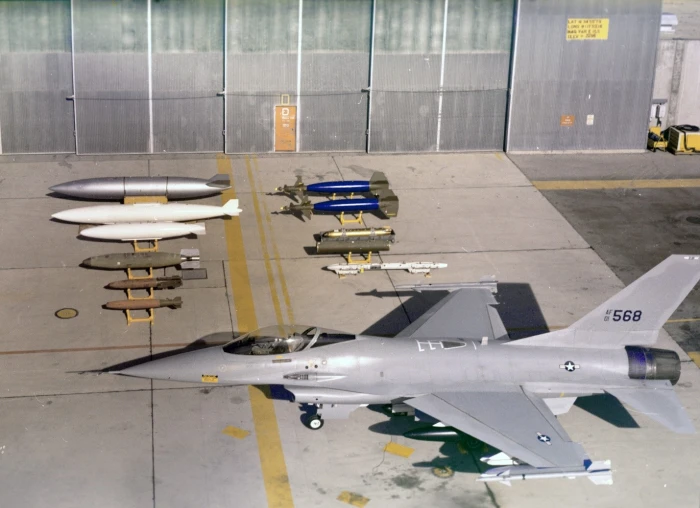
Instead, the production version of the F-16 put on almost 1,000 pounds. The landing gear was strengthened, the fuselage, wings, and tail area grew, and a tailhook was added. Chaff and flare systems and improved avionics also appeared. The production model added more pylons for ground-attack ordnance, with the existing pylons strengthened for heavier weapons. The loading capacity almost doubled, from 7,700 pounds to 15,200. Although the acceleration and agility of the operational F-16 was slightly less than the prototype YF-16, the production model did have increased range, thrust, and load factor, able to pull 9 Gs.[4]

The Air Force added a ground-looking, all-weather, night-capable, medium-range radar to the F-16, the Westinghouse AN/APG-66. The company maintained that this system was ‘The Fighter Pilot’s Radar,’ that would ‘allow the pilot to keep his head up and his hands on the throttle and stick throughout a dogfight engagement.’ With the flick of a switch, the radar provided ground mapping, improved with a Doppler beam, for both navigation and weapons delivery.[5] The avionics systems incorporated Boyd’s ‘Energy Maneuverability Theory’ into the cockpit via an ‘Energy-Maneuverability Display’ that gave pilots visual cues to indicate their current available energy, how to maximize their turn rates, the level of G-forces available, altitude and airspeed limits, and how to gain maneuvering energy quickly.[6]

Picture3
The YF-16 displayed alongside the ground attack armament it can carry, Edwards AFB, California, 12 February 1975 (Source: US Air Force)

Slay thought that the F-16 could complement the F-15 best if it was a multi-role aircraft. As he told the Senate in 1976:

The F-16 has a capability that the F-15 does not have, deliberately so. We did not choose to burden the F-15 radar with a significant air-to-ground capability. We have engineered the F-16 radar to have very good ground mapping [and] to do an extremely good job of air-to-ground missions.[7]

Slay appreciated the F-16’s maneuverability, noting ‘I almost had a heart attack watching the F-16 do a split ‘S’ from 2,700 feet. It was fantastic as far as maneuverability is concerned.’ He argued this made it useful in roles beyond dogfighting:

[t]he things that made [the F-16] good in an air-to-air role […] were extremely good in [an] air-to-ground context […] We got more than we paid for in having a multipurpose capable airplane.[8]

Boyd was unhappy with these changes and wrote to Slay several times in the opening months of 1975, arguing that ‘F-16 maneuvering performance has diminished significantly because of engineering necessity and conscious decisions that resulted in a substantial weight increase.’ Boyd said that the wing area, which had already been increased from 280 to 300 square feet, must be increased further to 320 to preserve the plane’s agility. This plan was rejected due to increased cost and a perception of increased risk with a larger wing.[9]

Boyd remained cordial in his correspondence with Slay, but privately, he and the rest of the Fighter Mafia seethed. Major Ray Leopold, Boyd’s assistant and mentee, described the group as worried that the F-16 would be ‘a disastrous compromise’ and ‘fall prey to the same vagrancies of the bureaucracy’ that the F-15 had. Leopold recalled Boyd complaining about the addition of armor plating, arguing that ‘it was mor[e] important to be maneuverable and less likely to get hit in the first place.’ He railed against the increase in bombing capacity, claiming that ‘the original concept of designing for energy maneuverability was compromised.’ Sprey was frustrated as well, claiming that the Air Force ‘degraded’ the F-16 more than they had the F-15 by increasing its size and adding equipment, most of all the radar.[10]

Hillaker, however, was not against some of the changes. Although he said that Boyd and Sprey’s frustration was reasonable, he recognized that the mafia’s original design was perhaps too limited: ‘If we had stayed with the original lightweight fighter concept,’ he explained, ‘that is, a simple day fighter, we would have produced only 300 F-16s.’[11]

On February 4, 1975, Croteau and Christie wrote to Sullivan, arguing that the changes to the F-16 were ‘unacceptable.’ They believed that the aircraft should have ‘a minimum of sophistication,’ that the additional avionics and radar capabilities were too complex and expensive, and that the added weight reduced performance in air combat. They charged: ‘Extensive air-to-ground capability of [the] proposed configuration compromises air-to-air capability.’ Croteau’s memo did present a potential design that offered the compromise of accepting some avionics, a radar, and limited ground-attack capability, but not including all the Air Force’s changes.[12] This model was not adopted.

By February 21, test pilot Chuck Myers sent a memo to Defense Secretary James Schlesinger’s special assistant, Martin Hoffman, arguing that the changes made to the plane made it ‘a far cry from the austere FIGHTER’ that the Fighter Mafia had envisioned, and that USAF needed to ‘restore the character of the airplane.’[13] He gave instructions for fixing the plane, titled ‘F-16 (LWF/ACF) PROGRAM RESTORATION.’ It excoriated the inclusion of ground attack and radar capability, then charged: ‘The expansion of mission spectrum is accomplished with an associated increases [sic] in weight, complexity, support burden and a loss of air combat maneuvering capability, the one mission for which the original design had been optimized.’ The paper concluded: ‘This mutilation of the character of the LWF through the ACF missionization process is a management travesty which cannot go unchallenged.’[14]

Members of the Fighter Mafia tended to assume that the changes made to the F-16 were retaliation for their challenges to the Air Staff. However, the Air Force had understandable reasons for adding additional capabilities to the F-16. The Air Staff argued that if the F-16 had no ground attack capability, then it could not truly replace the F-4 Phantom, which USAF wanted to phase out while preserving mission capabilities. If the F-16 conformed to the Fighter Mafia’s vision, then 30 percent of the Air Force inventory would be incapable of attacking ground targets. The Air Staff found that unacceptable. Although the F-16 could achieve air superiority, the aircraft would be useless once that superiority had been achieved in a conflict. By adding ground-attack functions, the Air Staff argued, the F-16 could be used in a ‘swing role’ to attack ground targets after air superiority had been won.[15]

An austere F-16 likely would have faced challenges without substantial radar capability. The inability to operate at night or in low-visibility weather conditions would render the aircraft problematic at best. Given that US planners expected a potential Soviet mass attack to occur in Europe, known for its often-cloudy weather conditions, deploying large numbers of such a clear sky, day-only fighter in that scenario would leave US forces particularly vulnerable. No amount of maneuverability could overcome the inability to see through clouds or in the dark against other aircraft that could. It is possible that some Air Force officials could have sought some sort of retaliation against the Fighter Mafia’s pet project, but the case for multi-role requirements had logical arguments behind it and came from a wide group.

Picture1
This cartoon from a 1977 General Dynamics briefing depicts the ‘myth’ that the F-16 production model had inferior performance to the original YF-16 prototype (Source: Lockheed Martin photo via Smithsonian National Air and Space Museum).

The F-16 modifications were a breaking point for Boyd and the Fighter Mafia. During the late 1970s, Boyd frequently gathered with his acolytes, complaining that the Air Force’s ‘goldplating’ was destroying the ‘pure’ fighter he had designed. After this point, Boyd focused entirely on his intellectual activities. He and others set their sights on different issues, sometimes regarding military hardware, but also doctrine, education, and procurement. These efforts expanded his movement. The Fighter Mafia soon took their arguments beyond the halls of the Pentagon and directly to the public.

Dr Michael Hankins is the Curator for US Air Force, Navy, and Marine Corps post-World War II Aviation at the Smithsonian National Air and Space Museum and the author of Flying Camelot: The F-15, the F-16, and the Weaponization of Fighter Pilot Nostalgia (2021). He is a former Professor of Strategy at the USAF Air Command and Staff College eSchool, and former Instructor of Military History at the US Air Force Academy. He earned his PhD in history from Kansas State University in 2018 and his master’s in history from the University of North Texas in 2013. He has a web page here and can be found on Twitter at @hankinstien.

[1] Quoted in Wade Scrogham, Combat Relevant Task: The Test & Evaluation of the Lightweight Fighter Prototypes (Edwards AFB: Air Force Test Center History Office, 2014), p. 67.

[2] James Fallows, National Defense (New York: Vintage, 1982), p 105; Grant Hammond, Mind of War: John Boyd and American Security (Washington, Smithsonian Books, 2001), p. 97.

[3] US Marine Corps Archives and Records Division, Quantico, VA, Robert Coram Personal Papers, Box 3 Folder 13, Robert J. Croteau, Memorandum for Mr. Sullivan, through Mr. Christie, ‘F-16 Air Combat Fighter DSARC II,’ January 27, 1975.

[4] Smithsonian National Air and Space Museum (NASM) Archives, General Dynamics F-16 Fighting Falcon Series, Briefing Packets, AG-033100-03. General Dynamics, ‘F-16 Program Summary,’ August 15, 1977, ASD 771456.

[5] NASM Archives, General Dynamics F-16 Fighting Falcon Series, Avionics Systems, AG-033100-02, Westinghouse Pamphlet, ‘AN/APG-68, The New Standard for Fighter Radar,’ no date; NASM Archives, General Dynamics F-16 Fighting Falcon Series, Avionics Systems, AG-033100-02, Westinghouse Public Relations Release, ‘Westinghouse Starts Full-Scale Development of the F-16 Radar,’ no date.

[6] NASM Archives, General Dynamics F-16 Fighting Falcon Series, Briefing Packets, AG-033100-02, General Dynamics, ‘F-16 Energy Management Displays,’ pamphlet, no date.

[7] Hearings before the Committee on Armed Services, United States Senate, 94th Congress, 2nd Session, S.2965, Part 6: Research and Development, February 25-26, March 2, 4, 9, 1976, 3739-3740.

[8] Ibid, Part 9: Tactical Airpower, March 8-12, 1976, 4896.

[9] US Marine Corps Archives and Records Division, John Boyd Personal Papers, Box 13 Folder 1, John Boyd, Memorandum for General Slay, ‘F-16 Wing Area Selection,’ March 31, 1975; US Marine Corps Archives and Records Division, Boyd Papers, Box 13 Folder 1, John Boyd, Memorandum for Maj Gen Slay, ‘F-16 Wing Area,’ March 4, 1975; US Marine Corps Archives and Records Division, Boyd Papers, Box 13 Folder 1, John Boyd, Memo to Major General Slay, ‘ACF Wing Area,’ January 23, 1975.

[10] US Marine Corps Archives and Records Division, Coram Papers, Box 6 Folder 7, Email, Thomas Christie to Robert Coram, February 5, 2001; US Marine Corps Archives and Records Division, Coram Papers, Box 6 Folder 7, Email, Ray Leopold to Robert Coram, January 31, 2001; US Marine Corps Archives and Records Division, Coram Papers, Box 5 Folder 1, Sprey Interview notes, August 2000.

[11] ‘Interview Part II: Harry Hillaker: Father of the F-16,’ Code One (July 1991), p. 9.

[12] President Gerald Ford Presidential Library, Martin R. Hoffman Papers, Box 21, folder ‘Lightweight Fighters (Navy & Air Force), 1974-75 (5),’ Memo, Robert J. Croteau, to Mr. Sullivan, through Mr. Christie, ‘F-16 DSARC II Position Recommendation,’ February 4, 1975, p. 1, 3.

[13] President Gerald Ford Presidential Library, Hoffman Papers, Box 21, folder ‘Lightweight Fighters (Navy & Air Force), 1974-75 (4),’ Chuck Myers, Memo to Hoffman, 21 February 1975.

[14] President Gerald Ford Presidential Library, Hoffman Papers, Box 21, folder ‘Lightweight Fighters (Navy & Air Force), 1974-75 (4),’ ‘F-16 (LWF/ACF) PROGRAM RESTORATION,’ Myers Memo to Hoffman, 21 February 1975, pp. 2-3.

[15] President Gerald Ford Presidential Library, Hoffman Papers, Box 21, folder ‘Lightweight Fighters (Navy & Air Force), 1974-75 (5),’ ‘Air Combat Fighter DSARC-II, General Counsel,’ 11 March 1975, ‘Air Force Response to the OSD List of Questions on ACF (F-16).’

#Podcast – Patents for Power: An Interview with Dr Robert M. Farley

#Podcast – Patents for Power: An Interview with Dr Robert M. Farley

Editorial Note: Led by our Editor Dr Mike Hankins, From Balloons to Drones produces a monthly podcast that provides an outlet for the presentation and evaluation of air power scholarship, the exploration of historical topics and ideas, and provides a way to reach out to both new scholars and the general public. You can find our Soundcloud channel here. You can also find our podcast on Apple Podcasts and Google Podcasts.

In our latest episode, we interview Dr Robert M. Farley about his latest book Patents for Power: Intellectual Property Law and the Diffusion of Military Technology (2020). We discuss how intellectual property dominates the world of military aircraft technology. What happens when one country steals another’s aeroplane? Not just to fly it, but to mass-produce it? From the Wright Brothers to the Soviet version of the B-29, to the F-35, air power is all about intellectual property.

Dr Robert M. Farley is a senior lecturer in the Patterson School of Diplomacy and International Commerce at the University of Kentucky. He is the author of Grounded: The Case for Abolishing the United States Air Force and The Battleship Book.

Header Image: A Tupolev Tu-4 ‘Bull’ at the Central Air Force Museum at Monino, Russia. The Tu-4 was reversed engineered from the Boeing-B-29 Superfortress and first appeared after the Second World War. (Source: Wikimedia)

#Podcast – The Secret Contest to Invent Invisible Aircraft: An Interview with Dr Peter Westwick

#Podcast – The Secret Contest to Invent Invisible Aircraft: An Interview with Dr Peter Westwick

Editorial Note: From Balloons to Drones is pleased to announce our new podcast series. Led by our Editor Dr Mike Hankins, the series builds on the success of From Balloons to Drones, and provides an outlet for the presentation and evaluation of air power scholarship, the exploration of historical topics and ideas, and provides a way to reach out to both new scholars and the general public. You can find our Soundcloud channel here.

In this episode, we interview Dr Peter Westwick, Director of the Huntington-USC Aerospace History Project, about his new book Stealth: The Secret Contest to Invent Invisible Aircraft. We talk about the design process of stealth planes like the F-117 and B-2 at Lockheed and Northrop and answer the tough questions, like why did stealth research seem to be focused on California? What role did Russian research play in stealth development? And of course, how is Disney connected to all this?

You can find a review of Westwick’s book here.

Dr Peter Westwick is a research professor of history at the University of Southern California and Director of the Aerospace History Project at the Huntington-USC Institute on California and the West. He is the author or editor of several books, including Into the Black: JPL and the American Space Program, 1976-2004, which won book prizes from the American Institute of Aeronautics and Astronautics and the American Astronautical Society.

Header Image: The Lockheed F-117 Nighthawk stealth fighter flying over Nellis Air Force Base in 2002. (Source: US Air Force)

#BookReview – Stealth: The Secret Contest to Invent Invisible Aircraft

#BookReview – Stealth: The Secret Contest to Invent Invisible Aircraft

Reviewed by Dr Mike Hankins

Peter Westwick, Stealth: The Secret Contest to Invent Invisible Aircraft. New York: Oxford University Press, 2020. Illustrations. Glossary. Notes. Index. Hbk. 251 pp.

The advent of stealth technology – making aircraft nearly invisible to radar detection – in the 1970s was one of those rare moments in the history of military aircraft technology that seemed to shape much of the development that followed it. Over 40 years later, most new aircraft designed around the world incorporate stealth characteristics in some way or another. Taking a sweeping look at the advent and early development of stealth aircraft within a broad context is the aim of Stealth: The Secret Contest to Invent Invisible Aircraft by Peter Westwick, director of the University of Southern California’s Aerospace History Project. The book is a fascinating look at two companies, Lockheed, and Northrop, that continually competed for stealth projects – each coming at the technology from very different perspectives and methodologies. With this comparative lens, Westwick explores the ways that culture shaped each company’s differing solutions to similar technological problems.

The most significant limitation for any book about stealth is the lack of unclassified sources, and this book is no exception. While much of the material here will be familiar to stealth aficionados, Westwick has conducted a large number of new interviews that shed new light on some familiar events, and reveal new, fresh stories, many that speak to the unique personal experiences of those involved in stealth development.

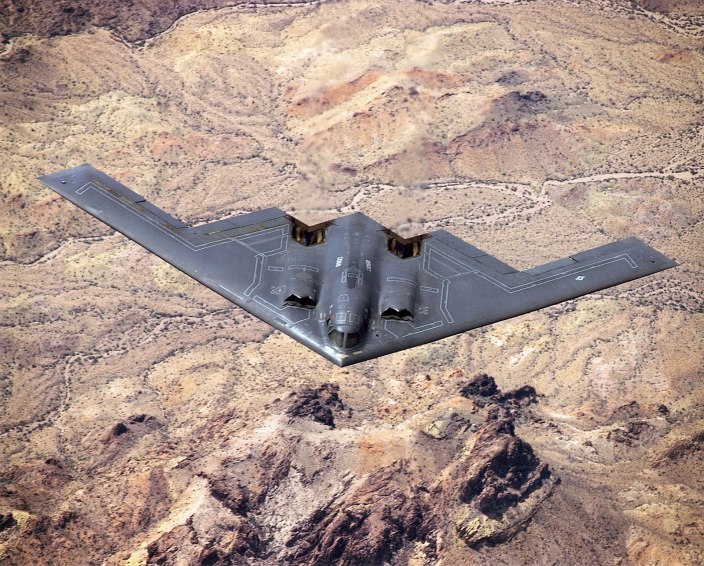
The Northrop B-2 Spirit stealth bomber on its first flight in 1989. (Source: US Air Force)

Westwick emphasises that Lockheed’s approach to stealth relied extensively on computer modelling, which was a significant shift for the firm at the time. For decades, successful designs from Lockheed, including the A-12 and SR-71 Blackbird, which each incorporated stealth characteristics, had been grounded in Chief Executive Officer, Clarence ‘Kelly’ Johnson’s adage that planes that look beautiful fly beautiful. When Johnson retired, his replacement Ben Rich allowed radar experts to have a more significant say in the design process. Their creation of powerful computer programs that could calculate radar returns from a variety of shapes fueled their design process. Nevertheless, the limitations of the program influenced the team to rely on flat, faceted surfaces – an approach that was quite successful, winning the company that contract for the aircraft that became the F-117 Nighthawk.

Lockheed’s programs made use of Soviet research that, ironically, had been requested for translation by engineers at Northrop. Although Northrop also incorporated this research and made similar computer modelling programs, their engineers combined them with a more intuitive approach. Northrop designers used their extensive knowledge of radar theory in a more hands-on way, often literally through iterative modelling and moulding. One of the more dramatic moments of Westwick’s narrative involves Northrop engineer Fred Oshiro visiting Disneyland and sitting outside the Tea Cup ride playing with a lump of modelling clay – a common practice at Northrop – until he intuitively developed the idea of using complex curves to minimize radar returns. The Tea Party ride had been designed by Lockheed engineer and stealth pioneer Richard Sherrer.

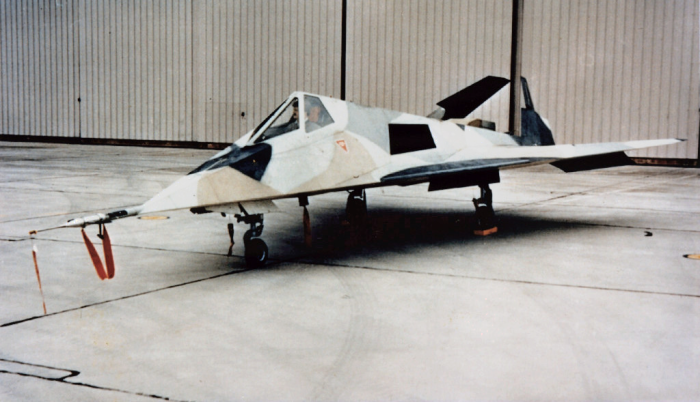
The Lockheed Have Blue prototype that eventually led to the F-117 Nighthawk stealth fighter. (Source: US Air Force)

This tale of two engineering houses, each with different cultural approaches to designing stealth, forms the backbone of the story, which traces the development of the Have Blue, F-117, Tacit Blue, and B-2 programs. Along the way, Westwick dispels some prevalent misconceptions that frequently crop up in discussions of stealth. For example, some readers might assume that Northrop’s B-2 design was a ‘flying wing’ conception because the company was founded by Jack Northrop, who was obsessed with flying wings and designed several himself. However, Westwick reveals the company had completely abandoned the idea for decades, and only adopted it after Lockheed had submitted their flying wing bomber concept. Another of the more dramatic moments in the book involves the aging Jack Northrop’s heartwarming response to seeing the B-2 designs, which I will not spoil in this review.

Westwick goes beyond the analysis of these companies and attempts to place the development of stealth in a larger context in terms of culture, strategy, and Cold War geopolitics. This includes implying that the inherent creativity around the ‘[i]magineering’ culture of Disney that pervaded California in the 1960s and 70s was a contributing factor to stealth development. On a broader scale, Westwick goes as far as to say that stealth provided an alternative to nuclear deterrence, in some ways making nuclear weapons obsolete. He argues that stealth delivered what President Ronald Reagan’s fanciful Strategic Defense Initiative could only promise. With the ability to essentially defeat the Soviet Union’s massive investment into radar-based air defence networks, stealth broke the foundation of Cold War deterrence theory, and, according to Westwick, pressed the Soviet Union into an unsustainable increase in defence spending that contributed to the nation’s collapse. These ideas are interesting and worthy of consideration, but Westwick’s presentation of them is far too brief; these ideas are not nearly as fully developed as they could be. That does not take anything away from the book as it is. To really make these larger points hit home would probably require a different type of book with a different focus. However, this type of overarching analysis is welcome and thought-provoking, perhaps pointing to further research directions on how stealth technology contributed to the end of the Cold War in specific ways.

Overall, the book is an excellent addition to any air power or history bookshelf. This book manages to be the best starting point for those new to the topic of stealth while also providing new insights and details for the already initiated. Even more impressive, Westwick delivers these contributions while writing in an engaging and personal style that is great to read and sure to be enjoyed by scholars and still easily accessible for enthusiasts and general readers.

Dr Michael Hankins is the Curator of US Air Force History at the Smithsonian National Air and Space Museum. He is a former Professor of Strategy at the USAF Air Command and Staff College eSchool, and former Instructor of Military History at the U.S. Air Force Academy. He earned his PhD from Kansas State University in 2018 with his dissertation, ‘The Cult of the Lightweight Fighter: Culture and Technology in the U.S. Air Force, 1964-1991.’ He completed his master’s thesis at the University of North Texas in 2013, titled ‘The Phantom Menace: The F-4 in Air-to-Air Combat in the Vietnam War.’ He has a web page here and can be found on Twitter at @hankinstien.

Header Image: The Lockheed F-117 Nighthawk stealth fighter flying over Nellis Air Force Base in 2002. (Source: US Air Force)


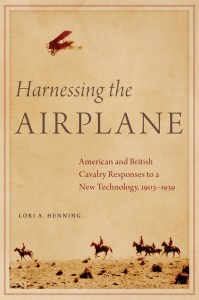
#BookReview – Harnessing the Airplane: American and British Cavalry Responses to a New Technology, 1903–1939

#BookReview – Harnessing the Airplane: American and British Cavalry Responses to a New Technology, 1903–1939

Reviewed by Dr Tyler Morton

Lori Henning, Harnessing the Airplane: American and British Cavalry Responses to a New Technology, 1903–1939. Norman, OK: University of Oklahoma Press, 2019. Figures. Tables. Appendices. Notes. Bibliography. Index. Hbk. xi + 224pp.

9780806161846

The advent of flying craft was, without doubt, a threat to the long-established roles of ground forces. Most historians are familiar with the intra- and inter-service battles that raged during the early days of aviation, but rare are the works that dive into specific details within the various army branches. Seeking to fill that historiographical gap, Lori Henning’s meticulously researched book does just that.

Harnessing the Airplane tells the story of how cavalrymen in the United States (US) and the United Kingdom (UK) dealt with the integration of aircraft – and to a lesser degree, the tank – into their branch. Analysing the first four decades following the aircraft’s invention, Henning shows that cavalrymen generally accepted the new technology, but were cautious about relinquishing the cavalry’s reconnaissance mission too hastily. Instead, the cavalry sought to experiment with aircraft to find ways to improve the reconnaissance service they provided to ground commanders.

Chapter one, ‘State of Affairs,’ sets the stage for the following analysis. In this chapter, Henning provides brief histories of the US and British cavalries. This baseline helps explain why both services saw the integration of the aircraft differently. The US cavalry embraced a wide range of missions and used the horse primarily for mobility purposes. This view of how to use horses led to strong resistance against aircraft as the US Cavalry viewed ground reconnaissance as one of its most essential functions. The British used the cavalry primarily for mounted combat and the pursuit of retreating enemy forces and this view allowed the British cavalry to be somewhat more accepting of aircraft.

Chapter two, ‘Early Response to Heavier-Than-Air-Flight,’ highlights the natural connection between aircraft and the cavalry. With reconnaissance being the first purpose of aircraft, cavalry reconnaissance was not surprisingly one of the first missions the aircraft sought to assume. In the earliest days, both nations’ cavalries acknowledged the potential of aircraft, but concluded that the technology was not sufficient; as Henning stated (p. 32):

The general consensus was that aviation would support the cavalry in the field as an auxiliary service and not replace mounted forces.

Chapter three, ‘Developing a Relationship in the 1920s,’ explores how both nations’ evaluated the First World War and the effectiveness of the new technologies that were introduced in that conflict. In the First World War, aircraft played a significant role while both cavalries were effectively absent. The public sentiment that the cavalry had become obsolete increased and cavalrymen in both nations had to defend their branch and find ways to justify its continued existence.

Chapter four, ‘National Economy,’ looks at the factor that may have been more damning to the cavalry than its poor performance in the First World War. In examining the financial arguments favouring aircraft over the cavalry, Henning provides a glimpse into reality. This was that the US and UK sought ways to decrease military expenditures and the aircraft’s proponents were more vociferous and persuasive in making this case than the proponents of cavalry.

Chapter five, ‘Autogiros and Mechanization,’ examines how cavalrymen continued to seek ways to work with the air forces to maximise both services’ effectiveness. By the 1930s, the relationship between air forces and cavalry had stabilised, but as time passed, airmen sought independence and increasingly focused on the strategic vice tactical use of aircraft. Both the British and American cavalry branches realised the need for its own air support, and as such, they turned to a new type of aircraft – the autogiro – to provide the airborne reconnaissance they needed.

Henning’s concluding chapter reminds us of the folly of abandoning functioning capabilities without first providing suitable replacements. Cavalrymen instantly recognised the potential of aircraft and tanks but approached their integration into the army from a cautious view. Despite being labelled as ‘backwards,’ the cavalrymen prudently sought ways to integrate the aircraft as its capabilities increased slowly. In telling this story, Harnessing the Airplane captures the essence of how organisations incorporate new technologies. Henning’s expert analysis highlights the challenge leaders face when presented with the next ‘game-changing technology.’ As she demonstrates, often, many are eager to go all-in without first ensuring that the ‘new’ can replace the ‘old.’ As we now stand at another technological crossroads with continual talk of replacing soldiers with robots, manned aircraft with drones, and analysts with artificial intelligence, this work highlights the rational approach of the early 20th century cavalrymen and provides a case study for today’s military thinkers to consider.

Dr Tyler Morton is currently a fellow at the Woodrow Wilson International Center for Scholars in Washington, DC. He is an active duty US Air Force officer who holds a PhD in Military Strategy from the Air University. He is the author of From Kites to Cold War: The Evolution of Manned Airborne Reconnaissance (2019). He can be found on Twitter at @ty_morto.

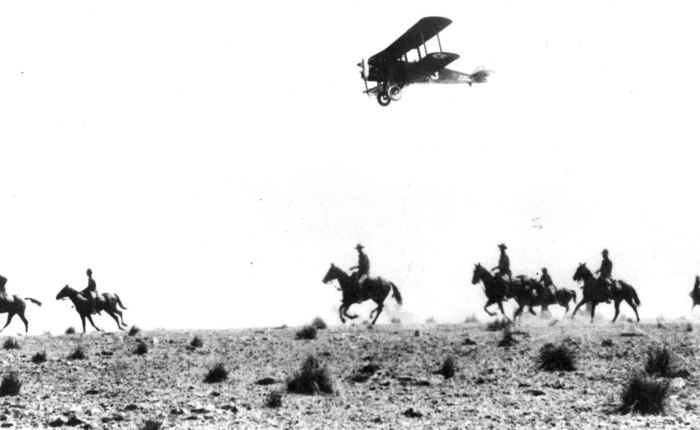
Header Image: Dayton-Wright DH-4s of the US 12th Aero Squadron flying liaison with US Army cavalry on patrol on the United States/Mexico border, c. 1920. (Source: Wikimedia)

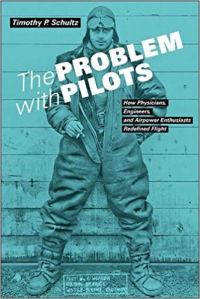
#Podcast – The Problem with Pilots: An Interview with Dr Timothy P. Schultz

#Podcast – The Problem with Pilots: An Interview with Dr Timothy P. Schultz

Editorial Note: From Balloons to Drones is pleased to announce our new podcast series. Led by Assistant Editor Dr Mike Hankins, this series aims to build on the success of From Balloons to Drones and provide an outlet for the presentation and evaluation of air power scholarship, the exploration of historical topics and ideas, and a way to reach out to both new scholars and the general public. You can find our Soundcloud channel here.

51KUK04khVL._SX331_BO1,204,203,200_

In our first podcast, Dr Mike Hankins and Dr Brian Laslie interview Dr Tim Schultz of the US Naval War College. They discuss Schultz’s new book The Problem with Pilots and explore some of the principal issues that emerged from his important research. He takes us on a journey through how military aviation technology evolved in the early years of flight in order to respond to the limits of the human body.

Dr Timothy Schultz joined the faculty of the US Naval War College in 2012 as an Air Force colonel and became the Associate Dean of Academics for Electives and Research in 2014. He previously served as the Dean of the US Air Force’s School of Advanced Air and Space Studies. Schultz’s research interests include the transformative role of automation in warfare and the impact of technological change on institutions, society, and military strategy. John Hopkins University Press published his book The Problem with Pilots: How Physicians, Engineers, and Airpower Enthusiasts Redefined Flight in 2018. He spent much of his aviation career as a U-2 pilot enjoying the view over interesting regions of the globe.

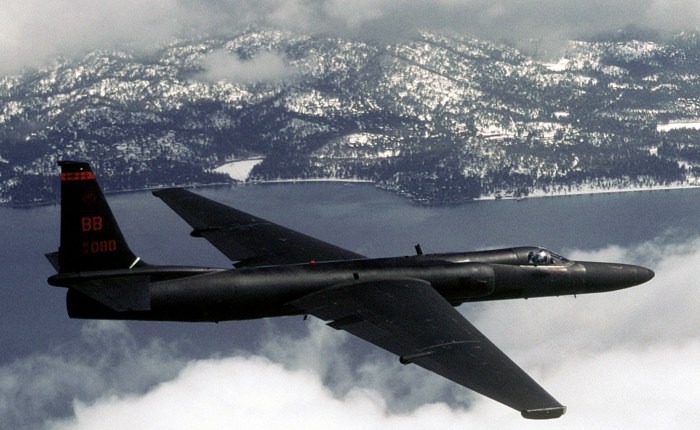
Header Image: A Lockheed U-2 ‘Dragon Lady’ high-altitude reconnaissance aircraft in flight. (Source: Wikimedia)

#BookReview – Reaper Force: Inside Britain’s Drone Wars

#BookReview – Reaper Force: Inside Britain’s Drone Wars

By Mark Russell

Peter Lee, Reaper Force: Inside Britain’s Drone Wars. London: John Blake Publishing London, 2018. Index. Hbk.

Reaper Force

In this book, Peter Lee sets out to describe the ‘unknown community’ that is the Royal Air Force’s (RAF) Reaper Force. In doing so, Lee focuses on the aircrew in the ‘cockpit’ of these remotely piloted aerial vehicles (RPAS) and their partners, rather than all the other personnel needed to operate Reaper. Lee originally proposed the work to the RAF as an attempt to answer some of the questions that readers in one hundred years’ time might ask about these individuals, as a way of ensuring that those future enquirers would know more than we do about the RAF aircrew of 1918. Given this genesis, the limitation of scope is understandable and an outline of Lee’s research approach can  found in his submission to the UK All Party Parliamentary Group that was established in 2016 to ‘analyse the emerging technologies of drones [and] the ways in which the UK works with allies with regard to the use of armed drones.’ Moreover, this starting point is a pleasing historical touch as 2018 marks the centenary of the formation of the RAF. Indeed, it was during the First World War that we saw human-crewed flight come of age as a weapon of war, and one hundred years later, the success of the Reaper Force raises the question of what the future is for manned aviation in the RAF. However, Lee does not pursue this or many other intriguing avenues, for reasons of time and space. He does not engage in detail with the debate about whether drones are ‘fair’, quickly dismissing this by rightly arguing that war has always seen one side aiming to gain an ‘unfair’ advantage over another, and this is just another manifestation of this trend. So, this is not a book to read to understand more about the ethics of drones. A reader seeking this debate should look elsewhere, and indeed Lee has already little on this subject himself.[1]

Lee aimed to record how the Reaper Force feels about their ‘experiences and day-to-day lives’, and the book does an excellent job fulfilling this aim. His interview-based approach provides a distinct perspective from books written by those operating drones, which lack the reflection and perspective on experiences that Lee provides through the questions he puts to the aircrew. The bulk of the book is made up of content taken from interviews Lee conducted with members of both No. 39 Squadron based at Creech AFB in Nevada, and No. XIII Squadron based at RAF Waddington and these provide genuine insights into the aircrew’s (and their partners’) feelings about what they do. One comes away with a sense that this is a highly trained, highly dedicated group of men and women, with a culture that among other things is focused on ‘zero CIVCAS,’ that is a ‘policy direction’ of no civilian casualties (p. 279). Lee (p. 279) describes this focus as ‘almost an obsession […] that has had a significant impact on how they operate and make decisions.’ He recounts a mission where the aircrew believed the target was valid, as did the Joint Terminal Attack Controller (JTAC) on the ground, but the Senior Mission Intelligence Coordinator, an acting sergeant outside the aircrew, objected to the strike. This was because they believed it was a child rather than a parcel on the back of the target and was proved right (pp. 284-8). This is an excellent illustration of the commitment to zero CIVCAS, given both the hesitation to launch the weapon and the freedom the most junior person in the process felt to halt it. This indicates a very healthy culture if one believes zero CIVCAS should be accorded that level of importance.

Reaper Remotely Piloted Air System
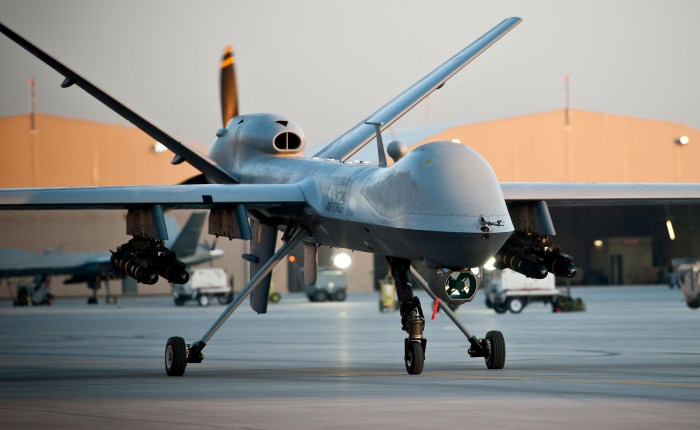
A Royal Air Force Reaper RPAS at Kandahar Airfield in Afghanistan, c. 2014. (Source: Defence Imagery, UK Ministry of Defence)

Lee discussed further a 2011 ‘CIVCAS incident’ in Chapter Five when an RAF strike killed four civilians riding in lorries transporting explosives. This attack occasioned many levels of review, and it is clear that there is a huge determination in the Reaper Force that this should not happen again – even though as Lee (p. 113) notes, ‘the crew’s actions were in accordance with the Law of Armed Conflict and their procedures and directives.’ This message is one the RAF’s Air Staff would presumably be no means averse to having more widely understood. However, Lee also makes the point through his interviews with several of the aircrew’s partners that this care and skill should be more widely appreciated, to counter all those who claim drones have killed thousands of innocent civilians, including the Reaper Force in this blanket condemnation. Indeed, one is left with the evident understanding from the interviews that the Reaper Force does not operate in this way; Eye in the Sky (2015) was a good film but what is depicted would never have happened under the RAF’s Rules of Engagement (RoE), and the Reaper Force is not guilty of causing wanton civilian deaths. There are, however, hints in the book that at times those looking for support from the Reaper Force are frustrated by these RoEs, for example, when a British Army JTAC is frustrated that a Reaper crew will not launch a missile and calls for assistance from an Army Air Corps Apache instead (p. 282). These RoEs can also frustrate those in the Reaper Force, as described in Chapter Nine when on Boxing Day 2014 permission to destroy a suspected IS-controlled ex-Iraqi armoured vehicle was denied, with the result that the Reaper crew had to watch then the aftermath of a successful IS attack using it.

The above example affected the crew in question, and Lee uses this and other cases to explore the issue of how the high-tempo of Reaper operations, and how the nature of those operations, with the graphic and detailed images they see as part of launching strikes, may be impacting the mental health of the aircrew. His interviews provide illuminating examples, and those he interviewed have a range of ways of coping, dependent on the various ways what they do affects them. Some aircrew seems to be able to operate for several years without being adversely affected; others burn out much more quickly. This issue links to the RAF’s perception of bravery, and how this should be recognised. Historically, bravery has been defined by physical courage. Lee, however, makes a case for those who continually put their mental health at risk through flying Reaper operations as showing as much bravery as aircrew who get physically airborne. In reading this, about issue continuing to put oneself at risk, one is undoubtedly reminded in some ways of the courage Marshal of the Royal Air Force Sir Arthur Harris described seeing in his Bomber Command crews.

Chapter Eleven looks at the question of bravery in its most visible military form, namely the award of decorations to Reaper crews. This is a subject that has generated discussion more widely over recent years. Lee addresses it by reference to a particularly challenging strike, footage of which was used by the UK Ministry of Defence (MoD) as part of the press release announcing the award of campaign medals to those involved in the campaign against IS. The irony was that since the Reaper crew executing the strike were not deemed to be ‘in theatre’, they did not qualify for the medal. However, as Lee points out both in the book and in his October 2017 lecture at the Royal Aeronautical Society, they were exposing themselves to not insignificant risks of mental injury, and certainly were knowingly taking greater risks with their health than those working in a mess at Akrotiri. This again reminds one of RAF Bomber Command, and Harris’ unsuccessful campaign to have his groundcrews awarded a campaign medal despite cooks and bottle-washers in other theatres being entitled to a campaign medal.

Lee, however, does note that the MoD announced on 18 July 2018 that the medal would be awarded to Reaper pilots (p. 249). There will always be those who wish to equate heroism with physical courage, and hence would never see Reaper crews as eligible for medals, but this decision feels appropriate given the increasing level of discussion in society around mental health and, in a military context, post-traumatic stress disorder in particular. To what extent these issues will impact Reaper Force aircrew in the future is a subject for a later book, but this volume makes it clear that they have seen sights, repeatedly, that no-one would ask to see given the choice.

This potential to see bravery redefined is one example of how Reaper and its successors could change the RAF, and this is an area where one feels the whole growth of the Reaper Force raises many interesting issues that Lee has probably rightly only touched on very briefly. What will it mean for the RAF’s culture when perhaps many attack missions do not require a human in the aircraft? Already aircrew are being trained solely to operate Reaper, and the RAF, while awarding them aircrew brevets, is making them subtly different from the ‘normal’ brevets given to those who get airborne – does this demonstrate a reluctance to admit that Reaper crews are as valuable as those who get airborne? Moreover, what will this mean for the RAF as RPAS aircrews undertake more missions? The Reaper Force from its inception was crewed mainly by aircrew who served on Harrier, Nimrod and Tornado aircraft who transferred to Reaper as these aircraft were taken out of service. The aircrews who operated on manned platforms brought with them the culture and attitude from those environments, and Lee describes several interesting stories from aircrew about the different operating styles. For example, Lee recounts how a former Tornado navigator said she could not get used to the amount of talking an ex-Nimrod pilot would do, which was a huge change from the fast jet where ‘a good cockpit’s a quiet cockpit’ ethos was one that she was used to (p. 132).

Reaper UAV Takes to the Skies of Southern Afghanistan
An RAF Reaper pictured airborne over Afghanistan during Operation HERRICK. (Source: Defence Imagery, UK Ministry of Defence)

As such, even within the Reaper Force, there are still vestiges of the culture that the members brought from their previous aircraft types, and the force will need to evolve its own culture over time. One suspects it will not be as extrovertly self-confident as the fast jet one it is partially replacing. Indeed, Lee recounts that his initial inquiry about when it would be time to ‘kick the tyres and light the fires’ on his first day watching an aircrew was met with a swift ‘very funny’, clearly meant to shut him up (p. 31). The RAF’s public image is very much built around the image of the fighter pilot, from the aces of the First World War, through the pilots of Fighter Command in the Battle of Britain to today’s Typhoons on QRA, intercepting Russian Bears out over the ocean. Indeed, it is interesting that the RAF’s historic flight is called the Battle of Britain Memorial Flight when far more aircrew served and died in Bomber Command during the Second World War. Reaper and other automated weapons (such as standoff missiles) can already deliver many of the classic roles of air power (reconnaissance, strategic attack, close air support, for example), but without a human to build a corporate (self) image around, how will the RAF’s own picture of itself change, and what image will it use to engage broader public support?

In summary, this is a valuable book for the insights it provides into the pressures of serving in a critical element within Britain’s armed forces. The Reaper Force is an element of the British military that will only grow in importance given both the capabilities it offers and the low risk it presents of unfavourable press. Indeed, between January and August 2018, Reaper has accounted for around 45 per cent of all RAF strike over Iraq and Syria during Operation SHADER. The only reservation that can, I think, be expressed is that this book leaves the reader feeling there were so many other avenues that could have been explored as well. Had Lee examined them, though, we would not have had this book now – we would have been waiting several years longer. What would be interesting would be to see a similar book in ten years’ time, to see how the Reaper Force (or Protector Force as it will likely be known by then) has evolved.

Mark Russell graduated with a degree in History in 1985 and has worked in professional services ever since. He returned to academia in 2015 and graduated with an MA in Air Power from the University of Birmingham in 2017. His dissertation looked at whether the RAF was a learning organisation in the period 1925 – 1935, with particular reference to how the Air Exercises helped the RAF develop and test tactics and technology. He continues to work in professional services, but his current research interest is the RAF in the interwar years and how the organisation managed technological change. Since graduating from Birmingham, he has had two books reviews published by the RAF’s Centre for Air and Space Power Studies and is currently working on articles for both RAF Air Power Review and The Aviation Historian.

Header Image: A Royal Air Force Reaper RPAS at Kandahar Airfield in Afghanistan, c. 2014. (Source: Defence Imagery, UK Ministry of Defence)

[1] Peter Lee, ‘Rights, Wrongs and Drones: Remote Warfare, Ethics and the Challenges of Just War Reasoning,’ RAF Air Power Review, 16:3 (2013), pp 30-50.