Editorial note: Defence-in-Depth, the blog of King’s College London’s Defence Studies Department based at the Joint Services Command and Staff College and The Wavell Room have been running a series of interesting articles about military education. The author has read these articles with some interest given his interest in the education of air forces. This research note covers an interesting episode in the process of the establishment of the Royal Air Force (RAF) Staff College in the early 1920s.
The opening of the RAF Staff College at Andover in 1922 marked a crucial step in the early development of the RAF. Andover gave the RAF its own institution that provided higher education tailored towards the needs of the Service. However, many historians have been critical of Andover. For example, Tony Mason, the RAF’s first Director of Defence Studies, suggested that Andover ‘lamentably failed’ in providing a developed air power theory for the RAF while Vincent Orange argued that the Staff College served, ‘as a disseminating station for approved doctrine, seasoned by essays on riding, hunting and how to cope with the bazaars of Baghdad.’[1]
However, one aspect not often considered is how the RAF went about preparing for the Staff College’s formation. Key to this is the role played by its first Commandant, Air Commodore Robert Brooke-Popham who was adamant that the RAF should learn from the teaching methods used by both the British Army and Royal Navy at their Staff Colleges at Camberley and Greenwich.[2] Brooke-Popham was a pre-First World War graduate of Camberley, and it is clear that this educational experience played a role in how he approached his position as Commandant. More broadly, before the opening of Andover, it was to the Army and Royal Navy that the RAF looked to provide a staff college education for nurtured officers. Indeed, it is significant that, apart from Group Captain Robert Clark-Hall, the initial Directing Staff – Wing Commanders Philip Joubert de la Ferte, Wilfrid Freeman and C.H.K. Edmonds and Squadron Leader Bertine Sutton – were all graduates of Camberley or Greenwich. However, while the British experience of higher military education was a significant influence, it was not the only source of information.
More interesting is that Brooke-Popham also considered whether anything could be learnt from the methods utilised by the French Army at the Écoles Supérieures de Guerre in Paris, which in the early 1920s was commanded by General Marie Debeney.[3] Before the opening of Andover, Brooke-Popham and Joubert visited Paris to examine French pedagogical methods, and the critical source concerning this visit comes in the latter’s 1952 autobiography The Fated Sky.[4] Joubert’s recollections provide an insight into the teaching methods at the Écoles Supérieures de Guerre. However, it is clear that he was not impressed with the quality of education present although, as he recalled, the Écoles Supérieures de Guerre was considered, ‘the centre of all military knowledge.’[5]
Joubert’s criticisms fell broadly into three categories. First, Joubert was critical of the lack of cooperation with the French Navy and their equivalent school for higher education. Second, instructors lacked familiarity with the students they were teaching. Finally, Joubert was not impressed with the formality of the lectures and lack of what in modern teaching is often referred to as ‘white space’ in the timetable to allow for reflections and questions.[6]
Joubert’s criticisms raise several interesting observations about the differences between the British and French militaries in this period. Notably, the lack of co-operation between the French Army and Navy at the staff college level maps to many of the problems that plagued the French military in the interwar period. Joubert recalled Debeney’s ‘look of blank amazement’ when asked about co-operation with his naval counterpart.[7] Conversely, while there were definite problems at the strategic level, the British military regularly co-operated via combined operations exercises at the staff colleges that Joubert himself described as ‘one of the most pleasant periods’ of his time at Camberley, which he attended in 1920.[8] This perhaps suggests something about Britain’s pragmatic military culture in this period. Individual service cultures certainly existed, but when co-operation was required, the British military appeared to be able to do this.
Furthermore, Joubert recalled of his time at Camberley that while heated discussions between students occurred, ‘it was always possible to come to an agreement over a round of pink gins in the Mess’ thus highlighting the importance of socialisation between the services as means of breeding understanding between them.[9] It also seems clear that Joubert’s perception of the lack of formality in British Staff Colleges bred a willingness to question accepted views while the French military maintained a ‘Maginot’ mentality for much of this period. However, even this must be understood within the context of differing service cultures. Joubert himself reflected on these differences when he wrote that:
Naval officers would discuss Naval affairs freely amongst themselves and before members of another service and would unhesitatingly attack any ideas which they thought themselves were wrong. But let an outsider in the audience offer a criticism and Naval ranks closed up solidly. The Army seldom, if ever, discussed their problems in the open. If they were asked for a statement of policy Field Service Regulations and Army Council Instructions were solemnly quoted. As for the Air Force, they would fight amongst themselves in private and in the open, and would quite ruthlessly disagree with their instructors before a mixed audience. Nothing was sacrosanct.[10]
The final criticism of the lack of ‘white space’ in the timetable is significant as this is considered a crucial element of the pedagogical process and differentiates higher education from training. The lack of this ‘white space’ in the French Staff College system suggested an unwillingness to allow French officers to think more broadly about their place within the profession of arms and the conduct of war more generally. This raises fundamental questions concerning leadership development within the French Army such as whether the French system was developing senior leaders or staff officers. Moreover, it is clear that the French system differed from the British with the existence of the Centre des Hautes Études; a war college, which existed to educate senior Colonels and Brigadiers.[11] A ‘war college’ was something the RAF lacked, and as such an exact comparison between the two systems is fraught with challenges.
While Joubert’s recollection should, as with any autobiography, be treated with some care, from the perspective of the provision and development of military education in the RAF they are useful. This is primarily because of Joubert’s affiliation with education in the RAF. As noted, he attended Camberley and was Directing Staff at Andover. However, he would also go on to be the first RAF member of the Directing Staff at the Imperial Defence College as well as going on to being Commandant at Andover in the early 1930s. As such, he was well placed to comment on such issues.
In conclusion, this episode shows that the RAF was willing to move outside of national confines to learn lessons for what was the world’s first air force Staff College. However, that the methods examined in France were not adopted also highlights issues related to how militaries perceive themselves. As Joubert himself noted, ‘[i]n the event we did not adopt […] the French Staff College methods [and] [w]e went our own perfectly normal and unspectacular British Way.’[12] This reflection says as much about the RAF and its culture as it does the perceived failings of the French system of higher military education. The final important point is that in looking to other Staff Colleges, whether in Britain or France, the RAF were looking to similar institutions with similar objectives – the education and nurturing of future senior leaders – but axiomatically these educational establishments were not similar. Putting aside national proclivities, the critical difference was the military service these institutions served. The Écoles Supérieures de Guerre served the French Army, not an air force, though of course at this time, the French air service formed part of the army. Similarly, Camberley and Greenwich served the British Army and Royal Navy respectively. As such, while the RAF could, and did learn from their counterparts, it still had specific service challenges that it would have to solve on its terms. Indeed, the focus of Brooke-Popham and Joubert’s visit to Paris was more on ‘how’ to teach rather than ‘what.’
Dr Ross Mahoney is a contract Historian at the Departments of Veterans’ Affairs in Australia as well as the owner and Editor of From Balloons to Drones. He is a graduate of the University of Birmingham (MPhil and PhD) and the University of Wolverhampton (PGCE and BA). His research interests include the history of war in the twentieth and twenty-first centuries, air power and the history of air warfare, and the social and cultural history of armed forces. To date, he has published several chapters and articles, edited two books, and delivered papers on three continents. He is a member of the Royal Historical Society and a Vice-President of the Second World War Research Group. He can be found on Twitter at @airpowerhistory.
Header image: The modern day Ecole Militaire, which previously housed the Écoles Supérieures de Guerre (Source: Wikimedia)
[1] Tony Mason, ‘British Air Power’ in John Andreas Olsen, Global Air Power (Washington D C: Potomac Books, 2011), pp. 26-27; Vincent Orange, Churchill and his Airmen: Relationships, Intrigue and Policy Making, 1914-1945 (London: Grub Street, 2013), p. 87.
[2] Air Chief Marshal Sir Robert Brooke-Popham, ‘The Formation of The Royal Air Force Staff College,’ The Hawk, 12 (1950), p. 19.
[3] For a British overview of the Écoles Supérieures de Guerre, see: ‘The “Ecole Superieure De Guerre,” Paris,’ Journal of the Royal United Services Institution, 70:477 (1925), pp. 1-7.
[4] Sir Philip Joubert de la Ferte, The Fated Sky: An Autobiography (London: Hutchinson, 1952), pp. 87-88. Joubert also recollected that Brooke-Popham also considered ‘Madam Montessori’s ideas.
Merry Christmas and Happy Holidays from the team at From Balloons to Drones. It has been an excellent year for the advancement and study of air power, and it has been a remarkable year for the website as well. We added three co-editors to the site and surpassed our 50,000-hit mark!
As we enter the holiday season, we know that our readers either have some time off coming up or are looking for some recommendations to add to their holiday shopping lists. So, we thought it would be a good idea to have our editors put together a short list of their favourite books from our year of reading and reviewing. However, before we get onto the list here are the top five articles published by From Balloons to Drones during 2018:
James Pugh, The Royal Flying Corps, the Western Front and the Control of the Air, 1914-1918 (Abingdon: Routledge, 2017). I must admit it has been a slow year for me reading wise and the titles here will be reviewed in the new year. However, onto my list and first up we have James Pugh’s excellent study of the Royal Flying Corps in the First World War and its understanding of the concept of control of the air. Control of the air remains a central tenant of modern air power thinking; however, the ideas surrounding this concept go back much further. In this study, Pugh provides an excellent analysis of the development of British thinking about control of the air with specific reference to the RFC and the war over the Western Front. It is a much-needed addition to the literature and worth a read.
Stephen Renner, Broken Wings: The Hungarian Air Force, 1918-45 (Bloomington, IN: Indiana University Press, 2016). Ok, this one dates to 2016, but I have only just finished it after reading it on an off since it came out. However, this is an essential study for two reasons. First, small air forces tend to be overlooked in the literature concerning the early development of air power and secondly, there is little in English on-air forces from central and eastern Europe. As such, even for just these reasons, Renner’s book is a welcome addition to the literature. Furthermore, however, Renner provides an excellent study into the challenges faced by the Hungarians in this period, which makes for fascinating reading.
Adam Claasen, Fearless: The Extraordinary Untold Story of New Zealand’s Great War Airmen (Auckland: Massey University Press, 2017). The First World War centenary has seen many books published of which some are good and some not so good. Many of the works on air power have remained firmly camped in the ‘Knights of the Air’ trope that has become so common. Thankfully, however, we have also seen works such as Claasen’s work on New Zealand airmen appear. In this book, Claasen’s firmly places the experience of the around 850 New Zealanders who served in Britain’s air services within their imperial context. In this respect, Claasen’s follows on from the work of S.F. Wise on the Canadians and Michael Molkentin’s more recent work on Australia and is a welcome addition to our understanding of the imperial composition of Britain’s air services in the early twentieth century.
Runner-up:
John Andreas Olsen (ed.), Routledge Handbook of Air Power (Abingdon: Routledge, 2018). I reviewed this one here, so I shall not say too much more apart from to reiterate that if you are looking for a good introductory overview about air power, then this is an excellent addition to the library. Olsen has, as usual, brought together an outstanding line-up of scholars to consider critical issues related to air power.
Alexander Fitzgerald-Black
Graham Broad, One in A Thousand: The Life and Death of Captain Eddie McKay, Royal Flying Corps (Toronto: University of Toronto Press, 2017). The First World War centenary is behind us, but it has left great historiographical additions for us to pour over. Graham Broad’s excellent microhistory of one of Canada’s first aces is three books in one. It is also a how-to book of best practices for historical research and analysis as well as an insightful commentary on the philosophy of history. You will enjoy the author’s engaging narrative as he traces Captain McKay’s life from the rugby pitch to the Wright Brothers School of Aviation, to his fleeting fame and eventual death in the contested and deadly skies above the Western Front. History teachers, especially at the senior undergraduate and graduate level, will also find the book an exceptional resource for training the minds of budding historians.
Stephen Bourque, Beyond the Beach: The Allied War Against France (Annapolis, MD: Naval Institute Press, 2018). I picked up this book for two reasons. First, I was recently hired at the Juno Beach Centre, Canada’s Second World War Museum on the D-Day beaches. Second, with the upcoming 75th anniversary of the invasion of Normandy, it was about time that we had a detailed English-language study of the cost suffered by the French people in that great invasion. Readers will appreciate Bourque’s approach in dealing with General Dwight Eisenhower and his air commanders’ lines of action (effort). These targets included everything from airfields and ports to French towns or cities and the bridges, marshalling yards, and factories therein. As we move into this anniversary, it is important to remember that while the Allies were on the right side of history, 60,000 French civilians paid a dear price for their country’s freedom.
Ian Gooderson, Air Power at the Battlefront: Allied Close Air Support in Europe, 1943-1945 (London: Frank Cass, 1998). This one is not recent, but I was thrilled to discover that my university library owns a copy. I was struck by just how comprehensive Gooderson’s analysis is, and I found some of his evidence and conclusions comfortably surprising. For instance, although the Allied air forces assumed armed reconnaissance to be safer than close air support, the opposite was true. At the same time, air support was probably of greater value beyond the battlefront (greater opportunity comes with greater danger). The book also impressed upon me the importance of timing air strikes carefully and air power’s psychological effects, for better or worse.
Runner-up:
Robin Higham and Stephen J. Harris (eds.), Why Air Forces Fail: The Anatomy of Defeat, Revised and Expanded Edition (Lexington, KT: University Press of Kentucky, 2016). This was one of the first scholarly history books I ever read as a high school student. Its engaging chapters about how various air forces across the decades have failed to meet their objectives offer complex answers to a simple question: why did they fail? Although, as Randall Wakelam noted, he had hoped for more from the new edition, though newcomers will find the book a valuable addition to any aviation history library.
Dr Mike Hankins
Melvin Deaile, Always at War: Organizational Culture in Strategic Air Command, 1946-62 (Annapolis, MD: Naval Institute Press, 2018). This book is not only an excellent summary of the formative years of Strategic Air Command during the early Cold War, but Deaile gives us a close look at what it felt like to be there. What was the culture like? What was the daily life like for these pilots? What made SAC so unique and such a key component of American defence during the Cold War? Moreover, why is General Curtis LeMay such a big deal? This book gives excellent, substantive answers to all these questions.
Timothy P. Schultz, The Problem with Pilots: How Physicians, Engineers, and Airpower Enthusiasts Redefined Flight (Baltimore, MD: Johns Hopkins University Press, 2018). Flying is hard–much harder than we give it credit for today. The capabilities of modern aircraft all came with difficult times of dangerous experimentation in the fields of medicine, engineering, and technology. The human body was not made to fly, and the limiting factor on advanced aircraft designs has always been humans. How we solved those problems and made complicated, advanced aircraft possible is the fascinating story of this book about integrating man and machine in increasingly sophisticated ways.
Steven A. Fino, Tiger Check: Automating the US Air Force Fighter Pilot in Air-To-Air Combat, 1950-1980 (Baltimore, MD: John Hopkins University Press, 2017). Fighter pilots are a strange breed–they have a unique culture all their own. However, how does that culture evolve when it is faced with new technologies that threaten to automate tasks that fighter pilots hold dear? Former F-15 pilot Steve Fino explores just that in this incredible book. Examining the F-86 Sabre, the F-4 Phantom II, and the F-15 Eagle, Fino explores the evolving relationship between man and machine in the cockpit of jet-age fighter planes. You can find my review of this book here.
Runner-up:
Peter Fey, Bloody Sixteen: The USS Oriskany and Air Wing 16 during the Vietnam War (Lincoln, NE: Potomac Books, 2018). The USS Oriskany had the highest loss rates of any navy air unit in the Vietnam War. In addition to two massive fires, it was the boat from which Jim Stockdale and John McCain (among many others) became POWs for years. Peter Fey’s accessible, exciting narrative traces the Oriskany throughout its multiple tours and gives a palpable sense of what it was like to be on board and in the cockpit of the A-4 Skyhawks, F-8 Crusaders, and other planes the ship carried. The book is not perfect, but it is an engaging read especially aimed at a general audience.
Dr Brian Laslie
Craig Morris, The Origins of American Strategic Bombing Theory (Annapolis, MD: Naval Institute Press, 2017). This book is ‘a twisting tale of individual efforts, organizational infighting, political priorities, and technological integration.’ It is also a book that places the development of American bombing theory firmly in the context of its time and rightly puts individuals into their proper place. Gone is the Billy Mitchell-centric view of air power development to be (rightly) replaced with an emphasis on Benjamin Foulois, Mason Patrick, William Sherman, Lord Tiverton, and others who worked tirelessly on the theories and doctrines of air power. In my opinion, the single best volume on American air power in the inter-war years.
Frank Ledwidge, Aerial Warfare: The Battle for the Skies (Oxford: Oxford University Press, 2018). I wrote about this book earlier in the year for The Strategy Bridge and called it ‘the single finest primer on air power covering every aspect from if you’ll excuse me, balloons to drones.’ I stand by that statement. This is the perfect primer for the history of air power. I cannot imagine someone interested in our profession not owning this book. I wish I had copies to serve as stocking stuffers…
David R. Honodel, The Phantom Vietnam War: An F-4 Pilot’s Combat over Laos (Denton, TX: University of North Texas Press, 2018). This is a ‘there I was’ and ‘shoot the watch’ book, but it is also an amazingly poignant and honest look about learning to survive in a war the American people were unaware was occurring. It is in the best of its class at conveying the transformation a person can take in the crucible of a forgotten war over the skies of Laos. ‘Buff’ Honodel passed away earlier this year, and as I count my blessings this year, one of them will be for a man like Buff.
Runner-up:
Peter Dye, “The Man Who Took the Rap”: Sir Robert Brooke-Popham and the Fall of Singapore (Annapolis, MD: Naval Institute Press, 2018). This one landed on my desk rather late in the year but intrigued me almost immediately. As someone who has recently written a biography of a relatively unknown figure myself, I was excited to dive into this one, and it does not disappoint. As air power scholarship continues to expand, it has become an enjoyable pastime of mine to read about lesser-known, but equally important contributors to air power development. This book also fills a void for me in expanding my knowledge and understanding of other nation’s air power efforts.
As well as providing you with our Christmas reading list, we would like to recognise the various presses and our social media friends who have been hard at work this year publishing the books above and some not strictly related to air power, but would make great gifts such as Redefining the Modern Military, edited by Tyrell Mayfield and Nathan Finney, and The Colour of Time: A New History of the World, 1850-1960 by Marina Amaral.
Finally, we would like to thank our contributors and readers. Without them, this site would not exist so thank you. If you want to write for us, then find out how to contribute here.
Header Image: A Royal Navy McDonnell Douglas Phantom FG.1 from 892 Naval Air Squadron aboard the aircraft carrier HMS Ark Royal (R09). (Source: Wikimedia)
Editorial Note: On 19 September 2018, our editor, Dr Ross Mahoney delivered a paper on the subject of ‘The Role of History in Educating Air Power Strategists’ at a seminar organised by the Royal Australian Air Force’s (RAAF) Air Power Development Centre in Canberra. A precis of this paper was published in the Pathfinder bulletin issued by APDC, which can be found here. The Pathfinder series covers a range of issue from strategy, historical analyses, operations, administration, logistics, education and training, people, command and control, technology to name a few. Irrespective of the subject though, Pathfinders will always be focused on the relevance to air power; they are not intended to be just a narrative but deliver a measure of analysis. Apart from the addition of some minor changes to make this precis applicable to From Balloons to Drones as well as the inclusion of footnotes and further reading suggestions, this article appears as published in Pathfinder. We are grateful to APDC for permission to re-publish the piece, and the views in this article and the associated Pathfinder are not necessarily those of the RAAF.
‘[t]he study of military history lies at the foundation of all sound military conclusions and practice.’
Rear-Admiral A.T. Mahan, ‘The Naval War College,’ The North American Review, (1912)[1]
‘The word history carries two meanings […] It refers both to what actually happened in the past and to the representation of that past in the work of historians.’
John Tosh, The Pursuit of History, Third Edition, (1999)[2]
What is history? What is its relevance to an air power strategist? These are important questions; however, as Richard Muller, a senior member of the faculty at the US Air Force’s School of Advanced Air and Space Studies, reflected in 2016, ‘as a rule air forces have not embraced historical study to the same extent as have their army or navy counterparts.’[3] Nevertheless, in 1912, a year after an Italian aeroplane dropped the first ‘bomb’ over Libya, noted US naval historian and strategist Alfred Thayer Mahan reflected on the link between military history and ‘sound military conclusions.’ However, history does not provide clear lessons. Nevertheless, the study of the past does offer a lens through which to analyse, understand and reflect on the challenges currently faced by modern air forces.
The Air Corps Tactical School (created as the Air Service Field Officers School in 1920) went beyond its mandate of training officers to also become an engine for air power theory development in the interwar period. (Source: US Air Force Air University)
This article considers some of the issues related to applied military history beginning with an outline of the purpose of history and the challenges of applying the past to the present. It also considers how air forces have used the study of the past as a tool for education while concluding with some tentative thoughts on how history can be used to educate strategists in the continuing challenge to achieve professional mastery.[4]
To start with, the term ‘education’ is used in this narrative in a broad context and incorporates both formal and informal learning. Similarly, the term ‘strategist’ is used in a collegiate manner and assumes that modern air forces seek personnel who are professional masters, well-versed in the core knowledge that underpins the application of air power.
As the British historian John Tosh reflected, the term history is ambiguous at best. Is history a collection of facts related to what has happened or is it the scholarly discussion and representation of the past? If the latter statement is accepted as being correct, then it can also be assumed that the interpretation of the past is an argument without an end. While a hackneyed observation, history is a dynamic field of study, one where historians continually re-examine evidence and reinterpret the past. Linked to this is the extent of historical information available to historians and, by default, strategists who seek to apply lessons from the past to the present. The archival records and evidence that underpin the interpretation of the past are normally incomplete. For example, the National Archives of Australia only preserves a small amount of the material generated by the Australian Government.
Moving beyond the above understanding of history, the field of military history can be split into three subfields: popular, academic, and applied history.[5] There is a degree of overlap between the latter two. The main criticism of applied military history is that it is a form of weaponising the past to cater for the present.[6] Underpinning this criticism is a view that those writing such history do so without sufficient understanding of the context in seeking to deduce lessons learnt. Unfortunately, this criticism is currently directed at academics working at institutions delivering professional military education. These institutions use history to illuminate and provide context to the ambiguous challenges that officers attending them are likely to confront in the future.
Historically, the criticism of weaponising the past does carry some weight, and therefore air power strategists could be criticised for the poor use of history to support their arguments. Indeed, as Sir Michael Howard, a distinguished military historian, noted in his 1961 lecture on ‘The Use and Abuse of Military History’:
[W]hen great [interwar] pioneers of air war…advocated striking at the homeland and at the morale of the enemy people…they were basing their conclusions on their interpretation of past wars’. (emphasis added)[7]
More recently, Colonel (retired) John Warden III’s book, The Air Campaign, has been criticised for his use of a selective reading of history to fit the theory being propounded in it.[8] Admittedly, Warden is not a historian. However, such selective use of history becomes problematic to the broader task of delivering professional education when such texts appear in, for example, Staff College reading lists where they can reinforce a narrow, and at times wrong, understanding of some of the officers they are meant to educate. Despite this criticism, it is clear that many air power thinkers have recognised the value of a broad reading of history. For example, in a 1921 article on ‘Strategy and Air Strategy,’ Group Captain John Chamier of the Royal Air Force reflected on the challenge of deducing appropriate principles for the use of air power given the brief history of air warfare till then. Nevertheless, Chamier recognised that ‘strategic principles are derived from the study of history’, and he recognised that examples from ‘naval and military strategy’ could provide the necessary framework for a discussion of ‘air strategy.’[9]
While history and the application of its lessons by air forces is fraught with challenges, its importance as a didactic tool for the military cannot be underestimated. Indeed, the study of history has been, and remains, an element of the curricula at educational establishments of most air forces. However, considered in a broad manner, the study of history has been unbalanced. For example, in the late-1940s and 1950s, history and related subjects featured little on the curriculum at the RAAF College. As Alan Stephens has noted, the RAAF of this period identified itself as a ‘narrow technocracy’ with knowledge of the Air Force’s core business to be deduced from its ‘technical components’ rather than a ‘study of its history and ideas.’[10]
To conclude, there are several areas where the contemporary study of history plays a key role in the education of air power theorists and strategists. Perhaps most important is that a deep and contextual study of history provides an important understanding for military personnel seeking to gain professional mastery of the profession of arms. Indeed, if it is accepted that the aim of learning is to develop the cognitive ability to understand and deal with ambiguity, rather than to provide clear-cut answers to current problems, then the study of history has a role to play.
The skills associated with historical analysis refines human cognitive areas such as the ability to make considered judgements. An important contributor to the effectiveness of this learning process has been the increasing civilianisation of the academic delivery at institutions catering to professional military education. At a practical level, the use of Staff Rides as a learning tool could also ensure that history could be used as a means to explore ideas outside of the confines of the traditional education environment. However, this process also has its own challenges.[11] In the final analysis, Lieutenant General Sir John Kiszely’s remark that the study of history needs to form an essential part of a ‘balanced diet’ of education for the military professional in order for them to develop the knowledge to be effective, rings completely true.[12]
Key Points
Even though history may not provide clear lessons, the study of the past offers a lens through which to analyse, understand and reflect on the challenges currently faced by modern air forces;
History could be considered a rather dynamic field of study, one where historians continually re-examine evidence and re-interpret the past;
It is recognised that ‘strategic principles are derived from the study of history.’
Further Reading
Gray, Peter, ‘Why Study Military History?,’ Defence Studies, 5:1 (2005), pp. 151-64.
Muller, Richard R., ‘The Airpower Historian and the Education of Strategists’ in Bailey Jr., Richard J., Forsyth Jr., James W., and Yeisley, Mark O., (eds.), Strategy: Context and Adaptation from Archidamus to Airpower(Annapolis, MD: Naval Institute Press, 2016).
Murray, Williamson, and Sinnreich, Richard Hart (eds.), The Past as Prologue: The Importance of History to the Military Profession (Cambridge: Cambridge University Press, 2006).
Dr Ross Mahoney is the editor and owner of From Balloons to Drones as well as being an independent historian and defence specialist based in Australia. He is a graduate of the University of Birmingham (MPhil and PhD) and the University of Wolverhampton (PGCE and BA). His research interests include the history of war in the twentieth and twenty-first centuries, air power and the history of air warfare, and the social and cultural history of armed forces. To date, he has published several chapters and articles, edited two books, and delivered papers on three continents. He is an Assistant Director of the Second World War Research Group. He can be found on Twitter at @airpowerhistory.
[1] Rear-Admiral A.T. Mahan, ‘The Naval War College,’ The North American Review, 196:680 (1912), p. 78.
[2] John Tosh, The Pursuit of History: Aims, Methods and New Directions in the Study of Modern History, Third Edition (Harlow: Pearson Education, 1999), p. viii.
[3] Richard R. Muller, ‘The Airpower Historian and the Education of Strategists’ in Richard J. Bailey Jr., James W. Forsyth Jr., and Mark O. Yeisley (eds.), Strategy: Context and Adaptation from Archidamus to Airpower (Annapolis, MD: Naval Institute Press, 2016), p. 113.
[4] On professional mastery in air forces, see: Sanu Kainikara, ‘Professional Mastery and Air Power Education,’ Working Paper, 33 (Canberra: RAAF Air Power Development Centre, 2011).
[5] John A. Lynn III, ‘Breaching the Walls of Academe: The Purposes, Problems, and Prospects of Military History,’ Academic Questions, 21:1 (2008), p. 20.
[6] Kim Wagner, ‘Seeing Like a Soldier: The Amritsar Massacre and the Politics of Military History,’ in Martin Thomas and Gareth Curless (eds), Decolonization and Conflict: Colonial Comparisons and Conflicts (Bloomsbury Academic, 2017), pp. 25-7.
[7] Michael Howard, ‘The Use and Abuse of Military History (lecture),’ Journal of the Royal United Service Institution, 107:625 (1962), p. 10.
[8] John Andreas Olsen, John Warden and the Renaissance of American Air Power (Washington DC: Potomac Books, 2007), pp. 78-9. Like Warden, Colonel John Boyd’s work ‘cherry-picked’ history ‘to provide illustrations and empirical validation for patterns he observed in combat.’ However, it should be recognised that Boyd was an airman who was a general strategist rather than an air power thinker per se, though his ideas do have applicability to the air domain. See: Frans Osinga, ‘The Enemy as a Complex Adaptive System: John Boyd and Airpower in the Postmodern Era’ in John Andreas Olsen (ed.), Airpower Reborn: The Strategic Concepts of John Warden and John Boyd (Annapolis, MD: Naval Institute Press, 2015), pp. 53-4.
[9] Group Captain J.A. Chamier, ‘Strategy and Air Strategy,’ Journal of the Royal United Service Institution, 66 (1921), p. 641.
[10] Alan Stephens, The Australian Centenary History of Defence: Volume II – The Royal Australian Air Force (Melbourne: Cambridge University Press, 2001), p. 188.
[11] On the challenges associated with staff rides, see: Brigadier R.A.M.S. Melvin British Army, ‘Contemporary Battlefield Tours and Staff Rides: A Military Practitioner’s View,’ Defence Studies, 5:1 (2005), pp. 59-80; Nick Lloyd, ‘Battlefield Tours and Staff Rides: A Useful Learning Experience?,’ Teaching in Higher Education, 14:2 (2009), pp. 175-84.
[12] John P. Kiszely, ‘The Relevance of History to the Military Profession: A British View’ in Williamson Murray and Richard Hart Sinnreich (eds.), The Past as Prologue: The Importance of History to the Military Profession (Cambridge: Cambridge University Press, 2006), p. 32.
The other week I mentioned on Twitter that it had been two years since I had touted the idea of creating a group website dedicated to air power history, theory, and practice. While we might quibble about From Balloons to Dronesdate of birth, it was on 15 June 2016 that the first post announcing the creation of the site and calling for contributions was published. As such, it seems apropos to reflect on the past two years.
From Balloons to Drones started out with me as the only editor and we had a couple of dedicated contributors. I am pleased to say that three of those early dedicated contributors, Dr Brian Laslie, Dr Mike Hankins, and Alexander Fitzgerald-Black, have now come onboard as Assistant Editors. All our effort is, of course, done in addition to our other work away from the site. For example, recently, I moved to Australia from the UK and co-edited a special edition of the British Journal for Military History while Brian published his much-awaited book on General Laurence Kuter. Similarly, Alex published his first book on the air war over Sicily in 1943 while Mike completed his PhD on culture and technology in the United States Air Force (USAF) and has now moved to take up a position at the USAF Air Command and Staff College. Nonetheless, despite all these significant personnel and professional achievements, and with my Assistant Editors support, we continue to plan for the future and examine how we might grow the air power core community of interest.
As well as adding Brian, Mike, and Alex to the editorial team, From Balloons to Drones continues to grow regarding the number of contributors to the site; however, we are always looking to add new writers to the team. As such, if you are a postgraduate, academic, policymaker, member of the armed forces or a relevant professional involved in researching the subject of air power then take a moment and look at our submissions page to find out how you can get involved with the conversation.
What about statistics? Well, this is our ninety-fifth post, which, of course, means we are just five away from the magic century. Those 95 posts have consisted of articles, research notes, book reviews, commentaries, and the occasional editorial. We also started a new series of historic books reviews with the first one published here. All told, these posts, excluding this one, have totalled some 157,000 words, or roughly the equivalent of two monographs! We have published a wide variety of articles that have covered both historical and contemporary issues. The top five posts are:
We also worked on a great joint series of articles with our partners at The Central Blue. These articles supported a seminar that the Williams Foundation held in Canberra, Australia that looked at the requirements of high-intensity warfare in the 21st century. This was a great partnership and something we are happy to explore again in the future.
The Future
Speaking of the future, there is, of course, the question of what comes next. Well, hopefully, more of the same. We are keen to build on the high-standards we believe that we have set for ourselves. However, we can only do that with your help. So, get in touch and contribute!
As noted, we have started a new series of historic book reviews, and this is an area that we are keen to develop. The series aims to be an accessible collection of appraisals of critical historic publications about air power history, theory, and practice. Many books hold a specific place in the study of air power because of the ideas they introduced or the insights they provided about the institutions responsible for delivering air power capabilities. The reviews will cover several different types of texts from those works that developed air power ideas to crucial memoirs.
Our essential development for the near future is that we are launching a series of podcasts with authors of new air power related titles. This is a project that Mike is working on for us, and we are excited about the prospect of offering something stimulating and hearing from those working in the field of air power studies. We will be realising more information about these podcasts once we have more details.
Concluding Thoughts
Overall, myself, Brian, Mike, and Alex have made a concerted effort to develop closer ties not just between ourselves but between those interested in the subject of air power. We think we have done that, but we are always happy to hear any ideas that our readers might have for future developments. Finally, it is to you, our readers, and our contributors that we owe our greatest thanks. Without you, we would not exist. If you do not come and read the material that we publish, then there is little point in this endeavour. That you do come and read our ramblings is appreciated, and we hope you continue to do so for many years to come.
Dr Ross Mahoney is the Editor of From Balloons to Drones. He is an independent historian and defence specialist based in Australia. Between 2013 and 2017, he was the resident Historian at the Royal Air Force Museum, and he is a graduate of the University of Birmingham (MPhil and PhD) and the University of Wolverhampton (PGCE and BA). His research interests include the history of war in the twentieth and twenty-first centuries, air power and the history of air warfare, and the social and cultural history of armed forces. To date, he has published several chapters and articles, edited two books, and delivered papers on three continents. He is a member of the Royal Historical Society and an Assistant Director of the Second World War Research Group. He blogs at Thoughts on Military History, and can be found on Twitter at @airpowerhistory.
Editorial Note: Between February and April 2018, The Central Blue and From Balloons to Drones, will be publishing a series of articles that examine the requirements of high-intensity warfare in the 21st Century. These articles provide the intellectual underpinnings to a seminar on high-intensity warfare held on 22 March by the Williams Foundation in Canberra, Australia. In this last article in the series, Dr Ross Mahoney, editor of From Balloons to Drones, considers the need to understand the culture of air forces as a starting point for analysing the challenges they face in preparing for future warfare.
To say that ‘culture eats strategy for breakfast’ is a hackneyed quote is an understatement. Indeed, the critical problem here is that the phrase is used so often that it has increasingly lost any meaning to be useful as a lens through which to analyse organisational behaviour. What do we mean by culture? Why does it eat strategy for breakfast? What is the relevance of culture to air forces and how can we conceptualise its meaning for a force structure seeking to grapple with the challenge of high-intensity warfare.
Broadly speaking culture is the values, beliefs and assumptions that shape the behaviour of a group. Culture exists at several levels and finds its outgrowth in both ideational and materialist areas. Regarding levels of culture, authors often discuss strategic, organisational, sub- and countercultures as critical areas of analysis, though not often together. However, while understanding the culture of an organisation is useful for conceptualising the ideas that underpin the behaviour of a group, the term is not without its challenges. Primarily, the issue of definition remains contested, and the term culture has become malleable and nebulous. Added to this is the unwillingness of some to engage deeply with the anthropological origins of culture. Nonetheless, several of the articles in this joint high-intensity war series run by From Balloons to Drones and The Central Blue have alluded to the importance of establishing the ‘right’ culture in an organisation. As such, this article, which forms part of a larger project by the author on the culture of small air forces, seeks to offer some thoughts on the meaning of culture and unpack its ‘black box’ of tricks.[1]
Sources of Culture
Broadly, military culture is derived from two sources. ‘First, culture is derived from what individuals bring to the military from broader society and second, it is a consequence of military experience and training.’[2] Concerning the former; social, educational, and economic backgrounds are essential frames of reference. For example, due to the social background of its officer class, many of the ideas underpinning early Royal Air Force (RAF) culture, such as honour, strength of character, sympathy, resolution, energy, and self-confidence found parallels with those present in public schools of the period. This was because it was from this source that the RAF sought its preferred recruits. The latter issue of operational experience is especially critical for small air forces, such as the Royal Australian Air Force (RAAF), as they typically operate in a coalition context. As such, it is axiomatic that large air forces with whom small air forces operate will have influenced their cultural evolution. Indeed, in the RAAF, and other Commonwealth air forces, we see a degree of mimetic isomorphism in their evolution at both the ideational and materialist levels with regards to the influence of the RAF. However, in more recent years, the US military has become a more pervasive influence, and this is especially noticeable in areas such as the such as operating American military hardware.
F-111s from No. 6 Squadron, RAAF Base Amberley, arrive over Melbourne on the eve of the Australian International Airshow at Avalon, c. 2005. (Source: Australian Department of Defence)
As well as societal factors and experience, broader environmental considerations also influence culture. Specifically, the environment in which air forces operate has helped shaped their culture. As Ian Shields reflected, the conception of time and space by air force personnel is different from those of the other services, in part, because of the nature of the air domain. Characteristics such as speed, reach and height are seen as defining the use of the air domain, and factors such as the large area of operations, flexibility, tempo, and the number of personnel directly involved in the delivery of air power continue to shape the culture of many air forces.[3] While it is possible to suggest that this is a parochial single service observation, it is worth considering that this is not limited to air force personnel. For example, Roger Barnett, a retired US Navy Captain, has suggested that the US Navy thinks different to its sister services, in part, because of its maritime context.[4] However, while differences do exist, there are often shared aspects of culture between the services, which have been underexamined.
A Transnational Air Force Culture?
National air forces have, like any other organisation, their own inherent culture and ethos. The ideas underpinning air force culture frames the way in which air forces view their role in a countries national security structures. It is the values and ethics of these organisations that make them distinct. These values are often derived from a countries national character and influenced by sources such as social background. For example, in 1919, Air Marshal Sir Hugh Trenchard espoused the RAF’s values as that of the ‘Air Force spirit.’[5] Underpinning this value was a recognition that for the RAF to develop and survive, there was a need to generate a culture commiserate with the organisation’s defence mission. For Trenchard, central to this process was the development of the RAF’s social capital through the ‘Extreme Importance of Training.’
While national character and environmental factors have influenced the values of air forces, it is possible to suggest that there are several broad ideas that can be seen to transcend national barriers when it comes to discussing the culture of air forces. Specifically, the belief in command of the air and assumption of independence pervades the structure of air forces to a greater or lesser degree depending on national proclivities. Command of the air stems from the belief that to enable the effective use of the battlespace requires control of the air. This view is as much cultural as it is conceptual as it resonates with the idea that to command air power efficiently requires a force well versed in the employment of aviation at the strategic level. However, this is an idea that increasingly became associated with strategic bombing rather than a broader conception of the strategic use of the air domain to achieve effect. This is unfortunate as while bombing may have for a time been seen as the means through which to employ air power it ignores broader thinking on its application often evident in doctrine. Indeed, if doctrine is not only a guide on how to apply military force but also an illustration of how military organisations think, then a careful analysis of these critical ‘stories’ illustrates a more nuanced way of thinking than often suggested. For example, AP1300, the RAF’s capstone doctrine of the interwar years, dealt with more than just bombing. Moreover, while written in the context of a period when the RAF provided Britain’s strategic nuclear deterrent, the fourth edition of AP1300, published in 1957, recognised the need for a balanced air force to deal with different contingencies.[6]
The assumption of independence has become the cornerstone of most air forces and has been a contentious area for debate amongst the services and external parties. Indeed, some have viewed the emergence of independent air forces as an impediment to national security. For example, as Robert Farley has written, ‘The United States needs air power, but not an air force.’[7] While it is true that the emergence of a third service in many countries has generated tension between the services, it is overstating the argument to lay much of this blame at the door of air forces. For example, many of the interwar debates between the RAF and its sister services can be seen as an issue of control and the desire of the British Army and Royal Navy to see returned what they perceived as their air arms. However, if military aviation is to be efficiently utilised in any future conflict, then there is a need to have personnel well versed and educated in the strategic application of air power who can sell its relevance and use in the joint sphere to both the other services and policymakers. Indeed, in many respects, it is this idea that underpins recent developments in the Royal Canadian Air Force (RCAF). It can be argued that since unification in 1968, while Canada had military aviation, it did not do air power thinking at the strategic level.[8] This has begun to change.
While the ideas underpinning the culture of an air force has many sources, senior leaders are central to driving the development of the organisation. A crucial role of the senior leader is that of the strategic builder, in that they set the vision and pace for an organisation’s development. Senior leaders provide the necessary architecture that ensures an organisation moves in a consistent direction and is fit for purpose.[9] The clearest example of a strategic builder in the development of an air force’s culture comes from the experience of Marshal of the Royal Air Force Viscount Trenchard. When Trenchard returned as the RAF’s Chief of the Air Staff (CAS) in 1919, he had to deal with several crucial strategic challenges as the Service transitioned from wartime to peace. First, Trenchard had to deal with demobilisation, which linked to the second challenge of establishing the permanency of the RAF. This, of course, was also linked to the final issue of finding a peacetime role for the RAF. Trenchard quickly recognised the utility of aerial policing in the British Empire as a means of ensuring the final challenge. However, to ensure the longevity of the RAF, Trenchard espoused the value of the ‘Air Force spirit,’ which focused and the development of the Service’s personnel. Central to this was the establishment of three key institutions that helped transfer the RAF’s culture and ethos. These were the RAF (Cadet) College at Cranwell, the RAF Staff College and the apprentice scheme at RAF Halton. Through these institutions and other schemes such as Short Service Commissions, Trenchard ensured the RAF’s independence. As the RAF noted in 1926 a ‘spirit of pride in [the RAF] and its efficiency permeates all ranks.’[10] However, this was not without its problems.
Modern air forces also face numerous challenges in a disruptive world ranging from issues of retention to dealing with the changing geostrategic environment while still operating in persistent counterinsurgency operations. To deal with these challenges, air forces such as the RAF, RCAF, and the RAAF have launched several initiatives to reinvigorate themselves and promote cultural change in their organisations. For example, the RAAF’s Plan Jericho, launched in 2015, seeks to:
[t]ransform [the RAAF] into a fifth-generation enabled force that is capable of fighting and winning in 2025; a modern, fully integrated combat force that can deliver air and space power effects in the information age.[11]
Such a forward-looking aim will not only need to see a change in the way the RAAF works and operates but also supportive strategic builders who will provide the support and architecture that will lead the project to fruition and success. Indeed, Trenchard’s advantage over his modern-day counterparts is that he served as CAS for just over a decade and was able to leave the RAF when he felt it was safe to do so. In the modern era, no air force chief serves for such a tenure. As such, it will be necessary for the successive chiefs to buy into the vision created by their predecessors to ensure cultural change is not only generated but becomes established in the way air forces think and operate. For example, the ideas promulgated this series on the need for Australian expeditionary air wings and exploitation of the electromagnetic spectrum will require the support of senior leaders who not only support such ideas but can communicate their effectiveness to the other service and government departments. This, as Randall Wakelam suggested, will need air force officers who emerge into senior leadership positions to be well educated in the profession of arms and air power.
Power and Consent
The maintenance of a culture that allows air forces to fulfil their stated defence mission requires not only strategic builders but also the development of a power and consent relationship between the many ‘tribes’ that make up these organisations. Air forces consist of several different subcultures, or tribes, such as pilots, aircrew, and ground crew. The emergence of such cultures can potentially affect the performance of air forces. As such, it is a crucial role of strategic builders to ensure that the challenges created by the existence of these different ‘tribes’ in air forces are managed to ensure the organisation is fit for purpose. All personnel need to feel as if they are members of the same organisation seeking to achieve shared goals. It is arguably for this reason why we have seen the emergence of management phrases such as the ‘Whole Force’ in modern air forces such as the RAF. However, such constructs are made challenging by the dominance of pilots who only make up a small proportion of air force personnel but dominate senior leadership positions. As Air Marshal Sir John Curtiss reflected, ‘It’s a pilots air force,’ and ‘pilots have always been more equal than others.’[12] Curtiss was the Air Commander during the Falklands War and a navigator in RAF Bomber Command during the Second World War. Curtiss’ reflection neatly sums up the ethos of the RAF and many other air forces with their focus on pilots and flying. For the RAF, this ethos was codified by the emergence of the General Duties Branch in the interwar years and that, apart from professional branches, officers had to be pilots and then specialise.[13] While this model became increasingly untenable and a bifurcation of the RAF branch system emerged, pilots remain the Service’s preferred senior leaders. This remains true of many air forces. For example, while the RAAF have had an engineer as their CAS, Air Marshal Sir James Rowland was required to transfer to the General Duties (aircrew) Branch to take up his position thus illustrating the power of this construct.[14] Rowland had also served as a pilot during the Second World War. The United States Air Force has taken this model even further with senior leaders being broadly split between the so-called ‘Bomber Barons’ during the Service’s early years and then the emergence of the ‘Fighter Generals’ after the Vietnam War.
There are undeniable examples, such as in the early years of the RAF, where the development of an ethos framed around pilots and flying was essential both for the maintenance of independence and for maintaining the focus of air forces on the delivery of air power. However, a critical question that needs to be asked by modern air forces is whether this ethos needs to change so that they remain effective in the twenty-first century. While having an aviator as the professional head of an air force makes a degree of sense, that person need not necessarily be a pilot. They need to have experience in the delivery of air power and have professional mastery of the subject but does the number of hours flown make them well suited for senior positions? Also, are aviators, in general, the right people to run, for example, the personnel department of an air force? Indeed, there is a need to change the organisational models used by air forces to broaden the base of power and consent and diversify the opportunities for all tribes by efficiently managing talent. This will require a change in culture to ensure air forces remain effective.
Summary – Why does this Matter?
Culture remains a complex and contested area of study, and some might argue whether it matters in the modern world. However, in a disruptive world where military forces are called on to operate in increasingly complex environments, having the right culture is paramount. Moreover, while this series of articles have focused on the requirements of so-called high-intensity warfare, the reality is that while future warfare is likely to be a case of Another Bloody Century, conflicts will be conducted in and across all domains utilising both conventional and unconventional means. Additionally, as the UK Ministry of Defence’s Future Air and Space Operating Concept noted in 2012, the ‘future operating environment is likely to be congested, cluttered, contested, connected and constrained.’[15] As such, air forces will need to adapt to the changing character of warfare and ask some complicated questions about both their culture and organisation to be effective and fit for purpose. For example, should air forces be the controlling agencies for the overall management of the space and cyber domains? Alternatively, does the management of these domains by air forces move them away from their primary task of generating air power? To answer these questions, it is imperative that air forces understand their culture and from whence it comes as it shapes how they confront and adapt to emerging challenges. This is not something that air forces, and the military more broadly, has been good at and that needs to change.
Dr Ross Mahoney is an independent historian specialising air power and the history of air warfare. He is the editor of From Balloons to Drones, an online platform that seeks to provide analysis and debate about air power history, theory, and contemporary operations. Between 2013 and 2017, he was the resident Historian at the Royal Air Force Museum in the United Kingdom, and he is a graduate of the University of Birmingham (MPhil and PhD) and the University of Wolverhampton (BA (Hons) and PGCE). To date, he has published several chapters and articles, edited two books, and delivered papers on three continents. In 2016, he was elected as a member of the Royal Historical Society, and in 2011 he was a West Point Fellow in Military History at the United States Military Academy as part of their Summer Seminar in Military History programme. He is an Assistant Director of the Second World War Research Group
Header Image: RAF Remotely Piloted Air System ‘Wings’, which differ from the current RAF pilot badge by having blue laurel leaves to identify the specialisation. (Source: UK MoD Defence Imagery)
[1] For this author’s discussion of early RAF culture, see: Ross Mahoney, ‘Trenchard’s Doctrine: Organisational Culture, the ‘Air Force spirit’ and the Foundation of the Royal Air Force in the Interwar Years,’ British Journal for Military History, 4:2 (2018), pp. 143-77.
[3] Ole Jørgen Maaø, ‘Leadership in Air Operations – In Search of Air Power Leadership,’ RAF Air Power Review, 11:3 (2008), pp.39-50.
[4] Roger Barnett, Navy Strategic Culture: Why the Navy Thinks Differently (Annapolis, MD: Naval Institute Press, 2009).
[5] The National Archives, UK (TNA), AIR 8/12, [Cmd. 467], Permanent Organization of the Royal Air Force, A Note by the Secretary of State for Air on a Scheme Outlined by the Chief of the Air Staff, 11 December 1919, p. 4.
[6] AP1300 – Royal Air Force Manual: Operations, Fourth Edition (London: Air Ministry, 1957), p. 24.
[7] Robert Farley, Grounded: The Case for Abolishing the United States Air Force (Lexington, KT: University Press of Kentucky, 2014), p. 1.
[8] Brad Gladman et al, ‘Professional Airpower Mastery and the Royal Canadian Air Force: Rethinking Airpower Education and Professional Development,’ Royal Canadian Air Force Journal, 5:1 (2016), p. 10.
[9] David Connery, ‘Introduction’ in David Connery (ed.), The Battles Before: Case Studies of Australian Army Leadership after the Vietnam War (Newport, NSW: Big Sky Publishing, 2016), pp. x-xi.
[10] TNA, AIR 8/97, The Organisation of the Royal Air Force, 1919-1926, p. 5.
[11] Anon, Jericho: Connected, Integrated (Canberra, ACT: Royal Australian Air Force, 2015), p. 3.
[12] Air Marshal Sir John Curtiss, ‘Foreword to the First Edition’ in Wing Commander (ret’d) C.G. Jefford, Observers and Navigators: And Other Non-Pilot Aircrew in the RFC, RNAS and RFC, Updated and Expanded Edition (London: Grub Street, 2014), p. vii.
[13] The RAF did at one point have airman pilots in the interwar years and during the Second World War.
[14] Alan Stephens, The Australian Centenary History of Defence: Volume II – The Royal Australian Air Force (Melbourne, VIC: Oxford University Press, 2001), p. 296.
[15] Development, Concept and Doctrine Centre, Joint Concept Note 3/12 – Future Air and Space Operating Concept (London: Ministry of Defence, 2012), para. 202.
As I have mentioned here, my current research is focused on the culture of the Royal Australian Air Force (RAAF) and how this has affected the Service’s effectiveness, ability to adapt to changing geostrategic challenges and its place within Australia’s broader strategic culture and national security framework. As such, this research has implications for discussions bridging several disciplines, including history, military sociology, and strategic studies. One of the critical research questions I am examining is what have been the key influences on the developing culture of the RAAF. While one source of RAAF culture is the values and beliefs that service members bring to the organisation, another is the Air Force’s relationship with other air forces. This importance of such relationships is especially significant for small air forces, such as the RAAF, who maintain close relationships with larger air forces, such as the RAF. Indeed, if we think about the organisations that have influenced the culture of the RAAF, key within Australia is, of course, the Australian Army and Royal Australian Navy. The former is especially important because of the experience of the Australian Flying Corps (AFC) during the First World War. However, further afield significant influences have been the RAF, the United States Air Force, and the US Navy. The latter two are important because they represent the shift in Australia’s geostrategic relationships after 1942. Their significance is best represented in the platform choices the RAAF has made since the 1960s. Broadly speaking, the RAAF shifted from British designs to US ones, though there was also the Dassault Mirage IIIO. The relationship between technology and culture is a post for another time.
In terms of air forces, it is the RAF that has influenced the RAAF the most. Even to this day, the materialist influence of the RAF can be seen in cultural artefacts such as ranks. As such, the emergence of a distinct culture for the RAF in the inter-war period had implications for that service and those that emerged in the Dominions. Indeed, at the 1923 Imperial Conference, it was expected that ‘the development of Air Forces in several countries of the Empire’ would be along the lines of uniform training and doctrine, which essentially meant those of the RAF.[1] This illustrates both an imperial and transnational dimension to the impact of the RAF’s cultural practises that require greater exploration. Indeed, the RAF itself remained imperial in composition in the inter-war period with officers from the Dominions, such as the future Air Marshal Sir Arthur Longmore, serving in the Air Force. Moreover, while the RAAF had the example of the AFC on which to build an identity, it still looked to the RAF for guidance both for ideas about the employment of air power and character. AP1300, the RAF’s War Manual, would eventually be adopted as the RAAF’s formal doctrine in the 1950s despite the unsuitability of certain sections of this publication for the Australian context, especially the fourth edition’s discussion of nuclear weapons.[2] Indeed, Alan Stephens’ work on RAAF doctrine, Power Plus Attitude, is perhaps the closest we have come to a history of RAAF culture. This is because doctrine points to key values and beliefs of an organisation and its views about the employment of force. Regarding cultural artefacts, the diffusion of RAF culture along imperial lines is evident in areas such as ranks and mottos. Moreover, King George V acquiesced to the title ‘Royal’ being conferred on the Australian Air Force when it was formed.[3] Furthermore, several officers who would go on to senior roles in the RAAF during the Second World War were educated at the RAF Staff College at Andover, where they were immersed in the ideas and culture of the RAF, including British doctrine, AP1300. Finally, RAF officers were regularly sent to Australia to advise on air matters, though, as in the case of the visit of Marshal of the RAF Sir Edward Ellington in 1938, this could create friction.[4]
This latter issue raises questions that help us open up the black box of culture. Principally, was the culture and ethos of the RAF a pervasive influence on the RAAF? Did it help or hinder the development of the RAAF? Were there better options? As the power of RAF culture has reduced, what has taken its place and has this affected how the RAAF views itself and behaves?
Dr Ross Mahoney is an independent historian and defence specialist based in Australia. He is the Editor of From Balloons to Drones. Between 2013 and 2017, he was the resident Historian at the Royal Air Force Museum, and he is a graduate of the University of Birmingham (MPhil and PhD) and the University of Wolverhampton (PGCE and BA). His research interests include the history of war in the twentieth and twenty-first centuries, air power and the history of air warfare, and the social and cultural history of armed forces. He has published several chapters and articles, edited two books, and delivered papers on three continents. He is a member of the Royal Historical Society and is an Assistant Director of the Second World War Research Group. He is a member of the Royal Historical Society and an Assistant Director of the Second World War Research Group. He blogs at Thoughts on Military History, and can be found on Twitter at @airpowerhistory.
Header Image: From left – a RAAF C-130J Hercules lands at Nellis Air Force Base during Exercise Red Flag 17-1. Visible in the background are a pair of USAF B-1B Lancer bombers; an RAF Sentinel R.1 surveillance aircraft; and an RAF C-130J Hercules transport aircraft. (Source: Australian Department of Defence)
[1] TNA, AIR 8/69, Cmd 1987, Imperial Conference, 1923: Summary of Proceedings (1923), pp. 16-7.
[2] Alan Stephens, Power Plus Attitude: Ideas, Strategy and Doctrine in the Royal Australian Air Force, 1921-1991 (Canberra: Australian Government Publishing Service, 1992), pp. 136-8.
[3] NAA, A705, 4/10/30, Australian Air Force – establishment and development and the title “Royal” for AAF, 1921-22.
[4] C.D. Coulthard-Clark, ‘“A Damnable Thing”: The 1938 Ellington Report and the Sacking of Australia’s Chief of the Air Staff,’ The Journal of Military History, 54:3 (1990), pp. 307-23.
Oral history is challenging. It is challenging to conduct and to use as a source. It takes a skilled oral historian, such as Peter Hart, to conduct an interview that brings the best out of an interviewee. Much of this has to do with the ability of the interviewer to put the interviewee at ease to allow them to discuss their experiences as openly as possible as well as having an understanding and empathy for the subject matter. As a source, arguably, the principal criticism of oral history remains the charge of viewing the past through ‘rose-tinted glasses.’ In short, the passage of time can distort the remembrance of the past; however, as someone with an interest in military culture, this is also a strength. Culture has as much to do with perception as it does with the archival record of the time so how people remember and reflect on their service is just as important as what happened at the time.
As such, it is great to see that the RAF Centre for Air Power Studies is currently making available a number of interviews that were conducted from the 1970s onwards. The first two were conducted at the RAF Staff College at Bracknell in the early 1990s. It was not unusual to have after-dinner speakers at Bracknell, and it formed part of the pedagogical process at the Staff College. In these cases, the interviewees were Group Captain Sir Hugh Dundas and Wing Commander Roland Beamont. The final interview was conducted in 1978 by the RAF’s first Director of Defence Studies Group Captain Tony Mason. The interviewee was Group Captain Leonard Cheshire, and this talk formed part of a series conducted by Mason, which included an interview with Marshal of the Royal Air Force Sir Arthur Harris. The unifying theme of the videos is leadership through the participants experience of their service in the RAF.
Here are the videos with their respective descriptions:
In this interview, Wing Commander Roland Prosper “Bee” Beamont, CBE, DSO*, DFC* talks about his experiences during the Second World War with Group Captain (Retd) J P (Phil) Dacre MBE DL RAF at the RAF Staff College, Bracknell (April 1991). Wing Commander Beamont served as a fighter pilot with Fighter Command from the start of the War until he was shot down and captured in October 1944 on his 492nd operational mission. After the War, Wing Commander Beamont went on to become a leading test pilot on aircraft such as the Meteor, Vampire, Canberra and Lightning as well as writing several books.
In the second of the RAF Centre for Air Power Studies rarely-seen before historic ‘leadership’ themed videos, Battle of Britain legend Group Captain Sir Hugh ‘Cocky’ Dundas CBE DSO* DFC presents his thoughts on ‘Leadership in War’ followed by an informal question and answer session at an after-dinner speech given circa 1991 at the RAF Staff College, Bracknell. Group Captain Sir Hugh Dundas joined the Auxiliary Air Force as an acting pilot officer in 1938 before being called up to active service early in the war. Initially, he served on 616 Squadron flying Spitfires during the Battle of Britain fighting ‘hard and fiercely’ throughout. He went on to serve as a squadron commander and then subsequently as wing leader and had, by 1944, become one of the youngest Group Captains the RAF at the age of just 24. He left the RAF in 1947 to pursue a successful career in the media. His autobiography, Flying Start: A Fighter Pilot’s War Years, describes his wartime experiences in more detail.
In the third of the RAF Centre for Air Power Studies rarely-seen before historic ‘leadership’ themed videos, inspirational wartime leader and world-renowned humanitarian, Group Captain Leonard Cheshire, Baron Cheshire VC OM DSO** DFC is interviewed by Group Captain (later Air Vice-Marshal) Tony Mason CB CBE DL at the RAF Staff College, Bracknell, February 1978. During the interview Group Captain Cheshire discusses his now legendary record of achievements throughout his service during WWII.
Group Captain Cheshire received a commission as a pilot officer in the Royal Air Force Volunteer Reserve on 16 November 1937. Although he demonstrated considerable prowess in training as a single seat pilot, by a vagary of the system he was destined to be posted to Bomber Command. During the War, his command appointments included 76 Squadron, 617 Squadron, and RAF Marston Moor and he was, at one time, the youngest group captain in the RAF. By July 1944 he had completed a total of 102 missions, for which he was awarded the Victoria Cross. His citation simply states: ‘Cheshire displayed the courage and determination of an exceptional leader’. After the war, Cheshire founded the charity Leonard Cheshire Disability and devoted the remainder of his life to pursuing humanitarian ideals. His obituary in the Independent (1992) declares that ‘LEONARD CHESHIRE was one of the most remarkable men of his generation, perhaps the most remarkable’.
Dr Ross Mahoney is an independent historian and defence specialist based in Australia. Between 2013 and 2017, he was the resident Historian at the Royal Air Force Museum, and he is a graduate of the University of Birmingham (MPhil and PhD) and the University of Wolverhampton (PGCE and BA). His research interests include the history of war in the twentieth and twenty-first centuries, air power and the history of air warfare, and the social and cultural history of armed forces. To date, he has published several chapters and articles, edited two books, and delivered papers on three continents. He is a member of the Royal Historical Society and is an Assistant Director of the Second World War Research Group. He is a member of the Royal Historical Society and an Assistant Director of the Second World War Research Group. He blogs at Thoughts on Military History, and can be found on Twitter at @airpowerhistory.
I started writing this post several months ago, but for various reasons, it lay dormant until a recent Twitter exchange began with Brian Laslie. Brian suggested that Mark Clodfelter’s The Limits of Air Power was the ‘foundation of modern air power studies.’ This immediately got my attention, and I queried this, which led to a fruitful exchange of views on the subject between several participants.
Not only a great book & the foundation for modern air power studies, but written by a great individual as well. https://t.co/deDxWdOwvi
The original source for this post came from comments I provided to the Second Sir James Rowland Seminar at the Australian Defence Force Academy, which is an initiative between UNSW Canberra and the Royal Australian Air Force’s Air Power Development Centre. Another source was a post by Nicholas Sarantakes with an update on the ongoing debate on the ‘decline’ of military history in academia. These sources originally got me thinking about the state of air power studies in the English-speaking worlds and the recent Twitter exchange brought that process to the fore again.
In my reply to Brian, I made the argument that in the UK, the mantle of ‘father’ of air power studies, in my opinion, belongs to Air Vice-Marshal Tony Mason who was the RAF’s first Director of Defence Studies (DDefS). To my mind, Tony generated the space for the subject both within the RAF and with external partners. There are, of course, other names we could put into this mix including Dr Noble Frankland, J.M. Spaight, Professor Phil Sabin and Professor Richard Overy, but I am unsure whether these writers ever created enough mass for the field to evolve. For example, while Overy wrote on air power issues early in his career, he then moved onto other subjects, though has more recently returned to the field. Conversely, through the creation of the DDefS post, the RAF has provided a platform for the development of air power studies in the UK. The position still exists, and there have been several notable holders of the post including Dr Peter Gray, who is now Senior Research Fellow in Air Power Studies at the University of Birmingham, and the current Chief of the Defence Staff, Air Chief Marshal Sir Stu Peach. Indeed, since moving to the University of Birmingham, Grey has helped generate a mass of air power scholars in the UK and beyond.
Despite my views on the origins of air power studies in the UK, some important issues came out of the discussion on Twitter. One is that while we might identify Clodfelter or Mason as defining the field in the US and UK respectively, this does not answer the question of whether there is someone who crosses national boundaries. One name that did spring to mind was John Andreas Olsen. However, as Travis Hallen, one of the editors over at The Central Blue, reflected, Olsen has been more productive in bringing together people to produce worthwhile edited volumes. Furthermore, as David Benson, a Professor at the USAF School of Advanced Air and Space Power Studies, noted these writers may have defined the field but should they define it today? David provided an interesting reflection on this issue in a number of Tweets, and while I do not agree with all of his points, his views on how we define the field are critical.
I think a more accurate description would be that the field was “defined” in the past, but what counted as defined has changed. Both…1/
Knowledge is not static and as such how we define the field of air power studies should not be fixed either. Indeed, David suggested that this might be the case with it being argued that the study of air power might not be keeping up with changes in the field of social science. Here lies one problem as this essentially suggests a social science view of the study of air power and raises the question of where the subject fits as a discipline? Is the study of air power a social science or is it interdisciplinary? Moreover, are we looking at air power from the perspective of how it is defined in doctrine or do we need to take a broader view that encompasses a wider remit and brings in other fields including history? I would suggest the latter.
Take, for example, myself, I am an air power specialist, but first and foremost I am a historian, though I admittedly make use of interdisciplinary methodologies. My views on air power, even when looking forward, is essentially historical in outlook. I believe that we cannot understand the future without first considering past challenges, but does this lead to a ‘classical’ analysis of air power? I do not think so. I would argue that my broader perspective allows me, hopefully, to push the field forward. In this, I agree with David’s view that is up to those of us currently working in the field to ‘push it from its origins into modernity as a scholarly field’. Another advantage of broadening the scope of air power studies is that by encompassing a more comprehensive approach that includes aspects such as the history of air warfare and the social and cultural analysis of the armed forces, then we can further understand how we develop the knowledge that defines the field. We should also add other disciplines into this comprehensive mix including ethics and law.
Despite much of this rambling and reflection the crux of the issue remains how we develop air power studies as a scholarly field? What are the mechanisms that can be used to develop and disseminate knowledge? For me, one of the key issues here is the insular character of the field. As John Ferris reflected in 1998, those studying air power are either:
[t]he children of airmen, have been military personnel themselves, and have been employed at a historical office or service school in Canada, Germany, the United Kingdom, or the United States.[1]
My reading of the situation is that not much has changed and broadly speaking those of us writing on air power are a homogenous group who come from similar backgrounds. Again, using myself as an example, I am the child of a soldier, my PhD supervisor was a retired one-star officer, and I work for an institution devoted to preserving the history of an air force. Therefore, I accept there will always be a degree of subjectivity in my work. As such, how do we break free from that mould to further develop our field?
Part of the answer, of course, lies in establishing networks beyond our traditional insular boundaries. How do we, for example, encourage the study of air power beyond military academies? How do we work with colleagues who might ask difficult questions that do not fit our subjective paradigms? We need to be willing to accept these challenges and be prepared to discuss these issues freely and openly rather than dismissing them.
Further to a conceptual and personal willingness to engage, which I suspect most of us are happy to do, there is the question of the mechanism for discussion. While online platforms, such as From Balloons to Drones, The Central Blue, The Strategy Bridge and War on the Rocks are useful for generating discussion, are there other ways of pushing and developing knowledge? Has the time come, for example, to establish an academic journal devoted to air power that moves us beyond the service sponsored journals?
I have no silver bullet to these questions and what I have written here is part of an ongoing reflection on the subject, and I welcome any further thoughts people have. Nevertheless, I do think the time has come for us to reflect on the field and start ‘push it from its origins’.
Dr Ross Mahoney is an independent historian and defence specialist based in Australia. Between 2013 and 2017, he was the resident Historian at the Royal Air Force Museum, and he is a graduate of the University of Birmingham (MPhil and PhD) and the University of Wolverhampton (PGCE and BA). His research interests include the history of war in the twentieth and twenty-first centuries, air power and the history of air warfare, and the social and cultural history of armed forces. To date, he has published several chapters and articles, edited two books, and delivered papers on three continents. He is a member of the Royal Historical Society and is an Assistant Director of the Second World War Research Group. He is a member of the Royal Historical Society and an Assistant Director of the Second World War Research Group. He blogs at Thoughts on Military History, and can be found on Twitter at @airpowerhistory.
Header Image: An RAF Atlas (A400-M) at night during Operation Mobility Guardian. (Source: MoD Defence Imagery)
[1] John R. Ferris, ‘Review Article – The Air Force Brats’ View of History: Recent Writing and the Royal Air Force, 1918–1960,’ The International History Review, 20:1 (1998), p. 119.
John Dibbs and Tony Holmes, Spitfire: The Legend Lives On. Oxford: Osprey Publishing, 2016. Foreword. Images. Appendices. Bibliography. Index. Hbk. 224 pp.
John Dibbs, Tony Holmes and Gordon Riley, Hurricane: Hawker’s Fighter Legend. Oxford: Osprey Publishing, 2017. Foreword. Images. Appendix. Bibliography. Index. Hbk. 256 pp.
We have all been there have we not? You are standing in the bookshop looking at ‘serious’ history books, and then it happens, your eyes are drawn to a big shiny book, usually on the bottom shelf. You cannot help yourself; you are drawn to it and pick it up and fawn at the pictures, usually glossy. Whether you buy it is irrelevant; there is something that always draws you to such books. Whether it is the subject matter or the high-quality photography, it happens. This is what coffee table books are designed to do. They are designed to bring you ‘in’ with description and dazzling images.
These three books from Osprey Publishing are very well-produced examples of the coffee table book genre that will tempt you with their wares. Two of the books, Spitfire and Hurricane complement each other as their subject matter is the two fighters that exemplify the Royal Air Force’s contribution to the Second World War. The third book, Storm of Eagles, is a collection of period photographs from the Second World War that has been produced with the support of the National Museum of World War II Aviation in Colorado Springs. Both Spitfire and Hurricane follow a similar layout and provide descriptions of different versions of their respective aircraft or a campaign in which they were involved. For example, in Spitfire, there is a chapter on the Rolls-Royce Griffon engined Spitfire (pp. 113-44) while Hurricane includes a section on the Malta campaign (pp. 142-55). Each chapter also includes a discussion of relevant restored examples of the aircraft, which provide a framework for the narrative. This narrative is ably supported by a mix of John Dibbs’ high-quality modern images of restored aircraft alongside some great archive pictures. A valuable addition to these books are their respective forewords written by veterans who flew the aircraft, and in Hurricane, this is provided by Wing Commander Tom Neil while Squadron Leader Geoffrey Wellum provided the introduction for Spitfire. This helps round the books off by offering some useful personal views of the aircraft and associated issues such as motivation. As Neil reflected:
Flight is wonderful, flight in a machine you love is simply magical, and these photographs offer a sense of that (p. 14).
Unlike the first two books, Storm of Eagles is broader in scope and not focused on a single aircraft type. Rather, split geographically into theatres of operations with images used to illustrate air power in these geographic areas, this book presents an excellent mix of pictures not just of aircraft but also of the experience of air warfare and service with air forces. While images of the American experience predominate, there are photographs included from all the major combatants of the Second World War, thus, highlighting the transnational experience of air warfare during this conflict. Indeed, from my perspective, this book and the selection of photographs used, highlights how under utilised images can be as a source when it comes to understanding the experience of war. For example, the image of Major Robert S. Johnson (p. 81), a United States Army Air Force (USAAF) ace with 27 victories on the P-47 Thunderbolt, at the Republic factory at Farmingdale, Long Island illustrates several salient themes concerning the Second World War. First, this image highlights the role of propaganda in war as Johnson had been ordered home for a War Bond tour. Such tours put the USAAF in as positive a light as possible and helped explain the necessity for war production. Second, in being an act of propaganda, it highlights the relationship between the home front and front-line and the need to ensure workers understood the impact their work had on the war effort by creating a bond between ‘workers’ and ‘fighters’. In short, such propaganda activities were an important aspect of civil-military relations and images such as this further our understanding of these deeds. Third, the photo also shows the celebrity of the pilot as a fundamental aspect of air force ethos. Ultimately, understanding factors such as those noted above are critical to our understanding of the Second World War and photographs are a source that historians should not ignore.
To conclude, and to come back to my rather flippant introduction, these are lovely looking books; however, do they add anything to how we think about war generally and air power in particular? For me, the simple answer is yes. First, at one level, there is information that can be garnered from such books in particular through sections such as the forewords, which typically tend to be written by veterans. These give a useful insight into how those who operated and flew these aircraft think and feel about them. Also, as already noted with Storm of Eagles, some of the images presented are relevant sources in themselves and need to be utilised more fully where possible concerning what they add to our corpus of knowledge on the experience of war. Second, and simply put, books such as those under review here, are a popular genre as any visit to a major bookshop chain will attest. If, as historians, we are to understand the phenomenon of war, then we have to not only comprehend either the cultural resonance of conflict, or the physical act itself, but also the linkages between these two ends of the same lens. It is clear that such books, which tend to focus on the conduct of war, provide a means through which to appreciate the cultural resonance of conflict and as such provide a broader understanding of the phenomenon of war. This, ultimately, will further enrich our knowledge of the past.
Dr Ross Mahoney is an independent historian and defence specialist based in Australia. Between 2013 and 2017, he was the resident Historian at the Royal Air Force Museum, and he is a graduate of the University of Birmingham (MPhil and PhD) and the University of Wolverhampton (PGCE and BA). His research interests include the history of war in the twentieth and twenty-first centuries, air power and the history of air warfare, and the social and cultural history of armed forces. To date, he has published several chapters and articles, edited two books, and delivered papers on three continents. He is a member of the Royal Historical Society and is an Assistant Director of the Second World War Research Group. He is a member of the Royal Historical Society and an Assistant Director of the Second World War Research Group. He blogs at Thoughts on Military History, and can be found on Twitter at @airpowerhistory.
The use of air power as a tool by state actors is a regular theme examined by historians and policy specialists alike. However, the use of air power by non-state actors, in particular, intergovernmental organisations, is a different matter, though depending on one’s perspective, the United Nations (UN) – the subject of this volume – can be viewed as either a state or non-state actor. In this volume, A. Walter Dorn, Professor of Defence Studies at the Royal Military College of Canada, has brought together an impressive line-up of scholars and practitioners to consider how the UN has used both kinetic and non-kinetic air power as a tool for peacekeeping operations. Indeed, the narrative of UN peacekeeping operations generates images of soldiers in blue helmets on the ground. However, as this book ably demonstrates, air power has been a vital element of UN operations since the creation of its first ‘Air Force’ in 1960.
A partial view of Luluabourg airport, showing some of the Swedish Saab J-29 jet planes which were placed at the disposition of the UN Force in the Congo (ONUC), c. 1961. Called ‘flying barrels’, the jets were manned by members of the Swedish Air Force, numbering some 40 pilots and maintenance officers.(Source: United Nations)
The book examines the use of air power by the UN since 1960 through to Operation UNIFIED PROTECTOR – the air operations over Libya by NATO in 2011, which enforced UN Security Council Resolutions 1970 and 1973. The book consists of 17 chapters split over six thematic areas: The UN’s First ‘Air Force’; Airlift; Aerial Surveillance; No-Fly Zones; Combat and evolving capabilities. The latter aspect looks at some of the challenges for the UN in the future. Indeed, by splitting the analysis into the themes mentioned above, Dorn et al. illustrate that UN air operations cover the broad spectrum of roles readily identifiable in modern air power doctrine: control of the air; attack; situational awareness and air mobility. It also ably illustrates the challenges and potential contradictions of ‘Ends’, ‘Ways’ and ‘Means’ in UN strategy and peacekeeping operations. As Dorn notes in his preface, ‘While peacekeeping is meant to de-escalate violence, it is sometimes necessary to use force to stop force.’ (p. xxvi). As such, to meet the ends desired by the UN – the cessation of violence between, states, groups or organisations – it is often necessary to utilise air power’s various capabilities to moderate and influence the behaviour of the parties involved. Therefore, air power offers a toolkit to try to support the enforcement of UN Resolutions. Indeed, as Robert C. Owen’s chapter on Operation DELIBERATE FORCE in 1995 (pp. 231-40) and Christian Anrig’s piece of Libya in 2011 (pp. 255-82) illustrate air power can be a useful tool in shaping behaviour. DELIBERATE FORCE ensured that the Bosnian Serbs complied with UN Resolutions and put the UN in a position to shape the Dayton Accords (p. 236). However, this, in itself, was only possible due to the technological changes, such as the emergence of Precision Guided Munitions, which allowed the multinational air forces involved in DELIBERATE FORCE to conduct a humanitarian war. Had the air forces involved been equipped with ‘dumb’ weapons then the diplomatic fallout from collateral damage would have, potentially, hindered the ends sought by the UN. Similarly, in 2011, air power offered the UN the means to apply military force to level ‘the playing field’ (p. 280) in defence of civilians during the Libyan Civil War. Furthermore, unlike in DELIBERATE FORCE, air power – as the means of applying military force – was the essential tool for both the UN and NATO because UN Security Council Resolution 1973 forbade the use of occupying forces in Libya. However, it should also be remembered that air power was not used in isolation and that it worked with naval forces and special operations teams to achieve the ends desired by the UN.
Importantly, this volume does not avoid discussing some of the challenges inherent in the application of air power by the UN. As with any forces it deploys, the UN is reliant on the support of its member nations to provide the ways and means to achieve its ends. At the time of publication (2014), the UN deployed around 200 to 300 aircraft to provide air support for peacekeeping missions (p. 283). Not only is relying on member states to willingly supply forces a risky strategy – but states tend only to support those missions viewed to be in its own interest – it is also costly as the UN pays for the use of lease of both military and civilian aviation assets to achieve its ends. Some of these challenges are considered in the final section of the book on ‘Evolving Capabilities’ (pp. 283-316).
A United Nations unmanned aerial vehicle (UAV) at Bunia airport in the Democratic Republic of Congo. UAVs are used for surveillance purposes by the United Nations Organization Stabilization Mission in the Democratic Republic of the Congo. (Source: United Nations)
This fascinating book highlights the many challenges concerning the application of air power in the context of peacekeeping operations. It considers both some of the practical challenges of deploying air power into the theatre to the many diplomatic considerations that affect the use of air power as a policy tool for the UN. Clearly, air power is not always the answer; however, as part of a toolbox of political, diplomatic, economic and military means, air power can provide the ways to achieve the ends sought by the UN if applied correctly. Finally, it is worth reflecting that many of the lessons found in this book should not be considered as unique to the UN, but can also be applied to peace support operations undertaken by individual sovereign nations. Indeed, David Neil’s chapter of Unmanned Aerial Vehicles (pp. 147-64) highlights some of the regulatory challenges concerning their use, which are just as important to national air forces as they are for the UN.
Dr Ross Mahoney is an independent historian and defence specialist based in Australia. Between 2013 and 2017, he was the resident Historian at the Royal Air Force Museum, and he is a graduate of the University of Birmingham (MPhil and PhD) and the University of Wolverhampton (PGCE and BA). His research interests include the history of war in the twentieth and twenty-first centuries, air power and the history of air warfare, and the social and cultural history of armed forces. To date, he has published several chapters and articles, edited two books, and delivered papers on three continents. He is a member of the Royal Historical Society and is an Assistant Director of the Second World War Research Group. He is a member of the Royal Historical Society and an Assistant Director of the Second World War Research Group. He blogs at Thoughts on Military History, and can be found on Twitter at @airpowerhistory.
Header Image: A Mil Mi-8 helicopter of the United Nations Mission in South Sudan in Juba, c. 2013. (Source: United Nations)


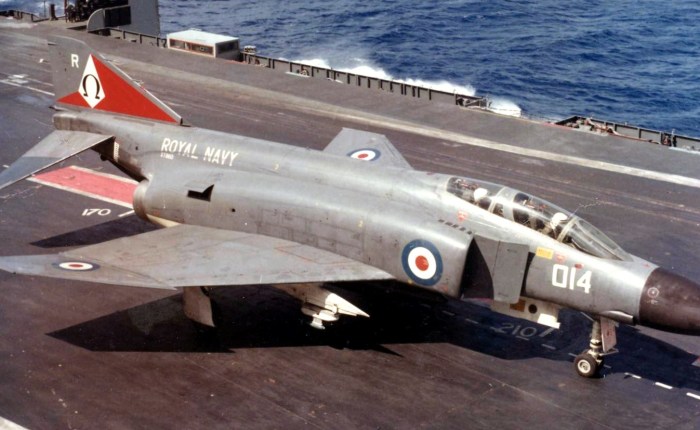





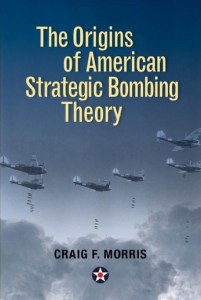
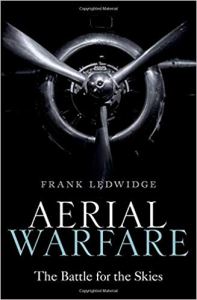

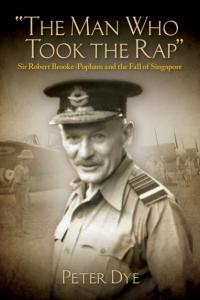

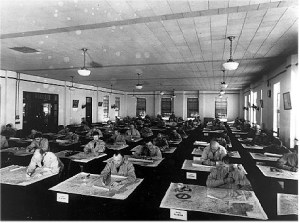
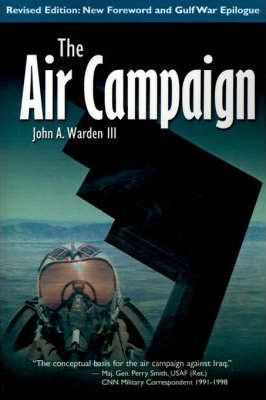
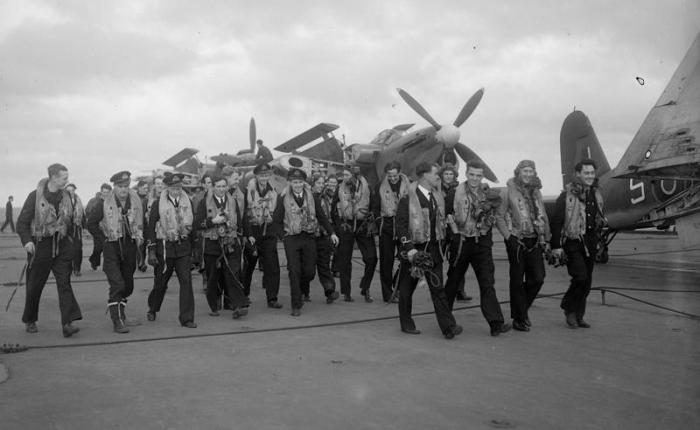


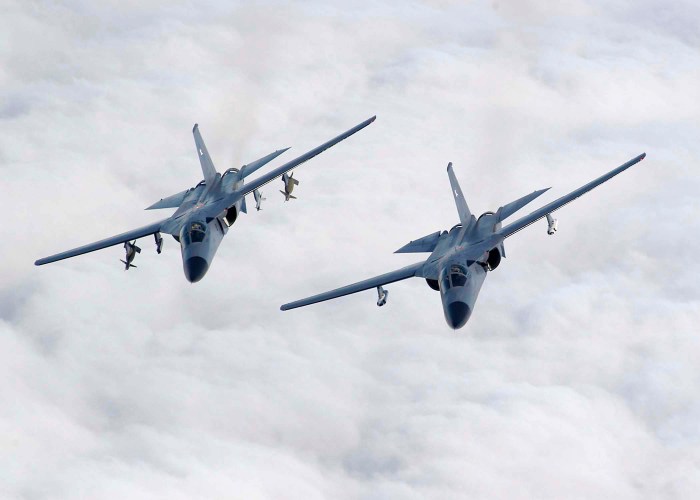

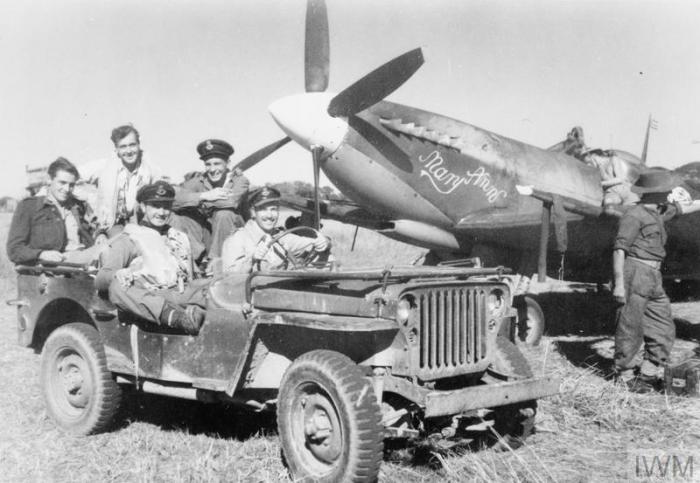

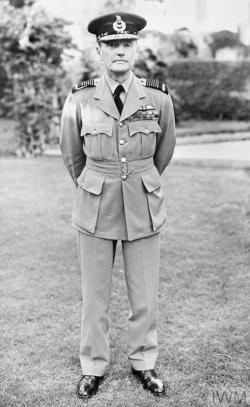
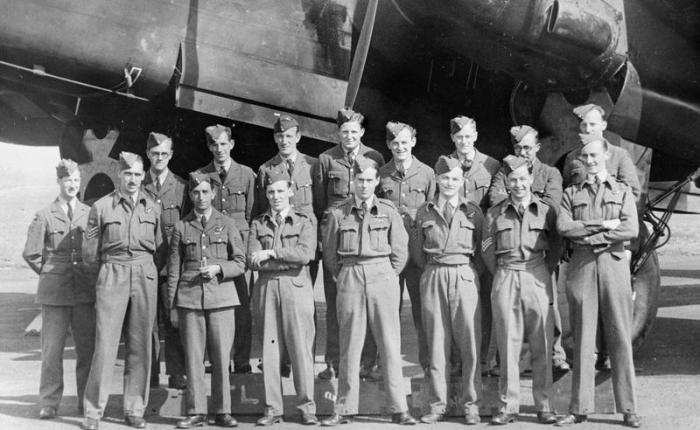
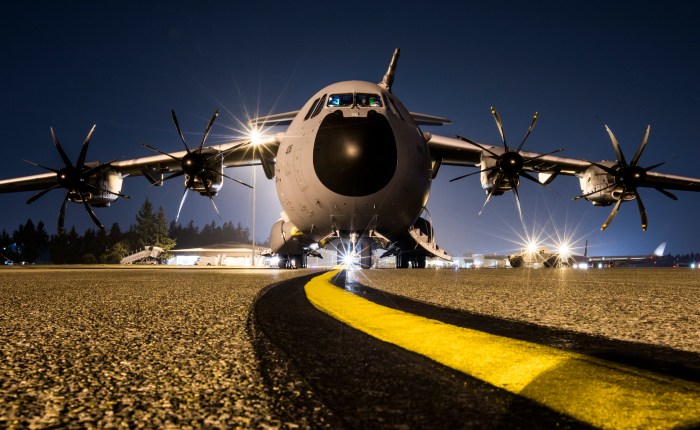
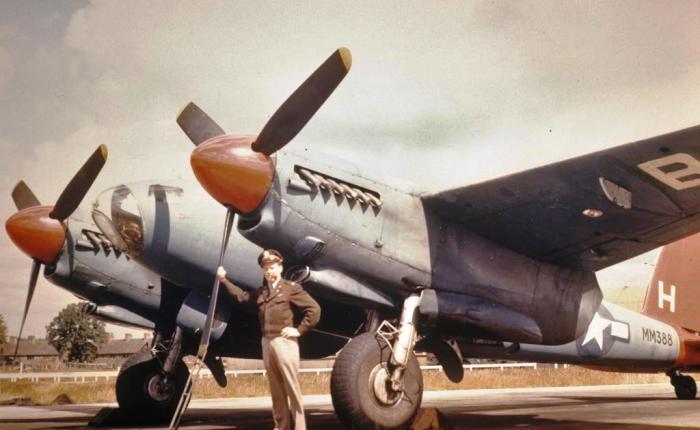




 From Balloons to Drones
