#BookReview – Rearming the RAF for the Second World War: Poor Strategy and Miscalculation

#BookReview – Rearming the RAF for the Second World War: Poor Strategy and Miscalculation

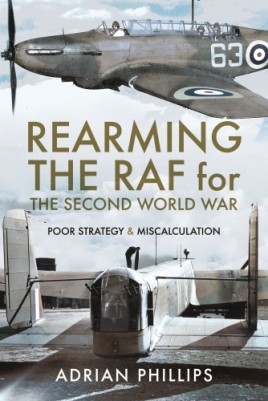
Adrian Phillips, Rearming the RAF for the Second World War: Poor Strategy and Miscalculation. Barnsley: Pen & Sword, 2022. Notes. Bibliography. Index. Hbk. xxvi + 350 pp.

Reviewed by Dr Matthew Powell
9781399006248_1

The history of the rearmament of the Royal Air Force (RAF), and the British aircraft industry in the inter-war period, more generally, has undergone a degree of revision over recent decades, mainly through the works of Sebastian Ritchie and David Edgerton. In this work, Adrian Phillips looks to challenge this new orthodoxy. Phillips seeks to show that the RAF adopted an incorrect way of conceptualising air warfare in the mid-to late-1930s. Phillips claims that the Air Ministry and the wider RAF incorrectly prioritised bombers over fighters when rearmament began in the 1930s. Phillips further contends that this prioritisation can be traced back to the theorising of Marshal of the Royal Air Force Lord Trenchard, the RAF’s Chief of the Air Staff in the 1920s. Despite dispelling several myths about RAF expansion in the inter-war period, Phillips does not provide an overly convincing case for several reasons.

The critical issue with Phillips’ book is that it suffers from a general lack of understanding of the wider historical context of the RAF’s development in this period. Despite a relatively extensive bibliography, it appears that many more recent works in this area have not been consulted. This illustrates a broader bias inherent in Phillips’ work, namely that the RAF was wrong in its thinking.

Several examples sufficiently highlight the problem of understanding present in this work. For instance, in seeking to rehabilitate the argument that the RAF took no interest in supporting the British army or developing its capabilities in this area, this has long been questioned by more recent studies showing the case to be far more complex and nuanced than Phillips is willing to give them credit for. Indeed, Phillips’ would have benefitted from a reading of the work of David Ian Hall or this author’s own research. The lack of engagement with such works suggests a wider lack of contextual knowledge of the inter-war period and the pressures the RAF faced regarding their survival as an independent Service.

Concerning issues related to aircraft development, an examination of the various works of Edgerton, would have aided in providing the wider context of the development of the British aircraft industry. This would allow for a greater understanding of the relationship between the Air Ministry and the aircraft industry to be explored within the book. This lack of understanding is a concern in a work of this length. For instance, the Air Ministry is criticised for its decision to continue authorising the production of obsolescent aircraft such as the Fairey Battle (p. 42). Phillips’ argument, however, does not consider the industrial problems of the British aircraft industry in enough depth to demonstrate the difficulties faced by the Air Ministry. For example, officials at the Air Ministry faced the difficult decision of whether to order aircraft from firms to retain labour and gain large-scale production experience or reduce the potential for losing skilled labour. If the latter option were chosen, the teething problems of ramping up production that had been experienced at the start of the rearmament drive would be experienced again.

Moreover, there also appears to be a further lack of specific understanding of the wider aircraft industry and the challenges the Air Ministry faced in getting aircraft through the design and development programme. This is used, again, as a stick with which to hit the Air Ministry, without taking the time to develop a more nuanced argument by considering the lead times from specifications being issued to the first production batch being delivered (p. 107). Aircraft that emerged from aircraft firms and went on to be household names during the Second World War were going through the design and development process at the time decisions were being made to expand the RAF and fall into the quantity versus quality argument that was had by those in the Air Ministry responsible for this area. Phillips is, however, correct in highlighting that this left Bomber Command with a significant capability gap from the start of the war in 1939 until the introduction of the four-engined Lancaster heavy bomber in 1941.

Combined with the issue of contextual understanding, Phillips’ work suffers from a degree of hindsight bias. Again, this bias is used to illustrate that the RAF were wrong. For example, the RAF and the wider Air Ministry are criticised for not realising the importance of the experiments being conducted by Robert Watson-Watt in developing a basic air defence system (pp. 30, 130-1). This feels like an overly harsh criticism given that the technology was being developed as decisions on arming the RAF were being made. Furthermore, a potential failure in this technology meant facing a similar problem to that of the First World War regarding advanced warning of incoming enemy aircraft.

Despite these criticisms, the chapters analysing the relationship between the wider government and the Air Ministry are the most engaging. They provide a real depth of understanding of the dynamics at play between the two. However, even here, there is a degree of reading history backwards and criticising the RAF on decisions where those looking after the event know what happened, but the protagonists do not.
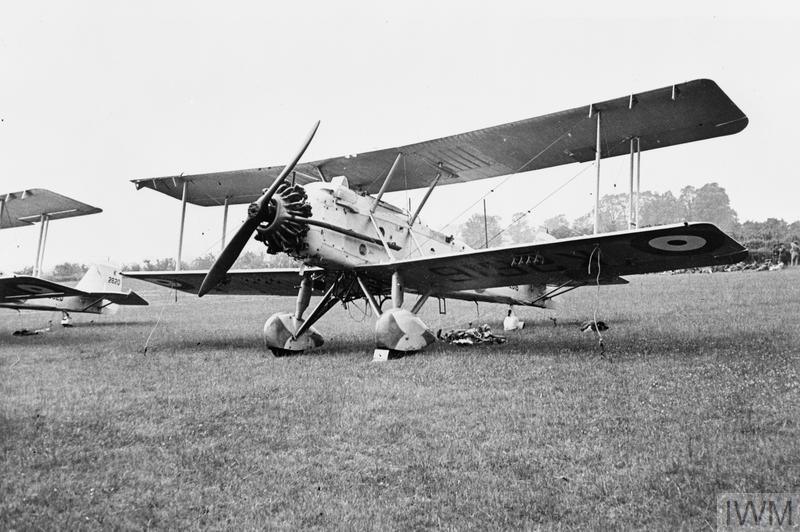
Vildebest
A Vickers Vildebeest I on display at King George V’s Jubilee Review at Mildenhall, July 1935. (Source: IWM)

As well as the areas identified above, several stylistic issues exist with the book’s structure and form. This makes gaining any momentum in the argument and analysis challenging to sustain. The book comprises 38 chapters, which, given the size of the work, means most are relatively short and jump around the topic area, thus making the overall argument and analysis challenging to follow. There is also a lack of analytical consistency tying each chapter together and a tendency to move around chronologically without setting the ideas being discussed in context, especially if they had been mentioned in previous chapters. This truncated style leaves an impression that a tighter structure would have helped with the flow of the argument and would have aided in making the links between developments clearer. In addition, a clearer statement of intent at the beginning of each chapter would have aided readers in understanding what the author wanted them to take away in terms of argument and viewpoint.

Critically, one of the significant issues with this work’s presentation is the lack of references within each chapter. Many statements lack supporting evidence (either primary or secondary), and quotes are also left unsupported. For example, chapter 2, which looks at the period when Sir Hugh Trenchard becomes Chief of the Air Staff for the second time, has only one reference, despite plentiful sources. Additionally, the primary evidence cited has been chosen to suit a particular pre-formed argument rather than the argument formed by the available evidence (of which the files in The National Archives alone are plentiful).

Overall, this attempt at post-revisionism largely fails in presenting a depth of analysis through the poor use of references and available evidence. It feels as if the author had their argument in mind before the research. The traditional bashing of the RAF of the inter-war period has yet to disappear from the annals of history.

Dr Matthew Powell is a Teaching Fellow at Portsmouth Business School at the Royal Air Force College, Cranwell. He holds a PhD in Modern History from the University of Birmingham. His first book The Development of British Tactical Air Power, 1940 1943: A History of Army Co-operation Command, was published by Palgrave Macmillan in 2016. He has published in War in History, The Journal of the Royal United Services Institute, Air and Space Power Review and the British Journal of Military History. His current research investigates the relationship between the Air Ministry and the British aircraft industry in the inter-war period.

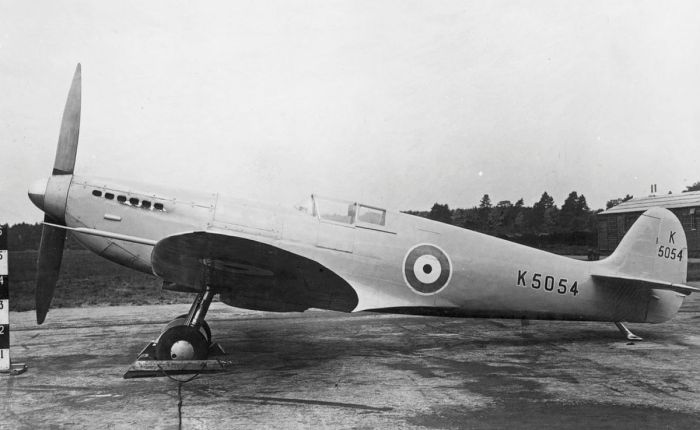
Header image: The prototype Supermarine Spitfire, K5054, c. 1936. (Source: Wikimedia)

#ResearchResources – Recent Articles and Books (November 2021)

#ResearchResources – Recent Articles and Books (November 2021)

Editorial note: In this series, From Balloons to Drones highlights research resources available to researchers. Contributions range from discussions of research at various archival repositories to highlighting new publications. As part of this series, we are bringing you a monthly precis of recent articles and books published in air power history. This precis will not be exhaustive but will highlight new works published in the preceding month. Publication dates may vary around the globe and are based on those provided on the publisher’s websites. If you would like to contribute to the series, please contact our Editor-in-Chief, Dr Ross Mahoney, at airpowerstudies@gmail.com or via our contact page here.

Articles

John Alexander, ‘The Worsted Manufacturer, Roderick Hill and ‘the most courageous decision of the War’: The Decision to Reorganise Britain’s Air Defence to Counter the V-1 Flying Bomb,’ RAF Air and Space Power Review 23, no. 1 (2021).

The first four V-1 flying bombs crossed the Channel in the early hours of 13 June 1944, exactly one week after D-Day; none were engaged and one reached Bethnal Green killing four people. When overnight 15/16 June the German Air Force launched 244 V-1s against London, the long-planned British counter V-1 defences, consisting of fighter, gun and balloon belts, brought down only thirty-three V-1s, including eleven shot-down by anti-aircraft (AA) guns, and seventy landed on London. This paper explores the decision to reorganise Britain’s Air Defence during this crucial stage of the War.

Orazio Coco, ‘The Italian Military Aviation in Nationalist China: General Roberto Lordi and the Italian Mission in Nanchang (1933–1937),’ The International History Review (2021). DOI: 10.1080/07075332.2021.1984277

On 7 September 1933, military officers of the Italian Air Force led by Colonel Roberto Lordi departed from Naples to reach China with the task, agreed upon by Italian fascist and Chinese nationalist governments, of building a factory assembling Italian-made aircraft and training pilots for the Republic of China. The mission was stationed at Nanchang, in today’s Jiangxi province. The initiative was developed in competition with a similar American mission, which had operated since 1932 in Hankou, in the Hubei province, at the time led by Colonel John H. Jouett. The Italian government won Chiang’s attention with the agreement to use the military airfield and Italian aircraft against the Communist resistance, which pleased the expectations of the Generalissimo. In April 1934, the headquarters of the Chinese military aviation finally moved to Nanchang. The mission’s commander, Roberto Lordi, was promoted Brigadier General of the Italian Royal Air Force and appointed Chief of Staff of the Chinese Air Force. This article presents, through extensive use of unpublished private and public archive documents, the controversial history of the Italian military mission and unveils the circumstances that changed the fortune of that successful story, as well as the career and personal life of its commander.

Steven Paget, ‘The ‘Eeles Memorandum’: A Timeless Study of Professional Military Education,’ RAF Air and Space Power Review 23, no. 1 (2021).

Examinations of historical examples are an important element of the professional military education debate and demonstrate the enduring nature of some of the necessary considerations. Air Commodore Henry Eeles, the Commandant of Royal Air Force (RAF) College Cranwell between August 1952 and April 1956 wrote a prescient report in 1955. The military, political and social changes that were occurring have some parallels to the contemporary context, including expectations about access to higher education and the introduction of new technology, which was viewed as leading to an era of so-called ‘push button warfare’. Eeles was also cognisant of issues such as balance, time and life-long learning that are just as pertinent today as in 1955. The context and content of the report has ensured that it has enduring relevance for the RAF.

Matthew Powell, ‘Royalties, Patents and Sub-Contracting: The Curious Case of the Hawker Hart,’ RAF Air and Space Power Review 23, no. 1 (2021). 

Aircraft procurement by the Air Ministry in the inter-war period was beset by various problems, with numerous solutions proposed in an attempt to resolve them. One such potential solution was the proposal to sub-contract the production to other aircraft manufacturers within the Air Ministry’s ring of firms who were allocated firm orders. This action by the Air Ministry, it was believed, would spread the technical knowledge of aircraft production to a wider base that could be built upon in a time of national emergency or war. This approach was also a way of ‘artificially’ keeping firms alive where they had been unsuccessful in being awarded contracts. Such a scheme would, from the industry’s perspective, however, lead to less orders for firms successful in aircraft design and allow the potential sharing of industry secrets amongst direct competitors.

Richard Worrall, “Bumps along “The Berlin Road”’: Bomber Command’s forgotten Battle of Hanover, September-October 1943,’ RAF Air and Space Power Review 23, no. 1 (2021).

The many accounts on RAF Bomber Command follow the usual chronology of the ‘Main Offensive’ against Germany throughout 1943/4, with a linear progression from the Battle of the Ruhr, to the Battle of Hamburg, to the Battle of Berlin. Yet adopting this approach is problematic. The Battle of Berlin was halted by Harris in mid-September only to be recommenced in mid-November, but it, therefore, begs the simple question: what was Bomber Command doing during the interim ten weeks? Harris’ force was far from inactive during this time, in which the centrepiece was the ‘Battle of Hanover’ that comprised four heavy-attacks in twenty-six days. This article identifies what happened during this period of the ‘Main Offensive’, to suggest why this ‘bomber battle’ has remained forgotten, highlighting how Bomber Command’s experiences over Hanover revealed its limitations at this critical stage of the bombing war.

Books

Tony Fairbairn, The Mosquito in the USAAF: De Havilland’s Wooden Wonder in American Service (Barnsley: Pen and Sword, 2021).

On 20 April 1941, a group of distinguished Americans headed by the US Ambassador to the United Kingdom, John Winant, and which included Major General Henry ‘Hap’ Arnold, Chief of the US Army Air Corps, visited the de Havilland Aircraft Company’s airfield at Hatfield, England.

The party was there ostensibly to gain an insight into how various US aircraft supplied to Britain were performing, as well as to observe some of the latest British products being put through their paces. The eighteen types on display included both US and British bombers and fighters. But the star of the day was undoubtedly the de Havilland Mosquito.

Having first flown only a few months earlier, on 25 November 1940, the aircraft that was put through its paces was flown by none other than Geoffrey de Havilland. Striving to impress the trans-Atlantic visitors, de Havilland provided an outstanding display of speed and manoeuvrability. It was a routine that impressed the Americans and left them in no doubt as to the Mosquito’s abilities.

Though the visitors harboured doubts about an aircraft made of wood, they returned to the United States with full details of the design. The Mosquito had also caught the eye of Elliott Roosevelt, son of the US President and a serving officer in the USAAC. An early specialist in military aerial mapping and reconnaissance, ‘ER’ swiftly realized the value of the Mosquito in the reconnaissance role and began lobbying vigorously for its acquisition. The Air Ministry duly noted ‘ER’s’ interest and influence.

Following America’s entry into the war, formal requests for Mosquitoes began in earnest in 1942. Initial deliveries for evaluation purposes in the United States soon followed in June 1943, the aircraft initially being supplied by de Havilland Canada. From February 1944 a steady flow of the photographic reconnaissance version, from Hatfield, were provided to what would become the USAAF’s 25th Bomb Group at Watton, England. There they served with distinction in a variety of specialist roles, including day and night photography, weather reconnaissance, ‘chaff’ (Window) dropping, scouting for the bomber force, raid assessment, and filming of special weapons projects.

A number of these Mosquitoes, serving with the 492nd Bomb Group at Harrington, were involved in the so-called ‘Joan-Eleanor’ project, working with OSS secret agents on the Continent. Finally, in 1945, the USAAF received much-anticipated night fighter Mosquitoes which enjoyed combat success with the 416th Night Fighter Squadron in Italy.

In this highly illustrated work, the author explores the full story of why the Americans wanted Mosquitoes, how they went about obtaining them, and their noted success and popularity with USAAF units.

Michael Hankins, Flying Camelot: The F-15, the F-16, and the Weaponization of Fighter Pilot Nostalgia (Ithaca, NY: Cornell University Press, 2021).

Flying Camelot brings us back to the post-Vietnam era, when the US Air Force launched two new, state-of-the art fighter aircraft: the F-15 Eagle and the F-16 Fighting Falcon. It was an era when debates about aircraft superiority went public—and these were not uncontested discussions. Michael W. Hankins delves deep into the fighter pilot culture that gave rise to both designs, showing how a small but vocal group of pilots, engineers, and analysts in the Department of Defense weaponized their own culture to affect technological development and larger political change.

The design and advancement of the F-15 and F-16 reflected this group’s nostalgic desire to recapture the best of World War I air combat. Known as the “Fighter Mafia,” and later growing into the media savvy political powerhouse “Reform Movement,” it believed that American weapons systems were too complicated and expensive, and thus vulnerable. The group’s leader was Colonel John Boyd, a contentious former fighter pilot heralded as a messianic figure by many in its ranks. He and his group advocated for a shift in focus from the multi-role interceptors the Air Force had designed in the early Cold War towards specialized air-to-air combat dogfighters. Their influence stretched beyond design and into larger politicized debates about US national security, debates that still resonate today.

A biography of fighter pilot culture and the nostalgia that drove decision-making, Flying Camelot deftly engages both popular culture and archives to animate the movement that shook the foundations of the Pentagon and Congress.

Norman Ridley, The Role of Intelligence in the Battle of Britain (Barnsley: Pen and Sword, 2021).

The Battle of Britain was fought between two airborne military elites and was a classic example of pure attack against pure defence. Though it was essentially a ‘war of attrition’, it was an engagement in which the gathering, assessment and reaction to intelligence played a significant role on both sides.

In some respects, both the RAF and the Luftwaffe were hamstrung in their endeavours during the Battle of Britain by poor intelligence. The most egregious Luftwaffe blunder was its failure to appreciate the true nature of Fighter Command’s operational systems and consequently it made fundamental strategic errors when evaluating its plans to degrade them. This was compounded by the Luftwaffe’s Intelligence chief, Major Josef ‘Beppo’ Schmid, whose consistent underestimation of Fighter Command’s capabilities had a huge negative impact upon Reichsmarschall Göring’s decision-making at all stages of the conflict.

Both the Luftwaffe and the RAF lacked detailed information about each other’s war production capacity. While the Luftwaffe did have the benefit of pre-war aerial surveillance data it had been unable to update it significantly since the declaration of war in September 1939. Fighter Command did have an distinct advantage through its radar surveillance systems, but this was, in the early stages of the conflict at least, less than totally reliable and it was often difficult to interpret the data coming through due to the inexperience of many of its operators. Another promising source of intelligence was the interception of Luftwaffe communications.

It is clear that the Luftwaffe was unable to use intelligence as a ‘force multiplier’, by concentrating resources effectively, and actually fell into a negative spiral where poor intelligence acted as a ‘force diluter’, thus wasting resources in strategically questionable areas. The British, despite being essentially unable to predict enemy intentions, did have the means, however imperfect, to respond quickly and effectively to each new strategic initiative rolled out by the Luftwaffe.

The result of three years intensive research, in this book the author analyses the way in which both the British and German Intelligence services played a part in the Battle of Britain, thereby attempting to throw light on an aspect of the battle that has been hitherto underexposed to scrutiny.

Stephen Wynn, Hitler’s Air Defences (Barnsley: Pen and Sword, 2021).

The first Allied bombing raid on Berlin during the course of the Second World War, took place on 7 June 1940, when a French naval aircraft dropped 8 bombs on the German capital, but the first British raid on German soil took place on the night of 10/11 May 1940, when RAF aircraft attacked Dortmund.

Initially, Nazi Germany hadn’t given much thought about its aerial defences. being attacked in its ‘own back yard’ wasn’t something that was anticipated to be an issue. Germany had been on the offensive from the beginning of the war and Hitler believed that the Luftwaffe was the much stronger air force.

In addition, from 1939-1942, the Allied policy of aerial attacks on German soil was to hit targets with a distinct military purpose, such as munitions factories, airfields etc. This meant that the Germany military could focus where they placed their anti-aircraft batteries and had a very good idea of how many they would need.

However, Germany’s defensive capabilities were forced to improve as Allied raids on towns and cities increased in size and frequency. Fighter aircraft were included as part of anti-aircraft defences and flak units mastered the art of keeping attacking Allied aircraft at a specific height. This made it more difficult for them to identify their specific targets, and easier for German fighter aircraft to shoot them down before they could jettison their bomb loads.

With the Allied tactic of ‘area bombing’, Germany’s anti-aircraft capabilities became harder to maintain as demand increased. The longer the war went on, along with the increased Allied bombing raids, sometimes involving more than 1,000 bomber aircraft, so the worth and effectiveness of German air-defences dwindled.

#ResearchResources – Recent Articles and Books

#ResearchResources – Recent Articles and Books

Editorial note: In this new series of posts, From Balloons to Drones plans to highlight research resources available to researchers. Contributions will range from discussions of research at various archival repositories through to highlighting new publications. As part of this series, we plan to bring you a monthly precis of new articles and books published in the field of air power history. This precis will not be exhaustive but will highlight key new works published in the preceding month. If you would like to contribute to the series, please contact our Editor-in-Chief, Dr Ross Mahoney, at airpowerstudies@gmail.com or via our contact page here.

Articles

Kwong Chi Man, “Debating ‘Douhetism’: Competing Airpower Theories in Republican China, 1928–1945,’ War in History 28, no. 1 (2021).

This article sheds lights on the difficulty faced by the minor powers when they were trying to build an effective air force during the interwar period (1919–1939) and the Second World War, using the experience of Chinese military aviation as an example. It argues that the Chinese were heavily influenced by the ideas of decisive action and strategic bombing, as well as similar ideas that were attributed (sometimes incorrectly) to the Italian General and air proponent Giulio Douhet. Only the harsh lessons of the war gradually persuaded the Chinese to adopt a more realistic approach to using air power.

Dan Ellin, ‘A ‘Lack of Moral Fibre’ in Royal Air Force Bomber Command and Popular Culture,’ British Journal for Military History 6, no. 3 (2020).

Royal Air Force aircrew endured mental and physical stresses during bombing operations. Their chances of completing a tour of operations unscathed were around one in four, and many were aware the chances were slim. Some who refused to fly were accused of ‘lacking moral fibre’ (LMF). Although this was not a medical diagnosis it is frequently viewed through the lens of mental health and reactions to trauma and it has become a powerful and important cultural phenomenon. This article re-examines LMF in the culture of the wartime Royal Air Force, before considering how and why LMF is remembered by veterans and in popular histories since the war.

James Halstead, ‘Air Power and Allenby’s Army: Arms in Palestine 1917–1918,’ War in History, (2020).

Historians have overlooked the important role played by airpower in combined arms during the Palestine Campaign, 1917–1918. This article argues the Egyptian Expeditionary Force adopted Western Front command structures, successfully integrating airpower within their command and control systems. Tactical and strategic airpower provided intelligence which allowed Corps and Army Headquarters to control the tempo of operations, while ground attack operations disrupted Ottoman command and control arrangements. This integration made a clear contribution to the success of the Egyptian Expeditionary Force at the crucial battles of Third Gaza and Megiddo.

William Head, ‘The Triangle of Iron and Rubber: Ground Actions and Airpower during Operation Attleboro,’ Air Power History 67, no. 4 (2020).

No abstract provided.

Christian Moldjord, Paal Frederiksen, and Larry Browning, ‘Fear and Pride Among Fighter Pilots: Combat Emotions During a Bombing Campaign,’ Armed Forces & Society, (2021), doi:10.1177/0095327X20986925.

This article analyzes the combat emotions of Royal Norwegian Air Force Fighter pilots (hereafter RNoAF) during their bombing campaign over Libya in 2011. Using grounded theory in our interviews with them, we identified 12 categories of their emotions and behaviors, with variations in pride and fear emerging as the two key themes. We show how those two emotions thread through the literature of emotions in combat, and show further how our data, and the resulting matrix from an analysis of it, both apply to and extend that literature. We also show how the high and low variations of pride and fear interact to both support and counter each other. Our findings thus make an important contribution to the combat emotions literature on the action and behavior of fighter pilots.

Samuel Oyewole, ‘Struck and killed in Nigerian Air Force’s campaigns: Assessment of airstrike locations, targets and impacts in internal security operations,’ African Security Review, (2021) DOI: 10.1080/10246029.2020.1859394

The involvement of the air force in a series of Joint Task Force (JTF) arrangements, which were initiated to neutralise various security threats, accounted for a growing record of air campaigns in Nigeria. Although there is growing public attention for airpower in Nigeria, its operational relevance and associated concerns have received inadequate academic attention. Accordingly, the understanding of recent developments in Nigeria’s air campaigns to neutralise targeted threats against security across the country remains largely limited and incoherent. This study, therefore, seeks to examine trends in air campaigns, with emphasis on cases, locations, targets and impacts of airstrike, in Nigeria. For this purpose, 241 cases of airstrike with 3,210 fatalities and 273 cases of air/land operations with 2,186 fatalities that were recorded across Nigeria in the last two decades were assessed. This is expected to contribute to a growing body of knowledge on air campaigns of the Nigerian Air Force (NAF) as well as their relevance to neutralise targeted threats and associated human rights concerns in internal security operations.

Matthew Powell, ‘Debate, Discussion, and Disagreement: A Reassessment of the Development of British Tactical Air Power Doctrine, 1919–1940,’ War in History 28, no. 1 (2021).

This article investigates the work conducted by the Royal Air Force (RAF) in the development of tactical air power in the interwar period. It analyses the RAF’s theoretical doctrinal thinking during the period along with exercises conducted on a joint Service basis to further develop these ideas in practice. It will argue that, rather than neglecting tactical air power during this period as is the accepted view, much good theoretical work was done that formed a theoretical and intellectual basis for the further development of tactical air power in the light of operational experience during the Second World War.

Theo Van Geffen, ‘The Air War against North Vietnam: the Thanh Hoa Railroad and Highway Bridge (Part 6, Conclusion),’ Air Power History 67, no. 4 (2020).

No abstract provided.

Darrel Whitcomb, ‘1972 – US Army Air Cavalry to the Rescue in Vietnam,’ Air Power History 67, no. 4 (2020).

No abstract provided.

James Young, ‘The U.S. Air Force’s Long Range Detection Program and Project MOGUL,’ Air Power History 67, no. 4 (2020).

No abstract provided.

Books

Frank Blazich, “An Honorable Place in American Air Power” Civil Air Patrol Coastal Patrol Operations, 1942–1943 (Maxwell, AL: Air University Press, 2020).

Author Frank Blazich has spent years researching and compiling disparate records of Civil Air Patrol’s short-lived–but influential–coastal patrol operations of World War II, which he synthesizes into the first scholarly monograph that cements the legacy of this unique and vital wartime civil-military cooperative effort.

Benjamin Lambeth, Airpower in the War against ISIS (Annapolis, MD: Naval Institute Press, 2020).

Airpower in the War against ISIS chronicles the planning and conduct of Operation Inherent Resolve by U.S. Central Command (CENTCOM) from August 2014 to mid-2018, with a principal focus on the contributions of U.S. Air Forces Central Command (AFCENT). Benjamin S. Lambeth contends that the war’s costly and excessive duration resulted from CENTCOM’s inaccurate assessment of the Islamic State in Iraq and Syria (ISIS), determining it was simply a resurrected Iraqi insurgency rather than recognizing it as the emerging proto-state that it actually was. This erroneous decision, Lambeth argues, saw the application of an inappropriate counterinsurgency strategy and use of rules of engagement that imposed needless restrictions on the most effective use of the precision air assets at CENTCOM’s disposal. The author, through expert analysis of recent history, forcefully argues that CENTCOM erred badly by not using its ample air assets at the outset not merely for supporting Iraq’s initially noncombat-ready ground troops but also in an independent and uncompromising strategic interdiction campaign against ISIS’s most vital center-of-gravity targets in Syria from the effort’s first moments onward.

Richard Mead, Dambuster-in-chief: The Life of Air Chief Marshal Sir Ralph Cochrane (Barnsley: Pen and Sword, 2020).

Ralph Cochrane was born in 1895 into a distinguished naval family. After joining the Royal Navy, he volunteered in 1915 to serve with the RNAS in airships and was an early winner of the Air Force Cross. In 1918 he transferred to the fledgling RAF and learnt to fly, serving in Iraq as a flight commander under ‘Bomber’ Harris. His inter-war career saw him as a squadron commander in Aden before he became the first Chief of Air Staff of the Royal New Zealand Air Force. During the Second World War he served mainly in Bomber Command and commanded 5 Group from early 1943. He formed 617 Squadron and was instrumental in planning the legendary Dambuster Raid, the most spectacular of the War, as well as the sinking of the battleship Tirpitz. An inspirational leader, he trained 5 Group in low level target marking skills. Post war Cochrane held a string of senior appointments commanding Transport Command, Flying Training Command and finally as Vice Chief of Air Staff, retiring in 1952. He died in 1977.

Steven Paget (ed.), Allies in Air Power: A History of Multinational Air Operations (Lexington, KT: The University Press of Kentucky, 2020).

In the past century, multinational military operations have become the norm; but while contributions from different nations provide many benefits — from expanded capability to political credibility — they also present a number of challenges. Issues such as command and control, communications, equipment standardization, intelligence, logistics, planning, tactics, and training all require consideration. Cultural factors present challenges as well, particularly when language barriers are involved.

In Allies in Air Power, experts from around the world survey these operations from the birth of aviation to the present day. Chapters cover conflicts including World War I, multiple theaters of World War II, the Korean War, the Vietnam War, the Gulf War, Kosovo, the Iraq War, and various United Nations peacekeeping missions. Contributors also analyze the role of organizations such as the UN, NATO, and so-called “coalitions of the willing” in laying the groundwork for multinational air operations.

While multinational military action has become commonplace, there have been few detailed studies of air power cooperation over a prolonged period or across multiple conflicts. The case studies in this volume not only assess the effectiveness of multinational operations over time, but also provide vital insights into how they may be improved in the future.

Randall Wakelam, David Varey, and Emanuele Sica (eds.), Educating Air Forces: Global Perspectives on Airpower Learning (Lexington, KT: The University Press of Kentucky, 2020).

Compared to armies and navies, which have existed as professional fighting services for centuries, the technology that makes air forces possible is much newer. As a result, these services have had to quickly develop methods of preparing aviators to operate in conditions ranging from peace or routine security to full-scale war. The first book to address the history and scope of air power professionalization through learning programs, Educating Air Forces offers valuable new insight into strategy and tactics worldwide.

Here, a group of international experts examine the philosophies, policies, and practices of air service educational efforts in the United States, France, Italy, Germany, Australia, Canada, and the UK. The contributors discuss the founding, successes, and failures of European air force learning programs between the Great War and World War II and explore how the tense Cold War political climate influenced the creation, curriculum, and results of various programs. They also consider how educational programs are adapting to soldiers’ needs and the demands of modern warfare.

Featuring contributions from eminent scholars in the field, this volume surveys the learning approaches globally employed by air forces in the past century and evaluates their effectiveness. Educating Air Forces reveals how experiential learning and formal education are not only inextricably intertwined, but also necessary to cope with advances in modern warfare.

Darrel Whitcomb, Moral Imperative: 1972, Combat Rescue, and the End of America’s War in Vietnam (Lawrence, KS: University Press of Kansas, 2021).

In 1972, America was completing its withdrawal from the long and divisive war in Vietnam. Air power covered the departure of ground forces, and search and rescue teams from all services and Air America covered the airmen and soldiers still in the fight. Day and night these military and civilian aircrews stood alert to respond to “Mayday” calls. The rescue forces were the answer to every mans prayer, and those forces brought home airmen, sailors, marines, and soldiers downed or trapped across the breadth and depth of the entire Southeast Asia theater. Moral Imperative relies on a trove of declassified documents and unit histories to tell their tales.

Focusing on 1972, Darrel Whitcomb combines stories of soldiers cut off from their units, advisors trapped with allied forces, and airmen downed deep in enemy territory, with the narratives of the US Air Force, Army, Navy, Marines, contract pilots, and special operations teams ready to conduct rescues in Laos, Cambodia, North Vietnam, and South Vietnam. All of these missions occur against the backdrop of our withdrawal from the war and our diplomatic efforts to achieve a lasting peace. In detail, Whitcomb shows how American rescue forces supported the military response to the North Vietnamese’s massive three-pronged invasion of South Vietnam, America’s subsequent interdiction operations against North Vietnam, and ultimately the strategic bombing of Linebacker II.

A Forgotten Revolution? RAF Army Co-operation Command and Artillery Co-operation

A Forgotten Revolution? RAF Army Co-operation Command and Artillery Co-operation

By Dr Matthew Powell[1]

Jonathan Bailey wrote that the First World War was the time of a true revolution in military affairs about the development of artillery firing.[2] One of the first significant developments that took place was the creation and refinement of the ‘clock code’ system.[3] Using this system, a pilot of the Royal Flying Corps, the forerunner to the Royal Air Force (RAF), was able to correct the fall of shot of the artillery by passing to the artillery battery commander details of how far from the target the guns were. The pilot would correct the shooting of the artillery by pointing out how far away and in what direction the shells of the guns had landed. The distance would be passed on using numbers and the direction using the picture of a clock face. The target was placed in the middle of the clock face and shells that fell beyond the target and on a straight line to the target would be corrected with a call of twelve, if it fell short on the same line the call would be six, at ninety degrees left of the target nine and ninety degrees right three. Any other direction would be corrected by using the hour on the clock with which it corresponded. This system would prove to function perfectly well throughout the whole of the First World War and was the system with which the RAF went to war in 1939.

The system of correcting artillery fire remained unchanged until 1938. The Air Council were against making alterations to the clock code system as they felt that it was adequate to meet the needs that the army would face in future conflicts. They felt that light aircraft could not be kept in action close to artillery units, as had been the case in the First World War.[4] The Air Council were also fearful of introducing a new, untried, and unfamiliar system with the growing tensions in Europe at this time. The War Office was unimpressed with the Air Councils attitude and pushed for more to be done. The Air Ministry agreed to trials between the Air Officer Commanding No. 22 (Army Co-operation) Group and the Commandant of the School of Artillery in December 1938.[5] The results of these trials and further trials conducted to test aircraft as well as procedure. The results were that light aircraft over the battlefield could observe fire with the ‘clock code’ system.[6] Spitfires conducted mock attacks on the aircraft and the Taylorcraft light aircraft observing the artillery fire had a good chance of dodging the fire of a modern fighter.[7] There was, however, no training for pilots in registering targets for the artillery. If an artillery officer required an appraisal of a prospective target, the request would have to be sent along the command chain via an air liaison officer. When the artillery battery received the information, it was usually out of date.[8] There was also pressure from within the War Office to establish a Flying Observation Post (Flying OP) and to begin plans to train Gunner Officers to fly. A Flying OP was to work in conjunction with Ground Observation Post (Ground OP) in establishing targets to be engaged and operating deep behind their lines to be afforded the protection of friendly anti-aircraft guns.

H 27983
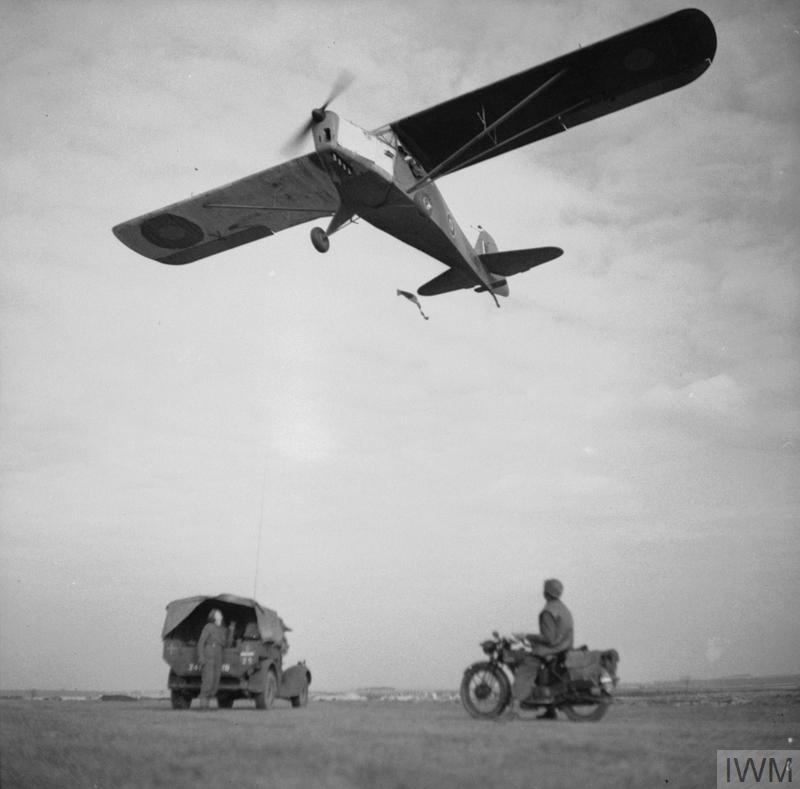
A Taylorcraft Auster Mark III of No. 655 Squadron dropping a message bag to a Royal Artillery wireless truck on the airfield at Fowlmere, Cambridgeshire, during Exercise SPARTAN. (Source:  © IWM (H 27983))

The first of these Flying OPs was established in February 1940.[9] This force was established to:

[d]etermine in the light of practical experience obtained under war conditions the possibilities and limitations of the Flying OP, the most suitable type of aircraft and the most suitable organization [sic].[10]

The tests were to be conducted in three parts. The first was an initial training period. The second a practical training with the French, and a final test in the French Army area in conditions of actual warfare including shoots against German targets it was at this time that the term Air Observation Post (Air OP) was adopted.[11] The flight was sent to France on 19 April 1940.[12] The first of the three tests were conducted after the flight had moved to the continent. The final of the three tests was due to be carried out in early May, and the forces were established ready to conduct the tests on 9 May 1940.[13] The following day the Germans began to implement Fall Gelb (Case Yellow): the invasion of France and the Low Countries.[14] The artillery designated for the tests were forced to move back to their formations leaving the Air OP Flight (D Flight) waiting for the campaign to stabilise when it was clear that this would not happen D Flight was recalled to England.[15]

One of the first official moves at changing artillery co-operation policy was a letter regarding the subject sent from the Director of Military Co-operation Air Commodore Victor Goddard to Barratt at Army Co-operation Command. In this letter, Goddard states that the Air Staff were against the formation of:

[s]pecial air units for artillery observation or reconnaissance, unless it can be clearly shown that there is an urgent requirement for such units which cannot be met by Army Co-operations squadrons.[16]

The School of Artillery recommended that a certain number of aircraft should specialise in artillery work and should be trained by the School of Artillery so that they had the same tactical knowledge and the same the understanding of gunnery as an artillery officer.[17] This was just one aspect of an idea by the School of Artillery to allow aircraft to have tactical control over the fire of artillery batteries. To facilitate this, the school further recommended that a multi-seater aircraft should be employed in this work to allow an artillery officer to conduct the shoot according to artillery methods without the need for the artillery officer learning to fly. Artillery officers were also to be seconded to army co-operation squadrons specifically for artillery work.[18] The co-operation between the School of Artillery and Army Co-operation Command is evident and is surprising given the general relations that existed between the army and RAF in the wake of the Battle of France and the fall out that it had caused between the two services.[19]

Barratt, in a letter to the Under-Secretary of State for Air, wrote that:

I consider that in order to get a true and undistorted picture of this problem, it is first desirable to set out the problem as the Army [sic] sees it, and to show in this picture what they conceive to be their requirements.[20]

Again the desire to see the problem from a view that would almost certainly be contradictory to the RAF shows that Barratt and his command were willing to adopt a different approach and attitude in co-operating with at least one part of the army. Barratt also voiced his concerns regarding the ability of the Air OP to operate in the face of enemy action. It was felt that ‘the Air OP must be entirely vulnerable to any enemy fighters which cares to shoot it down’.[21] Barratt’s concern over the safety of his pilots who may be conducting shoots using the Air OP system was to be a recurring issue in the development of artillery reconnaissance.

TR 242
Air Marshal Sir Arthur Barratt in battledress and flying gear beside a Hawker Hurricane. He often flew this aircraft when visiting airfields of RAF Army Co-operation Command, which he commanded at the time of this picture. (Source: © IWM (TR 242))

Barratt’s response to the trials was one of scepticism, and he considered ‘that body of experience gained in the late war and since has all pointed to the advantages of the ‘Clock Code’ system’.[22] Barratt’s belief in the ‘clock code’ system stemmed more from the fear of false conclusions being drawn from brief experiments than from any sense of conservatism about changing the system used for artillery reconnaissance.[23] This became a realisation when Barratt was forced to explain to the Under Secretary of State for Air about the lack of efficiency regarding artillery co-operation in Army Co-operation Squadrons. Barratt wrote that:

I feel that much of the falling off in efficiency in this part of the Army Co-operation Squadron task has been due to the propagation of rumour as to other and better methods than those shown in AP 1176.[24]

Further trials were conducted using the artillery method during April 1941, and the conclusions reached were similar to those seen previously. These were that the artillery methods of ranging by corrections to line and range are simpler, quicker, and more efficient than any method based on the ‘clock code’.

The failures of the ‘clock code’ system in France combined with further problems faced in the fighting in Libya led to a loss of confidence in the system in the army.[25] Barratt responded that the ‘clock code’ system was not at fault in these operations but that the aircraft employed in it were operating in the face of intense enemy opposition. He was concerned that the trials had been too few and were skewed in favour of a positive result by the School of Artillery.[26] While these concerns may be interpreted as merely blocking a new development that had been shown to work to preserve the autonomy of the RAF while conducting army co-operation work. The evidence of co-operation between Army Co-operation Command and the School of Artillery, shown above, leads more to the conclusion that Barratt felt that the procedure could not be successfully carried out, and wished to see more trials conducted before it would receive his approval.

The procedure for artillery reconnaissance first developed during the First World War was only suitable for the conditions of that war. The lack of fluidity and almost stable front lines allowed a system to develop, quickly, this system, however, was only suited to those conditions. This was very quickly discovered during the first major test of this procedure against the quicker and more mobile warfare of the German Wehrmacht in 1940. The attitudes of both the British Army and the RAF to co-operation during the inter-war period, in Britain at least, did little to improve the situation before the British Expeditionary Force was stationed in France. This left those charged with the responsibility of modifying the existing procedure with only the experience of the First World War to guide them and on which to base their expectations. Much co-operation between the School of Artillery and Nos. 70 and 71 Groups of Army Co-operation Command occurred, despite the general feeling of animosity still felt by both services in Britain.[27] This co-operation was the most that had been seen between the army and RAF since the formation of the RAF as an independent force in 1918. Barratt’s move to block the adoption of the new procedure that was being trialled during 1941 can be interpreted in several ways. His reasoning for doing so, however, appears to be that of confirming the results already achieved through more rigorous and testing trials to confirm the results. Through further testing at a higher level the procedure, as well as those responsible for carrying it out, would be exposed to more stress and so a greater degree of authenticity could be achieved. Trials of this nature would also confirm if the procedure could be implemented with ease by the majority of pilots whose responsibility would be increased from observing the fall of shot to conducting shoots, potentially in the face of enemy opposition. Barratt’s major concern with the new system appears to be its increased complexity, and he was rightly concerned after his experiences in France that pilots would be unable to conduct the shoot if they had to keep a lookout for enemy fighter activity continually.

Dr Matthew Powell is a Teaching Fellow at Portsmouth Business School at the Royal Air Force College, Cranwell. He holds a PhD in Modern History from the University of Birmingham. His thesis investigated the development of tactical air power in Britain during the Second World War through a study of the RAF’s Army Co-operation Command. His first book, based on the PhD, The Development of British Tactical Air Power, 1940-1943: A History of Army Co-operation Command was published in 2016 by Palgrave Macmillan. He has also published in Canadian Military History, Air Power Review and the British Journal for Military History. He is currently researching the relationship between the British aviation industry and the Air Ministry during the inter-war period. He can be found on Twitter at @tac_air_power.

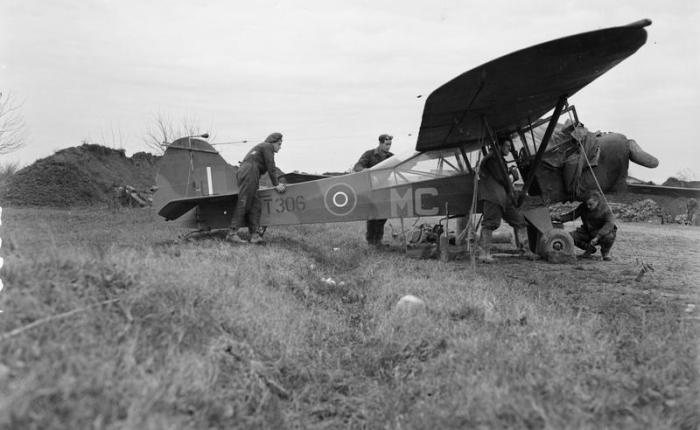
Header Image: An Auster Mark IV of an Air Observation Post squadron undergoes servicing at its base after being damaged by anti-aircraft fire while flying over the 8th Army Front in northern Italy. (Source: © IWM (CNA 3341))

[1] A longer version of this article can be found in Canadian Military History, 23:1 (2014), pp. 71-88.

[2] Jonathan Bailey, ‘Deep Battle 1914-1941: The Birth of the Modern Style of War,’ Field Artillery Journal, (1998), pp. 21-7.

[3] Ralph Barker, A Brief History of the Royal Flying Corps in World War I (London: Constable & Co., 2002), p. 63.

[4] H.J. Parham and E.M.G. Belfield, Unarmed into Battle: The Story of the Air Observation Post, Second Edition (Chippenham: Picton Publishing, 1986), p.14.

[5] Ibid.

[6] Ibid.

[7] Ibid

[8] Darrell Knight, Artillery Flyers at War: A History of the 664, 665, and 666 ‘Air Observation Post’ Squadrons of the Royal Canadian Air Force (Bennington, VT: Merriam Press, 2010), p. 27.

[9] Parham and Belfield, Unarmed into Battle, p.15.

[10] Ibid.

[11] Ibid.

[12] Ibid., p.16.

[13] Ibid.

[14] Karl-Heinz Freiser, The Blitzkrieg Legend: The 1940 Campaign in the West (Annapolis, MD: Naval Institute Press, 2005), p. 79.

[15] Parham and Belfield, Unarmed into Battle, 16.

[16] The National Archives (TNA), AIR 39/47, Letter from Air Commodore Goddard, Director of Military Co-operation to Barratt regarding Artillery Co-operation Policy, 8 December 1940.

[17] Ibid.

[18] Ibid.

[19] For more information on the army’s reaction to the Battle of France, see: TNA, CAB 106/220, Bartholomew Committee Final Report.

[20] TNA, AIR 39/47, Letter from Barratt to Under-Secretary of State for Air regarding co-operation with the Royal Artillery, 29 January 1941.

[21] Ibid., Appendix A, 29 January 1941.

[22] Ibid., Letter from Headquarters Army Co-operation Command to Headquarters No. 70 Group, Artillery Reconnaissance Trials, 12 April 1941.

[23] Ibid.

[24] Ibid., Letter from Barratt to Under Secretary of State for Air, 14 April 1941.

[25] Ibid., Letter from CGS on Artillery Reconnaissance, 5 May 1941.

[26] Ibid., Letter from Barratt to Major-General Otto Lund, GHQ Home Forces, in response from letter from CGS on Artillery Reconnaissance, 10 May 1941.

[27] For example, see: David Ian Hall, Strategy for Victory: The Development of British Tactical Air Power, 1919-1943 (Westport, CT: Praeger, 2008), pp. 89-103.