Contested Skies: Australia’s Uncertain Air Superiority Future

Contested Skies: Australia’s Uncertain Air Superiority Future

By Dr Peter Layton

In war, there’s a constant to and fro. At times defence dominates, at other times offence. Technologies arise and fall. Disruption rules. This is noticeably so in today’s arcane world of air superiority. While much investment has gone into the ADF’s air superiority capabilities—with more coming with the F-35 Joint Strike Fighter—the operational environment is not standing still.

KC-30 Tanker Test fuel transfer to F-35A
An RAAF KC-30A Multi-Role Tanker Transport conducted refuelling trials with a US Air Force F-35A Joint Strike Fighter at Edwards Air Force Base in California. (Source: Department of Defence, Australian Government)

The skies are increasingly contested. Emerging threats are making Australia’s tanker, and AEW&C (airborne early warning and control) aircraft more vulnerable and advanced surface-to-air missiles, stealth-fighter technology, long-range ballistic and cruise missiles and even hobbyist drones are proliferating. The US Air Force (USAF) recently studied what all this means in practice and determined that its ‘projected force structure in 2030 is not capable of fighting and winning against [the expected] array of potential adversary capabilities’. If the USAF’s force structure is becoming stretched so, surely, is ours.

Some warn that the 2030 date may mislead, asserting that ‘Integrated Air Defence Systems covering areas in the Western Pacific … may now be able to deny access to all but the stealthiest of aircraft’. The ‘stealthiest of aircraft’ refers to the flying wing B-2 Spirit stealth bombers and forthcoming B-21 Raiders. It seems that F-35s with their vertical tails have some vulnerabilities to emerging multiband digital radars. A RAND study echoes these concerns about current and growing air-superiority shortcomings.

Even so, 2030 isn’t far away in defence terms. It is only seven years after Australia’s F-35 fleet will have—hopefully—reached final (or full) operational status. That is not long in the planned 25- to 30-year life of the aircraft.

Australia has committed to its major air superiority investments, which makes them a good starting point to discuss the strategic impacts of known and emerging changes in the air superiority operational environment. In my new paper published by ASPI titled Contested Skies, I use current air superiority force structure plans to develop three practical strategic options to address these changes.

Two of these options require modifying the current plans. That may worry some, but strategic ‘ends’ can’t be determined independently of the capability ‘means’. The two are interdependent. When the means are fixed, it makes sense to discuss alternative ‘ways’ that might reasonably bring strategic ends into alignment.

The three options are:

  • Continuing present plans. Maintaining our current operational plans and future equipment programmes means lowering our national ambitions to simply the defence of Australia. This ‘back to the future’ approach implies abandoning Southeast Asian nations to do the best they can as China rises and its sphere of influence expands. Strategically, this shifts the burden of conducting offensive air operations onto our American ally. While we could contribute by providing a safe base area in any conflict in which the skies were seriously contested, this level of involvement would not give us much influence on overall allied strategy or in any war-termination negotiations. Our current air superiority plans doom us to being a bit player.
  • Going ‘air defence heavy’. This option changes our current capability development plans to stress air defence. A start would include acquiring significant numbers of advanced SAMs and sensors for integrated air and missile defence, changing present F-35 upgrade plans and focussing on making airbases more resilient. Strategically, the ‘air defence heavy’ approach would allow Australia to remain deeply engaged in Southeast Asia and make a meaningful—perhaps decisive—contribution in times of serious conflict. Because this approach is less reliant on US support, it would allow us to mount independent operations in an area critical to our future. This has some echoes with the Pacific War’s later stages, when the US relied on Australian forces to conduct operations in Borneo while it focused on the Philippines and beyond.
  • Rebuilding our strike capability. This option entails adjusting our current plans to focus on reconfiguring our strike capability to be effective in contested airspace beyond 2030. We would also need to make a limited investment in integrated air and missile defence. The USAF study mentioned earlier foresees the F-35 losing its strike role at the end of the next decade and then becoming an air defence fighter—taking the ‘strike’ out of ‘Joint Strike Fighter’. This applies to all of the elements that comprise the ADF’s strike capabilities, not just to the F-35. If we want to maintain a genuine strike capability into the future, we need to take positive steps to do so. However, this will not be easy or low cost—or maybe even doable.
20170221raaf8207218_002
Two F-35A Lightning II Joint Strike Fighters conduct the first ever trans-Pacific flight from the US to RAAF Base Amberley, Australia to be displayed for the first time at the Australian International Air Show at Avalon, Victoria.(Source: Department of Defence, Australian Government)

In broad terms, the status quo ‘defence of Australia’ option implies burden-shifting onto the US, the ‘air defence heavy’ approach implies a reduced dependency on the US—perhaps lessening America’s burdens—while the rebuilding of our strike capability implies continuing to share the burden with the US in major ‘must-win’ wars past 2030.

Air superiority may seem narrowly technical, but it can have a significant impact on the range of strategies that can realistically be considered. It is time for a big air-superiority rethink.

This post was originally published by The Strategist, the commentary and analysis site of the Australian Strategic Policy Institute, an independent, non-partisan think tank based in Canberra.

Dr Peter Layton is a Visiting Fellow at the Griffith Asia Institute, Griffith University. He has extensive defence experience including teaching grand strategy at the Eisenhower College, US National Defence University. He has a doctorate from the University of New South Wales on the subject of grand strategy and undertook a Fellowship at the European University Institute. His research interests include grand strategy, national security policies particularly relating to middle powers, defence force structure concepts, and armed non-state actors.

Header Image: On 29 September 2014, an Australian F-35A Lightning II aircraft took off from Fort Worth, Texas, USA. It was the maiden flight for the Australian F-35A, which was flown by Alan Norman of Lockheed Martin, lasting approximately two hours. (Source: Department of Defence, Australian Government)

From Balloons to Drones – Editorial Changes and Future Developments

From Balloons to Drones – Editorial Changes and Future Developments

Twenty eighteen marks the start of the second full year of operations for From Balloons to Drones. With this, we are pleased to announce a significant change in our editorial line-up. Dr Brian Laslie, Mike Hankins and Alex Fitzgerald-Black have all agreed to become Assistant Editors of From Balloons to Drones. Brian, Mike, and Alex have been keen supporters of From Balloons to Drones since day one, and we are grateful to them for coming on board to add some depth to our operations. You can read their biographies here.

What does this mean for From Balloons to Drones? In short, it means we can come up with more ideas on how we might take the website forward. At the moment we are discussing several ideas which will hopefully see the light of day. One idea being discussed is a series of historic book reviews of crucial air power titles that will sit alongside our already established series of book reviews. We are coming up with a list of titles but if you think of a volume that is deserving of being reviewed then let us know.

Another project that we are currently working on is a collaborative series with The Central Blue, which is the blog of the Sir Richard Williams Foundation in Australia. This set of posts will focus on some of the challenges related to high-intensity warfare in the 21st century, and they will provide the intellectual underpinnings for a seminar being held in Canberra in March on this topic. Posts will start appearing in February and will be posted here and at The Central Blue simultaneously. If you are interested in contributing to this series, then get in contact.

Finally, we are always on the lookout for new contributors to the site as well as ideas for future articles. We encourage potential submissions from postgraduates, academics, policymakers, service personnel and relevant professionals involved in researching the subject of air power. More details can be found here. Also, do not forget that we can also be found on Facebook and Twitter.

Header Image: A French Air Force Mirage 2000C drops away from a United States Air Force KC-135R Stratotanker after refuelling during a combat air patrol mission while participating in Operation ALLIED FORCE, c. 1999. (Source: Wikimedia)

2017 – A Year in Review

2017 – A Year in Review

As we come to the end of 2017, we also come to the end of the first full-year of operations for From Balloons to Drones. Established in the middle of 2016, From Balloons to Drones was created with the aim of providing a platform for the discussion of the air power history, theory, and contemporary operations in its broadest sense. In seeking to achieve this aim, in 2017, we have published around 30 articles ranging from a discussion of the contemporary challenges related the development of Ground-Based Air Defence and Integrated Air Defence Systems through to an analysis of the experience of aircrew as Prisoners of War during the Second World War. We are grateful to our group of contributors who have taken the time to write and publish via From Balloons to Drones.

The website has been visited around 18,000 times by 10,000 different visitors. While visitors from the US, UK, Canada, and Australia predominate, we have also had readers from around the globe including, for example, from South Korea, China and at least one from Tajikistan. We are grateful to those who take the time to read the articles and comment on them.

The ten most popular articles by visits for 2017 were:

  1. Changing the USAF’s Aerial ‘Kill’ Criteria;
  2. Blinded by the Rising Sun? American Intelligence Assessments of Japanese Air Power, 1920-41: Part 1 – The 1920s;
  3. Arrows from the Ground – Or how an incident on 17 March 2017 may change the relationship between ground and air forces;
  4. Commentary – The RAF and the F-117;
  5. Blinded by the Rising Sun? American Intelligence Assessments of Japanese Air Power, 1920-41: Part 2 – 1930-1937;
  6. Air War Books – Dr Brian Laslie;
  7. Blinded by the Rising Sun? American Intelligence Assessments of Japanese Air Power, 1920-41: Part 3 – 1937-41;
  8. Unseating the Lancer: North Korean Challenges in Intercepting a B-1B;
  9. ‘Integrating’ the Italian Air Force after the Armistice;
  10. It is Time to Demystify the Effects of ‘Strategic Western Air Power’ – Part 1.

Two honourable mentions must also go to Dr Matthew Powell’s article ‘A Forgotten Revolution? RAF Army Co-operation Command and Artillery Co-operation’ and Kristen Alexander’s ‘“For you the war is (not) over”: Active Disruption in the Barbed Wire Battleground.’ Both articles were published in December, and I suspect that had they appeared earlier in the year then they would have been in the top ten.

We have some new and exciting plans for 2018 including a series of articles to be published simultaneously and in conjunction with The Central Blue. We will also be publishing more book reviews while a steady stream of new articles, commentaries and research notes will appear over the year. Remember we can also be found on Facebook and Twitter.

Finally, From Balloons to Drones is always seeking to publish new and exciting perspectives on the subject of air power and we encourage contributions from academics, postgraduate students, policymakers, service personnel and relevant professionals. To find out how to contribute then please visit this page.

Header Image: A8-126 performs the last dump and burn in history on the final day of flying the F-111 by the Royal Australian Air Force. (Source: Australian Government)

#BookReview – Airpower Applied: U.S., NATO, and Israeli Combat Experience

#BookReview – Airpower Applied: U.S., NATO, and Israeli Combat Experience

By Dr Brian Laslie

John Andreas Olsen (ed.), Airpower Applied: U.S., NATO, and Israeli Combat Experience. Annapolis, MD: Naval Institute Press, 2017. Notes. Bibliography. Index. Hbk. 432 pp.

airpower applied

In the most recent work to focus exclusively on air power combat operations, Colonel John Andreas Olsen of the Royal Norwegian Air Force and a visiting professor at the Swedish Defence University in Stockholm, presents a thoroughly researched, persuasive, and insightful work on the study of air power that ranges from large-scale state-on-state actions to the more abundant (some might say most likely) asymmetric fights of the late Twentieth and early Twenty-First Century. Olsen’s name should be more than familiar to anyone with a passing interest in the history of air power. He is the author/editor of numerous works including John Warden and the Renaissance of American Air Power, A History of Air Warfare, Airpower Reborn, Air Commanders, European Air Power, and Global Air Power. Aside from his prolific output, Olsen also has the ability to bring together the most respected names in air power studies to provide chapters in his edited works. The same is true for his latest book, Airpower Applied: U.S., NATO, and Israeli Combat Experience. The purpose of the book, as the title suggests, is to provide a valuation of the American, NATO, and Israeli combat experience from World War II to present campaigns. It is broken into five chapters that cover a total of twenty-nine separate air campaigns or operations. Olsen’s thesis is that ‘knowledge of operational history helps political leaders and military professionals to make better-informed decisions about the use of force.’ Thus, this work is not about ‘lessons learned’ as much as it is a learning tool used to provoke thought and create questions amongst professionals.

Richard Hallion provides the first chapter on ‘America as a Military Aerospace Nation: From Pearl Harbor to Desert Storm.’ Hallion admits that much of America’s advancement during the Cold War was owed to ‘emulation and innovation [rather] than to invention.’ That being said, American air power has moved to the forefront of technology, invention, innovation, and execution in the post-Vietnam era leading up to the dramatic successes of air power during the First Gulf War. Before this Hallion covers many previous aerial campaigns, whose success and failures led to the triumph of Operation DESERT STORM: The Second World War, the Berlin Airlift, Korea, Vietnam, ELDORADO CANYON and JUST CAUSE. Hallion’s contribution here is the best single chapter on the history of American air power from the Second World War to DESERT STORM. However, he, unfortunately, omits any discussion of the failings of Operation EAGLE CLAW, missing an opportunity to discuss the genesis of true air power jointness; this might be forgiven considering that most consider EAGLE CLAW a Special Forces operation with little to do with actual air power. Hallion also misses the mark on his discussion about the use of the F-117 in its combat debut during the operation in Panama. Hallion states ‘The F-117 strike at Rio Hato […] succeeded in stunning the PDF [Panamanian Defense Forces] defenders.’  This, however, is disputed by the Joint History Office’s report on operation JUST CAUSE which stated that ‘[D]espite radio broadcasts and the use of F-117As and other weapons to stun and intimidate them, most PDF units fought harder than expected before surrendering or fleeing.’[1]

Hallion’s belief in the efficacy of air power is apparent when he states that ‘In the gulf it took one bomb or one missile’ to destroy a target (p. 93). This is an oversimplification and poses a danger to those who would believe it. This view of air power as scalpel needs to be tempered. Bombs and missiles miss and many targets in Iraq had to be repeatedly attacked. There is an oft-repeated axiom that they are called missiles and not hittles for a reason. That being said, Hallion’s chapter represents a concise and persuasive argument detailing just why America has become the eminent air power nation in the Twentieth and Twenty-First Centuries and transitions nicely into the next chapter on air power since DESERT STORM.

Allied Force
A US Air Force B-2 Spirit stealth bomber refuels from a KC-135 Stratotanker on April 6, 1999, during an air strike mission in support of NATO Operation ALLIED FORCE. (Source: Wikimedia)

Benjamin Lambeth provides the second chapter on ‘American and NATO Airpower Applied: From Deny Flight to Inherent Resolve.’ Lambeth demonstrates that air power in ALLIED FORCE was a ‘textbook illustration of airpower in action not to “win a war” but rather to achieve a discrete and important campaign goal short of full-fledged war’ (p. 133). However, when looked at through Hallion’s view of ROLLING THUNDER as a ‘naïve intent,’ there arises an internal inconsistency in the application of air power to achieve limited ends, something that all scholars of air power still struggle to contend with (p. 53). It seems that when air power is used for a limited goal and ‘works,’ air power scholars tend to use it as a good example and when it is used towards a limited end and fails, i.e. ROLLING THUNDER, we use that as an example of why air power should not be used towards limited ends.

Lambeth goes one bridge too far in his admittedly unfinished assessment, of the role of air power in attacking ISIS in Operation INHERENT RESOLVE. Readers in 2017 have something Lambeth did not have when he penned his chapter in 2014/2015, namely three more years of data, which seem to finally indicate that the tide against ISIS has turned and that coalition air power with the support of Iraqi and other forces on the ground have driven ISIS out of the sanctuary cities of Raqqa, Sirte, and Mosul. These campaigns, as part of the most precise air campaign in history, and while limiting civilian casualties, took time. Ironically, nearly precisely the amount of time called for by government officials in 2014 that Lambeth decried in his chapter.

The book shifts its focus here away from the NATO and American experience to two chapters on Israeli Air Force (IAF) combat operations. First, Alan Stephens writes ‘Modeling Airpower: The Arab-Israeli Wars of the Twentieth Century’ detailing the First Arab-Israeli War to the First Lebanon War in 1982. Stephens provides balance by indicating upfront that these conflicts were not only about survival for the country of Israel but the displaced Palestinians as well. Focusing more on the air power side of the conflict, Stephens asks upfront, ‘Why were the Israelis so good and the Arabs so bad?’ The answer soon becomes clear, ‘airpower is very expensive’ (p. 274). Israel exploited an ‘educated workforce, rigorous standards, advanced technology and […] exemplary training’ (p. 276). Arab air forces did not, as history, economics, and culture hindered them.

Raphael Rudnik’s and Ephraim Segoli’s next chapter, ‘The Israeli Air Force and Asymmetric Conflicts, 1982-2014,’ looks at the myriad of smaller conflicts Israel has fought since 1982. The chapter also provides linkages to conflicts Lambeth discussed, thus linking the American, NATO, and Israeli conflicts into an overarching air power learning environment. In other words, those who execute air power struggle with the same problems. Namely, as Rudnik and Segoli stated when discussing Israeli air strikes against Hezbollah, ‘[T]he large gap between its [the IAF] improved assault capabilities and its ability to identify viable targets’ in conflicts where an expressed desire of governments is minimising civilian casualties against increasingly urban enemies (p. 294). This highlights the difficulties faced by the IAF and the USAF, namely the need to prepare for ‘traditional’ air force missions versus the asymmetric conflicts of the 21st Century.

041003-F-3188G-247
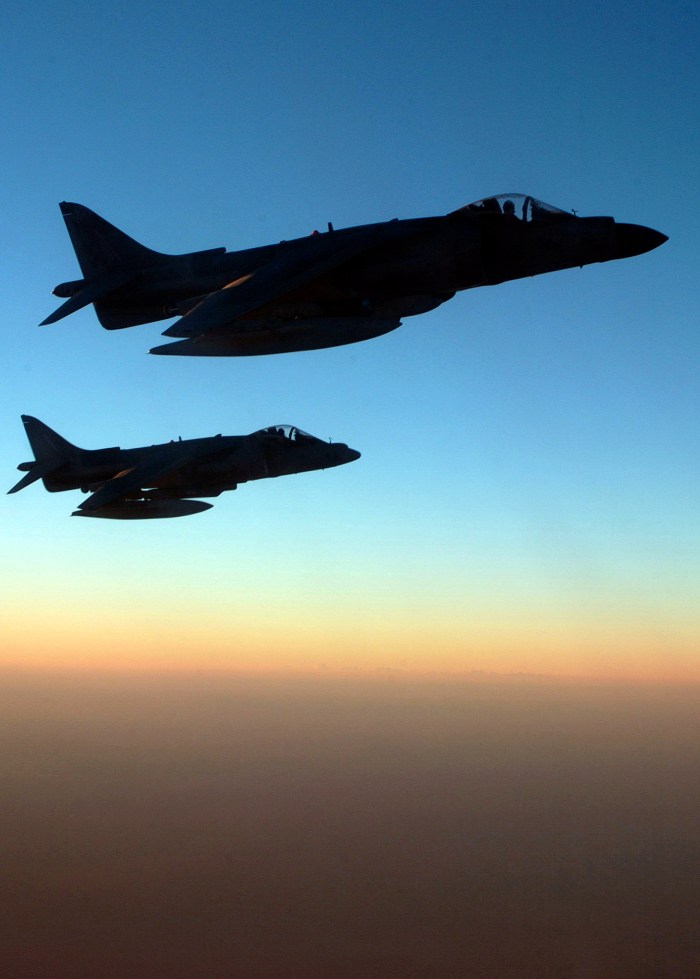
A pair of U.S. Marine Corps AV-8B Harriers fly over Iraq at sunset during a mission in support of Operation IRAQ FREEDOM, c. 2004. (Source: Wikimedia)

Colonel John Warden provides a final chapter that looks at ‘The Airpower Profession.’ From a certain point of view, Warden still seems to be litigating his arguments from the First Gulf War by focusing not on fielded forces, but rather on parallel warfare against the five rings, which can also be found in his work, The Air Campaign. Warden also decries the ‘cult of jointness’ (p. 343) and believes that ‘surface officers have far less motivation to concern themselves with direct strategic effects than do air professionals’ (p. 346). Warden’s real value is added when he describes the many areas needed to be understood truly by air power professionals, but more importantly, the attendant ability to articulate the importance of air power. So, what does the education of an air power professional look like? Warden casts a wide net of topics worthy of study including classical and modern military history and strategy but also includes more nuanced fields including economics, secular and religious philosophy, fiction, marketing, and advertising.

Any disagreements this author might have over omissions or discrepancies with this work are relatively minor to the overall importance and continued relevance of this well-written, eloquently argued, and nuanced study of air power operations. If one aspect of air power becomes clear, it is that the U.S., NATO, and Israel have proven their ability in large-scale state-on-state conflict, but the ability to use air power in the asymmetric fight is still being argued, some might say conceived. What is needed is more discussion and a better understanding by those in the military and national security communities on the merits and limits of air power operations in what will only become a more contested environment in the future. From the integration of unmanned aerial vehicles to peer-on-peer conflict, aerial operations will only increase, and a deep understanding of what air power can and cannot provide can only be accomplished through continued works like Airpower Applied.

Dr Brian Laslie is an Air Force Historian and currently the Deputy Command Historian at North American Aerospace Defense Command (NORAD) and United States Northern Command (USNORTHCOM). A 2001 graduate of The Citadel and a historian of air power studies, he received his Masters’ from Auburn University Montgomery in 2006 and his PhD from Kansas State University in 2013. His first book The Air Force Way of War (2015) was selected for the Chief of Staff of the Air Force’s 2016 professional reading list. He lives in Colorado Springs. He can be found on Twitter at @BrianLaslie.

Header Image: A two-ship of Israeli Air Force F-16s from Ramon Air Base, Israel, head out to the Nevada Test and Training Range, July 17 during Red Flag Exercise 09-4, c. 2009. (Source: Wikimedia)

[1] Ronald H. Cole, Operation Just Cause: The Planning and Execution of Joint Operations in Panama, February 1988-January 1990 (Joint History Office, Office of the Chairman of the Joint Chiefs of Staff: Washington, D.C., 1995), p. 41

#ResearchNote – Wither Air Power Studies?

#ResearchNote – Wither Air Power Studies?

By Dr Ross Mahoney

I started writing this post several months ago, but for various reasons, it lay dormant until a recent Twitter exchange began with Brian Laslie. Brian suggested that Mark Clodfelter’s The Limits of Air Power was the ‘foundation of modern air power studies.’ This immediately got my attention, and I queried this, which led to a fruitful exchange of views on the subject between several participants.

The original source for this post came from comments I provided to the Second Sir James Rowland Seminar at the Australian Defence Force Academy, which is an initiative between UNSW Canberra and the Royal Australian Air Force’s Air Power Development Centre. Another source was a post by Nicholas Sarantakes with an update on the ongoing debate on the ‘decline’ of military history in academia. These sources originally got me thinking about the state of air power studies in the English-speaking worlds and the recent Twitter exchange brought that process to the fore again.

In my reply to Brian, I made the argument that in the UK, the mantle of ‘father’ of air power studies, in my opinion, belongs to Air Vice-Marshal Tony Mason who was the RAF’s first Director of Defence Studies (DDefS). To my mind, Tony generated the space for the subject both within the RAF and with external partners. There are, of course, other names we could put into this mix including Dr Noble Frankland, J.M. Spaight, Professor Phil Sabin and Professor Richard Overy, but I am unsure whether these writers ever created enough mass for the field to evolve. For example, while Overy wrote on air power issues early in his career, he then moved onto other subjects, though has more recently returned to the field. Conversely, through the creation of the DDefS post, the RAF has provided a platform for the development of air power studies in the UK. The position still exists, and there have been several notable holders of the post including Dr Peter Gray, who is now Senior Research Fellow in Air Power Studies at the University of Birmingham, and the current Chief of the Defence Staff, Air Chief Marshal Sir Stu Peach. Indeed, since moving to the University of Birmingham, Grey has helped generate a mass of air power scholars in the UK and beyond.

Despite my views on the origins of air power studies in the UK, some important issues came out of the discussion on Twitter. One is that while we might identify Clodfelter or Mason as defining the field in the US and UK respectively, this does not answer the question of whether there is someone who crosses national boundaries. One name that did spring to mind was John Andreas Olsen. However, as Travis Hallen, one of the editors over at The Central Blue, reflected, Olsen has been more productive in bringing together people to produce worthwhile edited volumes. Furthermore, as David Benson, a Professor at the USAF School of Advanced Air and Space Power Studies, noted these writers may have defined the field but should they define it today? David provided an interesting reflection on this issue in a number of Tweets, and while I do not agree with all of his points, his views on how we define the field are critical.

Knowledge is not static and as such how we define the field of air power studies should not be fixed either. Indeed, David suggested that this might be the case with it being argued that the study of air power might not be keeping up with changes in the field of social science. Here lies one problem as this essentially suggests a social science view of the study of air power and raises the question of where the subject fits as a discipline? Is the study of air power a social science or is it interdisciplinary? Moreover, are we looking at air power from the perspective of how it is defined in doctrine or do we need to take a broader view that encompasses a wider remit and brings in other fields including history? I would suggest the latter.

Take, for example, myself, I am an air power specialist, but first and foremost I am a historian, though I admittedly make use of interdisciplinary methodologies. My views on air power, even when looking forward, is essentially historical in outlook. I believe that we cannot understand the future without first considering past challenges, but does this lead to a ‘classical’ analysis of air power? I do not think so. I would argue that my broader perspective allows me, hopefully, to push the field forward. In this, I agree with David’s view that is up to those of us currently working in the field to ‘push it from its origins into modernity as a scholarly field’. Another advantage of broadening the scope of air power studies is that by encompassing a more comprehensive approach that includes aspects such as the history of air warfare and the social and cultural analysis of the armed forces, then we can further understand how we develop the knowledge that defines the field. We should also add other disciplines into this comprehensive mix including ethics and law.

Despite much of this rambling and reflection the crux of the issue remains how we develop air power studies as a scholarly field? What are the mechanisms that can be used to develop and disseminate knowledge? For me, one of the key issues here is the insular character of the field. As John Ferris reflected in 1998, those studying air power are either:

[t]he children of airmen, have been military personnel themselves, and have been employed at a historical office or service school in Canada, Germany, the United Kingdom, or the United States.[1]

My reading of the situation is that not much has changed and broadly speaking those of us writing on air power are a homogenous group who come from similar backgrounds. Again, using myself as an example, I am the child of a soldier, my PhD supervisor was a retired one-star officer, and I work for an institution devoted to preserving the history of an air force. Therefore, I accept there will always be a degree of subjectivity in my work. As such, how do we break free from that mould to further develop our field?

Part of the answer, of course, lies in establishing networks beyond our traditional insular boundaries. How do we, for example, encourage the study of air power beyond military academies? How do we work with colleagues who might ask difficult questions that do not fit our subjective paradigms? We need to be willing to accept these challenges and be prepared to discuss these issues freely and openly rather than dismissing them.

Further to a conceptual and personal willingness to engage, which I suspect most of us are happy to do, there is the question of the mechanism for discussion. While online platforms, such as From Balloons to Drones, The Central Blue, The Strategy Bridge and War on the Rocks are useful for generating discussion, are there other ways of pushing and developing knowledge? Has the time come, for example, to establish an academic journal devoted to air power that moves us beyond the service sponsored journals?

I have no silver bullet to these questions and what I have written here is part of an ongoing reflection on the subject, and I welcome any further thoughts people have. Nevertheless, I do think the time has come for us to reflect on the field and start ‘push it from its origins’.

Dr Ross Mahoney is an independent historian and defence specialist based in Australia. Between 2013 and 2017, he was the resident Historian at the Royal Air Force Museum, and he is a graduate of the University of Birmingham (MPhil and PhD) and the University of Wolverhampton (PGCE and BA). His research interests include the history of war in the twentieth and twenty-first centuries, air power and the history of air warfare, and the social and cultural history of armed forces. To date, he has published several chapters and articles, edited two books, and delivered papers on three continents. He is a member of the Royal Historical Society and is an Assistant Director of the Second World War Research Group. He is a member of the Royal Historical Society and an Assistant Director of the Second World War Research Group. He blogs at Thoughts on Military History, and can be found on Twitter at @airpowerhistory.

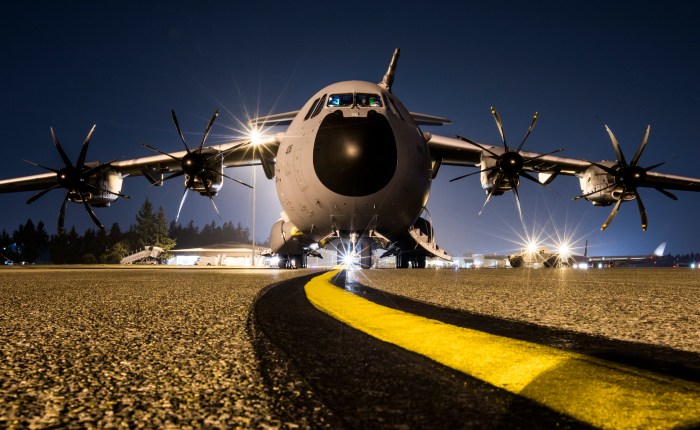
Header Image: An RAF Atlas (A400-M) at night during Operation Mobility Guardian. (Source: MoD Defence Imagery)
[1] John R. Ferris, ‘Review Article – The Air Force Brats’ View of History: Recent Writing and the Royal Air Force, 1918–1960,’ The International History Review, 20:1 (1998), p. 119.

#BookReview – Air Power in UN Operations: Wings for Peace

#BookReview – Air Power in UN Operations: Wings for Peace

By Dr Ross Mahoney

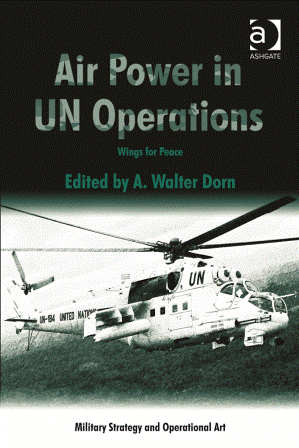
A. Walter Dorn (ed.), Air Power in UN Operations: Wings for Peace. Farnham: Ashgate, 2014. Figures. Tables. Notes. Index. Pbk. xxxv + 350 pp.

air-power-in-un-operations_cover_dorn_300x448_65k

The use of air power as a tool by state actors is a regular theme examined by historians and policy specialists alike. However, the use of air power by non-state actors, in particular, intergovernmental organisations, is a different matter, though depending on one’s perspective, the United Nations (UN) – the subject of this volume – can be viewed as either a state or non-state actor. In this volume, A. Walter Dorn, Professor of Defence Studies at the Royal Military College of Canada, has brought together an impressive line-up of scholars and practitioners to consider how the UN has used both kinetic and non-kinetic air power as a tool for peacekeeping operations. Indeed, the narrative of UN peacekeeping operations generates images of soldiers in blue helmets on the ground. However, as this book ably demonstrates, air power has been a vital element of UN operations since the creation of its first ‘Air Force’ in 1960.

First Phase Digital
A partial view of Luluabourg airport, showing some of the Swedish Saab J-29 jet planes which were placed at the disposition of the UN Force in the Congo (ONUC), c. 1961. Called ‘flying barrels’, the jets were manned by members of the Swedish Air Force, numbering some 40 pilots and maintenance officers.(Source: United Nations)

The book examines the use of air power by the UN since 1960 through to Operation UNIFIED PROTECTOR – the air operations over Libya by NATO in 2011, which enforced UN Security Council Resolutions 1970 and 1973. The book consists of 17 chapters split over six thematic areas: The UN’s First ‘Air Force’; Airlift; Aerial Surveillance; No-Fly Zones; Combat and evolving capabilities. The latter aspect looks at some of the challenges for the UN in the future. Indeed, by splitting the analysis into the themes mentioned above, Dorn et al. illustrate that UN air operations cover the broad spectrum of roles readily identifiable in modern air power doctrine: control of the air; attack; situational awareness and air mobility. It also ably illustrates the challenges and potential contradictions of ‘Ends’, ‘Ways’ and ‘Means’ in UN strategy and peacekeeping operations. As Dorn notes in his preface, ‘While peacekeeping is meant to de-escalate violence, it is sometimes necessary to use force to stop force.’ (p. xxvi). As such, to meet the ends desired by the UN – the cessation of violence between, states, groups or organisations – it is often necessary to utilise air power’s various capabilities to moderate and influence the behaviour of the parties involved. Therefore, air power offers a toolkit to try to support the enforcement of UN Resolutions. Indeed, as Robert C. Owen’s chapter on Operation DELIBERATE FORCE in 1995 (pp. 231-40) and Christian Anrig’s piece of Libya in 2011 (pp. 255-82) illustrate air power can be a useful tool in shaping behaviour. DELIBERATE FORCE ensured that the Bosnian Serbs complied with UN Resolutions and put the UN in a position to shape the Dayton Accords (p. 236). However, this, in itself, was only possible due to the technological changes, such as the emergence of Precision Guided Munitions, which allowed the multinational air forces involved in DELIBERATE FORCE to conduct a humanitarian war. Had the air forces involved been equipped with ‘dumb’ weapons then the diplomatic fallout from collateral damage would have, potentially, hindered the ends sought by the UN. Similarly, in 2011, air power offered the UN the means to apply military force to level ‘the playing field’ (p. 280) in defence of civilians during the Libyan Civil War. Furthermore, unlike in DELIBERATE FORCE, air power – as the means of applying military force – was the essential tool for both the UN and NATO because UN Security Council Resolution 1973 forbade the use of occupying forces in Libya. However, it should also be remembered that air power was not used in isolation and that it worked with naval forces and special operations teams to achieve the ends desired by the UN.

Importantly, this volume does not avoid discussing some of the challenges inherent in the application of air power by the UN. As with any forces it deploys, the UN is reliant on the support of its member nations to provide the ways and means to achieve its ends. At the time of publication (2014), the UN deployed around 200 to 300 aircraft to provide air support for peacekeeping missions (p. 283). Not only is relying on member states to willingly supply forces a risky strategy – but states tend only to support those missions viewed to be in its own interest – it is also costly as the UN pays for the use of lease of both military and civilian aviation assets to achieve its ends. Some of these challenges are considered in the final section of the book on ‘Evolving Capabilities’ (pp. 283-316).

drone in Bunia.jpeg
A United Nations unmanned aerial vehicle (UAV) at Bunia airport in the Democratic Republic of Congo. UAVs are used for surveillance purposes by the United Nations Organization Stabilization Mission in the Democratic Republic of the Congo. (Source: United Nations)

This fascinating book highlights the many challenges concerning the application of air power in the context of peacekeeping operations. It considers both some of the practical challenges of deploying air power into the theatre to the many diplomatic considerations that affect the use of air power as a policy tool for the UN. Clearly, air power is not always the answer; however, as part of a toolbox of political, diplomatic, economic and military means, air power can provide the ways to achieve the ends sought by the UN if applied correctly. Finally, it is worth reflecting that many of the lessons found in this book should not be considered as unique to the UN, but can also be applied to peace support operations undertaken by individual sovereign nations. Indeed, David Neil’s chapter of Unmanned Aerial Vehicles (pp. 147-64) highlights some of the regulatory challenges concerning their use, which are just as important to national air forces as they are for the UN.

This post first appeared at Thoughts on Military History.

Dr Ross Mahoney is an independent historian and defence specialist based in Australia. Between 2013 and 2017, he was the resident Historian at the Royal Air Force Museum, and he is a graduate of the University of Birmingham (MPhil and PhD) and the University of Wolverhampton (PGCE and BA). His research interests include the history of war in the twentieth and twenty-first centuries, air power and the history of air warfare, and the social and cultural history of armed forces. To date, he has published several chapters and articles, edited two books, and delivered papers on three continents. He is a member of the Royal Historical Society and is an Assistant Director of the Second World War Research Group. He is a member of the Royal Historical Society and an Assistant Director of the Second World War Research Group. He blogs at Thoughts on Military History, and can be found on Twitter at @airpowerhistory.

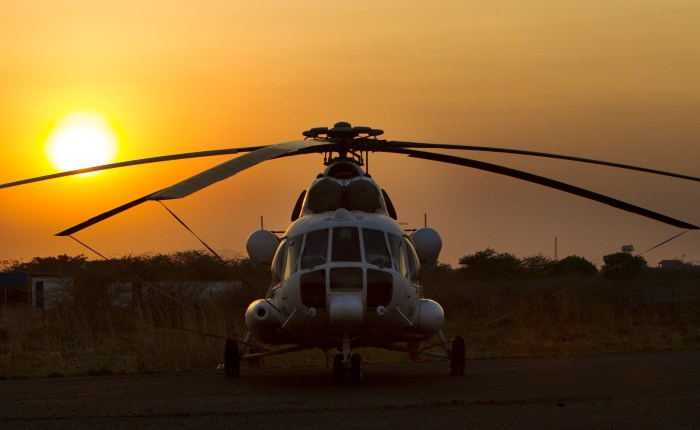
Header Image: A Mil Mi-8 helicopter of the United Nations Mission in South Sudan in Juba, c. 2013. (Source: United Nations)

#AirWarBooks – Dr Ross Mahoney

#AirWarBooks – Dr Ross Mahoney

By Dr Ross Mahoney

Editorial Note: In the second instalment of ‘Air War Books,’ the editor of From Balloons to Drones, Dr Ross Mahoney discusses the ten books that have influenced and shaped his writing as an air power historian.

As editor of From Balloons to Drones, I thought I should reflect on what are probably the ten key books that have influenced me in my study of air power. However, I make three provisos. First, I attacked this from the perspective of key authors rather than the books themselves per se. As such, I have selected titles that I have enjoyed to illustrate the importance of these writers. Second, I have left out official histories and narratives though these have been just as influential on my writing as other works. Finally, I have included some non-air power texts in here. At the end of the day, I am a historian and an interdisciplinary one at that, and it is only natural that non-air power specific books have influenced how I approach what and how I write.

John Buckley, Air Power in the Age of Total War (London: UCL Press, 1999). Ok, this entry and Peter Gray’s book below have as much to do with these individuals’ real influence on me and the importance of their books. John was my undergraduate tutor many years ago, and his influence was to start me on the track to where I am today. However, added to that, Air Power in the Age of Total War is an excellent examination of the rise of air power in the first half of the twentieth century and vital reading for anyone wanting an introduction to the subject.

Peter Gray, The Leadership, Direction and Legitimacy of the RAF Bomber Offensive from Inception to 1945 (London: Continuum, 2012). Peter’s influence on me was that he was my PhD supervisor, and I will forever be grateful for his guidance. In my opinion, Peter is currently the leading air power specialist in the UK and one of the foremost experts in the world. That expertise is clearly evident in this book. The strategic air offensive against Germany is well-trodden ground, but Peter found a fresh way to assess its conduct. As a result, in my opinion, it is required reading not just for people wanting to understand the bombing offensive during the Second World War but also issues such as the challenge of senior leadership and matters such as legitimacy and international law.

Tony Mason, History of the Royal Air Force Staff College, 1922-1972 (Bracknell, RAF Staff College, 1972). I could have chosen any of Mason’s work, but this one has specific resonance for my research. This was written before Mason became the RAF’s first Director of Defence Studies (DDefS) in 1977 and is not widely available as the RAF Staff College published it. Nevertheless, Mason was not wide of the mark with many of his comments about the Staff College, though it does need to be brought up to date.

Allan English, Understanding Military Culture: A Canadian Perspective (Kingston: McGill-Queen’s University Press, 2004). English, a retired Royal Canadian Air Force officer, is a noted historian of air power and has written an influential article on the RAF Staff College in the inter-war years. However, for me, his most important work is his study of Canadian military culture. As someone who specialises in the culture of air forces, this work is an essential primer on the subject of culture and its influence on the Canadian military.

John Slessor, Air Power and Armies (Oxford: Oxford University Press, 1936). Everyone needs to have a contemporary air power thinker on their list, and Slessor certainly fits that bill. Slessor is, perhaps, the closest the RAF came to having their own Clausewitz, though I remain to be convinced that the Service wanted a singular air power thinker. Instead I think the RAF collegiately developed officers with a broad view of air power, but that is another discussion. The importance of Air Power and Armies is that it really should put to rest the argument that the RAF was solely focused on strategic bombing. Yes, Slessor used a strategic conception of air power to inform his work, but he sought to understand how military aviation could influence the land battle. An essential piece of work and the recent 2009 edition by the University of Alabama Press contains an introduction by Philip Meilinger.

Arthur Gould Lee, No Parachute (London: Jarrolds, 1968). Everyone needs a memoir in their top ten, and there are a number of good works by air force personnel. Most are written by pilots, which says as much about the culture of air forces as anything else. Lee wrote several books dealing with various aspects of his service life, and each could find their way into this list. No Parachute is particularly useful for its appendices though the one on parachutes does need to be revised.

John Andreas Olsen, John Warden and the Renaissance of American Air Power (Dulles, VA: Potomac Books, 2007). As Brian Laslie mentioned in the first instalment of ‘Air War Books,’ I think we do need to include a work by Olsen. He is currently one of the key writers on air power, particularly about modern conflicts. His biography of Warden is fascinating and gives an excellent insight into this complex character. Perhaps what is more impressive, is that this was written while Warden is alive, which is never an easy task.

David French, Military Identities: The Regimental System, the British Army, and the British People c.1870-2000 (Oxford: Oxford University Press, 2005). French is one Britain’s leading military historians, and I wonder how he would do if he turned his interests towards the RAF. However, for me, his analysis of the British Army’s regimental system is fascinating and one of those works that all should read to develop an understanding of how military organisations operate. There is much to take away from this study, and for me, it has raised significant questions about issues such as identity with regards to squadrons in air forces.

Richard Overy, The Air War, 1939-1945 (London: Europa Publications, 1980). Overy remains not only one of the leading air power historians in the UK but also globally. The Air War continues to be one of the most influential titles concerning the role of air power during the Second World War. I could have quite easily has listed The Bombing War here, which is Overy’s most recent air power work. However, The Air War continues to be important, and while Overy’s views have developed over the years – like those of all historians – this work was written when air power history was a ‘Cinderella’ discipline. Thankfully, this is no longer the case, and the new edition of The Air War is useful for Overy’s overview of the field of air power history up to 2003.

John James, The Paladins: The Story of the RAF up to the Outbreak of World War II (London: Macdonald and Company, 1990). Given my focus on the culture and ethos of air forces, this was again, one of those works that I could not ignore reading as it is one of the few social histories of the RAF before the Second World War. James worked in operational research sections in various RAF Commands and brought that experience to the writing of the book. It is good but does need bringing up to date, and I dispute some of his views on how the RAF branch system evolved. Nevertheless, a work to read.

Well, that is my top ten; however, it would be easy to add more to the list. As noted, when Overy wrote The Air War, and Mason served as DDefS, the academic study of air power, certainly in the UK, was a Cinderella subject. Thankfully, that is no longer the case and the last ten years have seen a number of significant studies published, which point the way forward for the subject but that will be a post for another time.

Dr Ross Mahoney is an independent historian and defence specialist based in Australia. Between 2013 and 2017, he was the resident Historian at the Royal Air Force Museum, and he is a graduate of the University of Birmingham (MPhil and PhD) and the University of Wolverhampton (PGCE and BA). His research interests include the history of war in the twentieth and twenty-first centuries, air power and the history of air warfare, and the social and cultural history of armed forces. To date, he has published several chapters and articles, edited two books, and delivered papers on three continents. He is a member of the Royal Historical Society and is an Assistant Director of the Second World War Research Group. He is a member of the Royal Historical Society and an Assistant Director of the Second World War Research Group. He blogs at Thoughts on Military History, and can be found on Twitter at @airpowerhistory.

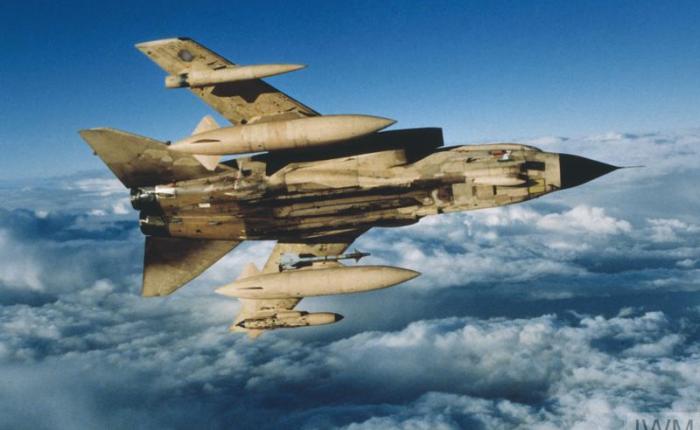
Header Image: A Tornado GR.1 in flight banks away from the camera and displays its underwing stores during the First Gulf War. Top to bottom the stores are a BOZ 107 chaff/flare dispenser, 500 gal fuel tanks, AIM-9 Sidewinder air-to-air missile and Marconi Sky Shadow ECM pod. (Source: © Crown copyright. IWM (GLF 707))

Has Air Power Reached its Zenith?

Has Air Power Reached its Zenith?

By Dr Sanu Kainikara

In the past few decades, air power, and its application as a weapon of war or force projection capability has seen an enormous improvement in capabilities. In keeping with the current global ethos of avoiding excessive use of force while fighting a war, air power now has the ability to deliver extreme destructive power with precision, proportionality, and discrimination. Based on this capability, air forces have also developed into deterrent and coercive forces second to none. Considering that the military employment of air power is only a century old, these are great achievements. Even so, military forces are continually looking to improve their effectiveness through fine-tuning already sharp force application capabilities. This brings out the question—how much more effective can air power become?

The answer is not straightforward, and the term ‘effectiveness’ needs to be understood in a nuanced manner to arrive at a reasonably argued answer. Effectiveness—the ability to serve the purpose or produce the intended or expected result—in air power terms involves not only the ability to create the necessary effect but to do it while minimising the chances of own forces being placed in danger. Therefore, the increasing efficacy of the application of air power should be tempered with ensuring that the safety of own forces is also assured to a minimum accepted level. This dual requirement led to the development of uninhabited aerial vehicles (UAVs) that have now become armed with precision strike weapons to become uninhabited combat aerial vehicles (UCAVs), a misinterpretation of the word ‘combat’.

boeing_x-45a_ucav
The X-45A Unmanned Combat Air Vehicle technology demonstrator on its sixth flight on Dec. 19, 2002. (Source: Wikimedia)

The introduction of UCAVs into the battlespace opened a hitherto unknown and uninvestigated arena of military operations. Not only were there technological hurdles to overcome, but a whole plethora of moral, ethical, and legal aspects of warfare also started to be questioned. In the beginning, the UAVs were considered to be purely intelligence, surveillance, and reconnaissance (ISR) assets, which could be employed in benign airspaces where long-term ISR collection was required. By arming them, the technologically advanced military forces changed the existing equation of applying lethal force.

Going back to the primary reason for the introduction of UAVs, the need to safeguard one’s own combatants, there should be no argument regarding the arming of these vehicles. However, the so-called ‘drone strike’, a misnomer if ever there was one, has become an emotive issue not only with the people at the receiving end of the strike but also with the ‘politically correct’ media. Why is this so? Before analysing this, it must be stated here that an air strike can now be carried out with equal efficiency and precision by either a manned fighter or a UCAV. The only difference is that the human in the decision-making loop that permits the release of the weapon is placed at different places in each case. In the case of the manned fighter, the human is at the sharp end of the loop whereas, in the case of a UCAV, the human is almost at the beginning of the loop. In other words, in one case the human is placed in immediate danger while in the other, there is no danger to the human from the repercussions of the actions that are being initiated.

If there is no danger to own forces in the second case then why is there such a hue and cry regarding strikes carried out by UCAVs? Here, the survivability of the UCAV in a contested airspace, because of its low speed, restricted manoeuvrability, and lack of self-protection measures, is not being analysed since it is extraneous to this discussion. The fundamental reason for the discomfiture with the use of UCAVs is the fact that in the majority of cases, the opposing parties do not have air power capabilities and therefore such strikes are considered unethical. When the instances of collateral damage are added to the dialogue, the pendulum of public opinion decisively swings away from the use of UCAVs and air power. The real reason, however, is that in most of the Western democratic nations, the public opinion regarding national security and the employment of defence forces has been dominated by left-wing, anti-war groups. Once again, this discussion does not need to go into political debates and is curtailed here.

htv-2_image_2
HTV-2 on the upper stage of the launch vehicle after jettisoning of the payload fairing. (Source: Wikimedia)

So, what is going to be the next breakthrough in terms of air power efficacy? Currently, the accuracy achieved by air-launched weapons, the clarity of airborne ISR and the global reach of air transportation are such that no further improvement seems possible or warranted. There can definitely be improvements in the speed with which response options can be provided and delivered. The realm of hypersonic flight is already very close to becoming a reality.

The next step change in the functioning of air power and related systems will take place when artificial intelligence (AI) becomes operational and is accepted as such. This statement needs clarification. AI is already a reality in many applications. However, complete autonomy has not yet been granted to AI in the case of weapon release functions. It is also true that AI has already proven to be fail-proof when tested under controlled conditions. There are many reasons for AI not being granted complete autonomy—capable of individual thought and decision-making rather than a pre-programmed response—the fundamental one being the question whether it is ethical to permit a ‘machine’ to make the decision whether or not a human being is to be ‘killed’ or eliminated.

In the case of fully autonomous airborne systems, further complications arise. In combat situations would it be ethical for a manned fighter to be destroyed by a ‘machine’? Would it be possible to program the machine only to destroy another machine, and in that case, does it mean complete autonomy for the AI? The question of legality in the use of fully autonomous combat systems is another area that has not been clarified. In fact, the process of creating laws that could govern the use of AI has not even got under way, and there is certainty that under the current geopolitical environment, agreement will not be reached.

In these circumstances, where ethics are being questioned, and there is no legal coverage for its employment, it is highly unlikely that AI will be employed to its full capacity in the near to mid-term future. In turn, it would mean that developments in air power capabilities and more importantly in its application will remain curtailed for the foreseeable future. Yes, the missiles will go further; space will become more pervasive; airborne platforms will fly faster, compute solutions at a much more rapid pace; and air power will entrench its place as the first-choice weapon in the vanguard of power projection. However, these are but refinements of what air power already does. For example, when a hypersonic flight becomes a normal reality, how much more effective will air power become? A reasonable answer would be, not by very much from what it does now.

The future of air power is going to be the same as it is today unless the next step-change takes place—AI is going to be the next technology that elevates air power further into being the most potent capability that the human race has yet invented.

This post first appeared at The Central Blue, the blog of the Sir Richard Williams Foundation.

Dr Sanu Kainikara is the Air Power Strategist at the Royal Australian Air Force’s Air Power Development Centre and an Adjunct Professor at the University of New South Wales. He is a former fighter pilot of the Indian Air Force.

Header Image: A three-ship formation of F-22 Raptors flies over the Pacific Ocean 28 January 2009 as part of a deployment to Andersen Air Force Base, Guam. The Raptors were deployed from Elmendorf AFB, Alaska. (Source: Wikimedia)

It is Time to Demystify the Effects of ‘Strategic Western Air Power’ – Part 2

It is Time to Demystify the Effects of ‘Strategic Western Air Power’ – Part 2

By Lieutenant-Colonel Dr Jyri Raitasalo

Editor’s Note: In this two-part article, Dr Jyri Raitasalo considers what he argues are the two fundamental fallacies concerning the application of strategic air power by Western states in the modern era. In the first part, he examined the challenge of the use of military forces as a tool for solving political problems. In this second part, he examines the issue of ‘no casualty warfare.’

Fallacy 2: No casualty warfare

The second fallacy in Western air power paradigm touches on the notion of precision engagement with almost zero civilian casualties and no collateral damage. This narrative was formed in the aftermath of the 1991 Gulf War and has been maturing and strengthening ever since.  Precision engagement has indeed become one of the game changers in warfare lately, but the Western narrative on pinpoint accuracy in warfare has become a strategic level hindrance to effective military operations.

The notion of no or little collateral damage developed into the Western air power paradigm little by little as political leaders since the early 1990s continuously decided to use military force actively for humanitarian purposes. It was a prerequisite that Western military operations do not cause civilian suffering or produce collateral damage in military operations (read: war) that are eventually humanitarian in nature. Focusing on the precise application of large-scale violence was thus a must for political purposes. It was needed for the legitimacy of these operations and to ‘sell’ these operations to domestic audiences within the Western world and internationally.

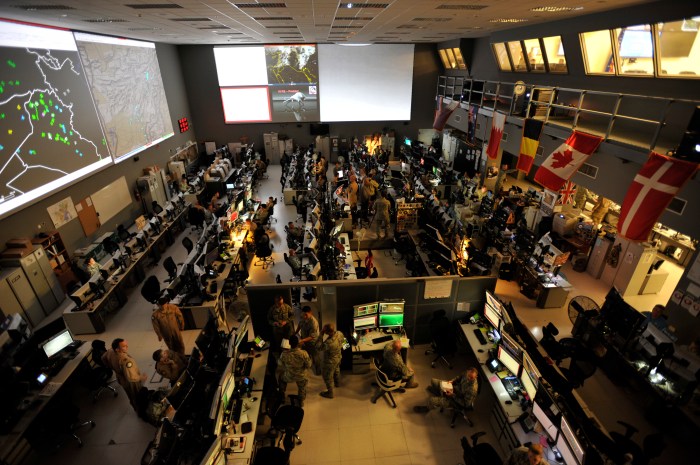
Combined Air and Space Operations Center
Combined Air and Space Operations Center at Al Udeid Air Base, Qatar, provides command and control of air power throughout Iraq, Syria, Afghanistan, and 17 other nations. The CAOC is comprised of a joint and Coalition team that executes day-to-day combined air and space operations and provides rapid reaction, positive control, coordination, and de-confliction of weapon systems. (Source: US Department of Defense via Wikimedia)

Also, as these humanitarian military missions had almost nothing to do with Western national interests or threats to Western states, it has been crystal clear from the start that force protection has been essential in these operations. Over time this has developed into a tradition of casualty-aversiveness, making Western soldiers ‘strategic assets’. Air power has facilitated safe military operations as practically all opponents during the post-Cold War era have had no functioning air forces of capable air defences. Relying on air power to fight humanitarian wars has been practically the only way that these operations have become possible in the first place. As President Bill Clinton explained: ‘I do not intend to put our troops in Kosovo to fight a war’. For the US the post-9/11 Global War on Terror changed this aversiveness to send troops to battle for a while.

What started as a way to ‘market’ humanitarian missions to voters and the general population has turned into a Western narrative on war, which accentuates the ability to strictly control the ‘dosing’ of violence in wars and being able to fight without civilian casualties and collateral damage. During the post-Cold War era, this guiding political principle and a semi-binding Western norm on warfare have led to Western militaries developing extremely expensive military systems to fight this ‘frictionless precision warfare’. This trend has been tremendously problematic for European states, as they in most cases do not have sufficient economic resources to develop their armed forces into credible military actors with even a modest number of usable high-tech military systems. When combining this trend with the post-Cold War era professionalisation of European militaries, most states in Europe today possess ‘Lilliputian militaries’ with little warfighting capability for large-scale conventional war against advanced state adversaries.

Final thoughts

Air power is important in warfare. Moreover, modern high-tech air forces can produce a decisive effect on the battlefield when used properly. ‘Unfortunately’ for some Western (mostly European) militaries, the post-Cold War era did not for more than 20 years pose any real military challenges that would have required sober analysis on what kind of missions the armed forces should be preparing against. Moreover, more importantly, as the existential threat evaporated quickly in the early 1990s, many Western political leaders filled the vacuum of security threats by turning their eyes towards out-of-area conflicts and stability throughout the globalising world.

In a cumulative 20-year long emergent process, Western states have become more and more interested in and reliant on applying air power actively in expeditionary operations because using military force throughout the international system has become possible. Political leader’s ‘trigger happiness’ in the West has increased during the post-Cold War era. On the tactical and operational levels of war, air power offers ‘easy solutions’ when there is the need to do something quickly and visibly – for example during large-scale atrocities committed by authoritarian leaders towards their citizen. On the strategic level, though, the results have been much more modest. Modern air power has not lifted the ‘fog of war’, nor has it produced many positive strategic results. Air power does not provide Western states with a ‘silver bullet’, nor has it changed the nature of war:  war is still a duel of wills, which means that adaptive enemies will do their utmost to destabilise Western strengths and lead in military capability development. This can be done at the tactical, operational or strategic levels.

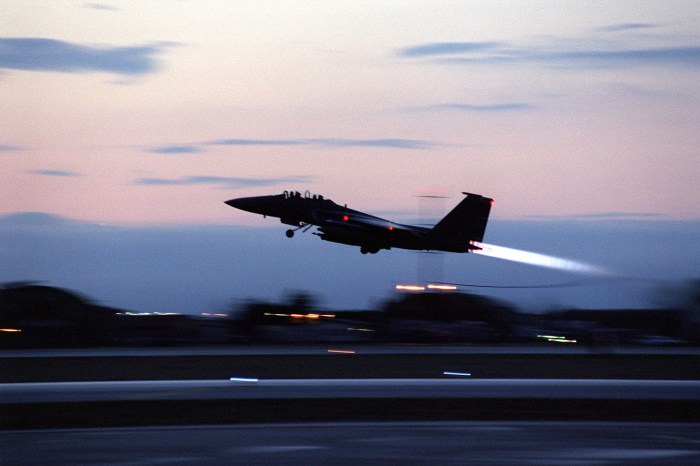
990328-F-4728F-009
A USAF F-15E Strike Eagle takes off from Aviano Air Base, Italy, for an air strike mission in support of NATO Operation ALLIED FORCE on March 28, 1999. (Source: US Department of Defense via Wikimedia)

The use of large-scale military violence – waging war – needs to be taken seriously. Even if it is possible to cause pinpoint destruction and make targeted killings, one should remember that political problems can rarely be solved by killing all the opponents (from afar) or by punishing them severely. The active use of Western air power during the last 20 years has resulted in the lowering the threshold on the use of military force in the world. This could backfire in the future as China and Russia are increasing their military capabilities and great-power statuses.

Dr Jyri Raitasalo is a Lieutenant-Colonel in the Finnish military and a Senior Staff Officer at the Planning Unit (strategic planning) of the Finnish Ministry of Defence. He holds the title of Docent of strategy and security policy at the Finnish National Defence University.  During his latest assignments, he has served as the Commanding Officer of the Helsinki Air Defence Regiment (Armoured Brigade), Head Lecturer of Strategy at the Finnish National Defence University, ADC to the Chief of Defence and Staff Officer (strategic planning) in the Finnish Defence Command (J5). Jyri Raitasalo is a called member of the Royal Swedish Academy of War Sciences.

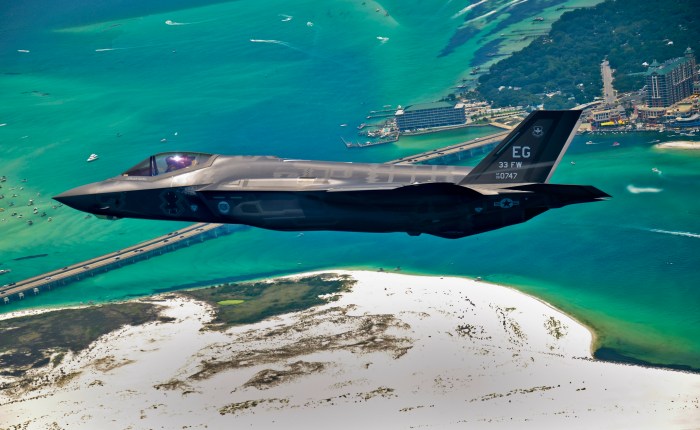
Header Image: The Department of Defense’s first U.S. Air Force F-35 Lightning II joint strike fighter (JSF) aircraft soars over Destin, before landing at its new home at Eglin Air Force Base, July 14, 2011. (Source: US Department of Defense via Wikimedia)

It is Time to Demystify the Effects of ‘Strategic Western Air Power’ – Part 1

It is Time to Demystify the Effects of ‘Strategic Western Air Power’ – Part 1

By Lieutenant-Colonel Dr Jyri Raitasalo

Editor’s Note: In this two-part article, Dr Jyri Raitasalo considers what he argues are the two fundamental fallacies concerning the application of strategic air power by Western states in the modern era. In this first part, he considers the challenge of the use of military forces as a tool for solving political problems. The second part of this article can be found here.

Ever since the 1991 Gulf War, the Western strategic discourse on air power has accentuated the role of high-tech precision-guided weapons together with good situational awareness and reliable command and control systems in solving modern conflicts. After the lessons learned from Operation DESERT STORM were drawn, one of the main tenets of western strategic thinking has been the (over-)reliance on the possibilities to solve political conflicts with modern weaponry – from the air. This notion did not emerge out of thin air. It was one answer to the many demands that Western statesmen – first and foremost among them the President of the United States – made immediately after the Cold War had ended. Since the early 1990s, the international security environment developed positively – at least from the western states’ perspective. However, the world was still infected with many low-level threats that rose in significance simultaneously as the Soviet threat evaporated.

The so-called Revolution in Military Affairs (RMA) has been expected to deliver positive outcomes to political crises with little risk to Western soldiers or national interests – whether in Bosnia (1995), Kosovo (1999), Afghanistan (2001), Iraq (2003) or Libya (2011). Many western ‘wars of choice’ – under the headings of ‘humanitarian interventions’, ‘military crisis management operations’ or ‘expeditionary missions’ have been made possible – and in some cases necessary – by the demands of the contemporary 24/7 media, high-tech ‘revolutionary’ warfighting capabilities and the fading of the existential threat posed by the Soviet Union.

Display of might
A US Air Force Boeing B-52H Stratofortress of the 2d Bomb Wing static display with weapons, at Barksdale Air Force Base, Louisiana, in 2006. (Source: Wikimedia)

During the 25 years of the post-Cold War era, Western air power ‘theory’ – based on the expectations of Western political leaders – has entertained the notion of strategic success in war just by deploying air assets against chosen adversaries. During this time we have witnessed the mystification of air power – the new ‘silver bullet’ – to epic proportions in a way that practical results from recent wars lend little support. Analysing recent western air wars from Bosnia (1995) to Libya (2011) one can easily detect that none of them has proved to be strategic successes for the west. Thus the ‘brand’ of contemporary Western air power is better than its actual track record. None of the often mentioned ‘successes’ have facilitated long-term positive outcomes.

The contemporary Western air war paradigm is based on two fallacies: the idea that high-tech military capabilities facilitate easy solving of political problems and the notion of almost casualty-free warfighting. Both of these should be subjected to strict scrutiny. It should be noted that it is not the militaries’ fault that political leaders have expressed repeated demands to the use of military force that are beyond the boundaries that existing military capabilities can deliver. However, to facilitate better strategies in the future, these fallacies will be elaborated next.

Fallacy 1: The use of military force is an effective tool to solve political problems

It is good to acknowledge that the number of armed conflicts – and the average number of people killed in these conflicts – has decreased during the post-Cold War era. As the Human Security Report Project noted in 2014, we have witnessed:

the rapid decline in international wars (anti-colonial wars are included in this category) over the past 60 odd years. The average number of international wars being fought every year per decade shrinks dramatically – from over six in the 1950s to less than one in the 2000s. […] From the early 1990s to the present day, overall conflict numbers have dropped by some 40 percent, while the deadliest conflicts, those that kill at least 1,000 people a year, have declined by more than half.

Despite the positive trend in warfare since the end of the Cold War, there have been many brutal cases where large-scale human suffering and damaged infrastructure have caused concern within the western security community. First of these instances was ‘born’ out of the result of the 1991 Gulf War: the predicament that the Kurds (in the north) and the Shia population (in the south) faced after Saddam Hussein was defeated – but remained in power. Moreover, many others have followed: from Somalia to Haiti, and from Timor-Leste to Kosovo.

The humanitarian suffering brought to our living rooms by the 24/7 media – and later by social media, smartphones and tablets – has become a new factor influencing western decisions in the use of military force in the world. Although most of the (air) wars that the West has waged during the post-Cold War era have almost nothing to do with Western national security directly, there has been the need to do something to ease humanitarian conditions and suffering around the world in the many crises that have been ongoing – from Iraq to Somalia and Haiti to Libya. Thus, the western approach to ‘humanitarian interventions’ and the ‘Responsibility to Protect’ (R2P) emerged to fill in the void that the end of the Cold War caused within the western threat perceptions.

Facing no existential threats, for the past 25 years, Western states have had the luxury of focusing on crises around the world where large masses of people have been violently oppressed. Moreover, the tools of the ongoing RMA – precision air strikes as the forerunner – seemed to propose a possibility to manage these humanitarian crises with little cost – in either blood or treasure. As was noted after the Gulf War:

A significant part of that edge [US’s edge versus Iraq] can be attributed to the revolutionary new military technology used by U.S. forces for the first time in Gulf War.

In other words, the lessons learned from the Gulf War – where Saddam Hussein’s big Army was easily defeated on the battlefield – have influenced the way that Western political leaders have been trying to solve violent political crises out-of-area.

However, the problem lies exactly here: the complex, violent crises around the world cannot be solved by precision bombing or by killing the ‘bad guys’. The politicisation of ethnicity and religion, the criminal elements involved and the contradictory political goals of multiple adversaries in most of the contemporary violent crises mean that externally imposed military solutions will not work. As has been noted in connection with the 2001 US-launched Global War on Terror, it is hard to kill enough terrorists without at the same time facilitating additional terrorist recruiting and providing additional PR for the terrorist cause.

It is understandable that political leaders resort to the use of military force relying on advanced weaponry to solve nasty crises around the world. The humane instincts of Western strategic decision-makers are understandable and praiseworthy. However, the sad part is that strategically, the use of military force has not been able to bring about political reconciliation or stability into ongoing conflict zones. On the contrary, the first ‘RMA air-war’ in history – the 1991 Gulf War – produced a political stalemate that resulted in a war of attrition against Iraq between 1991-2003. This attrition warfare manifested itself through the enforcement of no-fly zones and punitive air strikes against Iraq every time Saddam’s troops violated the rules imposed on them.

Even though the first Gulf War did not bring a politically favourable outcome vis-à-vis Iraq, the lessons drawn from that campaign at the operational level influenced how air power was used in Bosnia and Kosovo during the 1990s. The two air wars in Europe – in Bosnia 1995 and over Serbia in 1999 – have not till today produced lasting strategic outcomes that would be favourable to western states. Both are practically failed states, which can take a turn for the worse at any time. Also, in today’s tense international environment, the very unstable situation in Bosnia and Kosovo provide ample opportunities for Russia to manipulate the West.

It is noteworthy that immediately after the Kosovo air war, the US Secretary of Defense William Cohen noted that:

[…] what we were able to achieve through this [Kosovo] campaign reminds all of us that the revolution in military affairs is fundamentally changing the way in which we fight. […] In Operation Desert Storm, […], there were only a handful of sophisticated aircraft that could carry precision-guided munitions, […] In Kosovo, nearly all of our fighters could deliver these devastating weapons.

Cohen’s remarks are spot on when looked from tactical or operational perspectives. On the strategic level, however, the effects of “devastating weapons” do not automatically turn into political objectives.

To be fair, it must be noted that air power was eventually able to stop ethnic violence in the former Yugoslavia, but whether the level of violence increased because of the air wars or not, is still debatable. In any case, both Bosnia and Kosovo have shed light also on the negative impact of western air power:  the mere existence of highly capable western (read: US) Air Forces – together with the global 24/7 media – facilitated the increase of violence both in Bosnia and Kosovo as the West was lured into these crises by attacks on the ground that aimed to escalate the conflict – not to end it. The Western humanitarian intervention approach was in its formative years, and the belligerents on the ground in Bosnia and Kosovo knew how to take advantage of it. After the terrible case of the Rwandan genocide in 1994, it was easy to exploit the willingness of the West to do more – even by escalating ethnic cleansing to draw the West into the conflict.

The second round of large-scale air warfare against Iraq took place through a campaign of ‘shock and awe’ in 2003. It was accompanied and followed by mechanised thrusts to destroy Saddam’s Army, a task that the United States and its allies succeeded to do. However, this operational success was not followed by the fulfilment of strategic goals. Air power was not able to solve the post-Saddam political crisis in Iraq – a fate also shared by the Army and the Marine Corps throughout the subsequent counter-insurgency (CI) operation, which resulted in the withdrawal of US troops after years of fighting and thousands of casualties. The breaking up of Iraq’s state structures, administrative routines and security forces also facilitated the birth of ISIL and the increase of violence and instability in the region. In all, the 2003 war in Iraq – and the chaos that has followed – has proved to be a strategic mistake of massive scale. The possibilities of quick high-tech warfare against much weaker traditional conventional army lured the US into a process that eventually became uncontrollable. This is the true essence of war – that competitive advantage in one sphere of war-fighting (e.g. technology) can be mitigated or even nullified by another (e.g. tactical asymmetry). There are no ‘silver bullets’ – at least not for long.

RAF Tornado GR4 Aircarft During Operation Ellamy
Two fully armed RAF Tornados from RAF Marham transit the Mediterranean Sea en-route to Libya as part of the UK’s Operation ELLAMY to enforce the UN no-fly zone in March 2011. (Source: Defence Imagery, MoD)

Finally, the air war against Muammar Gaddafi’s Libya in 2011 – NATO operation Unified Protector – helped to set in motion a crisis that will influence European security for years to come – negatively, not to mention the additional suffering to ordinary Libyans. Today Libya is a failed state with multiple armed forces fighting over power and economic benefits. Also, Libya has become one of the bases for extremist terrorism. Operation Unified Protector showed the might of advanced air power by destroying the Gaddafi regime, but the strategic consequences of the operation will haunt the West – and Europe particularly – for years to come.

Dr Jyri Raitasalo is a Lieutenant-Colonel in the Finnish military and a Senior Staff Officer at the Planning Unit (strategic planning) of the Finnish Ministry of Defence. He holds the title of Docent of strategy and security policy at the Finnish National Defence University.  During his latest assignments, he has served as the Commanding Officer of the Helsinki Air Defence Regiment (Armoured Brigade), Head Lecturer of Strategy at the Finnish National Defence University, ADC to the Chief of Defence and Staff Officer (strategic planning) in the Finnish Defence Command (J5). Jyri Raitasalo is a called member of the Royal Swedish Academy of War Sciences.

Header Image: An F/A-18 Hornet of VFA-94 carrying out operations in support of Operation Enduring Freedom in 2001. Visible on the wing are two 500-pound Laser Guided Bomb Units (GBU-12) (left), and an AIM-9 Sidewinder air-to-air missile. (Source: Wikimedia)