Editorial Note: From Balloons to Drones is pleased to announce our new podcast series. Led by Assistant Editor Dr Mike Hankins, the series builds on the success of From Balloons to Drones, and it provides an outlet for the presentation and evaluation of air power scholarship, the exploration of historical topics and ideas, and provides a way to reach out to both new scholars and the general public. You can find our Soundcloud channel here.
In our latest podcast, we interview Dr Stephen Bourque, author of Beyond the Beach: The Allied War Against France, to talk about the allied bombing of occupied France in 1944. Through a detailed look at local French sources, combined with official US sources, Bourque provides as thorough – and possibly controversial – assessment of General Dwight Eisenhower’s use of air power.
Dr Stephen A. Bourque served in the US Army for 20 years after which he obtained his PhD at Georgia State University. He has taught history at several military and civilian schools and universities, including the US Army’s School of Advanced Military Studies, and Command and General Staff College, where he is professor emeritus.
As we come to the end of 2019, it is time to take stock of what has happened and what is to come in 2020.
Twenty-nineteen has been another year of growth for From Balloons to Drones. We have expanded our editorial team, our list of contributors, and we have moved into new areas of engagement with you, our readers.
In terms of our editorial team, we were pleased to welcome Victoria Taylor onto the team. Victoria is a British based PhD student looking at the Nazification of the Luftwaffe. In 2020, Victoria will be increasingly taking over at the helm of our social media accounts. We also became more organised with how we manage content with Dr Brian Laslie taking over responsibility for our book review processes and Dr Mike Hankins overseeing our new podcast series. Alexander Fitzgerald-Black oversaw the development of our new logo, which I am sure all of you will agree is very attractive!
Personally, I am grateful to all the members of the From Balloons to Drones editorial team for their hard work. While we do not peer-review material per se, we do read and comment on all the article submissions that we receive, and this is done in addition to the work noted above.
We also reached the 80,000-hit mark. This was a nice milestone to reach. We recognise that in terms of both the military history and professional military education ecosystems that we offer a niche product. However, it is good to see that people are taking the time to read and engage with the material that our contributors write.
Over the year we have published around 35 pieces at From Balloons to Drones. These have ranged from articles through our ongoing book review series to our newly launched podcast series.
During the year we have published two themed series of posts. In the first series, Assistant Editor, Dr Brian Laslie produced a series of book reviews to coincide with the 50th anniversary of the launch of the Apollo 11. This was an excellent series of reviews, and we are grateful to Brian for taking the time to produce these insightful reviews.
The second series was our themed #AirWarVietnam series. While we did not publish as many articles as we had hoped, we did receive some fascinating contributions. It was particularly pleasing to receive articles that looked at the role of helicopters in war. It is important to remember that the history of air power, and its application in war, is not just about fighters and bombers. A particular favourite of mine in this series was Hayley Hasik’s article on the cultural iconography of the helicopter during the Vietnam War.
The most significant development to occur in 2019 was the launch of our new podcast series. Assistant Editor Dr Mike Hankins manages this series. The podcast series aims to build on the success of From Balloons to Drones, and it provides an outlet for the presentation and evaluation of air power scholarship, the exploration of historical topics and ideas, and provides a way to reach out to both new scholars and the general public. So far, we have released four interviews with more lined up for 2020. You can find the podcasts at our SoundCloud channel here.
Finally, but certainly not least, here are the top five most-read posts of 2019.
So, what about 2020? More of the same but better. We will aim to continue to refine what we offer in terms of content and build on the success of this year’s developments. If you are interested in contributing to From Balloons to Drones, then you can find out how here. Also, we have already put out a call for submissions for a series of themed articles to be published in 2020. The ‘Bombing to Win Revisited’ series will aim to explore the varied use of air strikes, both kinetic and non-kinetic, at the tactical, operational, and strategic levels of war. We also have more podcasts coming in 2020 as well as more book reviews, which will, of course, be added to our ever-expanding ‘Air Power Reading List.’ We are also looking at what anniversaries our coming up and what we might publish to coincide with these.
Finally, again, we would like to thank our contributors and you, our readers, for taking the time to read and engage with what we have published throughout the year. See you in 2020!
Header Image: A US Navy Grumman F4F-3 in non-specular blue-grey over the light-grey scheme in early 1942. (Source: Wikimedia)
Editorial Note: From Balloons to Drones is pleased to announce our new podcast series. Led by Assistant Editor Dr Mike Hankins, this series aims to build on the success of From Balloons to Drones and provide an outlet for the presentation and evaluation of air power scholarship, the exploration of historical topics and ideas, and a way to reach out to both new scholars and the general public. You can find our Soundcloud channel here.
In our first podcast, Dr Mike Hankins and Dr Brian Laslie interview Dr Tim Schultz of the US Naval War College. They discuss Schultz’s new book The Problem with Pilots and explore some of the principal issues that emerged from his important research. He takes us on a journey through how military aviation technology evolved in the early years of flight in order to respond to the limits of the human body.
Dr Timothy Schultz joined the faculty of the US Naval War College in 2012 as an Air Force colonel and became the Associate Dean of Academics for Electives and Research in 2014. He previously served as the Dean of the US Air Force’s School of Advanced Air and Space Studies. Schultz’s research interests include the transformative role of automation in warfare and the impact of technological change on institutions, society, and military strategy. John Hopkins University Press published his book The Problem with Pilots: How Physicians, Engineers, and Airpower Enthusiasts Redefined Flight in 2018. He spent much of his aviation career as a U-2 pilot enjoying the view over interesting regions of the globe.
Header Image: A Lockheed U-2 ‘Dragon Lady’ high-altitude reconnaissance aircraft in flight. (Source: Wikimedia)
In 2020, From Balloons to Drones will run a series of articles that examine the use and development of air strikes from the earliest use of air power through to today.
The use of air power to achieve an effect on the ground and at sea remains controversial. For example, with regards to strategic bombing, Robert Pape argued in Bombing to Win that it ‘did not work’ as a military strategy. Moreover, since the inception of air power, there have been ongoing legal and ethical debates about the use of air strikes in various spheres of military activity. As such, From Balloons to Drones is seeking submissions for a series of articles that examine the varied use of air strikes, both kinetic and non-kinetic, at the tactical, operational and strategic levels of war. Themes to be explored might include, but are not limited to:
Strategy, Theory and Doctrine| Organisation and Policy | Roles
Operations – Kinetic and Non-Kinetic | Tactics, Training and Procedures
Strategic and Operational Effect | Technological Developments
Culture | Ethical and Moral Issues
National, International and Transnational Experiences
We are looking for articles of c. 3,000 words, though we will accept larger pieces and we reserve the right to publish them in parts. We welcome and encourage submissions from academics, policymakers, service personnel, and relevant professionals. We also welcome submissions written from diverse academic disciplines.
We plan to begin running the series in January 2020, and it will continue for as long as we receive potential contributions. We will also be looking at publishing extended versions of selected articles in an edited volume.
Submissions should be submitted in Word format and emailed to the address below with ‘SUBMISSION – Bombing to Win Revisited’ in the subject line. Also, please include a 50-100-word biography with your submission. Footnotes can be used, and please be careful to explain any jargon. However, if you are not sure if your idea fits our requirements, then please email us with ‘POTENTIAL SUBMISSION – Bombing to Win Revisited’ in the subject line to discuss.
If you are interested in contributing, please email our editor, Dr Ross Mahoney, at airpowerstudies@gmail.com or via our contact page here.
Header Image: B-52Ds from the Strategic Air Command line up for takeoff as they prepare for strikes over Hanoi and Haiphong, North Vietnam, during Operation LINEBACKER. (Source: National Museum of the USAF)
The 12 May 2019 tanker attacks off the United Arab Emirates coast in the Persian Gulf by suspected Iranian or Iran-backed saboteurs reminded us of the high-stakes Tanker War during the Iran-Iraq war (1980-1988).
An AM-39 Exocet on a Dassault Super-Étendard of the French Navy. (Source: Wikimedia)
During the Iran-Iraq War, from around 1984, merchant tankers sailing through the Persian Gulf were regularly targeted by both Iraqi and Iranian forces in the Tanker War. The Iraqis frequently used air power to target Iranian oil tankers and merchant ships in an attempt to wage economic warfare against Iran – a strategic move to strangle Iran’s economic lifeline. One of the primary aircraft used by the Iraqis to conduct anti-shipping operations was the Dassault Mirage F1, which was armed with Exocet missiles.
The Mirage F1 was the Dassault’s answer to several technological challenges faced by the famous delta-winged Mirage III. The Mirage III made its mark during the Six Day War when the Israelis used their Mirage IIIs successfully in their opening pre-emptive strikes against its Arab neighbours. The Mirage III, however, had inherent weaknesses – its delta wing meant that the Mirage III had to land with a high pitch at high speeds, often causing accidents with inexperienced pilots. It also required long airstrips for its take-off run and landing, making these large airfields easy to spot and vulnerable to enemy counter strikes. The Mirage IIIs were also unable to operate from robust forward air bases. The Mirage III, with its delta wings, was less agile at low altitude compared with other non-delta winged aircraft and had a short operational radius.
A Mirage F1BQ of the Iraqi Air Force. (Source: Wikimedia)
All these weaknesses were remedied in the new Mirage F1. The F1 featured a high mounted swept wing and a conventional tail design, dumping the use of delta wings. These changes enabled the F1 to carry 40 per cent more fuel, translating to a longer operational radius, a shorter take-off run and slower landing speed, and all-around better manoeuvrability. The F1 was armed with two DEFA 553 30-mm cannons with 135 rounds per gun with a typical intercept load of two Matra Super 530 and two R.550 Magic anti-aircraft missiles.
The Mirage F1 was a success with the French Air Force, which acquired and used it as their primary interceptor aircraft in the 1970s and 1980s. It was also exported to numerous countries including Spain, South Africa (where it saw combat as a strike aircraft), and Iraq.
The Iraqis acquired the Mirage F1 in the late 1970s, and its first F1s were delivered just in time to participate in the Iran-Iraq War. The Mirage F1s performed remarkably well in obtaining air superiority (shooting down the first Iranian F-14 Tomcat in a dogfight in November 1981), ground attack roles (both close air support and interdiction strikes) and anti-shipping missions. Armed with Exocet missiles, the Mirage F1 made its mark in conducting anti-shipping operations against Iranian-flagged oil tankers and merchant ships during the Tanker War.
The USS Stark listing to port after being struck by two Iraqi Exocet missiles. (Source: Wikimedia)
Mirage F1s attacked and damaged numerous oil tankers and conducted air raids against Iranian oil terminals at Kharg Island. Their use culminated in the attack on USS Stark (an Oliver Hazard Perry guided missile frigate) on 17 May 1987. The Stark was hit by two Exocets launched from an Iraqi Mirage F1. The attack damaged the Stark and killed 37 US sailors but did not sink it. The Iraqis claimed that the pilot had mistaken the frigate as an Iranian oil tanker.[1] Interestingly, recently, there have been questions raised regarding the type of aircraft that launched the attack.[2]
Iraqi Mirage F1s continued to operate during the First Gulf War. In a desperate attempt to hit back at the US-led coalition forces, two Mirage F1s armed with incendiary bombs took part in an air strike attempting to destroy the Saudi oil refinery in Abqaiq, but both were shot down by a Royal Saudi Air Force F-15.
A Mirage F1BQ of the Islamic Republic of Iran Air Force. (Source: Wikimedia)
Although the Mirage F1 has mostly been retired from service, limited numbers still serve in a few air forces today, ironically including Iran, which had confiscated 24 Iraqi Mirage F1s that were flown into Iran during the First Gulf War to prevent their destruction. The non-delta winged Mirage F1, although not as famous as the Mirage III, has given extraordinary service for its users and should be given better recognition than it deserves.
Dr Adam Leong Kok Wey is Associate Professor in Strategic Studies, and the Deputy Director of Research in the Centre for Defence and International Security Studies (CDISS) at the National Defence University of Malaysia. He has a PhD in strategic studies from the University of Reading and is the author of two books on military strategy and history including Killing the Enemy: Assassination operations during World War II (2015) published by IB Tauris.
Header Image: A US sailor scans for mines from the bow of the guided missile frigate USS Nicolas during an Operation Earnest Will convoy mission, in which tankers are led through the waters of the Persian Gulf by US warships, c. 1988. (Source: Wikimedia)
The Royal Air Force (RAF) has used various ‘wings’ brevets as identifying symbols for aircrew since its formation, with hotly-contested political debates within the service over their symbolic value dating back to the time of their introduction by the Royal Flying Corps.[1] However, it was during the Second World War that – thanks to the RAF’s actions and resulting fame – the recognition of the insignia was catapulted beyond military circles into the wider public. Much of this recognition is either evidenced in the products, or due to the efforts, of Britain’s propagandists, who frequently included the ‘wings’ brevets in their material. Although an intrinsic component of RAF aviators’ uniforms, ‘wings’ brevets were frequently depicted independently from their associated clothing sets. Indeed, their recognition often transcended the uniforms to which they were irrevocably attached in reality — virtually every piece of uniform, insignia, and flying equipment featured in aviators’ propaganda representations. However, the ‘wings’ brevets were foremost among these symbols, coming to represent not just individual aviators, but the service as a whole.
Following the traditions of the RFC, the RAF recognised individual aircrew roles through brevet patches worn on the service dress and war service dress jackets’ left breast. These took the form of either two outstretched bird’s wings for a pilot or a single wing denoting non-pilot roles in multi-person aircraft. Both forms of brevet were embroidered in white silk for the wings, and bronze silk for the laurels from which they emanated. Contained within these laurels were white letters indicating the wearer’s service in the case of pilots or their role in acronym form for non-pilots. Named for their shape, ‘wings’ brevets received a modicum of public recognition before the Second World War, evidenced by their appearances in popular culture, including Thomas Somerfield likening them to RAF officers’ moustaches in Punch, August 1918. Depicting two aviators, one with a full handlebar moustache and the other with similar facial hair on only the left half of his top lip, Somerfield quipped that:
The growth of decorations, badges and honorific chevrons makes it advisable that fresh space should be found for them. Mr. Punch recommends the above method of distinguishing between an observer and a pilot.[2]
Although this reference to the brevet’s form indicated public knowledge of the insignia, it was during the Second World War that the brevet became truly famous within the British public consciousness.
During the Second World War, a wider variety of ‘wings’ brevets specific to aircrew roles were produced, and their symbolic value increased exponentially, thanks in part to their promotion by the Air Ministry. With the increasing size of bombers, the typical aircrew was no longer simply a pilot and his observer. The new heavy four-engined bombers required a large and diverse range of crewmembers, each with their specially trained skillset and therefore deserving of recognition through their unique brevet. The new ‘wings’, modelled on the earlier observer’s brevet, were individually introduced throughout the war, beginning with the Air Gunner’s in December 1939 and ending with Meteorological Officer, signified by an ‘M’, in April 1945.[3] In many cases, their introduction was announced to the public in newspaper articles, with The Times publishing an article on the Air Gunner brevet’s introduction, complete with information on the wearers’ qualifications, the brevet’s construction, and accompanying photograph.[4]
The ‘wings’ brevets’ promotion was highly effective, leading to them gaining widespread public recognition. Roald Dahl, at this time an RAF fighter pilot, recalled two incidents in his memoir Going Solo in which the ‘wings’ on his jacket acted as ‘a great passport’ in London during 1941, both occurring during the same night.[5] The first instance was impressing a hotel owner into using her telephone; the second was deterring a group of ‘drunken soldiers […] searching for an officer to beat up.’[6] Dahl attributed this recognition to the publicising of fighter and bomber pilots’ activities, and the brevity of his short explanation implies that the brevet’s significance was indeed common knowledge in wartime Britain.[7] By contrast, Flying Officer James Storrar, a Hawker Hurricane pilot during the Battle of Britain, wrote to his mother about the amusement he felt at the reactions he received from non-RAF personnel while on leave in London. Upon his appearance at the Euston Hotel, Storrar wrote that ‘Army Captains look upon my dirty tunic & hat […] with disgust and two waiters titter about something in my dress.’[8] However, it was ‘honestly amusing to meet people and be introduced as a fighter pilot, the different reactions are amazing.’[9] Accordingly, the appearance of RAF aviators’ uniforms and the visibility of their ‘wings’ brevet significantly influenced their reception by the British public. While smartly dressed pilots with visible ‘wings’ brevets, such as Dahl, received positive reactions from the public, those whose dress was too untidy for identification as pilots received derision and scorn.
Popular recognition of the pilot’s ‘wings’ brevet is reflected in a variety of propaganda media. These include one of the Air Ministry’s ‘Fly with the RAF’ advertisements published in February 1941, in which it is claimed that ‘you [the reader] know’ RAF pilots ‘by “The Wings” on their tunics.’[10] Further evidence can be found in two posters from the Ministry of Information’s series ‘Keep Mum, She’s Not so dumb!’ In one, an RAF Sergeant is plied for information by his female companion, with the ‘AG’ on his half-brevet delicately legible despite the rough brushstrokes used throughout the remainder of the artwork.[11] In the second poster, officers of the three services crowd around an elegant woman, the only feature distinguishing the RAF officer from his compatriots being his uniform’s colour and ‘wings’.[12] In both of these instances, great care was taken by the artists to ensure that the ‘wings’ brevets were included in their work, clearly indicating the insignia’s symbolic value, both to Britain’s propagandists and within popular culture.
The ‘wings’ brevet also appeared frequently in commercial advertisements. Two Cardinals Luxury Coffee included the brevet in their poster featuring a smiling RAF pilot wearing service dress with visible ‘wings’ brevet.[13] By associating the brand with the heroic defenders of the realm, whose ambassador is identified only by his insignia, the audience is assured of the product’s quality. A similar use of the brevet for ‘authenticating’ a product can be found in newspaper advertisements for Fighter Pilot, Paul Richey’s anonymous Battle of France memoir.[14] First editions of Richey’s book also sported the fêted insignia on its otherwise-image-deprived cover.[15] Other book covers utilising the brevet include Leslie Kark’s novels The Fire Was Bright and Red Rain, both of which used the ‘wings’ as a method of clearly identifying their topics to potential readers.[16] Similarly, the Ministry of Information’s internationally-distributed children’s picture book Britain’s Royal Air Force began beneath a large colour illustration of a pilot’s brevet.[17]
Cinema, however, presented the most prominent recognition of the ‘wings’ brevet’s symbolic power. Although aviation films produced in the war’s formative years merely included the brevet as a part of their actors’ costumes, later films came to place great emphasis on the brevet as a symbol of the characters’ occupation.[18] Exemplifying this is Jack Watling’s character Buster, the RAF fighter pilot briefly included in Carol Reed’s 1944 film The Way Ahead as a token emblem of his service.[19] In every shot depicting the character, his ‘wings’ are clearly visible, continually reminding the audience of his coveted role within his already-glorified service. This careful inclusion is echoed in a brief shot from the Sergeant’s Mess scene in Michael Powell, and Emeric Pressburger’s 1942 Oscar-nominated One of Our Aircraft is Missing wherein the ‘wings’ of the Sergeant pilot leaning against the radio is clearly, but unnecessarily, visible at the bottom of the image.[20] Joseph Lee also utilised this careful framing in his cartoon ‘Smiling Through: Point of View’, published in the Evening News in July 1942. Although the central character’s left arm is raised casually, it is angled just low enough for the artist to include his ‘wings’ in the image.[21] In each of these examples, the characters’ ‘wings’ brevets need not have been included, and their presence; therefore, merely proves their symbolic value to both creators and audience.
“Well, shot up a bit…” Buster in The Way Ahead (1944).
A similar reverence is placed upon the ‘wings’ brevet in Anthony Asquith’s 1945 work The Way to the Stars, with the film’s characters wordlessly acknowledging their symbolic value. When encountering John Mills’ character, RAF bomber pilot-turned-controller Peter Penrose, American bomber crewmember Joe Friselli, played by Bonar Colleano, initially took him for a non-flying officer. This assumption is based on Penrose not wearing his War Service Dress jacket and his introducing himself as a controller and “not a flier.”[22] Friselli proceeded to loudly elucidate on his untested expertise in bombing and the qualities of his aircraft. Penrose, meanwhile, took his coat down from the hook on which it was hanging, and Friselli stopped short as he noticed the ‘wings’ brevet just visible to the audience on the jacket’s left breast. Friselli’s tone changed immediately to one of apologetic respect, and humble, yet faintly-dumbfoundedly enquired into Penrose’s experience as a pilot.[23] The brief interaction between Friselli and Penrose was aimed to bring a form of Schadenfreude to the British public, playing on their widespread irritation with the ‘over-paid, over-sexed and over here’ American servicemen based in their country. However, the scene also proves the brevet’s power as a symbol independent of the RAF’s uniform, for unlike Buster’s The Way Ahead, Penrose’s ‘wings’ remain either out-of-focus or partially obscured throughout the scene. Regardless, instant audience recognition is expected of Friselli’s wordless indication to the brevet’s location, just as the brevet’s significance goes unexplained yet remains pivotal to the dialogue.
While incidental inclusions such as these in both film and print were common, the Royal Air Force Film Production Unit went one step further. Under the direction of John Boulting, the Unit’s 1945 film Journey Together dug into the perceived elitism of pilots and dedicated the entire film to promoting the value of non-pilot aircrew, with particular emphasis on the role of navigator. The film tells the story of two fictional RAF trainees, David Wilton and John Ayneswoth played by Richard Attenborough and Jack Watling respectively, both hoping to become pilots. Wilton failed in his endeavour and instead became a navigator, while Ayneswoth achieved his goal, much to the envy of Wilton, until both came to cooperate and accept the equal importance of navigator and pilot. Wilton’s initial envy is communicated most effectively in a mostly non-verbal scene in a Canadian hotel bar, where Aynesorth took off his greatcoat to expose the new ‘wings’ on his service dress. After a moment of tense silence, Wilton showed his support for Aynesworth’s achievement by offering to brush his wings to reduce their dazzle.[24] Throughout this brief but tense scene, the brevet dominated as the object of conversation, both spoken and unspoken, with great emphasis placed on its coveted status and symbolism.
From their repeated use in multiple media formats to identify and promote aviators, the RAF’s ‘wings’ brevets held significant symbolic value within British Second World War society. Be it through intimation of their elite status in cinema, or their inclusion as a service-identifying emblem in printed material, brevets were repeatedly used without accompanying explanation of their meaning, with audiences expected to both recognise them and appreciate the qualifications and accompanying heroic traits they represented. There is limited evidence to support any claim that the insignia was indeed widely-recognised by the British public, and any claim that recognition of ‘wings’ brevets was universal would be almost impossible to prove. However, the material examined in this article indicates that the Air Ministry and Ministry of Information believed public recognition of ‘wings’ brevets to be sufficient to make explanation unnecessary. If their assumptions were correct, which could be argued based on these agencies’ access to public opinion polling, this would indicate that the brevets’ fame was deeply embedded in the British public consciousness, well beyond its earlier and later boundaries within the service. This fame, founded in the propagandised efforts of the RAF, merely exacerbated the ministries’ ability to use them as a propaganda tool to further promote the service. Therefore, RAF ‘wings’ brevets exemplified not only the power of the symbols in wartime propaganda but the reciprocal interaction between propaganda and public opinion, each of which influences the other. Public knowledge of the brevets was due to its use in propaganda, and its use in propaganda was based on expected public knowledge. Regardless of the origins of their fame, the innumerable representations of RAF ‘wings’ brevets in British Second World War propaganda indicated their popularity among the contemporary British public.
Liam Barnsdale has recently completed his Master of Arts thesis at Victoria University of Wellington in New Zealand. His thesis, titled ‘‘The sort of man’: Politics, Clothing and Characteristics in British Propaganda depictions of Royal Air Force Aviators, 1939-1945′, examines depictions of RAF personnel in multiple media during the Second World War, identifying and analysing the symbols and characteristics systematically used in these depictions.
[1] For further discussion of this historical debate, see C.G. Jefford, Observers and Navigators: And Other Non-Pilot Aircrew Roles in the RFC, RNAS and RAF, Revised Edition (London: Grub Street, 2014), pp. 61, 81, 257.
[2] Thomas Somerfield, ‘The Growth of Decorations…’, Punch, 21 August 1918, p. 124.
[3] Andrew Cormack, The Royal Air Force 1939-45 (London: Osprey Publishing, 1990), p. 7.
[4] ‘New Badge for Air Gunners,’ The Times, 1940, p. 8.
[5] Roald Dahl, Going Solo (London: Penguin Books, 1986), p. 207.
[16] Leslie Kark, The Fire was Bright (London: Macmillan, 1943), cover; Leslie Kark, Red Rain (London: Macmillan, 1945), cover.
[17] Anonymous, Britain’s Royal Air Force (London: Ministry of Information, 1943), p. 1.
[18] See Michael Powell, Brian Desmond Hurst & Adrian Brunel, The Lion Has Wings (London Films, 1939) as an example of early-war aviation propaganda, in which little to no emphasis is placed upon the pilot’s ‘wings’ on the two lead actors’ uniforms.
[19] Carol Reed, The Way Ahead (Two Cities Films, 1944).
[20] Michael Powell & Emeric Pressburger, One of Our Aircraft is Missing (The Archers, 1942).
[21] Joseph Lee, ‘Smiling Through: Point of View,’ Evening News, 14 July 1942.
[22] Anthony Asquith, The Way to the Stars (Two Cities Films, 1945).
Allied air campaigns against Axis petroleum have dominated the discussion of the bombing of Romania during the Second World War. Less exists in the current scholarship regarding assaults on targets other than oil such as attacks against railways, airfields, and the aerial mining of the Danube River.[1] One aspect of the American bombing campaign against Romania that has not received enough attention is the attacks against Romanian refugees during the First Iasi-Kishinev Offensive from 8 April to 6 June 1944. In the spring of 1944, the Allies realised that exploiting the Romanian refugee crisis aided the Red Army’s advance into the Balkans. As a result, the Mediterranean Allied Air Forces (MAAF), under the command of Lieutenant General Ira Eaker, identified a series of crucial transportation targets that had the greatest potential to inflame the refugee crisis. Throughout April and May of 1944, the MAAF bombed key transportation targets that included rail stations and bridges to prevent refugees from escaping Romania. The Allies hoped the influx of refugees would impede the movement of Axis forces and supplies to the front lines throughout the First Iasi-Kishinev Offensive. While further research is needed to ascertain the full effects of the bombing on refugee targets, preliminary evidence shows that attacks succeeded. For example, during the Second Iasi-Kishinev on 20 August 1944, Romanian troops had to use the roads to retreat because rail centres could not handle civilian and military rail traffic.[2] This indicated that at some level, the attacks against Romanian refugees had the desired effect.
Vehicles and Panther tanks of the German Grossdeutschland division in Romania, c. April 1944. (Source: Wikimedia)
On 8 April 1944 the Red Army’s Second Ukrainian Front, under the command of Field Marshal Ivan Konev, advanced towards Iasi, Romania. Soviet forces encountered the Romanian Fourth Army and the German Eighth Army under the command of General Mikhail Racovita and Field Marshal Otto Wöehler. Initially, the Russians gained ground at Tirgu Frumos, but a German counterattack repulsed the Soviet advance. Konev tried to resume his offensive with an attack on Podu Iloaie, but his forces were once again stalled by a desperate defence made by the Axis forces. At this point, Konev directed his left wing forward toward the city of Kishinev, which was defended by the German Sixth Army under the command of Field Marshal Karl-Adolf Hollidt. The fighting around Kishinev, much like the fighting around Iasi, saw limited Soviet success and ended with a well-coordinated German counterattack that repulsed the Soviets.[3]
As the military situation on the Eastern Front deteriorated for Axis forces, refugees flooded into the interior of Romania as they fled the advance of the Red Army. The Soviets posed a significant threat to Axis civilians living in Romania: in 1945, they deported 70,000 to 97,762 people living in Romania into forced labour camps.[4] The majority of the refugees were Romanians fleeing the Soviet advance in Moldova and Bessarabia. In early April 1944, the Romanian Fourth Army retreated into Moldova. Roads became crowded with refugees who fled the advance of the Red Army, which impeded the retreat of the Romanian Fourth Army. Additionally, Racovita encouraged civilians within six kilometres of his sector to evacuate.[5] In Bessarabia alone, 82,580 Romanians fled the oncoming Soviet advance during the spring of 1944.[6] This created a flood of refugees that placed strain on Prime Minister Ion Antonescu’s fascist government.
Supporting the Soviets
The Second Ukrainian Front’s advance toward Bessarabia provided the MAAF with the chance to assist the Soviets. On 21 March 1944 the Royal Air Force’s Chief of the Air Staff, Air Chief Marshal Sir Charles Portal, informed the commander of the United States Strategic Air Forces in Europe, Lieutenant General Carl Spaatz, that bombing Bucharest must become a top priority in light of the reports of the deterioration of the Romanian rail system.[7] The following day, Portal notified Spaatz that he was authorised to bomb the rail lines at Ploesti only. Furthermore, Portal emphasised that attacks should focus on transportation target because the Soviets had advanced into Romania.[8] On 23 March, Spaatz told the commander of the United States Army Air Forces, General Henry H. Arnold, that he intended to prioritise air attacks on Romania soon. He said:
It is of crucial importance to the situation on the Eastern Front and in Romania to act immediately and in the fullest possible strength with the Fifteenth Air Force.
He also informed Arnold that he planned to attack Ploesti and Bucharest as soon as the weather cleared.[9] On 25 March, Portal communicated orders to Spaatz and the Supreme Commander Mediterranean Theater of Operations, Field Marshal Sir Henry Maitland Wilson, that instructed them to attack – at the earliest available opportunity – the Bucharest railway centre, Sofia, and other towns in Bulgaria. Spaatz inquired about using this as an opportunity to attack Romanian oil but was rebuffed.[10]
The First Attack
On 4 April 1944, the Americans attacked the Bucharest main railway station dropping 863 tons of explosives on the target area. The raid resulted in the deaths of refugees from northern Moldova. Mihail Sebastian wrote in his diary on 8 April 1944:
From the railroad station to Basarab Boulevard, no house was left unscathed. The view was harrowing […] I couldn’t get beyond Basarab, I went back home with a feeling of disgust, horror and powerlessness.[11]
Conductor Emanuel Elenescu recalled:
A tram still standing was leaning against a house, and the rail was bent. All the dead people were untouched by the bombs, all died from the shock wave.[12]
On 5 April 1944, American strategic bombers of the Fifteenth Air Force struck the Ploesti marshalling yards that serviced key lines into Moldova. The field order itself stated:
The Ploesti [Marshaling Yard] is a key point in rail lines to Moldova. Current tactical situation on Russian Front makes this target an important and active communications center for the Germany Army.[13]
The two attacks resulted in 7,600 dead, 7,600 injured, and the destruction of 46,523 homes. The bombing affected many Romanian officers who were given leave to care for their families.[14]
Exploitation
Shortly after the bombing, Allied air leaders sought to exploit the attacks on Romanian rail and refugees. Spaatz revealed to the commander of the MAAF, Eaker, on 6 April 1944 that he felt ‘it of utmost importance that these attacks be continued to attempt complete interruption of rail traffic.’[15] On 11 April Portal sent a message to Spaatz and Wilson detailing the prospect of attacking refugees to aid the Soviet advance. He wrote:
[The] Russian advance into Roumania has created [a] chaotic refugee movement south-westwards […] Maximum possible bombing effort in the Balkans until further notice should be concentrated on Roumania, where German military position weakest, German economic interests greatest and the Government most shaken.[16]
Romanian civilians and Axis refugees now represented a secondary target that the Allies were willing to exploit.
On 24 April 1944, the MAAF produced a paper outlining the potential targets of an infrastructure bombing campaign against Romania. Along with an in-depth analysis of the military effects of the bombing, the paper pointed to the benefits of targeting civilian rail lines to aggravate the ongoing domestic problems within Romania. Group Captain J.C.E. Luard, who wrote the analysis, argued attacking civilian rail lines placed increase pressure on Romania, which might knock the key German ally out of the war. Luard argued that attacks against civilian rail had the most significant potential for creating unrest in Romania. He argued that:
[t]heir destruction or damage leads to the dislocation of internal distribution of food, fuel, and other essentials for the civilian population.[17]
Slowing the Axis forces’ ability to supply their frontline troops in Bessarabia and the ensuing panic of civilians represented Luard’s defence for centring on civilian and refugee targets. Ultimately, he hoped to force Romania, a key German ally, out of the war.
Luard stressed that the strike on rail stations and bridges should focus on those transportation centres leading westward out of Bucharest to hinder the flight of the refugees. He gave the Bucharest rail centres the highest priority for American bombers. Aside from the military impact, Luard argued that bombing caused internal unrest. He noted that there was:
[c]onfusion created during a recent raid at the Bucharest North Station by the presence of crowds of refugees from Bessarabia and Transnistria awaiting trains to the west.[18]
In addition to Bucharest, Luard listed Craiova as a priority target due to the refugees that flowed through the city. Luard assessed that refugees from Bessarabia were being evacuated from Bucharest through Craiova. He believed that an attack against Craiova might clog rail traffic in western Romania. [19]
Along with marshalling yards, Luard identified one highway for bombing, Route Three. Route Three connected Bucharest westward to Caransebes, and its destruction had the potential to cause the most significant harm to Axis road traffic entering and exiting Romania. Six bridges were identified as critical targets. According to the report:
[t]he destruction of bridges closer to Bucharest would impede the movement of refugees west and complicate the dispatch of repair supplies from Budapest, Vienna, or Germany.[20]
Both Route Three and the rail lines from Bucharest to Craiova were the primary routes in and out of Romania. Damaging these two means of evacuation meant flooding the country with refugees.
The Air Campaign
For a brief period, the MAAF launched an effective air campaign aimed at bridges, rail lines, and other transportation targets listed in Luard’s planning document. The attacks against the Romanian rail lines were devastating. According to a report compiled by the Romanian General Staff on behalf of the United States Office of Strategic Services after the war, the air attacks against the Romanian rail network and supply lines from 4 April to 18 August 1944, crippled the ability of the Romanians to move troops and equipment throughout the country. During this period the Americans destroyed 157 locomotives, 619 passenger cars, 3,010 cars carrying goods, 1,525 tanker cars, and ten auto motors.[21] Months after the First Iasi-Kishinev, Antonescu warned the Adolf Hitler, of the danger posed by the continued bombardment of his country by the MAAF. On 5 August 1944, Antonescu told Hitler:
We have concluded that if Germany does not give us the possibility to defend ourselves, Romania cannot keep up this position infinitely, because it would [lead] to her total catastrophe.[22]
He also informed Hitler that the attacks against the Romanian infrastructure significantly weakened the Romanian civilian and military transportation network. By August 1944 follow up attacks after the First Iasi-Kishinev Offensive had brought rail and road traffic to a complete standstill.[23]
The bombing of Bucharest on 4 April 1944. (Source: Wikimedia)
As the First Iasi-Kishinev Offensive subsided, so did the attacks on Romanian military and civilian transportation targets. With the Red Army’s advance stalled, Spaatz received permission to shift the focus of the air war in Romania to oil production facilities. On 10 May 1944, the Soviets told the United States military representative in Moscow Major General John Deane that due to the stabilisation of the Romanian front, they would be more amenable to the resumption of attacks on the Ploesti oil facilities.[24] On 16 May the Soviet emphasised that while they remained open to the Americans launching a strategic air campaign against the Romanian oil refineries, they wanted the Americans to continue their air attacks against the Romanian transportation targets, which included refugees. While much of the bombing during June and July 1944 focused almost entirely on attacks against the refineries, there were occasional moments when the Americans returned to targeting refugees. On 4 July, the 450th Bomb Group of the American Fifteenth Air Force attacked one of the six major railway bridges servicing refugees who were fleeing Bucharest westward at the town of Pitesti. The bridge spanned the Arges River and allowed the trains to move west to Craiova. At 10:17, 23 B-24s of the Fifteenth Air Force dropped 57.5 tons of bombs on the bridge destroying it.[25] Even in the height of the oil offensive against Romania, refugees remained a target.
Conclusion
During April and May 1944, the MAAF conducted an aggressive air campaign against Romania’s infrastructure to support the Soviet Union’s advance into Romania. As the situation in Romania deteriorated, the Allies expanded their bombing campaign to aggravate a refugee crisis inside the country. They hoped that the bombing would both destabilise Romania politically and the refugees themselves might impede Axis rail and motor traffic to the front. American bombers struck rail stations, lines, and bridges used by refugees to flee the Soviet invasion of Romania. While this article highlights the bombing of Romanian refugees during the First Iasi-Kishinev Offensive, more research is needed to better grasp the extent and nature of the air attacks against Axis refugees on the Eastern Front.
Considering the 75th anniversary of the D-Day landings, it is tempting to romanticise the Allied efforts to liberate Europe during the Second World War. While defeating Nazi Germany and its allies were paramount, it does not excuse overlooking actions taken by the Allies that can only be described as war crimes. The Romanian refugees were civilians, not military combatants. Nontheless, the Allies chose to turn them into weapons to achieve a strategic goal: the defeat of Romania. It is important to have a public discourse about all actions taken by the Allies to win the Second World War. Without such a dialogue, future policymakers are likely to make mistakes by examining the Allied experience through the ‘good war’ narrative.
Dr Luke Truxal is an adjunct at Columbia State Community College in Tennessee. He completed his PhD in 2018 from the University of North Texas with his dissertation ‘Command Unity and the Air War Against Germany.’ Luke received the Outstanding Dissertation in Military History award from the University of North Texas. His previous publications include ‘Bombing the Romanian Rail Network’ in the Spring 2018 issue of Air Power History. He has also written ‘The Politics of Operational Planning: Ira Eaker and the Combined Bomber Offensive in 1943’ in the Journal of Military Aviation History. He can be reached on Twitter at @Luke_Truxal.
Header Image: B-24H-5-CF ‘Dixie Belle’ of the 719th Bomb Squadron, 449th Bomb Group. It was lost on the mission to Bucharest on 4 April 1944. (Source: American Air Museum, Duxford)
[1] For more recent scholarship that covers the bombing of Romania outside the spectrum of oil see Mark Conversino, Fighting with the Soviets: The Failure of Operation FRANTIC, 1944-1945 (Lawrence, KS: University Press of Kansas, 1997). For an analysis of the MAAF’s attacks against Romanian rail targets and the mining of the Danube see Robert S. Ehlers Jr., The Mediterranean Air War: Air Power and Allied Victory in World War II (Lawrence, KS: University Press of Kansas, 2009), p. 364 and pp. 373-7; Conrad Crane, Bombs, Cities, and Civilians: American Air Power Strategy in World War II (Lawrence, KS: University Press of Kansas, 1993), pp. 95-8; To date, the best analysis of the attacks against Romanian civilians is Richard Overy, Bombers and the Bombed: Allied Air War Over Europe, 1940-1945 (New York: Penguin Books, 2014), p. 8, 404, 413. For further analysis of attacks against the Romanian infrastructure see Luke Truxal, ‘Bombing the Romanian Rail Network,’ Air Power History, 65:1 (2018).
[3] For a comprehensive history of the First Iasi-Kishinev Offensive, see David Glantz, Red Storm Over the Balkans: The Failed Soviet Invasion Spring 1944 (Lawrence, KS: University Press of Kansas, 2006), pp. 60-70, 76-100. Glantz is the first historian provide a detailed analysis of the Red Army’s failed first attempt to take Romania. He argued that the history of the campaign was forgotten because of its shortcomings.
[4] For an analysis of the military setbacks that prompted the evacuation see Robert Citino, The Wehrmacht Retreats: The German Campaigns of 1944-1945, (Lawrence, KS: University Press of Kansas, 2017), pp. 303-4; For the numbers of refugees in Romania who were deported after the defection of Romania to the Allies, see Janos Krustof Muradin, ‘The Deportation of Germans from Romania to the Soviet Union in 1944-1945,’ Acta Universtatis Sapientiae, European and Regional Studies, 7 (2015), p. 43.
[7] Library of Congress (LoC), Personal Papers of General Carl Spaatz, Air Ministry to USSAFE and AFHQ Algiers, 21 March 1944.
[8] LoC, Spaatz Papers, Air Ministry to MAAF and USSTAF, 22 March 1944.
[9] LoC, Spaatz Papers, Carl Spaatz to Henry Arnold, 23 March 1944.
[10] LoC, Spaatz Papers, Air Ministry to USSTAF and AFHQ Algiers, 25 March 1944.
[11] For tonnage of bombs, see Combined Arms Research Library, Technical Subcommittee on Axis Oil, ‘Oil as a factor in the German war effort, 1933-1945,’ p. 173. For first-hand accounts of those who survived the bombing, see Steliu Lambru, ‘The Bombing of Bucharest in April 1944,’Radio România Internaţional, 29 April 2013.
[13] Jay A. Stout, Fortress Ploesti: The Campaign to Destroy Hitler’s Oil (Havertown, PA: Casemate Publishing), PP. 99-102.
[14] Grant Harward, ‘Holy War: The Romanian Army, Motivation, and the Holocaust, 1941-1944’ (PhD Thesis, Texas A&M University, 2018), pp. 533-4.
[15] LoC, Personal Papers of General Ira Eaker, Ira Eaker to Nathan Twining, 6 April 1944. See also Luke Truxal, ‘Bombing the Romanian Rail Network,’ p. 15.
[16] LoC, Spaatz Papers, Charles Portal for Henry Maitland Wilson and Carl Spaatz, 11 April 1944.
[17] LoC, Spaatz Papers, Group Captain J.C.E Luard, ‘The Balkan-Situation-Possibilities of Air Attack,’ 24 April 1944, p. 2.
[18]Ibid, p. 7. The mission that Luard referenced was the 4 April 1944 attack on the Bucharest rail stations.
[21] Truxal, ‘Bombing the Romanian Rail Network,’ p. 19.
[22] Dinu C. Giurescu, Romania in the Second World War (1939-1945), translated by Eugenia Elena Popescu (New York: Columbia University Press, 2000), p. 133; See also Truxal, ‘Bombing the Romanian Rail Network,’ p. 20.
[24] LoC, Spaatz Papers, John Deane to Spaatz, 10 May 1944.
[25] For the military intelligence analysis of the importance of the Pitesti bridge in relation to refugees see Luard, ‘The Balkan-Situation-Possibilities of Air Attack,’ p. 9; For a brief mission summary of the attack against the Pitesti bridge see 450th Bomb Group Memorial Association, S-2 Reports, ‘Mission Date: 4 July 1944, Mission NBR. 96.’
Dennis Haslop, Early Naval Air Power: British and German Approaches. Abingdon: Routledge, 2018. Notes. Index. Bibliography. Illustrations. Tables. 226 pp.
The First World War was the first significant conflict which employed the use of aircraft. Aviation was in its infancy, but by the end of 1918, it had proven its worth for warfare, with many nations moving to continue technological and tactical developments and creating air forces as a separate branch of the military. Britain was the only nation to achieve this during the war, with the Royal Air Force (RAF) being formed on 1 April 1918. This was the culmination of two branches which had, to that point, been quite deliberately separate since the start of the First World War; the Royal Flying Corps (RFC) and the Royal Naval Air Service (RNAS).
Dennis Haslop’s Early Naval Air Power: British and German Approaches aims to present a comparative study of the organisation and air power doctrine in the RNAS and the Imperial German Naval Air Service (IGNAS) (p. 1). This is a unique approach to First World War naval aviation historiography, and it proves a very effective way of illuminating striking similarities in the experiences of the two enemy forces. For scholars primarily and, to a lesser extent, general readers, this provides valuable insight into the parallel development of British and German air power, drawing attention to the significant effect on both by common external factors.
Haslop acknowledges his limitations: while British sources are abundant, the same cannot be said for German sources, he argues. Many documents are missing or misclassified, and there is considerably less in terms of the secondary source material, resulting in a significant gap (p. 202). This makes presenting a balanced view of the two understandably difficult. Even so, the volume and quality of detail and analysis of the IGNAS Haslop includes are impressive. Haslop demonstrates command over the German literature and available archives. This is perhaps one of the greatest strengths of this work. The juxtaposition of the two services made possible by the author’s understanding of the relevant archives provides a convincing argument that the two were experiencing very similar pressures and issues in terms of organisation and doctrine while facing one another in total war. Haslop draws the obvious conclusion that external factors of the time, while not wholly responsible, had a role to play.
Another recent work in this field is David Hobbs’ informative study, The Royal Navy’s Air Service in the Great War (2017), which covered many of the same issues as Haslop’s work, but through the single lens of the RNAS experience. Haslop takes a more analytical approach than Hobbs, whose principal aim is to document the RNAS history. This may make Haslop less appealing to general readers, but his work is far more valuable for scholars. The major downfall of Hobbs’ work is that he too often plays into the inter-service rivalry between the army and navy, with heavy bias evident when considering issues such as home defence, RNAS provision of assistance to the RFC on the Western Front, and the creation of the RAF.[1] Haslop, on the other hand, manages to provide a more balanced approach to these issues while also effectively presenting the RNAS position. Importantly, context is provided throughout by also discussing the RFC.
The growing use of aircraft in the war led to logistical issues with the supply of aircraft – and, in particular, aero-engines – rarely being able to keep up with the demand. With two separate wings to support, Britain’s industry struggled, and the army and navy continuously wrestled over resources throughout the conflict. On this issue, Haslop contends that the RFC wanted to ‘stem the flow’ of resources to the Admiralty, under the logic that the RNAS was ‘gaining advantage out of proportion to its justifiable needs’ (p. 114). The RNAS, of course, disagreed and insisted on the issue being referred back to the government, as the two seemed unable to reach an amicable decision without political intervention. Haslop refers back to the need for a joint air war doctrine to be developed for the progression of air power, noting that this rivalry over resources achieved nothing but to prevent this from happening (p. 114).
The subsequent chapter then demonstrates that, around the same time, the inter-service rivalry in Germany was also intensifying as a result of the struggle over resources (p. 158). This issue was an external factor inherent to the widespread use of new technology to which neither Britain nor Germany was immune. This, combined with the wider issue of inter-service rivalry, Haslop argues, acted as a roadblock to the development of a common air war doctrine in each of the forces (p. 114).
The British and German armies and navies were well-established military services with existing traditions and an existing rivalry. Adding a third capability to the already volatile mix inevitably sparked competitiveness with both ‘constantly vying for dominance over the other’ (p. 203). Haslop argues that inter-service rivalry, primarily over resources, intensified in Germany to the point where the head of the Imperial German Army Air Service (IGAAS) proposed the unification of the two services to create an independent air force, mirroring Britain’s movement towards the creation of the RAF (p. 158). Unlike in Britain, this proposal failed to get approval, but Haslop contends that it affected, nonetheless. The German army was given greater responsibility for resource procurement, virtually ‘ensuring that the navy had to negotiate with the army for supplies’ (p. 158). Despite the proposal not being successful, the fact that a very similar path was being followed in both militaries at the same time is significant.
The prototype of the Hansa-Brandenburg W.19. (Source: Wikimedia)
The rejected proposal seemingly brought the intense inter-service rivalry to an end in Germany, with the two air arms drawing closer together and developing a common doctrine (p. 159). In Britain, Haslop argues, ‘elements of the RFC, government and members of the press were openly calling for the unification’ and formation of an independent air service (p. 111). Public and government anxiety over German bombing raids, combined with the recommendations of the Smuts report, eventually prompted the government to create the RAF. The popular naval story of this event would have readers believe that this was a hostile takeover of the RNAS by the RFC ‘at the stroke of a politician’s pen’, with military ranks ‘imposed and the proud achievements and traditions built up by the RNAS swept away, literally overnight’.[2]
Haslop, however, contends that the amalgamation of the two into the RAF actually had very little noticeable effect on naval aviation for the remainder of the war (p. 144). Rather than being outraged by the Royal Navy ‘losing’ its air arm, Haslop appears to concede that this was a necessary step for the progression of military aviation which was bound to occur sooner or later in any case. By avoiding heavy naval bias, Haslop contributes greatly to a more holistic understanding of the political and tactical developments which took place to reach the point where, by the end of the First World War, Britain was the only nation in the world to boast an independent air service.
Haslop’s ability to place RNAS/IGNAS developments in the broader context of First World War aviation development, political and public pressures, doctrine and overall tactical issues make this book valuable not only to the understanding of naval air power, but also to a comprehensive understanding of the political, social and economic context in which it developed. The intricacies of the external factors are emphasised throughout Early Naval Air Power, and this is one of its greatest strengths. Not only has Haslop effectively demonstrated the development of both naval air services, but he has also done so in a way that does not leave the reader guessing as to why and how they developed in the way that they did.
Ashleigh Brown is a PhD candidate with the School of Humanities and Social Sciences at UNSW Canberra. Her current research is on the development of aviation leadership and command during the First World War. Ashleigh previously completed a Master of Philosophy with UNSW Canberra focused on brigade commanders of the Australian Imperial Force on the Western Front, 1914-1918.
I believe that before his election in 1968, President Richard M. Nixon had a plan to end the war in Vietnam on favourable terms. He implemented it in stages, starting with the withdrawal of US troops that began in 1969, followed by the rapprochement with the Peoples Republic of China in early 1972 and culminating with the repulse of North Vietnam’s 1972 ‘Easter Offensive’ and the Linebacker bombing campaigns against the North. I served in Southeast Asia during most of 1972 and had an opportunity to witness much of the successful implementation of the President’s strategy.
Even long-range bombers like the B-52 needed refueling to reach their targets and return to base on far-off Guam. Bombing operations such as ARC LIGHT and LINEBACKER depended heavily on air refueling. (Source: National Museum of the USAF)
During the presidential race of 1968, the notion that Nixon had a ‘secret plan’ to end the war surfaced in campaign rhetoric, although he never actually made such a claim. Early in the campaign, he told a hastily-convened group of newspaper editors that he had a two-phase ‘get out of the war’ plan, which included taking steps to ‘de-Americanize’ the Vietnam conflict, and also seek a summit meeting with Soviet leaders to gain their cooperation in ending the war. Decades later an article in the International Herald-Tribune also referenced Nixon’s ‘secret plan’ in passing, noting that it was not a term used by Nixon himself but something conjured up by a reporter on deadline, covering one of the candidate’s speeches in which he promised a quick victory in the war. The Richard Nixon Foundation and Presidential Library, on the other hand, seems to believe that the whole business about having a ‘secret plan’ to end the war was nothing more than an ‘urban myth’ with no basis. Still, the term ‘secret plan’ became lodged in the public consciousness during the 1968 presidential campaign and might have been a marginal factor in helping Richard Nixon win a very close election.
I heard about Nixon’s ‘secret plan’ sometime during that campaign, the first in which I was eligible to vote. I was then a second lieutenant in the Air Force, a supply officer stationed at Luke Air Force Base (AFB) outside Phoenix, Arizona. A recent college graduate, I was a political ‘wonk’ then and now. Since high school, I had considered myself a ‘Kennedy Democrat’ (pay any price, bear any burden) and supported the war in Vietnam – seeing it as ‘Korea redux,’ the Truman Doctrine in action. Moreover, while President Johnson’s transformative domestic policy accomplishments deserved respect, a wartime president he was not, and the Camelot holdovers from the Kennedy Administration were rapidly wearing out their welcome.[1]
Vietnam was hardly the centrepiece of American foreign policy during the Nixon administration. The president broke new ground in several areas: pursuing strategic arms reduction with the USSR, dismantling the Bretton Woods framework while restructuring the financial underpinning of the US/European Alliance, and famously pursuing a rapprochement with the Peoples Republic of China. His domestic accomplishments were also remarkable. The British counterinsurgency expert Sir Robert Thompson, consulted by the president about Vietnam in 1969, remarked afterwards to a National Security Council (NSC) staff member that Nixon was in his opinion America’s first ‘professional president.’[2]
However, what of the ‘secret plan?’ I believe President Nixon had a three-part solution to the Vietnam conundrum:
Vietnamization – the replacement of US ground forces with the Army of the Republic of Vietnam (ARVN), supplemented by increased logistic and advisory support from the US Army.
Strategic isolation of the battlefield. This gradually became more feasible after the 1969 Sino-Soviet border conflict brought about a suspension of the USSR’s use of the Chinese railways to ship military supplies to North Vietnam. That conflict followed a long, prickly relationship between the People’s Republic of China (PRC) and the USSR throughout the 1960s, explored by a few scholars.[3] The USSR was North Vietnam’s primary source of military hardware and advisory support, and until 1969 about two-thirds of that military hardware was sent through China by rail, with a much smaller fraction arriving by sea at the port of Haiphong. Following President Nixon’s dramatic visit to China in February 1972, the PRC stepped up its longtime interference with Soviet resupply to North Vietnam, placing tight restrictions on overflights of Chinese territory. The resupply burden now rested primarily on Soviet cargo ships, and shortly after North Vietnam initiated the Easter Offensive in the spring of 1972, the US Navy mined the approaches to the port of Haiphong. It would take several months for the full impact of this ‘strategic isolation’ to be felt by the North Vietnamese armed forces. However, I believe it did have an impact by the time a cease-fire went into effect in November, and during the brief resumption of hostilities – the ‘Christmas bombing’ of Operation Linebacker II – at the end of the year.
The final element in his plan was the application of US air power on a scale unprecedented since World War II, generating lavish close air support for ARVN troops in the South and being directly applied against North Vietnam during the Linebacker air campaigns.
There should be no confusion about this fact. It was American air power – Air Force, Naval and Marine Corps aviation units swiftly flowing in to reinforce the existing air order of battle in Southeast Asia – that blunted the 1972 Easter Offensive, giving President Nixon (and the American people) ‘peace with honor.’
I was there to witness the decisive events of 1972. In 1969 I was fortuitously granted a vision waiver enabling me to enter pilot training the following year,[4] and after earning my wings I trained in the AC-119K fixed-wing gunship and served a combat tour in Southeast Asia from November 1971 to November 1972 – most of what was essentially the final year of the Vietnam War, so far as America was concerned.
An AC-119K at Da Nang airbase in South Vietnam, c. 1972 (Source: Wikimedia)
During 1971 and into the early months of 1972 the withdrawal of American ground forces had accelerated, and the war seemed to have dropped off the front pages of our newspapers. By the time the North Vietnamese Army (NVA) launched the Easter Offensive at the end of March, only one US Army combat brigade remained in-country, deployed in northern I Corps around Danang, defending the invaluable seaport and airfield. The battle on the ground was thus left to the ARVN, which could not hold back the NVA on its own, and close air support from the South Vietnamese Air Force (VNAF) was wholly inadequate.[5]
At this point, the third element of Nixon’s plan was implemented with great resolve and determination. US air power in Southeast Asia was massively reinforced and succeeded in its twofold mission of supporting the ARVN and carefully, steadily disrupting the economic and military infrastructure of North Vietnam. In early 1972 there had been 14 USAF fighter-bomber squadrons deployed in-theatre, most of them in Thailand. Between the opening of the Easter Offensive and the end of 1972, no fewer than nine additional tactical fighter squadrons were transferred to Southeast Asia – seven from the continental United States and two from the Philippines and South Korea.[6] In the early years of the war the Strategic Air Command had kept four B-52 squadrons based on Guam to provide ‘Arc Light’ strikes in South Vietnam. After the NVA offensive began in the spring of 1972 four more squadrons were deployed to the western Pacific, eventually including two deployed to Thailand. The number of Arc Light strikes increased dramatically, and a few B-52 strikes were undertaken over North Vietnam soon after the US resumed bombing the North. The B-52s were famously used on a large scale during the final, brief Linebacker II campaign in December 1972.[7] For its part, the US Navy had been keeping one or two aircraft carriers on ‘Yankee Station’ in the South China Sea, and this was increased to four after the Easter Offensive began. A US Marine Corps air wing also deployed to Southeast Asia in the spring and summer of 1972, fielding six fighter-bomber squadrons based in South Vietnam and Thailand.
My own tour of duty in Southeast Asia came at the tail end of the ‘Commando Hunt’ operation against the Ho Chi Minh Trail in Laos. My fixed-wing gunship squadron was based at Nakhon Phanom Royal Thai Air Base in Thailand, with detachments at Danang and, later, at Bien Hoa in South Vietnam. Our primary mission was the interdiction of truck traffic on the Ho Chi Minh Trail in Laos and eastern Cambodia, although we occasionally provided close air support to the ARVN in the country. In mid-tour I was abruptly sent to MACV at Tan Son Nhut Airfield in Saigon, where I spent a couple of months working in ‘Blue Chip,’ the 7th Air Force command post. I was unhappy to miss out on flying missions, thereby losing any hope of accruing enough hours to upgrade to aircraft commander before boarding the ‘Freedom Bird.’ However, coordinating and redirecting gunship sorties during my 12-hour daily shift rarely kept me fully occupied, and I took full advantage of the birds-eye view I enjoyed of the American air war in Southeast Asia. Blue Chip was housed in an enormous auditorium, fronted by a vast map appended with extensive annotation and tabular data; all plotted on plexiglass by well-trained specialists moving discretely behind the display and writing backwards with grease pencils on the ‘big board.’
One episode from my Blue-Chip interlude stands out: an Arc Light tasking in support of the besieged ARVN forces in An Loc. This was an epic defensive battle lasting more than two months, with a reinforced ARVN infantry division holding out in this provincial capital only 90 miles north of Saigon. Three NVA divisions, supported by some VC battalions, surrounded the town on three sides. The one paved road coming up from the south, QL-13, was unusable during most of the battle, as was the airfield, but aerial resupply through parachute drops managed to keep the ARVN resupplied and in the fight. Frequent Arc Light strikes supplemented lavish close air support from fighter-bombers and fixed-wing gunships. One afternoon when I arrived for my shift, I saw a map of An Loc on one side the big board, the town enveloped on three sides by a huge array of overlapping Arc Light ‘boxes,’ each a rectangle measuring 1 x 3 kilometres into which three B-52s would drop 324 500-lb bombs. There must have been at least fifteen or twenty of these boxes. The 7th Air Force Assistant Deputy Commander for Operations told the Battle Staff that this saturation bombing was intended to ‘relieve some of the pressure’ on the defenders – a bit of an understatement, I thought. It was aerial fire support on a truly staggering scale, and Arc Light strikes were important in other major battles during the Easter Offensive, such as Kontum (in II Corps) and Quang Tri (I Corps).
Captains Jim Boyd and Kim Pepperell land after one of the last Wild Weasel missions of the Vietnam War, 29 December 1972. (Source: National Museum of the USAF)
While all this was happening down south, the Linebacker air campaign was inflicting serious damage on military targets in North Vietnam. Technology certainly helped, as precision-guided munitions were now in the inventory. Suppression of enemy air defence (SEAD) was greatly improved by better tactics and new-generation anti-radiation missiles and associated systems. Linebacker, by and large, was strategic bombing ‘done right.’ Earl Tilford, a former Air Force intelligence officer and a thoughtful critic of air power, summarised this campaign:
Linebacker One, as it would soon be known, was the most successful aerial campaign of the Vietnam War. [. . .] It was successful because it took place under the aegis of an appropriate and viable strategy. Linebacker epitomized conventional air power used to stop a conventional invasion and, beyond that, it qualified as a “strategic” use of air power in that it compelled Hanoi’s politburo to negotiate seriously for the first time since peace talks started in 1968.[8]
Subsequent events are remembered all too well. The Watergate affair brought the Nixon administration to a premature end, and even before that sordid crisis had run its course, congressional intransigence and our collective national fatigue had effectively precluded a reengagement with American air power that President Nixon had famously promised the president of the Republic of Vietnam if Hanoi violated the terms of the Paris Accords. That ‘peace with honor’ would not long outlive the Nixon administration was surely seen by many as inevitable. Still: whatever we remember about the Vietnam War we ought to acknowledge that President Nixon did have a plan, ‘secret’ or not. He implemented that plan, and it worked.
Author’s Disclaimer: This essay reflects a deep dive into my own memory banks, supplemented by some confirmatory Internet searches. There is no doubt in my mind that President Richard M. Nixon had a plan to bring the war in Vietnam to a satisfactory conclusion. He implemented that plan, and for a fleeting moment in time we had ‘peace with honor’ before the Watergate crisis brought everything crashing down.
Ralph M. Hitchens, Lt. Col. USAFR (Ret.) is a graduate of Southern Illinois University and the National Defense Intelligence College. While on active duty he flew combat missions in Vietnam and VIP missions in the US and Europe. He worked as a corporate pilot before joining the government as a civilian analyst with Army Intelligence, attached to NSA. He subsequently moved to the Office of Intelligence at the U.S. Department of Energy, where he managed current intelligence analysis, drafted and contributed to National Intelligence Estimates, and served as Information Technology Program Manager. Retiring in 2004, he worked as a contractor in the DOE Office of Classification and other program offices. He regularly contributes book reviews to the Journal of Military History as well as other publications.
Header Image: B-52Ds from the Strategic Air Command line up for takeoff as they prepare for strikes over Hanoi and Haiphong, North Vietnam, during OPERATION LINEBACKER. (Source: National Museum of the USAF)
[1] David Halberstam’s The Best and the Brightest (1972) made a strong and lasting impression on me and countless others.
[2] I wish I could source this quotation better. I heard it in 1969 from my late father, Colonel Harold L. Hitchens, USAF. Then serving in the Air Staff Directorate of Plans, he had been told of Thompson’s remark by an acquaintance on the National Security Council. It was also quoted by Stewart Alsop in ‘Nixon and the Square Majority: Is the Fox a Lion?,’ The Atlantic (February 1972). It was also repeated in a Nixon Reelection Campaign televised ad in November 1972: ‘He is a completely professional president.’ Thompson himself certainly repeated his bon mot: ‘I think for the first time in a long time you have a professional President.’ Quoted in David Fitzgerald, ‘Sir Robert Thompson, Strategic Patience, and Nixon’s War in Vietnam,’ Journal of Strategic Studies, 37:6/7 (2014).
[3] For a good summary account of this festering rivalry see Christian Talley, ‘The Vietnam War as China’s Watershed,’ Vanderbilt Historical Review, (January 2016), pp. 42-8. Also, Stephen J. Morris, ‘The Soviet-Chinese-Vietnamese Triangle in the 1970s: The View from Moscow,’ Working Paper No. 25 (Paul Nitze School of Advanced International Studies, Johns Hopkins University, 1999).
[4] The system worked, sometimes. A routine physical exam in 1969 showed that my vision had improved since college and was within the waiver limits for undergraduate pilot training (UPT). The bad news was that waivers were granted only to US Air Force Academy graduates. That was unfair, I believed, and I submitted a formal letter request through personnel channels to change the governing directive. Mirabile dictu, the directive was changed, and I was admitted to UPT as a ‘test case.’
[5] An incident I witnessed influenced this conclusion. On a rare daylight mission in April 1972, during the fighting near Kontum in II Corps, I saw a VNAF A-37 attack aircraft make two bomb runs against a VC heavy machine gun position, clearly visible atop a bare ridgeline; weather conditions were perfect. Both bombs missed, neither was close. The II Corps Senior Advisor, John Paul Vann (call sign Rogues Gallery) was loitering nearby in a helicopter and encouraged our AC-119K Stinger gunship to engage. The heavy machine-gun position was quickly silenced by our 20mm rounds; We suffered a .51 caliber hit in one of the tail booms. I further believe that the quality of VNAF pilots was questionable. Pilot training was a highly prestigious opportunity for young men of military age, and I suspect that merit took a back seat to family influence and political connections. My UPT class at Williams AFB, which graduated in June 1971, included one South Vietnamese pilot candidate. He was the exception that proved the rule. Despite speaking very poor English he passed through the year-long course at the same pace as the rest of us, and we were told by a senior instructor pilot that he was the very first Vietnamese officer to do so – prior VNAF trainees had taken as long as two years to complete the course.
[6] This included the wholesale redeployment of the 49th Tactical Fighter Wing (four F-4 squadrons) from Holloman AFB in New Mexico, across the Pacific Ocean to Thailand.
[7] The employment of so many B-52s in this 11-day operation undeniably generated some ‘shock and awe’ but losses were heavy, in large part due to unimaginative centralised mission planning at SAC Headquarters during the first few days – ingress routes, altitudes and formations saw little variance on the first three missions. Losses on the third day of the operation forced SAC planners to reconsider their assumptions. ‘Changes were made to operations and tactics. Gone were bomber streams seventy miles long with cells flying lockstep to those ahead of them. Gone too were 90 to 100 plane raids. World War II tactics did not work in the modern environment of SAM missiles, sophisticated ground radar, and MiG interceptors.’ See Gary Joyner, and Ashley E. Dean, ‘Operation Linebacker II: A Retrospective,’ Report of the LSU Shreveport Unit for the SAC Symposium, 2 December 2, 2017, p. 22.
[8] Earl H. Tilford, SETUP: What the Air Force Did in Vietnam and Why (Maxwell AFB: Air University Press, 1991), p. 248.
As a means of acknowledging its increasingly diverse composition, the Royal Air Force (RAF) introduced shoulder patches to its uniforms during the Second World War. These small pieces of cloth, varying widely in construction, not only identified the wearer’s nationality to the viewer, but highlighted the contributions of non-British personnel to the service, and thereby the international scale of the broader conflict. Although Commonwealth aviators had made significant contributions to the RAF’s numbers since its foundation, the service’s diversity was further compounded during the Second World War by an influx of exiled aviators from continental Europe and volunteers from neutral countries such as Ireland and the United States. While many occupied nations’ air arms retained their administrative independence from the RAF, all, save for the Free French, adopted the RAF’s uniform as their own.[1]
A New Zealand shoulder patch on an RAF service dress. (Source: Author’s collection)
Many adapted their uniforms to reflect their original services by altering insignia, such as replacing the RAF’s ‘wings’ brevet with their own air forces’ brevets, or dying their uniforms a darker shade of blue, as Australian aviators did. Despite their differences, however, all adopted the RAF’s shoulder patches as a part of their varying insignia, sewing them just below the shoulder seams of their Service Dress uniform jackets, in a similar fashion to the British Army’s regimental insignia. Their introduction was often at the request of the RAF. Produced for all major nationality groups serving in the RAF, the patches presented the wearer’s original service, such as the Royal New Zealand Air Force (RNZAF), or home country either in full, or in acronym, stitched in light blue or white thread on dark blue or black cloth. Introduced at intermittent stages across the conflict’s duration, the patches came in a wide range of shapes and sizes, from single-line titles to the comparatively ostentatious insignia worn by American Eagle Squadron pilots. Regardless of their format, however, all patches made the wearer’s nationality abundantly clear.
Even in the case of the Eagle Squadron patch, omitting written reference to the United States, it nonetheless clearly communicated national identity through a large embroidered replication of the country’s national symbol. Despite their innocuous size, RAF personnel attached great sentimental value to their shoulder patches. Wing Commander ‘Johnnie’ Johnson, the British commander of Canadian No. 144 Wing from 1943 to 1945, was presented a pair by Leslie ‘Syd’ Ford, one of the Wing’s Squadron Leaders, after his first operation with the unit. Johnson recalled Ford stating that ‘the boys would like you to wear these. After all, we’re a Canadian wing and we’ve got to convert you.’[2] This action’s ‘deep significance’ to Johnson reflects the shoulder patches’ extended symbolism beyond that of personal identity, for Johnson was not Canadian, to one of inclusivity and group identity.[3]
Squadron Leader William Taylor of No. 71 Squadron RAF (Source: IWM)
Thanks to the Ministry of Information’s (MoI) interest in promoting international support for Britain, particularly before the United States’ entry into the conflict, RAF shoulder patches were frequently included in British domestic propaganda. Among the various media to feature them were newspaper articles, with international airmen serving in the RAF frequently promoted through photographs of specific individuals and their insignia. Exemplifying this is a small pictorial Times article on Squadron Leader William Taylor, ‘the fighting commanding officer of the new R.A.F. Fighter squadron with all American pilots’, in which Taylor is posed side-on to the camera, compelling the audience to notice and recognise his prominent Eagle Squadron patch.[4] Shoulder patches also appear in numerous MoI posters, one example being ‘King George VI Meets Pilots of Fighter Command’ from the ministry’s ‘For Freedom’ series, in which a New Zealand pilot, identifiable by his camera-facing shoulder patch, appears in the centre of the poster’s illustration.[5] In many cases, propagandised aviators appeared as anonymous members of a group, appearing only in close-up shots of their shoulder patches. The November 1943 British Movietone News newsreel story ‘Battle of Berlin – New Phase Opens’ exemplifies this phenomena, dedicating eight seconds of its length to a succession of shots showing the shoulders of a Canadian Air Bomber, an Australian Air Gunner, a New Zealand Navigator, and a Rhodesian Sergeant, each shot excluding the subjects’ faces.[6]
Other stories utilising aviators’ shoulder patches include those covering the influx of immigrant RAF personnel from Empire Air Training Scheme, often before their allocation to nationally-specific units. The October 1941 British Movietone newsreel story ‘King and Queen with Empire Airmen’ exemplifies this theme.[7] As its title suggests, the story, also covered by Pathé Gazette under the title ‘Their Majesties and Airmen from Overseas’, shows King George VI and Queen Elizabeth inspecting foreign RAF personnel newly-arrived in Britain.[8] Most of the segment’s one-minute length is dedicated to a sequence of shots focusing on selected personnel’s shoulder patches. Aviators from Canada, Singapore, South Africa, the USA, New Zealand and Rhodesia receive the camera’s attention in turn, with their identifying shoulder patches appearing in each shot’s centre, often, as in ‘Battle of Berlin’, at the expense of their owners’ faces.
Originally intended as a political concession to overseas governments’ requests for increased autonomy within the RAF, the shoulder patch’s frequent centre-stage appearances reveal that its symbolic value extended beyond its simple cloth constitution. By focusing solely on the unnamed aviators’ shoulder patches, both ‘Battle of Berlin – New Phase Opens’ and ‘King and Queen with Empire Airmen’ eschew all of their subjects’ characteristics save for their nationalities, depicting them as simply their nations’ de facto ambassadors. Commonwealth military historians such as Jeffrey Grey have criticised their nations’ ‘disastrous’ ‘surrender’ of aviators to the RAF under the Empire Air Training Scheme and the subsequent reduction of Commonwealth air arms to ‘training organisation[s] for the RAF’.[9] Similar disdain was voiced by Marshal of the Royal Air Force Sir Arthur Harris, who opined that:
[a]n ordinary mixed British crew from all parts of the British Isles […] is much better disciplined and certainly better educated than the average colonial and dominion crew.[10]
However, the frequent appearances of the commonwealth and overseas aviators and their national insignia in British domestic propaganda indicate that their value extended beyond strategy and aided significantly in the MoI’s emphasising of the international support for Britain’s war effort.
Liam Barnsdale has recently completed his Master of Arts thesis at Victoria University of Wellington in New Zealand. His thesis, titled ‘‘The sort of man’: Politics, Clothing and Characteristics in British Propaganda depictions of Royal Air Force Aviators, 1939-1945′, examines depictions of RAF personnel in multiple media during the Second World War, identifying and analysing the symbols and characteristics systematically used in these depictions.


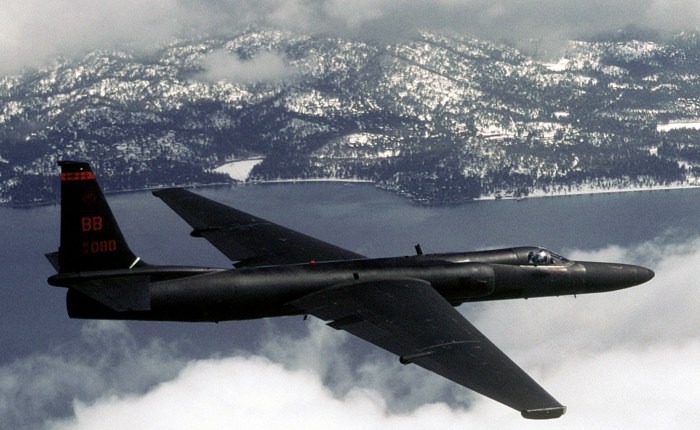
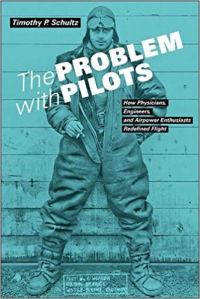
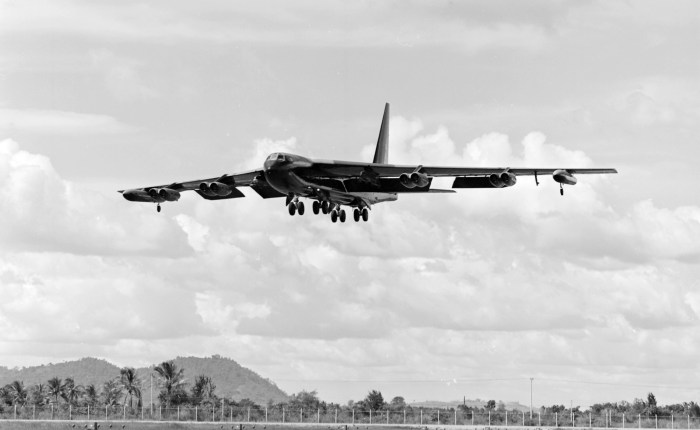
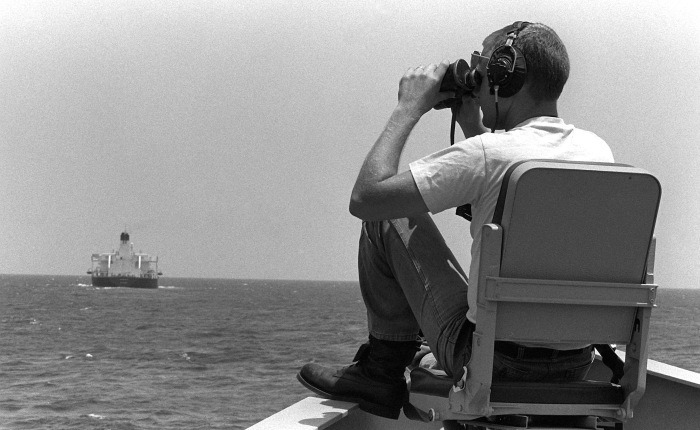

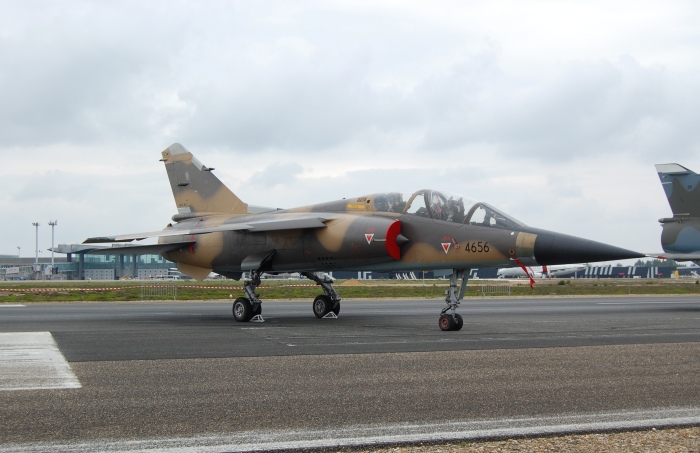


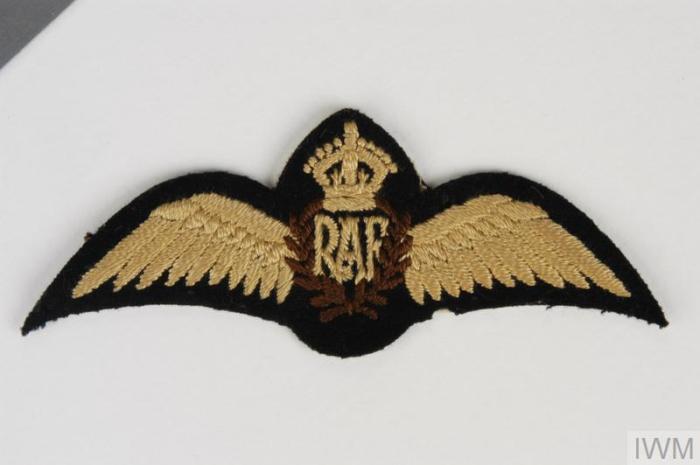
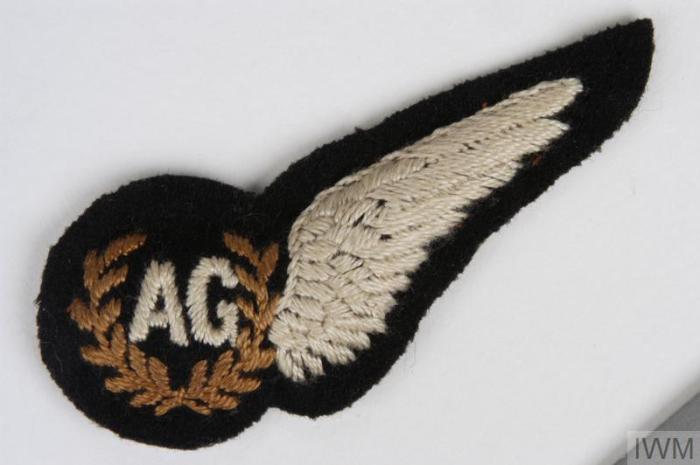
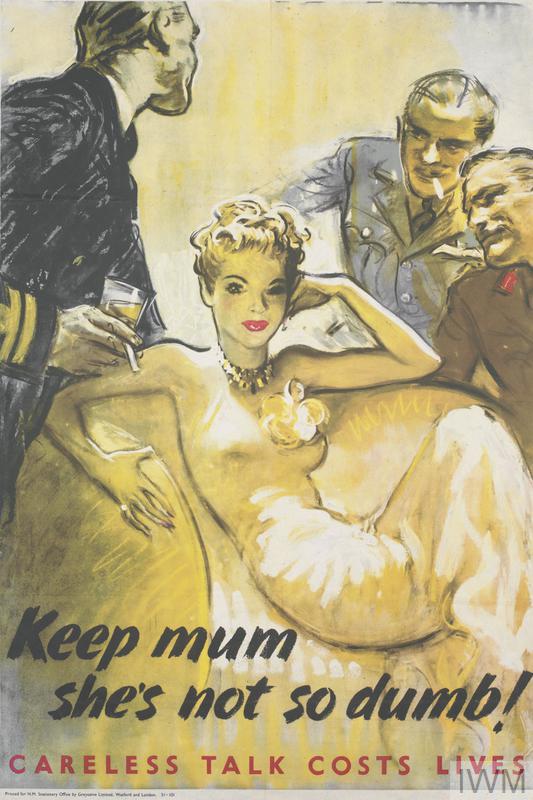


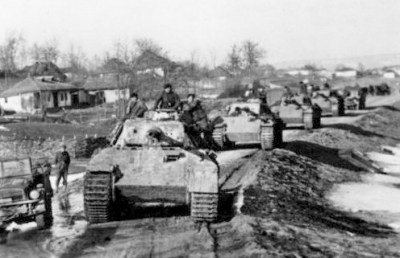
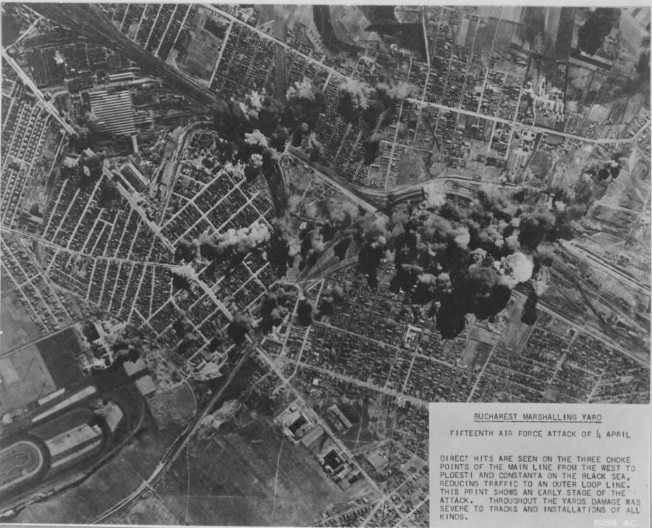
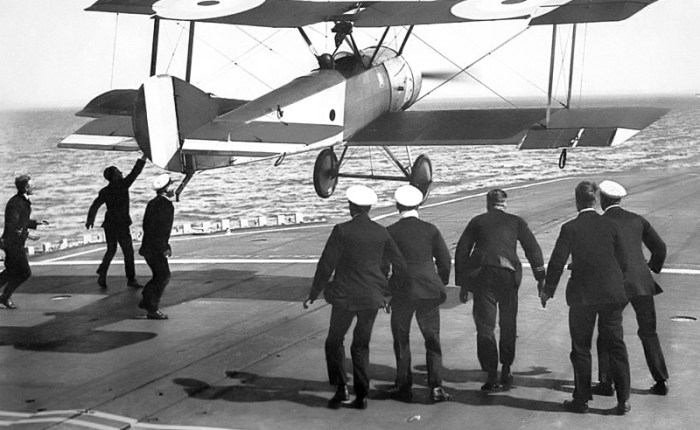


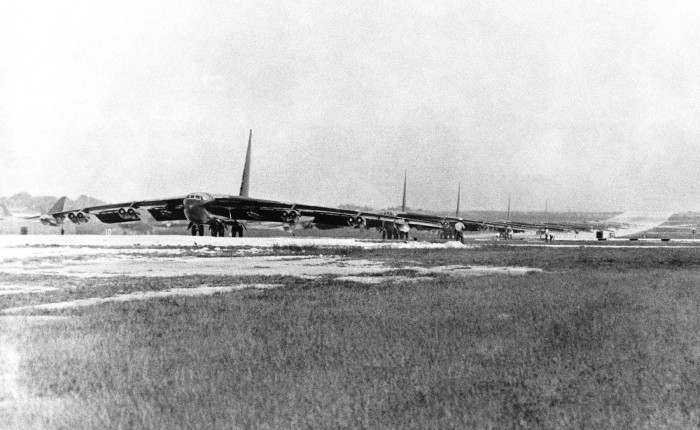

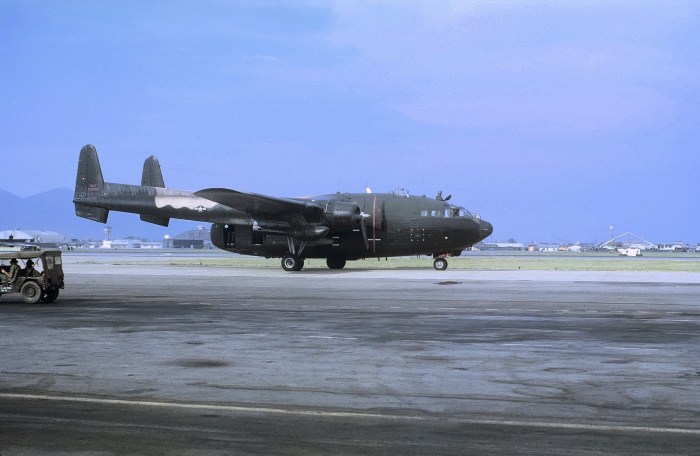


 From Balloons to Drones