Editorial note: This article first appeared on the author’s website. It has been reproduced here with permission.
During its existence from 1922 to 1997, the Royal Air Force (RAF) Staff College was located in several different places. When the Staff College was initially founded in 1922, it was located at Andover and remained there until the course was suspended in 1940. When the RAF reestablished its Staff College in late 1941, it did so at Bulstrode Park, Gerrards Cross. The first course at Bulstrode Park began in January 1942. It remained here until the Staff College transferred to Bracknell in 1945. At the same time as the move to Bracknell, a detachment of the Staff College remained at Gerrards Cross, and this eventually transferred to Andover in 1948. Bracknell was responsible for providing command and staff training to officers of the RAF, the United States Air Force, and members of the air forces of the ‘old’ Dominions. Andover provided command and staff training to members of the RAF and other foreign air forces. In 1965, it was announced that the two Staff Colleges would merge and be located in Bracknell. This eventually happened at the end of 1969. This is where the Staff College remained and eventually merged to become the Joint Services Command and Staff College in 1997.
This, however, is not the whole story. As well as its primary Staff College in the UK, the RAF also provided command and staff training in the Middle East at Haifa, Palestine (modern-day Israel), for four years. In 1940, the British Army established the Middle East Staff School, and in late 1941, they admitted RAF students to the No. 5 War Course. Then, from No. 6 War Course in early 1942, an RAF Wing was added to the Middle East Staff School.[1] During the No. 12 War Course in 1944, the RAF Wing became its own reporting unit, the RAF Staff College (Overseas).[2] It came under the administrative control of Air Headquarters Levant. The first Commandant was Air Commodore S.H.C. Gray, formerly the senior RAF instructor at the Middle East Staff School. The object of Haifa was to ‘train Staff Officers, not necessarily Commanders’ while the syllabus mirrored that undertaken at the Staff College back in the UK.[3] The last course, No. 16 War Course, took place in 1946 and ended in October. After this date, both the RAF Staff College and Army Staff College (the Middle East Staff School had been redesignated the Middle East Staff College in 1943) were disbanded.[4]
It is hard, without further research, to assess the impact of the RAF Staff College (Overseas) at Haifa, but it was clearly an important institution. As the then Wing Commander R.A. Mason (later Air Vice-Marshal Professor Tony Mason) noted in 1972, ‘the constant opportunities for joint service studies [at Haifa] conferred no small advantage on the Middle Eastern College over its Gerrards Cross counterpart.’[5] However, Mason’s conclusion was not his own, and context is important here. As the RAF Staff College prepared to commemorate the 50th Anniversary of its establishment, two publications appear to have been commissioned to detail the history of the institution.[6] The first was a history of the Staff College, written by Mason and widely cited by historians since. However, his was not the only volume commissioned. Another volume of the history of the Staff College at Haifa was also commissioned. Squadron Leader D.J. Read wrote this. This history detailed the Staff College at Haifa, but, unlike Mason’s more widely known counterpart, it is not widely cited. Indeed, I know of several copies in the library at the RAF Museum and a copy at the National Archives at Kew.[7] Importantly, while Mason details Haifa in his history, he is indebted to Read’s history.[8] For example, while Mason noted the importance of ‘jointery’ at Haifa, it was Read who reflected that:
Sometime in the future 2, or all 3, of Britain’s armed forces may well decide to combine their Staff Colleges into one establishment. If and when this occurs there may well be a temptation to acclaim the occurrence as a ‘first’. But perhaps someone will be around to remind the publicists that, for a few years in the mid-1940s, the Army and Royal Air Force had co-located Staff Colleges at The Telsch Hotel on Mount Carmel, Haifa.[9]
Of course, the Staff Colleges of the RAF, British Army and Royal would eventually amalgamate to form the Joint Services Command and Staff College, originally located on the site of the RAF Staff College at Bracknell.
Dr Ross Mahoney is an independent scholar specialising in the history of war, with a particular focus on the use of air power and the history of air warfare. He is the Editor-in-Chief of From Balloons to Drones and currently the Senior Historian within the Heritage Policy team at Brisbane City Council in Australia. He has nearly 20 years of experience in the education, museum and heritage sectors in Australia and the United Kingdom, including serving as the inaugural Historian at the Royal Air Force Museum between 2013 and 2017. His other research interests are military leadership and command, military culture, and the history and development of professional military education. He also maintains an interest in transport history. He has published numerous articles, chapters and encyclopedia entries, edited two books, and delivered papers on three continents. His website is here.
Header image: Flying Officer C.L. Collings, Officer in charge of the Desert Air Force’s Anti-Malaria Control Unit, lectures to pilots and ground crew of No. 152 Squadron RAF on defence tactics against the disease, in front of one of the Squadron’s Supermarine Spitfire Mark VCs at Lentini East, Sicily, c. 1943. (Source: IWM (CNA 1235))
[1] Squadron Leader D.J. Read, The Royal Air Force Staff College at Haifa, 1942-46 (Bracknell: RAF Staff College, 1972), p. 1.
[3] ‘Annex C – Middle East Staff School – Joining Instructions for RAF Officers, 2 April 1943’ in Ibid., p. C-1; ‘Annex D – Middle East Air Order No. 1261 – Formation of RAF Staff College (Overseas), 30 September 1944’ in Ibid., p. D-1.
Kathy Wilson, Marshall’s Great Captain: Lieutenant General Frank M. Andrews and Air Power in the World Wars. Lexington, KY: University Press of Kentucky, 2024. Illustrations. Appendix. Notes. Bibliography. Index. Pbk. 273 pp.
Kathy Wilson highlights the career of a key player in US air power history in Marshall’s Great Captain: Lieutenant General Frank M. Andrews and Air Power in the World Wars. This is a much-needed and valuable contribution about a senior leader of the US Army Air Corps (USAAC) and the Army Air Forces (USAAF) – a leader who was a driving force behind American air power, yet not a well-known figure to our reading public. Who was the namesake of Andrews Air Force Base (now styled as Joint Base Andrews), located in Prince George’s County, Maryland, and currently the primary military airbase serving America’s capital city?
Wilson, an independent scholar and Writing Fellow for Norwich University, published Marshall’s Great Captain as part of the University Press of Kentucky’s Aviation and Airpower Series, edited by US Air Force Academy command historian Brian Laslie. Wilson’s narrative begins with Andrews’s time at West Point (Class of 1906) and ends with his untimely death due to an aircraft accident on 3 May 1943. The author correctly argues that the extant works on Second World War air power leadership gloss over Andrews’s career and fail to fully explain his significant contributions. Wilson rectifies this oversight with this thoroughly researched volume.
After a brief introduction and prologue, the latter teasing the reader with the circumstances of Andrews’s final flight and Consolidated B-24 crash, Chapter 1 succinctly covers the subject’s time at West Point and first 11 years in the US Army as a cavalry officer. A descendant of Confederate cavalry officers and related to two Tennessee governors, Andrews thrived as a young leader. In 1914, he married Jeanette ‘Johnnie’ Allen, daughter of a senior Army cavalry commander.
As Wilson explains in Chapter 2, Andrews transferred to the US Army Signal Corps’ Aviation Division, forerunner of the US Army Air Service and USAAC, in 1917 but did not see action overseas. His contributions during the First World War included staff duty in Washington, D.C., and command of Rockwell Field in southern California. By 1918, he was a 38-year-old temporary Lieutenant Colonel. In the early 1920s, he served in Germany in the Army of Occupation. A series of typical assignments followed, to include attendance at all three of the US Army’s professional schools: Air Corps Tactical School, Command and General Staff School, and Army War College. This chapter provides extensive context about US air power in the 1920s and early 1930s, including coverage of the Billy Mitchell trial, air-coastal defence experiments, and the Air Mail fiasco of 1934.
The next two chapters examine Andrews’s appointment to and service as Commanding General, General Headquarters (GHQ) Air Force, and the development of the Boeing B-17 bomber. Once again, Wilson provides extensive background, this time explaining the various boards and commissions investigating US air power, to include the Drum Board (1933) and the Baker Board (1934). In early 1935, US Army Chief of Staff General Douglas MacArthur appointed Andrews to serve as the first commander of GHQ Air Force. Comprising three under-resourced wings, the new GHQ Air Force was to serve as the Army’s air strike force, and here Andrews took charge of operations and training for the Air Corps. Wilson recounts his challenges stemming from a fragmented command structure in which the Chief of the Air Corps was responsible for supply, procurement, funding, assignments, and other supporting functions. At the same time, Army regional commanders exercised control over bases, maintenance, and court-martial authority. During his four years commanding GHQ Air Force, Andrews increased combat efficiency for USAAC, advocated for the long-range B-17 bomber, and, through air demonstrations and humanitarian flights, raised public awareness of the capabilities of US air power. He also established a solid relationship with a future mentor, then Brigadier General George Marshall, during the summer of 1938 by hosting the latter at GHQ and providing him with a personal tour of USAAC bases across the country. This visit paid dividends in two ways: it established a sense of trust between the two leaders, and it provided Marshall—then serving as the new Chief of Plans for the Army – with a solid understanding of air power’s roles, missions, and capabilities.
Boeing XB-17 (Model 299). (Source: Wikimedia)
Marshall became US Army Chief of Staff in September 1939 and appointed Andrews as the Assistant Chief of Staff, G-3, or chief of operations and training for the Army. Andrews was the first aviator to serve in this critical role for the Army, and, according to Wilson’s Chapter 5, it ‘was the most important and impactful assignment of Andrews’s career.’ (p. 105) Here, Andrews played an essential role in preparing the US Army for future combat in the Second World War, including establishing the Armored Force, improving training for the National Guard, setting up the Army’s emerging airborne infantry capability, and generally better integrating air units with Army operations. Chapter 6 then covers Andrews’ increased responsibilities first as commander of USAAC units in the Panama Canal Zone and then as overall US Army commander of the Caribbean Defense Command. These were important roles given American fears of potential Axis interference with the Panama Canal. Andrews demonstrated his expertise in reorganising forces, building and improving facilities, nurturing relationships with regional Allies, and most importantly, improving combat readiness.
Chapter 7 continues the Andrews story by describing the subject’s role as Commander, US Forces Middle East, starting in November 1942, and then as Commander, US Forces European Theater of Operations (ETO) beginning in February 1943. In these responsibilities, Andrews once again excelled at organising, training, and employing forces against the Axis. As ETO Commander, headquartered in London, he oversaw the rapid buildup of US Army ground units for Operation OVERLORD and the US 8th Air Force for the Combined Bomber Offensive; throughout, he maintained an excellent working relationship with his British counterparts.
In the final chapter, Wilson details the planned trip from London back to the United States via Iceland on 3 May 1943, which ended in a tragic crash due to poor weather. Her epilogue speculates – using the best available evidence – what next role Andrews may have taken on had he lived. Unfortunately, Andrews’ story ends too early.
Some key themes emerge throughout Wilson’s narrative. In mentioning the leadership style and personality of the gregarious and hard-charging USAAF Commanding General Henry ‘Hap’ Arnold, admiration of Andrews’s soft-spoken, gentlemanly demeanour is obvious. In all his roles, Andrews sought to educate superiors, peers, and subordinates about air power, not to antagonise them as other airmen sometimes did. Andrews’s relationship with George Marshall was important not only for the former’s rise through leadership positions but also for Marshall’s clear understanding of air power’s role in its various capacities. Finally, Wilson skilfully describes the technical development and acquisition processes of US aircraft, topics seldom mentioned in similar histories of this formative period for American air power.
This reviewer submits only one minor complaint about this study. Several verbatim quotes appearing throughout the volume are unattributed in the text, requiring the reader to flip to the note pages at the end of the book to determine the source. Many of these are lengthy. For example, page 115 presents an extensive excerpt on Marshall’s approach to selecting Army leaders, with no clues about the source. The endnote at the back of the book reveals that this was a quotation from a 1943 New York Tribune article by a staff writer.
Nevertheless, Wilson’s well-researched biography of Frank Andrews is a welcome addition to our understanding of air power leadership during the interwar years and the Second World War. Andrews was a key player, skilled in diplomacy yet laser-focused on organisation, training, and readiness. Airmen today have much to learn from Frank Andrews’ story.
Dr John J. Abbatiello earned his PhD from King’s College London’s War Studies program in 2004. After 18 years of faculty service at the US Air Force Academy’s Department of History and Center for Character and Leadership Development, he then served as the Training and Education Branch Chief for North American Aerospace Defense Command and US Northern Command. He is the author of Anti-Submarine Warfare in World War I: British Naval Aviation and the Defeat of the U-Boats (Routledge, 2006) and a chapter on Lewis Brereton in The Worst Military Leaders in History (Reaktion Books, 2022).
Header image: General Frank M. Andrews, theatre commander of US forces in the ETO, was responsible for directing the American strategic bombing campaign against Germany and for planning the land invasion of occupied western Europe, 1943. (Source: Wikimedia)
Richard Overy, Rain of Ruin: Tokyo, Hiroshima and the Surrender of Japan. London: Allen Lane, 2025. Hbk. Images. Notes. Further readings. Index. xiii + 206 pp.
The decision to use the atomic bomb in the Second World War is one of the most written-about episodes in modern military history. As Richard Overy (p. xi) identifies in this work:
[n]o single subject in the history of the United States war effort has prompted so much historical, political, and philosophical writing. No set of surviving records has been subjected to so much close forensic scrutiny.
Broadly speaking, debates over its use range from the argument that they were used to save American lives to the view that they were used to forestall Soviet ambition in the Far East and prevent the division of Japan. As exemplified by the controversy in 1994 surrounding the planned script for what became the ‘Enola Gay’ exhibition at the Smithsonian National Air and Space Museum in 1995, debates over how we interpret the decision to use the atomic bomb have been subject to intense scrutiny and disagreements. Into this milieu comes Overy, one of the world’s leading authorities on the history of the Second World War and an expert on the history of air power.
Overy had previously written the voluminous The Bombing War (2013), which dealt with debates surrounding bombing in the European theatre of war; however, in this volume, he turns his attention to the US strategic bombing campaign against Japan in 1945 and the decision to use the atomic bomb. In Rain of Ruin, Overy deals with three separate but indelibly linked areas, which form the core of the book’s key chapters. Indeed, each chapter provides the necessary context for the next. For example, in Chapter Two, Overy explores the reason why the US shifted from precision targeting to a strategy of indiscriminate firebombing from March 1945 onwards. As Overy notes, the US had abhorred British ‘area bombing’ techniques. However, they were willing to adopt similar methods in the Far East against Japan because of a shift in thinking about the use of incendiary raids influenced by the character of the war in the Far East, ‘the demonisation of the Japanese enemy, and the effort to define area targets as legitimate military-economic ones.’ (p.40). Furthermore, they were supported in this shift in strategy by appointing an officer, General Curtis LeMay, who showed no ‘compunction about bombing and killing civilians if it helped shorten the war’ (p. 22).
Following on from the shift in US air power strategy, Chapter Three deals with the development and decision to use the atomic bomb. Indeed, Overy highlights that in accepting the change in air power strategy, it became easier for the US to normalise the use of the atomic bombs. As he argued, the shift in strategy ‘prepared the way for the apotheosis of indiscriminate destruction in the two atomic attacks’ (p. 18). Moreover, Overy also adeptly illustrates the role that civilian scientists played in the development of the atomic bomb, arguing that ‘[w]ere it not for the maximum effort by a cohort of the world’s most distinguished physicists, the bomb would not have been ready by 1945’ (p.54). As such, it is essential to remember that the use of the atomic bombs was a whole-of-government affair that not only required a shift in US air power strategy but also the willingness of other stakeholders to buy into the project and their eventual use. This also included government officials in key decision-making roles and illustrates that military strategy, such as the decision to use the atomic bomb, does not develop in a vacuum.
Finally, in Chapter Four, Overy examines the reasons for the Japanese surrender in 1945 and the role that the dropping of the atomic bombs played in that decision. In doing so, Overy does an excellent job in comparing the various arguments related to Japan’s decision to surrender, most notably, the role played by the Soviet invasion of Manchuria that started between the dropping of the two atomic bombs. Indeed, as Overy illustrates, drawing on Japanese sources, the Japanese decision to surrender – the so-called ‘Sacred Decision’ – was complex and not readily accepted. For example, towards the end of August, a Japanese Kamikaze unit dropped propaganda leaflets over Tokyo, warning residents not to surrender and stating that the imperial rescript had been a false document (p. 126). Despite this, Overy makes clear that the decision to surrender was complex. Both conventional and atomic attacks on Japan played a role in the decision-making process, though whether they were decisive, as many have argued, remains open to question. Indeed, Japanese leaders viewed the atomic bombings simply as an ‘extension of LeMay’s campaign’ (p. 110).
Overall, Overy has, in the course of just 150 pages, placed the decision to use the atomic bomb in its essential context, the shift in US air power strategy that occurred in the Far East in 1945 and assessed their role in the Japanese decision to surrender. The book is supported by copious referencing to sources not just from the US but also from Britain and Japan. It is necessary reading for anyone interested in the decision to use the atomic bomb, how the Second World War ended, or US air power strategy. However, perhaps the greatest strength of Overy’s analysis is that he does not ‘judge the past’ but allows the evidence to tell its story and allows the reader to ‘understand it better on its own terms’ (p. xiii). In this, Overy has been successful.
Dr Ross Mahoney is an independent scholar specialising in the history of war, with a particular focus on the use of air power and the history of air warfare. He is the Editor-in-Chief of From Balloons to Drones and currently the Senior Historian within the Heritage Policy team at Brisbane City Council in Australia. He has nearly 20 years of experience in the education, museum, and heritage sectors in Australia and the United Kingdom, including serving as the inaugural Historian at the Royal Air Force Museum from 2013 to 2017. His other research interests are military leadership and command, military culture, and the history and development of professional military education. He also maintains an interest in transport history. He has published numerous articles, chapters and encyclopedia entries, edited two books, and delivered papers on three continents.
Header image: The Boeing B-29 Superfortress Enola Gay on Tinian just after the attack on Hiroshima on 6 August 1945. (Source: Wikimedia)
Marcus Gibson, The Greatest Force: How RAF Bomber Command became the No.1 factor in Britain’s total, destructive defeat of Nazi Germany. York: Marcus Gibson, 2025. Illustrations. Bibliographic Notes. xv + 537 pp.
Daniel Knowles, Reaping the Whirlwind: The Changing Perceptions of the Wartime Role of RAF Bomber Command. York: Barnthorn, 2025. Illustrations. Appendices. Bibliographic Notes. Index. 281 pp.
The history of RAF Bomber Command is a difficult heritage. Since the war itself, questions about area bombing have divided opinion, and today the bombing war is frequently remembered through the divisive, binary lenses of the ‘Dams or Dresden’.[1] Both books consider the public perception of the actions of RAF Bomber Command. However, while Reaping the Whirlwind examines the subject critically and objectively, The Greatest Force passionately argues for further recognition for Bomber Command. On his website, Gibson claims that the book aims to ‘fundamentally change our view, once and for all, of the immensity of their contribution.’[2]
In The Greatest Force, Gibson claims to answer the ‘outstanding questions’ (Rear cover) he has identified about RAF Bomber Command’s war, including why ‘Harris was right to bomb city centres’, how ‘Bomber Command became the No.1 factor in Britain’s total, destructive defeat of Nazi Germany’, and how the force ‘gave little-known but vital support to the Royal Navy against the U-boats and to Allied armies.’ He also maintains that the ‘book is the first-ever full analysis of the impact of RAF Bomber Command on Nazi Germany’. He claims that his research finally ‘dispels the many myths about Bomber Command’s true effectiveness,’ and proves that ‘it was the foremost military force in securing victory.’[3]The Greatest Force massively overpromises and underdelivers.
The book makes a couple of legitimate points, notably the importance of small industrial production to the Nazi war effort. However, it lacks proper evidence to support these ideas, and Gibson’s claims are largely unsubstantiated. The book fails to live up to the promise of the title, the blurb on the back cover, and its marketing. In the introduction, he back-pedals from the title’s claim, concluding ‘that the RAF’s bombing was the principal reason for Germany’s early military defeat in the West – a destructive force equalled in effectiveness only by the victories of the Red Army on the Eastern Front’. (p. xiv) More importantly, the questions he asks are not ‘outstanding’. For example, we already know that materiel was diverted from elsewhere to defend against Allied air power (p. 163).
He resolutely buys into the big man of history concept, citing Harris, Churchill, and his namesake with the dog, while making his disdain for Atlee very clear. (p. 470) His political stance and agenda are also revealed by phrases like ‘group think’ (p. 461) and ‘betrayal’ (p. 465, 469), as well as his wish for a column for Harris to rival that of Nelson. (p. 465) He tries so hard to clear the name of Bomber Command that he avoids the complexity of the subject and includes so much that is irrelevant. Rather than debunking certain myths about the role of Bomber Command, the book reinforces those on one side of the debate over the difficult heritage of the bombing war. His wish for a monumental column taller than that of Nelson firmly positions him in this. Gibson is a journalist with an axe to grind; he is not a historian.
The book is poorly referenced, many claims are unsupported, and the sources used are often cherry-picked without analysis. Most references are to the secondary literature, such as Adam Tooze’s Wages of Destruction (2006), rather than to the primary sources he claims to have used. The book overlooks the cultural context of the historiography he cites, as well as the nuances of working with veteran testimony 80 years after the events. One moment, he’s talking about Allied air power; the next, he is attributing all success solely to RAF Bomber Command (p. 159, 163).[4] Reading it made me realise that ‘yes and’ can be a negative comment.
Conversely, in Reaping the Whirlwind, Daniel Knowles acknowledges that the bomber has been in ‘the shadow of Fighter Command’ since Churchill’s speech about ‘the few’ in 1940, and like Gibson, argues that since the end of the war, Bomber Command has occasionally been regarded ‘with great distaste’ (p. 100). However, unlike Gibson, he traces how the ‘perceptions of, and attitudes to the role played by Bomber Command’ have fluctuated between 1945 and today, and he advances explanations for their changing favour (p. 5).[5]
Unlike Gibson, Knowles is historically minded, having a degree in History and Politics. The difference is highlighted in their approach to their subject. He critically examines the historiography, and how literature, film and TV, novels and comics, political discourse and contemporary events, the popular press, and even representations in school textbooks, have played their part in the construction of the popular memory of Bomber Command. He goes into some detail describing the capabilities of different bombsights, and navigation aids including Gee, H2S and Oboe, before he considers how the tactical differences between RAF and USAAF bombing policies have been remembered as area or precision bombing. In doing so, unlike Gibson, Knowles engages with the complexity and the nuance of evolving attitudes to the bombing war in the context of changing politics and worldwide events over the last eight decades.
Reaping the Whirlwind has a logical structure; it is well-referenced and includes 70 pages of appendices with transcripts of important primary sources, including the Butt Report and Churchill’s speeches and correspondence. I would argue that it is worth buying to have these sources accessible on a bookshelf. The book flounders a little by oversimplifying the discussion around censorship of films and the removal of statues (pp. 130-1), but the reader can forgive this and the occasional typo. Although he perhaps incongruously claims ‘little concern has been given to the aircrews of Bomber Command’, (p. 79) Knowles examines the decorations awarded to veterans, and comments that the issue of the Bomber Command Clasp in 2013 would not have occurred if ‘perceptions and attitudes of Bomber Command’s role within the Second World War had not changed’ (p. 97).
Knowles summarises the historiographical and current perspectives on the bombing war, whereas the thinking behind The Greatest Force remains rooted in the late 1990s or early 2000s. Although his book is half as long, Knowles is more effective than Gibson at arguing that the ‘hostility’ to Bomber Command’s position in public memory has been ‘unfair’. (p. 162) He concludes that while their role still divides opinion, perceptions have altered, and Bomber Command is now recognised by the memorials in London and by the International Bomber Command Centre in Lincoln. (p. 179)
Dr Dan Ellin is the archivist for the International Bomber Command Centre Digital Archive housed at the University of Lincoln. A Social and Cultural historian, his research examines the lives, emotions and medical treatment of the men and women who served with Bomber Command during the Second World War, and how the bombing war is remembered.
Header image: An Avro Lancaster MkIII of No. 103 Squadron at Elsham Wolds, Lincolnshire, early March 1943. As part of the publicity for ‘Wings For Victory Week’ (6-13 March), the station photographer was required to supply photographs of the men and machines of the squadron for inclusion in local newspapers. (Source: IWM (CH 8965))
[1] Mark Connelly Reaching for the Stars: A New History of Bomber Command in World War II (London: I.B. Tauris, 2001), p. 147.
[2] Marcus Gibson, ‘The Greatest Force – New Book by Marcus Gibson’ 2025. Accessed 15/08/2025 https://rafbook.co.uk/
[3] Marcus Gibson, ‘The Greatest Force – New Book by Marcus Gibson’ 2025. Accessed 15/08/2025 https://rafbook.co.uk/
John M. Slemp, Bomber Boys: WWII Flight Jacket Art. self-published: www.wwiibomberboys.com, 2024. Hbk. 371 pp.
At the National Museum of the United States Air Force in Dayton, Ohio, a glass case between the Second World War and Korean War exhibits displays artwork painted on the back of seventeen A-2 jackets. Each jacket is a work of art, and each has a story detailing the wearer’s unique identity. Sometimes, they contained simple unit insignia, or the number of missions flown, and other jackets had full murals of the aircraft, pin-ups, cartoon characters, or nose art from the aeroplane.
Bomber Boys: WWII Flight Jacket Art is a love story to these A-2 jackets when leather was the ‘ideal canvas’ (p. 16). At the same time, it is a book on cultural history, military history, military uniforms, and, to the extent that wearers of the jacket might get away with it, a social commentary on the units the American airmen served in. As the author John Slemp notes, the A-2 jackets became ‘mobile signposts reflecting the distinct mortal challenges every flyer faced’ (p. v.). Although the jackets were technically uniform items and, therefore, not to be altered, senior leaders turned a blind eye to many uniform modifications. Learning to ‘read’ these jackets might, to the uninitiated, be like attempting to read Mayan glyphs. However, Slemp deftly walks the reader through what each marking indicates and, thus, what the wearer conveyed to other members of his unit and others he (and it was always he) might come into contact with.
The jackets contained in this book represent a ‘cultural and historical significance’ (p. v.). The book’s highlight is obviously the jackets, photographed in high resolution, and each picture is beautifully displayed. Jimmy Stewart’s jacket is one of those appearing in the book (pp. 182-3), and the author also weaves in fighter squadrons.
An A-2 jacket of 1st Lieutenant ‘Eugene’ Greenwell, who served at Steeple Morden, Cambridgeshire with the US 357th Fighter Squadron, 355th Fighter Group. Later, he joined the newly formed 2nd Scouting Force (still based at Steeple Morden), a formation of fighter aircraft that were specially tasked with going forward in advance of the heavy bomber formations to visually check the all-important weather conditions en-route to the target area, diminishing the risk of bombers having to abort their missions due to heavy cloud. Although expressly forbidden to engage enemy forces because of their reconnaissance role, 2nd SF did account for several enemy aircraft. By their final mission of 25 April 1945, 2nd SF was credited with thirteen kills in the air, two ground, two probable and eight damaged. Among that total, Greenwell is confirmed as having destroyed the 355th Group’s first Me 262 jet fighter on the ground at Neuberg airfield on 23 February 1945. (Source: IWM (UNI 13858))
The book, written over the course of a decade, also includes numerous veteran vignettes; black and white photographs – similar to the Medal of Honor: Portraits of Valor book by Peter Collier (Author), Nick Del Calzo (Photographer) – give an aging human face to the stories. Slemp also includes other ‘artifacts’ in this work, including Captain Walter Thompson’s bomb tags and the cotter pins that armed the bomb: on each tag, he wrote the date, bombing location, and bomb load (pp. 94-5). A map with hand-drawn pictures and annotations for each flyer’s bombing missions, including one mission to ‘Big B’ Berlin (pp. 122-3).
While the book focuses primarily on the European Theater of Operations, Slemp does turn his attention to the Mediterranean and North African theatre and the China, Burma, and India theatre. Not forgotten, Slemp includes a small section on the Women Airforce Service Pilots (WASPs). Most of the women of the WASPs turned their A-2 jackets in, although Dawn Seymour kept hers, and its photograph clearly shows the Disney-designed Fifi gremlin emblem (p. 306).
As noted earlier, this book is a love letter to the American bomber jacket. Slemp clearly shows the American Airmen’s influence on the future of fashion as the bomber jacket became a symbol of American masculinity and impacted fashion writ large. The Beatles, Steve McQueen, Indiana Jones, and the 1990s rap trio Salt-N-Peppa all appear sporting various versions of the iconic jacket.
While the US$129.95 price tag will put some people off, the cost is certainly worth it. A blurb seems inarticulate for the gift that author and photographer John Slemp has given the historical community. The work is an absolute must-own for those with a passion for the history of the Second World War and historians of air power and American fashion. A superb cultural history of the American airman.
Dr Brian Laslie is a noted air power historian, having authored The Sundowners, Pegasus, and Little Butch: Carrier Air Group Eleven and the War in the Pacific, 1943-1945 (2025), Air Power’s Lost Cause: The American Air Wars of Vietnam (2021), Architect of Air Power: General Laurence S. Kuter and the Birth of the US Air Force (2017) and The Air Force Way of War (2015). The latter book was selected for the Chief of Staff of the Air Force’s 2016 professional reading list and the 2017 RAF Chief of the Air Staff’s reading list. US Air Force Historian and Command Historian at the United States Air Force Academy. Formerly, he was the Deputy Command Historian at the North American Aerospace Defense Command (NORAD) and United States Northern Command (USNORTHCOM). A 2001 graduate of The Citadel and a historian of air power studies, he received his Masters’ from Auburn University Montgomery in 2006 and his PhD from Kansas State University in 2013.
Header image: A ground crewman of the US 97th Bomb Group, 15th Air Force with the nose art of a Boeing B-17 Flying Fortress nicknamed ‘Superman.’ (Source: IWM (FRE 14013))
Becky Aikman, Spitfires: The American Women Who Flew in the Face of Danger during World War II. London, Bloomsbury Press, 2025. Footnotes. Hbk. 368 pp.
In her new book, Spitfires: The American Women Who Flew in the Face of Danger during World War II, Becky Aikman has accomplished two things: First, she has surprised me and proven that I have much to learn regarding the contributions of women aviators in the Second World War. Second, she clearly demonstrates the importance of someone’s immutable characteristics and their agency and story. Without acknowledging these characteristics, the extraordinary efforts taken by specific individuals in the face of prescribed gender roles might be lost.
This new work details the story of American women who defied the odds, stereotypes, gender roles, and numerous other obstacles to support the war effort, but more importantly, to contribute to the war effort by doing something they loved, slipping the surly bonds of earth. As the advance copy, which landed on my desk, notes a group of aviatrixes:
[w]ere denied the opportunity to fly for their country when the United States entered the Second World War. But Great Britain, desperately fighting for survival, would let anyone-even Americans, even women-transport warplanes. Thus, twenty-five daring young aviators bolted for England in 1942, becoming the first American women to command military aircraft.
Before establishing the Women’s Auxiliary Ferrying Squadron and the Women’s AirForce Service Pilots, this select group of women, initially under the leadership of Jackie Cochran, left home to fly in England for Britain’s Air Transport Auxiliary (ATA).
Allied women pilots of the Air Transport Auxiliary service. Their job done, four female ATA pilots (three Americans and one Polish) leaving an airfield near Maidenhead, 19 March 1943. They are from left to right: Roberta Sandoz of Washington; Kay Van Doozer from Los Angeles; Jadwiga Piłsudska from Warsaw; and Mary Hooper from Los Angeles. (Source: IWM (CH 8945))
Aikman clearly shows that these women flyers had what Tom Wolfe later called the same ‘right stuff’ as their male counterparts. The ATA ‘was an organization where renegade behavior was part of the DNA.’ The ATA ‘had established itself as a seat-of-the-pants operation that sometimes tolerated, or even celebrated, eccentrics’ (p. 33). In the same way that Billy Mitchell was known for his early Maverickism, which seeped into the essence of the American flyer, these women also did things in their way, regardless of what the rules said. While this nonconformist and individualist attitude is part of the mythology of the American Flyer, it did not conform to gender roles.
Aikman relies heavily on diaries and surviving papers of the Americans in the ATA. She uses these to significant effect in creating an intimate and personal account, but Aikman quickly points out that this was not a unified Band of Sisters; as found within any unit, there were disagreements, alliances, and competition (p. 84). Still, these few dozen women were doing what they loved to: flying and doing so in every conceivable type of aircraft the British flying services had to offer: 147 different types in total. Detailing too much of the book here would rob you of the story of these ‘Spitfires,’ but suffice it to say that not all of them made it through training, completed their contracts, or even lived to see the United States again.
The end of the war saw the end of the ‘ATA-girls,’ and they returned home. Aikman states, ‘[t]he era when women pilots would fall out mind had already begun.’ (p.271). Except for mention in a few books or self-published memoirs and autobiographies, the American women of the ATA faded into public obscurity. However, their lives after the war remained as varied and vibrant as the women themselves, and Aikman’s telling of their story could not have arrived at a better time. It is here to remind us that the ‘immutable characteristics’ of some individuals are what make their story compelling and worth telling.
This book is the finest in aviation history: a sweeping narrative, deeply researched, and passionately written work that is sure to please and inform its audience. This book will appeal to a broad audience of historians and buffs. However, more importantly, it fills another gap in the historiography of American women flyers in the Second World War and their contributions to the war effort abroad, providing avenues in its copious footnotes for future researchers to follow. Any historian of air power studies or those interested in aviation in the Second World War will want a copy of this on their bookshelves.
Header image: A group of women pilots of the ATA service photographed in their flying kit at Hatfield. (Source: IWM (C 381))
Dr Brian Laslie is a noted air power historian, having authored The Sundowners, Pegasus, and Little Butch: Carrier Air Group Eleven and the War in the Pacific, 1943-1945 (2025), Air Power’s Lost Cause: The American Air Wars of Vietnam (2021), Architect of Air Power: General Laurence S. Kuter and the Birth of the US Air Force (2017) and The Air Force Way of War (2015). The latter book was selected for the Chief of Staff of the Air Force’s 2016 professional reading list and the 2017 RAF Chief of the Air Staff’s reading list. US Air Force Historian and Command Historian at the United States Air Force Academy. Formerly, he was the Deputy Command Historian at the North American Aerospace Defense Command (NORAD) and United States Northern Command (USNORTHCOM). A 2001 graduate of The Citadel and a historian of air power studies, he received his Masters’ from Auburn University Montgomery in 2006 and his PhD from Kansas State University in 2013.
There was not too much dogfighting for us. It requires a large area and is absolutely defensive.[1]
Erich Hartmann
Colonel John R. Boyd flew F-86 Sabres during the Korean War and later theorised the Observation-Orientation-Decision-Action (OODA) loop, initially focused on air-to-air combat. At first, Boyd considered the tactical requirements of test flight dogfights between the YF-16 and YF-17 prototypes in 1974 before analysing Sabre and MiG-15 combat in Korea. He expressed the basic idea of the OODA loop in a United States Air Force (USAF) oral history in 1977, although it was not fully formed with its familiar four stages.[2] However, it is not commonly known that another F-86 pilot had theorised a four-stage air-to-air combat ‘decision cycle’ in the 1940s – Luftwaffe pilot Erich Hartmann.
A signed copy of a photo of Erich Hartmann during the Second World War. (Source: Imperial War Museum)
During the Second World War, Hartmann flew 1,404 combat missions, participated in 825 air-to-air engagements and became history’s highest-scoring ace with 352 official kills, mainly over the Eastern Front.[3] During the Cold War, he later commanded West Germany’s first Sabre wing Jagdgeschwader 71 ‘Richthofen.’[4] Hartmann theorised the ‘Coffee Break’ concept, abbreviated as See-Decide-Attack-Break (SDAB). Writets Trevor J. Constable and Raymond F. Toliver articulated the idea in their bestseller The Blond Knight of Germany (1970), the first Hartmann biography, almost half a decade before the OODA loop emerged. Although their book romanticises the German military and fails to address Hartmann’s relationship with National Socialism adequately, it accurately depicts air combat tactics. In contrast, historian Erik Schmidt’s Black Tulip: The Life and Myth of Erich Hartmann, the World’s Top Fighter Ace (2020) thoroughly examines Hartmann’s role in the Third Reich and his fighter pilot career, which makes his book essential reading.
Hartmann and Boyd, in addition to flying Sabres and developing ‘decision cycles’, had much else in common. They were both aggressive fighter pilots with maverick independent streaks who declared war on their hierarchy late in their careers. Hartmann rebelled by opposing the F-104 Starfighter, which he considered unsafe, while Boyd went outside his chain of command to develop the unwanted Lightweight Fighter project.[5] Both men also retired as colonels in the 1970s.
At first glance, the SDAB cycle and the OODA loop are hard to distinguish. As John Stillion expressed: ‘Hartmann’s air combat procedure is strikingly similar to USAF Colonel John Boyd’s famous Observe, Orient, Decide, Act, or “OODA” loop.’[6] However, there is a critical difference. In an air combat context, the OODA loop is about winning dogfights, while the SDAB cycle is all about avoiding them. Additionally, Boyd’s OODA loop theory evolved from air combat to include land combat and then conflict in general before becoming a cognitive model explaining the mind’s relationship with reality. Hartmann’s method, as Schmidt concluded, is not ‘really a dogfighting strategy per se. It was more of an anti-dogfighting strategy.’[7]
Take a Coffee Break
Hartmann enlisted in the Luftwaffe in 1940 and joined Jagdgeschwader 52 in October 1942, flying Messerschmitt Bf 109 fighters. He initially became a wingman for Edmund Rossmann, who mentored the novice pilot. Rossmann had already been credited with over 80 kills, giving his advice considerable merit.[8] Hartmann learned that Rossmann had a wounded arm that prevented him from flying highly manoeuvrable dogfights, but he compensated for this injury by developing a specific tactic. After spotting the enemy, Rossmann patiently assessed the situation before deciding whether to attack. If he decided that surprise could be achieved, he would attack, which differed from the standard practice of immediately attacking a seen enemy.[9] Hartmann later reflected that Rossmann ‘taught me the basic technique of the surprise attack, without which I am convinced I would have become just another dogfighter.’[10] What Rossmann did out of necessity, Hartmann would soon do out of choice.
Hartmann scored his first aerial victory on 5 November 1942 by shooting down an Il-2 Sturmovik. However, shrapnel from the kill damaged his engine, forcing him to crash. While recovering in the hospital, Hartmann began to formulate his conception of air combat after reflecting that he should have approached closer before opening fire and disengaged quicker to prevent shrapnel from hitting his engine. Hartmann later recalled: ‘I learned two things that day: Get in close and shoot, and break away immediately after scoring the kill.’[11] Hartmann later formulated his trademark method, as Constable and Raymond explained:
The magical four steps were: “See – Decide – Attack – Reverse, or ‘Coffee Break’.” In lay terms, spot the enemy, decide if he can be attacked and surprised, attack him and break away immediately after striking; or if he spots you before you strike, take a “coffee break” – wait – pull off the enemy and don’t get into a turning battle with a foe who knows you are there.[12]
In a USAF interview in 1985, Hartmann was asked, “How did you develop your tactics of See, Decide, Attack, Reverse, or Coffee Break?” He answered:
I developed my tactics by watching my leader. My first leader, MSgt Eduard Rossmann, was always cautious. He said he didn’t like to pull a lot of Gs because of a bad shrapnel wound in his arm. He would look over each fight and decide if he would enter. When he did enter, it was always straight through – no turns – and he usually came home with a kill. My next leader, Sgt Hans Dammers, liked to turn and fly in the circus. The next man, 1st Lt Josef Swernemann was somewhere in between the two. He would be patient for a while, but then would get into a turning fight when he got frustrated. This is when I realized you must fight with your head, not your muscle.[13]
Hartmann rejected dogfighting as he considered it pointless and risky: ‘I also decided against aerial acrobatics, against what traditional pilots would call dog-fighting […] Acrobatics are a waste of time and therefore dangerous.’[14] Hartmann would always try to break contact after a pass before deciding if another pass was warranted and, as Constable and Raymond explained, ‘[e]ach pass was a repetition of the “See – Decide – Attack – Break” cycle.’[15]
Hartmann’s method was essentially hit-and-run tactics. As social scientists C. Hind and A. Nicolaides explained: ‘Hartmann became the ultimate and leading exponent of the stalk-and-ambush tactics, and he favoured the tactic of ambushing enemy aircraft and firing at them from very close range, about 20 m, rather than becoming involved in challenging and unnecessary dogfights.’[16]
The SDAB cycle is usually only mentioned in popular military aviation histories and is rarely referred to in scholarship. Edward E. Eddowes, who worked at the Air Force Human Resources Laboratory, submitted a paper to the First Symposium on Aviation Psychology in 1981. He declared: ‘Each engagement involves repetitions of the see, decide, attack, break discrimination-decision sequence. Like many of his predatory predecessors, Hartmann found turning contests hazardous and avoided them.’[17]
In another example, Captain James H. Patton, Jr., a retired naval officer, in his article ‘Stealth is a Zero-Sum Game: A Submariner’s View of the Advanced Tactical Fighter’ considered the SDAB cycle in 1991:
Top Gun instructors interpreted that terse guidance – based on interviews with Hartmann – to mean that a pilot should attempt to detect without being detected, judge whether he can attack covertly, close to a point that would almost assure a kill, and then disengage rapidly to repeat the process, rather than hang around in what submariners call a melee, and fighter pilots term the visual fur ball.[18]
Mikel D. Petty and Salvador E. Barbosa conducted an interesting air simulation experiment. They noted that USAF instructors supervise trainees undergoing virtual simulation-based training.[19] However, given the limited availability of instructors, they devised a means of testing a self-study-based training approach through simulation by following the progress of one test subject over eight years. The virtual pilot flew 2,950 missions in 138 campaigns using seven types of aircraft set in Europe in 1943-45 using Microsoft Combat Flight Simulator 3 (CFS3). The experiment required the subject to read air combat literature before applying the described tactics in the simulation. The study material included The Blond Knight of Germany, which outlined the SDAB cycle.[20] Petty and Barbosa confirmed the effectiveness of the SDAB cycle as ‘maneuvers and tactics described as effective in WWII air combat in the literature, e.g., those in Franks (1998) and Toliver and Constable (1970), were found by the subject to be very effective in CFS3 as well, if performed correctly.’[21]
The SDAB cycle has limitations, and Schmidt correctly concluded that it was well-suited to the Eastern Front but had less utility in Western Europe: ‘Hartmann’s Soviet enemies were, generally, less capable than the British and American pilots on the Western Front, which meant not only that they were easier to shoot down, but also that they were easier to evade and disengage from if the odds weren’t right.’[22] Therefore, applying SDAB cycles consistently in practice is impossible, and some dogfighting is inevitable, making the OODA loop relevant.
The OODA Loop
Boyd was familiar with Hartmann and mentioned him once in the 1977 USAF oral history stating that ‘[A]nd so, in that sense, a guy like Hartmann or a guy like Bong [Maj Richard I.] and some of these other good American aces – I could name others from other countries – they kind of knew they were going to win anyway. Maybe not in the beginning, but they built up that certain confidence and they had the desire.’[23] However, it is unclear if he read The Blond Knight of Germany or other references to the SDAB cycle, so we do not know if Hartmann influenced the OODA loop.[24] In any case, both models are opposites, so there is no suggestion of plagiarism. The basic idea of the OODA loop is to move faster than the enemy through a four-stage cycle, as military analyst Franklin C. Spinney, a close acolyte of Boyd, explained:
He [Boyd] thought that any conflict could be viewed as a duel wherein each adversary observes (O) his opponent’s actions, orients (O) himself to the unfolding situation, decides (D) on the most appropriate response or countermove, then acts (A). The competitor who moves through this OODA-loop cycle the fastest gains an inestimable advantage by disrupting his enemy’s ability to respond effectively.[25]
The victor, moving faster, seizes the initiative while the loser becomes paralysed by disorientation and panic.[26] The winner gets inside the loser’s OODA loop, which allows the pilot to manoeuvre into a winning firing position during a dogfight.[27] The OODA loop requires both pilots to dogfight long enough and complete enough loops for the winner to gain a relative speed advantage, which begins to sow disorientation and panic in the loser’s mind. More specifically, the pilots must complete enough OODA loops for the winner’s relative speed advantage to result in an action that changes the overall situation.[28] When this occurs, the loser’s actions, based upon the superseded earlier situation, fail to achieve the intended result, and they become confused as negative feedback overloads their brain. A pilot simply shooting down an enemy Hartmann-style before a clash of opposing OODA loops can occur is not applying Boyd’s model. If the OODA loop involved surprise and winning before the opponent reacts, there would be nothing original about the idea or way to distinguish it from the earlier SDAB cycle meaningfully.
The key difference between Hartmann and Boyd is that the SDAB cycle avoids dogfighting while the OODA loop requires dogfighting. Boyd was fixated on dogfighting as Frans P.B. Osinga explained: ‘[H]e [Boyd] developed the ability to see air combat as a contest of moves and countermoves in time, a contest in which a repertoire of moves and the agility to transition from one to another quickly and accurately in regard [to] the opponent’s options was essential.’[29]
Boyd’s manual Aerial Attack Study (1964), first published in 1960, explained all possible dogfighting manoeuvres without prescribed solutions.[30] Osinga concluded that Boyd ‘wanted to show people various moves and countermoves, and the logic of its dynamic.’[31]Aerial Attack Study reads like a chess strategy book. It is undoubtedly valuable, as Grant Hammond explained: ‘[M]any a fighter pilot, whether he knows it or not, owes his life to Boyd and the development of the tactics and manoeuvres explained in that manual.’[32] Former students who fought in Vietnam credit Boyd’s teaching for getting them out of danger. For example, on 4 April 1965, Major Vernon M. Kulla engaged North Vietnamese MiG-17s while flying an F-105 Thunderchief. Before the MiG-17 could open fire, Kulla successfully conducted a snap roll that he learned from Boyd, forcing the communist pilot to overshoot.[33] Therefore, Boyd certainly taught useful air-to-air tactical skills.
Despite Boyd’s obsession with dogfighting, it is rarer than many assume. Historically speaking, in most cases, victory goes to the pilot, who spots the enemy first and wins before the opponent can react. As Barry D. Watts explained:
To start with historical combat data, combat experience going at least back to World War II suggests that surprise in the form of the unseen attacker has been pivotal in three-quarters or more of the kills. For example, P-38 pilot Lieutenant Colonel Mark Hubbard stressed that, in his experience over northern Europe with the U.S. Eighth Air Force, “90% of all fighters shot down never saw the guy who hit them.” Similarly, the German Me-109 pilot Erich Hartmann […] has stated that he was “sure that eighty percent” of his kills “never knew he was there before he opened fire.”[34]
This trend continued during the Vietnam War from April 1965 to January 1973, as approximately 80 per cent of personnel shot down from both sides never saw the other aircraft or had insufficient time to make a countermove.[35] Accordingly, Watts concluded: ‘[W]hat historical air combat experience reveals, therefore, is that upwards of 80 per cent of the time, those shot down were unaware that they were under attack until they either were hit or did not have time to react.’[36]
Most air-to-air kills did not involve dogfighting and, consequently, clashes of opposing OODA loops involving sequences of moves and countermoves. Most air-to-air engagements end before the loser has time to act. Even when dogfighting occurs, it can be over in seconds, as Schmidt explained:
Amazingly, the whole dance of a dogfight could take place over the course of just a few seconds. The famed American pilot Robin Olds, who flew P-38s and P-51s in World War II and F-4 Phantoms in Vietnam, said: “Usually in the first five seconds of a dogfight, somebody dies. Somebody goes down. You want to make sure it’s the other guy.”[37]
Therefore, the OODA loop is not always applicable in dogfights because other factors often decide the outcome before the winner’s faster speed can generate negative feedback in the loser’s mind, which is a more gradual process involving moves and countermoves.
Boyd, without intending to, contradicted the essence of the OODA loop by expressing a sentiment identical to the SDAB cycle:
So that’s why he [the fighter pilot] wants to pick and choose engagement opportunities. He wants to get in, get out, get in, and get out. Why does he want to do that? Because it’s not just one-to-one air-to-air combat up here. It’s what the pilots like to say, many-upon-many. In other words, if you’re working over one guy, somebody else is going come in and blindside you. So you want to spend as little time with a guy as possible. You need to get in, gun him, and get the hell out.[38]
Ironically, Boyd preferred the hit-and-run essence of the SDAB cycle, as picking and choosing engagement opportunities and cycles of getting in and out to avoid danger sounds just like Hartmann. Therefore, engaging in an elongated OODA loop duel with another pilot is inherently risky due to the possible presence of other enemy fighters. However, there is still a critical difference as Boyd believed that the best way to break contact was by conducting a ‘fast transient’ – a rapid transition from one manoeuvre to another that allows a pilot to kill before quickly disengaging.[39] However, a pilot can only conduct a ‘fast transient’ if they are already in a dogfight. Hartmann instead preferred to dive at an unsuspecting enemy using superior speed in a single pass and then to use the momentum gained to break contact without any acrobatics, dogfighting or ‘fast transients’.
Boyd also stressed: ‘[T]hink of it in space and time. In space, you’re trying to stay inside his manoeuvre; in time, you want to do it over a very short period of time, otherwise you’re going to become vulnerable to somebody else.’[40] Therefore, Boyd advocated elongated OODA loop duels to gradually generate negative feedback while inconsistently wanting to restrict engagements to minimal periods due to the risk of other enemy fighters. Ultimately, Boyd failed to reconcile the need to rapidly break contact after an attack to avoid danger with the time required for enough OODA loop cycles to generate disorientation and panic in the loser’s mind.
Aces and Iteration
The key advantage of the SDAB cycle is that it minimises risk. However, a pilot intending a surgical hit-and-run strike may inadvertently find themselves in a dogfight, and then the logic of the OODA loop might become paramount. Nevertheless, engaging in an OODA loop contest inherently makes one vulnerable. As Jim Storr explained: ‘[T]here is considerable advantage in reacting faster than one’s opponent, but the OODA Loop does not adequately describe the process. It places undue emphasis on iteration instead of tactically decisive action.’[41] After attacking, Hartmann would break contact to prevent iteration and only committed to further passes in favourable conditions. The avoidance of iteration is also evident in the tactical methods of other aces, and Storr stressed that ‘biographies of aces […] show almost no trace of iterative behaviour in combat.’[42] Hartmann’s tactics worked because he avoided dogfighting. As Storr similarly expressed:
Critically, aces scarcely ever dogfight. They usually destroy enemy aircraft with a single pass, and expend very little ammunition per aircraft shot down. Their effectiveness centres on rapid, decisive decision and action. It is based on superlative, largely intuitive, situational awareness. Aces do display some significant characteristics – their eyesight is usually exceptional and their shooting phenomenal. They also have catlike reactions. However, expert fighter combat is fundamentally not iterative. It is sudden, dramatic and decisive.[43]
Boyd valued manoeuvrability over speed, while Hartmann preferred speed over manoeuvrability. Neither is right or wrong, and there is undoubtedly a degree of pilot preference. Hartmann’s approach was only made possible by exceptional eyesight, which allowed him to apply successful SDAB cycles consistently. Understandably, pilots with poorer eyesight might prefer manoeuvrability. After all, most pilots never become aces, so there is value in applying lessons from both Hartmann and Boyd’s approaches.
Conclusion
Boyd advocated getting inside the enemy’s OODA loop to disrupt their decision-making process and force them to make defeat-inducing inappropriate actions. In contrast, Hartmann had no intention of getting inside the enemy’s ‘decision cycle’. He usually won before the enemy knew of his presence or had time to act. There is no need to disrupt the enemy’s decision-making process if they have no time or opportunity to make decisions, and in such circumstances, the OODA loop is redundant. As such, Boyd neglected the importance of who spots who first and the corresponding likelihood that most engagements will be decided before sequences of moves and countermoves can occur.
Of course, manoeuvrable dogfighting cannot always be avoided, so the OODA loop certainly has merit. For example, an F-35 Lightning II would ideally only shoot down unsuspecting enemy fighters with long-range missiles beyond visual range. However, it is armed with 25mm cannons just in case dogfighting occurs. Nevertheless, air-to-air engagements have declined since the Vietnam War, while situational awareness has dramatically increased due to improved radar and airborne early warning and control (AEW&C) platforms. Therefore, the ratio of air-to-air kills occurring beyond visual range will likely continue to increase. Consequently, the future of OODA loop-style dogfighting is uncertain but becoming increasingly rare. At the same time, the core of Hartmann’s method remains valid. Pilots can now ‘see’ at great range with radar and ‘decide’ whether to ‘attack’ with the assistance of AEW&C. However, there may be no need for a clean ‘break’ since pilots no longer must get close thanks to long-range missiles.
The OODA loop depicts air-to-air combat as a duel between two minds going through cycles in which both pilots have a ‘sporting chance’, which reflects the ‘Knights of the Air’ myth from the First World War.[44] In contrast, Hartmann was like a sniper, describing his preferred tactic as ‘[C]oming out of the sun and getting close; dog-fighting was a waste of time. The hit and run with the element of surprise served me well, as with most of the high scoring pilots.’[45] Boyd, in contrast, is like a chess enthusiast who loves the moves and countermoves of the game. However, OODA loop-like dogfights only occur in a minority of air-to-air encounters. Therefore, Boyd’s model only has limited utility in air combat.
The SDAB cycle demonstrates that the OODA loop is not the only ‘decision cycle’. Despite its impeccable origins in combat experience, Hartmann’s tactical method is not well-known today partly because he never transformed the SDAB cycle into a general theory of conflict. In contrast, Boyd considered the more abstract OODA loop to be a universal guide to military success, applicable beyond the air domain at all levels of conflict. Boyd also believed that the OODA loop explained any competitive endeavour – such as politics, business, and sports – as well as human cognitive processes and behaviour in general. As Osinga explained concerning Boyd’s final version of the OODA loop: ‘[I]t is a model of individual and organizational-level learning and adaptation processes, or – to use Boyd’s own terms – a meta-paradigm of mind and universe, a dialectic engine, an inductive-deductive engine of progress, a paradigm for survival and growth, and a theory of intellectual evolution.’[46] Hartmann never transformed his straightforward air-to-air tactic into something grander. Another reason the SDAB cycle is not well-known is that Hartmann did not devote his retirement to promoting the concept: ‘I instructed and flew at a few air clubs, and flew in an aerobatics team with Dolfo Galland. Later I just decided to relax and enjoy life.’[47] In contrast, Boyd spent much of his retirement expanding, refining and disseminating his theories, including the OODA loop.
Boyd considered the OODA loop a universal and unchangeable fact of life – we have OODA loops whether we like it or not, and that is the model that best explains our relationship with reality.[48] Therefore, Boyd became imprisoned by totalising thinking while Hartmann didn’t, primarily because he never overanalysed his model. The SDAB cycle was an artificial way of thinking based on experience and circumstance. Hartmann demonstrates that we can manufacture our own ‘decision cycles’ through trial and error, tailoring them to meet specific needs and requirements. He also reminds us that ‘decision cycles’ do not have to be grand cognitive models. Above all, we are free to choose and experiment as Hartmann did. Numerous ‘decision cycles’ can coexist with different strengths and weaknesses. Therefore, it makes no sense to select one model for every situation.
Although the OODA loop (dogfighting) and the SDAB cycle (anti-dogfighting) are opposites, they can be complementary when synthesized. The OODA loop and the SDAB cycle become the opposite ends of a broad spectrum of options between those extremes. Most pilots probably operate somewhere between those two poles, taking their talents, aircraft characteristics, and specific circumstances into account. Boyd would favour synthesising the OODA loop and the SDAB cycle because doing so precisely aligns with the dialectical logic he expressed in his enlightening article Destruction and Creation (1976).[49] He also championed synthesis through his snowmobile allegory in his remarkable briefing, TheStrategic Game of ? and ?.[50] The allegory is a thought experiment involving the image of a skier, a motorboat, a bicycle and a toy tractor. All these concepts can be broken down into sub-components through a destructive process, resulting in skis, motorboat engines, bicycle handlebars and rubber treads. These useful sub-components from different origins can then be reassembled into something new through a creative process, resulting in a new concept – a snowmobile. Boyd never stated that his ideas are exempt from the dialectical logic of destruction and creation. Therefore, subjecting the OODA loop to destruction and creation is inherently positive and can offer new insights into air combat.
Stephen Robinson is an officer in the Australian Army Reserve currently serving in the Australian Army History Unit. He is the author of False Flags: Disguised German Raiders of World War II (2016), Panzer Commander Hermann Balck: Germany’s Master Tactician (2019), The Blind Strategist: John Boyd and the American Art of War (2021) and Eight Hundred Heroes: China’s Lost Battalion and the Fall of Shanghai (2022).
Header image: A Canadair Sabre at the Militärhistorisches Museum der Bundeswehr – Flugplatz Berlin-Gatow in Hartmann markings from when he commanded JG71, c. 2007 (Source: Wikimedia)
[1] Quoted in Edward H. Sims, Fighter Tactics and Strategy 1914-1970 (New York: Harper and Row, 1972), p. 208.
[2] Boyd referred to the ‘observation-decision-action time scale’ in the interview, which is not yet the familiar OODA loop since it lacks the orientation stage. United States Air Force Historical Research Center, U.S. Air Force Oral History Interview, K239.0512-1066, Colonel John R. Boyd, Corona Ace, 28 January 1977, p. 132.
[3] Erik Schmidt, Black Tulip: The Life and Myth of Erich Hartmann, the World’s Top Fighter Ace (Philadelphia, PA: Casemate Publishers, 2020), p. xiii.
[5] Schmidt, Black Tulip, p. 134; Robert Coram, Boyd: The Fighter Pilot Who Changed the Art of War (New York: Hachette Book Group, 2002), p. 244.
[6] John Stillion, Trends in Air-to-Air Combat: Implications for Future Air Superiority (Washington DC: Center for Strategic and Budgetary Assessments, 2015), p. 6.
[8] Philip Kaplan, Fighter Aces of the Luftwaffe in World War II (Barnsley: Pen and Sword Books, 2007), p. 192.
[9] Trevor J. Constable and Raymond F. Toliver, The Blond Knight of Germany (New York: Ballantine Books, New York, 1970), pp. 43-4.
[10] Quoted in Kaplan, Fighter Aces of the Luftwaffe in World War II, p. 195.
[11] Colin D. Heaton, ‘Final Thoughts of the Blond Knight,’ World War II 17, no. 3 (2002), p. 33.
[12] Constable and Toliver, The Blond Knight of Germany, p. 55.
[13] Rich Martindell and Bill Mims, ‘An Interview with Erich Hartmann, the Ace of Aces,’ in Tac Attack (Washington DC: Department of the Air Force, 1985), p. 23.
[14] Quoted in William Tuohy, ‘German Pilot Reported 352 Kills Hope of Top WWII Flier: No Need for New Air Aces,’ Los Angeles Times, 3 January 1986.
[15] Constable and Toliver, The Blond Knight of Germany, p. 86.
[16] C. Hind and A. Nicolaides, ‘Ace of Aces: Erich Hartmann the Blond Knight of Germany,’ Open Journal of Social Sciences 8 (2020), pp. 388-9.
[17] Edward E. Eddowes, ‘Measuring Pilot Air Combat Maneuvering Performance’ in First Symposium on Aviation Psychology (The Ohio State University Columbus: The Aviation Psychology Laboratory, 1981), p. 340.
[18] James H. Patton, Jr., ‘Stealth is a Zero-Sum Game: A Submariner’s View of the Advanced Tactical Fighter,’ Airpower Journal 5, no. 1 (1991), p. 7.
[19] Mikel D. Petty and Salvador E. Barbosa, ‘Improving Air Combat Maneuvering Skills Through Self-Study and Simulation-Based Practice,’ Simulation & Gaming 47, no. 1 (2016), p. 105.
[20] Petty and Barbosa, ‘Improving Air Combat Maneuvering Skills,’ p. 111.
[21] Petty and Barbosa, ‘Improving Air Combat Maneuvering Skills,’ p. 123.
[23]U.S. Air Force Oral History Interview, p. 240.
[24] In addition to The Blond Knight of Germany, Boyd may have read Edward H. Sims’ Fighter Tactics and Strategy 1940-1970 (1972), which also explained the SDAB cycle before the OODA loop emerged. Sims, Fighter Tactics and Strategy, 204-5
[25] Franklin C. Spinney, ‘Genghis John,’ Proceedings 123 (1997).
[26] Boyd advised in ‘Organic Design for Command and Control’ to operate inside enemy OODA loops ‘to enmesh adversary in a world of uncertainty, doubt, mistrust, confusion, disorder, fear, panic chaos.” Boyd also added in ‘The Strategic Game of ? and ?’: “Operating inside their OODA loops will accomplish just this by disorienting or twisting their mental images so that they can neither appreciate nor cope with what’s really going on.’ John R. Boyd, ‘Organic Design for Command and Control’ and ‘The Strategic Game of ? and ?,’ in Grant T. Hammond (ed), A Discourse on Winning and Losing (Maxwell AFB: Air University Press, 2018), p. 224 and 302.
[27] Boyd, towards the end of his life, refined the OODA loop into a vastly more complex idea involving multiple feedback loops and different relationships and pathways between the four stages. However, the idea of getting inside the enemy’s OODA loop and gaining a relative speed advance is evident in the earlier basic OODA loop and the final complex OODA loop. This key idea remained constant during the OODA loop’s evolution. Therefore, when referring to the OODA loop in this article, all versions of the OODA loop are referred to unless otherwise specified.
[28]U.S. Air Force Oral History Interview, p. 134.
[29] Frans P.B. Osinga, Science, Strategy and War: The Strategic Theory of John Boyd (New York: Routledge, 2006), p. 28.
[30] John R. Boyd, Aerial Attack Study, 50-10-6C, 1964.
[38] John R. Boyd, ‘Patterns of Conflict (Transcript),’ in Discourse on Winning and Losing, Marine Corps University, Quantico, 25 April, 2 May, 3 May 1989, p. 10.
[39] Boyd, ‘Patterns of Conflict (Transcript),’ p. 10.
[40] Boyd, ‘Patterns of Conflict (Transcript),’ p. 10.
[41] Jim Storr, The Human Face of War (London: Bloomsbury Publishing 2009), p. 13.
[44] For a comprehensive analysis of Boyd’s relationship with the ‘Knights of the Air’ myth, see Michael W. Hankins, Flying Camelot: The F-15, the F-16, and the Weaponization of Fighter Pilot Nostalgia (Ithaca, NY: Cornell University Press, 2021).
[45] Heaton, ‘Final Thoughts of the Blond Knight,’ p. 33.
[46] Frans P. B. Osinga, ‘The Enemy as a Complex Adaptive System: John Boyd and Airpower in the Postmodern Era,’ in John Andreas Olsen (ed.), Airpower Reborn: The Strategic Concepts of John Warden and John Boyd (Annapolis, MD: Naval Institute Press, 2015), p. 74.
[47] Heaton, ‘Final Thoughts of the Blond Knight,’ p. 85.
[48] Boyd explained in Patterns of Conflict: ‘It doesn’t make any difference whether you’re a Russian, you’re an Englishman, an American, Chinese or what. You have to observe what the hell’s going on here. Then you have to, as a result of that, looking at the world, you generate images, views, and impressions in your mind. That’s what you call orientation. Then as a result of those images, views, and impressions, you’re going have to make a selection, what you’re going to do or what you’re going to do, that’s a decision. And then you’re going to have to implement or take the action.’ Boyd, ‘Patterns of Conflict (Transcript),’ p. 11.
[49] John R. Boyd, Destruction and Creation (Paper), 3 September 1976, pp. 2-3.
[50] Boyd, ‘The Strategic Game of ? And ?,’ pp. 261-5.
Editor’s note: In 2024, From Balloons to Drones will publish a series of articles that seek to provide a new perspective on the air war in 1944. If you are interested in contributing, please see our call for submissions here.
The US Navy was unprepared for electronic warfare when the Second World War started. After the US Marines landed on Guadalcanal in August 1942, they were surprised to discover the presence of a Japanese early warning radar, something the US Navy was unaware of. Although several radar countermeasures (primarily radar receivers designed to detect enemy radars) were quickly devised by the Naval Research Laboratory, little or no provision was made for installing the gear in the US Navy’s aeroplanes. It was done on an ad hoc basis. It took two years of trial and error before the US Navy realised that to conduct radar countermeasures (RCM) effectively, it needed aeroplanes specifically outfitted for this purpose with crews that were trained in the use of the latest equipment. This article explores that experience of learning. Once this was achieved, the US Navy could locate and plot the enemy’s early warning radars. This enabled attacking aeroplanes to avoid them, thus reducing the likelihood of their interception from Japanese fighters. Though the equipment supplied to these aeroplanes was never intended for use in air-to-air encounters (radar-equipped night fighters had their own specialised equipment), the well-equipped, well-trained crews of the RCM Consolidated PB4Y-1 Liberators that began arriving in the Pacific towards the end of 1944 discovered that they could use their RCM receivers to guide them to enemy aeroplanes also equipped with radar allowing it to be intercepted and shot down.[1]
A US Navy Consolidated PB4Y-1 Liberator patrol bomber taking off from Eniwetok Airfield (Stickell Field), 16 April 1944. (Source: Wikimedia)
VP-104 and Learning Lessons
In the spring of 1943, Lieutenant Lawrence Heron, one of several newly trained naval officers in the use and maintenance of the ARC-1 radar receiver (the primary RCM equipment available at that time), was sent to Guadalcanal and assigned to join VP-104 operating PB4Y-1 Liberators out of Carney Field (also known as Bomber 2). When Heron arrived in Guadalcanal, none of the PB4Y-1s were equipped with any RCM equipment. He had to figure out how to install the only radar receiver to transfer it from aeroplane to aeroplane. He solved this problem by mounting the ARC-1 receiver (the US Navy version of the US Army SCR-587) and its power supply on pieces of sawn plywood sized to fit through the aeroplane hatches. These were fastened to a table in the aeroplane interior, and a power cable was connected to the electric power system. He flew twenty missions to such places as Truk, Kapingamarangi in the Caroline Islands, and Rabaul – the latter particularly harrowing as it was so heavily defended.[2]
Forming Field Unit No. 3
By April 1944, it was clear to the leadership in the Southwest Pacific Command that permanently modified aeroplanes, such as the US Army Air Force’s Ferrets (modified aeroplanes such as the Boeing B-17 Flying Fortress and Consolidated B-24 Liberator) flown by crews to intercept radar signals, were far more effective in finding enemy radars than the makeshift radar receiver installations on US Navy bomber and reconnaissance aeroplanes operated by ‘gypsy’ crewman like Heron and his predecessors in Cast Mike 1 (the first US Navy RCM unit deployed to the Pacific Theatre in September 1942). Recognising this shortcoming, the Command’s headquarters was directed to form a dedicated airborne US Navy RCM unit. Lieutenant Heron was sent to the seaplane base at Palm Island near Townsville, Australia, with orders to establish and command Field Unit No. 3, a US Navy RCM unit using two PBYs specifically modified for this purpose.[3]
After arriving in Palm Island, Heron had no difficulty installing the ARC-1 receivers, but no direction-finding antennae were available. He solved the problem by having his men make their own from aluminium tubing. They melted the insulation from spare coaxial for the mount, machining it after it had hardened. The rotating antenna was mounted in the bottom of the flying boat’s fuselage behind the rear tunnel gun hatch and had to be attached after the aeroplane was airborne. As Heron recalled:
I would go back to the tunnel hatch of the aircraft – I wouldn’t ask an enlisted man to do it – and put on a safety belt fastened with a steel cable to the frame of the aircraft, then, with one of the enlisted men holding my feet, I would hang out the bottom of the airplane and fasten the antenna with wing nuts on the bottom of the fuselage. There were lots of occasions when I dropped wing nuts into the water 700 or 1,000 feet below. It wasn’t very pleasant […] Once the antenna was in place, somebody had to sit over the open tunnel hatch and operate the handle which rotated the dipole, using the interphone to coordinate with the RCM operator to get bearing information.[4]
When the modifications to Heron’s PBYs were complete, he took the unit to New Guinea and began flying RCM missions from seaplane bases at Port Moresby and the Samarai Islands. Although the jury-rigged direction-finding antenna gave satisfactory results, installing it was an extremely hazardous operation. During one flight, Heron’s aeroplane came under friendly ground fire. As the pilot maneuvered wildly to avoid being hit, Heron was thrown out of the hatch and back again several times. “If it hadn’t been for the steel safety cable,” he said, “I would probably be somewhere at the bottom of the ocean.”[5]
As the US Navy’s island-hopping campaign advanced toward Japan, RCM operations (today called electronic intelligence or ELINT) were organised from newly established bases on the captured islands. When Enewetak Atoll was secured on 20 February 1944, control of the Marshall Islands, which had been in Japanese hands since 1914, passed to the United States. Within a week, engineers from the US Army’s 110th Battalion were hard at work constructing a bomber airstrip, later named Stickel Field. When completed in March, it had a 400-foot-wide, 6,800-foot-long runway with two taxiways, facilities for major engine overhaul, and Quonset huts for housing personnel.
VPB-116 and Operations in the South Pacific
On 7 July 1944, PB4Y-1 Liberators of VPB-116, under the command of Commander Donald G. Gumz, began arriving on Enewetak. At least three of the planes in the squadron were equipped with specialised radar receivers and search radar. However, they were not equipped with the new APR-5 receiver, which would have greatly simplified the task of locating enemy radars. The squadron commenced operational patrols and sector searches on 12 July and was conducting missions against Truk, Japan’s main naval base in the South Pacific, by the first week in August. By then, the US Navy was aware of the shore-based air-search radars the Imperial Japanese Navy deployed. It had developed techniques for locating them with RCM aeroplanes to minimise their effectiveness. Although Truk had been pounded in February, its airfields continued to be a threat to US forces in the area, so bombings of the atoll continued. To ensure the attacking forces’ safety, the US Navy air force commander in the forward area asked Gumz to attempt to pinpoint the location of the Japanese radar equipment on Truk. Unbeknownst to Gumz or the higher authorities in the US Navy, there were no less than nine enemy air-search radars installed at various locations around the atoll.[6]
Gumz quickly discovered that getting a bearing on the Japanese radar transmissions operating below or just above the 100 MHz minimum range of the ARC-1 receiver was very difficult. To locate the radars, Gumz produced a plan to search for holes in the enemy’s radar screen using three RCM planes simultaneously running concentric circles around Truk lagoon at different altitudes. It took six-night sorties and a low-level morning strike on shipping to locate the radar source on Moen Island and the radar shadows created by certain islands. The information gained during this and other ELINT flights in the area allowed for follow-on raids to be planned so that the Japanese radars would provide minimum warning of the attacking forces’ approach.
An Air-to-Air Engagement
On 1 November 1944, one of the most remarkable air-to-air engagements of the Second World War occurred between an RCM PB4Y-1 under the command of Lieutenant Guy Thompson and a Japanese Kawanishi H8K Emily flying boat. It was also the first time in the history of electronic warfare that ELINT was used to locate and identify an enemy aeroplane so that it could be engaged and shot down by the sensing aeroplane.
Thompson took off that morning from Stickel Field on a mission to escort the submarine USS Salmon (SS-182), which could not submerge after severe damage and was making its way to Saipan. Tompson’s PB4Y-1 was equipped with an APS-15 search radar, which replaced the bottom gun turret, and the newest radar receivers and analysers, including the APR-5 radar receiver that picked up signals in the S-band used by search and early warning radars. On the way to the estimated location of the Salmon, at approximately 1100 hours, Aviation Chief Radio Technician W.T. Kane, monitoring the RCM gear, intercepted an enemy radar transmission that he estimated to be 75 to 90 miles away. The signal received on his instruments indicated that the emissions were not coming from a rotating antenna, as used in ground-based early warning radars, indicating that it was coming from another aeroplane.[7]
As the PB4Y-1 headed towards the emission source, Aviation Chief Radioman E.F. Bryant, operating the APS-15 radar, began searching for the enemy aeroplane. Thirty minutes after the initial contact, the radar screen revealed a contact nine-and-a-half miles distant at 1:30 o’clock low. As Bryant reported the contact, another crew member called out a visual sighting. Thompson let the Japanese plane pass to starboard before initiating a 180-degree turn to come in behind the flying boat, nosed over into a glide to pick up speed, and began closing the gap to the enemy plane below him. To catch the enemy plane, which had picked up speed, “Thompson put on more power and went into a steeper dive, building his sped up to 299 mph and closing to a point 2,000 feet behind and 500 feet above the Emily.” Thompson’s bow turret gunner immediately opened fire, initiating a dogfight that saw both flying boats wildly manoeuvring as Thompson fought to bring all the PB4Y-1’s guns to bear. At the same time, the enemy tried to evade. To gain speed, both aeroplanes dropped their depth bombs. Thompson’s gunners rake the Emily from point plane range, setting both engines on fire. Moments later, its starboard wing float hit the water, tearing off the wing and sending the flying boat cartwheeling into the ocean.[8]
Conclusion
As the US Navy advanced across the Pacific, new radar countermeasures units arrived in the theatre, providing detailed maps showing the location of all the Japanese radars, such as the one below.
Japanese radar coverage of the Philippines (Source: Author’s Collection)
This information allowed attacking raids to follow flight plans that would provide a minimum warning to the Japanese. By the end of the Second World War, 18 land-based US Navy patrol squadrons had been modified to carry improved radar receivers and one of the three airborne jammers the Radar Research Laboratory developed.[9] These units were built upon the experience and lessons learned by Heron and Gumz in 1943 and 1944.
Thomas Wildenberg is an award-winning scholar with special interests in aviators, naval aviation, and technological innovation in the military. He is the author of several books on various naval topics and biographies of Joseph Mason Reeves, Billy Mitchell, and Charles Stark Draper.
Header image: A US Navy Consolidated PB4Y-1 Liberator patrol bomber taking off from Eniwetok Airfield (Stickell Field), 13 April 1944. The photo was taken from the top of the observation tower. (Source: Wikimedia)
[1] For more on this topic see: Thomas Wildenberg, Fighting in the Electromagnetic Spectrum: U.S. Navy and Marine Corps Electronic Warfare Aircraft, Operations, and Equipment (Annapolis, MD: Naval Institute Press, 2023), pp. 9-19.
[2] Alfred W. Price, The History of U.S. Electronic Warfare – Volume I:The Years of Innovation—Beginnings to 1946 (Arlington, VA: Association of Old Crows, 1984), pp. 137-8; Craig A. Bellamy, ‘The Beginnings of the Secret Australian Radar Countermeasures Unit During the Pacific War’ (PhD Thesis, Charles Darwin University, 2020), p. 192.
[3] Price, The History of U.S. Electronic Warfare – Volume I, p. 138.
[4] Lawrence Heron, cited by Price, The History of U.S. Electronic Warfare – Volume I, pp. 145-7.
[5] Price, The History of U.S. Electronic Warfare – Volume I, p. 147.
[6] Michel D. Roberts, Dictionary of American Naval Squadrons – Volume I: The History of VA, VAH, VAK, VAL, VAP and VFA Squadrons (Washington DC: Naval Historical Center, 1995), p. 623; Price, The History of U.S. Electronic Warfare – Volume I, p. 144.
[7] Edward M. Young, H6K “Mavis”/H8K “Emily VS PB4Y-1/2 Liberator/Privateer Pacific Theater 1943-45 (London: Osprey Publishing, 2023).
[9] Thomas Wildenberg, ‘Fighting in the Electromagnetic Spectrum: U.S. Navy and Marine Corps Electronic Warfare Aircraft, Missions, and Equipment,’ lecture given at the Johns Hopkins Applied Physics Laboratory, 14 June 2024.
Editorial Note: Led by Editor Dr Mike Hankins, From Balloons to Drones, produces a monthly podcast that provides an outlet for the presentation and evaluation of air power scholarship, the exploration of historical topics and ideas, and provides a way to reach out to both new scholars and the general public. You can find our Soundcloud channel here. You can also find our podcast on Apple Podcasts and Google Podcasts.
For every military aircraft that takes to the skies, many others never get off the drawing board or make it into full production. Renowned and prolific aviation historian Kenneth P. Werrell talks to us in his new book, Air Force Disappointments, Mistakes, and Failures, 1940-1990, about some of these projects and why some aeroplanes never seem to take off.
Dr Kenneth P. Werrell is the author of Death from the Heavens: A History of StrategicBombing, Sabres over MIG Alley: The F-86 and the Battle for Air Superiority over Korea, Chasing the Silver Bullet: US Air Force Weapons Development from Vietnam to Desert Storm, Blankets of Fire: U.S. Bombers Over Japan During World War II, and other books.
Header image:A North American XB-70A Valkyrie rolling out after landing, employing drag chutes to slow down. In the photo, the outer wing panels are slightly raised. The panels were lowered to improve stability when the XB-70 was flying at high speed. (Source: Wikimedia)
Editorial Note: Led by Editor Dr Mike Hankins, From Balloons to Drones, produces a monthly podcast that provides an outlet for the presentation and evaluation of air power scholarship, the exploration of historical topics and ideas, and provides a way to reach out to both new scholars and the general public. You can find our Soundcloud channel here. You can also find our podcast on Apple Podcasts and Google Podcasts.
The Pacific Theater of the Second World War was massive and had vast numbers of ships and aeroplanes. Keeping a force like that operational and effective takes tremendous work behind the scenes. In our latest episode, Dr Stan Fisher takes us through his new book, Sustaining the Carrier War: The Deployment of U.S. Naval Air Power to the Pacific, to show the often overlooked people behind the scenes: the mechanics and maintainers who kept the planes working and kept the carriers able to keep air power in the air in the war against Japan.
Dr Stan Fisher, a commander in the U.S. Navy, is an assistant professor of naval and American history at the United States Naval Academy. Before transitioning to the classroom, he accumulated over 2,500 flight hours as a US Navy pilot, mainly in SH-60B & MH-60R Seahawk helicopters. He earned a commission through the Naval Reserve Officer Training Corps in 1997 and has multiple deployments on frigates, cruisers, and aircraft carriers. Fisher has also served as a weapons and tactics instructor, squadron maintenance officer, and operational test director. Additionally, he has completed tours of duty in engineering and acquisitions at the Naval Air Systems Command. He is a past recipient of the Samuel Eliot Morison Naval History Scholarship and earned his PhD from the University of Maryland.
Header image: USS Intrepid (CV-11) operating in the Philippine Sea in November 1944. Note the Grumann F6F Hellcat fighter parked on an outrigger forward of her island. (Source: NH 97468, US Naval History and Heritage Command)
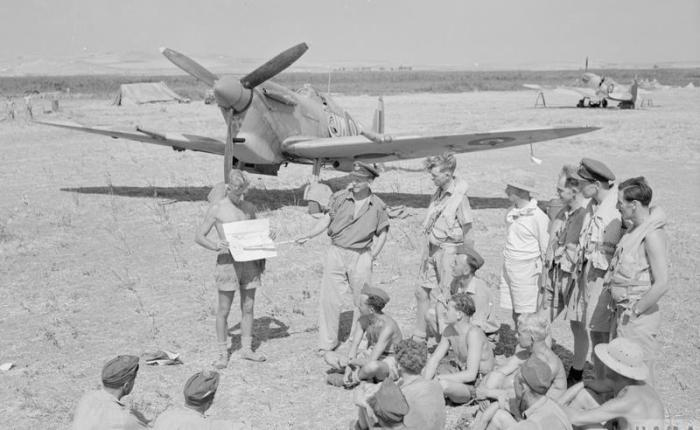

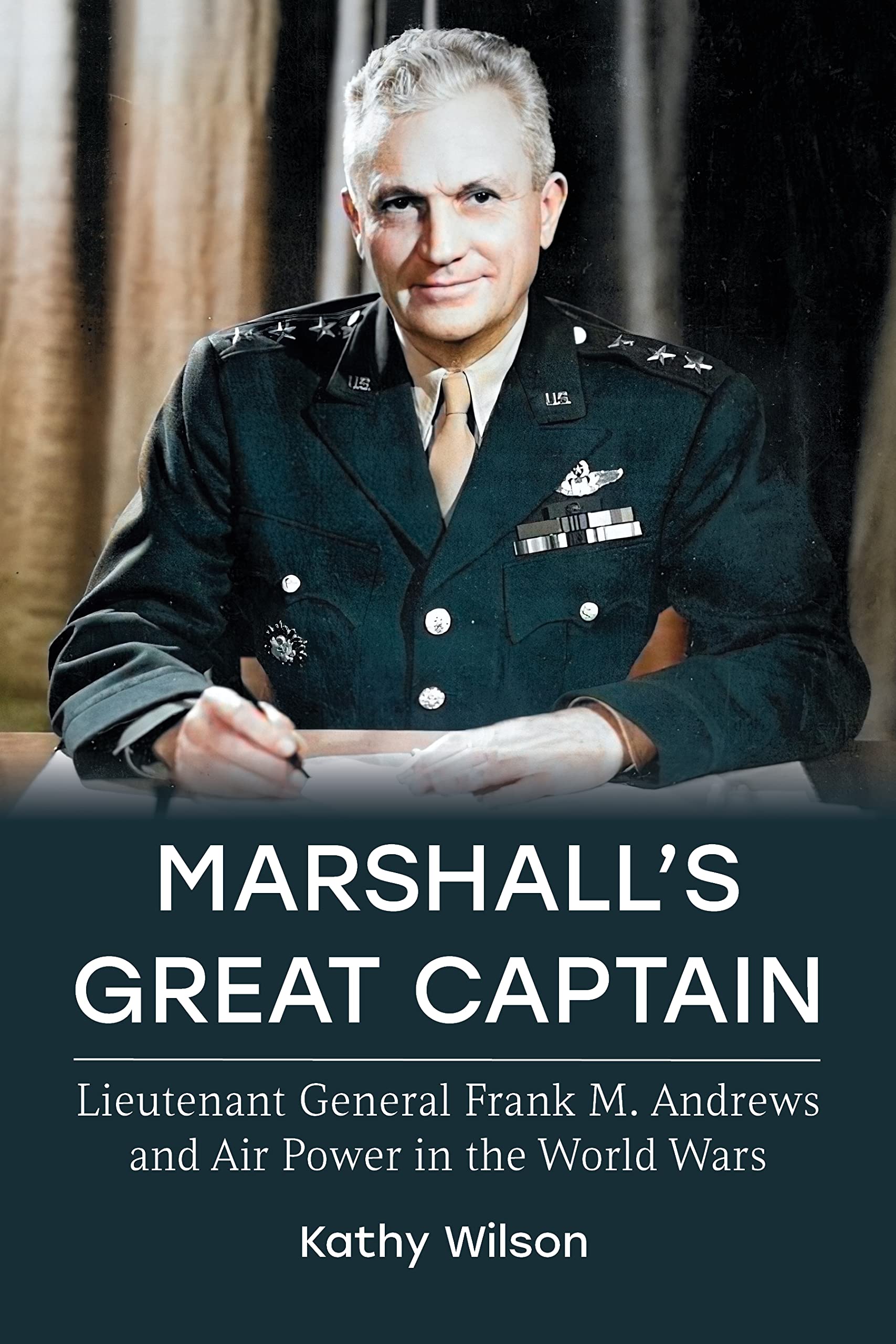
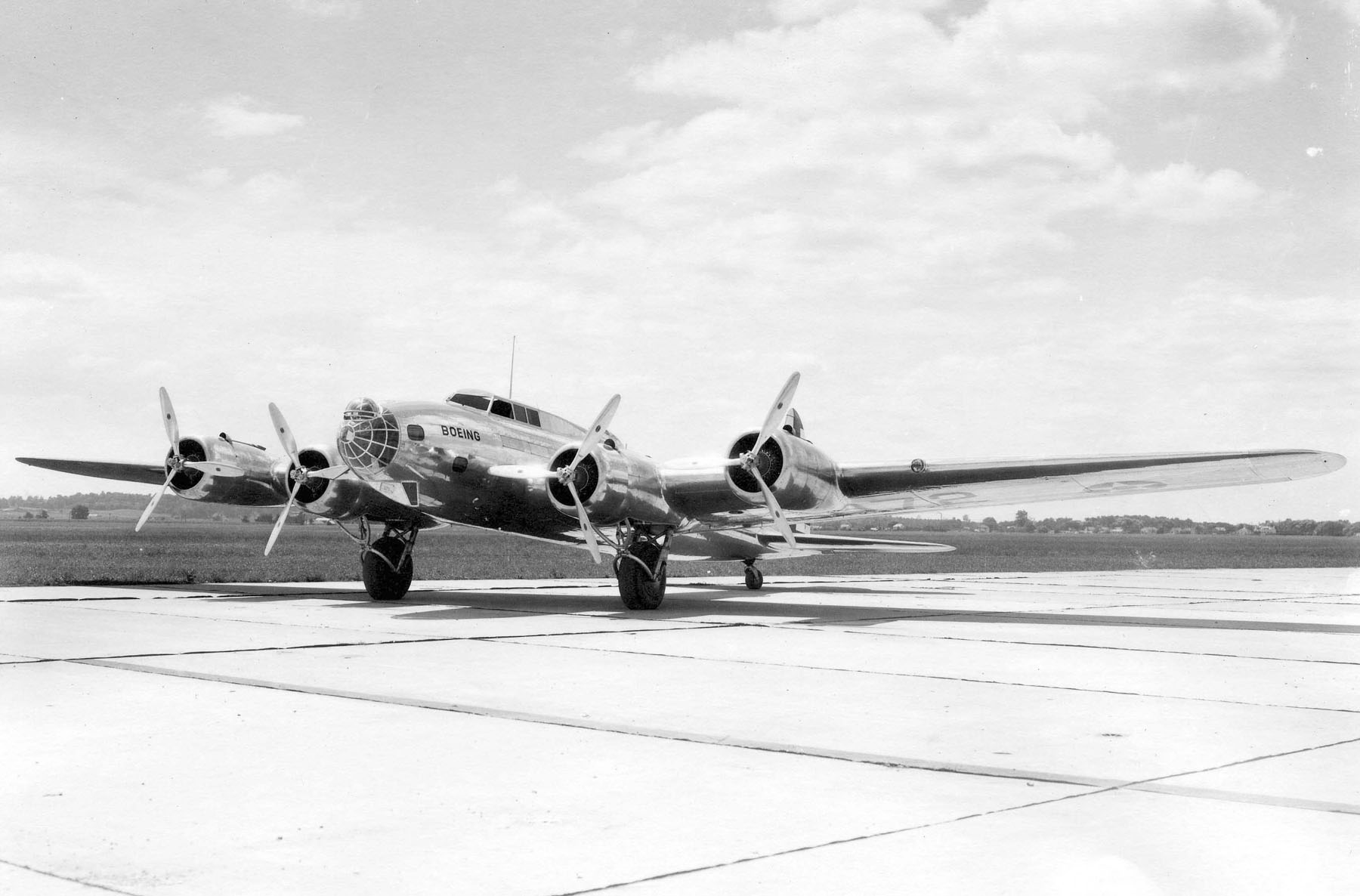
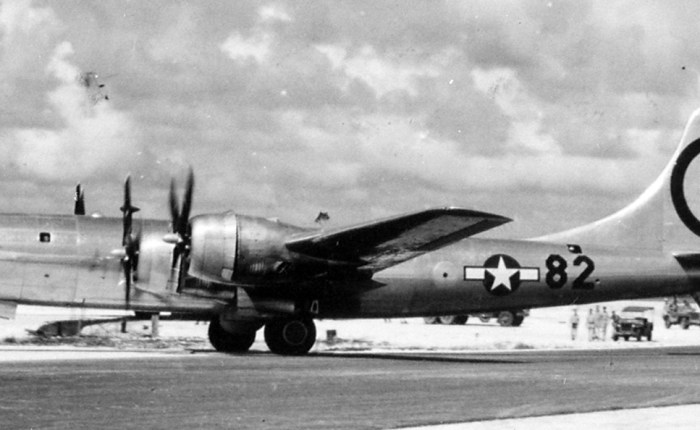
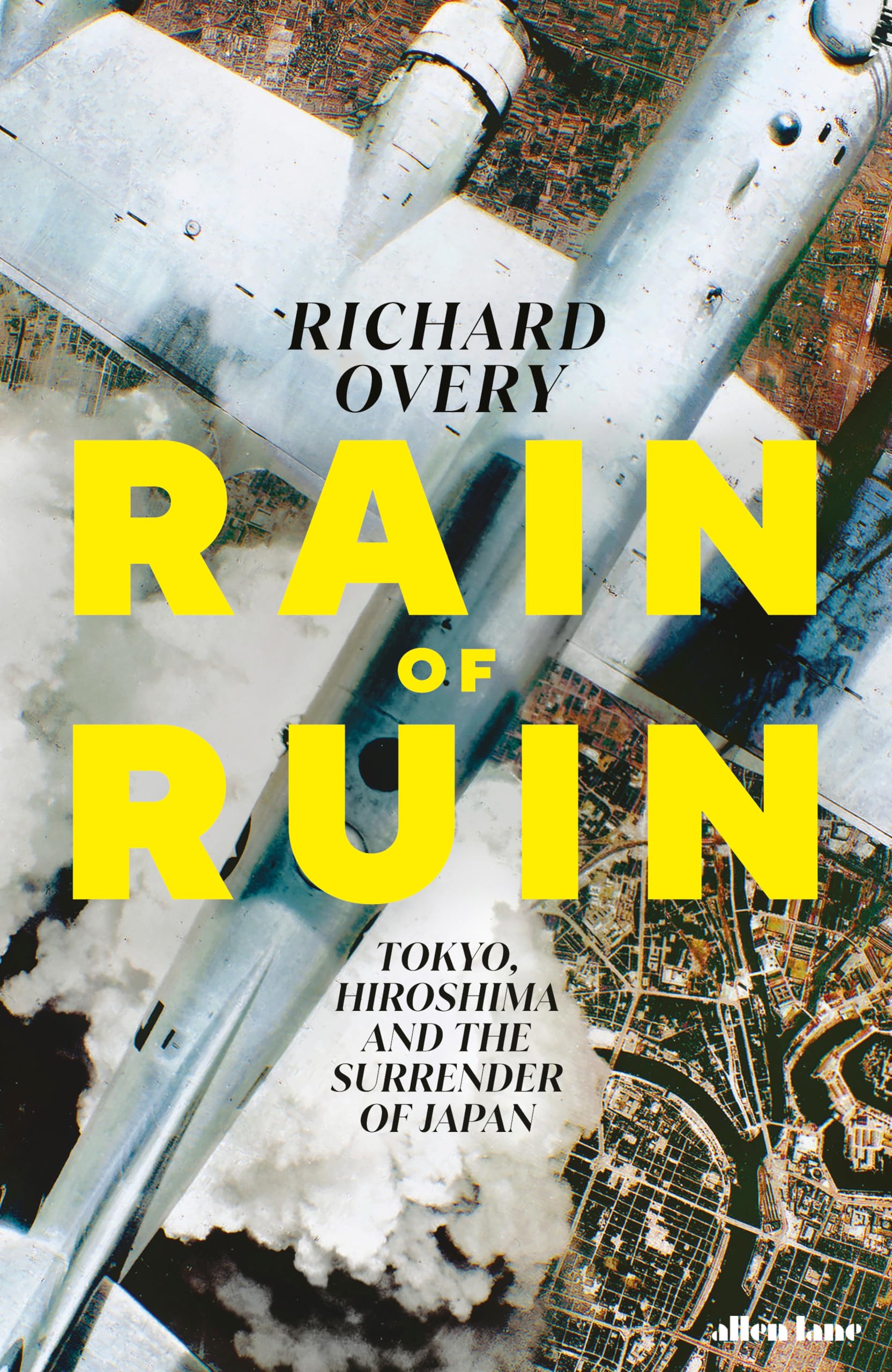

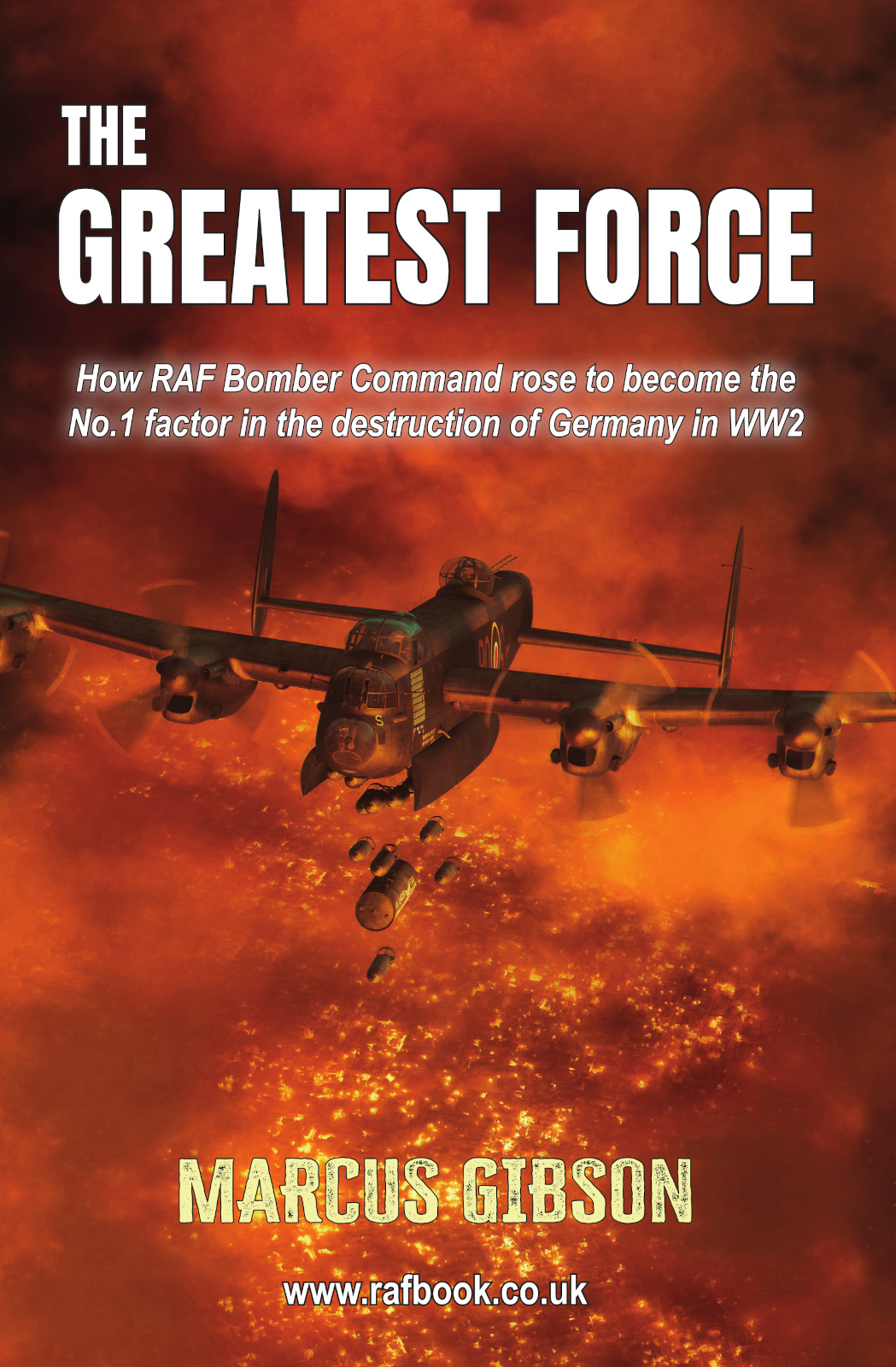
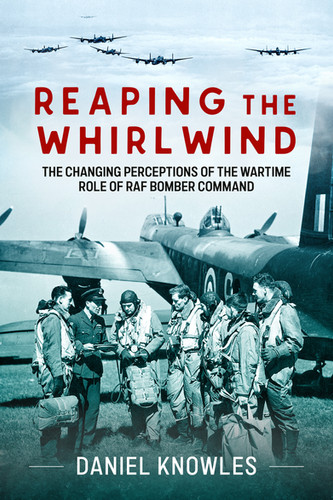
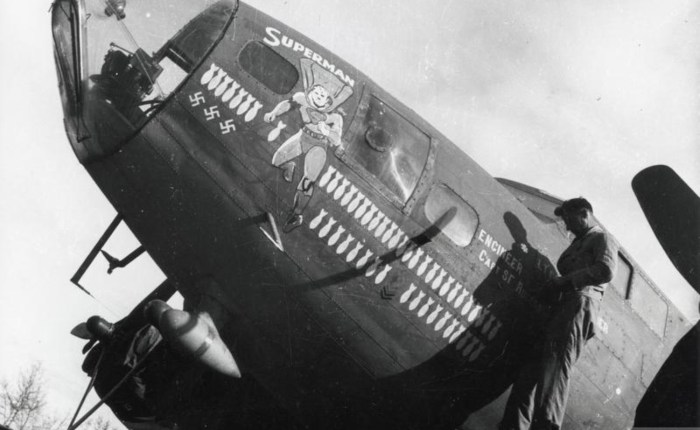

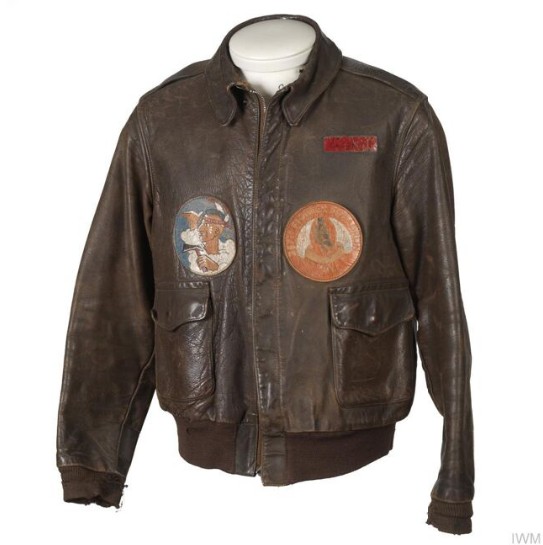


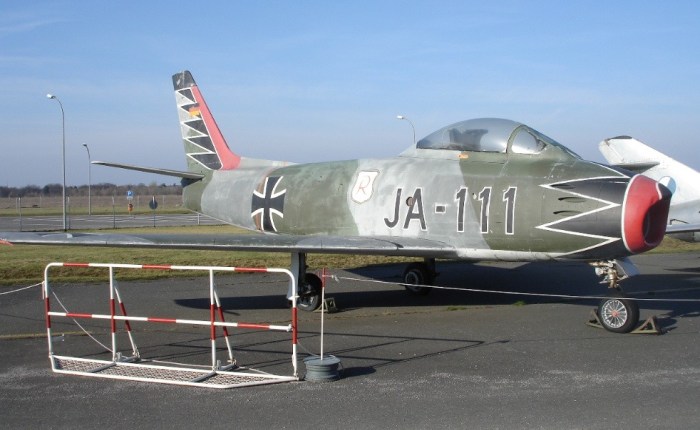
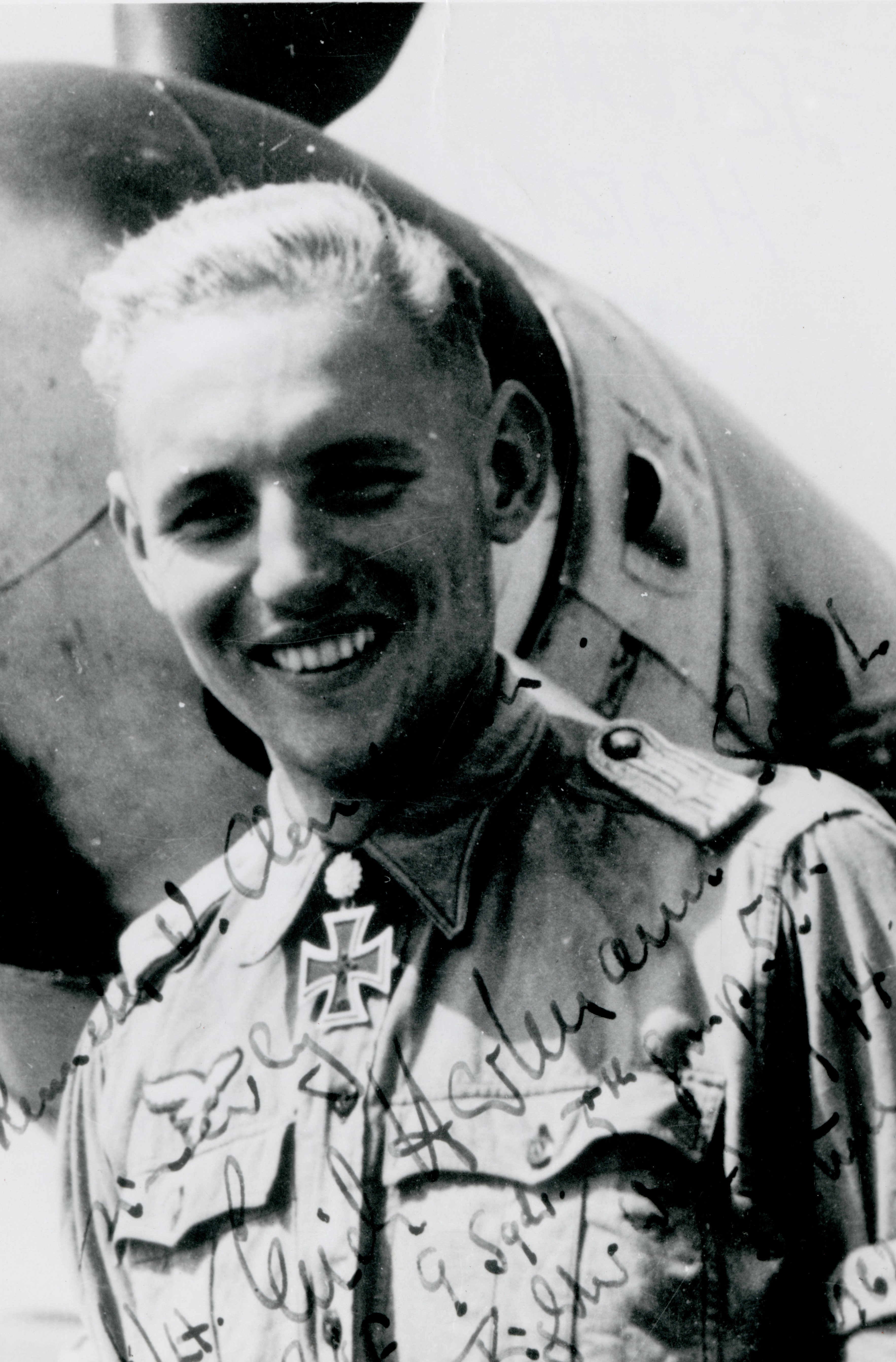
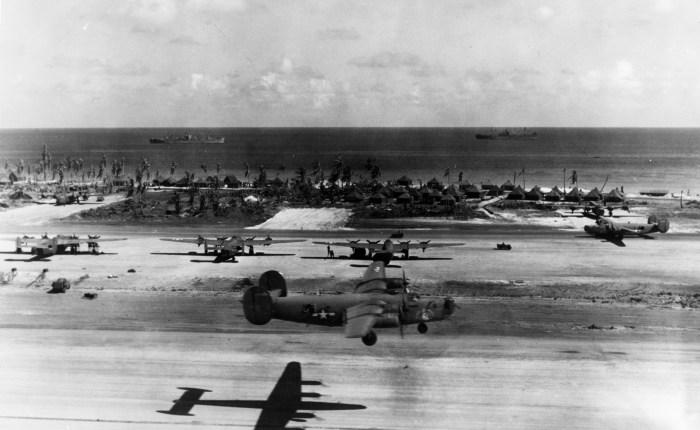
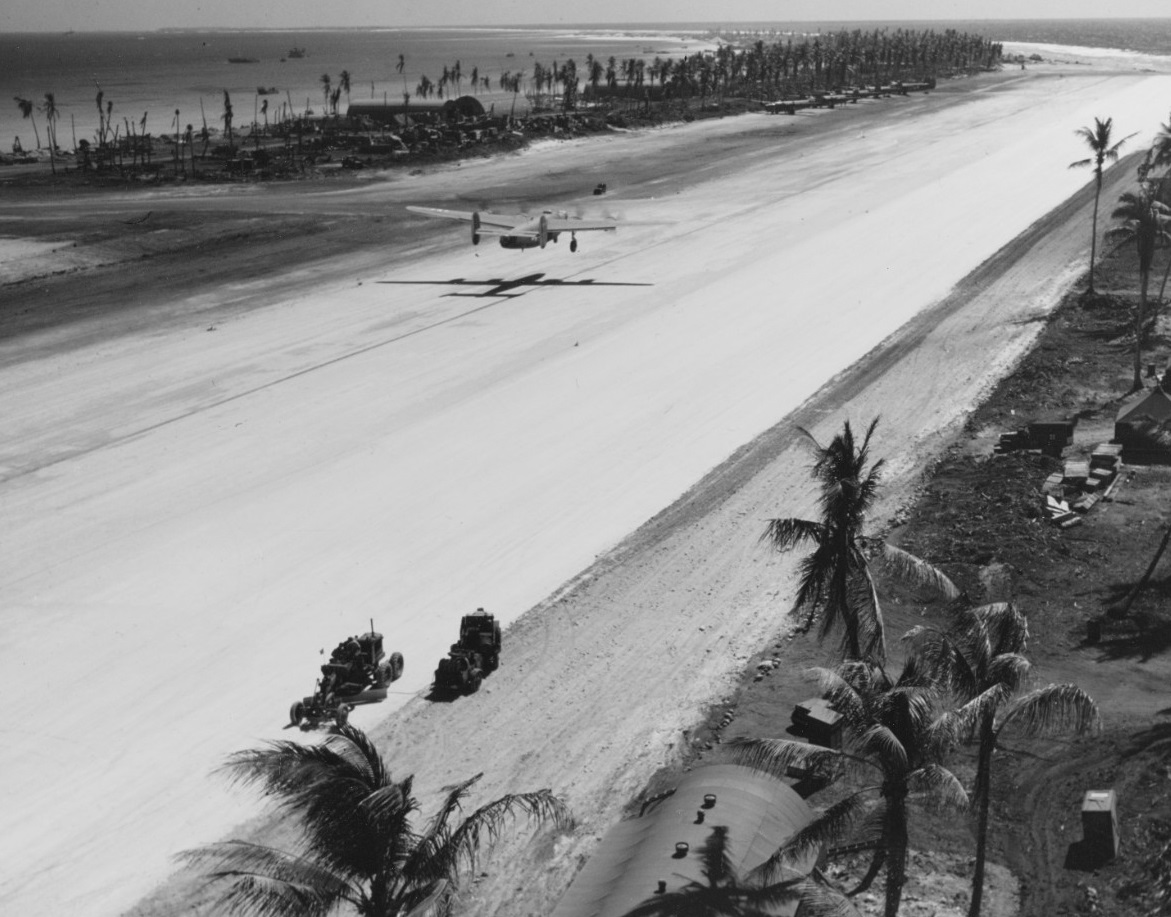
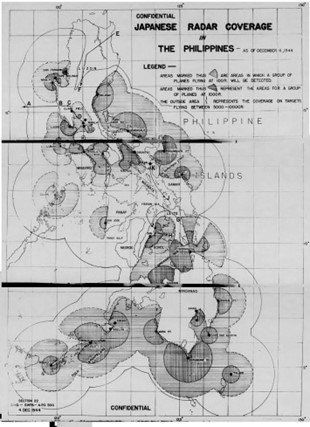
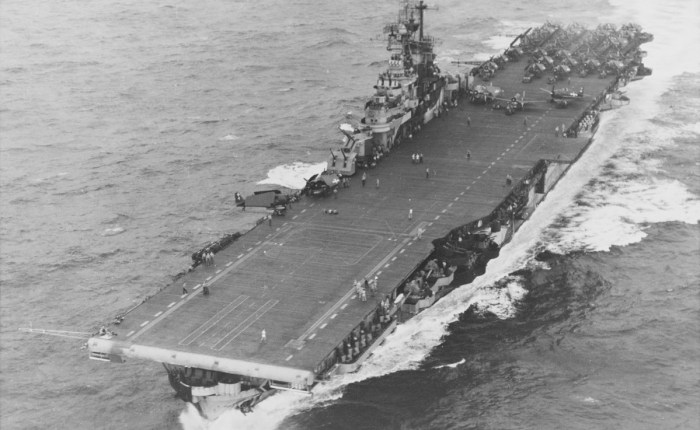
 From Balloons to Drones