Has Air Power Reached its Zenith?

Has Air Power Reached its Zenith?

By Dr Sanu Kainikara

In the past few decades, air power, and its application as a weapon of war or force projection capability has seen an enormous improvement in capabilities. In keeping with the current global ethos of avoiding excessive use of force while fighting a war, air power now has the ability to deliver extreme destructive power with precision, proportionality, and discrimination. Based on this capability, air forces have also developed into deterrent and coercive forces second to none. Considering that the military employment of air power is only a century old, these are great achievements. Even so, military forces are continually looking to improve their effectiveness through fine-tuning already sharp force application capabilities. This brings out the question—how much more effective can air power become?

The answer is not straightforward, and the term ‘effectiveness’ needs to be understood in a nuanced manner to arrive at a reasonably argued answer. Effectiveness—the ability to serve the purpose or produce the intended or expected result—in air power terms involves not only the ability to create the necessary effect but to do it while minimising the chances of own forces being placed in danger. Therefore, the increasing efficacy of the application of air power should be tempered with ensuring that the safety of own forces is also assured to a minimum accepted level. This dual requirement led to the development of uninhabited aerial vehicles (UAVs) that have now become armed with precision strike weapons to become uninhabited combat aerial vehicles (UCAVs), a misinterpretation of the word ‘combat’.

boeing_x-45a_ucav
The X-45A Unmanned Combat Air Vehicle technology demonstrator on its sixth flight on Dec. 19, 2002. (Source: Wikimedia)

The introduction of UCAVs into the battlespace opened a hitherto unknown and uninvestigated arena of military operations. Not only were there technological hurdles to overcome, but a whole plethora of moral, ethical, and legal aspects of warfare also started to be questioned. In the beginning, the UAVs were considered to be purely intelligence, surveillance, and reconnaissance (ISR) assets, which could be employed in benign airspaces where long-term ISR collection was required. By arming them, the technologically advanced military forces changed the existing equation of applying lethal force.

Going back to the primary reason for the introduction of UAVs, the need to safeguard one’s own combatants, there should be no argument regarding the arming of these vehicles. However, the so-called ‘drone strike’, a misnomer if ever there was one, has become an emotive issue not only with the people at the receiving end of the strike but also with the ‘politically correct’ media. Why is this so? Before analysing this, it must be stated here that an air strike can now be carried out with equal efficiency and precision by either a manned fighter or a UCAV. The only difference is that the human in the decision-making loop that permits the release of the weapon is placed at different places in each case. In the case of the manned fighter, the human is at the sharp end of the loop whereas, in the case of a UCAV, the human is almost at the beginning of the loop. In other words, in one case the human is placed in immediate danger while in the other, there is no danger to the human from the repercussions of the actions that are being initiated.

If there is no danger to own forces in the second case then why is there such a hue and cry regarding strikes carried out by UCAVs? Here, the survivability of the UCAV in a contested airspace, because of its low speed, restricted manoeuvrability, and lack of self-protection measures, is not being analysed since it is extraneous to this discussion. The fundamental reason for the discomfiture with the use of UCAVs is the fact that in the majority of cases, the opposing parties do not have air power capabilities and therefore such strikes are considered unethical. When the instances of collateral damage are added to the dialogue, the pendulum of public opinion decisively swings away from the use of UCAVs and air power. The real reason, however, is that in most of the Western democratic nations, the public opinion regarding national security and the employment of defence forces has been dominated by left-wing, anti-war groups. Once again, this discussion does not need to go into political debates and is curtailed here.

htv-2_image_2
HTV-2 on the upper stage of the launch vehicle after jettisoning of the payload fairing. (Source: Wikimedia)

So, what is going to be the next breakthrough in terms of air power efficacy? Currently, the accuracy achieved by air-launched weapons, the clarity of airborne ISR and the global reach of air transportation are such that no further improvement seems possible or warranted. There can definitely be improvements in the speed with which response options can be provided and delivered. The realm of hypersonic flight is already very close to becoming a reality.

The next step change in the functioning of air power and related systems will take place when artificial intelligence (AI) becomes operational and is accepted as such. This statement needs clarification. AI is already a reality in many applications. However, complete autonomy has not yet been granted to AI in the case of weapon release functions. It is also true that AI has already proven to be fail-proof when tested under controlled conditions. There are many reasons for AI not being granted complete autonomy—capable of individual thought and decision-making rather than a pre-programmed response—the fundamental one being the question whether it is ethical to permit a ‘machine’ to make the decision whether or not a human being is to be ‘killed’ or eliminated.

In the case of fully autonomous airborne systems, further complications arise. In combat situations would it be ethical for a manned fighter to be destroyed by a ‘machine’? Would it be possible to program the machine only to destroy another machine, and in that case, does it mean complete autonomy for the AI? The question of legality in the use of fully autonomous combat systems is another area that has not been clarified. In fact, the process of creating laws that could govern the use of AI has not even got under way, and there is certainty that under the current geopolitical environment, agreement will not be reached.

In these circumstances, where ethics are being questioned, and there is no legal coverage for its employment, it is highly unlikely that AI will be employed to its full capacity in the near to mid-term future. In turn, it would mean that developments in air power capabilities and more importantly in its application will remain curtailed for the foreseeable future. Yes, the missiles will go further; space will become more pervasive; airborne platforms will fly faster, compute solutions at a much more rapid pace; and air power will entrench its place as the first-choice weapon in the vanguard of power projection. However, these are but refinements of what air power already does. For example, when a hypersonic flight becomes a normal reality, how much more effective will air power become? A reasonable answer would be, not by very much from what it does now.

The future of air power is going to be the same as it is today unless the next step-change takes place—AI is going to be the next technology that elevates air power further into being the most potent capability that the human race has yet invented.

This post first appeared at The Central Blue, the blog of the Sir Richard Williams Foundation.

Dr Sanu Kainikara is the Air Power Strategist at the Royal Australian Air Force’s Air Power Development Centre and an Adjunct Professor at the University of New South Wales. He is a former fighter pilot of the Indian Air Force.

Header Image: A three-ship formation of F-22 Raptors flies over the Pacific Ocean 28 January 2009 as part of a deployment to Andersen Air Force Base, Guam. The Raptors were deployed from Elmendorf AFB, Alaska. (Source: Wikimedia)
It is Time to Demystify the Effects of ‘Strategic Western Air Power’ – Part 2

It is Time to Demystify the Effects of ‘Strategic Western Air Power’ – Part 2

By Lieutenant-Colonel Dr Jyri Raitasalo

Editor’s Note: In this two-part article, Dr Jyri Raitasalo considers what he argues are the two fundamental fallacies concerning the application of strategic air power by Western states in the modern era. In the first part, he examined the challenge of the use of military forces as a tool for solving political problems. In this second part, he examines the issue of ‘no casualty warfare.’

Fallacy 2: No casualty warfare

The second fallacy in Western air power paradigm touches on the notion of precision engagement with almost zero civilian casualties and no collateral damage. This narrative was formed in the aftermath of the 1991 Gulf War and has been maturing and strengthening ever since.  Precision engagement has indeed become one of the game changers in warfare lately, but the Western narrative on pinpoint accuracy in warfare has become a strategic level hindrance to effective military operations.

The notion of no or little collateral damage developed into the Western air power paradigm little by little as political leaders since the early 1990s continuously decided to use military force actively for humanitarian purposes. It was a prerequisite that Western military operations do not cause civilian suffering or produce collateral damage in military operations (read: war) that are eventually humanitarian in nature. Focusing on the precise application of large-scale violence was thus a must for political purposes. It was needed for the legitimacy of these operations and to ‘sell’ these operations to domestic audiences within the Western world and internationally.

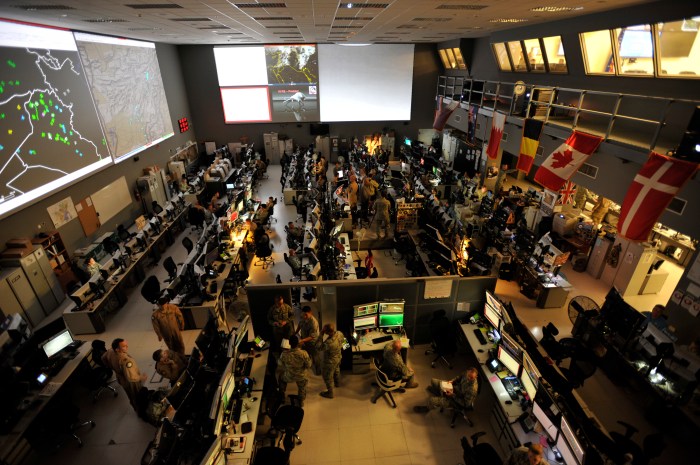
Combined Air and Space Operations Center
Combined Air and Space Operations Center at Al Udeid Air Base, Qatar, provides command and control of air power throughout Iraq, Syria, Afghanistan, and 17 other nations. The CAOC is comprised of a joint and Coalition team that executes day-to-day combined air and space operations and provides rapid reaction, positive control, coordination, and de-confliction of weapon systems. (Source: US Department of Defense via Wikimedia)

Also, as these humanitarian military missions had almost nothing to do with Western national interests or threats to Western states, it has been crystal clear from the start that force protection has been essential in these operations. Over time this has developed into a tradition of casualty-aversiveness, making Western soldiers ‘strategic assets’. Air power has facilitated safe military operations as practically all opponents during the post-Cold War era have had no functioning air forces of capable air defences. Relying on air power to fight humanitarian wars has been practically the only way that these operations have become possible in the first place. As President Bill Clinton explained: ‘I do not intend to put our troops in Kosovo to fight a war’. For the US the post-9/11 Global War on Terror changed this aversiveness to send troops to battle for a while.

What started as a way to ‘market’ humanitarian missions to voters and the general population has turned into a Western narrative on war, which accentuates the ability to strictly control the ‘dosing’ of violence in wars and being able to fight without civilian casualties and collateral damage. During the post-Cold War era, this guiding political principle and a semi-binding Western norm on warfare have led to Western militaries developing extremely expensive military systems to fight this ‘frictionless precision warfare’. This trend has been tremendously problematic for European states, as they in most cases do not have sufficient economic resources to develop their armed forces into credible military actors with even a modest number of usable high-tech military systems. When combining this trend with the post-Cold War era professionalisation of European militaries, most states in Europe today possess ‘Lilliputian militaries’ with little warfighting capability for large-scale conventional war against advanced state adversaries.

Final thoughts

Air power is important in warfare. Moreover, modern high-tech air forces can produce a decisive effect on the battlefield when used properly. ‘Unfortunately’ for some Western (mostly European) militaries, the post-Cold War era did not for more than 20 years pose any real military challenges that would have required sober analysis on what kind of missions the armed forces should be preparing against. Moreover, more importantly, as the existential threat evaporated quickly in the early 1990s, many Western political leaders filled the vacuum of security threats by turning their eyes towards out-of-area conflicts and stability throughout the globalising world.

In a cumulative 20-year long emergent process, Western states have become more and more interested in and reliant on applying air power actively in expeditionary operations because using military force throughout the international system has become possible. Political leader’s ‘trigger happiness’ in the West has increased during the post-Cold War era. On the tactical and operational levels of war, air power offers ‘easy solutions’ when there is the need to do something quickly and visibly – for example during large-scale atrocities committed by authoritarian leaders towards their citizen. On the strategic level, though, the results have been much more modest. Modern air power has not lifted the ‘fog of war’, nor has it produced many positive strategic results. Air power does not provide Western states with a ‘silver bullet’, nor has it changed the nature of war:  war is still a duel of wills, which means that adaptive enemies will do their utmost to destabilise Western strengths and lead in military capability development. This can be done at the tactical, operational or strategic levels.

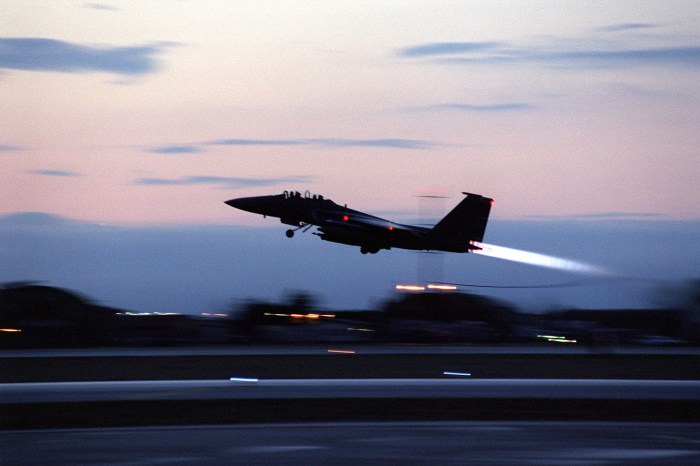
990328-F-4728F-009
A USAF F-15E Strike Eagle takes off from Aviano Air Base, Italy, for an air strike mission in support of NATO Operation ALLIED FORCE on March 28, 1999. (Source: US Department of Defense via Wikimedia)

The use of large-scale military violence – waging war – needs to be taken seriously. Even if it is possible to cause pinpoint destruction and make targeted killings, one should remember that political problems can rarely be solved by killing all the opponents (from afar) or by punishing them severely. The active use of Western air power during the last 20 years has resulted in the lowering the threshold on the use of military force in the world. This could backfire in the future as China and Russia are increasing their military capabilities and great-power statuses.

Dr Jyri Raitasalo is a Lieutenant-Colonel in the Finnish military and a Senior Staff Officer at the Planning Unit (strategic planning) of the Finnish Ministry of Defence. He holds the title of Docent of strategy and security policy at the Finnish National Defence University.  During his latest assignments, he has served as the Commanding Officer of the Helsinki Air Defence Regiment (Armoured Brigade), Head Lecturer of Strategy at the Finnish National Defence University, ADC to the Chief of Defence and Staff Officer (strategic planning) in the Finnish Defence Command (J5). Jyri Raitasalo is a called member of the Royal Swedish Academy of War Sciences.

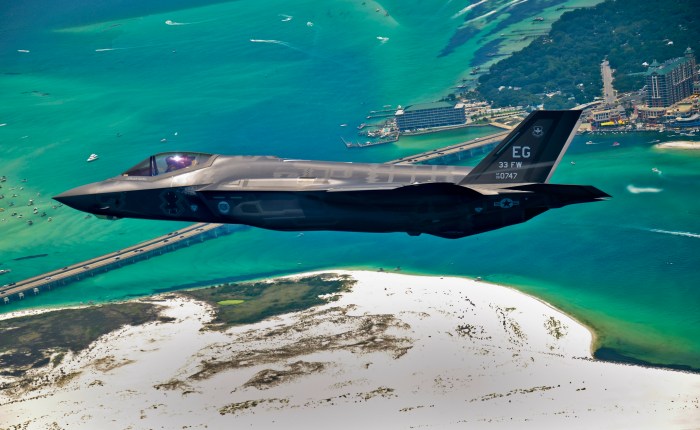
Header Image: The Department of Defense’s first U.S. Air Force F-35 Lightning II joint strike fighter (JSF) aircraft soars over Destin, before landing at its new home at Eglin Air Force Base, July 14, 2011. (Source: US Department of Defense via Wikimedia)

#AirWarBooks – Dr Brian Laslie

#AirWarBooks – Dr Brian Laslie

By Dr Brian Laslie

Editorial Note: In the first of a new series, Dr Brian Laslie, author of The Air Force Way of War, discusses the ten books that have influenced and shaped his writing as an air power historian.

The Editor of From Balloons to Drones, Dr Ross Mahoney, has been pestering those of us who contribute to this blog to put together a list of the most influential books we have read on the study of air power. I have always been of the opinion that I only have so many words I am capable of writing in a single day and have thus, avoided acquiescing to Ross’s request. Seriously, I am never going to get these two manuscripts done at this rate, but I finally decided that Ross is right (we were on a break) and that it is high time those of us who study air power history discuss the most influential books we’ve read on the history/study of air power (two words not one). So here is my top ten:

Bert Frandsen, Hat in the Ring: The Birth of American Air Power in the Great War (Washington D.C.: Smithsonian Institution Press, 2003). I read this book shortly before leaving active duty and heading to Kansas State for grad school, and it had a profound impact on what I wanted to study. Frandsen weaves together history, technology, and narrative into one of the finest works on the creation of America’s air service and air power.

Alexander P. de Seversky, Victory through Air Power (New York, NY: Simon & Schuster, 1942). Let us get something out of the way. Seversky and Hap Arnold hated each other, and I am not being hyperbolic. The two could not stand to be in the same room with each other, and when they were, it usually ended in a shouting match. Seversky’s book was Second World War aerial propaganda, but when Walt Disney read the book and decided to produce it as a feature film, Arnold was forced to stay mute on the subject. Seversky went on to write other air power books, but none as influential and long-lasting as this one.

Thomas E. Griffith, Jr, MacArthur’s Airman: General George C. Kenney and the War in the Southwest Pacific (Lawrence, KS: University Press of Kansas, 1998). In the age of the bomber mafia, Kenny marched to the tune of his own drum. Surely as Quesada and Chennault followed pursuit aviation, Kenny favoured attack. He was, perhaps, the most innovative airman of his generation and Griffith’s book demonstrates just how important Kenney was to MacArthur.

Thomas A. Hughes, Over Lord: General Pete Quesada and the Triumph of Tactical Air Power in World War II (New York, NY: The Free Press, 1995). I really have no doubt, and I doubt many would argue with me, that strategic bombardment garnered the lion’s share of attention both during and after the war. It would take Tactical Air Command until after the Vietnam war to rise to prominence over Strategic Air Command, but those seeds were planted in the Second World War by Pete Quesada and his tactical airmen in the European theatre.

Mark Clodfelter, The Limits of Air Power: The American Bombing of North Vietnam (New York, NY: The Free Press, 1989). The single most important book on air power to be published in the post-Vietnam era. It defined air power historians of a generation. More than a critique of strategic bombardment in Vietnam, it is a book that teaches you how to think about air power, what it can and what it cannot do.

Donald Miller, Masters of the Air: America’s Bomber Boys who Fought the Air War against Nazi Germany (New York, NY: Simon & Schuster, 2006). It is rare that I cannot put a book down, but the was the case with Miller’s work. The narrative is exceptional, the research superb, and the flow masterful. I consider it the single best book on air power in the Second World War.

Donald J. Mrozek, Air Power and the Ground War in Vietnam: Ideas and Actions (Maxwell, AL: Air University Press, 1988) and idem, The US Air Force after Vietnam: Postwar Challenges and Potential for Responses (Maxwell, AL: Air University Press, 1988). Yes, I am cheating by putting two books here, but they deserve to be here. Mrozek is an air power historian, but also a cultural and intellectual historian as well. He is difficult to read, but only because every sentence is crafted beautifully and is important. Mrozek conveys in a sentence, what others struggle to get out in several pages, myself included.

Steve Davies, Red Eagles: America’s Secret MiGs (Oxford: Osprey Publishing, 2008). A popular history, but this book is flat-out fun. Secret units, secret locations, and American fighter pilots learning how to outperform their Soviet counterparts in their own aircraft.

John Andreas Olsen (ed.), A History of Air Warfare (Dulles, VA: Potomac Books, 2010). Actually any of Olsen’s work could make this list; however, if you were going to use one book in the classroom to discuss the history of power, then this is the one. There is a reason; the Air Force Academy has every freshman read in their introduction to military history. From the First World War to the present and large scale combat to air power in smaller conflicts, Olsen’s edited work covers it all.

Diane Putney, Airpower Advantage: Planning the Gulf War Air Campaign (Washington D.C.: Air Force History and Museums Program, 2004). This book is what made me decide to write about Desert Storm. This book taught me that air power is so much richer than 1 v. 1 dogfights, that true command of the air comes from logistics, planning and execution.

To this list of ten, I could add hundreds more, but as I looked at my bookshelf these jumped out at me as having the most impact on my thinking during my time in grad school or shortly thereafter and helped solidify my thinking on what air power is and what it does (spoiler alert: it’s the ability to do something in the air. Thanks, Billy Mitchell!)

By the way, several of these books you can order or download for free from either the Air University Press of the Air Force Historical Studies Office. FREE BOOKS: http://www.au.af.mil/au/aupress/ and http://www.afhistory.af.mil/Books/Titles/

Dr Brian Laslie is an Air Force Historian and currently the Deputy Command Historian at North American Aerospace Defense Command (NORAD) and United States Northern Command (USNORTHCOM). A 2001 graduate of The Citadel and a historian of air power studies, he received his Masters’ from Auburn University Montgomery in 2006 and his PhD from Kansas State University in 2013. His first book The Air Force Way of War (2015) was selected for the Chief of Staff of the Air Force’s 2016 professional reading list. He lives in Colorado Springs. He can be found on Twitter at @BrianLaslie.

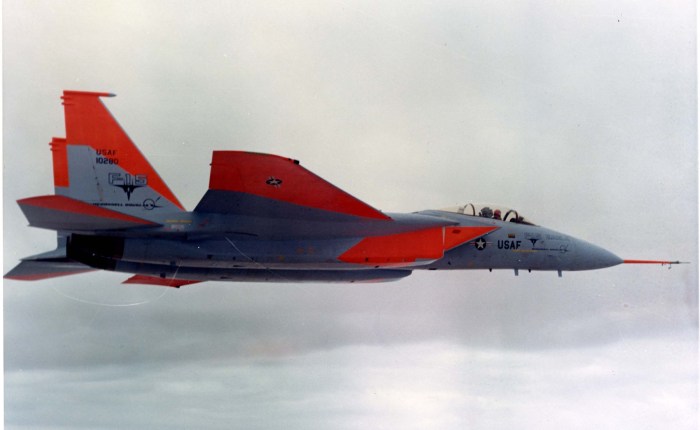
Header Image: McDonnell Douglas F-15A (S/N 71-0280, the first F-15A prototype). Note the square wingtips and unnotched stabilator. (Source: Wikimedia)
It is Time to Demystify the Effects of ‘Strategic Western Air Power’ – Part 1

It is Time to Demystify the Effects of ‘Strategic Western Air Power’ – Part 1

By Lieutenant-Colonel Dr Jyri Raitasalo

Editor’s Note: In this two-part article, Dr Jyri Raitasalo considers what he argues are the two fundamental fallacies concerning the application of strategic air power by Western states in the modern era. In this first part, he considers the challenge of the use of military forces as a tool for solving political problems. The second part of this article can be found here.

Ever since the 1991 Gulf War, the Western strategic discourse on air power has accentuated the role of high-tech precision-guided weapons together with good situational awareness and reliable command and control systems in solving modern conflicts. After the lessons learned from Operation DESERT STORM were drawn, one of the main tenets of western strategic thinking has been the (over-)reliance on the possibilities to solve political conflicts with modern weaponry – from the air. This notion did not emerge out of thin air. It was one answer to the many demands that Western statesmen – first and foremost among them the President of the United States – made immediately after the Cold War had ended. Since the early 1990s, the international security environment developed positively – at least from the western states’ perspective. However, the world was still infected with many low-level threats that rose in significance simultaneously as the Soviet threat evaporated.

The so-called Revolution in Military Affairs (RMA) has been expected to deliver positive outcomes to political crises with little risk to Western soldiers or national interests – whether in Bosnia (1995), Kosovo (1999), Afghanistan (2001), Iraq (2003) or Libya (2011). Many western ‘wars of choice’ – under the headings of ‘humanitarian interventions’, ‘military crisis management operations’ or ‘expeditionary missions’ have been made possible – and in some cases necessary – by the demands of the contemporary 24/7 media, high-tech ‘revolutionary’ warfighting capabilities and the fading of the existential threat posed by the Soviet Union.

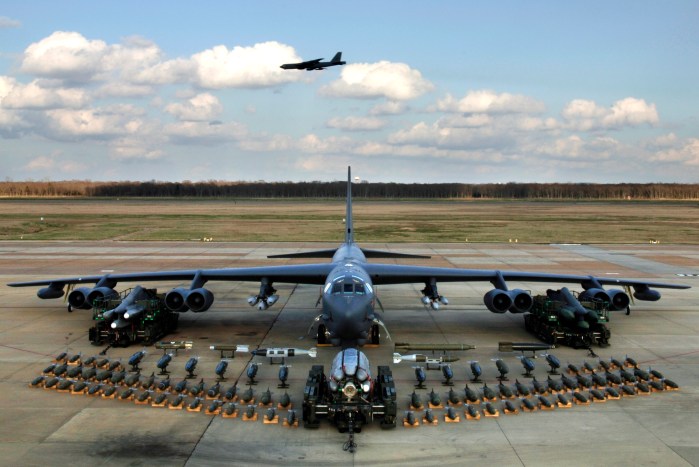
Display of might
A US Air Force Boeing B-52H Stratofortress of the 2d Bomb Wing static display with weapons, at Barksdale Air Force Base, Louisiana, in 2006. (Source: Wikimedia)

During the 25 years of the post-Cold War era, Western air power ‘theory’ – based on the expectations of Western political leaders – has entertained the notion of strategic success in war just by deploying air assets against chosen adversaries. During this time we have witnessed the mystification of air power – the new ‘silver bullet’ – to epic proportions in a way that practical results from recent wars lend little support. Analysing recent western air wars from Bosnia (1995) to Libya (2011) one can easily detect that none of them has proved to be strategic successes for the west. Thus the ‘brand’ of contemporary Western air power is better than its actual track record. None of the often mentioned ‘successes’ have facilitated long-term positive outcomes.

The contemporary Western air war paradigm is based on two fallacies: the idea that high-tech military capabilities facilitate easy solving of political problems and the notion of almost casualty-free warfighting. Both of these should be subjected to strict scrutiny. It should be noted that it is not the militaries’ fault that political leaders have expressed repeated demands to the use of military force that are beyond the boundaries that existing military capabilities can deliver. However, to facilitate better strategies in the future, these fallacies will be elaborated next.

Fallacy 1: The use of military force is an effective tool to solve political problems

It is good to acknowledge that the number of armed conflicts – and the average number of people killed in these conflicts – has decreased during the post-Cold War era. As the Human Security Report Project noted in 2014, we have witnessed:

the rapid decline in international wars (anti-colonial wars are included in this category) over the past 60 odd years. The average number of international wars being fought every year per decade shrinks dramatically – from over six in the 1950s to less than one in the 2000s. […] From the early 1990s to the present day, overall conflict numbers have dropped by some 40 percent, while the deadliest conflicts, those that kill at least 1,000 people a year, have declined by more than half.

Despite the positive trend in warfare since the end of the Cold War, there have been many brutal cases where large-scale human suffering and damaged infrastructure have caused concern within the western security community. First of these instances was ‘born’ out of the result of the 1991 Gulf War: the predicament that the Kurds (in the north) and the Shia population (in the south) faced after Saddam Hussein was defeated – but remained in power. Moreover, many others have followed: from Somalia to Haiti, and from Timor-Leste to Kosovo.

The humanitarian suffering brought to our living rooms by the 24/7 media – and later by social media, smartphones and tablets – has become a new factor influencing western decisions in the use of military force in the world. Although most of the (air) wars that the West has waged during the post-Cold War era have almost nothing to do with Western national security directly, there has been the need to do something to ease humanitarian conditions and suffering around the world in the many crises that have been ongoing – from Iraq to Somalia and Haiti to Libya. Thus, the western approach to ‘humanitarian interventions’ and the ‘Responsibility to Protect’ (R2P) emerged to fill in the void that the end of the Cold War caused within the western threat perceptions.

Facing no existential threats, for the past 25 years, Western states have had the luxury of focusing on crises around the world where large masses of people have been violently oppressed. Moreover, the tools of the ongoing RMA – precision air strikes as the forerunner – seemed to propose a possibility to manage these humanitarian crises with little cost – in either blood or treasure. As was noted after the Gulf War:

A significant part of that edge [US’s edge versus Iraq] can be attributed to the revolutionary new military technology used by U.S. forces for the first time in Gulf War.

In other words, the lessons learned from the Gulf War – where Saddam Hussein’s big Army was easily defeated on the battlefield – have influenced the way that Western political leaders have been trying to solve violent political crises out-of-area.

However, the problem lies exactly here: the complex, violent crises around the world cannot be solved by precision bombing or by killing the ‘bad guys’. The politicisation of ethnicity and religion, the criminal elements involved and the contradictory political goals of multiple adversaries in most of the contemporary violent crises mean that externally imposed military solutions will not work. As has been noted in connection with the 2001 US-launched Global War on Terror, it is hard to kill enough terrorists without at the same time facilitating additional terrorist recruiting and providing additional PR for the terrorist cause.

It is understandable that political leaders resort to the use of military force relying on advanced weaponry to solve nasty crises around the world. The humane instincts of Western strategic decision-makers are understandable and praiseworthy. However, the sad part is that strategically, the use of military force has not been able to bring about political reconciliation or stability into ongoing conflict zones. On the contrary, the first ‘RMA air-war’ in history – the 1991 Gulf War – produced a political stalemate that resulted in a war of attrition against Iraq between 1991-2003. This attrition warfare manifested itself through the enforcement of no-fly zones and punitive air strikes against Iraq every time Saddam’s troops violated the rules imposed on them.

Even though the first Gulf War did not bring a politically favourable outcome vis-à-vis Iraq, the lessons drawn from that campaign at the operational level influenced how air power was used in Bosnia and Kosovo during the 1990s. The two air wars in Europe – in Bosnia 1995 and over Serbia in 1999 – have not till today produced lasting strategic outcomes that would be favourable to western states. Both are practically failed states, which can take a turn for the worse at any time. Also, in today’s tense international environment, the very unstable situation in Bosnia and Kosovo provide ample opportunities for Russia to manipulate the West.

It is noteworthy that immediately after the Kosovo air war, the US Secretary of Defense William Cohen noted that:

[…] what we were able to achieve through this [Kosovo] campaign reminds all of us that the revolution in military affairs is fundamentally changing the way in which we fight. […] In Operation Desert Storm, […], there were only a handful of sophisticated aircraft that could carry precision-guided munitions, […] In Kosovo, nearly all of our fighters could deliver these devastating weapons.

Cohen’s remarks are spot on when looked from tactical or operational perspectives. On the strategic level, however, the effects of “devastating weapons” do not automatically turn into political objectives.

To be fair, it must be noted that air power was eventually able to stop ethnic violence in the former Yugoslavia, but whether the level of violence increased because of the air wars or not, is still debatable. In any case, both Bosnia and Kosovo have shed light also on the negative impact of western air power:  the mere existence of highly capable western (read: US) Air Forces – together with the global 24/7 media – facilitated the increase of violence both in Bosnia and Kosovo as the West was lured into these crises by attacks on the ground that aimed to escalate the conflict – not to end it. The Western humanitarian intervention approach was in its formative years, and the belligerents on the ground in Bosnia and Kosovo knew how to take advantage of it. After the terrible case of the Rwandan genocide in 1994, it was easy to exploit the willingness of the West to do more – even by escalating ethnic cleansing to draw the West into the conflict.

The second round of large-scale air warfare against Iraq took place through a campaign of ‘shock and awe’ in 2003. It was accompanied and followed by mechanised thrusts to destroy Saddam’s Army, a task that the United States and its allies succeeded to do. However, this operational success was not followed by the fulfilment of strategic goals. Air power was not able to solve the post-Saddam political crisis in Iraq – a fate also shared by the Army and the Marine Corps throughout the subsequent counter-insurgency (CI) operation, which resulted in the withdrawal of US troops after years of fighting and thousands of casualties. The breaking up of Iraq’s state structures, administrative routines and security forces also facilitated the birth of ISIL and the increase of violence and instability in the region. In all, the 2003 war in Iraq – and the chaos that has followed – has proved to be a strategic mistake of massive scale. The possibilities of quick high-tech warfare against much weaker traditional conventional army lured the US into a process that eventually became uncontrollable. This is the true essence of war – that competitive advantage in one sphere of war-fighting (e.g. technology) can be mitigated or even nullified by another (e.g. tactical asymmetry). There are no ‘silver bullets’ – at least not for long.

RAF Tornado GR4 Aircarft During Operation Ellamy
Two fully armed RAF Tornados from RAF Marham transit the Mediterranean Sea en-route to Libya as part of the UK’s Operation ELLAMY to enforce the UN no-fly zone in March 2011. (Source: Defence Imagery, MoD)

Finally, the air war against Muammar Gaddafi’s Libya in 2011 – NATO operation Unified Protector – helped to set in motion a crisis that will influence European security for years to come – negatively, not to mention the additional suffering to ordinary Libyans. Today Libya is a failed state with multiple armed forces fighting over power and economic benefits. Also, Libya has become one of the bases for extremist terrorism. Operation Unified Protector showed the might of advanced air power by destroying the Gaddafi regime, but the strategic consequences of the operation will haunt the West – and Europe particularly – for years to come.

Dr Jyri Raitasalo is a Lieutenant-Colonel in the Finnish military and a Senior Staff Officer at the Planning Unit (strategic planning) of the Finnish Ministry of Defence. He holds the title of Docent of strategy and security policy at the Finnish National Defence University.  During his latest assignments, he has served as the Commanding Officer of the Helsinki Air Defence Regiment (Armoured Brigade), Head Lecturer of Strategy at the Finnish National Defence University, ADC to the Chief of Defence and Staff Officer (strategic planning) in the Finnish Defence Command (J5). Jyri Raitasalo is a called member of the Royal Swedish Academy of War Sciences.

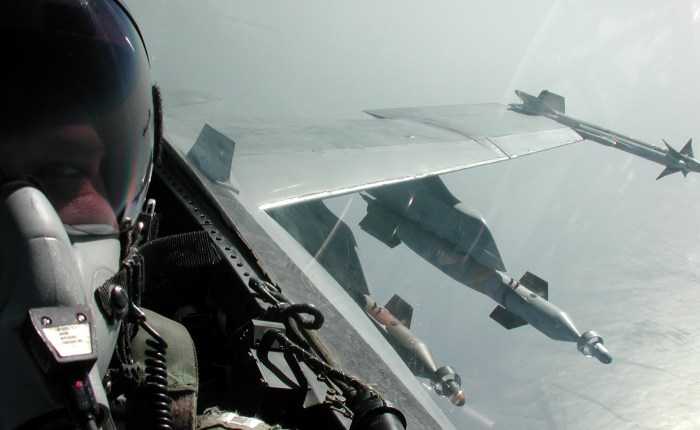
Header Image: An F/A-18 Hornet of VFA-94 carrying out operations in support of Operation Enduring Freedom in 2001. Visible on the wing are two 500-pound Laser Guided Bomb Units (GBU-12) (left), and an AIM-9 Sidewinder air-to-air missile. (Source: Wikimedia)

Arrows from the Ground – Or how an incident on 17 March 2017 may change the relationship between ground and air forces

Arrows from the Ground – Or how an incident on 17 March 2017 may change the relationship between ground and air forces

By Dr Jacob Stoil and Lieutenant Colonel Kyle C. Burley

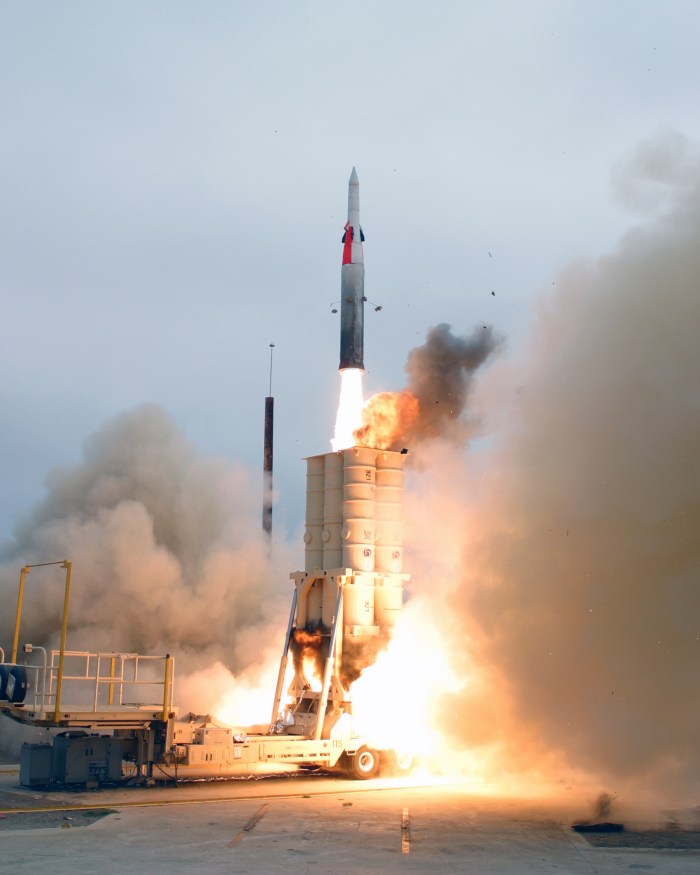
On 17 March 2017, Israel launched the Arrow missile interceptor for the first time, and a new dimension was added to the relationship between the air and ground forces. This was the first operational employment of the Arrow system but that it is not the wholly new aspect of this incident. What was special was the type of target the Arrow engaged. The Arrow was designed to intercept incoming ballistic missiles at high altitudes. In this case, the missiles it intercepted were SA-5 Surface-to-Air missiles (SAMs) targeted at Israeli strike aircraft. This event, whether a one-off or part of a new doctrine, shows a way forward for the integration of ground and air forces in which the ground forces can help provide a reciprocal umbrella to their colleagues in the air.

040729-N-8229-001
Arrow 2 launched on 29 July 2004, at the Naval Air Station Point Mugu Missile Test Center (Source: Wikimedia)

Attempting to disable and destroy SAMs is not new.  It is a critical mission for which air forces around the world train and which they regularly undertake. The coordination of ground and air systems in the most general sense is by no means a new phenomenon. As early as the Second World War, the German military integrated their ground-based flak defences with their fighter aircraft to create integrated zones of operations through designating flak boxes. At times, such as during the 1973 War, ground forces have been used to punch a hole through SAM umbrellas to allow the air force to conduct strike operations.

In all of these cases, the fundamental relationship between air and ground forces has remained consistent. The air forces have the ability to intervene in the ground domain and provide an umbrella for the ground forces, supporting them and protecting them from threats. So what changed on 17 March? Ground forces demonstrated their ability to enter the aerial domain and provide an umbrella covering the air force and protecting them from harm.

The Israeli use of ground-based missiles to provide screening fires for manned strike aircraft has opened a window for the exploration of new concepts.  The soon to be released US Army ‘FM 3-0 Operations’ manual anticipates the future possibilities of land forces as enablers for air and maritime forces. This is a break from the previous doctrine, which only envisioned that air and sea forces would act as enablers for land combat.  Extrapolating from the Israeli case provides a vision of the possibility of US Army forces using ground-based air-defense missile systems such as Patriot and Terminal High Altitude Air Defense (THAAD) for a SAM interdiction capability.  Forward deployed batteries could provide this covering fire along ingress and egress routes of strike aircraft where the Threat Integrated Air Defense Systems (IADS) is still capable or of an unknown status.  Sea-based forces such as Guided Missile Cruisers might also provide this type of coverage.

It is possible to push this vision further in considering the possibilities of ground or sea-launched Unmanned Aerial Systems (UAS). Envision a weapon that has to loiter and hypersonic propulsion which could target ground based IADS launchers, radar, and SAMs in-flight.  Such systems would no longer be dependent upon ground basing within direct fire range and the flight time of a Patriot or THAAD type battery. They could loiter, or even swarm to cover friendly air-breathing and manned mission aircraft in a contested area.

patriot_missile_launch_b
MIM-104 Patriot surface-to-air missile system. (Source: Wikimedia)
Each year, the US Army School of Advanced Military Studies (SAMS) conducts a planning exercise using a Joint Forcible Entry scenario.  In such a scenario, students must plan for the entry of US forces into a hostile environment against armed opposition. Students learn about the need to destroy hostile IADS capability before risking a single airlifter either to conduct an airborne assault or establish an Aerial Port of Debarkation (APOD).  Operations to remove the IAD threat can be time-consuming. Since the action on 17 March, it is now possible to imagine a US force conducting a Joint Forcible Entry within hours of deployment alert because the US no longer has to conduct a prolonged “IADS takedown” phase within the air campaign. A covering force of counter-IADS UASs could protect the strike and air assault forces through an array of tactics such as escort, prepositioning swarm, or forward sense and attack.  Using such a capability could radically redefine the approach to forcible entry and enhance the ability of airborne inserted ground forces as a US flexible deterrent option.

Whatever the future holds, the 17 March incident demonstrated the ability of missile defence technology to provide cover for aircraft engaged in strike operations. No more does dealing with SAMs need to be solely the role of the air force: ground forces can provide cover.  In doing so, this sets up a new dynamic of reciprocity in which air forces provide cover to ground forces, which in turn protect air forces. As missile defence technology such as that employed by Israel proliferates, this has the potential to revolutionise the way SAM threats are negated and alter the relationship between air and ground forces and give new meaning to ‘joint operations’.

Kyle C. Burley is a US Army Lieutenant Colonel and the Deputy Exercise Director for the US Army School of Advanced Military Studies (SAMS) at Fort Leavenworth, Kansas.  As the SAMS Simulations Officer he prepares, resources, and provides control for SAMS’ robust military planning exercise program.  Before assignment at SAMS, LTC Burley served as the US Third Army’s G7 (Forward) & Joint Readiness Exercise Team Chief.  He has also served in an array of Armor, Cavalry, as well headquarters staff positions from Division to OSD levels during his 24 years of service.  Kyle is a lifelong student of military history and a “Master” High Power rifle competitor.

Dr Jacob Stoil is a military historian and currently Assistant Professor of Military History at the US Army School of Advanced Military Studies. He received his doctorate in history from University of Oxford. He holds a BA in War Studies, as well as an MA in History of Warfare from the Department of War Studies, at King’s College London. He has published on indigenous force cooperation, the Second World War, and the Israeli military. Dr Stoil is the co-director of The Second World War Research Group (North America). He can be reached on Twitter at @JacobStoil.

The opinions and conclusions expressed herein are those of the authors and do not necessarily represent the views of the U.S. Army Command and General Staff College or any other government agency. (References to this study should include the foregoing statement.)

Header Image: A Terminal High Altitude Area Defense interceptor being fired during an exercise in 2013 (Source: Wikimedia)

#Commentary – The RAF and the F-117

#Commentary – The RAF and the F-117

By Dr Ross Mahoney

In the past couple of days, several sources have reported on the fact that in 1986, the US President, Ronald Reagan, offered Britain the opportunity to co-operate on stealth technology and purchase the Lockheed F-117 Nighthawk. Details of the project, codenamed MOONFLOWER, have become known through the recent release of files by the British National Archives. This release is part of the material coming out of the Prime Minister’s files for the 1980s and the specific reference for MOONFLOWER is PREM 19/1844. An important issue to note with these files is that they have not been digitised and were opened just before the New Year. This is an important consideration when reading many of the reports on the internet as it is probable that the one in The Guardian – from which most derive – has only cited certain parts of the file. Indeed, I have not read the file yet.

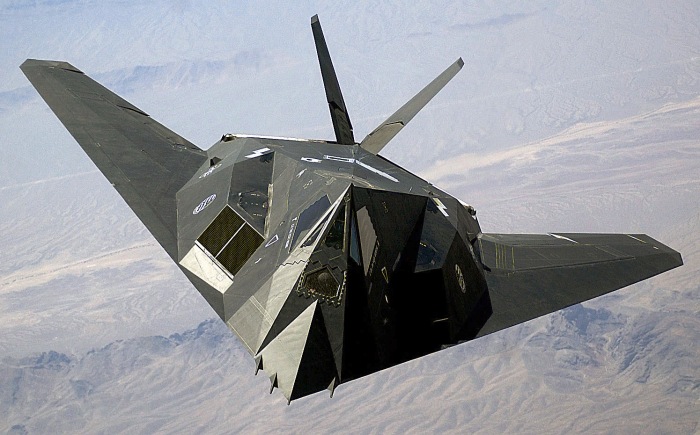
The F-117 remains one of the most iconic aircraft of the latter part of the Cold War. Publically announced in 1988, the F-117 emerged from Lockheed’s Have Blue project and was developed by the company’s Skunk Works division. The F-117 was first operationally used in the US invasion of Panama in 1989, but it was during Operation DESERT STORM that it rose to prominence. During the 1990s and 2000s, the F-117 was used in other conflicts, and one was shot down in 1999 during Operation ALLIED FORCE, and it was eventually retired in 2008.

020806-F-7823A-004
A USAF F-117A Nighthawk flies over Nellis Air Force Base during the joint service experimentation process dubbed Millennium Challenge 2002. (Source: Wikimedia)

What appears to have got people talking is the fact that Britain was offered the F-117 at a time when it was still officially a ‘black’ project i.e. before it existence was officially acknowledged. Moreover, according to the various reports, the key reason that Britain did not pursue purchasing the F-117 was for this very reason. However, while this may be one reason for rejecting the F-117, it should be noted that while the release of British files is interesting, this is not strictly a new story, though it is potentially a new dimension. Several histories of the F-117 cite the fact that in 1986, several Royal Air Force (RAF) test pilots were sent to fly the aircraft. For example, Paul Crickmore reflected that the RAF ‘had its chance to evaluate the F-117’ as a thank you for British support of Operation EL DORADO CANYON.[1] However, what these secondary sources lack is the archival evidence to understand why the evaluation took place. It is probably – though I would not like to say for certain until I see the file – that this assessment formed part of this project.

As already noted, the reason cited in the reports for the RAF not purchasing the F-117 was the ‘black’ character of the project; however, I have to wonder how well this aircraft would have fitted into the Service’s force structure and concept of operations in the 1980s. Moreover, it will be interesting to see if anything more is mentioned in the file as to why the F-117 was not purchased. Nevertheless, a few issues come to mind that may have been challenges. First, the RAF operated at low-level in small packages, and I am unclear how the F-117 would have fitted into this concept of operations. Second, by 1986, the RAF was in the middle of purchasing the Panavia Tornado that had been designed for the low-level role, as such; again, what additional capability the purchase of the F-117 would have added to the RAF at this point remains unclear. Finally, there is the issue of numbers. The F-117 was never built in significant numbers, and it seems unlikely that the RAF would have bought more than the United States Air Force, as such, again, what additional capability would the addition of a highly complex piece of equipment have added to the RAF? Yes, it would have added a stealth capability but this needs to match a concept of operations, and in my mind, this remains a murky area. As such, this is more an interesting example of the so-called ‘special relationship’ rather than a significant ‘What-If’ for the RAF.

e78e2037_5056_a318_a89209e9ab776da0
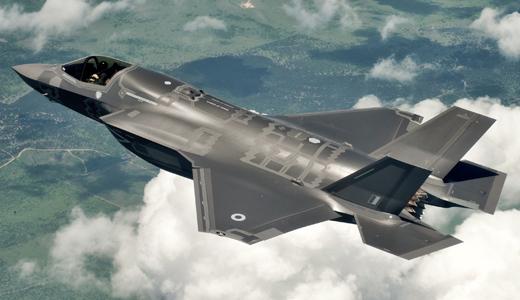
An F-35B in RAF Markings. (Source: Royal Air Force)

This is not, however, where the story ends as in 1995, Lockheed once again tried to sell the RAF an improved F-117 that included locally produced content, such as GEC-Marconi supplied avionics.[2] This approach was in response to the RAF’s Staff Target (Air) 425 that had began the process of looking at replacing the GR4 variant of the Tornado, which became known as the Future Offensive Air System (FOAS). FOAS closed down in 2005 and aspects were rolled into Future Joint Combat Aircraft project that has seen the purchase of the Lockheed Martin F-35 Lightning II – an aircraft with a stealth capability.[3]

Dr Ross Mahoney is an independent historian and defence specialist based in Australia. Between 2013 and 2017, he was the resident Historian at the Royal Air Force Museum, and he is a graduate of the University of Birmingham (MPhil and PhD) and the University of Wolverhampton (PGCE and BA). His research interests include the history of war in the twentieth and twenty-first centuries, air power and the history of air warfare, and the social and cultural history of armed forces. To date, he has published several chapters and articles, edited two books, and delivered papers on three continents. He is a member of the Royal Historical Society and is an Assistant Director of the Second World War Research Group. He is a member of the Royal Historical Society and an Assistant Director of the Second World War Research Group. He can be found on Twitter at @airpowerhistory.

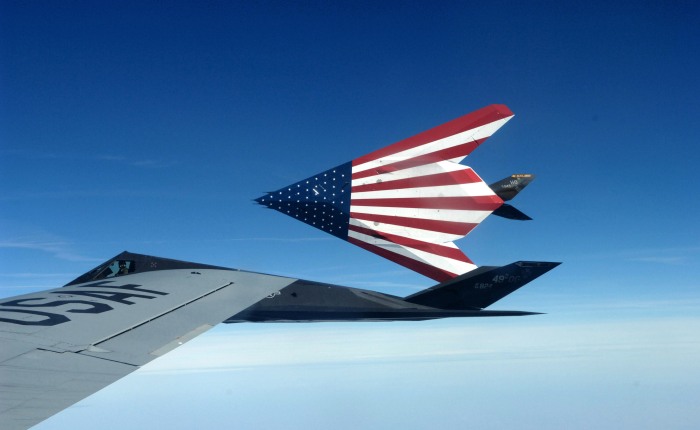
Header Image: A pair of specially painted F-117 Nighthawks fly off from their last refueling by the Ohio National Guard’s 121st Air Refueling Wing, c. 2008. (Source: Wikimedia)

[1] Paul F. Crickmore, Lockheed F-117 Nighthawk Stealth Fighter (Oxford: Osprey Publishing, 2014), p. 26.

[2] Guy Norris, ‘Lockheed Martin targets RAF and USAN for F-117,’ Flight International, (28 June to 4 July 1995), p. 4.

[3] Louisa Brooke-Holland, ‘The UK’s F-25 Lightning II Joint Strike Fighter,’ Standard Note (SN06278) UK House of Commons Library, (6 February 2015), pp. 5-6.

From Balloons to Drones – Top Posts of 2016

From Balloons to Drones – Top Posts of 2016

By Ross Mahoney

Happy New Year!

Now we have reached 2017, and that From Balloons to Drones has been up and running for around six months, it thought it would be worth posting our top five posts of 2016 based on views.

  1. At the head of the list is ‘Supporting the Secret War: T-28s over Laos, 1964-1973 – Part 1: Training.’ This is the first of a three-part article by Jeff Schultz that examines the use of the North American T-28 during the war in Laos in the 1970s. Parts two and three can be found here and here.
  2. In second place is my research note on ‘Air Power and the Challenge of Professional Military Education’ that was based on my thoughts on an excellent conference at the Royal Military College of Canada in November. An important subject that I hope to return to in 2017.
  3. In third is Brian Laslie’s commentary, ‘TheF-35 is here!’, which deals with some of the issues surrounding this program and the important role that training will play in developing the aircraft’s use.
  4. In fourth, and timed in conjunction with the types eventually retirement for the United States Air Force, Mike Hankins provided a timely discussion of the development of the McDonnell F-4 Phantom II in his piece ‘Remembering the F-4 Phantom – Part 1: A Product of Its Time.’ The second part of this article can be found here.
  5. Finally, but no means last, Alex Fitzgerald-Black’s research note ‘Operation HUSKY’s Air Battle by the Numbers’ provided a useful discussion of the importance of the air battles fought during the invasion of Sicily in 1943.

These are just a selection of the highlights of our half year in existence. We are keen to expand our list of contributors and if you are interested in writing about air power issues – both historical and contemporary – then you can find out how here. If you have any questions then please leave a comments here or emails us at airpowerstudies@gmail.com.

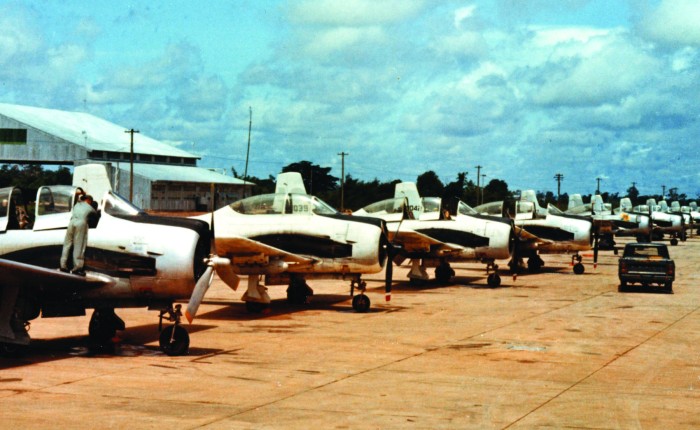
Header Image: A row of T-28s in Laos. (Source: USAF)

#Commentary – Buddha’s Next Incarnation: What does the future hold for the C-17A Globemaster?

#Commentary – Buddha’s Next Incarnation: What does the future hold for the C-17A Globemaster?

By Eamon Hamilton

In airlift terms, the C-17A Globemaster III has arguably made the biggest single impact to Western Air Forces in the 21st Century thus far – and will likely hold this claim for the next decade. While it was conceived for the United States Air Force in the 1980s and introduced to service in the 1990s, its acquisition by nations including Canada, Australia, and the United Kingdom has given Western Air Forces its first real appreciation of modern strategic airlift. For the USAF, which arguably wrote the book on strategic military airlift, has also benefited significantly from the C-17A’s tactical airlift talents. Elsewhere, the aircraft has been capitalised upon by NATO, India, the UAE, Qatar, and Kuwait.

Exercise Pitch Black 2016
A big jet that can fly from little airfields (Source: RAAF)

With the production line closing in 2015, it is unlikely that we will ever see new Globemaster airframes constructed beyond the 279 that were delivered by McDonnell Douglas/Boeing (and indeed, a small number have been relegated to a museum or lost in an accident). This is not to say that we will not see new C-17 variants, especially if the Globemaster lives to see service past 2040, half a century after its first flight. Getting the airframe to that point (and beyond) however, will require careful attention and development.

Certainly, the C-17A has been no stranger to being developed over its 25-year history thus far. With a production spanning 15 years, older C-17As have been upgraded to match their newer kin with radios, weather radar, and combat lighting. A centre wing fuel tank was fitted to C-17As constructed after 2001 to extend the aircraft’s range, and in recent years, aircraft have been equipped with Large Aircraft Infrared Countermeasures and improved communications systems. Early Block Upgrades to the C-17A addressed design flaws in the original production aircraft – more recent ones have addressed issues of obsolescent aircraft systems and ensured fleet commonality.

More upgrades are projected. The C-17A’s Heads-Up Display (HUD) dates back to the early 1990s, and in 2011, Elbit was announced as the winner of the project to deliver a replacement HUD (although no public announcements have emerged since then). Trials are underway to add airflow strakes to the aircraft’s fuselage as a means of decreasing drag. Options to add Link-16 and more advanced satellite communications antennas are also being explored.

How else might we see the C-17A mature in the next 30 years?

Minimalist Change

Numerous aircraft go through their service career with modest increases in capability to allow them to continue in their intended role. Indeed, it is arguable that the C-17A has maintained this track to date with the changes it has undergone thus far. The purpose of such upgrades are not so much to advance the aircraft beyond the original design intent, but more to ensure it remains compatible with current/immediate operating practices and airborne environments. Compatibility with any new Identification Friend or Foe (IFF) or battlespace networking systems, or global air traffic control management systems, are examples of this.

140415-f-io108-002
An office from a simpler time. (Source: USAF)

The aircraft’s cockpit ergonomics are still reminiscent of its early 1990s design, so it is not unreasonable to expect a countermeasures Mid-Life Update program that would improve the quality of cockpit displays, communications management, and other avionics. Newer airlifters such as the C-130J and A400M are equipped with larger HUD units and displays that can incorporate digimaps or other navigational data. A precedent for upgrading the C-17A exists, whereby old air mobility platforms (including the C-130H, KC-135 and C-5) have replaced their ‘steam gauge’ instruments and analogue controls with LCD screens and digital displays. Replacing these systems means eliminating obsolescence and ensuring the cockpit ergonomics have greater commonality with the wider air mobility and training fleet, and potentially improving the ease with which software updates can be applied to the aircraft.

Slightly More Ambitious Options….

The upgrades mentioned above were in large part to ensure the C-17A maintained pace with its operating environment. More ambitious upgrades, however, would provide new ways of performing its current mission. Evidence exists within existing air mobility platforms like the KC-135, which has been upgraded with navigation systems that now allow the aircraft to operate without a Navigator.

How could this apply to the C-17A? It is hard to judge this, as it is largely contingent on the technology that will be available to us in the next 15 years. It is easy to imagine a technology that has been applied to the A400M and C-130J being rolled out on the C-17A. It is harder to imagine the impact that newer and emerging technology – such as helmet-mounted displays, external sensors, and personal devices – will have. New tactical airlifters benefit from infrared cameras that allow landings to be comfortably made of poor visibility conditions. Whether such technology has an application on the C-17A remains to be seen.

C-17A AME Static Aircraft Communication Systems
Technology is finding its way on board, regardless. (Source: RAAF)

Likewise, the C-17A was revolutionary for its time by its use of a dedicated loadmaster station inside the cargo hold, a feature which has been capitalised by other airlifters. A future C-17A upgrade might extend on this further, allowing the loadmaster to control environmental conditions and cargo locks in the cargo hold with a personal electronic device, or direct automated aircraft loading equipment.

The High-End Option

High-end changes are easy to debate, being linked to systems on the aircraft that will become wholly inefficient or unsustainable during the aircraft’s life-of-type. These changes would be sufficient to mean the end of the C-17A as we know it today, delivering us a noticeably different aircraft – a C-17B or C-17C, for example.

Again, existing examples allow us to make educated guesses about the future, not only about the systems that are applied and upgraded but the causes for doing so. The C-5M Super Galaxy is the product of a program upgrade older C-5As and Bs with new engines, new avionics, improved cargo ergonomics, and most importantly, greater aircraft reliability. It essentially brings an aircraft design whose systems have their roots in the late 1960s and gives a 21st-century solution. The net result is a Galaxy with a shorter take-off distance and better climb rate, as well as extended range. While the C-17A is reliable now, we can expect to question its relative performance in the future, especially if the expectation is for the aircraft to beyond a 30-year lifespan. Upgrading the C-17A could prove less expensive than embarking upon an all-new airlift replacement, too.

Achieving this could take some paths. Replacing the engines on the aircraft, especially in light of advances in civilian airliner power plants, would be the most obvious choice. It could yield a Globemaster that is more fuel-efficient or carries heavier payloads, and the C-17A’s existing power plant – the Pratt & Whitney F117 – is a militarised version of the turbofan that powers Boeing 757s. One issue here, however, is that C-17A engines are required to perform across a different spectrum than a stock civilian airliner. This means a simple transplant of a civilian power plant will not likely address the C-17A’s performance needs.

Another potential upgrade could be to the C-17A’s winglets, which were revolutionary for their time in 1991. This feature improves the wing’s performance, reducing drag and improving fuel efficiency in a cruise. Today, the C-17A’s winglets appear clunky in comparison to modern airliners which possess ‘blended winglets’ that enhance fuel burn. Ensuring the Globemaster can cruise efficiently, extending its range and lowering its operating costs, are likely to be a significant consideration for how the aircraft is upgraded into the future.

Other considerations for a potentially major upgrade to the Globemaster might include those options put forward by Boeing during the late 2000s to improve the aircraft’s tactical performance. Considerations for the ‘C-17B’ including a new higher thrust powerplant, double-slotted flaps, additional centre-line landing gear, and precision landing systems. Arguably, the additional weight of some of these systems would come at a cost to the aircraft’s range and cruise efficiency. On the other hand, a sub-fleet of C-17s optimised for tactical performance to deliver payloads that can not be accommodated in a C-130 (and are unable to be transported over long ranges by future heavy vertical lift)

1280px-thumbnail
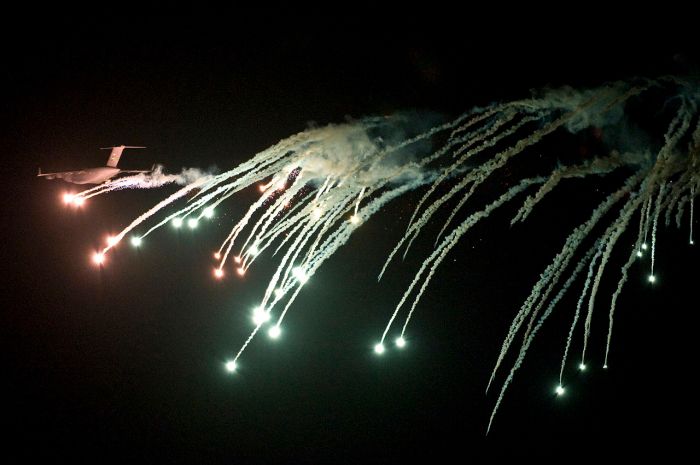
A C-17 performs evasive counter measures by launching flares during a Mobility Air Forces Exercise over the Nevada Test and Training Range on 16 November 2011, (Source: Wikimedia)

Examining options for the Globemaster’s future may see it called to perform roles that are well outside the traditional airlift roles that the aircraft performs today. Few would argue that the C-17A’s talents are best applied to providing dedicated strategic and tactical airlift. The external surfaces of a C-17A, however, provide significant ‘real estate’ for discrete sensors and antennas, and the aircraft’s interior likewise has space that would allow it to fulfil support functions for C4I and ISR – especially if the terminals for such roles are significantly smaller and modularised, contrasting with the fixed workstations that fill C-135 and Boeing 707 variants operated by the USAF. Today, other platforms (such as those based on commercial airliners) might conceivably fulfil this role more efficiently and effectively than a Globemaster. However, future requirements – especially those that call for an aircraft to deliver personnel and vehicles, then remain near provide immediate support – might dictate that the C-17 is the aircraft for the job.

The last consideration for the Globemaster receiving a ‘high-end’ upgrade is that it might pick up new roles not even in service today. The aircraft has been mooted as a potential ‘Drone Mothership’ in a battlespace, deploying them to perform a range of ISR, attack, and strike missions. Alternatively, the C-17A’s cargo bay has considerable space for batteries and other systems that would employ high-energy weapons.

Where the Globemaster ultimately fulfils any of these roles is anyone’s guess – while the technology is being developed, it is by no means about to be applied to the C-17A. Once said technology is mature, there are no guarantees that the C-17A will be the best jet for the job.

The Likely Options

At a minimum, progressive upgrades will need to be applied in the future to ensure the C-17A can continue to be operated. The crew stations are likely to be developed over time, as are the aircraft’s avionics, communications and networking systems. Foreign operators should bear these developments in mind – on the one hand, the upgrading of their aircraft is likely to have a greater impact on the number of aircraft they have available. On the other hand, such programs are an avenue for them to suggest development roadmaps that can be shouldered by Boeing and USAF. Exploring these avenues, however, would have to be a modest process. However, it is unlikely that an entirely new C-17 variant will be developed if only one smaller operator is guaranteed to require it.

With that in mind, the Globemaster’s future development is likely to be informed by three things – keeping the airframe viable, the USAF’s appetite to embark on upgrade programs, and Boeing’s willingness to provide options. Lockheed Martin’s C-5M program provides an excellent example of where the C-17A can go with such updates, replacing aircraft structures and systems that have become tired and unreliable while also meeting demands of the customer to capitalise on generational changes in engine, avionics, and ergonomic technology. Indeed, the C-5M in some respects feels like it carries some of the best features of a C-17A (except the HUD and fighter control stick).

120413-f-dw547-002
Everyone has an embarrassing childhood photo. (Source: USAF)

Strategic airlift development, however, emphasises the importance of cruise efficiency and performance, which is often largely dependent on reductions in the aircraft’s weight and improvements in a power plant. Such upgrades are easy to forecast in the C-17A’s future. The more ‘creative’ upgrades for the Globemaster will be in how it is required to perform tactical roles in future – or approach brand new problems.

This post first appeared at Rubber-Band Powered Blog.

Eamon Hamilton graduated from the University of Western Sydney with a Bachelor of Communications (Journalism). He works as a Public Affairs Officer for the Royal Australian Air Force. He lives in Sydney. He runs the Rubber-Band Powered Blog and can be found on Twitter @eamonhamilton.

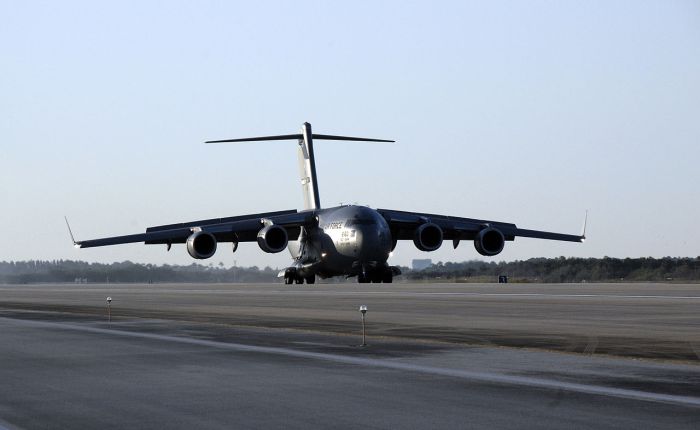
Header Image: A C-17 arrives with GEOS-O on board at the Shuttle Landing Facility. (Source: Wikimedia)

#Commentary – A Rose by Any Other Name…

#Commentary – A Rose by Any Other Name…

By Dr Ross Mahoney

In a recent piece for The Central Blue, the blog of the Sir Richard Williams Foundation in Australia, Robbin Laird has suggested that rather than describing the F-35 Lightning II as a 5th Generation aircraft, we must think of it as ‘a first generation information and decision making superiority “flying combat system”.’[1] (Emphasis in original)

Arguably, this is an important shift in how we think about the capabilities of this new platform and the implications this has regarding how we think about air power. However, this labelling of platforms and capabilities raises several interesting observations and what follows are some personal opinions on the issue of ‘labels.’

First, and while we should always be careful of generating faulty parallels, as a historian, I am quite certain I have heard similar phrases before namely Giulio Douhet’s ‘battleplane’ concept. In short, in the second edition of his seminal work Command of the Air, written in 1926, Douhet argued that the roles of combat and bombing should be combined with a single type of aircraft, the ‘battleplane.’ This was a move away from his thinking outlined in the 1921 edition of Command of the Air, but as Thomas Hippler has noted, at a conceptual level, the ‘battleplane’ was important because it allowed Douhet to reconcile the ideas of war in the air and war from the air.[2] For Douhet, both were synonymous and one, though whether this proposed platform would have solved that challenge remains debatable. This was clearly a lesson derived from Douhet’s views of the First World War. Nevertheless, the problem with the ‘battleplane’ idea is that it was a solution to one set of circumstances and would not have applied to all situations where the use of air power might have been called upon. Could we end up in the same situation if we think of the F-35 in a similar vein?

Second, a broader issue with Laird’s description is that of buzzwords or phrases. Buzzwords tend to be created to support someone’s vision of the future, and they are unhelpful if not grounded in some form of intellectual rigour. Indeed, buzzwords and phrases are certainly not something limited to air forces but pervade the military more broadly. For example, in the last few days, it has been reported that the US Navy’s Chief of Naval Operations has decided to shelve the use of Anti-Access/Area-Denial as a ‘stand-alone acronym’ primarily because it ‘can mean all things to all people or anything to anyone.’[3] This is an important point, and the same can be said of effects-based operations, which was fashionable in the late 1990s and early 2000s.[4] Both of these strategies are ideas that have history, and we should be careful about trying to re-invent the wheel. As I recently heard from one colleague, if you want a new idea, read an old book. As such, is the description being applied to the F-35 helpful when thinking about the application of air power? It is indeed being linked to the idea of 5th generation strategy, but we must continually ask the question within the question and seek to understand what is underpinning such statements. For example, is the platform important or the ideas about their use? Also, should we be careful about linking platforms to strategy?

Nevertheless, while I would advocate the need to critique statements, such as Laird’s, there is certainly always a case to build new language and ideas to explain future challenges. This is particularly important for air power because, since the end of the Cold War, it has become, arguably, the West’s preferred way of war.[5] Nevertheless, as Tony Mason reflected, ‘while our technology is lifting us into the 21st century, our formative concepts remain rooted in a bygone age.[6] This comment remains as relevant today as it did in 1998. While today’s core air power roles can be identified in the activities of the First World War, it is perhaps an axiom that as with any field of human endeavour, the language and ideas about the use of military aviation should and must evolve as time goes by and situations change.

This, however, raises my third point of how we improve and encourage the conceptual thinking that underpins many of the statements made by commentators and practitioners. It is ok to have opinions and advocate them; however, they must be derived from the intellectual study of the field. Indeed, while advocacy can create friction, that friction, in turn, can generate innovation, which is important if organisations are to adapt to changing strategic, operational and organisational shifts. However, it should also be recognised and understood that such friction needs to be managed so that it does not become divisive as it arguably did at the strategic level between the RAF and Royal Navy in the inter-service debates of the 1920s. This is clearly an issue of education, and how that process is utilised and retained by air forces. This is difficult for western air forces primarily because they have been involved in sustained operations for at least the past decade. This has not given air forces significant time to think and reflect on their craft as their focus has been elsewhere. Nevertheless, air forces have, where possible promoted thinking. For example, the modern RAF runs a fellowship to encourage study and expand the Service’s ‘intellectual capacity.’[7] However, this intellectualising of air power needs to filter back into the development of thinking, policy and doctrine and refresh the lexicon while providing the necessary foundations to attempts to redraw conceptual boundaries.

Just to conclude, this is clearly a thought piece and does not propose any solutions to the challenges of today; however, we should be very careful about the labels we apply to platforms, capabilities and concepts. Terminology, as the discussion section of Laird’s piece, illustrated, matters and has a tendency to carry cultural baggage. In developing effective thinking about the application of air power as part of the solution to strategic challenges, air forces need to think about their place in the pantheon of options open to policy makers. I would argue that in an age of austerity and uncertainty, this requires air forces an investment in the organisation’s human element to generate the capacity to think effectively about the conceptual component.

This post can also be found at The Central Blue.

Dr Ross Mahoney is an independent historian and defence specialist based in Australia. Between 2013 and 2017, he was the resident Historian at the Royal Air Force Museum, and he is a graduate of the University of Birmingham (MPhil and PhD) and the University of Wolverhampton (PGCE and BA). His research interests include the history of war in the twentieth and twenty-first centuries, air power and the history of air warfare, and the social and cultural history of armed forces. To date, he has published several chapters and articles, edited two books, and delivered papers on three continents. He is a member of the Royal Historical Society and is an Assistant Director of the Second World War Research Group. He is a member of the Royal Historical Society and an Assistant Director of the Second World War Research Group. He blogs at Thoughts on Military History, and can be found on Twitter at @airpowerhistory.

Header Image: An F-35 Lightning II Joint Strike Fighter test aircraft banks over the flight line at Eglin Air Force Base, 23 April 2009. (Source: Wikimedia)

[1] Robin Laird, ‘The F-35 and the Transformation of Power Projection Forces,’ The Central Blue, 19 September 2016.

[2] Thomas Hippler, Bombing the People: Giulio Douhet and the Foundation of Air-Power Strategy, 1884-1939 (Cambridge: Cambridge University Press, 2013), p. 147. There is a question over the correct date for Douhet’s second edition. Hippler consistently refers to it being produced in 1926 while the most recent imprint of Dino Ferrari’s 1942 translation describes it as the 1927 edition, see: Hippler, Bombing the People, p. 144; Thomas Hippler, ‘Democracy and War in the Strategic Thought of Guilio Douhet’ in Hew Strachan and Sibylle Scheipers (eds.),  The Changing Character of War (Oxford: Oxford University Press, 2011), p. 181, fn. 13; Guilio Douhet, Command of the Air, translated by Dino Ferrari (Washington DC: Air Force History and Museums Program, 1998), p. x. It is clear, however, from the original Italian that while published in 1927, the second edition was written in 1926.

[3] Sam LaGrone, ‘CNO Richardson: Navy Shelving A2/AD Acronym,’ USNI News, 3 October 2016. Also, see: B.J. Armstrong, ‘The Shadow of Air-Sea Battle and the Sinking of A2AD,’ War on the Rocks, 5 October 2016.

[4] For a useful discussion of effects-based warfare that takes account of historical and contemporary views as well as a multi-domain approach, see: Christopher Finn (ed.) Effects Based Warfare (London: The Stationary Office, 2002).

[5] For useful views on future air power thinking, see: John Andreas Olsen (ed.), Airpower Reborn: The Strategic Concepts of John Warden and John Boyd (Annapolis, MD: Naval Institute Press, 2015).

[6] Air Vice-Marshal Professor Tony Mason, ‘The Future of Air Power,’ RAF Air Power Review, 1(1) (1998), p. 42.

[7] CAS Fellowships – http://www.raf.mod.uk/raflearningforces/usefulinfo/casfellowships.cfm

#Commentary – The F-35 is here!

#Commentary – The F-35 is here!

By Dr Brian D. Laslie

Ten years after its first flight and nine years after Detective John McClane brought one down in Live Free or Die Hard, it seems the Lockheed Martin F-35 Lightning II is finally here. Well, at least the U.S. Air Force and Marine Corps versions. Love it or hate it, it is here to stay. I do not want to get off into the discussion of what the F-35 can or cannot do, and we all know it is being asked to do a lot. Per Lockheed Martin’s website the F-35 is supposed to provide: ‘electronic attack, Air-to-Surface, Air-to-Air, Intelligence, Surveillance, and Reconnaissance (ISR), Stealth, Interoperability, and Full Mission Systems Coverage’ (whatever that last one is).  That is many missions to cram into one airframe. We are all familiar with the Close Air Support (CAS) debates on the F-35 versus the A-10, and we have all followed the slow, arduous, and downright sloth-like advancement of the F-35 until this point. I have been known to walk both sides of the argument with the F-35.

Operations continue at Red Flag 16-3
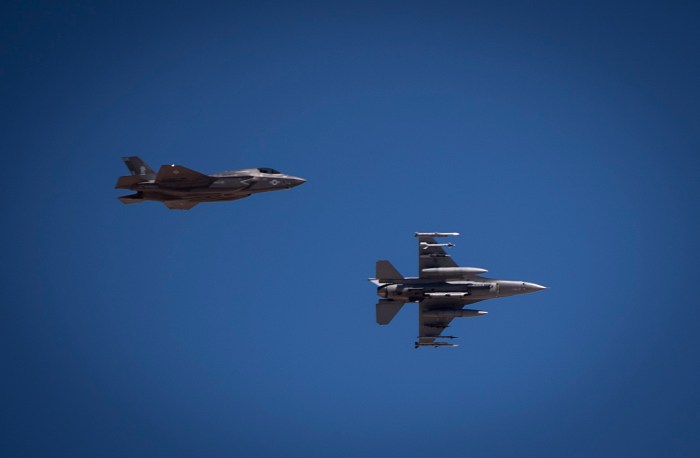
A F-35B, assigned to the Marine Fighter Attack Squadron 121 out of Marine Corps Air Station Yuma, Arizona, flies level as a F-16 Fighting Falcon from the 177th Fighter Squadron from the New Jersey Air National Guard, banks hard during approach July 15, 2016 at Nellis Air Force Base, Nevada (Source: US Air Force)

I get it, it is behind schedule, and it is over budget, but so are all of my home improvement projects. I am not sold that it can effectively do everything it is billed to do, but I am also willing to give it a fighting chance in the coming years. For those that have followed the military aircraft industry for a few decades, you will know that every airframe has had its initial struggles: the F-22, F-16, F-15, each and every one of them were plagued by issues. The F-35 is no different with perhaps the one exception that we can all take to Twitter to complain about it. I would rather focus on something entirely different.

All, the F-35 is conducting missions. No, it is not dropping bombs on IS (yet), nor is it providing CAS sorties in Afghanistan. No, it is not even deployed overseas in-theater, but that will come with time as well. However, it is creeping ever closer. Last week, USMC F-35s of VMFA-121 participated in the USAF’s Red Flag exercise. This is a big deal. If you have followed me for more than a hot minute, you know that Red Flag is near and dear to my heart. I have written extensively about, most notably here.

Participating at Red Flag is a major step forward for the entire F-35 program. You can think of Red Flag in some different ways. First, it helps to ‘season’ inexperienced pilots. USAF created Red Flag in 1975 to give its fighter pilots exposure to their first ten ‘combat’ missions. The entire purpose of the exercise was to simulate combat in a realistic training environment. Reports after Vietnam, most notably the Red Baron Reports, indicated that a pilot’s chance for survival increased exponentially after the first ten missions. Second, it exposes units and aircrew to other units and aircrews. Across the spectrum of aerial operations units have to integrate and work together to accomplish the mission. An F-22 pilot of the 1st Fighter Wing at Langley Air Force Base, VA., does not have the opportunity to fly against US Navy, USMC, and other USAF fighters on a daily basis; Red Flag provides that opportunity. The participation of VMFA-121 is as important for the F-35 and its flyers as it is for every other participant in the exercise. This is the first chance for many of these aircrews to see what the F-35 is capable of during mission parameters. This particular Red Flag exercise will see the F-35 integrate with F-22s, F-16s, F-18s and other support aircraft. Finally, Red Flag has traditionally been an exercise used to integrate new aircraft and capabilities with existing missions and platforms. This was true of the F-15 in the 1970s and the F-22 in the 2000s, and it remains true for the F-35 in 2016.

Weapons schools will continue to push the bounds of what the F-35 can do, and we can continue to argue over that, but exercising the F-35 at Red Flag allows other members of the armed forces to see what the F-35 does do.

Dr Brian Laslie is an Air Force Historian and currently the Deputy Command Historian at North American Aerospace Defense Command (NORAD) and United States Northern Command (USNORTHCOM). A 2001 graduate of The Citadel and a historian of air power studies, he received his Masters’ from Auburn University Montgomery in 2006 and his PhD from Kansas State University in 2013. His first book The Air Force Way of War (2015) was selected for the Chief of Staff of the Air Force’s 2016 professional reading list. He lives in Colorado Springs. He can be found on Twitter at @BrianLaslie.

Header Image: F-35Bs, assigned to the 3rd Marine Aircraft Wing, Marine Corps Air Station Yuma, Az., sit on the flight line during Red Flag 16-3 at Nellis Air Force Base, Nev on July 12, 2016. (Source: US Air Force Photo)