#AirWarBooks – Dr Ross Mahoney

#AirWarBooks – Dr Ross Mahoney

By Dr Ross Mahoney

Editorial Note: In the second instalment of ‘Air War Books,’ the editor of From Balloons to Drones, Dr Ross Mahoney discusses the ten books that have influenced and shaped his writing as an air power historian.

As editor of From Balloons to Drones, I thought I should reflect on what are probably the ten key books that have influenced me in my study of air power. However, I make three provisos. First, I attacked this from the perspective of key authors rather than the books themselves per se. As such, I have selected titles that I have enjoyed to illustrate the importance of these writers. Second, I have left out official histories and narratives though these have been just as influential on my writing as other works. Finally, I have included some non-air power texts in here. At the end of the day, I am a historian and an interdisciplinary one at that, and it is only natural that non-air power specific books have influenced how I approach what and how I write.

John Buckley, Air Power in the Age of Total War (London: UCL Press, 1999). Ok, this entry and Peter Gray’s book below have as much to do with these individuals’ real influence on me and the importance of their books. John was my undergraduate tutor many years ago, and his influence was to start me on the track to where I am today. However, added to that, Air Power in the Age of Total War is an excellent examination of the rise of air power in the first half of the twentieth century and vital reading for anyone wanting an introduction to the subject.

Peter Gray, The Leadership, Direction and Legitimacy of the RAF Bomber Offensive from Inception to 1945 (London: Continuum, 2012). Peter’s influence on me was that he was my PhD supervisor, and I will forever be grateful for his guidance. In my opinion, Peter is currently the leading air power specialist in the UK and one of the foremost experts in the world. That expertise is clearly evident in this book. The strategic air offensive against Germany is well-trodden ground, but Peter found a fresh way to assess its conduct. As a result, in my opinion, it is required reading not just for people wanting to understand the bombing offensive during the Second World War but also issues such as the challenge of senior leadership and matters such as legitimacy and international law.

Tony Mason, History of the Royal Air Force Staff College, 1922-1972 (Bracknell, RAF Staff College, 1972). I could have chosen any of Mason’s work, but this one has specific resonance for my research. This was written before Mason became the RAF’s first Director of Defence Studies (DDefS) in 1977 and is not widely available as the RAF Staff College published it. Nevertheless, Mason was not wide of the mark with many of his comments about the Staff College, though it does need to be brought up to date.

Allan English, Understanding Military Culture: A Canadian Perspective (Kingston: McGill-Queen’s University Press, 2004). English, a retired Royal Canadian Air Force officer, is a noted historian of air power and has written an influential article on the RAF Staff College in the inter-war years. However, for me, his most important work is his study of Canadian military culture. As someone who specialises in the culture of air forces, this work is an essential primer on the subject of culture and its influence on the Canadian military.

John Slessor, Air Power and Armies (Oxford: Oxford University Press, 1936). Everyone needs to have a contemporary air power thinker on their list, and Slessor certainly fits that bill. Slessor is, perhaps, the closest the RAF came to having their own Clausewitz, though I remain to be convinced that the Service wanted a singular air power thinker. Instead I think the RAF collegiately developed officers with a broad view of air power, but that is another discussion. The importance of Air Power and Armies is that it really should put to rest the argument that the RAF was solely focused on strategic bombing. Yes, Slessor used a strategic conception of air power to inform his work, but he sought to understand how military aviation could influence the land battle. An essential piece of work and the recent 2009 edition by the University of Alabama Press contains an introduction by Philip Meilinger.

Arthur Gould Lee, No Parachute (London: Jarrolds, 1968). Everyone needs a memoir in their top ten, and there are a number of good works by air force personnel. Most are written by pilots, which says as much about the culture of air forces as anything else. Lee wrote several books dealing with various aspects of his service life, and each could find their way into this list. No Parachute is particularly useful for its appendices though the one on parachutes does need to be revised.

John Andreas Olsen, John Warden and the Renaissance of American Air Power (Dulles, VA: Potomac Books, 2007). As Brian Laslie mentioned in the first instalment of ‘Air War Books,’ I think we do need to include a work by Olsen. He is currently one of the key writers on air power, particularly about modern conflicts. His biography of Warden is fascinating and gives an excellent insight into this complex character. Perhaps what is more impressive, is that this was written while Warden is alive, which is never an easy task.

David French, Military Identities: The Regimental System, the British Army, and the British People c.1870-2000 (Oxford: Oxford University Press, 2005). French is one Britain’s leading military historians, and I wonder how he would do if he turned his interests towards the RAF. However, for me, his analysis of the British Army’s regimental system is fascinating and one of those works that all should read to develop an understanding of how military organisations operate. There is much to take away from this study, and for me, it has raised significant questions about issues such as identity with regards to squadrons in air forces.

Richard Overy, The Air War, 1939-1945 (London: Europa Publications, 1980). Overy remains not only one of the leading air power historians in the UK but also globally. The Air War continues to be one of the most influential titles concerning the role of air power during the Second World War. I could have quite easily has listed The Bombing War here, which is Overy’s most recent air power work. However, The Air War continues to be important, and while Overy’s views have developed over the years – like those of all historians – this work was written when air power history was a ‘Cinderella’ discipline. Thankfully, this is no longer the case, and the new edition of The Air War is useful for Overy’s overview of the field of air power history up to 2003.

John James, The Paladins: The Story of the RAF up to the Outbreak of World War II (London: Macdonald and Company, 1990). Given my focus on the culture and ethos of air forces, this was again, one of those works that I could not ignore reading as it is one of the few social histories of the RAF before the Second World War. James worked in operational research sections in various RAF Commands and brought that experience to the writing of the book. It is good but does need bringing up to date, and I dispute some of his views on how the RAF branch system evolved. Nevertheless, a work to read.

Well, that is my top ten; however, it would be easy to add more to the list. As noted, when Overy wrote The Air War, and Mason served as DDefS, the academic study of air power, certainly in the UK, was a Cinderella subject. Thankfully, that is no longer the case and the last ten years have seen a number of significant studies published, which point the way forward for the subject but that will be a post for another time.

Dr Ross Mahoney is an independent historian and defence specialist based in Australia. Between 2013 and 2017, he was the resident Historian at the Royal Air Force Museum, and he is a graduate of the University of Birmingham (MPhil and PhD) and the University of Wolverhampton (PGCE and BA). His research interests include the history of war in the twentieth and twenty-first centuries, air power and the history of air warfare, and the social and cultural history of armed forces. To date, he has published several chapters and articles, edited two books, and delivered papers on three continents. He is a member of the Royal Historical Society and is an Assistant Director of the Second World War Research Group. He is a member of the Royal Historical Society and an Assistant Director of the Second World War Research Group. He blogs at Thoughts on Military History, and can be found on Twitter at @airpowerhistory.

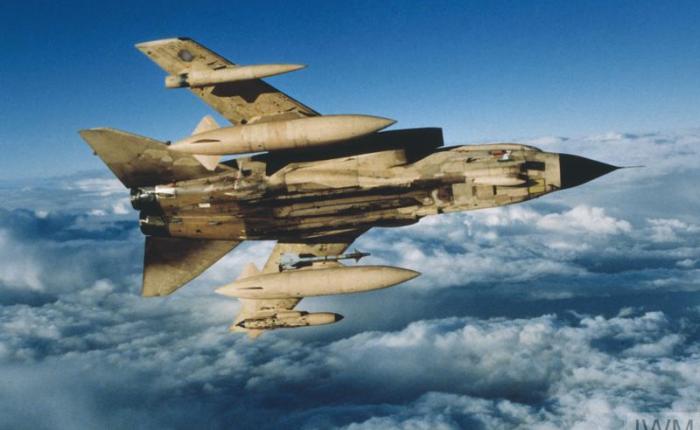
Header Image: A Tornado GR.1 in flight banks away from the camera and displays its underwing stores during the First Gulf War. Top to bottom the stores are a BOZ 107 chaff/flare dispenser, 500 gal fuel tanks, AIM-9 Sidewinder air-to-air missile and Marconi Sky Shadow ECM pod. (Source: © Crown copyright. IWM (GLF 707))
#AirWarBooks – Dr Brian Laslie

#AirWarBooks – Dr Brian Laslie

By Dr Brian Laslie

Editorial Note: In the first of a new series, Dr Brian Laslie, author of The Air Force Way of War, discusses the ten books that have influenced and shaped his writing as an air power historian.

The Editor of From Balloons to Drones, Dr Ross Mahoney, has been pestering those of us who contribute to this blog to put together a list of the most influential books we have read on the study of air power. I have always been of the opinion that I only have so many words I am capable of writing in a single day and have thus, avoided acquiescing to Ross’s request. Seriously, I am never going to get these two manuscripts done at this rate, but I finally decided that Ross is right (we were on a break) and that it is high time those of us who study air power history discuss the most influential books we’ve read on the history/study of air power (two words not one). So here is my top ten:

Bert Frandsen, Hat in the Ring: The Birth of American Air Power in the Great War (Washington D.C.: Smithsonian Institution Press, 2003). I read this book shortly before leaving active duty and heading to Kansas State for grad school, and it had a profound impact on what I wanted to study. Frandsen weaves together history, technology, and narrative into one of the finest works on the creation of America’s air service and air power.

Alexander P. de Seversky, Victory through Air Power (New York, NY: Simon & Schuster, 1942). Let us get something out of the way. Seversky and Hap Arnold hated each other, and I am not being hyperbolic. The two could not stand to be in the same room with each other, and when they were, it usually ended in a shouting match. Seversky’s book was Second World War aerial propaganda, but when Walt Disney read the book and decided to produce it as a feature film, Arnold was forced to stay mute on the subject. Seversky went on to write other air power books, but none as influential and long-lasting as this one.

Thomas E. Griffith, Jr, MacArthur’s Airman: General George C. Kenney and the War in the Southwest Pacific (Lawrence, KS: University Press of Kansas, 1998). In the age of the bomber mafia, Kenny marched to the tune of his own drum. Surely as Quesada and Chennault followed pursuit aviation, Kenny favoured attack. He was, perhaps, the most innovative airman of his generation and Griffith’s book demonstrates just how important Kenney was to MacArthur.

Thomas A. Hughes, Over Lord: General Pete Quesada and the Triumph of Tactical Air Power in World War II (New York, NY: The Free Press, 1995). I really have no doubt, and I doubt many would argue with me, that strategic bombardment garnered the lion’s share of attention both during and after the war. It would take Tactical Air Command until after the Vietnam war to rise to prominence over Strategic Air Command, but those seeds were planted in the Second World War by Pete Quesada and his tactical airmen in the European theatre.

Mark Clodfelter, The Limits of Air Power: The American Bombing of North Vietnam (New York, NY: The Free Press, 1989). The single most important book on air power to be published in the post-Vietnam era. It defined air power historians of a generation. More than a critique of strategic bombardment in Vietnam, it is a book that teaches you how to think about air power, what it can and what it cannot do.

Donald Miller, Masters of the Air: America’s Bomber Boys who Fought the Air War against Nazi Germany (New York, NY: Simon & Schuster, 2006). It is rare that I cannot put a book down, but the was the case with Miller’s work. The narrative is exceptional, the research superb, and the flow masterful. I consider it the single best book on air power in the Second World War.

Donald J. Mrozek, Air Power and the Ground War in Vietnam: Ideas and Actions (Maxwell, AL: Air University Press, 1988) and idem, The US Air Force after Vietnam: Postwar Challenges and Potential for Responses (Maxwell, AL: Air University Press, 1988). Yes, I am cheating by putting two books here, but they deserve to be here. Mrozek is an air power historian, but also a cultural and intellectual historian as well. He is difficult to read, but only because every sentence is crafted beautifully and is important. Mrozek conveys in a sentence, what others struggle to get out in several pages, myself included.

Steve Davies, Red Eagles: America’s Secret MiGs (Oxford: Osprey Publishing, 2008). A popular history, but this book is flat-out fun. Secret units, secret locations, and American fighter pilots learning how to outperform their Soviet counterparts in their own aircraft.

John Andreas Olsen (ed.), A History of Air Warfare (Dulles, VA: Potomac Books, 2010). Actually any of Olsen’s work could make this list; however, if you were going to use one book in the classroom to discuss the history of power, then this is the one. There is a reason; the Air Force Academy has every freshman read in their introduction to military history. From the First World War to the present and large scale combat to air power in smaller conflicts, Olsen’s edited work covers it all.

Diane Putney, Airpower Advantage: Planning the Gulf War Air Campaign (Washington D.C.: Air Force History and Museums Program, 2004). This book is what made me decide to write about Desert Storm. This book taught me that air power is so much richer than 1 v. 1 dogfights, that true command of the air comes from logistics, planning and execution.

To this list of ten, I could add hundreds more, but as I looked at my bookshelf these jumped out at me as having the most impact on my thinking during my time in grad school or shortly thereafter and helped solidify my thinking on what air power is and what it does (spoiler alert: it’s the ability to do something in the air. Thanks, Billy Mitchell!)

By the way, several of these books you can order or download for free from either the Air University Press of the Air Force Historical Studies Office. FREE BOOKS: http://www.au.af.mil/au/aupress/ and http://www.afhistory.af.mil/Books/Titles/

Dr Brian Laslie is an Air Force Historian and currently the Deputy Command Historian at North American Aerospace Defense Command (NORAD) and United States Northern Command (USNORTHCOM). A 2001 graduate of The Citadel and a historian of air power studies, he received his Masters’ from Auburn University Montgomery in 2006 and his PhD from Kansas State University in 2013. His first book The Air Force Way of War (2015) was selected for the Chief of Staff of the Air Force’s 2016 professional reading list. He lives in Colorado Springs. He can be found on Twitter at @BrianLaslie.

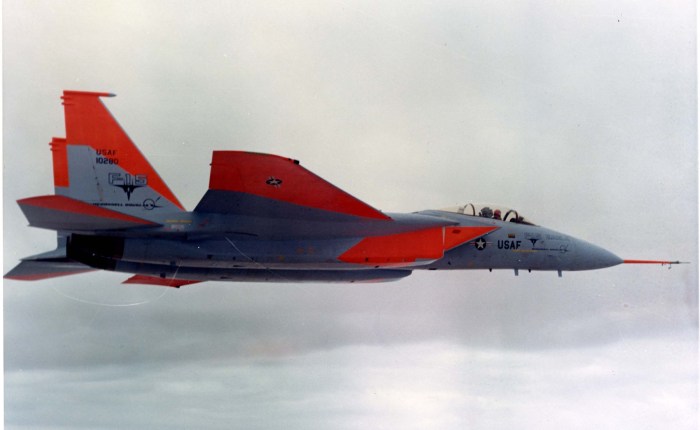
Header Image: McDonnell Douglas F-15A (S/N 71-0280, the first F-15A prototype). Note the square wingtips and unnotched stabilator. (Source: Wikimedia)

#Commentary – The RAF and the F-117

#Commentary – The RAF and the F-117

By Dr Ross Mahoney

In the past couple of days, several sources have reported on the fact that in 1986, the US President, Ronald Reagan, offered Britain the opportunity to co-operate on stealth technology and purchase the Lockheed F-117 Nighthawk. Details of the project, codenamed MOONFLOWER, have become known through the recent release of files by the British National Archives. This release is part of the material coming out of the Prime Minister’s files for the 1980s and the specific reference for MOONFLOWER is PREM 19/1844. An important issue to note with these files is that they have not been digitised and were opened just before the New Year. This is an important consideration when reading many of the reports on the internet as it is probable that the one in The Guardian – from which most derive – has only cited certain parts of the file. Indeed, I have not read the file yet.

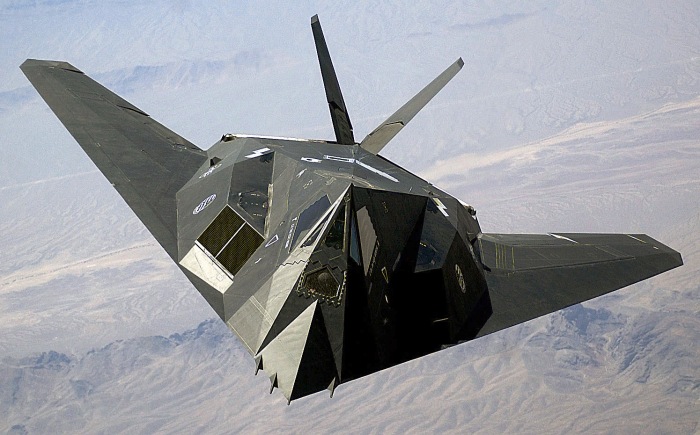
The F-117 remains one of the most iconic aircraft of the latter part of the Cold War. Publically announced in 1988, the F-117 emerged from Lockheed’s Have Blue project and was developed by the company’s Skunk Works division. The F-117 was first operationally used in the US invasion of Panama in 1989, but it was during Operation DESERT STORM that it rose to prominence. During the 1990s and 2000s, the F-117 was used in other conflicts, and one was shot down in 1999 during Operation ALLIED FORCE, and it was eventually retired in 2008.

020806-F-7823A-004
A USAF F-117A Nighthawk flies over Nellis Air Force Base during the joint service experimentation process dubbed Millennium Challenge 2002. (Source: Wikimedia)

What appears to have got people talking is the fact that Britain was offered the F-117 at a time when it was still officially a ‘black’ project i.e. before it existence was officially acknowledged. Moreover, according to the various reports, the key reason that Britain did not pursue purchasing the F-117 was for this very reason. However, while this may be one reason for rejecting the F-117, it should be noted that while the release of British files is interesting, this is not strictly a new story, though it is potentially a new dimension. Several histories of the F-117 cite the fact that in 1986, several Royal Air Force (RAF) test pilots were sent to fly the aircraft. For example, Paul Crickmore reflected that the RAF ‘had its chance to evaluate the F-117’ as a thank you for British support of Operation EL DORADO CANYON.[1] However, what these secondary sources lack is the archival evidence to understand why the evaluation took place. It is probably – though I would not like to say for certain until I see the file – that this assessment formed part of this project.

As already noted, the reason cited in the reports for the RAF not purchasing the F-117 was the ‘black’ character of the project; however, I have to wonder how well this aircraft would have fitted into the Service’s force structure and concept of operations in the 1980s. Moreover, it will be interesting to see if anything more is mentioned in the file as to why the F-117 was not purchased. Nevertheless, a few issues come to mind that may have been challenges. First, the RAF operated at low-level in small packages, and I am unclear how the F-117 would have fitted into this concept of operations. Second, by 1986, the RAF was in the middle of purchasing the Panavia Tornado that had been designed for the low-level role, as such; again, what additional capability the purchase of the F-117 would have added to the RAF at this point remains unclear. Finally, there is the issue of numbers. The F-117 was never built in significant numbers, and it seems unlikely that the RAF would have bought more than the United States Air Force, as such, again, what additional capability would the addition of a highly complex piece of equipment have added to the RAF? Yes, it would have added a stealth capability but this needs to match a concept of operations, and in my mind, this remains a murky area. As such, this is more an interesting example of the so-called ‘special relationship’ rather than a significant ‘What-If’ for the RAF.

e78e2037_5056_a318_a89209e9ab776da0
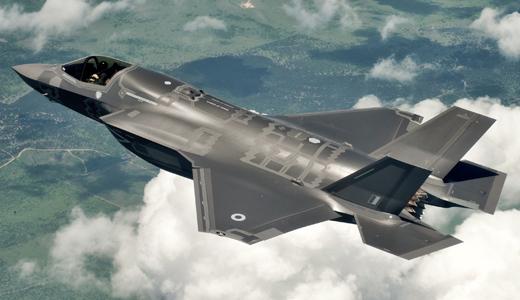
An F-35B in RAF Markings. (Source: Royal Air Force)

This is not, however, where the story ends as in 1995, Lockheed once again tried to sell the RAF an improved F-117 that included locally produced content, such as GEC-Marconi supplied avionics.[2] This approach was in response to the RAF’s Staff Target (Air) 425 that had began the process of looking at replacing the GR4 variant of the Tornado, which became known as the Future Offensive Air System (FOAS). FOAS closed down in 2005 and aspects were rolled into Future Joint Combat Aircraft project that has seen the purchase of the Lockheed Martin F-35 Lightning II – an aircraft with a stealth capability.[3]

Dr Ross Mahoney is an independent historian and defence specialist based in Australia. Between 2013 and 2017, he was the resident Historian at the Royal Air Force Museum, and he is a graduate of the University of Birmingham (MPhil and PhD) and the University of Wolverhampton (PGCE and BA). His research interests include the history of war in the twentieth and twenty-first centuries, air power and the history of air warfare, and the social and cultural history of armed forces. To date, he has published several chapters and articles, edited two books, and delivered papers on three continents. He is a member of the Royal Historical Society and is an Assistant Director of the Second World War Research Group. He is a member of the Royal Historical Society and an Assistant Director of the Second World War Research Group. He can be found on Twitter at @airpowerhistory.

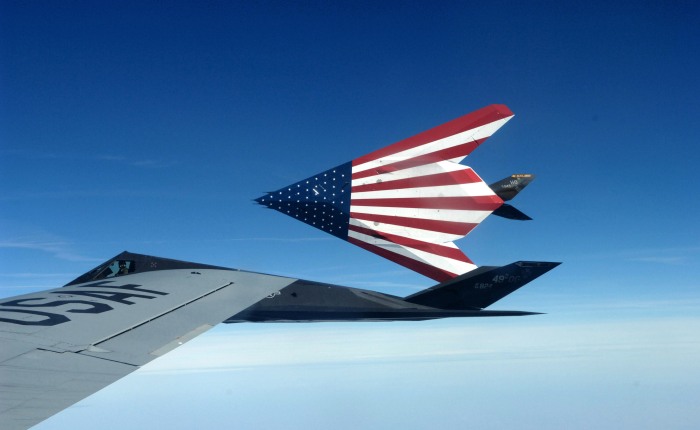
Header Image: A pair of specially painted F-117 Nighthawks fly off from their last refueling by the Ohio National Guard’s 121st Air Refueling Wing, c. 2008. (Source: Wikimedia)

[1] Paul F. Crickmore, Lockheed F-117 Nighthawk Stealth Fighter (Oxford: Osprey Publishing, 2014), p. 26.

[2] Guy Norris, ‘Lockheed Martin targets RAF and USAN for F-117,’ Flight International, (28 June to 4 July 1995), p. 4.

[3] Louisa Brooke-Holland, ‘The UK’s F-25 Lightning II Joint Strike Fighter,’ Standard Note (SN06278) UK House of Commons Library, (6 February 2015), pp. 5-6.

From Balloons to Drones – Top Posts of 2016

From Balloons to Drones – Top Posts of 2016

By Ross Mahoney

Happy New Year!

Now we have reached 2017, and that From Balloons to Drones has been up and running for around six months, it thought it would be worth posting our top five posts of 2016 based on views.

  1. At the head of the list is ‘Supporting the Secret War: T-28s over Laos, 1964-1973 – Part 1: Training.’ This is the first of a three-part article by Jeff Schultz that examines the use of the North American T-28 during the war in Laos in the 1970s. Parts two and three can be found here and here.
  2. In second place is my research note on ‘Air Power and the Challenge of Professional Military Education’ that was based on my thoughts on an excellent conference at the Royal Military College of Canada in November. An important subject that I hope to return to in 2017.
  3. In third is Brian Laslie’s commentary, ‘TheF-35 is here!’, which deals with some of the issues surrounding this program and the important role that training will play in developing the aircraft’s use.
  4. In fourth, and timed in conjunction with the types eventually retirement for the United States Air Force, Mike Hankins provided a timely discussion of the development of the McDonnell F-4 Phantom II in his piece ‘Remembering the F-4 Phantom – Part 1: A Product of Its Time.’ The second part of this article can be found here.
  5. Finally, but no means last, Alex Fitzgerald-Black’s research note ‘Operation HUSKY’s Air Battle by the Numbers’ provided a useful discussion of the importance of the air battles fought during the invasion of Sicily in 1943.

These are just a selection of the highlights of our half year in existence. We are keen to expand our list of contributors and if you are interested in writing about air power issues – both historical and contemporary – then you can find out how here. If you have any questions then please leave a comments here or emails us at airpowerstudies@gmail.com.

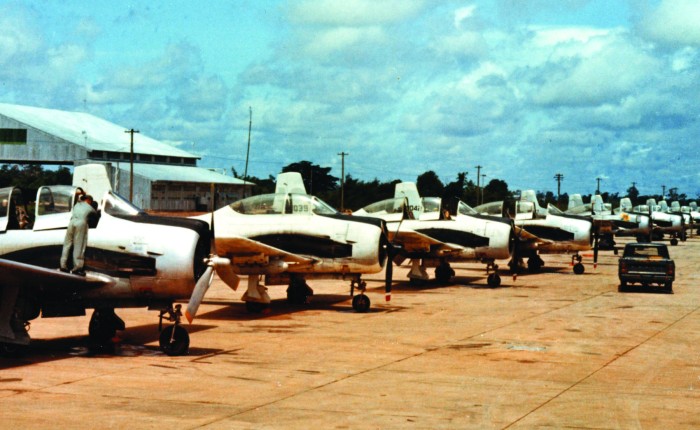
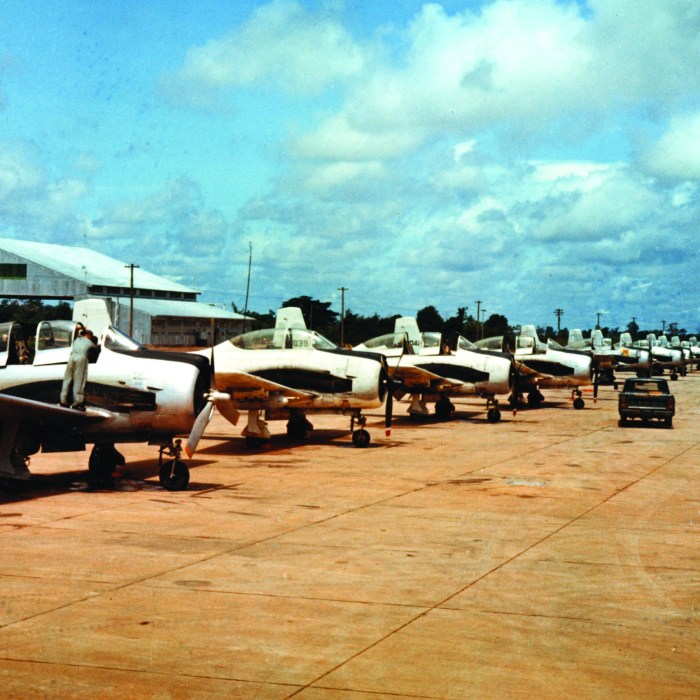
Header Image: A row of T-28s in Laos. (Source: USAF)

Supporting the Secret War: T-28s over Laos, 1964-1973 – Part 3: Other Roles and Conclusion

Supporting the Secret War: T-28s over Laos, 1964-1973 – Part 3: Other Roles and Conclusion

By Jeff Schultz

Editor’s Note: In the final instalment of a three-part series, Jeff Schultz examines the use of the North American T-28 Trojan during the so-called Secret War in Laos during the Vietnam War. In this part, Schultz examines the aircraft’s other roles, such as reconnaissance. Parts One and Two can be found here and here.

Other Roles

The T-28 performed a range of other missions such as search and rescue (SAR), reconnaissance, night interdiction, observation and leaflet dropping. Early SAR missions sometimes featured T-28s, flown by Air America crews depending on the situation. They were often the closest assets available depending on where in Laos the pilot was shot down; he had a ‘better chance of being rescued by […] Air America.’[1] Working in conjunction with Air America T-28s, unarmed helicopters rescued some downed American pilots including US Navy Commander Doyle W. Lynn in June 1964.[2] Air America continued to fly T-28s in support of SAR missions into the late sixties, often flying as overhead cover.[3] In 1968, Air America helicopters rescued some American pilots, such as A-1 Skyraider pilots Lt. Colonel William Buice, and Major Howard Jennings, with perhaps 30 total U.S. military pilots rescued in Laos and North Vietnam.[4] T-28s also covered the insertion of road watch teams in Military Region IV (MR IV), which attempted to radio information about traffic on the Ho Chi Minh Trail.[5]

Reconnaissance missions were another mission flown by a few of the T-28s provided to the RLAF, as ‘RT-28s,’ with mounted cameras under the fuselage.[6] The RT-28s were used to take photographs while on recon flights and provided the RLAF with a modest ability to conduct their reconnaissance. According to a report from 1965, the need to process the RT-28 mission film needed to be given higher priority.[7] Night Recon missions were considered but then dismissed in favour of ‘Yankee Team’ reconnaissance planes, which were evaluated as more effective at night.[8] A Thai recon pilot was shot down in an RT-28 in August 1964 near Phou Khout ridge in the Plain of Jars.[9] Another example from 1964 showed that even when three RT-28s were available to the RLAF, only one was flyable due to lack of parts or other serviceability issues.[10] USAF Captain Jack Drummond, assigned to help the RLAF via PROJECT 404 based at Pakse and Savannakhet, related one case where photographs of a Chinese-built road in north-west Laos were needed. He went to Udorn, Thailand and using an RT-28 from the base, eventually flew the recon mission himself to get it done.[11]

110329-f-xn622-002
Damage caused by a communist ground attack on Luang Prabang airfield, Laos, 1967. (Source: USAF)

The war in Laos changed once the American ‘Raven’ FAC (forward air control) pilots, previously known under the callsign ‘Butterfly,’ got involved in 1966 directing strikes in Cessna O-1s, U-17s and T-28s, which significantly improved the situation in favour of the US aims.[12] Ravens, according to a contemporary:

[w]ere all six-month volunteer air force types, civilian clothes, discharged from the service for six months and then automatically became back into the Air Force after six months […][13]

Drawing out the enemy in a war of attrition to be destroyed by air power worked, at least briefly, in Laos in 1967 when the careful use of Ravens, RLAF T-28s, Douglas A-26 ‘Nimrods’ and other American air support contributed to defeat repeated NVA assaults on Na Khang and assisted with forcing the withdrawal of the NVA 316th Division.[14] Another Raven, First Lieutenant Jim Lemon, recalled:

[w]orking under low cloud cover, using Lao T-28s, American A-1s and T-28 Trojans from NKP [Nakhon Phanom] we killed three trucks and a bulldozer.[15]

Some of the Ravens, contrary to orders, also flew combat missions with T-28s such as USAF Major Tom Richards in 1968.[16] Another Raven, USAF Colonel Joseph Chestnut, was shot down and killed flying a T-28 in October 1970 near Luang Prabang, Laos.[17]

By 1966 another use of T-28s was for night interdiction by the ‘Zorros’ of 606th Air Commando Squadron of the 56th Air Commando Wing, which attacked the Ho Chi Minh Trail at night from neighbouring Thailand.[18] Their mission was to destroy trucks and other targets of opportunity moving along the trail.[19] The ‘Zorros’ benefited from the T-28’s slower speed and accuracy to strike vehicle convoys or other objectives, similar to what the A-26 Nimrods had done.[20] By 1968, the ‘Zorro’ AT-28s were replaced with Douglas A-1 Skyraiders, ending this chapter of the T-28 involvement.[21] Coming budget cuts as part of Vietnamization would reduce the ability to interdict the trail even more.[22]

Lastly, a few examples exist of the T-28 used for psychological warfare leaflet drops, which led to some Pathet Lao defections, according to a 1964 report from Deputy Assistant Secretary of State Green.[23] Another source mentions the use of T-28s for leaflet drops and some leaflet drops took place in conjunction with SAR missions.[24]

Conclusion

An unsung trainer turned fighter-bomber went on to be one of the most significant propeller aircraft in Laos from 1964-1973, even on to 1975. It served all over in the strike, recce, and SAR roles as a reliable, simple platform to bring the fight to the Pathet Lao and the North Vietnamese Army. T-28s bombed the Ho Chi Minh Trail and flew with Lao, Hmong, Thai and American pilots. T-28s met the needs for a COIN aircraft that allowed a relative novice to become a skilled aviator, such as in the cases of Ly Lue, Vang Sue and Vang Bee. Some of the last planes flying in Cambodia in 1975 were T-28s of the Khmer Air Force. The venerable trainer was, therefore, active from 1961 in South Vietnam all the way to the fall of Laos and Cambodia in 1975.[25] The T-28s alone, however, could not change the outcome in Laos, much as American airpower alone did not defeat the North Vietnamese. In his end-of-tour report in 1969, Major General Seith, Deputy Commander, 7/13 Air Force, summed up the T-28s role:

USAF and the RLAF T-28 force have performed remarkably well in defense of friendly ground positions, in providing close air support for offensive moves, and in destroying enemy supplies, equipment and bivouac areas.  But air forces cannot substitute for ground force; they can only supplement them and increase their fire power and maneuverability.[26]

Jeff Schultz teaches history and political science at Luzerne County Community College in Pennsylvania. He has an MA in History from Central Michigan University. His research deals with a broad range of historical periods such as the American Civil War, World War II, and Vietnam-era.

Header Image: An unmarked North American T-28D Trojan. This aircraft was probalby transferred to Laos in 1964. It was an USAF aircraft maintained by Air America at Udorn Royal Thai Air Force Base, but flown under the command of the USAF Attaché, Vientiane, Laos. It was transferred to the Royal Laotian Air Force in February 1973, its eventual fate being unknown.

[1] Joe F. Leeker, Air America in Laos I – Humanitarian Work, Part I, CAT/Air America Archive at the Eugene McDermott Library, University of Texas at Dallas, p. 54.

[2] Anthony and Sexton, War in Northern Laos, 1954-1973, p. 111.

[3] Leeker, Air America in Laos I, p. 47.

[4] Marrett, Cheating Death, pp. 84-6; Leeker, Air America in Laos I, p. 53.

[5] CHECO Reports: RLG Military Operations and Activities in the Laotian Panhandle,  01 January 1981, Folder 24, Box 01, Contemporary Historical Examination of Current Operations (CHECO) Reports of Southeast Asia (1961-1975), The Vietnam Center and Archive, Texas Tech University, p. 40.

[6] Adcock, T-28 Trojan in Action, p. 37.

[7] Project CHECO Southeast Asia Report #254 – Continuing Report: YANKEE TEAM – May 1964-June 1965, 08 March 1966, Folder 0201, Box 0044, Vietnam Archive Collection, The Vietnam Center and Archive, Texas Tech University, p. 16.

[8] Ibid, p. 26.

[9] Conboy and Morrison, Shadow War, p. 112.

[10] Anthony and Sexton, War in Northern Laos, 1954-1973, pp. 141-2.

[11] Chinnery, Air Commando, p. 202, 206.

[12] Short Story – USAF – re: 1960 to summer of 1962, 06 November 1997, Folder 01, Box 03, Jan Churchill Collection, The Vietnam Center and Archive, Texas Tech University, p. 2; Quincy, Harvesting Pa Chey’s Wheat, p. 278.

[13] Interview with Larry Clum, 29 February 2000, Larry Clum Collection, The Vietnam Center and Archive, Texas Tech University, pp. 22-3.

[14] Quincy, Harvesting Pa Chey’s Wheat, pp. 278-9.

[15] Ralph Wetterhahn, ‘Ravens of Long Tieng,’ Air & Space Magazine, (November 1998), p. 3.

[16] Christopher Robbins, The Ravens: The Men Who Flew in America’s Secret War in Laos, p. 59, 167.

[17] ‘Chestnut, Joseph Lyons Biography,’ P.O.W. Network.

[18] Chinnery, Air Commando, pp. 183-4.

[19] Hamilton-Merritt, Tragic Mountains, pp. 149-50.

[20] Ibid.

[21] Bernard C. Nalty, The War against Trucks: Aerial Interdiction in Southern Laos 1968-1972, (Washington D.C.: Air Force History and Museums Program, 2005), pp. 28-9.

[22] Lewis Sorley, A Better War: the Unexamined Victories and Final Tragedy of America’s Last Years in Vietnam, (New York: Harcourt Inc., 1999), p. 177.

[23] Marshall Green, Deputy Assistant Secretary of State, ‘Immediate Actions in the Period Prior to Decision,’ (Part VIII of Working Group Outline), 7 November 1964, The Pentagon Papers, Gravel Edition, Volume 3, pp. 606-10.

[24] Joe F. Leeker, Air America: North American T-28s, CAT/Air America Archive at the Eugene McDermott Library, University of Texas at Dallas, p. 65.

[25] Albert Grandolini, Tom Cooper, and Troung, ‘Cambodia 1954-1999; Part 2,’ ACIG.org.

[26] Barrel Roll 1968-73 : An Air Campaign in Support of National Policy,  01 September 1996, Folder 04, Box 07, Glenn Helm Collection, The Vietnam Center and Archive, Texas Tech University, p. 45.

Supporting the Secret War: T-28s over Laos, 1964-1973 – Part 2: Attack Role

Supporting the Secret War: T-28s over Laos, 1964-1973 – Part 2: Attack Role

By Jeff Schultz

Editor’s Note: In the second of a three-part series, Jeff Schultz examines the use of the North American T-28 Trojan during the so-called Secret War in Laos during the Vietnam War. In this part, Schultz examines the aircraft’s attack role. Part One can be found here.

Perhaps the most important mission performed by T-28s was in the attack role, dropping ordnance and strafing ground targets, which was the most commonly performed mission in Laos by T-28s. The armed trainers were flown by some different operators carrying a broad range of ordnance on multiple bomb racks such as .50cal gun pods, unguided bombs and rockets, napalm and/or cluster bomb units.[1] The cluster bomblets would fall in a series and per a former pilot could be devastating to troops in the open.[2]

In 1963, former Thai pilot Chert Saibory, now flying for the RLAF, defected to North Vietnam, his T-28 later returned to service for the VPAF as its first fighter plane, which per one source, nearly shot down a Nationalist Chinese C-123 during a night attack mission in 1965.[3] An early example of the attack role of T-28s came from June 1964, when the first US Navy aviator was shot down over Laos. Lieutenant Charles Klusmann was on a ‘Yankee Team’ RF-8 reconnaissance mission when Pathet Lao ground fire hit his plane.[4] During nearly three months of captivity, while being transported at one point to Vientiane via truck, the column was ‘halted by intense air raids by jet aircraft and T-28s,’ per his POW debriefing.[5] T-28s also flew in support of search attempts following Klusmann’s shoot down.[6]

In 1964 not only Air America pilots (forming the so-called ‘A-Team’), but also Thai volunteer pilots flew T-28s (as ‘B-Team’) and the Laotians as ‘C-Team’ which, would be much easier to explain than downed Americans.[7] The Thai ‘B-Team’ pilots flew missions under the call sign ‘Firefly’ and conducted attacks on the crucial Plain of Jars (French: Plaine des Jarres) region in north central Laos, knocking out two enemy trucks in one particular mission.[8] In June 1964 the CIA evaluated the T-28s as probably having more effect on enemy morale than otherwise, owing to the lack of RLG (Royal Lao Government) forces supporting them.[9] RLAF T-28s also flew the first missions against the Ho Chi Minh Trail in October 1964, which acted as the unofficial beginning of the later American attacks against the Ho Chi Minh Trail in December, known as BARREL ROLL.[10] Laos often featured very heavy AAA, another hazard to the T-28s, as Ted Maudlin, a former Air America pilot, related in an interview.[11] From 1964 to 1969 the RLAF flew occasional missions against targets in the Laotian panhandle, but eventually AAA became too heavy for daylight attacks.[12]

As a witness to T-28 missions in Laos, Reginald Hathorn flew with the American 23rd Tactical Air Support Squadron out of Nakhon Phanom, Thailand and coordinated air strikes in Laos as a Forward Air Controller (FAC). He provided an account of the role of RLAF T-28s in a strike mission in support of a Laotian Army base then under mortar fire from the Pathet Lao in 1968. After Hathorn had marked the intended target with unguided white phosphorus rockets, the accompanying T-28s dropped their ordnance accurately. He pointed out he could never be sure who was flying the RLAF T-28s they worked with, until this time an American voice came over the radio in contrast to the Lao or Thai pilots.[13]

Captain George Marrett, who flew USAF A-1 Skyraiders from 1968-69, summarised the war in Laos as follows:

All the ground fighting – and dying – was done by a group of mountain people known as the Hmong. Early in the war, they provided much of their air support, flying mission after mission until they died.[14]

Among the T-28 pilots produced in the American-led Water Pump training course at Udorn, Thailand were several standouts: Ly Lue and Vang Sue. According to one source, Ly Lue could be called the ‘Hans-Ulrich Rudel of the Laotian war’ about his effective bombing exploits, flying over 5,000 missions.[15] At his funeral in Long Tieng in July 1969, a Distinguished Flying Cross was placed on his casket by Colonel Tyrrell, the USAF Air Attaché for his incredible feats.[16] Vang Sue flew at least 3,000 combat missions in four years.[17] Both of these men went on to great success but like all the Hmong fliers they lived with the unfortunate reminder as fellow pilot Vang Bee recalled, ‘Hmong pilot have no limit to missions, they fly until they die.’[18] Depending on the source consulted, about 20 of the 37 total Hmong pilots survived the fighting.[19] An American who served with the Hmong called them, ‘some of the finest pilots in this world.’[20]

In 1969, during the early days of Vietnamization, Kissinger sent a memo to President Nixon advocating, among other things, more T-28s for the RLAF since he intended for them to be supported but without being able to send more evident help in the form of Thai ground units or B-52 strikes. The reliable T-28 remained the simplest way to support our ally given the existing rules of engagement.[21] In 1969, RLAF T-28s knocked out a former ad hoc guerrilla weather station captured by the enemy using bombs and napalm.[22] As an indication of the T-28 contribution in the attack role, from November to December 1969 alone Thai, Lao and Hmong pilots flew an impressive 4,629 sorties with an average of only twenty-eight T-28s available on a given day.[23]

By 1970 the Thai T-28 ‘B-Team’ pilots became redundant and were phased out since enough RLAF pilots existed for the task.[24] In 1971, an article in the Milwaukee Sentinel discussed the grim situation in Laos and ominously mentioned the likelihood that the Nixon Doctrine would not protect the small country from North Vietnam with or without more aid, with only two new ‘T-28 propeller driven bombers’ provided to the RLAF per month as replacements.[25]

Eventually, the Plain of Jars suffered so much from air attacks that it became, according to one source, ‘the most intensely bombarded place on the face of the planet’ while Laos itself was eventually hit by 2 million tonnes of bombs.[26] In 1970, John Halliday, an American C-123 “Candlestick” flare-ship pilot, described the situation supporting friendly forces at night near the Plain of Jars region:

Our flares light the area below for…our Laotian allies fighting the Pathet Lao bad guys. The light we provide…is their only security against being overrun in the dark by overwhelming enemy forces.[27]

 The situation in Laos declined during Nixon’s Vietnamization, and as a 1970 Life magazine article pointed out, ‘In the last two years the pendulum of war in Laos has been swinging harder and wider, and each wet-season dry-season offensive has mounted a little higher than before.’[28] In 1971, the NVA attacked Long Tieng and forced the T-28s based there to withdraw, while others arrived to strike at the attackers.[29] In 1972 when USAF General John Vogt, commander of Seventh Air Force, visited the base at Long Tieng he was impressed by the Hmong pilots and ‘awed.’[30] A CIA officer working with the Hmong, James Parker, Jr., described the role of Vang Pao’s pilots in 1972 as follows:

There was no politics involved, no sterile high-tech environment where the converted T-28 trainers from the Second World War were parked. It was honest warring, primitive, a throwback to combat flying in the First World War. The Hmong flyers strapped as many bombs and bullets as they could get on their planes and went out and found North Vietnamese to attack – flight after flight, hour after hour, day after day […] the major part of our close fire support was left to the T-28s.[31]

The steady attrition of Vang Pao’s CIA-backed Hmong army and the slow drawdown of American financial and material support until the 1973 ceasefire, all contributed to the sense that things looked much worse. Since the Pathet Lao and NVA had won in Laos, it was simply a matter of time until the final defeat. In 1973, in one of the coup attempts involving T-28s, after years in exile in Thailand, Laotian General Thao Ma attacked Wattay, near Vientiane, along with other loyal RLAF personnel. Shot down while landing; General Ma was soon after that executed for his part in the coup attempt.[32] Also in 1973, the USAF Ravens withdrew from Laos, which forced Vang Pao to provide his FAC ability via what T-28s were available.[33] By 1974, the CIA withdrew all support, and by 1975, Laos was overrun. Per one source, Vang Pao sent RLAF T-28s on one last attack against a Pathet Lao column even as late as April 1975, just before the collapse.[34] Further south in 1975, the Cambodian Khmer Air Force T-28s flew support for the American withdrawal from Phnom Penh, Operation EAGLE PULL, when only weeks remained for Cambodia.[35]

Jeff Schultz teaches history and political science at Luzerne County Community College in Pennsylvania. He has an MA in History from Central Michigan University. His research deals with a broad range of historical periods such as the American Civil War, World War II, and Vietnam-era.

Header Image: A row of T-28s in Laos. (Source: USAF)

[1] Chinnery, Air Commando, p.73; Ginter, North American T-28 Trojan, pp.54-6.

[2] Interview Notes – Unknown Source – re: Joe Holden, Missions in Vietnam and Laos, ca. October 1998, Folder 01, Box 03, Jan Churchill Collection, The Vietnam Center and Archive, Texas Tech University, p.8.

[3] Conboy and Morrison, Shadow War, p.103.

[4] Anthony and Sexton, War in Northern Laos, 1954-1973, pp.109-10.

[5] Initial Debriefing of Klusmann, 02 September 1964, Folder 16, Box 13, George J. Veith Collection, The Vietnam Center and Archive, Texas Tech University, p.2.

[6] CHECO Report: U.S. Air Force Search and Rescue in Southeast Asia (1961-1966), 24 October 1966, Folder 09, Box 05, Allen Cates Collection, The Vietnam Center and Archive, Texas Tech University, p.34.

[7] Leeker, Royal Lao Air Force / Raven: North American T-28s, p.1.

[8] Conboy and Morrison, Shadow War, p.110.

[9] Current Intelligence Memorandum: Effectiveness of T-28 Strikes in Laos, 26 June 1964, Folder 14, Box 03, Douglas Pike Collection: Unit 01 – Assessment and Strategy, The Vietnam Center and Archive, Texas Tech University, pp.1-2.

[10] Conboy and Morrison, Shadow War: The CIA’s Secret War in Laos, p.121.

[11] Interview with Ted Mauldin, Undated, Ted Mauldin Collection, The Vietnam Center and Archive, Texas Tech University, pp.69-70.

[12] CHECO Reports: RLG Military Operations and Activities in the Laotian Panhandle, 01 January 1981, Folder 24, Box 01, Contemporary Historical Examination of Current Operations (CHECO) Reports of Southeast Asia (1961-1975), The Vietnam Center and Archive, Texas Tech University, p.27.

[13] Reginald Hathorn, Here There are Tigers: The Secret Air War in Laos, 1968-69 (Mechanicsburg, PA: Stackpole Books, 2008), pp.45-55.

[14] George J. Marrett, Cheating Death: Combat Air Rescues in Vietnam and Laos (New York: Harper Collins, 2006), p.25.

[15] Boyne, ‘The Plain of Jars,’ p.78; Chinnery, Air Commando, p.201.

[16] Jane Hamilton-Merritt, Tragic Mountains: The Hmong, the Americans, and the Secret Wars for Laos, 1942-1992 (Bloomington: Indiana University Press, 1999), pp.213-5.

[17] News article – ‘Meo Pilots: Flights Against the Odds,’ No Date, Folder 01, Box 01, Tom Matthews Collection, The Vietnam Center and Archive, Texas Tech University.

[18] Interview with Vang Bee, No Date, Vang Bee Collection, The Vietnam Center and Archive, Texas Tech University, p.11.

[19] Danya Hernandez, ‘Hmong Pilots Saluted in Maplewood,’ TwinCities.com Pioneer Press, June 15, 2012.

[20] Interview with Ronald Happersette Lutz, Jr., 05 November 2002, Ronald Happersette (Hap) Lutz, Jr. Collection, The Vietnam Center and Archive, Texas Tech University, p.49.

[21]Document 112 – Memorandum from the President’s Assistant for National Security Affairs (Kissinger) to President Nixon, Sep 2, 1969,’ in Edward C. Keefer and Carolyn Yee (eds.), Foreign Relations of the United States, 1969–1976, Volume VI, Vietnam, January 1969–July 1970 (Washington, D.C.: United States Government Printing Office, 2006).

[22] Bernard C. Nalty, The War against Trucks: Aerial Interdiction in Southern Laos 1968-1972, (Washington D.C.: Air Force History and Museums Program, 2005), p.32.

[23] Anthony and Sexton, War in Northern Laos, 1954-1973, p.322.

[24] Conboy and Morrison, Shadow War: The CIA’s Secret War in Laos, p.264.

[25] Rowland Evans and Robert Novak, ‘US Aid Cut, Laos at Hanoi’s Mercy,’ Milwaukee Sentinel, September 29, 1971.

[26] Kenton Clymer, ‘The War Outside Vietnam: Cambodia and Laos,’ in Andrew Wiest (ed.), Rolling Thunder in a Gentle Land: The Vietnam War Revisited (New York: Osprey Publishing, 2006), p.106; George Herring, American’s Longest War: The United States and Vietnam, 1950-1975, (New York: McGraw-Hill Education, 2014), p.353.

[27] John T. Halliday, Flying Through Midnight (New York: St. Martin’s Paperbacks, 2005), p.62.

[28] Greenway, ‘The pendulum of war swings wider in Laos,’ pp.32-3.

[29] News Article – ‘Reds Shell Laotian Outpost,’ 17 February 1971, Folder 01, Box 01, Tom Matthews Collection, The Vietnam Center and Archive, Texas Tech University.

[30] Parker, Codename Mule, p.129.

[31] Ibid.

[32] Conboy and Morrison, Shadow War, pp.406-7.

[33] Dommen, The Indochinese Experience of the French and Americans, p.932.

[34] Conboy and Morrison, Shadow War, p.415.

[35] Albert Grandolini, Tom Cooper, and Troung, ‘Cambodia 1954-1999; Part 2.’ ACIG.org.

Supporting the Secret War: T-28s over Laos, 1964-1973 – Part 1: Training

Supporting the Secret War: T-28s over Laos, 1964-1973 – Part 1: Training

By Jeff Schultz

Editors Note: In the first of a three-part series, Jeff Schultz examines the use of the North American T-28 Trojan during the so-called Secret War in Laos during the Vietnam War. In this part, Schultz examines the aircraft’s training role.

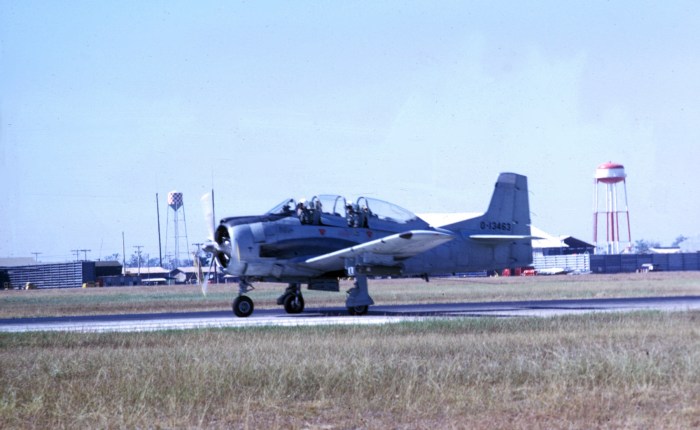
Scant attention has been paid to the two-seat T-28 Trojan trainer (or armed versions called the ‘Nomad’), of all the aircraft associated with the Vietnam era, and its important role in Laos during the Vietnam War. The most important single aircraft for the prosecution of the ‘secret war’ was the venerable T-28, used as a light ground attack aircraft adapted for counterinsurgency (COIN) warfare.[1] The T-28 sustained this COIN effort through a variety of missions and operators, eventually becoming a nearly ubiquitous fixed-wing aircraft during the Vietnam era. Its users included the US Air Force (USAF), Air America, South Vietnam, Thailand, Laos (including the Hmong), Cambodia, and even North Vietnam.

This article chronicles the mission types flown by the T-28 in Laos over the period 1964 to 1973. According to one source, ‘Laos has been a prisoner of geography, fought over and plundered by powerful neighbors,’ and the period after the 1954 French withdrawal only confirmed this notion of geographical entrapment.[2] American involvement in Laos before 1964 included a brief period of direct participation under President Kennedy until the 1962 Geneva Accords forbade outside intervention in Laos in an attempt to create a supposedly ‘neutral’ state. While America and the Soviet Union did withdraw their forces, the same could not be said of North Vietnam. After that the United States would attempt, from the Kennedy to the Nixon years, to maintain a supposed ‘civilian only’ presence in Laos so as to not violate the accords. This meant that in practice the ambassador and the embassy acted as the American command for Laos and therefore it was not a military, but rather a civilian affair. The ambassador occupied a critical role in the future of the country, as he controlled the means to support the Lao government such as financial and military support in the form of the Central Intelligence Agency (CIA) and other covert means.[3] As a CIA-owned subsidiary, Air America, provided a considerable portion of the aerial support for the war in Laos and in particular for the Hmong and Lao Army, in addition to search and rescue (SAR). As one source pointed out, the 1962 Geneva Accords ‘prohibit foreign military aircraft in Laos, but they say nothing about civilian planes.’[4]

‘Why the T-28?’ one might ask. The answer was simple enough: availability, simplicity and a proven record. USAF pilot Major Richard Moser flew the T-28s in his training phase and enjoyed flying the trainer he called ‘a memorable airplane’ with a ‘very classic sound.’[5] Already serving as one of the primary trainers for USAF/US Navy pilots, it operated a basic tricycle landing gear arrangement attached to a rugged airframe meant to teach trainees how to fly and could take some punishment from the fledgeling aviators.[6] Also, the airframe demonstrated its usefulness when the French used it with success as a COIN aircraft from 1961-62 during the Algerian War where they were called the T-28S ‘Fennec’.[7] T-28s also saw action as COIN aircraft in the Congo and Ethiopia against insurgents during the 1960s.[8]

Training Role

091029-f-1234o-002
A row of T-28s in Laos (Source: USAF)

The most basic mission the T-28s performed was the critical role of training new pilots, the trainee pilots sitting in the rear seat as ‘backseaters’ until they completed language and flight training phases progressing to graduation.[9] While the USAF could not openly operate in Laos per the 1962 Geneva Accords, it could do as it pleased in neighbouring Thailand. When the issue of training Lao and Thai pilots arose, the USAF did the same thing they had done in South Vietnam in late 1961, using special air warfare (SAW) personnel to ‘train foreign indigenous air force personnel in counterinsurgency operations.’[10] In South Vietnam, it was called Project FARMGATE as the Americans trained the pilots of the South Vietnamese Air Force (VNAF); the new unit set up in Thailand to train the Lao pilots used the name WATERPUMP.[11] Coincidentally, Captain Robert L. Simpson, the first American fighter pilot killed in South Vietnam, was from FARMGATE, who died when his T-28 Nomad crashed on 28 August 1962.[12] The VNAF pilots trained by FARMGATE went on to fly strike missions against the Viet Cong using American pilots and Vietnamese ‘backseaters’. In one 1962 instance, according to author Neil Sheehan, it was evident that the:

converted T-28 Trojan trainers were better than jets for this work because the pilots could dive more slowly and see better to strafe and rocket.[13]

American WATERPUMP personnel from the USAF 4400th Combat Crew Training Squadron (4400 CCTS) based at Eglin AFB, Florida made the Royal Laotian Air Force (RLAF) T-28 mission possible in Laos, but Thais and Americans flew T-28s such as Air America pilots and later the USAF ‘Raven’ forward air controllers (FACs) for some missions.[14] Another group of operators to fly the T-28s were Thai mercenary pilots, who also flew under RLAF colours but with no outward distinction as to their non-Lao identity, sometimes referred to as ‘Friendly Third World Power’.[15]

The American-backed RLAF used the T-28 as its primary strike aircraft from 1964 until its demise in 1975.[16] The Lao operated T-28s featured:

[t]hree-sided frames on the fuselage into which metal insignia plates could be slid: the Lao insignia on one side, Thai insignia on the other, or no insignia at all.[17]

It was Project WATERPUMP that turned the RLAF recruits into T-28 pilots starting in 1964, and later in 1967 Hmong were also accepted for training, which concerned some of the non-Hmong RLAF who viewed them as ‘mere savages.’[18] A RAND study from 1972 characterised the relative Lao performance in a negative light: ‘The consensus of those who have worked with them is that the Lao make poor soldiers.’[19] Combined with lacklustre leadership which lacked aggressiveness and a general inability to maintain aircraft properly, the RLAF never progressed beyond flying the propeller-driven T-28s to operating jets like the American-supported VNAF (South Vietnamese Air Force), for example, had done.[20] The RLAF gained T-28s from the VNAF after they replaced them with the larger and more robust Douglas A-1 Skyraiders in 1964.[21] Before the T-28s were available, the RLAF operated a few old WW2-era North American T-6 Texan armed trainers, which quickly demonstrated the need for a more capable strike capability to counter the Pathet Lao, as the T-6s were able to carry little ordnance to make any significant impact.[22] In the initial RLAF that flew T-6s, Thai pilots augmented the few available Lao pilots to increase the sortie rate.[23]

One man, Vang Pao, rose from relative obscurity to change the fortunes for the Meo (or the Hmong) people, an ethnic minority that did not consider themselves the same as the lowland Lao. Many of the Hmong tribesmen had never seen aircraft before the French arrived, but a few of them, such as Vang Bee, would later go on to fly T-28s. The Hmong slowly transformed into regimental-sized groups from their original guerilla warfare orientation, so powerful was the inducement of air power, which represented a watershed in the manner in which the Hmong fought.[24] During the Dien Bien Phu era, Vang Pao had witnessed what airpower could do to the Viet Minh, and that impression heavily influenced his future.[25]

Jeff Schultz teaches history and political science at Luzerne County Community College in Pennsylvania. He has an MA in History from Central Michigan University. His research deals with a broad range of historical periods such as the American Civil War, World War II, and Vietnam-era.

Header Image: Damage caused by a communist ground attack on Luang Prabang airfield, Laos, 1967. (Source: USAF)

[1] Al Adcock, T-28 Trojan in Action (Carrollton, TX: Squadron Signal Publications, 1989), p.31.

[2] Hugh S. Greenway, ‘The pendulum of war swings wider in Laos,’ LIFE, April 3, 1970, p.34.

[3] Interview with John Webb, 1999, Wisconsin Veterans Museum Research Center, p.12; Interview with Larry Clum, 29 February 2000, Larry Clum Collection, The Vietnam Center and Archive, Texas Tech University, p.22.

[4] Richard Halloran, ‘Air America’s Civilian Façade Gives It Latitude in East Asia,’ New York Times, April 5, 1970.

[5] Interview with Richard Moser, 24 February 2006, Richard E. Moser Collection, The Vietnam Center and Archive, Texas Tech University, p.15.

[6] Steve Ginter, North American T-28 Trojan: The T-28 in Navy, Air Force and Foreign Service – Naval Fighters Number Five (Simi Valley, CA: Ginter Books, 1981), p. 29; James E. Parker, Jr., Codename Mule: Fighting the Secret War in Laos for the CIA (Annapolis, MD: Naval Institute Press, 1996), p.103.

[7] Adcock, T-28 Trojan in Action, pp.42-3.

[8] Ibid., p.33.

[9] Phillip D. Chinnery, Air Commando: Fifty Years of the USAF Air Commando and Special Operations Forces, 1944-1994 (New York: St. Martin’s Paperbacks, 1994), pp.201-2.

[10] Corona Harvest Waterpump 1964 – 1965: A Special Report by Captain Thomas Knox, USAF (January 1970), 1964-1965, Folder 01, Box 01, Edward H. Douglas Collection, The Vietnam Center and Archive, Texas Tech University, p.ii; Victor B. Anthony and Richard R. Sexton, War in Northern Laos, 1954-1973 (Washington DC: Center for Air Force History, 1993), p.67.

[11]  Ibid., p.67, pp.96-97.

[12] Chinnery, Air Commando, p.75.

[13] Neil Sheehan, A Bright Shining Lie: John Paul Vann and America in Vietnam (New York: Random House, 1988), p.85.

[14] Chinnery, Air Commando, p.71; Walter J. Boyne, ‘The Plain of Jars,’ Air Force Magazine, June 1999, p.78.

[15] Roger Warner, Shooting at the Moon: the Story of America’s Clandestine War in Laos, (South Royalton, VT: Steerforth Press, 1996), p.132 and 136; Christopher Robbins, The Ravens: The Men Who Flew in America’s Secret War in Laos (New York: Crown Publishers, 1987), p.163.

[16] Joe F. Leeker, Royal Lao Air Force / Raven: North American T-28s, p.1.

[17] Roger Warner, Shooting at the Moo, p.132.

[18] Keith Quincy, Harvesting Pa Chey’s Wheat: The Hmong and America’s Secret War in Laos (GPJ Books, 2011), p.280; Anthony and Sexton, War in Northern Laos, p.259.

[19] Douglas S. Blaufarb, Organizing and Maintaining Unconventional Warfare in Laos, 1962-1970, p.47.

[20] Boyne, ‘The Plain of Jars,’ p.78; Christopher Robbins, The Ravens, pp.58-59, p.64.

[21] Chinnery, Air Commando, p.94.

[22] Anthony and Sexton, War in Northern Laos, p.37, p.40; Arthur J. Dommen, The Indochinese Experience of the French and Americans: Nationalism and Communism in Cambodia, Laos and Vietnam (Bloomington: Indiana University Press, 2002), p.591.

[23] Kenneth Conboy and James Morrison, Shadow War: The CIA’s Secret War in Laos (Boulder: Paladin Press, 1995), p.50.

[24] Keith Quincy, Harvesting Pa Chey’s Wheat, p.279-80.

[25] Roger Warner, Shooting at the Moon, p.29.

#ResearchNote – The Forgotten Command: Air Defense Command and the Defense of North America

#ResearchNote – The Forgotten Command: Air Defense Command and the Defense of North America

By Dr Brian D. Laslie

I was recently perusing an article by Robert Farley, author of Grounded: The Case for Abolishing the United States Air Force when I came across something that made me stop and pause. Now, before we go any further, I want to note that I consider Farley a colleague and friend of mine. We may disagree on certain roles and missions of air power, but we get along swimmingly, right Rob? Anyway, on to my pause. In his recent article ‘The Worst Fighter Aircraft of all time’ published on War is Boring, Farley stated that:

Tactical Air Command tried to resolve this problem by making itself as “strategic” as possible, focusing on interceptors that could catch and kill Soviet bombers, and also on fighters heavy enough to deliver nuclear weapons.

Farley is not entirely wrong, but he does miss one key – some might say pedantic – piece. Tactical Air Command (TAC) did build itself as a mini-Strategic Air Command (SAC), something I mentioned in my book, but it was the responsibility of Air Defense Command (ADC) to intercept Soviet bombers as they came across the North Pole.

It seems that this was more omission than a mistake, because ADC has, in a way, become the forgotten command. When Cold War air power in the United States is discussed, it focuses almost exclusively on TAC and SAC (what we might call Air Combat Command and Global Strike Command today, but that is a different argument).[1] When the Cold War kicked off, or gradually escalated as the case may be, the American military, and the newly minted United States Air Force (USAF), in particular, started planning for and developing a ‘defensive air shield,’ to be used to locate, track, target, and destroy the incoming Soviet bombers.[2] When USAF celebrated its Independence Day in September 1947, as a separate service, it was understood that the new service would take the lead in defending the homeland from aerial bombardment.

Thus enters ADC; its history predates USAF. The command was established in 1946, and it became a wholly separate and equal Major Command in 1951 at Ent Air Force Base, Colorado. Subordinate USAF units were divided into different regions, each with a section of the United States to protect.[3] In 1954, the other military services were brought into the fold, and a new a multi-service unified command was created: the Continental Air Defense Command (CONAD), but ADC continued to act as the Air Force arm of this new joint command, or what is known in 2016 as a Geographic Combatant Command (GCC). Included in the CONAD mix were Army Anti-Aircraft Command, and Naval Forces CONAD. The late 1950s also saw the United States and Canada working closely together in the realm of air defence of North America leading to the creation of the North American Air Defense Command (NORAD) in 1958. The two countries, united by the NORAD agreement, integrated their headquarters and operated together but both CONAD in the United States and the Royal Canadian Air Force Air Defense Command remained independent commands. The Commander-in-Chief of NORAD (CINCNORAD) was also the commander of CONAD.

71st-fighter-interceptor-squadron-scramble-before-1971
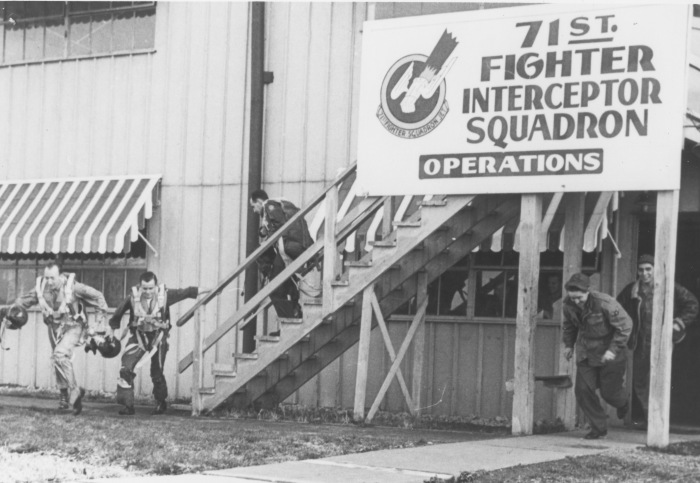
Scramble by the 71st Fighter Interceptor Squadron c. 1960s (Source: United States Air Force)

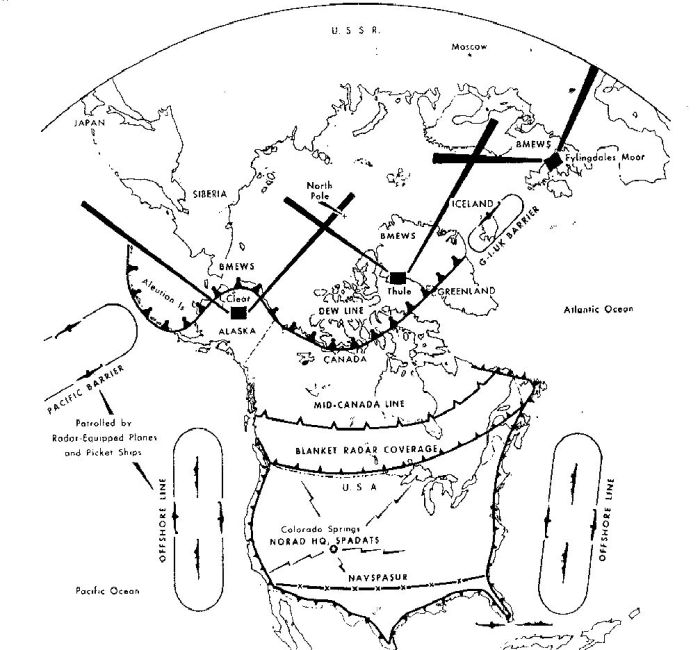
USAF leaders, most notably Generals Benjamin Chidlaw and Earle Partridge, guided the planning and programs during the mid-1950s and were largely responsible for how the ADC operated. USAF provided the interceptor aircraft and planned the upgrades needed over the years. USAF also developed and operated the extensive early warning radar sites and systems which acted as ‘tripwire’ against air attack. In addition to the radar sites in Canada, the US Navy element, now Naval Forces NORAD, operated radars and picket ships on both the East and West coast. The complexity of the NORAD mission would eventually be controlled from inside the Cheyenne Mountain Air Force Station. In a theoretical scenario, Soviet bombers would be detected by one of the early warning lines or picket ships and the interceptors launched.

norad-map-1960s
Map illustrating the coverage provided by NORAD in the 1960s (Source: United States Air Force)

These aircraft came in many forms, most notably the famed (infamous) Century Series: North American F-100 Super Sabre (more commonly called the Hun), Mcdonnell F-101 Voodoo, Convair F-102 Delta Dagger, Lockheed F-104 Starfighter, Republic F-105 Thunderchief (the Thud), and the Convair F-106 Delta Dart. This entire series of aircraft were a mix of Fighter-Bomber and interceptors. TAC used these aircraft (mainly in Europe) as nuclear delivery vehicles: the F-100, F-101, F-105, but it was ADC that used the F-101, F-102, F-104, and F-106 as interceptors to stop the Soviet bombers. They were designed to take-off and be guided by ground control to Soviet bombers, which they would engage and destroy by air-to-air missile or the air-to-air Genie nuclear missile to take out entire bomber streams.

Of course, no series of fighter intercepts was going to be perfect and the interceptor force was back dropped by a heavy integrated air defense system (IADS) from both USAF Bomarc missiles (fired in advance of the interceptors) and the re-designated Army Air Defense Command of Nike and Zeus surface-to-air missiles surrounding government and military sites throughout the United States. While we normally attribute IADS as a Soviet way of defence, it was used extensively throughout the United States in the 1950s and 1960s.

It is not surprising that on Farley’s list of best and worst aircraft, none of these interceptors (F-101, 102, 104, 106) is to be found; they are not really fighters and were never meant to dogfight. It is almost as if an entire generation of aircraft and a whole command have been relegated to the trivial pursuit section of history. If this interests you and you have got thirty minutes to waste, enjoy this Army Air Defense Command (ARADCOM) instructional video from 1961 and if you have not had your fill of Air Defense and Freedom, there is also 1963’s The Shield of Freedom. ADC, by then the Aerospace Defense Command, finally inactivated on March 31, 1980.[4]

Dr Brian Laslie is an Air Force Historian and currently the Deputy Command Historian at North American Aerospace Defense Command (NORAD) and United States Northern Command (USNORTHCOM). A 2001 graduate of The Citadel and a historian of air power studies, he received his Masters’ from Auburn University Montgomery in 2006 and his PhD from Kansas State University in 2013. His first book The Air Force Way of War (2015) was selected for the Chief of Staff of the Air Force’s 2016 professional reading list. He lives in Colorado Springs. He can be found on Twitter at @BrianLaslie.

Header Image: Convair F-106A Delta Dart firing a Douglas AIR-2 Genie missile (Source: United States Air Force)

[1] According to the Air Force Historical Research Agency, the USAF currently has 14 inactivated major commands, http://www.afhra.af.mil/Information/Organizational-Records/Major-Commands/

[2] NORAD and US Northern Command Office of History, ‘A Brief History of NORAD,’ p. 4

[3] Lineage and honours of ADC can be found at the AFHRA: http://www.afhra.af.mil/About-Us/Fact-Sheets/Display/Article/433912/air-defense-command/

[4] The USAF does not ‘deactivate’ commands, rather they are ‘inactivated’ should the need ever arise for them to be reactivated.

Remembering The F-4 Phantom – Part 2: Orchestrated Confusion

Remembering The F-4 Phantom – Part 2: Orchestrated Confusion

By Mike Hankins

Previously, we looked at how McDonnell lost a significant contract with the US Navy after their upgraded F3H Demon failed a fly off competition against their competitor, Chance-Vought’s entry which became the F-8U Crusader.

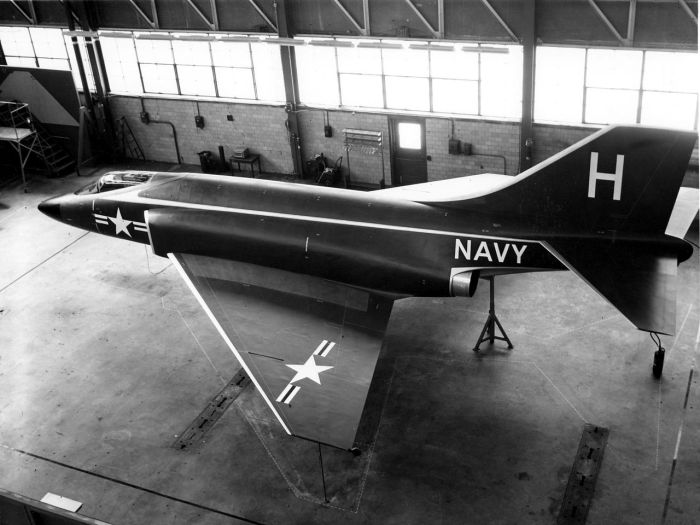
1280px-mcdonnell_f3h-g_mockup_in_1954
An early mockup of a modified F3H which is beginning to show some familiar visual characteristics of the F-4. (Source: US Navy National Museum of Naval Aviation)

McDonnell engineer Herman Barkley took the Demon’s rejection as a personal challenge and immediately began designing an unsolicited new aircraft initially without military funding.[1] Original sketches for the new craft consisted of yet another version of the Demon, similar to the design that had already failed against Vought’s F-8U. The US Navy had a vested interest in allowing McDonnell to experiment with the design. It could keep McDonnell afloat, enabling it to remain a valuable supplier, and perhaps reap some return on the initial investment they had both placed in the failed F3H. Upon review of these sketches, The US Navy did support the project, but gave no stated mission requirements for the plane, encouraging McDonnell to experiment on the drawing board. According to J. S. McDonnell himself:

All we had to work with in the beginning [of F-4 Phantom II Development] was a gleam in the customer’s eye […] What followed was two years […] of orchestrated confusion.

The US Navy, because of their doctrinal assumptions, wanted to focus on high-speed interceptors but was purposefully vague about communicating this, hoping McDonnell would reach in new and unexpected directions. This lack of specificity and a desire to maximise profits by designing a versatile plane that functioned in many contexts led McDonnell to develop a multi-role aircraft not optimised for the air-to-air mission.[2]

The confusion continued until Spring of 1955 when Commander Francis X. Timmes (newly in charge of the project) emphasised the high-speed interceptor role and stressed adaptability. Those concepts required that the plane to have two seats, two engines, and an armament of only missiles. The plane thus featured eleven hardpoints for carrying bombs or missiles, the most ever designed on an airframe at that time. The homogenous armament and dual-pilot setup both theoretically enhanced adaptability, since dogfighting was (allegedly) unnecessary, the lack of guns made the plane lighter (thus faster), and pilot duties could be split between two people. In July 1955, the US Navy rewarded McDonnell’s efforts with a contract for the production of seven prototypes.

The Phantom’s unique look was the result of over 5,300 hours of wind tunnel tests, which revealed a significant problem in supersonic flight. The plane was susceptible to ‘roll coupling,’ which is a technical way of saying the plane became uncontrollable – a condition from which pilots were trained to eject immediately. The angled wingtips and tail decreased the chances of this occurring. To add to stability concerns without sacrificing speed, the Phantom was given the ‘Stab Aug’ system that could sense unstable flight paths and automatically correct for them quicker than a pilot could manually. Computer controlled intake ramps to control air flow into the engines also increased the plane’s top speed. Another computerised system, ‘Boundary Layer Control,’ sent excess air from the engines over the wings to generate more lift and increase speed and acceleration. [3]

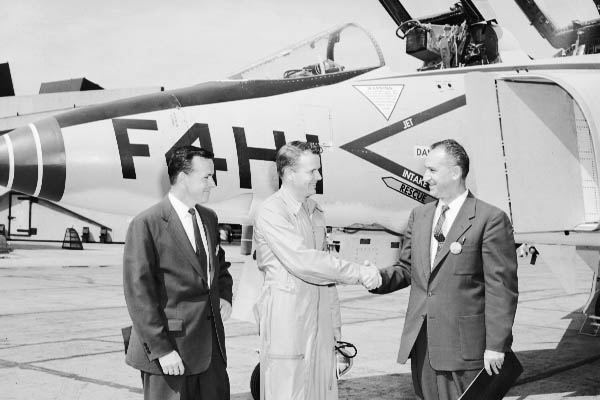
f4h-1_leadership
Herman Barkley (left) with test pilot Robert Little(center) and fellow engineer David Lewis (right) in front of a prototype of the F-4. (Source: Wikimedia)

Though the bond between the US Navy and its developers was strong, the military was loathed to place all its eggs in one basket. Timmes solicited other designs to fit the same roles as the Phantom in August 1955. The company that stepped up to the plate was none other than McDonnell’s old nemesis: Chance-Vought. Vought had developed an upgraded version of their successful F-8U Crusader, the very plane that had beaten McDonnell’s F3H Demon. Both new designs were set to compete in an unofficial fly off beginning on 15 September 1958. The tests emphasised the assumptions of the time, focusing on maximum speed and climbing rates. The assessments did not include manoeuvrability, gunnery, or other metrics pertinent to air-to-air combat.

In every tested category, the F8U-3 Crusader proved superior. It even had better fuel mileage. Its only drawbacks were a lower payload and time-consuming maintenance requirements. Despite this, George Spandenberg, then the director of Bureau of Aeronautics’ Evaluation Division, thought that single-seat, single-engine planes were inherently unreliable and argued that a two-seat plane would boost morale. Thus he boldly asserted, ‘The single-seat fighter era is dead.’ Advocates of the F-4 often claim the Phantom ‘won’ the contest (since it did win the US Navy contract after all), although a close look at the fly off reveals the upgraded Crusader had clear performance advantages in every category.[4]

Despite the Phantom’s lacklustre performance at the fly off, it was still an impressive aircraft in many respects. Between December 1959 and April 1962, the F-4 set over a dozen world records, the most coveted (and revealing of the plane’s doctrinal design focus) of which was that of absolute top speed: 1,606.3 miles per hour.[5] The F-4 also possessed many problems that came back to haunt the military over the jungles of Vietnam, and that appear almost negligent in retrospect. Aside from the stability issue (which caused ‘departure’ or ‘the adverse yaw effect,’ terms for when the plane loses control during maneuvers), the almost non-existent rear-visibility was a problem, as were the giant plumes of black smoke produced by the engines that gave away the location and heading of every Phantom. The plane was also quite vulnerable to ground fire because its hydraulic lines were delicate and devoid of redundancy. Indeed, ground fire downed more F-4s in Vietnam than any other single threat. Across US Air Force (USAF), the US Navy and the US Marine Corps combined, from January 1962 to January 1973, 930 planes were lost to small arms ground fire, or, 45% of losses by known causes. AAA claimed 632; SAMs shot down 191; MiGs destroyed 79, and friendly fire claimed 25.

The USAF observed these record-setting demonstrations and grew interested in the plane’s usefulness as a strategic bomber and interceptor.[6] After a series of tests, USAF eventually ordered more than triple the number of Phantoms as the Navy. McDonnell finally created four new models of the Phantom to USAF specifications, the first and most significant of which was the F-4C.[7]

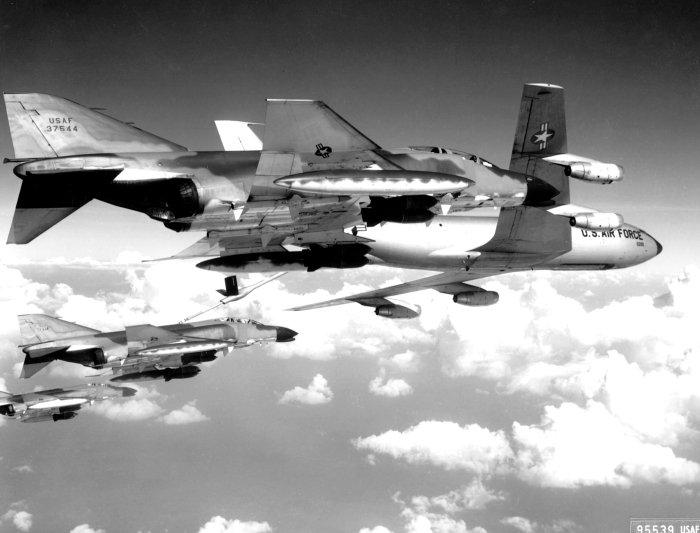
U.S._Air_Force_McDonnell_F-4C_Phantom_II_fighters_refuel
A flight of US Air Force McDonnell F-4C Phantom II fighters refuel from a Boeing KC-135A Stratotanker aircraft before making a strike against targets in North Vietnam. The Phantoms are loaded with six 750 pound general purpose bombs, four AIM-7 Sparrow air to air missles, and 370 gallon external fuel tanks on the outboard pylons. (Source: Wikimedia)

Although the Phantom would undoubtedly have performed extremely well in its designed role of intercepting enemy bombers, it ironically never had to. Instead of saving the world from nuclear Armageddon in the hypothetical World War III, the F-4 instead flew in a limited war over the jungles of a tiny third world country that many Americans had trouble locating on a map. The enemies it faced were not large lumbering bombers threatening nuclear annihilation, but missiles, ground fire, and manoeuvrable MiG fighters much more adept at air combat. Statistically, the deadliest enemy for the Phantom, one of the most powerful and expensive planes in US history to that point, was an individual on the ground with a machine gun. Similar to the doctrine that spawned it, the F-4 was the right plane for the wrong war.

The F-4 Phantom II was a fighter plane possessing few characteristics of traditional fighters. It was large, cumbersome, and built around the concept of long range attacks, sacrificing the agility and armament necessary of true air superiority craft. Originally conceived as an interceptor and soon burdened by ‘mission creep’ that insisted it handle multiple roles, the plane was the poster child for pre-Vietnam USAF doctrine, namely, the quasi-religious devotion to strategic bombing that minimised all other roles of air power.

Part One of this article can be found here.

Mike Hankins is a doctoral candidate at Kansas State University, where he teaches World History, the History of Airpower, and the History of Comic Books, and he is currently working on his dissertation, ‘Sources of Innovation: The Cultural and Technological Origins of Fourth Generation Fighter Aircraft, 1964-1991.’ He completed his master’s thesis at the University of North Texas in 2013, titled ‘The Phantom Menace: The F-4 in Air-to-Air Combat in the Vietnam War. He has a web page and can be found on Twitter at @hankinstien.

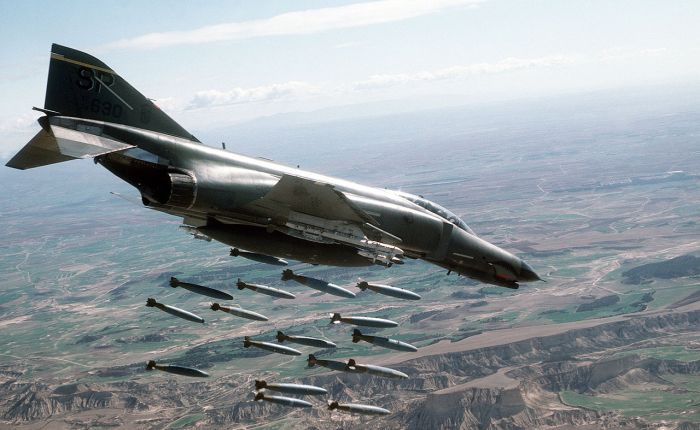
Header Image: A USAF McDonnell Douglas F-4E Phantom II from the 81st Tactical Fighter Squadron, 52nd Tactical Wing, releasing 18 Mark 82 227 kg bombs over the Bardenas Reales Gunnery Range, Spain, 25 March 1986. (Source: Wikimedia)

[1] Enzo Angelucci and Peter Bowers, The American Fighter (New York: Orion, 1987), p. 451, 310. Larry Davis, F-4 Phantom II in Action (Carrollton, TX: Squadron/Signal Publications, 1984), p 4.

[2] Glenn E. Bugos, Engineering the F-4 Phantom II: Parts Into Systems (Annapolis: Naval Institute Press, 1996)p.  23, 9, pp. 13-14.

[3] Ibid, p. 20, pp. 25-28, 37-40, 51-2.

[4] Peter E. Davies,  USN F-4 Phantom II vs VPAF MiG 17/19: Vietnam 1965-73 (Oxford: Osprey Publishing, 2011), p. 16; Lou Drendel, F-4 Phantom II in Action (Warren, MI: Squadron/Signal Publications, 1972), p. 6; Bugos, Engineering the F-4, pp. 95-9.

[5] Mick Spick, All-Weather Warriors: The Search for the Ultimate Fighter Aircraft (London: Arms and Armour Press, 1994), p. 131; Enzo Angelucci with Peter Bowers, The American Fighter: The Definitive Guide to American Fighter Aircraft from 1917 to the Present (London: G.T. Foulis, 1987), pp. 310-1.

[6] Bugos, Engineering the F-4, p. 104.

[7] Anthony M. Thornborough, USAF Phantoms: Tactics, Training, and Weapons (New York: Arms & Armour Press, 1988), pp. 11-12; Bugos, Engineering the F-4, p. 115.

Remembering the F-4 Phantom – Part 1: A Product of Its Time

Remembering the F-4 Phantom – Part 1: A Product of Its Time

By Mike Hankins

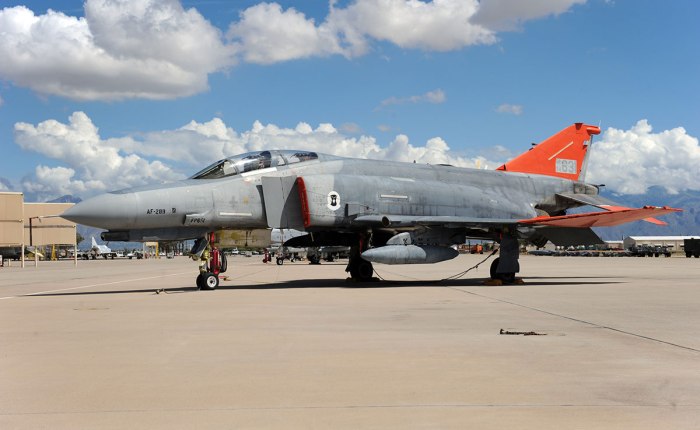
A few weeks ago, on August 17, 2016, the QF-4 Phantom flew its final unmanned mission for the United States Air Force (USAF). Although the Phantom was officially retired from combat use in 1996, USAF has been using unmanned, remote-controlled versions of the F-4 as target drones in training exercises. As the QF-4 completes its final flight, it feels like the end of an era. With over 5,000 built, the F-4 was one of (if not the) most ubiquitous aircraft of the Vietnam War and formed the backbone of the USAF in that period.

Final flight farewells Phantom
Airmen from the 82nd Aerial Target Squadron, Det. 1 at Holloman Air Force Base hosted the final manned flight of the QF-4 Phantom as part of the Phinal Phlight Ceremony on 21 December 2016. The ceremony commemorated and retired the QF-4 Phantom after 53 years of service in the US  Air Force.  Over its many years at Holloman, the QF-4 flew 145 unmanned missions and 70 aircraft were destroyed in service. It flew its last unmanned mission in August 2016 and was replaced by the QF-16 in 2017. (Source: Wikimedia)

In many ways, the F-4 was the last representative of an earlier era in USAF thinking — its design (emphasising speed, interception, and multi-role capability) reflected the doctrines and assumptions of the early Cold War. During the Vietnam War, those assumptions began to be overturned, and the Air Force eventually turned to a new generation of fighters in planes like the F-15 Eagle and F-16 Falcon. As the Phantom has now officially passed out of use in the US, it is worth taking some time to look back at the Phantom’s design, what that tells us about previous modes of thinking in the Air Force, and what that might mean for the future.

After World War II, USAF, and indeed the entire US military was dominated by Strategic Air Command (SAC), which maintained a fleet of nuclear bombers. The assumption was that a potential “next war” would involve the US and the Soviet Union launching atomic bombs at each other. Thus, national security rested on the idea of being able to drop nukes on Soviet vital centres, while also being able to intercept any Soviet bombers that attempted to do the same.</p

Century_series_fighters_NACA_1957
Four US Air Force Century-series fighters in flight in 1957. These supersonic fighters were tested by the NACA Dryden Flight Research Center at Edwards Air Force Base. The aircraft visible are: McDonnell F-101A-5-MC Voodoo (top), Lockheed XF-104A Starfighter )left). This latter aircraft crashed on 11 July 1957 due to an uncontrollable tail flutter. The pilot, Bill Park, ejected safely. A Convair F-102A-20-CO Delta Dagger (right), North American F-100A-20-NA Super Sabre (bottom). (Source: Wikimedia)

Other tactical missions like air superiority, ground support, or supply interdiction, became irrelevant. The age of fighter escorts, dogfights, and close air support against fielded enemy ground forces was over. In those early years of the Cold War, despite a few small voices of criticism, the USAF devoted less than 6 percent of its research and development resources into tactical and fighter roles. As a result, several tactical fighter wings disappeared in the late 1950s. Tactical Air Command was responsible for these functions and quickly found that the best way to retain relevance (and budget dollars) was to make a case that they too could contribute to SAC’s nuclear mission. They thus focused on developing fighter/bombers and interceptors that emphasised speed (at the expense of manoeuvrability) to either quickly deliver a nuclear warhead, or to intercept an enemy bomber and shoot it down in one pass – not with guns, but with guided missiles. This approach was exemplified in their ‘Century Series’ of interceptors. [1]

The US Navy also came to the same conclusion – that maintaining their budget and relevance necessitated that they participate in the nuclear mission, especially once atomic warheads became small enough to mount to carrier-based aircraft. New US Navy aeroplane designs focused on delivery of tactical nukes and interception of enemy bombers, and although the US Navy did not abandon air superiority to the degree that USAF did, the role of US Navy fighters certainly diminished in the post-war period. For example, the Fleet Air Gunner Unit, which trained weapons officers on US Navy planes, closed in 1960 and new training syllabi excised air-to-air combat.[2]

These assumptions and trends are key to understanding the development of the F-4 Phantom, but one the other main factor was the system of the ‘Military-Industrial Complex.’ Few defence contractors existed in the early Cold War, and the vast sums involved in contract awards and losses could make or break companies quickly. To keep options open, the military had a strong incentive to maintain their contractors afloat, sometimes making purchases regardless of actual needs. The military also encouraged these companies to push the envelope of cutting-edge technology, at times guided by strict mission parameters, on other occasions without many guidelines at all. Thus, a strong paternal bond developed between the military and its industrial suppliers, creating an environment that encouraged companies to experiment and take risks without fear of a total company failure.[3]

xf3h_demon_on_uss_coral_sea_28cva-4329_in_1953
A US Navy McDonnell XF3H-1N Demon on the elevator of the aircraft carrier USS Coral Sea, in 1953. (Source: Wikimedia)

This bond came into play in September 1952, when the US Navy Bureau of Aeronautics invited proposals for a new fighter plane dedicated to the (redefined) air superiority and interception missions. The US Navy eventually awarded this contract to McDonnell’s rival firm Chance-Vought, whose entry became the F-8U Crusader. McDonnell’s losing design in this competition was a version of the F3H Demon upgraded with a dual-engine and a missile armament. In 1954, the losses from this project nearly destroyed McDonnell. The US Navy had much to lose if its weapons manufacturers closed and viewed these defence contractors as too big to fail.[4]

Next time, we will look at McDonnell’s response to this loss, and how it led to one of the most ubiquitous aircraft of all time.

Part Two of this article can be found here.

Mike Hankins is a doctoral candidate at Kansas State University, where he teaches World History, the History of Airpower, and the History of Comic Books, and he is currently working on his dissertation, ‘Sources of Innovation: The Cultural and Technological Origins of Fourth Generation Fighter Aircraft, 1964-1991.’ He completed his master’s thesis at the University of North Texas in 2013, titled ‘The Phantom Menace: The F-4 in Air-to-Air Combat in the Vietnam War. He has a web page and can be found on Twitter at @hankinstien.

Header Image: The unmanned QF-4 target drone (Source: http://www.military.com/equipment/qf-4-aerial-target)

[1] Earl H.Tilford, Crosswinds: The Air Force’s Setup in Vietnam (College Station: Texas A&M University Press, 1993), pp. 20-22; Craig C. Hannah, Striving for Air Superiority (College Station: Texas A&M University Press, 2002), p. 28; Caroline F. Ziemke, ‘In The Shadow of the Giant: USAF Tactical Air Command in the Era of Strategic Bombing, 1945-1955’ (PhD Thesis, The Ohio State University, 1989), p. 7.

[2] George W. Baer, One Hundred Years of Sea Power: The U. S. Navy, 1890-1990 (Stanford: Stanford University Press, 1994), P. 334.; Robert W. Love, Jr., History of the United States Navy, Vol. 2 (Harrisburg: Stackpole Books, 1992), pp. 375-6.

[3] Glenn E. Bugos, Engineering the F-4 Phantom II: Parts Into Systems (Annapolis: Naval Institute Press, 1996), p. 23.

[4] Bugos, Engineering the F-4, pp. 15-17.