#BookReview – Reaper Force: Inside Britain’s Drone Wars

#BookReview – Reaper Force: Inside Britain’s Drone Wars

By Mark Russell

Peter Lee, Reaper Force: Inside Britain’s Drone Wars. London: John Blake Publishing London, 2018. Index. Hbk.
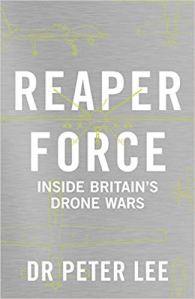
Reaper Force

In this book, Peter Lee sets out to describe the ‘unknown community’ that is the Royal Air Force’s (RAF) Reaper Force. In doing so, Lee focuses on the aircrew in the ‘cockpit’ of these remotely piloted aerial vehicles (RPAS) and their partners, rather than all the other personnel needed to operate Reaper. Lee originally proposed the work to the RAF as an attempt to answer some of the questions that readers in one hundred years’ time might ask about these individuals, as a way of ensuring that those future enquirers would know more than we do about the RAF aircrew of 1918. Given this genesis, the limitation of scope is understandable and an outline of Lee’s research approach can  found in his submission to the UK All Party Parliamentary Group that was established in 2016 to ‘analyse the emerging technologies of drones [and] the ways in which the UK works with allies with regard to the use of armed drones.’ Moreover, this starting point is a pleasing historical touch as 2018 marks the centenary of the formation of the RAF. Indeed, it was during the First World War that we saw human-crewed flight come of age as a weapon of war, and one hundred years later, the success of the Reaper Force raises the question of what the future is for manned aviation in the RAF. However, Lee does not pursue this or many other intriguing avenues, for reasons of time and space. He does not engage in detail with the debate about whether drones are ‘fair’, quickly dismissing this by rightly arguing that war has always seen one side aiming to gain an ‘unfair’ advantage over another, and this is just another manifestation of this trend. So, this is not a book to read to understand more about the ethics of drones. A reader seeking this debate should look elsewhere, and indeed Lee has already little on this subject himself.[1]

Lee aimed to record how the Reaper Force feels about their ‘experiences and day-to-day lives’, and the book does an excellent job fulfilling this aim. His interview-based approach provides a distinct perspective from books written by those operating drones, which lack the reflection and perspective on experiences that Lee provides through the questions he puts to the aircrew. The bulk of the book is made up of content taken from interviews Lee conducted with members of both No. 39 Squadron based at Creech AFB in Nevada, and No. XIII Squadron based at RAF Waddington and these provide genuine insights into the aircrew’s (and their partners’) feelings about what they do. One comes away with a sense that this is a highly trained, highly dedicated group of men and women, with a culture that among other things is focused on ‘zero CIVCAS,’ that is a ‘policy direction’ of no civilian casualties (p. 279). Lee (p. 279) describes this focus as ‘almost an obsession […] that has had a significant impact on how they operate and make decisions.’ He recounts a mission where the aircrew believed the target was valid, as did the Joint Terminal Attack Controller (JTAC) on the ground, but the Senior Mission Intelligence Coordinator, an acting sergeant outside the aircrew, objected to the strike. This was because they believed it was a child rather than a parcel on the back of the target and was proved right (pp. 284-8). This is an excellent illustration of the commitment to zero CIVCAS, given both the hesitation to launch the weapon and the freedom the most junior person in the process felt to halt it. This indicates a very healthy culture if one believes zero CIVCAS should be accorded that level of importance.

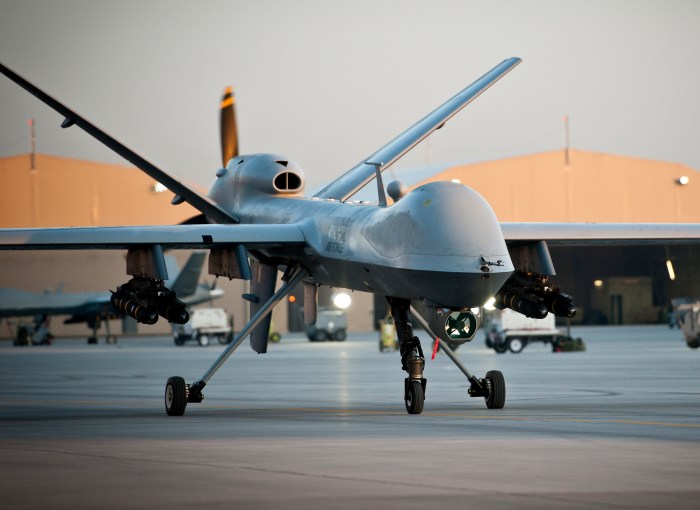
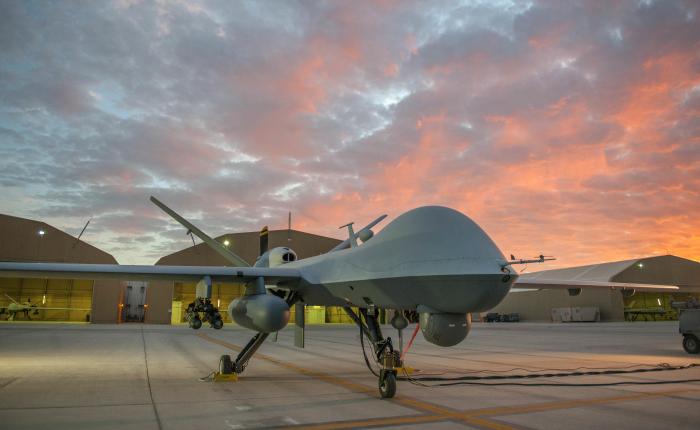
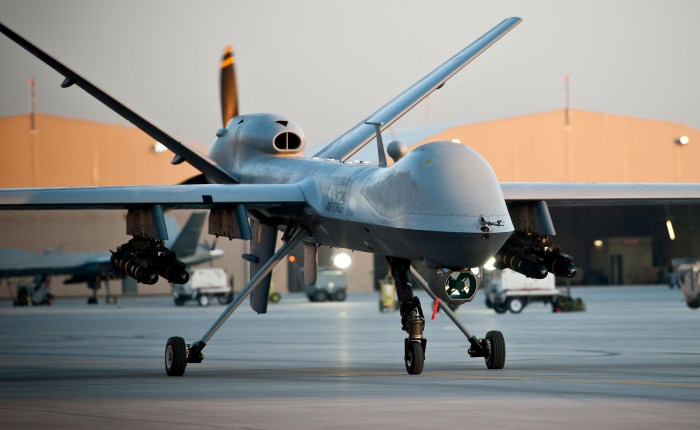
Reaper Remotely Piloted Air System
A Royal Air Force Reaper RPAS at Kandahar Airfield in Afghanistan, c. 2014. (Source: Defence Imagery, UK Ministry of Defence)

Lee discussed further a 2011 ‘CIVCAS incident’ in Chapter Five when an RAF strike killed four civilians riding in lorries transporting explosives. This attack occasioned many levels of review, and it is clear that there is a huge determination in the Reaper Force that this should not happen again – even though as Lee (p. 113) notes, ‘the crew’s actions were in accordance with the Law of Armed Conflict and their procedures and directives.’ This message is one the RAF’s Air Staff would presumably be no means averse to having more widely understood. However, Lee also makes the point through his interviews with several of the aircrew’s partners that this care and skill should be more widely appreciated, to counter all those who claim drones have killed thousands of innocent civilians, including the Reaper Force in this blanket condemnation. Indeed, one is left with the evident understanding from the interviews that the Reaper Force does not operate in this way; Eye in the Sky (2015) was a good film but what is depicted would never have happened under the RAF’s Rules of Engagement (RoE), and the Reaper Force is not guilty of causing wanton civilian deaths. There are, however, hints in the book that at times those looking for support from the Reaper Force are frustrated by these RoEs, for example, when a British Army JTAC is frustrated that a Reaper crew will not launch a missile and calls for assistance from an Army Air Corps Apache instead (p. 282). These RoEs can also frustrate those in the Reaper Force, as described in Chapter Nine when on Boxing Day 2014 permission to destroy a suspected IS-controlled ex-Iraqi armoured vehicle was denied, with the result that the Reaper crew had to watch then the aftermath of a successful IS attack using it.

The above example affected the crew in question, and Lee uses this and other cases to explore the issue of how the high-tempo of Reaper operations, and how the nature of those operations, with the graphic and detailed images they see as part of launching strikes, may be impacting the mental health of the aircrew. His interviews provide illuminating examples, and those he interviewed have a range of ways of coping, dependent on the various ways what they do affects them. Some aircrew seems to be able to operate for several years without being adversely affected; others burn out much more quickly. This issue links to the RAF’s perception of bravery, and how this should be recognised. Historically, bravery has been defined by physical courage. Lee, however, makes a case for those who continually put their mental health at risk through flying Reaper operations as showing as much bravery as aircrew who get physically airborne. In reading this, about issue continuing to put oneself at risk, one is undoubtedly reminded in some ways of the courage Marshal of the Royal Air Force Sir Arthur Harris described seeing in his Bomber Command crews.

Chapter Eleven looks at the question of bravery in its most visible military form, namely the award of decorations to Reaper crews. This is a subject that has generated discussion more widely over recent years. Lee addresses it by reference to a particularly challenging strike, footage of which was used by the UK Ministry of Defence (MoD) as part of the press release announcing the award of campaign medals to those involved in the campaign against IS. The irony was that since the Reaper crew executing the strike were not deemed to be ‘in theatre’, they did not qualify for the medal. However, as Lee points out both in the book and in his October 2017 lecture at the Royal Aeronautical Society, they were exposing themselves to not insignificant risks of mental injury, and certainly were knowingly taking greater risks with their health than those working in a mess at Akrotiri. This again reminds one of RAF Bomber Command, and Harris’ unsuccessful campaign to have his groundcrews awarded a campaign medal despite cooks and bottle-washers in other theatres being entitled to a campaign medal.

Lee, however, does note that the MoD announced on 18 July 2018 that the medal would be awarded to Reaper pilots (p. 249). There will always be those who wish to equate heroism with physical courage, and hence would never see Reaper crews as eligible for medals, but this decision feels appropriate given the increasing level of discussion in society around mental health and, in a military context, post-traumatic stress disorder in particular. To what extent these issues will impact Reaper Force aircrew in the future is a subject for a later book, but this volume makes it clear that they have seen sights, repeatedly, that no-one would ask to see given the choice.

This potential to see bravery redefined is one example of how Reaper and its successors could change the RAF, and this is an area where one feels the whole growth of the Reaper Force raises many interesting issues that Lee has probably rightly only touched on very briefly. What will it mean for the RAF’s culture when perhaps many attack missions do not require a human in the aircraft? Already aircrew are being trained solely to operate Reaper, and the RAF, while awarding them aircrew brevets, is making them subtly different from the ‘normal’ brevets given to those who get airborne – does this demonstrate a reluctance to admit that Reaper crews are as valuable as those who get airborne? Moreover, what will this mean for the RAF as RPAS aircrews undertake more missions? The Reaper Force from its inception was crewed mainly by aircrew who served on Harrier, Nimrod and Tornado aircraft who transferred to Reaper as these aircraft were taken out of service. The aircrews who operated on manned platforms brought with them the culture and attitude from those environments, and Lee describes several interesting stories from aircrew about the different operating styles. For example, Lee recounts how a former Tornado navigator said she could not get used to the amount of talking an ex-Nimrod pilot would do, which was a huge change from the fast jet where ‘a good cockpit’s a quiet cockpit’ ethos was one that she was used to (p. 132).

Reaper UAV Takes to the Skies of Southern Afghanistan
An RAF Reaper pictured airborne over Afghanistan during Operation HERRICK. (Source: Defence Imagery, UK Ministry of Defence)

As such, even within the Reaper Force, there are still vestiges of the culture that the members brought from their previous aircraft types, and the force will need to evolve its own culture over time. One suspects it will not be as extrovertly self-confident as the fast jet one it is partially replacing. Indeed, Lee recounts that his initial inquiry about when it would be time to ‘kick the tyres and light the fires’ on his first day watching an aircrew was met with a swift ‘very funny’, clearly meant to shut him up (p. 31). The RAF’s public image is very much built around the image of the fighter pilot, from the aces of the First World War, through the pilots of Fighter Command in the Battle of Britain to today’s Typhoons on QRA, intercepting Russian Bears out over the ocean. Indeed, it is interesting that the RAF’s historic flight is called the Battle of Britain Memorial Flight when far more aircrew served and died in Bomber Command during the Second World War. Reaper and other automated weapons (such as standoff missiles) can already deliver many of the classic roles of air power (reconnaissance, strategic attack, close air support, for example), but without a human to build a corporate (self) image around, how will the RAF’s own picture of itself change, and what image will it use to engage broader public support?

In summary, this is a valuable book for the insights it provides into the pressures of serving in a critical element within Britain’s armed forces. The Reaper Force is an element of the British military that will only grow in importance given both the capabilities it offers and the low risk it presents of unfavourable press. Indeed, between January and August 2018, Reaper has accounted for around 45 per cent of all RAF strike over Iraq and Syria during Operation SHADER. The only reservation that can, I think, be expressed is that this book leaves the reader feeling there were so many other avenues that could have been explored as well. Had Lee examined them, though, we would not have had this book now – we would have been waiting several years longer. What would be interesting would be to see a similar book in ten years’ time, to see how the Reaper Force (or Protector Force as it will likely be known by then) has evolved.

Mark Russell graduated with a degree in History in 1985 and has worked in professional services ever since. He returned to academia in 2015 and graduated with an MA in Air Power from the University of Birmingham in 2017. His dissertation looked at whether the RAF was a learning organisation in the period 1925 – 1935, with particular reference to how the Air Exercises helped the RAF develop and test tactics and technology. He continues to work in professional services, but his current research interest is the RAF in the interwar years and how the organisation managed technological change. Since graduating from Birmingham, he has had two books reviews published by the RAF’s Centre for Air and Space Power Studies and is currently working on articles for both RAF Air Power Review and The Aviation Historian.

Header Image: A Royal Air Force Reaper RPAS at Kandahar Airfield in Afghanistan, c. 2014. (Source: Defence Imagery, UK Ministry of Defence)

[1] Peter Lee, ‘Rights, Wrongs and Drones: Remote Warfare, Ethics and the Challenges of Just War Reasoning,’ RAF Air Power Review, 16:3 (2013), pp 30-50.
#BookReview – Routledge Handbook of Air Power

#BookReview – Routledge Handbook of Air Power

By Dr Ross Mahoney

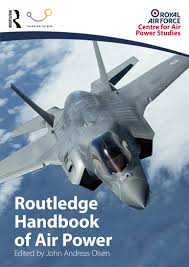
John Andreas Olsen (ed.), Routledge Handbook of Air Power. Abingdon: Routledge, 2018. References. Index. xix + 405 pp. Hbk.

Hanbook of Air Power

It is often challenging to name a single person who is a critical figure within any discipline. As I reflected here, this is also the case with air power studies if such a discipline exists. One individual who has made an indelible impact on air power studies over the past couple of decades is Colonel Professor John Andreas Olsen. As well as publishing several studies on Operation DESERT STORM and Colonel John Warden III, Olsen has successfully published a series of edited works that have focused on several aspects of air power. The importance of these works is that Olsen has been able to bring together leading scholars to write about critical themes concerning the use and development of air power. In this latest edited volume, Olsen has, once again, brought together a line-up of prominent scholars and military practitioners who are at the forefront of researching air power.

This book seeks to ‘improve knowledge of and insight into the phenomena of aerospace power.’ (p. 8) Indeed, as Olsen reflects, air power is more than just ‘aircraft, weapons systems and bombing.’ (p. 5) Recognising this, Olsen further notes that any analysis of air power must also encompass, though not limited to, issues such as ‘training, education, values, rules of engagement, leadership, adaptability, boldness in execution, and a range of other factors, tangible and non-tangible, that influence a military operation.’ (p. 5) It is around this broad definition that this book is designed. The book’s design reflects Sir Michael Howard’s sage words that military history, and by default military affairs in general, should be studied in breadth, depth, and context. As such, the book is split into five sections that in turn, deal with themes related to Howard’s advice. In providing a coherent pedagogical purpose to the book, Olsen has at least tried to provide some form and flow to the volume, which can often be a challenging prospect with any edited book.

The first section deals with the essence of air power and provides the breadth aspect for this volume. The section consists of six chapters dealing with air power anatomy, theory, history, high command, science and technology and ethics and international law. Each author is well placed to write their respective chapters, and each provides a useful overview of his subject. For example, Peter Gray provides an excellent strategic overview of the critical trajectory of air power history (pp. 70-80) while Philip Meilinger (pp. 35-45) discusses some of the essential themes evident in one hundred years or so of air power theory.

The second and third sections provide depth to this volume by exploring critical aspects related to the delivery and application of air power. It is in these sections where we see the greatest mix between academics and military practitioners in the volume. Of the 12 contributors to these sections, seven are currently serving officers ranging from a two-star officer, Air Vice-Marshal Richard Knighton of the Royal Air Force (RAF) through to two Wing Commanders from the Royal Australian Air Force, Travis Hallen and Chris McInnes.  The first section on delivering air power focuses on issues such as control of the air, command and control and logistics. It is good to see the latter included as it is clear, as Knighton concludes, that the logistical requirements of air power are not ‘well understood.’ (p. 151) The section on applying air power deals with the integration of air power with the other domains including space and cyber and each provides a good overview of the issues related to these topics.

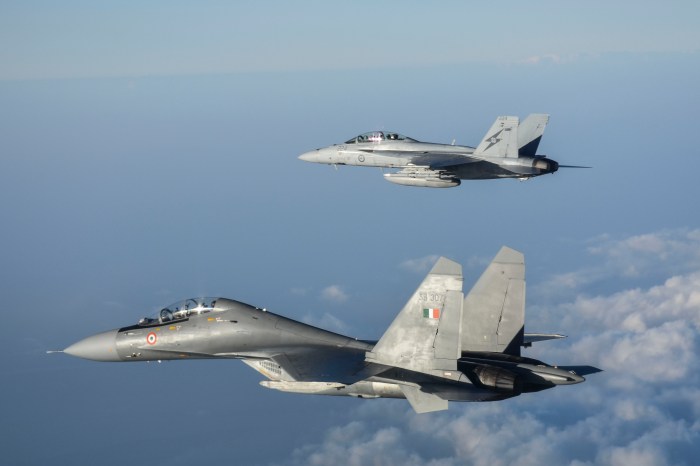
Exercise Pitch Black 18
A Royal Australian Air Force F/A-18F Super Hornet from No. 1 Squadron (top) in formation with a SU-30MKI Flanker aircraft from the Indian Air Force during Exercise Pitch Black 18.(Source: Australian Department of Defence)

The final two sections provide the context to this volume by exploring issues related to the political-social-economic environment in which air power operates and a section on national case studies. The latter section includes some interesting selections including chapters on Indian, Pakistani, Brazilian and Japanese air power. Some might argue that chapters should have been included that dealt with, for example, the US, UK, and other European nations. However, this book needs to be read in conjunction with other edited volumes by Olsen, such as Global Air Power (2011) and European Air Power (2014) where you will find chapters dealing with these nations. As such, it makes a refreshing change to see other examples included in this volume. The section on the political-social-economic environment includes some exciting chapters dealing with the political effect of air power and coercive diplomacy. As Michael Clarke (p. 237) argues, air power is a potent weapon but needs to be used carefully to help achieve a political effect. Karl Mueller mirrored this view, who notes that ‘aerial bombing was not a panacea for preventing wars.’ (p. 252) Indeed, perhaps the critical criticism of air power thinkers has been their overestimation of the capability available to them as well as the place of military aviation within the toolbox of national power.

While there is much to praise in this work, there are no doubt some gaps that require some reflection. The first is a comment on authors, and this is not so much a direct criticism of the book but rather a comment on the state of the discipline at this moment in time. The book has been authored entirely by male academics or serving officers who, as already noted, are eminently qualified to write their various contributions. However, the lack of female contributors is disappointing especially as there are female academics and serving personnel writing about air power. Indeed, the issue of male dominance of the discipline is one we are well aware of here at From Balloons to Drones – all the editors and assistant editors are men. Indeed, at From Balloons to Drones we hope to continue to offer opportunities for all to contribute to the discussion about air power. Building on the above reflection is also the fact that each of the authors in this volume has some form of relationship with the military. They are either serving or retired officers, teaching or teaching within the professional military education (PME) ecosystem, or working for a think-tank associated with the military, such as RAND. If this sample of authors in this volume is indicative of the discipline, then the study of air power still struggles from the problem identified 20 years ago by John Ferris, who wrote that:

[those studying air power are either] the children of airmen, have been military personnel themselves, and have been employed at a historical office or service school in Canada, Germany, the United Kingdom, or the United States.[1]

If this remains the case, there remains an open question as to how we broaden out the discipline to avoid accusations such as the weaponisation of the past. Linked to this, of course, is the question of what a broader and more diverse perspective on air power would bring to the discipline.

Regarding content, several areas could have further strengthened this volume. For example, it is curious that Olsen’s view concerning what encompasses the study of air power begins with training and education; however, neither subject is present in this volume. Concerning education, its omission is even more curious given the focus on the so-called conceptual component in programmes such as the RAF’s Thinking to Win, Plan Jericho in Australia, and the Royal Canadian Air Force’s Airpower in Formation. Interestingly, and perhaps indicative of the perceived importance of this volume, there is a paperback version of this book that has been produced in conjunction with the RAF’s Centre for Air and Space Power Studies and includes the Thinking to Win logo. However, as Meilinger reflected in his chapter, ‘[N]eeded are airmen well grounded in all aspects of air warfare, including the theoretical.’ (p. 44) If this is the case, then it follows that the provision of high-quality air power education is critical, and a chapter on this subject would have been valuable. Other chapters that could have been included include the culture of air forces and leadership instead of Stephens’ (pp. 24-34) focus on high command. Indeed, it is often remarked that air forces are somehow different to army and navies in their outlook. If this is the case, then an examination of the culture of air forces and issues such as leadership would have further enriched this volume.

Overall, despite my criticisms above, this is an excellent and essential contribution to our understanding of air power. As noted, the pedagogic layout of the book helps give the volume purpose that leads the reader through many critical issues related to air power. As such, while the book’s primary market will undoubtedly be serving air force personnel involved in PME and training activities, there is enough in this volume that other interested readers will gain much from this collection.

[1] John R. Ferris, ‘Review Article – The Air Force Brats’ View of History: Recent Writing and the Royal Air Force, 1918–1960,’ The International History Review, 20:1 (1998), p. 119

Dr Ross Mahoney is the Editor of From Balloons to Drones and is an independent historian and defence specialist based in Australia. Between 2013 and 2017, he was the resident Historian at the Royal Air Force Museum, and he is a graduate of the University of Birmingham (MPhil and PhD) and the University of Wolverhampton (PGCE and BA). His research interests include the history of war in the twentieth and twenty-first centuries, air power and the history of air warfare, and armed forces’ social and cultural history. To date, he has published several chapters and articles, edited two books, and delivered papers on three continents. He is a member of the Royal Historical Society and an Assistant Director of the Second World War Research Group. He can be found on Twitter at @airpowerhistory.

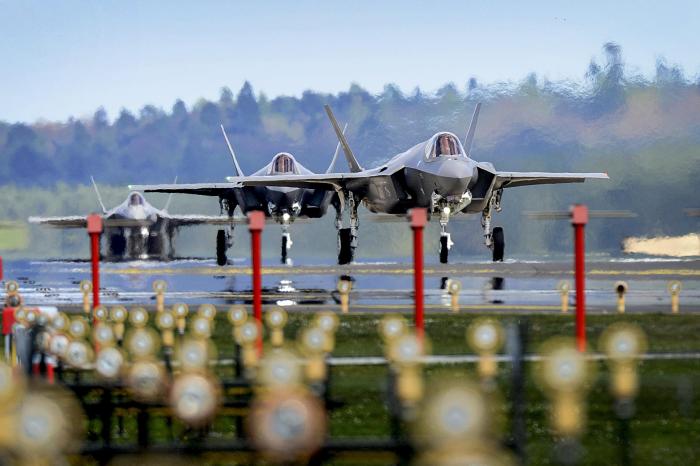
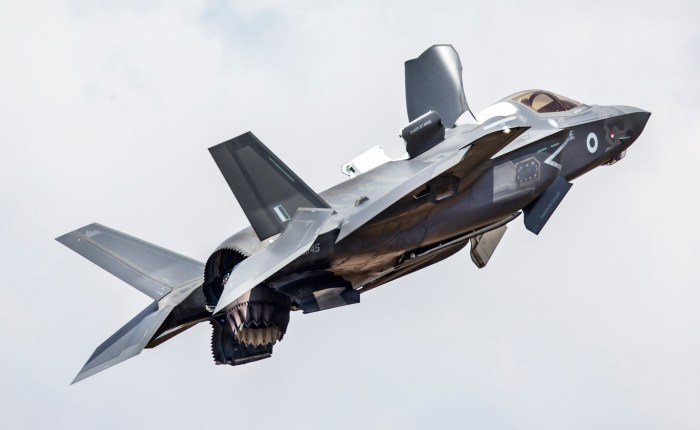
Header Image: An RAF F-35B Lightning from No. 617 Squadron stationed at RAF Marham. This aircraft is performing a hover manoeuvre during the Royal International Air Tattoo in 2018. (Source: UK MoD Defence Imagery)

#BookReview – Eagles Over Husky: The Allied Air Forces in the Sicilian Campaign, 14 May to 17 August 1943

#BookReview – Eagles Over Husky: The Allied Air Forces in the Sicilian Campaign, 14 May to 17 August 1943

By Dr Brian Laslie

Alexander Fitzgerald-Black, Eagles Over Husky: The Allied Air Forces in the Sicilian Campaign, 14 May to 17 August 1943. Solihull: Helion & Company, 2018. Images. Maps. Tables. Notes. Bibliography. Hbk. 192 pp.

Eagles

The Allied invasion of Sicily, Operation HUSKY, is often viewed as a logical progression from the North Africa campaign (TORCH) through Sicily and on into Italy. It is one of the ‘Big Four’ operations in the European and Mediterranean theatres of operations, which culminated in the invasion of Normandy. Sicily has often been either overlooked entirely or seen through a more ground-centric lens (think of the movie Patton). That being said, there has been some excellent historical work in recent years on the invasion and even some very good historical-fiction by, for example, Jeff Sharra. Perhaps overlooked is too strong a word. Overshadowed is perhaps apter and nowhere is the invasion of Sicily more overshadowed than in the realm of air power. True, there is Robert S. Ehlers excellent work The Mediterranean Air War (2015), which covers the entirety of the theatre, but a singular focus on the air war exclusively over Sicily has been missing.

Alexander Fitzgerald-Black seeks not only to bring HUSKY back into focus but seeks to delve into the often-overlooked role of air power in the Mediterranean theatre, particularly over the skies of Sicily and does so by linking the tactical to the strategic. Fitzgerald-Black (p. xxii) states that:

This work reconnects the role of the Allied air forces in the Battle for Sicily to the wider narrative of the air war and to the crucial Allied strategy for engaging Axis forces in the Mediterranean Theater during the Summer of 1943.

Air power itself has been viewed through various lenses, but the most notable narrative through HUSKY was that Allied air power did not live up to the promises it made – Fitzgerald-Black singles out Carlo D’Este for holding this interpretation. The author seeks to turn this traditional narrative on its head, and Fitzgerald-Black argues persuasively that some authors have focused too myopically on the tactical missteps and therefore, missed the greater strategic narrative. Fitzgerald-Black (p. xxiii) argues that ‘Allied strategic success in Sicily and the Mediterranean in mid-1943 mattered far more than the failure to prevent German forces on the island from escaping.’ Allied air power forced the Luftwaffe to pay a heavy toll for defending not an only island but the theatre writ large. Also, attacks against the Italian mainland helped drive Italy from the war entirely.

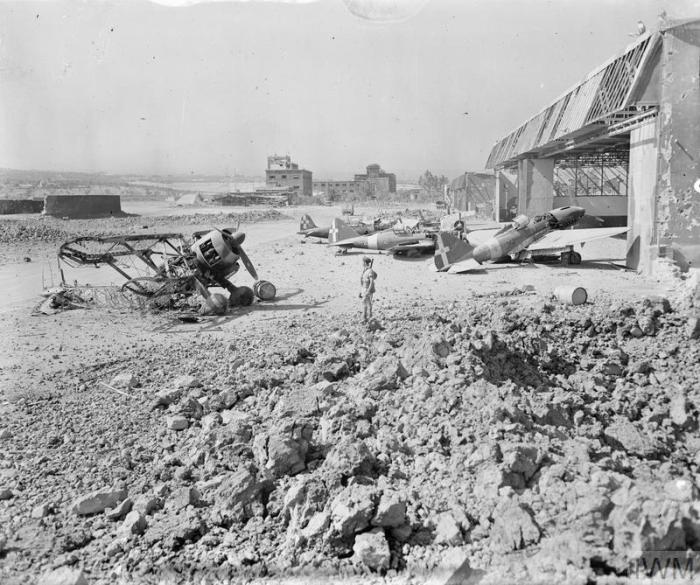
CNA 1352
Wrecked and damaged Italian fighters outside bomb-shattered hangars at Catania, Sicily, under the scrutiny of an airman, shortly after the occupation of the airfield by the RAF. (Source: © IWM (CNA 1352))

In the buildup to the landings, German and Italian air power was systematically, but not entirely, destroyed. Some authors have pointed this out as a failure of air power showing their preference for a Clausewitzian decisive battle that rarely appears. The Luftwaffe, under the direction Wolfram von Richthofen removed their bombers to the Italian mainland, believing Sicily to be untenable. Attacks on German and Italian bases gained enough air superiority that the invasion took place without prohibitive interference from the Luftwaffe or Regia Aeronautica. The simple fact was that Allied air power forced the Luftwaffe and Regia Aeronautica to react in ways it did not want to. Some might say Allied leaders had got inside their enemy’s OODA loop (p. 54, 63).

Again, there exist critiques of Allied air power on the day of the landings, but as Fitzgerald-Black demonstrates, the Germans and the Italians seemed to be to some degree husbanding their resources. Even in doing so, it was difficult for the Luftwaffe to contest control of the skies seriously. Where engagements did occur, the author shows that ‘[E]ffectiveness cannot only be measured by casualties inflicted upon Axis aircraft.’ There were occasions (p. 83) where ‘USAAF and RAF fighters broke up enemy formations and/or forced the bombers to jettison their payloads prematurely […].’ Fitzgerald-Black does an excellent job of interweaving his analysis and engaging prose with numerous first-person accounts from both sides of the conflict. His use of Johannes Steinhoff’s remembrances adds a level of balance to the work, wherein the points and actions of both sides are brought forth. Looking at the battle in retrospect, ‘The success of the German tactical withdrawal pales in comparison to the strategic victory the Allies won in Sicily during the Summer of 1943.’ Italy was knocked out of the war and Germany was now forced to defend Europe on two fronts that soon turned into three with the invasion of Normandy in June of 1944 (p. 159).

CM 5290
A line of Martin Baltimore Mark IVs of No. 223 Squadron RAF at Luqa, Malta, being refuelled and loaded with bombs for a raid on enemy positions around Catania, Sicily. (Source: © IWM (CM 5290))

One final point worth mentioning, and this is more a press decision than a note on the author’s work, but the use footnotes versus endnotes is a welcome change making it significantly easier to check the author’s sources at a quick glance. In the end, Fitzgerald-Black has done an outstanding job of refocusing attention on the air war over Sicily and has contributed to the study of air power history. His work resides alongside Chris Rein and Robert Ehlers in broadening our understanding of the Mediterranean theatre during the Second World War. His expert linking of tactical, operational, and strategic in a clear narrative allows all readers to understand that while one area of a campaign might be deemed a tactical misstep, the overarching importance of the strategic victory cannot be taken for granted.

Dr Brian Laslie is an Air Force Historian and currently the Deputy Command Historian at North American Aerospace Defense Command (NORAD) and United States Northern Command (USNORTHCOM). He is also an Assistant Editor at From Balloons to Drones. A 2001 graduate of The Citadel and a historian of air power studies, he received his PhD from Kansas State University in 2013. His first book The Air Force Way of War (2015) was selected for the Chief of Staff of the Air Force’s and the Royal Air Force’s Chief of the Air Staff professional reading lists. His recently published Architect of Air Power: General Laurence S. Kuter and the Birth of the US Air Force. He lives in Colorado Springs. He can be found on Twitter at @BrianLaslie.

Header Image: The first RAF Supermarine Spitfire lands at an airfield in Sicily during the drive on Messina. The airfield was converted from a wheat field and is watched by Sicilian farmers who are working on the harvested wheat. (Source: © IWM (CNA 1098))

#BookReview – Cultural Politics of Targeted Killing: On Drones, Counter-Insurgency, and Violence

#BookReview – Cultural Politics of Targeted Killing: On Drones, Counter-Insurgency, and Violence

By the Reverend Dr (Wing Commander) David Richardson

Kyle Grayson, Cultural Politics of Targeted Killing: On Drones, Counter-Insurgency, and Violence. Abingdon: Routledge, 2016. Tables. References. Index. Hbk. 218 pp.

Cultural-Politics-of-Targeted-Killing-cover

One cannot venture very far in the field of contemporary air power studies without encountering remotely piloted air systems, which have become a central feature of western military operations. Their use has raised many questions regarding their ethical status, and the effects they may have both on the battlefield and in the control cabin. Kyle Grayson, Senior Lecturer in International Politics at Newcastle University, has taken a slightly different approach in this volume, looking more widely at the interaction between culture, technology, the economy, government, and geostrategic elements. The book is part of the ‘Interventions’ series, which aims to examine international issues through a range of disciplines including critical, post-structural, and postcolonial approaches; this is not simply a primer on the rights and wrongs of conducting war with remotely piloted aerial systems (RPAS) – or drones. Grayson’s focus is on what he describes as ‘targeted killing’, which he sees as a form of modern-day assassination from the air, an activity which has often been debated on the fringes of the western ethical tradition (p. 4). In writing the volume, he seeks to demonstrate how modern liberal societies have come to terms with targeted killing through culture, emphasising ‘the incorporation of disparate elements including the non-human, power-relations, plasticity and the importance of discourse’ (p. 199).

In his first chapter, Grayson’s approach is to examine the use of RPAS for targeted killing as primarily a cultural phenomenon, trying to understand how culture interacts with such practices in such a way that they can become ‘part of the common sense of security thinking’ (p. 200). His second chapter looks at the legal frameworks which maintain a distinction between assassination and targeted killing while expanding the legal scope of such operations. Chapter three looks at the ‘moral problematics and gender relations’ of assassination and targeted killing, arguing that the use of RPAS systems can help overcome some of the ‘narrative ambivalence’ that these relations involve (p. 201). Chapter four examines how technology alone does not explain the increased usage of RPAS. Rather, a much broader scope of ‘chaoplexic thinking, network centric imaginaries, and preferences for speed, maximising information flows, flexibility, delayered organisational forms, and automation’ help explain current trends to use such systems (p. 201). The fifth chapter focuses on what Grayson describes as the ‘aesthetic’ of killing, examining how those who authorise and those who participate in RPAS warfare experience what is taking place on their screens. In the last chapter, the author emphasises the effect that missile strikes have on the homes of those targeted, arguing that this ‘colonises places and seeks to disrupt their temporalities’ (p. 202).

Grayson concludes his work by elucidating six factors that arise from liberal political culture; issues involving the legitimacy of assassination/targeted killing, the influence of modern camera technology, the role of information technology networks, politics of gender, the use of the law, and representation of the other (pp. 202-6). In his final comments, he urges the need for modern liberal societies to continually evaluate their relationship with RPAS usage, and to critically reflect upon their political culture.

Reaper Remotely Piloted Air System
A Royal Air Force Reaper RPAS at Kandahar Airfield in Afghanistan, c. 2014. (Source: Defence Imagery, UK Ministry of Defence)

There is much in this book that is of great interest. For instance, Grayson very helpfully notices the importance of the contemporary market economy in world affairs, emphasising how much the private sector engages with defence. In Grayson’s analysis, ‘the continuing growth of the RPA industry is benefiting from a favourable constellation of politico-economic elements’ (p. 125). Alternatively, to put it another way, the unmanned aerial vehicle is an ideal fit for the current economic climate and the political ecosystem. It would have been fascinating to see even more of an interaction with current thinking on neoliberalism, such as the writing of Wendy Brown, on how the market economy has effects far beyond the market. Grayson’s observations on the ‘complex social assemblage of war’ are thought-provoking and could arguably have been pressed even further, on such subjects such as deskilling and delayering of the economy. Similarly, Grayson’s interaction with Guy Debord and the role of spectacle in society merited further attention (pp. 93-135).

Grayson’s book has the potential to ask real and meaningful questions about the use of RPAS in contemporary warfare. By offering an approach that goes beyond a basic ethical analysis, considering the wider role of culture and warfare, his work could offer real insights into the interface of weapons and worldviews. Thus, for example, his comment that ‘a disproportionate amount of applied innovation in forms of governmentality under liberalism has been directed at the margins within territory, or oriented towards its periphery […] [liberalism] has shown great brutality to those it identifies as being beyond reclamation’ (p. 206). Such considerations are worthy of serious debate and analysis, whether one agrees with Grayson’s premises or not. Many commentators such as Nicholas Carr and Neil Postman have commented on the highly visual nature of contemporary culture – Grayson’s focus on the ‘aesthetics’ of RPAS warfare has the potential to offer real insights in this field. However, a great deal of his writing is delivered in a style which, in generous terms, one would describe as technical. The general reader who wishes to avail of Grayson’s insights is obliged to hack, word by word, through a lexical jungle overgrown with the bon mots of social theory. Many of the terms such as ‘problematisation’ and ‘biopolitics’ are inadequately defined for the non-specialist, which means that reading the book can be a profoundly frustrating experience. This is unfortunate, as Grayson shows an ability to express himself clearly in portions of the book where social theory assumes a lesser role, such as when describing the interaction between the global market and the armed forces of western nations. In short, Grayson raises many useful questions, but this is a book for only the most determined reader.

The Reverend Dr (Wing Commander) David Richardson is a chaplain in the Royal Air Force, initially ordained into the Church of Ireland. A graduate of the universities of Edinburgh, Dublin, Belfast, and King’s College London, he has served on a variety of RAF stations. His operational experience includes tours across Afghanistan and Iraq.

Header Image: A Royal Air Force Reaper RPAS at Kandahar Airfield in Afghanistan, c. 2014. (Source: Defence Imagery, UK Ministry of Defence)

If you would like to contribute to From Balloons to Drones, then visit our submissions page here to find out how.

#BookReview – Sovereignty and Command in Canada-US Continental Air Defence, 1940-1957

#BookReview – Sovereignty and Command in Canada-US Continental Air Defence, 1940-1957

By Dr Brian Laslie

Richard Goette, Sovereignty and Command in Canada-US Continental Air Defence, 1940-1957. Vancouver, BC: University of British Columbia Press, 2018. Illustrations. Appendices. Notes. Bibliography. Hbk. xvii + 295 pp.

Soverignty

In case you missed it, the North American Aerospace Defense Command (NORAD) turned 60 this year. It was an easy thing to overlook. Most of the time when I mention that I work at NORAD, the first thing that comes to most people’s mind is that it is the organisation responsible for tracking Santa (and that is a job taken very seriously). However, the day to day focus on the command remains on the defence of the North American continent. It does so through three mission areas: aerospace warning, aerospace control and maritime warning. The most important concept to remember when discussing the history and operations of NORAD is that it is a binational command with shared responsibility between the United States and Canada.

Sixty years of shared defence

For more than sixty years now, Americans and Canadians have bi-nationally agreed to place the defence of the homeland in each other’s hands and entrust officers from both countries with commanding, directing, and controlling forces. To that end, Richard Goette’s new work Sovereignty and Command in Canada-US Continental Air Defence, 1940-1957, looks at the development of these relationships leading up to the creation of NORAD in September of 1957. Goette is an air power academic and Canadian air force historian as well as an Associate Professor in the Department of Defense Studies at the Canadian Forces College in Toronto, where he is Deputy Chair of the Department of Military Planning and Operations.

Looking back retrospectively, it is easy to believe that a close relationship between the two nations was a foregone conclusion; it seems difficult to imagine a world in which Canada and the US would not cooperate on matters of national defence. This was indeed not the case immediately following the First World War. One of the demonstrative statements in the book comes at the beginning of Chapter Three where Goette states that ‘[I]t was by no means preordained that Canada and the US would cooperate in the defense of North America.’ Both countries had active war plans for conflict with each other. As Goette shows, ‘[C]anadian military officials continued to consider the US a potential adversary and planned accordingly.’ Likewise, America’s war plan crimson dealt with a conflict against Canada as part of a likely larger fight against Great Britain (War Plan Red) (p. 71).

Slemon
Air Marshal Charles Roy Slemon, Chief of the Air Staff , RCAF, 1953-1957, and the first Deputy Commander-in-Chief of NORAD.(Source: Candian Department of Defence)

Throughout the 1940s and 1950s, this planning against the border nations morphed into cooperation between the two nations and eventually into a unique agreement where the defence of the two nations was shared. Goette (p. 23) aims to demonstrate ‘how Canadian and American officers debated and negotiated doctrinal definitions of command and control as the basis of the Canada-US continental air defence relationship from 1940-1957.’ Thus, Goette’s work pairs nicely with Joseph T. Jockel’s Canada in NORAD 1957-2007: A History. The author’s thesis (p. 5) is that the struggle from the Canadian perspective ‘was not control but command: command over Canadian air defense forces was the actual “acid test of Canadian sovereignty.”’

Sovereignty

Goette’s work is about sovereignty, particularly the sovereignty of Canada. ‘Sovereignty is a complex and contested concept without a universally accepted definition.’ (p. 27) Both countries had to find common ground and move from common conceptions of defence (working within services) towards bilateral (and later binational) defence. Nineteen-forty saw the earliest discussions held between the two nations with the US seeking both ‘strategic direction’ and ‘command,’ over Canadian forces, a clear problem for Canadian sovereignty and command of their forces. The calculus changed by the summer of 1941 and the new cooperative plan (ABC-22) saw that ‘each nation would retain strategic direction and command of its forces, which effectively recognized national sovereignty.’ More importantly, the groundwork was accomplished allowing the two nations to begin effectively working together with the goal of continental defence in mind (p. 81, 83).

The Second World War found the two nations working effectively together, and establishing relationships and procedures used during the war bore fruit in its aftermath. The post-war Basic Security Plan (BSP) was a combined effort aimed at continental defence that Goette (p. 116) shows ‘was a watershed in the Canada-US defence relationship.’ Between the acceptance of the BSP in 1946 and 1953, other plans and agreements between the two nations, particularly as they concerned cross-border intercepts strengthened the relationship between the two governments, but more importantly between the militaries. As the Cold War progressed, it became increasingly evident that the solution would be in a combined headquarters where US and Canadian personnel could work alongside each other. The problem, especially from the Canadian perspective, remained the spectre of American officers commanding Canadian forces. Interestingly, the ‘solution was avoiding the term “command” and using the principle of operational control.’ Thus, in 1957 the North American Air Defense Command (NORAD) began operations. Headed by an American four-star with a Canadian three-star deputy, each officer held ‘operational control.’ Day-to-day operations and ‘operational control’ were held by the American Commander-in-Chief NORAD, but in his absence, the Canadian Lieutenant General held control over the American officers. Administrative matters, punishment, and other matters of command remained sovereign, i.e. national and service responsibilities. This unique command structure remains in place today (p. 177).

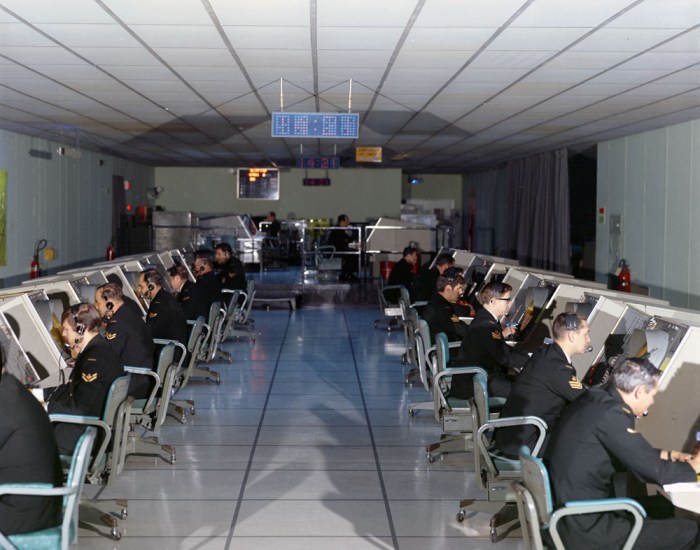
e010858630-v8
The SAGE ‘Blue Room’ at the NORAD Underground Complex at Canadian Forces Base North Bay, Ontario, c. 1972. (Source: Library and Archives Canada)

There is really nothing to critique here, Goette has successfully produced a deeply researched work that is the first significant study of the development of Canadian-US continental defense in the post-Second World War era and, as such, it will remain the go-to book for those looking to understand the origins of this unique relationship for the foreseeable future. Sovereignty and Command will quickly find a following in the fields of history and air power studies but will also find a wide readership in the fields of political science, civil-military relations, and international relations. If you have an interest in how the homeland is defended this is a must-read and demonstrates the unique Canadian-US relationship that has stood the test of time for more than 60 years and looks to easily double that as the unique, nay special, binational relationship continues to evolve into the future.

Dr Brian Laslie is an Air Force Historian and currently the Deputy Command Historian at North American Aerospace Defense Command (NORAD) and United States Northern Command (USNORTHCOM). He is also an Assistant Editor at From Balloons to Drones. A 2001 graduate of The Citadel and a historian of air power studies, he received his PhD from Kansas State University in 2013. His first book The Air Force Way of War (2015) was selected for the Chief of Staff of the Air Force’s and the Royal Air Force’s Chief of the Air Staff professional reading lists. His recently published Architect of Air Power: General Laurence S. Kuter and the Birth of the US Air Force.  He lives in Colorado Springs. He can be found on Twitter at @BrianLaslie.

Header Image: A Royal Canadian Air Force Avro Canada CF-100 Canuck in flight with a Convair F-102 Delta Dagger, c. 1950s (Source: Royal Canadian Air Force)

If you would like to contribute to From Balloons to Drones, then visit our submissions page here to find out how.

#BookReview – Strategy: Context and Adaptation from Archidamus to Airpower

#BookReview – Strategy: Context and Adaptation from Archidamus to Airpower

By Dr Peter Layton

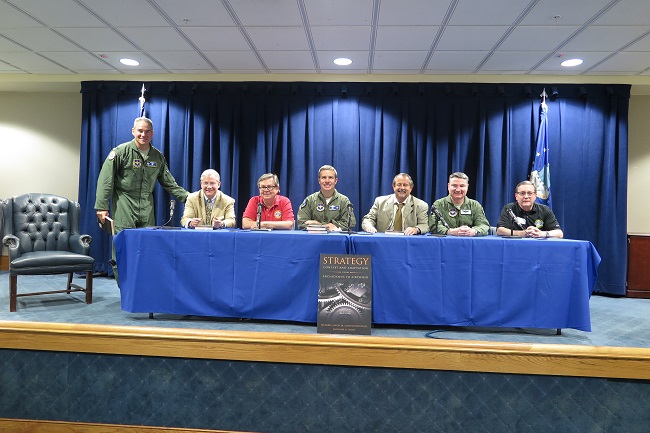
Richard J. Bailey, James W. Forsyth Jr. and Mark O. Yeisley (eds), Strategy: Context and Adaptation from Archidamus to Airpower. Annapolis, MD: Naval Institute Press, 2016. Notes. Bibliography. Index. Hbk. xii + 279 pp.

Strategy

It may seem somewhat odd to be reviewing a book about thinking strategically on a website concerning air power and history. But not so. This book is written by past and present faculty members of the US Air Force’s (USAF) School of Advanced Air and Space Studies (SAASS) located within the Air University at Maxwell AFB, Alabama. Air power thus permeates the book, running in parallel with the notion that history is a particularly useful discipline when educating future strategists.

For From Balloons and Drones readers though there is a deeper interest. With all the hubris of a fast jet aviator Richard Bailey tells us that SAASS is the ‘premier strategy school in the US Department of Defense (if not the country at large)’ (p. 1).[1] Arguably, make that ‘the world at large’, at least regarding influence on air power thinking. The USAF dominates modern air power theory and practice. This book nicely illuminates the culture that underpins such dominance.

Strategy: Context and Adaptation comprises 11 main chapters each written by a different faculty member. Academics are notoriously averse to standardisation, delighting in holding differing opinions and employing diverse writing techniques. This book accepts this and seeks to make it a virtue, with each chapter entirely different regarding structure, content, style, and tone. Coherence and unity of purpose are then meant to be achieved not at the chapter level but in the book overall. The book’s design is meant to take the reader along an ‘optimal arc’ so that they complete ‘an intentional full circle academic journey’ (p. 3). Does it work? For me, not quite. The book seems more a compilation of disparate articles – all insightful, many outstanding, most cutting-edge – that is somewhat less than the sum of its parts.

StrategyBook

The book’s subtitle is ‘context and adaptation,’ both good threads to discuss its contents. There is much made of the need for individual strategies to be developed appropriate to the context within which they are to be implemented. Understanding context, getting ‘to know the key actors, relationships, factors and challenges’ is seen as the first step in ‘doing strategy’ (p. 241).

The argument is though considerably more sophisticated than it may first appear. The notion is developed that strategy and context interact, continually changing each other and simultaneously evolving together. Everett Dolman writes ‘so now we are all constructivists, of course’ (p. 33). A somewhat surprising statement given that the American armed forces strategic culture overall is often seen as being realist, so privileging relative material power rather than ideas.

For air power thinkers and historians there is some importance to this reflectivist notion as made clear in Jeffrey Smith’s excellent chapter. Smith develops the idea that the USAF has generally been tardy in adapting its strategy, force structure and training in the context of the times.

Air Corps Tactical School
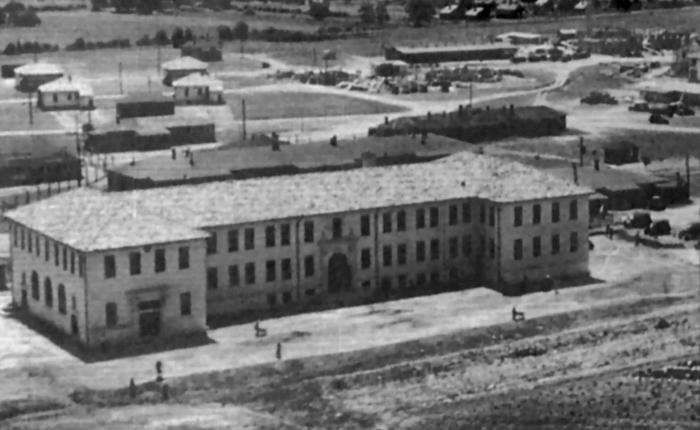
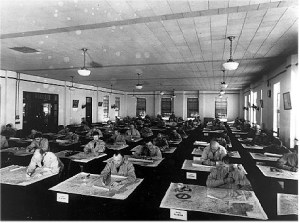
The Air Corps Tactical School (created as the Air Service Field Officers School in 1920) went beyond its mandate of training officers to also become an engine for air power theory development in the interwar period. (Source: US Air Force Air University)

The interwar Air Corps Tactical School (ACTS) devised the strategy of precision daylight bombing of vital industrial targets, but this was found wanting when employed in the context of a capable air defence system and needed adaptation. In the nuclear age post-Second World War, the strategy of large-scale nuclear strikes using long-range bombers dominated but was again found wanting in the context of the Vietnam conflict, a limited war fought with conventional munitions. In the post-9/11 era of small wars and insurgencies, the strategy of short-range fighters delivering precision-guided weapons was again found wanting in a context where population security was deemed key and the enemy elusive. Smith argues that in each case ‘translating the theory into a feasible strategy [was] flawed because it failed to consider, understand, or incorporate the full context in which it would be applied’ (p. 139). Adaptation then became necessary to achieve success, but this was often too slow, proving costly in blood and treasure.

Smith then extends this insight from history to the future of air power. He argues that contemporary air power theories, strategies, force structures and training may prove inadequate in the future context in which they are applied. It seems adaptation will be required again albeit with nuance.

Dolman considers (p. 32) that it is not perfect adaptation to the context that is key but rather having a diverse range of force capabilities available that become progressively useful however the context changes. As Smith notes, fast jets were perfect for 1991’s Desert Storm but inadequate for the different operational contexts later encountered. The importance of Dolman’s conceptual call for diversity is nicely illustrated by Smith’s outline of post 9/11 air operations that required ‘tactical airlift, special operations, ISR [intelligence, surveillance and reconnaissance], close air support and tightly integrated action with ground forces’ (p. 145) not high-flying strike packages comprising mainly supersonic fighters.

SAASS

This step from historical analysis to tomorrow’s battles reflects the SAASS motto of From the Past, the Future (p. 129). When one considers that the ACTS’ motto of the 1920s was Proficimus More Irretenti (We Progress Unhindered by Tradition) (p. 115) you can get a sense of how modern USAF strategic education has evolved, or as airmen might say, of its current vector.

Richard Muller’s chapter on using history to educate strategists explores this aspect further. The USAF, born after the Second World War straight into the revolutionary new nuclear age determined that military history be mostly irrelevant; technology studies and current affairs accordingly dominated the Air University’s curricula. In the wake of the Vietnam War though doubts arose and the study of history crept in. After some travails, this inclination became institutionalised following some vigorous prodding from the US Congress and the activism of the remarkable Ike Skelton (D-MO). SAASS was one of the results albeit it should be highlighted that the use of history at this school has a decidedly utilitarian flavour.

When this book was written in 2015, only two out of 11 SAASS courses were ‘explicitly historical in orientation’ (p. 129) with emphasis placed instead on the curriculum being interdisciplinary. Muller usefully sets out four ways history should be used to educate airmen (pp. 123-5). Firstly ‘to instil corporate spirit and foster awareness of airpower’s rich heritage’; secondly ‘to illustrate or even legitimise current doctrine, operational concepts, organisational reforms or weapon systems’; thirdly as part of the ‘systematic attempt to extract useful insights from a thorough examination of previous wars, campaigns or other historical events’; and lastly ‘to inculcate the ability to think in terms of cause and effect or to work through complex interactions of personalities, contextual factors, friction and so on’. As Muller himself notes, professional historians would be aghast about the first two somewhat proselytising functions.

The last function, however, that of developing critical thinking skills, is particularly noteworthy given that air forces are culturally inherently technocratic organisations. This essential characteristic needs some balancing when conflict erupts and the need for successful strategising arises. Steven Wright (pp. 234-6) considers most air force personnel are linear thinkers that excel at getting things done correctly but that this is not enough. Air forces also need abstract thinkers that excel at understanding what the correct things are that need to be done. Studying history can help improve people’s abstract thinking skills by giving them an understanding of how to think about context and its relationship to strategy. History then helps people understand what the correct things are to be doing and is accordingly an indispensable element in a strategist’s education.

Strategy: Context and Adaptation from Archidamus to Airpower is a snapshot of SAASS at a specific time in history, after the 9/11 wars and before the emerging era of contested skies. The book is excellent in guiding the reader to think more thoughtfully about strategy, what it is and how it should be made while providing an interesting window into contemporary USAF senior staff college education. Eclectic by design, the book offers much for military professionals, academics and all concerned with deeply understanding the business of strategising and its teaching.

Dr Peter Layton is a Visiting Fellow at the Griffith Asia Institute, Griffith University. His PhD is in grand strategy, and he has taught on this at the US National Defense University. He is the author of the book ‘Grand Strategy’.

Header Image: Austin Hall at Maxwell AFB. Austin Hall was the home of the Air Corps Tactical School before the Second World War. (Source: Wikimedia)

If you would like to contribute to From Balloons to Drones, then visit our submissions page here to find out how.

[1] While Bailey is not a fast-jet aviator, this reviewer used to be one and so feels able to use such an analogy shamelessly.

#BookReview – Flying Against Fate: Superstition and Allied Aircrews in World War II

#BookReview – Flying Against Fate: Superstition and Allied Aircrews in World War II

By Dr Brian Laslie

S.P. MacKenzie, Flying Against Fate: Superstition and Allied Aircrews in World War II. Lawrence, KS: University Press of Kansas, 2017. Appendices. Notes. Bibliography. Index. Hbk. viii + 256 pp.

9780700624690

I do not consider myself superstitious. Being a Historian is not a career field where one feels the need to be ‘lucky.’ That being said, I will admit to having more than a few sports shirts and hats that I consider lucky. I also admit to wearing a ‘rally cap’ from time to time, you know when I need the baseball gods to allow a game-winning hit. These instances, in reality, do not matter. I do not (nor should I) consider them life and death issues. However, I can think of instances where being superstitious seems completely warranted. S.P. MacKenzie’s new work Flying Against Fate: Superstition and Allied Aircrews in World War II is a concise and laser-focused study that delves into the steps taken by allied aircrews (British and American) to ensure their survival using methods that MacKenzie calls ‘magical thinking,’ what is recognised universally as superstition.

MacKenzie breaks his examination of aircrew superstition into asking for miracles (religion), Talismans and Mascots, Incantations and rituals, Jinxes and Jonahs, and Numbers and symbols. MacKenzie’s work goes a step further than many other works that look at the motivations of soldiers, sailors, airmen or marines. It is often said, aircrews and soldiers on the ground fought for each other, but what motivated them as individuals? What made them capable of climbing into their aircraft despite the overwhelming sense of fear or dread and the knowledge that the chance of death was weighted heavily against their survival? MacKenzie points to the belief that a ritual, charm, or item protected them from harm.

MacKenzie shows that between training accidents, accidents in theatre, and actual combat the chances for survival among allied aircrews was low.

In practice this meant tours in which statistically speaking, the chances of being killed, wounded, or taken prisoner usually exceeded those of emerging unscathed. (p. 6)

Over the course of hours flown or combat missions completed, ‘only 25 percent of heavy-bomber crewmen were emerging unscathed from their twenty-five mission combat tours.’ (p. 7) Though the number of tours increased throughout the war and with death so nearby, it was no wonder these men turned towards a power beyond their control. The logical fallacy of Post hoc ergo propter hoc (after this, therefore because of this) often played into the beginnings or creation of superstitious aspects of flying during the war. Perhaps a coin or photograph discovered in a pocket after a particularly harrowing mission or a gift of a lucky rabbit’s foot by a friend. It seems almost anything could take on special meaning to a flyer.

FRE_002761
Major J.A. Goodson, the so-called ‘King of the Strafers,’ never flew without a signet ring talisman. (Source: © IWM FRE 2761)

On the importance of religion, MacKenzie demonstrates that American crew members were more likely to attend either a service or speak with a religious figure than their British colleagues. Church attendance declined in England in the first half of the century (perhaps because of the impact of First World War) while it increased in America, but religious aspect aside both nation’s aircrews put plenty of stock in other aspects of ritual and talisman to ensure their safety. If not religion, then aircrews turned to items or rituals, anything they believed gave them against the death that was surely coming for them. Magical thinking was not limited to junior officers or line pilots. Towards the end of his work, MacKenzie also lists several very senior air commanders who each held their own superstitions. It seems rank or position provided no hindrance to the necessity of using magical thinking to protect one’s place on the Earth during the Second World War.

While MacKenzie adds that this magical thinking was not universal, it did play a role in many of the aircrew’s lives throughout the war. In the closing pages of Flying Against Fate, Mackenzie states:

The place of magical thinking in other professions where skill cannot fully substitute for luck – notably sports – continues to be subject to academic research and interpretation’ (p. 103).

Indeed, if there is a critique of this work, it is that the link between superstition and high-performance activities, war and sports should have been made earlier and with more emphasis. MacKenzie’s study partners well with Mark Wells’ Courage and Air Warfare.[1] MacKenzie also admits to looking only at British and American aircrews and a study that the role of magical thinking and superstition played in the Axis powers, or other allied nations would undoubtedly bring further clarity to the roles and actions of airmen during the Second World War writ large.

Although a relatively short work, MacKenzie has created an indispensable book for those interested in the motivations of allied aircrews who looked for any means necessary to ensure their survival. The author mastered telling his story in a concise and yet heavily researched material that prevents both sources and a heavy dose of first-person accounts. This appeals not only to those interested in aviation history or air power in the Second World War but those interested in the mechanisms used to cope through Total War. As such historians and those interested in the psychology of the military and professionalism in the force will find much to consider.

Dr Brian Laslie is an Assistant Editor at From Balloons to Drones. He is also a US Air Force Historian and currently the Deputy Command Historian at North American Aerospace Defense Command (NORAD) and United States Northern Command (USNORTHCOM). A 2001 graduate of The Citadel and a historian of air power studies, he received his Masters’ from Auburn University Montgomery in 2006 and his PhD from Kansas State University in 2013. He is the author of Architect of Air Power: General Laurence S. Kuter and the Birth of the US Air Force (2017) and The Air Force Way of War (2015). The latter book was selected for the Chief of Staff of the Air Force’s 2016 professional reading list and the 2017 RAF Chief of the Air Staff’s reading list. He can be found on Twitter at @BrianLaslie.

Header Image: Squadron Leader T. Sweeney, the Roman Catholic chaplain of an RAF wing operating in Central Burma, conducting Mass in a wooden pagoda which has been made into a chapel. (Source: © IWM (CF 394))

If you would like to contribute to From Balloons to Drones, then visit our submissions page here to find out how.

[1] Mark K. Wells, Courage and Air Warfare: The Allied Aircrew Experience in the Second World War (London: Frank Cass, 1995).

#BookReview – Drones and the Future of Air Warfare: The Evolution of Remotely Piloted Aircraft

#BookReview – Drones and the Future of Air Warfare: The Evolution of Remotely Piloted Aircraft

By Wing Commander Travis Hallen

Michael P. Kreuzer, Drones and the Future of Air Warfare: The Evolution of Remotely Piloted Aircraft. New York, NY: Routledge, 2016. Index. Figures. Tables. Appendices. Glossary. Hbk. 258 pp.

‘Drones’ are the air power topic de jour. Unfortunately, much of the discussion taking place in the media, and even in some academic circles, displays a lack of nuanced understanding of what is a complicated subject. The use of the term ‘drone’ to refer to platforms from the networked high-altitude long-endurance MQ-4 Triton to small tactical hand-held systems such as the Black Hornet conflates vastly different capabilities in the mind of the public. Similarly, the statement made in a recent article by a professor at the Swedish Defence University that remotely piloted aircraft (RPA) can ‘strike targets with greater precision to avoid collateral damage’ when compared with inhabited systems highlights that even academics in the field do not appreciate what distinguishes inhabited from uninhabited systems.[1] With the subject often overly simplified and the claims at times unrealistic, it is little wonder that policymakers do not understand RPAs well enough to make informed and effective decisions about their acquisition, development, and employment. This is a problem.

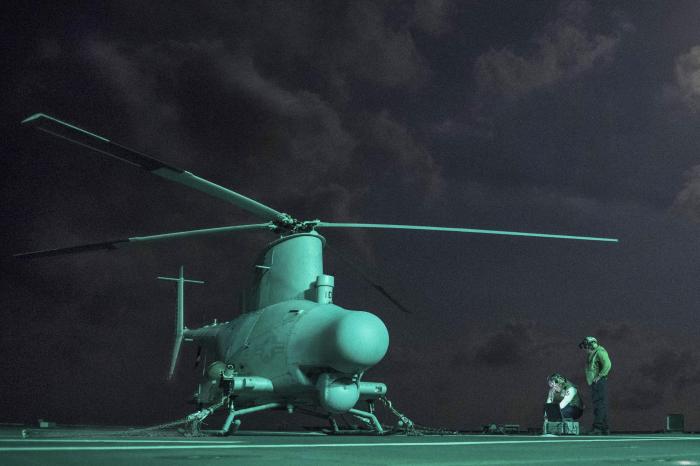
170210-N-WV703-100Q
Sailors prepare an MQ-8B MQ-8B Fire Scout unmanned helicopter before performing ground turns aboard the USS Coronado in the South China Sea, 10 February 2017. (Source: US Department of Defense)

A few academics and military professionals are working to clarify the reality of RPA. Michael P. Kreuzer’s 2017 book Drones and the Future of Air Warfare: The evolution of Remotely Piloted Aircraft is one such example. In a compact 218 pages, Kreuzer, a serving US Air Force officer with a PhD from Princeton, places RPAs in their organisational, operational, strategic, and technological context, enabling the reader to reframe their understanding of RPA away from the hype towards an appreciation grounded in facts and logic.

Kreuzer aims the book at:

[t]hose who are active or have an interest at the level of national policy, and for those who have an interest in understanding the macro-effects of RPAs in modern warfare to understand to what extent they can be used to achieve strategic objectives, and what are the true hazards of their use. (p.22)

On this, the book delivers.

The first step is to address the curious definitional problem contained within the book’s title: is it ‘drones’ or ‘remote piloted aircraft’? Kreuzer’s approach to defining the subject is simple yet effective. He states unequivocally that RPA is the preferred term; ‘drone’ when used appears in quotation marks. He then distinguishes between ‘tactical’ RPA and ‘networked’ RPA, with the distinguishing characteristic being the integration of the sensors and weapons of the latter into a global network. Network connectivity has enabled RPAs such as Reaper to conduct ‘strategic bombing against non-fixed targets such as individuals’ (p.7). This, Kreuzer asserts, has made a significant impact on the conduct of air warfare: ‘The network, rather than the platform itself, is key to this innovation’ (p.7)

Kreuzer makes clear that he does not consider RPAs to be revolutionary in isolation; they are an enabling capability for a broader ‘targeting revolution’. To support his claim, he disentangles the often-conflated concepts of technological revolution, major military innovation, and revolution in military affairs:

A technological revolution is marked by a major change in technology with widespread effects across all sectors of society, a major military innovation is a major change in the conduct of warfare that increases the efficiency with which capabilities are converted to power often stemming from the technological revolution, and a revolution in military affairs is a shift in the character of warfare fuelled by a transformation of military systems. (p.8)

The proliferation of drones is undoubtedly a technological revolution; commercial and civilian RPA applications are already affecting airspace management, privacy laws, and delivery services. RPAs are also increasing the efficiency of military operations for both state and non-state actors. ‘Drone strikes’ conducted by the Western countries in the Middle East and South Asia, and the use by ISIS of commercial drones in surveillance and attack roles evidences a shift in the way military operations are being conducted, the rise of the so-called ‘remote control warfare’. RPAs are not, however, causing the changes in the character of air warfare which Kreuzer refers to as the targeting revolution, they are only contributing to it. Kreuzer’s point here is subtle but well made.

Precision munitions and intelligence are given as the key enablers of the targeting revolution. Guided weapons provide the ability to strike targets precisely; the development of networks enables the processing, exploitation, and dissemination of information to know where the targets are. These are the foundations of Kreuzer’s targeting revolution. What RPAs have provided is persistence, allowing improvements in the timeliness of targeting information. The addition of precision munitions on networked RPAs has marked a culmination of an evolutionary process.

[t]he main revolutionary capabilities have come about when RPA serve as critical nodes in a broader system of warfare enabling networked intelligence collection, global communication, near real time processing, target development, decision support, and strike operations. (p.80)

Technology has played a significant role in driving this revolution, but Kreuzer also highlights the importance of doctrine and organisational factors in realising the benefits of RPAs. He looks at two separate but related organisational issues: the organisational challenges in developing an RPA capability, and the influence of organisational capacity on a state’s ability to develop an RPA capability.

According to Kreuzer, the ‘human challenges’ of RPA are:

[s]ome of the greatest faced by states and organisations seeking to employ such weapons and will be the greatest barrier to successful employment. (p.89)

Unfortunately, these challenges are rarely examined in any great depth. This book addresses this deficiency in the literature.

Integrating RPA operators within a culture and hierarchy that favours pilots of manned platforms are proving difficult. Kreuzer draws attention to the disparity in promotion rates for RPA pilots and the controversy surrounding the Distinguished Warfare Medal as examples of how the United States is struggling to integrate RPA systems into existing culture.

The problem faced here is that ensuring the right people are attracted to and employed in RPA operations will be a crucial determinant of their operational success. Similarly, the development of an emerging capability is dependent mainly upon the promotion of RPA operators into positions of influence and power within the organisation. Kreuzer quotes from Stephen Rosen’s 1991 work on innovation arguing that it occurs ‘only as fast as the rate at which young officers rise to the top’ (p.110). This is appropriate, and in this regard, this, and his subsequent discussion on the implications of the ‘tribes of airmen’ and existing organisational culture on the integration of RPAs into the USAF is as applicable to other air forces investigating the development of an RPA capability.

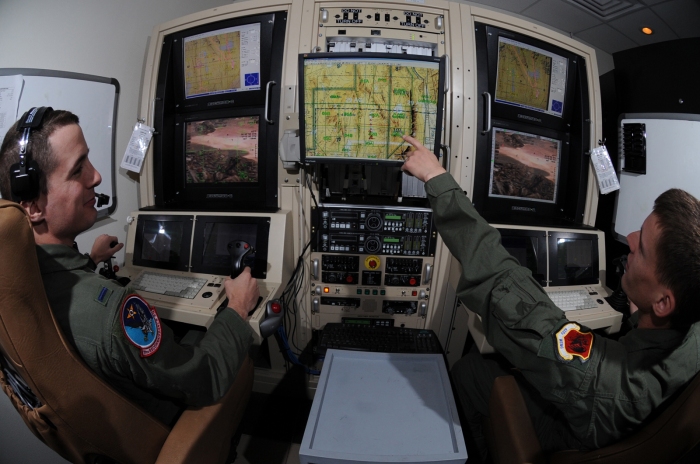
090422-F-0136B-016
An MQ-1B Predator sensor operator assists a MQ-1B pilot in locating simulated targets during a training mission conducted inside the simulators at Creech Air Force Base, Nevada. Both are assigned to the 11th Reconnaissance Squadron, USAF. (Source: US Department of Defense)

The capacity for militaries to adapt organisationally to the opportunities offered by RPAs will also determine the diffusion and proliferation of the capability. This is one of the most important points raised in the book. Drawing on Michael Horowitz’s adoption-capacity theory, Kreuzer predicts the rate of diffusion of RPA technology and the type RPA likely to be developed by states based on the state’s ‘financial intensity and organisational capacity available to implement major military innovations’ compared with their ‘perceived strategic imperative to develop innovation’ (p.157). His prediction is succinctly captured through an analogy with established air power capabilities: ‘it is easier to think of networked RPAs like strategic bombers (which few countries adopted) and tactical RPAs like attack helicopters, which are common worldwide’ (p.5). The organisational and financial costs of acquiring and maintaining networked RPAs creates high barriers to entry for this capability. Unless a state has compelling operational/strategic requirements or is willing to invest in a prestige capability, as some states have done with aircraft carriers, networked RPA proliferation will be limited to only a few states (p.184). Kreuzer’s logic is sound and well-argued; as with all predictions it may eventually prove to be wrong, but his matrix of probable RPA diffusion provides an excellent starting point for the discussion of RPA proliferation.

Overlaying questions of innovation and organisational adaptation is the contribution RPAs make to air warfare. Much has been written and discussed about the impact of RPAs on the conduct of military operations, but the majority of this discussion conflates platform with strategy. As Kreuzer puts it:

Too often, debates over RPAs ignore or write off counterfactual means of military intervention and criticise RPAs for traits that would be similarly exhibited by alternative means of conflict. In many cases, attacking the RPA becomes a substitute for attacking the underlying policy, which is an unnecessary distraction from the real debate which should be made. (Emphasis added) (p.21)

The question of RPAs impact on air power permeates all aspects of the book, which is not surprising given the book’s title; however, the way in which Kreuzer does this provides the book with utility beyond the narrow subject of RPA.

In discussing the importance of RPAs in the realisation of the targeting revolution, Kreuzer explores and analyses the strategic implications of targeted killings and signature strikes. His analysis goes beyond the use of armed RPAs and is just as applicable to the employment of manned platforms. Kreuzer highlights, quite correctly, that the developments of information age air warfare are challenging existing international legal treaties and norms, but to focus solely on RPAs is a distraction as these are issues of modern warfare generally which go beyond the question of having a human in the cockpit. The legality and ethics of these types of operation is a vexed issue, but the book’s treatment is balanced, considered, and informative.

Operationally, the employment of RPAs has already raised several questions relating to sovereignty, and the implications of airspace violations and the subsequent shoot-down of RPAs operating in sovereign or disputed airspace. Recent events in Israel have raised this issue in the public consciousness. Kreuzer’s examination of this topic looks beyond the usual case studies of US operations in Pakistan’s Federally Administered Tribal Areas (though these are also discussed) to include RPA operations in the Caucasus and the Middle East. The use of RPAs by Georgia, Azerbaijan, and Hiz’ballah, and their subsequent shoot-downs by the Russians, Armenians, and Israelis respectively, provided test cases for the international community to consider the legal and strategic ramifications of airspace violations by uninhabited systems. The shoot-down of relatively expensive RPAs followed by reprimands from the international community for airspace violations demonstrate that RPAs have not changed the existing norms of airspace sovereignty. This does raise the question of US operations in Pakistan, but this subject is also well covered by Kreuzer.

Finally, Kreuzer addresses one of the perennial problems for airmen which has been exacerbated by the development of RPA: people just don’t get air power.

For all the attention airpower receives in modern war, it remains one of the least understood systems of war for outside observers […] for the average reader with a basic interest in what airpower means the subject is abstract, complex, and often subject to detailed debates about tactics and airframes rather than broader strategic implications. (p.198)

The lesson for air power professionals, scholars, and advocates is clear: more needs to be done to improve the way that air power is explained and articulated to the public. Kreuzer’s book is an excellent example of how this can be done.

Drones and the Future of Air Warfare is a must read for anyone involved in the decision to acquire, develop, and/or employ RPAs as it lays the conceptual foundation which should inform any decision to invest in an RPA capability. It would be wrong, however, to view the book solely as a treatise on RPAs. By placing the subject within their broad operational and organisational context, Kreuzer also provides insightful and informative commentary on military innovation, organisational design, capability development, and air power strategy. Accordingly, Drones and the Future of Air Warfare can rightfully be considered an analysis of the current state and future evolution of air power. It will, therefore, make an excellent addition to any air power professional’s reading list.

Wing Commander Travis Hallen is an Air Combat Officer currently serving as Deputy Director – Air Power Development at the Royal Australian Air Force’s Air Power Development Centre. He is also a Sir Richard Williams Foundation Scholar. The opinions expressed are his alone and do not reflect those of the Royal Australian Air Force, the Australian Defence Force, the Australian Government, or the Williams Foundation. He can be found on Twitter at @Cold_War_MPA.

Header Image: The MQ-4C Triton unmanned aircraft system completes its first flight on 22 May 2013 from the Northrop Grumman manufacturing facility in Palmdale, California. The 80-minute flight successfully demonstrated control systems that allow Triton to operate autonomously. Triton is designed to fly surveillance missions up to 24-hours at altitudes of more than 10 miles, allowing coverage out to 2,000 nautical miles. The system’s advanced suite of sensors can detect and automatically classify different types of ships. (Source: Wikimedia)

If you would like to contribute to From Balloons to Drones, then visit our submissions page here to find out how.

[1] Arash Heydarian Pashakanlou, ‘Air power in humanitarian intervention: Kosovo and Libya in comparative perspective,’ Defence Studies, 18:1 (2018), p. 52.

#BookReview – Limiting Risk in America’s Wars: Airpower, Asymmetrics, and a New Strategic Paradigm

#BookReview – Limiting Risk in America’s Wars: Airpower, Asymmetrics, and a New Strategic Paradigm

By Wing Commander Alec Tattersall

Phillip S. Meilinger, Limiting Risk in America’s Wars: Airpower, Asymmetrics, and a New Strategic Paradigm. Annapolis: MD, Naval Institute Press, 2017. Illustrations, Notes, Bibliography, Hbk. xx + 277 pp.

51RBmypL-cL._SX329_BO1,204,203,200_

The US possesses the pre-eminent military force in the world today. The record of the US in conflict since the Second World War does not, however, reflect this capability pre-eminence. In a recent online article, Harlan Ullman noted that:

President John F. Kennedy tartly observed that there is no school for presidents [but] there needs to be a way to bring knowledge and understanding to bear on presidents’ decisions.[1]

Ullman’s concern is that President’s, and those that advise them, are ill prepared for determining political strategy in the context of using military force.

It would not be inappropriate to suggest that Phillip S. Meilinger’s new book is one way of addressing this knowledge deficit. In simple terms, this is a book about US strategy, or rather re-thinking US strategy in the context of protecting national interests subject to the usual pressures of representative democracy. Pressures that require amongst other things maintenance of public support, which is increasingly sensitive to the costs of war in both people and money. As such Meilinger advocates for a reorientation of US military policy to focus on its asymmetric strengths in areas such as air and naval power, special forces (SOF), increasingly pervasive intelligence, surveillance and reconnaissance (ISR) and intelligence analysis, against enemy vulnerabilities, and at the same time limit the States exposure to the risk of ‘casualties and cost’. While a simple concept, it is a shift away from current US strategic policy that follows Clausewitzian notions of using conventional ground forces against enemy strengths.

Meilinger starts by reminding us of the main problem to be addressed – designing military strategy to achieve political goals with the highest chance of decisive military victory but at the least cost. Railing against the Clausewitzian model of seeking decisive victory by attacking an enemy’s strength head-on, and its attendant higher cost and risk of failure, Meilinger reviews the work of several renowned strategists including Basil Liddell Hart, J.F.C. Fuller, Antoine Jomini and Sun Tzu to identify an alternative strategic direction. The common thread he draws from such strategists is of using an asymmetric advantage to strike at an enemy’s weakness while protecting your own. He draws upon the example of indirect second-front operations that he defines as:

[g]rand strategic flanking manoeuvres involving a major military force that strikes the enemy unexpectedly somewhere other than the main theatre of action (the source of the enemy’s strength) and is directed to achieving clear political objectives. (p.31)

Within the concept of second-fronts, Meilinger sees a basis to provide the US with an asymmetric advantage over enemies, with the promise of limiting the America’s exposure to casualties and cost.

Meilinger then examines both successful and unsuccessful historical incidences of second-fronts from the Peloponnesian war through to the Second World War to determine whether they are conceptually relevant today. This examination identifies that the reasons for opening a second-front exist today. These reasons are to avoid enemy strongpoints, increased morale, gaining an economic advantage, splitting an alliance, denying or gaining access to resources, the base for further operations, taking advantage of a unique strength. Importantly, the contemporary need for states to limit risk and preserve resources makes the most fundamental reason for adopting second-fronts. Also, the use and creation of asymmetry against an enemy by avoiding their strengths and attacking their vulnerabilities to limit risk and cost are of significant relevance to the American public. Similarly, those factors prominent in success or failure of second-fronts such as valid strategy, competent planning, competent leadership, accurate and timely intelligence, friendly or neutralised local population, secure lines of communication, maritime and air superiority, are also still current.

170415-F-QP712-0286C
F-35A Lightning II joint strike fighters land at RAF Lakenheath, 15 April 2017. The arrival of these aircraft marked the first F-35A fighter training deployment to the US European Command area of responsibility or any overseas location. The aircraft is assigned to the 34th Fighter Squadron at Hill Air Force Base, Utah. (Source: US Department of Defense Images)

While many of these factors are commonly addressed, Meilinger raises a couple of issues that are perhaps core to the application of an appropriate alternative strategy to the achievement of desired political objectives. Success requires both sound policy and strategy, the setting of which requires the military leadership to provide appropriate advice and guidance to the government. Political objectives must be achievable through an aligned strategy that military planners design to maximise the chance of success while simultaneously minimising risk and costs. As such strategy and the forces to implement it should not be adversely affected by service culture or other factors incongruent with the development of optimal outcomes. Should the government not accept appropriate advice, but instead adopts policy or strategy that inappropriately increases the risk to lives and/or of failure then the military leadership should have the moral courage to seek to positively influence political decision-making or be prepared to resign.

Meilinger highlights the asymmetric advantage provided to the US by its air power capabilities that most, if not all, nations would struggle to contain. Through its reach, speed, ubiquity, flexibility and lethal precision it provides the US direct access to all the strengths and vulnerabilities (centres of gravity) of an enemy, allowing it the ability to undertake direct or indirect attack against them, with drastically reduced risk to its forces and civilians, and a significantly reduced footprint. Concerns over its reputation (psychological, graphic violence, and morality of distance) and risk shifting to civilians, arguably are offset using precision weapons, targeting tools and detailed planning resulting in reduced risk to civilians. In other words, Meilinger claims it is ‘the US asymmetric advantage that limits [US] risk.’ (p. 190)

Since the Second World War, wars have generally been fought with limited means to achieve limited objectives, whether due to avoiding nuclear peers, concerns with maintaining public support, legal restrictions, media, geography, culture or concerns over managing scarce resources. Meilinger’s review of post-Second World War wars undertaken by the US from Korea to Iraq highlights a somewhat chequered record of success premised on US strategy of employing massive conventional ground forces. While air power was used during these wars, it was either used poorly, or when used successfully, the maintenance of an overall Clausewitzian conventional ground force strategy ultimately led to strategic failure.

Meilinger notes that perhaps another model should have been used; one presaged by historical second-front operations that used unique strategies and tactics to solve equally unique problems, with the goal of achieving measurable political results at minimal risk. As such Meilinger suggests that the US should ‘use [its] asymmetric strengths against enemy weaknesses while screening their own vulnerabilities’. In addition to air power, existing asymmetric strengths include SOF and ubiquitous ISR. Combining these three capabilities with ‘determined’ indigenous forces provide a force structure that provides an asymmetric advantage against conventional and unconventional enemy forces, and which when compared to conventional ground force options offers an opportunity for measurable results while saving lives and money.

There is, however, a paradox in Limiting Risk in America’s Wars that is hard to reconcile. The engaging, forthright simplicity of the book is achieved by avoiding overly complex analysis and justification of strategic concepts and their technical detail. Consequently, what makes the book easy to read and understand, also makes it appear shallow in specific areas. While the knowledge of the author is unquestionable, and the notes provide an extra depth of information, there are times when the reader is left to accept the statements of the author as fact, rather than follow an articulated analysis resulting in verifiable deductions or inductions.

180112-A-ZZ999-001
US Army 1st Sergeant Henning Jensen of Headquarters Company, 1st Battalion, 1st Security Force Assistance Brigade, leads a foot patrol with the National Police Transition Team in eastern Baghdad in 2008 while assigned to a military transition team. Transition teams have been replaced by the 1st SFAB to help combatant commanders accomplish theatre security objectives by training, advising, assisting, accompanying and enabling allied and partnered indigenous security forces. (Source: US Department of Defense Images)

For instance, a critical position taken by the author is that the US should adopt the asymmetric advantage provided by the ‘combination of air power, SOF, indigenous forces, and ISR.’ (p. 194) There is a succinct analysis of the air power capability resulting in a deduction that air power provides an asymmetric advantage, but there is no such deductive analysis of the asymmetric advantage of SOF and ISR and only a limited prescription for indigenous troops. While there seems to be a dearth of material on the anti-Clausewitzian aspects of these elements, examples exist. The work of retired General Robert Scales, for instance, on mobile land forces in replication of air power capability would seem to offer the prospect of more detailed analysis of corresponding ground force elements, to aid in fleshing out the elements of Meilinger’s overall strategy. The lack of detailed insight into each of the non-air power elements, by consequence results in the absence of explanation or analysis into how the four nominated forces fit together to deliver an overall asymmetric advantage in contemporary conflict. Admittedly, a core thread of the book is about raising the importance of air power in the overall force composition and strategy mix, but the failure to address the other elements and their combination can lead to questions, which undermines the overall premise of the book and could have been quickly addressed.

One such example is the a priori claim that the use of conventional forces increases the risk of casualties (civilians and own forces) – whether from the dangers of ground combat or the application of air power in support of troops in conflict. If you replace conventional forces with indigenous troops, the same risks still seem to exist. In fact, the risk may increase if the indigenous troops are not as professional or well-equipped as the conventional forces they are replacing. The logical conclusion that can be drawn thus appears to be that the only benefit that exists is a movement of risk from US forces (as no conventional troops are committed) to the indigenous forces and civilians.

Meilinger tellingly notes that if:

US leaders determine that our vital interests be indeed at stake and US involvement is essential the case studies reveal timeless truths regarding the most effective and efficient methods of achieving success at low risk. (p. 205)

Conceptually, after reading this book, it is hard to disagree with this statement. There is something powerful in the simple argument that strategy, and force composition, should be built around the use of asymmetrical advantages against enemy vulnerabilities to reduce risk and cost. However, by attempting to advance this concept one step further and identify, without full supporting analysis, a specific contemporary US strategy with a focus on air power and the other elements of SOF, ISR and indigenous ground forces, it strikes me that Meilinger not only comes to a logically weakened position. As such, Meilinger, unfortunately, misses the opportunity to articulate a more robust and appropriate strategy for the conduct of warfare generally.

Wing Commander Alec Tattersall has been a permanent member of the Royal Australian Air Force (RAAF) since 1996. He is a graduate of the University of Tasmania (Bcom & LLB), the University of Melbourne (Grad. Dip. Military Law), the Australian National University (GDLP and LLM), and is currently undertaking postgraduate research into the philosophical aspects of autonomous weapon systems at the University of New South Wales. His recent postings include; Headquarters Joint Operations Command, Air Force Headquarters, the Directorate of Operations and Security Law, and the Air Power Development Centre. Threaded through these postings are a number of operational deployments to the Middle East and domestically for counter-terrorism.  He is the currently seconded to Special Counsel in the Australian Signals Directorate and is the Defence Legal representative to the 2017/18 meetings of the United Nations Group of Governmental Experts on Lethal Autonomous Weapon Systems. The opinions expressed are his alone and do not reflect those of the RAAF, the Australian Defence Force, or the Australian Government.

Header Image: An MQ-9 Reaper equipped with an extended range modification sits on the ramp on Kandahar Airfield, Afghanistan before a sortie on 6 December 2015. (Source: US Department of Defense Images)

If you would like to contribute to From Balloons to Drones, then visit our submissions page here to find out how.

[1] Harlan Ullam, ‘Why America Loses Every War,’ Defense One, 17 November 2017.

#BookReview – Space Warfare in the 21st Century: Arming the Heavens

#BookReview – Space Warfare in the 21st Century: Arming the Heavens

By Squadron Leader Michael Spencer

Joan Johnson-Freese, Space Warfare in the 21st Century: Arming the Heavens. Abingdon: Routledge, 2017. Notes. Index. xx + 202 pp.

9781138693883

In this book, Joan Johnson-Freese, Professor of National Security Affairs at the US Naval War College, has written a comprehensive history of the development of US national policy for space security. In the preface, Johnson-Freese cited General John Hyten, the then Commander, US Air Force Space Command, as stating that, ‘if the United States is “threatened in space, we have the right of self-defence, and will make sure we execute that right.”’ (p. ix) The underlying driver that persists in twenty-first century US policy developments on space security, up to the publication of this book in 2017, is to be able to access and securely use space for its purposes independently and at the time of its choosing. The US also seeks to keep pace with the increasing number of space-faring nations and developments in space power projection.

The book’s title invokes visions of nations in the twenty-first-century posturing to exploit niche combat capabilities to project their influence into future confrontations into the common grounds located above the Earth that is the shared orbital domain. However, this book is a well-constructed guide that walks the reader through the process of US national policy development for space security. More specifically, the book logically describes to the reader the policy determinants for US national security and space security. It also considers the drivers adopted by the US government that has steered its space security interests and shaped attitudes and organisational responses to assert those interests in the shared space orbital domain in the early period of the twenty-first century. The book concludes with suggesting that US space security policy take the lead in providing a secure space domain.

Space is one of the domains used as a common ground to globally connect actors in activities that either permeates across the globe or are discrete interconnected nodes remote located around the world. Moreover, individual state actors wish to exploit that common ground to build compartments within it for their exclusive purposes. State actors will then seek to build systems to protect these compartments that inadvertently increase the congested, contested, and competitive character of the space domain. This also has implications for dependent capabilities, for example, the use of the electromagnetic spectrum for assured access to space systems that support state interests. The challenge for US policy development is to adopt mechanisms that can discriminate between a hostile act and an accidental on-orbit event and provide options for appropriate responses that will not further exacerbate the problems of congestion and inadvertently escalate the competition into an uncontrolled contest.

Chapter one provides a rolling history of the US government’s inaugural efforts in developing policy statements that injected space interests into national security policy. These were then elaborated further in the first dedicated national space policy and space security strategy. US policy-makers, along with many space-savvy actors, have accepted that in a globalised world, economic and national security have become critically dependent on space. However, space is increasingly complex, not regulated, and serves as a global common, which is a challenge for the security policy of individual nations.

Chapter two characterises the priority problems posed by the utility of the orbital space domain to security policy-makers. The characteristics of space activities in the global common fundamentally challenges the management of national security by individual nations. Space cannot be a physical extension to sovereign airspace. Additionally, space is increasingly more affordable and accessible to more state and non-state actors, and increasingly more critical to designs for public infrastructure and daily lifestyles. Although it is accepted that space is a globally shared common, it has become increasingly congested, contested, and competitive in the absence of robust regulation. The space domain is difficult to control, and this is a driver for significant space-faring nations to consider structuring military force options to help assure space access from adverse environmental effects, on-orbit accidents, potential future adversary actions.

Chapter three discusses the reasons why the US should make strategies for space security. The fundamental assumption made is that conflict in the common grounds is inevitable and that concern over the future capabilities of potential adversary nations in the space domain is an acceptable driver for the development of US space security strategy irrespective of the publicly announced intentions of other nations. Johnson-Freese postulates potential strategy developments in the US along the four separate themes. First, space dominance is essential to assuring US military/civilian capabilities. Second, the weaponisation of space is inevitable. Third, while space is essential to military capabilities, the government should seek to limit the militarisation of space, and finally, the US should promote the use of space as a sanctuary, in a similar analogy to the international cooperation for managing Antarctica. Irrespective of the strategic theme, all discussions conclude that space is the Achilles heel for military power.

161208-D-ZZ999-998
The Defense Advanced Research Projects Agency’s Airborne Launch Assist Space Access program is developing a much-less expensive way to routinely launch small satellites, with a goal of at least a threefold reduction in costs compared to current military and U.S. commercial launch costs. (Source: US Department of Defense)

In chapter four, Johnson-Freese discusses options for military roles that can be performed in and with space to assure space security with a focus on the separate roles and potential technologies for the military to deter, defend, and defeat an adversary in space. The challenge for military commanders is that space is not a logical extension of the air domain. This requires strategists and capability developers to recognise the need to understand the differences in science, technology, and costs. The conduct of warfare in the orbital space domain will be challenged by the definition and ethics of military endstates involving any on-orbit military actions. This is especially true of those legacy effects, such as orbital space debris and disruption to critical public infrastructure, which may endure, potentially, for many generations after a conflict has ended.

Whereas chapters one to four steps the reader through a logical process of understanding the outcomes for a space security strategy and deriving the necessary outputs, chapter five discusses the critical national stakeholders who are essential in putting space strategy into effect, and the support necessary to make it useful. The observation made is that the issue of space security has generated an industry for the pondering, pursuit, and procurement of new space applications by military, industry, aerospace think tanks, academia, and support research organisations. Thus, it is good to define a threat that can be used to justify the significant and long-term investments into space security.

Chapter six is a discussion on the impact of the newest space actors and their behaviours and attitudes towards space. Space access is no longer considered to be exclusive to government-run organisations in space-faring nations. Technology miniaturisation and reduced launch costs have democratised space access to allow non-state actors. Moreover, entrepreneurial investors have triggered a need for strategists to reconsider space as ‘New Space’ to be shared with new additional actors and an increased level of unexpected and complexity in space behaviours. Johnson-Freese refines the book’s premise to consider that access to is space is inevitable but that space warfare is not necessarily inevitable.

Chapter seven concludes the Johnson-Freese’s discussion on strategy development for US space security by highlighting the challenges of democratisation of space access and the globalisation of interdependent space users, both military and non-military. While it is difficult to define a policy for space warfare when a definition for ‘space weapon’ has not yet been universally agreed, space security is complex and might be better achieved under a multi-lateral cooperative arrangement between space-faring nations. While space warfare might serve to achieve a short-term goal, it may be better to appreciate that the more prolonged effects of destabilising the space domain will be detrimental to all space users. A continuously growing number of space users want evermore space-derived services driven by ever-evolving technological improvements that allow more space missions to be conducted near each other. However, this uncontrolled approach by separate nations to individually access the common grounds of the Earth space orbital domain must logically converge at a point where the risks of accidents or deliberate action on orbit must be considered as a likely determinant for future space security policy, and not necessarily a space warfare policy.

In conclusion, this book is well-referenced, and presented in a logical flow of clearly articulated thoughts, making it a useful study reference for strategic thinkers. Johnson-Freese, herself a noted specialist on the space domain, has consulted with subject matter experts from appropriate military and space industry organisations and think-tanks, and is supported by critical individuals typified by the international recognised experts such as Dr David Finkleman, who has served on numerous technical and scientific advisory and study boards for industry and the federal government and is a Fellow of the American Institute of Aeronautics and Astronautics.

Squadron Leader Michael Spencer is currently a serving officer in the Royal Australian Air Force (RAAF). He serves at the Air Power Development Centre in Canberra where he is involved in the analysis of potential risks and opportunities posed by technology change drivers and disruptions to future air and space power. His RAAF career has provided operational experiences in long-range maritime patrol, aircrew training, and weaponeering, and management experiences in international relations, project management in air and space systems acquisitions, space concepts development, and joint force capability integration. He is also an Associate Fellow of the American Institute of Aeronautics & Astronautics. The opinions expressed are his alone and do not reflect those of the RAAF, the Australian Defence Force, or the Australian Government.

If you would like to contribute to From Balloons to Drones, then visit our submissions page here to find out how.

Header Image: An Atlas V rocket carrying a Space Based Infrared System Geosynchronous Earth Orbit satellite for a US Air Force mission lifts off from Cape Canaveral Air Force Station, Florida, 19 January 2018. (Source: US Department of Defense)