The other week I mentioned on Twitter that it had been two years since I had touted the idea of creating a group website dedicated to air power history, theory, and practice. While we might quibble about From Balloons to Dronesdate of birth, it was on 15 June 2016 that the first post announcing the creation of the site and calling for contributions was published. As such, it seems apropos to reflect on the past two years.
From Balloons to Drones started out with me as the only editor and we had a couple of dedicated contributors. I am pleased to say that three of those early dedicated contributors, Dr Brian Laslie, Dr Mike Hankins, and Alexander Fitzgerald-Black, have now come onboard as Assistant Editors. All our effort is, of course, done in addition to our other work away from the site. For example, recently, I moved to Australia from the UK and co-edited a special edition of the British Journal for Military History while Brian published his much-awaited book on General Laurence Kuter. Similarly, Alex published his first book on the air war over Sicily in 1943 while Mike completed his PhD on culture and technology in the United States Air Force (USAF) and has now moved to take up a position at the USAF Air Command and Staff College. Nonetheless, despite all these significant personnel and professional achievements, and with my Assistant Editors support, we continue to plan for the future and examine how we might grow the air power core community of interest.
As well as adding Brian, Mike, and Alex to the editorial team, From Balloons to Drones continues to grow regarding the number of contributors to the site; however, we are always looking to add new writers to the team. As such, if you are a postgraduate, academic, policymaker, member of the armed forces or a relevant professional involved in researching the subject of air power then take a moment and look at our submissions page to find out how you can get involved with the conversation.
What about statistics? Well, this is our ninety-fifth post, which, of course, means we are just five away from the magic century. Those 95 posts have consisted of articles, research notes, book reviews, commentaries, and the occasional editorial. We also started a new series of historic books reviews with the first one published here. All told, these posts, excluding this one, have totalled some 157,000 words, or roughly the equivalent of two monographs! We have published a wide variety of articles that have covered both historical and contemporary issues. The top five posts are:
We also worked on a great joint series of articles with our partners at The Central Blue. These articles supported a seminar that the Williams Foundation held in Canberra, Australia that looked at the requirements of high-intensity warfare in the 21st century. This was a great partnership and something we are happy to explore again in the future.
The Future
Speaking of the future, there is, of course, the question of what comes next. Well, hopefully, more of the same. We are keen to build on the high-standards we believe that we have set for ourselves. However, we can only do that with your help. So, get in touch and contribute!
As noted, we have started a new series of historic book reviews, and this is an area that we are keen to develop. The series aims to be an accessible collection of appraisals of critical historic publications about air power history, theory, and practice. Many books hold a specific place in the study of air power because of the ideas they introduced or the insights they provided about the institutions responsible for delivering air power capabilities. The reviews will cover several different types of texts from those works that developed air power ideas to crucial memoirs.
Our essential development for the near future is that we are launching a series of podcasts with authors of new air power related titles. This is a project that Mike is working on for us, and we are excited about the prospect of offering something stimulating and hearing from those working in the field of air power studies. We will be realising more information about these podcasts once we have more details.
Concluding Thoughts
Overall, myself, Brian, Mike, and Alex have made a concerted effort to develop closer ties not just between ourselves but between those interested in the subject of air power. We think we have done that, but we are always happy to hear any ideas that our readers might have for future developments. Finally, it is to you, our readers, and our contributors that we owe our greatest thanks. Without you, we would not exist. If you do not come and read the material that we publish, then there is little point in this endeavour. That you do come and read our ramblings is appreciated, and we hope you continue to do so for many years to come.
Dr Ross Mahoney is the Editor of From Balloons to Drones. He is an independent historian and defence specialist based in Australia. Between 2013 and 2017, he was the resident Historian at the Royal Air Force Museum, and he is a graduate of the University of Birmingham (MPhil and PhD) and the University of Wolverhampton (PGCE and BA). His research interests include the history of war in the twentieth and twenty-first centuries, air power and the history of air warfare, and the social and cultural history of armed forces. To date, he has published several chapters and articles, edited two books, and delivered papers on three continents. He is a member of the Royal Historical Society and an Assistant Director of the Second World War Research Group. He blogs at Thoughts on Military History, and can be found on Twitter at @airpowerhistory.
‘Drones’ are the air power topic de jour. Unfortunately, much of the discussion taking place in the media, and even in some academic circles, displays a lack of nuanced understanding of what is a complicated subject. The use of the term ‘drone’ to refer to platforms from the networked high-altitude long-endurance MQ-4 Triton to small tactical hand-held systems such as the Black Hornet conflates vastly different capabilities in the mind of the public. Similarly, the statement made in a recent article by a professor at the Swedish Defence University that remotely piloted aircraft (RPA) can ‘strike targets with greater precision to avoid collateral damage’ when compared with inhabited systems highlights that even academics in the field do not appreciate what distinguishes inhabited from uninhabited systems.[1] With the subject often overly simplified and the claims at times unrealistic, it is little wonder that policymakers do not understand RPAs well enough to make informed and effective decisions about their acquisition, development, and employment. This is a problem.
Sailors prepare an MQ-8B MQ-8B Fire Scout unmanned helicopter before performing ground turns aboard the USS Coronado in the South China Sea, 10 February 2017. (Source: US Department of Defense)
A few academics and military professionals are working to clarify the reality of RPA. Michael P. Kreuzer’s 2017 book Drones and the Future of Air Warfare: The evolution of Remotely Piloted Aircraft is one such example. In a compact 218 pages, Kreuzer, a serving US Air Force officer with a PhD from Princeton, places RPAs in their organisational, operational, strategic, and technological context, enabling the reader to reframe their understanding of RPA away from the hype towards an appreciation grounded in facts and logic.
Kreuzer aims the book at:
[t]hose who are active or have an interest at the level of national policy, and for those who have an interest in understanding the macro-effects of RPAs in modern warfare to understand to what extent they can be used to achieve strategic objectives, and what are the true hazards of their use. (p.22)
On this, the book delivers.
The first step is to address the curious definitional problem contained within the book’s title: is it ‘drones’ or ‘remote piloted aircraft’? Kreuzer’s approach to defining the subject is simple yet effective. He states unequivocally that RPA is the preferred term; ‘drone’ when used appears in quotation marks. He then distinguishes between ‘tactical’ RPA and ‘networked’ RPA, with the distinguishing characteristic being the integration of the sensors and weapons of the latter into a global network. Network connectivity has enabled RPAs such as Reaper to conduct ‘strategic bombing against non-fixed targets such as individuals’ (p.7). This, Kreuzer asserts, has made a significant impact on the conduct of air warfare: ‘The network, rather than the platform itself, is key to this innovation’ (p.7)
Kreuzer makes clear that he does not consider RPAs to be revolutionary in isolation; they are an enabling capability for a broader ‘targeting revolution’. To support his claim, he disentangles the often-conflated concepts of technological revolution, major military innovation, and revolution in military affairs:
A technological revolution is marked by a major change in technology with widespread effects across all sectors of society, a major military innovation is a major change in the conduct of warfare that increases the efficiency with which capabilities are converted to power often stemming from the technological revolution, and a revolution in military affairs is a shift in the character of warfare fuelled by a transformation of military systems. (p.8)
The proliferation of drones is undoubtedly a technological revolution; commercial and civilian RPA applications are already affecting airspace management, privacy laws, and delivery services. RPAs are also increasing the efficiency of military operations for both state and non-state actors. ‘Drone strikes’ conducted by the Western countries in the Middle East and South Asia, and the use by ISIS of commercial drones in surveillance and attack roles evidences a shift in the way military operations are being conducted, the rise of the so-called ‘remote control warfare’. RPAs are not, however, causing the changes in the character of air warfare which Kreuzer refers to as the targeting revolution, they are only contributing to it. Kreuzer’s point here is subtle but well made.
Precision munitions and intelligence are given as the key enablers of the targeting revolution. Guided weapons provide the ability to strike targets precisely; the development of networks enables the processing, exploitation, and dissemination of information to know where the targets are. These are the foundations of Kreuzer’s targeting revolution. What RPAs have provided is persistence, allowing improvements in the timeliness of targeting information. The addition of precision munitions on networked RPAs has marked a culmination of an evolutionary process.
[t]he main revolutionary capabilities have come about when RPA serve as critical nodes in a broader system of warfare enabling networked intelligence collection, global communication, near real time processing, target development, decision support, and strike operations. (p.80)
Technology has played a significant role in driving this revolution, but Kreuzer also highlights the importance of doctrine and organisational factors in realising the benefits of RPAs. He looks at two separate but related organisational issues: the organisational challenges in developing an RPA capability, and the influence of organisational capacity on a state’s ability to develop an RPA capability.
According to Kreuzer, the ‘human challenges’ of RPA are:
[s]ome of the greatest faced by states and organisations seeking to employ such weapons and will be the greatest barrier to successful employment. (p.89)
Unfortunately, these challenges are rarely examined in any great depth. This book addresses this deficiency in the literature.
Integrating RPA operators within a culture and hierarchy that favours pilots of manned platforms are proving difficult. Kreuzer draws attention to the disparity in promotion rates for RPA pilots and the controversy surrounding the Distinguished Warfare Medal as examples of how the United States is struggling to integrate RPA systems into existing culture.
The problem faced here is that ensuring the right people are attracted to and employed in RPA operations will be a crucial determinant of their operational success. Similarly, the development of an emerging capability is dependent mainly upon the promotion of RPA operators into positions of influence and power within the organisation. Kreuzer quotes from Stephen Rosen’s 1991 work on innovation arguing that it occurs ‘only as fast as the rate at which young officers rise to the top’ (p.110). This is appropriate, and in this regard, this, and his subsequent discussion on the implications of the ‘tribes of airmen’ and existing organisational culture on the integration of RPAs into the USAF is as applicable to other air forces investigating the development of an RPA capability.
An MQ-1B Predator sensor operator assists a MQ-1B pilot in locating simulated targets during a training mission conducted inside the simulators at Creech Air Force Base, Nevada. Both are assigned to the 11th Reconnaissance Squadron, USAF. (Source: US Department of Defense)
The capacity for militaries to adapt organisationally to the opportunities offered by RPAs will also determine the diffusion and proliferation of the capability. This is one of the most important points raised in the book. Drawing on Michael Horowitz’s adoption-capacity theory, Kreuzer predicts the rate of diffusion of RPA technology and the type RPA likely to be developed by states based on the state’s ‘financial intensity and organisational capacity available to implement major military innovations’ compared with their ‘perceived strategic imperative to develop innovation’ (p.157). His prediction is succinctly captured through an analogy with established air power capabilities: ‘it is easier to think of networked RPAs like strategic bombers (which few countries adopted) and tactical RPAs like attack helicopters, which are common worldwide’ (p.5). The organisational and financial costs of acquiring and maintaining networked RPAs creates high barriers to entry for this capability. Unless a state has compelling operational/strategic requirements or is willing to invest in a prestige capability, as some states have done with aircraft carriers, networked RPA proliferation will be limited to only a few states (p.184). Kreuzer’s logic is sound and well-argued; as with all predictions it may eventually prove to be wrong, but his matrix of probable RPA diffusion provides an excellent starting point for the discussion of RPA proliferation.
Overlaying questions of innovation and organisational adaptation is the contribution RPAs make to air warfare. Much has been written and discussed about the impact of RPAs on the conduct of military operations, but the majority of this discussion conflates platform with strategy. As Kreuzer puts it:
Too often, debates over RPAs ignore or write off counterfactual means of military intervention and criticise RPAs for traits that would be similarly exhibited by alternative means of conflict. In many cases, attacking the RPA becomes a substitute for attacking the underlying policy, which is an unnecessary distraction from the real debate which should be made. (Emphasis added) (p.21)
The question of RPAs impact on air power permeates all aspects of the book, which is not surprising given the book’s title; however, the way in which Kreuzer does this provides the book with utility beyond the narrow subject of RPA.
In discussing the importance of RPAs in the realisation of the targeting revolution, Kreuzer explores and analyses the strategic implications of targeted killings and signature strikes. His analysis goes beyond the use of armed RPAs and is just as applicable to the employment of manned platforms. Kreuzer highlights, quite correctly, that the developments of information age air warfare are challenging existing international legal treaties and norms, but to focus solely on RPAs is a distraction as these are issues of modern warfare generally which go beyond the question of having a human in the cockpit. The legality and ethics of these types of operation is a vexed issue, but the book’s treatment is balanced, considered, and informative.
Operationally, the employment of RPAs has already raised several questions relating to sovereignty, and the implications of airspace violations and the subsequent shoot-down of RPAs operating in sovereign or disputed airspace. Recent events in Israel have raised this issue in the public consciousness. Kreuzer’s examination of this topic looks beyond the usual case studies of US operations in Pakistan’s Federally Administered Tribal Areas (though these are also discussed) to include RPA operations in the Caucasus and the Middle East. The use of RPAs by Georgia, Azerbaijan, and Hiz’ballah, and their subsequent shoot-downs by the Russians, Armenians, and Israelis respectively, provided test cases for the international community to consider the legal and strategic ramifications of airspace violations by uninhabited systems. The shoot-down of relatively expensive RPAs followed by reprimands from the international community for airspace violations demonstrate that RPAs have not changed the existing norms of airspace sovereignty. This does raise the question of US operations in Pakistan, but this subject is also well covered by Kreuzer.
Finally, Kreuzer addresses one of the perennial problems for airmen which has been exacerbated by the development of RPA: people just don’t get air power.
For all the attention airpower receives in modern war, it remains one of the least understood systems of war for outside observers […] for the average reader with a basic interest in what airpower means the subject is abstract, complex, and often subject to detailed debates about tactics and airframes rather than broader strategic implications. (p.198)
The lesson for air power professionals, scholars, and advocates is clear: more needs to be done to improve the way that air power is explained and articulated to the public. Kreuzer’s book is an excellent example of how this can be done.
Drones and the Future of Air Warfare is a must read for anyone involved in the decision to acquire, develop, and/or employ RPAs as it lays the conceptual foundation which should inform any decision to invest in an RPA capability. It would be wrong, however, to view the book solely as a treatise on RPAs. By placing the subject within their broad operational and organisational context, Kreuzer also provides insightful and informative commentary on military innovation, organisational design, capability development, and air power strategy. Accordingly, Drones and the Future of Air Warfare can rightfully be considered an analysis of the current state and future evolution of air power. It will, therefore, make an excellent addition to any air power professional’s reading list.
Wing Commander Travis Hallen is an Air Combat Officer currently serving as Deputy Director – Air Power Development at the Royal Australian Air Force’s Air Power Development Centre. He is also a Sir Richard Williams Foundation Scholar. The opinions expressed are his alone and do not reflect those of the Royal Australian Air Force, the Australian Defence Force, the Australian Government, or the Williams Foundation. He can be found on Twitter at @Cold_War_MPA.
Header Image: The MQ-4C Triton unmanned aircraft system completes its first flight on 22 May 2013 from the Northrop Grumman manufacturing facility in Palmdale, California. The 80-minute flight successfully demonstrated control systems that allow Triton to operate autonomously. Triton is designed to fly surveillance missions up to 24-hours at altitudes of more than 10 miles, allowing coverage out to 2,000 nautical miles. The system’s advanced suite of sensors can detect and automatically classify different types of ships. (Source: Wikimedia)
If you would like to contribute to From Balloons to Drones, then visit our submissions page here to find out how.
[1] Arash Heydarian Pashakanlou, ‘Air power in humanitarian intervention: Kosovo and Libya in comparative perspective,’ Defence Studies, 18:1 (2018), p. 52.
By Wing Commander André Adamson and Colonel Matthew Snyder
Plan Jericho, published in 2015, outlined a strategy that would transform the Royal Australian Air Force (RAAF) into a fifth-generation air force by 2025 which, if delivered on schedule, would make it the world’s first. This transformation is not based on merely the possession of the next generation of aircraft technology including the F-35A, P-8 Poseidon, EA-18G Growler and E-7A Wedgetail, but on a reconceptualisation of the RAAF as an integrated, networked force. Significantly, this new operating concept is based on working in a highly collaborative manner with the Australian Army, Royal Australian Navy, industry, and allies – especially partners in the F-35 programme – to achieve the full potential of the new technologies, and to ensure that the networked force can work effectively with them.
The Australian plan has given many air forces pause for thought. That an air force comprising fewer than 15,000 regular personnel is seeking to transition to an entirely fifth-generation air force within the next decade to meet its strategic and security objectives demonstrates an undertaking to conduct future air operations in a conceptually different way. The commitment to a similar transformation among other F-35 partners is firmly underway – both the US Air Force (USAF) and Royal Air Force (RAF) have pledged to transition to fifth-generation air forces.[1] In contrast, for air forces that are not committed to a fifth-generation programme, or the transformational concepts that underpin it, the time is rapidly approaching where a hard-nosed evaluation and decision will need to be made on where they want to be as an air force in the next 10-15 years. The choice is tactical, strategic, and political.
An E-7A Wedgetail from No. 2 Squadron RAAF sits on the tarmac at Nellis Air Force Base, Nevada, during Exercise Red Flag 18-1. (Source: Australian Department of Defence)
Since the inception of the Joint Strike Fighter (JSF) precursor of the F-35 in the mid-1990s, there has been a broad, often polarised, and inevitably highly charged debate surrounding the programme. Over the past decade, as the first prototypes took to the air, this debate focused on cost – perhaps unavoidably given that it is the most expensive military project in history. As the aircraft subsequently moved into its production phase, attention shifted to technical problems with engines, software, and its data fusion capabilities. More recently, however, supporters of the F-35, not least the international partners themselves, have highlighted successes that indicate that the programme may have now turned a corner. These successes include the declaration of initial operating capability (IOC) by the US Marine Corps and USAF, production rates steadily increasing, encouraging feedback from the increasing number of F-35 pilots, and an impressive performance in exercises.
Although these positive developments may not entirely amount to a ‘game changer’, they arguably represent significant steps forward in the delivery of the fifth-generation capability. It is, therefore, useful to frame the debate regarding a new template: that of a capability that is, if not yet fully validated, nonetheless in the process of being delivered to partners, tested in increasingly challenging scenarios, and moving towards full operational capability (FOC). This article analyses some of the stakes involved as this capability increasingly acts as a driver for fifth-generation transformation, and to consider some of the implications for air forces that have committed to fifth-generation programmes and, perhaps more significantly, for those that have not.
Defining Fifth Generation
Most people are now familiar with the term fifth-generation as the naming convention most often used when discussing this next generation of fighter aircraft. Although there is no specific or formal definition of what constitutes a fifth-generation fighter, it is routinely accepted that those aircraft that are designed and capable of operating in highly contested operational environments. To be able to do so it is accepted that the platforms must have not only low-observable features inherent in the design of the aircraft but also onboard radar and sensor features that include low-probability of intercept and low-probability of detection. They also must possess highly sophisticated self-protection and jamming systems combined with advanced avionics and powerful computers. This integration has allowed the evolution of a capability to fuse both onboard and off-board data without the involvement of the pilot. These aircraft are, therefore, able to feed real-time information autonomously into the joint operational network, significantly increasing the awareness and reducing the decision time of commanders. It is, therefore, essential to define a fifth-generation system not just as a fighter but as a system able to operate in a networked and integrated manner. Fifth-generation systems fundamentally revolve around powerful fusion capabilities which enable fusion of data to create a highly accurate picture of the battlespace independently of an operator.
These new systems present clear operational advantages over older platforms. In the ever-increasing high-threat environment characterised by modern integrated air-defence systems (IADS), fifth-generation platforms can operate where non-fifth-generation platforms cannot. Their ability to work cooperatively and talk with other platforms in the battlespace transforms even a limited number of assets into significant force multipliers and force enablers. Thus, the F-35 is not only an air asset; it is also a collection platform which can interact with, and provide data to, both ground and maritime forces. However, possession of such an advanced platform comes at a considerable price. It is complicated to take a non-stealth platform and make it stealthy. Therefore, not only does a country need to sign up to make a significant financial commitment to purchase a fifth-generation platform such as the F-35, but significant investment is required elsewhere, such as in new maintenance facilities and the robust data networks that are necessary to exploit its full capabilities. It is worth briefly reviewing the reasons for the decision to commit to the F-35 programme for those states that have joined.
The Partners and Why they Joined the F-35 Programme
Nine countries originally signed up as partners to the JSF programme, the precursor to the F-35: the US; the UK; Australia; Canada; Italy; The Netherlands; Norway; Turkey; and Denmark. Three others committed through Foreign Military Sales: Israel; Japan; and South Korea. As the most expensive military development and procurement plan in history, the F-35 has attracted a great deal of controversy since the development contract was signed in November 1996. From its conception, the JSF was to be an international co-development programme, a decision that was driven by several factors. All the partners were either NATO countries and/or close US allies, and there was, from the outset, a clear imperative for interoperability and interconnectivity in coalition-based air operations. The partners had been operating a range of different platforms of varying levels of capability, and the F-35 enabled them to operate the same aircraft with all the evident advantages that it brings regarding interoperability, training, logistics, among others. Furthermore, the partners were all involved, to varying degrees, in the design, building and testing of the aircraft. This was a unique element of the programme that helped maintain domestic hi-tech military industries. The UK, for example, was the only Tier 1 partner and is responsible for 15 percent of the aircraft, worth an estimated £30 billion over the lifetime of the programme sustaining 24,000 jobs. The European F-35 production facility in Cameri, Italy, is projected to bring $15.8 billion of economic benefit to the Italian economy.[2]
The F-35 programme and the cooperative and industrial advantages it confers are, however, as described above, more than the next-generation platform conceived at the outset of the JSF programme. The F-35 represents a commitment by the partner air forces to exploiting a range of new, highly advanced capabilities that constitute a step change in the gathering, processing, and sharing of information, particularly in contested environments. Indeed, it is the recalibration of strategic and operational thinking that has been driven by the requirement to operate in those increasingly contested environments, and against near-peer adversaries, which has proved so persuasive in winning the argument for the fifth-generation partners. It has required a shift in thinking and a reconceptualisation of the conduct of air operations in the joint and combined environment through the significantly enhanced surveillance, command and control, and information sharing that fifth-generation capabilities provide. It also compels fifth-generation air forces to integrate and network with land and maritime forces in an unprecedented way – next-generation air forces will require next-generation joint forces.
An F-35 Lightning II performs a maneuvre on 12 September 2016 over Luke Air Force Base. This sortie marked the 10,000th flying hour for the F-35 program at Luke. (Source: US Department of Defense)
The countries that committed to the F-35 programme did so over 15 years ago following the first flight of the prototype X-35B. As described above, motivations at the time were primarily centred on the requirement of those air forces to replace their legacy fleets, or to run those fleets alongside platforms that exploited the latest technological developments, including stealth. The potential of those technologies has evolved significantly over the subsequent years, often beyond the original expectations and understanding, and those air forces which are part of the programme are now beginning to take delivery of a capability that represents a genuine generational change. The geopolitical context has also evolved over that period and, following 15 years of assumed air superiority in Iraq and Afghanistan and the counterinsurgency operations that followed, the air forces that will be using the F-35 are discovering that they have a capability that is credible in contested environments. However, most of those air forces have equally begun to realise that having a fifth-generation aircraft does not merely equate to having a fifth-generation capability as defined above. Although the US Marine Corps declared IOC in 2015 and the USAF in August 2016, there are still significant challenges to be addressed, both technically and conceptually, before the declaration of a genuinely fifth-generation FOC. Furthermore, there are undoubtedly continuous and continuing problems in the development of the F-35 itself, as might be expected in a programme of such size and complexity and the programme is, by some order of magnitude, the costliest in the Department of Defense’s history.[3]
Implications for F-35 Partners of Integrating Fourth- and Fifth-Generation Fighters
F-35 deliveries are now firmly underway with over 200 jets flying, most of the partners operating their aircraft and production rates scheduled to exceed 60 per year soon. This puts considerable pressure on those partner countries and Foreign Military Sales customers to prioritise the elements that will allow them to realise the full force-multiplier potential of the aircraft. This includes the enhanced data management, connectivity and bandwidth upgrades required to operationalise and fully exploit the capability that fifth-generation aircraft offers for information-centric warfare and cross-platform connectivity.
In this regard, the F-35 has a ‘forcing function’ for militaries looking to adopt a fifth-generation standard. Naval and ground forces stand to benefit significantly from the network-centric, cross-platform, multiple-shooter concept of operations of which the F-35 will form such a significant element. As Justin Bronk suggested, given the almost unlimited scope of connecting the F-35 to every system in the battlespace, joint force commands will be compelled to invest in the connectivity and bandwidth for the platforms that stand to provide the most significant increase in combat power and flexibility.[4] This will drive the development of fifth-generation joint forces, a concept that has significant potential, particularly in contested environments. It also is a critical element of underpinning programmes such as Plan Jericho – the transformation to an integrated networked joint force that has combat power much more significant than the sum of its parts.
Whereas the RAAF is looking to upgrade its entire legacy fleet over the next decade, most of the F-35 partners, including the USAF, will need to run their legacy fleets alongside their fifth-generation platforms for some years beyond that. The RAF and Italian Air Force, for example, possess the highly capable Typhoon, a fourth-generation aircraft with high performance, an active scan radar, Link 16, and a comprehensive air-to-air and air-to-ground weapons suite. As Bronk pointed out, in such cases investment in the F-35 and Typhoon should not be seen as a binary choice as ‘each aircraft offer strengths to complement the other’s capabilities. The combination of F-35 and Typhoon can be far more potent than a force composed entirely of either type in many operational scenarios’.[5]
As a US-led, but highly collaborative, programme, development of the F-35 has drawn the partners together. The sharing of technologies, concepts, tactics, training, maintenance, logistics, and procedures represent a significant opportunity for fifth-generation air forces. With the F-35 being operated by so many states there are also substantial prospects for tactical, technical, and conceptual innovation which will allow the aircraft to be highly ‘future-proof’ without compromising issues such as sovereignty, national defence industries or strategic autonomy. All these elements contribute to powerful forces drawing the F-35 partners into what might be described as a fifth-generation ‘club’. The level of international cooperation is unprecedented, with pilots training together at the F-35 multinational pilot training centre at Luke Air Force Base in Arizona, maintenance facilities being developed in Italy, Turkey, Norway and The Netherlands, and a global logistics supply chain. The result is a deepening of cooperation between the partner air forces, many of whom already possess a strong ability to do so through links forged over the years through NATO and operating in coalitions since the end of the Cold War.
Implications of Integrated Fourth- and Fifth-Generation Air Forces for Countries that are not F-35 Partners
Air forces that have not yet committed, or do not have current plans to transition to fifth-generation systems, will need to consider the operational and strategic implications of such decisions. Four areas should be considered considering future military operations: the ability to engage near-peer adversaries in a high-intensity environment; the military status and political parity with allied countries; the integration and collaboration capabilities with partner forces; and the potential limitation of the depth and breadth of defence technological innovation.
One of the UK’s first F-35B Lightning II aircraft takes off from Eglin Air Force Base, c. 2014. (Source: UK Ministry of Defence)
As previously discussed, fifth-generation systems are not merely about employing stealth attributes, but rather about harnessing the substantial advancements in processing ability and data fusion capabilities inherent in such systems. Tellingly, the aim is to create and operate a networked environment where the lines are seamless between sensors, shooters, and operators. As a result, air forces that do not possess these capabilities are likely to find themselves increasingly relegated to a supporting rather than a leading role in planning for, and executing, future contingency operations. Countries that are not able to contribute and operate effectively in high-threat environments will potentially find themselves not on an equal footing with their coalition partners, a position that may compromise their role in military operations and, increasingly, political decision-making. Except for Australia, all the original nine partner countries are NATO members, allowing the smaller air forces of the Alliance – such as Spain and Belgium – to mitigate the limitations of their continued reliance on fourth-generation assets by optimising the capabilities of the F-35 with their legacy platforms in a NATO context. For larger Western countries not in the F-35 programme – such as France and Germany – there will be pressure to prioritise the optimisation of their existing platforms with the capabilities of the F-35. France faces the challenge of preserving its much-valued strategic autonomy, continued global aspirations and protection of its defence industrial base in the context of fifth-generation transformation. In his evidence to French MPs last year the Chief of the French Air Force, General Lanata, warned that, in less than five years, the F-35 would become the standard for operating in the most demanding operational scenarios, and that it would bring to a head the decision as to whether an air force can engage in those scenarios in the future.[6] In short, without fifth-generation aircraft, an air force risks being in a supporting role in a coalition air environment and will require a fifth-generation partner to provide mission success against a near-peer adversary.
Finally, the benefits of privileged access to the highest level of military technology enjoyed by the F-35 are substantial. The highly collaborative nature of the programme ensures that technology transfer occurs at an unprecedented scale and provides a wealth of opportunities for hi-tech defence industries across the partner countries. The fact that so many states will operate the F-35 will also boost the opportunities for innovation in disciplines such as engineering and avionics, as well as tactics and concepts. For air forces outside of the programme, technological advances can, of course, be pursued at the national level but they will not benefit from the exchange of ideas, concepts and innovation that are generated by this collaborative programme.
Conclusion
This article has articulated some of the critical implications for air forces committed to a fifth-generation programme centred on the F-35 and for those that have not. After a decade and a half of delays, setbacks, and bad press, the F-35 programme and the technological advancements linked to it are gathering momentum. The programme is driving the partner states not just to unprecedented levels of military cooperation and convergence but also developing the networked joint forces necessary to operate in an increasingly contested environment. For states that have chosen to not participate in the fifth-generation programme, the challenges will be tactical, strategic, and political.
At a tactical level, operators of legacy fleets will struggle to interoperate effectively with the F-35 and other fifth-generation assets and indeed may degrade the effectiveness of coalition operations centred on fifth-generation systems. Furthermore, they may well be restricted to operating only in semi-permissive environments with a low IADS threat. At a strategic level, air forces that do not operate fifth-generation platforms may face the challenge of not being considered on an equal footing with the F-35 partners who, within a decade, are likely to have developed means to fuse, process, distribute and exploit data that will out-pace anything that even updated legacy fleets can match. At a political level, the range of credible options available to a national executive in the context of a highly contested environment against a peer competitor risk being limited. There will, therefore, be an increasing onus on air forces not operating fifth-generation platforms to articulate a credible and conceptually coherent ‘offer’, what they can contribute to a fifth-generation-led coalition, for example, to justify their status at each level. This will be a point that will not be lost on many who look to avoid the risk of fourth-generation air forces being restricted to a supporting role in the air environment against a near-peer.
Furthermore, partners in fifth-generation system development are pushing the boundaries of collaborative networked systems and transforming military operations. The ‘forcing function’ – the incentives generated by the F-35 for further technological developments and integration – provides a potent impetus for change and innovation among the fifth-generation partners. Conversely, countries not actively involved in fifth-generation transformation are starting to face a capability gap that will only continue to widen over the next decade. Other means – political, financial, or industrial – will be needed to drive the change necessary to mitigate the divergence or offset its effects. Set against these challenges, these air forces might argue that their national security priorities over the next 10-15 years are perfectly well met by remaining outside the F-35 programme and the fifth-generation capabilities of which it is a core element. An approach such as this relies on updating fourth-generation assets in the short term and developing other solutions either nationally or in collaboration with other partners for deployment beyond the 2035 timeframe. They might also credibly contend that legacy assets are inherently less vulnerable to disruption of the networks on which fifth-generation platforms rely and that the significant costs associated with the programme could be more effectively apportioned elsewhere to meet those national priorities.
The arguments presented in this article suggest, however, that the implications of this approach in the longer-term are potentially severe and that there will be, eventually, a cost regarding capability, operational effectiveness, technological superiority, and status. Writing in 1989, William Lind et al. wrote that ‘whoever is first to recognize, understand, and implement a generational change can gain a decisive advantage. Conversely, a nation that is slow to adapt to generational change opens itself to catastrophic defeat.’[7] Although he was writing in the context of the end of the Cold War, Lind’s observation remains apposite and is at the core of the conceptual leap being undertaken by Australia, the US, the UK and the other F-35 partners. These are increasingly clear strategic choices that will have implications for all air forces, and they will soon discover whether the price will have been worth paying.
N.B. This article is derived from the author’s work as published in The RUSI Journal. See: André Adamson and Matthew Snyder, ‘The Challenges of Fifth-Generation Transformation,’The RUSI Journal, 164:4 (2017), pp. 60-6.
Wing Commander André Adamson is an officer in the RAF and was until recently liaison officer for the Plans Bureau with the French Air Staff in Paris. Colonel Matthew Snyder is an officer in the USAF and strategic partnership exchange officer for the Plans Bureau with the French Air Staff in Paris. The views and opinions expressed in this article are those of the authors and do not represent the official position of their respective organisations.
Header Image: An F-35 Lightning II departs RAAF Base Amberley for the Avalon Air Show, c. 2017. (Source: Australian Department of Defence)
If you would like to contribute to From Balloons to Drones, then visit our submissions page here to find out how.
[1] The RAF has decided to refer to a ‘next generation’ air force in its recently published strategy to emphasise the concept of integration and to reduce the risk of the strategy being seen to be platform based. See RAF, Royal Air Force Strategy: Delivering a World-Class Air Force, (London: Royal Air Force, 2017).
[3] By way of comparison, the estimated cost of the US Navy’s first four new Gerald R Ford-class nuclear-powered aircraft carriers will cost approximately $50 billion and the costs for modernising all three components of US nuclear forces will cost approximately $350 billion over the next decade. See, Congressional Budget Office, ‘Projected Costs of U.S. Nuclear Forces, 2017 to 2026,’ February 2017.
[4] Justin Bronk, ‘Maximum Value from the F-35: Harnessing Transformational Fifth-Generation Capabilities for the UK Military,’ RUSI Whitehall Reports, 1-16 (February 2016), p. viii.
[6] Franck Delétraz, ‘Le cri d’alerte du général Lanata,’ Présent, 8 August 2017.
[7] William S. Lind, Colonel Keith Nightengale (USA), Captain John F. Schmitt (USMC), Colonel Joseph W. Sutton (USA), and Lieutenant Colonel Gary I. Wilson (USMCR), ‘The Changing Face of War: Into the Fourth Generation,’ Marine Corps Gazette, (October 1989), p. 22.
Phillip S. Meilinger, Limiting Risk in America’s Wars: Airpower, Asymmetrics, and a New Strategic Paradigm. Annapolis: MD, Naval Institute Press, 2017. Illustrations, Notes, Bibliography, Hbk. xx + 277 pp.
The US possesses the pre-eminent military force in the world today. The record of the US in conflict since the Second World War does not, however, reflect this capability pre-eminence. In a recent online article, Harlan Ullman noted that:
President John F. Kennedy tartly observed that there is no school for presidents [but] there needs to be a way to bring knowledge and understanding to bear on presidents’ decisions.[1]
Ullman’s concern is that President’s, and those that advise them, are ill prepared for determining political strategy in the context of using military force.
It would not be inappropriate to suggest that Phillip S. Meilinger’s new book is one way of addressing this knowledge deficit. In simple terms, this is a book about US strategy, or rather re-thinking US strategy in the context of protecting national interests subject to the usual pressures of representative democracy. Pressures that require amongst other things maintenance of public support, which is increasingly sensitive to the costs of war in both people and money. As such Meilinger advocates for a reorientation of US military policy to focus on its asymmetric strengths in areas such as air and naval power, special forces (SOF), increasingly pervasive intelligence, surveillance and reconnaissance (ISR) and intelligence analysis, against enemy vulnerabilities, and at the same time limit the States exposure to the risk of ‘casualties and cost’. While a simple concept, it is a shift away from current US strategic policy that follows Clausewitzian notions of using conventional ground forces against enemy strengths.
Meilinger starts by reminding us of the main problem to be addressed – designing military strategy to achieve political goals with the highest chance of decisive military victory but at the least cost. Railing against the Clausewitzian model of seeking decisive victory by attacking an enemy’s strength head-on, and its attendant higher cost and risk of failure, Meilinger reviews the work of several renowned strategists including Basil Liddell Hart, J.F.C. Fuller, Antoine Jomini and Sun Tzu to identify an alternative strategic direction. The common thread he draws from such strategists is of using an asymmetric advantage to strike at an enemy’s weakness while protecting your own. He draws upon the example of indirect second-front operations that he defines as:
[g]rand strategic flanking manoeuvres involving a major military force that strikes the enemy unexpectedly somewhere other than the main theatre of action (the source of the enemy’s strength) and is directed to achieving clear political objectives. (p.31)
Within the concept of second-fronts, Meilinger sees a basis to provide the US with an asymmetric advantage over enemies, with the promise of limiting the America’s exposure to casualties and cost.
Meilinger then examines both successful and unsuccessful historical incidences of second-fronts from the Peloponnesian war through to the Second World War to determine whether they are conceptually relevant today. This examination identifies that the reasons for opening a second-front exist today. These reasons are to avoid enemy strongpoints, increased morale, gaining an economic advantage, splitting an alliance, denying or gaining access to resources, the base for further operations, taking advantage of a unique strength. Importantly, the contemporary need for states to limit risk and preserve resources makes the most fundamental reason for adopting second-fronts. Also, the use and creation of asymmetry against an enemy by avoiding their strengths and attacking their vulnerabilities to limit risk and cost are of significant relevance to the American public. Similarly, those factors prominent in success or failure of second-fronts such as valid strategy, competent planning, competent leadership, accurate and timely intelligence, friendly or neutralised local population, secure lines of communication, maritime and air superiority, are also still current.
F-35A Lightning II joint strike fighters land at RAF Lakenheath, 15 April 2017. The arrival of these aircraft marked the first F-35A fighter training deployment to the US European Command area of responsibility or any overseas location. The aircraft is assigned to the 34th Fighter Squadron at Hill Air Force Base, Utah. (Source: US Department of Defense Images)
While many of these factors are commonly addressed, Meilinger raises a couple of issues that are perhaps core to the application of an appropriate alternative strategy to the achievement of desired political objectives. Success requires both sound policy and strategy, the setting of which requires the military leadership to provide appropriate advice and guidance to the government. Political objectives must be achievable through an aligned strategy that military planners design to maximise the chance of success while simultaneously minimising risk and costs. As such strategy and the forces to implement it should not be adversely affected by service culture or other factors incongruent with the development of optimal outcomes. Should the government not accept appropriate advice, but instead adopts policy or strategy that inappropriately increases the risk to lives and/or of failure then the military leadership should have the moral courage to seek to positively influence political decision-making or be prepared to resign.
Meilinger highlights the asymmetric advantage provided to the US by its air power capabilities that most, if not all, nations would struggle to contain. Through its reach, speed, ubiquity, flexibility and lethal precision it provides the US direct access to all the strengths and vulnerabilities (centres of gravity) of an enemy, allowing it the ability to undertake direct or indirect attack against them, with drastically reduced risk to its forces and civilians, and a significantly reduced footprint. Concerns over its reputation (psychological, graphic violence, and morality of distance) and risk shifting to civilians, arguably are offset using precision weapons, targeting tools and detailed planning resulting in reduced risk to civilians. In other words, Meilinger claims it is ‘the US asymmetric advantage that limits [US] risk.’ (p. 190)
Since the Second World War, wars have generally been fought with limited means to achieve limited objectives, whether due to avoiding nuclear peers, concerns with maintaining public support, legal restrictions, media, geography, culture or concerns over managing scarce resources. Meilinger’s review of post-Second World War wars undertaken by the US from Korea to Iraq highlights a somewhat chequered record of success premised on US strategy of employing massive conventional ground forces. While air power was used during these wars, it was either used poorly, or when used successfully, the maintenance of an overall Clausewitzian conventional ground force strategy ultimately led to strategic failure.
Meilinger notes that perhaps another model should have been used; one presaged by historical second-front operations that used unique strategies and tactics to solve equally unique problems, with the goal of achieving measurable political results at minimal risk. As such Meilinger suggests that the US should ‘use [its] asymmetric strengths against enemy weaknesses while screening their own vulnerabilities’. In addition to air power, existing asymmetric strengths include SOF and ubiquitous ISR. Combining these three capabilities with ‘determined’ indigenous forces provide a force structure that provides an asymmetric advantage against conventional and unconventional enemy forces, and which when compared to conventional ground force options offers an opportunity for measurable results while saving lives and money.
There is, however, a paradox in Limiting Risk in America’s Wars that is hard to reconcile. The engaging, forthright simplicity of the book is achieved by avoiding overly complex analysis and justification of strategic concepts and their technical detail. Consequently, what makes the book easy to read and understand, also makes it appear shallow in specific areas. While the knowledge of the author is unquestionable, and the notes provide an extra depth of information, there are times when the reader is left to accept the statements of the author as fact, rather than follow an articulated analysis resulting in verifiable deductions or inductions.
US Army 1st Sergeant Henning Jensen of Headquarters Company, 1st Battalion, 1st Security Force Assistance Brigade, leads a foot patrol with the National Police Transition Team in eastern Baghdad in 2008 while assigned to a military transition team. Transition teams have been replaced by the 1st SFAB to help combatant commanders accomplish theatre security objectives by training, advising, assisting, accompanying and enabling allied and partnered indigenous security forces. (Source: US Department of Defense Images)
For instance, a critical position taken by the author is that the US should adopt the asymmetric advantage provided by the ‘combination of air power, SOF, indigenous forces, and ISR.’ (p. 194) There is a succinct analysis of the air power capability resulting in a deduction that air power provides an asymmetric advantage, but there is no such deductive analysis of the asymmetric advantage of SOF and ISR and only a limited prescription for indigenous troops. While there seems to be a dearth of material on the anti-Clausewitzian aspects of these elements, examples exist. The work of retired General Robert Scales, for instance, on mobile land forces in replication of air power capability would seem to offer the prospect of more detailed analysis of corresponding ground force elements, to aid in fleshing out the elements of Meilinger’s overall strategy. The lack of detailed insight into each of the non-air power elements, by consequence results in the absence of explanation or analysis into how the four nominated forces fit together to deliver an overall asymmetric advantage in contemporary conflict. Admittedly, a core thread of the book is about raising the importance of air power in the overall force composition and strategy mix, but the failure to address the other elements and their combination can lead to questions, which undermines the overall premise of the book and could have been quickly addressed.
One such example is the a priori claim that the use of conventional forces increases the risk of casualties (civilians and own forces) – whether from the dangers of ground combat or the application of air power in support of troops in conflict. If you replace conventional forces with indigenous troops, the same risks still seem to exist. In fact, the risk may increase if the indigenous troops are not as professional or well-equipped as the conventional forces they are replacing. The logical conclusion that can be drawn thus appears to be that the only benefit that exists is a movement of risk from US forces (as no conventional troops are committed) to the indigenous forces and civilians.
Meilinger tellingly notes that if:
US leaders determine that our vital interests be indeed at stake and US involvement is essential the case studies reveal timeless truths regarding the most effective and efficient methods of achieving success at low risk. (p. 205)
Conceptually, after reading this book, it is hard to disagree with this statement. There is something powerful in the simple argument that strategy, and force composition, should be built around the use of asymmetrical advantages against enemy vulnerabilities to reduce risk and cost. However, by attempting to advance this concept one step further and identify, without full supporting analysis, a specific contemporary US strategy with a focus on air power and the other elements of SOF, ISR and indigenous ground forces, it strikes me that Meilinger not only comes to a logically weakened position. As such, Meilinger, unfortunately, misses the opportunity to articulate a more robust and appropriate strategy for the conduct of warfare generally.
Wing Commander Alec Tattersall has been a permanent member of the Royal Australian Air Force (RAAF) since 1996. He is a graduate of the University of Tasmania (Bcom & LLB), the University of Melbourne (Grad. Dip. Military Law), the Australian National University (GDLP and LLM), and is currently undertaking postgraduate research into the philosophical aspects of autonomous weapon systems at the University of New South Wales. His recent postings include; Headquarters Joint Operations Command, Air Force Headquarters, the Directorate of Operations and Security Law, and the Air Power Development Centre. Threaded through these postings are a number of operational deployments to the Middle East and domestically for counter-terrorism. He is the currently seconded to Special Counsel in the Australian Signals Directorate and is the Defence Legal representative to the 2017/18 meetings of the United Nations Group of Governmental Experts on Lethal Autonomous Weapon Systems. The opinions expressed are his alone and do not reflect those of the RAAF, the Australian Defence Force, or the Australian Government.
Header Image: An MQ-9 Reaper equipped with an extended range modification sits on the ramp on Kandahar Airfield, Afghanistan before a sortie on 6 December 2015. (Source: US Department of Defense Images)
If you would like to contribute to From Balloons to Drones, then visit our submissions page here to find out how.
[1] Harlan Ullam, ‘Why America Loses Every War,’ Defense One, 17 November 2017.
In this book, Joan Johnson-Freese, Professor of National Security Affairs at the US Naval War College, has written a comprehensive history of the development of US national policy for space security. In the preface, Johnson-Freese cited General John Hyten, the then Commander, US Air Force Space Command, as stating that, ‘if the United States is “threatened in space, we have the right of self-defence, and will make sure we execute that right.”’ (p. ix) The underlying driver that persists in twenty-first century US policy developments on space security, up to the publication of this book in 2017, is to be able to access and securely use space for its purposes independently and at the time of its choosing. The US also seeks to keep pace with the increasing number of space-faring nations and developments in space power projection.
The book’s title invokes visions of nations in the twenty-first-century posturing to exploit niche combat capabilities to project their influence into future confrontations into the common grounds located above the Earth that is the shared orbital domain. However, this book is a well-constructed guide that walks the reader through the process of US national policy development for space security. More specifically, the book logically describes to the reader the policy determinants for US national security and space security. It also considers the drivers adopted by the US government that has steered its space security interests and shaped attitudes and organisational responses to assert those interests in the shared space orbital domain in the early period of the twenty-first century. The book concludes with suggesting that US space security policy take the lead in providing a secure space domain.
Space is one of the domains used as a common ground to globally connect actors in activities that either permeates across the globe or are discrete interconnected nodes remote located around the world. Moreover, individual state actors wish to exploit that common ground to build compartments within it for their exclusive purposes. State actors will then seek to build systems to protect these compartments that inadvertently increase the congested, contested, and competitive character of the space domain. This also has implications for dependent capabilities, for example, the use of the electromagnetic spectrum for assured access to space systems that support state interests. The challenge for US policy development is to adopt mechanisms that can discriminate between a hostile act and an accidental on-orbit event and provide options for appropriate responses that will not further exacerbate the problems of congestion and inadvertently escalate the competition into an uncontrolled contest.
Chapter one provides a rolling history of the US government’s inaugural efforts in developing policy statements that injected space interests into national security policy. These were then elaborated further in the first dedicated national space policy and space security strategy. US policy-makers, along with many space-savvy actors, have accepted that in a globalised world, economic and national security have become critically dependent on space. However, space is increasingly complex, not regulated, and serves as a global common, which is a challenge for the security policy of individual nations.
Chapter two characterises the priority problems posed by the utility of the orbital space domain to security policy-makers. The characteristics of space activities in the global common fundamentally challenges the management of national security by individual nations. Space cannot be a physical extension to sovereign airspace. Additionally, space is increasingly more affordable and accessible to more state and non-state actors, and increasingly more critical to designs for public infrastructure and daily lifestyles. Although it is accepted that space is a globally shared common, it has become increasingly congested, contested, and competitive in the absence of robust regulation. The space domain is difficult to control, and this is a driver for significant space-faring nations to consider structuring military force options to help assure space access from adverse environmental effects, on-orbit accidents, potential future adversary actions.
Chapter three discusses the reasons why the US should make strategies for space security. The fundamental assumption made is that conflict in the common grounds is inevitable and that concern over the future capabilities of potential adversary nations in the space domain is an acceptable driver for the development of US space security strategy irrespective of the publicly announced intentions of other nations. Johnson-Freese postulates potential strategy developments in the US along the four separate themes. First, space dominance is essential to assuring US military/civilian capabilities. Second, the weaponisation of space is inevitable. Third, while space is essential to military capabilities, the government should seek to limit the militarisation of space, and finally, the US should promote the use of space as a sanctuary, in a similar analogy to the international cooperation for managing Antarctica. Irrespective of the strategic theme, all discussions conclude that space is the Achilles heel for military power.
The Defense Advanced Research Projects Agency’s Airborne Launch Assist Space Access program is developing a much-less expensive way to routinely launch small satellites, with a goal of at least a threefold reduction in costs compared to current military and U.S. commercial launch costs. (Source: US Department of Defense)
In chapter four, Johnson-Freese discusses options for military roles that can be performed in and with space to assure space security with a focus on the separate roles and potential technologies for the military to deter, defend, and defeat an adversary in space. The challenge for military commanders is that space is not a logical extension of the air domain. This requires strategists and capability developers to recognise the need to understand the differences in science, technology, and costs. The conduct of warfare in the orbital space domain will be challenged by the definition and ethics of military endstates involving any on-orbit military actions. This is especially true of those legacy effects, such as orbital space debris and disruption to critical public infrastructure, which may endure, potentially, for many generations after a conflict has ended.
Whereas chapters one to four steps the reader through a logical process of understanding the outcomes for a space security strategy and deriving the necessary outputs, chapter five discusses the critical national stakeholders who are essential in putting space strategy into effect, and the support necessary to make it useful. The observation made is that the issue of space security has generated an industry for the pondering, pursuit, and procurement of new space applications by military, industry, aerospace think tanks, academia, and support research organisations. Thus, it is good to define a threat that can be used to justify the significant and long-term investments into space security.
Chapter six is a discussion on the impact of the newest space actors and their behaviours and attitudes towards space. Space access is no longer considered to be exclusive to government-run organisations in space-faring nations. Technology miniaturisation and reduced launch costs have democratised space access to allow non-state actors. Moreover, entrepreneurial investors have triggered a need for strategists to reconsider space as ‘New Space’ to be shared with new additional actors and an increased level of unexpected and complexity in space behaviours. Johnson-Freese refines the book’s premise to consider that access to is space is inevitable but that space warfare is not necessarily inevitable.
Chapter seven concludes the Johnson-Freese’s discussion on strategy development for US space security by highlighting the challenges of democratisation of space access and the globalisation of interdependent space users, both military and non-military. While it is difficult to define a policy for space warfare when a definition for ‘space weapon’ has not yet been universally agreed, space security is complex and might be better achieved under a multi-lateral cooperative arrangement between space-faring nations. While space warfare might serve to achieve a short-term goal, it may be better to appreciate that the more prolonged effects of destabilising the space domain will be detrimental to all space users. A continuously growing number of space users want evermore space-derived services driven by ever-evolving technological improvements that allow more space missions to be conducted near each other. However, this uncontrolled approach by separate nations to individually access the common grounds of the Earth space orbital domain must logically converge at a point where the risks of accidents or deliberate action on orbit must be considered as a likely determinant for future space security policy, and not necessarily a space warfare policy.
In conclusion, this book is well-referenced, and presented in a logical flow of clearly articulated thoughts, making it a useful study reference for strategic thinkers. Johnson-Freese, herself a noted specialist on the space domain, has consulted with subject matter experts from appropriate military and space industry organisations and think-tanks, and is supported by critical individuals typified by the international recognised experts such as Dr David Finkleman, who has served on numerous technical and scientific advisory and study boards for industry and the federal government and is a Fellow of the American Institute of Aeronautics and Astronautics.
Squadron Leader Michael Spencer is currently a serving officer in the Royal Australian Air Force (RAAF). He serves at the Air Power Development Centre in Canberra where he is involved in the analysis of potential risks and opportunities posed by technology change drivers and disruptions to future air and space power. His RAAF career has provided operational experiences in long-range maritime patrol, aircrew training, and weaponeering, and management experiences in international relations, project management in air and space systems acquisitions, space concepts development, and joint force capability integration. He is also an Associate Fellow of the American Institute of Aeronautics & Astronautics. The opinions expressed are his alone and do not reflect those of the RAAF, the Australian Defence Force, or the Australian Government.
If you would like to contribute to From Balloons to Drones, then visit our submissions page here to find out how.
Header Image: An Atlas V rocket carrying a Space Based Infrared System Geosynchronous Earth Orbit satellite for a US Air Force mission lifts off from Cape Canaveral Air Force Station, Florida, 19 January 2018. (Source: US Department of Defense)
Last week, From Balloons to Drones published the first in a new series of Historic Book Reviews. This new series seeks to publish occasional historic book reviews that aim to be an accessible collection of open access appraisals of critical historic publications about air power history, theory, and practice. Many books, such as, but not limited to, those by authors such as Giulio Douhet, William Mitchell, Sir John Slessor and John Warden, hold a specific place in the study of air power because of the ideas they introduced or the insights they provided about the institutions responsible for delivering air power capabilities. The reviews will cover several different types of texts from those works that developed air power ideas to crucial memoirs. The reviews also seek to engage with a broader audience interested in the subject matter.
Given these aims, From Balloons to Dronesis seeking contributions from postgraduates, academics, policymakers, service personnel and relevant professionals to this new exciting series.
A copy of the review guidelines can be downloaded here, and we are happy to discuss possible texts that you may wish to review. You can contact us via our ‘Contact’ page here.
If you would like to contribute to From Balloons to Drones, then visit our submissions page here to find out how.
Header Image: Ground crew manhandle a Gloster Meteor F.3 of No. 616 Squadron Detachment at B58/Melsbroek, Belgium, on 6 February 1945. (Source: UK MoD Images)
The introduction to the recent #highintensitywar series run by From Balloons to Dronesand The Central Blue suggested that the character of military conflict is changing due to the increased possibility of high-intensity war, which, in turn, will present significant challenges to Western militaries. While the series introduction suggested that post-Cold War conflicts presented few challenges for air forces seeking to maintain control of the air the increasing likelihood of a high-intensity war may well change that scenario. In such a case, not only will the ability to achieve air dominance be challenging but also, if that is not achieved then the ability to perform the full spectrum of air power roles and using all capabilities available may be restricted too. Such a situation may prove especially difficult for small air forces which often lack specific capabilities in the first place.
This article focuses predominantly on small European air forces with Poland and Sweden as case studies. It discusses the situation in which these two air forces find themselves after the end of the Cold War and the changes they have undergone. In doing so, this article also briefly introduces some of the general trends and challenges that took place during the post-Cold War years in Europe such as decreasing defence budgets and the downsizing of armed forces. The article identifies principal areas where small European air forces suffer from capability shortcomings and then moves on to discuss the role of multinational cooperation as a means to make up for these gaps.
What is a Small Air Force?
When speaking of a small air force, one could think of it looking at its actual size, its number of the aircraft and its number of personnel. However, this article defines a small air force according to its capabilities. This follows the definition provided by Sanu Kainikara who recognised four categories of air forces; the US Air Force, large air forces, small air forces and niche air forces. These differ from each other regarding the scope of their capabilities, their ability to pursue operations independently as well as the presence of an indigenous industry supporting the air force’s needs at the national level.[1] According to this classification, small air forces can perform the four fundamental roles of air power; control of the air, intelligence, surveillance and reconnaissance (ISR), attack and air mobility. On the other hand, small air forces do not have the resources necessary to undertake such roles to a considerable extent and over a prolonged period. Therefore, small air forces would not be able to conduct independent large air operations. However, they are often the desired ally that can efficiently work within a coalition.
Both the Polish and Swedish Air Forces (AF) comfortably fit into the category of a small air force. They have necessary resources to perform the full spectrum of capabilities within the already mentioned air power roles. However, their resources are insufficient, sometimes falling to single numbers of an aircraft of specific types. That makes them unable to perform independent large-scale military operations. Finally, both countries have some industrial capacity to support national air power capabilities, such as PZL Mielec and PZL Świdnik, now part of respectively Sikorsky Aircraft Corporation and Leonardo-Finmeccanica’s Helicopter Division in Poland, or Saab in Sweden.
European Air Power after 1991
In the post-Cold War years European air forces and militaries, in general, underwent certain transformations. Primarily, military expenditure by European states has dropped noticeably. In Poland, defence expenditure has decreased from 2.6% of the GDP in 1990 to 2.0% in 2016 while in Sweden it has dropped from 2.6% to 1.0% in the same period.[2] In line with decreasing defence budgets was the gradual downsizing of air forces and the armed forces in general. For example, in Poland, the number of active personnel has dropped from 86,200 men in 1990 to 16,600 in 2015.[3] At the same time, the number of officers serving in the Swedish AF fell from 8,000 to 3,300.[4] Moreover, it was not only manpower that dropped in numbers but also available equipment. The Polish AF reduced from 800 aircraft in 1990 to 300 in 1998 with the target of 100 to be reached in 2002.[5] A similar process also took place in the Swedish AF, but, in this case, it was initiated as early as the 1960s when the number of combat aircraft started to drop from 800 and reached 400 in the 1990s.[6]
The above situation led to specific organisational and structural changes within both the Polish and Swedish AFs. In case of the Polish AF, these transformations started at the very top when the Air Force (Wojska Lotnicze) and the Country Air Defence Force (Wojska Obrony Powietrznej Kraju) merged to form the Air Force and the Counter-Air Defence Forces (Wojska Lotnicze i Obrony Powietrznej). In 2004, the latter formation was finally re-named as the Polish Air Force (Siły Powietrzne). Also, the building blocks of the Polish AF was changed by replacing two of its existing squadrons with regiments.[7] Similar re-organisation took place within the Swedish AF when out of its 12 Wings, and the main air bases, only four remained operational while the other eight were closed.[8]
The transformation of the two air forces also involved modernisation of their already reduced fleets. In Sweden, that process focused on three areas. First, the Swedish AF replaced its AJ/JA-37 Viggen aircraft with JAS-39 Gripen. Second, it introduced more advanced types of munitions and then finally it has sought to upgrade its command, control, communications, and intelligence system.[9] For Poland, the air force modernisation was challenging because the overwhelming majority of the country’s aircraft was built either in the Soviet Union or under licence from them. In the post-Cold War years, these aircraft delivered little modern combat capability. As such, in the process of modernisation, the Polish AF replaced its MiG-21 and MiG-23 fighters with 22 MiG-29s bought from Germany in 2003 and 48 F-16s delivered in years 2006–2008 from the US. They also acquired 17 CASA C-295M transportation aircraft.[10] Finally, on the 1 January 2016, Poland opened the twelfth unmanned aerial vehicle (UAV) base that was the first of its kind in the country.
A Polish Air Force Mikoyan-Gurevich MiG-29A Fulcrum at the ILA Berlin Air Show 2016. (Source: Wikimedia)
Limitations of European Air Power
Despite all the organisational and structural transformations, and fleet modernisation that has taken place over the last 30 years, the Polish and Swedish AFs remain small air forces and, as such, somewhat limited in their capabilities. Principally, their fleets are relatively small; the Polish AF possesses 283 aircraft in total while the Swedish AF numbers 231 airframes including the inventory of the Armed Forces Helicopter Wing.[11] However, the Polish and Swedish AFs are also limited in areas that are representative of the significant shortcomings of European air power in general, namely air transport (AT), ISR and air-to-air refuelling (AAR). Significant gaps in these three areas were identified as early as the conflicts in Bosnia and Kosovo in the 1990s. However, these capability gaps have become even more evident after the involvement of European air forces in operations over Libya in 2011. Operations over Libya revealed not only the low capacity of European air forces in the areas of AT, ISR, and AAR resources but also their heavy reliance on the US for those capabilities.[12]
Both Poland and Sweden continue to experience significant shortcomings in these three areas. For example, the Polish AF has only 45 transport aircraft while for Sweden that number drops to barely eight.[13] The differences are even more significant when it comes to ISR and AAR. In case of AAR, the Swedish AF has one tanker aircraft.[14] Poland, on the other hand, does not possess any aircraft of that type. However, in 2014, together with Norway and the Netherlands, Poland decided to acquire a fleet of Airbus A330 multi-role tanker transports.[15] The situation is similar in the realm of ISR. Sweden has five ISR aircraft while the Polish have none.[16]
Examples of Multinational Cooperation Initiatives
Multinational cooperation is one way to make up for such shortcomings in small air forces where resources are limited. It is also the cost-effective option. This cooperation takes different forms, from pooling and sharing resources to training programmes but they are always collective initiatives. As such, these initiatives require participating states to be willing to share the costs of running the project in areas such as the acquisition and maintenance of platforms. As a result, multinational cooperation can significantly reduce the financial burden that would be placed on a small air force if it were to develop such capabilities from scratch. Such pooling and sharing of capabilities also present a viable interim solution in the case where a country is already working towards developing a particular capability that has not yet become fully operational. An example of such an initiative is Poland’s involvement in the Alliance Ground Surveillance (AGS) programme whereby 15 NATO members are acquiring a system consisting of five RQ-4 Global Hawk UAVs and advanced radar systems, which altogether will allow for providing persistent surveillance from high-altitudes.[17] This initiative presented a viable interim solution for Poland which does not possess any air surveillance capability. While Poland is currently developing a UAV fleet which could provide that capability, until it becomes fully operational, AGS can fill that gap. Poland had been a member of the AGS programme until 1 April 2009 when the country withdrew due to financial reasons. Poland later re-joined the programme in April 2014.[18] Another way to make up for the lack of national ISR capability is participation in the NATO Airborne Early Warning (NAEW) system. The initiative started in 1982 and, as such, is one of the oldest and the most successful cooperative initiatives in NATO and Europe. Poland joined NAEW in 2006.[19]
An exciting initiative addressing both the lack of AT and AAR capability, but pursued outside of NATO and EU frameworks, is the Air Transport, Air-to-Air Refuelling, and other Exchange of Services (ATARES) programme developed by the Movement Coordination Centre Europe (MCCE). This project promotes the exchange of services – AAR for AT calculated using Equivalent Flying Hour (EFH).[20] For example, Poland does not have an AAR capability. Therefore, Poland uses ATARES to give aircrews an opportunity to train on those particular platforms and, in return, offers AT capabilities.[21] Interestingly that capability does not have to be provided to that particular country from which AAR was used in the first place. The agreed number of EFH need only to be returned to the initiative and therefore may be used by any one of its members. Sweden offers its AAR services within ATARES even though there is only one tanker in the Swedish AF. For example, in 2017, MCCE provided refuelling support during the Arctic Challenge Exercise, and that support involved the Swedish aircraft.[22]
Other examples of multinational initiatives addressing limitations in national AT capabilities are the Strategic Airlift Interim Solution (SALIS), and the Strategic Airlift Capability (SAC) started in 2005 and 2008 respectively. These are pooling and sharing projects whereby participating states maintain a certain number of aircraft and use these according to their needs. For example, SALIS was created to transport heavy cargo and Poland used the programme to transport helicopters and armoured vehicles to Afghanistan.[23] SAC was designed to support the participating states in their defence or logistical needs at the national and international level. It operates through the Heavy Airlift Wing (HAW) located in Papa Air Base in Hungary. The Polish AF used SAC’s C-17s to transport the bodies of the victims of the Presidential Tupolev crash in Smolensk in April 2010.[24] Sweden, on the other hand, used SAC for a very different purpose – to deliver cargo from Karlsborg Air Base to Mazar-e-Sharif in Afghanistan in September 2009.[25] This was HAW’s first mission done in support of ISAF. Swedish and Polish officers were also among the crew members during the first HAW mission performed in support of ISAF but without any Americans on board.[26]
Of course, none of the members in initiatives such as these has unlimited access to all the available resources. The share they get is usually proportional to their involvement. For example, the annual total of flying hours available under SAC is 3,165, which is divided among the 12-member nations. Both Poland and Sweden have entirely different shares equalling, respectively, 4.7% and 17.6%.[27] That gives 148.8 flying hours to be used by the Polish AF and 550.7 by the Swedish.
A Swedish JAS-39 Gripen returns to the play areas of the Arctic Challenge exercise over Norway, after taking on fuel from a U.S. Air Force KC-135R Stratotanker on 24 September 2013. (Source: Wikimedia)
Conclusion
This article has discussed some of the challenges confronting small air forces and whether multinational initiatives can increase their capabilities with specific reference to the Polish and Swedish AFs. The answer is yes. First, the examples discussed show that these projects are successful tools in building and strengthening capabilities such as AT, ISR and AAR. For small air forces, multinational cooperation gives an opportunity to develop these three areas to the extent that could not be afforded otherwise, or that would incur much higher costs.
Second, it is not only the pooled and shared fleets that the participating air forces can benefit from, but also training. The aircrews delegated to take part in any multinational initiatives return home with the experience they would often not have had a chance to develop otherwise. Here, it is also worth mentioning, that, along with pooling and sharing arrangements there are also programmes designed specifically for training purposes. These programmes present an excellent opportunity for air forces, especially the small ones, to exercise together towards capabilities that, in their home country are not available at all, or that are available but on an insufficient scale. Examples of such initiatives are the European Air Transport Training (EATT), and the European Advanced Airlift Tactics Training Course (EAATTC) started in 2012 and 2014 under the umbrella of the European Air Transport Fleet programme. The Polish AF has participated in both training initiatives in 2016 and 2017 while in 2015 it held observer status in EATT. Sweden also took part in EATT in 2013 and 2015 and was an observer nation in 2014. Another prominent example of a training arrangement involving the Swedish AF is the Cross-Border Training programme established in 2009. This project brings together Sweden, Norway and Finland and enables their air forces to use each other’s airspace to train together on a weekly basis.
Third, involvement at the multinational level in different forms of cooperation – pooling and sharing arrangements, expeditionary missions, air policing, and exercises, gives credibility to small air forces. The more often they work together with other nations, the more they will be perceived as a valuable and reliable potential partner. At the same time, such involvement requires certain work to be done, for example, making sure that one’s air force and its procedures, equipment, personnel’s knowledge, and abilities, are interoperable with potential partners in a coalition. This may incur additional costs, which may be challenging for small air forces.
Finally, while they appear very appealing, it must be remembered that multinational initiatives are not the panacea for capability gaps. For example, in many cases, a country only receives in return what is proportional to one’s contribution. Therefore, the multinational projects allow for the new capabilities to be built but on a limited scale and according to one’s financial input. As a result, collective capability development should not replace national ones. All European air forces, including the small ones, still need to develop their national capabilities. Multinational, collective arrangements may complement them, but they should never replace them altogether.
Maria Ewa Burczynska is a PhD candidate in the School of Politics and International Relations at the University of Nottingham where she is affiliated with the Centre for Conflict, Security and Terrorism. Her primary area of interest is European air forces and their participation in multinational operations and initiatives. She is also interested in the subject of disaster management as another dimension of national security.
If you would like to contribute to From Balloons to Drones, then visit our submissions page here to find out how.
Header Image: A Saab AJS-37 Viggen of the Swedish Air Force Heritage Flight on display at the RAF Waddington air show in 2013. (Source: Wikimedia)
[1] See, Sanu Kainikara, At the Critical Juncture. The Predicament of Small Air Force (Canberra: RAAF Air Power Development Centre, 2011).
[5] Barre R. Seguin, Why did Poland choose the F-16?, The Marshall Center Occasional Paper Series (Garmisch-Partenkirchen: The George C. Marshall European Center for Security Studies, 2007), p. 6.
[6] Richard A. Bitzinger, Facing the Future. The Swedish Air Force, 1990-2005 (Santa Monica, CA: RAND, 1991), pp. 13-5.
[7] Rafał Ciastoń et al, Siły Zbrojne RP – stan, perspektywy i wyzwania modernizacyjne (Warszawa: Fundacja im. Kazimierza Pułaskiego, 2014), p. 54.
[8] Bitzinger, Facing the Future., pp. 11-4; Försvarsmakten, Flygvapnet.
C.R. Anderegg, Sierra Hotel: Flying Fighters in the Decade After Vietnam. Washington DC: US Air Force History and Museums Program, 2001. Notes. Illustrations. Appendices. Glossary. Bibliographic Notes. Index. xvii + 210 pp.
When From Balloons to Drones put out a call for reviews of historic air power books, I immediately thought of my favourite book on United States Air Force (USAF) history, Sierra Hotel: Flying Air Force Fighters in the Decade After Vietnam by C.R. Anderegg. I presented this book to each of my mentees that graduated from the USAF Weapons School with the same message; this book shows the power of a small group of dedicated and highly competent officers, and their ability to change the Air Force for the better fundamentally. The officers that receive top billing in Anderegg’s book are young combat veterans; virtually all of whom were Captains and Majors at the time. These men took the hard lessons of Vietnam and turned them into the ideas and concepts that revolutionised USAF training and employment and can be rightly given much of the credit from the phenomenally successful DESERT STORM air campaign.
Gun camera photo showing a North Vietnamese fighter. (Source: National Museum of the United States Air Force)
The period between the end of the Vietnam War and the beginning of DESERT STORM is my favourite era of USAF history to study. The USAF was embarrassed by its lacklustre performance in Vietnam, and it embarked on an aggressive reform path that recapitalised the fighter force, procured revolutionary aircraft and weapons, developed new standards for tactical employment, and most importantly, revamped the way pilots were trained for combat. This period in USAF history has been studied and written about extensively. Notably, Brian Laslie’s The Air Force Way of War is the definitive text on the birth and growth of the RED FLAG exercise while Steve Davies’ Red Eagles is a key source on the clandestine MiG squadron flying out of Tonopah Test Range Airfield at the time. Ben Rich’s Skunk Works described the fascinating history of the origins of the F-117 and the stealth revolution, and most recently, Steven Fino’s Tiger Checkdetailed the development of the fighter pilot and fighter tactics during this period. Anderegg’s work focused on the people who were at the centre of the tactics and training revolution that had its epicentre at Nellis Air Force Base. According to Anderegg:
[t]his book is about the young officers, the line pilots, and weapons system operators (WSOs), whose innovation, devotion to duty, intelligence, flying skills, and sheer determination made indelible marks on combat capability. (p. xi)
Anderegg began Sierra Hotel by detailing the myriad of problems that plagued the USAF in Vietnam. There was a litany of reasons for the service’s poor performance, but Anderegg concluded (p. 71) that ‘the most important one was training. Air-to-air, or dogfight, training, though, was poor to nonexistent.’ Young combat veterans returned from Vietnam frustrated and angry at the lack of preparation they received before combat. They were determined to remake their service to ensure fighter pilots were never again so unprepared for aerial combat. A group of young, combat proven, pissed off, and supremely talented aviators set about remaking fighter tactics and training:
Fighter pilots returning from Vietnam to the peacetime Air Force did not come home with their tails between their legs […] They were proud of the effort they put forth under difficult circumstances […] They also knew that the things that were wrong needed repair, and that the things that had gone right probably would not work in the next war anyhow. For creative tacticians like John Jumper, Ron Keys, Joe Bob Phillips, and Earl Henderson there was only one direction to go – forward. (p. 181)
The revolution in tactics and training began from the ground up at Nellis, the ‘Home of the Fighter Pilot.’ An unwritten axiom in the USAF is that ‘as Nellis goes, so goes the Air Force.’ Sierra Hotel looks at the base at the height of its influence on the service. Anderegg also introduced the reader to a generation of officers who left a legacy on not their service, but truly the history of air combat.
In Sierra Hotel, Anderegg described the cultural influence of then-Major Larry Keith, a Vietnam veteran hand-picked to reform the F-4 Fighter Weapons School (FWS), which he did first as the Operations Officer, and then the Commander of the 414th Fighter Weapons Squadron. Keith, who retired as a Brigadier General, led a ‘murderers row’ of USAF legends to be who were instructors at the FWS in the mid-1970s. For example, Richard ‘Dick’ Myers went on to become the fifteenth Chairman of the Joint Chiefs of Staff, John Jumper would eventually serve as the seventeenth Chief of Staff of the Air Force, and Ronald ‘Ron’ Keys retired as the Commander of Air Combat Command. These men, though destined for greatness, were simply ‘Iron Majors’ at the time; pilots determined to improve the tactics and training of their service.
Anderegg detailed the role a young John Jumper played in the revolution in pilot training. Jumper wrote a series of watershed articles on fighter training, describing a ‘Building Block Approach’ to instruction that was revolutionary at the time but is used today to train not just fighter pilots, but every combat speciality at the USAF Weapons School, successor to the FWS. Anderegg recapped the fight Moody Suter had to convince USAF leaders to accept greater risk in aerial combat training in a large force employment exercise that became RED FLAG. Pilots who are lesser known today also play a major role in Sierra Hotel. Randy O’Neill, an early and passionate advocate for a squadron of dissimilar aircraft to be used as adversary training, a radical idea that was the genesis of the Aggressor squadrons of today, is mentioned. While Roger Wells, whose determination to pry open the doors of the intelligence community to release its treasure trove of data on Soviet pilots led to a ground-breaking brief on Soviet fighter pilots of the day, is also cited. These officers risked their careers pushing ideas that were not always embraced by USAF senior leaders. Anderegg described their courage in fighting for change:
[s]howing the same determination and heroism they had in the skies of Vietnam, the young fighter pilots pressed on, dismissing the risks to their careers to build a better Air Force. (p. 78)
Anderegg’s depiction of this period is made even more vivid since he was a peer with these men, a fellow instructor at the F-4 FWS.
A formation of seven F-5E aggressors of the 57th Fighter Weapons Wing, 4 January 1985. (Source: National Museum of the United States Air Force)
As a bonus, Anderegg’s two appendices are required reading for any USAF member or aficionado and are a good enough reason to pick up the book. If you have ever gulped down a shot of Jeremiah Weed and asked yourself how this God-awful excuse for bourbon became a fighter pilot and USAF tradition, you can read the origin story in Appendix A, told by someone that was there. Or, if you have heard about Ron Keys’ original ‘Dear Boss’ resignation letter, in which he told the Commander of Tactical Air Command that he was sick of the USAF and was hanging it up because of the incompetence he saw throughout the Air Force, or have seen one of the many copycat letters in the four decades since, you can read the original in Appendix B and marvel at its applicability to today’s Service.
Anderegg’s book is an easy read and good fun. More importantly, however, it fills a critical role in describing the USAF’s post-Vietnam era. The ‘Iron Majors’ at Nellis drove the revolution in USAF tactics and training:
During those ten years, fighter pilots fundamentally changed the way they trained, how they employed weapons, even how they thought about themselves. Essentially, they built a new culture and the anvil upon which the success of Desert Storm would be forged another decade later. (p. xi)
There are clear parallels between the post-Vietnam era in USAF history and today. Frustrated combat veterans are convinced the service must improve rapidly if it is to win a future high-intensity conflict. Sierra Hotel provides a roadmap for institutional change; embrace the disruptive thinking of the ‘Iron Majors,’ those who have seen the errors made over the past 17-years of non-stop combat, those who can envision a better way of doing business. If the USAF is going to position itself to dominate air, space, and cyberspace in future conflicts, it must listen to those young and innovative thinkers who believe they do not have a voice and cannot affect service-wide change. War winning ideas are percolating in their minds, being printed in blogs, and being debated in the squadron bars over Jeremiah Weed shots. Anderegg’s lesson is that the service must listen to those voices, nurture those future leaders, and take some risk in implementing their ideas. Nothing less than the USAF’s ability to dominate future conflicts is at stake.
Tyson Wetzel is a Lieutenant Colonel in the United States Air Force, an intelligence officer, a graduate of the United States Air Force Weapons School where he was also an instructor, and the U.S. Marine Corps Command and Staff College. Tyson has deployed multiple times in support of Operations IRAQI FREEDOM, ENDURING FREEDOM, NEW DAWN, and NOBLE EAGLE. He is currently assigned to the Joint Staff at the Pentagon. He tweets @gorillawetzel.
Header Image: A flight of Aggressor F-15 Eagles and F-16 Fighting Falcons fly in formation, 5 June 2008, over the Nevada Test and Training Ranges. The jets are assigned to the 64th and 65th Aggressor Squadrons at Nellis Air Force Base. (Source: US Department of Defense)
Editorial Note: Between February and April 2018, The Central Blue and From Balloons to Drones, will be publishing a series of articles that examine the requirements of high-intensity warfare in the 21st Century. These articles provide the intellectual underpinnings to a seminar on high-intensity warfare held on 22 March by the Williams Foundation in Canberra, Australia. In this last article in the series, Dr Ross Mahoney, editor of From Balloons to Drones, considers the need to understand the culture of air forces as a starting point for analysing the challenges they face in preparing for future warfare.
To say that ‘culture eats strategy for breakfast’ is a hackneyed quote is an understatement. Indeed, the critical problem here is that the phrase is used so often that it has increasingly lost any meaning to be useful as a lens through which to analyse organisational behaviour. What do we mean by culture? Why does it eat strategy for breakfast? What is the relevance of culture to air forces and how can we conceptualise its meaning for a force structure seeking to grapple with the challenge of high-intensity warfare.
Broadly speaking culture is the values, beliefs and assumptions that shape the behaviour of a group. Culture exists at several levels and finds its outgrowth in both ideational and materialist areas. Regarding levels of culture, authors often discuss strategic, organisational, sub- and countercultures as critical areas of analysis, though not often together. However, while understanding the culture of an organisation is useful for conceptualising the ideas that underpin the behaviour of a group, the term is not without its challenges. Primarily, the issue of definition remains contested, and the term culture has become malleable and nebulous. Added to this is the unwillingness of some to engage deeply with the anthropological origins of culture. Nonetheless, several of the articles in this joint high-intensity war series run by From Balloons to Drones and The Central Blue have alluded to the importance of establishing the ‘right’ culture in an organisation. As such, this article, which forms part of a larger project by the author on the culture of small air forces, seeks to offer some thoughts on the meaning of culture and unpack its ‘black box’ of tricks.[1]
Sources of Culture
Broadly, military culture is derived from two sources. ‘First, culture is derived from what individuals bring to the military from broader society and second, it is a consequence of military experience and training.’[2] Concerning the former; social, educational, and economic backgrounds are essential frames of reference. For example, due to the social background of its officer class, many of the ideas underpinning early Royal Air Force (RAF) culture, such as honour, strength of character, sympathy, resolution, energy, and self-confidence found parallels with those present in public schools of the period. This was because it was from this source that the RAF sought its preferred recruits. The latter issue of operational experience is especially critical for small air forces, such as the Royal Australian Air Force (RAAF), as they typically operate in a coalition context. As such, it is axiomatic that large air forces with whom small air forces operate will have influenced their cultural evolution. Indeed, in the RAAF, and other Commonwealth air forces, we see a degree of mimetic isomorphism in their evolution at both the ideational and materialist levels with regards to the influence of the RAF. However, in more recent years, the US military has become a more pervasive influence, and this is especially noticeable in areas such as the such as operating American military hardware.
F-111s from No. 6 Squadron, RAAF Base Amberley, arrive over Melbourne on the eve of the Australian International Airshow at Avalon, c. 2005. (Source: Australian Department of Defence)
As well as societal factors and experience, broader environmental considerations also influence culture. Specifically, the environment in which air forces operate has helped shaped their culture. As Ian Shields reflected, the conception of time and space by air force personnel is different from those of the other services, in part, because of the nature of the air domain. Characteristics such as speed, reach and height are seen as defining the use of the air domain, and factors such as the large area of operations, flexibility, tempo, and the number of personnel directly involved in the delivery of air power continue to shape the culture of many air forces.[3] While it is possible to suggest that this is a parochial single service observation, it is worth considering that this is not limited to air force personnel. For example, Roger Barnett, a retired US Navy Captain, has suggested that the US Navy thinks different to its sister services, in part, because of its maritime context.[4] However, while differences do exist, there are often shared aspects of culture between the services, which have been underexamined.
A Transnational Air Force Culture?
National air forces have, like any other organisation, their own inherent culture and ethos. The ideas underpinning air force culture frames the way in which air forces view their role in a countries national security structures. It is the values and ethics of these organisations that make them distinct. These values are often derived from a countries national character and influenced by sources such as social background. For example, in 1919, Air Marshal Sir Hugh Trenchard espoused the RAF’s values as that of the ‘Air Force spirit.’[5] Underpinning this value was a recognition that for the RAF to develop and survive, there was a need to generate a culture commiserate with the organisation’s defence mission. For Trenchard, central to this process was the development of the RAF’s social capital through the ‘Extreme Importance of Training.’
While national character and environmental factors have influenced the values of air forces, it is possible to suggest that there are several broad ideas that can be seen to transcend national barriers when it comes to discussing the culture of air forces. Specifically, the belief in command of the air and assumption of independence pervades the structure of air forces to a greater or lesser degree depending on national proclivities. Command of the air stems from the belief that to enable the effective use of the battlespace requires control of the air. This view is as much cultural as it is conceptual as it resonates with the idea that to command air power efficiently requires a force well versed in the employment of aviation at the strategic level. However, this is an idea that increasingly became associated with strategic bombing rather than a broader conception of the strategic use of the air domain to achieve effect. This is unfortunate as while bombing may have for a time been seen as the means through which to employ air power it ignores broader thinking on its application often evident in doctrine. Indeed, if doctrine is not only a guide on how to apply military force but also an illustration of how military organisations think, then a careful analysis of these critical ‘stories’ illustrates a more nuanced way of thinking than often suggested. For example, AP1300, the RAF’s capstone doctrine of the interwar years, dealt with more than just bombing. Moreover, while written in the context of a period when the RAF provided Britain’s strategic nuclear deterrent, the fourth edition of AP1300, published in 1957, recognised the need for a balanced air force to deal with different contingencies.[6]
The assumption of independence has become the cornerstone of most air forces and has been a contentious area for debate amongst the services and external parties. Indeed, some have viewed the emergence of independent air forces as an impediment to national security. For example, as Robert Farley has written, ‘The United States needs air power, but not an air force.’[7] While it is true that the emergence of a third service in many countries has generated tension between the services, it is overstating the argument to lay much of this blame at the door of air forces. For example, many of the interwar debates between the RAF and its sister services can be seen as an issue of control and the desire of the British Army and Royal Navy to see returned what they perceived as their air arms. However, if military aviation is to be efficiently utilised in any future conflict, then there is a need to have personnel well versed and educated in the strategic application of air power who can sell its relevance and use in the joint sphere to both the other services and policymakers. Indeed, in many respects, it is this idea that underpins recent developments in the Royal Canadian Air Force (RCAF). It can be argued that since unification in 1968, while Canada had military aviation, it did not do air power thinking at the strategic level.[8] This has begun to change.
While the ideas underpinning the culture of an air force has many sources, senior leaders are central to driving the development of the organisation. A crucial role of the senior leader is that of the strategic builder, in that they set the vision and pace for an organisation’s development. Senior leaders provide the necessary architecture that ensures an organisation moves in a consistent direction and is fit for purpose.[9] The clearest example of a strategic builder in the development of an air force’s culture comes from the experience of Marshal of the Royal Air Force Viscount Trenchard. When Trenchard returned as the RAF’s Chief of the Air Staff (CAS) in 1919, he had to deal with several crucial strategic challenges as the Service transitioned from wartime to peace. First, Trenchard had to deal with demobilisation, which linked to the second challenge of establishing the permanency of the RAF. This, of course, was also linked to the final issue of finding a peacetime role for the RAF. Trenchard quickly recognised the utility of aerial policing in the British Empire as a means of ensuring the final challenge. However, to ensure the longevity of the RAF, Trenchard espoused the value of the ‘Air Force spirit,’ which focused and the development of the Service’s personnel. Central to this was the establishment of three key institutions that helped transfer the RAF’s culture and ethos. These were the RAF (Cadet) College at Cranwell, the RAF Staff College and the apprentice scheme at RAF Halton. Through these institutions and other schemes such as Short Service Commissions, Trenchard ensured the RAF’s independence. As the RAF noted in 1926 a ‘spirit of pride in [the RAF] and its efficiency permeates all ranks.’[10] However, this was not without its problems.
Modern air forces also face numerous challenges in a disruptive world ranging from issues of retention to dealing with the changing geostrategic environment while still operating in persistent counterinsurgency operations. To deal with these challenges, air forces such as the RAF, RCAF, and the RAAF have launched several initiatives to reinvigorate themselves and promote cultural change in their organisations. For example, the RAAF’s Plan Jericho, launched in 2015, seeks to:
[t]ransform [the RAAF] into a fifth-generation enabled force that is capable of fighting and winning in 2025; a modern, fully integrated combat force that can deliver air and space power effects in the information age.[11]
Such a forward-looking aim will not only need to see a change in the way the RAAF works and operates but also supportive strategic builders who will provide the support and architecture that will lead the project to fruition and success. Indeed, Trenchard’s advantage over his modern-day counterparts is that he served as CAS for just over a decade and was able to leave the RAF when he felt it was safe to do so. In the modern era, no air force chief serves for such a tenure. As such, it will be necessary for the successive chiefs to buy into the vision created by their predecessors to ensure cultural change is not only generated but becomes established in the way air forces think and operate. For example, the ideas promulgated this series on the need for Australian expeditionary air wings and exploitation of the electromagnetic spectrum will require the support of senior leaders who not only support such ideas but can communicate their effectiveness to the other service and government departments. This, as Randall Wakelam suggested, will need air force officers who emerge into senior leadership positions to be well educated in the profession of arms and air power.
Power and Consent
The maintenance of a culture that allows air forces to fulfil their stated defence mission requires not only strategic builders but also the development of a power and consent relationship between the many ‘tribes’ that make up these organisations. Air forces consist of several different subcultures, or tribes, such as pilots, aircrew, and ground crew. The emergence of such cultures can potentially affect the performance of air forces. As such, it is a crucial role of strategic builders to ensure that the challenges created by the existence of these different ‘tribes’ in air forces are managed to ensure the organisation is fit for purpose. All personnel need to feel as if they are members of the same organisation seeking to achieve shared goals. It is arguably for this reason why we have seen the emergence of management phrases such as the ‘Whole Force’ in modern air forces such as the RAF. However, such constructs are made challenging by the dominance of pilots who only make up a small proportion of air force personnel but dominate senior leadership positions. As Air Marshal Sir John Curtiss reflected, ‘It’s a pilots air force,’ and ‘pilots have always been more equal than others.’[12] Curtiss was the Air Commander during the Falklands War and a navigator in RAF Bomber Command during the Second World War. Curtiss’ reflection neatly sums up the ethos of the RAF and many other air forces with their focus on pilots and flying. For the RAF, this ethos was codified by the emergence of the General Duties Branch in the interwar years and that, apart from professional branches, officers had to be pilots and then specialise.[13] While this model became increasingly untenable and a bifurcation of the RAF branch system emerged, pilots remain the Service’s preferred senior leaders. This remains true of many air forces. For example, while the RAAF have had an engineer as their CAS, Air Marshal Sir James Rowland was required to transfer to the General Duties (aircrew) Branch to take up his position thus illustrating the power of this construct.[14] Rowland had also served as a pilot during the Second World War. The United States Air Force has taken this model even further with senior leaders being broadly split between the so-called ‘Bomber Barons’ during the Service’s early years and then the emergence of the ‘Fighter Generals’ after the Vietnam War.
There are undeniable examples, such as in the early years of the RAF, where the development of an ethos framed around pilots and flying was essential both for the maintenance of independence and for maintaining the focus of air forces on the delivery of air power. However, a critical question that needs to be asked by modern air forces is whether this ethos needs to change so that they remain effective in the twenty-first century. While having an aviator as the professional head of an air force makes a degree of sense, that person need not necessarily be a pilot. They need to have experience in the delivery of air power and have professional mastery of the subject but does the number of hours flown make them well suited for senior positions? Also, are aviators, in general, the right people to run, for example, the personnel department of an air force? Indeed, there is a need to change the organisational models used by air forces to broaden the base of power and consent and diversify the opportunities for all tribes by efficiently managing talent. This will require a change in culture to ensure air forces remain effective.
Summary – Why does this Matter?
Culture remains a complex and contested area of study, and some might argue whether it matters in the modern world. However, in a disruptive world where military forces are called on to operate in increasingly complex environments, having the right culture is paramount. Moreover, while this series of articles have focused on the requirements of so-called high-intensity warfare, the reality is that while future warfare is likely to be a case of Another Bloody Century, conflicts will be conducted in and across all domains utilising both conventional and unconventional means. Additionally, as the UK Ministry of Defence’s Future Air and Space Operating Concept noted in 2012, the ‘future operating environment is likely to be congested, cluttered, contested, connected and constrained.’[15] As such, air forces will need to adapt to the changing character of warfare and ask some complicated questions about both their culture and organisation to be effective and fit for purpose. For example, should air forces be the controlling agencies for the overall management of the space and cyber domains? Alternatively, does the management of these domains by air forces move them away from their primary task of generating air power? To answer these questions, it is imperative that air forces understand their culture and from whence it comes as it shapes how they confront and adapt to emerging challenges. This is not something that air forces, and the military more broadly, has been good at and that needs to change.
Dr Ross Mahoney is an independent historian specialising air power and the history of air warfare. He is the editor of From Balloons to Drones, an online platform that seeks to provide analysis and debate about air power history, theory, and contemporary operations. Between 2013 and 2017, he was the resident Historian at the Royal Air Force Museum in the United Kingdom, and he is a graduate of the University of Birmingham (MPhil and PhD) and the University of Wolverhampton (BA (Hons) and PGCE). To date, he has published several chapters and articles, edited two books, and delivered papers on three continents. In 2016, he was elected as a member of the Royal Historical Society, and in 2011 he was a West Point Fellow in Military History at the United States Military Academy as part of their Summer Seminar in Military History programme. He is an Assistant Director of the Second World War Research Group
Header Image: RAF Remotely Piloted Air System ‘Wings’, which differ from the current RAF pilot badge by having blue laurel leaves to identify the specialisation. (Source: UK MoD Defence Imagery)
[1] For this author’s discussion of early RAF culture, see: Ross Mahoney, ‘Trenchard’s Doctrine: Organisational Culture, the ‘Air Force spirit’ and the Foundation of the Royal Air Force in the Interwar Years,’ British Journal for Military History, 4:2 (2018), pp. 143-77.
[3] Ole Jørgen Maaø, ‘Leadership in Air Operations – In Search of Air Power Leadership,’ RAF Air Power Review, 11:3 (2008), pp.39-50.
[4] Roger Barnett, Navy Strategic Culture: Why the Navy Thinks Differently (Annapolis, MD: Naval Institute Press, 2009).
[5] The National Archives, UK (TNA), AIR 8/12, [Cmd. 467], Permanent Organization of the Royal Air Force, A Note by the Secretary of State for Air on a Scheme Outlined by the Chief of the Air Staff, 11 December 1919, p. 4.
[6] AP1300 – Royal Air Force Manual: Operations, Fourth Edition (London: Air Ministry, 1957), p. 24.
[7] Robert Farley, Grounded: The Case for Abolishing the United States Air Force (Lexington, KT: University Press of Kentucky, 2014), p. 1.
[8] Brad Gladman et al, ‘Professional Airpower Mastery and the Royal Canadian Air Force: Rethinking Airpower Education and Professional Development,’ Royal Canadian Air Force Journal, 5:1 (2016), p. 10.
[9] David Connery, ‘Introduction’ in David Connery (ed.), The Battles Before: Case Studies of Australian Army Leadership after the Vietnam War (Newport, NSW: Big Sky Publishing, 2016), pp. x-xi.
[10] TNA, AIR 8/97, The Organisation of the Royal Air Force, 1919-1926, p. 5.
[11] Anon, Jericho: Connected, Integrated (Canberra, ACT: Royal Australian Air Force, 2015), p. 3.
[12] Air Marshal Sir John Curtiss, ‘Foreword to the First Edition’ in Wing Commander (ret’d) C.G. Jefford, Observers and Navigators: And Other Non-Pilot Aircrew in the RFC, RNAS and RFC, Updated and Expanded Edition (London: Grub Street, 2014), p. vii.
[13] The RAF did at one point have airman pilots in the interwar years and during the Second World War.
[14] Alan Stephens, The Australian Centenary History of Defence: Volume II – The Royal Australian Air Force (Melbourne, VIC: Oxford University Press, 2001), p. 296.
[15] Development, Concept and Doctrine Centre, Joint Concept Note 3/12 – Future Air and Space Operating Concept (London: Ministry of Defence, 2012), para. 202.
Editorial Note: Between February and April 2018, The Central Blue and From Balloons to Drones, will be publishing a series of articles that examine the requirements of high-intensity warfare in the 21st Century. These articles provide the intellectual underpinnings to a seminar on high-intensity warfare held on 22 March by the Williams Foundation in Canberra, Australia. In this article, Squadron Leader James Owen of the Royal Australian Air Force examines the importance of fully exploiting the electromagnetic spectrum in future high-intensity war.
The introduction in 1915 of the so-called ‘interrupter’ gear allowed pilots to fire a machine gun through the propeller arc of First World War combat aircraft. This was a decisive change; pilots could now find and track targets in their field of view, assess their situation, manoeuvre their aircraft and engage threats with some degree of accuracy. Find, track, assess, manoeuvre and engage.
This critical development turned aircraft into competent air-to-air combat machines that could have a significant effect in their contemporary battlespace. Presently, and moving into the future, high-intensity warfighting operations against a peer adversary will require a level of dynamic joint and combined integration in the electromagnetic spectrum (EMS) that is akin to an organisational interrupter gear. The electromagnetic interrupter gear will need to synchronise spectrum requirements for communications, radars and precision navigation and timing as well as requirements for understanding what the similar threat systems are doing, and the conduct of offensive electronic warfare to degrade and disrupt the threat’s use of the spectrum. The Australian Defence Force (ADF) and its allies will need to be able to find and track threats in the EMS, assess their future courses of action, manoeuvre both physically and in the EMS and engage through the most appropriate warfighting domain. Find, track, assess, manoeuvre and engage.
Potential threat nations learned from the West’s way of war after the 1990-1991 Gulf War, and the 1999 Kosovo air campaign; the strength of Russian, Iranian, and Chinese integrated air defence systems are a testament to this. Similarly, potential threat actors have observed the West’s recent campaigns and adapted to meet them. Threat actors are exploiting the ‘grey zone’ that precedes a declared conventional war; they have sophisticated approaches for leveraging multi-domain effects to achieve their objectives. Experiences from Syria, Ukraine and the South China Sea demonstrate that the ‘unconventional’ and hybrid are now conventional and will be part of the reality of high-intensity warfare. The presence of proxy, paramilitary or deniable forces of little green men or little blue men, an array of remotely controlled or robotic threats and a complex multi-pronged contest in the EMS should now be assumed in high-intensity warfare, and the grey zone of conflict escalation that precedes it. It is therefore valuable to review some significant themes in recent campaigns to identify signposts for the role of EMS operations in high-intensity warfare.
EA-18G Growlers from No. 6 Squadron RAAF arrive at Nellis Air Force Base, Nevada, for Exercise Red Flag 18-1, 2018. (Source: Australian Department of Defence)
Manoeuvre in the Electromagnetic Spectrum can be Decisive in the Physical Domain
Much has been written elsewhere over the last decade about the ‘unconventional’ threat that western militaries faced in Afghanistan, Iraq, and Syria. Western militaries were caught on the hop by the proliferation of improvised threats that exploited the EMS, particularly during the initial counter-insurgency campaigns in Iraq and Afghanistan. Remote controlled improvised explosive devices (IEDs) had a huge impact on the approach to manoeuvre by western forces. IEDs targeted the strategic centre of gravity of the West; casualty numbers. Arguably the constraints that these devices placed on the ability of western forces to manoeuvre at will in the physical domain and engage freely with the population had a strategic impact on the course of those wars. Behind the explosions, there was an unforeseen and dynamic battle of cat and mouse in the EMS. There is a significant amount written elsewhere about the importance of being able to ‘manoeuvre in the Electromagnetic Spectrum’; the IED contest is a useful and tangible lesson in what that phrase means. As IED makers developed new means of activating IEDs remotely, western forces developed jammers to defeat those devices; the IED makers then quickly adapted to another remote device in another part of the spectrum, and the dance continued.
Control of the Air depends on Control of the EMS – Examples from Hybrid Warfare
The Air Power Manual, AAP-1000D, Australia’s current capstone air power doctrine, defines Control of the Air as ‘the ability to conduct friendly operations in all three dimensions without effective interference from enemy air power.’ Recent and ongoing conflicts have demonstrated that the air is now contested through an array of remotely controlled and robotic devices; to defeat those devices requires an equivalent ‘Control of the EMS’. The following examples will explore some recent examples that signpost the requirements of EMS operations in a high-intensity conflict.
In January 2018, non-state actors conducted a co-ordinated strike mission against Russia’s Khmeimim air base in Syria with a total of 13 improvised unmanned air systems (UAS). According to the Russian Ministry of Defence, all the UAS were ‘detected […] at the safe distance (sic) from the base’ and neutralised without hitting their target. Control of some of the UAS was ‘seized’ by Russian ‘Electronic Warfare hardware’ which forced them to land; short-range air defence systems destroyed some. The Russian Ministry of Defence indicated that they used a layered system of multi-domain air defence that integrated EW and air defence batteries.
Ironically, this kind of unconventional targeted strike seems to have learned from and built upon the tactics recently employed with devastating success against ammunition dumps in Eastern Ukraine. In those instances, the actor that conducted the attack is not clear or declared. The attacks were reportedly conducted by unidentified drones which dropped Russian thermite grenades onto their targets. The results indicate that the Ukrainian armed forces either could not find and track these drones, or the ability to engage them to prevent the successful conduct of their missions. It is possible that they had neither.
In both examples non-state, proxy, or deniable forces demonstrated intent and capability to deliver effects through the air to disrupt logistics and operations in depth. In the Syrian example, the Russians demonstrated that control of the EMS contributes significantly to control of the air in hybrid warfare; the Ukrainian example demonstrates that the absence of at least one essential part of the EMS interrupter gear undermines control of the air.
In February 2018, an Iranian ‘Saeqeh’ UAS conducted an incursion into Israeli airspace and was engaged and destroyed in around 90 seconds after crossing the border by AH-64 Apaches. This event has an interesting history that is very useful for understanding the relevance of effective EMS operations in high-intensity warfare. The ‘Saeqeh’ UAS itself is a clone of the US RQ-170 UAS. This cloning was made possible for Iranian defence and industry through an opportunity to reverse engineer a US RQ-170 low observable UAS that landed in Iran while on a reconnaissance mission in 2011. The Iranians claim that they forced that RQ-170 to land through a combination of datalink jamming and GPS spoofing by their EW Force, which fooled the RQ-170 into landing in Iran. Regardless of the truth in that event, the techniques that the Iranians claim to have used are plausible and point again to the role of EMS operations in control of the air.
Following the reverse engineering of the RQ-170 outlined above, the subsequent clone, called the ‘Saeqeh,’ conducted an incursion of Israeli airspace on February 18. The Israeli Defence Force (IDF) reported that they were able to track the ‘Saeqeh’ throughout its mission from its launch site near Palmyra in central Syria. It is not clear how this tracking was achieved, but it was almost certainly through the EMS through an electronic signature. Based on this tracking information the IDF assessed the route of the UAS and manoeuvred AH-64 Apaches to wait for it when it crossed into Israel. The Apaches engaged and destroyed the Saeqeh. Based upon the active exploitation of information from the EMS and integration with operations the IDF was able to find, track, assess, manoeuvre and engage in neutralising this UAS; in this case with kinetic effects.
These RQ-170 and Saeqeh examples took place in the legal and political grey zone of armed conflict; the US and Israel, Iran and Syria are not in a formally declared war, and the borders are static. In both cases, it is likely that the defenders knew enough about the presence and nature of the UAS in question to have anticipated its activity and prepared a response; one kinetic, one non-kinetic but both appropriate responses based upon the fact that the engagements took place in the defender’s airspace. These scenarios were very predictable for all sides and not a complex or dynamic operational EMS challenge. In both circumstances, the ‘penetrating’ nation attempted to exploit low-observability and control of UAS through the EMS to achieve control of the air sufficient to achieve their mission. In both cases, the superior exploitation of the EMS by the defending force enabled them to maintain control of the air in their airspace.
It is apparent from the examples above that both the Russians and the Israelis demonstrated control of the air sufficient to defeat the threat that they faced. They both demonstrated that they have been able to manoeuvre both physically and, in the EMS, to meet their threat. They were able to find, track, assess and engage with EW or kinetic effects. It is apparent that the Ukrainian armed forces did not have Control of the Air sufficient to defeat the UAS attack through either kinetic or EMS effects and suffered the devastating success of the attack as a result.
The Russian and Israeli EMS ‘interrupter gears’ in these situations demonstrated an ability to anticipate and address threat manoeuvre in the EMS. It is important to recognise that the EMS environment that these defensive systems faced were essentially predictable and informed by several opportunities to understand the pattern of activity and character of their threat in the EMS. Aside from the UAS involved, the defensive forces that were involved or affected by these EMS operations were also largely static and well established. The respective Iranian and Israeli EMS command and control then only needed to deal with an EMS threat that could evolve or change over time periods such as weeks or months.
EMS Operations in High-Intensity Warfighting
In future high-intensity warfare, EMS operations are likely to be more complex than the scenarios above, but they will be an extension of the same themes and activities. The operating environment itself is likely to be more dynamic with a broad range of manoeuvring actors in the area. A peer adversary is likely to attempt to conduct multiple coordinated incursions into friendly airspace and territory with a broad range of remote weapon systems, many of which will use data links, sensors and transmitters that are hard to detect, characterise and track. The joint force will need to counter these across a coalition through integrated command and control of effects across the EMS and the warfighting domains. High-intensity warfighting will place extraordinary demands on the EMS interrupter gear, which will be critical to the success of operations by the joint and combined force.
A Way Ahead for ADF EMS operations
The solution for EMS operations is not just a technological one; effective EMS operations will also require significant evolutions in doctrine, organisation and training. For the former, the US has developed a doctrinal concept that they call ‘Joint Electromagnetic Spectrum Operations’ (JEMSO). JEMSO is a strategic ‘top-down’ concept. JEMSO should create a common lexicon and a joint ‘umbrella’ framework for the US services to integrate their service-specific structures and approaches to EMS into a common command and control system at the joint force level. The ADF will similarly need an ability to conduct this integrated command and control of EMS operations on its own and to be interoperable with the US framework.
Organisationally, the ADF will need to adapt the joint force so that it can integrate, plan, and execute EMS operations. To properly exploit the potential of the EA-18G Growler and future electronic warfare (EW) capabilities, the ADF will need EMS Operations cells in operational and tactical level joint and single-domain headquarters. High-intensity warfare will demand that this capability is networked and synchronised throughout the joint force.
Innovation, Acquisition, and the EMS
It is not just the operational force that requires adaptation to meet the requirements of high-intensity warfare in the EMS. Threat evolution requires rapid development, acquisition, and integration of new technologies into the force. Intelligence will need to be geared to keep ahead of this threat and to inform the direction of capability management. To keep ahead of the threat, technological development and innovation will need to leverage the ideas of industry, academia and Australia’s own Defence Science and Technology Group; threat capabilities and warfighter requirements should lead this, not the availability of technology. To achieve sufficiently cutting-edge technology, this requires an agile acquisition system. A heavy appetite for innovation risk will be required; we should be prepared for projects to ‘fail’ when developing cutting-edge technologies, without seeing the activity as a failed effort.
Hunter killer group of F-105G Wild Weasels and F-4Es take fuel on the way to North Vietnam for a LINEBACKER strike in the summer of 1972. (Source: National Museum of the US Air Force)
Innovation and technological solutions will need to be lockstep with the warfighter to ensure that the appropriate training, tactics, and procedures (TTPs) are developed by services or the joint force to introduce them to service. My previous review of The Hunter Killers highlighted the incredibly high casualty rate suffered by the first Wild Weasel surface-to-air missile hunting squadrons; half of the aircrew of the first squadron was killed-in-action. Within the early Wild Weasel programmes, technological developments were poorly integrated with intelligence for the warfighter which manifested in weak tactics development before their initial deployments. The high mortality rate is a testament to this lack of integration. To avoid a similar fate, the joint force will need a means of rapidly developing, prototyping, and fielding new technologies and a coherent means of integrating intelligence-led TTPs development to employ them effectively.
Train the Force to Operate in the EMS
Technological solutions can enable us to move EW effects to the frequency band that the threat is in, but only education and training can deliver the ‘skill and care’ necessary for effective EMS manoeuvre. The effective conduct of EMS operations needs educated warfighters that understand not just the technical aspects of this contest, but the operational concepts and inter-relationship with the other warfighting domains.
The Russian military has integrated EW capabilities throughout their forces:
Russian EW activity is integral with but not subordinate to signals intelligence, cyber and conventional combat capabilities. Along with the distinct operational advantages of EW integration into combined arms units and formations, this has a significant second-order effect; Russian officers become familiar and comfortable with the integration and use of EW at a very early stage of their career. They train to fight in and with it. Education provides warfighters with the understanding to identify operational changes and adapt promptly; most significantly it enables warfighters with the ability to adapt to unique and unforeseen circumstances in an innovative but logical fashion.
The ADF does not have such familiarity with EW within the joint force. It will require a new cadre of EW generalists throughout the force that can assist in the integration of EW at the lowest level; it will also require specialist planners at the tactical and operational levels.
Summary
The examples above demonstrate clear patterns in the exploitation of the EMS by state and non-state actors in hybrid warfare; use of remote devices in land and air to attack high profile and high payoff targets at the front line and in the rear area should be assumed to be the new baseline threat in hybrid warfare. Non-state actors increasingly have access to ever more sophisticated capabilities. However, it is apparent that conventional forces in future high-intensity warfare will use a broad spectrum of remotely controlled devices in land, sea and air that have much better range, are much faster, agiler in the EMS and more destructive than their non-state peers.
JEMSO offers the ADF a suitable model to develop an organisational EMS interrupter gear and a vector for the supporting capability management and force generation structures that are required to underpin it. Dynamic joint force acquisition and capability management will be a vital element of preparing the ADF to win the EMS contest in high-intensity warfighting; however, and while it has not been considered in this article, it remains a truism that the human component is likely to be the key to winning or losing. Ultimately, the ADF will need appropriately educated and trained warfighters able to anticipate, integrate and exploit the EMS. Warfighters empowered with education in operations in and through the EMS will be the foundation of victory in #highintensitywar.
Find, track, assess, manoeuvre and engage.
Squadron Leader Jimmy is an officer in the Royal Australian Air Force. The opinions expressed are his alone and do not reflect those of the Royal Australian Air Force, the Australian Defence Force, or the Australian Government.
Header Image: Technicians from No. 6 Squadron RAAF perform an after flight inspection on an EA-18G Growler at Nellis Air Force Base, Nevada, during Exercise Red Flag 18-1, 2018. (Source: Australian Department of Defence)
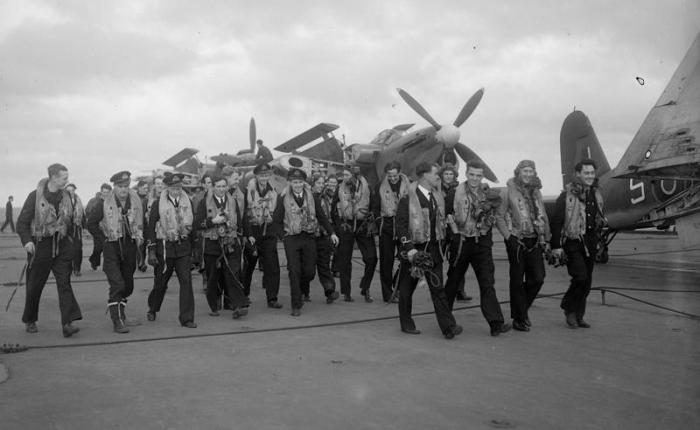


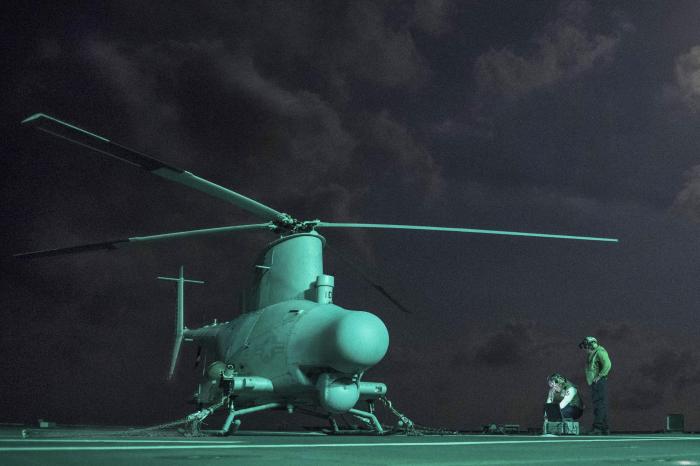
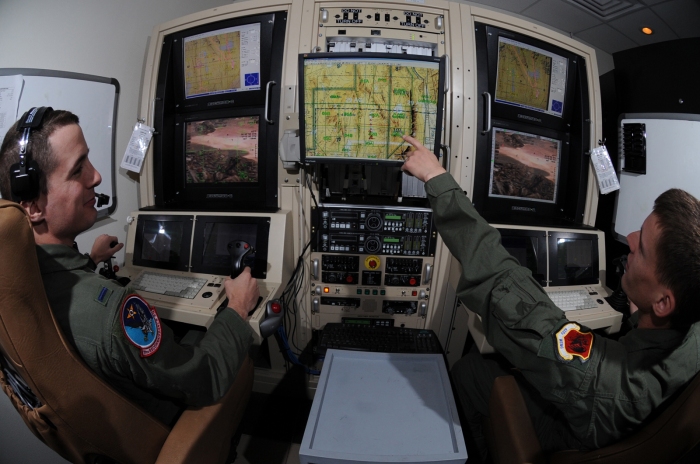
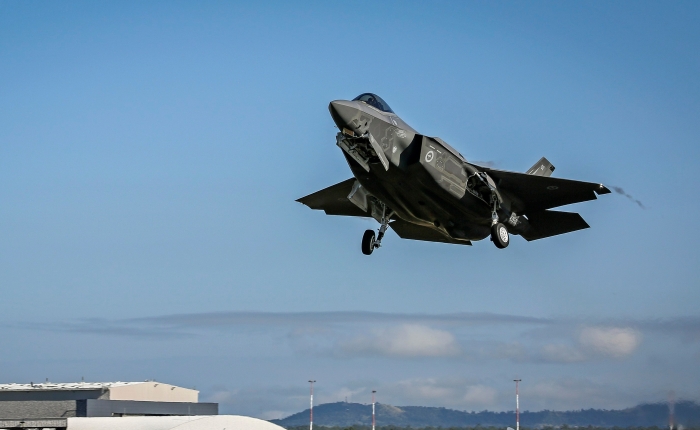
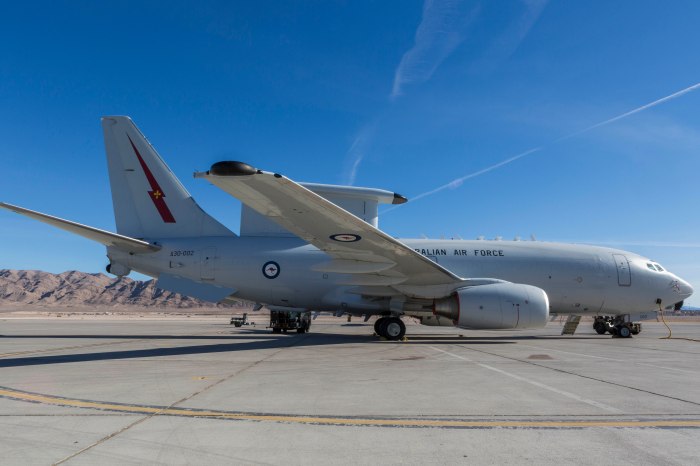
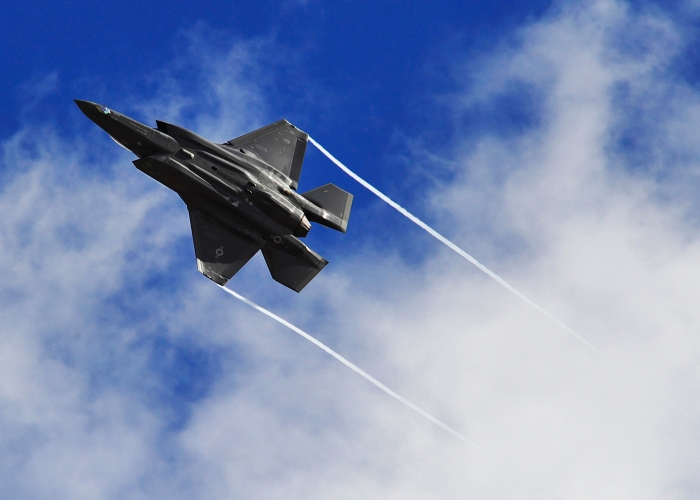
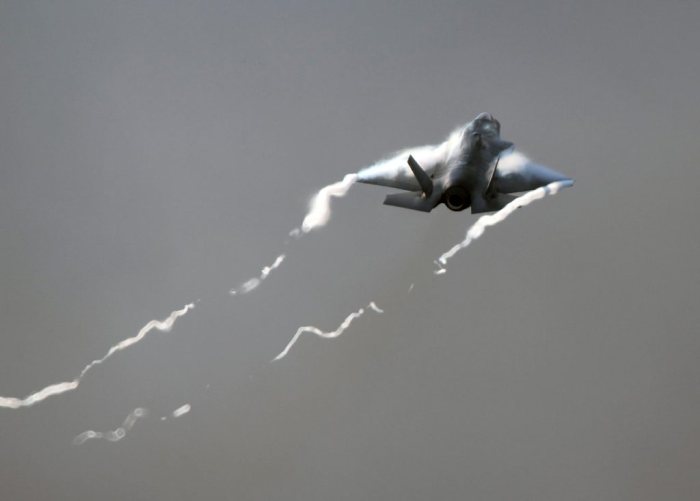
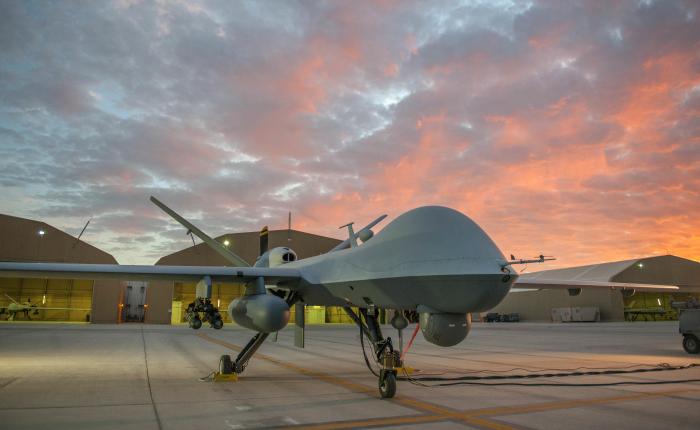

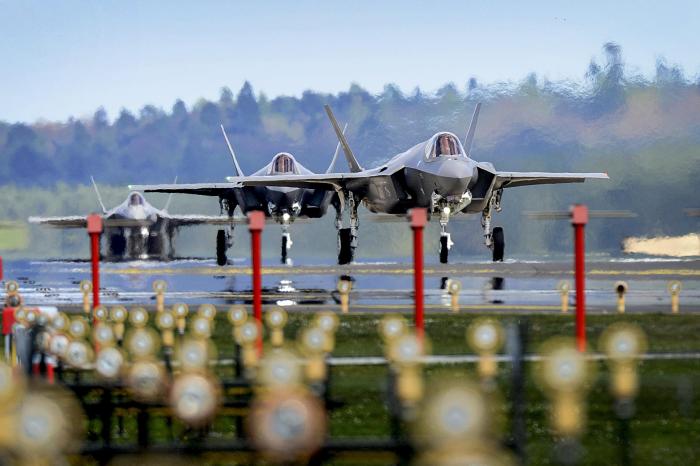
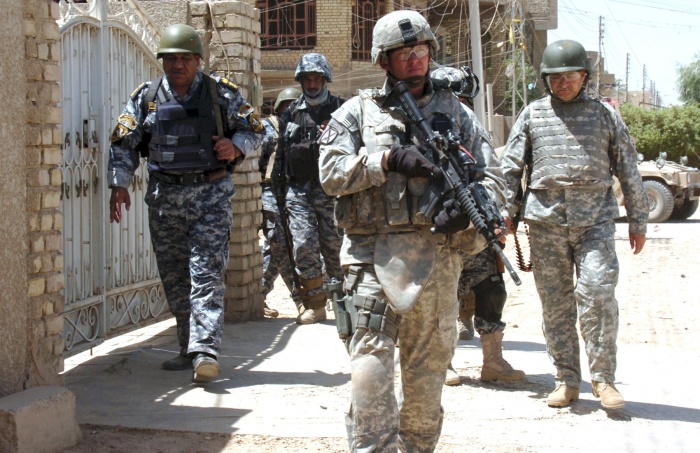
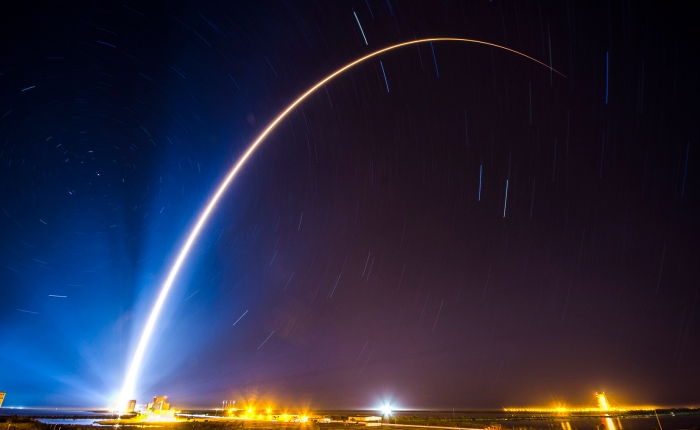

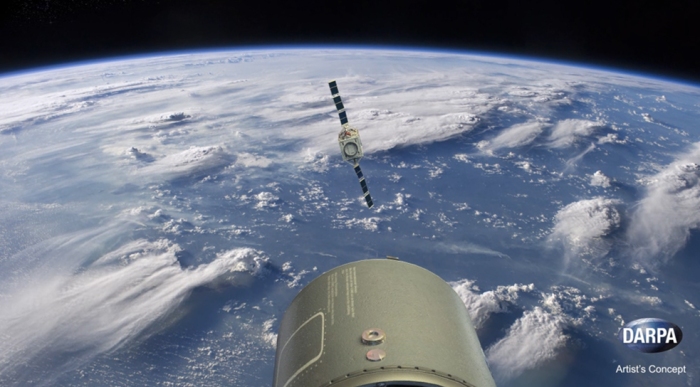

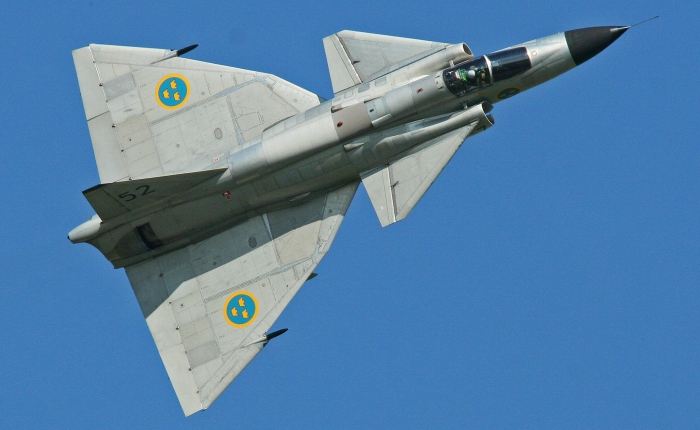
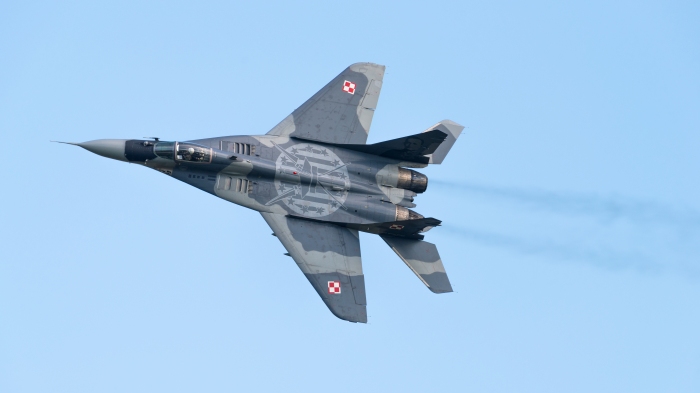
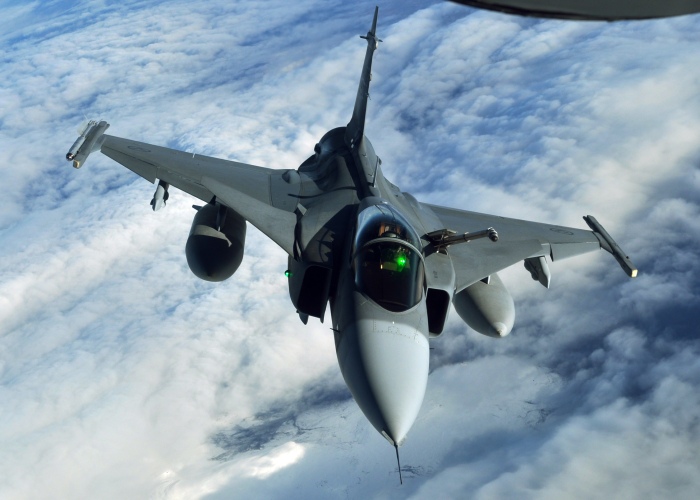



 From Balloons to Drones