#ResearchResources – Recent Articles and Books (March 2022)

#ResearchResources – Recent Articles and Books (March 2022)

Editorial note: In this series, From Balloons to Drones highlights research resources available to researchers. Contributions range from discussions of research at various archival repositories to highlighting new publications. As part of this series, we are bringing you a monthly precis of recent articles and books published in air power history. This precis will not be exhaustive but will highlight new works published in the preceding month. Publication dates may vary around the globe and are based on those provided on the publisher’s websites. If you would like to contribute to the series, please contact our Editor-in-Chief, Dr Ross Mahoney, at airpowerstudies@gmail.com or via our contact page here.

Articles

Malcolm Abbott, ‘Maintaining Aircraft Manufacturing through Government Purchases: Australia and Canada from the End of the Second World War until the 1970s,’ The Journal of Transport History (2022), doi:10.1177/00225266221086791.

In this article, a comparison is provided of the alternative Australian and Canadian government procurement policies for military aircraft in the post-Second World War period. Procurement was used by both governments to maintain manufacturing capacity that was established in the Second World War. By undertaking this analysis, the differing characteristics of the two policies are highlighted. In both cases procurement policies promoted the maintenance of aircraft manufacturing industries, however, the resulting industries were quite different in nature, a result partly of the differing natures of the policies, and different to some degree to the results of the policy in other Western countries.

Dagvin Anderson and Jason Hinds, ‘Joint Task Force Quartz: Through and Airpower Lens,’ Æther: A Journal of Strategic Airpower and Spacepower 1, no. 1 (2022).

Joint Task Force Quartz gave Airmen an opportunity to develop, establish, lead, execute, and debrief a Joint task force during combat operations. The operational context required the development of a synchronized and integrated scheme of maneuver bringing together information operations, combat aircraft, combat support, and logistics for each night’s air tasking order. As the Air Force develops new operational concepts, the command relationships must be built upon centralized command, distributed control, and decentralized execution all under the art of mission command.

JoAnne Bass, ‘A New Kind of War,’ Æther: A Journal of Strategic Airpower and Spacepower 1, no. 1 (2022).

The more Airmen recognize that influence operations have affected them, the faster we can recover and rebuild our defense against these attacks. Information warfare is not new; what has changed are the tactics our adversaries are using to conduct these operations at scale. We must empower our Airmen to recognize and actively combat this threat.

C.Q. Brown, ‘Ready to Meet the Moment,’ Æther: A Journal of Strategic Airpower and Spacepower 1, no. 1 (2022).

The task of preparing the Air Force to accelerate change is solidly rooted in the service’s brief but noteworthy history. The US Air Force went from propellers to jet-powered aircraft in the blink of the eye. In the 1950s, the service rapidly developed intercontinental ballistic missiles, the world’s greatest nuclear deterrent. From there, the Air Force mastered stealth and precision weapons. The next few chapters in the Air Force story are likely to be as challenging as anything we’ve ever done. But change ensures the service remains ready, as always, to meet the moment.

Mark Clodfelter, ‘Rethinking ‘Airpower versus Asymmetric Enemies,” Æther: A Journal of Strategic Airpower and Spacepower 1, no. 1 (2022).

Airpower’s effectiveness against any type of enemy depends on how well it supports the positive political goals without risking the achievement of the negative ones. The framework presented, which includes a distinctive terminology categorizing various airpower applications with those categories helping to ascertain how effectively an application supports a political goal, offers no guarantee of success or failure, nor is it a predictor of the future. But it does charge those leaders who might apply airpower to think carefully before making that decision.

David Deptula, ‘A New Battle Command Architecture for Joint All-Domain Operations,’ Æther: A Journal of Strategic Airpower and Spacepower 1, no. 1 (2022).

To achieve the objectives of JADC2, the US Air Force must deliver information to warfighters at the edge of the battlespace. The service must rapidly evolve beyond the large, centralized combined air and space operations centers of today—hundreds of people in stovepiped divisions around segregated mission areas—to a much more agile and dispersible set of processes and command-and-control structures. This new architecture must adapt to the air battle management system and JADC2 developments. But given the slow evolution of these programs, the Air Force cannot wait to begin changing the architecture for command and control of aerospace forces.

Everett Dolman, ‘Space is a Warfighting Domain,’ Æther: A Journal of Strategic Airpower and Spacepower 1, no. 1 (2022).

The Space Capstone Publication opens with the declaration that space is a warfighting domain. This assertion has tremendous repercussions for force structure, budget decisions, public and international perceptions, and, perhaps most significantly, for the culture of the newest military service. The capstone publication sets a tone for military space responsibility that is long overdue.

Ron Gurantz, ‘Does punishment work? Selection effects in air power theory,’ Comparative Strategy 41, no. 2 (2022).

Air power theory initially proposed that punitive attacks against civilian targets could force enemies to surrender. The current literature, however, has largely concluded that conventional bombing is ineffective as punishment. I argue that this is the result of a selection effect. By focusing only on high-profile bombing campaigns, the theory has drawn its conclusions from cases where punishment is likely to fail. This contrasts with deterrence theory, which has analyzed diplomacy in the shadow of nuclear punishment. Air power theory should follow this model by examining how the threat of bombing has influenced diplomacy and broader patterns of international politics.

Karen Guttieri, ‘Accelerate Change: Or Lose the Information War,’ Æther: A Journal of Strategic Airpower and Spacepower 1, no. 1 (2022).

The United States Air Force must accelerate change or lose an information-cyber war that is already hot and holds at risk American social, economic, and political cohesion. The Air Force has launched promising organizational and technological initiatives including an “integration imperative” recognizing the interdisciplinary, techno-sociological character of information warfare. At the same time, the Air Force has removed cyber from its mission statement. Moreover, force development does not progress past digital literacy, cyber hygiene, and information technology training. To win, the Air Force must develop and promote strategists to overcome vulnerabilities and seize opportunities in the cyberspace domain and information environment.

Clinton Hinote, ‘After Defeat: A Time to Rebuild,’ Æther: A Journal of Strategic Airpower and Spacepower 1, no. 1 (2022).

We lost people, we lost aircraft, we lost a campaign, we lost prestige, but we did not lose forever. It is time to look beyond the sense of finality that comes with defeat. We can decide not to lose. After suffering tremendous moral and physical attrition, it is time to rebuild. We cannot waste this crisis. We must implement the necessary changes to be victorious, next time.

Jacqueline van Ovost, ‘75 Years of Mobility Operations: Evolving for the Next 75,’ Æther: A Journal of Strategic Airpower and Spacepower 1, no. 1 (2022).

Operation Allies Refuge, certain to be studied for generations to come, unmistakably demonstrated the resolve of the logistics enterprise. But we cannot become complacent; the complex and dynamic nature of tomorrow’s challenges to US national security require an agile US Transportation Command, flexible, fully integrated, and responsive enough to meet the volume and tempo of warfighters’ demands. The command must place renewed emphasis on maneuver and evolve how the concept is applied across domains.

Robert Pape, ‘Hammer and Anvil: Coercing Rival States, Defeating Terrorist Groups, and Bombing to Win,’ Æther: A Journal of Strategic Airpower and Spacepower 1, no. 1 (2022).

The power of airpower lies in its supreme ability to match the use of force to decisive weaknesses in an opponent’s military strategy. This power lies not so much in technology, the balance of forces between coercer and opponent, civil-military relations, or professional command and control over military forces, although each of these is critical to the successful use of coercive airpower that achieves vital political objectives without inflicting harm to no purpose. Effective airpower instead turns, fundamentally, on understanding the enemy.

John Shaw et al., ‘Sailing the New Wine-Dark Sea: Space as a Military Area of Responsibility,’ Æther: A Journal of Strategic Airpower and Spacepower 1, no. 1 (2022).

The designation of a new military area of responsibility is highly significant change, denoting the major structural and functional differences between the current US Space Command and its predecessor, which existed between 1985 and 2002. A few propositions can guide our approach to accomplishing the command’s Unified Command Plan responsibilities: the area NOT in the US Space Command AOR is the most special place in the cosmos; the word “global” cannot adequately describe the political/military range of national security considerations; the concept of key terrain must be reimagined in the domain; and the military space AOR has relevance for everyone.

Johnny Stringer, ‘Air Power, 2010-2020: From Helmand to Hypersonics,’ Æther: A Journal of Strategic Airpower and Spacepower 1, no. 1 (2022).

An examination of air power employment over the last decade yields lessons and deductions from some exceptionally challenging operations in deeply complex environments: geographical, political and informational, but also increasingly shaped by the information environment, and with multiple audiences, actors, and adversaries. The West and its allies are at an inflection point in the employment and utility of air and space power; we no longer own nor can dictate all the terms of the debate.

Marybeth Ulrich, ‘The USAF at 75: Renewing our Democratic Ethos,’ Æther: A Journal of Strategic Airpower and Spacepower 1, no. 1 (2022).

Countering threats to American democracy is a vital national interest. Civics literacy and the development of a democratic ethos must be fostered in Americans beginning in early childhood, but the military plays a role in national democratic renewal as well. On the occasion of its 75th birthday, the US Air Force must draw upon its heritage, renewing a commitment to a democratic ethos that preferences service members’ obligation to the Oath of Office above partisan or personal interests.

Heather Venable, ‘Accelerate Change and Still Lose?: Limits of Adaptation and Innovation,’ Æther: A Journal of Strategic Airpower and Spacepower 1, no. 1 (2022).

Achieving air dominance requires more than technology. History reveals that technological solutions do not always offer the surest path to success. In this vein, calls for change provide terse nods to concepts and ideas, such as potential competitors’ “theories of victory,” while privileging more technological solutions. The services need a sound strategy to answer the requisite preliminary question of innovation or adaptation: we can, but should we? And, if we pursue innovation or adaptation in one area, what other area must be neglected because of that choice?

John Warden, ‘Winning a Peer War,’ Æther: A Journal of Strategic Airpower and Spacepower 1, no. 1 (2022).

A war with a peer is very unlikely to start tomorrow. If it did, however, the United States would be forced to fight with the ideas and the equipment that currently exist. America might in the final analysis prevail, but the challenge would be extreme and the cost likely to be high before victory was attained. On the other hand, if the war does not start for a decade or more, the United States has the opportunity to prepare well to win at an affordable price in a reasonable period of time. America’s survival, and that of the West writ large, demands we find the solutions that will lead to victory in a war with a peer opponent. The United States cannot afford to gamble that there will not be a serious peer war in a foreseeable future.

Books

Bojan Dimitrijevic and Jovica Draganić, Operation ALLIED FORCE – Volume 2: Air War over Serbia 1999 (Warwick: Helion and Company, 2022).

On 24 March 1999, the North Atlantic Treaty Organisation (NATO) launched Operation Allied Force against Serbia, claiming that Serb forces in Kosovo were engaged in ethnic cleansing and gross violations of human rights. Serbia, in turn, claimed to be fighting against an insurgency. This would be the last war in Europe during the 20th century.

The second volume of Operation Allied Force provides in depth analyses of the operation. The authors have analysed the experiences of both sides, starting from the command chain of the aviation of both air forces and the operations of the Yugoslav/Serb air defences.

This book explains many “firsts” that occurred in Operation Allied Force: the use of B-2A stealth bombers, new SEAD aviation tactics, and new munitions ranging from JDAM and JSOW to Graphite bombs. It also examines the tactics of Serbian air defences to minimize the effects of the air strikes, by adopting movement and improvisation. Finally, the authors reveal the level of damage and casualties on the FR Yugoslavia side and comments upon the aircraft losses on both sides.

The analyses are based upon original data as the authors, both the members of the joint Serbian Air Force/USAFE team which analysed Operation Allied Force in 2005–2006, received the opportunity to compare the experiences of both sides.

Operation Allied Force, Volume 2 is illustrated in full colour with photographs, diagrams and other illustrations from the FRY/Serbian Air Force, official USAF/NATO photographs from the US National Archives and original colour artworks commissioned for this project.

Raymond O’Mara, Rise of the War Machines: The Birth of Precision Bombing in World War II (Annapolis, MD: Naval Institute Press, 2022).

Rise of the War Machines: The Birth of Precision Bombing in World War II examines the rise of autonomy in air warfare from the inception of powered flight through the first phase of the Combined Bomber Offensive in World War II. Raymond P. O’Mara builds a conceptual model of humans, machines, and doctrine that demonstrates a distinctly new way of waging warfare in human-machine teams. Specifically, O’Mara examines how the U.S. Army’s quest to control the complex technological and doctrinal system necessary to execute the strategic bombing mission led to the development off automation in warfare.

Rise of the War Machines further explores how the process of sharing both physical and cognitive control of the precision bombing system established distinct human-machine teams with complex human-to- human and human-to-machine social relationships. O’Mara presents the precision bombing system as distinctly socio-technical, constructed of interdependent specially trained roles (the pilot, navigator, and bombardier); purpose-built automated machines (the Norden bombsight, specialized navigation tools, and the Minneapolis-Honeywell C-1 Autopilot); and the high-altitude, daylight bombing doctrine, all of which mutually shaped each other’s creation and use.

William Pyke, Air Power Supremo: A Biography of Marshal of the Royal Air Force Sir John Slessor (Barnsley: Pen and Sword, 2022).

Sir John Slessor was one of the twentieth century’s most distinguished wartime commanders and incisive military thinkers, and William Pyke’s comprehensive new biography reveals how he earned this remarkable reputation.

Slessor, a polio victim who always walked with a stick, became a First World War pilot in the Sudan and on the Western Front and a squadron and wing commander in India between the wars. When aerial warfare was still a new concept, he was one of the first to develop practical tactics and strategies in its application. In the Second World War, as the Commander-in-Chief of Coastal Command during the Battle of the Atlantic and the RAF in the Mediterranean during the Italian and Balkan campaigns, he made a remarkable contribution to the success of Allied air power. Then, after the war, as a senior commander he established himself as one of the foremost experts on strategic bombing and nuclear deterrence. That is why this insightful biography of a great British airman and his achievements is so timely and important as we enter a new era of strategic doubts and deterrence at the beginning of the twenty-first century.

William Pyke follows each stage of Slessor’s brilliant career as a pilot and commander in vivid detail. In particular he concentrates on Slessor’s writings, from his treatise on the application of air power in support of land armies to his thinking on nuclear deterrence and Western strategy.

#NavalAir22 #BookReview – TOPGUN – The Legacy: The Complete History of TOPGUN and Its Impact on Tactical Aviation

#NavalAir22 #BookReview – TOPGUN – The Legacy: The Complete History of TOPGUN and Its Impact on Tactical Aviation

Editorial note: During 2022, From Balloons to Droneswill be running a series of articles, including book reviews and podcasts, that focus on the development and use of air power in the naval and maritime spheres of operations. In this book review, Dr Michael Hankins reviews Brad Elward’s recent history of the US Navy Fighter Weapons School, which was created during the Vietnam War to help improve fighter capabilities within the Navy.

The call for submissions for our Naval and Maritime Air Power Revisited series can be found here.

Brad Elward, TOPGUN – The Legacy: The Complete History of TOPGUN and Its Impact on Tactical Aviation. Atglen, PA: Schiffer Military, 2021. Notes. Appendices. Bibliography. Index. Hbk. 688 pp.

Reviewed by Dr Michael W. Hankins

topgun

The United States Navy Fighter Weapons School, also known as TOPGUN, is one of the most popular aspects of the history of US military aviation. The 1986 eponymous film about the program launched the school into the public consciousness, and the topic has remained popular enough to prompt a much-anticipated sequel set to release in 2022. It is somewhat surprising then that there has yet to be a solid monograph about the history of TOPGUN. Some useful books exist, such as Robert Wilcox’s Scream of Eagles (2005), based on a series of oral histories, or the memoir of co-founder Dan Pedersen, Topgun: An American Story (2019). However, these are primarily the accounts of participants rather than a deeper analysis of TOPGUN’s development. Aviation author Brad Elward attempts to fill this gap with Topgun: The Legacy, a massive tome covering the school in extreme detail. This book is undoubtedly the definitive guide to the TOPGUN programme, and it is difficult to imagine a more authoritative work on the subject. However, while a few missed opportunities result in the book being a bit less than the sum of its parts, those parts present are very strong and offer significant value to the reader.

The first thing readers will notice about this book is how massive it is. It’s huge, heavy, and hard to hold. It’s packed with small print spread over 688 pages—over 130 of which are reserved for footnotes. Although perhaps difficult for a casual read, the book’s size reveals just how rich it is in detail and research. Elward conducted over 450 interviews and had more access to the archived records of TOPGUN than any other researcher. This allows Elward to present unprecedented intricacy levels about what happened at TOPGUN over its history. Minute details are revealed, including the changes to the curriculum over the years, precisely who participated and in what capacities, the partnerships with other services, the school’s relationship to the rest of the US Navy, and far more. All this detail is bolstered by frank personal accounts of pilots, instructors, and other participants and eyewitnesses, which adds a fascinating layer to the narrative that is a great read.

Baranek-PRO-9-19 2
Just two months after the Ault Report was published, TOPGUN was up and running in an old trailer at NAS Miramar. The first class graduated later that year, c. 1969. (Source: US Naval Institute)

One element that jumped out was how often the curriculum changed and how quickly the instructors adapted to a changing environment. The courses were constantly revised and kept up to date, even in the face of significant challenges to the concept of TOPGUN. For example, introducing the F/A-18 Hornet prompted the instructors to incorporate more ground attack elements into their classes, overturning their previous exclusive focus on air-to-air combat. Tension remained, however, between the TOPGUN participants and the attack community, particularly those involved in the STRIKE U (Naval Strike Warfare Center) program. At times, the rivalry and posturing between these groups approached levels of drama associated with reality television. The level of cooperation between TOPGUN and other services was significant as well. Close coordination with the US Marines and the US Air Force helped create a more joint approach to training and the sharing of information. This had a noticeable effect on the combat operations of the 1990s and beyond, as aircrews could work together in a more joint-minded way than in previous conflicts.

Elward also brings a much welcome look into this more recent history of the school. Previous work on TOPGUN tends to focus on its early years and its influence on air combat in the Vietnam War. Elward brings an intricate amount of detail to the later years of TOPGUN in chapters arranged by decade. In this analysis, the 1990s emerge as the period of the most major transition in curriculum, approach, and aircraft. The school adopted new aircraft and teaching foci during that period and moved from Naval Air Station Miramar in California to Naval Air Station Fallon, Nevada. The programme also took major organizational steps to change its relationship with the rest of the fleet, becoming more integrated and able to spread expertise throughout the force much more effectively. It was during this period, in 1996, when TOPGUN and STRIKE U merged along with the Carrier Airborne Early Warning Weapons School to form what is now known as Naval Aviation Warfighting Development Center. Other significant changes to teaching in the 2000s as the global war on terror entailed a much heavier emphasis on ground attack as near-peer threats emerged in the air. Elward’s analysis is so detailed that it includes lengthy discussions of how the school switched to using email or other more mundane aspects of running the program brought about by changes in personal computing.

The book does have a few weaknesses, however. These mostly stem from the author’s enthusiasm for TOPGUN, which at times moves into advocacy for the program. This is evident in Elward’s main thesis, which is that in the major conflicts of the 20th Century, the US military forgot and had to re-learn the fundamentals of air combat, and only the formation of the US Navy’s TOPGUN program ended this cycle. This argument is similar to previous works (such as Wilcox and Pedersen). This thesis is unconvincing. Elward rightly points out that air combat knowledge was passed from pilots with experience in one conflict to those of the next, and the US Air Force’s Fighter Weapons School was active and successful throughout the early Cold War. The alleged habitual forgetting is not evident except in the case of the early 1960s, in which air-to-air combat training was severely reduced (or even eliminated) in the US Air Force and US Navy. The first several chapters are a useful synthesis of other works on the topic of air-to-air combat, but the book might be stronger without them.

In the attempt to portray TOPGUN as the solution to major problems, there are a few noticeable omissions of issues that might reflect less positively on the program. For example, the discussion of the Tailhook sexual assault incidents is dismissive and defensive, and Elward omits the tragic death of pilot Art Scholl while filming the Top Gun movie. Racial disparity is not mentioned, and the book does not address that TOPGUN has been overwhelmingly white and gives no recognition to the few African Americans who participated in and contributed to the program.

These flaws, however, do not change the fact that this book is incredibly well-researched, deeply detailed, and remains an engaging read even given its length. There will always be more room to ask new historical questions about TOPGUN, but this book has cemented its place as a definitive source on the topic. Elward’s work is sure to please enthusiasts and many general readers. Aviation scholars will find this a very useful source as well.

Dr Michael Hankins is the Curator for US Air Force, Navy, and Marine Corps post-World War II Aviation at the Smithsonian National Air and Space Museum and the author of Flying Camelot: The F-15, the F-16, and the Weaponisation of Fighter Pilot Nostalgia (2021). He is also the Podcast Editor at From Balloons to Drones. He is a former Professor of Strategy at the USAF Air Command and Staff College eSchool, and former Instructor of Military History at the US Air Force Academy. He earned his PhD in history from Kansas State University in 2018 and his master’s in history from the University of North Texas in 2013. He has a web page here and can be found on Twitter at @hankinstien.

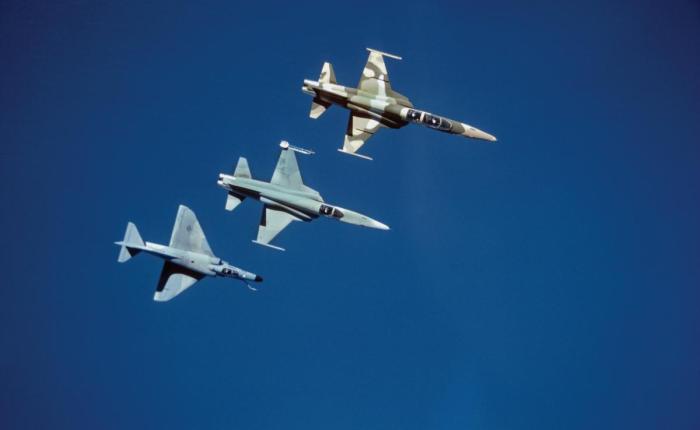
Header image: The adversary instructor program was one of TOPGUN’s early contributions. When the US Navy established fleet adversary squadrons in the 1970s, it was important that adversary pilots provide standardized threat presentations in aircraft such as F-5s (top and middle) and A-4s (bottom). (Source: US Naval Institute)

#Podcast – The Lynching of American Airmen in Nazi Germany: An Interview with Dr Kevin Hall

#Podcast – The Lynching of American Airmen in Nazi Germany: An Interview with Dr Kevin Hall

Editorial Note: Led by our Editor Dr Mike Hankins, From Balloons to Drones produces a monthly podcast that provides an outlet for the presentation and evaluation of air power scholarship, the exploration of historical topics and ideas, and provides a way to reach out to both new scholars and the general public. You can find our Soundcloud channel here. You can also find our podcast on Apple Podcasts and Google Podcasts.

During the Second World War, many allied air crews were shot down over Europe. Some escaped, some were captured, but many others became victims of Lynchjustiz (lynch justice) by Germans. These lynchings were committed not just by Nazi officials, but civilians as well, as Nazi propaganda emphasized the air war. Dr Kevin Hall, the author of of recent book on the subject, Terror Flyers: The Lynching of American Airmen in Nazi Germany (2021), joins us for a look at this difficult topic.

9780253050151

Dr Kevin T. Hall is a postdoctoral researcher at the Ruhr-Universtiät Bochum, Germany. He was a Fulbright grantee in Cologne in 2013–2014 and obtained his PhD from Central Michigan University in 2018. In 2019, he was a postdoctoral research historian at the Defense Prisoner of War/Missing in Action Accounting Agency (DPAA) in Honolulu, where he assisted the agency in accounting for US servicemen missing from past conflicts.

Header image: An image of Stalag Luft 1 outside Barth, Western Pomerania, Germany. The camp held Allied airmen, mainly Americans. The image shows blocks of huts and other buildings in the camp area. Sections of barbed wire and a guard tower are visible. In the distance, the Barth church tower. (Source: IBCC Digital Archive)

#ResearchResources – Recent Articles and Books (February 2022)

#ResearchResources – Recent Articles and Books (February 2022)

Editorial note: In this series, From Balloons to Drones highlights research resources available to researchers. Contributions range from discussions of research at various archival repositories to highlighting new publications. As part of this series, we are bringing you a monthly precis of recent articles and books published in air power history. This precis will not be exhaustive but will highlight new works published in the preceding month. Publication dates may vary around the globe and are based on those provided on the publisher’s websites. If you would like to contribute to the series, please contact our Editor-in-Chief, Dr Ross Mahoney, at airpowerstudies@gmail.com or via our contact page here.

Books

Douglas C. Dildy, “Big Week” 1944: Operation ARGUMENT and the Breaking of the Jagdwaffe (Oxford: Osprey Publishing, 2022).

A rigorous new analysis of America’s legendary ‘Big Week’ air campaign which enabled the Allies to gain air superiority before D-Day.

The USAAF’s mighty World War II bomber forces were designed for unescorted, precision daylight bombing, but no-one foresaw the devastation that German radar-directed interceptors would inflict on them. Following the failures of 1943’s Schweinfurt-Regensburg raids, and with D-Day looming, the Allies urgently needed to crush the Luftwaffe’s ability to oppose the landings.

In February 1944, the Allies conceived and fought history’s first-ever successful offensive counter­air (OCA) campaign, Operation Argument or “Big Week.” Attacking German aircraft factories with hundreds of heavy bombers, escorted by the new long-range P-51 Mustang, it aimed both to slash aircraft production and force the Luftwaffe into combat, allowing the new Mustangs to take their toll on the German interceptors. This expertly written, illustration-packed account explains how the Allies finally began to win air superiority over Europe, and how Operation Argument marked the beginning of the Luftwaffe’s fall.

Richard Hallion, Desert Storm 1991: The Most Shattering Air Campaign in History (Oxford: Oxford University Press, 2022).

An expertly written, illustrated new analysis of the Desert Storm air campaign fought against Saddam Hussein’s Iraq, which shattered the world’s fourth-largest army and sixth-largest air force in just 39 days, and revolutionized the world’s ideas about modern air power.

Operation Desert Storm took just over six weeks to destroy Saddam Hussein’s war machine: a 39-day air campaign followed by a four-day ground assault. It shattered what had been the world’s fourth-largest army and sixth-largest air force, and overturned conventional military assumptions about the effectiveness and value of air power.

In this book, Richard P. Hallion, one of the world’s foremost experts on air warfare, explains why Desert Storm was a revolutionary victory, a war won with no single climatic battle. Instead, victory came thanks largely to a rigorously planned air campaign. It began with an opening night that smashed Iraq’s advanced air defense system, and allowed systematic follow-on strikes to savage its military infrastructure and field capabilities. When the Coalition tanks finally rolled into Iraq, it was less an assault than an occupation.

The rapid victory in Desert Storm, which surprised many observers, led to widespread military reform as the world saw the new capabilities of precision air power, and it ushered in today’s era of high-tech air warfare.

David Hobbs, The Fleet Air Arm and the War in Europe, 1939–1945 (Barnsley: Seaforth Publishing, 2022).

For the first time, this book tells the story of how naval air operations evolved into a vital element of the Royal Navy’s ability to fight a three-dimensional war against both the Kriegsmarine and Luftwaffe. An integral part of RN, the Fleet Air Arm was not a large organisation, with only 406 pilots and 232 front-line aircraft available for operations in September 1939. Nevertheless, its impact far outweighed its numbers – it was an RN fighter that shot down the first enemy aircraft of the war, and an RN pilot was the first British fighter ‘ace’ with 5 or more kills. The Fleet Air Arm’s rollcall of achievements in northern waters went on to include the Norwegian Campaign, the crippling of Bismarck, the gallant sortie against Scharnhorst and Gneisenau as they passed through the Channel, air attacks on enemy E-boats in the narrow seas, air cover for the Russian convoys, air attacks that disabled Tirpitz, and strikes and minelaying operations against German shipping in the Norwegian littoral that continued until May 1945. By the end of the war in Europe the FAA had grown to 3243 pilots and 1336 aircraft.

This book sets all these varied actions within their proper naval context and both technical and tactical aspects are explained with ‘thumb-nail’ descriptions of aircraft, their weapons and avionics. Cross reference with the Fleet Air Arm Roll of Honour has been made for the first time to put names to those aircrew killed in action wherever possible as a mark of respect for their determination against enemy forces on, above and below the sea surface which more often than not outnumbered them.

The Fleet Air Arm and the War in Europe completes David Hobbs’ much-praised six-volume series chronicling the operational history of British naval aviation from the earliest days to the present.

Milos Sipos and Tom Cooper, Wings of Iraq: Volume 2 – The Iraqi Air Force, 1970-1980 (Warwick: Helion and Company, 2022).

Officially established on 22 April 1931, around a core of 5 pilots and 32 aircraft mechanics, the Royal Iraqi Air Force was the first military flying service in any Arab country.

Wings of Iraq, Volume 2 tells the story of the Iraqi Air Force between 1970 and 1980. In doing so it examines the air force’s involvement in the October 1973 Arab-Israeli War, and then the showdown with the Iranian-supported Kurdish insurgency in northern Iraq in 1974-1975. These two affairs taught the Iraqis that numbers alone did not make an air force. Correspondingly, during the second half of the 1970s, Baghdad embarked on a project based on full technology transfer from France, which was intended to result in preparing the IrAF for the twenty-first century.

This process hardly began when the new ruler in Baghdad, Saddam Hussein at-Tikriti, led his country into an invasion of neighbouring Iran, embroiling it in a ruinous, eight-year-long war. This volume details the events leading up to the beginning of that war and its opening moves in the air.

Although virtually ‘born in battle’, collecting precious combat experience and playing an important role in so many internal and external conflicts, the Iraqi Air Force remains one of the least known and most misinterpreted military services in the Middle East. Richly illustrated, Wings of Iraq, Volume 2, provides a uniquely compact yet comprehensive guide to its operational history, its crucial officers and aircraft, and its major operations between 1970 and 1980.

#BookReview – Lavi: The United States, Israel and the Controversial Fighter Jet

#BookReview – Lavi: The United States, Israel and the Controversial Fighter Jet

John W. Golan, Lavi: The United States, Israel and the Controversial Fighter Jet. Lincoln NE: Potomac Books, 2016. Index. Maps. Figures. Tables. Images. Appendices. HBK. 416 pp.

Reviewed by Richard Shimooka

lavi

John Golan’s Lavi is a unique and welcome contribution to the field as the history of defence procurement, in general, remains a somewhat esoteric research area. Golan’s work focuses on the Israeli designed Lavi, a purpose-built close air support aircraft designed to replace the venerable Douglas A-4 Skyhawk in the Israeli Armed Forces (IAF) service. It had a short, bright life before the project reached an ignominious conclusion with a high stakes Israeli government cabinet meeting. Golan’s book chronicles the project’s history, drawing from a wide variety of primary sources, including documentation, interviews, and secondary sources. He effectively conveys Israel’s unique security environment and the need for a strong indigenous industrial base, which helped guide the programme’s development.

Golan’s unique background as an aviation engineer infuses his work with a different perspective than other accounts. He sews together many of the programme’s technical aspects with the project’s political, diplomatic, programme management, and doctrinal dimensions. That synthesis is rare in many accounts, which examine one or two areas and only make perfunctory acknowledgements of other areas. Lavi avoids that trap and is one of the most comprehensive treatments of a recent procurement project. The book starts by exploring the strategic and doctrinal history of the IAF that led to the project and the development of the country’s aviation industry that enabled its creation. A crucial part of these sections is how Golan highlights the experiences of various personnel, such as Benjamin Peled (p. 24) and Ezer Weizman (p. 37), who both played important roles during the Lavi’s gestation. The book then moves onto the programme’s project management, political, and technical dimensions, tracing its development until its demise. The book’s last third covers some of the post-cancellation fallout and effects.

One part of the book bears special mention: the appendixes. While most authors use them to elucidate topics not adequately addressed in the text, Golan adds nearly 100 pages covering various aspects of fighter design, performance, construction, and industrial considerations. No such comparable study exists that collects all these considerations in one place. It is the icing on top of the author’s already excellent book.

However, the account has a few shortcomings. The most apparent is how Golan addresses the factors and decision-making that led to the programme’s collapse. The book catalogues the wide array of factors that led to its cancellation, such as the desperate state of Israeli public finances in the late 1980s. However, the book largely relegates them as contributing factors throughout its narrative. Golan reserves much of the blame surrounding the programme’s collapse to US Secretary of Defense, Caspar Weinberger. In particular, the secretary’s anti-Israeli perspective and dogged bureaucratic approach are noted as being particularly effective at convincing already reticent Israeli authorities to cancel the programme.  Golan prioritises Weinberger’s agency over all other actors and seems to give his role the preponderance of blame for the outcome.

While Weinberger undoubtedly played an obstructionist role, the Israeli government was not the only one to encounter his department’s intransigence towards multinational fighter projects. For example, the development of the Japanese Mitsubishi F-2 programme experienced similar levels of strife. Thus, any multinational programme would encounter political hurdles within the United States.

Nevertheless, Golan’s focus on the political and diplomatic aspects of the programme’s cancellation slightly underplays some of the other dynamics that affected the outcome. One is the economic and industrial trends that affected all western fighter development programmes during the latter half of the Cold War. The number of Western fighter manufacturers started to decline between the 1960s to 1980s, largely due to the rising cost of developing and producing fighters, which far outpaced normal inflation.

In isolation, Israel might have been able to absorb these cost increases. However, the fiscal realities of the state were dire, as Golan described:

At the time that Israel’s National Unity Government took office, the nation was undergoing an economic earthquake. Decades of extended defense budgets had taken their toll. Defense expenditures had always been a leading element in Israel’s national budget. In the aftermath of the 1973 war, however, Israeli defense expenditures had skyrocketed – consuming an average of 24 percent of Israel’s gross domestic product during the decade that followed. In comparison, the United States – even at the height of the war in Vietnam – devoted less than 10 percent of its GDP toward defense. The burden on Israel’s economy was unbearable, driving budget deficits and inflation to unprecedented levels. (p. 101)

Golan’s characterises the factors pertaining to the Lavi’s demise as chess pieces employed by Weinberger and his staff to cancel the fighter. However, given these desperate economic realities, it is difficult to see how the programme would continue even after the fateful cancellation of the fighter on August 31, 1987. Already there was significant support for either cancelling or curtailing Lavi purchases within the Israeli cabinet. If purchases were reduced, this would create a phenomenon known as a death spiral, where decreasing lot purchases result in higher unit costs, often leading to further reductions.

Another significant dynamic unexplored in the book is the major, ongoing doctrinal shift in the close-air support mission. Golan’s work is effusive in its praise for the Israeli fighter, often pointing out its ability to undertake this mission. However, the book fails to cover the changing threat landscape, which would pose significant challenges for the aircraft’s viability in its assigned mission.

It should be noted that these are relatively minor issues in an otherwise excellent book. Very few accounts have synthesised such a disparate but relevant array of facts to create an authoritative account of the programme. Golan’s weighting of these factors may invite some critique and debate, but that should by no means discourage anyone from reading this outstanding work.

Richard Shimooka is a Senior Fellow at the Macdonald-Laurier Institute in Ottawa, Canada. He was a Senior Fellow at the Defence Management Studies Programme at Queen’s University from 2007–2012, and a Research Fellow at the Conference of Defence Associations Institute from 2012-2017. Richard works’ cover a diverse array of topics, including Canadian and American foreign and defence policy, modern air power and defence procurement.

Header image: IAI Lavi B-2 prototype at Muzeyon Heyl ha-Avir, Hatzerim, Israel. 2006. (Source: Wikimedia)

#BookReview – CIA Station D: Area 51 – The Complete Illustrated History of the CIA’s Station D at Area 51

#BookReview – CIA Station D: Area 51 – The Complete Illustrated History of the CIA’s Station D at Area 51

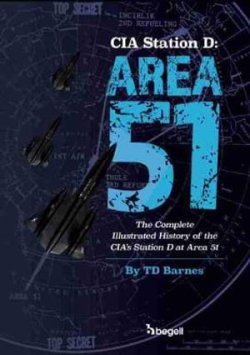
T.D. Barnes, CIA Station D: Area 51 – The Complete Illustrated History of the CIA’s Station D at Area 51. Danbury, CT: Begell House, 2021. Photographs. Appendices. Bibliography. Index. 590 pp. HBK.

Reviewed by Dr Michael W. Hankins

cia-station-d-area-51

Area 51 has long been a source of fascination, intrigue, and conspiracy theories. It has also inspired popular culture from television and film to 2019’s widely publicised (but barely attended) Facebook-based attempt to ‘storm the site. However, those familiar with the military aviation world have long known that Area 51 is little more than a US Air Force (USAF) (formerly Central Intelligence Agency, CIA) facility where experimental aircraft are tested. This includes everything from the U-2 spy plane to the F-117 stealth fighter. T.D. Barnes, who worked with the CIA during its formative years at Area 51, attempts to set the record straight with this new book covering the CIA’s activities in the Nevada desert during the early and mid-Cold War. The result is a profoundly informative work that reveals new stories and will please enthusiasts. Still, the size of the book and its challenging organisation might be overwhelming for casual readers.

From the early origins of Station D, which only much later became known as Area 51, Barnes traces the major CIA aviation programs based there. These include the U-2, the A-12 (and associated Blackbird ‘family’ aircraft of the YF-12, SR-71, and M-21), and the MiG exploitation programs that evaluated and flew captured Soviet aircraft. Some side projects associated with these significant programs are explored as well, most notably Project PALLADIUM, which provided valuable intelligence on Soviet radar capabilities. The details of these programs will already be known to many readers. For example, the Blackbird family programs are well documented by works such as Paul Crickmore’s Lockheed Blackbird: Beyond the Secret Missions (revised edition, 2016) or Richard Graham’s The Complete Book of the SR-71 Blackbird (2015). However, Barnes’ work reveals fascinating new details about even these well-covered topics. Barnes presents both familiar and new stories from the perspective of the CIA rather than from the USAF or industry contractors. The Palladium program is particularly interesting, involving complicated, world-ranging plots to send fake signals in the direction of the Soviet Union to see what their radars could detect. Barnes does a good job of tracing the story from field teams collecting information to how information was analysed and used in technological and strategic decision-making at the highest levels.

A12radartesting
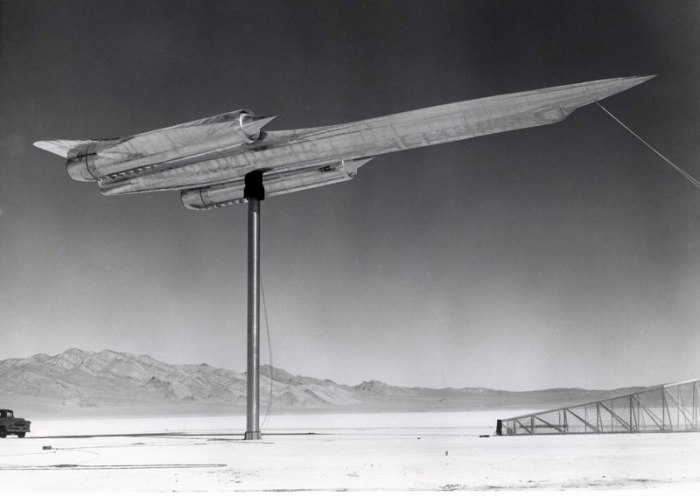
A scale model of an A-12 prepared for radar cross section measurements at ‘Area 51,’ c. 1959. (Source: Wikimedia)

This fresh perspective is also wide-ranging. At times, Barnes zooms out to discuss broad historical topics and focuses on minute details of a particular program. As a result, readers will find a wealth of immense detail, as well as many photographs, some of which have not been published before (although some of the photos are of low resolution and appear pixelated on the page). Although technology is often at the centre of these stories, Barnes also sheds interesting light on the institutional histories; seeing the organisational evolution and institutional rivalries from the CIA’s perspective is an interesting and welcome lens on this material. For example, Barnes traces the various tensions between the CIA and the USAF, from high command to individual personnel.

The individual level is where the book really shines. Barnes gives a true, ‘on the ground’ account of many of these programs, not only showing how the CIA’s efforts affected the Cold War, but depicting what it felt like to live there, to work there, and the realities of day-to-day life inside a top-secret facility working on advanced, world-changing programs. The Blackbirds may have been top-of-the-line, sleek, space-age aircraft. Still, Barnes contrasts that with stories about the trouble getting clearances and badges, the type of housing available on the station, the type of bars that employees frequented, and the games with which personnel and pilots amused themselves. Whether he is telling a detailed technological history or something personal, the focus is on the details of these stories – there is no large historical analysis, nor a broad historical argument made in this book.

4477th_Test_and_Evaluation_Squadron_MiG-21_in_flight
A MiG-21F-13 flown by United States Navy and Air Force Systems Command during HAVE DOUGHNUT in 1968. (Source: Wikimedia).

As interesting as the material is, some readers have a few barriers to entry. The first is the whopping price tag of US$149. Although this cost might be too high for some readers, it is worth noting the amount of material one gets for the price. The book is heavy and massive, almost unwieldy. It contains nearly 600 oversized, double-columned pages, each of which is almost twice the dimensions of a typical print book. In terms of word count, this is probably about three typical books’ worth of material, which might help to justify the cost for some readers.Historians looking for a thesis will not find one, as the work does not seek to make a historical argument. Instead, it is focused on detailed accounts of individual stories. Furthermore, although the book is packed with detail, the immense amount of material might be difficult for some readers to navigate. In addition, it is written in a meandering style, which is sometimes charming, but at other times leads to repetition. In some cases, stories are told and retold, sometimes more than once. Usually, the retellings of stories contain slightly different emphases, but periodically sentences are repeated verbatim, and in some cases, photographs are reused. There are no footnotes and only a brief bibliography. Except for a few instances where a document is referenced directly in the text, readers may have trouble finding sources for information or quotes.

In conclusion, enthusiasts of the U-2, A-12/SR-71, and captured MiG programs will likely find much to like about this book, including newly discovered details and fresh images from a new perspective. Although it is a bit less accessible to casual readers, researchers will find plenty to pore over here.

Dr Michael Hankins is the Curator for US Air Force, Navy, and Marine Corps post-World War II Aviation at the Smithsonian National Air and Space Museum and the author of Flying Camelot: The F-15, the F-16, and the Weaponisation of Fighter Pilot Nostalgia (2021). He is also the Podcast Editor at From Balloons to Drones. He is a former Professor of Strategy at the USAF Air Command and Staff College eSchool, and former Instructor of Military History at the US Air Force Academy. He earned his PhD in history from Kansas State University in 2018 and his master’s in history from the University of North Texas in 2013. He has a web page here and can be found on Twitter at @hankinstien.

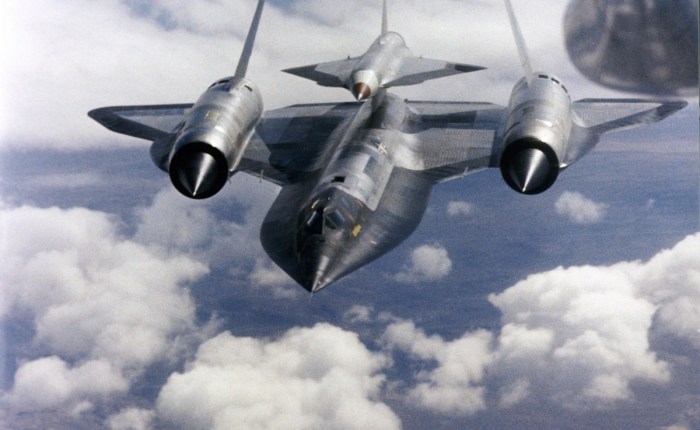
Header image: A Lockheed M-21 carrying Lockheed D-21 drone in flight. (Source: Wikimedia)

#ResearchResources – Recent Articles and Books (January 2022)

#ResearchResources – Recent Articles and Books (January 2022)

Editorial note: In this series, From Balloons to Drones highlights research resources available to researchers. Contributions range from discussions of research at various archival repositories to highlighting new publications. As part of this series, we are bringing you a monthly precis of recent articles and books published in air power history. This precis will not be exhaustive but will highlight new works published in the preceding month. Publication dates may vary around the globe and are based on those provided on the publisher’s websites. If you would like to contribute to the series, please contact our Editor-in-Chief, Dr Ross Mahoney, at airpowerstudies@gmail.com or via our contact page here.

Articles

M. Abbott and J. Bamforth, ‘Determining the reasons for the failure of British aircraft manufacturers to invest in Australia’s industry, 1934–1941,’ Australian Economic History Review (2021). https://doi.org/10.1111/aehr.12235 

The aim of the article is to identify the factors that prevented British aircraft manufacturers from investing in Australia in the second half of the 1930s, a period when rearmament was creating demand for aircraft. The article looks at several unsuccessful proposals by British manufacturers to establish factories in Australia to build aircraft in the late 1930s, with additional attention being given to one proposal in particular. There is evidence that the Australian Government favoured the creation of an Australian-owned industry building aircraft under licence to foreign manufacturers, and it was this factor that largely deterred British investors.

Marc J. Alsina, ‘Aviation for the People: Class and State Aviation in Perón’s “New Argentina,” 1946–55,’ Technology and Culture 63, no. 1 (2022).

This article investigates the culture and politics of aviation in mid-twentieth-century Argentina under Juan D. Perón’s populist government. For enthusiasts around the world, aviation seemed poised for the long-prophesized “Air Age” transformations. Most emphasized the middle-class or elite nature of this quintessentially modern industry and its customers. Recent aviation scholarship in Europe and the United States has thus focused on affluent passengers or aircraft owners as the consumers of aviation technology. But this article reveals that Peronist Argentina implemented a massive political aviation program aimed at elevating socioeconomic conditions for the working classes. State media show that the authorities harnessed aviation as a technopolitical tool to both represent and enact their vision for a “New Argentina” by providing “dignified” work for the lower classes.

Xiaoming Zhang, ‘High-Altitude Duel: The CIA’s U-2 Spy Plane Overflights and China’s Air Defense Force, 1961-1968,’ Journal of Military History 86, no. 1 (2022).

During the 1960s, the U.S. Central Intelligence Agency’s U-2 spy planes, piloted by Chinese Nationalist airmen from Taiwan, flew routinely over the Chinese mainland monitoring the Chinese nuclear weapons program; the overflights also demonstrated Beijing’s military weakness and inability to control its airspace. In spite of having only a few Soviet-made surface-to-air missile systems, the People’s Liberation Army Air Force was convinced that human factors, especially agility in strategy, operations, and tactics, could overcome a superior enemy. Although much remains secret, sources now available provide new insights into this secret Cold War history. Moreover, as the Chinese claimed themselves, these experiences remain valuable for China’s military response to war.

Books

Kevin Wright, We Were Never There – Volume 2: CIA U-2 Asia and Worldwide Operations 1957-1974 (Warwick: Helion and Company, 2022).

Devised by Kelly Johnson and operated by the CIA from 1956-74, the U-2 is the world’s most famous ‘spyplane.’ It flew at unprecedented altitudes and carried the most sophisticated sensors available, all in the greatest secrecy.

The second volume of We Were Never There concentrates on the period of operational missions mainly across Asia from 1957-74. The book utilises a large number of declassified documents to explore some of the remaining secrets of these missions.

The book starts by looking at some of the missions conducted by the CIA’s Detachment ‘C’ U-2s against key targets in the Soviet Far East up to Mayday 1960. It moves on to explore in detail the overflights of the Peoples Republic of China by Nationalist Chinese pilots in conjunction with the CIA. In particular, the study of Project TACKLE looks at efforts to gain intelligence on the PRC’s expansive nuclear programme from the early 1960s. This is supplemented with details of Taiwanese/CIA operations against North Korea and its Yongbon nuclear reactor. It presents target images and reveals detailed routes for many of these overflights that have not been publicly seen before.

Whilst the USAF took the lead in operations against Cuba, the book explores the earlier CIA missions against Cuba during the Bay of Pigs landings and the missile crisis. Another chapter explores the efforts to equip the U-2 for operations from US Navy aircraft carriers. Detachment G, based at Edwards AFB, had a worldwide contingency role, able to quickly deploy anywhere in the world. It undertook missions targets in Tibet, the PRC, Vietnam, Cambodia, Laos, British Guiana, Venezuela and elsewhere.

A section of the book examines the development of the U-2R, a major update of the original aircraft, making it larger and much more capable. Its handling characteristics and comparisons with the U-2C are explored with the help of interviews with two former USAF U-2 pilots who flew both models of the aircraft.

The final chapter looks at the return of the U-2 to Europe, in particular the UK, for training missions from the late 1960s. It covers details on operations over the middle east monitoring ceasefire arrangements between Israel and its neighbours in 1970 and 1973. It ends with the phasing out of Agency U-2 operations, the closure of projects TACKLE and JACKSON and an evaluation of the U-2’s contribution to aerial intelligence collection.

Bill Yenne, America’s Few: Marine Aces of the South Pacific (Oxford: Osprey Publishing, 2022).

America’s Few delves into the history of US Marine Corps aviation in World War II, following the feats of the Corps’ top-scoring aces in the skies over Guadalcanal. Marine Corps aviation began in 1915, functioning as a self-contained expeditionary force. During the interwar period, the support of USMC amphibious operations became a key element of Marine aviation doctrine, and the small force gradually grew. But in December 1941 came the rude awakening. Within hours of Pearl Harbor, heroic Marine aviators were battling the Japanese over Wake Island.

In the South Pacific, the aviators of the US Marine Corps came out of the shadows to establish themselves as an air force second to none. In the summer of 1942, when Allied airpower was cobbled together into a single unified entity – nicknamed ‘the Cactus Air Force’ – Marine Aviation dominated, and a Marine, Major General Roy Geiger, was its commander. Of the twelve Allied fighter squadrons that were part of the Cactus Air Force, eight were USMC squadrons. It was over Guadalcanal that Joe Foss emerged as a symbol of Marine aviation. As commander of VMF-121, he organized a group of fighter pilots that downed 72 enemy aircraft; Foss himself reached a score of 26. Pappy Boyington, meanwhile, had become a Marine aviator in 1935. Best known as the commander of VMF-214, he came into his own in late 1943 and eventually matched Foss’s aerial victory score.

Through the parallel stories of these two top-scoring fighter aces, as well as many other Marine aces, such as Ken Walsh (21 victories), Don Aldrich (20), John L. Smith (19), Wilbur Thomas (18.5), and Marion Carl (18.5), many of whom received the Medal of Honor, acclaimed aviation historian Bill Yenne examines the development of US Marine Corps aviation in the South Pacific.

#Podcast – The F-15 and F-16: Fighter Pilot Culture and Technology: An Interview with Dr Michael Hankins

#Podcast – The F-15 and F-16: Fighter Pilot Culture and Technology: An Interview with Dr Michael Hankins

Editorial Note: Led by our Editor Dr Mike Hankins, From Balloons to Drones produces a monthly podcast that provides an outlet for the presentation and evaluation of air power scholarship, the exploration of historical topics and ideas, and provides a way to reach out to both new scholars and the general public. You can find our Soundcloud channel here. You can also find our podcast on Apple Podcasts and Google Podcasts.

Our own co-host Michael Hankins discusses his new book, Flying Camelot: The F-15, the F-16, and the Weaponization of Fighter Pilot Nostalgia, from Cornell University Press. We look at the development process of the F-15 Eagle and the F-16 Fighting Falcon, talk about the elements of fighter pilot culture, and the ever-controversial Colonel John Boyd.

41jlB582OhL

Dr Michael Hankins is the Curator for US Air Force, Navy, and Marine Corps post-World War II Aviation at the Smithsonian National Air and Space Museum and the author of Flying Camelot: The F-15, the F-16, and the Weaponization of Fighter Pilot Nostalgia (2021). He is the Podcast Editor at From Balloons to Drones, a former Professor of Strategy at the USAF Air Command and Staff College eSchool, and former Instructor of Military History at the US Air Force Academy. He earned his PhD in history from Kansas State University in 2018 and his master’s in history from the University of North Texas in 2013. He has a web page here and can be found on Twitter at @hankinstien.

Header image: This cartoon from a 1977 General Dynamics briefing depicts the ‘myth’ that the F-16 production model had inferior performance to the original YF-16 prototype (Source: Lockheed Martin photo via Smithsonian National Air and Space Museum).

#BookReview – Drone War Vietnam

#BookReview – Drone War Vietnam

David Axe, Drone War Vietnam. Barnsley: Pen and Sword, 2021. Illustrations. Bibliography. Index. Hbk. viii + 166 pp.

Reviewed by Dr Roger Connor

9781526770264

The rapidly expanded use of military drones for surveillance and targeted strikes has generated greater interest in 20th Century military drone development and use over the past two decades. The most prolific antecedent to the General Atomics Predator was the US Air Force’s (USAF) Vietnam-era employment of Ryan 147 ‘Lightning Bug,’ a variant of the Firebee turbine-powered target drone developed in the late 1940s. In all, 3,435 Lightning Bug combat missions were flown over the South-East Asia combat by 1,106 of what today would be regarded as ‘attritable’ drones. Launched from a DC-130 mothership and recovered in flight after popping a parachute by CH-3 helicopters, these unconventional reconnaissance remotely piloted aircraft fit the traditional rationale for drones – the D’s: Dull, Dirty (nuclear), or Dangerous operations. Over North Vietnam, Lightning Bug flights freed RF-101 and other reconnaissance crews from particularly hazardous or politically sensitive missions, such as documenting air defence sites, especially S-75 (NATO designated SA-2) surface-to-air missile complexes. Some even performed propaganda leaflet drops. While the 147s flew unarmed in operations, considerable development occurred in equipping them with precision-guided ordnance, but the war ended before they were suitable for deployment.

David Axe, a self-described journalist, filmmaker, and blogger, has produced a slick-looking, if somewhat anemic, study of the Ryan Lightning Bugs. Organized into sixteen short chapters of roughly four-to-eight pages, each separated by photographic spreads, the first three chapters address the early history of the Lightning Bugs, framing them as a response to the challenge of the Soviet S-75 (SA-2) surface-to-air missile. Chapters four to fifteen document various episodes of operations of operations over North Vietnam with an emphasis on Ryan’s response to the challenges encountered. The final chapter documents Ryan’s next generation Model 154 drone.

DC-130_Hercules_taking_off_with_Firebee_drones_for_recon_mission_over_Vietnam
A US Air Force Lockheed DC-130A Hercules taking off on a mission in Southeast Asia, carrying two Ryan AQM-34 Firebee drones, c. 1969. Firebees flew reconnaissance missions using a pre-programmed guidance system or by remote control from the DC-130 crew. (Source: Wikimedia)

Drone War Vietnam attempts a survey of Lightning Bug operations while linking them with post-war strategic applications of remotely piloted aircraft and the broader narrative of drone development. The primary attraction for Axe’s narrative is that it is well-illustrated with images that do not appear in other works on the topic. Many of these photos originated with the Ryan archives, now in possession of the San Diego Air and Space Museum Archives. These include multiple perspectives of drone operators in DC-130 motherships and a Marine Corps CH-37 helicopter used in drone recovery operations that crashed in just such an attempt. As a visual record of this technological niche, Axe’s monograph is the best available in print.

Unfortunately, Axe’s narrative is disappointing. A significant factual error in the first two sentences of the introduction sets the tone (incorrectly describing the well-documented 2001 first strike made from an MQ-1). Casual errors such as Mutually Assured Destruction being described as having existed in 1950 also crop up. While these contextual errors are frustrating, fundamental errors on the topic are less forgivable. For instance, Axe notes, ‘[B]etween 1966 and the end of the Vietnam War, Army helicopters attempted 2,745 drone recoveries and completed 2,655 of them: a 96.7 per cent success rate’ (p. 90). This is a nice recitation of facts, except that almost exclusively USAF helicopters of the 350th Strategic Reconnaissance Squadron performed the duty – a critical fact that does not appear in the text. Axe’s writing style is accessible, but sometimes overly so with the use of incomplete sentences, for example, ‘[N]o opportunity to bait an S-75 battery’ (p. 80).

Axe’s understanding of the sweep of drone history is poor. He takes an American-centric focus, but even then, has ignored the broader historiography of remotely piloted aircraft development. Instead, he describes drone history as Kettering Bug begets Denny Radioplane begets Firebee. A quick look at H.R. Everett’s Unmanned Systems of World War II (2015) should have been enough to avoid such a flawed chronology. Meanwhile, the technical aspects inherent in the Lightning Bug’s achievements receive little attention, particularly concerning the challenges and limitations of operating and recovering the drones. Likewise, the incredible advances in inertial navigation that made autonomous flight in contested airspace possible pass with only a couple of sentences.

The text is not footnoted, and tellingly, neither Axe nor his editor understood the difference between primary and secondary sources as they are delineated in his bibliography, though almost nothing he includes there would be considered a primary source. Even obvious sources, like the Project CHECO report on Buffalo Hunter (the late war phase of Lightning Bug operations), easily obtainable online, are missing.

Most of Axe’s narrative is a retelling of William Wagner’s Lightning Bugs and other Reconnaissance Drones (1982). Wagner’s forty-year-old effort is the historian’s more thorough and polished option. Axe at least credits Wagner, a former Ryan Aeronautical executive, with much of his content, but this effort is a poor imitation of the original. Where Axe does improve on Wagner is in the contextual frame of drone operations, for which he adds a geopolitical frame of the various events and geographical operations. These are often over-simplistic, but they do succeed in making the book more accessible for an enthusiast audience interested in the hardware but with less understanding of the history and establishing a more well-rounded narrative. However, this contextual frame is often awkwardly executed in a way that does little to inform the application of drones, for example, a three-page chapter on the Gulf of Tonkin incident. The flip side is that Axe spends less than a third of the monograph on Lightning Bug operations in the Vietnam War. Instead, with Wagner as his primary source, he spends as much time on China overflights and ELINT (electronic intelligence) variants used to monitor North Korea as the far more substantive deployments over North Vietnam. Axe’s supposedly operational history thus primarily reflects a contractor perspective with very little of the service experience one might expect from this type of study.

These shortcomings become very apparent when examining a campaign like Linebacker II. As Wagner himself noted, Lightning Bug operations reached their peak during the operation. Axe’s telling of the story is almost exclusively in the frame of B-52 experience, which is a nice contextual detail, but adds nothing to the understanding of how or why remotely piloted aircraft were significant to the campaign.

QH-50_DD-692_1967
A QH-50 DASH anti-submarine drone on board the destroyer USS Allen M. Sumner during a deployment to Vietnam. The photo was taken between April and June 1967. (Source: Wikimedia)

Axe pays some attention to remotely piloted adjuncts to the Lightning Bugs such as the Lockheed D-21 and Ryan 154 Compass Arrow, both focused on the Chinese nuclear program. The decision to include these is somewhat odd as they are outside of his Southeast Asian narrative. While the Compass Arrow has at least a corporate family tree associated with the Lightning Bugs, the D-21 has no operational or technical overlap. Meanwhile, Axe makes no mention of the other prominent drone programs employed in South-East Asia such as the QU-22 and the QH-50 drone helicopter. The QU-22 were droned Beechcraft Bonanzas used as communication relay platforms for the Igloo White ‘electronic fence’ of ground sensors on the Ho Chi Minh trail. The QH-50s were used primarily to spot naval gunfire. The QU-22 and QH-50 provide a useful frame for understanding the broader requirement for drone aircraft and the inherent limitations of the technology. It is this sort of assessment and analysis that is most notably absent. Instead, Axe is content to conclude that the legacy of the Lightning Bugs was to show that the Predator’s milestones weren’t new (p. 150). Nuanced quibbles about what was new with Predator aside (quite a lot, in fact), this rather obvious point could have also been made about drone aircraft in World War II. The 147 (along with QU-22s and QH-50s) demonstrated an emergent association between remotely piloted remotely piloted aircraft and the goal of risk reduction in limited war, which was something revolutionary, but the author did is not well versed enough in the topic to see it.

Besides Wagner, there is another useful study, which Axe neglected entirely, specifically Steve Miller’s nearly 700-page self-published The 99th Strategic Reconnaissance Squadron: The Air Force’s Story of Unmanned Reconnaissance in the Vietnam War (2017). Though Miller would have benefited greatly from an editor, it is a useful expansion on Wagner’s dated history, written by a Lightning Bug veteran and introduces a trove of primary source documentation, as well as a much-needed USAF operational perspective. He also brings in the QU-22 story. If Axe had focused more on veterans’ experiences like Miller, Drone War Vietnam might have been worth recommending. Instead, it is a pale shadow of Wagner’s better publication.

With the disappointments inherent in Axe’s monograph, one wonders what an effective revision of Wagner’s solid work might look like. However, Kevin Wright’s We Were Never There: CIA U-2 Operations Over Europe, the USSR and the Middle East, 1956-1960 (2021) gives an idea of what might be possible. Linking mission reports, operational context, supported by high-quality maps and graphics, he has developed a glossy enthusiast-style publication that meets scholarly standards of documentation while proving attractive and accessible for the aviation general-interest audience. A similar work on the Lightning Bugs would help both the scholarly study and enthusiast appreciation of remotely piloted and autonomous aircraft operations.

Dr Roger Connor curates several collections at the Smithsonian National Air and Space Museum, including remotely piloted and autonomous aircraft, vertical flight, Army ground force aviation, cockpit equipment, and aviation infrastructure. He earned his PhD from George Mason University in 2020 with his dissertation, ‘Rooftops to Rice Paddies: Helicopters, Aerial Utopianism, and the Creation of the National Security State.’

Header image: The US Air Force Ryan AQM-34L Firebee drone ‘Tom Cat’ of the 556th Reconnaissance Squadron flew 68 missions over North Vietnam before being shot down by anti-aircraft fire over Hanoi. (Source: Wikimedia)

#HistoricBookReview – The Air War, 1930-1945

#HistoricBookReview – The Air War, 1930-1945

Richard J. Overy, The Air War, 1930-1945. Potomac Edition. Washington DC: Potomac Books, 2005. Appendices. Tables. Photographs. Notes. Bibliographic Note. Bibliography. Index. vii + 267 pp.

Reviewed by Ryan Clauser

41tfIOXZPWL._SY291_BO1,204,203,200_QL40_ML2_

Few historical works have altered the course of a field of study in the way Richard Overy’s The Air War, 1939-1945 did when it was first published in 1980. When the book was published initially, air power history, as a field of academic study, was in its infancy and had been mainly regarded as the ‘Cinderella’ of military history (p. 240). However, Overy’s work transformed the historiography of air power history with his comparative study of the most important air forces of the Second World War.

The importance of Overy’s The Air War is hard to overstate, especially as the book has been reprinted twice in 1987 and 2005. In the most recent edition, that under reviewe here, Overy, now an Honorary Professor at the University of Exeter in the UK, provided the reader with new additions in the form of new statistical figures, updated research, and notes from the author. These new additions illustrate Overy’s dedication to his work and has helped keep The Air War an essential source for historians and remains one of the premier air power history texts. Since the publication of the first edition of The Air War, Overy has continued to write extensively about air power history and the history of the Second World War, including works such as Why the Allies Won (1995), The Battle of Britain: Myth and the Reality (2001), Interrogations: The Nazi Elite in the Allied Hands, 1945 (2001), The Bombing War: Europe 1939-1945 (2013) and most recently Blood and Ruins: The Great Imperial War, 1931-1945 (2021). Potomac Books published the latest edition of The Air War as part of their Cornerstones of Military History collection.

Overy starts his work by proclaiming that ‘this is not a ‘blood and guts’ book about the air war’ (p. xiii), but rather a study that aims to compare and contrast the air forces of the warring nations along with their preparations, strategies, leadership, economics, and development. The Air War sought to provide a greater overview and understanding of the discrepancies between Allied and Axis air forces and fully explain air power’s role throughout the war.

Lancaster_B_MkI_44_Sqn_RAF_in_flight_1942
Three Avro Lancaster BMkIs of No. 44 Squadron, Royal Air Force based at Waddington in Lincolnshire, flying above the clouds, 29 September 1942. Left to right: W4125, ‘KM-W,’ being flown by Sergeant Colin Watt, Royal Australian Air Force; W4162, ‘KM-Y,’ flown by Pilot Officer T.G. Hackney (later killed while serving with No. 83 Squadron); and W4187, ‘KM-S,’ flown by Pilot Officer J.D.V.S. Stephens DFM, who was killed with his crew two nights later during a raid on Wismar. (Source: © IWM TR 197)

The Air War begins with an overview of each combatant nation’s preparations for war and their overall use of air power. Overy wrote that air power theory and doctrine had matured in the years leading up to and throughout the Second World War. These new ideas stated that air power could be used in many ways, such as: protecting naval power, close air support, strategic bombing, and air defence. For example, naval aviation was invaluable for Japan as the Imperial Japanese Navy used it to develop carrier strike forces. The development of Japanese naval air power sought to offset the advantages that western navies, such as the United States and Great Britain, held over Japan. However, for other Axis nations, naval air power was non-existent as Germany and Italy saw no merit in committing resources to build aircraft carriers. Instead, Germany and Italy subscribed to the theory that air power was best suited for a role in supporting their armies. However, the Allies crafted their air power doctrine more holistically to encompass all aspects of military aviation, including naval support, support of armies, strategic bombing, and aerial defence, all of which played critical roles in the Allied air war.

Overy breaks down the Second World War by year and the theatre of operation beginning with the early War in Europe spanning from 1939 to 1941. This section discusses Germany’s and the Axis’ initial success with close air support and air interdiction. However, Germany’s victories were quickly halted following the fall of France and the beginning of the Battle of Britain. Left as the only attacking force capable of striking the United Kingdom from occupied France, the Luftwaffe found itself in a role for which it was wholly unprepared. In contrast, the British utilised a far more general strategy to successfully defend their nation and launch a strategic bombing campaign of their own. Overy stated that, ‘the German rejection of a more general air strategy coincided with shifts in the war itself that made such a strategy more rather than less necessary’ (p. 37). While the air war was still an essential facet of the Second World War in its first two years, it had yet to fully mature on the battlefield.

For the rest of the war in Europe, 1941 to 1945, Overy explains how the allies’ general air strategy put them at a far more significant advantage in the air war compared to their Axis counterparts. As described by Overy, this generalist strategy allowed the allies to combine the many facets of air power, including aerial defence, ground and naval support, and strategic bombing, into one encompassing approach to the war in the air. This perspective also helped mature the Allies use of air power throughout the war. Further, the economics of the air war is also stressed. As Overy pointed out, the United States alone had seen a steady increase in aircraft production every year since 1942, and by 1944 they were outproducing Germany at a rate of nearly three to one in aircraft. Additionally, the Americans suffered less than half the losses of the Germans in the air throughout the war. These factors combined led the allies to victory in the air war and the war in general.

Zero_Akagi_Dec1941
An Imperial Japanese Navy Mitsubishi A6M2 ‘Zero’ fighter takes off from the aircraft carrier ‘Akagi,’ on its way to attack Pearl Harbor during the morning of 7 December 1941. The aircraft was flown by PO2c Sakae Mori, 1st koku kantai, 1st koku sentai, and flew with the second wave. (Source: Wikimedia)

The war in the Pacific was strategically a much different conflict than the one in Europe. Japan’s approach to air power was to use it mainly as a supporting arm of its navy to create a multi-faceted naval strike force. Japan used their war with China to hone this strategy and their aviation technology. This early period of war for Japan allowed them to create a superior fighter aircraft in the Mitsubishi A6M Zero and allowed them to hold the upper hand for a time in their war against the United States and Great Britain following the attack on Pearl Harbor. As the war in the Pacific persisted, the Allies again found multiple roles for airpower and again committed to a generalist strategy in the east. Continuously, like the war in Europe, economics played an essential role in the Pacific, as even by 1941, Japan had begun realising that their economy was in short supply of the raw materials needed to fight a war. This hampered the Japanese war effort and nearly crippled its ability to produce aircraft. By the end of the war, Japan’s aircraft industry could barely replace what was being lost in combat, while the Americans kept producing increasingly better aircraft at staggeringly higher rates. Again, Overy emphasises that the Allied generalist strategies and superior economies were able to win the air war in the east.

While strategy and economics are at the heart of Overy’s work, he also delved into other aspects of the air war, including leadership, training, organisation, science, and research of each nation’s air force, all of which played a crucial role in the air war at large. Each of these additional factors was eventually influenced at some juncture in the war by the strategy and economics of each nation and how they chose to operate their air forces. Nonetheless, each of these additional factors played a significant role in the air war of the Second World War.

Throughout the course of Overy’s research, he relied heavily on official documents, public records, and memoirs of pilots, military commanders, and government officials. Overy was also fortunate to have access to various German records housed with the Imperial War Museum in London while researching the book in the 1970s. That said, while access to some sources was abundant, others, specifically those dealing with the Soviet Air Force, were scant at best and were limited to what the Soviet government saw fit to publish. Another issue in researching this project was the state of air power scholarship, which was in its infancy. Due to this, Overy was forced to depend on more general studies of aircraft, economics, and World War II for secondary sources. A problem that the publication of the book itself began to rectify. Overy also admits that he utilised fictional and popular publications to get a well-rounded perspective of the air war but did not include these works among his cited sources.

In this new edition, Overy has added a new preface in which he claims to have changed very little of his original text, but instead focused his edits on updating the charts and statistics. These illustrations show how economics influenced the air war and exhibit the discrepancies in how Allied and Axis powers produced aircraft. Also, in this newest edition, Overy included a valuable bibliographic note in which he evaluated the development of the historiography of air power and provided the authors and titles of works that have extrapolated further on the ideas laid out in the original Air War text such as tactics and leaderships and economics. Notably, among these works are Richard Davis’s Carl A. Spaatz and the Air War in Europe (1992), John Gooch’s collection of essays Airpower: Theory and Practice (1995), and John Buckley’s Air Power in the Age of Total War (1999). This section was not meant for Overy to vaunt his own influence on the field, but rather to provide readers with a greater historiographic picture of Second World War air power scholarship and show how the field has grown since 1980.

To describe The Air War as notable would be an understatement, as Overy took on the monumental task of comparing and contrasting the primary air forces of the Axis and Allied powers of the Second World War. Even from the outset of this book Overy admitted that he only spent paragraphs on what could be volumes worth of work, yet he was still somehow able to distil mass amounts of information and statistics into only 211 pages of content. From these pages, Overy concluded that the allies were able to gain the upper hand and win the air war largely because of their generalist strategic approach and superior economies. In totality, Overy’s The Air War is still among the preeminent air power works and should continue to be heralded for ushering air power history into the mainstream of academic study.

Ryan Clauser is an Adjunct Professor of History at DeSales University. He received his MA from East Stroudsburg University where he wrote his master’s thesis on restored airworthy Second World War aircraft as important pieces of historical memory that should be preserved as living monuments. He specialises in air power history and memory of the Second World War.

Header image: The Boeing B-29 Superfortress was the long range strategic bomber used be the United Sates to bomb Japan. It was the largest aircraft to have a significant operational role in the war, and remains the only aircraft in history to have ever used a nuclear weapon in combat. (Source: Wikimedia)