Since its launch in June 2016, From Balloons to Droneshas published a variety of articles, commentaries, research notes, and book reviews dealing with issues related to air power history, theory and practice. However, to continue to develop and regularly publish material we need new contributors keen to publish on the subject of air power. As such, we need you!
From Balloons to Drones welcomes and encourages potential submissions from postgraduates, academics, and practitioners involved in researching the subject of air power. We seek to publish articles, commentaries, research notes, and book reviews that encourage a healthy discussion about air power from historical themes through to commentary on contemporary operations and challenges.
Air power is treated in its broadest sense and includes cyber and space power, and we are happy to discuss the suitability of any proposal for the site. We also encourage contribution from people working in the fields of strategic studies, law, politics, ethics, international relations, archaeology, and museology.
Submissions can take the following form:
Articles – From Balloons to Drones seeks to publish informative articles on air power that range from historical pieces to the analysis of contemporary challenges. These well-researched articles should attempt to bridge a gap between the specialist and non-specialist reader. They should be around c. 1,000 to 1,500 words, though From Balloons to Drones will accept larger pieces though we reserve the right to publish them in parts. References can be via footnotes and hyperlinks.
Commentaries – From Balloons to Drones seeks to publish opinion pieces on recent on a recent piece of news, either on a contemporary or historical subject. These are to be responses to such piece and should be no longer than c. 1,000 words.
Research Notes – From Balloons to Drones seeks to publish research notes related to contributor’s currents research projects. These take the form of more informal pieces and can be a discussion of a source or a note on a recent research theme. Unlike other pieces published by From Balloons to Drones, they can be written in the first person, though they can include references. These should be c. 500 to 1,000 words.
Book Reviews – From Balloons to Drones publishes occasional book reviews that aim to be an accessible collection of appraisals of recent publications on the subject of air power. If publishers are interested in having a publication reviewed then, please contact us via the email address below.
Submissions should be submitted in Word format. Also, please include a 50-100 word biography with your submission. However, if you are not sure if your piece fits our requirements, then please email us with the POTENTIAL SUBMISSION in the subject line. References can be used, and, given the readership of this site, please be careful to explain any jargon used.
Header Image: A B-1B Lancer drops back after air refueling training, 30 September 2005. This B-1B, from the 28th Bomb Wing, deployed to Andersen Air Force Base, Guam, as part of the Pacific Command’s continuous bomber presence in the Asia-Pacific region. (Source: Wikimedia)
Editor’s Note: In the final instalment of a three-part series, Jeff Schultz examines the use of the North American T-28 Trojan during the so-called Secret War in Laos during the Vietnam War. In this part, Schultz examines the aircraft’s other roles, such as reconnaissance. Parts One and Two can be found here and here.
Other Roles
The T-28 performed a range of other missions such as search and rescue (SAR), reconnaissance, night interdiction, observation and leaflet dropping. Early SAR missions sometimes featured T-28s, flown by Air America crews depending on the situation. They were often the closest assets available depending on where in Laos the pilot was shot down; he had a ‘better chance of being rescued by […] Air America.’[1] Working in conjunction with Air America T-28s, unarmed helicopters rescued some downed American pilots including US Navy Commander Doyle W. Lynn in June 1964.[2] Air America continued to fly T-28s in support of SAR missions into the late sixties, often flying as overhead cover.[3] In 1968, Air America helicopters rescued some American pilots, such as A-1 Skyraider pilots Lt. Colonel William Buice, and Major Howard Jennings, with perhaps 30 total U.S. military pilots rescued in Laos and North Vietnam.[4] T-28s also covered the insertion of road watch teams in Military Region IV (MR IV), which attempted to radio information about traffic on the Ho Chi Minh Trail.[5]
Reconnaissance missions were another mission flown by a few of the T-28s provided to the RLAF, as ‘RT-28s,’ with mounted cameras under the fuselage.[6] The RT-28s were used to take photographs while on recon flights and provided the RLAF with a modest ability to conduct their reconnaissance. According to a report from 1965, the need to process the RT-28 mission film needed to be given higher priority.[7] Night Recon missions were considered but then dismissed in favour of ‘Yankee Team’ reconnaissance planes, which were evaluated as more effective at night.[8] A Thai recon pilot was shot down in an RT-28 in August 1964 near Phou Khout ridge in the Plain of Jars.[9] Another example from 1964 showed that even when three RT-28s were available to the RLAF, only one was flyable due to lack of parts or other serviceability issues.[10] USAF Captain Jack Drummond, assigned to help the RLAF via PROJECT 404 based at Pakse and Savannakhet, related one case where photographs of a Chinese-built road in north-west Laos were needed. He went to Udorn, Thailand and using an RT-28 from the base, eventually flew the recon mission himself to get it done.[11]
Damage caused by a communist ground attack on Luang Prabang airfield, Laos, 1967. (Source: USAF)
The war in Laos changed once the American ‘Raven’ FAC (forward air control) pilots, previously known under the callsign ‘Butterfly,’ got involved in 1966 directing strikes in Cessna O-1s, U-17s and T-28s, which significantly improved the situation in favour of the US aims.[12] Ravens, according to a contemporary:
[w]ere all six-month volunteer air force types, civilian clothes, discharged from the service for six months and then automatically became back into the Air Force after six months […][13]
Drawing out the enemy in a war of attrition to be destroyed by air power worked, at least briefly, in Laos in 1967 when the careful use of Ravens, RLAF T-28s, Douglas A-26 ‘Nimrods’ and other American air support contributed to defeat repeated NVA assaults on Na Khang and assisted with forcing the withdrawal of the NVA 316th Division.[14] Another Raven, First Lieutenant Jim Lemon, recalled:
[w]orking under low cloud cover, using Lao T-28s, American A-1s and T-28 Trojans from NKP [Nakhon Phanom] we killed three trucks and a bulldozer.[15]
Some of the Ravens, contrary to orders, also flew combat missions with T-28s such as USAF Major Tom Richards in 1968.[16] Another Raven, USAF Colonel Joseph Chestnut, was shot down and killed flying a T-28 in October 1970 near Luang Prabang, Laos.[17]
By 1966 another use of T-28s was for night interdiction by the ‘Zorros’ of 606th Air Commando Squadron of the 56th Air Commando Wing, which attacked the Ho Chi Minh Trail at night from neighbouring Thailand.[18] Their mission was to destroy trucks and other targets of opportunity moving along the trail.[19] The ‘Zorros’ benefited from the T-28’s slower speed and accuracy to strike vehicle convoys or other objectives, similar to what the A-26 Nimrods had done.[20] By 1968, the ‘Zorro’ AT-28s were replaced with Douglas A-1 Skyraiders, ending this chapter of the T-28 involvement.[21] Coming budget cuts as part of Vietnamization would reduce the ability to interdict the trail even more.[22]
Lastly, a few examples exist of the T-28 used for psychological warfare leaflet drops, which led to some Pathet Lao defections, according to a 1964 report from Deputy Assistant Secretary of State Green.[23] Another source mentions the use of T-28s for leaflet drops and some leaflet drops took place in conjunction with SAR missions.[24]
Conclusion
An unsung trainer turned fighter-bomber went on to be one of the most significant propeller aircraft in Laos from 1964-1973, even on to 1975. It served all over in the strike, recce, and SAR roles as a reliable, simple platform to bring the fight to the Pathet Lao and the North Vietnamese Army. T-28s bombed the Ho Chi Minh Trail and flew with Lao, Hmong, Thai and American pilots. T-28s met the needs for a COIN aircraft that allowed a relative novice to become a skilled aviator, such as in the cases of Ly Lue, Vang Sue and Vang Bee. Some of the last planes flying in Cambodia in 1975 were T-28s of the Khmer Air Force. The venerable trainer was, therefore, active from 1961 in South Vietnam all the way to the fall of Laos and Cambodia in 1975.[25] The T-28s alone, however, could not change the outcome in Laos, much as American airpower alone did not defeat the North Vietnamese. In his end-of-tour report in 1969, Major General Seith, Deputy Commander, 7/13 Air Force, summed up the T-28s role:
USAF and the RLAF T-28 force have performed remarkably well in defense of friendly ground positions, in providing close air support for offensive moves, and in destroying enemy supplies, equipment and bivouac areas. But air forces cannot substitute for ground force; they can only supplement them and increase their fire power and maneuverability.[26]
Jeff Schultz teaches history and political science at Luzerne County Community College in Pennsylvania. He has an MA in History from Central Michigan University. His research deals with a broad range of historical periods such as the American Civil War, World War II, and Vietnam-era.
Header Image: An unmarked North American T-28D Trojan. This aircraft was probalby transferred to Laos in 1964. It was an USAF aircraft maintained by Air America at Udorn Royal Thai Air Force Base, but flown under the command of the USAF Attaché, Vientiane, Laos. It was transferred to the Royal Laotian Air Force in February 1973, its eventual fate being unknown.
[21] Bernard C. Nalty, The War against Trucks: Aerial Interdiction in Southern Laos 1968-1972, (Washington D.C.: Air Force History and Museums Program, 2005), pp. 28-9.
[22] Lewis Sorley, A Better War: the Unexamined Victories and Final Tragedy of America’s Last Years in Vietnam, (New York: Harcourt Inc., 1999), p. 177.
[23] Marshall Green, Deputy Assistant Secretary of State, ‘Immediate Actions in the Period Prior to Decision,’ (Part VIII of Working Group Outline), 7 November 1964, The Pentagon Papers, Gravel Edition, Volume 3, pp. 606-10.
[24] Joe F. Leeker, Air America: North American T-28s, CAT/Air America Archive at the Eugene McDermott Library, University of Texas at Dallas, p. 65.
[25] Albert Grandolini, Tom Cooper, and Troung, ‘Cambodia 1954-1999; Part 2,’ ACIG.org.
Editor’s Note: In the second of a three-part series, Jeff Schultz examines the use of the North American T-28 Trojan during the so-called Secret War in Laos during the Vietnam War. In this part, Schultz examines the aircraft’s attack role. Part One can be found here.
Perhaps the most important mission performed by T-28s was in the attack role, dropping ordnance and strafing ground targets, which was the most commonly performed mission in Laos by T-28s. The armed trainers were flown by some different operators carrying a broad range of ordnance on multiple bomb racks such as .50cal gun pods, unguided bombs and rockets, napalm and/or cluster bomb units.[1] The cluster bomblets would fall in a series and per a former pilot could be devastating to troops in the open.[2]
In 1963, former Thai pilot Chert Saibory, now flying for the RLAF, defected to North Vietnam, his T-28 later returned to service for the VPAF as its first fighter plane, which per one source, nearly shot down a Nationalist Chinese C-123 during a night attack mission in 1965.[3] An early example of the attack role of T-28s came from June 1964, when the first US Navy aviator was shot down over Laos. Lieutenant Charles Klusmann was on a ‘Yankee Team’ RF-8 reconnaissance mission when Pathet Lao ground fire hit his plane.[4] During nearly three months of captivity, while being transported at one point to Vientiane via truck, the column was ‘halted by intense air raids by jet aircraft and T-28s,’ per his POW debriefing.[5] T-28s also flew in support of search attempts following Klusmann’s shoot down.[6]
In 1964 not only Air America pilots (forming the so-called ‘A-Team’), but also Thai volunteer pilots flew T-28s (as ‘B-Team’) and the Laotians as ‘C-Team’ which, would be much easier to explain than downed Americans.[7] The Thai ‘B-Team’ pilots flew missions under the call sign ‘Firefly’ and conducted attacks on the crucial Plain of Jars (French: Plaine des Jarres) region in north central Laos, knocking out two enemy trucks in one particular mission.[8] In June 1964 the CIA evaluated the T-28s as probably having more effect on enemy morale than otherwise, owing to the lack of RLG (Royal Lao Government) forces supporting them.[9] RLAF T-28s also flew the first missions against the Ho Chi Minh Trail in October 1964, which acted as the unofficial beginning of the later American attacks against the Ho Chi Minh Trail in December, known as BARREL ROLL.[10] Laos often featured very heavy AAA, another hazard to the T-28s, as Ted Maudlin, a former Air America pilot, related in an interview.[11] From 1964 to 1969 the RLAF flew occasional missions against targets in the Laotian panhandle, but eventually AAA became too heavy for daylight attacks.[12]
As a witness to T-28 missions in Laos, Reginald Hathorn flew with the American 23rd Tactical Air Support Squadron out of Nakhon Phanom, Thailand and coordinated air strikes in Laos as a Forward Air Controller (FAC). He provided an account of the role of RLAF T-28s in a strike mission in support of a Laotian Army base then under mortar fire from the Pathet Lao in 1968. After Hathorn had marked the intended target with unguided white phosphorus rockets, the accompanying T-28s dropped their ordnance accurately. He pointed out he could never be sure who was flying the RLAF T-28s they worked with, until this time an American voice came over the radio in contrast to the Lao or Thai pilots.[13]
Captain George Marrett, who flew USAF A-1 Skyraiders from 1968-69, summarised the war in Laos as follows:
All the ground fighting – and dying – was done by a group of mountain people known as the Hmong. Early in the war, they provided much of their air support, flying mission after mission until they died.[14]
Among the T-28 pilots produced in the American-led Water Pump training course at Udorn, Thailand were several standouts: Ly Lue and Vang Sue. According to one source, Ly Lue could be called the ‘Hans-Ulrich Rudel of the Laotian war’ about his effective bombing exploits, flying over 5,000 missions.[15] At his funeral in Long Tieng in July 1969, a Distinguished Flying Cross was placed on his casket by Colonel Tyrrell, the USAF Air Attaché for his incredible feats.[16] Vang Sue flew at least 3,000 combat missions in four years.[17] Both of these men went on to great success but like all the Hmong fliers they lived with the unfortunate reminder as fellow pilot Vang Bee recalled, ‘Hmong pilot have no limit to missions, they fly until they die.’[18] Depending on the source consulted, about 20 of the 37 total Hmong pilots survived the fighting.[19] An American who served with the Hmong called them, ‘some of the finest pilots in this world.’[20]
In 1969, during the early days of Vietnamization, Kissinger sent a memo to President Nixon advocating, among other things, more T-28s for the RLAF since he intended for them to be supported but without being able to send more evident help in the form of Thai ground units or B-52 strikes. The reliable T-28 remained the simplest way to support our ally given the existing rules of engagement.[21] In 1969, RLAF T-28s knocked out a former ad hoc guerrilla weather station captured by the enemy using bombs and napalm.[22] As an indication of the T-28 contribution in the attack role, from November to December 1969 alone Thai, Lao and Hmong pilots flew an impressive 4,629 sorties with an average of only twenty-eight T-28s available on a given day.[23]
By 1970 the Thai T-28 ‘B-Team’ pilots became redundant and were phased out since enough RLAF pilots existed for the task.[24] In 1971, an article in the Milwaukee Sentinel discussed the grim situation in Laos and ominously mentioned the likelihood that the Nixon Doctrine would not protect the small country from North Vietnam with or without more aid, with only two new ‘T-28 propeller driven bombers’ provided to the RLAF per month as replacements.[25]
Eventually, the Plain of Jars suffered so much from air attacks that it became, according to one source, ‘the most intensely bombarded place on the face of the planet’ while Laos itself was eventually hit by 2 million tonnes of bombs.[26] In 1970, John Halliday, an American C-123 “Candlestick” flare-ship pilot, described the situation supporting friendly forces at night near the Plain of Jars region:
Our flares light the area below for…our Laotian allies fighting the Pathet Lao bad guys. The light we provide…is their only security against being overrun in the dark by overwhelming enemy forces.[27]
The situation in Laos declined during Nixon’s Vietnamization, and as a 1970 Life magazine article pointed out, ‘In the last two years the pendulum of war in Laos has been swinging harder and wider, and each wet-season dry-season offensive has mounted a little higher than before.’[28] In 1971, the NVA attacked Long Tieng and forced the T-28s based there to withdraw, while others arrived to strike at the attackers.[29] In 1972 when USAF General John Vogt, commander of Seventh Air Force, visited the base at Long Tieng he was impressed by the Hmong pilots and ‘awed.’[30] A CIA officer working with the Hmong, James Parker, Jr., described the role of Vang Pao’s pilots in 1972 as follows:
There was no politics involved, no sterile high-tech environment where the converted T-28 trainers from the Second World War were parked. It was honest warring, primitive, a throwback to combat flying in the First World War. The Hmong flyers strapped as many bombs and bullets as they could get on their planes and went out and found North Vietnamese to attack – flight after flight, hour after hour, day after day […] the major part of our close fire support was left to the T-28s.[31]
The steady attrition of Vang Pao’s CIA-backed Hmong army and the slow drawdown of American financial and material support until the 1973 ceasefire, all contributed to the sense that things looked much worse. Since the Pathet Lao and NVA had won in Laos, it was simply a matter of time until the final defeat. In 1973, in one of the coup attempts involving T-28s, after years in exile in Thailand, Laotian General Thao Ma attacked Wattay, near Vientiane, along with other loyal RLAF personnel. Shot down while landing; General Ma was soon after that executed for his part in the coup attempt.[32] Also in 1973, the USAF Ravens withdrew from Laos, which forced Vang Pao to provide his FAC ability via what T-28s were available.[33] By 1974, the CIA withdrew all support, and by 1975, Laos was overrun. Per one source, Vang Pao sent RLAF T-28s on one last attack against a Pathet Lao column even as late as April 1975, just before the collapse.[34] Further south in 1975, the Cambodian Khmer Air Force T-28s flew support for the American withdrawal from Phnom Penh, Operation EAGLE PULL, when only weeks remained for Cambodia.[35]
Jeff Schultz teaches history and political science at Luzerne County Community College in Pennsylvania. He has an MA in History from Central Michigan University. His research deals with a broad range of historical periods such as the American Civil War, World War II, and Vietnam-era.
Header Image: A row of T-28s in Laos. (Source: USAF)
[1] Chinnery, Air Commando, p.73; Ginter, North American T-28 Trojan, pp.54-6.
[13] Reginald Hathorn, Here There are Tigers: The Secret Air War in Laos, 1968-69 (Mechanicsburg, PA: Stackpole Books, 2008), pp.45-55.
[14] George J. Marrett, Cheating Death: Combat Air Rescues in Vietnam and Laos (New York: Harper Collins, 2006), p.25.
[15] Boyne, ‘The Plain of Jars,’ p.78; Chinnery, Air Commando, p.201.
[16] Jane Hamilton-Merritt, Tragic Mountains: The Hmong, the Americans, and the Secret Wars for Laos, 1942-1992 (Bloomington: Indiana University Press, 1999), pp.213-5.
[22] Bernard C. Nalty, The War against Trucks: Aerial Interdiction in Southern Laos 1968-1972, (Washington D.C.: Air Force History and Museums Program, 2005), p.32.
[23] Anthony and Sexton, War in Northern Laos, 1954-1973, p.322.
[24] Conboy and Morrison, Shadow War: The CIA’s Secret War in Laos, p.264.
[26] Kenton Clymer, ‘The War Outside Vietnam: Cambodia and Laos,’ in Andrew Wiest (ed.), Rolling Thunder in a Gentle Land: The Vietnam War Revisited (New York: Osprey Publishing, 2006), p.106; George Herring, American’s Longest War: The United States and Vietnam, 1950-1975, (New York: McGraw-Hill Education, 2014), p.353.
[27] John T. Halliday, Flying Through Midnight (New York: St. Martin’s Paperbacks, 2005), p.62.
[28] Greenway, ‘The pendulum of war swings wider in Laos,’ pp.32-3.
Aviation historian after aviation historian has fallen into the trap of overlooking the important role played by airborne intelligence collection platforms during the First World War. Mystified with the glamorous images of Baron von Richthofen and Eddie Rickenbacker, the historical narrative has primarily focused on the exploits of the fighter pilot. This narrative has been fueled by a general lack of scholarly writing about the important role played by airborne-derived intelligence. In Eyes All Over the Sky: Aerial Reconnaissance in the First World War, James Streckfuss seeks to remedy the oversight.
From the dawn of war, military commanders have sought enhanced intelligence to assist decision making. For much of history, the quest for better information was limited to the use of spies or, at best, the ability to obtain improved vantage points from high terrain or even trees. Almost immediately after man achieved flight, military thinkers put the air platform to intelligence use and in June 1794 the French conducted the world’s first military airborne reconnaissance sortie when they used balloons to reconnoitre Austrian forces near the town of Maubeuge on the border with Belgium. Military use of the air asset proliferated and by the start of World War I, the balloon and the aeroplane were firmly entrenched in militaries around the world. In every case, the air assets were reconnaissance platforms. This point, more than any other, drives Streckfuss’ subsequent analysis of the importance of airborne reconnaissance in the war.
After briefly outlining the early days of the balloon – and aeroplane – based reconnaissance, Streckfuss dives right into the tactical fight of the First War. Choosing first to highlight the little-known importance of balloon reconnaissance, Streckfuss thoroughly examines all the major combatants’ use of balloons comparing the challenges faced by each as they tried to maximise the impact of this still unfamiliar capability. Of note in this section is the advanced progress which the Germans had made as compared to that of the Allies. Count Ferdinand von Zeppelin’s determination to make Germany the air power envy of the world had resulted in considerable pride and dedication to balloons. When the war began, they were significantly ahead of the Allies. Unfortunately for the Germans, their commanders on the Western Front had not been convinced of the veracity of the intelligence their airborne reconnaissance platforms provided.[1] Thus, German commanders ignored the information provided by their airmen and instead made disastrous moves that eventually resulted in the famous German retreat to the Aisne River and the subsequent stalemate that characterised much of the war.
Over the next several chapters, Streckfuss lays out a well-told story of aviation’s wartime missions of artillery spotting, infantry liaison, and photographic interpretation. These chapters magnificently describe the primary missions conducted by the various air forces during the war. As the war was, by any estimation, a war of the ‘big guns,’ the importance of aviation to the artillery mission cannot be overstated. Due to air power, the artillery could now hit targets all over the battlefield – even deep behind enemy lines – with previously unheard of accuracy. As Streckfuss writes, airborne intelligence ‘held the key to making the artillery more deadly than it had been in any previous war’ (p.84).
The book’s final chapter examines the reasons why the success of airborne reconnaissance was downplayed after the war. Thoroughly convinced that air power would be the dominant force in all future wars, airmen of the major victorious powers sought to free – or in the case of the British, keep free – their air arms from the control of the British Army and the Royal Navy. According to Streckfuss, this dogged drive for independence caused airmen to highlight the ‘power’ part of air power and to minimise the primarily ‘service’ role air power had played in the war. The ability to singlehandedly win a war was a far more compelling argument than the contributions the air forces had made in their support of the Army and Navy.
Streckfuss’ argument is compelling. Airborne reconnaissance was the primary purpose of air forces going into the First World War and, contrary to some beliefs, it contributed significantly to both victory and defeat. This new book is a welcome addition and helps fill a historiographical gap in the literature about the war and our general understanding of the importance of airborne reconnaissance. I highly recommend it for the air power expert and novice alike.
Dr Tyler Morton is a Lieutenant Colonel in the United States Air Force (USAF) and holds a PhD in Military Strategy from Air University. A graduate of the USAF’s School of Advanced Air and Space Studies (SAASS), he is currently converting his dissertation on the evolution of manned airborne intelligence collection into a book which he hopes to publish in 2017. His research interests include the history of airborne reconnaissance with a focus on airborne linguists, the role of intelligence in the formulation of grand strategy, and the importance of innovation to the next era of military capability.
[1] Eric Dorn Brose, The Kaiser’s Army: The Politics of Military Technology in Germany During the Machine Age, 1870-1918 (New York, NY: Oxford University Press, 2001), p. 191.
Editors Note: In the first of a three-part series, Jeff Schultz examines the use of the North American T-28 Trojan during the so-called Secret War in Laos during the Vietnam War. In this part, Schultz examines the aircraft’s training role.
Scant attention has been paid to the two-seat T-28 Trojan trainer (or armed versions called the ‘Nomad’), of all the aircraft associated with the Vietnam era, and its important role in Laos during the Vietnam War. The most important single aircraft for the prosecution of the ‘secret war’ was the venerable T-28, used as a light ground attack aircraft adapted for counterinsurgency (COIN) warfare.[1] The T-28 sustained this COIN effort through a variety of missions and operators, eventually becoming a nearly ubiquitous fixed-wing aircraft during the Vietnam era. Its users included the US Air Force (USAF), Air America, South Vietnam, Thailand, Laos (including the Hmong), Cambodia, and even North Vietnam.
This article chronicles the mission types flown by the T-28 in Laos over the period 1964 to 1973. According to one source, ‘Laos has been a prisoner of geography, fought over and plundered by powerful neighbors,’ and the period after the 1954 French withdrawal only confirmed this notion of geographical entrapment.[2] American involvement in Laos before 1964 included a brief period of direct participation under President Kennedy until the 1962 Geneva Accords forbade outside intervention in Laos in an attempt to create a supposedly ‘neutral’ state. While America and the Soviet Union did withdraw their forces, the same could not be said of North Vietnam. After that the United States would attempt, from the Kennedy to the Nixon years, to maintain a supposed ‘civilian only’ presence in Laos so as to not violate the accords. This meant that in practice the ambassador and the embassy acted as the American command for Laos and therefore it was not a military, but rather a civilian affair. The ambassador occupied a critical role in the future of the country, as he controlled the means to support the Lao government such as financial and military support in the form of the Central Intelligence Agency (CIA) and other covert means.[3] As a CIA-owned subsidiary, Air America, provided a considerable portion of the aerial support for the war in Laos and in particular for the Hmong and Lao Army, in addition to search and rescue (SAR). As one source pointed out, the 1962 Geneva Accords ‘prohibit foreign military aircraft in Laos, but they say nothing about civilian planes.’[4]
‘Why the T-28?’ one might ask. The answer was simple enough: availability, simplicity and a proven record. USAF pilot Major Richard Moser flew the T-28s in his training phase and enjoyed flying the trainer he called ‘a memorable airplane’ with a ‘very classic sound.’[5] Already serving as one of the primary trainers for USAF/US Navy pilots, it operated a basic tricycle landing gear arrangement attached to a rugged airframe meant to teach trainees how to fly and could take some punishment from the fledgeling aviators.[6] Also, the airframe demonstrated its usefulness when the French used it with success as a COIN aircraft from 1961-62 during the Algerian War where they were called the T-28S ‘Fennec’.[7] T-28s also saw action as COIN aircraft in the Congo and Ethiopia against insurgents during the 1960s.[8]
The most basic mission the T-28s performed was the critical role of training new pilots, the trainee pilots sitting in the rear seat as ‘backseaters’ until they completed language and flight training phases progressing to graduation.[9] While the USAF could not openly operate in Laos per the 1962 Geneva Accords, it could do as it pleased in neighbouring Thailand. When the issue of training Lao and Thai pilots arose, the USAF did the same thing they had done in South Vietnam in late 1961, using special air warfare (SAW) personnel to ‘train foreign indigenous air force personnel in counterinsurgency operations.’[10] In South Vietnam, it was called Project FARMGATE as the Americans trained the pilots of the South Vietnamese Air Force (VNAF); the new unit set up in Thailand to train the Lao pilots used the name WATERPUMP.[11] Coincidentally, Captain Robert L. Simpson, the first American fighter pilot killed in South Vietnam, was from FARMGATE, who died when his T-28 Nomad crashed on 28 August 1962.[12] The VNAF pilots trained by FARMGATE went on to fly strike missions against the Viet Cong using American pilots and Vietnamese ‘backseaters’. In one 1962 instance, according to author Neil Sheehan, it was evident that the:
converted T-28 Trojan trainers were better than jets for this work because the pilots could dive more slowly and see better to strafe and rocket.[13]
American WATERPUMP personnel from the USAF 4400th Combat Crew Training Squadron (4400 CCTS) based at Eglin AFB, Florida made the Royal Laotian Air Force (RLAF) T-28 mission possible in Laos, but Thais and Americans flew T-28s such as Air America pilots and later the USAF ‘Raven’ forward air controllers (FACs) for some missions.[14] Another group of operators to fly the T-28s were Thai mercenary pilots, who also flew under RLAF colours but with no outward distinction as to their non-Lao identity, sometimes referred to as ‘Friendly Third World Power’.[15]
The American-backed RLAF used the T-28 as its primary strike aircraft from 1964 until its demise in 1975.[16] The Lao operated T-28s featured:
[t]hree-sided frames on the fuselage into which metal insignia plates could be slid: the Lao insignia on one side, Thai insignia on the other, or no insignia at all.[17]
It was Project WATERPUMP that turned the RLAF recruits into T-28 pilots starting in 1964, and later in 1967 Hmong were also accepted for training, which concerned some of the non-Hmong RLAF who viewed them as ‘mere savages.’[18] A RAND study from 1972 characterised the relative Lao performance in a negative light: ‘The consensus of those who have worked with them is that the Lao make poor soldiers.’[19] Combined with lacklustre leadership which lacked aggressiveness and a general inability to maintain aircraft properly, the RLAF never progressed beyond flying the propeller-driven T-28s to operating jets like the American-supported VNAF (South Vietnamese Air Force), for example, had done.[20] The RLAF gained T-28s from the VNAF after they replaced them with the larger and more robust Douglas A-1 Skyraiders in 1964.[21] Before the T-28s were available, the RLAF operated a few old WW2-era North American T-6 Texan armed trainers, which quickly demonstrated the need for a more capable strike capability to counter the Pathet Lao, as the T-6s were able to carry little ordnance to make any significant impact.[22] In the initial RLAF that flew T-6s, Thai pilots augmented the few available Lao pilots to increase the sortie rate.[23]
One man, Vang Pao, rose from relative obscurity to change the fortunes for the Meo (or the Hmong) people, an ethnic minority that did not consider themselves the same as the lowland Lao. Many of the Hmong tribesmen had never seen aircraft before the French arrived, but a few of them, such as Vang Bee, would later go on to fly T-28s. The Hmong slowly transformed into regimental-sized groups from their original guerilla warfare orientation, so powerful was the inducement of air power, which represented a watershed in the manner in which the Hmong fought.[24] During the Dien Bien Phu era, Vang Pao had witnessed what airpower could do to the Viet Minh, and that impression heavily influenced his future.[25]
Jeff Schultz teaches history and political science at Luzerne County Community College in Pennsylvania. He has an MA in History from Central Michigan University. His research deals with a broad range of historical periods such as the American Civil War, World War II, and Vietnam-era.
Header Image: Damage caused by a communist ground attack on Luang Prabang airfield, Laos, 1967. (Source: USAF)
[1] Al Adcock, T-28 Trojan in Action (Carrollton, TX: Squadron Signal Publications, 1989), p.31.
[6] Steve Ginter, North American T-28 Trojan: The T-28 in Navy, Air Force and Foreign Service – Naval Fighters Number Five (Simi Valley, CA: Ginter Books, 1981), p. 29; James E. Parker, Jr., Codename Mule: Fighting the Secret War in Laos for the CIA (Annapolis, MD: Naval Institute Press, 1996), p.103.
[9] Phillip D. Chinnery, Air Commando: Fifty Years of the USAF Air Commando and Special Operations Forces, 1944-1994 (New York: St. Martin’s Paperbacks, 1994), pp.201-2.
[13] Neil Sheehan, A Bright Shining Lie: John Paul Vann and America in Vietnam (New York: Random House, 1988), p.85.
[14] Chinnery, Air Commando, p.71; Walter J. Boyne, ‘The Plain of Jars,’ Air Force Magazine, June 1999, p.78.
[15] Roger Warner, Shooting at the Moon: the Story of America’s Clandestine War in Laos, (South Royalton, VT: Steerforth Press, 1996), p.132 and 136; Christopher Robbins, The Ravens: The Men Who Flew in America’s Secret War in Laos (New York: Crown Publishers, 1987), p.163.
[18] Keith Quincy, Harvesting Pa Chey’s Wheat: The Hmong and America’s Secret War in Laos (GPJ Books, 2011), p.280; Anthony and Sexton, War in Northern Laos, p.259.
[22] Anthony and Sexton, War in Northern Laos, p.37, p.40; Arthur J. Dommen, The Indochinese Experience of the French and Americans: Nationalism and Communism in Cambodia, Laos and Vietnam (Bloomington: Indiana University Press, 2002), p.591.
[23] Kenneth Conboy and James Morrison, Shadow War: The CIA’s Secret War in Laos (Boulder: Paladin Press, 1995), p.50.
[24] Keith Quincy, Harvesting Pa Chey’s Wheat, p.279-80.
I have just come back from a conference at the Royal Military College of Canada on the theme of the ‘Education of an Air Force’ that was well worth the visit. I am sure most readers will agree that the subject of education is of vital importance and this is something that has been increasingly realised in recent years as modern air forces seek to grapple with the challenges that confront them in the operational sphere.
Ideas such as conceptual innovation have become catchphrases for efforts such as the Royal Air Force’s (RAF) Thinking to Win programme, the Royal Australian Air Force’s (RAAF) Plan JERICHO and the Royal Canadian Air Force’s (RCAF) AIRpower in Formation process. Underpinning these, to a greater or lesser degree, is the importance of air power education. Indeed, as Lieutenant-General Michael Hood, Commander of RCAF, recently noted in the introduction to an article in the Royal Canadian Air Force Journal on air power education and professional air power mastery:
There is also a requirement to continually review the training and education we give to all ranks to ensure that it is configured to deliver what we need within the contemporary environment.[1]
Nevertheless, phrases like the one above can often be a case of rhetoric versus reality, though having heard General Hood speak at the opening of the conference; I do believe he means what he says about the importance of education. The conference was historically focussed, but by observing the past, as historians, we can identify areas that can be points of friction and that need to be considered when attempting to introduce reform in the education process. What follows are just a few key areas I pondered during the conference.
Training or Education?
Perhaps the first thing that came to mind was what were we considering? The conference included the word education in the title but was this the case? Indeed, one key question that needs to be asked is whether those we study understand the distinction we make today between training and education. For me, at the most simplistic of levels, training is about skills development while education is about knowledge, understanding and critical thinking. Is this what was expected by those responsible for creating the institutions that delivered programmes related to professional development such as staff colleges. I suspect the answer is yes but the vernacular used in different eras leads to confusion. For example, Air Chief Marshal Sir Robert Brooke-Popham, first Commandant of the RAF Staff College, was clear that one issue he needed to deal with was anti-intellectualism and this is a matter of education though the term was infrequently used in the 1920s. By the 1960s, the RAF had begun, as it created a ‘progressive’ system of staff education, to differentiate between the two subjects. Nevertheless, we must be clear about what we are talking about if reform is to be achieved.
Culture
Military organisations are conservative in character. This is not to suggest that they are not innovative but rather to reflect that they are predominantly reactive rather than revolutionary. Thus, change, unless triggered by defeat, public opinion or budgetary cuts, can be difficult and challenging. This is ultimately a cultural issue and one that needs to be considered when introducing change. Leaders need to bring people along with them on the journey they seek to engender rather than just demanding that it happens. This applies to education as well. If education is to be improved, the organisation’s employees need to understand the need for this process. They need to be shown its value, and this has to be enunciated in a clear and meaningful manner. Indeed, in the modern era where most air forces have been in continuous operations for at least the past decade and a half, it needs to be illustrated why education is of value for those with operational experience. This comes back to the first point above, for example, we train an officer to fly rather than educate them.
The Role of Senior Leadership
From left, General Dwight Eisenhower, US Army Chief of Staff; Major General Muir Fairchild, Air University commander; and Major General David Schlatter, the Air University deputy commanding general (education), review an Air University organizational chart during Eisenhower’s visit to Maxwell on 9 April 1947. (Source: Wikimedia)
This brings me to the next important issue; the role of senior leaders. These are the people who lead change. Indeed, at the conference, when I made a comment about the culture of military organisations, Harold Winton, Professor Emeritus at the United States Air Force’s (USAF) School of Advanced Air and Space Studies (SAASS), quite rightly made the impassioned argument that when a leader who believes in education comes along, perhaps once every 15 to 20 years, then we should take advantage of that person. I completely agree, a champion who can provide top cover is essential, and it appears that RCAF have that in Hood while in the 1970s, the RAF had Marshal of the RAF Lord Cameron, who supported the creation of the position of Director of Defence Studies. Furthermore, support from senior leaders can help shape the culture and values of the organisation by providing an example to subordinates.
Non-Standard Education
What I mean here is the use of non-staff college education for officers, mainly higher research degrees such as MPhils and PhDs. In modern militaries, it is usual that officers going through the staff college system receive some form of credits towards a postgraduate degree, typically an MA. For example, British officers can work towards an MA in Defence Studies that builds on the Advanced Command and Staff Course at the Joint Services Command and Staff College. However, this is a relatively standard route and one that has been developed within the Staff College environment. What appears to be less typical, though needs to more readily embraced, is the encouragement of nurtured personal to undertake further research in the form of MPhils and PhDs. USAF do a good job of this through SAASS, and the RAF has a good fellowship scheme that not only encourages Masters work but also supports PhDs through the Portal Fellowship. This need to be promoted as higher research encourages critical thinking and air forces need such people to help develop their conceptual understanding of air power in the defence sphere. Nevertheless, air forces also need to encourage and reward personnel for taking ownership of their education irrelevant of whether the service sponsors it or not. Personnel need to be shown that in developing their critical thinking skills these are as valued as their operational ones. Also, where applicable, personnel should be encouraged to write in various forums from websites, such as this one, The Central Blue, War on the Rocks and The Strategy Bridge, to professional journals. However, this requires encouragement and critical mass and it is interesting to reflect that the RAF, RCAF and USAF all have journals but the RAAF does not, though the latter’s Air Power Development Centre does produce useful material. Overall, by encouraging ‘non-standard education’, air forces have the opportunity to develop knowledge and encourage informed discussion about air power in the public and policy sphere rather than what often currently occurs.
Officers or NCOs? Alternatively, Both?
An interesting point that came up in one discussion phase of the conference was the question of NCOs. All of the papers dealt with officer education with most focussed on the staff college scenario. However, what of NCOs and their education? We often hear phrases such as ‘whole force’ used to describe the personnel of an air force. As such, should we not be educating the NCO corps? Another challenge is that the current NCO corps is becoming better educated; it not unusual to find airmen and women entering service with degrees. If we are to develop the ‘whole force’ then similar opportunities afforded to the officer corps should be made available to NCOs especially as they are promoted and take on senior leadership roles. This is probably a conference of its own but a subject area that deserves consideration both in a contemporary as well as historical sense.
What I have written here is by no means the panacea for professional military education, and indeed much of this is axiomatic of any analysis of the field. Indeed, most of these challenges are just as applicable to each of the services; however, I would suggest that these difficulties need to be overcome and also understood in the context of air forces seeking to improve education provision. Nevertheless, the conference provided plenty of food for thought on the subject of the education of air forces as modern services strive to deal with operational and personnel challenges that they currently confront and will continue to do so into the 21st century. Another key positive of this conference was the involvement of the RCAF both regarding the opportunity to visit the Canadian Aerospace Warfare Centre but also to hear how they are dealing with current challenges.
Dr Ross Mahoney is an independent historian and defence specialist based in Australia. Between 2013 and 2017, he was the resident Historian at the Royal Air Force Museum, and he is a graduate of the University of Birmingham (MPhil and PhD) and the University of Wolverhampton (PGCE and BA). His research interests include the history of war in the twentieth and twenty-first centuries, air power and the history of air warfare, and the social and cultural history of armed forces. To date, he has published several chapters and articles, edited two books, and delivered papers on three continents. He is a member of the Royal Historical Society and is an Assistant Director of the Second World War Research Group. He is a member of the Royal Historical Society and an Assistant Director of the Second World War Research Group. He blogs at Thoughts on Military History, and can be found on Twitter at @airpowerhistory.
[1] Lieutenant-General Michael Hood, ‘Introduction’ to Brad Gladman, Richard Goette, Richard Mayne, Shayne Elder, Kelvin Truss, Pux Barnes, and Bill March, ‘Professional Airpower Mastery and the Royal Canadian Air Force: Rethinking Airpower Education and Professional Development,’ Royal Canadian Air Force Journal, 5(1) (2016), p. 9.
Thunderbirds are go! It is not often that you get to write those immortal words at the start of a review to do with a book on Bomber Command; however, this is no ordinary book. Indeed, it is a book that will be of interest to two distinct groups of people. First, there are those with an interest in the experience of Bomber Command operations during the Second World War. Second, there are those with a passion for the 1960s TV show Thunderbirds and other production that came from Gerry Anderson’s fertile imagination. This, of course, begs the question of how these two seemingly disparate interests are linked. Well, as Shane Rimmer, who provided the voice to Scott Tracey, recollected in the foreword to the book, the inspiration was ‘direct and personal – from his elder brother Lionel who had given up his life as a pilot during the Second World War’ (p.ix).
This biography, therefore, tells the story of Lionel Anderson, Gerry Anderson’s older brother through the letters that he sent home while also considering the impact of his death on his younger brother. The book details Lionel Anderson’s early interest in flying and his decision to volunteer as aircrew in the RAF (p.3). The book then follows a chronological order following Lionel Anderson’s experience of flying training to through to undertaking operations as part of No. 515 Squadron, which formed part of Bomber Command’s No. 100 (Bomber Support) Group. The unit had been established in October 1942 from the so-called Defiant Flight at RAF Northolt and at that time formed part of Fighter Command. The unit was then equipped with the Bristol Beaufighter and then the de Havilland Mosquito. Lionel Anderson joined No. 515 Squadron in early 1943 (p.77). The squadron was involved in operating Moonshine, Mandrel, and Serrate electronic warfare systems that had emerged as part of the pantheon of homing and jamming systems that developed during the Second World War. These were designed to provide support in an ongoing battle to defeat German equipment, such as the Freya radar net as well as defeat German night fighters. In this, Sean Feast provides a good overview of No. 515 Squadron’s role in this area.
The section dealing with Lionel Anderson’s time with No. 59 Operational Training Unit is, however, problematic. Feast suggests that in late 1942, Anderson’s course transferred to Brunton, which was No. 59 OTU’s satellite airfield and that while there they became known as No. 559 Squadron. Additionally, Feast suggests that, as No. 559 Squadron, the unit could be called on to intercept incoming aircraft as part of ‘Saracen scheme’ (p.76). This is where it becomes murky as there does not appear to be a No. 559 Squadron. There is no Operations Record Book for No. 559 Squadron and C.G. Jefford’s work on RAF squadrons does not list the unit.[1] However, No. 559 Squadron was a numberplate reserved for No. 59 OTU if activated as part of Plan BANQUET. Additionally, Ray Sturtivant’s work on flying training units does suggest that, in March 1943, the squadron number above was used.[2] So what is to be made of this? First, Plan BANQUET, which originated in 1940, had been revised in May 1942. Part A of the Fighter Command element of the revised plan – BANQUET FIGHTER – called for aircraft and crews from OTUs to form squadrons as reinforcements, as such; they would have received a numberplate. This process was activated by a codeword ‘APPLE’.[3] Nevertheless, as Jefford noted, the squadron numberplates allocated to fighter OTUs were not used as the units were not mobilised.[4] Second, it is reasonable that crews at OTU’s were aware of this plan, and their designation if activated. It is probably this that is being recollected rather than an official designation. This of course raises the question of whether matters, which is clearly subjective. I would suggest that the pilots being trained by No. 59 OTU were aware of their reserve role and the details of the unit’s designation. It highlights the tension between the operational record and memory and how it can be distorted.
The earlier sections of the book that detail Lionel Anderson’s decision to volunteer, his training in America and time at an Advanced Flying Unit are, for me, the real gem of this book as it is here where the letters home find their place. Indeed, the reason for this appears to be that the last letter kept by Lionel Anderson’s mother, Deborah comes from this period. As Feast explains, Deborah Anderson had reproduced the letters into a pair of hard-backed exercise books, and this is all that was left of Lionel Anderson’s correspondence (pp.69-70). This helps explain why the book’s subtitle is ‘The Wartime Letters and Story’ as the latter period has been reconstructed from other sources. Nevertheless, the use of letters in the earlier part of the book help us explore what it was like to serve in the RAF during the war and the experience of training in America. In one letter, Lionel Anderson described the planned graduation dance they held at the end of his training in America. ‘We invite our instructors and friends we have made during our stay here and, of course, we have plenty of girls.’ This recollection (p.55) both highlights the friendly relations between American and Britain but also one recurring theme in the letters, girls.
Overall, as with many books of this type, this is a fascinating insight into life in the RAF. It is made all the more interesting given the links between Lionel Anderson and his younger brother’s later work.
Dr Ross Mahoney is an independent historian and defence specialist based in Australia. Between 2013 and 2017, he was the resident Historian at the Royal Air Force Museum, and he is a graduate of the University of Birmingham (MPhil and PhD) and the University of Wolverhampton (PGCE and BA). His research interests include the history of war in the twentieth and twenty-first centuries, air power and the history of air warfare, and the social and cultural history of armed forces. To date, he has published several chapters and articles, edited two books, and delivered papers on three continents. He is a member of the Royal Historical Society and is an Assistant Director of the Second World War Research Group. He is a member of the Royal Historical Society and an Assistant Director of the Second World War Research Group. He blogs at Thoughts on Military History, and can be found on Twitter at @airpowerhistory.
[1] Wing Commander C.G. Jefford, RAF Squadrons: A Comprehensive Record of the Movement and Equipment of all RAF Squadrons and their Antecedents since 1912, 2nd Edition, (Shrewsbury: Airlife, 2001).
[2] Ray Sturtivant, Flying Training and Support Units since 1912 (Staplefield: Air-Britain, 2007), p.242.
[3] Anon, The Air Defence of Great Britain – Volume V: The Struggle for Air Supremacy, January 1942-May 1945, (Air Historical Branch Narrative), pp.10-1.
The lingering question remains as to why Edgar Gorrell is repeatedly misidentified as a stalwart advocate for strategic bombing. One clue, in particular, involves his analytical work compiled in the First World War entitled ‘The Future Role of American Bombardment Aviation.’ The plan above called for a robust air campaign aimed at German industry designed to break both German production and morale; however, the plan was shelved once Armistice was declared.[1] Withdrawing from the world’s stage, America quickly re-embraced isolationism. Yet, air strategists in their stubborn willfulness remained convinced that subsequent wars required sufficient strategies and weapons designed to mitigate problems associated with trench warfare.[2] Then, in 1935, technology and theory merged with the development of the Boeing B-17 Flying Fortress and the coincidental discovery of Gorrell’s of plans by a fervent disciple of “Billy” Mitchell – Lieutenant Laurence S. Kuter, later a General. This serendipitous moment reinforced his existing argument for strategic bombing in lectures he conducted at Maxwell Army Air Base. Believing strategy and technology could transition from theory to reality, the impressionable young Lieutenant arranged a meeting with its author to verify the data. Upon arrival, Kuter was surprised to discover Gorrell invited former members of his staff to corroborate the information. To a man, each concurred that the Lieutenant’s lecture matched the original plans. Vindicated, Kuter departed for Maxwell confidently stating:
We may return to our steel desks considerably refreshed by the knowledge that our school plans and our theories are not only supported by, but [are] identical with the plans of the level headed commanders in the field when the grim realities of actual war demanded effective employment.[3]
A Boeing B-17 Flying Fortress during the raid on the Focke Wulf plant at Marienburg, 9 October 1943. (Source: NARA)
Overlooked in the young Lieutenant’s statement, was the slight detail involving ‘employment of effective plans’ that, in reality never occurred. Furthermore, aircrews did not fly steel desks and the advent of the Second World War revealed a savage reality of aerial combat consisting of unexpected headwinds, radio interference, dispersed targets obscured by cloud cover, and skies filled with flak and fighters. Only the arrival in late 1944 of long range Allied fighter escort in substantial numbers alleviated the bomber’s plight. Kuter simply made a mistake common to us all – he saw what he wanted to see. Gorrell and his staff merely reinforced it.
Thus, the combination of events served as the catalyst for initiating a narrow and ideologically driven agenda. History, however, reveals Gorrell’s penchant for tackling any project assigned to him by meticulous analysis and hard work. Consequently, his recognition of aviation’s vast potential resulted in expansion and development of airlift capability that far surpassed his ‘significant achievement’ of 1918. It is also interesting to note that while analysis of his bombing study receives frequent coverage, his ‘Gorrell Histories’ remains virtually untouched. This is ironic given the fact that its intended purpose was to ‘assist in establishing Army aeronautics on a sound basis for the future.’[4] Furthermore, the manner that Gorrell’s obituary was written indicates Kuter, another West Point alum, as partly responsible for crafting the legacy of the late air executive to reinforce the ‘bomber mafia’ narrative. Gorrell’s ‘mistaken identity’ simply coincided with the leading aviation proponents’ narrative. Consequently, his death combined with strategic bombing’s overwhelming consensus sufficiently prohibited others from offering a counter-narrative.
Yet, it is the development and expansion of air transportation that endures. The ability to transport and sustain forces globally on a consistent basis in peace and war for over seventy years remains an underappreciated, yet unique and critical feature of the modern U.S. Military arsenal. Whether it is airlift’s support in battle or providing humanitarian aid in peacetime, success simply cannot occur without it. Gorrell recognised this early on and, in keeping with his philosophy of constant analysis, laboured ceaselessly to improve and expand it.
Similarly, it is the task of the historian to revive and revise Gorrell’s story and contribution. Unlike proponents of strategic precision bombing, historians must instead consider the broader actions and provide a greater contextual understanding of events and individuals of human history.
Part One and Two of this article can be found here and here.
Johannes Allert holds an MA in Military History from Norwich University and has served as an adjunct for Minnesota State University – Moorhead and Rogers State University (Oklahoma). His thesis concerning Lieutenant General Frank M. Andrews appeared in Air & Space Power Journal. He assisted in editing Naval Press Institute’s The Secret War for the Middle East – The Influence of Axis and Allied Intelligence Operations in WW II. His other articles concerning aviation appear in Minnesota History Magazine. He has also written for North Dakota History Magazine. Currently, he is a Legacy Research Fellow for the Minnesota State Historical Society and is working on a larger book project entitled Discovering Minnesota’s Lost Generation – Reflections and Remembrances of the Great War. His other ongoing book projects include Marshall’s Great Captain – The Life of Lieutenant General Frank Maxwell Andrews and Citizen-Soldier: Major General George Leach.
Header Image: A Boeing B-17G Flying Fortress (Source: Wikimedia)
[1] Mark Clodfelter, Beneficial Bombing: The Progressive Foundations of American Air Power, 1917-1945 (Lincoln, NE: University of Nebraska Press, 2010), pp.22-9.
[2] James P. Tate, The Army and its Air Corps: Army Policy toward Aviation: 1919-1941 (Maxwell AFB, AL: Air University Press, 1998), pp.166-7.
[4] Edgar S. Gorrell, Gorrell’s History of the American Expeditionary Forces Air Service, 1917-19 Record Group 120 (National Archives, Washington, D.C. 1923), pp.1-4.
Having achieved the rank of full colonel at age twenty-eight, Gorrell, for reasons unknown, resigned from the Army in 1920 and briefly pursued a career in the automotive industry. By 1934, however, he returned to aviation and served alongside his former Army comrades George C. Marshall and Harold ‘Hap’ Arnold as a member of the newly formed committee known as the Baker Board. Their assignment involved reviewing events surrounding President Franklin Roosevelt’s ill-advised and hasty decision to cancel commercial airmail contracts (a system allegedly deemed rife with corruption), temporarily replacing them with Army aviators ill-equipped and unaccustomed to performing night navigation in inclement weather. The unintended consequence of this action resulted in sixty-six accidents and twelve fatalities.[1] A month-long session of testimony and reports exposed America’s scant support for adequately funding the nation’s fledgeling Army Air Service and revealed the enormous gap existing between military and civil aviation. The stark contrast showed that even at the height of The Great Depression, civil aviation’s assets in equipment, organisation, and talent dwarfed that of the U.S. Army Air Service. Consequently, the board recommended, with Gorrell’s insistence, that future construction of civil airliners include structural modifications for adaptation in military use should the need arise.[2]
In January of 1936, Gorrell was selected as head of the Chicago-based organisation known as the Air Transportation Association of America (ATA). As president, he viewed his mission as twofold. Firstly, to avoid a repeat of the boom and bust cycle experienced by America’s railroad industry of the previous century, Gorrell advocated for the establishment of reasonable and modest regulations compatible with commercial aviation’s development.[3] Secondly, and of equal importance was the grafting of civil aviation with the needs of national defence in times of crisis. He categorically stated that:
Beyond doubt, the scheduled air transport industry has influenced and stimulated many of our other national industries. Our military air force is as dependent on commercial aeronautics as our Navy is upon our Merchant Marine.[4]
This statement more closely aligns with Alfred Thayer Mahan’s concept of naval strategy than anything related to William “Billy” Mitchell’s thoughts involving strategic bombing. Furthermore, unlike Mitchell’s acerbic personality, Gorrell maintained cordial relations with leaders in governmental agencies and commercial industry alike. Affability combined with credibility and insight made him the perfect catalyst for advancing aviation technology.[5] This was evident in his adept response to a proposal from Senator Royal S. Copeland (D-NY) to mobilise the airlines for a two-day exercise during the military’s 1937 summer manoeuvres. The mobilisation plan, based on a preliminary study from 1922 was, in Gorrell’s estimation, an outdated, vague, and ham-fisted approach. Having carefully studied the plans as they related to the exercise, he calmly concluded that should they proceed with the plan in its current form; the cumulative effect would result in a seven-day disruption of the entire airline system and cost the taxpayer approximately $5,000,000. Wisely, the War Department accepted his sage advice and rescinded the order without further argument from the Senator.[6]
A Douglas C-54 Skymaster of the Military Air Transport Service. Air Transport Command was a precursor to this organisation. (Source: Wikimedia)
Over the next three years, Gorrell assisted by his staff laboured to enhance civil aviation to include navigation aids, aircraft modification, mapping of routes, development of runway aids, and weather stations across the globe for the immediate benefit of commercial aviation and for military use in a war he considered as inevitable.[7] By the time Germany invaded Poland in the fall of 1939, Gorrell confidently assured General Marshall, now head of the U.S. Army, that the airline industry was readily available to support any contingency.[8] Following the Japanese attack on Pearl Harbor, Gorrell spelt out in a memo circulated to all airlines dated 20 January 1942 reviewing wartime control, industry coordination, and requests from the military and stressed the need for cooperation.[9] Still, relations between civil aviation and the military were not without incident and in 1943 when it appeared progress was stalled; President Franklin Roosevelt briefly contemplated nationalising the airlines. Fearing the possibility of a permanent government takeover of the industry Gorrell, with the support from the Army’s Chief of the Air Corps General Arnold, met privately with Roosevelt and expressed opposition to nationalising America’s commercial airlines. The two men eventually persuaded the President to maintain the current relationship between civil and military authorities whereby the later enlisted rather than commandeered commercial aviation’s support and as history demonstrates, this proved the better choice.[10]
Gorrell realised that necessary ingredient for achieving Allied victory in World War II required logistics that, in turn, required expansion of air transportation on a global scale. This was the very thing the U.S. Army Air Corps lacked. The existing bomber bias so pervasive within its pre-war ranks was nowhere more evident than in the inventory of aircraft that, in 1939 amounted to 1,700 – of these, only seventy-five were designated as transport.[11] Without civil aviation’s support encompassing its equipment, expertise, and facilities, expansion of the United States Army Air Force’s transport system was, at best, problematic. During the early stages of the war, the Army relied almost exclusively upon civil aviation’s assistance in transporting men and equipment to Alaska to blunt the Japanese offensive in the Aleutians.[12] Civilian transport also played a crucial role in assisting with securing vital assets in Latin America deemed necessary for the war effort.[13] With civil aviation’s assistance, the U.S. military went so far as to commandeer civil aircraft used by Axis powers and press them into military service.[14] By 1945, the Army’s Air Transport Command, with Gorrell’s expertise and support, grew to operate 3,386 aircraft consisting of 41,520 officers, 166,026 enlisted, and further backed up by 23,735 civilian technicians.[15] This organisation was a one of a kind operation that successfully performed global missions utilising civil aircraft modified for military use – namely Consolidated’s C-87 (modified from the B-24 bomber), the Lockheed Constellation (designated C-69) and Douglas DC-4 (designated C-54).[16] By war’s end, strategists recognised the value of airlift operations and therefore incorporated this significant component into all future planning and logistics.[17] Another overlooked feature of Gorrell’s contributions to the growth of American air power was the modification centre concept. The management of ‘Mod Centers’ by various airlines across the United States enabled aircraft manufacturers to concentrate on production without stopping to refit for improvements.[18] Overall, Mod Centers were responsible for readying half of all U.S. military aircraft produced for combat during World War II.[19] Gorrell’s foresight and hard work culminated in not only the expansion and development of aviation technology but forged a successful partnership between civil and military aviation on a global scale. Unfortunately, Edgar Staley Gorrell did not live to see the fruits of his labour. Without warning, he suffered a heart attack and died in the spring of 1945 at age fifty-four. In accordance with his wishes, his remains were cremated and scattered across the parade ground of his alma mater, West Point.[20]
Part One and Three of this article can be found here and here.
Johannes Allert holds an MA in Military History from Norwich University and has served as an adjunct for Minnesota State University – Moorhead and Rogers State University (Oklahoma). His thesis concerning Lieutenant General Frank M. Andrews appeared in Air & Space Power Journal. He assisted in editing Naval Press Institute’s The Secret War for the Middle East – The Influence of Axis and Allied Intelligence Operations in WW II. His other articles concerning aviation appear in Minnesota History Magazine. He has also written for North Dakota History Magazine. Currently, he is a Legacy Research Fellow for the Minnesota State Historical Society and is working on a larger book project entitled Discovering Minnesota’s Lost Generation – Reflections and Remembrances of the Great War. His other ongoing book projects include Marshall’s Great Captain – The Life of Lieutenant General Frank Maxwell Andrews and Citizen-Soldier: Major General George Leach.
Header Image: Newly delivered USAAF Consolidated C-87-CF Liberator Express transport planes at the Consolidated Aircraft Corporation, Fort Worth, Texas, in October 1942. (Source: Wikimedia)
[1] E.R. Johnson, American Military Transport Aircraft Since 1925, (Jefferson, NC: McFarland & Co. 2012), p.3.
[2] Theodore J. Crackle, ‘Roots of the Civil Reserve Air Fleet,’ Air Power History, 45(4) (1998), p.30.
[3] ‘Notable, of course, is the fact that the new (Civil Aeronautics) Act imposes a comprehensive system of economic regulations of air carriers, heretofore lacking, which is, as the Interstate Commerce Commission has said, if anything more comprehensive than that applying to railroads.’ Address delivered by Col. Edgar Gorrell entitled ‘Progress Ratified: Lethargy Rejected’ delivered at ATA’s Experimental Station located in Indianapolis, IN on 29 May 1939. Courtesy of Norwich University Archives & Special Collections http://library2.norwich.edu/catablog/aviation/gorrell-edgar-s-1891-1945
[11] Bilstein, Airlift and Airborne Operations in World War II, p .3.
[12] Jack El-Hai, Non-Stop: A Turbulent History of Northwest Airlines (Minneapolis, MN: University of Minnesota Press, 2013), pp.91-2.
[13] Crackle, ‘Roots of the Civil Reserve Air Fleet,’ pp.40-1.
[14] Dan Hagedorn, Alae Supra Canalem – Wings Over the Canal: The Sixth Air Force and the Antilles Air Command (Paducah, KY: Turner Publishing, 1995), pp.105-7.
[15] Johnson, American Military Transport Aircraft since 1925, p.7.
[20] Mark Clodfelter, Beneficial Bombing: The Progressive Foundations of American Air Power, 1917-1945 (Lincoln, NE: University of Nebraska Press, 2010), p.34.
In the following series of posts, Johannes Allert explores Colonel Edgar Gorrell’s role in co-ordinating US civilian aviation assets in support of military aviation strategy during the Second World War.
I came solely to benefit [American] commercial aviation, to try to keep it supreme in the air, [and] to do what I could for national defense.
Edgar Gorrell speaking before the Senate Committee Investigating Air Safety – January 1936
‘Chicago Banker, Air Transport Head, Dies.’ This headline in the Associated Press dated March 5, 1945, informed the world about the passing of Colonel Edgar Staley Gorrell and indicated that the decedent’s work evolved more around finance than flying.[1] Later that same year his alma mater at West Point paid homage to his career stating his most notable contribution ‘was his formulation of the plan for strategic air bombardment of Germany’ and further asserted his ideas concerning aerial bombing predated those of Mitchell and Douhet.[2] His brief life, however, encompassed far more than the obituaries or a singular doctrine reveal, yet his legacy quickly faded amidst the Allies’ triumph in the World War II and was further overshadowed by Strategic Air Command’s ascent during the Cold War. With the collapse of the Soviet empire, however, interest in his work reemerged in 1990 with the publication of Marvin Skelton’s article entitled ‘Colonel Gorrell and his nearly forgotten records.’ The author, utilising West Point’s Assembly, reasserts ‘one of his most notable contributions to the development of military aviation was his formulation of the plan for the strategic air bombardment of Germany.’[3] George Williams later countered this assertion arguing Gorrell merely copied theories previously proposed by Major Lord Tiverton and Hugh Trenchard.[4] Rebecca Grant, however, rebuts this notion in her article published in November 2008 and stated Gorrell’s work concerning strategic bombardment was, in fact, the key to allied’ air victory in the Second World War.[5] In actuality, his varied career concentrated on the growth and development of civil aviation yet; historians repeatedly define him as the principle architect responsible for creating the original blueprint designed to target German industry through strategic precision bombing.[6] Further, complicating matters was the fact that, unlike many of his colleagues who frequently engaged in a very public and ideologically driven campaign promoting a bomber-centric doctrine, Gorrell’s preference involved coordination of civil air assets with military airlift operations. As history demonstrates; his results lay in actual achievements that endure today.
Edgar Gorrell’s Early Years
At field headquarters near Casas Grandes, Mexico, April 1916, dashing airmen Lieutenants Herbert A. Dargue (left), and Edgar S. Gorrell (right) pose with Signal Corps No. 43. (Source: Wikimedia)
Small in stature, yet boundless in energy, Gorrell entered the U.S. Military Academy at West Point in 1908. His classmates nicknamed him ‘Nap’ (an abbreviation for Napoleon) and the moniker proved appropriate because, like his namesake, Gorrell was indefatigable. As a young cadet, his interest in aviation blossomed when he witnessed Glen Curtiss complete the final leg of his Albany to New York flight.[7] Briefly serving as an infantry officer, Gorrell quickly transitioned to the Signal Corps and obtained a pilot’s license within its air service section. In 1916, he flew reconnaissance missions in support of General John Pershing’s Punitive Expedition against the elusive Pancho Villa. This marked the first time in American military history where powered flight and ground forces operated jointly. Although the exercise achieved less than expected results, the experience left an indelible impression upon the young aviator.[8] During America’s brief involvement in the First World War, he served under the flamboyant and controversial General William “Billy” Mitchell; however, unlike his superior, Gorrell was short on style and long on substance. While Mitchell sparred with General Benjamin Foulois over control of the America’s emerging Air Service, Gorrell created a detailed and comprehensive air offensive aimed at crippling Germany’s industrial centre. Although hostilities ceased before his plans were implemented, they were later resurrected and used as a template in the Army Air Force’s bombing campaign against Germany in the Second World War.[9]
Following the Armistice, Gorrell further burnished his credentials by chronicling America’s aviation efforts in the Great War as part of the Army’s official history – a project concocted by the general staff as an instructional aide for future wars. However, in a rush to demobilise, many perceived the gathering and analysis of squadron operations as an unnecessary task, yet Gorrell embraced the challenge and delivered a detailed report never published but often referred to as ‘The Gorrell Histories.’[10] He later incorporated aspects of his experiences in the Great War into academic lectures and speeches where he effectively debunked two myths concerning America’s involvement in the First World War. The first pertained to the ‘Billion Dollar Bonfire’ propagated by the media criticising the U.S. military’s disposal procedures of surplus aircraft at war’s end. Countering the charge of carelessness on the part of the Air Service that sent taxpayer’s dollars up in smoke, Gorrell provided a comparative analysis revealing the cost break down and the logic behind the disposal procedure.[11] Secondly, he argued that despite early setbacks associated with coordinating aircraft production congruent with allied war aims, American industry succeeded in supporting the Allied war effort by producing quality tools and equipment including the lighter and more reliable Liberty aircraft engine based upon the British Rolls-Royce design. From this and other experiences in his varied and fruitful career, Gorrell repeatedly maintained that careful planning, preparation, and just plain hard work were fundamental ingredients for success.[12]
In the next part, here, we will explore Gorrell’s role the emerging to role of civil aviation in air transport in the US.
Johannes Allert holds an MA in Military History from Norwich University and has served as an adjunct for Minnesota State University – Moorhead and Rogers State University (Oklahoma). His thesis concerning Lieutenant General Frank M. Andrews appeared in Air & Space Power Journal. He assisted in editing Naval Press Institute’s The Secret War for the Middle East – The Influence of Axis and Allied Intelligence Operations in WW II. His other articles concerning aviation appear in Minnesota History Magazine. He has also written for North Dakota History Magazine. Currently, he is a Legacy Research Fellow for the Minnesota State Historical Society and is working on a larger book project entitled Discovering Minnesota’s Lost Generation – Reflections and Remembrances of the Great War. His other ongoing book projects include Marshall’s Great Captain – The Life of Lieutenant General Frank Maxwell Andrews and Citizen-Soldier: Major General George Leach.
Header Image: A Curtiss JN-3 of the US 1st Aero Squadron during the Mexico Expedition of 1916. (Source: Wikimedia)
[1] ‘CHICAGO BANKER, AIR TRANSPORT HEAD, DIES.’ Col. Edgar Staley Gorell. 54. President of Air Transport Association of America and Chicago Investment Banker, died today of a heart condition after a brief illness. Lubbock Morning Avalanche, Tuesday, March 6, 1945, http://newspaperarchive.com, (accessed 6 February 2014), p. 1.
[2] Quoting directly from Assembly ‘One of his most notable contributions to the development of military aviation was his formulation of the plan for the strategic air bombardment of Germany. It is difficult in these days. When huge German and Japanese cities lie in heaps of rubble, to appreciate the daring imagination which conceived that plan in 1917 and 1918. No Douhet or Mitchell had yet preached the modern gospel of air power.’ Gorrell’s obituary is reproduced and available on line. Cullum No. 5049. Mar 5, 1945. Died in Wash DC. Age 54 http://apps.westpointaog.org/Memorials/Article/5049/
[3] Marvin Skelton, ‘Colonel Gorrell and his “nearly forgotten records”’, Over The Front, 5(1) (1990), pp. 56-71.
[4] George K. William, “The Shank of the Drill’: Americans and Strategical Aviation in the Great War,’ Journal of Strategic Studies, 19(3) (1996). pp. 381-431
[5] Rebecca Grant, ‘Airpower Genesis,’ Air Force Magazine, 91(11) (2008), pp. 54-57.
[6] At Strategic Air Command’s zenith, Thomas Greer’s ‘Air Army Doctrinal Roots, 1917-1918’ published in Military Affairs states Gorrell’s plan ‘was a truly striking forerunner of the doctrine which matured years later at the Air Tactical School’ and quotes (then) Major General Laurence Kuter ‘the earliest and least known statement concerning the conception of American airpower.’ Thomas Greer, ‘Air Army Doctrinal Roots, 1917-1918,’ Military Affairs, 20(4) (1956), p. 214.
[7] Mark Clodfelter, Beneficial Bombing: The Progressive Foundations of American Air Power, 1917-1945 (Lincoln, NE: University of Nebraska Press, 2010), pp. 7-8.
[8] Skelton, ‘Colonel Gorrell and his “nearly forgotten records”’, p. 56-8.
[9] In James J. Hudson, Hostile Skies: A Combat History of the American Air Service in World War I (Syracuse,: Syracuse University Press, 1968), pp. 54-8, the author chronicles the friction between Mitchell and Foulois. Mitchell arrived in France ahead of his peers and after consulting with various allied air strategists, became the self-declared American authority on air power. Contemptuous of Foulois’ Air Staff, Mitchell frequently referred them as ‘an incompetent lot’ or simply ‘carpetbaggers’ this implies they were newly arrived outsiders out to take credit for his efforts.
[10] Following the Armistice, and order was dispatched to all air units directing each to prepare a history and forward it to the Information Section. However, feedback concerning the order surfaced indicating a lack of enthusiasm for the project since ‘The Z. of A. has no further interest in war. The squadrons have but one idea – getting home. Writing history does not appeal to them.’ Consequently, M.G. Mason Patrick assigned Col. Edgar Gorrell the task of assembling a staff, gathering the information, and submitting a report to include any information that might ‘assist in establishing Army aeronautics on a sound basis for the future which would leave unanswered questions that might be asked concerning the Air Service in Europe.’ Gorrell’s History of the American Expeditionary Forces Air Service, 1917-19, Record Group 120 (National Archives, Washington, D.C. 1923), pp. 1-4.
[11] Edgar Staley Gorrell, The Measure of America’s World War Aeronautical Effort (Northfield, VT: Norwich University, 1940) pp.73-7.
[12] Gorrell’s commencement address to the Norwich Corps of Cadets on 7 June, 1937 emphasized the concepts of life time learning, empathy, and above all hard work and diligence in problem solving far outweighs the label of genius. ‘Standing on the threshold of a Profession,’ Graduation Address to the Corps of Cadets Norwich University, Northfield, VT. June 7, 1937. Courtesy of Norwich University Archives & Special Collections http://library2.norwich.edu/catablog/aviation/gorrell-edgar-s-1891-1945

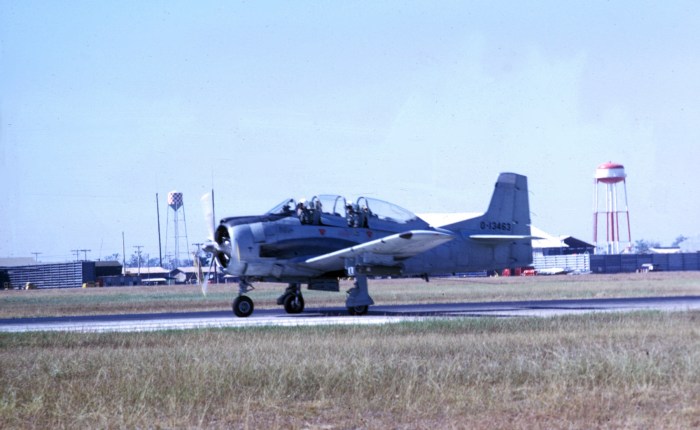

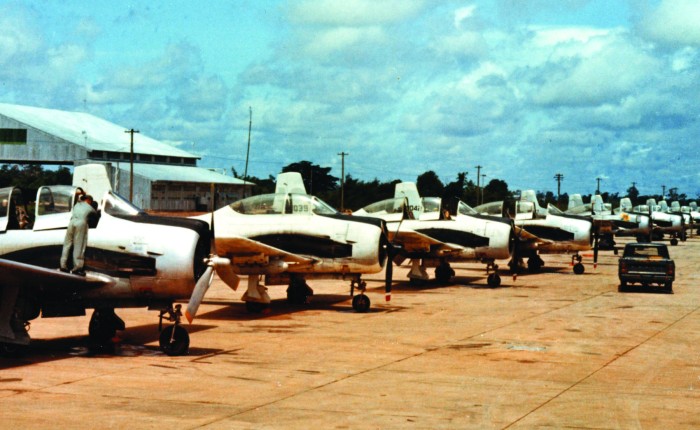
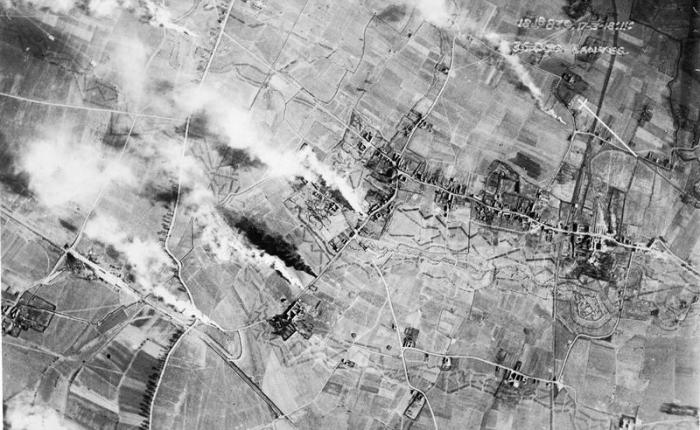
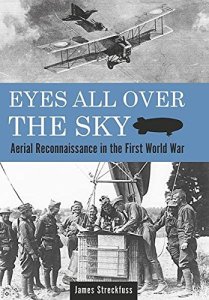
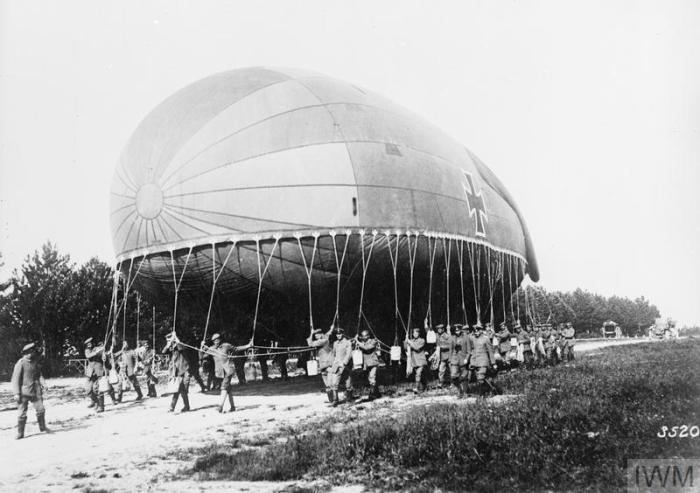


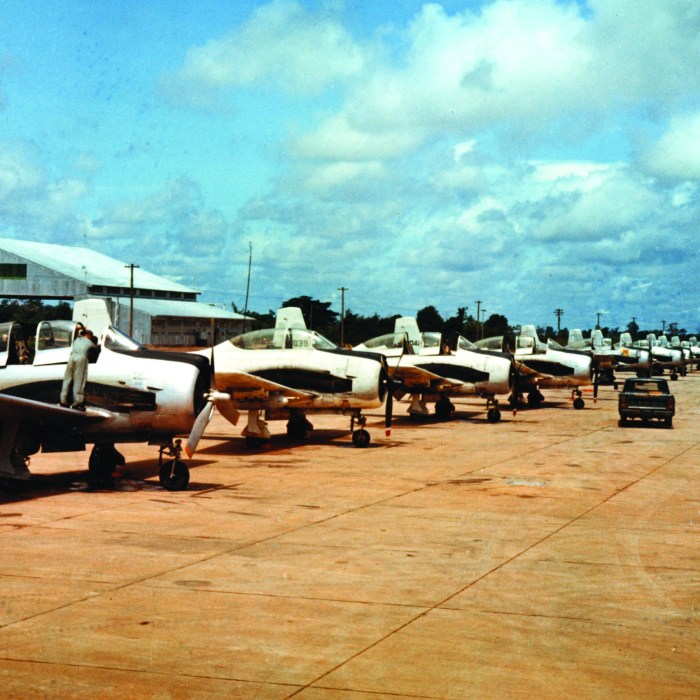
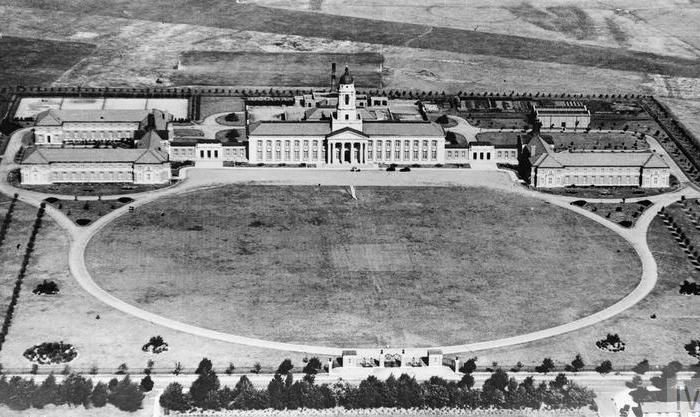



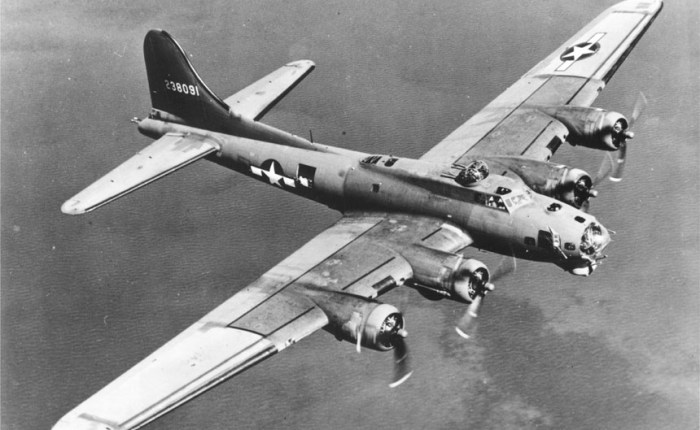


 From Balloons to Drones


.jpg)
_1942.jpg)
