David Axe, Drone War Vietnam. Barnsley: Pen and Sword, 2021. Illustrations. Bibliography. Index. Hbk. viii + 166 pp.
Reviewed by Dr Roger Connor
The rapidly expanded use of military drones for surveillance and targeted strikes has generated greater interest in 20th Century military drone development and use over the past two decades. The most prolific antecedent to the General Atomics Predator was the US Air Force’s (USAF) Vietnam-era employment of Ryan 147 ‘Lightning Bug,’ a variant of the Firebee turbine-powered target drone developed in the late 1940s. In all, 3,435 Lightning Bug combat missions were flown over the South-East Asia combat by 1,106 of what today would be regarded as ‘attritable’ drones. Launched from a DC-130 mothership and recovered in flight after popping a parachute by CH-3 helicopters, these unconventional reconnaissance remotely piloted aircraft fit the traditional rationale for drones – the D’s: Dull, Dirty (nuclear), or Dangerous operations. Over North Vietnam, Lightning Bug flights freed RF-101 and other reconnaissance crews from particularly hazardous or politically sensitive missions, such as documenting air defence sites, especially S-75 (NATO designated SA-2) surface-to-air missile complexes. Some even performed propaganda leaflet drops. While the 147s flew unarmed in operations, considerable development occurred in equipping them with precision-guided ordnance, but the war ended before they were suitable for deployment.
David Axe, a self-described journalist, filmmaker, and blogger, has produced a slick-looking, if somewhat anemic, study of the Ryan Lightning Bugs. Organized into sixteen short chapters of roughly four-to-eight pages, each separated by photographic spreads, the first three chapters address the early history of the Lightning Bugs, framing them as a response to the challenge of the Soviet S-75 (SA-2) surface-to-air missile. Chapters four to fifteen document various episodes of operations of operations over North Vietnam with an emphasis on Ryan’s response to the challenges encountered. The final chapter documents Ryan’s next generation Model 154 drone.
A US Air Force Lockheed DC-130A Hercules taking off on a mission in Southeast Asia, carrying two Ryan AQM-34 Firebee drones, c. 1969. Firebees flew reconnaissance missions using a pre-programmed guidance system or by remote control from the DC-130 crew. (Source: Wikimedia)
Drone War Vietnam attempts a survey of Lightning Bug operations while linking them with post-war strategic applications of remotely piloted aircraft and the broader narrative of drone development. The primary attraction for Axe’s narrative is that it is well-illustrated with images that do not appear in other works on the topic. Many of these photos originated with the Ryan archives, now in possession of the San Diego Air and Space Museum Archives. These include multiple perspectives of drone operators in DC-130 motherships and a Marine Corps CH-37 helicopter used in drone recovery operations that crashed in just such an attempt. As a visual record of this technological niche, Axe’s monograph is the best available in print.
Unfortunately, Axe’s narrative is disappointing. A significant factual error in the first two sentences of the introduction sets the tone (incorrectly describing the well-documented 2001 first strike made from an MQ-1). Casual errors such as Mutually Assured Destruction being described as having existed in 1950 also crop up. While these contextual errors are frustrating, fundamental errors on the topic are less forgivable. For instance, Axe notes, ‘[B]etween 1966 and the end of the Vietnam War, Army helicopters attempted 2,745 drone recoveries and completed 2,655 of them: a 96.7 per cent success rate’ (p. 90). This is a nice recitation of facts, except that almost exclusively USAF helicopters of the 350th Strategic Reconnaissance Squadron performed the duty – a critical fact that does not appear in the text. Axe’s writing style is accessible, but sometimes overly so with the use of incomplete sentences, for example, ‘[N]o opportunity to bait an S-75 battery’ (p. 80).
Axe’s understanding of the sweep of drone history is poor. He takes an American-centric focus, but even then, has ignored the broader historiography of remotely piloted aircraft development. Instead, he describes drone history as Kettering Bug begets Denny Radioplane begets Firebee. A quick look at H.R. Everett’s Unmanned Systems of World War II (2015) should have been enough to avoid such a flawed chronology. Meanwhile, the technical aspects inherent in the Lightning Bug’s achievements receive little attention, particularly concerning the challenges and limitations of operating and recovering the drones. Likewise, the incredible advances in inertial navigation that made autonomous flight in contested airspace possible pass with only a couple of sentences.
The text is not footnoted, and tellingly, neither Axe nor his editor understood the difference between primary and secondary sources as they are delineated in his bibliography, though almost nothing he includes there would be considered a primary source. Even obvious sources, like the Project CHECO report on Buffalo Hunter (the late war phase of Lightning Bug operations), easily obtainable online, are missing.
Most of Axe’s narrative is a retelling of William Wagner’s Lightning Bugs and other Reconnaissance Drones (1982). Wagner’s forty-year-old effort is the historian’s more thorough and polished option. Axe at least credits Wagner, a former Ryan Aeronautical executive, with much of his content, but this effort is a poor imitation of the original. Where Axe does improve on Wagner is in the contextual frame of drone operations, for which he adds a geopolitical frame of the various events and geographical operations. These are often over-simplistic, but they do succeed in making the book more accessible for an enthusiast audience interested in the hardware but with less understanding of the history and establishing a more well-rounded narrative. However, this contextual frame is often awkwardly executed in a way that does little to inform the application of drones, for example, a three-page chapter on the Gulf of Tonkin incident. The flip side is that Axe spends less than a third of the monograph on Lightning Bug operations in the Vietnam War. Instead, with Wagner as his primary source, he spends as much time on China overflights and ELINT (electronic intelligence) variants used to monitor North Korea as the far more substantive deployments over North Vietnam. Axe’s supposedly operational history thus primarily reflects a contractor perspective with very little of the service experience one might expect from this type of study.
These shortcomings become very apparent when examining a campaign like Linebacker II. As Wagner himself noted, Lightning Bug operations reached their peak during the operation. Axe’s telling of the story is almost exclusively in the frame of B-52 experience, which is a nice contextual detail, but adds nothing to the understanding of how or why remotely piloted aircraft were significant to the campaign.
A QH-50 DASH anti-submarine drone on board the destroyer USS Allen M. Sumner during a deployment to Vietnam. The photo was taken between April and June 1967. (Source: Wikimedia)
Axe pays some attention to remotely piloted adjuncts to the Lightning Bugs such as the Lockheed D-21 and Ryan 154 Compass Arrow, both focused on the Chinese nuclear program. The decision to include these is somewhat odd as they are outside of his Southeast Asian narrative. While the Compass Arrow has at least a corporate family tree associated with the Lightning Bugs, the D-21 has no operational or technical overlap. Meanwhile, Axe makes no mention of the other prominent drone programs employed in South-East Asia such as the QU-22 and the QH-50 drone helicopter. The QU-22 were droned Beechcraft Bonanzas used as communication relay platforms for the Igloo White ‘electronic fence’ of ground sensors on the Ho Chi Minh trail. The QH-50s were used primarily to spot naval gunfire. The QU-22 and QH-50 provide a useful frame for understanding the broader requirement for drone aircraft and the inherent limitations of the technology. It is this sort of assessment and analysis that is most notably absent. Instead, Axe is content to conclude that the legacy of the Lightning Bugs was to show that the Predator’s milestones weren’t new (p. 150). Nuanced quibbles about what was new with Predator aside (quite a lot, in fact), this rather obvious point could have also been made about drone aircraft in World War II. The 147 (along with QU-22s and QH-50s) demonstrated an emergent association between remotely piloted remotely piloted aircraft and the goal of risk reduction in limited war, which was something revolutionary, but the author did is not well versed enough in the topic to see it.
Besides Wagner, there is another useful study, which Axe neglected entirely, specifically Steve Miller’s nearly 700-page self-published The 99th Strategic Reconnaissance Squadron: The Air Force’s Story of Unmanned Reconnaissance in the Vietnam War (2017). Though Miller would have benefited greatly from an editor, it is a useful expansion on Wagner’s dated history, written by a Lightning Bug veteran and introduces a trove of primary source documentation, as well as a much-needed USAF operational perspective. He also brings in the QU-22 story. If Axe had focused more on veterans’ experiences like Miller, Drone War Vietnam might have been worth recommending. Instead, it is a pale shadow of Wagner’s better publication.
With the disappointments inherent in Axe’s monograph, one wonders what an effective revision of Wagner’s solid work might look like. However, Kevin Wright’s We Were Never There: CIA U-2 Operations Over Europe, the USSR and the Middle East, 1956-1960 (2021) gives an idea of what might be possible. Linking mission reports, operational context, supported by high-quality maps and graphics, he has developed a glossy enthusiast-style publication that meets scholarly standards of documentation while proving attractive and accessible for the aviation general-interest audience. A similar work on the Lightning Bugs would help both the scholarly study and enthusiast appreciation of remotely piloted and autonomous aircraft operations.
Dr Roger Connor curates several collections at the Smithsonian National Air and Space Museum, including remotely piloted and autonomous aircraft, vertical flight, Army ground force aviation, cockpit equipment, and aviation infrastructure. He earned his PhD from George Mason University in 2020 with his dissertation, ‘Rooftops to Rice Paddies: Helicopters, Aerial Utopianism, and the Creation of the National Security State.’
Header image: The US Air Force Ryan AQM-34L Firebee drone ‘Tom Cat’ of the 556th Reconnaissance Squadron flew 68 missions over North Vietnam before being shot down by anti-aircraft fire over Hanoi. (Source: Wikimedia)
Richard J. Overy, The Air War, 1930-1945. Potomac Edition. Washington DC: Potomac Books, 2005. Appendices. Tables. Photographs. Notes. Bibliographic Note. Bibliography. Index. vii + 267 pp.
Reviewed by Ryan Clauser
Few historical works have altered the course of a field of study in the way Richard Overy’s The Air War, 1939-1945 did when it was first published in 1980. When the book was published initially, air power history, as a field of academic study, was in its infancy and had been mainly regarded as the ‘Cinderella’ of military history (p. 240). However, Overy’s work transformed the historiography of air power history with his comparative study of the most important air forces of the Second World War.
The importance of Overy’s The Air War is hard to overstate, especially as the book has been reprinted twice in 1987 and 2005. In the most recent edition, that under reviewe here, Overy, now an Honorary Professor at the University of Exeter in the UK, provided the reader with new additions in the form of new statistical figures, updated research, and notes from the author. These new additions illustrate Overy’s dedication to his work and has helped keep The Air War an essential source for historians and remains one of the premier air power history texts. Since the publication of the first edition of The Air War, Overy has continued to write extensively about air power history and the history of the Second World War, including works such as Why the Allies Won (1995), The Battle of Britain: Myth and the Reality (2001), Interrogations: The Nazi Elite in the Allied Hands, 1945 (2001), The Bombing War: Europe 1939-1945 (2013) and most recently Blood and Ruins: The Great Imperial War, 1931-1945 (2021). Potomac Books published the latest edition of The Air War as part of their Cornerstones of Military History collection.
Overy starts his work by proclaiming that ‘this is not a ‘blood and guts’ book about the air war’ (p. xiii), but rather a study that aims to compare and contrast the air forces of the warring nations along with their preparations, strategies, leadership, economics, and development. The Air War sought to provide a greater overview and understanding of the discrepancies between Allied and Axis air forces and fully explain air power’s role throughout the war.
The Air War begins with an overview of each combatant nation’s preparations for war and their overall use of air power. Overy wrote that air power theory and doctrine had matured in the years leading up to and throughout the Second World War. These new ideas stated that air power could be used in many ways, such as: protecting naval power, close air support, strategic bombing, and air defence. For example, naval aviation was invaluable for Japan as the Imperial Japanese Navy used it to develop carrier strike forces. The development of Japanese naval air power sought to offset the advantages that western navies, such as the United States and Great Britain, held over Japan. However, for other Axis nations, naval air power was non-existent as Germany and Italy saw no merit in committing resources to build aircraft carriers. Instead, Germany and Italy subscribed to the theory that air power was best suited for a role in supporting their armies. However, the Allies crafted their air power doctrine more holistically to encompass all aspects of military aviation, including naval support, support of armies, strategic bombing, and aerial defence, all of which played critical roles in the Allied air war.
Overy breaks down the Second World War by year and the theatre of operation beginning with the early War in Europe spanning from 1939 to 1941. This section discusses Germany’s and the Axis’ initial success with close air support and air interdiction. However, Germany’s victories were quickly halted following the fall of France and the beginning of the Battle of Britain. Left as the only attacking force capable of striking the United Kingdom from occupied France, the Luftwaffe found itself in a role for which it was wholly unprepared. In contrast, the British utilised a far more general strategy to successfully defend their nation and launch a strategic bombing campaign of their own. Overy stated that, ‘the German rejection of a more general air strategy coincided with shifts in the war itself that made such a strategy more rather than less necessary’ (p. 37). While the air war was still an essential facet of the Second World War in its first two years, it had yet to fully mature on the battlefield.
For the rest of the war in Europe, 1941 to 1945, Overy explains how the allies’ general air strategy put them at a far more significant advantage in the air war compared to their Axis counterparts. As described by Overy, this generalist strategy allowed the allies to combine the many facets of air power, including aerial defence, ground and naval support, and strategic bombing, into one encompassing approach to the war in the air. This perspective also helped mature the Allies use of air power throughout the war. Further, the economics of the air war is also stressed. As Overy pointed out, the United States alone had seen a steady increase in aircraft production every year since 1942, and by 1944 they were outproducing Germany at a rate of nearly three to one in aircraft. Additionally, the Americans suffered less than half the losses of the Germans in the air throughout the war. These factors combined led the allies to victory in the air war and the war in general.
An Imperial Japanese Navy Mitsubishi A6M2 ‘Zero’ fighter takes off from the aircraft carrier ‘Akagi,’ on its way to attack Pearl Harbor during the morning of 7 December 1941. The aircraft was flown by PO2c Sakae Mori, 1st koku kantai, 1st koku sentai, and flew with the second wave. (Source: Wikimedia)
The war in the Pacific was strategically a much different conflict than the one in Europe. Japan’s approach to air power was to use it mainly as a supporting arm of its navy to create a multi-faceted naval strike force. Japan used their war with China to hone this strategy and their aviation technology. This early period of war for Japan allowed them to create a superior fighter aircraft in the Mitsubishi A6M Zero and allowed them to hold the upper hand for a time in their war against the United States and Great Britain following the attack on Pearl Harbor. As the war in the Pacific persisted, the Allies again found multiple roles for airpower and again committed to a generalist strategy in the east. Continuously, like the war in Europe, economics played an essential role in the Pacific, as even by 1941, Japan had begun realising that their economy was in short supply of the raw materials needed to fight a war. This hampered the Japanese war effort and nearly crippled its ability to produce aircraft. By the end of the war, Japan’s aircraft industry could barely replace what was being lost in combat, while the Americans kept producing increasingly better aircraft at staggeringly higher rates. Again, Overy emphasises that the Allied generalist strategies and superior economies were able to win the air war in the east.
While strategy and economics are at the heart of Overy’s work, he also delved into other aspects of the air war, including leadership, training, organisation, science, and research of each nation’s air force, all of which played a crucial role in the air war at large. Each of these additional factors was eventually influenced at some juncture in the war by the strategy and economics of each nation and how they chose to operate their air forces. Nonetheless, each of these additional factors played a significant role in the air war of the Second World War.
Throughout the course of Overy’s research, he relied heavily on official documents, public records, and memoirs of pilots, military commanders, and government officials. Overy was also fortunate to have access to various German records housed with the Imperial War Museum in London while researching the book in the 1970s. That said, while access to some sources was abundant, others, specifically those dealing with the Soviet Air Force, were scant at best and were limited to what the Soviet government saw fit to publish. Another issue in researching this project was the state of air power scholarship, which was in its infancy. Due to this, Overy was forced to depend on more general studies of aircraft, economics, and World War II for secondary sources. A problem that the publication of the book itself began to rectify. Overy also admits that he utilised fictional and popular publications to get a well-rounded perspective of the air war but did not include these works among his cited sources.
In this new edition, Overy has added a new preface in which he claims to have changed very little of his original text, but instead focused his edits on updating the charts and statistics. These illustrations show how economics influenced the air war and exhibit the discrepancies in how Allied and Axis powers produced aircraft. Also, in this newest edition, Overy included a valuable bibliographic note in which he evaluated the development of the historiography of air power and provided the authors and titles of works that have extrapolated further on the ideas laid out in the original Air War text such as tactics and leaderships and economics. Notably, among these works are Richard Davis’s Carl A. Spaatz and the Air War in Europe (1992), John Gooch’s collection of essays Airpower: Theory and Practice (1995), and John Buckley’s Air Power in the Age of Total War (1999). This section was not meant for Overy to vaunt his own influence on the field, but rather to provide readers with a greater historiographic picture of Second World War air power scholarship and show how the field has grown since 1980.
To describe The Air War as notable would be an understatement, as Overy took on the monumental task of comparing and contrasting the primary air forces of the Axis and Allied powers of the Second World War. Even from the outset of this book Overy admitted that he only spent paragraphs on what could be volumes worth of work, yet he was still somehow able to distil mass amounts of information and statistics into only 211 pages of content. From these pages, Overy concluded that the allies were able to gain the upper hand and win the air war largely because of their generalist strategic approach and superior economies. In totality, Overy’s The Air War is still among the preeminent air power works and should continue to be heralded for ushering air power history into the mainstream of academic study.
Ryan Clauser is an Adjunct Professor of History at DeSales University. He received his MA from East Stroudsburg University where he wrote his master’s thesis on restored airworthy Second World War aircraft as important pieces of historical memory that should be preserved as living monuments. He specialises in air power history and memory of the Second World War.
Header image: The Boeing B-29 Superfortress was the long range strategic bomber used be the United Sates to bomb Japan. It was the largest aircraft to have a significant operational role in the war, and remains the only aircraft in history to have ever used a nuclear weapon in combat. (Source: Wikimedia)
In January 1991, a US-led coalition launched Operation DESERT STORM to evict Iraq from Kuwait, which the former had invaded six months earlier. DESERT STORM was a combined operation involving a major air campaign. At the time, Iraq had one of the world’s most sophisticated air defence systems. The radars and communications necessary to spot hostile aircraft and coordinate their engagement were integral to this. As a result, the coalition correctly determined that the air campaign would only succeed by establishing air superiority and supremacy. This would be achieved through an Offensive Counter Air (OCA) campaign against the Iraqi Air Force (IQAF). A crucial part of this was an electronic war waged against Iraqi air defence radars and communications. This article explains the extent to which Iraq’s air defences threatened coalition air power, how the electronic war against these air defences was fought and why they were not able to overcome the coalition’s electromagnetic supremacy.
When Operation DESERT STORM began on the morning of 17 January 1991, Iraq possessed one of the world’s most fearsome Integrated Air Defence Systems (IADS). At 02:38, its demise began. Task Force Normandy, an armada of US Army AH-64A Apache gunships and US Air Force (USAF) MH-53J Pave Low helicopters attacked a group of IQAF radars. These were positioned a few miles behind the midpoint of the Saudi-Iraqi border within the Iraqi 1st Air Defence Sector’s area of responsibility. The radars consisted of P-18 Very High Frequency (VHF), P-15 Ultra High Frequency (UHF) and P-15M2 UHF ground-based air surveillance radars.[1] This attack left a large swathe of Iraq’s southwest airspace without radar coverage. As a result, Iraq’s IADS failed to detect waves of incoming aircraft tasked with hitting strategic targets. These planes followed USAF F-117A Nighthawk ground-attack aircraft which had slipped through Iraqi radar coverage earlier to hit targets in Baghdad.
…The Story so Far: From Vietnam to DESERT STORM
The United States had learned about well-operated air defences the hard way during the Vietnam War. Vietnam’s air war saw the United States lose over 3,300 fixed-wing aircraft across all services. Rotary-wing and uninhabited aerial vehicle losses pushed this figure to over 10,000.[2] In addition, the North Vietnamese IADS, consisting of Anti-Aircraft Artillery (AAA) and SA-2 high-altitude Surface-to-Air Missiles (SAMs), reaped a grim toll on American aircraft. The experience led to the development of the USAF’s Wild Weasel concept.
Republic F-105G ‘Wild Weasel’ in flight on 5 May 1970. External stores include QRC-380 blisters, AGM-45 Shrike and AGM-78B Standard Anti-Radiation Missile. (Source: Wikimedia)
First seeing service in the summer of 1965, customised F-105F Thunderchief fighters outfitted with radar detectors, listened for transmissions from an SA-2’s accompanying radar. The purpose of locating the accompanying radar was that it helped locate the associated SAM battery. The aircraft would then attack the radar, initially with gunfire and rockets and later with specialist Anti-Radar Missiles (ARMs). These attacks destroyed the radar site and blinded the SAM site, thus reducing the threat to incoming attack aircraft. These aircraft were eventually upgraded to F-105G standard. The Wild Weasel concept was progressively honed during and after the Vietnam War with ever-more capable radar sensors, ordnance, and platforms. When the USAF deployed to Saudi Arabia in 1990, the Wild Weasels used F-4G Phantom-II jets with sophisticated radar-hunting equipment and AGM-88 high-speed anti-radar missiles.
The skies over Southeast Asia gave the US armed forces, and their North Atlantic Treaty Organisation (NATO) allies a taste of the potency of Soviet and Warsaw Pact air defences as they had for the Israeli Air Force during the Six-Day War of 1967 and the Yom Kippur War of 1973. No sooner had the last US units left Vietnam than the so-called ‘New Cold War’ began to unfold. Both NATO and the Warsaw Pact prepared for a confrontation that might engulf East and West Germany. Part of the Warsaw Pact’s role was to ensure that air approaches into the European USSR were heavily defended. This required robust IADSs of fighter defences and an umbrella of short-range/low-altitude, medium-range/medium-altitude SAM systems covering the altitudes NATO aircraft were likely to use. This SAM umbrella protected everything from dismounted troops on the front line pushing through the Fulda Gap on the Inner German Border to strategic politico-military leadership targets in the Soviet Union.
The Wild Weasel units were not the only assets involved in degrading Soviet air defences. Also important were SIGINT (signals intelligence) platforms, such as the USAF’s RC-135U Combat Sent ELINT (Electronic Intelligence) gathering aircraft. These aircraft allowed NATO to develop an understanding of where the radars supporting Soviet and Warsaw Pact air defences were situated. Understanding where the radars were located allowed NATO to build up an electronic order of battle of the ground-based air surveillance radars and Fire Control/Ground-Controlled Interception (FC/GCI) radars the air defences depended upon to detect and engage targets with SAMs or fighters. Many aircraft configured to collect SIGINT and prosecute Soviet/Warsaw Pact air defences were the same that deployed to the Persian Gulf. After arriving, they soon discovered similar defences to those on the eastern side of the Inner German Border.
KARI: Defending Iraqi Airspace
The US Department of Defence’s official report on DESERT STORM did not mince its words regarding the potential ferocity of Iraq’s IADS:
The multi-layered, redundant, computer-controlled air defence network around Baghdad was denser than that surrounding most Eastern European cities during the Cold War, and several orders of magnitude greater than that which had defended Hanoi during the later stages of the Vietnam War.[3]
The components of Iraq’s air defence system were sourced from the USSR and France. In the wake of the 17 July Revolution in 1968, which brought the Iraqi affiliate of the Arab Socialist Ba’ath Party to power, France steadily deepened its relationship with Iraq. As a result, France sold some of its finest materiel to Iraq during the 1970s and 1980s. For Iraq’s President Saddam Hussein, who had seized power in July 1979, this was ideal.
With tensions growing between Iraq and Iran, the Iraqi armed forces needed as much support as the regime could muster. They were not disappointed. Paris supplied Roland Short-Range Air Defence (SHORAD) SAM batteries. The Soviet Union, meanwhile, furnished Iraq with SA-2 batteries, SA-3 medium-range/medium-altitude, SA-6A low/medium-altitude/medium-range, SA-8, and SA-9 SHORAD SAM batteries. Additional SHORAD coverage was provided by a plethora of ZSU-23-4 and ZSU-57-2 AAA systems and SA-13 Man-Portable Air Defence Systems (MANPADS). The SAMs were mainly to protect Iraqi strategic targets. Divisions of the elite Republican Guard also had some organic SA-6 and Roland units. AAA was used for corps and division air defence, along with the point defence of strategic targets. These units would also have MANPADS coverage, some SA-8s and Rolands. These provided air defence coverage over the manoeuvre force.[4]
These air defences received targeting information from Chinese-supplied Type-408C VHF ground-based air surveillance radars with a range of 324 nautical miles/nm (600 kilometres/km). Iraq received five of these radars between 1986 and 1988. France also supplied six TRS-2215/2230 S-band ground-based air surveillance radars between 1984 and 1985. These had a range of 335nm (620km).[5] Iraq supplemented these with five French TRS-2206 Volex ground-based air surveillance radars transmitting on an unknown waveband with a range of 145nm (268.5km). The Soviet Union also supplied several ground-based air surveillance and height-finding radars for use with Iraq’s SAM batteries and independently. These included six P-12 and five P-14 VHF ground-based air surveillance radars with ranges of 135nm (250km) and 216nm (400km), respectively, plus ten P-40 radars with a 200nm (370km) range and five PRV-9 height-finding radars with a 162nm (300km) range.[6]
The IQAF’s radars, fighters, airbases, SAM batteries and supporting infrastructure that provided operational/strategic level air defence were networked using the French-supplied KARI Command and Control system.[7] The nerve centre of the IADS was the Air Defence Operations Centre in downtown Baghdad. This was responsible for Iraq’s operational/strategic air defence, particularly industrial and political installations.
Iraq’s airspace was segmented into four sectors (see figure 1).[8] Each was commanded from a Sector Operations Centre. Subordinate to the Sector Operations Centres were the Intercept Operations Centres. The Intercept Operations Centres would control a segment of airspace in a specific sector using organic radars. Their radar pictures would be sent to the Sector Operations Centre. There they would be fused together creating a Recognised Air Picture (RAP) of the sector and its air approaches. The recognised air picture was sent up the chain of command to the Air Defence Operations Centre using standard radio, telephone, and fibre optic links. A ‘Super RAP’ of Iraq’s airspace and approaches was created at the Air Defence Operations Centre. KARI used several means of communication to provide redundancy. If radio communications were jammed, communications with the Air Defence Operations Centre could be preserved using telephone and fibre optic lines. If telephone exchanges and fibre optic nodes were hit, radio communications could be used.
Figure 1 – Iraqi Air Defence Sectors, Sector Operations Centres, and Intercept Operations Centres
Cooking up a Storm
Coalition air planners had two critical Iraqi threats to contest in the bid to achieve air superiority and air supremacy; the Iraqi IADS and deployed Ground-Based Air Defences (GBAD) protecting the Iraqi Army and Republican Guard units. The IADS/GBAD had to be degraded to the point where they would effectively be useless if coalition aircraft enjoyed relative freedom in the skies above the Kuwait Theatre of Operations. Electronic Warfare (EW) was intrinsic to this effort. The IADS and GBAD relied on air surveillance, battle management and weapons control.[9] Air surveillance was dependent on radar, battle management was dependent on communications, and both depended on the electromagnetic spectrum.
The concept of operations for coalition electronic warfare to support the air campaign was to attack the two electronic elements of the IADS/GBAD, namely radar and radio communications, without which situational awareness and command and control would be badly degraded if not neutralised altogether. Alongside electronic warfare, kinetic attacks on radars were made using anti-radiation missiles and against key nodes and targets in the IADS using conventional ordnance. Following Kuwait’s occupation, the coalition’s immediate task was to build an electronic order of battle of the radars and communications intrinsic to the IADS and GBAD. Space and airborne assets were instrumental to this effort. Although much information regarding the specifics of the US Central Intelligence Agency/National Reconnaissance Office Magnum SIGINT satellite constellation remains classified, they were almost certainly employed to collect raw signals intelligence germane to the IADS/GBAD. This would have been analysed at facilities in the US before being disseminated to allies.[10]
SIGINT collection followed a hierarchical approach. The Magnum satellites made a ‘broad brush’ collection of Iraqi electromagnetic emissions, discerning potential signals of interest from radars or communications from the prevailing electromagnetic noise generated by the country.[11] Further investigation of these signals of interest would be done using airborne SIGINT assets.[12] For example, the USAF based two RC-135Us at King Khalid International Airport, Riyadh, Saudi Arabia.[13] These jets flew close to Iraq’s borders to ‘hoover up’ as much ELINT as possible.[14] This served two purposes. First, the collection of ELINT allowed the coalition to determine which radars were used by Iraq’s IADS/GBAD and where they were located. This allowed potential gaps or more weakly defended areas in Iraqi air defence coverage to be identified. Second, regular ELINT collection allowed SIGINT experts to determine the pattern of electromagnetic life. This would have helped answer pertinent questions about whether Iraqi SA-2 batteries switched their radars off every evening or every weekend. By identifying geographical or temporal gaps in radar coverage, coalition planners could take advantage of weak coverage.
American SIGINT aircraft were joined by Royal Air Force Nimrod RMk.1s flying from Seeb airbase in Oman, and Armée de l’Air (French Air Force) C-160G Gabriel and DC-8F Sarigue SIGINT planes based at King Khalid International Airport. However, the Iraqis knew they were being watched. Iraqi air defenders had correctly deduced that coalition SIGINT efforts would extract as much usable SIGINT as possible. As a result, they tried to keep their radar and radio use to a minimum while coalition warplanes relentlessly probed Iraqi air defences to tempt radar activation and communications traffic for collection by SIGINT aircraft hanging back from the fighters.[15]
Support was also provided by the US Navy’s Operational Intelligence Centre’s Strike Projection Evaluation and Anti-Air Research team, better known as SPEAR. This unit helped build a comprehensive order-of-battle of the Iraqi IADS/GBAD.[16] In cooperation with the USAF and national US intelligence agencies, SPEAR identified key nodes in the Iraqi IADS that would badly degrade its efficacy if destroyed.[17] In addition, the process helped draft simulation programmes that built an increasingly detailed model of the Iraqi IADS/GBAD system. These programmes were continually updated as new intelligence arrived, allowing analysts to perform ever-more detailed replications of the expected potency of Iraqi air defences.[18]
An RC-135V/W Rivet Joint from the 9th Strategic Reconnaissance Wing approaches a KC-135 Stratotanker from the 1700th Air Refueling Squadron Provisional during Operation DESERT SHIELD. (Source: Wikimedia)
Alongside the RC-135Us discussed above, USAF RC-135V/W Rivet Joint and US Navy EP-3E Aries planes primarily collected Communications Intelligence (COMINT) on Iraq’s IADS/GBAD. Although the Rivet Joints were primarily configured to collect COMINT from radios and telecommunications transmitting on V/UHF wavebands of 30 megahertz to three gigahertz, these frequencies were also used by several Iraqi early warning and ground-based air surveillance radars. This allowed the Rivet Joints to assist their Combat Sent counterparts in gathering ELINT.[19]
Determining Iraq’s electronic order of battle allowed the radars to be attacked kinetically by USAF F-4G Wild Weasels using the AGM-88B/C missiles. Radars were also engaged electronically by USAF EF-111A Raven EW aircraft. Likewise, radio communications were attacked electronically with USAF EC-130H Compass Call planes. However, the USAF was not the only custodian of the suppression of enemy air defence mission. The US Navy was an avid user of the AGM-88 and, together with the US Marine Corps (USMC), flew EA-6B Prowlers. These jets could electronically and kinetically target hostile radars and gather ELINT.
Now in the streets, there is violence
‘The attack on the Iraqi electronic order of battle affected every aspect of the air supremacy operation,’ noted the official record of Operation DESERT STORM.[20] The initial focus of the electronic warfare battle was to destroy critical radars and communications nodes in the Iraqi IADS to paralyse the air defence network at strategic and operational levels.[21] At the tactical level, deployed SAM systems were then attacked with anti-radiation missiles when they illuminated coalition aircraft. This was done by patrolling F-4Gs and EA-6Bs, waiting for these radars to be activated or having the same aircraft and other anti-radiation missile-armed warplanes, such as the Royal Air Force’s Tornado GR.1 ground attack aircraft with their ALARMs (Air-Launched Anti-Radiation Missiles) accompany strike packages of aircraft. This had the dual purpose of helping keep these aircraft safe and continually attritting the kinetic elements of Iraq’s air defence.[22]
As noted earlier in this article, plans for attacking Iraq’s IADS/GBAD system became a reality in the early morning of 17 January. While Task Force Normandy laid waste to Iraqi radars, F-117As hit the Sector Operations Centres and Intercept Operations Centres in the 1st and 2nd Air Defence Sectors.[23] The actions of the Nighthawks and Task Force Normandy opened gaps in southern and western Iraqi radar coverage and air defence command and control network, which was then exploited.[24] Stealthy and non-stealth aircraft alike ingressed into Iraqi airspace to reach their strategic targets with electronic attack assistance provided by EF-111As and EA-6Bs. These platforms effectively jammed Iraqi early warning/ground-based air surveillance radars transmitting on V/UHF frequencies and FC/GCI radars transmitting in higher wavebands.[25] Typically, the EF-111As and EA-6Bs flew jamming orbits to protect air operations in a particular segment of the Kuwait Theatre of Operations. For example, USAF EF-111As flew orbits in western Iraq, providing jamming support to strikes in that part of the country, performing similar missions in the vicinity of Baghdad.[26] The EF-111As and EA-6Bs also relayed near-real-time updates on the Iraqi Electronic Order of Battle in their locale using radio and tactical datalink networks. Air campaign planners then adjust the air campaign’s electronic dimension accordingly.[27]
EA-6B Prowlers of VAQ-130 refuelled by a KC-135 Stratotanker en-route to an attack during Operation DESERT STORM. (Source: NARA)
With one part of its radars destroyed and jamming afflicting the others, coalition aircraft headed into Iraq, clearing a path through the IADS, and hitting IADS targets with anti-radiation missiles and air-to-ground ordnance.[28] As well as hitting these targets, BGM-109 cruise missiles hit transformer yards dispersing carbon fibre filaments. This caused short circuits in the power supply.[29] Air defence facilities without backup power went offline. Even those with generators would still see their systems shut down before being reactivated, costing valuable time.[30]
Influenced by Israeli Air Force operations over the Bekaa Valley in Lebanon close to that country’s border with Syria in June 1982, another tactic used by the coalition was the use of USAF launched BQM-74C Chukar drones to mimic coalition combat aircraft ingressing Iraq’s 1st Air Defence Sector. The intention was for Iraqi air defenders to illuminate the drones and engage them. This allowed anti-radiation missile-equipped aircraft to determine the position of SAM batteries engaging the drones and attack their radars. The US Navy performed similar missions with their ADM-141A/B Tactical Air-Launched Decoys This was an effective tactic as it not only revealed the location of Iraqi SAM batteries, but it forced them to expend missiles.[31]
The Continuing Campaign
Initial overtures in the air defence suppression campaign were aimed at attritting Iraqi long and medium-range/high and medium-altitude SAM systems to help sanitise the airspace for following coalition strikes.[32] Typically, AAA would be effective up to altitudes of circa 15,000 feet/ft (4,572 metres/m), with Iraqi SAM batteries effective up to circa 40,000ft (12,192m).[33] The controlled kinetic and electronic violence unleashed against the Iraqi IADS/GBAD during the first 24 hours of the war was palpable. The official record notes that almost 48 targets, including an array of air defence aim points, were hit: ‘This was not a gradual rolling back of the Iraqi air defence system. The nearly simultaneous suppression of so many vital centres helped cripple Iraq’s air defence system.’[34] This inflicted a level of damage from which the Iraqi IADS/GBAD could not recover.
As the campaign unfolded Iraqi air defenders learnt that activating their radar invited an AGM-88 or ALARM attack. By the end of the first week of combat operations, the Iraqis realised that a significant dimension of the coalition air campaign focused on destroying their air defences.[35] SAMs would still be fired ballistically in the hope of a lucky strike, but sans radar, SAM capabilities were severely degraded. Switching off the radars did not stop the attacks. AAA or SAM sites that kept their radars switched off were engaged with conventional air-to-ground ordnance.[36] Life was increasingly unpleasant for Iraqi air defenders who realised that switching off their radars did not stop the attacks. One can only imagine the demoralisation this must have caused.
Assessment
Benjamin Lambeth correctly asserted that DESERT STORM exemplified the decisive migration of electronic countermeasures and EW in general ‘from a supporting role to a direct combat role.’[37] Quite simply, without EW, the coalition would not have succeeded in degrading the Iraqi IADS/GBAD to a point where it could no longer meaningfully challenge coalition air power in such a short space of time. One of the major successes of the electronic warfare aspect of the air campaign was its dislocation of Iraqi IADS/GBAD command and control. Despite the technological sophistication of KARI, it could not mitigate the hierarchical nature of Iraqi air defence doctrine. The Intercept Operations Centres struggled to operate when their Sector Operations Centre and the Air Defence Operations Centre was neutralised.[38] There appeared to be little redundancy within KARI by which these centres could assume the responsibilities of their destroyed or badly degraded counterparts. For instance, the Air Defence Operations Centre was destroyed as a priority target at the start of the air campaign. It does not appear that Iraqi air defenders could rapidly replicate Air Defence Operations Centre functions at either a back-up facility or at one of the Sector Operations Centres. Likewise, when Sector Operations Centres were taken out of the fight, their functions were not immediately assumed by Intercept Operations Centres in their area of responsibility or adjacent sectors.
While KARI was a sophisticated system, Iraq possessed radars and SAM systems already known to the US and its allies on the eve of DESERT STORM. The US had encountered similar SAM systems in the skies over Vietnam and during Operation Eldorado Canyon in 1986 when the US attacked strategic targets in Libya in retaliation for the sponsorship of political violence by its leader Colonel Muammar Gaddafi. Likewise, Israel had faced similar defences during numerous conflicts with its neighbours. Although Israel remained outside the US-led coalition, it is all but certain that intelligence germane to Iraq’s air defence systems would have been made available to the US.[39] The French are also thought to have shared intelligence regarding Iraq’s Roland and KARI systems in a similar fashion.[40] Egypt, an avid user of Soviet-supplied air defence equipment and member of the US-led coalition, was also believed to have been furnished the latter with intelligence.[41] Some of Iraq’s air defence equipment may have lacked Electronic Counter-Countermeasure (EECM) protection to exacerbate matters. Some of Iraq’s radars, notably early versions of the SNR-75 S-band and C-band 65nm (120km) to 75nm (140km) range fire control radars accompanying the SA-2 batteries may not have been fitted with ECCM.[42]
Once the war commenced, the Iraqis fell for the US ruse of using drones to seduce radars into revealing themselves, only to receive an ARM for their trouble. A glance at the history books would have revealed that given the success the Israeli Air Force had enjoyed using this tactic a decade previously, there was every chance the coalition may follow suit. This tactic was recently revisited during the 2020 conflict between Azerbaijan and Armenia. The Azeri armed forces skilfully exploited Uninhabited Aerial Vehicles (UAVs). UAVs were used to tempt Armenian GBADs to activate their radars. By activating the radars their location could be determined, and the GBADs then struck with suicide UAVs equipped with explosives.
Furthermore, Iraq’s air defence doctrine lacked flexibility. Indeed, it has been argued that Iraq’s air command and control writ large during the preceding Iran-Iraq War was characterised by over-centralisation and rigid planning.[43] This may have resulted from two factors; the authoritarian nature of Saddam Hussein’s regime and the procurement of Soviet materiel not only for air defence but across the Iraqi armed forces with a similar acquisition of Soviet doctrine not known for its flexibility.[44] There are significant questions to ask regarding the degree to which subordinates in the IADS believed they had latitude and blessing for individual initiative in the tactical battle. Similar questions apply to higher echelons. Did operational commanders in the air force and air defence force feel emboldened to take decisions as the battle unfolded? Saddam Hussein presided over a totalitarian state where insubordination, real or perceived, could be punished harshly. This raises the question as to whether the fear of taking the wrong decision paralysed decision-making. The result being that the Iraqi IADS lost the initiative in the coalition’s electronic battle. An initiative it never recovered. The net result of a lack of doctrinal flexibility, and against the backdrop of Saddam Hussein’s regime, meant that Iraq’s air defences did not respond and adjust to the electronic battle. Tactical and operational flexibility did not extend beyond radar operators switching off their systems to avoid an attack by an ARM.
However, the coalition’s success was underpinned by a vitally important factor, the luxury of time. DESERT STORM was not a ‘come as you are’ war. The US and its allies had 168 days between Iraq’s invasion of Kuwait and the commencement of the air campaign to plan the electromagnetic scheme of manoeuvre that supporting the air war.
DESERT STORM underlined a truism in air power: Air superiority as a prerequisite for air supremacy must be achieved over an opponent as early as possible. OCA was central to this effort. Electromagnetic superiority and supremacy are central to OCA. One must ensure one can manoeuvre in the spectrum with minimal interference from one’s adversary while denying their adversary use of the spectrum. Working towards electromagnetic superiority and supremacy reduces red force access to the spectrum, denying its use for situational awareness and command and control. Denying Iraqi air defenders’ situational awareness and command and control blunted the efficacy of the kinetic elements of Iraq’s IADS/GBAD, which were then attritted using ARMs and conventional ordnance.
DESERT STORM ended on 28 February. Electronic warfare was intrinsic to the air campaign’s success. Iraq’s IADS and GBAD were prevented from meaningfully interfering with the coalition’s actions. However, this was not the end of the story. The US and the UK would continue to confront the rump of Iraq’s air defences for several years to come until the final showdown with Saddam Hussein’s regime in 2003.
Dr Thomas Withington specialises in contemporary and historical electronic warfare, radar, and military communications, and has written numerous articles on these subjects for a range of general and specialist publications. He holds a PhD from the University of Birmingham.
Header image: EF-111A Raven aircraft prepare to take off on a mission during Operation Desert Shield. (Source: Wikimedia)
[1] C. Kopp, ‘Operation Desert Storm: The Electronic Battle, Part-2’ @http://www.ausairpower.net/Analysis-ODS-EW.
[2] J. Schlight, A War Too Long: The USAF in Southeast Asia 1961-1975 (Washington DC: Air Force History and Museum Programme, 1996), p. 103.
[3]Conduct of the Persian Gulf War: Final Report to Congress, (Alexandria, VA: US Department of Defence, 1992), p. 15.
[9] P.W. Mattes, ‘Systems of Systems: What, exactly, is an Integrated Air Defense System?’, The Mitchell Forum No.26, (Arlington VA: The Mitchell Institute, June 2019), p. 3.
[10] Confidential interview with US electronic intelligence expert, 17/3/21.
In 2022, From Balloons to Drones will run a series that examines air power in the naval and maritime spheres.
From the First World War onwards, the use of air power in naval and maritime spheres has become an essential element of military operations. Indeed, even by 1918, many of the roles associated with naval air power, such as carrier airstrikes, had emerged. Similarly, the development of maritime air power was well-developed by 1918. Moreover, as the world’s major navies recognised the importance of naval air power and commissioned aircraft carriers between the First and Second World Wars, further developments and debates emerged.
2022 marks several significant anniversaries in naval and maritime air power history. In 1922, the US Navy, which became the world’s major user of carrier-based air power, launched its first aircraft carrier, the USS Langley. 2022 also marks the 80th and 40th anniversaries of two significant examples of the effective application of naval and maritime air power, the Battle of Midway and the Falklands War, respectively. As such, From Balloons to Drones is seeking submissions for a series of articles that examine the varied use of air power in the maritime sphere, broadly defined. Articles might, for example, explore the development of carrier-based air power, the use of land-based air power in support of naval and maritime operations, or the use of air power in support of amphibious operations. Possible themes to be explored might include, but are not limited to:
Strategy, Theory and Doctrine| Organisation and Policy | Roles
Operations – Kinetic and Non-Kinetic | Tactics, Training and Procedures
Strategic and Operational Effect | Technological Developments | Ethical and Moral Issues
National, International and Transnational Experiences | Personal Experiences
Memory and Memorialisation
We are looking for articles of between 500 to 4,000 words, though we will accept larger pieces, and we reserve the right to publish them in parts. Please visit our submissions page for more information on the types of articles published by From Balloons to Drones
We plan to begin running the series in February 2022, and it will continue for as long as we receive potential contributions. We welcome and encourage submissions from academics, policymakers, service personnel, and relevant professionals. We also welcome submissions written from diverse academic disciplines.
Submissions should be submitted in Word format and emailed to the email address below with ‘SUBMISSION – Naval and Maritime Air Power Revisited’ in the subject line. Also, please include a 50-100-word biography with your submission. Footnotes can be used, and please be careful to explain any jargon. If you are not sure if your idea fits our requirements, then please email us with ‘POTENTIAL SUBMISSION – Naval and Maritime Air Power Revisited’ in the subject line to discuss.
If you are interested in contributing, please email our Editor-in-Chief, Dr Ross Mahoney, at airpowerstudies@gmail.com or contact us via our contact page here.
Header image: The Japanese aircraft carrier IJS Hiryu maneuvers to avoid bombs dropped by USAAF Boeing B-17E Flying Fortress bombers during the Battle of Midway on 4 June 1942. (Source: Wikimedia)
Editorial note: In this series, From Balloons to Drones highlights research resources available to researchers. Contributions range from discussions of research at various archival repositories to highlighting new publications. As part of this series, we are bringing you a monthly precis of recent articles and books published in air power history. This precis will not be exhaustive but will highlight new works published in the preceding month. Publication dates may vary around the globe and are based on those provided on the publisher’s websites. If you would like to contribute to the series, please contact our Editor-in-Chief, Dr Ross Mahoney, at airpowerstudies@gmail.com or via our contact page here.
Articles
Donald Bishop and Erik R. Limpaecher, ‘Looking Bakc from the Age of ISR: US Observation Balloons in the First World War,’ Air Power History 68, no. 3 (2021).
No abstract provided.
Patrick Luiz Sullivan De Oliveira, ‘Transforming a Brazilian aeronaut into a French hero: Celebrity, spectacle, and technological cosmopolitanism in the turn-of-the-century Atlantic,’ Past & Present (2021). https://doi.org/10.1093/pastj/gtab011
This article explains how the Brazilian Alberto Santos-Dumont, who at the turn of the twentieth century became the first global celebrity aeronaut, operated as a symbol of ‘technological cosmopolitanism’ — a world view that ostensibly promoted a vision of global unity through technology-enabled exchanges while simultaneously reproducing a core-periphery imagined geography that threatened to erase marginalized populations. Technological cosmopolitanism fitted snugly within the rubric of the Third Republic’s aspiring universalism, which assumed that France offered a model to be emulated around the world, but it was not hegemonic. If for the French appropriating Santos-Dumont meant safeguarding France’s leadership in aeronautics and assuaging their claims of universality, for Brazilians the elision was marked by ambiguity. Brazil’s First Republic hungered for heroes, and authorities saw Santos-Dumont as a symbol of modernity that showed that its place in world history was more than peripheral, even though that very vision was shaped by a Paris-centric world view. But marginalized Afro-Brazilians also found ways to appropriate a white ‘Frenchified’ Brazilian and reimagine their place in a cosmopolitan order. Technological cosmopolitanism evoked a world united by transportation, communication and exchange, but imagining who got to construct and partake in that community was a process continuously marked by erasures and reinsertions.
A. Garcia, ‘The South African Air Force in Korea: an evaluation of 2 Squadron’s first combat engagement, 19 November until 2 December 1950,’ Historia 66, no. 2 (2021).
South African participation in the Korean War (1950–1953) in direct support of an international military offensive led by the United States of America demonstrated the National Party administration’s commitment to opposing Communism. This article details how the deployment of South African Air Force 2 Squadron achieved the strategic objectives of the South African government in supporting the anti-communist United States-led United Nations coalition in the Korean War. It evaluates the performance of South Africa’s Air Force in their first operational test since the Second World War. The combat operations discussed under the scope of this article include the first tactical engagement of 2 Squadron in support of the initial advance (19 November to 21 December) 1950 and then later, the retreat of the United Nations force.
William Head, ‘The Berlin Airlift: First Test of the U.S. Air Force,’ Air Power History 68, no. 3 (2021).
This article examines the development of precision guided munitions (PGMs) from the earliest proto-PGMs of the late 18th century to the miniaturised, semi-autonomous forms in present service. N R Jenzen-Jones and Jack Shanley trace the history of these revolutionary weapons and examine how their battlefield roles and real-world use cases have evolved over time.
T.B. Kwan, ‘“The effects of our bombing efforts”: Allied Strategic Bombing of the Japanese Occupied Territories during World War II,’ Air Power History 68, no. 3 (2021).
No abstract provided.
Wyatt Lake, ‘Origins of American Close Air Support,’ Air Power History 68, no. 3 (2021).
No abstract provided.
John G. Terino Jr., ‘Cultivating Future Airpower Strategists: On “Developing Twenty-First-Century Airpower Strategists”,’ Strategic Studies Quarterly 15, no. 4 (2021).
In 2008, Major General R. Michael Worden forecast specific challenges for airpower strategists including emerging technology, transnational terrorist organizations, an explosion of information power, budgets, and resourcing. His predictions have borne out in what the Air Force faces today, and Air University is responding, providing the next generation of airpower strategists.
Joseph B. Piroch and Daniel A. Connelly, ‘Six Steps to the Effective Use of Airpower: On “The Drawdown Asymmetry: Why Ground Forces Will Depart Iraq but Air Forces Will Stay”,’ Strategic Studies Quarterly 15, no. 4 (2021).
Then-Lieutenant Colonel Clinton S. Hinote’s 2008 analysis of the Iraq drawdown and the continued role of airpower in that conflict serves as a foundation for six steps to the effective use of airpower today.
Thomas Wildenberg, ‘Col. Thomas L Thurlow and the Development of the A-10 Sextant,’ Air Power History 68, no. 3 (2021).
No abstract provided.
Books
Phil Haun, Colin Jackson, and Tim Schultz (eds.), Air Power in the Age of Primacy: Air Warfare since the Cold War (Cambridge: Cambridge University Press, 2021).
Since the end of the Cold War the United States and other major powers have wielded their air forces against much weaker state and non-state actors. In this age of primacy, air wars have been contests between unequals and characterized by asymmetries of power, interest, and technology. This volume examines ten contemporary wars where air power played a major and at times decisive role. Its chapters explore the evolving use of unmanned aircraft against global terrorist organizations as well as more conventional air conflicts in Bosnia, Kosovo, Afghanistan, Iraq, Lebanon, Libya, Yemen, Syria, and against ISIS. Air superiority could be assumed in this unique and brief period where the international system was largely absent great power competition. However, the reliable and unchallenged employment of a spectrum of manned and unmanned technologies permitted in the age of primacy may not prove effective in future conflicts.
Mark Lardas, Truk 1944–45: The Destruction of Japan’s Central Pacific Bastion (Oxford: Osprey Publishing, 2021).
A fully illustrated history of how the US Navy destroyed Truk, the greatest Japanese naval and air base in the Pacific, with Operation Hailstone, and how B-29 units and the carriers of the British Pacific Fleet kept the base suppressed until VJ-Day.
In early 1944, the island base of Truk was a Japanese Pearl Harbor; a powerful naval and air base that needed to be neutralized before the Allies could fight their way any further towards Tokyo. But Truk was also the most heavily defended naval base outside the Japanese Home Islands and an Allied invasion would be costly. Long-range bombing against Truk intact would be a massacre so a plan was conceived to neutralize it through a series of massive naval raids led by the growing US carrier fleet. Operation Hailstone was one of the most famous operations ever undertaken by American carriers in the Pacific.
This book examines the rise and fall of Truk as a Japanese bastion and explains how in two huge raids, American carrier-based aircraft reduced it to irrelevance. Also covered is the little-known story of how the USAAF used the ravaged base as a live-fire training ground for its new B-29s — whose bombing raids ensured Truk could not be reactivated by the Japanese. The pressure on Truk was kept up right through 1945 when it was also used as a target for the 509th Composite Squadron to practise dropping atomic bombs and by the British Pacific Fleet to hone its pilots’ combat skills prior to the invasion of Japan.
David Nicolle and Gabr Ali Gabr, Air Power and the Arab World – Volume 5: The Arab Air Forces and the Road to War 1936-1939 (Warwick: Helion and Company, 2021).
The years immediately prior to the outbreak of the Second World War saw the earliest and the more recently established Arab Air Forces attempting to play a role on the regional if not yet on the world stage for the first time. It was a period when those Arab states which had real or merely theoretical independence were more or less allied with European countries that were gearing up to face the growing Fascist and Nazi threats. Unfortunately, these anti-Fascist and anti-Nazi countries were themselves the imperial powers, France and the United Kingdom, which were still seeking to maintain their domination of the greater part of the Arab World. To say that this complicated the situation, and strained the loyalties of the men of the newly emergent Arab air forces would be an understatement.
Volume 5 of the Air Power and the Arab World series, therefore, seeks to shed light on a difficult and widely misunderstood time. It draws upon decades of research, including previously unpublished interviews with men now dead, archive sources than have never before been translated into a European language, and material which, though available in obscure Arabic publications, has been almost entirely neglected by aviation historians.
This volume is richly illustrated with specially commissioned colour artworks illustrating the aircraft flown by the air forces in the Arab world during this dynamic period of time.
Editorial Note: Led by our Editor Dr Mike Hankins, From Balloons to Drones produces a monthly podcast that provides an outlet for the presentation and evaluation of air power scholarship, the exploration of historical topics and ideas, and provides a way to reach out to both new scholars and the general public. You can find our Soundcloud channel here. You can also find our podcast on Apple Podcasts and Google Podcasts.
The years between the First and Second World War was a very important time for the development of air power, and this was especially true in Australia and New Zealand. Dr Alex Spencer, curator at the Smithsonian National Air and Space Museum, joins us to talk about these developments, which he discusses in his new book: British Imperial Air Power: The Royal Air Forces and the Defense of Australia and New Zealand Between the World Wars.
Dr Alex Spencer is a Curator at the Smithsonian National Air and Space Museum where he curates two collections. Together these collections include the Supermarine Spitfire, Hawker Hurricane, de Havilland Mosquito, Messerschmitt Bf 109 and Me 262, Heinkel He 219, Arado Ar 234, and over sixteen thousand artifacts of personal items, including uniforms, flight clothing, memorabilia, ribbons, and medals. He received his PhD in Modern European History from Auburn University. His research focuses on British and Commonwealth military aviation during the 20th Century. He was the coeditor of Smithsonian National Air and Space Museum: An Autobiography.
Header Image: A Line up of two Vickers Vildebeests of the Royal New Zealand Air Force at RNZAF Station Wigram in the late-1930s. Vildebeest NZ108 is in the foreground. The flashes on the fuselage and wheel spats are blue. (Source: Air Force Museum of New Zealand)
At one minute past midnight on 17 January 1991, US Air Force Major Kathy Rambo-Cosand prepared to take off in a Lockheed C-141 Starlifter from Ramstein Air Base, Germany. It was snowing, and her aircraft was packed with 44,000 pounds of cluster bombs headed for Saudi Arabia. The aircraft was severely overweight: she was authorised to fly at ‘emergency war weights.’ If the C-141 lost an engine on take-off from Ramstein’s short runway, they would most likely crash. She worried about what the cluster bombs might do if that happened. Moreover, an accident was a realistic possibility: A Lockheed C-5 Galaxy had crashed, taking off from Ramstein just a few months earlier, killing 13 of the 17 people on board.
As Rambo-Cosand and her crew waited for their take-off clearance, a call came on the radio: “All missions are cancelled.” The airspace over Saudi Arabia had been shut down as coalition fighters and bombers kicked off Operation DESERT STORM, the coalition effort to remove Iraqi forces from Kuwait. Rambo-Cosand and her crew waited in their aircraft as planners decided what to do. Finally, at 2:30 a.m., she received the call to take off. With the C-5 crash and the enormity of her cargo weighing heavily on her, Rambo-Cosand pulled onto the runway and lumbered into the sky. Unfortunately, the most stressful take off of her career was for naught: when they arrived over Italy, they were turned back to Ramstein.[1]
At that point, Rambo-Cosand had been flying in and out of Saudi Arabia for the past four months, and it would be many more months before she finally returned home to her family. Indeed, the rapid build-up, sustainment, and eventual employment of forces in the Middle East as part of Operation DESERT SHIELD/STORM was only possible because of support aircraft that did everything from hauling cargo to communications jamming.[2] Moreover, it was these aircraft that women like Rambo-Cosand flew since they were not allowed to fly in combat; a provision within the Women’s Armed Services Integration Act passed by Congress in 1948 prohibited that. This article explores the experience of some of those women during DESERT SHIELD/STORM and details some of the challenges faced by US females operating in a combat environment.
Major Stephanie Wells and her C-5 crew delivering tanks to Al Jubayl, Saudi Arabia on 19 January 1991 (Source: Stephanie Wells)
The Women Aviators of Operation DESERT SHIELD/DESERT STORM
Despite the combat restrictions, women soon arrived in Saudi Arabia. Some of the first women were pilots, like US Army Captain Victoria Calhoun, a Boeing CH-47 Chinook helicopter pilot at Fort Bragg, North Carolina, who deployed on 9 August, two days after Operation DESERT SHIELD began in response to the invasion of Kuwait by Iraq. Calhoun had asked to be stationed at Fort Bragg the previous year because she figured if any action happened, it would happen there. She was right, but shortly after arriving, her unit deployed to support the 1989 invasion of Panama, and her operations officer would not let her go, replacing her with a less-experienced male pilot. A year later, she feared the same thing might happen. However, when someone questioned her battalion commander about whether women would deploy to Saudi Arabia, he said, “They have to go. If they don’t go, we’re not mission capable as a unit!”
Calhoun arrived at Dhahran Air Base with an advance party to conduct reconnaissance and prepare the base for more arrivals. At first, there was not much flying for the Chinooks, mainly because the sand in Saudi Arabia caused maintenance nightmares. The missions Calhoun flew transported parts and supplies around to other units, a mission nicknamed “Desert Express.”[3]
Reserve units began activating on 24 August. All C-5 reserve squadrons were activated as the massive cargo aircraft hauled most of the Army’s tanks and larger helicopters to the theatre. Major Stephanie Wells, a C-5 pilot from Kelly Air Force Base, Texas, was activated on 29 August. She was thrilled to be part of the team: when she had initially called her unit on 6 August to inquire about deploying, she was told that women would not be allowed to go.[4] Nevertheless, Wells was soon flying C-5s all over the world. At first, she never knew where she would be going on any given day, but then things settled down, and she began flying missions out of Dover Air Force Base, Delaware.[5]
Technical Sergeant Donna Davis, a C-5 flight engineer in a reserve unit at Travis Air Force Base, California, soon wound up in Germany. When a crew landed, after eight hours of crew rest, Davis says they were normally assigned to an aircraft brought in by another crew. The crews stopped to rest, but the aeroplane kept going. The crews often pulled 24-hour shifts before going back into crew rest, and Davis found it hard to sleep more than about four hours at a time. She was not alone; most of the crews were exhausted all the time and, as she says, “Thank goodness for autopilot.”[6]
Major Stephanie Wells in the cockpit of a C-5 at the beginning of Operation DESERT STORM. (Source: Stephanie Wells)
As the initial troops and equipment flowed to Saudi Arabia, Rambo-Cosand, who was in a reserve unit at McGuire Air Force Base, New Jersey, debated what to do. She had met her husband when she had been one of the first ten women to attend US Air Force pilot training in 1976, and they had just settled with their two children into new quarters after a move to Honduras. She hated to leave her 2-year-old and 7-year-old at home, but she decided to volunteer to fly some missions, thinking that if enough reservists volunteered, her unit would not be activated. However, before she could arrive to begin her volunteer tour, her unit was activated on 9 September. Rambo-Cosand moved heaven and earth to get to McGuire in less than 24 hours, begging the US Embassy to get her on a 6:00 a.m. flight out of Honduras the following day. Even living overseas, she beat several airline pilots in her squadron to McGuire.
After arriving at McGuire, Rambo-Cosand flew first to Zaragoza, Spain, and then began flying shuttles to Saudi Arabia. Working 30-hour days, she and her crew flew 150 hours in 16 days compared to the normal 75 hours they might fly in a month. She recalls, “We were like zombies.” But like most pilots, Rambo-Cosand enjoyed what she was doing. She found aeromedical evacuation flights of wounded personnel to be the most special. Whenever she carried patients, she always went back to talk to them and hold their hand before returning to the cockpit, hoping they would make it.
By early October, enough forces were in place to defend Saudi Arabia should the Iraqis attack. An additional a build-up of forces began in early November to prepare for an offensive operation.[7] In November, the United Nations Security Council also set a deadline for Iraq to withdraw forces by 15 January 1991. The deadline passed, and the air war started on 17 January.
On the first day of the war, US Air Force Captain Sheila Chewing helped two McDonnell Douglas F-15 Eagle fighter pilots shoot down two Iraqi Mikoyan MiG-29 Fulcrums. She was a weapons controller onboard a Boeing E-3 Sentry, an Airborne Warning and Control System (AWACS) aircraft distinguished by a gigantic disc-shaped radar antenna mounted on top of the aircraft and used for tracking both friendly and enemy aircraft. She spotted the MiG-29s on her radar screen onboard the AWACS and then directed the F-15 pilots until their own radars could track the enemy aircraft and launch missiles at them. Chewing later said, “When that happened [bringing down an enemy plane], we really felt like we were doing our jobs.”[8]
While airlift crews shuttled endlessly among the US, Europe, and the Middle East, some women who flew refuelling tankers and other support aircraft settled at Incirlik Air Base in Turkey. Air Force Captain Christina Vance Halli, a Boeing KC-135 Stratotanker pilot, was happy to deploy to support DESERT STORM. She was tired of being at Minot Air Force Base, North Dakota, where she mostly sat alert with bomber crews and rarely flew. Instead, she and the rest of her crew flew as passengers to get to Incirlik. During a stop in Greece, it was obvious they were getting closer to the action: a man wearing a flak jacket met them at the aircraft and instructed them to low crawl across the ramp to his vehicle.
The aircraft that launched from Incirlik did so as part of a large strike package of tankers, communications jammers (EC-130s), tactical reconnaissance aircraft (RF-4Cs) and the fighter aircraft that would be striking targets deep into Iraq. For most missions, the slower Lockheed EC-130s launched first to get into position to provide jamming protection for the striking aircraft. At the same time or shortly after, McDonnell Douglas RF-4C Phantom aircraft took off and finally, the KC-135s departed, followed by the striking aircraft. A typical strike package had three to five tankers, each servicing four to eight fighters. The refuelling’s were a bit of an adventure, done in radio silence and mostly at night, but the skill of all crews involved prevented any mishaps. The fighters followed the tankers to Iraq’s northern border, refuelling as needed and getting a top-off before entering Iraq. At that point, the tankers did a U-turn and held in orbit, waiting for the strikers to return.[9]
In the meantime, the EC-130s orbited nearby to provide jamming support. Captain Amy Hermes Smellie was an EC-130 co-pilot. She recalls sometimes seeing anti-aircraft artillery in the distance as the strikers reached their targets; on other occasions, she wore night vision goggles look for targets. Unlike the other support aircraft that might carry one or two women aviators on a mission, the EC-130s were often packed with women linguists in the back of the aeroplane. Smellie says the linguists were the driving factor in EC-130s; the Air Force might have been able to fly EC-130 missions without women pilots, but they did not have enough male linguists.[10]
The ground campaign began on early 24 February. That day Major Marie Rossi, the company commander of one of Calhoun’s sister units, appeared on CNN, saying, “[T]his is the moment that everybody trains for – that I’ve trained for – so I feel ready to meet the challenge.”[11] To prepare for the assault, coalition ground forces had quietly moved hundreds of miles to the west, including Calhoun’s CH-47 unit, which moved from Dhahran to Rafha. Instead of flying to Rafha, Calhoun was put in charge of a convoy for the move. However, once at Rafha, she got in on the action. On the second day of the ground war, she flew Chinook missions to move elements of the US 101st Airborne Division to Forward Operating Base Cobra, 93 miles inside Iraq, to provide a logistics base for the 101st as they conducted their assault. Overall, Calhoun flew 22 hours of combat, flying into Iraq and coming within 90 miles of Baghdad.[12]
Map depicting Army unit locations at Dhahran and Rafha; FOB Cobra is north of Rafha. (Source: Conduct of the Persian Gulf War: Final Report to Congress)
Offensive operations ended at 08:00 on 28 February, but that did not stop the danger. Marie Rossi, the pilot who had appeared on CNN, died on 1 March, the day after the cease-fire, when her helicopter hit an unlit radio tower.
US Navy women did not get as many opportunities to fly during the war as their Air Force and Army counterparts. A handful of women, mostly in helicopter combat support squadrons, carried personnel and equipment around the Persian Gulf and flew other support missions, including search and rescue.[13] Lieutenant Commander Lucy Young, who had qualified to fly Douglas A-4 Skyhawk strike aircraft and was the US Navy’s first female strike instructor, nevertheless was not allowed to fly in combat. By 1991, she had left the Navy and was in a reserve unit in Atlanta, flying McDonnell Douglas C-9s, a small cargo aircraft like the commercial DC-9. Young’s squadron was never activated, but she spent three weeks flying people and cargo around the Middle East during the build-up in September 1991 while male strike pilots she had trained headed for the war on aircraft carriers.[14]
Captain Peggy Phillips, a C-141 pilot in the reserves at McChord Air Force Base, Washington, says that the women transport pilots were the ‘first in and last out’ of the theatre. This was especially true of the reservists; many were activated in August or September of 1990 and not deactivated until May or June 1991. Another aspect of being an airlifter was that the crews received no parades or big welcomes when they returned home like many of the combat units, who deployed and returned as a group. Instead, the airlifters dribbled over and back, activating, and deactivating on individual timelines. Phillips had a two-day notice to deactivate. She quietly went home with no fanfare.[15]
The Dangers faced by Female Aviators
Going up against the fourth largest army in the world, planners expected the overall battle to be short but potentially very bloody, with as many as 30,000 casualties.[16] Given that the all-volunteer force in place since the mid-1970s was 15% female, at least some of those casualties were expected to be women.
Although the aircraft flown by women aviators largely kept them away from enemy fire, the missions weren’t risk-free. Tankers occasionally flew over hostile territory with their strike package. For example, Captain Ann Weaver Worster reportedly flew her tanker 250 miles inside Iraq on one mission.[17] In another instance, an SA-8 surface-to-air missile exploded above a KC-135 flying out of Incirlik.[18]
Once the Iraqis started launching SCUD missiles during Desert Storm, the transport and other support crews were vulnerable when they landed in Saudi Arabia. For example, Rambo-Cosand received word of a ‘black flag’ SCUD alert during one flight, and the crew donned their chemical warfare gear before landing. Once on the ground, the crew dashed to a bunker in their gear, where they stayed for several hours until their aircraft could be refuelled and reloaded for their return flight.[19]
In addition to dealing with hostile forces, the women aviators also dealt with a hostile environment from their hosts. For example, Saudi ground crews refused to take fuel orders from women crewmembers and women who stayed in Saudi Arabia overnight had to cover up if they wanted to go off base.[20]
Family Issues
Naysayers had predicted that women would become pregnant to avoid going to war. Some pregnant women could not deploy, but it was not only women who wanted to stay home for family reasons. Halli, the KC-135 pilot, recalled that her navigator did not want to deploy because his wife was pregnant; he was replaced with another navigator.[21]
During their deployments, men and women left behind families, including small children. For example, C-5 flight engineer Donna Davis left her son with her parents, although she made it home for Christmas.[22] Unlike crewmembers who lived near McGuire, Rambo-Cosand found it difficult to get home whenever she had a few extra days in the US, although she did make it back to her family in Honduras for a few days about every six weeks.[23] Sometimes childcare took creative juggling. For example, C-141 pilot Peggy Phillips had three small children and an airline pilot husband who was also an activated reservist. The couple served in the same unit at McChord, and their commander allowed them to work their schedules so that while one was flying on a trip, the other worked in the squadron.[24]
Conclusion – An Opportunity for Change
Carolyn Becraft, a significant player in the fight to overturn the archaic combat exclusion law, says activating the reserves had a huge impact on the public’s acceptance of women going into hostile territory. Unit activations turned into local stories, and people saw their neighbours, both men and women, heading to war.[25]
The women aviators in Desert Shield and Desert Storm and other women who served in the Middle East, collectively proved they could participate in combat. After legislation and a Presidential Commission to further study the issue, women aviators finally earned the right to fly combat aircraft on 28 April 1993. However, for most women who flew in Desert Storm, the change came too late in their careers. Tanker pilot Christina Vance Halli left the Air Force and applied to fly General Dynamics F-16s at the Air National Guard unit in Fresno, California. The unit seemed receptive, allowing her to go through a process of visits and interviews before turning her down. Their reason? She did not have any fighter experience.[26]
Eileen A. Bjorkman is a former flight test engineer in the USAF with more than thirty-five years of experience and over 700 hours in the cockpits of F-4s, F-16s, C-130s, and C-141s. Her most recent book is Unforgotten in the Gulf of Tonkin: A Story of the U.S. Military’s Commitment to Leave No One Behind (2020) She is also the author of The Propeller under the Bed: A Personal History of Homebuilt Aircraft and has published articles in the Smithsonian’s Air & Space Magazine, Aviation History, Sport Aviation, the Everett Daily Herald, and the Herald Business Journal.
Header image: Members of the US.’ Air Force disembark from a Lockheed C-141B Starlifter aircraft upon their arrival in support of Operation DESERT SHIELD. This is the type of aircraft flown by Major Kathy Rambo-Cosand and Captain Peggy Phillips as mentioned in this article. (Source: Wikimedia)
[1] Interview with Kathy Rambo-Cosand, 21 April 2021.
[2]Conduct of the Persian Gulf War: Final Report to Congress (Washington, D.C.: US Department of Defense, 1992), p. 45
[16]Conduct of the Persian Gulf War, p. ii; Richard P. Hallion, Storm over Iraq: Air Power and the Gulf War (Washington, D.C.: Smithsonian Institution Press, 1992), pp. 2-3.
Editorial note: In this series, From Balloons to Drones highlights research resources available to researchers. Contributions range from discussions of research at various archival repositories to highlighting new publications. As part of this series, we are bringing you a monthly precis of recent articles and books published in air power history. This precis will not be exhaustive but will highlight new works published in the preceding month. Publication dates may vary around the globe and are based on those provided on the publisher’s websites. If you would like to contribute to the series, please contact our Editor-in-Chief, Dr Ross Mahoney, at airpowerstudies@gmail.com or via our contact page here.
Articles
John Alexander, ‘The Worsted Manufacturer, Roderick Hill and ‘the most courageous decision of the War’: The Decision to Reorganise Britain’s Air Defence to Counter the V-1 Flying Bomb,’ RAF Air and Space Power Review 23, no. 1 (2021).
The first four V-1 flying bombs crossed the Channel in the early hours of 13 June 1944, exactly one week after D-Day; none were engaged and one reached Bethnal Green killing four people. When overnight 15/16 June the German Air Force launched 244 V-1s against London, the long-planned British counter V-1 defences, consisting of fighter, gun and balloon belts, brought down only thirty-three V-1s, including eleven shot-down by anti-aircraft (AA) guns, and seventy landed on London. This paper explores the decision to reorganise Britain’s Air Defence during this crucial stage of the War.
Orazio Coco, ‘The Italian Military Aviation in Nationalist China: General Roberto Lordi and the Italian Mission in Nanchang (1933–1937),’ The International History Review (2021). DOI: 10.1080/07075332.2021.1984277
On 7 September 1933, military officers of the Italian Air Force led by Colonel Roberto Lordi departed from Naples to reach China with the task, agreed upon by Italian fascist and Chinese nationalist governments, of building a factory assembling Italian-made aircraft and training pilots for the Republic of China. The mission was stationed at Nanchang, in today’s Jiangxi province. The initiative was developed in competition with a similar American mission, which had operated since 1932 in Hankou, in the Hubei province, at the time led by Colonel John H. Jouett. The Italian government won Chiang’s attention with the agreement to use the military airfield and Italian aircraft against the Communist resistance, which pleased the expectations of the Generalissimo. In April 1934, the headquarters of the Chinese military aviation finally moved to Nanchang. The mission’s commander, Roberto Lordi, was promoted Brigadier General of the Italian Royal Air Force and appointed Chief of Staff of the Chinese Air Force. This article presents, through extensive use of unpublished private and public archive documents, the controversial history of the Italian military mission and unveils the circumstances that changed the fortune of that successful story, as well as the career and personal life of its commander.
Steven Paget, ‘The ‘Eeles Memorandum’: A Timeless Study of Professional Military Education,’ RAF Air and Space Power Review 23, no. 1 (2021).
Examinations of historical examples are an important element of the professional military education debate and demonstrate the enduring nature of some of the necessary considerations. Air Commodore Henry Eeles, the Commandant of Royal Air Force (RAF) College Cranwell between August 1952 and April 1956 wrote a prescient report in 1955. The military, political and social changes that were occurring have some parallels to the contemporary context, including expectations about access to higher education and the introduction of new technology, which was viewed as leading to an era of so-called ‘push button warfare’. Eeles was also cognisant of issues such as balance, time and life-long learning that are just as pertinent today as in 1955. The context and content of the report has ensured that it has enduring relevance for the RAF.
Matthew Powell, ‘Royalties, Patents and Sub-Contracting: The Curious Case of the Hawker Hart,’ RAF Air and Space Power Review 23, no. 1 (2021).
Aircraft procurement by the Air Ministry in the inter-war period was beset by various problems, with numerous solutions proposed in an attempt to resolve them. One such potential solution was the proposal to sub-contract the production to other aircraft manufacturers within the Air Ministry’s ring of firms who were allocated firm orders. This action by the Air Ministry, it was believed, would spread the technical knowledge of aircraft production to a wider base that could be built upon in a time of national emergency or war. This approach was also a way of ‘artificially’ keeping firms alive where they had been unsuccessful in being awarded contracts. Such a scheme would, from the industry’s perspective, however, lead to less orders for firms successful in aircraft design and allow the potential sharing of industry secrets amongst direct competitors.
Richard Worrall, “Bumps along “The Berlin Road”’: Bomber Command’s forgotten Battle of Hanover, September-October 1943,’ RAF Air and Space Power Review 23, no. 1 (2021).
The many accounts on RAF Bomber Command follow the usual chronology of the ‘Main Offensive’ against Germany throughout 1943/4, with a linear progression from the Battle of the Ruhr, to the Battle of Hamburg, to the Battle of Berlin. Yet adopting this approach is problematic. The Battle of Berlin was halted by Harris in mid-September only to be recommenced in mid-November, but it, therefore, begs the simple question: what was Bomber Command doing during the interim ten weeks? Harris’ force was far from inactive during this time, in which the centrepiece was the ‘Battle of Hanover’ that comprised four heavy-attacks in twenty-six days. This article identifies what happened during this period of the ‘Main Offensive’, to suggest why this ‘bomber battle’ has remained forgotten, highlighting how Bomber Command’s experiences over Hanover revealed its limitations at this critical stage of the bombing war.
Books
Tony Fairbairn, The Mosquito in the USAAF: De Havilland’s Wooden Wonder in American Service (Barnsley: Pen and Sword, 2021).
On 20 April 1941, a group of distinguished Americans headed by the US Ambassador to the United Kingdom, John Winant, and which included Major General Henry ‘Hap’ Arnold, Chief of the US Army Air Corps, visited the de Havilland Aircraft Company’s airfield at Hatfield, England.
The party was there ostensibly to gain an insight into how various US aircraft supplied to Britain were performing, as well as to observe some of the latest British products being put through their paces. The eighteen types on display included both US and British bombers and fighters. But the star of the day was undoubtedly the de Havilland Mosquito.
Having first flown only a few months earlier, on 25 November 1940, the aircraft that was put through its paces was flown by none other than Geoffrey de Havilland. Striving to impress the trans-Atlantic visitors, de Havilland provided an outstanding display of speed and manoeuvrability. It was a routine that impressed the Americans and left them in no doubt as to the Mosquito’s abilities.
Though the visitors harboured doubts about an aircraft made of wood, they returned to the United States with full details of the design. The Mosquito had also caught the eye of Elliott Roosevelt, son of the US President and a serving officer in the USAAC. An early specialist in military aerial mapping and reconnaissance, ‘ER’ swiftly realized the value of the Mosquito in the reconnaissance role and began lobbying vigorously for its acquisition. The Air Ministry duly noted ‘ER’s’ interest and influence.
Following America’s entry into the war, formal requests for Mosquitoes began in earnest in 1942. Initial deliveries for evaluation purposes in the United States soon followed in June 1943, the aircraft initially being supplied by de Havilland Canada. From February 1944 a steady flow of the photographic reconnaissance version, from Hatfield, were provided to what would become the USAAF’s 25th Bomb Group at Watton, England. There they served with distinction in a variety of specialist roles, including day and night photography, weather reconnaissance, ‘chaff’ (Window) dropping, scouting for the bomber force, raid assessment, and filming of special weapons projects.
A number of these Mosquitoes, serving with the 492nd Bomb Group at Harrington, were involved in the so-called ‘Joan-Eleanor’ project, working with OSS secret agents on the Continent. Finally, in 1945, the USAAF received much-anticipated night fighter Mosquitoes which enjoyed combat success with the 416th Night Fighter Squadron in Italy.
In this highly illustrated work, the author explores the full story of why the Americans wanted Mosquitoes, how they went about obtaining them, and their noted success and popularity with USAAF units.
Michael Hankins, Flying Camelot: The F-15, the F-16, and the Weaponization of Fighter Pilot Nostalgia (Ithaca, NY: Cornell University Press, 2021).
Flying Camelot brings us back to the post-Vietnam era, when the US Air Force launched two new, state-of-the art fighter aircraft: the F-15 Eagle and the F-16 Fighting Falcon. It was an era when debates about aircraft superiority went public—and these were not uncontested discussions. Michael W. Hankins delves deep into the fighter pilot culture that gave rise to both designs, showing how a small but vocal group of pilots, engineers, and analysts in the Department of Defense weaponized their own culture to affect technological development and larger political change.
The design and advancement of the F-15 and F-16 reflected this group’s nostalgic desire to recapture the best of World War I air combat. Known as the “Fighter Mafia,” and later growing into the media savvy political powerhouse “Reform Movement,” it believed that American weapons systems were too complicated and expensive, and thus vulnerable. The group’s leader was Colonel John Boyd, a contentious former fighter pilot heralded as a messianic figure by many in its ranks. He and his group advocated for a shift in focus from the multi-role interceptors the Air Force had designed in the early Cold War towards specialized air-to-air combat dogfighters. Their influence stretched beyond design and into larger politicized debates about US national security, debates that still resonate today.
A biography of fighter pilot culture and the nostalgia that drove decision-making, Flying Camelot deftly engages both popular culture and archives to animate the movement that shook the foundations of the Pentagon and Congress.
Norman Ridley, The Role of Intelligence in the Battle of Britain (Barnsley: Pen and Sword, 2021).
The Battle of Britain was fought between two airborne military elites and was a classic example of pure attack against pure defence. Though it was essentially a ‘war of attrition’, it was an engagement in which the gathering, assessment and reaction to intelligence played a significant role on both sides.
In some respects, both the RAF and the Luftwaffe were hamstrung in their endeavours during the Battle of Britain by poor intelligence. The most egregious Luftwaffe blunder was its failure to appreciate the true nature of Fighter Command’s operational systems and consequently it made fundamental strategic errors when evaluating its plans to degrade them. This was compounded by the Luftwaffe’s Intelligence chief, Major Josef ‘Beppo’ Schmid, whose consistent underestimation of Fighter Command’s capabilities had a huge negative impact upon Reichsmarschall Göring’s decision-making at all stages of the conflict.
Both the Luftwaffe and the RAF lacked detailed information about each other’s war production capacity. While the Luftwaffe did have the benefit of pre-war aerial surveillance data it had been unable to update it significantly since the declaration of war in September 1939. Fighter Command did have an distinct advantage through its radar surveillance systems, but this was, in the early stages of the conflict at least, less than totally reliable and it was often difficult to interpret the data coming through due to the inexperience of many of its operators. Another promising source of intelligence was the interception of Luftwaffe communications.
It is clear that the Luftwaffe was unable to use intelligence as a ‘force multiplier’, by concentrating resources effectively, and actually fell into a negative spiral where poor intelligence acted as a ‘force diluter’, thus wasting resources in strategically questionable areas. The British, despite being essentially unable to predict enemy intentions, did have the means, however imperfect, to respond quickly and effectively to each new strategic initiative rolled out by the Luftwaffe.
The result of three years intensive research, in this book the author analyses the way in which both the British and German Intelligence services played a part in the Battle of Britain, thereby attempting to throw light on an aspect of the battle that has been hitherto underexposed to scrutiny.
Stephen Wynn, Hitler’s Air Defences (Barnsley: Pen and Sword, 2021).
The first Allied bombing raid on Berlin during the course of the Second World War, took place on 7 June 1940, when a French naval aircraft dropped 8 bombs on the German capital, but the first British raid on German soil took place on the night of 10/11 May 1940, when RAF aircraft attacked Dortmund.
Initially, Nazi Germany hadn’t given much thought about its aerial defences. being attacked in its ‘own back yard’ wasn’t something that was anticipated to be an issue. Germany had been on the offensive from the beginning of the war and Hitler believed that the Luftwaffe was the much stronger air force.
In addition, from 1939-1942, the Allied policy of aerial attacks on German soil was to hit targets with a distinct military purpose, such as munitions factories, airfields etc. This meant that the Germany military could focus where they placed their anti-aircraft batteries and had a very good idea of how many they would need.
However, Germany’s defensive capabilities were forced to improve as Allied raids on towns and cities increased in size and frequency. Fighter aircraft were included as part of anti-aircraft defences and flak units mastered the art of keeping attacking Allied aircraft at a specific height. This made it more difficult for them to identify their specific targets, and easier for German fighter aircraft to shoot them down before they could jettison their bomb loads.
With the Allied tactic of ‘area bombing’, Germany’s anti-aircraft capabilities became harder to maintain as demand increased. The longer the war went on, along with the increased Allied bombing raids, sometimes involving more than 1,000 bomber aircraft, so the worth and effectiveness of German air-defences dwindled.
On January 20, 1974, test pilot Phil Oestricher began a high-speed taxi test of the General Dynamics YF-16 prototype. When the plane went into an oscillating roll that slammed the left-wing into the ground, he decided it was safer to just take off for what became the aircraft’s first flight. The YF-16 was a passion project for many people across the aerospace defense community, especially a group known as the ‘Fighter Mafia,’ led by US Air Force (USAF) Colonel John Boyd. The group also included General Dynamics engineer Harry Hillaker, analyst Pierre Sprey, fighter pilot Everest Riccioni, analyst Thomas Christie, among many others. The YF-16 was the realization of their dream of a lightweight, ultra-specialized dogfighter – what Oestricher called ‘a pure air-to-air fighter airplane […] the Camelot of aeronautical engineering.’[1]
Yet, when USAF began the process of turning the YF-16 into the production model F-16A Fighting Falcon, the Fighter Mafia became bitterly opposed to the process. Their extreme frustration with the changes to the airplane set the stage for later debates as the group expanded and morphed into the Defense Reform Movement.
An air-to-air right side view of a YF-16 aircraft and a YF-17 aircraft, side-by-side, armed with AIM-9 Sidewinder missiles. (Source: Wikimedia)
After winning a flyoff competition in January 1975 against Northrop’s YF-17 Cobra, the F-16 design went to the Configuration Control Committee, headed by former fighter pilot General Alton Slay, to produce an operational version of the plane. The Fighter Mafia nicknamed this group the ‘Add-On Committee,’ assuming Slay’s role was to exact the Air Force’s revenge by making sure the F-16 did not threaten the F-15 Eagle program. That meant turning the Fighting Falcon into a multi-role craft emphasizing ground attack.[2]
Christie, and his subordinate Robert J. Croteau, tried to stop this process before it started with a memo to Leonard Sullivan, Jr., the Director of Defense Program Analysis and Evaluation. They warned that moving away from the focus on air superiority would ‘subvert the purpose of the entire LWF/ACF [Lightweight fighter/Air Combat Fighter] program.’ The radar was the largest point of contention. They argued that a small radar such as the APQ-153 used in the F-5 was plenty. They wanted a configuration ‘based on primary commitment of the ACF to intense high frequency dogfights.’[3]
Instead, the production version of the F-16 put on almost 1,000 pounds. The landing gear was strengthened, the fuselage, wings, and tail area grew, and a tailhook was added. Chaff and flare systems and improved avionics also appeared. The production model added more pylons for ground-attack ordnance, with the existing pylons strengthened for heavier weapons. The loading capacity almost doubled, from 7,700 pounds to 15,200. Although the acceleration and agility of the operational F-16 was slightly less than the prototype YF-16, the production model did have increased range, thrust, and load factor, able to pull 9 Gs.[4]
The Air Force added a ground-looking, all-weather, night-capable, medium-range radar to the F-16, the Westinghouse AN/APG-66. The company maintained that this system was ‘The Fighter Pilot’s Radar,’ that would ‘allow the pilot to keep his head up and his hands on the throttle and stick throughout a dogfight engagement.’ With the flick of a switch, the radar provided ground mapping, improved with a Doppler beam, for both navigation and weapons delivery.[5] The avionics systems incorporated Boyd’s ‘Energy Maneuverability Theory’ into the cockpit via an ‘Energy-Maneuverability Display’ that gave pilots visual cues to indicate their current available energy, how to maximize their turn rates, the level of G-forces available, altitude and airspeed limits, and how to gain maneuvering energy quickly.[6]
The YF-16 displayed alongside the ground attack armament it can carry, Edwards AFB, California, 12 February 1975 (Source: US Air Force)
Slay thought that the F-16 could complement the F-15 best if it was a multi-role aircraft. As he told the Senate in 1976:
The F-16 has a capability that the F-15 does not have, deliberately so. We did not choose to burden the F-15 radar with a significant air-to-ground capability. We have engineered the F-16 radar to have very good ground mapping [and] to do an extremely good job of air-to-ground missions.[7]
Slay appreciated the F-16’s maneuverability, noting ‘I almost had a heart attack watching the F-16 do a split ‘S’ from 2,700 feet. It was fantastic as far as maneuverability is concerned.’ He argued this made it useful in roles beyond dogfighting:
[t]he things that made [the F-16] good in an air-to-air role […] were extremely good in [an] air-to-ground context […] We got more than we paid for in having a multipurpose capable airplane.[8]
Boyd was unhappy with these changes and wrote to Slay several times in the opening months of 1975, arguing that ‘F-16 maneuvering performance has diminished significantly because of engineering necessity and conscious decisions that resulted in a substantial weight increase.’ Boyd said that the wing area, which had already been increased from 280 to 300 square feet, must be increased further to 320 to preserve the plane’s agility. This plan was rejected due to increased cost and a perception of increased risk with a larger wing.[9]
Boyd remained cordial in his correspondence with Slay, but privately, he and the rest of the Fighter Mafia seethed. Major Ray Leopold, Boyd’s assistant and mentee, described the group as worried that the F-16 would be ‘a disastrous compromise’ and ‘fall prey to the same vagrancies of the bureaucracy’ that the F-15 had. Leopold recalled Boyd complaining about the addition of armor plating, arguing that ‘it was mor[e] important to be maneuverable and less likely to get hit in the first place.’ He railed against the increase in bombing capacity, claiming that ‘the original concept of designing for energy maneuverability was compromised.’ Sprey was frustrated as well, claiming that the Air Force ‘degraded’ the F-16 more than they had the F-15 by increasing its size and adding equipment, most of all the radar.[10]
Hillaker, however, was not against some of the changes. Although he said that Boyd and Sprey’s frustration was reasonable, he recognized that the mafia’s original design was perhaps too limited: ‘If we had stayed with the original lightweight fighter concept,’ he explained, ‘that is, a simple day fighter, we would have produced only 300 F-16s.’[11]
On February 4, 1975, Croteau and Christie wrote to Sullivan, arguing that the changes to the F-16 were ‘unacceptable.’ They believed that the aircraft should have ‘a minimum of sophistication,’ that the additional avionics and radar capabilities were too complex and expensive, and that the added weight reduced performance in air combat. They charged: ‘Extensive air-to-ground capability of [the] proposed configuration compromises air-to-air capability.’ Croteau’s memo did present a potential design that offered the compromise of accepting some avionics, a radar, and limited ground-attack capability, but not including all the Air Force’s changes.[12] This model was not adopted.
By February 21, test pilot Chuck Myers sent a memo to Defense Secretary James Schlesinger’s special assistant, Martin Hoffman, arguing that the changes made to the plane made it ‘a far cry from the austere FIGHTER’ that the Fighter Mafia had envisioned, and that USAF needed to ‘restore the character of the airplane.’[13] He gave instructions for fixing the plane, titled ‘F-16 (LWF/ACF) PROGRAM RESTORATION.’ It excoriated the inclusion of ground attack and radar capability, then charged: ‘The expansion of mission spectrum is accomplished with an associated increases [sic] in weight, complexity, support burden and a loss of air combat maneuvering capability, the one mission for which the original design had been optimized.’ The paper concluded: ‘This mutilation of the character of the LWF through the ACF missionization process is a management travesty which cannot go unchallenged.’[14]
Members of the Fighter Mafia tended to assume that the changes made to the F-16 were retaliation for their challenges to the Air Staff. However, the Air Force had understandable reasons for adding additional capabilities to the F-16. The Air Staff argued that if the F-16 had no ground attack capability, then it could not truly replace the F-4 Phantom, which USAF wanted to phase out while preserving mission capabilities. If the F-16 conformed to the Fighter Mafia’s vision, then 30 percent of the Air Force inventory would be incapable of attacking ground targets. The Air Staff found that unacceptable. Although the F-16 could achieve air superiority, the aircraft would be useless once that superiority had been achieved in a conflict. By adding ground-attack functions, the Air Staff argued, the F-16 could be used in a ‘swing role’ to attack ground targets after air superiority had been won.[15]
An austere F-16 likely would have faced challenges without substantial radar capability. The inability to operate at night or in low-visibility weather conditions would render the aircraft problematic at best. Given that US planners expected a potential Soviet mass attack to occur in Europe, known for its often-cloudy weather conditions, deploying large numbers of such a clear sky, day-only fighter in that scenario would leave US forces particularly vulnerable. No amount of maneuverability could overcome the inability to see through clouds or in the dark against other aircraft that could. It is possible that some Air Force officials could have sought some sort of retaliation against the Fighter Mafia’s pet project, but the case for multi-role requirements had logical arguments behind it and came from a wide group.
This cartoon from a 1977 General Dynamics briefing depicts the ‘myth’ that the F-16 production model had inferior performance to the original YF-16 prototype (Source: Lockheed Martin photo via Smithsonian National Air and Space Museum).
The F-16 modifications were a breaking point for Boyd and the Fighter Mafia. During the late 1970s, Boyd frequently gathered with his acolytes, complaining that the Air Force’s ‘goldplating’ was destroying the ‘pure’ fighter he had designed. After this point, Boyd focused entirely on his intellectual activities. He and others set their sights on different issues, sometimes regarding military hardware, but also doctrine, education, and procurement. These efforts expanded his movement. The Fighter Mafia soon took their arguments beyond the halls of the Pentagon and directly to the public.
Dr Michael Hankins is the Curator for US Air Force, Navy, and Marine Corps post-World War II Aviation at the Smithsonian National Air and Space Museum and the author of Flying Camelot: The F-15, the F-16, and the Weaponization of Fighter Pilot Nostalgia (2021). He is a former Professor of Strategy at the USAF Air Command and Staff College eSchool, and former Instructor of Military History at the US Air Force Academy. He earned his PhD in history from Kansas State University in 2018 and his master’s in history from the University of North Texas in 2013. He has a web page here and can be found on Twitter at @hankinstien.
[1] Quoted in Wade Scrogham, Combat Relevant Task: The Test & Evaluation of the Lightweight Fighter Prototypes (Edwards AFB: Air Force Test Center History Office, 2014), p. 67.
[2] James Fallows, National Defense (New York: Vintage, 1982), p 105; Grant Hammond, Mind of War: John Boyd and American Security (Washington, Smithsonian Books, 2001), p. 97.
[3] US Marine Corps Archives and Records Division, Quantico, VA, Robert Coram Personal Papers, Box 3 Folder 13, Robert J. Croteau, Memorandum for Mr. Sullivan, through Mr. Christie, ‘F-16 Air Combat Fighter DSARC II,’ January 27, 1975.
[4] Smithsonian National Air and Space Museum (NASM) Archives, General Dynamics F-16 Fighting Falcon Series, Briefing Packets, AG-033100-03. General Dynamics, ‘F-16 Program Summary,’ August 15, 1977, ASD 771456.
[5] NASM Archives, General Dynamics F-16 Fighting Falcon Series, Avionics Systems, AG-033100-02, Westinghouse Pamphlet, ‘AN/APG-68, The New Standard for Fighter Radar,’ no date; NASM Archives, General Dynamics F-16 Fighting Falcon Series, Avionics Systems, AG-033100-02, Westinghouse Public Relations Release, ‘Westinghouse Starts Full-Scale Development of the F-16 Radar,’ no date.
[6] NASM Archives, General Dynamics F-16 Fighting Falcon Series, Briefing Packets, AG-033100-02, General Dynamics, ‘F-16 Energy Management Displays,’ pamphlet, no date.
[7] Hearings before the Committee on Armed Services, United States Senate, 94th Congress, 2nd Session, S.2965, Part 6: Research and Development, February 25-26, March 2, 4, 9, 1976, 3739-3740.
[8]Ibid, Part 9: Tactical Airpower, March 8-12, 1976, 4896.
[9] US Marine Corps Archives and Records Division, John Boyd Personal Papers, Box 13 Folder 1, John Boyd, Memorandum for General Slay, ‘F-16 Wing Area Selection,’ March 31, 1975; US Marine Corps Archives and Records Division, Boyd Papers, Box 13 Folder 1, John Boyd, Memorandum for Maj Gen Slay, ‘F-16 Wing Area,’ March 4, 1975; US Marine Corps Archives and Records Division, Boyd Papers, Box 13 Folder 1, John Boyd, Memo to Major General Slay, ‘ACF Wing Area,’ January 23, 1975.
[10] US Marine Corps Archives and Records Division, Coram Papers, Box 6 Folder 7, Email, Thomas Christie to Robert Coram, February 5, 2001; US Marine Corps Archives and Records Division, Coram Papers, Box 6 Folder 7, Email, Ray Leopold to Robert Coram, January 31, 2001; US Marine Corps Archives and Records Division, Coram Papers, Box 5 Folder 1, Sprey Interview notes, August 2000.
[11] ‘Interview Part II: Harry Hillaker: Father of the F-16,’ Code One (July 1991), p. 9.
[12] President Gerald Ford Presidential Library, Martin R. Hoffman Papers, Box 21, folder ‘Lightweight Fighters (Navy & Air Force), 1974-75 (5),’ Memo, Robert J. Croteau, to Mr. Sullivan, through Mr. Christie, ‘F-16 DSARC II Position Recommendation,’ February 4, 1975, p. 1, 3.
[13] President Gerald Ford Presidential Library, Hoffman Papers, Box 21, folder ‘Lightweight Fighters (Navy & Air Force), 1974-75 (4),’ Chuck Myers, Memo to Hoffman, 21 February 1975.
[14] President Gerald Ford Presidential Library, Hoffman Papers, Box 21, folder ‘Lightweight Fighters (Navy & Air Force), 1974-75 (4),’ ‘F-16 (LWF/ACF) PROGRAM RESTORATION,’ Myers Memo to Hoffman, 21 February 1975, pp. 2-3.
[15] President Gerald Ford Presidential Library, Hoffman Papers, Box 21, folder ‘Lightweight Fighters (Navy & Air Force), 1974-75 (5),’ ‘Air Combat Fighter DSARC-II, General Counsel,’ 11 March 1975, ‘Air Force Response to the OSD List of Questions on ACF (F-16).’
Editorial note: In this series, From Balloons to Drones highlights research resources available to researchers. Contributions range from discussions of research at various archival repositories to highlighting new publications. As part of this series, we are bringing you a monthly precis of recent articles and books published in air power history. This precis will not be exhaustive but will highlight new works published in the preceding month. Publication dates may vary around the globe and are based on those provided on the publisher’s websites. If you would like to contribute to the series, please contact our Editor-in-Chief, Dr Ross Mahoney, at airpowerstudies@gmail.com or via our contact page here.
Articles
Mateusz Piątkowski, ‘War in the Air from Spain to Yemen: The Challenges in Examining the Conduct of Air Bombardment,’ Journal of Conflict and Security Law, 2021; https://doi.org/10.1093/jcsl/krab017
Air power is a dominant factor in both past and modern battlespace. Yet, despite its undisputed importance in warfare, its legal framework did not correspond with the significance of the air military operations, especially before the adoption of the Additional Protocol I to the Geneva Conventions of 1977. Even after this date, not all the particulars of air warfare are regulated by the positive rules, as the law is scattered in norms of customary character. Even more challenging process than reconstruction of the legal architecture of the air warfare is the evaluation of the specific incidents containing the elements of military aviation activity. The aim of the article is to present possible challenges arising from very complex normative and operational background of the air warfare and air bombardments in particular. The pivotal point in considerations is the forgotten inquiry conducted by the military experts operating within the established by the League of Nations commission reviewing the conduct of air bombardment during the Civil War in Spain. The adopted methodology of the commission could be considered as a reasonable and balanced approach of analyzing the cases including the involvement of the air power and a relevant reference in contemporary investigations.
Jasmine Wood (2021) ‘Lashings of Grog and Girls’: Masculinity and Sexuality in the Rehabilitation of Facially Disfigured Servicemen in the Second World War, War & Society, DOI: 10.1080/07292473.2021.1969172
This article explores the importance of masculinity in the rehabilitation experience of members of the Royal Air Force who were facially disfigured during the Second World War. Other historical work has highlighted the significance of masculinity in the rehabilitation of other groups of disabled veterans, but the experience of the facially disfigured is somewhat neglected. This article investigates the methods employed at Rooksdown House and East Grinstead Hospital where men suffering from burns injuries and disfigurements were both physically and psychologically rehabilitated. It explores the key themes of hospital environment, occupational therapy and relationships. In using oral histories and memoirs this article argues that masculinity and sexuality were key aspects of servicemen’s identity that had to be restored through rehabilitation to ensure their successful reintegration into society.
Books
Thomas McKelvey Cleaver, The Tonkin Gulf Yacht Club: Naval Aviation in the Vietnam War (Oxford: Osprey Publishing, 2021).
On August 2, 1964, the USS Maddox became embroiled in the infamous Gulf of Tonkin incident that led directly to America’s increased involvement in the Vietnam War. Supporting the Maddox that day were four F-8E Crusaders from the USS Ticonderoga, and this was the very start of the US Navy’s commitment to the air war over Vietnam.
The Tonkin Gulf Yacht Club is titled after the nickname for the US Navy’s Seventh Fleet which was stationed off the coast of Vietnam, and it tells the full story of the US Navy’s war in the air. It details all the operations from the USS Maddox onwards through to the eventual withdrawal of the fleet following the collapse of South Vietnam in 1975.
The Seventh Fleet’s Task Force 77, which at points during the war had as many as six carriers on station at any one time with 70-100 aircraft on each, provided vital air support for combat troops on the ground, while at the same time taking part in the major operations against North Vietnam itself such as Rolling Thunder, Linebacker I and II. All of these operations took place in a hostile environment of flak, missiles and MiGs.
The story is told through the dramatic first-hand accounts of those that took part in the fighting, with many of the interviews carried out by the author himself. The Vietnamese perspective is also given, with the author having had access to the official Vietnamese account of the war in the air. The author also has a personal interest in the story, as at the age of 20 he served with the US Seventh Fleet off the coast of Vietnam and was personally involved in the dramatic history of The Tonkin Gulf Yacht Club.
Kenneth Jack, Eyes of the Fleet Over Vietnam: RF-8 Crusader Combat Photo-Reconnaissance Missions (Havertown, PA: Casemate Publishers, 2021).
Photo reconnaissance played a significant role during the Cold War, however, it remained unknown to the public for many years because its product and methods remained classified for security purposes. While the U-2 gets most of the credit, low-level photo reconnaissance played an equally important role and was essential to target selection and bomb damage assessment during the Vietnam War. Moreover, the contribution of naval aviation photo-reconnaissance to the bombing effort in Vietnam is largely an untold story. This book highlights the role of the unarmed supersonic RF-8A/G photo-Crusader throughout the war, and also the part played by its F-8 and F-4 escort fighters.
Veteran and historian Kenneth Jack pieces together the chronological history of photo recon in the Vietnam War between 1964 and 1972, describing all types of missions undertaken, including several Crusader vs. MiG dogfights and multiple RF-8 shootdowns with their associated, dramatic rescues. The narrative focuses on Navy Photo Squadron VFP-63, but also dedicates chapters to VFP-62 and Marine VMCJ-1. Clandestine missions conducted over Laos began in 1964, becoming a congressionally authorized war after the Tonkin Gulf incident in August 1964. VFP-63 played a role in that incident and thereafter sent detachments to Navy carriers for the remainder of the war. By the war’s end, they had lost 30 aircraft with 10 pilots killed, six POWs, and 14 rescued. The historical narrative is brought to life through vivid first-hand details of missions over intensely defended targets in Laos and North Vietnam. While most books on the Vietnam air war focus on fighter and bombing action, this book provides fresh insight into the air war through its focus on photo-reconnaissance and coverage of both versions of the Crusader.
Mark Lax, Malayan Emergency and Indonesian Confrontation, 1950-1966 (Newport, NSW: Big Sky Publishing, 2021).
Australia’s involvement in the Malayan Emergency from 1950 to 1960 and later in a Confrontation with Indonesia in the 1960s is little remembered today. Yet the deployment of over a third of the RAAF to support the British and Malayan governments in what became a long war of attrition against communist insurgents in the former case, and against Indonesian regulars and militia in the latter, kept the RAAF engaged for over 15 years. Wars by another name, these two events led to the birth of Malaysia and the establishment of an ongoing RAAF presence in South East Asia. Until recent operations in Afghanistan, the Malaya Emergency was Australia’s longest conflict. Malayan Emergency and Indonesian Confrontation recounts the story of the politics, strategies and operations that brought these two conflicts to a close.
Ian Pearson, Cold War Warriors: Royal Australian Air Force P-3 Orion Operations 1968-1991 (Newport, NSW: Big Sky Publishing, 2021).
Cold War Warriors tells the little-known story of the operations by the Royal Australian Air Force’s P-3 Orions during the latter years of the Cold War. The aircraft’s largely low-profile missions, usually flown far from their base, were often shrouded by confidentiality. Now, access to declassified documents has allowed this story to be told. From the lead-up to their delivery in 1968, to the end of the Cold War in 1991; from the intrigues associated with the procurement of the aircraft and subsequent upgrades, to perilous moments experienced by the aircraft and their crews while conducting operations; and from triumphs to tragedies; Cold War Warriors documents the P-3’s service in the RAAF in the context of the unfolding domestic and international events that shaped the aircraft’s evolving missions. As well as being a story of the RAAF Orions and their growing capabilities, Cold War Warriors is also the story of the crews who flew the aircraft. Using their words, Cold War Warriors faithfully describes a number of incidents, both on the ground, and in the air, to provide a sense of the enormous breadth of service the P-3 Orion has provided to the Royal Australian Air Force, to Australia and to our allies.
John Shields, Air Power in the Falklands Conflict: An Operational Level Insight into Air Warfare in the South Atlantic (Barnsley: Air World, 2021).
From the television footage shown in all its stark reality and the daily coverage and subsequent memoirs, the impression delivered from the air battles in the Falklands Conflict was that of heroic Argentine pilots who relentlessly pressed home their attacks against the British. While, by contrast, there is a counter-narrative that portrayed the Sea Harrier force as being utterly dominant over its Argentine enemies. But what was the reality of the air war over the Falkland Islands?
While books on the air operations have published since that time, they have, in the main, been personal accounts, re-told by those who were there, fighting at a tactical level, or back in their nation’s capital running the strategic implications of the outcome. But a detailed analysis of the operational level of the air war has not been undertaken – until now. At the same time, some analysts have inferred that this Cold War sideshow offers little insight into lessons for the operating environment of future conflicts. As the author demonstrates in this book, there are lessons from 1982 that do have important and continued relevance today.
Using recently released primary source material, the author, a serving RAF officer who spent two-and-a-half years in the Falklands as an air defence navigator, has taken an impartial look at the air campaign at the operational level. This has enabled him to develop a considered view of what should have occurred, comparing it with what actually happened. In so doing, John Shields has produced a comprehensive account of the air campaign that has demolished many of the enduring myths.
This is the story of not why, but how the air war was fought over the skies of the South Atlantic.
Mark Stille, Pacific Carrier War: Carrier Combat from Pearl Harbour to Okinawa (Oxford: Osprey Publishing, 2021).
The defining feature of the Pacific Theatre of World War II was the clash of carriers that ultimately decided the fate of nations. The names of these battles have become legendary as some of the most epic encounters in the history of naval warfare. Pre-war assumptions about the impact and effectiveness of carriers were comprehensively tested in early war battles such as Coral Sea, while US victories at Midway and in the waters around Guadalcanal established the supremacy of its carriers. The US Navy’s ability to adapt and evolve to the changing conditions of war maintained and furthered their advantage, culminating in their comprehensive victory at the battle of the Philippine Sea, history’s largest carrier battle, which destroyed almost the entire Japanese carrier force.
Examining the ships, aircraft and doctrines of both the Japanese and US navies and how they changed during the war, Mark E. Stille shows how the domination of American carriers paved the way towards the Allied victory in the Pacific.
Richard Worrall, The Ruhr 1943: The RAF’s Brutal Fight for Germany’s Industrial Heartland (Oxford: Osprey Publishing, 2021).
Between March and July 1943, RAF Bomber Command undertook its first concentrated bombing campaign, the Battle of the Ruhr, whose aim was nothing less than the complete destruction of the industry that powered the German war machine. Often overshadowed by the famous ‘Dambusters’ single-raid attack on the Ruhr dams, the Battle of the Ruhr proved much larger and much more complex. The mighty, industrial Ruhr region contained not only some of the most famous and important arms makers, such as the gunmakers Krupp of Essen, but also many other industries that the German war economy relied on, from steelmakers to synthetic oil plants. Being such a valuable target, the Ruhr was one of the most heavily defended regions in Europe.
This book examines how the brutal Ruhr campaign was conceived and fought, and how Bomber Command’s relentless pursuit of its objective drew it into raids on targets well beyond the Ruhr, from the nearby city of Cologne to the Skoda works in Czechoslovakia. Drawing on a wide-range of primary and secondary sources, this is the story of the first titanic struggle in the skies over Germany between RAF Bomber Command and the Luftwaffe.

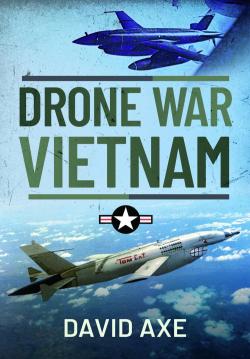


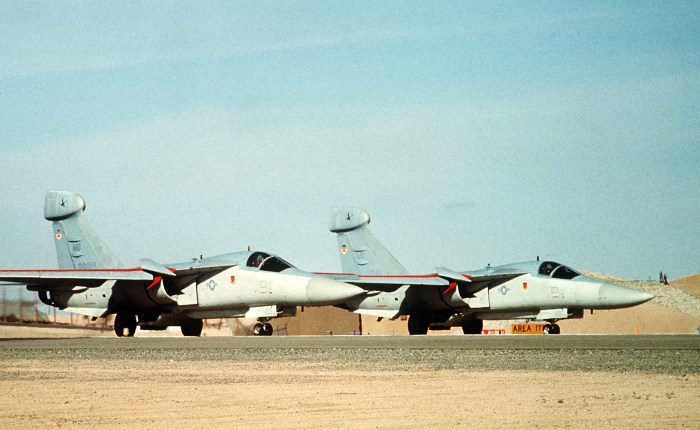
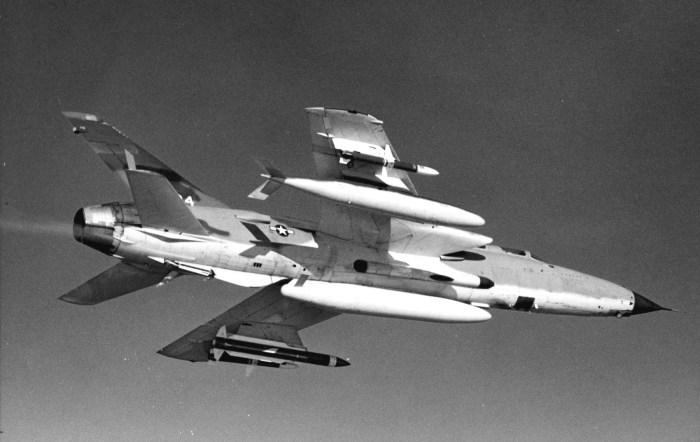


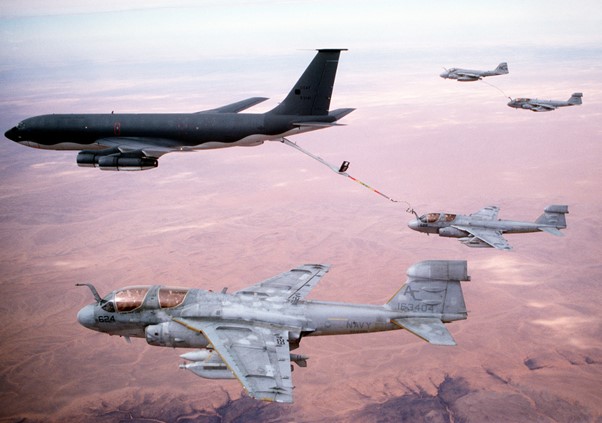
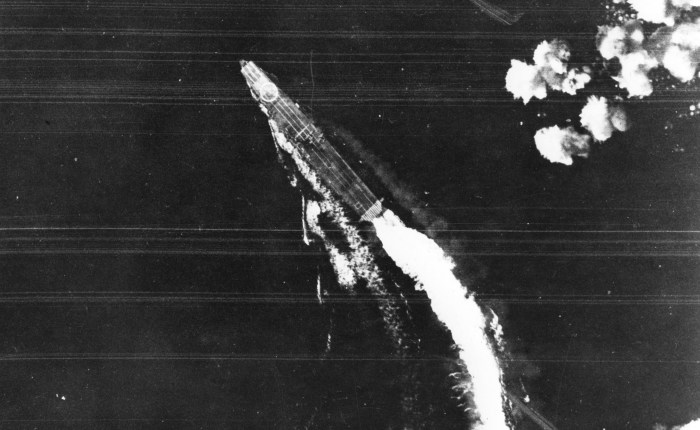

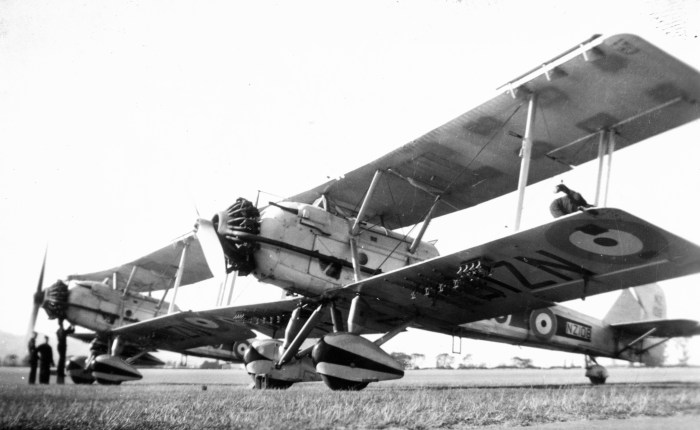

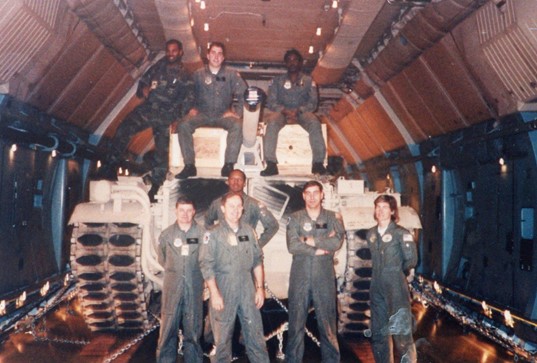

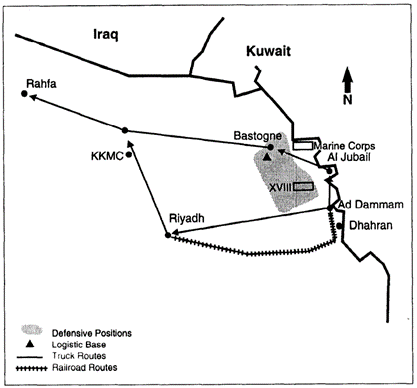
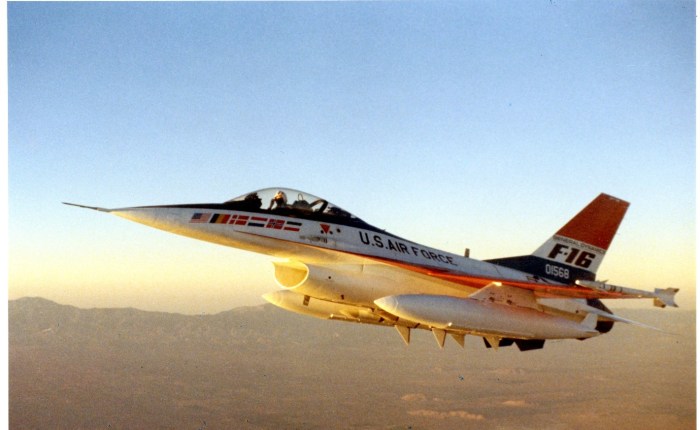

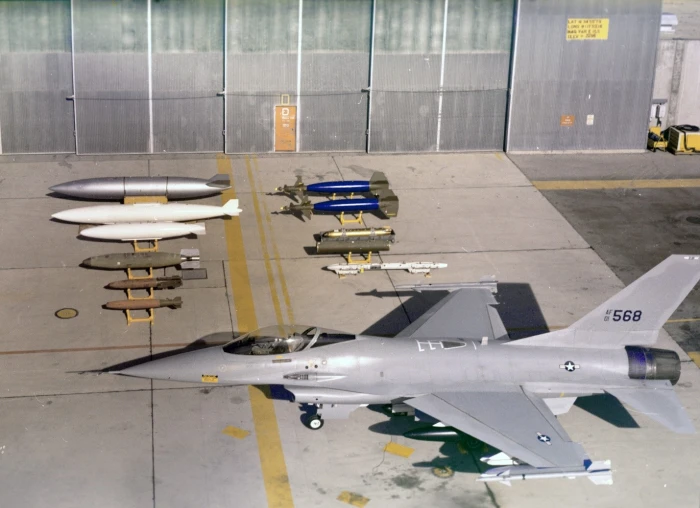

 From Balloons to Drones