I am an independent scholar specialising in the history of war. I have nearly 20 years of experience within the education, museum and heritage sectors in Australia and the United Kingdom. I am currently the Senior Historian at Brisbane City Council in Australia. I am also the editor-in-chief and owner of 'From Balloons to Drones.' My research interests focus on the history of air power and air warfare, military leadership and command, military culture, and the history and development of professional military education. I also maintain an interest in transport history. To date, I have published numerous articles, chapters and encyclopedia entries, edited two books, and delivered papers on three continents to various civilian and military audiences.
Editorial note: This article first appeared on the author’s website. It has been reproduced here with permission.
On 26 July 1950, No. 1 Squadron of the Royal Australian Air Force (RAAF) conducted its first operations in support of Operation FIREDOG, the British Commonwealth’s air operations against insurgents during the Malayan Emergency. The operation consisted of two missions. The first operation involved two GAF Lincolns (A73-36 and A73-31), which dropped 20 1,000-pound bombs from an altitude of 5,000 feet in the Kota Tinggi area. The attack was commanded by the commanding officer of No. 1 Squadron, Squadron Leader Len Williamson. The second mission saw another two Lincolns (A73-39 and A73-31) attack targets in the Yong Peng area. This time, the attack was a combination of dropping bombs (20 x 1000lb bombs) from 5,000 feet and strafing. The Operations Record Book for 26 July noted that the British Army reported the attack on Yong Pend had been successful, while the success of the raid on Kota Tinggi was yet to be reported.[1] These operations took place just 10 days after No. 1 Squadron arrived at RAF Tengah in Singapore on 17 July 1950.[2]
After several years of peaceful protest, on 16 June 1948, three European estate managers and two Asians were murdered in Malaya. This led to a declaration of emergency in Malaya, which resulted in a counterinsurgency against the Malayan Communist Party (MCP) and its military arm, the Malayan National Liberation Army (MNLA). The counterinsurgency officially ended in 1960; however, a second communist insurgency took place in Malaysia from the late 1960s to 1989. In 1950, the British launched the so-called Briggs Plan to deal with the insurgency. Named after the Director of Operations, General Sir Harold Briggs, the plan aimed to cut the MCP and MNLA from the populace by combining civil and military actions. In cutting the MCP and MNLA off from its primary source of supply, it was hoped to destroy ‘the terrorists and preventing a recurrence of their activities.’[3]
GAF Lincolns of No. 1 Squadron RAAF on the tarmac at RAF Tengah, c. November 1954 (Source: Australian War Memorial)
The use of air power in support of counterinsurgency operations during the Malayan Emergency came to be known as FIREDOG. It utilised both kinetic and non-kinetic forms of air power.[4] Primarily, air power was used to provide offensive air support, a variety of air transport roles and air reconnaissance. By 1954, offensive air support had been codified to include air strikes, harassing attacks, close support, air alert, and psychological warfare.[5] It was in the former role of offensive air support that No. 1 Squadron with the RAF Air Historical Branch narrative on FIREDOG noted that in this role, an ‘Australian medium bomber squadron bore the brunt of offensive operations from 1950 to 1958.’[6]
In June 1950, the RAAF’s first deployment to Malaya came in the form of No. 38 Squadron equipped with the Douglas C-47 Dakota. This came about because on 21 April 1950, the British Government requested Australian support in Malaya in the form of ‘air reinforcements.’ Specifically, the British sought a transport squadron, a ‘squadron or flight’ of Lincoln bombers and support for servicing aeroplanes either in Singapore ‘and/or’ Australia.[7] This led to a meeting of the Defence Committee on 27 April, which agreed with the idea that Australia might contribute a transport squadron and ‘small squadron’ of four Avro Lincolns to the air effort over Malaya.[8] The Chief of the Air Staff (CAS), Air Marshal George Jones, noted that the contribution of Lincolns could be increased to six at a later date. On 19 May, the Australian Government agreed to the dispatch of No. 38 Squadron but not the Lincolns.[9] At the end of May, the Prime Minister, Robert Menzies, announced the dispatch of No. 38 Squadron in Parliament and noted that ‘the winning of the “cold” war in Malaya is of vital importance to the security of Australia.’[10] In part, however, the reticence to dispatch Lincolns was due to Menzies’s scepticism about the efficacy of air power in this type of conflict.[11] The outbreak of the Korean War at the end of June 1950 shifted this perception.
On 27 June, the Australian Government finally resolved to deploy No. 1 Squadron to Malaya. As the Official Historian of Australia’s contribution to the Korean War, Robert O’Neill has written:
It is significant that Australia’s first military response to the outbreak of the Korean war was to undertake at once a commitment elsewhere [Malaya] of a kind which, until the outbreak of hostilities in Korea, it had been reluctant to accept.[12]
More recently, in 2017, Andrea Benvenuti wrote that the outbreak of the Korean War dispelled the Australian Government’s ‘last reservations’ over the deployment.[13] Further announcements by the Australian Government made the links between Korea and Malaya clear. They were seen as part of the same problem: communist aggression against the West. The British High Commission in Canberra recorded that the news of the deployment of No. 1 Squadron had been received with ‘great pleasure in London.’[14]
No. 1 Squadron received its orders on 28 June and began preparing for deployment by the start of July.[15] This included, for example, Williamson interviewing the ‘Immigration Department and Taxation Department officials’ about the clearances needed for personnel deploying to Malaya.[16] The squadron departed RAAF Station Amberley on 15 July, stopping at Darwin en route to RAF Tengah in Singapore, where it arrived on 16 July. [17] By October 1950, No. 1 Squadron was stationed alongside 60 Squadron RAF, equipped with the Supermarine Spitfire FMk18 and 45 and 84 Squadrons RAF equipped with the Bristol Brigand B1.
No. 1 Squadron increased in strength to eight Lincolns in 1951 and would stay in Malaya until 1958. As David Lee, in his history of the RAF in the Far East, wrote, the squadron had made ‘a great contribution to FIREDOG operations for almost eight years, and its departure from Tengah was viewed with much regret.’[18] During this time, in 1955, it would be assigned the newly established British Commonwealth Far East Strategic Reserve to which Australia would contribute one bomber and two fighter squadrons.[19] Also, during this time, as a mark of the growing importance of the RAAF’s contribution to the campaign in Malaya and Australia’s growing ‘strategic interests’ in the region, Air Vice-Marshal Frederick Scherger would be appointed Air Officer Commanding Air Headquarters Malaya for two years between 1953 and 1955.[20] Air Vice-Marshal Valston Hancock would also serve as AOC for several months in 1957 before AHQ Malaya was reduced to No. 224 Group. Hancock would continue to command No. 224 Group until mid-1959. Both Scherger and Hancock would go on to become CAS. The RAAF would also take over Butterworth air base from the RAF and operate permanent squadrons from there until 1988.[21] The RAAF continues to maintain a presence at Butterworth, underscoring the region’s importance to Australian security.
Dr Ross Mahoney is an independent scholar specialising in the history of war, with a particular focus on the use of air power and the history of air warfare. He is the Editor-in-Chief of From Balloons to Drones and currently the Senior Historian within the Heritage Policy team at Brisbane City Council in Australia. He has nearly 20 years of experience in the education, museum and heritage sectors in Australia and the United Kingdom, including serving as the inaugural Historian at the Royal Air Force Museum between 2013 and 2017. His other research interests are military leadership and command, military culture, and the history and development of professional military education. He also maintains an interest in transport history. He has published numerous articles, chapters and encyclopedia entries, edited two books, and delivered papers on three continents. His website is here.
Header image: A No. 1 Squadron RAAF crew in front of their GAF Lincoln after returning from a mission over Malaya, c. 1950. (Source: Australian War Memorial)
[1] National Archives of Australia (NAA), A9186, 2, No. 1 Squadron, Operations Record Book, 26 July 1950; ‘First Malayan Strike by RAAF,’ Daily Mirror, 27 July 1950, p. 6.
[2] ‘Planes Land at Singapore for Use in Malaya,’ Daily Mirror, 17 July 1950, p. 1.
[3] AP3410, The Malayan Emergency, 1948–1960 (London: Ministry of Defence, 1970), p. 16.
[4] The starting point for any analysis of the use of air power during the Malayan Emergency should be the RAF’s Air Historical Branch narrative: AP3410, The Malayan Emergency. This was later published as Malcolm R. Postgate, Operation Firedog: Air Support in the Malayan Emergency 1948–1960 (London: HMSO, 1992). Also see: Malcolm Postgate, ‘Operation Firedog: Air Support in the Malayan Emergency’ in Roger Miller (ed.), Seeing off the Bear: Anglo-American Cooperation during the Cold War (Washinton DC: United States Air Force History and Museums Program, 1995), pp. 181-90; David Jordan, ‘Countering Insurgency from the Air: The Postwar Lessons,’ Contemporary Security Policy 28, no. 1 (2007), pp. 96-111; Andrew Mumford, ‘Unnecessary or unsung? The utilisation of airpower in Britain’s colonial counterinsurgencies,’ Small Wars & Insurgencies 20, no. 3-4 (2009), pp. 638-44; Sebastian Ritche, The RAF, Small War and Insurgencies: Later Colonial Operations, 1945-1975 (London: Air Historical Branch, 2011), pp. 15-35; Roger Arditti, ‘The view from above: how the Royal Air Force provided a strategic vision for operational intelligence during the Malayan Emergency,’ Small Wars & Insurgencies 26, no. 5, (2015), pp. 764–789. For a view of Australian air power and the Malayan Emergency, see: Alan Stephens, Going Solo: The Royal Australian Air Force, 1946-1971 (Canberra, ACT: Australian Government Publishing Service, 1995), pp. 224-44; Mark Lax, Malayan Emergency and Indonesian Confrontation, 1950 to 1966 (Newport, NSW: Big Sky Publishing, 2021); Peter Hunter, ‘Australian air power strategy, technologies, and counter-insurgency in Malaya during the Cold War’ in Nicole Townsend, Kus Pandey, Jarrod Pendlebury (eds.), Australian Perspectives on Global Air and Space Power: Past, Present, Future (Abingdon: Routledge, 2023), pp. 46-60.
[5] Lax, Malayan Emergency and Indonesian Confrontation, p. 108.
[7] NAA, A1209, 1957/4513, Office of the British High Commissioner to the Prime Minister, 21 April 1950.
[8] NAA, A2031, 59/1950, Minutes of a Meeting by the Defence Committee, 27 April 1950; Lax, Malayan Emergency and Indonesian Confrontation, p. 74.
[9] NAA, A4638, SET 2, Minutes of the Meeting of Cabinet, p. 3.
[10] NAA, A1209, 1957/4513, Statement by the Prime Minister in the House of Representatives, 31 May 1950, p. 2.
[11] Lax, Malayan Emergency and Indonesian Confrontation, p. 74.
[12] Robert O’Neill, Australia in the Korean War, 1950-53 – Volume 1: Strategy and Diplomacy (Canberra, ACT: The Australian War Memorial and the Australian Government Publishing Service, 1981), p. 48.
[13] Andrea Benvenuti, Cold War and Decolonisation: Australia’s Policy Towards Britain’s End of Empire in Southeast Asia (Singapore: NUS Press, 2017), p. 20.
[14] NAA, A1209, 1957/4513, Office of the British High Commissioner to the Prime Minister, 1 July 1950.
[15] Lax, Malayan Emergency and Indonesian Confrontation, p. 111.
[16] NAA, A9186, 2, No. 1 Squadron, Operations Record Book, 4 July 1950.
[17] NAA, A9186, 2, No. 1 Squadron, Operations Record Book, 15/16 July 1950.
[18] David Lee, Eastwood: A History of the Royal Air Force in the Far East, 1945-1972 (London: Her Majesty’s Stationery Office, 1984), pp. 150-1.
[19] Tristan Moss, ‘Planning for war in Southeast Asia: The Far East Strategic Reserve, 1955–66’ in Peter Dean and Tristan Moss (eds), Fighting Australia’s Cold War: The Nexus of Strategy and Operations in a Multipolar Asia, 1945–1965 (Canberra, ACT: ANU Press, 2021), p. 99.
[20] NAA, A5954, 2293/1, Office of the High Commissioner to the Prime Minister’s Department, 10 May 1952.
[21] On life at RAAF Butterworth, see: Matthew Radcliffe, Kampong Australia: The RAAF at Butterworth (Sydney, NSW: NewSouth Publishing, 2017).
Editorial note: This article first appeared on the author’s website. It has been reproduced here with permission.
During its existence from 1922 to 1997, the Royal Air Force (RAF) Staff College was located in several different places. When the Staff College was initially founded in 1922, it was located at Andover and remained there until the course was suspended in 1940. When the RAF reestablished its Staff College in late 1941, it did so at Bulstrode Park, Gerrards Cross. The first course at Bulstrode Park began in January 1942. It remained here until the Staff College transferred to Bracknell in 1945. At the same time as the move to Bracknell, a detachment of the Staff College remained at Gerrards Cross, and this eventually transferred to Andover in 1948. Bracknell was responsible for providing command and staff training to officers of the RAF, the United States Air Force, and members of the air forces of the ‘old’ Dominions. Andover provided command and staff training to members of the RAF and other foreign air forces. In 1965, it was announced that the two Staff Colleges would merge and be located in Bracknell. This eventually happened at the end of 1969. This is where the Staff College remained and eventually merged to become the Joint Services Command and Staff College in 1997.
This, however, is not the whole story. As well as its primary Staff College in the UK, the RAF also provided command and staff training in the Middle East at Haifa, Palestine (modern-day Israel), for four years. In 1940, the British Army established the Middle East Staff School, and in late 1941, they admitted RAF students to the No. 5 War Course. Then, from No. 6 War Course in early 1942, an RAF Wing was added to the Middle East Staff School.[1] During the No. 12 War Course in 1944, the RAF Wing became its own reporting unit, the RAF Staff College (Overseas).[2] It came under the administrative control of Air Headquarters Levant. The first Commandant was Air Commodore S.H.C. Gray, formerly the senior RAF instructor at the Middle East Staff School. The object of Haifa was to ‘train Staff Officers, not necessarily Commanders’ while the syllabus mirrored that undertaken at the Staff College back in the UK.[3] The last course, No. 16 War Course, took place in 1946 and ended in October. After this date, both the RAF Staff College and Army Staff College (the Middle East Staff School had been redesignated the Middle East Staff College in 1943) were disbanded.[4]
It is hard, without further research, to assess the impact of the RAF Staff College (Overseas) at Haifa, but it was clearly an important institution. As the then Wing Commander R.A. Mason (later Air Vice-Marshal Professor Tony Mason) noted in 1972, ‘the constant opportunities for joint service studies [at Haifa] conferred no small advantage on the Middle Eastern College over its Gerrards Cross counterpart.’[5] However, Mason’s conclusion was not his own, and context is important here. As the RAF Staff College prepared to commemorate the 50th Anniversary of its establishment, two publications appear to have been commissioned to detail the history of the institution.[6] The first was a history of the Staff College, written by Mason and widely cited by historians since. However, his was not the only volume commissioned. Another volume of the history of the Staff College at Haifa was also commissioned. Squadron Leader D.J. Read wrote this. This history detailed the Staff College at Haifa, but, unlike Mason’s more widely known counterpart, it is not widely cited. Indeed, I know of several copies in the library at the RAF Museum and a copy at the National Archives at Kew.[7] Importantly, while Mason details Haifa in his history, he is indebted to Read’s history.[8] For example, while Mason noted the importance of ‘jointery’ at Haifa, it was Read who reflected that:
Sometime in the future 2, or all 3, of Britain’s armed forces may well decide to combine their Staff Colleges into one establishment. If and when this occurs there may well be a temptation to acclaim the occurrence as a ‘first’. But perhaps someone will be around to remind the publicists that, for a few years in the mid-1940s, the Army and Royal Air Force had co-located Staff Colleges at The Telsch Hotel on Mount Carmel, Haifa.[9]
Of course, the Staff Colleges of the RAF, British Army and Royal would eventually amalgamate to form the Joint Services Command and Staff College, originally located on the site of the RAF Staff College at Bracknell.
Dr Ross Mahoney is an independent scholar specialising in the history of war, with a particular focus on the use of air power and the history of air warfare. He is the Editor-in-Chief of From Balloons to Drones and currently the Senior Historian within the Heritage Policy team at Brisbane City Council in Australia. He has nearly 20 years of experience in the education, museum and heritage sectors in Australia and the United Kingdom, including serving as the inaugural Historian at the Royal Air Force Museum between 2013 and 2017. His other research interests are military leadership and command, military culture, and the history and development of professional military education. He also maintains an interest in transport history. He has published numerous articles, chapters and encyclopedia entries, edited two books, and delivered papers on three continents. His website is here.
Header image: Flying Officer C.L. Collings, Officer in charge of the Desert Air Force’s Anti-Malaria Control Unit, lectures to pilots and ground crew of No. 152 Squadron RAF on defence tactics against the disease, in front of one of the Squadron’s Supermarine Spitfire Mark VCs at Lentini East, Sicily, c. 1943. (Source: IWM (CNA 1235))
[1] Squadron Leader D.J. Read, The Royal Air Force Staff College at Haifa, 1942-46 (Bracknell: RAF Staff College, 1972), p. 1.
[3] ‘Annex C – Middle East Staff School – Joining Instructions for RAF Officers, 2 April 1943’ in Ibid., p. C-1; ‘Annex D – Middle East Air Order No. 1261 – Formation of RAF Staff College (Overseas), 30 September 1944’ in Ibid., p. D-1.
Editorial note: In 1976, Joseph Frantz, the pilot of the aeroplane credited with the first aerial victory in history, was interviewed by the Service Historique de l’Armėe de l’Air (French Air Force Historical Service) about his experience. This article was published in Vortex 8, the professional journal of the French Air and Space Force. It has been reproduced here by permission. From Balloons to Drones would like to thank Jean-Christophe Noel, the Editor-in-Chief of Vortex, for permission to make this interview available to a wider audience. We are also grateful to the Service Historique de Défense (Defence Historical Service) for their agreement to make this interview available. The article has been reproduced verbatim from the original.
On 14th December 1976, Joseph Frantz, then aged 86, was invited to testify about his aeronautical career at the Air Force Historical Service (SHAA). This aviation pioneer, who, with his mechanic Louis Quenault, achieved the first officially recognised aerial victory in history aboard the Voisin V 82,[1] spoke for 2 hours and 50 minutes. He successively recounted his aviation calling, the early days of aviation, his piloting career at Robert Savary’s aviation school in Chartres, his military service, his participation in the First World War as a combat pilot and a test pilot, and his role in the Les Vieilles Tiges association.
Naturally, his narration of the famous aerial combat on 5th October 1914 was the highlight of this testimony. For this issue of Vortex, the initial intention was to transcribe only J. Frantz’s remarks concerning this combat, which ushered nascent aviation into a new, simultaneously glorious and tragic, era. After all, on that autumn day in 1914, J. Frantz became the first fighter pilot in history and undoubtedly deserved the honours of an issue dedicated to air defence.
However, as J. Frantz described the adventures in which he had participated and evoked the atmosphere prevalent in aeronautical circles at the beginning of the 20th century, something became clear. J. Frantz deserved far more than simply being “reduced” once again to what he had accomplished on the morning of 5th October 1914. His aeronautical experience also needed to be recounted. This humble, modest man had set aeronautical records in the 1910s. Yet, he had also witnessed many of his friends and fellow pilots die brutally, victims of a still poorly understood science of flight, unreliable aircraft, or German bullets. As if to apologise for not having perished cruelly like all his friends, he simply stated that he “had been lucky.”
For this reason, the account of this combat is enhanced by the evocation of J. Frantz’s military career. Through the interviewee’s eyes, the reader will better grasp the fragility of military aviation’s developments, the initial initiatives to prepare for combat against German aircraft, the emergence of the now common choreography of dogfights, and the first attempts at night-time hunting.
To conclude this introduction, it is important to specify that the text presented here is not an exact transcription of J. Frantz’s testimony. To enhance readability, fluidity, and enjoyment, the editor chose to rephrase questions and, at times, slightly rewrite the form of the answers. Naturally, all reported events, facts, and details are rigorously respected. Furthermore, the testimony gathered in December 1976 at the SHAA is somewhat complemented by another that Frantz recorded several years prior, on 22nd May 1945,[2] which provides some additional details. These contributions have been underlined within the main text to indicate their origin.
Sincere thanks are extended to the Oral Testimonies Department of the Defence Historical Service, which kindly provided this document and authorised its publication. Particular gratitude is expressed to Messrs. B. Fonck, F. Beauperin, O. Valat, and Captain J. Sencert. Without their assistance and goodwill, this project could not have been realised.
Excerpt from interview no. 57 of Mr. Joseph Frantz, conducted on 14th December 1976 in Paris by Mrs. Destouches and Mr. Wallon
Mr. Frantz, you obtained your military pilot’s licence in 1912. Can you tell us what that examination involved?
When I took my military examination, I was still a civilian. I hadn’t yet started my military service, as I had obtained a one-year deferment. It was my employer, Robert Savary, who asked me to take it, precisely so I could participate in the military competition. I hadn’t really focused on it myself.
I was fortunate to have reliable equipment because the test required completing a one-hundred-kilometre course three times, on three different days but within a period of less than a month.
I recall flying from Chartres to Orléans and back. A controller was present at a designated point in Orléans. It was simply a matter of flying past it and making sure they saw you clearly, without flying too high. We would fly over the location at 100 or 150 metres. I was lucky to have good weather and, more importantly, a Labor engine that worked well. Finally, the fixed tail surfaces allowed me to use the ailerons without the tail turning. I was also fortunate to complete these three courses on three consecutive days, thanks to an engine that ran perfectly throughout, which was quite rare at that time.
Was the civil examination easier?
Yes, the Aero-Club civil licence exam was indeed easier to complete because you could choose your day, and it only lasted one day. Furthermore, the tests were completed in less than fifteen minutes. Later on, things got more complicated.
Did you think much about war at that time?
No, we didn’t think much about it. I did ponder it a little during my training in Verdun. The barracks were modern at the time; they had been built, I don’t know, three or four years earlier. And there were showers, which was rare. A chief warrant officer in the company ran everything. He always stayed beside me during the test marches. We would cover 25 kilometres in a day with our backpacks. He would tell me, “Ah, you’re not used to walking; you’re in the air, it’s hard for you!” We would chat like that, and it made the time pass. I stayed for four weeks while the classes were going on.
Were you the only aviator?
There were three of us who had our military licences before joining the regiment. There was Michel Mahieu, who was killed almost at the end of the war in a Voisin by a shell, probably during a night flight at that moment.[3] And then Jean Benoist, whom I replaced as a test pilot at Voisin after he was killed.
You were transferred to the engineering corps and distinguished yourself during the large-scale manoeuvres in the southwest, at Toulouse, on a Breguet aircraft.
Indeed, I had a dual satisfaction. Firstly, without intending to, I accumulated the most reconnaissance flight hours in the squadron. We had five or six aircraft, and I believe I accrued about 8 hours and 50 minutes of flight time – something like that. This seems laughable now, but at the time, flights lasted half an hour, an hour maximum.
Secondly, I was the only one to bring my aircraft back intact. Following these reconnaissance missions, Captain Le Goÿs, who later became the famous general,[4] promoted me to corporal on the manoeuvre field in front of the troops.
You were then assigned to Bourges to test the launching of pyrotechnic devices. Did an acquaintance of yours join you there?
Yes, I always managed, easily I must say, to have my mechanic join me within a fortnight of my arrival at a new posting. I would make the request, and the officers I was leaving handled the procedures very well.
Louis Quenault, to whom I refer, was two years my junior. He had been hired by Savary to develop the Labor engines from Labor-Aviation. The company hoped to receive many orders, but that didn’t really happen.
Nevertheless, we were good clients at Savary. I had come to appreciate Quenault at that time, and I didn’t lose sight of him when he went to the regiment. After completing his training, he became my full-time mechanic. These mechanics were, for the vast majority, extremely dedicated and conscientious individuals. It was their aeroplane; it wasn’t the pilot’s aeroplane, it was theirs.
The Voisin III’s water-cooled Salmson radial engine. (Source: Wikimedia)
How did the tests proceed?
I had some bad days and some good ones; one remembers the good ones. I was therefore seconded to the Central Pyrotechnics School in Bourges. This was a strip of land located next to the explosives and bomb factory, which produced incendiary bombs before the war, in particular. I was very fortunate one day. I was flying with my mechanic, and we were launching incendiary shells overboard, one after another. Quenault would pull a rough cord that ignited the shell, and it would explode a few seconds later. However, there were many cables in the Savary aircraft I was piloting, especially in the landing gear, which was quite sturdy. This was true of all biplanes of that era. That day, one of the shells got caught on one of the landing gear cables, and despite my efforts – I was scared because I jostled the aircraft trying to dislodge it – it didn’t fall. Fortunately, at that time, at least two or three out of ten shells would not ignite and therefore did not function. The shell belonged to this category. Fortunately for us, as it was near the landing gear and other phosphorus shells!
Following this event, the colonel nominated me for the Military Medal.
You also mentioned less good days?
Towards the end, there were two pilots conducting the tests. Lieutenant Delvert arrived with a Henri Farman aircraft. Even though I was a corporal, we shared a rapport as pilots, and rank distinctions were secondary.
He would always depart with a captain from the pyrotechnics unit, a friend of his, to launch the shells. Powered by a 50-horsepower Gnome engine, he would fly straight and level and then playfully perform a small “chandelle,” pulling back on the stick when he had some speed, ascending to 10 metres – 15 metres maximum. At the time, there wasn’t the power of current jet aircraft that can ascend vertically to 2,000 metres in a few seconds.
I had told him, “You know, Lieutenant, that’s dangerous because if you experience an engine cut, you risk losing speed, and that’s very serious.” He replied that it was not. He seemed very confident; he was very polite and even thanked me for my advice, but it was to no avail.
One day, he was eagerly awaiting his captain. He said to me, “Frantz, I’ve never taken you up, I’ll take you with me if you like.” I replied, “Of course, Lieutenant,” out of politeness, but I wasn’t particularly keen.
In the Bessonneau hangar, I was putting on my fur-lined flight suit. We were exposed to the open air during flight, especially in the Farman. It was worse than in the Savary, where the engine was at the rear, and this suit was essential.
I remember, I can still visualise the hangar. I put my right leg into the suit. The captain arrived: “Oh, excuse me, I’m late. If you don’t mind, may I take your place?” I said “Yes.” I don’t know why, but I had a premonition, and deep down, I was very relieved by this turn of events. I took off my suit, well, I took my right leg out, they departed… and they died. They performed a chandelle, and what I had anticipated occurred; they lost speed and both perished.[5]
The colonel commanding the Central Pyrotechnics School told me, “I am going to abandon pyrotechnics, aircraft are too dangerous, and we will conduct our tests with a captive balloon for projectile launches.” He was profoundly affected by this accident.
After these tests ceased, you were transferred to Mourmelon. Was that when you learned about the outbreak of war?
I was a corporal and was promoted to sergeant at the beginning of the war. I was mobilised on a Caudron G.3. I already knew the G.3; I had spent time in Reims flying one of them. It was a very good aircraft, but it was not a warplane. As André Luguet, a very good friend and one of our vice-presidents at Les Vieilles Tiges, told me, you had to try hard to kill yourself in a G.3. It was a very safe aircraft, but it was not a warplane.
However, at Mourmelon, there was a squadron of military Voisin aircraft, Squadron 24, and its commander, Captain Faure, told me that there were only six pilots, including himself, and that one of them was going to Voisin to receive aircraft. He asked, “I’m short a pilot; would you be interested?” I replied, “Oh yes, Captain, a Voisin—now that’s an aeroplane.” He said, “Agreed, I’ll take you.” That is how I ended up with Voisin. It was a squadron whose aircraft were destined for Russia; they were models with a long range for the time. We carried out reconnaissance missions of 300 to 400 kilometres. It was the only aircraft that could do that, with its framework made of metal tubes that could remain in the rain without deforming and usually did not require the use of a hangar. It was, without question, the best military aeroplane of the era.
Do you remember your first wartime missions?
Initially, we went to Belgium. I conducted a reconnaissance mission with a staff officer. We took mechanics for transfers, but for these missions, staff officers often came along. He was a junior officer, and it was his first flight. The reconnaissance was near the Luxembourg border.
We then observed many troops and convoys, and also trains, heading towards Belgium. However, there were conventions in place. Belgium was, in principle, neutral. After landing back at Mézières, where our first military airfield was located, the captain asked me, “Would you like to come with me while I make my verbal report?” As we had taken notes together, my presence could support what he said. Looking at the ground, I had also noticed many movements towards Belgium.
When we reported this to the commandant to whom we were to make the report, he told us, “That’s impossible; it’s forbidden.” One shouldn’t be too harsh, but it demonstrated our good faith (laughs).
Did you have special equipment for these reconnaissance missions?
We would send two homing pigeons for the initial reconnaissance. We also carried a Model 72 pistol—or perhaps it was a 76, a large, very heavy revolver—and a box of “Tisons” brand matches. The pistol was for puncturing the fuel tank in the event of a forced landing, which occurred quite often due to engine failure or similar issues behind enemy lines. The matches ignited and burned very fiercely for a few seconds. We were supposed to throw them into the punctured and holed fuel tank to set the aircraft ablaze and prevent it from falling into enemy hands.
Had you thought about the best way to shoot down an enemy plane?
We didn’t know how to do it. We had discussed it with friends in the squadron. I had discussed it with Quenault because he was the one doing the shooting. In fact, we were shooting too far. It’s difficult in the air to gauge distance. We would fire across the target and take a few shots. We couldn’t fire in automatic mode because the mechanism of the Hotchkiss machine gun jammed very quickly, especially at altitudes above 1,000 metres. It had even jammed on the first shot for me; that’s why we fired shot by shot.
We would press the trigger each time and then release it. In automatic mode, I believe the problem came from the ejection of the Hotchkiss casings, which is still a light infantry machine gun. The ejection was automatic, triggered by the explosion of the bullet itself, but the air pressure was slightly less strong than on the ground. This expulsion also caused us problems, as the propeller was behind us, and a semi-rigid bag was needed to catch the casing.
At what speed were you flying?
At 90-95 km/h in regular flight. When diving, we probably reached 115-120 km/h. We didn’t have a speed indicator, but during my acceptance tests, I was doing 90-95 km/h. So, if we fired while crossing paths, we had little chance of hitting each other.
How did you evaluate German aircraft?
In my opinion, the Taube was a very slow aircraft, an Austrian aircraft incidentally, but it was used in the German army. It was not a dangerous aircraft at all. But the other aircraft were more modern with a powerful engine at the front – a six-cylinder Mercedes-Benz engine. They were a little faster than our Voisin, a little more modern too, but did not have our range.
How did aerial combat begin?
The Germans initiated it, under the following circumstances. Lieutenant Levassor d’Yerville was a chasseur d’Afrique, a very bold and excellent individual. He had a slightly tilted head from a saber blow to the neck. He was remarkable and, incidentally, had a very distinguished career.
He had departed from Mézières on a solo reconnaissance mission to Aachen in his Voisin. Levassor then encountered a German aircraft. At that time, aviators considered themselves more as sportsmen than as belligerents or enemies. He expected to salute the German pilot, but as they passed, the passenger in the German aircraft fired three bullets that lodged in Levassor’s aeroplane.
I always found it extraordinary, incidentally, to encounter an aircraft and manage to shoot at it. That represents a closing speed of 200 km/h from each side. It’s not like being at a shooting range; there’s wind.
For the Germans, it was even more difficult than for us on the Voisin. On the Aviatik, the engine is at the front of the aircraft, whereas it’s at the rear for the French aeroplane. The passenger was positioned between the engine and the pilot for a very simple reason: the passenger’s weight was placed close to the centre of gravity, if you will. If the passenger climbs on board, the aircraft’s balance or trim was not altered. Trim was important at the time; it’s less true now, where one sees passengers moving about in the aisles of transport aircraft.
To return to Levassor, three bullets struck his aeroplane, one of which passed through the cushion he was sitting on. It was a small cushion, yet not thick.
How did you decide to react?
When he returned and showed the impact, the squadron leader telephoned Gabriel Voisin in Issy-les-Moulineaux, telling him, “This is what happened; we must find a solution.” Voisin replied that he would mount machine guns and prepare everything with all the necessary templates.
Three or four days later, Voisin arrived in Mézières with six machine guns to install on our six aircraft, along with one or two mechanics to assist. The plan was to install a tripod above the pilot’s head, with the machine gun for the passenger in the rear to operate.
That’s how the idea came to us. But it wasn’t easy to implement, because the colonel commanding the 5th Army’s aviation – we were, I believe, already the 5th Army – learned about it. He telephoned Captain Faure and said, “What is this? You’ve mounted machine guns? Don’t you know we’ll never fight in the air? It doesn’t exist. It’s Jules Verne, honestly!”
Captain Faure then responded, “My squadron is for reconnaissance. If these reconnaissance missions aren’t carried out, you can object, but I will make the modifications I see fit.”
The colonel placed him under close arrest!
Eventually, a general managed to reconcile the two opposing viewpoints. He agreed that if it did not interfere with reconnaissance missions, the weapons could remain on the aircraft.
Fortunately, on the German side, it was the same situation. They did not believe in aerial warfare; they thought we would never shoot each other down in the air. A few days before my victorious combat, a command note for aviation had been circulated among German squadrons asserting that such combats would never occur. We had heard that some French pilots enjoyed shooting at German aviators, but that it was of little importance. They would not hit them, and consequently, they were forbidden to engage us in combat.
On our side, we had arrived at the simplest conclusion: one must shoot at a target that is, at least for a while, immobile. And for it to be immobile, one must get behind it. The entire difficulty lay in getting behind it. The Aviatik was four or five km/h faster than the Voisin, but there are ways to work with the sky, so to speak! The key was to spot them early enough.
A Voisin III showing the observer’s weapon mounted above the pilot. This is the type of aeroplane flown by Frantz in 1914. (Source: Wikimedia)
Could you describe your experience of achieving this first aerial victory?
Quenault and I had set out, carrying six 90mm shells to drop on enemy troop concentrations. These were difficult to spot at 1,200, 1,500, or 2,000 metres, especially as we had no binoculars.
I was gaining altitude, following the lines between Reims and Craonne, when at approximately 1,800 metres, I saw an aircraft inside French lines heading north. I had, and still do have, despite being 86, quite good eyesight. It was to my left. Focusing intently, I realised it was a German aircraft. It was returning from its reconnaissance mission. At that moment, I was perpendicular to it, slightly ahead and at the same altitude. I alerted Quenault. The first thing I did then was to try and cut off its path by turning sharply to the right. This is where a significant element of luck came into play, as one shouldn’t initiate too early. I was slightly above it, which also helped; it allowed me to dive more or less to catch up before it gained too much distance. This was something I hadn’t managed to do until then. This time, however, I tried to get into a position where I could slow down if needed. It’s always easier to slow down. I arrived precisely where I wanted by diving slightly towards it. I then only had to turn right, position myself in its wake, and it was perfect; everything was in place.
At that point, I was very close. This is the approach that was also used by Fonck, by Navarre, all the great Aces who returned with very few bullets in their aircraft, or none at all if one considers Fonck. As for the sun’s position, I think I might have been well-placed. It was 8:00/8:30 AM; yes, I didn’t realise it. In any case, it was very clear, a cloudless sky. I’m not certain they saw me.
I shouted to my machine gunner to fire. We were so close then that I could clearly distinguish the pilot and the observer. They saw me at the first shot; I saw them turn their heads; I was close. I saw the pilot turn his head back with a surprised look. He was behind. He dipped slightly to gain speed. I followed him like a shadow.
The passenger pulled out a carbine and fired. He had a shoulder-fired carbine, whereas we could aim more easily thanks to the tripod. The German aircraft tried to make right and left turns to break free. The passenger found it difficult to shoot because, as I told you, he was positioned between the pilot and the engine. The pilot, the tail assembly, and the rest formed obstacles, provided I positioned myself exactly in line. We had 25 rounds in the rigid part that held the cartridges. On the 25th, Quenault changed the Hotchkiss belt. The combat was quite long. We fired shot by shot. Quenault fired 47 rounds, which took 10-12 minutes, and by chance, we only jammed on the 47th round. I thought to myself, “We’re screwed again.” Maybe the staff officer is right; we’ll never shoot each other down in the air.
The German pilot was still turning from right to left. He was trying to regain his lines by descending. He descended because we eventually found ourselves at 1,200 metres. And all of a sudden, it pitched up. And, like an aircraft about to perform acrobatics, it remained suspended in the air. Quenault then tapped me on the shoulder and said, “Careful, we’re going to hit it.” We were very close, but when I saw it pitch up, it was slightly to the left. I gave a kick and had already initiated the right turn to avoid colliding with it. It’s true that it would have been too foolish, but in the heat of the moment, one doesn’t think about the danger one might be in.
At that moment, I saw it like an aircraft losing speed. It flipped onto its back, in straight flight, leaving a trail of smoke. It probably had a punctured fuel tank and fuel streaming into the engine. I immediately thought, “I hope they’re both dead… especially the passenger.”
I eventually landed 300 metres from the aircraft wreckage. It had fallen into wooded marshes. I set down in a field a few hundred metres from where our victims were still burning. The marshes were indeed surrounded by suitable landing grounds, fields where there had probably been wheat, and where there was no danger of damage, especially for the Voisin, which had four wheels and wheel brakes. Once again, the aircraft was very advanced for its time.
We went to see. Some farmers were already there. It was at Jonchery-sur-Vesle, 20 km from the trenches. Some women also came and gave me a bouquet of wild flowers they had picked. It was very touching. Then officers from a nearby staff arrived. Among them was a general, General Franchet d’Espèrey; but I did not know him, I do not know if it was him. In short, it was a general with his staff who then said to me: “Are you the pilot?” I replied: “Yes, General.” He continued: “You will receive the Military Medal.” I told him verbatim: “I already have it, General” (laughs). Surprised, he then said: “Oh, well, you will receive the Legion of Honour, and your mechanic-gunner will receive the Military Medal.”
A pheasant was brought to me; it ended up in the kitchen. Back at the unit, they were starting to get worried. When I returned, they had already begun eating. In that squadron, our pay differed according to rank, and the captain had instituted that at the mess, one paid their share pro rata to what they earned. Jean Benoist and I were sergeants. We were the only two sergeants, having been promoted shortly after our arrival.
Captain Faure drove us back in the afternoon. There, we saw the bodies of our victims, whose legs were charred, having been removed from the aircraft. I will not hide from you today that Quenault and I were very moved at the sight of the two victims we had brought down.
A letter was found on the body of one of the victims. One of the deceased addressed it to his mother, stating that he had escaped a French aircraft in September by entering a large cloud. A strange coincidence: a few weeks earlier, we had pursued an aircraft that had escaped us in precisely that manner…
Just thinking about that combat, I think of the men who were in it. After all, it was war… But I never speak of that engagement without great emotion.
The Legion of Honour seemed like a lot for an “exploit” that was, all things considered, normal. If one had a rifle on board, it was surely to use it. It seemed improbable, far too significant, to be awarded such a commendation.
Did you quickly participate in other aerial combats?
Two or three days later, we were slightly southwest of Reims. The Germans still held the north of the city. I saw an aircraft on the other side of the lines. I climbed, and it climbed too. At about 1,500 metres altitude, we headed towards each other. Confident from my recent exploits, I thought success was assured, but then, with the first shot, the machine gun jammed.
Facing us was the same type of Aviatik. The tactic of getting behind the hunted aircraft was known to him as well as to me. To do this, one had to turn as tightly as possible. What I had to do was turn, since Quenault was already trying to clear the jammed machine gun. For once, it wasn’t working, and the adversary fired at us each time we crossed paths. It was very difficult, and he fired two or three bullets per pass. As soon as he had passed, I would turn to get behind him, and he would do the same, and ultimately, neither of us succeeded.
He gave up, or perhaps his gun was also jammed. He descended and headed back towards his lines. This occurred over French lines, just near the trenches.
The most amusing part is that the squadron commander received a phone call from an army colonel or general. He said, “We witnessed the combat. Congratulate the pilot who didn’t stop firing.” On the ground, they heard the gunshots; they believed it was our crew firing. In fact, it was not at all. I told the captain I hadn’t mentioned it because I was playing the fool.
I almost could have received a citation!
Were citations numerous?
Some were occasionally questionable. Once, I incidentally read in a newspaper at the front that the passenger, a captain I had taken up, had received a citation of the type: “successfully brought back to his lines an aircraft damaged by enemy shells.”
That corresponded somewhat to the reconnaissance we had carried out. I had returned with difficulty with a broken propeller. The rear engine was quite reliable, but large pushrods extended from it. One of these rods had gone into the propeller. I immediately reduced the throttle to try to regain the French lines, which I managed to do.
The captain then told me that the damage was due to a shell. I replied no. Besides, we would see immediately. A pushrod was missing, which had broken the wooden propeller, and that was that. He had made his report nonetheless. I did not find that very elegant, but I said nothing. You know, I was young; I attached no importance to it.
Is your subsequent operational career notably associated with the cannon-armed aircraft?
Yes, the idea was to place a small cannon on the aircraft to fire at and bring down the Drachen[6] observation balloons. The problem was that when we hit them, they didn’t catch fire. Incendiary shells of 37mm didn’t exist; they hadn’t been invented yet.
To ignite the balloon, a flame is required. However, this flame must not be inside the balloon, as hydrogen does not burn internally. An incendiary shell is needed that maintains a flame trace long enough to ignite the mixture.
Initially, the Germans would pull the balloon down to prevent it from being shot down. Later, when they saw that we were only making small holes, the bolder observers no longer requested to descend.
Later, when I was in Nancy, the Germans feared these cannon-armed aircraft despite everything. These cannons extended from the fuselage by at least 60 or 80 cm. This is why some pilots bought fake stovepipes from hardware stores, hoping to deter attacks from the Germans who feared them.
Did you have a mishap at night in this type of aircraft?
First, allow me to provide an example of aircraft development at that time, which was very empirical.
The cannon was heavy; it was a long 37mm cannon. I don’t recall its exact weight, but it was 100 kilograms or more.
I found that the aircraft was unbalanced, too nose-heavy despite its very effective, very large control surfaces.
I mentioned this to Voisin. I telephoned him, and as he was down in Issy-les-Moulineaux, he immediately came up to Villacoublay. He made swift decisions and decided to move forward and offset the upper wing. After using his slide rule, he said, “I believe 10 cm should be sufficient. It needs to be done tonight so you can conduct a test flight tomorrow morning.” I was more than willing.
He brought a team with him, known as the “Aces of the Workshop,” about ten mechanics and carpenters, and by three in the morning, it was done! I tested the aircraft; it was just a matter of cutting piano wires, lengthening them on one side and shortening them on the other. As the ribs were threaded onto spars, the frame was supported by 30mm drawn steel tubes, as I recall. It didn’t pose significant difficulties.
So, to return to that night flight, I went to the entrenched camp at Le Bourget, where I received my first military punishment. One evening, a Zeppelin was reported near Compiègne. Always confident and proud of my previous exploit, I decided to investigate: “A Zeppelin, let’s go!” I told my mechanic, “We’ll give it some cannon shots in the gondola.” And off we went. We made a wide circuit, and there was no Zeppelin to be found, “no more than butter on a spit,” as the expression goes. In fact, at the beginning of the war, everyone saw aircraft and Zeppelins everywhere, especially those who weren’t in aviation! When I returned to the airfield, landing was impossible due to fog. So we landed at Villacoublay. However, I was expected for duty at six in the morning at Le Bourget…
The punishment came down. It was four days of confinement for having “departed without waiting for orders”! Never mind!
Header image: A Voisin II on display at the Musée de l’Air et de l’Espace, Le Bourget, France. (Source: Wikimedia)
[1] This first aerial victory was not the first duel between airmen. There had been many exchanges of fire since the beginning of the war. Air war historians list several dates in August and September 1914 when original feats were accomplished. On 10 August 1914, near Cernay (Haut-Rhin), Corporal Thoret of BL 10 (Bleriot XI-2) fired a revolver at an Aviatik B. On 25 August 1914, Second Lieutenant Harvey-Kelly and Lieutenant Mansfield of No. 2 Squadron RAF threatened a Taube in the air with their Royal Aircraft Factory B.E.2. The German aircraft eventually landed. It was destroyed on the ground by the British crew who had landed nearby. On 1 September 1914, Lieutenant Moris of the MF8 destroyed a Drachen. Finally, on 7 September, Chtabs-Kapitan Nesterov, of the 11th detachment of the Russian Corps, used his Morane-Saulnier Type G to board an Austrian Albatros B.II. Both aircraft crashed and the Russian pilot died the next day as a result of his injuries. See in particular C. Cuny, “1914: la France invente le combat aérien”, Avions, n°200, July-August 2014, pp. 6-25.
[2] R. Saladin, “L’histoire des temps héroïques de l’aviation”, Archives INA, 22 May 1945
[3] Commander of the VP 114 squadron since 26 February 1917, he and his gunner, Lieutenant Rivalleau, were shot down in the German lines to the north-west of Ham (80) during the night of 2 to 3 May 1918 in their Voisin no. 5597
[4] General Louis de Goÿs de Mézeyrac was the precursor of bombing aviation in France. A battalion commander in 1914, he was tasked by General Joffre with organising bombing aviation. Hit during a raid over the Palatinate in May 1915, he was taken prisoner but escaped at the end of 1917. He returned to combat and commanded the first bombing brigade in 1918. He distinguished himself in the 1920s by opening air routes.
[5] The two victims were Lieutenant Jean Louis Delvert of the 21st Artillery and Captain Gaston Niquet of the 1st Artillery, both temporarily seconded to the Aéronautique Militaire. Lieutenant Delvert had replaced Lieutenant Jean Kreyder in May 1913, after the latter’s death during a flight.
2026 marks the 10th Anniversary of the establishment of From Balloons to Drones. To mark this anniversary, From Balloons to Drones plans to publish a series of articles examining the state of air power studies.
In 2017, From Balloons to Drones published an article that asked the question ‘Wither Air Power Studies?.’ More recently, in a 2024 article on ‘Some Problems with Airpower History,’ Professor John Ferris reflected on the field of air power history, noting that ‘[d]espite its problems, airpower history is in the best state it has known. Just a few steps would bring it to the quality of naval history.’[1] Those steps are to recognise the problems associated with the field, embrace the comparative and transnational nature of airpower history, and welcome new voices to the field. These steps can be applied to a broader field of air power studies, not just air power history.
To mark the 10th Anniversary of the scholarly webzine, From Balloons to Drones is seeking submissions on the state of air power studies. Articles might, for example, explore the development of a subfield of air power studies (e.g., history, law, ethics) or its place in academia. Possible themes to be explored might include, but are not limited to:
History | Role in Professional Military Education | Place in Armed Forces
Place in Academia | Ethical and Moral Issues
National Experiences | International Experiences | Transnational Experiences
Personal Experiences | Memory and Memorialisation
We are looking for articles between 500 and 4,000 words, but we will accept longer pieces and reserve the right to publish them in parts. Please visit our submissions page for more information on the types of articles published by From Balloons to Drones.
We plan to begin running the series in early 2026, and it will continue for as long as we receive potential contributions. We welcome and encourage submissions from academics, policymakers, service personnel, and relevant professionals.
Submissions should be submitted in Word format and emailed to the email address below with ‘SUBMISSION – Wither Air Power Studies?’ in the subject line. Also, please include a 50-100-word biography with your submission. Footnotes are acceptable; please be careful to explain any jargon. If you are unsure if your idea fits our requirements, please email us with ‘POTENTIAL SUBMISSION – Wither Air Power Studies?’ in the subject line to discuss.
Header image: A Republic P-47D Thunderbolt on display at the American Air Museum at the Imperial War Museum at Duxford, UK. (Author’s Personal Collection)
[1] John Ferris, ‘Some Problems with Airpower History,’ Journal of Military and Strategic Studies 23, no. 1 (2024), p. 31.
By Lieutenant Colonel Daniel Jackson, PhD, USAF, and Major (ret) Wael al-Taki, LAF
2 August 2014: Hundreds of Islamic State and al-Nusra Front militants stormed Lebanese Army positions in the Bekaa Valley, fifty miles east-northeast of Beirut. Under relentless fire, Lebanese troops conducted a fighting withdrawal, calling frantically for reinforcements. Amid the chaos, the militants captured 36 soldiers, brutally executing at least four.
High overhead, 1st Lieutenant Wael al-Taki peered through the infrared camera on a Cessna 208B Grand Caravan – the same single-engine turboprop used by FedEx for rural package delivery. The Lebanese Air Force operated two such aircraft, both modified with surveillance gear. Only one, however, could carry a pair of AGM-114 Hellfire missiles – the same laser-guided missiles used by Apache attack helicopters and Predator and Reaper drones.
The Cessna required a crew of three: two pilots and a mission systems operator (MSO). Yet shortages of trained personnel forced al-Taki to act as both pilot and MSO, moving to the back of the aircraft after take-off to operate the mission systems while Lieutenant C.Y. took the controls.[1] A brigadier general from the operations staff took the other pilot’s seat, relaying strike approvals from the operations centre in Beirut.
Below, the militants surrounded a company of Lebanese troops, their withering fire wounding several soldiers, including the deputy commander. The Cessna banked toward the firefight. Al-Taki gripped the hand controller, aligning the crosshairs with the enemy fighters. He fired the laser designator. He had never fired a laser-guided missile before. In fact, no one in the Lebanese Air Force had ever fired one in combat. “I was just thinking of the guys down there, that someone should save them,” he later recounted. He stole a quick glance out the window as C.Y. jammed his thumb down on the firing button. With a flash, the Hellfire streaked off the launch rail – and into history.[2]
Lieutenant al-Taki’s Hellfire was the opening shot in Lebanon’s three-year air campaign against the Islamic State, culminating in Operation Fajr al-Jaroud, or ‘Dawn of the Hills,’ in August 2017. During that same period, Operation Inherent Resolve, the US-led coalition’s campaign in Iraq and Syria, hammered the Islamic State and other militant groups with over 24 thousand airstrikes from hundreds of the world’s most advanced warplanes, including fourth- and fifth-generation fighters, unmanned aerial vehicles (UAVs), and stealth bombers.[3] The Lebanese air campaign was exceedingly modest by comparison, yet it successfully rolled back the Islamic State’s western flank. Ultimately, Fajr al-Jaroud continued a pattern established over the previous two decades: modest US security assistance, combined with the ingenuity of Lebanese aviators, enabled the Lebanese Air Force to prevail under challenging battles against violent extremist groups.
A Bell UH-1H Huey II from the 11th Squadron participates in an exercise on the Hannoush Range. (Source: Author)
Rebuilding the Lebanese Air Force
Founded in 1949, the Lebanese Air Force once operated modern jet aircraft, including the de Havilland Vampire, Hawker Hunter, and Dassault Mirage III. American assistance began during the Cold War, with the US Military Assistance Program delivering six Hawker Hunters in 1963. However, a brutal sectarian civil war from 1975 to 1990 left the air force in ruins, forcing the reconciled government to rebuild it from scratch.[4]
Lebanon occupies strategic – and treacherous – terrain, wedged between Syria and Israel. Though the civil war ended in 1990, Syrian troops continued to occupy much of the country’s north until 2005. Israel invaded four times between 1978 and 2024, occupying southern Lebanon from 1982 to 2000.
The US had straightforward goals for supporting the Lebanese Armed Forces (LAF) after the civil war: building a non-sectarian national military would strengthen national cohesion and counter the influence of sectarian militias like Hezbollah. ‘The LAF is a key institution of Lebanese statehood,’ declared US Ambassador Elizabeth Richards in 2016. ‘It is Lebanon’s sole legitimate defense force and an essential element in exerting the state’s authority throughout all of Lebanon’s territory.’[5]
Between 1996 and 2001, Lebanon acquired 24 Bell UH-1H Huey helicopters from the US, most of which had been in storage since the end of the Vietnam War. Initially relying on pilots who had trained in the US in the 1980s, the Lebanese Air Force assigned 12 of the helicopters to the 11th Squadron at Beirut Air Base, eight to the 10th Squadron at Klayaat Air Base, 55 miles north-northeast of Beirut near the Syrian border, and four to the 14th Squadron at Rayak Air Base, in the Bekaa Valley, 30 miles east of Beirut. These simple utility helicopters became the backbone of the Lebanese Air Force – and its only combat aircraft – until 2007.[6]
The first battle for the rebuilt air force erupted on 31 December 2000, in the rural Dinniyeh region near Lebanon’s northern border with Syria. Approximately 150 militants from the al-Qaeda-aligned group Takfir wal-Hijra attacked a military checkpoint, killing four soldiers and capturing two. The LAF immediately launched an operation to rescue the captives and eliminate the militants.[7]
Brigadier General S.Y., then a major in the 11th Squadron, recalled first learning of the attack while at a New Year’s Eve party with his squadron in Beirut. The festivities had begun winding down at four o’clock in the morning when the commander of the air force suddenly burst in, his face pale. “Return to base immediately!” he ordered. The men thought he was joking—or drunk. Frustrated, he bellowed for them to obey his orders at once. “We learned the hard way that he meant business,” S.Y. said.[8]
Two hours later, the major lifted off from Beirut, leading four Hueys north along the Mediterranean coast to reinforce the 10th Squadron at Klayaat Air Base, closer to the scene of the action. Upon arrival, they found the base buzzing with activity: Two companies from Lebanon’s elite Ranger Regiment had already arrived, along with two mechanised infantry companies and an armoured platoon. The LAF planned to deploy the Rangers to assault the militants’ mountain stronghold, while the mechanised infantry and armour secured Klayaat.
The helicopter force split into an assault group of eight and a reserve group of two, the latter consisting of one aircraft for medical evacuation (MEDEVAC) and another equipped with two 7.62-millimetre door guns for armed reconnaissance. In the afternoon, two 14th Squadron Hueys arrived from Rayak to reinforce the reserve group.
At nine o’clock in the morning, with temperatures hovering just below freezing, the assault group launched for the target area. Situated 5,200 feet above sea level, the high-altitude landing zones limited each helicopter to carrying only seven Rangers with their heavy gear, instead of the usual eleven. “Navigation to the landing zones was the hardest part, as the air force still used primitive methods in those days,” recalled S.Y. “Our best navigational equipment were the terrain maps provided by the directorate of geographic affairs.”
The assault group split into two elements, each led by a 10th Squadron pilot familiar with the terrain. “We flew nap of the earth,” said S.Y., “using the deep valleys and low terrain features to remain hidden from enemy observation.” The first element landed to the south and southwest of the target, while the second landed to the north. The Hueys then returned to Klayaat for another load. In total, they lifted approximately 200 soldiers onto the battlefield. The rapid encirclement enabled by air power allowed the Rangers to crush the militants in just forty-eight hours. The Lebanese Army lost 11 soldiers killed in action, including one of the men taken captive during the initial checkpoint attack.[9]
The Lebanese Air Force Adapts
The Hueys played a significant role in the LAF’s next major battle a little over six years later. On 19 May 2007, four armed men from the Sunni militant group Fateh al-Islam robbed a bank in the town of Amyoun, thirty miles north-northeast of Beirut, making off with $125,000 in cash. Lebanese paramilitary police quickly identified the militants and tracked them to a house ten miles to the north in Tripoli. A firefight erupted, soon spreading to the nearby Nahr al-Bared Palestinian refugee camp, which served as Fateh al-Islam’s headquarters. Hundreds of militants stormed LAF military posts and checkpoints in the area, killing thirty-two soldiers, most of whom were asleep in their barracks. The LAF launched an all-out effort to secure Nahr al-Bared and neutralise the militants, leading to a nightmare scenario of urban combat amid the camp’s ramshackle buildings and narrow alleyways.[10]
The Lebanese Air Force initially restricted its support to MEDEVAC and overhead surveillance. However, just two months before the battle, Lebanon had acquired nine Aérospatiale SA.342L Gazelle light attack helicopters for the newly established 8th Squadron. Armed with 68-millimetre unguided rockets, HOT guided antitank missiles, and .50-calibre machine guns, the Gazelles provided Lebanese ground troops with close air support for the first time.
The urban assault bogged down around the militants’ final position, a veritable fortress of concrete rubble. The Gazelles’ light weapons proved ineffective. With casualties mounting, the Lebanese Air Force adapted by jury-rigging three of its Huey utility helicopters as bombers.
The Lebanese Air Force had a stockpile of 500- and 1,000-pound bombs left over from the 1960s. Mechanics cannibalised bomb shackles and pylons from scrapped Mirage fighter jets and attached them to a steering rod from a decommissioned navy ship. To evenly distribute the weight across the cabin floor, they mounted the rig on an armoured plate salvaged from an inoperative M-113 armoured personnel carrier. Each heli-bomber could carry a single 1,000-pound bomb slung between the landing skids or a 500-pound bomb on either side. Mechanics lengthened the landing skids to ensure sufficient ground clearance.
The heli-bombers went into action on 9 August 2007. Using civilian Garmin 295 handheld GPS units to pinpoint their release points, the crews dropped dozens of bombs, blasting a path for the ground troops. The innovative air support helped bring the battle to an end on 7 September.[11]
The siege of Nahr al-Bared proved a formative experience for the LAF, underscoring the need to modernise the air force with fixed-wing aircraft capable of providing intelligence, surveillance, and reconnaissance (ISR), target designation, strike coordination, and close air support. This set of requirements roughly aligned with what the US Air Force (USAF) defined as light attack armed reconnaissance (LAAR). The US government offered to assist in this effort, eager to prevent Lebanon from becoming another active battlefront in the Global War on Terrorism.[12]
In 2009, the USAF provided Lebanon with a Cessna 208B Grand Caravan, funded through grant aid. Orbital ATK (later acquired by Northrop Grumman) reconfigured the Caravan as an AC-208 Eliminator, equipping it with a Wescam MX-15 electro-optical/infrared camera system, a microwave broadcast system for real-time video transmission, a weapons-grade laser designator, an infrared laser pointer, a flare dispenser, and launch rails to carry an AGM-114 Hellfire missile under each wing. A second aircraft arrived on 6 November 2013, configured solely for reconnaissance and lacking missile rails. A third aircraft, featuring a more powerful engine and a digital glass cockpit, arrived on 19 December 2016. The Cessnas were assigned to the 4th Squadron at Beirut Air Base.[13]
The Lebanese Air Force still had a handful of senior fixed-wing pilots who had flown Mirages and Hunters. However, without a fixed-wing pilot training program, it sent young lieutenants abroad to Saudi Arabia, the United Arab Emirates, and the United States for flight training. Upon their return to Lebanon, they completed a short Cessna training course provided by Orbital ATK. According to US Ambassador Elizabeth Richard, these pilots built a solid reputation. “The LAF is recognized in the US for the quality of the officers and soldiers it sends to our training and education programs,” she said. “Lebanese students routinely finish at the top of their classes, earning ‘honor graduate’ recognition.”[14]
In addition to the grant aid, the US embassy facilitated $1.9 billion in foreign military sales (FMS) to Lebanon between 2014 and 2020, including the purchase of six RQ-11 Raven small, hand-launched UAVs and 1,000 Hellfire missiles – items paid for with Lebanon’s own funds.[15] The Lebanese Air Force also bolstered its rotary-wing fleet, acquiring 24 additional UH-1H Huey IIs from the US and nine Aérospatiale SA.330 Super Puma utility helicopters, license-built in Romania by Industria Aeronautica Romana. The Super Pumas were assigned to the 9th Squadron at Hamat Air Base, located 30 miles north of Beirut.[16]
An Aérospatiale/IAR SA.330 Super Puma modified as a heli-bomber completes a rocket pass on the Hannoush Range. (Source: Author)
The Long Campaign
These modest modernisation efforts took place as neighbouring Syria spiralled into chaos. Protests against dictator Bashar al-Assad escalated into civil war and eventually gave rise to the Islamic State. More than one million Syrian refugees poured across the border into Lebanon, with at least 137,000 settling in camps within the Baalbek-Hermel Governate, Lebanon’s northeastern-most region. The town of Arsal, perched above the Bekaa Valley on the slopes of the Qalamoun Mountains, had the highest concentration of Syrian refugees of any municipality in Lebanon, with 39,300 registered in four camps.[17] On 1 February 2013, a patrol from Strike Force, Lebanon’s elite counterterrorism regiment, came under attack while chasing a wanted terrorist near the outskirts of the town. The ambush killed Captain Pierre Bachaalani and 1st Sergeant Ibrahim Zahrman and wounded many others.[18]
The LAF found it increasingly challenging to operate near Arsal. Al-Nusra Front, al Qaeda’s Syrian affiliate, used the town as a base for smuggling men, weapons, and equipment into Syria. The group began expanding its reach into the Bekaa Valley through a relentless series of deadly suicide car bombings and mortar and rocket attacks. Meanwhile, the Islamic State took control of the mountainous region east of Ras Baalbek and al-Qaa.[19]
On 2 August 2014, al-Nusra Front launched an attack on the 8th Mechanized Infantry Brigade’s positions near Arsal. Over the next five days, roughly 700 militants from al-Nusra and the Islamic State joined the battle, resulting in the deaths of 19 soldiers, the wounding of 86, and the capture of 36. Special operations forces from the Ranger and Air Assault Regiments quickly deployed to reinforce the embattled Lebanese troops.[20]
Stationed 30 miles southeast at Rayak, the 8th Squadron launched its Gazelle attack helicopters to assist, relying on satellite imagery printed from Google Earth to orient themselves to the battlefield. The commander of the air wing at Rayak led the first mission, his helicopter armed with two .50-calibre machine guns. “When we arrived in the area, we did not know which military positions had fallen and the extent of the enemy’s penetration,” recalled his copilot, Captain M.B.[21]
Spotting a group of armed men, but unsure of their identity, the wing commander dove in for a closer look. Bullets from a Russian-built PK machine gun raked the helicopter. A round tore through the cockpit, destroying the collective lever and spearing through M.B.’s left hand. “I started bleeding, losing large amounts of blood,” he recounted. The wing commander took control of the helicopter and flew straight to the Dar al-Amal Hospital near Baalbek, where M.B. received emergency medical care. The wing commander then returned to Rayak, only to find that he could not shut down the engine. A bullet had damaged the fuel controls, forcing him to wait for the helicopter’s fuel tank to run dry before it finally shut down.[22]
Meanwhile, at Beirut Air Base, 1st Lieutenant C.Y., a Cessna pilot with the 4th Squadron, received an urgent call from base operations ordering him to prepare his aircraft and crew—himself as pilot, Lieutenant al-Taki as pilot and mission systems operator, and a brigadier general from the operations staff to coordinate with the operations center. “A few minutes later, we were ordered to take off, destined for the outskirts of Arsal,” he recalled. Lieutenant C.Y. was already well-acquainted with the area, having frequently surveilled it since the ambush on the Strike Force patrol the previous year. Yet amid the chaos of the mass attack, the fog of war had set in. “The attack on the military centers happened suddenly,” said C.Y. “We did not have all the information on the disposition of military forces, especially after several fell into the hands of the terrorists.”[23]
Establishing radio contact with the ground troops, C.Y. and his crew began scanning the battlefield through their camera, watching as militants overran one post after another. The defenders executed a fighting withdrawal, buying time until reinforcements could arrive. In the summer of 2014, the 4th Squadron had only two Cessna 208s, and the second aircraft had yet to be retrofitted to carry Hellfire missiles. That meant C.Y. and his crew were flying the only armed fixed-wing aircraft in the country. While the United States classified the AC-208 as an inexpensive armed tactical reconnaissance aircraft, for Lebanon, it was a strategic asset. It would take more than an hour to land, rearm, and return to the target area, so they had to carefully balance their ability to deliver aerial firepower with the need to maintain continuous ISR coverage. “Our plane was equipped with two Hellfire missiles,” said C.Y. “We were careful not to use them unless absolutely necessary.”[24]
That moment came when the militants encircled a company of Lebanese troops, wounding several with their relentless fire. “We saw through the surveillance camera a group of about ten armed men preparing to storm the center from the rear,” C.Y. recalled, “so we decided to intervene.” Watching the Cessna’s live video feed from the operations center, the LAF director of operations, along with the army and air force commanders, gave the green light for a strike. It would be the first precision airstrike in Lebanon’s history.
C.Y. recounted what happened next: “We turned toward the target and launched the first missile, which took fifty-eight seconds to reach its mark, striking with precision and inflicting heavy losses on the attacking force.” The militants retreated into a nearby house. Circling overhead, C.Y.’s crew waited for them to regroup before launching the second missile. “We deliberately waited for all the terrorists to enter the building before firing,” he explained. “The Hellfire missile is most effective in enclosed spaces – such as rooms, buildings, and fortifications – rather than open areas.”[25]
The missile streaked off the launch rail, and one minute and twenty seconds later, it slammed into the house. The cement walls collapsed, and the house erupted in flames, fuelled by secondary explosions from ammunition stored inside. No one emerged from the inferno. The airstrike reversed the tide of the battle, forcing the militants to withdraw from around the besieged company.[26]
The combat debut of the AC-208 in August 2014 marked the LAF’s first use of precision-guided munitions and the first real-time broadcast of battlefield surveillance video. Meanwhile, the Hueys and Super Pumas transported troops and flew MEDEVAC missions, while Raven UAVs and the Cessnas provided ISR, and Gazelles and the AC-208 delivered close air support. These efforts helped halt the militant advance, but the LAF could not yet push them back, and a three-year stalemate ensued. Of the 36 Lebanese soldiers captured in the battle, the militants executed four, released seven, and exchanged 16 for thirteen jailed militants in a prisoner swap. Nine remained unaccounted for, presumably still held by the Islamic State.[27]
According to Captain G.A., another Cessna pilot in the 4th Squadron, “Our squadron participated in continual military operations from 2014 to 2017. The unrelenting bombing over such a long period of time helped to exhaust and demoralize the militants, as well as to destroy their logistical capabilities and their command-and-control centers.” In addition to Hellfire strikes, the Cessna crews provided observation and adjustment for artillery fire. According to G.A., “The targets we attacked varied from command-and-control centers and logistical points […] to tunnels dug in the mountains […] bulldozers used in digging tunnels and fortifying fighting positions […] and on one occasion, we targeted an Army M-113 armored vehicle which the militants had captured.” While they typically struck preplanned targets, the crews also often searched for targets of opportunity.[28]
In the summer of 2016, the Lebanese Air Force launched its largest coordinated airstrike on militant positions – an operation they viewed as their own miniature version of Desert Storm’s high-tech ‘Instant Thunder’ air campaign. “The raid lasted for about forty minutes,” recalled Colonel A.M., who helped plan the operation. The Cessna fired the opening salvo, striking the first two of eight preplanned targets: an Islamic State field command headquarters and a house sheltering a high-value target. Both missiles hit with precision. “No one left the targeted buildings,” A.M. stated, “so we considered the casualties as confirmed.”[29]
Follow-on attacks targeted enemy infrastructure, including lodging, water tanks, ammunition dumps, and vehicle yards. To bolster the air force’s limited firepower, mechanics from the 9th Squadron modified a Super Puma into a heli-bomber – similar to the Huey bomber experiment nine years earlier. They rigged a pair of steel I-beams through the cabin and mounted bombs or rocket pods on either side, creating a makeshift but effective strike platform.[30]
After the initial Hellfire strikes, the Cessna used its infrared laser pointer to mark targets for the helicopters and served as a tactical air coordinator, sequencing their attacks. The Puma dropped two 250-kilogram bombs, followed by the Gazelles strafing militants fleeing the bombing with .50-calibre machine guns and 68-millimetre rockets. Once the helicopters cleared the area, the Cessna called in artillery fire to finish the job. Throughout the operation, the Cessna and Raven UAVs provided continuous surveillance of the target area.[31]
While the LAF managed to contain the Islamic State and al-Nusra incursions into the Bekaa Valley, military and political leaders collaborated with their American counterparts to secure new equipment and training for a decisive operation to expel them entirely. For the air force, this included six Embraer A-29B Super Tucano light attack aircraft, which would equip the newly formed 7th Squadron. The Lebanese Air Force identified twelve of its top pilots to train on the Super Tucano at Moody Air Force Base, Georgia, under the USAF’s 81st Fighter Squadron. The first group of pilots departed Lebanon in February 2017, with the first two A-29s scheduled for delivery in October and the remaining four the following June. USAF Special Operations Command also planned to deploy a team of combat aviation advisors to Lebanon in 2018.[32] Meanwhile, in January 2017, al-Nusra Front merged with four other militant groups to form Hayat Tahrir al-Sham (HTS), which dubiously claimed to have severed its ties with al-Qaeda.[33]
It remains a point of contention whether Lebanon’s ingrained political paralysis or a strategic decision to wait for new capabilities like the Super Tucanos delayed a decisive operation against the Islamic State. On 20 July 2017, the Iranian-backed Shia militia Hezbollah pre-empted the LAF by launching its own campaign to retake Arsal.[34]
For at least six years, Hezbollah had been deploying fighters to Syria as part of Iran’s efforts to bolster Bashar al-Assad’s dictatorial regime. A successful operation to expel HTS from Lebanon would not only serve Iran’s strategic interests but also undermine the LAF’s position as the nation’s principal security provider. From 21 to 24 July, Hezbollah seized more than 60 per cent of HTS-held territory, leading to a ceasefire on 27 July that allowed the remaining HTS fighters to withdraw into Syria. Hezbollah’s sophisticated propaganda apparatus flooded media channels with battlefield updates, maps, and footage highlighting combined arms operations involving infantry, artillery, and rockets. Press reports estimated that more than twenty Hezbollah fighters and 150 HTS militants were killed in the operation.[35]
The Lebanese government had no choice but to order an immediate offensive against the Islamic State positions north of Arsal – a far more challenging task given the rugged, defensible mountainous terrain – or risk appearing impotent compared to Hezbollah. The LAF assembled a frontline strength of 4,300 troops in the eastern Bekaa Valley, including the 6th Mechanized Infantry Brigade, the 1st Intervention Regiment, the Air Assault Regiment, one company from the 4th Intervention Regiment, and one company from the Moukafaha, a special operations unit under the Directorate of Military Intelligence. Another 4,250 personnel provided support, including elements of the 1st and 2nd Artillery Regiments with 36 155-millimetre howitzers.[36]
On 14 August 2017, the LAF initiated its opening manoeuvres, officially launching Operation Fajr al-Jaroud, or ‘Dawn of the Hills,’ on 19 August. That same day, Hezbollah and the Syrian Arab Army announced their own offensive on the Syrian side of the border, once again attempting to upstage the LAF. The simultaneous operations fuelled speculation of collusion between the LAF and Hezbollah. However, LAF leadership firmly denied such claims, emphasising that their only interaction with Hezbollah was limited to a deconfliction policy not unlike the one between US and Russian forces in Syria.[37]
Lebanese ground forces encountered improvised explosive devices (IEDs), fortified fighting positions, and suicide bombers, but years of sustained operations had already hollowed out the Islamic State’s defences. A steady barrage of air and artillery fire paved the way for the advancing troops. Over 11 days, the Lebanese Air Force flew 141 hours of combat missions. One of the seventy US military advisors in the country, observing the LAF’s coordinated use of ISR, precision air strikes, artillery, infantry, armour, and special operations forces, described the campaign as ‘twenty-first century maneuver warfare by a modern military.’[38]
Though delivery of the first two A-29s was still two months away, the 4th Squadron had received its third Cessna in December 2016, and all three aircraft were now configured to carry Hellfires. Additionally, the Lebanese Army fielded a game-changing new weapon it had received several years earlier from the Americans: M712 ‘Copperhead’ 155-millimetre laser-guided artillery rounds. Flying parallel to the gun-target line, the Cessna could use its laser designator to guide in round after round with deadly precision. During Fajr al-Jaroud, the Lebanese Army fired 130 Copperhead rounds, including a blistering thirty-three in just thirty minutes at the operation’s climax.[39]
The Islamic State’s position collapsed in mere days, shrinking to a pocket of just twenty square kilometres by 27 August – down from the 120 square kilometres it had occupied at the outset. However, the LAF never launched a final assault; with the operation proving a stunning success, an alarmed Hezbollah quickly intervened to negotiate a ceasefire, allowing the remaining Islamic State fighters to retreat into Syria in exchange for information on the nine LAF soldiers captured three years earlier. Though all nine had been killed, the deal allowed the LAF to recover their bodies. On 28 August, approximately four hundred Islamic State fighters and camp followers departed on buses for eastern Syria.[40]
Operation Fajr al-Jaroud killed more than 50 Islamic State fighters, at the cost of nine LAF soldiers killed and 100 wounded. For the first time since the civil war, the LAF successfully conducted a theatre-level joint operation, demonstrating its ability to effectively utilise US security assistance.[41] Yet, the success owed to more than just the two-week operation. “When the battle is discussed, many people marvel at the short period of time that it was limited to,” said Colonel A.M. “They do not realize that it came as a result of three years of continuous targeting that exhausted the terrorists’ infrastructure and killed many of them.”[42]
Lebanese Air Force aircraft in the hangar at Hamat Air Base, foreground, left to right: SA.330 Super Puma, UH-1H Huey II, SA.342L Gazelle; background, left to right: AC-208 Eliminator, A-29B Super Tucano, Bell 212. (Source: Author)
Conclusion
Hezbollah’s efforts to undermine and overshadow the LAF failed to erode its legitimacy as Lebanon’s principal source of security. The success of the joint operation against the Islamic State spoke for itself.[43] Despite limited resources, the Lebanese Air Force played a decisive role. From the Dinniyeh operation in 2000 to the heli-bombers over Nahr al-Bared in 2007 and the precision airstrikes in the Bekaa Valley from 2014 to 2017, Lebanese aviators found ways – often audacious improvisations – to mobilise air power against violent extremist organisations. What began as a force rebuilt around hand-me-down Hueys gradually evolved into a capable mix of helicopters, crewed fixed-wing aircraft, and UAVs performing ISR, light-attack, and mobility missions. This transformation depended on steady but limited US security assistance: surplus aircraft, grant-funded upgrades, foreign military sales, and training programs that produced a new generation of skilled aviators.
Yet US assistance alone cannot account for the LAF’s battlefield performance. At every stage, Lebanese officers, NCOs, and technicians adapted faster than their inventory changed. They welded together heli-bombers when they lacked aircraft capable of striking hardened urban positions. They mastered precision weapons that they had never fired in training. They built tactics around a single missile-toting Cessna, rationing its firepower while keeping it on station as the country’s only persistent ISR asset. They overcame shortages in personnel, spare parts, and navigational equipment through ingenuity, improvisation, and a deep sense of obligation to the soldiers fighting below.
By the time the Islamic State threatened Lebanon’s northeastern frontier, the Lebanese Air Force had become something unexpected: not a conventional air force in the American sense, but an adaptable, hybrid force optimised for Lebanon’s terrain, politics, and threats. Its air campaign from 2014 to 2017, though modest by comparison with the coalition’s industrial-scale air power in Operation Inherent Resolve, proved decisive along the Islamic State’s western flank, steadily degrading militant capabilities until Operation Fajr al-Jaroud finally drove them from Lebanese territory.
From its rebirth in the 1990s through its campaign against the Islamic State, the history of Lebanese air power demonstrates that modest US security assistance, when paired with Lebanese ingenuity, produced an outsized strategic effect. The Lebanese Air Force did not win battles because it possessed the most technologically advanced equipment, the largest fleet, or the most refined doctrine. It won because Lebanese aviators extracted maximum value from every aircraft, every munition, and every training opportunity. In doing so, they provided the Lebanese Army with the air support it needed to survive, adapt, and prevail against some of the most dangerous violent extremist groups in the world.
Lieutenant Colonel Daniel Jackson PhD is an Assistant Professor of History at the US Air Force Academy. He served as a U-28A instructor pilot, Combat Aviation Advisor, and Adaptive Precision Strike evaluator pilot in Air Force Special Operations Command, flying 236 combat missions and 125 combat support missions in support of Operations Inherent Resolve, Freedom Sentinel, Enduring Freedom, Enduring Freedom-Philippines, and Damiyan. He holds a PhD in history from the University of Wisconsin-Madison. He is the author of Fallen Tigers: The Fate of America’s Missing Airmen in China during World War II (2021).
Wael Nawaf al-Taki is the manager of Strategic Defense Solutions, Ltd. He served as Chief of the Lebanese Air Force Operations Room and as an A-29 Super Tucano instructor pilot and squadron commander. In addition to flying more than 200 hours in combat operations, he spearheaded organisational and tactical reforms that enhanced air-ground integration within the Lebanese Armed Forces.
Header image: A Lebanese Air Force student prepares to fly the Embraer A-29B Super Tucano for the first time at Moody Air Force Base, Georgia (Source: US Air Force)
[1] The names of most Lebanese military officers have been withheld for security reasons.
[2] Major Wael al-Taki, oral history interview by Daniel Jackson, February 27, 2025.
[3] Department of Defense, ‘Operation Inherent Resolve: Targeted Operations to Defeat ISIS,’ Operation Inherent Resolve, 9 August 2017.
[4] National Archives and Records Administration, Record Group 330, Military Assistance Program 1000 System Master File, 1986.
[13] Orbital ATK, Mission Systems Operators Manual: Lebanon Armed Caravan SN1239, 02TMAOP-002, Fort Worth, 2016; Stephen Trimble, ‘USAF orders 2nd Cessna Caravan for Lebanon,’FlightGlobal, 18 January 2012.
[17] Aram Nerguizian, The Lebanese Armed Forces, Hezbollah, and Military Legitimacy, Draft, (Washington, DC: Center for Strategic & International Studies, 2017), p. 9.
Charles D. Dusch Jr., Balloon Ace: The Life of an Early Airpower Visionary. Lexington, KY: The University Press of Kentucky, 2025. Illustrations. Notes. Bibliography. Index. Pbk. 269 pp.
Charles D. Dusch Jr.’s Balloon Ace: The Life of an Early Airpower Visionary chronicles the brief, heroic, and influential life of Louis Bennett Jr., a figure who sought to revolutionise American military aviation during the First World War. Dusch skilfully integrates Bennett’s personal history, familial pressures, military ambitions, and spectacular combat achievements with the broader cultural and military history of the Great War, resulting in a biography that is both insightful into early air power concepts and profoundly moving in its examination of wartime loss and subsequent commemoration. The book’s comprehensive scope, spanning from Bennett’s Southern upbringing to his mother’s tireless post-war efforts, illuminates how one young man’s vision anticipated future air power strategy and how the ensuing grief shaped public memory.
The narrative begins by establishing Bennett’s complex heritage. Born into a prominent Southern family with service in the Confederate Army during the Civil War, his identity was heavily influenced by the narrative of the Lost Cause. His family was related by marriage to Thomas J. ‘Stonewall’ Jackson, a figure elevated to the pantheon of Confederate heroes and Bennett was taught by his mother to embrace the Lost Cause mythology and recognise that he had ‘big shoes to fill.’ Despite this powerful heritage, as a student at Yale University on the eve of the Great War, Bennett intended to be ‘his own man’ and forge his own path, perhaps spurred by this very Civil War legacy.
Bennett and his classmates followed newspaper accounts that dramatically romanticised the war, particularly focusing on the new air weapon, often casting aviators as ‘medieval knights, jousting high above the clouds.’ (p. 24) This glamour, coupled with the speed of aviation, appealed greatly to Bennett. He became an early advocate for military flying, joining the Aero Club of America in 1915. While many Yale students debated the war or joined the Connecticut National Guard, Bennett focused on flying, securing a summer job at an aircraft factory in Marblehead, Massachusetts, in 1916 to learn how aircraft were assembled – a pursuit he deemed a ‘good healthy job’ and ‘quite a science.’ (p. 38)
Upon America’s entry into the war in April 1917, Bennett, a senior at Yale, departed mid-semester. He purchased a Curtiss aeroplane and immediately pursued his most significant, yet ultimately unrealised, vision: the creation of the West Virginia Flying Corps (WVFC). Bennett sought to form a state aerial militia, as outlined in his ‘West Virginia Aerial Reserve Unit’ sketch, to train 15 aviators. The unit’s goal was to establish ‘aerial efficiency in this section of the country.’ Bennett’s expansive concept went beyond West Virginia, where he envisioned a national aviation reserve system with a decentralised network of airfields and repair stations. Dusch notes that this systematic approach made practical sense, especially given the unprepared state of American aviation technology and industry, which lagged well behind Europe. Furthermore, Bennett’s idea closely resembled the air power arguments William ‘Billy’ Mitchell put forth in 1925.
To ensure the unit’s sustainability, Bennett incorporated the WVFC and established the West Virginia Aircraft Factory in Warwood, West Virginia, along the Pennsylvania Railroad line. This factory later produced spare parts and Curtiss JN-4D airframes for the Army, valued at about $1 million. Crucially, Bennett hired Captain E.A. Kelly, an officer on leave from the British Royal Flying Corps (RFC), as an instructor, ensuring his cadets would learn modern combat tactics, which few available US Army aviators were qualified to teach.
Despite his patriotic efforts, the War Department resisted Bennett’s efforts to create an elite, independent unit. General George Squier, head of the US Army’s Signal Corps, advised Bennett that the government was reluctant to recognise individual units because doing so would restrict the stationing of officers. Secretary of War Newton D. Baker appreciated the WVFC’s patriotism but asserted that military aviation demanded far more than mere flying skills, requiring training in ‘radio telegraphy, aerial combat, and reconnaissance, machine guns, topography, etc..’ Baker recommended that WVFC members apply for regular US Army training. Discouraged by the US Army’s refusal and aware of the logistical ‘growing pains’ and production delays plaguing the fledgling US Army Air Service, Bennett made a realistic choice: the ‘quickest and most direct route’ to active combat was through the RFC in Canada. (p. 87) This decision was upsetting to his father, who questioned Bennett’s choice of Canadian service over American service once the US declared war.
A Royal Air Force pilot affixing to his Royal Aircraft Factory S.E.5a biplane a notice reading: ‘Huns: 39 in 14 Days.’ Saint-Omer Aerodrome, 21 June 1918. This was the same type of aircraft flown by No. 40 Squadron during 1918. (Source: IWM)
Bennett was commissioned as a second lieutenant in the RFC in January 1918. After primary training, he progressed rapidly through advanced aircraft in England, moving from the Avro 504 to the beloved Sopwith Pup. He then trained on the highly manoeuvrable but notoriously tricky Sopwith Camel and the Sopwith Dolphin. Dusch expertly discusses the deadly instability of the rotary-powered Camel, which was known for killing new pilots.
Posted to France around 21 July 1918, Bennett joined No. 40 Squadron of the Royal Air Force (RAF) the following day, replacing Lieutenant Indra ‘Laddie’ Roy, an ace from India recently killed in combat. Placed in ‘C Flight’ under Captain George E.H. ‘McIrish’ McElroy, one of Britain’s leading aces, whose reputation for ‘great determination, reckless bravery and abandonment’ galvanised the squadron. Bennett was thrilled, believing he would learn more from the experienced flight commander. (p. 114) Bennett’s combat career was intensive but brief, occurring during the great Allied counteroffensive of summer 1918. His first combat sortie was disastrous; on 31 July, his commander, McElroy, was shot down and killed by ground fire. This high rate of attrition was sobering; one pilot estimated the average life expectancy of a pursuit pilot was just three weeks.
Bennett soon became known as a highly effective ‘balloon buster,’ targeting German observation balloons (Drachen). Dusch emphasises the strategic importance of these attacks: balloons and observation aircraft provided the necessary aerial observation for accurate artillery fire, which accounted for approximately 75 per cent of First World War casualties. Neutralising these platforms was key to achieving air superiority, thereby protecting Allied soldiers and blinding enemy commanders.
Bennett scored his first confirmed air victory on 15 August, sending a German Fokker DVII down out of control. Later that same day, he destroyed his first balloon near Merville using Buckingham incendiary ammunition. On 19 August, demonstrating unusual courage, Bennett took off alone after being delayed by engine trouble and dove on an easterly balloon, setting it ablaze instantly. Emboldened, he took off again that afternoon, destroying two more balloons near Merville and Hantay. In just four hours, he destroyed four German targets. On 23 August, he destroyed two more balloons in a single sortie, bringing his confirmed score to seven.
However, on 24 August 1918, Bennett was reported missing. Later accounts from villagers and German Lieutenant Emil Merkelbach confirmed his final heroic actions. Bennett was shot down after successfully attacking German balloons. He had pursued the balloonists fiercely, despite being low to the ground and facing intense anti-aircraft fire, a risk he willingly took. Wounded by a bullet to the head and suffering severe burns and two broken legs, he died that evening in the German field hospital at Wavrin without regaining consciousness. He was buried the next day with full military honours by his German captors.
Dusch spends the concluding section of the book discussing the legacy established by Bennett’s mother, Sallie Maxwell Bennett, a woman driven by intense, personal bereavement. Dusch frames Sallie’s actions within the larger context of First World War grief, noting that the absence of identifiable bodies caused acute psychological suffering for families, linking the experience back to the American Civil War. Sallie, already mourning the death of her husband earlier that August, immediately began a tireless quest to find her only son. Despite being initially denied a passport by the US government, she prevailed by becoming a correspondent for the Wheeling Register.
Once in France, Sallie overcame bureaucratic obstacles and conflicting reports about the location of her son’s grave. With assistance from Major General Mason Patrick and local French villagers, she eventually located his grave in the Wavrin cemetery. Her efforts soon expanded beyond her son; profoundly moved by the devastation and the grief of other mothers, Sallie undertook a ‘private quest’ to find, visit, photograph, and map the graves of other fallen American servicemen for their families back home. She overcame French governmental resistance to repatriation and, in April 1920, successfully arranged for Bennett’s remains to be returned secretly to Weston, West Virginia, where he was buried next to his father.
Sallie ensured Bennett’s legacy through perpetual memorials. She dedicated the family home in Weston as the Louis Bennett Jr. War Memorial and Public Library. More globally, she commissioned a stained-glass window in Westminster Abbey to guard the Tomb of the Unknown Warrior, dedicating it to ‘all flying men.’ In a unique blending of collective and personal memory, the artist used Bennett’s image as the model for the angel holding the shield of Faith within the window. Her final major endeavour was commissioning the statue of ‘The Aviator,’ designed to inspire the nation’s youth with his example of ‘able courage.’ This statue was ultimately dedicated at Linsly Military Institute in Wheeling, strategically positioned along the National Road to be seen continually by the American public.
Dusch’s Balloon Ace paints a comprehensive portrait of Louis Bennett Jr., not merely as a combat hero, but as an insightful, if ultimately thwarted, early air power visionary whose innovative ideas predated official policy. Furthermore, the detailed account of Sallie Bennett’s unrelenting efforts provides a powerful case study of maternal grief and the profound role of women in shaping national commemoration during the tumultuous post-war years. Balloon Ace: The Life of an Early Airpower Visionary convincingly demonstrates how Bennett’s story, though tragic and brief, became a foundational part of America’s public memory of the First World War.
Ray Ortensie is the Command Historian for Headquarters Air Force Materiel Command, based at Wright-Patterson Air Force Base, Dayton, Ohio, giving command oversight and support to 13 field-level history offices and four field-level museums. He is also an adjunct professor at American Public University System and Southern New Hampshire University, teaching undergraduate and upper-level graduate courses in U.S. history. His research focuses on aviation depots and Civil War guerrilla warfare. Ray received his master’s from Purdue University in 2004 and started working as an Air Force Historian shortly afterwards.
Header image: A Royal Aircraft Factory S.E.5 returning to St Omer aerodrome in the evening, 26 June 1918. This was the same type of aircraft flown by Bennett when he served with No. 40 Squadron RAF in 1918. (Source: IWM)
Scott W. Palmer (ed.), Flight Culture and the Human Experience. College Station, TX: Texas A&M Press, 2025. Hbk Photos. Bibliography. Index. 248 pp.
Scott W. Palmer’s edited work, Flight Culture and the Human Experience from the Texas A&M Press, is a compilation of papers presented at the 55th Annual Walter Prescott Webb Lecture Series in 2021. Sadly, edited volumes and collections of this type are seeing a downward trend in publication across academia as university presses tighten their belts under increased budgetary constraints, and this work demonstrates what a blow that is to serious academic scholarship, particularly for those without a manuscript-length project.
The book itself is a ‘collection of essays on the modern social and historical implications of aviation,’ which ostensibly places it outside the purview of the classically trained military historian, but since ‘guns and trumpets’ has been slowly subsumed into the broader contours of ‘war and society,’ there is still much here for the historian who concerns themselves with military matters as it pertains to aviation and air power. Only three of the seven chapters relate specifically to military issues; these include Johanna Rustler’s ‘The British Air Mechanic at War and Aircraft Innovation, 1914-1918,’ Marc Dierikx’s ‘Civil Air Transport and the Colonial Context in the Interwar Period,’ and Michael W. Hankins’ ‘Selling the Fighter Pilot’s Dream Machines: The F-15 and F-16 in the Public Eye.’ However, military aspects of the ‘flight culture’ can be found throughout.
In an introduction provided by Caroline E. Tapp, Curator of Social and Cultural History at the Smithsonian National Air and Space Museum, she notes that ‘flight culture has become an intrinsic part of the human experience’ and an experience which ‘transcends geographic borders and historical timelines.’ (p. 1) Contrary to Joseph Corn’s magnificent book Winged Gospel (1983), which demonstrated an America-centric focus on aviation, the current work broadens that interpretation into a global one. People of all nations are affected by and interact with aviation and air travel, which, in turn, shapes national culture and identity. As Tapp also notes, thanks to the work of Roger Launius, the writings of New Aviation History/New Aerospace History have become a distinct field exploring the melding of technology, social, and other ‘inclusive investigations’ into a cohesive field of study (p. 4).
Patrick Luis Sullivan De Oliveira begins the work with ‘The Utopian Machine: Lighter-Than-Air Flight and Romantic Socialism in Nineteenth-Century France,’ a chapter focusing on Ernest Pétin, the French milliner who went on to design airships. However, the chapter’s strength lies in its demonstration of the relationship between European socialist thought and the belief in lighter-than-air flight. Flight, be it heavier or lighter than air, has always been used in political metaphors. In this case, utopian socialist ideals wrapped their conceptions around lighter-than-air flight. As the author quotes Victor Hugo, who ‘turned his attention upward and toward the future’ and the promises of a better 20th Century (p. 34). De Oliveira shows, through Hugo, that the airship ‘would finally bring to fruition the ideals of the French Revolution.’ (p. 36)
Marc Alsina’s ‘Gender, Race, and Heroic Aviation in Interwar Argentia, 1920-1940’ demonstrates how aviation helped create unique national identities. In Argentina, military and civilian aviators, both men and women, received acclaim that helped to ‘articulate a modern national identity’ (p. 70). Rénald Fortier’s chapter ‘“Detroyattaboy”: Michael Détroyat and the 1936 National Air Races,’ gives a brief biography of the French air racer and how his victories in the 1936 National Air Races in the United States engendered resentment amongst American flyers including Roscoe Turner who stated, ‘[i]t isn’t fair for any foreign pilot to come over here’. However, Turner was severely criticised for his ‘poor sportsmanship’ (p. 148, 150). Still, the chapter clearly demonstrates how foreign influencers catalysed change, in this case, in America.
Janet Bednarek’s ‘Chasing the Future: Why US Airports Seem Always Under Construction,’ while not meant to be humorous, certainly provides chances to chuckle as she addresses the American nationwide airport signage ‘pardon our progress’ as airports have struggled since the 1960s with keeping up to an insatiable demand for air travel in America (p 171). In short, the airports themselves could not keep up with the ever-increasing number of travellers. Besides the ticketed passengers themselves, pre-9-11 airport visitors, changes made after the September 11th attacks, Covid-19, and myriad other reasons have made creating an ‘airport of the future’ a nearly impossible task (p. 192). While we may look upon the pre-9/11 era as the halcyon days of air travel, Bednarek clearly shows that at no time since the 1960s air travel boom has an airport been able to keep up with demand and that our interpretation of well-dressed flight attendants, good food, and good drinks began and ended at the door to the aircraft.
As previously noted, only three chapters demonstrate a more military-focused bent. Of these, Rustler’s ‘The British Air Mechanic at War and Aircraft Innovation, 1914-1918’ is a breath of fresh air that focuses on the support arm to those who fly at the ‘pointy end of the spear.’ In much the same way that Apple TV’s Masters of the Air gave significant, if not equal, screentime to these air mechanics or what we today call ‘maintainers,’ Rustler’s chapter infuses the study of aviation with a much-needed focus on the lower-ranked enlisted men who have since 1914, ‘kept ‘em flying.’ However, more importantly, Rustler shows how the relationship between the mostly officer flyers and enlisted air crews developed into ‘mutual trust and respect that transcended social boundaries’ and ‘served as a guidepost for future social development and emancipation.’ (p. 63)
Dierikx’s ‘Civil Air Transport and the Colonial Context in the Interwar Period’ is not exclusively military, but the air power historian studying the interwar years should not miss it. It begins with a vignette by a Dutch cartographer, which Antoine de Saint-Exupéry could have written. In short, flying can often be viewed in ‘Hobbesian’ terms: short, brutish, and nasty. Again, while not a military chapter per se, it does demonstrate the lengths to which colonial powers went to develop viable air routes between the First and Second World Wars. Flying these routes as both crew and passenger required a certain, ‘panache,’ as governments, postal and mail services, corporations, businessmen, and other air travelers all fought against the unknown in an early globalisation movement that shrank our world, connected empires, and birthed a new form of traveler and all done under the assumption that ‘absolute national sovereignty should rule the air medium.’ (p. 130)
Hankins’ chapter is entitled ‘Selling the Fighter Pilot’s Dream Machines: The F-15 and F-16 in the Public Eye,’ although ‘Mad Men for the Military Industrial Complex’ would also have been an apt descriptor. While Hankins has already explored the developments of both the F-15 and F-16 and the fights between the ‘Fighter Mafia’/‘Reformers,’ in his book Flying Camelot (2021), this chapter shows how that fight played out in ads present in trade publications, magazines, and other venues that saw these roles of each aircraft morph over time. Hankins has become one of the leading post-Vietnam United States Air Force and air power scholars, and this chapter only enhances that reputation.
Overall, this book accomplishes what it sets out to do, namely, providing a ‘wider, more meaningful view of aviation history.’ (p. 4) This is an important book; it presents some of the latest and greatest aviation scholarship, and its sum is greater than its composite parts. This vital work will find a home on the shelf of everyone who considers themselves a serious scholar of air power and aviation history.
Dr Brian Laslie is a noted air power historian, having authored The Sundowners, Pegasus, and Little Butch: Carrier Air Group Eleven and the War in the Pacific, 1943-1945 (2025), Air Power’s Lost Cause: The American Air Wars of Vietnam (2021), Architect of Air Power: General Laurence S. Kuter and the Birth of the US Air Force (2017) and The Air Force Way of War (2015). The latter book was selected for the Chief of Staff of the Air Force’s 2016 professional reading list and the 2017 RAF Chief of the Air Staff’s reading list. US Air Force Historian and Command Historian at the United States Air Force Academy. Formerly, he was the Deputy Command Historian at the North American Aerospace Defense Command (NORAD) and United States Northern Command (USNORTHCOM). A 2001 graduate of The Citadel and a historian of air power studies, he received his Masters’ from Auburn University Montgomery in 2006 and his PhD from Kansas State University in 2013.
Header image: Three DHC-4 Caribou aircraft of No. 35 Squadron Royal Australian Air Force at Vung Tau air base, Vietnam, c. 1967-68. (Source: Australian War Memorial)
“If we cannot get the F-35, we will evaluate other options.” “There is no way we will step back from the S-400s.” “If the promises given to us are not kept, we will not approve Sweden’s NATO membership.” These are just a few of President Recep Tayyip Erdoğan’s statements since Türkiye was removed from the F-35 Joint Strike Fighter programme in the summer of 2019, following Ankara’s decision to operationalise the Russian-made S-400 air defence system. However, despite years of bold rhetoric, Türkiye has yet to take meaningful steps toward modernising its ageing F-16 fleet, a gap that carries profound implications for regional competition and nearby conflicts. Despite setbacks over the past few years, Türkiye has gained significant visibility in the global security arena through its indigenously developed defence products. Its drones have played notable roles in conflicts in Nagorno-Karabakh, Ukraine, Syria and Libya, and were recently seen during the India-Pakistan border skirmishes. At the same time, Türkiye has expanded its defence exports to include light combat aircraft to Spain, corvettes to Pakistan and Malaysia, and various other complex systems. In parallel with these achievements, Türkiye launched its own fighter jet project, the Turkish Aerospace Industries KAAN, a fifth-generation, twin-engine stealth aircraft intended to become the future backbone of Turkish air defence. However, Ankara has acknowledged the challenges of developing a fully indigenous fighter jet. Beyond the immense financial burden and limited domestic technological expertise, political obstacles have also emerged. Most recently, Foreign Minister Hakan Fidan admitted that Türkiye has been having difficulty obtaining F110 engines from the United States, intended not only for prototypes but also for the first production batch of the KAAN.
Despite Türkiye’s long-standing ambition to build its own fighter aircraft, Turkish military planners have recognised since the late 1990s that the country would require an interim, or ‘gap,’ platform. As a result, Türkiye became one of the early participants in the Joint Strike Fighter (JSF) programme, which later produced the F-35 Lightning II. In return for its early commitment, Ankara was contracted to purchase more than 100 F-35s and became a strategic industrial partner in the programme. Knowledge transfer from the JSF also enabled domestic programmes such as TÜBİTAK SAGE’s Stand-Off Missile (SOM), now one of the most critical assets in Türkiye’s strategic inventory.
Türkiye’s selection of the F-35 programme was not a surprise. Since joining NATO, it has relied primarily on American-made aircraft for its air force. Although Türkiye has operated helicopters from France, cargo aircraft from Spain and drones from Israel, its combat fleet has always been built around US designs, including the F-84, F-86, F-101, F-4 and F-5. Today, Türkiye operates the second-largest F-16 fleet in the world after the United States.
Even amid political friction with Washington, Türkiye stayed committed to its American-made fighter fleet for their battlefield performance and long-established logistics. They also carried symbolic weight as reminders of Ankara’s Cold War alignment. During the US arms embargo on Türkiye between 1975 and 1978, imposed after Türkiye’s military intervention in Cyprus, Ankara continued operating US aircraft by sourcing spare parts from Libya and purchasing used F-104s from Italy. A similar moment of tension came in 2003, when Türkiye refused to allow the U.S. to use its territory for the war in Iraq. During this period, the Eurofighter Typhoon consortium reportedly offered Türkiye an equal partnership in the programme. Yet, despite the attractiveness of the offer, Turkish decision-makers remained committed to the F-35 programme.
Türkiye has long been the second-largest standing military force in NATO and has been regarded as a strategic partner of the United States since the Korean War. Nevertheless, the relationship between Ankara and Washington has frequently been marked by political tensions. However, these disputes did not significantly alter Türkiye’s major defence procurement decisions, particularly concerning fighter aircraft. In practice, and despite political rhetoric about diversifying suppliers, Türkiye consistently relied on US platforms. However, Ankara’s removal from the F-35 programme in 2019 may mark a significant turning point. Türkiye can no longer rely on a simple reset with Washington to modernise its ageing fleet, especially as the strategic environment grows more demanding.
Since its removal, Türkiye has repeatedly signalled its desire to return to the F-35 programme. Turkish officials argued that the expulsion lacked legal basis, and President Erdoğan and his government suggested they were open to negotiating a resolution to the S-400 dispute. Meanwhile, Türkiye’s military establishment warned of a growing capability gap until the KAAN could enter service. Türkiye also expressed interest in acquiring new F-16s and modernisation kits as an interim solution, but the package has yet to be finalised. At the same time, the war in Ukraine, Israeli air operations in Syria and the region, and Greece’s modernisation of its air force have further accelerated Ankara’s search for a new fighter platform. These developments raise concerns about falling behind in the regional balance of air power and being unprepared for a potential spillover from nearby conflicts. As a result, for the first time in decades, Türkiye is actively pursuing a non-American fighter aircraft solution: the Eurofighter Typhoon.
Although Türkiye expressed formal interest in the Eurofighter a few years ago, the procurement process was blocked by Germany due to political disagreements. Following lengthy negotiations, the German government recently agreed to lift its objections, and a contract has now been signed. However, Türkiye now faces a delivery challenge. The most advanced version of the Eurofighter currently in production is Tranche 4, and the order backlog means new aircraft will not arrive before 2030. Because the Eurofighter is an entirely new platform for the Turkish Air Force, integrating it into doctrine, pilot training, and logistics will take significantly longer than adopting another US-made jet. To reduce the delay, President Erdoğan announced Türkiye’s intention to purchase used Eurofighters from Qatar and Oman alongside the 20 new Tranche 4 aircraft from the UK.
Ankara’s assertive pursuit of the Eurofighter highlights its growing concern over the balance of air power in its surrounding region. Despite significant advances in its drone fleet, including one-way attack drones and jet-powered unmanned systems, Türkiye understands that drones cannot fully replace conventional fighter jets in terms of deterrence and air superiority. Yet significant questions remain. Will Germany and other consortium members approve the transfer of Meteor long-range air-to-air missiles or Captor radar systems to Türkiye as well? Will Türkiye be permitted to integrate indigenous avionics and weapons into the Eurofighter? And how quickly can the Turkish Air Force develop the same level of operational proficiency it currently maintains with the F-16?
Ankara has now taken a decisive step away from decades of exclusive US fighter procurement. Whether the Eurofighter becomes a temporary gap-filler until the KAAN enters service, or the beginning of a long-term shift in Turkish defence strategy, remains to be seen. What is certain is that Turkish air power is at a strategic crossroads. Despite the uncertainties, the Eurofighter Typhoon remains the only available option to bridge the capability gap until the KAAN is operational or the F-35 dispute is resolved.
Ömer Ergün Özkan is a PhD candidate in the School of Public and International Affairs at the University of Cincinnati. His research examines military effectiveness, the impact of emerging technologies on defence procurement, and the strategic use of unmanned systems in modern warfare. He is also a Research Fellow at the Linda Hall Library in Kansas City, Missouri. He can be followed on X as @ErgnZkan.
Kathy Wilson, Marshall’s Great Captain: Lieutenant General Frank M. Andrews and Air Power in the World Wars. Lexington, KY: University Press of Kentucky, 2024. Illustrations. Appendix. Notes. Bibliography. Index. Pbk. 273 pp.
Kathy Wilson highlights the career of a key player in US air power history in Marshall’s Great Captain: Lieutenant General Frank M. Andrews and Air Power in the World Wars. This is a much-needed and valuable contribution about a senior leader of the US Army Air Corps (USAAC) and the Army Air Forces (USAAF) – a leader who was a driving force behind American air power, yet not a well-known figure to our reading public. Who was the namesake of Andrews Air Force Base (now styled as Joint Base Andrews), located in Prince George’s County, Maryland, and currently the primary military airbase serving America’s capital city?
Wilson, an independent scholar and Writing Fellow for Norwich University, published Marshall’s Great Captain as part of the University Press of Kentucky’s Aviation and Airpower Series, edited by US Air Force Academy command historian Brian Laslie. Wilson’s narrative begins with Andrews’s time at West Point (Class of 1906) and ends with his untimely death due to an aircraft accident on 3 May 1943. The author correctly argues that the extant works on Second World War air power leadership gloss over Andrews’s career and fail to fully explain his significant contributions. Wilson rectifies this oversight with this thoroughly researched volume.
After a brief introduction and prologue, the latter teasing the reader with the circumstances of Andrews’s final flight and Consolidated B-24 crash, Chapter 1 succinctly covers the subject’s time at West Point and first 11 years in the US Army as a cavalry officer. A descendant of Confederate cavalry officers and related to two Tennessee governors, Andrews thrived as a young leader. In 1914, he married Jeanette ‘Johnnie’ Allen, daughter of a senior Army cavalry commander.
As Wilson explains in Chapter 2, Andrews transferred to the US Army Signal Corps’ Aviation Division, forerunner of the US Army Air Service and USAAC, in 1917 but did not see action overseas. His contributions during the First World War included staff duty in Washington, D.C., and command of Rockwell Field in southern California. By 1918, he was a 38-year-old temporary Lieutenant Colonel. In the early 1920s, he served in Germany in the Army of Occupation. A series of typical assignments followed, to include attendance at all three of the US Army’s professional schools: Air Corps Tactical School, Command and General Staff School, and Army War College. This chapter provides extensive context about US air power in the 1920s and early 1930s, including coverage of the Billy Mitchell trial, air-coastal defence experiments, and the Air Mail fiasco of 1934.
The next two chapters examine Andrews’s appointment to and service as Commanding General, General Headquarters (GHQ) Air Force, and the development of the Boeing B-17 bomber. Once again, Wilson provides extensive background, this time explaining the various boards and commissions investigating US air power, to include the Drum Board (1933) and the Baker Board (1934). In early 1935, US Army Chief of Staff General Douglas MacArthur appointed Andrews to serve as the first commander of GHQ Air Force. Comprising three under-resourced wings, the new GHQ Air Force was to serve as the Army’s air strike force, and here Andrews took charge of operations and training for the Air Corps. Wilson recounts his challenges stemming from a fragmented command structure in which the Chief of the Air Corps was responsible for supply, procurement, funding, assignments, and other supporting functions. At the same time, Army regional commanders exercised control over bases, maintenance, and court-martial authority. During his four years commanding GHQ Air Force, Andrews increased combat efficiency for USAAC, advocated for the long-range B-17 bomber, and, through air demonstrations and humanitarian flights, raised public awareness of the capabilities of US air power. He also established a solid relationship with a future mentor, then Brigadier General George Marshall, during the summer of 1938 by hosting the latter at GHQ and providing him with a personal tour of USAAC bases across the country. This visit paid dividends in two ways: it established a sense of trust between the two leaders, and it provided Marshall—then serving as the new Chief of Plans for the Army – with a solid understanding of air power’s roles, missions, and capabilities.
Boeing XB-17 (Model 299). (Source: Wikimedia)
Marshall became US Army Chief of Staff in September 1939 and appointed Andrews as the Assistant Chief of Staff, G-3, or chief of operations and training for the Army. Andrews was the first aviator to serve in this critical role for the Army, and, according to Wilson’s Chapter 5, it ‘was the most important and impactful assignment of Andrews’s career.’ (p. 105) Here, Andrews played an essential role in preparing the US Army for future combat in the Second World War, including establishing the Armored Force, improving training for the National Guard, setting up the Army’s emerging airborne infantry capability, and generally better integrating air units with Army operations. Chapter 6 then covers Andrews’ increased responsibilities first as commander of USAAC units in the Panama Canal Zone and then as overall US Army commander of the Caribbean Defense Command. These were important roles given American fears of potential Axis interference with the Panama Canal. Andrews demonstrated his expertise in reorganising forces, building and improving facilities, nurturing relationships with regional Allies, and most importantly, improving combat readiness.
Chapter 7 continues the Andrews story by describing the subject’s role as Commander, US Forces Middle East, starting in November 1942, and then as Commander, US Forces European Theater of Operations (ETO) beginning in February 1943. In these responsibilities, Andrews once again excelled at organising, training, and employing forces against the Axis. As ETO Commander, headquartered in London, he oversaw the rapid buildup of US Army ground units for Operation OVERLORD and the US 8th Air Force for the Combined Bomber Offensive; throughout, he maintained an excellent working relationship with his British counterparts.
In the final chapter, Wilson details the planned trip from London back to the United States via Iceland on 3 May 1943, which ended in a tragic crash due to poor weather. Her epilogue speculates – using the best available evidence – what next role Andrews may have taken on had he lived. Unfortunately, Andrews’ story ends too early.
Some key themes emerge throughout Wilson’s narrative. In mentioning the leadership style and personality of the gregarious and hard-charging USAAF Commanding General Henry ‘Hap’ Arnold, admiration of Andrews’s soft-spoken, gentlemanly demeanour is obvious. In all his roles, Andrews sought to educate superiors, peers, and subordinates about air power, not to antagonise them as other airmen sometimes did. Andrews’s relationship with George Marshall was important not only for the former’s rise through leadership positions but also for Marshall’s clear understanding of air power’s role in its various capacities. Finally, Wilson skilfully describes the technical development and acquisition processes of US aircraft, topics seldom mentioned in similar histories of this formative period for American air power.
This reviewer submits only one minor complaint about this study. Several verbatim quotes appearing throughout the volume are unattributed in the text, requiring the reader to flip to the note pages at the end of the book to determine the source. Many of these are lengthy. For example, page 115 presents an extensive excerpt on Marshall’s approach to selecting Army leaders, with no clues about the source. The endnote at the back of the book reveals that this was a quotation from a 1943 New York Tribune article by a staff writer.
Nevertheless, Wilson’s well-researched biography of Frank Andrews is a welcome addition to our understanding of air power leadership during the interwar years and the Second World War. Andrews was a key player, skilled in diplomacy yet laser-focused on organisation, training, and readiness. Airmen today have much to learn from Frank Andrews’ story.
Dr John J. Abbatiello earned his PhD from King’s College London’s War Studies program in 2004. After 18 years of faculty service at the US Air Force Academy’s Department of History and Center for Character and Leadership Development, he then served as the Training and Education Branch Chief for North American Aerospace Defense Command and US Northern Command. He is the author of Anti-Submarine Warfare in World War I: British Naval Aviation and the Defeat of the U-Boats (Routledge, 2006) and a chapter on Lewis Brereton in The Worst Military Leaders in History (Reaktion Books, 2022).
Header image: General Frank M. Andrews, theatre commander of US forces in the ETO, was responsible for directing the American strategic bombing campaign against Germany and for planning the land invasion of occupied western Europe, 1943. (Source: Wikimedia)
Randall Wakelam, David Varey and Emanuele Sica (eds.), Educating Air Forces: Global Perspectives on Airpower Learning. Lexington, KY: University Press of Kentucky, 2020. Hbk. Notes. Index. vii + 260 pp.
Air power history is dominated by accounts of operations, especially those of the First World War, the Second World War, and the Vietnam War. There is relatively little written about how air forces prepared for war. However, an inherent part of this preparation is how air forces have educated their aviators throughout history. As such, it is refreshing to read a volume dedicated to the subject of learning in air forces. Moreover, as the editors of the volume correctly write (p. 1), [i[f we accept that militaries are professions and that professions need education […] then we could reasonably want to know how militaries are educated and how well they perform this task.’
This edited volume is the outgrowth of a 2016 conference held at the Royal Military Academy of Canada on air power education. The book consists of 13 chapters organised into three chronological eras (the interwar years, the Cold War, and the post-Cold War). Many of the chapters were presented as keynote lectures at the 2016 conference. Several chapters, such as James Beldon and Peter Gray’s reflection on air power education in the modern Royal Air Force (RAF), were added for the publication of the volume (pp. 232-44). The addition of such chapters helps to round out the book and give shape to the subject.
Before examining some of the chapters, it is essential to recognise that, conceptually, this edited volume focuses on learning rather than solely on education. However, the latter is its main focus. This is an important distinction, as some of the chapters deal with educational establishments whose primary focus was training rather than education. As the editors relate, a tiered system of learning exists in military organisations that moves from training through to education (pp. 3-4). Nonetheless, for example, the chapters by Emanuele Sica (pp. 30-50) and John Farquhar (pp. 111-33) address institutions – the Accademia Aeronautica (Italian Air Force Academy) and the United States Air Force (USAF) Academy, respectively – whose primary focus is training. However, such institutions still have a broader educational role to play, and in this, we have a case of ‘Athens in Sparta,’ or a mix of skills-based training (Sparta) with broader education (Athens).
A review of this kind cannot hope to critique each chapter individually. As such, a couple of examples taken from each period will suffice. In the section on the interwar years, Sica examines the role that Giulio Douhet’s writing played in the education of the Regia Aeronautica (Italian Air Force) through the lens of the Accademia Aeronautica. In doing this, Sica presents a well-trodden subject – the writing of Douhet – in a new light. As Sica highlights, the place of Douhet in the development of his own country’s air force remains ‘open to debate’ (p. 43). Moreover, while the appointment of Italo Balbo in 1926 as undersecretary for air in the Italian government has been interpreted as ‘boon for Douhet’s fortune,’ the former’s policies illustrate the difficulty of assessing Douhet’s impact. This is born out in the teaching at the Accademia Aeronautica. As Sica argued, Douhet’s ‘ideas […] did not appear to gain wide acceptance, especially in the first years of the Italian Air Force Academy’ (p. 44).
In the section on the Cold War, the chapter by Richard Goette is of particular interest to this author, given the parallels between the Canadian and Australian experiences in the early years of the Cold War. Canada’s experience with creating its own Staff College is the subject of Goette’s chapter. However, it is worth noting that during the interwar years, both the Royal Canadian Air Force (RCAF) and the Royal Australian Air Force (RAAF) relied on the RAF to provide mid-level officer education through the RAF Staff College at Andover, the latter examined by Gray in his chapter (pp. 15-29). The experience of the Second World War led the RCAF and RAAF to establish their own staff colleges. Goette, however, points out (p. 103) that ‘[a]ir force education at the RCAF Staff College […] involved much more than studying and time spent in the classroom.’ Goette’s point here is important. Attendance at institutions such as staff colleges is about more than just formal learning; it is about the experience as a whole and the opportunity for socialisation, networking and the sharing of ideas amongst peers.
The establishment of the USAF School of Advanced Airpower Studies (now the School of Advanced Air and Space Studies (SAASS)) by the world’s preeminent air force is the subject of Harold Winton’s chapter. In this chapter, Winton compares SAASS with the interwar Air Corps Tactical School and examines five key areas of comparison: origins and purpose, faculty, curriculum, students, and significance (p. 154). In his conclusion, Winton rightly highlights that, in creating an institution for the ‘elite’ education of select officers in the form of SAASS, the USAF must ensure that its officers show ‘intellectual humility’ to prevent them from degenerating (p. 163) into ‘elites of privilege and entitlement.’ Conversely, Martin James discusses the role of education and the establishment of the Air Power Studies Centre (APSC) (now the Air and Space Power Centre) by the RAAF. In this, James highlights the importance of key stakeholders, notably, the Chief of the Air Staff (CAS), Air Marshal Ray Funnell, in supporting the establishment of APSC. Indeed, the role of such ‘champions’ needs to be more fully understood. For example, Marshal of the RAF Lord Cameron was instrumental in establishing the role of Director of Defence Studies for the RAF in 1977. The RAAF was fortunate in having a CAS, Funnell, who recognised that the study and writing of air power, including its doctrine, had been neglected (p. 170).
It is hard to criticise an edited work such as this, as it does not purport to be a comprehensive examination of air power learning. It could never hope to be, but it does offer a valuable insight into a much-underappreciated subject. However, the volume focuses on the experience of Western air forces. It would have been interesting to compare the experience of Western air forces in learning with that of non-Western countries. For example, discussing air power learning in communist countries such as the Soviet Union and China could highlight the role ideology played in officer education.
In conclusion, despite the author’s criticism above, the editors are to be commended for bringing this volume to fruition. The volume offers a starting point for any scholar researching learning in the military, generally, and in air forces specifically. It should be read by both scholars and practitioners who are interested in military learning.
Dr Ross Mahoney is an independent scholar specialising in the history of war, with a particular focus on the use of air power and the history of air warfare. He is the Editor-in-Chief of From Balloons to Drones and currently the Senior Historian within the Heritage Policy team at Brisbane City Council in Australia. He has 20 years of experience in the education, museum, heritage and government sectors in Australia and the United Kingdom, including serving as the inaugural Historian at the Royal Air Force Museum from 2013 to 2017. His other research interests are military leadership and command, military culture, and the history and development of professional military education. He also maintains an interest in transport history. He has published numerous articles, chapters and encyclopedia entries, edited two books, and delivered papers on three continents.
Header image: Ramslade House, the home of the RAF Staff College in Bracknell after the Second World War. (Source: Wikimedia)
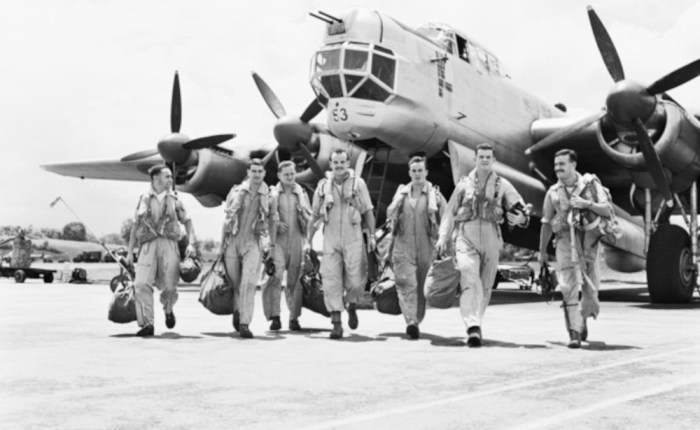
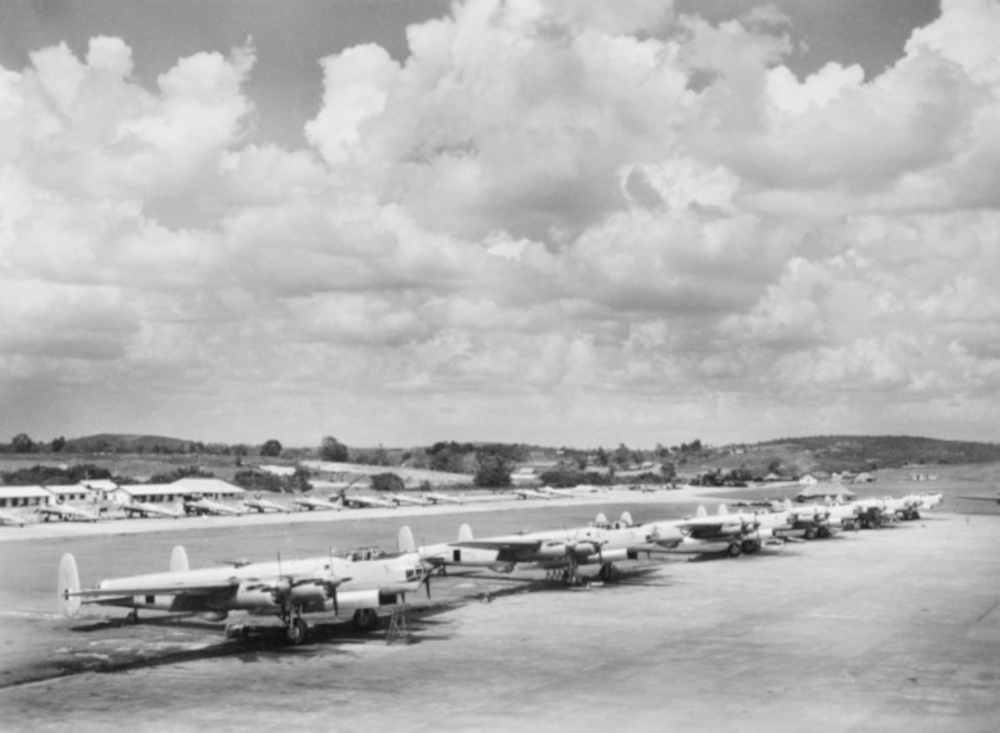
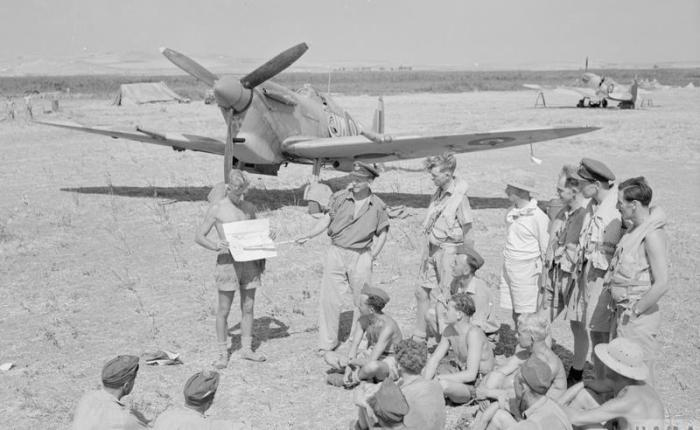
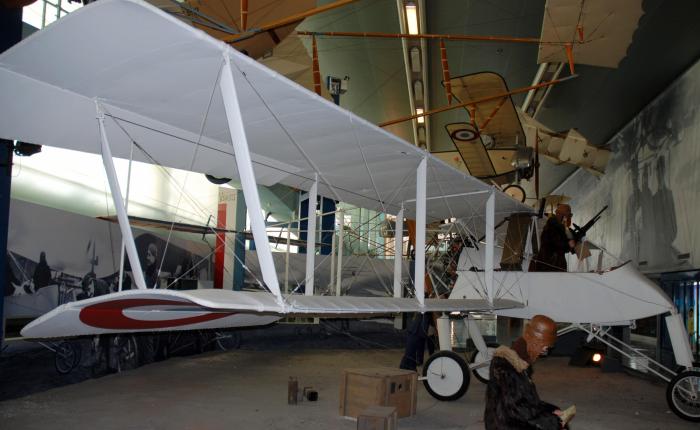
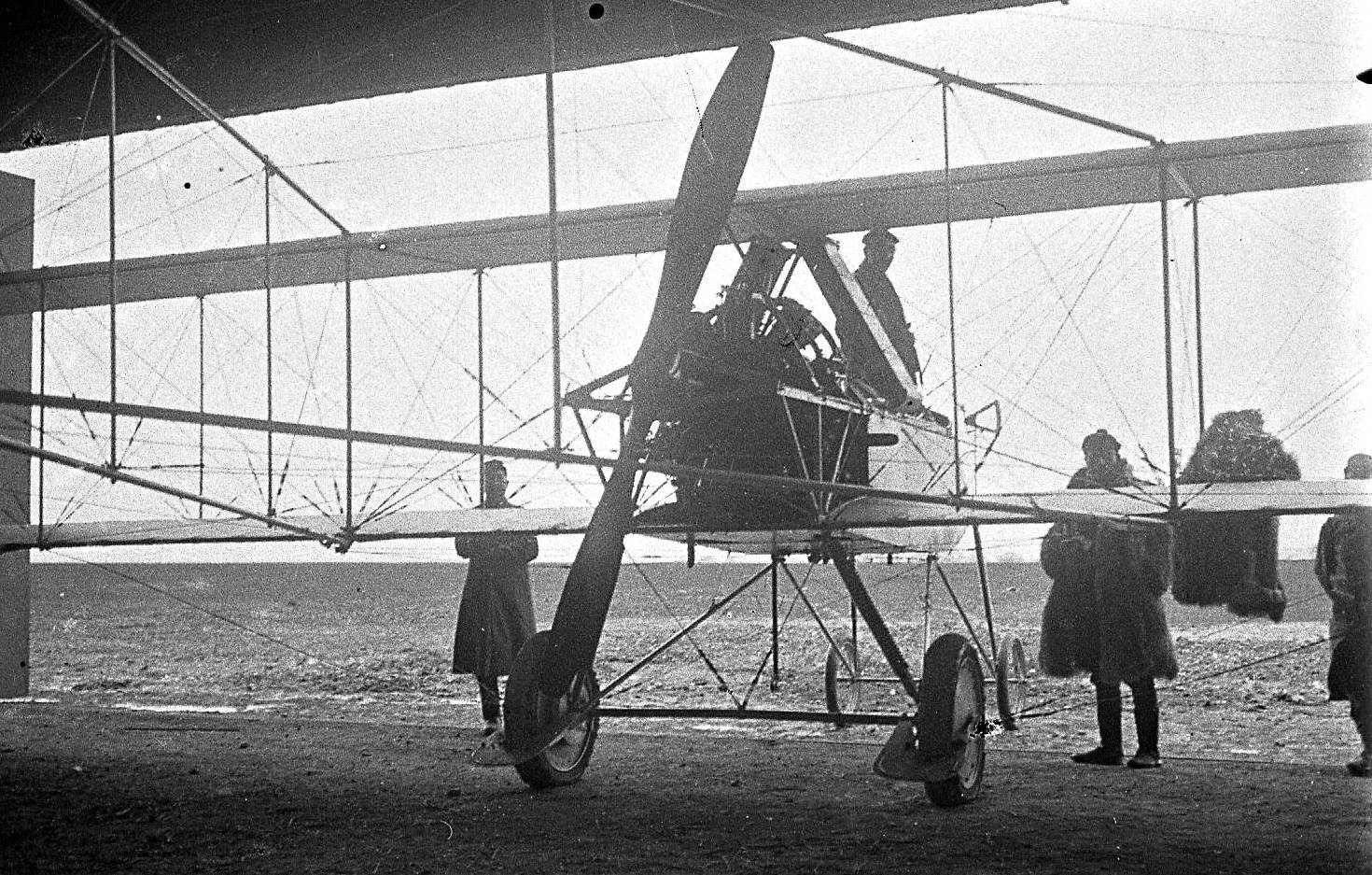
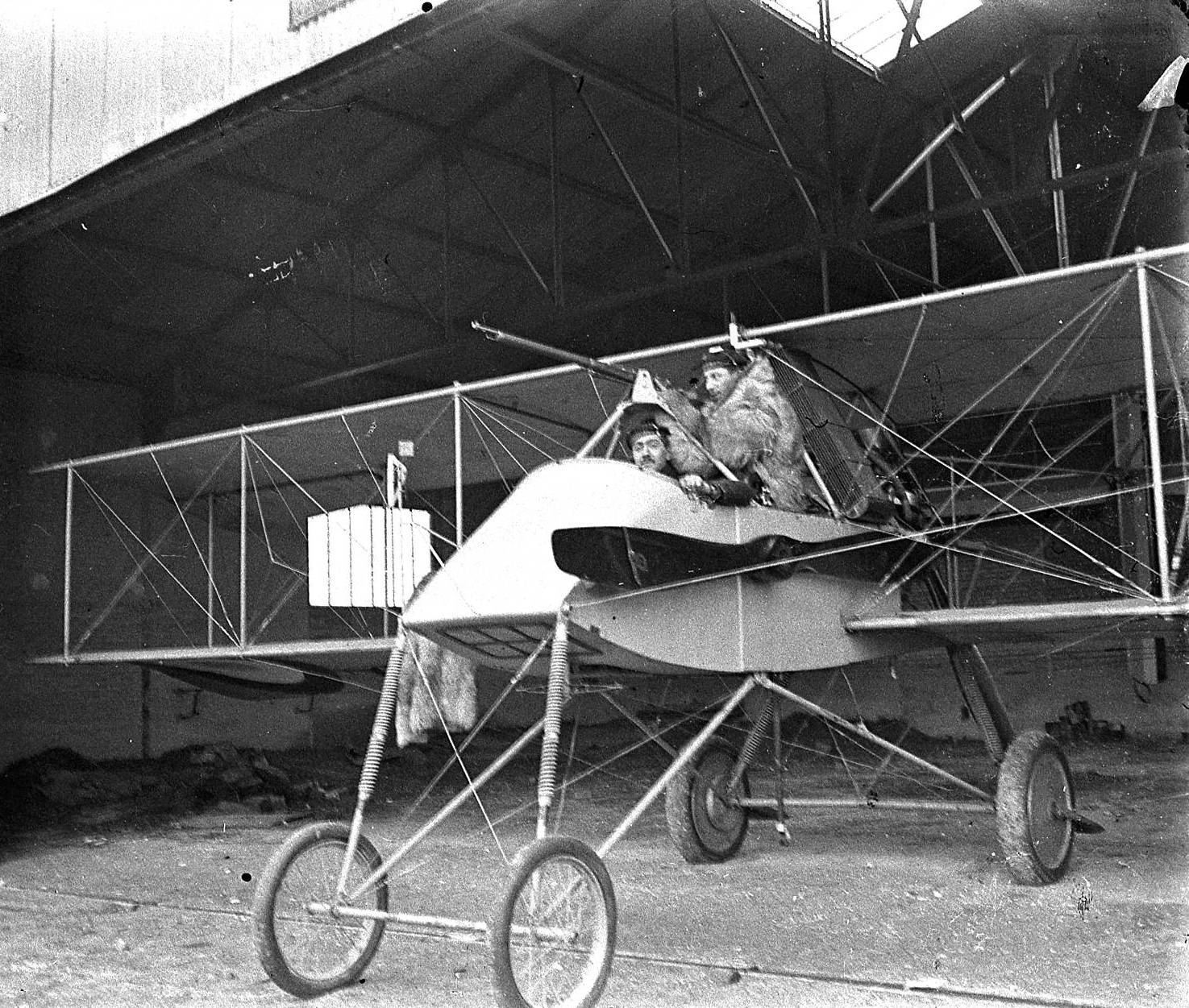
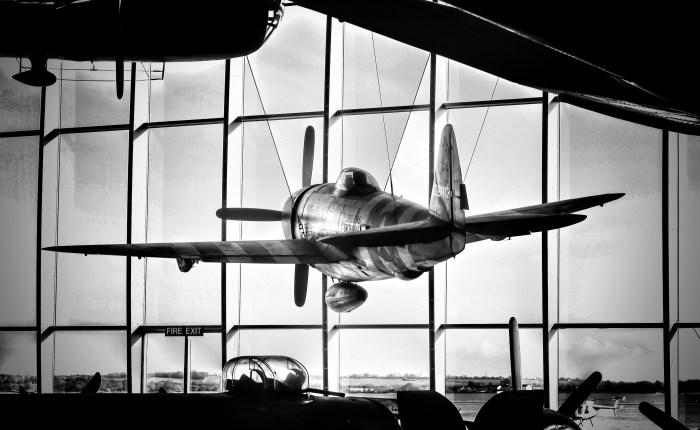
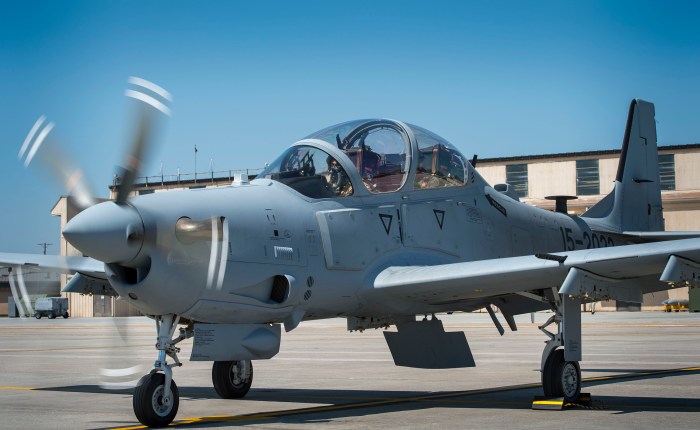
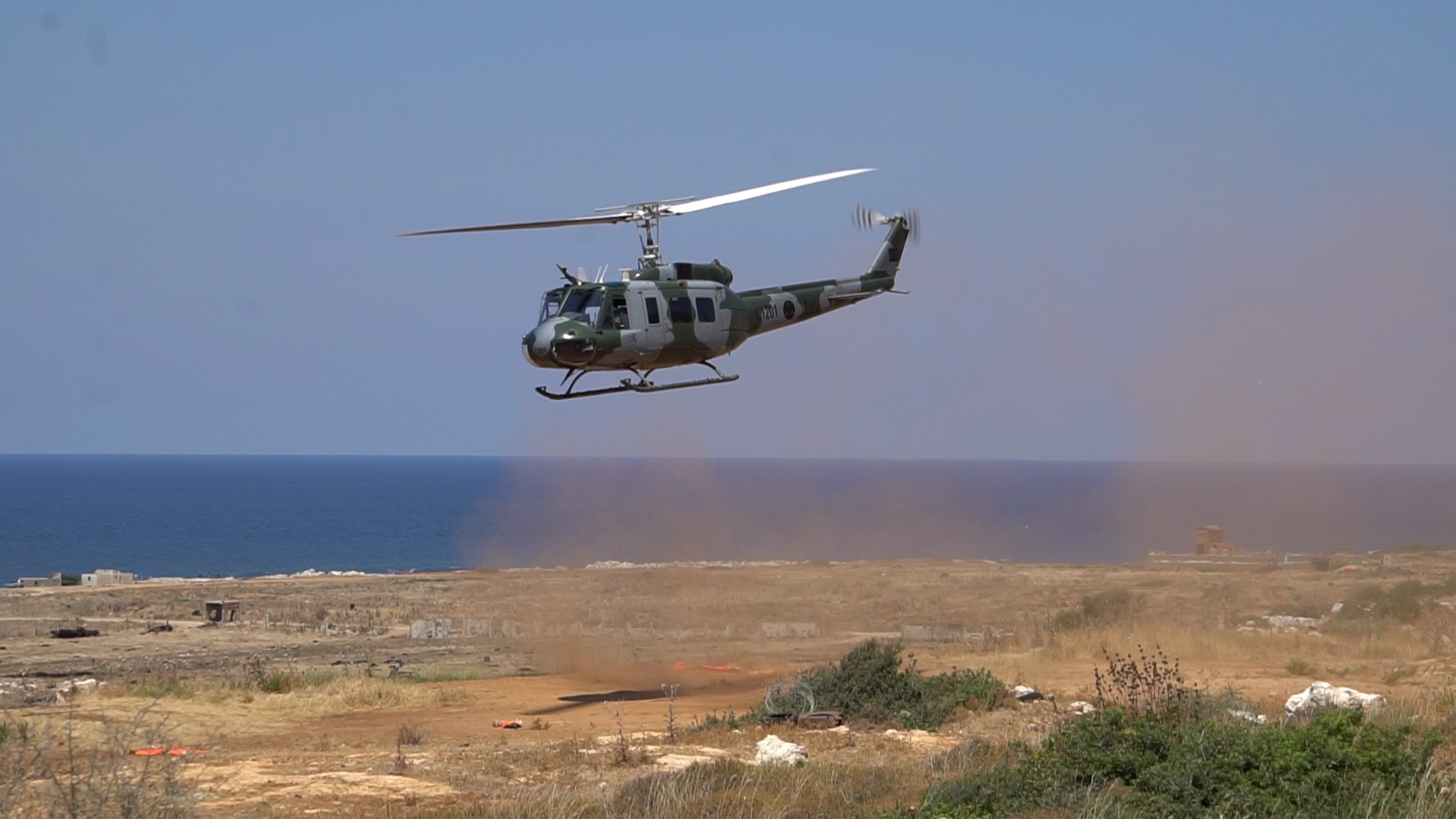
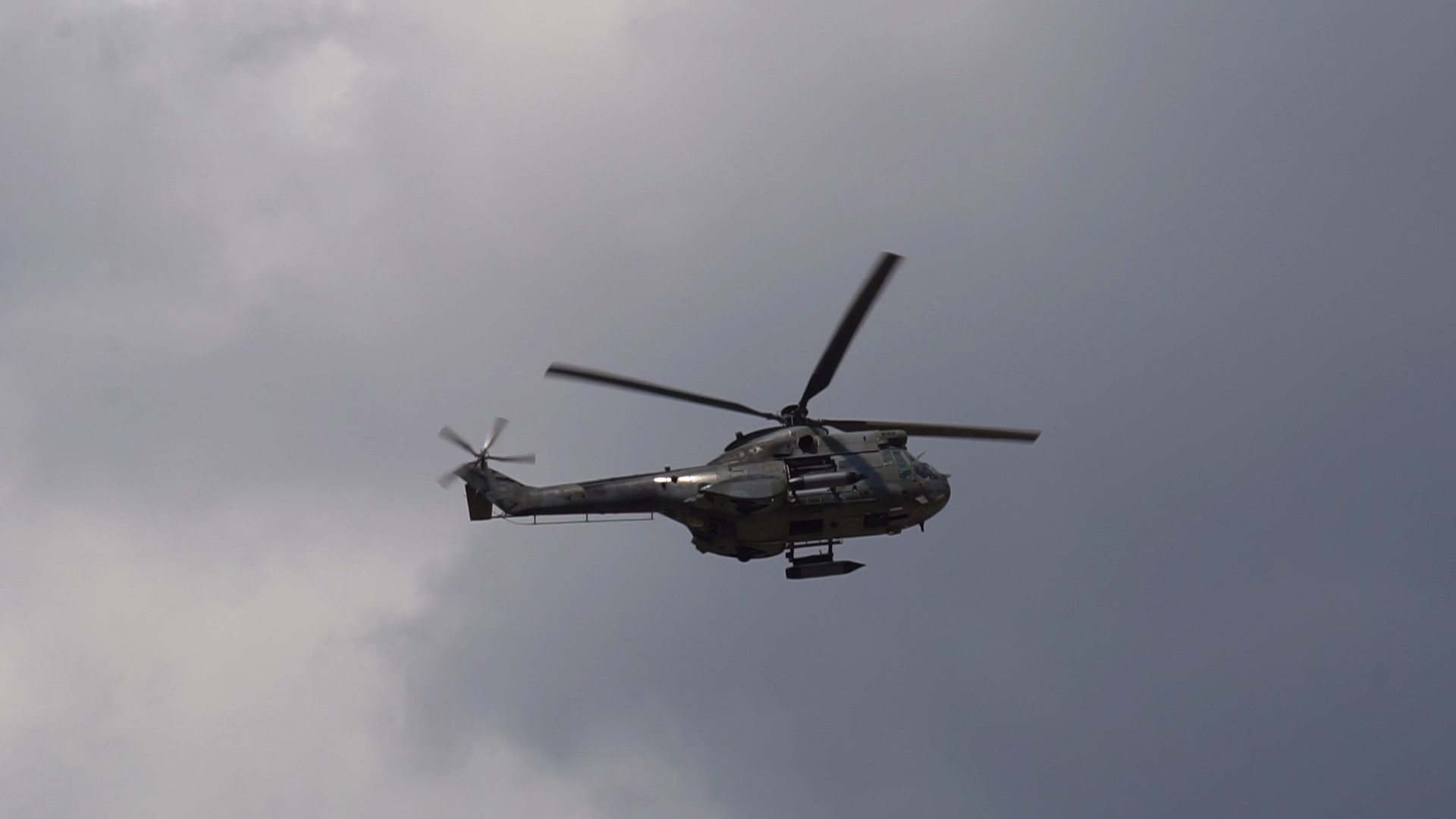
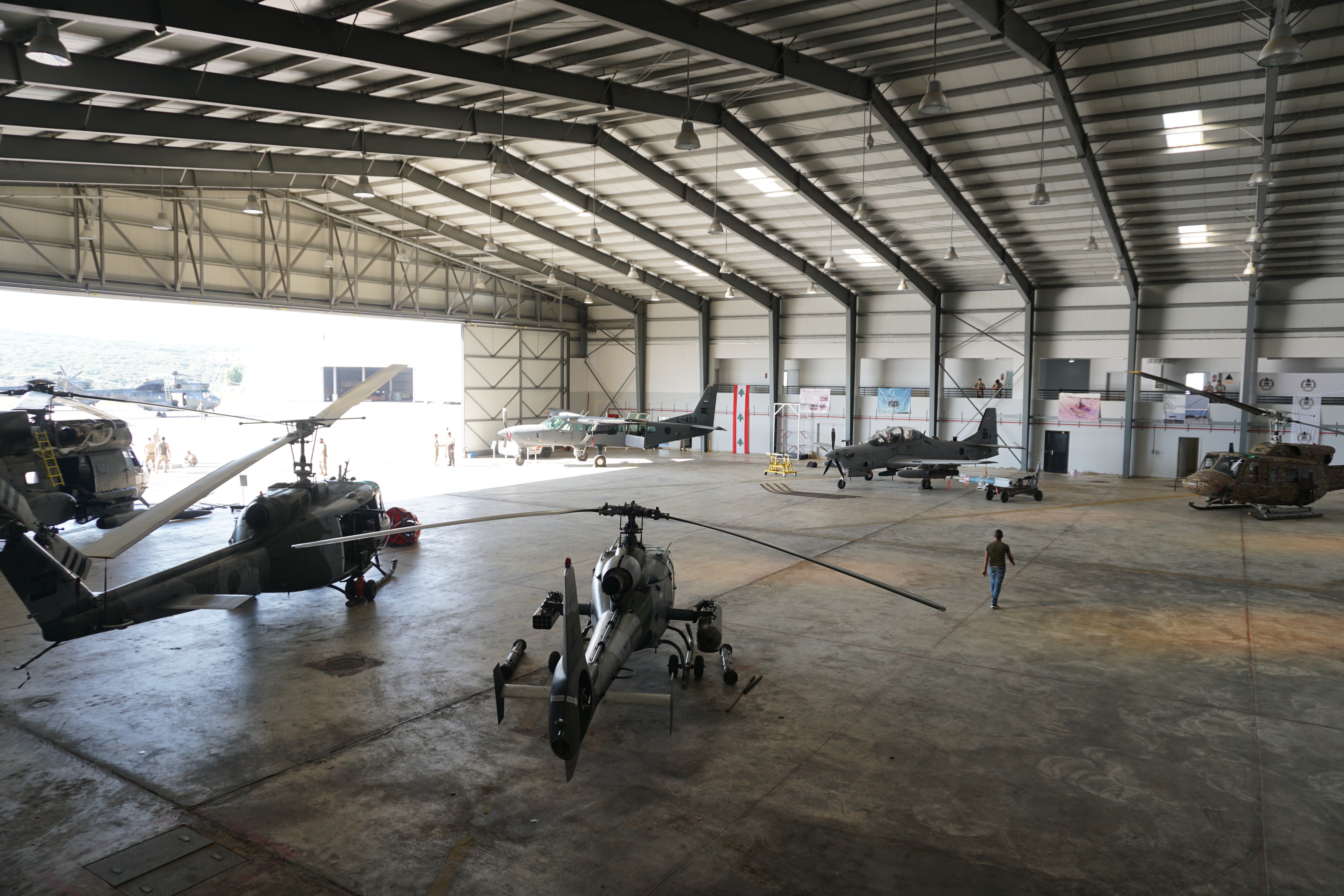
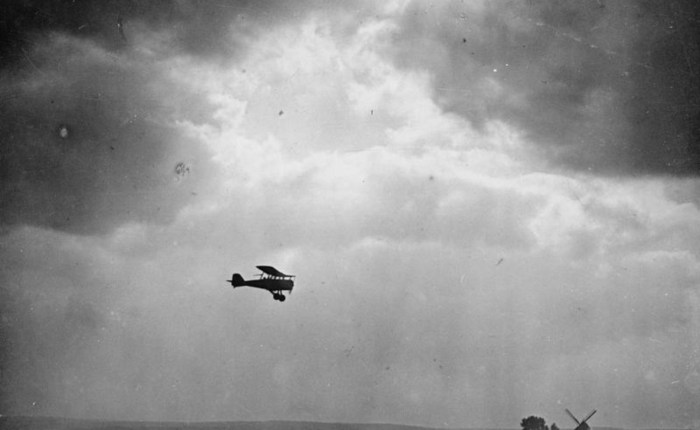
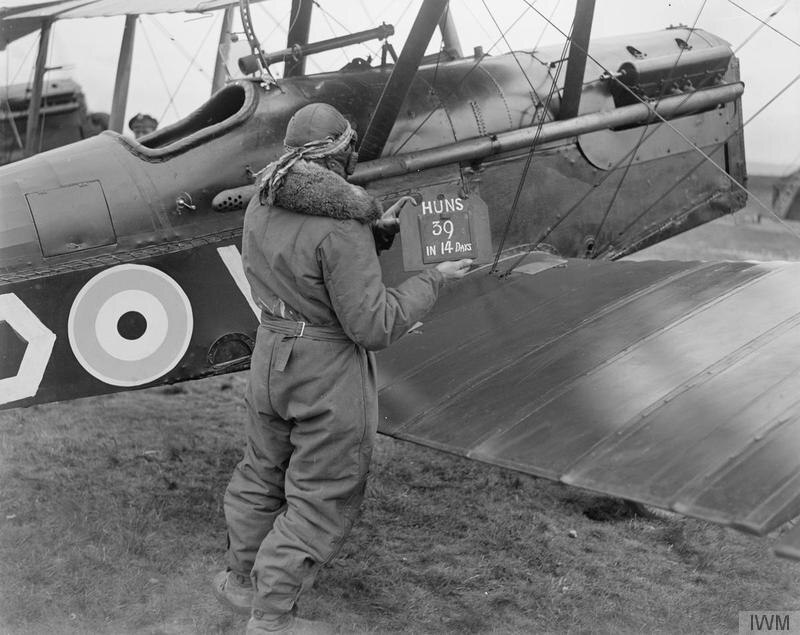
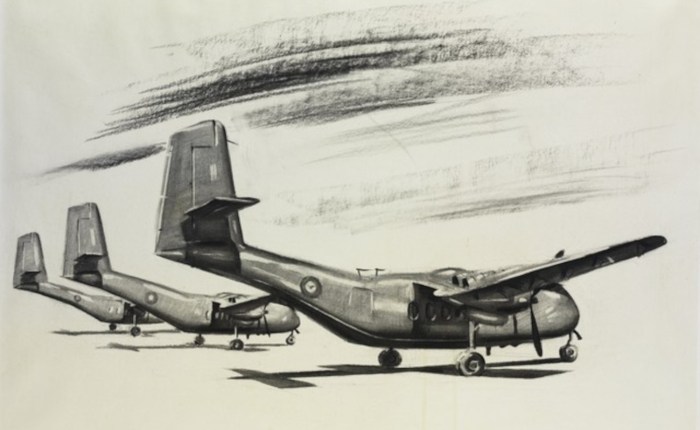

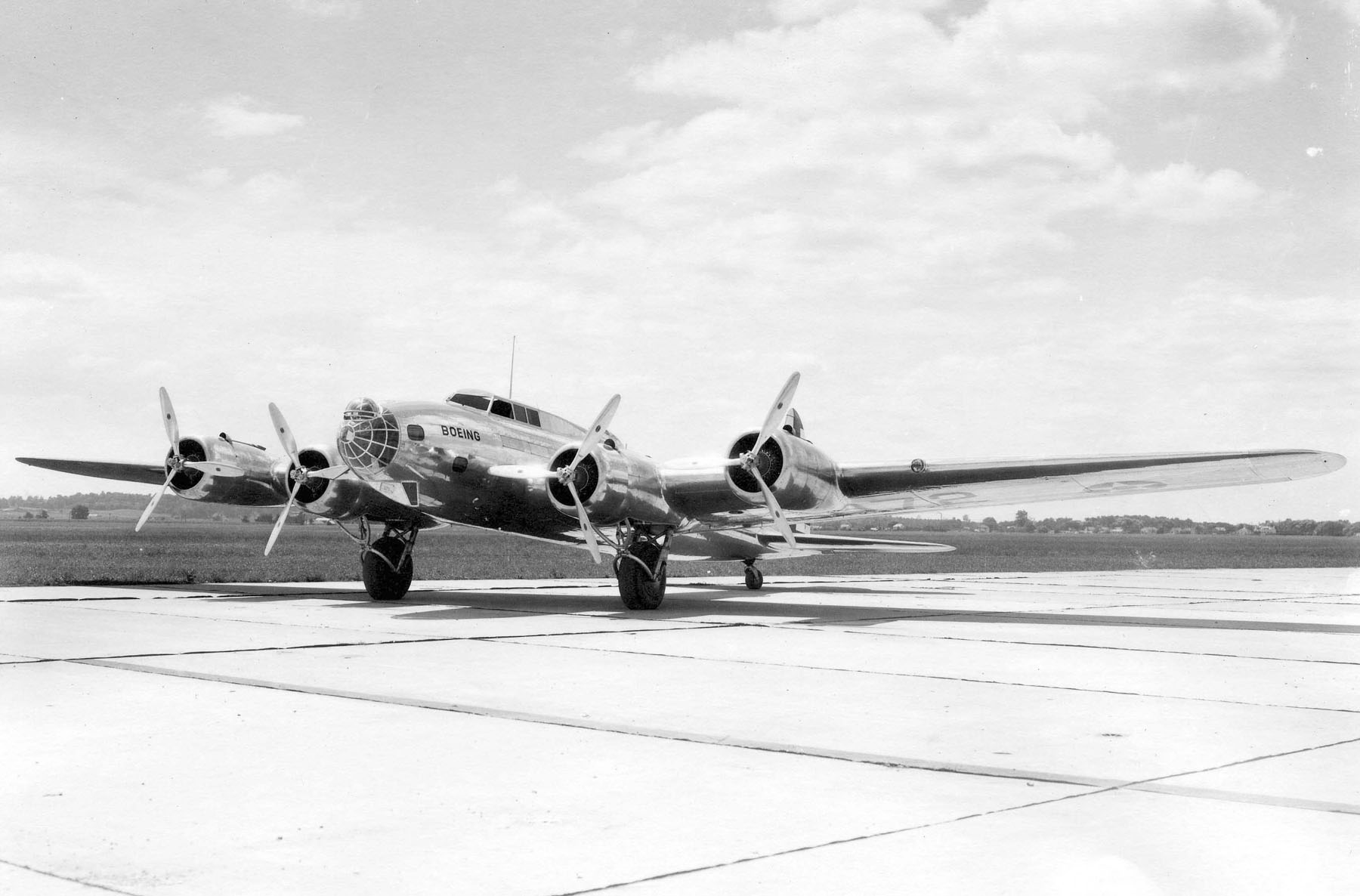

 From Balloons to Drones