Robin Higham and Stephen J. Harris (eds.), Why Air Forces Fail: The Anatomy of Defeat, Revised and Expanded Edition. Lexington, KT: University Press of Kentucky, 2016. Images. Footnotes. Bibliography. Index. 454 pp.
Editorial Note: In 2006, University Press of Kentucky published an edited volume that sought to examine the question of why air forces fail. Edited by the late Robin Higham and Stephen J. Harris, Why Air Forces Fail has become an essential volume as air power specialists seek to understand the reasons why some air forces are more successful than others. As one reviewer noted in the Journal of Military History regarding the first edition of this work, ‘one of the more interesting and better books on military aviation to appear in the last few years.’[1] As such, does this new edition add anything to the original volume?
When the first edition of Why Air Forces Fail was published in 2006, it immediately caught my attention. The title itself was intriguing for here was a work that was going to look not at why, or how, air forces succeed, but why air power at certain times and in certain places and circumstances has failed to deliver victory. Robin Higham was a greatly respected air power historian and had flown in the Royal Canadian Air Force (RCAF) in the Second World War, and Stephen Harris was and is the Director of History and Heritage for the Canadian Forces and had authored the Bomber Command section of the official history of the RCAF. It seemed that there were many good reasons in this Canadian reviewer’s mind for looking at the collection they had assembled.
Higham’s introduction was particularly thought-provoking. He (1st Ed., p. 1) posited that ‘other things being equal’ it seemed that the best technology generally won. These other things included a series of complex factors which could however greatly impact the effectiveness of air power. Higham looked at and where necessary modified all of the factors upon which A.T. Mahan had conducted his analysis of sea power: national borders, a nation’s physical conformation, aircraft industry, size of the population, characteristics of the population, and nature of government. To these, he added: location and sufficiency of air bases, the terrain being overflown during operations, capabilities of the aircraft and air weapons, and management of war decisions – ends, ways and means. Once these factors were explained to readers, Higham (1st Ed., p. 5) asked two central questions:
Did the loss of air superiority, if it ever existed, cause the collapse of the nation’s defenses? And was that the sole cause [of the nation’s defeat]?
Higham drew his introduction to a close with an attempt to identify lessons or trends but did not attempt to present precise deductions. One had to turn to the conclusion of the collection for a summation of the editors’ thinking. There Higham and Harris posited that the simple presence of air assets does not, in fact, guarantee a victory. The last sentence (1st Ed., p. 354) of the book seems both appropriate and applicable to all nations and military services:
These [observations] suggest that the fall of an air force is the result of long-term failings, not an immediate failure ‘on the day’ by an air arm that is essentially ready for its allotted role.
Such was the first edition but what of this volume? Harris has related to me that Higham had negotiated the second edition, but that much of what he intended passed with him and as such there is little for those returning to the work to note that differs from the original. What the returning reader will find is two additional chapters, one by Harris dealing with RAF Bomber Command’s strategic operations against Germany. Harris focuses on the electronic warfare campaigns, including electronic countermeasures and electronic counter-countermeasures, waged by Bomber Command and by the Luftwaffe’s air defenders. This chapter shows that the RAF could not produce enough technicians to offset German capabilities. The second new chapter by Kenneth Werrell deals with the US services application of air power in the Vietnam conflict and how a range of factors prevented the American flying services from achieving the results sought by military and civilian leaders, particularly in the face of effective opposition. Other than these there is nothing new in the second edition other than two short commentaries on Harris’ and Werrell’s chapters. These remarks are added to the original conclusion along with two additional paragraphs commenting on the growing complexity of aircraft design and procurement in one case and the other the implicit failure of those involved in air power decisions to learn from history. Also, there is a very short, easily missed, dedication to Higham in the front piece of the volume. Why the publishers have taken this very understated approach to acknowledge Higham on the one hand, and the changes to the new edition on the other is baffling.
All this to say, I had hoped for more in this new edition. However, for those who have not read the first edition, this expanded version remains a valuable study of air power and of how and why it cannot guarantee success in conflict.
Dr Randall Wakelam teaches military and air power history at the Royal Military College of Canada. After graduating from RMC in 1975 he flew helicopters for the Army, becoming CO of 408 Tactical Helicopter Squadron in 1991. Along the way, he also had staff appointments in aircraft procurement and language training policy. Since 1993 he has been an educator, first in uniform at the Canadian Forces College in Toronto and now at RMC. His research and publishing focus on air power and military education.
Header Image: F-100Ds of the 481st Tactical Fighter Squadron over South Vietnam in February 1966. Early F-100s were unpainted when they arrived in Southeast Asia like the foreground aircraft, but all eventually received camouflage paint like the aircraft in the back. (Source: National Museum of the US Air Force)
[1] Kenneth P. Werrell, ‘Book Review – Why Air Forces Fail,’ The Journal of Military History, 70:3 (2006), pp. 887-8.
Peter Lee, Reaper Force: Inside Britain’s Drone Wars. London: John Blake Publishing London, 2018. Index. Hbk.
In this book, Peter Lee sets out to describe the ‘unknown community’ that is the Royal Air Force’s (RAF) Reaper Force. In doing so, Lee focuses on the aircrew in the ‘cockpit’ of these remotely piloted aerial vehicles (RPAS) and their partners, rather than all the other personnel needed to operate Reaper. Lee originally proposed the work to the RAF as an attempt to answer some of the questions that readers in one hundred years’ time might ask about these individuals, as a way of ensuring that those future enquirers would know more than we do about the RAF aircrew of 1918. Given this genesis, the limitation of scope is understandable and an outline of Lee’s research approach can found in his submission to the UK All Party Parliamentary Group that was established in 2016 to ‘analyse the emerging technologies of drones [and] the ways in which the UK works with allies with regard to the use of armed drones.’ Moreover, this starting point is a pleasing historical touch as 2018 marks the centenary of the formation of the RAF. Indeed, it was during the First World War that we saw human-crewed flight come of age as a weapon of war, and one hundred years later, the success of the Reaper Force raises the question of what the future is for manned aviation in the RAF. However, Lee does not pursue this or many other intriguing avenues, for reasons of time and space. He does not engage in detail with the debate about whether drones are ‘fair’, quickly dismissing this by rightly arguing that war has always seen one side aiming to gain an ‘unfair’ advantage over another, and this is just another manifestation of this trend. So, this is not a book to read to understand more about the ethics of drones. A reader seeking this debate should look elsewhere, and indeed Lee has already little on this subject himself.[1]
Lee aimed to record how the Reaper Force feels about their ‘experiences and day-to-day lives’, and the book does an excellent job fulfilling this aim. His interview-based approach provides a distinct perspective from books written by those operating drones, which lack the reflection and perspective on experiences that Lee provides through the questions he puts to the aircrew. The bulk of the book is made up of content taken from interviews Lee conducted with members of both No. 39 Squadron based at Creech AFB in Nevada, and No. XIII Squadron based at RAF Waddington and these provide genuine insights into the aircrew’s (and their partners’) feelings about what they do. One comes away with a sense that this is a highly trained, highly dedicated group of men and women, with a culture that among other things is focused on ‘zero CIVCAS,’ that is a ‘policy direction’ of no civilian casualties (p. 279). Lee (p. 279) describes this focus as ‘almost an obsession […] that has had a significant impact on how they operate and make decisions.’ He recounts a mission where the aircrew believed the target was valid, as did the Joint Terminal Attack Controller (JTAC) on the ground, but the Senior Mission Intelligence Coordinator, an acting sergeant outside the aircrew, objected to the strike. This was because they believed it was a child rather than a parcel on the back of the target and was proved right (pp. 284-8). This is an excellent illustration of the commitment to zero CIVCAS, given both the hesitation to launch the weapon and the freedom the most junior person in the process felt to halt it. This indicates a very healthy culture if one believes zero CIVCAS should be accorded that level of importance.
A Royal Air Force Reaper RPAS at Kandahar Airfield in Afghanistan, c. 2014. (Source: Defence Imagery, UK Ministry of Defence)
Lee discussed further a 2011 ‘CIVCAS incident’ in Chapter Five when an RAF strike killed four civilians riding in lorries transporting explosives. This attack occasioned many levels of review, and it is clear that there is a huge determination in the Reaper Force that this should not happen again – even though as Lee (p. 113) notes, ‘the crew’s actions were in accordance with the Law of Armed Conflict and their procedures and directives.’ This message is one the RAF’s Air Staff would presumably be no means averse to having more widely understood. However, Lee also makes the point through his interviews with several of the aircrew’s partners that this care and skill should be more widely appreciated, to counter all those who claim drones have killed thousands of innocent civilians, including the Reaper Force in this blanket condemnation. Indeed, one is left with the evident understanding from the interviews that the Reaper Force does not operate in this way; Eye in the Sky (2015) was a good film but what is depicted would never have happened under the RAF’s Rules of Engagement (RoE), and the Reaper Force is not guilty of causing wanton civilian deaths. There are, however, hints in the book that at times those looking for support from the Reaper Force are frustrated by these RoEs, for example, when a British Army JTAC is frustrated that a Reaper crew will not launch a missile and calls for assistance from an Army Air Corps Apache instead (p. 282). These RoEs can also frustrate those in the Reaper Force, as described in Chapter Nine when on Boxing Day 2014 permission to destroy a suspected IS-controlled ex-Iraqi armoured vehicle was denied, with the result that the Reaper crew had to watch then the aftermath of a successful IS attack using it.
The above example affected the crew in question, and Lee uses this and other cases to explore the issue of how the high-tempo of Reaper operations, and how the nature of those operations, with the graphic and detailed images they see as part of launching strikes, may be impacting the mental health of the aircrew. His interviews provide illuminating examples, and those he interviewed have a range of ways of coping, dependent on the various ways what they do affects them. Some aircrew seems to be able to operate for several years without being adversely affected; others burn out much more quickly. This issue links to the RAF’s perception of bravery, and how this should be recognised. Historically, bravery has been defined by physical courage. Lee, however, makes a case for those who continually put their mental health at risk through flying Reaper operations as showing as much bravery as aircrew who get physically airborne. In reading this, about issue continuing to put oneself at risk, one is undoubtedly reminded in some ways of the courage Marshal of the Royal Air Force Sir Arthur Harris described seeing in his Bomber Command crews.
Chapter Eleven looks at the question of bravery in its most visible military form, namely the award of decorations to Reaper crews. This is a subject that has generated discussion more widely over recent years. Lee addresses it by reference to a particularly challenging strike, footage of which was used by the UK Ministry of Defence (MoD) as part of the press release announcing the award of campaign medals to those involved in the campaign against IS. The irony was that since the Reaper crew executing the strike were not deemed to be ‘in theatre’, they did not qualify for the medal. However, as Lee points out both in the book and in his October 2017 lecture at the Royal Aeronautical Society, they were exposing themselves to not insignificant risks of mental injury, and certainly were knowingly taking greater risks with their health than those working in a mess at Akrotiri. This again reminds one of RAF Bomber Command, and Harris’ unsuccessful campaign to have his groundcrews awarded a campaign medal despite cooks and bottle-washers in other theatres being entitled to a campaign medal.
Lee, however, does note that the MoD announced on 18 July 2018 that the medal would be awarded to Reaper pilots (p. 249). There will always be those who wish to equate heroism with physical courage, and hence would never see Reaper crews as eligible for medals, but this decision feels appropriate given the increasing level of discussion in society around mental health and, in a military context, post-traumatic stress disorder in particular. To what extent these issues will impact Reaper Force aircrew in the future is a subject for a later book, but this volume makes it clear that they have seen sights, repeatedly, that no-one would ask to see given the choice.
This potential to see bravery redefined is one example of how Reaper and its successors could change the RAF, and this is an area where one feels the whole growth of the Reaper Force raises many interesting issues that Lee has probably rightly only touched on very briefly. What will it mean for the RAF’s culture when perhaps many attack missions do not require a human in the aircraft? Already aircrew are being trained solely to operate Reaper, and the RAF, while awarding them aircrew brevets, is making them subtly different from the ‘normal’ brevets given to those who get airborne – does this demonstrate a reluctance to admit that Reaper crews are as valuable as those who get airborne? Moreover, what will this mean for the RAF as RPAS aircrews undertake more missions? The Reaper Force from its inception was crewed mainly by aircrew who served on Harrier, Nimrod and Tornado aircraft who transferred to Reaper as these aircraft were taken out of service. The aircrews who operated on manned platforms brought with them the culture and attitude from those environments, and Lee describes several interesting stories from aircrew about the different operating styles. For example, Lee recounts how a former Tornado navigator said she could not get used to the amount of talking an ex-Nimrod pilot would do, which was a huge change from the fast jet where ‘a good cockpit’s a quiet cockpit’ ethos was one that she was used to (p. 132).
An RAF Reaper pictured airborne over Afghanistan during Operation HERRICK. (Source: Defence Imagery, UK Ministry of Defence)
As such, even within the Reaper Force, there are still vestiges of the culture that the members brought from their previous aircraft types, and the force will need to evolve its own culture over time. One suspects it will not be as extrovertly self-confident as the fast jet one it is partially replacing. Indeed, Lee recounts that his initial inquiry about when it would be time to ‘kick the tyres and light the fires’ on his first day watching an aircrew was met with a swift ‘very funny’, clearly meant to shut him up (p. 31). The RAF’s public image is very much built around the image of the fighter pilot, from the aces of the First World War, through the pilots of Fighter Command in the Battle of Britain to today’s Typhoons on QRA, intercepting Russian Bears out over the ocean. Indeed, it is interesting that the RAF’s historic flight is called the Battle of Britain Memorial Flight when far more aircrew served and died in Bomber Command during the Second World War. Reaper and other automated weapons (such as standoff missiles) can already deliver many of the classic roles of air power (reconnaissance, strategic attack, close air support, for example), but without a human to build a corporate (self) image around, how will the RAF’s own picture of itself change, and what image will it use to engage broader public support?
In summary, this is a valuable book for the insights it provides into the pressures of serving in a critical element within Britain’s armed forces. The Reaper Force is an element of the British military that will only grow in importance given both the capabilities it offers and the low risk it presents of unfavourable press. Indeed, between January and August 2018, Reaper has accounted for around 45 per cent of all RAF strike over Iraq and Syria during Operation SHADER. The only reservation that can, I think, be expressed is that this book leaves the reader feeling there were so many other avenues that could have been explored as well. Had Lee examined them, though, we would not have had this book now – we would have been waiting several years longer. What would be interesting would be to see a similar book in ten years’ time, to see how the Reaper Force (or Protector Force as it will likely be known by then) has evolved.
Mark Russell graduated with a degree in History in 1985 and has worked in professional services ever since. He returned to academia in 2015 and graduated with an MA in Air Power from the University of Birmingham in 2017. His dissertation looked at whether the RAF was a learning organisation in the period 1925 – 1935, with particular reference to how the Air Exercises helped the RAF develop and test tactics and technology. He continues to work in professional services, but his current research interest is the RAF in the interwar years and how the organisation managed technological change. Since graduating from Birmingham, he has had two books reviews published by the RAF’s Centre for Air and Space Power Studies and is currently working on articles for both RAF Air Power Review and The Aviation Historian.
Header Image: A Royal Air Force Reaper RPAS at Kandahar Airfield in Afghanistan, c. 2014. (Source: Defence Imagery, UK Ministry of Defence)
[1] Peter Lee, ‘Rights, Wrongs and Drones: Remote Warfare, Ethics and the Challenges of Just War Reasoning,’ RAF Air Power Review, 16:3 (2013), pp 30-50.
At 3:30 in the morning on Wednesday, a single mother of three boys, Miri Tamano woke up in Beersheva to a missile defence warning siren. In under a minute, she woke up her children and rushed them to a safe room just before the house was destroyed by a direct hit from a Gazan rocket.[1] The strike against the Tamano house was the last straw after days of escalating tensions along the Gaza border and the Israeli Air Force (IAF) retaliated by launching twenty strikes against Hamas affiliated targets in the Gaza Strip.[2] At first glance, this use of the IAF may seem similar to the many similar strikes Israel launched over the last decade. However, it may also be the beginning of a new air-centric response to Hamas rockets. What is most interesting about this potential change in approach is not the change in and of itself but rather the forces that drove it. Unlike many changes to operational approach, this one is not driven primarily by changes in the military operational environment or international political realities. Instead, the possible shift towards a new air-based approach and the new emphasis on the employment of the IAF stems from domestic politics and frustration with recent approaches to the problem of Gaza.
The home of Miri Tamano in Beersheba, damaged by rocket fire from Gaza. (Source: @IDFSpokesperson)
The IAF has always had a role in Israel Defence Force’s (IDF) retaliatory and deterrence operations. In the pre-1967 period, the IAF served as part of joint operations against Syria. In one famous incident on April 7th 1967, Syrian artillery strikes and small arms fires led to an escalation which eventually brought the IAF in to bomb Syrian positions and IAF fighters to clear the skies of Syrian aircraft. The goal of this operation was to establish deterrence along the Northern border. Here the IAF acted in concert and in support of ground force. Similar in 1970, the IDF called on the IAF to launch a major operation targeting Soviet Air Force units in Egypt. This operation followed a series of ground operations and sought to achieve a decisive blow ending the War of Attrition. This pattern continued through the 1980s when the IDF launched Operation Peace to the Galilee which sought (and to an extent achieved) a decisive defeat of the Palestine Liberation Organization (PLO) in Lebanon. Here again, Israel used air power in support of the ground offensive. In these instances and many others, IAF served as one aspect of joint retaliatory operations. More significantly the retaliatory operations either anticipated the coming of a decisive engagement (e.g. the 1967 War) or sought to be decisive by themselves – at the very least restoring credible deterrence.
Although, since the outbreak of the Syrian Civil War something resembling the classic pattern of deterrence operations continues on the Syrian border, the withdrawal from the Gaza Strip in 2005 changed the primary Israeli approach to establishing deterrence and seeking decisive victory. Since leaving Gaza as part of disengagement, the IDF has pursued a strategy of countering the hybrid threat through a concept often referred to as ‘mowing the grass.’ This concept has led Israel to five major ground operations in Gaza since 2006. At its heart mowing the grass is a concept for conflict management which buys time for an eventual political solution. Mowing the grass centres on the creation of deterrence and periods of quiet. In the concept when the adversary decides to escalate its level of violence Israel responds with restraint. As the adversary further escalates, Israel escalates its response. Eventually, the adversary crosses the threshold of tolerable violence, and Israel launches a major ground operation to severely punish the adversary and degrade adversary capabilities. This buys a period of calm which may last anywhere from several months to several years. However, almost invariably the same pressures which caused the adversary to escalate in the first place cause another escalation and the process repeats. In Gaza, this process has repeated itself several times resulting in Operation Summer Rains in 2006, Operation Hot Winter in 2008, Operation Cast Lead in 2008-2009, Operation Pillar of Defence in 2012, Operation Protective Edge in 2014, and it is now leading to a potential conflict in 2018.
Sites in the Gaza Strip targeted by the IAF on October 17, 2018. (Source: @IAFsite)
As a concept, mowing the grass recognises that defeating the enemy is next to impossible. In Gaza, Hamas is intertwined with Palestinian society and governance. For military planners mowing the grass means that there can be no decisive outcome. Hamas remained in government, the communities near Gaza could enjoy some calm, but invariably the threat would return, and the process would repeat. In Gaza, once escalation began, Israel would respond with warnings to Hamas, followed by more escalation and limited air strikes. This, in turn, would be followed by more escalation from Hamas and more significant air and artillery strikes by the IDF. As Hamas escalation continued, the IDF would build up ground forces near the Gaza border. Eventually, this process would lead to a limited incursion and then major ground operation by the IDF.
In the early stages of the escalation, the IAF played a messaging role indicating the seriousness of Israel’s intent and the willingness to escalate. As escalation continued the role of the IAF became a facet of joint operations aimed at reducing Hamas capabilities but never seeing a decisive victory. The final phase of these operations carries multiple political costs, both domestically and internationally. This phase inevitably causes more significant civilian and combatant casualties among the Palestinian population in Gaza which can be ‘expensive’ to Israel in the international community. The IDF has increasingly worked to distinguish between the two on the international stage, resulting in an associated media strategy that provides almost real-time footage of some parts of major Gaza operations.[3] To an Israeli domestic audience, mowing the grass is an acknowledgement of the inability of the IDF to bring victory or create lasting deterrence and the Israeli Government to achieve a lasting end state. Essentially as long as mowing the grass remained the central method of military response to the situation in Gaza, the Israeli public knew that every operation and the lives it cost only bought time until the next one required the same sacrifices.
Mowing the grass relies on a lawnmower powered by patience and societal tolerance for the costs associated with the approach. The capacity of the Israeli public to absorb the costs associated with mowing the grass also constrains Israel’s policymakers. As a conscript army that draws upon a relatively small civilian population, IDF casualties are seen by the majority of Israeli society as ‘our children,’ a notable departure from earlier Israeli generations’ perspective of seeing them as ‘a silver platter upon which the country was borne’ – a tragic but unpreventable loss for a greater good.[4]
Traditionally, as in the Four Mothers campaign to pull out of Lebanon in the mid-nineties, concern with casualties as a justification for limitation of military action was the province of Israeli left-wing political parties. The right-wing parties, like Prime Minister Benjamin Netanyahu’s Likud, also venerated soldiers but did not use the potential loss of life as a justification for reducing normative tactical options. Instead, right-wing politicians tended to emphasise the IDF’s role as protector of civilian life; frequently, centrist and right-wing governments were drawn into Gaza operations following public frustration with repeated terror strikes launched from within Gaza. Instead, Netanyahu is facing pressure from a different angle. The Israeli right-wing has grown stronger and particularly more popular with younger voters in the past two decades, and Netanyahu faces challenges from the right both in his own parties as well as from other right-wing parties that are natural and necessary allies in his ruling coalition. In the parliamentary system, a lack of confidence from within the coalition can collapse a government and bring about early elections that reshuffle the political balance of power.
One voice of opposition, former MK Moshe Feiglin signalled that Netanyahu’s right-wing might be losing patience with the ‘mowing the grass’ strategy. In an open statement to the press Wednesday, Feiglin wrote that ‘Victory is unconditional surrender! Don’t send a single soldier to his death for anything less than that.’[5] Feiglin went on to complain that as long as the government is ‘once again planning us a glorious defeat, just like previous iterations, a defeat that in the end leaves Beersheba a prisoner of Hamas,’ Feiglin’s faction will oppose any Gazan incursion ‘and the unnecessary risk to IDF soldiers.’[6] Feiglin’s comments reflect a growing frustration with what many Israelis see as a lose-lose strategy. The limited scale of the ‘mowing’ operations does not disable Hamas in the medium let alone long-term, meaning that Israeli civilians continue to live under the constant threat of rocket fire. While not entirely preventing rocket fire into Israel, Gaza incursion operations also incur high casualties from an Israeli perspective; 67 IDF soldiers were killed in Operation Protective Edge, a number surpassed this century only by the Second Lebanon War.[7]
Under these circumstances, air power seems like one of the only choices available to politically navigate the public expectation of responding to rocket strikes while also avoiding the lose-lose dynamic of the mowing-rocket cycle. Feiglin intimated as much, calling on the prime minister to avoid ‘once again sending soldiers to die in the alleyways of Gaza for a political performance of war.’[8] Should the escalation from Gaza continue, the domestic political situation provides Netanyahu few choices. He could continue with the old pattern of operations in which the IAF serves to signal escalation and then as part of the combined operation, but this would risk significant domestic fallout. The Prime Minister could seek a decisive engagement in Gaza in which the IAF would act to support the land campaign, but this would be militarily and diplomatically extremely difficult. Finally, he could find an option that achieves the effect of mowing the grass without the human cost. In other words, he could turn the main effort of the response to the IAF, with supporting effects provided by the navy and ground forces outside of Gaza.
Israelis view air power as relatively risk-free, and in fact, only one IAF plane and one helicopter have been shot down in combat in the last 20 years, resulting in five deaths and two injuries. By relying more heavily on an air response, Netanyahu can avoid criticism for ‘wasting’ IDF soldiers on an operation that yields little clear take-home in the eyes of his voters. This changes the balance between the IAF and the other tools of military power and may drive Israeli engagement to air-centric approach. For this to work, the IAF will have to launch more strikes than in previous engagements. No longer part of a joint plan, the IAF will shoulder the responsibility for inflicting most of the cost on Hamas. By attempting to win an operation through the air alone, the IAF returns to an almost Douhetian concept of operations. As Israel, discovered in the 2006 Lebanon War this approach is not without problems. Among other challenges, it encounters questions as to what happens if the IAF completes its target list without achieving the war aims. The presence of ground forces has traditionally stimulated the exposure of new targets for the IAF allowing it to increase the efficacy of its strikes. Without such multi-domain cooperation, the target list may be far more limited.
What is significant then about the potential turn towards an air-centric approach is that it stems not from military or operational necessity but from domestic politics. This may be familiar to US and European states, but it is new for Israel. Even if this current period of increased conflict in Gaza ends with a ground operation or before one is necessary the change in the conversation on such operations will have a dramatic effect on the IAF and Israel’s thought about air power. For Netanyahu or any subsequent Prime Minister, until Israel develops a new approach to Gaza, an IAF centric approach will be at the forefront of consideration. This pushes the IAF into a new concept of operations and turns it from a critical supporting aspect of the IDFs total war package into the lawn mower of choice.
Dr Rebecca Shimoni-Stoil is a former NCO in the Israel Defense Forces, where she served as a combat medic and medical platoon deputy commander in the 9th Battalion of the Armored Corps. As a reservist, Shimoni-Stoil was a heavy search and rescue medic with the Home Front Command, mobilising in the Northern Sector during the Second Lebanon War. In her military capacity, she served in and around Gaza. After leaving her regular service, Shimoni-Stoil was hired by the Jerusalem Post and served in several capacities eventually being appointed the newspaper’s Internal Security correspondent. It was in this position that she covered both the increase in tensions and rocket attacks along Israel’s southern border with Gaza as well as the opening weeks of the Second Lebanon War. She later served as the Knesset [Parliamentary] Correspondent before becoming the Washington Correspondent for Times of Israel. Dr Shimoni-Stoil is now a lecturer in history at the Loyola University of Maryland. She has appeared as a commentator on radio and television channels worldwide and written for 538.com. She can be followed on twitter @RebeccaStoil.
Dr Jacob Stoil is an Assistant Professor of Military History at the US Army School of Advanced Military Studies where he serves as the author for the course ‘Anticipating the Future’. He is the Deputy Director of the Second World War Research Group for North America. Stoil holds a PhD from the University of Oxford, and an MA and BA from the Department of War Studies at King’s College London. He has research experience carrying out fieldwork in both Israel and the Horn of Africa. His most recent publications include ‘Command and Irregular Indigenous Combat Forces in the Middle East and Africa’ in the Marine Corps University Journal, and ‘Martial Race and Indigenous Forces’ in Rob Johnson (ed.), The British Indian Army: Virtue and Necessity (2014). Additionally, he has authored analysis of contemporary operations and policy for the Journal of Military Operations, War on the Rocks, and From Balloons to Drones. Most recently he published an article on the spread of vehicle ramming attacks through West Point’s Modern War Institute and has a forthcoming in Le Vingtième Siècle article on indigenous forces in Palestine Mandate. He can be reached on twitter @JacobStoil.
Header Image: Israeli Air Force F-16I (Source: Wikimedia)
Disclaimer: The opinions and conclusions expressed herein are those of the authors and do not necessarily represent the views of the U.S. Army Command and General Staff College, any other government agency, or any institution.
If you would like to contribute to From Balloons to Drones, then visit our submissions page here to find out how.
It is often challenging to name a single person who is a critical figure within any discipline. As I reflected here, this is also the case with air power studies if such a discipline exists. One individual who has made an indelible impact on air power studies over the past couple of decades is Colonel Professor John Andreas Olsen. As well as publishing several studies on Operation DESERT STORM and Colonel John Warden III, Olsen has successfully published a series of edited works that have focused on several aspects of air power. The importance of these works is that Olsen has been able to bring together leading scholars to write about critical themes concerning the use and development of air power. In this latest edited volume, Olsen has, once again, brought together a line-up of prominent scholars and military practitioners who are at the forefront of researching air power.
This book seeks to ‘improve knowledge of and insight into the phenomena of aerospace power.’ (p. 8) Indeed, as Olsen reflects, air power is more than just ‘aircraft, weapons systems and bombing.’ (p. 5) Recognising this, Olsen further notes that any analysis of air power must also encompass, though not limited to, issues such as ‘training, education, values, rules of engagement, leadership, adaptability, boldness in execution, and a range of other factors, tangible and non-tangible, that influence a military operation.’ (p. 5) It is around this broad definition that this book is designed. The book’s design reflects Sir Michael Howard’s sage words that military history, and by default military affairs in general, should be studied in breadth, depth, and context. As such, the book is split into five sections that in turn, deal with themes related to Howard’s advice. In providing a coherent pedagogical purpose to the book, Olsen has at least tried to provide some form and flow to the volume, which can often be a challenging prospect with any edited book.
The first section deals with the essence of air power and provides the breadth aspect for this volume. The section consists of six chapters dealing with air power anatomy, theory, history, high command, science and technology and ethics and international law. Each author is well placed to write their respective chapters, and each provides a useful overview of his subject. For example, Peter Gray provides an excellent strategic overview of the critical trajectory of air power history (pp. 70-80) while Philip Meilinger (pp. 35-45) discusses some of the essential themes evident in one hundred years or so of air power theory.
The second and third sections provide depth to this volume by exploring critical aspects related to the delivery and application of air power. It is in these sections where we see the greatest mix between academics and military practitioners in the volume. Of the 12 contributors to these sections, seven are currently serving officers ranging from a two-star officer, Air Vice-Marshal Richard Knighton of the Royal Air Force (RAF) through to two Wing Commanders from the Royal Australian Air Force, Travis Hallen and Chris McInnes. The first section on delivering air power focuses on issues such as control of the air, command and control and logistics. It is good to see the latter included as it is clear, as Knighton concludes, that the logistical requirements of air power are not ‘well understood.’ (p. 151) The section on applying air power deals with the integration of air power with the other domains including space and cyber and each provides a good overview of the issues related to these topics.
A Royal Australian Air Force F/A-18F Super Hornet from No. 1 Squadron (top) in formation with a SU-30MKI Flanker aircraft from the Indian Air Force during Exercise Pitch Black 18.(Source: Australian Department of Defence)
The final two sections provide the context to this volume by exploring issues related to the political-social-economic environment in which air power operates and a section on national case studies. The latter section includes some interesting selections including chapters on Indian, Pakistani, Brazilian and Japanese air power. Some might argue that chapters should have been included that dealt with, for example, the US, UK, and other European nations. However, this book needs to be read in conjunction with other edited volumes by Olsen, such as Global Air Power (2011) and European Air Power (2014) where you will find chapters dealing with these nations. As such, it makes a refreshing change to see other examples included in this volume. The section on the political-social-economic environment includes some exciting chapters dealing with the political effect of air power and coercive diplomacy. As Michael Clarke (p. 237) argues, air power is a potent weapon but needs to be used carefully to help achieve a political effect. Karl Mueller mirrored this view, who notes that ‘aerial bombing was not a panacea for preventing wars.’ (p. 252) Indeed, perhaps the critical criticism of air power thinkers has been their overestimation of the capability available to them as well as the place of military aviation within the toolbox of national power.
While there is much to praise in this work, there are no doubt some gaps that require some reflection. The first is a comment on authors, and this is not so much a direct criticism of the book but rather a comment on the state of the discipline at this moment in time. The book has been authored entirely by male academics or serving officers who, as already noted, are eminently qualified to write their various contributions. However, the lack of female contributors is disappointing especially as there are female academics and serving personnel writing about air power. Indeed, the issue of male dominance of the discipline is one we are well aware of here at From Balloons to Drones – all the editors and assistant editors are men. Indeed, at From Balloons to Drones we hope to continue to offer opportunities for all to contribute to the discussion about air power. Building on the above reflection is also the fact that each of the authors in this volume has some form of relationship with the military. They are either serving or retired officers, teaching or teaching within the professional military education (PME) ecosystem, or working for a think-tank associated with the military, such as RAND. If this sample of authors in this volume is indicative of the discipline, then the study of air power still struggles from the problem identified 20 years ago by John Ferris, who wrote that:
[those studying air power are either] the children of airmen, have been military personnel themselves, and have been employed at a historical office or service school in Canada, Germany, the United Kingdom, or the United States.[1]
If this remains the case, there remains an open question as to how we broaden out the discipline to avoid accusations such as the weaponisation of the past. Linked to this, of course, is the question of what a broader and more diverse perspective on air power would bring to the discipline.
Regarding content, several areas could have further strengthened this volume. For example, it is curious that Olsen’s view concerning what encompasses the study of air power begins with training and education; however, neither subject is present in this volume. Concerning education, its omission is even more curious given the focus on the so-called conceptual component in programmes such as the RAF’s Thinking to Win, Plan Jericho in Australia, and the Royal Canadian Air Force’s Airpower in Formation. Interestingly, and perhaps indicative of the perceived importance of this volume, there is a paperback version of this book that has been produced in conjunction with the RAF’s Centre for Air and Space Power Studies and includes the Thinking to Win logo. However, as Meilinger reflected in his chapter, ‘[N]eeded are airmen well grounded in all aspects of air warfare, including the theoretical.’ (p. 44) If this is the case, then it follows that the provision of high-quality air power education is critical, and a chapter on this subject would have been valuable. Other chapters that could have been included include the culture of air forces and leadership instead of Stephens’ (pp. 24-34) focus on high command. Indeed, it is often remarked that air forces are somehow different to army and navies in their outlook. If this is the case, then an examination of the culture of air forces and issues such as leadership would have further enriched this volume.
Overall, despite my criticisms above, this is an excellent and essential contribution to our understanding of air power. As noted, the pedagogic layout of the book helps give the volume purpose that leads the reader through many critical issues related to air power. As such, while the book’s primary market will undoubtedly be serving air force personnel involved in PME and training activities, there is enough in this volume that other interested readers will gain much from this collection.
[1] John R. Ferris, ‘Review Article – The Air Force Brats’ View of History: Recent Writing and the Royal Air Force, 1918–1960,’ The International History Review, 20:1 (1998), p. 119
Dr Ross Mahoney is the Editor of From Balloons to Drones and is an independent historian and defence specialist based in Australia. Between 2013 and 2017, he was the resident Historian at the Royal Air Force Museum, and he is a graduate of the University of Birmingham (MPhil and PhD) and the University of Wolverhampton (PGCE and BA). His research interests include the history of war in the twentieth and twenty-first centuries, air power and the history of air warfare, and armed forces’ social and cultural history. To date, he has published several chapters and articles, edited two books, and delivered papers on three continents. He is a member of the Royal Historical Society and an Assistant Director of the Second World War Research Group. He can be found on Twitter at @airpowerhistory.
Header Image: An RAF F-35B Lightning from No. 617 Squadron stationed at RAF Marham. This aircraft is performing a hover manoeuvre during the Royal International Air Tattoo in 2018. (Source: UK MoD Defence Imagery)
Editorial Note: In this Research Note, Assistant Editor, Dr Brian Laslie reflects on his contribution to a new volume about military professionalism entitled Redefining the Modern Military: The Intersection of Profession and Ethics that has been edited by Ty Mayfield and Nathan Finney and published by Naval Institute Press.
In the Summer of 2015, I packed up some clothes and (a lot of) books and moved down to Montgomery, Alabama to attend the United States Air Force’s (USAF) Air Command and Staff College (ACSC). I had been selected along with about a dozen other civilians to attend the 10-month course. I looked upon those ten months in front of me as something of a sabbatical and a chance to research and write.
On the back end of my time at ACSC, I received a call from Ty Mayfield, of The Strategy Bridge, about a book project he and a team of authors were working on. This forthcoming project, Redefining the Modern Military: The Intersection of Profession and Ethics, published by the phenomenal people at Naval Institute Press, was an effort by the team at The Strategy Bridge to push the ball forward on the discussion of professionalism, ethics, civil-military relations, and professional education in the modern U.S. military. Following in the footstep of Samuel Huntington, Ty and co-editor Nate Finney collected chapters from a group including international and American officers as well as six academics holding both college and professional military education (PME) positions. It was a robust group, especially considering that most of the chapter authors only knew each other through Twitter. It turns out, Ty and Nate had covered all of their bases except one. In the end, they had no one writing about the USAF, the air domain, or the Airmen’s perspective. Thus, the phone call to me.
It turns out Ty and Nate decided to reach out to me at a somewhat fortuitous time. Ty asked me if I had any thoughts about professionalism and the USAF. As a current student at a PME institution who had spent the better part of seven months pouring over USAF history, I had plenty to say. I titled my chapter, ‘Born of Insubordination: Culture, Professionalism, and Identity in the Air Arm,’ and I am somewhat taciturn that my chapter contribution turned into something of “Oh and ANOTHER THING!” ranting about problems of USAF PME and the Air Force writ large. Ty and Nate did not see it that way.
What I produced, at least the way Ty and Nate ended up describing it was a chapter about the:
particularities inherent in the air arm of the U.S. military. Born from a culture of insubordination, Laslie describes three case studies that display how the positive aspects of this trait, one he titles “pragmatic professionalism”, has shaped – and will continue to shape – the Air Force. Using a historical lens to show the USAF’s unique history, identity, and culture Laslie uses these contemporary case studies to demonstrate that while the Air Force has long suffered with an internal identity crisis amongst its officer corps, the “stovepipes” that developed over the course of the past 70 years are actually conduits for professional advancement in different career fields and not something that needs to torn down.
My chapter on the USAF is but one of twelve. Other chapters include: ‘Questioning Military Professionalism,’ by Pauline Shanks-Kaurin, ‘Professionals Know When to Break the Rules,’ by H.M. ‘Mike’ Denny, ‘Ethical Requirements of the Profession: Obligations of the Profession, the Professional, and the Client,’ by Rebecca Johnson, plus eight others as well as an introduction and conclusion from the editors.
The book proper opens with:
[t]he challenging task of self-assessment for the military profession going into the twenty-first century. Crafted by military officers with recent experience in modern wars, academics who have trained and educated this generation of combatants, and lawyers and civilians who serve side by side with the defense enterprise at all levels, this volume seeks to begin the process of reevaluation for the 21st century.’
While discussing professionalism is not our usual milieu here at From Balloons to Drones, we have been known to stray into the realm from time to time; for example, see our recent post on John Boyd. Indeed, we believe that self-examination in any organisation is an essential part of development and Mayfield, and Finney should be commended for seeing this project through to publication. (We would encourage anyone interested in writing about issues related to professionalism within the context of air arms – air force, naval or army – to get in contact. Ed.)
In the age of social media, we have an entire generation of company and field grade officers who are taking their professional military education into their own hands. Through mediums like The Strategy Bridge, the Military Writer’s Guild and From Balloons to Drones, younger officers are studying and communicating about their profession in new ways. Ty and Nate seized on this moment to produce, what I hope, is a book that will generate discussion across the services and the military establishment at large. My contribution is modest, but this book surely has something for everyone. From company grade officers to flag and general officers, I hope it will do what it sets out to do, which is nothing less than ‘Redefine’ the modern military.
Dr Brian Laslie is a US Air Force Historian and currently the Deputy Command Historian at North American Aerospace Defense Command (NORAD) and United States Northern Command (USNORTHCOM). He is an Assistant Editor at From Balloons to Drones and a 2001 graduate of The Citadel and a historian of air power studies. He received his Masters’ from Auburn University Montgomery in 2006 and his PhD from Kansas State University in 2013. He is the author of Architect of Air Power: General Laurence S. Kuter and the Birth of the US Air Force (2017) and The Air Force Way of War (2015). The latter book was selected for the Chief of Staff of the Air Force’s 2016 professional reading list and the 2017 RAF Chief of the Air Staff’s reading list. He can be found on Twitter at @BrianLaslie.
Header Image: A flight of Aggressor F-15 Eagles and F-16 Fighting Falcons fly in formation, 5 June 2008, over the Nevada Test and Training Ranges. The jets are assigned to the 64th and 65th Aggressor Squadrons at Nellis Air Force Base. (Source: US Department of Defense)
Editorial Note: On 19 September 2018, our editor, Dr Ross Mahoney delivered a paper on the subject of ‘The Role of History in Educating Air Power Strategists’ at a seminar organised by the Royal Australian Air Force’s (RAAF) Air Power Development Centre in Canberra. A precis of this paper was published in the Pathfinder bulletin issued by APDC, which can be found here. The Pathfinder series covers a range of issue from strategy, historical analyses, operations, administration, logistics, education and training, people, command and control, technology to name a few. Irrespective of the subject though, Pathfinders will always be focused on the relevance to air power; they are not intended to be just a narrative but deliver a measure of analysis. Apart from the addition of some minor changes to make this precis applicable to From Balloons to Drones as well as the inclusion of footnotes and further reading suggestions, this article appears as published in Pathfinder. We are grateful to APDC for permission to re-publish the piece, and the views in this article and the associated Pathfinder are not necessarily those of the RAAF.
‘[t]he study of military history lies at the foundation of all sound military conclusions and practice.’
Rear-Admiral A.T. Mahan, ‘The Naval War College,’ The North American Review, (1912)[1]
‘The word history carries two meanings […] It refers both to what actually happened in the past and to the representation of that past in the work of historians.’
John Tosh, The Pursuit of History, Third Edition, (1999)[2]
What is history? What is its relevance to an air power strategist? These are important questions; however, as Richard Muller, a senior member of the faculty at the US Air Force’s School of Advanced Air and Space Studies, reflected in 2016, ‘as a rule air forces have not embraced historical study to the same extent as have their army or navy counterparts.’[3] Nevertheless, in 1912, a year after an Italian aeroplane dropped the first ‘bomb’ over Libya, noted US naval historian and strategist Alfred Thayer Mahan reflected on the link between military history and ‘sound military conclusions.’ However, history does not provide clear lessons. Nevertheless, the study of the past does offer a lens through which to analyse, understand and reflect on the challenges currently faced by modern air forces.
The Air Corps Tactical School (created as the Air Service Field Officers School in 1920) went beyond its mandate of training officers to also become an engine for air power theory development in the interwar period. (Source: US Air Force Air University)
This article considers some of the issues related to applied military history beginning with an outline of the purpose of history and the challenges of applying the past to the present. It also considers how air forces have used the study of the past as a tool for education while concluding with some tentative thoughts on how history can be used to educate strategists in the continuing challenge to achieve professional mastery.[4]
To start with, the term ‘education’ is used in this narrative in a broad context and incorporates both formal and informal learning. Similarly, the term ‘strategist’ is used in a collegiate manner and assumes that modern air forces seek personnel who are professional masters, well-versed in the core knowledge that underpins the application of air power.
As the British historian John Tosh reflected, the term history is ambiguous at best. Is history a collection of facts related to what has happened or is it the scholarly discussion and representation of the past? If the latter statement is accepted as being correct, then it can also be assumed that the interpretation of the past is an argument without an end. While a hackneyed observation, history is a dynamic field of study, one where historians continually re-examine evidence and reinterpret the past. Linked to this is the extent of historical information available to historians and, by default, strategists who seek to apply lessons from the past to the present. The archival records and evidence that underpin the interpretation of the past are normally incomplete. For example, the National Archives of Australia only preserves a small amount of the material generated by the Australian Government.
Moving beyond the above understanding of history, the field of military history can be split into three subfields: popular, academic, and applied history.[5] There is a degree of overlap between the latter two. The main criticism of applied military history is that it is a form of weaponising the past to cater for the present.[6] Underpinning this criticism is a view that those writing such history do so without sufficient understanding of the context in seeking to deduce lessons learnt. Unfortunately, this criticism is currently directed at academics working at institutions delivering professional military education. These institutions use history to illuminate and provide context to the ambiguous challenges that officers attending them are likely to confront in the future.
Historically, the criticism of weaponising the past does carry some weight, and therefore air power strategists could be criticised for the poor use of history to support their arguments. Indeed, as Sir Michael Howard, a distinguished military historian, noted in his 1961 lecture on ‘The Use and Abuse of Military History’:
[W]hen great [interwar] pioneers of air war…advocated striking at the homeland and at the morale of the enemy people…they were basing their conclusions on their interpretation of past wars’. (emphasis added)[7]
More recently, Colonel (retired) John Warden III’s book, The Air Campaign, has been criticised for his use of a selective reading of history to fit the theory being propounded in it.[8] Admittedly, Warden is not a historian. However, such selective use of history becomes problematic to the broader task of delivering professional education when such texts appear in, for example, Staff College reading lists where they can reinforce a narrow, and at times wrong, understanding of some of the officers they are meant to educate. Despite this criticism, it is clear that many air power thinkers have recognised the value of a broad reading of history. For example, in a 1921 article on ‘Strategy and Air Strategy,’ Group Captain John Chamier of the Royal Air Force reflected on the challenge of deducing appropriate principles for the use of air power given the brief history of air warfare till then. Nevertheless, Chamier recognised that ‘strategic principles are derived from the study of history’, and he recognised that examples from ‘naval and military strategy’ could provide the necessary framework for a discussion of ‘air strategy.’[9]
While history and the application of its lessons by air forces is fraught with challenges, its importance as a didactic tool for the military cannot be underestimated. Indeed, the study of history has been, and remains, an element of the curricula at educational establishments of most air forces. However, considered in a broad manner, the study of history has been unbalanced. For example, in the late-1940s and 1950s, history and related subjects featured little on the curriculum at the RAAF College. As Alan Stephens has noted, the RAAF of this period identified itself as a ‘narrow technocracy’ with knowledge of the Air Force’s core business to be deduced from its ‘technical components’ rather than a ‘study of its history and ideas.’[10]
To conclude, there are several areas where the contemporary study of history plays a key role in the education of air power theorists and strategists. Perhaps most important is that a deep and contextual study of history provides an important understanding for military personnel seeking to gain professional mastery of the profession of arms. Indeed, if it is accepted that the aim of learning is to develop the cognitive ability to understand and deal with ambiguity, rather than to provide clear-cut answers to current problems, then the study of history has a role to play.
The skills associated with historical analysis refines human cognitive areas such as the ability to make considered judgements. An important contributor to the effectiveness of this learning process has been the increasing civilianisation of the academic delivery at institutions catering to professional military education. At a practical level, the use of Staff Rides as a learning tool could also ensure that history could be used as a means to explore ideas outside of the confines of the traditional education environment. However, this process also has its own challenges.[11] In the final analysis, Lieutenant General Sir John Kiszely’s remark that the study of history needs to form an essential part of a ‘balanced diet’ of education for the military professional in order for them to develop the knowledge to be effective, rings completely true.[12]
Key Points
Even though history may not provide clear lessons, the study of the past offers a lens through which to analyse, understand and reflect on the challenges currently faced by modern air forces;
History could be considered a rather dynamic field of study, one where historians continually re-examine evidence and re-interpret the past;
It is recognised that ‘strategic principles are derived from the study of history.’
Further Reading
Gray, Peter, ‘Why Study Military History?,’ Defence Studies, 5:1 (2005), pp. 151-64.
Muller, Richard R., ‘The Airpower Historian and the Education of Strategists’ in Bailey Jr., Richard J., Forsyth Jr., James W., and Yeisley, Mark O., (eds.), Strategy: Context and Adaptation from Archidamus to Airpower(Annapolis, MD: Naval Institute Press, 2016).
Murray, Williamson, and Sinnreich, Richard Hart (eds.), The Past as Prologue: The Importance of History to the Military Profession (Cambridge: Cambridge University Press, 2006).
Dr Ross Mahoney is the editor and owner of From Balloons to Drones as well as being an independent historian and defence specialist based in Australia. He is a graduate of the University of Birmingham (MPhil and PhD) and the University of Wolverhampton (PGCE and BA). His research interests include the history of war in the twentieth and twenty-first centuries, air power and the history of air warfare, and the social and cultural history of armed forces. To date, he has published several chapters and articles, edited two books, and delivered papers on three continents. He is an Assistant Director of the Second World War Research Group. He can be found on Twitter at @airpowerhistory.
[1] Rear-Admiral A.T. Mahan, ‘The Naval War College,’ The North American Review, 196:680 (1912), p. 78.
[2] John Tosh, The Pursuit of History: Aims, Methods and New Directions in the Study of Modern History, Third Edition (Harlow: Pearson Education, 1999), p. viii.
[3] Richard R. Muller, ‘The Airpower Historian and the Education of Strategists’ in Richard J. Bailey Jr., James W. Forsyth Jr., and Mark O. Yeisley (eds.), Strategy: Context and Adaptation from Archidamus to Airpower (Annapolis, MD: Naval Institute Press, 2016), p. 113.
[4] On professional mastery in air forces, see: Sanu Kainikara, ‘Professional Mastery and Air Power Education,’ Working Paper, 33 (Canberra: RAAF Air Power Development Centre, 2011).
[5] John A. Lynn III, ‘Breaching the Walls of Academe: The Purposes, Problems, and Prospects of Military History,’ Academic Questions, 21:1 (2008), p. 20.
[6] Kim Wagner, ‘Seeing Like a Soldier: The Amritsar Massacre and the Politics of Military History,’ in Martin Thomas and Gareth Curless (eds), Decolonization and Conflict: Colonial Comparisons and Conflicts (Bloomsbury Academic, 2017), pp. 25-7.
[7] Michael Howard, ‘The Use and Abuse of Military History (lecture),’ Journal of the Royal United Service Institution, 107:625 (1962), p. 10.
[8] John Andreas Olsen, John Warden and the Renaissance of American Air Power (Washington DC: Potomac Books, 2007), pp. 78-9. Like Warden, Colonel John Boyd’s work ‘cherry-picked’ history ‘to provide illustrations and empirical validation for patterns he observed in combat.’ However, it should be recognised that Boyd was an airman who was a general strategist rather than an air power thinker per se, though his ideas do have applicability to the air domain. See: Frans Osinga, ‘The Enemy as a Complex Adaptive System: John Boyd and Airpower in the Postmodern Era’ in John Andreas Olsen (ed.), Airpower Reborn: The Strategic Concepts of John Warden and John Boyd (Annapolis, MD: Naval Institute Press, 2015), pp. 53-4.
[9] Group Captain J.A. Chamier, ‘Strategy and Air Strategy,’ Journal of the Royal United Service Institution, 66 (1921), p. 641.
[10] Alan Stephens, The Australian Centenary History of Defence: Volume II – The Royal Australian Air Force (Melbourne: Cambridge University Press, 2001), p. 188.
[11] On the challenges associated with staff rides, see: Brigadier R.A.M.S. Melvin British Army, ‘Contemporary Battlefield Tours and Staff Rides: A Military Practitioner’s View,’ Defence Studies, 5:1 (2005), pp. 59-80; Nick Lloyd, ‘Battlefield Tours and Staff Rides: A Useful Learning Experience?,’ Teaching in Higher Education, 14:2 (2009), pp. 175-84.
[12] John P. Kiszely, ‘The Relevance of History to the Military Profession: A British View’ in Williamson Murray and Richard Hart Sinnreich (eds.), The Past as Prologue: The Importance of History to the Military Profession (Cambridge: Cambridge University Press, 2006), p. 32.
The Allied invasion of Sicily, Operation HUSKY, is often viewed as a logical progression from the North Africa campaign (TORCH) through Sicily and on into Italy. It is one of the ‘Big Four’ operations in the European and Mediterranean theatres of operations, which culminated in the invasion of Normandy. Sicily has often been either overlooked entirely or seen through a more ground-centric lens (think of the movie Patton). That being said, there has been some excellent historical work in recent years on the invasion and even some very good historical-fiction by, for example, Jeff Sharra. Perhaps overlooked is too strong a word. Overshadowed is perhaps apter and nowhere is the invasion of Sicily more overshadowed than in the realm of air power. True, there is Robert S. Ehlers excellent work The Mediterranean Air War (2015), which covers the entirety of the theatre, but a singular focus on the air war exclusively over Sicily has been missing.
Alexander Fitzgerald-Black seeks not only to bring HUSKY back into focus but seeks to delve into the often-overlooked role of air power in the Mediterranean theatre, particularly over the skies of Sicily and does so by linking the tactical to the strategic. Fitzgerald-Black (p. xxii) states that:
This work reconnects the role of the Allied air forces in the Battle for Sicily to the wider narrative of the air war and to the crucial Allied strategy for engaging Axis forces in the Mediterranean Theater during the Summer of 1943.
Air power itself has been viewed through various lenses, but the most notable narrative through HUSKY was that Allied air power did not live up to the promises it made – Fitzgerald-Black singles out Carlo D’Este for holding this interpretation. The author seeks to turn this traditional narrative on its head, and Fitzgerald-Black argues persuasively that some authors have focused too myopically on the tactical missteps and therefore, missed the greater strategic narrative. Fitzgerald-Black (p. xxiii) argues that ‘Allied strategic success in Sicily and the Mediterranean in mid-1943 mattered far more than the failure to prevent German forces on the island from escaping.’ Allied air power forced the Luftwaffe to pay a heavy toll for defending not an only island but the theatre writ large. Also, attacks against the Italian mainland helped drive Italy from the war entirely.
In the buildup to the landings, German and Italian air power was systematically, but not entirely, destroyed. Some authors have pointed this out as a failure of air power showing their preference for a Clausewitzian decisive battle that rarely appears. The Luftwaffe, under the direction Wolfram von Richthofen removed their bombers to the Italian mainland, believing Sicily to be untenable. Attacks on German and Italian bases gained enough air superiority that the invasion took place without prohibitive interference from the Luftwaffe or Regia Aeronautica. The simple fact was that Allied air power forced the Luftwaffe and Regia Aeronautica to react in ways it did not want to. Some might say Allied leaders had got inside their enemy’s OODA loop (p. 54, 63).
Again, there exist critiques of Allied air power on the day of the landings, but as Fitzgerald-Black demonstrates, the Germans and the Italians seemed to be to some degree husbanding their resources. Even in doing so, it was difficult for the Luftwaffe to contest control of the skies seriously. Where engagements did occur, the author shows that ‘[E]ffectiveness cannot only be measured by casualties inflicted upon Axis aircraft.’ There were occasions (p. 83) where ‘USAAF and RAF fighters broke up enemy formations and/or forced the bombers to jettison their payloads prematurely […].’ Fitzgerald-Black does an excellent job of interweaving his analysis and engaging prose with numerous first-person accounts from both sides of the conflict. His use of Johannes Steinhoff’s remembrances adds a level of balance to the work, wherein the points and actions of both sides are brought forth. Looking at the battle in retrospect, ‘The success of the German tactical withdrawal pales in comparison to the strategic victory the Allies won in Sicily during the Summer of 1943.’ Italy was knocked out of the war and Germany was now forced to defend Europe on two fronts that soon turned into three with the invasion of Normandy in June of 1944 (p. 159).
One final point worth mentioning, and this is more a press decision than a note on the author’s work, but the use footnotes versus endnotes is a welcome change making it significantly easier to check the author’s sources at a quick glance. In the end, Fitzgerald-Black has done an outstanding job of refocusing attention on the air war over Sicily and has contributed to the study of air power history. His work resides alongside Chris Rein and Robert Ehlers in broadening our understanding of the Mediterranean theatre during the Second World War. His expert linking of tactical, operational, and strategic in a clear narrative allows all readers to understand that while one area of a campaign might be deemed a tactical misstep, the overarching importance of the strategic victory cannot be taken for granted.
Dr Brian Laslie is an Air Force Historian and currently the Deputy Command Historian at North American Aerospace Defense Command (NORAD) and United States Northern Command (USNORTHCOM). He is also an Assistant Editor at From Balloons to Drones. A 2001 graduate of The Citadel and a historian of air power studies, he received his PhD from Kansas State University in 2013. His first book The Air Force Way of War (2015) was selected for the Chief of Staff of the Air Force’s and the Royal Air Force’s Chief of the Air Staff professional reading lists. His recently published Architect of Air Power: General Laurence S. Kuter and the Birth of the US Air Force. He lives in Colorado Springs. He can be found on Twitter at @BrianLaslie.
One cannot venture very far in the field of contemporary air power studies without encountering remotely piloted air systems, which have become a central feature of western military operations. Their use has raised many questions regarding their ethical status, and the effects they may have both on the battlefield and in the control cabin. Kyle Grayson, Senior Lecturer in International Politics at Newcastle University, has taken a slightly different approach in this volume, looking more widely at the interaction between culture, technology, the economy, government, and geostrategic elements. The book is part of the ‘Interventions’ series, which aims to examine international issues through a range of disciplines including critical, post-structural, and postcolonial approaches; this is not simply a primer on the rights and wrongs of conducting war with remotely piloted aerial systems (RPAS) – or drones. Grayson’s focus is on what he describes as ‘targeted killing’, which he sees as a form of modern-day assassination from the air, an activity which has often been debated on the fringes of the western ethical tradition (p. 4). In writing the volume, he seeks to demonstrate how modern liberal societies have come to terms with targeted killing through culture, emphasising ‘the incorporation of disparate elements including the non-human, power-relations, plasticity and the importance of discourse’ (p. 199).
In his first chapter, Grayson’s approach is to examine the use of RPAS for targeted killing as primarily a cultural phenomenon, trying to understand how culture interacts with such practices in such a way that they can become ‘part of the common sense of security thinking’ (p. 200). His second chapter looks at the legal frameworks which maintain a distinction between assassination and targeted killing while expanding the legal scope of such operations. Chapter three looks at the ‘moral problematics and gender relations’ of assassination and targeted killing, arguing that the use of RPAS systems can help overcome some of the ‘narrative ambivalence’ that these relations involve (p. 201). Chapter four examines how technology alone does not explain the increased usage of RPAS. Rather, a much broader scope of ‘chaoplexic thinking, network centric imaginaries, and preferences for speed, maximising information flows, flexibility, delayered organisational forms, and automation’ help explain current trends to use such systems (p. 201). The fifth chapter focuses on what Grayson describes as the ‘aesthetic’ of killing, examining how those who authorise and those who participate in RPAS warfare experience what is taking place on their screens. In the last chapter, the author emphasises the effect that missile strikes have on the homes of those targeted, arguing that this ‘colonises places and seeks to disrupt their temporalities’ (p. 202).
Grayson concludes his work by elucidating six factors that arise from liberal political culture; issues involving the legitimacy of assassination/targeted killing, the influence of modern camera technology, the role of information technology networks, politics of gender, the use of the law, and representation of the other (pp. 202-6). In his final comments, he urges the need for modern liberal societies to continually evaluate their relationship with RPAS usage, and to critically reflect upon their political culture.
A Royal Air Force Reaper RPAS at Kandahar Airfield in Afghanistan, c. 2014. (Source: Defence Imagery, UK Ministry of Defence)
There is much in this book that is of great interest. For instance, Grayson very helpfully notices the importance of the contemporary market economy in world affairs, emphasising how much the private sector engages with defence. In Grayson’s analysis, ‘the continuing growth of the RPA industry is benefiting from a favourable constellation of politico-economic elements’ (p. 125). Alternatively, to put it another way, the unmanned aerial vehicle is an ideal fit for the current economic climate and the political ecosystem. It would have been fascinating to see even more of an interaction with current thinking on neoliberalism, such as the writing of Wendy Brown, on how the market economy has effects far beyond the market. Grayson’s observations on the ‘complex social assemblage of war’ are thought-provoking and could arguably have been pressed even further, on such subjects such as deskilling and delayering of the economy. Similarly, Grayson’s interaction with Guy Debord and the role of spectacle in society merited further attention (pp. 93-135).
Grayson’s book has the potential to ask real and meaningful questions about the use of RPAS in contemporary warfare. By offering an approach that goes beyond a basic ethical analysis, considering the wider role of culture and warfare, his work could offer real insights into the interface of weapons and worldviews. Thus, for example, his comment that ‘a disproportionate amount of applied innovation in forms of governmentality under liberalism has been directed at the margins within territory, or oriented towards its periphery […] [liberalism] has shown great brutality to those it identifies as being beyond reclamation’ (p. 206). Such considerations are worthy of serious debate and analysis, whether one agrees with Grayson’s premises or not. Many commentators such as Nicholas Carr and Neil Postman have commented on the highly visual nature of contemporary culture – Grayson’s focus on the ‘aesthetics’ of RPAS warfare has the potential to offer real insights in this field. However, a great deal of his writing is delivered in a style which, in generous terms, one would describe as technical. The general reader who wishes to avail of Grayson’s insights is obliged to hack, word by word, through a lexical jungle overgrown with the bon mots of social theory. Many of the terms such as ‘problematisation’ and ‘biopolitics’ are inadequately defined for the non-specialist, which means that reading the book can be a profoundly frustrating experience. This is unfortunate, as Grayson shows an ability to express himself clearly in portions of the book where social theory assumes a lesser role, such as when describing the interaction between the global market and the armed forces of western nations. In short, Grayson raises many useful questions, but this is a book for only the most determined reader.
The Reverend Dr (Wing Commander) David Richardson is a chaplain in the Royal Air Force, initially ordained into the Church of Ireland. A graduate of the universities of Edinburgh, Dublin, Belfast, and King’s College London, he has served on a variety of RAF stations. His operational experience includes tours across Afghanistan and Iraq.
Header Image: A Royal Air Force Reaper RPAS at Kandahar Airfield in Afghanistan, c. 2014. (Source: Defence Imagery, UK Ministry of Defence)
If you would like to contribute to From Balloons to Drones, then visit our submissions page here to find out how.
Established in 2016, From Balloons to Drones is a scholarly online platform that provides analysis and debate about air power history, theory, and contemporary operations in their broadest sense including space and cyber power. Air power is to be understood broadly, encompassing not only the history of air warfare, including social and cultural aspects but also related fields such as archaeology, international relations, strategic studies, law and ethics.
Since its emergence, air power has increasingly become the preferred form of military power for many governments. However, the application and development of air power is controversial and often misunderstood. To remedy this, From Balloons to Drones seeks to provide analysis and debate about air power through the publication of articles, research notes, commentary, book reviews, and historic book reviews.
From Balloons to Drones welcomes and encourages potential submissions from postgraduates, academics, and practitioners involved in researching the subject of air power.
Submissions can take the following forms:
Articles – From Balloons to Drones publishes informative articles on air power that range from historical pieces to the analysis of contemporary challenges. These well-researched articles should attempt to bridge a gap between the specialist and the non-specialist They should be around c.2,000 words, though From Balloons to Drones will accept larger pieces and we reserve the right to publish them in parts.
Air War Books – From Balloons to Drones publishes a series of review articles that examine the top ten books that have influenced writers on air power.
Commentaries – From Balloons to Drones publishes opinion pieces on up-to-date news on either contemporary or historical subjects. These should be no longer than c.1,000 words.
Research Notes – From Balloons to Drones publishes research notes related to contributor’s current research projects. These take the form of more informal pieces and can be a discussion of a source or a note on a recent research theme. These should be c.500 to 1,000 words.
Book Reviews – From Balloons to Drones publishes occasional book reviews that aim to be an accessible collection of appraisals of recent publications about air power.
Historic Book Reviews – From Balloons to Drones publishes occasional historic book reviews that aim to be an accessible collection of open access appraisals of critical historic publications about air power history, theory, and practice.
Submissions should be submitted in Word format and emailed to the address below with ‘SUBMISSION’ in the subject line. Also, please include a 50-100-word biography with your submission. References can be used, and please be careful to explain any jargon. However, if you are not sure if your idea fits our requirements, then please email us with ‘POTENTIAL SUBMISSION’ in the subject line to discuss.
The weather was mild for early December as scattered showers, and high winds continued to visit RAF Gransden Lodge near Cambridge.[1] It was a shade after 02:00 on the morning of 2 December 1942 when Flight Sergeant Edwin Paulton (Royal Canadian Air Force/RCAF) gently rotated the yoke causing the Vickers Wellington Mk1C of the Royal Air Force’s (RAF) No. 1474 (Special Duties) Flight to unstick from the runway and climb into the East Anglian night.[2] Paulton’s sortie that autumnal evening was part of the RAF’s response to the growing intensity of the Luftwaffe’s defensive effort against Bomber Command’s attacks on targets in Germany.
Emil-Emil
With most of Western Europe’s occupation now complete, and the invasion of the UK postponed indefinitely by Adolf Hitler in September 1940 following the Battle of Britain, the German high command turned its attention towards bolstering the country’s defences against RAF Bomber Command.[3] Even with the commencement of the Axis invasion of the Soviet Union on 22 June 1941, which involved a significant effort by the Luftwaffe, this did not deprive Germany of fighter defences to resist the Command’s efforts.[4] These fighters were able to exact heavy losses and between July 1942 when the RAF commenced recording aircraft loss and damage to separate causes, and December 1942 Bomber Command lost 305 aircraft to fighters during the day and night operations; 2.3 per cent of all sorties despatched.[5]
It was imperative for Bomber Command to staunch the bleeding. By late August 1942 Bomber Command understood the workings of the Luftwaffe’s integrated air defence system. The initial detection of incoming bombers was performed by a chain of FuMG-80 Freya ground-based air surveillance radars. A defensive ‘belt’ known as the Kammhuber Line, named after Generalleutnant Josef Kammhuber, the head of the Luftwaffe’s XII Fliegerkorps, stretched from Kiel in northern Germany southwest past Luxembourg. Behind this line lay all of Germany’s major cities and industrial centres including Cologne, Düsseldorf, Frankfurt, Hamburg, Hanover, and Stuttgart. Quite simply it was almost impossible for bombers to approach their targets without crossing this line. The line was subdivided into separate ‘boxes’ each covering 247 square miles (640 square kilometres). Within each box were two FuMG-62D Würzburg ground-controlled interception radars. One of these radars would hold the fighter in its gaze while another would search the box for a bomber. A ground controller would coordinate the interception seeing the position of the fighter and bomber on his radar screens. He would then bring these two together. Once the fighter was just short of one nautical mile/nm (1.8 kilometres/km) from the bomber, the ground controller would hand over the interception to the fighter. The crew would activate their Lichtenstein-BC airborne interception radar to locate the bomber and then press home their attack. All the while the fighter and the ground controller would remain in radio contact.[6]
The British Air Ministry issued a report in July 1942 which stated that Signals Intelligence (SIGINT) had revealed that from early 1942 the Luftwaffe’s night fighters had been using a device codenamed ‘Emil-Emil’. Little was known about this beyond the fact that it seemed to assist interceptions and may have used either radar or infrared technology to do so. Initially, this equipment appeared to be used exclusively by night fighters near Vlissingen on the Netherlands’ west coast. Further investigations revealed that by October 1942 Emil-Emil appeared to be in widespread service elsewhere in the night fighter force. Such was the discipline of Luftwaffe fighter crews and their ground controllers that the purpose of Emil-Emil was not betrayed in radio chatter.[7]
Experts from the Telecommunications Research Establishment (TRE), tasked with developing and producing electronic countermeasures for the British armed forces, collected radio signals on the East Coast which revealed transmissions on a 491 megahertz/MHz frequency strongly suspected of being transmitted by Emil-Emil.[8] This information was a breakthrough, but the relationship of these transmissions to Emil-Emil had to be confirmed. The only way to do so would be to fly one of the RAF’s SIGINT gathering aircraft from No. 1474 Flight into hostile airspace where there was a high chance that enemy fighters would be encountered. The rationale was to use the aircraft for two interrelated tasks. First, entice a night fighter into an attack and then record the characteristics of any hostile radio signals it transmitted. By doing this, it would be possible to determine whether Emil-Emil was an airborne interception radar. As always in electronic warfare, once it was discerned that the enemy was using a particular type of radar in a particular way, it would be possible to devise means to jam it.
Paulton and his crew were tasked with collecting SIGINT across an area stretching from the French north coast to Frankfurt in central Germany.[9] The specifics of the mission called for the Wellington, which was equipped with a radio receiver, to lure a fighter into an interception. The aircraft would then record the radio signals transmitted by the fighter. So far No. 1474 Flight had performed 17 sorties, but none resulted in the desired interception. Finally, on the night of 2 December, the Luftwaffe would cooperate, although this would almost cost the Wellington’s crew their lives.
Against All Odds
At 04:31, two-and-a-half hours into the flight, the aircraft was northeast of the Luftwaffe airfield at Pferdsfeld in southeast Germany. Paulton set a course to fly north. As he turned Pilot Officer Harold Jordan, the aircraft’s ‘Special Operator’ tasked with the SIGINT collection, began receiving signals which seemed to match those the crew were tasked to investigate. As the Wellington flew north, the signals became stronger. Jordan warned the crew that a fighter attack was likely. As Jordan received signals, he was passing this information to wireless operator Flight Sergeant Bill Bigoray (RCAF) who coded and transmitted them back to the UK. Ten minutes later the aircraft turned west to head for home while the signals received by Jordan were getting stronger still. At that moment cannon fire from a Junkers Ju-88 fighter slammed into the Wellington. Paulton immediately put the aircraft into a violent corkscrew turn in a bid to shake off the fighter. Jordan was hit in the arm but realised that the signals he was receiving were correct with Bigoray relaying this information back to base. Despite Jordan’s injuries he continued to record the transmissions while Bigoray continued to send coded messages, having received no ‘R’ transmission from base to indicate their reception. Unbeknownst to Bigoray, they had been received at 05.05. Flight Sergeant Everitt Vachon (RCAF), the Wellington’s rear gunner, managed to fire almost 1000 rounds at the Ju-88 but his turret was hit and rendered unserviceable, with Vachon wounded in the shoulder.[10]
The Ju-88 manoeuvred for another attack. This hit Jordan in the jaw but did not stop him operating his equipment and telling Paulton from which side the next attack would occur. Along with Jordan Flight Sergeant Grant, the front turret gunner was hit, as was Bigoray who was injured in both legs as he tried to free Grant from the turret. Grant was eventually being extricated by the navigator Pilot Officer Alexander Barry (RCAF). The third attack hit Jordan again, this time in the eye. Try as he might, he could no longer operate his radio receiver. Instead, he struggled forward to find Barry to show him how to operate the receiver so that the signals collection could continue. Nonetheless, now almost blinded this proved an impossible task.[11]
While Jordan had been trying in vain to instruct Barry Vachon had managed to free himself from the rear turret. He went into the aircraft’s Astrodome to provide a running commentary on the Ju-88’s position. Vachon was hit once again, this time in the hand, and Barry took over. Throughout the engagement, those in the aircraft had been thrown around like ragdolls as Paulton’s evasive actions saw the aircraft descend from 14,000ft to a mere 500ft. The Wellington suffered twelve attacks in total; six of which may have been successful. The damage to the aircraft was extensive: The port and starboard engine throttles were jammed. The front and rear turrets were unserviceable along with the starboard ailerons and trim tabs. The starboard fuel tank was holed and the hydraulics useless, causing both engines to run erratically. The aircraft’s pitot heads were also damaged preventing the airspeed indicator showing the plane’s velocity.[12]
Despite the Wellington’s near-mortal damage Paulton managed to reach 5,000ft altitude and crossed the coast ten miles northeast of Dunkirk at 06:45. Being mistaken for a hostile aircraft was an ever-present danger when RAF planes were returning from operations over the continent. Bigoray switched the aircraft’s IFF (Identification Friend or Foe) Mk.3 transmitter to squawk that the plane was friendly and sent out a mayday message. Deciding to ditch in daylight after realising that the Wellington’s landing light was insufficient to perform a safe water landing, Paulton asked the crew if anyone wanted to bail out. Bigoray asked to do so concerned that his leg would stiffen up so much that he would be unable to leave the aircraft once it was in the water. As he was about to jump, he realised he had not secured the transmission key of his radio to prevent it accidentally retransmitting. Moving back into the fuselage and in much pain, he secured the key and jumped landing near Ramsgate on the Kent coast. Paulton finally ditched the Wellington in the channel near Walmer beach, south of Deal. Even the aircraft’s dingy, packed for such eventualities, was a casualty and despite a valiant attempt by Jordan to plug some of the holes, it was unusable. Instead, the crew climbed on top of the Wellington, being rescued by a small boat some moments later.[13]
Results
The intelligence Paulton and his crew gathered on that fateful December night had implications for the rest of the war. Their actions enabled the TRE ‘boffins’ to not only confirm that the Emil-Emil device was the Lichtenstein-BC radar but also to divine the radar’s characteristics. Once these were known it was possible to develop an Electronic Countermeasure (ECM) in the form of the Ground Grocer jammer. This was installed at Dunwich on the Suffolk coast commencing operations on 26 April 1943.[14] The jammer would blast electronic noise at the Lichtenstein-BC across a waveband of 486MHz to 501MHz. Even for Luftwaffe fighters flying 120nm (222 kilometres) distant from the transmitter could have their radar ranges reduced to 1500ft (457 metres) from their usual range of four nautical miles (eight kilometres). This forced the fighter to come closer to the bomber to detect it in darkness; greatly increasing the chances of the bomber crew hitting the fighter as it commenced its attack.[15] Nonetheless, Ground Grocer was not bereft of imperfections: It tended to work best when a fighter was flying towards the transmitter and was generally used to protect bombers on their outward and return journeys. The official record notes that by the end of June 1943 Ground Grocer had caused six of the seven cases of radar interference reported by Luftwaffe fighter crews to their ground controllers.[16]
Ground Grocer was not the only ECM developed because of the intelligence obtained by the Wellington. By gathering details on the Lichtenstein-BC’s characteristics, the TRE was able to develop several versions of Window, arguably the most famous countermeasure of the Second World War, capable of jamming this radar. Window consisted of millions of metal foil strips cut to precisely half the wavelength of the radar they were intended to jam. The TRE also developed a system known as Serrate based on the same intelligence. This was one of the RAF’s most successful electronic systems of the war. Serrate was installed on De Havilland Mosquito fighters, entering service in September 1943. It detected transmissions from the Lichtenstein-BC allowing Serrate-equipped aircraft to find and attack fighters using the radar. Serrate was employed extensively over enemy territory contributing to the 242 Luftwaffe fighters that the Mosquitoes of Bomber Command’s No. 100 Group shot down following its introduction.[17] Moreover Ground Grocer, Window and Serrate may have hastened the withdrawal of the Lichtenstein-BC which was all but phased out of service by April 1944 in favour of new radars with improved resistance to such countermeasures.[18]
The Legacy
The endeavours of Paulton and his crew were relayed to the Chief of the Air Staff, Air Chief Marshal Sir Charles Portal who told them: ‘I have just read report of your investigation flight […] and should like to congratulate you all on a splendid performance.’[19] Their deeds were recognised with the award of a Distinguished Flying Cross for Barry and Paulton, Distinguished Service Order for Jordan and Distinguished Flying Medals for Bigoray and Vachon. It is miraculous that the Wellington returned to the UK yet the actions of Paulton and his crew helped pave the way for the development of ECMs which undoubtedly saved Bomber Command lives. Their legacy can still be seen today. Radar jammers are now standard equipment on most military aircraft venturing in harm’s way, illustrating how one sortie on a cold December night would have implications for airpower which are still felt today.
Dr Thomas Withington specialises in contemporary and historical electronic warfare, radar, and military communications, and has written numerous articles on these subjects for a range of general and specialist publications. He holds a PhD from the University of Birmingham.
[2] The National Archives (TNA), AIR 50/503, No. 1474 Flight, December 1942.
[3] TNA, AIR 20/8962, War in the Ether: Europe 1939 to 1945: Radio Countermeasures in Bomber Command: An Historical Note (High Wycombe: Signals Branch, Headquarters Bomber Command, October 1945), p. 6.
[5] Charles Webster and Noble Frankland, The Strategic Air Offensive Against Germany 1939-1945: Volume IV, Annexes and Appendices (Uckfield: Naval and Military Press, 2006), pp. 429-39.
[7] Air Historical Branch, The Second World War 1939-1945 – Royal Air Force Signals, Volume VII: Radio Countermeasures (London: Air Ministry, 1950), p. 151.
[14] Air Historical Branch, The Second World War 1939-1945, p. 153.
[15] TNA, AIR 20/8070, Glossary of Code Names and Other Terms Used in Connection with RCM; AIR 20/8070, Ground Grocer.
[16] Air Historical Branch, The Second World War 1939-1945, p. 154.
[17] M.W. Bowman and T. Cushing, Confounding the Reich: The RAF’s Secret War of Electronic Countermeasures in World War Two (Barnsley: Pen and Sword, 2004), pp. 235-42.
[18] Air Historical Branch, The Second World War 1939-1945, p.154.
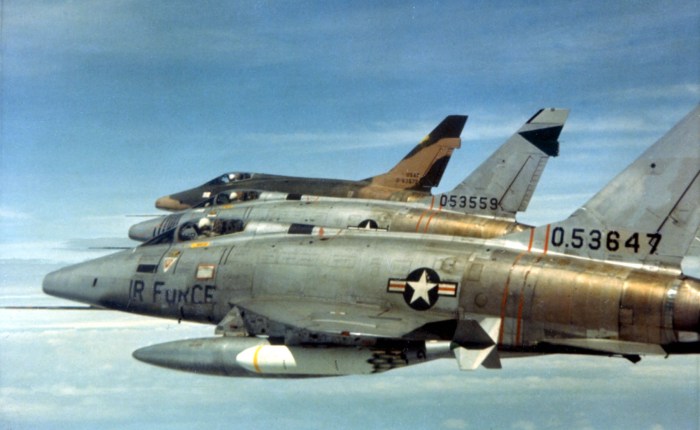


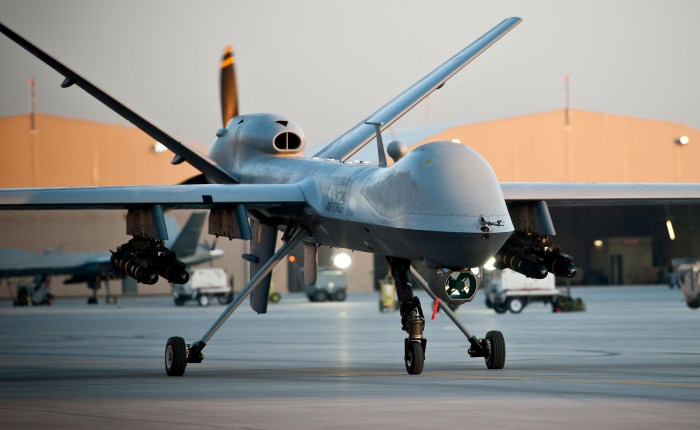
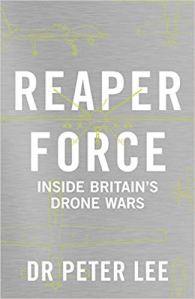


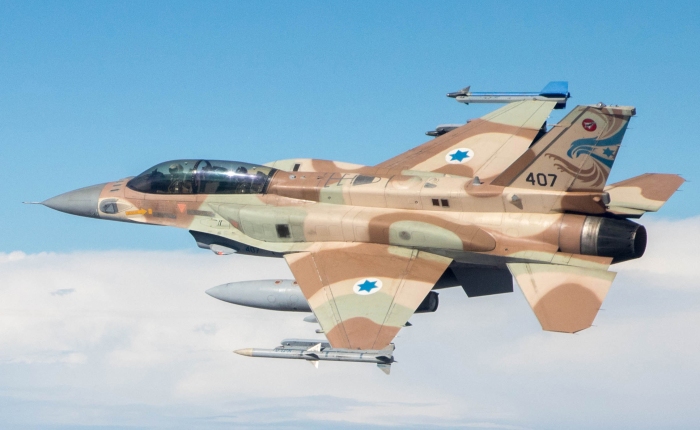
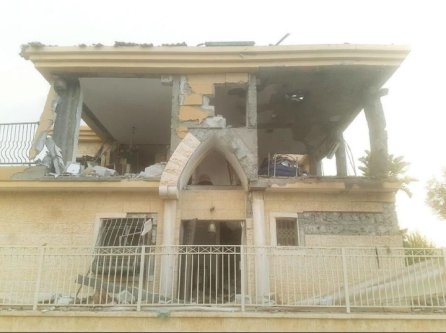


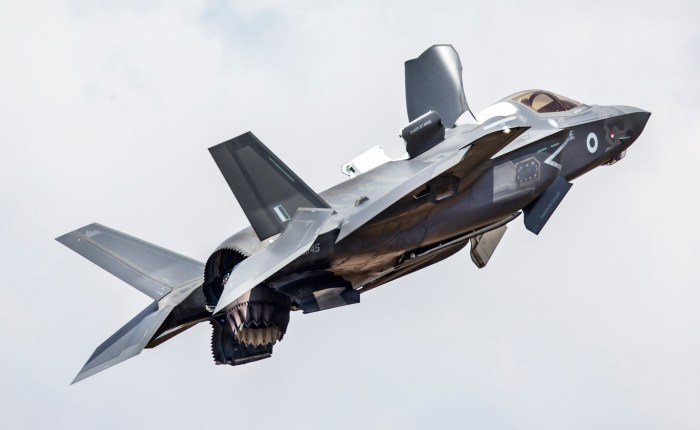
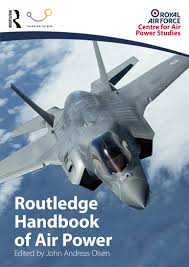
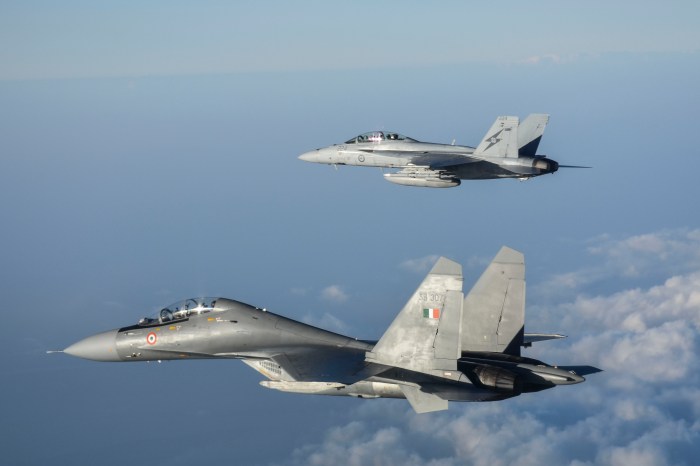

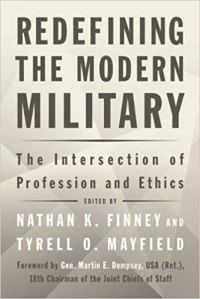

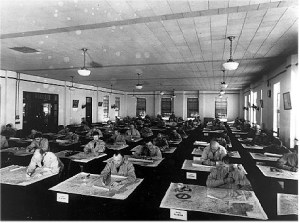
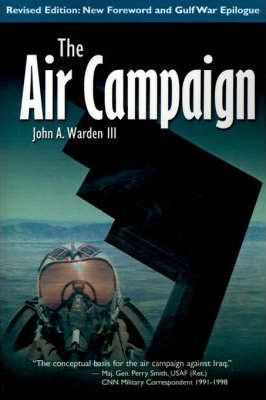


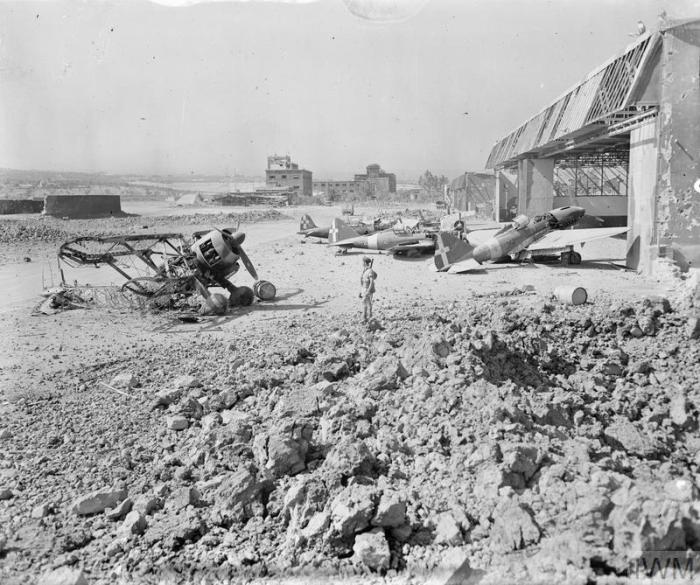


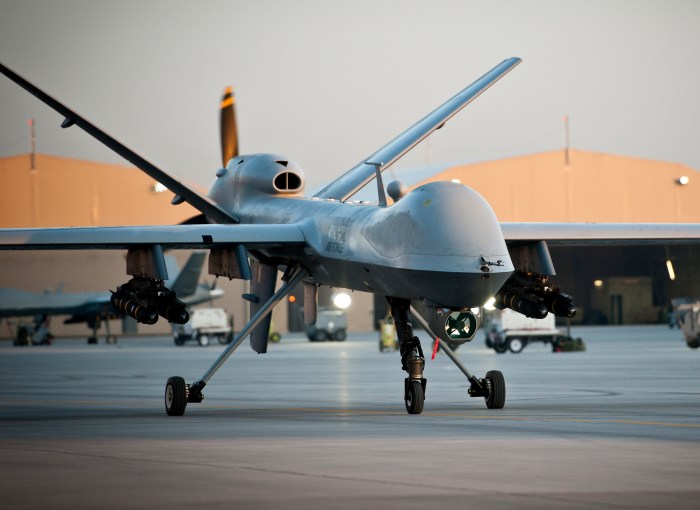

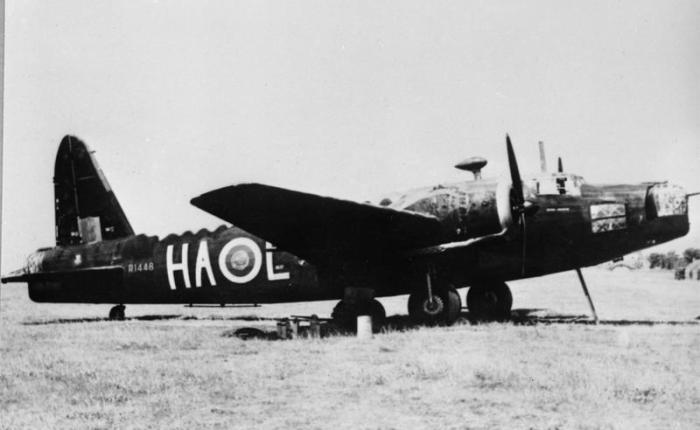
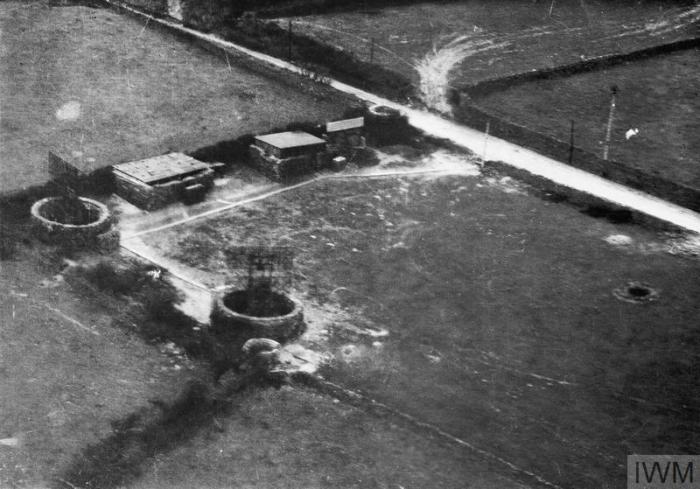
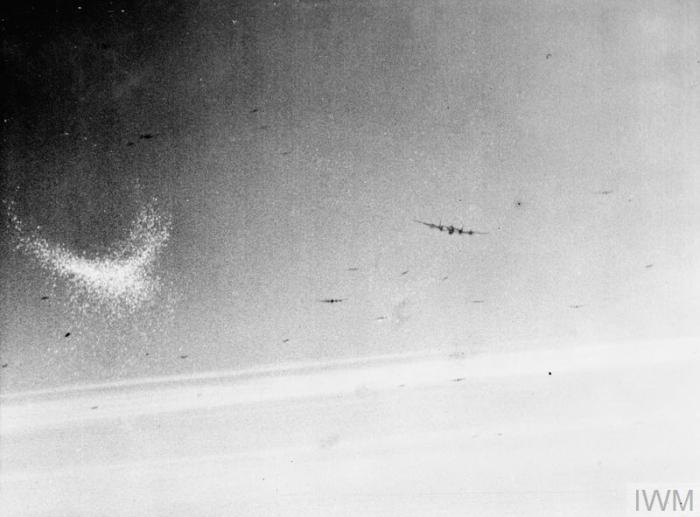
 From Balloons to Drones