#ResearchNote – The RAF Staff College and ‘Learning’ from the French

#ResearchNote – The RAF Staff College and ‘Learning’ from the French

By Dr Ross Mahoney

Editorial note: Defence-in-Depth, the blog of King’s College London’s Defence Studies Department based at the Joint Services Command and Staff College and The Wavell Room have been running a series of interesting articles about military education. The author has read these articles with some interest given his interest in the education of air forces. This research note covers an interesting episode in the process of the establishment of the Royal Air Force (RAF) Staff College in the early 1920s.

The opening of the RAF Staff College at Andover in 1922 marked a crucial step in the early development of the RAF. Andover gave the RAF its own institution that provided higher education tailored towards the needs of the Service. However, many historians have been critical of Andover. For example, Tony Mason, the RAF’s first Director of Defence Studies, suggested that Andover ‘lamentably failed’ in providing a developed air power theory for the RAF while Vincent Orange argued that the Staff College served, ‘as a disseminating station for approved doctrine, seasoned by essays on riding, hunting and how to cope with the bazaars of Baghdad.’[1]

However, one aspect not often considered is how the RAF went about preparing for the Staff College’s formation. Key to this is the role played by its first Commandant, Air Commodore Robert Brooke-Popham who was adamant that the RAF should learn from the teaching methods used by both the British Army and Royal Navy at their Staff Colleges at Camberley and Greenwich.[2] Brooke-Popham was a pre-First World War graduate of Camberley, and it is clear that this educational experience played a role in how he approached his position as Commandant. More broadly, before the opening of Andover, it was to the Army and Royal Navy that the RAF looked to provide a staff college education for nurtured officers. Indeed, it is significant that, apart from Group Captain Robert Clark-Hall, the initial Directing Staff – Wing Commanders Philip Joubert de la Ferte, Wilfrid Freeman and C.H.K. Edmonds and Squadron Leader Bertine Sutton – were all graduates of Camberley or Greenwich. However, while the British experience of higher military education was a significant influence, it was not the only source of information.

LD 764
A half-length portrait of Air Marshal Sir Philip Joubert de la Ferté in uniform by James Gunn, c. 1940 (Source: © IWM (Art.IWM ART LD 764))

More interesting is that Brooke-Popham also considered whether anything could be learnt from the methods utilised by the French Army at the Écoles Supérieures de Guerre in Paris, which in the early 1920s was commanded by General Marie Debeney.[3] Before the opening of Andover, Brooke-Popham and Joubert visited Paris to examine French pedagogical methods, and the critical source concerning this visit comes in the latter’s 1952 autobiography The Fated Sky.[4] Joubert’s recollections provide an insight into the teaching methods at the Écoles Supérieures de Guerre. However, it is clear that he was not impressed with the quality of education present although, as he recalled, the Écoles Supérieures de Guerre was considered, ‘the centre of all military knowledge.’[5]

Joubert’s criticisms fell broadly into three categories. First, Joubert was critical of the lack of cooperation with the French Navy and their equivalent school for higher education. Second, instructors lacked familiarity with the students they were teaching. Finally, Joubert was not impressed with the formality of the lectures and lack of what in modern teaching is often referred to as ‘white space’ in the timetable to allow for reflections and questions.[6]

Joubert’s criticisms raise several interesting observations about the differences between the British and French militaries in this period. Notably, the lack of co-operation between the French Army and Navy at the staff college level maps to many of the problems that plagued the French military in the interwar period. Joubert recalled Debeney’s ‘look of blank amazement’ when asked about co-operation with his naval counterpart.[7] Conversely, while there were definite problems at the strategic level, the British military regularly co-operated via combined operations exercises at the staff colleges that Joubert himself described as ‘one of the most pleasant periods’ of his time at Camberley, which he attended in 1920.[8] This perhaps suggests something about Britain’s pragmatic military culture in this period. Individual service cultures certainly existed, but when co-operation was required, the British military appeared to be able to do this.

Furthermore, Joubert recalled of his time at Camberley that while heated discussions between students occurred, ‘it was always possible to come to an agreement over a round of pink gins in the Mess’ thus highlighting the importance of socialisation between the services as means of breeding understanding between them.[9] It also seems clear that Joubert’s perception of the lack of formality in British Staff Colleges bred a willingness to question accepted views while the French military maintained a ‘Maginot’ mentality for much of this period. However, even this must be understood within the context of differing service cultures. Joubert himself reflected on these differences when he wrote that:

Naval officers would discuss Naval affairs freely amongst themselves and before members of another service and would unhesitatingly attack any ideas which they thought themselves were wrong. But let an outsider in the audience offer a criticism and Naval ranks closed up solidly. The Army seldom, if ever, discussed their problems in the open. If they were asked for a statement of policy Field Service Regulations and Army Council Instructions were solemnly quoted. As for the Air Force, they would fight amongst themselves in private and in the open, and would quite ruthlessly disagree with their instructors before a mixed audience. Nothing was sacrosanct.[10]

The final criticism of the lack of ‘white space’ in the timetable is significant as this is considered a crucial element of the pedagogical process and differentiates higher education from training. The lack of this ‘white space’ in the French Staff College system suggested an unwillingness to allow French officers to think more broadly about their place within the profession of arms and the conduct of war more generally. This raises fundamental questions concerning leadership development within the French Army such as whether the French system was developing senior leaders or staff officers. Moreover, it is clear that the French system differed from the British with the existence of the Centre des Hautes Études; a war college, which existed to educate senior Colonels and Brigadiers.[11] A ‘war college’ was something the RAF lacked, and as such an exact comparison between the two systems is fraught with challenges.

While Joubert’s recollection should, as with any autobiography, be treated with some care, from the perspective of the provision and development of military education in the RAF they are useful. This is primarily because of Joubert’s affiliation with education in the RAF. As noted, he attended Camberley and was Directing Staff at Andover. However, he would also go on to be the first RAF member of the Directing Staff at the Imperial Defence College as well as going on to being Commandant at Andover in the early 1930s. As such, he was well placed to comment on such issues.

In conclusion, this episode shows that the RAF was willing to move outside of national confines to learn lessons for what was the world’s first air force Staff College. However, that the methods examined in France were not adopted also highlights issues related to how militaries perceive themselves. As Joubert himself noted, ‘[i]n the event we did not adopt […] the French Staff College methods [and] [w]e went our own perfectly normal and unspectacular British Way.’[12] This reflection says as much about the RAF and its culture as it does the perceived failings of the French system of higher military education. The final important point is that in looking to other Staff Colleges, whether in Britain or France, the RAF were looking to similar institutions with similar objectives – the education and nurturing of future senior leaders – but axiomatically these educational establishments were not similar. Putting aside national proclivities, the critical difference was the military service these institutions served. The Écoles Supérieures de Guerre served the French Army, not an air force, though of course at this time, the French air service formed part of the army. Similarly, Camberley and Greenwich served the British Army and Royal Navy respectively. As such, while the RAF could, and did learn from their counterparts, it still had specific service challenges that it would have to solve on its terms. Indeed, the focus of Brooke-Popham and Joubert’s visit to Paris was more on ‘how’ to teach rather than ‘what.’

Dr Ross Mahoney is a contract Historian at the Departments of Veterans’ Affairs in Australia as well as the owner and Editor of From Balloons to Drones. He is a graduate of the University of Birmingham (MPhil and PhD) and the University of Wolverhampton (PGCE and BA). His research interests include the history of war in the twentieth and twenty-first centuries, air power and the history of air warfare, and the social and cultural history of armed forces. To date, he has published several chapters and articles, edited two books, and delivered papers on three continents. He is a member of the Royal Historical Society and a Vice-President of the Second World War Research Group. He can be found on Twitter at @airpowerhistory.

Header image: The modern day Ecole Militaire, which previously housed the Écoles Supérieures de Guerre (Source: Wikimedia)

[1] Tony Mason, ‘British Air Power’ in John Andreas Olsen, Global Air Power (Washington D C: Potomac Books, 2011), pp. 26-27; Vincent Orange, Churchill and his Airmen: Relationships, Intrigue and Policy Making, 1914-1945 (London: Grub Street, 2013), p. 87.

[2] Air Chief Marshal Sir Robert Brooke-Popham, ‘The Formation of The Royal Air Force Staff College,’ The Hawk, 12 (1950), p. 19.

[3] For a British overview of the Écoles Supérieures de Guerre, see: ‘The “Ecole Superieure De Guerre,” Paris,’ Journal of the Royal United Services Institution, 70:477 (1925), pp. 1-7.

[4] Sir Philip Joubert de la Ferte, The Fated Sky: An Autobiography (London: Hutchinson, 1952), pp. 87-88. Joubert also recollected that Brooke-Popham also considered ‘Madam Montessori’s ideas.

[5] Ibid., pp. 87

[6] Ibid., pp. 87-88

[7] Ibid., p. 87.

[8] Ibid., p. 84.

[9] Ibid., p. 83.

[10] Ibid., p. 88.

[11] ‘The “Ecole Superieure De Guerre,” Paris,’ p. 1.

[12] Joubert, The Fated Sky, p. 88.
#BookReview – Safely to Earth: The Men and Women who brought the Astronauts Home

#BookReview – Safely to Earth: The Men and Women who brought the Astronauts Home

By Dr Brian Laslie

Jack Clemons, Safely to Earth: The Men and Women who brought the Astronauts Home. Gainesville, FL: University Press of Florida, 2018. Appendices. Glossary. References. Further Reading. Hbk. 264 pp
51dTUlQI4xL._SX320_BO1,204,203,200_

In the first of our space-related book reviews, Stages to Saturn, I discussed a book about a technology and a ‘thing,’ that thing being the family of Saturn rockets. This next review is a book about people or rather, a single person: Jack Clemons.

Author Jack Clemons is one of the 400,000 (or so) people who worked on Project Apollo. You should quickly surmise that 399,999 other stories could be told about NASA and space exploration, but this is Jack’s story. This is the story of one person’s efforts to help put Armstrong’s (and eleven others) boot prints on the moon, but at least as far as Clemons was concerned bringing him, as well as and Aldrin and Collins back to Earth. Clemons, employed by TRW Corporation and working for the Apollo program as a re-entry specialist, presents himself as part of the group of ‘Americans who embraced the study of engineering and the sciences’ (p. 3) and who joined President Kennedy’s call for landing a man on the moon, and the oft-overlooked second part of that sentence, returning him safely to Earth. The call for Clemons (p. 21) was so great that ‘I stayed in Houston for sixteen years for one reason, because that’s where NASA was.’

s69-53716
The prime crew of the Apollo 12 lunar landing mission is photographed during spacecraft checkout activity at North American Rockwell Space Division at Downey, California. Left to right, are astronauts Charles Conrad Jr., commander; Richard F. Gordon Jr., command module pilot; and Alan L. Bean, lunar module pilot. (Source: NASA)

HBO’s TV series From the Earth to the Moon based on the book A Man on the Moon: The Voyages of the Apollo Astronauts by Andrew Chaikin introduced viewers to stories of the Mercury, Gemini, and Apollo astronauts. In one episode, the launch of Apollo 12 is shown to be struck by lightning, and the crew is informed they must ‘switch SCE to AUX’ to start restoring power to the crippled command module. This is also where Jack Clemons book Safely to Earth: The Men and Women who brought the Astronauts Home begins as well when flight controller John Aaron makes the call to have the crew switch Signal Conditioning Electronics to Auxiliary. This is what separates Clemons work from all that has come before it – and becomes the real strength of the work; this is not a book about the astronauts themselves, but about the unnamed masses of the support team.

This is not a purely academic work, and Clemons is clearly not speaking to an exclusive audience. Instead, he brings forth in a very accessible manner what it was like to be ‘in the trenches.’ Clemons also provides a certain levity in his book. He often ‘breaks the plane’ by talking directly to the reader, a massive ‘no-no’ in most professional writing, but it works and much to Clemons credit, I found myself smirking.

The book is essentially divided into two parts: his work on the Apollo Program and his later work in the Space Shuttle program. During Apollo and found many times throughout the pages of Safely to Earth, the role of technology is clearly on display. In the modern world where our phones hold more computing power than some of the early computers, it is nearly overwhelming to remember a time where so much of a computer processing ability first had to be input by hand. In one example, Clemons notes (p. 41) that the process of entering information into the IBM mainframes and waiting for results: ‘was a tedious and labor-intensive way to grind out data, but at the time it was cutting edge, high art, and great fun.’ Clemons primary work was on reentry data (p. 70), ‘[S]ince every Apollo mission was unique, reentry procedures had to developed and tested for each one.’

During the 1980s, Clemons moved over to IBM where he worked on the Space Shuttle’s computer programs and flight software, and this work provides a good history of the development and operation of the Shuttle. During these years, Clemons, responsible for the displays and controls of the Orbiter, worked closely with the early shuttle astronauts, including Bob Crippen and Dick Truly. Ostensibly, Clemons seeks here (p. 122) to ‘to convey here a sense of the scope of this singular effort, and an appreciation for some of the unheralded people behind the scenes’ and this occurs not only in the latter half of the book but throughout the entire text. The reader gets a sense of how many people at so many levels worked towards the singular goal of space exploration.

This is a welcome addition and is truly a unique work that contributes something new to an already overcrowded field of books about manned spaceflight. Clemons brings into focus what it was like to be one of the 400,000 who contributed to getting man to the moon and in doing so broadens our understanding of getting into space in general. While those aviation, history of technology, and space readers and historians will find much to enjoy here; those interested in race and gender issues, particularly as they apply to employment in STEM career fields, will also find enjoyment in the marked switch that occurred between Apollo and the Space Transportation System programs; Clemons covers this transition particularly well. The ultimate question posed by Clemons (p. 190), and so many others in recent years, and one for which we do not have a definitive answer for is, ‘[S]o where does human spaceflight go from here?’

Dr Brian Laslie is an Air Force Historian and currently the Deputy Command Historian at North American Aerospace Defense Command (NORAD) and United States Northern Command (USNORTHCOM). A 2001 graduate of The Citadel and a historian of air power studies, he received his PhD from Kansas State University in 2013. His first book The Air Force Way of War (2015) was selected for the Chief of Staff of the Air Force’s and the Royal Air Force’s Chief of the Air Staff professional reading lists. His recently published Architect of Air Power: General Laurence S. Kuter and the Birth of the US Air Force. He lives in Colorado Springs. He can be found on Twitter at @BrianLaslie.

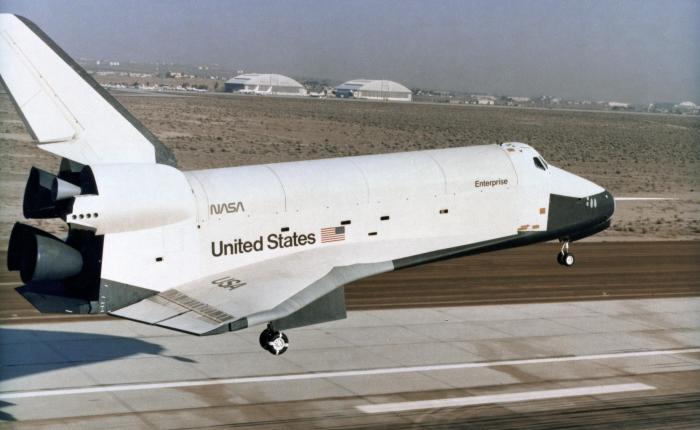
Header Image: The last of 13 captive and free-flight tests on 26 October 1977 with the space shuttle prototype Enterprise during the Approach and Landing Tests, validating the shuttle’s glide and landing characteristics. Launched from the modified Boeing 747 Shuttle Carrier Aircraft, the Enterprise’s final flight was piloted by Fred Haise and Gordon Fullerton to a landing on the main concrete runway at Edwards Air Force Base before a host of VIPs and media personnel. (Source: NASA)

#Commentary – The Threat of Commercially Available Drones

#Commentary – The Threat of Commercially Available Drones

By Harry Raffal

Following the disruption at Gatwick airport, it is unsurprising that the potential dangers and disruptions that private drones can cause have come sharply into focus. For many experts, the use of a small, readily available, and easily affordable drone to achieve the disruption witnessed at Gatwick was not unforeseen. Instead, there have been increasing warnings from security advisors, financial service experts and even the United States Secretary of Homeland Security, Kirstjen Nielsen, regarding the emerging risk exposures created by the recreational use of drones. The use of commercially available Drones to disrupt civil aviation has been one of the most apparent consequences of allowing the huge proliferation of these devices without ensuring there are relevant safeguards in place first. The prospect of a drone temporarily putting a major airport out of action was a threat which was predicted and reflected the lower end of warnings regarding ‘the potential for catastrophic damage.’ The question must surely be to ask why it has taken so long for this danger to be taken seriously by the government and aviation authorities.

There have been warning signs that drones while offering potentially enormous economic advantages, will be used by those with malign interests. In 2018 alone Drones have been involved in near-misses with RAF jets; caused low-level disruption at numerous airports; been used in an attempted attack on the Venezuelan President; they have also delayed and imperilled aircraft and helicopters involved in fire-fighting efforts. In Syria, the use of Commercially available drones by non-state forces is commonplace, and Kurdish forces released evidence of what they claimed was an ISIS Drone factory in July 2017.

The challenge of countering Drones without sufficient preparation is enormously difficult if the perpetrators are intent on causing disruption. During events at Gatwick, many observers may ask why such drones could not merely be shot down. It is difficult for those not familiar with military topics to immediately conceive that firing high-powered rifle bullets at a target can have potentially lethal collateral consequences if that target is missed – no small possibility when the target is a small, fast and agile Drone in flight. As the UK Security Minister, Ben Wallace stated following the disruption at Gatwick ‘the challenges of deploying military counter measures into a civilian environment, means there are no easy solutions.’

This is not to say that there are no devices capable of disabling Drones, there are. Point-and-shoot ‘drone killers’ exist. These ‘drone killers’ use software-defined radio to jam the specific frequency a drone is operating on causing them to crash. Alternatively, for more sophisticated models, such ‘drone killers’ can force drones to land on auto-pilot. Even minimal preparation at UK airports would have ensured the capacity to detect the frequency a drone was operating on, and the use of a higher-powered transmitter would have provided the capacity to deal with the threat from commercially available Drones which do not possess the capacity to ‘channel hop’. Elsewhere, some thought has been given to counter the dangers posed by commercially available Drones. However, until the three days of disruption at Gatwick, there had not been any systematic preparations or hardening of vulnerable targets in the UK.

The future development of micro- and nano-drones, and their potential use in the civil environment brings with it the possibility of further disruption and dangers. The recent regulations which among other things have set height restrictions and, from November 2019, will require users of devices heavier than 250g to register with the authorities provide limited protection against those intent on the criminal use of drones. What is required is forethought and preparation to ensure that we are not discussing, in the not-too-distant future, why authorities were unprepared to deal with ‘swarms’ of these devices.

Harry Raffal is the Historian at the Royal Air Force Museum and has recently completed his PhD thesis on the RAF and Luftwaffe during Operation DYNAMO, the evacuation of the Dunkirk in 1940 at the University of Hull. Harry has previously published research on the online development of the Ministry of Defence and British Armed Forces and presented papers at several conferences and events including the RAF Museum’s Trenchard lecture series, and the 2017 Research Infrastructure for the Study of Archived Web Materials conference. His research has been funded through bursaries and educational grants from the Royal Historical Society, the 2014 Big UK Domain Data for the Arts and Humanities research grant, the Princess Royal Trust, the University of Hull, the Sir Richard Stapley Trust and the RAF Museum PhD bursary.

Header Image: DJI Phantom 4 Pro/Pro+ quadcopter with camera. (Source: Wikimedia)

Call for Submissions: Air War Vietnam

Call for Submissions: Air War Vietnam

From Balloons to Drones is seeking submissions for a series of articles that examines the varied use of air power during the conflict in Vietnam (1945-1975). Two thousand nineteen marks 50 years since the announcement of President Nixon’s policy of Vietnamization. This marked a significant turning point in a conflict that dated back to the end of the Second World War when France returned to Indochina to reclaim her colonial possessions. Throughout this long conflict in Vietnam – both during the French Indochina War and the Vietnam War – air power played a significant role. Themes to be explored might include, but are not limited to:

Roles | Operations | Strategy, Theory and Doctrine

Strategic and Operational Effect | Technological Developments

Organisation and Policy | Culture | Ethical and Moral Issues

National, International and Transnational Experiences

We are looking for articles of c. 2,500 words, though we will accept larger pieces and we reserve the right to publish them in parts. We welcome and encourage submissions from academics, policymakers, service personnel, and relevant professionals. We plan to begin running the series in May 2019, and it will continue for as long as we receive potential contributions.

Submissions should be submitted in Word format and emailed to the address below with ‘SUBMISSION – Air War Vietnam’ in the subject line. Also, please include a 50-100-word biography with your submission. References can be used, and please be careful to explain any jargon. However, if you are not sure if your idea fits our requirements, then please email us with ‘POTENTIAL SUBMISSION – Air War Vietnam’ in the subject line to discuss.

If you are interested in contributing, please email our editor, Dr Ross Mahoney, at airpowerstudies@gmail.com or via our contact page here.

Header Image: A USAF Douglas A-26C Invader loaned to France during the Indochina War. This aircraft was loaned to France from March 1952 to November 1955. (Source: Wikimedia)

#BookReview – Stages to Saturn: A Technological History of the Apollo/Saturn Launch Vehicles

#BookReview – Stages to Saturn: A Technological History of the Apollo/Saturn Launch Vehicles

By Dr Brian Laslie

Roger E. Bilstein, Stages to Saturn: A Technological History of the Apollo/Saturn Launch Vehicles. Gainesville, FL: University Press of Florida, 2003. Illustrations. Notes. Sources and Research Material. Pbk. 544 pp.

51rugp8v59l._sx327_bo1,204,203,200_

This entry in our continuing series of book reviews might strike you as something a bit different from what we usually publish in several respects. First, this is an older work and originally published as part of the ‘official histories’ by NASA. Initially published in 1979 by the NASA history office, this 2003 updated version published by the University Press of Florida, was written, at its creation, primarily for an internal audience. Second, and as promised, this is the first book review in a series on Space exploration and space power. Finally, this review is inherently about a thing, and a means rather than an event or person. It is a review of technological history.

Even with fifty years of retrospective, the images of the gigantic Saturn V rocket with the Command and Service Module (CSM) and Lunar Module (LM) perched atop the three-stage rocket remains impressive. Histories of NASA and the Apollo Program tend to focus on the Saturn as a completed unit, stacked and rolled out of the Vehicle Assembly Building (VAB) ready for transportation to the launch pad and final countdown and liftoff of the series of Apollo missions. The University of Florida Press’s and author Roger E. Bilstein’s Stages to Saturn: A Technological History of the Apollo/Saturn Launch Vehicles plays this familiar tale in reverse. The book begins with the launch of Apollo 11 and the ‘fiery holocaust lasting only 2.5 minutes’ of the first stage (S1-C) five F-1 engines that included the combination of 203,000 gallons of RP-1 kerosene and 331,000 gallons of liquid oxygen.

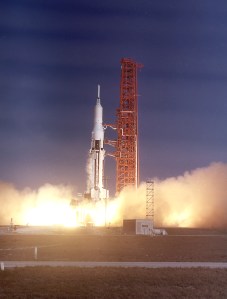
saturn_sa9_launch
SA-9, the eighth Saturn I flight, lifted off on 16 February 1965. This was the first Saturn with an operational payload, the Pegasus I meteoroid detection satellite. (Source: Wikimedia)

Bilstein then roles the tape back to the earliest days of rocketry before moving into the primary purpose of the book, the development of the Saturn family of rockets. This is the history of an object albeit, one of the largest moving objects ever created. Stages to Saturn is the story of the development of the launch vehicles that took man into deep space for the first time. There are hundreds of books (see our reading list) about the Mercury, Gemini, and Apollo programs, but this book is fundamentally different in that it focuses on the creation of the means it took the latter program to get into space.

A note of warning for the prospective reader up front, this is not a book for the layman reader, and in all fairness, it is hardly a book for the professional historian. It is an extraordinarily technical history, what might be most justly described as a ‘dense’ read. If there is a drawback to this work, it is that one might enjoy the book more if one were an expert mechanic or an aircraft engineer, someone who fundamentally understands the way machines work. It is also as much an organisational and logistical history as it is a technological history. All, this should not indicate that the book comes across as is inaccessible; it does not. Still the reader should be prepared for some overly technical discussions of thrust chambers and cryogenic propellants.

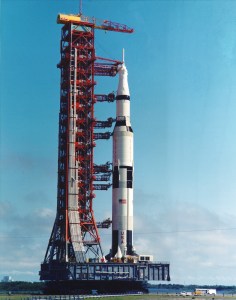
ap11-ksc-69pc-241hr
Rollout of the Apollo 11 Saturn V rocket from the Vehicle Assembly Building to the launch pad, 20 May 1969. (Source: Wikimedia)

The book is built, not chronologically, but rather by component pieces of the rocket itself, each earning a detailed developmental history. This includes a ‘building blocks’ section which is a short history of rocketry but, thankfully, not a history of everything. From there the book details the development of the engines (RL-10, J-2, H-1, and F-1), before moving into the building of the various Saturn stages (S-IB, S-IVB for the Saturn IB and S-IC, S-II, S-IVB for the Saturn V) and finally on the management and logistics. While the development and building of the massive Saturn systems are fascinating enough in their own right, the logistical undertaking, which required ships and the development of special aircraft just to move the various stages and components to Cape Kennedy is a worthy addition to understanding of the continental network required simply to have the rocket components arrive at their destination. Bilstein ends his book with a disposition of the remaining Saturn systems (most on Static display now), but also a retrospective legacy section. It should also be noted that Bilstein includes a series of appendices covering everything from a detailed schematic of the Saturn V to the Saturn V launch sequence (beginning at nine hours and 30 minutes before liftoff) as well as R&D funding. While ‘richly detailed’ or ‘meticulously researched’ are overused in reviews, a trait myself am guilty of; they aptly apply to Stages to Saturn.

In the end, this is the story of the Apollo and Saturn programs that needed to be told. All the histories and biographies of the ‘Space Race,’ fail to rise to the level of detail and the important contribution of Stages to Saturn. It is a first-class organisational and technological history, and it stands alone as, perhaps the very best of the overall government ‘official histories.’ Historians of air and space power studies will find much to enjoy here, but also aerospace engineers. It is often said that 400,000 people helped get the United States the moon. This is the history of that rocket, but it is equally the history of those 400,000.

Dr Brian Laslie is an Air Force Historian and currently the Deputy Command Historian at North American Aerospace Defense Command (NORAD) and United States Northern Command (USNORTHCOM). A 2001 graduate of The Citadel and a historian of air power studies, he received his PhD from Kansas State University in 2013. His first book The Air Force Way of War (2015) was selected for the Chief of Staff of the Air Force’s and the Royal Air Force’s Chief of the Air Staff professional reading lists. His recently published Architect of Air Power: General Laurence S. Kuter and the Birth of the US Air Force.  He lives in Colorado Springs. He can be found on Twitter at @BrianLaslie.

Header Image: Apollo 6 interstage falling away. The engine exhaust from the S-II stage glows as it impacts the interstage. (Source: Wikimdeia)

Space: A Reading List

Space: A Reading List

By Dr Brian Laslie

As the combatant command of the ‘newly re-established’ United States Space Command inches closer to being stood up (or reincarnated we are really not sure), we at From Balloons to Drones thought now would be an opportune time to publish articles, book reviews, and reading lists on the very best of space scholarship.[1] The simple fact is that here at the site we have focused almost exclusively on air power. We just have not gone high enough. Therefore, to make a mid-course correction, we are looking to expand into air and space power. The first step is this reading list. Hopefully to be followed by book reviews and original articles like this one here that we have previously published.

Our Assistant Editor, Brian Laslie, has chosen to divide this reading list up: Primer texts, NASA and civilian histories, and finally a list of biographies, memoirs and autobiographies.

Much of what you will find below was done in coordination with historians at the United States Air Force Academy, Air Command and Staff College, and the School of Advanced Air and Space Studies. We reached out to some of their senior scholars for their list of ‘must reads’ plus what they assign to students. We also reached out to several academic presses who specialise in space scholarship. Here you will find some of the usual suspects (University Press of Kentucky, MIT, Johns Hopkins), but also some really impressive works out of the University Press of Florida, look for book reviews of some of these titles below coming shortly. This is by no means a comprehensive list, but we believe that if you are interested in expanding your space knowledge, professionally or for fun, this list is a great place to start.

Primer Texts:

31ln1jkisbl._sx355_bo1,204,203,200_

  • Ted Spitzmiller, The History of Human Space Flight (Gainesville, FL: University Press of Florida, 2017);
  • Michael J. Neufeld, Spaceflight: A Concise History (Cambridge, MA: The MIT Press, 2018);
  • Walter A. McDougall, The Heavens and the Earth: A Political History of the Space Age (New York, NY: Basic Books, 1985);
  • William F. Burrows, This New Ocean: The Story of the First Space Age (New York, NY: Random House, 1998);
  • A. Heppenheimer, Countdown: A History of Spaceflight (New York, NY: Wiley, 1997);
  • Everett C. Dolman, Astropolitik: Classical Geopolitics in the Space Age (London: Frank Cass, 2002);
  • Joan Johnson-Freese, Space as a Strategic Asset (New York, NY: Columbia University Press, 2007);
  • Matthew Brezezinski, Red Moon Rising: Sputnik and the Hidden Rivalries that Ignited the Space Age (New York, NY: Times Books, 2007);
  • John Klein, Space Warfare: Strategy, Principles and Policy (Abingdon: Routledge, 2006);
  • David Spires, Beyond Horizons: A Half Century of Air Force Space Leadership, Revised Edition (Maxwell, AL: Air Force Space Command in association with Air University Press, 1998);
  • Bruce DeBlois (ed.), Beyond the Paths of Heaven: The Emergence of Space Power Thought (Maxwell, AL: Air University Press, 1999).

NASA History Series (@NASAhistory)

The NASA History Office runs arguably the single best history program in the entirety of the United States Government. With dozens of publications (and most available to download for free here, this is the first place you should stop for the history of space flight in the United States. More recently some of their titles have been re-published with the University of Florida Press.

61yt-kkiaxl

So much of the literature of the space race focused exclusively on the American perspective. Even the Soviet ‘firsts’ are often viewed through the lens of how other Americans reacted. If you are interested in the development of the Soviet space programs there is Challenge to Apollo: The Soviet Union and the Space Race (2000) by Asif A. Siddiqi and the four-volume set by Boris Chertok Rockets and People (2005 to 2012) which provides ‘direct first-hand accounts of the men and women who were behind the many Russian accomplishments in exploring space.’

If the early American experience in spaceflight interests you then download: Where no Man has Gone Before: A History of the Apollo Lunar Exploration Missions (1989) by William David Compton, Project Apollo: The Tough Decisions (2007) by Robert C. Seamans, Jr., On the Shoulders of Titans: A History of Project Gemini (2010) by Barton C. Hacker and James M. Grimwood, and “Before this Decade is Out” Personal Reflections of the Apollo Program (1999) edited by Glen. E. Swanson

Under the UPF bin there is Pat Duggins, The Final Countdown: NASA and the End of the Space Shuttle Program (2008) which seems a bit dated in 2019 (there is a reference to a pre-iPad that might perplex readers) but provides an excellent treatment of the history of the Shuttle Program as well as NASA’s uncertain future.

The Final Mission: Preserving NASA’s Apollo Sites (2018) by Lisa Westwood, Beth O’Leary, and Milford W. Donaldson details the importance preserving sites related to the Project Apollo and moon missions both here on Earth and the lunar surface.

Other works by NASA or UPF that are well worth your time include: Safely to Earth: The Men and Women who Brought the Astronauts Home (2018) by Jack Clemons, and Spies and Shuttles: NASA’s Secret Relationships with the DOD and CIA (2015) by James David. If you are an engineer by trade or just interested in highly technical work, there is Stages to Saturn: A Technological History of the Apollo/Saturn Launch Vehicles (1999) by Roger Bilstein

Memoirs and Biographies:

There are dozens of books in this genre from the ‘Golden Age of Manned Spaceflight.’ Many of the Mercury, Gemini, and particularly the Apollo astronauts either wrote a memoir or have had a biography published. We cannot list them all here, but we agree the following rate among the very best: First Man: The Life of Neil Armstrong (2018) by James R. Hansen, Carrying the Fire: An Astronauts Journey (2001) by Michael Collins, The Last Man on the Moon: Astronaut Eugene Cernan and America’s Race in Space (1999) by Eugene Cernan, Apollo Pilot: The Memoir of Astronaut Donn Eisele (2017) by Don Eisele, and Calculated Risk The Supersonic Life and Times of Gus Grissom (2016) by George Leopold.

97816103983051

More recent works by the space shuttle and ISS astronauts include Scott Kelly’s Endurance about his year in space. As space flight becomes increasingly commercialised, the recently published The Space Barons: Elon Musk, Jeff Bezos, and the Quest to Colonize the Cosmos (2018) by Christian Davenport were also showing up from many of the academic institutions with whom we spoke.

Finally, in a departure from the readings above, we recommend the YouTube channel of Amy Shira Teitel. Amy is a ‘spaceflight historian, author, YouTuber, and popular space personality,’ who does a great job in her web series Vintage Space.

Again, this is not a comprehensive list, but rather a starting point. As interest increases and we enter what may very well be a second golden age of space exploration, these are the titles that provide the background and history of working with, in, and through the space domain. If you have suggestions, leave them in the comments.

Dr Brian Laslie is an Air Force Historian and currently the Deputy Command Historian at North American Aerospace Defense Command (NORAD) and United States Northern Command (USNORTHCOM). A 2001 graduate of The Citadel and a historian of air power studies, he received his PhD from Kansas State University in 2013. His first book The Air Force Way of War (2015) was selected for the Chief of Staff of the Air Force’s and the Royal Air Force’s Chief of the Air Staff professional reading lists. His recently published Architect of Air Power: General Laurence S. Kuter and the Birth of the US Air Force. He lives in Colorado Springs. He can be found on Twitter at @BrianLaslie.

Header Image: The US Air Force launches the ninth Boeing-built Wideband Global SATCOM satellite at Cape Canaveral Air Force Station, Florida., 18 March 2017. Such satellites play an integral part in the strategic and tactical coordination of military operations. (Source: US Department of Defense)

[1] There continues to be debate about whether the U.S. Space Command is being re-established from its predecessor or if this truly a new combatant command

#BookReview – The Bombing War: Europe, 1939-1945

#BookReview – The Bombing War: Europe, 1939-1945

By Toby Dickinson

Richard Overy, The Bombing War: Europe, 1939-1945. London: Penguin, 2013. Illustrations. Maps. Bibliography. Notes. Index. xxvii + 852 pp.

overy

Between 1939 and 1945 over 600,000 civilians were killed across Europe in aerial attacks. Over a million more were injured. Before the outbreak of the Second World War, claims had been made in both fiction and theory as to the devastating consequences and strategic utility of bombing against an enemy’s ‘vital centres’ and the ‘will of the people’. While the human consequences were indeed devastating, there is room to question and doubt the strategic utility of the bombing campaigns waged by both sides in the European theatre in the Second World War.

In a work that revises and challenges our existing understanding and analysis of the bombing campaign of the Second World War – including Overy’s prior work on the subject – Richard Overy goes beyond the traditional study of the planning and execution of the Blitz and the Allied bomber offensive to provide fresh insights into this controversial topic.[1] In aiming to provide a narrative of the bombing war in Europe, Overy sought three new treatments of the subject (p. xxv); first, an account that covered the experience of the whole of Europe – Allied, Axis, occupied, and neutral. Second, Overy placed the bombing operations of both sides in their strategic military context alongside other operations and identified the essential supporting, rather than the decisive, character of these operations. Sweeping across Europe, Overy assessed the strategic bombing performance of the Luftwaffe over the UK and the USSR, and the Royal Air Force (RAF) and United States Army Air Force over Germany, Italy and Axis-occupied Europe. Third, he contrasted the experiences of both the bombers and the bombed, and it is Overy’s treatment of the subject of the bombed that makes this work original and essential.[2] Overy drew on local archives of bombed cities and reexamined existing archives. By using this ‘double narrative’ of what bombing campaigns were designed to achieve and the reality of their impact on populations, Overy has sought to provide a fresh look at the issues of the campaign’s effectiveness and ethical ambiguity. Indeed, the ethical dimensions of the bombing of German targets in occupied Europe was the subject of political debate in the UK, Overy noting that ‘the erosion of ethical restraints’ and the subsequent escalation of bombing efforts against German cities was ‘a simpler issue than the moral dilemma of causing civilian casualties’ in occupied Europe (p. 549).

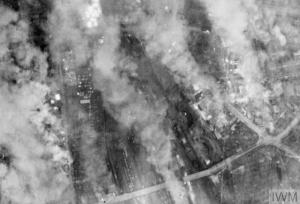
c 4973
Vertical photographic-reconnaissance aerial taken over Dresden, Germany, following the two devastating attacks on the city by aircraft of Bomber Command on the night of 13/14 February 1945. A large number of fires still burn fiercely in the vicinity of the central goods depot and marshalling yards south of the River Elbe. (Source: © IWM (C 4973))

Overy’s analysis is influenced by his adoption of a classical division of bombing actions into ‘strategic’ and ‘tactical’, where ‘strategic’ is taken to mean bombing conducted at long range, against economic (or at least non-military) targets, and ‘tactical’ is taken to mean attacks against enemy airfields and interdiction of enemy ground forces. This taxonomy can obscure more than it reveals. If air action against an enemy’s airfields is ‘tactical’ in character as it was by the Allies in 1944-1945, then so were the attacks by the Luftwaffe against RAF airfields in the summer of 1940. Moreover, when discussing the events of 1940, Overy contended that the separation in time of the Battle of Britain and the Blitz into discrete activities is inaccurate and ascribes this narrative to, in part, the Battle of Britain being fought by Fighter Command, and ‘the Blitz by the civil defence forces, anti-aircraft units and small numbers of night fighters.’ While it may be legitimate to see the Battle of Britain and the Blitz as part of a common continuum – as the Luftwaffe did – Overy’s use of force elements and their command states to explain this difference between narratives is problematical. Anti-aircraft units were under the command of Fighter Command during both periods, as were night fighters. The Blitz was not fought by civil defence forces, because their role is not to fight, their role is to manage some of the consequences of some of the enemy’s actions (pp. 73-4). Further, it is legitimate for historians to regard the Battle of Britain and the Blitz as distinct: while the Luftwaffe regarded itself as having fought a single campaign against the UK from July 1940 to June 1941, it clearly has two distinct elements: ‘tactical’ operations against the RAF’s air defences to gain control of the air prior to an invasion, and ‘strategic’ operations against industrial and civilian targets.

A similar ambiguity between ‘tactical’ and ‘strategic’ operations exists in any analysis of the German bombing campaign on the Eastern Front. Overy noted that aerial attacks on Leningrad were part of the German siege of that city, rather than any independent ‘strategic’ action against industrial targets. More successful were attacks against Soviet lines of communication, in particular, railway infrastructure: stations and supply centres, rather than more easily repaired tracks and bridges (p. 207). Nonetheless, both Overy and several reviewers have noted that there were occasions where Allied or Axis’ bombing was bearing fruit: denying their enemy’s air defences, reducing the production and distribution of key materials. However, the effectiveness of these strikes were reduced as targets were switched: either because of poor intelligence analysis, as with the Luftwaffe’s move away from attacking the RAF’s airfields in 1940 to bombing British cities, or because bomber aircraft were reapportioned from industrial and military targets to political ones as with the switch in effort by RAF Bomber Command to target Berlin in the autumn of 1943.[3]

d 76
 A luminous gas mask case on sale at Selfridge’s department store in London. These gas mask covers were on sale for 2/11. (Source: © IWM (D 76))

Overy also covered in great detail the civilian preparations for an experience of the bombing: the establishment of air raid warning systems, civil defence organisations, and individual preparations by citizens. He recorded systems of compensation for civilian loss of earnings, noting too that as early as December 1940 the German Government banned Jews from receiving compensation for loss of earnings (p. 422). Effective civil defence in Germany is contrasted with almost the total lack of preparation in Italy, which lacked an air defence network and – unlike the other totalitarian regimes fighting in the war – ‘failed to mobilize a large mass movement for voluntary civil defence’ (p. 517). It is new perspectives like these that have led to the book being described as: ‘the standard work on the bombing war…probably the most important book published on the history of the second world war this century.’[4]

In analysing the contribution of strategic bombing to combatant’s overall aims, Overy made it clear that whatever the desires or claims of bomber leaders from Wolfram von Richthofen to Arthur Harris, neither Allied nor Axis strategic bombing efforts were ever more than supporting. Overy noted J.K. Galbraith’s conclusion that the bombing campaign did not win the war, and that the bombing campaigns were all ‘relative failures in their own terms’ (p. 609). Overy also noted that strategic bombing was ‘in the end inadequate in its own terms for carrying out its principal assignment and was morally compromised by deliberate escalation against civilian populations’ (p. 633). This has led to at least one reviewer noting that this represents a shift from Overy’s previous works, which took a far more positive view of the strategic contribution of Allied bombing efforts.[5]

cl 2372
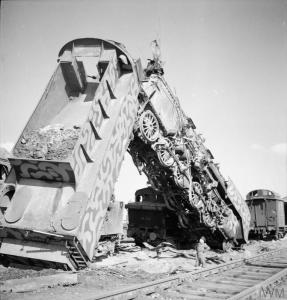
 A locomotive and its tender, upended by an explosion during heavy raids by Bomber Command, is inspected by an RAF officer in the railway yards at Munster, Germany. (Source: © IWM (CL 2372))

Scored against their aims, the allied bombing efforts were indeed ‘relative failures’, but it is legitimate to ask whether they had utility as an instrument of strategy in delivering a net positive effect. Viewed through the lens of an indirect strategic approach, one cannot, as Gary Sheffield observed, ignore the fact that Germany was forced to apportion resources to the air defence of the home front that could otherwise have been used to other ends: ‘the Germans were forced to commit resources to home defence – anti-aircraft guns, aircraft, optical sights, manpower – that could not be put to other uses.’[6] It is also important to assess the bombing campaigns not against the fiction of H.G. Wells and others, nor the equally far-fetched prophecies of Giulio Douhet, but in the longue durée of strategic thinking. In an unacknowledged nod to Carl von Clausewitz’s dictum that ‘the defensive form of warfare is intrinsically stronger than the offensive’, Overy noted that the failure of German and Axis bombing operations in the Battle of Britain, and against both the USSR and Malta ‘highlighted the extent to which the balance between air defence and air offence was moving in the defender’s favour’ (p. 626).[7] The same challenge faced the Allies in late 1943: if the Allied bombing campaign drew more resources away from the Eastern Front, at some point, those resources would threaten to impose unsustainable costs on the Allied bomber forces (p. 343). The response to this developing stalemate was an escalation of bombing effort.

In conclusion, commenting on the ‘balance sheet of bombing’, Overy noted that not even the known weaknesses of bomber capability and performance ‘prevented the escalation of all the major offensives’, and that (p. 628) ‘the issue of escalation is central to any judgement about the broader ethical implications of the bomber offensives.’ At its most destructive, the Allied bomber offensive perhaps came closer than any warfare before or since to Clausewitz’s description of war divorced from its political object: ‘a complete, untrammelled, absolute manifestation of violence.’[8]

Toby Dickinson served in the RAF from 2002-2018. He is currently a student on the War and Strategy MA programme at the University of Leeds.

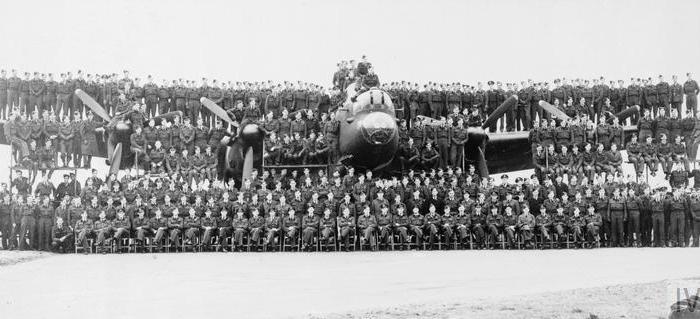
Header Image: The personnel of No. 75 (New Zealand) Squadron RAF assembled in front of, and on, an Avro Lancaster at Mepal, Cambridgeshire. (Source: © IWM (HU 94991))

[1] In America, Overy’s book has been published under the title, The Bombers and The Bombed: Allied Air War over Europe, 1940-1945 (2014). This version misses out significant elements of the early period covered in the UK edition of Overy’s book.

[2] On this theme, see: Tami Davis Biddle, ‘Book Review – The Bombing War: Europe, 1939–1945 by Richard Overy,’ War in History, 21:4 (2014), pp. 553-5.

[3] Adam Tooze, ‘To Break an Enemy’s Will,’ Wall Street Journal, 12 July 2014.

[4] Richard J. Evans, ‘The Bombing War: Europe 1939‑1945 by Richard Overy – Review,’ The Guardian, 27 September 2013.

[5] Biddle, ‘Book Review,’ pp. 553-5

[6] Gary Sheffield, ‘Death from the Skies,’ New Statesman, 142:5179 (2013), pp. 42-3.

[7] Carl von Clausewitz, On War, edited and translated by Michael Howard and Peter Paret (Princeton: Princeton University Press, 1989), p. 358.

[8] Ibid., p. 87.

Happy New Year and a Look Ahead

Happy New Year and a Look Ahead

By the From Balloons to Drones team

Well, 2019 is finally upon us so here is to wish all our readers and contributors a Happy New Year. We hope to continue to deliver high-quality material throughout the next year, but we can only do this if we receive contributions. As such, if you are a postgraduate student, academic, policymaker, service personnel or a relevant professional involved in researching the subject of air power and you are interested in writing, then please get in contact.

Biplanes at War

Regarding forthcoming titles, it seems as if the early part of 2019 is going to be focused on the US experience with some exciting titles being published. First up, the University of Kentucky Press is releasing the first two titles in their new ‘Aviation and Air Power’ that is edited by our very own Brian Laslie. The first titles are Wray Johnson’s Biplanes at War: US Marine Corps Aviation in the Small Wars Era, 1915-1934 and Lectures of the Air Corps Tactical School and American Strategic Bombing in World War II, which has been edited by Phil Haun.

Winning Armagedden

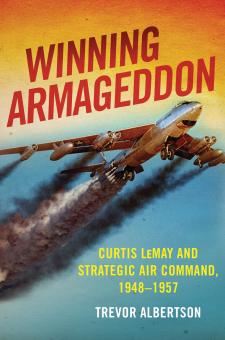
Next up, Naval Institute Press has another number of exciting titles coming up including William Trimble’s Admiral John S. McCain and the Triumph of Naval Air Power. Last year Naval Institute Press published Melvin Deaile’s study of the organisational culture of the USAF’s Strategic Air Command and this year they will be releasing Trevor Albertson’s Winning Armageddon: Curtis LeMay and Strategic Air Command, 1948–1957. The final title from Naval Institute Press, James Libbey’s Foundations of Russian Military Flight, 1885-1925, should be a welcome addition to the literature given the paucity of work on Russian air power in the early years of the twentieth century.

Harnessing

Several other publishers have some exciting titles on the cards including Bold Venture: The American Bombing of Japanese-Occupied Hong Kong, 1942–1945 by Steven Bailey and published by Potomac Books. Perhaps the most interesting looking title is Lori Henning’s forthcoming Harnessing the Airplane: American and British Cavalry Responses to a New Technology, 1903–1939 from the University of Oklahoma Press. This looks to be a fascinating account of how one arm of the army dealt with the rise of an innovative technology that threatened its core role.

If these books are an indication of what is coming in 2019, then we should be in for a good year regarding publications. Hopefully, many of these titles will be reviewed here on From Balloons to Drones.

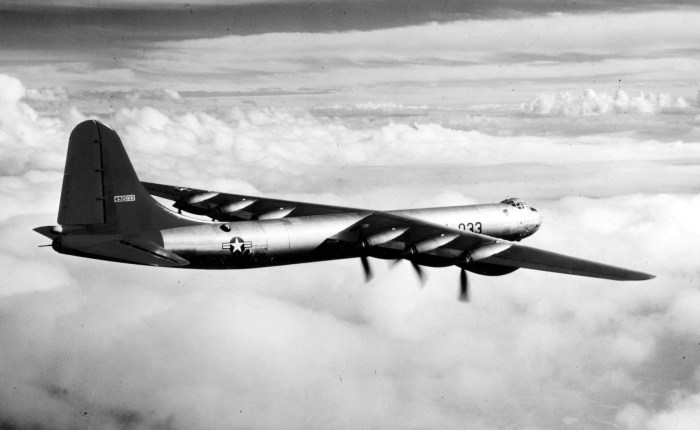
Header Image: A Convair B-36B Peacemaker of the United States Air Force. (Source: National Museum of the US Air Force)

Christmas #Airpower Reading List

Christmas #Airpower Reading List

By the From Balloons to Drones team

Merry Christmas and Happy Holidays from the team at From Balloons to Drones. It has been an excellent year for the advancement and study of air power, and it has been a remarkable year for the website as well. We added three co-editors to the site and surpassed our 50,000-hit mark!

As we enter the holiday season, we know that our readers either have some time off coming up or are looking for some recommendations to add to their holiday shopping lists. So, we thought it would be a good idea to have our editors put together a short list of their favourite books from our year of reading and reviewing. However, before we get onto the list here are the top five articles published by From Balloons to Drones during 2018:

  1. Michael Hankins, ‘Inventing the Enemy: Colonel Toon and the Memory of Fighter Combat in Vietnam’;
  2. Wing Commander André Adamson and Colonel Matthew Snyder, ‘The Challenges of Fifth-Generation Transformation’;
  3. Michael Hankins, ‘A Discourse on John Boyd: A Brief Summary of the US Air Force’s Most Controversial Pilot and Thinker’;
  4. Lieutenant Colonel Tyson Wetzel, ‘#HistoricBookReview – Sierra Hotel: Flying Fighters in the Decade After Vietnam’;
  5. Thomas Withington, ‘Bringing It All Back Home: How one sortie by the No. 1474 Flight RAF in December 1942 helped save the lives of countless aircrew.’

Now onto our Christmas air power reading list…

Dr Ross Mahoney

41IVdzZMc4L._SX331_BO1,204,203,200_

James Pugh, The Royal Flying Corps, the Western Front and the Control of the Air, 1914-1918 (Abingdon: Routledge, 2017). I must admit it has been a slow year for me reading wise and the titles here will be reviewed in the new year. However, onto my list and first up we have James Pugh’s excellent study of the Royal Flying Corps in the First World War and its understanding of the concept of control of the air. Control of the air remains a central tenant of modern air power thinking; however, the ideas surrounding this concept go back much further. In this study, Pugh provides an excellent analysis of the development of British thinking about control of the air with specific reference to the RFC and the war over the Western Front. It is a much-needed addition to the literature and worth a read.

Broken Wings

Stephen Renner, Broken Wings: The Hungarian Air Force, 1918-45 (Bloomington, IN: Indiana University Press, 2016). Ok, this one dates to 2016, but I have only just finished it after reading it on an off since it came out. However, this is an essential study for two reasons. First, small air forces tend to be overlooked in the literature concerning the early development of air power and secondly, there is little in English on-air forces from central and eastern Europe. As such, even for just these reasons, Renner’s book is a welcome addition to the literature. Furthermore, however, Renner provides an excellent study into the challenges faced by the Hungarians in this period, which makes for fascinating reading.

fearless_cvr4

Adam Claasen, Fearless: The Extraordinary Untold Story of New Zealand’s Great War Airmen (Auckland: Massey University Press, 2017). The First World War centenary has seen many books published of which some are good and some not so good. Many of the works on air power have remained firmly camped in the ‘Knights of the Air’ trope that has become so common. Thankfully, however, we have also seen works such as Claasen’s work on New Zealand airmen appear. In this book, Claasen’s firmly places the experience of the around 850 New Zealanders who served in Britain’s air services within their imperial context. In this respect, Claasen’s follows on from the work of S.F. Wise on the Canadians and Michael Molkentin’s more recent work on Australia and is a welcome addition to our understanding of the imperial composition of Britain’s air services in the early twentieth century.

Runner-up:

Hanbook of Air Power

John Andreas Olsen (ed.), Routledge Handbook of Air Power (Abingdon: Routledge, 2018).  I reviewed this one here, so I shall not say too much more apart from to reiterate that if you are looking for a good introductory overview about air power, then this is an excellent addition to the library. Olsen has, as usual, brought together an outstanding line-up of scholars to consider critical issues related to air power.

Alexander Fitzgerald-Black

One in a thousand

Graham Broad, One in A Thousand: The Life and Death of Captain Eddie McKay, Royal Flying Corps (Toronto: University of Toronto Press, 2017). The First World War centenary is behind us, but it has left great historiographical additions for us to pour over. Graham Broad’s excellent microhistory of one of Canada’s first aces is three books in one. It is also a how-to book of best practices for historical research and analysis as well as an insightful commentary on the philosophy of history. You will enjoy the author’s engaging narrative as he traces Captain McKay’s life from the rugby pitch to the Wright Brothers School of Aviation, to his fleeting fame and eventual death in the contested and deadly skies above the Western Front. History teachers, especially at the senior undergraduate and graduate level, will also find the book an exceptional resource for training the minds of budding historians.

Beyond

Stephen Bourque, Beyond the Beach: The Allied War Against France (Annapolis, MD: Naval Institute Press, 2018). I picked up this book for two reasons. First, I was recently hired at the Juno Beach Centre, Canada’s Second World War Museum on the D-Day beaches. Second, with the upcoming 75th anniversary of the invasion of Normandy, it was about time that we had a detailed English-language study of the cost suffered by the French people in that great invasion. Readers will appreciate Bourque’s approach in dealing with General Dwight Eisenhower and his air commanders’ lines of action (effort). These targets included everything from airfields and ports to French towns or cities and the bridges, marshalling yards, and factories therein. As we move into this anniversary, it is important to remember that while the Allies were on the right side of history, 60,000 French civilians paid a dear price for their country’s freedom.

Gooderson

Ian Gooderson, Air Power at the Battlefront: Allied Close Air Support in Europe, 1943-1945 (London: Frank Cass, 1998). This one is not recent, but I was thrilled to discover that my university library owns a copy. I was struck by just how comprehensive Gooderson’s analysis is, and I found some of his evidence and conclusions comfortably surprising. For instance, although the Allied air forces assumed armed reconnaissance to be safer than close air support, the opposite was true. At the same time, air support was probably of greater value beyond the battlefront (greater opportunity comes with greater danger). The book also impressed upon me the importance of timing air strikes carefully and air power’s psychological effects, for better or worse.

Runner-up:

Why Air Forces Fail

Robin Higham and Stephen J. Harris (eds.), Why Air Forces Fail: The Anatomy of Defeat, Revised and Expanded Edition (Lexington, KT: University Press of Kentucky, 2016). This was one of the first scholarly history books I ever read as a high school student. Its engaging chapters about how various air forces across the decades have failed to meet their objectives offer complex answers to a simple question: why did they fail? Although, as Randall Wakelam noted, he had hoped for more from the new edition, though newcomers will find the book a valuable addition to any aviation history library.

Dr Mike Hankins

AlwaysMelvin Deaile, Always at War: Organizational Culture in Strategic Air Command, 1946-62 (Annapolis, MD: Naval Institute Press, 2018). This book is not only an excellent summary of the formative years of Strategic Air Command during the early Cold War, but Deaile gives us a close look at what it felt like to be there. What was the culture like? What was the daily life like for these pilots? What made SAC so unique and such a key component of American defence during the Cold War? Moreover, why is General Curtis LeMay such a big deal? This book gives excellent, substantive answers to all these questions.

Problem

Timothy P. Schultz, The Problem with Pilots: How Physicians, Engineers, and Airpower Enthusiasts Redefined Flight (Baltimore, MD: Johns Hopkins University Press, 2018). Flying is hard–much harder than we give it credit for today. The capabilities of modern aircraft all came with difficult times of dangerous experimentation in the fields of medicine, engineering, and technology. The human body was not made to fly, and the limiting factor on advanced aircraft designs has always been humans. How we solved those problems and made complicated, advanced aircraft possible is the fascinating story of this book about integrating man and machine in increasingly sophisticated ways.

51nxvKRLhkL._SX329_BO1,204,203,200_

Steven A. Fino, Tiger Check: Automating the US Air Force Fighter Pilot in Air-To-Air Combat, 1950-1980 (Baltimore, MD: John Hopkins University Press, 2017). Fighter pilots are a strange breed–they have a unique culture all their own. However, how does that culture evolve when it is faced with new technologies that threaten to automate tasks that fighter pilots hold dear? Former F-15 pilot Steve Fino explores just that in this incredible book. Examining the F-86 Sabre, the F-4 Phantom II, and the F-15 Eagle, Fino explores the evolving relationship between man and machine in the cockpit of jet-age fighter planes. You can find my review of this book here.

Runner-up:

Bloody

Peter Fey, Bloody Sixteen: The USS Oriskany and Air Wing 16 during the Vietnam War (Lincoln, NE: Potomac Books, 2018). The USS Oriskany had the highest loss rates of any navy air unit in the Vietnam War. In addition to two massive fires, it was the boat from which Jim Stockdale and John McCain (among many others) became POWs for years. Peter Fey’s accessible, exciting narrative traces the Oriskany throughout its multiple tours and gives a palpable sense of what it was like to be on board and in the cockpit of the A-4 Skyhawks, F-8 Crusaders, and other planes the ship carried. The book is not perfect, but it is an engaging read especially aimed at a general audience.

Dr Brian Laslie

Origins of American Strategic Bombing Theory

Craig Morris, The Origins of American Strategic Bombing Theory (Annapolis, MD: Naval Institute Press, 2017). This book is ‘a twisting tale of individual efforts, organizational infighting, political priorities, and technological integration.’ It is also a book that places the development of American bombing theory firmly in the context of its time and rightly puts individuals into their proper place. Gone is the Billy Mitchell-centric view of air power development to be (rightly) replaced with an emphasis on Benjamin Foulois, Mason Patrick, William Sherman, Lord Tiverton, and others who worked tirelessly on the theories and doctrines of air power. In my opinion, the single best volume on American air power in the inter-war years.

aerial

Frank Ledwidge, Aerial Warfare: The Battle for the Skies (Oxford: Oxford University Press, 2018). I wrote about this book earlier in the year for The Strategy Bridge and called it ‘the single finest primer on air power covering every aspect from if you’ll excuse me, balloons to drones.’ I stand by that statement. This is the perfect primer for the history of air power. I cannot imagine someone interested in our profession not owning this book. I wish I had copies to serve as stocking stuffers…

Phantom

David R. Honodel, The Phantom Vietnam War: An F-4 Pilot’s Combat over Laos (Denton, TX: University of North Texas Press, 2018). This is a ‘there I was’ and ‘shoot the watch’ book, but it is also an amazingly poignant and honest look about learning to survive in a war the American people were unaware was occurring. It is in the best of its class at conveying the transformation a person can take in the crucible of a forgotten war over the skies of Laos. ‘Buff’ Honodel passed away earlier this year, and as I count my blessings this year, one of them will be for a man like Buff.

Runner-up:

Brooke-Popham

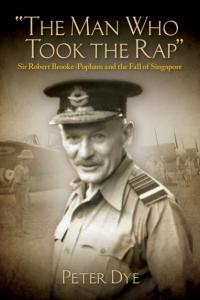
Peter Dye, “The Man Who Took the Rap”: Sir Robert Brooke-Popham and the Fall of Singapore (Annapolis, MD: Naval Institute Press, 2018). This one landed on my desk rather late in the year but intrigued me almost immediately. As someone who has recently written a biography of a relatively unknown figure myself, I was excited to dive into this one, and it does not disappoint. As air power scholarship continues to expand, it has become an enjoyable pastime of mine to read about lesser-known, but equally important contributors to air power development. This book also fills a void for me in expanding my knowledge and understanding of other nation’s air power efforts.

As well as providing you with our Christmas reading list, we would like to recognise the various presses and our social media friends who have been hard at work this year publishing the books above and some not strictly related to air power, but would make great gifts such as Redefining the Modern Military, edited by Tyrell Mayfield and Nathan Finney, and The Colour of Time: A New History of the World, 1850-1960 by Marina Amaral.

Our favourite military and air power related presses include Naval Institute Press and University Press of Kentucky who keeps on adding some excellent titles to their lists. Keep a lookout to the site in 2019 as we embark on expanding our writing on space power and space exploration a lot of which will be coming from the NASA Office of History and the University Press of Florida.

Finally, we would like to thank our contributors and readers. Without them, this site would not exist so thank you. If you want to write for us, then find out how to contribute here.

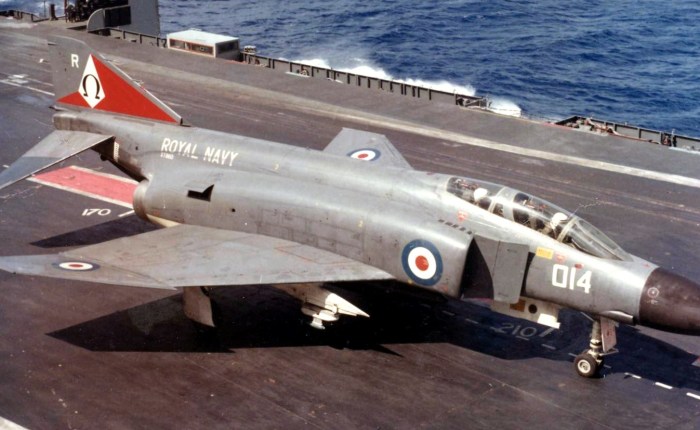
Header Image: A Royal Navy McDonnell Douglas Phantom FG.1 from 892 Naval Air Squadron aboard the aircraft carrier HMS Ark Royal (R09). (Source: Wikimedia)

2018: An Australian Space 2.0 Odyssey

2018: An Australian Space 2.0 Odyssey

By Squadron Leader Michael Spencer

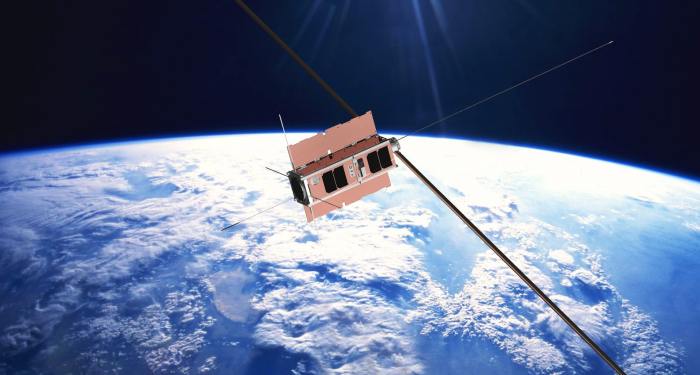
These spacecraft are able to gather remote sensing information with radios and cameras, and are the sort of innovative space capability that can help meet many ground-based needs in ways that make sense for Australia. Because they have re-programmable software defined radios on board, we can change their purpose on the fly during the mission, which greatly improves the spacecraft’s functional capabilities for multiple use by Defence.[1]

Professor R Boyce, Chair for Space Engineering, UNSW Canberra (2017)

The Royal Australian Air Force (RAAF) and Defence Science Technology Group (DST) of the Australian Department of Defence have separately established partnerships with University of New South Wales (UNSW) Canberra which has resulted in a space program with one DST space mission already in orbit, one RAAF mission about to be launched. Additional follow-on missions are planned for each of RAAF and DST for launch in the near future. A combination of disruption in space technology, associated with ‘Space 2.0’ that makes space more accessible, and a commitment by UNSW Canberra to develop a space program, has delivered M1 as the first Australian space mission for the RAAF. These small satellite missions will provide research that will give a better understanding, for the current and future Defence workforce, of the potential opportunities for exploiting the space domain using Space 2.0 technology. As such, this article explores the move away from Space 1.0 to Space 2.0. While discussed in more detail below, broadly speaking, Space 2.0 relates to the reduced costs of accessing space and conducting space missions with commercial-off-the-shelf satellite components for lower-cost small satellites and mission payloads.

20170315unk0000000_008(1)
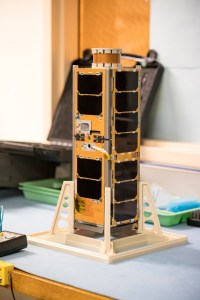
A lunch-box sized satellites (CubeSats) for the Buccaneer and Biarri space missions. (Source: Australian Department of Defence)

The objective of the ADF’s employment of the space domain is to support a better military situation for the joint force in operations planned and conducted in the air, sea, ground, and information domains. Currently, ADF joint warfighting operations are critically dependent on large and expensive satellites that are owned and operated by commercial and allied service providers. As such, a Defence-sponsored university program is currently underway to explore the potential benefits of employing microsatellites as a lower-costing option to augment the capabilities traditionally fulfilled by the large-sized satellites. Furthermore, orbiting space-based sensors can view much larger areas of the Earth in a single scan than are possible with airborne sensors. Thus, a space-supported force element can observe, communicate, and coordinate multiple force elements dispersed over large areas in multiple theatres of operations. Finally, the transmission of signals above the atmosphere enables better communications between satellites, performed over long distances over the horizon without atmospheric attenuation effects, to enable better inter-theatre and global communications.

In the twentieth century, space missions were only affordable through government-funded projects. Government sponsored organisations and missions continued to grow in size and their capabilities. In retrospect, government agencies and space industry now refer to these large-sized, expensive, and complex mission systems as ‘Space 1.0’ technology.[2] As national space agendas drove the development of bigger space launch vehicles able to carry and launch larger payloads with one or more large satellites, changes in government funding priorities away from space lift services began to stifle innovation in space technology which remained as high-end and expensive technology. Recently, in the twenty-first century, the large government agencies looked to commercial industries to find ways to innovate and develop cheaper alternatives for launching and operating space missions. This resulted in the commercialisation of affordable access to space, now commonly referred to as Space 2.0; an industry-led evolution that is generating more affordable commercial alternatives for space launch services and operations management, reusable space launch vehicles and, significantly, miniaturised satellite technology.[3] For example, in 1999, California Polytechnic State University, San Luis Obispo, and Stanford University’s Space Systems Development Lab developed the CubeSat standard, prescribed for the pico- and nanosatellite classes of microsatellites.[4] The CubeSat initiative was initially pursued to enable affordable access to reduce the barriers for university students to access space. CubeSat was initially designed to offer a small, inexpensive, and standardised satellite system to support university student experiments.

CubeSat modules are based on building up a satellite with a single or a multiple number of the smallest unitary 10cm cube module, referred to as a ‘1U’ CubeSat, i.e. a picosatellite.[5] This basic building block approach has enabled a standardisation in satellite designs and launchers. Each 1U can weigh up to 1.5 kg[6]; a ‘6U’ CubeSat, i.e. a nanosatellite, measures 30cm x 20cm x 10cm, six times a 1U and weighs up to twelve kilograms[7]. Microsatellites are typically comprised of a standardised satellite chassis and bus loaded with an onboard computer, ‘star tracker’ subsystem to measure satellite orientation, hardware to control satellite attitude and antenna pointing in orbit, solar power subsystem, communications subsystem, a deployable mechanism actuator for unfolding the solar panels and antennas, and the mission payload, i.e. mission-related sensors, cameras, radio transmitter/receiver and the suchlike.

Microsatellite projects exploit commonly available Commercial-Off-The-Shelf (COTS) technology to reduce costs and development schedules, even in military mission systems. The use of COTS technology enables a simplified plug-and-play approach to microsatellite engineering and design. By having pre-made, interchangeable and standardised components, microsatellite designs can be rapidly assembled, tested, evaluated, and modified until an acceptable solution is realised. Agile manufacturing methods such as 3D printing can further reduce the time taken to engineer and manufacture a viable operational microsatellite design.[8]

20161017adf8588365_014
The Buccaneer miniature satellite CubeSat at the UNSW Canberra satellite research laboratory at the Australian Defence Force Academy in Canberra on 17 October, 2016.(Source: Australian Department of Defence)

The CubeSat model has become a commonly accepted standard for low-cost, low-altitude orbit, and short duration space missions. Microsatellites are relatively cheaper, more flexible in mission designs, and can be built more rapidly when compared to larger satellites, and can be replaced on-orbit more frequently, thereby taking advantage of recent technological innovation. Their small size can also exploit spare spaces in the payload section of the launch vehicles that are scheduled and funded mainly for larger satellites. This is commonly referred to as a ‘rideshare’ or ‘piggyback.’ The challenge for the designers of such ‘piggyback’ missions is to find a suitable launch event with a date and planned orbit that matches the readiness and mission of the microsatellite.

Space 2.0 evolution has realised commercial alternatives to the traditional space mission designs that used heavy satellites launched from heavy rockets. These smaller and cheaper rockets have been specifically designed to launch lighter payloads of microsatellites. In 2017, an Indian Polar Satellite Launch Vehicle using a PSLV-C37 heavy-lift rocket set a world record in lifting 104 small satellites into orbit in a single space launch event. As the Times of India reported:

India scripted a new chapter in the history of space exploration with the successful launch of a record 104 satellites by ISRO’s [Indian Space Research Organisation] Polar Satellite Launch Vehicle in a single mission. Out of the total 104 satellites placed in orbit, 101 satellites belonged to six foreign countries. They included 96 from the US and one each from Israel, the UAE, the Netherlands, Switzerland and Kazakhstan.[9]

The growing maturity and expanding capabilities of CubeSat systems have seen a growing acceptance beyond university users. For example, DST and UNSW Canberra are designing, building, and testing microsatellite designs for space missions to meet Defence needs in Australia.

Space 2.0 standards and microsatellites are not intended to replace the traditional large satellites deployed into higher altitude orbit missions. Large and small-sized satellites each offer different benefits and limitations. Large satellites can collect information with higher fidelity when configured with bigger optical and radiofrequency apertures, with room available for better pointing control subsystem, larger and more powerful on-board computing systems, and multiple mission, all needing a larger power subsystem. Alternatively, disaggregating space missions across different small satellites, deployed into a large constellation, may be more survivable to environmental hazards and resilient to interference in a contested environment.

Small satellite missions can now fulfil the potential mission needs of military, commercial operators, scientists and university students. Microsatellites have already been employed for communications, signals intelligence, environmental monitoring, geo-positioning, observation and targeting. They can perform similar functions as larger satellites, albeit with a much smaller power source and reduced effective ranges for transmitters and electro-optical devices. They are easier and cheaper to make and launch for a short-term, low-Earth orbit mission. This is ideal for employing space missions to improve ADF capabilities on the ground.

Defence has partnered with UNSW Canberra, including ‘UNSW Canberra Space’ – a team of space academics and professionals – to collaborate in space research, engineering, and mission support services with Space 2.0 satellite technology in space missions for DST and RAAF. When combined with new and agile manufacturing techniques, these microsatellite missions provide the ADF with opportunities to test and evaluate potential options for operationally responsive space capabilities.

UNSW Canberra has already built the ‘Buccaneer Risk Mitigation Mission’ (BRMM) as its inaugural microsatellite space mission, in partnership with DST.[10] In November 2017, NASA successfully launched BRMM from Vandenberg Air Force Base in California. BRMM is a collaboration, in both the project engineering project and space mission management, between DST and UNSW Canberra to jointly fly and operate the first Australian developed and operated defence-science mission. BRMM is currently operational in low-Earth orbit, at a height above the ionosphere which is a dynamic phenomenon that changes with space weather effects and the Sun’s position.

The importance of this orbit is that the RAAF is dependent on the ionosphere to enable functioning of its Jindalee Operational Radar Network (JORN) systems, which is a crucial component of a national layered surveillance network that provides coverage of Australia’s northern approaches.[11] The JORN coverage and system performance are critically dependent on the ionosphere. The BRMM satellite is configured with a high-frequency receiver to measure the JORN signal that passes through the ionosphere. These signal measurements allow DST scientists and engineers to study the quality of JORN’s transmitted beam and signal, and the propagation of High Frequency (HF) radio waves that pass skywards through the ionosphere. BRMM was planned with a one-year mission-life but could stay in orbit for up to five years, depending on space weather effects and atmospheric drag.[12] BRMM is also a risk reduction activity for the ‘Buccaneer Main Mission’ (BMM) as a follow-on space mission.[13] BRMM will provide space data on how spacecraft interact with the orbital environment, to improve the satellite design for BMM, and also provide mission experience that can be used to improve the operation of the BMM. The BMM will also be used to calibrate the JORN high-frequency signals but will use an improved payload design, based on a heritage of BRMM. BMM is planned for a launch event in 2020.

This space odyssey pursued by UNSW Canberra is also bringing direct benefits to RAAF. The UNSW Canberra space program includes parallel efforts to develop three CubeSats, funded by RAAF, for two separate missions in separate events. These space missions will support academic research into the utility of microsatellites, configured with a small-sized sensor payload, for a maritime surveillance role. The first mission, ‘M1,’ will deploy a single CubeSat, currently scheduled to share a ride with a US launch services provider in mid-November 2018.[14] UNSW Canberra will continue the program and develop a second mission, ‘M2,’ which is planned to deploy two formation-flying, with inter-satellite communications, in a single space mission in 2019. The M1 and M2 missions will support research and education for space experts in Defence, and UNSW Canberra, to further explore and realise new possibilities with Space 2.0 technologies.

To conclude, the advent of Space 2.0 has reduced cost barriers and complexity to make access to space missions and space lift more affordable for more widespread uses. The increased affordability of space technology has helped to demystify mission systems and increase the interests and understanding of the potential opportunities for Space 2.0 missions as alternatives to more expensive and more complex space missions. Additionally, Space 2.0 enables agility in the design phase for the rapid development of new and viable concepts for space missions hitherto not possible with Space 1.0 technology. Space 2.0 evolution makes it possible for ADF to consider affordable space options; UNSW Canberra’s knowledge and technical achievements in space engineering and operations, with DST for Buccaneer and RAAF for M1 and M2, will provide critical research for considering the potential for new space missions for Australia.

Squadron Leader Michael Spencer is an Officer Aviation (Maritime Patrol & Response), currently serving in the RAAF Air Power Development Centre, analysing potential risks and opportunities posed by technology change drivers and disruptions to the future employment of air and space power. His Air Force career has provided operational experiences in long-range maritime patrol, aircrew training, and weaponeering, and management experiences in international relations, project management in air and space systems acquisitions, space concepts development, and joint force capability integration. He is an Australian Institute of Project Management certified project manager and also an Associate Fellow of the American Institute of Aeronautics & Astronautics.

Disclaimer: The views expressed in this document are those of the author and do not necessarily reflect the official policy or position of the Department of Defence, Royal Australian Air Force, or the Government of Australia. The Commonwealth of Australia will not be legally responsible in contract, tort or otherwise, for any statements made in this document.

Header Image: Lunch-box sized satellites (CubeSats) used for the Buccaneer and Biarri space missions. (Source: Australian Department of Defence)

[1] UNSW Sydney, ‘RAAF invests $10 million in UNSW Canberra Space missions,’ UNSW Newsroom (2017).

[2] F. Burke, ‘Space 2.0: bringing space tech down to Earth,’ The Space Review, 27 April 2009.

[3] Ibid.

[4] NASA, ‘CubeSat 101 – Basic Concepts and Process for First-Time CubeSat Developers,’ NASA CubeSat Launch Initiative, NASA Website, 2017.

[5] ‘What are SmallSats and CubeSats?,’ NASA Website, 2015.

[6] Cubesat, 1U-3U CubeSat Design Specification, Revision 13, The CubeSat Program, 2014.

[7] Cubesat, 6U CubeSat Design Specification, Revision 1.0, The CubeSat Program, 2018.

[8] European Space Agency, ‘Ten Ways 3D Printing Could Change Space,’ Space Engineering & Technology, 2014.

[9] U. Tejonmayam, ‘ISRO creates history, launches 104 satellites in one go,’ The Times of India, 15 February 2017.

[10] H. Kramer, ‘Buccaneer CubeSat Mission,’ eoPortal Directory, 2017.

[11] Royal Australia Air Force, ‘Jindalee Operational Radar Network,’ 2018.

[12] Kramer, loc cit.

[13] Ibid.

[14] UNSW Canberra, ‘M1 satellite on track for September launch,’ 2018.