#ResearchNote – The Royal Australian Air Force Goes to War over Korea

#ResearchNote – The Royal Australian Air Force Goes to War over Korea

By Dr Ross Mahoney

Editorial note: This article first appeared on the author’s website. It has been reproduced here with permission.

On 25 June 1950 local time, forces of the Democratic People’s Republic of Korea (North Korea) crossed the 38th Parallel and invaded the Republic of Korea (South Korea). Launching Operation Pokpung, North Korea quickly moved south and by 28 June had occupied the capital of South Korea, Seoul. In response to this act of aggression, on 25 June 1950, in New York, the United Nations passed Resolution 82, which condemned the invasion, called for a cessation of hostilities, and demanded the withdrawal of forces beyond the 38th Parallel. Failure to comply with the resolution led to the adoption of Resolution 83, which recommended that UN members provide military forces to support South Korea and restore peace.

Korea, after 35 years of occupation by the Japanese, was split into two zones of occupation in 1945. The Soviet Union occupied the north, while the United States occupied the south. While the intention had been to unify the Korean Peninsula, problems arose between the communist North and the nationalist South. The failure of the Communist Party (the Workers’ Party of North Korea) to participate in the 1948 elections, combined with the abstention of several South Korean politicians, led to the eventual development of two distinct systems of government.[1] After the communist victory in the Chinese Civil War in 1949 and after receiving tacit support from Joseph Stalin, North Korea prepared to invade South Korea.

Australia’s response to Resolution 83 was to support the UN. At this time, the Australian military was providing forces to the British Commonwealth Occupation Force (BCOF) in Japan. Shortly after the passage of Resolution 83, the Department of External Affairs received communications from the Americans regarding the support Australia was willing to provide.[2] Initially, the Royal Australian Navy vessels (RAN) HMAS Shoalhaven and Bataan (the latter en route to Japanese waters to relieve the former) were tasked with supporting the withdrawal of nationals from South Korea; however, by 29 June, they were tasked with assisting American operations.[3] In cabling this news to the Australian Ambassador to the United States, Norman Makin, the Minister for External Affairs, Percy Spender, noted the presence of No. 77 Squadron, Royal Australian Air Force (RAAF), in Japan. However, he stressed it represented ‘practically the whole of our effective operational fighter strength in Australia or elsewhere.’[4]

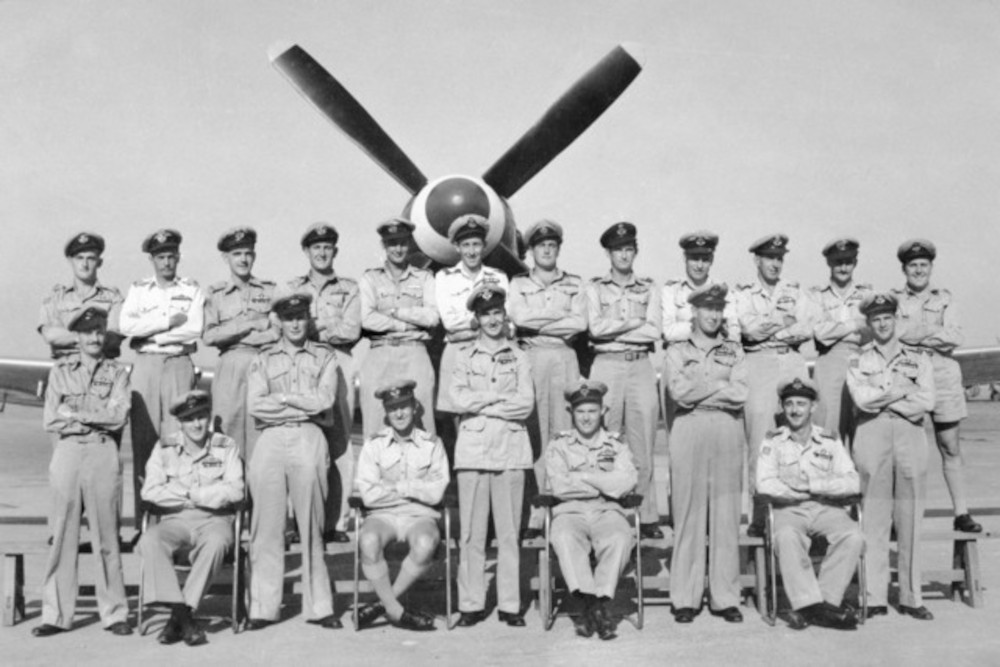
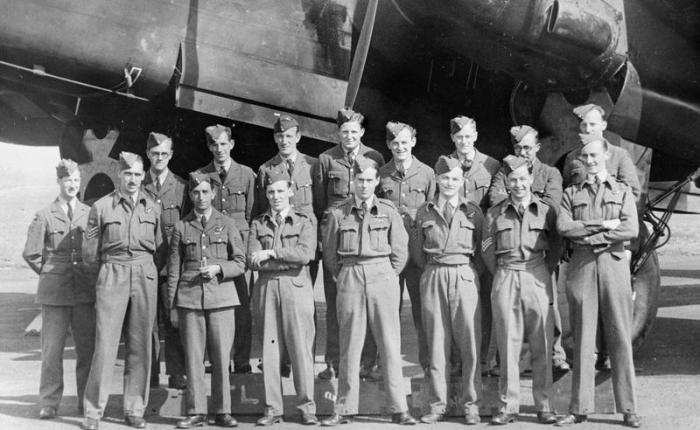
Group portrait of No. 77 Fighter Squadron, RAAF, 26 September 1948. Identified, left to right, back row: Warrant Officer (WO) Jim Flemming; WO W. Michelson; Flying Officer (FO) W. Horsman; WO M. Garroway; WO W. Rivers; Flight Lieutenant (Flt Lt) C.R. Noble; WO Fairweather; Flt Lt J. Grey; FO K. McLeod; WO B. Nichols; Flt Lt T. Murphy. Front row: FO W.O.K. Hewett; Flt Lt R. Hill; Flt Lt W. Ives; Flt Lt C. Butcher; Flt Lt S. Bradford; Squadron Leader F. Lawrenson; Flt J.I. Adams; Flt Lt G. Strout; Flt Lt K. Godfrey. (Source: Australian War Memorial)

No. 77 Squadron had deployed to Japan as part of BCOF in 1946 as part of No. 81 Wing. In 1948, it was transferred to Iwakuni Air Base in Yamaguchi Prefecture, on the island of Honshu. The squadron had been re-equipped after the end of the Second World War with the North American P-51D Mustang. By June 1950, No. 77 Squadron was amid preparations to return to Australia, it having been announced in April that the remaining Australian forces in Japan would be repatriated. However, events overtook these preparations. 

On 29 June, the same day the Australian Government contributed the RAN to the war in Korea, the Supreme Commander of the Allied Powers in Japan, General Douglas MacArthur, requested No. 77 Squadron for operations over the Korean Peninsula. He had been informed by his principal air commander, Commander of the Far East Air Forces (FEAF), Lieutenant General George Stratemeyer, that he was in desperate need of long-range ground attack aircraft. As the Australian Official Historian of the Korean War, Robert O’Neill related, MacArthur had cabled the Commander of BCOF, Lieutenant General Sir Horace Robertson, to request the use of No. 77 Squadron. However, he had sent the message uncoded and not kept it from the entourage of reporters that he had taken with him on his tour of South Korea.[5] Stratemeyer embellished MacArthur’s position by heaping praise on No. 77 Squadron. While the praise was not unwarranted, it was clearly designed for effect. Indeed, Stratemeyer and his planners at FEAF had, in the words of the United States Air Force’s official history of air operations over Korea, ‘cast covetous glances’ at No 77 Squadron and its P-51 Mustangs.[6] MacArthur’s request for the deployment of No. 77 Squadron was widely reported in the Australian media alongside Stratemeyer’s praise for the unit before the Australian Government had a chance to respond.[7]

MacArthur’s request put the Australian Government in a challenging position. They still hoped to send No. 77 Squadron back to Australia, but alliance politics took centre stage, and by 30 June it was announced that the squadron would be committed to operations.[8] MacArthur had got his way. However, while No. 77 Squadron was committed to action, it operated from Iwakuni and would operate over Korea, but not be deployed to the peninsula. Moreover, due to poor weather, it would take several days for No. 77 Squadron to undertake its first sorties.

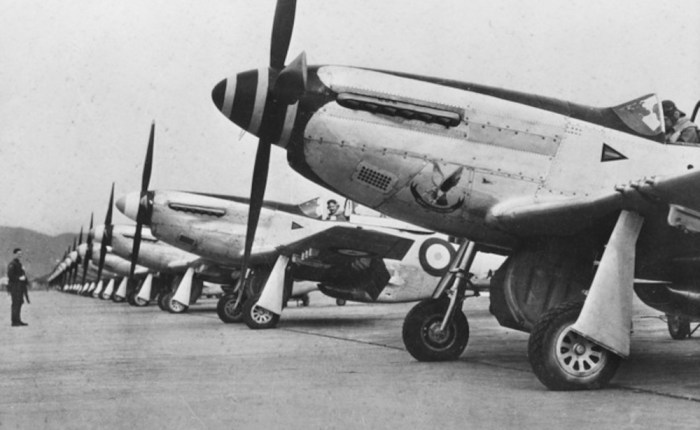
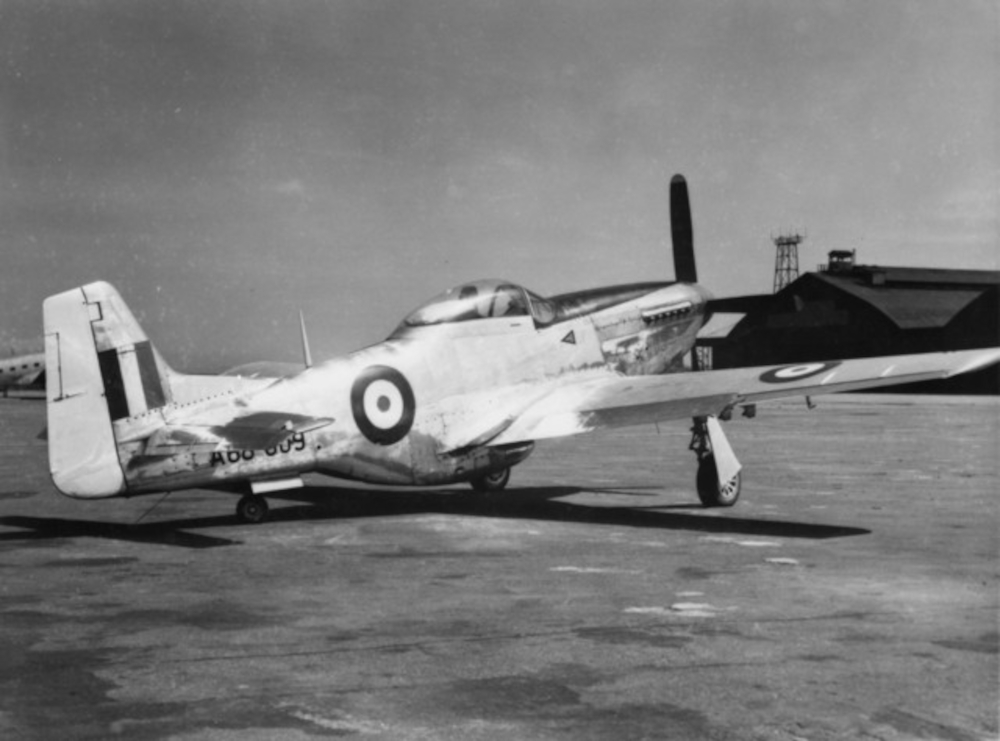
The North American P-51D Mustang aircraft A68-809, flown by Wing Commander Lou Spence DFC, when commanding No. 77 Squadron, RAAF, in Korea. Spence flew this aeroplane on 2 July when leading the second mission of the day. (Source: Australian War Memorial)

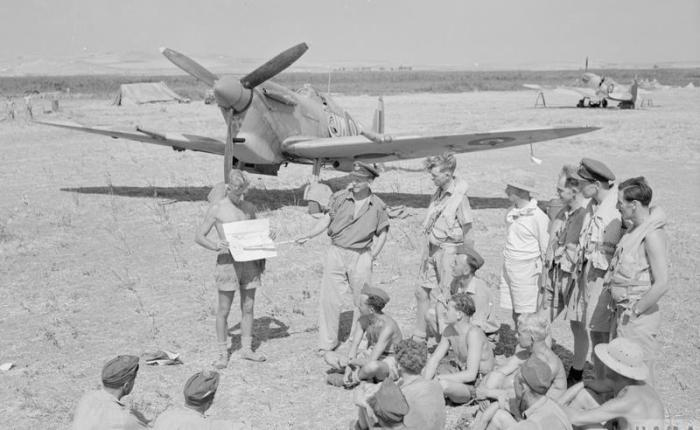
On 2 July, No. 77 Squadron undertook three sorties. The first was an ‘armed escort’ of four P-51s led by Squadron Leader Graham Strout for US Douglas C-47 Dakotas evacuating wounded soldiers from ‘Taijon’ (Daejeon) in Korea to Japan. One P-51 (A68-799) had to return to Iwakuni due to being unserviceable after take-off. The second sortie was a ‘close-armed escort’ mission led by the squadron commander, Wing Commander Lou Spence. The mission was to escort a group of US Douglas B-26 Invaders who attacked two bridges south of Seoul. One P-51 (A68-757) had to return due to unserviceability. The final mission saw six P-51s provide ‘armed escort’ to US Boeing B-29 Superfortresses who were attacking Yonpo airfield at Hamhung.[9] Despite the return of two aeroplanes to Iwakuni due to unserviceability, the sorties were relatively uneventful, despite several newspapers reporting that No. 77 Squadron downed one or two Yakovlev Yak-9 fighters.[10] No enemy aeroplanes were recorded as being encountered, and only in the two final sorties was any form of anti-aircraft fire encountered, though they caused no problem for the squadron. After a relatively inauspicious start, No. 77 Squadron would soon turn its attention to offensive operations, launching its first ‘armed attack’ with eight P-51s armed with rockets, attacking a convoy on a stretch of road between Heitaku and Suwon on 3 July. The attack claimed two locomotives, one truck, two staff cars, four other vehicles, and a bridge.[11]

The significance of No. 77 Squadron’s deployment over Korea came not in what the squadron physically achieved but in what its presence represented to alliance politics. The squadron’s first operations were widely reported both in Australia and abroad. In Australia, No. 77 Squadron’s first operation was reported in a typically functional manner, with many newspapers simply reporting on the character of the sorties. Nevertheless, some newspapers reported on the significance of the sorties in terms of Australian strategic policy, both foreign and domestic. For example, on 3 July, the Brisbane Telegraph noted that while the deployment of small-scale RAAF and RAN forces to support the effort in Korea was warranted to ‘honour Australian commitments to the United Nations’, any larger-scale deployment would need parliamentary agreement.[12] However, as an editorial in The Canberra Times reported, the rapid deployment highlighted ‘[t]wo extremes in the making of major decisions on policy have been illustrated by the reactions of the Government and of the Labour Party to the outbreak of hostilities in Korea.’[13] In short, the Australian Government acted quickly. At the same time, the Labor Party could ‘even comment on the situation until a meeting is held in Sydney next Wednesday [5 July], at which the policy will be decided.’[14] Perhaps unsurprisingly, it was reported that the Australian Communist Party had condemned the use of the RAAF, describing their deployment as a ‘scandal and a disgrace’ and demanding ‘the withdrawal of the R.A.A.F, from Korea.’[15]

More significantly, in the US, the rapid response of the Australian Government was noted. On 2 September, the Washington Evening Star reported on that ‘[t]he first combat mission of the Australians […] had a political significance. It made the air war a United Nations show […] No longer was the United States conducting any part of the Korean “police action” alone.’[16] That the term ‘political significance’ was used would not have been lost on readers, and a copy of this article was provided to the Department of External Affairs, as it aligned with Australian views on alliance politics.[17] Indeed, on 27 June, Makin had cabled Canberra to note that ‘the war had created a useful opportunity for putting to the State Department’ the creation of a ‘regional arrangement […] might help meet further crises.’[18] Thus, the failure to deploy No. 77 Squadron would have been inopportune and also demonstrated that, while a small contribution to the war effort, it had a significant political impact.

Thus ended the first day of operations for No. 77 Squadron over Korea. The squadron would deploy to Korea in October 1950 and eventually be re-equipped with the Gloster Meteor F.8. It would serve in Korea until October 1954, when it would transfer back to Japan and subsequently to Australia.

Dr Ross Mahoney is an independent scholar specialising in the history of war, with a particular focus on the use of air power and the history of air warfare. He is the Editor-in-Chief of From Balloons to Drones and currently the Senior Historian within the Heritage Policy team at Brisbane City Council in Australia. He has nearly 20 years of experience in the education, museum and heritage sectors in Australia and the United Kingdom, including serving as the inaugural Historian at the Royal Air Force Museum between 2013 and 2017. His other research interests are military leadership and command, military culture, and the history and development of professional military education. He also maintains an interest in transport history. He has published numerous articles, chapters and encyclopedia entries, edited two books, and delivered papers on three continents. His website is here.

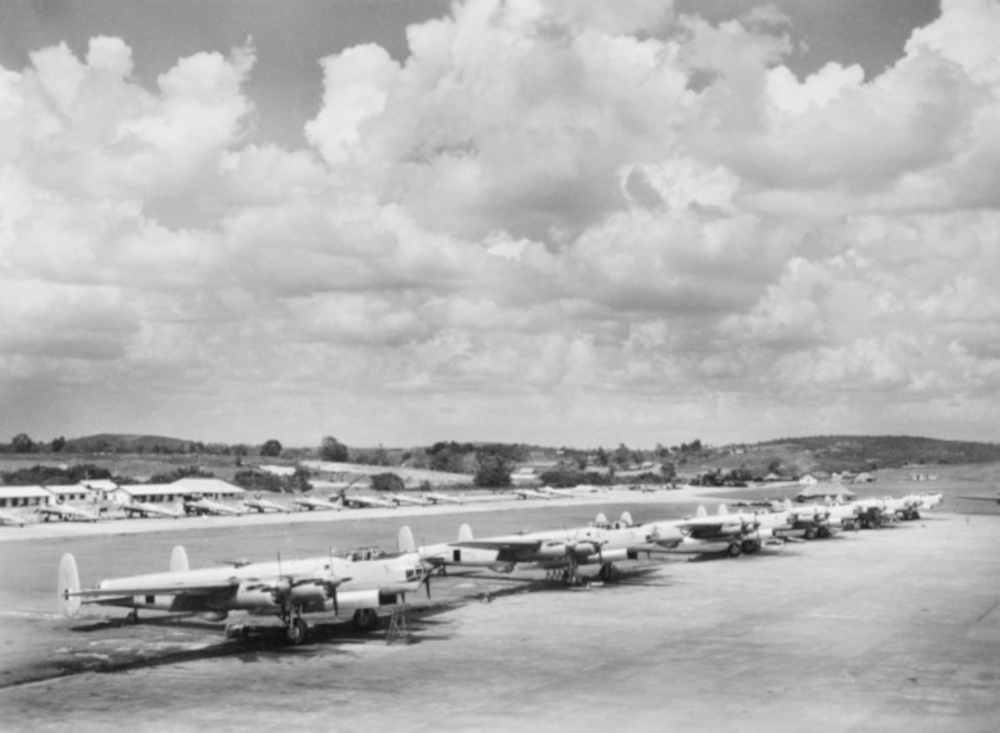
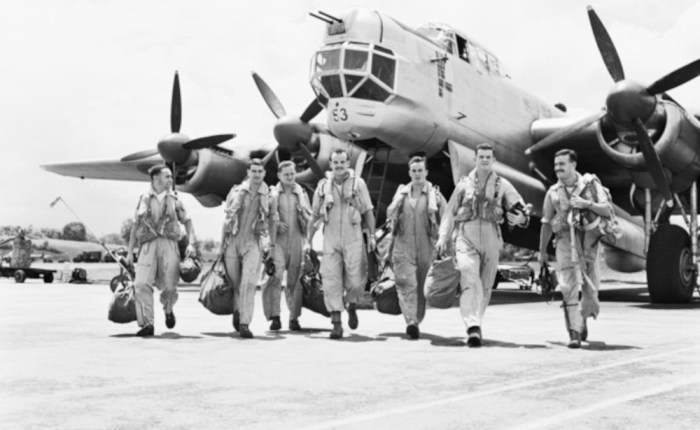
Header image: North American P-51D Mustangs of 77 Squadron RAAF, lined up on the tarmac at Iwakuni air base, Japan, c. 1950. (Source: Australian War Memorial)

[1] This is an overly simplified description of the development of the two Koreas in the period after the Second World War. For more detail, see: Allan Millett, The War for Korea, 1945-1950: A House Burning (Lawrence, KS: University Press of Kansas, 2005).

[2] Robert O’Neill, Australia in the Korean War, 1950-53 – Volume 1: Strategy and Diplomacy (Canberra, ACT: The Australian War Memorial and the Australian Government Publishing Service, 1981), p. 49.

[3] National Archives of Australia (NAA), A1838, 3123/7/3/4 PART 1, Statement by the Prime Minister, 29 June 1950; ‘Australia Backs U.N.,’ The Herald, 29 June 1950, p. 1; ‘Australian Units for Korea, Ships and Planes,’ Lithgow Mercury, 29 June 1950, 2.

[4] O’Neill, Australia in the Korean War, 1950-53 – Volume 1, p. 51.

[5] O’Neill, Australia in the Korean War, 1950-53 – Volume 1, pp. 51-2. On the repercussions, or lack thereof, of MacArthur’s ‘leak,’ see: O’Neill, Australia in the Korean War, 1950-53 – Volume 1, p. 54. Cameron Forbes claimed MacArthur told Australian Roy Macartney, who was Chief of the AAP-Reuters office in Tokyo. See: Cameron Forbes, ‘Fighting in the Giants’ Playground: Australians in the Korean War’ in John Blaxland, Micheal Kelly and Liam Brewin Higgins (eds.), In from the Cold: Reflections on Australia’s Korean War (Canberra, ACT, ANU Press, 2020), p. 89. Macartney certainly filed a story that was picked up by several newspapers. For example, see: ‘Australian Fighters Sought by MacArthur,’ The Canberra Times, 30 June 1950, p. 1; ‘MacArthur Seeks Use of Australian Fighters in Korea,’ Border Morning Mail, 30 June 1950, p. 1; ‘MacArthur Wants Australian Fighter Planes,’ Daily Advertiser, 30 June 1950, p. 1. O’Neill noted the presence of Macartney of MacArthur’s aeroplane but does not explicitly note that the latter told the former that he wanted No. 77 Squadron. O’Neill, Australia in the Korean War, 1950-53 – Volume 1, p. 51.

[6] Robert Futrell, The United States Air Force in Korea, 1950-1953 (New York, NY: Duell, Sloan and Pearce, 1961), p. 64.

[7] “R.A.A.F. Fighters Sought for South Korea,’ The Sydney Morning Herald, 30 June 1950, p. 1; ‘RAAF asked to Fight with U.S.,’ Daily Mirror, 30 June 1950, p. 1; ‘MacArthur Back; Wants to Use R.A.A.F.,’ Illawarra Daily Mercury, 30 June 1950, p. 1; ‘Mac Arthur asks for the R.A.A.F.,’ The Courier-Mail, 30 June 1950, p. 1; “Wants R.A.A.F. for Korea,’ The Mercury, 30 June 1950, p. 1.

[8] NAA, A1838, 3123/7/3/4 PART 1, Statement by the Prime Minister, 30 June 1950.

[9] NAA, A9186, 103, Detail of Operations, No. 77 Squadron, Operations Record Book, 2 July 1950.

[10] ‘RAAF Mustangs Escort Bombers,’ The Herald, 3 July 1950, p. 3; ‘RAAF Mustangs in a Mission which downs a Red,’ The Daily News, 3 July 1950, p. 1.

[11] NAA, A9186, 103, Detail of Operations, No. 77 Squadron, Operations Record Book, 3 July 1950.

[12] ‘Emergency Call to Parlt.,’ Brisbane Telegraph, 3 July 1950, p. 2

[13] ‘Policies on Korea,’ The Canberra Times, 3 July 1950, p. 4.

[14] ‘Policies on Korea,’ The Canberra Times, 3 July 1950, p. 4.

[15] ‘Communists in Stoney Attack Prime Minister,’ The Canberra Times, 3 July 1950, p. 1.

[16] NAA, A1838, 3123/7/3/4 PART 1, Brooks McClure, ‘Aussies Make Quick Contribution to War,’ Washington Evening Star, 2 September 1950. McClure’s article also noted the importance of the deployment of RAN ships.

[17] NAA, A1838, 3123/7/3/4 PART 1, Memorandum to the Secretary, Department of External Affairs, 5 September 1950.

[18] O’Neill, Australia in the Korean War, 1950-53 – Volume 1, p. 53.

#ResearchNote – Orders of Precedence Matters…

#ResearchNote – Orders of Precedence Matters…

By Dr Ross Mahoney

Editorial note: This post originally appeared on the author’s website and is cross-posted here with permission.

In 1922, an interesting episode in the history of the Royal Australian Air Force (RAAF) began. In October 1922, the Secretary to the Department of Defence, Thomas Trumble, wrote to the Secretary of the Prime Minister’s Department, noting that as the RAAF constituted an independent service, Air Board and Air Force members should be afforded representation at official functions.[1] Its precedence was to come after the Australian Army. The Prime Minister’s Department’s reply was straightforward, noting that:

[a]rrangements will be made for the inclusion of representatives of the Air Force in connection with any general function to be held by the Commonwealth Government.[2]

Such a straightforward administrative request should have ended, but it did not. In 1924, the Governor-General sent a memorandum to the Prime Minister, Stanley Bruce, that ‘no precedence was accorded’ to the First Air Member at the inaugural dinner of the Lord Mayor of Melbourne that he recently attended.[3] It was suggested that to solve this issue, changes should be made to the Commonwealth Table of Precedence, namely paragraph 10.

While the changes suggested were eventually made, this episode highlights several issues related to the status of the RAAF and its emerging place in Australia’s defence establishment. First, the RAAF appeared to have a clear ally in the form of the Governor-General, Lord Forster. While Forster had not served in the military, he saw air power as important to Australia’s defence. In his memorandum to the Prime Minister, he wrote:

In view of the great and growing importance of the Air Service […] it would be desirable that the head of the Air Force should in future receive definite recognition on such occasions.[4]

Given the status of the Air Board in Australian defence planning, this is an interesting comment.[5]

Second, the issue that happened and had to be raised by Lord Forster illustrates the place of the RAAF in Australian thinking more broadly. Despite this issue being raised more than two years previously, nothing appears to have been enacted. Thus, it can be suggested that despite gaining its independence in 1921, Australian thinking had yet to adjust to the idea of an independent air force.[6] Thus, while orders of precedence may seem a curious relic to the modern audience, such things matter to the military cultures, especially to new organisations such as air forces. They are a status issue and illustrate to the broader public where an organisation might fit within the government’s thinking. By not giving the proper order of precedence to the RAAF, it could be argued that a clear message was being presented to the Australian body politic – independent air power did not matter. But was that so?

Dr Ross Mahoney is the Editor-in-Chief of From Balloons to Drones and an independent scholar specialising in the history of war with particular reference to the use of air power and the history of air warfare. He is currently the Senior Historian within the Heritage Policy team at Brisbane City Council in Australia. He has nearly 20 years of experience in the education, museum and heritage sectors in Australia and the United Kingdom. Between 2013 and 2017, he was the inaugural Historian at the Royal Air Force Museum in the UK. In Australia, he has worked as a Historian for the Department of Veterans’ Affairs and taught at the Strategic and Defence Studies Centre at The Australian National University based at the Australian War College. His research interests are focused on the history of war, specifically on the history of air power and air warfare, military leadership and command, military culture, and the history and development of professional military education. He also maintains an interest in transport history. He has published numerous articles, chapters and encyclopedia entries, edited two books, and delivered papers on three continents.

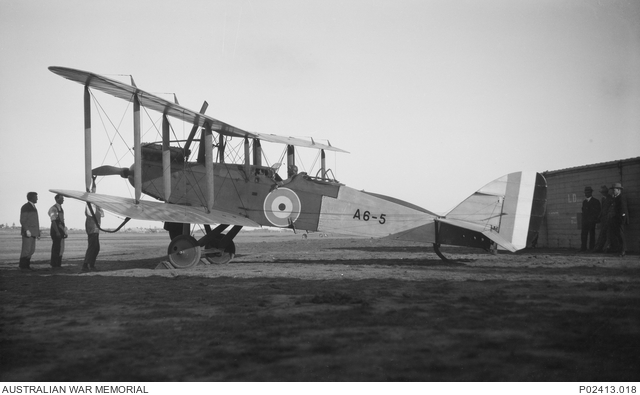
Header image: Port view of a RAAF De Havilland DH-9. This aeroplane was one of 128 gift aeroplanes presented by the British government to the newly formed RAAF, including thirty DH.9a (Source: Australian War Memorial)

[1] National Archives of Australia (NAA), A705, 4/1/35, Secretary, Department of Defence to the Secretary, Prime Minister’s Department, 14 October 1922.

[2] NAA, A705, 4/1/35, Secretary, Prime Minister’s Department to the Secretary, Department of Defence, 17 October 1922.

[3] NAA, A705, 4/1/35, Memorandum by the Governor-General to the Prime Minister, 11 November 1924.

[4] NAA, A705, 4/1/35, Memorandum by the Governor-General to the Prime Minister, 11 November 1924.

[5] John MacCarthy, Australia and Imperial Defence, 1918-39: A Study in Air and Sea Power (St Lucia, QLD: University of Queensland Press, 1976), p. 27.

[6] MacCarthy, Australia and Imperial Defence, pp. 34-43.

#ResearchNote – Top 10 Air Power History Books of this Generation

#ResearchNote – Top 10 Air Power History Books of this Generation

By Dr Ross Mahoney

Editorial note: This post was originally posted on my website and has been cross-posted here to generate further discussion. Minor editorial changes have been made to the post.

Ok, this post stems from a question I asked on BlueSky: ‘Who is the most significant air power historian of our generation? Discuss #airpowerhistory.’ The question stemmed from the call for contributors I posted last week and is related to my ongoing research into writing about air power. For the purpose here, ‘generation’ is to be considered to have been in the past 20-30 years. As such, the books listed here have been published since 1990.

In response, one poster asked me to list the top ten books I consider the most significant. I did a similar exercise for From Balloons to Drones back in 2017. The difference between the two lists is that the list produced in 2017 reflected those books that influenced and shaped my writing as an air power historian. In contrast, this list is more focused on those that I consider significant for their impact, though the list is still biased as I selected books from my library, and as such, they reflect my own research interests to some extent. I have also excluded edited books except for John Andreas Olsen and Philip Meilinger’s work for reasons I hope will be apparent. Other works, such as Tami Davis Biddle’s Rhetoric and Reality in Air Warfare (2002), would have made an expanded list. For an Air Power Reading list, visit the one from From Balloons to Drones.

Here is the list…

Tony Mason, Air Power: A Centennial Appraisal (London: Brassey’s, 1994). As I wrote here, Mason was one of the doyens of air power studies and undoubtedly crucial in developing the field in the UK. This work represented the culmination of his thinking, even though he would continue to write after its publication. He used history as a tool to explore the development of air power, and it is a significant volume and still requires reading to this day.

Philip Meilinger (ed.), The Paths of Heaven: The Evolution of Airpower Theory (Maxwell AFB, AL: Air University Press, 1997). One of the two edited works in this list. Written as a primer by the United States Air Force’s School of Advanced Airpower Studies faculty, this charts the evolution of air power theory and doctrine and is a necessary starting point for anyone researching the subject.

John Buckley, Air Power in the Age of Total War (London: UCL Press, 1999). Despite its age, this remains an excellent examination of the rise of air power in the first half of the 20th Century, and it is vital reading for anyone wanting an introduction to the subject.

Richard Hallion, Taking Flight: Inventing the Aerial Age from Antiquity through the First World War (Oxford: Oxford University Press, 2003). I could have selected any of Hallion’s work, for he is probably the United States’ preeminent air power historian. However, this book offers an excellent history of air power before the First World War.

John Andreas Olsen (ed.), A History of Air Warfare (Washington DC: Potomac Books, 2010). This edited book is listed for two reasons. One, Olsen is adept at bringing together leading air power scholars and any of his edited or single-authored books should be on your bookshelf. Second, the book is an excellent introduction to the use of air power in the major conflicts of the 20th and early 21st Centuries, written by leading experts such as Tony Mason, Richard Hallion, Richard Overy, John Morrow Jr, Alan Stephens, Benjamin Lambeth and Williamson Murray.

Richard Overy, The Bombing War: Europe, 1939-1945 (London: Allen Lane, 2013). The result of Overy’s voluminous research, this volume is required reading for anyone looking to understand the strategic bombing campaigns of the Second World War.

Thomas Hippler, Bombing the People: Giulio Douhet and the Foundations of Air-Power Strategy, 1884-1939 (Cambridge: Cambridge University Press, 2013). If one name is associated with the early development of air power thinking, it is the Italian Giulio Douhet. In this volume, Hippler does a thorough job of examining the evolution of Dohet’s strategic thought. It is necessary reading for anyone looking at the evolution of air power theory.

Peter Dye, The Bridge to Airpower: Logistics Support for the Royal Flying Corps on the Western Front, 1914-18 (Annapolis, MD: Naval Institute Press, 2015). This excellent work shows that air power history is not just about aeroplanes. Dye does a superb job of showing how logistics shaped the character of the air war over the Western Front and how the RFC/RAF’s system helped it prevail in 1918.

Phillips Payson O’Brien, How the War Was Won: Air-Sea Power and Allied Victory in World War II (Cambridge: Cambridge University Press, 2015). While not solely focused on air power, O’Brien’s work is essential in examining the role played by air power in conjunction with sea power in the Allied victory of the Second World War. The work challenges many preconceptions and should be required reading for anyone interested in the Second World War.

Peter Gray, Air Warfare: History, Theory and Practice (London: Bloomsbury, 2016). This book was the outgrowth of the old MA in Air Power run by Gray at the University of Birmingham. Gray gives an excellent overview of critical issues related to air power and is a necessary reading for those just getting into the subject.

What would you include? What would you remove?

Dr Ross Mahoney is an independent scholar specialising in the history of war with particular reference to the use of air power and the history of air warfare. He is currently the Senior Historian within the Heritage Policy team at Brisbane City Council in Australia. He has nearly 20 years of experience in the education, museum and heritage sectors in Australia and the United Kingdom. Between 2013 and 2017, he was the inaugural Historian at the Royal Air Force Museum in the UK. In Australia, he has worked as a Historian for the Department of Veterans’ Affairs and taught at the Strategic and Defence Studies Centre at The Australian National University based at the Australian War College. His research interests are focused on the history of war, specifically on the history of air power and air warfare, military leadership and command, military culture, and the history and development of professional military education. He also maintains an interest in transport history. He has published numerous articles, chapters and encyclopedia entries, edited two books, and delivered papers on three continents. His website is here, and he can be found on Twitter at @airpowerhistory.

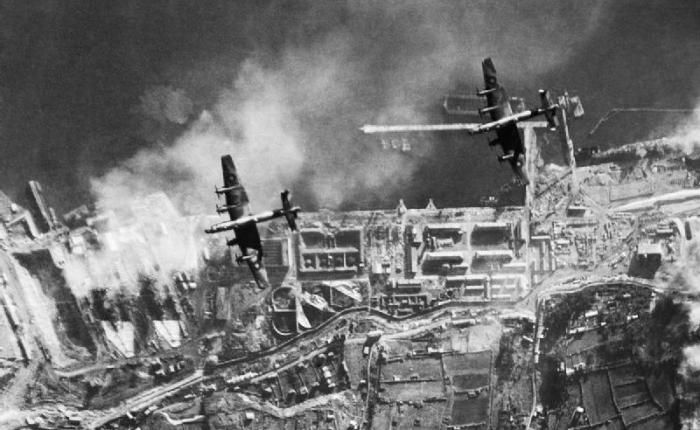
Header image: Vertical aerial photograph taken during a daylight attack on German warships docked at Brest, France. Two Handley Page Halifaxes of No. 35 Squadron RAF fly towards the dry docks in which the battlecruisers Scharnhorst and Gneisenau are berthed (right), and over which a smoke screen is rapidly spreading. (Source: Imperial War Museum)

#ResearchNote – Project Suntan: The Huge Hydrogen Aircraft That Might Have Blown Up Southern California

#ResearchNote – Project Suntan: The Huge Hydrogen Aircraft That Might Have Blown Up Southern California

By Dr Michael W. Hankins

I am fascinated by aircraft designs that ‘could have been.’ Maybe it’s just my nostalgia for childhood drawings of imaginary aeroplanes, but I love looking at the concept for the out-of-the-box ideas that never made it off the drawing board. Recently, I was researching at the beautiful Huntington Library archives, combing through the papers of Ben Rich, who ran Lockheed’s Advanced Development Projects division, ‘Skunk Works,’ between 1975 and 1990. ‘Skunk Works’ handled Lockheed’s top-secret programs, such as the U-2. I came across his files on the CL-400, also known as Project Suntan.[1] This had nothing to do with the project I was working on, but I found the files fascinating and wanted to share some of what I found here on From Balloons to Drones.

In 1955, most people dancing to Bill Haley’s new hit song ‘Rock Around the Clock’ had little idea that the Central Intelligence Agency and US Air Force had partnered with Lockheed to design a secret spy plane to fly 70,000 feet above the Soviet Union, the U-2. However, even as the U-2 began flying, Clarence ‘Kelly’ Johnson, then chief engineer at Lockheed’s Burbank, California plant, suspected that the U-2 would not last long – it was an effective aeroplane but vulnerable. Johnson wanted a follow-on to the U-2 that could fly even higher, further, and faster.

Lockheed turned to the advantages of high-energy fuels, specifically liquid hydrogen (LH). With a much greater energy density, hydrogen was more powerful (and hazardous). On paper, it seemed like an LH-powered aircraft could have everything Johnson needed: very long range, very high altitude, and supersonic speed. Rich led the project, working under Johnson at the ‘Skunk Works.’

Rich recalled, ‘between 1955-1958, [Lockheed] developed and built all the components and systems necessary for a liquid hydrogen-fueled airplane.’ Designing aircraft to use this unique fuel source presented major challenges. As Rich noted: ‘The hydrogen fueled airplane has very little flexibility in design configuration […] since fuel requirements dictate a long fuselage with attendant balancing and C.G. [center of gravity] travel limitations.’

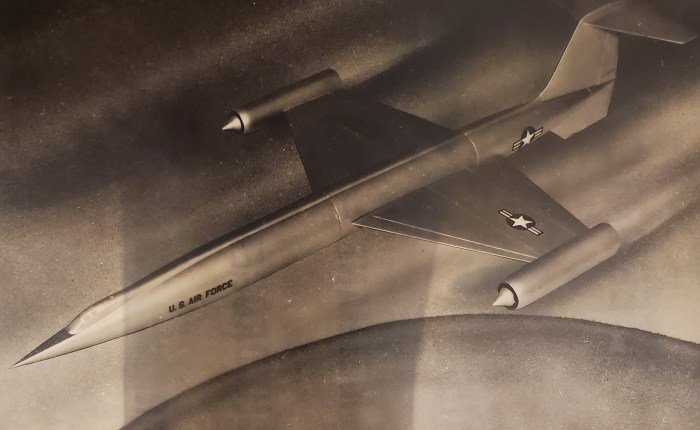
Nevertheless, the concept went through a series of iterations. The original CL-400 was a two-seat reconnaissance plane, 160 feet long with a 10-foot diameter. The wings resembled Lockheed’s F-104 Starfighter, and the plane’s vertical fin was retractable. It was designed to cruise at 99,500 feet, going Mach 2.5, for a maximum range of 2,200 nautical miles.

CL-400-14
An illustration showing the relative size comparison of the C-400-14 with a Boeing B-52 Stratofortress and a Lockheed Constellation (Source: The Huntington Library, California, Ben Rich Papers, Box 3, Folder 1, Projects – Engineering – CL-400)

That was just the beginning. Variant designs on the CL-400, Rich says, ‘were studied from the standpoint of achieving maximum range rather than maximum altitude.’ As evident from the accompanying series of plan drawings, the original CL-400 was near the size of the massive Boeing B-52 Stratofortress bomber, but increasing its range meant increasing the fuel capacity. So, the designs got bigger. Much, much bigger.

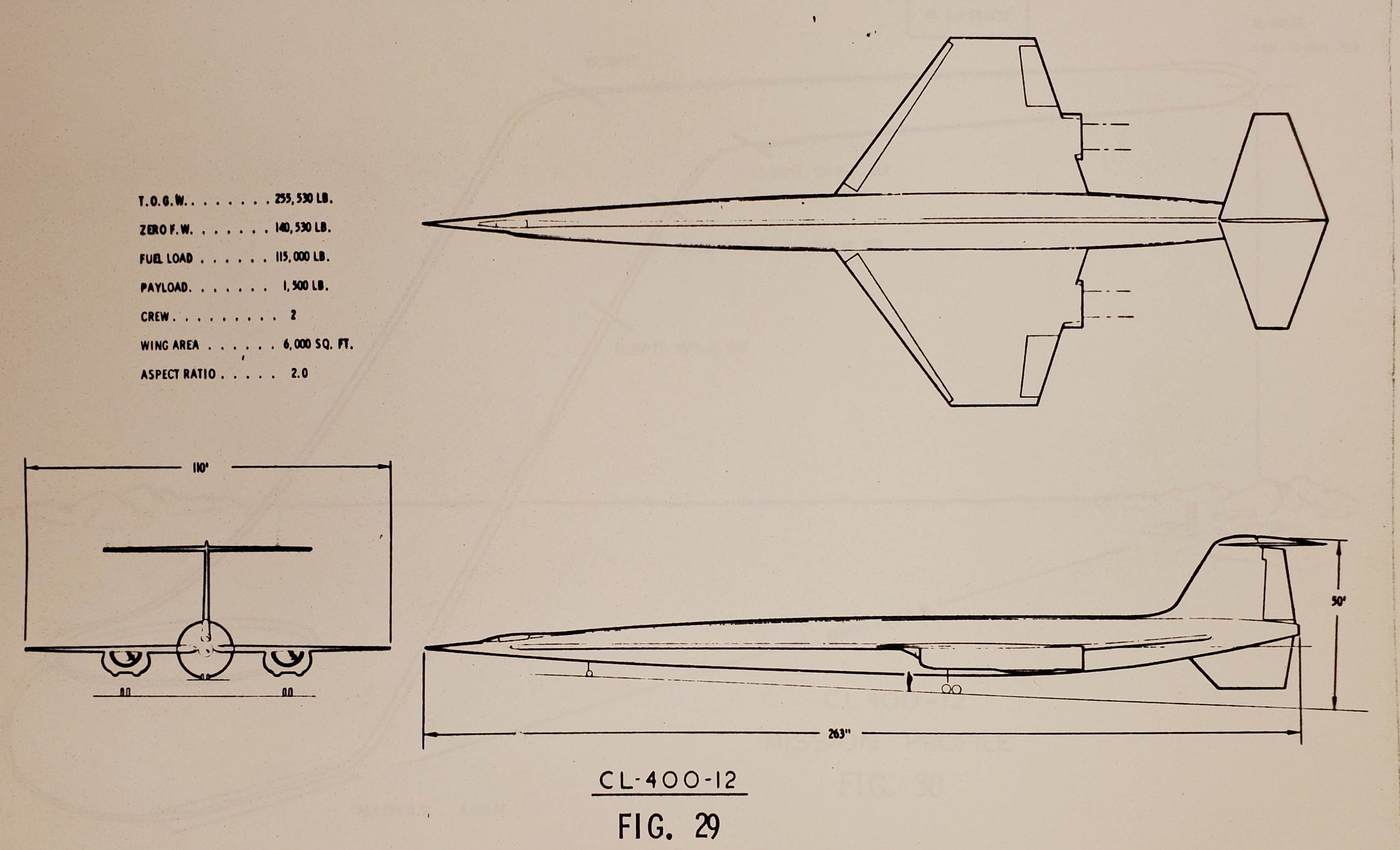
CL-400-12
Drawing of the CL-400-12. (Source: An illustration showing the relative size comparison of the C-400-14 with a Boeing B-52 Stratofortress and a Lockheed Constellation (Source: The Huntington Library, California, Ben Rich Papers, Box 3, Folder 1, Projects – Engineering – CL-400)

The CL-400-12 was more than double the size of a B-52 and designed for a 4,720 nautical mile range with four engines blasting it to Mach 2.5. Rich’s notes simply stated that ‘the aircraft size is quite large.’

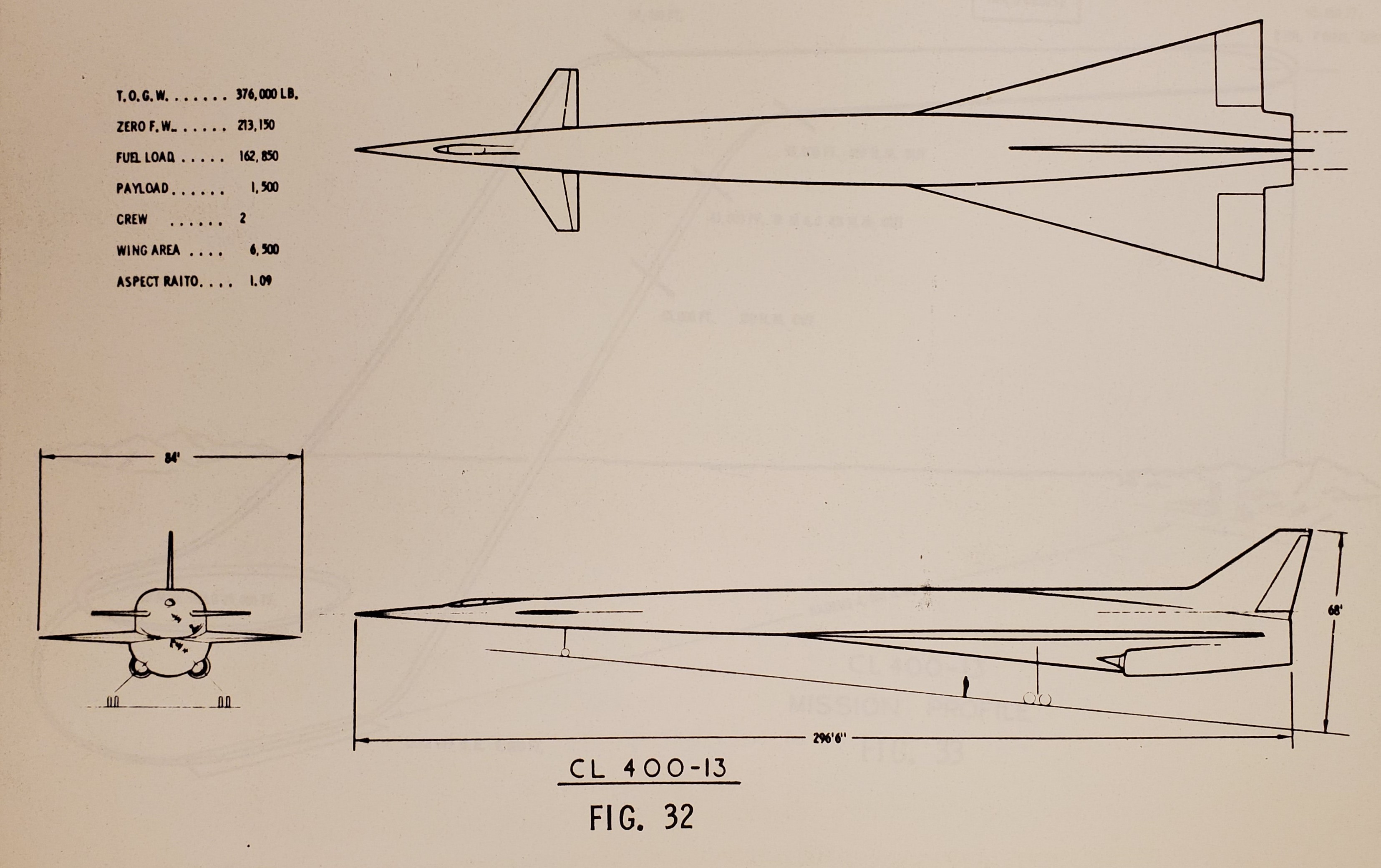
CL-400-13
Drawing of the CL-400-13. (Source: Drawing of the CL-400-12. (Source: An illustration showing the relative size comparison of the C-400-14 with a Boeing B-52 Stratofortress and a Lockheed Constellation (Source: The Huntington Library, California, Ben Rich Papers, Box 3, Folder 1, Projects – Engineering – CL-400)

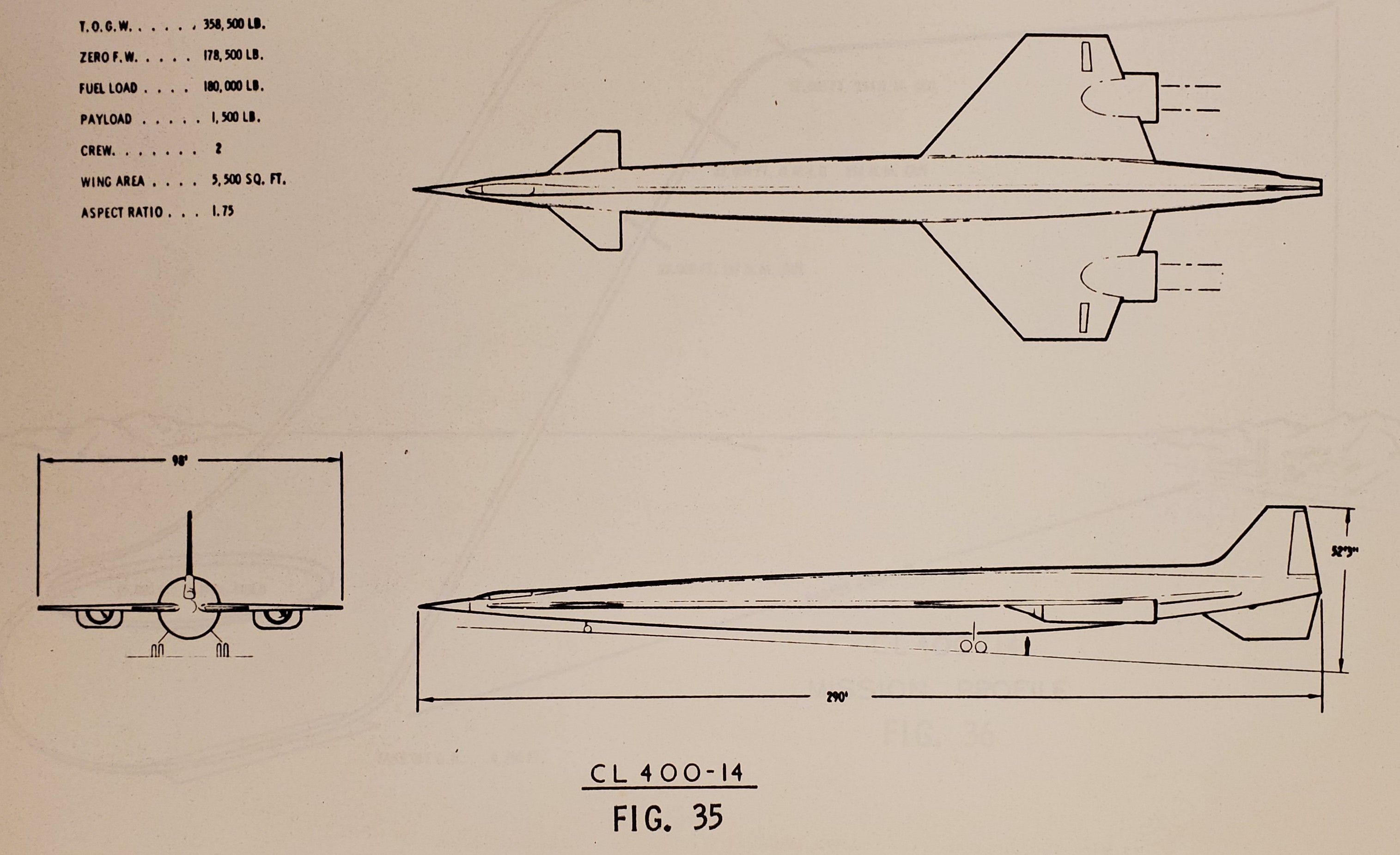
The CL-400-13 took the idea even further with a cone-delta design and forward canards. The aeroplane was almost the length of one football field, with a gross take-off weight of 376,000 pounds. Nevertheless, it could cruise at Mach 4 for a total range of 9,000 nautical miles. The CL-400-14 was similar in size to the -13 but used four smaller engines instead of two big ones.

CL-400-14 1
Drawing of the CL-400-14 (Source: Drawing of the CL-400-13. (Source: Drawing of the CL-400-12. (Source: An illustration showing the relative size comparison of the C-400-14 with a Boeing B-52 Stratofortress and a Lockheed Constellation (Source: The Huntington Library, California, Ben Rich Papers, Box 3, Folder 1, Projects – Engineering – CL-400)

Hydrogen, as readers familiar with the Hindenburg disaster will attest, is also very dangerous. Lockheed had an approach to address the danger: try to cause a series of hydrogen explosions. Rich’s notes explained that ‘Numerous hydrogen ignition tests were made so as to get a feel for the damage potential in such an explosion, and it was found that the danger was not nearly as great as expected. Explosions were generally mild, and hydrogen fireball radiation was much less than that from a comparable kerosene fire.’ They tried to create an explosion 61 times, and only twice (when purposefully mixed with oxygen and ignited) did it cause ‘a bona fide explosion.’ Lockheed engineers were convinced LH could be handled safely – even more critically since the top-secret nature of the program meant that if there were an uncontrollable fire, they would not be able to call the fire department.[2]

Lockheed built a massive facility to test methods to produce, store, and transport the large quantities of liquid hydrogen necessary to operate a fleet of huge, LH-guzzling aeroplanes a few hundred yards away from the Burbank Municipal Airport. Dr Russell Scott, a leading expert on liquid hydrogen from the U.S. Bureau of Standards, visited the facility and said, ‘My God in heaven, you’re gonna to blow up Burbank.’[3] Ultimately, the logistical challenges of operating a fleet of LH aircraft proved insurmountable at the time. After examining the international basing requirements for the necessary fuel, Johnson gave up on the project. He called the Secretary of the Air Force, James Douglas, and said, ‘I’m afraid I’m building you a dog. My recommendation is that we cancel Suntan.’[4] Today, U-2s are still flying, and the Burbank site, which was once the home for testing and production of classic Lockheed aircraft, has been turned into a giant shopping complex featuring a Best Buy and Wal-Mart. In a way, maybe Burbank did blow up.

It is tempting to write off this story as a historical footnote, but the story of Suntan has three important takeaways: First, failure is important. Just because the project never went to production does not mean it was insignificant. With the aerospace industry currently looking into the potential use of hydrogen fuel, projects like this are still relevant. Second, failed designs still have a strong influence on those that succeed. Going through the process of designing these aircraft and thinking through potential solutions taught these engineers a lot. Many of the design elements first experimented with on the CL-400 went on to have a strong influence on the design of later aircraft – especially the A-12, the forerunner of the SR-71 Blackbird.

Finally, the CL-400 shows the importance and power of imagination. These planes might seem wild, but the effort shows that engineers could push themselves to think outside the box. This reveals the mindset underneath American Cold War aviation design – that it often gravitated to the massive or even outlandish, but it is also inspiring. I am not an aircraft designer, but I hope that in my own life and work, I am pushing myself to think beyond the boundaries of what I think might be possible, explore new ideas and see where they lead.

Dr Michael Hankins is the Curator for US Air Force, Navy, and Marine Corps post-World War II Aviation at the Smithsonian National Air and Space Museum and the author of Flying Camelot: The F-15, the F-16, and the Weaponization of Fighter Pilot Nostalgia (2021). In addition, he is a former Professor of Strategy at the USAF Air Command and Staff College eSchool, and a former Instructor of Military History at the US Air Force Academy. He earned his PhD in history from Kansas State University in 2018, and his master’s in history from the University of North Texas in 2013.

Header image: An artist’s impression of the CL-400 in flight. (Source: The Huntington Library, California, Ben Rich Papers, Box 3, Folder 1, Projects – Engineering – CL-400)

[1] Unless otherwise noted, all information, quotations, and images in this article are taken from: The Huntington Library, California, Ben Rich Papers, Box 3, Folder 1, Projects – Engineering – CL-400.

[2] John L. Sloop, Liquid Hydrogen as a Propulsion Fuel, 1945-1959 (Washington, DC: National Aeronautics and Space Administration, 1978), p. 149.

[3] Ben Rich and Leo Janos, Skunk Works: A Personal Memoir of My Years at Lockheed (New York: Little, Brown and Company, 1994), p. 173.

[4] Rich and Janos, Skunk Works, 177.

#ResearchNote – The Royal Australian Air Force and the historiography of the ‘air wars’ over Vietnam

#ResearchNote – The Royal Australian Air Force and the historiography of the ‘air wars’ over Vietnam

By Dr Ross Mahoney

In 1970, the United States Air Force’s (USAF) Contemporary Historical Examination of Current Operations (CHECO) project, which produced around 250 volumes on various subjects, published a volume on the air operations of the RAAF over Vietnam.[1] The volume on the RAAF was one of several that examined non-US subjects; other air forces analysed included the Republic of Vietnam Air Force, the Royal Thai Air Force, and the Republic of Korea Air Force. Notably, the report on the RAAF, authored by James T. Bear, described the Australian effort over Southeast Asia as producing a ‘fruitful association’ with the USAF.[2] However, while the Americans, through the extensive distribution of this report to various commands, were aware of the views espoused by Project CHECO, the RAAF was not, as they were not included on the distribution list. As a result, this issue is often ignored by those using this source when writing on Australian air operations over Vietnam. For example, in a recent 2019 article in Sabretache, the journal of the Military Historical Society of Australia, Justin Chadwick made much of Bear’s report by describing its contents. However, Chadwick failed to address the distribution issue or whether the RAAF was aware of the report’s contents.[3] Nonetheless, Bear’s report, and others covering subjects pertinent to Australian air operations over Vietnam, were used by Chris Coulthard-Clark when researching and writing his volume on the RAAF in Vietnam as part of ‘The Official History of Australia’s Involvement in Southeast Asian Conflicts, 1948-1975.’ Moreover, the report is a valuable starting point for any discussion about Australia’s place in the air wars over Vietnam and the impact of the conflict on the RAAF.

More recently, however, air power historians have begun to discuss the air war over Vietnam more nuancedly. For example, in his 2021 history of the air war over Vietnam, Air Power’s Lost Cause, Brian Laslie, building on the work of scholars such as Mark Clodfelter, argued that the US fought six separate air wars during the conflict.[4] These campaigns included the strategic air campaign against North Vietnam; the battle for air superiority over North Vietnam; the USAF’s air war over South Vietnam; the US Navy’s air war over North and South Vietnam; air operations over Laos and Cambodia; and the US Army’s air mobility operations. However, while this classification helps describe US air operations over Vietnam, in excluding the experience of other nations involved in these ‘air wars,’ historians fail to tell a cohesive story about the use of air power over Vietnam.

Australian_soldiers_unloading_rations_from_a_9_Squadron_helicopter_in_1967
Rations and supplies are unloaded from a UH-1B Iroquois helicopter of No. 9 Squadron RAAF, by troops of 7th Battalion, The Royal Australian Regiment, near the village of Long Dien during Operation Ulmarra, August 1967. (Source: Wikimedia)

Two reasons explain why historians fail to tell a cohesive story of air operations over Vietnam. First, from an American perspective, Vietnam is viewed as an inherently US war, especially regarding military operations. As Andrew Weist has remarked, ‘[r]emainders of the Vietnam War litter the cultural landscape of the United States.’[5] These reminders and the associated issues of ownership over the experience of the Vietnam War are often reinforced by popular accounts of the war, such as Ken Burns and Lynn Novick’s 2017 documentary The Vietnam War and debates related to America supposedly repeating the mistakes of Vietnam in its recent operations in Iraq and Afghanistan.[6] This has led historians to focus solely on the American experience and not to fully incorporate the story of those other nations that fought in the Vietnam War. Where they are included, their experience is often viewed as a sideshow to the main American effort. Indeed, as Bear’s CHECO report on the Australians noted, in the view of the USAF, ‘only Australia played a significant role in the air war.’[7]

The second reason concerns how the history of the RAAF in Vietnam has been written. This relates to the state of Australian military historiography and, from the perspective of the RAAF, how the Air Force’s narrative has shaped the latter’s account.[8] Apart from Coulthard-Clark’s 1995 official history, The RAAF in Vietnam: Australian Air Involvement in the Vietnam War 1962-1975, the literature on the RAAF’s service in Vietnam has primarily been the preserve of either the Air Force’s official histories or popular accounts, including veterans’ memoirs.[9] This situation mirrors concerns highlighted by John Ferris in 1998 when he reflected that most writers on air power history more broadly tend to be:

[t]he children of airmen, have been military personnel themselves, and have been employed at a historical office or service school in Canada, Germany, the United Kingdom, or the United States.[10]

This is undoubtedly the case with the history of the RAAF over Vietnam. Indeed, the RAAF has shaped the narrative surrounding the Air Force’s operations over Vietnam in two ways. First, the RAAF has published two official histories that span the Vietnam War period. The first, Going Solo, covered the period from 1945 to 1972 and was written by Alan Stephens, the former RAAF Historian. The second volume, Taking the Lead, written by Mark Lax, a RAAF Air Commodore, covers the period from 1972 to 1996. Neither book focuses singularly on Australian air operations over Vietnam. However, given the importance of the conflict to the RAAF, the war is integral to their analysis, particularly in Stephens’ volume. While both Stephens and Lax served in the RAAF and were academically trained historians, they were well placed to write these histories, thereby enhancing the value of these books. Nonetheless, as official histories, these works are often regarded as providing a definitive account of their subject. However, official histories are often the first rather than the last word on their topic.

The second way the RAAF has influenced the narrative of its operation over Vietnam is that the first book on Australian air operations during the conflict, Mission Vietnam, was commissioned by the Air Force. Research for Mission Vietnam, written by George Odgers, the Director of Public Relations in the Department of Air, began in 1971 before Australian air operations in Vietnam ended in 1972.[11] The book appeared in 1974, the year before the RAAF deployed Detachment ‘S’. As such, it does not comprehensively capture all RAAF operations associated with the Vietnam War. On publication, the RAAF News was convinced that Odgers’ volume would have ‘widespread appeal’ while one 1974 review in The Canberra Times described it as ‘essential reading.’[12] Illustrative of its importance in shaping the narrative, Mission Vietnam will be republished by the RAAF’s History and Heritage branch.

Beyond these volumes, discussions of RAAF operations over Vietnam have typically been left to popular accounts or memoirs, including those published under the auspicious of the Air Force’s Air and Space Power Centre and the History and Heritage Branch.[13] For example, Jeff Pedrina’s account Wallaby Airlines was initially published in 2006 by the Air Power Development Centre (as ASPC was then known). It was recently reissued in 2023 as part of the Australian Air Campaign Series (AACS) produced by the History and Heritage Branch.[14] Similarly, as part of the AACS, in 2022, the History and Heritage Branch published an abridged version of Air Vice-Marshal Reed’s autobiography, Invited to a War.[15] Reed had served in Vietnam, flying Phantoms on exchange with the USAF. Many of these works represent what has invariably been described as Australia’s ‘democratic’ approach to military history, which focuses on the experiences of veterans.[16] In this sense, every participant’s views and recollections are equal and should be heard. There are, however, exceptions to this democratic approach. For example, Steven Paget’s recent examination of the operations of No. 2 Squadron over Vietnam usefully places the challenges the RAAF faced in achieving interoperability with the USAF into context.[17]

Aircraft_revetments_at_Phan_Rang_Air_Base_with_No._2_Squadrons_Canberras
Aerial view of the aircraft revetments at Phan Rang airbase in July 1967. No. 2 Squadron RAAF Canberra bombers are parked in the bays located in the immediate foreground. (Source: Australian War Memorial)

Given much of the above, how would a more integrated and cohesive account of Vietnam’s air wars look? First, from an Australian perspective, we need to move away from focusing solely on the Australian experience of the Vietnam War. As Thomas Richardson argued, such perspectives distort our view of Australia’s ‘success or failure’ in Vietnam.[18] This applies equally to the RAAF and the Australian Army. Second, with regard to the broader picture of air operations over Vietnam, consideration of the experience of non-US units would help inform wider discussions on the character and challenges of coalition air operations in this period by considering issues such as cooperation and friction. While official and authorised accounts address some of these challenges, their aim of foregrounding the Australian experience through a functional approach to history, based on the RAAF’s roles, limits how far they can analyse these issues.[19]

Some indication of how to produce such a history can be gleaned from Paget’s work on No. 2 Squadron operations. Paget rightly noted that the experience of No. 2 Squadron highlighted issues in command and control, standardisation, tactics, training and procedures, and the sustainment of operations. However, these themes can be further analysed through additional examples of Australia’s experience in Vietnam. For example, the experience of RAAF officers on secondment as airborne Forward Air Controllers offers a valuable opportunity to understand how lessons are learnt and shared between air forces. Similarly, before the deployment of No. 2 Squadron, No. 35 Squadron was already fully integrated into the USAF command-and-control apparatus. Moreover, unlike No. 2 Squadron, No. 35 Squadron operated an aircraft type that the US would not deploy to South Vietnam until later in the war. However, it appears that the USAF did not take the opportunity to study the RAAF’s use of the Caribou, which raises questions about why this might have been.[20] As such, understanding the experience of No. 35 Squadron would further enrich our understanding of the air wars over Vietnam by exploring cultural issues that either help or retard the lessons learnt process. Finally, we must consider what the deployment of RAAF air assets to Vietnam contributed to the overall war effort, given that, for example, during February 1968, at the height of the Tet Offensive, the Air Force accounted for only around one per cent of all attack sorties flown.[21] This was undoubtedly a significant effort for the RAAF. Still, it highlights the problem of deploying only single unit types rather than a cohesive operational package comprising several squadrons of the same type. As such, within the context of wider coalition operations, we must further question why the RAAF deployed the force it did and how it sought to influence and shape ongoing operations.

Dr Ross Mahoney is the Editor-in-Chief of From Balloons to Drones. He is an independent scholar specialising in the history of war with particular reference to the use of air power and the history of air warfare. He is currently the Senior Historian within the City Architecture and Heritage Team at Brisbane City Council in Australia. He has nearly 20 years of experience in the education, museum and heritage sectors in Australia and the United Kingdom. Between 2013 and 2017, he was the inaugural Historian at the Royal Air Force Museum in the UK. In Australia, he has worked as a Historian for the Department of Veterans’ Affairs and taught at the Strategic and Defence Studies Centre at The Australian National University based at the Australian War College. His research interests are focused on the history of war, specifically on the history of air power and air warfare, military leadership and command, military culture, and the history and development of professional military education. He also maintains an interest in transport history. He has published numerous articles, chapters and encyclopedia entries, edited two books, and delivered papers on three continents. His website is here, and he can be found on Twitter at @airpowerhistory.

Header image: DHC-4 Caribous of the RAAF Transport Flight arrived in South Vietnam in 1964 to work with the South Vietnamese and U.S. Air Forces to transport soldiers and supplies to combat areas in South Vietnam. (Source: Wikimedia)

[1] James T. Bear, ‘The RAAF in SEA’ (CHECO Division, 1970); Warren A. Trest, ‘Projects CHECO and Corona Harvest: Keys to the Air Force’s Southeast Asia Memory Bank,’ Aerospace Historian 33, no. 2 (1986), pp. 114-20; Major Daniel Hoadley, ‘What Just Happened? A Historical Evaluation of Project CHECO’ (MA Thesis, USAF School of Advanced Air and Space Studies, 2013).

[2] Bear, ‘The RAAF in SEA,’ p. 1. During the Vietnam War, the RAAF contributed significantly to the Australian effort in the conflict. While some flights had taken place in South Vietnam by a Dakota of No. 2 Squadron’s transport flight in 1963, the first significant deployment of RAAF assets took place in 1964 when six DHC-4 Caribous of the recently formed RAAF Transport Flight Vietnam – later renumbered as No. 35 Squadron in 1966 – were deployed as part of Australia’s early efforts in supporting the war. After the deployment of No. 35 Squadron, the RAAF’s primary involvement took the form of No. 9 Squadron equipped with Bell UH-1B Iroquois helicopters and No. 2 Squadron with GAF Canberra bombers. Notably, 36 fighter pilots served as airborne Forward Air Controllers with the USAF’s 19th and 20th Tactical Air Support Squadrons flying Cessna O-1 Bird Dogs, Cessna O-2 Skymasters, and Rockwell OV-10 Broncos. Additionally, six RAAF pilots flew USAF McDonnell F-4 Phantoms during the war as part of the 12th Tactical Fighter Wing. There were also those units – Nos. 36 and 37 Squadron – who maintained a strategic air bridge between Australia and Vietnam, including aeromedical evacuation. Lockheed Neptune maritime patrol aircraft regularly patrolled the sea lines of communication between Australia and Vietnam, such as during Operation Trimdon in 1965.  In addition to the deployed squadrons, various elements of the RAAF provided valuable ground support, including airfield construction, air defence guards, and medical personnel. Officially, RAAF operations over Vietnam ended in February 1972 when the last Caribous of No. 35 Squadron left the country. However, in 1975, as South Vietnam finally fell, the RAAF deployed Detachment ‘S’ to Vietnam to withdraw Australian national and embassy staff and distribute Red Cross aid.

[3] Justin Chadwick, “Nothing to diminish their glamour’: Project CHECO and the RAAF,’ Sabretache 60, no. 4 (2019), pp. 23-34.

[4] Brian Laslie, Air Power’s Lost Cause: The American Air Wars of Vietnam (Lanham, MD: Roman and Littlefield, 2021), p. 2; Mark Clodfelter, ‘The Limits of Airpower or the Limits of Strategy: The Air Wars in Vietnam and Their Legacies,’ Joint Forces Quarterly 78 (2015), pp. 111-24.

[5] Andrew Weist, ‘Introduction’ in Andrew Weist (ed.), Rolling Thunder in a Gentle Land: The Vietnam War Revisited (Oxford: Osprey Publishing, 200), p. 16.

[6]  Andrew Gawthorpe, ‘Ken Burns, the Vietnam War, and the Purpose of History,’ Journal of Strategic Studies 43, no. 1 (2020), pp. 154-69.

[7] Bear, ‘The RAAF in SEA,’ p. 1.

[8] Jeffrey Grey, ‘Cuckoo in the Nest? Australian Military Historiography: The State of the Field,’ History Compass 6, no. 2 (2008), pp. 455-68.

[9] Chris Coulthard-Clark, The RAAF in Vietnam: Australian Air Involvement in the Vietnam War, 1962-1975 (Sydney, NSW: Allen & Unwin in association with the Australian War Memorial, 1995). For the RAAF’s official histories, see: Alan Stephens, Going Solo: The Royal Australian Air Force, 1946-1971 (Canberra, ACT: AGPS Press, 1995); Lax, Taking the Lead. For memoirs and autobiographies, for example, see: Gary Cooper and Robert Hillier, Sock it to ‘em Baby: Forward Air Controller in Vietnam (Crows Nest, NSW: Allen and Unwin, 2006); David Evans, Down to Earth: The Autobiography of Air Marshal David Evans, AC, DSO, AFC (Canberra, ACT: Air Power Development Centre, 2011).

[10] John R. Ferris, ‘Review Article – The Air Force Brats’ View of History: Recent Writing and the Royal Air Force, 1918–1960,’ The International History Review 20, no. 1 (1998), p. 119.

[11] George Odgers, Mission Vietnam: Royal Australian Air Force Operations, 1964-1972 (Canberra, ACT: Australian Government Publishing Service, 1974); ‘History of War,’ The Canberra Times, 18 June 1971, p. 1.

[12] ‘“Mission Vietnam” sure to have widespread appeal,’ RAAF News, 1 August 1974, p. 3; “Written the Way it Was in Vietnam Air War,’ The Canberra Times, 16 August 1974, p. 9.

[13] Examples of books published under the auspicious of the RAAF’s Air and Space Power Centre that discuss Vietnam include: John Bennett, Highest Traditions: The History of No. 2 Squadron RAAF (Canberra, ACT:  Australian Government Publishing Service, 1995); Graham O’Brien, Always There: A History of Air Force Combat Support (Canberra, ACT: Air Power Development Centre, 2009); Chris Clark, The RAAF at Long Tan (Canberra, ACT: 2010); Evans, Down to Earth; Bob Howe, Dreadful Lady over the Mekong Delta: An Analysis of RAAF Canberra Operations in the Vietnam War (Canberra, ACT: Air Power Development Centre, 2016). For an example of a book produced in conjunction with the History and Heritage Branch, see: Bob Grandin, Answering the Call: Life of a Helicopter Pilot in Vietnam and Beyond (Newport, NSW: Big Sky Publishing, 2019).

[14] Jeff Pedrina, Wallaby Airlines: Twelve Months Caribou Flying in Vietnam (Tuggeranong, ACT: Air Power Development Centre, 2006). Pedrina, Wallaby Airlines: Twelve Months flying the Caribou in Vietnam (Newport, NSW: Big Sky Publishing, 2022).

[15] Air Vice Marshal Alan Reed, Invited to a War (Newport, NSW: Big Sky Publishing, 2002).

[16]  Thomas Richardson, Destroy and Build: Pacification in Phuc Tuy, 1966-72 (Melbourne, VIC: Cambridge University Press, 2017), p. 5.

[17] Steven Paget, ‘Magpies and Eagles: Number 2 Squadron, Royal Australian Air Force, and the Experience of Coalition Warfare in Vietnam’ in Steven Paget (ed.), Allies in Air Power: A History of Multinational Air Operations (Lexington, KT: The University Press of Kentucky, 2021), pp. 142-67.

[18] Richardson, Destroy and Build, p. 6.

[19] Coulthard-Clark, The RAAF in Vietnam, pp. xii.

[20] Bear, ‘The RAAF in SEA,’ p. 30.

[21] Bernard Nalty, Air War over South Vietnam, 1968-1975 (Washington DC: United States Air Force History and Museum Program, 2000), p. 19.

#ResearchNote – It is time for another Biography of Ira Eaker

#ResearchNote – It is time for another Biography of Ira Eaker

By Luke Truxal

For those who study the history of the United States Air Force and its forebears, there is a noticeable gap in the historiography regarding biographies of Second World War air force commanders. There are several biographies for men such as General Carl Spaatz, General of the Air Force Henry H. Arnold, General James Doolittle, General Curtis LeMay, and even Major General Haywood Hansell. Yet, many other prominent commanders, staff officers, and theorists do not have their own biographies. However, this research note solely focuses on General Ira Eaker, who, in 1943, commanded what became the US Eighth Air Force, the Mediterranean Allied Air Forces in 1944 and was deputy Chief of the Air Staff for the United States Army Air Forces in 1945.

md31091934332

James Parton has largely written Eaker’s history in “Air Force Spoken Here”: General Ira Eaker and the Command of the Air. Parton’s biography is a strong defence of Eaker. In many cases, he has created much of the narrative that we accept regarding Eaker’s performance as a commander during the Second World War. However, there is one problem with Parton’s book; he was Eaker’s staff officer. Given this, Parton’s book jumps between biography and personal memoir in several places. For example, when writing about Eaker’s defence of daylight precision bombing at the Casablanca Conference in 1943, Parton slips into a personal memoir. In a paragraph, he describes the trip to Spaatz’s headquarters, the poker game he played with Eaker and Spaatz, and how he edited Eaker’s proposals for the Casablanca Conference.[1] It is unclear whether this can be classified as a biography since it is unclear if Parton is writing about himself or Eaker. Also, as a staff officer deeply devoted to Eaker, Parton may not be the general’s best or most objective biographer. Simply put, Eaker needs a new biography.

For those interested in writing a biography on Eaker, there are several places to start. First, Parton’s biography is a great place to get background information on Eaker, even if the analysis is sometimes questionable. Another series of sources that need to be examined are the books that Eaker published with Arnold before the Second World War. Arnold and Eaker wrote: Army Flyer, Winged Warfare, and This Flying Game.[2] These books lay out their vision for the future of air power and, in some cases, offer analysis of air campaigns during the Second World War before the entrance of the United States into the conflict. These books give some insight into Eaker as an air power theorist and precision bombing advocate before the war. Three major archives should be consulted for wartime records. First, the Library Congress has Ira Eaker’s papers. Speaking from personal experience, they are well-organised and easy to work through. Even better, several vital figures whom Eaker corresponded with also deposited their papers at the Library of Congress. Another archive to consult is the Air Force Historical Research Agency, where you can find records on the Eighth Air Force and Mediterranean Allied Air Forces. Finally, the National Archives and Records Administration has more records and correspondence.

media-456676
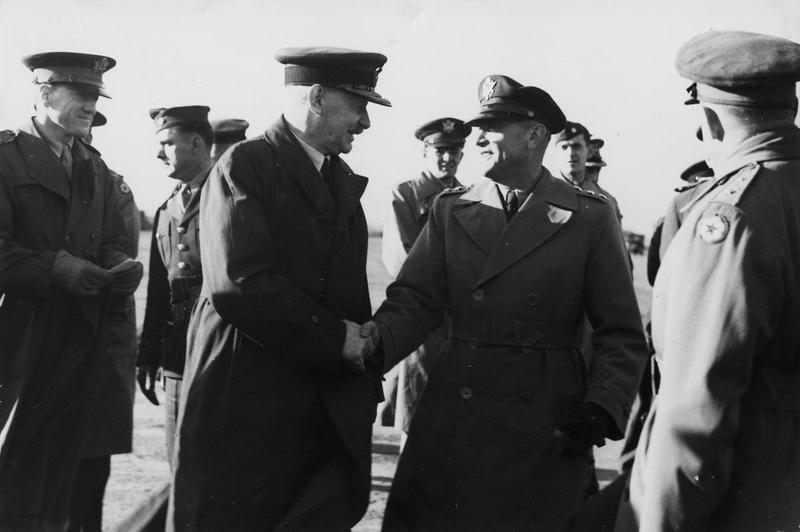
Air Chief Marshal Sir Arthur Harris shakes hands with Lieutenant General Ira Eaker at a handover ceremony of a US Army Air Force airfield into RAF control, c. November 1943. (Source: IWM)

Research is not the problem with writing a biography on Eaker. He wrote a lot about air power before, during, and after the Second World War. There is much research readily available on Eaker. This is purely speculation, but the reason why there is not a biography on Eaker is most likely that it is a hard biography to write. Eaker is not a polarising figure. Biographers note that they either fall in love with or hate the person they are writing about. It is hard to do that with Eaker. He is a likeable person and, at times performs quite well as a commanding officer. Yet, he also makes several significant mistakes during the war as well. It is hard to write a book analysing an officer whom both deserves blame for the failures of the 1943 air offensives against Germany and, in the same breath, say he played a major role in the success of the air war in 1944 and 1945.

In conclusion, it is time to put the James Parton book on Eaker aside and write a new biography on Eaker to start a proper historical debate on his career. There is ample archival material available to sift through and analyse. The challenge will be how to assess his performance during the war. Here is a thought to possibly hang onto for those who might want to take up this project. Maybe the challenge of writing a biography about Eaker is that he is representative of the struggles that early American air commanders faced during the strategic bombing of Germany in 1942 and 1943. Eaker was testing new ideas in a new form of warfare and without ample resources as the commander of the Eighth Air Force. He made several errors in 1943 that was amplified by his lack of resources. Yet, with more resources and experience, his performance improved over time. In many ways, Eaker represents the struggles that many American officers faced during the air war against Germany.

Dr Luke Truxal is the Book Review Editor at From Balloons to Drones and an adjunct at Columbia State Community College in Tennessee. He completed his PhD in 2018 from the University of North Texas with his dissertation ‘Command Unity and the Air War Against Germany.’ His previous publications include ‘Bombing the Romanian Rail Network’ in the Spring 2018 issue of Air Power History. He also wrote ‘The Politics of Operational Planning: Ira Eaker and the Combined Bomber Offensive in 1943’ in the Journal of Military Aviation History. In addition, Truxal is researching the effectiveness of joint air operations between the Allied air forces in the Second World War.

Header image: Major General Ira C. Eaker presents an award to an enlisted man of the 479th Anti-Submarine Group during a ceremony at an air base in St Eval, United Kingdom, c. 1943. (Source: NARA)

[1] James Parton, “Air Force Spoken Here”: General Ira Eaker & the Command of the Air (Bethesda, MD: Adler & Adler Publishers Inc., 1986), p. 220.

[2] Henry H. Arnold and Ira C. Eaker, Army Flyer (New York: Harper & Brothers Publishers, 1942); Henry H. Arnold and Ira Eaker, Winged Warfare, (New York: Harper & Brothers Publishers, 1941); Henry H. Arnold and Ira Eaker, This Flying Game, (Ramsey, New Jersey: Funk and Wagnalls Company, 1938).

2017 – A Year in Review

2017 – A Year in Review

As we come to the end of 2017, we also come to the end of the first full-year of operations for From Balloons to Drones. Established in the middle of 2016, From Balloons to Drones was created with the aim of providing a platform for the discussion of the air power history, theory, and contemporary operations in its broadest sense. In seeking to achieve this aim, in 2017, we have published around 30 articles ranging from a discussion of the contemporary challenges related the development of Ground-Based Air Defence and Integrated Air Defence Systems through to an analysis of the experience of aircrew as Prisoners of War during the Second World War. We are grateful to our group of contributors who have taken the time to write and publish via From Balloons to Drones.

The website has been visited around 18,000 times by 10,000 different visitors. While visitors from the US, UK, Canada, and Australia predominate, we have also had readers from around the globe including, for example, from South Korea, China and at least one from Tajikistan. We are grateful to those who take the time to read the articles and comment on them.

The ten most popular articles by visits for 2017 were:

  1. Changing the USAF’s Aerial ‘Kill’ Criteria;
  2. Blinded by the Rising Sun? American Intelligence Assessments of Japanese Air Power, 1920-41: Part 1 – The 1920s;
  3. Arrows from the Ground – Or how an incident on 17 March 2017 may change the relationship between ground and air forces;
  4. Commentary – The RAF and the F-117;
  5. Blinded by the Rising Sun? American Intelligence Assessments of Japanese Air Power, 1920-41: Part 2 – 1930-1937;
  6. Air War Books – Dr Brian Laslie;
  7. Blinded by the Rising Sun? American Intelligence Assessments of Japanese Air Power, 1920-41: Part 3 – 1937-41;
  8. Unseating the Lancer: North Korean Challenges in Intercepting a B-1B;
  9. ‘Integrating’ the Italian Air Force after the Armistice;
  10. It is Time to Demystify the Effects of ‘Strategic Western Air Power’ – Part 1.

Two honourable mentions must also go to Dr Matthew Powell’s article ‘A Forgotten Revolution? RAF Army Co-operation Command and Artillery Co-operation’ and Kristen Alexander’s ‘“For you the war is (not) over”: Active Disruption in the Barbed Wire Battleground.’ Both articles were published in December, and I suspect that had they appeared earlier in the year then they would have been in the top ten.

We have some new and exciting plans for 2018 including a series of articles to be published simultaneously and in conjunction with The Central Blue. We will also be publishing more book reviews while a steady stream of new articles, commentaries and research notes will appear over the year. Remember we can also be found on Facebook and Twitter.

Finally, From Balloons to Drones is always seeking to publish new and exciting perspectives on the subject of air power and we encourage contributions from academics, postgraduate students, policymakers, service personnel and relevant professionals. To find out how to contribute then please visit this page.

Header Image: A8-126 performs the last dump and burn in history on the final day of flying the F-111 by the Royal Australian Air Force. (Source: Australian Government)

#ResearchNote – RAF Centre for Air Power Studies Interviews

#ResearchNote – RAF Centre for Air Power Studies Interviews

By Dr Ross Mahoney

Oral history is challenging. It is challenging to conduct and to use as a source. It takes a skilled oral historian, such as Peter Hart, to conduct an interview that brings the best out of an interviewee. Much of this has to do with the ability of the interviewer to put the interviewee at ease to allow them to discuss their experiences as openly as possible as well as having an understanding and empathy for the subject matter. As a source, arguably, the principal criticism of oral history remains the charge of viewing the past through ‘rose-tinted glasses.’ In short, the passage of time can distort the remembrance of the past; however, as someone with an interest in military culture, this is also a strength. Culture has as much to do with perception as it does with the archival record of the time so how people remember and reflect on their service is just as important as what happened at the time.

As such, it is great to see that the RAF Centre for Air Power Studies is currently making available a number of interviews that were conducted from the 1970s onwards. The first two were conducted at the RAF Staff College at Bracknell in the early 1990s. It was not unusual to have after-dinner speakers at Bracknell, and it formed part of the pedagogical process at the Staff College. In these cases, the interviewees were Group Captain Sir Hugh Dundas and Wing Commander Roland Beamont. The final interview was conducted in 1978 by the RAF’s first Director of Defence Studies Group Captain Tony Mason. The interviewee was Group Captain Leonard Cheshire, and this talk formed part of a series conducted by Mason, which included an interview with Marshal of the Royal Air Force Sir Arthur Harris. The unifying theme of the videos is leadership through the participants experience of their service in the RAF.

Here are the videos with their respective descriptions:

In this interview, Wing Commander Roland Prosper “Bee” Beamont, CBE, DSO*, DFC* talks about his experiences during the Second World War with Group Captain (Retd) J P (Phil) Dacre MBE DL RAF at the RAF Staff College, Bracknell (April 1991). Wing Commander Beamont served as a fighter pilot with Fighter Command from the start of the War until he was shot down and captured in October 1944 on his 492nd operational mission. After the War, Wing Commander Beamont went on to become a leading test pilot on aircraft such as the Meteor, Vampire, Canberra and Lightning as well as writing several books.

In the second of the RAF Centre for Air Power Studies rarely-seen before historic ‘leadership’ themed videos, Battle of Britain legend Group Captain Sir Hugh ‘Cocky’ Dundas CBE DSO* DFC presents his thoughts on ‘Leadership in War’ followed by an informal question and answer session at an after-dinner speech given circa 1991 at the RAF Staff College, Bracknell. Group Captain Sir Hugh Dundas joined the Auxiliary Air Force as an acting pilot officer in 1938 before being called up to active service early in the war. Initially, he served on 616 Squadron flying Spitfires during the Battle of Britain fighting ‘hard and fiercely’ throughout. He went on to serve as a squadron commander and then subsequently as wing leader and had, by 1944, become one of the youngest Group Captains the RAF at the age of just 24. He left the RAF in 1947 to pursue a successful career in the media. His autobiography, Flying Start: A Fighter Pilot’s War Years, describes his wartime experiences in more detail.

In the third of the RAF Centre for Air Power Studies rarely-seen before historic ‘leadership’ themed videos, inspirational wartime leader and world-renowned humanitarian, Group Captain Leonard Cheshire, Baron Cheshire VC OM DSO** DFC is interviewed by Group Captain (later Air Vice-Marshal) Tony Mason CB CBE DL at the RAF Staff College, Bracknell, February 1978. During the interview Group Captain Cheshire discusses his now legendary record of achievements throughout his service during WWII.

Group Captain Cheshire received a commission as a pilot officer in the Royal Air Force Volunteer Reserve on 16 November 1937. Although he demonstrated considerable prowess in training as a single seat pilot, by a vagary of the system he was destined to be posted to Bomber Command. During the War, his command appointments included 76 Squadron, 617 Squadron, and RAF Marston Moor and he was, at one time, the youngest group captain in the RAF. By July 1944 he had completed a total of 102 missions, for which he was awarded the Victoria Cross. His citation simply states: ‘Cheshire displayed the courage and determination of an exceptional leader’. After the war, Cheshire founded the charity Leonard Cheshire Disability and devoted the remainder of his life to pursuing humanitarian ideals. His obituary in the Independent (1992) declares that ‘LEONARD CHESHIRE was one of the most remarkable men of his generation, perhaps the most remarkable’.

Dr Ross Mahoney is an independent historian and defence specialist based in Australia. Between 2013 and 2017, he was the resident Historian at the Royal Air Force Museum, and he is a graduate of the University of Birmingham (MPhil and PhD) and the University of Wolverhampton (PGCE and BA). His research interests include the history of war in the twentieth and twenty-first centuries, air power and the history of air warfare, and the social and cultural history of armed forces. To date, he has published several chapters and articles, edited two books, and delivered papers on three continents. He is a member of the Royal Historical Society and is an Assistant Director of the Second World War Research Group. He is a member of the Royal Historical Society and an Assistant Director of the Second World War Research Group. He blogs at Thoughts on Military History, and can be found on Twitter at @airpowerhistory.

Header Image: Flying Officer Leonard Cheshire, while serving his second tour of operations with No. 35 Squadron RAF, stands with his air and ground crews in front of a Handley Page Halifax at Linton-on-Ouse, Yorkshire. (Source: © IWM (CH 6373))

#ResearchNote – Wither Air Power Studies?

#ResearchNote – Wither Air Power Studies?

By Dr Ross Mahoney

I started writing this post several months ago, but for various reasons, it lay dormant until a recent Twitter exchange began with Brian Laslie. Brian suggested that Mark Clodfelter’s The Limits of Air Power was the ‘foundation of modern air power studies.’ This immediately got my attention, and I queried this, which led to a fruitful exchange of views on the subject between several participants.

The original source for this post came from comments I provided to the Second Sir James Rowland Seminar at the Australian Defence Force Academy, which is an initiative between UNSW Canberra and the Royal Australian Air Force’s Air Power Development Centre. Another source was a post by Nicholas Sarantakes with an update on the ongoing debate on the ‘decline’ of military history in academia. These sources originally got me thinking about the state of air power studies in the English-speaking worlds and the recent Twitter exchange brought that process to the fore again.

In my reply to Brian, I made the argument that in the UK, the mantle of ‘father’ of air power studies, in my opinion, belongs to Air Vice-Marshal Tony Mason who was the RAF’s first Director of Defence Studies (DDefS). To my mind, Tony generated the space for the subject both within the RAF and with external partners. There are, of course, other names we could put into this mix including Dr Noble Frankland, J.M. Spaight, Professor Phil Sabin and Professor Richard Overy, but I am unsure whether these writers ever created enough mass for the field to evolve. For example, while Overy wrote on air power issues early in his career, he then moved onto other subjects, though has more recently returned to the field. Conversely, through the creation of the DDefS post, the RAF has provided a platform for the development of air power studies in the UK. The position still exists, and there have been several notable holders of the post including Dr Peter Gray, who is now Senior Research Fellow in Air Power Studies at the University of Birmingham, and the current Chief of the Defence Staff, Air Chief Marshal Sir Stu Peach. Indeed, since moving to the University of Birmingham, Grey has helped generate a mass of air power scholars in the UK and beyond.

Despite my views on the origins of air power studies in the UK, some important issues came out of the discussion on Twitter. One is that while we might identify Clodfelter or Mason as defining the field in the US and UK respectively, this does not answer the question of whether there is someone who crosses national boundaries. One name that did spring to mind was John Andreas Olsen. However, as Travis Hallen, one of the editors over at The Central Blue, reflected, Olsen has been more productive in bringing together people to produce worthwhile edited volumes. Furthermore, as David Benson, a Professor at the USAF School of Advanced Air and Space Power Studies, noted these writers may have defined the field but should they define it today? David provided an interesting reflection on this issue in a number of Tweets, and while I do not agree with all of his points, his views on how we define the field are critical.

Knowledge is not static and as such how we define the field of air power studies should not be fixed either. Indeed, David suggested that this might be the case with it being argued that the study of air power might not be keeping up with changes in the field of social science. Here lies one problem as this essentially suggests a social science view of the study of air power and raises the question of where the subject fits as a discipline? Is the study of air power a social science or is it interdisciplinary? Moreover, are we looking at air power from the perspective of how it is defined in doctrine or do we need to take a broader view that encompasses a wider remit and brings in other fields including history? I would suggest the latter.

Take, for example, myself, I am an air power specialist, but first and foremost I am a historian, though I admittedly make use of interdisciplinary methodologies. My views on air power, even when looking forward, is essentially historical in outlook. I believe that we cannot understand the future without first considering past challenges, but does this lead to a ‘classical’ analysis of air power? I do not think so. I would argue that my broader perspective allows me, hopefully, to push the field forward. In this, I agree with David’s view that is up to those of us currently working in the field to ‘push it from its origins into modernity as a scholarly field’. Another advantage of broadening the scope of air power studies is that by encompassing a more comprehensive approach that includes aspects such as the history of air warfare and the social and cultural analysis of the armed forces, then we can further understand how we develop the knowledge that defines the field. We should also add other disciplines into this comprehensive mix including ethics and law.

Despite much of this rambling and reflection the crux of the issue remains how we develop air power studies as a scholarly field? What are the mechanisms that can be used to develop and disseminate knowledge? For me, one of the key issues here is the insular character of the field. As John Ferris reflected in 1998, those studying air power are either:

[t]he children of airmen, have been military personnel themselves, and have been employed at a historical office or service school in Canada, Germany, the United Kingdom, or the United States.[1]

My reading of the situation is that not much has changed and broadly speaking those of us writing on air power are a homogenous group who come from similar backgrounds. Again, using myself as an example, I am the child of a soldier, my PhD supervisor was a retired one-star officer, and I work for an institution devoted to preserving the history of an air force. Therefore, I accept there will always be a degree of subjectivity in my work. As such, how do we break free from that mould to further develop our field?

Part of the answer, of course, lies in establishing networks beyond our traditional insular boundaries. How do we, for example, encourage the study of air power beyond military academies? How do we work with colleagues who might ask difficult questions that do not fit our subjective paradigms? We need to be willing to accept these challenges and be prepared to discuss these issues freely and openly rather than dismissing them.

Further to a conceptual and personal willingness to engage, which I suspect most of us are happy to do, there is the question of the mechanism for discussion. While online platforms, such as From Balloons to Drones, The Central Blue, The Strategy Bridge and War on the Rocks are useful for generating discussion, are there other ways of pushing and developing knowledge? Has the time come, for example, to establish an academic journal devoted to air power that moves us beyond the service sponsored journals?

I have no silver bullet to these questions and what I have written here is part of an ongoing reflection on the subject, and I welcome any further thoughts people have. Nevertheless, I do think the time has come for us to reflect on the field and start ‘push it from its origins’.

Dr Ross Mahoney is an independent historian and defence specialist based in Australia. Between 2013 and 2017, he was the resident Historian at the Royal Air Force Museum, and he is a graduate of the University of Birmingham (MPhil and PhD) and the University of Wolverhampton (PGCE and BA). His research interests include the history of war in the twentieth and twenty-first centuries, air power and the history of air warfare, and the social and cultural history of armed forces. To date, he has published several chapters and articles, edited two books, and delivered papers on three continents. He is a member of the Royal Historical Society and is an Assistant Director of the Second World War Research Group. He is a member of the Royal Historical Society and an Assistant Director of the Second World War Research Group. He blogs at Thoughts on Military History, and can be found on Twitter at @airpowerhistory.

Header Image: An RAF Atlas (A400-M) at night during Operation Mobility Guardian. (Source: MoD Defence Imagery)

[1] John R. Ferris, ‘Review Article – The Air Force Brats’ View of History: Recent Writing and the Royal Air Force, 1918–1960,’ The International History Review, 20:1 (1998), p. 119.

#ResearchNote – The Royal Cyber Force

#ResearchNote – The Royal Cyber Force

By Luke

President Trump’s recent move to elevate the United States Cyber Command (CYBERCOM) to full ‘combatant’ status has given us in the United Kingdom an opportunity to refresh and revitalise our own cyber fielded forces. In the official statement launching CYBERCOM, Trump said:

[this] elevation will also help streamline command and control of time-sensitive cyberspace operations by consolidating them under a single commander.

At the moment UK cyber forces are not organised in a manner that enables us similar streamlined command and control and effective deployment of our cyber assets. Not helping the discussion is the lack of transparency around UK cyber capabilities. Former Defence Secretary Phillip Hammond made international headlines in 2013 by announcing that the UK was developing an offensive cyber capability. Other than this declaration, there is minimal public scrutiny or even awareness of our capabilities. The fact that this announcement was so note-worthy also highlights the dearth of public discussion on cyber warfare.

55771864

The UK Ministry of Defence (MoD) has released a Joint Doctrine Publication known as the Cyber Primer, which provides an excellent high-level overview of cyber opportunities and vulnerabilities in the military context but no real substance as to the order of battle of UK forces. With the recognition of cyber as a separate but underpinning domain of warfare as shown in this excellent article, perhaps it is time to re-organise the UK’s forces in a similar way to our US allies. Taking a step further to create a ‘purple’ force of offensive and defensive specialists along with a re- invigorated electronic warfare cadre would demonstrate real innovation in an arena where competition is fierce, rules are unclear and technology advances at a breath taking pace.

Why do we need a separate cyber force? Modern platforms such as Typhoon, A400M, AJAX and the Queen Elizabeth Class aircraft carriers are highly dependent on the cyber domain to fulfil their basic functionalities as well as gain a technological edge on our adversaries. Where the air force provides control of the air and the navy provides control of the sea, so too we must have ‘cyber control’ delivered by a force of experts and specialists. The Cyber Primer states that we must be able to operate as freely in this domain as we do in the other physical ones; therefore we need to create a separate branch of the armed forces with the innate “cyber-mindedness” to exploit this new battlespace. For someone with Royal Air Force leadership experience, this feels like 1916-18 all over again. Back then we had discovered another new realm of warfare, the air, and argument was fierce as to who would be responsible for aerial battle.

The UK led the world in the creation of an independent air arm. Now, 100 years on, we are presented with another opportunity to lead and innovate.

What would an integrated Cyber Force look like? Currently, the bulk of UK Cyber capabilities fall under Joint Force Command, similar to how US cyber forces used to fall under Strategic Command. There are also discrete units within each of the single services, such as No. 591 Signals Unit, the Fleet Electronic Warfare Group and 14 Signals Regiment. We could break out these units as well as the Joint CEMA Group, the operators, and Information Systems and Services, responsible for enabling those capabilities, into a separate ‘Royal Cyber Force’ commanded by a 3 or 4 Star officer.

The challenges of this radical change would be significant. Trades with these specialisations are under manned and in high demand from civilian industry. Institutional inertia and the ‘old guard’ would be hard to win over. However, there exists a motivated and committed cadre of personnel with the UK MoD who, given this challenge, could and would rise to the occasion. In conclusion, our allies and adversaries are innovating at pace in the cyber domain. In order to keep up, the UK must make a significant change to the way it conducts cyber operations. A Royal Cyber Force would be a substantial first step.

This post first appeared at the Wavell Room.

Luke has Air Force leadership experience, in the UK and on Operations. He also has experience working in the Cyber environment at the joint level.