Reviewed by Dr Ross Mahoney
Richard Overy, Rain of Ruin: Tokyo, Hiroshima and the Surrender of Japan. London: Allen Lane, 2025. Hbk. Images. Notes. Further readings. Index. xiii + 206 pp.
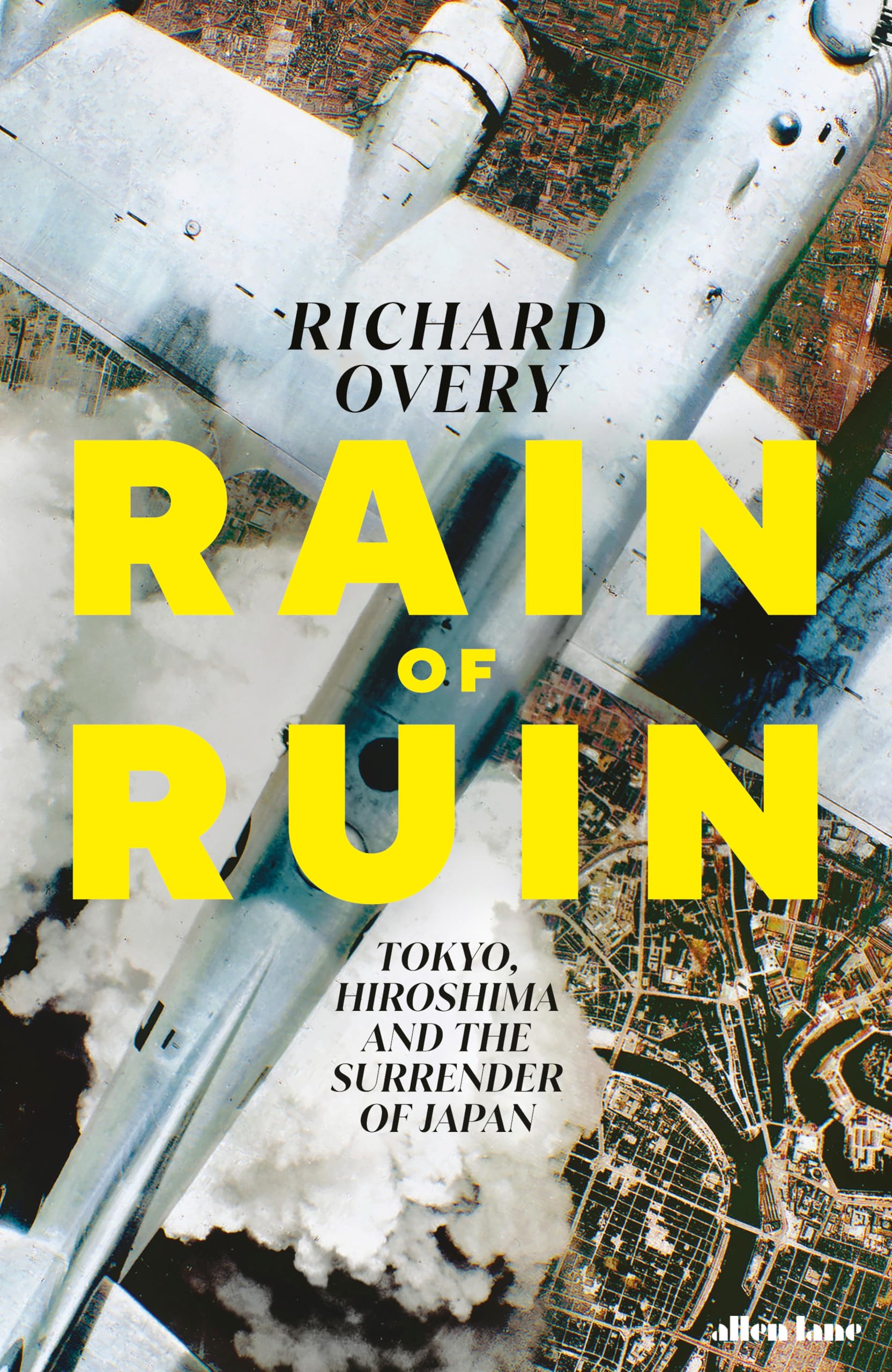
The decision to use the atomic bomb in the Second World War is one of the most written-about episodes in modern military history. As Richard Overy (p. xi) identifies in this work:
[n]o single subject in the history of the United States war effort has prompted so much historical, political, and philosophical writing. No set of surviving records has been subjected to so much close forensic scrutiny.
Broadly speaking, debates over its use range from the argument that they were used to save American lives to the view that they were used to forestall Soviet ambition in the Far East and prevent the division of Japan. As exemplified by the controversy in 1994 surrounding the planned script for what became the ‘Enola Gay’ exhibition at the Smithsonian National Air and Space Museum in 1995, debates over how we interpret the decision to use the atomic bomb have been subject to intense scrutiny and disagreements. Into this milieu comes Overy, one of the world’s leading authorities on the history of the Second World War and an expert on the history of air power.
Overy had previously written the voluminous The Bombing War (2013), which dealt with debates surrounding bombing in the European theatre of war; however, in this volume, he turns his attention to the US strategic bombing campaign against Japan in 1945 and the decision to use the atomic bomb. In Rain of Ruin, Overy deals with three separate but indelibly linked areas, which form the core of the book’s key chapters. Indeed, each chapter provides the necessary context for the next. For example, in Chapter Two, Overy explores the reason why the US shifted from precision targeting to a strategy of indiscriminate firebombing from March 1945 onwards. As Overy notes, the US had abhorred British ‘area bombing’ techniques. However, they were willing to adopt similar methods in the Far East against Japan because of a shift in thinking about the use of incendiary raids influenced by the character of the war in the Far East, ‘the demonisation of the Japanese enemy, and the effort to define area targets as legitimate military-economic ones.’ (p.40). Furthermore, they were supported in this shift in strategy by appointing an officer, General Curtis LeMay, who showed no ‘compunction about bombing and killing civilians if it helped shorten the war’ (p. 22).
Following on from the shift in US air power strategy, Chapter Three deals with the development and decision to use the atomic bomb. Indeed, Overy highlights that in accepting the change in air power strategy, it became easier for the US to normalise the use of the atomic bombs. As he argued, the shift in strategy ‘prepared the way for the apotheosis of indiscriminate destruction in the two atomic attacks’ (p. 18). Moreover, Overy also adeptly illustrates the role that civilian scientists played in the development of the atomic bomb, arguing that ‘[w]ere it not for the maximum effort by a cohort of the world’s most distinguished physicists, the bomb would not have been ready by 1945’ (p.54). As such, it is essential to remember that the use of the atomic bombs was a whole-of-government affair that not only required a shift in US air power strategy but also the willingness of other stakeholders to buy into the project and their eventual use. This also included government officials in key decision-making roles and illustrates that military strategy, such as the decision to use the atomic bomb, does not develop in a vacuum.
Finally, in Chapter Four, Overy examines the reasons for the Japanese surrender in 1945 and the role that the dropping of the atomic bombs played in that decision. In doing so, Overy does an excellent job in comparing the various arguments related to Japan’s decision to surrender, most notably, the role played by the Soviet invasion of Manchuria that started between the dropping of the two atomic bombs. Indeed, as Overy illustrates, drawing on Japanese sources, the Japanese decision to surrender – the so-called ‘Sacred Decision’ – was complex and not readily accepted. For example, towards the end of August, a Japanese Kamikaze unit dropped propaganda leaflets over Tokyo, warning residents not to surrender and stating that the imperial rescript had been a false document (p. 126). Despite this, Overy makes clear that the decision to surrender was complex. Both conventional and atomic attacks on Japan played a role in the decision-making process, though whether they were decisive, as many have argued, remains open to question. Indeed, Japanese leaders viewed the atomic bombings simply as an ‘extension of LeMay’s campaign’ (p. 110).
Overall, Overy has, in the course of just 150 pages, placed the decision to use the atomic bomb in its essential context, the shift in US air power strategy that occurred in the Far East in 1945 and assessed their role in the Japanese decision to surrender. The book is supported by copious referencing to sources not just from the US but also from Britain and Japan. It is necessary reading for anyone interested in the decision to use the atomic bomb, how the Second World War ended, or US air power strategy. However, perhaps the greatest strength of Overy’s analysis is that he does not ‘judge the past’ but allows the evidence to tell its story and allows the reader to ‘understand it better on its own terms’ (p. xiii). In this, Overy has been successful.
Dr Ross Mahoney is an independent scholar specialising in the history of war, with a particular focus on the use of air power and the history of air warfare. He is the Editor-in-Chief of From Balloons to Drones and currently the Senior Historian within the Heritage Policy team at Brisbane City Council in Australia. He has nearly 20 years of experience in the education, museum, and heritage sectors in Australia and the United Kingdom, including serving as the inaugural Historian at the Royal Air Force Museum from 2013 to 2017. His other research interests are military leadership and command, military culture, and the history and development of professional military education. He also maintains an interest in transport history. He has published numerous articles, chapters and encyclopedia entries, edited two books, and delivered papers on three continents.
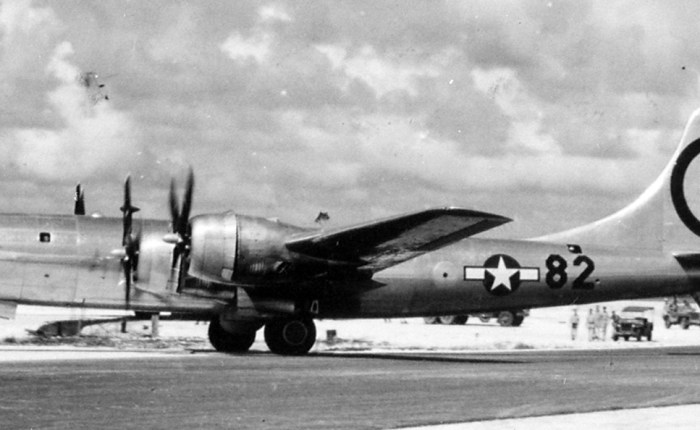
Header image: The Boeing B-29 Superfortress Enola Gay on Tinian just after the attack on Hiroshima on 6 August 1945. (Source: Wikimedia)




 From Balloons to Drones