#BookReview – Drones and the Future of Air Warfare: The Evolution of Remotely Piloted Aircraft

#BookReview – Drones and the Future of Air Warfare: The Evolution of Remotely Piloted Aircraft

By Wing Commander Travis Hallen

Michael P. Kreuzer, Drones and the Future of Air Warfare: The Evolution of Remotely Piloted Aircraft. New York, NY: Routledge, 2016. Index. Figures. Tables. Appendices. Glossary. Hbk. 258 pp.

‘Drones’ are the air power topic de jour. Unfortunately, much of the discussion taking place in the media, and even in some academic circles, displays a lack of nuanced understanding of what is a complicated subject. The use of the term ‘drone’ to refer to platforms from the networked high-altitude long-endurance MQ-4 Triton to small tactical hand-held systems such as the Black Hornet conflates vastly different capabilities in the mind of the public. Similarly, the statement made in a recent article by a professor at the Swedish Defence University that remotely piloted aircraft (RPA) can ‘strike targets with greater precision to avoid collateral damage’ when compared with inhabited systems highlights that even academics in the field do not appreciate what distinguishes inhabited from uninhabited systems.[1] With the subject often overly simplified and the claims at times unrealistic, it is little wonder that policymakers do not understand RPAs well enough to make informed and effective decisions about their acquisition, development, and employment. This is a problem.
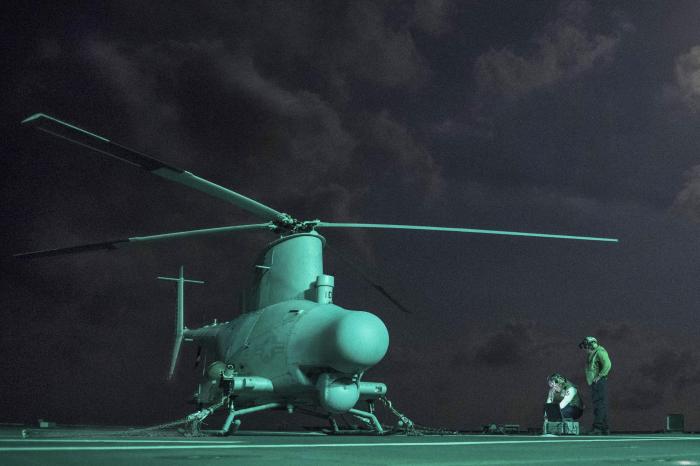
170210-N-WV703-100Q
Sailors prepare an MQ-8B MQ-8B Fire Scout unmanned helicopter before performing ground turns aboard the USS Coronado in the South China Sea, 10 February 2017. (Source: US Department of Defense)

A few academics and military professionals are working to clarify the reality of RPA. Michael P. Kreuzer’s 2017 book Drones and the Future of Air Warfare: The evolution of Remotely Piloted Aircraft is one such example. In a compact 218 pages, Kreuzer, a serving US Air Force officer with a PhD from Princeton, places RPAs in their organisational, operational, strategic, and technological context, enabling the reader to reframe their understanding of RPA away from the hype towards an appreciation grounded in facts and logic.

Kreuzer aims the book at:

[t]hose who are active or have an interest at the level of national policy, and for those who have an interest in understanding the macro-effects of RPAs in modern warfare to understand to what extent they can be used to achieve strategic objectives, and what are the true hazards of their use. (p.22)

On this, the book delivers.

The first step is to address the curious definitional problem contained within the book’s title: is it ‘drones’ or ‘remote piloted aircraft’? Kreuzer’s approach to defining the subject is simple yet effective. He states unequivocally that RPA is the preferred term; ‘drone’ when used appears in quotation marks. He then distinguishes between ‘tactical’ RPA and ‘networked’ RPA, with the distinguishing characteristic being the integration of the sensors and weapons of the latter into a global network. Network connectivity has enabled RPAs such as Reaper to conduct ‘strategic bombing against non-fixed targets such as individuals’ (p.7). This, Kreuzer asserts, has made a significant impact on the conduct of air warfare: ‘The network, rather than the platform itself, is key to this innovation’ (p.7)

Kreuzer makes clear that he does not consider RPAs to be revolutionary in isolation; they are an enabling capability for a broader ‘targeting revolution’. To support his claim, he disentangles the often-conflated concepts of technological revolution, major military innovation, and revolution in military affairs:

A technological revolution is marked by a major change in technology with widespread effects across all sectors of society, a major military innovation is a major change in the conduct of warfare that increases the efficiency with which capabilities are converted to power often stemming from the technological revolution, and a revolution in military affairs is a shift in the character of warfare fuelled by a transformation of military systems. (p.8)

The proliferation of drones is undoubtedly a technological revolution; commercial and civilian RPA applications are already affecting airspace management, privacy laws, and delivery services. RPAs are also increasing the efficiency of military operations for both state and non-state actors. ‘Drone strikes’ conducted by the Western countries in the Middle East and South Asia, and the use by ISIS of commercial drones in surveillance and attack roles evidences a shift in the way military operations are being conducted, the rise of the so-called ‘remote control warfare’. RPAs are not, however, causing the changes in the character of air warfare which Kreuzer refers to as the targeting revolution, they are only contributing to it. Kreuzer’s point here is subtle but well made.

Precision munitions and intelligence are given as the key enablers of the targeting revolution. Guided weapons provide the ability to strike targets precisely; the development of networks enables the processing, exploitation, and dissemination of information to know where the targets are. These are the foundations of Kreuzer’s targeting revolution. What RPAs have provided is persistence, allowing improvements in the timeliness of targeting information. The addition of precision munitions on networked RPAs has marked a culmination of an evolutionary process.

[t]he main revolutionary capabilities have come about when RPA serve as critical nodes in a broader system of warfare enabling networked intelligence collection, global communication, near real time processing, target development, decision support, and strike operations. (p.80)

Technology has played a significant role in driving this revolution, but Kreuzer also highlights the importance of doctrine and organisational factors in realising the benefits of RPAs. He looks at two separate but related organisational issues: the organisational challenges in developing an RPA capability, and the influence of organisational capacity on a state’s ability to develop an RPA capability.

According to Kreuzer, the ‘human challenges’ of RPA are:

[s]ome of the greatest faced by states and organisations seeking to employ such weapons and will be the greatest barrier to successful employment. (p.89)

Unfortunately, these challenges are rarely examined in any great depth. This book addresses this deficiency in the literature.

Integrating RPA operators within a culture and hierarchy that favours pilots of manned platforms are proving difficult. Kreuzer draws attention to the disparity in promotion rates for RPA pilots and the controversy surrounding the Distinguished Warfare Medal as examples of how the United States is struggling to integrate RPA systems into existing culture.

The problem faced here is that ensuring the right people are attracted to and employed in RPA operations will be a crucial determinant of their operational success. Similarly, the development of an emerging capability is dependent mainly upon the promotion of RPA operators into positions of influence and power within the organisation. Kreuzer quotes from Stephen Rosen’s 1991 work on innovation arguing that it occurs ‘only as fast as the rate at which young officers rise to the top’ (p.110). This is appropriate, and in this regard, this, and his subsequent discussion on the implications of the ‘tribes of airmen’ and existing organisational culture on the integration of RPAs into the USAF is as applicable to other air forces investigating the development of an RPA capability.
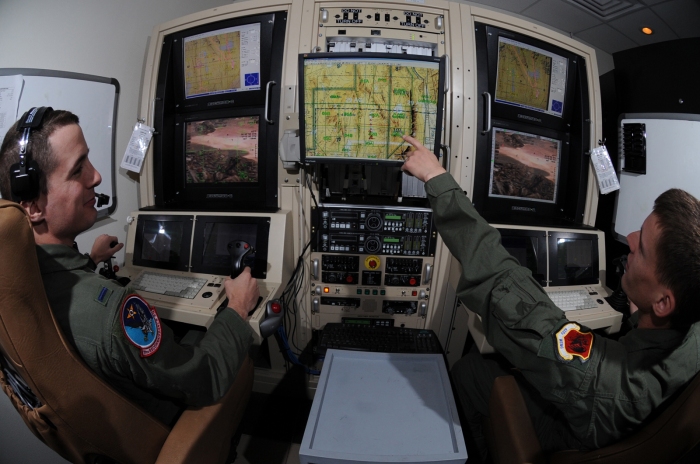
090422-F-0136B-016
An MQ-1B Predator sensor operator assists a MQ-1B pilot in locating simulated targets during a training mission conducted inside the simulators at Creech Air Force Base, Nevada. Both are assigned to the 11th Reconnaissance Squadron, USAF. (Source: US Department of Defense)

The capacity for militaries to adapt organisationally to the opportunities offered by RPAs will also determine the diffusion and proliferation of the capability. This is one of the most important points raised in the book. Drawing on Michael Horowitz’s adoption-capacity theory, Kreuzer predicts the rate of diffusion of RPA technology and the type RPA likely to be developed by states based on the state’s ‘financial intensity and organisational capacity available to implement major military innovations’ compared with their ‘perceived strategic imperative to develop innovation’ (p.157). His prediction is succinctly captured through an analogy with established air power capabilities: ‘it is easier to think of networked RPAs like strategic bombers (which few countries adopted) and tactical RPAs like attack helicopters, which are common worldwide’ (p.5). The organisational and financial costs of acquiring and maintaining networked RPAs creates high barriers to entry for this capability. Unless a state has compelling operational/strategic requirements or is willing to invest in a prestige capability, as some states have done with aircraft carriers, networked RPA proliferation will be limited to only a few states (p.184). Kreuzer’s logic is sound and well-argued; as with all predictions it may eventually prove to be wrong, but his matrix of probable RPA diffusion provides an excellent starting point for the discussion of RPA proliferation.

Overlaying questions of innovation and organisational adaptation is the contribution RPAs make to air warfare. Much has been written and discussed about the impact of RPAs on the conduct of military operations, but the majority of this discussion conflates platform with strategy. As Kreuzer puts it:

Too often, debates over RPAs ignore or write off counterfactual means of military intervention and criticise RPAs for traits that would be similarly exhibited by alternative means of conflict. In many cases, attacking the RPA becomes a substitute for attacking the underlying policy, which is an unnecessary distraction from the real debate which should be made. (Emphasis added) (p.21)

The question of RPAs impact on air power permeates all aspects of the book, which is not surprising given the book’s title; however, the way in which Kreuzer does this provides the book with utility beyond the narrow subject of RPA.

In discussing the importance of RPAs in the realisation of the targeting revolution, Kreuzer explores and analyses the strategic implications of targeted killings and signature strikes. His analysis goes beyond the use of armed RPAs and is just as applicable to the employment of manned platforms. Kreuzer highlights, quite correctly, that the developments of information age air warfare are challenging existing international legal treaties and norms, but to focus solely on RPAs is a distraction as these are issues of modern warfare generally which go beyond the question of having a human in the cockpit. The legality and ethics of these types of operation is a vexed issue, but the book’s treatment is balanced, considered, and informative.

Operationally, the employment of RPAs has already raised several questions relating to sovereignty, and the implications of airspace violations and the subsequent shoot-down of RPAs operating in sovereign or disputed airspace. Recent events in Israel have raised this issue in the public consciousness. Kreuzer’s examination of this topic looks beyond the usual case studies of US operations in Pakistan’s Federally Administered Tribal Areas (though these are also discussed) to include RPA operations in the Caucasus and the Middle East. The use of RPAs by Georgia, Azerbaijan, and Hiz’ballah, and their subsequent shoot-downs by the Russians, Armenians, and Israelis respectively, provided test cases for the international community to consider the legal and strategic ramifications of airspace violations by uninhabited systems. The shoot-down of relatively expensive RPAs followed by reprimands from the international community for airspace violations demonstrate that RPAs have not changed the existing norms of airspace sovereignty. This does raise the question of US operations in Pakistan, but this subject is also well covered by Kreuzer.

Finally, Kreuzer addresses one of the perennial problems for airmen which has been exacerbated by the development of RPA: people just don’t get air power.

For all the attention airpower receives in modern war, it remains one of the least understood systems of war for outside observers […] for the average reader with a basic interest in what airpower means the subject is abstract, complex, and often subject to detailed debates about tactics and airframes rather than broader strategic implications. (p.198)

The lesson for air power professionals, scholars, and advocates is clear: more needs to be done to improve the way that air power is explained and articulated to the public. Kreuzer’s book is an excellent example of how this can be done.

Drones and the Future of Air Warfare is a must read for anyone involved in the decision to acquire, develop, and/or employ RPAs as it lays the conceptual foundation which should inform any decision to invest in an RPA capability. It would be wrong, however, to view the book solely as a treatise on RPAs. By placing the subject within their broad operational and organisational context, Kreuzer also provides insightful and informative commentary on military innovation, organisational design, capability development, and air power strategy. Accordingly, Drones and the Future of Air Warfare can rightfully be considered an analysis of the current state and future evolution of air power. It will, therefore, make an excellent addition to any air power professional’s reading list.

Wing Commander Travis Hallen is an Air Combat Officer currently serving as Deputy Director – Air Power Development at the Royal Australian Air Force’s Air Power Development Centre. He is also a Sir Richard Williams Foundation Scholar. The opinions expressed are his alone and do not reflect those of the Royal Australian Air Force, the Australian Defence Force, the Australian Government, or the Williams Foundation. He can be found on Twitter at @Cold_War_MPA.

Header Image: The MQ-4C Triton unmanned aircraft system completes its first flight on 22 May 2013 from the Northrop Grumman manufacturing facility in Palmdale, California. The 80-minute flight successfully demonstrated control systems that allow Triton to operate autonomously. Triton is designed to fly surveillance missions up to 24-hours at altitudes of more than 10 miles, allowing coverage out to 2,000 nautical miles. The system’s advanced suite of sensors can detect and automatically classify different types of ships. (Source: Wikimedia)

If you would like to contribute to From Balloons to Drones, then visit our submissions page here to find out how.

[1] Arash Heydarian Pashakanlou, ‘Air power in humanitarian intervention: Kosovo and Libya in comparative perspective,’ Defence Studies, 18:1 (2018), p. 52.
#highintensitywar – From ‘Bats to MAVs’: The Concept is Clear, ‘Small’ is the Future of Aerial Warfare

#highintensitywar – From ‘Bats to MAVs’: The Concept is Clear, ‘Small’ is the Future of Aerial Warfare

By Sergeant Lee Tomàs

Editorial Note: Between February and April 2018, The Central Blue and From Balloons to Drones, will be publishing a series of articles that examine the requirements of high-intensity warfare in the 21st Century. These articles provide the intellectual underpinnings to a seminar on high-intensity warfare held on 22 March by the Williams Foundation in Canberra, Australia. In this article, Sergeant Lee Tomàs of the Royal Air Force (RAF) examines the implications of Micro Air Vehicles (MAVs) for future conflicts.

In 1941, a Pennsylvania dentist named Lytle S. Adams was on vacation in the South-West of America within the famous Carlsbad Caverns. While exploring Carlsbad’s vast expanse, he observed it hosted thousands of indigenous Bats. Adams was monumentally impressed by what he saw and then just as history has often taught us previously, the most remarkable ideas often derive from the strangest of places, at a random moment, when separate paths conjoin. Much like Sir Isaac Newton when the Apple hit his head, thus propelling him in founding the theory of gravity.[1] Adams’ similar ‘eureka’ moment did not derive from when he observed the Bats in Carlsbad’s deep and damp expanse; it was when he turned on his car radio when departing, which amplified that the Imperial Japanese Navy had devastatingly attacked Pearl Harbor. Adams at that precise moment began plotting an unorthodox plan of revenge against America’s new enemy; the Japanese, using what he had seen previously that day; the Bats.[2]

The idea that developed from Adams’ eureka moment was to attach incendiary material onto swarms of collected Bats, who previously (through the research and development stages of the idea) were trained to hibernate in large storage refrigerators. The final phase of Adams’ plan was for these Bats to be dropped from an aircraft in a bomb casing encompassing similar properties to the aforementioned refrigerators. These would then open mid-air, dispersing the Bats outwards onto Japanese cities below to seek warmth and sanctuary within enemy building structures, inside eaves and roofs, which during that period in Japan were made of highly flammable material. The Bats would then go kinetic, catch fire, and subsequently demolish their host building target.[3] Adams’ own words would describe the predicted results of the later titled Project X-Ray. ‘Think of thousands of fires breaking out simultaneously over a circle of forty miles in diameter for every bomb dropped.’ He later recalled that ‘Japan could have been devastated, yet with a small loss of life.’[4]

Adams’ creation of Project X-Ray could be perceived as pure lunacy to the untrained eye, however, with the present-day parameters of modern warfare constantly evolving, sometimes a little bit of lunacy can be effective in achieving the desired strategic aim. Adams’ premise of causing considerable amounts of effective damage upon one’s enemy, with the least amount of innocent lives taken, through the hostile deployment of these mini-warfare-vessels might, in the future, be a viable solution. Project X-Ray’s legacy, concept and its underpinning tactical peripherals of swarm-based aerial strategies will be forwarded within this narrative as still being relevant and possible within the delivery of modern warfare. This will be proven by substituting the Bats for the new technological assets: MAVs, which when deployed would give a modern force, like the RAF, a viable tactical equaliser and advantage within wider strategic operations.

Project X-ray principles of tactical swarm-based aerial attack have possible relevance within historic, present-day, and future western military operations due to two distinct and transcending reasons. The first is the current evolving development and procurement of military platforms and assets, which are now gravitating towards small, smart, and cheap technology that encompasses the ability to deploy in swarm formations. This ability includes overpowering your enemy within all areas through greater aerial deployments while retaining a cheaper overall financial outlay. The second reason is the potential future opportunity to reduce the amount of military and civilian deaths caused by historic and currently deployed air operations. Below we will explore these two reasons in depth while answering if aspects of Adams’ idea could be implemented within future UK warfare scenarios by using the vast range of MAV technology available and placing them in historical conflict case studies, which will position how they will affect future air-centric operations globally.

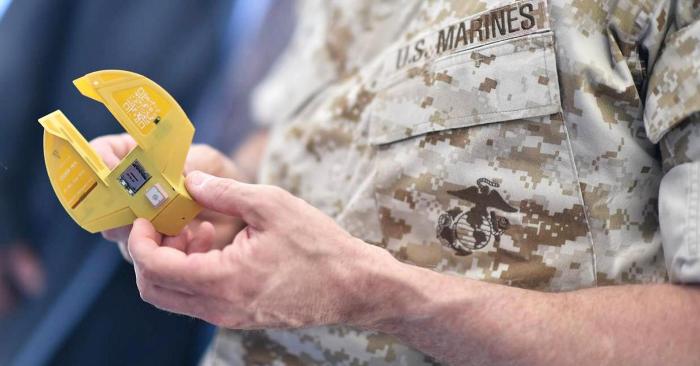
As a platform, MAVs are a small remotely, or autonomous air-asset. Typically, they exist in three size classifications; small, medium, and large. This article focusses on small and medium-sized MAVs. Small MAVs, which the US Department of Defense defines as being 20lbs or lighter, are typically hand sized, like the U.S ‘Cicada,’ which is a Covert Autonomous Disposable Aircraft used for carrying out undetected missions in remote battlefields.[5] Medium MAVs are typically ‘dinner-plate’ sized like the ‘Quad,’ ‘Hexa’ or ‘Octo’ copters, currently used by UK police forces for surveillance operations within the airspace of airports like the ‘Aeryon-Skyranger’ drone.[6] There are also large MAVs like the ‘Harpey’ Drone, which is currently used by the Chinese military and has a nine-foot wingspan and 32 Kilogram warhead payload that is guided by radar, can loiter in the air and can deploy with 17 others systems from a single five-ton truck.[7]

102691538-Unknown.1910x1000
The US Navy’s “CICADA” drone program is producing lightweight disposable glider drones for field missions. (Source: US Naval Research Laboratory)

This article will start where the Bats ended. Although the aforementioned ‘Project X-Ray’ was not implemented operationally during the Second World War, its premise – to inflict regional mass damage to Japanese cities without mass fatalities – is a tactic that is still desired today by the majority western militaries and governments. The Cicada as an individual platform has the same tactical properties and potential as Adams’ Bats in that they can be deployed en-masse, equipped with small thermobaric NANO munitions, which could easily perform the small kinetic solution positioned during the Project’s design stage, and are also more importantly incredibly small. The potential capability of this MAV within a swarm configuration has already been adopted again by the US Air Force (USAF) when it deployed ‘Tempest’ tactical balloons at high altitude. These then released medium Tempest MAVs who during mid-flight then distributed smaller Cicadas MAVs en-masse (again all at high altitude) to collect environmental data.[8] A more warfare centric illustration of Cicada’s possible capability was demonstrated during the recent deployment of 103 ‘Perdix’ MAVs from an American F/A-18 fighter jet, which once deployed (mid-air) flew to three different target locations and simulated a swarm attack scenario on each designated enemy position. A Chinese civilian corporation who specialises in MAV development had also illustrated this possible small-MAV swarm scenario when it deployed 67 MAV’s simultaneously which performed a ‘saturation’ attack on an enemy anti-aircraft battery, subsequently neutralising the anti-air threat. The U.S Navy has also recently reinforced the effectiveness of mass MAV strategy when it deployed 8 LOCUST (medium) MAVs simultaneously towards one Aegis-class destroyer warship (the most effective global air-defence system currently available).[9] This exercise resulted in 2.8 of the 8 MAVs penetrating the ships defence system, causing subsequent damage and the conclusion that if this deployment were increased by 10 or a 100, the consequences would be more devastating, proving that smaller, smarter and more lethal technologies are the future of air-centric warfare.

The potential benefits of these attacks can be dissected further. The Bat inspired slow-burn-combustion Cicada MAV attack would, as Adams conceived initially, cause the necessary damage to enemy territory, buildings, and infrastructure while reducing the human-centric ‘collateral damage.’ This reduction in lives taken by this type of operation (if appropriately deployed) would achieve its aim by allowing the residing population the choice to flee their residencies and disperse the area, therefore allowing a secondary larger tactical air-strike to occur on key infrastructure targets like nuclear reactors, power stations and government/military buildings. If civilian dispersal was not forthcoming then maybe using MAVs to deploy dispersal gas, or even recorded PA warnings played through speakers on the MAV’s could be utilised. The former ability already exists and was demonstrated by the Skunk MAV, which were bought by a South African Mining company which deployed 25 of these (medium) multi-rotor MAVs to quell potential protester uprisings. Skunks have four barrels which fire pepper-spray or paintball rounds at protesters. Less potent aerosols could potentially be designed to encourage the necessary civilian movement and dispersal passively.

This above mentioned strategy would in the first instance reduce the mass-death scenario created from current air-strike strategies, and also decrease the erosion of a state’s global-moral currency, a process which was demonstrated when the US disclosed 116 innocent civilians were killed through its UAV centred strategy in Afghanistan in 2016, and in response culminated in extensive global condemnation.[10] The erosion of a state’s moral-currency is not outwardly/globally post-strike, it is also internally eroding within the conflict itself as air-strikes can have an extensive degrading effect on the local population, which has historically been the catalyst for the worlds emerging and multiplying insurgencies in Middle Eastern conflicts.[11]

It Always Comes Down to Money!

From a fiscal perspective using small MAVs as weapons could also be highly beneficial in future tactical strikes. MAVs as a platform can now be designed and created using additive 3-D printing. Within the West geographically, 3D printing has already transcended into the world of MAVs through pioneers such as Andy Keane and Jim Scanlan from the University of Southampton University, who, through 3-D printing, produced a drone with a five-foot wingspan. This process has further expanded globally through the online ‘Maker movement’ which shares 3D drone designs and do-it-yourself guides for anybody who wishes to construct a Drone. Ang Cui, a Columbia University PhD, also has a ‘Drones at home’ blog with step-by-step instructions for would-be drone makers to follow. The first commercial and military MAV produced at scale through 3D printing was the small ‘Razor’ drone, which is not only highly effective but can be printed in one day in the US for $550 there are also cheaper variants which cost $9 per unit.[12]

The Razor’s wingspan of forty inches, cruise potential of 45mph and a flight capability of forty minutes comes in complete form for $2,000, and its production company MITRE believe future projects will arrive under $1,000, or cheaper as the MAV market expands.[13] Further evolutions include Voxel8 a 3D electronic printing company whose $8,999 3-D printer can print an operational drone with electronics and engine included.[14]

Commercial American companies have also illustrated the MAV mass production potential of 3D technology, such as United Postal Service (UPS) who have established a factory with 100 3-D printers, which accepts orders, prints them, allocates a price, and then ships them the same day. Furthermore, UPS plan to increase its plant size to 1000 printers to support major production runs.[15] China has also recognised the benefits of embracing civilian technological advancement to improve military procurement. The expansion of 3D printing within China’s commercial sector has recently empowered its military to evolve its procurement of warfare assets and platforms effectively. This was demonstrated to observing media by the Chinese Army who repaired a broken military class oil-truck in an austere battlefield environment using only a single 3D additive manufacturing machine. This process allowed the crew to replicate and replace the unserviceable components both on-site and within a short period.[16] Furthermore, this demonstration revealed the ease, skill, convenience and reliance China places on 3D printing, which in this instance prevented them experiencing routine operational issues like losing their re-fuelling capability, the requirement for a truck recovery team to deploy and the need to wait for an expensive part from a geographically distant manufacturer to arrive. A final and more strategic advantage this 3-D process has provided is removing China’s potential reliance on global commercial industry to provide these technical parts en-masse as the US does within its own present-day military procurement cycles.

Not only does 3D printing provide numerous tactical and speed efficiencies, but it could also, if correctly exploited, arrive at an incredibly cheaper cost financially. Using the Razor as an example, it currently costs $2000 per individual platform (complete). Therefore, a smaller Cicada MAV would arrive if produced within the same process at $250 or cheaper due to its smaller size, reduction of material required and after necessary production efficiency has been achieved.[17] Once assembled, if a small incendiary were then attached at an estimated cost of $200, it would make the platform an incredibly cheap and deadly weapon. This overall manufacture-to-deployment financial pathway compares favourably to the recently released UK Ministry of Defence figures that an average Tornado aircraft operational flight costs £35,000-per hour. This figure, when plugged into an operational scenario, creates the following financial outlay; two Tornados performing a six-hour (one stop) strike operation carrying four Paveway bombs (£22,000) and two Brimstone missiles (£105,000) would cost on average £1 Million. If the Paveway munitions were later exchanged for the Storm-Shadow munition variant (£800,000), the cost would increase exponentially.[18] This price, even without the latter munition, would allow you to purchase 2,000 Cicada’s with the ability to be dropped from a more fiscal efficient platform and would then as a swarm fly straight to the target area with a potential kill radius of 2 metres per MAV depending on incendiary attached. This type of attack would reduce the possibility of human collateral damage, firstly from a surface-to-air threat to the pilot and innocents on the ground exposed to the aerial kill-chain, while giving the swarm operator the ability to increase or decrease the swarm size depending on the amount of damage desired or required. The financial benefits continue to expand in favour of small MAVs when they are compared to rival high-technology air platforms like the fifth generation F-35. Using the previous larger Razor MAV as an example; it costs $2,000 per fully functioning drone, which when compared to the cost of 16 F-35s would allow you to purchase for the same price one million Razors. If the F-35s and these Razors were then deployed against each other in active hostile deployments, the Razors would retain the tactical potential if designed correctly to swarm the 16 F-35s, destroying them, even without incendiaries, through intended foreign object debris damage. Therefore, eradicating the superiority that the F-35 previously held. Of course, scenarios, testing and system advancement would dictate these hypothetical scenarios, however as all the scenarios suggest there is a new dimension in modern warfare and it is the MAV.

Sergeant Lee Tomàs is a Senior Non-Commissioned Officer in the Royal Air Force. In a 13-year career in the RAF, he has deployed to the Falkland Islands, Afghanistan, Cyprus, Oman, and Cyprus. He holds a Post Graduate Certificate from Brighton University, an MA from Staffordshire University, and an MA from Kings College London. He runs a political online blog and lecture series at RAF stations which tries to develop junior Ranks knowledge of current affairs. In 2017, he won the prestigious CAS ‘Fellow of the Year’ award.

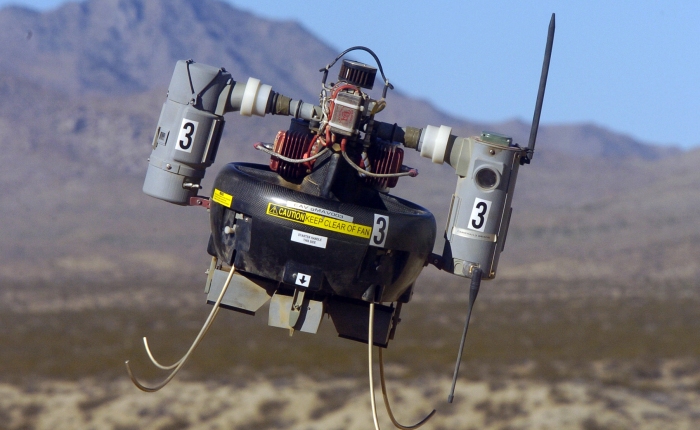
Header Image: A Honeywell RQ-16 T-Hawk Micro Air Vehicle flies over a simulated combat area during an operational test flight, c. 2006.

[1] Steve Connor, ‘The Core of truth behind Sir Isaac Newton’s Apple,’ The Independent, 18 January 2010.

[2] Alexis C. Madrigal, ‘Old, Weird Tech: The Bat Bombs of World War II,’ The Atlantic, 14 April 2011.

[3] David Hambling, Swarm Troopers: How Small Drones Will Conquer the World (London: Archangel Ink, 2015).

[4] Madrigal, ‘Old, Weird Tech: The Bat Bombs of World War II.’

[5]  Sarah Kreps, Drones: What Everyone Needs to Know (Oxford University Press, 2016); Anon, ‘U.S. military hopes to enlist tiny, durable Cicada mini-drone,’ The Japan Times.

[6]  Anon, ‘UK Police ‘Skyranger’ Drones to patrol skies above Gatwick airport after major disasters,’ The Huffington Post, 13 March 2014.

[7] John Kaag and Sarah Kreps, Drone Warfare (London: Polity Press, 2014), p. 49.

[8]  Ibid, pp. 8-9.

[9] David Hambling, ‘U.S. Navy Plans to Fly First Drone Swarm This Summer’, Military.com, 4 January 2016.

[10] Spencer Ackerman, ‘Obama claims US drone strikes have killed up to 116 civilians,’ The Guardian, 2 July 2016.

[11] Jason Berry, ‘Inside Americas Drone War, a moral Black Box,’ PRI, 26 September 2012.

[12] T.X. Hammes, ‘The Future of Warfare: Small, Many, Smart vs. Few & Exquisite?,’ War on the Rocks, 16 July 2014.

[13] Hambling, Swarm Troopers, pp. 109-10.

[14] Dario Borghino, ‘Voxel8 paves the way for 3D-printed Electronics,’ New Atlas, 14 January 2015.

[15] Eddie Krassenstein, ‘Cloud-DDM-factory with 100 (eventually 1000) 3D printers & just 3 employees’ open’s at UPS’s Worldwide Hub,’ 3DPrint.com, 4 May 2015.

[16] Simon, ‘Chinese military begins using part production library for 3D printing replacement parts in the field,’ 3ders.org, 12 August 2015.

[17] Mariella Moon, ‘Watch how the Navy plans to deploy its tiny Cicada drones,’ Engadget, 22 May 2015.

[18] Alistair Bunkall, ‘How Much Will Airstrikes on IS Cost Taxpayer?,’ SKY News, 26 September 2014.

#HighIntensityWar – Air Operations at the Level of Boots on the Ground

#HighIntensityWar – Air Operations at the Level of Boots on the Ground

By Sean Welsh

Editorial Note: Between February and April 2018, The Central Blue and From Balloons to Drones, will be publishing a series of articles that examine the requirements of high-intensity warfare in the 21st Century. These articles provide the intellectual underpinnings to a seminar on high-intensity warfare held on 22 March by the Williams Foundation in Canberra, Australia. In this article, Sean Walsh considers some of the issues surrounding the use of Uninhibited Aerial Vehicles with a particular focus the on the implications for ground units who may increasingly come to rely on such platforms that operate at ultra-low-levels.

Slaughterbots

In the near future air operations will happen at altitudes as low as the heel of a soldier’s boot as aircraft capable of offensive and defensive operations reduce in size and increase in range.

That this is likely is demonstrated by the slaughterbots video that went viral in November 2017. The slaughterbots are autonomous offensive drones that can fit in the palm of a human hand. Fitted with explosive warheads designed to impale human skulls, these very low altitude drones were depicted in the video as having the ability to autonomously select and engage targets based on age, sex, fitness, uniform and/or ethnicity.

The video ended with one such robot killing an unarmed student lying under a desk in a lecture theatre (a clear-cut war crime). Legitimate militaries have no interest in perpetrating genocide, but the prospect of autonomous drones attacking human combatants with explosives and projectiles is very real. 

Very Low Altitude Drones

Future weaponised micro-aircraft will be capable of operations at very low altitudes – just millimetres above the ground. Indeed, some aircraft may become hoppers having the ability to fly through the air and drive on the ground.

This descent to ankle altitude of air power will fundamentally change the nature of army operations. Increasingly, they will come to resemble air force operations. Effective air power is now small enough to fit in a backpack or armoured personnel carrier. This low-altitude air power is mostly used for reconnaissance enabling an infantry unit to have an eye in the sky; however, these systems are starting to become weaponised.

In future high-intensity war, infantry units will need to be familiar with air force logistics and tactics. Future ground troops may need to be airmen as well as soldiers in that they will need to understand low altitude air war in addition to land war. Alternatively, combat airmen may need to be embedded in infantry units. One might argue this is the continuation of a process that started when the cavalry switched to helicopters from horses. Regardless of the institutional arrangements, ground units will need defensive drones, portable anti-aircraft weapons they can carry themselves, or both.

Tiers of Air Superiority

In the near future, it may be there are tiers of air superiority. At low altitudes, the air will be dominated by large numbers of relatively small and cheap aircraft flying at low speed and having relatively low range. At higher altitudes, existing air force concepts of air superiority will continue to apply. There will still relatively small numbers of expensive supersonic fighters clearing the skies of enemy aircraft but F-35s burning through the sky at high speed will be of limited use against swarms of slaughterbots flying less than 10 feet above the ground at relatively low-speed attacking infantry and other ground-based targets.

Indeed, already we have seen how such cheap low altitude drones can be used to attack expensive hi-tech aircraft sitting on the ground. In Syria, in January 2018, a low-tech attack by Syrian rebels was made on hi-tech Russia on its airbase at Hemimim and its naval station at Tartus. Militaries will find it irresistible to develop weapons costing a few hundred dollars that could destroy supersonic aircraft worth tens of millions on the ground. Naturally, countermeasures to guard against such threats have already been developed. The Russians were able to see off the attack.

As an aside, this gives the lie to the claim made in the slaughterbots video that ‘humans will have no defence’ against such attacks. In the history of war, the measure has always led to the development of counter-measures. The spear led to the shield. The submarine led to the depth charge. Barbed wire and machine guns led to tanks. The slaughterbot will lead to counter-measures just like every other technological innovation in military history.

Traditional High-Altitude Air War Will Still Be Critical

Even given the new low-altitude threats, F-35s and other fighter aircraft will still be able to target the transport planes and vans delivering the low altitude ‘slaughterbots’ to a range close enough for them to attack in a conventional war. Destruction of enemy logistics will still be a key to victory as it was in the Battle of Midway and many other historic engagements. However, given suitable terrain, it is conceivable that one belligerent in a future high-intensity war might have air superiority at altitude while the other has air superiority close to the ground.

Increasing Autonomy

Even in an asymmetric war, a plucky low-tech belligerent might find a way through the emerging countermeasures and achieve low-altitude air superiority with devastating effect to a high-tech foe. We can expect those who perpetrated the failed attack on the Russians in Syria to go back to the drawing board and try again, this time targeting the low altitude air defence systems first (perhaps with a suicidal or stealthy ground attack) before unleashing the drones on the high-value targets in the hangers.

Increasingly these low altitude aircraft will be autonomous in their combat functions. This is because such craft is far too small for an onboard human pilot. Also, in the near future, a fight between a human-telepiloted Uninhabited Air Vehicles (UAV) and an autonomous UAV will be as fair a fight as Kasparov vs Deep Blue or Sedol vs AlphaGo. There will come a time where the AI has advanced to a point where humans cannot defeat it. A further reason is that existing drone counter-measures use techniques such as jamming GPS and telepiloting frequencies. To counter the counter-measures, drone-makers could resort to dead-reckoning or visual navigation to avoid the GPS vulnerability. To avoid the telepiloting vulnerability, they could disconnect the network card and develop onboard autonomy.

U.S. Marines with 3rd Battalion, 4th Marines and Afghan National Security Forces conduct a joint checkpoint
US Marine Corps Corporal Andrew Margis of the 3rd Battalion, 4th Marines, Regimental Combat Team 7 prepares a micro unmanned aerial vehicle for flight at a joint vehicle checkpoint with Afghan soldiers and Afghan civil order police in the Now Zad district of Afghanistan’s Helmand province, 21 May 2013. (Source: US Department of Defense)

Moral Arguments regarding Lethal Autonomy

There is, of course, a moral argument here in addition to the technical ones regarding lethal offensive autonomy. It is foreseeable that there will be a ban on autonomous weapons but terrorist and criminal groups (narcoterrorists) will readily adopt such low altitude air power because of its low cost and easy availability. Indeed, they already have. ISIS weaponised telepiloted hobby drones in 2016. Drones are now being used to smuggle drugs across borders. It is only a matter of time before cartels use them to assassinate police, judges, and ministers. This will force democratic nations to adopt counter-measures. To be effective, such counter-measures, like existing close-in weapons systems such as Phalanx, will need a high degree of targeting autonomy. Historically, military necessity has trumped moral objections to many new weapons because belligerents will do whatever it takes to win.

Jefferson Davis objected to ‘torpedoes’ (mines) as ‘cowardly’ weapons, but when the Confederacy got desperate, he acquiesced to their use. Submarines and bombers were similarly objected to on moral grounds yet because they were militarily effective and could be used in compliance with principles of discrimination and proportionality, they survived. Military norms changed to accommodate them. The Campaign to Stop Killer Robots may get a ban on autonomous weapons, but these efforts may not bear fruit.

Already, the Russian military has prototyped an autonomous tank, the Neretha, which was reported to have outperformed human tank crews in recent trials. A US team of researchers have already built an air combat AI that defeated a retired Air Force colonel in a tactical simulation.

Autonomous Swarms

It is likely autonomous low altitude aircraft will function in swarms and be teamed with humans who will increasingly focus on defining military goals at a high level rather than figuring out how to achieve them in detail.

A human officer might say to a swarm of robots, ‘clear that house’ and the robots will autonomously work together to search for threats and clear it. Swarm robotics is a rapidly progressing area of research. If the swarm of robots needs to shoot enemy combatants therein (be they human or robotic) they will do so within the scope the human order “clear that house” gives them.

Similarly, having disposed of the low altitude air defence, a commander could say to his swarm ‘search for and destroy all Sukhois on this airfield’, and the robots would do this. If they needed to shoot airmen trying to defend their craft, they would do so within the scope of their human order and the normative constraints of targeting law.

At present, such human-robot teaming is not practical, but it is a defined research goal. Most drones remain telepiloted; however, voice-controlled robots that are intelligent enough to respond to simple tactical instructions are not far away, and autonomous robots intelligent enough to comply with targeting law are not so far away either.

Such airborne robots would integrate with ground-based robots. Ground-based robots will be primarily logistical with strike ability mostly airborne except for some very particular tasks, such as sneaking up like snakes on enemy low altitude air defence posts. Command and control will be distributed and redundant. Cybersecurity will be critical.

Much research and development will be needed to ensure these drones operate in accordance with targeting law. However, such research is being funded. In the absence of a policy prohibition, the advanced powers will succeed in developing normatively compliant autonomous weaponry. In a climate where major powers do not trust each other, each will keep their guard up.

Increasingly, given the advances in AI and robotics, the front line of combat will be a combination of Uninhabited Ground Vehicles and UAVs on land and Uninhabited Sea Vehicles, Uninhabited Underwater Vehicles and UAVs at sea.

Future War May Be Predominantly Robotic in the Front Line

Future war may well evolve into robot vs robot at the front line. Human resistance against robots may become futile. Should such conditions evolve in war, it may be conventions evolve to take human surrenders in such hopeless circumstances.

Indeed, future war might become as ‘civilized’ as the wars of the Italian condottieri in the Renaissance. Machiavelli wrote of the Battle of Zagonara in 1424 that it was a ‘great defeat, famous throughout all Italy’ and yet ‘no death occurred except those of Lodovico degli Obizi and two of his men, who having fallen from their horses were drowned in the mud.’[1]

Historians doubt the body count in Machiavelli’s report as he had it in for the lack of warfighting prowess of the condottieri, but even so, just as the wars of the condottieri were more about manoeuvre and posture than actual hard fighting, future war might become a matter of destroying material rather than people.

Some would argue war has been as much as about destroying material rather than people since the Second World War as evidenced by the raids on Schweinfurt and Bologna and the U-Boat campaigns in the North Atlantic. Once the opposing robots are destroyed, the humans may surrender as the ability of humans to defeat robots in combat might no longer exist. Resistance without robots may turn out to be as futile as trying to beat Deep Blue at chess without a computer.

In a future high-intensity war, it might be written:

[u]sing a new technological invention, the Red robots wiped out the Blue robots in the first days of the war, compelling the Blue humans to surrender. Some Blue humans tried to fight on, but the Red robots disarmed them, laughing at their slowness. The videos taken by the Red robots went viral.

Sean Welsh (@sean_welsh77) is the author of Ethics and Security Automata: Policy and Technical Challenges of the Robotic Use of Force and a postgraduate student in Philosophy at the University of Canterbury. Prior to embarking on his PhD, he wrote software for British Telecom, Telstra Australia, Fitch Ratings, James Cook University and Lumata.

Header Image: Pictured is a Royal Marine controlling a Black Hornet 2 Remotely Piloted Aircraft System (RPAS). This pocket sized and hand launched RPAS uses micro thermal cameras, visible spectrum cameras and proprietary software for flight control, stabilization, and communications. Weighing 18 grams, the Black Hornet helicopter can fly for up to 25 minutes at line-of-sight distances of up to one mile at speeds of 18 km/h. It uses GPS navigation or visual navigation via video and can fly pre-planned routes via its autopilot. The Black Hornet was developed in 2007 and been used by NATO forces in Afghanistan from 2011, with the United Kingdom the first to acquire the type and use it operationally. (Source: MoD Defence Imagery)

[1] Niccolo Macchiavelli, History of Florence, Book IV, Chapter I.

#BookReview – Air Power in UN Operations: Wings for Peace

#BookReview – Air Power in UN Operations: Wings for Peace

By Dr Ross Mahoney

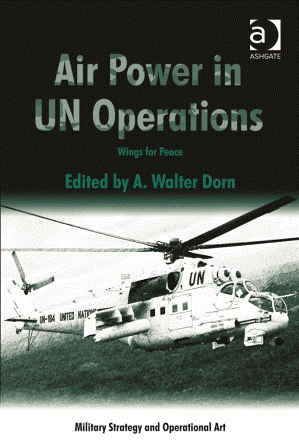
A. Walter Dorn (ed.), Air Power in UN Operations: Wings for Peace. Farnham: Ashgate, 2014. Figures. Tables. Notes. Index. Pbk. xxxv + 350 pp.

air-power-in-un-operations_cover_dorn_300x448_65k

The use of air power as a tool by state actors is a regular theme examined by historians and policy specialists alike. However, the use of air power by non-state actors, in particular, intergovernmental organisations, is a different matter, though depending on one’s perspective, the United Nations (UN) – the subject of this volume – can be viewed as either a state or non-state actor. In this volume, A. Walter Dorn, Professor of Defence Studies at the Royal Military College of Canada, has brought together an impressive line-up of scholars and practitioners to consider how the UN has used both kinetic and non-kinetic air power as a tool for peacekeeping operations. Indeed, the narrative of UN peacekeeping operations generates images of soldiers in blue helmets on the ground. However, as this book ably demonstrates, air power has been a vital element of UN operations since the creation of its first ‘Air Force’ in 1960.

First Phase Digital
A partial view of Luluabourg airport, showing some of the Swedish Saab J-29 jet planes which were placed at the disposition of the UN Force in the Congo (ONUC), c. 1961. Called ‘flying barrels’, the jets were manned by members of the Swedish Air Force, numbering some 40 pilots and maintenance officers.(Source: United Nations)

The book examines the use of air power by the UN since 1960 through to Operation UNIFIED PROTECTOR – the air operations over Libya by NATO in 2011, which enforced UN Security Council Resolutions 1970 and 1973. The book consists of 17 chapters split over six thematic areas: The UN’s First ‘Air Force’; Airlift; Aerial Surveillance; No-Fly Zones; Combat and evolving capabilities. The latter aspect looks at some of the challenges for the UN in the future. Indeed, by splitting the analysis into the themes mentioned above, Dorn et al. illustrate that UN air operations cover the broad spectrum of roles readily identifiable in modern air power doctrine: control of the air; attack; situational awareness and air mobility. It also ably illustrates the challenges and potential contradictions of ‘Ends’, ‘Ways’ and ‘Means’ in UN strategy and peacekeeping operations. As Dorn notes in his preface, ‘While peacekeeping is meant to de-escalate violence, it is sometimes necessary to use force to stop force.’ (p. xxvi). As such, to meet the ends desired by the UN – the cessation of violence between, states, groups or organisations – it is often necessary to utilise air power’s various capabilities to moderate and influence the behaviour of the parties involved. Therefore, air power offers a toolkit to try to support the enforcement of UN Resolutions. Indeed, as Robert C. Owen’s chapter on Operation DELIBERATE FORCE in 1995 (pp. 231-40) and Christian Anrig’s piece of Libya in 2011 (pp. 255-82) illustrate air power can be a useful tool in shaping behaviour. DELIBERATE FORCE ensured that the Bosnian Serbs complied with UN Resolutions and put the UN in a position to shape the Dayton Accords (p. 236). However, this, in itself, was only possible due to the technological changes, such as the emergence of Precision Guided Munitions, which allowed the multinational air forces involved in DELIBERATE FORCE to conduct a humanitarian war. Had the air forces involved been equipped with ‘dumb’ weapons then the diplomatic fallout from collateral damage would have, potentially, hindered the ends sought by the UN. Similarly, in 2011, air power offered the UN the means to apply military force to level ‘the playing field’ (p. 280) in defence of civilians during the Libyan Civil War. Furthermore, unlike in DELIBERATE FORCE, air power – as the means of applying military force – was the essential tool for both the UN and NATO because UN Security Council Resolution 1973 forbade the use of occupying forces in Libya. However, it should also be remembered that air power was not used in isolation and that it worked with naval forces and special operations teams to achieve the ends desired by the UN.

Importantly, this volume does not avoid discussing some of the challenges inherent in the application of air power by the UN. As with any forces it deploys, the UN is reliant on the support of its member nations to provide the ways and means to achieve its ends. At the time of publication (2014), the UN deployed around 200 to 300 aircraft to provide air support for peacekeeping missions (p. 283). Not only is relying on member states to willingly supply forces a risky strategy – but states tend only to support those missions viewed to be in its own interest – it is also costly as the UN pays for the use of lease of both military and civilian aviation assets to achieve its ends. Some of these challenges are considered in the final section of the book on ‘Evolving Capabilities’ (pp. 283-316).

drone in Bunia.jpeg
A United Nations unmanned aerial vehicle (UAV) at Bunia airport in the Democratic Republic of Congo. UAVs are used for surveillance purposes by the United Nations Organization Stabilization Mission in the Democratic Republic of the Congo. (Source: United Nations)

This fascinating book highlights the many challenges concerning the application of air power in the context of peacekeeping operations. It considers both some of the practical challenges of deploying air power into the theatre to the many diplomatic considerations that affect the use of air power as a policy tool for the UN. Clearly, air power is not always the answer; however, as part of a toolbox of political, diplomatic, economic and military means, air power can provide the ways to achieve the ends sought by the UN if applied correctly. Finally, it is worth reflecting that many of the lessons found in this book should not be considered as unique to the UN, but can also be applied to peace support operations undertaken by individual sovereign nations. Indeed, David Neil’s chapter of Unmanned Aerial Vehicles (pp. 147-64) highlights some of the regulatory challenges concerning their use, which are just as important to national air forces as they are for the UN.

This post first appeared at Thoughts on Military History.

Dr Ross Mahoney is an independent historian and defence specialist based in Australia. Between 2013 and 2017, he was the resident Historian at the Royal Air Force Museum, and he is a graduate of the University of Birmingham (MPhil and PhD) and the University of Wolverhampton (PGCE and BA). His research interests include the history of war in the twentieth and twenty-first centuries, air power and the history of air warfare, and the social and cultural history of armed forces. To date, he has published several chapters and articles, edited two books, and delivered papers on three continents. He is a member of the Royal Historical Society and is an Assistant Director of the Second World War Research Group. He is a member of the Royal Historical Society and an Assistant Director of the Second World War Research Group. He blogs at Thoughts on Military History, and can be found on Twitter at @airpowerhistory.

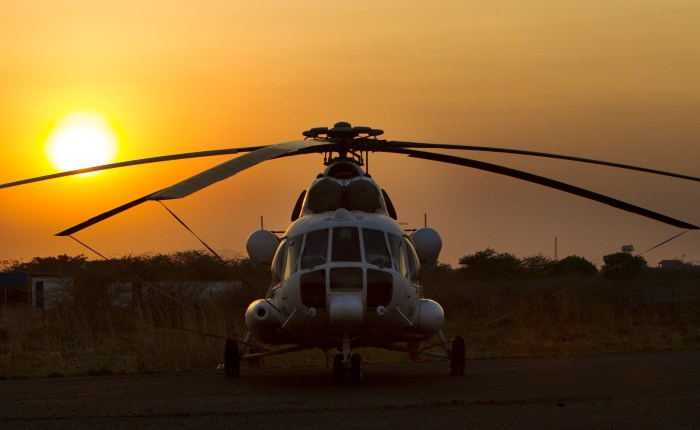
Header Image: A Mil Mi-8 helicopter of the United Nations Mission in South Sudan in Juba, c. 2013. (Source: United Nations)

Changing the USAF’s Aerial ‘Kill’ Criteria

Changing the USAF’s Aerial ‘Kill’ Criteria

By Major Tyson Wetzel

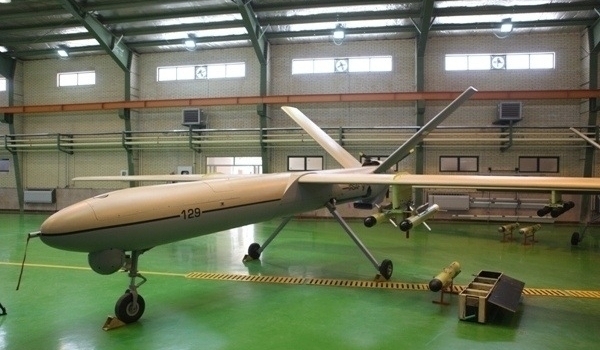
On 8 June 2017, a United States Air Force (USAF) F-15E Strike Eagle shot down an Iranian-produced Shahed 129 unmanned aerial vehicle (UAV) over Syria, followed just twelve days later by a second identical event. Earlier this year an Israeli fighter aircraft shot down a Hamas drone, just the most recent of at least half a dozen Israeli UAV kills occurring since October 2012. The face of aerial combat has changed in this era of UAVs, or ‘drones’ as they are commonly called. Aircrew are now more likely to engage UAVs than manned fighters in current and future aerial combat.

13941115000415_photoi
A Shahad-129 UAV.

The question of whether UAV kills should be counted as official aerial victories is unresolved and has recently been hotly debated on social media. In a small sampling of air power enthusiasts conducted by the author on Twitter, just 58% of respondents were in favour of counting UAVs as official kills that count towards ‘ace’ status (five aerial victories). Current USAF policy does not recognise UAV shoot downs as ‘kills,’ but it should. Aircrew should receive proper recognition for the destruction of an adversary’s air assets.

Based on the author’s discussion with current USAF pilots, operators, and air power historians and theorists, there are at least four clear arguments against counting UAV kills as official aerial victories that count towards ace status. First, shooting down a UAV does not require the skill associated with shooting down a manned aircraft. Second, UAVs cannot shoot back. Thus there is a limited risk in this type of engagement, a critical component of aerial combat. Third, and perhaps most importantly, there is not another pilot in the UAV, meaning the UAV cannot respond to adversary actions. Thus there is no ‘sport’ in the shoot down. Finally, there is a risk that allowing unmanned aircraft to count as official kills will open the floodgates to allow the destruction of all airborne objects to count as official aerial victories. I will provide counter-arguments to each of these points as part of my advocacy for modifying current USAF aerial victory criteria to include some classes of UAVs.

While UAVs may be relatively low and slow targets, shooting them down still requires skill and precise aerial employment. Detecting and engaging a UAV is not easy, its low altitude and speed can potentially cause problems for fighter pulsed-Doppler radars. The reduced radar cross section (RCS) of some UAVs also increases the difficulty of engagement. Shooting down a UAV requires detecting a small size and small RCS aircraft, positively identifying that aircraft (often difficult with small systems that do not emit many of the detectable signatures US aircraft typically use to identify adversary aircraft electronically), and guiding a weapon to kill the UAV. These functions; detecting, tracking, identifying, and guiding a weapon to the target are the same functions a fighter pilot would need to shoot down a MiG-29 FULCRUM or a Su-27 FLANKER. Based on my experience, most fighter pilots who have tried to engage a UAV in training or the real-world would agree that a significant amount of skill and tactical acumen is required to complete such a kill.

Airstrikes in Syria
A USAF F-15E Strike Eagle receives fuel from a KC-135 Stratotanker over northern Iraq after conducting airstrikes in Syria, 23 September 2014. These aircraft were part of a large coalition strike package that was the first to strike ISIL targets in Syria. (Source: Wikimedia)

The second argument is based on the fact that most currently fielded UAVs are incapable of firing back at an adversary. Multiple arguments counter this point. First, an aircraft need not be able to return fire to be officially counted as an air-to-air kill. In Operation DESERT STORM, USAF F-15C pilot Greg ‘Dutch’ Masters was given credit for a kill on an Iraqi Air Force (IAF) IL-76 CANDID cargo aircraft. Second, most UAVs do have propelled munitions that could provide a limited ability to respond to an aerial attack. In 2002, a USAF MQ-1 PREDATOR fired an AGM-114 HELLFIRE air-to-ground missile (AGM) against an IAF MiG-25 FOXBAT, though the FOXBAT successfully shot down the PREDATOR. The Shahed 129s that were recently shot down were reportedly equipped with similar AGMs that could conceivably be used to fire on an adversary fighter aircraft. Lightly armed air-to-ground aircraft have always been counted towards official kill counts. In DESERT STORM, US aircraft shot down six helicopters and one aircraft armed with only limited air-to-ground munitions, and no dedicated air-to-air capability (three Mi-8 HIPs, one Mi-24 HIND, one Bo-105, and one Hughes 500 helicopters, and a PC-9 light attack aircraft).

The third argument is that UAVs do not have a pilot in the cockpit, and thus should not be counted as an aerial victory. Virtually all UAVs, even micro UAVs and drones, have an operator who is controlling the system; few UAVs simply fly a pre-programmed route without operator input. Most UAVs, especially the larger and more capable systems, also include a crew on the ground, typically a pilot and a sensor operator, who can build situational awareness of the operational environment, react to, avoid, and attempt to counter adversary attempts to shoot it down. Additionally, this argument ignores the changing face of aerial combat. The preponderance of air assets in future conflicts are likely to be unmanned in the future.

The final argument is that inclusion of UAVs into official kill criteria will risk widening the aperture of official aerial victories to include any airborne objects. Taken to its extreme, one could imagine the destruction of a mini drone or quadcopter being counted as an official kill. The simple solution to this problem is to specifically delineate the types of UAVs that will be considered official kills.

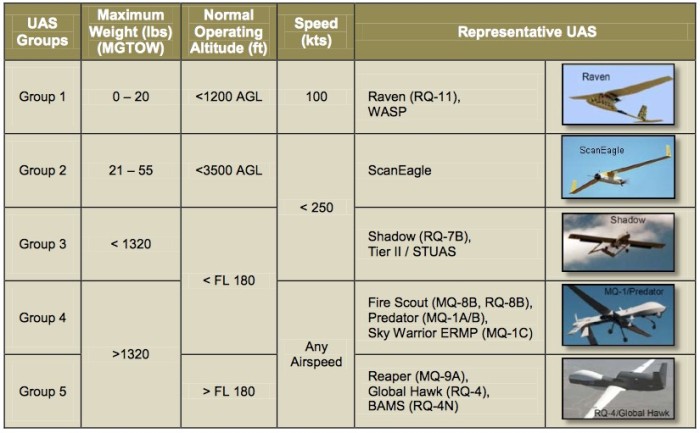
Not all UAV or drone kills should count as official air-to-air kills; the USAF should modify its existing kill criteria to include some classes of UAVs based on size and function of the system. The Department of Defense (DOD) has defined Unmanned Aircraft System (UAS) groups in their 2011 UAS Airspace Integration Plan. These groups are used to distinguish US classes of UAS’, but they also provide a useful method to make a distinction between adversary systems that should officially count as an air-to-air kill.

UAS Table
Department of Defense Unmanned Aircraft Systems Group Descriptions. (Source: 2011 Department of Defense Unmanned Aircraft Systems Airspace Integration Plan)

UAS Groups 1-3 are small airframes, have no or very limited ordnance, and are hand or catapult launched. These ‘micro UAVs’ and ‘drones’ should not officially count as a kill because of their limited ability to react or counter adversary actions, and to avoid the precedence of allowing all airborne assets to count for a kill (think about the ridiculousness of a silhouette of a remote-controlled quadcopter on the side of an F-15). UAS Groups 4 and 5, however, are UAVs that are typically operated by a pilot, are capable of medium-to-high altitude flight, longer range and endurance, beyond line-of-sight operations, and frequently carry propelled munitions that can conceivably be used for self-protection (as a frame of reference, the Shahed 129 would be classified as a Group 4 UAS). These capabilities mirror previous non-fighter aircraft which have been counted as official kills, such as heavily-armed but non-maneuverable balloons in World War I (5 of American ‘Ace of Aces’, Eddie Rickenbacker’s 26 WWI kills were balloons), cargo aircraft (IL-76 in DESERT STORM), and lightly armed helicopters (Bo-105 and Hughes 500 helicopters in DESERT STORM).

The US went 18 years between manned aircraft shoot downs, from the last MiG-29 kill of Operation ALLIED FORCE in 1999 to last week’s Su-22 FITTER kill. However, during this period UAVs have expanded exponentially in number and type, and recently have been targets for US aircrew flying over Syria defending coalition forces. It is time for the USAF, and DOD writ large, to recognise the changing character of aerial combat and designate kills on particular types of UAVs as official aerial victories. Such a decision would legitimately recognise tactical excellence in air combat and bring official aerial victory criteria up to date with changing character of 21st Century warfare.

Tyson Wetzel is a Major in the United States Air Force intelligence officer, a graduate of the United States Air Force Weapons School where he was also an instructor, and the US Marine Corps Command and Staff College. Tyson has deployed multiple times in support of Operations IRAQI FREEDOM, ENDURING FREEDOM, NEW DAWN, and NOBLE EAGLE. He is currently assigned to the Joint Staff at the Pentagon. He tweets @GetterWetzel.

Header Image: A pair of USAF F-15E Strike Eagles fly over northern Iraq early in the morning of 23 September 2014, after conducting airstrikes in Syria. These aircraft were part of a large coalition strike package that was the first to strike ISIL targets in Syria. (Source: Wikimedia)