By Dr Jacob Stoil
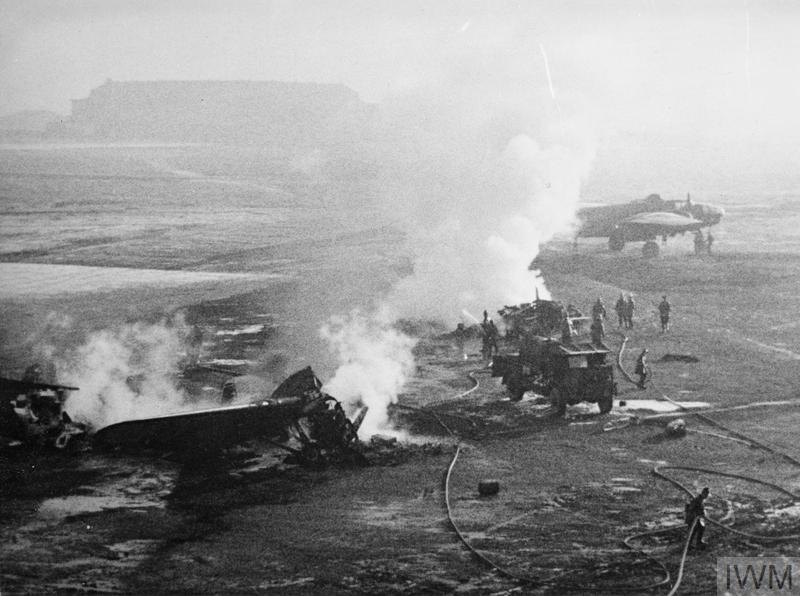
From the F-35 Lightning II to the F-15E Strike Eagles, even the most advanced aircraft are sitting ducks while they are on the ground. It should come as no surprise that the best way to defeat aircraft is to attack them when they cannot evade, fight back, or use any of their defensive measure – in other words, while they are not flying. This has been a truism throughout much of the history of air power. It led to the Japanese attacks on Hickam Field as part of the Pearl Harbor attack, the British Special Air Service (SAS) raid on Haggag el Qasaba, the Luftwaffe’s Operation Bodenplatte, and the Israeli success against the Egyptian Air Force in the 1967 War, among many others. In recent decades, the uncontested nature of US and Allied basing has allowed air forces to operate freely, launching sorties without significant risk to their home base and achieving dominance in the skies. Recent events have provided a stark reminder that, if the era of safe basing has not ended, it is rapidly drawing to a close.
The most important protection that the US and Allied bases have had was distance. Since the Second World War, air assets based in Western Europe and North America did not need to worry about aerial threats from adversaries in anything short of a great power (likely nuclear) war. In the post-Cold War world, this experience was further reinforced as the US and NATO adversaries of the period, such as Iraq and Serbia, lacked any real possibility of reaching homeland-based aircraft. While in Iraq and Afghanistan, air assets were forward deployed, the most rare and critical assets in the US inventory – many of which are no longer in production and would be exceedingly difficult to replace – including B-2s, B-1s, and RC-130s, stayed out of the enemy’s reach.
Individual terrorists might have been able to reach a base in the US or Europe, but robust homeland security infrastructure limited the extent to which these could have been coordinated. In addition, most domestically radicalised terrorists acted as lone wolves and, therefore, lacked the capability to cause significant damage to infrastructure and multiple platforms simultaneously. The lack of a real threat to home-based aircraft has been one of the unspoken advantages that uscore the US and NATO’s ability to achieve air superiority and global reach without incurring the expense of protecting their aircraft or critical aircraft infrastructure at home.
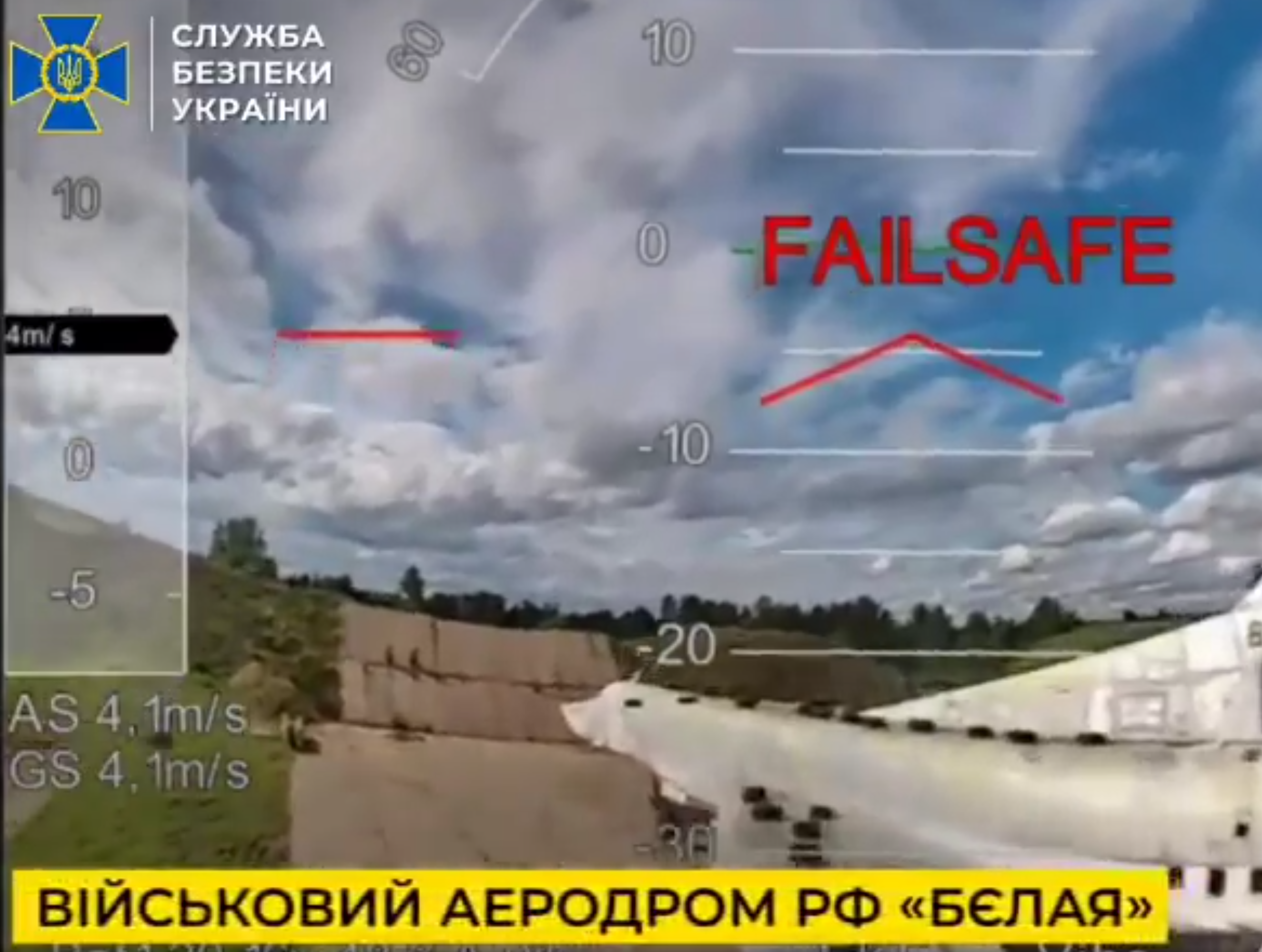
Three events from the last six months should serve as a stark wake-up call that the era of distance being the primary protection for critical assets may be coming to an end. In Operation Spider’s Web, the Ukrainian Security Service smuggled containers filled with short-range attack drones into Russia through commercial channels. They employed Russian civilian drivers who knew nothing of the nature of the cargo they carried to bring the containers to launch locations near Russian air bases, and Ukraine employed remote instructions to launch the attack.
The drone strikes caught the Russian airbases completely off guard, allowing Ukraine to target critical Russian assets in unprotected positions. The attack damaged or destroyed as many as 40 aircraft, including strategic bombers that formed part of Russia’s nuclear triad. Russia’s assumption that distance from the front and national air defence protected these assets was painfully shattered in the course of a single day.
This has not been the only instance of launching short-range attack drones at distant targets. As part of Operation ‘Am Kalavi,’ Israel smuggled precision-guided munitions (PGMs) into Iran and established both a small factory to build attack drones and a base from which to operate inside the country. This meant that in advance of the Israel Air Force (IAF) strikes in Iran, Israeli intelligence and special operations personnel on the ground could launch drones and PGMs to confuse and reduce Iran’s air defences, ballistic missiles, and command and control capabilities.
This Israeli operation differed from the Ukrainian one in both its methods of delivering weapons and the types of targets selected, yet the lesson is similar. The most critical assets required for the defence of the nation can now be targeted by air, regardless of their range, and national-level air defences are insufficient to keep a determined adversary at bay. It is easy to imagine the damage an adversary could inflict on the US force posture through attacks similar to those in Russia or Iran, targeting B-2s, B-52s, or even high-value, low-density assets like the RC-135 or the-be-deployed E-130J TACAMO fleet.
The presence of new aerial threats to aircraft based in the homeland does not negate new ways in which traditional threats might manifest. In June 2025, Palestine Action, at the time of writing, a proscribed terrorist group in the UK, infiltrated RAF Brize Norton and sabotaged two parked RAF Voyager Aircraft, the RAF’s sole type of tanker aircraft, which has been extensively supporting NATO’s Eastern Flank missions. The apparent targeting of the attack was based on misinformation or disinformation – that the Voyager Aircraft were being used in direct support of the Israeli military in its war with Iran.
There is no apparent evidence that this attack was organised or supported by a foreign adversary. Still, there is ample evidence that foreign adversaries have used social media to contact, organise, and perhaps even direct the actions of groups and individuals far from their borders in ways that were not available in previous decades. Adversaries will likely note the potential efficacy of using social media to spur domestic groups in the US or NATO countries to attack important air assets.
So, the threat landscape has changed. Distance is not the defence it once was. Now, aircraft at home – especially those that play singularly important strategic or operational roles now require a level of protection unseen in the US since the Second World War. There are two primary ways to achieve this: active protection measures and passive measures. Active measures include air and missile defences such as Centurion C-RAM and counter-drone electronic warfare or directed energy systems, which, to provide protection from surprise, must always be active as well as air patrols. This may potentially pose a particular challenge for basing in areas with congested civilian airspace.
The status and the quality of the active system are important, but so too is the density. There must be sufficient defensive systems at each airfield (and especially those with low-density assets) to prevent being overwhelmed in a strike or destroyed. There must also be enough to allow for maintenance without a serious reduction in defensive capability. Active defensive systems may also be vulnerable to electronic warfare and cyberattacks. These systems would also provide little aid in the case of a Brize Norton-style infiltration. This means that the active defences against aerial threats must be combined with robust ground security and patrols.
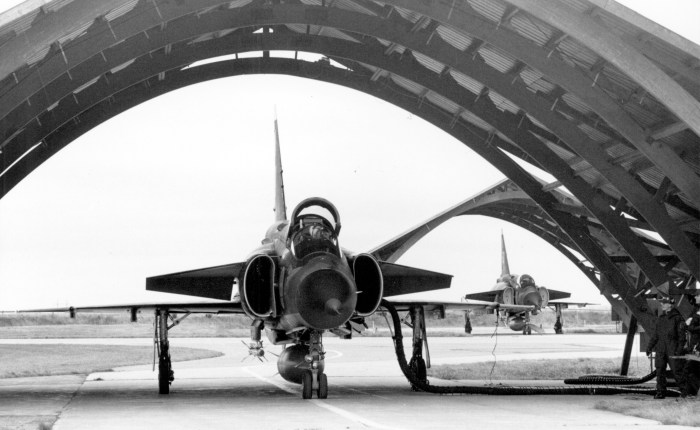
Passive defence measures mitigate the damage that either aerial attacks or infiltration can cause. The cornerstone of passive defence for airframes is hardening. While some NATO countries still have limited hardened shelters in the US and elsewhere, hardening would require not only a change in construction but a change in practice. Building hardened hangers (including top protection and/or perimeter and top netting) for critical assets would greatly complicate attacks by small, short-range UAVs by requiring them to carry a far larger explosive to breach the aircraft shelter. Such hangers, if locked down, would also raise the challenge for would-be infiltrators and give security forces greater time to respond. At the same time, their protection would only apply when aircraft are in shelters and not parked on outdoor ramps, as is often the case.
Alone, passive protection can do what active protection cannot. It provides protection twenty-four hours a day, seven days a week, from both air attacks and ground infiltration. Unlike active protection, many forms of passive protection are immune to electronic warfare and cyber-attacks. Passive protection does not interfere with any other airspace activities and, once completed, is less susceptible to degradation in capability caused by personnel shortages.
The advantages of hardening are why Norway has reopened its deeply buried aircraft facilities, and Switzerland never abandoned its facilities. The US and other NATO countries have built hardened aircraft shelters with top protection in the past, but ceased building them because the threat did not justify the cost of construction and challenges to aircraft maintenance in more confined spaces. As the operations in Iran and Russia, as well as the sabotage at RAF Brize Norton, make clear, the threat has changed.
In an ideal world, the US and NATO could still rely on the protection afforded by distance, but that is not the world of today. Failing that, the best possible way forward would be to combine active and passive defences to protect all critical assets, but this may prove unfeasible. While the solutions to the challenges posed may appear tactical, the implications of failing to implement new protection could be strategically catastrophic.
Whether the US and its Allies choose passive or active protection or a combination of both, the time has come to protect critical aircraft while they are on the ground so the Joint Force can count on them to be in the air. The US and its allies should take the opportunity to learn from the attacks on Iran and Russia and develop protection for their critical aircraft today or risk becoming a case study of regret in the future.
Dr Jacob Stoil is a military historian who is the US Army’s Research Professor of Middle East Security at the US Army Strategic Studies Institute. In this capacity, he advises the US Army and other organisations on Middle East policy, strategy, and lessons learned. Dr Stoil also serves as Chair of Applied History at the West Point Modern War Institute, Assistant Director of the Second World War Research Group (North America) and Trustee of the U.S. Commission on Military History. Jacob was a Senior Fellow of the 40th Infantry Urban Warfare Center and a co-founder of the International Working Group on Subterranean Warfare as well as an Associate Professor of Military History at the US Army School of Advanced Military Studies (SAMS). He has published multiple policy and academic articles, which can be found in publications such as the International Journal of Military History, Wavell Room, and Modern War Institute. He can be followed on X as @JacobStoil.
Header image: Preparation of two Saab JA 37 Viggen under Töreboda arches as part of the Bas 60 (Flygbassystem 60), which was an air base system developed and used by the Swedish Air Force during the Cold War. (Source: Wikimedia)




 From Balloons to Drones

_interceptors_is_launched_during_a_successful_intercept_test_-_US_Army.jpg)