OODA Loop or Coffee Break? Erich Hartmann and the Forgotten German ‘Decision Cycle’

OODA Loop or Coffee Break? Erich Hartmann and the Forgotten German ‘Decision Cycle’

By Stephen Robinson

There was not too much dogfighting for us. It requires a large area and is absolutely defensive.[1]

Erich Hartmann

Colonel John R. Boyd flew F-86 Sabres during the Korean War and later theorised the Observation-Orientation-Decision-Action (OODA) loop, initially focused on air-to-air combat. At first, Boyd considered the tactical requirements of test flight dogfights between the YF-16 and YF-17 prototypes in 1974 before analysing Sabre and MiG-15 combat in Korea. He expressed the basic idea of the OODA loop in a United States Air Force (USAF) oral history in 1977, although it was not fully formed with its familiar four stages.[2] However, it is not commonly known that another F-86 pilot had theorised a four-stage air-to-air combat ‘decision cycle’ in the 1940s – Luftwaffe pilot Erich Hartmann.
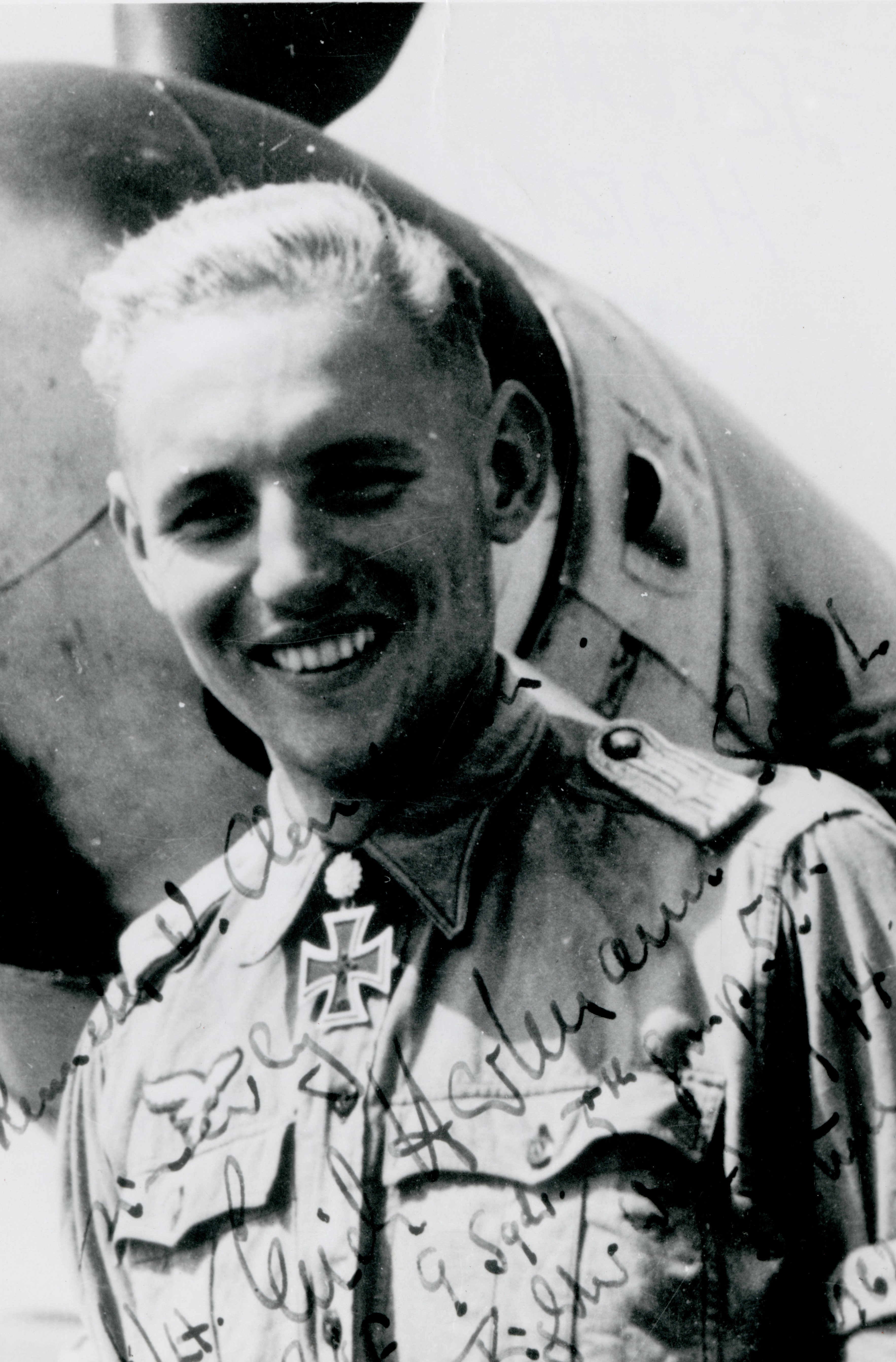
FRE_015069
A signed copy of a photo of Erich Hartmann during the Second World War. (Source: Imperial War Museum)

During the Second World War, Hartmann flew 1,404 combat missions, participated in 825 air-to-air engagements and became history’s highest-scoring ace with 352 official kills, mainly over the Eastern Front.[3] During the Cold War, he later commanded West Germany’s first Sabre wing Jagdgeschwader 71 ‘Richthofen.’[4] Hartmann theorised the ‘Coffee Break’ concept, abbreviated as See-Decide-Attack-Break (SDAB). Writets Trevor J. Constable and Raymond F. Toliver articulated the idea in their bestseller The Blond Knight of Germany (1970), the first Hartmann biography, almost half a decade before the OODA loop emerged. Although their book romanticises the German military and fails to address Hartmann’s relationship with National Socialism adequately, it accurately depicts air combat tactics. In contrast, historian Erik Schmidt’s Black Tulip: The Life and Myth of Erich Hartmann, the World’s Top Fighter Ace (2020) thoroughly examines Hartmann’s role in the Third Reich and his fighter pilot career, which makes his book essential reading.

Hartmann and Boyd, in addition to flying Sabres and developing ‘decision cycles’, had much else in common. They were both aggressive fighter pilots with maverick independent streaks who declared war on their hierarchy late in their careers. Hartmann rebelled by opposing the F-104 Starfighter, which he considered unsafe, while Boyd went outside his chain of command to develop the unwanted Lightweight Fighter project.[5] Both men also retired as colonels in the 1970s.

At first glance, the SDAB cycle and the OODA loop are hard to distinguish. As John Stillion expressed: ‘Hartmann’s air combat procedure is strikingly similar to USAF Colonel John Boyd’s famous Observe, Orient, Decide, Act, or “OODA” loop.’[6] However, there is a critical difference. In an air combat context, the OODA loop is about winning dogfights, while the SDAB cycle is all about avoiding them. Additionally, Boyd’s OODA loop theory evolved from air combat to include land combat and then conflict in general before becoming a cognitive model explaining the mind’s relationship with reality. Hartmann’s method, as Schmidt concluded, is not ‘really a dogfighting strategy per se. It was more of an anti-dogfighting strategy.’[7]

Take a Coffee Break

Hartmann enlisted in the Luftwaffe in 1940 and joined Jagdgeschwader 52 in October 1942, flying Messerschmitt Bf 109 fighters. He initially became a wingman for Edmund Rossmann, who mentored the novice pilot. Rossmann had already been credited with over 80 kills, giving his advice considerable merit.[8] Hartmann learned that Rossmann had a wounded arm that prevented him from flying highly manoeuvrable dogfights, but he compensated for this injury by developing a specific tactic. After spotting the enemy, Rossmann patiently assessed the situation before deciding whether to attack. If he decided that surprise could be achieved, he would attack, which differed from the standard practice of immediately attacking a seen enemy.[9] Hartmann later reflected that Rossmann ‘taught me the basic technique of the surprise attack, without which I am convinced I would have become just another dogfighter.’[10] What Rossmann did out of necessity, Hartmann would soon do out of choice.

Hartmann scored his first aerial victory on 5 November 1942 by shooting down an Il-2 Sturmovik. However, shrapnel from the kill damaged his engine, forcing him to crash. While recovering in the hospital, Hartmann began to formulate his conception of air combat after reflecting that he should have approached closer before opening fire and disengaged quicker to prevent shrapnel from hitting his engine. Hartmann later recalled: ‘I learned two things that day: Get in close and shoot, and break away immediately after scoring the kill.’[11] Hartmann later formulated his trademark method, as Constable and Raymond explained:

The magical four steps were: “See – Decide – Attack – Reverse, or ‘Coffee Break’.” In lay terms, spot the enemy, decide if he can be attacked and surprised, attack him and break away immediately after striking; or if he spots you before you strike, take a “coffee break” – wait – pull off the enemy and don’t get into a turning battle with a foe who knows you are there.[12]

In a USAF interview in 1985, Hartmann was asked, “How did you develop your tactics of See, Decide, Attack, Reverse, or Coffee Break?” He answered:

I developed my tactics by watching my leader. My first leader, MSgt Eduard Rossmann, was always cautious. He said he didn’t like to pull a lot of Gs because of a bad shrapnel wound in his arm. He would look over each fight and decide if he would enter. When he did enter, it was always straight through – no turns – and he usually came home with a kill. My next leader, Sgt Hans Dammers, liked to turn and fly in the circus. The next man, 1st Lt Josef Swernemann was somewhere in between the two. He would be patient for a while, but then would get into a turning fight when he got frustrated. This is when I realized you must fight with your head, not your muscle.[13]

Hartmann rejected dogfighting as he considered it pointless and risky: ‘I also decided against aerial acrobatics, against what traditional pilots would call dog-fighting […] Acrobatics are a waste of time and therefore dangerous.’[14] Hartmann would always try to break contact after a pass before deciding if another pass was warranted and, as Constable and Raymond explained, ‘[e]ach pass was a repetition of the “See – Decide – Attack – Break” cycle.’[15]

Hartmann’s method was essentially hit-and-run tactics. As social scientists C. Hind and A. Nicolaides explained: ‘Hartmann became the ultimate and leading exponent of the stalk-and-ambush tactics, and he favoured the tactic of ambushing enemy aircraft and firing at them from very close range, about 20 m, rather than becoming involved in challenging and unnecessary dogfights.’[16]

The SDAB cycle is usually only mentioned in popular military aviation histories and is rarely referred to in scholarship. Edward E. Eddowes, who worked at the Air Force Human Resources Laboratory, submitted a paper to the First Symposium on Aviation Psychology in 1981. He declared: ‘Each engagement involves repetitions of the see, decide, attack, break discrimination-decision sequence. Like many of his predatory predecessors, Hartmann found turning contests hazardous and avoided them.’[17]

In another example, Captain James H. Patton, Jr., a retired naval officer, in his article ‘Stealth is a Zero-Sum Game: A Submariner’s View of the Advanced Tactical Fighter’ considered the SDAB cycle in 1991:

Top Gun instructors interpreted that terse guidance – based on interviews with Hartmann – to mean that a pilot should attempt to detect without being detected, judge whether he can attack covertly, close to a point that would almost assure a kill, and then disengage rapidly to repeat the process, rather than hang around in what submariners call a melee, and fighter pilots term the visual fur ball.[18]

Mikel D. Petty and Salvador E. Barbosa conducted an interesting air simulation experiment. They noted that USAF instructors supervise trainees undergoing virtual simulation-based training.[19] However, given the limited availability of instructors, they devised a means of testing a self-study-based training approach through simulation by following the progress of one test subject over eight years. The virtual pilot flew 2,950 missions in 138 campaigns using seven types of aircraft set in Europe in 1943-45 using Microsoft Combat Flight Simulator 3 (CFS3). The experiment required the subject to read air combat literature before applying the described tactics in the simulation. The study material included The Blond Knight of Germany, which outlined the SDAB cycle.[20] Petty and Barbosa confirmed the effectiveness of the SDAB cycle as ‘maneuvers and tactics described as effective in WWII air combat in the literature, e.g., those in Franks (1998) and Toliver and Constable (1970), were found by the subject to be very effective in CFS3 as well, if performed correctly.’[21]

The SDAB cycle has limitations, and Schmidt correctly concluded that it was well-suited to the Eastern Front but had less utility in Western Europe: ‘Hartmann’s Soviet enemies were, generally, less capable than the British and American pilots on the Western Front, which meant not only that they were easier to shoot down, but also that they were easier to evade and disengage from if the odds weren’t right.’[22] Therefore, applying SDAB cycles consistently in practice is impossible, and some dogfighting is inevitable, making the OODA loop relevant.

The OODA Loop

Boyd was familiar with Hartmann and mentioned him once in the 1977 USAF oral history stating that ‘[A]nd so, in that sense, a guy like Hartmann or a guy like Bong [Maj Richard I.] and some of these other good American aces – I could name others from other countries – they kind of knew they were going to win anyway. Maybe not in the beginning, but they built up that certain confidence and they had the desire.’[23] However, it is unclear if he read The Blond Knight of Germany or other references to the SDAB cycle, so we do not know if Hartmann influenced the OODA loop.[24] In any case, both models are opposites, so there is no suggestion of plagiarism. The basic idea of the OODA loop is to move faster than the enemy through a four-stage cycle, as military analyst Franklin C. Spinney, a close acolyte of Boyd, explained:

He [Boyd] thought that any conflict could be viewed as a duel wherein each adversary observes (O) his opponent’s actions, orients (O) himself to the unfolding situation, decides (D) on the most appropriate response or countermove, then acts (A). The competitor who moves through this OODA-loop cycle the fastest gains an inestimable advantage by disrupting his enemy’s ability to respond effectively.[25]

The victor, moving faster, seizes the initiative while the loser becomes paralysed by disorientation and panic.[26] The winner gets inside the loser’s OODA loop, which allows the pilot to manoeuvre into a winning firing position during a dogfight.[27] The OODA loop requires both pilots to dogfight long enough and complete enough loops for the winner to gain a relative speed advantage, which begins to sow disorientation and panic in the loser’s mind. More specifically, the pilots must complete enough OODA loops for the winner’s relative speed advantage to result in an action that changes the overall situation.[28] When this occurs, the loser’s actions, based upon the superseded earlier situation, fail to achieve the intended result, and they become confused as negative feedback overloads their brain. A pilot simply shooting down an enemy Hartmann-style before a clash of opposing OODA loops can occur is not applying Boyd’s model. If the OODA loop involved surprise and winning before the opponent reacts, there would be nothing original about the idea or way to distinguish it from the earlier SDAB cycle meaningfully.

The key difference between Hartmann and Boyd is that the SDAB cycle avoids dogfighting while the OODA loop requires dogfighting. Boyd was fixated on dogfighting as Frans P.B. Osinga explained: ‘[H]e [Boyd] developed the ability to see air combat as a contest of moves and countermoves in time, a contest in which a repertoire of moves and the agility to transition from one to another quickly and accurately in regard [to] the opponent’s options was essential.’[29]

Boyd’s manual Aerial Attack Study (1964), first published in 1960, explained all possible dogfighting manoeuvres without prescribed solutions.[30] Osinga concluded that Boyd ‘wanted to show people various moves and countermoves, and the logic of its dynamic.’[31] Aerial Attack Study reads like a chess strategy book. It is undoubtedly valuable, as Grant Hammond explained: ‘[M]any a fighter pilot, whether he knows it or not, owes his life to Boyd and the development of the tactics and manoeuvres explained in that manual.’[32] Former students who fought in Vietnam credit Boyd’s teaching for getting them out of danger. For example, on 4 April 1965, Major Vernon M. Kulla engaged North Vietnamese MiG-17s while flying an F-105 Thunderchief. Before the MiG-17 could open fire, Kulla successfully conducted a snap roll that he learned from Boyd, forcing the communist pilot to overshoot.[33] Therefore, Boyd certainly taught useful air-to-air tactical skills.

Despite Boyd’s obsession with dogfighting, it is rarer than many assume. Historically speaking, in most cases, victory goes to the pilot, who spots the enemy first and wins before the opponent can react. As Barry D. Watts explained:

To start with historical combat data, combat experience going at least back to World War II suggests that surprise in the form of the unseen attacker has been pivotal in three-quarters or more of the kills. For example, P-38 pilot Lieutenant Colonel Mark Hubbard stressed that, in his experience over northern Europe with the U.S. Eighth Air Force, “90% of all fighters shot down never saw the guy who hit them.” Similarly, the German Me-109 pilot Erich Hartmann […] has stated that he was “sure that eighty percent” of his kills “never knew he was there before he opened fire.”[34]

This trend continued during the Vietnam War from April 1965 to January 1973, as approximately 80 per cent of personnel shot down from both sides never saw the other aircraft or had insufficient time to make a countermove.[35] Accordingly, Watts concluded: ‘[W]hat historical air combat experience reveals, therefore, is that upwards of 80 per cent of the time, those shot down were unaware that they were under attack until they either were hit or did not have time to react.’[36]

Most air-to-air kills did not involve dogfighting and, consequently, clashes of opposing OODA loops involving sequences of moves and countermoves. Most air-to-air engagements end before the loser has time to act. Even when dogfighting occurs, it can be over in seconds, as Schmidt explained:

Amazingly, the whole dance of a dogfight could take place over the course of just a few seconds. The famed American pilot Robin Olds, who flew P-38s and P-51s in World War II and F-4 Phantoms in Vietnam, said: “Usually in the first five seconds of a dogfight, somebody dies. Somebody goes down. You want to make sure it’s the other guy.”[37]

Therefore, the OODA loop is not always applicable in dogfights because other factors often decide the outcome before the winner’s faster speed can generate negative feedback in the loser’s mind, which is a more gradual process involving moves and countermoves.

Boyd, without intending to, contradicted the essence of the OODA loop by expressing a sentiment identical to the SDAB cycle:

So that’s why he [the fighter pilot] wants to pick and choose engagement opportunities. He wants to get in, get out, get in, and get out. Why does he want to do that? Because it’s not just one-to-one air-to-air combat up here. It’s what the pilots like to say, many-upon-many. In other words, if you’re working over one guy, somebody else is going come in and blindside you. So you want to spend as little time with a guy as possible. You need to get in, gun him, and get the hell out.[38]

Ironically, Boyd preferred the hit-and-run essence of the SDAB cycle, as picking and choosing engagement opportunities and cycles of getting in and out to avoid danger sounds just like Hartmann. Therefore, engaging in an elongated OODA loop duel with another pilot is inherently risky due to the possible presence of other enemy fighters. However, there is still a critical difference as Boyd believed that the best way to break contact was by conducting a ‘fast transient’ – a rapid transition from one manoeuvre to another that allows a pilot to kill before quickly disengaging.[39] However, a pilot can only conduct a ‘fast transient’ if they are already in a dogfight. Hartmann instead preferred to dive at an unsuspecting enemy using superior speed in a single pass and then to use the momentum gained to break contact without any acrobatics, dogfighting or ‘fast transients’.

Boyd also stressed: ‘[T]hink of it in space and time. In space, you’re trying to stay inside his manoeuvre; in time, you want to do it over a very short period of time, otherwise you’re going to become vulnerable to somebody else.’[40] Therefore, Boyd advocated elongated OODA loop duels to gradually generate negative feedback while inconsistently wanting to restrict engagements to minimal periods due to the risk of other enemy fighters. Ultimately, Boyd failed to reconcile the need to rapidly break contact after an attack to avoid danger with the time required for enough OODA loop cycles to generate disorientation and panic in the loser’s mind.

Aces and Iteration

The key advantage of the SDAB cycle is that it minimises risk. However, a pilot intending a surgical hit-and-run strike may inadvertently find themselves in a dogfight, and then the logic of the OODA loop might become paramount. Nevertheless, engaging in an OODA loop contest inherently makes one vulnerable. As Jim Storr explained: ‘[T]here is considerable advantage in reacting faster than one’s opponent, but the OODA Loop does not adequately describe the process. It places undue emphasis on iteration instead of tactically decisive action.’[41] After attacking, Hartmann would break contact to prevent iteration and only committed to further passes in favourable conditions. The avoidance of iteration is also evident in the tactical methods of other aces, and Storr stressed that ‘biographies of aces […] show almost no trace of iterative behaviour in combat.’[42] Hartmann’s tactics worked because he avoided dogfighting. As Storr similarly expressed:

Critically, aces scarcely ever dogfight. They usually destroy enemy aircraft with a single pass, and expend very little ammunition per aircraft shot down. Their effectiveness centres on rapid, decisive decision and action. It is based on superlative, largely intuitive, situational awareness. Aces do display some significant characteristics – their eyesight is usually exceptional and their shooting phenomenal. They also have catlike reactions. However, expert fighter combat is fundamentally not iterative. It is sudden, dramatic and decisive.[43]

Boyd valued manoeuvrability over speed, while Hartmann preferred speed over manoeuvrability. Neither is right or wrong, and there is undoubtedly a degree of pilot preference. Hartmann’s approach was only made possible by exceptional eyesight, which allowed him to apply successful SDAB cycles consistently. Understandably, pilots with poorer eyesight might prefer manoeuvrability. After all, most pilots never become aces, so there is value in applying lessons from both Hartmann and Boyd’s approaches.

Conclusion

Boyd advocated getting inside the enemy’s OODA loop to disrupt their decision-making process and force them to make defeat-inducing inappropriate actions. In contrast, Hartmann had no intention of getting inside the enemy’s ‘decision cycle’. He usually won before the enemy knew of his presence or had time to act. There is no need to disrupt the enemy’s decision-making process if they have no time or opportunity to make decisions, and in such circumstances, the OODA loop is redundant. As such, Boyd neglected the importance of who spots who first and the corresponding likelihood that most engagements will be decided before sequences of moves and countermoves can occur.

Of course, manoeuvrable dogfighting cannot always be avoided, so the OODA loop certainly has merit. For example, an F-35 Lightning II would ideally only shoot down unsuspecting enemy fighters with long-range missiles beyond visual range. However, it is armed with 25mm cannons just in case dogfighting occurs. Nevertheless, air-to-air engagements have declined since the Vietnam War, while situational awareness has dramatically increased due to improved radar and airborne early warning and control (AEW&C) platforms. Therefore, the ratio of air-to-air kills occurring beyond visual range will likely continue to increase. Consequently, the future of OODA loop-style dogfighting is uncertain but becoming increasingly rare. At the same time, the core of Hartmann’s method remains valid. Pilots can now ‘see’ at great range with radar and ‘decide’ whether to ‘attack’ with the assistance of AEW&C. However, there may be no need for a clean ‘break’ since pilots no longer must get close thanks to long-range missiles.

The OODA loop depicts air-to-air combat as a duel between two minds going through cycles in which both pilots have a ‘sporting chance’, which reflects the ‘Knights of the Air’ myth from the First World War.[44] In contrast, Hartmann was like a sniper, describing his preferred tactic as ‘[C]oming out of the sun and getting close; dog-fighting was a waste of time. The hit and run with the element of surprise served me well, as with most of the high scoring pilots.’[45] Boyd, in contrast, is like a chess enthusiast who loves the moves and countermoves of the game. However, OODA loop-like dogfights only occur in a minority of air-to-air encounters. Therefore, Boyd’s model only has limited utility in air combat.

The SDAB cycle demonstrates that the OODA loop is not the only ‘decision cycle’. Despite its impeccable origins in combat experience, Hartmann’s tactical method is not well-known today partly because he never transformed the SDAB cycle into a general theory of conflict. In contrast, Boyd considered the more abstract OODA loop to be a universal guide to military success, applicable beyond the air domain at all levels of conflict. Boyd also believed that the OODA loop explained any competitive endeavour – such as politics, business, and sports – as well as human cognitive processes and behaviour in general. As Osinga explained concerning Boyd’s final version of the OODA loop: ‘[I]t is a model of individual and organizational-level learning and adaptation processes, or – to use Boyd’s own terms – a meta-paradigm of mind and universe, a dialectic engine, an inductive-deductive engine of progress, a paradigm for survival and growth, and a theory of intellectual evolution.’[46] Hartmann never transformed his straightforward air-to-air tactic into something grander. Another reason the SDAB cycle is not well-known is that Hartmann did not devote his retirement to promoting the concept: ‘I instructed and flew at a few air clubs, and flew in an aerobatics team with Dolfo Galland. Later I just decided to relax and enjoy life.’[47] In contrast, Boyd spent much of his retirement expanding, refining and disseminating his theories, including the OODA loop.

Boyd considered the OODA loop a universal and unchangeable fact of life – we have OODA loops whether we like it or not, and that is the model that best explains our relationship with reality.[48] Therefore, Boyd became imprisoned by totalising thinking while Hartmann didn’t, primarily because he never overanalysed his model. The SDAB cycle was an artificial way of thinking based on experience and circumstance. Hartmann demonstrates that we can manufacture our own ‘decision cycles’ through trial and error, tailoring them to meet specific needs and requirements. He also reminds us that ‘decision cycles’ do not have to be grand cognitive models. Above all, we are free to choose and experiment as Hartmann did. Numerous ‘decision cycles’ can coexist with different strengths and weaknesses. Therefore, it makes no sense to select one model for every situation.

Although the OODA loop (dogfighting) and the SDAB cycle (anti-dogfighting) are opposites, they can be complementary when synthesized. The OODA loop and the SDAB cycle become the opposite ends of a broad spectrum of options between those extremes. Most pilots probably operate somewhere between those two poles, taking their talents, aircraft characteristics, and specific circumstances into account. Boyd would favour synthesising the OODA loop and the SDAB cycle because doing so precisely aligns with the dialectical logic he expressed in his enlightening article Destruction and Creation (1976).[49] He also championed synthesis through his snowmobile allegory in his remarkable briefing, The Strategic Game of ? and ?.[50] The allegory is a thought experiment involving the image of a skier, a motorboat, a bicycle and a toy tractor. All these concepts can be broken down into sub-components through a destructive process, resulting in skis, motorboat engines, bicycle handlebars and rubber treads. These useful sub-components from different origins can then be reassembled into something new through a creative process, resulting in a new concept – a snowmobile. Boyd never stated that his ideas are exempt from the dialectical logic of destruction and creation. Therefore, subjecting the OODA loop to destruction and creation is inherently positive and can offer new insights into air combat.

Stephen Robinson is an officer in the Australian Army Reserve currently serving in the Australian Army History Unit. He is the author of False Flags: Disguised German Raiders of World War II (2016), Panzer Commander Hermann Balck: Germany’s Master Tactician (2019), The Blind Strategist: John Boyd and the American Art of War (2021) and Eight Hundred Heroes: China’s Lost Battalion and the Fall of Shanghai (2022).

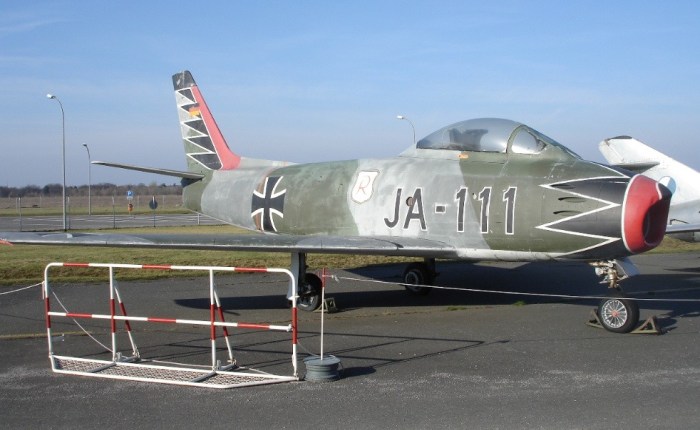
Header image: A Canadair Sabre at the Militärhistorisches Museum der Bundeswehr – Flugplatz Berlin-Gatow in Hartmann markings from when he commanded JG71, c. 2007 (Source: Wikimedia)

[1] Quoted in Edward H. Sims, Fighter Tactics and Strategy 1914-1970 (New York: Harper and Row, 1972), p. 208.

[2] Boyd referred to the ‘observation-decision-action time scale’ in the interview, which is not yet the familiar OODA loop since it lacks the orientation stage. United States Air Force Historical Research Center, U.S. Air Force Oral History Interview, K239.0512-1066, Colonel John R. Boyd, Corona Ace, 28 January 1977, p. 132.

[3] Erik Schmidt, Black Tulip: The Life and Myth of Erich Hartmann, the World’s Top Fighter Ace (Philadelphia, PA: Casemate Publishers, 2020), p. xiii.

[4] Schmidt, Black Tulip, p. 130.

[5] Schmidt, Black Tulip, p. 134; Robert Coram, Boyd: The Fighter Pilot Who Changed the Art of War (New York: Hachette Book Group, 2002), p. 244.

[6] John Stillion, Trends in Air-to-Air Combat: Implications for Future Air Superiority (Washington DC: Center for Strategic and Budgetary Assessments, 2015), p. 6.

[7] Schmidt, Black Tulip, p. 64.

[8] Philip Kaplan, Fighter Aces of the Luftwaffe in World War II (Barnsley: Pen and Sword Books, 2007), p. 192.

[9] Trevor J. Constable and Raymond F. Toliver, The Blond Knight of Germany (New York: Ballantine Books, New York, 1970), pp. 43-4.

[10] Quoted in Kaplan, Fighter Aces of the Luftwaffe in World War II, p. 195.

[11] Colin D. Heaton, ‘Final Thoughts of the Blond Knight,’ World War II 17, no. 3 (2002), p. 33.

[12] Constable and Toliver, The Blond Knight of Germany, p. 55.

[13] Rich Martindell and Bill Mims, ‘An Interview with Erich Hartmann, the Ace of Aces,’ in Tac Attack (Washington DC: Department of the Air Force, 1985), p. 23.

[14] Quoted in William Tuohy, ‘German Pilot Reported 352 Kills Hope of Top WWII Flier: No Need for New Air Aces,’ Los Angeles Times, 3 January 1986.

[15] Constable and Toliver, The Blond Knight of Germany, p. 86.

[16] C. Hind and A. Nicolaides, ‘Ace of Aces: Erich Hartmann the Blond Knight of Germany,’ Open Journal of Social Sciences 8 (2020), pp. 388-9.

[17] Edward E. Eddowes, ‘Measuring Pilot Air Combat Maneuvering Performance’ in First Symposium on Aviation Psychology (The Ohio State University Columbus: The Aviation Psychology Laboratory, 1981), p. 340.

[18] James H. Patton, Jr., ‘Stealth is a Zero-Sum Game: A Submariner’s View of the Advanced Tactical Fighter,’ Airpower Journal 5, no. 1 (1991), p. 7.

[19] Mikel D. Petty and Salvador E. Barbosa, ‘Improving Air Combat Maneuvering Skills Through Self-Study and Simulation-Based Practice,’ Simulation & Gaming 47, no. 1 (2016), p. 105.

[20] Petty and Barbosa, ‘Improving Air Combat Maneuvering Skills,’ p. 111.

[21] Petty and Barbosa, ‘Improving Air Combat Maneuvering Skills,’ p. 123.

[22] Schmidt, Black Tulip, p. 64.

[23] U.S. Air Force Oral History Interview, p. 240.

[24] In addition to The Blond Knight of Germany, Boyd may have read Edward H. Sims’ Fighter Tactics and Strategy 1940-1970 (1972), which also explained the SDAB cycle before the OODA loop emerged. Sims, Fighter Tactics and Strategy, 204-5

[25] Franklin C. Spinney, ‘Genghis John,’ Proceedings 123 (1997).

[26] Boyd advised in ‘Organic Design for Command and Control’ to operate inside enemy OODA loops ‘to enmesh adversary in a world of uncertainty, doubt, mistrust, confusion, disorder, fear, panic chaos.” Boyd also added in ‘The Strategic Game of ? and ?’: “Operating inside their OODA loops will accomplish just this by disorienting or twisting their mental images so that they can neither appreciate nor cope with what’s really going on.’ John R. Boyd, ‘Organic Design for Command and Control’ and ‘The Strategic Game of ? and ?,’ in Grant T. Hammond (ed), A Discourse on Winning and Losing (Maxwell AFB: Air University Press, 2018), p. 224 and 302.

[27] Boyd, towards the end of his life, refined the OODA loop into a vastly more complex idea involving multiple feedback loops and different relationships and pathways between the four stages. However, the idea of getting inside the enemy’s OODA loop and gaining a relative speed advance is evident in the earlier basic OODA loop and the final complex OODA loop. This key idea remained constant during the OODA loop’s evolution. Therefore, when referring to the OODA loop in this article, all versions of the OODA loop are referred to unless otherwise specified.

[28] U.S. Air Force Oral History Interview, p. 134.

[29] Frans P.B. Osinga, Science, Strategy and War: The Strategic Theory of John Boyd (New York: Routledge, 2006), p. 28.

[30] John R. Boyd, Aerial Attack Study, 50-10-6C, 1964.

[31] Osinga, Science, Strategy and War, p. 22.

[32] Grant Hammond, The Mind of War: John Boyd and American Security (Washington DC: Smithsonian Books, 2001), p. 80.

[33] Thomas McKelvey Cleaver, Going Downtown: The US Air Force over Vietnam, Laos and Cambodia, 1961-75 (Oxford: Osprey Publishing, 2022), p. 102.

[34] Barry D. Watts, Doctrine, Technology, and War, Air & Space Doctrinal Symposium Maxwell AFB, Montgomery, Alabama 30 April-1 May 1996.

[35] Watts, Doctrine, Technology, and War.

[36] Watts, Doctrine, Technology, and War.

[37] Schmidt, Black Tulip, p. 69.

[38] John R. Boyd, ‘Patterns of Conflict (Transcript),’ in Discourse on Winning and Losing, Marine Corps University, Quantico, 25 April, 2 May, 3 May 1989, p. 10.

[39] Boyd, ‘Patterns of Conflict (Transcript),’ p. 10.

[40] Boyd, ‘Patterns of Conflict (Transcript),’ p. 10.

[41] Jim Storr, The Human Face of War (London: Bloomsbury Publishing 2009), p. 13.

[42] Storr, The Human Face of War, p. 13.

[43] Storr, The Human Face of War, p. 13.

[44] For a comprehensive analysis of Boyd’s relationship with the ‘Knights of the Air’ myth, see Michael W. Hankins, Flying Camelot: The F-15, the F-16, and the Weaponization of Fighter Pilot Nostalgia (Ithaca, NY: Cornell University Press, 2021).

[45] Heaton, ‘Final Thoughts of the Blond Knight,’ p. 33.

[46] Frans P. B. Osinga, ‘The Enemy as a Complex Adaptive System: John Boyd and Airpower in the Postmodern Era,’ in John Andreas Olsen (ed.), Airpower Reborn: The Strategic Concepts of John Warden and John Boyd (Annapolis, MD: Naval Institute Press, 2015), p. 74.

[47] Heaton, ‘Final Thoughts of the Blond Knight,’ p. 85.

[48] Boyd explained in Patterns of Conflict: ‘It doesn’t make any difference whether you’re a Russian, you’re an Englishman, an American, Chinese or what. You have to observe what the hell’s going on here. Then you have to, as a result of that, looking at the world, you generate images, views, and impressions in your mind. That’s what you call orientation. Then as a result of those images, views, and impressions, you’re going have to make a selection, what you’re going to do or what you’re going to do, that’s a decision. And then you’re going to have to implement or take the action.’ Boyd, ‘Patterns of Conflict (Transcript),’ p. 11.

[49] John R. Boyd, Destruction and Creation (Paper), 3 September 1976, pp. 2-3.

[50] Boyd, ‘The Strategic Game of ? And ?,’ pp. 261-5.
#Podcast – Air Combat in the Gulf War: An Interview with Rick Tollini

#Podcast – Air Combat in the Gulf War: An Interview with Rick Tollini

Editorial Note: Led by our Editor Dr Mike Hankins, From Balloons to Drones produces a monthly podcast that provides an outlet for the presentation and evaluation of air power scholarship, the exploration of historical topics and ideas, and provides a way to reach out to both new scholars and the general public. You can find our Soundcloud channel here. You can also find our podcast on Apple Podcasts and Google Podcasts.

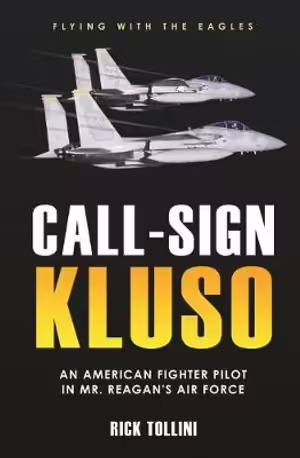
In our latest episode, we interview F-15 pilot and MiG-killer Rick Tollini. We discuss his new book, Call-Sign Kluso and he tells us all about the harrowing missions flown in the opening of the 1991 Gulf War. 

call-sign-kluso

Rick Tollini, call-sign Kluso, is a freelance writer, live performer, former United States Air Force F-15C Fighter Weapons Officer, and current F-15C flight simulator contract instructor pilot. Tollini is recognised as an expert in the field of air superiority operations and tactics. He has also worked as a feature writer for Pacific Star and Stripes weekly journal, CNN Travel contributor, and has recorded and published over 30 original songs.

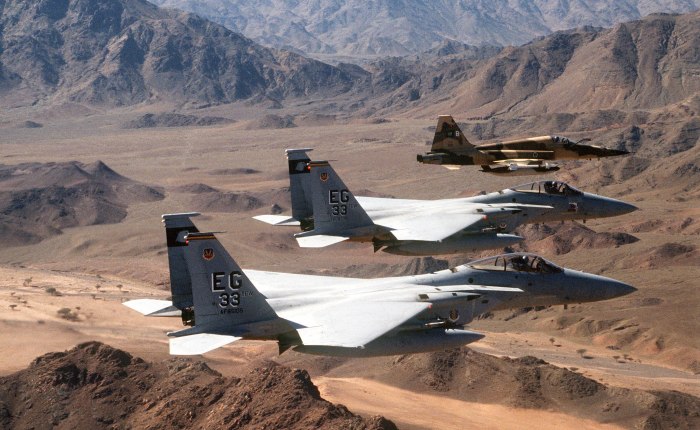
Header image: An air-to-air view of two US Air Force F-15C  Eagles of the 33rd Tactical Fighter Wing and a Royal Saudi Air Force F-5E Tiger II fighter aircraft during a mission in support of Operation Desert Storm. (Source: Wikimedia).

#DesertStorm30 – The Ghosts of Vietnam: Building Air Superiority for Operation DESERT STORM

#DesertStorm30 – The Ghosts of Vietnam: Building Air Superiority for Operation DESERT STORM

By Dr Michael Hankins

Editorial Note: 2021 marks the 30th anniversary of Operation DESERT STORM. To mark this anniversary, during 2021, From Balloons to Drones will be publishing a series of articles that examine various aspects of DESERT STORM’s air campaign. We will be publishing pieces throughout 2021, and if you would like to contribute to the series, please contact our Editor-in-Chief, Dr Ross Mahoney, at airpowerstudies@gmail.com or via our contact page here. The official call for submissions can be found here.

I think to understand the success of Desert Storm, you have to study Vietnam.

Lieutenant General Chuck Horner, Joint Force Air Component Commander during Operation DESERT STORM[1]

This reflection applies to many aspects of the 1991 Gulf War, undeniably so in the realm of air-to-air combat. As in most wars, air-to-air combat played a relatively small role, certainly not a decisive one. However, the differences between air combat during the Vietnam War and DESERT STORM are stark. In the skies above Southeast Asia between 1965 and 1973, the United States shot down approximately 200 enemy aircraft while North Vietnamese MiGs claimed about 80 US fighters.[2] During DESERT STORM, coalition pilots shot down 42 Iraqi aircraft and only lost one to a MiG.[3] There is no single reason why air-to-air efforts were so much more successful in DESERT STORM than in Vietnam. However, several factors synergistically combined to contribute to a considerable shift in air superiority efforts: training, situational awareness, technology, and the nature of the enemy being faced. These factors were interconnected. Technologies that had first appeared in Vietnam had matured and became more reliable. These technologies were also more interwoven with training and doctrine, drastically increasing their effectiveness in situations like those faced in the Gulf in 1991.

What went wrong in Vietnam

The 1970s and 1980s constitute a second interwar period. As with the period between the First and Second World War, the years between the Vietnam War and DESERT STORM was a time of massive technological, doctrinal, and organisational change within the US military. It was also a time of competing theories and visions regarding what the future of warfare might look like. These debates centred on the idea of fixing the perceived problems of Vietnam. However, there was little agreement over what exactly the problems were and even less about how to fix them.

Regarding the air-to-air realm, clearly, there had been problems in Southeast Asia. To avoid fratricide, restrictive rules of engagement prevented most missiles from being fired in the conditions for which they were designed. At the same time, the jungle environment compounded issues from transport and maintenance that frequently damaged delicate sensor equipment. North Vietnamese MiGs often did not stick around to fight. However, their agility was effective against the larger, heavier American interceptors when they did. US pilots often had little – if any – air combat training and rarely (if ever) against aircraft that mimicked the MiGs capabilities and tactics.

An F-4C Phantom II of the 559th Tactical Fighter Squadron at Tan Son Nhut Air Base, South Vietnam, September 1967. Front to back: Captain John P. Flannery, 1st Lieutenant Lewis M. Hauser. (Source: US Air Force)

To fix these problems, two main camps emerged: the self-described ‘Fighter Mafia’ that later evolved into the larger Defense Reform Movement (Reformers) was led by former fighter pilots, analysts, engineers, and journalists linked to Colonel John Boyd.[4] They argued in favour of new aircraft that they were simple and cheap. The poor performance of missiles in Vietnam frustrated the ‘Fighter Mafia,’ who argued that the key to winning air battles required small, lightweight aircraft that emphasised maneuverability and gunnery. In their argument, aircraft did not need to be burdened with long-range radars. Countering these views was the defence establishment – the service leaders in the Pentagon, the USAF Air Staff, and other analysts, including the commander of Tactical Air Command, General Wilbur ‘Bill’ Creech. This group argued that a high-tech approach was necessary to counter the Soviet threat. They argued that although weapons may be expensive, they were not only effective but could protect more American lives and reduce casualties.[5]

These debates occurred in a context of larger doctrinal changes within all the US military services during a second interwar period of heavy debate and significant technological changes. Nonetheless, the Reformers had a large influence on the direction of air war planning in those years. However, ultimately, few of their proposed reforms truly took hold as the defence establishment had the advantage of being established and in power. However, in having to defend themselves against the Reformers’ frequent critiques, the defence establishment was forced to confront important issues, particularly regarding readiness and weapons testing procedures.

Train How We Fight

Even the most significant changes in technology would be of limited use without equal changes in training. This was something even the revered ace pilot Brigadier General Robin Olds realised. Speaking of his experience flying F-4 Phantoms in Vietnam, Olds lamented, ‘If only I’d had a gun!’ However, Olds opposed adding a gun pod to the F-4s in his unit because, as he recalled:

[o]ut of all my fighter guys, only a precious few have ever fired a gun at an aerial target, let alone learned how to dogfight with guns. Hell, they’d pile into a bunch of MiGs with their hair on fire and be eaten alive.[6]

Some US Navy officers realised the importance of air combat training, instituting the Navy Fighter Weapons School, also called TOPGUN, specifically to train F-4 and F-8 pilots how to defeat MiGs in air-to-air encounters. The school’s graduates began having success in the air battles of 1972. The US Air Force (USAF) was slower to institute similar training but did create the Red Flag exercises in 1975. The key to both programs was ‘dissimilar air combat training’ (DACT): training in mock combat against different aircraft types than one’s own. Said another way, DACT means to train how you fight.[7]

That meant that F-8, F-4, and F-105 pilots needed to square off against smaller, nimbler planes that could simulate the MiGs. T-38s, F-5s and F-86s were perfect for that. Pilots flying as these pretend adversaries became known as ‘aggressor’ squadrons. Eventually, captured MiG fighters of the 4477th Test and Evaluation Squadron (nicknamed the ‘Red Eagles’) could give coalition pilots mock combat experience against actual MiGs.[8]

We Have the Technology

The new DACT training programs were not all about maneuvers and volleyball. The programs incorporated a wide array of new tactics emerging from rapid evolution in new technologies both in new airframes and the new generations of missiles that were far more capable than their Vietnam-era ancestors. These included new fighters like USAF’s F-15 Eagle and F-16 Fighting Falcon, and the US Navy’s F-14 Tomcat and F/A-18 Hornet. A far cry from the interceptors designed in the early Cold War, these new generations of planes emphasised air combat capability as their first priority, with multi-role functions like ground attack as an add-on. In other words, these planes were agile, born to mix it up in dogfights, but could still perform the vital missions of strategic and tactical bombing, close air support, and interdiction. Like the F-16’s fly-by-wire controls, their new control systems maximised the pilot’s command over their aeroplanes. At the same time, head’s up displays enabled pilots to see vital information and keep their eyes on the skies instead of looking down at their instruments and switches.[9]

The prototypes of the YF-16 Fighting Falcon (left) were smaller, lighter, and held less electronics, optimized for the day fighter role. The production model F-16A (right) was larger to incorporate all-weather and ground attack capabilities, among other modifications. (Source: US Air Force)

One of the most significant upgrades was a new model of the heat-seeking Sidewinder missile, the AIM-9L. Unlike previous versions, the ‘L’ (nicknamed ‘Lima’) could be fired from any direction. No longer did pilots need to maneuver behind an enemy after the ‘merge’ (in which two fighters flying head-on zoom past each other before beginning a maneuvering dogfight). This new weapon complimented the new AIM-7F Sparrow missile – a radar-guided missile with improved range and look-down capability. These missiles, combined with the Hughes AN/APG-63 radar housed in the F-15 Eagle’s nose, allowed the new generation of fighters to identify their targets from far beyond what the human eye could see. It also meant they could coordinate with other coalition pilots and “sort” their targets. Maneuvering was still crucial, but as former F-15 pilot Colonel C.R. Anderegg noted:

The cycle of counter vs. counter vs. counter continued, but the fight did not start at 1,000 feet range as in the days of ’40 second Boyd.’ The struggle was starting while the adversaries were thirty miles apart, and the F-15 pilots were seriously intent on killing every adversary pre-merge.[10]

Pilots in previous decades had often decried the lack of a gun on the F-4 and were sceptical of claims that missiles were the way of the future. Missiles were problematic in Vietnam, but in the Gulf War, they dominated. Of the 42 official coalition aerial victories, three were due to ground impact. The only gun kills were two A-10 Thunderbolt IIs that shredded Iraqi helicopters with their infamous GAU-8 cannon. In one case, an F-15E Strike Eagle dropped a laser-guided GBU-10 bomb onto a helicopter and received an aerial victory credit. The remaining 36 – almost 86 per cent – were the result of a guided missile. Of the AIM-7 kills, 16 (44 per cent of the total number of missile kills) were beyond visual range attacks.[11]

Even the best-trained and equipped pilots in the world cannot use their advantages if they are unaware of the threats around them. Effective situational awareness and early warning have proven crucial to air combat success. Throughout Vietnam, several long-range radars provided this capability. Airborne radar and surveillance programs like College Eye and Rivet Top and US Navy ship-based radar-like Red Crown became invaluable to pilots during Vietnam. Bringing the variety of systems together into Project Teaball in the summer of 1972 provided an even more powerful aid to pilots aiming to take out MiGs. Nevertheless, these systems (and the many other similar efforts) had limitations. The invention of pulse-Doppler radar systems enabled a reliable way of distinguishing airborne threats from ground clutter when looking down. This innovation led to the USAF’s E-3 Sentry Airborne Warning and Control System (AWACS). The Navy used a similar concept in their E-2 Hawkeye. These systems gave operators a view of aircraft operating in the entire airspace, allowing them to pass on the word to coalition fighter pilots where the MiGs were from very long ranges. Almost every single aerial encounter during the Gulf War began with a call from AWACS or an E-2.[12]

Know Your Enemy

The US and its allies prepared for a conventional war against the Soviet-style threat that Iraq seemed to be. As the saying goes, the enemy always gets a vote. In the Gulf War case, as one General Accounting Office report put it: ‘the Iraqi air force essentially chose not to challenge the coalition.’[13] Of course, that is not entirely true, as some intense air battles did occur, and a few Iraqi pilots proved quite adept. Nevertheless, overall, the Iraqi Air Force had not invested in air-to-air combat preparedness. There was no Iraqi equivalent of Top Gun or Red Flag, and air-to-air training was lacking. One US Navy Intelligence report stated: ‘Intercept tactics and training [were] still predominantly conservative, elementary, and generally not up to western standards.’ Culturally, while US fighter pilots tended to prize aerial combat, the Iraqi Air Force culture did not, viewing ground attack as a more desirable assignment. As historian Williamson Murray argued, Iraqi pilots ‘did not possess the basic flying skills to exploit fully the capabilities of their aircraft.’[14]

F-15C Eagles of the 58th Tactical Fighter Squadron takeoff on deployment to Saudi Arabia during Operation DESERT SHIELD. (Source: US Air Force)

As F-15s flew combat air patrol missions during the opening strikes, searching for possible MiG threats, infrared cameras revealed one MiG-29 crashing into the ground. At the same time, another launched a missile that destroyed a friendly MiG-23 crossing ahead of it. In some cases, when coalition pilots obtained radar locks, Iraqi pilots made little to no attempt to maneuver before missiles destroyed their planes. When coalition planners began targeting the hardened shelters protecting Iraqi aircraft, many pilots attempted to flee to Iran. Reiterating the Iraqi fighter pilot force’s lack of competence, many of them did not have enough fuel for the trip and crashed. Coalition pilots seized the opportunity to destroy the enemy in the air as they fled.[15]

Conclusion

The lives lost in air combat during the Vietnam War are tragic. Many aircrew members died, others became prisoners, and many suffered lifelong psychological trauma. Every single loss affected the families and loved ones of those crews, creating ripple effects lasting generations. If some strands of hope can be pulled from those tragedies, one of them is that allied airmen’s struggles in the Vietnam War planted the seeds of change that led to the massive increase in air-to-air combat effectiveness in Operation Desert Storm. Technologies, training methods, and tactics first introduced in Southeast Asia continued to mature throughout the 1970s and 1980s, strengthened further by the heat of intellectual debate during those years. The coalition’s effectiveness in air-to-air combat alone did not win the Gulf War, of course. However, it did undoubtedly save many lives and contributed to the US achieving its objectives.

As Horner recalled: ‘Vietnam was a ghost we carried with us.’ One way to exorcise that ghost was by gaining control of the air in Iraq from the outset, which had not happened in Vietnam. It worked. As Horner recalled:

[e]very time the Iraqi interceptor planes, their best defences, took off, it was take off, gear up, blow up, because we had two F-15s sitting on every airfield, overhead every airfield, and so we never gave them a chance.[16]

Dr Michael Hankins is the Curator of US Air Force History at the Smithsonian National Air and Space Museum and is an Editor at From Balloons to Drones. He is a former Professor of Strategy at the USAF Air Command and Staff College eSchool, and former Instructor of Military History at the US Air Force Academy. He earned his PhD from Kansas State University in 2018, and a master’s from the University of North Texas in 2013, He has a web page here and can be found on Twitter at @hankinstien.

Header image: An F-15C Eagle of the 1st Tactical Fighter Wing during Exercise Gallant Eagle, 1986. (Source: US Air Force)

[1] ‘Oral History: Charles Horner,’ Frontline, 9 January 1996.

[2] Sources differ on exact numbers. The best work on the air-to-air aspect of Vietnam to date is Marshal Michel, Clashes: Air Combat over North Vietnam, 1965-1972 (Annapolis, MD: Naval Institute Press, 1997).

[3] Lewis D. Hill et al, Gulf War Air Power Survey: Volume V: A Statistical Compendium and Chronology (Washington D.C.; US Department of Defense, 1993), p. 637, 641, pp. 653-4; hereafter cited as GWAPS. The one loss was US Navy Lieutenant Commander Michael Scott Speicher. Information about that event can be found here: CIA, FOIA Electronic Reading Room, ‘Intelligence Community Assessment of the Lieutenant Commander Speicher Case,’ 27 March 2001.

[4] For a precis of Boyd’s career, see: Michael Hankins, ‘A Discourse on John Boyd: A Brief Summary of the US Air Force’s Most Controversial Pilot and Thinker,’ From Balloons to Drones, 22 August 2018.

[5] For a pro-reform view, see Grant Hammond, The Mind of War: John Boyd and American Security (Washington D.C.: Smithsonian Institution Press, 2001); and James Burton, The Pentagon Wars: Reformers Challenge the Old Guard (Annapolis, MD, Naval Institute Press, 1993). The defense establishment view is best represented by Walter Kross, Military Reform: The High-Tech Debate in Tactical Air Forces (Fort McNair: National Defense University Press, 1985); and James C. Slife, Creech Blue: Gen Bill Creech and the Reformation of the Tactical Air Forces, 1978-1984 (Maxwell AFB: Air University Press, 2004).

[6] Robin Olds, with Christina Olds and Ed Rasimus, Fighter Pilot: The Memoirs of Legendary Ace Robin Olds (New York: St. Martin’s Press, 2010), p. 304, 317.

[7] The best overview of the origins of the Red Flag program is Brian Laslie’s The Air Force Way of War: U.S. Tactics and Training after Vietnam (Lexington, KT: University Press of Kentucky, 2015).

[8] Gaillard R. Peck, Jr., America’s Secret MiG Squadron: The Red Eagles of Project Constant Peg (Oxford: Osprey Publishing, 2012)

[9] For a history of the development of both aircraft, see Steven A. Fino, Tiger Check: Automating the US Air Force Fighter Pilot in Air-to-Air Combat, 1950-1980 (Baltimore, MD: Johns Hopkins University Press, 2017); and Michael Hankins, ‘The Cult of the Lightweight Fighter: Culture and Technology in the U.S. Air Force, 1964-1991’ (PhD thesis, Kansas State University, 2018).

[10] C.R. Anderegg, Sierra Hotel: Flying Air Force Fighters in The Decade After Vietnam (Washington D.C.: Air Force History and Museums Program, 2001), p. 163.

[11] GWAPS Summary Report, p. 60; GWAPS V5, pp. 653-4; Daniel Haulman, ‘No Contest: Aerial Combat in the 1990s,’ Presentation, Society for Military History annual meeting, May 2001, 6; Craig Brown, Debrief: A Complete History of U.S. Aerial Engagements, 1981 to the Present (Atglen, PA: Schiffer Military History, 2007), pp. 23-149.

[12] Kenneth P. Werrell, Chasing the Silver Bullet: U.S. Air Force Weapons Development from Vietnam to Desert Storm (Washington D.C.: Smithsonian Books, 2003), pp. 187-205; Michael Hankins, ‘The Teaball Solution: The Evolution of Air Combat Technology in Vietnam, 1968-1972,’ Air Power History 63 (2016), pp. 7-24; Michael Hankins, ‘#AirWarVietnam – Making a MiG-Killer: Technology and Signals Intelligence for Air-to-Air Combat in Vietnam,’ From Balloons to Drones, 15 August 2019. For details of individual encounters, see Brown, Debrief.

[13] GAO/NSIAD-97-134, ‘Operation Desert Storm: Evaluation of the Air Campaign,’ United States General Accounting Office Report to the Ranking Minority Member, Committee on Commerce, House of Representatives, June 1997, p. 66.

[14] Williamson Murray, with Wayne M. Thompson, Air War in the Persian Gulf (Baltimore, MD: The Nautical & Aviation Publishing Company of America, 1995), 67, 92.

[15] Brown, Debrief, pp. 51-73; Murray, Air War, pp. 110-1, p. 162, 180.

[16] ‘Oral History: Charles Horner,’ Frontline, 9 January 1996.

The Downfall of the Red Baron: Lessons Learned from the First World War ‘Ace of Aces’

The Downfall of the Red Baron: Lessons Learned from the First World War ‘Ace of Aces’

By Squadron Leader Michael Spencer

Baron Manfred von Richthofen was killed in air combat on 21 April 1918. He was unequalled in having shot down 80 enemy aircraft in aerial combat during the First World War to become the most famous ‘Ace of Aces’ in the early history of air combat. He was the pride of the German Imperial Army and respected by military aviation historians as the ‘Red Baron.’ A study of Richthofen’s aerial victories highlights the importance of critical thinking to identify and repeat the rules for success in aerial dogfighting. Evidence-based analyses of his behaviours and medical forensics in the months before his death indicate how the war may have been exacting an increasing toll on his judgement and decision-making abilities. The combination of seemingly discrete events that occurred during on 21 April triggered his abnormal behaviours and poor decisions, which had an accumulative effect that led to his ultimate downfall.

4108464
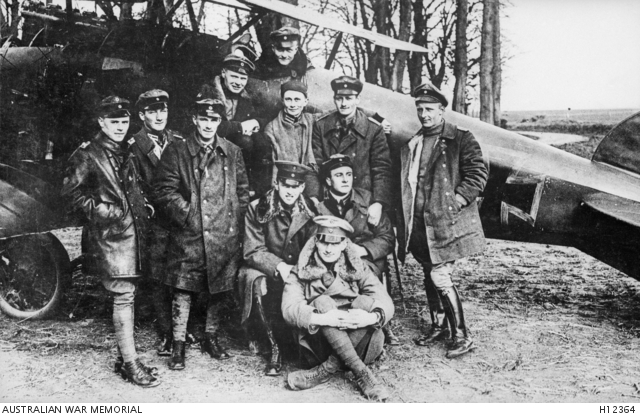
Flying officers attached to Rittmeister Manfred Freiherr Von Richthofen’s squadron, Jasta 11, c. April 1917. Richthofen himself is seated in the Albatros D.III. aircraft. From left to right: standing: unidentified (possibly Leutnant Karl Allmenroeder); Hans Hintsch; Vizfeldwebel Sebastian Festner; Leutnant Karl Emil Schaefer; Oberleutnant Kurt Wolff; Georg Simon; Leutnant Otto Brauneck. Sitting: Esser; Krefft; Leutnant Lothar von Richthofen, younger brother of Manfred. (Source: Australian War Memorial)

Manfred von Richthofen and Learning Lessons

The British called him the ‘Red Baron’, the French scorned him as the ‘le diable rouge’ (Red Devil) while his 1917 autobiography was called Der Rote Kampfflieger, which broadly translates as the ‘Red Battle Flyer.’[1] F.M. Cutlack, the official historian of the Australian Flying Corps (AFC), described him as the ‘star of stars in the German Air Force.’[2] On 21 April 1918, Richthofen pursued a Royal Flying Corps Sopwith Camel low over enemy-controlled territory, breaking one of his fundamental air combat maxims, and was fatally wounded. Until then, Richthofen had strictly followed Dicta Boelcke and his critical-thinking of air combat to be scorned, feared, and respected as the highest scoring air ace of the First World War.[3]

The quality of the box matters little. Success depends upon the man who sits in it.

Manfred von Richthofen, ‘The Red Battle Flyer,’ para. 182.

One of the reasons behind his significant success in air combat was his adherence to doctrinal maxims that guided his judgements in deciding when and how he would enter an action in the battlespace and engage a target. The Dicta Boelcke was named after their developer: Oswald Boelcke, Germany’s first air ace, with a total of forty victories. While early aircraft commanders were still seeking to understand roles for aircraft as the newest war machines to enter the battlespace, Boelcke is recognised as being one of the first fighter aces to apply critical thinking to air combat. Boelcke drew on his observations in air combat, reviewed his successes and failures, and critically analysed them to identify the critical decision points, ethical behaviours, and practical tactics that he considered would lead to repeated successes in the air. Boelcke tested and evaluated his air combat rules before recommending them as ‘rules for success’ that should be applied by other German pilots when flying into air combat as individuals or as a group in a squadron.

Boelcke promoted his lessons-learned as dicta to increase the chance of success in air combat by the pilots under his command, especially those who were new and inexperienced. His aerial warfighting principles were endorsed by the German Army to all its airmen, as Dicta Boelcke. After Richthofen was assigned to serve in Boelke’s squadron, Boelke became Richthofen’s mentor, instructor, squadron commander, and close friend. Richthofen became a keen practitioner of Dicta Boelcke.

We were all beginners. None of us had had a success so far. Consequently, everything that Boelcke told us, was to us, gospel truth.

Manfred von Richthofen, ‘The Red Battle Flyer,’ para. 109.

Richthofen fully embraced Dicta Boelcke and, after gaining his own experiences in aerial combat, he learned to apply his critical-thinking to identify his maxims to improve and complement his list of successful air combat tactics doctrine. One of his doctrinal maxims to complement Dicta Boelcke was to ‘never obstinately stay with an opponent’ or, having initiated a dogfight in favourable circumstances, know when to break off the attack when the situation has changed and is no longer favourable. He did not adhere to this principle, later, in his final mission.

3988465
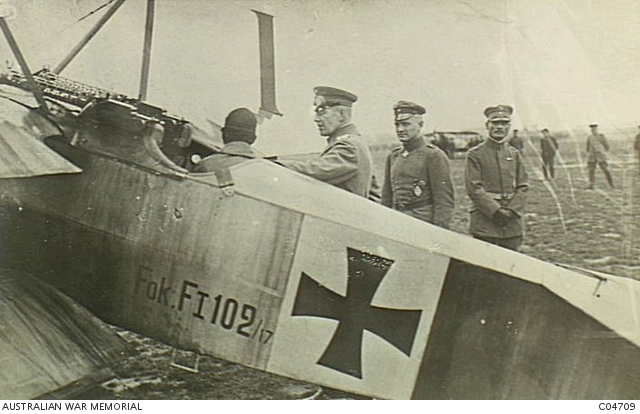
General von Falkenhayn and Richthofen inspecting a Fokker triplane. Mr A.H.G. Fokker is seated in the cockpit and General von Falkenhayn is on his right. (Source: Australian War Memorial)

Richthofen’s Final Mission

On 21 April 1918, Richthofen pursued a British Sopwith Camel piloted by novice Canadian pilot, Lieutenant Wilfrid May of No. 209 Squadron. May had just fired on the Richthofen’s cousin, Lieutenant Wolfram von Richthofen. On seeing his cousin being attacked, Richthofen flew to aid his cousin and engaged May, causing the latter to disengage from his dogfight with Wolfram. In turn, Richthofen was attacked by another Sopwith Camel piloted by Canadian Captain Arthur ‘Roy’ Brown. Richthofen successfully evaded his attacker and, even though his Spandau machine guns had now jammed and could only be fired manually, resulting in single shots, he decided to resume his pursuit of May.

Richthofen was known to be very calculating in his observations of air battles before deciding when and whom to engage. Engagement only occurred when circumstances were likely to result in a favourable outcome. On this day, Richthofen’s judgment might have been affected by wanting to pursue the attacker who threatened his cousin, despite the circumstances – going against the aforementioned dicta that he considered critical for air combat success. Additionally, Richthofen had a reputation of being a skilled hunter on the ground with a single-shot rifle, and he may have decided that a victory with a single-shot Spandau machine gun be well within his capabilities and would significantly enhance his reputation and the morale of his flying Jasta.

May sought to escape Richthofen by rapidly descending to fly low across the front line into Allied-held territory. May later explained that his aircraft guns had jammed while being pursued and unable to out-manoeuvre Richthofen, he decided to fly low across the ridge into friendly territory, to ‘make a dash for a landing as his only hope.’[4] Eyewitness accounts reported seeing the Richthofen pursue May down to rooftop heights over the nearby village, which had a church with a bell-tower, and hearing the repeated cracking sounds of single gunshots coming from the aerial pursuit as the aircraft passed.

Richthofen appeared to decide to break one of his fundamental rules that he had previously applied so consistently in air combat by persisting in chasing May without regard for the new dangers arising around him. Richthofen was now flying low over Allied-held territory, with a strong easterly wind causing his aircraft to drift further behind enemy lines, and he was now flying low enough to be within the range of the Australian machine-gunners watching from the trenches. Richthofen seemed to have lost his situational awareness in focusing on May. Richthofen was then observed by the gunners in the trenches to fly up suddenly as if suddenly recognising the new dangers around him and only then decided to break off his pursuit of May – but it was too late. While pulling-up to ascend to a higher altitude above the trenches and ground troops, Richthofen was fatally struck by a single .303 round

He who gets excited in fighting is sure to make mistakes. He will never get his enemy down.

Manfred von Richthofen, ‘The Red Battle Flyer,’ para. 137.

Mortally wounded, Richthofen managed to execute a controlled crash landing, on the Australian-held battleground, before dying in the cockpit. Australian soldiers were quick to attend the crash site and seek to recover Richthofen.

Medical forensic analysis has indicated that Richthofen seemed to suffer from an uncharacteristic episode of ‘target fixation’, breaking his own rule to ‘never obstinately stay with an opponent.’ Medical researchers considered that this uncharacteristic error in judgement might be attributed to a persistent head injury from a head wound caused by a machine gun projectile ricocheting from his head during a dogfight that occurred nine months earlier.[5]

There has been controversy over multiple claims as to who was responsible for the fatal shot that brought down Richthofen; was it fired from a pursuing aircraft or one of the machine-gunners in the trenches? Although Brown was initially credited with the victory, medical forensic analyses of the wound ballistics, conducted in detail in later years, have indicated that Richthofen was struck in the chest by groundfire and not from an airborne shooter. Australia’s Official Historian, C.E.W. Bean, gathered eyewitness accounts from the battlefield that indicate it was most probable that Sergeant Cedric Popkin, an Australian Vickers machine gunner in the trenches, had fired the fatal shot that brought down Richthofen.[6]

Members of No. 3 Squadron, AFC, assumed responsibility for Richthofen’s remains as it was the Allied air unit that was located nearest to the crash site. Richthofen was buried in a military cemetery in France, with full military honours, by members of No 3 Squadron. A British pilot flew solo over the German air base of Jasta 11 to airdrop a message to respectfully inform them of the death of their celebrated commander, Baron Manfred von Richthofen on 21 April 1918.

6220692
The funeral cortege of Baron Manfred von Richtofen moving along to the cemetery at Bertangles, 22 April 1918. (Source: Australian War Memorial)

Enduring Lessons for Modern-Day Aerospace Professionals

While accepting the challenges associated with extrapolating lessons from a historical example, Richthofen’s development and experience as a fighter pilot in the First World War does, however, highlight several enduring lessons for those flying in today’s operating environment. A key lesson is the need to develop critical thinking amongst military professionals who can effectively analyse their operating environment and develop solutions to challenges.

Boelcke was one of the first air aces to apply critical thinking to air combat and draw out best-practices as a way to increase the probability of success for other pilots, especially new and inexperienced ones. This was something that Richthofen built on, and he recognised the need for what in the modern vernacular might be referred to as a system-of-interest whereby in the operation of aerospace systems, the air vehicle, operator, and operating procedures and tactics need to work effectively in combination to achieve success. However, the recognition that a weapon, such as an aeroplane, was only as good as the person who operated it, and the training, tactics and procedures used by that individual, was only one part of the critical thinking process.

It was also necessary for the likes of Richthofen to capture lessons learned in the combat environment and regularly test and evaluate critical systems to improve performance. This also required pilots such as Richthofen to learn from personal mistakes and those of critical peers through ongoing discourse with both subordinates and superiors. The next step in this process was the ability to apply them in operation. Nevertheless, these lessons learned processes were all for nothing if not usefully applied as evidenced by Richthofen’s final flight where we see the significance of high-consequence decision-making and the failure to reduce risk.

The accumulation of seemingly small discrete decisions made by Richthofen on his last flight, where each decision had a seemingly minor consequence when reviewed in isolation, resulted in an accumulative effect that ultimately resulted in catastrophe. As such, it is essential that organisations need to develop the right culture, management systems, and training programs to reduce catastrophic risks to a minimum. Indeed, in Richthofen’s case, arguably, someone should have ensured that he did not fly on that fateful day as he was neither in the right physical or mental condition to fly effectively. Pilots and aircrew are expensive assets to train and maintain, and unnecessary losses such as Richthofen’s impact on operational effectiveness. Richthofen’s state on 21 April 1918 affected his judgement as he ignored one of his critical dicta – to never obstinately stay with an opponent.

Finally, it is worth reflecting that innovation and inventiveness never rest. Sometimes it is beneficial to study the past before looking to the future and look for opportunities to build on the experiences and inventiveness of others rather than starting at an experience level of zero. As Richthofen himself reflected:

Besides giant planes and little chaser-planes, there are innumerable other types of flying machines and they are of all sizes. Inventiveness has not yet come to an end. Who can tell what machine we shall employ a year hence in order to perforate the atmosphere?

Manfred von Richthofen, ‘The Red Battle Flyer,’ para. 222.

Squadron Leader Michael Spencer is currently serving in the Royal Australian Air Force at the Air Power Development Centre in Canberra, analysing potential risks and opportunities posed by technology change drivers and disruptions to the future applications air and space power. His Air Force career has provided operational experiences in long-range maritime patrol, aircrew training, and weaponeering, and management experiences in international relations, project management in air and space systems acquisitions, space concepts development, and joint force capability integration. He is an Australian Institute of Project Management certified project manager and also an Associate Fellow of the American Institute of Aeronautics & Astronautics. The opinions expressed in this article are the author’s own and do not necessarily reflect the views of the Royal Australian Air Force or the Australian Government.

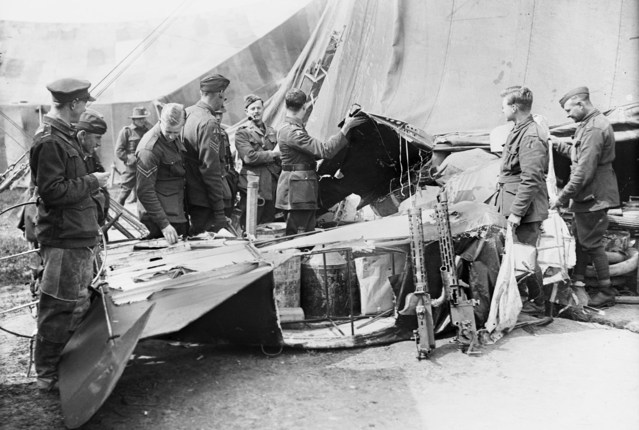
Header Image: The remains of Baron Manfred von Richthofen’s plane and the two machine guns. Most of these officers and men are members of No. 3 Squadron Australian Flying Corps. (Source: Australian War Memorial)

If you would like to contribute to From Balloons to Drones, then visit our submissions page here to find out how.

[1] Der Rote Kampfflieger was first published in 1918. The quotes in this article are taken from the 1918 translation by T. Ellis Barker, with a preface and notes by C.G. Grey, editor of The Aeroplane. This edition published by Robert M. McBride & Co. can be found on the Gutenberg.org site.

[2] F.M. Cutlack, The Official History of Australia in the War of 1914-1918 – Volume VIII: The Australian Flying Corps in the Western and Eastern Theatres of War, 1914-1918, 11th Edition (Sydney, NSW: Angus and Robertson, 1941), p. 215.

[3] R.G. Head, Oswald Boelcke: Germany’s First Fighter Ace and Father of Air Combat (London: Grub Street, 2016), pp. 97-8.

[4] Cutlack, The Australian Flying Corps, p. 251.

[5] P. Koul, et al, ‘Famous head injuries of the first aerial war: deaths of the “Knights of the Air”,’ Neurosurgical Focus, 39:1 E5 (2015).

[6] ‘Appendix 4 – The Death of Richthofen’ in C.E.W. Bean, The Official History of Australia in the War of 1914-1918 – Volume V: The Australian Imperial Force in France during the Main German Offensive, 1918, 8th Edition (Sydney, NSW: Angus and Robertson, 1941), pp. 693-701.

Inventing the Enemy: Colonel Toon and the Memory of Fighter Combat in Vietnam

Inventing the Enemy: Colonel Toon and the Memory of Fighter Combat in Vietnam

By Dr Michael Hankins

A recent post on the popular website The Aviation Geek Club told the story of what they called ‘the most epic 1 v 1 dogfight in the history of naval aviation.’[1] This is the story in which Lieutenants Randy ‘Duke’ Cunningham and William Driscoll, from among the first batch of graduates from the US Navy’s then-new Top Gun training program, shot down the number one North Vietnamese Air Force fighter ace, Colonel Toon, and became the first American aces of the war. Very little of that tale is true, but it makes for an exciting story, and this website is not the first to tell it. Although the details of these claims bear some scrutiny, the tale raises more interesting more significant questions about how and why legends like this form and grow over time.

Cunningham and Driscoll meet with Secretary of the Navy John Warner and CNO Admiral Elmo Zumwalt
Lieutenant Randy Cunningham (second from left) in a ceremony honouring him and Lieutenant William Driscoll (third from left), the US Navy’s only Vietnam War air ‘Aces’ in June 1972. On the left is John Warner, then Secretary of the Navy, and on the right is Admiral Elmo Zumwalt, then Chief of Naval Operations. (Source: Wikimedia)

Combat situations breed storytellers. Any stressful, exciting, death-inducing human endeavour does. Perhaps even more so among fighter pilots engaging in acrobatic dogfights at near (or above) the speed of sound, combat stories, as they are told and retold, heard and re-heard, become legendary. Especially enticing is the need to explain defeat or even a lack of decisive victory. During the Vietnam War, skilled North Vietnamese pilots shot down US aircraft in numbers that some Americans found embarrassing. The final official tally of air-to-air combat kills was 137 to 67, almost exactly 2:1 in favour of the US. This sounds like a victory to some. Indeed, General William Momyer, Commander US Seventh Air Force, saw it that way when he recalled later that winning by 2:1 was ‘an acceptable rate.’[2] However, it did not seem acceptable to those who drew historical comparisons. The US had fared better in previous wars, peaking in the Korean War, which saw US F-86 pilots defeating MiG-15s by a factor of more than 10:1.[3] By those standards, Vietnam felt like a massive step backwards.

Explaining the seeming backslide in combat performance was the official task of several investigations, from the US Air Force’s Red Baron Reports to the US Navy’s Ault Report. Pilots ranted about the poor performance of their planes, especially the F-4 Phantom’s thick black smoke trails that gave away its position to anyone caring to look up. Pilots scoffed at the lack of training in basic combat manoeuvring, much less dogfight training. They decried the fact that only ten percent of their missiles hit anything, and that their F-4s lacked the most basic instrument of air combat: a gun. Without a trigger to pull, many argued, how were they supposed to shoot anyone down?

Other pilots took to creating legends. What could explain the fact that so many US aircraft were getting shot out of the sky by an allegedly inferior, third-world country’s hand-me-down air force that only had a few dozen aeroplanes to its name? There must be an amazing, inexplicable, near-mythical, born-genius dogfighter on the enemy side.

Thus, was born the legend of Colonel Toon, AKA Colonel Tomb, AKA Nguyen Tomb.

Telling the Tale

As the legend goes, Toon was more than a double ace, with at least twelve kills to his name, maybe as high as 14, which was how many stars were allegedly painted on the side of his MiG. Toon displayed the typical fighter pilot personality characteristics of aggressiveness and independence. He utilised frequent head-on attacks and a ‘lone wolf’ style of engaging in which he refused to obey the orders of his ground controller and engaged F-4s in vertical manoeuvres, where his MiG was at an inherent disadvantage.[4] According to the typical story, as American pilots struggled, the US Navy’s Ault Report had led to the introduction of Top Gun: a graduate school for fighter pilots. The intensive training there gave US Navy aviators the skills to destroy MiGs wherever they found them. Moreover, allegedly, Top Gun graduates Cunningham and Driscoll used their newly found skills to shoot Toon out of the sky on 10 May, during a massive dogfight at the beginning of Operation Linebacker. Cunningham claimed this himself, and the story is still often repeated in popular outlets.[5]

There is just one problem: almost none of this is true. Top Gun, although undoubtedly useful, was, at the time, a tiny outfit that many leaders in the US Navy did not take seriously. The narrative of Top Gun as the saving grace of air-to-air combat also ignores all of the other useful changes instigated by the Ault Report, as well as other practices the US Navy was doing at the time. These included enhancements to their aircraft, upgraded missiles, the increased reliance on early warning radar systems that gave pilots situational awareness, and the increase in jamming of enemy communications that limited North Vietnamese situational awareness.[6] Besides that, Cunningham and Driscoll were not even Top Gun graduates. Moreover, what of Colonel Toon? He was simply not real. He did not exist.

NVAF MiG-19 pilots of the 925th fighter squadron discussing tactics in 1971
North Vietnamese Air Force MiG-19 pilots of the 925th fighter squadron discussing tactics in 1971. (Source: National Museum of the United States Air Force)

Busting Myths

To unravel these tales, let’s start with Cunningham and Driscoll at Top Gun. The principal disputed aspect of the common claim hinges on the word ‘graduates.’ Cunningham and Driscoll had not been students at Top Gun, but they were involved with the school. Before the start of Operation Linebacker in 1972, Top Gun was in bad shape. It had struggled and fought to get access to aeroplanes to train in, and throughout 1971 most of the instructors assumed it was only a matter of time before the US Navy would shut the place down.[7] With limited student slots, selection for Top Gun was competitive. Only the top-performing pilots of select squadrons were picked, and Cunningham had simply not made the cut – twice. Cunningham’s roommate Jim McKinney, and later Steve Queen, both of whom were his colleagues in VF-96, were selected ahead of him. This was in part because they were viewed as more skilled, partially because Top Gun selection favoured career officers the US Navy could count on to stay in the service after the war, which did not, at that time, describe Cunningham. Also, as his skipper noted, Cunningham was simply immature. Top officers and those selected for the coveted Top Gun training needed to be more than just typical fighter jocks, they needed to be well-rounded officers capable of strong leadership. Cunningham’s commander did not see those qualities in him.[8] His fellow pilots noted the same lack of leadership. When Cunningham later pled guilty to taking millions of dollars in bribes as a congressman, those that served with him said they were ‘not necessarily surprised,’ because even when he was a pilot during the war, he had shown a remarkable lack of officership. Some noted that Cunningham was ‘a mind undistracted by complicated thoughts.’[9]

Cunningham and Driscoll
An autographed picture of Lieutenants Cunningham and Driscoll (Source: Randy Cunningham and Jeff Ethell, Fox Two: The Story of America’s First Ace in Vietnam (Mesa, AZ: Champlin Fighter Museum, 1984)

Just because Cunningham was passed over for Top Gun does not mean he was not participating in some way. In 1971, during his squadron’s turnaround period, Cunningham was assigned to temporary duty at Top Gun as a ‘gopher,’ mostly doing paperwork for the school. However, it gave him a chance to listen to some of the lessons and occasionally sit in the backseat of adversary aircraft. He spent much time with the Top Gun instructors, including Jim Laing, J.C. Smith, Dave Frost, and Jim Ruliffson. The squadron then went on leave for a month, during which time Cunningham’s new commanding officer, Early Winn, permitted him to run exercises in the squadron’s F-4 Phantoms since they would be sitting idle for that time. Cunningham used the opportunity to practice what he had learned from his informal lessons. Upon returning from leave, the whole squadron became the first to go through the new Fleet Adversary Program, which some described as ‘mini-Top Gun.’ Primarily the program was a short workshop that introduced some of the concepts that Top Gun explored in more detail. VF-96 ran the workshop twice before returning to Vietnam.[10]

The claim that Cunningham and Driscoll were Top Gun graduates, as is often repeated, is false, but it is easy to see why many might be confused about that. Indeed, in an ad hoc sense, the pair had some access to higher level training than others, including Top Gun instructors. The other claim; that the duo’s fifth kill was the legendary Toon – or that there even was a Toon – is much more dubious.

Part of the confusion comes from the insistence of US SIGINT (Signals Intelligence) by the National Security Agency (NSA) that Toon was real. Claiming to have cracked the North Vietnamese callsign system, the NSA, intercepting enemy communications, began keeping track of individual pilots. They especially singled-out a North Vietnamese MiG-21 ace pilot named Toon, based at Phuc Yen, who developed a reputation for aggressively disrupting B-52 raids. They referred to him as ‘The Red Baron of North Vietnam,’ or ‘an airborne outlaw in the image of a Wild West gunslinger,’ who, whenever he was spotted, ‘U.S. planes took up the chase like some sheriff’s posse of old.’ The NSA claimed that Momyer was ‘obsessed’ with destroying Toon.[11] This could be possible, although it is strange then, that Momyer does not mention Toon at all in his book on the subject.

Cunningham’s debriefing report from 10 May 1972 – in which he very carefully words his statement to give the reader the impression that he was a Top Gun student without stating that directly – has ‘The 5th Kill (Col. Tomb)’ typed in the margin. After describing the dogfight, he claimed:

Intelligence later revealed that this 17 driver was Colonel Tomb, the North Vietnamese ace credited with 13 U.S. aircraft.[12]

Cunningham did not identify who told him this, and his claim raises questions, as it seems to contradict the intelligence from the time. The NSA referred to this pilot as ‘Toon,’ not ‘Tomb,’ and did not identify him as a Colonel. The NSA also specified him as a MiG-21 pilot whereas the Cunningham kill was a -17. They also credited Toon with five kills, not the 13 that Cunningham referenced. Furthermore, the NSA report states that Toon was never defeated, and eventually was promoted out of combat flying and became a ground controller.[13] Cunningham might be telling the truth that some intelligence source, which he does not identify, told him that the -17 he killed was Tomb, but because his claims are so at odds with the NSA’s information on nearly every point, Cunningham’s story raises more questions than it answers.

Mikoyan-Gurevich MiG-17F
A Mikoyan-Gurevich MiG-17F at the National Museum of the United States Air Force. (Source: National Museum of the United States Air Force)

However, the NSA could also be wrong. In fact, they probably are. Even though the NSA claimed Toon was real at the time, there is little evidence to verify this. Indeed, any ace pilots that North Vietnam had – and eventually they had fifteen that were confirmed by US sources, though Vietnamese records claim sixteen, which was triple the number of US aces – would be of immense propaganda and morale value for their cause. If Toon were real, he would likely have been celebrated as a national hero. When researchers and former pilots began talking to North Vietnamese veterans, any questions about Toon were met with confusion. There’s no record of a Toon or Tomb, which is not even a Vietnamese name. Some have claimed that ‘Toon’ was the result of SIGINT operators mishearing the name of Din Tonh, who was an effective pilot known for ‘lone wolf’ attacks. However, Tonh also flew the MiG-21, not the -17, and was not an ace, much less one with kills in the double digits.[14]

Historian Roger Boniface travelled to North Vietnam and conducted extensive interviews with former MiG pilots. His conclusion? Toon was merely an invented figment of American fighter pilots’ imagination, made up specifically to stroke their damaged egos. As he put it:

The existence of Colonel Toon in the mind of an American pilot may have provided a psychological comfort zone if a North Vietnamese pilot should out-fly him or, even worse, shoot him down.[15]

NVAF ace pilot Nguyen Van Coc meeting with Ho Chi Minh
Nguyen Van Coc meeting Ho Chí Minh, N.D. (Source: Wikimedia)

The closest real pilot to fitting the description, however, was Nguyen Van Coc. He flew a MiG-21 with 14 ‘kill’ stars painted on the side. Vietnam officially credits Van Coc with nine kills of US aircraft, and the US has officially recognised six of them. Still, Van Coc cannot have been the ace-making kill for Cunningham and Driscoll, not only because he flew MiG-21s, but by 1968 he had already been pulled out of combat duty and made an instructor of new North Vietnamese pilots.[16]

Conclusion

Why does this controversy – and others like it – continue to plague the memory of the Vietnam War? Possibly because losing a war is psychologically devastating. This is evident simply in how divisive it is to call the American-Vietnam War a ‘loss’ for the US. Some are reluctant to do so in any terms, but no one can deny that the US did not achieve its strategic goal of creating a stable, independent, non-communist South Vietnamese state. Indeed, North Vietnam did achieve its goal of creating a unified communist state. However, the air-to-air war was not at all the make-or-break factor in any of that. The US did not fail in their goals because of the MiG force. Also, former war records aside, Momyer was not wrong to claim that a 2:1 kill ratio in air-to-air combat is still a victory, in at least a technical definition although the ability of MiGs to frequently interrupt bombing strikes was a more significant problem. Despite these clarifications, Vietnam felt like a loss even to many air combat pilots. Explaining that sense of loss, or even just a sense of a lack of decisive victory is difficult at best. Many pilots, and some historians and observers since, including Cunningham and Driscoll, found it easier to invent an enemy rather than must deal with those painful feelings head-on. This is not an isolated phenomenon. Nearly every war sees these types of inventions as a coping mechanism. Toon may not exist, but what he represents as a way of dealing with the psychological trauma of warfare, is all too real.

Dr Michael Hankins is an Assistant Editor at From Balloons to Drones and a Professor of Strategy at the USAF Air Command and Staff College eSchool. He is also a former Instructor of Military History at the US Air Force Academy. He earned his PhD from Kansas State University in 2018 with his dissertation, ‘The Cult of the Lightweight Fighter: Culture and Technology in the U.S. Air Force, 1964-1991.’ He completed his master’s thesis at the University of North Texas in 2013, titled “The Phantom Menace: The F-4 in Air-to-Air Combat in the Vietnam War.” He has a web page here and can be found on Twitter at @hankinstien.

Header Image: US Navy McDonnell Douglas F-4J Phantom II ‘Showtime 100,’ which was assigned to VF-96 of Carrier Air Wing 9 onboard USS Constellation Lieutenants Randy Cunningham and William Driscoll used this aircraft for their third, fourth, and fifth MiG-kills on 10 May 1972. (Source: Wikimedia)

If you would like to contribute to From Balloons to Drones, then visit our submissions page here to find out how.

[1] Dario Leone, ‘Showtime 100 Vs Colonel Toon: the most epic 1 V 1 dogfight in the history of naval aviation,’ The Aviation Geek Club, 9 May 2018

[2] William W. Momyer, Air Power in Three Wars (Maxwell AFB, AL: Air University Press, 2003), p. 178.

[3] For example, see: Kenneth P. Werrell, Sabres Over MiG Alley: The F-86 and the Battle for Air Superiority in Korea (Annapolis, MD: Naval Institute Press, 2005).

[4] Roger Boniface, MiGs Over North Vietnam: The Vietnam People’s Air Force in Combat, 1965-75 (Mechanicsburg, PA: Stackpole Books, 2008), p. 59, 74.

[5] For Cunningham’s claim, see: Randy Cunningham and Jeff Ethell, Fox Two: The Story of America’s First Ace in Vietnam (Mesa, AZ: Champlin Fighter Museum, 1984), pp. 107-8.

[6] For a more in-depth look at some of these changes in both the US Navy and the USAF, see Michael Hankins, ‘The Teaball Solution: The Evolution of Air Combat Technology in Vietnam 1968-1972,’ Air Power History, 63 (2016), pp. 7-24.

[7] Robert Wilcox, Scream of Eagles (New York, NY: Pocket Star Books, 1990), pp. 203-6.

[8] Ibid, pp. 207-8.

[9] Alex Roth, ‘Shooting down Cunningham’s legend: Ex-comrades in arms say disgraced congressman was a good fighter pilot but a poor officer with flair for self-promotion,’ San Diego Union Tribune, 15 January 2000.

[10] Wilcox, Scream of Eagles, pp. 210-12; Cunningham, Fox Two, p. 106.

[11] ‘On Watch: Profiles from the National Security Agency’s past 40 years,’ National Security Agency, 1984, declassified 2007, pp. 58-9.

[12] US Air Force Academic Library, Lieutenant Randy Cunningham, ‘Naval Intelligence Debriefing of 10 May 1972 MiG Engagement by VF-96,’ 10 May 1972, pp. 5-6.

[13] ‘On Watch,’ pp. 58-9.

[14] Sebastien Roblin, ‘The Legend of the Vietnam War’s Mystery Fighter Ace,’ War is Boring, 3 July 2016.

[15] Boniface, MiGs Over North Vietnam, p. 74.

[16] Ibid.; Roblin, ‘The Legend of the Vietnam War’s Mystery Fighter Ace.’

Changing the USAF’s Aerial ‘Kill’ Criteria

Changing the USAF’s Aerial ‘Kill’ Criteria

By Major Tyson Wetzel

On 8 June 2017, a United States Air Force (USAF) F-15E Strike Eagle shot down an Iranian-produced Shahed 129 unmanned aerial vehicle (UAV) over Syria, followed just twelve days later by a second identical event. Earlier this year an Israeli fighter aircraft shot down a Hamas drone, just the most recent of at least half a dozen Israeli UAV kills occurring since October 2012. The face of aerial combat has changed in this era of UAVs, or ‘drones’ as they are commonly called. Aircrew are now more likely to engage UAVs than manned fighters in current and future aerial combat.

13941115000415_photoi
A Shahad-129 UAV.

The question of whether UAV kills should be counted as official aerial victories is unresolved and has recently been hotly debated on social media. In a small sampling of air power enthusiasts conducted by the author on Twitter, just 58% of respondents were in favour of counting UAVs as official kills that count towards ‘ace’ status (five aerial victories). Current USAF policy does not recognise UAV shoot downs as ‘kills,’ but it should. Aircrew should receive proper recognition for the destruction of an adversary’s air assets.

Based on the author’s discussion with current USAF pilots, operators, and air power historians and theorists, there are at least four clear arguments against counting UAV kills as official aerial victories that count towards ace status. First, shooting down a UAV does not require the skill associated with shooting down a manned aircraft. Second, UAVs cannot shoot back. Thus there is a limited risk in this type of engagement, a critical component of aerial combat. Third, and perhaps most importantly, there is not another pilot in the UAV, meaning the UAV cannot respond to adversary actions. Thus there is no ‘sport’ in the shoot down. Finally, there is a risk that allowing unmanned aircraft to count as official kills will open the floodgates to allow the destruction of all airborne objects to count as official aerial victories. I will provide counter-arguments to each of these points as part of my advocacy for modifying current USAF aerial victory criteria to include some classes of UAVs.

While UAVs may be relatively low and slow targets, shooting them down still requires skill and precise aerial employment. Detecting and engaging a UAV is not easy, its low altitude and speed can potentially cause problems for fighter pulsed-Doppler radars. The reduced radar cross section (RCS) of some UAVs also increases the difficulty of engagement. Shooting down a UAV requires detecting a small size and small RCS aircraft, positively identifying that aircraft (often difficult with small systems that do not emit many of the detectable signatures US aircraft typically use to identify adversary aircraft electronically), and guiding a weapon to kill the UAV. These functions; detecting, tracking, identifying, and guiding a weapon to the target are the same functions a fighter pilot would need to shoot down a MiG-29 FULCRUM or a Su-27 FLANKER. Based on my experience, most fighter pilots who have tried to engage a UAV in training or the real-world would agree that a significant amount of skill and tactical acumen is required to complete such a kill.

Airstrikes in Syria
A USAF F-15E Strike Eagle receives fuel from a KC-135 Stratotanker over northern Iraq after conducting airstrikes in Syria, 23 September 2014. These aircraft were part of a large coalition strike package that was the first to strike ISIL targets in Syria. (Source: Wikimedia)

The second argument is based on the fact that most currently fielded UAVs are incapable of firing back at an adversary. Multiple arguments counter this point. First, an aircraft need not be able to return fire to be officially counted as an air-to-air kill. In Operation DESERT STORM, USAF F-15C pilot Greg ‘Dutch’ Masters was given credit for a kill on an Iraqi Air Force (IAF) IL-76 CANDID cargo aircraft. Second, most UAVs do have propelled munitions that could provide a limited ability to respond to an aerial attack. In 2002, a USAF MQ-1 PREDATOR fired an AGM-114 HELLFIRE air-to-ground missile (AGM) against an IAF MiG-25 FOXBAT, though the FOXBAT successfully shot down the PREDATOR. The Shahed 129s that were recently shot down were reportedly equipped with similar AGMs that could conceivably be used to fire on an adversary fighter aircraft. Lightly armed air-to-ground aircraft have always been counted towards official kill counts. In DESERT STORM, US aircraft shot down six helicopters and one aircraft armed with only limited air-to-ground munitions, and no dedicated air-to-air capability (three Mi-8 HIPs, one Mi-24 HIND, one Bo-105, and one Hughes 500 helicopters, and a PC-9 light attack aircraft).

The third argument is that UAVs do not have a pilot in the cockpit, and thus should not be counted as an aerial victory. Virtually all UAVs, even micro UAVs and drones, have an operator who is controlling the system; few UAVs simply fly a pre-programmed route without operator input. Most UAVs, especially the larger and more capable systems, also include a crew on the ground, typically a pilot and a sensor operator, who can build situational awareness of the operational environment, react to, avoid, and attempt to counter adversary attempts to shoot it down. Additionally, this argument ignores the changing face of aerial combat. The preponderance of air assets in future conflicts are likely to be unmanned in the future.

The final argument is that inclusion of UAVs into official kill criteria will risk widening the aperture of official aerial victories to include any airborne objects. Taken to its extreme, one could imagine the destruction of a mini drone or quadcopter being counted as an official kill. The simple solution to this problem is to specifically delineate the types of UAVs that will be considered official kills.

Not all UAV or drone kills should count as official air-to-air kills; the USAF should modify its existing kill criteria to include some classes of UAVs based on size and function of the system. The Department of Defense (DOD) has defined Unmanned Aircraft System (UAS) groups in their 2011 UAS Airspace Integration Plan. These groups are used to distinguish US classes of UAS’, but they also provide a useful method to make a distinction between adversary systems that should officially count as an air-to-air kill.

UAS Table
Department of Defense Unmanned Aircraft Systems Group Descriptions. (Source: 2011 Department of Defense Unmanned Aircraft Systems Airspace Integration Plan)

UAS Groups 1-3 are small airframes, have no or very limited ordnance, and are hand or catapult launched. These ‘micro UAVs’ and ‘drones’ should not officially count as a kill because of their limited ability to react or counter adversary actions, and to avoid the precedence of allowing all airborne assets to count for a kill (think about the ridiculousness of a silhouette of a remote-controlled quadcopter on the side of an F-15). UAS Groups 4 and 5, however, are UAVs that are typically operated by a pilot, are capable of medium-to-high altitude flight, longer range and endurance, beyond line-of-sight operations, and frequently carry propelled munitions that can conceivably be used for self-protection (as a frame of reference, the Shahed 129 would be classified as a Group 4 UAS). These capabilities mirror previous non-fighter aircraft which have been counted as official kills, such as heavily-armed but non-maneuverable balloons in World War I (5 of American ‘Ace of Aces’, Eddie Rickenbacker’s 26 WWI kills were balloons), cargo aircraft (IL-76 in DESERT STORM), and lightly armed helicopters (Bo-105 and Hughes 500 helicopters in DESERT STORM).

The US went 18 years between manned aircraft shoot downs, from the last MiG-29 kill of Operation ALLIED FORCE in 1999 to last week’s Su-22 FITTER kill. However, during this period UAVs have expanded exponentially in number and type, and recently have been targets for US aircrew flying over Syria defending coalition forces. It is time for the USAF, and DOD writ large, to recognise the changing character of aerial combat and designate kills on particular types of UAVs as official aerial victories. Such a decision would legitimately recognise tactical excellence in air combat and bring official aerial victory criteria up to date with changing character of 21st Century warfare.

Tyson Wetzel is a Major in the United States Air Force intelligence officer, a graduate of the United States Air Force Weapons School where he was also an instructor, and the US Marine Corps Command and Staff College. Tyson has deployed multiple times in support of Operations IRAQI FREEDOM, ENDURING FREEDOM, NEW DAWN, and NOBLE EAGLE. He is currently assigned to the Joint Staff at the Pentagon. He tweets @GetterWetzel.

Header Image: A pair of USAF F-15E Strike Eagles fly over northern Iraq early in the morning of 23 September 2014, after conducting airstrikes in Syria. These aircraft were part of a large coalition strike package that was the first to strike ISIL targets in Syria. (Source: Wikimedia)