2026 marks the 10th Anniversary of the establishment of From Balloons to Drones. To mark this anniversary, From Balloons to Drones plans to publish a series of articles examining the state of air power studies.
In 2017, From Balloons to Drones published an article that asked the question ‘Wither Air Power Studies?.’ More recently, in a 2024 article on ‘Some Problems with Airpower History,’ Professor John Ferris reflected on the field of air power history, noting that ‘[d]espite its problems, airpower history is in the best state it has known. Just a few steps would bring it to the quality of naval history.’[1] Those steps are to recognise the problems associated with the field, embrace the comparative and transnational nature of airpower history, and welcome new voices to the field. These steps can be applied to a broader field of air power studies, not just air power history.
To mark the 10th Anniversary of the scholarly webzine, From Balloons to Drones is seeking submissions on the state of air power studies. Articles might, for example, explore the development of a subfield of air power studies (e.g., history, law, ethics) or its place in academia. Possible themes to be explored might include, but are not limited to:
History | Role in Professional Military Education | Place in Armed Forces
Place in Academia | Ethical and Moral Issues
National Experiences | International Experiences | Transnational Experiences
Personal Experiences | Memory and Memorialisation
We are looking for articles between 500 and 4,000 words, but we will accept longer pieces and reserve the right to publish them in parts. Please visit our submissions page for more information on the types of articles published by From Balloons to Drones.
We plan to begin running the series in early 2026, and it will continue for as long as we receive potential contributions. We welcome and encourage submissions from academics, policymakers, service personnel, and relevant professionals.
Submissions should be submitted in Word format and emailed to the email address below with ‘SUBMISSION – Wither Air Power Studies?’ in the subject line. Also, please include a 50-100-word biography with your submission. Footnotes are acceptable; please be careful to explain any jargon. If you are unsure if your idea fits our requirements, please email us with ‘POTENTIAL SUBMISSION – Wither Air Power Studies?’ in the subject line to discuss.
Header image: A Republic P-47D Thunderbolt on display at the American Air Museum at the Imperial War Museum at Duxford, UK. (Author’s Personal Collection)
[1] John Ferris, ‘Some Problems with Airpower History,’ Journal of Military and Strategic Studies 23, no. 1 (2024), p. 31.
“If we cannot get the F-35, we will evaluate other options.” “There is no way we will step back from the S-400s.” “If the promises given to us are not kept, we will not approve Sweden’s NATO membership.” These are just a few of President Recep Tayyip Erdoğan’s statements since Türkiye was removed from the F-35 Joint Strike Fighter programme in the summer of 2019, following Ankara’s decision to operationalise the Russian-made S-400 air defence system. However, despite years of bold rhetoric, Türkiye has yet to take meaningful steps toward modernising its ageing F-16 fleet, a gap that carries profound implications for regional competition and nearby conflicts. Despite setbacks over the past few years, Türkiye has gained significant visibility in the global security arena through its indigenously developed defence products. Its drones have played notable roles in conflicts in Nagorno-Karabakh, Ukraine, Syria and Libya, and were recently seen during the India-Pakistan border skirmishes. At the same time, Türkiye has expanded its defence exports to include light combat aircraft to Spain, corvettes to Pakistan and Malaysia, and various other complex systems. In parallel with these achievements, Türkiye launched its own fighter jet project, the Turkish Aerospace Industries KAAN, a fifth-generation, twin-engine stealth aircraft intended to become the future backbone of Turkish air defence. However, Ankara has acknowledged the challenges of developing a fully indigenous fighter jet. Beyond the immense financial burden and limited domestic technological expertise, political obstacles have also emerged. Most recently, Foreign Minister Hakan Fidan admitted that Türkiye has been having difficulty obtaining F110 engines from the United States, intended not only for prototypes but also for the first production batch of the KAAN.
Despite Türkiye’s long-standing ambition to build its own fighter aircraft, Turkish military planners have recognised since the late 1990s that the country would require an interim, or ‘gap,’ platform. As a result, Türkiye became one of the early participants in the Joint Strike Fighter (JSF) programme, which later produced the F-35 Lightning II. In return for its early commitment, Ankara was contracted to purchase more than 100 F-35s and became a strategic industrial partner in the programme. Knowledge transfer from the JSF also enabled domestic programmes such as TÜBİTAK SAGE’s Stand-Off Missile (SOM), now one of the most critical assets in Türkiye’s strategic inventory.
Türkiye’s selection of the F-35 programme was not a surprise. Since joining NATO, it has relied primarily on American-made aircraft for its air force. Although Türkiye has operated helicopters from France, cargo aircraft from Spain and drones from Israel, its combat fleet has always been built around US designs, including the F-84, F-86, F-101, F-4 and F-5. Today, Türkiye operates the second-largest F-16 fleet in the world after the United States.
Even amid political friction with Washington, Türkiye stayed committed to its American-made fighter fleet for their battlefield performance and long-established logistics. They also carried symbolic weight as reminders of Ankara’s Cold War alignment. During the US arms embargo on Türkiye between 1975 and 1978, imposed after Türkiye’s military intervention in Cyprus, Ankara continued operating US aircraft by sourcing spare parts from Libya and purchasing used F-104s from Italy. A similar moment of tension came in 2003, when Türkiye refused to allow the U.S. to use its territory for the war in Iraq. During this period, the Eurofighter Typhoon consortium reportedly offered Türkiye an equal partnership in the programme. Yet, despite the attractiveness of the offer, Turkish decision-makers remained committed to the F-35 programme.
Türkiye has long been the second-largest standing military force in NATO and has been regarded as a strategic partner of the United States since the Korean War. Nevertheless, the relationship between Ankara and Washington has frequently been marked by political tensions. However, these disputes did not significantly alter Türkiye’s major defence procurement decisions, particularly concerning fighter aircraft. In practice, and despite political rhetoric about diversifying suppliers, Türkiye consistently relied on US platforms. However, Ankara’s removal from the F-35 programme in 2019 may mark a significant turning point. Türkiye can no longer rely on a simple reset with Washington to modernise its ageing fleet, especially as the strategic environment grows more demanding.
Since its removal, Türkiye has repeatedly signalled its desire to return to the F-35 programme. Turkish officials argued that the expulsion lacked legal basis, and President Erdoğan and his government suggested they were open to negotiating a resolution to the S-400 dispute. Meanwhile, Türkiye’s military establishment warned of a growing capability gap until the KAAN could enter service. Türkiye also expressed interest in acquiring new F-16s and modernisation kits as an interim solution, but the package has yet to be finalised. At the same time, the war in Ukraine, Israeli air operations in Syria and the region, and Greece’s modernisation of its air force have further accelerated Ankara’s search for a new fighter platform. These developments raise concerns about falling behind in the regional balance of air power and being unprepared for a potential spillover from nearby conflicts. As a result, for the first time in decades, Türkiye is actively pursuing a non-American fighter aircraft solution: the Eurofighter Typhoon.
Although Türkiye expressed formal interest in the Eurofighter a few years ago, the procurement process was blocked by Germany due to political disagreements. Following lengthy negotiations, the German government recently agreed to lift its objections, and a contract has now been signed. However, Türkiye now faces a delivery challenge. The most advanced version of the Eurofighter currently in production is Tranche 4, and the order backlog means new aircraft will not arrive before 2030. Because the Eurofighter is an entirely new platform for the Turkish Air Force, integrating it into doctrine, pilot training, and logistics will take significantly longer than adopting another US-made jet. To reduce the delay, President Erdoğan announced Türkiye’s intention to purchase used Eurofighters from Qatar and Oman alongside the 20 new Tranche 4 aircraft from the UK.
Ankara’s assertive pursuit of the Eurofighter highlights its growing concern over the balance of air power in its surrounding region. Despite significant advances in its drone fleet, including one-way attack drones and jet-powered unmanned systems, Türkiye understands that drones cannot fully replace conventional fighter jets in terms of deterrence and air superiority. Yet significant questions remain. Will Germany and other consortium members approve the transfer of Meteor long-range air-to-air missiles or Captor radar systems to Türkiye as well? Will Türkiye be permitted to integrate indigenous avionics and weapons into the Eurofighter? And how quickly can the Turkish Air Force develop the same level of operational proficiency it currently maintains with the F-16?
Ankara has now taken a decisive step away from decades of exclusive US fighter procurement. Whether the Eurofighter becomes a temporary gap-filler until the KAAN enters service, or the beginning of a long-term shift in Turkish defence strategy, remains to be seen. What is certain is that Turkish air power is at a strategic crossroads. Despite the uncertainties, the Eurofighter Typhoon remains the only available option to bridge the capability gap until the KAAN is operational or the F-35 dispute is resolved.
Ömer Ergün Özkan is a PhD candidate in the School of Public and International Affairs at the University of Cincinnati. His research examines military effectiveness, the impact of emerging technologies on defence procurement, and the strategic use of unmanned systems in modern warfare. He is also a Research Fellow at the Linda Hall Library in Kansas City, Missouri. He can be followed on X as @ErgnZkan.
From the F-35 Lightning II to the F-15E Strike Eagles, even the most advanced aircraft are sitting ducks while they are on the ground. It should come as no surprise that the best way to defeat aircraft is to attack them when they cannot evade, fight back, or use any of their defensive measure – in other words, while they are not flying. This has been a truism throughout much of the history of air power. It led to the Japanese attacks on Hickam Field as part of the Pearl Harbor attack, the British Special Air Service (SAS) raid on Haggag el Qasaba, the Luftwaffe’sOperation Bodenplatte, and the Israeli success against the Egyptian Air Force in the 1967 War, among many others. In recent decades, the uncontested nature of US and Allied basing has allowed air forces to operate freely, launching sorties without significant risk to their home base and achieving dominance in the skies. Recent events have provided a stark reminder that, if the era of safe basing has not ended, it is rapidly drawing to a close.
Fire crews attempt to extinguish the last fires among burnt-out North American Mitchells of No. 139 Wing RAF at B58/Melsbroek, Belgium, after the major daylight attack on the airfield by Luftwaffe fighter-bombers (Operation BODENPLATTE). (Source: IWM (CL 1806))
The most important protection that the US and Allied bases have had was distance. Since the Second World War, air assets based in Western Europe and North America did not need to worry about aerial threats from adversaries in anything short of a great power (likely nuclear) war. In the post-Cold War world, this experience was further reinforced as the US and NATO adversaries of the period, such as Iraq and Serbia, lacked any real possibility of reaching homeland-based aircraft. While in Iraq and Afghanistan, air assets were forward deployed, the most rare and critical assets in the US inventory – many of which are no longer in production and would be exceedingly difficult to replace – including B-2s, B-1s, and RC-130s, stayed out of the enemy’s reach.
Individual terrorists might have been able to reach a base in the US or Europe, but robust homeland security infrastructure limited the extent to which these could have been coordinated. In addition, most domestically radicalised terrorists acted as lone wolves and, therefore, lacked the capability to cause significant damage to infrastructure and multiple platforms simultaneously. The lack of a real threat to home-based aircraft has been one of the unspoken advantages that uscore the US and NATO’s ability to achieve air superiority and global reach without incurring the expense of protecting their aircraft or critical aircraft infrastructure at home.
Three events from the last six months should serve as a stark wake-up call that the era of distance being the primary protection for critical assets may be coming to an end. In Operation Spider’s Web, the Ukrainian Security Service smuggled containers filled with short-range attack drones into Russia through commercial channels. They employed Russian civilian drivers who knew nothing of the nature of the cargo they carried to bring the containers to launch locations near Russian air bases, and Ukraine employed remote instructions to launch the attack.
The drone strikes caught the Russian airbases completely off guard, allowing Ukraine to target critical Russian assets in unprotected positions. The attack damaged or destroyed as many as 40 aircraft, including strategic bombers that formed part of Russia’s nuclear triad. Russia’s assumption that distance from the front and national air defence protected these assets was painfully shattered in the course of a single day.
During Operation Spider’s Web, an FPV drone targets a Tu-22 bomber at Belaya air base, 4 June 2025. (Source: Wikimedia)
This has not been the only instance of launching short-range attack drones at distant targets. As part of Operation ‘Am Kalavi,’ Israel smuggled precision-guided munitions (PGMs) into Iran and established both a small factory to build attack drones and a base from which to operate inside the country. This meant that in advance of the Israel Air Force (IAF) strikes in Iran, Israeli intelligence and special operations personnel on the ground could launch drones and PGMs to confuse and reduce Iran’s air defences, ballistic missiles, and command and control capabilities.
This Israeli operation differed from the Ukrainian one in both its methods of delivering weapons and the types of targets selected, yet the lesson is similar. The most critical assets required for the defence of the nation can now be targeted by air, regardless of their range, and national-level air defences are insufficient to keep a determined adversary at bay. It is easy to imagine the damage an adversary could inflict on the US force posture through attacks similar to those in Russia or Iran, targeting B-2s, B-52s, or even high-value, low-density assets like the RC-135 or the-be-deployed E-130J TACAMO fleet.
The presence of new aerial threats to aircraft based in the homeland does not negate new ways in which traditional threats might manifest. In June 2025, Palestine Action, at the time of writing, a proscribed terrorist group in the UK, infiltrated RAF Brize Norton and sabotaged two parked RAF Voyager Aircraft, the RAF’s sole type of tanker aircraft, which has been extensively supporting NATO’s Eastern Flank missions. The apparent targeting of the attack was based on misinformation or disinformation – that the Voyager Aircraft were being used in direct support of the Israeli military in its war with Iran.
There is no apparent evidence that this attack was organised or supported by a foreign adversary. Still, there is ample evidence that foreign adversaries have used social media to contact, organise, and perhaps even direct the actions of groups and individuals far from their borders in ways that were not available in previous decades. Adversaries will likely note the potential efficacy of using social media to spur domestic groups in the US or NATO countries to attack important air assets.
So, the threat landscape has changed. Distance is not the defence it once was. Now, aircraft at home – especially those that play singularly important strategic or operational roles now require a level of protection unseen in the US since the Second World War. There are two primary ways to achieve this: active protection measures and passive measures. Active measures include air and missile defences such as Centurion C-RAM and counter-drone electronic warfare or directed energy systems, which, to provide protection from surprise, must always be active as well as air patrols. This may potentially pose a particular challenge for basing in areas with congested civilian airspace.
The status and the quality of the active system are important, but so too is the density. There must be sufficient defensive systems at each airfield (and especially those with low-density assets) to prevent being overwhelmed in a strike or destroyed. There must also be enough to allow for maintenance without a serious reduction in defensive capability. Active defensive systems may also be vulnerable to electronic warfare and cyberattacks. These systems would also provide little aid in the case of a Brize Norton-style infiltration. This means that the active defences against aerial threats must be combined with robust ground security and patrols.
Passive defence measures mitigate the damage that either aerial attacks or infiltration can cause. The cornerstone of passive defence for airframes is hardening. While some NATO countries still have limited hardened shelters in the US and elsewhere, hardening would require not only a change in construction but a change in practice. Building hardened hangers (including top protection and/or perimeter and top netting) for critical assets would greatly complicate attacks by small, short-range UAVs by requiring them to carry a far larger explosive to breach the aircraft shelter. Such hangers, if locked down, would also raise the challenge for would-be infiltrators and give security forces greater time to respond. At the same time, their protection would only apply when aircraft are in shelters and not parked on outdoor ramps, as is often the case.
Alone, passive protection can do what active protection cannot. It provides protection twenty-four hours a day, seven days a week, from both air attacks and ground infiltration. Unlike active protection, many forms of passive protection are immune to electronic warfare and cyber-attacks. Passive protection does not interfere with any other airspace activities and, once completed, is less susceptible to degradation in capability caused by personnel shortages.
The advantages of hardening are why Norway has reopened its deeply buried aircraft facilities, and Switzerland never abandoned its facilities. The US and other NATO countries have built hardened aircraft shelters with top protection in the past, but ceased building them because the threat did not justify the cost of construction and challenges to aircraft maintenance in more confined spaces. As the operations in Iran and Russia, as well as the sabotage at RAF Brize Norton, make clear, the threat has changed.
In an ideal world, the US and NATO could still rely on the protection afforded by distance, but that is not the world of today. Failing that, the best possible way forward would be to combine active and passive defences to protect all critical assets, but this may prove unfeasible. While the solutions to the challenges posed may appear tactical, the implications of failing to implement new protection could be strategically catastrophic.
Whether the US and its Allies choose passive or active protection or a combination of both, the time has come to protect critical aircraft while they are on the ground so the Joint Force can count on them to be in the air. The US and its allies should take the opportunity to learn from the attacks on Iran and Russia and develop protection for their critical aircraft today or risk becoming a case study of regret in the future.
Dr Jacob Stoil is a military historian who is the US Army’s Research Professor of Middle East Security at the US Army Strategic Studies Institute. In this capacity, he advises the US Army and other organisations on Middle East policy, strategy, and lessons learned. Dr Stoil also serves as Chair of Applied History at the West Point Modern War Institute, Assistant Director of the Second World War Research Group (North America) and Trustee of the U.S. Commission on Military History. Jacob was a Senior Fellow of the 40th Infantry Urban Warfare Center and a co-founder of the International Working Group on Subterranean Warfare as well as an Associate Professor of Military History at the US Army School of Advanced Military Studies (SAMS). He has published multiple policy and academic articles, which can be found in publications such as the International Journal of Military History, Wavell Room, and Modern War Institute. He can be followed on X as @JacobStoil.
Header image: Preparation of two Saab JA 37 Viggen under Töreboda arches as part of the Bas 60 (Flygbassystem 60), which was an air base system developed and used by the Swedish Air Force during the Cold War. (Source: Wikimedia)
Starting on 19 October 2023, the Houthi attacks against international shipping and Israel have seen many air power firsts. In their very first attack, the Iranian-backed Houthis employed attack drones against maritime targets, which eventually led to the first instance of the German Navy shooting down enemy aviation since the Second World War. Even more significantly, Houthi ballistic missile attacks against Israel led to the first combat interception in space. However, as much as things have changed, the strategic problem the Houthis present and the air-centric means that the US has chosen to oppose it, has a long history in the Middle East and raises questions about the strategic limitations of air power.
The Houthis sit aside a strategically critical sea line of communication (SLOC). In peacetime, between 10-15% of global trade and around 30% of global container traffic flow through the Suez Canal and into the Houthi crosshairs. Should a great power war occur, the significance of the waters of Yemen will only increase. The SLOC through the Red Sea represents the fastest way to move resources at scale from Europe to a Pacific theatre of operations and an essential alternative to the Panama Canal for transiting from the eastern seaboard of the United States to the Indian Ocean and Southwestern Pacific. These two factors mean that the US can little afford the Houthis and their Iranian backers to maintain their at-will blockade of these critical waterways. This same logic led the British Empire to take and hold Aden and launch military campaigns in the Horn of Africa throughout the 19th and 20th centuries. Since the US is focusing its combat power on the Pacific and the European powers are most concerned with the threat to their borders, neither is looking for another long-term Middle Eastern entanglement, and so this is an unlikely approach. Instead, the Western allies have turned to an approach with a long history in the Middle East whenever an economy of force is desired – air power.
While by virtue of its strategic position and resources, the Middle East as a region is of critical importance to any modern state wishing to project power globally, most of its territory is not. Occupation is expensive and manpower intensive, and so since the 1920s, powers have attempted to ensure the security of their vital interests by following the mirage of strategic air power. In the Middle East, the basic idea has remained remarkably consistent. The strategic concept is that with air power, a country can conduct scalable punitive raids, which will either erode capability so a potential adversary cannot mount a significant threat, create deterrence by demonstrating the cost of threatening a strategically vital area, or finally weaken an adversary to the point a local rival can unseat them. In theory, this use of air power, a cross-domain version of the punitive expedition, allows countries to achieve and sustain their strategic objectives while not having to involve themselves in the costly and manpower-intensive business of occupying the hinterlands of the Middle East. The current US operations in Yemen appear to be the latest in this long history.
For decades, Israel pursued a similar policy known as ‘mowing the grass.’ In this mode of operation, whenever militant groups or adversaries escalated beyond a certain threshold, Israel would respond with an air campaign (supported at times by special operations and even limited ground forces). The purpose of these operations was to buy quiet. They did not attempt to change the fundamental dynamic that led to the escalation; instead, they tried to degrade enemy capabilities until the enemy (at least temporarily) no longer posed a credible threat and deter certain forms of future enemy operations. The air campaigns reduced the capabilities of Israel’s enemies. They forced them to spend resources on reconstitution. However, as is now abundantly clear, this did not stop Israel’s enemies from developing the capability to inflict significant harm, nor did it do anything to remove the motivation.
From their initial conception, these air-centric ‘mowing the grass’ operations acknowledged they could not achieve decisive results or a permanent effect. The strategic conditions meant it would always be worth it for the enemy to rebuild and try again. The damage might have been severe, but if it was in Iran’s interest to rebuild its capabilities, then the targeted groups like Hamas and Hezbollah would always be able to rebuild. Without large-scale ground operations and potentially long-term occupation, air power could only achieve a limited strategic effect within the larger geopolitical pressures shaping the Middle East.
The Houthis potentially find themselves in a similar situation to Hamas and Hezbollah facing the Israeli Air Force, which highlights one of the strategic limitations of air-centric campaigning. Turning maritime traffic away from the Red Sea SLOC requires minimal capability. If the Houthis present a credible threat and continue to target vessels, the maritime insurance market will keep many merchant vessels away. This lowers the level of capabilities to which the Houthis must rebuild to interdict the SLOC, as they only need enough to make maritime insurers nervous. The Houthis have also demonstrated to countries like China and Iran, who have been backing them, that they present a relatively low-cost option to complicating US global sealift – even during a time of war. Should the Houthis attack shipping during wartime, they would force the US either to divert precious naval and air power to tackle the challenge or slow global movement by avoiding the contested waters off Yemen. While devastating to the Houthis, the current air campaign is doing little to change either of these two realities. The Houthis’ strategic position is too important to their backers, the cost of closing the straits too low, and the ideology of the Houthis too absolute to be dissuaded by even the most effective air campaign alone.
There has been one recent exception to this pattern, which may provide a way forward for the US air campaign in Yemen. Since 7 October 2023, Israel launched an air campaign against the Assad government in Syria. The purpose of the campaign was not to remove Assad but to diminish the immediate risk Assad posed to Israel. Eventually, Israel added a covert operations campaign and ground offensive against Hezbollah, on whom Assad relied to keep his government in power. Taken together, this weakened the Syrian regime to the point that local Turkish-backed adversaries could overthrow it. Likewise, the Houthis have several regional enemies waiting in Yemen. The Houthis and their backers have managed to hold these enemies at bay. However, the severity of the US air campaign is such that it may hit a tipping point at which point the UAE and Saudi-backed forces in Yemen may take the opportunity to launch a ground offensive. If so, like Syria, it may be counted as a rare win for the strategic employment of air power in the Middle East, but only inasmuch as other forces on the ground are prepared to fight. If not, Yemen will prove a lesson that the Middle East has taught repeatedly – air power is useful, but by itself cannot change the strategic dynamics of the region.
Dr Jacob Stoil is a military historian who is the Research Professor of Middle East Security at the US Army Strategic Studies Institute, Chair of Applied History at the Modern War Institute, Senior Fellow of the 40th Infantry Urban Warfare Center, and Trustee of the U.S. Commission on Military History. He has worked extensively in the Middle East, including in support of Task Force Spartan. He has published multiple policy and academic articles, which can be found in publications such as the International Journal of Military History, Wavell Room, and Modern War Institute. He can be followed on X as @JacobStoil.
Header image: A US Navy F/A-18 fighter jet taking off at night before the 2024 Yemeni airstrikes, 12 January 2024. (Source: Wikimedia)
Editorial Note: Led by Editor Dr Mike Hankins, From Balloons to Drones, produces a monthly podcast that provides an outlet for the presentation and evaluation of air power scholarship, the exploration of historical topics and ideas, and provides a way to reach out to both new scholars and the general public. You can find our Soundcloud channel here. You can also find our podcast on Apple Podcasts and Google Podcasts.
Join us as we look at what literary treasures await us in upcoming books on aerospace defence history. What are we excited about? What have we been reading? What have you been reading, and what are you excited about? Let us know!
Also covered: Star Wars, Antz vs. A Bug’s Life
Also, please read our editor-in-chief’s post on the same topic.
Header image: An Avro Lancaster at the RAF Museum in London (Source: Author’s Collection)
There was not too much dogfighting for us. It requires a large area and is absolutely defensive.[1]
Erich Hartmann
Colonel John R. Boyd flew F-86 Sabres during the Korean War and later theorised the Observation-Orientation-Decision-Action (OODA) loop, initially focused on air-to-air combat. At first, Boyd considered the tactical requirements of test flight dogfights between the YF-16 and YF-17 prototypes in 1974 before analysing Sabre and MiG-15 combat in Korea. He expressed the basic idea of the OODA loop in a United States Air Force (USAF) oral history in 1977, although it was not fully formed with its familiar four stages.[2] However, it is not commonly known that another F-86 pilot had theorised a four-stage air-to-air combat ‘decision cycle’ in the 1940s – Luftwaffe pilot Erich Hartmann.
A signed copy of a photo of Erich Hartmann during the Second World War. (Source: Imperial War Museum)
During the Second World War, Hartmann flew 1,404 combat missions, participated in 825 air-to-air engagements and became history’s highest-scoring ace with 352 official kills, mainly over the Eastern Front.[3] During the Cold War, he later commanded West Germany’s first Sabre wing Jagdgeschwader 71 ‘Richthofen.’[4] Hartmann theorised the ‘Coffee Break’ concept, abbreviated as See-Decide-Attack-Break (SDAB). Writets Trevor J. Constable and Raymond F. Toliver articulated the idea in their bestseller The Blond Knight of Germany (1970), the first Hartmann biography, almost half a decade before the OODA loop emerged. Although their book romanticises the German military and fails to address Hartmann’s relationship with National Socialism adequately, it accurately depicts air combat tactics. In contrast, historian Erik Schmidt’s Black Tulip: The Life and Myth of Erich Hartmann, the World’s Top Fighter Ace (2020) thoroughly examines Hartmann’s role in the Third Reich and his fighter pilot career, which makes his book essential reading.
Hartmann and Boyd, in addition to flying Sabres and developing ‘decision cycles’, had much else in common. They were both aggressive fighter pilots with maverick independent streaks who declared war on their hierarchy late in their careers. Hartmann rebelled by opposing the F-104 Starfighter, which he considered unsafe, while Boyd went outside his chain of command to develop the unwanted Lightweight Fighter project.[5] Both men also retired as colonels in the 1970s.
At first glance, the SDAB cycle and the OODA loop are hard to distinguish. As John Stillion expressed: ‘Hartmann’s air combat procedure is strikingly similar to USAF Colonel John Boyd’s famous Observe, Orient, Decide, Act, or “OODA” loop.’[6] However, there is a critical difference. In an air combat context, the OODA loop is about winning dogfights, while the SDAB cycle is all about avoiding them. Additionally, Boyd’s OODA loop theory evolved from air combat to include land combat and then conflict in general before becoming a cognitive model explaining the mind’s relationship with reality. Hartmann’s method, as Schmidt concluded, is not ‘really a dogfighting strategy per se. It was more of an anti-dogfighting strategy.’[7]
Take a Coffee Break
Hartmann enlisted in the Luftwaffe in 1940 and joined Jagdgeschwader 52 in October 1942, flying Messerschmitt Bf 109 fighters. He initially became a wingman for Edmund Rossmann, who mentored the novice pilot. Rossmann had already been credited with over 80 kills, giving his advice considerable merit.[8] Hartmann learned that Rossmann had a wounded arm that prevented him from flying highly manoeuvrable dogfights, but he compensated for this injury by developing a specific tactic. After spotting the enemy, Rossmann patiently assessed the situation before deciding whether to attack. If he decided that surprise could be achieved, he would attack, which differed from the standard practice of immediately attacking a seen enemy.[9] Hartmann later reflected that Rossmann ‘taught me the basic technique of the surprise attack, without which I am convinced I would have become just another dogfighter.’[10] What Rossmann did out of necessity, Hartmann would soon do out of choice.
Hartmann scored his first aerial victory on 5 November 1942 by shooting down an Il-2 Sturmovik. However, shrapnel from the kill damaged his engine, forcing him to crash. While recovering in the hospital, Hartmann began to formulate his conception of air combat after reflecting that he should have approached closer before opening fire and disengaged quicker to prevent shrapnel from hitting his engine. Hartmann later recalled: ‘I learned two things that day: Get in close and shoot, and break away immediately after scoring the kill.’[11] Hartmann later formulated his trademark method, as Constable and Raymond explained:
The magical four steps were: “See – Decide – Attack – Reverse, or ‘Coffee Break’.” In lay terms, spot the enemy, decide if he can be attacked and surprised, attack him and break away immediately after striking; or if he spots you before you strike, take a “coffee break” – wait – pull off the enemy and don’t get into a turning battle with a foe who knows you are there.[12]
In a USAF interview in 1985, Hartmann was asked, “How did you develop your tactics of See, Decide, Attack, Reverse, or Coffee Break?” He answered:
I developed my tactics by watching my leader. My first leader, MSgt Eduard Rossmann, was always cautious. He said he didn’t like to pull a lot of Gs because of a bad shrapnel wound in his arm. He would look over each fight and decide if he would enter. When he did enter, it was always straight through – no turns – and he usually came home with a kill. My next leader, Sgt Hans Dammers, liked to turn and fly in the circus. The next man, 1st Lt Josef Swernemann was somewhere in between the two. He would be patient for a while, but then would get into a turning fight when he got frustrated. This is when I realized you must fight with your head, not your muscle.[13]
Hartmann rejected dogfighting as he considered it pointless and risky: ‘I also decided against aerial acrobatics, against what traditional pilots would call dog-fighting […] Acrobatics are a waste of time and therefore dangerous.’[14] Hartmann would always try to break contact after a pass before deciding if another pass was warranted and, as Constable and Raymond explained, ‘[e]ach pass was a repetition of the “See – Decide – Attack – Break” cycle.’[15]
Hartmann’s method was essentially hit-and-run tactics. As social scientists C. Hind and A. Nicolaides explained: ‘Hartmann became the ultimate and leading exponent of the stalk-and-ambush tactics, and he favoured the tactic of ambushing enemy aircraft and firing at them from very close range, about 20 m, rather than becoming involved in challenging and unnecessary dogfights.’[16]
The SDAB cycle is usually only mentioned in popular military aviation histories and is rarely referred to in scholarship. Edward E. Eddowes, who worked at the Air Force Human Resources Laboratory, submitted a paper to the First Symposium on Aviation Psychology in 1981. He declared: ‘Each engagement involves repetitions of the see, decide, attack, break discrimination-decision sequence. Like many of his predatory predecessors, Hartmann found turning contests hazardous and avoided them.’[17]
In another example, Captain James H. Patton, Jr., a retired naval officer, in his article ‘Stealth is a Zero-Sum Game: A Submariner’s View of the Advanced Tactical Fighter’ considered the SDAB cycle in 1991:
Top Gun instructors interpreted that terse guidance – based on interviews with Hartmann – to mean that a pilot should attempt to detect without being detected, judge whether he can attack covertly, close to a point that would almost assure a kill, and then disengage rapidly to repeat the process, rather than hang around in what submariners call a melee, and fighter pilots term the visual fur ball.[18]
Mikel D. Petty and Salvador E. Barbosa conducted an interesting air simulation experiment. They noted that USAF instructors supervise trainees undergoing virtual simulation-based training.[19] However, given the limited availability of instructors, they devised a means of testing a self-study-based training approach through simulation by following the progress of one test subject over eight years. The virtual pilot flew 2,950 missions in 138 campaigns using seven types of aircraft set in Europe in 1943-45 using Microsoft Combat Flight Simulator 3 (CFS3). The experiment required the subject to read air combat literature before applying the described tactics in the simulation. The study material included The Blond Knight of Germany, which outlined the SDAB cycle.[20] Petty and Barbosa confirmed the effectiveness of the SDAB cycle as ‘maneuvers and tactics described as effective in WWII air combat in the literature, e.g., those in Franks (1998) and Toliver and Constable (1970), were found by the subject to be very effective in CFS3 as well, if performed correctly.’[21]
The SDAB cycle has limitations, and Schmidt correctly concluded that it was well-suited to the Eastern Front but had less utility in Western Europe: ‘Hartmann’s Soviet enemies were, generally, less capable than the British and American pilots on the Western Front, which meant not only that they were easier to shoot down, but also that they were easier to evade and disengage from if the odds weren’t right.’[22] Therefore, applying SDAB cycles consistently in practice is impossible, and some dogfighting is inevitable, making the OODA loop relevant.
The OODA Loop
Boyd was familiar with Hartmann and mentioned him once in the 1977 USAF oral history stating that ‘[A]nd so, in that sense, a guy like Hartmann or a guy like Bong [Maj Richard I.] and some of these other good American aces – I could name others from other countries – they kind of knew they were going to win anyway. Maybe not in the beginning, but they built up that certain confidence and they had the desire.’[23] However, it is unclear if he read The Blond Knight of Germany or other references to the SDAB cycle, so we do not know if Hartmann influenced the OODA loop.[24] In any case, both models are opposites, so there is no suggestion of plagiarism. The basic idea of the OODA loop is to move faster than the enemy through a four-stage cycle, as military analyst Franklin C. Spinney, a close acolyte of Boyd, explained:
He [Boyd] thought that any conflict could be viewed as a duel wherein each adversary observes (O) his opponent’s actions, orients (O) himself to the unfolding situation, decides (D) on the most appropriate response or countermove, then acts (A). The competitor who moves through this OODA-loop cycle the fastest gains an inestimable advantage by disrupting his enemy’s ability to respond effectively.[25]
The victor, moving faster, seizes the initiative while the loser becomes paralysed by disorientation and panic.[26] The winner gets inside the loser’s OODA loop, which allows the pilot to manoeuvre into a winning firing position during a dogfight.[27] The OODA loop requires both pilots to dogfight long enough and complete enough loops for the winner to gain a relative speed advantage, which begins to sow disorientation and panic in the loser’s mind. More specifically, the pilots must complete enough OODA loops for the winner’s relative speed advantage to result in an action that changes the overall situation.[28] When this occurs, the loser’s actions, based upon the superseded earlier situation, fail to achieve the intended result, and they become confused as negative feedback overloads their brain. A pilot simply shooting down an enemy Hartmann-style before a clash of opposing OODA loops can occur is not applying Boyd’s model. If the OODA loop involved surprise and winning before the opponent reacts, there would be nothing original about the idea or way to distinguish it from the earlier SDAB cycle meaningfully.
The key difference between Hartmann and Boyd is that the SDAB cycle avoids dogfighting while the OODA loop requires dogfighting. Boyd was fixated on dogfighting as Frans P.B. Osinga explained: ‘[H]e [Boyd] developed the ability to see air combat as a contest of moves and countermoves in time, a contest in which a repertoire of moves and the agility to transition from one to another quickly and accurately in regard [to] the opponent’s options was essential.’[29]
Boyd’s manual Aerial Attack Study (1964), first published in 1960, explained all possible dogfighting manoeuvres without prescribed solutions.[30] Osinga concluded that Boyd ‘wanted to show people various moves and countermoves, and the logic of its dynamic.’[31]Aerial Attack Study reads like a chess strategy book. It is undoubtedly valuable, as Grant Hammond explained: ‘[M]any a fighter pilot, whether he knows it or not, owes his life to Boyd and the development of the tactics and manoeuvres explained in that manual.’[32] Former students who fought in Vietnam credit Boyd’s teaching for getting them out of danger. For example, on 4 April 1965, Major Vernon M. Kulla engaged North Vietnamese MiG-17s while flying an F-105 Thunderchief. Before the MiG-17 could open fire, Kulla successfully conducted a snap roll that he learned from Boyd, forcing the communist pilot to overshoot.[33] Therefore, Boyd certainly taught useful air-to-air tactical skills.
Despite Boyd’s obsession with dogfighting, it is rarer than many assume. Historically speaking, in most cases, victory goes to the pilot, who spots the enemy first and wins before the opponent can react. As Barry D. Watts explained:
To start with historical combat data, combat experience going at least back to World War II suggests that surprise in the form of the unseen attacker has been pivotal in three-quarters or more of the kills. For example, P-38 pilot Lieutenant Colonel Mark Hubbard stressed that, in his experience over northern Europe with the U.S. Eighth Air Force, “90% of all fighters shot down never saw the guy who hit them.” Similarly, the German Me-109 pilot Erich Hartmann […] has stated that he was “sure that eighty percent” of his kills “never knew he was there before he opened fire.”[34]
This trend continued during the Vietnam War from April 1965 to January 1973, as approximately 80 per cent of personnel shot down from both sides never saw the other aircraft or had insufficient time to make a countermove.[35] Accordingly, Watts concluded: ‘[W]hat historical air combat experience reveals, therefore, is that upwards of 80 per cent of the time, those shot down were unaware that they were under attack until they either were hit or did not have time to react.’[36]
Most air-to-air kills did not involve dogfighting and, consequently, clashes of opposing OODA loops involving sequences of moves and countermoves. Most air-to-air engagements end before the loser has time to act. Even when dogfighting occurs, it can be over in seconds, as Schmidt explained:
Amazingly, the whole dance of a dogfight could take place over the course of just a few seconds. The famed American pilot Robin Olds, who flew P-38s and P-51s in World War II and F-4 Phantoms in Vietnam, said: “Usually in the first five seconds of a dogfight, somebody dies. Somebody goes down. You want to make sure it’s the other guy.”[37]
Therefore, the OODA loop is not always applicable in dogfights because other factors often decide the outcome before the winner’s faster speed can generate negative feedback in the loser’s mind, which is a more gradual process involving moves and countermoves.
Boyd, without intending to, contradicted the essence of the OODA loop by expressing a sentiment identical to the SDAB cycle:
So that’s why he [the fighter pilot] wants to pick and choose engagement opportunities. He wants to get in, get out, get in, and get out. Why does he want to do that? Because it’s not just one-to-one air-to-air combat up here. It’s what the pilots like to say, many-upon-many. In other words, if you’re working over one guy, somebody else is going come in and blindside you. So you want to spend as little time with a guy as possible. You need to get in, gun him, and get the hell out.[38]
Ironically, Boyd preferred the hit-and-run essence of the SDAB cycle, as picking and choosing engagement opportunities and cycles of getting in and out to avoid danger sounds just like Hartmann. Therefore, engaging in an elongated OODA loop duel with another pilot is inherently risky due to the possible presence of other enemy fighters. However, there is still a critical difference as Boyd believed that the best way to break contact was by conducting a ‘fast transient’ – a rapid transition from one manoeuvre to another that allows a pilot to kill before quickly disengaging.[39] However, a pilot can only conduct a ‘fast transient’ if they are already in a dogfight. Hartmann instead preferred to dive at an unsuspecting enemy using superior speed in a single pass and then to use the momentum gained to break contact without any acrobatics, dogfighting or ‘fast transients’.
Boyd also stressed: ‘[T]hink of it in space and time. In space, you’re trying to stay inside his manoeuvre; in time, you want to do it over a very short period of time, otherwise you’re going to become vulnerable to somebody else.’[40] Therefore, Boyd advocated elongated OODA loop duels to gradually generate negative feedback while inconsistently wanting to restrict engagements to minimal periods due to the risk of other enemy fighters. Ultimately, Boyd failed to reconcile the need to rapidly break contact after an attack to avoid danger with the time required for enough OODA loop cycles to generate disorientation and panic in the loser’s mind.
Aces and Iteration
The key advantage of the SDAB cycle is that it minimises risk. However, a pilot intending a surgical hit-and-run strike may inadvertently find themselves in a dogfight, and then the logic of the OODA loop might become paramount. Nevertheless, engaging in an OODA loop contest inherently makes one vulnerable. As Jim Storr explained: ‘[T]here is considerable advantage in reacting faster than one’s opponent, but the OODA Loop does not adequately describe the process. It places undue emphasis on iteration instead of tactically decisive action.’[41] After attacking, Hartmann would break contact to prevent iteration and only committed to further passes in favourable conditions. The avoidance of iteration is also evident in the tactical methods of other aces, and Storr stressed that ‘biographies of aces […] show almost no trace of iterative behaviour in combat.’[42] Hartmann’s tactics worked because he avoided dogfighting. As Storr similarly expressed:
Critically, aces scarcely ever dogfight. They usually destroy enemy aircraft with a single pass, and expend very little ammunition per aircraft shot down. Their effectiveness centres on rapid, decisive decision and action. It is based on superlative, largely intuitive, situational awareness. Aces do display some significant characteristics – their eyesight is usually exceptional and their shooting phenomenal. They also have catlike reactions. However, expert fighter combat is fundamentally not iterative. It is sudden, dramatic and decisive.[43]
Boyd valued manoeuvrability over speed, while Hartmann preferred speed over manoeuvrability. Neither is right or wrong, and there is undoubtedly a degree of pilot preference. Hartmann’s approach was only made possible by exceptional eyesight, which allowed him to apply successful SDAB cycles consistently. Understandably, pilots with poorer eyesight might prefer manoeuvrability. After all, most pilots never become aces, so there is value in applying lessons from both Hartmann and Boyd’s approaches.
Conclusion
Boyd advocated getting inside the enemy’s OODA loop to disrupt their decision-making process and force them to make defeat-inducing inappropriate actions. In contrast, Hartmann had no intention of getting inside the enemy’s ‘decision cycle’. He usually won before the enemy knew of his presence or had time to act. There is no need to disrupt the enemy’s decision-making process if they have no time or opportunity to make decisions, and in such circumstances, the OODA loop is redundant. As such, Boyd neglected the importance of who spots who first and the corresponding likelihood that most engagements will be decided before sequences of moves and countermoves can occur.
Of course, manoeuvrable dogfighting cannot always be avoided, so the OODA loop certainly has merit. For example, an F-35 Lightning II would ideally only shoot down unsuspecting enemy fighters with long-range missiles beyond visual range. However, it is armed with 25mm cannons just in case dogfighting occurs. Nevertheless, air-to-air engagements have declined since the Vietnam War, while situational awareness has dramatically increased due to improved radar and airborne early warning and control (AEW&C) platforms. Therefore, the ratio of air-to-air kills occurring beyond visual range will likely continue to increase. Consequently, the future of OODA loop-style dogfighting is uncertain but becoming increasingly rare. At the same time, the core of Hartmann’s method remains valid. Pilots can now ‘see’ at great range with radar and ‘decide’ whether to ‘attack’ with the assistance of AEW&C. However, there may be no need for a clean ‘break’ since pilots no longer must get close thanks to long-range missiles.
The OODA loop depicts air-to-air combat as a duel between two minds going through cycles in which both pilots have a ‘sporting chance’, which reflects the ‘Knights of the Air’ myth from the First World War.[44] In contrast, Hartmann was like a sniper, describing his preferred tactic as ‘[C]oming out of the sun and getting close; dog-fighting was a waste of time. The hit and run with the element of surprise served me well, as with most of the high scoring pilots.’[45] Boyd, in contrast, is like a chess enthusiast who loves the moves and countermoves of the game. However, OODA loop-like dogfights only occur in a minority of air-to-air encounters. Therefore, Boyd’s model only has limited utility in air combat.
The SDAB cycle demonstrates that the OODA loop is not the only ‘decision cycle’. Despite its impeccable origins in combat experience, Hartmann’s tactical method is not well-known today partly because he never transformed the SDAB cycle into a general theory of conflict. In contrast, Boyd considered the more abstract OODA loop to be a universal guide to military success, applicable beyond the air domain at all levels of conflict. Boyd also believed that the OODA loop explained any competitive endeavour – such as politics, business, and sports – as well as human cognitive processes and behaviour in general. As Osinga explained concerning Boyd’s final version of the OODA loop: ‘[I]t is a model of individual and organizational-level learning and adaptation processes, or – to use Boyd’s own terms – a meta-paradigm of mind and universe, a dialectic engine, an inductive-deductive engine of progress, a paradigm for survival and growth, and a theory of intellectual evolution.’[46] Hartmann never transformed his straightforward air-to-air tactic into something grander. Another reason the SDAB cycle is not well-known is that Hartmann did not devote his retirement to promoting the concept: ‘I instructed and flew at a few air clubs, and flew in an aerobatics team with Dolfo Galland. Later I just decided to relax and enjoy life.’[47] In contrast, Boyd spent much of his retirement expanding, refining and disseminating his theories, including the OODA loop.
Boyd considered the OODA loop a universal and unchangeable fact of life – we have OODA loops whether we like it or not, and that is the model that best explains our relationship with reality.[48] Therefore, Boyd became imprisoned by totalising thinking while Hartmann didn’t, primarily because he never overanalysed his model. The SDAB cycle was an artificial way of thinking based on experience and circumstance. Hartmann demonstrates that we can manufacture our own ‘decision cycles’ through trial and error, tailoring them to meet specific needs and requirements. He also reminds us that ‘decision cycles’ do not have to be grand cognitive models. Above all, we are free to choose and experiment as Hartmann did. Numerous ‘decision cycles’ can coexist with different strengths and weaknesses. Therefore, it makes no sense to select one model for every situation.
Although the OODA loop (dogfighting) and the SDAB cycle (anti-dogfighting) are opposites, they can be complementary when synthesized. The OODA loop and the SDAB cycle become the opposite ends of a broad spectrum of options between those extremes. Most pilots probably operate somewhere between those two poles, taking their talents, aircraft characteristics, and specific circumstances into account. Boyd would favour synthesising the OODA loop and the SDAB cycle because doing so precisely aligns with the dialectical logic he expressed in his enlightening article Destruction and Creation (1976).[49] He also championed synthesis through his snowmobile allegory in his remarkable briefing, TheStrategic Game of ? and ?.[50] The allegory is a thought experiment involving the image of a skier, a motorboat, a bicycle and a toy tractor. All these concepts can be broken down into sub-components through a destructive process, resulting in skis, motorboat engines, bicycle handlebars and rubber treads. These useful sub-components from different origins can then be reassembled into something new through a creative process, resulting in a new concept – a snowmobile. Boyd never stated that his ideas are exempt from the dialectical logic of destruction and creation. Therefore, subjecting the OODA loop to destruction and creation is inherently positive and can offer new insights into air combat.
Stephen Robinson is an officer in the Australian Army Reserve currently serving in the Australian Army History Unit. He is the author of False Flags: Disguised German Raiders of World War II (2016), Panzer Commander Hermann Balck: Germany’s Master Tactician (2019), The Blind Strategist: John Boyd and the American Art of War (2021) and Eight Hundred Heroes: China’s Lost Battalion and the Fall of Shanghai (2022).
Header image: A Canadair Sabre at the Militärhistorisches Museum der Bundeswehr – Flugplatz Berlin-Gatow in Hartmann markings from when he commanded JG71, c. 2007 (Source: Wikimedia)
[1] Quoted in Edward H. Sims, Fighter Tactics and Strategy 1914-1970 (New York: Harper and Row, 1972), p. 208.
[2] Boyd referred to the ‘observation-decision-action time scale’ in the interview, which is not yet the familiar OODA loop since it lacks the orientation stage. United States Air Force Historical Research Center, U.S. Air Force Oral History Interview, K239.0512-1066, Colonel John R. Boyd, Corona Ace, 28 January 1977, p. 132.
[3] Erik Schmidt, Black Tulip: The Life and Myth of Erich Hartmann, the World’s Top Fighter Ace (Philadelphia, PA: Casemate Publishers, 2020), p. xiii.
[5] Schmidt, Black Tulip, p. 134; Robert Coram, Boyd: The Fighter Pilot Who Changed the Art of War (New York: Hachette Book Group, 2002), p. 244.
[6] John Stillion, Trends in Air-to-Air Combat: Implications for Future Air Superiority (Washington DC: Center for Strategic and Budgetary Assessments, 2015), p. 6.
[8] Philip Kaplan, Fighter Aces of the Luftwaffe in World War II (Barnsley: Pen and Sword Books, 2007), p. 192.
[9] Trevor J. Constable and Raymond F. Toliver, The Blond Knight of Germany (New York: Ballantine Books, New York, 1970), pp. 43-4.
[10] Quoted in Kaplan, Fighter Aces of the Luftwaffe in World War II, p. 195.
[11] Colin D. Heaton, ‘Final Thoughts of the Blond Knight,’ World War II 17, no. 3 (2002), p. 33.
[12] Constable and Toliver, The Blond Knight of Germany, p. 55.
[13] Rich Martindell and Bill Mims, ‘An Interview with Erich Hartmann, the Ace of Aces,’ in Tac Attack (Washington DC: Department of the Air Force, 1985), p. 23.
[14] Quoted in William Tuohy, ‘German Pilot Reported 352 Kills Hope of Top WWII Flier: No Need for New Air Aces,’ Los Angeles Times, 3 January 1986.
[15] Constable and Toliver, The Blond Knight of Germany, p. 86.
[16] C. Hind and A. Nicolaides, ‘Ace of Aces: Erich Hartmann the Blond Knight of Germany,’ Open Journal of Social Sciences 8 (2020), pp. 388-9.
[17] Edward E. Eddowes, ‘Measuring Pilot Air Combat Maneuvering Performance’ in First Symposium on Aviation Psychology (The Ohio State University Columbus: The Aviation Psychology Laboratory, 1981), p. 340.
[18] James H. Patton, Jr., ‘Stealth is a Zero-Sum Game: A Submariner’s View of the Advanced Tactical Fighter,’ Airpower Journal 5, no. 1 (1991), p. 7.
[19] Mikel D. Petty and Salvador E. Barbosa, ‘Improving Air Combat Maneuvering Skills Through Self-Study and Simulation-Based Practice,’ Simulation & Gaming 47, no. 1 (2016), p. 105.
[20] Petty and Barbosa, ‘Improving Air Combat Maneuvering Skills,’ p. 111.
[21] Petty and Barbosa, ‘Improving Air Combat Maneuvering Skills,’ p. 123.
[23]U.S. Air Force Oral History Interview, p. 240.
[24] In addition to The Blond Knight of Germany, Boyd may have read Edward H. Sims’ Fighter Tactics and Strategy 1940-1970 (1972), which also explained the SDAB cycle before the OODA loop emerged. Sims, Fighter Tactics and Strategy, 204-5
[25] Franklin C. Spinney, ‘Genghis John,’ Proceedings 123 (1997).
[26] Boyd advised in ‘Organic Design for Command and Control’ to operate inside enemy OODA loops ‘to enmesh adversary in a world of uncertainty, doubt, mistrust, confusion, disorder, fear, panic chaos.” Boyd also added in ‘The Strategic Game of ? and ?’: “Operating inside their OODA loops will accomplish just this by disorienting or twisting their mental images so that they can neither appreciate nor cope with what’s really going on.’ John R. Boyd, ‘Organic Design for Command and Control’ and ‘The Strategic Game of ? and ?,’ in Grant T. Hammond (ed), A Discourse on Winning and Losing (Maxwell AFB: Air University Press, 2018), p. 224 and 302.
[27] Boyd, towards the end of his life, refined the OODA loop into a vastly more complex idea involving multiple feedback loops and different relationships and pathways between the four stages. However, the idea of getting inside the enemy’s OODA loop and gaining a relative speed advance is evident in the earlier basic OODA loop and the final complex OODA loop. This key idea remained constant during the OODA loop’s evolution. Therefore, when referring to the OODA loop in this article, all versions of the OODA loop are referred to unless otherwise specified.
[28]U.S. Air Force Oral History Interview, p. 134.
[29] Frans P.B. Osinga, Science, Strategy and War: The Strategic Theory of John Boyd (New York: Routledge, 2006), p. 28.
[30] John R. Boyd, Aerial Attack Study, 50-10-6C, 1964.
[38] John R. Boyd, ‘Patterns of Conflict (Transcript),’ in Discourse on Winning and Losing, Marine Corps University, Quantico, 25 April, 2 May, 3 May 1989, p. 10.
[39] Boyd, ‘Patterns of Conflict (Transcript),’ p. 10.
[40] Boyd, ‘Patterns of Conflict (Transcript),’ p. 10.
[41] Jim Storr, The Human Face of War (London: Bloomsbury Publishing 2009), p. 13.
[44] For a comprehensive analysis of Boyd’s relationship with the ‘Knights of the Air’ myth, see Michael W. Hankins, Flying Camelot: The F-15, the F-16, and the Weaponization of Fighter Pilot Nostalgia (Ithaca, NY: Cornell University Press, 2021).
[45] Heaton, ‘Final Thoughts of the Blond Knight,’ p. 33.
[46] Frans P. B. Osinga, ‘The Enemy as a Complex Adaptive System: John Boyd and Airpower in the Postmodern Era,’ in John Andreas Olsen (ed.), Airpower Reborn: The Strategic Concepts of John Warden and John Boyd (Annapolis, MD: Naval Institute Press, 2015), p. 74.
[47] Heaton, ‘Final Thoughts of the Blond Knight,’ p. 85.
[48] Boyd explained in Patterns of Conflict: ‘It doesn’t make any difference whether you’re a Russian, you’re an Englishman, an American, Chinese or what. You have to observe what the hell’s going on here. Then you have to, as a result of that, looking at the world, you generate images, views, and impressions in your mind. That’s what you call orientation. Then as a result of those images, views, and impressions, you’re going have to make a selection, what you’re going to do or what you’re going to do, that’s a decision. And then you’re going to have to implement or take the action.’ Boyd, ‘Patterns of Conflict (Transcript),’ p. 11.
[49] John R. Boyd, Destruction and Creation (Paper), 3 September 1976, pp. 2-3.
[50] Boyd, ‘The Strategic Game of ? And ?,’ pp. 261-5.
The Iranian HESA Saheed 136 suicide drone (unmanned aerial vehicle (UAV)) entered the war between Ukraine and Russia with undeniable effects. The influence of the same Iranian drones on Red Sea shipping in 2024 is equally undeniable, as Houthi militias utilised drones to threaten world shipping the same way they threatened Saudi Arabian defences in prior years. Russia has purchased thousands of Shahed 136 drones and received training for Shahed 136, HESA Ababil-3 and Raad drones through Iranian proxies and military forces in Syria.[1] Thus, Iran has quickly become a drone exporter and power broker, using regional proxies to provide lethal drone firepower to hard-pressed governments in East Africa. Iran now employs drones as a foreign policy tool to demonstrate its viability as a significant influence and a capable partner in the Middle East, Europe, and Africa. Iran’s efforts have undercut Western security guarantees and exploited the weakness of Ethiopian and Sudanese governments engaged in their internal efforts to defeat insurgent forces. The 2024 Nigerien junta’s rejection of United States forces currently hosted in Niger, and the likely denial of the critical drone airbases therein, allows Iran to attempt to influence an African state that has chosen to sever ties with the West. Looking at the situations in Ethiopia and Sudan can assist with understanding how Iranian drone capabilities, cost, and performance have earned Iran a place at the table.
Iranian drones offer hard-pressed states much-needed reconnaissance and attack capabilities with no questions about employment doctrine or human rights guarantees. Iranian drones also give potential customers access to various platforms at costs below that of most conventional aircraft. Although costs vary widely depending on the source, an Iranian Saheed 136 goes for between $20,000-$40,000. Multi-role drones like the Mohajer-6 also have lower prices than Western drones.[2] Iran’s goal is not to displace China, Turkey, and the United Arab Emirates as drone competitors in Ethiopia but to demonstrate its ability to compete successfully on the international stage and prove that its drones are effective options for potential international allies.[3] When Ethiopia needed drones in 2021, Iran could offer Ethiopia drones and munitions that helped defeat insurgents through precision strike and reconnaissance capabilities. However, Iranian assistance comes at a price for countries unwilling to risk extended diplomatic pressure. Despite being reported by Bellingcat at Semara airport in late 2021, by late 2023, Ethiopia’s two Iranian Mohajer-6 drones and their single ground control station (capable of controlling two drones at a time) were hard to find on overhead imagery. This is likely due to the drones and associated materials being pulled back under cover or into hangars until needed for operations. In contrast, Ethiopia’s Turkish and Chinese models have been seen in the open on the runways of at least two Ethiopian Air Force base runways. This may have been in whole or in part due to US protests to the UN about Iran’s violation of United Nations Security Council Resolution 2231 and the delivery of unmanned warplanes.[4] UN SCR 2231, although written as a diplomatic effort to find a solution to Iran’s nuclear issues, contains within the resolution Paragraph 6, Annex B that specifically enjoins all states to prevent ‘the transfer of arms or related material from Iran by their nationals or using their flag vessels or aircraft and whether or not originating in the territory of Iran.’ The transfer of drones falls within this set of restrictions. By transferring drones to Ethiopia, UNSCR 2231 was violated, with Iran and Ethiopia as knowing participants.
It is undeniable that Iran was willing to defy UN opposition to provide Ethiopia with drones; what is surprising is that Ethiopia chose to work with Iran despite being a US ally. Iran’s window of opportunity may have materialised partly due to the United States’ policy of not selling armed drones to allies without extensive vetting and Congressional approval.[5] In contrast, when Ethiopia’s military needed a rapid response and a technological solution to rebel threats, Turkey and China were already supplying to the African and Middle East markets. Although it is hard to gauge if Iran will be able to have the same influence that it had with Ethiopia in 2021, Iran could look to the situation in Sudan as another success in efforts to disrupt US regional goals and Western security assurances. As the United States attempts to counter drone proliferation, Iran displays technical and technological skills through its drone sales. Its drive for prestige and relevancy in the arms trade has been rewarded by the Russian and African adoption of Iranian drones to affect the sort of damage previously restricted to more conventional aircraft.[6]
Despite severing diplomatic relations with Iran in 2016, Sudan is interested in Iran’s assistance in combatting its main rival in the ongoing civil war, the Rapid Support Forces. Iran’s relationship with Sudan is evolving as Sudan’s government struggles against the rebel Rapid Support Forces, US sanctions, and a lack of international assistance. However, some countries, namely Iran and Turkey, have supplied Sudan with drones despite sanctions. In Sudan, as in Ethiopia, drones may be the factor that enables the government to contest and eventually defeat insurgents. The Sudanese government’s forces employ a variety of Iranian drones: the Ababil-3, Mohajer-2, Mohajer-4, and the latest Mohajer-6. These drones are part of Iran’s policy toolkit and have helped Iran maintain access and influence in Sudan despite Sudan becoming a signatory to the 2019 Abraham Accords, which included policies that were diametrically opposed to Iran’s stated interests.[7] Iranian interests in the region and globally can best be understood from a combination of Iranian policy goals: posturing Iran as an option to Western states for arms and technological assistance and providing an Islamic champion to former al-Bashir loyalists.[8]
Iran’s policy goals in Sudan include turning Sudan away from Saudi Arabia and UAE as part of Iran’s challenge to regional rivals.[9] Iran has exploited the Sudanese regime’s need for drone platforms, and news stories of alleged offers of additional drones and a helicopter carrier in exchange for a Port Sudan base cloud Iran’s history with Sudan. Iran can use drones to gain influence and restore Sudan as a partner in Iran’s ‘Axis of Resistance’ to the West.[10] The other obvious advantage of a Sudan-Iran alliance, from Iran’s perspective, is a scenario in which Iran could threaten Red Sea shipping and cause worldwide disruptions. An Iran-Sudan alliance would also sandwich Saudi Arabia between Sudan, Iran, and Yemen’s Houthi rebels. A Sudan-Iran diplomatic and defence alliance gives Sudan and Iran the tools to achieve their goals. Sudan’s Armed Forces-led government wants to extract concessions from the West, defeat the Rapid Support Forces, and establish itself as a drone power with the technological sophistication that implies. Iran continues to force the West to bleed resources to prevent a Sudan-Iran alliance from becoming a reality. The multiple threats to the Red Sea, combined with the ecological crisis that is challenging the Panama Canal’s shipping capacity, have great potential to cause Iran’s rivals severe economic and political embarrassment.
An Iranian HESA Ababil-3 drone. (Source: Wikimedia)
Iran has demonstrated their will to defy United Nations sanctions. It should be expected to do so in the future, especially if doing so will bring Iran revenue and influence with new diplomatic and defence partners. The recent coup in Niger demonstrates how Iran readily offered assistance and drones to the Nigerien junta despite ECOWAS (Economic Community of West African States) sanctions. Other African states have similarly courted in Iranian efforts to bust United Nations sanctions. Burkina Faso and Zimbabwe, for example, for gold exports.[11] Iran has a valuable negotiating tool in the form of its family of armed drones. Sources including CNBC, Voice of America, senior Iranian officials, and the Israeli Defence Minister Yoav Gallant claim Iran now has customers and interested countries (for example, Bolivia and Venezuela) across the world, with Iran claiming 22 interested countries and Israel as many as 50.[12] As of 2023, Venezuela manufactures armed Mohajer-2 surveillance drones and operates armed Mohajer-6 drones. Considering Iran’s support for terrorist organizations and their willingness to sell drones with little regard for the consequences, the risks of international disruptions grow with each country that adopts Iranian technology.[13] International sanctions have limited Iran’s ability to obtain and export parts for drones. Suppliers who provide clandestine support are thus complicit in Iran’s arms industry. Attempts to interdict drone deliveries to Iran’s allies have been ineffective because most users of Iranian drones choose to manufacture in-country or build drones from parts.[14] Drone sales have helped Iran gain partner states. Iran will take advantage of situations where Western partners have been rejected and ejected by their former regional allies or Western states have cut off diplomatic relations due to coups. Iranian influence across the Sahel will grow as states seek sources for drones, and states that have little to deter them will find Iranian drones to be an attractive combination of proven capability and low cost.
Iran is opportunistic, and the situation in Niger, where the regime has rejected the West and joined with the ECOWAS-spurning Association of Sahel States (AES), opens a new avenue for Iran to counter Western influence and gain new allies.[15] Niger is an attractive destination for Iranian influence because of Niger’s uranium deposits. Iran has been engaged in diplomatic exchanges with Niger, offering Niger an ally against the West as well as assistance in mitigating the effects of ECOWAS sanctions.[16] In April 2024, the news site Africa Intelligence reported that ‘Iran and Niger were negotiating for Niger to provide 300 tons of uranium yellowcake to Iran in exchange for drones and surface-to-air missiles.’[17] That alone would demonstrate the utility of Iranian drones as diplomatic bargaining tools. However, in March of 2024, Iran International News and the Wall Street Journal alleged that United States opposition to the trade was one reason for the Nigerien junta deciding to close the facility known as Airbase 201 in Agadez, Niger, a major drone base for counterterrorism operations in the Sahel.[18] Although the junta closed the airbase and ordered the United States to withdraw its drones, the decision was most likely driven by the need to demonstrate sovereignty and strength when the Nigerien junta was weak and under foreign pressure to change its policies. The developing ties with Russia and neighbouring junta-led states were also likely factors in the decision.[19] However, this development left a prime drone base in the hands of the Niger coup junta just as its relationships with Russia and Iran deepened. We can expect the Nigerien government to seek to take advantage of the $100 million facility at Agadez for new drones delivered by new security partners.
Niger still needs drones to patrol its vast territory and strike at terrorist groups. As Iran’s influence rises in Africa, so too may its drone presence in the service of governments where expediency is valued over human rights, transparency, and sustainability. Iranian drones are an effective policy tool, an asymmetric warfare solution scalable to many situations, and responsive to the needs of states and non-state actors. Iran’s drones will continue to create pockets of regional instability and serve Iran’s need for prestige, credibility, and allies for years to come unless countered by effective policies that neutralize Iran’s disregard for UN sanctions and undercutting of peace initiatives. The challenge for the US and its allies is not simply how to shoot down drones or where to direct diplomatic initiatives but to provide states with better options and to deny terrorists access to advanced systems. The United States is improving Counter-Unmanned Aerial Systems, but allies need assistance countering the whispers of a regime that offers advanced technology without warning of the inevitable repercussions.
Dr John Ringquist is a retired US Army Lieutenant Colonel, Africa Foreign Area Officer, and historian. He currently teaches at the Command and Staff School at the US Army Command and General Staff College. He has written about topics related to security, terrorism, and military history for various publications.
Header image: An Iranian HESA Ababil-3 UAV at an arms expo in Iran. (Source: Wikimedia)
Established in 2016, From Balloons to Drones has successfully developed into a well-regarded online scholarly platform dedicated to analysing and debating air power history, theory, and contemporary operations in their broadest sense, including space and cyber power. Our outputs include articles ranging from scholarly pieces to book reviews and a successful podcast series.
The role
To help us develop further, From Balloons to Drones is looking to recruit an emerging and passionate air power specialist to join our editorial team. This voluntary role’s primary purpose is to work with the editorial team to peer-review submissions while supporting the aims and objectives of From Balloons to Drones in other areas.
What do we offer?
The From Balloons to Drones team comprises experienced and knowledgeable air power scholars and editors who will mentor, advise, and assist the successful applicant. In addition, this role will allow you to develop your editing skills and experience of engaging with the broader air power studies community.
Who are we looking for?
Are you passionate about the study of air power and military aviation? Are you interested in the contest of ideas? Do you want to be involved in publishing new and exciting research? Then this role is for you.
From Balloons to Drones welcomes and encourages applications for this new role from applicants working in a wide range of fields, including but not limited to military history, international relations, strategic studies, law, and archaeology. The role is open to postgraduates, academics, policymakers, service personnel, and relevant professionals who are involved in researching the subject of air power and military aviation.
From Balloons to Drones actively encourages and promotes diversity within the field of air power studies. We particularly encourage applications from those underrepresented within the air power studies community.
Job functions
Contribute to the peer review of submissions.
Contribute to building a core community of interest using social media that furthers the aims and objectives of From Balloons to Drones.
Contribute to content creation for From Balloons to Drones across all platforms.
Professionally represent From Balloons to Drones at conferences and other events.
Undertake additional duties as required by the Editor-in-Chief.
Applications
To apply, contact Dr Ross Mahoney (airpowerstudies@gmail.com) with a copy of your CV and a brief cover letter (c. 500 words) explaining why you wish to join the team.
Closing date: 30 September 2024
You can learn more about the From Balloons to Drones editorial team here.
In 2019, From Balloons to Drones established a podcast series that aimed to provide an outlet for the presentation and evaluation of air power scholarship, the exploration of historical topics and ideas, and a way to reach out to both new scholars and the general public. Since then we have published 47 interviews with various authors and discussed numerous topics.
As we continue to develop and grow, the time has come to ask our audience what you would like to hear on our podcast. All answers are welcome. If your answer is not in this list below simply select ‘Other’ and provide more details in the comments. We look forward to your feedback. In the meantime, you can find our podcast channel here on Soundcloud.
In the past few weeks, From Balloons to Drones launched a group ‘Air and Space Power Bibliography’ using the open-source reference management software Zotero. The bibliography aims to (slowly) catalogue works related to air power history, theory, and current operations in their broadest sense, including space power. The bibliography is hoped to be helpful to academics, students, and practitioners alike. Types of works included in the bibliography range from journal articles and books to scholarly online articles such as those published here at From Balloons to Drones. So far, we have added 250 titles, with more being added weekly.
As well as the central catalogue into which every resource is documented, the bibliography is split into 40 sub-catalogues. These sub-catalogues either relate to a time frame, country, or theme. After each work is added to the main catalogue, they are included in one of the 40 sub-catalogues that best represent the subject of that work. For example, Peter Gray’s The Leadership, Direction and Legitimacy of the RAF Bomber Offensive from Inception to 1945(2012) is catalogued in the following sub-catalogues: ‘Interwar’ and ‘Second World War’ as its main chronological focus is those periods; ‘Air Power Leadership and Culture’ and ‘Legal and Ethical Aspects of Air Power’ as this is the main thematic focus of the book, and finally, ‘British Air Power’ as the book is focused on the Royal Air Force.
You can request to become a member of the group bibliography or follow it using an RSS feed.
Header image: Royal Air Force C-130J Hercules transport aircraft wait to airlift British soldiers from Kandahar Airfield, Afghanistan, 19 June 2009. (Source: Wikimedia)
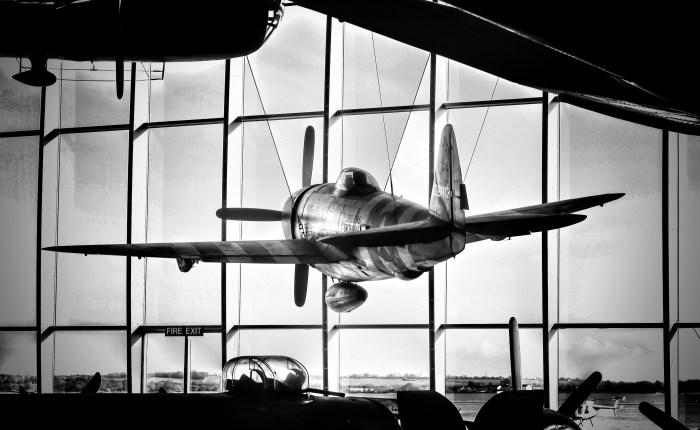
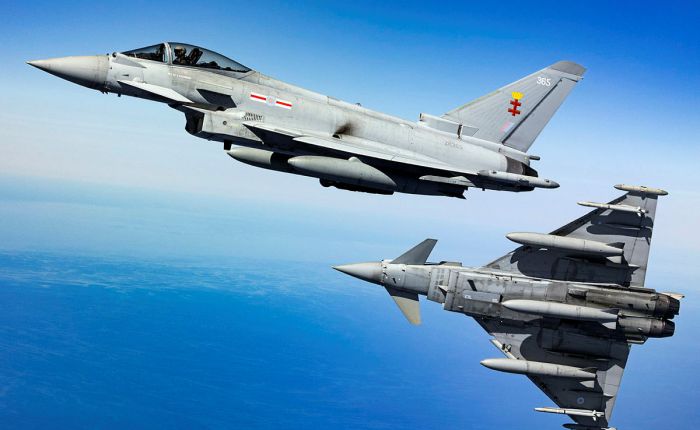
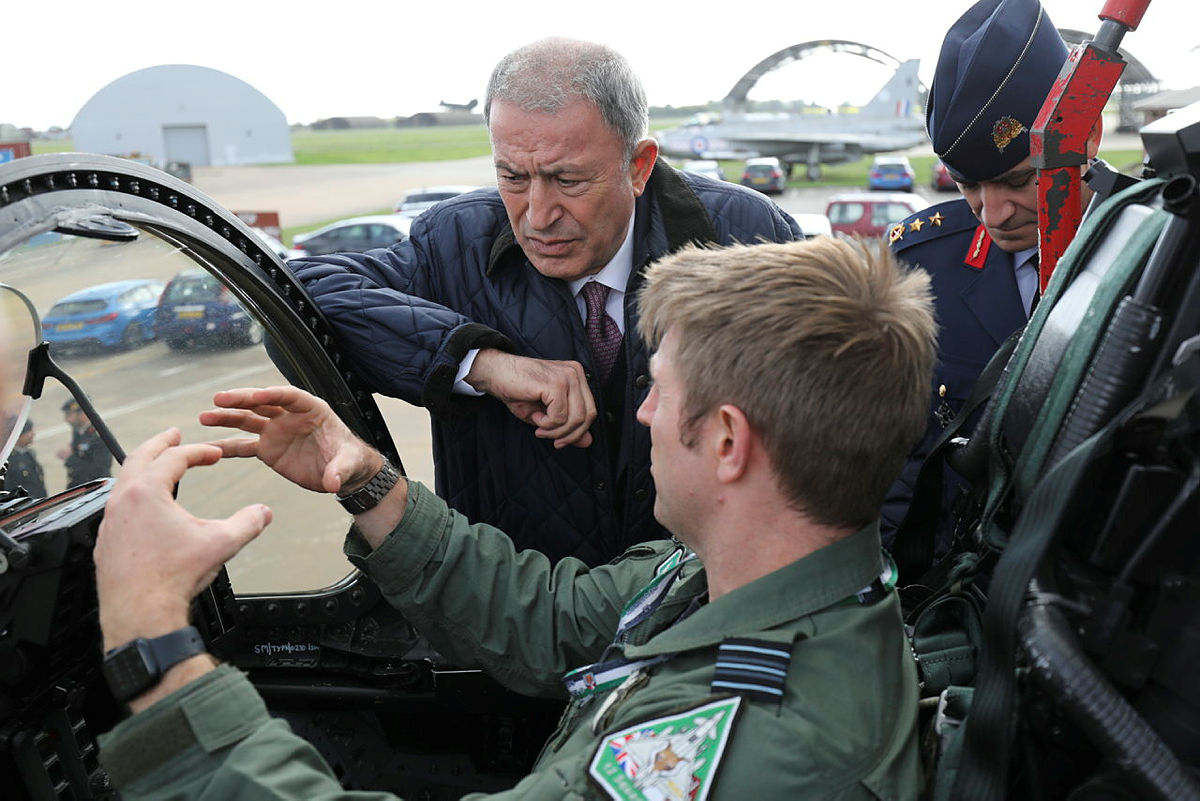
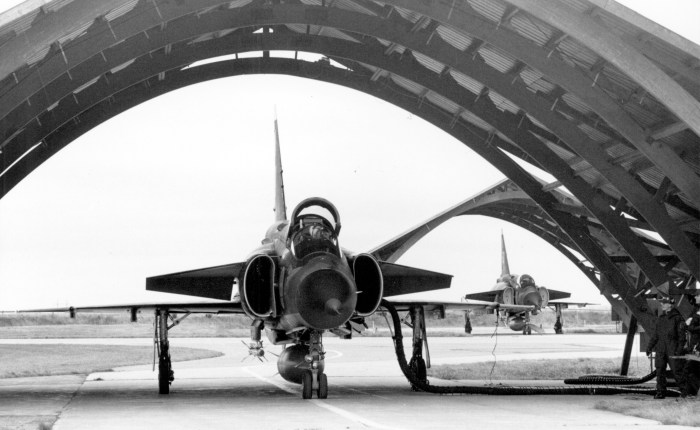
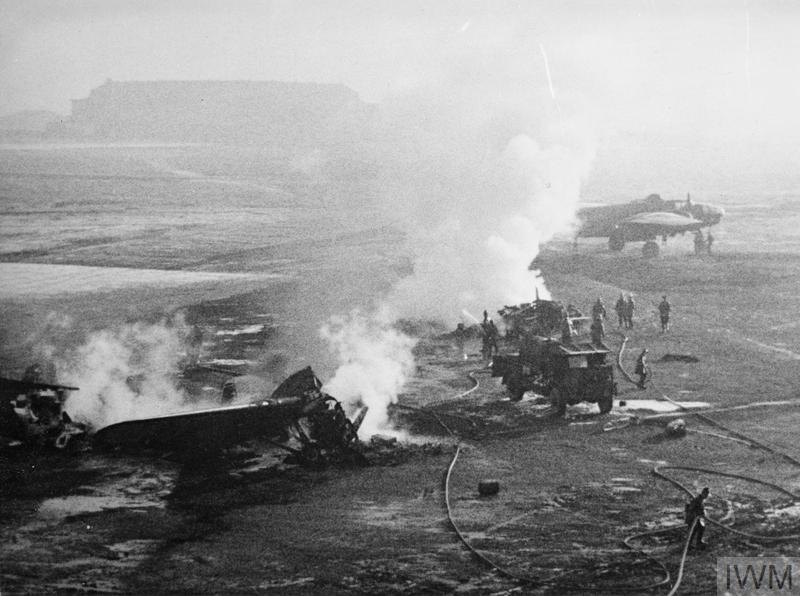
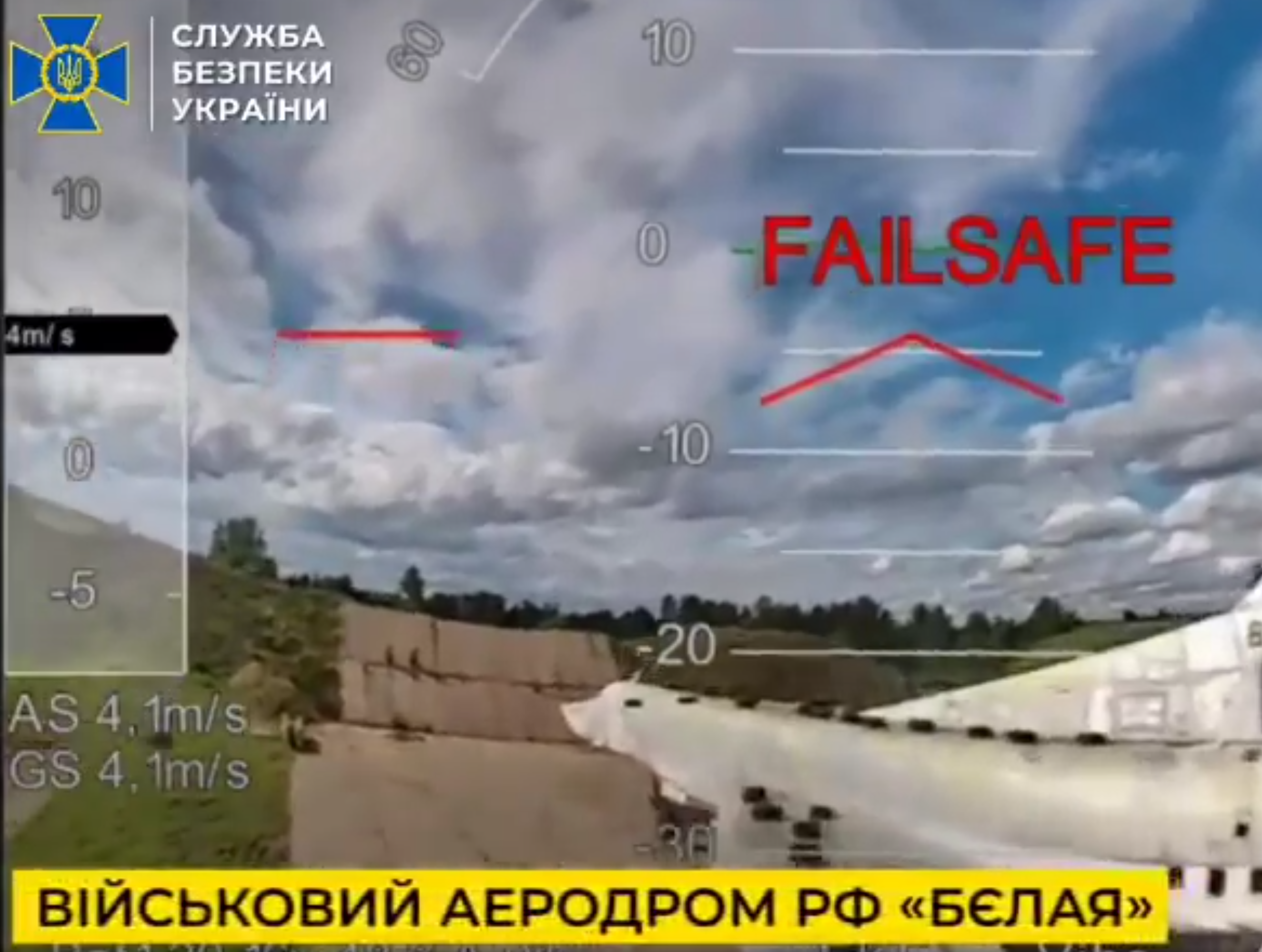
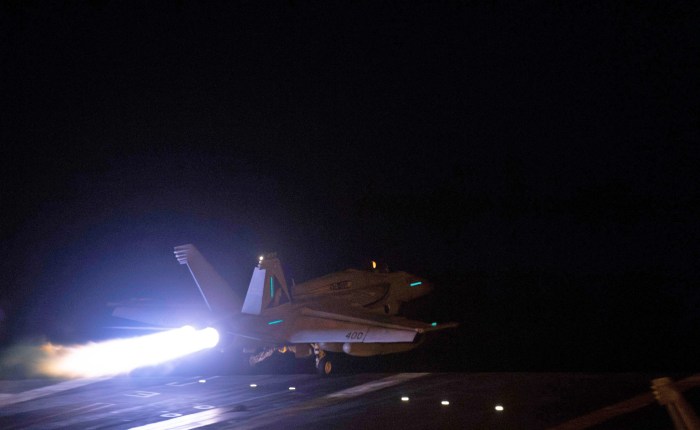
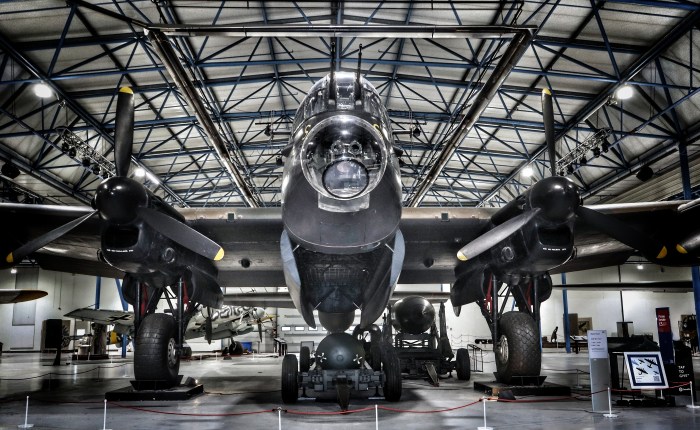
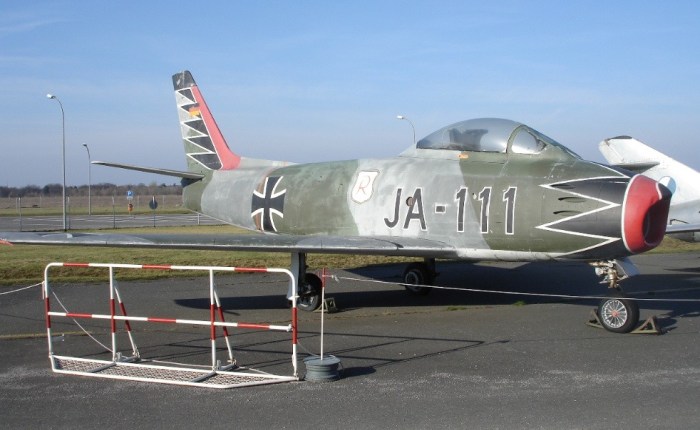
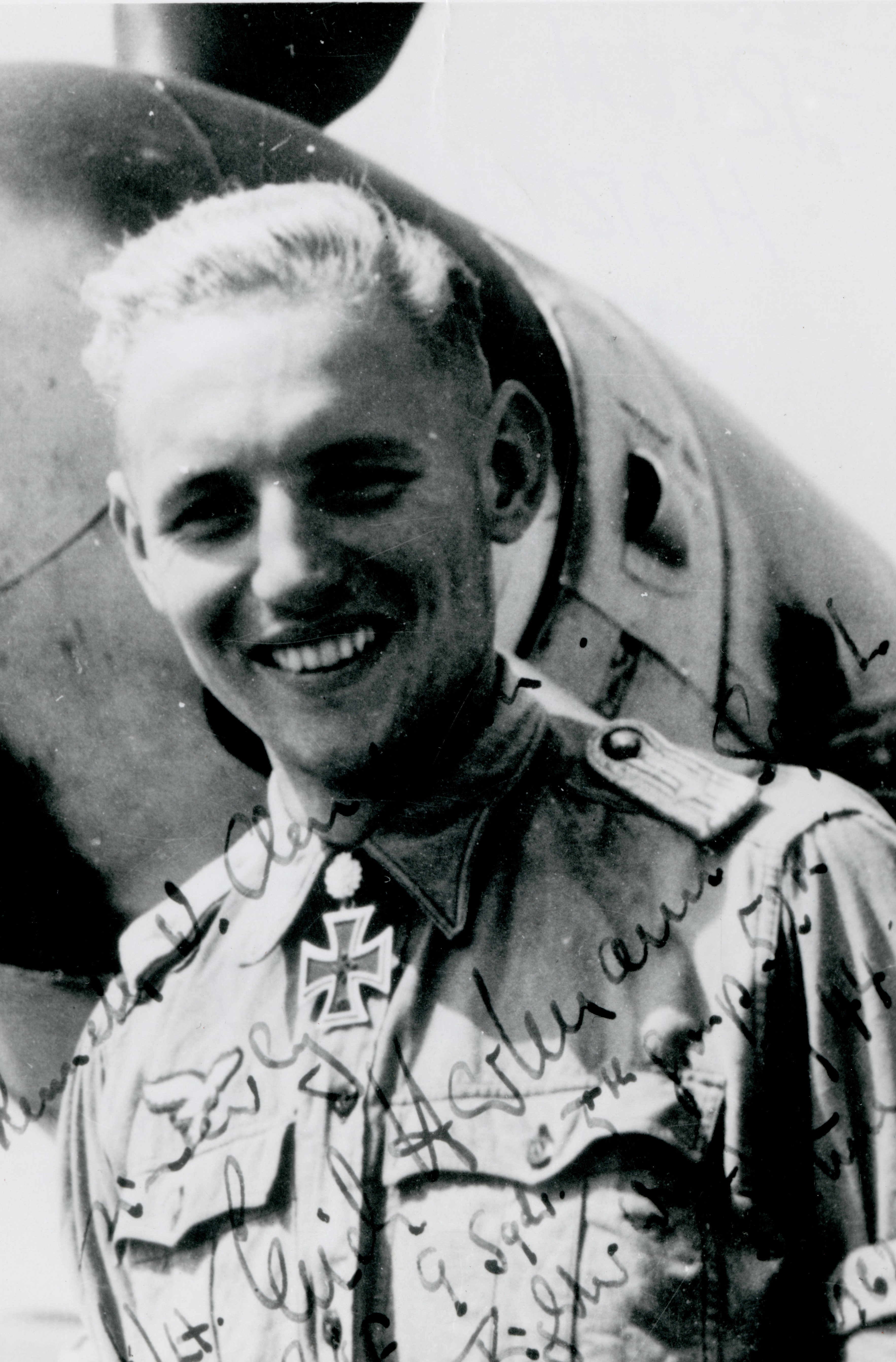
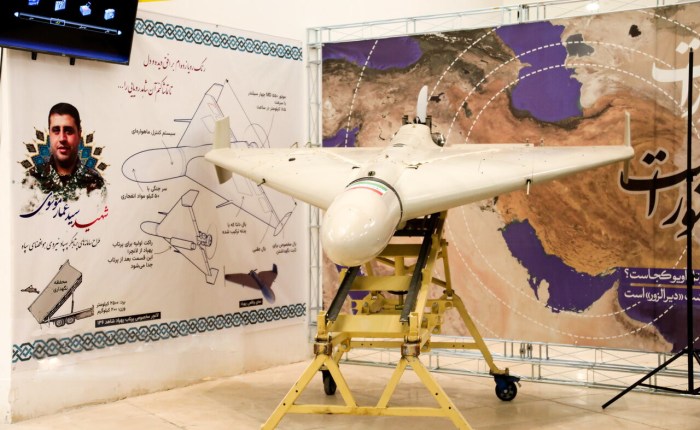

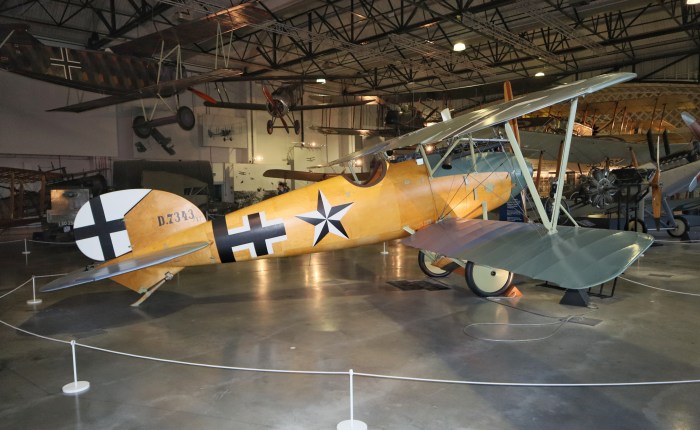
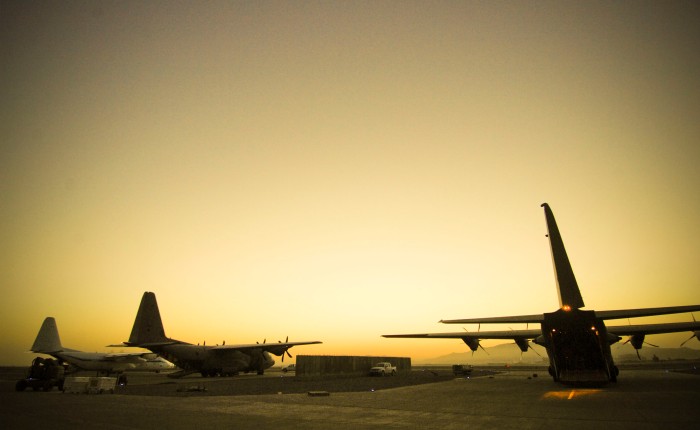
 From Balloons to Drones