I am an independent scholar specialising in the history of war. I have nearly 20 years of experience within the education, museum and heritage sectors in Australia and the United Kingdom. I am currently the Senior Historian at Brisbane City Council in Australia. I am also the editor-in-chief and owner of 'From Balloons to Drones.' My research interests focus on the history of air power and air warfare, military leadership and command, military culture, and the history and development of professional military education. I also maintain an interest in transport history. To date, I have published numerous articles, chapters and encyclopedia entries, edited two books, and delivered papers on three continents to various civilian and military audiences.
From the F-35 Lightning II to the F-15E Strike Eagles, even the most advanced aircraft are sitting ducks while they are on the ground. It should come as no surprise that the best way to defeat aircraft is to attack them when they cannot evade, fight back, or use any of their defensive measure – in other words, while they are not flying. This has been a truism throughout much of the history of air power. It led to the Japanese attacks on Hickam Field as part of the Pearl Harbor attack, the British Special Air Service (SAS) raid on Haggag el Qasaba, the Luftwaffe’sOperation Bodenplatte, and the Israeli success against the Egyptian Air Force in the 1967 War, among many others. In recent decades, the uncontested nature of US and Allied basing has allowed air forces to operate freely, launching sorties without significant risk to their home base and achieving dominance in the skies. Recent events have provided a stark reminder that, if the era of safe basing has not ended, it is rapidly drawing to a close.
Fire crews attempt to extinguish the last fires among burnt-out North American Mitchells of No. 139 Wing RAF at B58/Melsbroek, Belgium, after the major daylight attack on the airfield by Luftwaffe fighter-bombers (Operation BODENPLATTE). (Source: IWM (CL 1806))
The most important protection that the US and Allied bases have had was distance. Since the Second World War, air assets based in Western Europe and North America did not need to worry about aerial threats from adversaries in anything short of a great power (likely nuclear) war. In the post-Cold War world, this experience was further reinforced as the US and NATO adversaries of the period, such as Iraq and Serbia, lacked any real possibility of reaching homeland-based aircraft. While in Iraq and Afghanistan, air assets were forward deployed, the most rare and critical assets in the US inventory – many of which are no longer in production and would be exceedingly difficult to replace – including B-2s, B-1s, and RC-130s, stayed out of the enemy’s reach.
Individual terrorists might have been able to reach a base in the US or Europe, but robust homeland security infrastructure limited the extent to which these could have been coordinated. In addition, most domestically radicalised terrorists acted as lone wolves and, therefore, lacked the capability to cause significant damage to infrastructure and multiple platforms simultaneously. The lack of a real threat to home-based aircraft has been one of the unspoken advantages that uscore the US and NATO’s ability to achieve air superiority and global reach without incurring the expense of protecting their aircraft or critical aircraft infrastructure at home.
Three events from the last six months should serve as a stark wake-up call that the era of distance being the primary protection for critical assets may be coming to an end. In Operation Spider’s Web, the Ukrainian Security Service smuggled containers filled with short-range attack drones into Russia through commercial channels. They employed Russian civilian drivers who knew nothing of the nature of the cargo they carried to bring the containers to launch locations near Russian air bases, and Ukraine employed remote instructions to launch the attack.
The drone strikes caught the Russian airbases completely off guard, allowing Ukraine to target critical Russian assets in unprotected positions. The attack damaged or destroyed as many as 40 aircraft, including strategic bombers that formed part of Russia’s nuclear triad. Russia’s assumption that distance from the front and national air defence protected these assets was painfully shattered in the course of a single day.
During Operation Spider’s Web, an FPV drone targets a Tu-22 bomber at Belaya air base, 4 June 2025. (Source: Wikimedia)
This has not been the only instance of launching short-range attack drones at distant targets. As part of Operation ‘Am Kalavi,’ Israel smuggled precision-guided munitions (PGMs) into Iran and established both a small factory to build attack drones and a base from which to operate inside the country. This meant that in advance of the Israel Air Force (IAF) strikes in Iran, Israeli intelligence and special operations personnel on the ground could launch drones and PGMs to confuse and reduce Iran’s air defences, ballistic missiles, and command and control capabilities.
This Israeli operation differed from the Ukrainian one in both its methods of delivering weapons and the types of targets selected, yet the lesson is similar. The most critical assets required for the defence of the nation can now be targeted by air, regardless of their range, and national-level air defences are insufficient to keep a determined adversary at bay. It is easy to imagine the damage an adversary could inflict on the US force posture through attacks similar to those in Russia or Iran, targeting B-2s, B-52s, or even high-value, low-density assets like the RC-135 or the-be-deployed E-130J TACAMO fleet.
The presence of new aerial threats to aircraft based in the homeland does not negate new ways in which traditional threats might manifest. In June 2025, Palestine Action, at the time of writing, a proscribed terrorist group in the UK, infiltrated RAF Brize Norton and sabotaged two parked RAF Voyager Aircraft, the RAF’s sole type of tanker aircraft, which has been extensively supporting NATO’s Eastern Flank missions. The apparent targeting of the attack was based on misinformation or disinformation – that the Voyager Aircraft were being used in direct support of the Israeli military in its war with Iran.
There is no apparent evidence that this attack was organised or supported by a foreign adversary. Still, there is ample evidence that foreign adversaries have used social media to contact, organise, and perhaps even direct the actions of groups and individuals far from their borders in ways that were not available in previous decades. Adversaries will likely note the potential efficacy of using social media to spur domestic groups in the US or NATO countries to attack important air assets.
So, the threat landscape has changed. Distance is not the defence it once was. Now, aircraft at home – especially those that play singularly important strategic or operational roles now require a level of protection unseen in the US since the Second World War. There are two primary ways to achieve this: active protection measures and passive measures. Active measures include air and missile defences such as Centurion C-RAM and counter-drone electronic warfare or directed energy systems, which, to provide protection from surprise, must always be active as well as air patrols. This may potentially pose a particular challenge for basing in areas with congested civilian airspace.
The status and the quality of the active system are important, but so too is the density. There must be sufficient defensive systems at each airfield (and especially those with low-density assets) to prevent being overwhelmed in a strike or destroyed. There must also be enough to allow for maintenance without a serious reduction in defensive capability. Active defensive systems may also be vulnerable to electronic warfare and cyberattacks. These systems would also provide little aid in the case of a Brize Norton-style infiltration. This means that the active defences against aerial threats must be combined with robust ground security and patrols.
Passive defence measures mitigate the damage that either aerial attacks or infiltration can cause. The cornerstone of passive defence for airframes is hardening. While some NATO countries still have limited hardened shelters in the US and elsewhere, hardening would require not only a change in construction but a change in practice. Building hardened hangers (including top protection and/or perimeter and top netting) for critical assets would greatly complicate attacks by small, short-range UAVs by requiring them to carry a far larger explosive to breach the aircraft shelter. Such hangers, if locked down, would also raise the challenge for would-be infiltrators and give security forces greater time to respond. At the same time, their protection would only apply when aircraft are in shelters and not parked on outdoor ramps, as is often the case.
Alone, passive protection can do what active protection cannot. It provides protection twenty-four hours a day, seven days a week, from both air attacks and ground infiltration. Unlike active protection, many forms of passive protection are immune to electronic warfare and cyber-attacks. Passive protection does not interfere with any other airspace activities and, once completed, is less susceptible to degradation in capability caused by personnel shortages.
The advantages of hardening are why Norway has reopened its deeply buried aircraft facilities, and Switzerland never abandoned its facilities. The US and other NATO countries have built hardened aircraft shelters with top protection in the past, but ceased building them because the threat did not justify the cost of construction and challenges to aircraft maintenance in more confined spaces. As the operations in Iran and Russia, as well as the sabotage at RAF Brize Norton, make clear, the threat has changed.
In an ideal world, the US and NATO could still rely on the protection afforded by distance, but that is not the world of today. Failing that, the best possible way forward would be to combine active and passive defences to protect all critical assets, but this may prove unfeasible. While the solutions to the challenges posed may appear tactical, the implications of failing to implement new protection could be strategically catastrophic.
Whether the US and its Allies choose passive or active protection or a combination of both, the time has come to protect critical aircraft while they are on the ground so the Joint Force can count on them to be in the air. The US and its allies should take the opportunity to learn from the attacks on Iran and Russia and develop protection for their critical aircraft today or risk becoming a case study of regret in the future.
Dr Jacob Stoil is a military historian who is the US Army’s Research Professor of Middle East Security at the US Army Strategic Studies Institute. In this capacity, he advises the US Army and other organisations on Middle East policy, strategy, and lessons learned. Dr Stoil also serves as Chair of Applied History at the West Point Modern War Institute, Assistant Director of the Second World War Research Group (North America) and Trustee of the U.S. Commission on Military History. Jacob was a Senior Fellow of the 40th Infantry Urban Warfare Center and a co-founder of the International Working Group on Subterranean Warfare as well as an Associate Professor of Military History at the US Army School of Advanced Military Studies (SAMS). He has published multiple policy and academic articles, which can be found in publications such as the International Journal of Military History, Wavell Room, and Modern War Institute. He can be followed on X as @JacobStoil.
Header image: Preparation of two Saab JA 37 Viggen under Töreboda arches as part of the Bas 60 (Flygbassystem 60), which was an air base system developed and used by the Swedish Air Force during the Cold War. (Source: Wikimedia)
Editorial note: This article first appeared on the author’s website. It has been reproduced here with permission.
On 25 June 1950 local time, forces of the Democratic People’s Republic of Korea (North Korea) crossed the 38th Parallel and invaded the Republic of Korea (South Korea). Launching Operation Pokpung, North Korea quickly moved south and by 28 June had occupied the capital of South Korea, Seoul. In response to this act of aggression, on 25 June 1950, in New York, the United Nations passed Resolution 82, which condemned the invasion, called for a cessation of hostilities, and demanded the withdrawal of forces beyond the 38th Parallel. Failure to comply with the resolution led to the adoption of Resolution 83, which recommended that UN members provide military forces to support South Korea and restore peace.
Korea, after 35 years of occupation by the Japanese, was split into two zones of occupation in 1945. The Soviet Union occupied the north, while the United States occupied the south. While the intention had been to unify the Korean Peninsula, problems arose between the communist North and the nationalist South. The failure of the Communist Party (the Workers’ Party of North Korea) to participate in the 1948 elections, combined with the abstention of several South Korean politicians, led to the eventual development of two distinct systems of government.[1] After the communist victory in the Chinese Civil War in 1949 and after receiving tacit support from Joseph Stalin, North Korea prepared to invade South Korea.
Australia’s response to Resolution 83 was to support the UN. At this time, the Australian military was providing forces to the British Commonwealth Occupation Force (BCOF) in Japan. Shortly after the passage of Resolution 83, the Department of External Affairs received communications from the Americans regarding the support Australia was willing to provide.[2] Initially, the Royal Australian Navy vessels (RAN) HMAS Shoalhaven and Bataan (the latter en route to Japanese waters to relieve the former) were tasked with supporting the withdrawal of nationals from South Korea; however, by 29 June, they were tasked with assisting American operations.[3] In cabling this news to the Australian Ambassador to the United States, Norman Makin, the Minister for External Affairs, Percy Spender, noted the presence of No. 77 Squadron, Royal Australian Air Force (RAAF), in Japan. However, he stressed it represented ‘practically the whole of our effective operational fighter strength in Australia or elsewhere.’[4]
Group portrait of No. 77 Fighter Squadron, RAAF, 26 September 1948. Identified, left to right, back row: Warrant Officer (WO) Jim Flemming; WO W. Michelson; Flying Officer (FO) W. Horsman; WO M. Garroway; WO W. Rivers; Flight Lieutenant (Flt Lt) C.R. Noble; WO Fairweather; Flt Lt J. Grey; FO K. McLeod; WO B. Nichols; Flt Lt T. Murphy. Front row: FO W.O.K. Hewett; Flt Lt R. Hill; Flt Lt W. Ives; Flt Lt C. Butcher; Flt Lt S. Bradford; Squadron Leader F. Lawrenson; Flt J.I. Adams; Flt Lt G. Strout; Flt Lt K. Godfrey. (Source: Australian War Memorial)
No. 77 Squadron had deployed to Japan as part of BCOF in 1946 as part of No. 81 Wing. In 1948, it was transferred to Iwakuni Air Base in Yamaguchi Prefecture, on the island of Honshu. The squadron had been re-equipped after the end of the Second World War with the North American P-51D Mustang. By June 1950, No. 77 Squadron was amid preparations to return to Australia, it having been announced in April that the remaining Australian forces in Japan would be repatriated. However, events overtook these preparations.
On 29 June, the same day the Australian Government contributed the RAN to the war in Korea, the Supreme Commander of the Allied Powers in Japan, General Douglas MacArthur, requested No. 77 Squadron for operations over the Korean Peninsula. He had been informed by his principal air commander, Commander of the Far East Air Forces (FEAF), Lieutenant General George Stratemeyer, that he was in desperate need of long-range ground attack aircraft. As the Australian Official Historian of the Korean War, Robert O’Neill related, MacArthur had cabled the Commander of BCOF, Lieutenant General Sir Horace Robertson, to request the use of No. 77 Squadron. However, he had sent the message uncoded and not kept it from the entourage of reporters that he had taken with him on his tour of South Korea.[5] Stratemeyer embellished MacArthur’s position by heaping praise on No. 77 Squadron. While the praise was not unwarranted, it was clearly designed for effect. Indeed, Stratemeyer and his planners at FEAF had, in the words of the United States Air Force’s official history of air operations over Korea, ‘cast covetous glances’ at No 77 Squadron and its P-51 Mustangs.[6] MacArthur’s request for the deployment of No. 77 Squadron was widely reported in the Australian media alongside Stratemeyer’s praise for the unit before the Australian Government had a chance to respond.[7]
MacArthur’s request put the Australian Government in a challenging position. They still hoped to send No. 77 Squadron back to Australia, but alliance politics took centre stage, and by 30 June it was announced that the squadron would be committed to operations.[8] MacArthur had got his way. However, while No. 77 Squadron was committed to action, it operated from Iwakuni and would operate over Korea, but not be deployed to the peninsula. Moreover, due to poor weather, it would take several days for No. 77 Squadron to undertake its first sorties.
The North American P-51D Mustang aircraft A68-809, flown by Wing Commander Lou Spence DFC, when commanding No. 77 Squadron, RAAF, in Korea. Spence flew this aeroplane on 2 July when leading the second mission of the day. (Source: Australian War Memorial)
On 2 July, No. 77 Squadron undertook three sorties. The first was an ‘armed escort’ of four P-51s led by Squadron Leader Graham Strout for US Douglas C-47 Dakotas evacuating wounded soldiers from ‘Taijon’ (Daejeon) in Korea to Japan. One P-51 (A68-799) had to return to Iwakuni due to being unserviceable after take-off. The second sortie was a ‘close-armed escort’ mission led by the squadron commander, Wing Commander Lou Spence. The mission was to escort a group of US Douglas B-26 Invaders who attacked two bridges south of Seoul. One P-51 (A68-757) had to return due to unserviceability. The final mission saw six P-51s provide ‘armed escort’ to US Boeing B-29 Superfortresses who were attacking Yonpo airfield at Hamhung.[9] Despite the return of two aeroplanes to Iwakuni due to unserviceability, the sorties were relatively uneventful, despite several newspapers reporting that No. 77 Squadron downed one or two Yakovlev Yak-9 fighters.[10] No enemy aeroplanes were recorded as being encountered, and only in the two final sorties was any form of anti-aircraft fire encountered, though they caused no problem for the squadron. After a relatively inauspicious start, No. 77 Squadron would soon turn its attention to offensive operations, launching its first ‘armed attack’ with eight P-51s armed with rockets, attacking a convoy on a stretch of road between Heitaku and Suwon on 3 July. The attack claimed two locomotives, one truck, two staff cars, four other vehicles, and a bridge.[11]
The significance of No. 77 Squadron’s deployment over Korea came not in what the squadron physically achieved but in what its presence represented to alliance politics. The squadron’s first operations were widely reported both in Australia and abroad. In Australia, No. 77 Squadron’s first operation was reported in a typically functional manner, with many newspapers simply reporting on the character of the sorties. Nevertheless, some newspapers reported on the significance of the sorties in terms of Australian strategic policy, both foreign and domestic. For example, on 3 July, the Brisbane Telegraph noted that while the deployment of small-scale RAAF and RAN forces to support the effort in Korea was warranted to ‘honour Australian commitments to the United Nations’, any larger-scale deployment would need parliamentary agreement.[12] However, as an editorial in The Canberra Times reported, the rapid deployment highlighted ‘[t]wo extremes in the making of major decisions on policy have been illustrated by the reactions of the Government and of the Labour Party to the outbreak of hostilities in Korea.’[13] In short, the Australian Government acted quickly. At the same time, the Labor Party could ‘even comment on the situation until a meeting is held in Sydney next Wednesday [5 July], at which the policy will be decided.’[14] Perhaps unsurprisingly, it was reported that the Australian Communist Party had condemned the use of the RAAF, describing their deployment as a ‘scandal and a disgrace’ and demanding ‘the withdrawal of the R.A.A.F, from Korea.’[15]
More significantly, in the US, the rapid response of the Australian Government was noted. On 2 September, the Washington Evening Star reported on that ‘[t]he first combat mission of the Australians […] had a political significance. It made the air war a United Nations show […] No longer was the United States conducting any part of the Korean “police action” alone.’[16] That the term ‘political significance’ was used would not have been lost on readers, and a copy of this article was provided to the Department of External Affairs, as it aligned with Australian views on alliance politics.[17] Indeed, on 27 June, Makin had cabled Canberra to note that ‘the war had created a useful opportunity for putting to the State Department’ the creation of a ‘regional arrangement […] might help meet further crises.’[18] Thus, the failure to deploy No. 77 Squadron would have been inopportune and also demonstrated that, while a small contribution to the war effort, it had a significant political impact.
Thus ended the first day of operations for No. 77 Squadron over Korea. The squadron would deploy to Korea in October 1950 and eventually be re-equipped with the Gloster Meteor F.8. It would serve in Korea until October 1954, when it would transfer back to Japan and subsequently to Australia.
Dr Ross Mahoney is an independent scholar specialising in the history of war, with a particular focus on the use of air power and the history of air warfare. He is the Editor-in-Chief of From Balloons to Drones and currently the Senior Historian within the Heritage Policy team at Brisbane City Council in Australia. He has nearly 20 years of experience in the education, museum and heritage sectors in Australia and the United Kingdom, including serving as the inaugural Historian at the Royal Air Force Museum between 2013 and 2017. His other research interests are military leadership and command, military culture, and the history and development of professional military education. He also maintains an interest in transport history. He has published numerous articles, chapters and encyclopedia entries, edited two books, and delivered papers on three continents. His website is here.
Header image: North American P-51D Mustangs of 77 Squadron RAAF, lined up on the tarmac at Iwakuni air base, Japan, c. 1950. (Source: Australian War Memorial)
[1] This is an overly simplified description of the development of the two Koreas in the period after the Second World War. For more detail, see: Allan Millett, The War for Korea, 1945-1950: A House Burning (Lawrence, KS: University Press of Kansas, 2005).
[2] Robert O’Neill, Australia in the Korean War, 1950-53 – Volume 1: Strategy and Diplomacy (Canberra, ACT: The Australian War Memorial and the Australian Government Publishing Service, 1981), p. 49.
[3] National Archives of Australia (NAA), A1838, 3123/7/3/4 PART 1, Statement by the Prime Minister, 29 June 1950; ‘Australia Backs U.N.,’ The Herald, 29 June 1950, p. 1; ‘Australian Units for Korea, Ships and Planes,’ Lithgow Mercury, 29 June 1950, 2.
[4] O’Neill, Australia in the Korean War, 1950-53 – Volume 1, p. 51.
[5] O’Neill, Australia in the Korean War, 1950-53 – Volume 1, pp. 51-2. On the repercussions, or lack thereof, of MacArthur’s ‘leak,’ see: O’Neill, Australia in the Korean War, 1950-53 – Volume 1, p. 54. Cameron Forbes claimed MacArthur told Australian Roy Macartney, who was Chief of the AAP-Reuters office in Tokyo. See: Cameron Forbes, ‘Fighting in the Giants’ Playground: Australians in the Korean War’ in John Blaxland, Micheal Kelly and Liam Brewin Higgins (eds.), In from the Cold: Reflections on Australia’s Korean War (Canberra, ACT, ANU Press, 2020), p. 89. Macartney certainly filed a story that was picked up by several newspapers. For example, see: ‘Australian Fighters Sought by MacArthur,’ The Canberra Times, 30 June 1950, p. 1; ‘MacArthur Seeks Use of Australian Fighters in Korea,’ Border Morning Mail, 30 June 1950, p. 1; ‘MacArthur Wants Australian Fighter Planes,’ Daily Advertiser, 30 June 1950, p. 1. O’Neill noted the presence of Macartney of MacArthur’s aeroplane but does not explicitly note that the latter told the former that he wanted No. 77 Squadron. O’Neill, Australia in the Korean War, 1950-53 – Volume 1, p. 51.
[6] Robert Futrell, The United States Air Force in Korea, 1950-1953 (New York, NY: Duell, Sloan and Pearce, 1961), p. 64.
[7] “R.A.A.F. Fighters Sought for South Korea,’ The Sydney Morning Herald, 30 June 1950, p. 1; ‘RAAF asked to Fight with U.S.,’ Daily Mirror, 30 June 1950, p. 1; ‘MacArthur Back; Wants to Use R.A.A.F.,’ Illawarra Daily Mercury, 30 June 1950, p. 1; ‘Mac Arthur asks for the R.A.A.F.,’ The Courier-Mail, 30 June 1950, p. 1; “Wants R.A.A.F. for Korea,’ The Mercury, 30 June 1950, p. 1.
[8] NAA, A1838, 3123/7/3/4 PART 1, Statement by the Prime Minister, 30 June 1950.
[9] NAA, A9186, 103, Detail of Operations, No. 77 Squadron, Operations Record Book, 2 July 1950.
[10] ‘RAAF Mustangs Escort Bombers,’ The Herald, 3 July 1950, p. 3; ‘RAAF Mustangs in a Mission which downs a Red,’ The Daily News, 3 July 1950, p. 1.
[11] NAA, A9186, 103, Detail of Operations, No. 77 Squadron, Operations Record Book, 3 July 1950.
[12] ‘Emergency Call to Parlt.,’ Brisbane Telegraph, 3 July 1950, p. 2
[13] ‘Policies on Korea,’ The Canberra Times, 3 July 1950, p. 4.
[14] ‘Policies on Korea,’ The Canberra Times, 3 July 1950, p. 4.
[15] ‘Communists in Stoney Attack Prime Minister,’ The Canberra Times, 3 July 1950, p. 1.
[16] NAA, A1838, 3123/7/3/4 PART 1, Brooks McClure, ‘Aussies Make Quick Contribution to War,’ Washington Evening Star, 2 September 1950. McClure’s article also noted the importance of the deployment of RAN ships.
[17] NAA, A1838, 3123/7/3/4 PART 1, Memorandum to the Secretary, Department of External Affairs, 5 September 1950.
[18] O’Neill, Australia in the Korean War, 1950-53 – Volume 1, p. 53.
Marcus Gibson, The Greatest Force: How RAF Bomber Command became the No.1 factor in Britain’s total, destructive defeat of Nazi Germany. York: Marcus Gibson, 2025. Illustrations. Bibliographic Notes. xv + 537 pp.
Daniel Knowles, Reaping the Whirlwind: The Changing Perceptions of the Wartime Role of RAF Bomber Command. York: Barnthorn, 2025. Illustrations. Appendices. Bibliographic Notes. Index. 281 pp.
The history of RAF Bomber Command is a difficult heritage. Since the war itself, questions about area bombing have divided opinion, and today the bombing war is frequently remembered through the divisive, binary lenses of the ‘Dams or Dresden’.[1] Both books consider the public perception of the actions of RAF Bomber Command. However, while Reaping the Whirlwind examines the subject critically and objectively, The Greatest Force passionately argues for further recognition for Bomber Command. On his website, Gibson claims that the book aims to ‘fundamentally change our view, once and for all, of the immensity of their contribution.’[2]
In The Greatest Force, Gibson claims to answer the ‘outstanding questions’ (Rear cover) he has identified about RAF Bomber Command’s war, including why ‘Harris was right to bomb city centres’, how ‘Bomber Command became the No.1 factor in Britain’s total, destructive defeat of Nazi Germany’, and how the force ‘gave little-known but vital support to the Royal Navy against the U-boats and to Allied armies.’ He also maintains that the ‘book is the first-ever full analysis of the impact of RAF Bomber Command on Nazi Germany’. He claims that his research finally ‘dispels the many myths about Bomber Command’s true effectiveness,’ and proves that ‘it was the foremost military force in securing victory.’[3]The Greatest Force massively overpromises and underdelivers.
The book makes a couple of legitimate points, notably the importance of small industrial production to the Nazi war effort. However, it lacks proper evidence to support these ideas, and Gibson’s claims are largely unsubstantiated. The book fails to live up to the promise of the title, the blurb on the back cover, and its marketing. In the introduction, he back-pedals from the title’s claim, concluding ‘that the RAF’s bombing was the principal reason for Germany’s early military defeat in the West – a destructive force equalled in effectiveness only by the victories of the Red Army on the Eastern Front’. (p. xiv) More importantly, the questions he asks are not ‘outstanding’. For example, we already know that materiel was diverted from elsewhere to defend against Allied air power (p. 163).
He resolutely buys into the big man of history concept, citing Harris, Churchill, and his namesake with the dog, while making his disdain for Atlee very clear. (p. 470) His political stance and agenda are also revealed by phrases like ‘group think’ (p. 461) and ‘betrayal’ (p. 465, 469), as well as his wish for a column for Harris to rival that of Nelson. (p. 465) He tries so hard to clear the name of Bomber Command that he avoids the complexity of the subject and includes so much that is irrelevant. Rather than debunking certain myths about the role of Bomber Command, the book reinforces those on one side of the debate over the difficult heritage of the bombing war. His wish for a monumental column taller than that of Nelson firmly positions him in this. Gibson is a journalist with an axe to grind; he is not a historian.
The book is poorly referenced, many claims are unsupported, and the sources used are often cherry-picked without analysis. Most references are to the secondary literature, such as Adam Tooze’s Wages of Destruction (2006), rather than to the primary sources he claims to have used. The book overlooks the cultural context of the historiography he cites, as well as the nuances of working with veteran testimony 80 years after the events. One moment, he’s talking about Allied air power; the next, he is attributing all success solely to RAF Bomber Command (p. 159, 163).[4] Reading it made me realise that ‘yes and’ can be a negative comment.
Conversely, in Reaping the Whirlwind, Daniel Knowles acknowledges that the bomber has been in ‘the shadow of Fighter Command’ since Churchill’s speech about ‘the few’ in 1940, and like Gibson, argues that since the end of the war, Bomber Command has occasionally been regarded ‘with great distaste’ (p. 100). However, unlike Gibson, he traces how the ‘perceptions of, and attitudes to the role played by Bomber Command’ have fluctuated between 1945 and today, and he advances explanations for their changing favour (p. 5).[5]
Unlike Gibson, Knowles is historically minded, having a degree in History and Politics. The difference is highlighted in their approach to their subject. He critically examines the historiography, and how literature, film and TV, novels and comics, political discourse and contemporary events, the popular press, and even representations in school textbooks, have played their part in the construction of the popular memory of Bomber Command. He goes into some detail describing the capabilities of different bombsights, and navigation aids including Gee, H2S and Oboe, before he considers how the tactical differences between RAF and USAAF bombing policies have been remembered as area or precision bombing. In doing so, unlike Gibson, Knowles engages with the complexity and the nuance of evolving attitudes to the bombing war in the context of changing politics and worldwide events over the last eight decades.
Reaping the Whirlwind has a logical structure; it is well-referenced and includes 70 pages of appendices with transcripts of important primary sources, including the Butt Report and Churchill’s speeches and correspondence. I would argue that it is worth buying to have these sources accessible on a bookshelf. The book flounders a little by oversimplifying the discussion around censorship of films and the removal of statues (pp. 130-1), but the reader can forgive this and the occasional typo. Although he perhaps incongruously claims ‘little concern has been given to the aircrews of Bomber Command’, (p. 79) Knowles examines the decorations awarded to veterans, and comments that the issue of the Bomber Command Clasp in 2013 would not have occurred if ‘perceptions and attitudes of Bomber Command’s role within the Second World War had not changed’ (p. 97).
Knowles summarises the historiographical and current perspectives on the bombing war, whereas the thinking behind The Greatest Force remains rooted in the late 1990s or early 2000s. Although his book is half as long, Knowles is more effective than Gibson at arguing that the ‘hostility’ to Bomber Command’s position in public memory has been ‘unfair’. (p. 162) He concludes that while their role still divides opinion, perceptions have altered, and Bomber Command is now recognised by the memorials in London and by the International Bomber Command Centre in Lincoln. (p. 179)
Dr Dan Ellin is the archivist for the International Bomber Command Centre Digital Archive housed at the University of Lincoln. A Social and Cultural historian, his research examines the lives, emotions and medical treatment of the men and women who served with Bomber Command during the Second World War, and how the bombing war is remembered.
Header image: An Avro Lancaster MkIII of No. 103 Squadron at Elsham Wolds, Lincolnshire, early March 1943. As part of the publicity for ‘Wings For Victory Week’ (6-13 March), the station photographer was required to supply photographs of the men and machines of the squadron for inclusion in local newspapers. (Source: IWM (CH 8965))
[1] Mark Connelly Reaching for the Stars: A New History of Bomber Command in World War II (London: I.B. Tauris, 2001), p. 147.
[2] Marcus Gibson, ‘The Greatest Force – New Book by Marcus Gibson’ 2025. Accessed 15/08/2025 https://rafbook.co.uk/
[3] Marcus Gibson, ‘The Greatest Force – New Book by Marcus Gibson’ 2025. Accessed 15/08/2025 https://rafbook.co.uk/
Editorial note: This article first appeared on the author’s website. It has been reproduced here with permission.
The Korean War is often described as the ‘Forgotten War’ due to it being sandwiched between the more commonly known Second World War and the Vietnam War. Furthermore, a debate persists over its character, with some referring to it as ‘police action.’ Despite this, the Korean War has received its fair share of examination by historians since the conflict ended. Arguably, the most comprehensive history in the English language is Allan Millett’s history of the conflict. So far, two volumes of The War for Korea (2005 and 2010) out of a projected three have been published, covering the period up to 1951. From an Australian perspective, the late Jeffrey Grey’s work on the role of British Commonwealth armies, The Commonwealth Armies and the Korean War (1988), remains a key work.
In addition to Grey’s work, the key source on Australia’s involvement in the Korean War remains the two-volume official history written by Robert O’Neill. Starting research in 1970, O’Neill’s two-volume history dealt with strategy and diplomacy in its first volume, while the second volume covered the combat operations of the military forces deployed, including the experience of the Royal Australian Air Force (RAAF). While the first volume has generally been praised, the second volume has been described by at least one critic as a ‘regimental history.[1] Indeed, with specific reference to the RAAF’s contribution, Glen St John Barclay questioned the validity of volume two, arguing ‘if one is not going to make even a passing reference to the aviators of the US Air Force and Navy who achieved total command of the skies for the United Nations Forces in Korea. This is Hamlet without the Prince of Denmark, indeed.’[2]
O’Neill’s appointment nevertheless marked a significant departure from previous official historians, who were journalists by background. Here, the Australian Government made a conscious decision to appoint an academic – O’Neill also served as the Head of the Australian National University’s Strategic and Defence Studies Centre at the time he researched and wrote the official history. Since O’Neill’s appointment, the subsequent official histories published in Australia have adopted a significantly more academic tone. Moreover, as Peter Edwards, the Official Historian of Australia’s involvement in Southeast Asian Conflicts, 1948-1975 has written, O’Neill ‘pioneered the coverage in official histories of the strategic and diplomatic policy-making that led Australian forces to be involved in conflicts, with the same precision and authority as had always been given to the experience of those forces.’ [3]
A South African Air Force North American F-86F Sabre from No. 2 Squadron at Tsuiki air base, Japan, in 1953. No. 2 Squadron SAAF was attached to the US Air Force 18th Fighter-Bomber Wing during the Korean War. (Source: Wikimedia)
Returning to air power, the historiography is generally dominated by accounts detailing the role of primarily the United States Air Force, with some attention paid to US naval air power and the role of US Marine Corps aviation. Key amongst these is Conrad Crane’s American Airpower Strategy in Korea (2000). Crane is critical of the USAF’s official history published by Robert Futrell in the 1960s, noting that The United States Air Force in Korea, 1950-1953 (1961) ‘emphasizes the success of air power in Korea and not the air force’s failure to learn enough from that ordeal.’[4] The role of naval aviation is dealt with in Richard Hallion’s 1986 work, The Naval Air War in Korea. Xiaoming Zhang’s 1998 article in The Journal of Military History and his 2002 book Red Wings over the Yalu remain the key works in the English language that examine the Chinese and Soviet use of air power over Korea.[5] Of interest is John Sherwood’s 1996 cultural history of US pilots during the Korean War, Officers in Flight Suits: The Story of American Air Force Fighter Pilots in the Korean War. In addition to these works, a useful general introduction to the subject can be found in Michael Napier’s 2021 history, Korean Air War.
Dealing with Australian air power, writing on the experience of the RAAF began even before the war had ended when George Odgers published Across the Parallel in 1952. Odgers had served as a public relations officer for the RAAF in Korea and had access to No. 77 Squadron that would have been hitherto unheard of for other writers of the time. The work was generally well received at the time of its publication, although it is now somewhat dated. Odgers would later write a biography of Wing Commander Richard Cresswell, Mr Double Seven (2008), who commanded No. 77 Squadron during 1951. Few personnel accounts of the RAAF’s involvement in the air war over Korea have been published. A notable exception is Colin King’s Luck is No Accident (2001).
Little was published on the RAAF’s operations in Korea until the arrival in 1994 of David Wilson’s Lion Over Korea. The RAAF’s role in Korea was discussed by Alan Stephens in the second volume of the Air Force’s official history, Going Solo, in 1995. Stephens’ work is arguably the most comprehensive treatment of the campaign, despite the experience in Korea warranting only a single chapter. The volume, however, situates the deployment in context and links it to other ongoing issues in the history of the RAAF at the time. Then, at the turn of the 21st Century, Doug Hurst published The Forgotten Few (2000) while more recently Owen Zupp has published an account of Australia’s contribution to the air war (2024).
Despite the lack of personal accounts and Hurst’s contention that the No. 77 Squadron represented a ‘forgotten few,’ there has been a surprising amount published for what was ostensibly a small contribution to the war effort. Nevertheless, there are problems. While it might be argued that much has been written about the RAAF’s contribution to the air war, their contribution can still be overlooked. For example, In from the Cold, a 2020 edited collection reflecting on Australia’s contribution to the Korean War, did not include a chapter on the RAAF. Based on a 2011 conference at the Australian War Memorial, the event featured chapters on the Australian Army and the Battle of Maryang San, as well as the four-month deployment of the Royal Australian Navy’s aircraft carrier, HMAS Sydney. However, the closest we see the RAAF discussed is in a chapter on coalition air operations by Richard Hallion.[6]
Additionally, apart from Stephens’ work, the cited works above primarily focus on the experience of No. 77 Squadron. Little attempt is made to link expertise back to the development and operations of the RAAF in Australia and other places such as Malaya. Indeed, any consideration of Australian air power strategy in this period cannot separate Korea from Malaya, as the two campaigns were clearly linked in the mind of the Australian government.[7]
Dr Ross Mahoney is an independent scholar specialising in the history of war, with a particular focus on the use of air power and the history of air warfare. He is the Editor-in-Chief of From Balloons to Drones and currently the Senior Historian within the Heritage Policy team at Brisbane City Council in Australia. He has nearly 20 years of experience in the education, museum and heritage sectors in Australia and the United Kingdom, including serving as the inaugural Historian at the Royal Air Force Museum between 2013 and 2017. His other research interests are military leadership and command, military culture, and the history and development of professional military education. He also maintains an interest in transport history. He has published numerous articles, chapters and encyclopedia entries, edited two books, and delivered papers on three continents. His website is here.
Header image: A United States Air Force North American F-86 Sabre parked alongside Gloster Meteor Mk8s on No. 77 Squadron of the Royal Australian Air Force at Iwakuni in Japan, June 195. (Source: Australian War Memorial)
[1] Glen St John Barcley, ‘Australian Historians and the Study of War, 1975-88,’ Australian Journal of Politics & History 41, no. 1 (1995), p. 241.
[2] Barclay, ‘Australian Historians and the Study of War,’ p. 241.
[3] Peter Edwards, ‘Robert O’Neill and the Australian Official War Histories: Policy and Diplomacy’ in Daniel Marston and Tamara Leahy (eds.), War, Strategy and History: Essays in Honour of Professor Robert O’Neill (Canberra, ACT: ANU Press, 2016), p. 71.
[4] Wayne Thompson, ‘Book Review – American Airpower Strategy in Korea, 1950-1953 by Conrad Crane,’ Journal of American History 87, no. 4 (2001), p. 1565.
[5] Xiaoming Zhang, ‘China and the Air War in Korea, 1950-1953,’ The Journal of Military History 62, no. 2, (1998), pp. 335–70.
[6] Richard Hallion, ‘The Air War in Korea: Coalition Air Power in the Context of Limited War’ in John Blaxland, Michael Kelly and Brewin Higgins (eds.), In from the Cold: Reflections of Australia’s Korean War (Canberra, ACT: ANU Press, 2020), p. 129, 141.
[7] Mark Lax, Malayan Emergency and Indonesian Confrontation, 1950 to 1966 (Newport, NSW: Big Sky Publishing, 2021), p. 75.
By Lieutenant Colonel Michael H Taint, United States Air Force (Ret’d)
Editorial note: In this two-part article, Michael Taint re-evaluates the conduct of Colonel Edward Deeds in the management of the US Army’s First World War aircraft production program and the overall aeroplane production program itself. In this second part, he examines Deeds’ conduct and evaluates the management of aircraft in the United States during the First World War. The first part can be found here.
The first part of this article described the low state of readiness of American military air power as the country entered the First World War in 1917. Congress addressed this with an enormous $640M appropriation for a fleet of aircraft. However, the automobile industry, not the aviation industry, dominated the Government body overseeing aeroplane acquisitions, the Aircraft Production Board, specifically in the person of Edward A. Deeds, who was directly commissioned a full Colonel in the US Army Air Service and placed in charge of procurement.
Colonel Deeds and the Aircraft Procurement Program
The American aircraft production program began, as large initiatives often do, with boundless optimism. After all, at the beginning of the First World War, the American automotive industry was an industrial marvel, mass-producing approximately 1.5 million automobiles per year – this made the goal of 22,000 aircraft possible. Minutes taken at an early meeting of the Aircraft Production Board capture this sentiment perfectly: ‘If the automotive industry of this country can produce 100,000 automobile engines a month, as it now does, we can see no logical reason it cannot produce 3,000 aircraft engines per month.’[1] Colonel T. Milling of the US Army Air Service summed up this optimism when he stated that the ‘idea that has always seemed to exist in the United States, namely, that money can do anything.’[2]
Deeds’ US Army Air Service Equipment Division wasted no time awarding contracts to get the work underway. On 7 September 1917, just weeks after Deeds’ commissioning, the Dayton Wright Airplane Company, then in its sixth month of existence, received a cost-plus contract to build 4,000 De Havilland DH-9 (soon after modified to DH-4) light bombers. Curtiss Aircraft and Fischer Body (later to become part of General Motors) received contracts of equivalent size. In addition to the DH-4 contract, Dayton Wright was also issued a fixed price contract for 400 ‘Standard J’ training planes; altogether, Deeds’ Equipment Division issued almost $35,000,000 in contracts to his former company in Dayton.[3]
In 1920, in a report of the House of Representatives Select Committee on Aviation’s judgment on Deeds’ conduct is truly clear:
But the fact remains that from practically the inception of the Government’s aviation activity in connection with the war, and within the sphere of Colonel Deeds’s important if not commanding influence his former business associates were placed at once through Government contracts to a position where they had the assurance of very large profits upon a relatively small investment of their own money and in addition were able to secure generous salaries which they charged against the Government as part of the cost of manufacture. That Deeds, Kettering and Talbot continued to be on the most intimate and confidential footing in the prosecution of Government work by the Dayton-Wright Airplane Company is apparent from their correspondence.[4]
Particularly damning were two telegrams sent by Deeds to Henry Talbot, the business manager and co-founder of Dayton-Wright Airplane Company, in August and September 1917. In the first, Deeds tells Talbot that all confidential telegrams from his Government office will be addressed directly to Talbot, not the Dayton Wright Airplane Company (a highly irregular practice for Government correspondence that Deeds later defended as merely a convenience, then later a security measure). In the second, Deeds told Talbot that the Government was able to select a source without price competition, and that price would not be a determining factor. And if the price were not a determinant, the cost could be high:
For your personal information as coming from your local attorney. Judge Advocate General has ruled it legal for the Government to select one, contractor one, and the two a third [sic], as market appraisers of market value of plant at contract expiration.[5]
Deeds also gave Dayton Wright a tremendous advantage over other US aeroplane manufacturers – the only actual DH-4 aircraft in the country. The procurement strategy the Aircraft Procurement Board had endorsed was not to design an entirely new American aeroplane but ‘build to print’ from an existing, in this case British, design that had flown and proven reliable. Unfortunately, the British either lacked or failed to give the US a complete technical package of drawings and specifications for the DH-4. All the Americans had been a few top-level diagrams. Instead, in late July, an actual DH-4 was shipped to Washington, which American industry could reverse-engineer and copy. However, even that was incomplete, with missing armament and landing gear. These were parts that needed to illustrate how the whole system was constructed and worked together. Deeds, however, immediately had it shipped to Dayton Wright instead of keeping it at a Government location, where all industries would have equal access.[6] This gave Dayton Wright an enormous head start over the other contractors because they had sole access to the only artifact documenting the detailed design. Dayton Wright immediately began ‘reverse engineering’ detailed blueprints and drawings to enable mass production, and within three months, had hand-built a ‘duplicate’ (more accurately, an American version) equipped with a prototype new US-built Liberty engine. This was impressive initial progress, but mass production proved far more challenging.
As the fall of 1917 progressed into winter, the problems of creating a new American aviation industry became evident, as the much-ballyhooed deliveries of initial production aircraft failed to materialise. The problems began with the most fundamental issues – a lack of knowledge in the manufacturing process, and a supply chain of necessary materials. Though the automotive executives in charge, such as Deeds, had assumed that automobiles and aircraft were comparable in complexity, it was soon discovered that the aeroplanes, particularly the ones made in Europe, required far more ‘touch labor’ by craftsmen than the mass-produced automobile, built by general labour that typically only performed one function on the assembly line.[7] This lack of aviation production knowledge hindered the startup effort, but the American aviation industry eventually learned and adapted.
Material was also a significant issue. America had enormous timber resources, but only certain types of wood were suitable for constructing aeroplanes. Strong, light, and straight-grained beams long enough to form the wings and body of an aeroplane were required, and only spruce met those requirements. Eventually, the lumber industry learned to cut spruce trees for the correct finished piece, but early in the spruce program, as much as 5,000 feet of rough spruce was required for a single aircraft.[8] Labour troubles caused by the lumbering program’s crash erupted in the Pacific Northwest; in November 1917, the US Army Signal Corps created a Spruce Production Division, headed by Colonel Brice Disque, to resolve the issues and maintain a steady supply of high-quality spruce material.[9]
Another significant component of the aircraft was linen. At first, the US attempted to procure this material from the original De Havilland Company source, an Irish supplier, but they were unable to meet the demand. This forced the US Army Signal Corps to experiment and find an acceptable substitute, cotton, which they procured (15,000 bales worth) on the open market to provide to the aircraft manufacturers. Even special aviation varnish (‘dope’ in the vernacular of 1917) had to be developed by the US Army Signal Corps to support private production.[10]
These issues would surely have occurred regardless of who led the aircraft procurement program, but there were also problems internal to the Equipment Division. The scope and size of the aircraft production challenge in the First World War were precisely why men such as Deeds, with expertise in running large manufacturing enterprises, were brought into the US Army. Unfortunately, they failed to create an efficient organisation to administer the work. As a Congressional investigation report noted after the war:
The duty of providing an adequate organization for aircraft production was left to the Signal Corps. It is quite clear that this undertaking was beyond the competency of the Chief Signal Officer [General Squier], who had neither the training nor experience for such a large industrial enterprise, and those who were brought to the task in his department failed to produce an organization which was adapted to meet the exigency. (emphasis added)[11]
Specific issues identified were a lack of accountability, unclear lines of authority, and redundancy of effort. These issues, plus rising public criticism of the entire aircraft program, led to a change in the US Army Signal Corps’ organisational structure in February 1918. Deeds was relieved of his position as Chief of the Equipment Division and moved to the newly created position of ‘Senior Industrial Executive’, reporting directly to General Squier, with no apparent line authority. Nevertheless, Deeds continued to exert significant control over the aircraft program, according to the report of Charles Evans Hughes issued in October 1918 and discussed in more detail below.
Another set of issues was changes in the DH-4 configuration caused by American manufacturing. The most notable of these was the Liberty engine, one of the war’s most significant American production successes, in which Deeds played an important role. Unlike other technical aspects of American aircraft production, Deeds took a personal interest in the development of the new American engine. As Benedict Crowell recounted in his official report after the war:
Colonel Deeds had been the man of broad vision who […] determined that America could best make a contribution to the aviation program by producing her own engine […] persuaded Messrs. Hall and Vincent [two Signal Corps officers in the rank of major responsible for engine production] to forego further efforts on their individual developments and devote their combined skill and experience to the creation of an all-American engine.[12]
While there were good reasons to create the new American Liberty engine instead of attempting to adapt hand-crafted European engines to American factories, Deeds also had a very personal business interest in the Liberty. Each of the 20,000 Liberty engines used a Delco electronic ignition system and not the magneto ignition system used in Europe, so he profited from each engine sold. Deeds was careful not to sign the directive requiring the use of the Delco ignition, instead having his subordinate, Major Gray, sign it. However, as the Congressional investigation after the war found, ‘there is no satisfactory evidence that Colonel Deeds signed, prepared or directed the use of the Delco ignition, though it cannot be doubted that he desired the system to be used.’[13] Unfortunately, the change in a central aircraft subsystem such as this required a significant number of changes to other interfaces, resulting in further delays. These changes were particularly problematic as the Liberty engine evolved in many configurations.[14]
By November 1917, seven months into the war, the first significant block of DH-4 aircraft (154 planes) was supposed to be delivered; however, the total delivered was zero. The United States did not deliver its first batch of home-produced aircraft until February 1918, which consisted of only nine aircraft.[15] Critics from the small core of aviation experts and enthusiasts saw this as the natural outcome of their industry being overtaken by the ‘Detroit Conspiracy.’ Their criticisms soon found a most unusual voice.
John Gutzon Borglum: Sculptor and Aviation Enthusiast
John Gutzon Borglum, c. 1919. (Source: Wikimedia)
John Gutzon Borglum, a sculptor, was busy working on the Stone Mountain commemoration of Confederate Civil War leaders in Georgia when the US declared war in 1917 (after the war, he would take on the far more famous Mount Rushmore project). An early aviation enthusiast, Borglum was a founding member of the New York Aero Club and also witnessed the acceptance testing in 1908 of the first Wright Flyer bought by the US Army.[16] In 1913, prominent Daytonians, including Deeds, contacted Borglum about sculpting a memorial to the Wright brothers; however, he enormous Dayton flood that year made financing the project impossible. Deeds remembered Borglum, however, and commissioned the sculptor to do a bust of his son, who tragically died of illness. Borglum completed this composition and took things further, proposing an elaborate mausoleum for the entire Deeds family. Deeds never responded to this proposal, and this rejection was later cited as the cause of Borglum’s particular animus toward Deeds in the aeroplane procurement controversy.[17]
One thing was sure: in terms of temperament, Borglum was as far from Deeds as imaginable. Where Deeds was genial, low-key, and personable, Borglum was truculent, loud, and abrasive, truly over the top. Unafraid of making attacks on Deeds that were personal and sometimes outlandish, Borglum claimed that Deeds ‘real name’ was really ‘Dietz’ and that he had strong pro-German sympathies – a political hot-button in America in 1917. ‘Deeds powerful Teutonic personality seems to have completely hypnotised the trusting, scientific mind of General Squier, ’ posited Borglum, explaining how the aircraft program under a highly respected US Army officer had so underperformed expectations.[18] Overblown rhetoric aside, Borglum had suspicions about Deeds’ business motivations, which eventually proved well-founded. Convinced that the aircraft procurement plan led by Deeds was a scam, he handled it in typical Borglum style – he took it right to the top, writing the President of the United States’ secretary, Joseph Tumulty, and alleging gross mismanagement and waste in the aircraft program. After discussing with Secretary of War Newton Baker, Wilson wrote back on 2 January 1918. He gave Borglum carte blanche to investigate his allegations, including permission to visit various manufacturing plants, a War Department employee to act as Borglum’s assistant and an office in the War Department itself. Borglum attempted to interview the principals involved in the affair, including General Squier, but found them unresponsive.[19] Undeterred, on 21 January 1918, Borglum sent his report to Wilson with a letter stating that he had ‘been able to connect the broken links of a chain of dishonesty and disorder that runs through our production department.’[20] By now, Borglum was not the only voice of dissent. A report from the respected Aeronautical Society of America stated that the aircraft program was devised by ‘men who know next to nothing about the art of flying or the production of flying machines.’ Numerous newspapers throughout America in the next few months began calling for an investigation into the aeroplane program; typical of these is the St. Louis Star’s observation that ‘if things are wrong they must be righted and if they are not wrong then the men responsible must be cleared of odium’ and the Philadelphia North American’s ‘the American people are sick of false promises and alluring deceptions; what they want is battle-planes on the front.’[21]
Secretary of War Baker’s response to President Wilson on Borglum showed a clear understanding of the potential political volatility of the situation:
My general impression of Mr. Borglum’s report is that it contains no facts beyond those frankly admitted by Government departments with reference to delays […] The charges against Colonel Deeds are unsupported by evidence. Nevertheless, I consider it would be well, in view of the charges, to have a full examination of Colonel Deeds’ record made as a matter of justice to him and the Department.[22]
Whatever plans Baker had for an internal review were quickly superseded by actions by Congress and Wilson himself. Wilson backpedalled, sending Borglum a letter claiming he had not appointed him as an official investigator but merely as an interested citizen (though interested citizens are generally not provided a full-time War Department aid plus an office).[23]
Borglum was making the newspapers almost daily as he blew the whistle as loudly as possible. By early May 1918, both houses of Congress expressed outrage and demanded a full investigation. Senator Thomas of Colorado, on 9 May 1918, stated that the aeroplane manufacturers were responsible for ‘huge profiteering’ and wanted those contracts cancelled. However, the next day, the same Senator dropped a bombshell on the Senate floor, effectively ending Borglum’s role as an aircraft program critic. An affidavit from Mr. Kenyon W. Mix, Jr., whose father held the controlling interest in the Dodge Manufacturing Company, was presented to the Senate. It stated that Mix and another aeroplane engineer, who supposedly had ties to the British Embassy, Hugo C. Gibson, had met Borglum on a train trip (whether planned or accidental is unknown), and Gibson had told him that European designs, far superior to American ones, were available for manufacture. Borglum boasted of his close personal ties with President Wilson, ties that could readily lead to a fat aeroplane production contract. Mix, suspicious, then decided to raise the issue through appropriate channels – so he forwarded the concern to Aircraft Production Board chair Howard Coffin, who in turn shared it with other Board members, including Squier and Deeds. In turn, on 20 January 1918, they raised the issue with Vice President Marshall, who notified Secretary Baker; presumably, Baker passed this on to Senator Thomas.[24] The implication was clear – Borglum was doing precisely what he accused Deeds of doing – pursuing an aircraft procurement program profitable to himself. Having placed the affidavit before the Senate, Senator Thomas ended his floor time with the stark conclusion: ‘This shows Mr. Borglum’s criticism of the airplane program to be entirely without merit.’[25] Borglum, naturally, vehemently denied all this.
Of course, this testimony from Mix did not prove that Borglum’s criticism was without merit; it simply suggested that Borglum might be a hypocrite, attempting to do precisely what he accused Deeds of doing.[26] However, another possibility is revealed by a front-page story on 11 May 1918 in the Washington Herald:
Officials for the British Embassy and the British War Mission here state that no one in the name of Hugo C Gibson has been in the employ of the British Government in this country. It is believed that Mr. Borglum may have been the victim of a confidence man who sought membership in any corporation that might be formed and put forward false claims in order to win the confidence of the sculptor.[27]
Borglum’s response to the Senate was simple – ‘a frame up, deliberately planned.’[28] No one at the time (and for that matter, any historian later) appears to have taken that answer seriously, however. Borglum, utterly discredited, was effectively silenced. Certainly, powerful business interests and senior officers such as Deeds in the Equipment Division had strong motivations to stop Borglum. The Mix affidavit was never further scrutinised and Mix himself never called to testify. Borglum may have been personally silenced, but the calls for serious investigation had such momentum from Borglum’s polemics that they could not be stopped.
Charles Evans Hughes: Justice becomes Investigator
Charles Evans Hughes campaigning in Winona, Minnesota, on the Milwaukee Road’s Olympian, 10 August 1916. (Source: Wikimedia)
Former Associate Justice Charles Evans Hughes had lost a close election (23 electoral votes) to President Woodrow Wilson just the year before. In December 1917, he paid a courtesy call on his former rival at the White House. Hughes had come to Washington not to meet the President but to argue a case before the Supreme Court, the first time since he resigned from it to run for the White House. Hughes offered at that meeting – probably just a formality – to accept any wartime assignment that Wilson might wish. On 13 May 1918, just a few days after the Borglum debacle on the Senate floor, Wilson took Hughes up on the offer. Wilson believed that Hughes, a respected jurist and political opponent, would be able to make any necessary recommendations and remain above any charges of whitewashing. Wilson asked Hughes to investigate the growing political crisis of the army aircraft program, and Hughes immediately accepted.[29]
Though Wilson gave his former rival a free hand to look wherever he wished, he would do so under supervision from Attorney General Gregory or Solicitor General Frierson. One of these men always accompanied Hughes on every interview or fact-finding mission. Hughes picked Meier Steinbrink, an up-and-coming lawyer who was eventually elevated to the New York State Supreme Court, as his personal assistant. Together they investigated the entire aircraft program from mid-May until early November 1918, conducting all their interviews and actions in private to avoid creating another Borglum-like circus.[30]
Hughes’s first task was to uncover as many facts as possible about the actual aircraft production program – specifically, how many aircraft were built and shipped to Europe, how much money had been obligated and spent on domestic contracts, and how much had been obligated and paid on the Allies. Obtaining this data proved to be far more difficult than anticipated. It became the first indication that the entire aircraft production procurement bureaucracy lacked the proper centralised control necessary for effective decision-making. Hughes and Steinbrink eventually interviewed 280 witnesses, reviewed 17,000 pages of documentation, and visited contractor facilities in Dayton, Detroit, Buffalo, and New Brunswick. At each site visit, he examined the contractors’ financial records (cost-plus type contracts require all such data to be available to the Government) and facilities and interviewed key executives. In Dayton, these interviews included Deeds and Henry Talbot Jr., President of the Dayton Wright Airplane Company.[31]
During this visit, Hughes uncovered unmistakable evidence of Deeds’ illicit communications with his former company. From the information reviewed before their site visit and the evasive answers Talbot gave to specific questions from Hughes, both investigators suspected a secret back channel had been established. Steinbrink evaluated this idea.
While Hughes was plying the witness [Talbot Jr.] with questions, Steinbrink walked over to the plant’s filing room and told a clerk that Mr. Talbot would like to have the confidential file. The clerk yielded it without question, and the attorney [Steinbrink], opening it to “Deeds” and “Talbott”, found telegrams that established a confidential relationship between the two men after Deeds had taken charge of the aircraft production program for the Army.[32]
This would form a key part of the final 104-page report by Hughes, which was completed at the end of October and submitted to President Wilson through the Attorney General on 25 October. It was released publicly on 31 October 1918, just over two weeks before the Armistice.[33]
Hughes’ Report is impressively comprehensive and delves deeply into every issue that plagued the startup of the American aircraft industry, from the large numbers of Government actors and private firms involved down to the fine points of cutting the proper amounts of spruce and mahogany. Numbers and types of aircraft and aircraft engines built and delivered are tabulated, along with contract dollars obligated and spent, as well as the selection process for contractors. Hughes had discharged his duties well, untangling an overly complex procurement program in a few short months, despite neither he nor his assistant having any background in it.
The final report’s cover letter to the Attorney General mentions explicitly investigating ‘the activities relevant to Edward A. Deeds and his former business associates,’ noteworthy because Deeds is the only person called out by name in the cover letter.[34] Hughes intended to draw attention to Deeds, particularly senior administration officials who were likely only to read the cover letter. In addition to the unethical communications with Dayton Wright Airplane Company, the investigation uncovered other questionable conduct on Deeds’ part.
One of these was purchasing land for McCook Field, located just north of Dayton. Deeds had bought the land – after being advised by Wilbur Wright that it would make an ideal airfield. As Deeds he ‘importuned’ another US Army Air Service office to purchase the land; he no longer owned it but had sold it to his long-term business partner (and co-founder of Dayton Wright Airplane Company) Charles Kettering. Deeds also pressed for establishing other permanent facilities, such as Wilbur Wright Field in Dayton. Although he had no immediate business connection to this deal, it would surely be helpful in his post-war aviation business ventures.[35]
Hughes found still more irregularities in Deeds, such as a $104,000 payment to a Liberty engine contractor (the Packard Company) – even though no contract existed between the Government and Packard at the time.[36] On 21 February 1918, Deeds made a significant announcement through the War Department that the first ‘service’ (tactical combat) aircraft were finally on their way to France, an important milestone that the entire nation had anxiously awaited. Nothing had been shipped to France, only a handful of DH-4s to other airfields in America for testing; ‘Actual production in quantity did not begin until May.’[37] This revelation proved a severe embarrassment to the Wilson Administration, and Congressional inquiries grilled Secretary of War Newton Baker about this deception. Besides benefiting from insider Government information, executives of the Dayton Wright Airplane Company had charged exorbitant salaries since August 1, 1917, under the government’s cost-plus contracts. Deeds claimed he knew nothing about the wages (over $100,000 total) being received by some of his closest friends.[38]
Finally, in his single-page ‘General Conclusions and Recommendations, ’ Hughes blasted the US Army Signal Corps officers in charge (Squier and Deeds) for incompetence and mismanagement of the aircraft program, resulting in tremendous inefficiencies and waste. He also noted that the newly created Bureau of Aircraft Production, with entirely new leadership, had already rectified the significant problems reported. Concerning Deeds:
The evidence discloses conduct, which although of a reprehensible character, cannot be regarded as sufficient for charges under existing statutes […] The evidence against Colonel Edward A Deeds should be presented to the Secretary of War to the end that Colonel Deeds may be tried by court martial under Articles 95 and 96 of the Articles of War.[39]
The remaining points in the summary recommended criminal prosecutions for several other army officers (not named) who retained company commercial interests and suggested the Justice Department continue audits of the aircraft industry. Hughes was released from Government duty a few weeks later and never had more to say about the whole affair, resuming his distinguished career as a politician and jurist by serving as Secretary of State under the next President and eventually returning to the US Supreme Court. This time, as Chief Justice, in 1930.
Secretary of War Newton D. Baker and Court Martial
Secretary of War Newton D. Baker on 6 December 1918. (Source: Wikimedia)
News of the Hughes report appeared in the newspapers on 1 November 1918, and 10 days later, the Armistice was signed. American war planners who had expected the war to end only after a massive spring offensive planned for 1919 suddenly found themselves superfluous. Other residual tasks remained, along with negotiating the peace treaty and demobilising the army. One of these was the Deeds court martial.
With the Armistice, work stopped on all military production contracts almost immediately. The War Department undoubtedly wanted to put the embarrassing affair behind them as quickly as possible. Simply ignoring the Hughes Report was not an option – there was too much interest from both houses of Congress. Secretary of War Newton Baker decided to take the highly irregular step of not immediately court-martialing Deeds, instead having a board of review examine the allegations in the Hughes Report and determine whether a court-martial was required.
This move was itself highly irregular. Boards of Review served as the military equivalent of appellate courts. They review cases already decided in a lower court, and do not decide whether trials are necessary. Baker knew full well that there was plenty of evidence to warrant charges against Deeds, especially against the two Articles of War specified by Hughes, Article 95 (Conduct Becoming an Officer) and Article 96 (General Misconduct), which have unusually broad and extensive application.
The Board of Review, consisting of three-judge advocate officers selected by the army’s acting judge advocate general, examined the Hughes Report and took testimony from Deeds and his associates, allowing them to refute or clarify the issues Hughes raised. Neither Hughes nor Meier Steinbrink, his assistant, was ever called before the board or allowed to examine the testimony the review board heard. The army judge advocate’s report, released on 26 December 1918 (when it would garner the least attention, as Washington would be deserted after Christmas), decided that a court-martial was unnecessary. It found that the Deeds had not intended to deceive or defraud the Government and had released no confidential information.
The report begins with several glaring factual errors, most likely stemming from Deeds’ testimony, as they contradicted Hughes’ report. Deeds was selected for his Government position because he was ‘well known in the field of aircraft development’ and Dayton Wright Airplane Company was ‘taking over the Orville Wright Airplane Company.’[40] Deeds explained away the whole issue of direct private telegrams to his former company’s President, H. Talbot Jr, by claiming fear of German sympathisers who might gather confidential information. Had the board allowed cross-examination by Hughes, they would have learned that this was not standard operating procedure between the Army Equipment Board and contractors and only extended to Dayton Wright. As far as Deeds’ subsequent telegram to Talbot, providing key information about the Government’s aircraft procurement strategy, the board conceded Deeds’ assertion to Talbot to take the provided information as ‘coming from your local attorney’ was ‘difficult to understand’ but decided that since Deeds was not a lawyer and simply trying to expedite the award of Government contracts (that being true) it was acceptable.[41] They did not consider the information in the telegram, that a price competition was not required to award a contract, to be confidential to the government.[42] Had Hughes been present, he surely would have explained to the board that this information gave Dayton Wright carte blanche to charge the Government as much as it wished. What impressed the Board was that Deeds had sacrificed a large corporate salary (approximately $85,000 annually) to become a US Army officer and had been commended for his hard work by the Aircraft Production Board.[43]
Secretary of War Newton Baker released the Board’s results, with his concurrence, on 16 January 1919. The board, he claimed, ‘systematically examined all this evidence [the Hughes Report] and obtained all possible additional facts’ and was therefore superior to the Hughes Report in its conclusions.[44] Hughes had not been consulted or questioned by the Board, even once, on this overly complex procurement matter. The Board had not visited a single contractor facility anywhere, interviewed any other sources, or consulted any technical experts as Hughes did. Secretary Baker’s own ‘conclusion’ about what caused the Deeds scandal was not even consistent with the Board’s findings and has the distinct ring of a judgment made well before the board result:
This record undoubtedly shows that Colonel Deeds, absorbed in the activities of Aircraft Production, neglected to give personal attention to transactions involving his personal affairs, and this neglect on his part gave rise to appearances which required painstaking investigation in order to show their true character.[45]
And to make certain there was no mistaking Baker’s position on the matter, he ended with:
Inasmuch as Judge Hughes’ suggestion has been accomplished, I have directed that all records in this matter be filed in the War Department and the case be considered closed.[46]
With this, the War Department had finally put the last of the aircraft procurement scandal behind it. On 4 December 1918, President Wilson, following recommendations from Baker himself, issued full pardons to the other two army officers found by Hughes to have violated criminal statutes.[47]
Conclusion: Reassessing Deeds and the Aircraft Production Program
Readers of The Dayton Daily News opened their morning newspapers on 17 January 1919, to find the front-page story ‘ALL CHARGES VANISH UNDER LIGHT OF DAY’. The Board of Review had cleared entirely the Dee, and few locals seemed interested in a story with convoluted telegrams and company ownership details. Deeds soon received a deluge of telegrams from important Government officials such as the War Department’s Director of Munitions, Benedict Crowell, and industrialists like Henry Ford, congratulating him on the outstanding accomplishments of the aircraft production program. Feted in Dayton with banquets and other commemorations, including an ‘Ode to the Colonel’ written by his former military deputy, Deeds’ reputation suffered no lasting harm. To help ensure this, he had a July 1921 editorial from the popular business magazine The World’s Work entitled ‘The Vindication of Squier and Deeds, What Really Happened to the Billion Dollar Aircraft Appropriation’ reprinted in booklet form and distributed around the city.[48] Deeds were returned to senior management at Delco and NCR, and they continued to expand into new business ventures, such as creating a large conglomerate from various small sugar companies in Cuba. Upon his death, he bequeathed a historical park featuring a modern carillon tower that bears his name; the latter has become the de facto icon of Dayton.
Without question, Deeds made some significant contributions to the industry and the public. Still, his actual military conduct during the war is more accurately assessed by Borglum’s and Hughes’ criticisms than by Secretary of War Baker’s excuses. All the tributes he received after the war mention his extraordinary accomplishments as head of the aircraft production program – yet fail to mention any specifics other than the Liberty engine, which was indeed a resounding success. So, what precisely did Deeds do? He did not decide which aircraft types to build (that was the Bolling Commission’s responsibility) or design or innovate any technical aspects – his days as a design engineer were long over. His primary accomplishments in uniform seem to be awarding many aircraft production contracts in the fall of 1917 and developing an American internal combustion engine for these aircraft that is more amenable to mass production.
Neither of these accomplishments is especially impressive. Awarding contracts in 1917 was a simple matter –no research to determine the best industrial sources (no industry, after all), and no technical or cost proposals to evaluate and select. Deeds’ Equipment Division decided which companies should be given contracts and awarded them; even costs were ignored. One of the first contracts, worth $35,000,000, was awarded to Dayton Wright Airplane Company, which Deeds himself co-founded just a few months before to win new war contracts, a company that had never built a single aeroplane. Deeds never seem to have been considered, even for a moment, in recusing himself from that particular contract award on the apparent conflict of interest grounds. Not only did he not recuse himself, but he also sent a confidential telegram to his old company’s president, which, in effect, told them that price would not be a determinant, almost encouraging them to price-gouge the government. Favouritism for the Dayton Wright Airplane Company did not end there. There were no government plans to ensure that one sample DH-4 aircraft was equally available to all contractors; Deeds had it shipped to Dayton and kept it under his former company’s lock and key, giving them a huge schedule advantage over other manufacturers. Exorbitant salaries were allowed under Government contracts for his old company’s executives; salaries Deeds must have been aware of, as they were his closest personal associates. Much was made later of Deeds ‘divesting’ himself of company stock and salary, but the reality was this was small beer; Deeds was farsighted enough to realize that by building a large new aircraft enterprise – constructed almost entirely with Government funds with virtually no financial risk of his own – he would have yet another large salary stream to draw from when his year or two of military service was over. He returned to his friends in Dayton.
The Liberty engine program was one of the war’s great successes, and indeed, Deeds deserves credit here. Still, one must remember that by 1917, America had already built millions of internal combustion engines. The differences required for automotive and aviation applications were comparatively small. It was pretty evident that building a new engine for mass production was the better choice over replicating a European, handcrafted one. Even here, Deeds ensured his financial interest was addressed by requiring the Delco electronic ignition to be mandated for each Liberty, as opposed to the traditional aircraft magneto system.
Simply put, Edward Deeds always ensured the best interests of the United States, and his best interests coincided. And he never stopped. ‘Let us not in any way commercialise our experience [in the army] here. It is quite enough that we have been able to be of some service to our country without advertising the fact’ Deeds said in a speech in Dayton after the war – yet he insisted for the rest of his life on being called ‘Colonel Deeds.’[49]
Ethical issues aside, the larger question is Deeds’s role as head of the Equipment Division in the ‘failure’ of the American aircraft production program. Certainly, he played a critical role in creating unrealistic expectations with absurdly optimistic production schedules that the nascent American aircraft industry could not have met. Deeds compounded this mistake by making frequent and overly optimistic public statements throughout 1917, thereby reinforcing the false optimism. For example, an early production plan known as ’Production Plan II’ called for 16,500 tactical combat planes (DH-4s) to be delivered by 30 June 1918, to the front (to be powered by the new Liberty engine, which had not even been designed yet); actual numbers never came remotely close to this plan.[50]
The ‘failure’ was a plan by Deeds and the Equipment Division based on a false assumption – that building a tactical aeroplane was comparable to creating one of the million-plus automobiles rolling off the assembly lines in Detroit. The reality was that building an aeroplane was far more complex. The wood needed for the airframe had to be a continuous piece of spruce, obtainable only in the Pacific Northwest, and from lumberjacks currently on strike. Wings required a special linen spun only in Ireland. Even the varnish (‘dope’) needed for aeronautical use required special development. Tolerances for fitting parts in aircraft, which had to withstand wind and vibration forces unlike those in automobiles, required a far higher level of craftsmanship and attention to detail than the Detroit assembly lines. The ‘automobile crowd’ that ran the aircraft program was unaware of this when they began, a fact that no one disputed by the war’s end. All these challenges were overcome in time, but it took a precious amount of time. The American public and Congress asked in 1918 why reality lagged so far behind what was promised just six months earlier.
The American aircraft program in the First World War was far from a failure. Showing remarkable resilience and ingenuity, the new industry overcame a myriad of design and supply chain issues and, given a reasonable production curve, began producing combat aircraft in just over a year, just as the original Bolling Commission had expected when it recommended awarding the French the 5,875 aeroplanes contract the year before. During the war’s last three months, DH-4 production in America was 653 in September, 1,097 in October, and 1,036 in November.[51] Production year. Had the war continued into 1919 as expected, aircraft production may have been regarded as one of America’s significant contributions to the ultimate victory.
Lieutenant Colonel Michael Taint, United States Air Force (ret’d) is an independent historian. He retired after a 21-year military career in the US Air Force, which included tours of duty in missile and space operations, acquisition management and headquarters staff. He also spent 15 years in the defence industry as a project manager. He received a BA in History with a specialisation in Military History from Norwich University, an MA in Political Science from Wichita State University, and an MS in Computer Science from the University of Dayton.
Header image: US Army 166th Aero Squadron personnel standing in front of licence-produced Airco DH4s, November 1918. (Source: Wikimedia)
[1] Robert J. Neal, A Technical and Operational History of the Liberty Engine (North Branch, MN: Specialty Press, 2009), p. 73.
[2] John H. Morrow, The Great War in the Air: Military Aviation from 1909 to 1921 (Tuscaloosa, AL: University of Alabama Press, 2009), p. 268.
[3] United States House of Representatives, Hearings Before Subcommittee 1 (Aviation), Select Committee on Expenditures in the War Department, Volume 3 (Washington, DC: United States Government Printing Office, 1920), p. 3882.
[6] Isaac F. Marcosson, Colonel Deeds Industrial Builder (New York: Dodd, Mead and Company, 1947). p. 227.
[7] Neal, A Technical and Operational History of the Liberty Engine, p 77.
[8] Benedict Crowell, America’s Munitions 1917-1918: Report of Benedict Crowell, Director of Munitions (Washington, DC: US Government Printing Office, 1919), pp. 240-41. Improvements in logging reduced this to about a thousand feet.
[9]Ibid. The spruce industry in the Northwest was placed under military supervision for most of the war.
[26] However, Deeds’ proponents were quick to use this quotation to discredit not only Borglum but also any critic of Deeds and the aircraft program. See Deeds’ biographer Marcosson.
[27] ‘Senate Hears Army Critic Under Fire,’ The Washington Herald, 11 May 1918, p. 1.
[28] Waldrop, ‘Senate and Justice Department Investigating Aircraft Situation,’ p. 511.
[29] Merlo J. Pusey, Charles Evans Hughes, Volume I, (New York City: MacMillan and Co.,1951), pp. 374-75.
[30] Charles Evans Hughes, Autobiographical Notes, edited by Joseph S. Tulchin and David J Danelski (Cambridge, MA: Harvard University Press, 1973), p. 1190.
[31] Pusey, Charles Evans Hughes,Vol. I, pp.376-77.
[32]Ibid., p. 378. Biographer Pusey obtained this information from a personal interview with Steinbrink on 24 July 1947. These are the telegrams mentioned earlier discussing the Government’s internal contracting strategy.
[33]Hearings Before Subcommittee 1 (Aviation), Select Committee on Expenditures in the War Department, Vol 3. The Hughes Report is Exhibit J.
[34]Hearings Before Subcommittee 1 (Aviation), Select Committee on Expenditures in the War Department, Vol. 3, p. 3868.
[47] Neal, A Technical and Operational History of the Liberty Engine, p. 81.
[48] John K. Barnes, ‘The Vindication of Squier and Deeds, What Really Happened to the Billion Dollar Aircraft Appropriation,’ The World’s Work, July 1921.
[49] Marcosson, Colonel Deeds: Industrial Builder, p. 287.
[50] Neal, A Technical and Operational History of the Liberty Engine, p. 72.
John M. Slemp, Bomber Boys: WWII Flight Jacket Art. self-published: www.wwiibomberboys.com, 2024. Hbk. 371 pp.
At the National Museum of the United States Air Force in Dayton, Ohio, a glass case between the Second World War and Korean War exhibits displays artwork painted on the back of seventeen A-2 jackets. Each jacket is a work of art, and each has a story detailing the wearer’s unique identity. Sometimes, they contained simple unit insignia, or the number of missions flown, and other jackets had full murals of the aircraft, pin-ups, cartoon characters, or nose art from the aeroplane.
Bomber Boys: WWII Flight Jacket Art is a love story to these A-2 jackets when leather was the ‘ideal canvas’ (p. 16). At the same time, it is a book on cultural history, military history, military uniforms, and, to the extent that wearers of the jacket might get away with it, a social commentary on the units the American airmen served in. As the author John Slemp notes, the A-2 jackets became ‘mobile signposts reflecting the distinct mortal challenges every flyer faced’ (p. v.). Although the jackets were technically uniform items and, therefore, not to be altered, senior leaders turned a blind eye to many uniform modifications. Learning to ‘read’ these jackets might, to the uninitiated, be like attempting to read Mayan glyphs. However, Slemp deftly walks the reader through what each marking indicates and, thus, what the wearer conveyed to other members of his unit and others he (and it was always he) might come into contact with.
The jackets contained in this book represent a ‘cultural and historical significance’ (p. v.). The book’s highlight is obviously the jackets, photographed in high resolution, and each picture is beautifully displayed. Jimmy Stewart’s jacket is one of those appearing in the book (pp. 182-3), and the author also weaves in fighter squadrons.
An A-2 jacket of 1st Lieutenant ‘Eugene’ Greenwell, who served at Steeple Morden, Cambridgeshire with the US 357th Fighter Squadron, 355th Fighter Group. Later, he joined the newly formed 2nd Scouting Force (still based at Steeple Morden), a formation of fighter aircraft that were specially tasked with going forward in advance of the heavy bomber formations to visually check the all-important weather conditions en-route to the target area, diminishing the risk of bombers having to abort their missions due to heavy cloud. Although expressly forbidden to engage enemy forces because of their reconnaissance role, 2nd SF did account for several enemy aircraft. By their final mission of 25 April 1945, 2nd SF was credited with thirteen kills in the air, two ground, two probable and eight damaged. Among that total, Greenwell is confirmed as having destroyed the 355th Group’s first Me 262 jet fighter on the ground at Neuberg airfield on 23 February 1945. (Source: IWM (UNI 13858))
The book, written over the course of a decade, also includes numerous veteran vignettes; black and white photographs – similar to the Medal of Honor: Portraits of Valor book by Peter Collier (Author), Nick Del Calzo (Photographer) – give an aging human face to the stories. Slemp also includes other ‘artifacts’ in this work, including Captain Walter Thompson’s bomb tags and the cotter pins that armed the bomb: on each tag, he wrote the date, bombing location, and bomb load (pp. 94-5). A map with hand-drawn pictures and annotations for each flyer’s bombing missions, including one mission to ‘Big B’ Berlin (pp. 122-3).
While the book focuses primarily on the European Theater of Operations, Slemp does turn his attention to the Mediterranean and North African theatre and the China, Burma, and India theatre. Not forgotten, Slemp includes a small section on the Women Airforce Service Pilots (WASPs). Most of the women of the WASPs turned their A-2 jackets in, although Dawn Seymour kept hers, and its photograph clearly shows the Disney-designed Fifi gremlin emblem (p. 306).
As noted earlier, this book is a love letter to the American bomber jacket. Slemp clearly shows the American Airmen’s influence on the future of fashion as the bomber jacket became a symbol of American masculinity and impacted fashion writ large. The Beatles, Steve McQueen, Indiana Jones, and the 1990s rap trio Salt-N-Peppa all appear sporting various versions of the iconic jacket.
While the US$129.95 price tag will put some people off, the cost is certainly worth it. A blurb seems inarticulate for the gift that author and photographer John Slemp has given the historical community. The work is an absolute must-own for those with a passion for the history of the Second World War and historians of air power and American fashion. A superb cultural history of the American airman.
Dr Brian Laslie is a noted air power historian, having authored The Sundowners, Pegasus, and Little Butch: Carrier Air Group Eleven and the War in the Pacific, 1943-1945 (2025), Air Power’s Lost Cause: The American Air Wars of Vietnam (2021), Architect of Air Power: General Laurence S. Kuter and the Birth of the US Air Force (2017) and The Air Force Way of War (2015). The latter book was selected for the Chief of Staff of the Air Force’s 2016 professional reading list and the 2017 RAF Chief of the Air Staff’s reading list. US Air Force Historian and Command Historian at the United States Air Force Academy. Formerly, he was the Deputy Command Historian at the North American Aerospace Defense Command (NORAD) and United States Northern Command (USNORTHCOM). A 2001 graduate of The Citadel and a historian of air power studies, he received his Masters’ from Auburn University Montgomery in 2006 and his PhD from Kansas State University in 2013.
Header image: A ground crewman of the US 97th Bomb Group, 15th Air Force with the nose art of a Boeing B-17 Flying Fortress nicknamed ‘Superman.’ (Source: IWM (FRE 14013))
Starting on 19 October 2023, the Houthi attacks against international shipping and Israel have seen many air power firsts. In their very first attack, the Iranian-backed Houthis employed attack drones against maritime targets, which eventually led to the first instance of the German Navy shooting down enemy aviation since the Second World War. Even more significantly, Houthi ballistic missile attacks against Israel led to the first combat interception in space. However, as much as things have changed, the strategic problem the Houthis present and the air-centric means that the US has chosen to oppose it, has a long history in the Middle East and raises questions about the strategic limitations of air power.
The Houthis sit aside a strategically critical sea line of communication (SLOC). In peacetime, between 10-15% of global trade and around 30% of global container traffic flow through the Suez Canal and into the Houthi crosshairs. Should a great power war occur, the significance of the waters of Yemen will only increase. The SLOC through the Red Sea represents the fastest way to move resources at scale from Europe to a Pacific theatre of operations and an essential alternative to the Panama Canal for transiting from the eastern seaboard of the United States to the Indian Ocean and Southwestern Pacific. These two factors mean that the US can little afford the Houthis and their Iranian backers to maintain their at-will blockade of these critical waterways. This same logic led the British Empire to take and hold Aden and launch military campaigns in the Horn of Africa throughout the 19th and 20th centuries. Since the US is focusing its combat power on the Pacific and the European powers are most concerned with the threat to their borders, neither is looking for another long-term Middle Eastern entanglement, and so this is an unlikely approach. Instead, the Western allies have turned to an approach with a long history in the Middle East whenever an economy of force is desired – air power.
While by virtue of its strategic position and resources, the Middle East as a region is of critical importance to any modern state wishing to project power globally, most of its territory is not. Occupation is expensive and manpower intensive, and so since the 1920s, powers have attempted to ensure the security of their vital interests by following the mirage of strategic air power. In the Middle East, the basic idea has remained remarkably consistent. The strategic concept is that with air power, a country can conduct scalable punitive raids, which will either erode capability so a potential adversary cannot mount a significant threat, create deterrence by demonstrating the cost of threatening a strategically vital area, or finally weaken an adversary to the point a local rival can unseat them. In theory, this use of air power, a cross-domain version of the punitive expedition, allows countries to achieve and sustain their strategic objectives while not having to involve themselves in the costly and manpower-intensive business of occupying the hinterlands of the Middle East. The current US operations in Yemen appear to be the latest in this long history.
For decades, Israel pursued a similar policy known as ‘mowing the grass.’ In this mode of operation, whenever militant groups or adversaries escalated beyond a certain threshold, Israel would respond with an air campaign (supported at times by special operations and even limited ground forces). The purpose of these operations was to buy quiet. They did not attempt to change the fundamental dynamic that led to the escalation; instead, they tried to degrade enemy capabilities until the enemy (at least temporarily) no longer posed a credible threat and deter certain forms of future enemy operations. The air campaigns reduced the capabilities of Israel’s enemies. They forced them to spend resources on reconstitution. However, as is now abundantly clear, this did not stop Israel’s enemies from developing the capability to inflict significant harm, nor did it do anything to remove the motivation.
From their initial conception, these air-centric ‘mowing the grass’ operations acknowledged they could not achieve decisive results or a permanent effect. The strategic conditions meant it would always be worth it for the enemy to rebuild and try again. The damage might have been severe, but if it was in Iran’s interest to rebuild its capabilities, then the targeted groups like Hamas and Hezbollah would always be able to rebuild. Without large-scale ground operations and potentially long-term occupation, air power could only achieve a limited strategic effect within the larger geopolitical pressures shaping the Middle East.
The Houthis potentially find themselves in a similar situation to Hamas and Hezbollah facing the Israeli Air Force, which highlights one of the strategic limitations of air-centric campaigning. Turning maritime traffic away from the Red Sea SLOC requires minimal capability. If the Houthis present a credible threat and continue to target vessels, the maritime insurance market will keep many merchant vessels away. This lowers the level of capabilities to which the Houthis must rebuild to interdict the SLOC, as they only need enough to make maritime insurers nervous. The Houthis have also demonstrated to countries like China and Iran, who have been backing them, that they present a relatively low-cost option to complicating US global sealift – even during a time of war. Should the Houthis attack shipping during wartime, they would force the US either to divert precious naval and air power to tackle the challenge or slow global movement by avoiding the contested waters off Yemen. While devastating to the Houthis, the current air campaign is doing little to change either of these two realities. The Houthis’ strategic position is too important to their backers, the cost of closing the straits too low, and the ideology of the Houthis too absolute to be dissuaded by even the most effective air campaign alone.
There has been one recent exception to this pattern, which may provide a way forward for the US air campaign in Yemen. Since 7 October 2023, Israel launched an air campaign against the Assad government in Syria. The purpose of the campaign was not to remove Assad but to diminish the immediate risk Assad posed to Israel. Eventually, Israel added a covert operations campaign and ground offensive against Hezbollah, on whom Assad relied to keep his government in power. Taken together, this weakened the Syrian regime to the point that local Turkish-backed adversaries could overthrow it. Likewise, the Houthis have several regional enemies waiting in Yemen. The Houthis and their backers have managed to hold these enemies at bay. However, the severity of the US air campaign is such that it may hit a tipping point at which point the UAE and Saudi-backed forces in Yemen may take the opportunity to launch a ground offensive. If so, like Syria, it may be counted as a rare win for the strategic employment of air power in the Middle East, but only inasmuch as other forces on the ground are prepared to fight. If not, Yemen will prove a lesson that the Middle East has taught repeatedly – air power is useful, but by itself cannot change the strategic dynamics of the region.
Dr Jacob Stoil is a military historian who is the Research Professor of Middle East Security at the US Army Strategic Studies Institute, Chair of Applied History at the Modern War Institute, Senior Fellow of the 40th Infantry Urban Warfare Center, and Trustee of the U.S. Commission on Military History. He has worked extensively in the Middle East, including in support of Task Force Spartan. He has published multiple policy and academic articles, which can be found in publications such as the International Journal of Military History, Wavell Room, and Modern War Institute. He can be followed on X as @JacobStoil.
Header image: A US Navy F/A-18 fighter jet taking off at night before the 2024 Yemeni airstrikes, 12 January 2024. (Source: Wikimedia)
Becky Aikman, Spitfires: The American Women Who Flew in the Face of Danger during World War II. London, Bloomsbury Press, 2025. Footnotes. Hbk. 368 pp.
In her new book, Spitfires: The American Women Who Flew in the Face of Danger during World War II, Becky Aikman has accomplished two things: First, she has surprised me and proven that I have much to learn regarding the contributions of women aviators in the Second World War. Second, she clearly demonstrates the importance of someone’s immutable characteristics and their agency and story. Without acknowledging these characteristics, the extraordinary efforts taken by specific individuals in the face of prescribed gender roles might be lost.
This new work details the story of American women who defied the odds, stereotypes, gender roles, and numerous other obstacles to support the war effort, but more importantly, to contribute to the war effort by doing something they loved, slipping the surly bonds of earth. As the advance copy, which landed on my desk, notes a group of aviatrixes:
[w]ere denied the opportunity to fly for their country when the United States entered the Second World War. But Great Britain, desperately fighting for survival, would let anyone-even Americans, even women-transport warplanes. Thus, twenty-five daring young aviators bolted for England in 1942, becoming the first American women to command military aircraft.
Before establishing the Women’s Auxiliary Ferrying Squadron and the Women’s AirForce Service Pilots, this select group of women, initially under the leadership of Jackie Cochran, left home to fly in England for Britain’s Air Transport Auxiliary (ATA).
Allied women pilots of the Air Transport Auxiliary service. Their job done, four female ATA pilots (three Americans and one Polish) leaving an airfield near Maidenhead, 19 March 1943. They are from left to right: Roberta Sandoz of Washington; Kay Van Doozer from Los Angeles; Jadwiga Piłsudska from Warsaw; and Mary Hooper from Los Angeles. (Source: IWM (CH 8945))
Aikman clearly shows that these women flyers had what Tom Wolfe later called the same ‘right stuff’ as their male counterparts. The ATA ‘was an organization where renegade behavior was part of the DNA.’ The ATA ‘had established itself as a seat-of-the-pants operation that sometimes tolerated, or even celebrated, eccentrics’ (p. 33). In the same way that Billy Mitchell was known for his early Maverickism, which seeped into the essence of the American flyer, these women also did things in their way, regardless of what the rules said. While this nonconformist and individualist attitude is part of the mythology of the American Flyer, it did not conform to gender roles.
Aikman relies heavily on diaries and surviving papers of the Americans in the ATA. She uses these to significant effect in creating an intimate and personal account, but Aikman quickly points out that this was not a unified Band of Sisters; as found within any unit, there were disagreements, alliances, and competition (p. 84). Still, these few dozen women were doing what they loved to: flying and doing so in every conceivable type of aircraft the British flying services had to offer: 147 different types in total. Detailing too much of the book here would rob you of the story of these ‘Spitfires,’ but suffice it to say that not all of them made it through training, completed their contracts, or even lived to see the United States again.
The end of the war saw the end of the ‘ATA-girls,’ and they returned home. Aikman states, ‘[t]he era when women pilots would fall out mind had already begun.’ (p.271). Except for mention in a few books or self-published memoirs and autobiographies, the American women of the ATA faded into public obscurity. However, their lives after the war remained as varied and vibrant as the women themselves, and Aikman’s telling of their story could not have arrived at a better time. It is here to remind us that the ‘immutable characteristics’ of some individuals are what make their story compelling and worth telling.
This book is the finest in aviation history: a sweeping narrative, deeply researched, and passionately written work that is sure to please and inform its audience. This book will appeal to a broad audience of historians and buffs. However, more importantly, it fills another gap in the historiography of American women flyers in the Second World War and their contributions to the war effort abroad, providing avenues in its copious footnotes for future researchers to follow. Any historian of air power studies or those interested in aviation in the Second World War will want a copy of this on their bookshelves.
Header image: A group of women pilots of the ATA service photographed in their flying kit at Hatfield. (Source: IWM (C 381))
Dr Brian Laslie is a noted air power historian, having authored The Sundowners, Pegasus, and Little Butch: Carrier Air Group Eleven and the War in the Pacific, 1943-1945 (2025), Air Power’s Lost Cause: The American Air Wars of Vietnam (2021), Architect of Air Power: General Laurence S. Kuter and the Birth of the US Air Force (2017) and The Air Force Way of War (2015). The latter book was selected for the Chief of Staff of the Air Force’s 2016 professional reading list and the 2017 RAF Chief of the Air Staff’s reading list. US Air Force Historian and Command Historian at the United States Air Force Academy. Formerly, he was the Deputy Command Historian at the North American Aerospace Defense Command (NORAD) and United States Northern Command (USNORTHCOM). A 2001 graduate of The Citadel and a historian of air power studies, he received his Masters’ from Auburn University Montgomery in 2006 and his PhD from Kansas State University in 2013.
The United States Air Force (USAF) Colonel John R. Boyd’s most enduring idea is his Observation-Orientation-Decision-Action (OODA) loop theory. For example, Antulio J. Echevarria concluded that it ‘became the most memorable aspect of Boyd’s legacy.’[1] The basic idea is to move faster than the enemy through a four-stage cycle.[2] With a relative speed advantage, the victor seizes the initiative while the loser becomes paralysed by disorientation and panic.[3] The winner gets inside their adversary’s OODA loop, and, as Martin van Creveld explained, the loser is in a situation ‘comparable to that of a chess player who is allowed to make only one move for every two made by his opponent.’[4] Towards the end of his life, Boyd refined the OODA loop into a vastly more complex idea involving multiple feedback loops and different pathways between the four stages.[5] While the final version has had little influence, the same cannot be said of the earlier concept.
The OODA loop is applicable outside the military; as Frans P. B. Osinga explained, it ‘has spread like a meme beyond military organizations, infecting business consultants, psychiatrists, pedagogues, and sports instructors.’[6] Why did the OODA loop spread like a meme? What convinced so many that the idea had merit? As Michael W. Hankins explained, ‘something about Boyd’s expression of the OODA loop resonated with a certain audience in a powerful way.’[7] There is one prominent example that may explain this trend. In the early days of his Patterns of Conflict briefing, Boyd used his emerging, but not fully formed, OODA loop idea to explain the remarkable kill ratio F-86 Sabres achieved against MiG-15s during the Korean War (usually given as 10:1).
The example of Sabre versus MiG-15 combat in Korea was a decisive factor in the OODA loop spreading like a meme because it is usually the most prominent and compelling evidence provided in literature advocating the theory. The Korean War air combat example also benefitted from a certain mystique as it touched upon Boyd’s personal experience as an F-86 pilot during that conflict.
In my book The Blind Strategist: John Boyd and the American Art of War (2021), I claimed the OODA loop explained the remarkable 10:1 kill ratio and the air war in Korea.[8] However, I thank Hankins for correcting my error since ‘this “famous” ratio is almost certainly wrong’ and it ‘was more likely much lower, although still in the US’s favor.’[9] I did not realise that the 10:1 kill ratio had been convincingly debunked. Therefore, the relationship between air combat in Korea and the OODA loop must be reconsidered.
The Anomaly
The final Far East Air Forces report from the Korean War stated that ‘it is believed the ten to one victory ratio of the F-86 over the MiG-15 was gained by superior tactics, well-trained, experienced and aggressive pilots, and a superior armament and fire-control system.’[10] Nevertheless, that result seemed odd since both aircraft were roughly equal from a technical perspective and even when acknowledging superior American skill, the level of Sabre success seemed strangely high.
Three US Air Force North American F-86F Sabre fighters of the 51st Fighter Interceptor Wing over Korea, c. 1953. (Source: Wikimedia)
To Boyd, the 10:1 kill ratio was an intriguing anomaly since MiG-15s were faster and could operate at a higher ceiling and make tighter turns.[11] ‘The MiG,’ as he explained, ‘could out-climb, out-accelerate the F-86, throughout the entire envelope, accelerate quite a bit better. Its sustained turn was better, its instantaneous turn in some areas it was better, in other areas it wasn’t as good.’[12] Boyd also noted that the Sabre’s bubble canopy offered pilots superior observation while its hydraulic flight controls made it more responsive ‘just like power steering in a car’.[13] When all those factors were considered, both planes were roughly equal on paper, and a more even result should have occurred.[14] Although American pilots were generally better trained and had greater experience, Boyd did not consider that sufficient to explain the kill ratio.[15] According to Robert Coram in Boyd: The Fighter Pilot Who Changed the Art of War, ‘Boyd made a list of attributes of the MiG and the F-86. For days he went into frequent trances as he groped for the answer.’[16]
Boyd concluded that the F-86’s bubble canopy gave American pilots superior ‘observation’ and ‘orientation’. At the same time, its hydraulic flight controls allowed rapid transition from one manoeuvre to another, making it easier to translate a ‘decision’ into an ‘action’.[17] Therefore, Boyd concluded that American pilots completed OODA loops faster than communist pilots, who accordingly became disoriented and paralysed as they could not keep up. Before this insight, Sabre pilots knew that its bubble canopy and hydraulic flight controls gave them advantages.[18] However, Boyd uniquely explained that these advantages allowed F-86 pilots to achieve OODA loop domination. Superior observation resulted in faster orientation, and hydraulic flight controls resulted in quicker actions that collectively meant faster American OODA loops. In this way, Boyd explained the curious anomaly – or so it seemed at the time. However, with the benefit of hindsight, the anomaly is more convincingly resolved by lowering the inflated kill ratio.
The OODA Loop and the Kill Ratio
In 1977, in the USAF oral history, Boyd stated: ‘We had [an] 11 to 1 exchange rate of 86 over MiG-15; somewhere between 10 and 14 to one rounded off to 11 to 1 – very high.’[19] One year later, during a Patterns of Conflict briefing, he stated that the kill ratio was ‘11 to 1 or somewhere between 10 to 14.’[20] During that briefing, Boyd’s most prominent example of the effectiveness of the ‘observation-decision-action loop’ was Korean War air combat as he explained ‘observation’ concerning the Sabre’s bubble canopy and ‘decision-action’ through its hydraulic flight controls.[21] Therefore, the F-86 versus MiG-15 combat example would have influenced the audience’s mind.
James Fallows’ article ‘The Muscle-Bound Super Power’, published in Atlantic Monthly in 1979, argued that Boyd’s ‘observation-decision-action cycles’ explained why ‘F-86s had consistently gunned down Russian MiG-15s, even though the MiGs were “better” planes.’[22] That example of air combat was his article’s most prominent example of the OODA loop’s effectiveness. Two years later, in National Defense, Fallows insisted that ‘F-86s consistently destroyed the MiGs.’[23] No kill ratios were given in both cases, but his words ‘consistently gunned down’ and ‘consistently destroyed’ indicated a large margin of success.
Rodger Spiller from the United States Army’s Command and Staff College questioned Boyd’s analysis of the Korean air war in an unpublished critique in the early 1980s and sent a copy to Boyd. After Spiller explained that the ‘foundation of the OODA loop is to be found in the aerial combat of the Korean War between the MIG-15 and the F-86,’ he concluded:
The basic data that gave rise to the OODA loop hypothesis has never been openly challenged; however, there apparently is classified information that may call these conclusions to question. During our conversation, Boyd indicated that he was aware of this information, and he discounted the possibility of its adverse impact on his view.[24]
In response, Boyd commented, ‘No – OODA loop came from work and anomalies associated with evolution and flight tests of YF-16/17 [prototypes].’[25] Nevertheless, Boyd knew that people with access to classified information were questioning his ‘basic data’ regarding F-86 versus MiG-15 combat. By ‘basic data’ Spiller may have meant the kill ratio. Boyd did not challenge Spiller’s assessment concerning the ‘basic data,’ and he noted: ‘Information I was referring to were the U[niversity] of Chicago[’s] work on the Korean War.’[26]
Boyd may have meant a report written by John Wester titled ‘Effectiveness of the Gunsight,’ published by the University of Chicago’s Institute for Air Weapons Research in 1954.[27] The F-86E and F-86F variants included new radar-ranging A-1C(M) gunsights, and during the last six months of the war, many Sabre pilots credited the device with helping them shoot down MiG-15s. However, many other pilots considered the gunsight too complex and unreliable to be practical while adding useless extra weight. As Steven A. Fino explained, ‘we see clearly two narratives emerging: one of a “great machine” that incorporates cosmic technologies to simplify pilots’ tasks; the other of a “great pilot” who somehow triumphs in spite of the new and poorly designed machinery.’[28] As Boyd did not praise the gunsight in his briefing and since his Fighter Mafia and Reformers movements preferred simplicity over complex gadgets that reduced manoeuvrability, he almost certainly was in the latter category of sceptical pilots.[29]
Furthermore, Brigadier General Benjamin N. Bellis, head of the F-X project, Boyd ‘hated the complexity and sophistication of an on-board fire control system (radar)’ in the F-15 Eagle.[30] Therefore, it is likely that Boyd also opposed the A-1C(M) gunsight in Sabres. Although the gunsight was not fully automated, pilots who carefully studied its manual and took the time to learn how to incorporate it into their manual processes improved their efficiency in what Fino referred to as ‘a more effective human-machine system.’[31]
Boyd and Spiller may also have discussed Dennis Strawbridge and Nannette Kahn’s ‘Fighter Pilot Performance in Korea’ published in 1955 by the University of Chicago’s Institute for Air Weapons Research. Although this report noted the 10:1 kill ratio, it stressed that many MiG-15 kills were attributed to Sabre pilots who never opened fire, as enemy pilots had lost control and either crashed or bailed out.[32] Therefore, Boyd and Spiller may have discussed the pros and cons of the A-1C(M) gunsight or MiG-15 losses not involving Sabres opening fire. In any case, Boyd knew that Spiller was scrutinising his claims regarding air combat during the Korean War.
In 1985, Lieutenant Colonel Walter Kross, a USAF officer, challenged the kill ratio in Military Reform: The High-Tech Debate in Tactical Air Forces:
The F-86’s 10-to-1 kill ratio also should be examined more closely, say TACAIR [Tactical Air] Planners. In the first part of the war (June 1950–December 1952), when Russian “Honchos” flew with the North Korean MiGs, the kill ratio was only 4.9-to-1 in favour of the F-86. When the Russian pilots were pulled out in January 1953, the kill ratio soared to 20-to-1 in the last six months of the war.[33]
As Kross was a high-profile critic, Boyd probably knew that Kross and TACAIR were questioning the kill ratio. Nevertheless, they were voices in the wilderness, and commentators advocating the OODA loop theory continued to use the 10:1 kill ratio.
Boyd’s acolyte William S. Lind, in his 1985 Maneuver Warfare Handbook, gave the kill ratio as 10:1.[34] Lind repeated that figure a year later in America Can Win: The Case for Military Reform, a book he wrote with Senator Gary Hart.[35] In both books, just before the OODA loop is introduced, the air war in Korea is the most prominent example used to explain Boyd’s conflict theory, as expressed in Patterns of Conflict.
During the 1980s, Boyd stopped citing a kill ratio. For example, in a Patterns of Conflict briefing from the early-to-mid 1980s, he stated:
Now typically today many people or until very recently, people thought the MiG-15 was a more manoeuvrable airplane than the -86 […] I will dispel that myth. I will show you why and make it very compelling and convincing. For one thing we have a new frame of reference with which we can compare those aircraft. We have the OODA loop.[36]
Although Boyd did not cite a kill ratio, he implied that the Sabres achieved remarkable success against MiG-15s.[37] He similarly stated in a 1989 briefing that ‘in a sense the -86 was a better airplane, particularly if you examine them through the OODA loop.’[38] Boyd again implied that Sabres achieved an undefined high level of success without mentioning a kill ratio.[39] Boyd may have been aware that the 10:1 kill ratio was inaccurate. In any case, with the information available in his lifetime, he could not possibly have guessed how far the kill ratio would eventually decline. But before that correction occurred, the 10:1 kill ratio or words indicating remarkable success, continued to be used by others promoting the OODA loop.
In 1994, in The Art of Maneuver: Maneuver Warfare Theory and AirLand Battle, Robert Leonard stated that Boyd ‘had been investigating why American fighter pilots had been consistently able to best enemy pilots in dogfights [in Korea].’[40] F-86 versus MiG-15 combat is the only example he used when explaining the ‘Boyd cycle’.[41] After Boyd died in 1997, the close acolyte of Boyd and defence analyst Franklin C. Spinney, in his tribute ‘Genghis John’, cited the 10:1 kill ratio and air combat in Korea as the most prominent example supporting the ‘observation-decision-action cycle’.[42] In 2001, in The Mind of War: John Boyd and American Security, Grant Hammond similarly gave the kill ratio as 10:1, but it did fluctuate ‘wildly (from 4.9:1 when Russian pilots flew the MiGs to 20:1 in the last six months of the war after the Russian pilots were pulled out in January 1953).’[43]
Although Coram in Boyd questioned the 10:1 kill ratio, he had no basis to challenge it as ‘the ten to one kill ratio remains the number published in histories of Korea.’[44] In Certain to Win: The Strategy of John Boyd, Applied to Business, Chet Richards stated that the ‘Americans won ten air battles for every one they lost’ during the Korean War.[45] Osinga, in Science, Strategy and War: The Strategic Theory of John Boyd, agreed that ‘the kill ratio was 10:1 in favor of the F-86 during the Korean War.’[46] More recently, in 2018, Ian T. Brown noted in A New Conception of War: John Boyd, the U.S. Marines, and Maneuver Warfare that the ‘F-86 had regularly outperformed its MiG-15 counterpart.’[47] Although Brown did not cite a kill ratio, his words indicated an impressive margin of success. Brown also stressed the importance of Boyd’s F-86 versus MiG-15 combat analysis to his theory of conflict because ‘the contrast in performance between Soviet and American fighter aircraft resonated with him, and he would revisit it later as he developed his warfighting theory.’[48]
The kill ratio was also an essential consideration in Colin S. Gray’s endorsement of the OODA loop as a strategic concept in Modern Strategy:
As a fighter pilot and subsequent investigator of the reasons why USAF F-86 Sabre jets achieved such remarkably favourable kill ratios in combat against MiG-15s over North Korea (10 to 1), Boyd found in the OODA loop the essential logic of success in battle […] The OODA loop may appear too humble to merit categorization as grand theory, but that is what it is. It has an elegant simplicity, an extensive domain of applicability, and contains a high quality of insight about strategic essentials, such that its author merits honourable mention as an outstanding general theorist of strategy.[49]
Despite such statements, the famous kill ratio would dramatically deflate.
What was the actual Kill Ratio?
In Red Devils over the Yalu: A Chronicle of Soviet Aerial Operations in the Korean War 1950‑53, the Russian historian Igor Seidov disputed the 10:1 kill ratio. He noted the official USAF claim that of the 224 Sabres lost, only 110 were caused by enemy action before concluding: ‘Isn’t the figure for non-combat losses suspiciously high?’[50] Stuart Britton supported Seidov’s argument, explaining that ‘since the war, the number of USAF MiG-15 claims has been steadily revised downwards, while its admitted losses of F-86s have slowly increased.’[51] Similarly, in Red Wings Over the Yalu: China, the Soviet Union, and the Air War in Korea, the Chinese historian Xiaoming Zhang questioned the ‘astonishing 7:1 kill ratio’ and concluded that American histories tend to ignore or dismiss Chinese sources ‘because American analysts have a tendency to view the other side’s story through their own myths and values.’[52] In Sabres Over MiG Alley: The F-86 and the Battle for Air Superiority in Korea, Kenneth P. Werrell reduced the kill ratio to 8.2:1 but noted that in 1953, it was 13:1.[53]
Gun camera photo of a Mikoyan Gurevich MiG-15 being attacked by US Air Force North American F-86 Sabre over Korea in 1952-53, piloted by Captain Manuel ‘Pete’ Fernandez, 334th Fighter-Interceptor Squadron, 4th Fighter-Interceptor Wing. (Source: Wikimedia)
In F-86 Sabre vs MiG-15: Korea 1950-53, Douglas C. Dildy and Warren Thompson concluded that kills tend to be awarded based on political and propaganda needs, while logistics records tend to be more accurate given the necessity of documenting equipment losses.[54] They estimated ‘an overall “kill ratio” of 5.835 MiG-15s destroyed for each Sabre lost.’[55] However, they noted that the F-86s only achieved a 1.4:1 kill ratio against the elite Soviet 303rd and 324th Fighter Aviation Divisions. However, against other Soviet, Chinese, and North Korean MiG-15s, the Sabres achieved a 9.07:1 kill ratio – highlighting the importance of training and experience.[56]
Colonel Walter J. Boyne, a former USAF pilot and historian, frankly stated in his foreword to Thomas McKelvey Cleaver’s MiG Alley: The US Air Force in Korea, 1950-53: ‘Much of what has been recorded as “official history” of the Air Force in the Korean War is little more than recycled wartime propaganda.’[57] Cleaver agreed that the 10:1 kill ratio was ‘propaganda’ and concluded: ‘The “MiG kill” number became the measure of success for commanders of the USAF fighter units in Korea, like the “body count” in Vietnam. As a result, the numbers were increased by lowering the standards for measuring success.’[58] For example, he explained that ‘since any airplane that returned to base, no matter how badly damaged in combat and no matter that it never flew again, was not recorded as a “combat loss”.’[59] He added: ‘By 1952, gun camera film of aircraft not seen to go down, explode, disintegrate, or where the pilot ejected, was accepted as evidence of a “kill” regardless.’[60] Cleaver concluded that the overall kill ratio the Sabres achieved was somewhere between 1.1:1 and 1.5:1.[61] In Korean Air War: Sabres, MiGs and Meteors, 1950-53, Michael Napier agreed that the 10:1 kill ratio ‘does not stand up to scrutiny.’[62] The more recent scholarship cited above demonstrates that Sabre versus MiG-15 combat was attritional, with Sabre pilots achieving a slightly better overall result. However, the OODA loop model does not address many factors contributing to instances of Sabre success.
Beyond OODA Loops
At times, MiG-15s experienced instability at extremely high speeds that the Russians called valezhka, during which the aircraft would flip and go into a dangerous spin. Some Sabre pilots shooting at MiG-15s, experiencing valezhka, likely assumed that their bullets were responsible for the enemy’s demise.[63] The valezhka phenomenon probably explains many of the cases that Strawbridge and Kahn noted of Sabre kills not involving American pilots opening fire. In any case, MiG-15 losses caused by valezhka had nothing to do with OODA loops because they resulted from a design flaw, not communist pilots becoming disoriented or paralysed.
According to Seidov, almost half the MiG-15 losses experienced by the 97th and 190th Fighter Aviation Divisions occurred between January and August 1952 while the aircraft took off or landed.[64] Zhang also made a similar claim regarding MiG-15s taking off and landing, concluding: ‘Many Soviet pilots died before they had a real opportunity to engage their opponents.’[65] Although F-86 pilots could enter Chinese airspace during pursuits in 1952, many pilots exceeded the rules by ‘hawking’ the skies above airfields to swoop down and ambush vulnerable enemy aircraft during takeoffs and landings.[66] The Soviets even withdrew two MiG-15 regiments to rear airfields to provide combat air patrols over the forward airfields as protection against ‘hawking’.[67] As Napier explained, ‘hawking’ increased Sabre success, but ‘it is hardly indicative of the relative performance of aircraft and pilots in air combat.’[68] Therefore, ‘hawking’ had nothing to do with the moves and countermoves of OODA loop-like dogfights, with the loser experiencing psychological defeat.[69]
American pilots were generally more experienced than MiG-15 pilots.[70] However, another factor was Russian unit rotation rather than individual pilot rotation. In early 1952, the elite 324th and 303rd Fighter Aviation Divisions were replaced by the inexperienced 97th and 190th Divisions. The new pilots had to learn the hard way without the benefit of experienced veterans, dramatically reducing combat effectiveness.[71] Werrell also concluded that superior American equipment, such as the A-1C(M) gunsight, flight helmets and “g” suits, contributed to Sabre’s success.[72]
The secrecy of Soviet participation in the conflict prevented their pilots from crossing the coastline or approaching too close to the frontline due to the risk of capture.[73] Therefore, Russian pilots could not chase Sabres over the sea or too far south. ‘A great number of damaged US aircraft,’ Seidov explained, ‘taking advantage of this circumstance, escaped MiG pursuit by crossing the coastline out to sea, and if this restriction hadn’t been in place, then I’m sure the American combat losses would have increased sharply.’[74]
Boyd arrived in Korea on 27 March 1953, four months before the end of the war. Therefore, he had a personal experience that was quite different from earlier F-86 pilots who experienced a far deadlier attritional struggle, such as Captain Dick Becker in 1951:
There was no 14-to-1 kill ratio when I was there. The guys we flew against were good, and they were as committed as we were. Every fight that I was in was decided by the guy in the cockpit who was better able to take advantage of the moments presented by luck. The MiG-15 was a dangerous opponent. We were very evenly matched and I am certain that overall in that first year, we fought them to a draw.[75]
In March 1952, James Jabara, the highest-scoring Sabre ace, stated in a lecture to the Royal Air Force that, on average, one American jet was lost for every MiG-15 shot down.[76] Just before Boyd arrived, F-86 numbers dramatically increased, which helped the pilots gain air superiority.[77] Russian pilots had also become far less aggressive. Following Stalin’s death on 5 March 1953, ceasefire negotiations reopened, and the Soviets began withdrawing MiG-15s. According to MiG-15 ace Nikolay Ivanov, this resulted in the remaining pilots tending ‘to be evasive in their encounters with enemy airplanes to avoid casualties’ as ‘no one wanted to be the last to be killed in action.’[78] Boyd completed 29 missions, roughly one-third of the typical experience of 100 missions. Therefore, given his more limited exposure during a time of Sabre numerical superiority and low communist aggression, his subjective experience did not cause him to question the 10:1 kill ratio. If Boyd had flown 100 missions earlier with Becker or Jabara, he probably would have realised the kill ratio was propaganda. Consequently, he would have had no reason to investigate or explain an intriguing anomaly.
A Wider Lens
Although Napier rejected the 10:1 kill ratio, he decided against offering a corrected figure because doing so would perpetuate a distorted view of the air war as ‘a direct comparison between MiG-15 and F-86 is akin to comparing apples to pears.’[79] Therefore, he looked for a more holistic answer: ‘While the F-86 exclusively fought against the MiG-15, the MiG‑15 fought against the F-51, F-80, F-84, F-86, F-94, Corsair, Banshee, Panther, Skyknight, B-26 and B-29, thus any comparison of air-to-air kills must include these types.’[80] After evaluating the entire air war, Napier concluded ‘almost parity’ existed between United Nations Command and Soviet fighters, while success was greater against Chinese pilots.[81]
Boyd never truly placed himself in the minds of MiG-15 pilots. Therefore, he never considered what they were trying to achieve. Their mission was to defend airspace against air-to-ground strikes by intercepting bombers.[82] Hence, seeking combat with Sabres was not a priority; they could achieve their mission while avoiding Sabres. As Fino explained, ‘Despite the abundance of MiGs in the sky and their occasional bouts of aggressive, offensive action, most days the MiGs chose not to battle the Sabres.’[83]
The Korean War ended in a stalemate, and both sides can claim victory in the air based upon different criteria.[84] The Americans can insist that their pilots achieved air superiority and enemy aircraft, as Werrell pointed out, ‘did not venture far south of the Yalu River.’[85] On the other hand, MiG-15s disrupted bombing operations, as Cleaver concluded: ‘The Soviets sent their units to Manchuria for air defence, and their goal was to deny to the enemy the ability to bomb at will throughout North Korea, as had been the situation for the first nine months of the war. In this, they were successful.’[86]
Mao’s strategy in sending MiG-15s to Korea was not just to affect the outcome of the war – it was also a means of building the People’s Liberation Army Air Force (PLAAF) that would ‘gain live combat experience’ while noting that ‘there will be some losses in combat’.[87] In that way, the Chinese leadership, as Napier explained, ‘sacrificed short-term tactical success for longer-term strategic gain: by rotating all the MiG-15 units through the combat zone, they exposed the maximum number of pilots to combat flying.’[88] That policy allowed the PLAAF to grow from a small force of trainees in 1949 to a large jet-equipped force within four years.[89] Therefore, even when Chinese pilots lost tactically against the Sabres, they were winning strategically.
Conclusion
As is evident in key Boyd-related literature previously mentioned, belief in outstanding Sabre success against MiG-15s, usually quantified as the 10:1 kill ratio, was likely a critical factor in establishing the credibility of OODA loop theory in the minds of prominent commentators. Given the OODA loop’s influence in military and non-military contexts, the perception of outstanding Sabre success was probably a paramount factor in the theory spreading like a meme. However, the 10:1 kill ratio originated from wartime propaganda that was just as dubious as the infamous Vietnam War body count – a metric that Boyd despised.[90]
The myth of the 10:1 kill ratio did have an unintended positive benefit because it was used as a measure to assess air-to-air performance in the Vietnam War. For example, Hammond contrasted the kill ratios of Korea and Vietnam:
The loss ratios against both North Vietnamese and Soviet pilots were not good. In fact, they began at 1:1 in 1965 and overall were far less than the 10:1 ratio in Korea. From 1 April 1965 to 1 March 1968, despite some interludes of great success, the United States had an exchange ratio in air-to-air combat of 2.4:1. Why were U.S. planes and pilots performing so poorly?[91]
Osinga declared: ‘While loss ratios over Korea were 10:1, in the skies over Vietnam F-100, F-105 and F-4 aircraft scored dismal ratios of 1:1, sometimes peaking at 2.4:1.’[92] Of course, we now know that the Korea and Vietnam kill ratios were quite similar. However, the belief that American air-to-air performance had drastically declined resulted in active measures designed to improve performance to restore what was perceived to be lost. The USAF’s Red Flag exercises and the United States Navy’s Top Gun program improved pilot training and combat performance in this context. The post-Vietnam generation fighters – the F-15 Eagle, F-16 Falcon, F-14 Tomcat and F-18 Hornet – have all achieved outstanding success, gaining air superiority with genuinely lopsided kill ratios.[93]
The collapse of the 10:1 kill ratio’s credibility has implications for the OODA loop theory. If the model genuinely reflects the reality of air combat, why did Sabre pilots not achieve ‘decision cycle’ superiority and a lopsided kill ratio in Korea? Why did the F-86’s bubble canopy and hydraulic flight controls not translate into American pilots achieving decisively faster OODA loops? It is important to note that in the more recent histories, Werrell, Dildy, Thompson, Cleaver and Napier do not mention the OODA loop in their detailed studies of Sabre versus MiG-15 combat, which indicates the theory lacks utility in that context. Although the OODA loop is not an adequate model to explain F-86 versus MiG-15 air combat outcomes, it is nevertheless valuable despite its flaws. As Hankins explained: ‘Many fighter pilots, among others, continue to use the OODA loop as a useful tool.’[94] Therefore, as we reevaluate the OODA loop, we should not throw the baby out with the bathwater. However, we need a much wider analytical lens to ensure victory in the air.
Stephen Robinson is an officer in the Australian Army Reserve, currently serving in the Australian Army History Unit. He is the author of False Flags: Disguised German Raiders of World War II (2016), Panzer Commander Hermann Balck: Germany’s Master Tactician (2019), The Blind Strategist: John Boyd and the American Art of War (2021) and Eight Hundred Heroes: China’s Lost Battalion and the Fall of Shanghai (2022).
Header image: Four U.S. Air Force North American F-86E Sabre fighters over Korea in November 1952. Note that the first plane carries only a single drop tank. (Source: Wikimedia)
[1] Antulio J. Echevarria, War’s Logic: Strategic Thought and the American Way of War (Cambridge: Cambridge University Press, 2021), p. 177.
[3] John R. Boyd, ‘Organic Design for Command and Control’ and ‘The Strategic Game of ? and ?,’ in Grant T. Hammond (ed.), A Discourse on Winning and Losing (Maxwell AFB: Air University Press, 2018), pp. 224 and 302.
[4] Martin van Creveld, Air Power and Maneuver Warfare (Maxwell AFB: Air University Press, 1994), p. 3.
[5] Grant T. Hammond, ‘Appendix – The OODA Loop,’ in A Discourse on Winning and Losing, pp. 383-5.
[6] Frans P. B. Osinga, ‘The Enemy as a Complex Adaptive System: John Boyd and Airpower in the Postmodern Era’ in John Andreas Olsen (ed.), Airpower Reborn: The Strategic Concepts of John Warden and John Boyd (Annapolis, MD: Naval Institute Press, 2015), p. 50.
[7] Michael W. Hankins, Flying Camelot: The F-15, the F-16, and the Weaponization of Fighter Pilot Nostalgia (Ithaca, NY: Cornell University Press, 2021), p. 229.
[8] Stephen Robinson, The Blind Strategist: John Boyd and the American Art of War (Dunedin: Exisle Publishing, 2021), pp. 11 and 30.
[9] Email to author from Michael W. Hankins, 26 July 2023. Hankins also recommended that I read Xiaoming Zhang’s Red Wings over the Yalu: China, the Soviet Union, and the Air War in Korea (College Station, TX: Texas A&M University Press, 2002). I am incredibly grateful for this advice as it was the catalyst for this article. For further consideration regarding the kill ratio, the essential books to read also include Douglas C. Dildy and Warren Thompson’s F-86 Sabre vs MiG-15: Korea 1950-53 (Oxford: Osprey Publishing, 2012), Thomas McKelvey Cleaver’s MiG Alley: The US Air Force in Korea, 1950-53 (Oxford: Osprey Publishing, 2019) and Michael Napier’s Korean Air War: Sabres, MiGs and Meteors, 1950-53 (Oxford: Osprey Publishing, 2021).
[10] Quoted in Kenneth P. Werrell, ‘Aces and -86s: The Fight for Air Superiority during the Korean War,’ in Jacob Neufeld and George M. Watson, Jr. (eds.), Coalition Air Warfare in the Korean War 1950-1953 (Washington DC: US Air Force History and Museums Program, 2005), p. 62.
[11] Grant T. Hammond, The Mind of War: John Boyd and American Security (Washington DC: Smithsonian Books, 2001), pp. 65-6 and Frans P.B. Osinga, Science, Strategy and War: The Strategic Theory of John Boyd (Abingdon: Taylor and Francis, 2006), p. 21. Notably, the F-86F Sabre variant had considerable flight capability improvements over the earlier variants. Therefore, generalising Sabre flight characteristics without reference to specific variants is problematic. Dildy and Thompson, F-86 Sabre vs MiG-15, pp. 140-3.
[12] John R. Boyd, ‘Patterns of Conflict (Transcript),’ in Discourse on Winning and Losing, Marine Corps University, Quantico, 25 April/2 May/3 May 1989, p. 13.
[13] Boyd, ‘Patterns of Conflict (Transcript),’ p. 13.
[15] United States Air Force Historical Research Center, US Air Force Oral History Interview, K239.0512-1066, Colonel John R. Boyd, Corona Ace, 28 January 1977, p. 143.
[16] Robert Coram, Boyd: The Fighter Pilot Who Changed the Art of War (New York: Hachette, 2002), p. 255.
[17] John R. Boyd, ‘Patterns of Conflict (Delivered on 26 May 1978)’, in Proceedings of Seminar on Air Antitank Warfare, Battelle Columbus Laboratories, Columbus, 1978, pp. 7-8; Boyd, ‘Patterns of Conflict (Transcript) ’, pp. 13-4.
[18] The F-86E and F-86F variants had a new flight control system and hydraulics system without a manual backup, which made these models more responsive than the earlier and more common F-86A variant. Therefore, generalising Sabre agility is problematic as different Sabre variants had different hydraulic flight controls. Steven A. Fino, Tiger Check: Automating the US Air Force Fighter Pilot in Air-To-Air Combat, 1950-1980 (Baltimore, MD: Johns Hopkins University Press, 2017), pp. 84-5 and 533-4; Dildy and Thompson, F-86 Sabre vs MiG-15, pp. 35-6.
[19]U.S. Air Force Oral History Interview, p. 141.
[20] Boyd, ‘Patterns of Conflict (Delivered on 26 May 1978),’ p. 8.
[21] Boyd, ‘Patterns of Conflict (Delivered on 26 May 1978),’ pp. 6-8.
[23] James Fallows, National Defense (New York: Random House, 1981), p. 28.
[24] Quoted in Ian T. Brown, A New Conception of War: John Boyd, the U.S. Marines, and Maneuver Warfare (Quantico: Marine Corps University Press, 2018), p. 283.
[25] Quoted in Brown, A New Conception of War, p. 283.
[26] Quoted in Brown, A New Conception of War, p. 283.
[29] Hankins in Flying Camelot provided a comprehensive overview of the Fighter Mafia and Reformers movements and their opposition to ‘an overreliance on complex, expensive weapons.’ Hankins, Flying Camelot, p. 24.
[32] Michael W. Ford, Air-to-Air Combat Effectiveness of Single-Role and Multi-Role Fighter Forces (MA Thesis, US Army Command and General Staff College, 1984), pp. 51-2 and 121.
[33] Walter Kross, Military Reform: The High-Tech Debate in Tactical Air Forces (Washington DC: National Defence University Press, 1985), p. 97.
[34] William S. Lind, Maneuver Warfare Handbook (Boulder, CO: Westview Press, 1985), p. 4.
[35] Gary Hart and William S. Lind, America Can Win: The Case for Military Reform (Maryland: Adler and Adler, 1986), pp. 5-6.
[36] John R. Boyd, Patterns of Conflict Part 2. Ian Brown concluded that this version of ‘Patterns of Conflict’ available on YouTube dated from the early to mid-1980s: ‘Based on the sign in the background, this version of the brief dates to early-mid 1980s, when Rep. Jim Lightfoot would have been in office.’ Ian Brown, The John Boyd Primer, 25 September 2021.
[49] Colin S. Gray, Modern Strategy (Oxford: Oxford University Press, 1999), p. 91.
[50] Igor Seidov, Red Devils over the Yalu: A Chronicle of Soviet Aerial Operations in the Korean War 1950-53 (Solihull: Helion and Company, 2014), pp. 27-8.
[51] Stuart Britton, ‘Editor’s Note,’ in Seidov, Red Devils over the Yalu, p. 20.
[53] Kenneth P. Werrell, Sabres Over MiG Alley: The F-86 and the Battle for Air Superiority in Korea (Annapolis, MD: Naval Institute Press, 2005), p. 92.
[54] Dildy and Thompson, F-86 Sabre vs MiG-15, p .148.
[55] Dildy and Thompson, F-86 Sabre vs MiG-15, p. 152.
[56] Dildy and Thompson, F-86 Sabre vs MiG-15, p. 152.
[57] Walter J. Boyne, ‘Foreword,’ in Cleaver, MiG Alley, p. 8.
[61] Cleaver concluded: ‘The USAF policy of “fudging the figures” regarding combat losses makes it difficult to come to a firm number of actual victories versus losses. In fact, for the entire war, researchers now believe that the “victory total” favors the USAF by something between 1.3 and 1.5 to one.’ Cleaver, MiG Alley, p. 14. Cleaver also stated: ‘While the majority of MiG pilots who opposed the Sabres were less-experienced Chinese, a victory/loss ratio of 10:1 as claimed after the war by the US Air Force, which was uncontradicted by information from the other side for 40 years, is not realistic. Researchers believe the figure was between 1.1:1–1.3:1 in favor of the Sabres’. Cleaver, MiG Alley, p. 230.
[69] Osinga explained that Boyd perceived ‘air combat as a contest of moves and countermoves in time, a contest in which a repertoire of moves and the agility to transition from one to another quickly and accurately in regard [to] the opponent’s options was essential.’ Osinga, Science, Strategy and War, p. 28.
[90] Boyd condemned the Vietnam War ‘body count’: ‘They were thinking body count, attrition. That’s what they were thinking. I know exactly what they were thinking.’ Boyd, ‘Patterns of Conflict (Transcript),’ p. 43.
[93] F-15 Eagles have been credited with 104 ‘kills’ without suffering any aerial combat losses. John T. Correll, ‘The Reformers,’ Air Force Magazine (2008), p. 44. F-16 Falcons have tallied 72 ‘kills’ without any air-to-air losses. Michael Sanibel and Dick Smith, ‘Quest to Build a Better Fighter,’ Aviation History, Vol. 21 no. 3 (2011), pp. 48-53.
By Lieutenant Colonel Michael H. Taint, United States Air Force (ret’d)
Editorial note: In this two-part article, Michael Taint re-evaluates the conduct of Colonel Edward Deeds in the management of the US Army’s First World War aircraft production program and the overall aeroplane production program itself. In this first part, he sets the scene to be explored in the second part.
The US Army was the first military in the world to procure an aeroplane. However, when the United States entered the First World War in the spring of 1917, its military aviation program lagged pitifully behind other belligerents. The expectation of the US government, the American public and its new allies was that American industrial might would quickly create an air force so enormous as to ‘permanently cloud Germany’s place in the sun’ according to Major General George Owen Squier, Chief Signal Officer (the Signal Corps included all military aviation unit at that time).[1] In July 1917 – after a mere 40-minute debate – Congress appropriated an unprecedented $640 million for this purpose, with a production goal of 22,635 aeroplanes and 45,250 engines. However, at the end of the First World War, despite the benefit of having a build-to-print design for an existing aeroplane, a mere 196 aeroplanes were delivered for combat action at the front, an embarrassing failure.[2]
The ensuing political fallout caused President Woodrow Wilson to request an informal inquiry by aviation enthusiast and artist Gutzon Borglum (better known as the sculptor of Mount Rushmore and Stone Mountain). Borglum’s accusations of impropriety, particularly against Edward Deeds, a Dayton industrialist directly commissioned Colonel in the US Army Air Service, spurred further Congressional scrutiny. Eventually, Wilson directed a formal investigation led by Charles Evans Hughes, his opponent in the 1916 presidential campaign and future Chief Justice of the Supreme Court. Hughes recommended Deeds’ court-martial; a court martial that never occurred. This paper re-evaluates Deeds’ conduct in the First World War aircraft production program and the overall aeroplane production program. Though often characterised as a failure, American aeroplane production in 1917-18 was more a victim of unrealistic expectations than a lack of competence.
The Pre-Bellum State of American Aviation: The Bolling Commission
Mimicking the experience of the US Army, American military aviation in April 1917 was underdeveloped due to a lack of investment. Although a few officers, such as Squier, had been advocating the potential revolutionary capabilities of military aviation for nearly a decade (Squier himself wrote the technical specification for the US Army’s first purchase of the Wright Flyer), the rest of the US Army and Congress remained sceptical, and funding reflected that scepticism. On active duty, the Aviation Section of the US Army’s Signal Corps consisted of only 52 officers (26 of whom were fully qualified pilots), 1,100 civilian and enlisted personnel, and the air fleet that consisted of 165 aeroplanes – none of which could undertake the type of aerial combat that was occurring over the Western Front – stationed at two flying fields.[3]
Unlike America’s entry into the next world war, which had issues, at the declaration of hostilities, the USA in 1917 was no great ‘Arsenal of Democracy.’ The US aircraft industry employed only about 10,000 workers, total, at a half dozen firms, and the two largest firms, Curtiss and Wright-Martin, despite bearing the names of America’s foremost aviation pioneers, were controlled by the automotive industry, most notably Howard Coffin of Hudson and Packard’s Sydney Waldon.[4] With limited military interest (except for an order of 800 training planes the Allies placed in 1916), no airline industry, and no airmail, there was insufficient demand to motivate manufacturers. Intellectual property issues were another significant deterrent to the aviation industry’s growth. The Wright Brothers’ invention of ‘wing warping,’ which allowed an aeroplane to roll (turn) left or right, was ruled in 1914 to apply to all flight controls on all aircraft types – in other words, to anyone who built an aeroplane that did anything but fly in a straight line. The Wrights demanded a heavy licensing fee for this technology, adding significant costs and further discouraging start-up efforts.[5] The remedy was an industry steering group and forum that could wrest control of aircraft design and manufacturing from these proprietary interests. So Coffin and Waldon, among others, founded the Aircraft Manufacturers Association (AMA), modelled after the highly successful Society for Automotive Engineers (where Coffin and Waldon were also leaders). The AMA was designed to address issues plaguing early aeroplane manufacturing: intellectual property deterrents and custom parts and interfaces, to make mass production possible, just as they had for automobiles.
The creation of the AMA was timely, as once America declared war on Germany, Europeans besieged the US Government’s official steering body, the Aircraft Production Board, for more aeroplanes. Benedict Crowell, Assistant Secretary of War and Director of Munitions, wrote in the US Army’s official history:
France and Italy had both adopted the policy of depending upon the private development of designs for their supplies of airplanes […] the United States would have to pay considerable royalties for the use of any of these European devices. As to the relative merits of types and designs, it was soon apparent that no intelligent decision could be reached in Washington or anywhere but Europe.[6] (emphasis added)
To make recommendations for this decision, Major Raynal Bolling, a corporate (US Steel) lawyer, National Guard officer, and pilot, was tasked to lead a fact-finding team that became known as the ‘Bolling Commission.’ The Bolling Commission included 12 military and aeroplane experts, plus 93 production specialists from various American factories – the cadre of the future American aviation industry.[7] The Bolling Commission arrived in Britain on 17 June 1917 and visited French, Italian and British aeroplane factories during an intensive 5-week trip and determined in its 30 July report that a handful of specific Allied aircraft, including the De Havilland DH-4, were the best candidates for American domestic production. For the coming year, however, the Bolling Commission recommended US materiel and funding be prioritised to French factories already in production while America ramped up its infant aviation industrial base. They planned for American factories to produce 22,000 tactical aircraft plus training aeroplanes.[8] Consequently, the US Army Air Service awarded a contract for delivery by 1 July 1918 of 5,875 planes manufactured in France but with mostly American materials. Almost all-American airmen flew aircraft produced by this contract.
On 18 October 1917, the DH-4, a 2-seat reconnaissance and day bombing aircraft initially designed by Geoffrey de Havilland in the UK and introduced into service the year before, was selected for American production.[9] The most recent version of this light bomber, the DH-9, was chosen. However, when production started a few months later only the older DH-4 was available to be shipped to America and a production sample – so it was used instead.
Not everyone, however, such as Colonel (later Brigadier General) Billy Mitchell, agreed with the selection of this aircraft. Bolling chose a light bomber rather than a pursuit plane because the latter needed design updates every six months to remain combat-ready; at any one time, 60 per cent of the Allied combat aircraft at the Front were considered obsolete. To all American manufacturers, the DH-4 certainly had another advantage. Unlike the French and Italian aircraft designed by private firms with heavy licensing (intellectual property) fees, the DH-4 was provided by the British government license-free.[10] However, not everyone agreed that aircraft production in America was a good idea, either. Mitchell, then commander of all American aviation forces stationed in France, had toured French factories extensively and was convinced of their superiority in capability and product. Mitchell viewed sending American materials and men to expand existing French manufacturers as the quickest way to victory. As Mitchell recalled with his characteristic bluntness:
It was the beginning of a series of blunders by those directing aviation in Washington, which culminated later in that department being virtually removed from the authority of the War Department and put into the hands of businessmen […- I am referring to the De Havilland airplane and the Liberty engine […] this one decision held up delivery of equipment to American air forces for an entire year, and constituted one of the most serious blunders.[11]
However, those businessmen in charge of aviation in the summer of 1917 had a hugely different view.
The Businessman becomes a Colonel – Edward Deeds of Drayton
Colonel Edward Deeds, c. 1917. (Source: US Library of Congress)
When the United States declared war, Edward Deeds was a wealthy 43-year-old industrialist and prominent citizen of Dayton, Ohio. Starting as an electrical engineer designing motors for cash registers with the National Cash Register (NCR) company in Dayton, Ohio, Deeds eventually rose to vice president and general manager. His pleasant personality and charm were undoubtedly key to his business success. His most famous hire was another engineer, Charles Kettering. The two became lifelong friends and business partners, often tinkering in Deeds’ barn, where Kettering invented the first automotive electronic ignition system. The enormous success of this invention led Deeds and Kettering to form another company, the Dayton Electronics Company (DELCO), in 1908, a powerhouse in the rapidly expanding automotive industry; Kettering served as chief technical officer, and Deeds focused primarily on business affairs.[12]
Deeds was well into this second successful business venture when his first one caught up with him in a shocking way. NCR had cornered over 95% of the cash register market, but not always through ethical or legal business practices. In February 1913, along with John Patterson and future IBM chief executive Thomas J Watson, Deeds was convicted in the Federal district court in Cincinnati of the first criminal violation of the Sherman Antitrust Act in US history. Along with a $5,000 fine, each man was sentenced to a year in prison. Their careers appeared ruined, but fate intervened. Waiting on appeal, the NCR executives were redeemed in the public’s eye by their extraordinary response to the Great Dayton Flood that nearly destroyed the city a few months later.[13] By marshalling all their company’s resources, Patterson and Deeds provided food and shelter, as well as a small flotilla of rescue boats that saved hundreds of lives. Two years later, on 13 March 1915, an Appeals court overturned all the convictions and ordered a retrial. However, by then, the retrial of these local heroes was politically impossible, and all charges were dropped.
By 1917, just days after the US declaration of war, Deeds and Kettering saw yet another business opportunity, yet another chance to ‘get in on the ground floor’ as they had with electronic ignition in automobiles. They met with Dayton financier H.E. Talbot and his son in the senior Talbot’s suburban Dayton home. Also present were a few original Wright Airplane Company employees, including pilot and aeroplane designer Grover Loening. Deeds and Kettering, with additional financial backing from the Talbots, proposed creating a new aeroplane company called the Dayton Wright Airplane Company, specifically to compete for the substantial number of aeroplane orders that would undoubtedly be coming from the War Department. Orville Wright would be included as a ‘non-working’ director, allowing the new company to capitalise on the prestige and credibility the Wright name would bring (Wright only rarely participated in the actual business, usually as a technical consultant). Deeds proposed that engines from the booming American automotive industry (using the electronic ignition system built by his DELCO Company) would be mated with build-to-print designs from proven European tactical aircraft (since everyone knew America had no design expertise). The solution to the aeroplane production problem would be at hand, with handsome profits. The company’s incorporators needed but $500,000 to begin operations; within a few months, large aircraft contracts would be a massive payback on their investment.[14] The one true aeronautical expert there, Grover Loening, confessed to being ‘astonished’ at these bold plans, which he considered ’shady.’[15] After the First World War, in a section of his memoirs entitled ‘The Detroit Conspiracy’ Loening noted:
the way step after step led the automobile crowd in Detroit to the ownership, control, direction and parceling out of all aircraft and aircraft-motor business, by the time we entered the war in 1917, is a pattern that much too beautifully fit together to be accidental […] Our able and efficient automobile manufacturers in Detroit, foreseeing a war production era, apparently picked on aviation as a likely field to fill their plants […] They absolutely butted into the aircraft business. Not a single one of them had any previous experience along this line […] all of this work was done at cost plus 10% or more; so one can be sure none of the automobile group lost much.[16]
Subsequent events show that Deeds’ vision from that evening in April 1917 happened largely as planned.
Deeds’ plans progressed rapidly, starting with his appointments to several critical Government advisory and procurement boards. Through his connection with Howard Coffin, a fellow automobile executive (Vice President of the Hudson Motor Car Company), Deeds was offered a position on the Munitions Standards Board dealing with ‘matters relating to the procurement of munitions and supplies’; when that Board was disbanded shortly afterwards, Coffin persuaded him to join a new steering committee to oversee military aircraft, the Aircraft Production Board, chaired by Coffin himself.[17] Deeds considered and eventually accepted.[18] Also on the board was the US Army’s Chief Signal Officer and its foremost aviation proponent, Major General George Owen Squier. Though it had no direct procurement authority, the Aircraft Production Board was the preeminent body in making critical policies that determined which engineering specifications and standards were adopted, how and where pilot training was conducted, and even which supply depots for logistics support and flying fields were to be established. It was tasked with the creation of an American aviation industry. Far from being merely another committee, it became ‘foremost in the war program of the country.’[19] Deeds, the founder of the Dayton Wright Airplane Company in April, was, by July, on the executive steering committee for creating the new industry. And he was not done yet.
On 15 August, scarcely a month later, Edward Deeds – with no military training or experience of any kind – became Colonel Edward Deeds, chief of the US Army’s Signal Corps Aviation Equipment Division, responsible for the procurement of all Army aviation hardware, including aeroplanes, aircraft armament, spare parts and engines. Supervising between 4,000 and 5,000 personnel, Deeds’ new division was expected to obligate over $500,000,000 in government funds over the next 9 months.[20] Though direct commissions of civilian executives were not unknown during the war, Deeds’ situation was unusual; he was commissioned in the high grade of full colonel, and even more so, he received a Regular Army, not a Reserve (‘temporary’) commission. This was all accomplished through the intervention of Squier, chief of the Army aviation section and soon to be Chief Signal Officer of the entire Army. In the latter position, Squier had the enormous responsibility of providing all transatlantic communications and in-theatre military communications in France, plus the US Army’s whole air effort. Though highly trained as an engineer (the first army officer to earn a PhD in the field), he did not have the time to translate the $640,000,000 Congressional aeroplane appropriation into actual hardware. That enormous task was Deeds’.
Deeds later made it clear to government service that he had divested himself entirely from his recently established business interest in the Dayton Wright Airplane Company. However, this divestiture consisted only of resigning from the company, as Deeds was the only incorporator of Dayton Wright, who did not take any of the new company’s 5,000 shares of stock, an oddity for which remains unexplained.[21] Of course, it is possible Deeds had no interest in stock because he planned to obtain an influential position in the Government all along to facilitate Dayton Wright Airplane’s growth, which would benefit him greatly when he re-joined the company after the war. Deeds flatly denied he had been promised any such quid pro quo.
Lieutenant Colonel Michael Taint, United States Air Force (ret’d) is an independent historian. He retired after a 21-year military career in the US Air Force, which included tours of duty in missile and space operations, acquisition management and headquarters staff. He also spent 15 years in the defence industry as a project manager. He received a BA in History with a specialisation in Military History from Norwich University, an MA in Political Science from Wichita State University, and an MS in Computer Science from the University of Dayton.
Header image: US Army 166th Aero Squadron personnel standing in front of licence-produced Airco DH4s, November 1918. (Source: Wikimedia)
[1] John H. Morrow, The Great War in the Air: Military Aviation from 1909 to 1921 (Tuscaloosa: Univerity of Alabama Press, 2009), p. 266.
[2] Colonel Edgar S. Gorrell, The Measure of America’s World War Aeronautical Effort (Northfield, VT: Norwich University, 1940), pp. 7-9. A build-to-print design is one where (theoretically at least) detailed blueprints and specifications allow another organization to manufacture the item.
[3]Ibid, p. 2. Other authors have slightly higher numbers, but Gorrell’s data comes from reviewing 60 volumes of raw data – he was also an active-duty Air Service staff officer at the time of the events.
[6] Benedict Crowell, America’s Munitions 1917-1918: Report of Benedict Crowell, Director of Munitions (Washington, DC: US Government Printing Office, 1919), pp. 240-41.
[7] Gorrell, The Measure of America’s World War Aeronautical Effort, p. 3. Gorrell himself, then a captain, was a member of the Commission.
[11] Major Michael A.Macwilliam, The Development and Emergence of the American De Havilland Aeroplane (Air Command and Staff College Thesis, Maxwell AFB, AL: Air Command and Staff College, 1997), p. 11, citing Mitchell Memoirs.
[12] Isaac F. Marcosson, Colonel Deeds Industrial Builder (New York: Dodd, Mead and Company, 1947).
[14] United States House of Representatives, Hearings Before Subcommittee 1 (Aviation), Select Committee on Expenditures in the War Department, Vol 3 (Washington: United States Government Printing Office, 1920), p. 3883.
[15] Lieutenant Colonel W. R. Laidlaw, MSS from Lt Colonel Laidlaw to Mr Charles Kettering Dec 7, 1957, (Unpublished).
[16] Grover Loening, Our Wings Grow Faster (Garden City, NY: Doubleday, Doran and Co., 1935), pp 69-84. ‘Cost plus’ refers to the type of contract used – the aeroplane contractors were reimbursed for all their costs, plus given an additional 10% or more as profit – so in actuality a business loss was impossible.
[17] Marcosson, Colonel Deeds Industrial Builder, p. 267.
[18]Ibid, pp 216-218. Deeds’ biographer claims that Deeds initially refused to join the Aircraft Production Board, then reconsidered because of the ‘opportunity to stimulate the air program.’
[19] ‘US Aircraft Production Board: Body Which is Entrusted with Making America Supreme in the Air,’ Motor Age, 12 July 1917, p. 20.
[20] ‘E.A. Deeds Now Colonel in Regular army of the US,’ Dayton Daily News, 29 August 29 1917, p. 1.
[21] United States House of Representatives, Hearings Before Subcommittee 1 (Aviation), Select Committee on Expenditures in the War Department, Vol 3 (Washington: United States Government Printing Office, 1920), p. 3882.
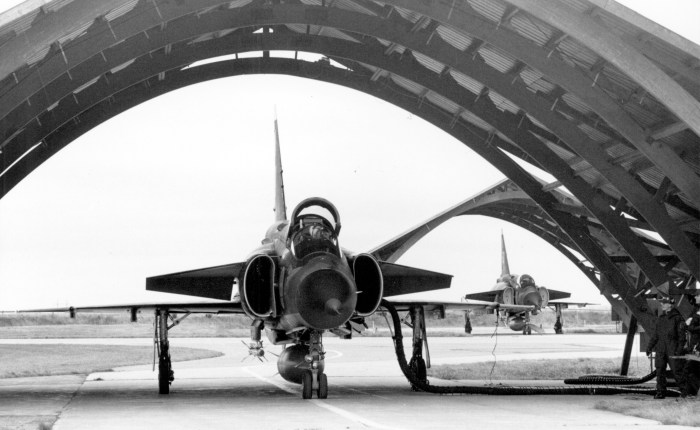
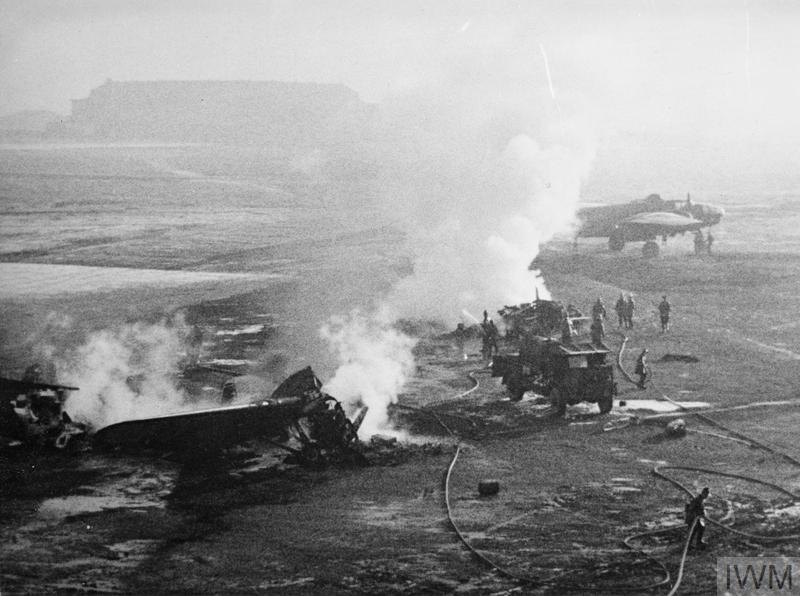
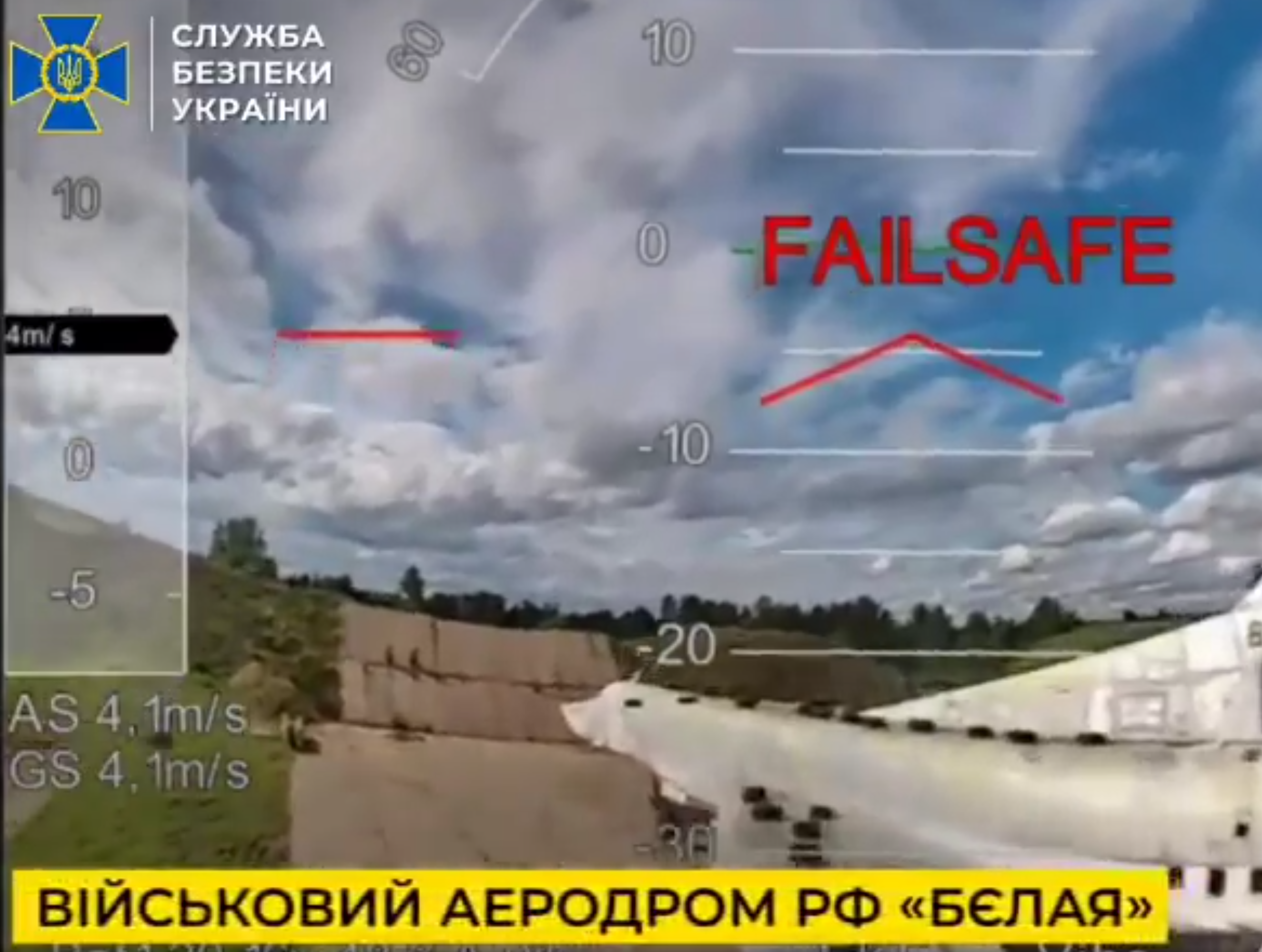
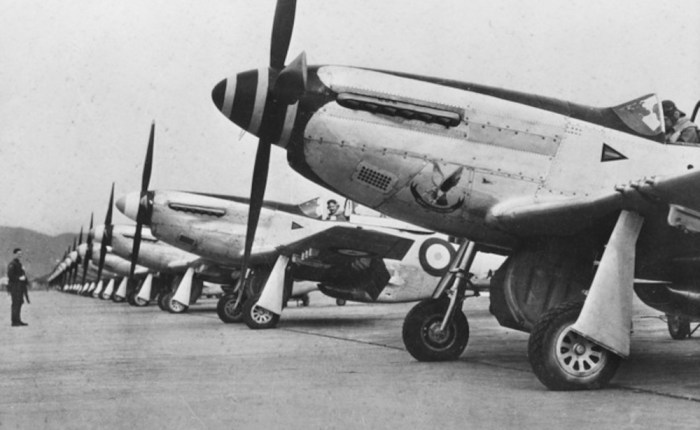
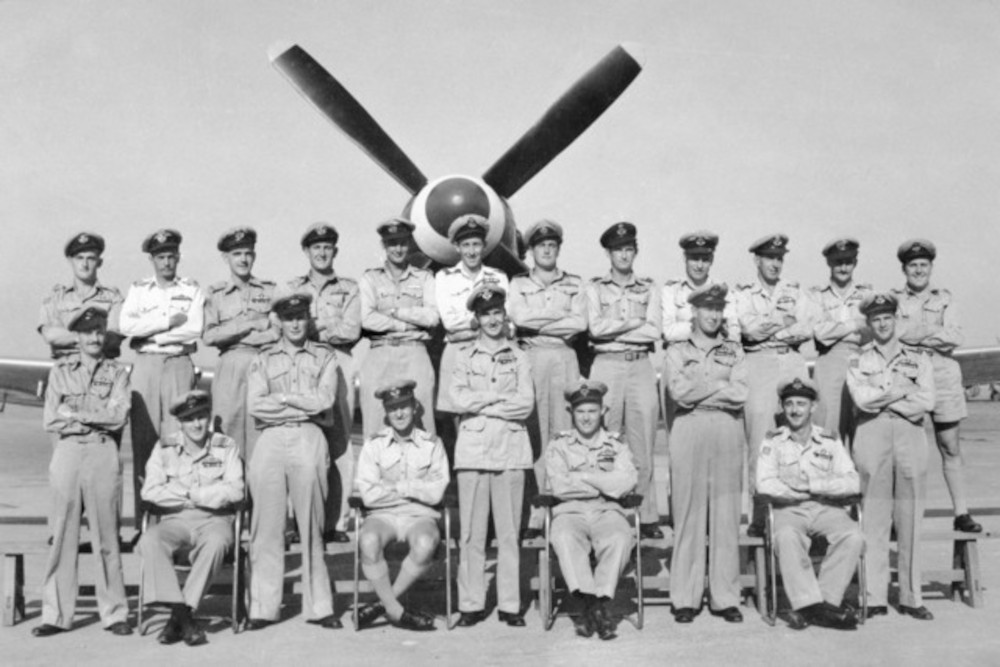
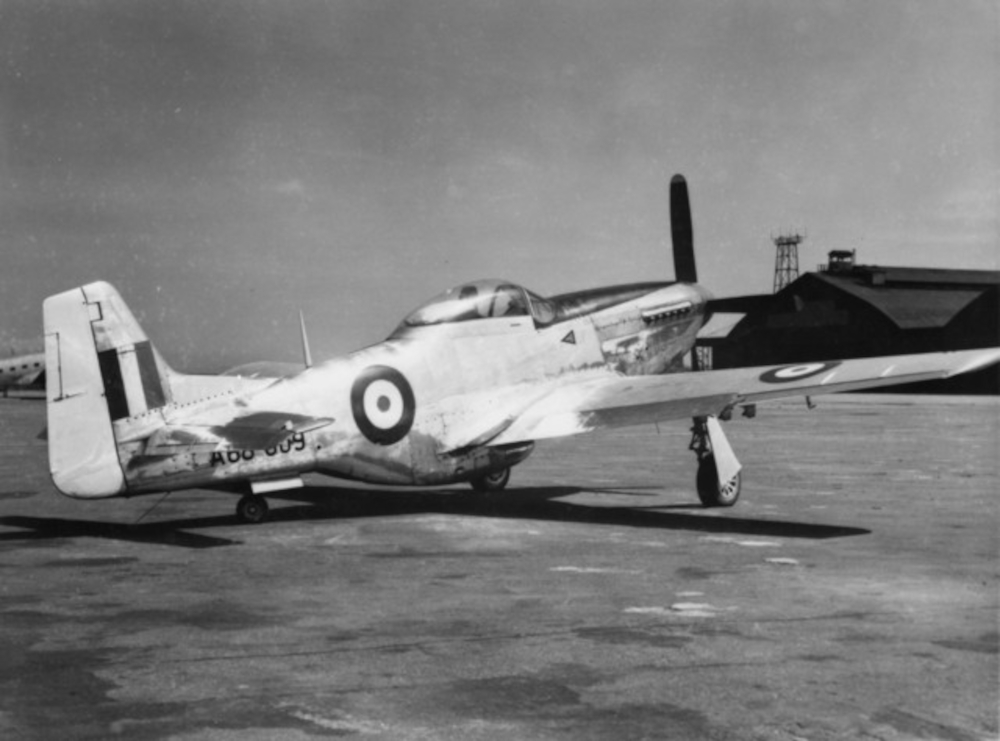

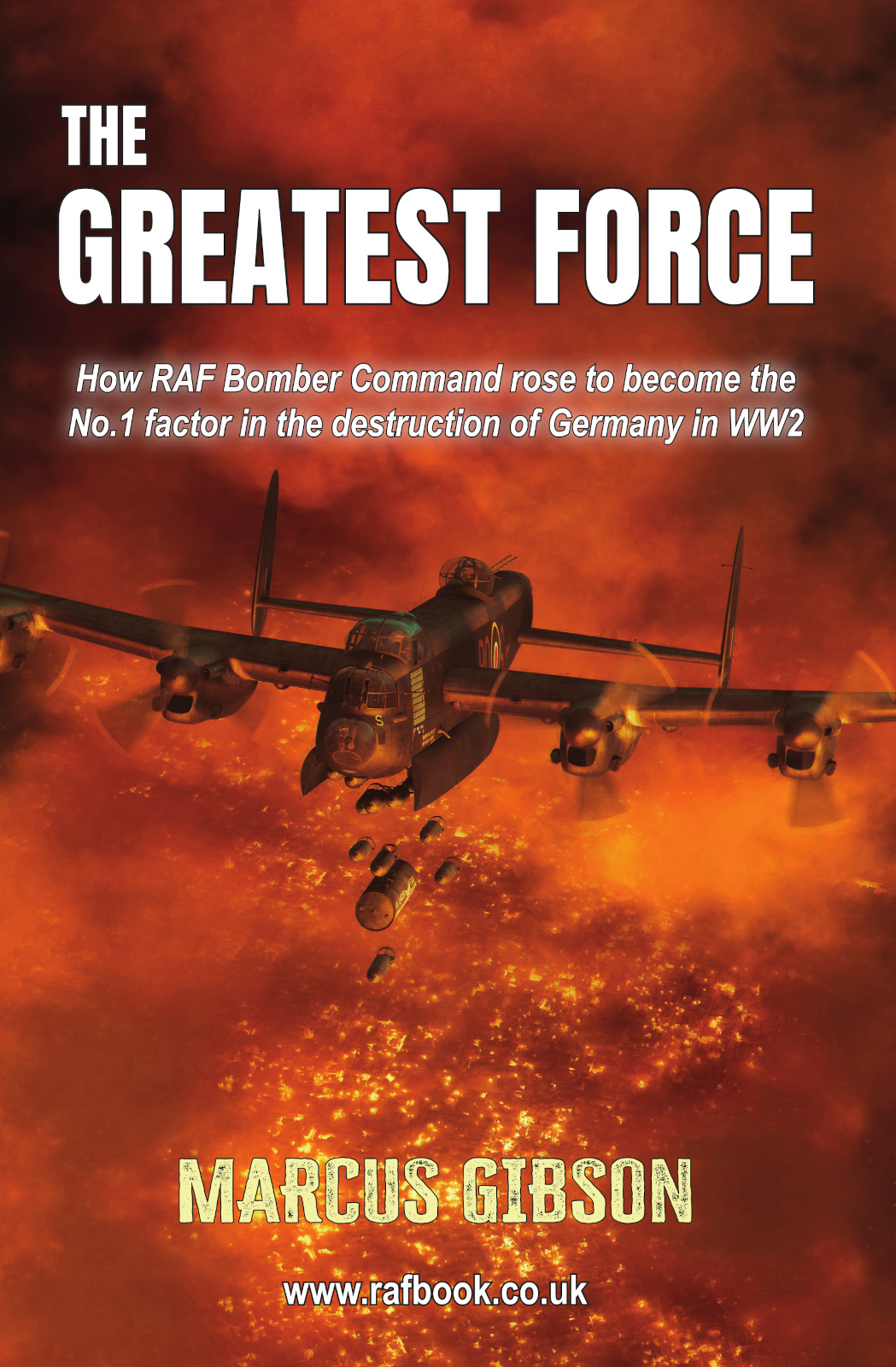
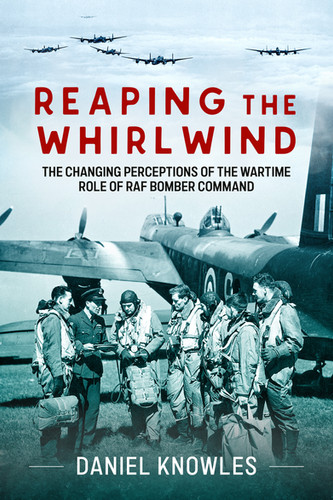
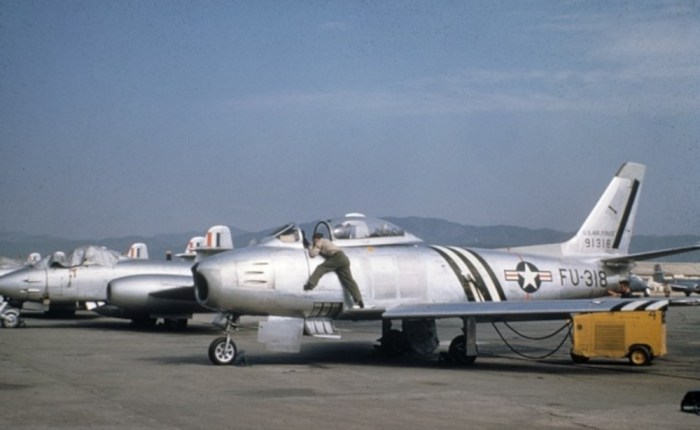
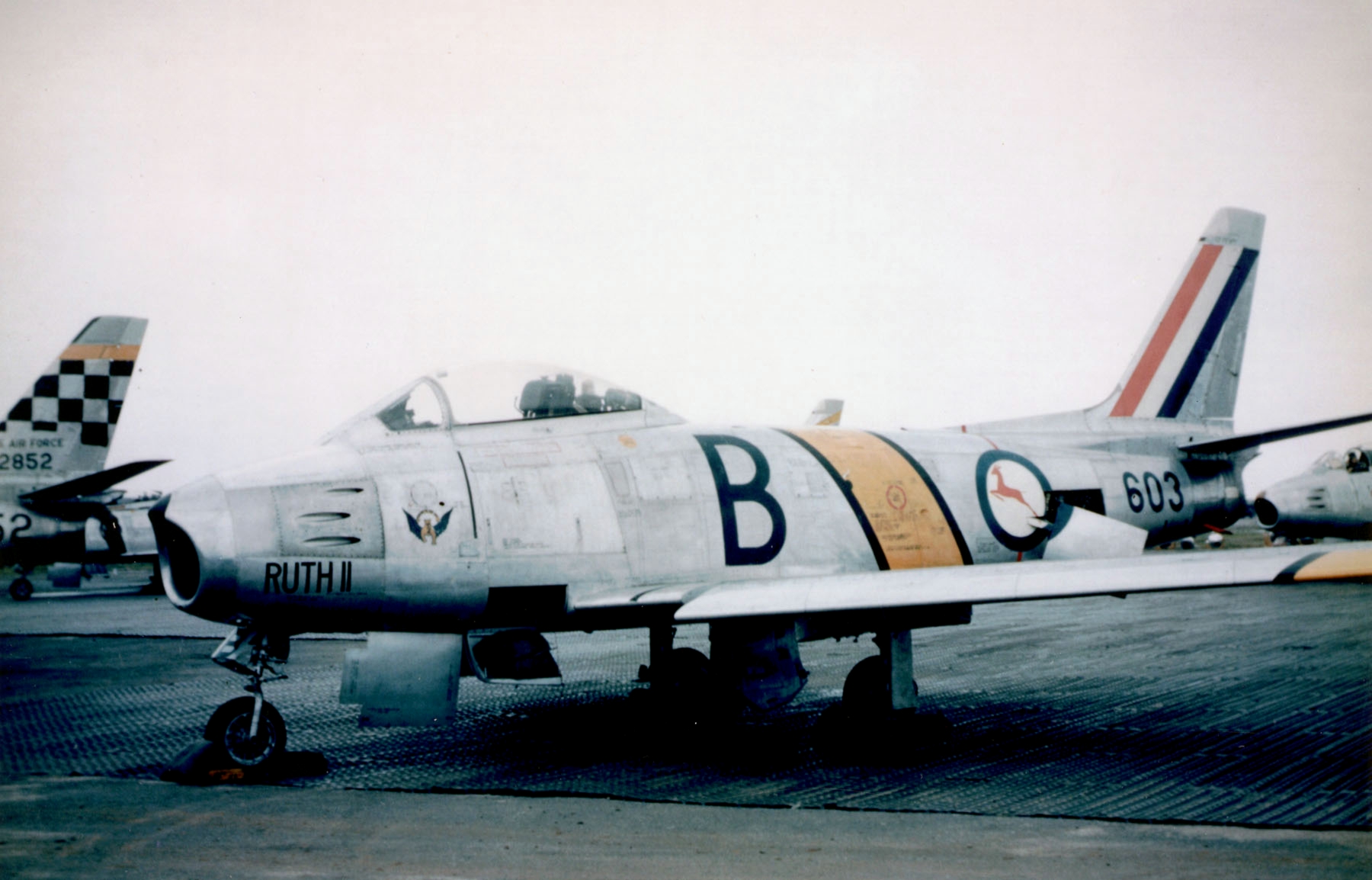


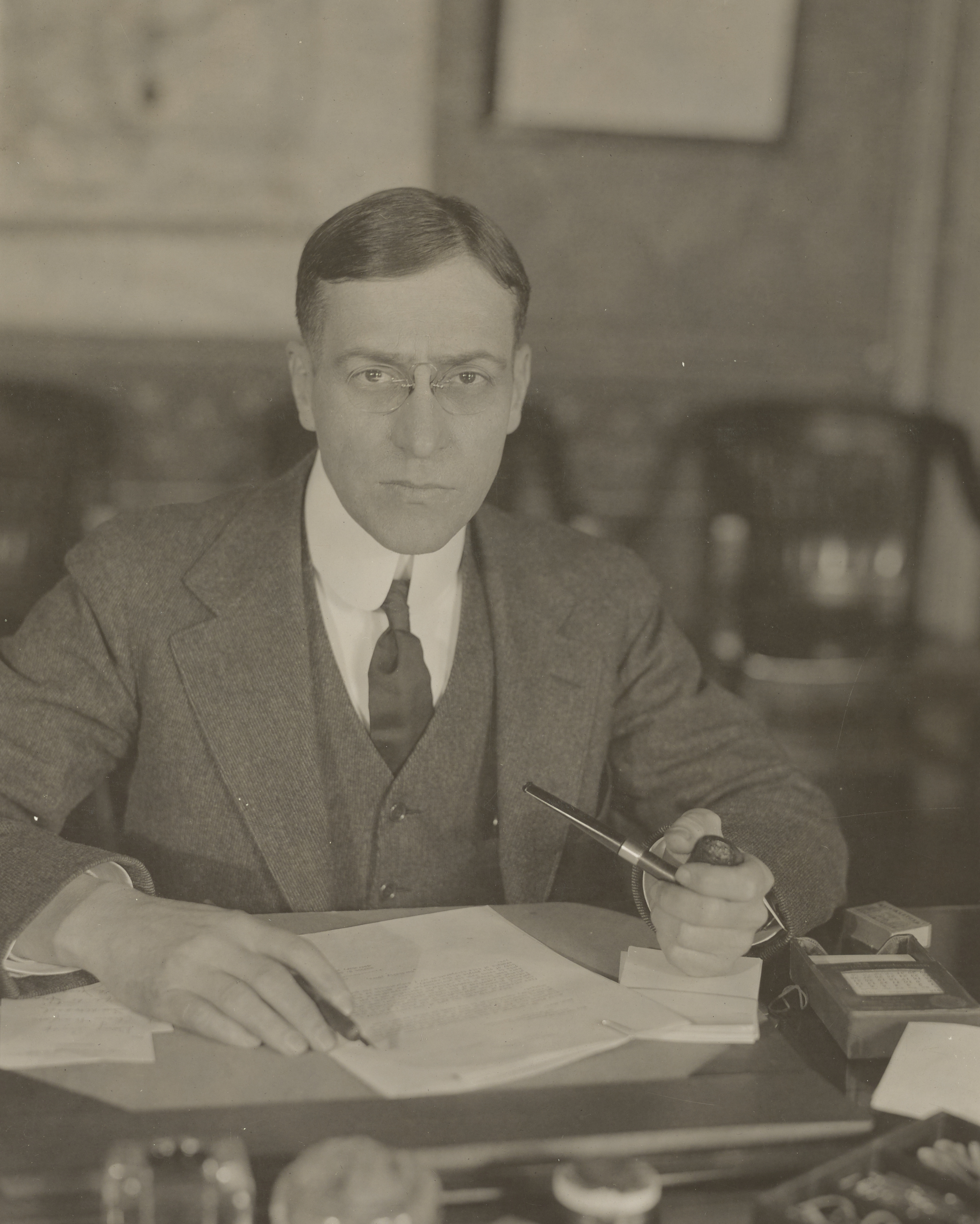
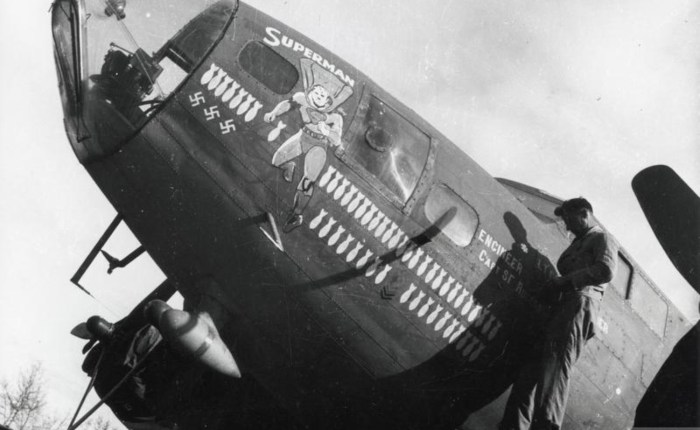



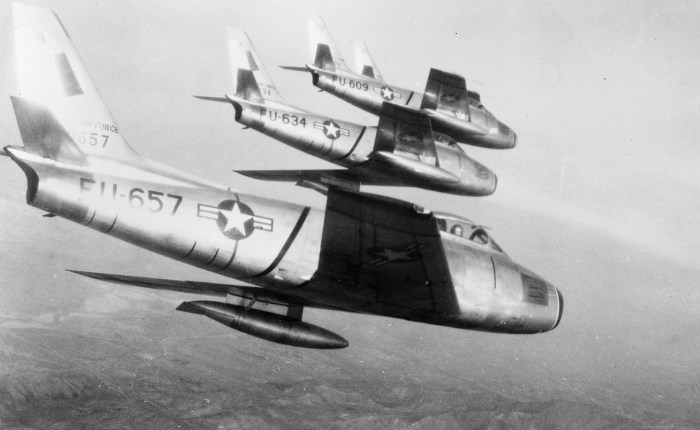
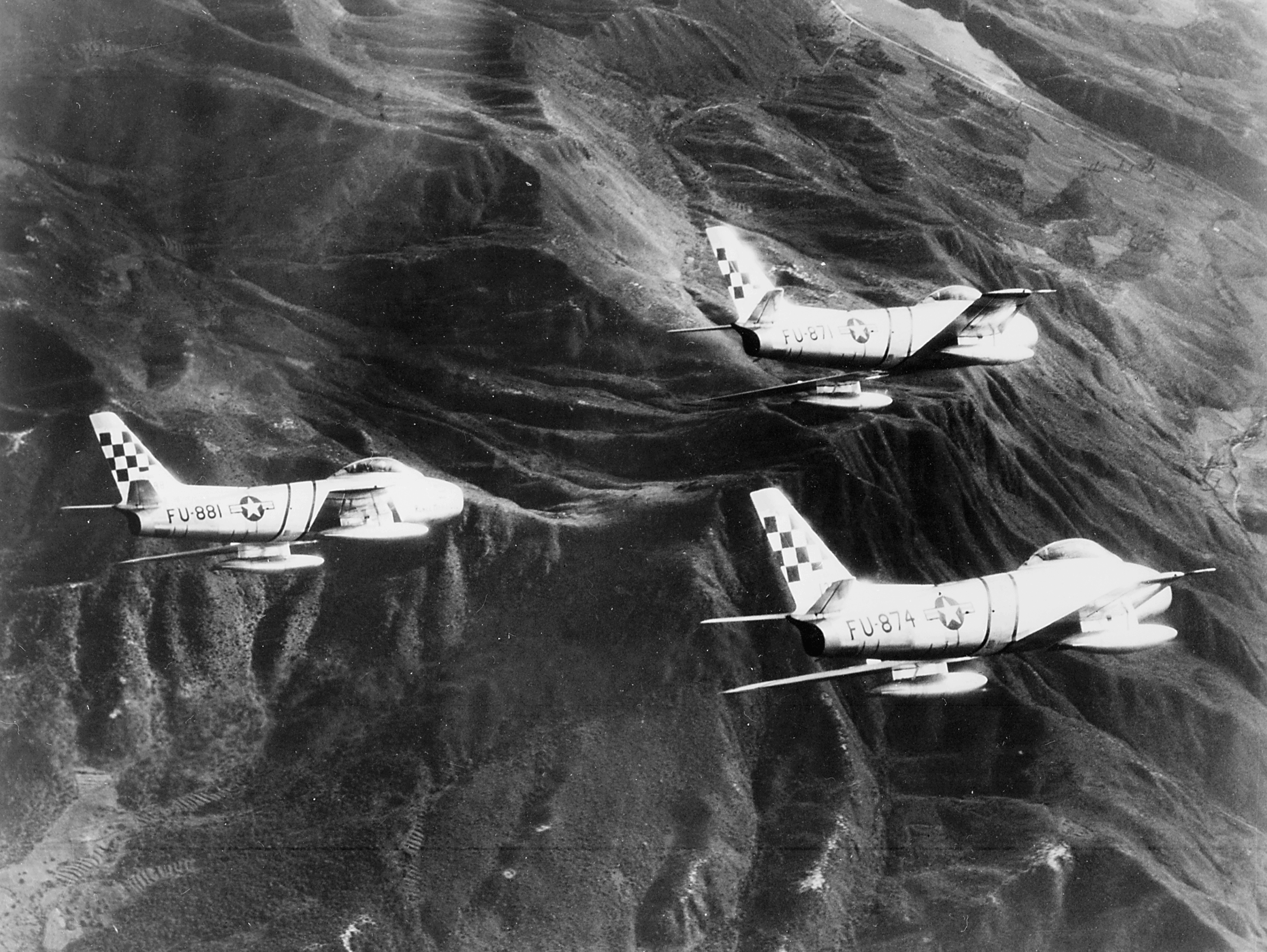
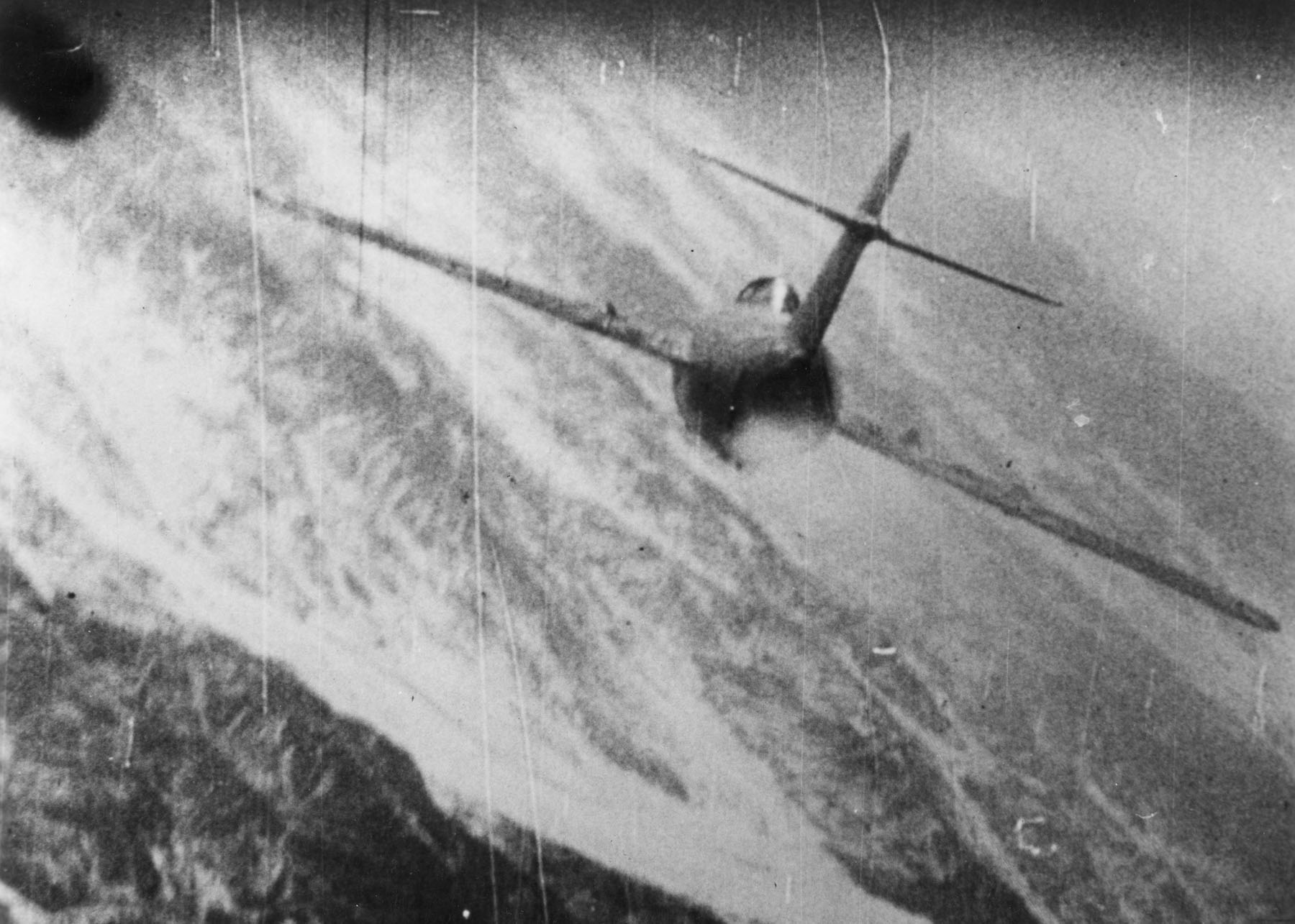
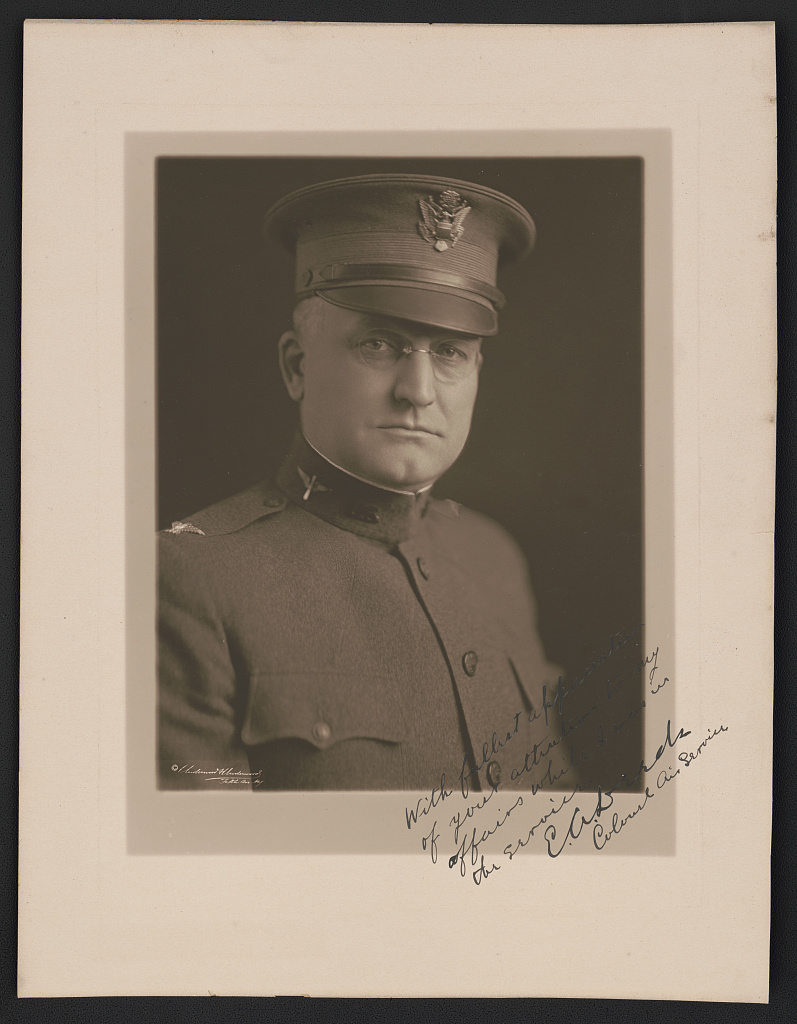
 From Balloons to Drones