As we come to the end of 2017, we also come to the end of the first full-year of operations for From Balloons to Drones. Established in the middle of 2016, From Balloons to Drones was created with the aim of providing a platform for the discussion of the air power history, theory, and contemporary operations in its broadest sense. In seeking to achieve this aim, in 2017, we have published around 30 articles ranging from a discussion of the contemporary challenges related the development of Ground-Based Air Defence and Integrated Air Defence Systems through to an analysis of the experience of aircrew as Prisoners of War during the Second World War. We are grateful to our group of contributors who have taken the time to write and publish via From Balloons to Drones.
The website has been visited around 18,000 times by 10,000 different visitors. While visitors from the US, UK, Canada, and Australia predominate, we have also had readers from around the globe including, for example, from South Korea, China and at least one from Tajikistan. We are grateful to those who take the time to read the articles and comment on them.
The ten most popular articles by visits for 2017 were:
We have some new and exciting plans for 2018 including a series of articles to be published simultaneously and in conjunction with The Central Blue. We will also be publishing more book reviews while a steady stream of new articles, commentaries and research notes will appear over the year. Remember we can also be found on Facebook and Twitter.
Finally, From Balloons to Drones is always seeking to publish new and exciting perspectives on the subject of air power and we encourage contributions from academics, postgraduate students, policymakers, service personnel and relevant professionals. To find out how to contribute then please visit this page.
Header Image: A8-126 performs the last dump and burn in history on the final day of flying the F-111 by the Royal Australian Air Force. (Source: Australian Government)
The popular perception of the prisoner of war is that, once captured, he was out of the battle. Rather than compliantly accepting a status of hors de combat, however, many captive allied airmen in Europe during the Second World War continued to be potent military operatives in a new theatre of conflict—the barbed wire battleground. Indeed, the airmen adopted a stance as prison camp combatants. To facilitate this, they actively managed their lives to demonstrate individual and collective agency. They strenuously mitigated the ill-effects of their circumstances by embarking on a program of active disruption. Importantly, they did not give in to, what at least one man termed, ‘the futility of existence’.[2]
Drawing on personal records in private and public collections, as well as official reports, this article provides a brief overview of some of the ways in which Australians and their fellow prisoners in Stalag Luft III, a Luftwaffe prisoner of war camp, established, maintained and promoted themselves as active airmen, on duty, in the barbed wire battleground.
‘Vacation at Stalag’, Cyril Borsht’s wartime log book, courtesy of the late Cyril Borsht (Source: Private Collection)
Many downed airmen spoke of the ‘shock’ of captivity and the shame they felt on capture.[3] These feelings were a common response to being taken from battle.[4] The airmen’s sense of disgrace was exacerbated when they heard the ‘usual taunt’, ‘fürsie der Krieg is beendet’—‘for you the war is over’.[5] The realisation after their unwilling departure from the aerial arena that they had become prisoners of war was a serious blow to self-esteem and service pride.[6] However, rather than accept a situation defined by passivity and docility, they rejected it.[7] The war was not over for them. Moreover, so, they remained on active service as prison camp combatants.
‘I wanted wings’, Ronald Baines’ wartime log book, courtesy of the Baines family (Source: Private Collection)
However, before they re-attained operational readiness, they had to regain their fighting spirit. Humour was a significant means to that end as well as an almost universal morale booster.[8] Many, for instance, depicted their new accommodation as a holiday camp or sanatorium,[9] and tongues were firmly in cheek when they poked fun of the ignominious exits that landed them there.[10] Many illustrated themselves as Donald Duck behind bars.[11] ‘Winglessness’, like that of ‘Downed Donald’, was a shared state and the men gained strength through ridiculing their common plight.[12]
The armed forces have a long tradition of using language to distance themselves from the emotions associated with military action and death in service.[13] The men of Stalag Luft III were no different, and so, they too gained strength through language. While they were initially bemused at being called Terrorflieger, Luftgangster, and Terrorbomber, many filled their wartime logbooks with clippings from German newspapers that promoted Allied airmen as the Second World War version of terrorists.[14] In doing so, the downed airmen recognised that the propagandised terms highlighted their success. Consequently, they ignored the intended insults and willingly accepted—as tributes to their military prowess—their new designations.[15]
‘Escape’, Cyril Borsht’s wartime log book, courtesy of the late Cyril Borsht. (Source: Private Collection)
The airmen were not, however, so keen to be known as Kriegsgefangener—war prisoner—because of the negative and shameful connotations surrounding the word ‘prisoner’ and its associated trappings, such as POW number, fingerprinting, and identification discs.[16] Accordingly, they spurned ‘prisoner of war’. In a canny example of linguistic reframing, they adopted the easier-to-pronounce and linguistically distancing abbreviation of ‘kriegie’—even those who were captured in the later months of the war.[17] Derived from the first syllable—the German word for ‘war’—it subconsciously indicated that they were still men of war with a fine fighting spirit and distanced them from the stigma of captivity. ‘Kriegie’ removed the sense of derogation surrounding captivity and turned an affront—and assault to their dignity—into a linguistic badge of inclusiveness and pride. ‘Kriegie’ declared that they were still men of war on operational service. It also became ‘a fun word’ to describe them.[18] Ultimately, their prison camp patois—terrorflieger, Luftgangster, kriegie and so on—became a language of agency and defiance.
‘Cutting from a Reich paper of a ‘typical’ ‘terrorflieger’ or ‘luftgangster”, Cyril Borsht’s wartime log book, courtesy of the late Cyril Borsht. (Source: Private Collection).
With self-esteem restored, confidence reasserted, and fighting spirit reinvigorated, the airmen turned to discipline and their strong sense of service duty to help negotiate captivity. Demonstrating collective agency, the kriegies institutionalised air force discipline in the camp.[19] They acknowledged that running Stalag Luft III along RAF station lines was best for the community—for the camp commonweal—and it was generally agreed that the senior officers ‘did an excellent job’.[20] As well as maintaining ‘a high degree of morale and discipline’,[21] there was much security in adhering to the familiar aspects of their former service lives.[22] Moreover, it afforded the airmen the support they needed to wage war as prison camp combatants.
One aspect of that war was the duty of active resistance. All new arrivals were interviewed by the Senior British Officer or, in the NCO compound, the Man of Confidence, who reminded the kriegie new boys of their continuing obligations as servicemen.[23] Importantly, they warned them not to comply with any German order ‘beyond what was necessary’.[24] The airmen welcomed their new responsibility of active resistance and defiance. Exemplifying personal and group agency they were deliberately disruptive.[25] They misbehaved during roll call.[26] They purloined German supplies.[27] They bribed guards.[28] Their favourite sport became goon-baiting.[29] Many embarked on covert operations. Some became code writers and sent secret messages to MI-9.[30] A major aspect of active resistance was escape, and the airmen embraced their moral right[31] and duty[32] to break out of the prison camp. If they were not on the exit list for a particular attempt, or not personally eager—or even physically or psychologically capable—they supported those who were by participating in the communal effort.
Active resistance, disruption, defiance, and escape work epitomised individual and collective agency. Significantly, they reinforced the airmen’s continuing identity as combatants. For many, such concerted agency ameliorated the mortification of becoming prisoners of war. Moreover, so, the escape or ‘X’ organisation became the overriding feature of life in Stalag Luft III.[33]
Each compound had its version of the ‘X’ organisation and Australians participated in almost every aspect of its work. ‘X’ rosters were drawn up disguised as participant lists for sports days, and sporty types created diversions.[34] The carpentry department commandeered bed boards to shore up the tunnels and other purposes and built cabinets and hidey holes to stow secret equipment.[35] Some men did metal work, made dummy rifles, and meticulously constructed compasses.[36] Scroungers obtained ink, radio parts and essential supplies.[37] Photographers took passport photographs.[38] Forgers replicated passes and identification papers.[39] Tunnellers dug, others carted dirt away, and gardeners disposed of it. Meanwhile, the majority joined the army of ‘watchers’ known as ‘stooges’, who kept a lookout for any sign of the Germans. So industrious were the tunnellers that, in East Compound alone, between 60 and 70 tunnels were started during the first six months.[40]
Despite such diligent ‘X’ work and prolific excavation, East Compound’s only successful getaway was that of October 1943—dubbed ‘the Wooden Horse’—where three men made a ‘home run’. The culmination of North Compound’s ‘X’ work was the mass breakout of March 1944. While seventy-six succeeded in fleeing the camp, only three made it home. Seventy-three were recaptured. Fifty were executed, five of whom were Australian.
The men regretted the tragic outcome, but not their part in it. Nor their determined demonstration of collective agency as prison camp combatants. They believed their large-scale resistance work had been worthwhile, not just because of the sustaining effect on morale, but because of the cost to the Germans in tying up resources during the ensuing Großfahndung which they considered ‘biggest manhunt of the war’.[41]
After the war, Paul Brickhill, an Australian journalist and former Stalag Luft III kriegie, was invited to write a book about the March 1944 escape.[42] That book proved influential in how captivity in Stalag Luft III has been portrayed. The mass breakout, for example, was not known as the ‘Great Escape’ until the publication of Brickhill’s The Great Escape in 1951.[43] From that time, the book’s title entered the lexicon as participants, bystanders and the public all appropriated it to describe an event that still resonates. So powerful is the book’s theme of triumph over the enemy through a communal agency, so exciting is the narrative, that most commercially published accounts of life in Second World War German POW camps—and Stalag Luft III in particular—feature the exciting high adventure and derring-do of major escapes.
While many of the former airmen were impressed with Brickhill’s book, many were not overly pleased with John Sturges’ 1963 film. They begrudge it the Americans, the motorbike, a truly appalling Australian accent, and other factual inaccuracies inserted in the interests of ‘good cinema’.[44] Despite their distaste, the film, along with Brickhill’s book, has left a substantial legacy which they, their descendants and popular culture have embraced.
They frame captivity in Stalag Luft III as an action-packed success story. They reinforce the kriegies’ personal and collective agency as active airmen, on operational service, in the barbed wire battleground. They deny any perception of passive, docile, humiliated prisoners of war. Just as the airmen themselves had done when they refused to accept that the war, for them, was over.
Kristen Alexander is a PhD candidate at the University of New South Wales, Canberra, researching the responses to captivity of Australian airmen prisoners of Stalag Luft III and their families. Specialising in Australian aviation history, she is published in Australia, Great Britain and Japan. She won the non-fiction category of the 2015 ACT Writing and Publishing Award and was highly commended in the 2014 and 2017 awards. Her books were included on the RAAF Chief of Air Force’s 2010 and 2015 reading lists. Her military essays won the Military Historical Society of Australia’s 2012 and 2013 Sabretache Writers Prizes. Her website can be found here and she is on Twitter as @kristenauthor.
Header Image: Australians of North Compound, 25 April 1943, courtesy of Ian Fraser. (Source: Private Collection)
[1] This article is based on a paper presented at the Don’t Drown Post Graduate Conference, UNSW Canberra, 4 October 2017, which was a shorter version of that given at Aviation Cultures Mark III Conference, University of Sydney, 27–29 April 2017.
[2] Shrine of Remembrance, James Catanach Collection, 2013. CAT050: Catanach, letter to William Alan Catanach, 28 March 1943.
[3] Private collection: Bruce Lumsden, letter, 24 June 1986, ‘The Complete Tour: Letters of Jaime Bradbeer and Bruce Lumsden, April 1985–October 1990’, unpublished manuscript; Calton Younger, No Flight From the Cage: The Compelling Memoir of a Bomber Command Prisoner of War during the Second World War ([No place]: Fighting High, 2013), p. 40; Rex Austin, Australians at War Film Archive (AAWFA) interview No. 0382, 5 June 2003; Alec Arnel, author’s interview, 29 October 2015.
[4] Aaron Pegram, ‘Bold Bids for Freedom: Escape and Australian Prisoners of Germany, 1916–18’ in Joan Beaumont, Lachlan Grant, and Aaron Pegram (eds.), Beyond Surrender: Australian Prisoners of War in the Twentieth Century (Carlton: Melbourne University Press, 2015), p. 25; Kate Ariotti, ‘Coping with Captivity: Australian POWs of the Turks and the Impact of Imprisonment during the First World War’ (PhD Thesis, The University of Queensland, 2014), pp. 55–57; Karl James, ‘“I hope you are not too ashamed of me”: Prisoners in the siege of Tobruk’, in Beaumont, Grant, and Pegram (eds.), Beyond Surrender, pp. 101–102; Adrian Gilbert, POW:Allied Prisoners in Europe 1939–1945 (London: John Murray, 2007), p. 41.
[5] ‘Usual taunt’, Private collection: Bruce Lumsden, letter, 24 June 1986, ‘The Complete Tour’, unpublished manuscript. Midge Gillies noted that it was a phrase the Germans favoured. Midge Gillies, The Barbed-Wire University: The Real Lives of Allied Prisoners of War in the Second World War (London: Aurum Press, 2011), p. 13. Examples of those who heard the phrase: Private collection: Ronald Baines, wartime log book, p. 8; Younger, No Flight From the Cage, p. 37; Geoffrey Cornish, AAWFA interview No. 1388, 2 July 2004; Kenneth Gaulton, AAWFA interview No. 1276, 3 February 2004; Private collection: Bruce Lumsden, letter, 24 June 1986, ‘The Complete Tour’ unpublished manuscript; Cyril Borsht, ‘A Life Well Lived. A Memoir’, unpublished manuscript, p. 18; Irwin John Dack, So you Wanted Wings, Hey!: An Autobiography – Part One (Moorabbin: the author, 1993), p. 74; ‘Tom Wood Diary’, unpublished manuscript, p. 26; Les Harvey, ‘Over, Down and Out: Recollections of an Airman Captured by the Germans in 1942’, unpublished manuscript, p. 6; Charles R. Lark, A Lark on the Wing: Memoirs World War II and 460 Squadron [No publication details], p. 64. Non-Australians also recorded the phrase. For example, B.A. (Jimmy) James, Moonless Night: The World War Two Escape Epic (Barnsley: Pen & Sword Military), 2008, p. 17; Jack Rae, Kiwi Spitfire Ace: A Gripping World War II Story of Action, Captivity and Freedom (London: Grub Street, 2001), p. 116; Ken Rees, (with Arrandale, Karen), Lie in the Dark and Listen: The Remarkable Exploits of a WWII Bomber Pilot and Great Escaper (London: Grub Street, 2006), p. 111. Rees entitled the chapter dealing with his earliest captivity experiences, ‘“For you the war is over”’.
[6] Private collection: Bruce Lumsden, letter, 24 June 1986, ‘The Complete Tour’, unpublished manuscript.
[7] Stephen Garton, The Cost of War: Australians Return (Oxford: Oxford University Press, 1996), p. 211.
[8] Eric Stephenson, ‘Experiences of a Prisoner of a War: World War 2 in Germany’, Journal of Military and Veterans’ Health, 18:2 (2010), p. 34 (reprinted from Australian Military Medicine, 9:1 (2000), pp. 42–50); Karen Horn, ‘“Stalag Happy”: South African Prisoners of War during World War Two (1939–1945) and their Experiences and Use of Humour’, South African Historical Journal, 63:4 (2011), p. 537.
[9] Australian War Memorial (AWM) PR03211: Peter Kingsford-Smith, wartime log book, pp. 37, 54–55; Andrew R.B. Simpson research collection: Arthur Schrock, wartime log book, p. 1; private collection, Horace ‘Bill’ Fordyce, wartime log book, unpaginated section; private collection: Cyril Borsht, wartime log book, p. 5
[10] AWM PR03211: Peter Kingsford-Smith, wartime logbook, pp. 43 and 37; AWM PR88/160: James McCleery, wartime logbook, unpaginated particulars page (name/POW number/camp/compound) and p. 1.
[12] Alexander Watson, Enduring the Great War. Combat, Morale and Collapse in the German and British Armies, 1914–1918 (Cambridge: Cambridge University Press, 2009), p. 90.
[13] Eric Partridge, A Dictionary of RAF Slang (London: Michael Joseph, 1945), pp. 25, 10, 25, and 52; Joanna Bourke, An Intimate History of Killing: Face-to-face Killing in Twentieth Century Warfare (London: Granta Books, 1999), pp. 231–232.
[14] AWM PR90/035: Torres Ferres, wartime log book, p. 41; AWM PR03211: Peter Kingsford-Smith, wartime log book, pp. 46–47; private collection: Cyril Borsht, wartime log book, pp. 55 and 68; Cyril Borsht, author’s interview, 28 January 2016; private collection: Horace ‘Bill’ Fordyce, wartime log book, pp. 100–101; private collection: William Kenneth Todd, wartime log book, unpaginated section; Richard Winn, AAWFA interview No. 1508, 4 March 2004.
[15] Cyril Borsht, author’s interview, 28 January 2016.
[16] Kate Ariotti, ‘Coping with Captivity’, p. 56; Annette Becker, ‘Art, Material Life, and Disaster: Civilian and Military Prisoners of War,’ in Nicholas J. Saunders (ed.), Matters of Conflict: Material Culture, Memory, and the First World War (Abingdon: Routledge, 2004), p. 28, 88; Joan Beaumont, Gull Force: Survival and Leadership in Captivity, 1941–1945 (Sydney: Allen & Unwin, 1988), p. 2.
[17] AWM PR05675: Guy Grey-Smith, diary, 26 January 1942; H.R. Train, ‘A Barbed-Wire World. The Diary of a Prisoner of War in Germany 1942–1945’, unpublished manuscript, 17 June 1942, pp. 9, 12; Colin Burgess research collection: Robert Mills, wartime log book, p. 31; H. Homer Ashmann, ‘Kriegie Talk’, American Speech, 23:3/4 (1948), pp. 218–219; Paul Brickhill and Conrad Norton, Escape to Danger (London: Faber and Faber, 1954).
[18] Alec Arnel, author’s interview, 29 January 2015.
[19] Ronald Baines, AWM 54, 779/3/129 Parts 1–30: [Prisoners of War and Internees—Examinations and Interrogations:] Statements by repatriated or released Prisoners of War (RAAF) taken at No 11 PDRC, Brighton, England, 1945; Robert Nightingale, AWM 54, 779/3/129; Alan Righetti, AAWFA interview No. 0984, 16 September 2003.
[22] Walter A. Lunden, ‘Captivity Psychoses Among Prisoners of War’, Journal of Criminal Law and Criminology, 39:6 (1949), p. 722.
[23] Private collection: William Kenneth Todd, wartime log book, p.11; AWM PR90/035, Ferres, ‘A POW in Germany’: Beecroft Probus talk, 3 February 1989; Private collection: Bruce Lumsden, letter, 8 April 1988, ‘The Complete Tour’, unpublished manuscript; Andrew R.B. Simpson, ‘OPS’ Victory at all Costs: On Operations over Hitler’s Reich with the Crews of Bomber Command. Their War – Their Words (Pulborough: Tattered Flag Press, 2012), p. 342.
[24] Private collection: Bruce Lumsden, letter, 8 April 1988, ‘The Complete Tour’, unpublished manuscript.
[25] Alec Arnel, author’s interview, 9 October 2014.
[26] Calton ‘Cal’ Younger, Imperial War Museum Sound Archive (IWMSA) interview, No. 23329, [no day] November 2002.
[27] Richard Winn, AAWFA interview No. 1508, 4 March 2004; Younger, IWMSA interview, No. 23329, [no day] November 2002; National Library of Australia (NLA) Justin O’Byrne, John Meredith folklore collection, 31 October 1986.
[28] Justin O’Byrne, ‘Mercury Radio Roundsman’ segment, Radio 7LA, Launceston, undated, [c. July 1947]; Horace ‘Bill’ Fordyce, AAWFA interview No. 0523, 19 June 2003; Geoffrey Cornish, AAWFA No. 1388, 2 July 2004; Royle, IWMSA interview, No. 26605, 2 December 2012.
[29] NLA Justin O’Byrne, John Meredith folklore collection, 31 October 1986.
[30] The National Archives (TNA) (UK), WO 208/3283: Camp History of Stalag Luft III (Sagan) Air Force Personnel, April 1942–January 1945, Part I East (Officers) Compound, pp. 67, 69.
[31] John Herington, Australia in the War of 1939–1945. Series Three. Air. Volume IV: Air Power Over Europe, 1944–1945 (Canberra: Australian War Memorial, 1963), p. 485.
[32]Air Publication 1548, Instructions and Guide to All Officers and Airmen of the Royal Air Force regarding Precautions to be Taken in the Event of Falling into the Hands of an Enemy, ([no publication details], 2nd Edition, June 1941). The duty was rescinded after the Great Escape but was still implied. Air Publication 1548,The Responsibilities of a Prisoner of War, (3rd Edition, April 1944), <http://www.ibiblio.org/hyperwar/UN/UK/RAF/POW-RAF/> (accessed 14 December 2017). British and Australian soldiers had a similar, formal, obligation to escape. James, ‘“I hope you are not too ashamed of me” in Beaumont, Grant, and Pegram (eds.), Beyond Surrender, p. 110.
[33] NLA Justin O’Byrne, John Meredith folklore collection, 31 October 1986.
[34] Justin O’Byrne, ‘Mercury Radio Roundsman’, [c. July 1947]; Robert J. Laplander, The True Story of the Wooden Horse (Barnsley: Pen & Sword, 2014).
[35] Private collection: Horace ‘Bill’ Fordyce, wartime log book, p. 140; TNA, WO 208/3283: Camp History of Stalag Luft III (Sagan) Air Force Personnel, March 1943–January 1945, Part III North (Officers) Compound, pp. 9, 25, 31; AWM ART34781.019: Albert Comber, drawing, ‘Flight Lieutenants (Mac) Jones and (Rusty) Kierath, RAAF at work, Stalag Luft III, Germany’; Justin O’Byrne, ‘Mercury Radio Roundsman’, [c. July 1947]; H.P. Clark, Wirebound World: Stalag Luft III (London: Alfred H. Cooper & Sons Ltd, 1946), p. 8; private collection: Bruce Lumsden, letter, 10 June 1988, ‘The Complete Tour’, unpublished manuscript.
[37] TNA, WO 208/3283: Camp History of Stalag Luft III (Sagan) Air Force Personnel, March 1943–January 1945, Part III North (Officers) Compound, pp. 23–24, 36; Geoffrey Cornish, AAWFA interview No. 1388, 2 July 2004.
[38] Geoffrey Cornish, AAWFA interview No. 1388, 2 July 2004.
[39]Ibid; Justin O’Byrne, ‘Mercury Radio Roundsman’, [c. July 1947].
[40] TNA, WO 208/3283: Camp History of Stalag Luft III (Sagan) Air Force Personnel, April 1942–January 1945, Part 1 East (Officers) Compound, p. 36; private collection: George Archer, 1942 Diary, 5, 21 and 24 August 1942.
[41] Justin O’Byrne, ‘Mercury Radio Roundsman’, [c. July 1947].
[42] Paul Brickhill, The Great Escape (London: Faber and Faber, 1951). A section on the mass escape was included in the earlier publication, Brickhill and Norton, Escape to Danger.
[43] Stephen Dando-Collins, The Hero Maker: A Biography of Paul Brickhill (North Sydney: Penguin Random House Australia, 2016), p. 198.
[44] Cath McNamara, author’s interview, 18 July 2016; NLA ‘Reminiscential conversations between the Hon. Justin O’Byrne and the Hon. Clyde Cameron’, 29 August 1983–28 July 1984; Alan Righetti, AAWFA No. 0984, 16 September 2003.
Jonathan Bailey wrote that the First World War was the time of a true revolution in military affairs about the development of artillery firing.[2] One of the first significant developments that took place was the creation and refinement of the ‘clock code’ system.[3] Using this system, a pilot of the Royal Flying Corps, the forerunner to the Royal Air Force (RAF), was able to correct the fall of shot of the artillery by passing to the artillery battery commander details of how far from the target the guns were. The pilot would correct the shooting of the artillery by pointing out how far away and in what direction the shells of the guns had landed. The distance would be passed on using numbers and the direction using the picture of a clock face. The target was placed in the middle of the clock face and shells that fell beyond the target and on a straight line to the target would be corrected with a call of twelve, if it fell short on the same line the call would be six, at ninety degrees left of the target nine and ninety degrees right three. Any other direction would be corrected by using the hour on the clock with which it corresponded. This system would prove to function perfectly well throughout the whole of the First World War and was the system with which the RAF went to war in 1939.
The system of correcting artillery fire remained unchanged until 1938. The Air Council were against making alterations to the clock code system as they felt that it was adequate to meet the needs that the army would face in future conflicts. They felt that light aircraft could not be kept in action close to artillery units, as had been the case in the First World War.[4] The Air Council were also fearful of introducing a new, untried, and unfamiliar system with the growing tensions in Europe at this time. The War Office was unimpressed with the Air Councils attitude and pushed for more to be done. The Air Ministry agreed to trials between the Air Officer Commanding No. 22 (Army Co-operation) Group and the Commandant of the School of Artillery in December 1938.[5] The results of these trials and further trials conducted to test aircraft as well as procedure. The results were that light aircraft over the battlefield could observe fire with the ‘clock code’ system.[6] Spitfires conducted mock attacks on the aircraft and the Taylorcraft light aircraft observing the artillery fire had a good chance of dodging the fire of a modern fighter.[7] There was, however, no training for pilots in registering targets for the artillery. If an artillery officer required an appraisal of a prospective target, the request would have to be sent along the command chain via an air liaison officer. When the artillery battery received the information, it was usually out of date.[8] There was also pressure from within the War Office to establish a Flying Observation Post (Flying OP) and to begin plans to train Gunner Officers to fly. A Flying OP was to work in conjunction with Ground Observation Post (Ground OP) in establishing targets to be engaged and operating deep behind their lines to be afforded the protection of friendly anti-aircraft guns.
The first of these Flying OPs was established in February 1940.[9] This force was established to:
[d]etermine in the light of practical experience obtained under war conditions the possibilities and limitations of the Flying OP, the most suitable type of aircraft and the most suitable organization [sic].[10]
The tests were to be conducted in three parts. The first was an initial training period. The second a practical training with the French, and a final test in the French Army area in conditions of actual warfare including shoots against German targets it was at this time that the term Air Observation Post (Air OP) was adopted.[11] The flight was sent to France on 19 April 1940.[12] The first of the three tests were conducted after the flight had moved to the continent. The final of the three tests was due to be carried out in early May, and the forces were established ready to conduct the tests on 9 May 1940.[13] The following day the Germans began to implement Fall Gelb (Case Yellow): the invasion of France and the Low Countries.[14] The artillery designated for the tests were forced to move back to their formations leaving the Air OP Flight (D Flight) waiting for the campaign to stabilise when it was clear that this would not happen D Flight was recalled to England.[15]
One of the first official moves at changing artillery co-operation policy was a letter regarding the subject sent from the Director of Military Co-operation Air Commodore Victor Goddard to Barratt at Army Co-operation Command. In this letter, Goddard states that the Air Staff were against the formation of:
[s]pecial air units for artillery observation or reconnaissance, unless it can be clearly shown that there is an urgent requirement for such units which cannot be met by Army Co-operations squadrons.[16]
The School of Artillery recommended that a certain number of aircraft should specialise in artillery work and should be trained by the School of Artillery so that they had the same tactical knowledge and the same the understanding of gunnery as an artillery officer.[17] This was just one aspect of an idea by the School of Artillery to allow aircraft to have tactical control over the fire of artillery batteries. To facilitate this, the school further recommended that a multi-seater aircraft should be employed in this work to allow an artillery officer to conduct the shoot according to artillery methods without the need for the artillery officer learning to fly. Artillery officers were also to be seconded to army co-operation squadrons specifically for artillery work.[18] The co-operation between the School of Artillery and Army Co-operation Command is evident and is surprising given the general relations that existed between the army and RAF in the wake of the Battle of France and the fall out that it had caused between the two services.[19]
Barratt, in a letter to the Under-Secretary of State for Air, wrote that:
I consider that in order to get a true and undistorted picture of this problem, it is first desirable to set out the problem as the Army [sic] sees it, and to show in this picture what they conceive to be their requirements.[20]
Again the desire to see the problem from a view that would almost certainly be contradictory to the RAF shows that Barratt and his command were willing to adopt a different approach and attitude in co-operating with at least one part of the army. Barratt also voiced his concerns regarding the ability of the Air OP to operate in the face of enemy action. It was felt that ‘the Air OP must be entirely vulnerable to any enemy fighters which cares to shoot it down’.[21] Barratt’s concern over the safety of his pilots who may be conducting shoots using the Air OP system was to be a recurring issue in the development of artillery reconnaissance.
Barratt’s response to the trials was one of scepticism, and he considered ‘that body of experience gained in the late war and since has all pointed to the advantages of the ‘Clock Code’ system’.[22] Barratt’s belief in the ‘clock code’ system stemmed more from the fear of false conclusions being drawn from brief experiments than from any sense of conservatism about changing the system used for artillery reconnaissance.[23] This became a realisation when Barratt was forced to explain to the Under Secretary of State for Air about the lack of efficiency regarding artillery co-operation in Army Co-operation Squadrons. Barratt wrote that:
I feel that much of the falling off in efficiency in this part of the Army Co-operation Squadron task has been due to the propagation of rumour as to other and better methods than those shown in AP 1176.[24]
Further trials were conducted using the artillery method during April 1941, and the conclusions reached were similar to those seen previously. These were that the artillery methods of ranging by corrections to line and range are simpler, quicker, and more efficient than any method based on the ‘clock code’.
The failures of the ‘clock code’ system in France combined with further problems faced in the fighting in Libya led to a loss of confidence in the system in the army.[25] Barratt responded that the ‘clock code’ system was not at fault in these operations but that the aircraft employed in it were operating in the face of intense enemy opposition. He was concerned that the trials had been too few and were skewed in favour of a positive result by the School of Artillery.[26] While these concerns may be interpreted as merely blocking a new development that had been shown to work to preserve the autonomy of the RAF while conducting army co-operation work. The evidence of co-operation between Army Co-operation Command and the School of Artillery, shown above, leads more to the conclusion that Barratt felt that the procedure could not be successfully carried out, and wished to see more trials conducted before it would receive his approval.
The procedure for artillery reconnaissance first developed during the First World War was only suitable for the conditions of that war. The lack of fluidity and almost stable front lines allowed a system to develop, quickly, this system, however, was only suited to those conditions. This was very quickly discovered during the first major test of this procedure against the quicker and more mobile warfare of the German Wehrmacht in 1940. The attitudes of both the British Army and the RAF to co-operation during the inter-war period, in Britain at least, did little to improve the situation before the British Expeditionary Force was stationed in France. This left those charged with the responsibility of modifying the existing procedure with only the experience of the First World War to guide them and on which to base their expectations. Much co-operation between the School of Artillery and Nos. 70 and 71 Groups of Army Co-operation Command occurred, despite the general feeling of animosity still felt by both services in Britain.[27] This co-operation was the most that had been seen between the army and RAF since the formation of the RAF as an independent force in 1918. Barratt’s move to block the adoption of the new procedure that was being trialled during 1941 can be interpreted in several ways. His reasoning for doing so, however, appears to be that of confirming the results already achieved through more rigorous and testing trials to confirm the results. Through further testing at a higher level the procedure, as well as those responsible for carrying it out, would be exposed to more stress and so a greater degree of authenticity could be achieved. Trials of this nature would also confirm if the procedure could be implemented with ease by the majority of pilots whose responsibility would be increased from observing the fall of shot to conducting shoots, potentially in the face of enemy opposition. Barratt’s major concern with the new system appears to be its increased complexity, and he was rightly concerned after his experiences in France that pilots would be unable to conduct the shoot if they had to keep a lookout for enemy fighter activity continually.
Dr Matthew Powell is a Teaching Fellow at Portsmouth Business School at the Royal Air Force College, Cranwell. He holds a PhD in Modern History from the University of Birmingham. His thesis investigated the development of tactical air power in Britain during the Second World War through a study of the RAF’s Army Co-operation Command. His first book, based on the PhD, The Development of British Tactical Air Power, 1940-1943: A History of Army Co-operation Command was published in 2016 by Palgrave Macmillan. He has also published in Canadian Military History, Air Power Review and the British Journal for Military History. He is currently researching the relationship between the British aviation industry and the Air Ministry during the inter-war period. He can be found on Twitter at @tac_air_power.
[1] A longer version of this article can be found in Canadian Military History, 23:1 (2014), pp. 71-88.
[2] Jonathan Bailey, ‘Deep Battle 1914-1941: The Birth of the Modern Style of War,’ Field Artillery Journal, (1998), pp. 21-7.
[3] Ralph Barker, A Brief History of the Royal Flying Corps in World War I (London: Constable & Co., 2002), p. 63.
[4] H.J. Parham and E.M.G. Belfield, Unarmed into Battle: The Story of the Air Observation Post, Second Edition (Chippenham: Picton Publishing, 1986), p.14.
[8] Darrell Knight, Artillery Flyers at War: A History of the 664, 665, and 666 ‘Air Observation Post’ Squadrons of the Royal Canadian Air Force (Bennington, VT: Merriam Press, 2010), p. 27.
[9] Parham and Belfield, Unarmed into Battle, p.15.
[14] Karl-Heinz Freiser, The Blitzkrieg Legend: The 1940 Campaign in the West (Annapolis, MD: Naval Institute Press, 2005), p. 79.
[15] Parham and Belfield, Unarmed into Battle, 16.
[16] The National Archives (TNA), AIR 39/47, Letter from Air Commodore Goddard, Director of Military Co-operation to Barratt regarding Artillery Co-operation Policy, 8 December 1940.
[24]Ibid., Letter from Barratt to Under Secretary of State for Air, 14 April 1941.
[25]Ibid., Letter from CGS on Artillery Reconnaissance, 5 May 1941.
[26]Ibid., Letter from Barratt to Major-General Otto Lund, GHQ Home Forces, in response from letter from CGS on Artillery Reconnaissance, 10 May 1941.
[27] For example, see: David Ian Hall, Strategy for Victory: The Development of British Tactical Air Power, 1919-1943 (Westport, CT: Praeger, 2008), pp. 89-103.
With eyes pinned on Europe´s eastern frontier, it has never been more critical to have the means to reduce tensions between key NATO allies and Russia. Are there ways to help lessen costs that come with such an undertaking?
An air-to-air image taken over Baltic airspace by the crew of an RAF Typhoon, intercepting Russian Mikoyan MiG-31 aircraft. (Source: Defence Imagery MoD) As part of NATOs ongoing mission to police Baltic airspace, RAF Typhoons intercepted 10 Russian aircraft during a single Baltic Air Patrol, QRA (Quick Reaction Alert) mission.
According to reports, Russian aerial platforms increasingly violate the airspace of its western neighbours, which is generating considerable unease. While NATO is responding routinely by intercepting the invading aeroplanes and increasing the presence of its combat troops on its eastern flank (four battalions stretching from Poland to the Baltic), a question has arisen over whether or not it is possible to beef up defences in Eastern Europe, while de-escalating tensions. Russian officials consistently say that NATO was responsible for openly displaying its anti-Russian intentions by deploying forces in Poland and the Baltic States.
However, NATO’s recent creation of a new Atlantic command and logistics command, with additional reports showing that since the end of the Cold War the alliance has never actually prepared for the deployment of combat troops on its eastern flank, is thus an implicit admission that NATO is not in a position to deploy large-scale forces the way Russia can. In particular, Russia is paying close attention to the defence of its airspace and has made plans to increase its air defence capabilities, to prevent violations. Meanwhile, NATO lacks both combat aircraft and short-range air defences. According to a report issued by the RAND Corporation, If Mr Putin opts to launch a land grab against the Baltic States, his forces could occupy at least two Baltic capitals within 60 hours.
Although the utmost effort should be taken to de-escalate and resolve the current crisis, preparations are necessary to maintain a state of deterrence against Russia, while also reassuring ‘front-line’ members, i.e. Poland, Estonia, Latvia and Lithuania. Deploying squadrons of UAVs (unmanned aerial vehicles) provide several key benefits: They offer credible ISTAR (information, surveillance, target acquisition, and reconnaissance) and strike capabilities, which help maintain a level of deterrence, but will not pose a threat or spark offensive actions by the Russians.
Drawing upon a study that examined among other things, the rapid expansion of Israeli Air Force (IAF) squadrons in response to unforeseen needs following the outbreak of the Second Intifada, a committed effort by NATO to amass six to eight armed UAV squadrons (each with 20-24 platforms) over a period of two years should be both feasible and more cost-effective than deploying conventional forces. The recent difficulties in mobilising and deploying a mere 4,500 troops to NATO’s eastern flank indicates that the alliance has a shortage of both combat troops and political capital to enhance recruitment among member states.
An RAF Reaper at Kandahar Air Base, Afghanistan, c. 2014 (Source: Defence Imagery MoD)
In contrast, turning to unmanned, increasingly autonomous platforms as the first line of defence could not only (at least in the first instance) rely on existing infrastructure (e.g. air force bases, communication infrastructure etc.) but would also sit better with electorates reluctant to send troops to allies in Eastern Europe. Politically, member states probably would be far more willing to finance the acquisition and maintenance of UAVs squadrons by local teams. This would also help solve the issue of mobilisation as was demonstrated with NATO’s brigades. UAVs can help realistically build deterrence and even if there are failures, or even if half of the squadrons are destroyed, no lives, i.e. aircrews, would be lost.
Relations between Russia and the West are in a poor state, and tensions continue to escalate. Those member states who oppose the increased deployment of combat troops and the build-up of more offensive capabilities (e.g. tanks or jet fighters), could be more receptive to opting for cheaper solutions, which negates the need to deploy military personnel. The fact remains that Europe needs better deterrence in the face of Russian aggression. Therefore investing in unmanned autonomous systems, would go some way in providing, the security and surveillance that will be crucial in the years to come.
Emily Boulter is a writer based in Switzerland. She is the creator of the current affairs blog ‘From Brussels to Beirut.’ From 2010 to 2014 she worked as an assistant to the Vice-chair of the Foreign Affairs Committee in the European Parliament. She is a frequent contributor to Global Risk Insights.
Oral history is challenging. It is challenging to conduct and to use as a source. It takes a skilled oral historian, such as Peter Hart, to conduct an interview that brings the best out of an interviewee. Much of this has to do with the ability of the interviewer to put the interviewee at ease to allow them to discuss their experiences as openly as possible as well as having an understanding and empathy for the subject matter. As a source, arguably, the principal criticism of oral history remains the charge of viewing the past through ‘rose-tinted glasses.’ In short, the passage of time can distort the remembrance of the past; however, as someone with an interest in military culture, this is also a strength. Culture has as much to do with perception as it does with the archival record of the time so how people remember and reflect on their service is just as important as what happened at the time.
As such, it is great to see that the RAF Centre for Air Power Studies is currently making available a number of interviews that were conducted from the 1970s onwards. The first two were conducted at the RAF Staff College at Bracknell in the early 1990s. It was not unusual to have after-dinner speakers at Bracknell, and it formed part of the pedagogical process at the Staff College. In these cases, the interviewees were Group Captain Sir Hugh Dundas and Wing Commander Roland Beamont. The final interview was conducted in 1978 by the RAF’s first Director of Defence Studies Group Captain Tony Mason. The interviewee was Group Captain Leonard Cheshire, and this talk formed part of a series conducted by Mason, which included an interview with Marshal of the Royal Air Force Sir Arthur Harris. The unifying theme of the videos is leadership through the participants experience of their service in the RAF.
Here are the videos with their respective descriptions:
In this interview, Wing Commander Roland Prosper “Bee” Beamont, CBE, DSO*, DFC* talks about his experiences during the Second World War with Group Captain (Retd) J P (Phil) Dacre MBE DL RAF at the RAF Staff College, Bracknell (April 1991). Wing Commander Beamont served as a fighter pilot with Fighter Command from the start of the War until he was shot down and captured in October 1944 on his 492nd operational mission. After the War, Wing Commander Beamont went on to become a leading test pilot on aircraft such as the Meteor, Vampire, Canberra and Lightning as well as writing several books.
In the second of the RAF Centre for Air Power Studies rarely-seen before historic ‘leadership’ themed videos, Battle of Britain legend Group Captain Sir Hugh ‘Cocky’ Dundas CBE DSO* DFC presents his thoughts on ‘Leadership in War’ followed by an informal question and answer session at an after-dinner speech given circa 1991 at the RAF Staff College, Bracknell. Group Captain Sir Hugh Dundas joined the Auxiliary Air Force as an acting pilot officer in 1938 before being called up to active service early in the war. Initially, he served on 616 Squadron flying Spitfires during the Battle of Britain fighting ‘hard and fiercely’ throughout. He went on to serve as a squadron commander and then subsequently as wing leader and had, by 1944, become one of the youngest Group Captains the RAF at the age of just 24. He left the RAF in 1947 to pursue a successful career in the media. His autobiography, Flying Start: A Fighter Pilot’s War Years, describes his wartime experiences in more detail.
In the third of the RAF Centre for Air Power Studies rarely-seen before historic ‘leadership’ themed videos, inspirational wartime leader and world-renowned humanitarian, Group Captain Leonard Cheshire, Baron Cheshire VC OM DSO** DFC is interviewed by Group Captain (later Air Vice-Marshal) Tony Mason CB CBE DL at the RAF Staff College, Bracknell, February 1978. During the interview Group Captain Cheshire discusses his now legendary record of achievements throughout his service during WWII.
Group Captain Cheshire received a commission as a pilot officer in the Royal Air Force Volunteer Reserve on 16 November 1937. Although he demonstrated considerable prowess in training as a single seat pilot, by a vagary of the system he was destined to be posted to Bomber Command. During the War, his command appointments included 76 Squadron, 617 Squadron, and RAF Marston Moor and he was, at one time, the youngest group captain in the RAF. By July 1944 he had completed a total of 102 missions, for which he was awarded the Victoria Cross. His citation simply states: ‘Cheshire displayed the courage and determination of an exceptional leader’. After the war, Cheshire founded the charity Leonard Cheshire Disability and devoted the remainder of his life to pursuing humanitarian ideals. His obituary in the Independent (1992) declares that ‘LEONARD CHESHIRE was one of the most remarkable men of his generation, perhaps the most remarkable’.
Dr Ross Mahoney is an independent historian and defence specialist based in Australia. Between 2013 and 2017, he was the resident Historian at the Royal Air Force Museum, and he is a graduate of the University of Birmingham (MPhil and PhD) and the University of Wolverhampton (PGCE and BA). His research interests include the history of war in the twentieth and twenty-first centuries, air power and the history of air warfare, and the social and cultural history of armed forces. To date, he has published several chapters and articles, edited two books, and delivered papers on three continents. He is a member of the Royal Historical Society and is an Assistant Director of the Second World War Research Group. He is a member of the Royal Historical Society and an Assistant Director of the Second World War Research Group. He blogs at Thoughts on Military History, and can be found on Twitter at @airpowerhistory.
In the most recent work to focus exclusively on air power combat operations, Colonel John Andreas Olsen of the Royal Norwegian Air Force and a visiting professor at the Swedish Defence University in Stockholm, presents a thoroughly researched, persuasive, and insightful work on the study of air power that ranges from large-scale state-on-state actions to the more abundant (some might say most likely) asymmetric fights of the late Twentieth and early Twenty-First Century. Olsen’s name should be more than familiar to anyone with a passing interest in the history of air power. He is the author/editor of numerous works including John Warden and the Renaissance of American Air Power, A History of Air Warfare, Airpower Reborn, Air Commanders, European Air Power, and Global Air Power. Aside from his prolific output, Olsen also has the ability to bring together the most respected names in air power studies to provide chapters in his edited works. The same is true for his latest book, Airpower Applied: U.S., NATO, and Israeli Combat Experience. The purpose of the book, as the title suggests, is to provide a valuation of the American, NATO, and Israeli combat experience from World War II to present campaigns. It is broken into five chapters that cover a total of twenty-nine separate air campaigns or operations. Olsen’s thesis is that ‘knowledge of operational history helps political leaders and military professionals to make better-informed decisions about the use of force.’ Thus, this work is not about ‘lessons learned’ as much as it is a learning tool used to provoke thought and create questions amongst professionals.
Richard Hallion provides the first chapter on ‘America as a Military Aerospace Nation: From Pearl Harbor to Desert Storm.’ Hallion admits that much of America’s advancement during the Cold War was owed to ‘emulation and innovation [rather] than to invention.’ That being said, American air power has moved to the forefront of technology, invention, innovation, and execution in the post-Vietnam era leading up to the dramatic successes of air power during the First Gulf War. Before this Hallion covers many previous aerial campaigns, whose success and failures led to the triumph of Operation DESERT STORM: The Second World War, the Berlin Airlift, Korea, Vietnam, ELDORADO CANYON and JUST CAUSE. Hallion’s contribution here is the best single chapter on the history of American air power from the Second World War to DESERT STORM. However, he, unfortunately, omits any discussion of the failings of Operation EAGLE CLAW, missing an opportunity to discuss the genesis of true air power jointness; this might be forgiven considering that most consider EAGLE CLAW a Special Forces operation with little to do with actual air power. Hallion also misses the mark on his discussion about the use of the F-117 in its combat debut during the operation in Panama. Hallion states ‘The F-117 strike at Rio Hato […] succeeded in stunning the PDF [Panamanian Defense Forces] defenders.’ This, however, is disputed by the Joint History Office’s report on operation JUST CAUSE which stated that ‘[D]espite radio broadcasts and the use of F-117As and other weapons to stun and intimidate them, most PDF units fought harder than expected before surrendering or fleeing.’[1]
Hallion’s belief in the efficacy of air power is apparent when he states that ‘In the gulf it took one bomb or one missile’ to destroy a target (p. 93). This is an oversimplification and poses a danger to those who would believe it. This view of air power as scalpel needs to be tempered. Bombs and missiles miss and many targets in Iraq had to be repeatedly attacked. There is an oft-repeated axiom that they are called missiles and not hittles for a reason. That being said, Hallion’s chapter represents a concise and persuasive argument detailing just why America has become the eminent air power nation in the Twentieth and Twenty-First Centuries and transitions nicely into the next chapter on air power since DESERT STORM.
A US Air Force B-2 Spirit stealth bomber refuels from a KC-135 Stratotanker on April 6, 1999, during an air strike mission in support of NATO Operation ALLIED FORCE. (Source: Wikimedia)
Benjamin Lambeth provides the second chapter on ‘American and NATO Airpower Applied: From Deny Flight to Inherent Resolve.’ Lambeth demonstrates that air power in ALLIED FORCE was a ‘textbook illustration of airpower in action not to “win a war” but rather to achieve a discrete and important campaign goal short of full-fledged war’ (p. 133). However, when looked at through Hallion’s view of ROLLING THUNDER as a ‘naïve intent,’ there arises an internal inconsistency in the application of air power to achieve limited ends, something that all scholars of air power still struggle to contend with (p. 53). It seems that when air power is used for a limited goal and ‘works,’ air power scholars tend to use it as a good example and when it is used towards a limited end and fails, i.e. ROLLING THUNDER, we use that as an example of why air power should not be used towards limited ends.
Lambeth goes one bridge too far in his admittedly unfinished assessment, of the role of air power in attacking ISIS in Operation INHERENT RESOLVE. Readers in 2017 have something Lambeth did not have when he penned his chapter in 2014/2015, namely three more years of data, which seem to finally indicate that the tide against ISIS has turned and that coalition air power with the support of Iraqi and other forces on the ground have driven ISIS out of the sanctuary cities of Raqqa, Sirte, and Mosul. These campaigns, as part of the most precise air campaign in history, and while limiting civilian casualties, took time. Ironically, nearly precisely the amount of time called for by government officials in 2014 that Lambeth decried in his chapter.
The book shifts its focus here away from the NATO and American experience to two chapters on Israeli Air Force (IAF) combat operations. First, Alan Stephens writes ‘Modeling Airpower: The Arab-Israeli Wars of the Twentieth Century’ detailing the First Arab-Israeli War to the First Lebanon War in 1982. Stephens provides balance by indicating upfront that these conflicts were not only about survival for the country of Israel but the displaced Palestinians as well. Focusing more on the air power side of the conflict, Stephens asks upfront, ‘Why were the Israelis so good and the Arabs so bad?’ The answer soon becomes clear, ‘airpower is very expensive’ (p. 274). Israel exploited an ‘educated workforce, rigorous standards, advanced technology and […] exemplary training’ (p. 276). Arab air forces did not, as history, economics, and culture hindered them.
Raphael Rudnik’s and Ephraim Segoli’s next chapter, ‘The Israeli Air Force and Asymmetric Conflicts, 1982-2014,’ looks at the myriad of smaller conflicts Israel has fought since 1982. The chapter also provides linkages to conflicts Lambeth discussed, thus linking the American, NATO, and Israeli conflicts into an overarching air power learning environment. In other words, those who execute air power struggle with the same problems. Namely, as Rudnik and Segoli stated when discussing Israeli air strikes against Hezbollah, ‘[T]he large gap between its [the IAF] improved assault capabilities and its ability to identify viable targets’ in conflicts where an expressed desire of governments is minimising civilian casualties against increasingly urban enemies (p. 294). This highlights the difficulties faced by the IAF and the USAF, namely the need to prepare for ‘traditional’ air force missions versus the asymmetric conflicts of the 21st Century.
A pair of U.S. Marine Corps AV-8B Harriers fly over Iraq at sunset during a mission in support of Operation IRAQ FREEDOM, c. 2004. (Source: Wikimedia)
Colonel John Warden provides a final chapter that looks at ‘The Airpower Profession.’ From a certain point of view, Warden still seems to be litigating his arguments from the First Gulf War by focusing not on fielded forces, but rather on parallel warfare against the five rings, which can also be found in his work, The Air Campaign. Warden also decries the ‘cult of jointness’ (p. 343) and believes that ‘surface officers have far less motivation to concern themselves with direct strategic effects than do air professionals’ (p. 346). Warden’s real value is added when he describes the many areas needed to be understood truly by air power professionals, but more importantly, the attendant ability to articulate the importance of air power. So, what does the education of an air power professional look like? Warden casts a wide net of topics worthy of study including classical and modern military history and strategy but also includes more nuanced fields including economics, secular and religious philosophy, fiction, marketing, and advertising.
Any disagreements this author might have over omissions or discrepancies with this work are relatively minor to the overall importance and continued relevance of this well-written, eloquently argued, and nuanced study of air power operations. If one aspect of air power becomes clear, it is that the U.S., NATO, and Israel have proven their ability in large-scale state-on-state conflict, but the ability to use air power in the asymmetric fight is still being argued, some might say conceived. What is needed is more discussion and a better understanding by those in the military and national security communities on the merits and limits of air power operations in what will only become a more contested environment in the future. From the integration of unmanned aerial vehicles to peer-on-peer conflict, aerial operations will only increase, and a deep understanding of what air power can and cannot provide can only be accomplished through continued works like Airpower Applied.
Dr Brian Laslie is an Air Force Historian and currently the Deputy Command Historian at North American Aerospace Defense Command (NORAD) and United States Northern Command (USNORTHCOM). A 2001 graduate of The Citadel and a historian of air power studies, he received his Masters’ from Auburn University Montgomery in 2006 and his PhD from Kansas State University in 2013. His first book The Air Force Way of War (2015) was selected for the Chief of Staff of the Air Force’s 2016 professional reading list. He lives in Colorado Springs. He can be found on Twitter at @BrianLaslie.
Header Image: A two-ship of Israeli Air Force F-16s from Ramon Air Base, Israel, head out to the Nevada Test and Training Range, July 17 during Red Flag Exercise 09-4, c. 2009. (Source: Wikimedia)
[1] Ronald H. Cole, Operation Just Cause: The Planning and Execution of Joint Operations in Panama, February 1988-January 1990 (Joint History Office, Office of the Chairman of the Joint Chiefs of Staff: Washington, D.C., 1995), p. 41
On September 26, 2017, modernised Tupolev Tu-95MS bombers of the Russian Aerospace Forces (VKS) Long-Range Aviation Command executed another strike with Kh-101 air-launched cruise missiles (ALCMs) against targets in Syria. According to Russia’s Defense Ministry, the missiles targeted ISIS and Jabhat al-Nusra ‘command posts, hardware and manpower concentration areas as well as ammunition depot.’[1] As with previous Russian ALCM strikes during the conflict, the heavily publicised September 2017 strike was intended to serve yet another reminder to the United States and NATO (as well as to other potential adversaries) of the Russian Aerospace Forces’ growing long-range precision-strike capabilities.
A lineup of Tupolev Tu-95MS’ at Engels Air Base c. 2005 (Source: Wikimedia)
Designed by MKB Raduga, the Kh-101 is an advanced conventionally-armed cruise missile with low observable characteristics. The missile has a reported operational range of 4,500km (2,800 miles),[2] and features a guidance package that includes an inertial navigation system (INS), a terrain contour matching (TERCOM) system, a digital scene-matching area correlation (DSMAC) system, and a GPS/GLONASS receiver.[3] Compared with the older, conventionally-armed Kh-555 ALCM, the Kh-101 features significantly improved accuracy and a larger payload, making it suitable for use against hardened targets.[4] Drone footage of Kh-101 strikes from Syria, including the September 2017 strike, appears to attest to the missile’s high-accuracy (though the impact of only several missiles is shown).[5]
Russian bombers first utilised Kh-101s in combat on 17 November 2015, when Tu-160 bombers delivered the new cruise missiles against targets in Syria.[6] The strike, which also included Tu-95MS bombers armed with older Kh-555 ALCMs, marked the combat debut of both the Kh-555 and Kh-101 as well as the Tu-160 and Tu-95MS. Exactly one year later, on November 17, 2016, modernised Tu-95MS bombers executed their first strike with Kh-101 cruise missiles.[7] Before the integration of the Kh-555 and Kh-101 on the Tu-95MS and the Tu-160, and their subsequent employment in Syria, the two bombers were utilised solely for the nuclear deterrence role and did not participate in conventional conflicts.
The only Russian bomber currently in service with the Long-Range Aviation Command to have seen combat before Syria is the Tu-22M3, which flew sorties in the Soviet-Afghan War, the First Chechen War and, more recently, the 2008 Five Day War with Georgia. In all three conflicts, the Tu-22M3 was used exclusively for delivering unguided (or ‘dumb’) bombs – a mission which it continues to fulfil in Syria.[8] Given that bombers delivering unguided munitions are likely to find themselves within range of enemy fighter aircraft and surface-to-air missiles (SAMs), such an approach is only viable for low-intensity conflicts in which the adversary lacks credible air defences. Even then, multiple sorties against a single target may be required, and excessive collateral damage may be caused due to the poor accuracy of unguided bombs. Russia witnessed the difficulty of operating its bombers in a contested airspace first hand in August 2008, when one of its Tu-22M3s was shot down by a Georgian SAM during a strike sortie against a Georgian military base.[9]
The introduction of the Kh-555 and Kh-101, therefore, represents a crucial new capability for Russia’s Long-Range Aviation Command, one which allows it to partially compensate for the lack of a long-range very low observable platform. Unlike the USAF, which operates the B-2A stealth bomber, the VKS does not currently field a long-range very low observable platform capable of penetrating modern integrated air defence systems (IADS) and won’t be fielding one until at least the end of the next decade.[10] Hence, to avoid being targeted by adversary fighter aircraft and ground-based air defences in the event of a conflict, Russian bombers will need to launch long-range conventionally-armed ALCMs from stand-off ranges. This is particularly true for the cumbersome turboprop-powered Tu-95MS – the backbone of Russia’s Long-Range Aviation Command, – which, unlike the Tu-160 and Tu-22M3, is not capable of operating at supersonic speeds.
A Tupolev Tu-160 launching an Kh-101 against a target in Syria, c. 20 November 2015 (Source: Wikimedia)
In this regard, the integration of the Kh-101 on the Tu-95MS dramatically expands the legacy bomber’s conventional strike capability, which until recently, was limited to dropping unguided bombs, transforming it into a formidable long-range precision-strike platform capable of accurately engaging hardened targets in heavily defended areas. At present, Russia is also outfitting its Tu-95MS bombers with SVP systems (developed by ZAO Gefest i T), which will enable Russian bomber crews to retarget their missiles before launch.[11] This will further enhance mission flexibility, allowing modernised Tu-95MS bombers to strike not only fixed but also relocatable targets. The ability of the Kh-101 to cover very large distances also reduces the Tu-95MS (and Tu-160’s) need to rely on in-flight refuelling for long distance missions. This, as several analysts have noted, makes the Kh-101 a particularly valuable asset given Russia’s relatively small fleet of aerial-refuelling tankers and limited overseas basing options.[12] A modernised Tu-95MS can carry up to eight Kh-101 ALCMs on four externally-mounted two-station pylons, while a Tu-160 can carry up to 12 such missiles on two internally-mounted six-station rotary launchers.
Considering that neither ISIS, nor the other factions with whom Russia is presently engaged in active combat with field capable air defenses, the Long-Range Aviation Command’s use of modernized Tu-95MS and Tu-160 bombers with Kh-101 ALCMs in Syria stems from Moscow’s desire to test both the reliability of its new air-launched weapon and its carrier platforms as well as the proficiency of Russian bomber crews under real combat conditions. As with the occasional use of conventionally-armed Kalibr sea-launched cruise missiles (SLCMs) in the Syrian conflict, the employment of Kh-101s is likewise intended to convey a strong signal to Russia’s potential adversaries and reflects Moscow’s desire to place greater emphasis on conventional deterrence. The need to expand precision-strike capabilities and increase reliance on conventional weapons for deterrence has been highlighted in Russia’s 2014 Military Doctrine and has been voiced by Russian military officials.[13] As Russian Defense Minister, Sergei Shoigu, noted in February 2017, though:
[t]he development of strategic nuclear forces remains an absolute priority for us […] the role of nuclear weapons in deterring a potential aggressor will decrease first of all due to development of high-precision weapons.’[14]
For the United States and NATO, Russia’s growing emphasis on conventional long-range precision-strike weapons such as the Kh-101 represents an increasingly pressing need to bolster missile defences.
Guy Plopsky holds an MA in International Affairs and Strategic Studies from Tamkang University, Taiwan. He specialises in air power, Russian military affairs and Asia-Pacific security. You can follow him on Twitter.
Header Image: A Russian Tupolev Tu-160 ‘Blackjack’ in flight over Russia. (Source: Wikimedia)
[1] For a description, see: Russian Ministry of Defense, ‘Нанесение авиаударов Ту-95МС крылатыми ракетами Х-101 по объектам ИГИЛ в Сирии [Tu-95MS Airstrikes with Kh-101 Cruise Missiles Against ISIS Objects in Syria],’ YouTube video, 3:01. Posted September 2017. https://www.youtube.com/watch?v=NaI0QuvgKJA.
[2] ‘Министр обороны России генерал армии Сергей Шойгу провел военно-техническую конференцию [Russian Defense Minister Army General Sergei Shoigu held a Military-technical Conference],’ Russian Ministry of Defense, October 6, 2016
[3] Piotr Butowski, ‘All missiles great and small: Russia seeks out every niche,’ Jane’s International Defense Review, October 2014, pp. 48-9.
[5] For example, see the video footage from September 2017 strike in fn1.
[6] David Cenciotti, ‘Russian MoD Video Shows Tu-160, Tu-95 and Tu-22 Bombers (with Su-27 Escort) Bomb ISIS in Syria,’ The Aviationist, November 17, 2015.
[7] ‘РФ впервые применила в Сирии новые ракетоносцы Ту-95МСМ с крылатыми ракетами Х-101 [Russian Federation Employed new Tu-95MSM Missile Carrier with Kh-101 Missiles in Syria for the First Time],’ TASS, November 17, 2016.
[8] For example, see: Russian Ministry of Defense, ‘Боевой вылет дальних бомбардировщиков Ту-22М3 с территории РФ по объектам террористов в Сирии [Combat Sortie of Long-range Tu-22M3 Bombers from the Territory of the Russian Federation Against Terrorist Targets in Syria],’ YouTube video, 2:10. Posted January 25, 2016. https://www.youtube.com/watch?v=55ni9KbpSv4.
[9] Anton Lavrov, ‘Russian Air Losses in the Five-Day War Against Georgia,’ in Ruslan Pskov (ed.), The Tanks of August (Moscow: Center for Analysis of Strategies and Technologies, 2010), p. 100.
[10] ‘PAK DA: Russian Defense Ministry Reveals When New Bomber Will Fly,’ Sputnik, April 27, 2017.
[11] Dave Majumdar, ‘One of Russia’s Most Deadly Bombers Now Has a Scary New Capability,’ The National Interest, July 5, 2017.
[12] For example, see: James Bosbotinis, ‘Russian Long-Range Aviation and Conventional Strategic Strike,’ Defense IQ, March 5, 2015.
When North Korea threatened to shoot down a B-1B Lancer in response to a September 23rd flight operating off its east coast, a reasonable amount of discussion centred around if the North Koreans have the capability to carry out their threat.[1] This article outlines some of the challenges faced by North Korea if it attempts to shoot down a B-1B operating off the coast in international airspace. Any scenario where United States (US) or South Korean aircraft attempt to penetrate the airspace of North Korea is outside the scope of this discussion.
North Korean Equipment
An East German SA-2 ‘Guideline’ similar to that currently operated by the KPAF. (Source: Wikimedia)
North Korea also possesses a formidable array of short-range air defence systems. These are not relevant to the discussion as their range is too limited to pose a threat to a B-1B operating in international airspace.
The process required to intercept an aircraft can be broken down into various steps:
Detect and identify the target;
Acquire the target with fire control;
Identify range and the target direction/angles, paint/illuminate (literally lit up with radar waves) the target for the missile;
Launch the missile;
Guide the missile onto the target;
The missile detonates/impacts near the target;
Observe the target, repeat chain if necessary.
For the target to be intercepted, every aspect of the chain must be followed and must be successful. It is a delicate process, and if any step is interrupted, the target is unlikely to be successfully engaged. The kill chain will be similar regardless of the method used to conduct the interception.
Intercepting the B-1B using S-200 Angara (SA-5 ‘Gammon’) for Interception
North Korean S-200 Battery (Onggodok) located on the East Coast [39°19’03” N , 127°20’04” E] – Dated May 25, 2015
We will now take a closer look at the possible engagement of a B-1B by an S-200 surface-to-air missile (SAM) battery. This was the only SAM system likely to be in range of the B-1B flight on September 23rd, though even that is in doubt. For the sake of argument, we will assume a B-1B and its fighter escort stray into this outer layer of North Korea’s air defence. Firing an S-200 would be North Korea’s best shot at a successful engagement against a B-1B, as fighter interception would take more time and have to contend with a US and/or South Korean fighter escort of vastly superior quality. An S-200 SAM battery consists of several components:
An S-200 SAM battery consists of several components:
However, this is not an exhaustive list as the S-200 can also draw on higher assets, such as early warning/intercept radars (ex. P-14 ‘Tall King’ or ST-68 ‘Tin Shield’), or share information along with an integrated air defence network. It must be noted that the S-200 was developed in the 1950s through 1960s with the intention of engaging high-altitude bombers like the B-52 Stratofortress. The heavy missile is not ideal for engaging smaller and more manoeuvrable targets, particularly near its maximum range. The S-200 battery requires a constant feed of range and azimuth data to guide the missile onto the target and uses the 5N62 Engagement Radar to accomplish this task. Once the B-1B has been painted, the SAM battery can attempt to engage it.[5]
US aircraft are equipped with radar warning receivers (RWR), such as the ALQ-161A on the B-1B, that can detect radar emissions and alert the pilot. The pilot can then perform various actions (‘defending’) to attempt to break the lock. The most obvious of these is taking evasive action, but countermeasures such as chaff (small pieces of plastic and fibre with a conductive coating), jamming (providing false signals at the specific frequency used by the radar), and towed decoys (mimics the appearance of the parent aircraft) can also be employed.
Additionally, the S-200 has a poor record of target interceptions. On March 24th, 1986, Libya fired at least four S-200 missiles against two F-14 Tomcats when they were 40km off the Libyan coast. All of them missed their targets, and the engagement radar was destroyed by an AGM-88A High-Speed Anti-Radiation Missile, rendering the S-200 battery inoperable. In March 2017, Israeli aircraft launched airstrikes in Syria and were targeted by an S-200 battery, escaping unscathed.[6] In fact, the authors were unable to find a single example of a successful S-200 interception in a combat environment. In summary, the chance of an S-200 successfully downing a B-1B or its fighter escort is very low. The system was simply never designed to engage these types of aircraft effectively.
On September 23rd, the kill chain did not proceed past the first stage. According to Yonhap, the South Korean National Intelligence Service claimed that ‘North Korea did not take any immediate action in response to US’s strategic bombers’ flight.’ A member of the US intelligence community (IC) reached out to the authors and stated that the North Koreans picked up the flight on their early warning radars, but not engagement radars and that seemingly no alerts were sent to any airfields or SAM batteries. The source was unsure of the reason why the North Koreans did not send out alerts, and suggested possibilities varying from confusion/incompetence to a willful decision not to notify air defence assets. Ultimately, the North Koreans were either unable to acquire the B-1B flight with their engagement radars, or decided not to escalate the situation further by doing so.
As an aside, it is worth noting that the eastern S-200 battery’s (Onggodok) engagement radar was no longer present on the newest Google Earth imagery (October 19th, 2015), and was still missing as of May 5th, 2017. The US IC source stated it was likely just routine relocation training, and that there is another S-200 battery located on the eastcoast. Unfortunately, the authors could not confirm if the new site has the engagement radar, or if the battery was even operational during the September 23rd flight.
Intercepting the B1B using MiG-29 9.13s ‘Fulcrum’ for Interception
A KPAF MiG-29 unit being visited by Kim Jong-Un. (Source: Unknown)
The same Yonhap article notes that North Korea has moved additional aircraft to the coast, and CNN claims that they are MiG-29s. A ‘best case’ example of MiG-29 9.13s equipped with R-60MKs and R-27Rs will be used as this is the most capable A2A combat system in the KPAF inventory. North Korea only has around six of these MiG-29 models.[7] If the MiG-29s are fully combat loaded, they only have a 180km combat radius. This can be extended to ~276km with the use of a drop tank. Additional drop tanks can be fitted, but the MiG-29 9.13s would have to forgo the R-27R medium-range A2A missiles that would be critical to a successful interception.[8] Given the locations of North Korean airfields in the eastern part of the country, the MiG-29s would have only slightly more reach than the S-200 battery at best, and would just have one brief shot at the interception before needing to return to base. Additionally, the intercepting MiG-29s would likely not have time to engage with the US and/or South Korean fighter escort. For the sake of argument, the assumption will again be made that a B-1B flight comes within range of fighter interception.
Using aircraft to intercept the B-1B would follow the same general kill chain as mentioned for the S-200. First, the B-1B would need to be detected. This could be done with early warning radar before scrambling the MiG-29s to intercept. KPAF fighters could also be assigned to patrol the airspace around-the-clock, with ground radar assisting the aircraft in attempting to detect the B-1B. The latter is an unlikely option given the limited range of the MiG-29 and is demanding on the aircraft as well as the pilots. There may also be a significant delay between detection of the B-1B and the scrambling of aircraft. The MiG-29s would likely be detected by US or South Korean early warning assets in the region, which would communicate an advanced warning to the B-1B. It could use this time to leave the area, putting an end to the interception. However, if the B-1B is identified and does not leave the area, the MiG-29s still need to acquire it visually to engage with infrared missiles (R-60MKs) or on the radar to engage with radar-guided missiles (R-27Rs). Once again, countermeasures could be deployed, and evasive manoeuvres could be taken to defeat the missiles.
US Marine Corps F-35B Lightning II stealth fighters assigned to the Marine Corps Air Station Iwakuni, Japan, fly alongside 2 US Air Force B-1B Lancers assigned to the 37th Expeditionary Bomb Squadron, deployed from Ellsworth Air Force Base, South Dakota, over waters near Kyushu, Japan, Aug. 30, 2017, and 2 Koku Jieitai (Japan Air Self-Defense Force) F-15J fighters. Source: US Pacific Command)
If fighters are escorting the B-1B, as was the case on September 23rd, they could intercept the MiG-29s. This would put the escorting fighters at risk. However, it must be made clear that even if the interception were conducted by the best KPAF fighters available (MiG-29 9.13s) using the best KPAF A2A missiles available (R-60MKs and R-27Rs), they would still be at a large disadvantage against US and South Korean aircraft. The countermeasures and missiles are both inferior at the least. For example, the R-27R relies on semi-active guidance, meaning the parent aircraft must keep its nose pointed at the target and maintain a lock with the onboard radar until impact.[9] By contrast, the AIM-120 AMRAAM used by US and South Korean fighters can be fired at an extended range, and course corrected using data from the parent aircraft without the need to keep the MiG-29 painted with radar. The pilot of the MiG-29 would not be alerted by their RWR that a missile was inbound until the AIM-120 reaches its terminal phase, providing little warning of its approach. This gives the US, or South Korean pilots added tactical flexibility over their North Korean counterparts. Any lesser aircraft in the KPAF inventory, such as MiG-23MLs ‘Flogger,’ would be even further disadvantaged.
Conclusion
The possibility of a successful interception of a B-1B operating in international airspace off the coast of North Korea cannot be disregarded entirely. However, the limited reach of North Korea’s air defence, the advanced age and limited capabilities of the systems theoretically in range, and the array of defensive options available to the air forces of the US and South Korea would pose a nearly insurmountable challenge. The high chance of failure (and by extension embarrassment), the possibility of instigating a regime-ending war, and negligible benefits of successfully downing a B-1B leads to the conclusion that North Korea is unlikely to carry out this threat. This is particularly true when North Korea has much more reliable and effective means of provocation, such as continued ballistic missile and nuclear tests.
Justin Pyke obtained his MA in Military and Intelligence History from the University of Calgary in 2016. His main research interests include the Asia-Pacific War, military and politics of Imperial Japan, and the development of air and naval power in the inter-war period. He can be found on Twitter at @CBI_PTO_History.
Header Image: A B-1 Lancer performing a fly-by during a firepower demonstration, c. 2004. (Source: Wikimedia)
[1] Special thanks to Samuel Stadem, air power enthusiast and current chemistry graduate student at the University of Minnesota Duluth, for providing assistance with the finer points of modern military aviation.
[2] Tony Cullen and Christopher Foss (ed.), Jane’s Land-based Air Defence, 5th ed. (Surrey: Jane’s Information Group, 1992), pp. 261-62, 264.
[3] Richard D. Fisher Jr., ‘North Korean KN-06 Test Confirms Similarity to Chinese and Russian Fourth-Generation SAMs,’ IHS Jane’s Defence Weekly, 53:22 (2016).
[4] Robert H.M. Macfadzean, Surface-Based Air Defense System Analysis (Norwood: Artech House, 1992), pp. 39-63.
[5] Cullen and Foss, Jane’s Land-based Air Defence, pp. 263-64.
[6] The Syrians claimed that they shot down one aircraft and damaged another. However, no evidence has been presented and the burden of proof lies with Syria.
[7] Yefim Gordon and Dmitriy Komissarov, Soviet and Russian Military Aircraft in Asia (Manchester: Hikoki Publications, 2014), pp. 265-89.
[8] Yefim Gordon, Mikoyan MiG-29, trans. Dmitriy Komissarov (Hinckley: Midland Publishing, 2006), pp. 341, 377. The drop tank combat radius was extrapolated from the given range and combat radius values. The internal fuel capacity gives a 900km range and 180km combat radius, providing a ratio of 5. The given range on one drop tank is 1,380km. Dividing this by 5 results in a 276km combat radius.
I started writing this post several months ago, but for various reasons, it lay dormant until a recent Twitter exchange began with Brian Laslie. Brian suggested that Mark Clodfelter’s The Limits of Air Power was the ‘foundation of modern air power studies.’ This immediately got my attention, and I queried this, which led to a fruitful exchange of views on the subject between several participants.
Not only a great book & the foundation for modern air power studies, but written by a great individual as well. https://t.co/deDxWdOwvi
The original source for this post came from comments I provided to the Second Sir James Rowland Seminar at the Australian Defence Force Academy, which is an initiative between UNSW Canberra and the Royal Australian Air Force’s Air Power Development Centre. Another source was a post by Nicholas Sarantakes with an update on the ongoing debate on the ‘decline’ of military history in academia. These sources originally got me thinking about the state of air power studies in the English-speaking worlds and the recent Twitter exchange brought that process to the fore again.
In my reply to Brian, I made the argument that in the UK, the mantle of ‘father’ of air power studies, in my opinion, belongs to Air Vice-Marshal Tony Mason who was the RAF’s first Director of Defence Studies (DDefS). To my mind, Tony generated the space for the subject both within the RAF and with external partners. There are, of course, other names we could put into this mix including Dr Noble Frankland, J.M. Spaight, Professor Phil Sabin and Professor Richard Overy, but I am unsure whether these writers ever created enough mass for the field to evolve. For example, while Overy wrote on air power issues early in his career, he then moved onto other subjects, though has more recently returned to the field. Conversely, through the creation of the DDefS post, the RAF has provided a platform for the development of air power studies in the UK. The position still exists, and there have been several notable holders of the post including Dr Peter Gray, who is now Senior Research Fellow in Air Power Studies at the University of Birmingham, and the current Chief of the Defence Staff, Air Chief Marshal Sir Stu Peach. Indeed, since moving to the University of Birmingham, Grey has helped generate a mass of air power scholars in the UK and beyond.
Despite my views on the origins of air power studies in the UK, some important issues came out of the discussion on Twitter. One is that while we might identify Clodfelter or Mason as defining the field in the US and UK respectively, this does not answer the question of whether there is someone who crosses national boundaries. One name that did spring to mind was John Andreas Olsen. However, as Travis Hallen, one of the editors over at The Central Blue, reflected, Olsen has been more productive in bringing together people to produce worthwhile edited volumes. Furthermore, as David Benson, a Professor at the USAF School of Advanced Air and Space Power Studies, noted these writers may have defined the field but should they define it today? David provided an interesting reflection on this issue in a number of Tweets, and while I do not agree with all of his points, his views on how we define the field are critical.
I think a more accurate description would be that the field was “defined” in the past, but what counted as defined has changed. Both…1/
Knowledge is not static and as such how we define the field of air power studies should not be fixed either. Indeed, David suggested that this might be the case with it being argued that the study of air power might not be keeping up with changes in the field of social science. Here lies one problem as this essentially suggests a social science view of the study of air power and raises the question of where the subject fits as a discipline? Is the study of air power a social science or is it interdisciplinary? Moreover, are we looking at air power from the perspective of how it is defined in doctrine or do we need to take a broader view that encompasses a wider remit and brings in other fields including history? I would suggest the latter.
Take, for example, myself, I am an air power specialist, but first and foremost I am a historian, though I admittedly make use of interdisciplinary methodologies. My views on air power, even when looking forward, is essentially historical in outlook. I believe that we cannot understand the future without first considering past challenges, but does this lead to a ‘classical’ analysis of air power? I do not think so. I would argue that my broader perspective allows me, hopefully, to push the field forward. In this, I agree with David’s view that is up to those of us currently working in the field to ‘push it from its origins into modernity as a scholarly field’. Another advantage of broadening the scope of air power studies is that by encompassing a more comprehensive approach that includes aspects such as the history of air warfare and the social and cultural analysis of the armed forces, then we can further understand how we develop the knowledge that defines the field. We should also add other disciplines into this comprehensive mix including ethics and law.
Despite much of this rambling and reflection the crux of the issue remains how we develop air power studies as a scholarly field? What are the mechanisms that can be used to develop and disseminate knowledge? For me, one of the key issues here is the insular character of the field. As John Ferris reflected in 1998, those studying air power are either:
[t]he children of airmen, have been military personnel themselves, and have been employed at a historical office or service school in Canada, Germany, the United Kingdom, or the United States.[1]
My reading of the situation is that not much has changed and broadly speaking those of us writing on air power are a homogenous group who come from similar backgrounds. Again, using myself as an example, I am the child of a soldier, my PhD supervisor was a retired one-star officer, and I work for an institution devoted to preserving the history of an air force. Therefore, I accept there will always be a degree of subjectivity in my work. As such, how do we break free from that mould to further develop our field?
Part of the answer, of course, lies in establishing networks beyond our traditional insular boundaries. How do we, for example, encourage the study of air power beyond military academies? How do we work with colleagues who might ask difficult questions that do not fit our subjective paradigms? We need to be willing to accept these challenges and be prepared to discuss these issues freely and openly rather than dismissing them.
Further to a conceptual and personal willingness to engage, which I suspect most of us are happy to do, there is the question of the mechanism for discussion. While online platforms, such as From Balloons to Drones, The Central Blue, The Strategy Bridge and War on the Rocks are useful for generating discussion, are there other ways of pushing and developing knowledge? Has the time come, for example, to establish an academic journal devoted to air power that moves us beyond the service sponsored journals?
I have no silver bullet to these questions and what I have written here is part of an ongoing reflection on the subject, and I welcome any further thoughts people have. Nevertheless, I do think the time has come for us to reflect on the field and start ‘push it from its origins’.
Dr Ross Mahoney is an independent historian and defence specialist based in Australia. Between 2013 and 2017, he was the resident Historian at the Royal Air Force Museum, and he is a graduate of the University of Birmingham (MPhil and PhD) and the University of Wolverhampton (PGCE and BA). His research interests include the history of war in the twentieth and twenty-first centuries, air power and the history of air warfare, and the social and cultural history of armed forces. To date, he has published several chapters and articles, edited two books, and delivered papers on three continents. He is a member of the Royal Historical Society and is an Assistant Director of the Second World War Research Group. He is a member of the Royal Historical Society and an Assistant Director of the Second World War Research Group. He blogs at Thoughts on Military History, and can be found on Twitter at @airpowerhistory.
Header Image: An RAF Atlas (A400-M) at night during Operation Mobility Guardian. (Source: MoD Defence Imagery)
[1] John R. Ferris, ‘Review Article – The Air Force Brats’ View of History: Recent Writing and the Royal Air Force, 1918–1960,’ The International History Review, 20:1 (1998), p. 119.
President Trump’s recent move to elevate the United States Cyber Command (CYBERCOM) to full ‘combatant’ status has given us in the United Kingdom an opportunity to refresh and revitalise our own cyber fielded forces. In the official statement launching CYBERCOM, Trump said:
[this] elevation will also help streamline command and control of time-sensitive cyberspace operations by consolidating them under a single commander.
At the moment UK cyber forces are not organised in a manner that enables us similar streamlined command and control and effective deployment of our cyber assets. Not helping the discussion is the lack of transparency around UK cyber capabilities. Former Defence Secretary Phillip Hammond made international headlines in 2013 by announcing that the UK was developing an offensive cyber capability. Other than this declaration, there is minimal public scrutiny or even awareness of our capabilities. The fact that this announcement was so note-worthy also highlights the dearth of public discussion on cyber warfare.
The UK Ministry of Defence (MoD) has released a Joint Doctrine Publication known as the Cyber Primer, which provides an excellent high-level overview of cyber opportunities and vulnerabilities in the military context but no real substance as to the order of battle of UK forces. With the recognition of cyber as a separate but underpinning domain of warfare as shown in this excellent article, perhaps it is time to re-organise the UK’s forces in a similar way to our US allies. Taking a step further to create a ‘purple’ force of offensive and defensive specialists along with a re- invigorated electronic warfare cadre would demonstrate real innovation in an arena where competition is fierce, rules are unclear and technology advances at a breath taking pace.
Why do we need a separate cyber force? Modern platforms such as Typhoon, A400M, AJAX and the Queen Elizabeth Class aircraft carriers are highly dependent on the cyber domain to fulfil their basic functionalities as well as gain a technological edge on our adversaries. Where the air force provides control of the air and the navy provides control of the sea, so too we must have ‘cyber control’ delivered by a force of experts and specialists. The Cyber Primer states that we must be able to operate as freely in this domain as we do in the other physical ones; therefore we need to create a separate branch of the armed forces with the innate “cyber-mindedness” to exploit this new battlespace. For someone with Royal Air Force leadership experience, this feels like 1916-18 all over again. Back then we had discovered another new realm of warfare, the air, and argument was fierce as to who would be responsible for aerial battle.
The UK led the world in the creation of an independent air arm. Now, 100 years on, we are presented with another opportunity to lead and innovate.
What would an integrated Cyber Force look like? Currently, the bulk of UK Cyber capabilities fall under Joint Force Command, similar to how US cyber forces used to fall under Strategic Command. There are also discrete units within each of the single services, such as No. 591 Signals Unit, the Fleet Electronic Warfare Group and 14 Signals Regiment. We could break out these units as well as the Joint CEMA Group, the operators, and Information Systems and Services, responsible for enabling those capabilities, into a separate ‘Royal Cyber Force’ commanded by a 3 or 4 Star officer.
The challenges of this radical change would be significant. Trades with these specialisations are under manned and in high demand from civilian industry. Institutional inertia and the ‘old guard’ would be hard to win over. However, there exists a motivated and committed cadre of personnel with the UK MoD who, given this challenge, could and would rise to the occasion. In conclusion, our allies and adversaries are innovating at pace in the cyber domain. In order to keep up, the UK must make a significant change to the way it conducts cyber operations. A Royal Cyber Force would be a substantial first step.


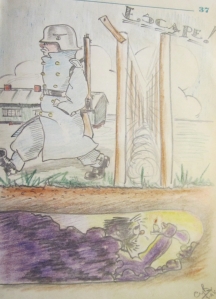


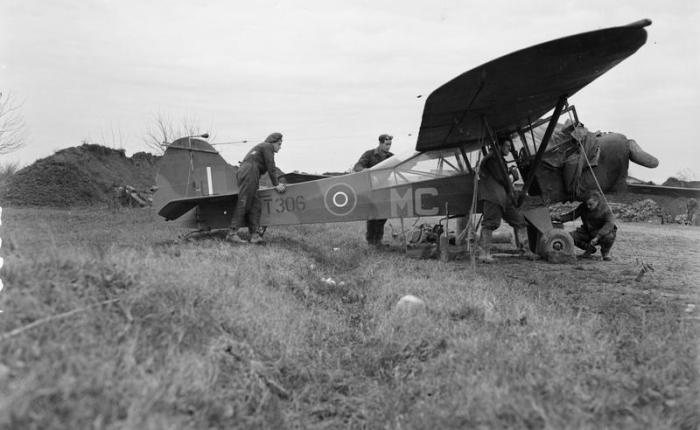


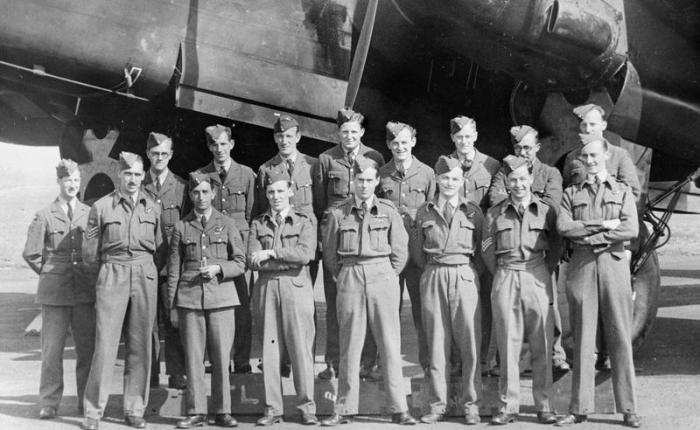


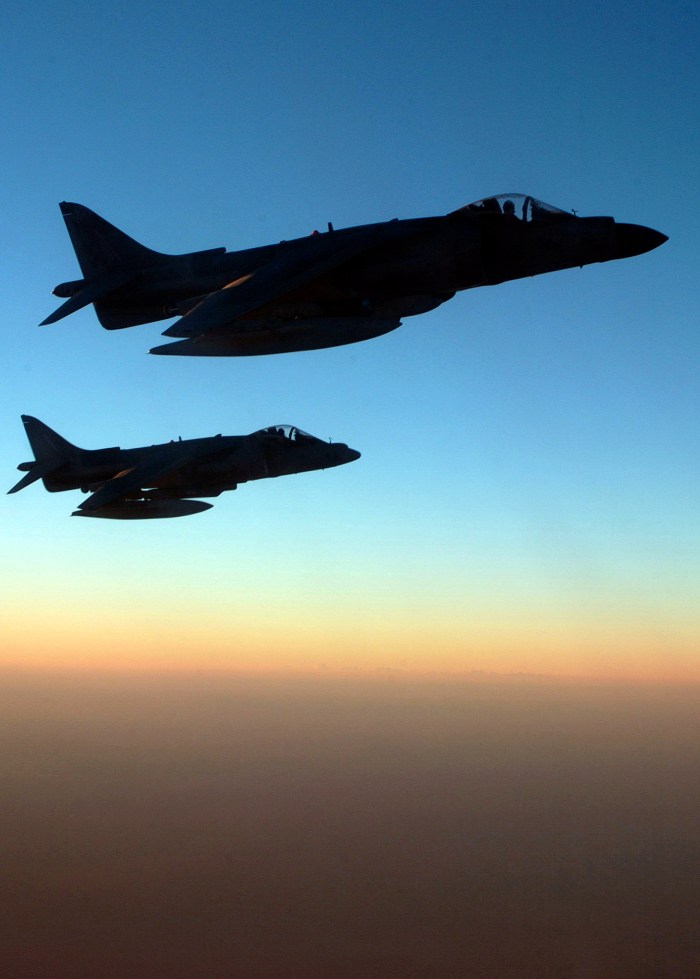
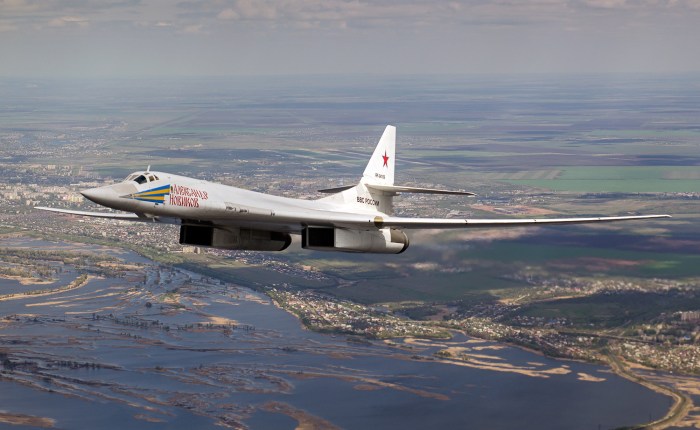


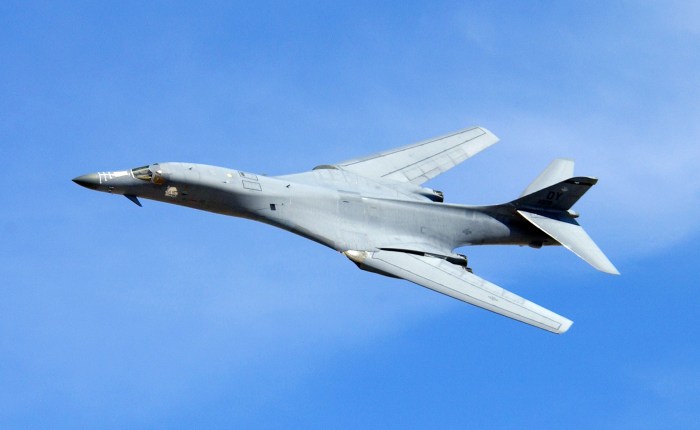
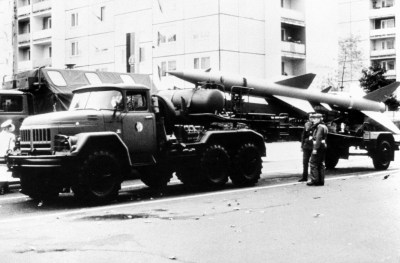


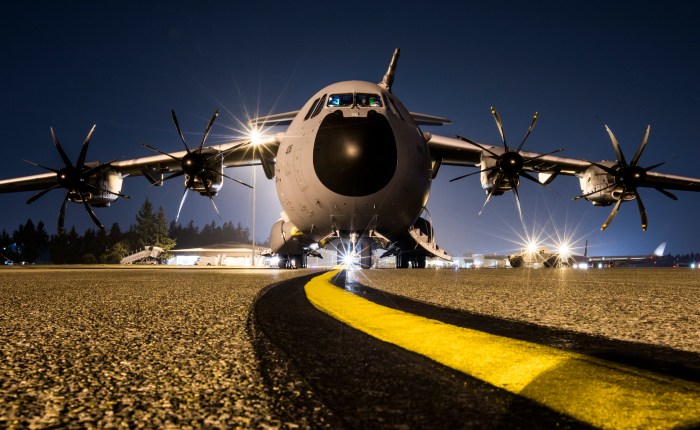


 From Balloons to Drones


.jpg)