#ResearchResources – Recent Articles and Books (November 2021)

#ResearchResources – Recent Articles and Books (November 2021)

Editorial note: In this series, From Balloons to Drones highlights research resources available to researchers. Contributions range from discussions of research at various archival repositories to highlighting new publications. As part of this series, we are bringing you a monthly precis of recent articles and books published in air power history. This precis will not be exhaustive but will highlight new works published in the preceding month. Publication dates may vary around the globe and are based on those provided on the publisher’s websites. If you would like to contribute to the series, please contact our Editor-in-Chief, Dr Ross Mahoney, at airpowerstudies@gmail.com or via our contact page here.

Articles

John Alexander, ‘The Worsted Manufacturer, Roderick Hill and ‘the most courageous decision of the War’: The Decision to Reorganise Britain’s Air Defence to Counter the V-1 Flying Bomb,’ RAF Air and Space Power Review 23, no. 1 (2021).

The first four V-1 flying bombs crossed the Channel in the early hours of 13 June 1944, exactly one week after D-Day; none were engaged and one reached Bethnal Green killing four people. When overnight 15/16 June the German Air Force launched 244 V-1s against London, the long-planned British counter V-1 defences, consisting of fighter, gun and balloon belts, brought down only thirty-three V-1s, including eleven shot-down by anti-aircraft (AA) guns, and seventy landed on London. This paper explores the decision to reorganise Britain’s Air Defence during this crucial stage of the War.

Orazio Coco, ‘The Italian Military Aviation in Nationalist China: General Roberto Lordi and the Italian Mission in Nanchang (1933–1937),’ The International History Review (2021). DOI: 10.1080/07075332.2021.1984277

On 7 September 1933, military officers of the Italian Air Force led by Colonel Roberto Lordi departed from Naples to reach China with the task, agreed upon by Italian fascist and Chinese nationalist governments, of building a factory assembling Italian-made aircraft and training pilots for the Republic of China. The mission was stationed at Nanchang, in today’s Jiangxi province. The initiative was developed in competition with a similar American mission, which had operated since 1932 in Hankou, in the Hubei province, at the time led by Colonel John H. Jouett. The Italian government won Chiang’s attention with the agreement to use the military airfield and Italian aircraft against the Communist resistance, which pleased the expectations of the Generalissimo. In April 1934, the headquarters of the Chinese military aviation finally moved to Nanchang. The mission’s commander, Roberto Lordi, was promoted Brigadier General of the Italian Royal Air Force and appointed Chief of Staff of the Chinese Air Force. This article presents, through extensive use of unpublished private and public archive documents, the controversial history of the Italian military mission and unveils the circumstances that changed the fortune of that successful story, as well as the career and personal life of its commander.

Steven Paget, ‘The ‘Eeles Memorandum’: A Timeless Study of Professional Military Education,’ RAF Air and Space Power Review 23, no. 1 (2021).

Examinations of historical examples are an important element of the professional military education debate and demonstrate the enduring nature of some of the necessary considerations. Air Commodore Henry Eeles, the Commandant of Royal Air Force (RAF) College Cranwell between August 1952 and April 1956 wrote a prescient report in 1955. The military, political and social changes that were occurring have some parallels to the contemporary context, including expectations about access to higher education and the introduction of new technology, which was viewed as leading to an era of so-called ‘push button warfare’. Eeles was also cognisant of issues such as balance, time and life-long learning that are just as pertinent today as in 1955. The context and content of the report has ensured that it has enduring relevance for the RAF.

Matthew Powell, ‘Royalties, Patents and Sub-Contracting: The Curious Case of the Hawker Hart,’ RAF Air and Space Power Review 23, no. 1 (2021). 

Aircraft procurement by the Air Ministry in the inter-war period was beset by various problems, with numerous solutions proposed in an attempt to resolve them. One such potential solution was the proposal to sub-contract the production to other aircraft manufacturers within the Air Ministry’s ring of firms who were allocated firm orders. This action by the Air Ministry, it was believed, would spread the technical knowledge of aircraft production to a wider base that could be built upon in a time of national emergency or war. This approach was also a way of ‘artificially’ keeping firms alive where they had been unsuccessful in being awarded contracts. Such a scheme would, from the industry’s perspective, however, lead to less orders for firms successful in aircraft design and allow the potential sharing of industry secrets amongst direct competitors.

Richard Worrall, “Bumps along “The Berlin Road”’: Bomber Command’s forgotten Battle of Hanover, September-October 1943,’ RAF Air and Space Power Review 23, no. 1 (2021).

The many accounts on RAF Bomber Command follow the usual chronology of the ‘Main Offensive’ against Germany throughout 1943/4, with a linear progression from the Battle of the Ruhr, to the Battle of Hamburg, to the Battle of Berlin. Yet adopting this approach is problematic. The Battle of Berlin was halted by Harris in mid-September only to be recommenced in mid-November, but it, therefore, begs the simple question: what was Bomber Command doing during the interim ten weeks? Harris’ force was far from inactive during this time, in which the centrepiece was the ‘Battle of Hanover’ that comprised four heavy-attacks in twenty-six days. This article identifies what happened during this period of the ‘Main Offensive’, to suggest why this ‘bomber battle’ has remained forgotten, highlighting how Bomber Command’s experiences over Hanover revealed its limitations at this critical stage of the bombing war.

Books

Tony Fairbairn, The Mosquito in the USAAF: De Havilland’s Wooden Wonder in American Service (Barnsley: Pen and Sword, 2021).

On 20 April 1941, a group of distinguished Americans headed by the US Ambassador to the United Kingdom, John Winant, and which included Major General Henry ‘Hap’ Arnold, Chief of the US Army Air Corps, visited the de Havilland Aircraft Company’s airfield at Hatfield, England.

The party was there ostensibly to gain an insight into how various US aircraft supplied to Britain were performing, as well as to observe some of the latest British products being put through their paces. The eighteen types on display included both US and British bombers and fighters. But the star of the day was undoubtedly the de Havilland Mosquito.

Having first flown only a few months earlier, on 25 November 1940, the aircraft that was put through its paces was flown by none other than Geoffrey de Havilland. Striving to impress the trans-Atlantic visitors, de Havilland provided an outstanding display of speed and manoeuvrability. It was a routine that impressed the Americans and left them in no doubt as to the Mosquito’s abilities.

Though the visitors harboured doubts about an aircraft made of wood, they returned to the United States with full details of the design. The Mosquito had also caught the eye of Elliott Roosevelt, son of the US President and a serving officer in the USAAC. An early specialist in military aerial mapping and reconnaissance, ‘ER’ swiftly realized the value of the Mosquito in the reconnaissance role and began lobbying vigorously for its acquisition. The Air Ministry duly noted ‘ER’s’ interest and influence.

Following America’s entry into the war, formal requests for Mosquitoes began in earnest in 1942. Initial deliveries for evaluation purposes in the United States soon followed in June 1943, the aircraft initially being supplied by de Havilland Canada. From February 1944 a steady flow of the photographic reconnaissance version, from Hatfield, were provided to what would become the USAAF’s 25th Bomb Group at Watton, England. There they served with distinction in a variety of specialist roles, including day and night photography, weather reconnaissance, ‘chaff’ (Window) dropping, scouting for the bomber force, raid assessment, and filming of special weapons projects.

A number of these Mosquitoes, serving with the 492nd Bomb Group at Harrington, were involved in the so-called ‘Joan-Eleanor’ project, working with OSS secret agents on the Continent. Finally, in 1945, the USAAF received much-anticipated night fighter Mosquitoes which enjoyed combat success with the 416th Night Fighter Squadron in Italy.

In this highly illustrated work, the author explores the full story of why the Americans wanted Mosquitoes, how they went about obtaining them, and their noted success and popularity with USAAF units.

Michael Hankins, Flying Camelot: The F-15, the F-16, and the Weaponization of Fighter Pilot Nostalgia (Ithaca, NY: Cornell University Press, 2021).

Flying Camelot brings us back to the post-Vietnam era, when the US Air Force launched two new, state-of-the art fighter aircraft: the F-15 Eagle and the F-16 Fighting Falcon. It was an era when debates about aircraft superiority went public—and these were not uncontested discussions. Michael W. Hankins delves deep into the fighter pilot culture that gave rise to both designs, showing how a small but vocal group of pilots, engineers, and analysts in the Department of Defense weaponized their own culture to affect technological development and larger political change.

The design and advancement of the F-15 and F-16 reflected this group’s nostalgic desire to recapture the best of World War I air combat. Known as the “Fighter Mafia,” and later growing into the media savvy political powerhouse “Reform Movement,” it believed that American weapons systems were too complicated and expensive, and thus vulnerable. The group’s leader was Colonel John Boyd, a contentious former fighter pilot heralded as a messianic figure by many in its ranks. He and his group advocated for a shift in focus from the multi-role interceptors the Air Force had designed in the early Cold War towards specialized air-to-air combat dogfighters. Their influence stretched beyond design and into larger politicized debates about US national security, debates that still resonate today.

A biography of fighter pilot culture and the nostalgia that drove decision-making, Flying Camelot deftly engages both popular culture and archives to animate the movement that shook the foundations of the Pentagon and Congress.

Norman Ridley, The Role of Intelligence in the Battle of Britain (Barnsley: Pen and Sword, 2021).

The Battle of Britain was fought between two airborne military elites and was a classic example of pure attack against pure defence. Though it was essentially a ‘war of attrition’, it was an engagement in which the gathering, assessment and reaction to intelligence played a significant role on both sides.

In some respects, both the RAF and the Luftwaffe were hamstrung in their endeavours during the Battle of Britain by poor intelligence. The most egregious Luftwaffe blunder was its failure to appreciate the true nature of Fighter Command’s operational systems and consequently it made fundamental strategic errors when evaluating its plans to degrade them. This was compounded by the Luftwaffe’s Intelligence chief, Major Josef ‘Beppo’ Schmid, whose consistent underestimation of Fighter Command’s capabilities had a huge negative impact upon Reichsmarschall Göring’s decision-making at all stages of the conflict.

Both the Luftwaffe and the RAF lacked detailed information about each other’s war production capacity. While the Luftwaffe did have the benefit of pre-war aerial surveillance data it had been unable to update it significantly since the declaration of war in September 1939. Fighter Command did have an distinct advantage through its radar surveillance systems, but this was, in the early stages of the conflict at least, less than totally reliable and it was often difficult to interpret the data coming through due to the inexperience of many of its operators. Another promising source of intelligence was the interception of Luftwaffe communications.

It is clear that the Luftwaffe was unable to use intelligence as a ‘force multiplier’, by concentrating resources effectively, and actually fell into a negative spiral where poor intelligence acted as a ‘force diluter’, thus wasting resources in strategically questionable areas. The British, despite being essentially unable to predict enemy intentions, did have the means, however imperfect, to respond quickly and effectively to each new strategic initiative rolled out by the Luftwaffe.

The result of three years intensive research, in this book the author analyses the way in which both the British and German Intelligence services played a part in the Battle of Britain, thereby attempting to throw light on an aspect of the battle that has been hitherto underexposed to scrutiny.

Stephen Wynn, Hitler’s Air Defences (Barnsley: Pen and Sword, 2021).

The first Allied bombing raid on Berlin during the course of the Second World War, took place on 7 June 1940, when a French naval aircraft dropped 8 bombs on the German capital, but the first British raid on German soil took place on the night of 10/11 May 1940, when RAF aircraft attacked Dortmund.

Initially, Nazi Germany hadn’t given much thought about its aerial defences. being attacked in its ‘own back yard’ wasn’t something that was anticipated to be an issue. Germany had been on the offensive from the beginning of the war and Hitler believed that the Luftwaffe was the much stronger air force.

In addition, from 1939-1942, the Allied policy of aerial attacks on German soil was to hit targets with a distinct military purpose, such as munitions factories, airfields etc. This meant that the Germany military could focus where they placed their anti-aircraft batteries and had a very good idea of how many they would need.

However, Germany’s defensive capabilities were forced to improve as Allied raids on towns and cities increased in size and frequency. Fighter aircraft were included as part of anti-aircraft defences and flak units mastered the art of keeping attacking Allied aircraft at a specific height. This made it more difficult for them to identify their specific targets, and easier for German fighter aircraft to shoot them down before they could jettison their bomb loads.

With the Allied tactic of ‘area bombing’, Germany’s anti-aircraft capabilities became harder to maintain as demand increased. The longer the war went on, along with the increased Allied bombing raids, sometimes involving more than 1,000 bomber aircraft, so the worth and effectiveness of German air-defences dwindled.
Who Ruined the F-16? The Fighter Mafia’s Battle against the United States Air Force

Who Ruined the F-16? The Fighter Mafia’s Battle against the United States Air Force

By Dr Michael W. Hankins

Editorial note: This article is adapted from an excerpt from Flying Camelot: The F-15, the F16, and the Weaponization of Fighter Pilot Nostalgia, by Michael W. Hankins. Copyright (c) 2021 by Michael Wayne Hankins and Smithsonian Institution. Used by permission of the publisher, Cornell University Press.

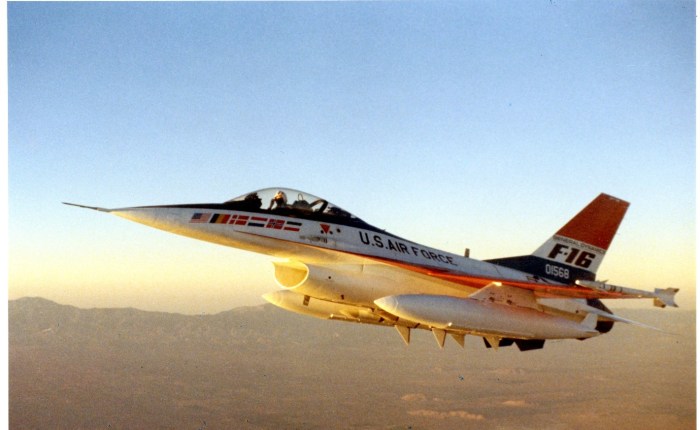
On January 20, 1974, test pilot Phil Oestricher began a high-speed taxi test of the General Dynamics YF-16 prototype. When the plane went into an oscillating roll that slammed the left-wing into the ground, he decided it was safer to just take off for what became the aircraft’s first flight. The YF-16 was a passion project for many people across the aerospace defense community, especially a group known as the ‘Fighter Mafia,’ led by US Air Force (USAF) Colonel John Boyd. The group also included General Dynamics engineer Harry Hillaker, analyst Pierre Sprey, fighter pilot Everest Riccioni, analyst Thomas Christie, among many others. The YF-16 was the realization of their dream of a lightweight, ultra-specialized dogfighter – what Oestricher called ‘a pure air-to-air fighter airplane […] the Camelot of aeronautical engineering.’[1]

Yet, when USAF began the process of turning the YF-16 into the production model F-16A Fighting Falcon, the Fighter Mafia became bitterly opposed to the process. Their extreme frustration with the changes to the airplane set the stage for later debates as the group expanded and morphed into the Defense Reform Movement.

YF-16_and_YF-17_in_flight
An air-to-air right side view of a YF-16 aircraft and a YF-17 aircraft, side-by-side, armed with AIM-9 Sidewinder missiles. (Source: Wikimedia)

After winning a flyoff competition in January 1975 against Northrop’s YF-17 Cobra, the F-16 design went to the Configuration Control Committee, headed by former fighter pilot General Alton Slay, to produce an operational version of the plane. The Fighter Mafia nicknamed this group the ‘Add-On Committee,’ assuming Slay’s role was to exact the Air Force’s revenge by making sure the F-16 did not threaten the F-15 Eagle program. That meant turning the Fighting Falcon into a multi-role craft emphasizing ground attack.[2]

Christie, and his subordinate Robert J. Croteau, tried to stop this process before it started with a memo to Leonard Sullivan, Jr., the Director of Defense Program Analysis and Evaluation. They warned that moving away from the focus on air superiority would ‘subvert the purpose of the entire LWF/ACF [Lightweight fighter/Air Combat Fighter] program.’ The radar was the largest point of contention. They argued that a small radar such as the APQ-153 used in the F-5 was plenty. They wanted a configuration ‘based on primary commitment of the ACF to intense high frequency dogfights.’[3]

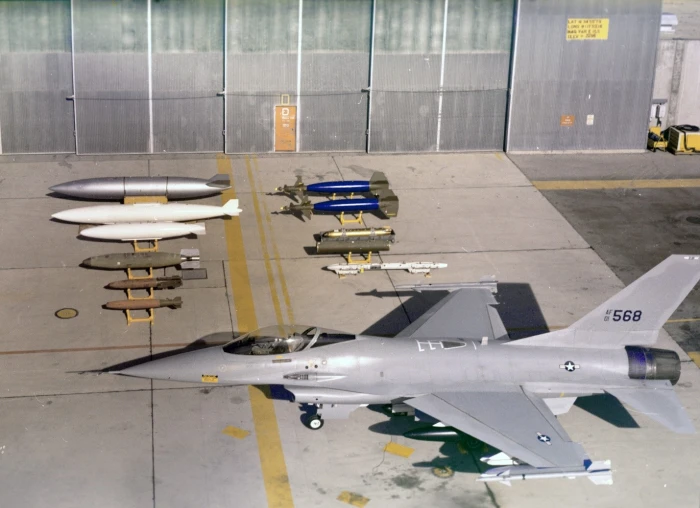
Instead, the production version of the F-16 put on almost 1,000 pounds. The landing gear was strengthened, the fuselage, wings, and tail area grew, and a tailhook was added. Chaff and flare systems and improved avionics also appeared. The production model added more pylons for ground-attack ordnance, with the existing pylons strengthened for heavier weapons. The loading capacity almost doubled, from 7,700 pounds to 15,200. Although the acceleration and agility of the operational F-16 was slightly less than the prototype YF-16, the production model did have increased range, thrust, and load factor, able to pull 9 Gs.[4]

The Air Force added a ground-looking, all-weather, night-capable, medium-range radar to the F-16, the Westinghouse AN/APG-66. The company maintained that this system was ‘The Fighter Pilot’s Radar,’ that would ‘allow the pilot to keep his head up and his hands on the throttle and stick throughout a dogfight engagement.’ With the flick of a switch, the radar provided ground mapping, improved with a Doppler beam, for both navigation and weapons delivery.[5] The avionics systems incorporated Boyd’s ‘Energy Maneuverability Theory’ into the cockpit via an ‘Energy-Maneuverability Display’ that gave pilots visual cues to indicate their current available energy, how to maximize their turn rates, the level of G-forces available, altitude and airspeed limits, and how to gain maneuvering energy quickly.[6]

Picture3
The YF-16 displayed alongside the ground attack armament it can carry, Edwards AFB, California, 12 February 1975 (Source: US Air Force)

Slay thought that the F-16 could complement the F-15 best if it was a multi-role aircraft. As he told the Senate in 1976:

The F-16 has a capability that the F-15 does not have, deliberately so. We did not choose to burden the F-15 radar with a significant air-to-ground capability. We have engineered the F-16 radar to have very good ground mapping [and] to do an extremely good job of air-to-ground missions.[7]

Slay appreciated the F-16’s maneuverability, noting ‘I almost had a heart attack watching the F-16 do a split ‘S’ from 2,700 feet. It was fantastic as far as maneuverability is concerned.’ He argued this made it useful in roles beyond dogfighting:

[t]he things that made [the F-16] good in an air-to-air role […] were extremely good in [an] air-to-ground context […] We got more than we paid for in having a multipurpose capable airplane.[8]

Boyd was unhappy with these changes and wrote to Slay several times in the opening months of 1975, arguing that ‘F-16 maneuvering performance has diminished significantly because of engineering necessity and conscious decisions that resulted in a substantial weight increase.’ Boyd said that the wing area, which had already been increased from 280 to 300 square feet, must be increased further to 320 to preserve the plane’s agility. This plan was rejected due to increased cost and a perception of increased risk with a larger wing.[9]

Boyd remained cordial in his correspondence with Slay, but privately, he and the rest of the Fighter Mafia seethed. Major Ray Leopold, Boyd’s assistant and mentee, described the group as worried that the F-16 would be ‘a disastrous compromise’ and ‘fall prey to the same vagrancies of the bureaucracy’ that the F-15 had. Leopold recalled Boyd complaining about the addition of armor plating, arguing that ‘it was mor[e] important to be maneuverable and less likely to get hit in the first place.’ He railed against the increase in bombing capacity, claiming that ‘the original concept of designing for energy maneuverability was compromised.’ Sprey was frustrated as well, claiming that the Air Force ‘degraded’ the F-16 more than they had the F-15 by increasing its size and adding equipment, most of all the radar.[10]

Hillaker, however, was not against some of the changes. Although he said that Boyd and Sprey’s frustration was reasonable, he recognized that the mafia’s original design was perhaps too limited: ‘If we had stayed with the original lightweight fighter concept,’ he explained, ‘that is, a simple day fighter, we would have produced only 300 F-16s.’[11]

On February 4, 1975, Croteau and Christie wrote to Sullivan, arguing that the changes to the F-16 were ‘unacceptable.’ They believed that the aircraft should have ‘a minimum of sophistication,’ that the additional avionics and radar capabilities were too complex and expensive, and that the added weight reduced performance in air combat. They charged: ‘Extensive air-to-ground capability of [the] proposed configuration compromises air-to-air capability.’ Croteau’s memo did present a potential design that offered the compromise of accepting some avionics, a radar, and limited ground-attack capability, but not including all the Air Force’s changes.[12] This model was not adopted.

By February 21, test pilot Chuck Myers sent a memo to Defense Secretary James Schlesinger’s special assistant, Martin Hoffman, arguing that the changes made to the plane made it ‘a far cry from the austere FIGHTER’ that the Fighter Mafia had envisioned, and that USAF needed to ‘restore the character of the airplane.’[13] He gave instructions for fixing the plane, titled ‘F-16 (LWF/ACF) PROGRAM RESTORATION.’ It excoriated the inclusion of ground attack and radar capability, then charged: ‘The expansion of mission spectrum is accomplished with an associated increases [sic] in weight, complexity, support burden and a loss of air combat maneuvering capability, the one mission for which the original design had been optimized.’ The paper concluded: ‘This mutilation of the character of the LWF through the ACF missionization process is a management travesty which cannot go unchallenged.’[14]

Members of the Fighter Mafia tended to assume that the changes made to the F-16 were retaliation for their challenges to the Air Staff. However, the Air Force had understandable reasons for adding additional capabilities to the F-16. The Air Staff argued that if the F-16 had no ground attack capability, then it could not truly replace the F-4 Phantom, which USAF wanted to phase out while preserving mission capabilities. If the F-16 conformed to the Fighter Mafia’s vision, then 30 percent of the Air Force inventory would be incapable of attacking ground targets. The Air Staff found that unacceptable. Although the F-16 could achieve air superiority, the aircraft would be useless once that superiority had been achieved in a conflict. By adding ground-attack functions, the Air Staff argued, the F-16 could be used in a ‘swing role’ to attack ground targets after air superiority had been won.[15]

An austere F-16 likely would have faced challenges without substantial radar capability. The inability to operate at night or in low-visibility weather conditions would render the aircraft problematic at best. Given that US planners expected a potential Soviet mass attack to occur in Europe, known for its often-cloudy weather conditions, deploying large numbers of such a clear sky, day-only fighter in that scenario would leave US forces particularly vulnerable. No amount of maneuverability could overcome the inability to see through clouds or in the dark against other aircraft that could. It is possible that some Air Force officials could have sought some sort of retaliation against the Fighter Mafia’s pet project, but the case for multi-role requirements had logical arguments behind it and came from a wide group.

Picture1
This cartoon from a 1977 General Dynamics briefing depicts the ‘myth’ that the F-16 production model had inferior performance to the original YF-16 prototype (Source: Lockheed Martin photo via Smithsonian National Air and Space Museum).

The F-16 modifications were a breaking point for Boyd and the Fighter Mafia. During the late 1970s, Boyd frequently gathered with his acolytes, complaining that the Air Force’s ‘goldplating’ was destroying the ‘pure’ fighter he had designed. After this point, Boyd focused entirely on his intellectual activities. He and others set their sights on different issues, sometimes regarding military hardware, but also doctrine, education, and procurement. These efforts expanded his movement. The Fighter Mafia soon took their arguments beyond the halls of the Pentagon and directly to the public.

Dr Michael Hankins is the Curator for US Air Force, Navy, and Marine Corps post-World War II Aviation at the Smithsonian National Air and Space Museum and the author of Flying Camelot: The F-15, the F-16, and the Weaponization of Fighter Pilot Nostalgia (2021). He is a former Professor of Strategy at the USAF Air Command and Staff College eSchool, and former Instructor of Military History at the US Air Force Academy. He earned his PhD in history from Kansas State University in 2018 and his master’s in history from the University of North Texas in 2013. He has a web page here and can be found on Twitter at @hankinstien.

[1] Quoted in Wade Scrogham, Combat Relevant Task: The Test & Evaluation of the Lightweight Fighter Prototypes (Edwards AFB: Air Force Test Center History Office, 2014), p. 67.

[2] James Fallows, National Defense (New York: Vintage, 1982), p 105; Grant Hammond, Mind of War: John Boyd and American Security (Washington, Smithsonian Books, 2001), p. 97.

[3] US Marine Corps Archives and Records Division, Quantico, VA, Robert Coram Personal Papers, Box 3 Folder 13, Robert J. Croteau, Memorandum for Mr. Sullivan, through Mr. Christie, ‘F-16 Air Combat Fighter DSARC II,’ January 27, 1975.

[4] Smithsonian National Air and Space Museum (NASM) Archives, General Dynamics F-16 Fighting Falcon Series, Briefing Packets, AG-033100-03. General Dynamics, ‘F-16 Program Summary,’ August 15, 1977, ASD 771456.

[5] NASM Archives, General Dynamics F-16 Fighting Falcon Series, Avionics Systems, AG-033100-02, Westinghouse Pamphlet, ‘AN/APG-68, The New Standard for Fighter Radar,’ no date; NASM Archives, General Dynamics F-16 Fighting Falcon Series, Avionics Systems, AG-033100-02, Westinghouse Public Relations Release, ‘Westinghouse Starts Full-Scale Development of the F-16 Radar,’ no date.

[6] NASM Archives, General Dynamics F-16 Fighting Falcon Series, Briefing Packets, AG-033100-02, General Dynamics, ‘F-16 Energy Management Displays,’ pamphlet, no date.

[7] Hearings before the Committee on Armed Services, United States Senate, 94th Congress, 2nd Session, S.2965, Part 6: Research and Development, February 25-26, March 2, 4, 9, 1976, 3739-3740.

[8] Ibid, Part 9: Tactical Airpower, March 8-12, 1976, 4896.

[9] US Marine Corps Archives and Records Division, John Boyd Personal Papers, Box 13 Folder 1, John Boyd, Memorandum for General Slay, ‘F-16 Wing Area Selection,’ March 31, 1975; US Marine Corps Archives and Records Division, Boyd Papers, Box 13 Folder 1, John Boyd, Memorandum for Maj Gen Slay, ‘F-16 Wing Area,’ March 4, 1975; US Marine Corps Archives and Records Division, Boyd Papers, Box 13 Folder 1, John Boyd, Memo to Major General Slay, ‘ACF Wing Area,’ January 23, 1975.

[10] US Marine Corps Archives and Records Division, Coram Papers, Box 6 Folder 7, Email, Thomas Christie to Robert Coram, February 5, 2001; US Marine Corps Archives and Records Division, Coram Papers, Box 6 Folder 7, Email, Ray Leopold to Robert Coram, January 31, 2001; US Marine Corps Archives and Records Division, Coram Papers, Box 5 Folder 1, Sprey Interview notes, August 2000.

[11] ‘Interview Part II: Harry Hillaker: Father of the F-16,’ Code One (July 1991), p. 9.

[12] President Gerald Ford Presidential Library, Martin R. Hoffman Papers, Box 21, folder ‘Lightweight Fighters (Navy & Air Force), 1974-75 (5),’ Memo, Robert J. Croteau, to Mr. Sullivan, through Mr. Christie, ‘F-16 DSARC II Position Recommendation,’ February 4, 1975, p. 1, 3.

[13] President Gerald Ford Presidential Library, Hoffman Papers, Box 21, folder ‘Lightweight Fighters (Navy & Air Force), 1974-75 (4),’ Chuck Myers, Memo to Hoffman, 21 February 1975.

[14] President Gerald Ford Presidential Library, Hoffman Papers, Box 21, folder ‘Lightweight Fighters (Navy & Air Force), 1974-75 (4),’ ‘F-16 (LWF/ACF) PROGRAM RESTORATION,’ Myers Memo to Hoffman, 21 February 1975, pp. 2-3.

[15] President Gerald Ford Presidential Library, Hoffman Papers, Box 21, folder ‘Lightweight Fighters (Navy & Air Force), 1974-75 (5),’ ‘Air Combat Fighter DSARC-II, General Counsel,’ 11 March 1975, ‘Air Force Response to the OSD List of Questions on ACF (F-16).’

#ResearchResources – Recent Articles and Books (October 2021)

#ResearchResources – Recent Articles and Books (October 2021)

Editorial note: In this series, From Balloons to Drones highlights research resources available to researchers. Contributions range from discussions of research at various archival repositories to highlighting new publications. As part of this series, we are bringing you a monthly precis of recent articles and books published in air power history. This precis will not be exhaustive but will highlight new works published in the preceding month. Publication dates may vary around the globe and are based on those provided on the publisher’s websites. If you would like to contribute to the series, please contact our Editor-in-Chief, Dr Ross Mahoney, at airpowerstudies@gmail.com or via our contact page here.

Articles

Mateusz Piątkowski, ‘War in the Air from Spain to Yemen: The Challenges in Examining the Conduct of Air Bombardment,’ Journal of Conflict and Security Law, 2021; https://doi.org/10.1093/jcsl/krab017 

Air power is a dominant factor in both past and modern battlespace. Yet, despite its undisputed importance in warfare, its legal framework did not correspond with the significance of the air military operations, especially before the adoption of the Additional Protocol I to the Geneva Conventions of 1977. Even after this date, not all the particulars of air warfare are regulated by the positive rules, as the law is scattered in norms of customary character. Even more challenging process than reconstruction of the legal architecture of the air warfare is the evaluation of the specific incidents containing the elements of military aviation activity. The aim of the article is to present possible challenges arising from very complex normative and operational background of the air warfare and air bombardments in particular. The pivotal point in considerations is the forgotten inquiry conducted by the military experts operating within the established by the League of Nations commission reviewing the conduct of air bombardment during the Civil War in Spain. The adopted methodology of the commission could be considered as a reasonable and balanced approach of analyzing the cases including the involvement of the air power and a relevant reference in contemporary investigations.

Jasmine Wood (2021) ‘Lashings of Grog and Girls’: Masculinity and Sexuality in the Rehabilitation of Facially Disfigured Servicemen in the Second World War, War & Society, DOI: 10.1080/07292473.2021.1969172 

This article explores the importance of masculinity in the rehabilitation experience of members of the Royal Air Force who were facially disfigured during the Second World War. Other historical work has highlighted the significance of masculinity in the rehabilitation of other groups of disabled veterans, but the experience of the facially disfigured is somewhat neglected. This article investigates the methods employed at Rooksdown House and East Grinstead Hospital where men suffering from burns injuries and disfigurements were both physically and psychologically rehabilitated. It explores the key themes of hospital environment, occupational therapy and relationships. In using oral histories and memoirs this article argues that masculinity and sexuality were key aspects of servicemen’s identity that had to be restored through rehabilitation to ensure their successful reintegration into society.

Books

Thomas McKelvey Cleaver, The Tonkin Gulf Yacht Club: Naval Aviation in the Vietnam War (Oxford: Osprey Publishing, 2021).

On August 2, 1964, the USS Maddox became embroiled in the infamous Gulf of Tonkin incident that led directly to America’s increased involvement in the Vietnam War. Supporting the Maddox that day were four F-8E Crusaders from the USS Ticonderoga, and this was the very start of the US Navy’s commitment to the air war over Vietnam.

The Tonkin Gulf Yacht Club is titled after the nickname for the US Navy’s Seventh Fleet which was stationed off the coast of Vietnam, and it tells the full story of the US Navy’s war in the air. It details all the operations from the USS Maddox onwards through to the eventual withdrawal of the fleet following the collapse of South Vietnam in 1975.

The Seventh Fleet’s Task Force 77, which at points during the war had as many as six carriers on station at any one time with 70-100 aircraft on each, provided vital air support for combat troops on the ground, while at the same time taking part in the major operations against North Vietnam itself such as Rolling Thunder, Linebacker I and II. All of these operations took place in a hostile environment of flak, missiles and MiGs.

The story is told through the dramatic first-hand accounts of those that took part in the fighting, with many of the interviews carried out by the author himself. The Vietnamese perspective is also given, with the author having had access to the official Vietnamese account of the war in the air. The author also has a personal interest in the story, as at the age of 20 he served with the US Seventh Fleet off the coast of Vietnam and was personally involved in the dramatic history of The Tonkin Gulf Yacht Club.

Kenneth Jack, Eyes of the Fleet Over Vietnam: RF-8 Crusader Combat Photo-Reconnaissance Missions (Havertown, PA: Casemate Publishers, 2021). 

Photo reconnaissance played a significant role during the Cold War, however, it remained unknown to the public for many years because its product and methods remained classified for security purposes. While the U-2 gets most of the credit, low-level photo reconnaissance played an equally important role and was essential to target selection and bomb damage assessment during the Vietnam War. Moreover, the contribution of naval aviation photo-reconnaissance to the bombing effort in Vietnam is largely an untold story. This book highlights the role of the unarmed supersonic RF-8A/G photo-Crusader throughout the war, and also the part played by its F-8 and F-4 escort fighters.

Veteran and historian Kenneth Jack pieces together the chronological history of photo recon in the Vietnam War between 1964 and 1972, describing all types of missions undertaken, including several Crusader vs. MiG dogfights and multiple RF-8 shootdowns with their associated, dramatic rescues. The narrative focuses on Navy Photo Squadron VFP-63, but also dedicates chapters to VFP-62 and Marine VMCJ-1. Clandestine missions conducted over Laos began in 1964, becoming a congressionally authorized war after the Tonkin Gulf incident in August 1964. VFP-63 played a role in that incident and thereafter sent detachments to Navy carriers for the remainder of the war. By the war’s end, they had lost 30 aircraft with 10 pilots killed, six POWs, and 14 rescued. The historical narrative is brought to life through vivid first-hand details of missions over intensely defended targets in Laos and North Vietnam. While most books on the Vietnam air war focus on fighter and bombing action, this book provides fresh insight into the air war through its focus on photo-reconnaissance and coverage of both versions of the Crusader.

Mark Lax, Malayan Emergency and Indonesian Confrontation, 1950-1966 (Newport, NSW: Big Sky Publishing, 2021).

Australia’s involvement in the Malayan Emergency from 1950 to 1960 and later in a Confrontation with Indonesia in the 1960s is little remembered today. Yet the deployment of over a third of the RAAF to support the British and Malayan governments in what became a long war of attrition against communist insurgents in the former case, and against Indonesian regulars and militia in the latter, kept the RAAF engaged for over 15 years. Wars by another name, these two events led to the birth of Malaysia and the establishment of an ongoing RAAF presence in South East Asia. Until recent operations in Afghanistan, the Malaya Emergency was Australia’s longest conflict. Malayan Emergency and Indonesian Confrontation recounts the story of the politics, strategies and operations that brought these two conflicts to a close.

Ian Pearson, Cold War Warriors: Royal Australian Air Force P-3 Orion Operations 1968-1991 (Newport, NSW: Big Sky Publishing, 2021).

Cold War Warriors tells the little-known story of the operations by the Royal Australian Air Force’s P-3 Orions during the latter years of the Cold War. The aircraft’s largely low-profile missions, usually flown far from their base, were often shrouded by confidentiality. Now, access to declassified documents has allowed this story to be told. From the lead-up to their delivery in 1968, to the end of the Cold War in 1991; from the intrigues associated with the procurement of the aircraft and subsequent upgrades, to perilous moments experienced by the aircraft and their crews while conducting operations; and from triumphs to tragedies; Cold War Warriors documents the P-3’s service in the RAAF in the context of the unfolding domestic and international events that shaped the aircraft’s evolving missions. As well as being a story of the RAAF Orions and their growing capabilities, Cold War Warriors is also the story of the crews who flew the aircraft. Using their words, Cold War Warriors faithfully describes a number of incidents, both on the ground, and in the air, to provide a sense of the enormous breadth of service the P-3 Orion has provided to the Royal Australian Air Force, to Australia and to our allies.

John Shields, Air Power in the Falklands Conflict: An Operational Level Insight into Air Warfare in the South Atlantic (Barnsley: Air World, 2021).

From the television footage shown in all its stark reality and the daily coverage and subsequent memoirs, the impression delivered from the air battles in the Falklands Conflict was that of heroic Argentine pilots who relentlessly pressed home their attacks against the British. While, by contrast, there is a counter-narrative that portrayed the Sea Harrier force as being utterly dominant over its Argentine enemies. But what was the reality of the air war over the Falkland Islands?

While books on the air operations have published since that time, they have, in the main, been personal accounts, re-told by those who were there, fighting at a tactical level, or back in their nation’s capital running the strategic implications of the outcome. But a detailed analysis of the operational level of the air war has not been undertaken – until now. At the same time, some analysts have inferred that this Cold War sideshow offers little insight into lessons for the operating environment of future conflicts. As the author demonstrates in this book, there are lessons from 1982 that do have important and continued relevance today.

Using recently released primary source material, the author, a serving RAF officer who spent two-and-a-half years in the Falklands as an air defence navigator, has taken an impartial look at the air campaign at the operational level. This has enabled him to develop a considered view of what should have occurred, comparing it with what actually happened. In so doing, John Shields has produced a comprehensive account of the air campaign that has demolished many of the enduring myths.

This is the story of not why, but how the air war was fought over the skies of the South Atlantic.

Mark Stille, Pacific Carrier War: Carrier Combat from Pearl Harbour to Okinawa (Oxford: Osprey Publishing, 2021).

The defining feature of the Pacific Theatre of World War II was the clash of carriers that ultimately decided the fate of nations. The names of these battles have become legendary as some of the most epic encounters in the history of naval warfare. Pre-war assumptions about the impact and effectiveness of carriers were comprehensively tested in early war battles such as Coral Sea, while US victories at Midway and in the waters around Guadalcanal established the supremacy of its carriers. The US Navy’s ability to adapt and evolve to the changing conditions of war maintained and furthered their advantage, culminating in their comprehensive victory at the battle of the Philippine Sea, history’s largest carrier battle, which destroyed almost the entire Japanese carrier force.

Examining the ships, aircraft and doctrines of both the Japanese and US navies and how they changed during the war, Mark E. Stille shows how the domination of American carriers paved the way towards the Allied victory in the Pacific.

Richard Worrall, The Ruhr 1943: The RAF’s Brutal Fight for Germany’s Industrial Heartland (Oxford: Osprey Publishing, 2021).

Between March and July 1943, RAF Bomber Command undertook its first concentrated bombing campaign, the Battle of the Ruhr, whose aim was nothing less than the complete destruction of the industry that powered the German war machine. Often overshadowed by the famous ‘Dambusters’ single-raid attack on the Ruhr dams, the Battle of the Ruhr proved much larger and much more complex. The mighty, industrial Ruhr region contained not only some of the most famous and important arms makers, such as the gunmakers Krupp of Essen, but also many other industries that the German war economy relied on, from steelmakers to synthetic oil plants. Being such a valuable target, the Ruhr was one of the most heavily defended regions in Europe.

This book examines how the brutal Ruhr campaign was conceived and fought, and how Bomber Command’s relentless pursuit of its objective drew it into raids on targets well beyond the Ruhr, from the nearby city of Cologne to the Skoda works in Czechoslovakia. Drawing on a wide-range of primary and secondary sources, this is the story of the first titanic struggle in the skies over Germany between RAF Bomber Command and the Luftwaffe.

#Podcast – The US War Against ISIS: An Interview with Dr Aaron Stein

#Podcast – The US War Against ISIS: An Interview with Dr Aaron Stein

Editorial Note: Led by our Editor Dr Mike Hankins, From Balloons to Drones produces a monthly podcast that provides an outlet for the presentation and evaluation of air power scholarship, the exploration of historical topics and ideas, and provides a way to reach out to both new scholars and the general public. You can find our Soundcloud channel here. You can also find our podcast on Apple Podcasts and Google Podcasts.

The war in Syria from 2011 onwards has featured heavy reliance on air power, not just by the US and its allies but also by the Russian Air Force. In this exciting episode, Dr Aaron Stein discusses his new book, The US War Against ISIS, which details how air power played a crucial role in the conflict against terrorist groups in Syria. He also reveals the fascinating and almost unbelievable engagements between US and Russian aircraft in this complex conflict.

9780755634811

Dr Aaron Stein is Director of the Middle East Program at the Foreign Policy Research Institute in Philadelphia in the US. He is the author of Turkey’s New Foreign PolicyDavutoglu, the AKP and the Pursuit of Regional Order and has published in the peer-reviewed journals Survival: Global Politics and Strategy, Insight Turkey, and The Journal of Strategic Security.

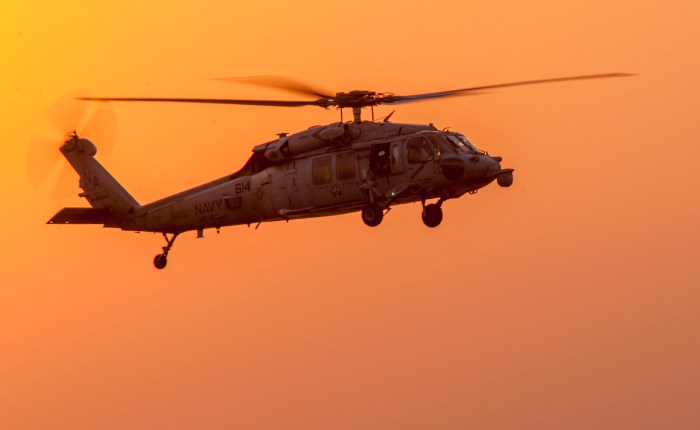
Header image: An MH-60S Sea Hawk helicopter from HSC 15 flies as the Nimitz-class aircraft carrier USS Carl Vinson (CVN 70) conducts flight operations in the US 5th Fleet area of responsibility supporting Operation INHERENT RESOLVE.

#ResearchResources – Recent Articles and Books (September 2021)

#ResearchResources – Recent Articles and Books (September 2021)

Editorial note: In this series, From Balloons to Drones highlights research resources available to researchers. Contributions range from discussions of research at various archival repositories to highlighting new publications. As part of this series, we are bringing you a monthly precis of recent articles and books published in air power history. This precis will not be exhaustive but will highlight new works published in the preceding month. Publication dates may vary around the globe and are based on those provided on the publisher’s websites. If you would like to contribute to the series, please contact our Editor-in-Chief, Dr Ross Mahoney, at airpowerstudies@gmail.com or via our contact page here.

Books

David Axe, Drone War Vietnam (Barnsley: Pen and Sword, 2021)

While the use of drones is now commonplace in modern warfare, it was in its infancy during the Vietnam War, not to mention revolutionary and top secret. Drones would play an important – and today largely unheralded – role in the bloody, two-decade US air war over Vietnam and surrounding countries in the 1960s and ’70s. Drone aircraft spotted targets for manned US bombers, jammed North Vietnamese radars and scattered propaganda leaflets, among other missions.

This book explores that obscure chapter of history. DRONE WAR: VIETNAM is based on military records, official histories and published first-hand accounts from early drone operators, as well as on a close survey of existing scholarship on the topic.

In their fledgling efforts to send robots instead of human beings on the most dangerous aerial missions, US operators in South-East Asia in the 1960s and ’70s wrote the first chapter in the continuing tale of autonomous warfare.

Dmitry Degtev and Dmitry Zubov, Air Battle for Moscow 1941–1942 (Barnsley: Air World, 2021) 

In October 1941, Operation Typhoon and the battle for Moscow began. According to Hitler’s plan, it was to be the ‘last offensive’, after which nothing could stop Germany from conquering Britain and the rest of Europe – but first he had to overcome the Soviets and especially their air force.

Air Battle for Moscow is the first detailed description of one of the most vital, yet little known, air battles of the Second World War. The battle for Moscow opened with the flights of long-range reconnaissance aircraft, which photographed Moscow and the Kremlin. Then, on 22 July 1941, Operation Clara Zetkin, the Luftwaffe’s aerial assault on Moscow, began. But the Luftwaffe was opposed by the ‘Stalin’s Falcons’, the elite 6th Air Defence Corps, which defended the Soviet capital with a determination which saw bitter duels to the death and horrendous casualties on both sides.

The book presents new facts about this dramatic battle and describes in detail the actions of the aircrew on both sides. Yet this is not just the story or the air war. The authors also describe the lives of people during the war, of suppressed anti-Soviet opposition in Moscow, and of the bloodthirsty and inhuman actions of the Stalin regime. The book also tells of the fate of German pilots caught in Russian captivity, and the adventures of those who were able to survive and escape from the Russian executioners. Many myths concerning the battle are also challenged, such as the often-stated belief that Moscow’s anti-aircraft defences were the most powerful in the world and that it was the Soviets who were the finest pilots.

In this comprehensive account, details of losses, biographical outlines of the key individuals, analyses of the different aircraft and a full chronology of the battle are presented, as well as numerous exclusive photos, documents and drawings.

But it is the stories of those who fought in the Battle for Moscow that, undeniably, have the greatest impact. The harrowing tales of death and survival in conditions that are almost beyond description demonstrate just how important this conflict was to both Russia and the Third Reich and, ultimately, to the outcome of the Second World War.

Tim Jenkins, Flying Pantechnicons: The Story of the Assault Glider Trust (Warwick: Helion and Company, 2021)

In the summer of 2001 the Midlands Branch of the Glider Pilot Regiment identified a significant gap in the proud heritage of British aviation. Despite numerous preserved aircraft assemblages both in the United Kingdom and abroad the fact remained that there was no complete surviving example of a publicly accessible Airspeed Horsa assault glider to be found anywhere in the world. The Assault Glider Trust was formed in order to put the situation straight once and, very much, for all.

Between 2001 and 2014 a skilled team of aviation enthusiasts worked tirelessly on the manufacture, conservation and restoration of not only the Airspeed Horsa but a wider collection of aircraft in honour of all those associated with airborne forces during The Second World war. These included an American WACO CG-4A ‘Hadrian’, C-47 Dakota and a DH82a Tiger Moth.

‘Flying Pantechnicons’ is a fascinating miscellany charting the remarkable story of The Assault Glider Trust and the determination of an entirely charitable voluntary organisation in achieving a most ambitious aviation project. The book follows their incredible journey from original idea through acquisition, restoration and the final challenge of finding permanent locations for public display and interpretation.

The development of British Airborne Forces and their military application is contextualised alongside the engineering challenges faced in the physical construction of historic airframes. Consequently, this book provides a valuable contribution to both historical interpretation and the machinations of large-scale object conservation making it ideal for aviation enthusiasts and heritage professionals alike.  

Mikhail Maslov, King of Fighters: Nikolay Polikarpov and His Aircraft Designs, Volume 2 – The Monoplane Era (Warwick: Helion and Company, 2021)

In the century-long history of the conquest of the sky there have been a number of outstanding personalities. Among them is the name of designer Nikolay Polikarpov (1892-1944), who is inseparably associated with the best achievements of Russian and Soviet aviation.

His practical activity in the aircraft industry began upon graduation from the Petersburg Polytechnic Institute in 1916. Aged 25, Polikarpov was sent to the Russo-Baltic Wagon Factory (RBWF), where the four-engined Ilya Muromets bombers designed by Igor Sikorsky were being built at that time. Later, beginning in August 1918, he worked in Moscow at the Dux aircraft factory. For several years, he was engaged in improving products manufactured by the factory, and upgrading production aircraft to accommodate the available engines, equipment and materials. From 1922, Polikarpov focused his attention on fighter aircraft, creation of which was a priority for him during the following years. The first of them was the IL-400 monoplane, designated I-1 by the Air Force. The monoplane was followed by biplanes including the 2I-N1 (1925), the I-3 (1927), the D-2 (1928), and the I-6 (1929). It was specialization in fighter aircraft which, from then on, became his mission in life. At the peak of his career as a designer, Polikarpov was informally styled ‘the King of Fighters’, which was quite in line with the level of his merits and achievements.

In the 1930s, the TsKB-3 (I-15) and TsKB-12 (I-16) fighters were designed under Polikarpov’s supervision. These aircraft were the designer’s undoubtable success. They also were the main combat fighters in service with the Red Army Air Force. For the creation of the I-15 and the I-16 fighters, Polikarpov was awarded the Order of Lenin in 1935, and the Order of the Red Star a year later.

During the 1930s, Nikolay Polikarpov devised a lot of aircraft of various designs, the majority of which can be described as ‘advanced’ and ‘innovative’. In 1940, Polikarpov was granted the degree of the Doctor of Engineering and the title of the Chief Designer of the highest category. In the same year, he was awarded the title of the Hero of Socialist Labor. A year later, he became a recipient of the Stalin Prize.

This gifted Soviet engineer was destined to live only 52 years. On 30 July 1944, Nikolay Polikarpov died of a rapidly evolving cancer. To venerate his memory, the U-2 trainer has ever since been designated the Po-2 (Polikarpov-2).

This book describes all Polikarpov’s original projects, both those put into reality and unimplemented ones. It took the author many years to prepare for the creation of the book. The author studied materials on the respective topics in all Russian archives, and made use of the recollections of Polikarpov’s contemporaries, as well as publications by other researchers.

For purposes of clarity and in order to facilitate publication, the author split the book on Nikolai Polikarpov’s aircraft into two parts – the ‘Biplane Era’ and the ‘Monoplane Era’. Indeed, during the designer’s activity from 1918 through to 1932, he devoted himself predominantly to creating biplanes. For the 1920s, the biplanes were a preferable option; they were more common, more reliable, better studied, and even more desirable for the Red Army Air Force. The first design of the IL-400 (I-1) monoplane fighter appeared as early as 1923; however, it was through its novelty and unpredictability that the aircraft failed to achieve the deserved success. It should be noted that the U-2 (Po-2) and the R-5 biplanes, which were created during that period, became one of the best Polikarpov aircraft, and brought him recognition as a designer. In the 1930s, Nikolai Polikarpov’s activity reached its pinnacle. It was during that period that he created his advanced monoplanes such as the I-16, the I-17, the VIT-2, and others. He continued his fruitful and quite successful activity in the area of creating modern aircraft during the war of 1941—45 as well.

Volume 2 comprehensively covers Polikarpov’s monoplane designs.

Jerry Murland, The Schneider Trophy Air Races: The Development of Flight from 1909 to the Spitfire (Barnsley: Pen and Sword, 2021)

When Jacques Schneider devised and inaugurated the Coupe d’Aviation Maritime race for seaplanes in 1913, no-one could have predicted the profound effect the Series would have on aircraft design and aeronautical development, not to mention world history.

Howard Pixton’s 1914 victory in a Sopwith Tabloid biplane surprisingly surpassed the performance of monoplanes and other manufacturers turned back to biplanes. During The Great War aerial combat was almost entirely conducted by biplanes, with their low landing speeds, rapid climb rates and manoeuvrability.

Post-war the Races resumed in 1920. The American Curtiss racing aircraft set the pattern for the 1920s, making way for Harold Mitchell’s Supermarines in the 1930’s. Having won the 1927 race at Venice Mitchell developed his ground-breaking aircraft into the iconic Spitfire powered by the Rolls-Royce Merlin engine. This new generation of British fighter aircraft were to play a decisive role in defeating the Luftwaffe and thwarting the Nazis’ invasion plans.

This is a fascinating account of the air race series that had a huge influence on the development of flight.

Ryan Noppen, Holland 1940: The Luftwaffe’s First Setback in the West (Oxford: Osprey Publishing, 2021)

The German invasion of the Netherlands was meant to be a lightning-fast surgical strike, aimed at shoring up the right flank of the assault on France and Belgium. With a bold plan based largely on Luftwaffe air power, air-landing troops, and the biggest airborne assault yet seen, a Dutch surrender was expected within 24 hours.

But the Netherlands possessed Europe’s first fully integrated anti-aircraft network, as well as modern and competitive aircraft. On 10 May, the German attack was only partly successful, and the Dutch fought on for another four days. On the fifth day, with its original strategy having largely failed, the Luftwaffe resorted to terror-bombing Rotterdam to force a surrender.

Explaining the technical capabilities and campaign plans of the two sides, and charting how the battles were fought, this fascinating book reassesses this little-known part of World War II. Author Ryan K. Noppen argues that while the Holland campaign was a tactical victory for Germany, the ability of the well-prepared but outnumbered Dutch to inflict heavy losses was a warning of what would come in the Battle of Britain.

Russell Peart, From Lightnings to MiGs: A Cold War Pilot’s Operations, Test Flying & And Airspeed Record (Barnsley: Air World, 2021)

It was supposed to be just a training flight. The two Soviet-manufactured MiG 21s, each with two practice bombs and four air-to-ground rockets, were lined up on the runway in Bangladesh at the height of the Cold War, when air traffic control suddenly reported an incursion by Indian Air Force Jaguars. Though ill-equipped for combat, the two MiGs were scrambled.

One of the MiGs’ pilots was an RAF officer – Squadron Leader Russell Peart. On a seven-month loan to the Bangladeshi Air Force, Peart suddenly found himself at the centre of the simmering hostility between two neighbouring nations. By the time they reached the area that had been threatened by the Indian pilots, the Jaguars had gone. Later, when Squadron Leader Russell Peart spoke of the incident to the British High Commissioner, he was told not to shoot down any Jaguars as the Indians had still not paid for them!

Russell Peart flew many other aircraft in his varied career, including the MiG 19, and while a test pilot at Boscombe Down trialled such designs as the Tornado GR1. But it was whilst he was seconded to the Sultan of Oman’s Air Force, particularly during the so-called ‘Secret War’ in Dhofar, that he saw the most action. In that theatre the author flew some 200 operational sorties, 180 of which involved live fire, during which he was hit many times. He was also hit and wounded by a 75mm shell.

Russ Peart has written in detail of his exciting RAF career, from flying Lightnings in the Far East to winning the top prize in the International Tactical Bombing Competition against a handpicked team of United States Air Force fighter pilots and being awarded the Sultan Of Oman’s Distinguished Service Medal. Supplemented by a selection of previously unseen photographs, this uniquely original memoir throws new light on the operational flying undertaken by some RAF pilots during the tense years of the Cold War.

Kevin Wright, We Were Never There, Volume 1: CIA U-2 Operations over Europe, USSR, and the Middle East, 1956-1960 (Warwick: Helion and Company, 2021)

Devised by Kelly Johnson and initially operated by the CIA, the U-2 is the world’s most famous ‘spyplane.’ It flew at unprecedented altitudes and carried the most sophisticated sensors available, all in the greatest secrecy. Operating from remote locations and without markings, they often took-off before first light. Ostensibly operated by civilians flying meteorological research missions, their bold overflights took them far across Eastern Europe, the USSR, Middle and Far East. However, many details of the aircraft’s operational history remain vague and a considerable amount is still classified. Continuing national political sensitivities have meant that much about these early operations has still not been fully revealed even more than 60 years later.

This book utilises a large number of recently declassified documents to explore the remaining hidden details. It provides in-depth examinations of some missions not previously fully described and include more about Norway’s role in U-2 operations, and a breakdown of British U-2 overflights of the Middle East using recently released files from the British Ministry of Defence. It examines some of the U-2’s extensive efforts to collect intelligence on Soviet ballistic missile test launches and space programme, on ‘Fast Move’ staging operations and lots more from these missions up to May 1960.

Chapters explore some of the ground-breaking technology employed by the U-2 to photograph and eavesdrop on Soviet nuclear, military and industrial activities. These include revealing secrets of the Fili heavy bomber production plant, just five miles from the Kremlin. Overflights of the ‘Arzamas-16′ closed nuclear city, Vozrozhdeniya biological warfare centre in the Aral Sea and the mystery that was Mozhaysk. Over 90 photographs, maps and illustrations provide details of the aircraft, the cameras and electronic defensive and eavesdropping systems. The specialised nuclear fallout sampling role is explored and the ‘weather packs’ installed to substantiate the wafer-thin false cover story of the U-2’s role as a ‘meteorological research’ aircraft. Maps, most never been seen before, record the detailed routes flown by U-2 pilots deep into denied airspace to reveal the secrets of Soviet military, nuclear, scientific and industrial sites.

#Podcast – Civil Air Patrol Coastal Patrol Operations, 1942–1943: An Interview with Dr Frank Blazich

#Podcast – Civil Air Patrol Coastal Patrol Operations, 1942–1943: An Interview with Dr Frank Blazich

Editorial Note: Led by our Editor Dr Mike Hankins, From Balloons to Drones produces a monthly podcast that provides an outlet for the presentation and evaluation of air power scholarship, the exploration of historical topics and ideas, and provides a way to reach out to both new scholars and the general public. You can find our Soundcloud channel here. You can also find our podcast on Apple Podcasts and Google Podcasts.

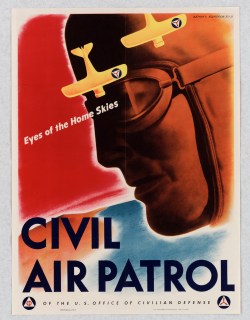
During the Second World War, the Civil Air Patrol (CAP) conducted anti-submarine operations, including giving civilian volunteer pilots the authority to drop bombs on enemy targets. To tell us about the role CAP played in the war, we’re joined by Dr Frank A. Blazich, Curator of Modern Military History at the Smithsonian National Museum of American History and author of “An Honorable Place in American Air Power”: Civil Air Patrol Coastal Patrol Operations, 1942–1943 from Air University Press. A review of “An Honorable Place can be found here.

201208-F-QR584-001

Dr Frank A. Blazich, Jr. is a Curator of Modern Military History for the Division of Armed Forces History at the Smithsonian Institution National Museum of American History. A veteran of the U.S. Air Force, he holds a doctorate in modern American history from The Ohio State University and specialises in the American military experience in the 20th and 21st Centuries. Following his doctoral studies, Blazich served as the historian at the U.S. Navy Seabee Museum in Port Hueneme, California before moving to Washington, DC to serve as a historian in the History and Archives Division of Naval History and Heritage Command.  Additionally, he served as the national historian for the Civil Air Patrol from April 2013 to March 2018. In March 2018, he became director of the Colonel Louisa S. Morse Center for Civil Air Patrol History at Joint Base Anacostia-Bolling, Washington, DC. In addition to articles, book review and various blog posts, his first edited book, Bataan Survivor: A POW’s Account of Japanese Captivity in World War II, was published by the University of Missouri Press in February 2017.

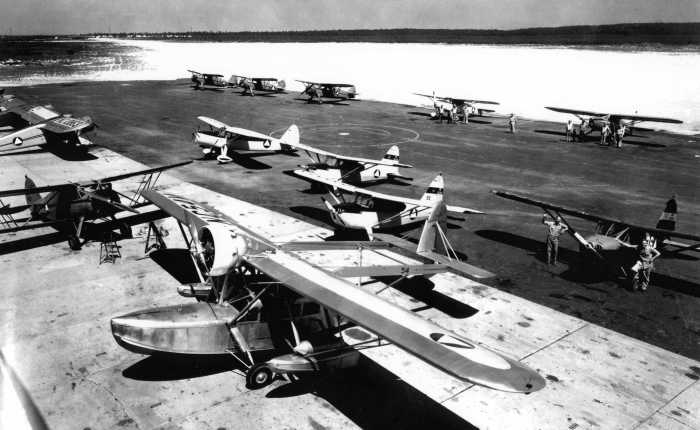
Header Image: A variety of Civil Air Patrol-operated aircraft, including a Sikorsky S-39 in center frame, parked at Coastal Patrol Base 17  between July 1942 and August 1943. The base would eventually become Francis S. Gabreski Airport in New York State. (Source: Wikimedia)  

#AirWarBooks – Dr Michael Hankins

#AirWarBooks – Dr Michael Hankins

Editorial Note: In the next instalment of our Air War Books series, our Podcast Editor, Dr Michael Hankins, discusses the ten books that have influenced and shaped his writing as an air power historian.

Before I became a historian, I was a professional musician, and one of the most fun things that musicians do is sit around and talk about their influences. What did you listen to over the years that made you play the way that you play and compose music the way you do? The #AirWarBooks series here is a similar opportunity for us air power historians to talk about what books influenced us most. But, of course, the way any historian interrogates the past is rooted in many things, not just what books they read, but also their values, beliefs, background, and maybe even what kind of music they like.

That said, here are ten books that influenced my approach to studying and writing about air power history and technology. Not all of them are about aviation, but they shaped my approach to history in key ways. I’ll discuss the non-aviation books first:

soldiers-and-ghosts

J.E. Lendon, Soldiers and Ghosts: A History of Battle in Classical Antiquity (New Haven, CT: Yale University Press, 2006). So why is a book about Greco-Roman Warfare on my list of military aviation books? Because Lendon’s amazing work links culture and memory to the practice of warfare in specific and compelling ways. He argues that the Greeks and the Romans looked to the past – a culturally constructed, imagined past—to inform what they thought warfare should look like. I noticed some similar trends when I studied fighter pilot culture and began working on my first book, Flying Camelot. I don’t think I could have written that book without Lendon’s influence.

David Nye, America as Second Creation: Technology and Narratives of New Beginnings (Boston, MS: MIT Press, 2003). This book is not about aircraft specifically, but it is about the cultural power of technology. I’ve been deeply influenced by Nye’s examination of how specific technologies came to symbolize cultural narratives about the origins and evolution of the United States. The idea that a piece of technology could be a symbol that tells a specific story to a specific culture, almost defining their sense of identity in a way, is an idea that continues to define my own work.

Jill Lepore, The Name of War: King Philip’s War and the Origins of American Identity (New York: Vintage, 1998). There may not have been any aircraft in King Phillip’s War, but what I found so compelling about Lepore’s work here is the power of how people talk about the past. This book is less about the war and more about how it came to be remembered by the opposing sides, and how the language used to describe the past can create whole systems of meaning that shape the future. This idea, so powerfully explored here, has shaped my approach to studying later conflicts from the Korean and Vietnam Wars to the Gulf War and beyond.

1799111

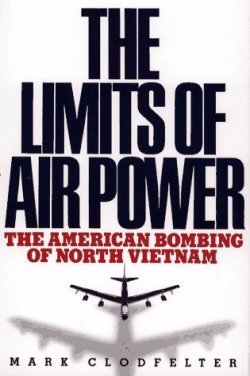
Mark Clodfelter, The Limits of Air Power: The American Bombing of North Vietnam (New York: Free Press, 1989). Finally, some aeroplanes! There is a rich literature about air power in the Vietnam War, but I still think Clodfelter’s classic holds up as one of the most important. Even over 30 years later, his argument is still controversial: that strategic bombing in Vietnam was not effective, that air power, although very important, has limits. Nevertheless, his explanation and comparison of the different goals, limits, and methods of the Johnson and Nixon administrations’ approaches to bombing is still useful and insightful. Even for those who disagree with it, this book remains a giant in the field for a reason.

John Flanagan, Vietnam Above the Treetops: A Forward Air Controller Reports (New York: Praeger Publishers, 1992). There are a lot of pilot and aircrew memoirs from Vietnam, and many of them are very good. But, for some reason, Flanagan’s tale of flying O-1 Bird Dogs on the incredibly dangerous low-and-slow FAC missions in Southeast Asia has stuck with me much more than any other pilot memoirs I’ve read. Starting at the USAF Academy, Flanagan was a deeply principled man who was surprised at how the military handled itself in Vietnam. His story includes the way he wrestled with himself about the war and described in detail the brutal missions and the horrific things he saw. His story also includes a detailed look at how the US brought South Korean troops into the war – something not covered much in other works. There are many great memoirs to read, but if you can only read one, this would be my pick.

Tami Davis Biddle, Rhetoric and Reality in Air Warfare: The Evolution of British and American Ideas about Strategic Bombing, 1914-1945 (Princeton, NJ: Princeton University Press, 2004). Of all the books on bombing in the Second World War (and there are seemingly too many to count), Biddle’s work is one of the best. She highlights one of major themes in air power history: the disconnect between the promises of air power and its actual results on the battlefield. This work is a wonderful look at the evolution of an idea – how strategic bombing theory grew and changed over time, and how that idea and the assumptions that grew to accompany it influenced air power leaders on both sides of the Atlantic to interpret the air war in particular ways. This mode of analysing not only what happened, but what people thought about what happened, is something I’ve tried to carry through in my own work.

Steven Fino, Tiger Check: Automating the US Air Force Fighter Pilot in Air-to-Air Combat, 1950–1980 (Baltimore, MD: Johns Hopkins University Press, 2017). Fino’s study of the evolution of fighter pilot cockpits, detailing the F-86 Sabre, F-4 Phantom, and F-15 Eagle, is still one of my favourite histories of technology. That’s not just because it’s about three of my favourite aircraft, but because of how deftly Fino – himself a former Eagle driver – connects that technology to the people using it. He illustrates the complex interactions between human and machine in the high-stress combat situation of flying fighters, and how the culture of fighter pilots evolved along with the technology. I’ve also never seen another book be so technically detailed while remaining so accessible.

Linda Robertson, The Dream of Civilized Warfare: World War I Flying Aces and the American Imagination (Minneapolis, MN: University of Minnesota Press, 2005). As a Professor of Media as opposed to a historian, Robertson comes at this study of First World War pilots with a fresh perspective. She examines how the image of the knights of the air (inaccurate as it is) was constructed and took such a grip on the public and the flyers themselves. It’s a study of the public perception of the war and of flying and expands the literature on the First World War in interesting ways.

Beyond

Stephen Bourque, Beyond the Beach: The Allied War Against France (Annapolis, MD: Naval Institute Press, 2018). Books about bombing during the Second World War are plenty, but few of them critique the allied effort in quite the way that Bourque does here. By travelling across France and consulting local archives, then comparing them to the official USAAF records, Bourque demonstrates the horrific true costs of the allied bombing campaign for French civilians. Almost as a companion piece to Tami Davis Biddle’s work, Bourque shows the human, emotional, and deeply personal costs of inaccurate bombing attacks, which wreaked destruction over France, killing tens of thousands of civilians. I read many books about bombing theory and doctrine, but this book makes those things real on a human level and made me look in a new way at a historical event that I thought I understood.

C.R. Anderegg, Sierra Hotel: Flying Air Force Fighters in the Decade After Vietnam (Washington DC: Air Force History and Museums Program, 2001). I’m not sure what it is about this book that keeps drawing me back. It’s a short volume about the transition from the Vietnam-era fighters like the F-4 Phantom, to the more advanced F-15 Eagle fighters of the 70s and 80s, and the suite of other changes that accompanied that shift, from more advanced air-to-air missiles like the AIM-9L to the changing nature of pilot culture, tactics, and training practices. Nevertheless, Anderegg’s approach – part history, part memoir – makes for very compelling, engaging reading about a fascinating topic. Maybe it’s that the subject matter is what my work focuses on, or maybe it’s the engaging writing style and interesting anecdotes, but I keep finding myself returning to this one again and again.

Dr Michael Hankins is the Curator for US Air Force, Navy, and Marine Corps post-World War II Aviation at the Smithsonian National Air and Space Museum and the author of Flying Camelot: The F-15, the F-16, and the Weaponization of Fighter Pilot Nostalgia (2021). He is a former Professor of Strategy at the USAF Air Command and Staff College eSchool, and former Instructor of Military History at the US Air Force Academy. He earned his PhD in history from Kansas State University in 2018 and his master’s in history from the University of North Texas in 2013. He has a web page here and can be found on Twitter at @hankinstien.

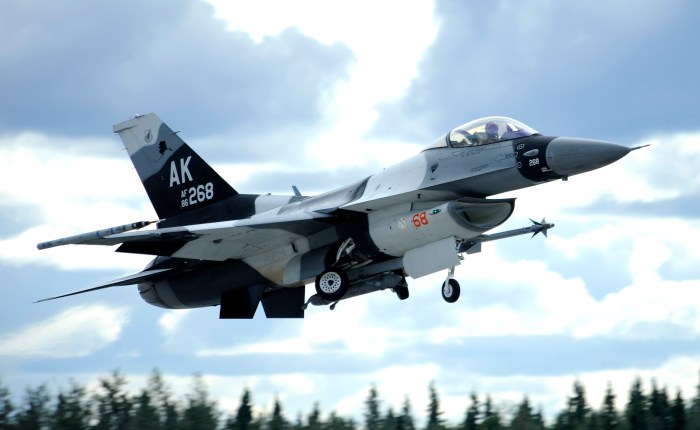
Header image: A US Air Force F-16 Fighting Falcon aircraft assigned to the 18th Aggressor Squadron takes off during Red Flag-Alaska 12-3 at Eielson Air Force Base, Alaska, 6 August 2012. Red Flag-Alaska is a series of Pacific Air Forces commander-directed field training exercises for US and partner nation forces, providing combined offensive counter-air, interdiction, close air support, and large force employment training in a simulated combat environment. (Source: Wikimedia)

#BookReview – Wonders All Around: The Incredible True Story of Astronaut Bruce McCandless II and the First Untethered Flight in Space

#BookReview – Wonders All Around: The Incredible True Story of Astronaut Bruce McCandless II and the First Untethered Flight in Space

Bruce McCandless III, Wonders All Around: The Incredible True Story of Astronaut Bruce McCandless II and the First Untethered Flight in Space. Austin, TX: Greenleaf Book Group Press, 2021. Illustrations. Notes. ARC. 247 pp.

Reviewed by Dr Brian Laslie

wonders-all-around

It is a picture that seems to hang somewhere in every elementary school and library in America. For that late Gen-X group born in the last half of the 1970s, it hung on the walls of our bedrooms next to baseball heroes Dale Murphy and Mike Schmidt. Space Historian Emily Carney has dubbed it simply ‘the poster.’ The image is so ubiquitous as to be almost forgettable, not because it is forgettable but because you see it everywhere: from museum walls to commercials. It is inescapable. It is easily as memorable as any photograph that came out of America’s early space program, and it remains one of NASA’s most requested pictures. The image is of an untethered astronaut floating alone in the blackness of space, feet dangling above a blue and white Earth. Even as I write this review, a version of the famed photo hangs in my office, a hand-painted copy by my oldest daughter, herself a budding STEM and space lover.

The astronaut in the photograph is Bruce McCandless II, hardly a household name; but you have heard his voice, and you have seen his face in the old B-rolls of the floor of mission control where he served as a CAPCOM (capsule communicator) on the Apollo 10, 11 and 14 missions. McCandless served as CAPCOM for the first lunar extravehicular activity (EVA), and said “Okay, Neil, we can see you coming down the ladder now.”

Hardly a household name, yet he was at the epicentre for two seismic events in the history of crewed spaceflight: the first steps on the moon and the man behind the mask in the first untethered EVA. That untethered EVA and his first ride into space was a long time in coming. Half of his astronaut class flew to the moon, including Jack Swigert, Al Worden, Stu Roosa, Ron Evans, and Ken Mattingly as Command Module Pilots, while classmates Edgar Mitchell and Charlie Duke walked on the surface of the moon. Fred Haise served as the Lunar Module Pilot for the ill-fated Apollo 13 mission, another of McCandless’s astronaut class. Much of his class served on Skylab, the Apollo-Soyuz Test Project, and the early shuttle flights.

Bruce_McCandless_II_portrait
Bruce McCandless II, c. 1971. (Source: Wikimedia)

McCandless, and classmate Don Lind, was considered more a scientist than a pilot in his astronaut class. This undoubtedly hurt him in crew rotation and mission assignments. One need look no further than Astronaut Walter Cunningham’s book, The All-American Boys, to know that Deke Slayton did not look favourably on anyone who was not a test pilot. Cunningham aptly noted:

If an astronaut had been in space, he was a star. If he was on a crew, he was a prospect. If he was not yet in line, he was simply a suspect. He hadn’t really made the team. (Cunningham, p. 84).

Cunningham also noted that amongst all astronauts, ‘At the very bottom of the pile were the hyphenated astronauts, the scientists’ (Cunningham, p. 87). McCandless II almost became the astronaut the world forgot despite his presence in the famous photo.

In his new book Wonders All Around: The Incredible True Story of Astronaut Bruce McCandless II and the First Untethered Flight in Space, this omission is being corrected by his son, Bruce McCandless III. This book focuses on the astronauts of the Apollo era who doggedly hung on at NASA through the early Space Shuttle program. Also unusual is that Wonders all Around is the third book to either be authored or co-authored by a son or daughter of the Mercury, Gemini, and Apollo Astronauts, the others being Rosemary Roosa’s To the Moon: An Autobiography of an Apollo Astronaut’s Daughter, and Kris Stover’s For Spacious Skies, written with her father Scott Carpenter. All three bring a different perspective to the golden age of spaceflight.

The author traces the early journeys of his father but does not fall into the trap of taking too long to tell it. For Bruce McCandless, ‘the real joys of his life: reading, thinking, and engineering.’ This demonstrates that McCandless II was a man at home inside the cockpit and a textbook (p. 40). McCandless’ selection to NASA might not have come with a rapid assignment to a flight, but it did place him in the middle of the action, most notably with his selection serving as a CAPCOM. The author notes this assignment came with a bit of a letdown when he states:

It’s like being the backup quarterback who relays plays from the sidelines; you’re part of the action, but no one’s going to remember you after the game. (p. 62).

Nevertheless, McCandless II soldiered on through Apollo, Skylab, and Apollo-Soyuz, all without a flight assignment and grimly hung on through the intervening years waiting for the shuttle to come online. McCandless endured, and he could be seen ‘wandering the halls of Building 4, haunted by the ghosts of cancelled Apollo missions,’ even as newer generations of astronauts began to take their place in line for shuttle assignments (p. 134).

McCandless III sets about telling his father’s story and the societal, political, and cultural events that occurred along the way. He also delves into the family life of McCandless II at home, and, in this case, ‘dad’ comes across as a work-at-home, distant, slightly standoffish figure, that many in my generation can identify with.

Wonders all Around is the perfect transition book for those looking into the late-1970s lean years as NASA moved from the Saturn V to the Space Transport System. McCandless III notes that his dad was part of the transition from the all-male, test pilot atmosphere to the shuttle era’s more inclusive and scientific period. McCandless was there to see it all, still hoping for his first rocket launch and all along the way continuing his work on the piece of machinery that would solidify his place in the history of photography: the Manned Maneuvering Unit (MMU).

Of course, the book inevitably leads to McCandless’ first flight, his piloting of the MMU up to 300+ feet from the Space Shuttle Challenger in 1984, and ‘Hoot’ Gibson taking the now-iconic photo, but neither of the McCandless’s story ends there. Instead, McCandless II continued to stick it out at Houston and flew one more time on a possibly more famous mission, STS-31, which deployed the Hubble Space Telescope (I would be remiss here if I did not recommend Astronaut Kathryn Sullivan’s magnificent biography Handprints on Hubble).

Bruce_McCandless_II_during_EVA_in_1984
Astronaut Bruce McCandless II, mission specialist, participates in a extra-vehicular activity (EVA), a few meters away from the cabin of Space Shuttle Challenger. He is using a nitrogen-propelled hand-controlled Manned Maneuvering Unit (MMU). He is performing this EVA without being tethered to the shuttle. The picture shows a cloud view of the Earth in the background. (Source: Wikimedia)

As new and forthcoming astronaut biographies continue to be published each year, our understanding of NASA as an organization continues to grow as well. McCandless III’s biography of his father adds to our understanding. McCandless II clearly had the ‘Right Stuff,’ but he had more than enough of the ‘Scientific Stuff’ to make him a legendary astronaut, and this biography cements the name of McCandless alongside Shepard, Armstrong, and Ride.

McCandless II said of that famous photo that “I have the sun visor down, so you can’t see my face, and that means it could be anybody in there. It’s sort of a representation not of Bruce McCandless, but mankind.”[1] That may be true, but the author has lifted that visor and allowed the sun to shine on the face of his father at last. Wonders All Around is a powerful biography, history, and love letter to an organization, an event, a photograph, and an individual.

Dr Brian Laslie is a US Air Force Historian and currently the Deputy Command Historian at North American Aerospace Defense Command (NORAD) and United States Northern Command (USNORTHCOM). He is also the Book Reviews Editor here at From Balloons to Drones. A 2001 graduate of The Citadel and a historian of air power studies, he received his Masters’ from Auburn University Montgomery in 2006 and his PhD from Kansas State University in 2013. He is the author of Architect of Air Power: General Laurence S. Kuter and the Birth of the US Air Force (2017) and The Air Force Way of War (2015). The latter book was selected for the Chief of Staff of the Air Force’s 2016 professional reading list and the 2017 RAF Chief of the Air Staff’s reading list. He can be found on Twitter at @BrianLaslie.

Header image: Astronaut Bruce McCandless, II tests a the manned maneuvering unit during a test involving the trunion pin attachment device he carries and the shuttle pallet satellite (SPAS-01A), partially visible at bottom of the frame. The space shuttle Challenger was flying with its aft end aimed toward the Earth. (Source: Wikimedia)

[1] Anne Broache, ‘Footloose,’ Smithsonian Magazine, August 2005.

#BookReview – An Honorable Place in American Air Power: Civil Air Patrol Coastal Operations, 1942-1943

#BookReview – An Honorable Place in American Air Power: Civil Air Patrol Coastal Operations, 1942-1943

Frank A. Blazich Jr. An Honorable Place in American Air Power: Civil Air Patrol Coastal Operations, 1942-1943. Maxwell Air Force Base, AL: Air University Press, 2020. Illustrations. Notes. Bibliography. Index. Pbk. xvi + 239 pp.

Reviewed by Bryant Macfarlane 

201208-F-QR584-001

As a much younger man, I participated in the United States Air Force’s Civil Air Patrol (CAP) cadet program like many other young Americans. Along with emergency services and aerospace education, the CAP cadet program teaches valuable life skills and cementing a nascent airmindedness into its members.  Given the important role, the publication of Frank A. Blazich, Jr.’s An Honorable Place in American Air Power: Civil Air Patrol Coastal Operations, 1942-1943 is an important addition to the literature on the role of American air-power during the Second World War.

Blazich, Curator of Modern Military History at the Smithsonian Institution’s National Museum of American History and Director of the Colonel Louisa S. Morse Center for Civil Air Patrol History, is uniquely suited to the task of writing the history of CAP’s important role at the height of the Battle of the Atlantic. An Honorable Place in American Air Power recounts the exploits of volunteer American civil airmen combating U-boats off the Atlantic and Gulf Coasts and patrolling the American-Mexico border in the critical opening months of American involvement in the Second World War. Though not the first to tackle the subject, Blazich’s effort is undoubtedly the most complete accounting of how American – air-minded civilians found a way to help their nation in a time of dire need. Blazich challenges the hagiographic treatment of William Mellor, Andrew Ten Eyck, and Robert E. Neprud by arguing that the CAP had significant safety, organisational, and funding issues until Congress created federal legislation in 1948. While most works produced since the 1950s have been tertiary works, Blazich supports Clair Blair’s conclusion in Hitler’s U-Boat War (1998). Blair and Blazich argue that U-boats were not a decisive weapon of war in the Atlantic but did significantly delay the total mobilisation of American assets towards operations in Africa. Blazich’s original research builds upon the archival work of Michael Gannon and the capture of oral history by Louis Keefer to fully explore the historiographical gap left in the official histories of the US Army and US Navy.

While the work is aimed at incorporation into professional military education venues, Blazich’s writing is very accessible to general readers and military professionals while retaining academic rigour. Blazich’s presentation and enthusiasm allow the narrative to unfold cleanly across the page while easily allowing the interested reader to understand his methodology and sources in endnotes and appendices. Researchers and academics are rewarded by including deep endnotes and rich appendices that provide a wealth of resources for further work on the CAP and interested in exploring aspects of the Second World War, air power, civil-military relations, security studies, and general American aviation history. In so doing, Blazich definitively puts to rest the myth of CAP aircraft destroying or damaging enemy submarines and clarifies the challenges surrounding the CAP and its participation in the American anti-submarine campaign from March 1942 to August 1943.

Blazich effectively demonstrates how, with tentative agreement from the US Navy and US Army Air Forces, an organisation of volunteer private pilots, mechanics, radio operators, and administrators freed military personnel and equipment for operations outside of the continental United States. Using professionalism, dedication, resourcefulness, and small civil aircraft, the CAP surmounted formidable geographic, legal, and logistical obstacles in establishing a series of 21 air bases from the Maine-Canadian border to the Texas-Mexico border. This was conducted through volunteer efforts with minimal state or federal support. Further, Blazich demonstrates that, despite support from the Office of Civil Defense (OCD), many military officials were sceptical of the potential for effective inclusion of the CAP into their national defence responsibilities. Nevertheless, despite the reorganisation of military commands and interservice squabbles over responsibilities, the CAP proved to be an effective and timely solution to the nation’s needs in securing the American eastern sea frontier and freeing uniformed forces for operations in Africa and the Pacific.

Presented in five chronologically focused chapters, with an introduction and concluding chapter on how volunteer civil-auxiliary assets can be exploited for future needs, An Honorable Place in American Air Power is a highly accessible and vital work. Some may take historical umbrage with Blazich’s argument (p. 1) that within the context of the era, ‘CAP members became the first American civilians to actively engage with enemy forces in defense of the United States.’ However, as Blazich (p. 1) clearly outlines across the five chapters that make up the core of this book that for approximately 18 months, the volunteer civilian airmen of the CAP became a de jure ‘fourth arm of the nation’s defense.’ While volunteering for CAP missions did not preclude Selective Service selection, and members had to provide their uniforms, aircraft, equipment, and facilities, it offered the only path for a private citizen to maintain the ability to ‘own, operate and service any aircraft and radio equipment.’ (p. 89)

While Blazich rightly argues that the formation of the CAP was a synchronicity of people and events that was put into motion in the late 1930s, what is unquestionably clear is that the organisation would not have been taken as seriously by the War Department had it not been for the positive relationships air-minded leaders. These included people such as Fiorello LaGuardia, of the OCD, shared with well-placed Army officials, like Chief of the Army Air Forces ‘Hap’ Arnold, in the War Department. Arnold, like Giulio Douhet, understood the need to educate political leaders on the critical link between military and civilian aviation. Arnold also understood that America was soon to be desperately needed a ready supply of skilled pilots and maintainers. Because of this, argues Blazich, Arnold became ‘one of the CAP’s biggest supporters’ from within the War Department. (p. 150) While Blazich clarifies that CAP operations occurred concurrently with the increased convoy and military force projection that had effectively created wide-area security for American sea frontiers, the argument is clear that the CAP provided an evident success in effectively adopting civilian volunteers and equipment into the National Defense Strategy.

44-pa-578
The front cover of Blazich’s book is based on this 1943 recruitment poster for the Civil Air Patrol that was designed by Clayton Kenney. (Source: NARA)

A prime example of synchronicity was the November 1941 decision of the OCD to place Army Major General John F. Curry, a retired Commandant of the Air Corps Tactical School, as the CAP National Commander. Thus, building trust between the fledgling CAP and the War Department as unarmed CAP patrols began in January 1942. Blazich (p. 56) argues that despite the early support by the War Department, by March 1942, the US Navy felt the CAP would ‘serve no useful purpose except to give merchant ships the illusion that an adequate air patrol is being maintained.’ However, this did not go far in impressing Admiral Ernest King, who opined (p. 57) that CAP aircraft ‘would not be productive in sufficient degree to compensate for the operational difficulties to be encountered in coordinating and controlling the flying involved by inexperienced personnel.’ Despite these expressed feelings by the US Navy, civil leaders expressed further trust in the CAP’s ability, under the operational jurisdiction of Naval sea frontier commands to extend the safety of merchant shipping through the American littorals and beyond from U-boats operating along American waters.

On 29 April 1943, President Franklin Roosevelt issued Executive Order 9339, which transferred the CAP from the OCD to the War Department. By the summer of 1943, trust in the CAP as an asset to the nation’s defence in freeing military human resources for combat and providing overflight services had measured a success. The CAP bought time for the Navy to build force capacity to conduct land-based, long-range offensive operations across the American sea frontier. Admiral King registered accolades as the CAP stood down its continuous volunteer air services to America’s eastern sea frontiers. According to Blazich (p. 150), ‘King, never one to offer accolades except when appropriate, his praise represented the highest compliments’ to the demonstrated professionalism, bravery, and sacrifice of the volunteer members of the CAP.

The final chapter of An Honorable Place in American Air Power argues that the retention of the CAP after the national defence emergency demonstrates that innovative solutions to strategic problems can be found when Americans work collaboratively. Here, Blazich urges key leaders to use the legal and social foundations laid by the CAP to be extended into more routine use in an emergency, or civil relief situations. Blazich, arguing that the CAP has expanded to include cyber and small unmanned aerial system operations, sees an underutilised functional capacity in the CAP. ‘For a future conflict with an unknown enemy, [and] the improbability of a conventional enemy land force invading the continental United States,’ argues Blazich (p. 175), ‘physical CAP assets will assist the Air Force along the nation’s borders, in cyberspace, and throughout the interior.’

In conclusion, An Honorable Place in American Air Power is a tremendously important work that expands our understanding of the American home front in the opening months of the Second World War. While, as Blazich argues (p. 164), ‘deterrence is a nebulous matter to objectify into metrics,’ An Honorable Place in American Air Power conclusively demonstrates the effectiveness of the CAP through the actions of the brave men and women of the coastal patrol stations that motivated legislative designation of the CAP as the auxiliary of the United States Air Force. Moreover, the CAP is ‘available for noncombat programs and missions with taxpayer funding and resources’ (p. 170) to continue providing education, emergency rescue, and other support to continually build strength for a capable air presence for the American people.

Bryant Macfarlane served in the United States Army from 1997 to 2019 and is a PhD student at Kansas State University studying vertical flight and its effect on military culture. He can be found on Twitter @rotary_research.

Header Image: A variety of Civil Air Patrol-operated aircraft, including a Sikorsky S-39 in center frame, parked at Coastal Patrol Base 17  between July 1942 and August 1943. The base would eventually become Francis S. Gabreski Airport in New York State. (Source: Wikimedia)  

#Podcast – The American Air Wars of Vietnam: An Interview with Dr Brian Laslie

#Podcast – The American Air Wars of Vietnam: An Interview with Dr Brian Laslie

Editorial Note: Led by our Editor Dr Mike Hankins, From Balloons to Drones produces a monthly podcast that provides an outlet for the presentation and evaluation of air power scholarship, the exploration of historical topics and ideas, and provides a way to reach out to both new scholars and the general public. You can find our Soundcloud channel here. You can also find our podcast on Apple Podcasts and Google Podcasts.

2022 will mark the 50th anniversary of the LINEBACKER campaigns – the last major bombing campaigns of the Vietnam War. As such, in our latest podcast, we interview Dr Brian Laslie about his latest book, Air Power’s Lost Cause: The American Air Wars of Vietnam and his evaluation of the legacy of air power’s contribution to the Vietnam War.

55870471

Dr Brian Laslie is a US Air Force Historian and currently the Deputy Command Historian at North American Aerospace Defense Command (NORAD) and United States Northern Command (USNORTHCOM). He is also the Book Reviews Editor at From Balloons to Drones. A 2001 graduate of The Citadel and a historian of air power studies, he received his Masters’ from Auburn University Montgomery in 2006 and his PhD from Kansas State University in 2013. He is the author of Architect of Air Power: General Laurence S. Kuter and the Birth of the US Air Force (2017) and The Air Force Way of War (2015). The latter book was selected for the Chief of Staff of the Air Force’s 2016 professional reading list and the 2017 RAF Chief of the Air Staff’s reading list. He can be found on Twitter at @BrianLaslie.

Header Image: 3/4 front view of a US Air Force RC-130A of the 1st Aerial Cartographic and Geodetic Squadron parked on aluminium matting at Tuy Hoa Airbase in South Vietnam in 1970. (Source: NARA)